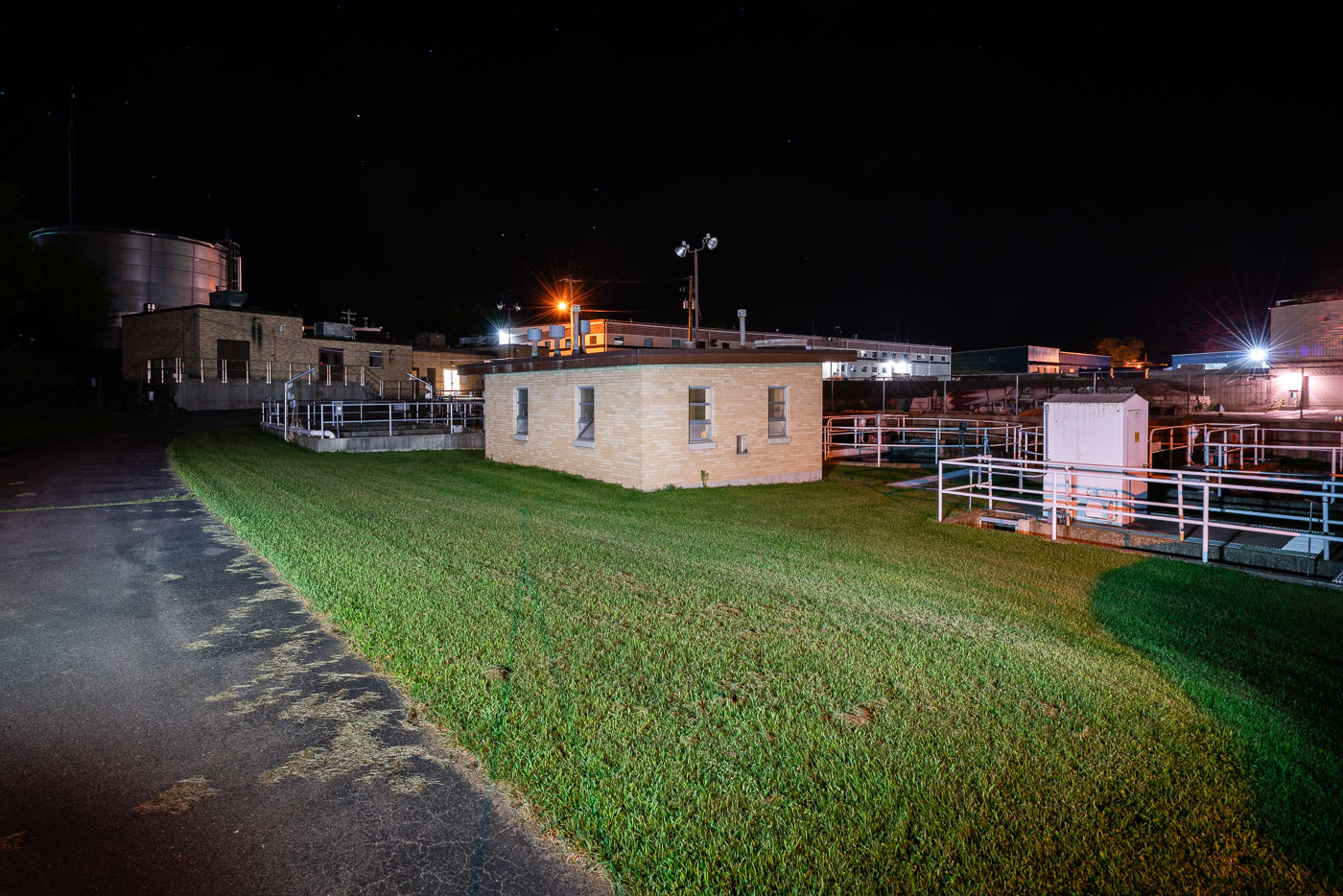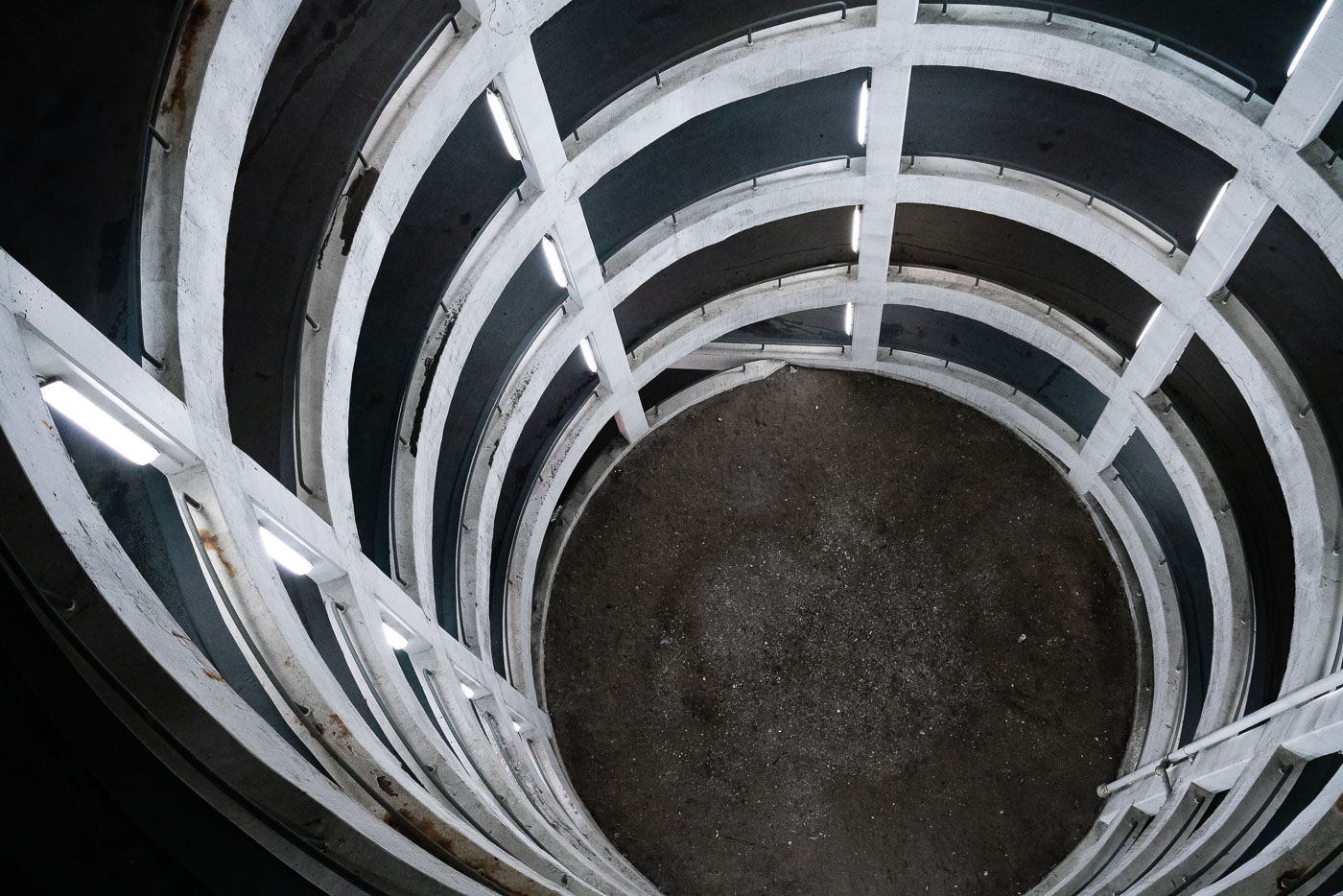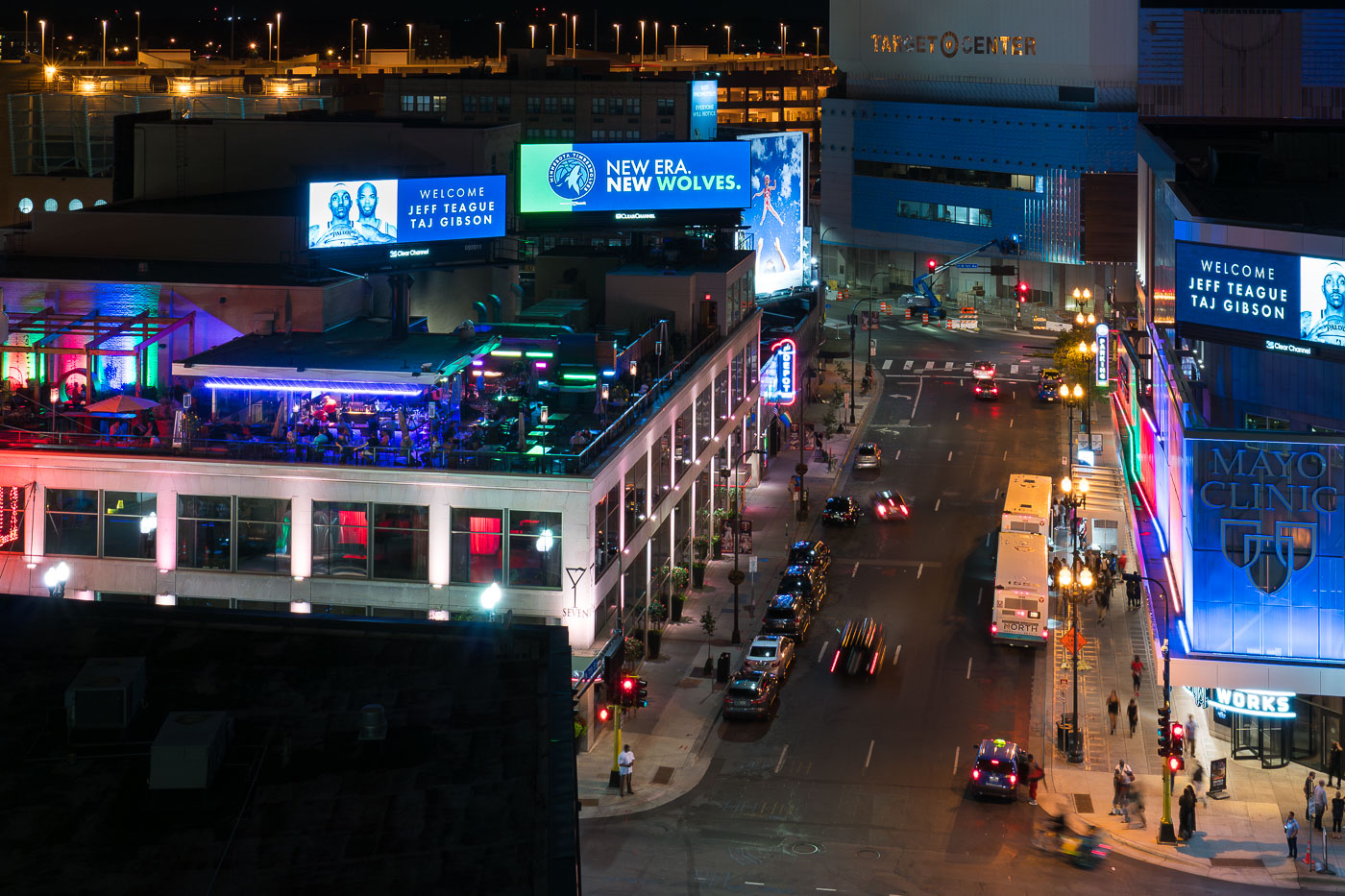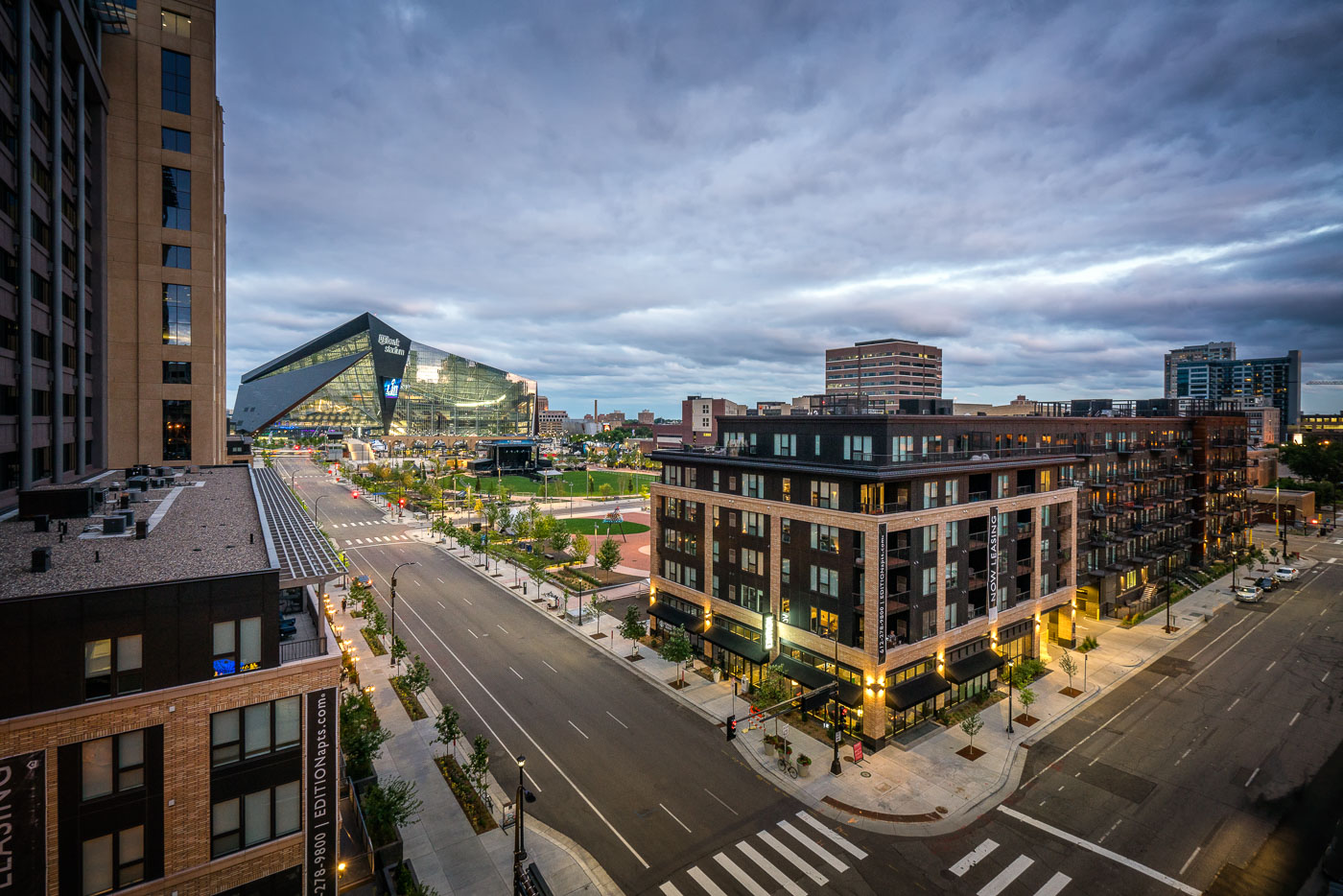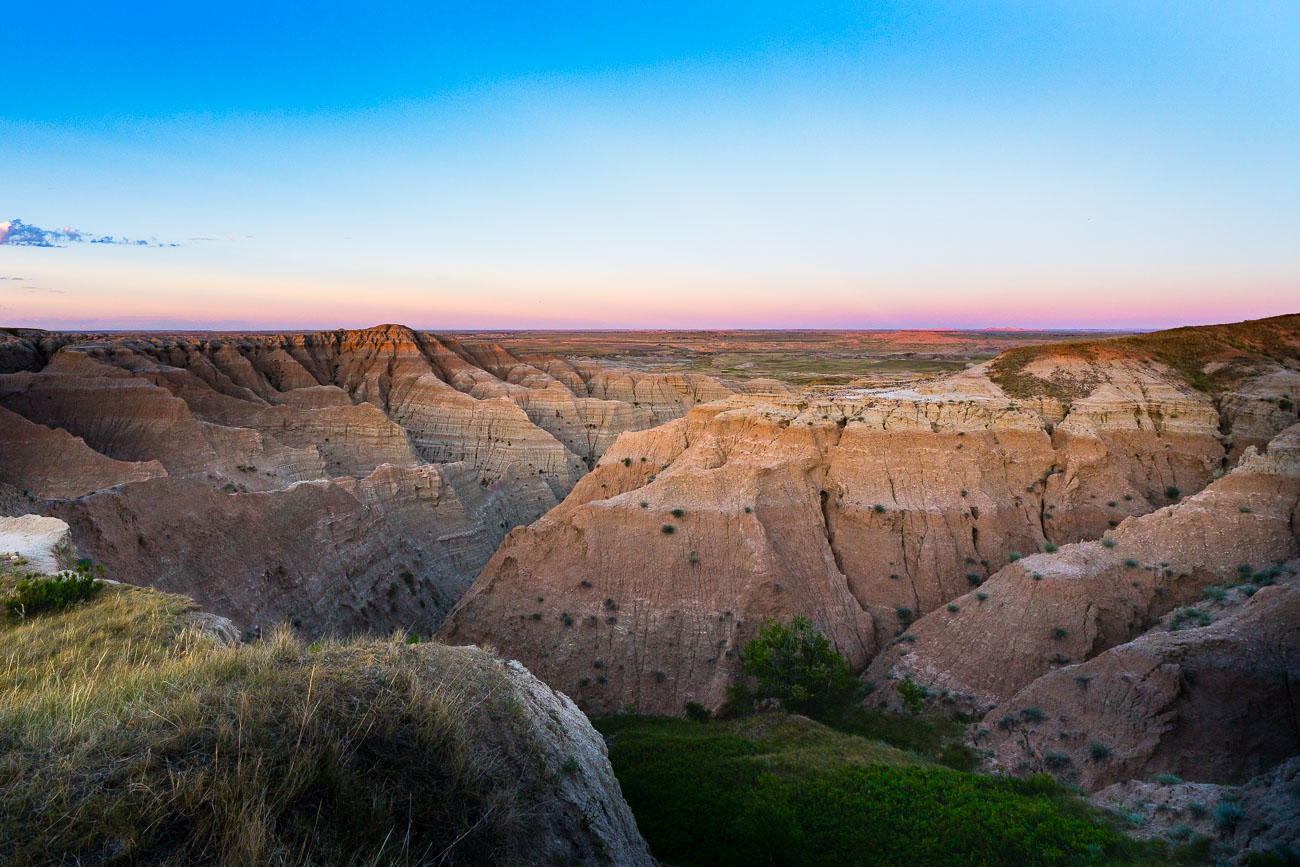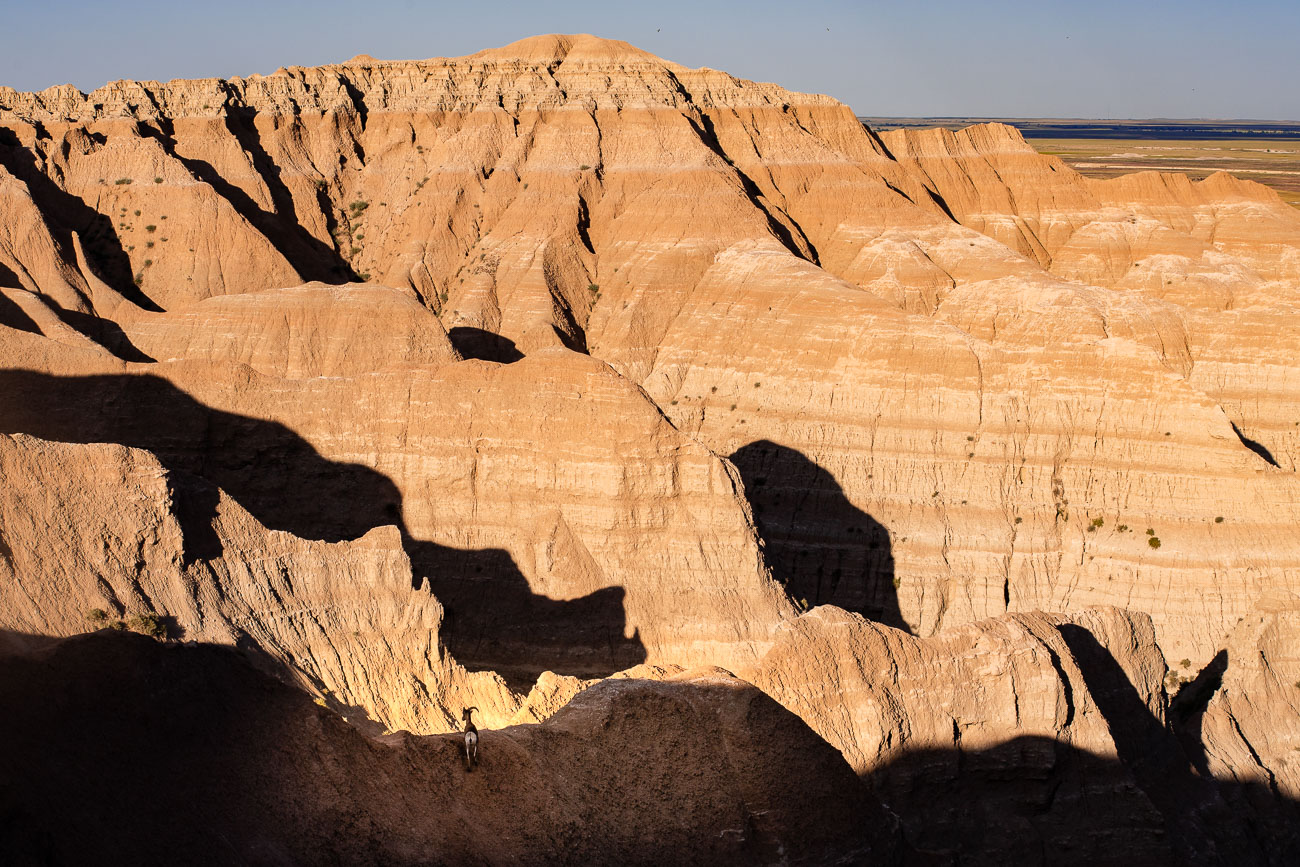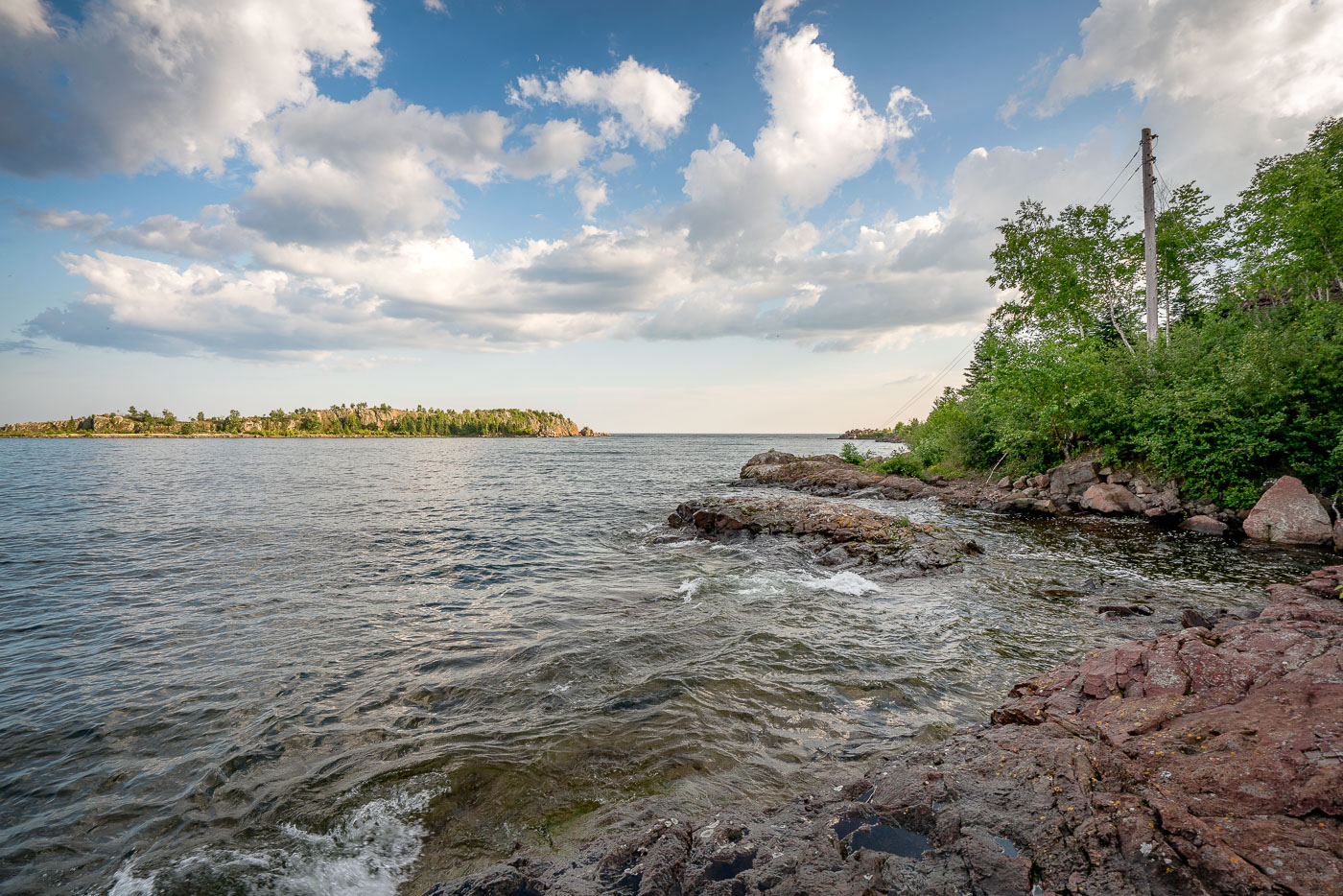
The rocky shoreline of Taconite Harbor, Lake Superior, Minnesota, a former industrial port constructed in the 1950s for taconite export.

Taconite Harbor Shoreline, Lake Superior, Minnesota

The rocky shoreline at Taconite Harbor, Minnesota, once served as a vital shipping point for the state’s iron mining industry. Built in the early 1950s by the Erie Mining Company, the harbor was designed to handle massive shipments of processed taconite pellets from the Mesabi Iron Range, transported by a private 74-mile rail line to the Lake Superior coast. The harbor’s docks, loading equipment, and nearby company housing formed a self-contained industrial community that thrived for decades.

The surrounding area was developed during a period of postwar expansion when Minnesota’s natural resources fueled North American manufacturing. Taconite Harbor operated until the early 2000s, when global shifts in steel production led to its closure. What remains today—crumbling concrete piers, rusted transmission towers, and wind-swept rock formations—speaks to both the resilience of the landscape and the region’s deep connection to the rise and fall of heavy industry along the North Shore.
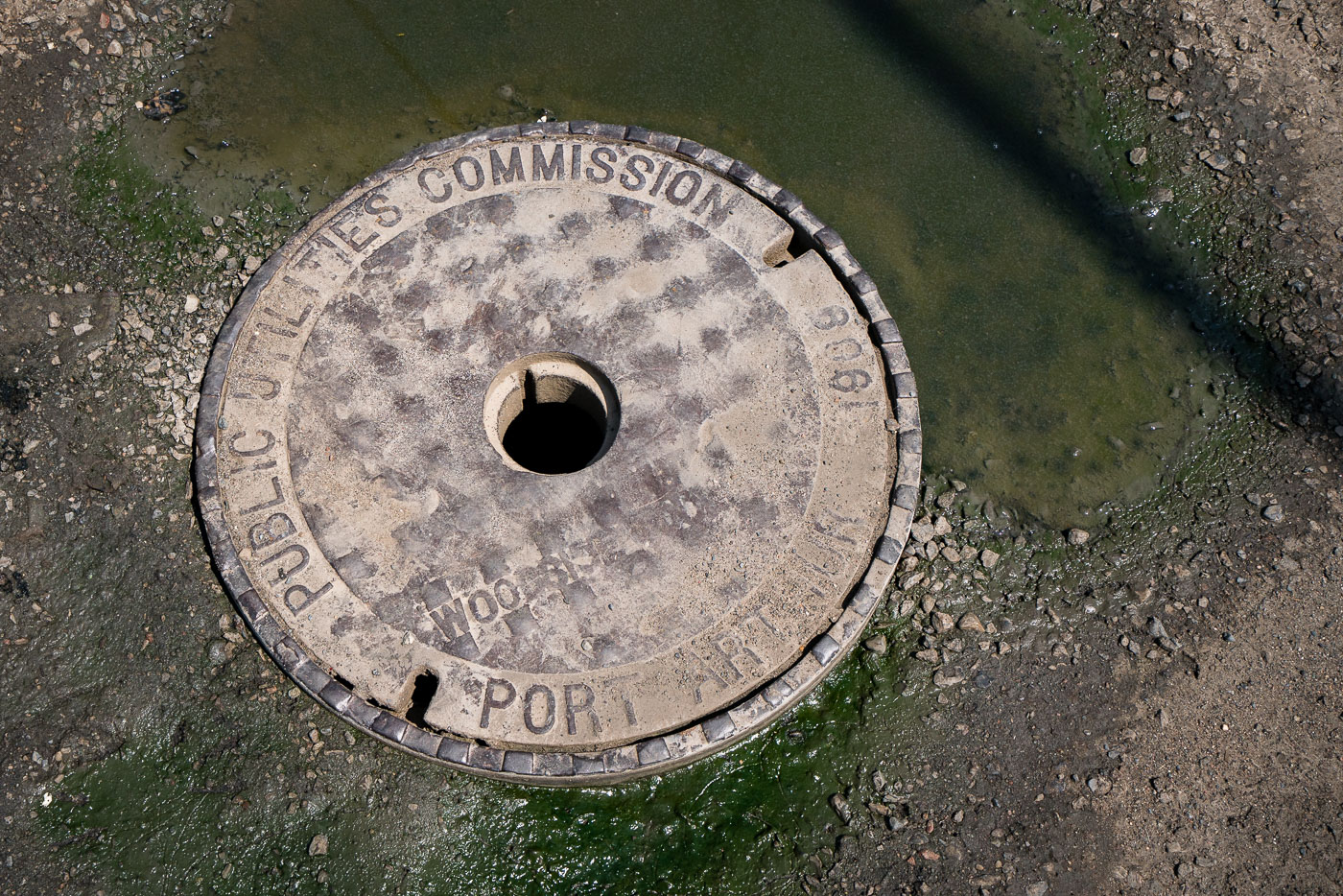
1906 Port Arthur Public Utilities manhole cover in Thunder Bay, Ontario.

1906 Port Arthur Public Utilities Manhole Cover, Thunder Bay

A 1906 manhole cover from the former Port Arthur Public Utilities Commission, now part of Thunder Bay’s unified public works system. Before amalgamating with Fort William in 1970, Port Arthur operated its own water, sewer, and electrical services, reflecting the industrial ambitions of this Lake Superior port. Cast in iron more than a century ago, the cover remains a tangible remnant of early municipal engineering in northwestern Ontario.

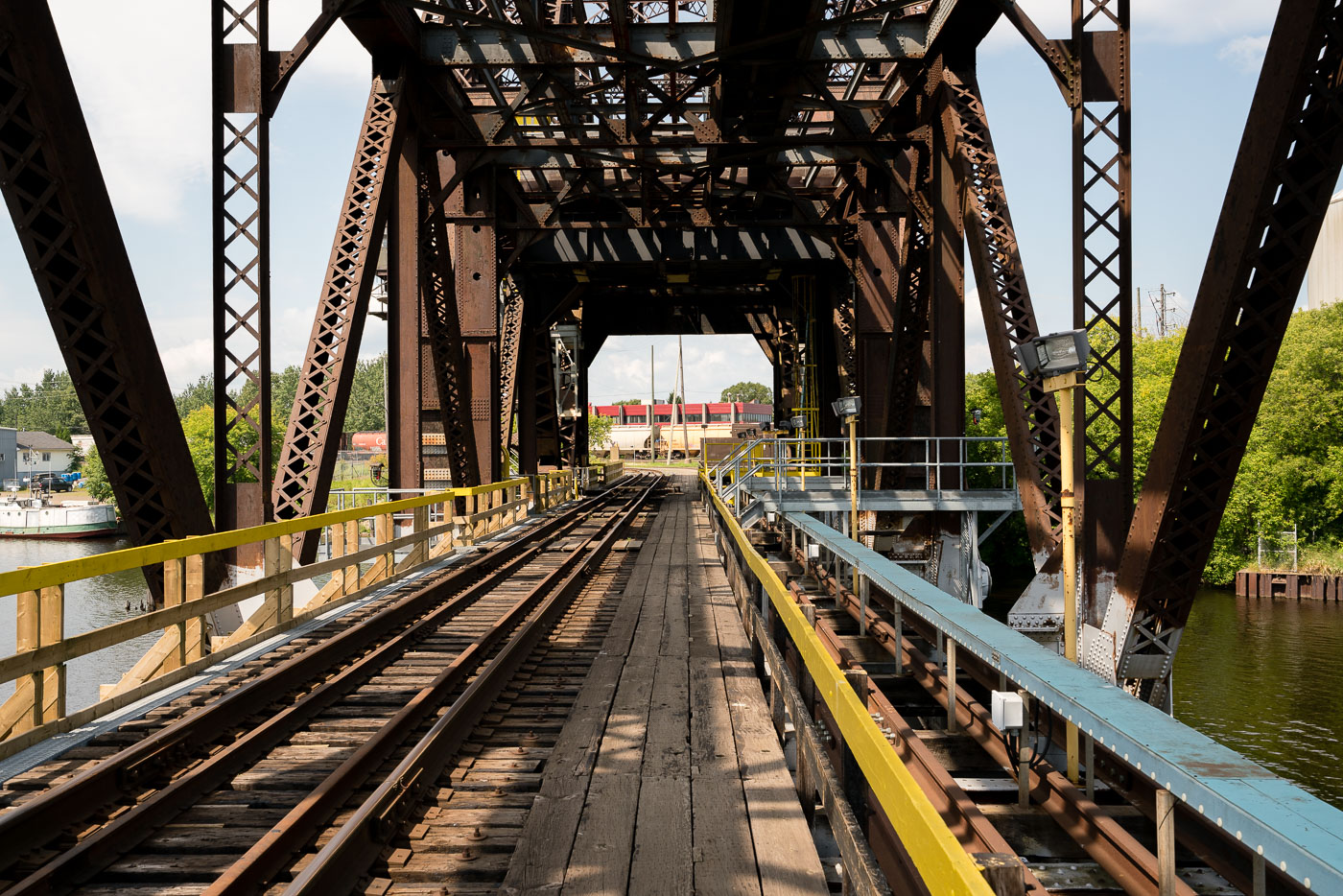
The Canadian Pacific Railway Swing Bridge in Thunder Bay, Ontario, crosses the Kaministiquia River.

Canadian Pacific Railway Swing Bridge, Thunder Bay

This steel swing bridge in Thunder Bay, Ontario, carries the Canadian Pacific Railway line across the Kaministiquia River near the city’s grain terminals. Built in the early 20th century, the structure allowed both rail and maritime traffic to pass through the busy industrial waterfront—pivoting open for ships bound to and from Lake Superior. The bridge remains an important relic of Thunder Bay’s era as one of Canada’s foremost grain-shipping hubs, linking prairie rail lines to Great Lakes freighters and global export routes.

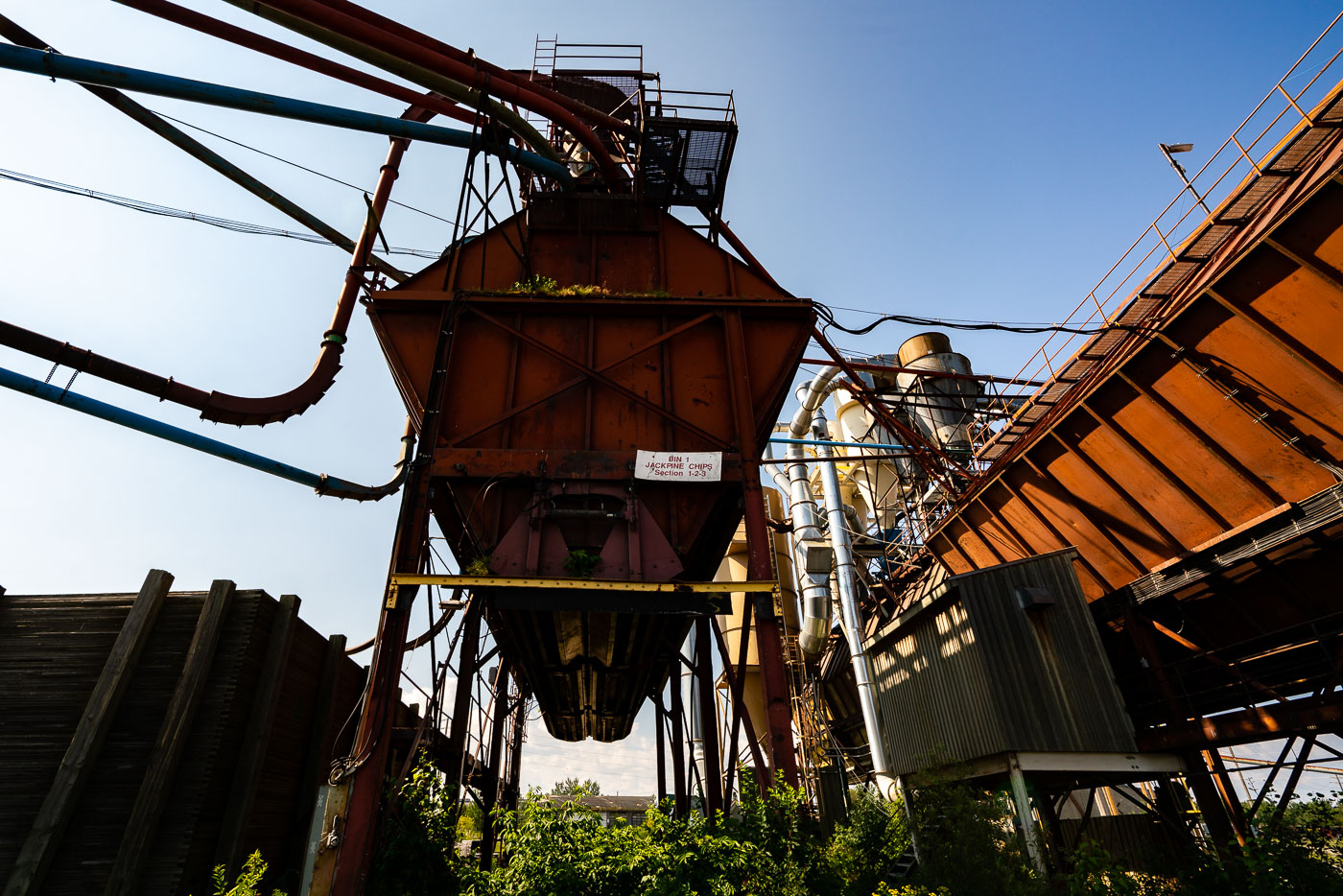
Conveyor systems at the abandoned Great West Lumber Sawmill in Thunder Bay, Ontario, against a clear blue sky.

Great West Lumber Sawmill Conveyors, Thunder Bay

The rusting conveyor systems and storage bins of the former Great West Lumber Sawmill stand as remnants of Thunder Bay’s once-thriving forest industry. Established near the Lake Superior waterfront in the early 20th century, the mill was part of a vast network that processed and shipped lumber across North America. Its maze of steel ducts and conveyors once carried sawdust, chips, and milled timber, feeding the region’s economic boom. Today, the overgrown machinery reflects a post-industrial landscape—silent evidence of a city that helped fuel Canada’s forestry trade for generations.

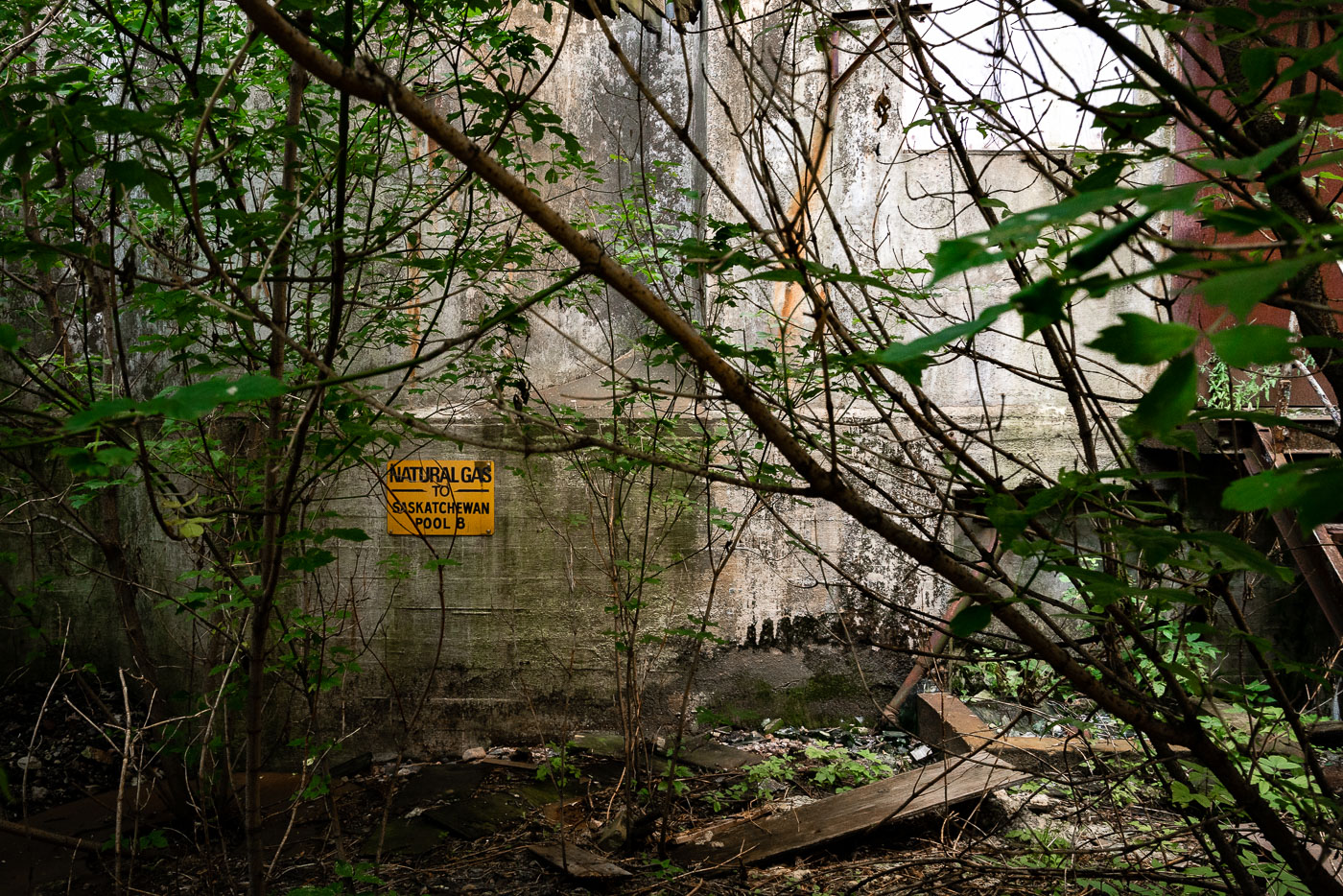
The abandoned Saskatchewan Pool B grain elevator in Thunder Bay, Ontario, is overgrown with vegetation.

Saskatchewan Pool B Elevator Ruins, Thunder Bay

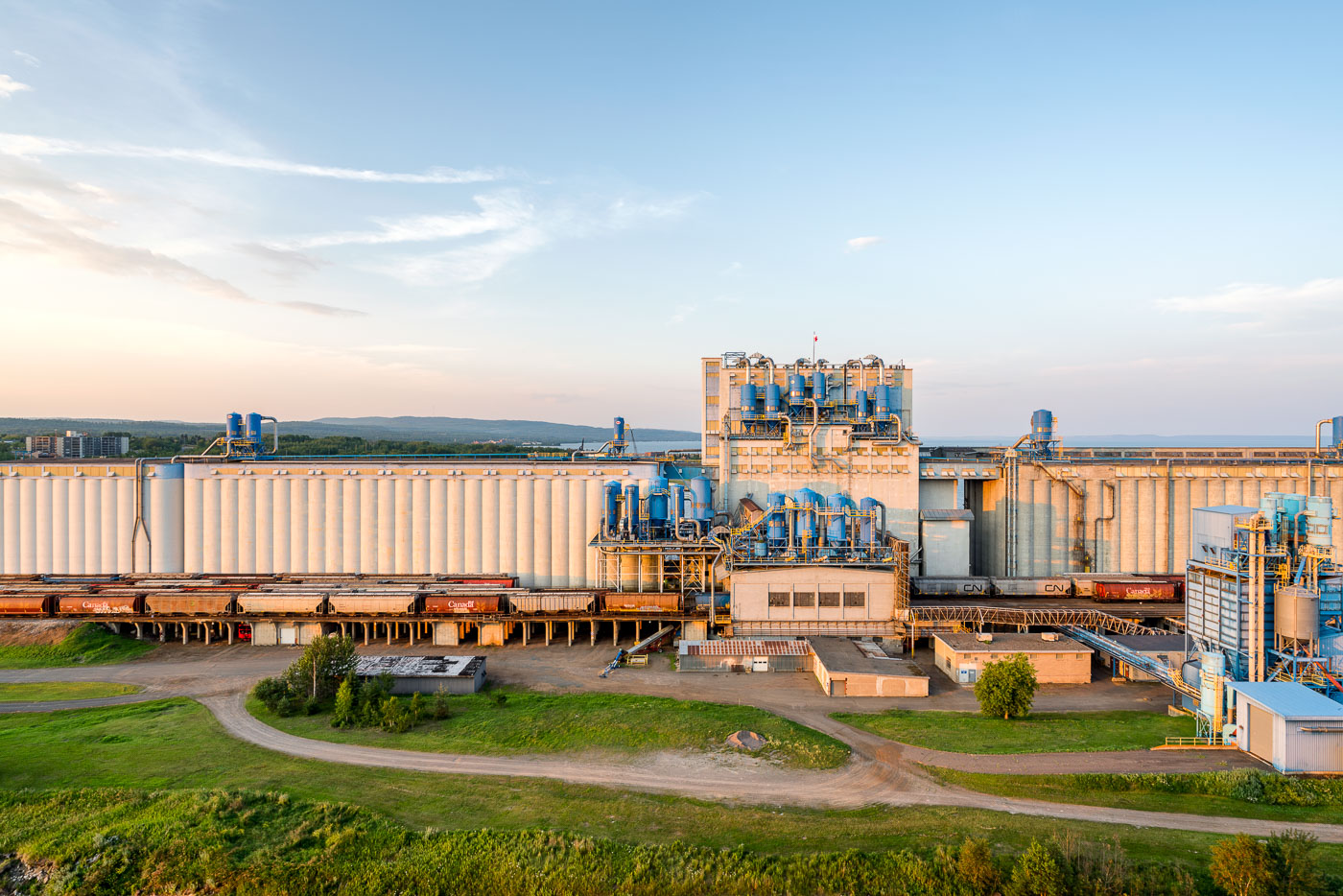
Overgrown foliage surrounds the rusting stairway of the former Saskatchewan Pool B grain elevator in Thunder Bay, Ontario. Built in 1928 as part of the cooperative grain-handling network operated by the Saskatchewan Wheat Pool, the facility once stored and shipped millions of bushels of prairie wheat through the Lake Superior port. After decades of service under the Canadian Wheat Board era, the elevator was decommissioned and left to decay, its concrete silos and steel infrastructure now reclaimed by vegetation and time along the industrial waterfront.

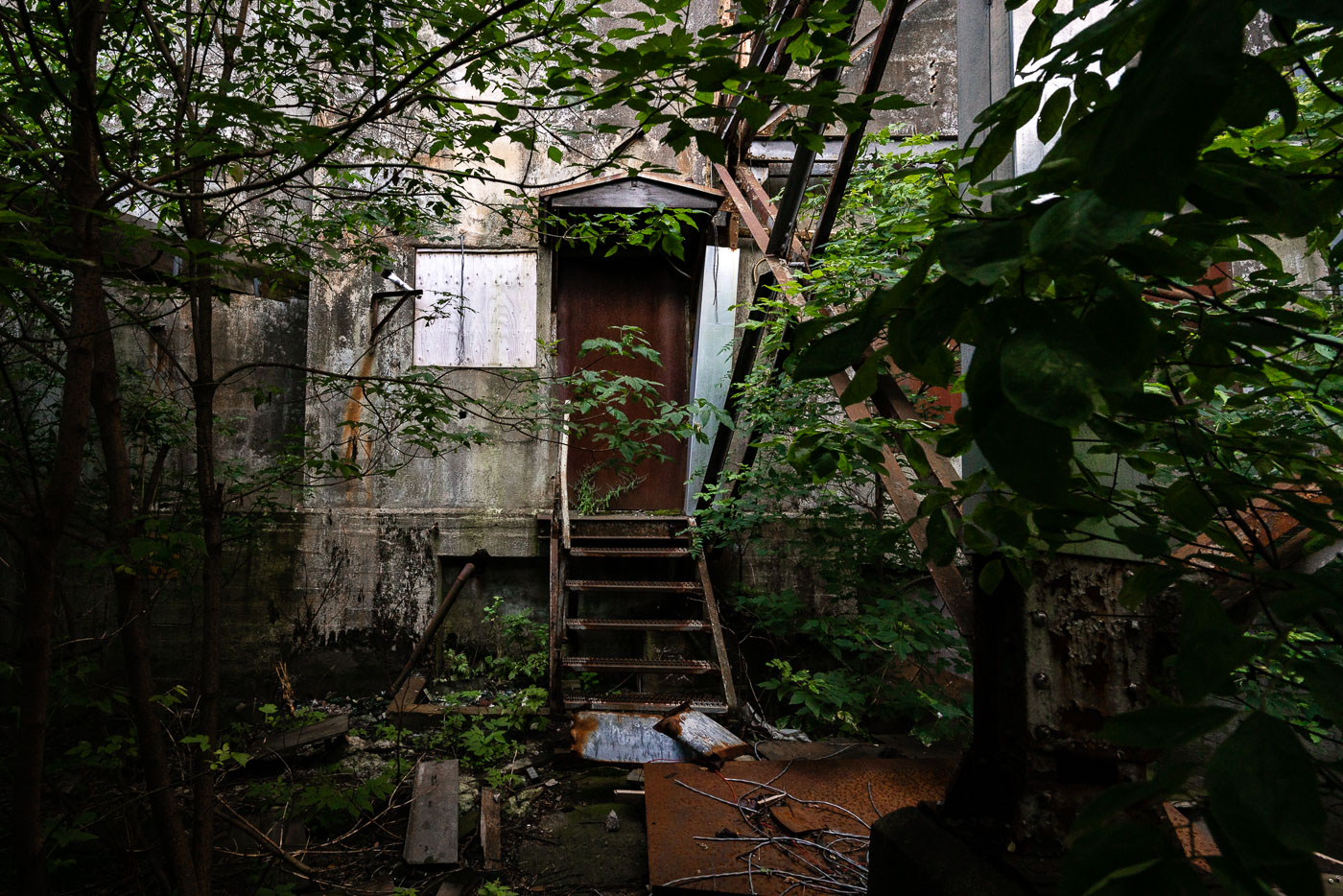
Rusted metal stairs lead to a doorway at the abandoned Saskatchewan Pool B grain elevator in Thunder Bay, Ontario.

Saskatchewan Pool B Elevator Doorway, Thunder Bay

A rusted steel door and staircase, now surrounded by dense summer growth, mark one of the remaining entrances to the Saskatchewan Pool B grain elevator in Thunder Bay, Ontario. Completed in 1928, this concrete complex was once among the largest cooperative elevators on the Lakehead, operated by the Saskatchewan Wheat Pool to handle prairie grain for export through the Great Lakes. After the decline of Canada’s centralized grain trade, the elevator was shuttered and abandoned, leaving its reinforced concrete and steel framework to slowly merge with the encroaching forest.

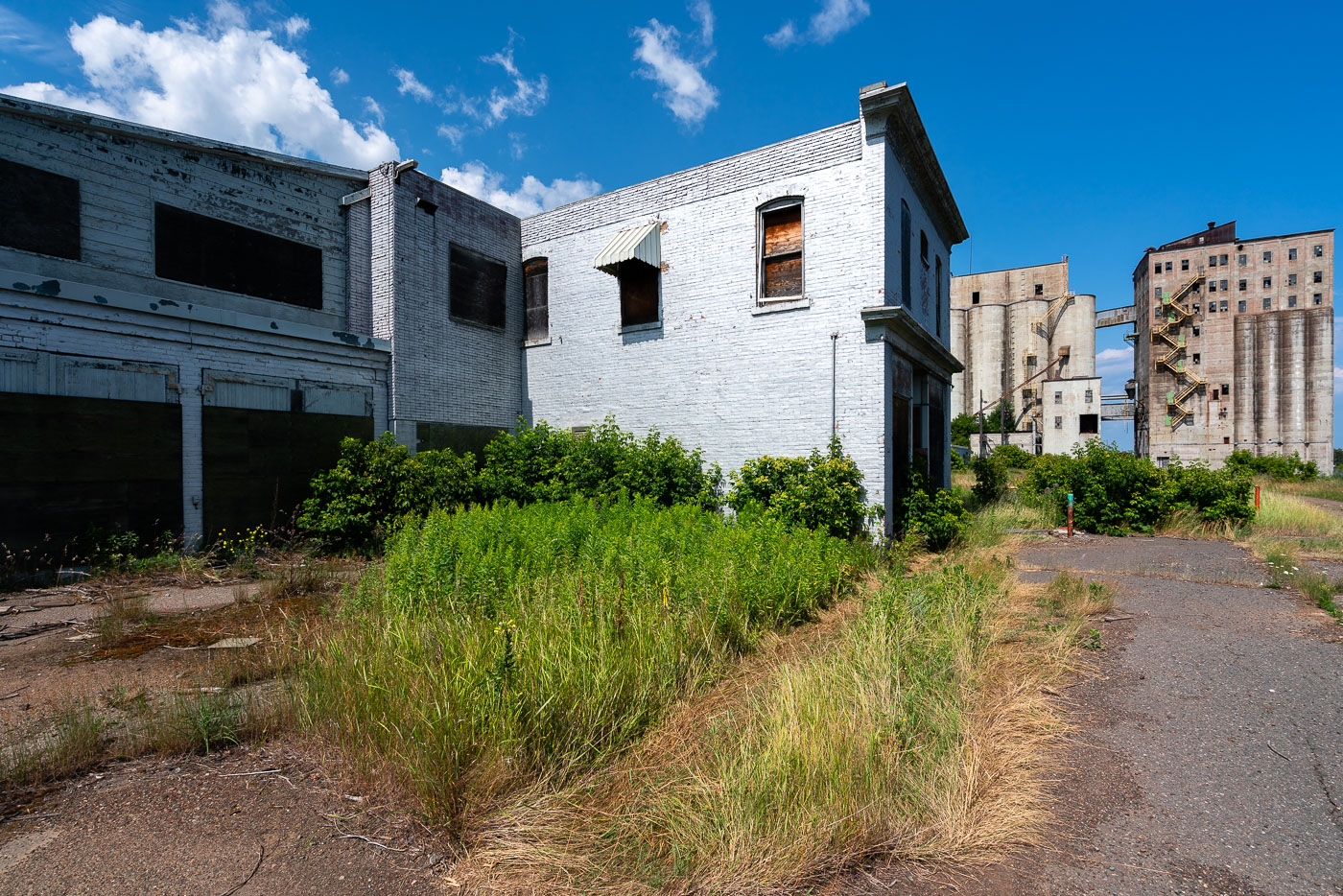
Abandoned Saskatchewan Pool B grain elevators in Thunder Bay, Ontario, a relic of Canada's agricultural past.

Saskatchewan Pool B Grain Elevators, Thunder Bay

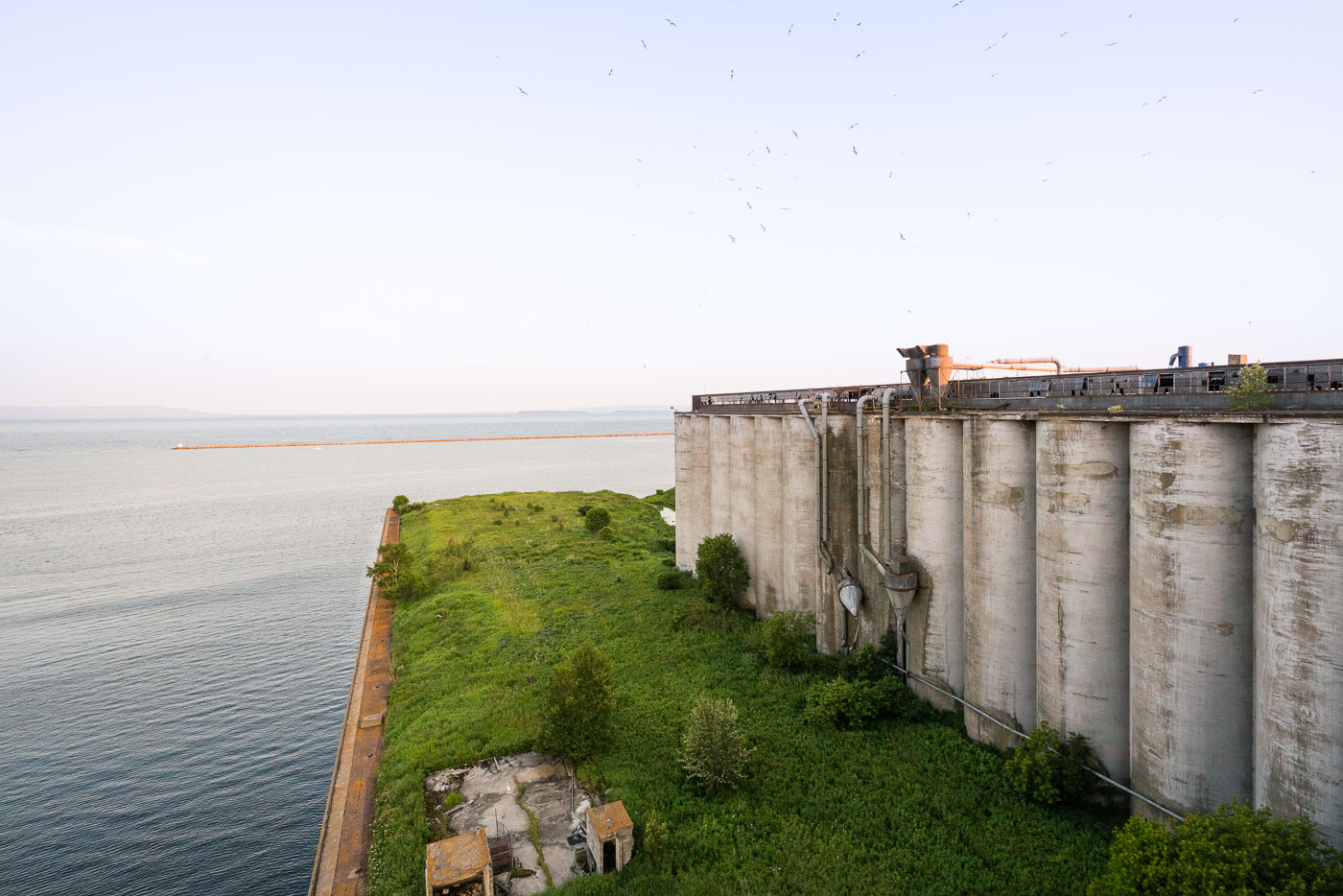
The remains of the Saskatchewan Pool B complex in Thunder Bay, Ontario, stand as a testament to the city’s industrial and maritime heritage. Once part of one of the largest grain handling networks on the Great Lakes, these structures were built in the early 20th century to serve the growing wheat trade flowing from the Canadian Prairies to Atlantic markets. Operations here slowed by the 1980s as newer, more efficient elevators replaced them. Today, the site lies silent along the waterfront, its silos and offices weathered by decades of Lake Superior winds.

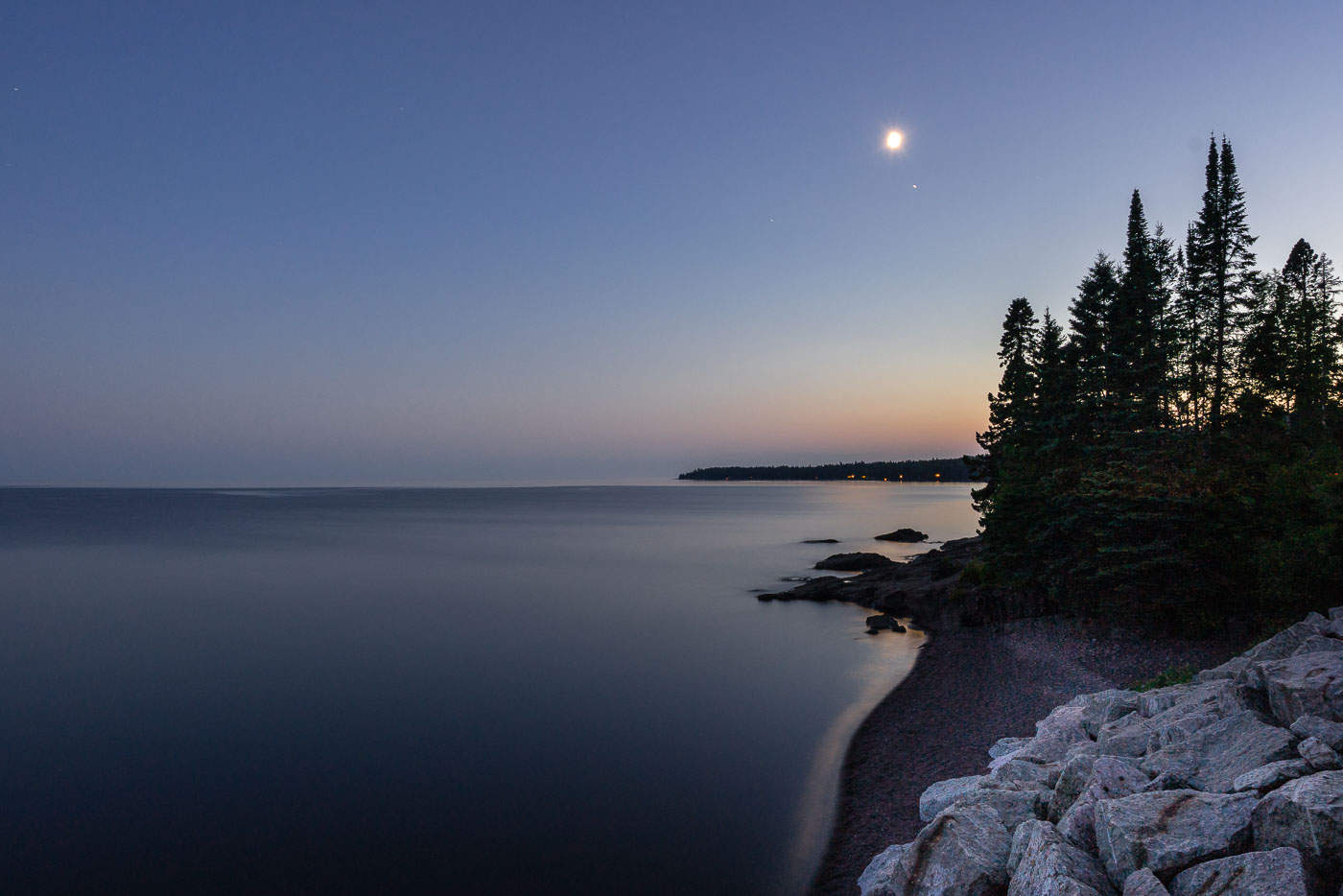
Moonrise over Lake Superior, Silver Creek Township, MN. The undeveloped North Shore features ancient basaltic rock formations and forests meeting the calm freshwater lake.

Moonrise over Lake Superior, Silver Creek Township, MN

Evening settles over the North Shore as the moon rises above Lake Superior, seen from Silver Creek Township, Minnesota. The calm waters reflect the fading light of dusk along a rugged basalt shoreline shaped by ancient lava flows nearly a billion years old. This stretch of coast, north of Two Harbors, remains one of the most geologically significant and least developed sections of Minnesota’s Superior shoreline—where forests of spruce and pine meet one of the world’s largest freshwater lakes under an endless sky.

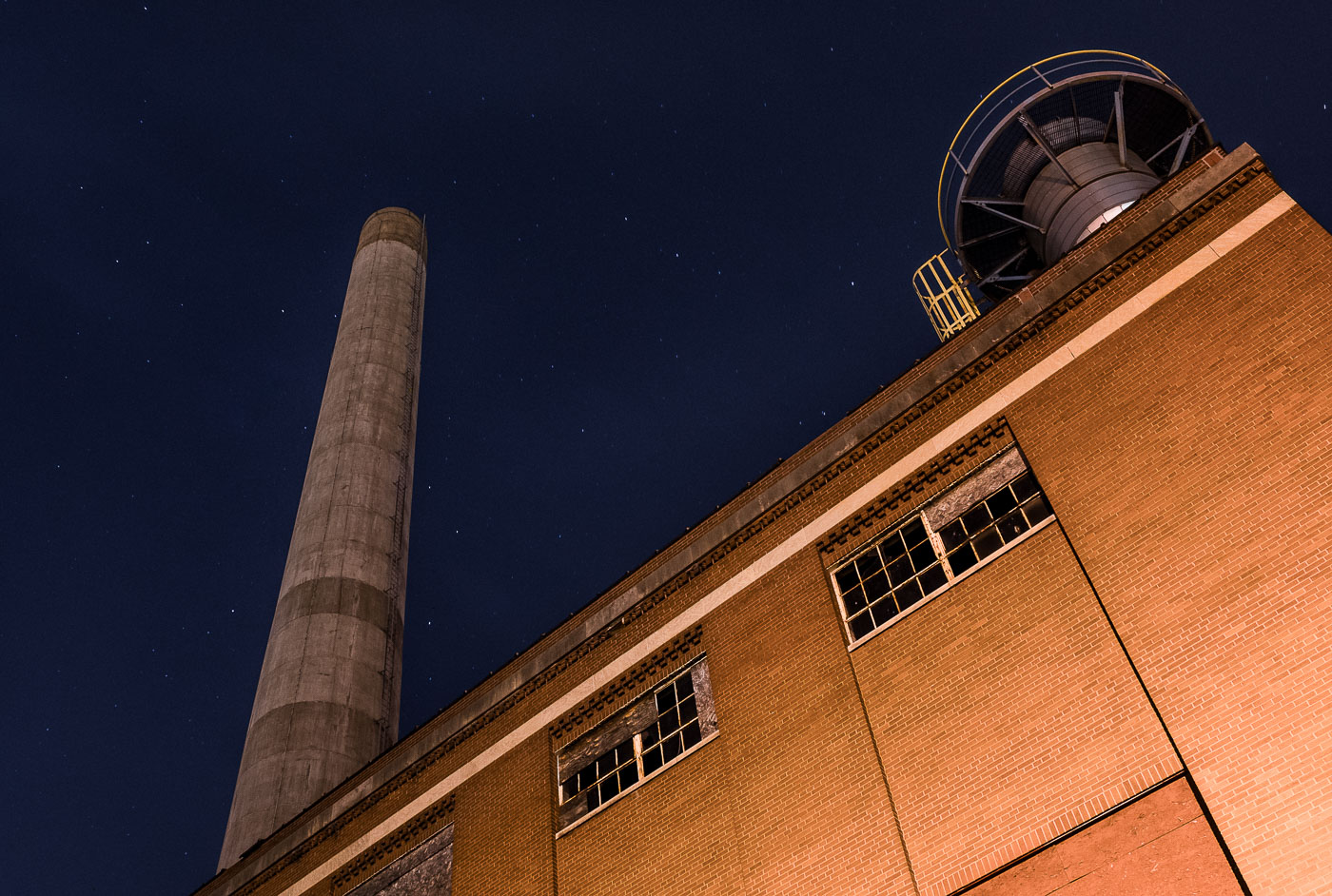
The Hamm's Brewery Power Plant in St. Paul, MN, provided energy for brewing operations and remains a testament to the city's industrial history.

Hamm’s Brewery Power Plant, St. Paul, MN

The Theodore Hamm's Brewing Company was an American brewing company established in 1865 in St. Paul, Minnesota. Becoming the 5th "largest brewery" in the United States, Hamm's expanded with additional breweries that were acquired in other cities, including San Francisco, Los Angeles, Houston, and Baltimore.

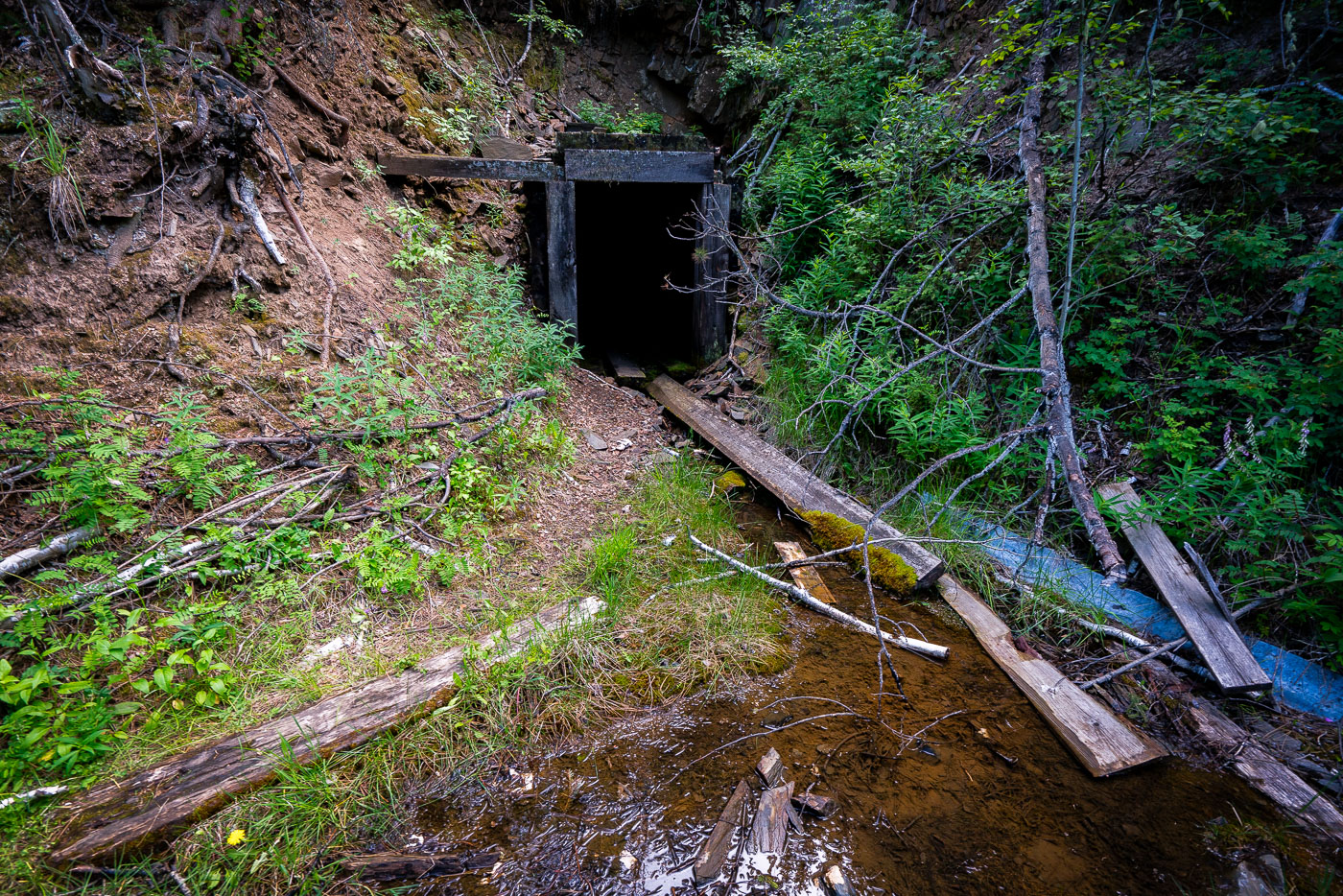
Abandoned mine entrance near Lead, South Dakota, a remnant of the Black Hills gold mining boom, with water runoff visible.

Abandoned Mine Entrance Near Lead, South Dakota

A long-forgotten mine entrance lies hidden in the forested slopes near the old gold mining town of Lead, South Dakota. The timber-framed portal, now partially collapsed and overtaken by vegetation, dates back to the late 19th or early 20th century—part of the Black Hills’ extensive network of small exploratory mines that sprang up after the 1876 gold rush. Streams like this one often run through or near these adits, carrying trace minerals that once drew prospectors to the region. Though many of these shafts were short-lived, they remain scattered reminders of South Dakota’s mining heritage and the rugged ambition that once fueled settlement in the Black Hills.

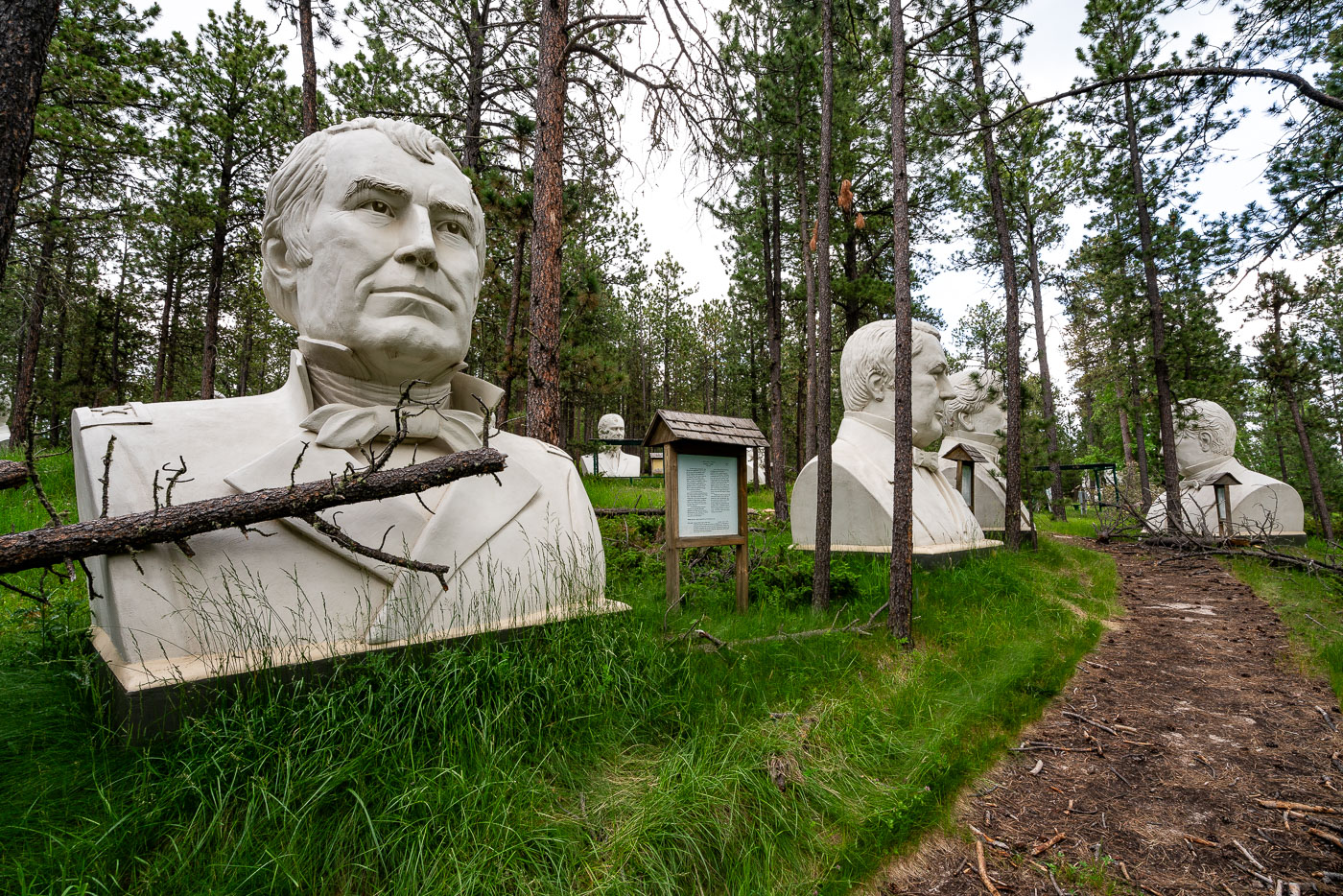
Abandoned presidential busts from Presidents Park are seen in the Black Hills Forest, South Dakota. The park featured 20-foot-tall concrete sculptures of U.S. presidents.

Abandoned Presidents Park Statues in Black Hills Forest, South Dakota

These towering concrete presidential busts sit hidden in the woods near Lead, South Dakota—remnants of a once-ambitious roadside attraction called Presidents Park. Conceived by Texas artist David Adickes and opened in 2003, the park showcased forty-three sculptures, each roughly 20 feet tall, depicting every U.S. president from Washington through George W. Bush. The attraction struggled to draw visitors and closed by 2010, leaving the massive heads stranded in the forest. Over time, nature reclaimed the site, with fallen branches, moss, and pine needles collecting around the statues. Today, the figures stand as haunting relics of early-2000s Americana tourism and the impermanence of grand civic art in private hands.

Built in Minneapolis

Photographs showcasing change over time

Browse by location, move through long-running series, or start with recent work.