Kabukicho

6 photos · 2023

6 photographs tagged Kabukicho, 2023.
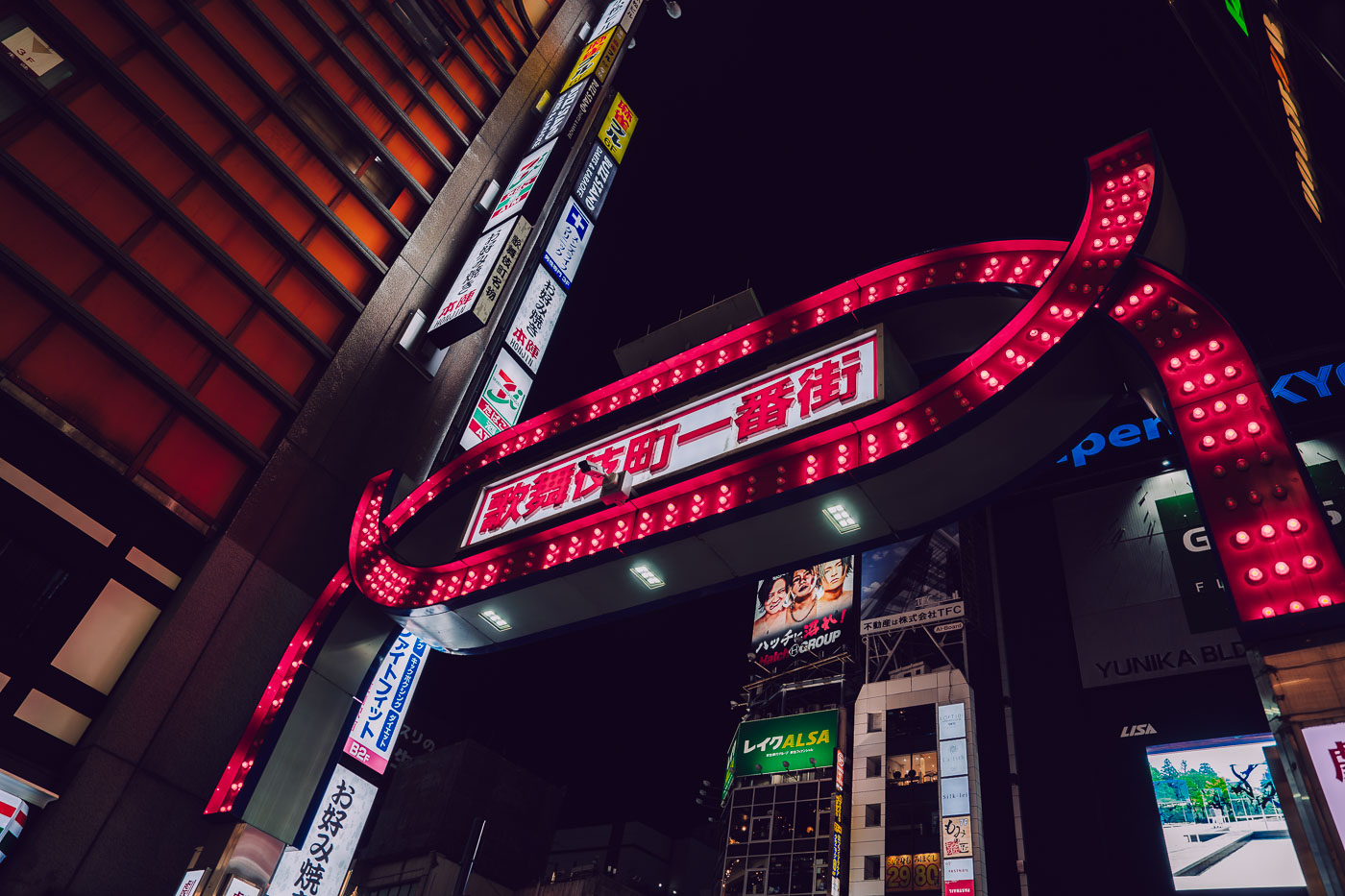
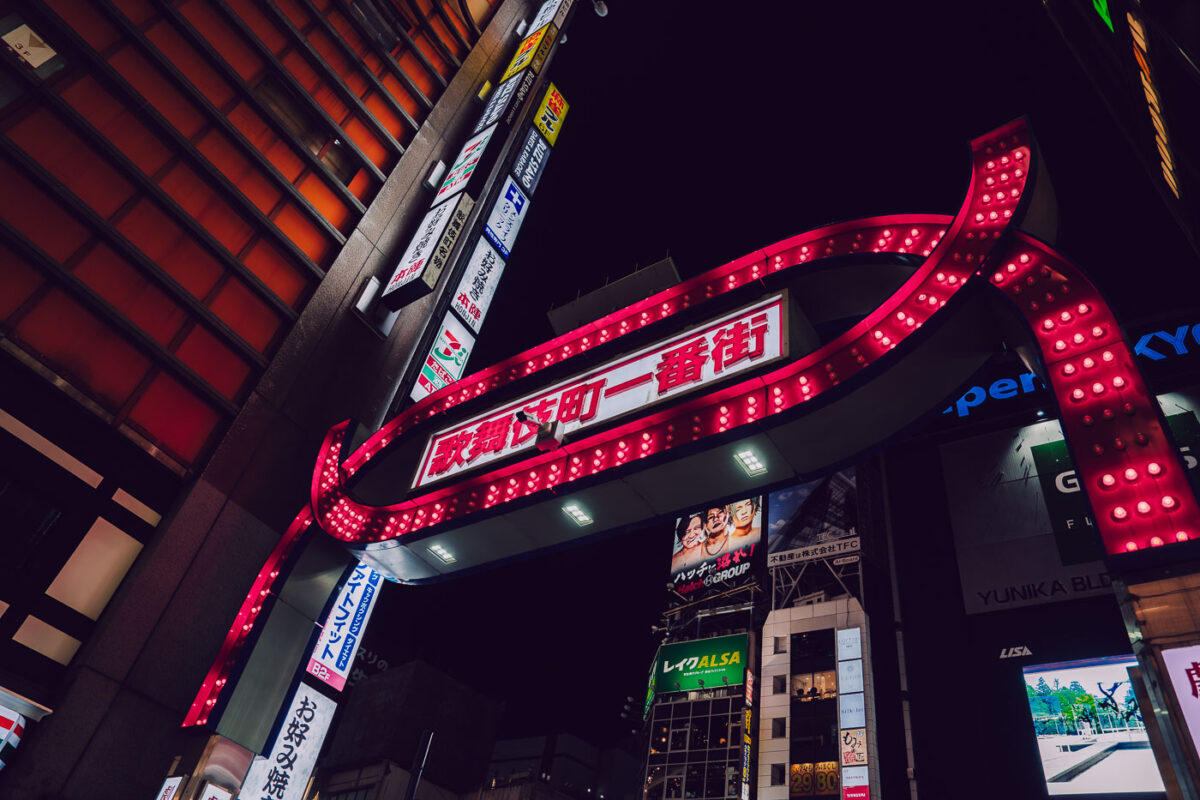
Red neon arch marking the entrance to Kabukichō Ichiban-gai in Shinjuku, Tokyo.
Kabukichō Ichiban-gai marks the main entrance to Kabukichō, Tokyo's largest entertainment and nightlife district, packed into a few blocks of Shinjuku ward. The name comes from a postwar plan to build a kabuki theater on the site; the theater was never constructed, but the name stuck as the area redeveloped through the 1950s into a dense cluster of bars, restaurants, cinemas, and clubs. The arched gateway spanning the street has marked the district's entrance for decades, replaced and updated several times as the neighborhood's signage evolved. Kabukichō sits just northeast of Shinjuku Station, one of the busiest rail hubs in the world, and draws both nightlife crowds and daytime tourists ing its dense signage.

Kabukichō Ichiban-gai Arch, Shinjuku, Tokyo
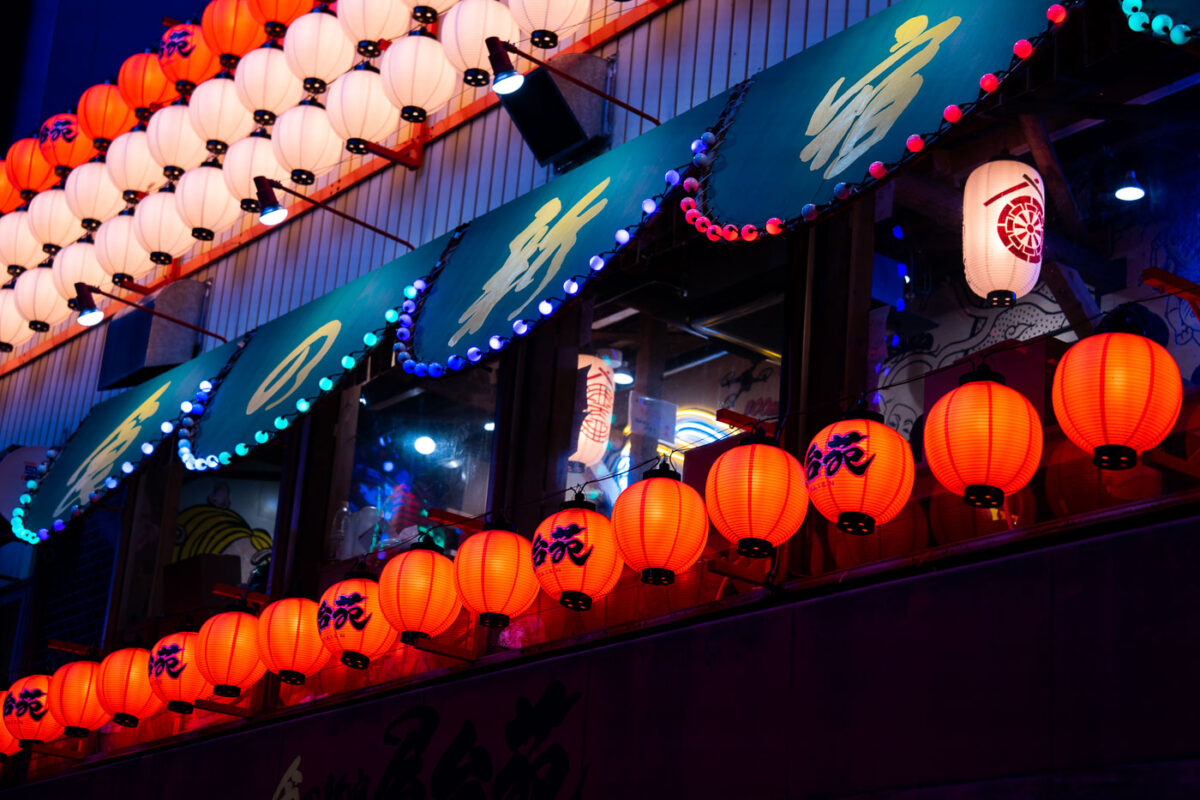
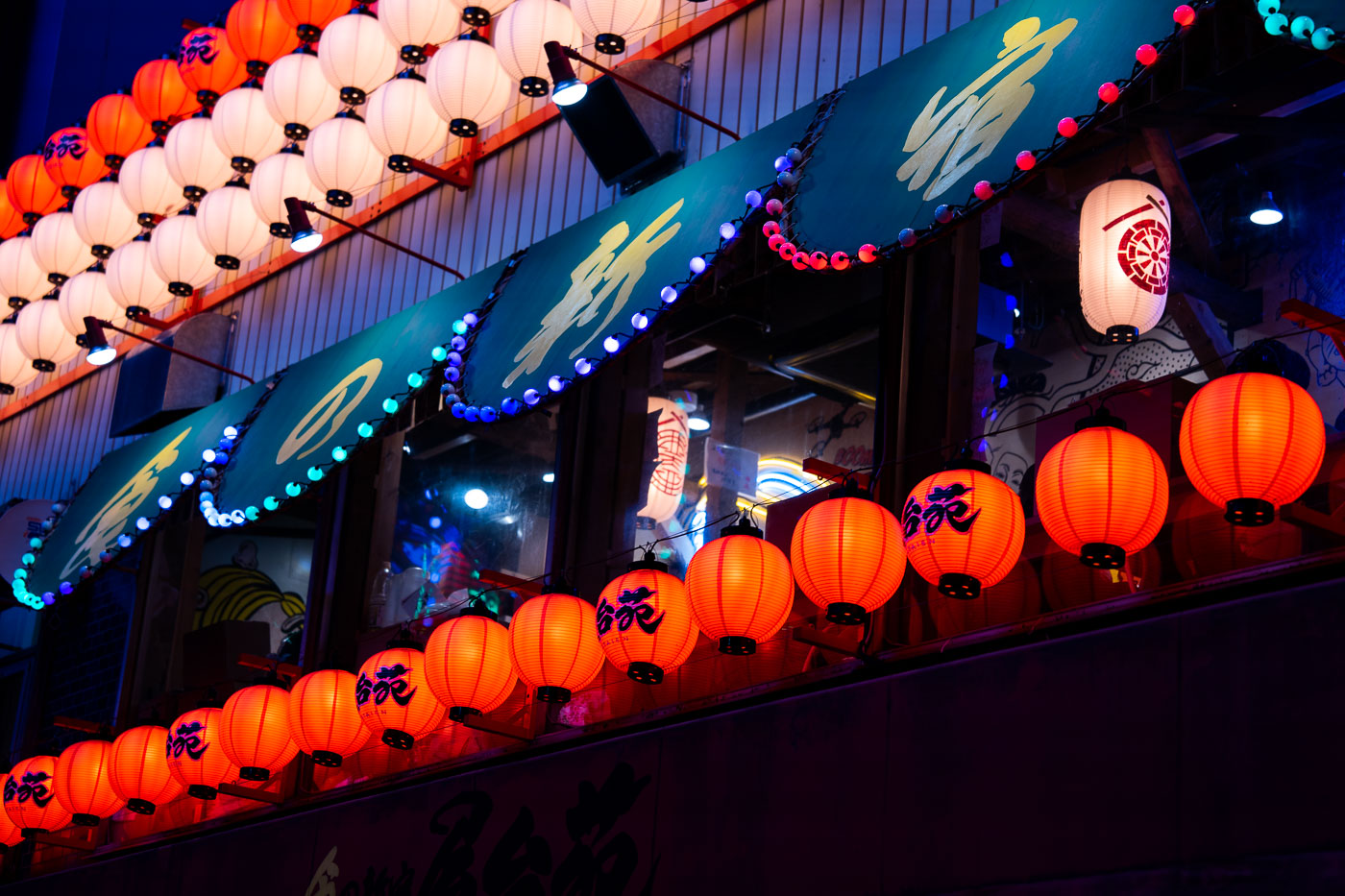
Illuminated red and white paper lanterns decorate an izakaya storefront in Kabukicho, Shinjuku, Tokyo.
Paper lanterns, called chōchin, hang in rows above this izakaya in Kabukichō, Shinjuku's nightlife district. The style dates back centuries, when candlelit paper lanterns marked the entrances of taverns and food stalls so customers could find them after dark; modern versions use electric bulbs but keep the same round or cylindrical shape and bold lettering. Kanji on the lanterns typically spell out the name of the shop or the type of food and drink served inside. Kabukichō itself grew into Tokyo's largest entertainment quarter after World War II, packing thousands of bars, restaurants, and clubs into a few square blocks east of Shinjuku Station.

Paper Lanterns at a Kabukichō Izakaya, Shinjuku
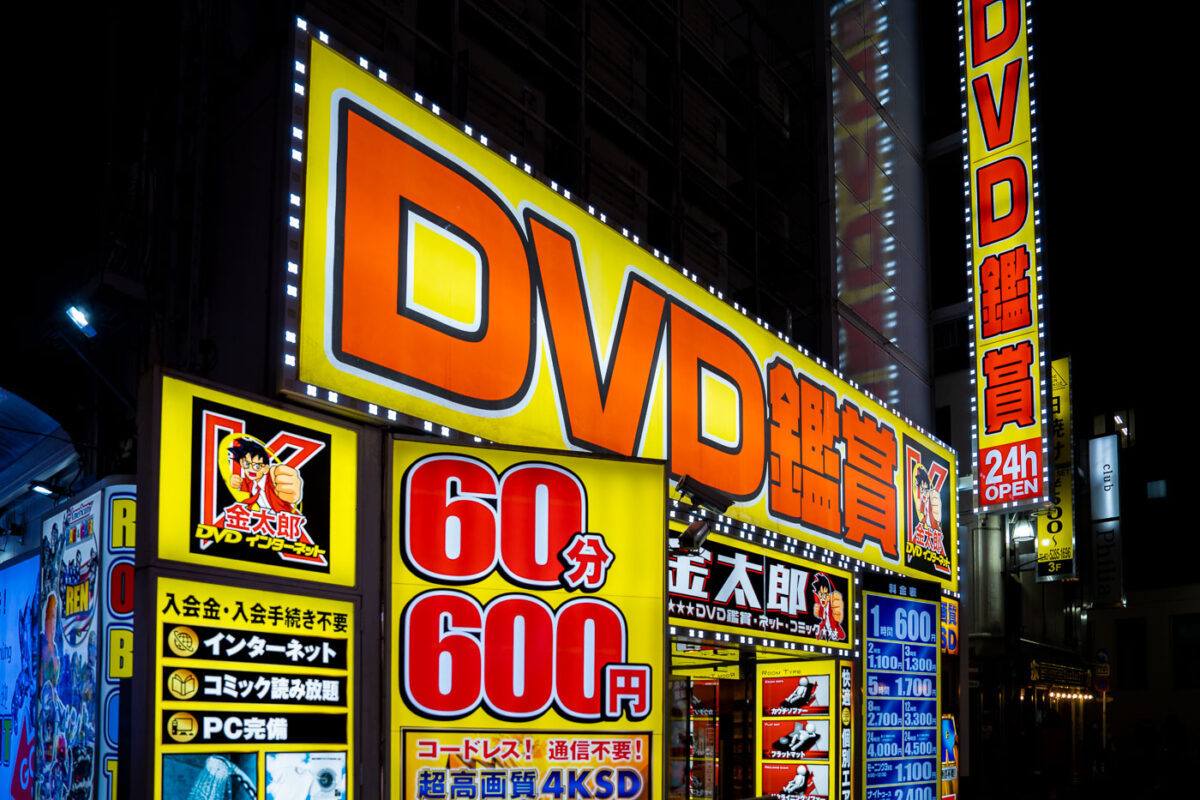
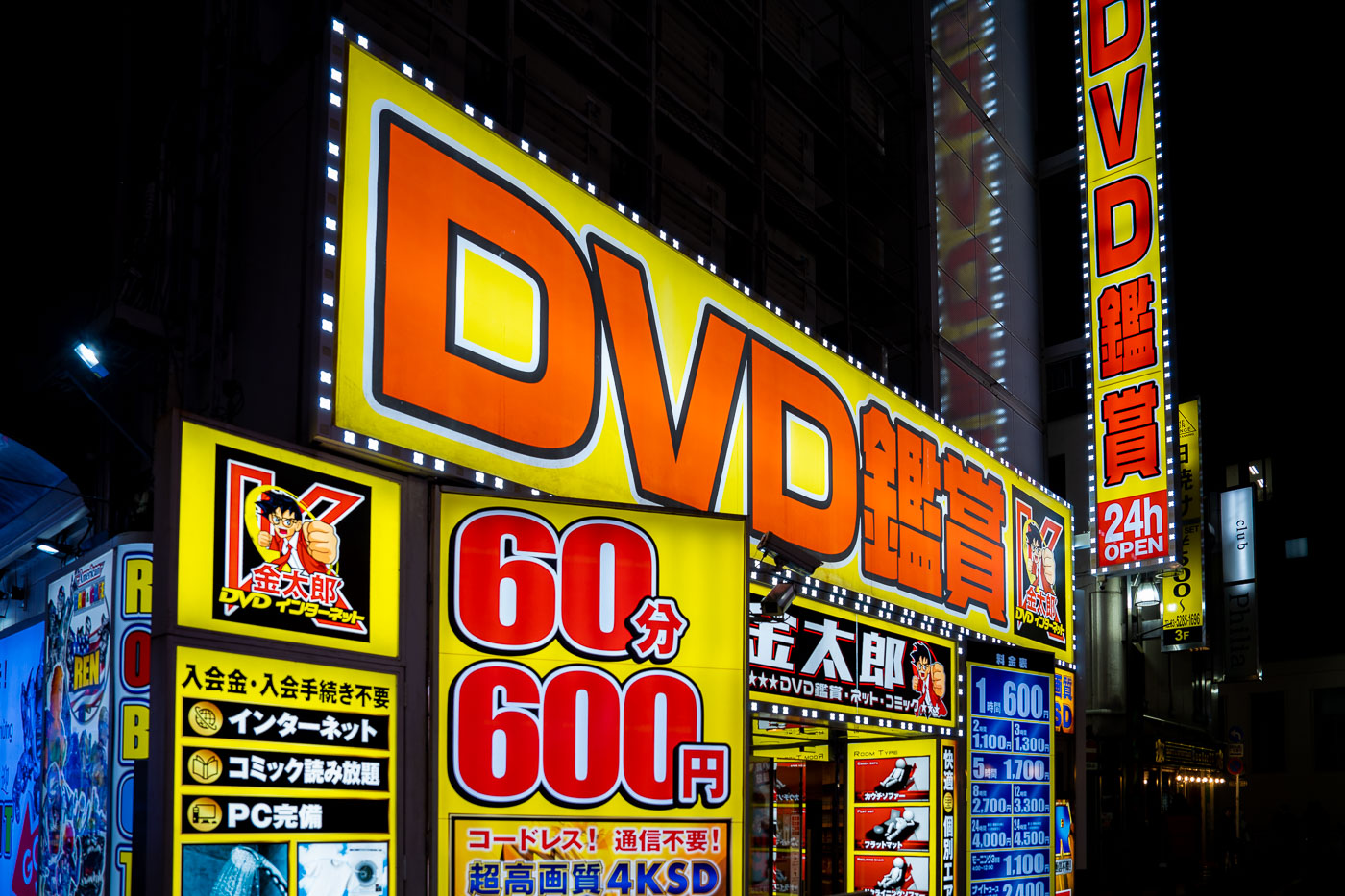
Shinjuku 24-hour DVD and internet cafe neon signs in Tokyo with rental and internet service advertising.
Shinjuku 24-hour DVD and internet cafe signs in Tokyo advertise private booths, internet access, and video rentals. Such businesses were common in Kabukicho’s nightlife district and catered to late-night visitors seeking inexpensive entertainment and rest spaces.

Shinjuku 24-Hour DVD and Internet Cafe Neon Signs
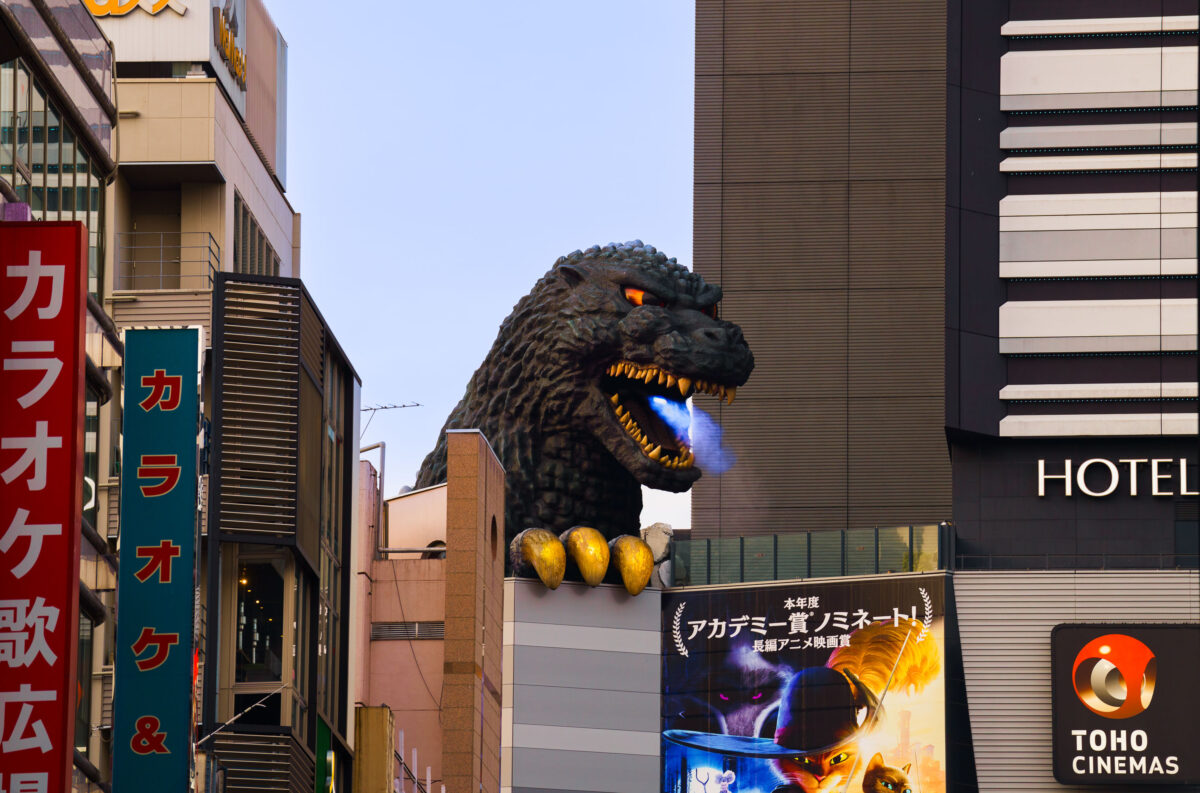
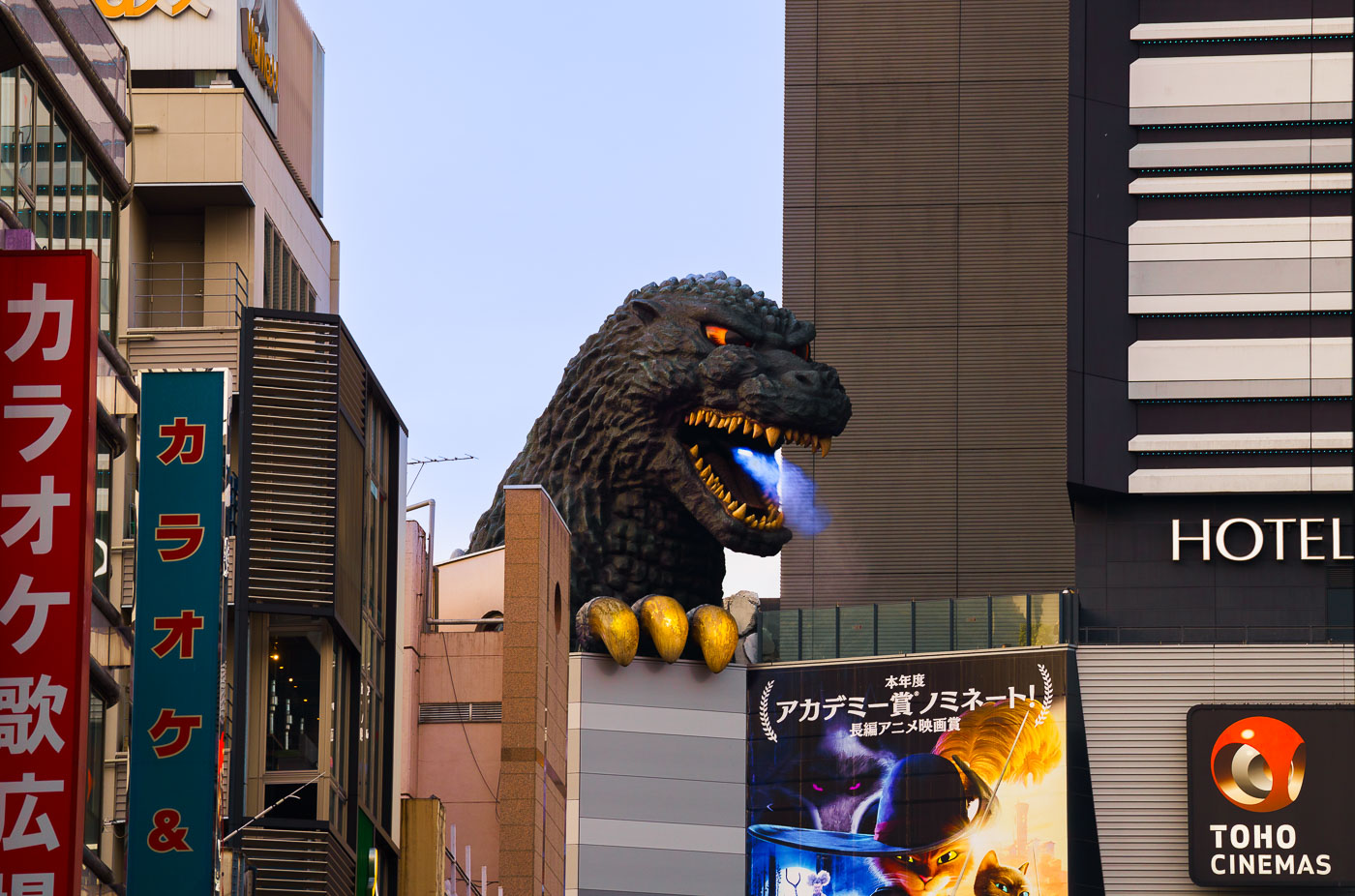
Godzilla head sculpture with glowing mouth mounted on Toho Cinemas building in Tokyo's Kabukichō district.
The Godzilla head perched above Toho Cinemas Shinjuku marks the entrance to the Shinjuku Toho Building, opened in 2015 in the Kabukichō entertainment district. The sculpture measures roughly 12 meters tall, built to commemorate Godzilla's 60th anniversary and the film studio's long association with the character. Toho Co., Ltd. produced the original 1954 Godzilla film and has continued the franchise for decades, making the statue a fitting marker for the company's Shinjuku cinema complex. At scheduled intervals, the head releases artificial fog meant to resemble Godzilla's signature atomic breath, timed with sound and light effects. The building beneath it houses a twelve-screen multiplex along with a Gracery hotel, whose upper-floor rooms offer close-up views of the statue.

Godzilla Statue atop Toho Cinemas, Kabukichō, Shinjuku
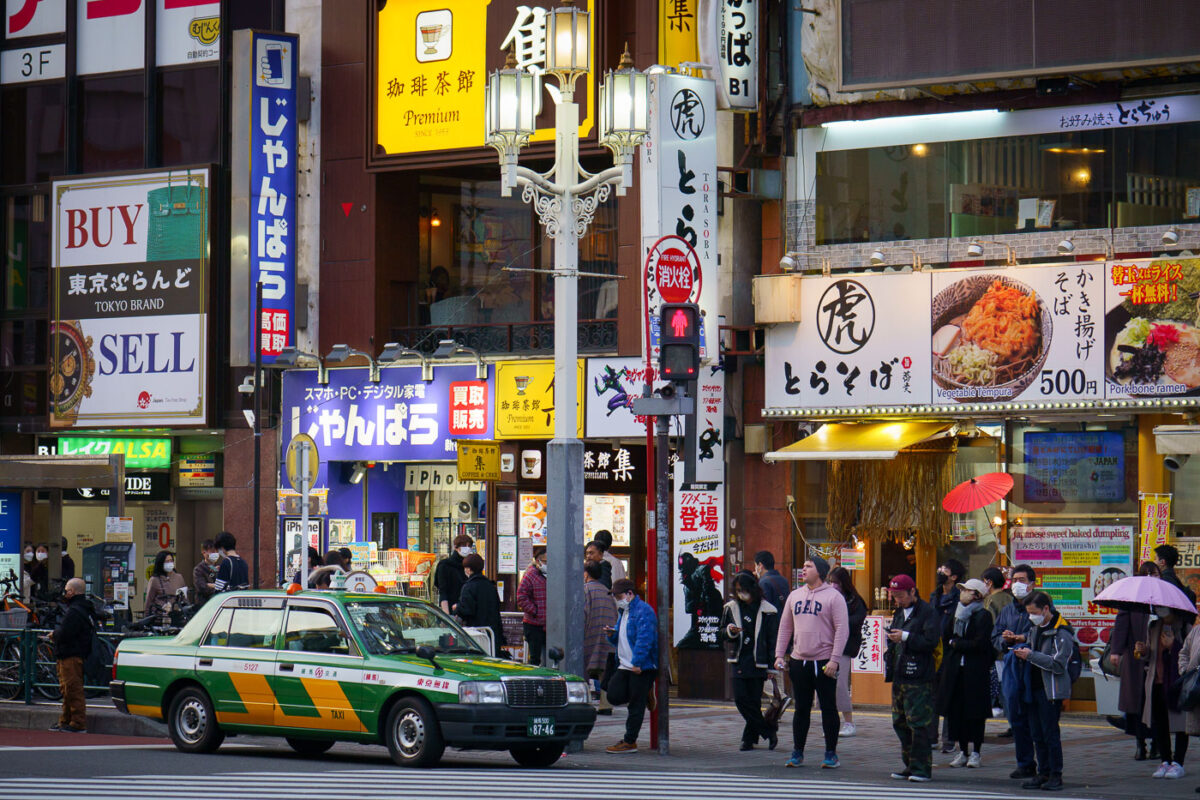
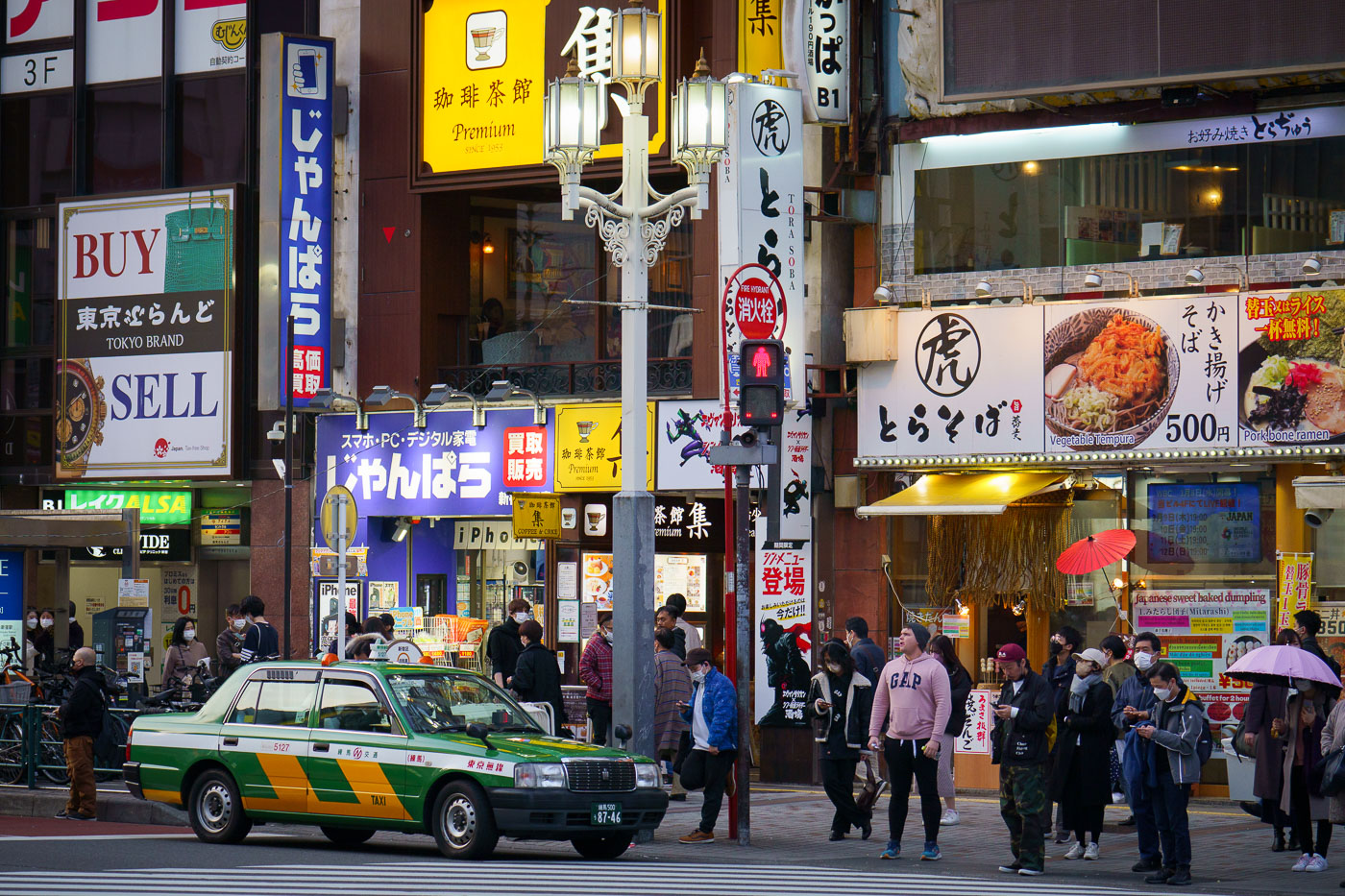
A green and yellow Tokyo taxi stopped at a pedestrian crossing in Kabukichō, Shinjuku, surrounded by restaurants and neon
Kabukichō is Tokyo's largest entertainment and nightlife district, packed into a few blocks east of Shinjuku Station's Kabukichō exit. The neighborhood took its name from a postwar plan to build a kabuki theater there; the theater was never built, but the name stuck. Toyota Crown Comfort taxis like this one were the standard cab in Tokyo from 1995 until production ended in 2017, and thousands remain in service across the city. Tokyo's taxi fleets are color-coded by company, with green and yellow liveries commonly used by operators such as Kokusai Motorcars. Shinjuku Station, the world's busiest rail hub by daily passenger volume, sits just a few minutes' walk from this intersection.

Toyota Crown Comfort Taxi, Kabukichō, Shinjuku
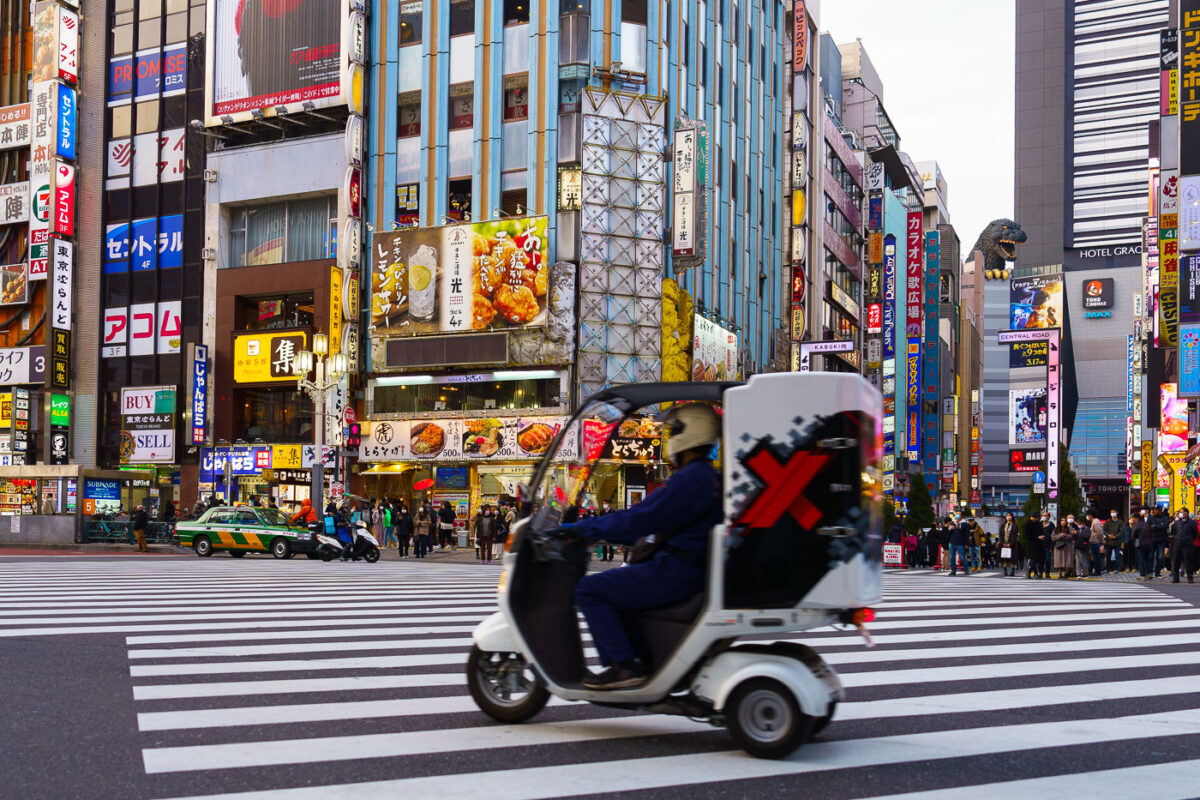
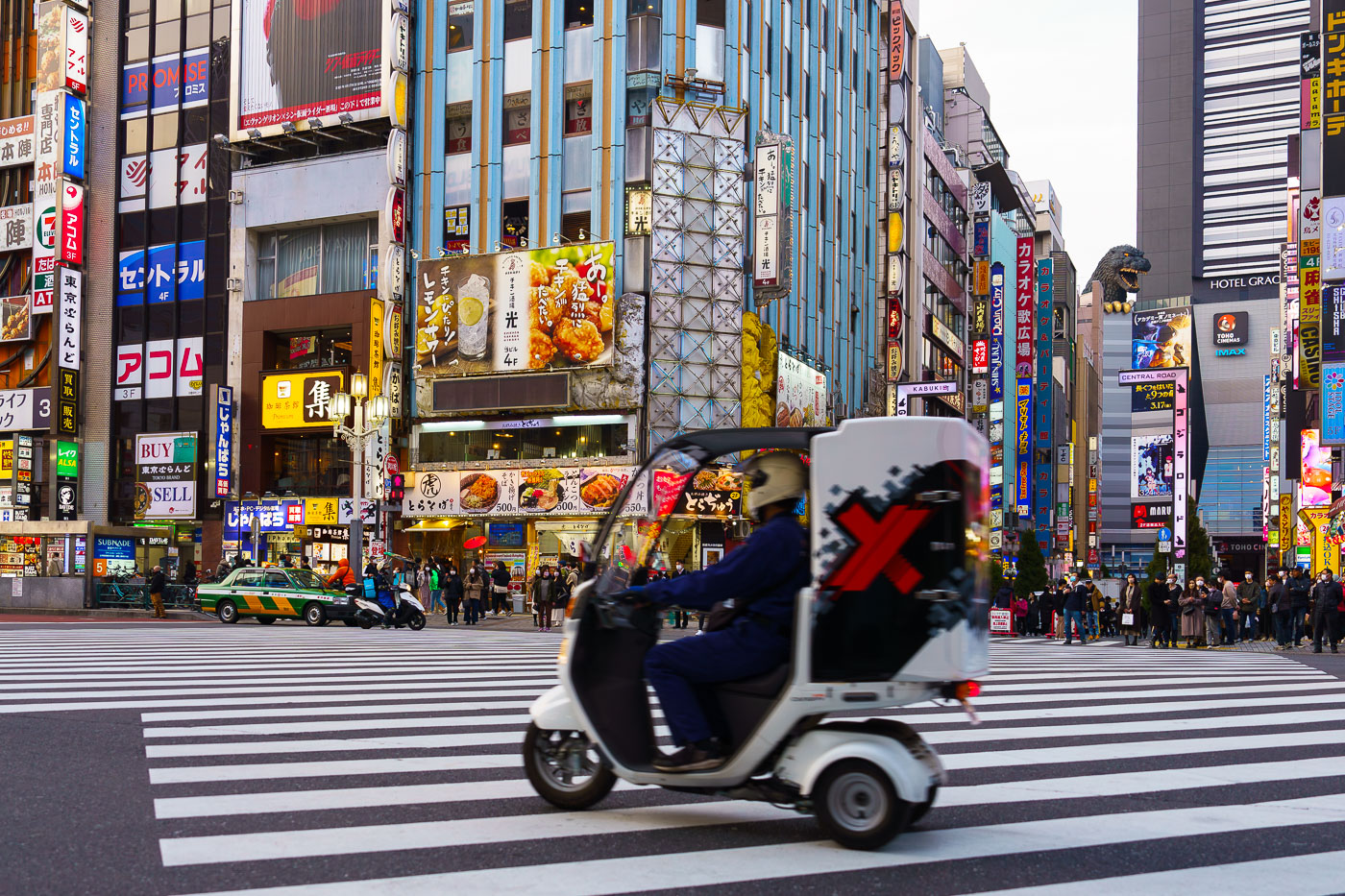
A delivery scooter crosses a zebra crossing in Kabukichō, Tokyo's Shinjuku entertainment district.
Central Road cuts through Kabukichō, Shinjuku's largest entertainment district, lined with pachinko parlors, izakayas, karaoke boxes, and cinemas. The neighborhood took its current shape after World War II, when the area was rebuilt as an entertainment and red-light zone under a city redevelopment plan. Hotel Gracery Shinjuku, home to the Godzilla head that looms over Toho Cinemas, opened in 2015 on the site of the former Koma Theater. Three-wheeled delivery scooters like the one crossing here are common sights around Tokyo, used by convenience stores and fast-food chains including McDonald's for door-to-door orders in the city's dense commercial districts.

Delivery Scooter Crossing Central Road, Kabukichō, Tokyo