Place Archive

Charlotte

Two large-scale sports venues define this archive’s geographic footprint within the Charlotte metropolitan area. Charlotte Motor Speedway, built in Concord in 1960, grew from a privately financed venture into one of NASCAR’s flagship tracks, hosting premier-circuit races that draw crowds exceeding 100,000 and ranking among the most attended single-day sporting events in the country. The speedway has undergone multiple expansions since opening, reshaping both its physical footprint and its role in professional stock car racing.

2 photo sets 6 photos

Nearby Pages

Photo Sets

Markers

Charlotte Photo Locations

6 geotagged photos

Photos

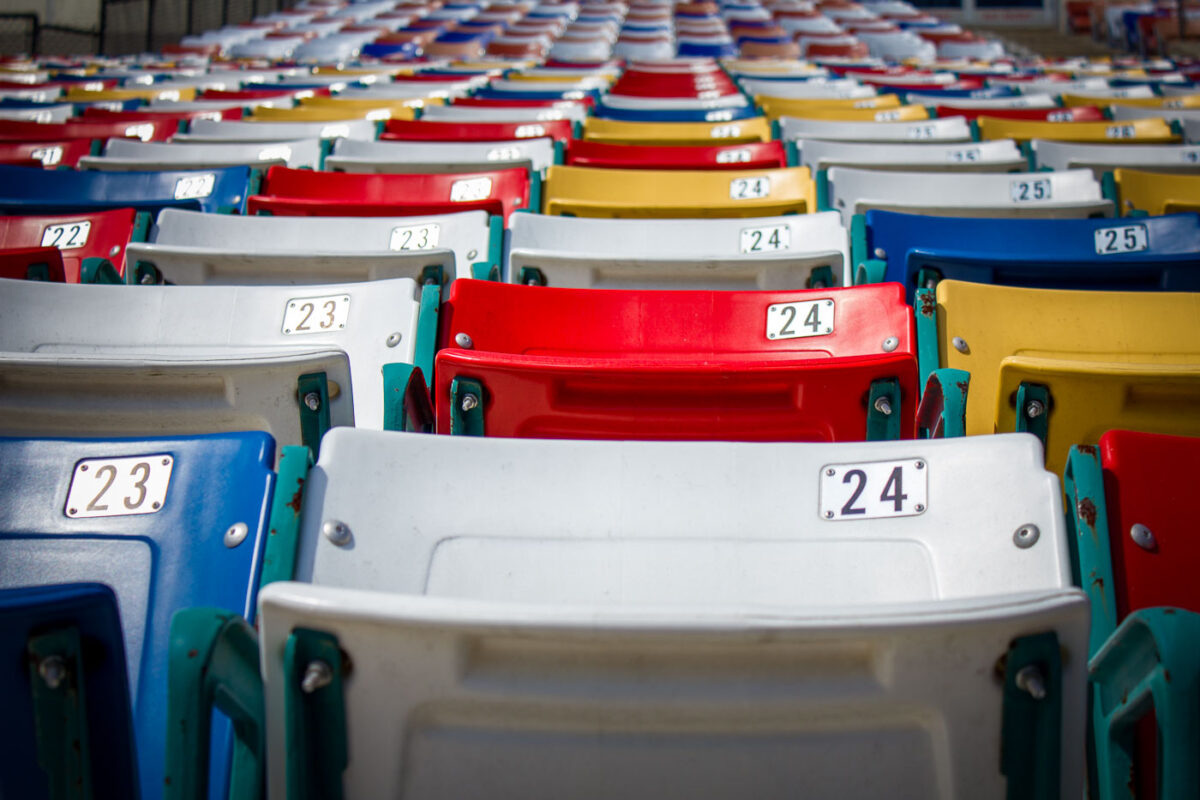
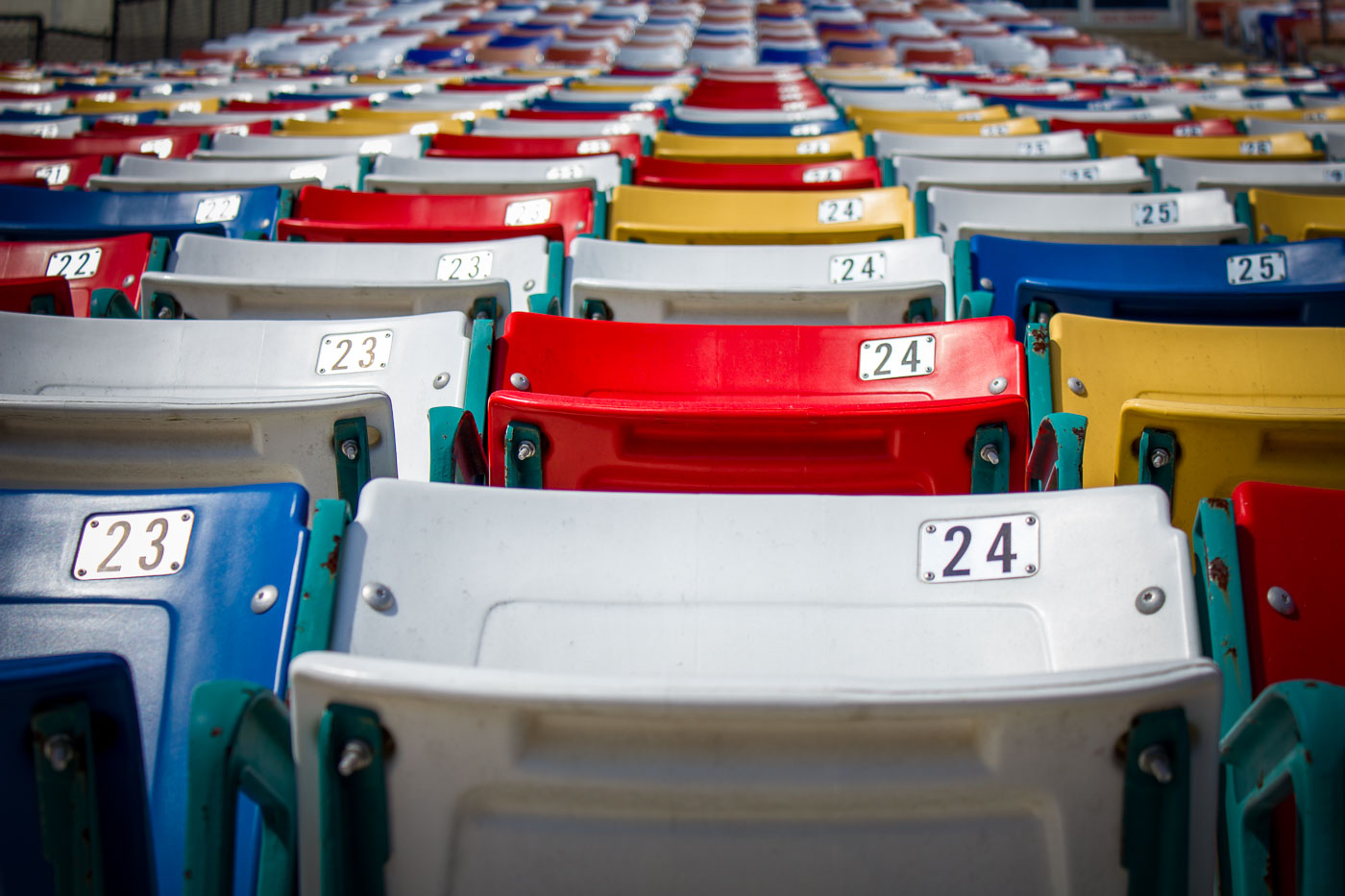
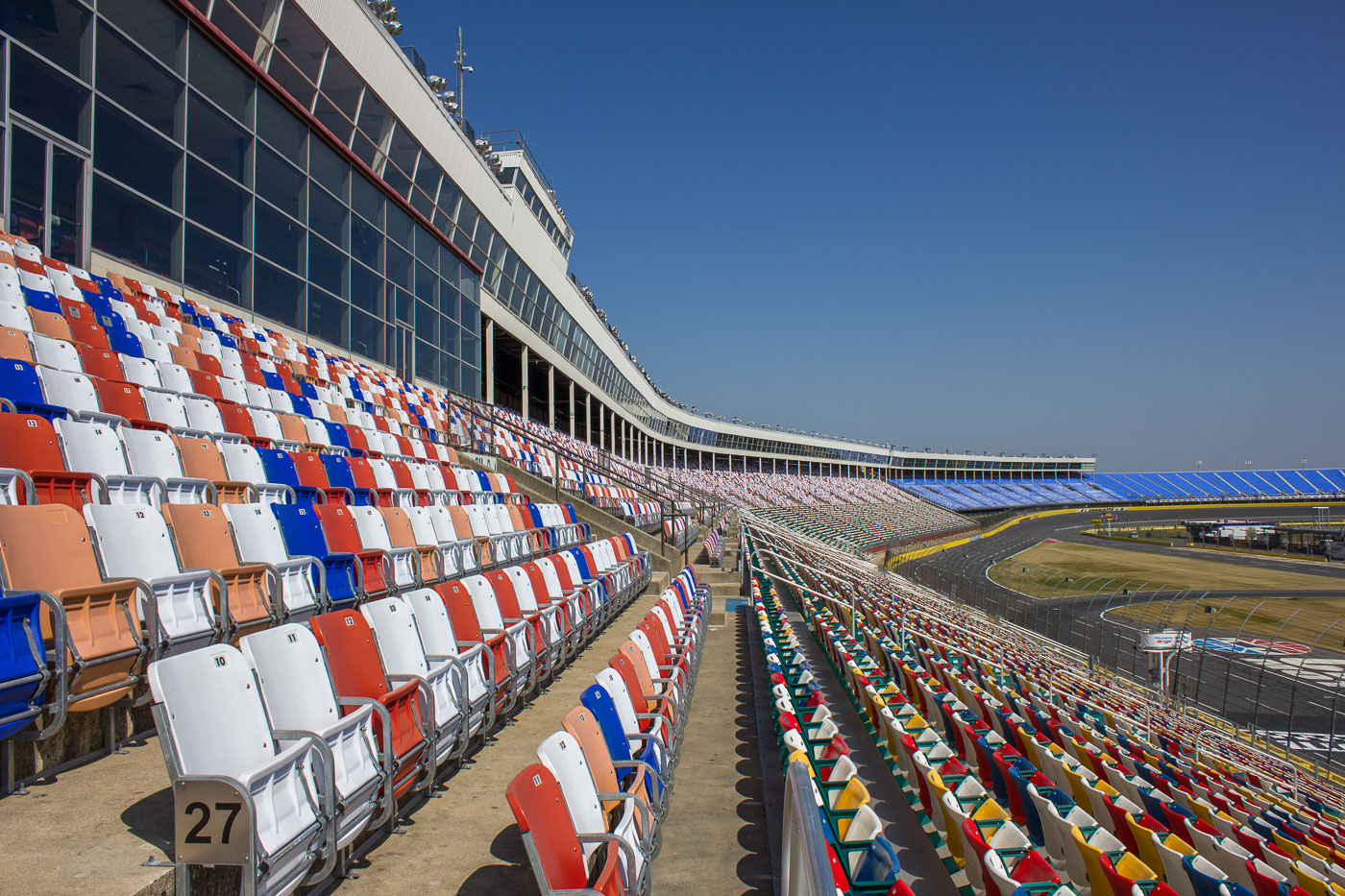
Rows of numbered stadium seats in red, white, blue, and yellow at Charlotte Motor Speedway.
Charlotte Motor Speedway, located in Concord, North Carolina, opened in 1960 as home to NASCAR's Coca-Cola 600 and other major stock car races. The speedway has been renovated multiple times since its founding, with seating sections numbered to help the roughly 95,000 fans who can be accommodated find their places. Each grandstand is divided into color-coded blocks, a system tracks use at many large motorsports venues to speed entry and exit on race day.
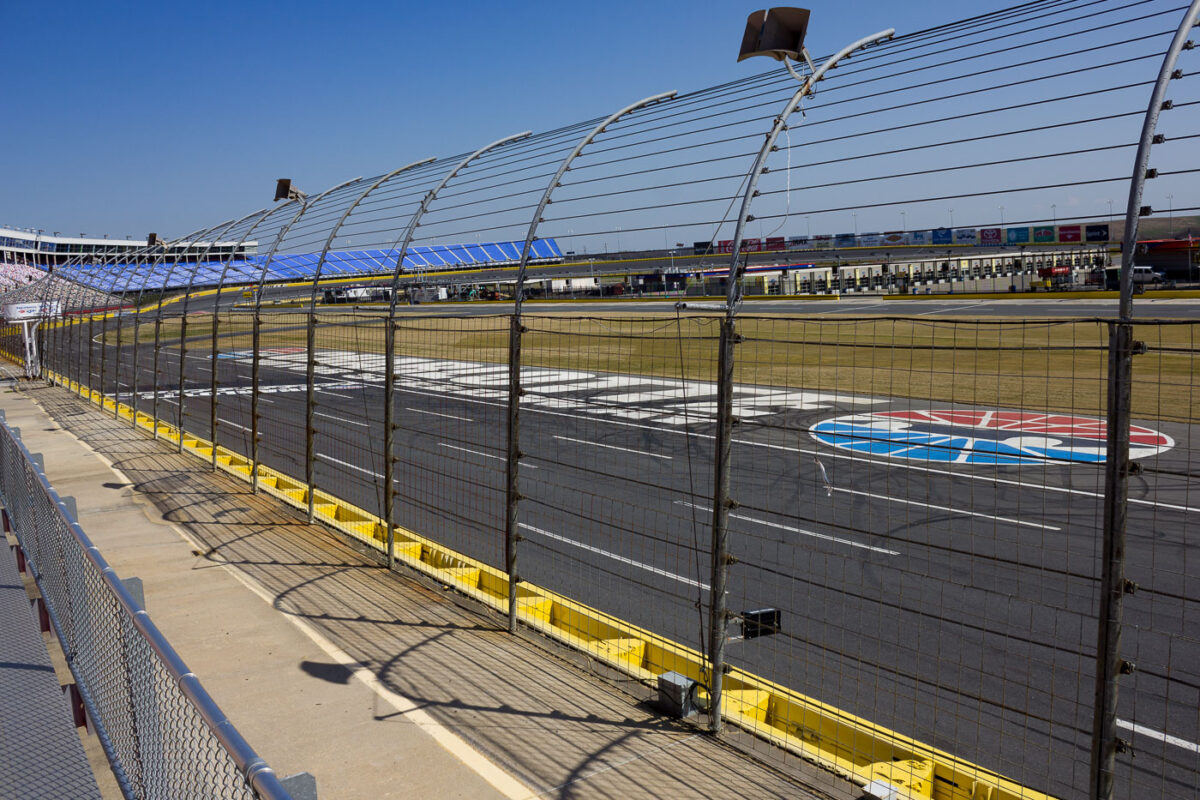
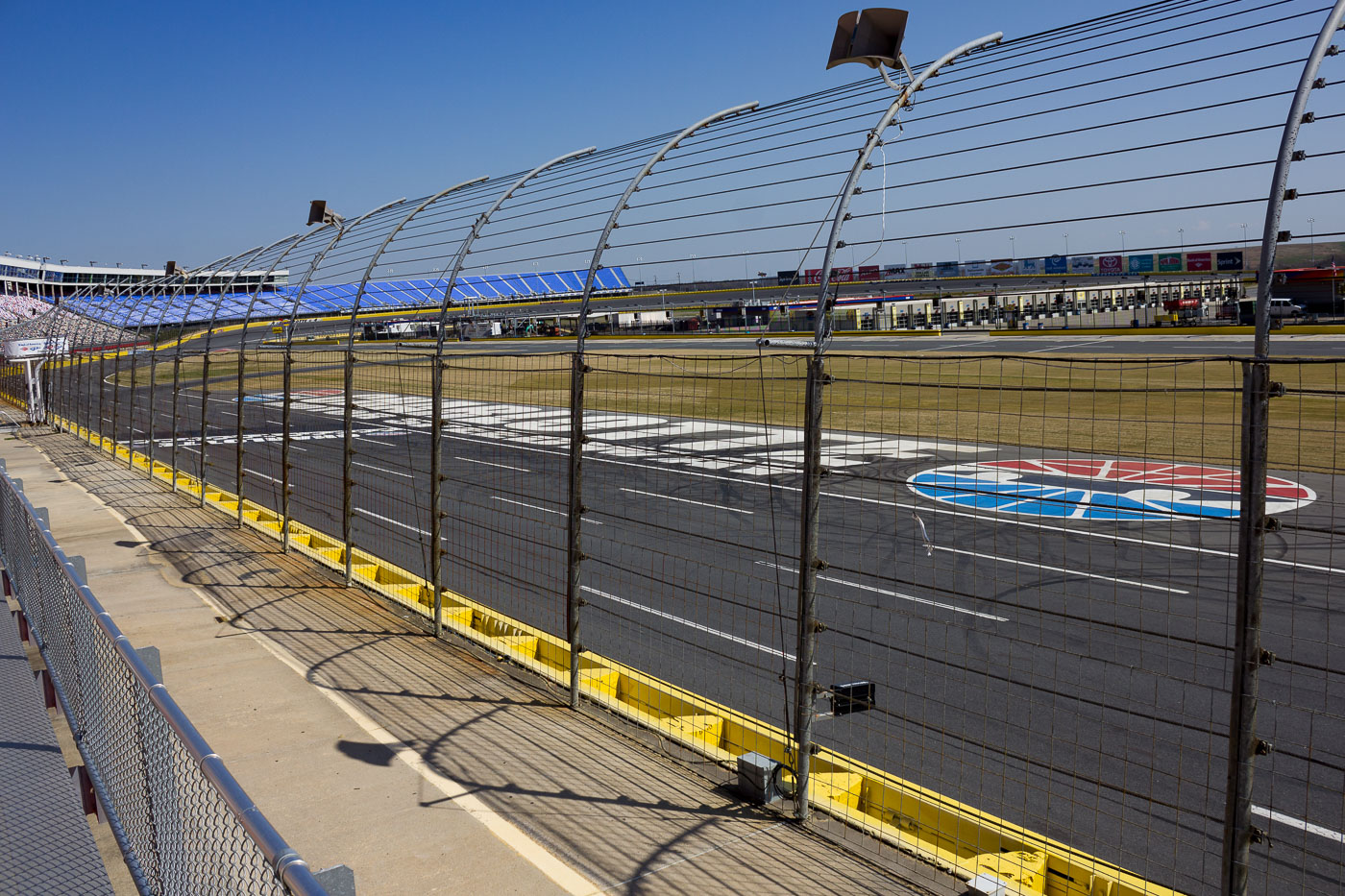
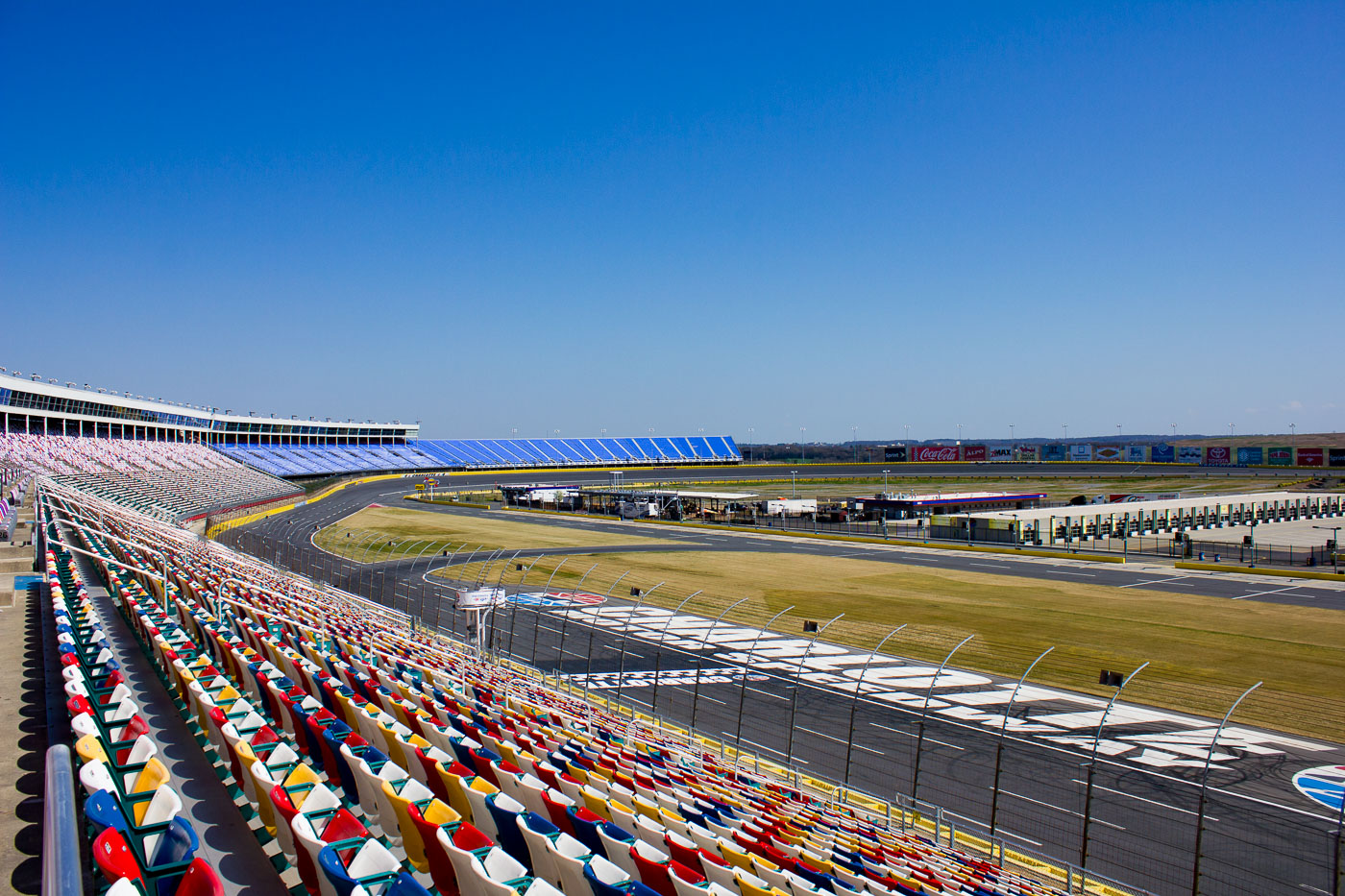
Charlotte Motor Speedway's 1.5-mile oval track with protective barriers and empty grandstands in Concord, North Carolina.
Charlotte Motor Speedway opened in 1960 as part of a push to bring major stock car racing to the Carolinas, home turf for many NASCAR teams. The track is a 1.5-mile oval with high-banked turns, configured for both oval racing and, since a later addition, a infield road course. It hosts the Coca-Cola 600, NASCAR's longest race, run every Memorial Day weekend since 1960. The speedway sits in Concord, just northeast of Charlotte, and the surrounding area has grown into a hub for racing teams and NASCAR-related businesses.
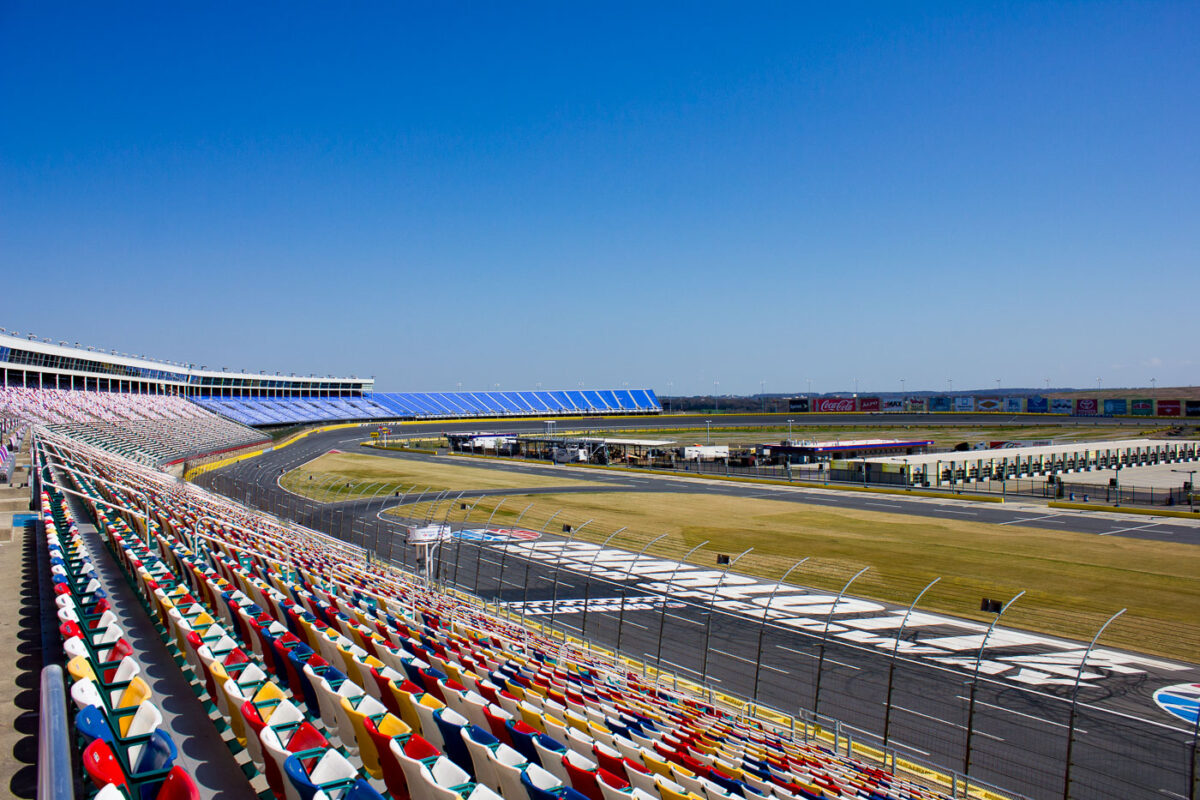
Charlotte Motor Speedway's empty grandstands and 1.5-mile oval track in Concord, North Carolina.
Charlotte Motor Speedway in Concord, North Carolina, opened in 1960 as a 1.5-mile oval and remains one of NASCAR's premier venues. The track hosts the Coca-Cola 600 each Memorial Day weekend, the longest race on the NASCAR Cup Series calendar. Its grandstands hold more than 95,000 spectators, supplemented by suites and club seating added during later renovations. The facility also includes a dirt track and a road course configuration used for other racing series throughout the year.
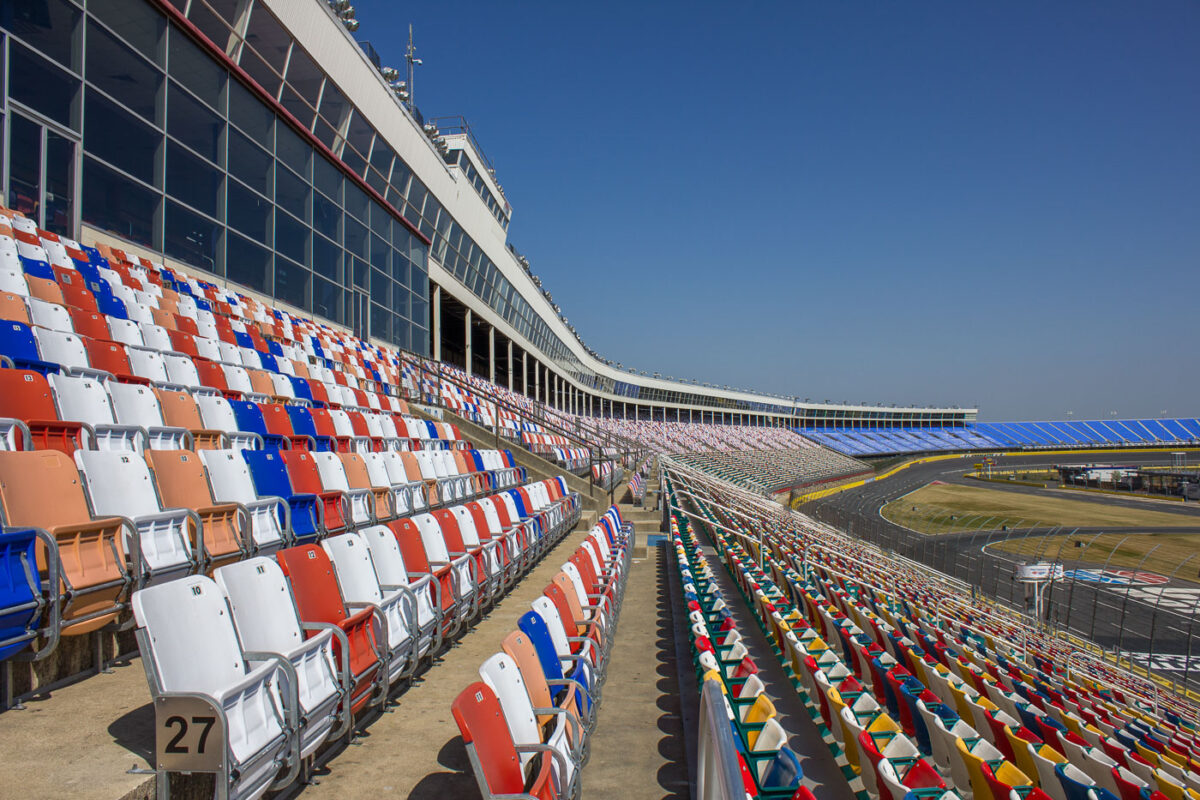
Empty grandstands with red, white, and blue seats at Charlotte Motor Speedway in Concord, North Carolina.
Charlotte Motor Speedway opened in 1960 in Concord, North Carolina, built by Bruton Smith and Curtis Turner as a 1.5-mile oval. The track hosts NASCAR's Coca-Cola 600 each Memorial Day weekend, the longest race on the Cup Series calendar, along with the Bank of America ROVAL 400 on its combined oval-road course layout. Grandstand seating has grown through successive renovations to exceed 95,000 permanent seats, supplemented by suites and club-level sections added in the 1990s and 2000s. The speedway also contains a dirt track and a drag strip within its larger complex, known collectively as the Charlotte Motor Speedway campus.
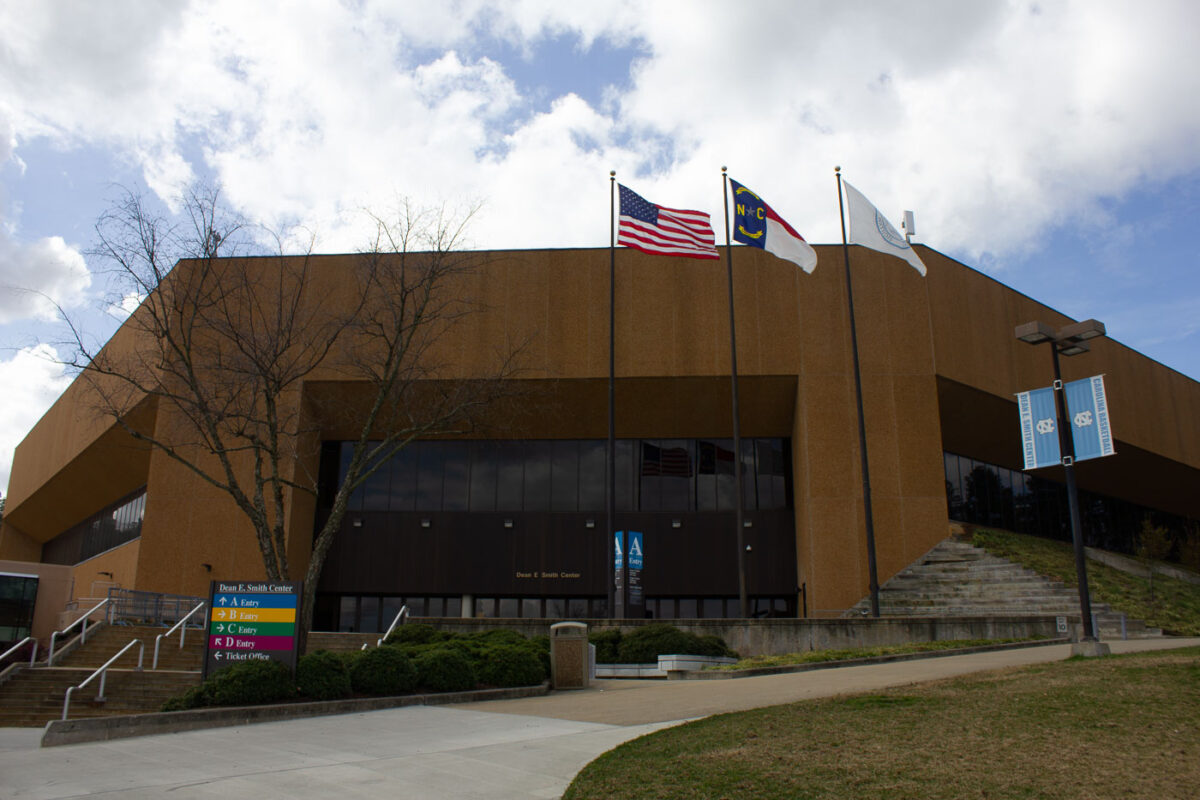
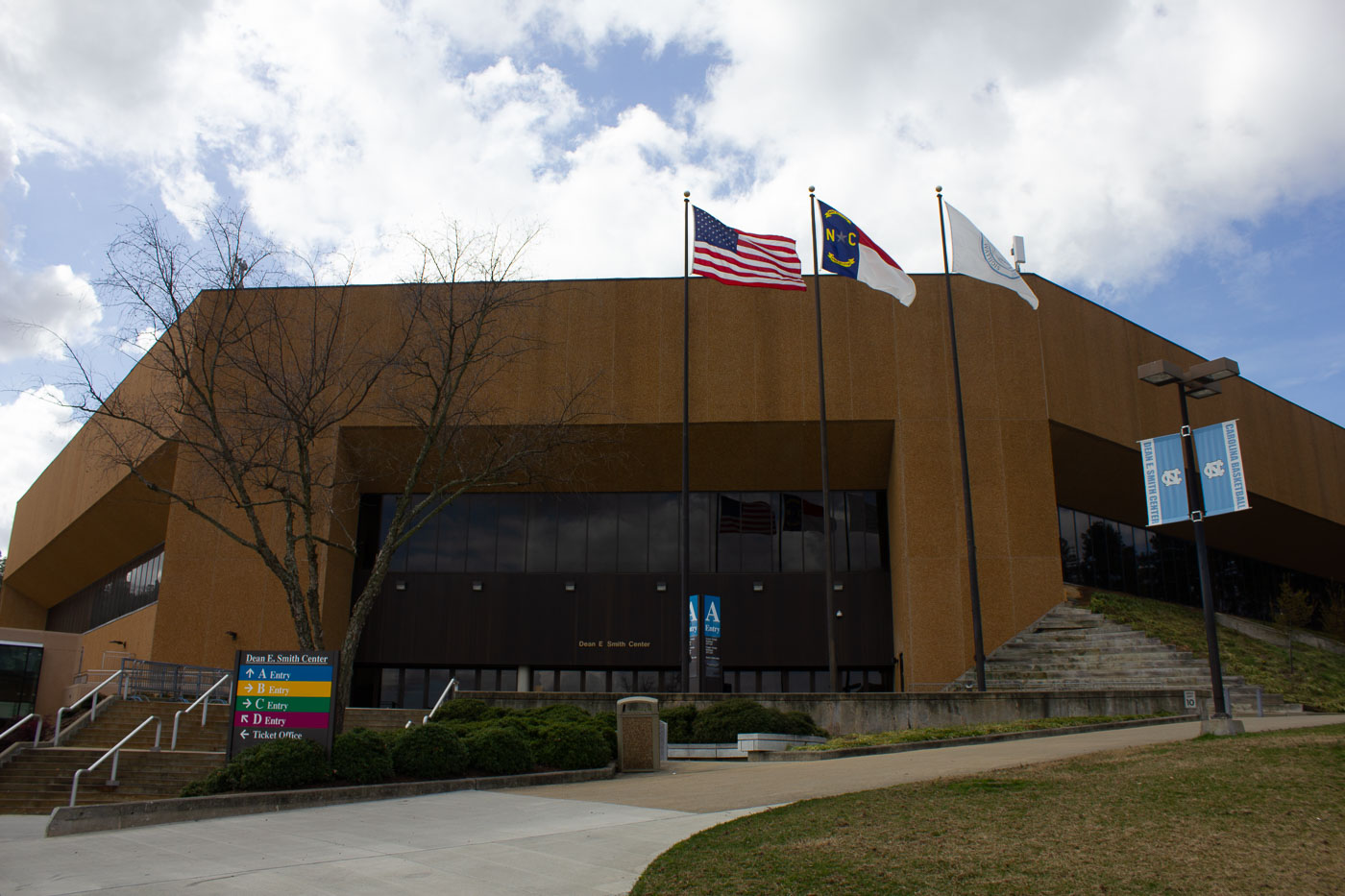
Dean E. Smith Center, UNC's basketball arena, displays American and institutional flags on its tan exterior.
The Dean E. Smith Center opened in 1986 on the University of North Carolina at Chapel Hill campus, replacing Carmichael Auditorium as the home of Tar Heels basketball. Named for longtime coach Dean Smith, who led the program to two national championships, the arena seats more than 21,000 and ranks among the largest on-campus basketball venues in the country. Students have nicknamed it the "Dean Dome" since its construction. Beyond basketball, the building hosts commencement ceremonies, concerts, and other university events throughout the year.
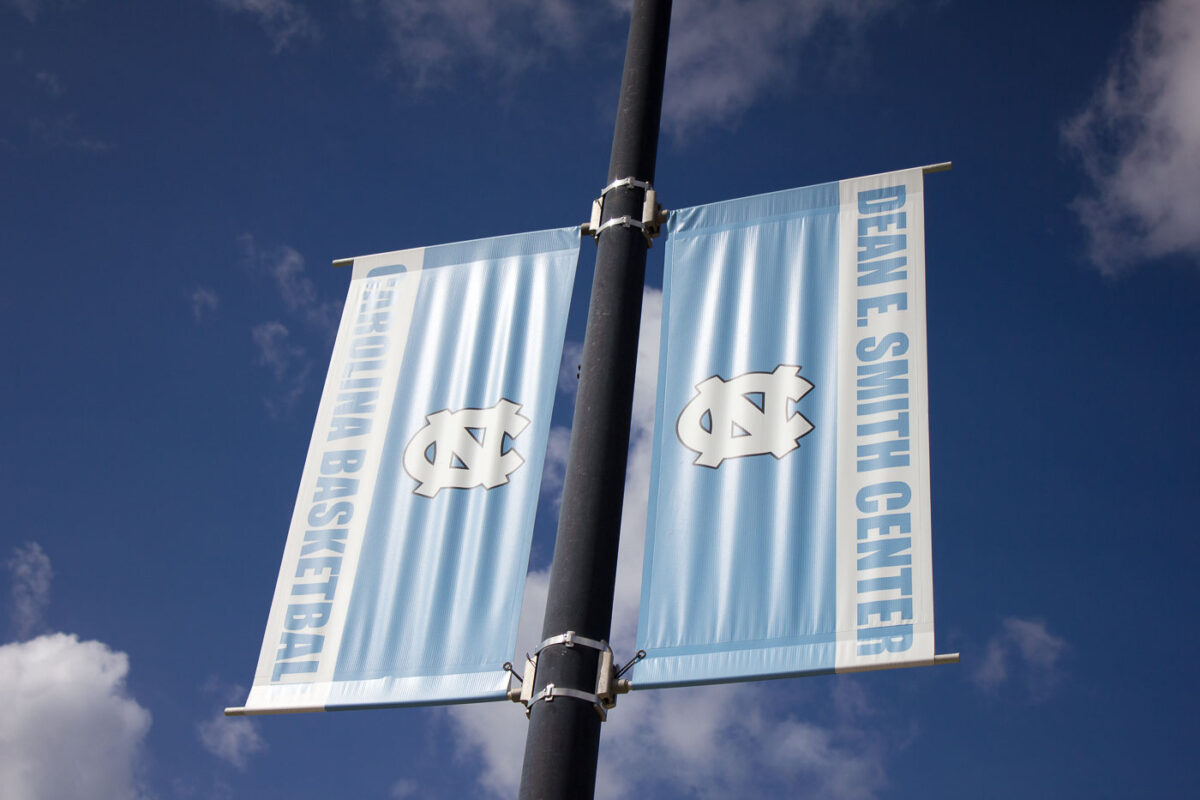
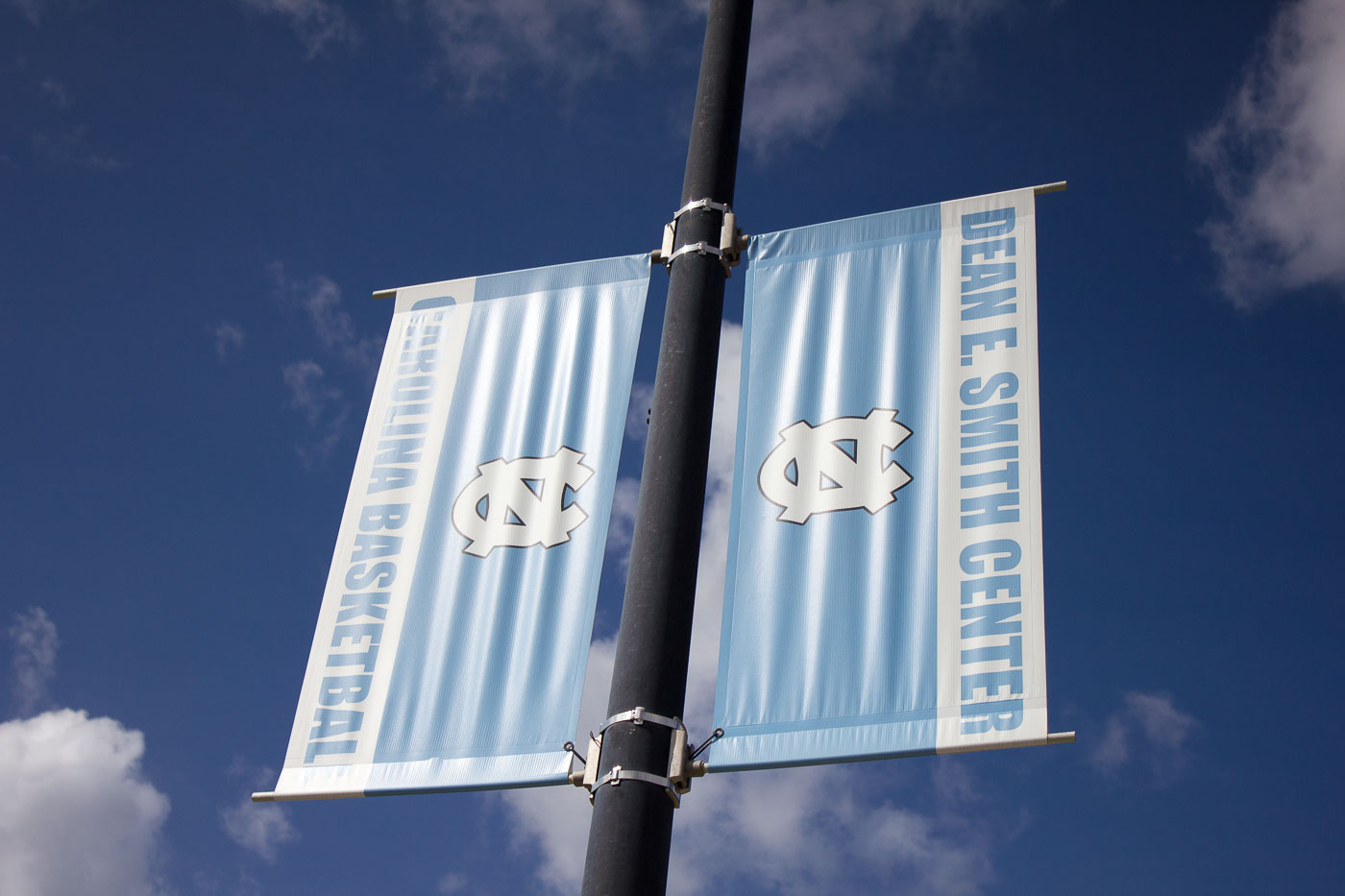
University of North Carolina Tar Heels basketball banners hanging from a pole outside the Dean E. Smith Center in Chapel Hill.
The Dean E. Smith Center opened in 1986 as the home arena for University of North Carolina basketball. It replaced Carmichael Auditorium and was named for Dean Smith, who coached the Tar Heels for 36 seasons and won two NCAA championships, in 1982 and 1993. The arena seats more than 21,000 and is nicknamed the "Dean Dome" by fans and sportswriters alike.