Place Archive

Greensboro

Photographs from Greensboro.

1 photo set 7 photos

Nearby Pages

Map

Photo Map

Markers

Greensboro Photo Locations

4 geotagged photos

Photos

A dog cools off in a water fountain in Greensboro, North Carolina, a common amenity in urban public spaces during warm weather.
A dog seeks relief from the heat in a water fountain located in Greensboro, North Carolina. Water fountains in public spaces often serve as both decorative elements and functional amenities, providing a cooling respite during warmer months. This particular fountain appears to be situated in an urban environment, likely a plaza or park, contributing to the city's public spaces. The presence of flowers and a street in the background suggests it is a well-maintained area designed for community enjoyment.
Discarded mattresses, a television, and a stop sign are displayed outside the S. Elm St. Thrift Store in Greensboro, North Carolina.
S. Elm St. Thrift Store in Greensboro, North Carolina, displays a collection of discarded items, including a television, mattresses, and a stop sign, outside its premises. The store, identified by faded lettering on its facade, serves as a repository for second-hand goods. The arrangement of these items, juxtaposed with the utilitarian architecture of the building, suggests a commentary on consumption and disposal within the urban environment.
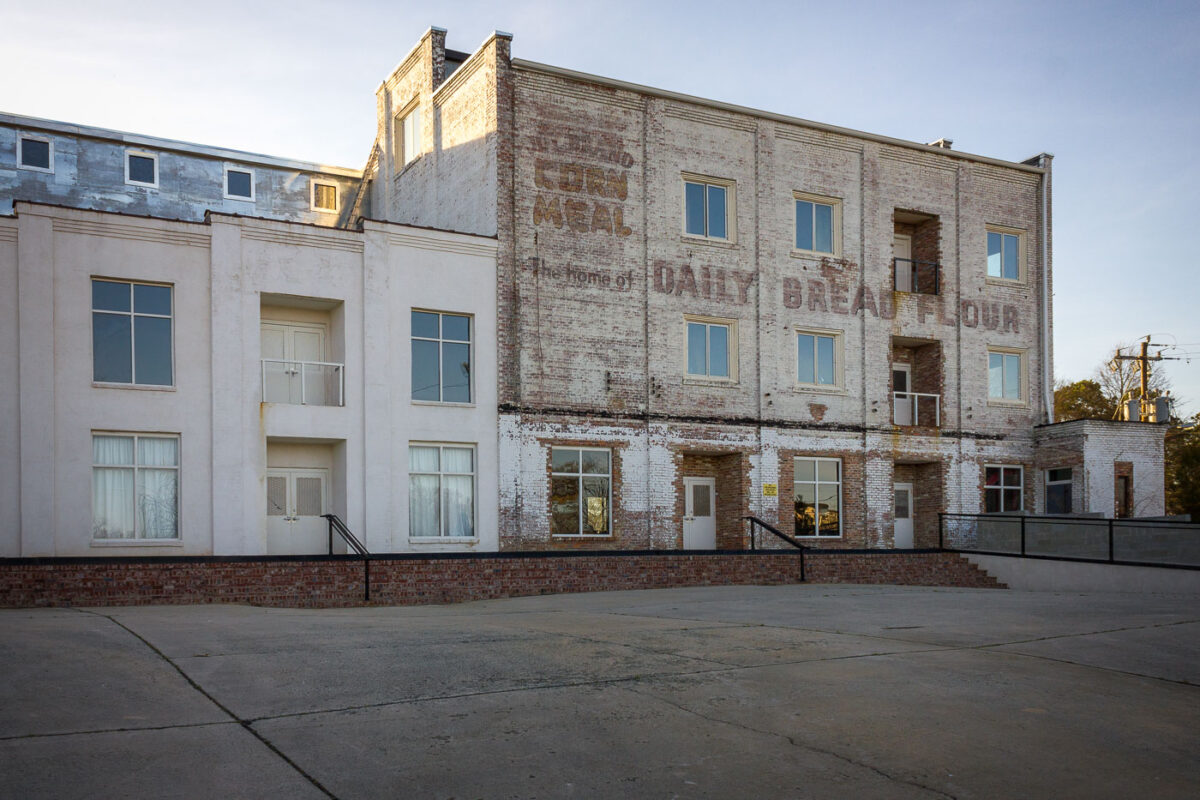
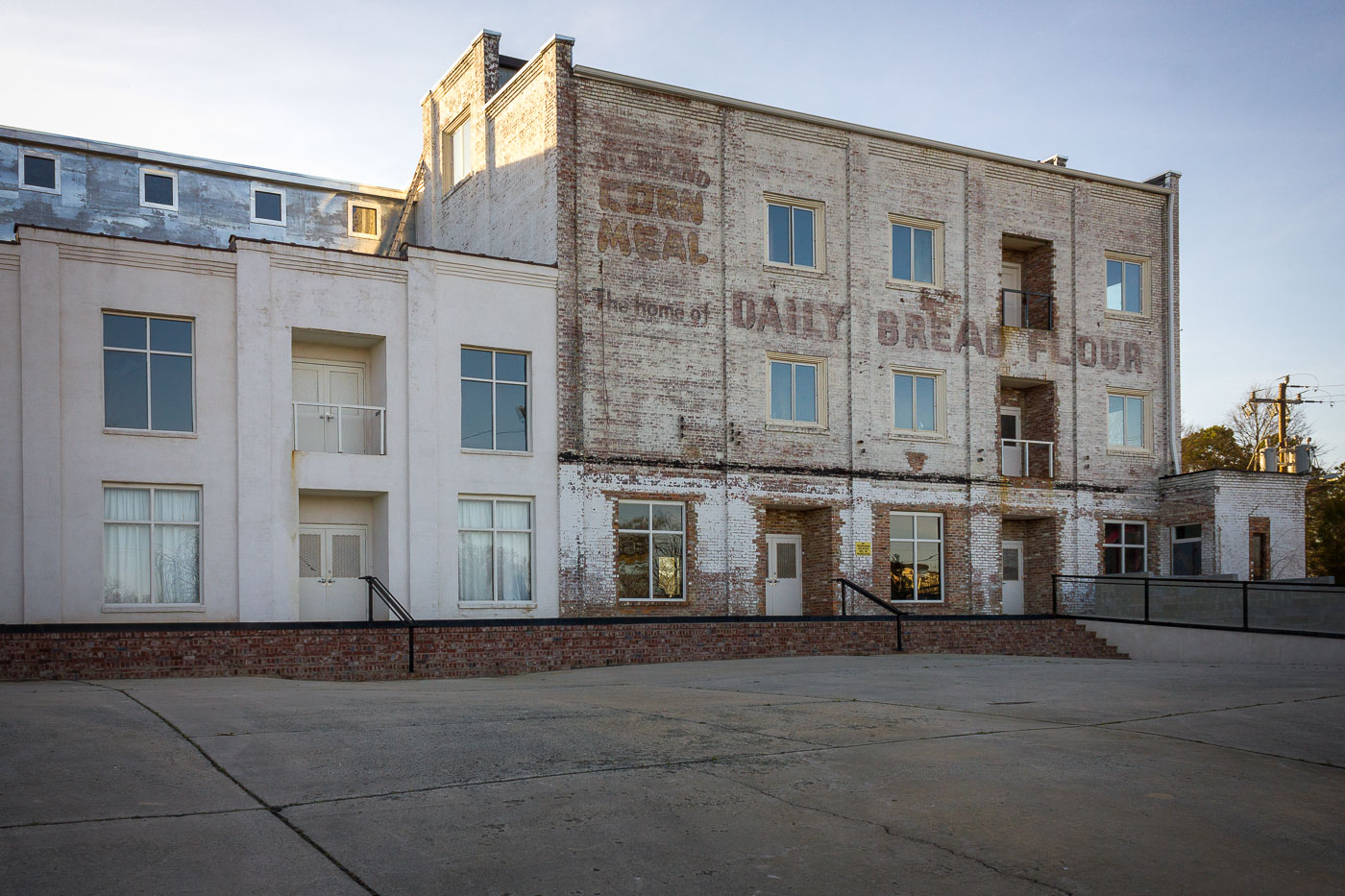
The Joy Brand Corn Meal Mill in Greensboro, NC, features a ghost sign for "Daily Bread Flour," representing early 20th-century industrial architecture.
The Joy Brand Corn Meal Mill in Greensboro, North Carolina, stands as a testament to the city's early 20th-century industrial past. The building's brick facade retains a ghost sign advertising "Joy Brand Corn Meal - The Home of Daily Bread Flour," a relic from a time when milling was central to the region's agricultural and textile economies. This utilitarian structure, characteristic of prewar mill construction, showcases regional craftsmanship. While its original purpose has ceased, such buildings are often repurposed for modern urban use, preserving their historical significance.
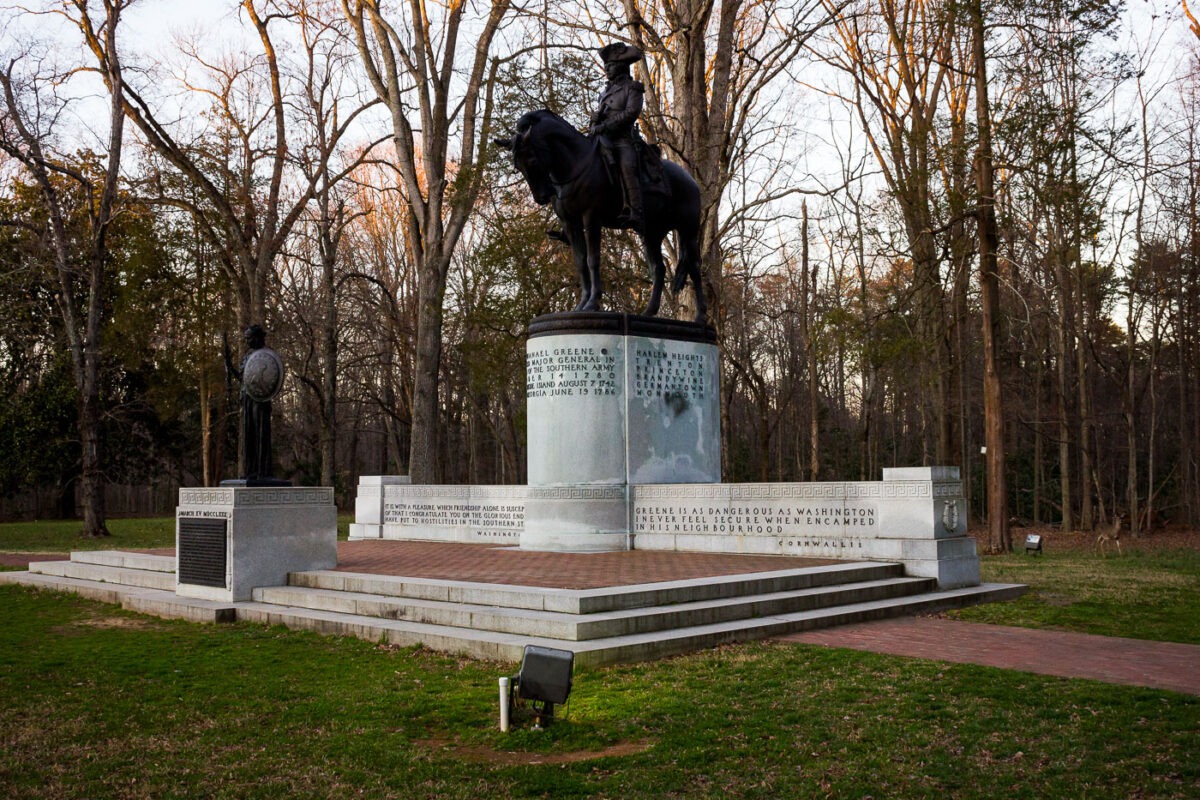
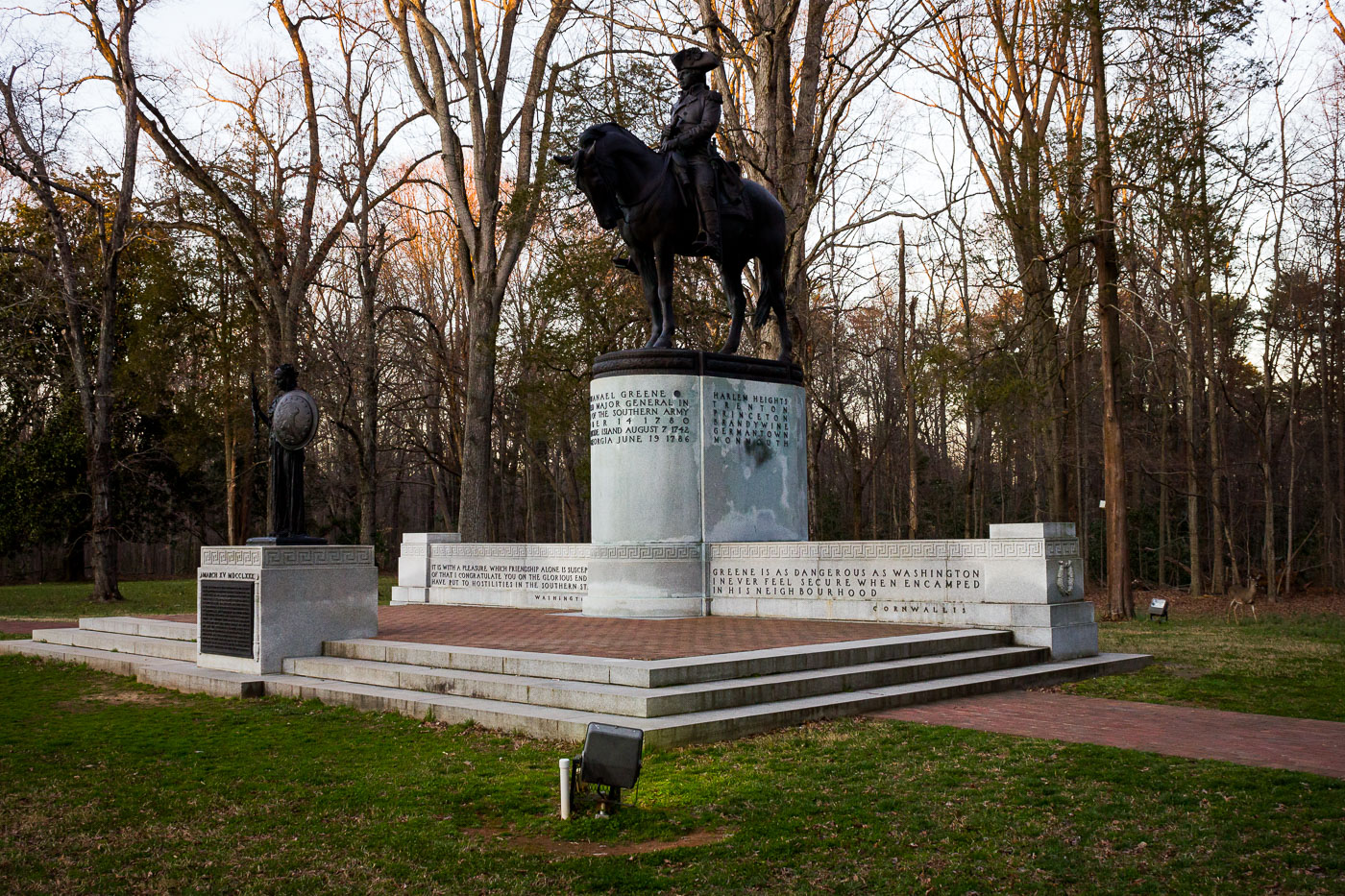
The Nathanael Greene Monument, a statue of the Revolutionary War general on horseback, stands in Greensboro, North Carolina.
The Nathanael Greene Monument in Greensboro, North Carolina, honors the Major General of the Continental Army. Greene played a crucial role in the Southern Campaign of the American Revolutionary War. The monument features a statue of Greene on horseback, along with inscriptions detailing his military engagements and a quote from Lord Cornwallis acknowledging Greene's strategic prowess. It stands as a significant historical marker in the city, commemorating a pivotal figure in American independence.
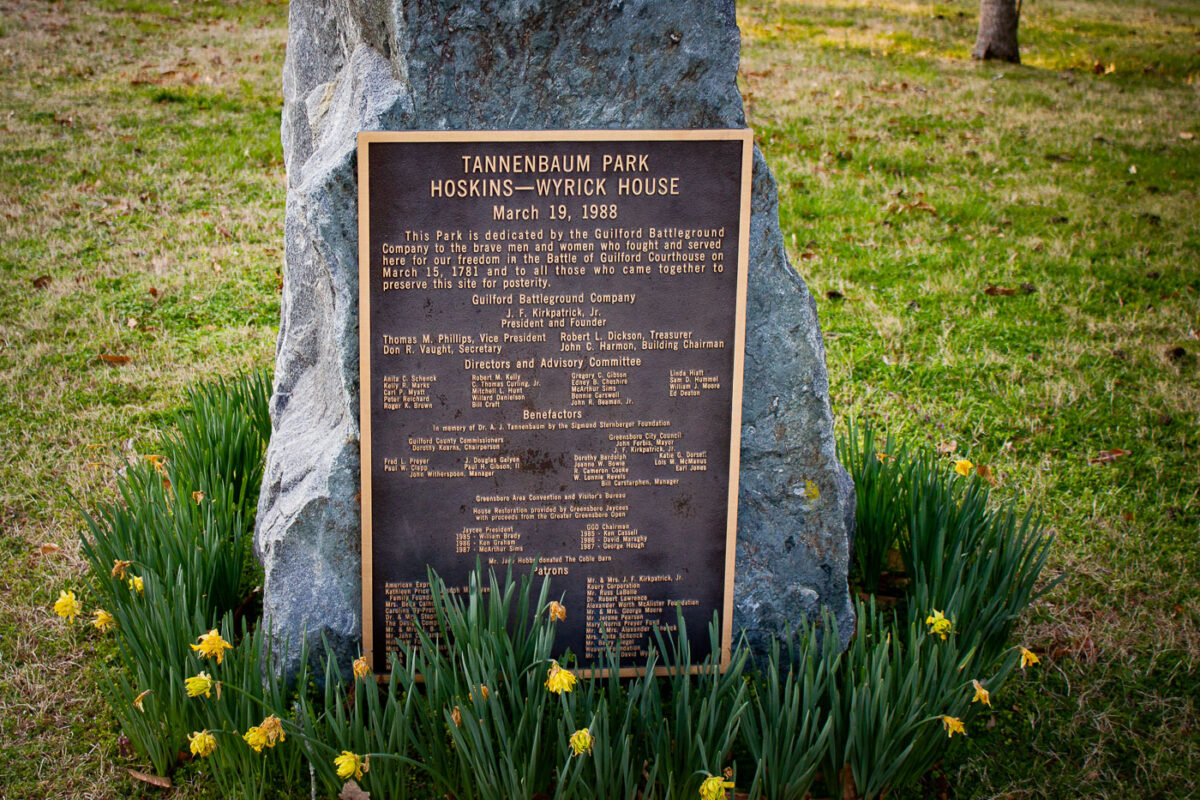
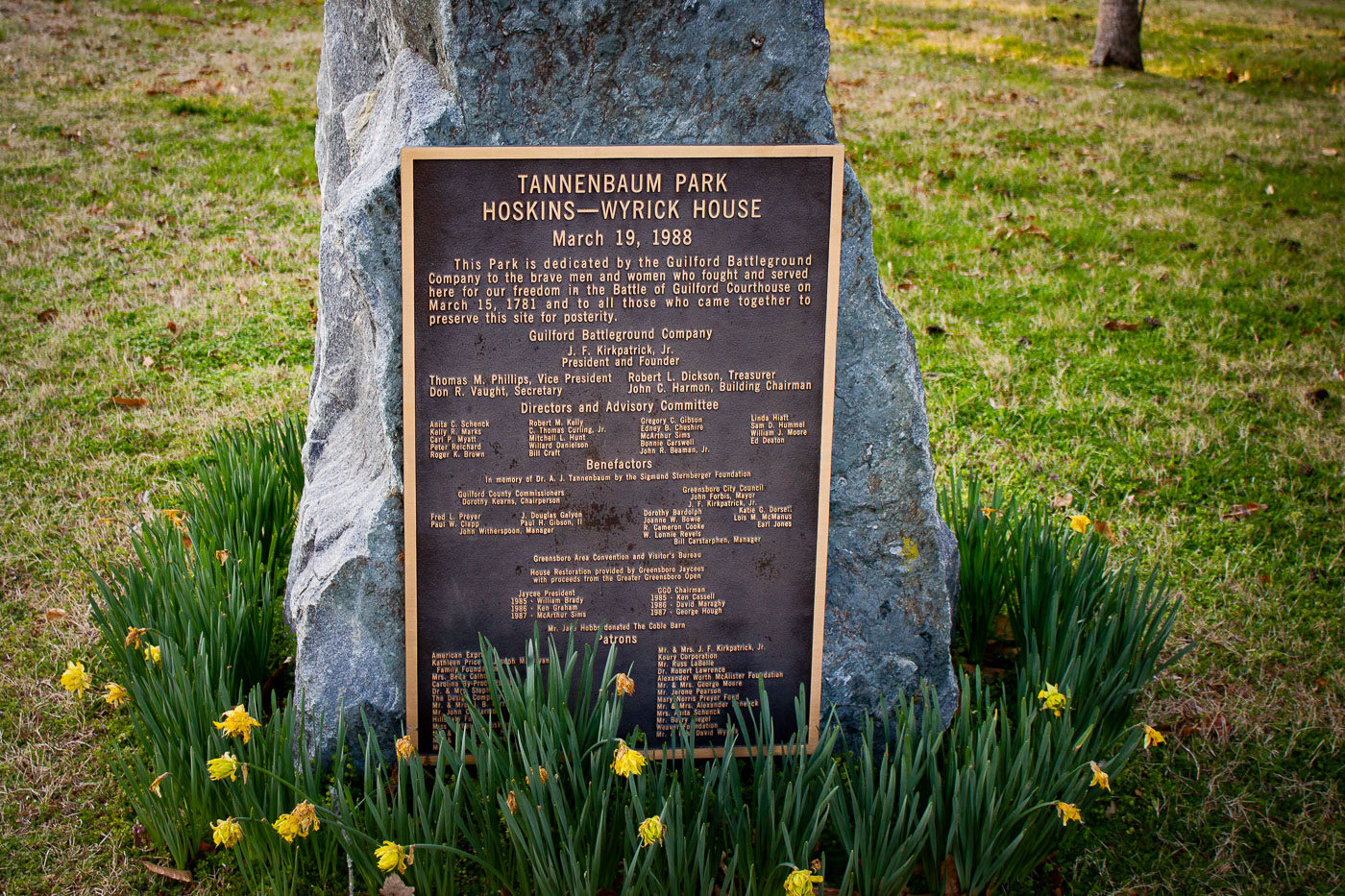
Tannenbaum Park and Hoskins-Wyrick House, dedicated March 19, 1988, in Greensboro, NC, honors soldiers of the Battle of Guilford Courthouse and preserves the historic house.
Tannenbaum Park and the Hoskins-Wyrick House in Greensboro, North Carolina, were dedicated on March 19, 1988. The park was established by the Guilford Battleground Company to honor the soldiers of the Battle of Guilford Courthouse, which took place on March 15, 1781. The Hoskins-Wyrick House, a historic structure, has been preserved as part of this site. The park and house serve as a memorial and a place for historical preservation.
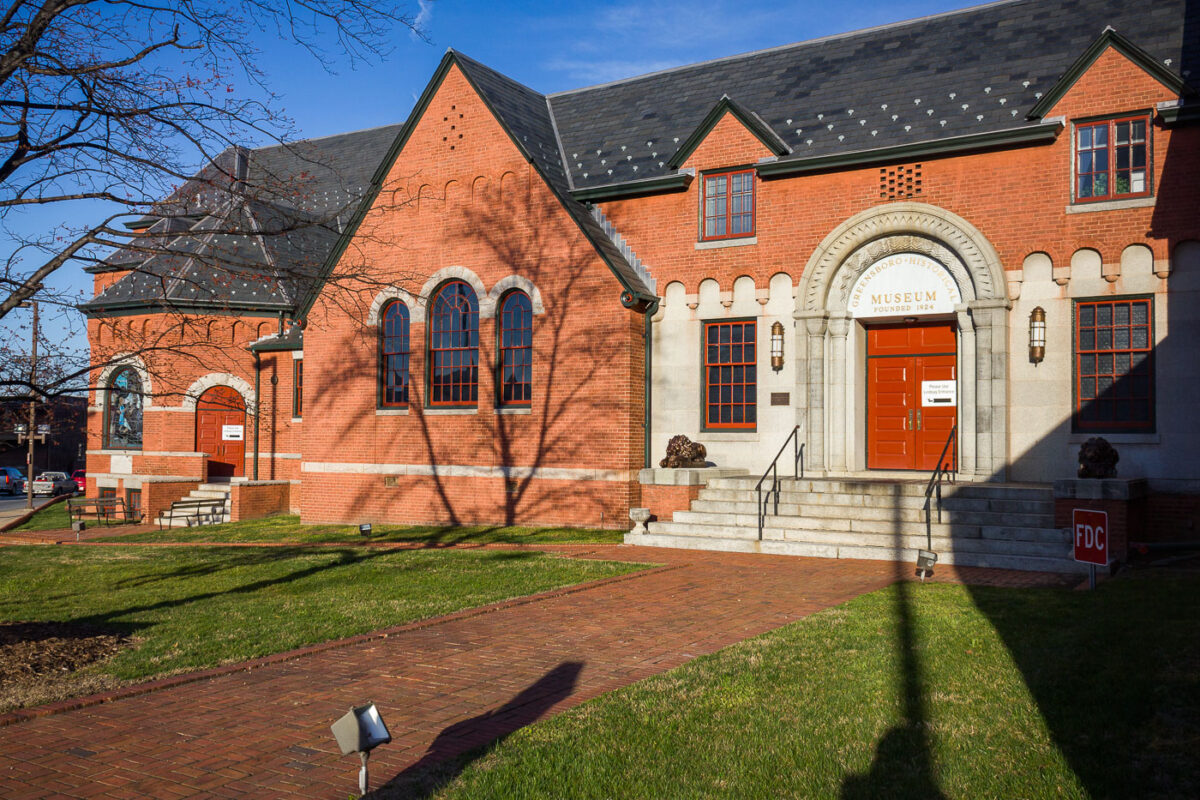
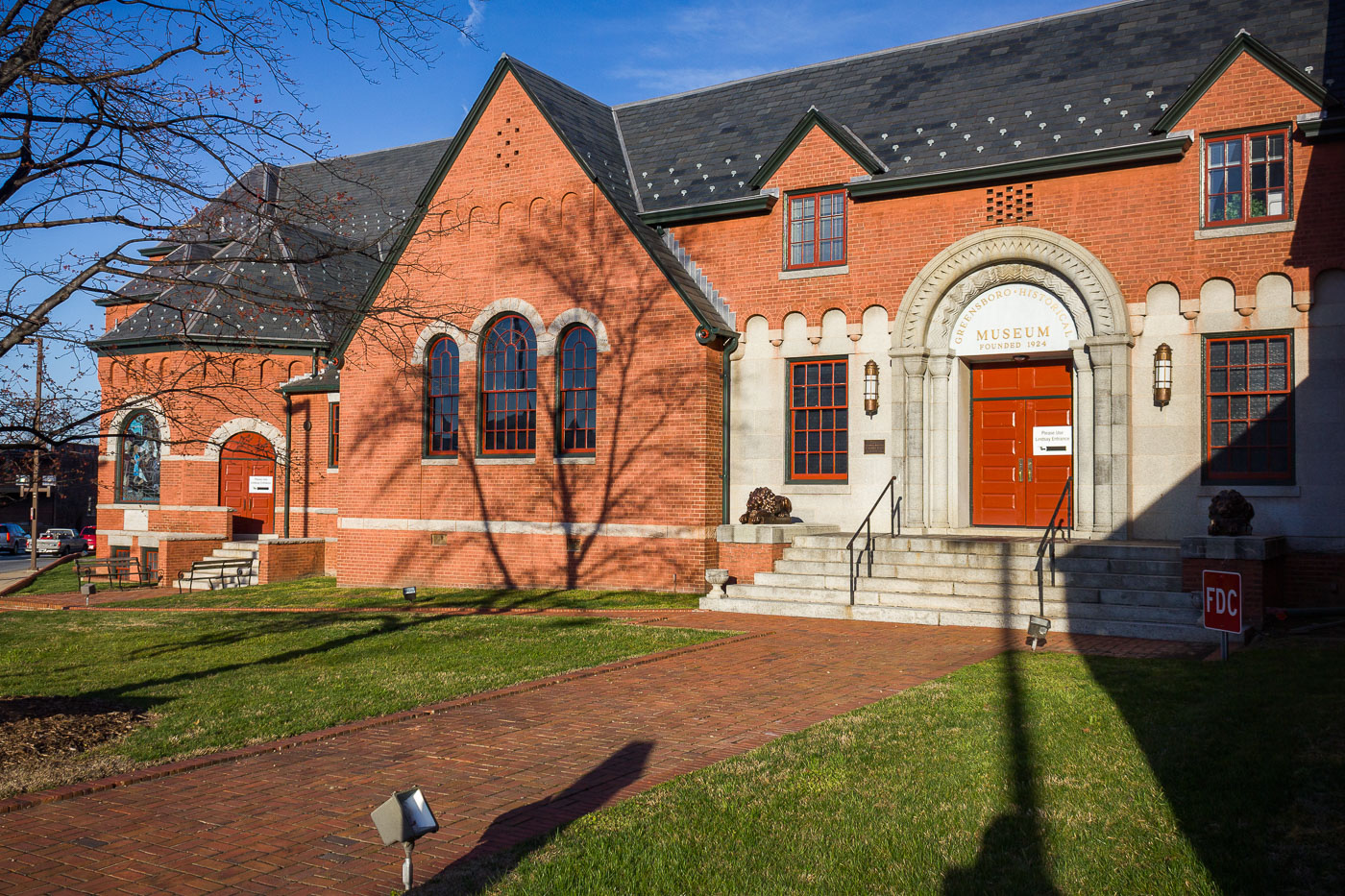
The Greensboro History Museum, formerly the First Presbyterian Church, is a historic 1924 brick building at 130 Summit Avenue, Greensboro, NC.
The Greensboro History Museum, housed in the former First Presbyterian Church and the Smith Memorial Building, stands at 130 Summit Avenue. Originally constructed as a church in 1924, the building is a significant example of historical architecture in Greensboro. It was later repurposed to serve as a museum, preserving and showcasing the region's rich history. The museum is listed on the National Register of Historic Places, acknowledging its architectural and historical importance.
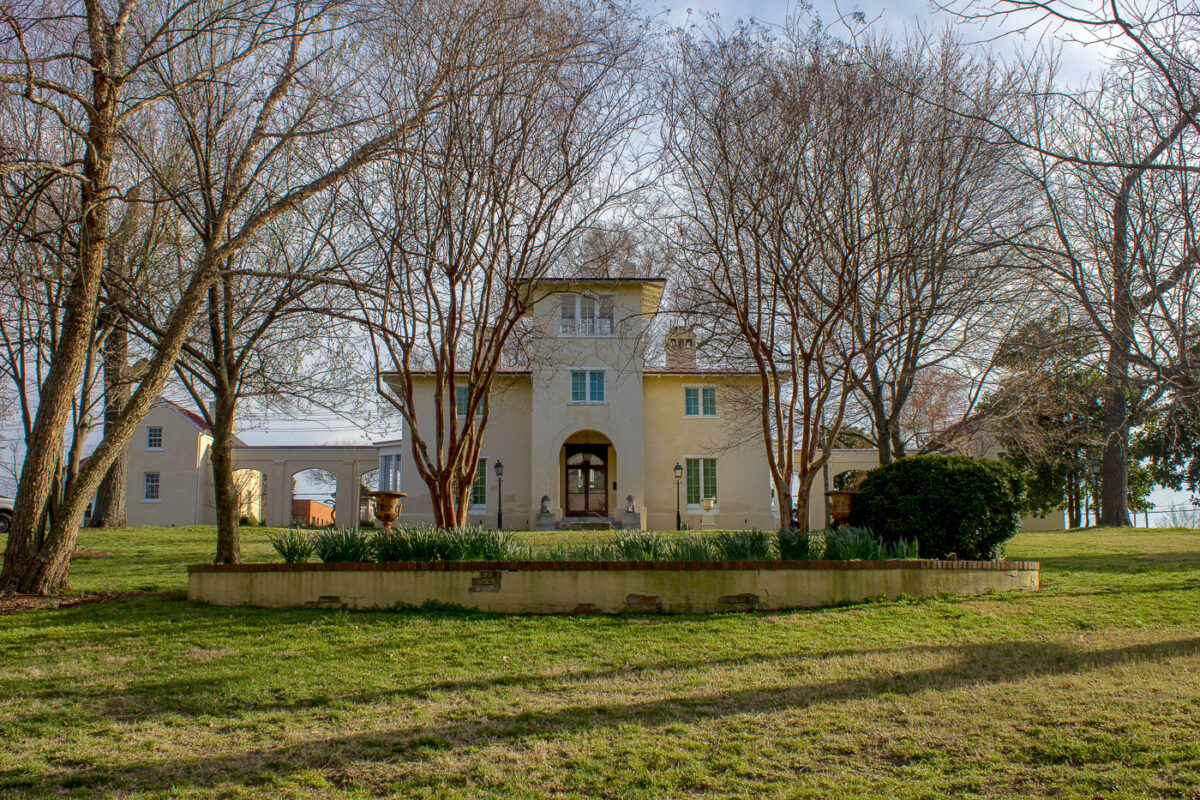
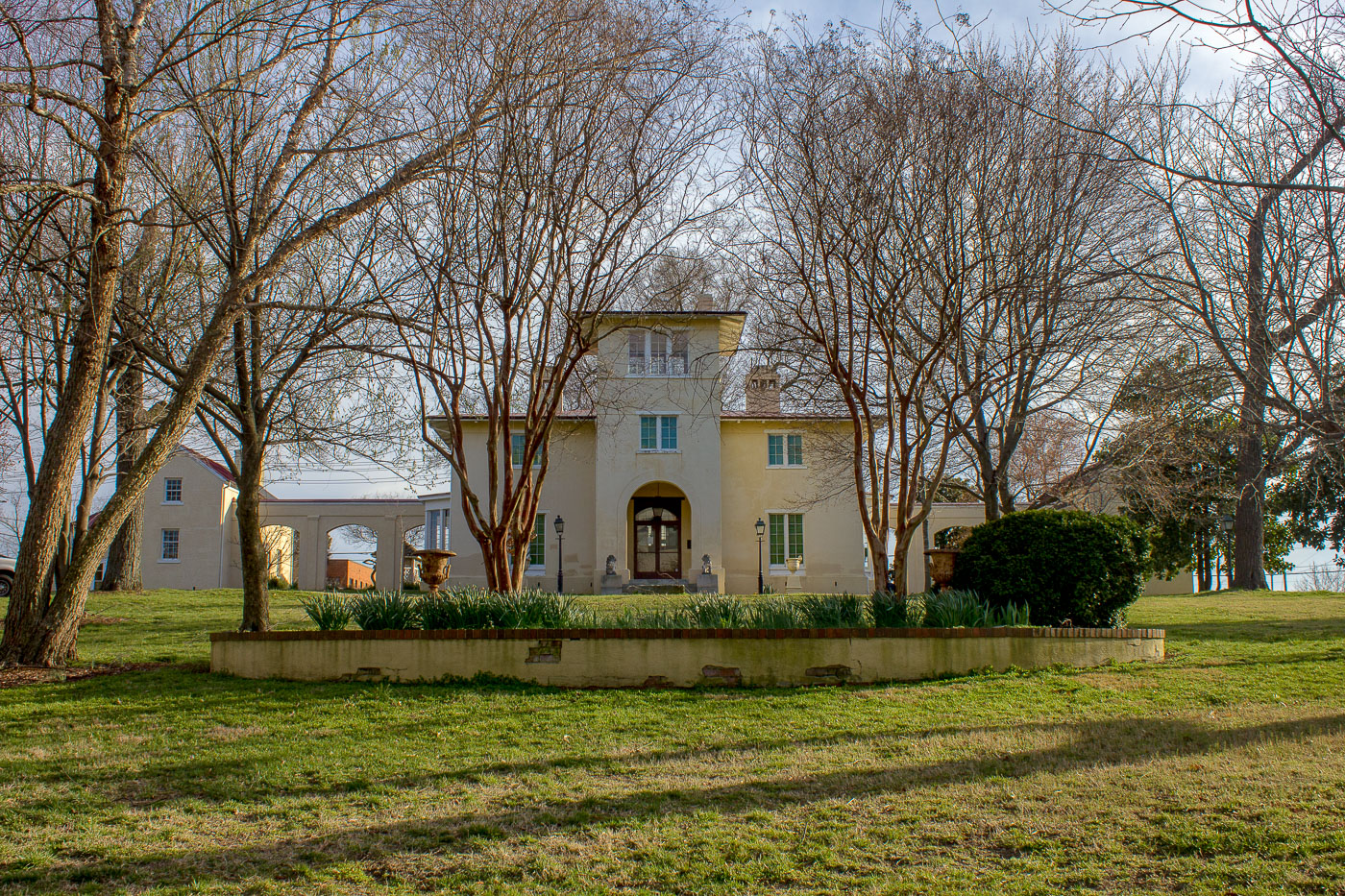
Blandwood Mansion, an Italian Villa-style residence in Greensboro, NC, designed by Alexander Jackson Davis and formerly owned by Governor John Motley Morehead.
Blandwood Mansion, an Italian Villa-style residence in Greensboro, North Carolina, stands as a significant example of 19th-century American architecture. Originally a Federal-style farmhouse built in 1795, it was transformed into its current appearance during the ownership of Governor John Motley Morehead. Designed by Alexander Jackson Davis, the mansion is noted for its central tower, a popular element in Italianate designs. Saved from demolition in 1964, Blandwood now operates as a museum, preserving its historical and architectural importance for the public.

Built in Minneapolis

Photographs showcasing change over time

Browse by location, move through long-running series, or start with recent work.