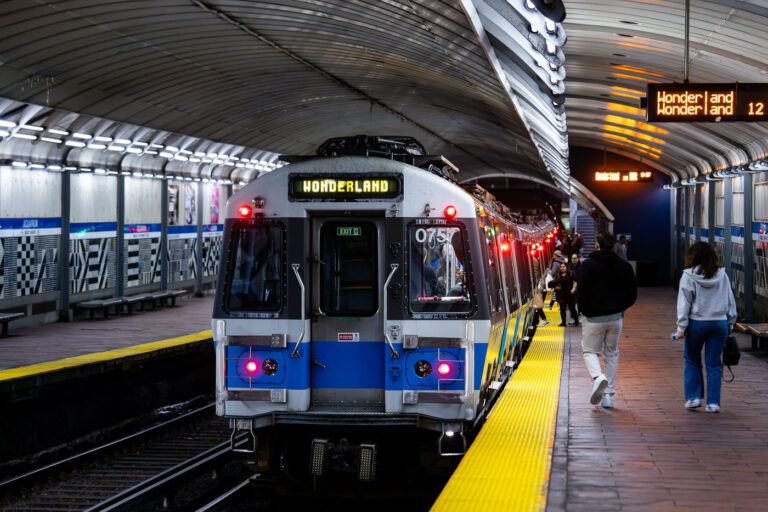
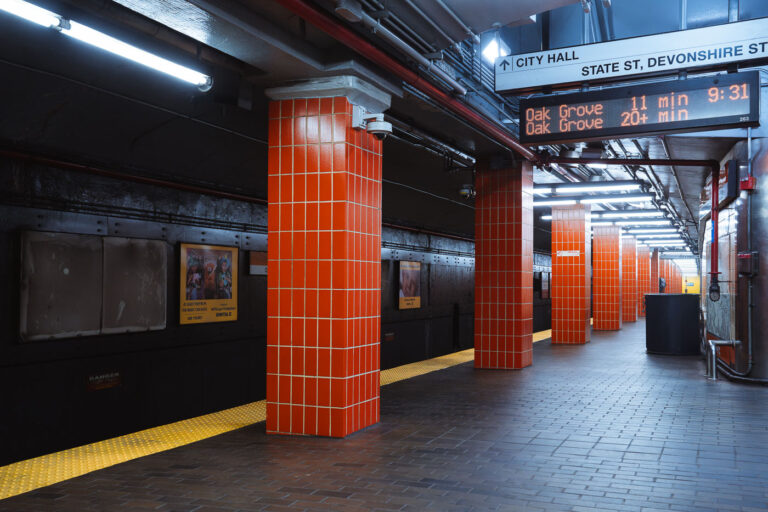
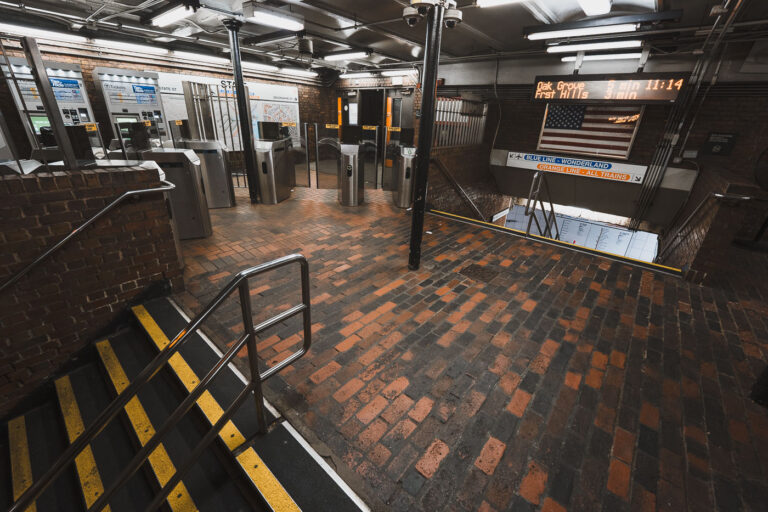
Bowdoin Station Elevator, Blue Line
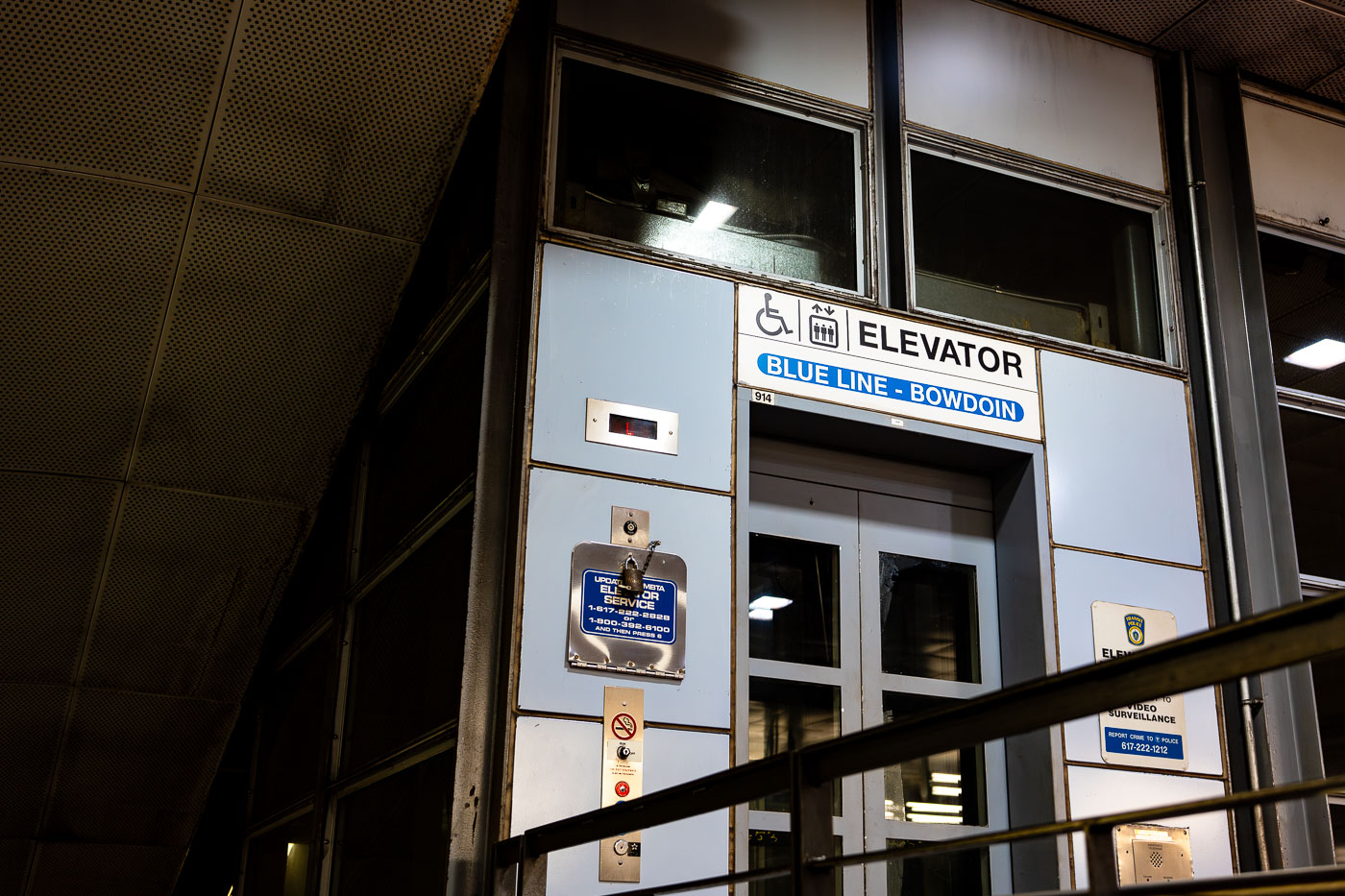
An elevator entrance at Bowdoin station, the downtown terminal of Boston’s Blue Line. Bowdoin Station opened in 1916 as part of the East Boston Tunnel, one of the earliest underwater rapid-transit tunnels in North America. The station is notable for its compact footprint, tight curves, and historically limited accessibility compared to newer MBTA stations.
This elevator provides step-free access between street level and the platform, reflecting later retrofits required by accessibility standards rather than original station design. The utilitarian signage, metal paneling, and enclosed structure are characteristic of mid-to-late 20th century upgrades layered onto early 20th century transit infrastructure, illustrating how legacy subway systems have been incrementally adapted to modern accessibility and safety requirements.
Photo taken in April 2025.
Photo Part Of