Marlboro Cigarettes Display, Puerto Vallarta Airport Duty-Free
December 2024
—
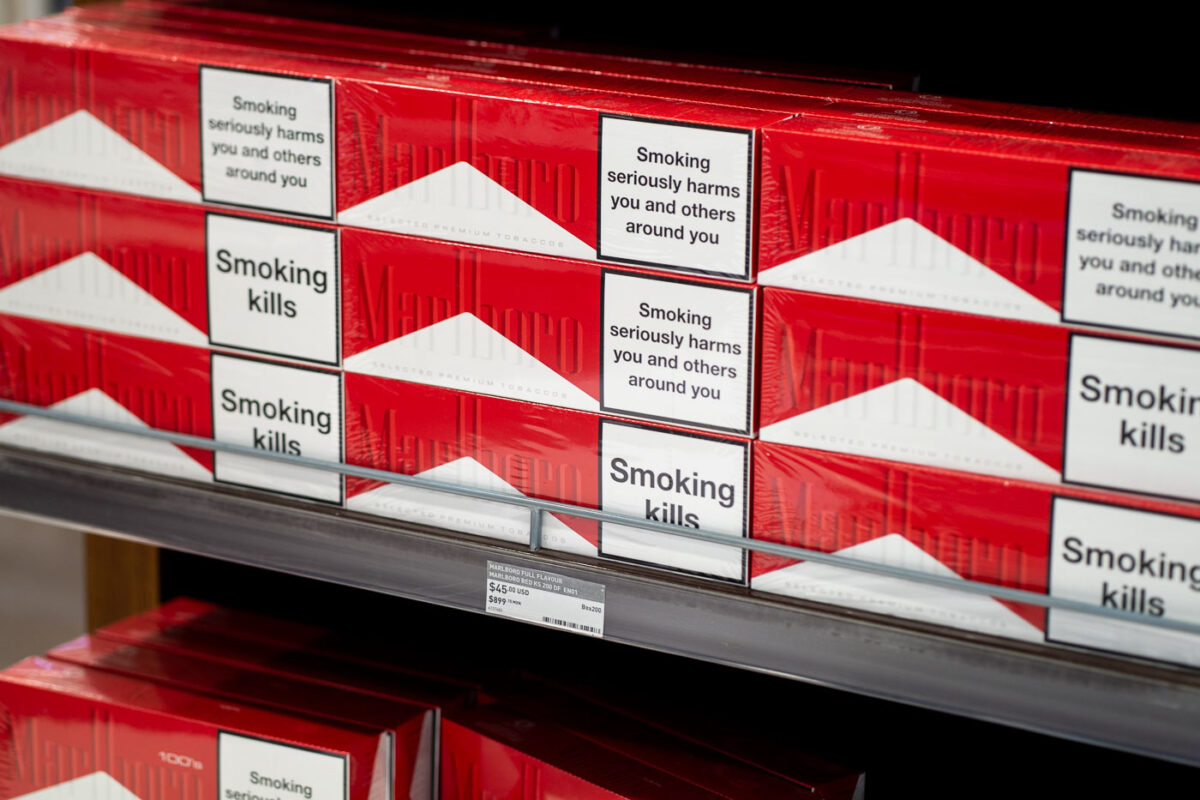
Stacks of Marlboro cigarette cartons are arranged neatly in a duty-free shop at Puerto Vallarta International Airport. The bold red-and-white packaging contrasts sharply with the health warnings — “Smoking kills” and “Smoking seriously harms you and others around you.” The display, priced in both U.S. dollars and pesos, reflects international tobacco regulations that require prominent labeling even in airport retail environments catering to travelers.
Puerto Vallarta Airport Bilingual Signage: Gates and Restrooms
December 2024
—
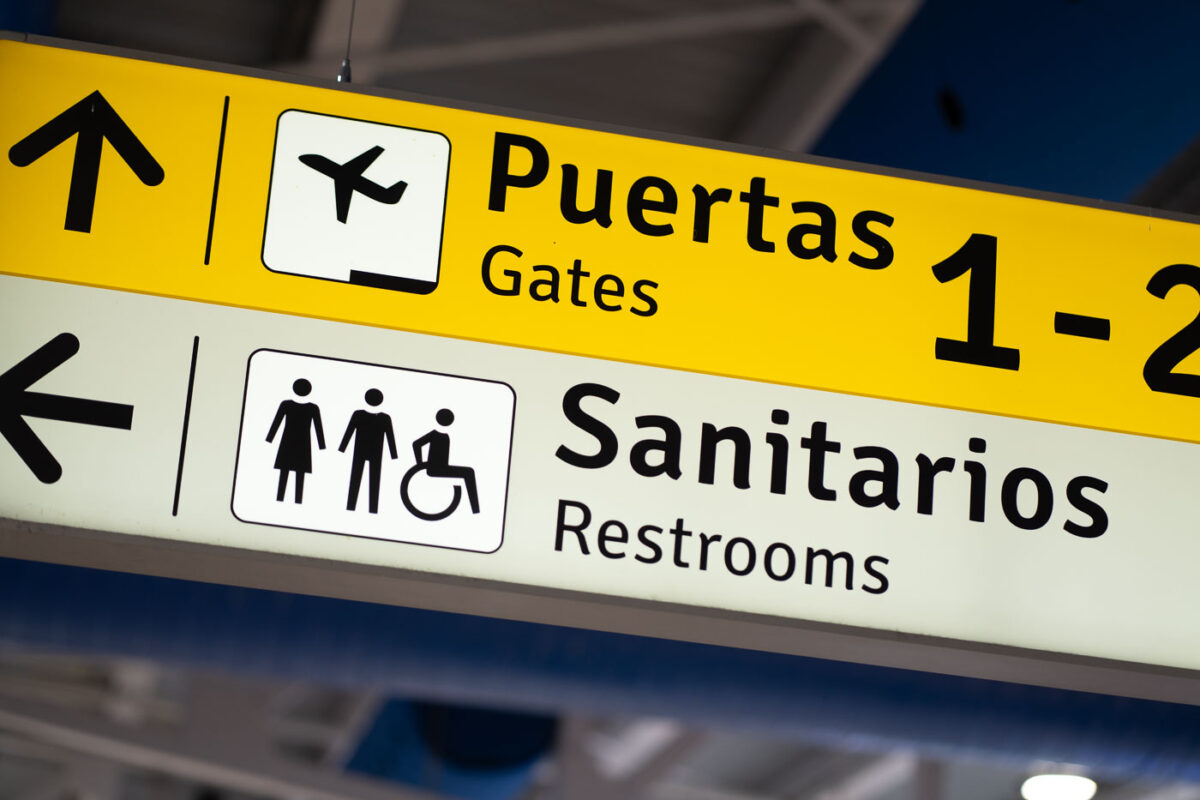
A close-up of bilingual directional signage inside Puerto Vallarta International Airport shows clear guidance for travelers in both Spanish and English. The yellow and white board directs passengers toward Gates 1–2 (“Puertas”) and nearby restrooms (“Sanitarios”), featuring internationally recognized icons for accessibility. This simple yet essential detail reflects Mexico’s effort to accommodate global visitors arriving through one of the country’s busiest coastal gateways.
Puerto Vallarta International Airport Arrivals and Departures
December 2024
—
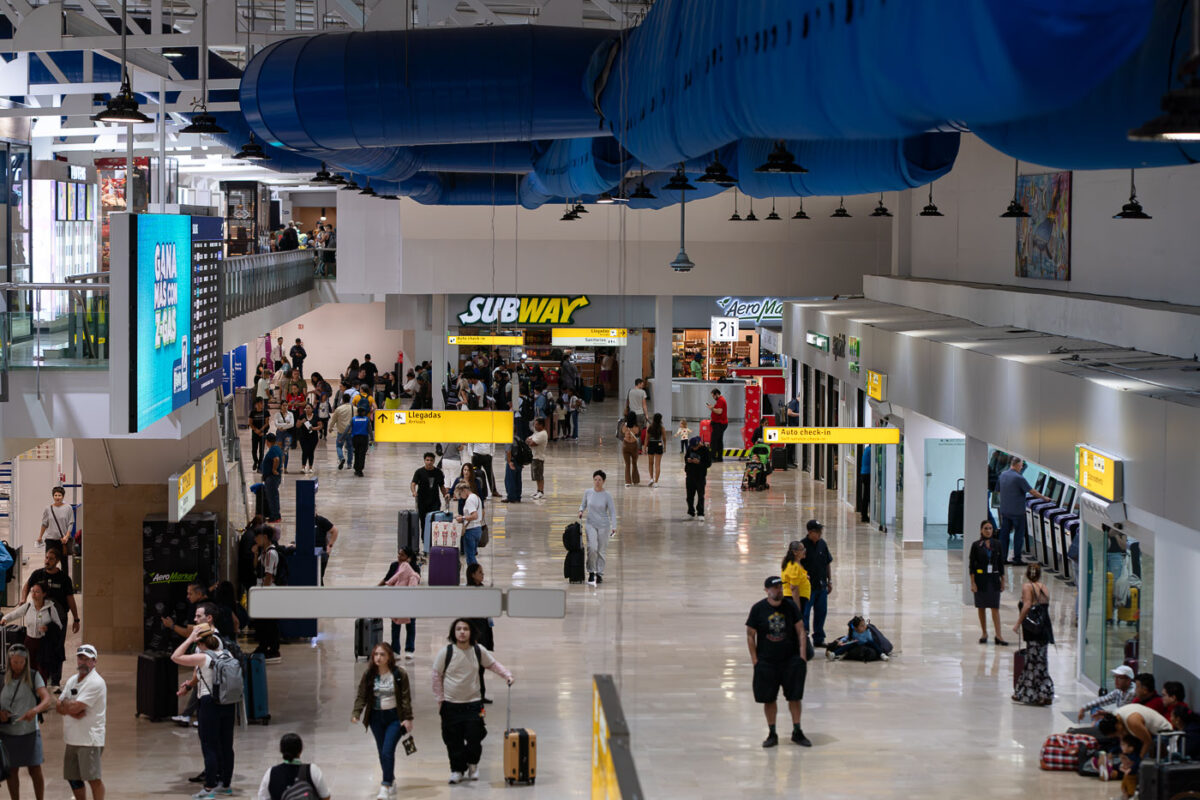
Passengers move through the arrivals and departures concourse at Puerto Vallarta International Airport (Licenciado Gustavo Díaz Ordaz International Airport), a major gateway for visitors to the Pacific coast. The yellow signage directs travelers toward check-in counters and baggage claim as people queue at kiosks and cafés like Subway and AeroMarket. The space, marked by distinctive blue air ducts and polished stone floors, reflects the airport’s recent modernization—balancing local efficiency with the flow of international tourism feeding the resorts along Bahía de Banderas.
RIU Resort Towel Cards on Mahogany Table, Puerto Vallarta
December 2024
—
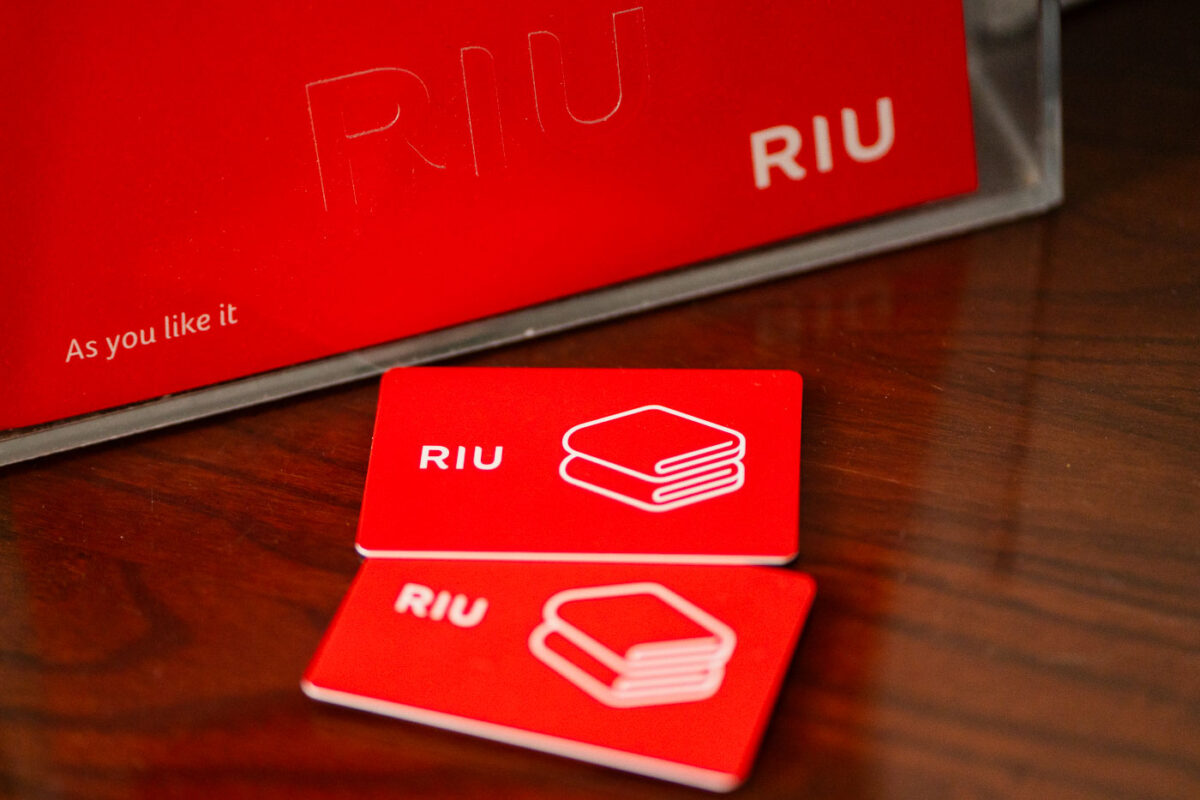
Two bright red towel cards from RIU Hotels & Resorts rest on a polished mahogany table, displaying the chain’s minimalist folded-towel icon and signature white typography. The background sign, embossed with the RIU logo and slogan “As you like it,” reflects the resort’s global branding known across beach destinations like Puerto Vallarta. These cards, exchanged for beach towels, symbolize the finely tuned logistics of high-volume hospitality—where even leisure operates with efficiency and precision.
San Sebastián del Oeste Cobblestone Street with Bougainvillea
December 2024
—
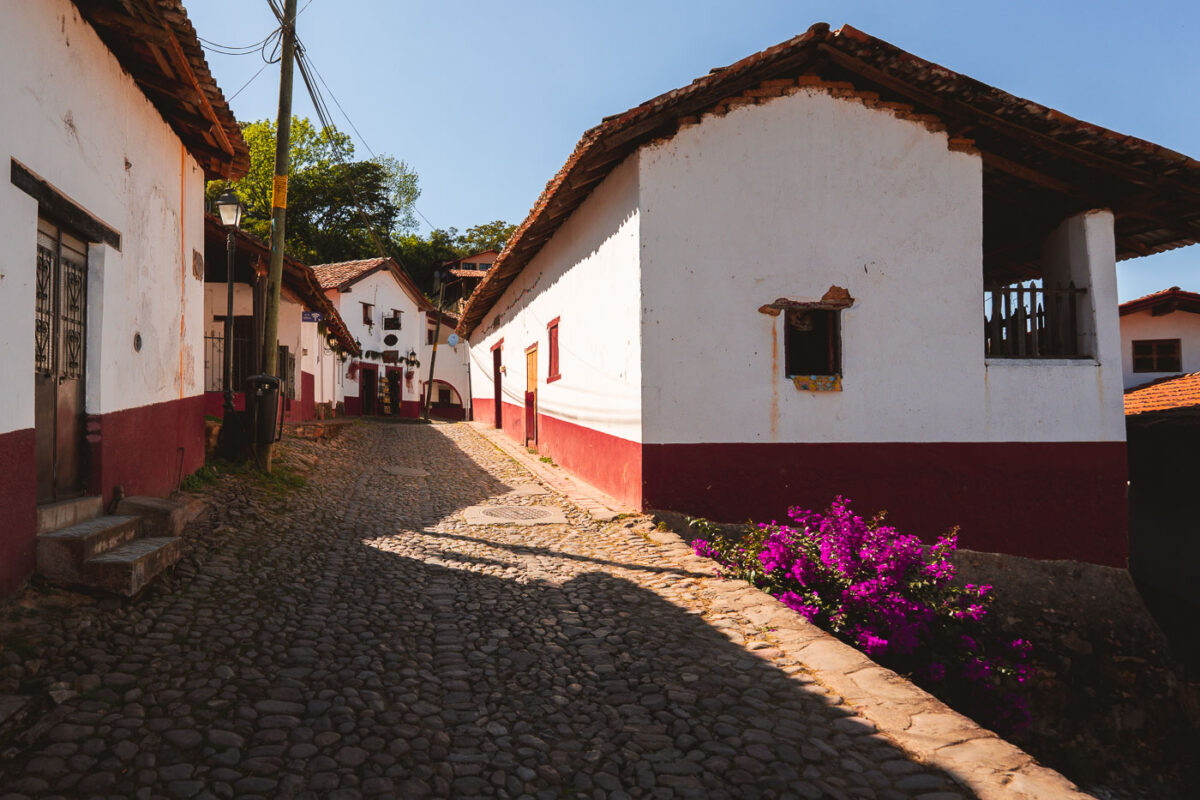
A quiet cobblestone street winds through the historic center of San Sebastián del Oeste, a mountain town tucked into the Sierra Madre Occidental of Jalisco. The preserved adobe houses, painted in the traditional red-and-white palette with tiled roofs, evoke its 17th-century mining heritage. This view captures the town’s timeless character—narrow lanes, rustic façades, and bursts of bougainvillea that frame the colonial-era charm of one of Mexico’s most atmospheric Pueblos Mágicos.
Farmacia Gretel & Tienda de Ropa Ingrith, San Sebastián del Oeste
December 2024
—
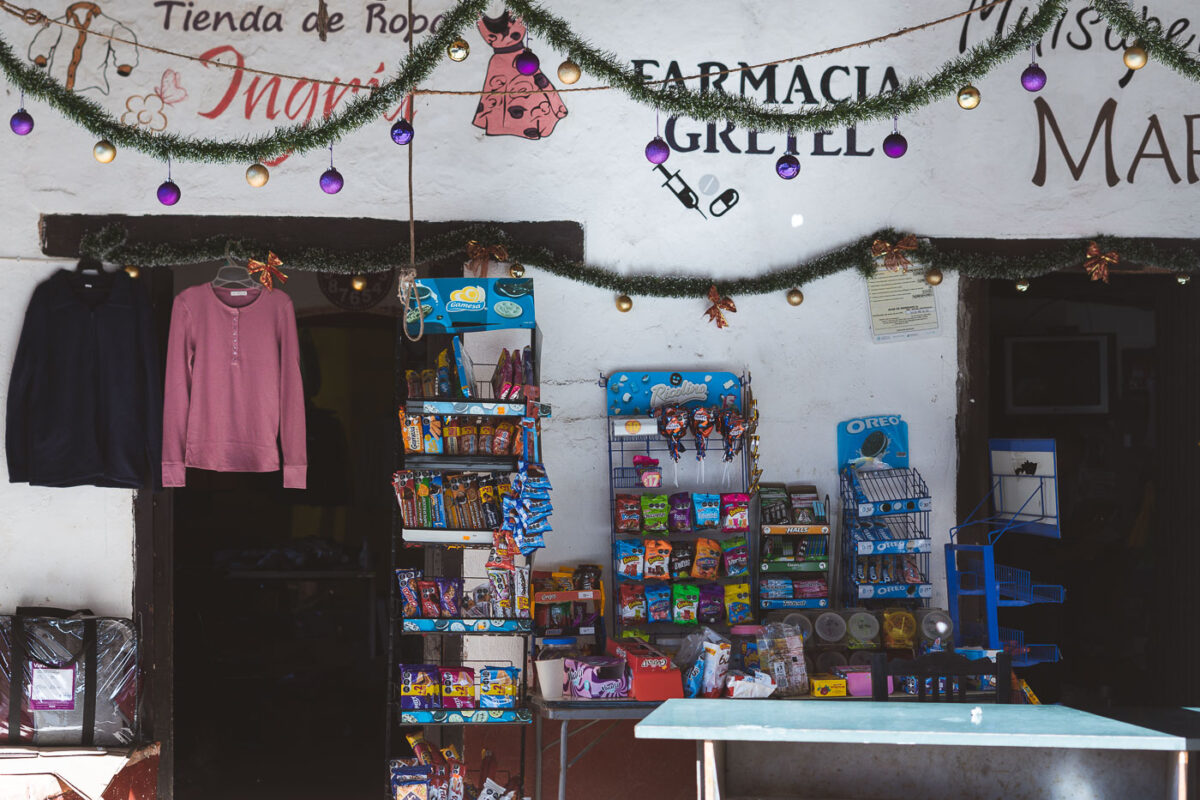
A small village pharmacy and convenience shop in San Sebastián del Oeste, Jalisco, displays everyday items from candy and cookies to basic clothing under hand-painted signs and Christmas garlands. The dual storefront—Farmacia Gretel and Tienda de Ropa Ingrith—reflects the multipurpose nature of businesses in this mountain town, where colonial-era buildings with thick adobe walls still house family-run enterprises. San Sebastián’s preserved architecture and slow rhythm have made it one of Mexico’s officially designated Pueblos Mágicos, drawing visitors seeking a glimpse of traditional Sierra Madre life.
San Sebastian del Oeste Pueblo Mágico Entrance Arch
December 2024
—
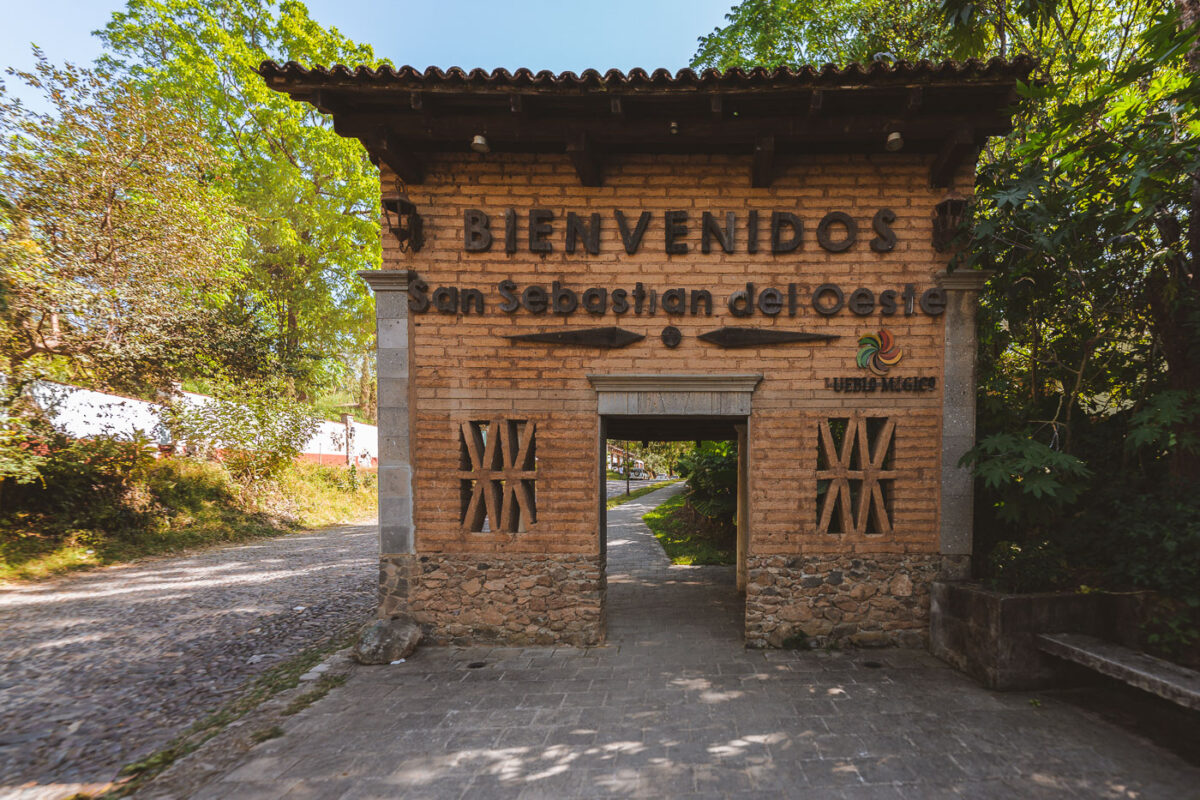
Signage at the entranve to Mexican Magical Town San Sebastian.
Villa Cocoa Chocolate Factory, San Sebastian, Mexico
December 2024
—
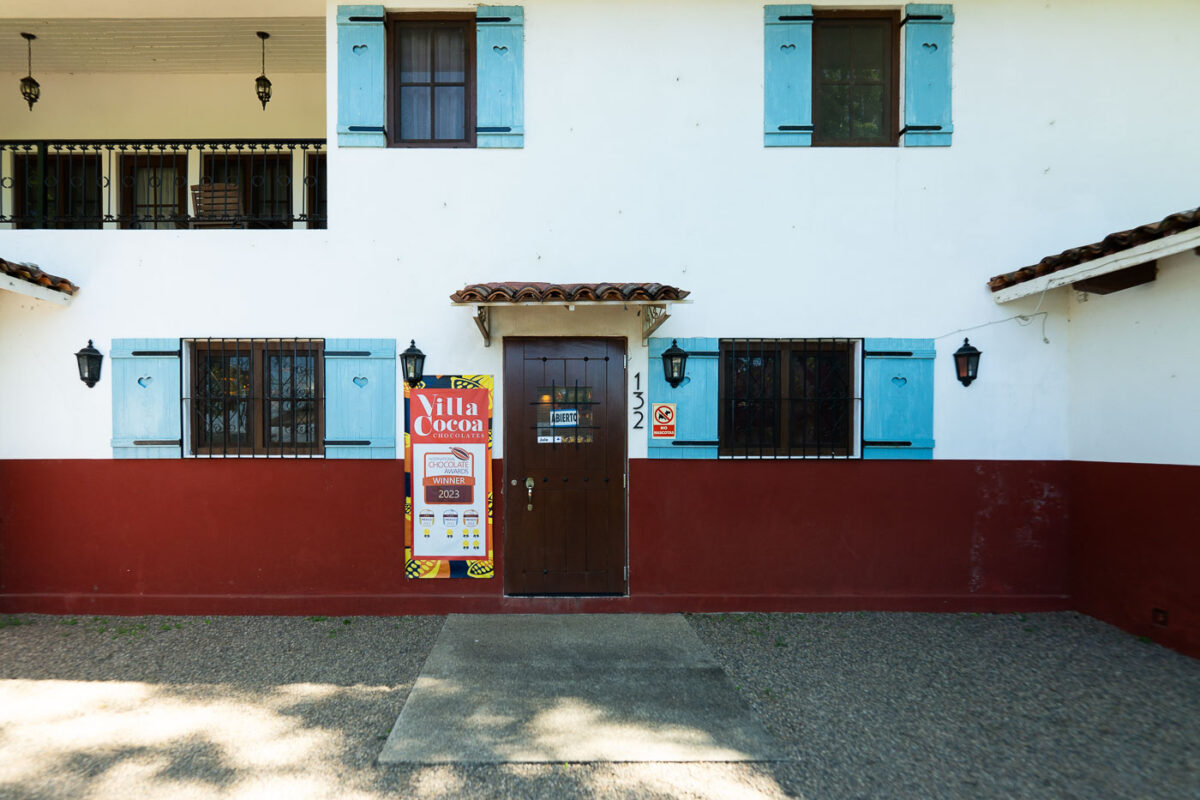
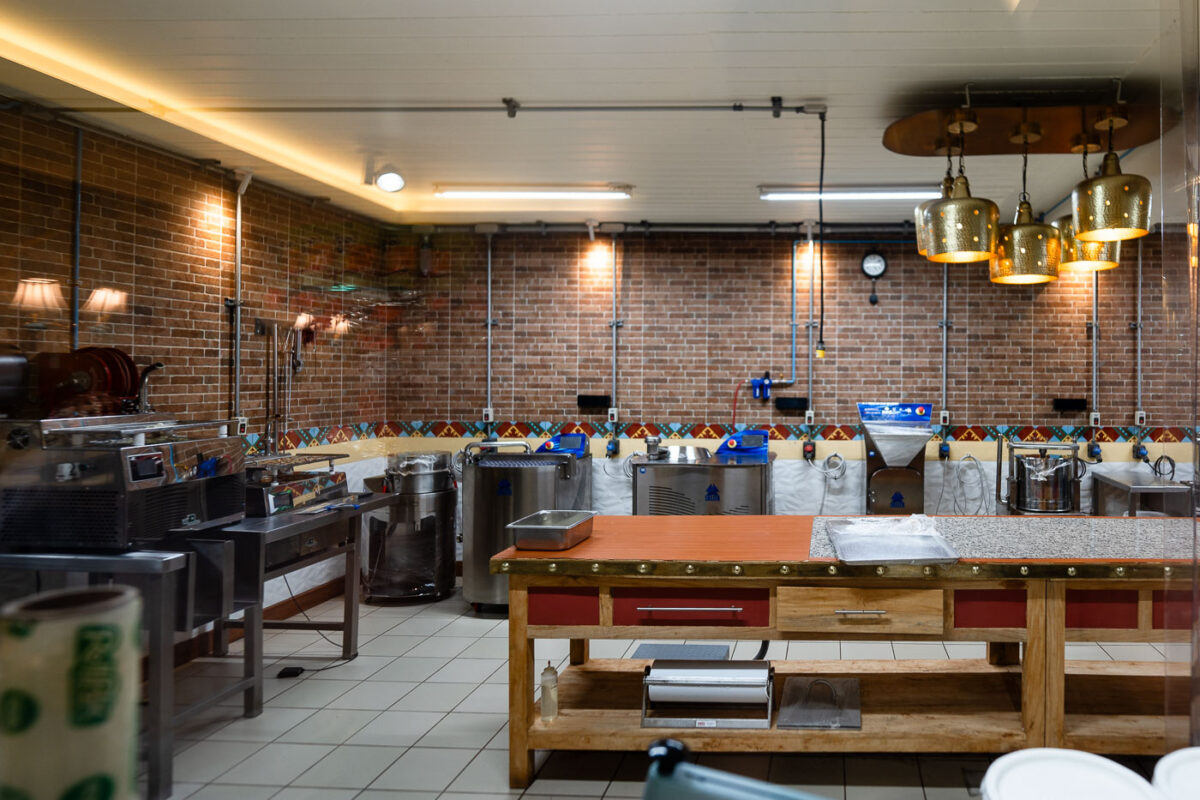
The Villa Cocoa Chocolate Factory in San Sebastian, Mexico. Can confirm, the chocolate is very good.
Villa Cocoa Chocolate Factory Interior, San Sebastian, Mexico
December 2024
—
The Villa Cocoa Chocolate Factory in San Sebastian, Mexico. Can confirm, the chocolate is very good.
December 2024
—
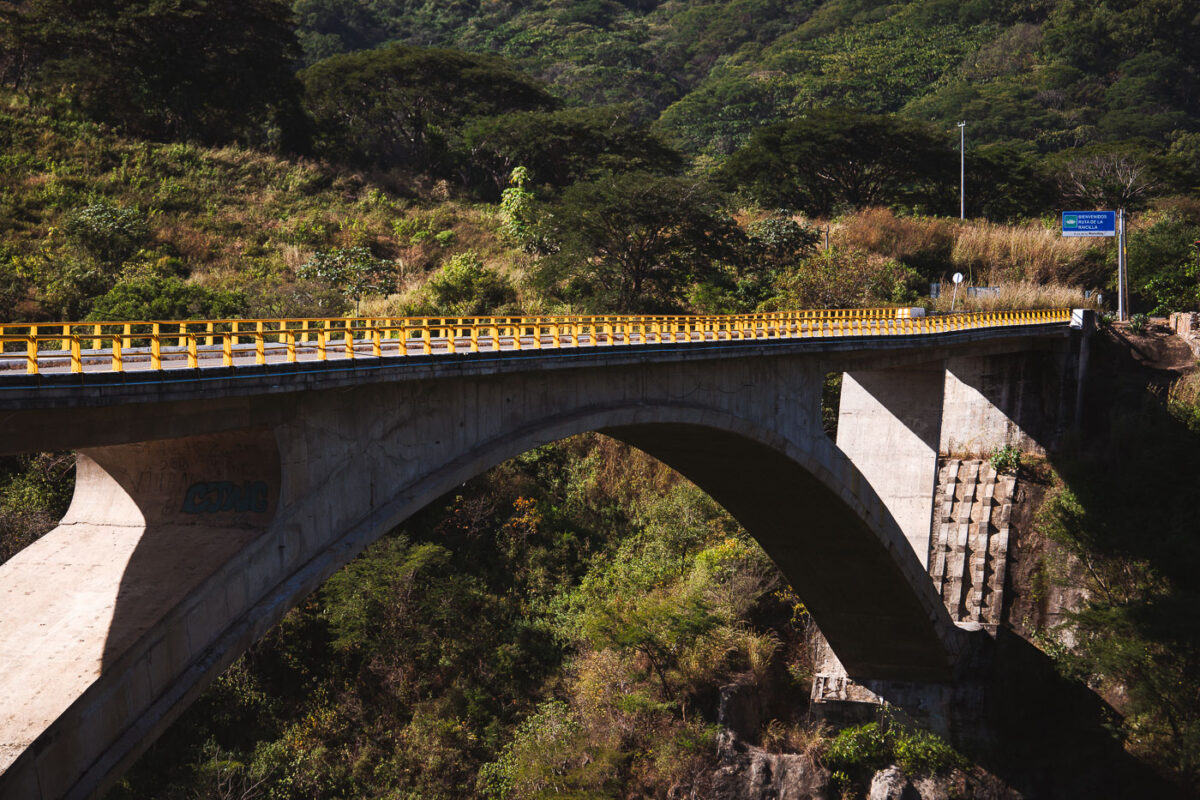
This bridge marks the boundary between Jalisco and Nayarit in western Mexico, a crossing that connects travelers heading north from Puerto Vallarta toward Riviera Nayarit. The single-span concrete structure with its yellow guardrails spans a deep ravine surrounded by subtropical vegetation typical of coastal mountain terrain. A small roadside sign at the far end welcomes drivers to Nayarit, signaling the transition between two of Mexico’s most visited coastal states.
Puerto Vallarta Sunset Over Pacific Ocean
December 2024
—
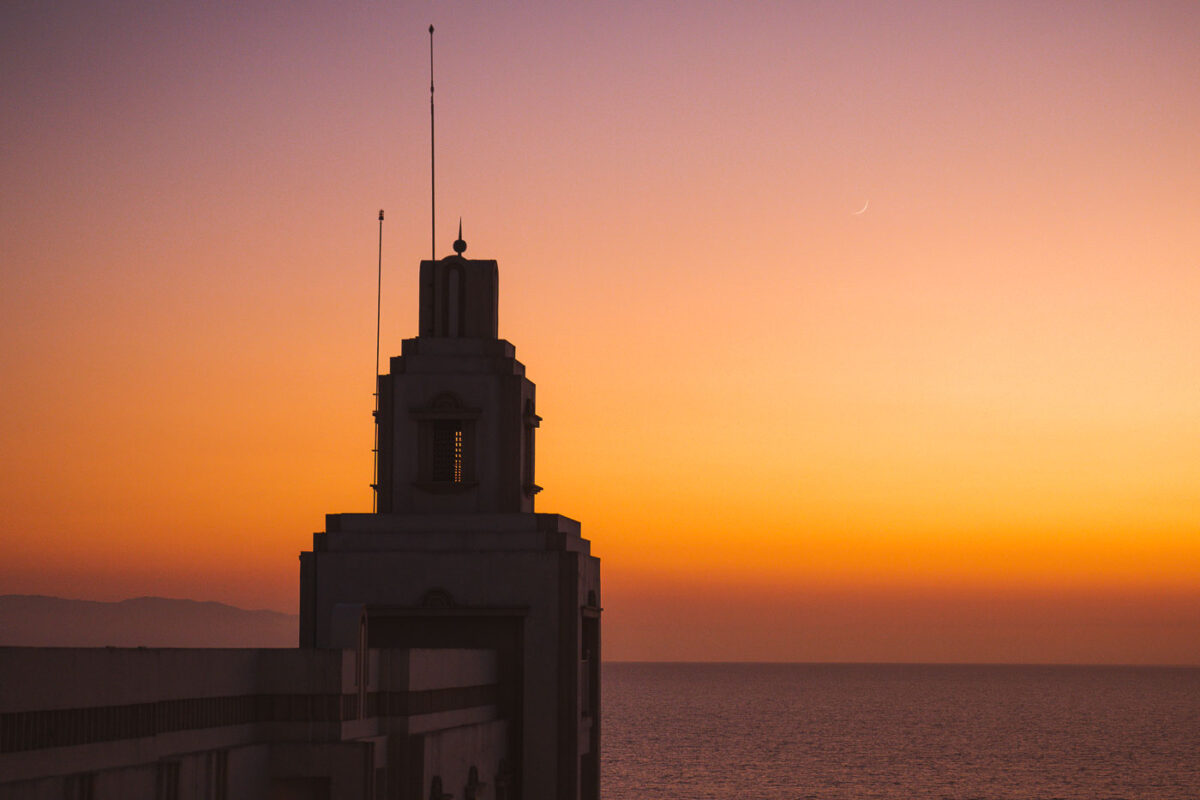
A really great sunset from the Riu in Puerto Vallarta facing the Pacific Ocean.
Puerto Vallarta Restaurant with Water Features and Beach View
December 2024
—
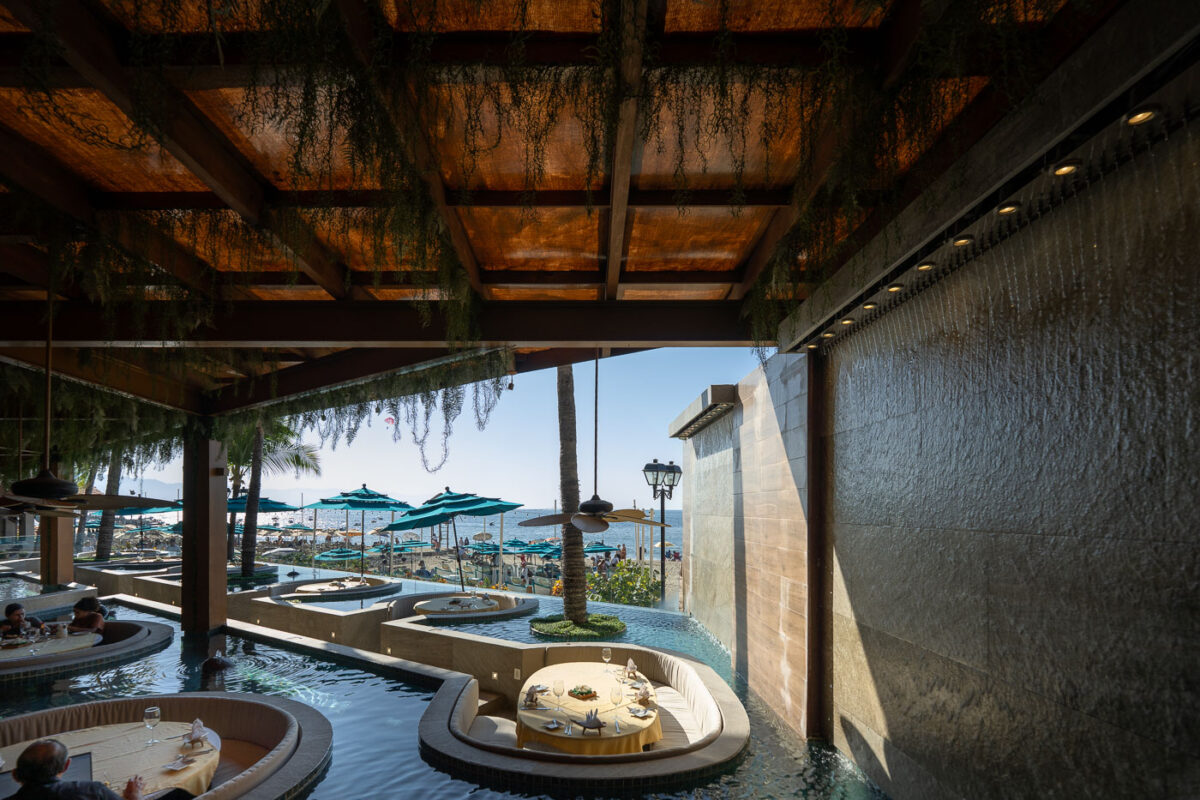
A restaurant in Zona Romántica Puerto Vallarta.
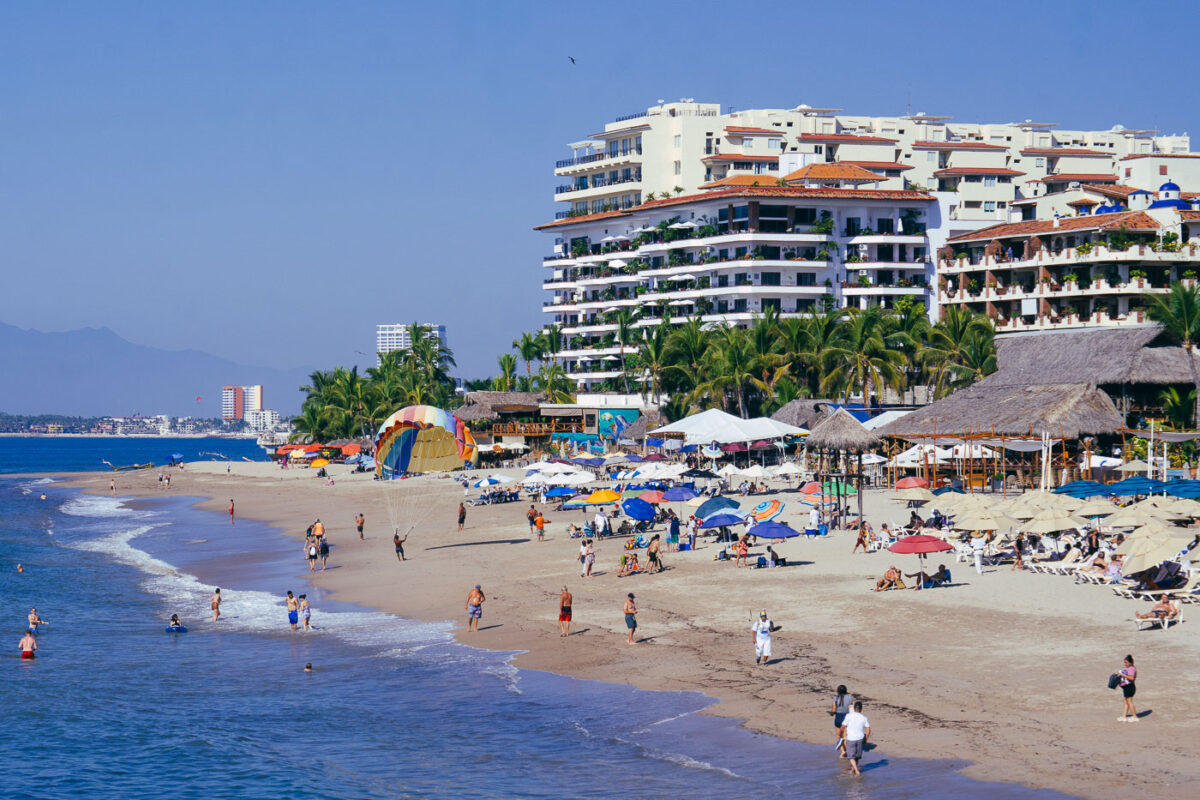
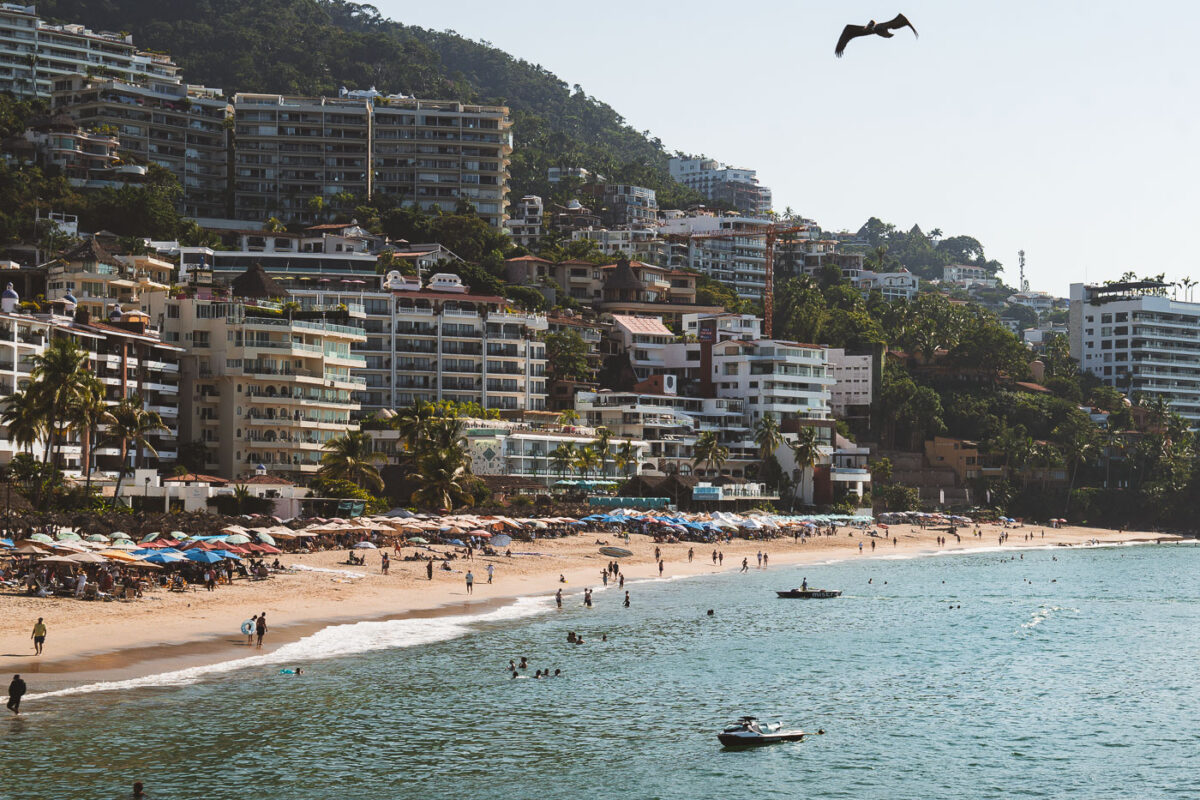
Playa de los Muertos, Puerto Vallarta: Beachfront Resorts and Activities
December 2024
—
The densely layered hillsides of Puerto Vallarta rise above Playa de los Muertos, one of the city’s most iconic and active beachfronts. The shoreline is packed with rows of umbrellas and sunbathers, backed by mid-century and modern resort towers stacked against the green slopes of the Sierra Madre Occidental. Fishermen, swimmers, and jet-ski riders share the bay, while pelicans glide overhead. The neighborhood of Zona Romántica just inland mixes narrow cobblestone streets with lively bars and cafes, making this stretch of the Bahía de Banderas one of Mexico’s most photographed coastal skylines and a focal point of everyday life for both locals and visitors.
Playa de los Muertos and Zona Romántica, Puerto Vallarta, Mexico
December 2024
—
Los Muertos Pier along Playa de los Muertos in Zona Romántica Puerto Vallarta Mexico.
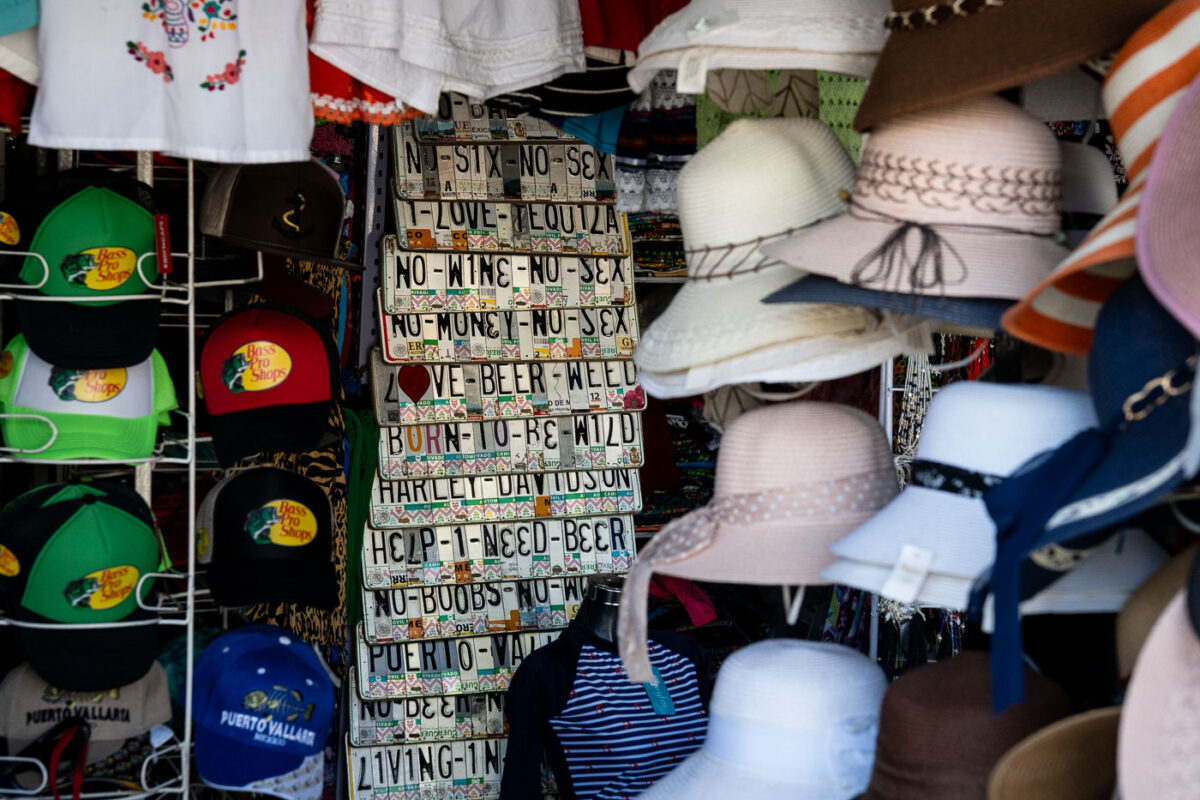
Puerto Vallarta Stall: License Plate Art and Hats
December 2024
—
Amid a colorful array of sun hats and tourist apparel, a display of handcrafted souvenir signs made from repurposed Mexican license plates fills this small stall in Puerto Vallarta’s bustling shopping district. The plates feature playful, tongue-in-cheek phrases — a hallmark of beachside humor catering to travelers exploring the town’s narrow cobblestone streets. Surrounding the display are racks of wide-brimmed hats and caps branded with “Bass Pro Shops” and “Puerto Vallarta,” blending North American pop culture with the distinctly local artisan aesthetic. These market scenes embody the resort city’s mix of craftsmanship, commerce, and lighthearted tourism that defines much of coastal Mexico.
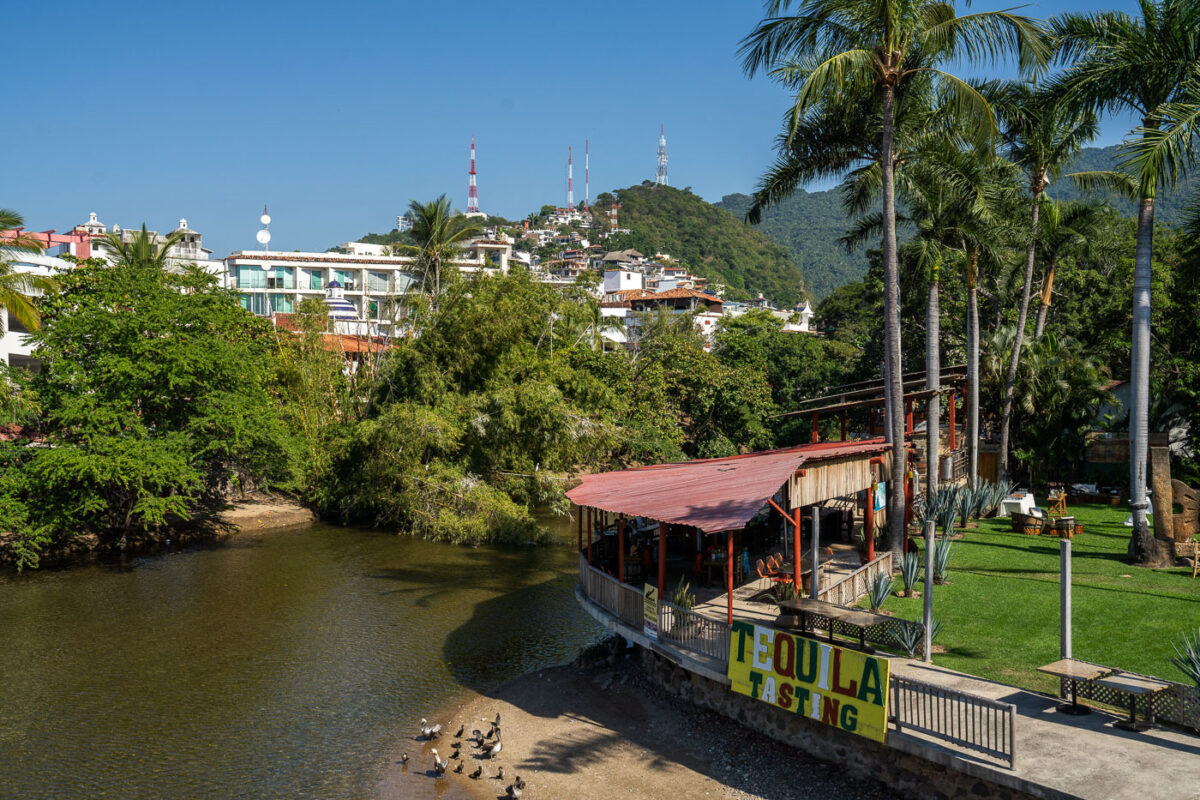
Puerto Vallarta: Tequila Tasting and Riverfront
December 2024
—
A coin-operated public payphone marked “Monedas 090” stands on a cobblestone street in central Puerto Vallarta, a reminder of the pre-digital era still visible in everyday urban life. Behind it, a mix of aging vehicles, small storefronts, and whitewashed buildings with red-tiled roofs reflect the city’s blend of local tradition and evolving modernity. These relics of analog communication, though seldom used today, remain scattered across Mexico’s towns and resort cities — quiet artifacts of an infrastructure that once connected travelers and locals alike.
Puerto Vallarta Municipal Police E-Bikes Ready for Patrol
December 2024
—
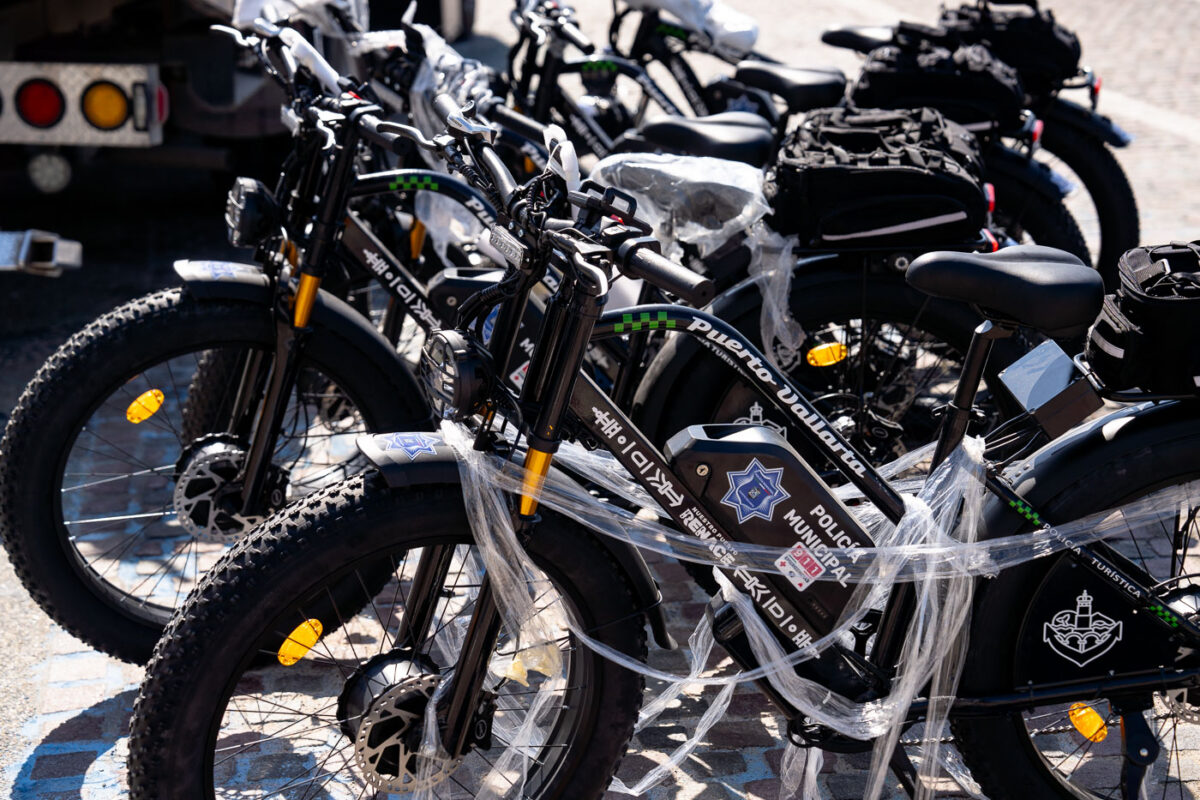
A new fleet of electric bicycles for the Puerto Vallarta municipal police stands ready for deployment, each bearing the city’s emblem and markings for the Policía Turística. These fat-tire e-bikes, still wrapped in protective film, are part of an initiative to increase patrol mobility along the Malecón, beaches, and narrow city streets. The compact, battery-powered design enables officers to respond quickly through the resort’s bustling pedestrian areas while reducing emissions and traffic congestion along the bayfront.
Puerto Vallarta Malecón: Shops and Bay Views
December 2024
—
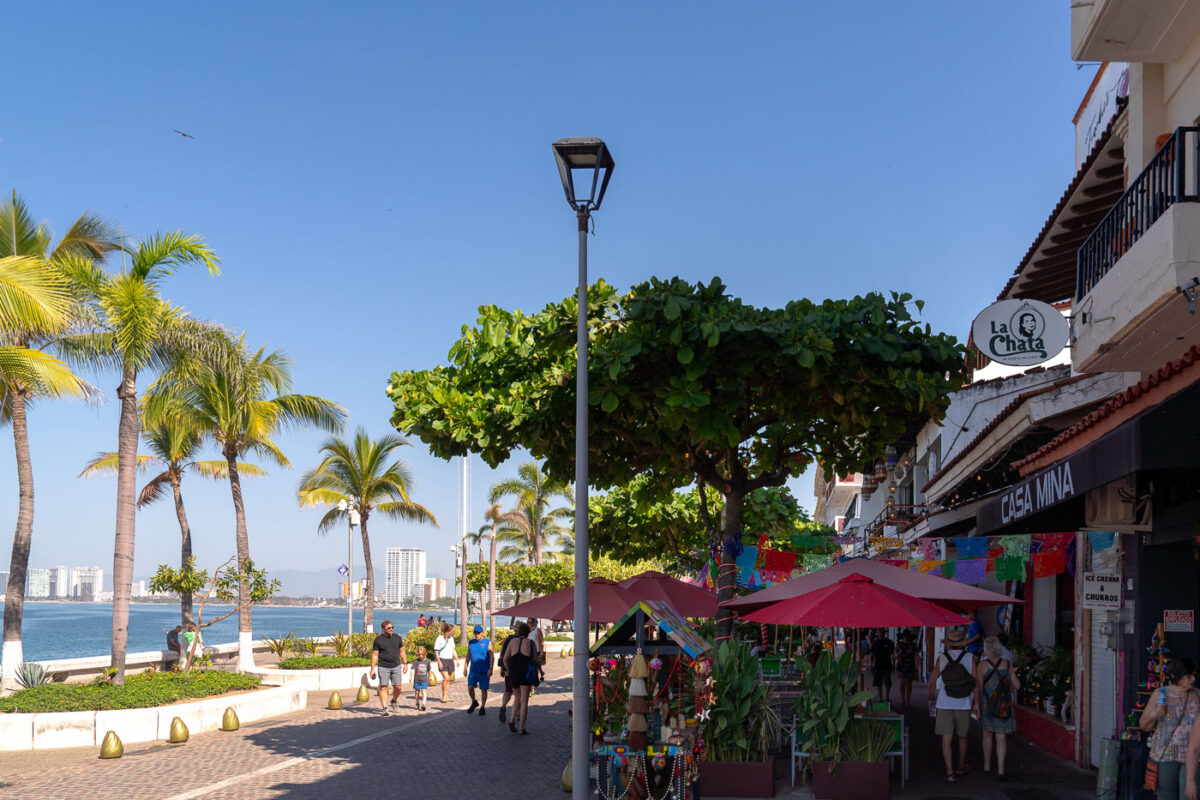
The lively Malecón promenade in Puerto Vallarta stretches along the Bay of Banderas, framed by rows of palms, open-air cafés, and small artisan stands shaded by red umbrellas. Visitors walk the cobblestone walkway past shops like Casa Mina and La Chata, where colorful papel picado flags flutter above the outdoor seating. In the distance, high-rise hotels mark the city’s modern skyline, while the older seafront retains the intimate, walkable character that has made this coastal destination one of Mexico’s most beloved beach towns.
Puerto Vallarta: Zona Romantica Street and El Panorama Tower
December 2024
—
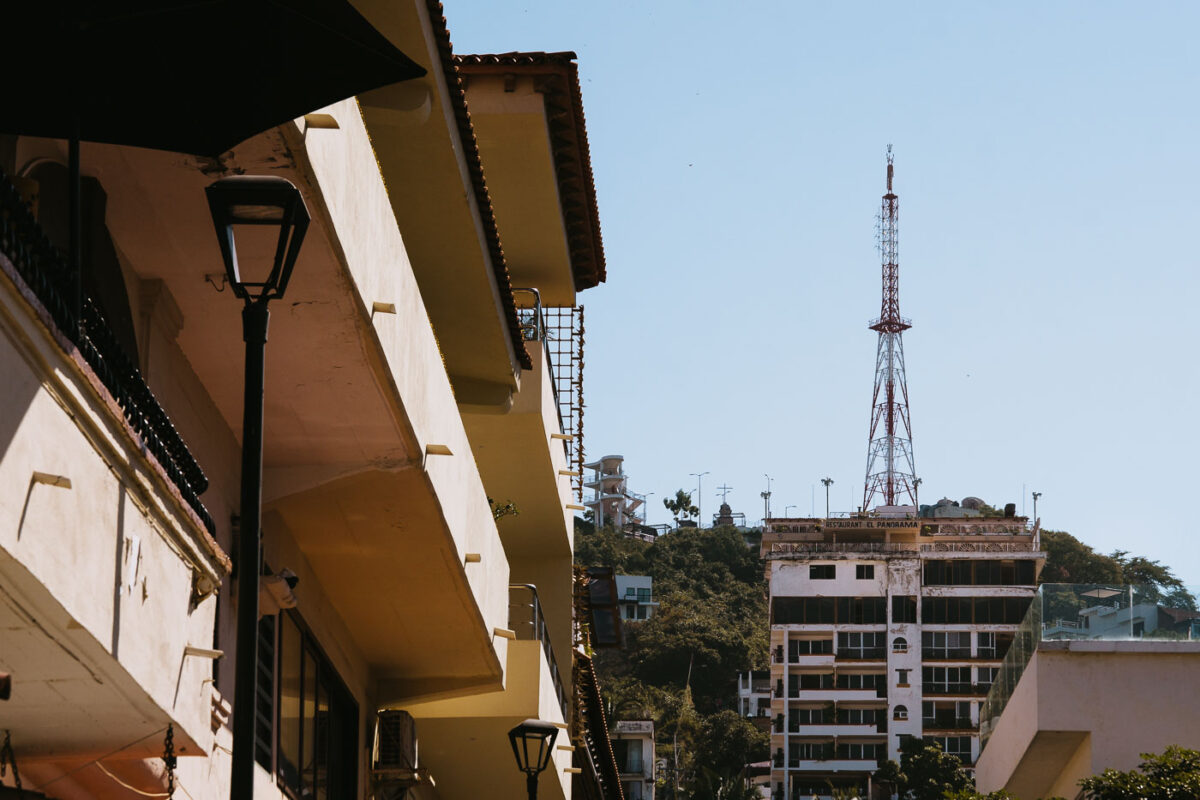
A narrow street in Puerto Vallarta’s Zona Romántica angles upward toward the city’s steep green hills, where a red-and-white radio tower crowns a weathered building labeled Restaurante El Panorama. The scene captures the city’s layered verticality—low stucco terraces with clay roofs in the foreground give way to midcentury apartment towers clinging to the slopes. The dense mix of balconies, street lamps, and satellite dishes reflects Puerto Vallarta’s blend of resort development and lived-in coastal community, where mountain terrain meets compact urban architecture.
Coin Payphone on Calle Hidalgo, Puerto Vallarta
December 2024
—
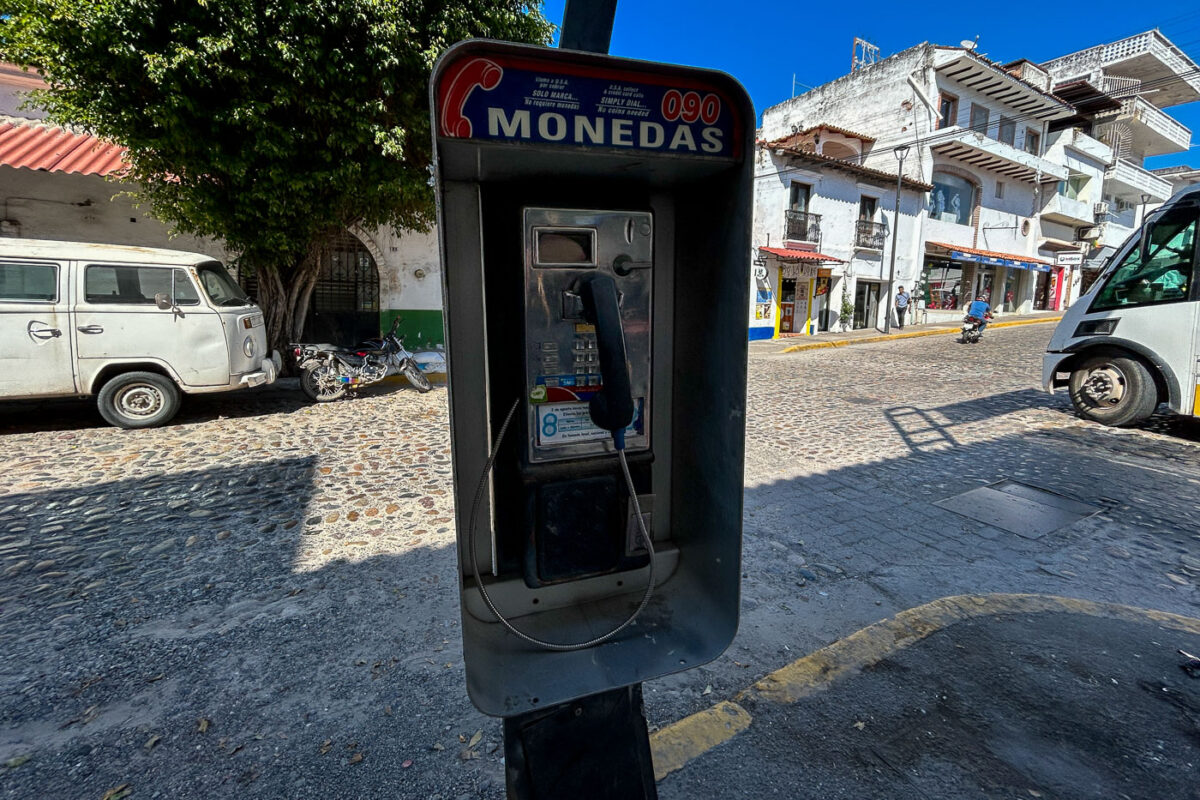
A coin-operated public payphone marked “Monedas 090” stands on a cobblestone street in central Puerto Vallarta, a reminder of the pre-digital era still visible in everyday urban life. Behind it, a mix of aging vehicles, small storefronts, and whitewashed buildings with red-tiled roofs reflect the city’s blend of local tradition and evolving modernity. These relics of analog communication, though seldom used today, remain scattered across Mexico’s towns and resort cities — quiet artifacts of an infrastructure that once connected travelers and locals alike.
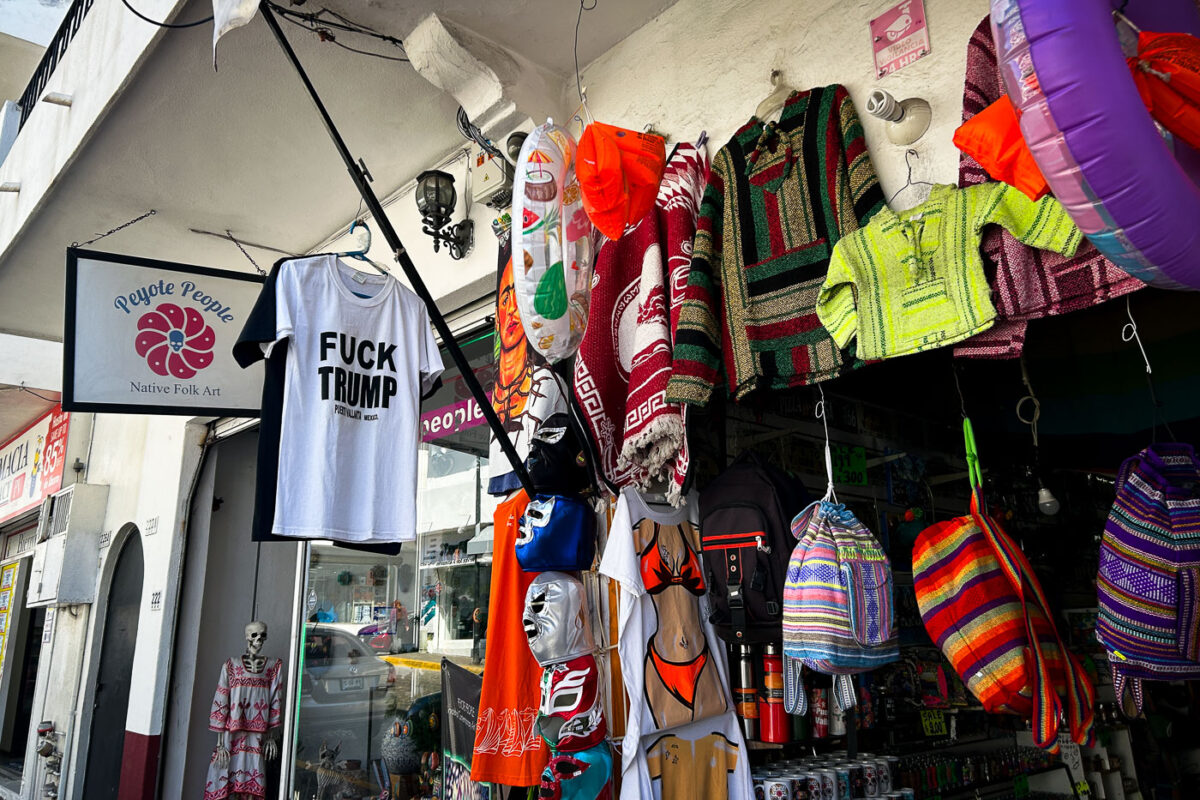
Puerto Vallarta Souvenir Shop: “Fuck Trump” T-Shirt & Folk Art
December 2024
—
A colorful souvenir shop in Puerto Vallarta displays a mix of handmade textiles, luchador masks, and woven bags beside a bold political T-shirt. The storefront sign, “Peyote People — Native Folk Art,” hints at a focus on indigenous crafts, yet the juxtaposition of local artistry with sharp political commentary captures the layered nature of Mexican tourist zones. From bright ponchos and beach gear to expressive graphic tees, the shopfront reflects the blend of commerce, art, and opinion that defines many coastal market streets across Mexico.
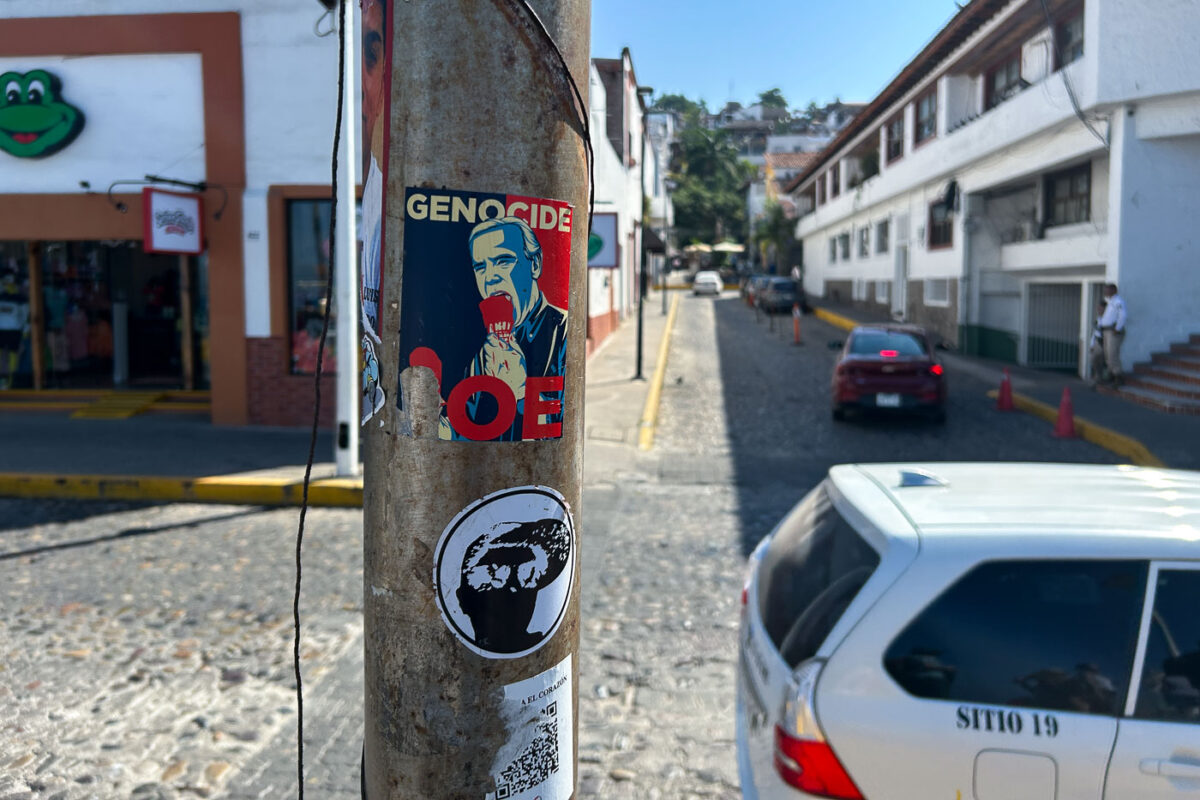
Puerto Vallarta Street Pole with Political Stickers
December 2024
—
A pair of weathered stickers cling to a rusted street pole along a cobblestone street in Puerto Vallarta, Mexico. One features a political caricature with the word “GENOCIDE,” while the other, a minimalist face design, sits just below. Cars and pedestrians move through the narrow street lined with traditional whitewashed buildings, tiled roofs, and small local shops. The scene reflects how political expression and street art intermingle in everyday urban spaces, even in tourist-heavy coastal towns.
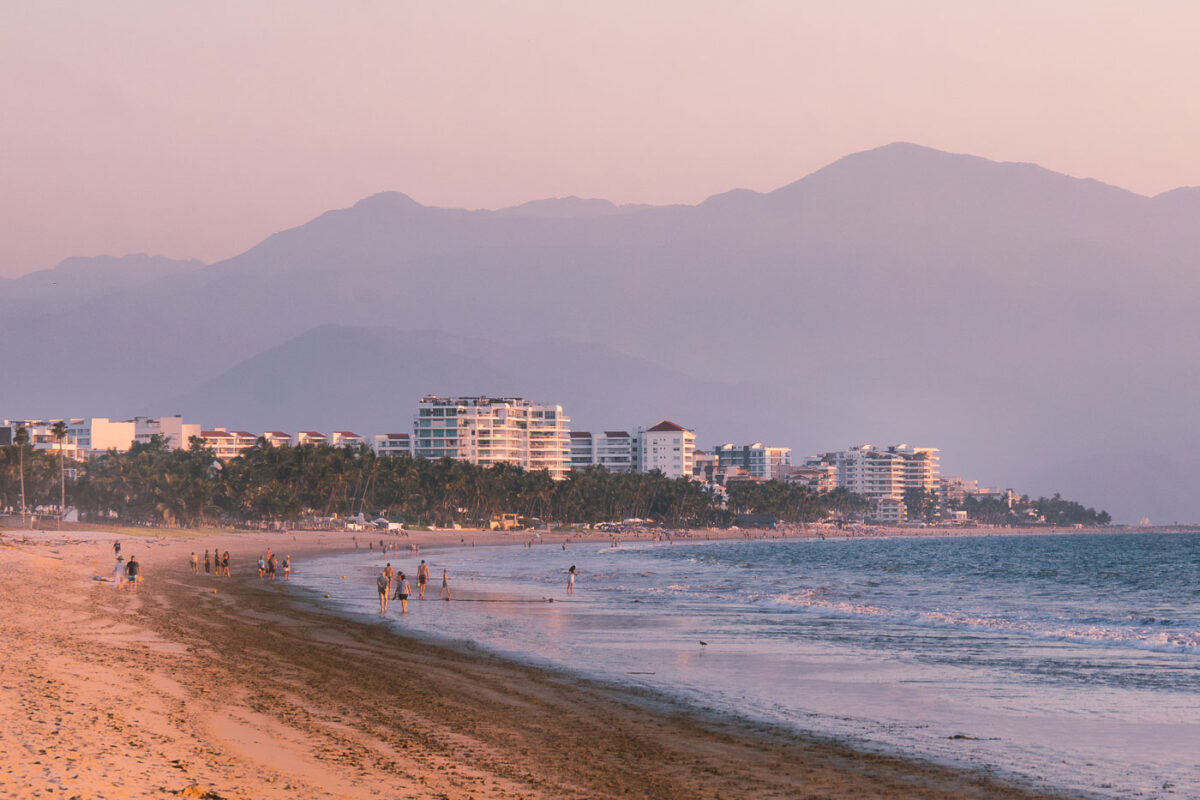
Nuevo Vallarta Beachfront Hotels and Sierra Madre Occidental
December 2024
—
Along the long shoreline of Nuevo Vallarta, visitors stroll the water’s edge where the resort towers of Riviera Nayarit meet the Pacific. The line of hotels and condominiums stretches toward Puerto Vallarta in the distance, marking one of Mexico’s most developed coastal corridors. Behind the beachfront skyline rise the forested slopes of the Sierra Madre Occidental, framing the region’s distinctive geography—where mountains descend sharply into the sea and urban leisure merges with natural backdrop.
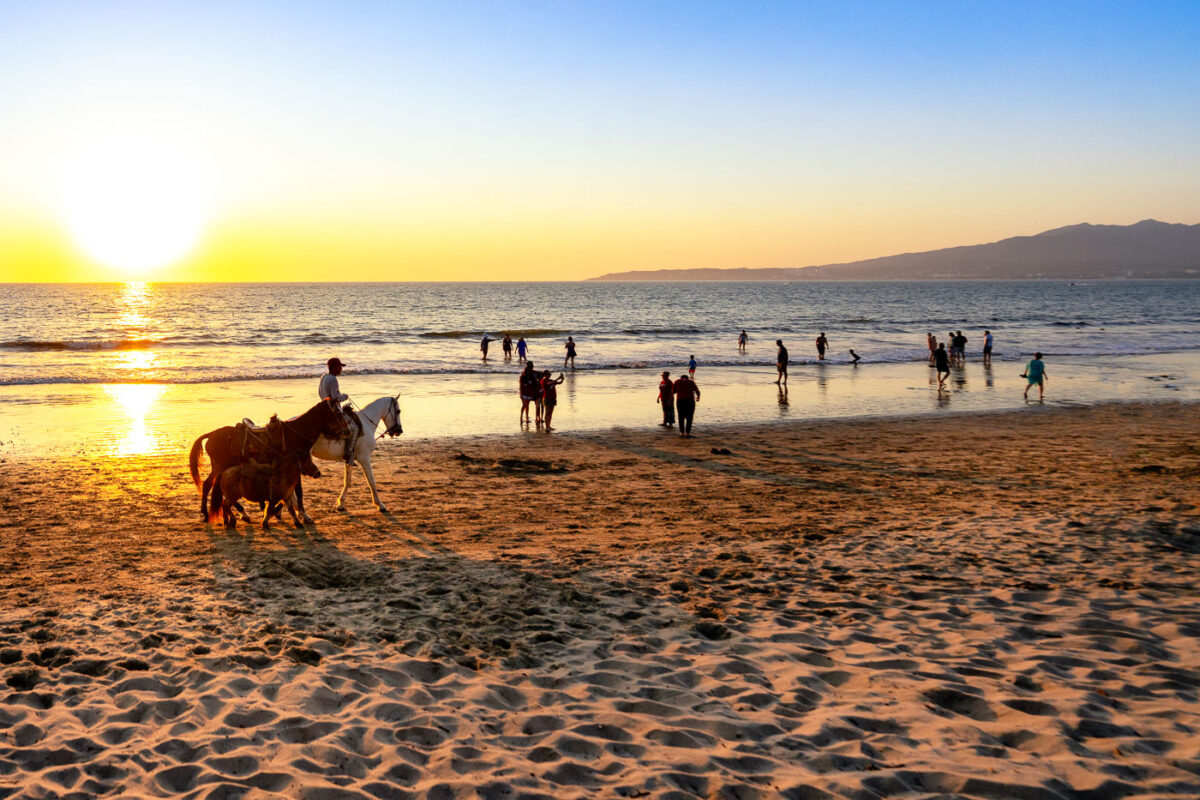
Puerto Vallarta Beach at Sunset with Horse Rides
December 2024
—
Along the shoreline of Puerto Vallarta, Jalisco, people gather where the city meets the Pacific Ocean. Families cool off in the surf as the day winds down, while a local horse handler offers rides along the sand — a long-standing tradition of the bayfront. The beach, backed by the green ridges of the Sierra Madre, remains one of the central gathering spaces for Vallarta residents and visitors alike, blending tourism, community, and everyday coastal life.
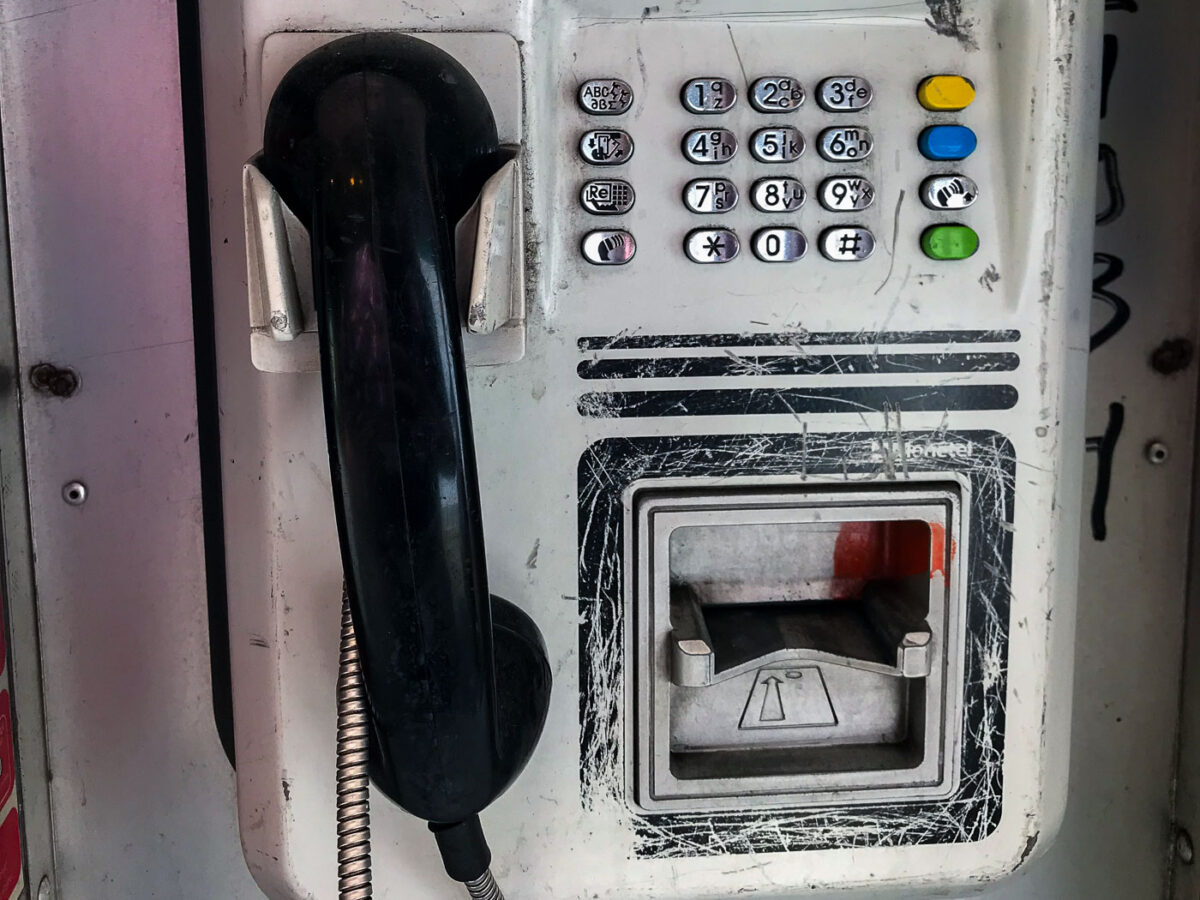
Telmex Pay Phone, Mexico City
May 2018
—
A Telmex pay phone found in Mexico City.
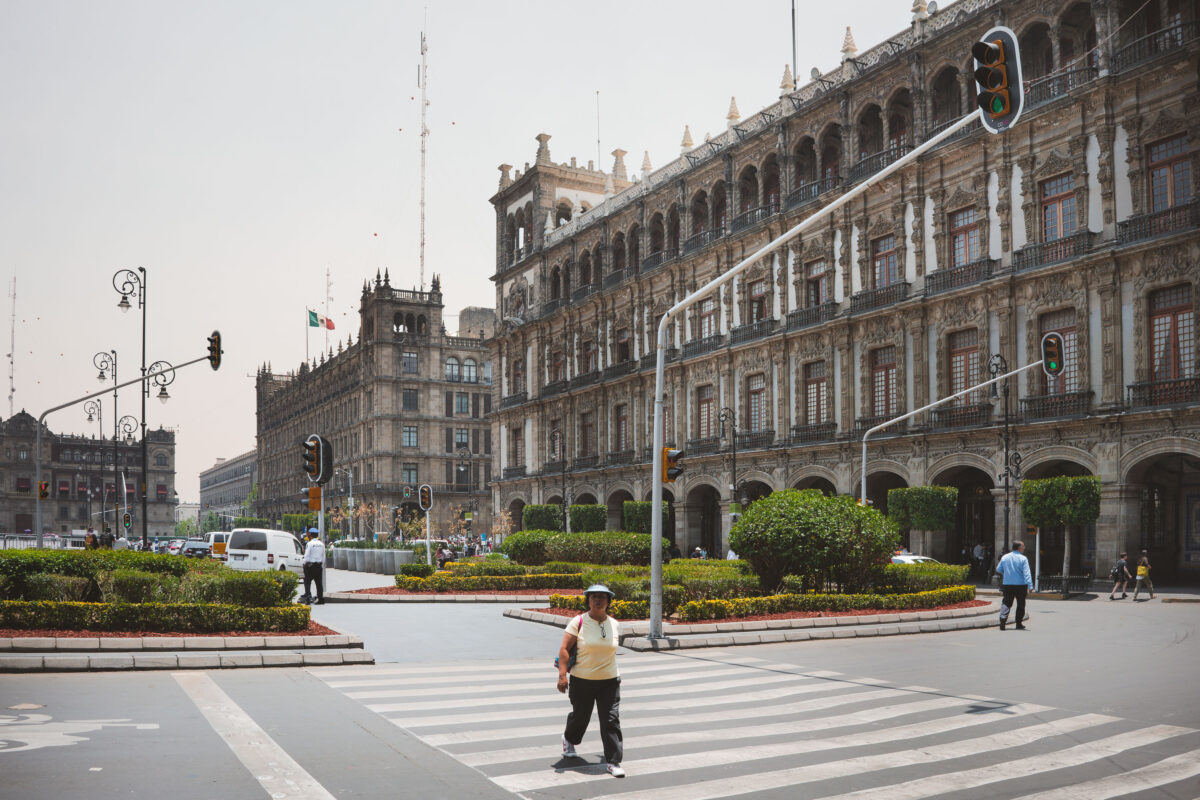
Mexico City Zocalo: Government Palace and Pedestrian Crossing
May 2018
—
Pedestrians cross a street at Mexico City’s Zócalo, with the ornate colonial-era Government Palace and other historic administrative buildings lining the square. The Mexican flag is visible flying above the rooftops, while traffic lights and landscaped roundabouts frame the busy intersection.
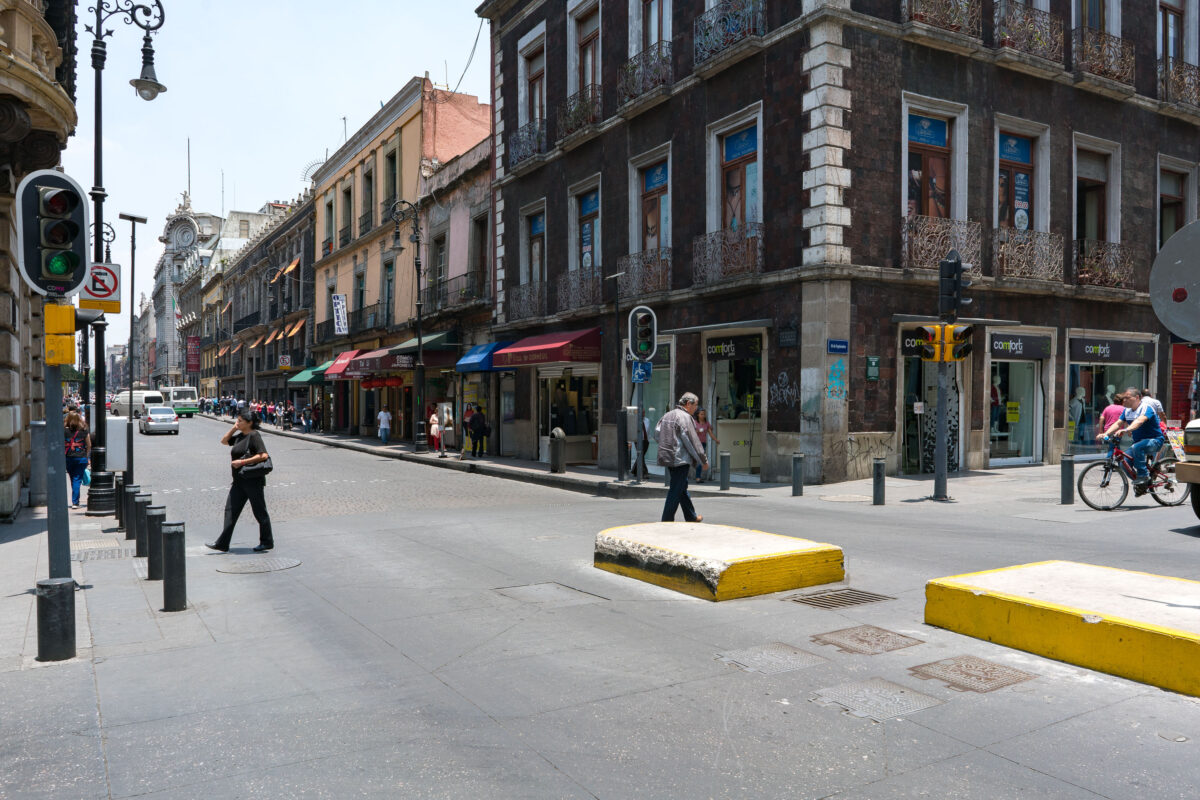
Mexico City Historic Center Street Life
May 2018
—
Intersection in Mexico City’s historic center with pedestrians crossing and cyclists moving along the street. Colonial-era buildings with balconies line the block, housing shops at street level. A bus and several storefronts with awnings are visible further down the road.
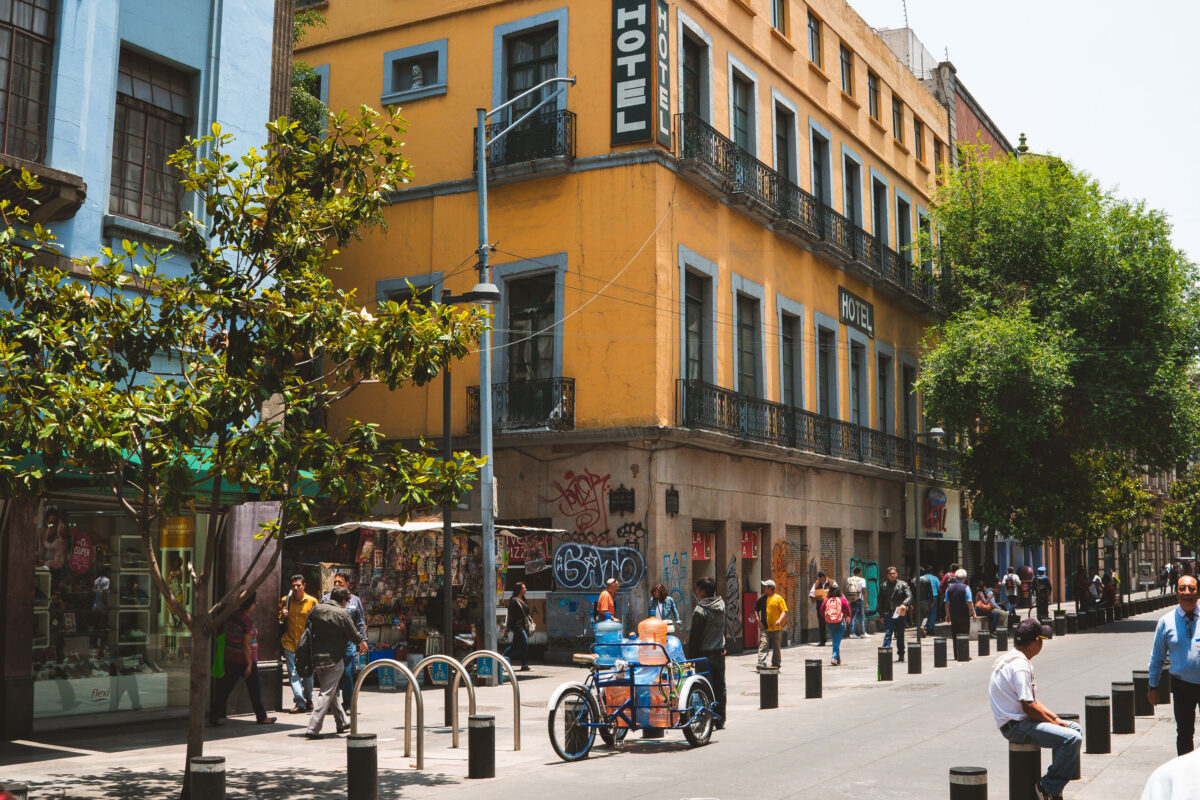
Mexico City Historic Center: Pedestrians and Yellow Hotel
May 2018
—
A street in Mexico City’s historic center with pedestrians walking past shops and vendors. A bright yellow hotel building with blue trim stands on the corner, while a tricycle cart carrying large water jugs moves through the scene. Trees line the walkway, and people gather along the shaded sidewalks.
Mexico City Rooftops Near Zocalo with Mexican Flag
May 2018
—
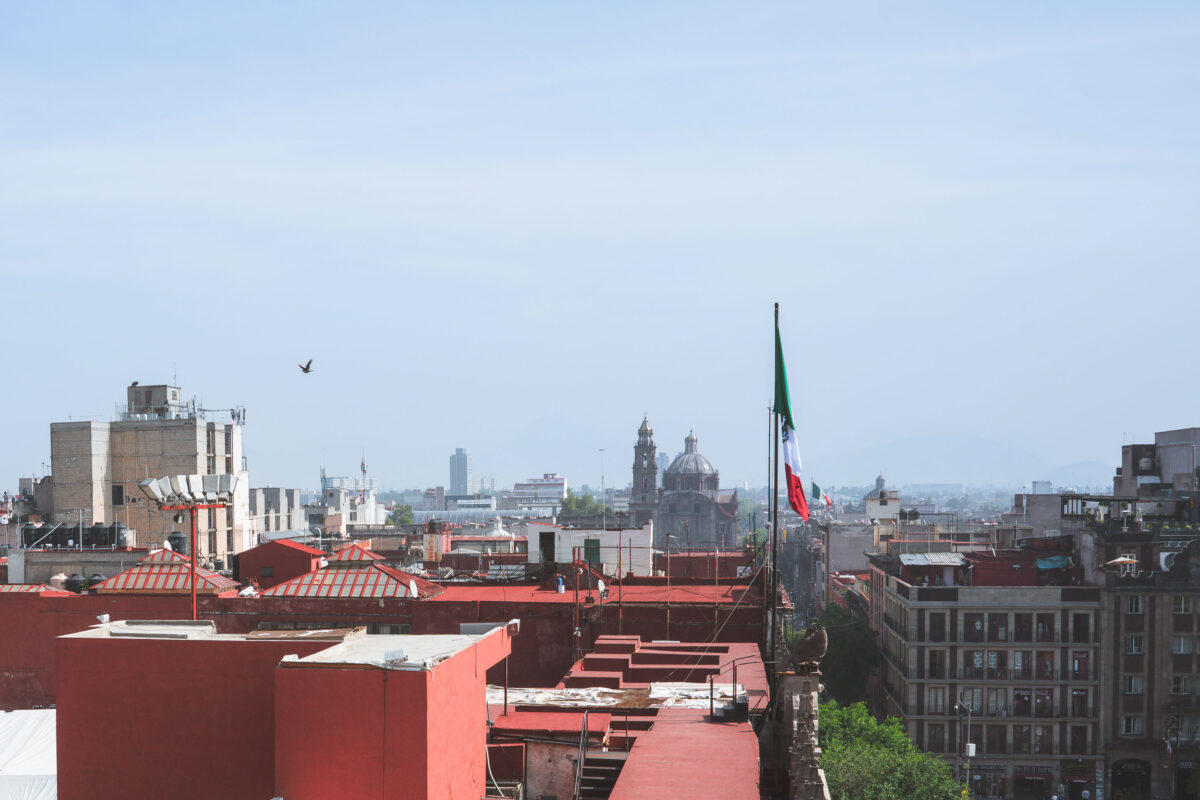
View over the rooftops of central Mexico City, where a large Mexican flag is raised above the buildings near the Zócalo. In the distance, church domes and towers rise over the historic district, with modern high-rises visible further out along the skyline.
Mexico City Central District Rooftops with Torre Latinoamericana
May 2018
—
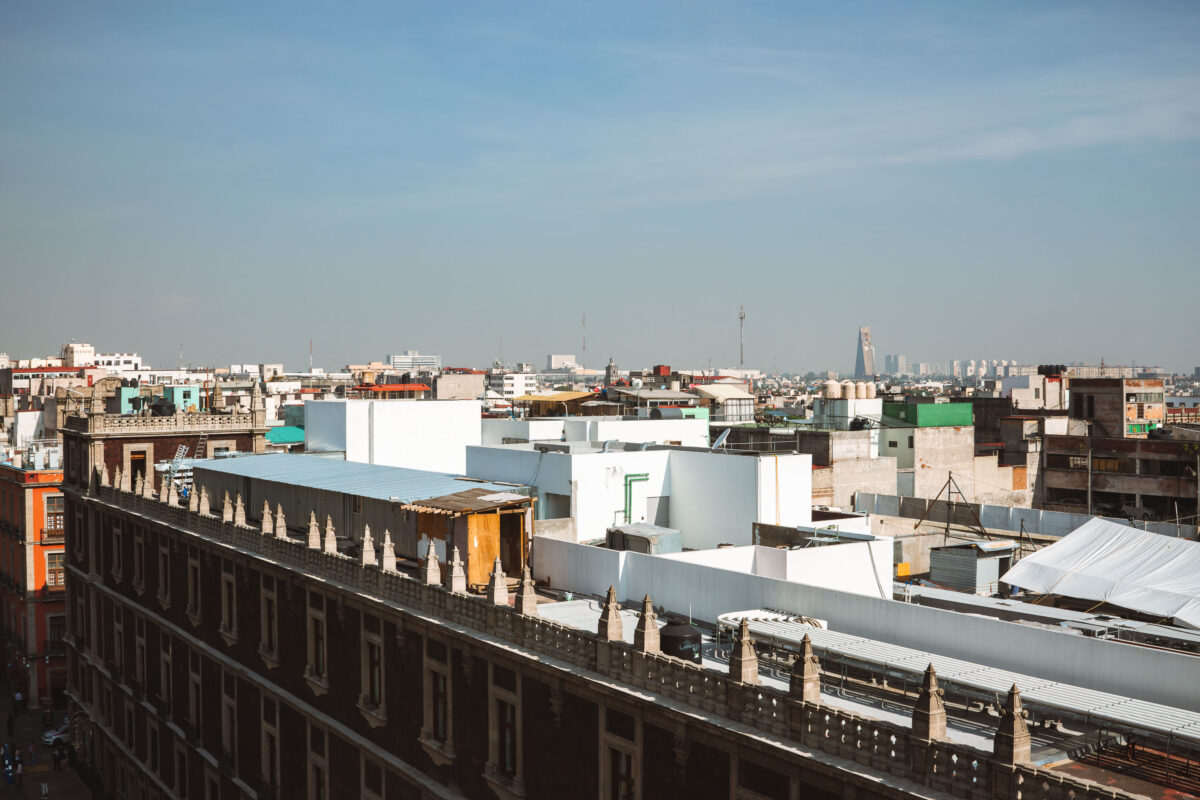
Rooftops of Mexico City’s historic center fill the foreground, with flat structures, water tanks, and makeshift additions visible across the skyline. Toward the horizon, modern high-rise buildings such as Torre Latinoamericana and Torre Reforma rise above the urban sprawl, contrasting with the older low-rise construction of the central district.
Mexico City: Historic Center Avenue from Metropolitan Cathedral
May 2018
—
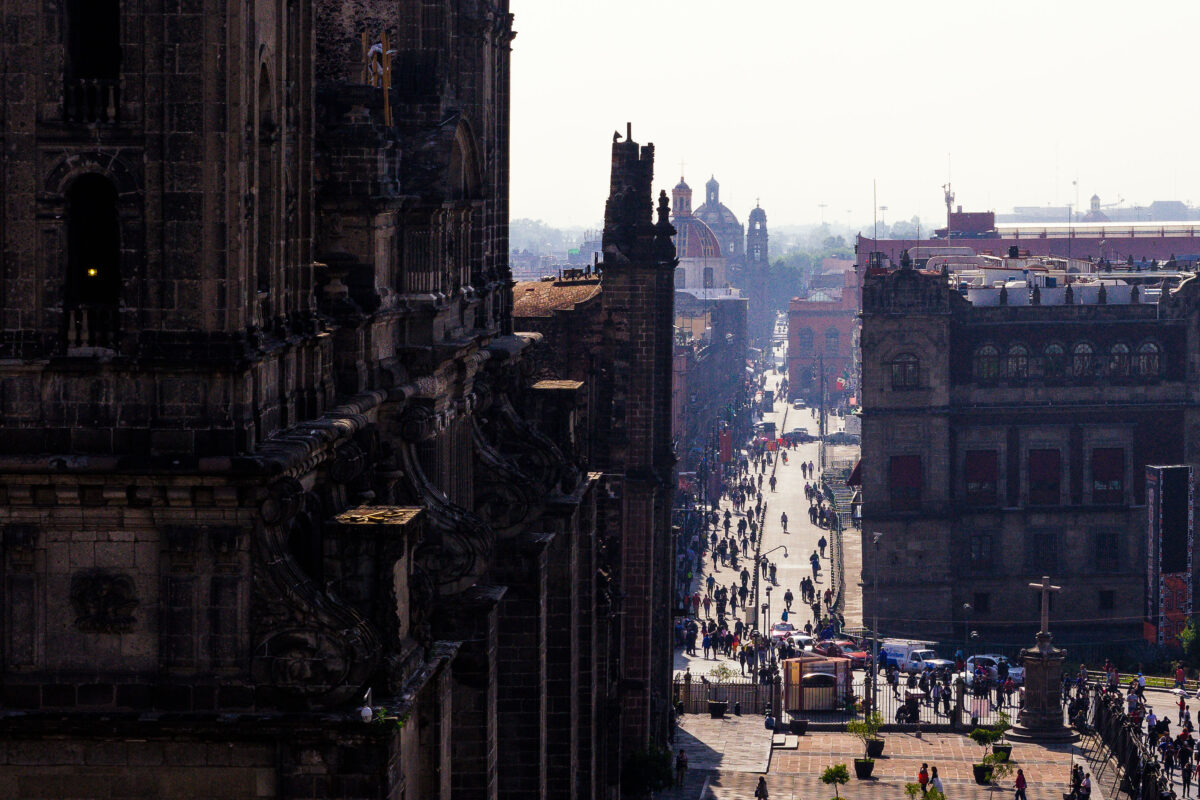
A busy street scene in Mexico City’s historic center, viewed from the steps of the Metropolitan Cathedral. Pedestrians fill the avenue leading eastward, lined with colonial-era buildings. In the background, the domes and towers of additional churches rise above the rooftops, marking the dense architectural landscape of the city’s downtown.
Orange building on Nevado De Toluca, Mexico
May 2018
—
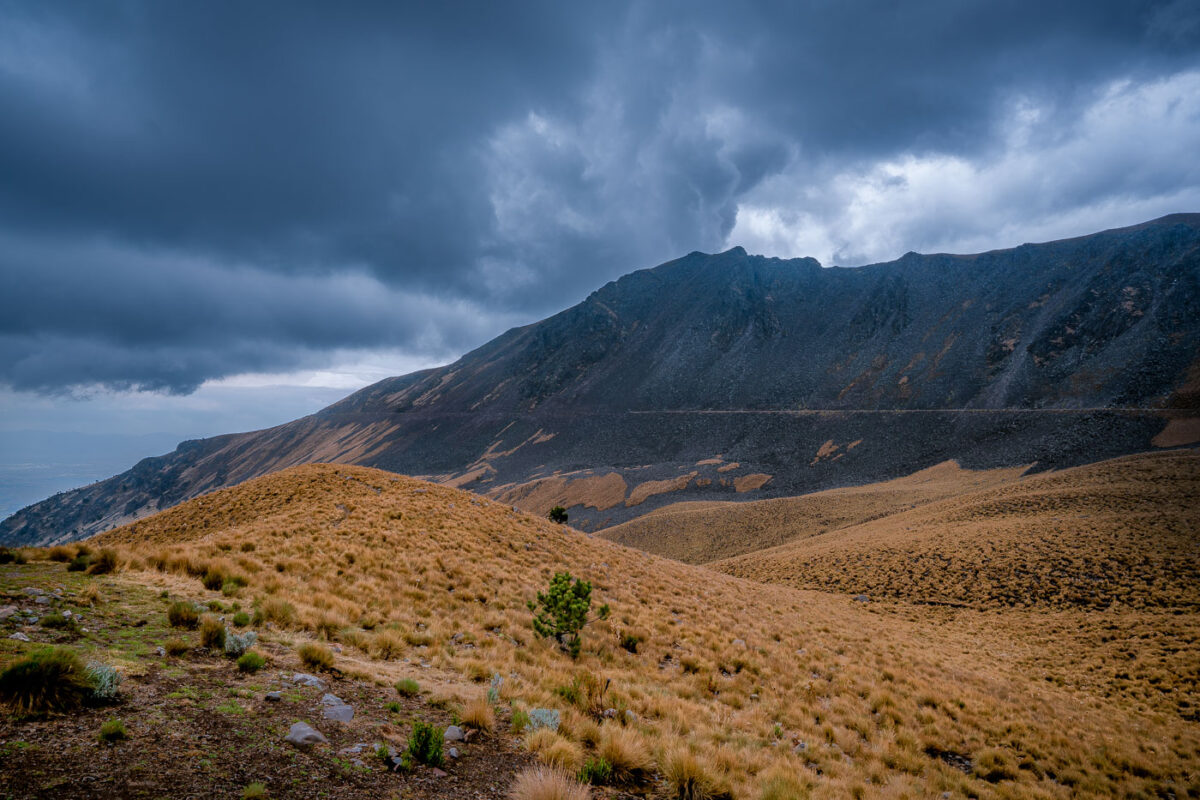
Nevado de Toluca Stratovolcano, Central Mexico
May 2018
—
Mexico City Metro Line 1 Orange Train on Viaducto
May 2018
—
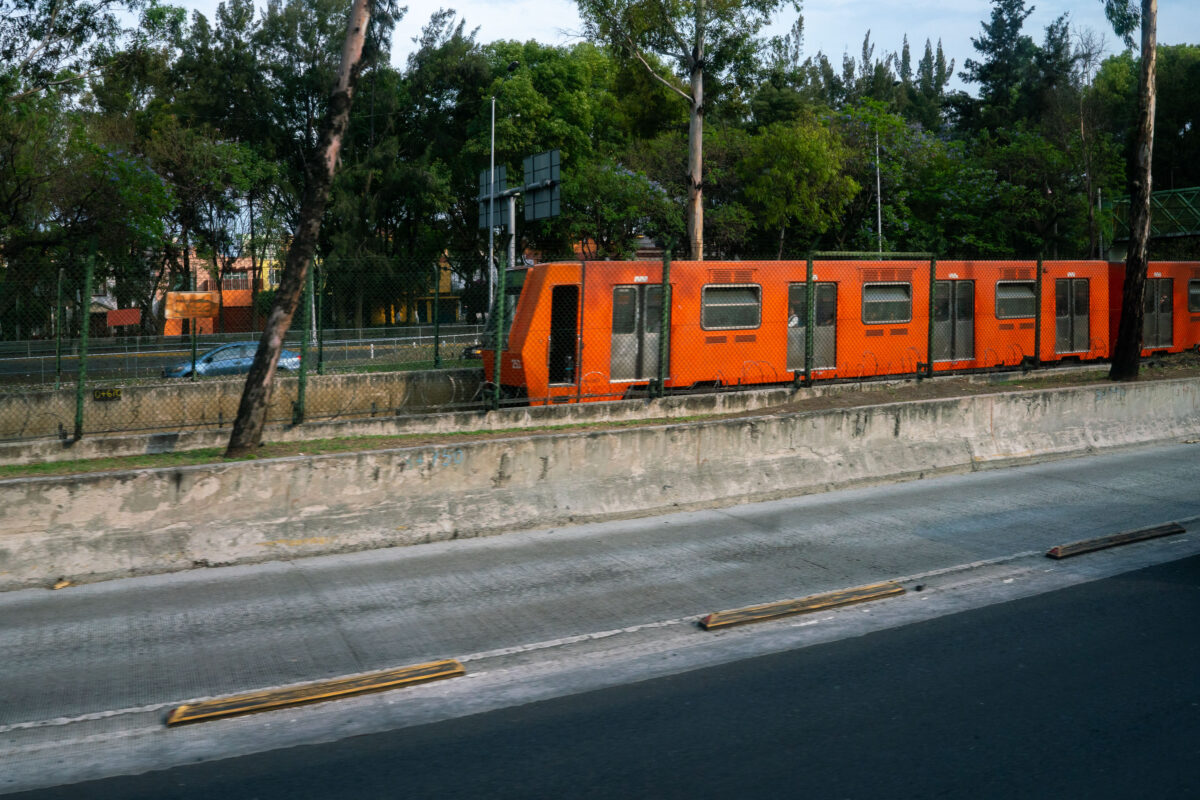
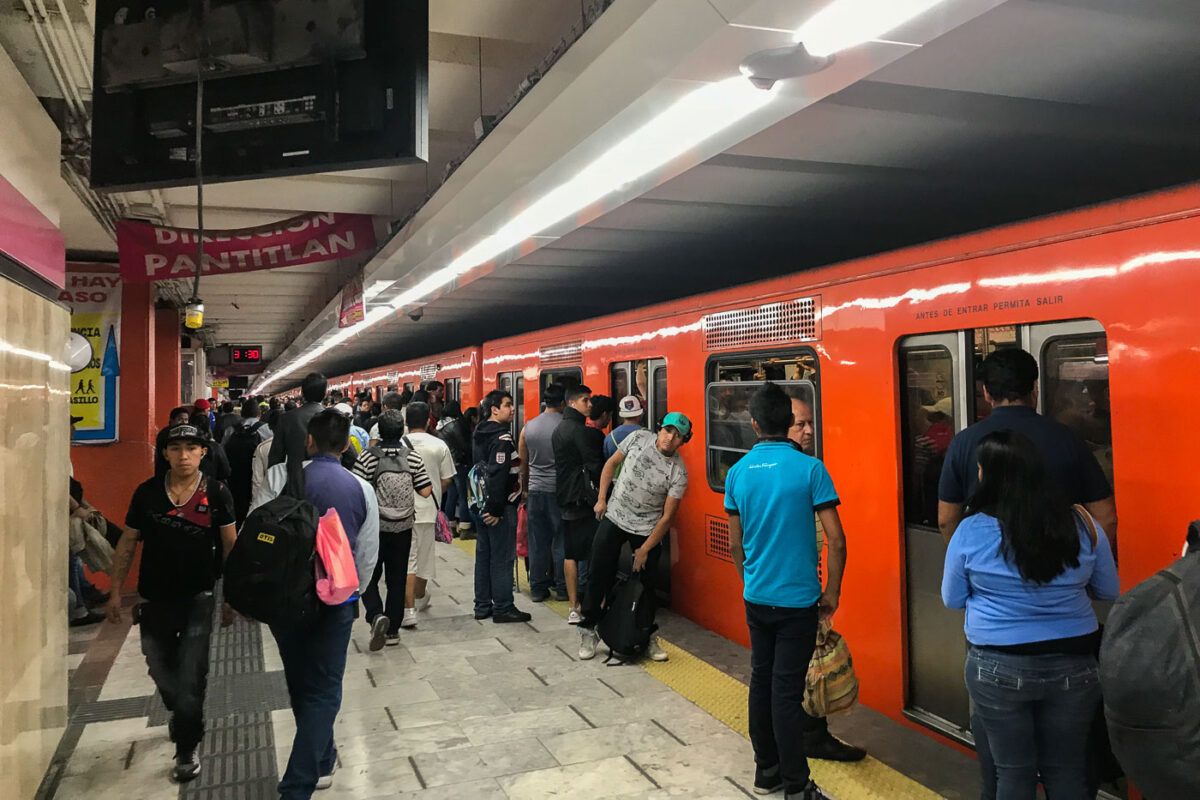
A bright orange Mexico City Metro train runs alongside the Viaducto highway, partially framed by trees and fencing that separate it from the busy traffic corridor. The train’s distinctive color has become a visual emblem of the city’s vast and aging transit network, originally launched in 1969. These rubber-tired trains serve millions of riders daily, threading through tunnels and elevated sections across the capital. Here, the contrast between greenery, concrete, and the orange carriages underscores the Metro’s integration into the urban landscape—an ever-moving artery of one of the world’s largest cities.
Mexico City Hotel Lobby — Modernist Ambience and Art Deco Lighting
April 2018
—
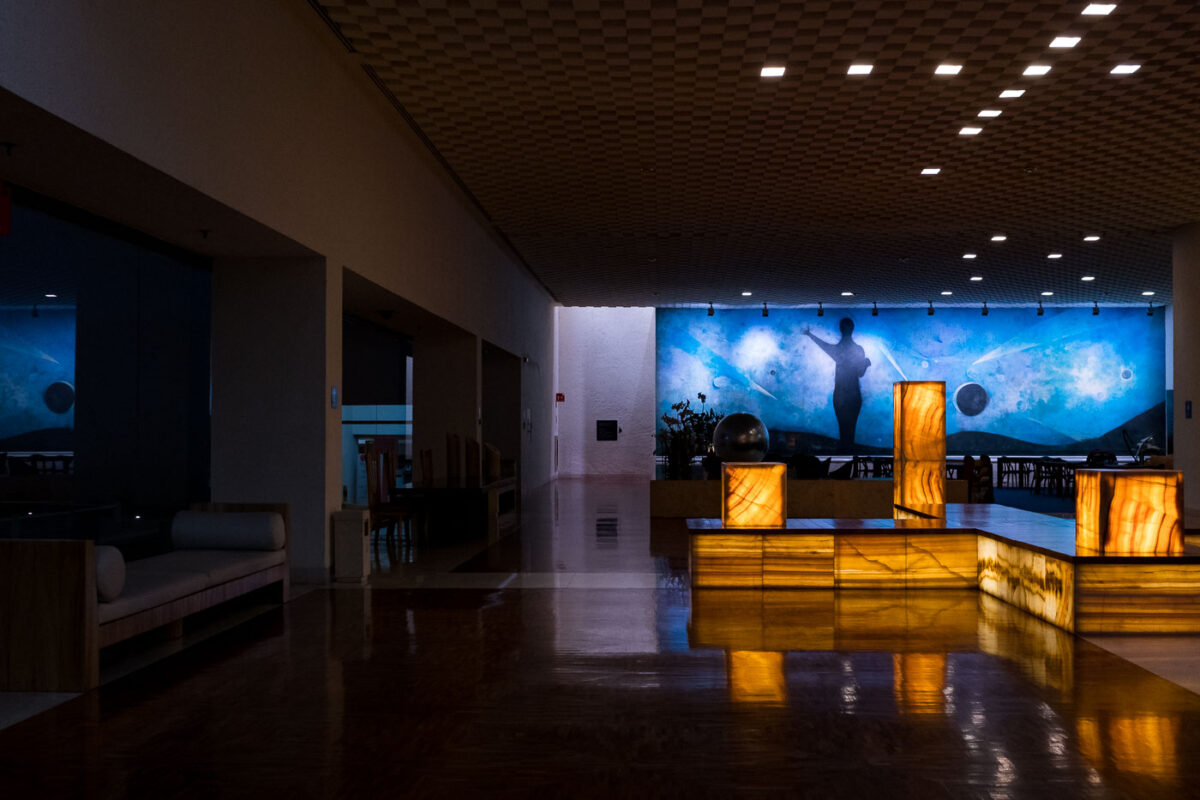
Inside a Mexico City hotel, warm amber lights from onyx columns reflect across a polished marble floor, creating a calm, cinematic glow. At the far end, a mural in rich blues depicts a silhouetted figure surrounded by celestial forms—part of the city’s long tradition of integrating public art into architectural spaces. The interior design blends modernist geometry with soft natural materials, emphasizing both luxury and restraint. Subtle symmetry, clean lines, and the interplay between shadow and illumination give the space a quiet sense of sophistication common in the capital’s mid-to-high-end hotels.
Motorcyclist at Fuente de los Buhos, Mexico City
April 2018
—
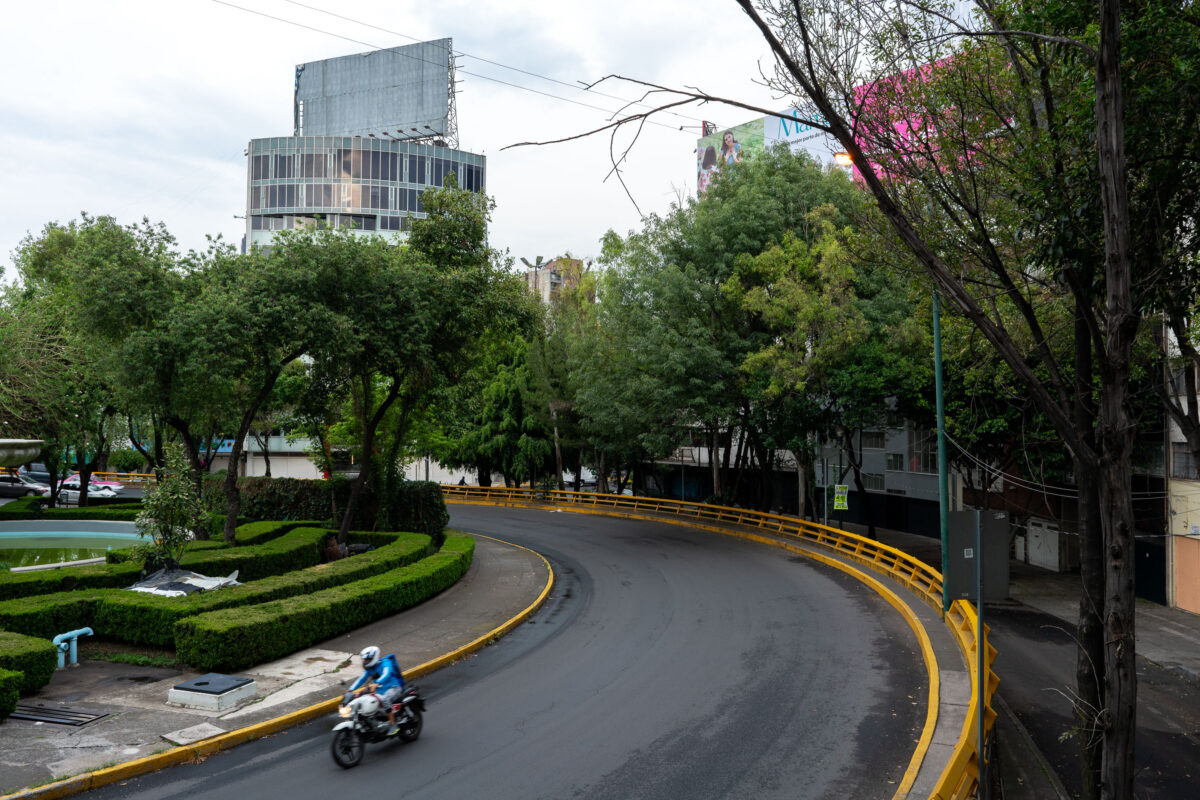
Someone driving a motorcycle around Fuente de los Buhos.
Traffic on Circuito Interior Melchor Ocampo, Mexico City
April 2018
—
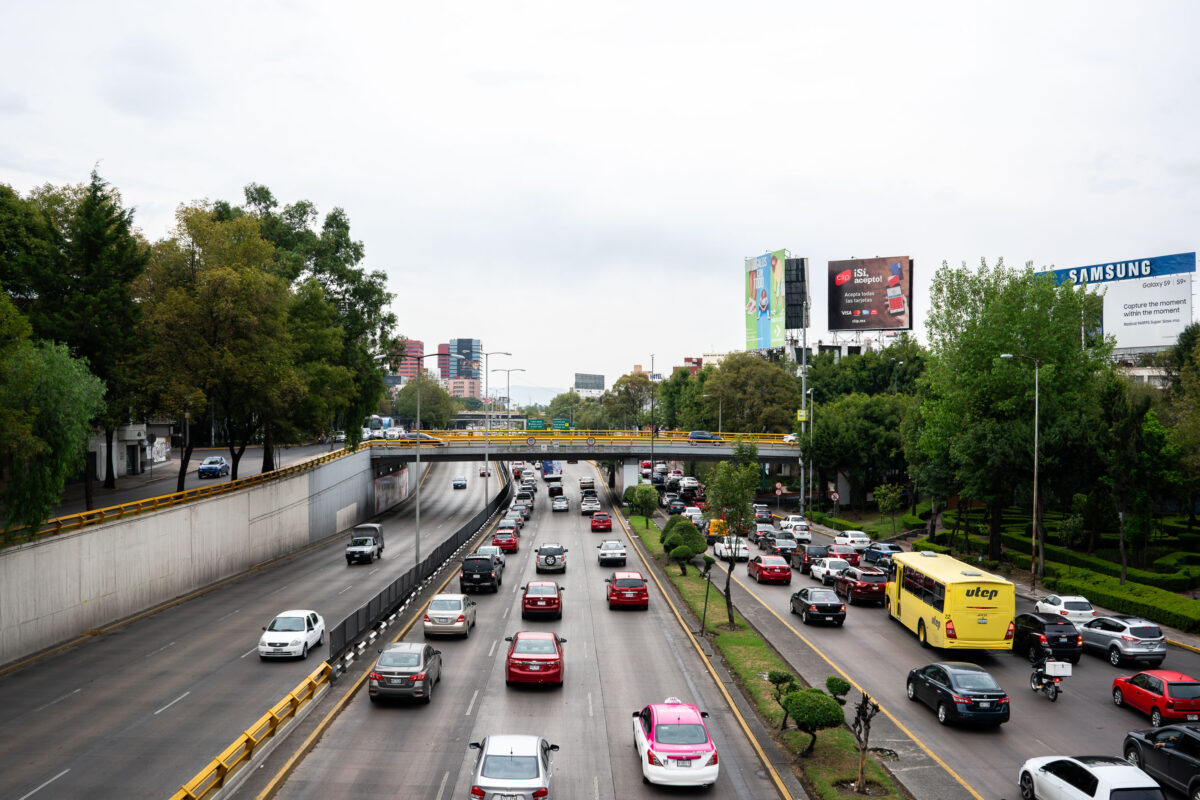
Cto. Interior Melchor Ocampo, Mexico City
Avenida Reforma: Old Buildings and New Towers, Mexico City
April 2018
—
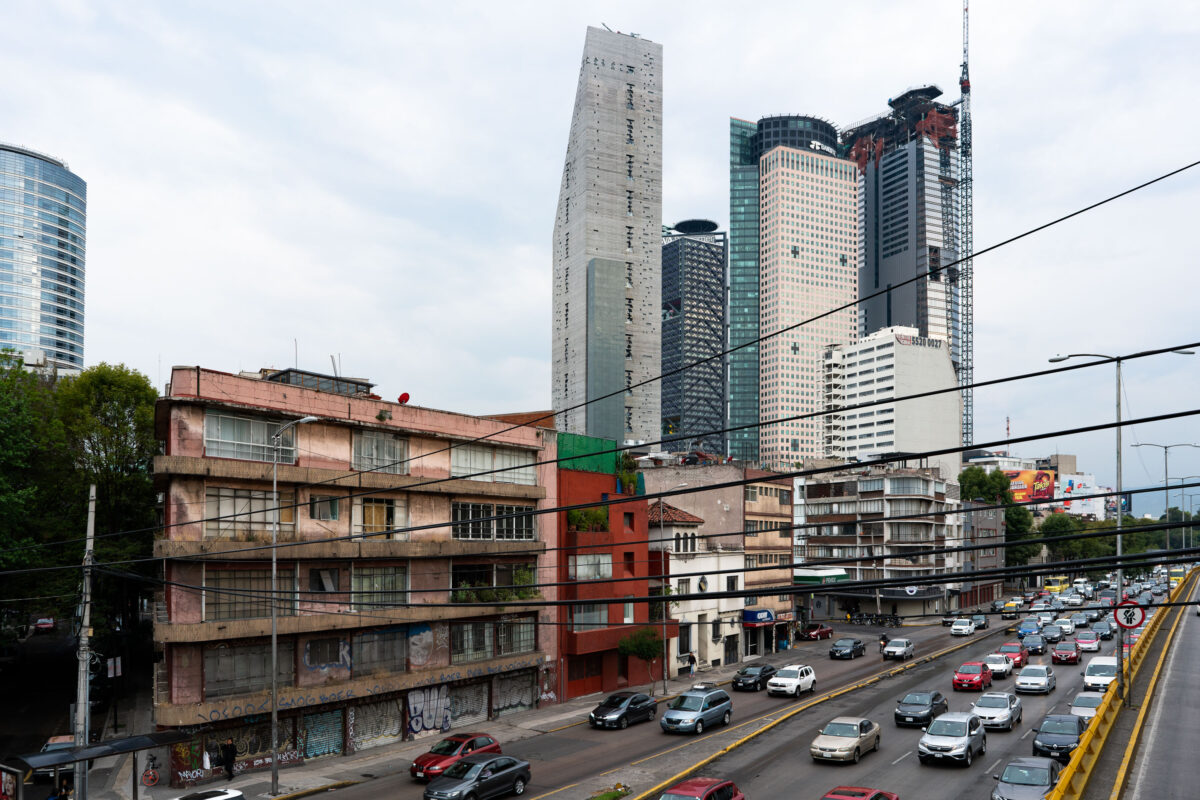
The dense vertical rhythm of Avenida Reforma captures Mexico City’s layered identity — a metropolis balancing past and future. In the foreground, aging residential blocks bear graffiti and sun-faded paint, symbols of mid-century urban life. Rising behind them are the glass and concrete spires of the city’s new financial core, including Torre Reforma, Torre BBVA, and Torre Mayor, among the tallest buildings in Latin America. The contrast is striking: the utilitarian decay of the 20th century meets the engineered ambition of the 21st. Beneath it all, traffic surges westward toward Chapultepec, reflecting the restless motion of a city forever under construction.
Mexico City Metro: Pantitlan Station Platform
April 2018
—
Mexico City: Paseo de la Reforma at Dusk
April 2018
—
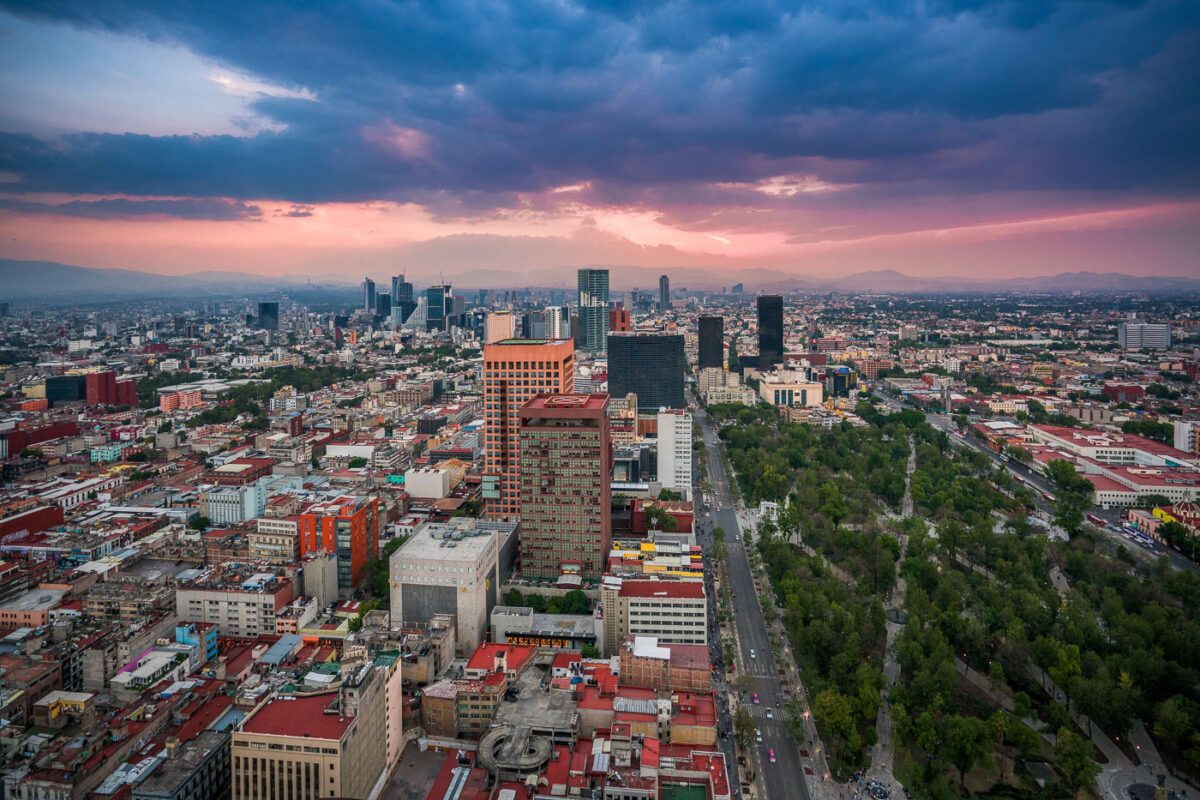
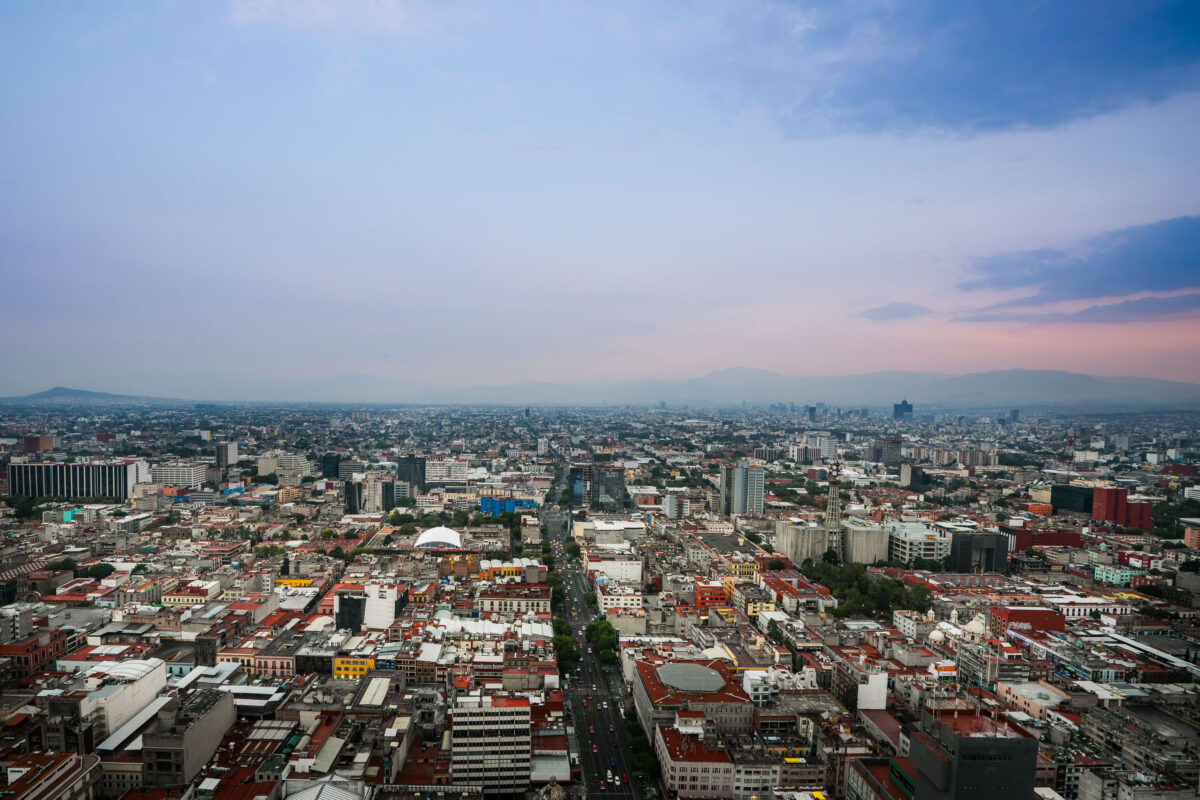
Mexico City is shown from above at sunset, with the Paseo de la Reforma running diagonally through the right side of the image. To the left, the dense central districts display mid-rise buildings with red rooftops, while clusters of high-rise office towers dominate the skyline further west. The large green area on the right is the Alameda Central park. In the distance, the Sierra Madre mountains form the backdrop under a layer of clouds.
Mexico City Skyline from Torre Latinoamericana
April 2018
—
Looking south from the Torre Latinoamericana, this panoramic view captures the vast scale of Mexico City as it extends across the Valley of Mexico. The dense grid of the Centro Histórico transitions into modern commercial districts, framed by the distant volcanic mountains. Visible near the center are landmarks like Eje Central Avenue and the white dome of the historic Arena Coliseo, testifying to the city’s complex layering of colonial architecture and modern urban growth.
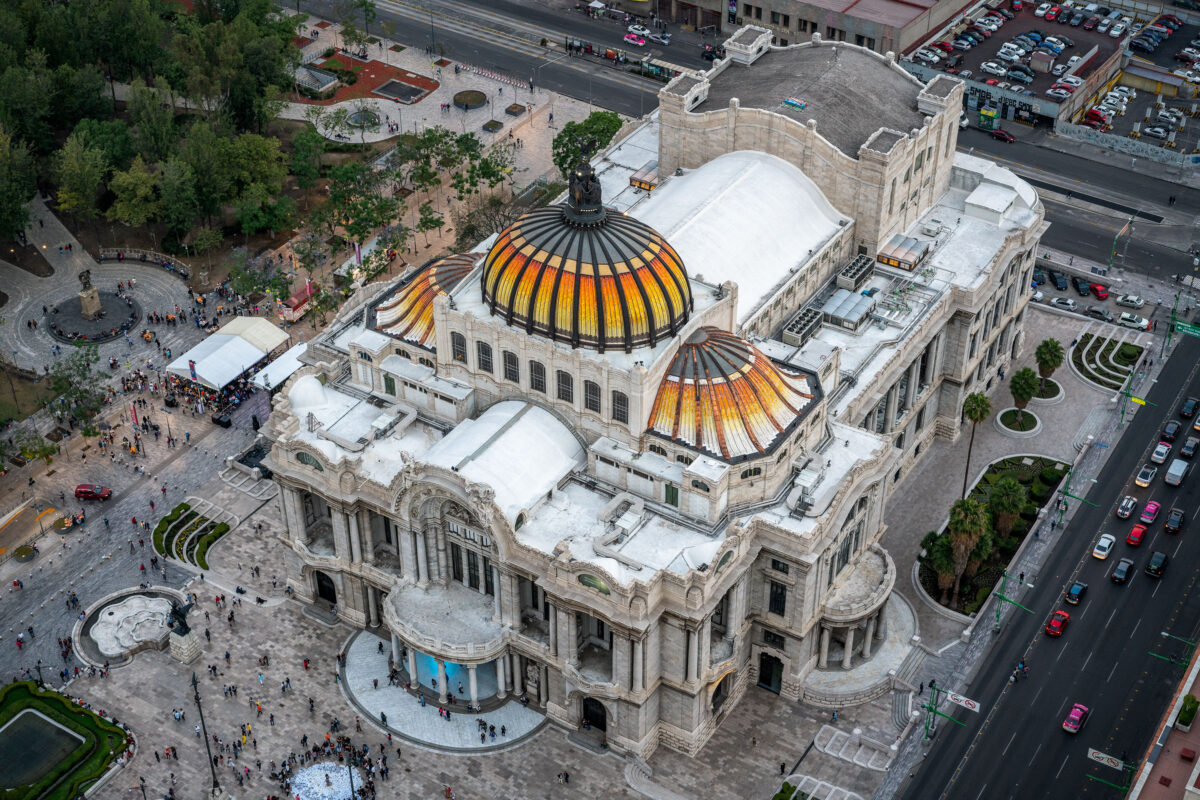
Palacio de Bellas Artes, Mexico City: Aerial View of Cultural Landmark
April 2018
—
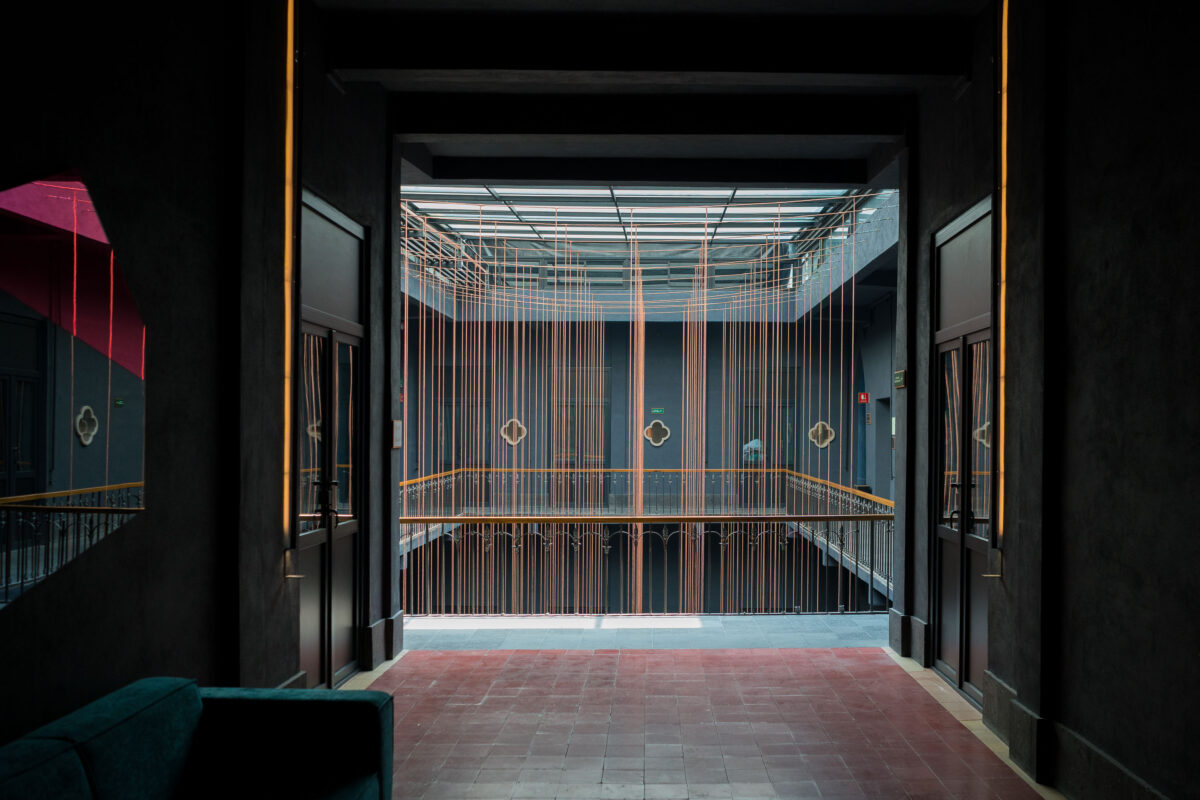
Modern Atrium Design in Historic Mexico City Hotel
April 2018
—
Ornate Stairwell in Restored Mexico City Hotel
April 2018
—
Alameda Central and the Hemiciclo a Juárez from Above
April 2018
—
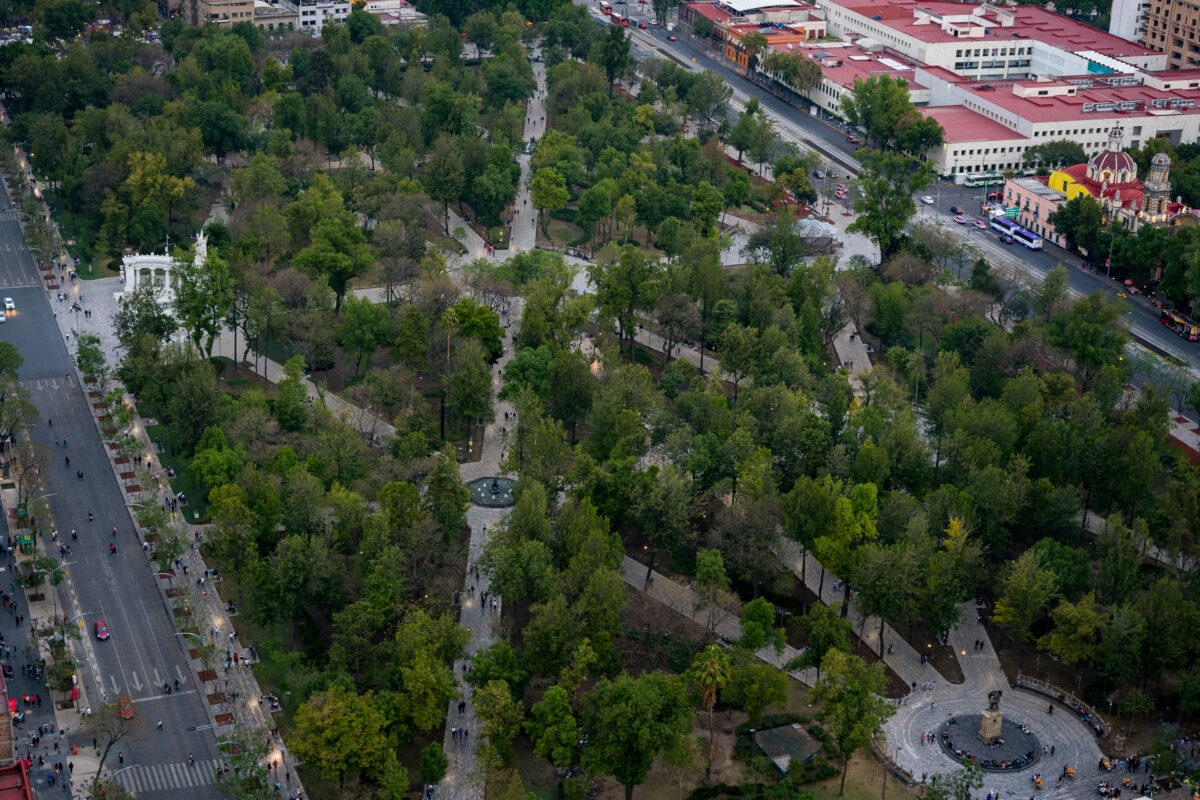
An aerial view of Alameda Central, Mexico City’s oldest public park, established in 1592 and redesigned in the 19th century in the European style. The white semicircular monument visible on the left is the Hemiciclo a Juárez, erected in 1910 to honor President Benito Juárez. The park’s grid of walkways, fountains, and neoclassical sculptures serves as a green centerpiece of the Centro Histórico, surrounded by civic and cultural landmarks like the Palacio de Bellas Artes.
Corner of Calle República de Uruguay and Calle 5 de Febrero
April 2018
—
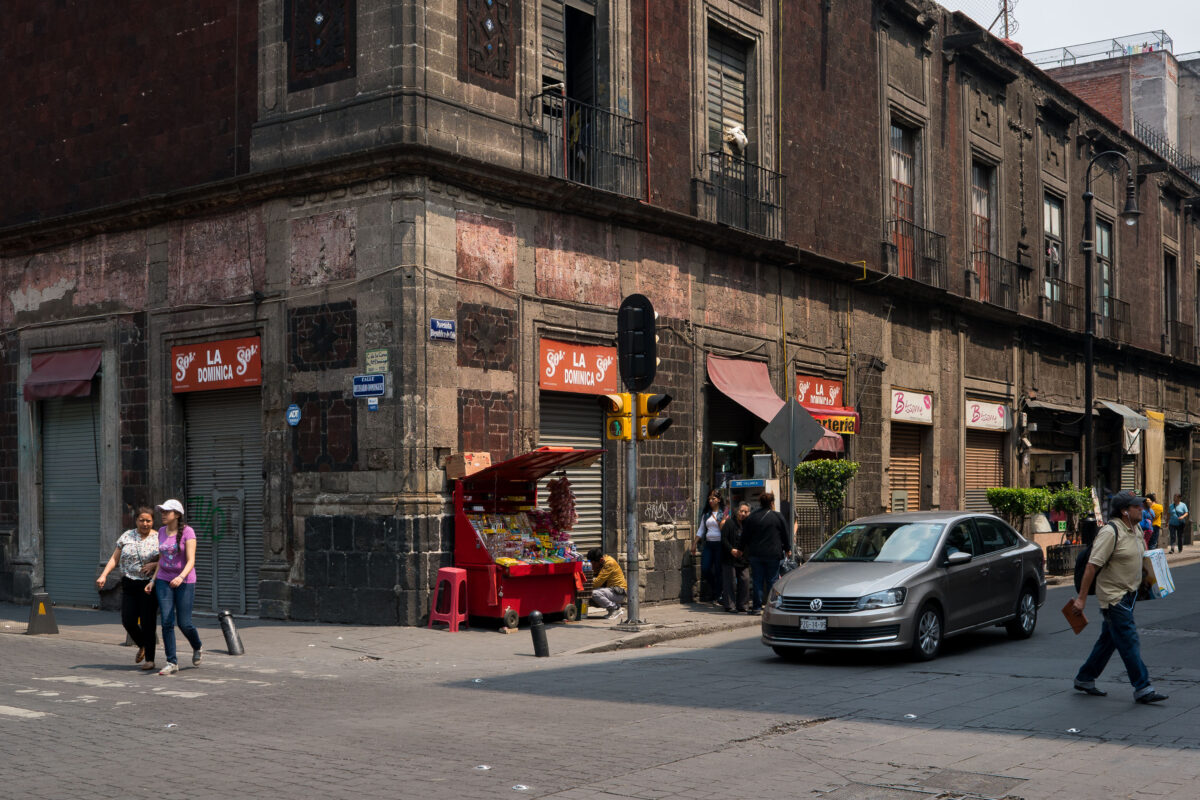
A busy corner in Mexico City’s Centro Histórico where Calle República de Uruguay meets Calle 5 de Febrero. The block’s centuries-old volcanic stone buildings, typical of the colonial period, now house small shops and street vendors that reflect the area’s dense commercial activity. The facade’s weathered cantera stone and red tezontle give the structure its distinctive character, common in pre-19th century civic architecture throughout the historic core.
Metrobus Line 4 through Centro Histórico
April 2018
—
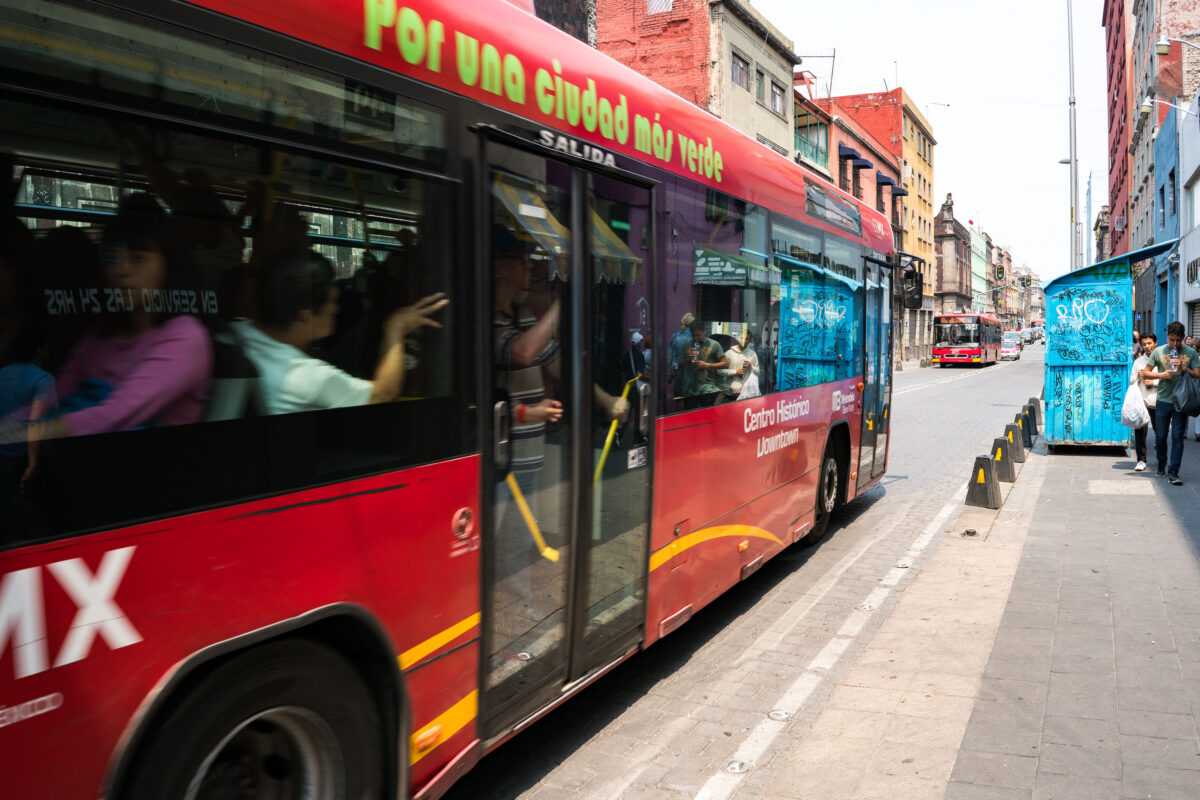
A Mexico City Metrobus on Line 4 passes through the narrow streets of the Centro Histórico, heading toward the San Lázaro terminus. This route, introduced in 2012, was designed to connect the downtown core with the city’s main transit hubs and the airport while reducing congestion in one of Latin America’s most crowded historic districts. The red articulated buses operate along corridors like República de Uruguay and República de El Salvador, part of an effort to modernize and green urban mobility.
Calle República de Uruguay in Mexico City’s Historic Core
April 2018
—
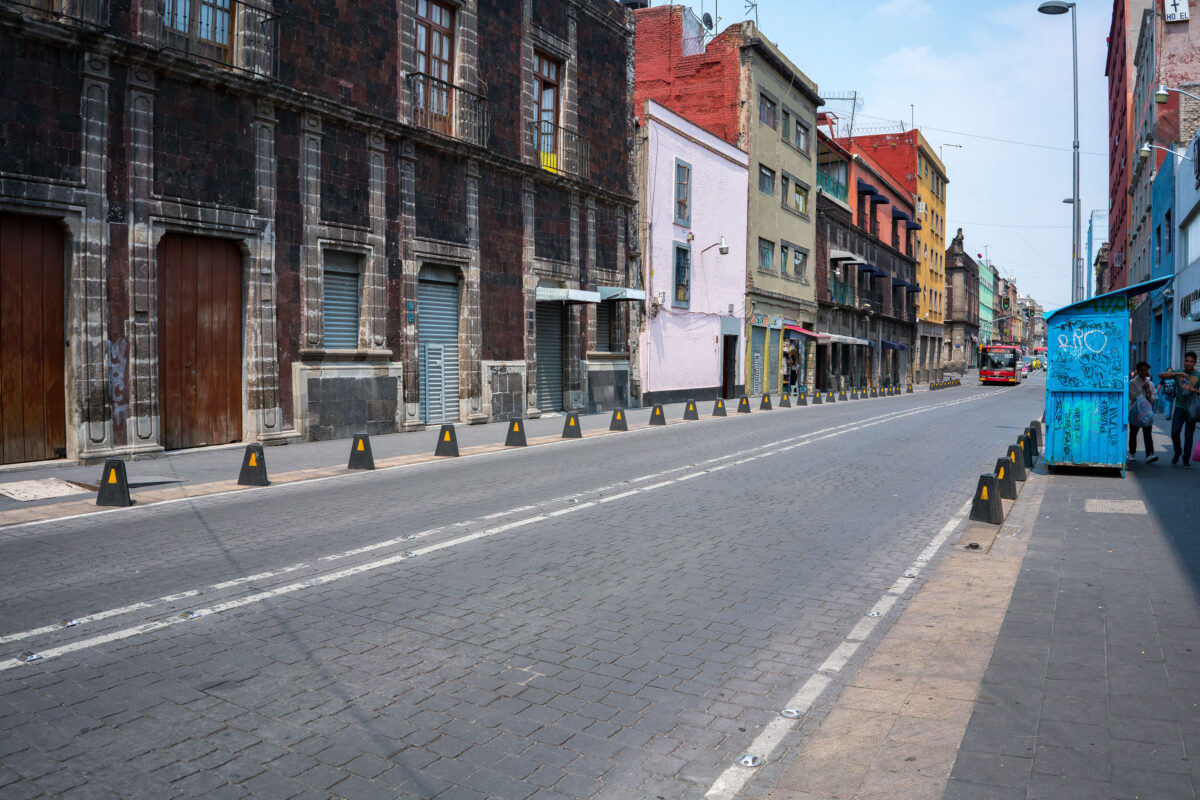
Calle República de Uruguay in the heart of Mexico City’s Centro Histórico, lined with colonial-era stone façades and early 20th-century buildings showing layers of renovation and age. The street, paved with basalt cobblestones, reflects the city’s dense architectural history where 18th-century walls coexist with modern storefronts and utilities. The corridor connects the Zócalo area with Eje Central, serving as one of the oldest commercial arteries in the capital.
Hotel Punta MX Restaurant Interior, Mexico City
April 2018
—
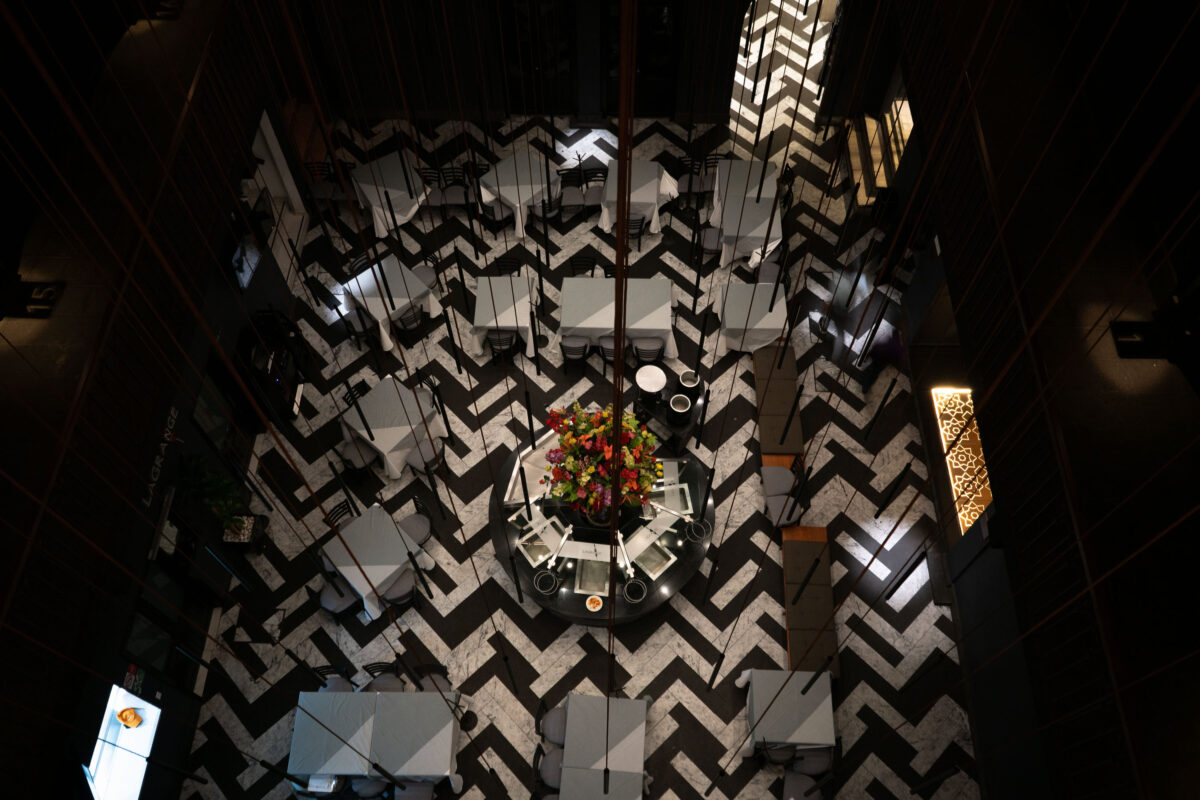
Hotel Restaurant in Mexico City.
Mexico City Skyline at Night 2018
April 2018
—
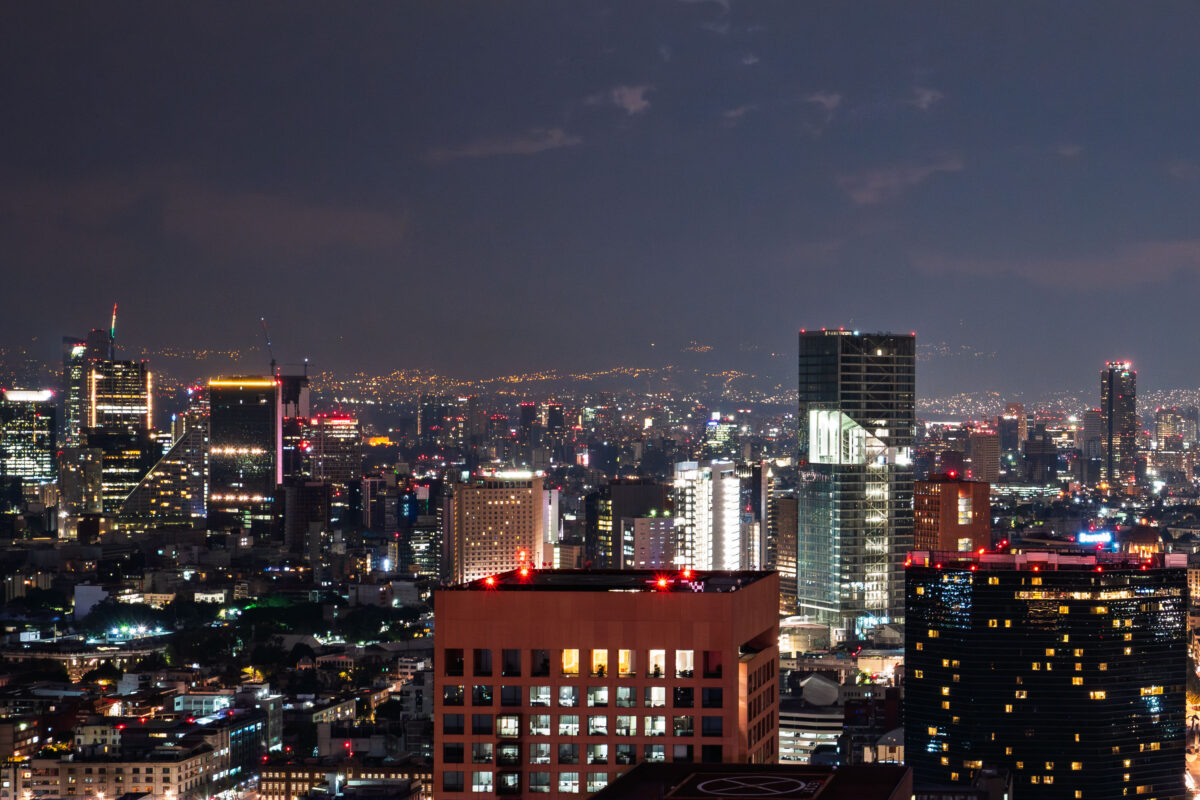
The night lights of Mexico City, Mexico.
Evening on Calle Madero, Mexico City’s Centro Histórico
April 2018
—
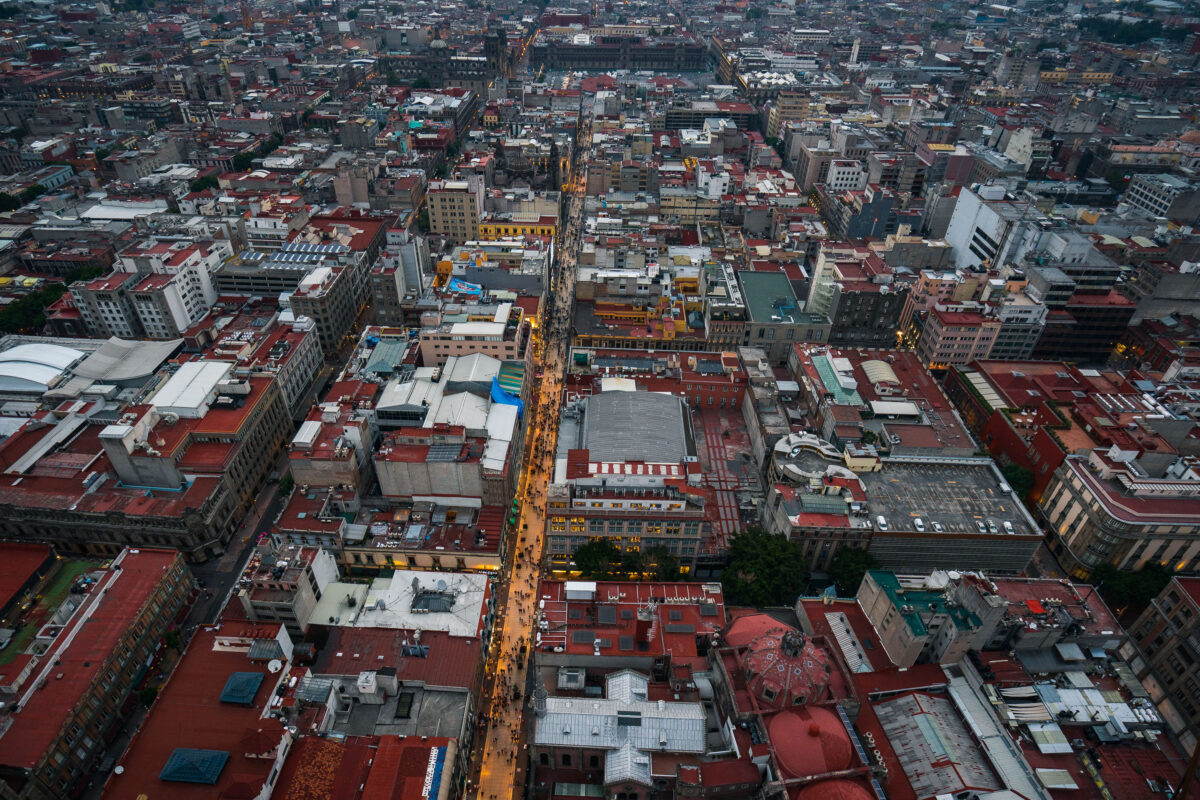
Calle Francisco I. Madero stretches eastward through Mexico City’s Centro Histórico, illuminated as evening falls. This pedestrian artery connects the Torre Latinoamericana to the Zócalo and has been a central commercial corridor since colonial times. Once known as San Francisco Street, its 2010 pedestrianization transformed it into one of the busiest walkways in Latin America, lined with historic facades, retail arcades, and landmarks like the Church of San Francisco and Casa de los Azulejos.
Ecobici Dock at Night, Mexico City Historic Center
April 2018
—
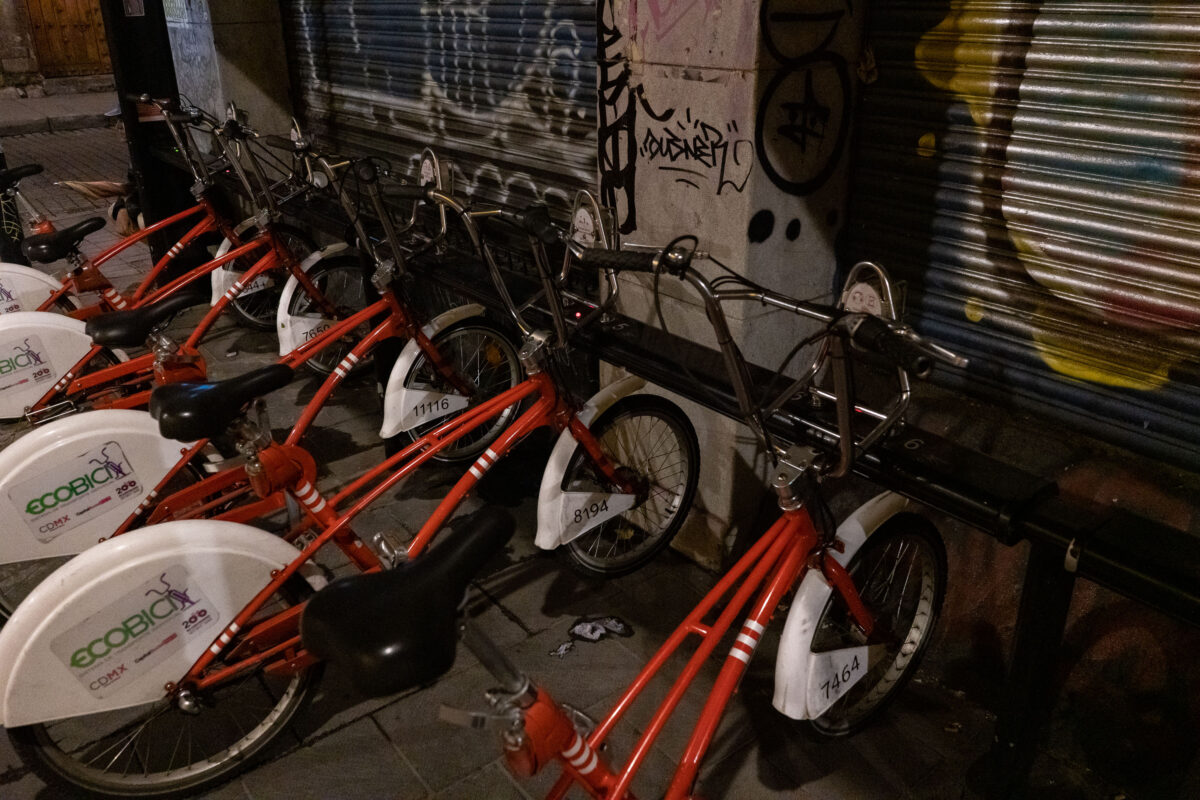
Rows of red Ecobici bicycles line a graffiti-marked wall in Mexico City’s historic center, their white fenders catching what little light remains from nearby street lamps. The city’s bike-share program, launched in 2010, represents one of Latin America’s most ambitious urban mobility projects, linking thousands of residents and commuters through sustainable transport. In the quiet of night, the empty docking station tells a different story — a pause between the day’s rush and the city’s nocturnal hum, where the blend of public art, infrastructure, and wear marks the pulse of daily urban life in the capital.
Street Vendors on Avenida Francisco I. Madero, Mexico City
April 2018
—
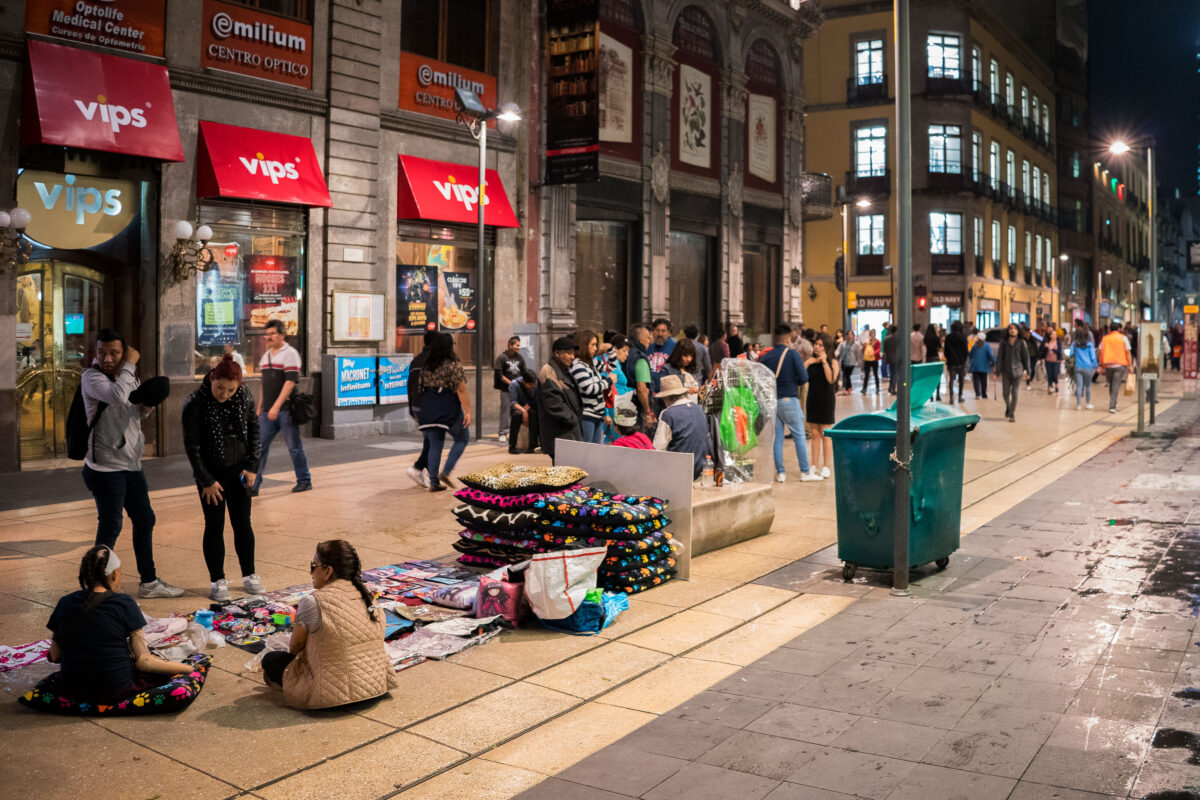
As evening settles over Mexico City’s Centro Histórico, informal vendors spread colorful textiles, pillows, and trinkets across the pedestrian walkway of Avenida Francisco I. Madero. The avenue, one of Latin America’s busiest foot corridors, connects the Zócalo to the Palacio de Bellas Artes and thrums with life well into the night. Illuminated storefronts and cafés like Vips cast reflections onto the restored stone façades of early 20th-century architecture. Beneath the glow of the streetlamps, the mingling of workers, families, and passersby captures the layered rhythm of Mexico City — a metropolis where commerce, tradition, and resilience coexist within its historic streetscape.
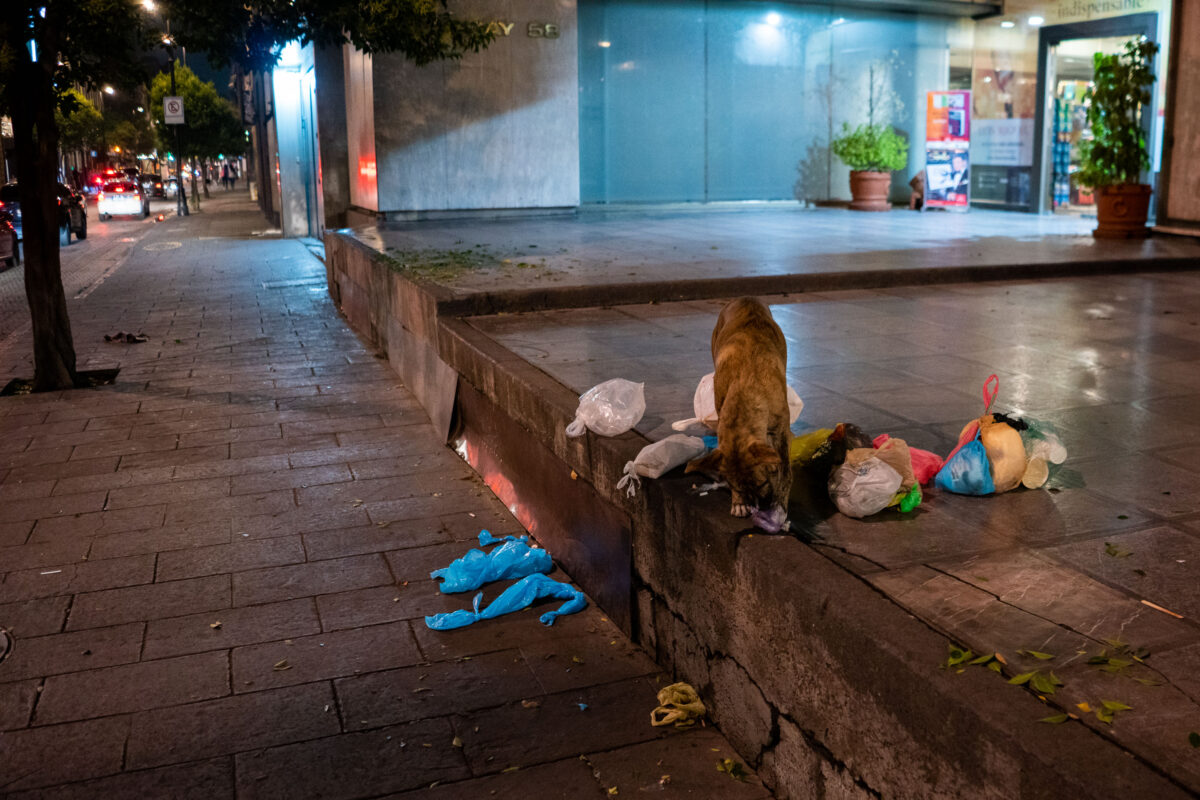
Stray Dog Among Nighttime Street Refuse
April 2018
—
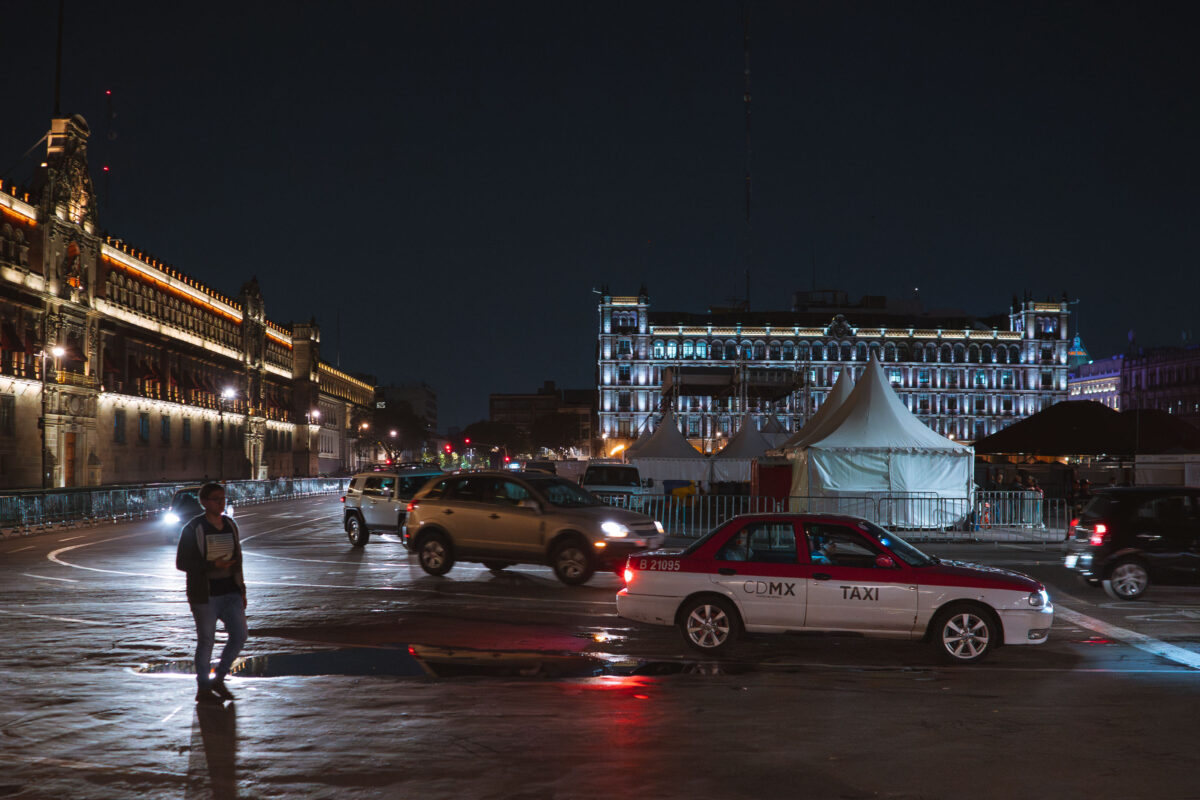
Taxi outside the Zócalo in Mexico City
April 2018
—
A taxi driver outside the Zócalo in Mexico City.
Cenote Interior, Playa Del Carmen, Mexico
December 2016
—
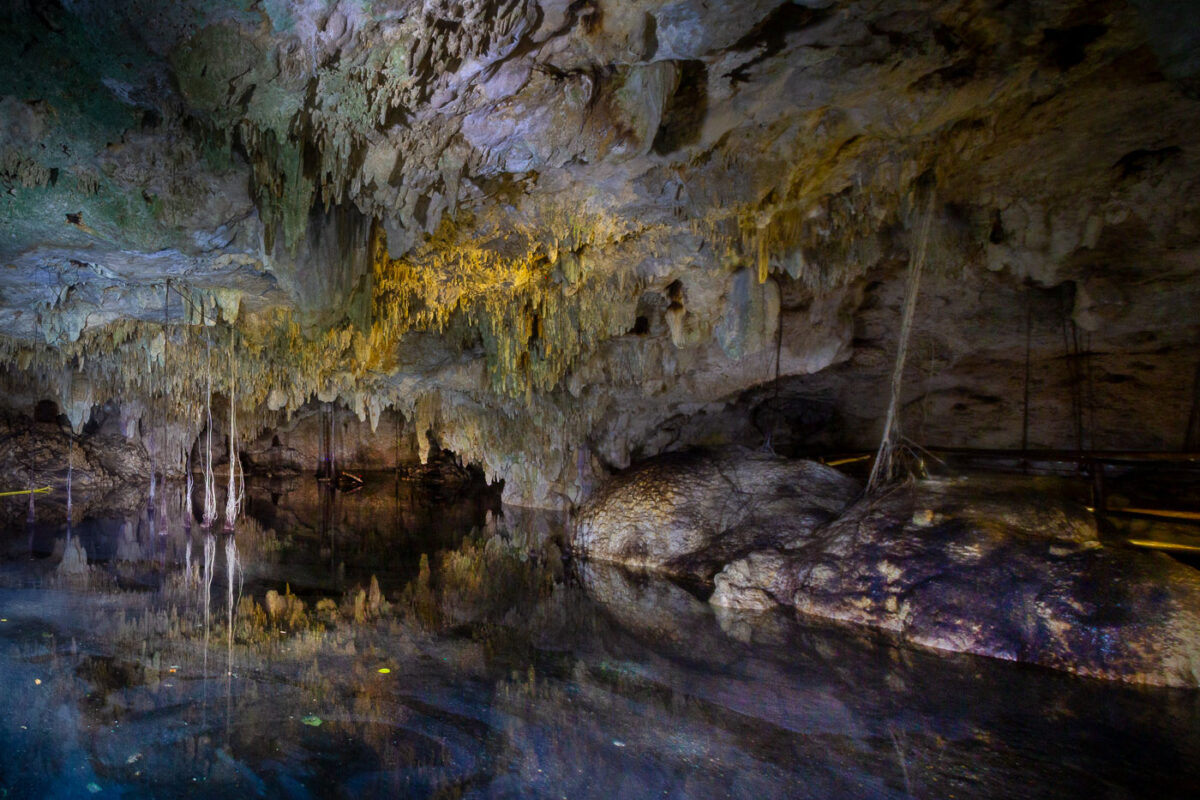
Diving in a cenote near Playa Del Carmen Mexico.
Cenote light in Playa Del Carmen, Mexico
December 2016
—
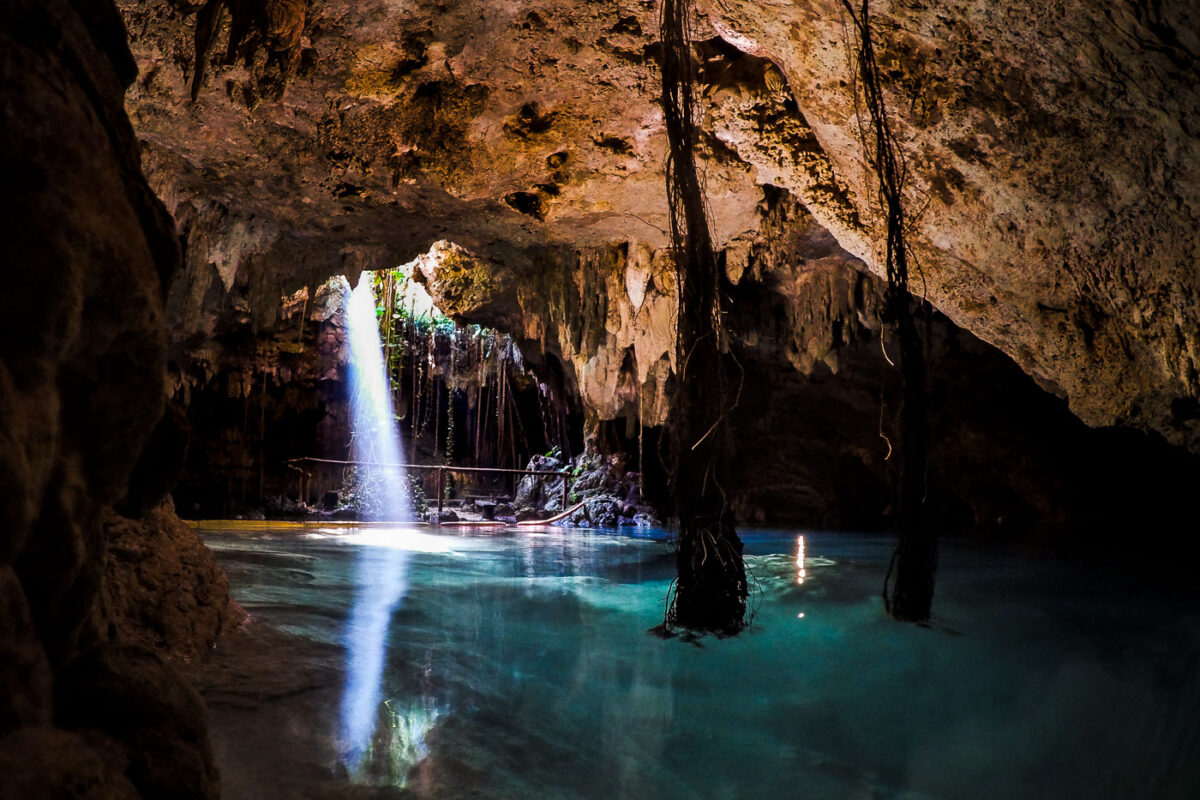
Inside a cenote near Playa Del Carmen, Mexico.
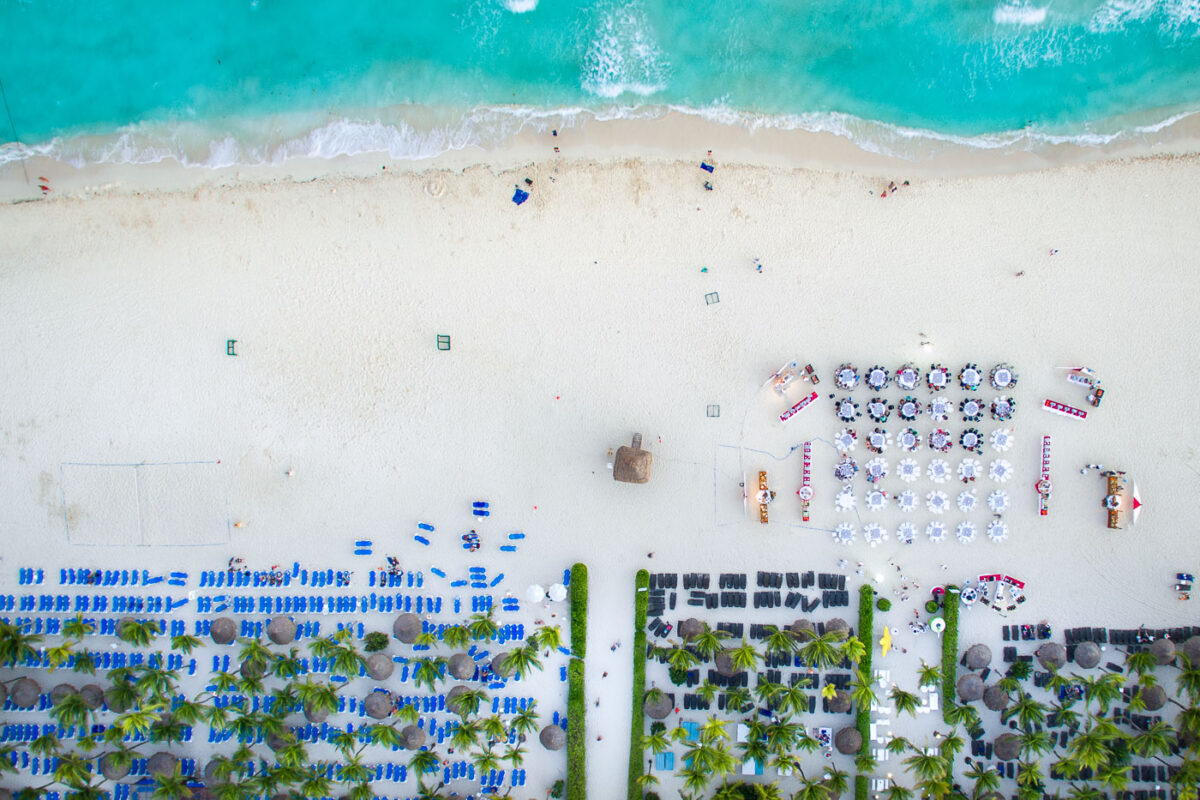
Sandos Playacar Beach Resort: Beachfront Dining Setup, Playa Del Carmen
December 2016
—
Tables setup on the beach outside Sandos Playacar Beach Resort.
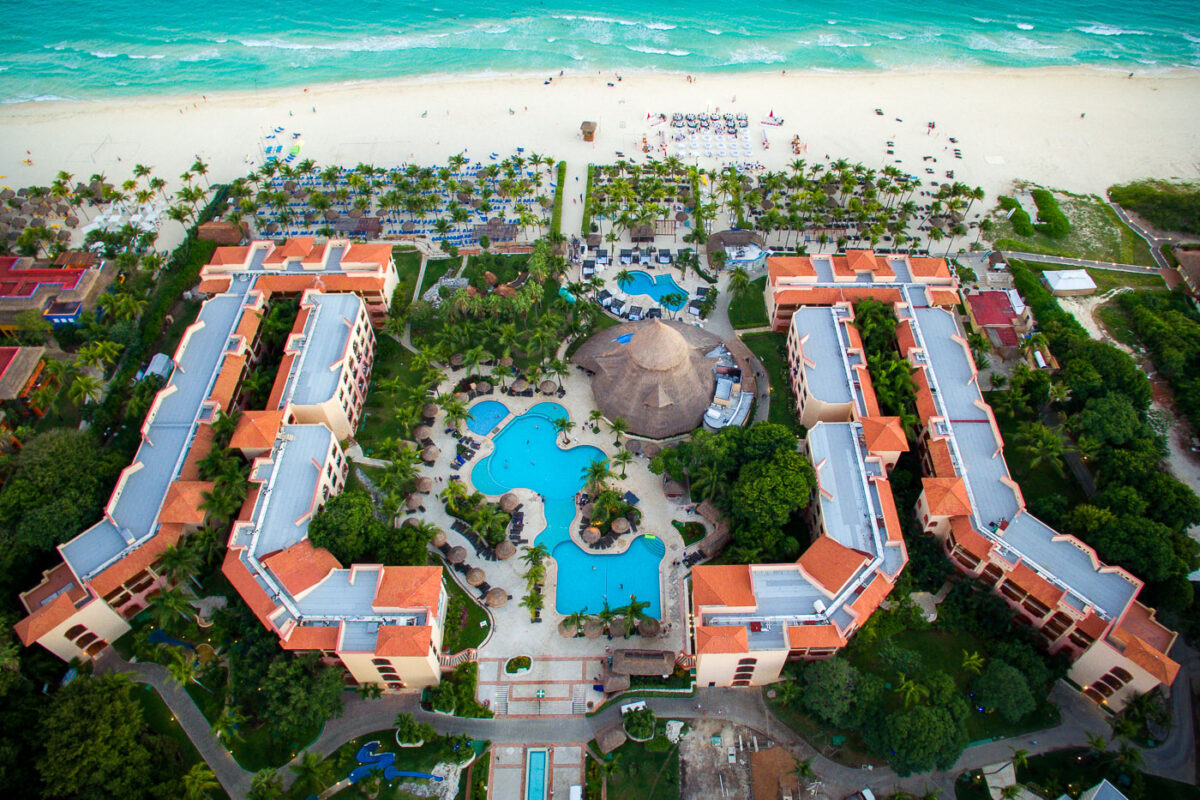
Sandos Playacar Beach Resort Aerial View, Playa Del Carmen
December 2016
—
Sandos Playacar Beach Resort in Playa Del Carmen Mexico from above.
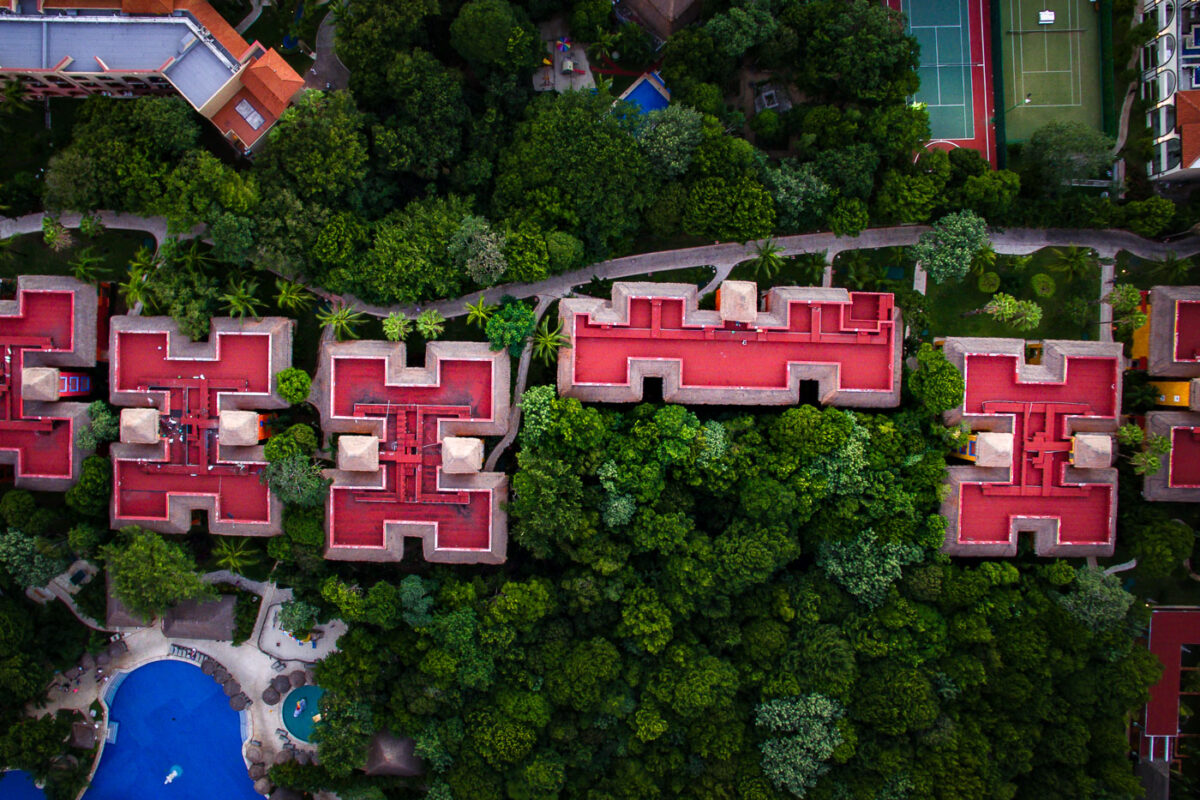
Iberostar Tucan Resort Aerial View, Playa Del Carmen, Mexico
December 2016
—
Aerial photo of the Iberrostar Tucan resort in Playa Del Carmen, Mexico.
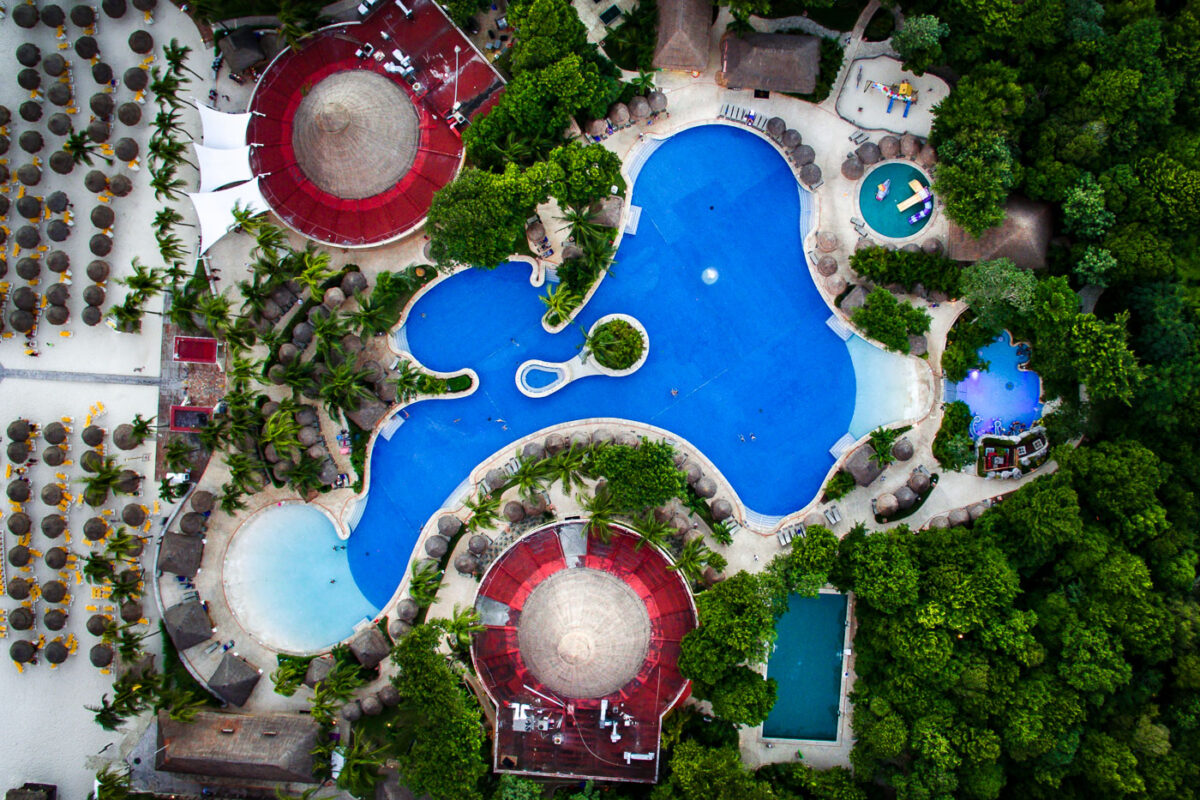
Iberostar Tucan-Quetzal Resort Pools, Playa Del Carmen
December 2016
—
Iberostar Tucan-Quetzal resort pool in Playa Del Carmen.
Built in Minneapolis
Photographs showcasing change over time
Browse by location, move through long-running series, or start with recent work.