Minneapolis in Development
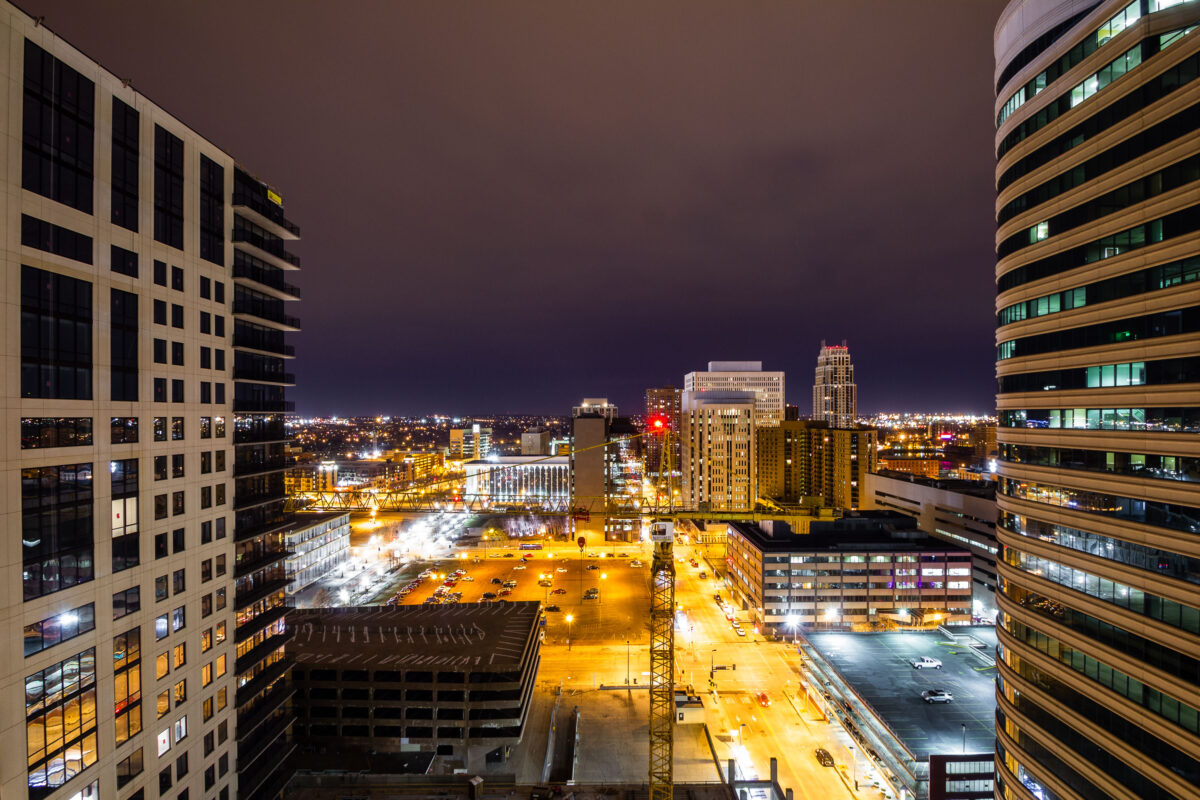
May 2020 — Tower cranes in downtown Minneapolis during constructon work on the 10th avenue bridge.
Explore photos tagged Crane.
May 2020 — Tower cranes in downtown Minneapolis during constructon work on the 10th avenue bridge.
April 2019 — Viewed from the Royal Docks, London’s skyline reveals the dense mix of modern architecture and post-industrial redevelopment that defines the Docklands. The glass towers of Greenwich Peninsula and Canary Wharf rise behind the cable cars of the Emirates Air Line (now London Cable Car), a river-crossing system linking the Greenwich Peninsula to the Royal Docks across the Thames. In the foreground, remnants of light industry and aggregate plants along Silvertown contrast sharply with the polished towers beyond—symbolic of East London’s ongoing transformation from its shipping and manufacturing roots into a hub for finance, technology, and luxury housing. Construction cranes mark continuing phases of regeneration near the O2 Arena and North Greenwich station, areas that once formed part of London’s maritime infrastructure but now represent its 21st-century economic frontier.
March 2019 — New parking ramps being constructed at the Minneapolis−Saint Paul International Airport.
March 2019 — The cosntruction of an airport parking ramp at the Minneapolis-St. Paul airport.
March 2019 — A parking garage under construction at the Minneapolis-St. Paul airport.
March 2019 — A "In Crisis?" sign on the top floor of the parking ramp at the Minneapolis St. Paul Airport (MSP) in Bloomington.
March 2019 — The MSP Airport in winter.
March 2019 — New parking ramps being constructed at the Minneapolis−Saint Paul International Airport.
June 2018 — Scaffolding on the Science Museum of Minnesota in St. Paul.
September 2017 — Looking along Rue de Fer toward Namur’s main station in Wallonia, Belgium. Historic brick and limestone façades line the street, with the HEMA storefront sign visible among local shops and cafés. Buses and pedestrians move through the late afternoon traffic on a damp autumn day, reflecting the city’s mix of preserved 19th-century architecture and contemporary commercial life near the railway hub.
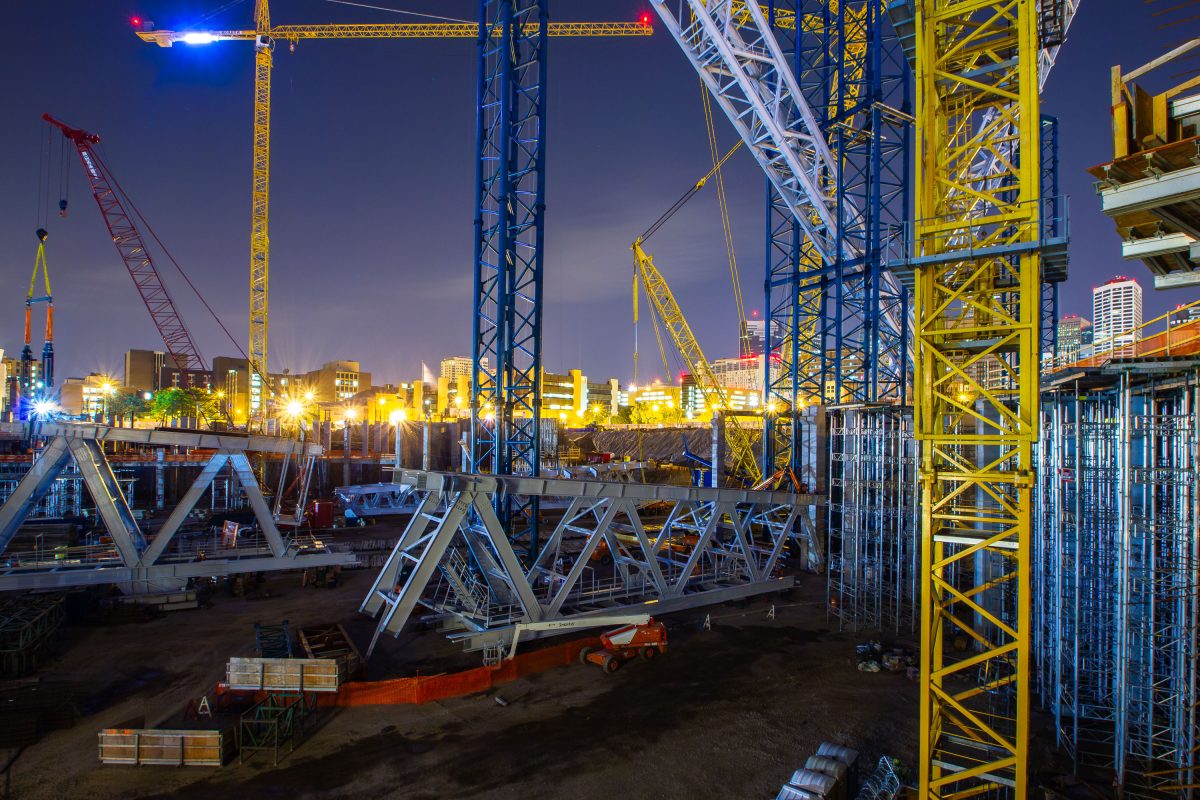
July 2015 — U.S. Bank Stadium, home of the Minnesota Vikings, began construction in December 2013 on the site of the former Hubert H. Humphrey Metrodome in downtown Minneapolis. The stadium’s steel skeleton, seen here during its mid-construction phase, showcases the dramatic angular geometry that defines its final form — a nod to both Nordic shipbuilding and Minnesota’s icy winter landscapes. The project, designed by HKS Architects and constructed by Mortenson, features over 19,000 tons of structural steel and spans 1.75 million square feet. Its transparent ETFE roof panels and vast steel trusses were among the most complex structural assemblies ever attempted in a U.S. stadium build. Completed in 2016, the $1.1 billion stadium remains one of the most technically ambitious indoor venues in North America, notable for its fixed-roof design, massive glass curtain walls, and precision-engineered support cranes like the red lattice boom seen here — used to hoist the roof trusses into place during overnight construction sessions.