Southern Class 455 Train at London Victoria Station
April 2019
—
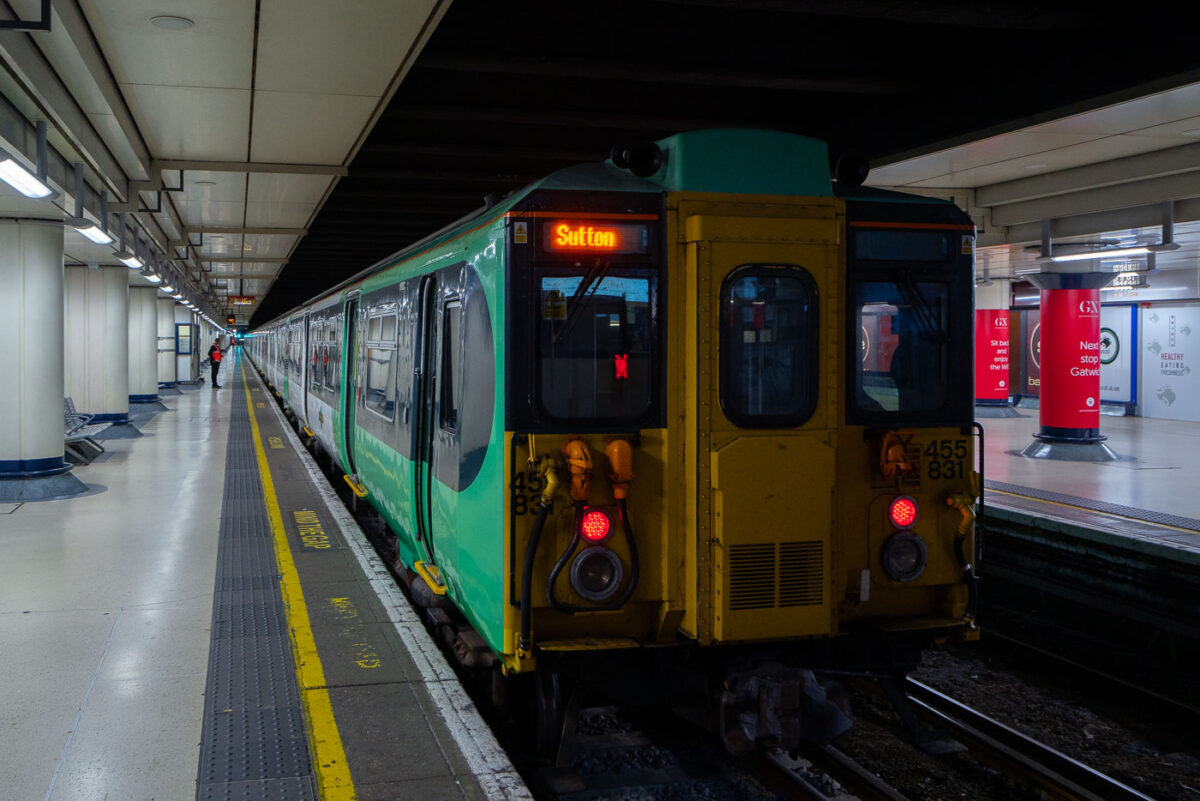
A Southern Railway Class 455 electric multiple unit prepares to depart from London Victoria station on a suburban service bound for Sutton. These 1980s-era trains, built by British Rail Engineering Limited, have long served the dense commuter corridors of South London and Surrey. The terminal’s subterranean platforms, seen here beneath the main concourse, handle both Gatwick Express and local Southern services, linking central London with its southern suburbs through one of the busiest rail hubs in Britain.
Tower Hill Station: S7 Stock Train on District Line
April 2019
—
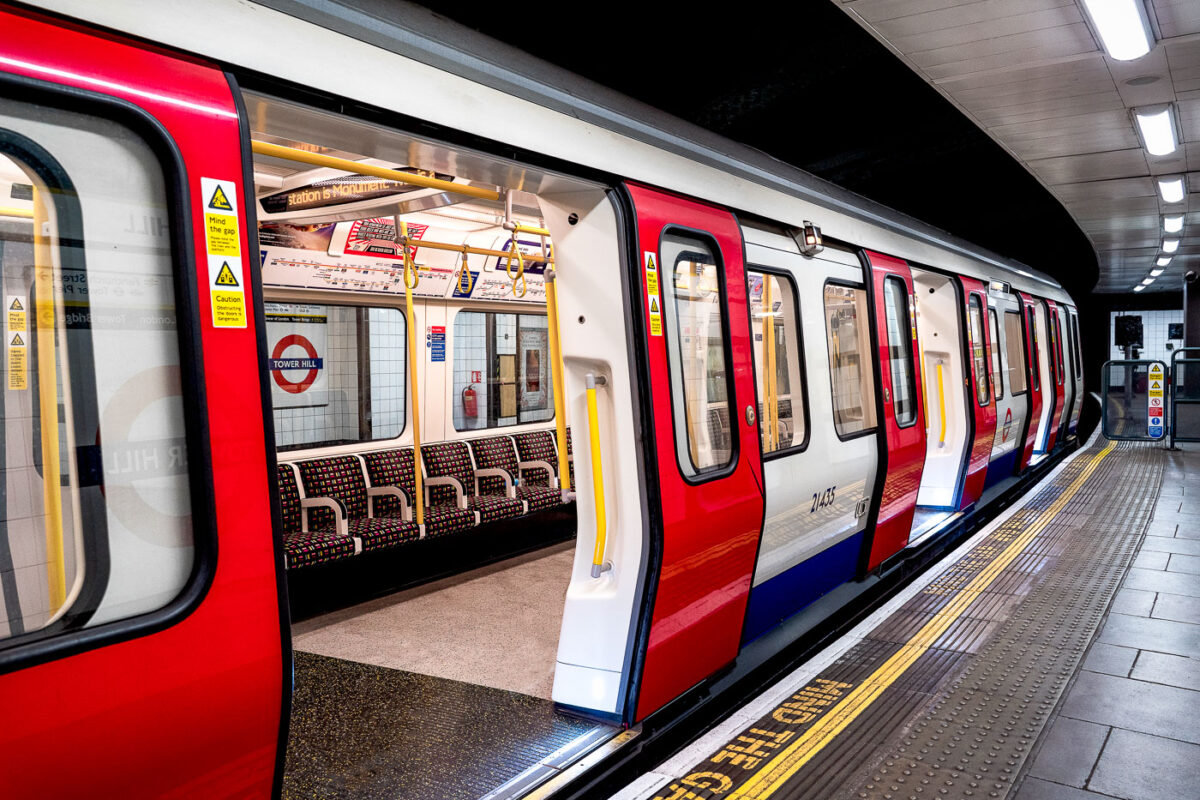
An S7 Stock train stands at Tower Hill Station on the District and Circle lines, its doors open beneath the curved tunnel roof. These Bombardier-built trains, introduced between 2010 and 2017, form part of London Underground’s Sub-Surface Railway modernization program—featuring wider gangways, air conditioning, and regenerative braking.
The tiled walls and bright signage retain the visual identity of the Underground, while the yellow safety line and tactile paving mark the boundary of one of London’s busiest commuter platforms. Tower Hill’s proximity to the Tower of London and the Thames makes it both a vital interchange for daily travelers and a gateway for millions of visitors exploring the city’s historic core.
Tower Hill Underground Station: Eastbound Platform Curve
April 2019
—
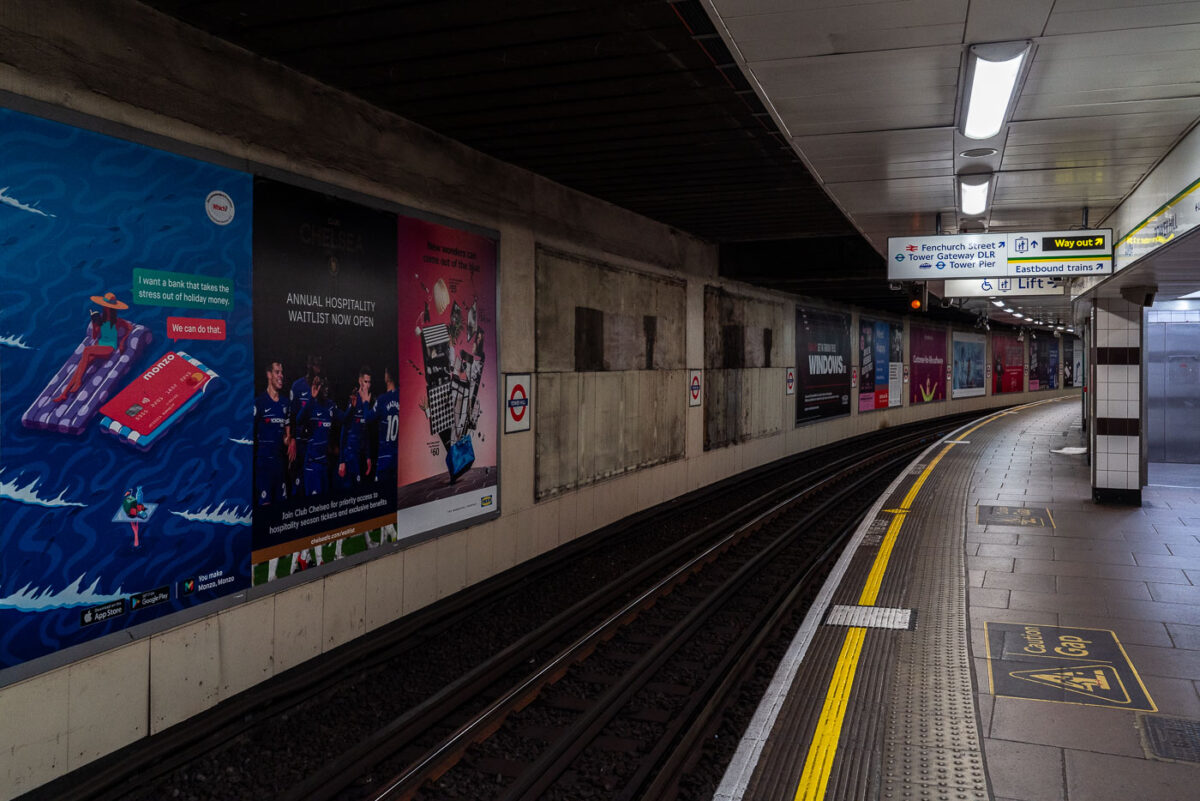
The eastbound platform at Tower Hill Underground Station, serving the District and Circle lines, curves gently beneath the City of London’s historic core. The tiled walls, layered advertising panels, and utilitarian ceiling panels reflect the practical design language of the post-war London Underground system.
Located adjacent to Tower Gateway DLR and just steps from the Tower of London, this interchange is one of the busiest tourist-access stations in central London. Its narrow curvature and close tunnel clearances are characteristic of legacy sub-surface lines built in the 19th century—still forming the backbone of the modern network more than 150 years later.
Bermondsey Station Roundel, Jubilee Line, London Underground
April 2019
—
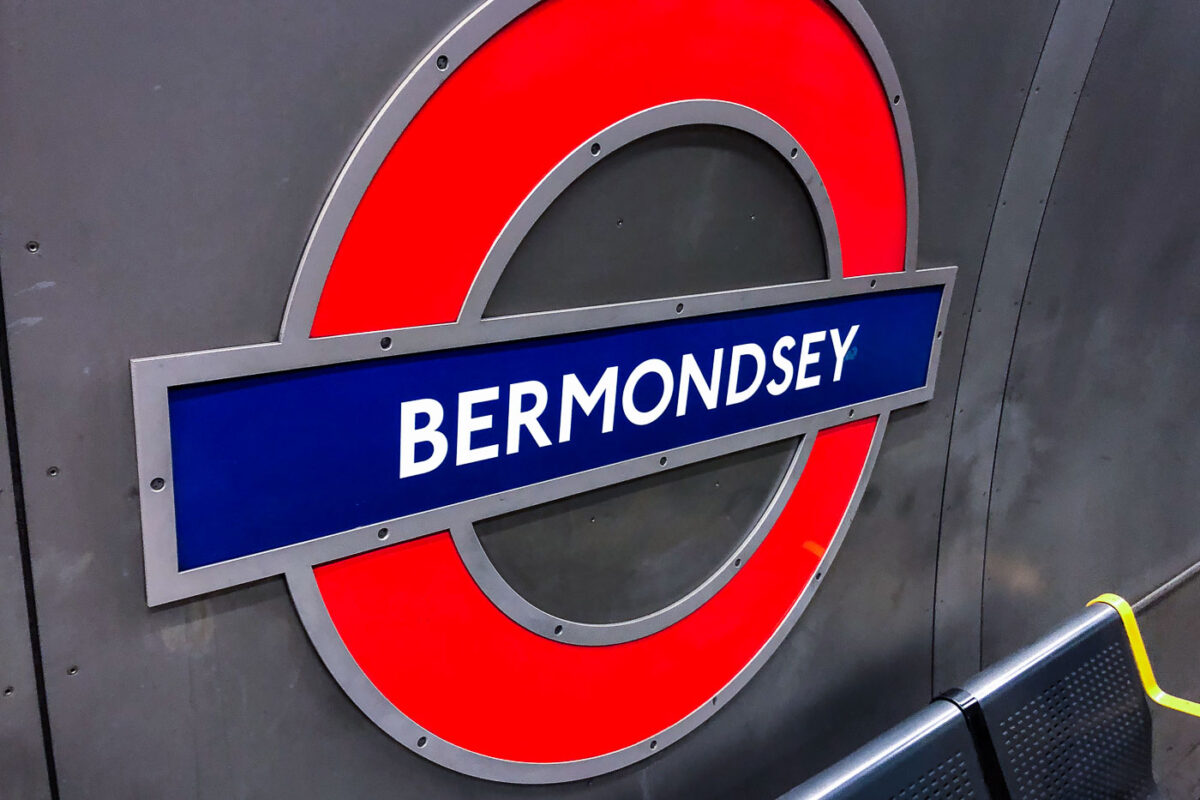
The distinctive red-and-blue roundel of Bermondsey Station marks one of the Jubilee Line’s most modern stops in southeast London. Opened in 1999 as part of the Jubilee Line Extension, the station features stainless steel panels, subdued lighting, and a minimalist aesthetic typical of late-20th-century London Transport design. The bold signage, designed to the original Transport for London typographic standards, stands out against the brushed metal backdrop—an enduring emblem of the Underground’s fusion of history and modern engineering.
London Bridge Station: Thameslink Platforms and Class 700 Train
April 2019
—
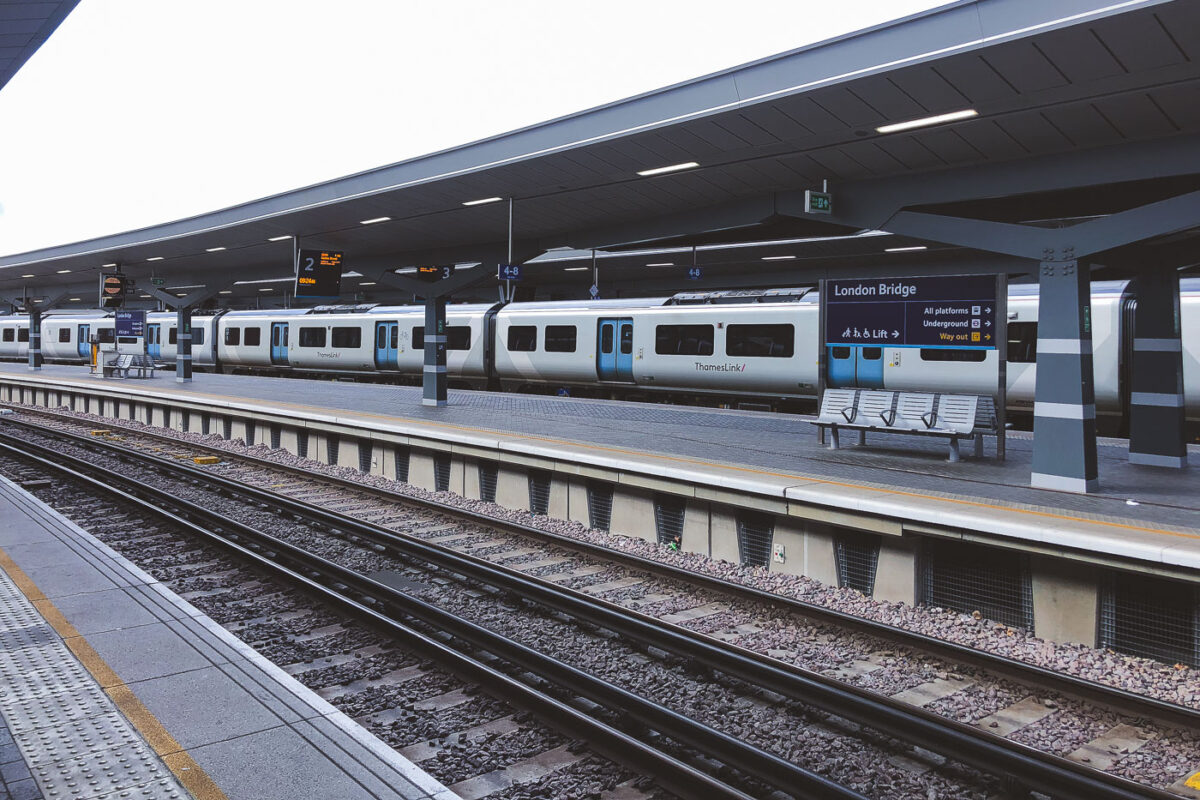
London Bridge Station’s Thameslink platforms represent one of the most advanced pieces of commuter rail infrastructure in the UK, rebuilt as part of the £1 billion redevelopment completed in 2018. The redesign introduced a vast concourse beneath the platforms, new canopies, and digital passenger systems to accommodate over 50 million travelers annually.
Visible here is a Class 700 Thameslink train, part of Siemens’ Desiro City fleet, which operates high-frequency services linking Bedford, Brighton, and Cambridge through central London via the core Thameslink route. The streamlined architecture and wide canopies were engineered to handle both heavy peak-hour volumes and seamless integration between National Rail and the London Underground’s Jubilee and Northern Lines, establishing London Bridge as a key interchange in Britain’s modern rail network.
Riverside Plaza from the Light Rail Overpass
April 2019
—
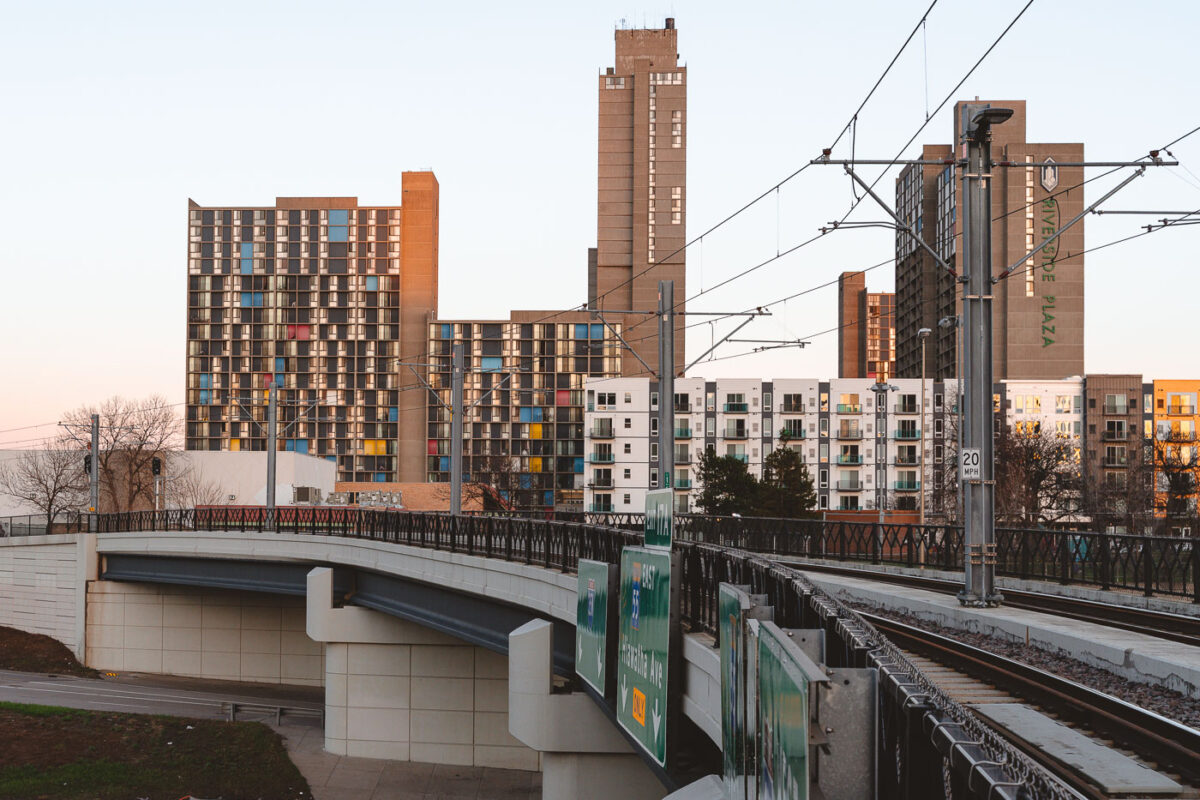
Riverside Plaza stands tall beyond the METRO Blue Line overpass in the Cedar–Riverside district of Minneapolis. The colorful panels of the 1970s residential towers contrast with the new mid-rise apartments and light rail infrastructure built decades later. This view captures the merging of eras—modern rail transit, Brutalist architecture, and the continuing evolution of one of Minneapolis’s most historically diverse neighborhoods.
Light Rail Curve at Cedar–Riverside
April 2019
—
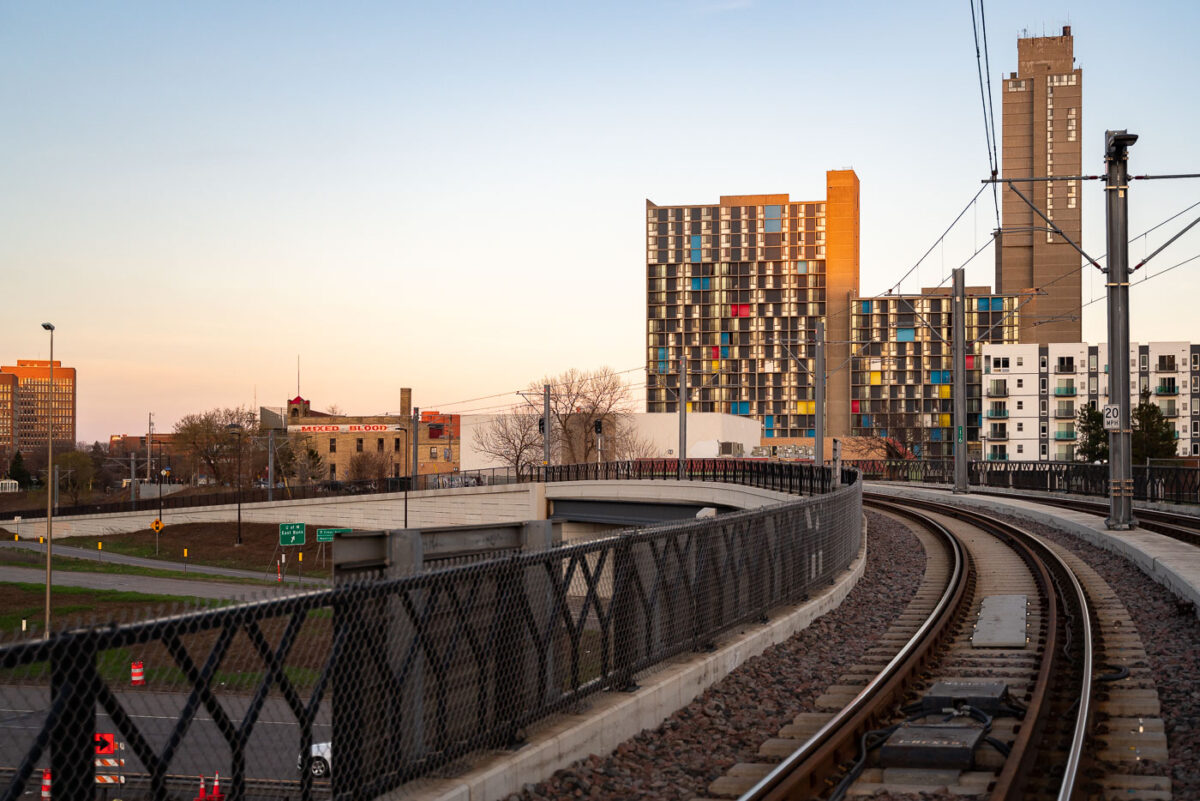
The METRO Blue Line curves toward downtown Minneapolis near the Cedar–Riverside neighborhood, passing below the colorful concrete towers of Riverside Plaza at sunset. The complex, designed by architect Ralph Rapson and completed in 1973, is one of the city’s most distinctive examples of Brutalist modernism. This area, once part of the immigrant gateway to Minneapolis, now blends historic structures like the Mixed Blood Theatre with the transit corridor connecting neighborhoods across the city.
BNSF at Harrison Street Crossing
April 2019
—
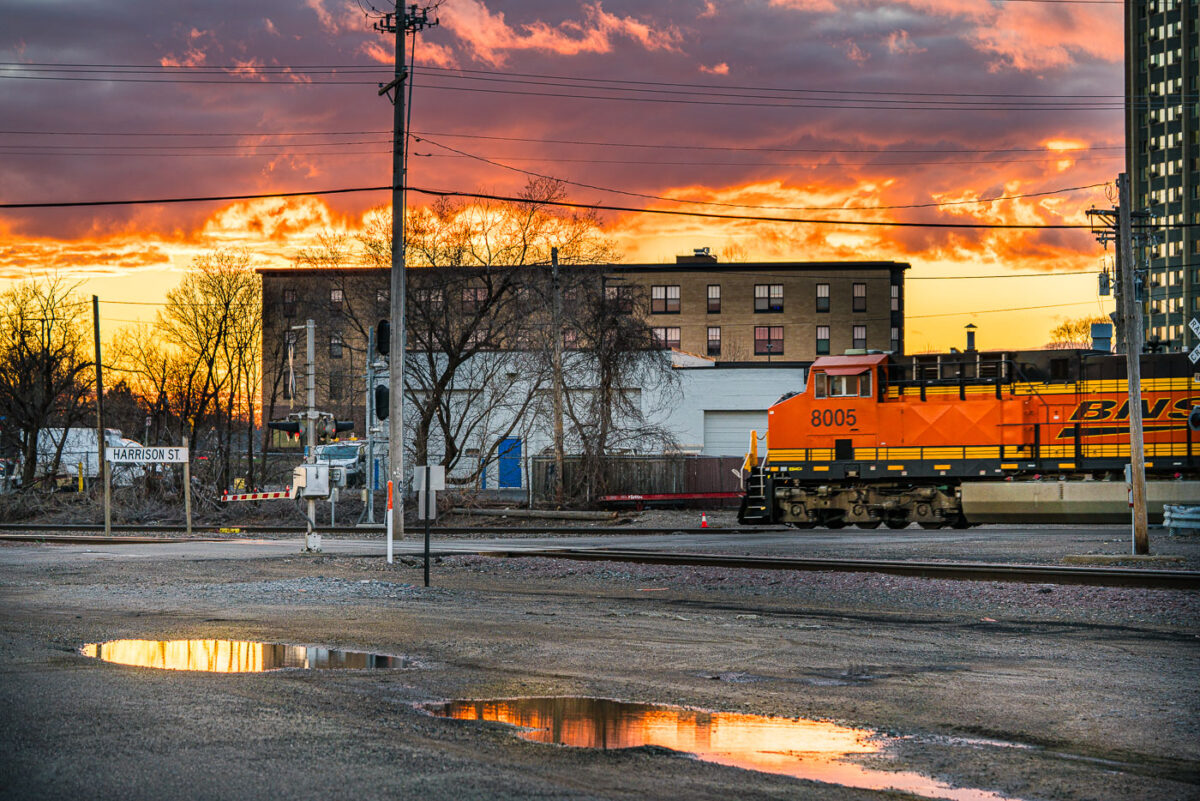
BNSF train goes through intersection at Harrison Sreet in Northeast Minneapolis during sunset.
Mexico City Metro Line 1 Orange Train on Viaducto
May 2018
—
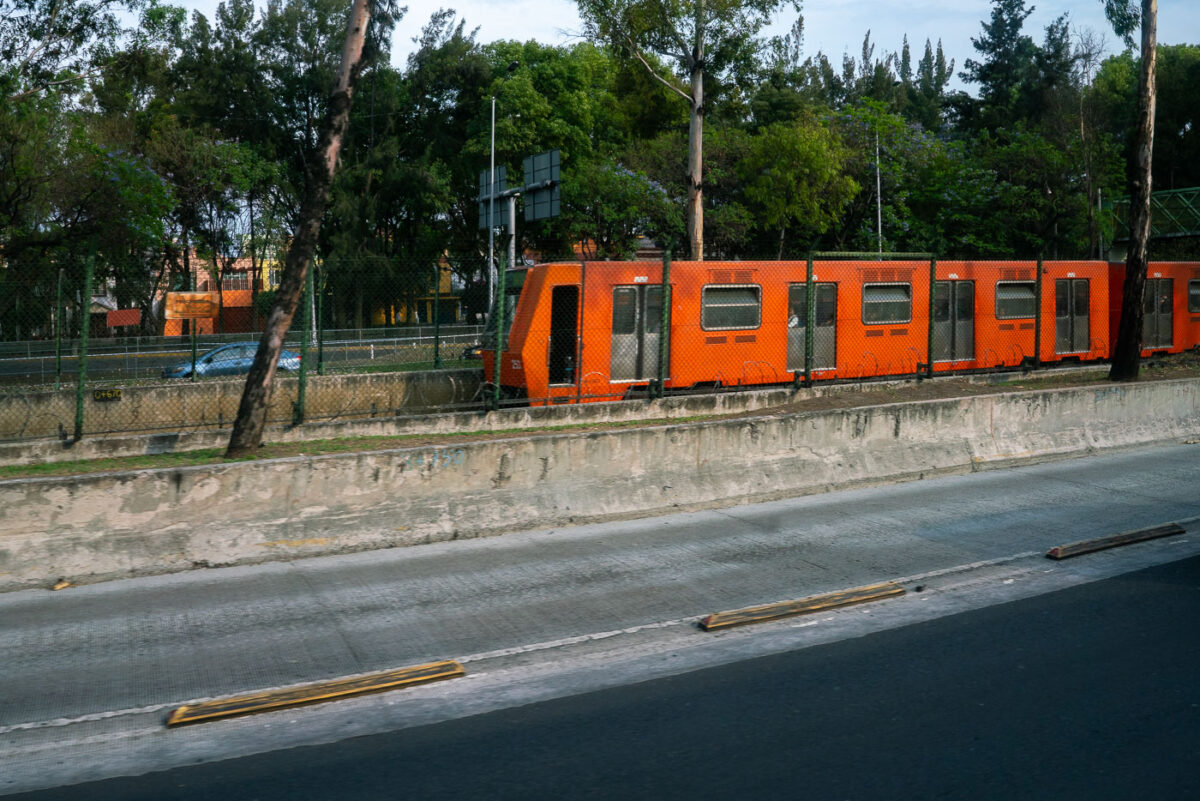
A bright orange Mexico City Metro train runs alongside the Viaducto highway, partially framed by trees and fencing that separate it from the busy traffic corridor. The train’s distinctive color has become a visual emblem of the city’s vast and aging transit network, originally launched in 1969. These rubber-tired trains serve millions of riders daily, threading through tunnels and elevated sections across the capital. Here, the contrast between greenery, concrete, and the orange carriages underscores the Metro’s integration into the urban landscape—an ever-moving artery of one of the world’s largest cities.
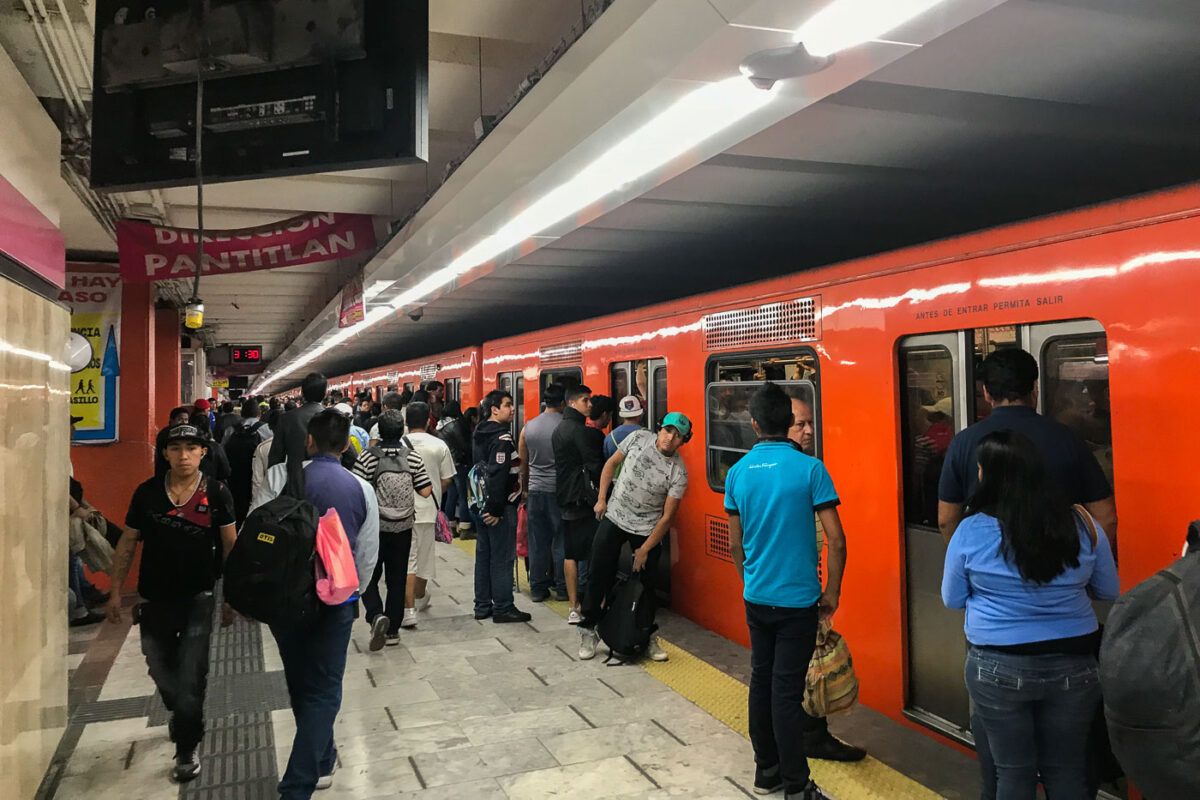
Mexico City Metro: Pantitlan Station Platform
April 2018
—
Zürich S-Bahn Interior to Zürich HB
October 2017
—
An early morning S-Bahn train heads toward Zürich Hauptbahnhof, Switzerland’s busiest railway hub. The interior, illuminated by soft fluorescent lighting and digital displays, reflects the precision and cleanliness that define Swiss rail travel. With clearly marked stops and ergonomic seating, the S-Bahn system connects Zürich’s suburbs to the city center with remarkable efficiency and punctuality.
The Zürich S-Bahn network began operation in 1990 as one of Europe’s first regional rail systems to integrate multiple operators under a unified timetable. Zürich HB serves as its central interchange, handling over 400,000 passengers daily and linking regional, national, and international routes. This modernization transformed local commuting and reinforced Switzerland’s reputation for world-class rail infrastructure.
Paris Gare de Lyon Concourse: Travelers and Architecture
October 2017
—
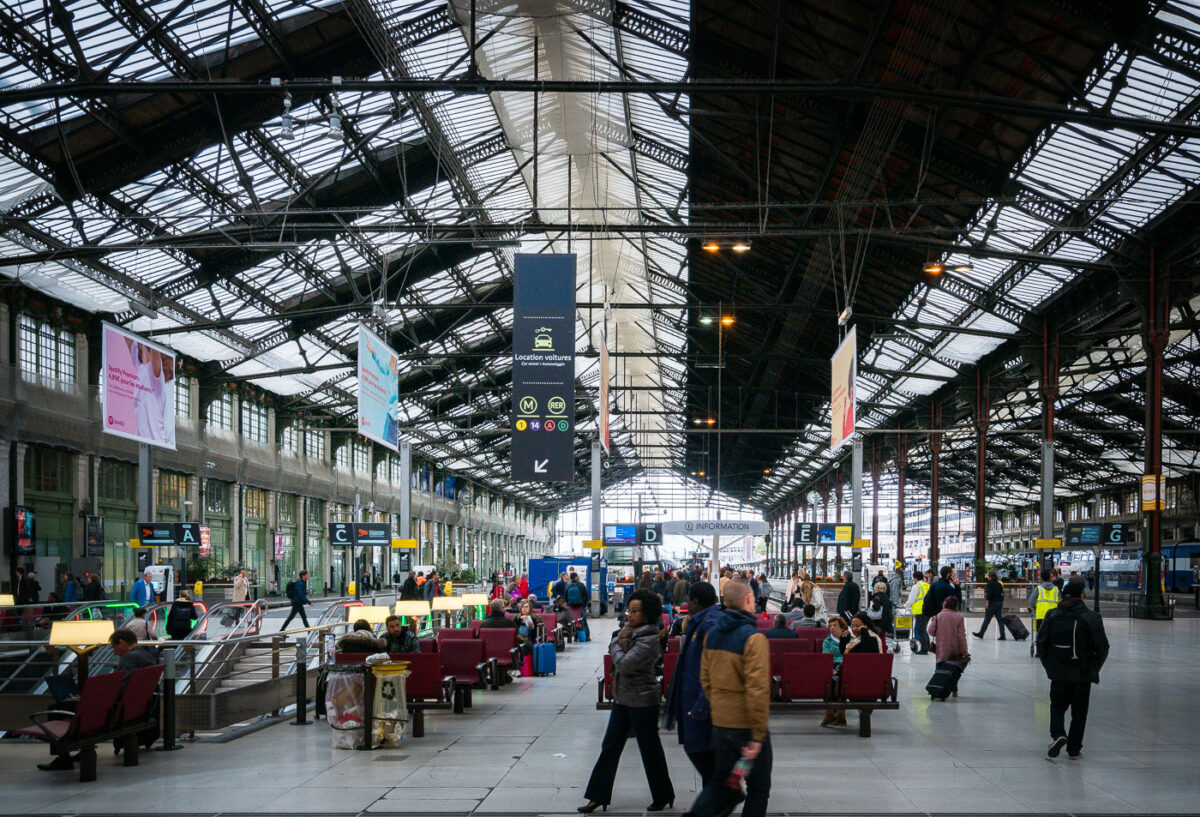
Passengers wait and walk through the main concourse of Gare de Lyon in Paris, France, a major rail hub located in the 12th arrondissement. Rows of red seating, baggage trolleys, and electronic boards marked with concourse letters C through G line the iron-and-glass train hall, while SNCF trains are visible at the platforms to the right. Overhead signage points to “Information,” car rental, and connections to Paris Métro lines 1 and 14 and the RER A and D. The station, opened for the 1900 Exposition Universelle, serves high-speed TGV and regional services toward southeastern France and international destinations, making it one of the city’s busiest gateways.
Gare de Lyon, Paris: Architecture and Activity
October 2017
—
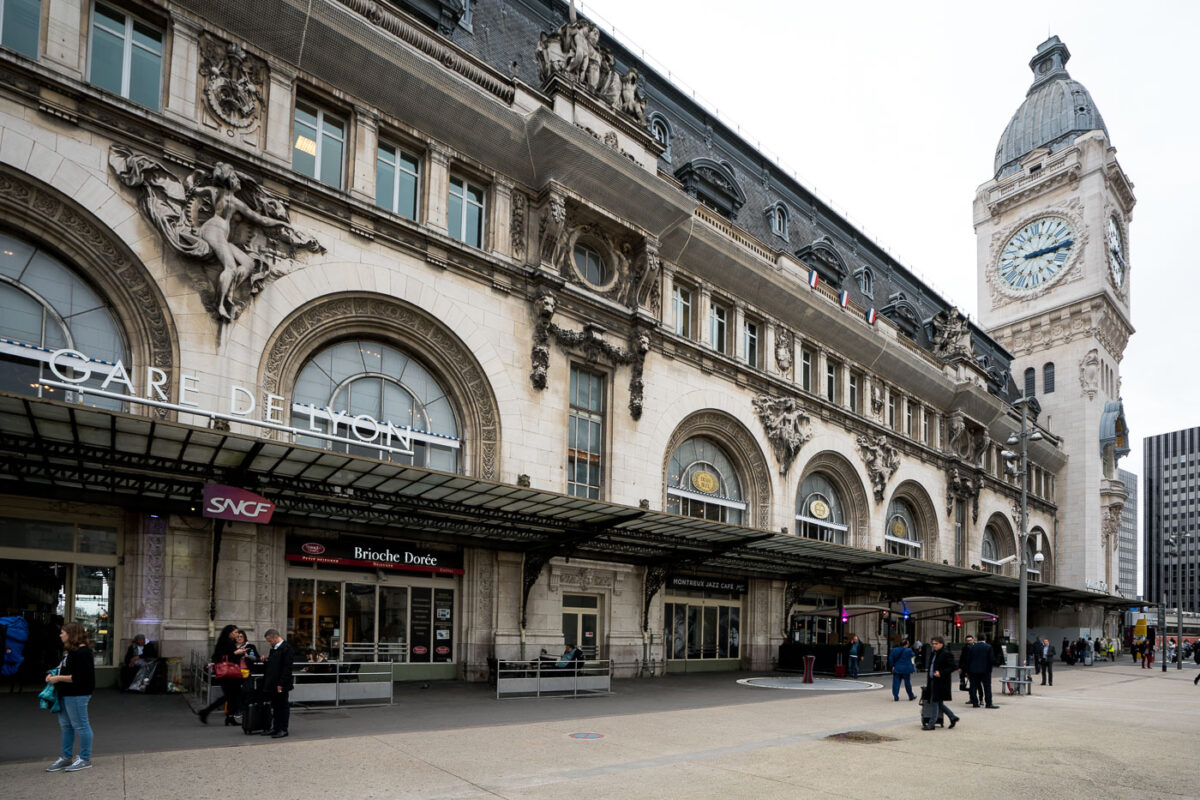
The Gare de Lyon train station in Paris, France, is depicted in this photograph taken during daytime. The historic building features ornate architectural details, including sculptures and decorative stonework, with a prominent clock tower displaying the time. The station's entrance is visible, with signs indicating SNCF and other services, and people are seen walking and waiting outside. The scene captures the bustling activity typical of a major transportation hub in the city.
Paris Metro Line 6 on Pont de Bir-Hakeim toward Passy
October 2017
—
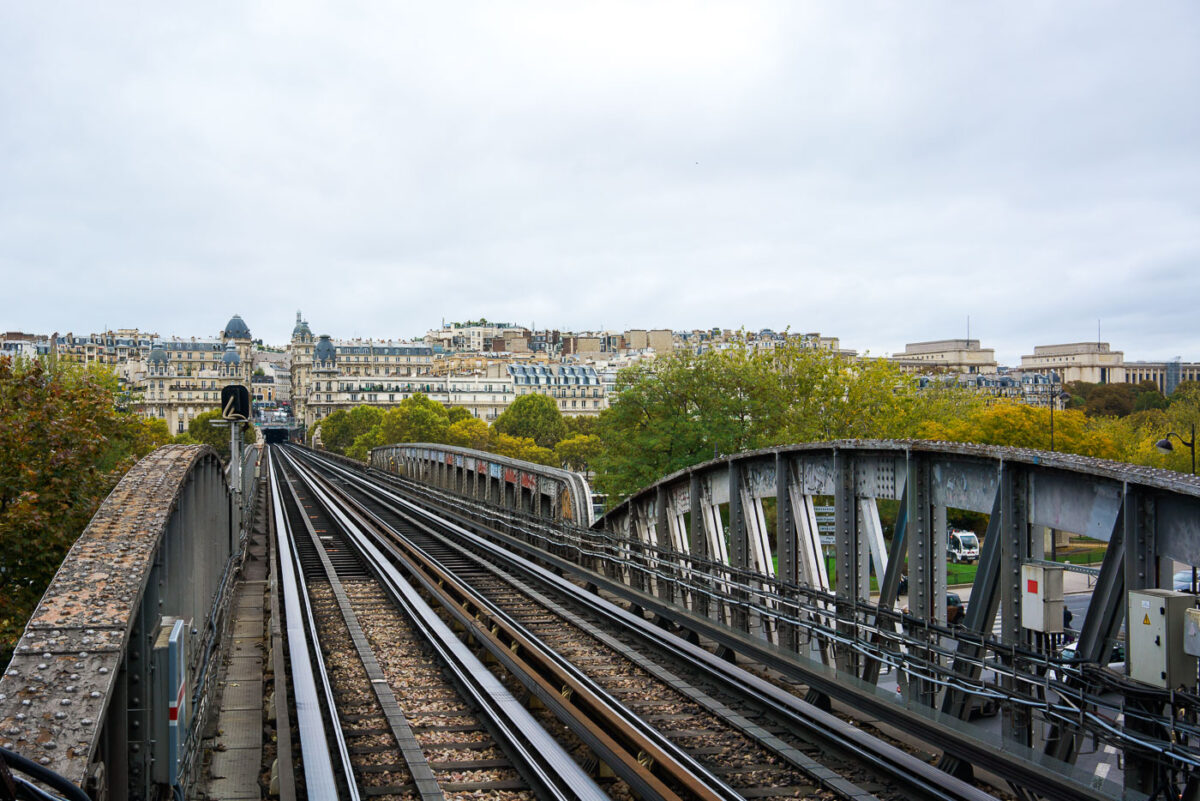
Paris Metro Line 6 crosses the Seine on the Pont de Bir-Hakeim, a two-level bridge completed in 1905 that combines roadway, pedestrian walkway, and elevated railway. The steel viaduct, designed to support one of the city’s earliest elevated metro lines, features riveted beams typical of early 20th-century engineering. In the distance is the Passy district in the 16th arrondissement, known for its Haussmann-era architecture and ornate façades. This elevated section of Line 6 was intentionally built above ground to provide air circulation for the early steam-powered trains, making it one of the few Paris metro routes that offer open views of the city’s urban landscape.
Brussels South/Midi Station Platforms and Pullman Hotel
September 2017
—
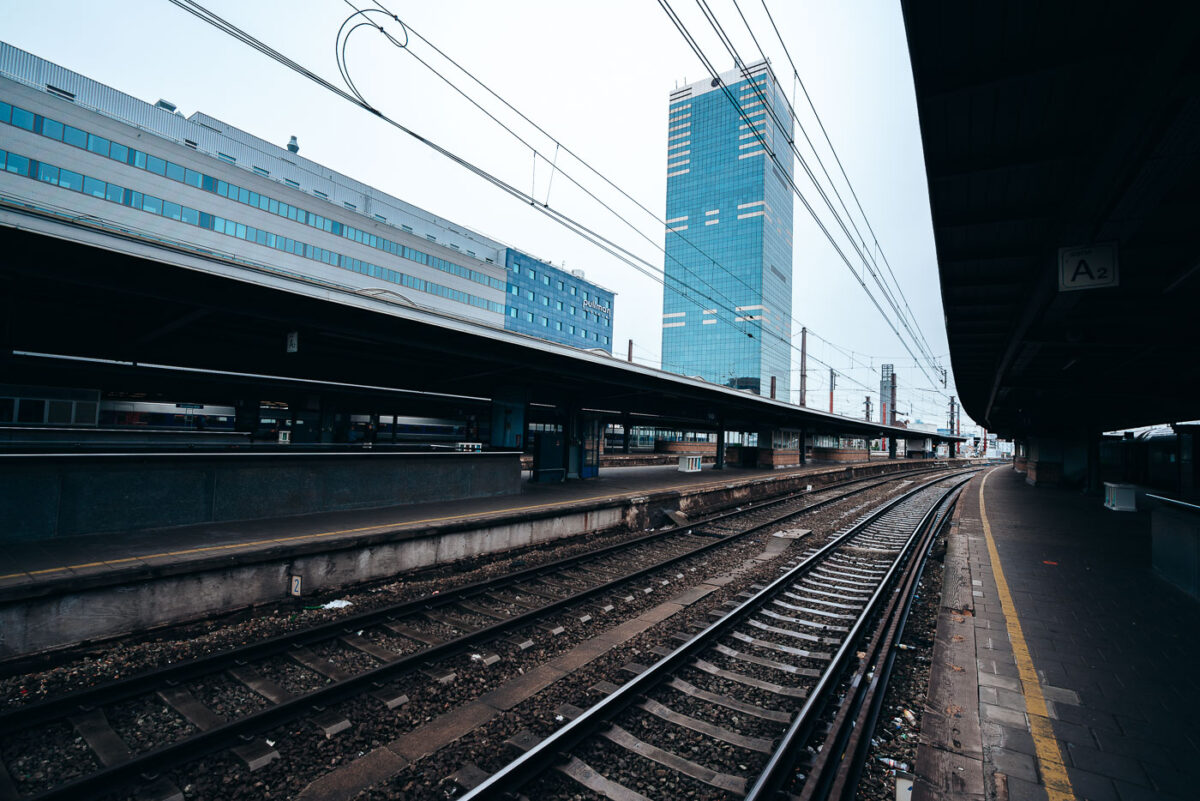
Brussels South/Midi Train Station in Belgium. September 2017.
Abandoned Locomotive at Industrial Site, Belgium
September 2017
—
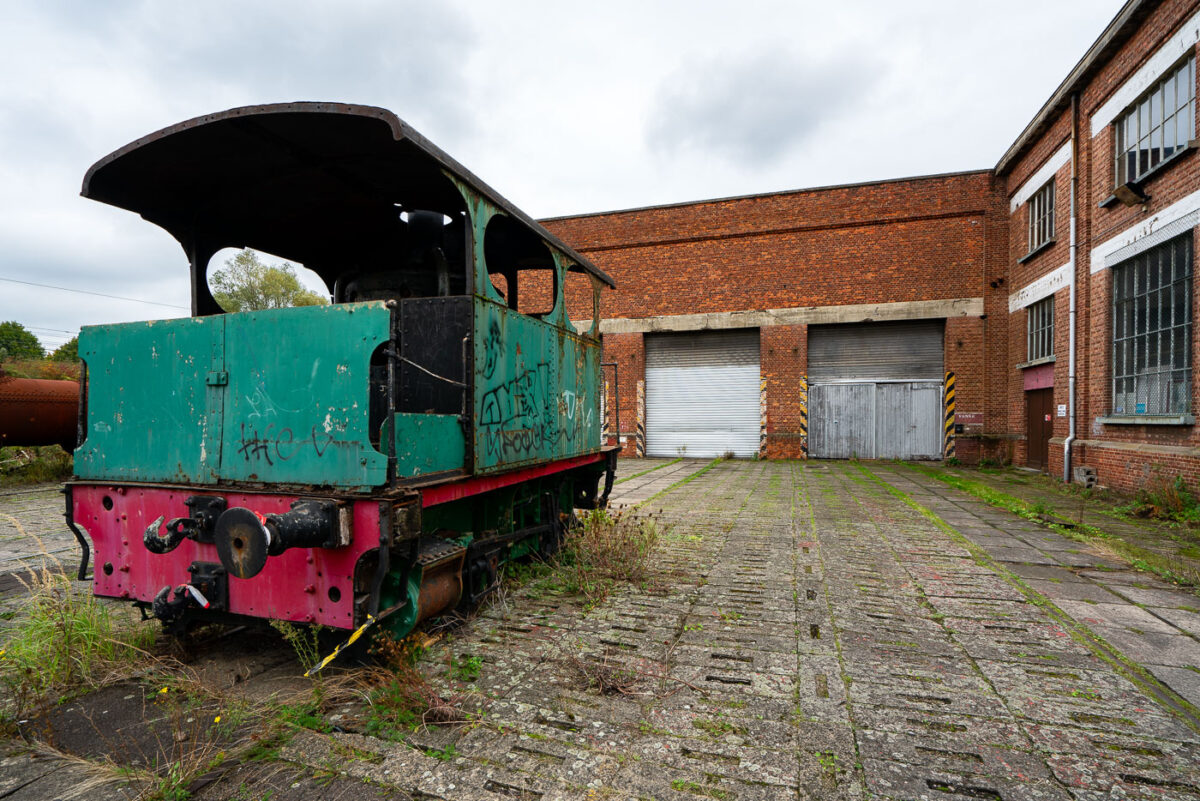
Abandoned trains in Belgium.
Abandoned SNCB Autorail 4001, Charleroi
September 2017
—
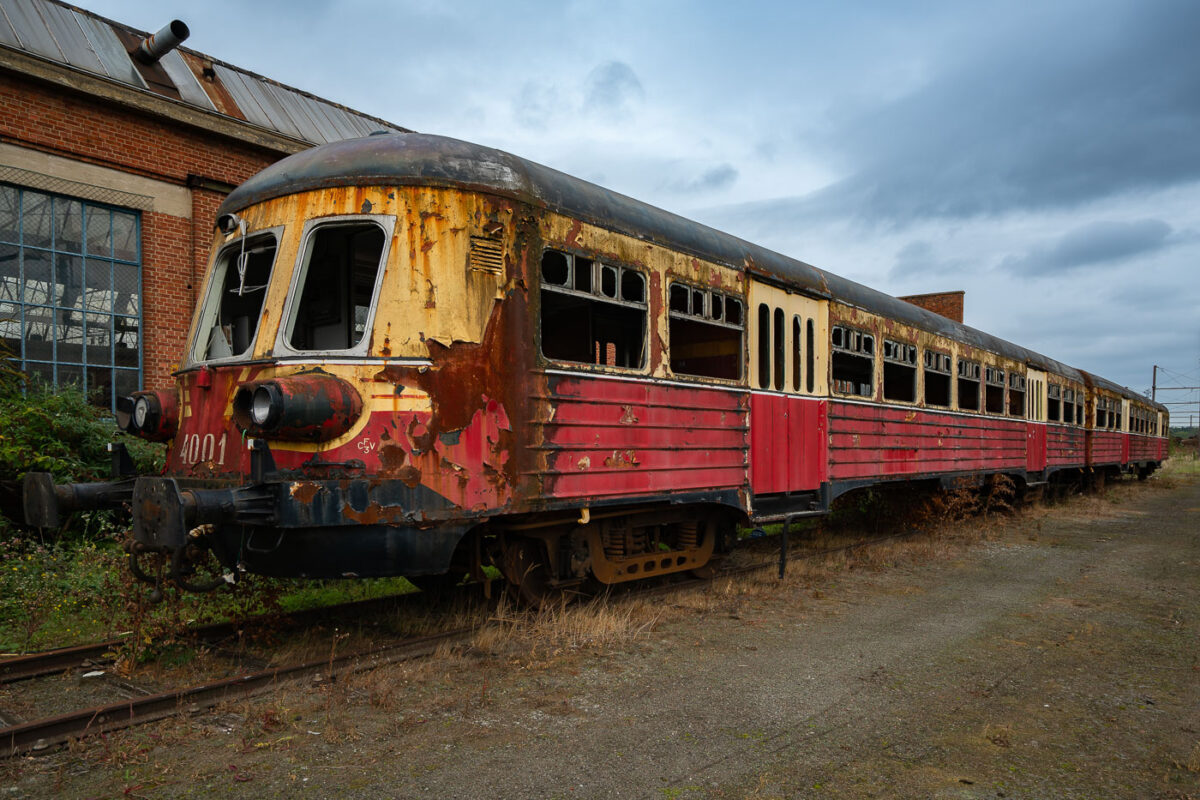
A decommissioned SNCB/NMBS Autorail Série 400, unit no. 4001, rests abandoned on a disused siding near Charleroi, Belgium. Built in the early 1950s by BN (La Brugeoise et Nivelles), these diesel multiple units were among Belgium’s first post-war efforts to modernize regional and intercity rail travel, replacing steam on secondary lines. The streamlined design and two-tone red-and-cream livery reflected the optimism of that era’s industrial renewal. Decades later, this car’s faded paint, shattered windows, and rust-etched steel now mark the slow decay of a machine that once represented progress in Belgian transport history. The surrounding derelict depot underscores the decline of Wallonia’s railway manufacturing heritage.
Thalys Train Under Cologne Station Canopy
September 2017
—
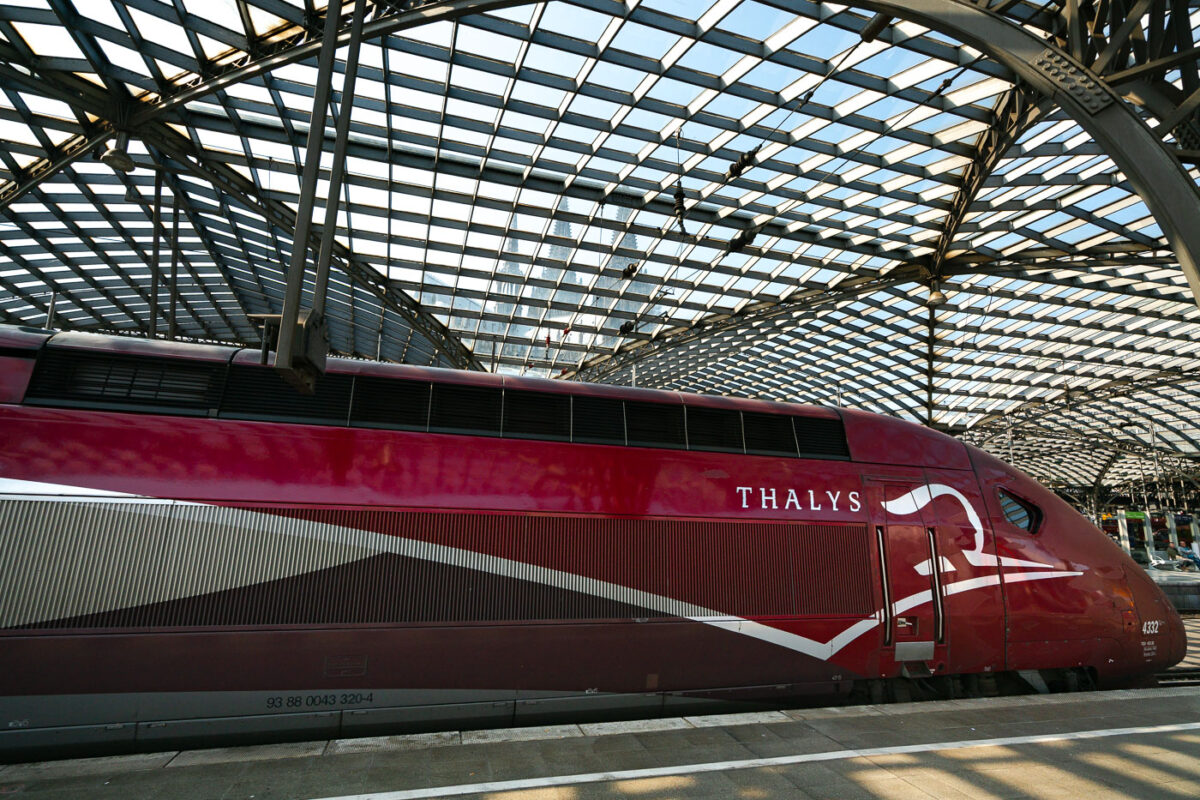
A Thalys PBKA high-speed train waits at Köln Hauptbahnhof beneath the station’s large arched glass canopy. The streamlined red train, built by Alstom and operated on international routes between Germany, Belgium, France, and the Netherlands, reflects the late-afternoon light along its metallic bodywork. Overhead, the steel lattice roof filters the daylight across the platforms, and through the patterned glass, the spires of Cologne Cathedral rise faintly in the background—a visual reminder of the station’s central location beside one of Europe’s most recognizable landmarks.
Berlin Friedrichstraße Station: Elevated Tracks and Georgenstraße
September 2017
—
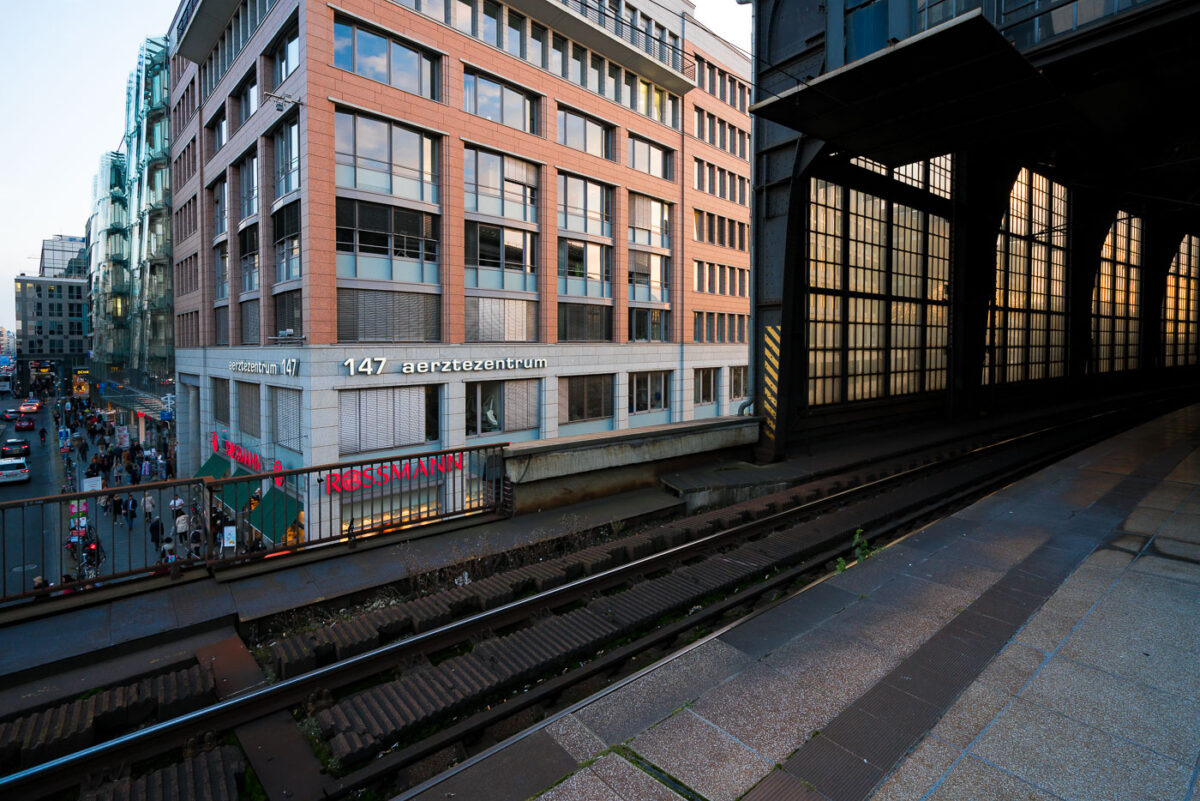
View from the platform at Berlin Friedrichstraße station overlooking Georgenstraße below. The elevated tracks run alongside a mix of modern and postwar office buildings, including the Aerztezentrum at No. 147. Pedestrians and cyclists move through the busy commercial street beneath, while the station’s glass and steel structure reflects the late-day light.
Berlin Friedrichstraße S-Bahn Tracks Eastbound
September 2017
—
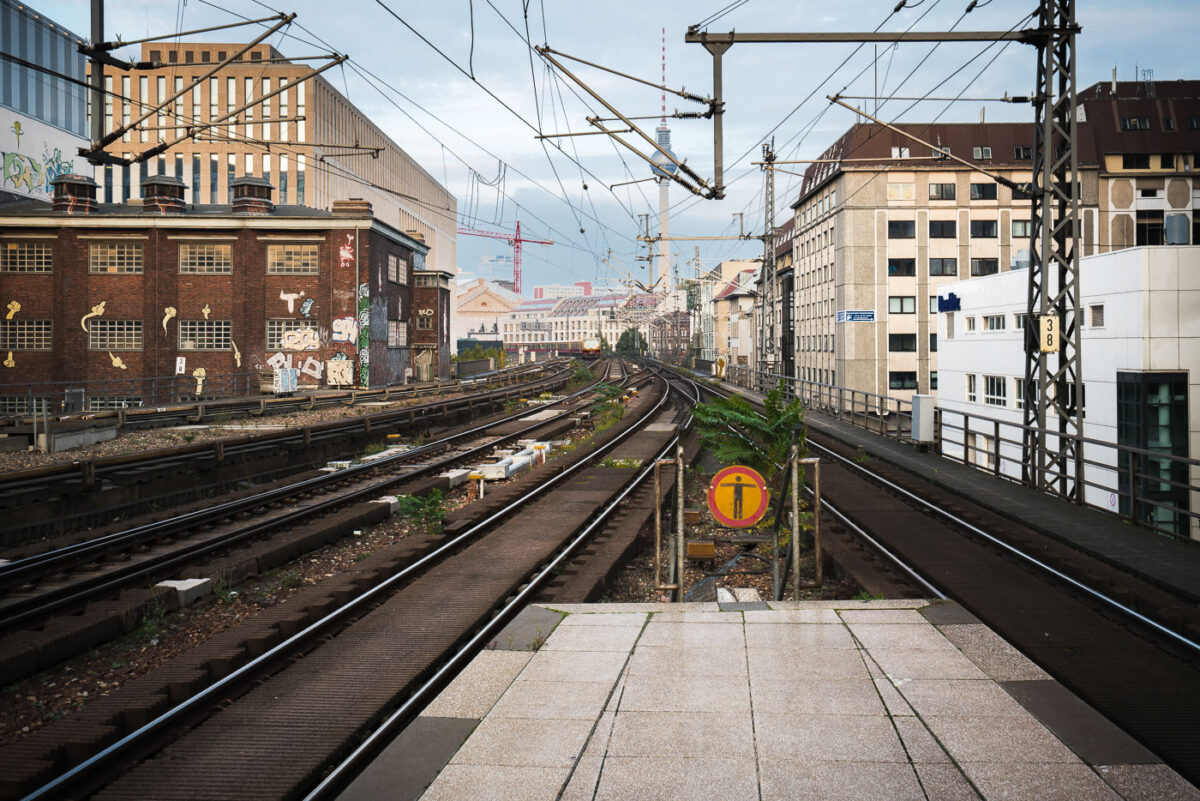
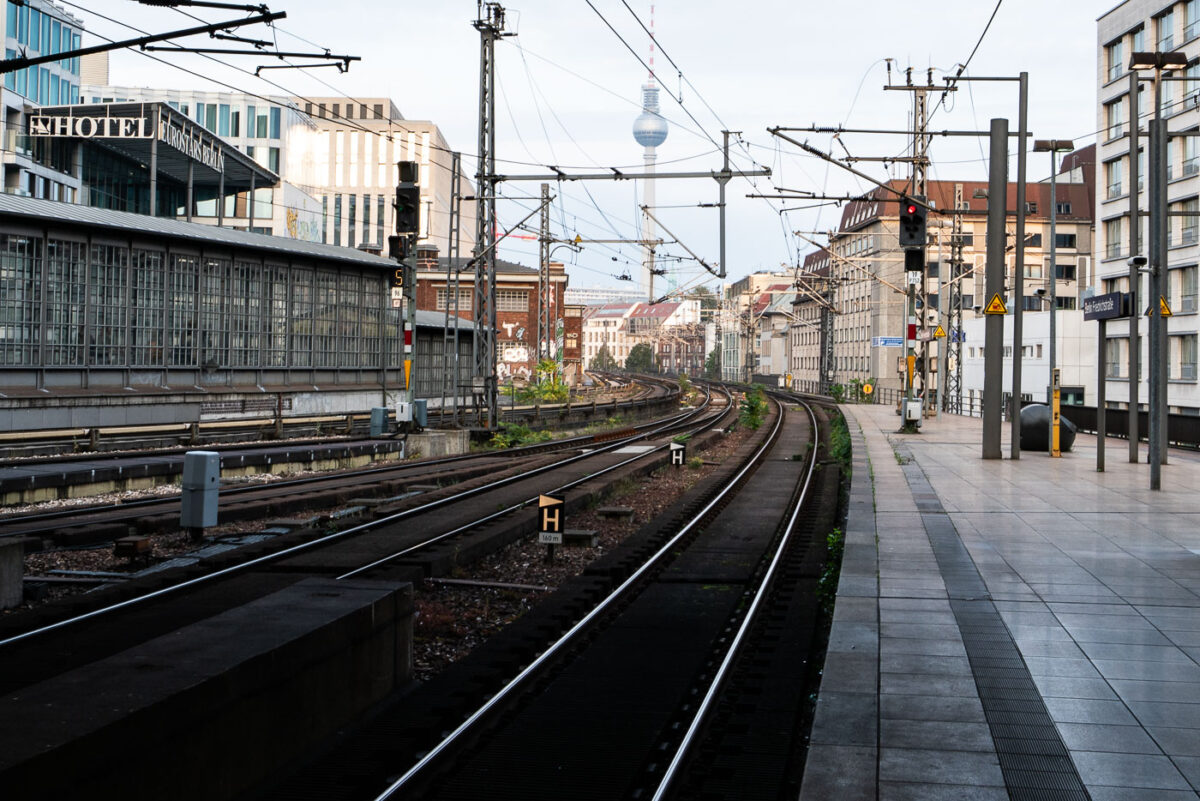
View east from Berlin Friedrichstraße station showing the elevated S-Bahn tracks leading toward Alexanderplatz. Overhead wires and supporting steel structures frame the route, with graffiti-covered industrial buildings on the left and mid-century offices on the right. The Berlin TV Tower (Fernsehturm) rises in the distance, a landmark visible across the city skyline.
Berlin Friedrichstraße Station: S-Bahn Train Under Steel Canopy
September 2017
—
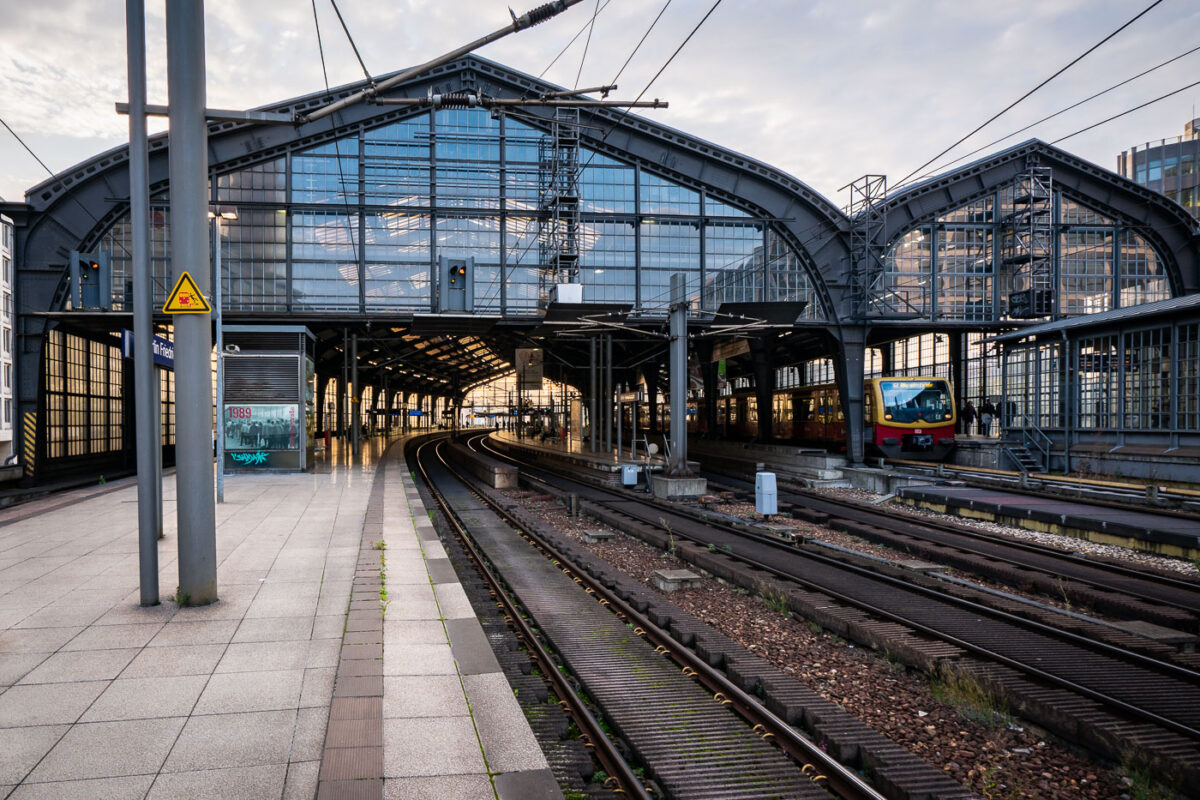
Berlin Friedrichstraße station in the early evening, with an S-Bahn BR 481 series train stopped under the steel and glass canopy. The curved elevated tracks lead into the main hall, a design characteristic of the city’s prewar rail architecture. Overhead wires and support structures frame the scene, while a few commuters move along the quiet platform as daylight fades into artificial light.
Berlin Friedrichstraße Station Tracks Eastward
September 2017
—
Tracks curve eastward from Berlin Friedrichstraße station, one of the city’s busiest S-Bahn and regional rail interchanges. The elevated viaduct carries multiple lines, including the S3, S5, S7, and S9, which link central Berlin with its outer districts and neighboring cities. The view looks toward Alexanderplatz, with the Fernsehturm television tower visible in the distance — a defining landmark of the former East Berlin skyline.
Friedrichstraße station opened in 1882 and served as a symbolic and logistical border crossing during the Cold War, when it connected both East and West Berlin rail networks. Today, the station remains a major transit hub, handling thousands of passengers daily and sitting at the junction of the north–south and east–west S-Bahn corridors. The surrounding area has since been redeveloped with modern offices, hotels, and shops while retaining its role as one of Berlin’s central transport arteries.
ICE 3/T Train on Berlin Rail Network
September 2017
—
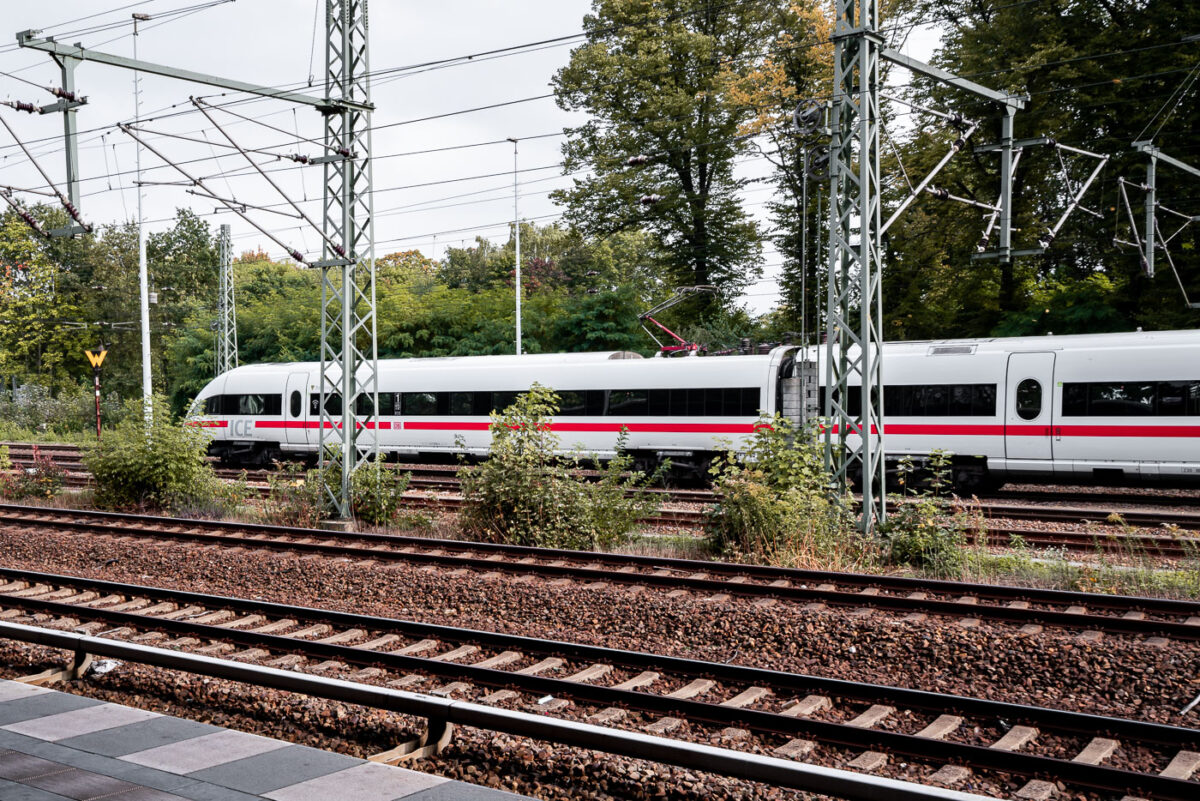
A Deutsche Bahn Intercity-Express (ICE) train moves through the rail network, distinguished by its white body and red horizontal stripe. The train belongs to the ICE 3 or ICE T family, units designed for high-speed operation up to 300 km/h and used on long-distance routes across Germany and neighboring countries. Overhead catenary lines supported by lattice-steel gantries deliver 15 kV AC power, the standard for Germany’s electrified mainlines.
The ICE network, launched in the early 1990s, forms the backbone of long-distance rail travel in the country, linking cities such as Berlin, Frankfurt, Cologne, and Munich. These trains are built for both speed and efficiency, with lightweight aluminum bodies, regenerative braking, and pressure-sealed cabins for tunnel travel. The scene reflects the characteristic organization of German rail infrastructure—multiple tracks, overhead power, and vegetation at the margins—where local and international services share one of Europe’s busiest and most interconnected systems.
Rehberge U-Bahn Station, Berlin: Mint Green Tiles & Park Murals
September 2017
—
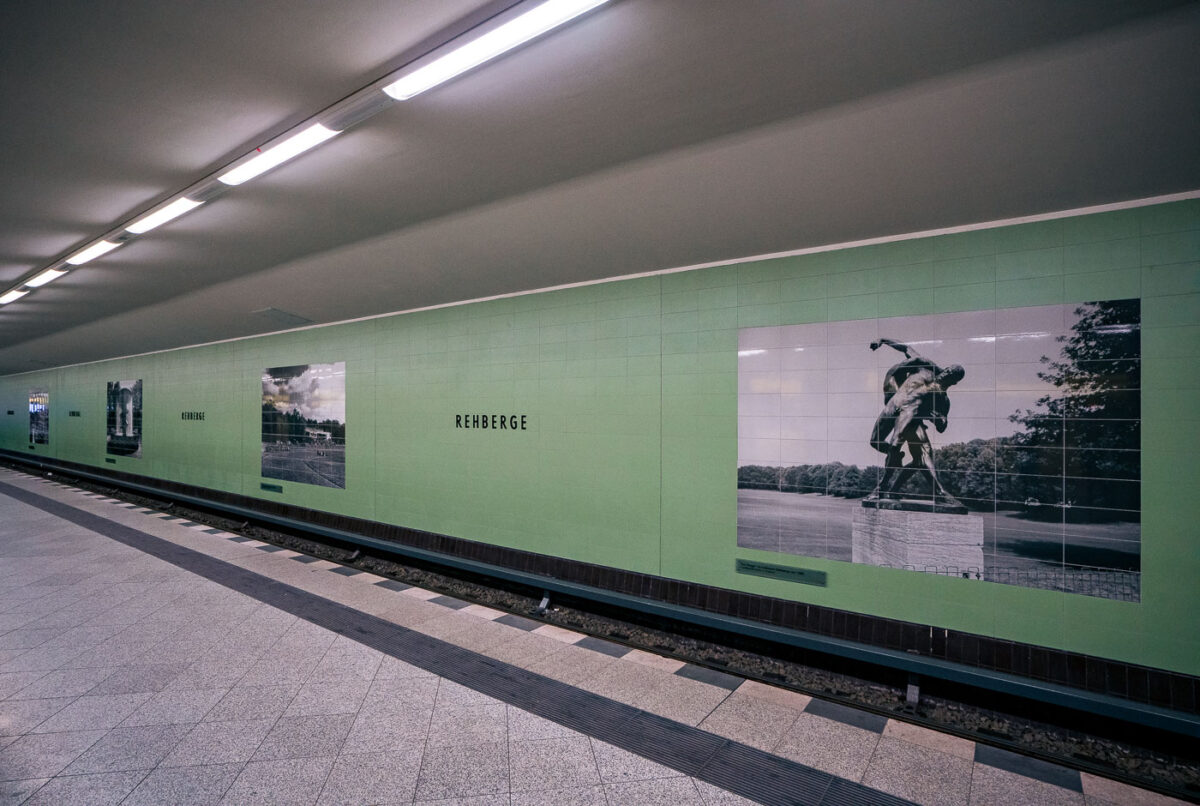
Rehberge U-Bahn Station, Berlin
Wedding U-Bahn Station Passageway, Berlin
September 2017
—
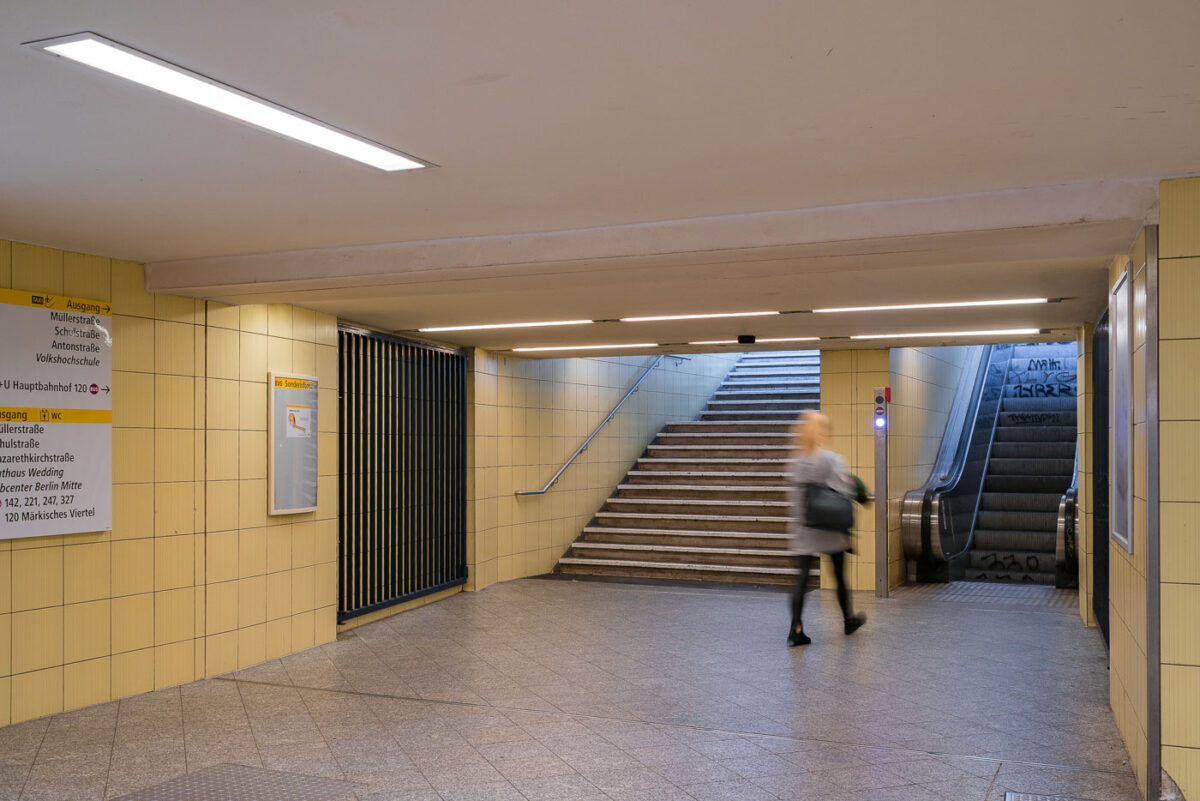
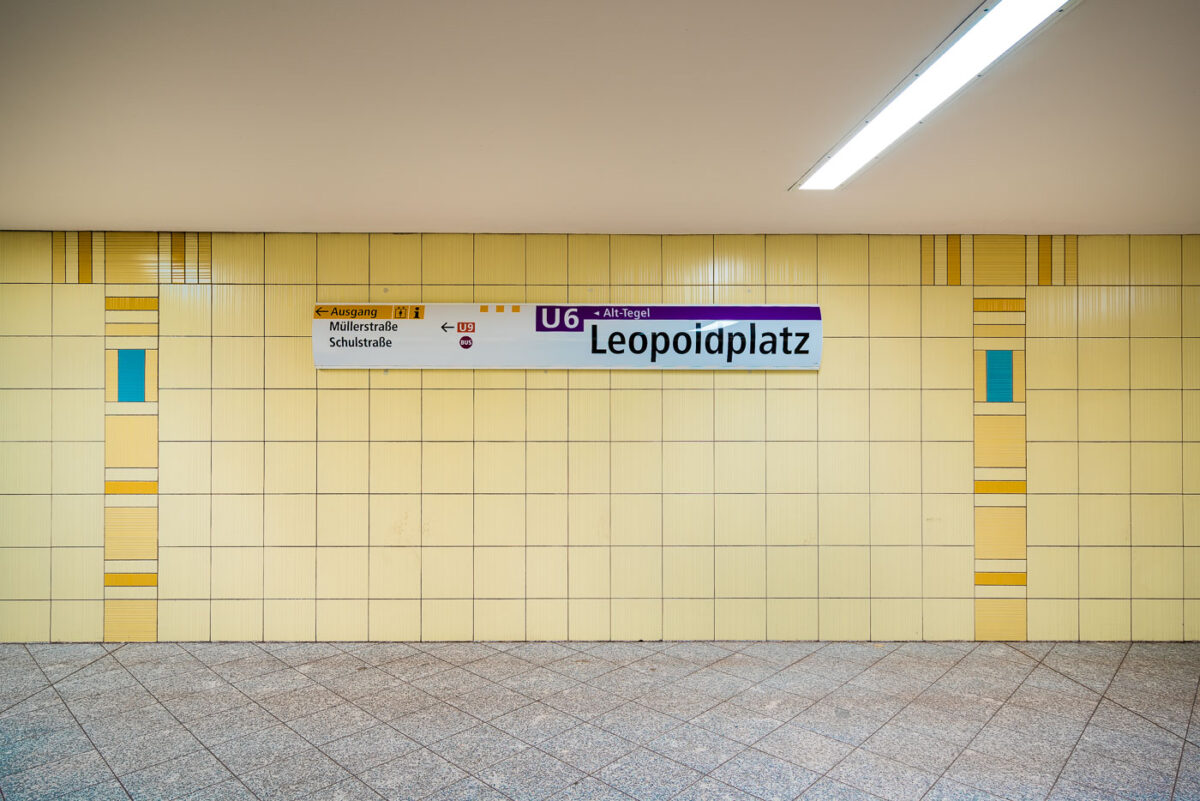
An underground passageway connects the platforms of Wedding U-Bahn station to its street-level exits on Müllerstraße in Berlin’s Mitte district. The corridor is tiled in light yellow ceramic, part of the BVG’s standardized postwar design used throughout many West Berlin stations rebuilt or renovated in the 1960s and 1970s.
Directional signage guides passengers toward exits, connecting bus routes, and public facilities, while an escalator and stairway lead to the main entrance. The faint graffiti on the walls and motion blur of a passing commuter emphasize the station’s everyday function within Berlin’s public transport network. Wedding station serves both the U6 line and the S-Bahn Ring, forming a key interchange point in the city’s northern transit system.
Leopoldplatz U-Bahn Station: 1960s Yellow Tile Design, Berlin
September 2017
—
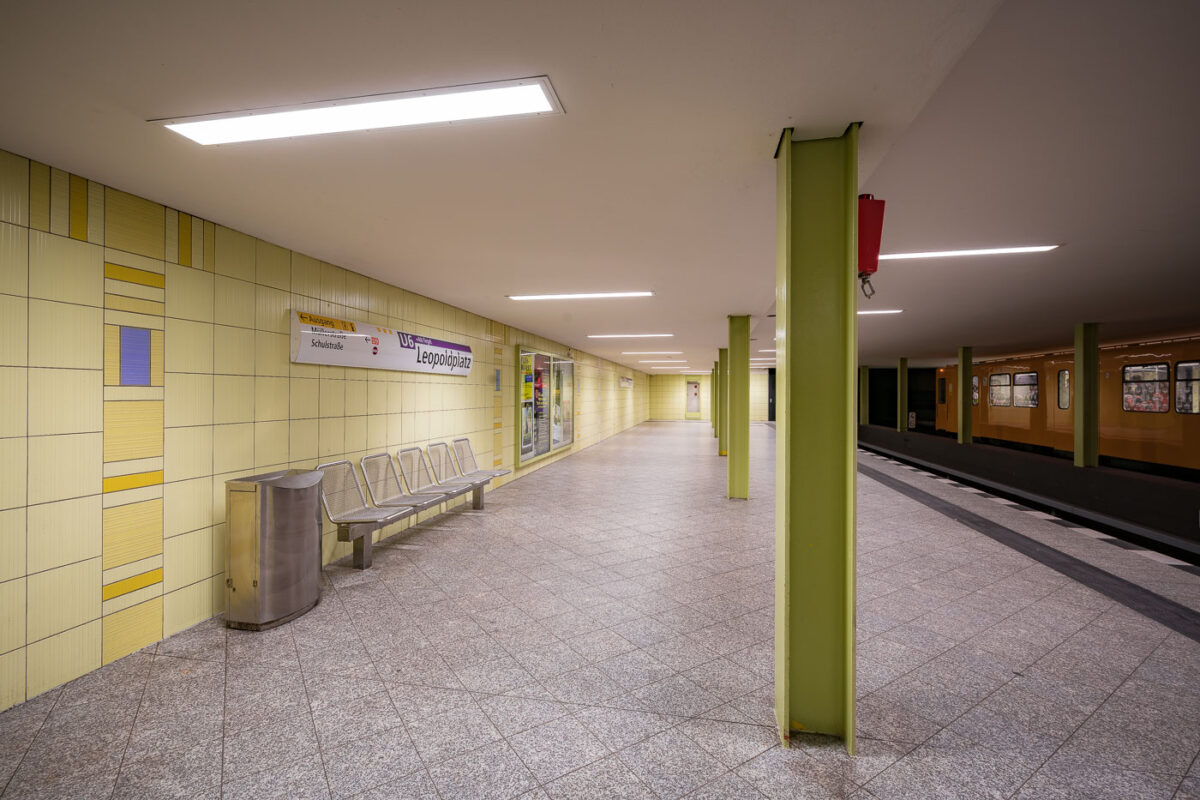
The Leopoldplatz U-Bahn Station in Berlin Germany.
Leopoldplatz U-Bahn Station, Berlin: U9 Platform
September 2017
—
The Leopoldplatz U-Bahn Station in Berlin Germany.
Berlin Wedding Station: Orange Tiles and Advertising Art
September 2017
—
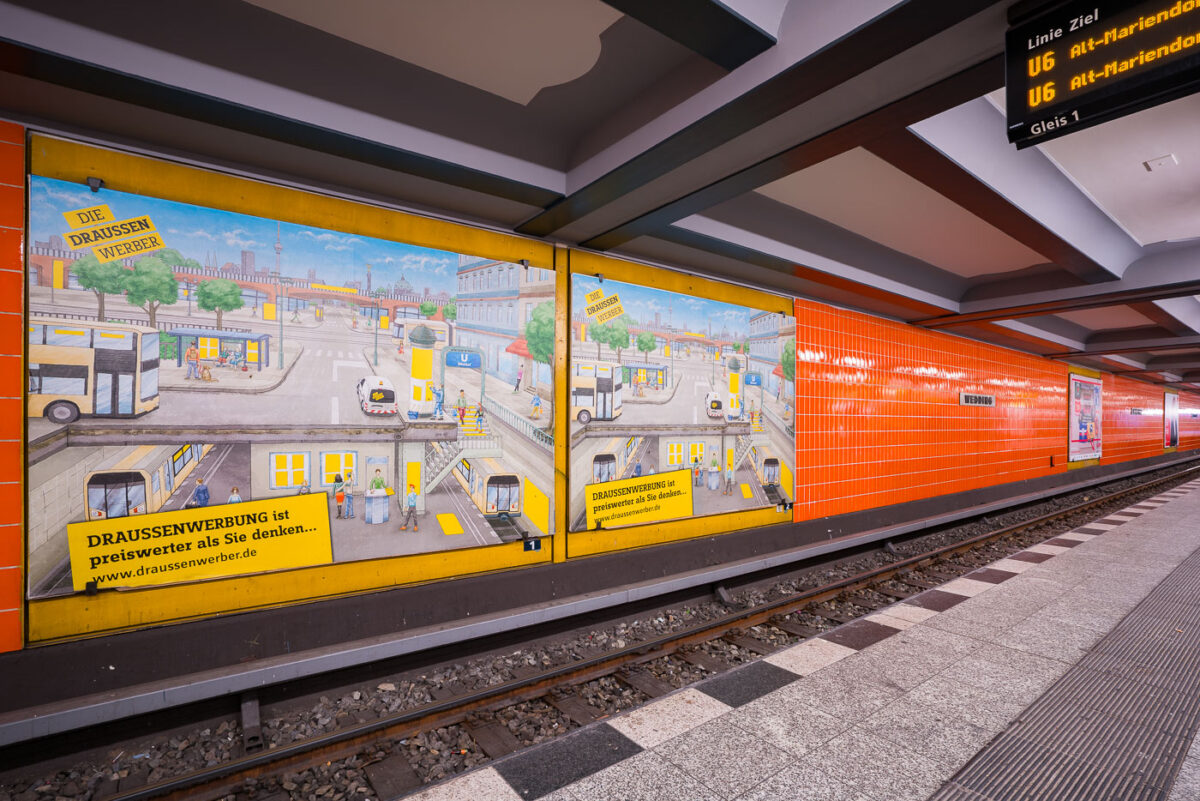
Wittenbergplatz station on Berlin’s U2 line features a distinctive orange-tiled design characteristic of the city’s postwar modernization of U-Bahn interiors. The platform level seen here includes advertising panels with hand-illustrated city scenes, part of a campaign promoting outdoor advertising (“Draussenwerbung”) by Wall GmbH, a longtime transit advertising company in Berlin.
Opened in 1902 as part of the city’s first underground railway, Wittenbergplatz is one of Berlin’s oldest stations and a key junction serving the U1, U2, and U3 lines. The orange tiles were installed during mid-20th-century refurbishments to brighten the subterranean space, contrasting with the original Jugendstil architecture preserved at the main hall above. The modern signage displays U6 connections, while the station’s layout—with three island platforms—continues to serve one of the busiest interchange points in Berlin’s U-Bahn network.
Berlin Wedding Station: Orange Tiles and Yellow Panels
September 2017
—
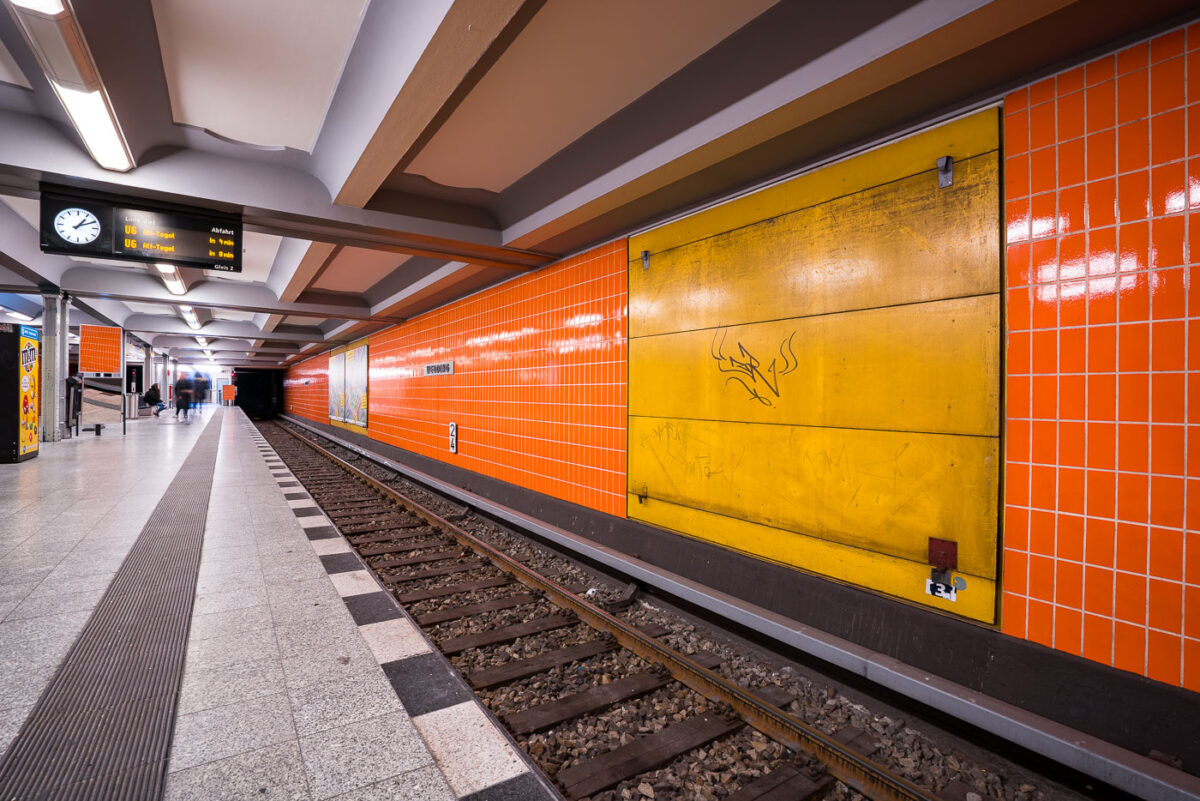
Berlin-Wedding station S-Bahn station in Berlin, Germany
Wedding Station Sign, Berlin U-Bahn
September 2017
—
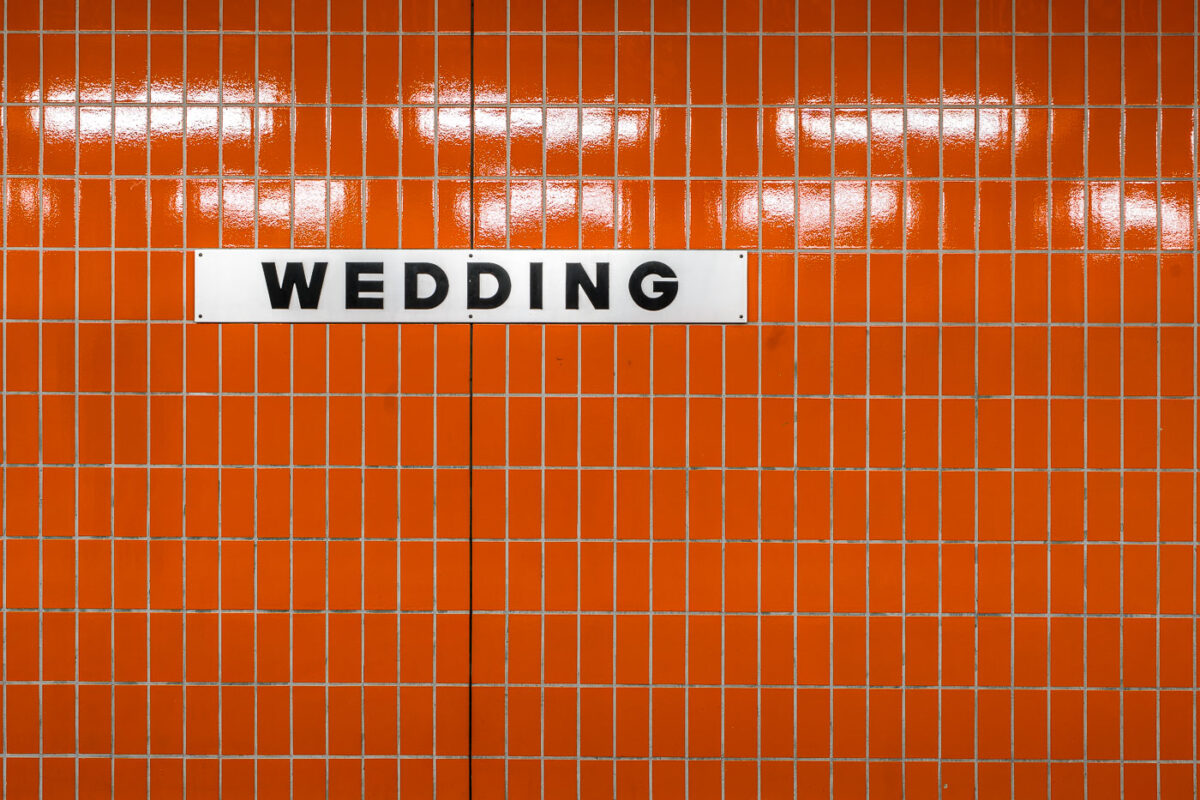
A white station sign reading “Wedding” in black block letters is mounted on an orange, small-rectangle tiled wall inside Wedding station in Berlin, Germany. The station serves the Wedding neighborhood in the Mitte district and functions as an interchange between the U6 U‑Bahn line and the Berlin Ringbahn S‑Bahn. The stark typography and modular tiles reflect the practical design found across much of Berlin’s postwar transit architecture. Operated by BVG for the U‑Bahn and S‑Bahn Berlin GmbH for suburban rail, Wedding is a local hub for commuters moving between the north of the city and central Berlin. No passengers are visible in the frame, emphasizing the graphic clarity of the station’s wayfinding.
Brandenburger Tor U-Bahn Station, Berlin
September 2017
—
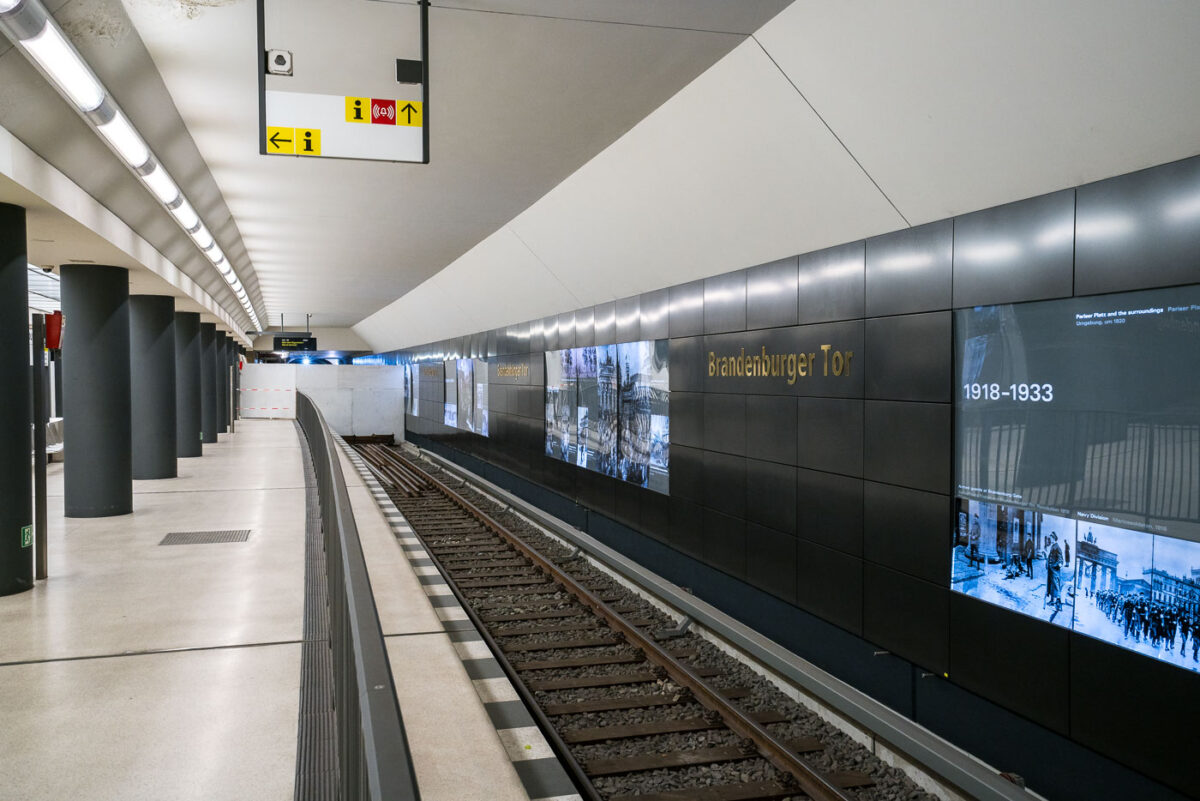
The Brandenburger Tor station on Berlin’s U5 line sits directly beneath Pariser Platz, adjacent to the Brandenburg Gate. The interior features dark composite wall panels inlaid with gold lettering and a series of illuminated displays tracing Berlin’s 20th-century history, including the city’s division and post-reunification development. Originally opened in 2009 as part of the short U55 shuttle between Hauptbahnhof and Bundestag, the station became a through stop in December 2020 when the U5 extension to Alexanderplatz was completed, reconnecting the eastern and western portions of the U-Bahn network after nearly six decades of separation.
Brandenburger Tor U-Bahn Station, Berlin: U5 Line Platform
September 2017
—
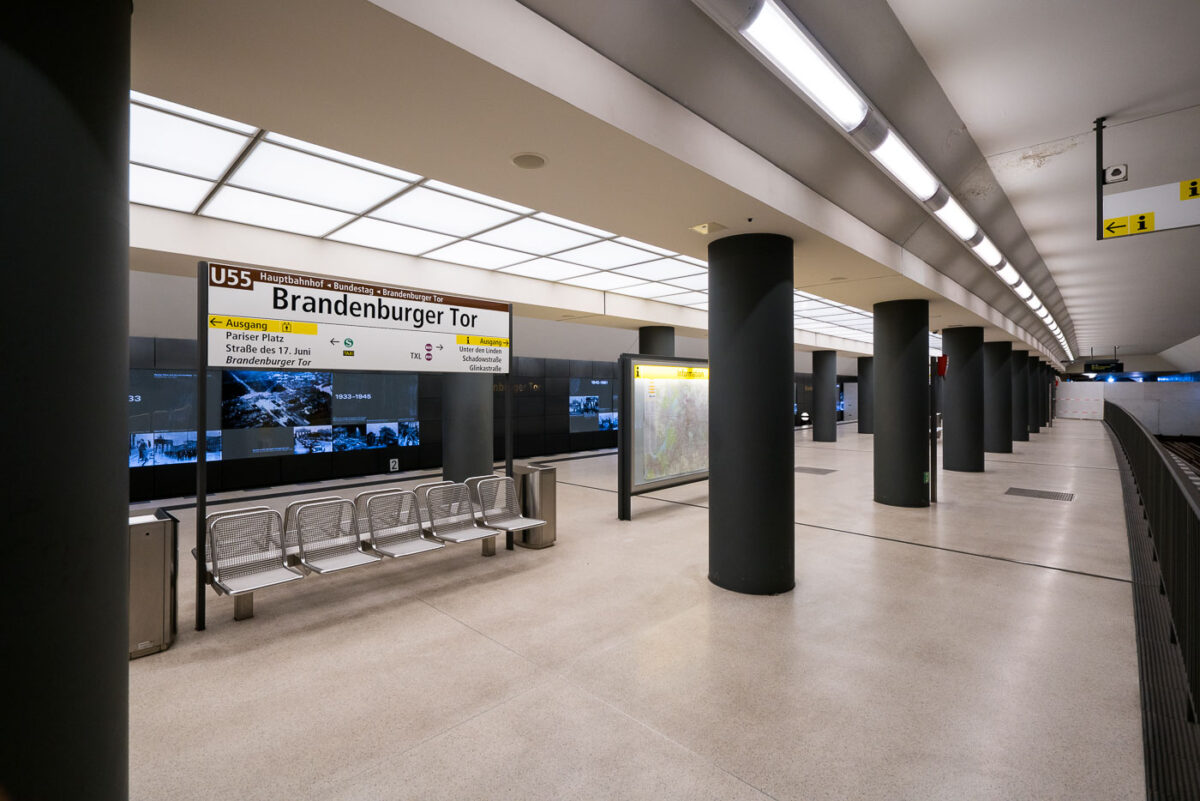
The Brandenburger Tor station in Berlin, Germany.
Brandenburger Tor Station Sign, Berlin
September 2017
—
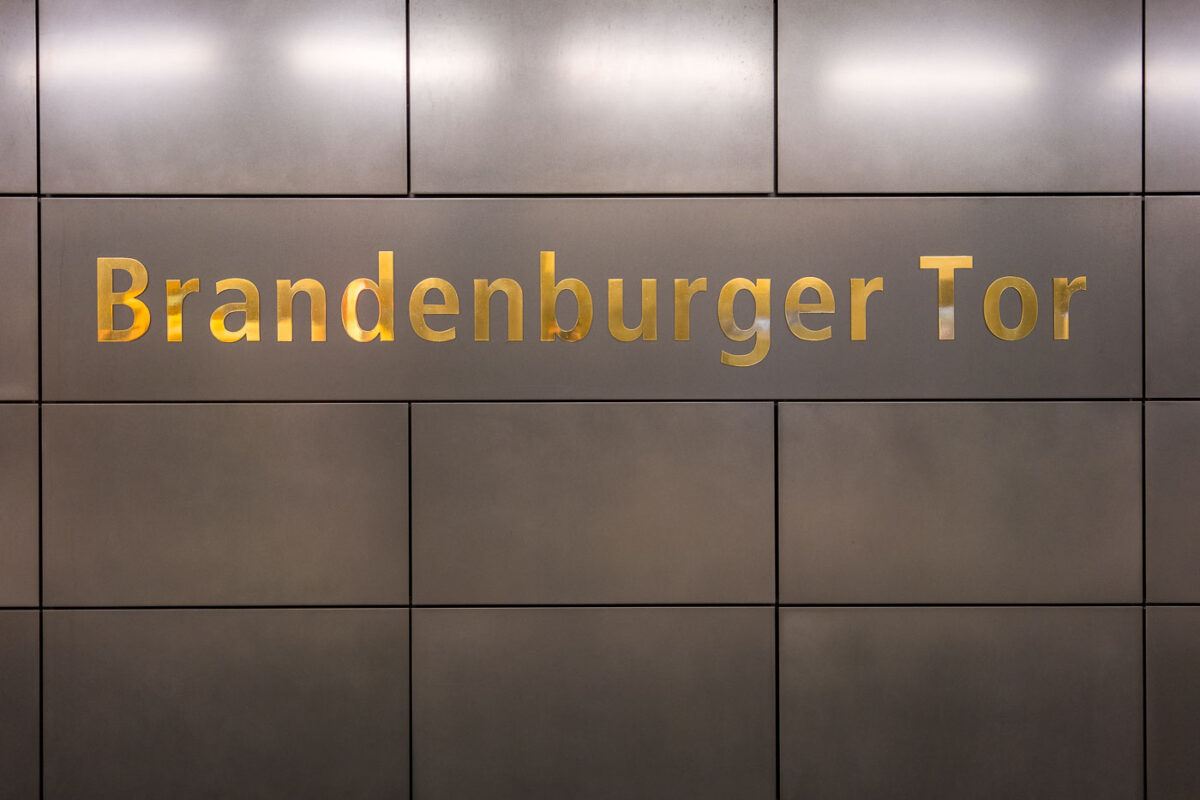
The Brandenburger Tor station in Berlin, Germany.
Berlin Hauptbahnhof: U55 shuttle train at underground platform
September 2017
—
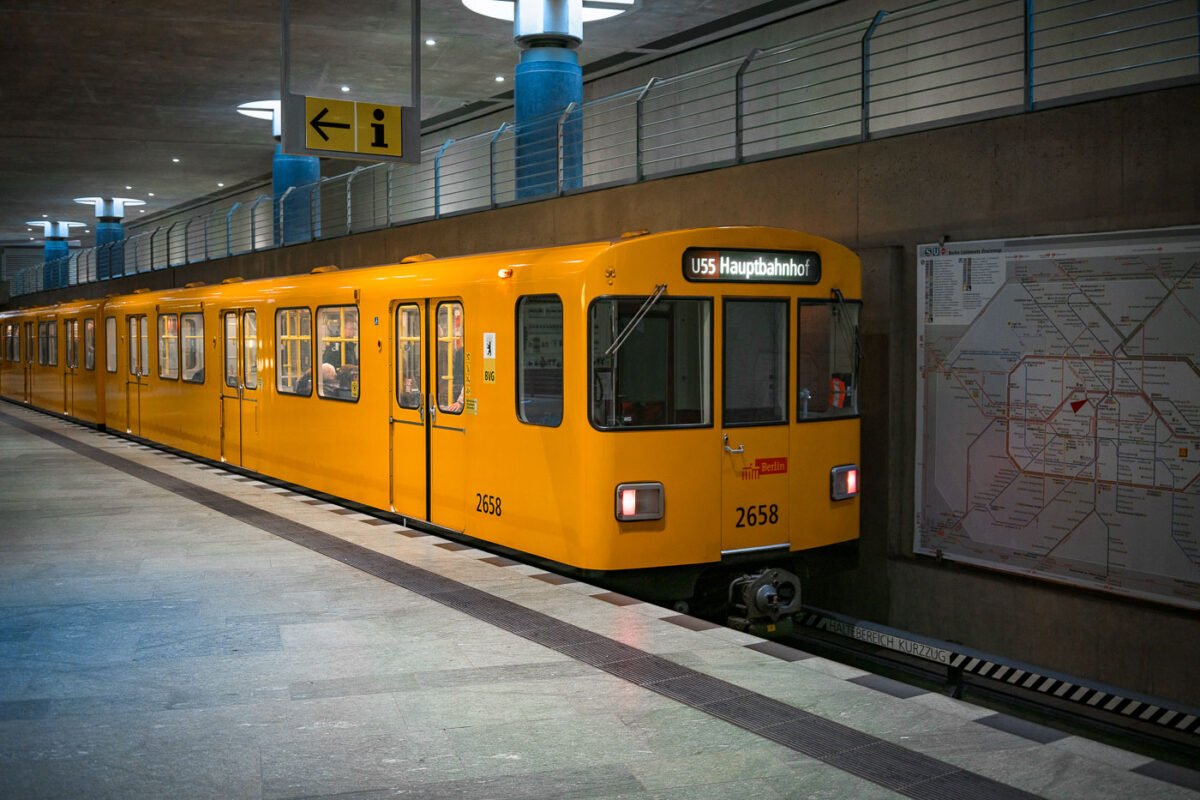
A bright yellow BVG U-Bahn train marked “U55 Hauptbahnhof” stands at the underground platform of Berlin Hauptbahnhof. An information sign with an arrow hangs above the platform, while a large network map of the S- and U-Bahn lines is mounted on the concrete wall to the right. Through the windows, a few seated passengers are visible inside the multi-door carriage numbered 2658. The U55 operated as a short shuttle between Berlin Hauptbahnhof and Brandenburger Tor, opened in 2009 to link the new central station with the government quarter. In December 2020 the shuttle was integrated into the extended U5 line, a major step in Berlin’s east‑west metro connection.
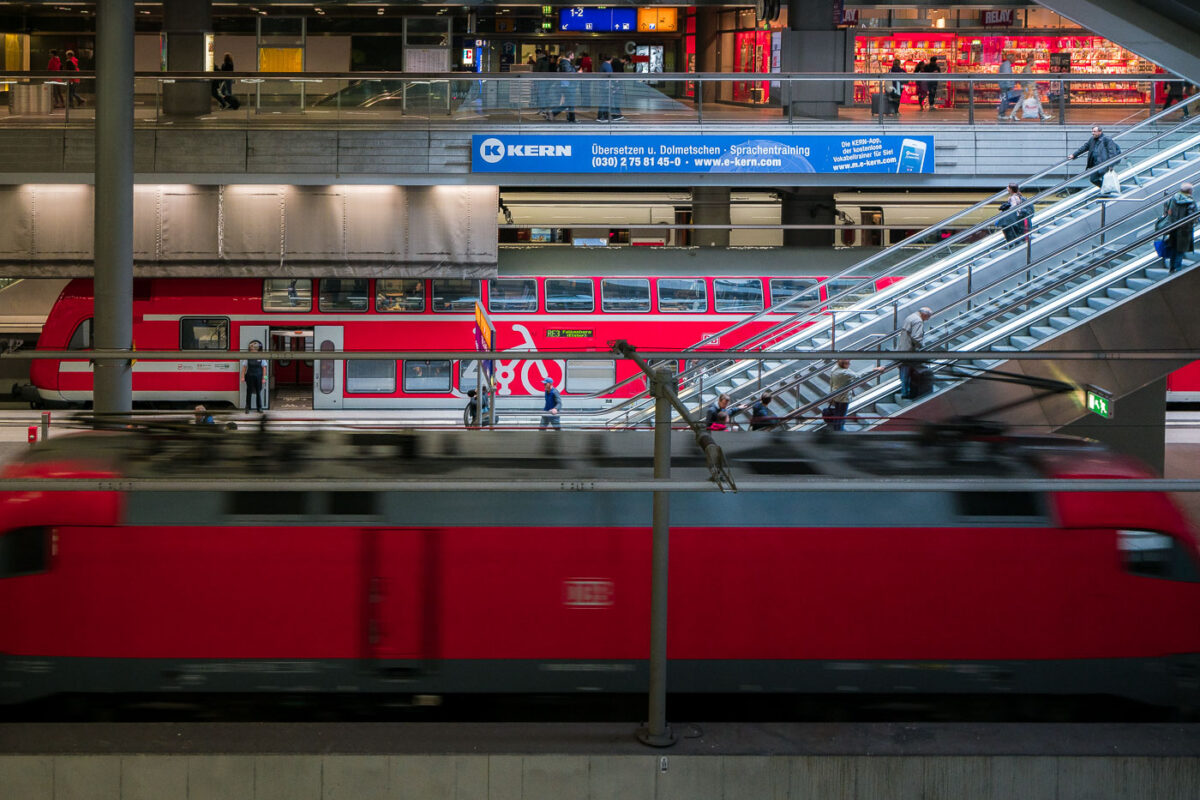
Berlin Hauptbahnhof: Trains and Escalators
September 2017
—
The Berlin Central Station in Berlin, Germany.
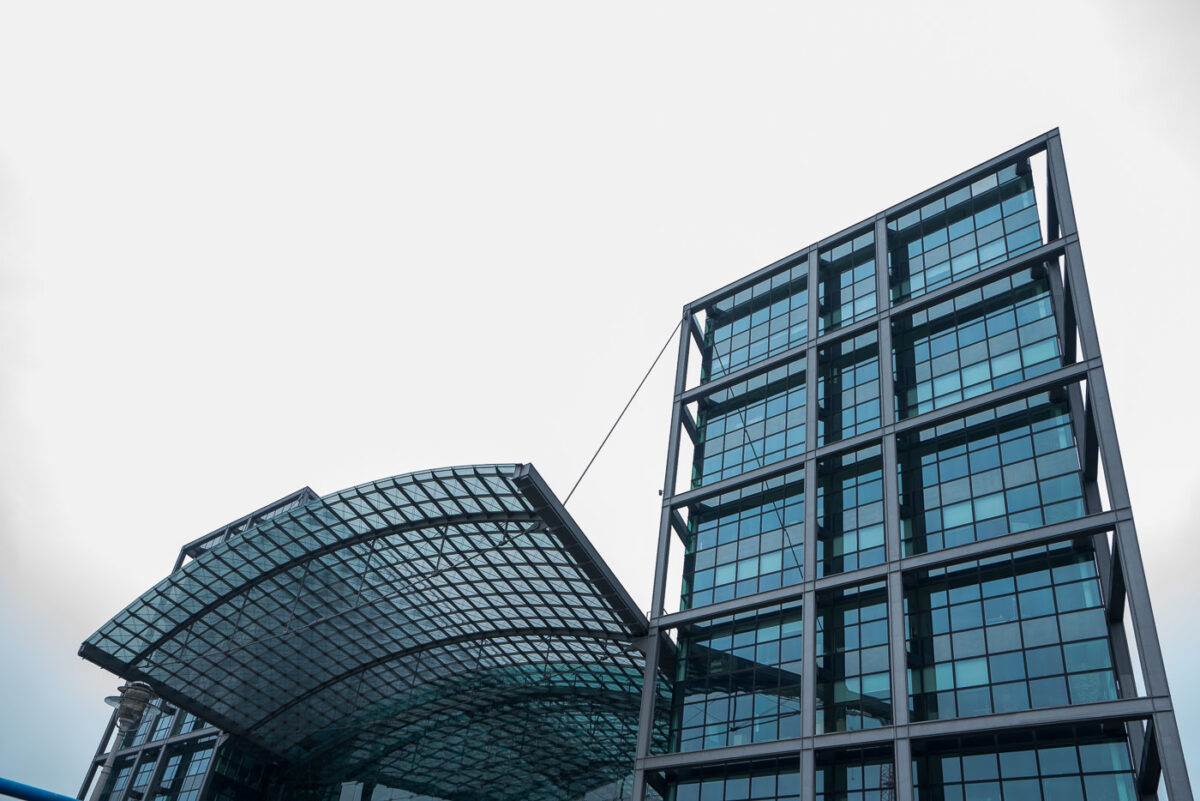
Berlin Hauptbahnhof: Glass and Steel Entrance
September 2017
—
The Berlin Central Station in Berlin, Germany.
Berlin Hauptbahnhof Lower Platforms, North-South Corridor
September 2017
—
Berlin Hauptbahnhof’s lower-level platforms, located roughly 15 meters below street level, form part of Germany’s central north–south high-speed rail corridor. The underground section, opened in 2006 alongside the completion of the station’s glass-and-steel main hall, accommodates long-distance and regional trains running through the Tiergarten tunnel. The design emphasizes polished concrete, steel, and indirect lighting—elements typical of the Deutsche Bahn architectural style of the early 2000s. Platforms 1 through 8 serve ICE and IC services linking Berlin with cities such as Munich, Frankfurt, and Hamburg, while upper levels connect to the S-Bahn and U-Bahn networks.
Berlin Hauptbahnhof: Tracks 5 & 6 Platforms
September 2017
—
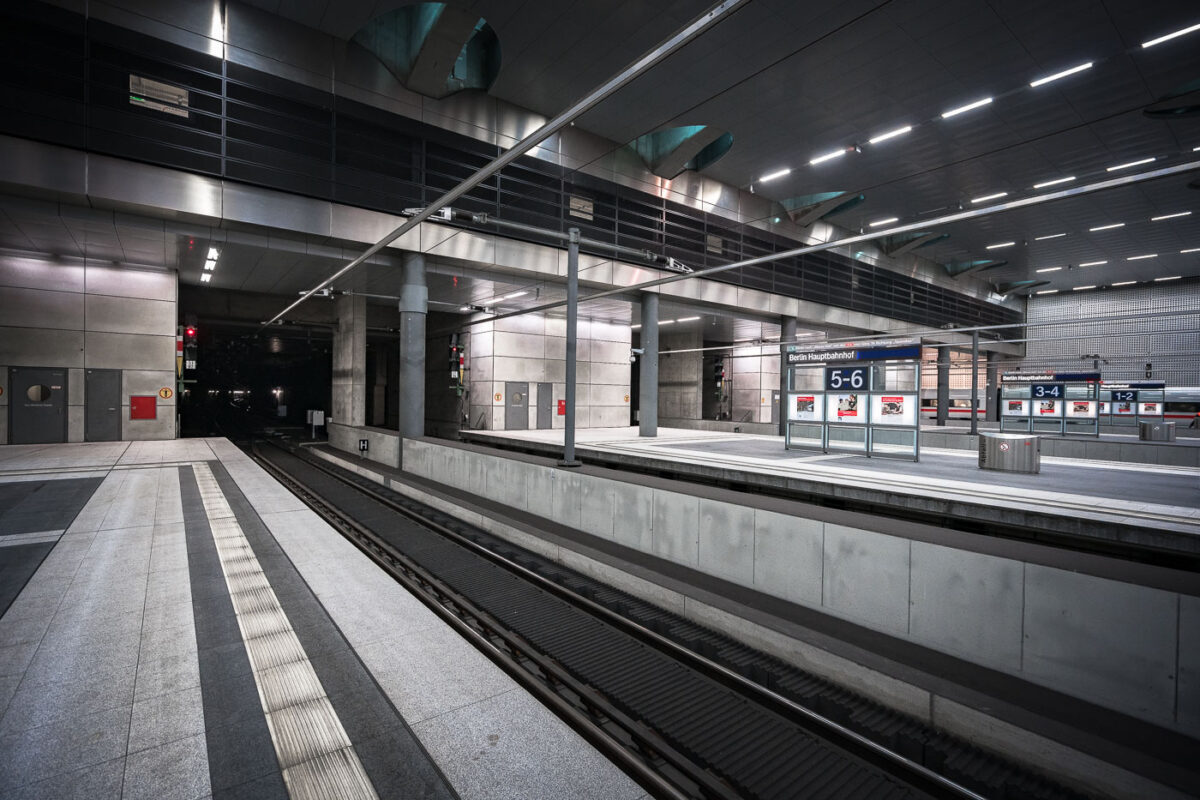
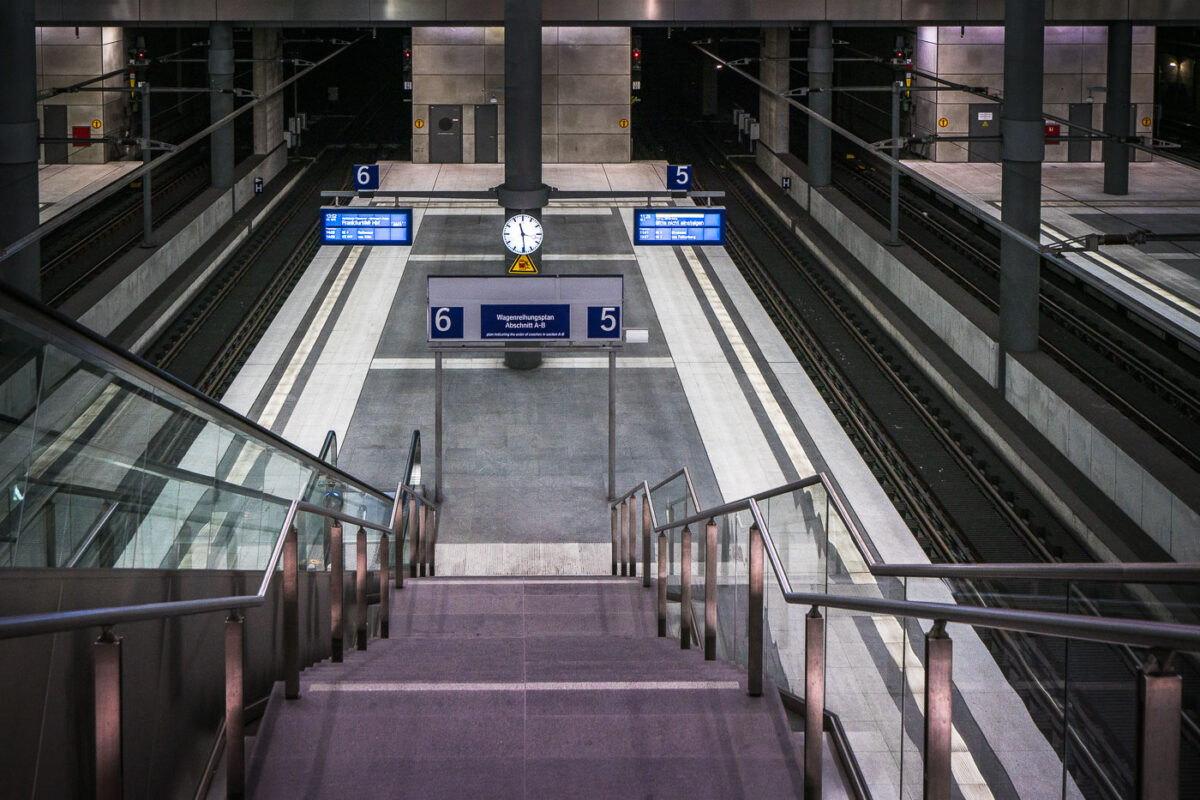
The lower platforms of Berlin Hauptbahnhof, serving tracks 5 and 6, form part of the deep-level north–south route opened with the station in 2006. This subterranean level, approximately 15 meters below ground, connects long-distance ICE services between Hamburg, Leipzig, and Munich through the Tiergarten Tunnel. The design reflects the precision and uniformity of modern German rail architecture—clean concrete forms, stainless steel fixtures, and bright LED signage. The symmetrical layout, glass partitions, and central clock emphasize efficiency and clarity, key elements of the Hauptbahnhof’s function as Europe’s largest crossing-station hub.
Underpass at Berlin Hauptbahnhof with Spree River
September 2017
—
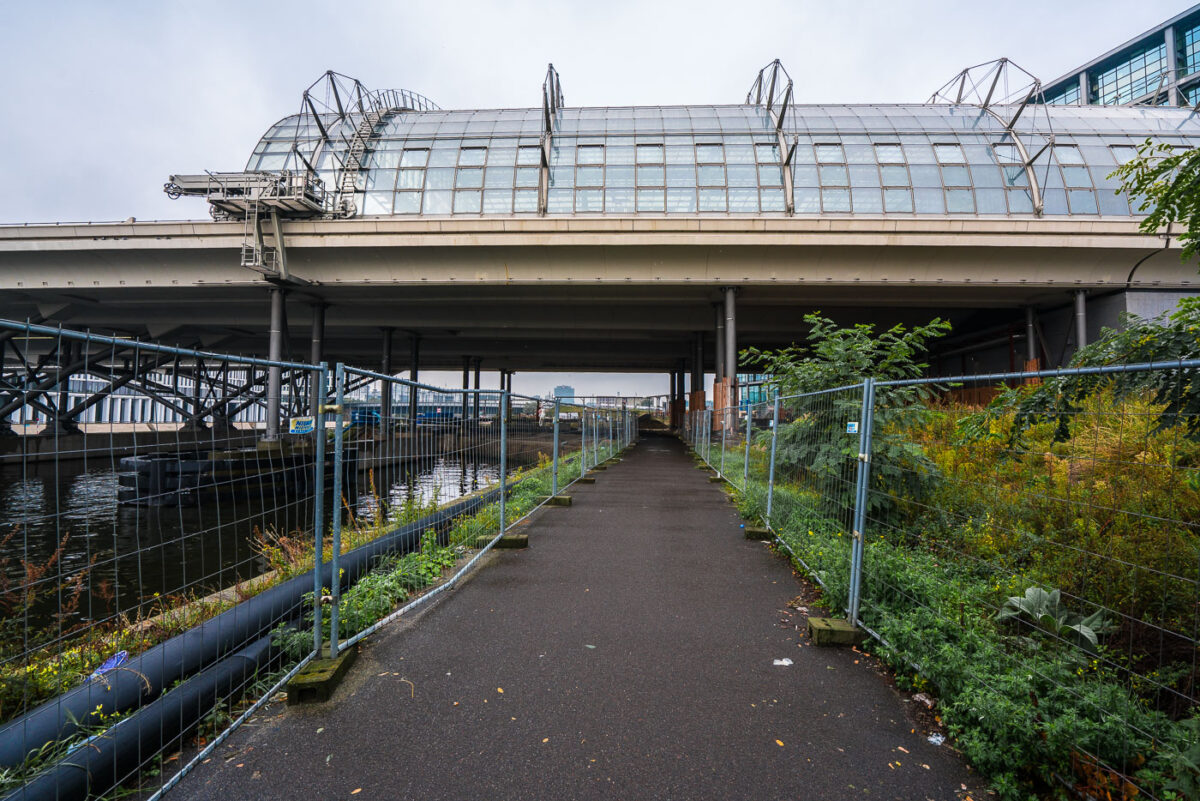
A narrow, fenced pathway runs beneath the towering structure of Berlin Hauptbahnhof — Germany’s largest and most complex railway station — where elevated train lines stretch above the Spree River. The gleaming glass panels and steel framework of the upper platforms contrast sharply with the damp pavement and industrial underpass below. Puddles glisten from a recent rain, while construction barriers and wild greenery frame the scene, hinting at the city’s perpetual state of transformation. Built as a symbol of reunified Berlin, the Hauptbahnhof connects north to south, east to west — a convergence of architecture, engineering, and history that mirrors Berlin’s layered identity. The stillness here beneath the trains creates a hidden perspective on one of Europe’s busiest transport hubs, where modern motion meets quiet decay.
Berlin Tram on Wet Streets at Dusk
September 2017
—
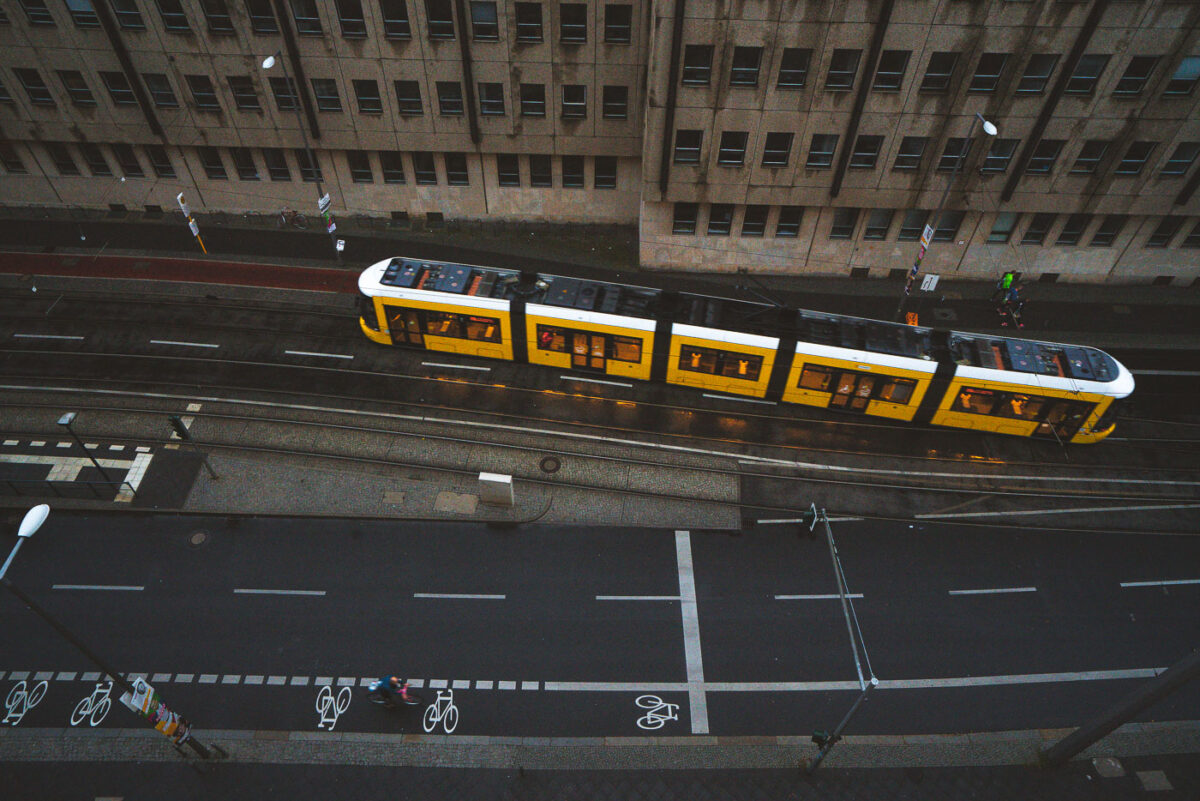
A yellow BVG tram glides through the wet streets of Berlin at dusk, its reflection faintly shimmering on the rain-darkened tracks. The city’s extensive tram system, one of the oldest in the world, continues to serve as a vital part of daily life — connecting neighborhoods across the capital with quiet precision. Cyclists share the street below, a hallmark of Berlin’s commitment to sustainable urban transport and rhythmically layered street design.
Berlin Hauptbahnhof and Federal Quarter Architecture
September 2017
—
SBB First Class Carriage Interior, Switzerland
September 2017
—
Inside a Swiss Federal Railways (SBB) first-class carriage, red headrest covers and subdued lighting create an atmosphere of quiet precision. The leather seating, overhead racks, and narrow aisle reflect the efficient use of space characteristic of Swiss design. Through the window, conductors confer on the platform, moments before departure — a scene that captures the punctual rhythm of Switzerland’s rail network. Since its founding in 1902, SBB has become one of Europe’s most respected operators, moving hundreds of thousands daily with near-perfect reliability across a network that links mountain towns, lakeside cities, and international hubs.
Zürich Trams on a Tree-Lined Avenue
September 2017
—
Two blue-and-white Zürich trams move through a broad, tree-lined avenue near the city center, a familiar sight in the Swiss metropolis where public transport defines the pace of daily life. Operated by VBZ, the Zürich tram network dates back to the 1880s and remains one of Europe’s most efficient urban systems, linking every corner of the city with clockwork precision. The clean lines of the vehicles, the restrained architecture, and the soft autumn light together reflect the city’s balance of historic character and modern functionality — a seamless integration of movement, order, and urban calm.
Zürich Hauptbahnhof: Entrance to ShopVille and SBB/SZU Lines
September 2017
—
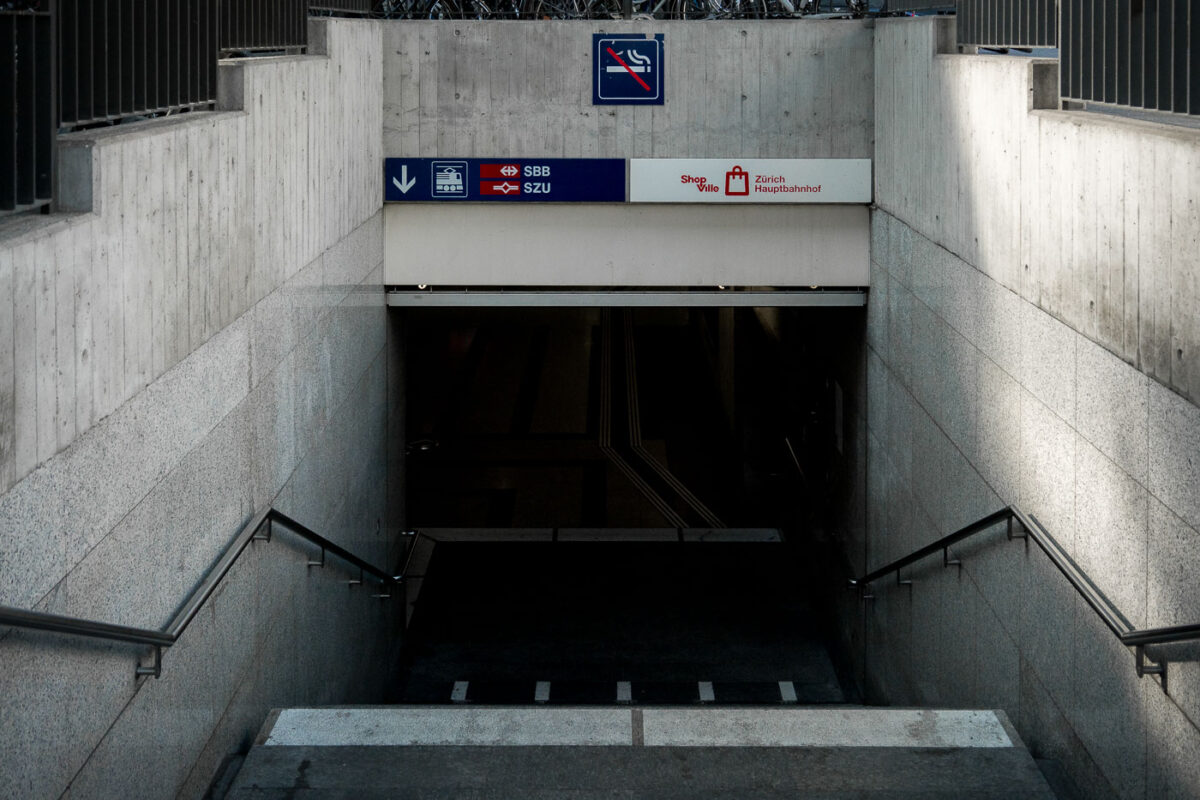
Entrance to the underground level of Zürich Hauptbahnhof (Zurich Central Station), one of Europe’s busiest railway hubs, serving over 400,000 passengers daily. The signage indicates access to the SBB national rail network and SZU suburban lines, along with the underground shopping complex “ShopVille.” Built into the heart of the city, Zürich HB’s design integrates modern transport infrastructure with pedestrian access and retail spaces, showcasing Switzerland’s efficiency in urban transit engineering.
Zürich Hauptbahnhof Bicycle Parking and Train
September 2017
—
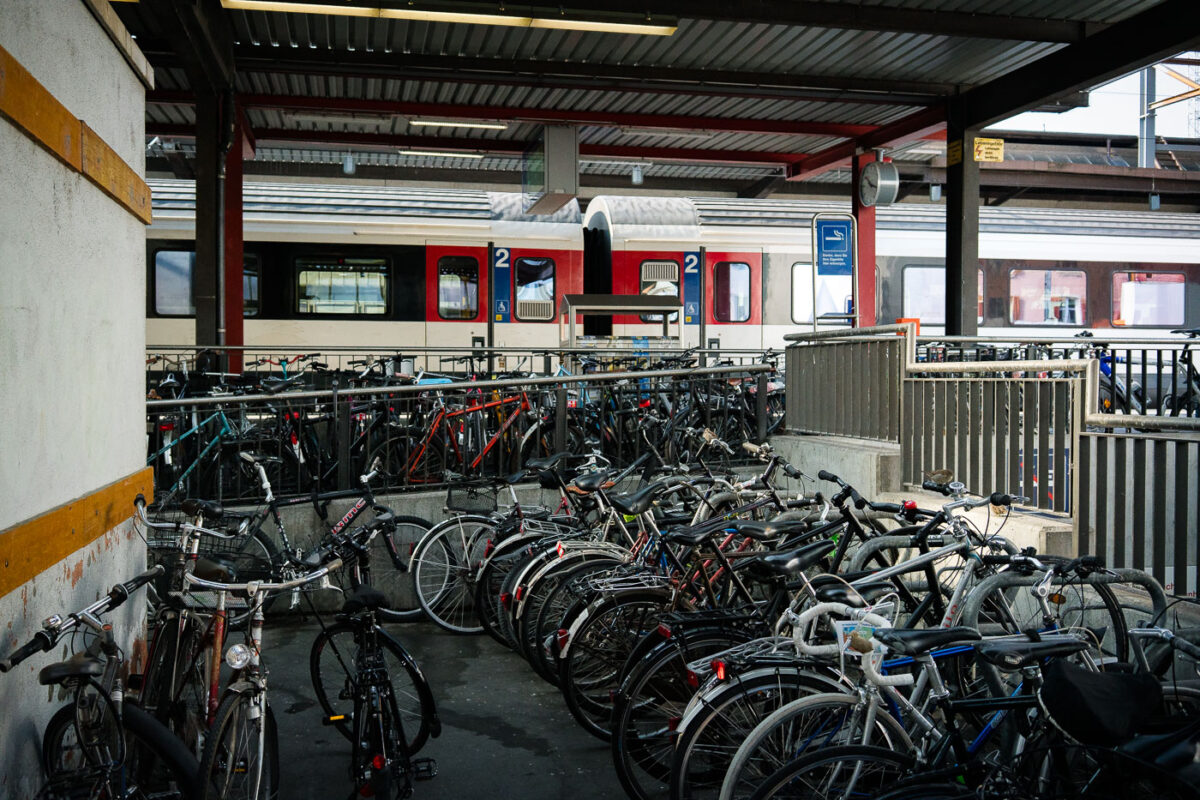
Rows of bicycles fill the parking area beside Zürich Hauptbahnhof, one of Europe’s busiest railway stations. The extensive bike racks serve daily commuters who combine cycling with train travel, a common practice in Swiss cities emphasizing sustainable urban mobility. Behind the bicycles, a Swiss Federal Railways (SBB) regional train waits at the platform, reflecting the integration of rail and cycling infrastructure within Zürich’s public transit system.
Zurich Airport Station Platforms D43 and D44
September 2017
—
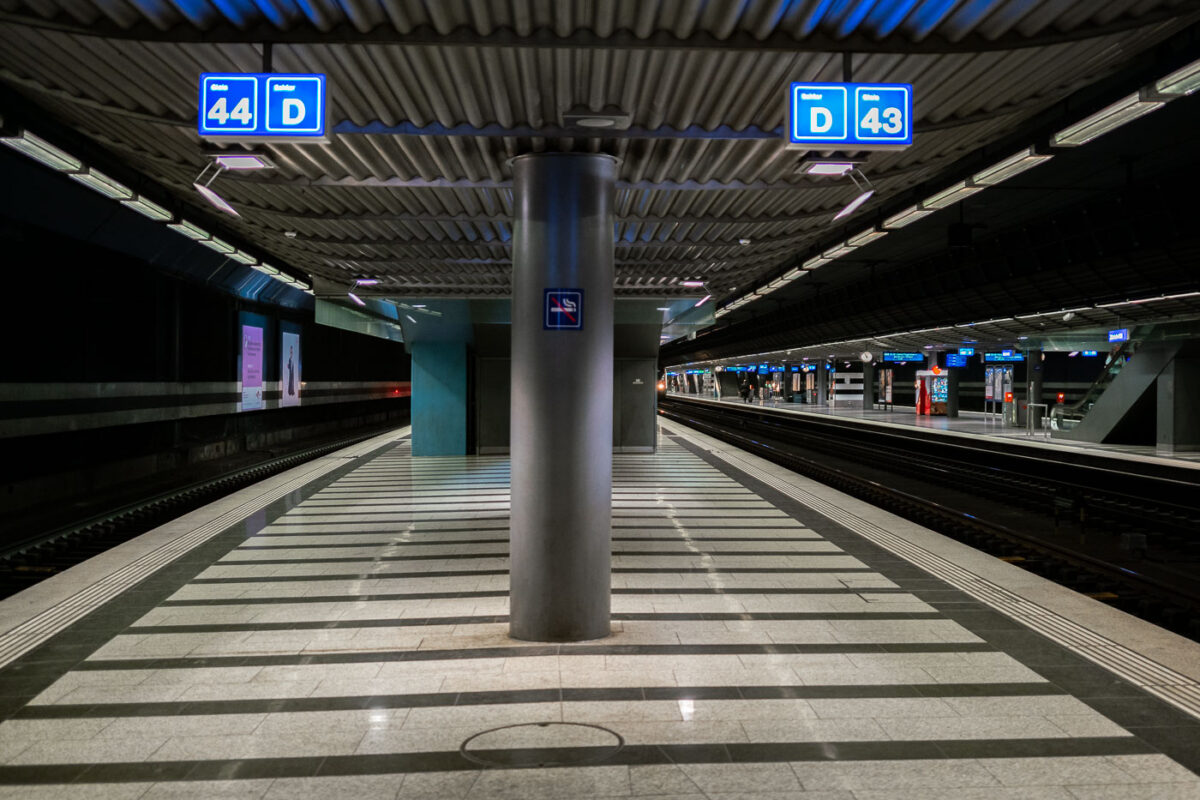
An underground train platform at Zürich Airport station, with tracks 43 and 44 visible. The station features striped tile flooring, overhead signage, and modern lighting. Few passengers are present, and escalators can be seen in the background leading to the upper levels.
Zurich Airport S16 Light Rail Schedule to Herrliberg-Feldmeilen
September 2017
—
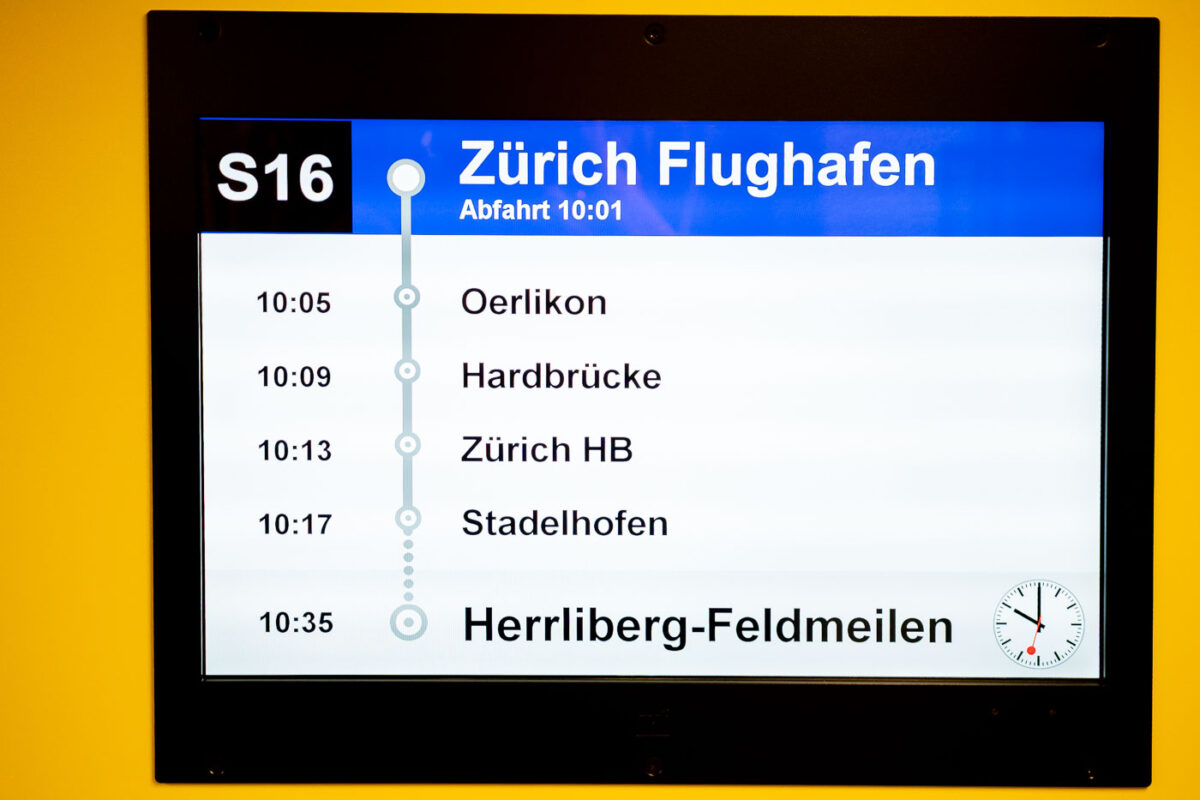
A digital train schedule display at Zurich Airport showing the departure times and stops for the S16 Light Rail train service. The screen indicates the train departs at 10:01, with stops including Oerlikon, Hardbrücke, Zürich HB, and Stadelhofen, before arriving at Herrliberg-Feldmeilen at 10:35. The display is mounted on a yellow wall, and a small analog clock is visible in the bottom right corner of the screen.
Northtown Yard Freight Trains, North Minneapolis
September 2017
—
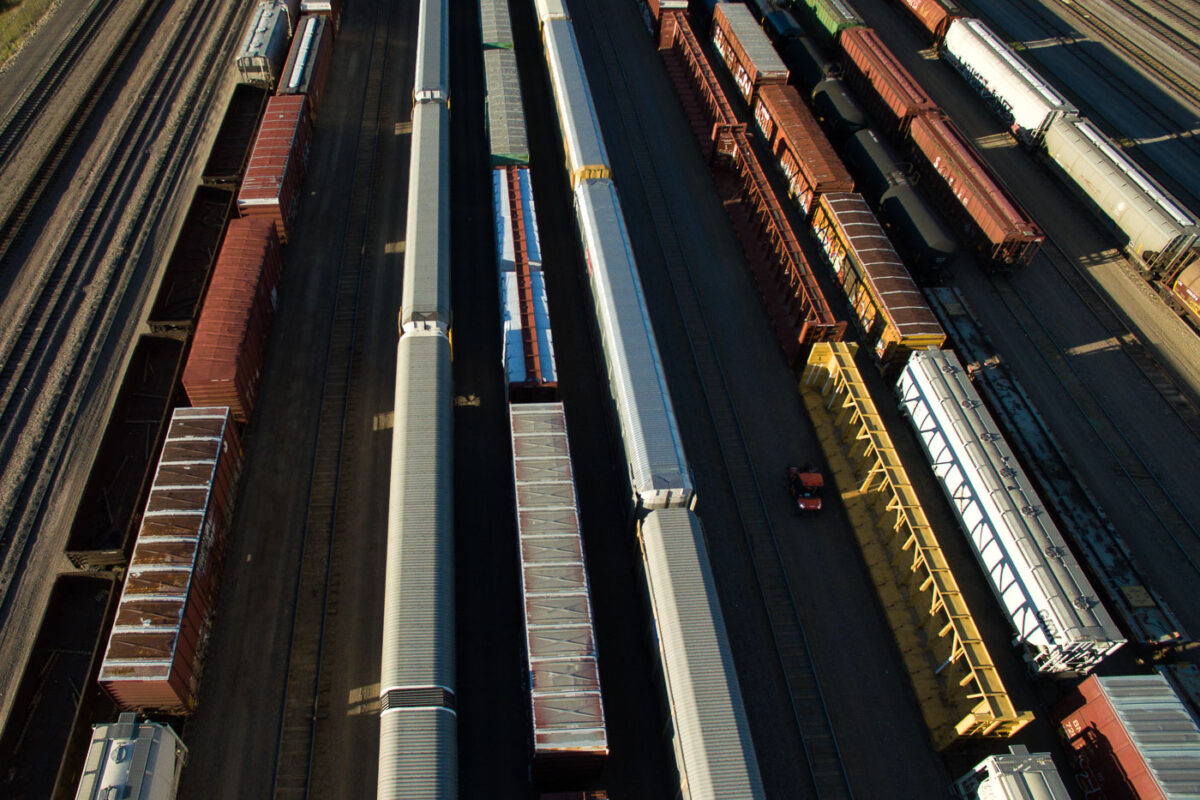
Northtown Yard in North Minneapolis.
Cedar Lake Trail, St. Louis Park: Water Tower and Grain Elevators
September 2017
—
The Cedar Lake Trail passes through the industrial district of St. Louis Park, Minnesota, illuminated here by the community’s water tower and nearby grain elevators. This segment of the trail follows a former railroad right-of-way once used by the Minneapolis & St. Louis Railway, which connected local industries to the region’s freight network. The corridor’s transformation into one of the country’s first bicycle “freeways” in the 1990s marked a major milestone in urban redevelopment and sustainable transportation planning.
Once lined with lumberyards, steel fabricators, and mills, the area surrounding the trail reflects the industrial origins of St. Louis Park—a community that grew rapidly in the early 20th century due to its proximity to both Minneapolis and key rail junctions. The trail today bridges that history, offering cyclists and commuters a route through a landscape where freight trains, utility towers, and legacy industry remain active reminders of the city’s manufacturing past.
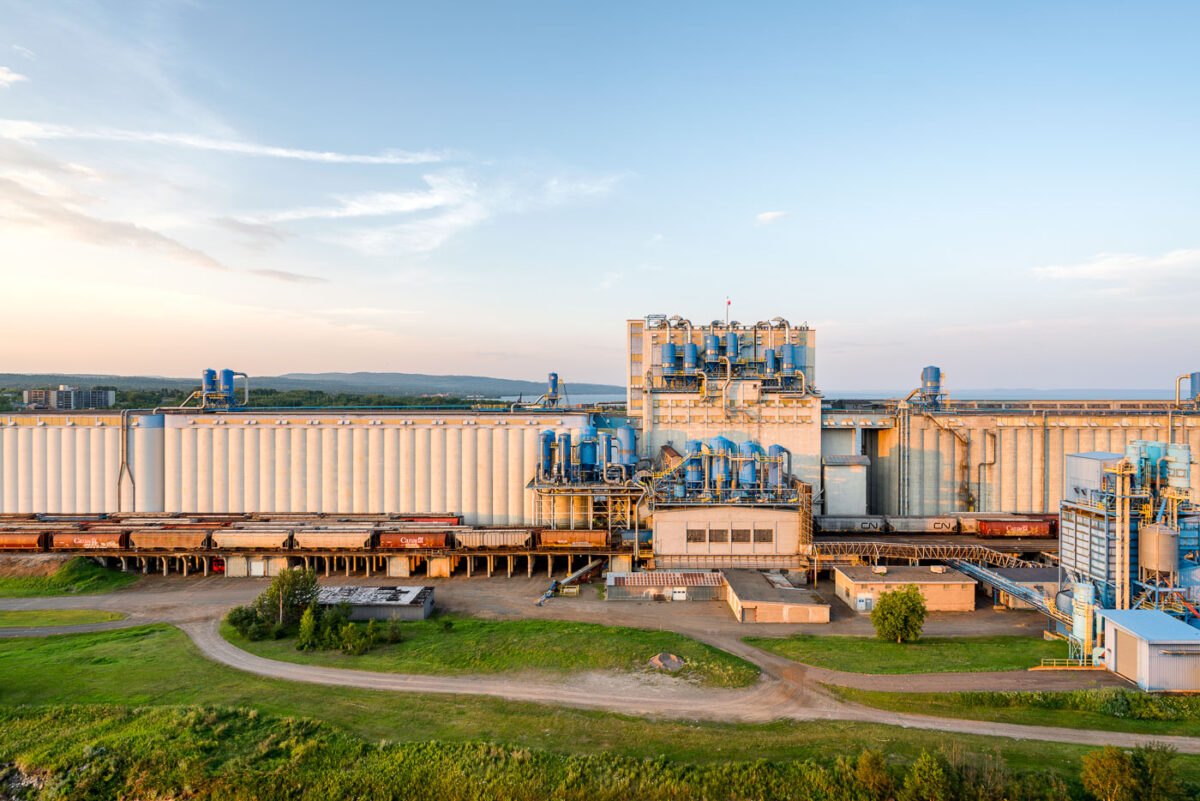
Thunder Bay Grain Elevators and CN Rail Cars
July 2017
—
Grain Elevator in Thunder Bay, Canada.
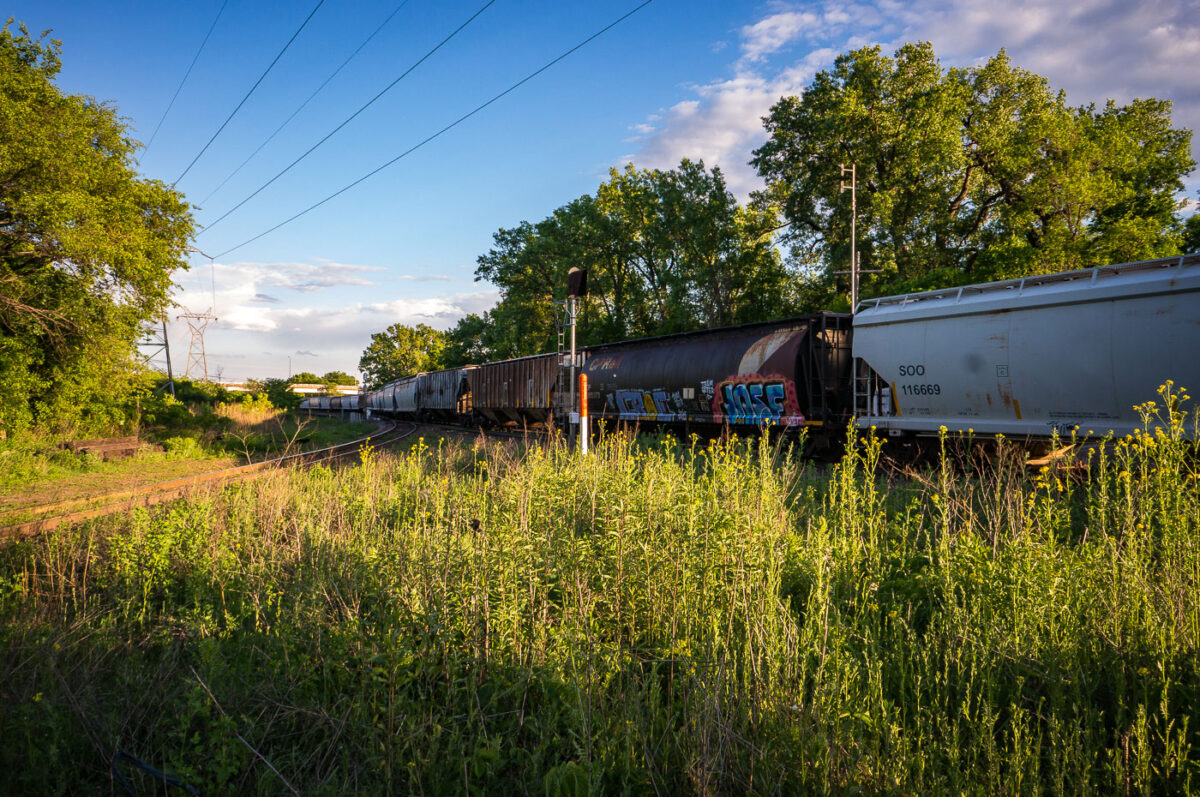
Summer Freight Train with Graffiti in St. Paul
May 2017
—
Freight trains rolling through St. Paul, MN.
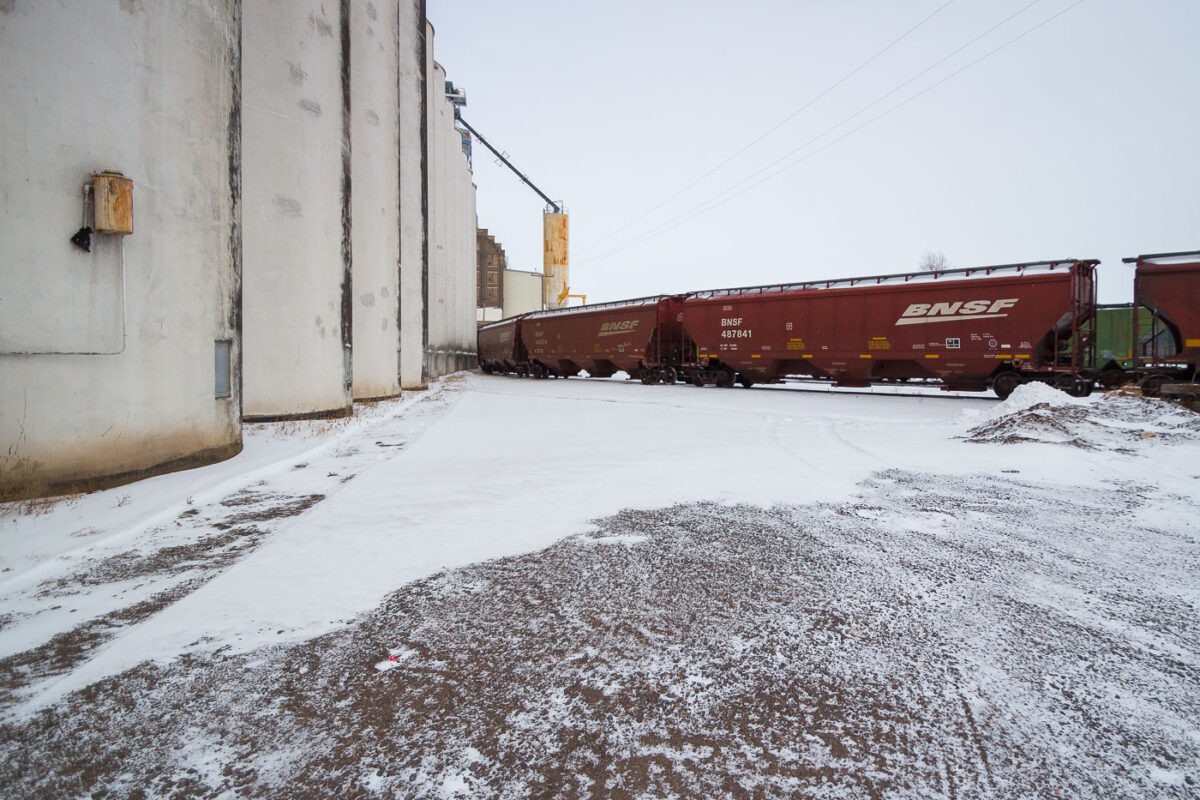
Hansen-Mueller Grain Elevator and BNSF Trains, Superior, WI
February 2015
—
Hansen-Mueller grain elevator and BNSF trains in Superior, Wisconsin.
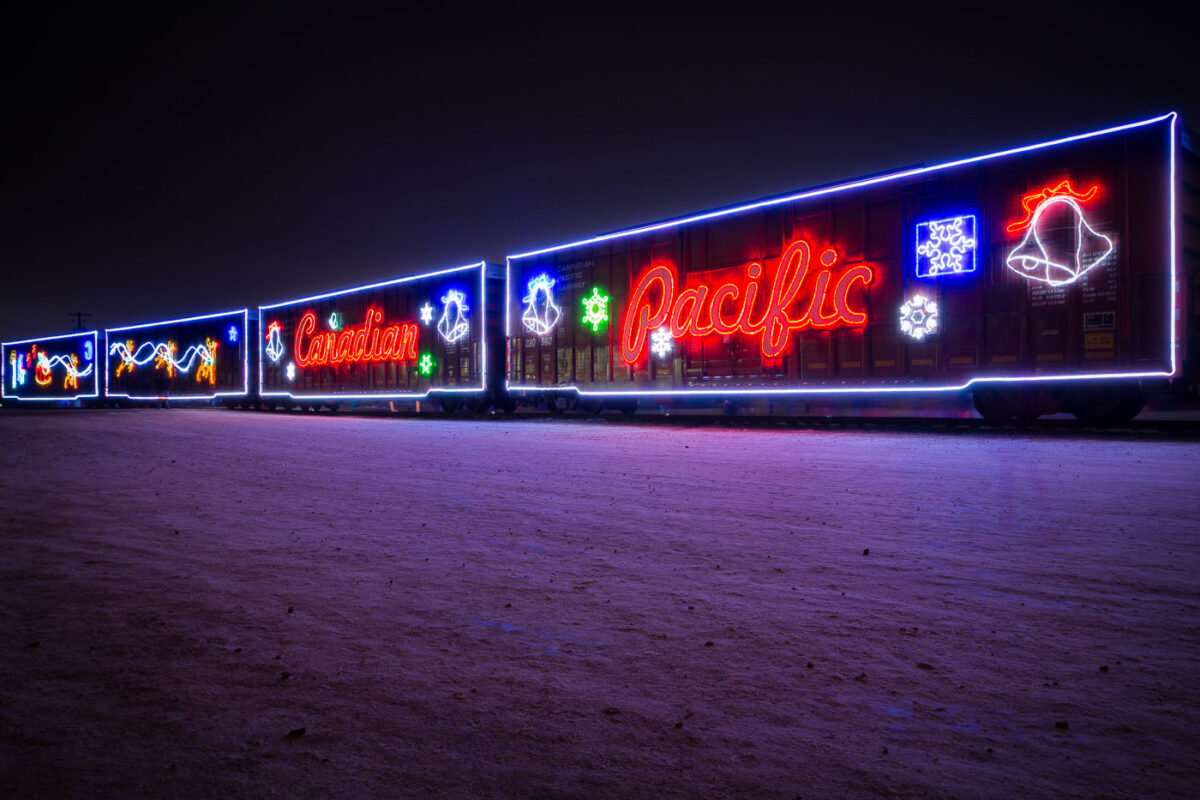
Canadian Pacific Holiday Train, Minneapolis, MN 2014
December 2014
—
The Canadian Pacific Holiday Train rolling through Minneapolis, MN.
CTA Trains at O’Hare International Airport Station, Chicago
December 2012
—
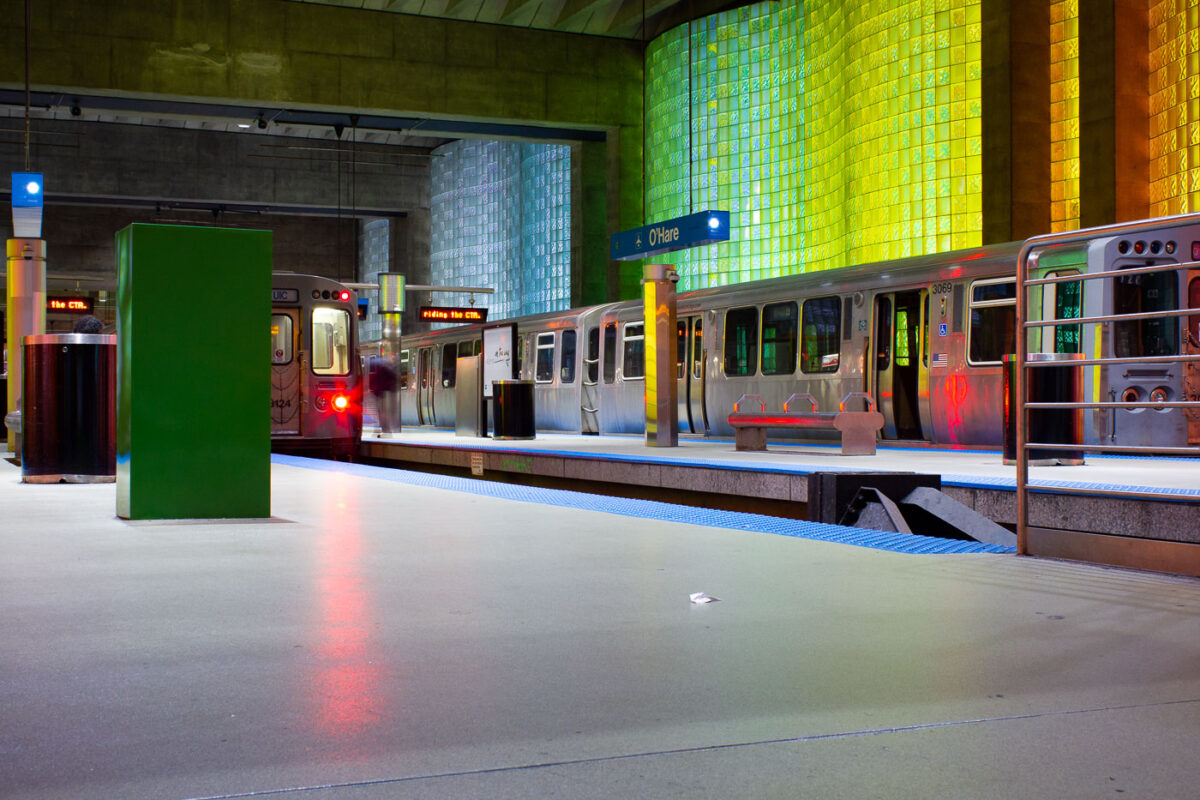
Trains at O'Hare International Airport in Chicago.
Crystal City Station Platforms and Tracks, Washington Metro
March 2012
—
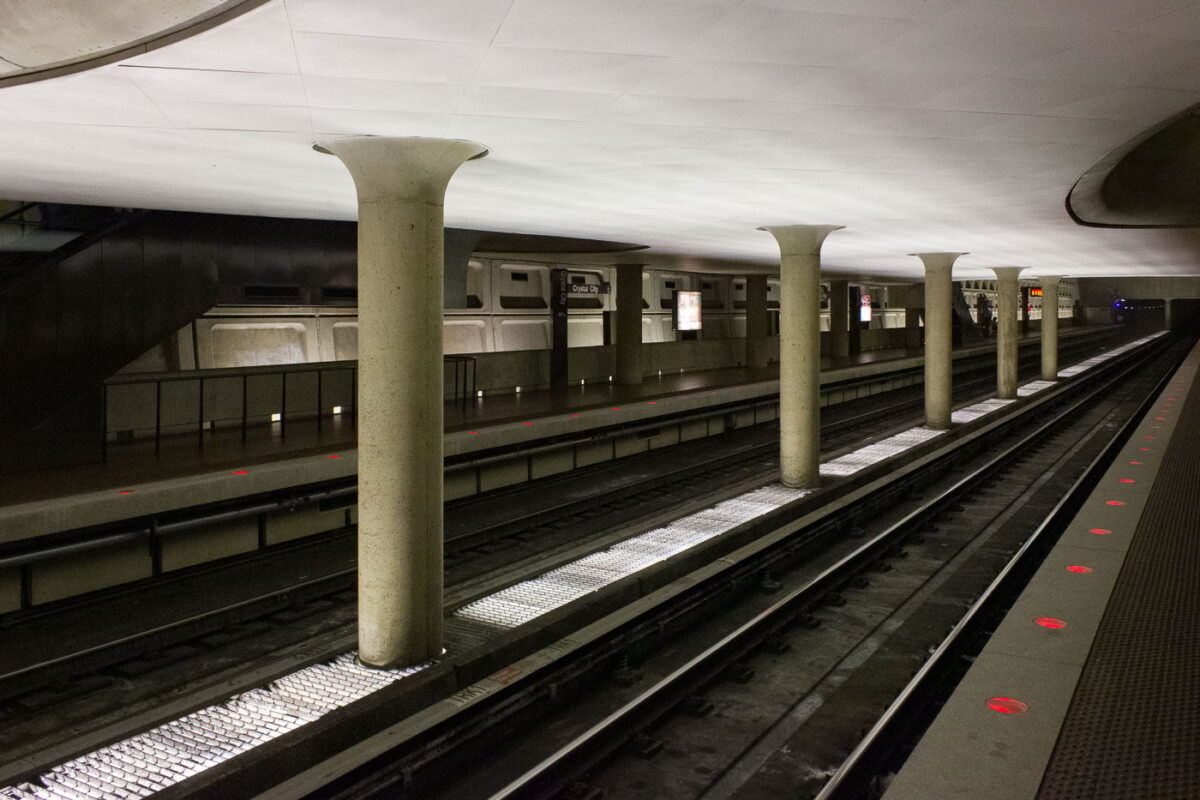
Crystal City is a side platformed Washington Metro station in the Crystal City neighborhood of Arlington, Virginia, United States. The station was opened on July 1, 1977, and is operated by the Washington Metropolitan Area Transit Authority (WMATA). Providing service for both the Blue and Yellow Lines, the station is located on 18th Street in between the Jefferson Davis Memorial Highway and South Bell Street. The station is also accessible from the underground network of shopping centers and restaurants extending beneath Crystal City.
This is the final indoor transfer point between the Blue and Yellow lines in the southbound direction. In inclement weather, commuters may prefer to transfer at Crystal City rather than at King Street–Old Town, which is outdoors.
The station is also served by the Metroway bus rapid transit line. Some Metroway buses terminate here rather than at Pentagon City station.
Source: <a href="https://en.wikipedia.org/wiki/Crystal_City_station_" rel="noreferrer nofollow">en.wikipedia.org/wiki/Crystal_City_station_</a>(Washington_Metro)
6 Train Entrance to Downtown Manhattan
September 2008
—
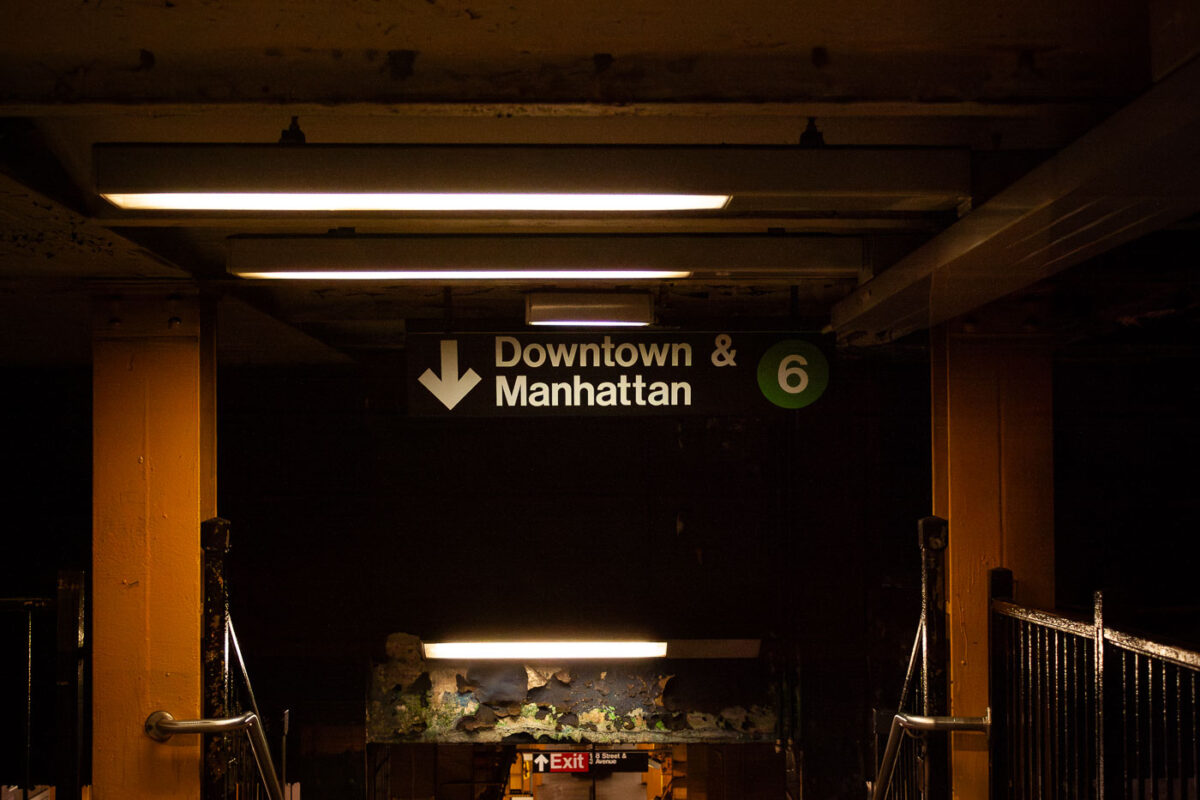
Dimly lit by overhead fluorescent lights, this photograph captures the entrance to the downtown-bound 6 train platform in the New York City Subway system. The black-and-white directional sign with the green circle route marker is part of the MTA’s standardized Helvetica signage, directing riders toward Manhattan. The scene’s warm tones from aged steel columns and peeling paint reveal the enduring character of New York’s century-old transit infrastructure — a utilitarian design that continues to serve millions of daily commuters. In the background, the red exit sign points toward street level, where the pulse of the city resumes above ground.
Lexington Ave–63rd St Station Platform, NYC Subway
September 2008
—
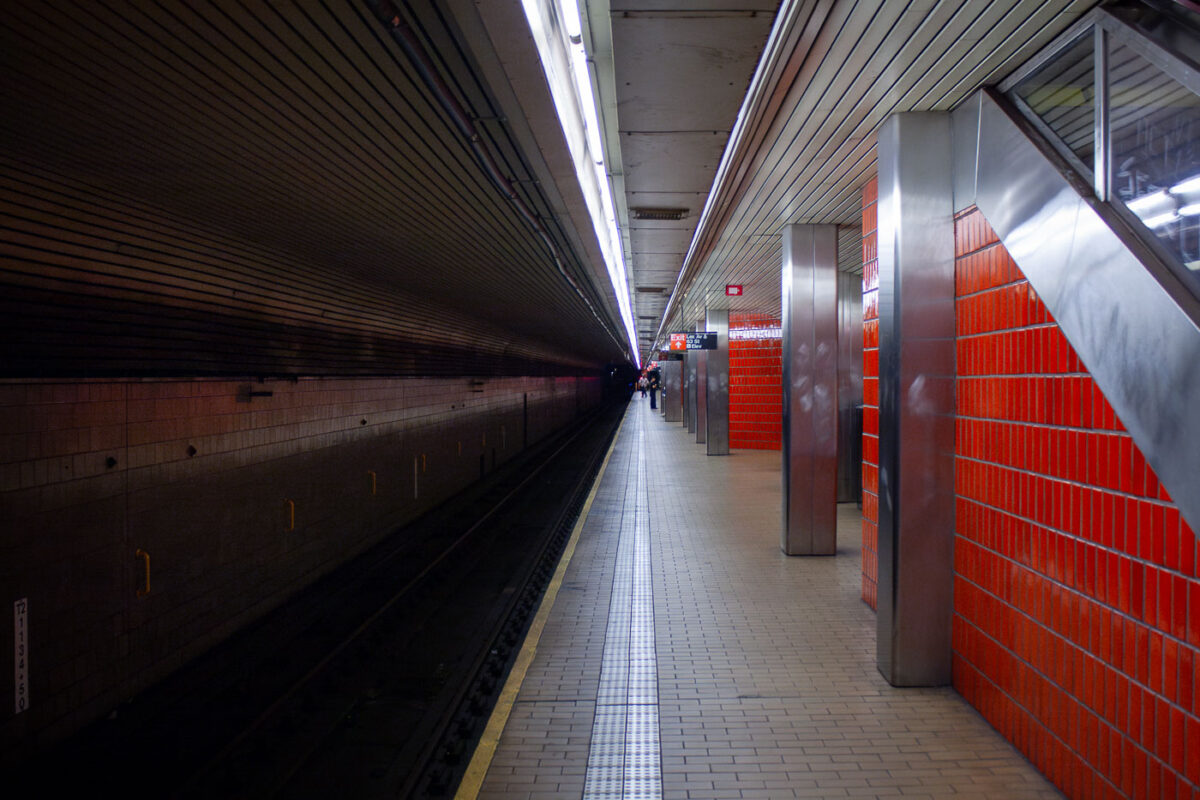
The Lexington Avenue–63rd Street station in Manhattan, part of the IND and BMT lines of the New York City Subway, is shown here in its distinctive red-tiled design. Opened in 1989 as part of the 63rd Street Tunnel project, the station serves the F and Q trains, linking the Upper East Side to Queens and the Second Avenue Subway. Its sharply linear geometry and long central platform exemplify late-20th-century transit architecture, emphasizing function and durability. The bright red glazed brick walls contrast with the metallic fixtures and fluorescent ceiling strips, creating a visual rhythm typical of New York’s underground infrastructure during the city’s major transit expansion era.
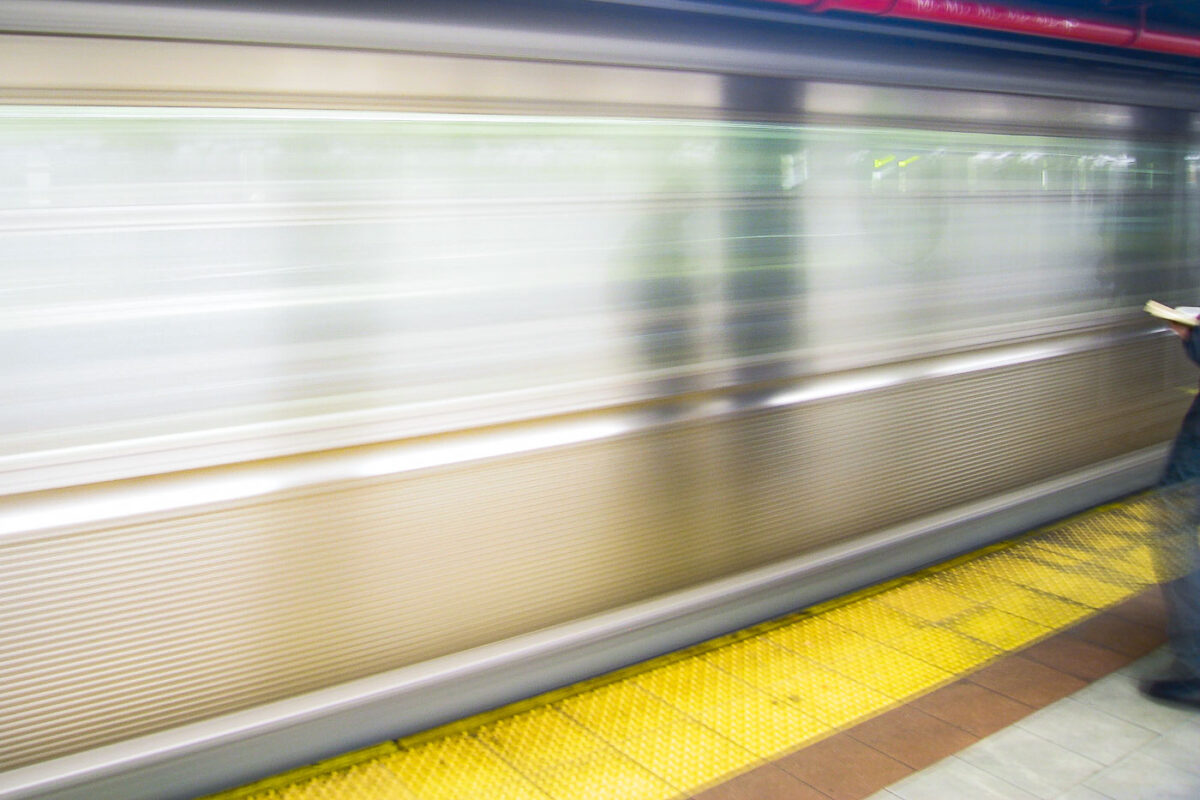
New York City Subway Train Passing Station Platform
May 2005
—
A man reads a book at a New York City subway platform in May 2005.
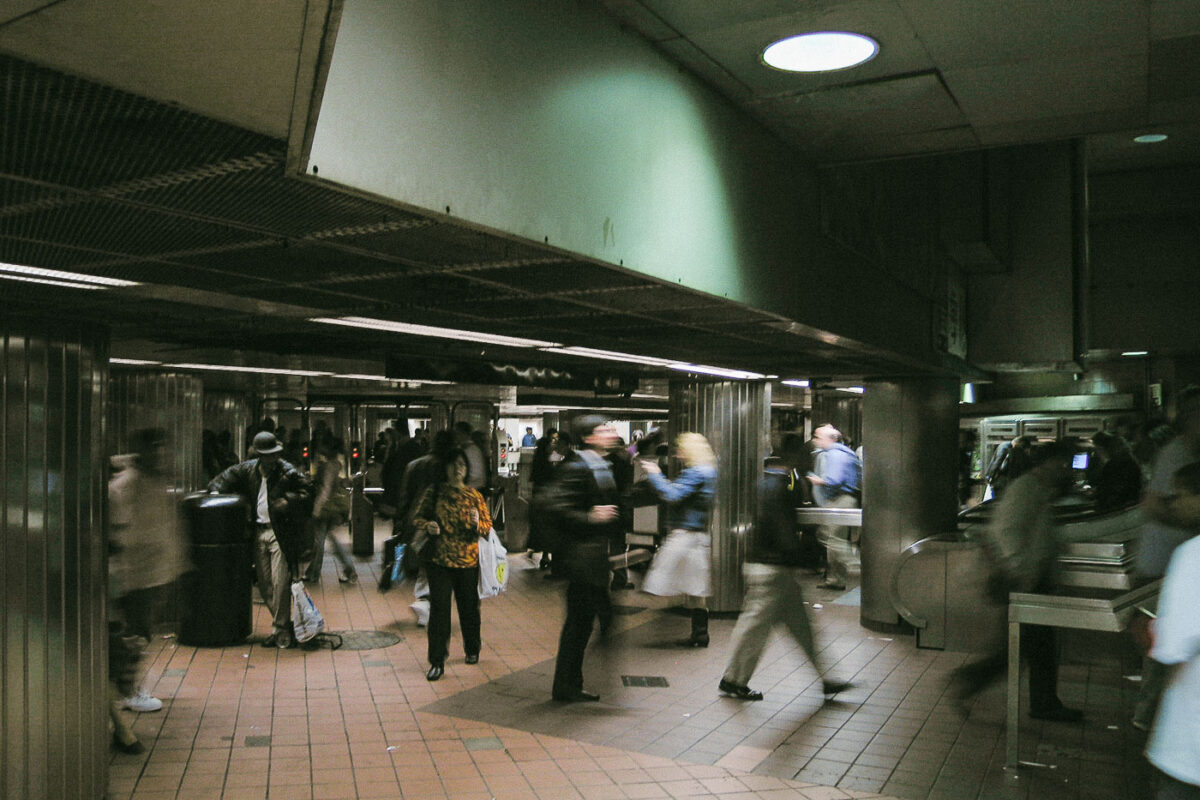
New York City Subway Station, May 2005
May 2005
—
People walking through a New York City subway station in May 2005.
Built in Minneapolis
Photographs made over time, focused on place, public life, and ongoing reporting.
Browse by location, move through long-running series, or start with recent work.