Black Lives Matter Sign, 327 1st Ave N, Minneapolis April 2022
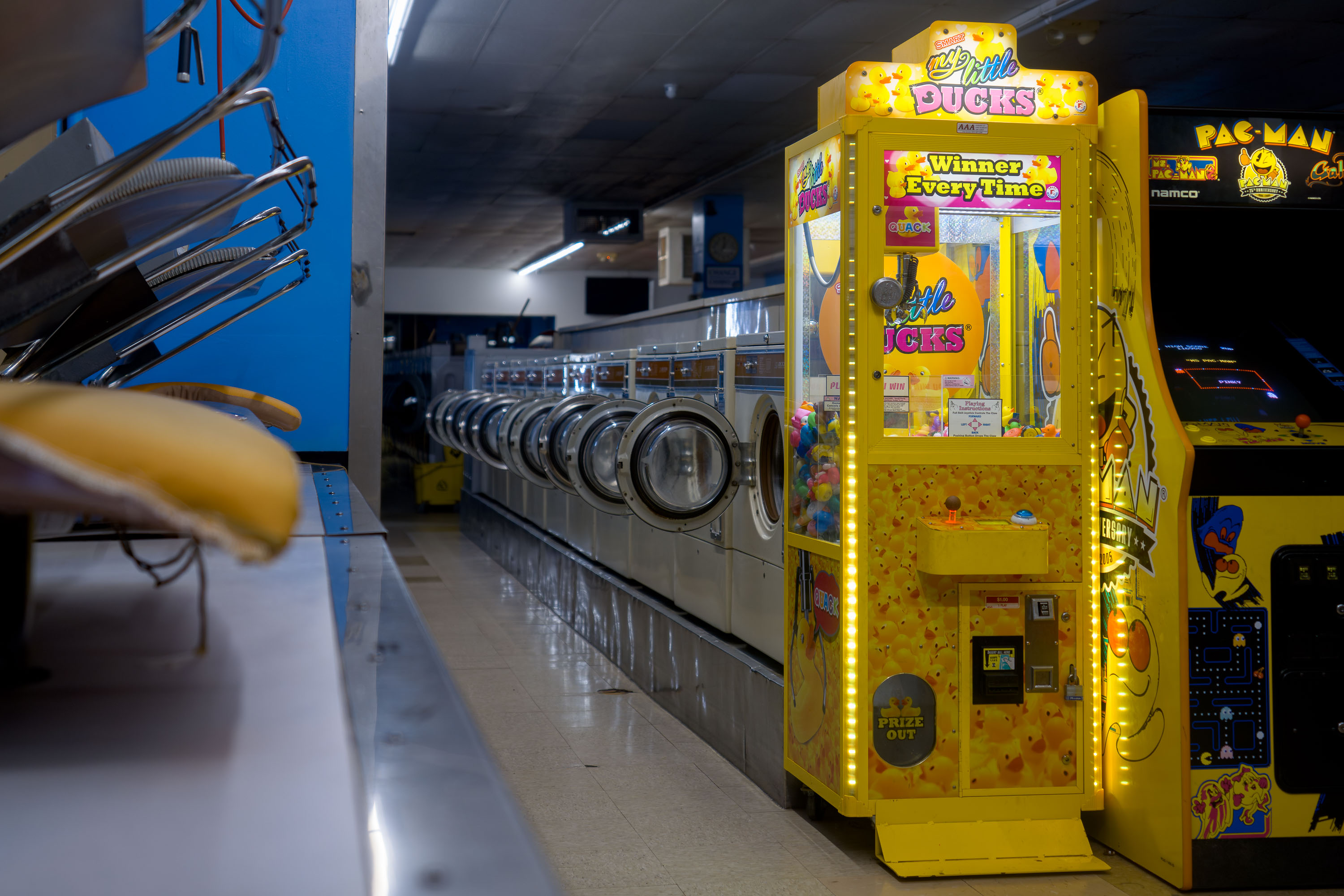
April 2022 — A "Black Lives Matter" sign covering a window in downtown Minneapolis.
Explore photos tagged Minnesota.
April 2022 — A "Black Lives Matter" sign covering a window in downtown Minneapolis.
April 2022 — Dulono's Pizza in downtown Minneapolis
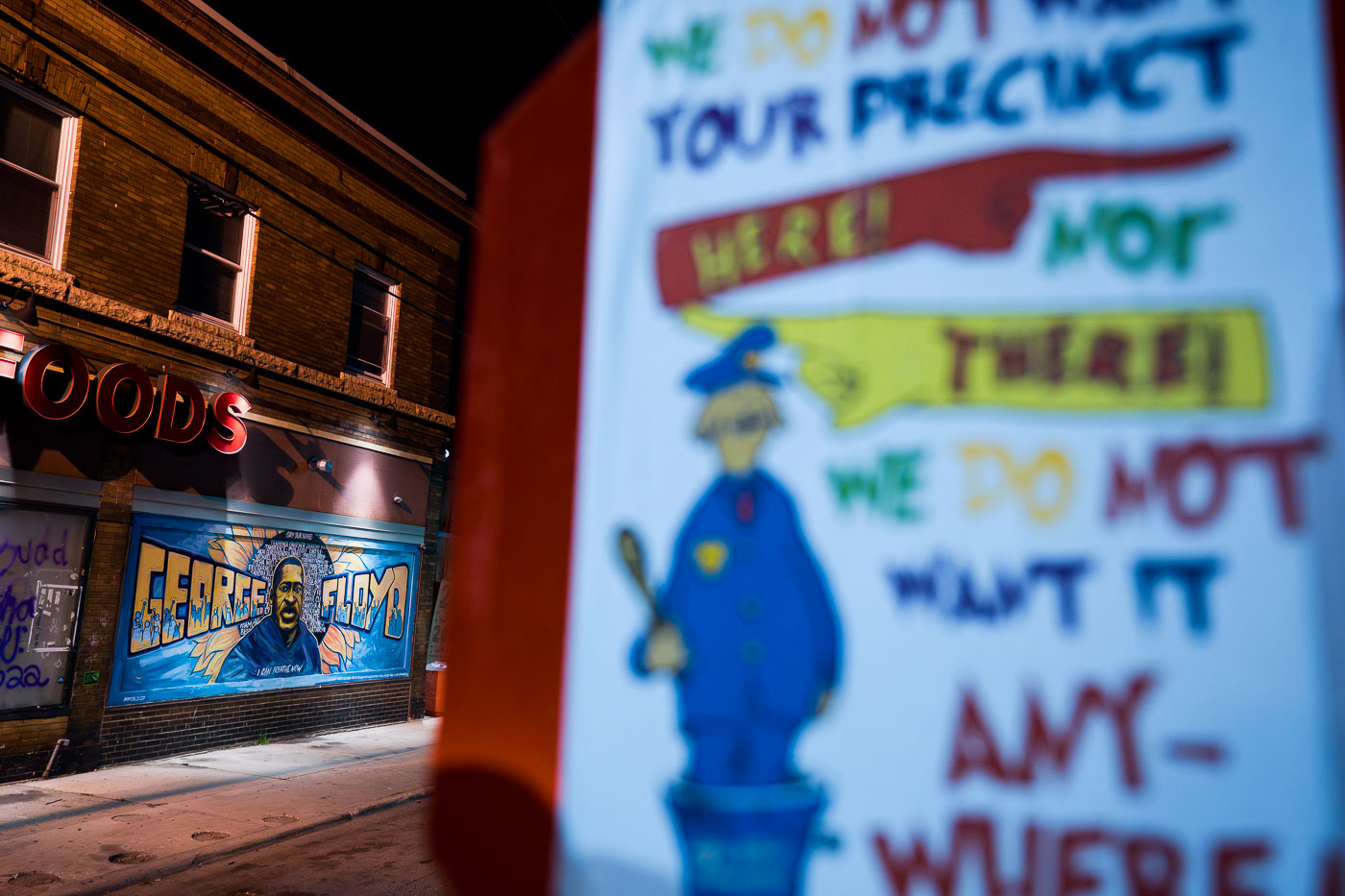
April 2022 — A new housing development begins on the site of the burned O'Reilly Auto Parts store.
April 2022 — Comments left behind on feedback boards at an event held by the City of Minneapolis "38th and Chicago Re-envisioned".
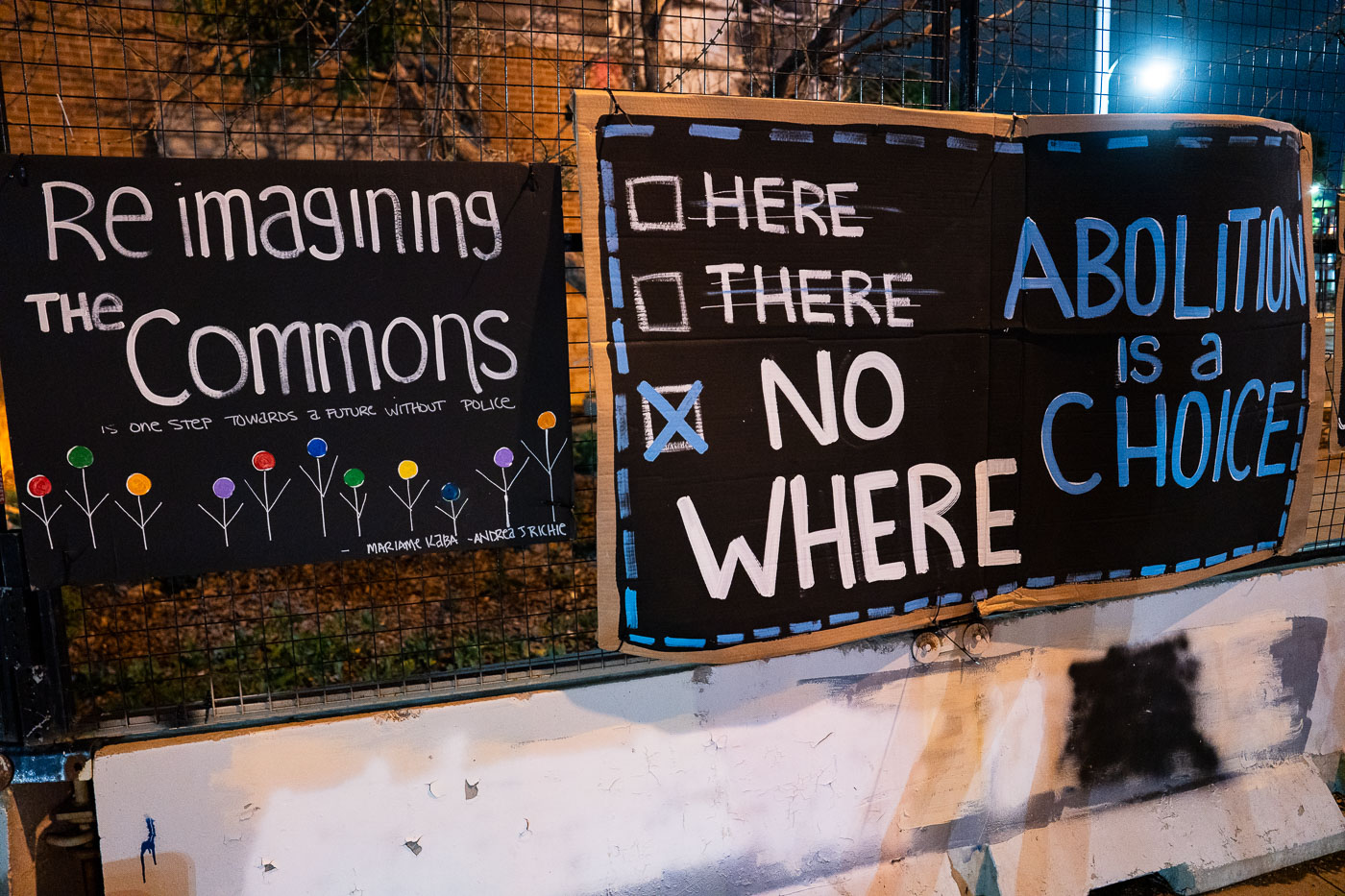
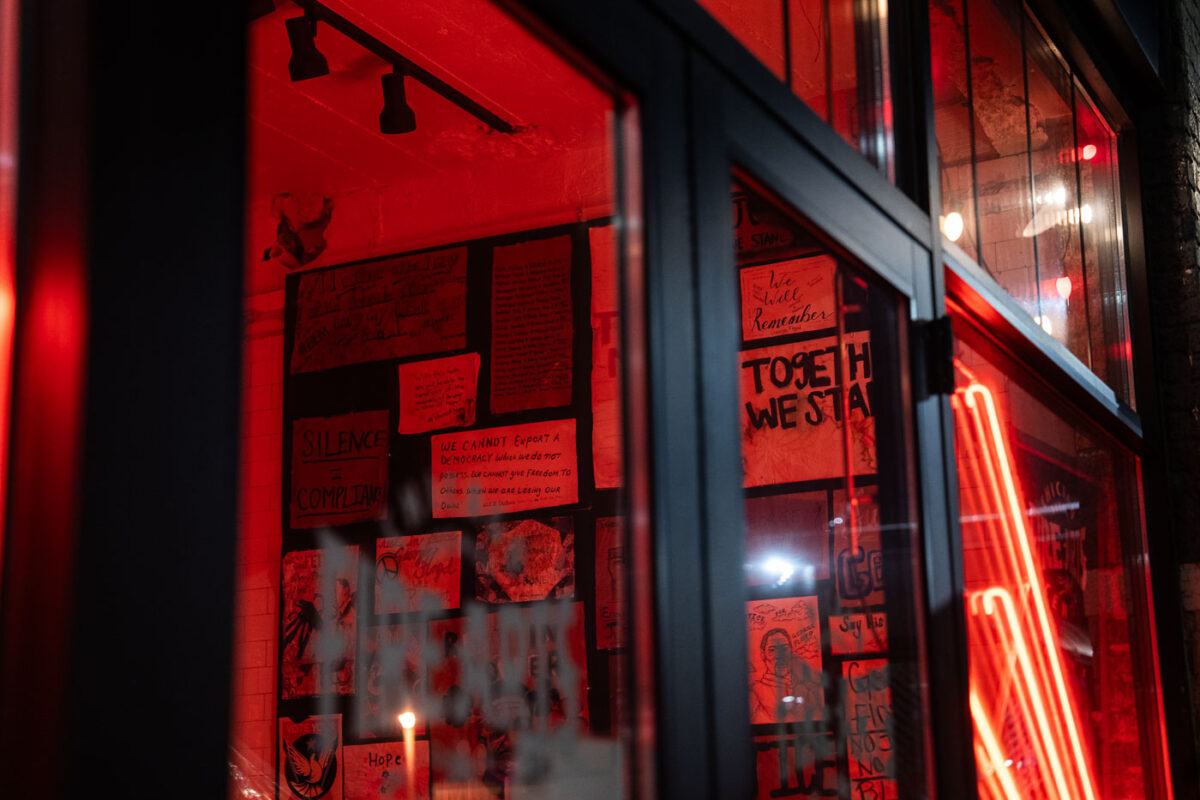
April 2022 — Together / apART
April 2022 — 38th Street in George Floyd Square.
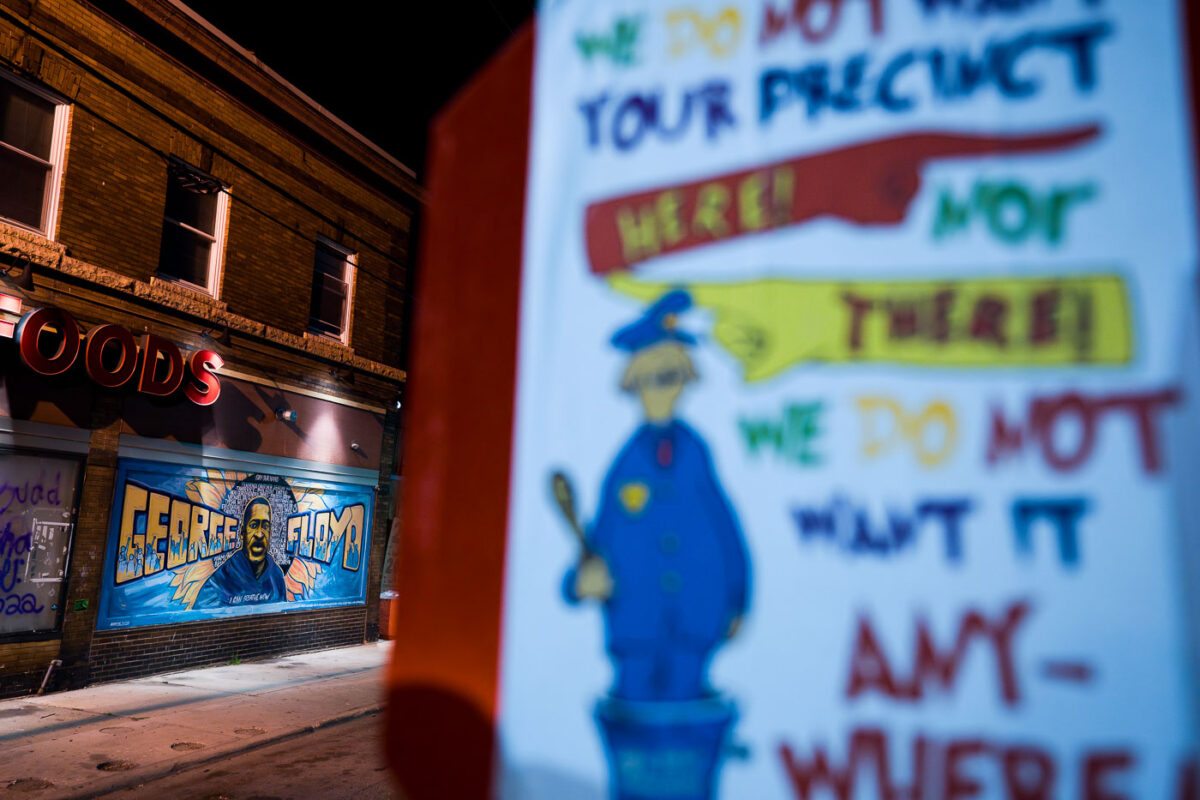
April 2022 — A sign placed by city regarding their "38th & Chicago Re-envisioned" plan. The city would hold community sessions to gather feedback in the days that followed.
April 2022 — A flyer reading "Sweeps are police brutality" "We support and defend our neighbors in tents" found in South Minneapolis.
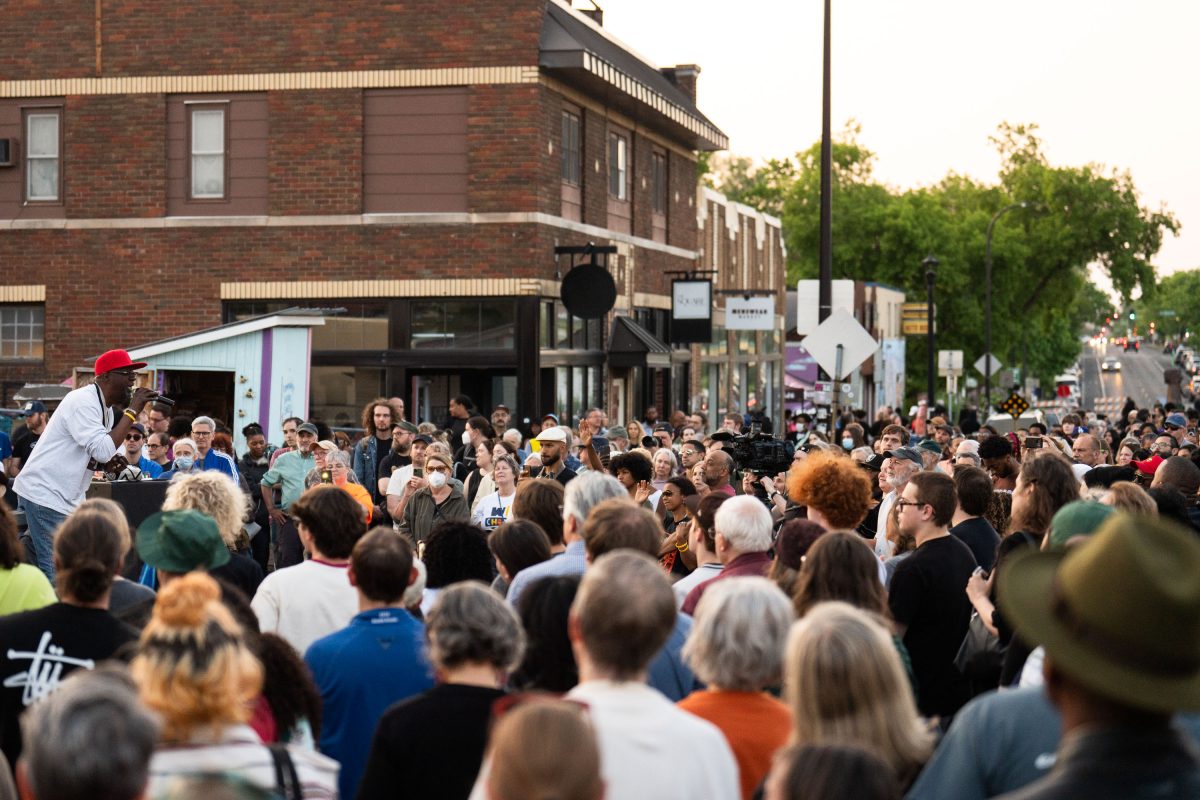
April 2022 — New event space titled “The Square” opening in George Floyd Square. “The space will host various community events including our weekly marketplace, The Black Exchange.”
April 2022 — Du Nord, South Minneapolis
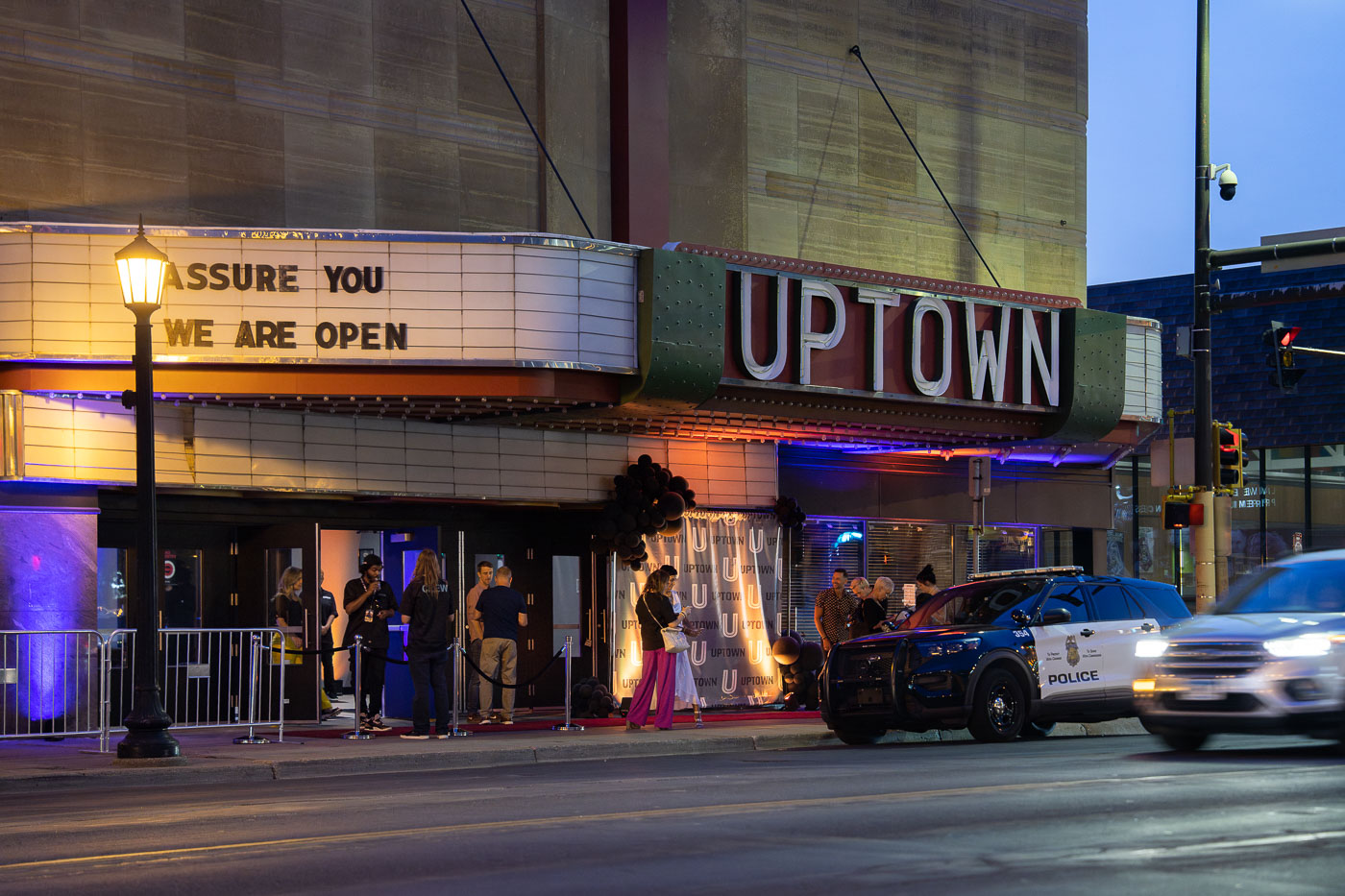
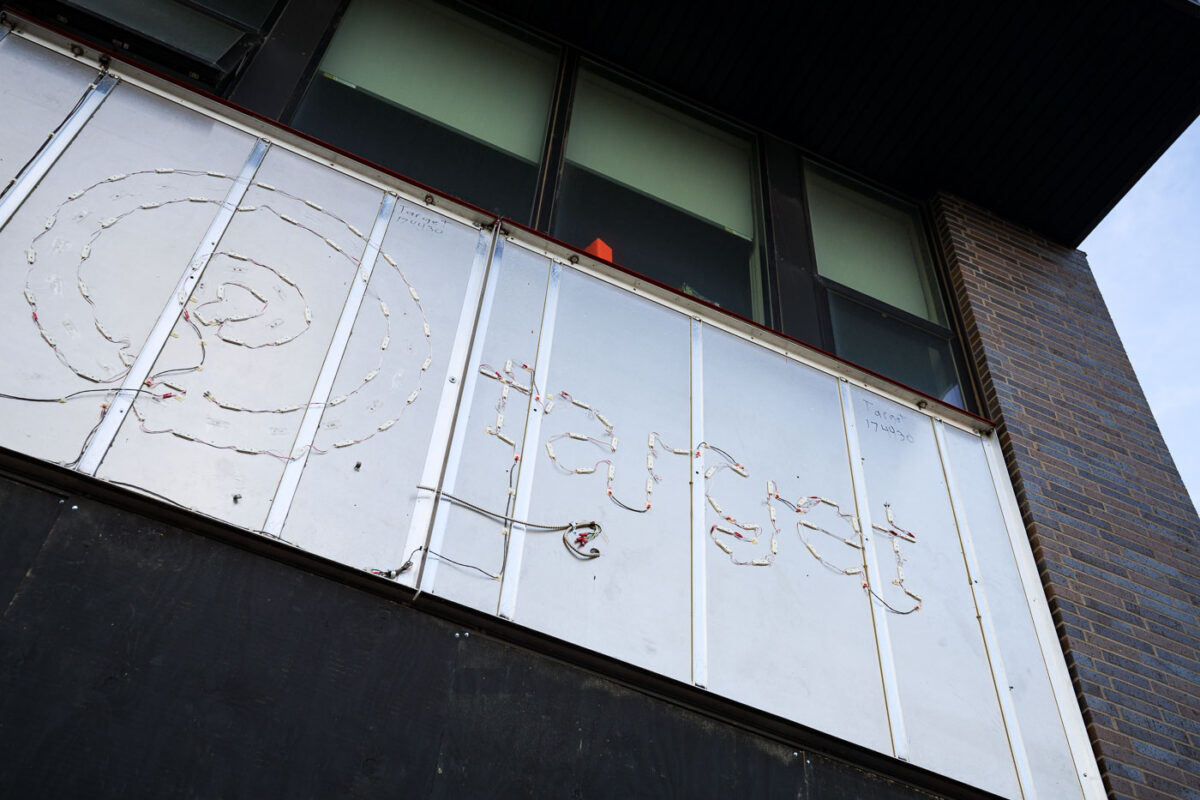
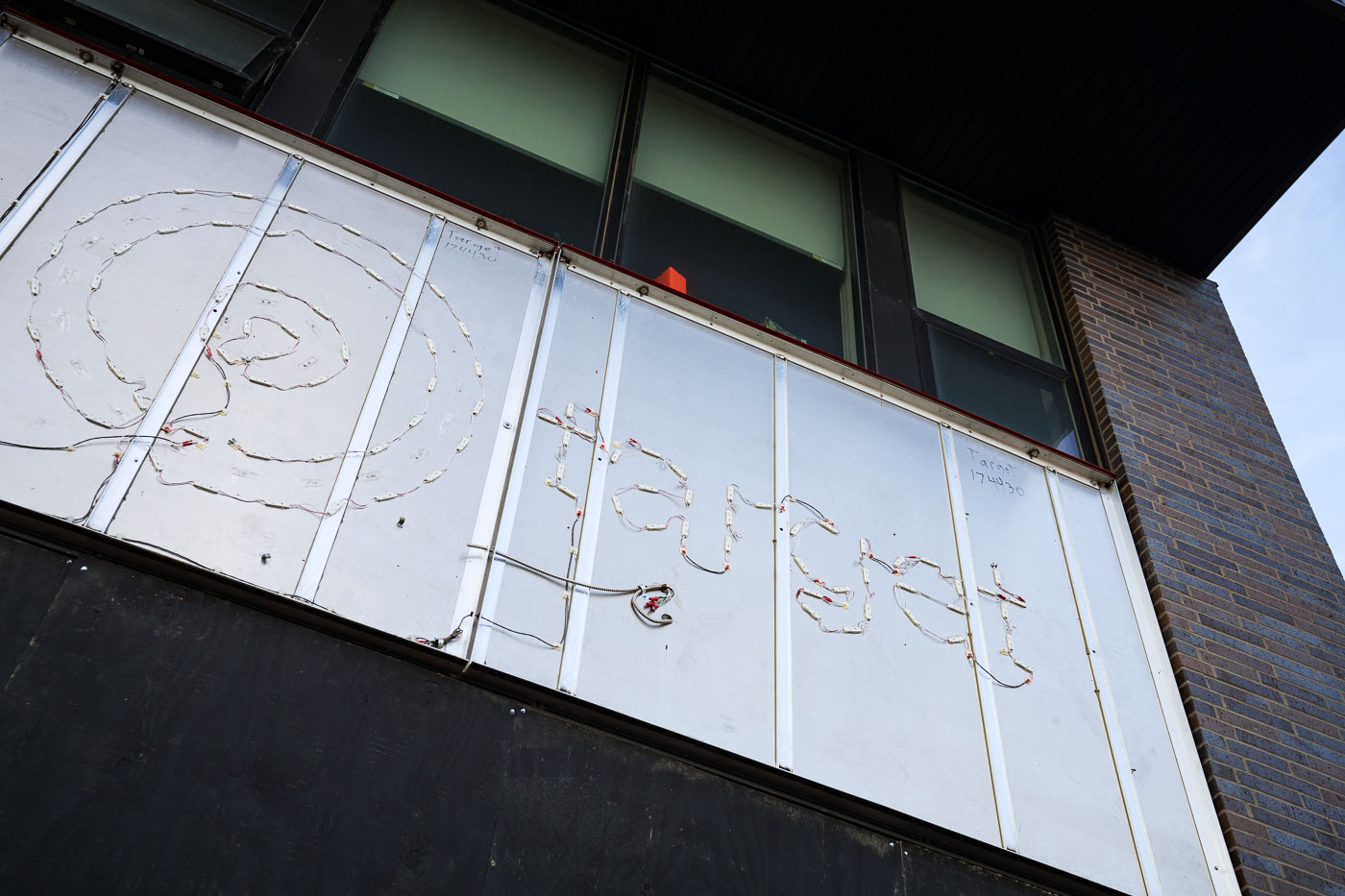
April 2022 — The Target store in south Minneapolis. The store was across from the Minneapolis police third precinct and was heavily damaged during unrest. The store has since re-opened.
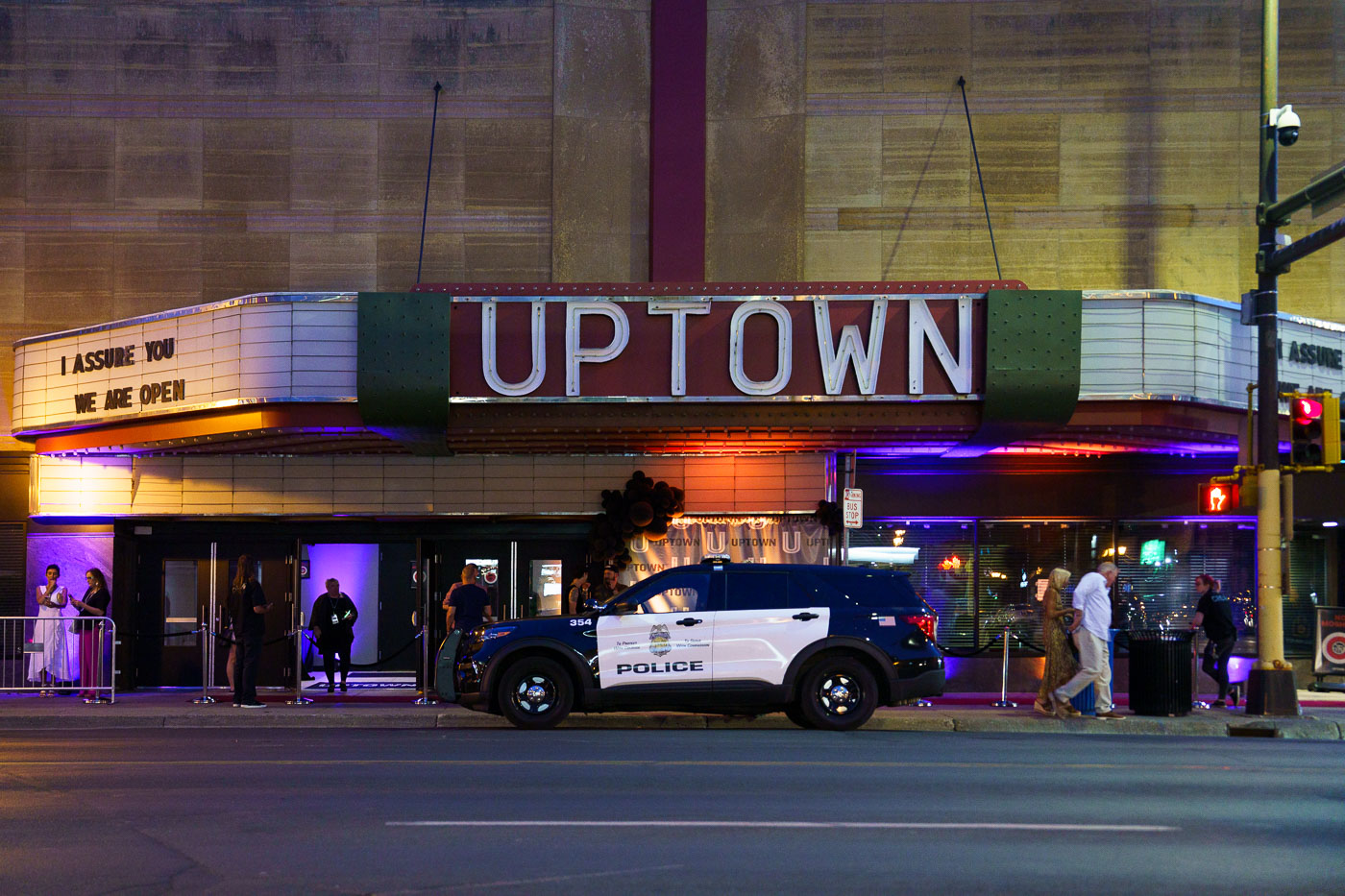
April 2022 — The Everlake apartment building. The then under construction building was burned down during unrest and has since been rebuilt and opened.
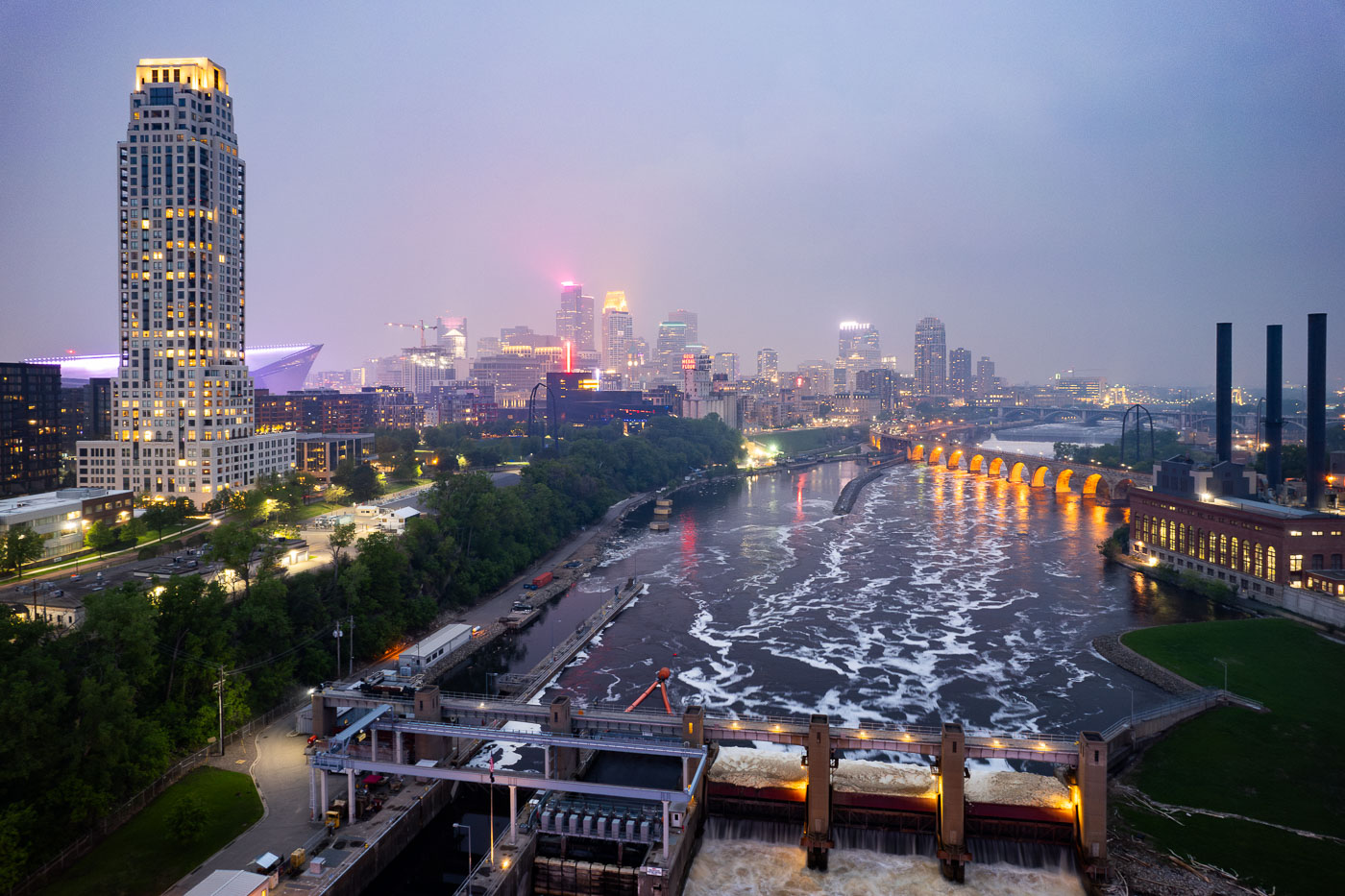
April 2022 — The former Pillsbury flour mills as seen from downtown Minneapolis.
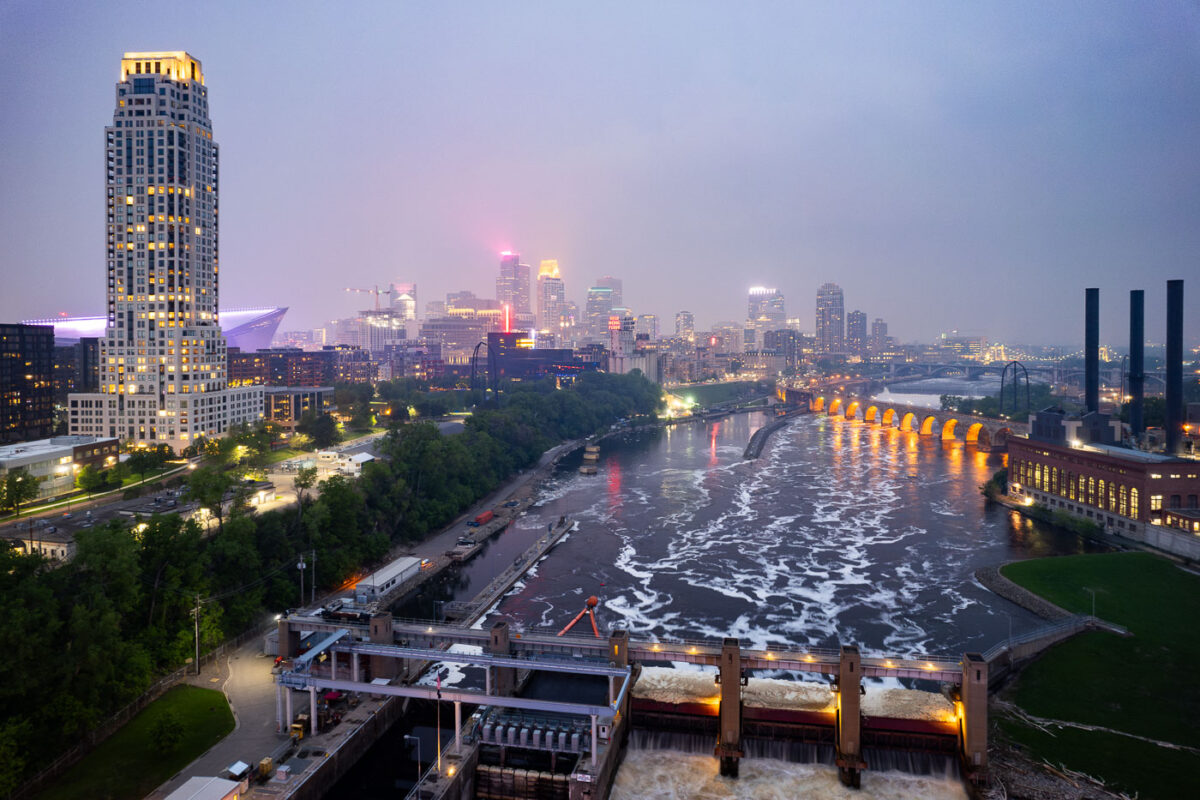
April 2022 — The Stone Arch Bridge in downtown Minneapolis.
April 2022 — Protesters downtown after officials announced there would be no charges in the shooting death of Amir Locke by the Minneapolis police.
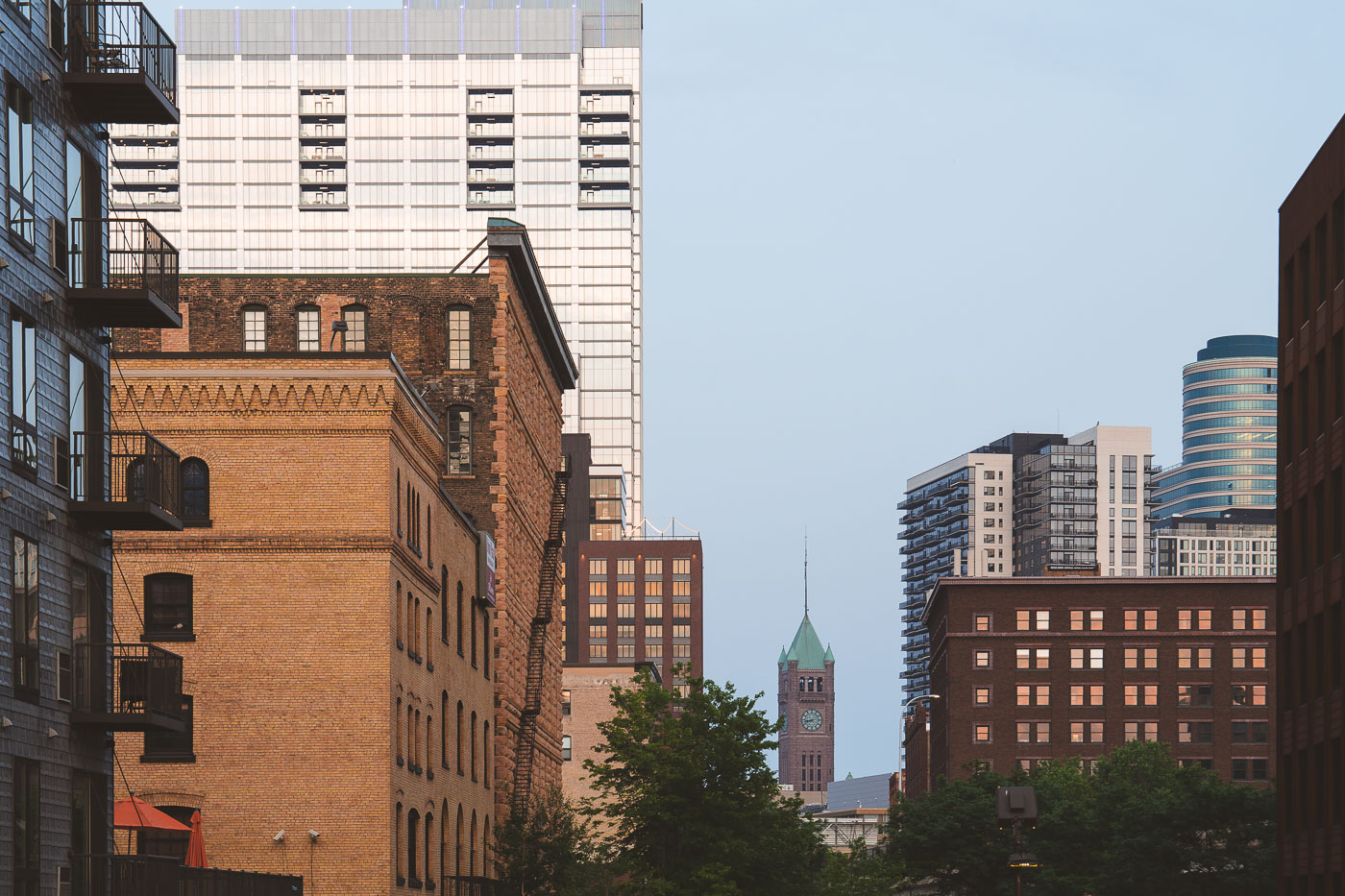
April 2022 — Protesters march through downtown Minneapolis 2 days after authorities announce the officers involved in the February 2nd shooting death of Amir Locke won't be charged.

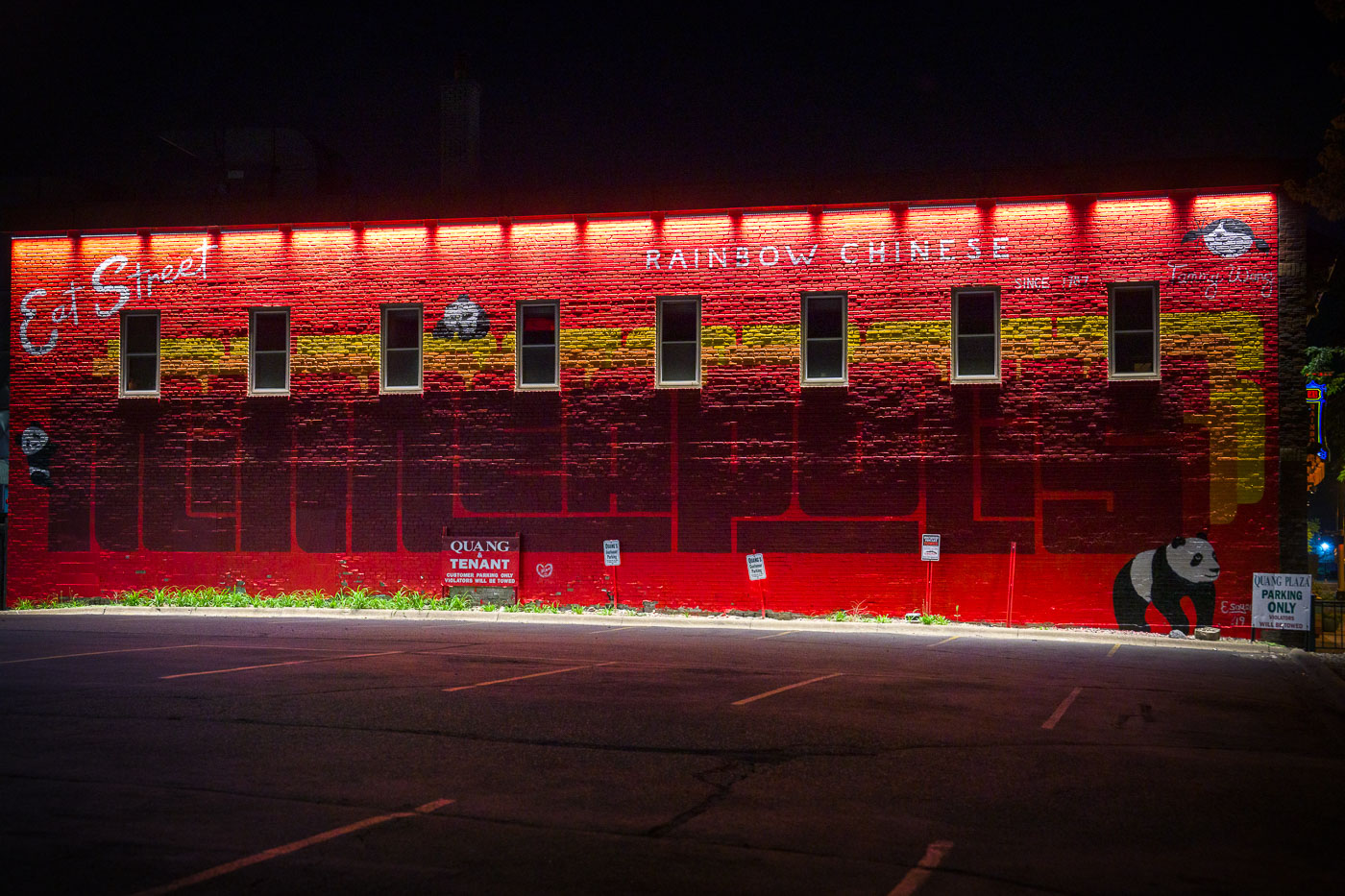
April 2022 — Lynlake Brewery at Lyndale Avenue in Uptown Minneapolis.
April 2022 — Up Down arcade bar on Lyndale Ave in Minneapolis
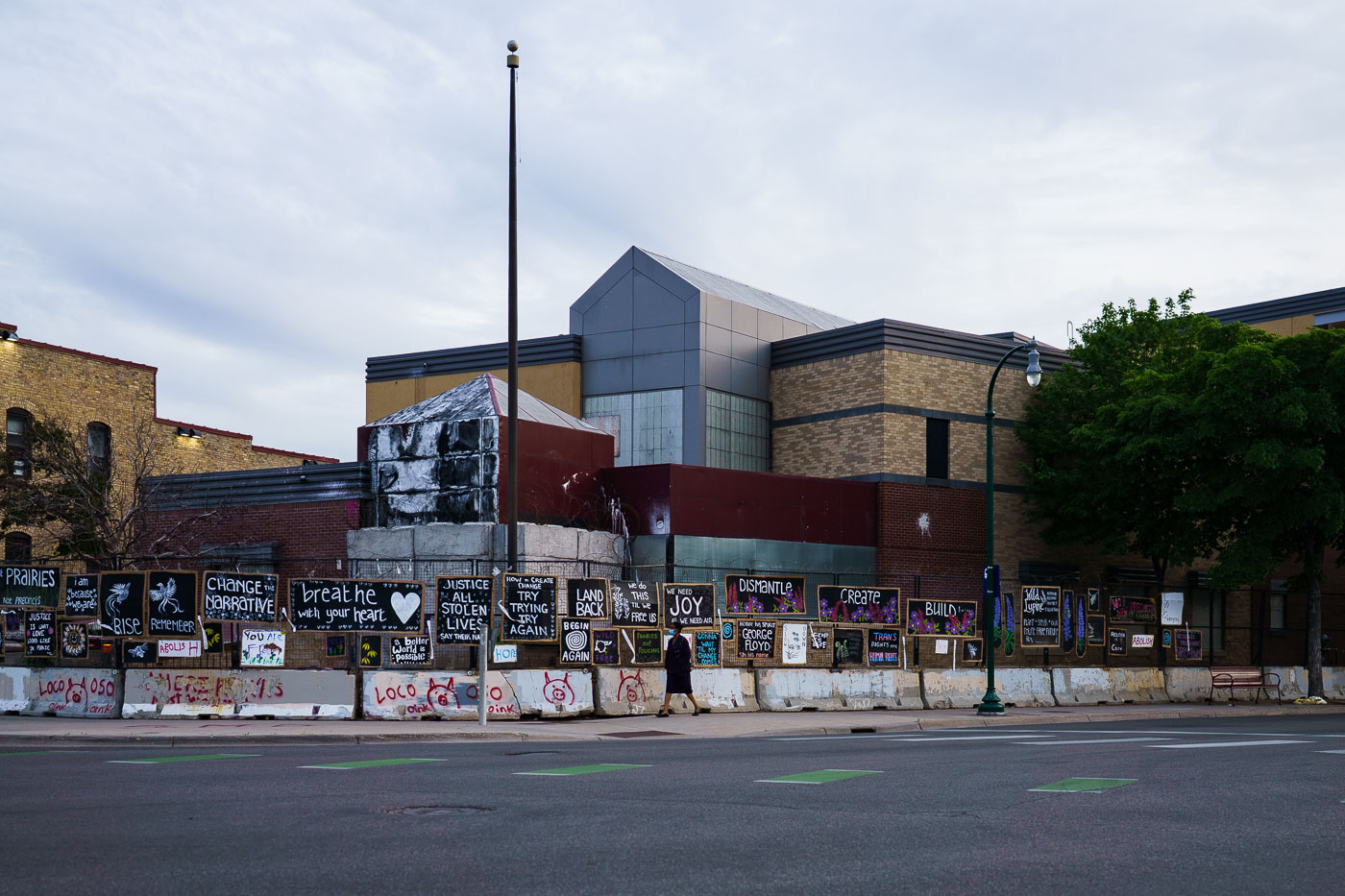
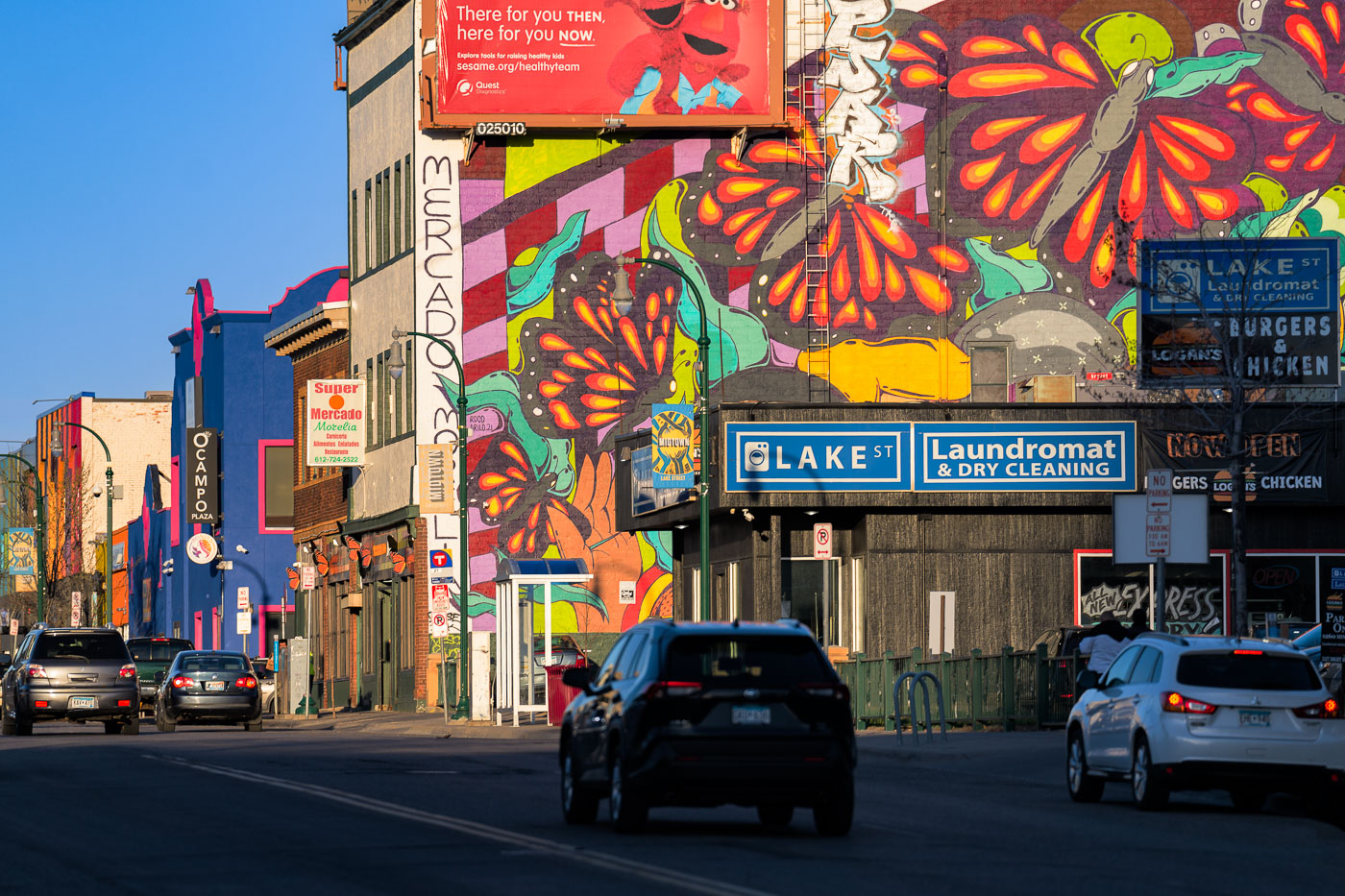
April 2022 — Pineda Tacos on Lake Street in Minneapolis
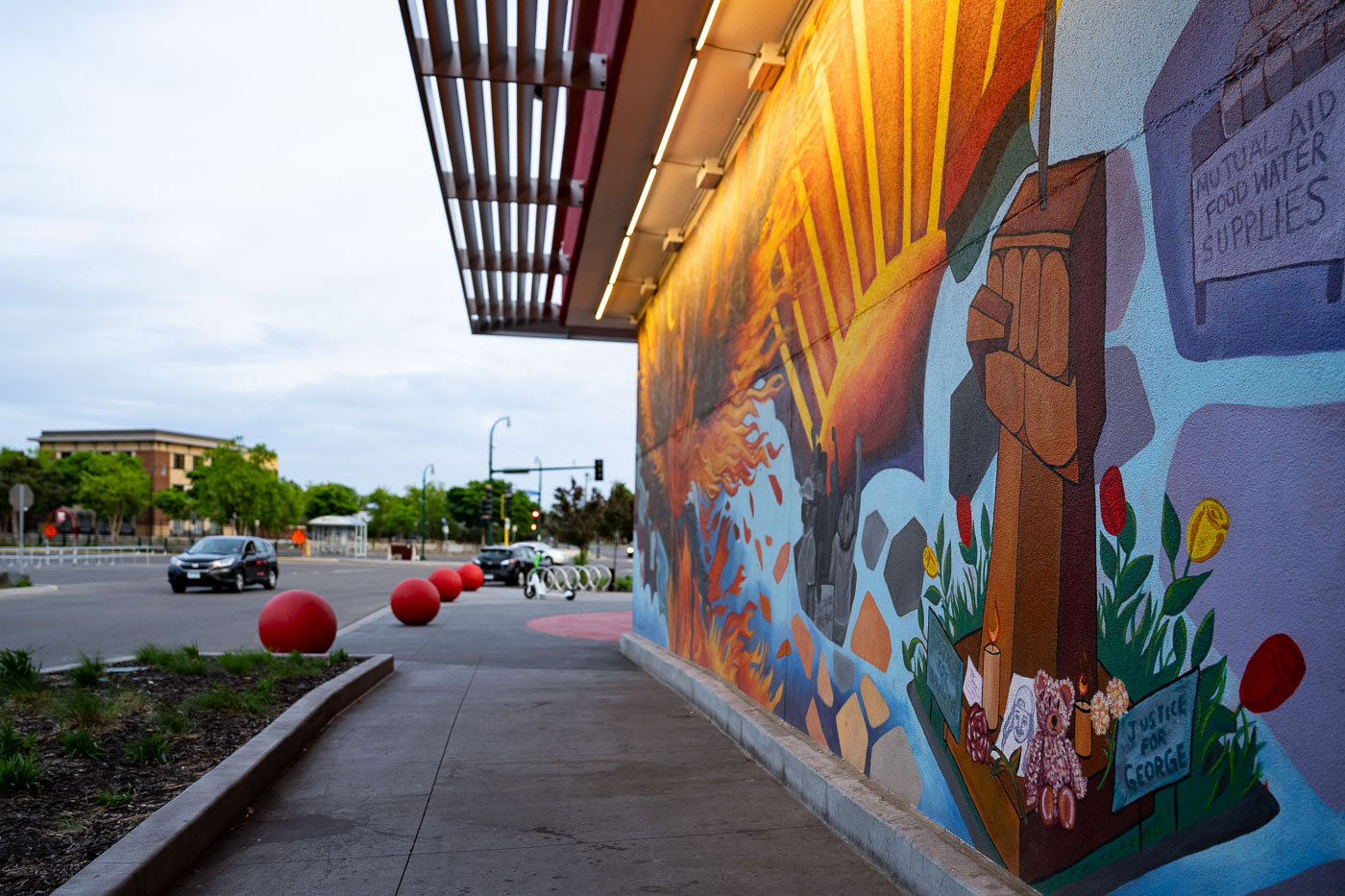
April 2022 — Yusef Center on Lake Street in Minneapolis.
April 2022 — A flyer seen on a street sign that reads "Together we can block encampment evictions" "Protest your neighbors".
April 2022 — Activists speak outside the courthouse following the announcement of no charges against officers involved in the February 2nd shooting death of Amir Locke.
April 2022 — A map with pins for the visitors of George Floyd Square.
April 2022 — A memorial for Imez Wright who was fatally shot on March 6, 2021.
April 2022 — A sign reading "Historic George Floyd Memorial" at George Floyd Square.
April 2022 — A storefront in South Minneapolis with "End Racism" in the window.
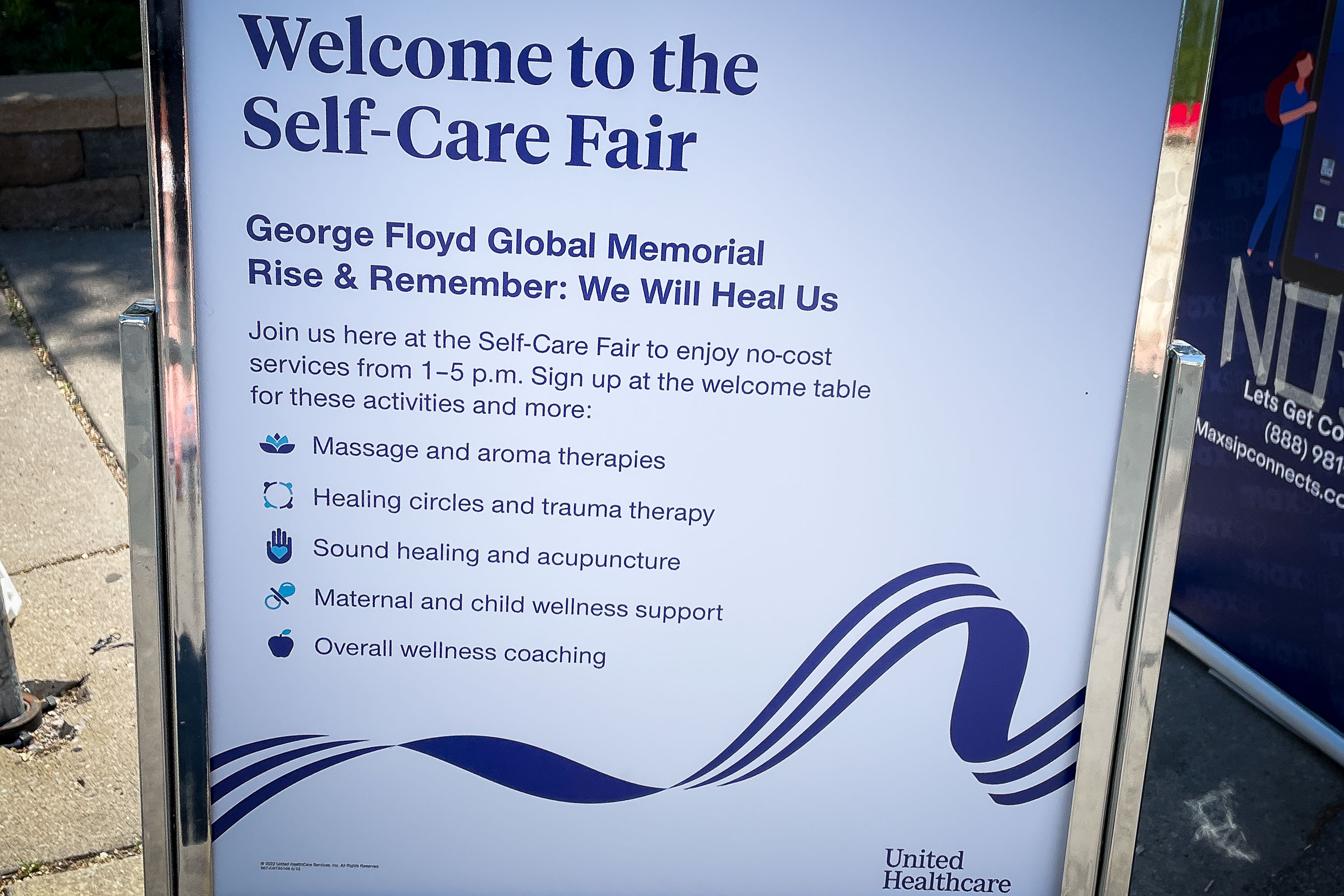
April 2022 — A "Vote Sheila" mayor flyer hanging in South Minneapolis.
April 2022 — Metro Transit bus outside of Brit's Pub on Nicollet Mall in downtown Minneapolis.
April 2022 — Stairs being removed near the Stone Arch Bridge.
April 2022 — Riverview Theatre in Minneapolis.
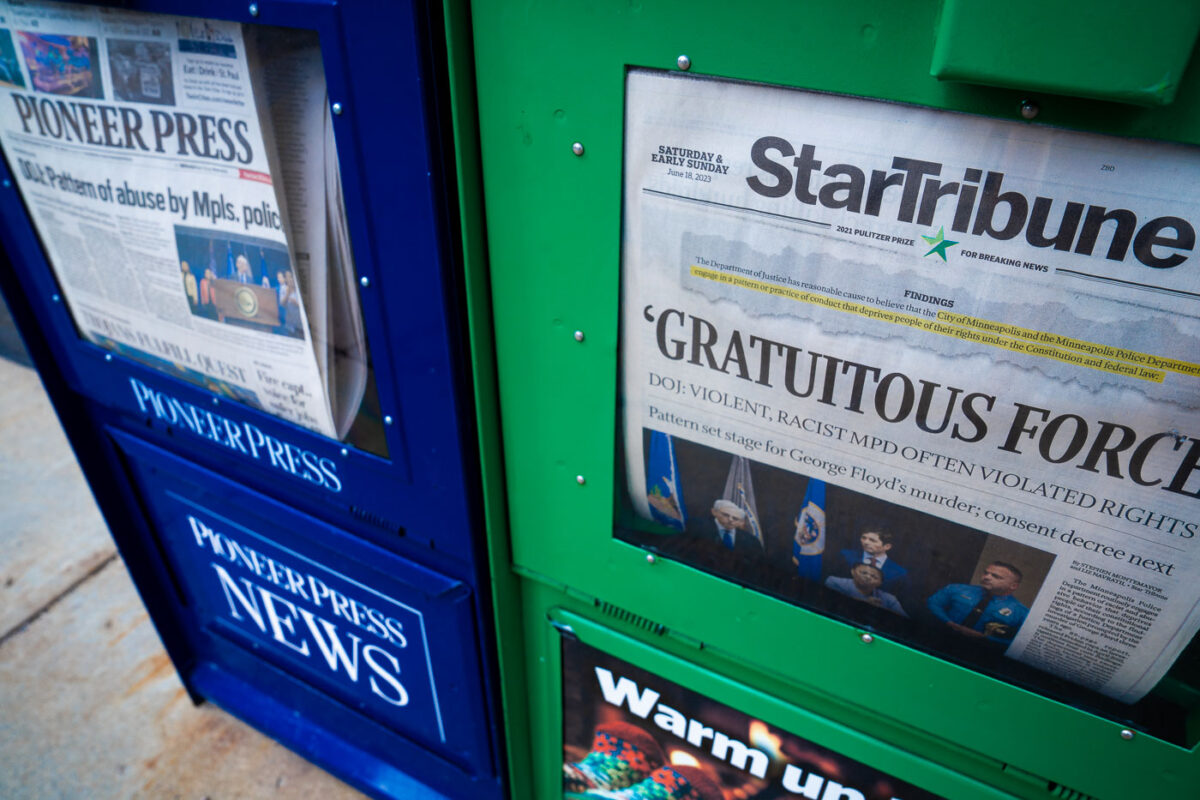
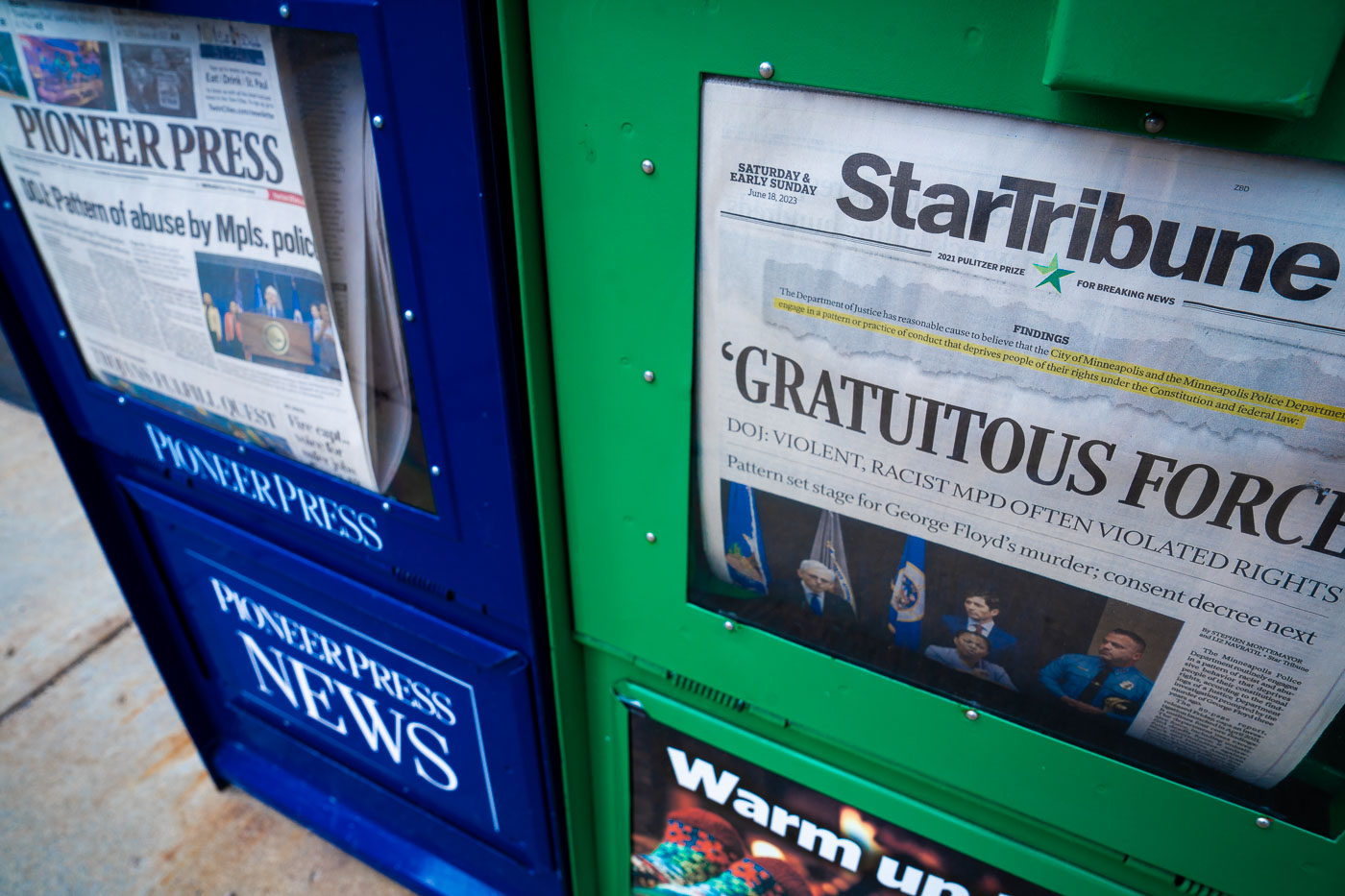
April 2022 — A news rack in South Minneapolis. Star Tribune headline "They must pick: Cop or doctor?"
March 2022 — Cowboy Slim's and Williams Uptown are illuminated at night on the corner of Hennepin Avenue and Lagoon Avenue in Minneapolis's Uptown neighborhood. Cowboy Slim's, a bar and saloon, features prominent neon signage, while Williams Uptown, a food and drink establishment, is lit by its facade. This corner has long served as a commercial and entertainment hub within Uptown, known for its vibrant nightlife. The businesses at this location contribute to the area's reputation as a popular destination for dining and socializing.
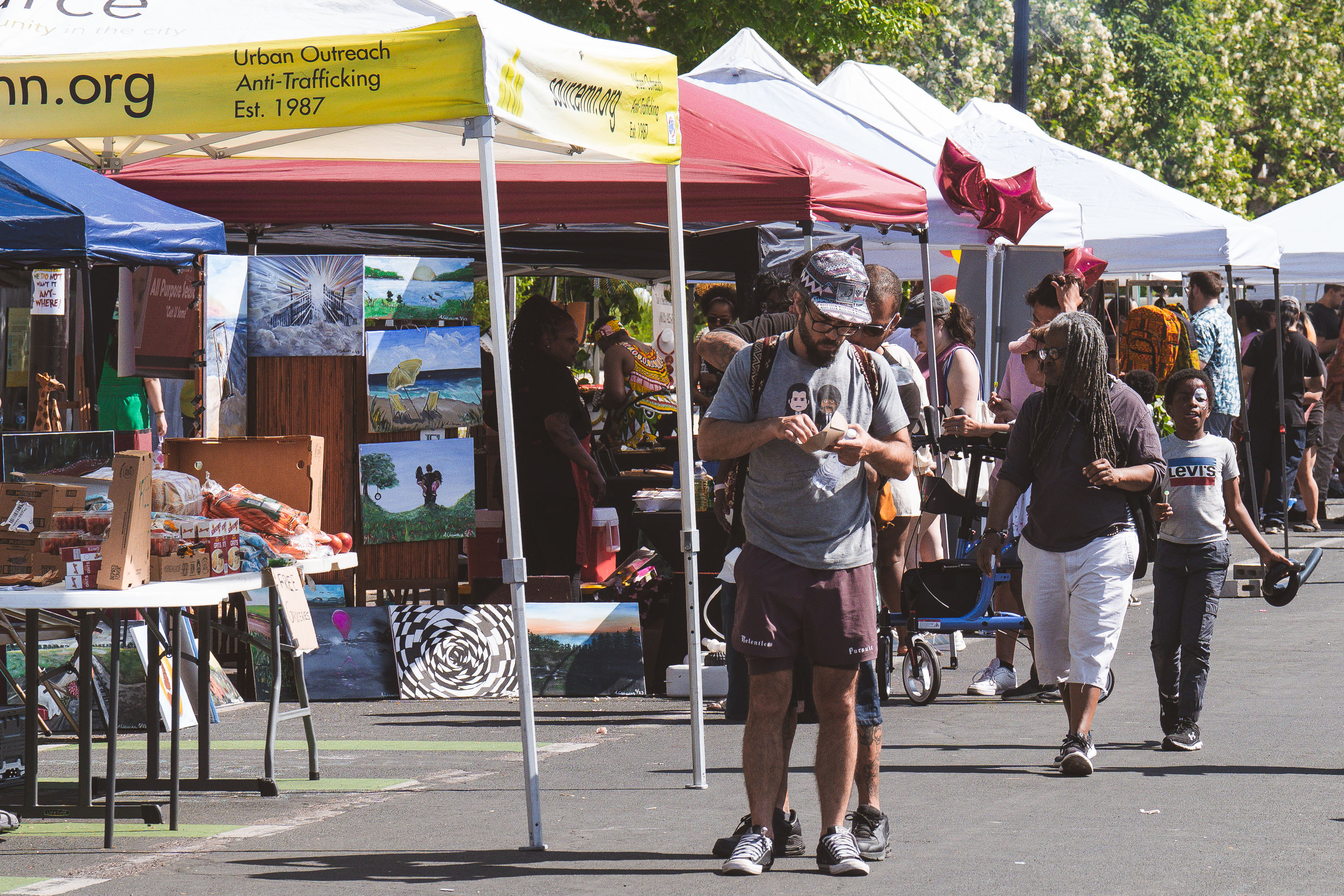
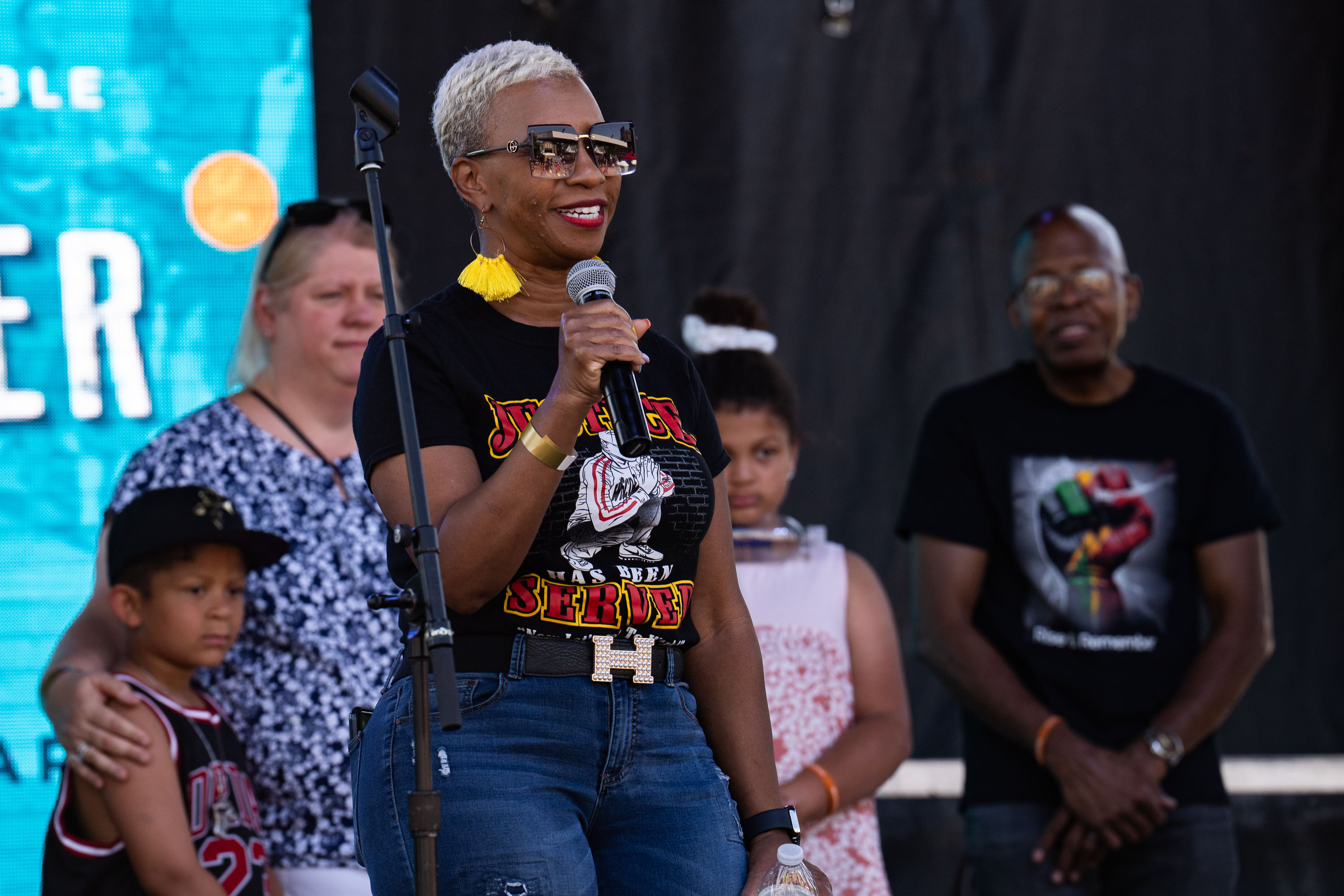
March 2022 — The George Floyd Square Memorial, located at the intersection of 38th Street and Chicago Avenue in Minneapolis, serves as a site of remembrance and protest following the murder of George Floyd in 2020. The memorial features a "raised fist" sculpture, which is draped with a blanket in honor of Amir Locke, who was killed by Minneapolis Police in February 2022. This space has become a significant community gathering point for discussions on racial justice and police accountability.
March 2022 — The "George Floyd Mural" is painted on the exterior wall of Cup Foods, a grocery store located in Minneapolis, Minnesota. This mural was created in honor of George Floyd, who died on May 25, 2020, outside this establishment after being subjected to police brutality. The artwork, situated in the area that became known as George Floyd Square, serves as a memorial and a symbol of the protests and uprising that followed Floyd's death. The mural features Floyd's portrait, the phrase "I Can Breathe Now," and a list of other victims of police brutality, functioning as a site of remembrance and a call for justice.
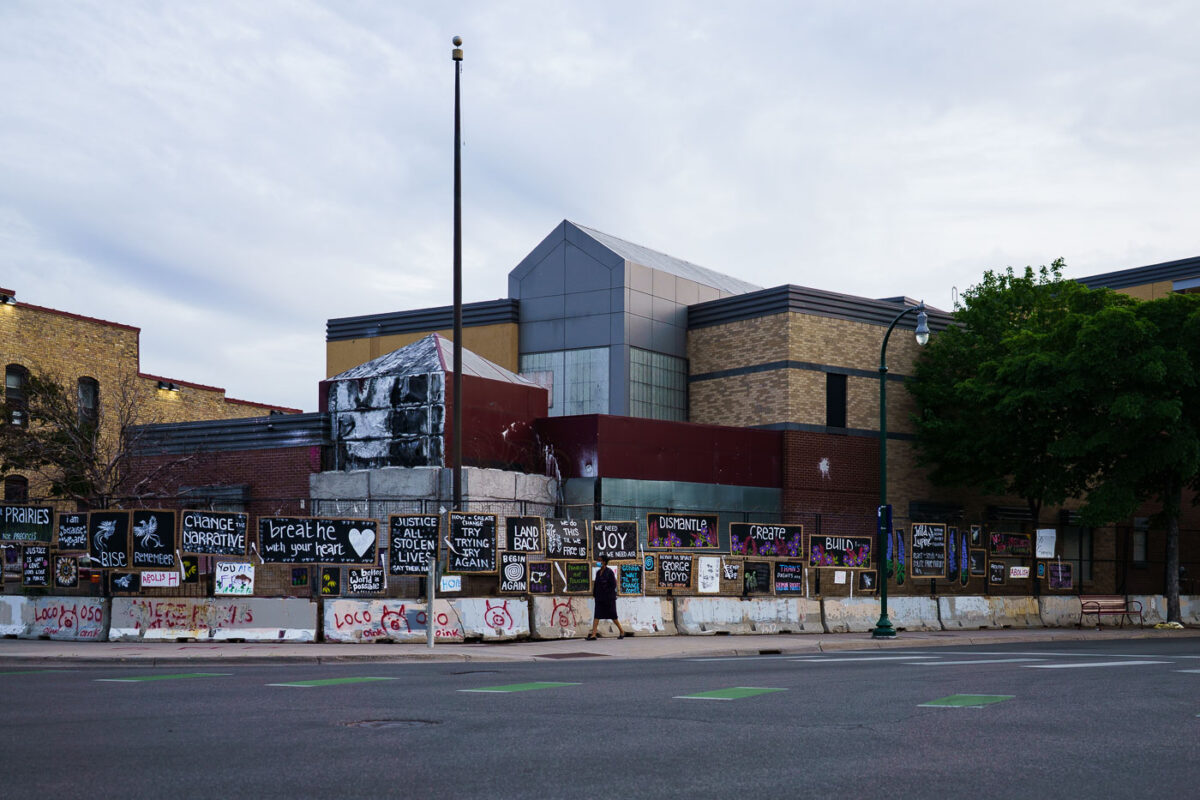
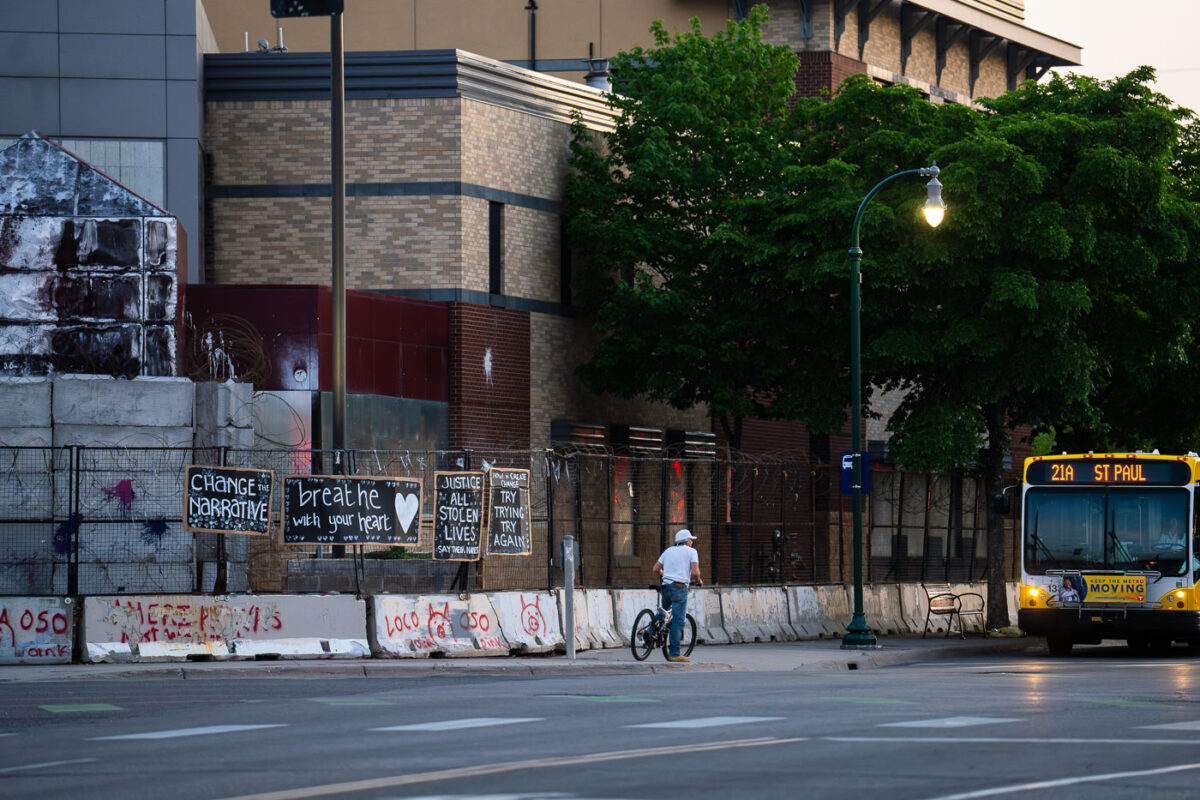
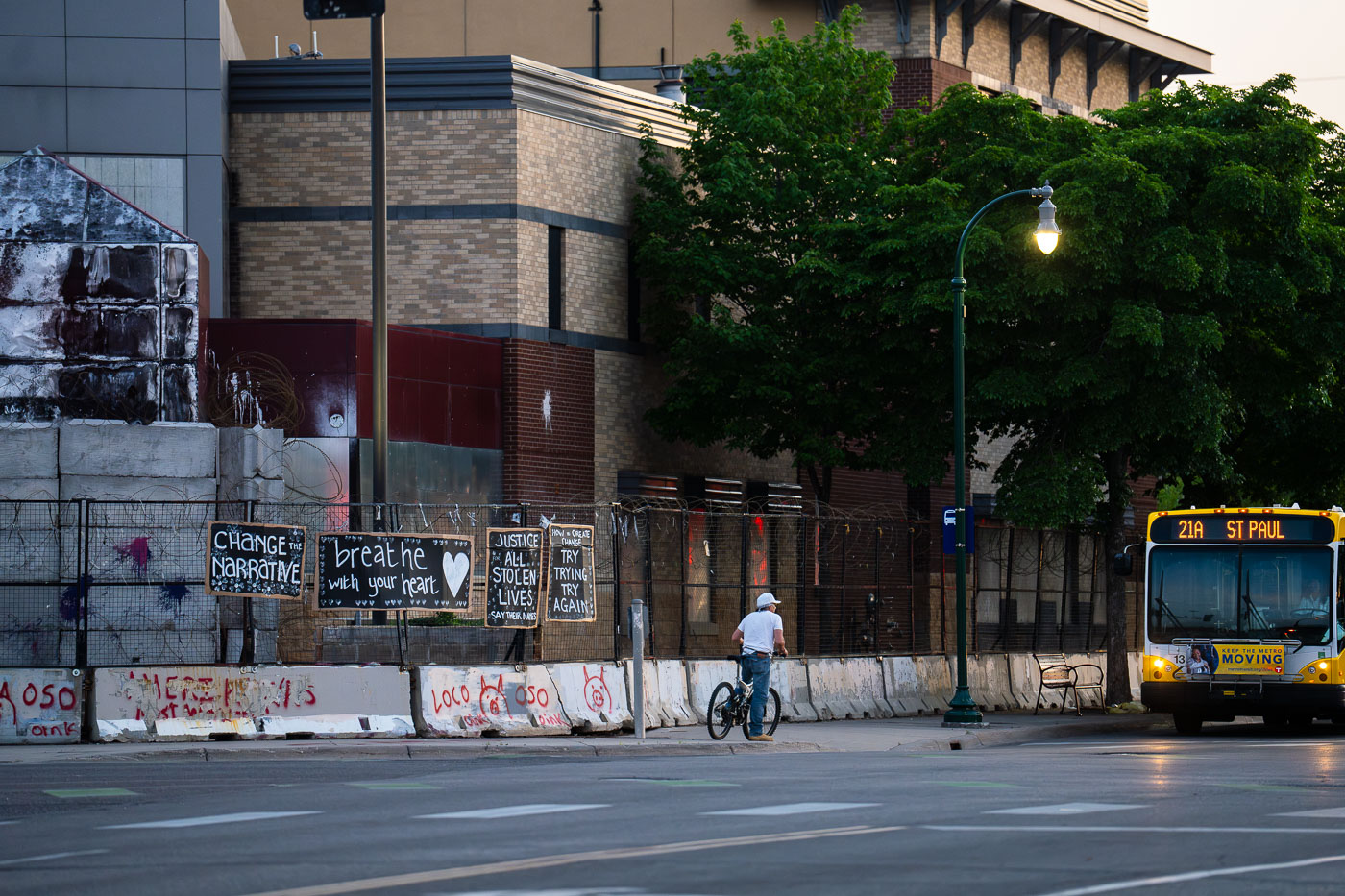
March 2022 — The Minneapolis Police Department's 5th Precinct is shown barricaded at night, surrounded by temporary fencing and concrete barriers. This measure was put in place during periods of civil unrest in Minneapolis, notably following the murder of George Floyd in May 2020. The precinct, located in South Minneapolis, serves as a key law enforcement hub for the area. The presence of barricades highlights the heightened security and the impact of public demonstrations on municipal infrastructure.
March 2022 — The Minneapolis skyline is visible at night from the frozen surface of Lake of the Isles, a prominent feature of the city's Chain of Lakes park system. This vantage point offers a view of the downtown commercial district, showcasing the development of its architecture and economic activity. Lake of the Isles, established in the late 19th century, serves as a vital green space within the urban environment, providing areas for public use and contributing to the city's character.
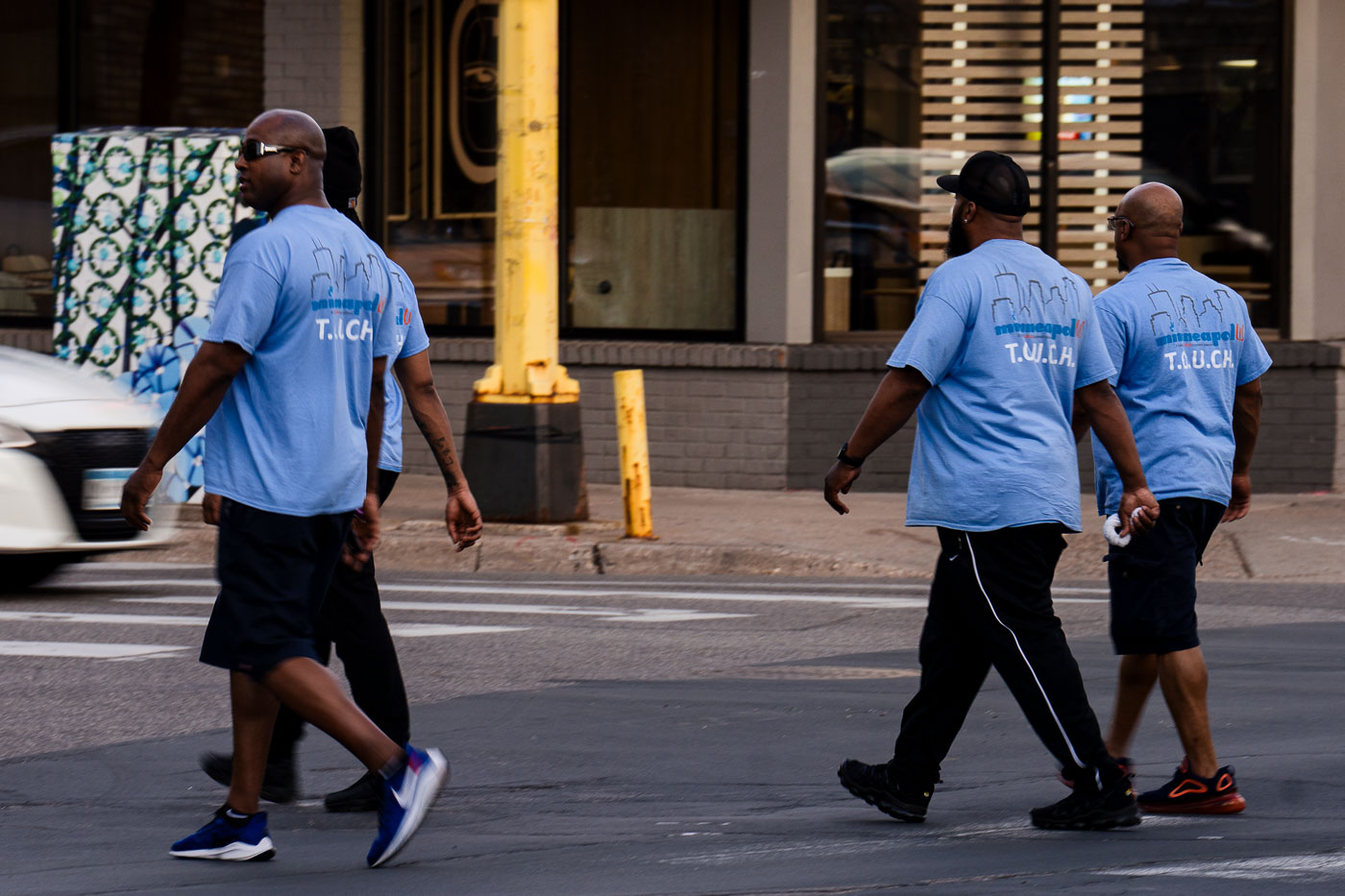
March 2022 — Violence Interrupters gather on Hennepin Avenue in downtown Minneapolis. This group works to de-escalate conflicts and prevent retaliatory violence within the community. Their presence in public spaces like this busy thoroughfare highlights ongoing efforts to address public safety concerns. Hennepin Avenue is a major commercial and cultural artery in Minneapolis, and its condition often reflects the broader social and economic dynamics of the city.
March 2022 — Nicollet Mall and 8th Street in Downtown Minneapolis, Minnesota, are shown with the IDS Center and the former Dayton's department store building. Nicollet Mall, originally a street, was redeveloped into a pedestrian mall in the 1960s to revitalize the downtown core and encourage foot traffic. The IDS Center, completed in 1973, became a landmark of the city's central business district. The skywalk system, visible connecting buildings, was developed to provide weather-protected pedestrian access throughout downtown Minneapolis, enhancing its functionality.
March 2022 — A mural honoring Amir Locke, who was killed by Minneapolis police in February 2022, is displayed outside Orchestra Hall in downtown Minneapolis. The mural, reading "In Loving Memory Amir Locke" and "Justice 4 Amir," appeared following Locke's death and subsequent protests. Orchestra Hall, a prominent venue for the Minnesota Orchestra, is located in the heart of the city's cultural district and serves as a key destination for performing arts.
March 2022 — A flyer demanding justice for Amir Locke is affixed to a pillar along the Midtown Greenway in Minneapolis. Locke, a 22-year-old, was killed by Minneapolis police during a "no-knock" warrant execution in February 2022. The flyer calls for accountability for the police department and city officials, questioning the necessity of such raids. The Midtown Greenway is a popular multi-use trail built on a former railroad corridor, now a significant piece of urban infrastructure for recreation and transportation in the city.
March 2022 — The intersection of Lake Street and Girard Avenue in Uptown Minneapolis is shown at night. This area was a focal point during the 2020 Minneapolis uprising, following the murder of George Floyd. The buildings visible include Stella's Fish Cafe, a long-standing establishment in the neighborhood, and the Seven Points Mall, which also experienced significant damage and activity during the unrest. The photograph captures the streetscape after dark, with illuminated signs and traffic signals reflecting on the wet pavement, hinting at the recent events that have impacted this urban environment.
March 2022 — This greenhouse at George Floyd Square in Minneapolis was established as a space for community expression and remembrance following the murder of George Floyd in May 2020. The planters, decorated with "Black Lives Matter" and "Black Gang Brown Lives Matter" slogans, signify the ongoing activism and social justice movements in the area. The greenhouse, with its floral displays, represents a continued commitment to honoring Floyd's memory and advocating for racial equality. It serves as a testament to the community's resilience and their efforts to cultivate dialogue and foster change.
March 2022 — A sticker reading "Still Not Loving Police" is affixed to a utility pole in South Minneapolis, a message that gained prominence during the 2020 Minneapolis Uprising. The uprising was ignited by the murder of George Floyd and brought widespread attention to issues of police brutality and racial injustice. The sticker, accompanied by a beaded cross, represents a form of informal public expression and protest against systemic issues. Such displays are common in urban areas that have experienced significant social and political activism.
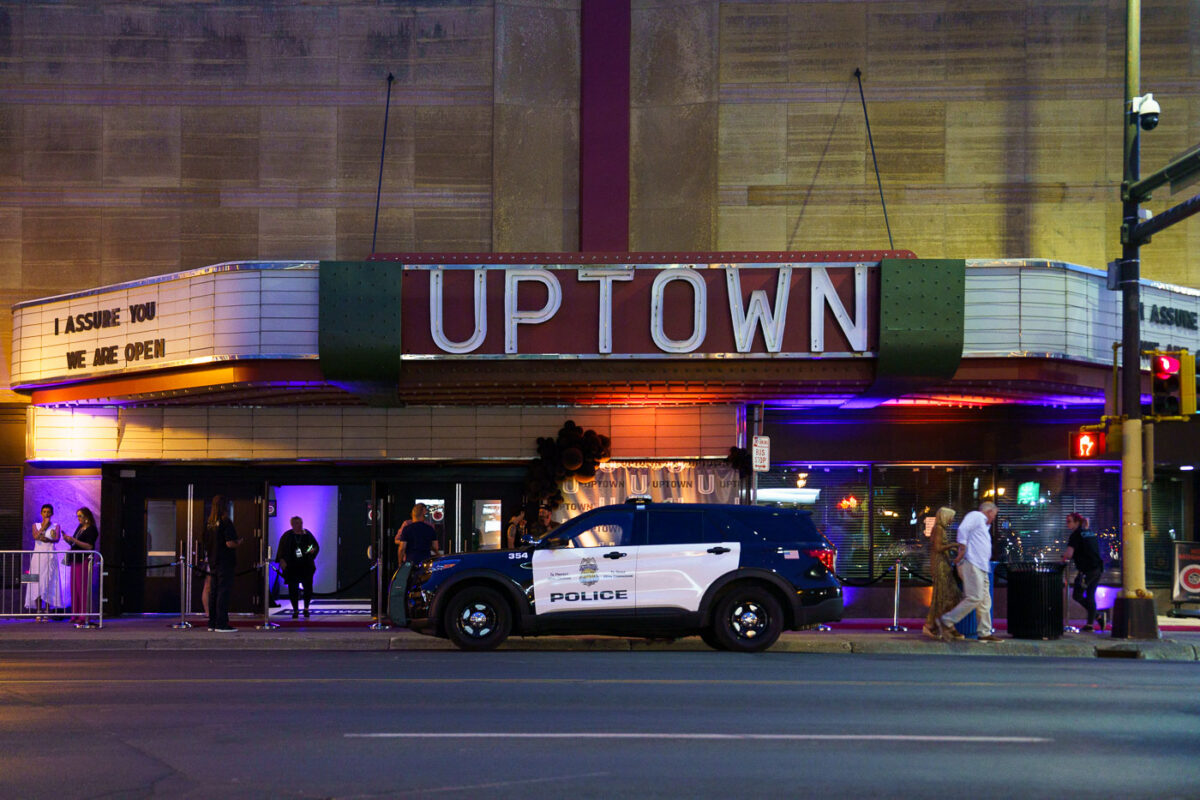
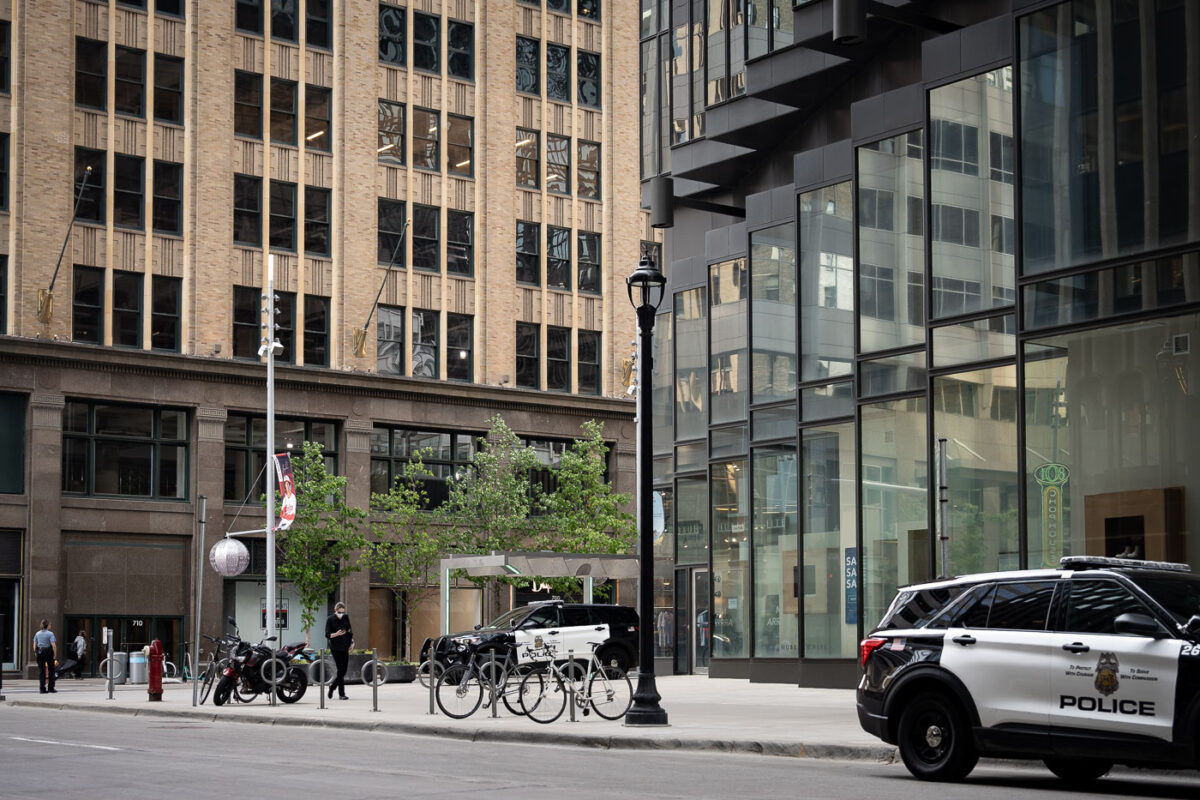
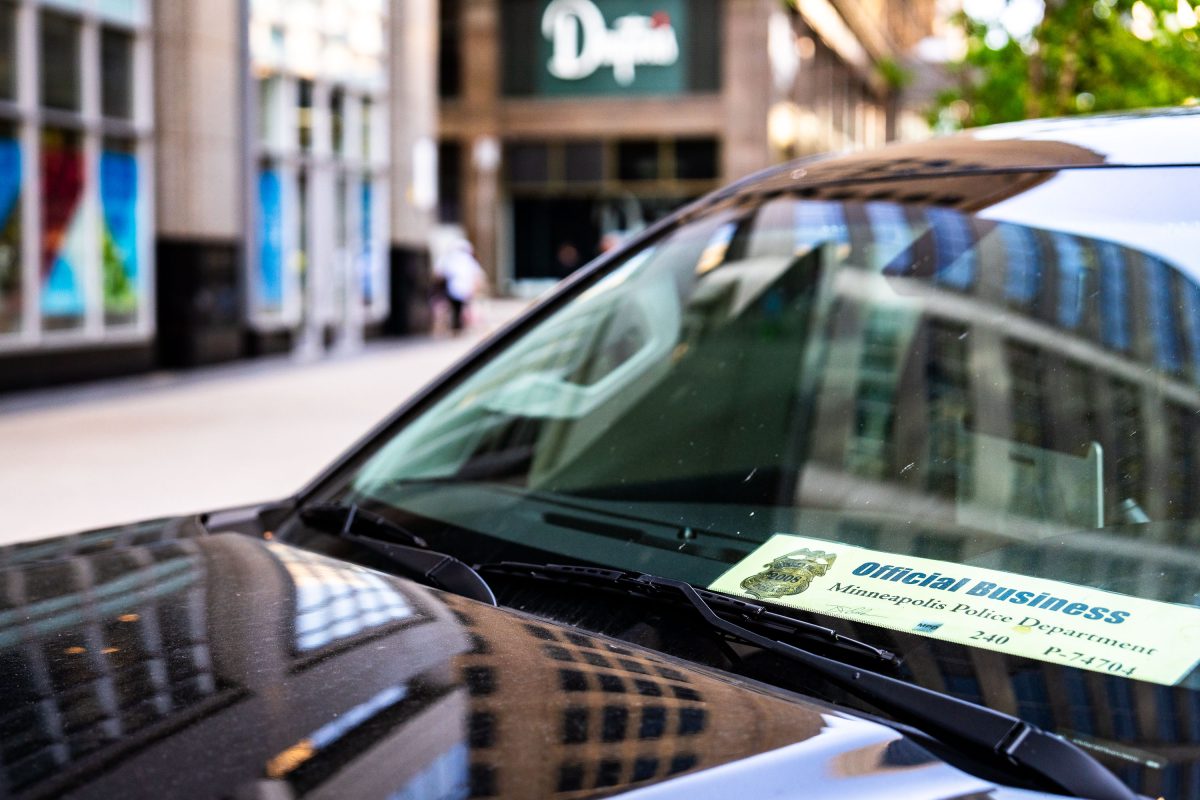
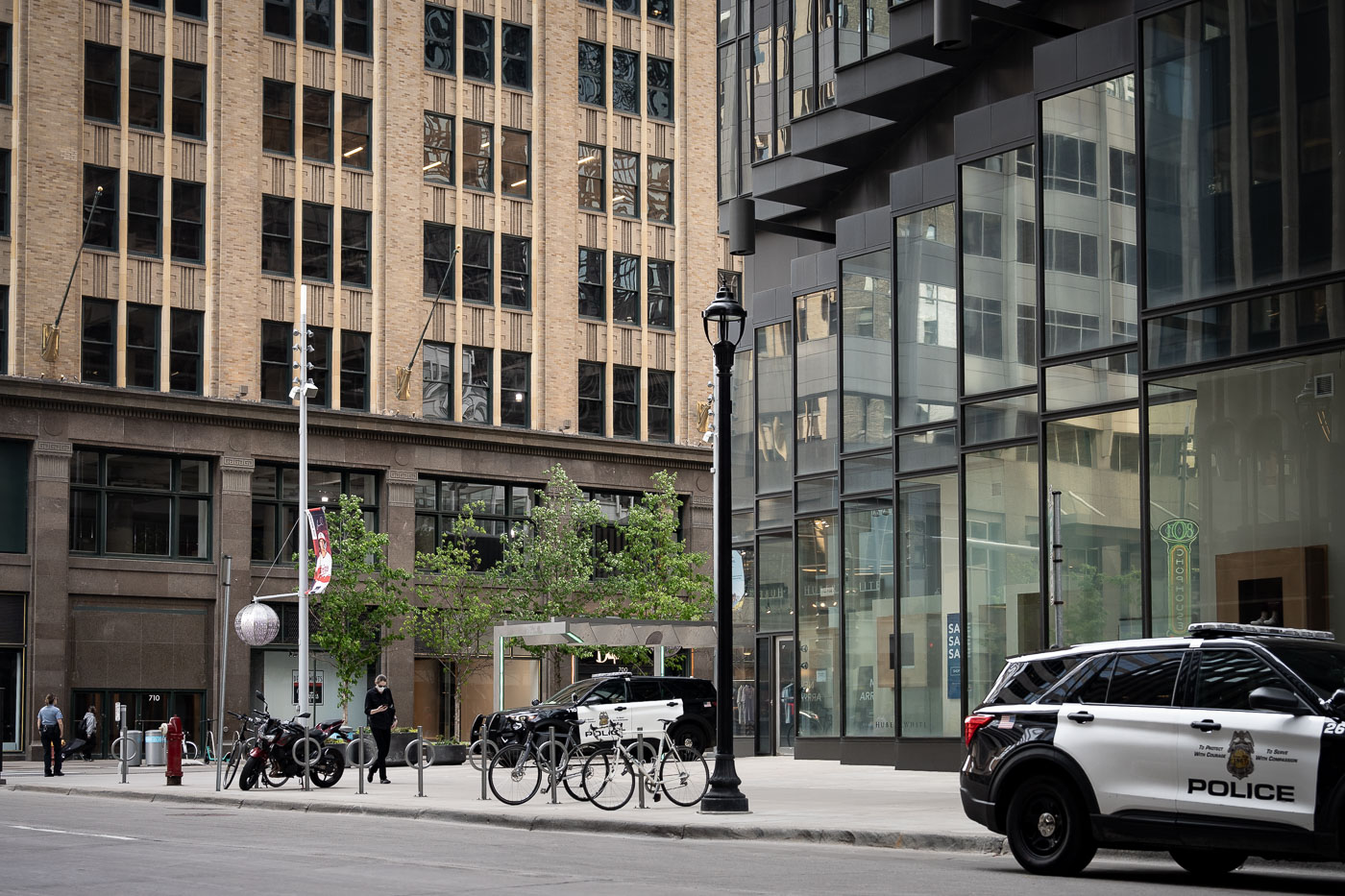
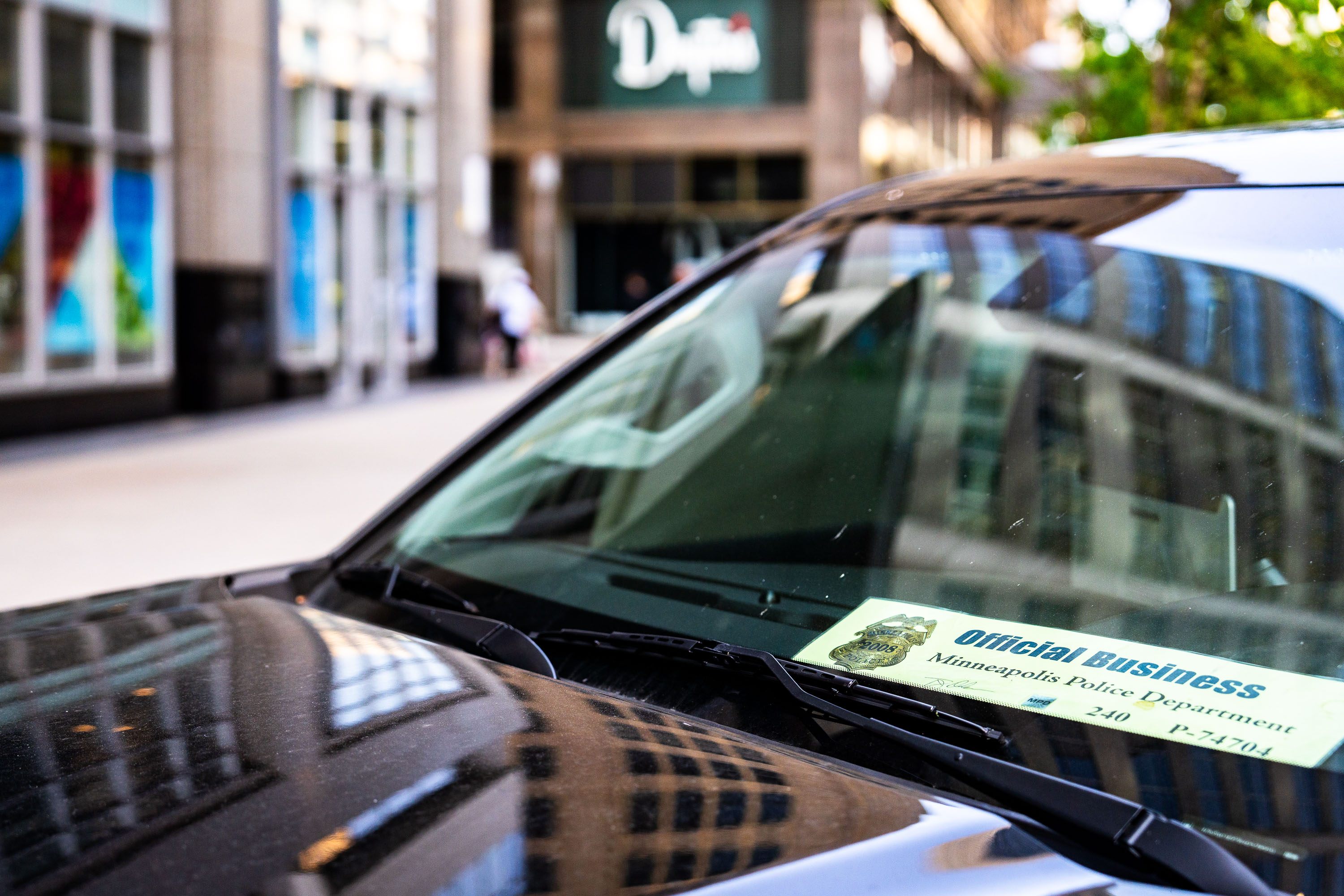
March 2022 — Nicollet Mall in downtown Minneapolis is a pedestrian-oriented street designed to foster commerce and public gathering. Originally conceived in the 1960s, it was transformed into a pedestrian mall in 1967, becoming a central hub for shopping, dining, and cultural events. The presence of a Minneapolis Police vehicle suggests ongoing public safety presence, which is a common sight in urban centers, particularly in areas that have experienced significant events such as the Minneapolis Uprising.
March 2022 — The Orpheum Theatre, a historic Minneapolis venue opened in 1921, stands adjacent to the modern Gateway Tower in the city's central business district. The Orpheum has been a premier destination for Broadway shows and live performances following numerous renovations. Gateway Tower, also known as RBC Gateway, represents contemporary development in the urban core, which also includes the mixed-use LaSalle Plaza complex. This view highlights the juxtaposition of historic architecture and modern skyscrapers that define downtown Minneapolis.
March 2022 — A notice dated January 5, 2022, announces the temporary closure of Uptown Tavern & Rooftop in Minneapolis. The closure was a response to increased crime and unrest in the Uptown area, which had experienced significant disturbances in the summer of 2020. The sign indicates the establishment would remain closed indefinitely, with management expressing a desire to reopen. This event underscores the vulnerability of urban businesses to localized safety concerns and social unrest.
March 2022 — A fire pit burns at George Floyd Square, also known as "The People's Way," in Minneapolis. This location became a significant site for protests and community organizing following the murder of George Floyd in May 2020. The fire pit serves as a gathering point and a symbol of resilience and community presence within the area. It represents a space for warmth, reflection, and ongoing dialogue among those who frequent the square.
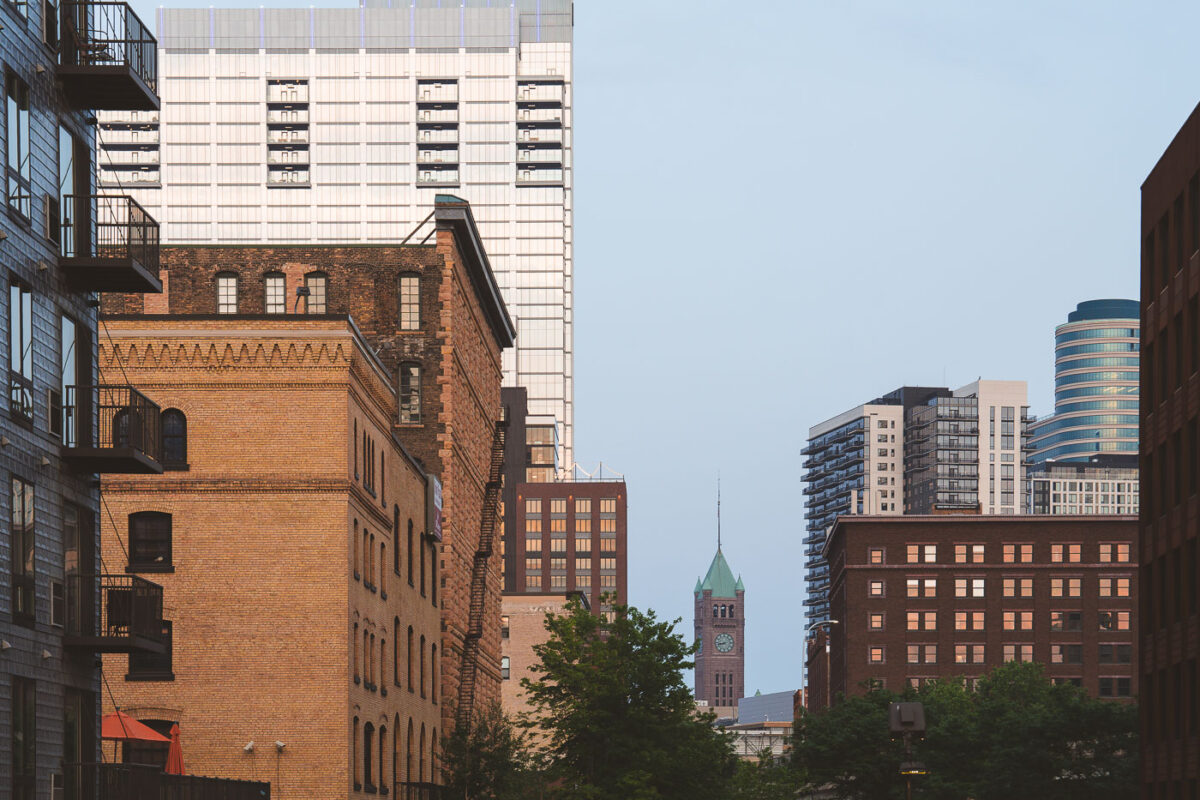
March 2022 — The Minneapolis City Hall Clock Tower, a Beaux-Arts structure completed in 1909, is illuminated at night. This building has served as the seat of Minneapolis city government for over a century and remains a prominent landmark. The tower's clock faces are visible against the dark sky, highlighting its architectural significance. The building has been a backdrop to significant historical moments, including protests in downtown Minneapolis in 2020.
March 2022 — The Minneapolis Police Department's 5th Precinct is situated on Nicollet Avenue. This facility is a key component of the city's law enforcement infrastructure, serving a substantial area and its residents. The precinct became a focal point of public attention following the 2020 Minneapolis Uprising, which led to increased scrutiny of police practices and community relations. The presence of fencing around the building indicates heightened security measures, a response to events and ongoing public safety concerns.
March 2022 — Thousands of Minneapolis educators and supporters marched on Nicollet Mall on March 10, 2023, the third day of a strike that involved over 4,000 teachers and staff. The strike, which began on March 8, 2023, highlighted demands for smaller class sizes, increased pay, and improved student mental health support. Nicollet Mall, a central pedestrian thoroughfare in downtown Minneapolis, frequently serves as a venue for public gatherings and demonstrations.
March 2022 — Educators and support staff from Minneapolis Public Schools marched through downtown Minneapolis on March 11, 2023, during the third day of a strike. The work stoppage, which began on March 8, involved thousands of union members advocating for better pay, smaller class sizes, and increased mental health support for students. This march underscored the collective action taken by educators to improve working conditions and secure essential resources for public education in the city.
March 2022 — Minneapolis City Council Member Robin Wonsley speaks at a protest in support of the Minneapolis Public Schools (MPS) teachers strike. The strike, which began in March 2023, involved thousands of educators and support staff demanding improved compensation, working conditions, and student resources. This action highlighted ongoing labor disputes within the district and broader challenges facing public education.
March 2022 — Educators from Minneapolis Public Schools marched through downtown Minneapolis on the third day of their strike. The strike, which began on March 8, 2023, involved over 4,000 teachers and support staff. Key demands included increased mental health support for students, smaller class sizes, and higher wages. The strike concluded on March 17, 2023, with a tentative agreement that addressed many of the union's concerns.
March 2022 — The neon sign for Ragstock, a vintage and used clothing store, glows on Lake Street in Uptown Minneapolis. This establishment, known for its selection of new and used apparel, contributes to the area's reputation as a center for independent businesses and alternative fashion. Uptown Minneapolis has historically been a dynamic commercial and cultural district, characterized by its unique shops and community events. The prominent neon display of Ragstock enhances the neighborhood's distinctive streetscape and draws shoppers seeking affordable, retro clothing.
March 2022 — The Cabooze, a long-standing live music venue on Minneapolis's West Bank, is illuminated at night. The venue's marquee advertises a performance by Leo Presents featuring the bands Uncured and Living Like I'm Dead Tour. Established in 1969, The Cabooze has been a significant venue in the Minneapolis music scene, hosting a diverse array of local and national artists. The building's exterior features vibrant graffiti art, including a mural depicting a train engine, reflecting the venue's distinctive character and its role in the city's cultural fabric.
March 2022 — The Cedar Cultural Center, established in 1989, is a prominent music and dance venue located in Minneapolis's Cedar Riverside neighborhood. It serves as a vital cultural hub, presenting a wide array of performances and events for all ages. The marquee prominently advertises upcoming concerts, including a performance by John Moreland, underscoring the center's role in showcasing contemporary artists. The Cedar Cultural Center significantly contributes to the diverse cultural fabric of the Cedar Riverside area, a neighborhood known for its rich history and multicultural community.
March 2022 — A boarded-up bar in South Minneapolis displays extensive graffiti, a visual remnant of the civil unrest that occurred in the city in 2020. The plywood covering the establishment's windows and doors is marked with various tags and messages, overlaying the building's original green facade and teal window frames. This image documents the impact of the 2020 protests on urban commercial spaces, showing a period of damage and temporary closure in a neighborhood affected by social upheaval.
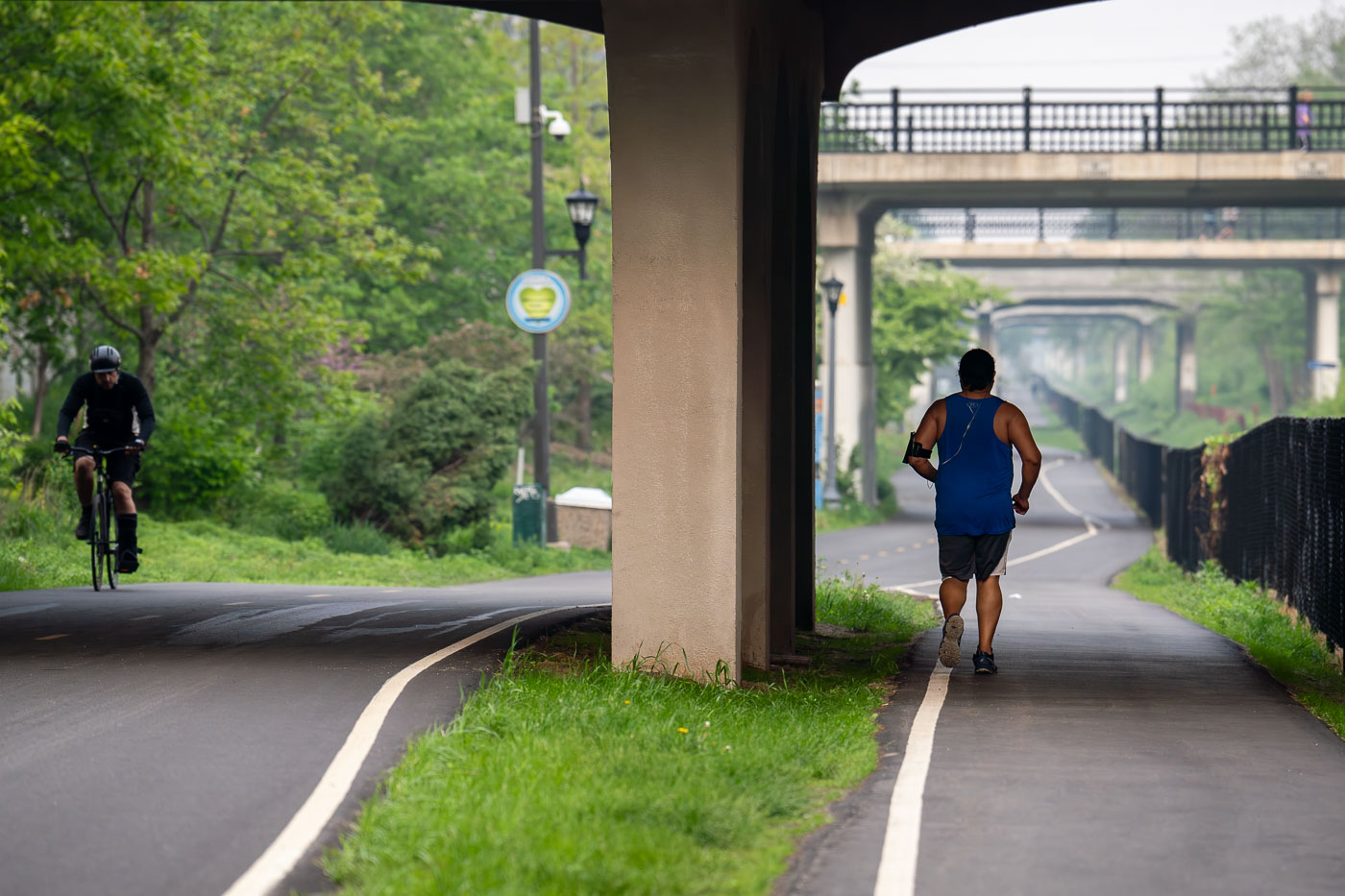
March 2022 — The Midtown Greenway, a former railroad corridor converted into a multi-use trail in Minneapolis, passes beneath the Hennepin Transit Center. The trail, established in the early 2000s, serves as a key east-west transportation and recreation route. The transit center, built over the trail, integrates public transportation with the urban environment. This image, taken at dusk, highlights the architectural design of the transit center and the pathway of the Greenway.
March 2022 — The Schatzlein Saddle Shop, a long-standing retailer of Western wear, displays its merchandise in its storefront window on Lake Street in Minneapolis in March 2022. The shop has been a fixture in the city for decades, providing clothing and gear for equestrians and enthusiasts of Western culture. The window display features a mannequin dressed in traditional Western attire, alongside boots, saddles, and other accessories, all arranged around a life-sized model of a horse. This display reflects the shop's commitment to preserving and promoting the Western lifestyle within an urban environment.
March 2022 — The interior of Bloody Gorgeous salon, located on Lyndale Avenue in South Minneapolis, is presented. This establishment provides a range of hair services, including cuts and color treatments for both men and women. The salon's branding and offerings suggest a focus on bold and transformative styling, catering to a diverse clientele. The photograph captures the reception area, offering a glimpse into the salon's aesthetic and its role within the local commercial environment.
March 2022 — Flanders Cycle, a bicycle shop established in 1973, is boarded up with plywood on Lyndale Avenue in Minneapolis. The plywood covering is a common measure taken by businesses during periods of civil unrest. A Minneapolis Police Department vehicle passes the storefront at night, reflecting the heightened tensions in the city following the murder of George Floyd in May 2020. The "BLM" graffiti visible on the plywood further signifies the context of the Minneapolis Uprising.
March 2022 — A stack of "Southside Pride" newspapers, featuring the February 2022 edition, is displayed. The cover prominently shows a portrait of Amir Locke, a Minneapolis resident killed by police in January 2022. The "Southside Pride" newspaper, which serves the Southside of Minneapolis, frequently covers local community issues and events. Locke's death became a significant point of discussion regarding police brutality and accountability in Minneapolis and nationally.
March 2022 — Net Supermarket, located at the corner of Nicollet Avenue in South Minneapolis, functions as a vital neighborhood convenience store. Its signage clearly advertises essential goods such as cigarettes, pop, and milk, alongside other daily necessities and convenience items. The store's prominent display of "Food Stamps" indicates its role in serving a diverse customer base and providing accessible resources. The brightly lit interior and visible product displays through large windows suggest a busy commercial operation catering to the immediate needs of the local community.
March 2022 — The Minneapolis Public Service Center at 505 Downtown, established in 1878, serves as a consolidated hub for city government operations. The building's modern facade, featuring extensive glass and stone, houses a large seal commemorating the city's founding. This structure consolidates various municipal services, providing essential administrative functions and resources for Minneapolis residents. Its architecture reflects the city's ongoing development and commitment to accessible public services.
March 2022 — This photograph shows a Metro Transit bus stop sign at the intersection of 8th Street and Park Avenue in Minneapolis. The sign, featuring the Metro Transit logo, indicates a stop for public transportation services. A security camera is mounted on the sign, suggesting a focus on passenger safety and monitoring within the transit system. This infrastructure is integral to the daily operations of Minneapolis's public transit network, serving commuters and visitors.
March 2022 — A mural depicting former NFL quarterback Colin Kaepernick kneeling is displayed on the exterior of a building at 812 East 38th Street in Minneapolis. The artwork is situated near George Floyd Square, a location that became a significant site of protest and activism following the murder of George Floyd in May 2020. Kaepernick, known for his protests against racial injustice and police brutality during NFL games, is honored in this mural, which serves as a visual statement within a neighborhood that has been central to discussions on racial equality and social justice.
March 2022 — La Michoacana ice cream shop is illuminated at night on Lake Street in Minneapolis. This establishment is known for serving traditional Mexican ice cream and treats, functioning as a cultural gathering point for the community. Lake Street is a significant commercial corridor in Minneapolis, recognized for its diverse businesses and its role as a central hub, particularly noted for its involvement in the 2020 Minneapolis Uprising.
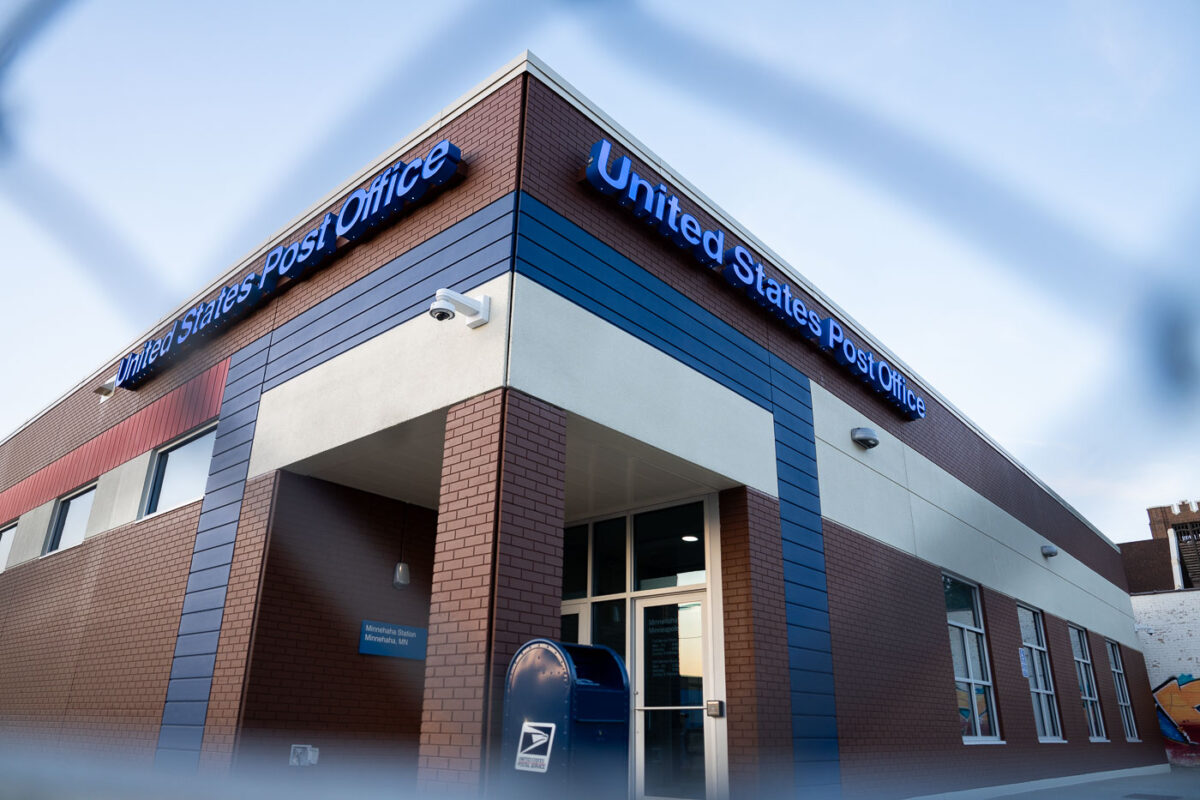
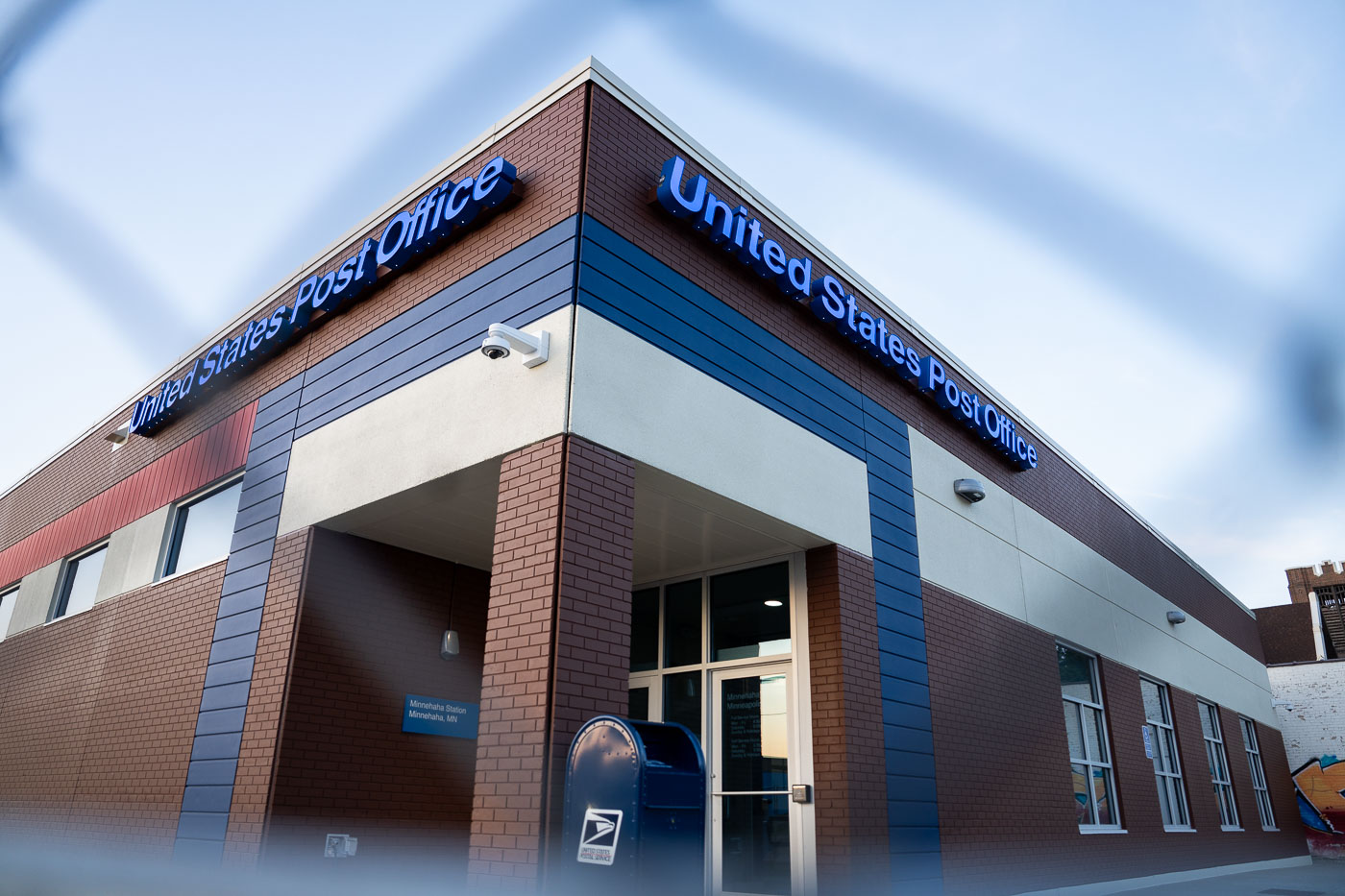
March 2022 — Construction is underway on the new Lake Street Post Office in Minneapolis, a rebuilding effort following the destruction of the previous facility by fire on May 29, 2020. The structure, located on Lake Street, is a vital piece of postal infrastructure for the surrounding community. The rebuilding signifies a commitment to restoring essential services and public facilities in the area.
March 2022 — Construction continues on the new Lake Street Post Office in Minneapolis, a rebuilding project initiated after the original facility was destroyed on May 29, 2020, during civil unrest following the murder of George Floyd. The destruction of the post office, a vital service hub for the Lake Street corridor, marked a significant disruption to the community. The ongoing reconstruction symbolizes the restoration of essential services and the resilience of the neighborhood.
March 2022 — A flyer posted in a storefront window in Uptown Minneapolis advocates for a "South Hennepin Avenue For All" initiative. The poster outlines community demands for the street's reconstruction, emphasizing safe streets, accessible parking, bike paths, and bus travel. It calls for the avenue to be designed to accommodate all users, including the elderly and individuals with disabilities, while also supporting local businesses. The "Uptown Minneapolis" branding and the "ROAM" furniture store sign visible in the background indicate the local context of this advocacy during a period of infrastructure planning for Hennepin Avenue.
March 2022 — Hennepin Avenue and Lagoon Avenue in Uptown Minneapolis at dusk. Hennepin Avenue has long been a central commercial and transit artery for the Uptown neighborhood. This view shows the intersection, a hub of activity, with businesses like Cowboy Slim's and a McDonald's restaurant. The presence of streetlights and vehicle traffic highlights the area's ongoing function as a center for commerce and daily life.
March 2022 — Winter conditions prevail on a street in Uptown Minneapolis, with snow and ice covering the roadway and sidewalks. The "Reign" building, a notable commercial and residential complex, is visible in the background, its illuminated signage reflecting on the wet street. This area of Minneapolis, known for its vibrant commercial activity and residential neighborhoods, experiences significant winter weather that shapes daily life and urban transit.
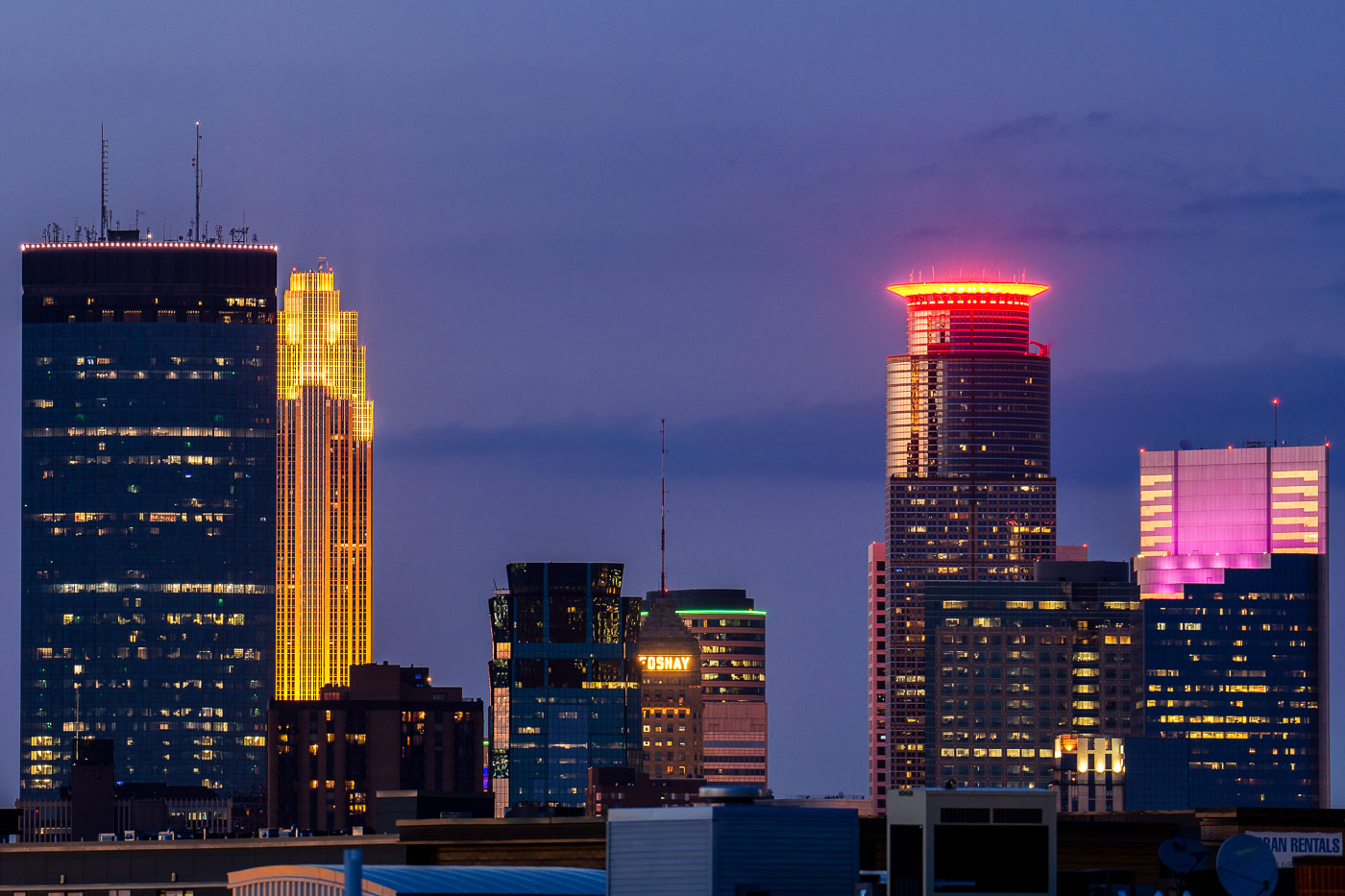
February 2022 — Target Headquarters in downtown Minneapolis was illuminated with blue and yellow lights, the colors of the Ukrainian flag, in a show of solidarity. The building, a prominent feature of the Minneapolis cityscape, serves as the corporate hub for the retail giant Target. This display of support occurred during a period of international concern regarding the conflict in Ukraine, reflecting a global response to the crisis. The lighting highlights the building's architectural features against the night sky, symbolizing a connection between local institutions and international events.
February 2022 — George Floyd Square, a memorial site in Minneapolis, Minnesota, is covered in snow. The square was established following the murder of George Floyd in May 2020 and became a focal point for racial justice protests. The "AM I NEXT" banner visible in the foreground reflects ongoing concerns about police brutality and systemic racism. The memorial includes a large portrait of Floyd and numerous tributes, such as flowers and candles, left by visitors.
February 2022 — Murals related to the Black Lives Matter movement and the call to "Abolish MPD" (Minneapolis Police Department) are displayed on a wooden structure on 38th Street in Minneapolis. The "BLM" mural incorporates a rainbow flag, often associated with LGBTQ+ pride, and a tribute to George Floyd, who was murdered by a Minneapolis police officer in May 2020. These artworks emerged in the wake of widespread protests against police brutality and racial injustice that followed Floyd's death. The location on 38th Street is significant as it is near the site of Floyd's murder, which became a focal point for the protests.
February 2022 — A home in South Minneapolis, near George Floyd Square, displays messages of resilience and reflection during winter. The exterior walls and windows are covered with handwritten quotes and affirmations, such as "PAINTED QOUTES FADE. SIGNS WILL COME DOWN. IT'S WHAT WE DO NOW IN OUR COMMUNITY! THAT WILL LAST FOREVER!". These messages serve as a testament to the ongoing impact of the social and racial justice movements that have profoundly affected the area since the murder of George Floyd in May 2020. The home's prominent display reflects the community's commitment to remembrance and sustained action in the wake of significant historical events.
February 2022 — A chair and table, hand-painted with "GEORGE FLOYD," are situated in the snow at George Floyd Square in Minneapolis. This location, formerly the intersection of Chicago Avenue and 38th Street, became a significant site for protests and activism following the murder of George Floyd in May 2020. The area was occupied by activists for an extended period, during which the "Say Their Names Cemetery" memorial was established. The presence of these objects in the winter landscape serves as a somber reminder of Floyd's death and the square's continued importance as a place of remembrance and protest.
February 2022 — The "Say Their Names Cemetery" memorial at George Floyd Square in Minneapolis honors victims of racial injustice and police brutality. Established in the aftermath of George Floyd's murder in May 2020, the memorial features headstones bearing the names of individuals lost to violence. The site became a central point of the occupied zone at the intersection, which activists renamed George Floyd Square. This winter scene shows the memorial covered in snow, with the names of George Floyd, Tanya Blanding, and Byron Williams visible.
February 2022 — Snow falls on the "Welcome to North Minneapolis" mural, which decorates the exterior of the 4th St Saloon. The mural, featuring musicians and the Minneapolis skyline, celebrates the area's cultural heritage and serves as a landmark in the North Minneapolis neighborhood. The 4th St Saloon is a local establishment contributing to the community's character.
February 2022 — A Metro Transit bus passes a vibrant mural in North Minneapolis, Minnesota, during a winter snowfall. The "NORTH MINNEAPOLIS" mural, created in response to the 2020 Minneapolis Uprising, features diverse imagery and text reflecting community identity and resilience. This artwork serves as a significant public statement within the neighborhood. The presence of the bus, a vital public service, highlights the continued operation of transit systems even in inclement weather.
February 2022 — A banner reading "MPLS PDX AVENUE LOVE SOLIDARITY AMIR PATRICK" hangs from the Irene Hixon Whitney Bridge in Minneapolis. The bridge, which spans over Interstate 94 near the Lowry Hill Tunnel, is a pedestrian walkway connecting the Lowry Hill neighborhood to the Minneapolis Sculpture Garden. The banner was displayed in solidarity with protests in Portland, Oregon, following the death of Amir Locke, who was fatally shot by Minneapolis police officers in February 2022. The message reflects a connection between activism in Minneapolis and Portland, highlighting shared concerns over police violence.
February 2022 — This mural on Hennepin Avenue in Minneapolis honors George Floyd, whose death in May 2020 at the hands of police ignited widespread protests. The artwork, which includes portraits of Floyd and other figures, alongside messages of remembrance and solidarity, became a focal point for public mourning and a symbol of the ongoing movement for racial justice. Its creation and presence reflect the community's response to Floyd's death and its commitment to preserving his memory and advocating for systemic change.
February 2022 — Hayat Restaurant, Lake Street Minneapolis
February 2022 — The Burlington store on Lake Street in Minneapolis is boarded up at night, a measure taken in response to property damage and looting that occurred during the Minneapolis Uprising in 2020. The plywood covering the storefront indicates a temporary security measure implemented to protect the business from further vandalism. This event highlighted the vulnerability of commercial areas during periods of civil unrest and the subsequent impact on local economies.
February 2022 — A protestor in Chicago holds a sign during a march and car caravan protesting the killing of Daunte Wright by police in Minnesota. The sign, which also features "Chicago Est. 1837," reflects local solidarity with Wright's family and anger over perceived injustices. The protest occurred in the context of the trial of officer Kim Potter, who was convicted in Wright's death.
February 2022 — In Minneapolis, a protest was organized in response to the killing of Daunte Wright by police officer Kim Potter in April 2021. Approximately one hundred marchers participated in a car caravan that proceeded to a location believed to be Judge Chu's residence. Chants expressed frustration with the legal proceedings, with participants stating, "They can do whatever the fuck they wanna do for Kim Potter. We the people are gonna be out here for Daunte Wright. We the people are gonna be fighting alongside Daunte Wright’s family.“ This event underscores the community's ongoing demand for accountability and justice in cases of police brutality.
February 2022 — The Daunte Wright Memorial is located at the intersection of 63rd Avenue and Dante Drive in Brooklyn Center, Minnesota, the site where Daunte Wright was fatally shot by a police officer on April 11, 2021. The memorial, consisting of flowers, artwork, and signs, serves as a place of remembrance and a focal point for discussions on police brutality and racial justice. This photograph was taken on the day former Brooklyn Center police officer Kim Potter was sentenced for her role in Wright's death, highlighting the ongoing impact of the event.
February 2022 — Daunte Wright's family and supporters gathered outside the Hennepin County Courthouse in Minneapolis following the sentencing of former Brooklyn Center police officer Kim Potter. Potter was convicted of first-degree manslaughter for the 2021 shooting death of Wright. The family expressed outrage at the sentence, with one member stating, “she’s gonna do a year and a half,” and calling the outcome “the epitome of corruption, the epitome of disrespect.” The Hennepin County Government Center, which houses the courthouse, serves as the primary judicial center for the county, a key governmental structure in the region.
February 2022 — Daunte Wright's mother, Katie Wright, speaks to the press outside the Hennepin County Courthouse in Minneapolis on December 23, 2021. The courthouse is the primary judicial center for Hennepin County, and the surrounding area has been a site of public gatherings and protests. This event occurred shortly after former Brooklyn Center police officer Kim Potter was sentenced for the killing of Daunte Wright in April 2021.
February 2022 — Protestors gathered outside the Hennepin County Courthouse in Minneapolis on December 23, 2021, to advocate for justice in the sentencing of former police officer Kim Potter. Potter was convicted of manslaughter in the fatal shooting of Daunte Wright, a Black man, during a traffic stop in Brooklyn Center, Minnesota, in April 2021. The protest, held on the day of Potter's sentencing, underscored ongoing concerns about police brutality and racial injustice within the American justice system. Signs displayed at the protest included portraits of Daunte Wright and Nina Simone, alongside messages demanding accountability and an end to police violence.
February 2022 — The Salvation Army, Adult Rehabilitation Center in Minneapolis.
February 2022 — On February 4, 2022, protesters gathered outside the Minneapolis Mayor's residence to demand justice for Amir Locke, who was killed by police earlier that day. The protest, organized by the Black Lives Matter movement, saw participants, including many young people, voicing demands for accountability and systemic change in policing. The "New Bohemia Wurst + BierHaus" sign is visible on the building in the background, indicating the location in Minneapolis.
February 2022 — Protesters gathered outside Purdy's Liquor & Cheese Shop in Minneapolis to demand justice for Amir Locke. Locke, a 22-year-old Black man, was killed by Minneapolis police during a no-knock warrant execution on February 2, 2022. The protest occurred shortly after his death, reflecting broader community outrage over police violence and accountability.
February 2022 — Protesters gathered outside the Minneapolis Mayor's residence to advocate for justice for Amir Locke and to protect water resources, linking the protest to the Line 3 pipeline controversy and broader calls for racial justice. The event took place in Northeast Minneapolis, a district known for its history of activism. The sign held by one protester reads, "We are here to protect the water."
February 2022 — Protesters gathered outside the Minneapolis Mayor's home in Northeast Minneapolis to call for justice for Amir Locke. Locke, a 22-year-old Black man, was killed by Minneapolis police during a no-knock warrant execution on February 2, 2022. The protest highlights ongoing concerns about police brutality and racial injustice in the city.
February 2022 — A speaker addresses a crowd outside the Minneapolis Mayor's residence in Northeast Minneapolis, calling for justice for Amir Locke. The protest occurred following the fatal shooting of Locke by Minneapolis police officers during a no-knock warrant execution in February 2022. This event highlights ongoing community concerns regarding police conduct and accountability in the city.
February 2022 — Protesters gathered outside the Minneapolis Mayor's home, holding signs that read "Frey Lied, Amir Died." This protest was in response to the death of Amir Locke, who was killed during a police raid in February 2022. The sign also references "Banning the Use of No-Knock Warrants in the City of Minneapolis," an action taken by Mayor Jacob Frey's administration in response to public outcry following Locke's death. This event highlights ongoing tensions and calls for accountability within the Minneapolis community regarding police conduct and the use of force.
February 2022 — A banner protesting Minneapolis Mayor Jacob Frey hangs from a pedestrian bridge over Interstate 94 on Valentine's Day. The banner reads "DONE WITH YOUR LIES" and "#BreakUpWithJacob," featuring a broken heart symbol and "MPLS" and "FREY." The protest took place near the Lowry Hill Tunnel, a significant piece of urban infrastructure that facilitates traffic flow through the city. The presence of the banner on this date amplifies its message of discontent with the mayor's policies or actions.
February 2022 — Graffiti reading "Destroy Me" was spray-painted on a storefront in Uptown Minneapolis on February 17, 2022. This act of vandalism occurred following a protest march that honored Amir Locke, who was killed by Minneapolis police earlier that month. The marchers, numbering approximately one hundred, moved through the Uptown neighborhood, expressing grief and anger over Locke's death.
February 2022 — Graffiti reading "AMIR LOCKE" is spray-painted on the window of the Odell Brewing Cafe in Minneapolis's Uptown neighborhood. This act of vandalism occurred on February 2, 2022, the same day Amir Locke was killed by Minneapolis police officers during a no-knock warrant execution. The graffiti serves as a public memorial and a statement of protest against the police killing, appearing in the aftermath of a march where participants chanted "Say His Name! Amir Locke!" as they moved through the commercial corridor of Lake Street.
February 2022 — A Minneapolis Police Department vehicle is parked at the intersection of E Lake Street and Bloomington Avenue in Minneapolis, following a protest. The protest, which drew approximately one hundred participants, marched through the Uptown area of South Minneapolis, with chants of "Say His Name! Amir Locke!" echoing. The surrounding area shows evidence of the unrest, with graffiti visible on concrete barriers, including the words "DESTROY" and "MPD." This image was taken during a period of heightened tension and public discourse surrounding police conduct in Minneapolis, following the death of Amir Locke.
February 2022 — Protests against police brutality continued for ten days following the fatal shooting of Amir Locke by Minneapolis Police on February 2, 2022. Signs displayed outside the Minneapolis Police 3rd Precinct read "Our Children Are Speaking," "Justice for Amir Locke," and "Our Ancestors Are Watching." The protests, which occurred in the Uptown area of Minneapolis, involved chants and graffiti, reflecting ongoing public outcry against police conduct.
February 2022 — Graffiti reading "Looks Good On Fire" and "Shoot Back" is spray-painted on a construction barrier surrounding the Minneapolis Fifth Precinct building. These messages appeared during protests in February 2022, following the police shooting death of Amir Locke. The protests, which lasted for ten days, saw participants chanting "Say His Name! Amir Locke!" and leaving messages of dissent throughout the Uptown Minneapolis area. The Fifth Precinct building was under construction at the time of the events.
February 2022 — Protesters gathered inside Minneapolis City Hall to deliver ethics complaints against Mayor Jacob Frey, following the police shooting death of Amir Locke on February 2, 2022. Completed in 1909, Minneapolis City Hall serves as the seat of government for the city, housing its administrative offices and City Council chambers. The building's Beaux-Arts architecture is characterized by its grand marble interior and ornate stained-glass windows. This event highlights ongoing public scrutiny and demands for accountability within the city's governmental structure.
February 2022 — Protesters gathered inside Minneapolis City Hall on February 2, 2022, to demand justice for Amir Locke, who was killed by police earlier that day. The demonstration occurred within the Beaux-Arts building, completed in 1909, which houses the city's government and judicial functions. Participants delivered ethics complaints to the city attorney's office, targeting the Minneapolis Police Department's actions and Mayor Jacob Frey. The event underscored public outcry and calls for accountability following the fatal shooting.
February 2022 — Protesters gathered at Minneapolis City Hall to file ethics complaints against Mayor Jacob Frey. The complaints are in response to the fatal shooting of Amir Locke by Minneapolis police on February 2, 2022. Minneapolis City Hall, a historic Beaux-Arts building completed in 1909, serves as the center of the city's government. The action highlights ongoing public demands for accountability following the incident.


February 2022 — Minneapolis residents gathered at City Hall on February 4, 2022, to protest the police shooting death of Amir Locke. Demonstrators delivered ethics complaints against Mayor Jacob Frey to the city attorney's office, citing the incident. The "Justice for Amir Locke" sign held by a protester reflects the ongoing calls for accountability and justice following the event. Minneapolis City Hall, completed in 1909, serves as the seat of government for the city and houses its administrative offices and council chambers.
February 2022 — Protesters gathered on the steps of Minneapolis City Hall to protest the police shooting death of Amir Locke. A large banner reading "FREY LIED" was displayed, referencing Mayor Jacob Frey. Demonstrators held signs with "JUSTICE for Amir Locke" and presented ethics complaints against the mayor to the city attorney's office. The event occurred following the February 2, 2022, shooting of Locke by Minneapolis Police officers during a no-knock warrant execution.
February 2022 — Jeanelle Austin speaks at a protest outside Minneapolis City Hall on February 2, 2022, following the police shooting death of Amir Locke. Attendees gathered to advocate for justice and deliver ethics complaints against Mayor Jacob Frey, citing concerns over his handling of the incident and police conduct. Minneapolis City Hall, a Beaux-Arts building completed in 1909, serves as the seat of government for the city, housing administrative offices and council chambers. It has historically been a site for public discourse and civic action, reflecting its role as a center for democratic processes.
February 2022 — Protesters gathered at Minneapolis City Hall on February 2, 2022, to protest the police shooting death of Amir Locke. The group delivered ethics complaints against Mayor Jacob Frey to the city attorney's office, citing the incident and vowing further action. The protest, held at the historic Minneapolis City Hall, reflects ongoing community concerns regarding state-sanctioned violence and police conduct.
February 2022 — Protesters gathered at Minneapolis City Hall on February 2, 2022, to protest the police shooting death of Amir Locke. The sign, reading "Chicago & E 38th St," references a location significant to the events surrounding Locke's death and highlights community concerns about police conduct. Protesters delivered ethics complaints against Mayor Jacob Frey to the city attorney's office during the gathering. This event underscores the ongoing dialogue regarding accountability and justice in Minneapolis.
February 2022 — Protesters gathered at Minneapolis City Hall to deliver ethics complaints against Mayor Jacob Frey following the police shooting death of Amir Locke on February 2, 2022. The protesters, holding signs that read "Justice for Amir Locke," stated that more complaints would follow. Minneapolis City Hall, completed in 1909, serves as the seat of the city's government and houses its administrative offices and council chambers.
February 2022 — Families advocating for a ban on no-knock warrants gathered at the Minnesota State Capitol in St. Paul. The group, including the mother of Amir Locke and families of Jamar Clark and Winston Smith, were represented by attorney Ben Crump. They are calling for policy changes following the deaths of their loved ones, arguing that no-knock warrants contributed to these tragedies. Amir Locke, 22, was killed by Minneapolis police during such a warrant execution on February 2, 2022.
February 2022 — Amir Locke’s mother, Karen Wells, speaks at a press conference held at the Minnesota State Capitol in St. Paul on February 4, 2022. She was joined by families of Jamar Clark and Winston Smith, and attorney Ben Crump. Wells announced that her son, Amir Locke, was killed by Minneapolis police during a no-knock warrant execution on February 2, 2022. The group called for President Biden to ban no-knock warrants nationwide.
February 2022 — At the Minnesota State Capitol in St. Paul, families of victims of police violence, including Amir Locke, Jamar Clark, and Winston Smith, gathered to demand a ban on no-knock warrants. Locke's mother spoke at the podium, paying tribute to her son, who was killed on February 2, 2022. Civil rights attorney Ben Crump joined the families in their call for federal legislation prohibiting the use of these warrants.
February 2022 — Students from Minneapolis North High School gathered at Minneapolis City Hall to protest the killing of Amir Locke. The protest took place in the atrium of Minneapolis City Hall, a significant civic building that has historically served as a venue for public assembly and the expression of grievances. This event occurred during a period of heightened activism and calls for accountability in policing, with students using the public space to voice their experiences and demand systemic change.
February 2022 — Students gathered at Minneapolis City Hall to protest racial injustice and demand accountability for the death of Amir Locke. Organized by students from Minneapolis North High, the protest also honored victims of police violence, including Emmett Till, Breonna Taylor, George Floyd, Daunte Wright, and Jacob Blake. The sign "The People United Will Never Be Defeated" reflects a broader movement for civil rights and accountability, referencing historical struggles for justice.
February 2022 — Students from Minneapolis North High School staged a protest at Minneapolis City Hall following the killing of Amir Locke. The students walked out of class to express their experiences as Black individuals in America and to demand justice for Locke. This protest occurred in the aftermath of Locke's death during a police raid in February 2022, highlighting ongoing concerns about police brutality and racial injustice in Minneapolis.
February 2022 — Students from Minneapolis North High School gathered at Minneapolis City Hall to protest the killing of Amir Locke. Locke, a Black man, was killed by Minneapolis police during a no-knock warrant execution in February 2022. The students voiced their experiences as Black individuals in America and demanded justice for Locke. Minneapolis City Hall, completed in 1909, is the seat of government for the city and has historically been a site for public gatherings and demonstrations related to civic issues.