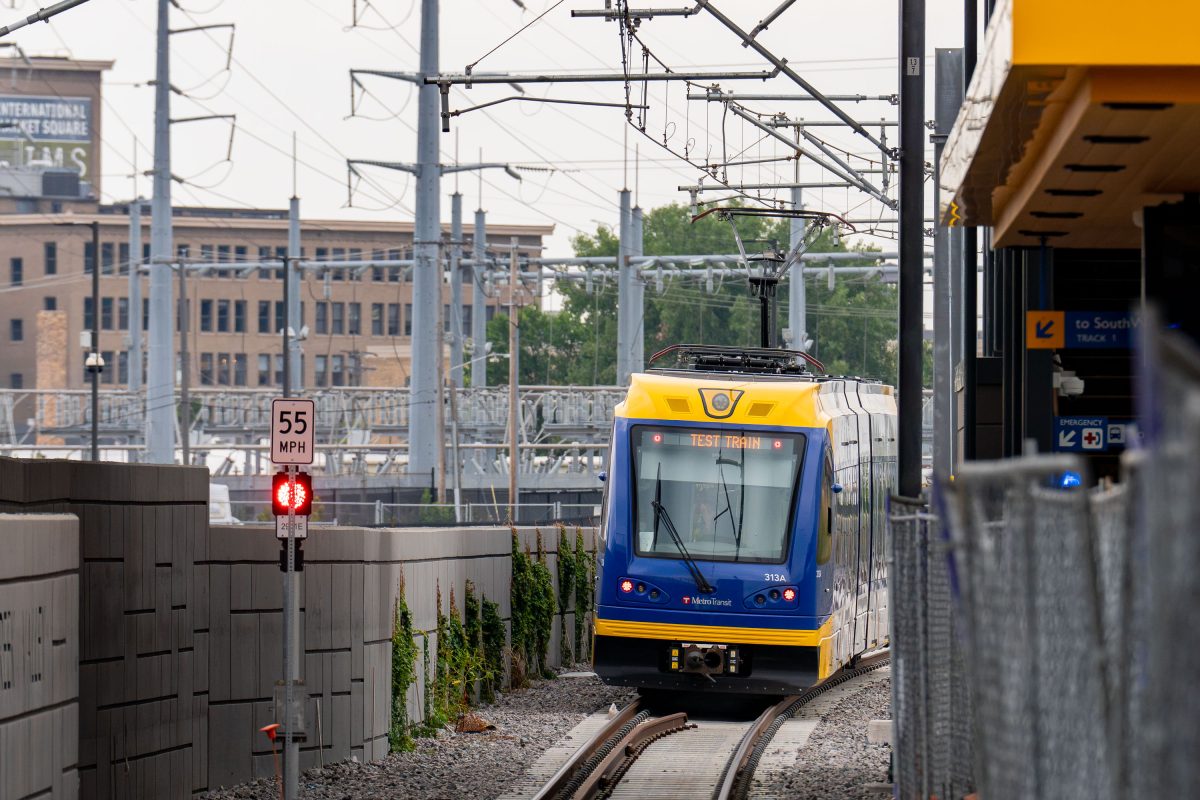
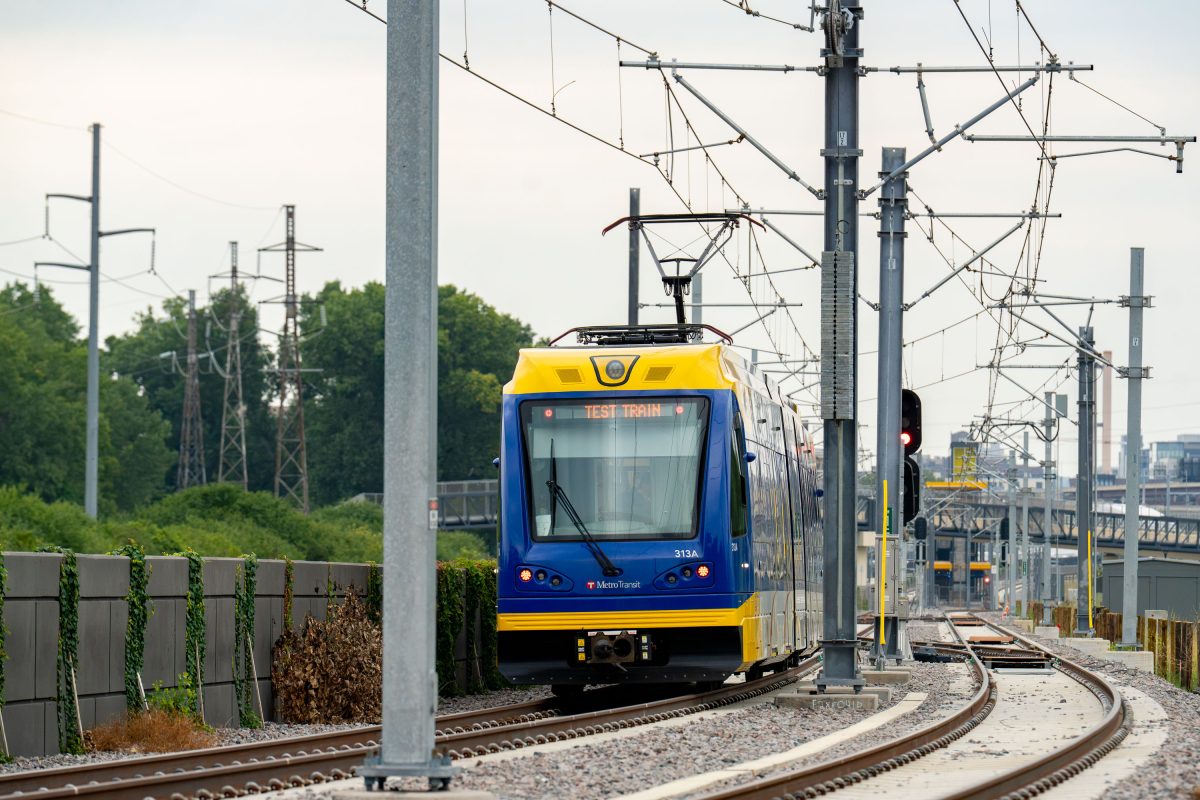
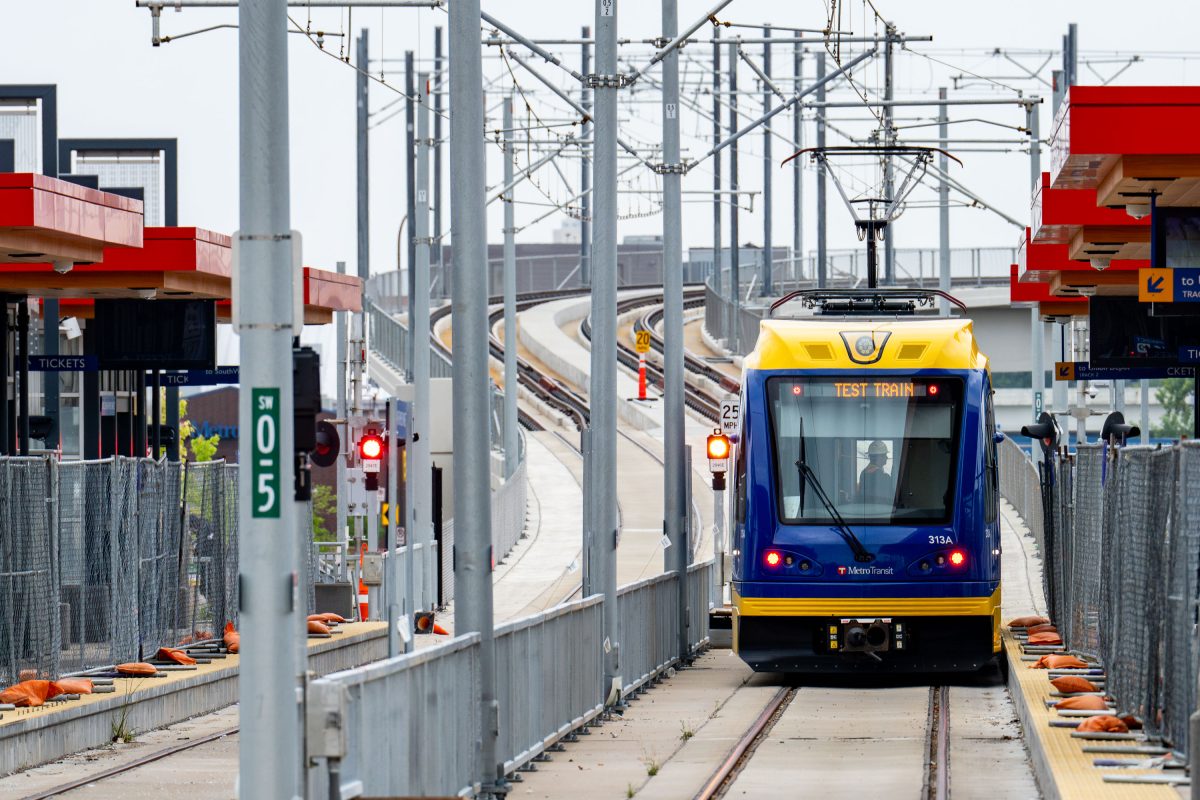
Metro Transit Test Train 313A at the Bassett Creek Valley Station
August 2026 —
Explore photos tagged Train.
August 2026 —
August 2026 —
August 2026 —
December 2025 — Northstar Train on the move from Minneapolis to Big lake. The train will end service forever on January 4th.
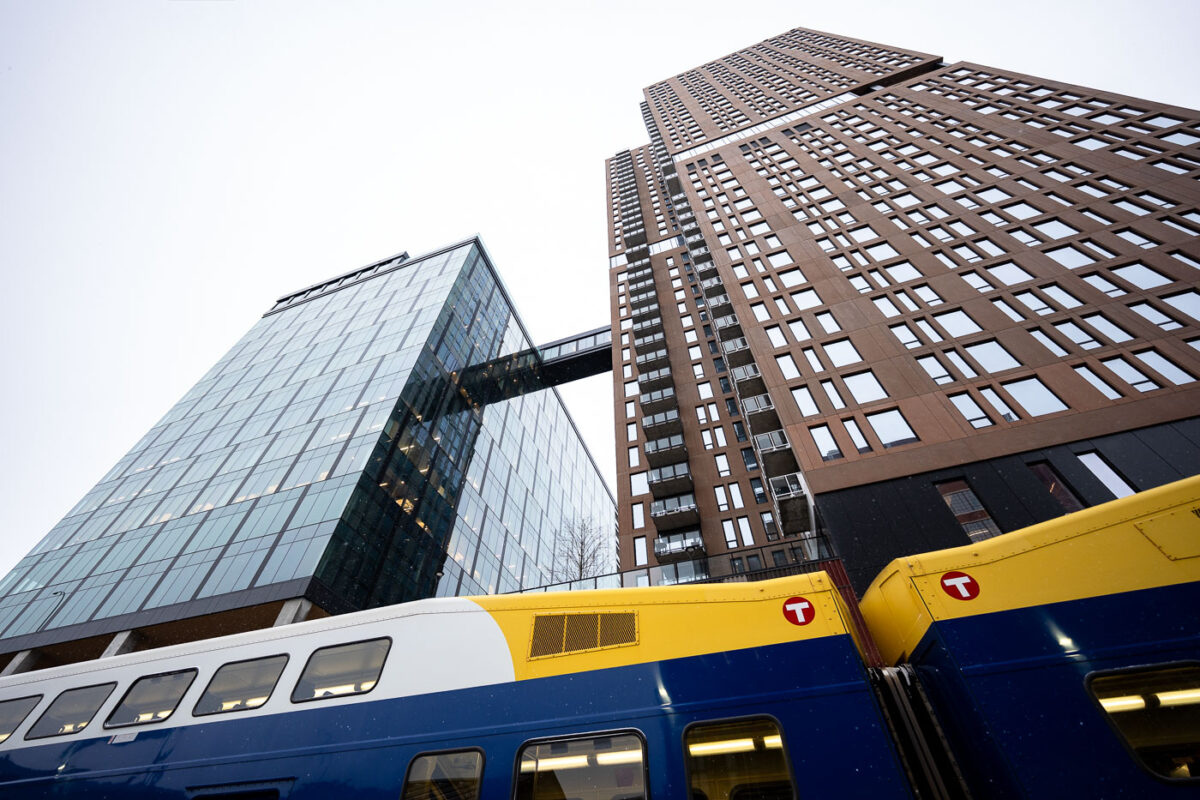
December 2025 — A Northstar Train below the North Loop Green buildings in Downtown Minneapolis.

October 2025 — First light rail vehicle through the Kenilworth tunnel. This morning Metro Transit towed a light rail vehicle through the line for the first time doing basic clearance testing. Construction on the green line extension began in 2018 and is set to open to passengers in 2027.
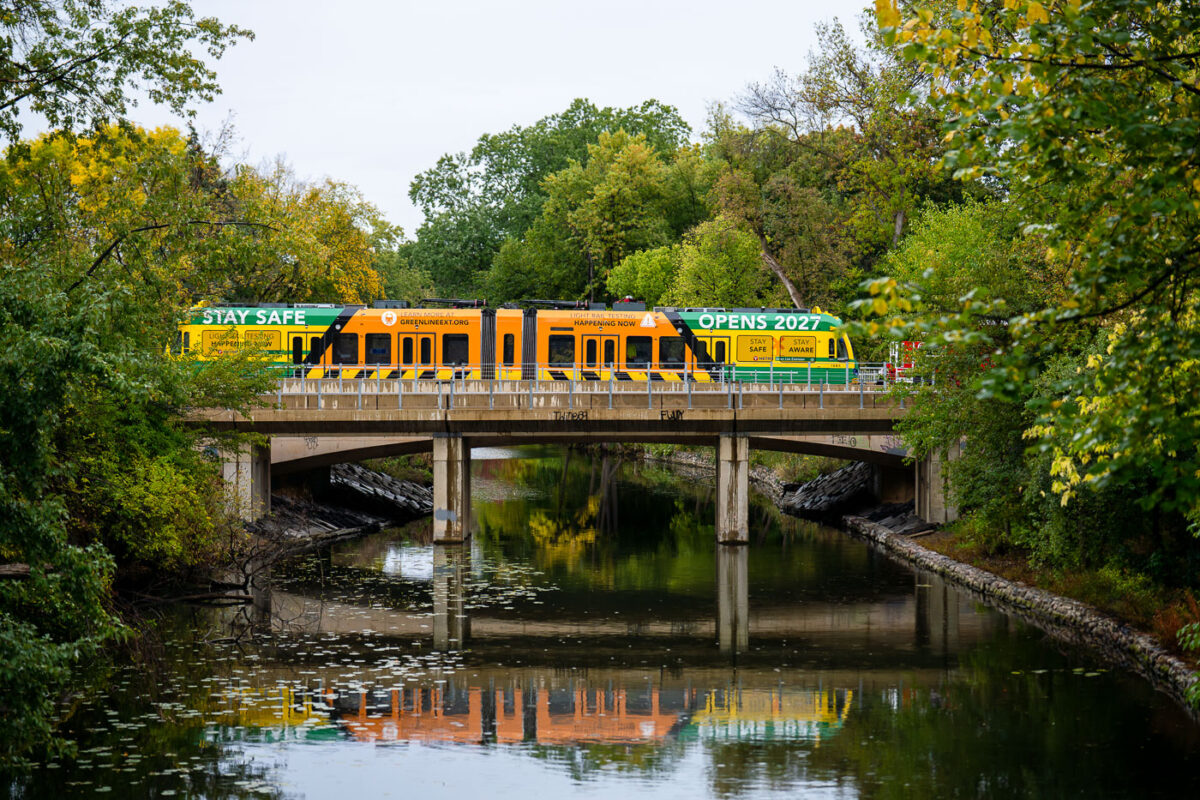
October 2025 — Light rail vehicle on the bridge at the Kenilworth Channel. This morning Metro Transit towed a light rail vehicle through the line for the first time doing basic clearance testing. Construction on the green line extension began in 2018 and is set to open to passengers in 2027.

October 2025 — Light rail vehicle leaves the West Lake Street Station for the first time. This morning Metro Transit towed a light rail vehicle through the line for the first time doing basic clearance testing. Construction on the green line extension began in 2018 and is set to open to passengers in 2027.
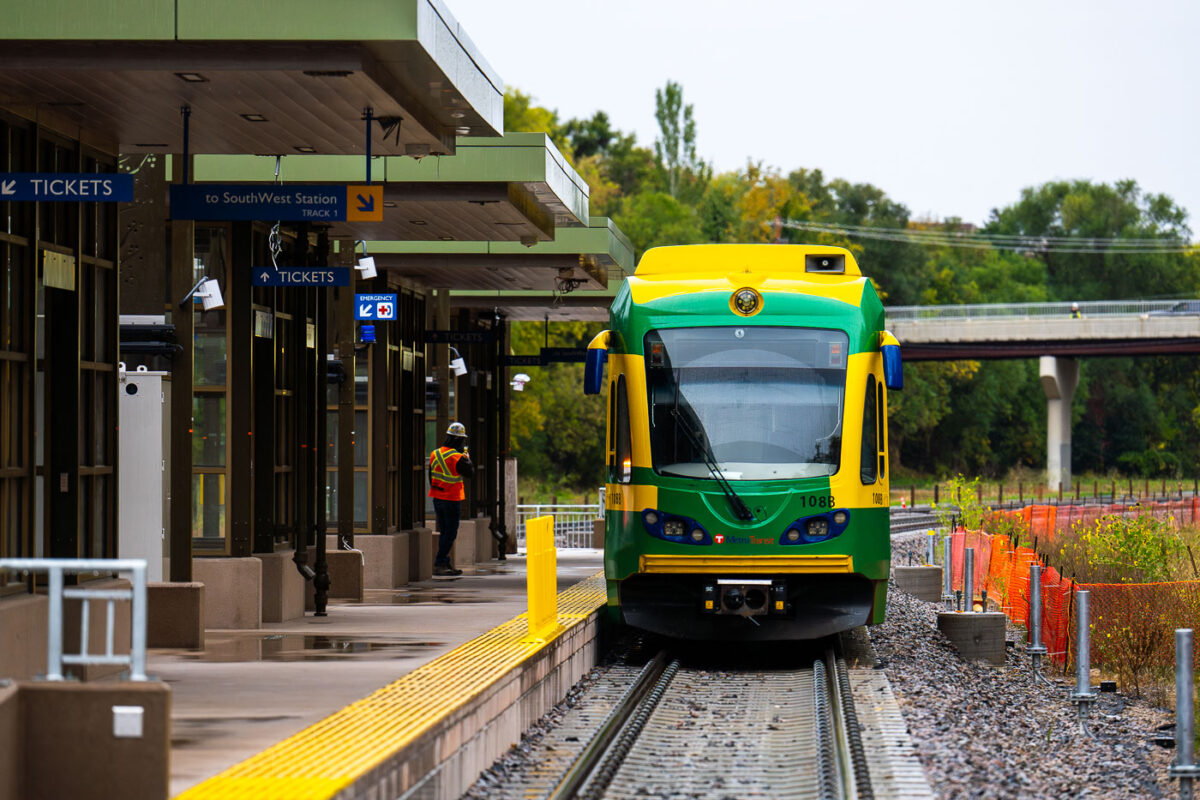
October 2025 — Metro Transit light rail vehicle at the W 21st Street Station in Minneapolis for the very first time. This morning Metro Transit towed a light rail vehicle through the line for the first time doing basic clearance testing. Construction on the green line extension began in 2018 and is set to open to passengers in 2027.
October 2025 —
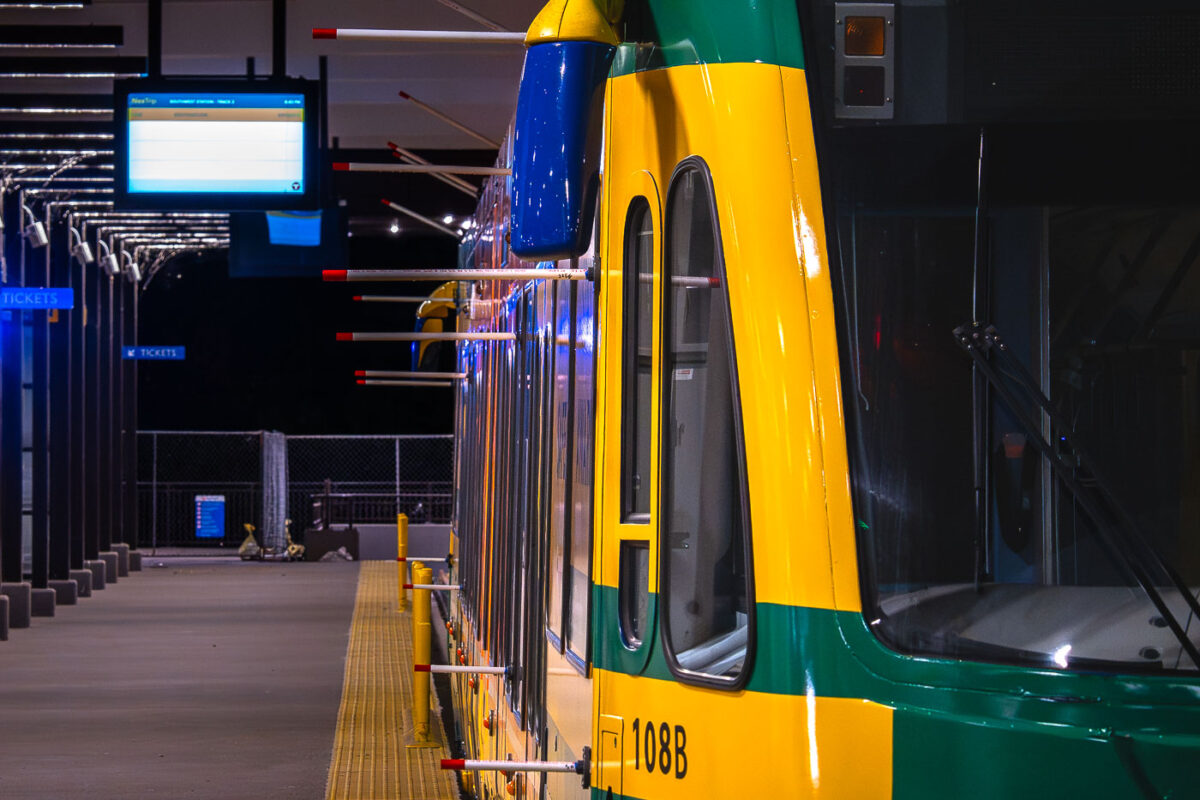
October 2025 —
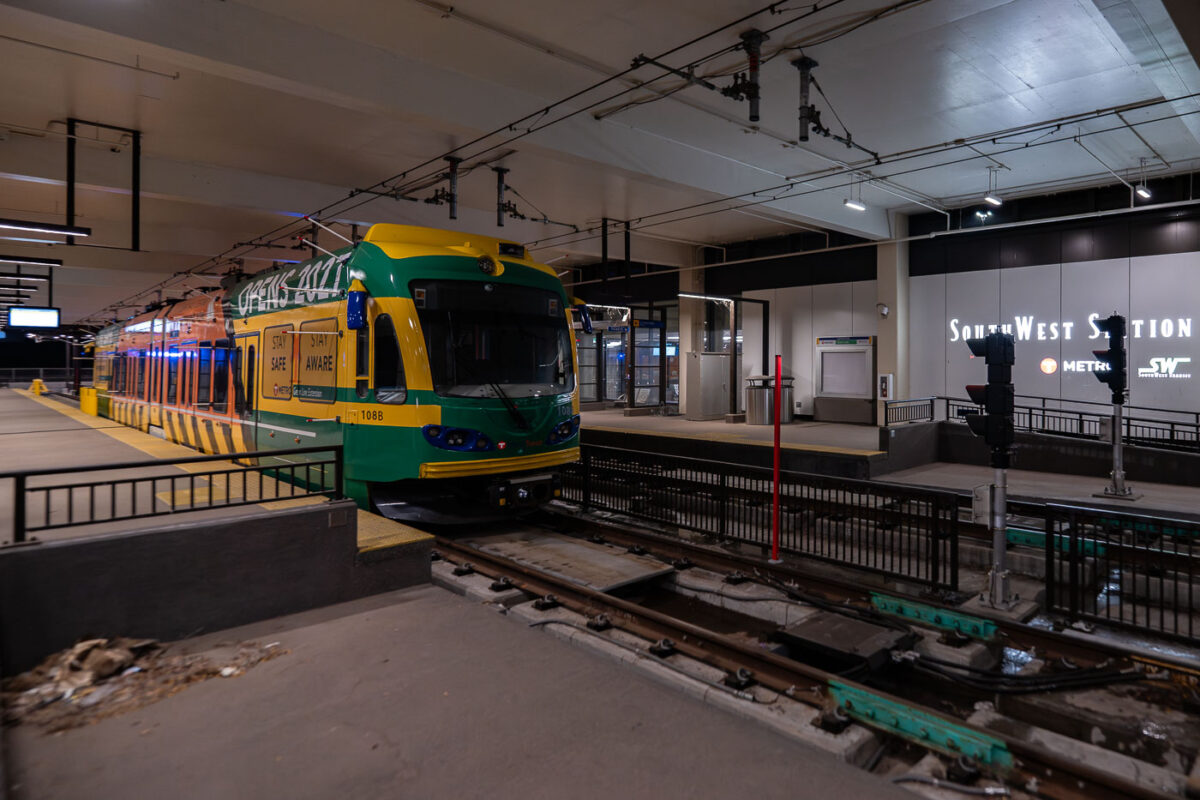
October 2025 —
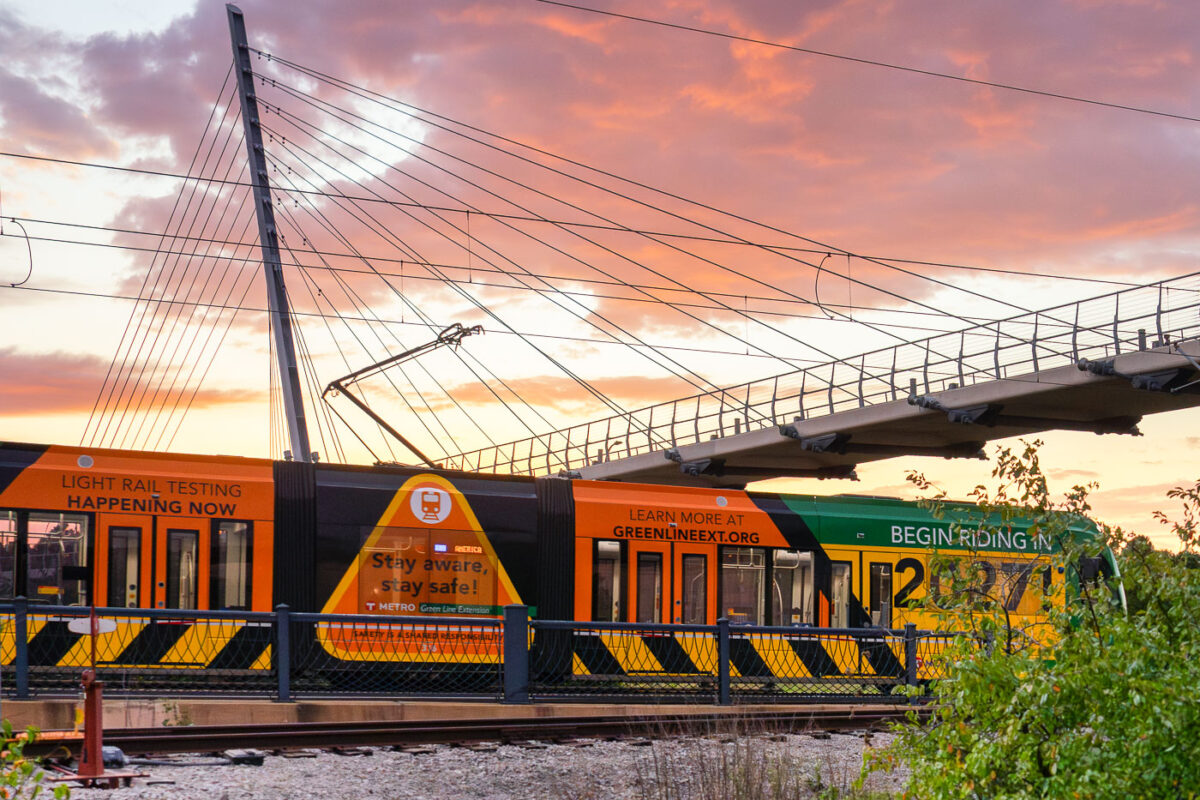
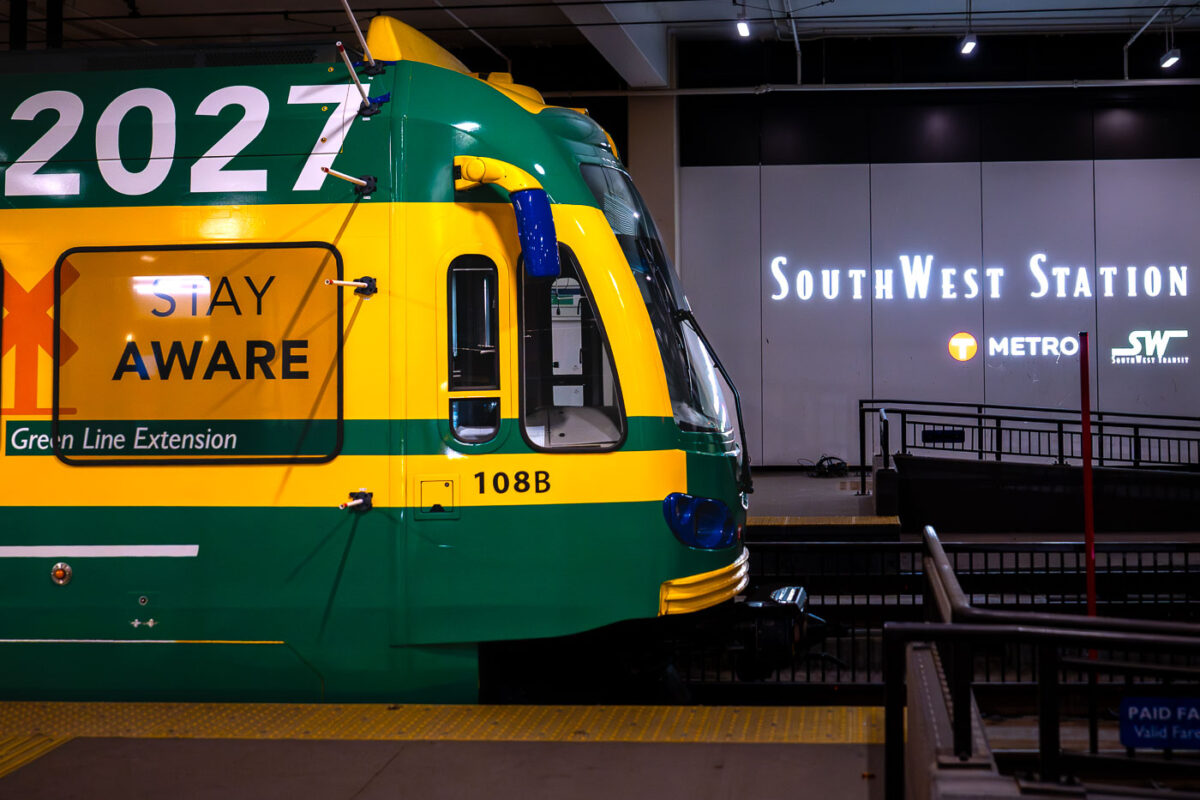
October 2025 — Siemens Type III S700 with Light Rail Happening Now testing wrap. The train car will be part of the new Southwest LRT Green Line Extension set to open in 2017.
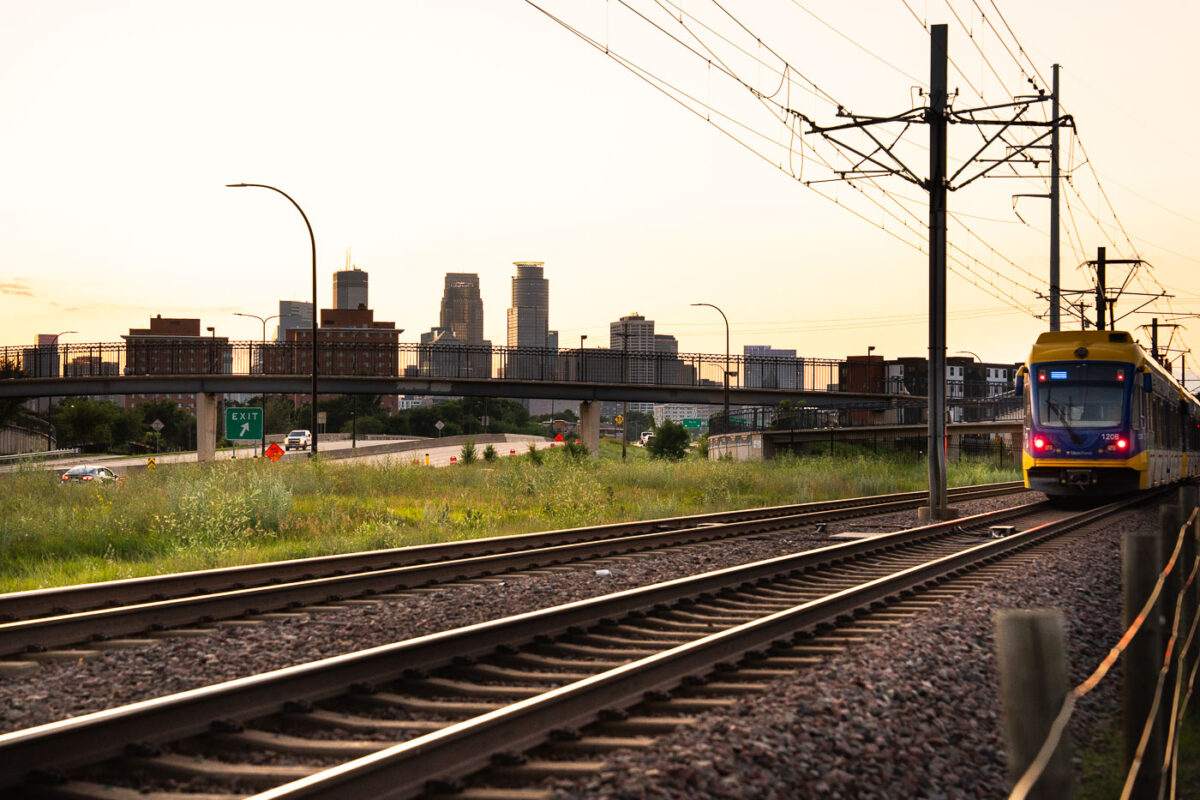
July 2025 — A Metro Transit train heading out of Downtown Minneapolis during a July 2025 sunset.
April 2025 —
April 2025 —
April 2025 —
April 2025 —
April 2025 —
April 2025 —
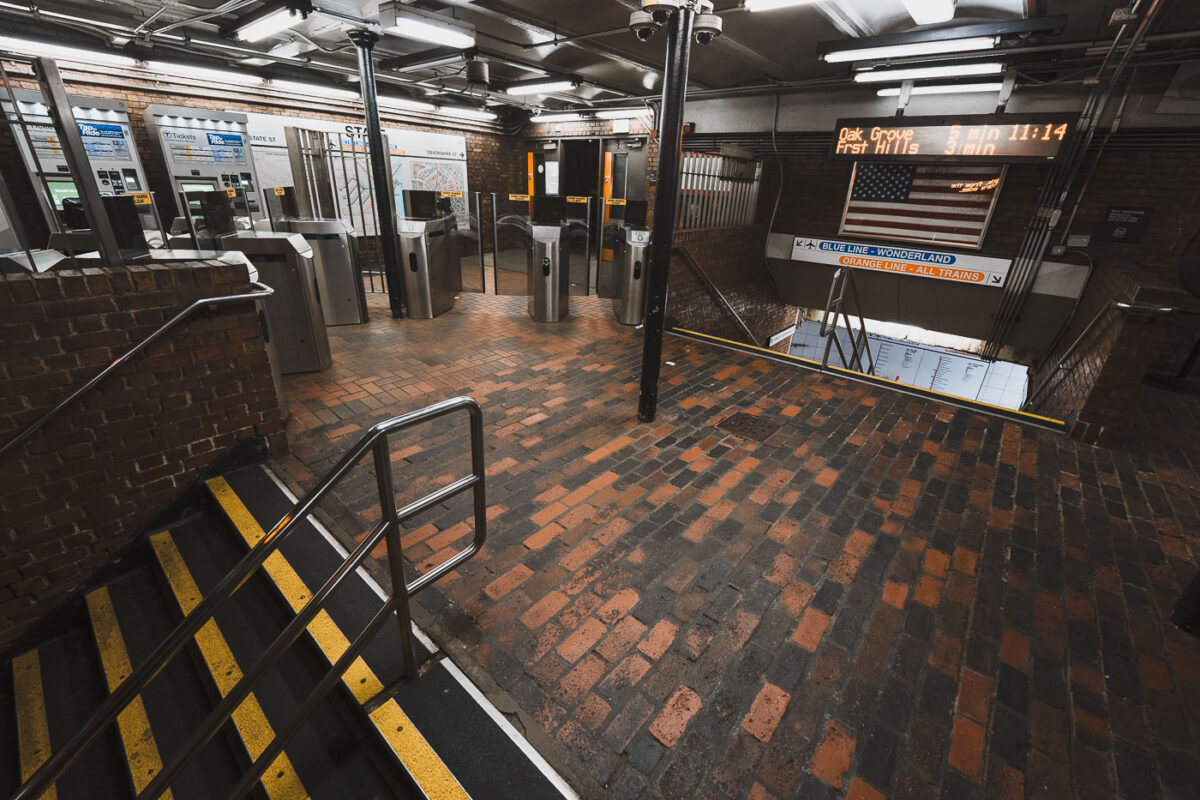
April 2025 — The entrance and fare control area at State Street Station, a key interchange in downtown Boston where the Orange Line and Blue Line intersect. The station opened in 1908 as part of the Washington Street Tunnel and remains one of the MBTA’s oldest continuously operating rapid transit facilities. Brick flooring, steel columns, and low ceilings reflect early 20th-century subway construction, while modern fare gates and electronic arrival boards show later upgrades layered onto the original structure. The signage directing riders to Oak Grove, Forest Hills, and Wonderland highlights the station’s role as a transfer point connecting North Shore riders, downtown commuters, and the broader MBTA network.
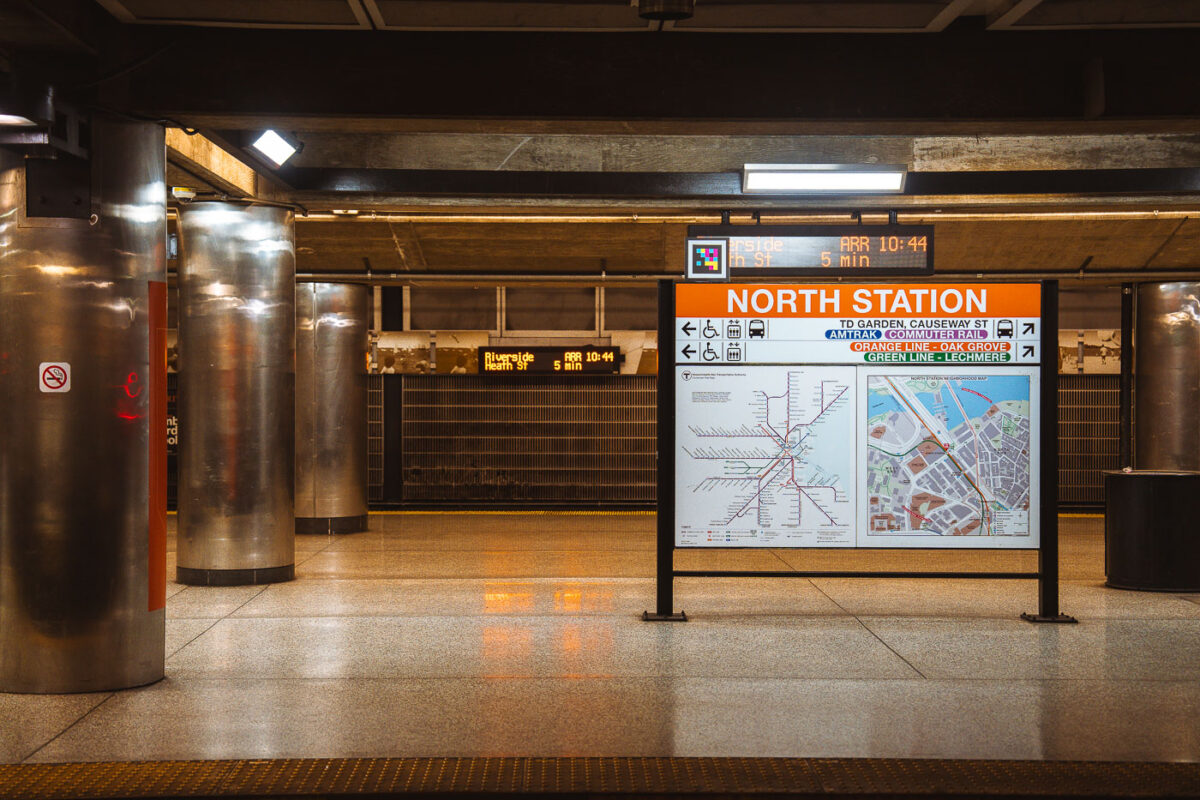
April 2025 — Interior signage at North Station, one of Boston’s oldest and most complex transit hubs. The station sits beneath TD Garden and serves as a major interchange between the MBTA Orange Line, Green Line (north branches), Amtrak Downeaster, and MBTA Commuter Rail. The current underground rapid-transit facilities date largely to the late 20th-century rebuilds, following the demolition of the original above-ground North Station headhouse in the 1920s and subsequent reconstructions tied to Boston’s evolving rail network. The platform wayfinding reflects this layered role: subway lines, regional rail, and intercity service are all integrated into a single information system. Electronic arrival boards and map panels emphasize transfer efficiency in a station that functions as the northern rail gateway to downtown Boston and the broader New England rail network.
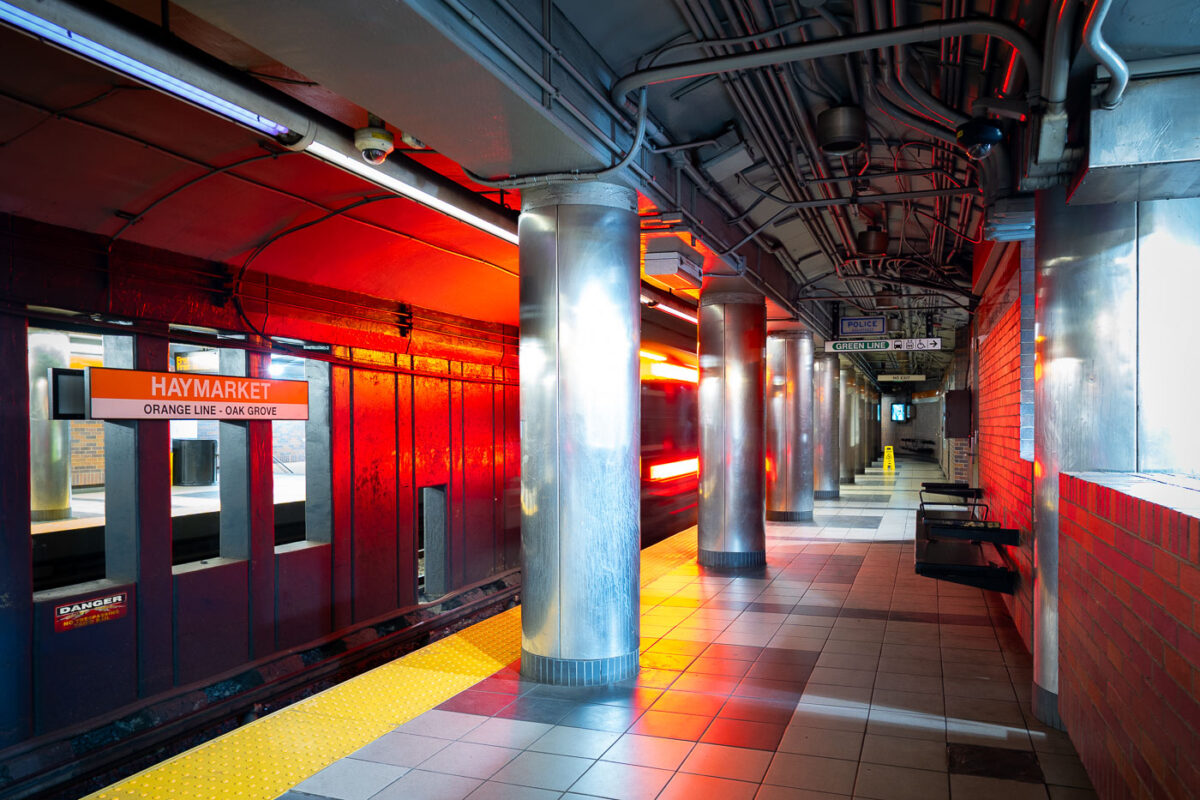
April 2025 — Haymarket Station in downtown Boston, one of the oldest transit locations in the city, serving riders since the late 19th century in various forms. The current underground station opened in 1971 as part of the MBTA’s modernization of the Orange Line, replacing earlier elevated structures that once ran through the area. The station sits at the edge of the historic Haymarket district, long associated with public markets and transportation links between downtown and Boston’s North End. The cylindrical steel columns and low-ceilinged platforms reflect mid-20th-century transit design, while the signage and lighting document decades of incremental updates to keep the station functional within one of the system’s busiest transfer points.
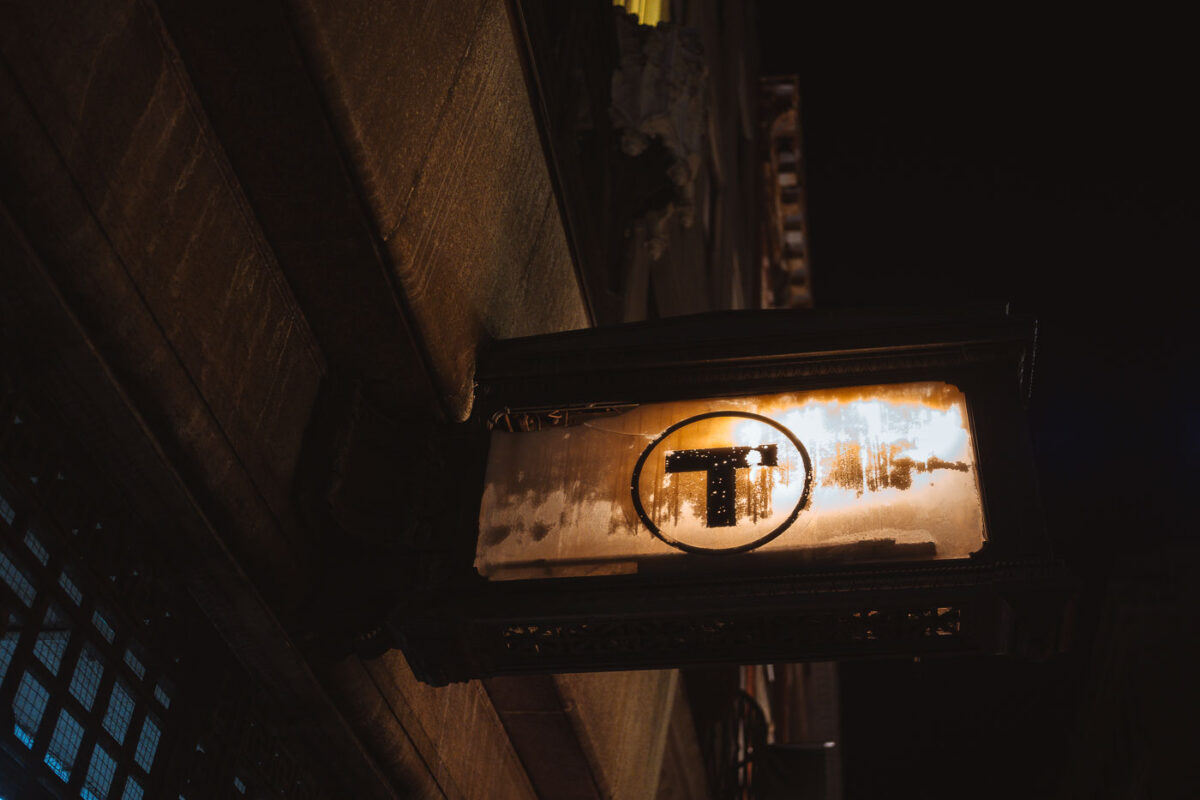
April 2025 — An illuminated MBTA roundel mounted beneath a streetscape, marking an entrance to Boston’s subway system. The simple black “T” inside a white circle has been used in various forms since the mid-20th century and became the unified symbol of the MBTA in the 1960s, replacing a mix of earlier streetcar and rapid-transit branding. Designed for quick recognition in dense urban conditions, the sign’s placement below street level reflects how much of Boston’s transit infrastructure is woven directly into older masonry buildings and narrow rights-of-way. The weathered lightbox and surrounding stonework show decades of exposure, maintenance, and adaptation as the system has evolved while keeping its most recognizable identifier largely unchanged.
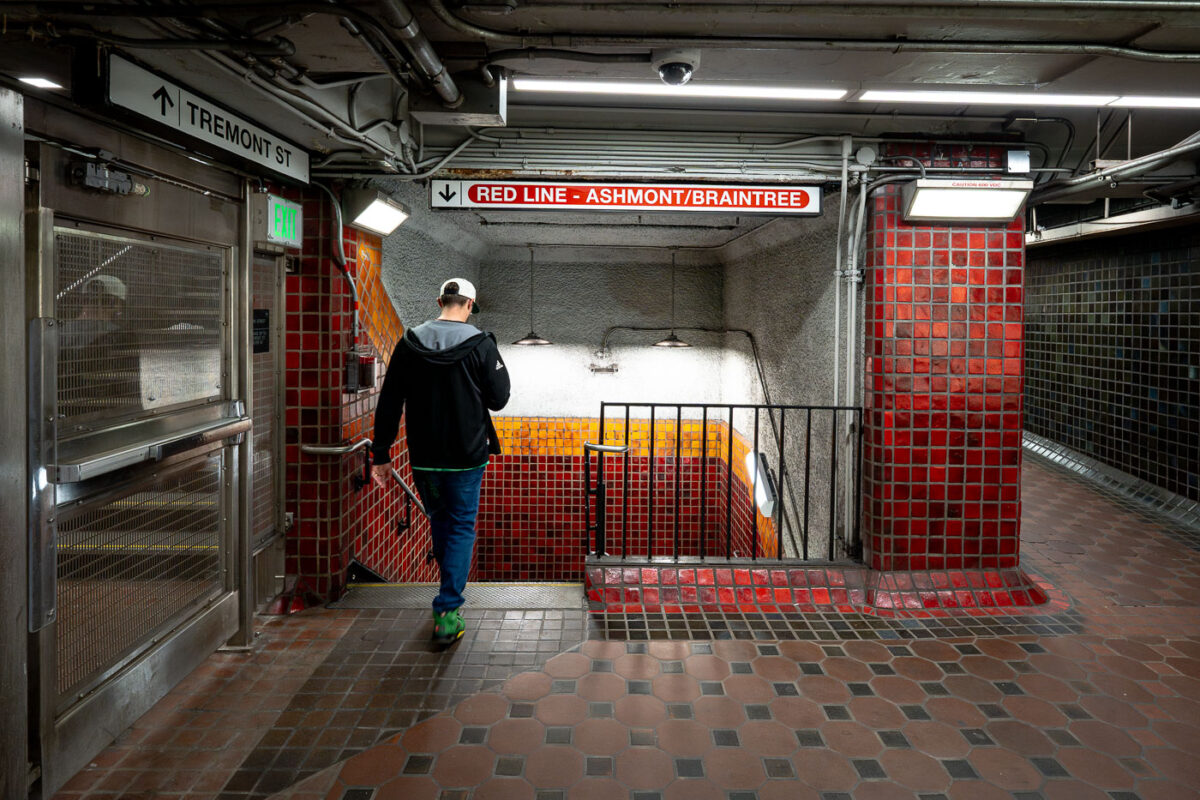
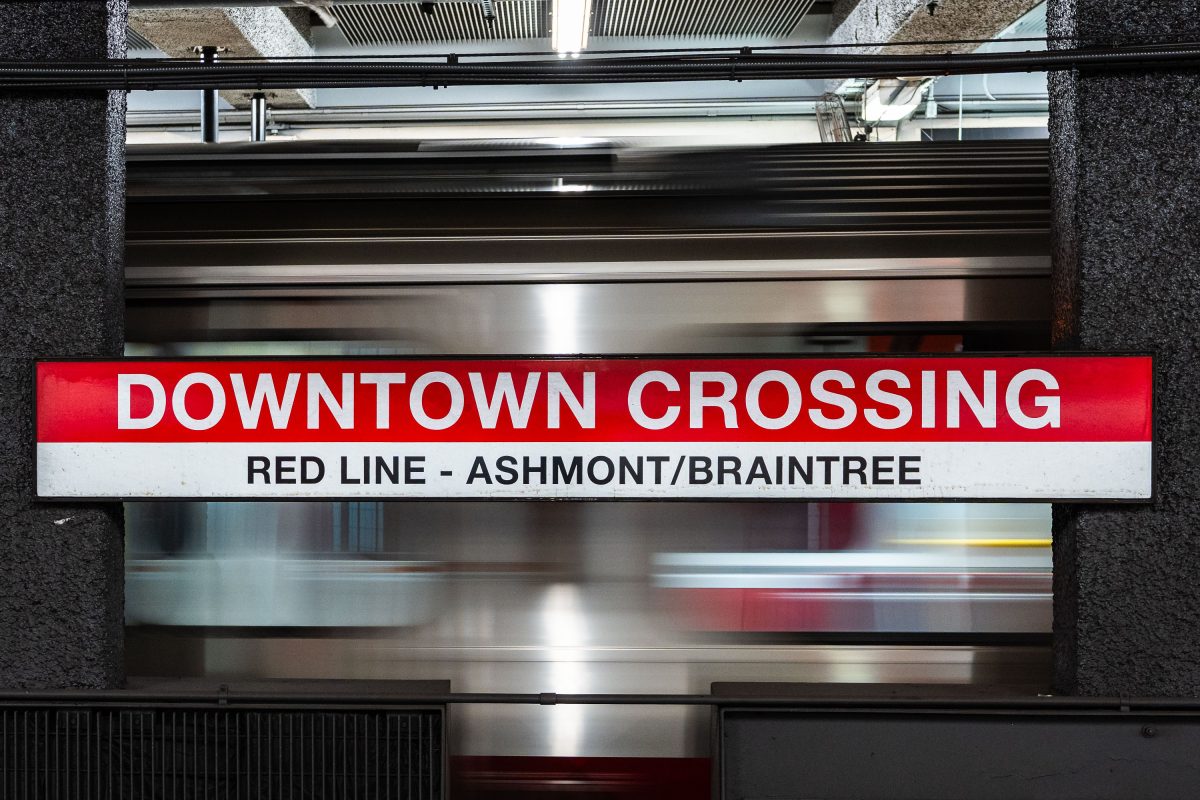
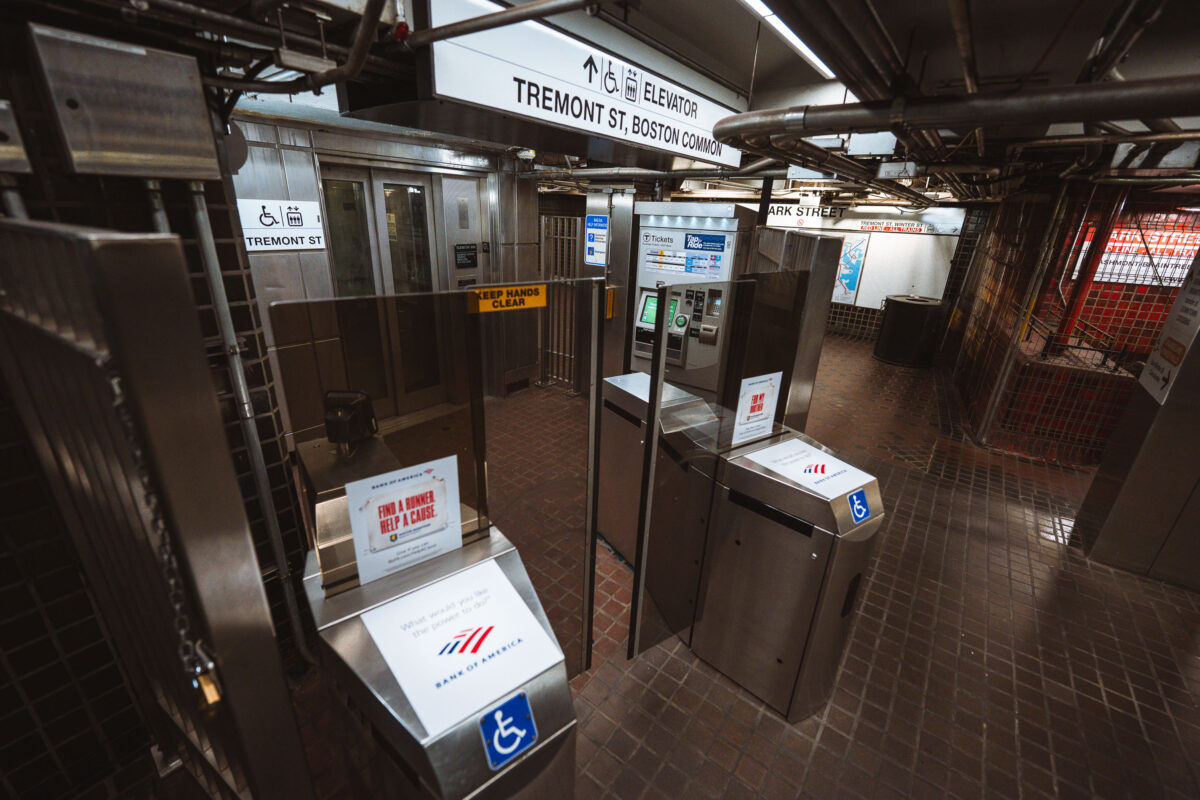
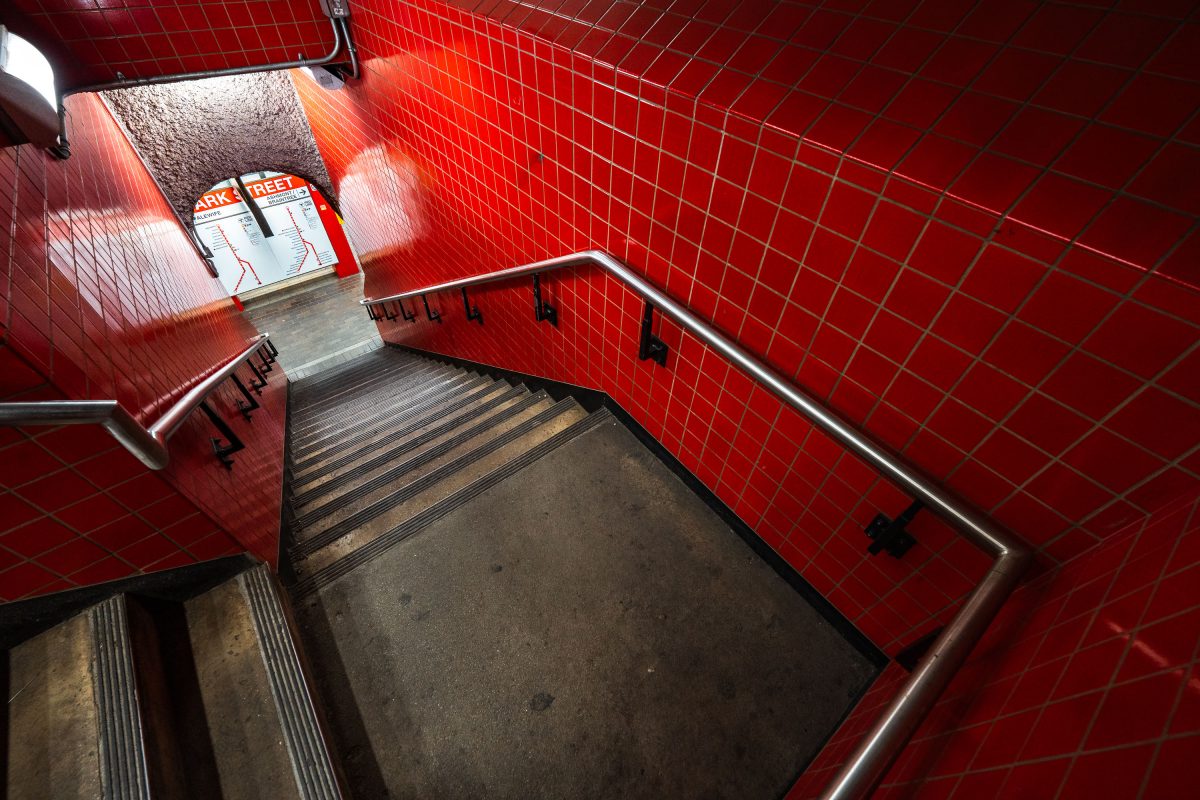
April 2025 — Inside Park Street station, one of the oldest active subway stations in the United States. Opened in 1897 as part of the Tremont Street Subway, the station has long served as a central transfer point beneath Boston Common. The tiled corridors and low ceilings reflect early subway construction techniques, with later renovations layering modern lighting, signage, and safety systems onto the original structure. Directional signage for the Ashmont and Braintree branches marks this passage as part of the MBTA Red Line, which continues to use Park Street as a key junction between downtown Boston and the city’s southern neighborhoods.
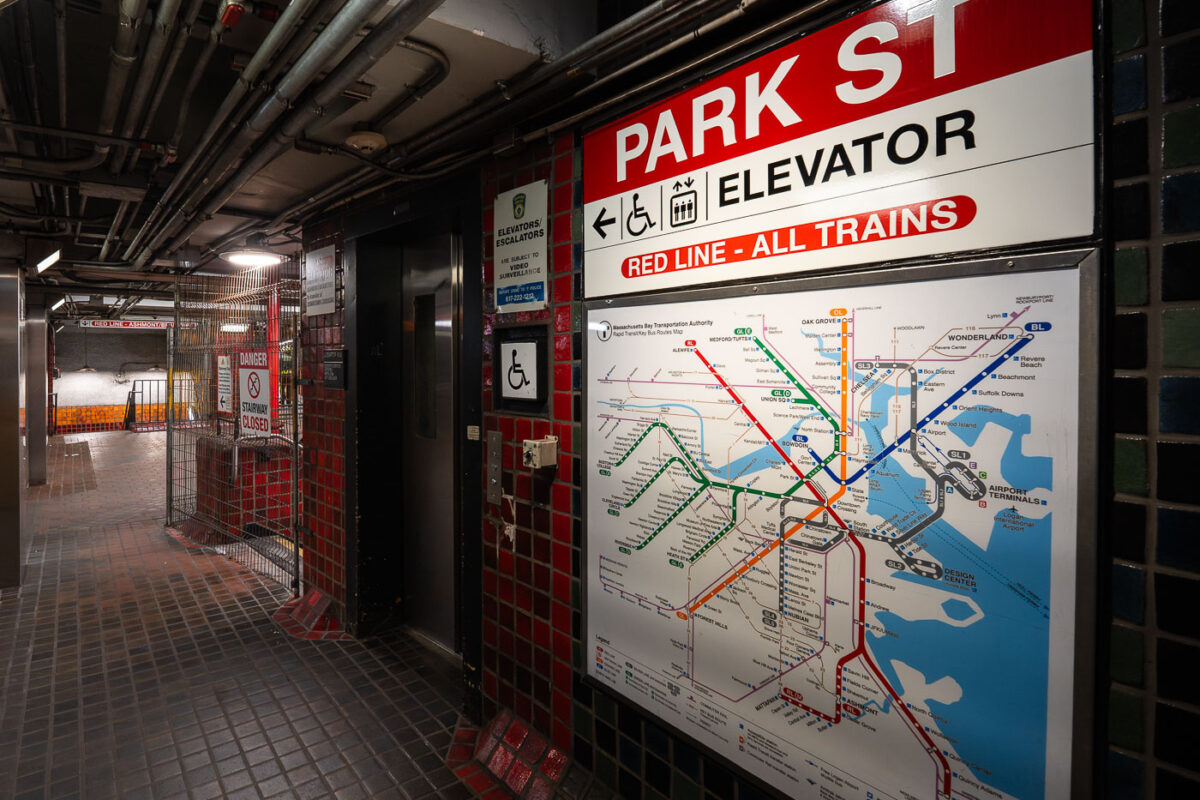
April 2025 — Boston's MBTA Park Street Red Line train station.
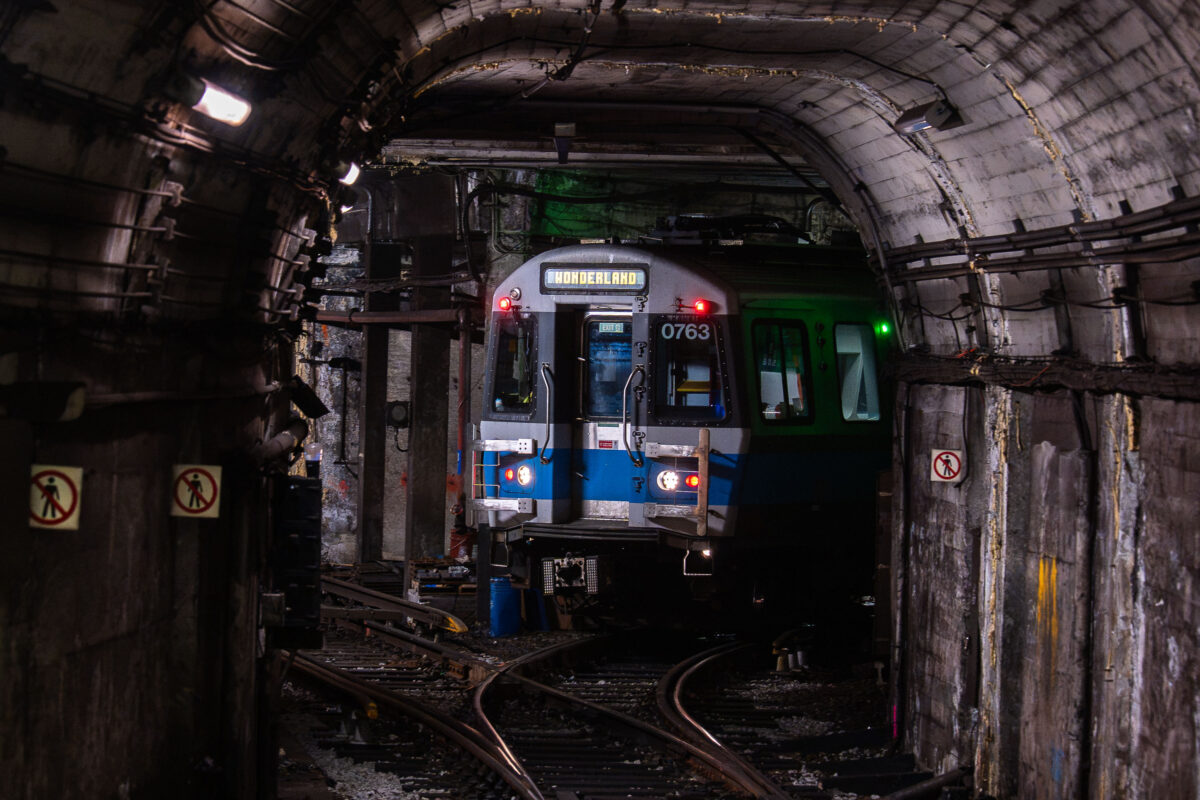
April 2025 —
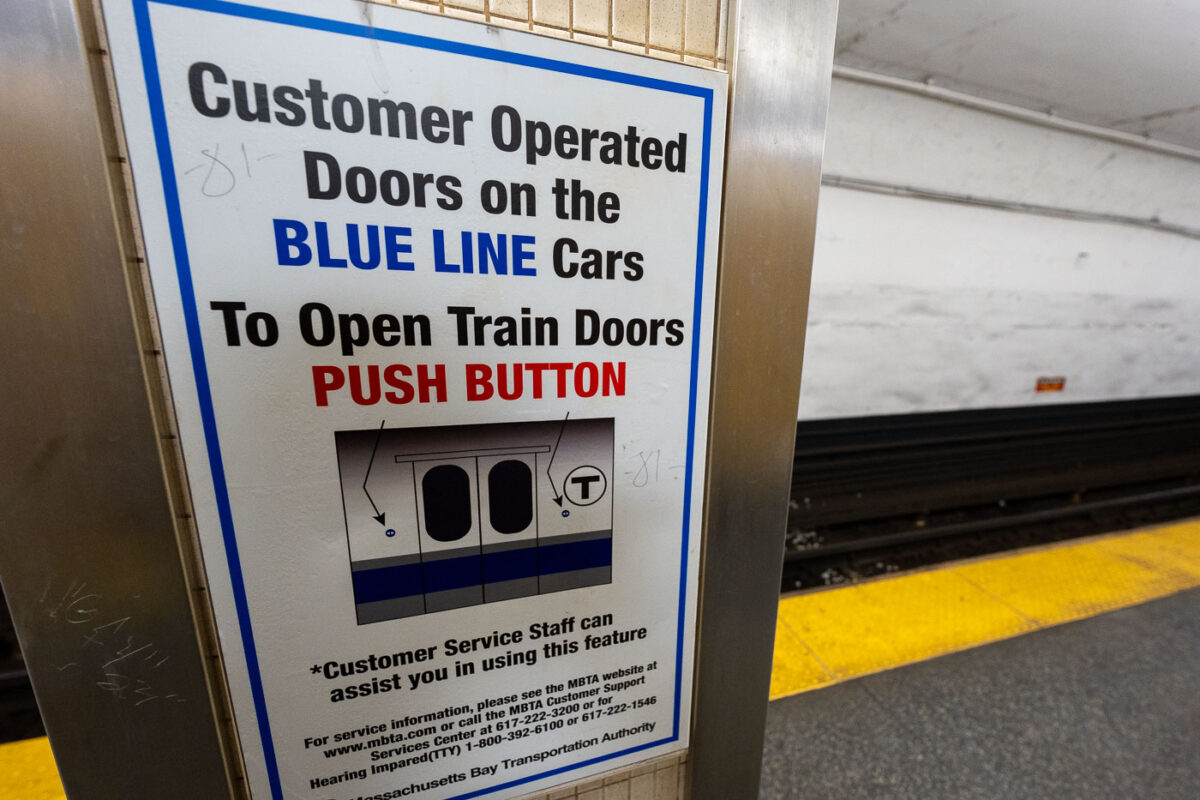
April 2025 — A platform sign explaining customer-operated doors on Blue Line trains of the Massachusetts Bay Transportation Authority. Unlike many rapid-transit systems where doors open automatically at every stop, portions of the MBTA Blue Line fleet require passengers to press a button to open the doors once the train is stopped. This practice dates back to older car designs and cold-weather operating considerations, helping retain heat in winter and reduce unnecessary door cycling. The sign reflects the MBTA’s continued reliance on legacy rolling stock and the need for clear, standardized instructions in stations with high passenger turnover.
April 2025 —
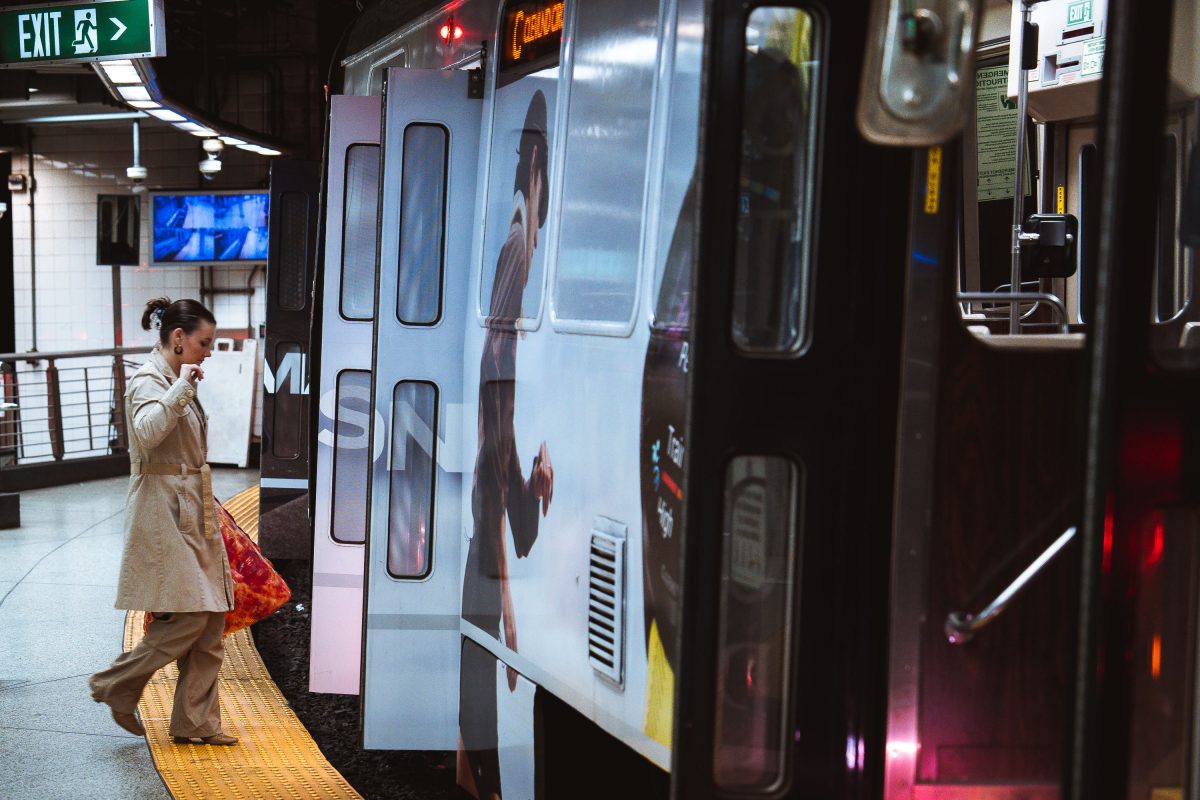
April 2025 —
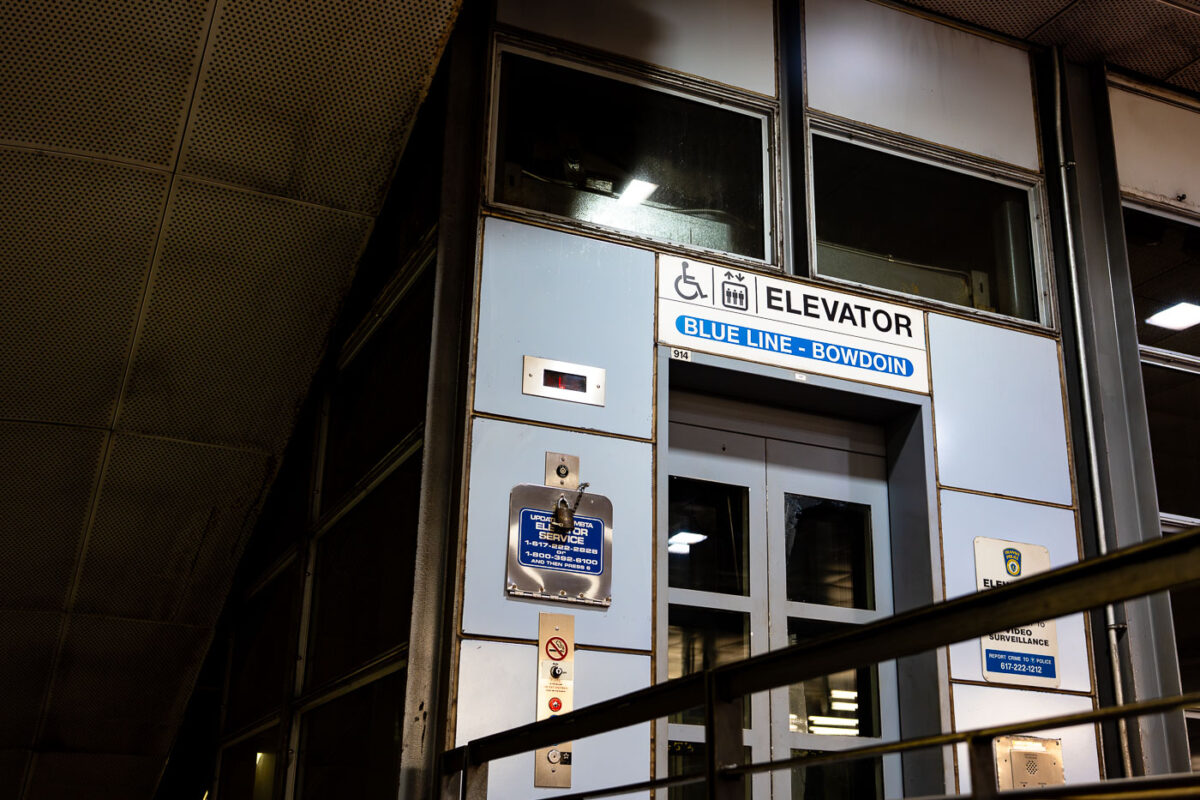
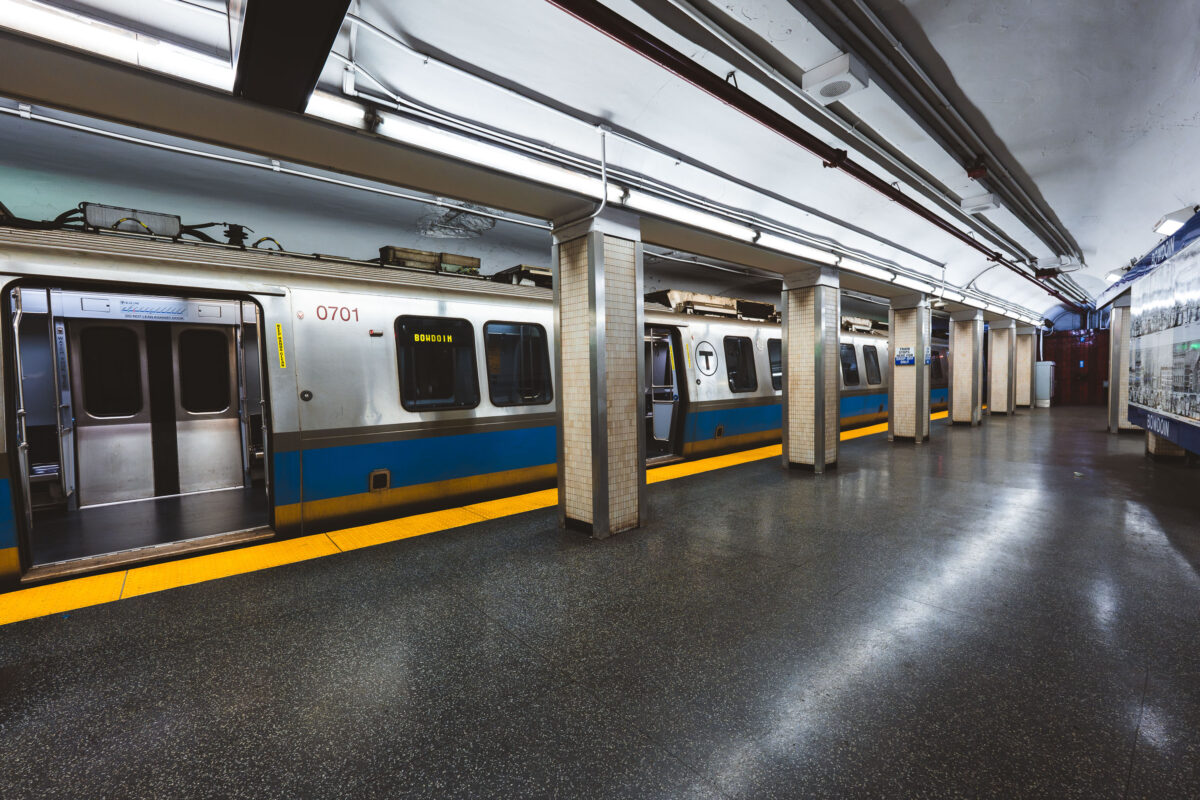
April 2025 — An elevator entrance at Bowdoin station, the downtown terminal of Boston’s Blue Line. Bowdoin Station opened in 1916 as part of the East Boston Tunnel, one of the earliest underwater rapid-transit tunnels in North America. The station is notable for its compact footprint, tight curves, and historically limited accessibility compared to newer MBTA stations. This elevator provides step-free access between street level and the platform, reflecting later retrofits required by accessibility standards rather than original station design. The utilitarian signage, metal paneling, and enclosed structure are characteristic of mid-to-late 20th century upgrades layered onto early 20th century transit infrastructure, illustrating how legacy subway systems have been incrementally adapted to modern accessibility and safety requirements.
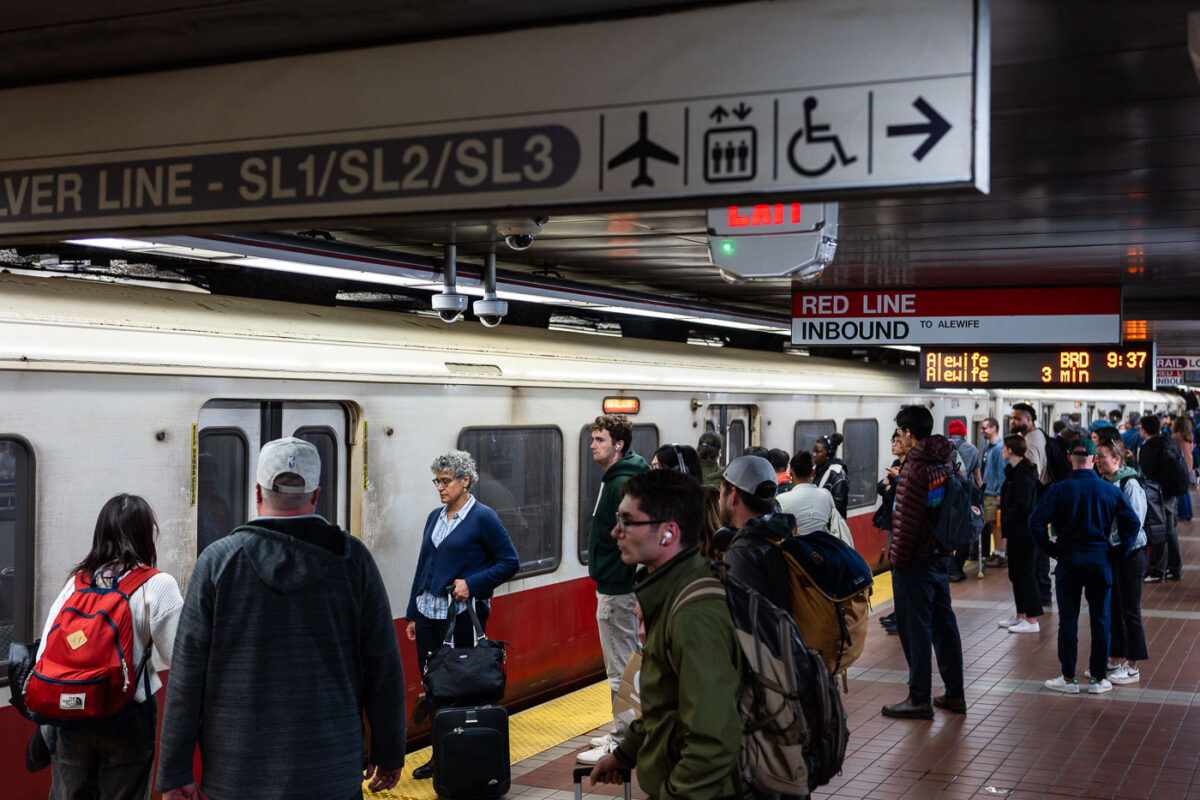
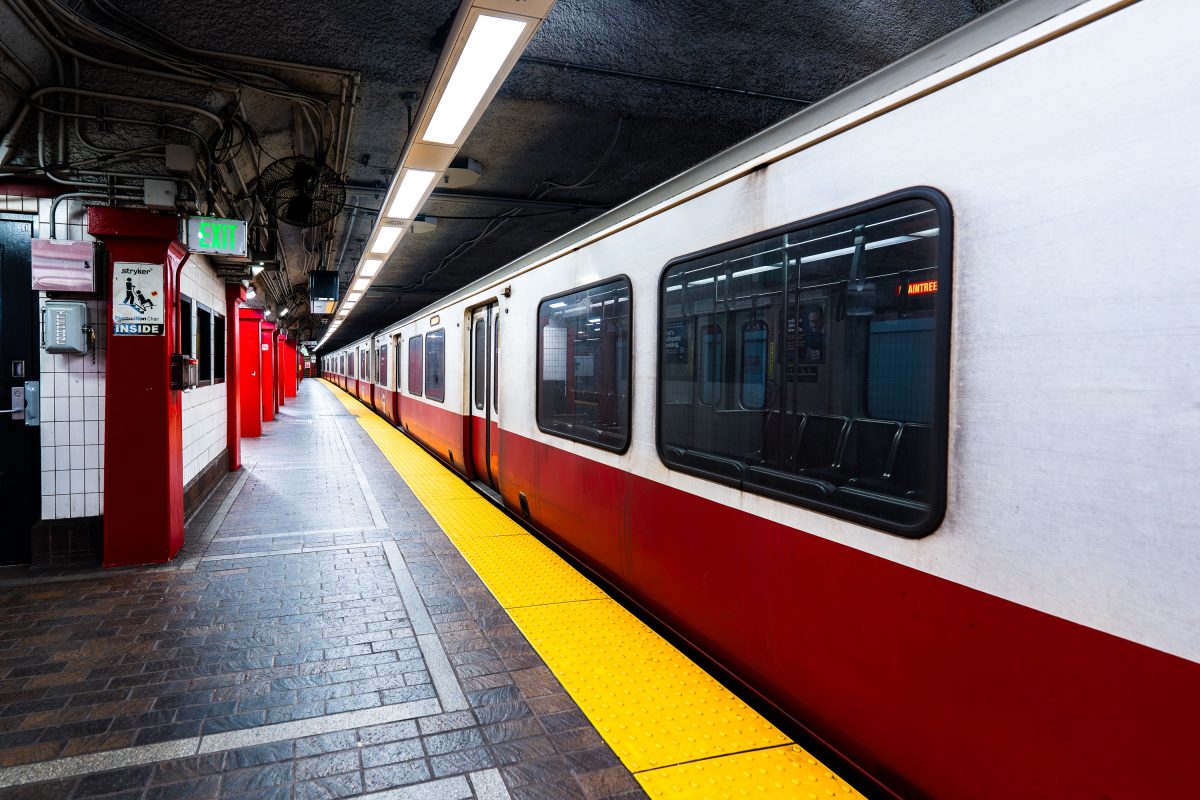
April 2025 — Passengers wait alongside an inbound MBTA Red Line train, headed toward Alewife, on a busy underground platform in downtown Boston. The Red Line is the system’s oldest rapid transit route, opening in 1912 and forming the backbone of east–west and north–south travel through the city. The high-floor cars shown here reflect decades of incremental fleet updates, while the tiled platforms, overhead wayfinding, and digital countdown signs illustrate how the MBTA has layered modern passenger information systems onto early-20th-century station infrastructure. The crowding and luggage visible on the platform highlight the line’s dual role serving both daily commuters and airport-bound travelers via transfers to bus and rail connections.
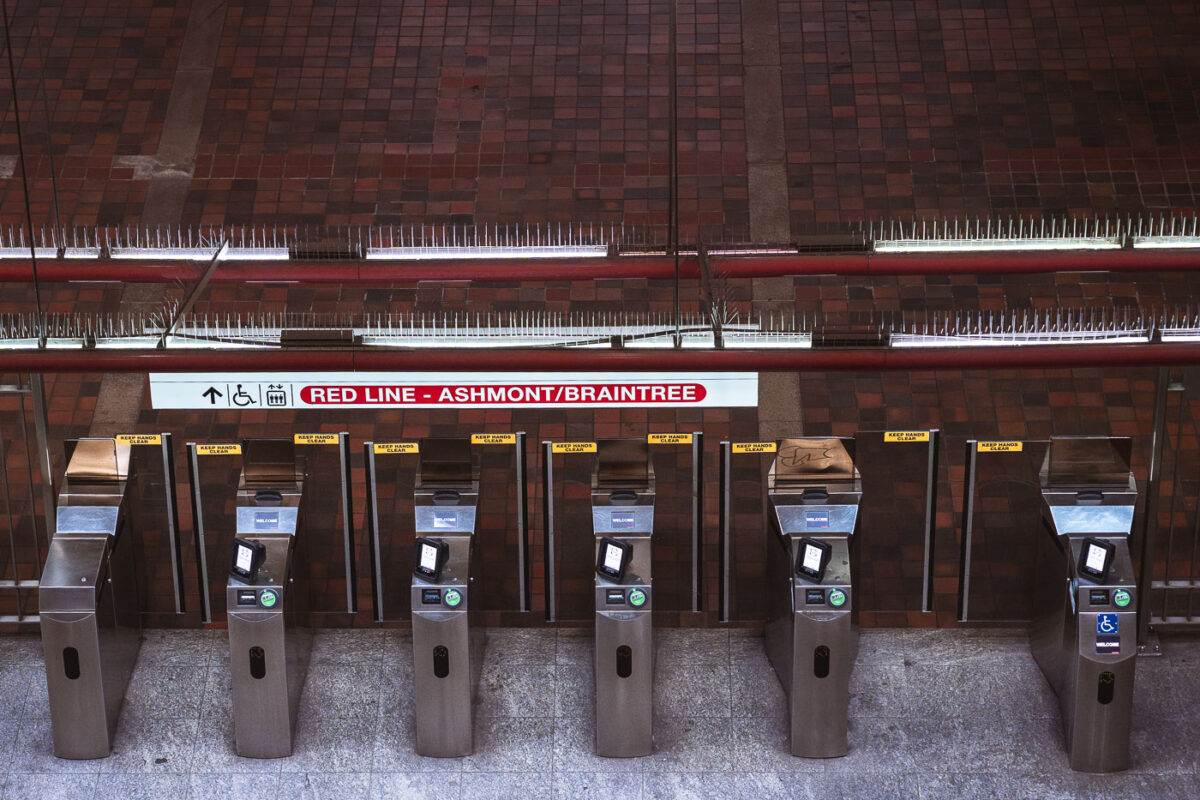
April 2025 — Fare gates line the paid entrance to the Massachusetts Bay Transportation Authority Red Line, directing riders toward Alewife-bound service. This northbound branch terminates at Alewife, the line’s northern endpoint, and serves as a primary commuter gateway for Cambridge and the Route 2 corridor. The stainless-steel fare control equipment reflects systemwide upgrades rolled out during the 2010s to improve ADA accessibility, reliability, and compatibility with modern fare media. Above the gates, the brick-vaulted ceiling and exposed utilities reflect the durable, utilitarian architecture common to many core Boston subway stations built and expanded in the mid-20th century, prioritizing longevity and fire resistance in high-traffic underground spaces.
April 2025 —
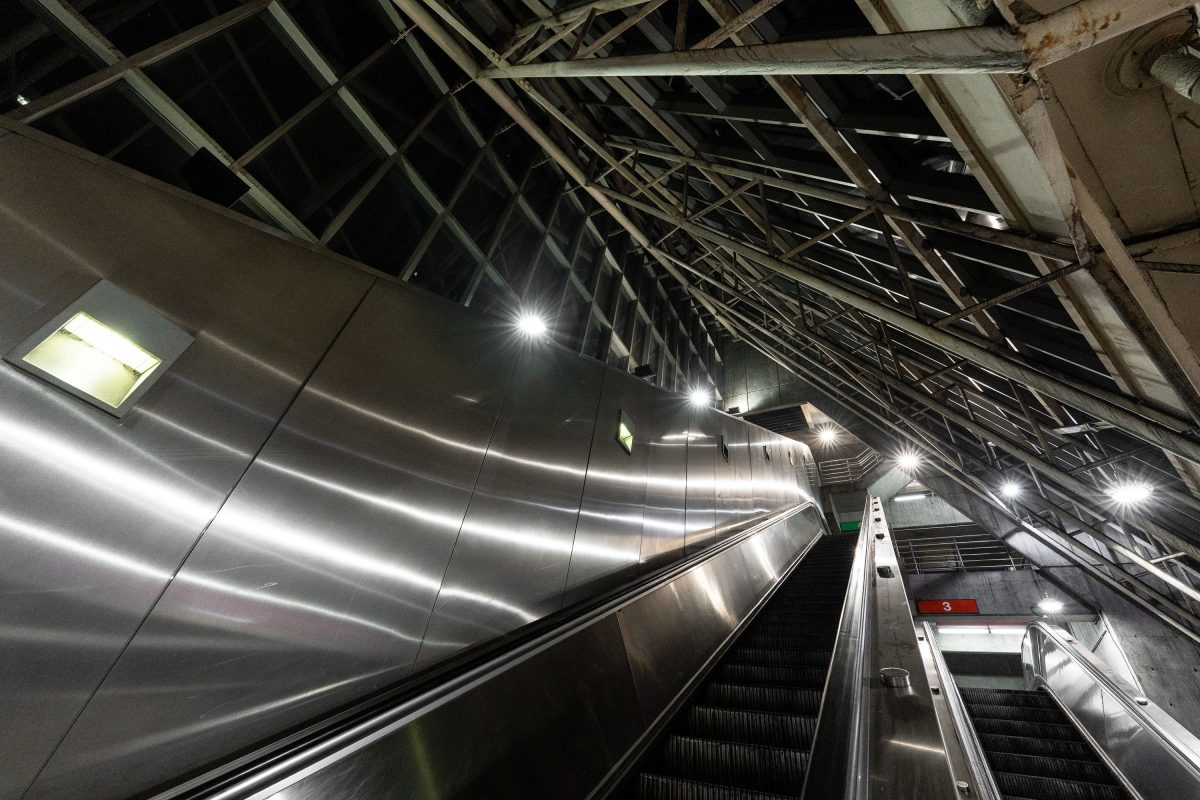
April 2025 —
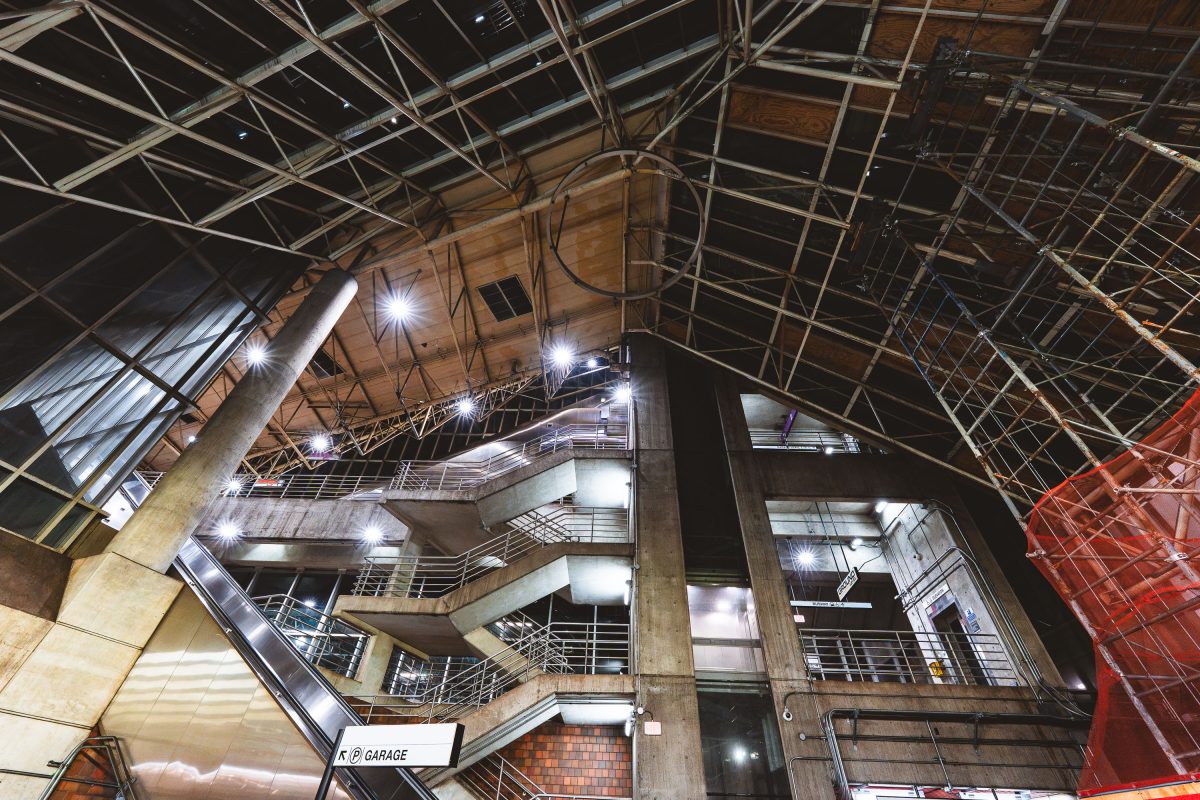
April 2025 —
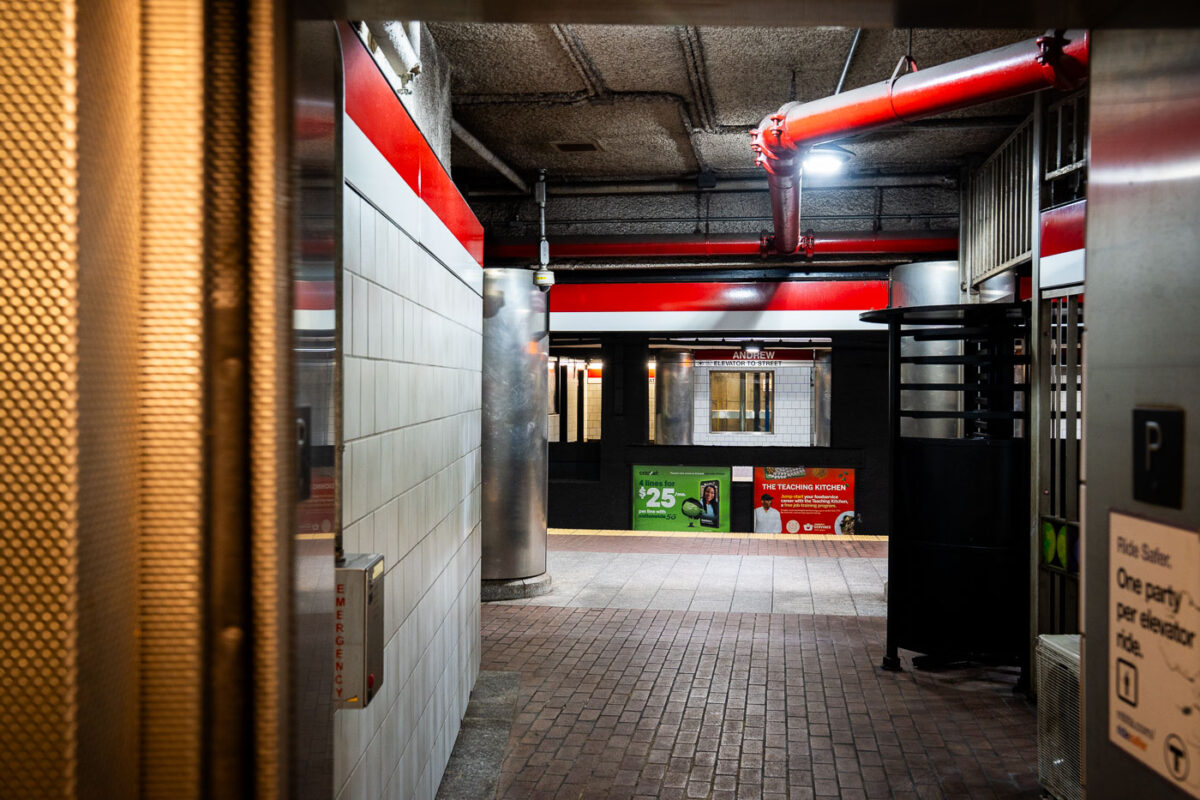
April 2025 — Getting off an elevator at Andrew Station on the red line in Boston.
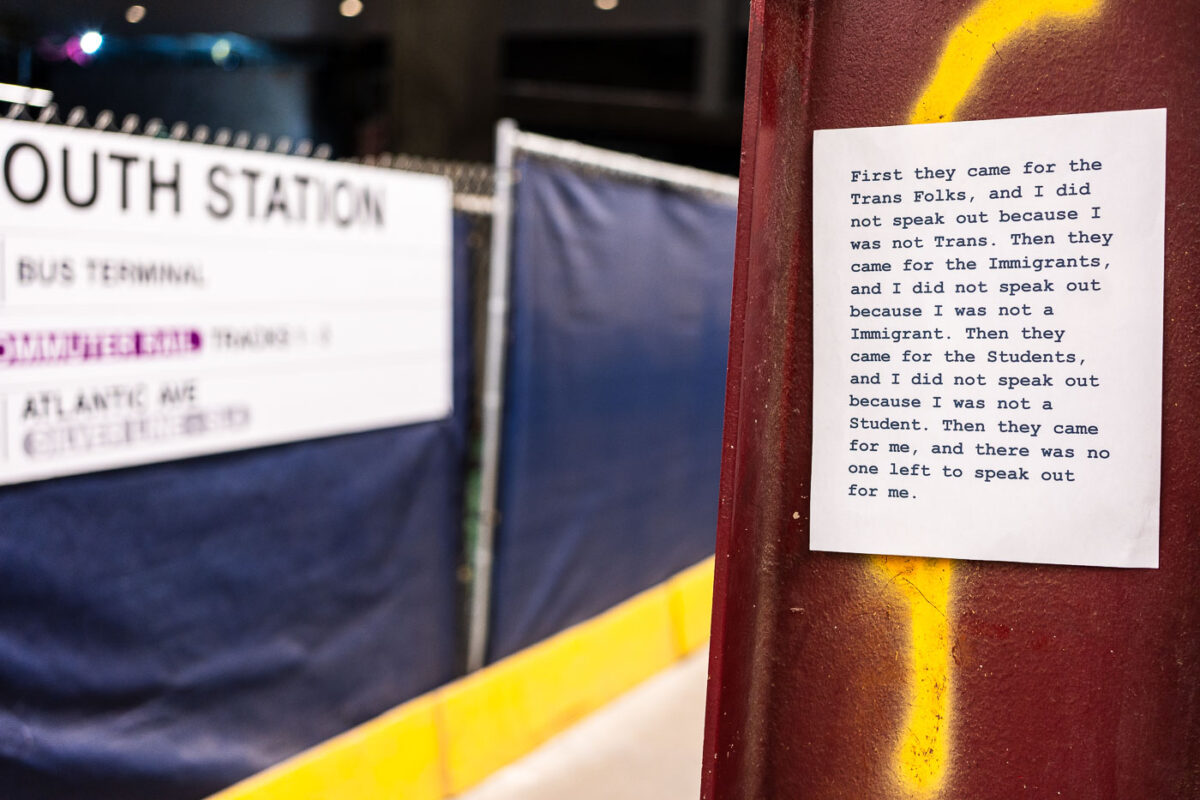
April 2025 — Sign seen at South Station in Boston: "First they came for the Trans Folks, and I did not speak out because I was not Trans. Then they came for the Immigrants, and I did not speak out because I was not a Immigrant. Then they came for the Students, and I did not speak out because I was not a Student. Then they came for me, and there was no one left to speak out for me."
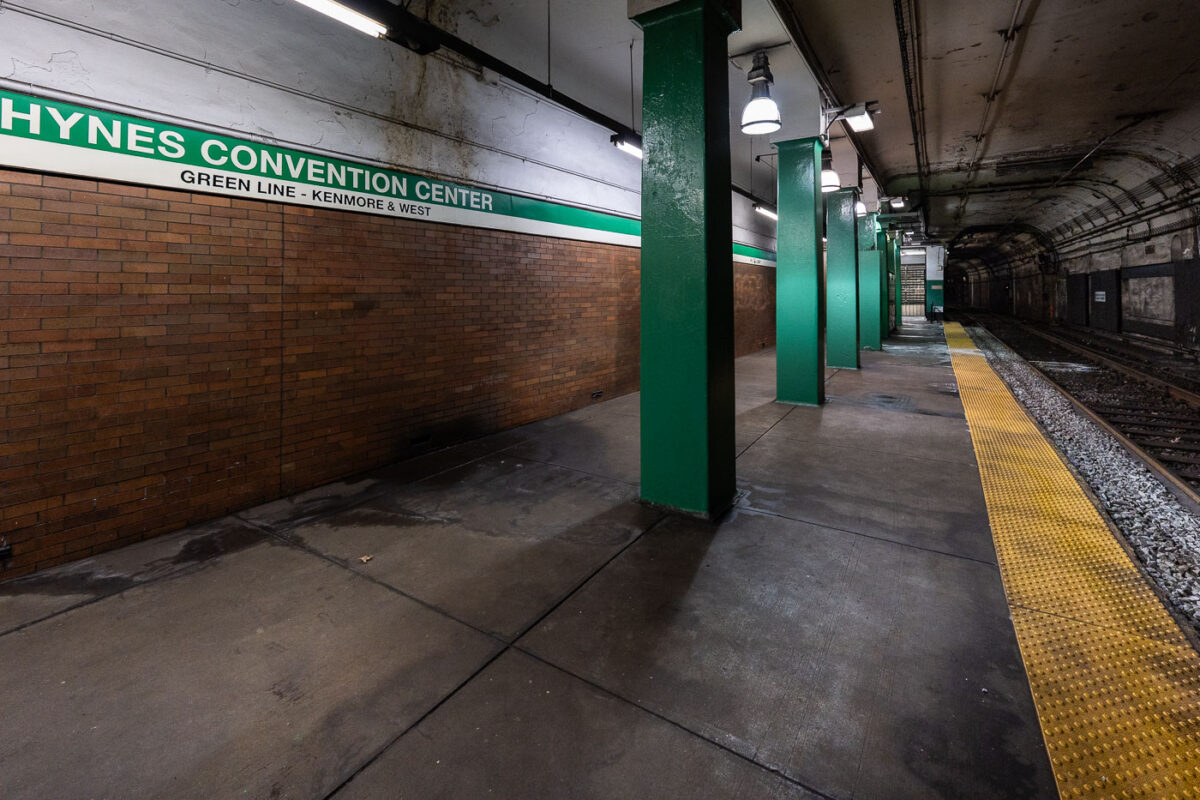
April 2025 — MBTA Green Line train platform at Hynes Convention Center.
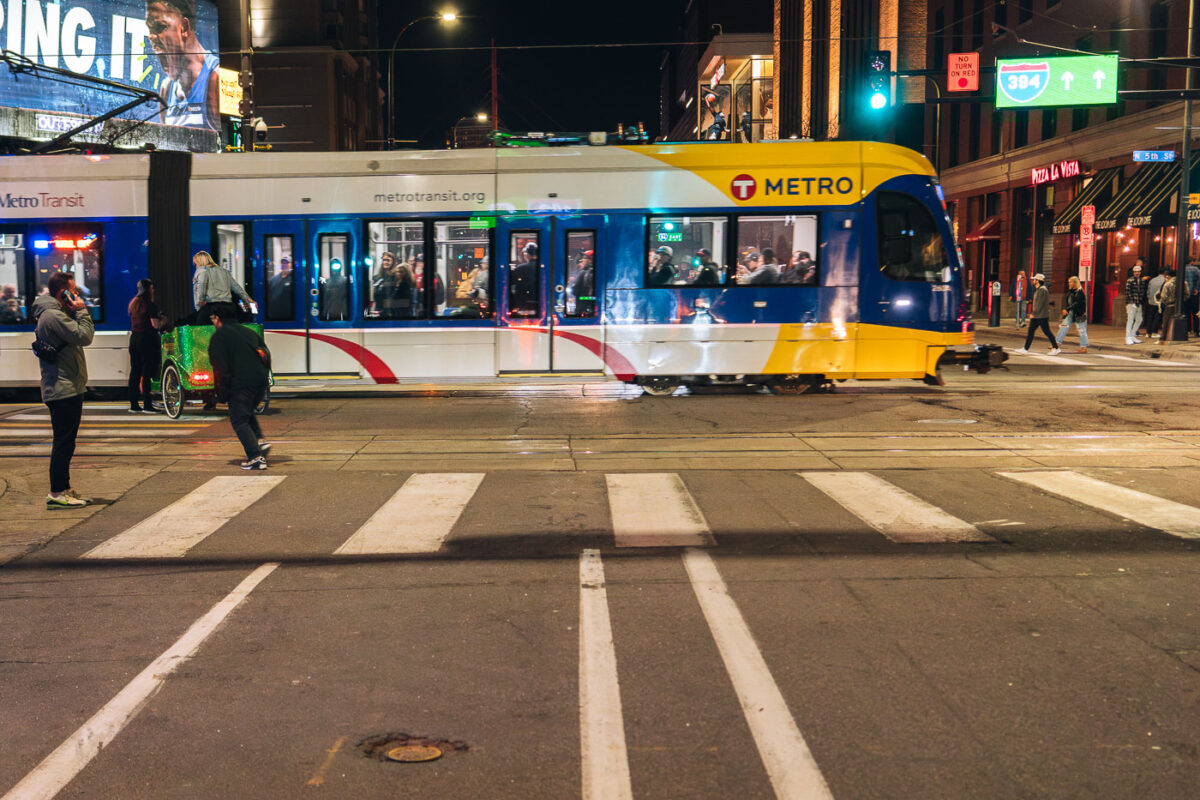
April 2025 — A light rail train moves towards the Warehouse District/Hennepin Ave station on a warm spring evening.
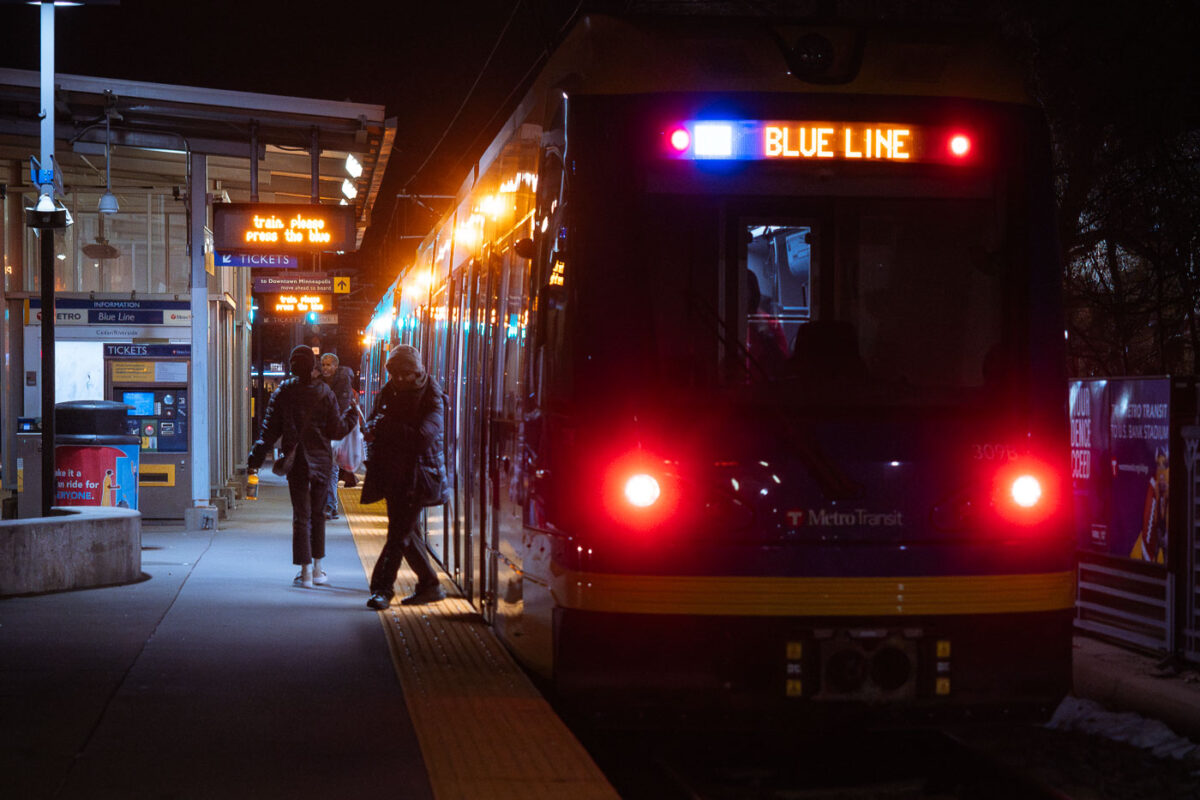
March 2025 — A Blue Line train at the Cedar Riverside stop in Minneapolis.
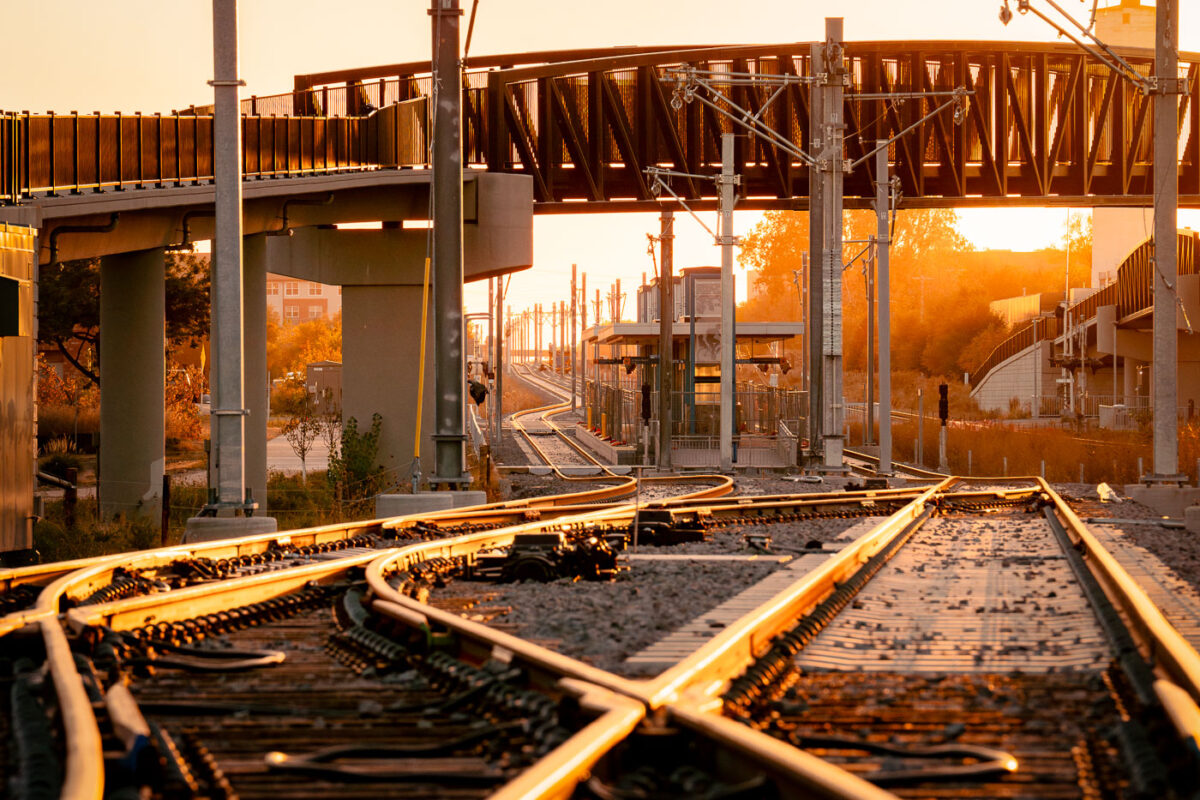
October 2024 —
October 2024 —
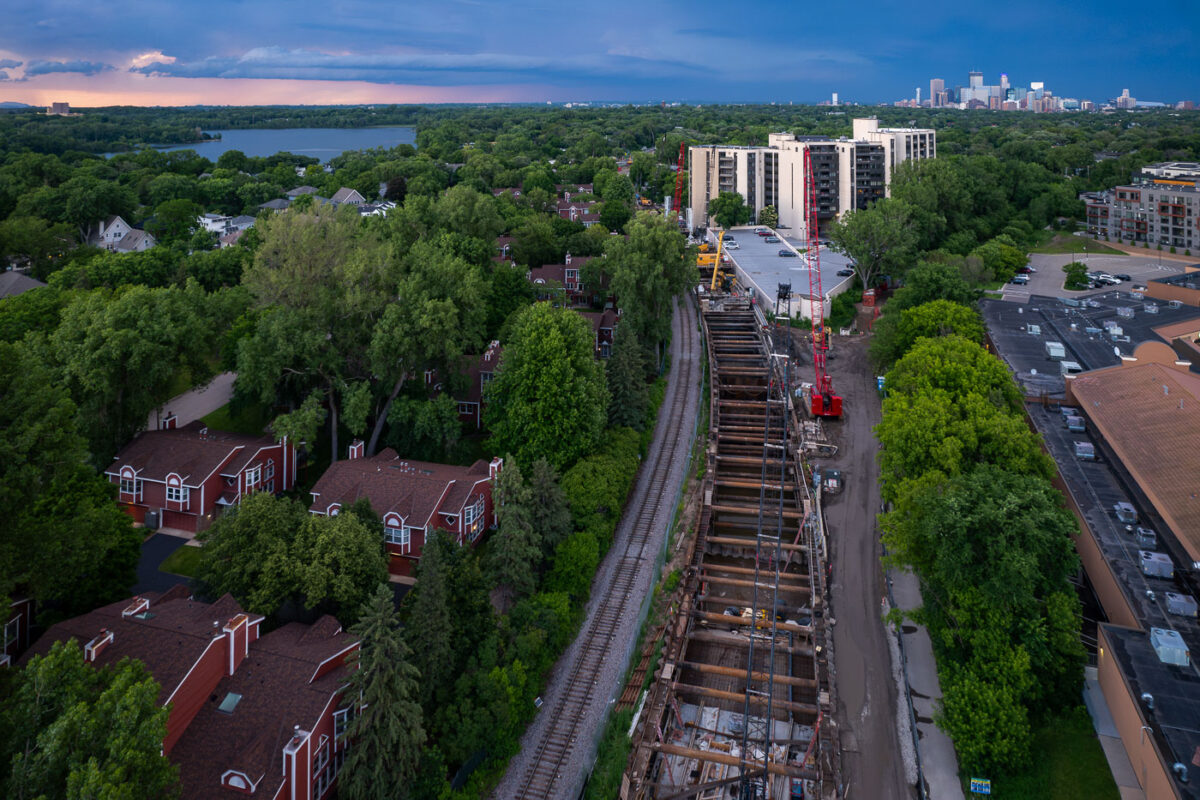
June 2024 — The half mile Kenilworth LRT tunnel, part of the new Green Line train extension, tonight as storms move through just north of Minneapolis. (Calhoun Isles, Minneapolis June 2024)
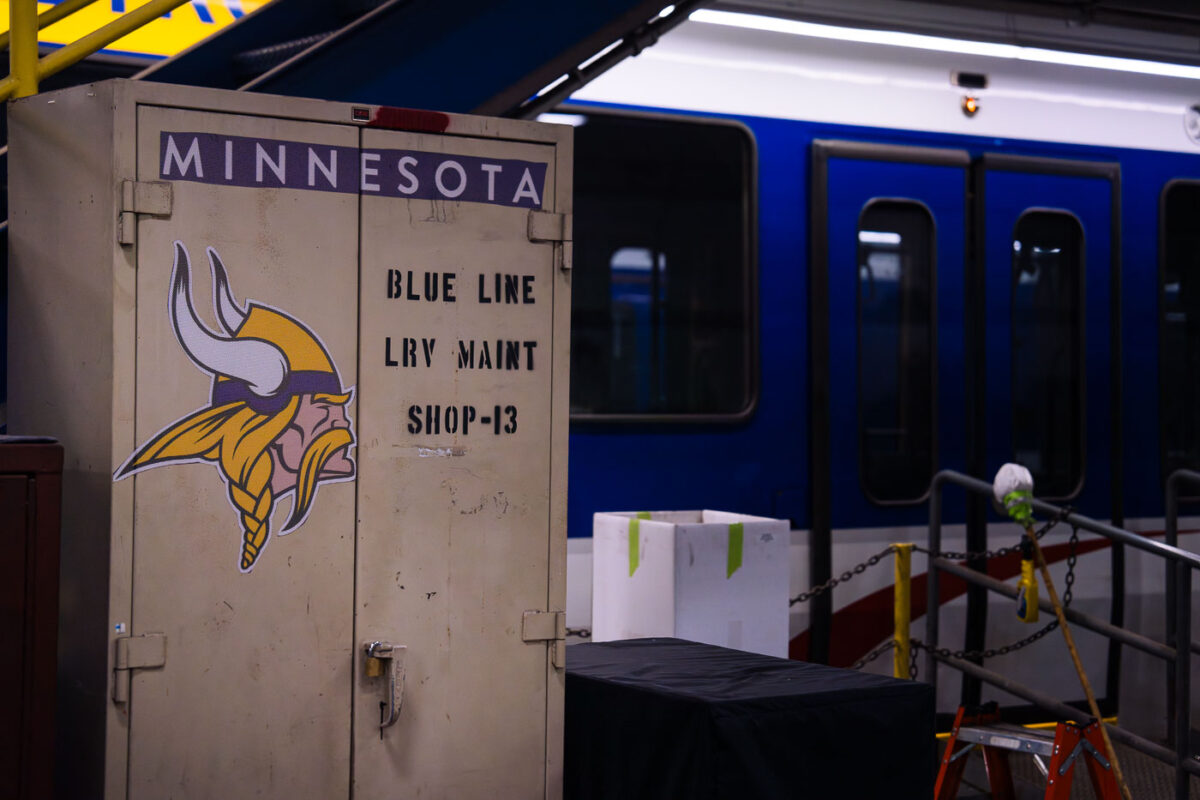
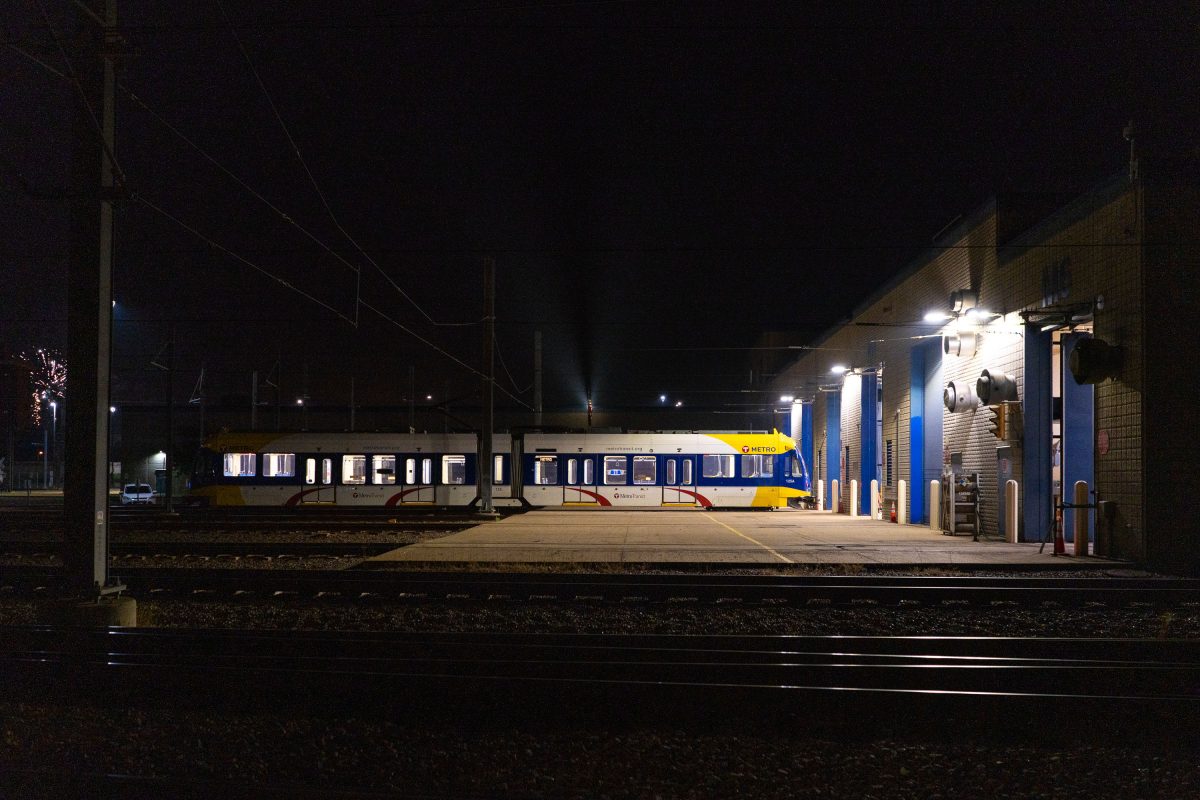
May 2024 — Metro Transit’s Light Rail Support Facility on Franklin Avenue in South Minneapolis. The facility is home the staff and equipment for the Green Line.
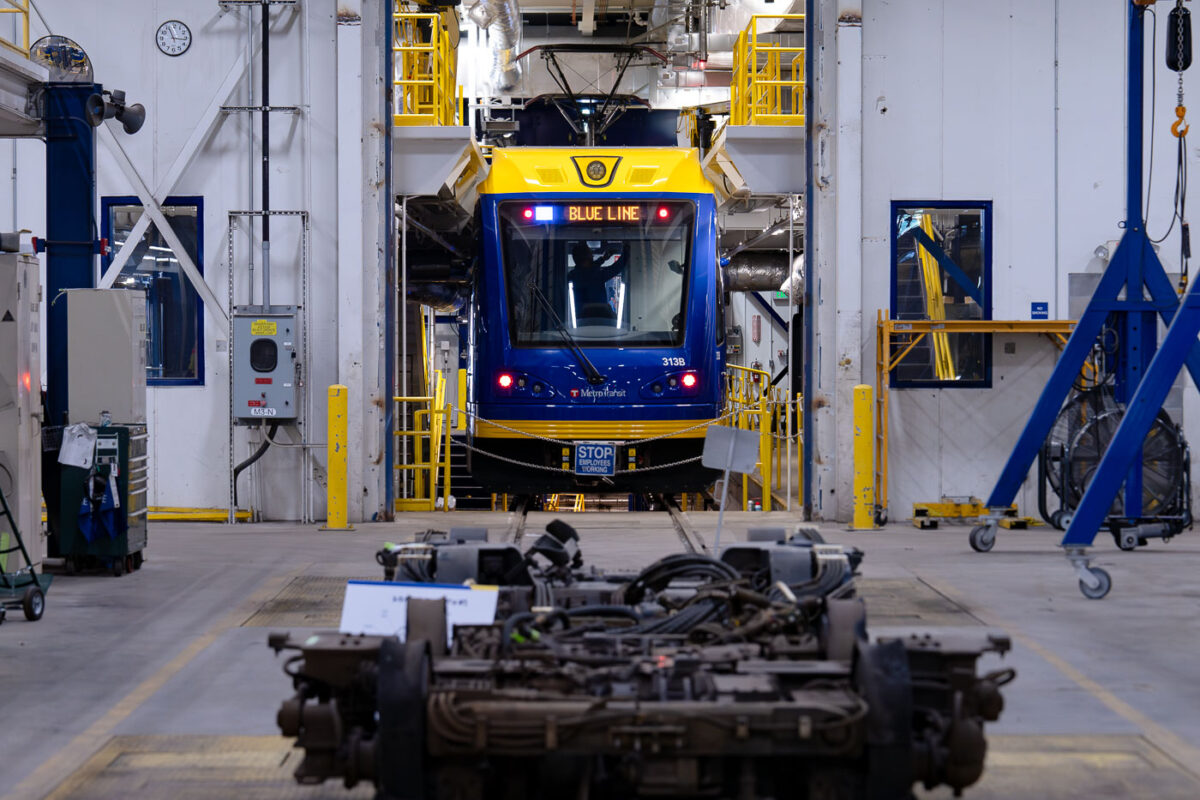
May 2024 — A new Green Line train that's currently running on the Blue Line at the Metro Transit’s Light Rail Support Facility on Franklin Avenue in South Minneapolis. The facility is home the staff and equipment for the Green Line.
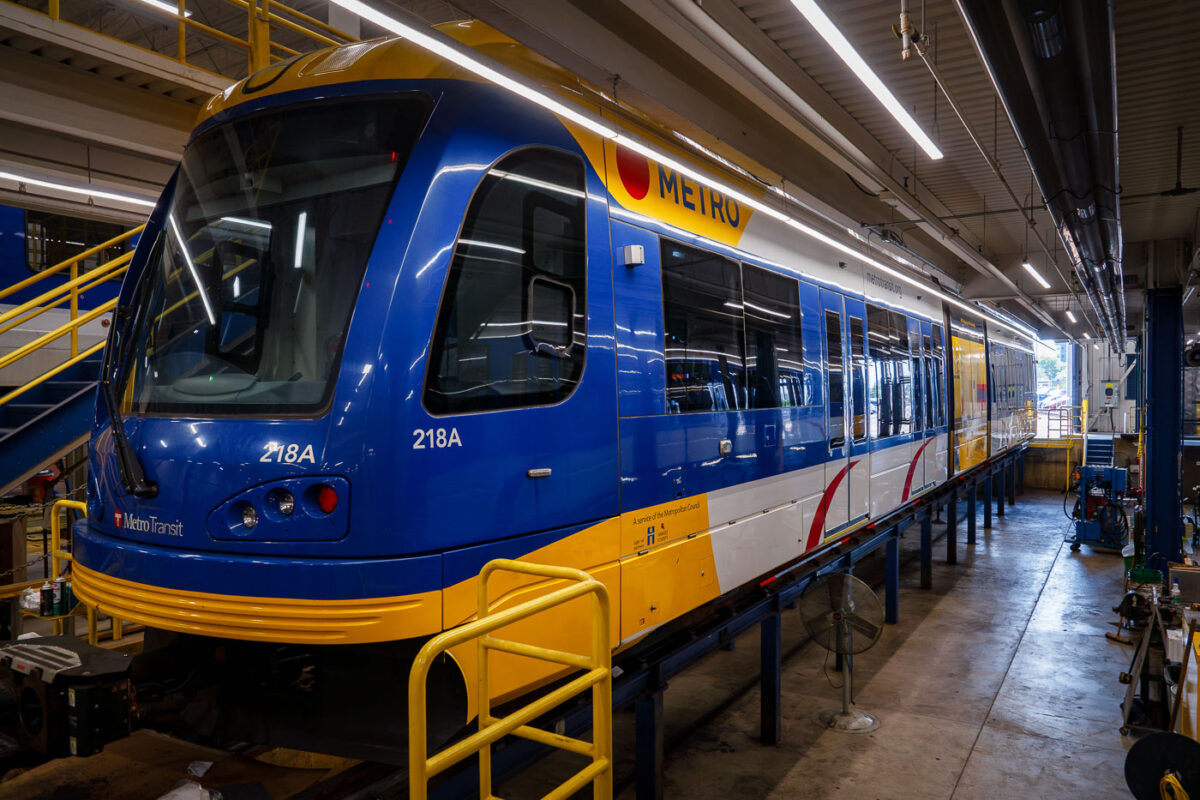
May 2024 — Metro Transit’s Light Rail Support Facility on Franklin Avenue in South Minneapolis. The facility is home the staff and equipment for the Green Line.
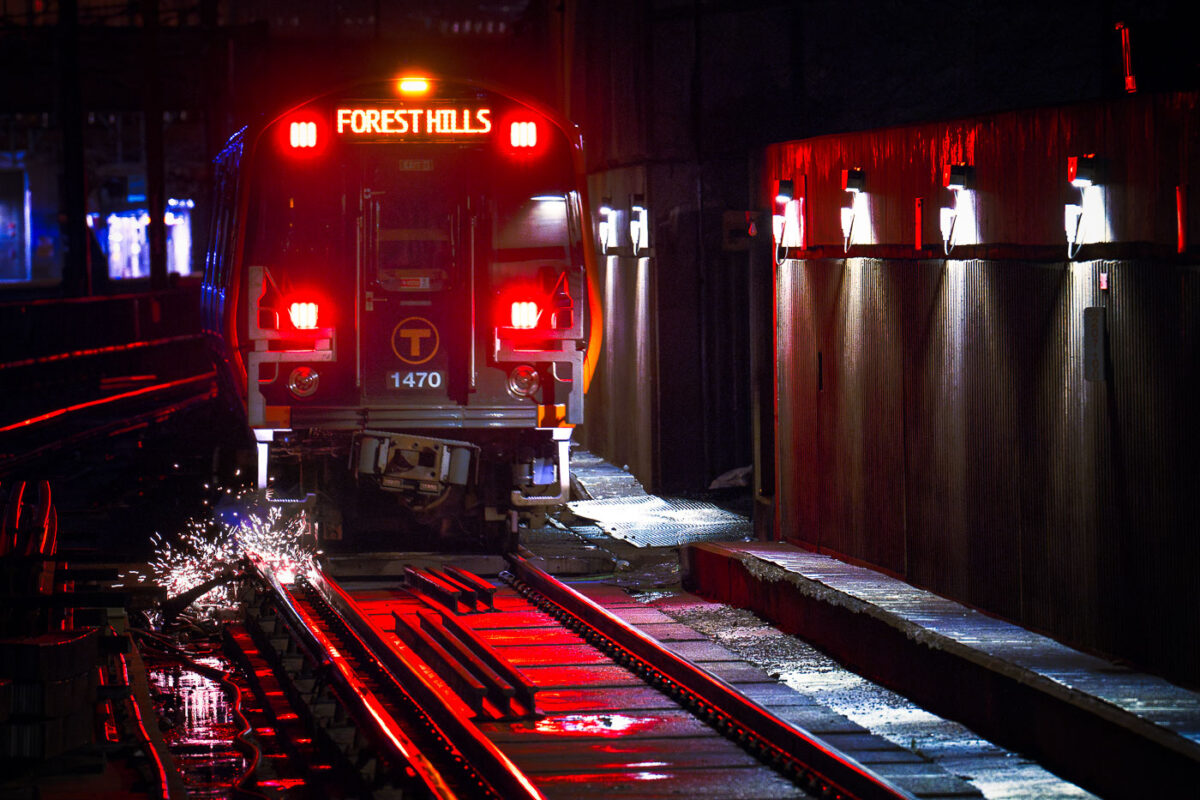
April 2024 — Sparks under a Forest Hills Orange Line train in Boston.
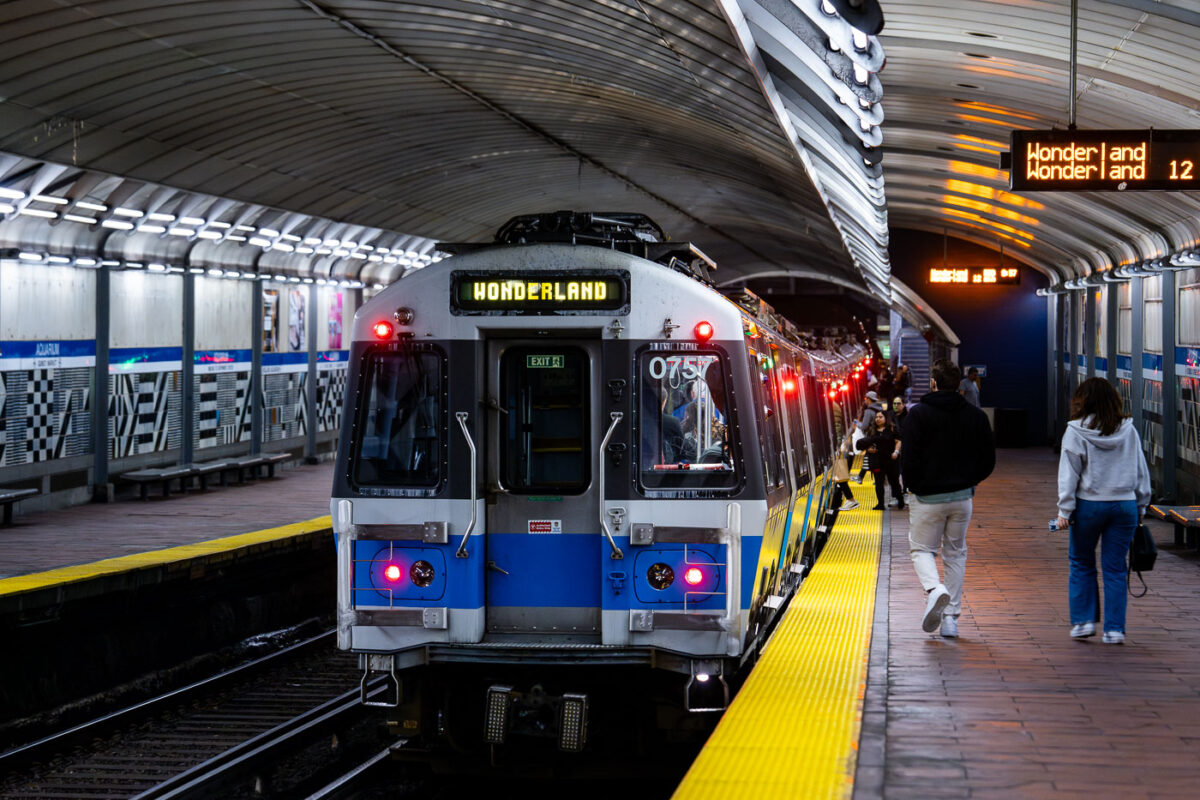
April 2024 — MBTA Wonderland bound train from the Aquarium Station. Passengers on the platform getting on the train.
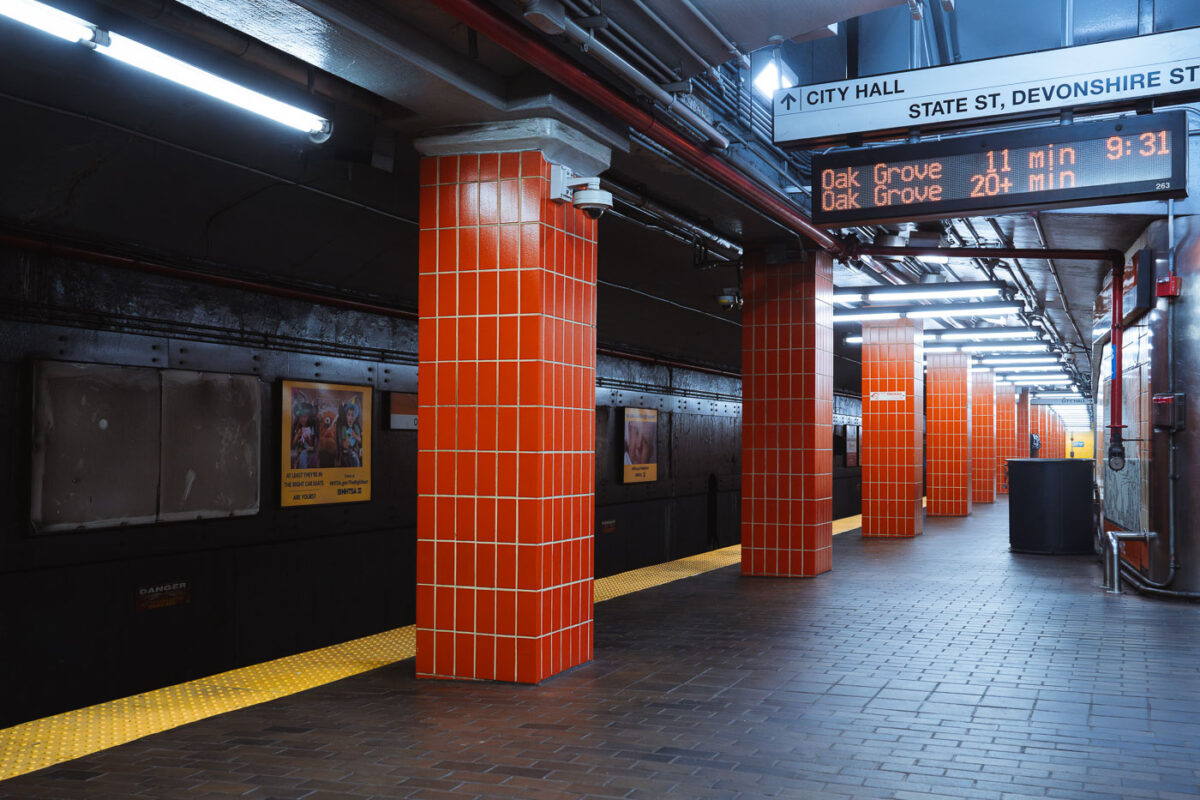
April 2024 — Massachusetts Bay Transportation Authority (MBTA) State Station on the Orange Line in Boston.
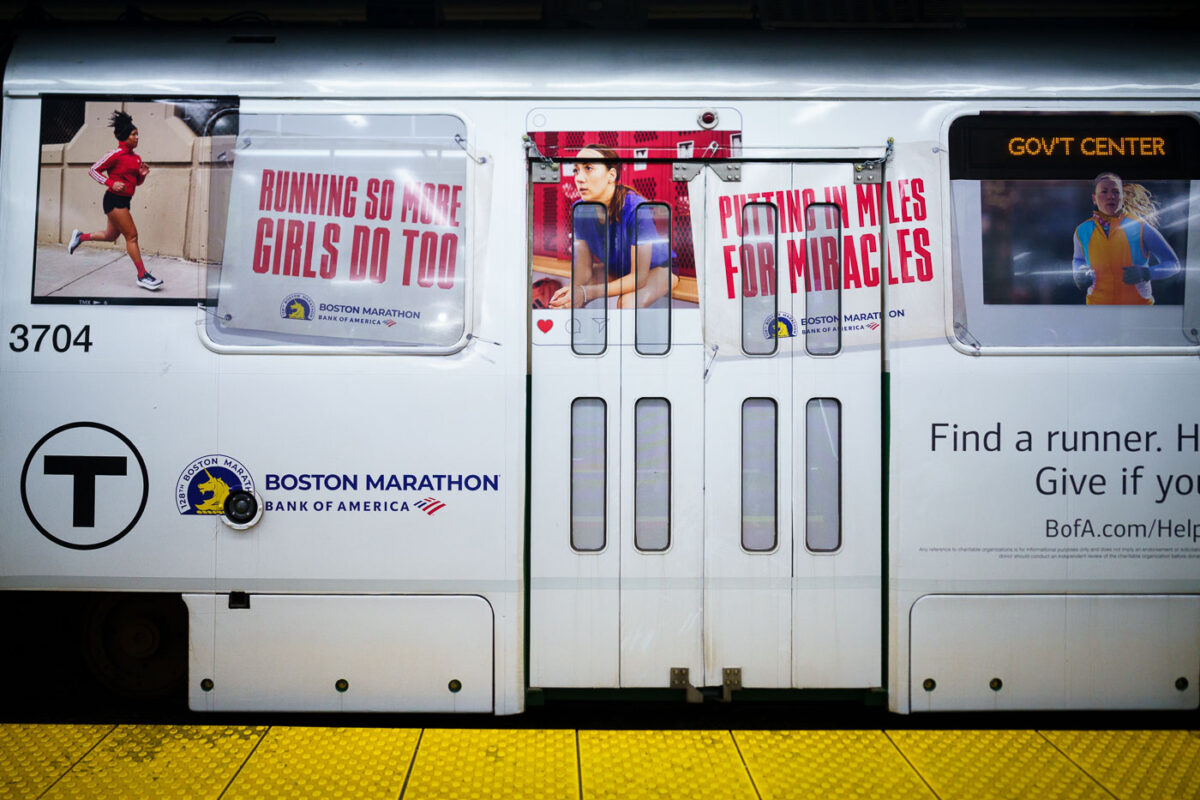
April 2024 — A train with Bank of America Boston Marathon wrap.
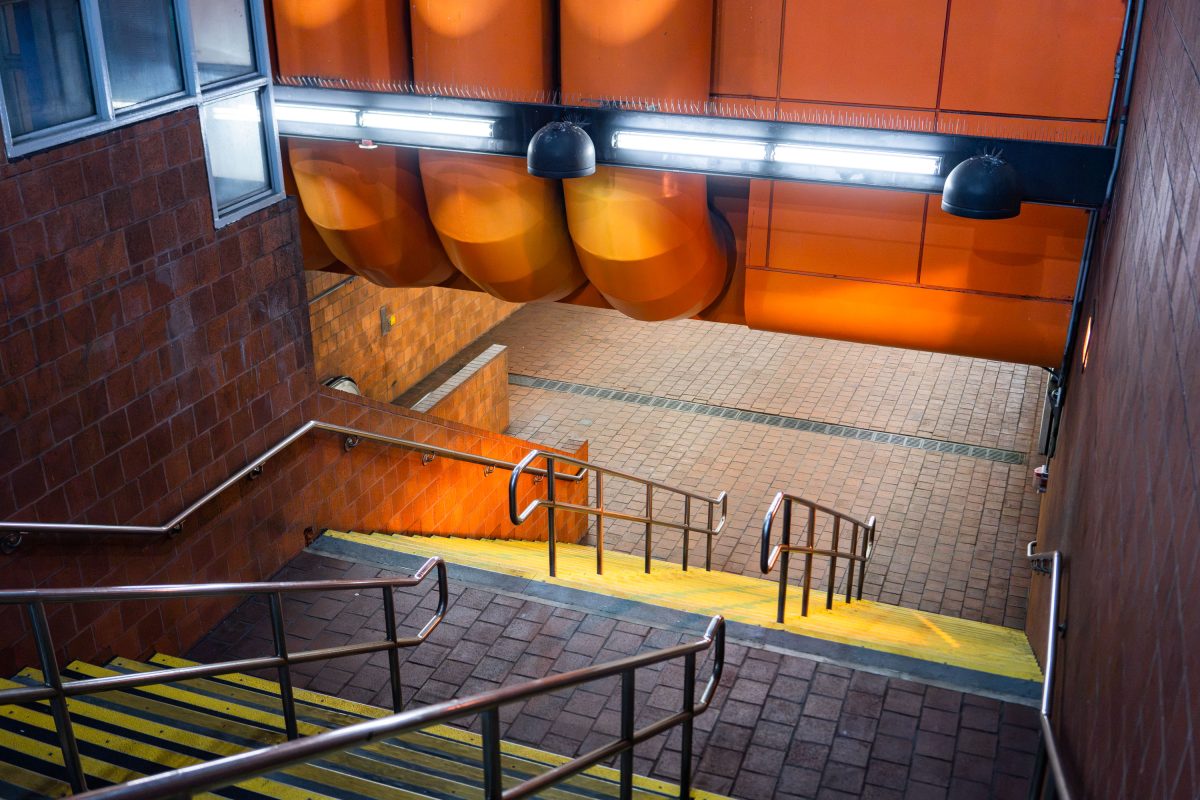
April 2024 —
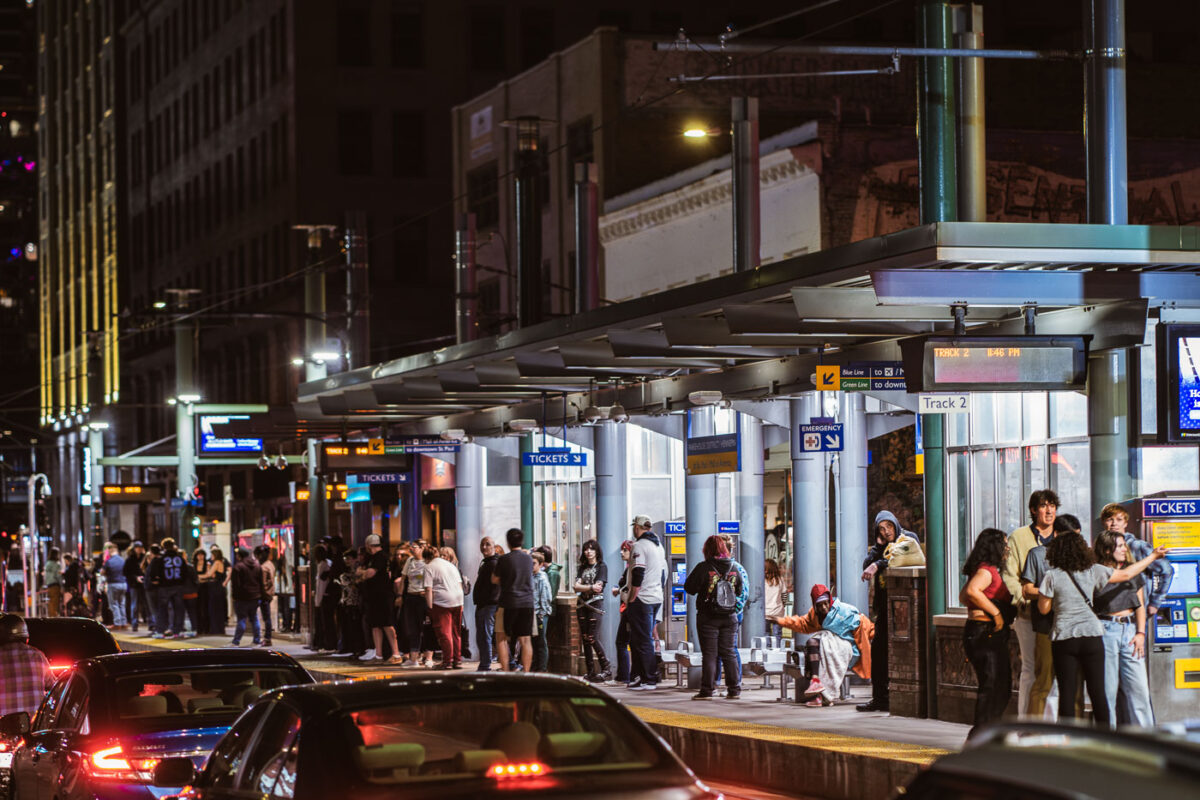
April 2024 — Large crowds waiting for trains on April 6th. Crowds filled downtown Minneapolis after Fall Out Boy, Chris Stapleton and a Twins game earlier in the night.
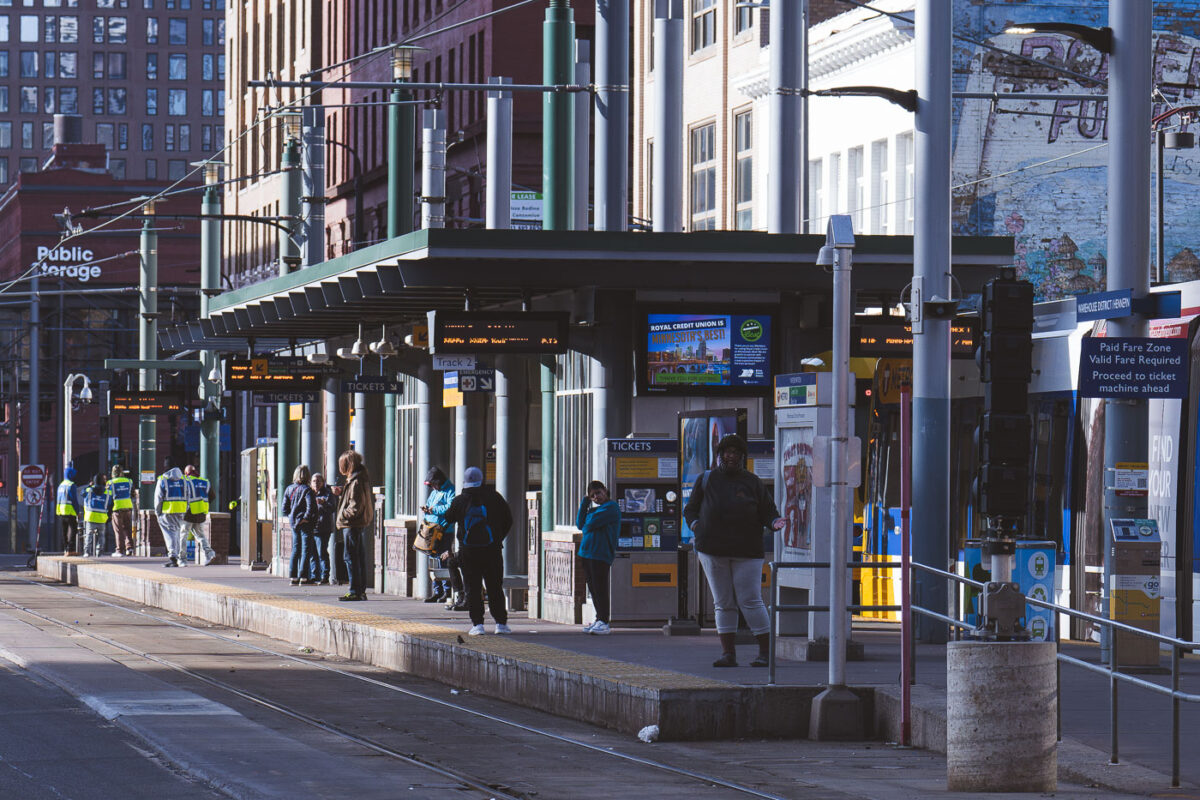
March 2024 — TRIP Outreach and riders at the Warehouse District/Hennepin Ave Station in downtown Minneapolis. March 2024.
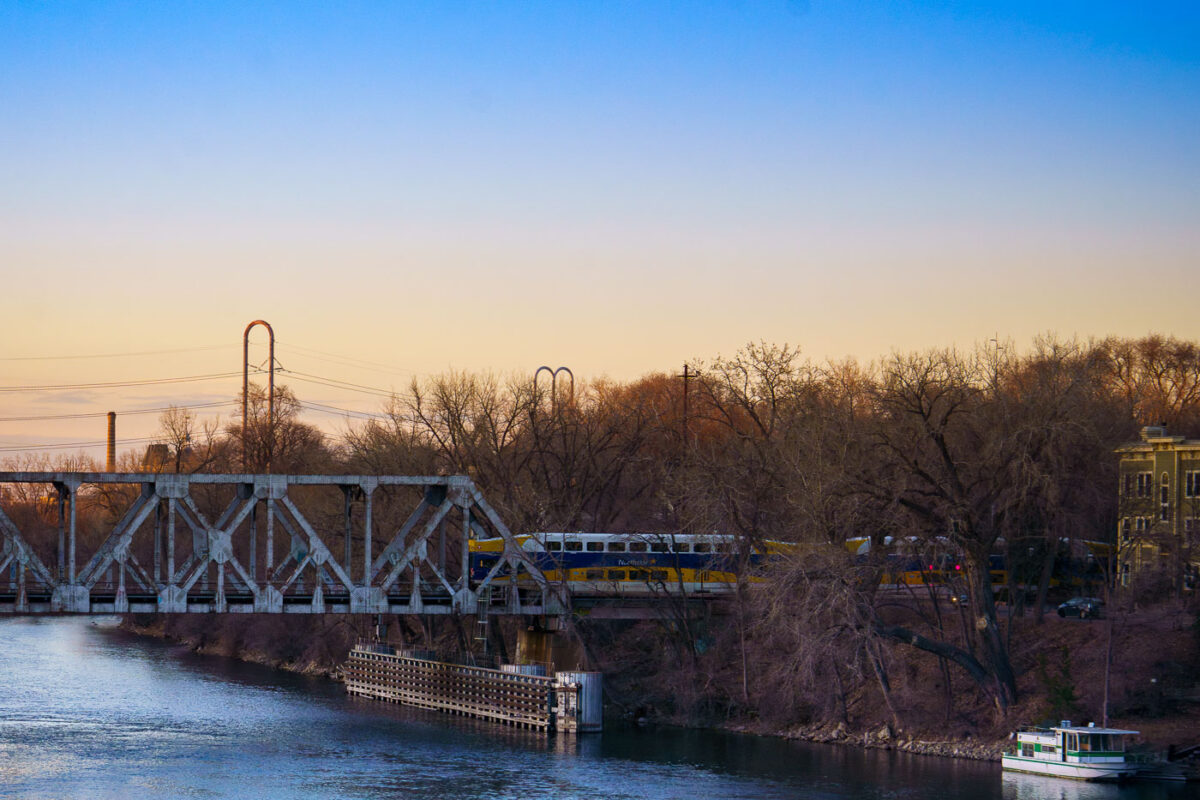
March 2024 — The Northstar Line makes it's way over the Mississippi River near downtown Minneapolis. March 2024.
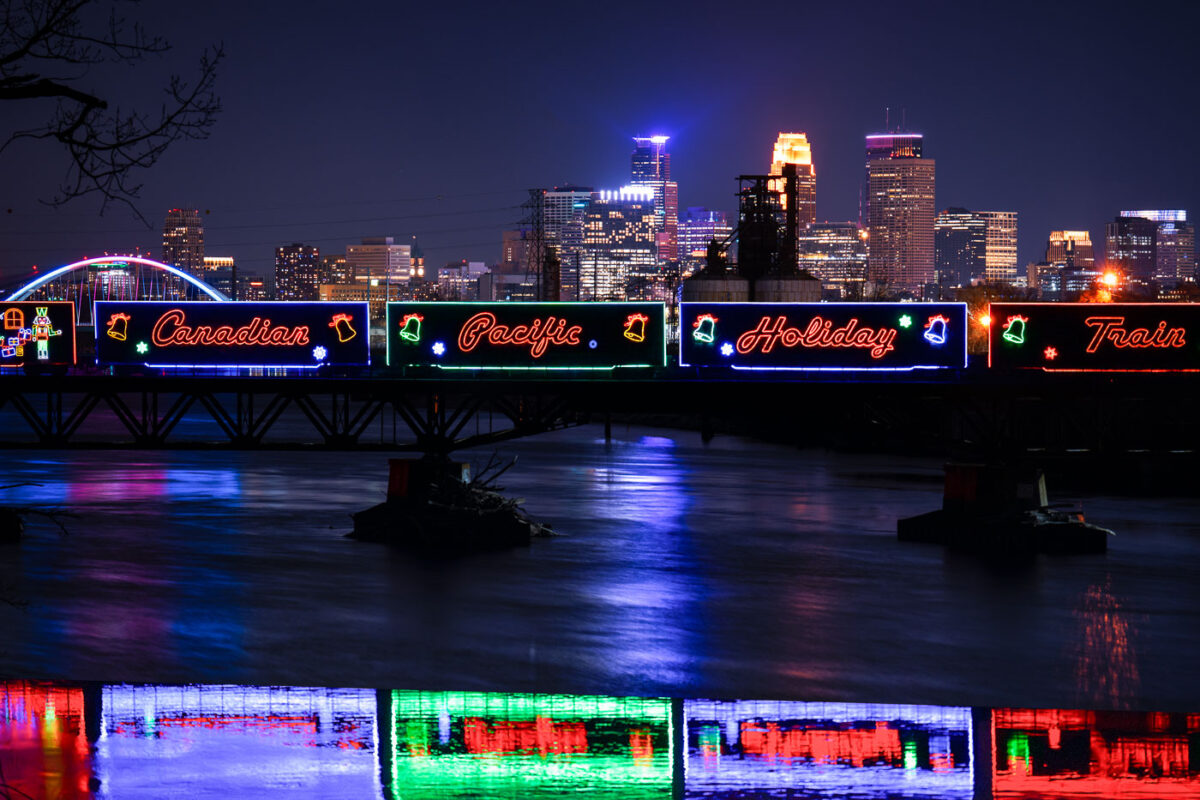
December 2023 — Canadian Pacific Kansas City Holiday Train in Minneapolis on December 11, 2023. The rail company says they’ve raised more than $22.5 million dollars and 5 million pounds of food for local food banks since the tradition began 25 years ago.
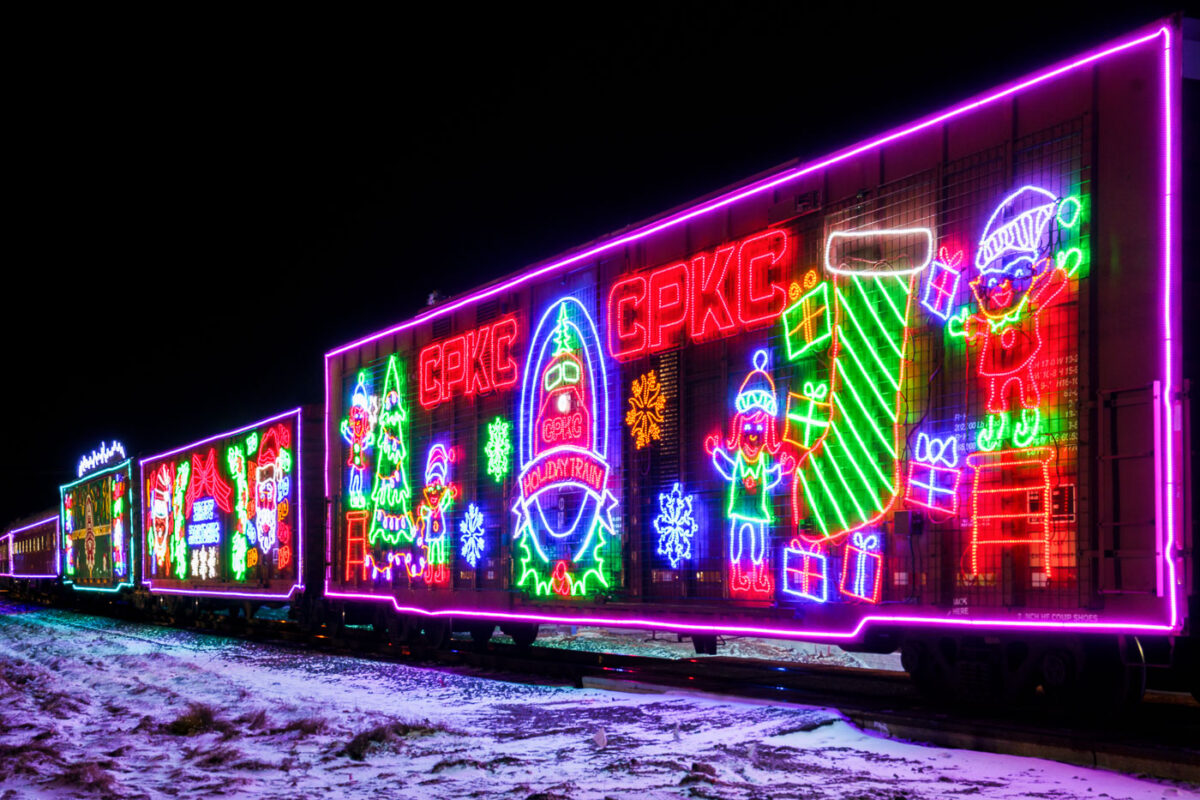
December 2023 — Canadian Pacific Kansas City Holiday Train in Minneapolis on December 11, 2023. The rail company says they’ve raised more than $22.5 million dollars and 5 million pounds of food for local food banks since the tradition began 25 years ago.
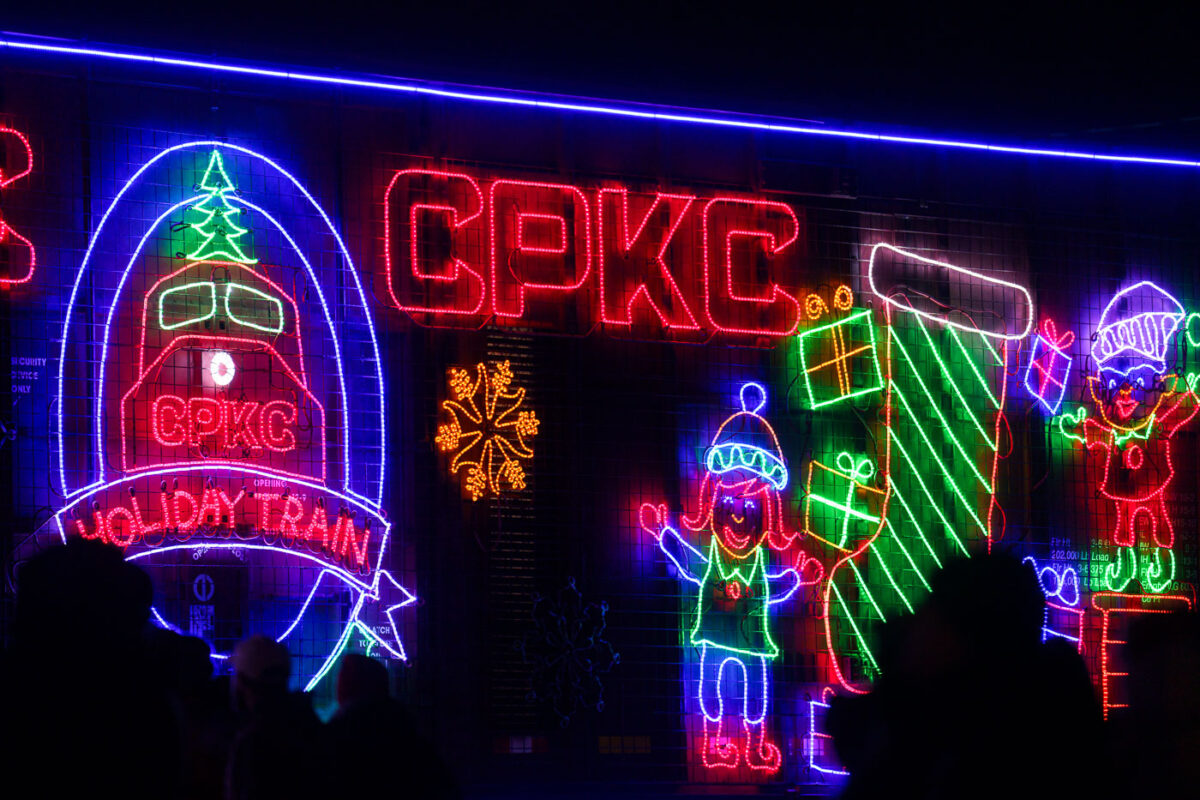
December 2023 — Canadian Pacific Kansas City Holiday Train in Minneapolis on December 11, 2023. The rail company says they’ve raised more than $22.5 million dollars and 5 million pounds of food for local food banks since the tradition began 25 years ago.
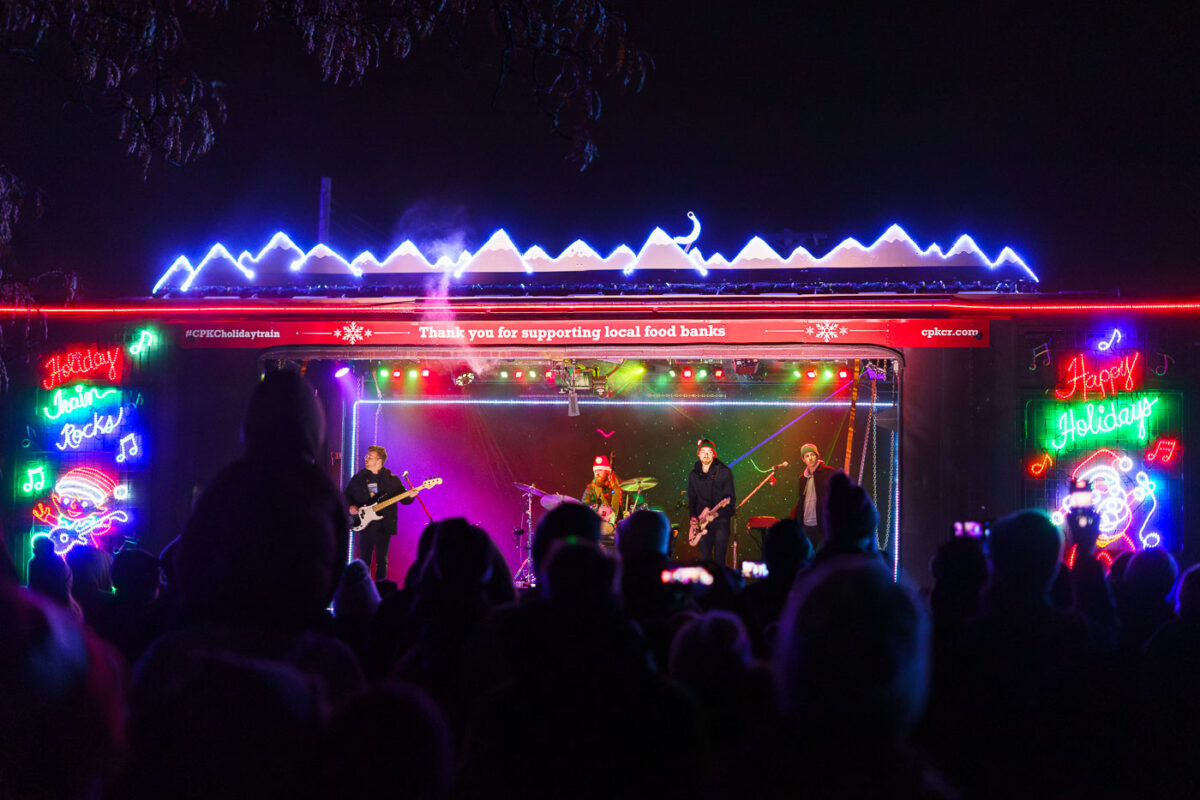
December 2023 — Canadian Pacific Kansas City Holiday Train in St. Louis Park, Minnesota on December 11, 2023. The rail company says they’ve raised more than $22.5 million dollars and 5 million pounds of food for local food banks since the tradition began 25 years ago.
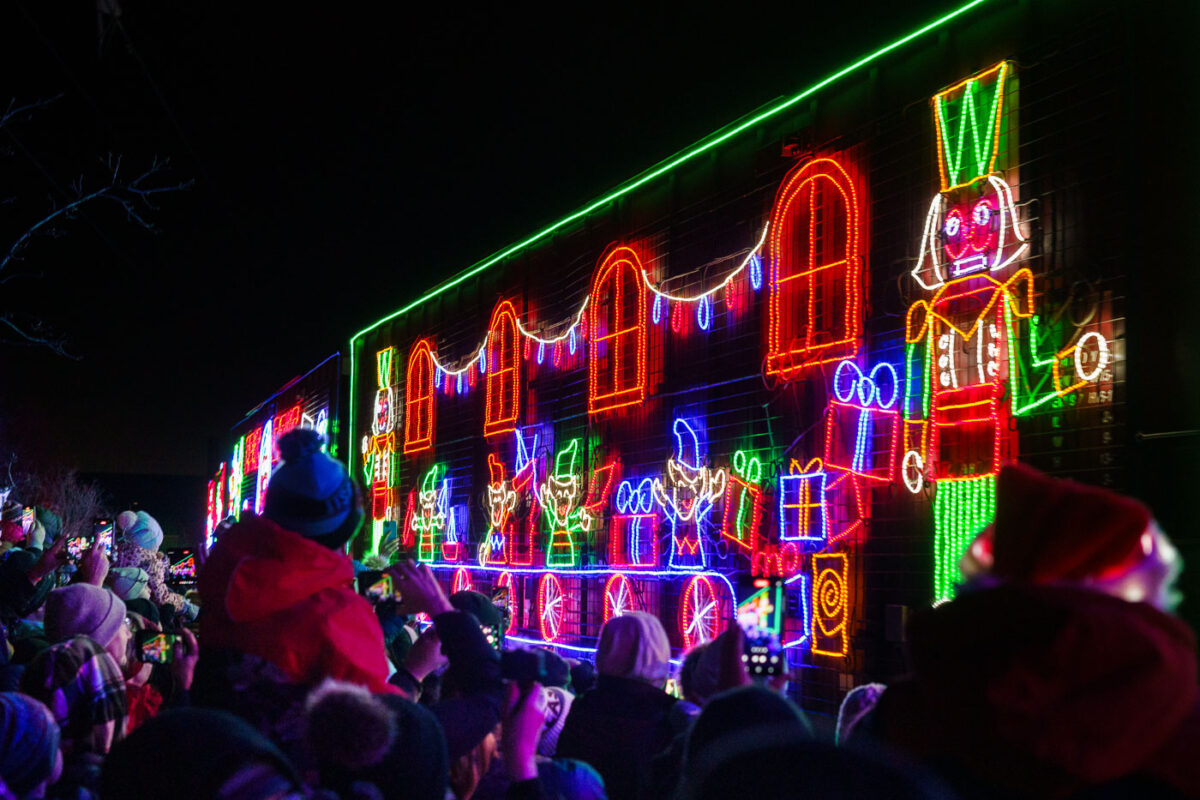
December 2023 — Canadian Pacific Kansas City Holiday Train in St. Louis Park, Minnesota on December 11, 2023. The rail company says they’ve raised more than $22.5 million dollars and 5 million pounds of food for local food banks since the tradition began 25 years ago.
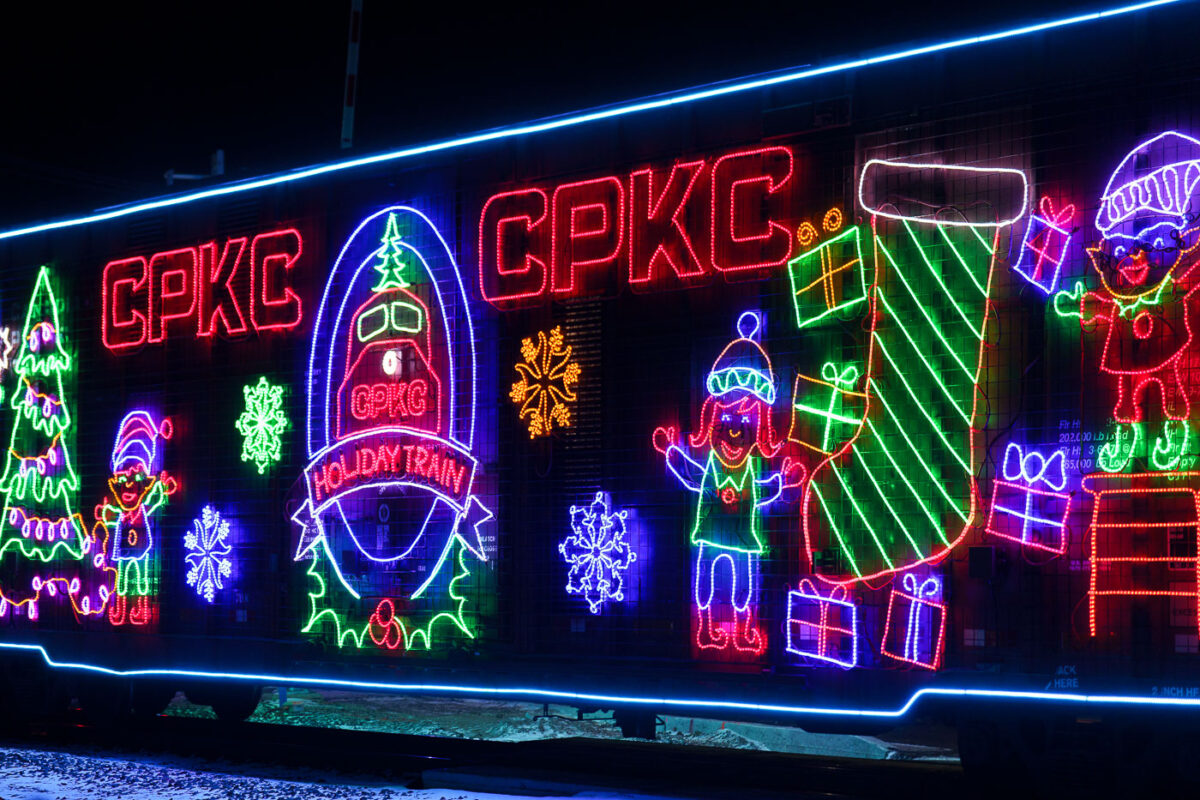
December 2023 — Canadian Pacific Kansas City Holiday Train in Minneapolis on December 11, 2023. The rail company says they’ve raised more than $22.5 million dollars and 5 million pounds of food for local food banks since the tradition began 25 years ago.
November 2023 —
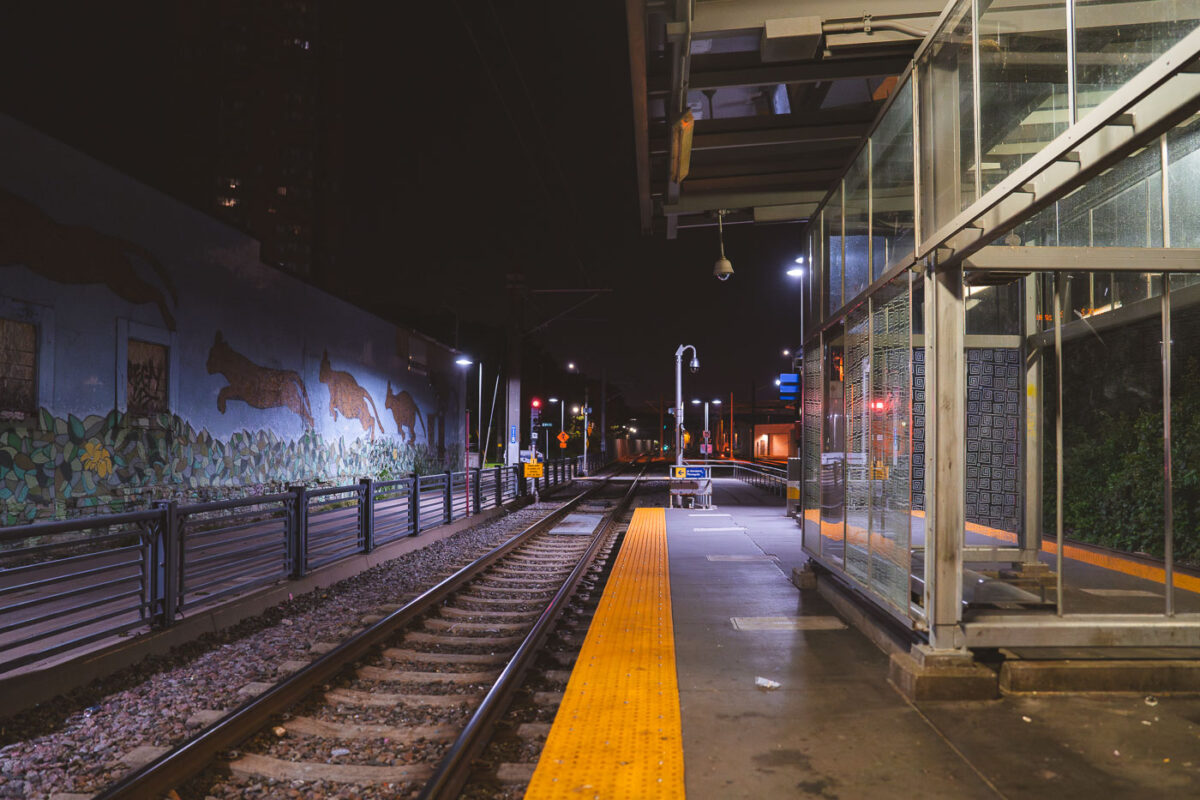
August 2023 — Metro Transit Cedar–Riverside station in South Minneapolis in August 2023.
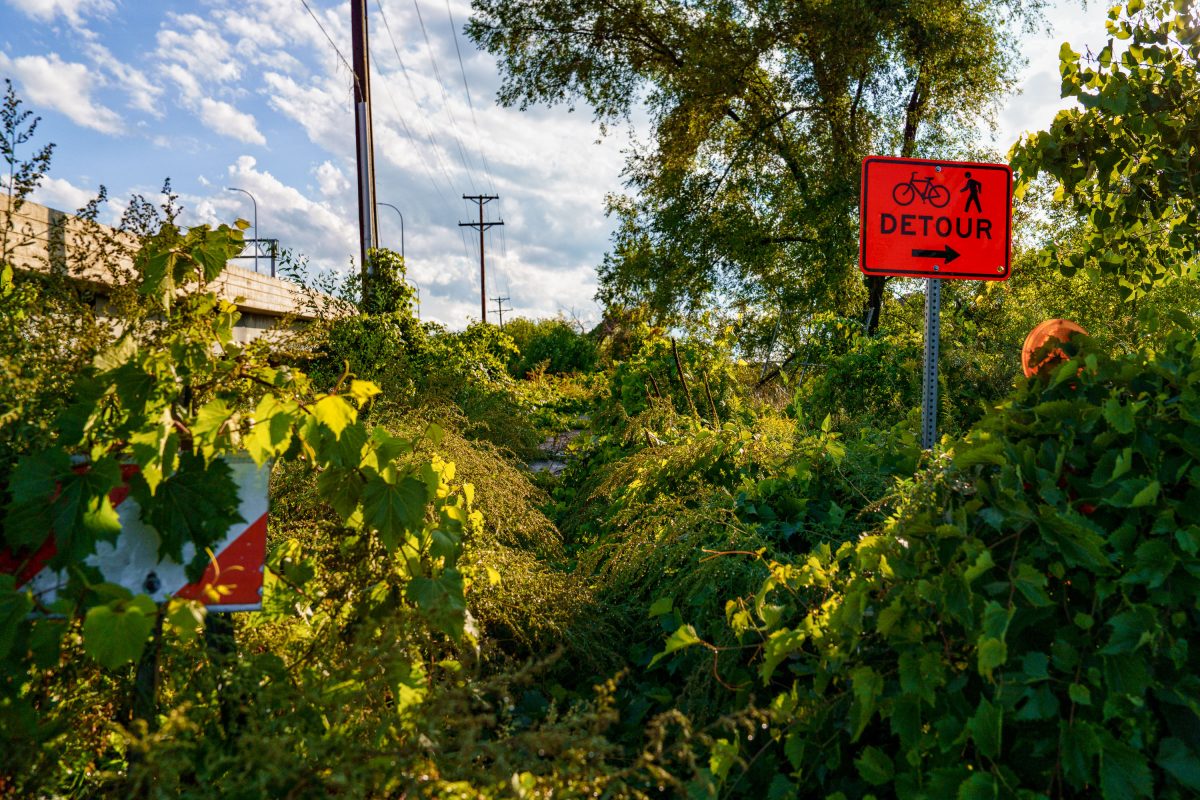
August 2023 —
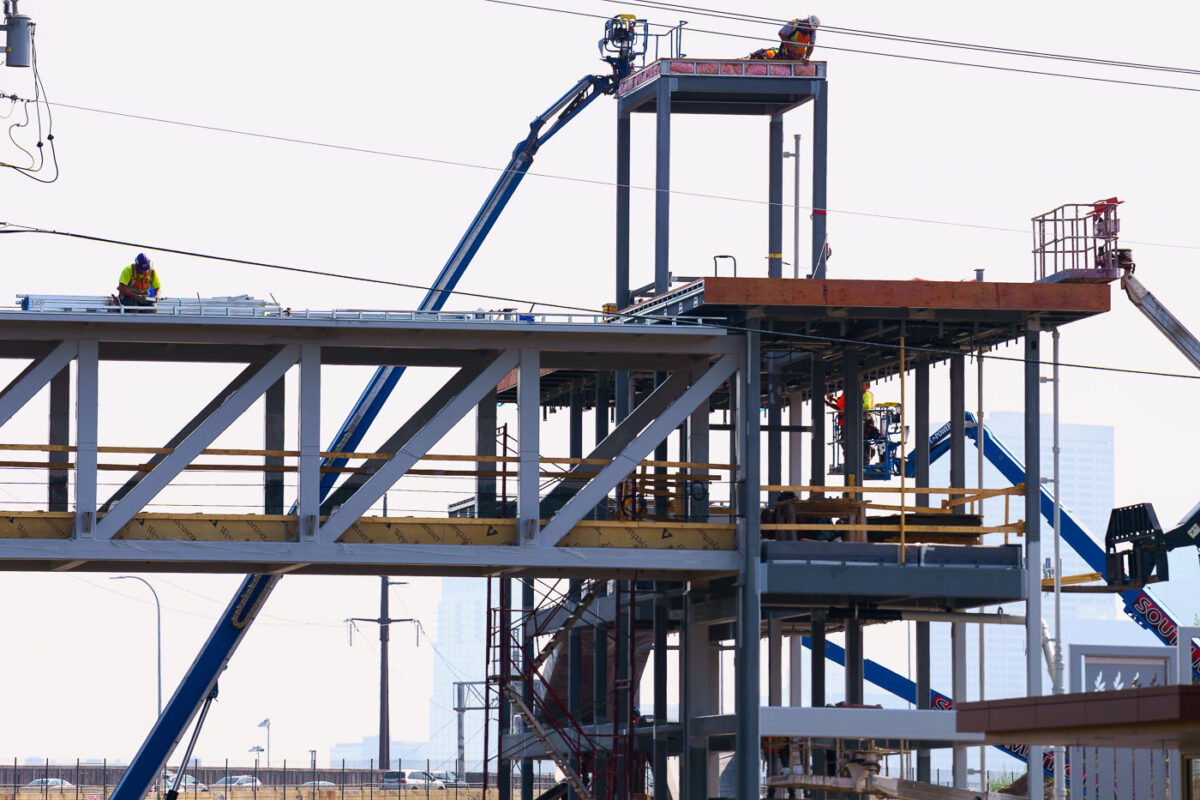
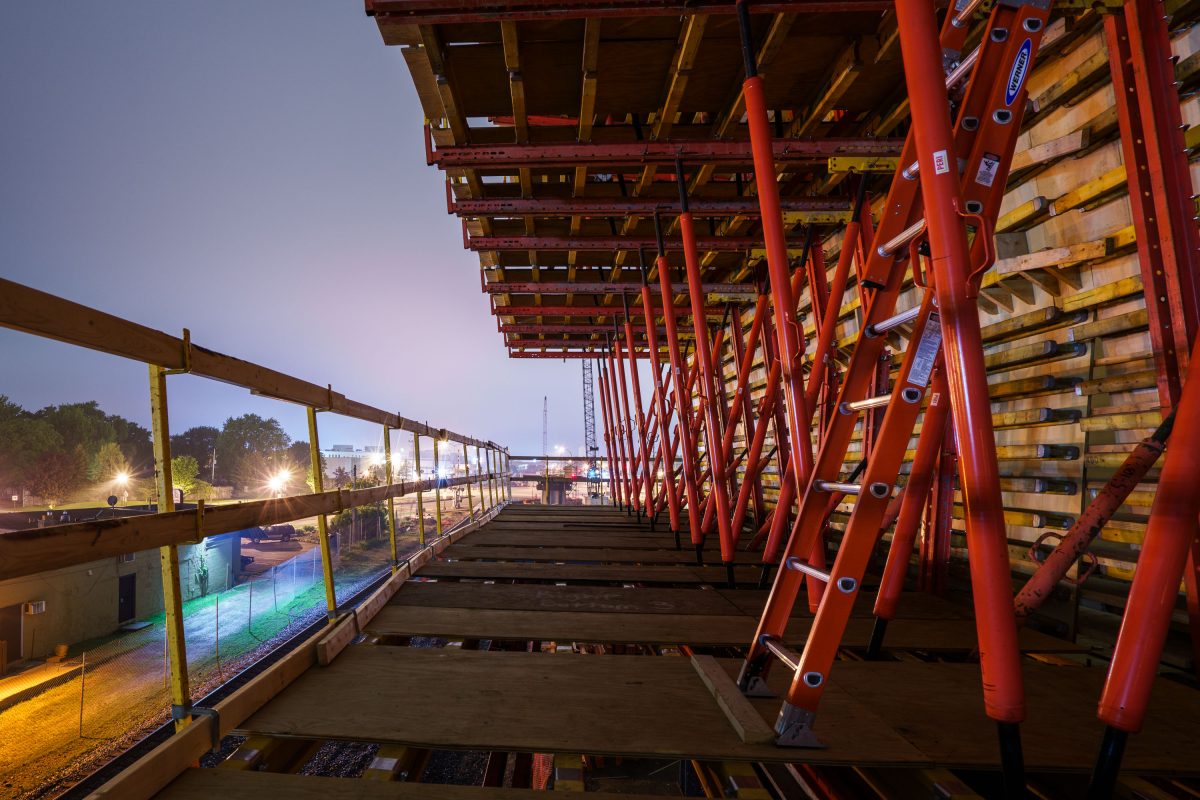
August 2023 — Bryn Mawr Station construction in Minneapolis. The station is part of the new Southwest Green Line light rail extension from Minneapolis to the western suburbs.
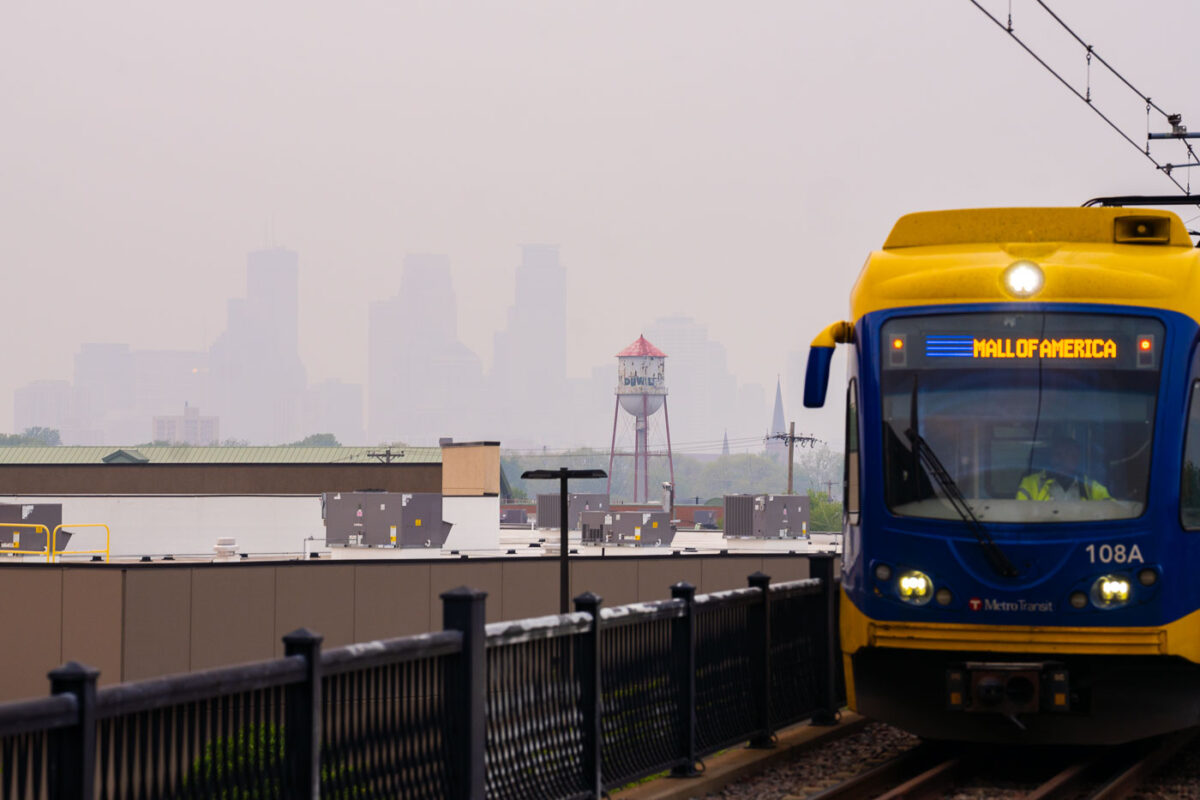
May 2023 — Downtown Minneapolis barely visible as a Metro Transit Light Rail train cross the bridge.
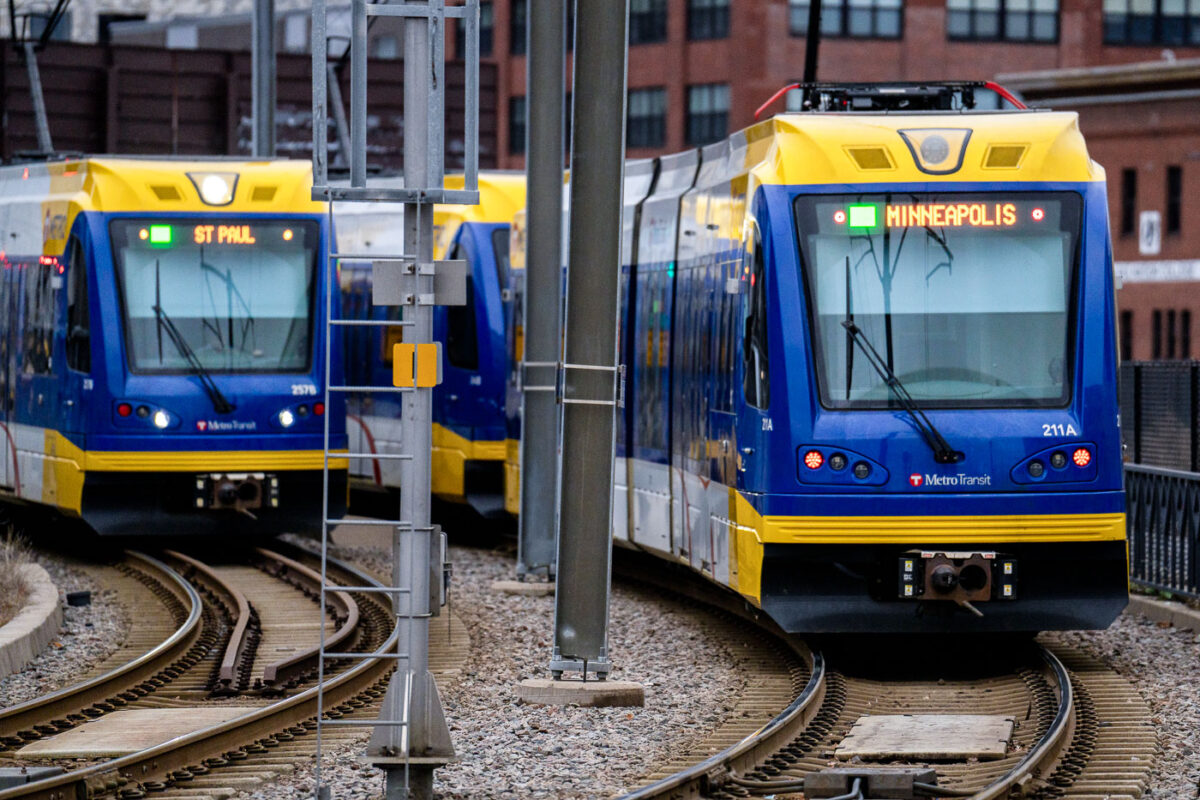
April 2023 — Light Rail trains in Downtown Minneapolis.
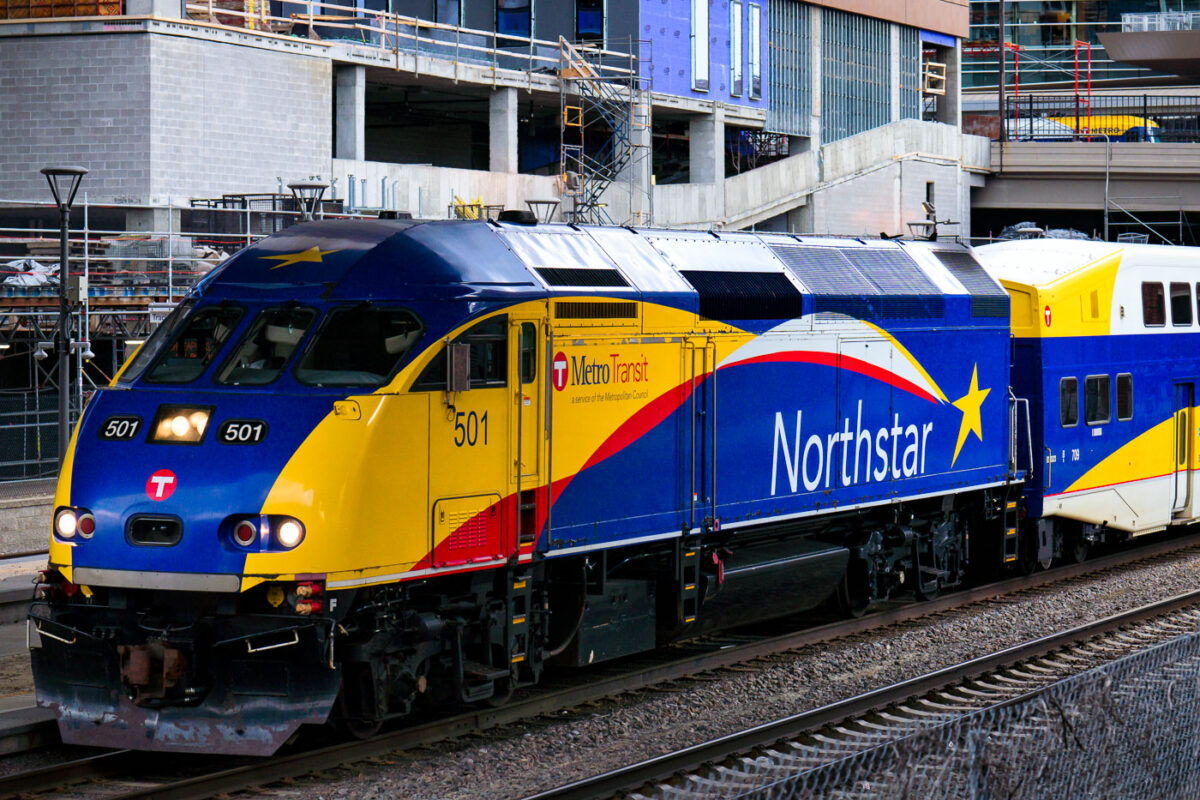
April 2023 — A Northstar Train in downtown Minneapolis.
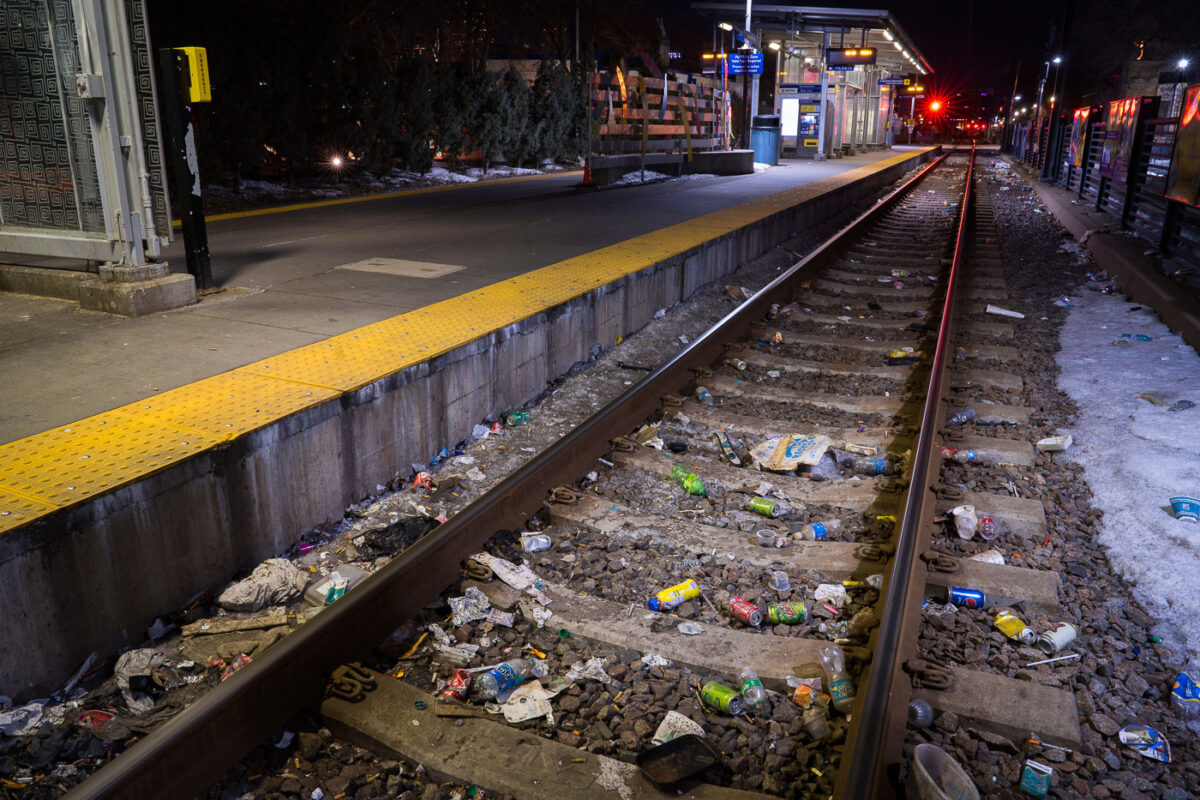
March 2023 — Discarded needles and trash line the tracks at the Cedar-Riverside LRT station.
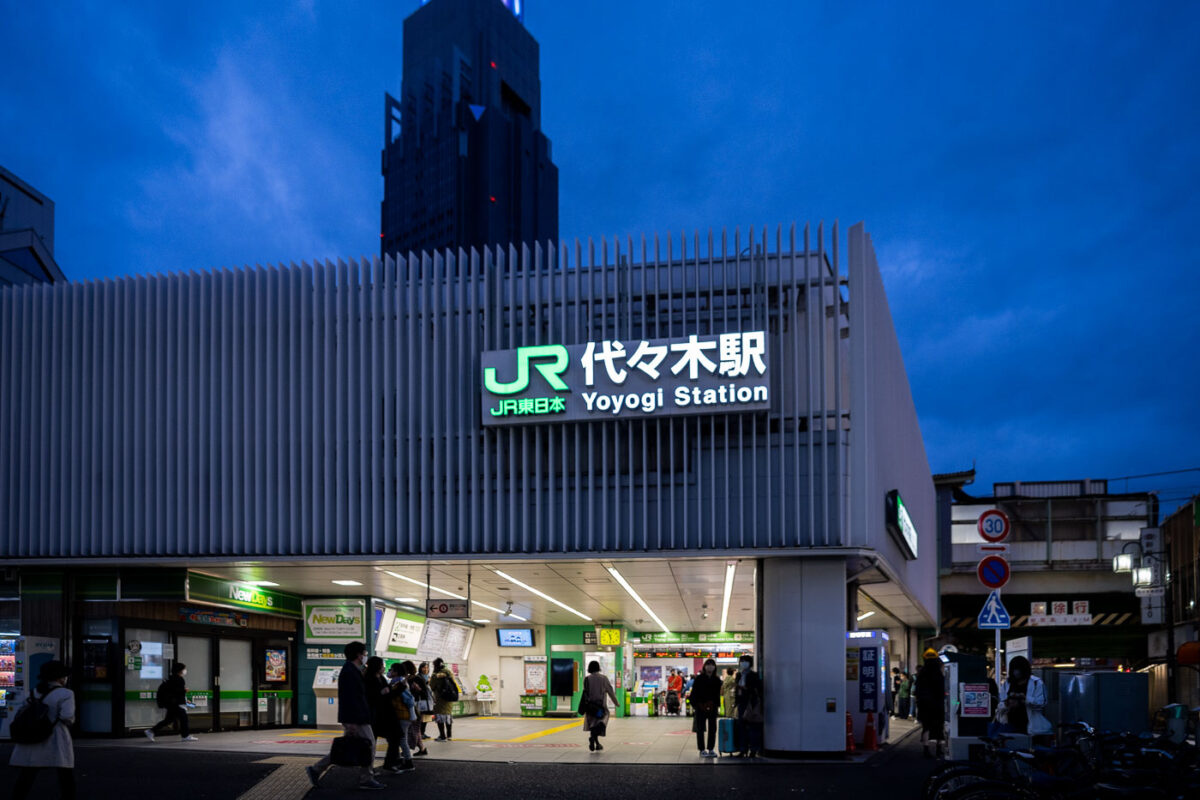
March 2023 — As dusk settles over Shibuya, the illuminated sign of Yoyogi Station (代々木駅) glows against a deep indigo sky, marking one of Tokyo’s key JR East commuter hubs. Opened in 1906, Yoyogi serves both the Yamanote and Chuo-Sobu lines, connecting thousands of travelers daily between Shinjuku and Harajuku. The cool blue hour lighting highlights the crisp white façade and the green JR branding, captured here with a balanced exposure to preserve both architectural detail and ambient light reflections. Taken in early evening with a 35mm f/1.8 lens, this frame emphasizes the quiet rhythm of Tokyo’s rush hour just before nightfall.
March 2023 —
March 2023 —
March 2023 —
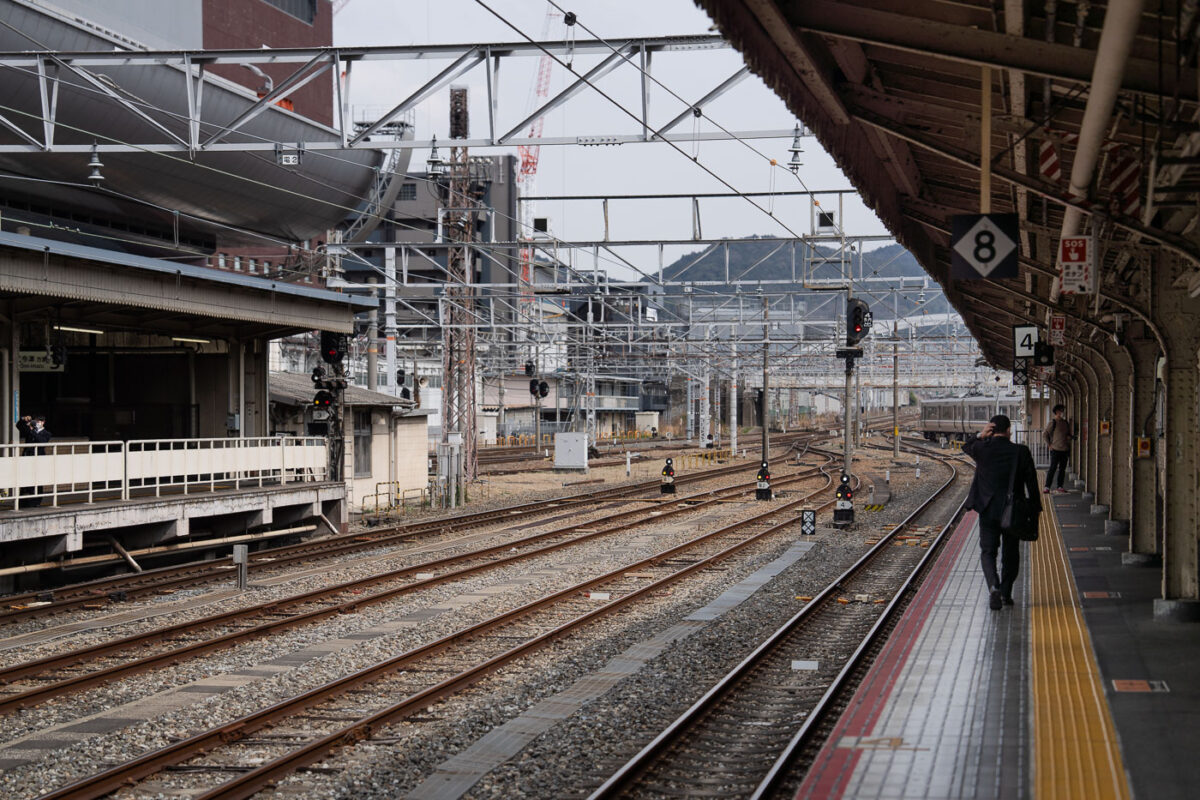
March 2023 — Multiple sets of railway tracks converge toward the distance beneath a grid of steel catenary supports. A man in a dark suit walks along the yellow tactile line on Platform 4, while another commuter waits across the tracks. Overhead signs mark platform numbers, and signal lights display red and amber. The station canopy and surrounding buildings form an industrial backdrop, with a faint view of hills beyond the city.
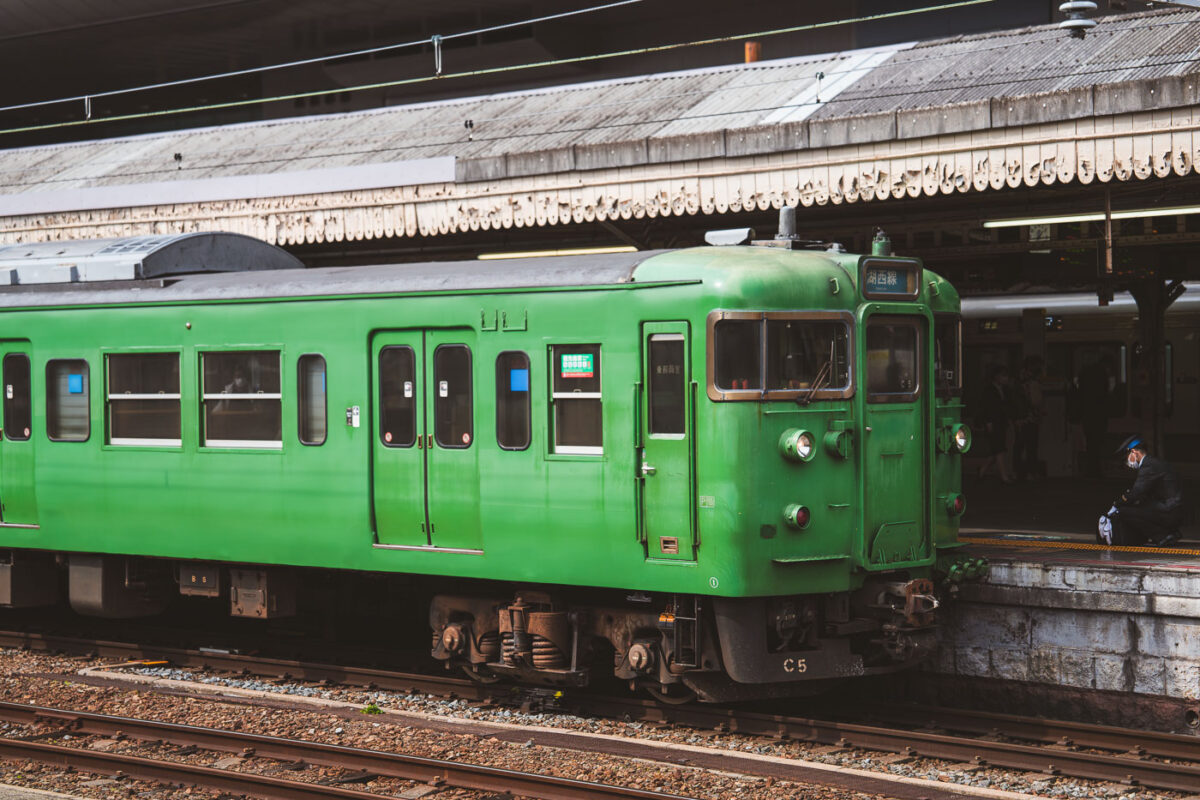
March 2023 — A classic green Japanese commuter train sits at a station platform, its utilitarian design and weathered paint evoking an earlier era of rail travel. These older local-line cars, once common throughout regional Japan, continue to serve smaller routes with reliability and simplicity. The muted tones of the train and station canopy, along with a uniformed conductor preparing for departure, create a nostalgic glimpse into the everyday rhythm of Japan’s vast and enduring railway network.
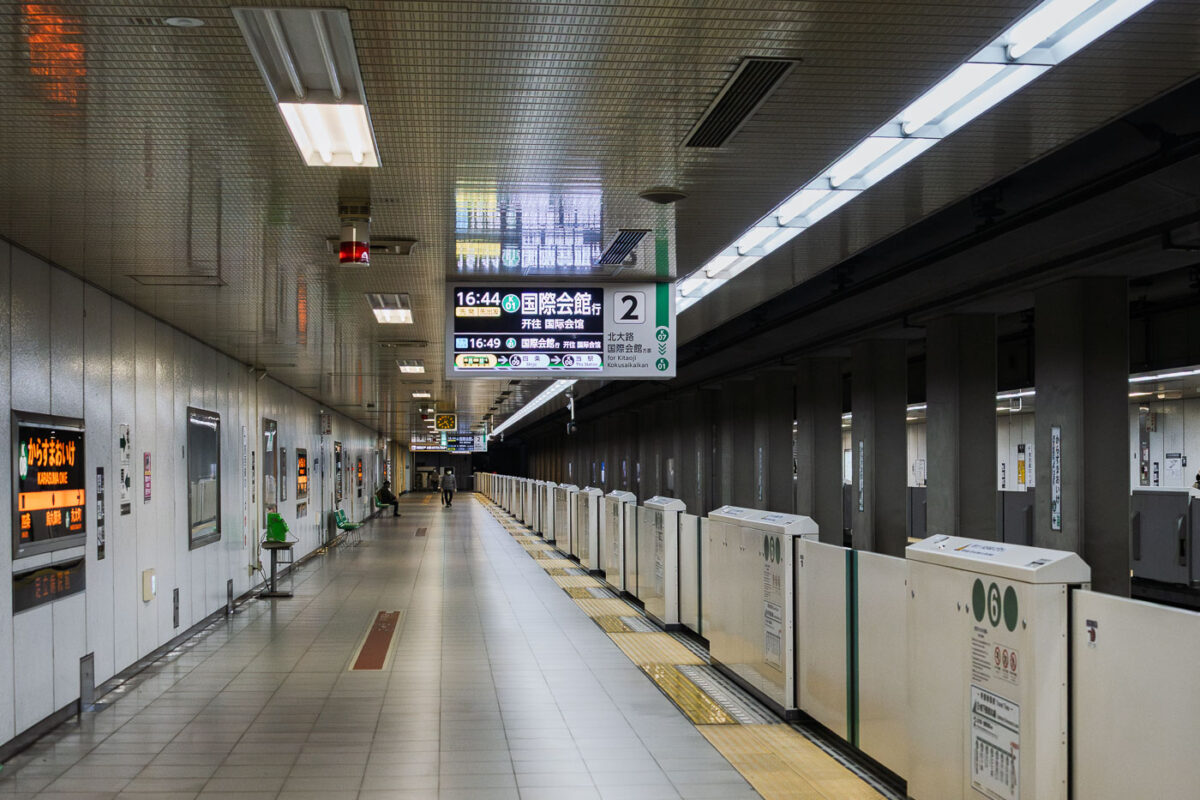
March 2023 — A quiet moment on the platform at Karasuma Oike Station, one of the key interchange points within the Kyoto Municipal Subway system. Opened in 1981 as part of the Karasuma Line, the station later became a transfer hub when the Tōzai Line opened in 1997, creating a central east–west and north–south connection beneath Kyoto’s urban core. The platform features platform-edge doors—introduced across Kyoto’s subway network to improve safety and accessibility—along with digital signage that displays through-service connections toward the northern suburbs and toward the International Conference Center. Located beneath the intersection of Karasuma-dōri and Oike-dōri, the station plays an important role in linking government offices, business districts, and cultural areas throughout central Kyoto.
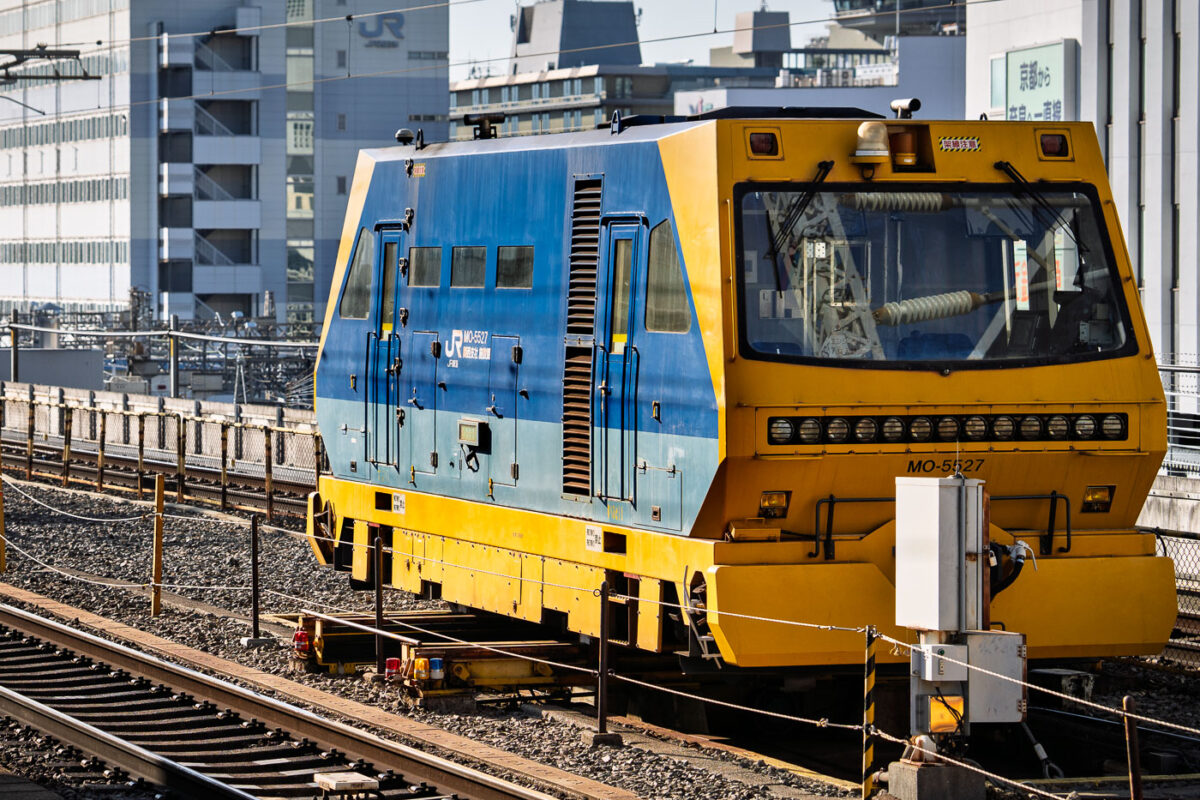
March 2023 — A JR West track maintenance vehicle stands on an elevated railway in Kyoto, painted in bright yellow and blue. These machines are vital to Japan’s rail network, used for track inspection, alignment, and upkeep during off-peak hours. The geometric design and industrial strength of the vehicle contrast with the dense urban surroundings, illustrating Japan’s precision engineering and efficiency in rail transport.
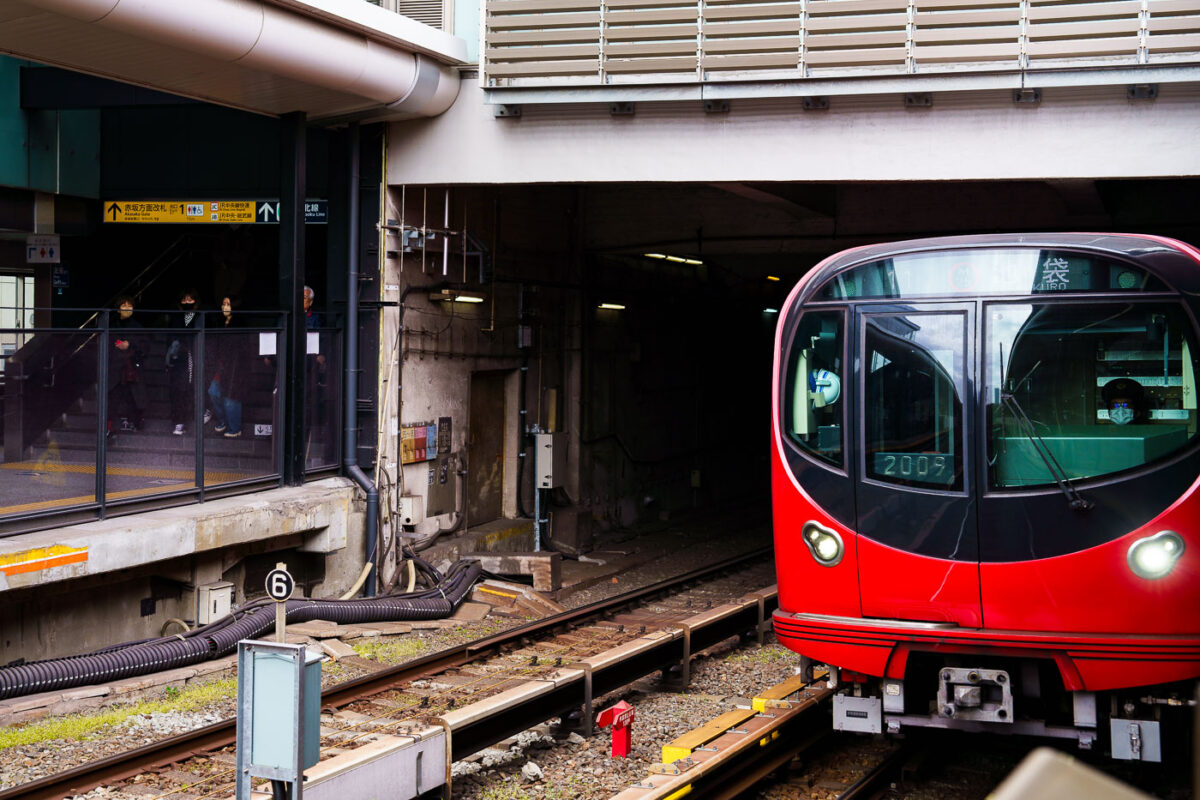
March 2023 — A Tokyo Metro Marunouchi Line train approaches its terminal platforms during a March 2023 visit. The Marunouchi Line, one of Tokyo’s earliest postwar subway routes, opened in 1954 and played a key role in connecting the expanding Yamanote district centers with government and commercial areas in central Tokyo. Its distinctive red livery has remained a defining visual identity for decades, even as the rolling stock has undergone multiple modernizations. Ikebukuro, the northern terminus of the line, is one of Tokyo’s busiest rail hubs, jointly served by JR East, the Seibu and Tobu railway networks, and several Metro lines. The station complex was heavily rebuilt throughout the late 20th century to handle increasing commuter volumes, resulting in the multi-level platform and passageway layout still in use today.
March 2023 —
March 2023 —
March 2023 —
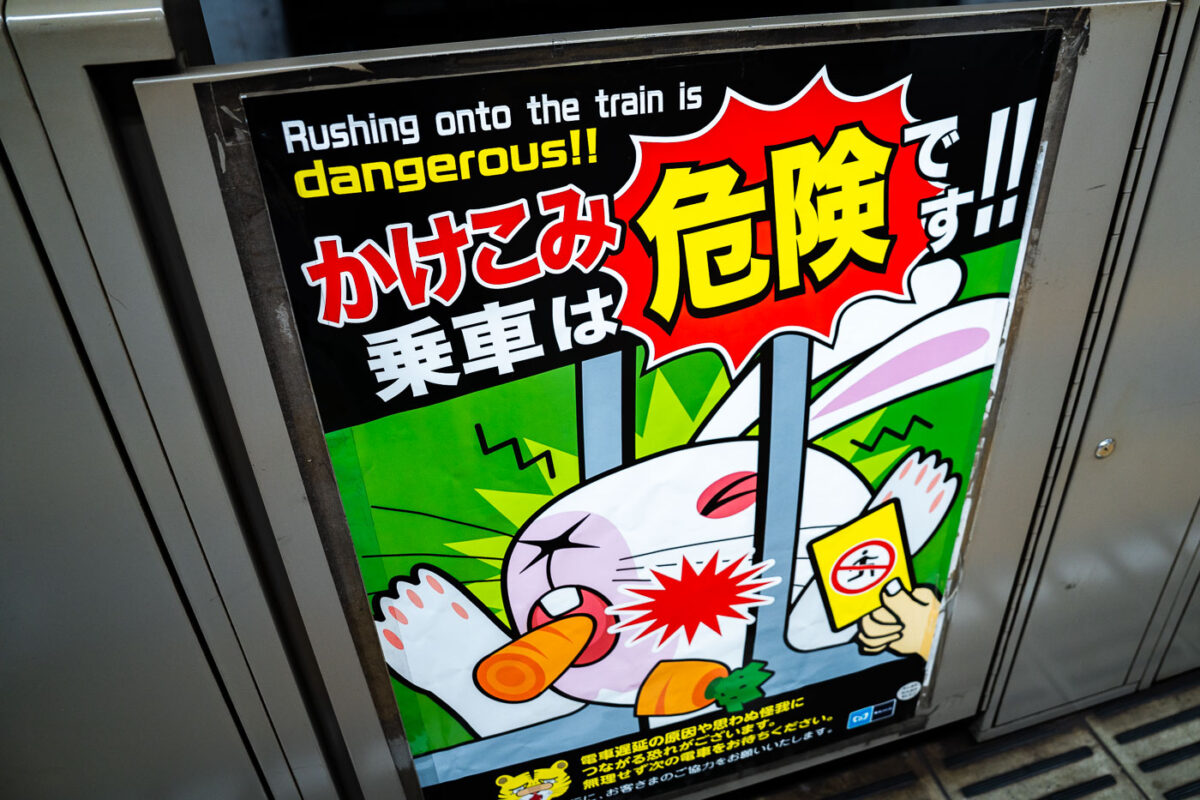
March 2023 — A safety poster inside a Tokyo Metro station warns passengers not to rush onto closing trains—a longstanding focus of the network’s passenger-safety campaigns. Tokyo’s subway operators, including Tokyo Metro and Toei, use a mix of mascots and bold graphic styles to discourage last-second boarding, which remains one of the most common causes of platform accidents and door malfunctions. These posters are typically placed on or near platform screen doors, which have been installed progressively across the network since the early 2000s to reduce injuries and improve train-dwell consistency. The messaging reflects Japan’s broader public-transportation safety culture: preventing delays, protecting passengers, and maintaining precise headways in some of the most heavily used rail corridors in the world. This particular design features a cartoon warning style common in Metro stations along lines such as the Marunouchi, Yamanote interchanges, and the Keisei connection points at Ueno and Nippori.
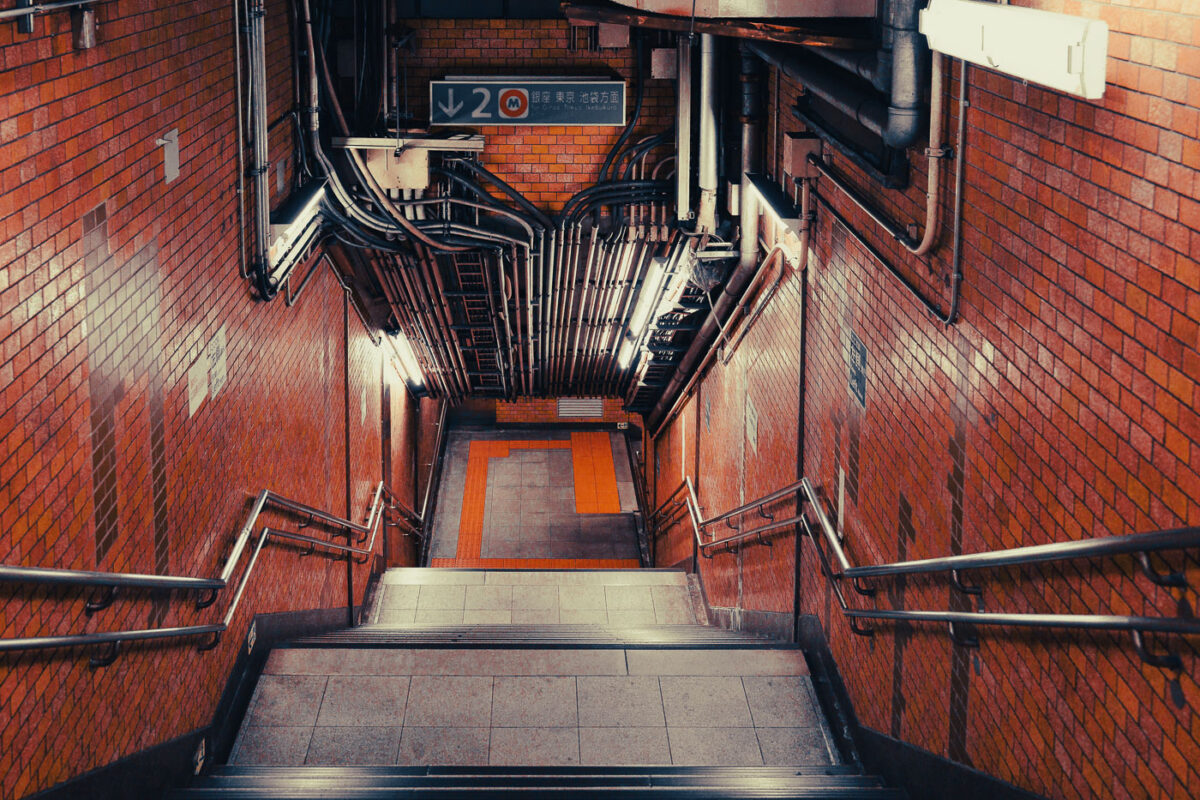
March 2023 — A passageway leading down to the Tokyo Metro Marunouchi Line, part of one of Tokyo’s oldest surviving subway corridors. The Marunouchi Line began opening in stages between 1954 and 1962, making it the second-oldest subway line in the city after the Ginza Line. Many stations along the route—especially the early central segments—retain architectural and material choices from Japan’s postwar reconstruction period, including ceramic wall tile, exposed conduit, and compact stairways built before modern accessibility standards were introduced. The dense overhead wiring found in older Marunouchi Line interchanges reflects decades of retrofits to accommodate improved lighting, ventilation, fire-suppression systems, and communication networks, all integrated into the original structural envelope. These spaces remain essential transfer points connecting central Tokyo’s commercial districts with major JR East hubs such as Shinjuku, Tokyo Station, and Ochanomizu. Although the Marunouchi Line has undergone rolling upgrades—including new rolling stock (02 series replacements), platform screen doors, and improved wayfinding—the underlying layout in many stations still conveys the functional, space-efficient design philosophy of mid-20th-century Japanese subway engineering.
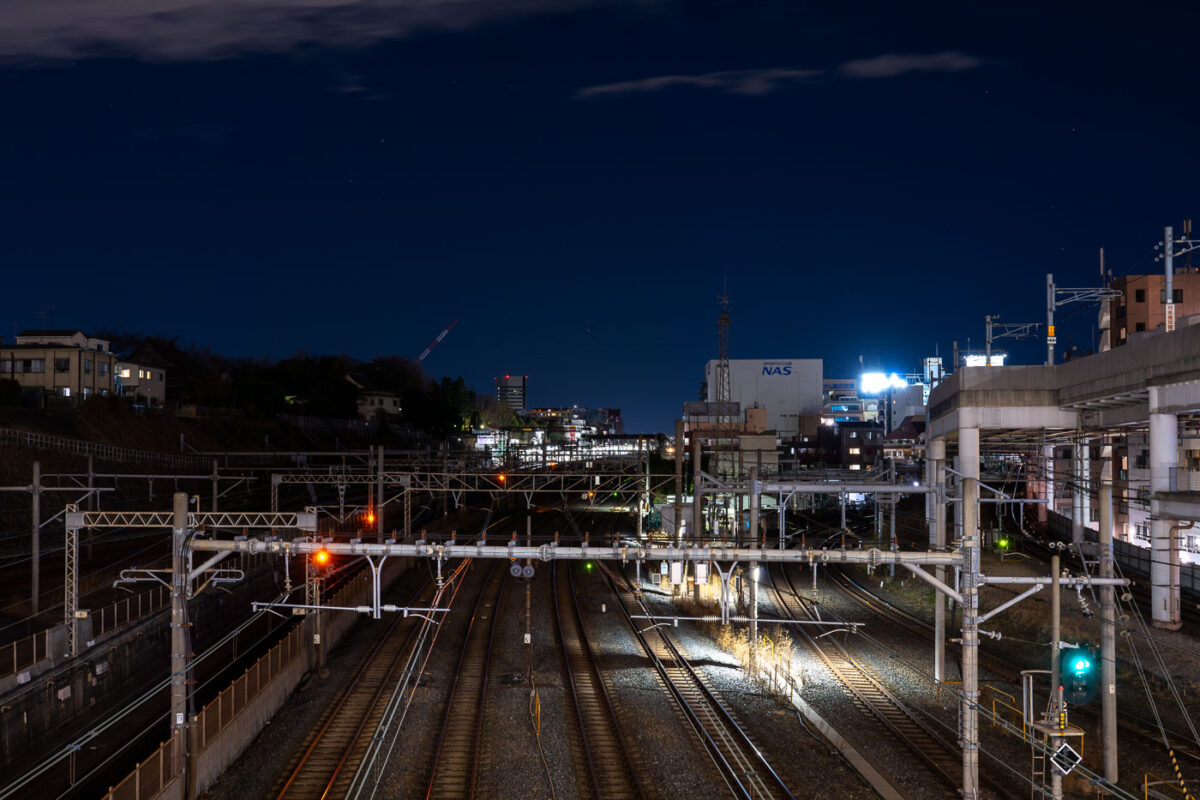
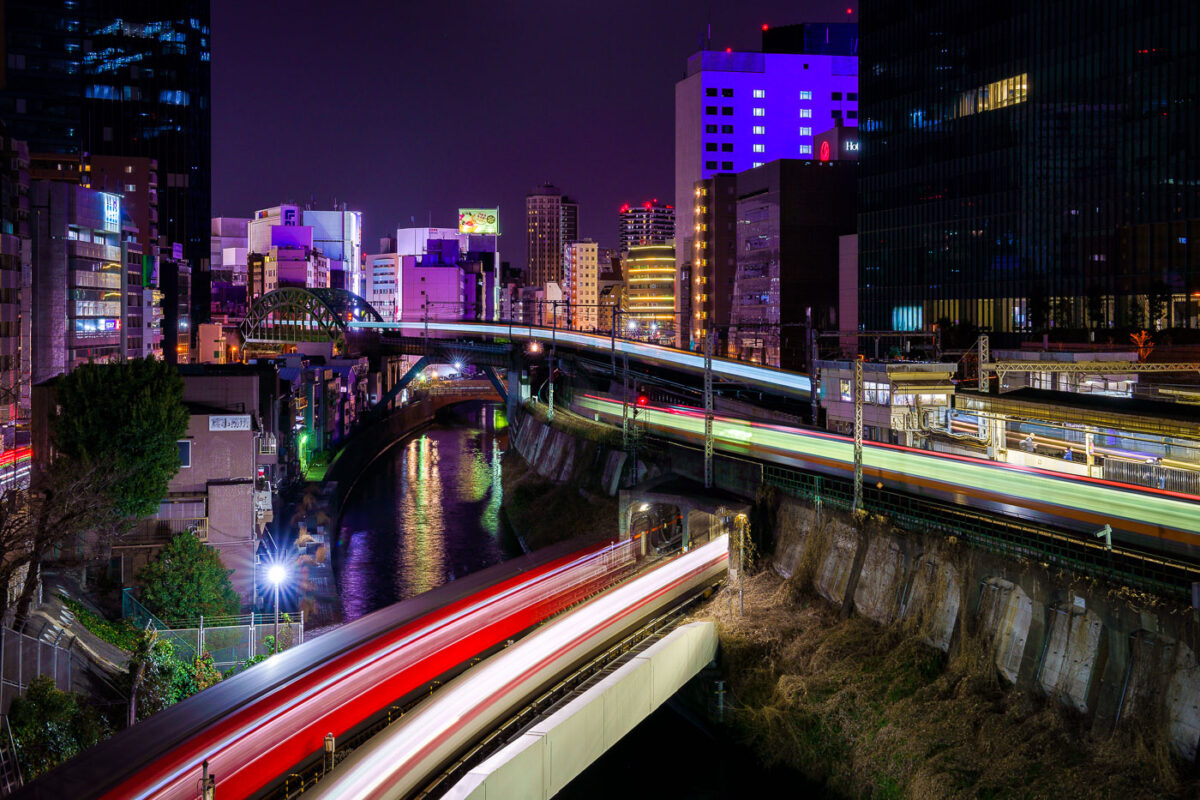
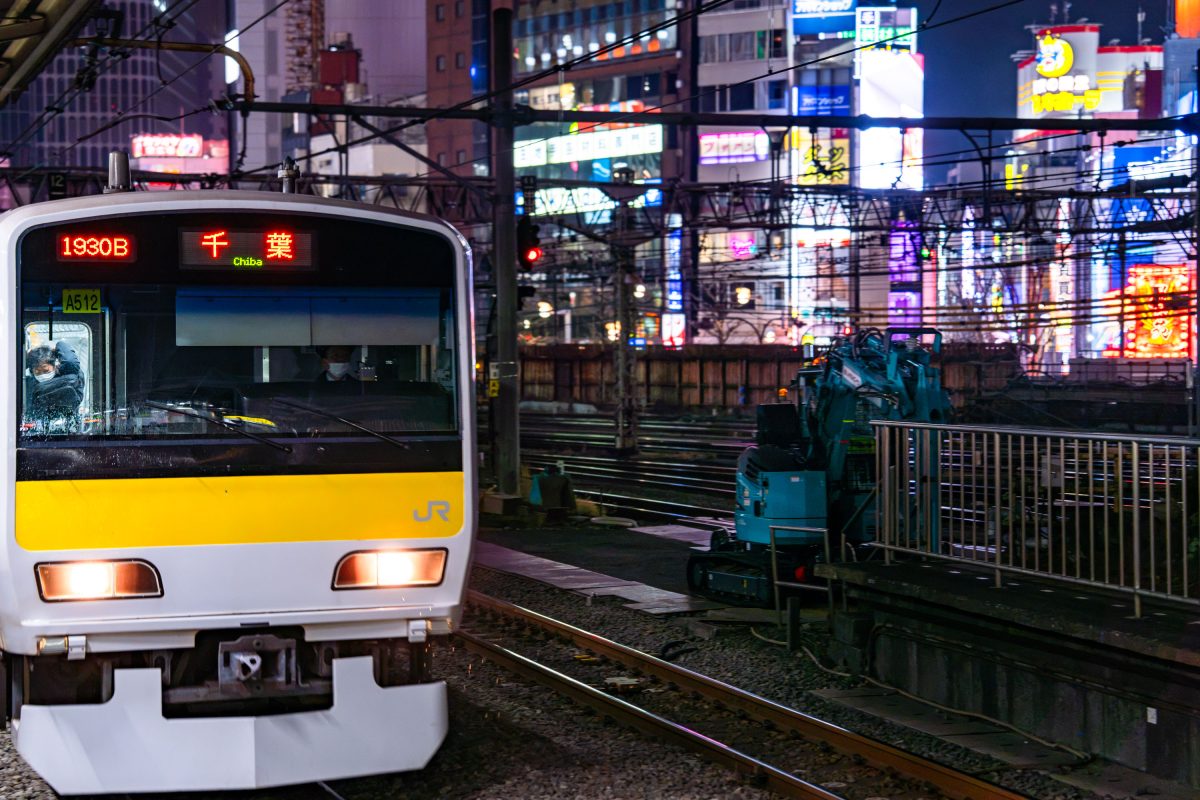
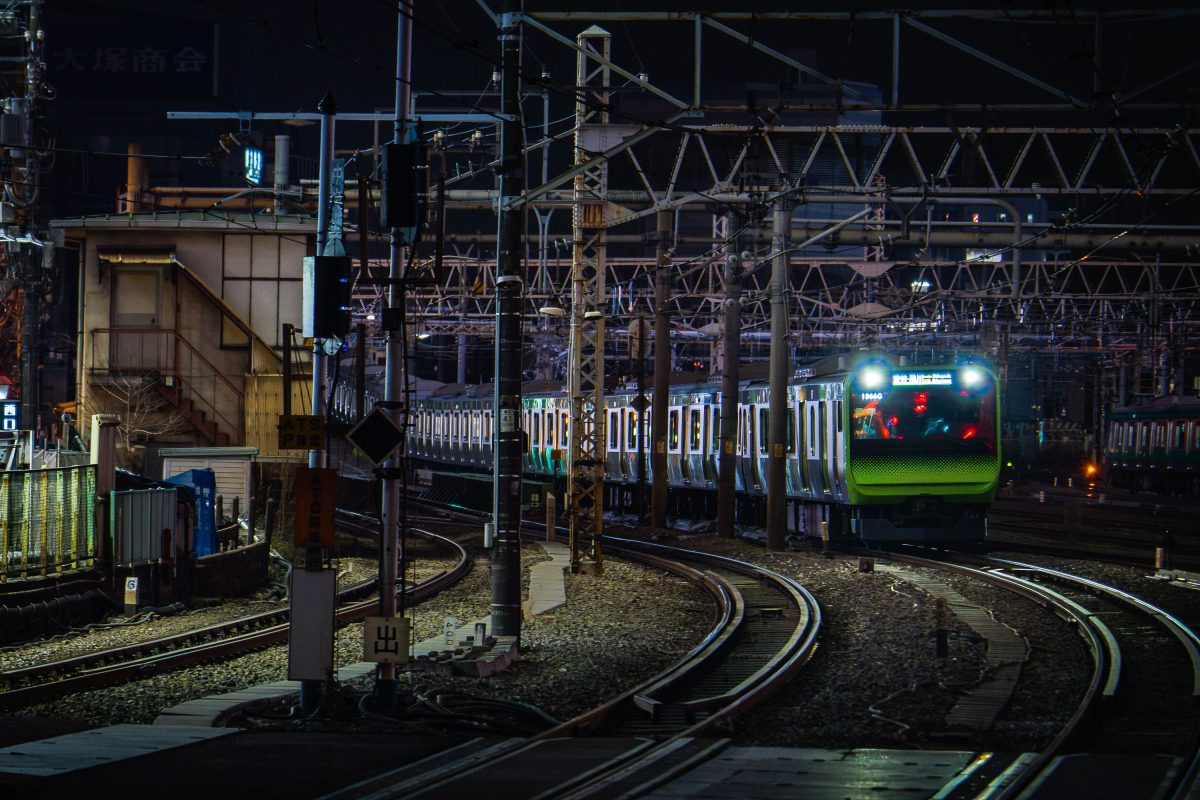
March 2023 — Multiple rail lines converge near Nippori Station in Tokyo, a key junction connecting the JR Yamanote, Keisei, and Joban lines. The illuminated signals and overhead power lines reveal the complexity of the city’s rail infrastructure as it weaves through residential and industrial zones. To the right, elevated expressway supports and nearby buildings frame the corridor, emphasizing Tokyo’s dense layering of transport systems and urban development.
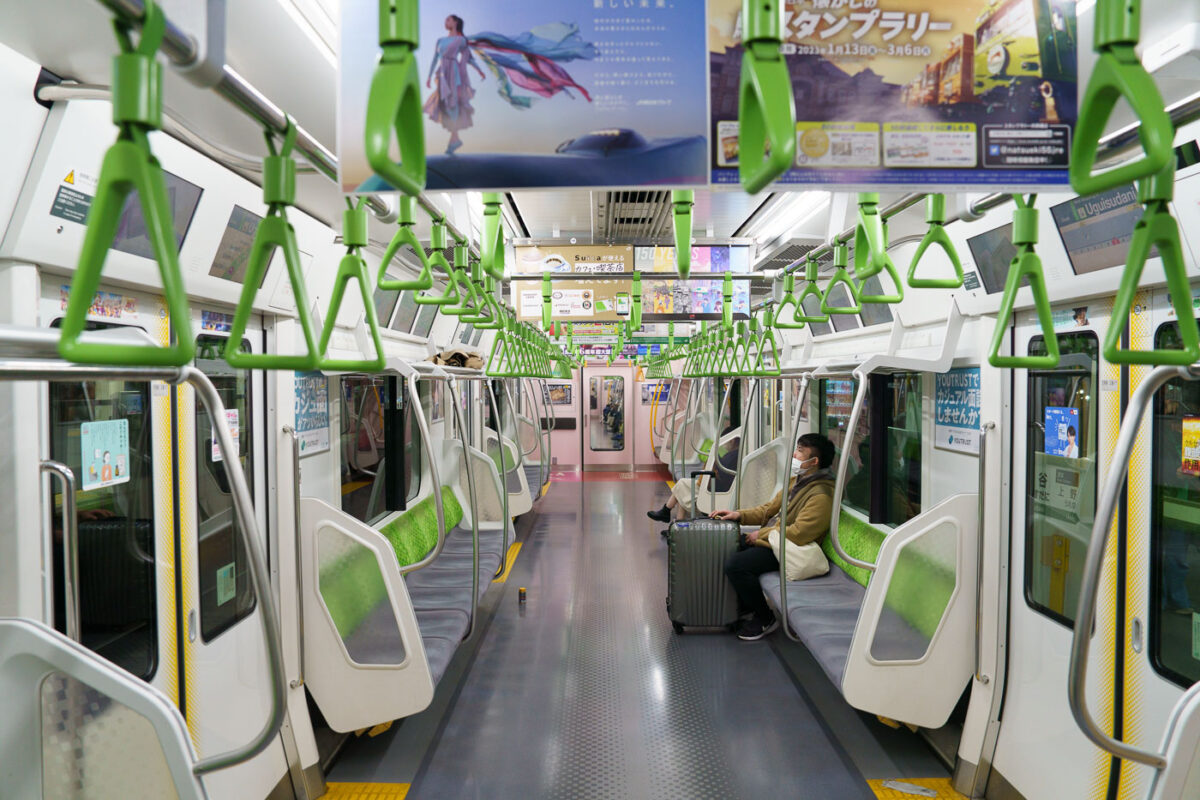
March 2023 — An interior view of a JR East E235 series train on the Yamanote Line, photographed in March 2023. Introduced beginning in 2015, the E235 fleet modernized one of Tokyo’s busiest rail corridors with full-width LCD displays, energy-efficient systems, and redesigned seating meant to improve passenger flow during peak congestion. The Yamanote Line has operated as Tokyo’s central loop since 1925, linking major districts such as Shinjuku, Shibuya, Ueno, and Tokyo Station. Its frequent headways—often under three minutes—make it a fundamental component of the city’s rail network. In this off-peak moment, the largely empty car highlights features typical of contemporary JR East design: bright color-coded grab handles, platform-screen door alignment, and extensive in-car advertising screens catering to both commuters and visitors navigating the metropolitan loop.
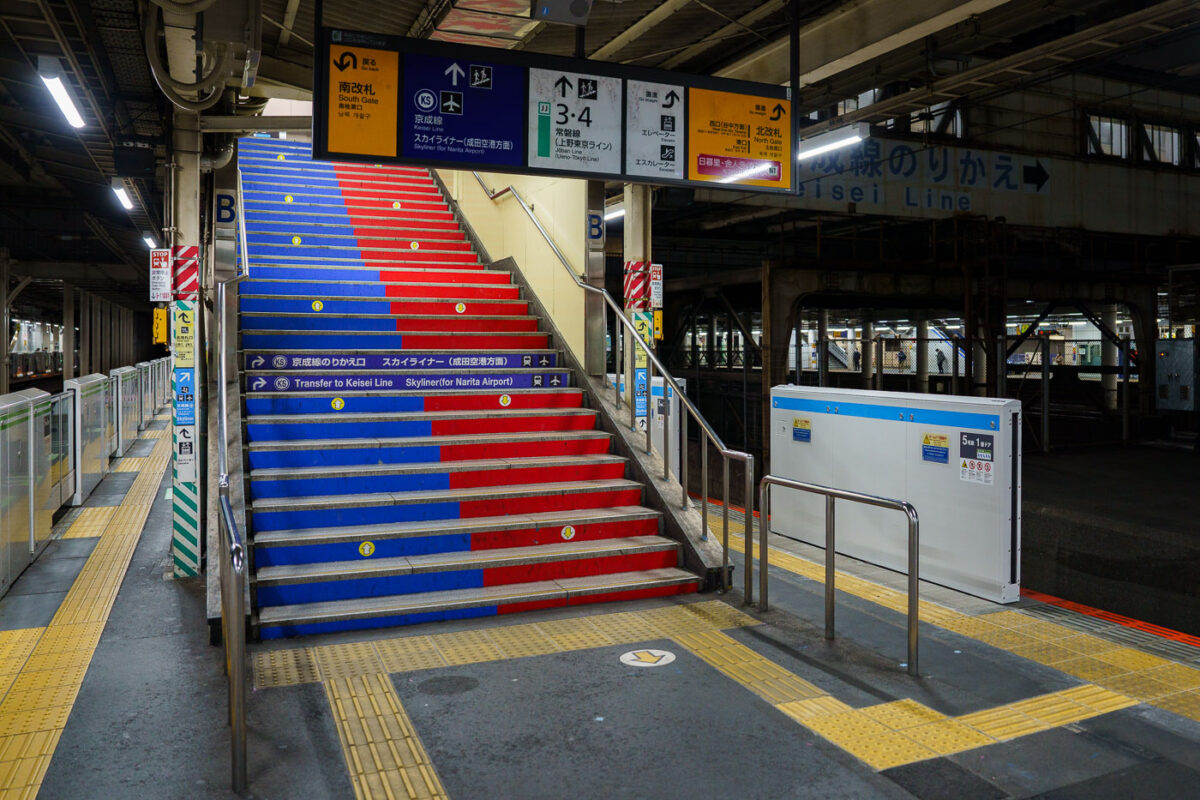
March 2023 — A color-coded stairway inside Nippori Station directs passengers to the Keisei Line platforms, the primary transfer point for travelers heading to Narita Airport on the high-speed Skyliner. Nippori serves as a major interchange between JR East lines, the Keisei Main Line, and the Nippori–Toneri Liner, linking northern Tokyo neighborhoods to the broader regional network. The mixed architecture—older steel passageways alongside newer safety upgrades like platform-edge barriers—reflects the station’s layered development since its opening in 1905. Today, Nippori remains one of Tokyo’s most important cross-rail transfer nodes, especially for airport-bound passengers navigating the city’s extensive transit system.
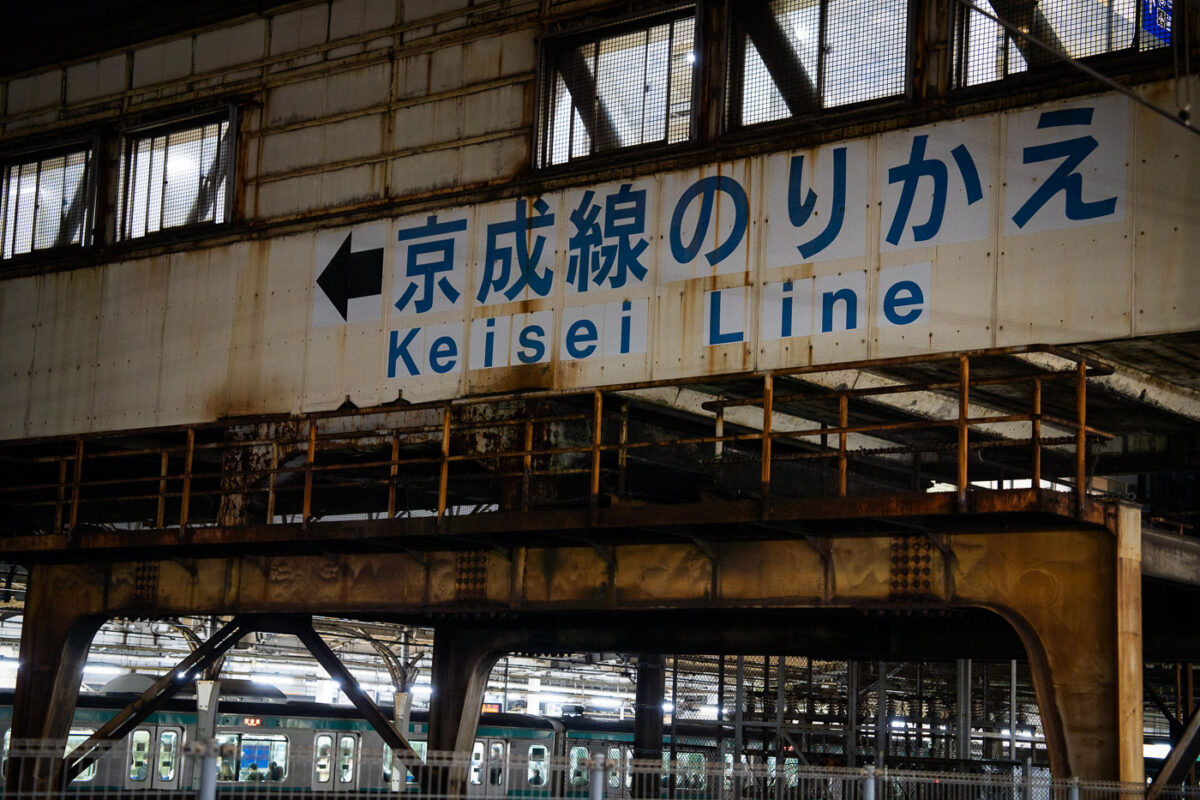
March 2023 — A weathered overhead passage at Nippori Station directs passengers toward the Keisei Line, one of Tokyo’s key links to Narita Airport via the Skyliner service. Nippori has served as a major interchange since the early 20th century, connecting JR East’s Yamanote, Keihin-Tōhoku, and Jōban lines with the private Keisei network. The aging steelwork and faded signage reflect the layered construction of the station complex, where older elevated structures remain in daily use alongside modernized ticketing halls and platform edge barriers. Despite its utilitarian appearance, this transfer point moves thousands of airport-bound travelers each day, making it one of Tokyo’s busiest cross-rail connections.
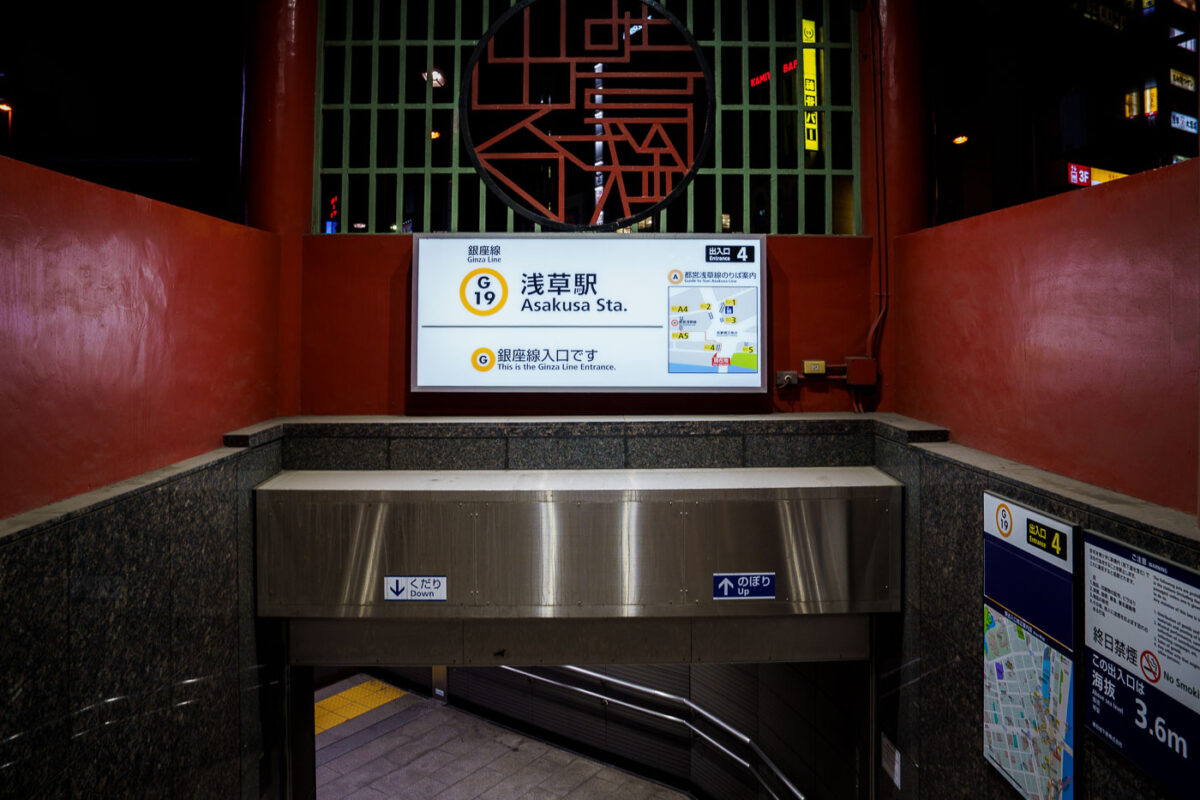
March 2023 — An entrance to Tokyo Metro’s Asakusa Station on the Ginza Line, marked with the station code G-19, leads commuters down a clean, tiled stairway under the red-painted gateway structure. The illuminated signage displays route maps and directional guidance, combining modern wayfinding with the surrounding area’s traditional aesthetic. Located near Sensō-ji Temple, this entrance reflects Asakusa’s balance of old Tokyo charm and contemporary transit design.
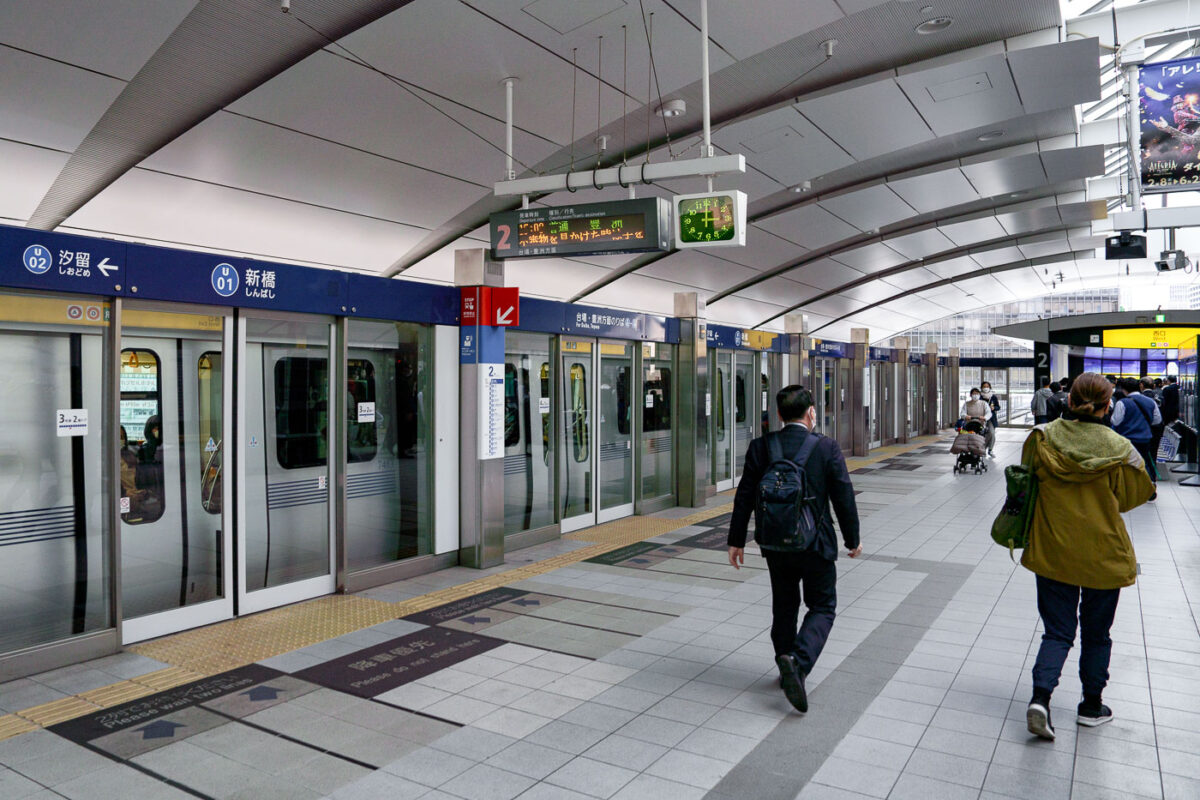
March 2023 — Shiodome Station in Minato Tokyo Japan.
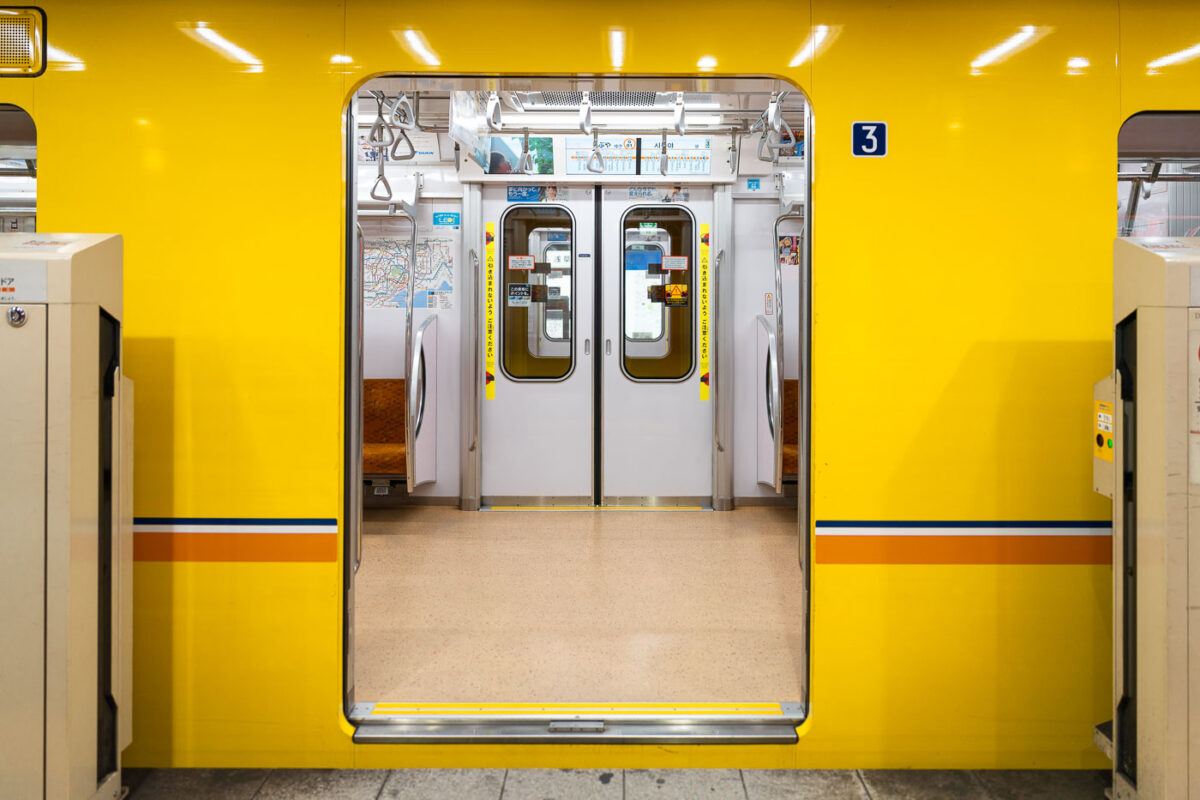
March 2023 — Tokyo’s Marunouchi Line is one of Japan’s oldest and busiest subway routes, linking major commercial and governmental districts through a network that dates back to 1954. This view shows the Series 2000 rolling stock, a modernized fleet introduced by Tokyo Metro beginning in 2019 to replace aging Series 02 cars. The trains feature energy-efficient LED lighting, regenerative braking, and improved accessibility through wider doorways and level boarding. Their bright yellow exterior, trimmed with red and blue stripes, preserves the line’s traditional color while emphasizing the sleek, minimalist design typical of contemporary Japanese transit engineering. Inside, the cabin layout prioritizes capacity and passenger flow, with longitudinal bench seating covered in patterned orange upholstery and overhead digital route displays in both Japanese and English. The Marunouchi Line operates on a 1,500 V DC overhead catenary and runs entirely underground except for a brief surface section near Nakano-Sakaue, connecting Ikebukuro to Ogikubo over a 24.2-kilometer route that handles hundreds of thousands of passengers daily.
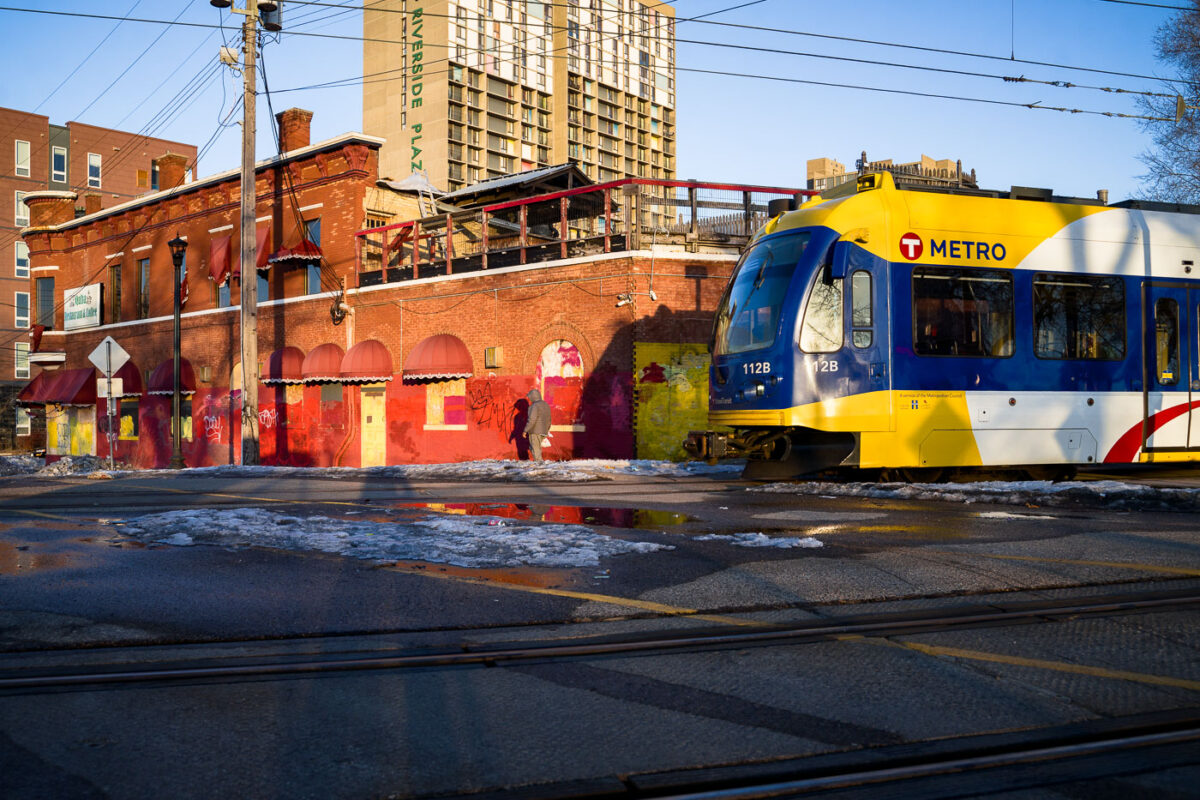
February 2023 — Train moves through the Cedar Riverside train station in South Minneapolis on February 19, 2023.
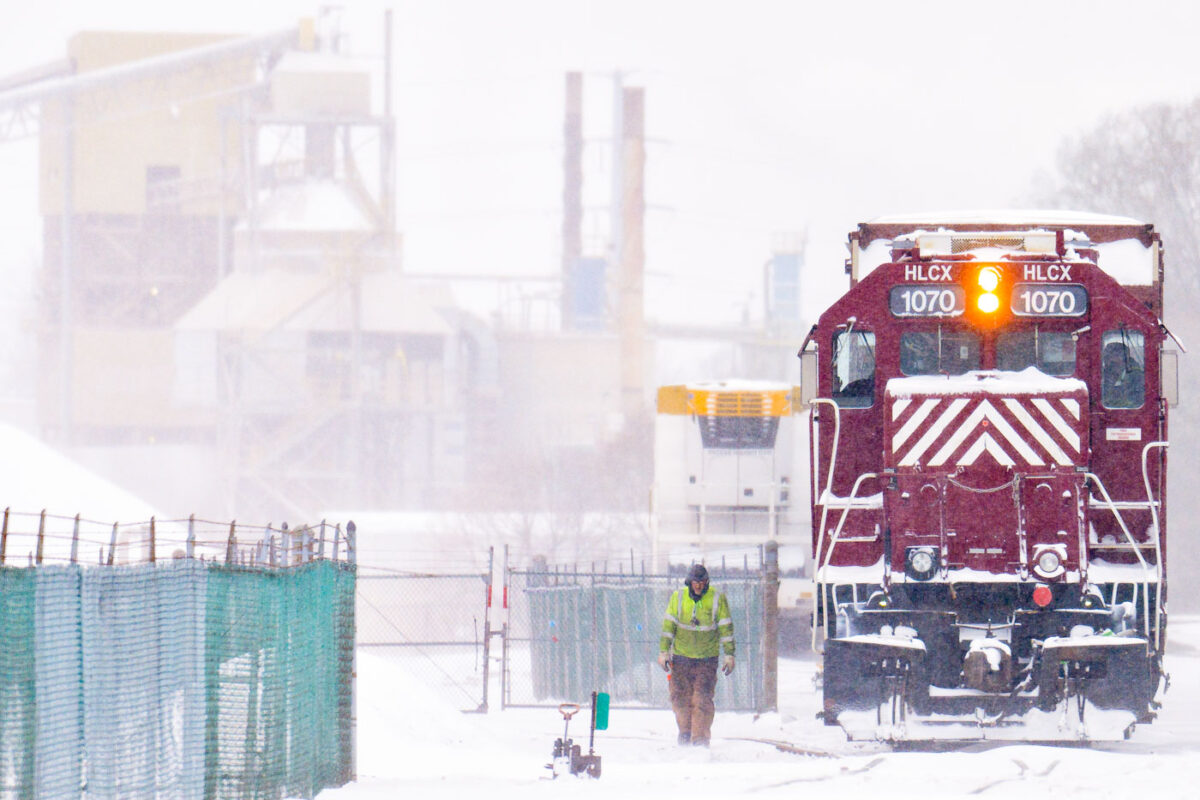
December 2022 — A freight crew member walks alongside HLCX 1070 during a heavy snowstorm at Quincy Street and Eastman Avenue in Green Bay, Wisconsin. The locomotive’s headlights cut through the blowing snow as operations continue despite low visibility and freezing conditions. Industrial structures in the background fade into the whiteout, highlighting how rail work persists year-round across the region’s manufacturing and transportation corridors.
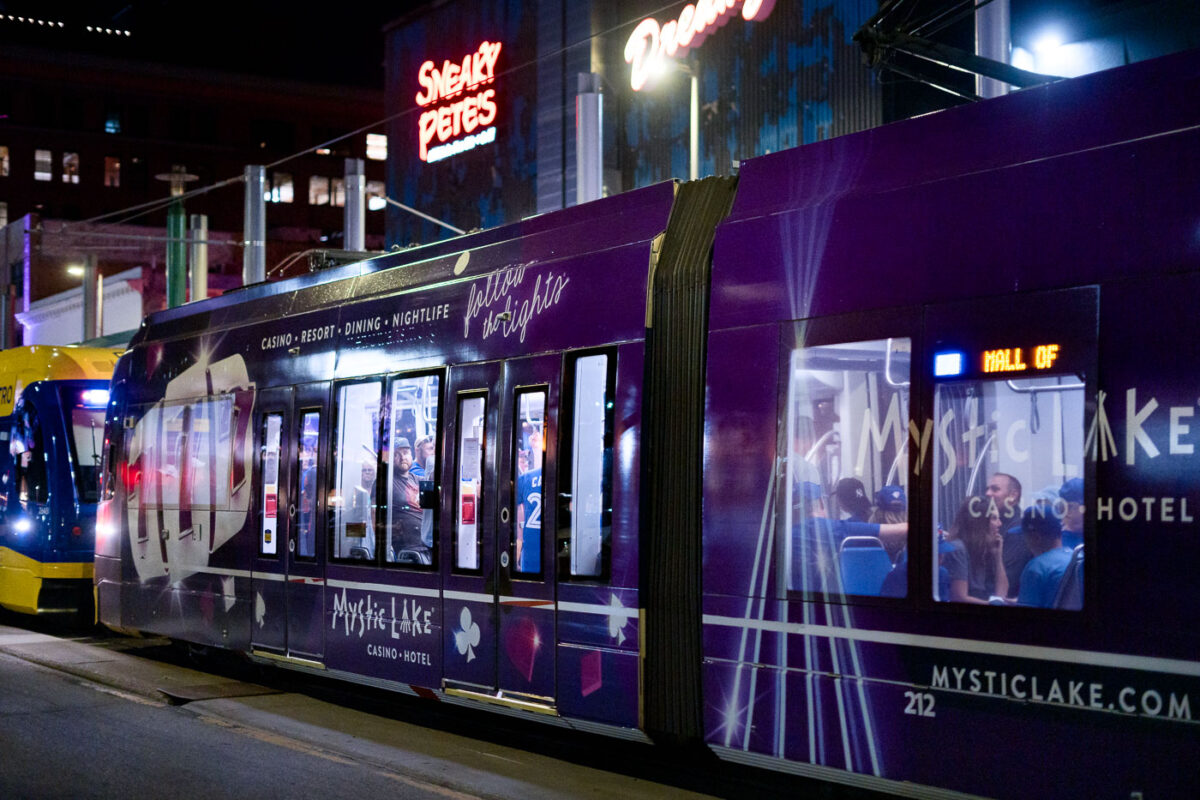
August 2022 — A Mystic Lake casino wrapped light rail train at the Warehouse District-Hennepin LRT station during a Twin's game.
July 2022 —
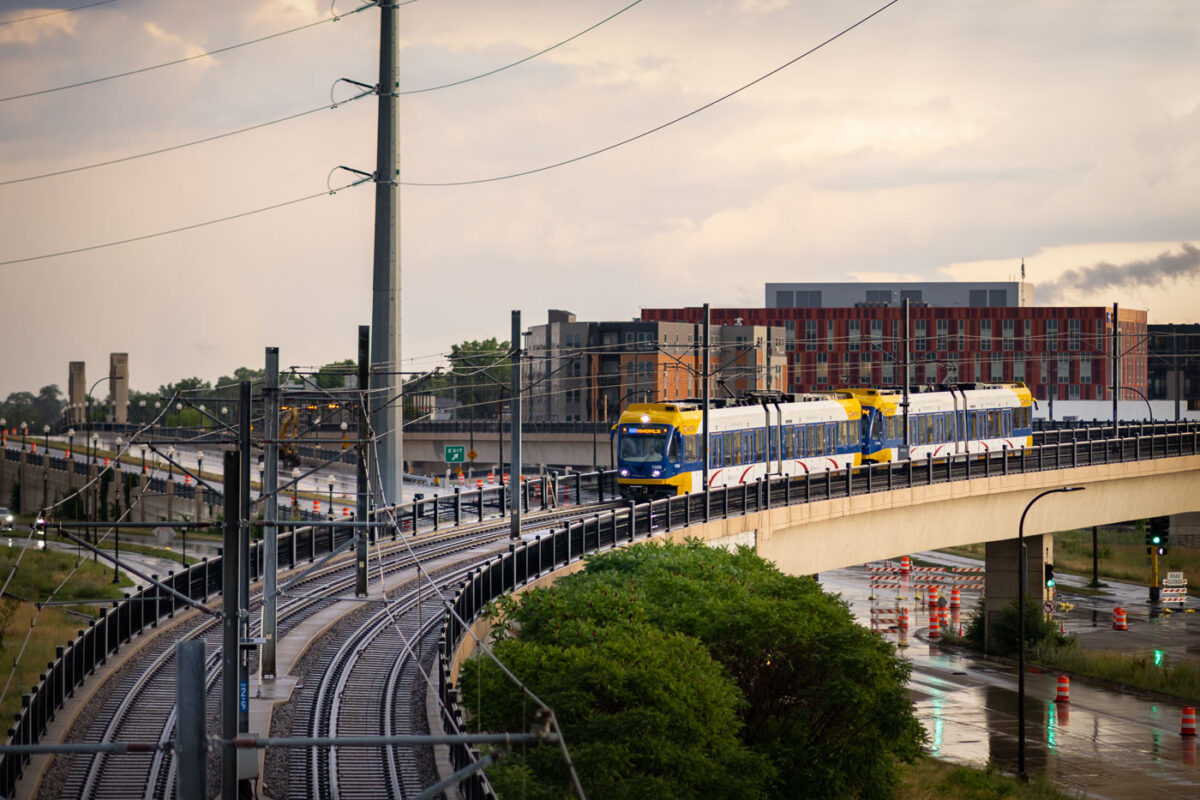
July 2022 — A Metro Transit Blue Line light rail train operates on an elevated track in Minneapolis. Opened in 2004, the Blue Line connects Minneapolis and Saint Paul, with extensions serving the Minneapolis-Saint Paul International Airport and northern suburbs. This elevated segment provides a dedicated right-of-way, ensuring efficient transit operations above street traffic. The light rail system is a crucial element of public transportation in the Twin Cities, linking residential areas with business districts and cultural attractions.
July 2022 —
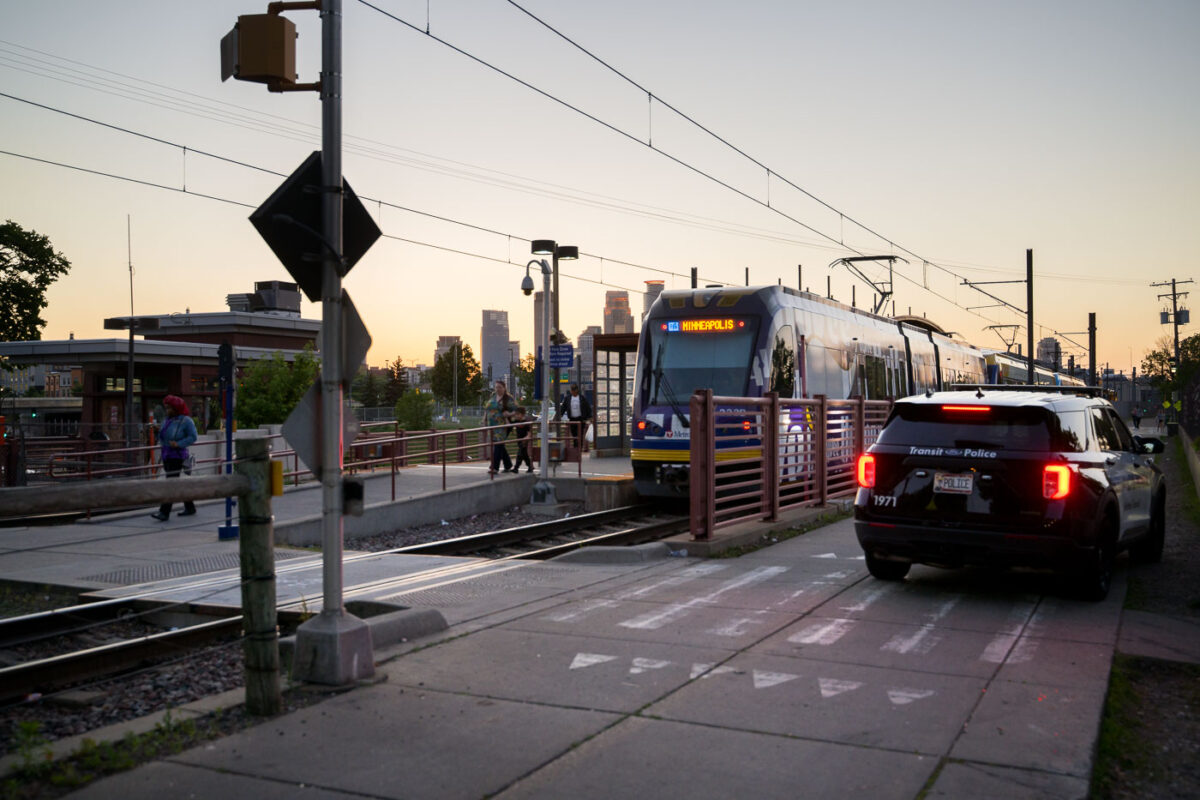
June 2022 — Franklin Avenue Light Rail station with a Metro Transit squad car.
April 2022 —
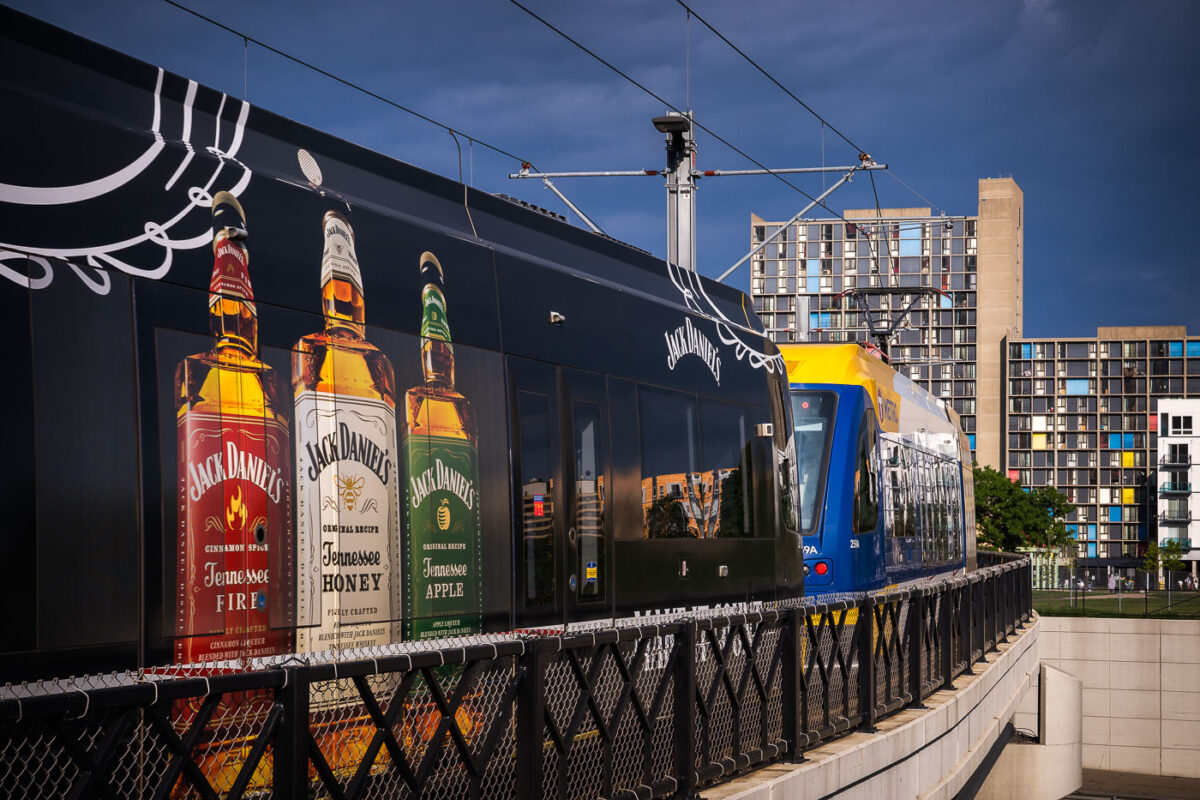
June 2021 — A Jack Daniel's wrapped light rail train in Minneapolis, Minnesota. Cedar Riverside apartments in the background.
April 2021 —
February 2021 —
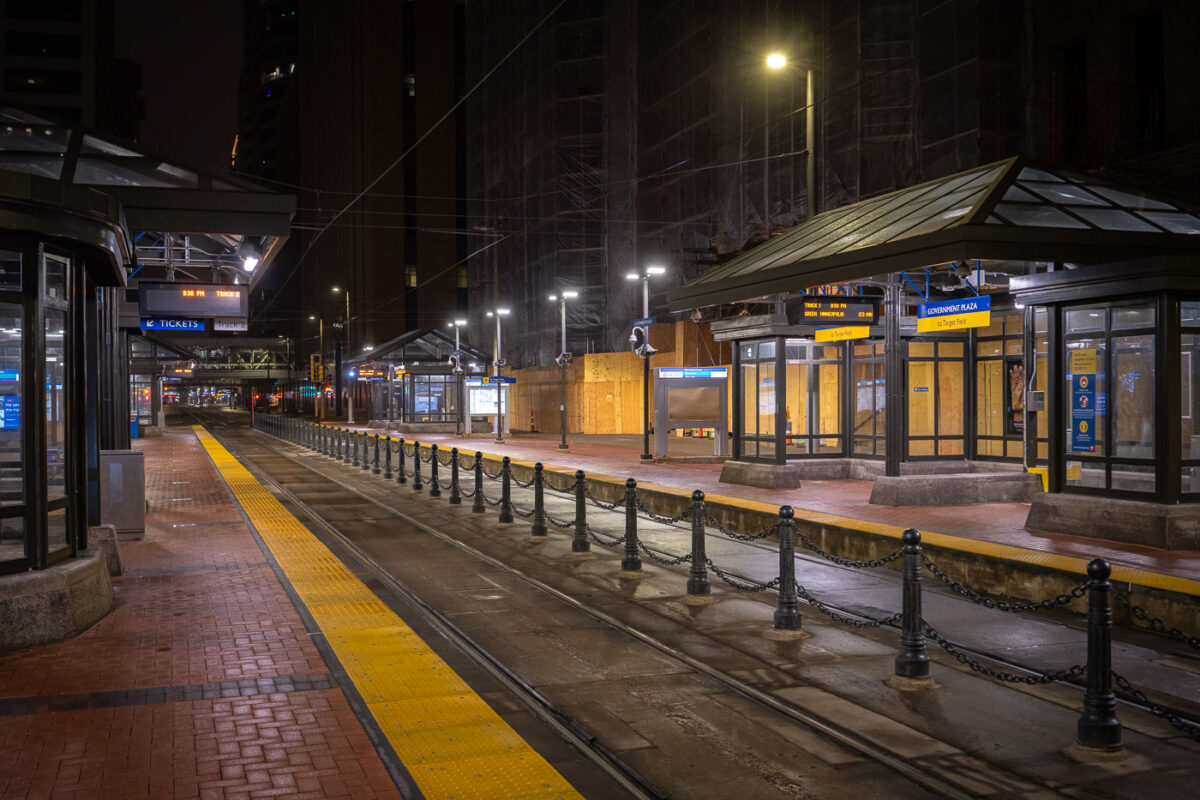
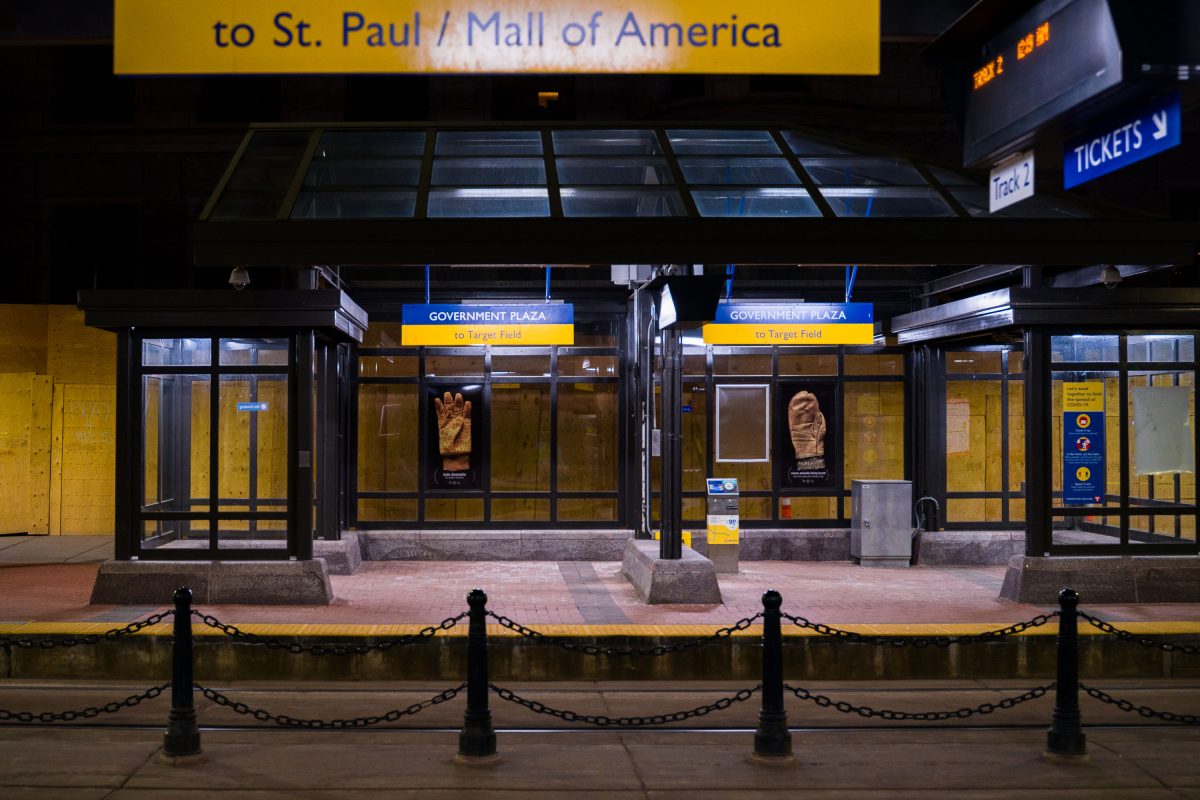
December 2020 — The Government Plaza LRT stop in downtown Minneapolis.
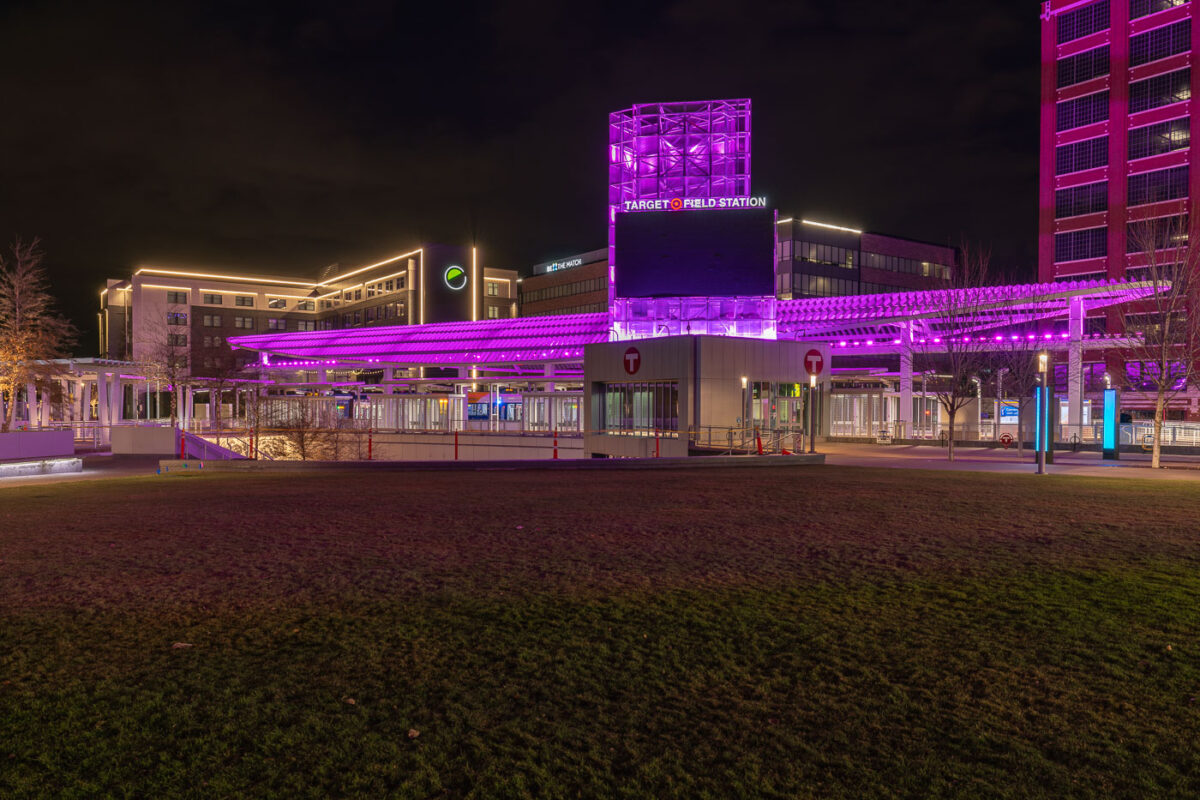
November 2020 — Target Field Station in Downtown Minneapolis at night.
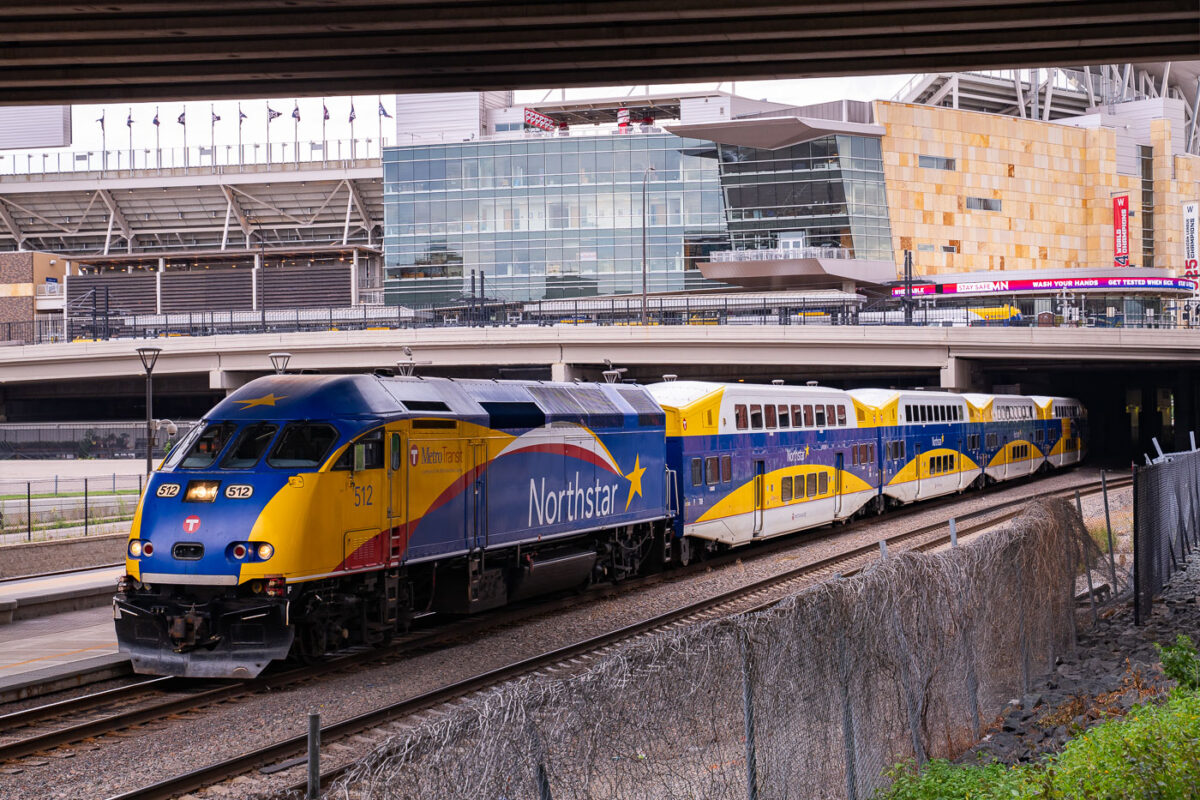
August 2020 — The Northstar Train at the Target Field Station in Minneapolis. Above is Target Field, home of the Minnesota Twins MLB baseball team. COVID-19 warnings scroll on the digital board.
August 2020 —
July 2020 —
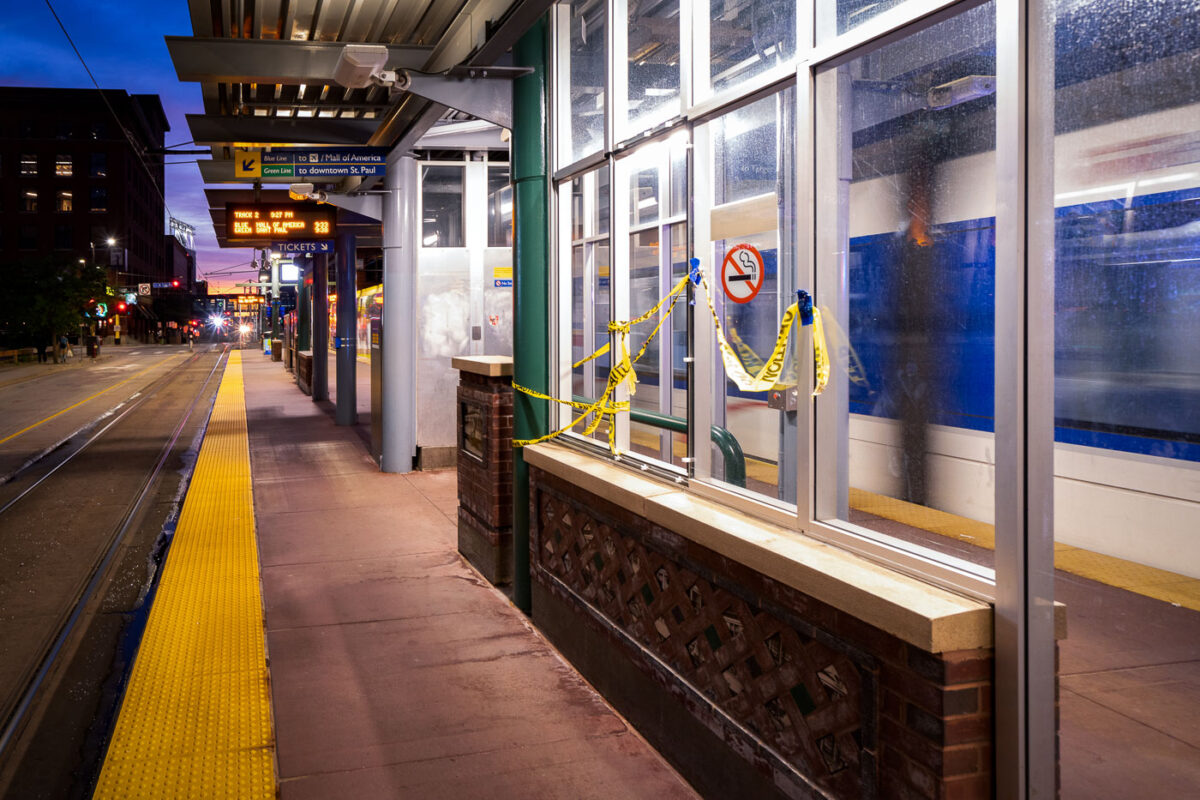
July 2020 — The Warehouse District Light Rail platform in Downtown Minneapolis with caution tape.
July 2020 —
June 2020 —
May 2020 —
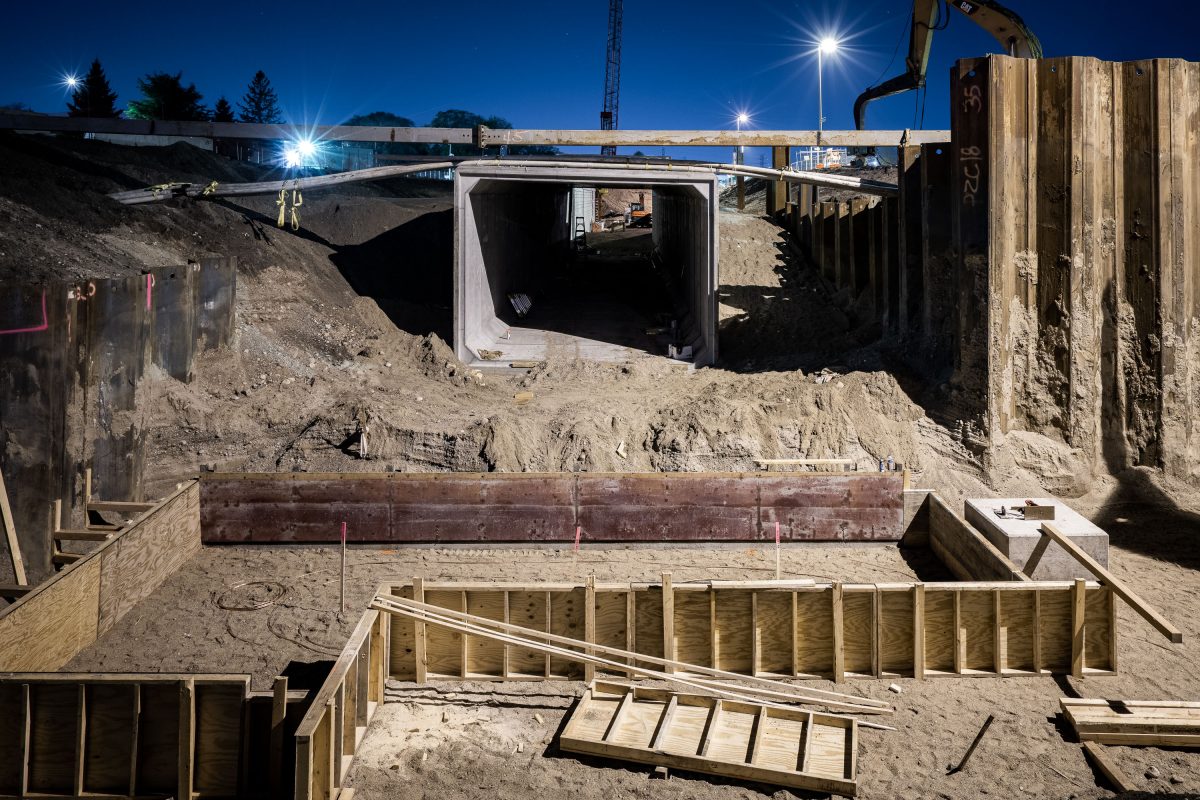
May 2020 —
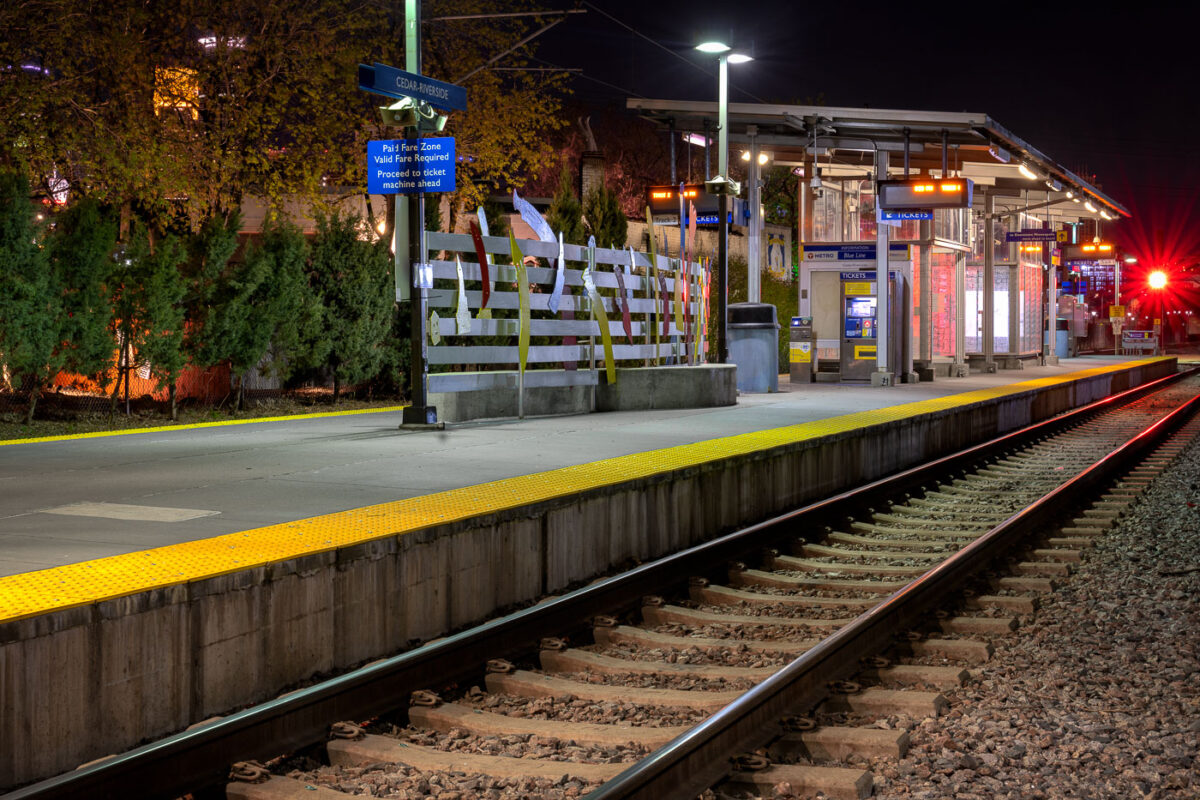
April 2020 — Cedar-Riverside LRT trains station in Minneapolis, Minnesota.
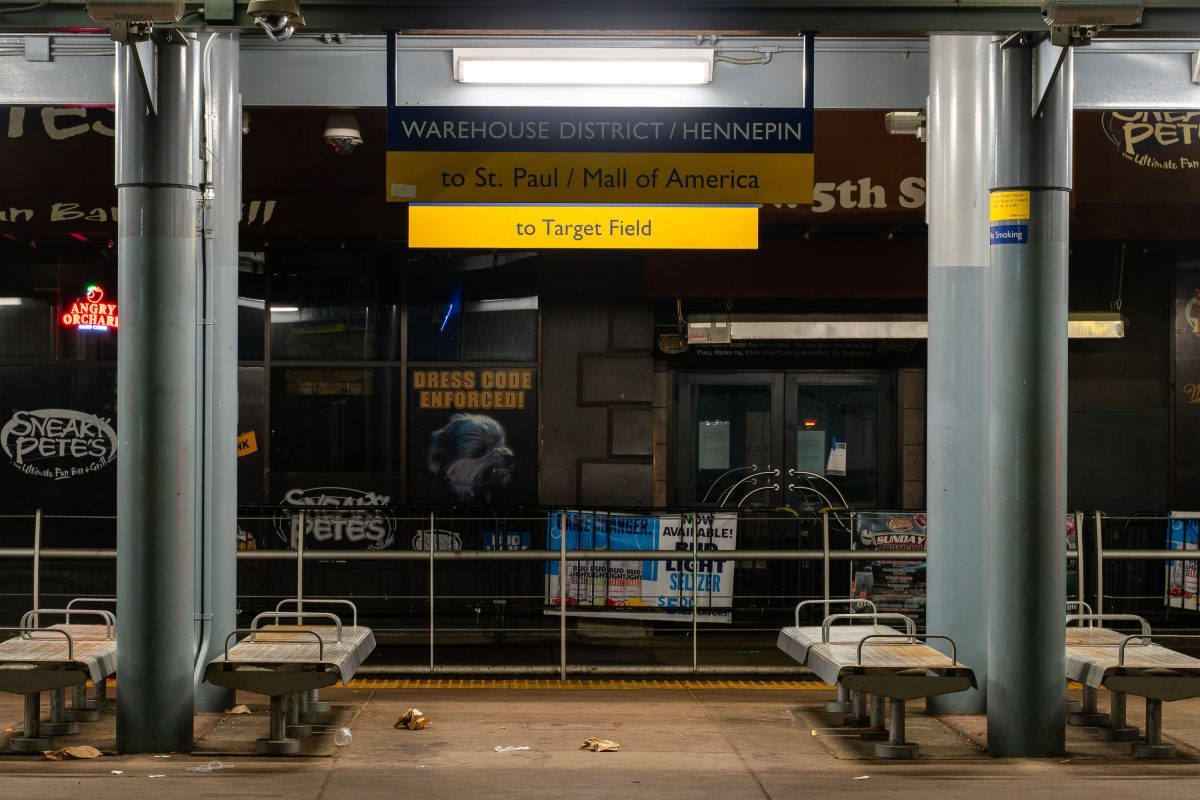
March 2020 —
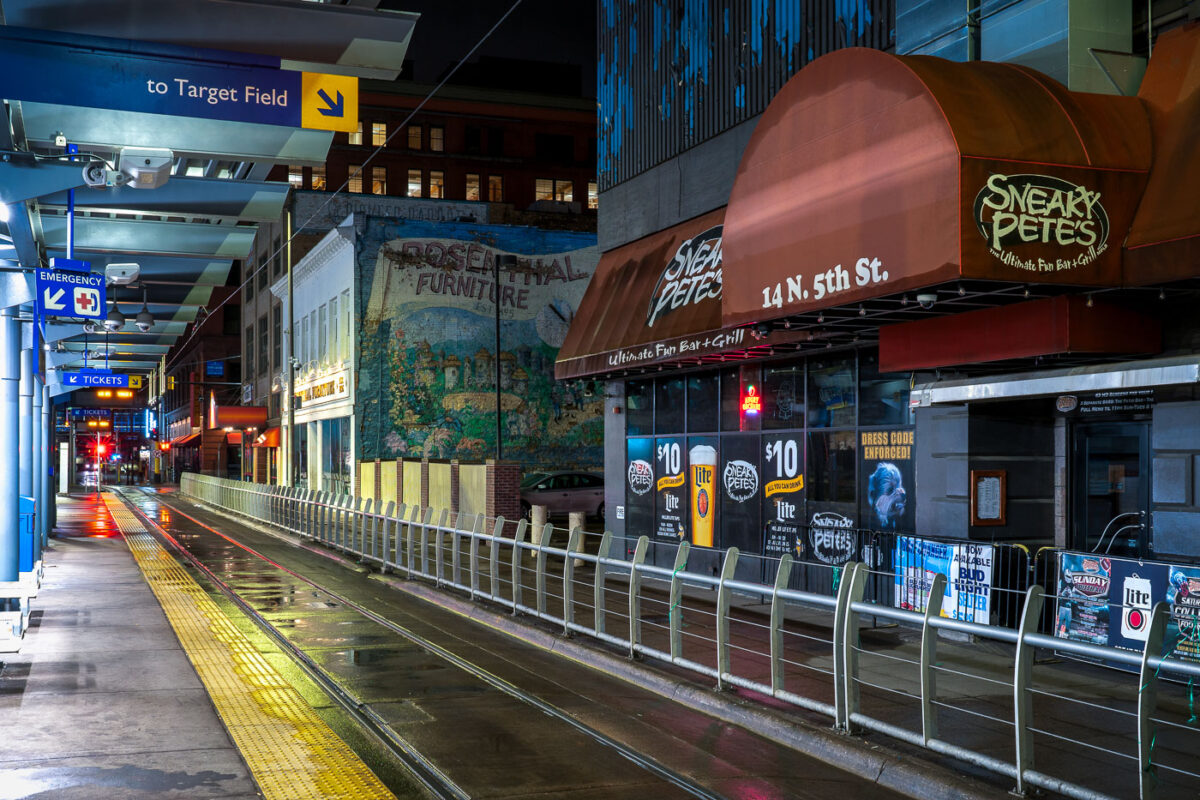
March 2020 — Sneaky Pete’s bar during the first night of Minnesota’s Stay At Home Order on 03/28/20.
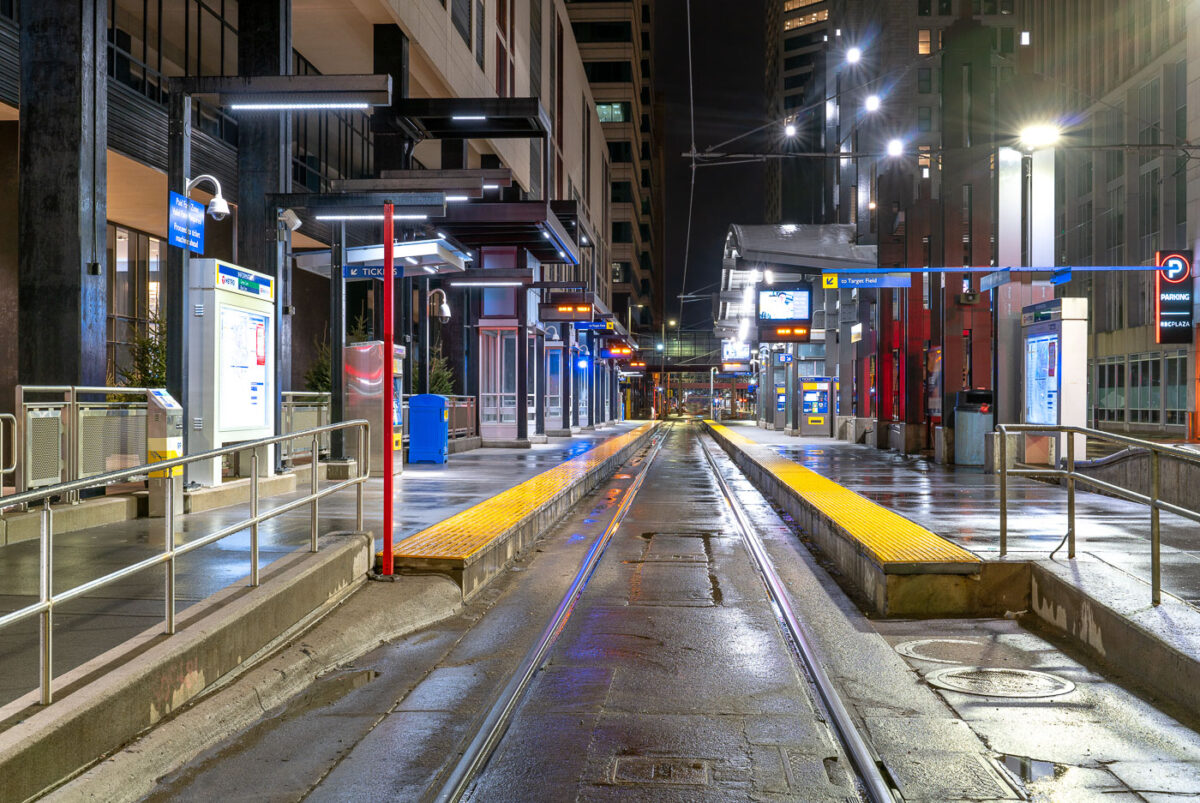
March 2020 — Nicollet Mall Light Rail Station on a rainy night in Downtown Minneapolis during Minnesota’s Stay At Home orders.
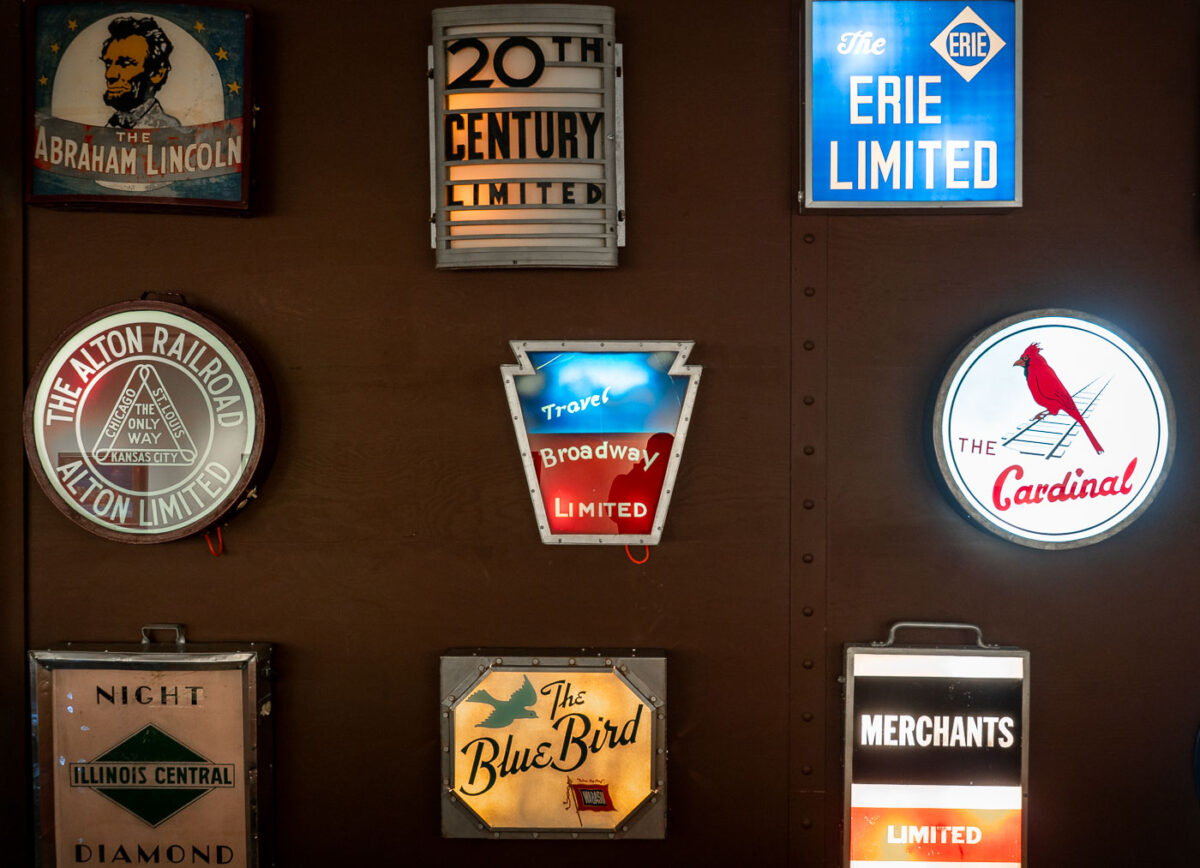
December 2019 — Seen inside the Green Bay Railroad Museum, an exhibit of historic railroad drumhead signs, once mounted on the observation cars of famous American passenger trains. These illuminated signs served both as branding and a wayfinding tool for travelers during the golden age of rail. • 20th Century Limited – The legendary New York Central luxury express between New York and Chicago, famous for its red carpet treatment. • Broadway Limited – The Pennsylvania Railroad’s flagship train, symbolized by its keystone-shaped sign. •The Cardinal – Still in operation today as an Amtrak route between New York and Chicago via Washington, D.C. and Cincinnati. •The Abraham Lincoln – Operated by the Alton Railroad between Chicago and St. Louis. •The Blue Bird – Another Alton Railroad streamliner that connected Chicago and St. Louis. •Erie Limited – A long-distance train operated by the Erie Railroad. •Night Diamond (Illinois Central) – A named overnight passenger service. •Merchants Limited – A New Haven Railroad luxury train between Boston and New York, a favorite among business travelers. •20th Century Limited – The legendary New York Central luxury express between New York and Chicago, famous for its red carpet treatment. •Broadway Limited – The Pennsylvania Railroad’s flagship train, symbolized by its keystone-shaped sign. •The Cardinal – Still in operation today as an Amtrak route between New York and Chicago via Washington, D.C. and Cincinnati. •The Abraham Lincoln – Operated by the Alton Railroad between Chicago and St. Louis. •The Blue Bird – Another Alton Railroad streamliner that connected Chicago and St. Louis. •Erie Limited – A long-distance train operated by the Erie Railroad. •Night Diamond (Illinois Central) – A named overnight passenger service. •Merchants Limited – A New Haven Railroad luxury train between Boston and New York, a favorite among business travelers.
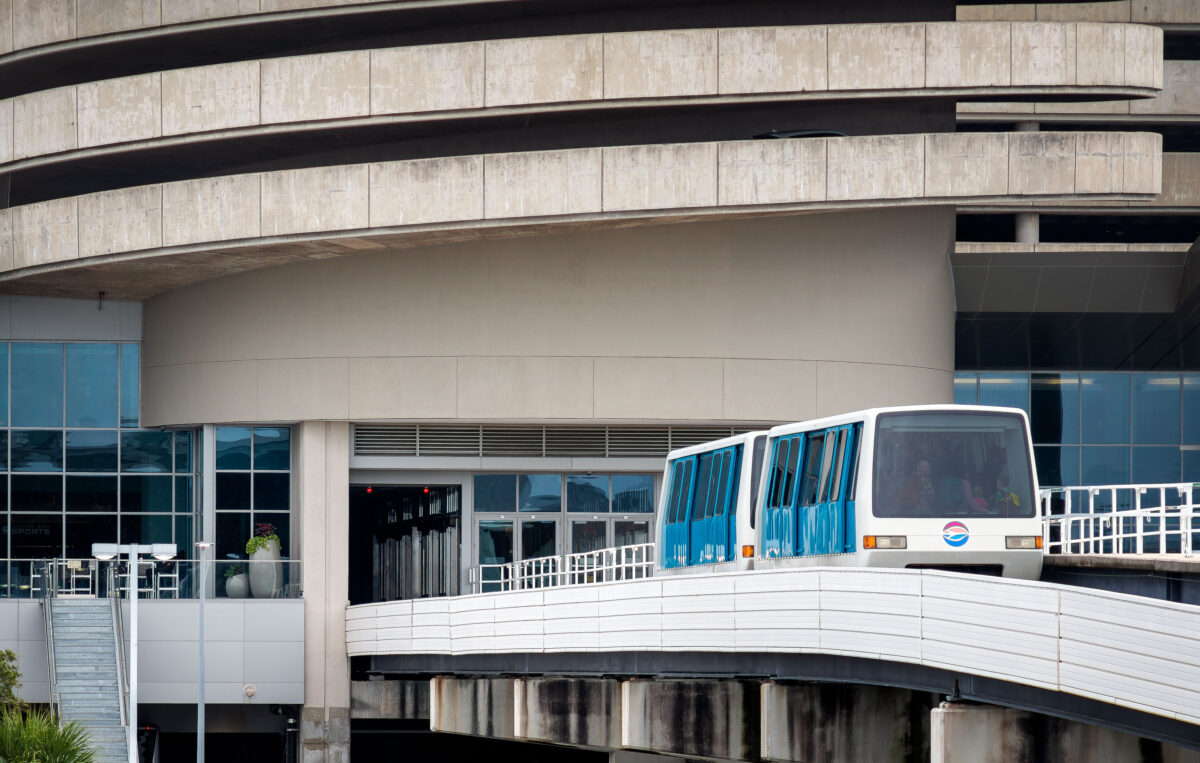
December 2019 — SkyConnect tram that connects the airport to the parking garage and rental car center.
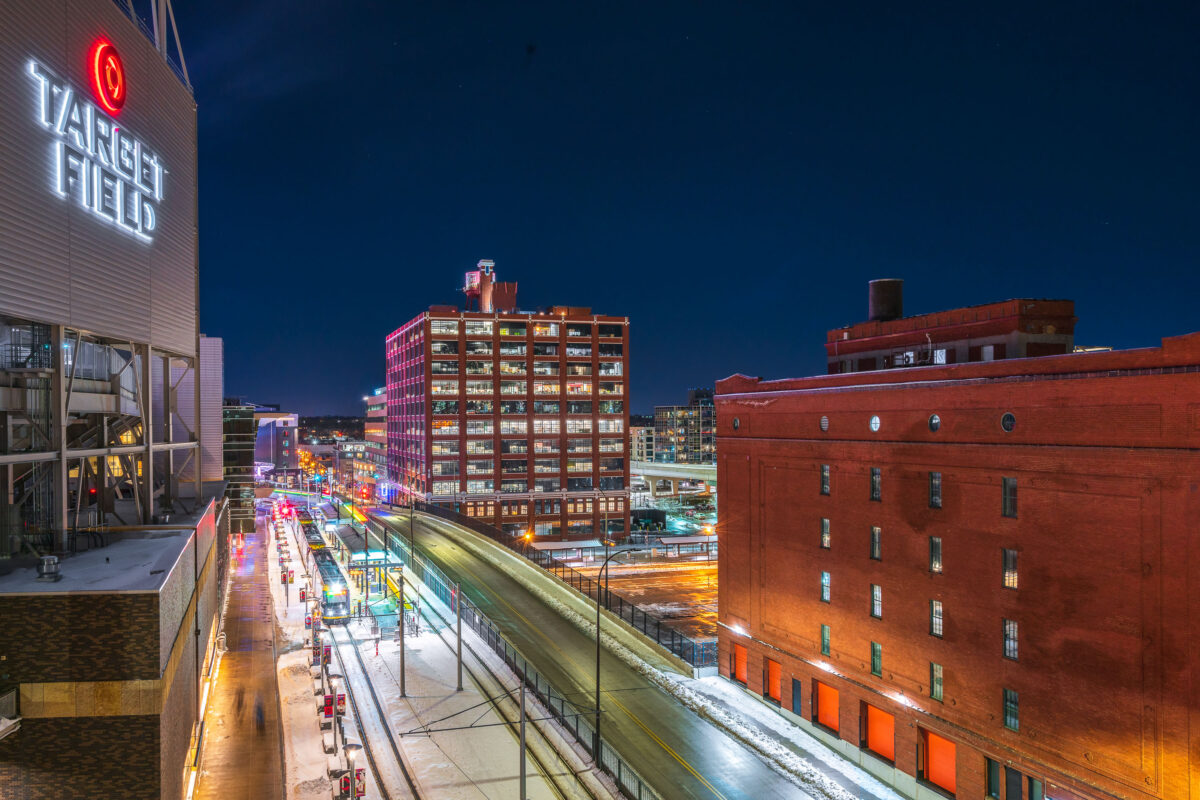
December 2019 — The illuminated Target Field sign overlooks the Warehouse District in downtown Minneapolis, where the city’s historic brick warehouses meet modern transit and redevelopment. Below, the Metro Green and Blue Line trains stop at Target Field Station, a multimodal hub linking light rail, commuter rail, and bike paths. The brightly lit Ford Center and preserved brick structures along 5th Street North illustrate the district’s mix of 20th-century industrial architecture and contemporary urban life, framed against the cold clarity of a Minnesota winter night.
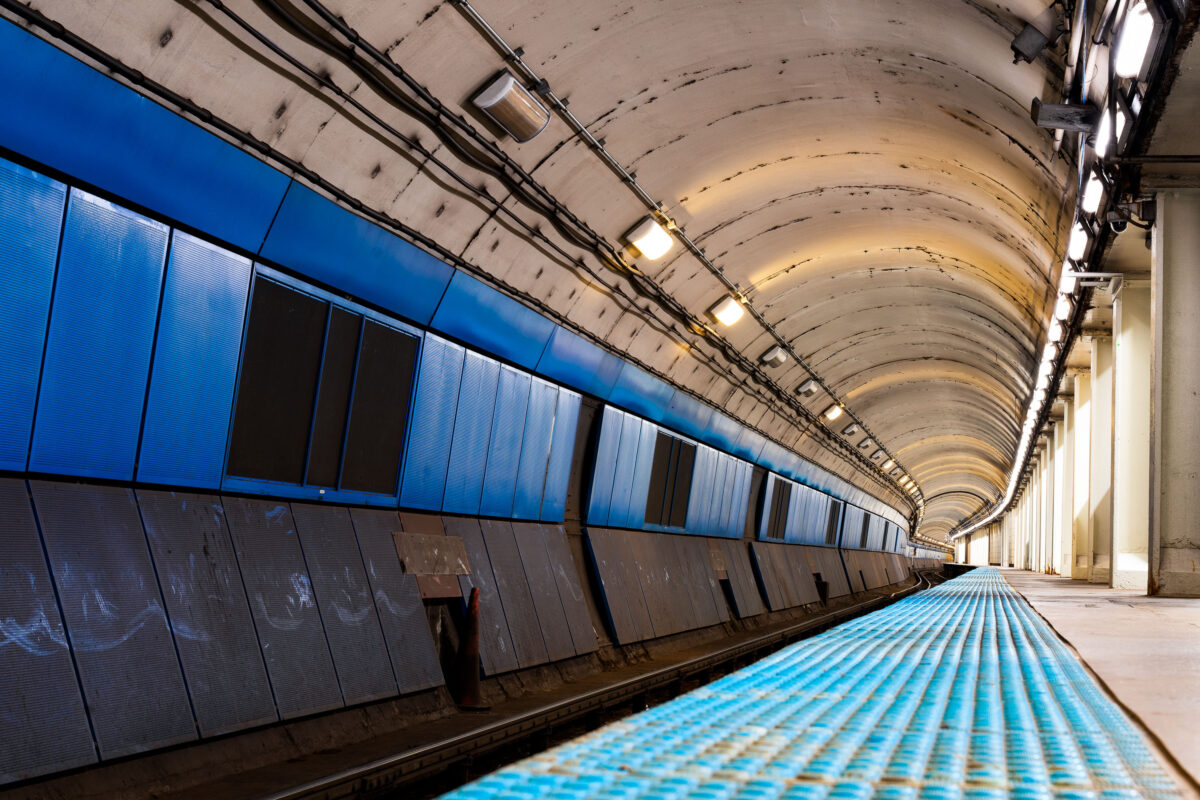
October 2019 — The curved platform of a Chicago Transit Authority Blue Line station reveals the utilitarian design of the city’s subway infrastructure, part of the Milwaukee–Dearborn subway opened in 1951. The tunnel’s tiled blue panels and low arched ceiling reflect the postwar engineering era that brought rapid transit beneath the Loop and the West Side, connecting O’Hare International Airport to downtown. Despite its age, this corridor remains a vital artery in Chicago’s daily commuter network, a symbol of mid-century urban mobility still in constant motion beneath the city streets.
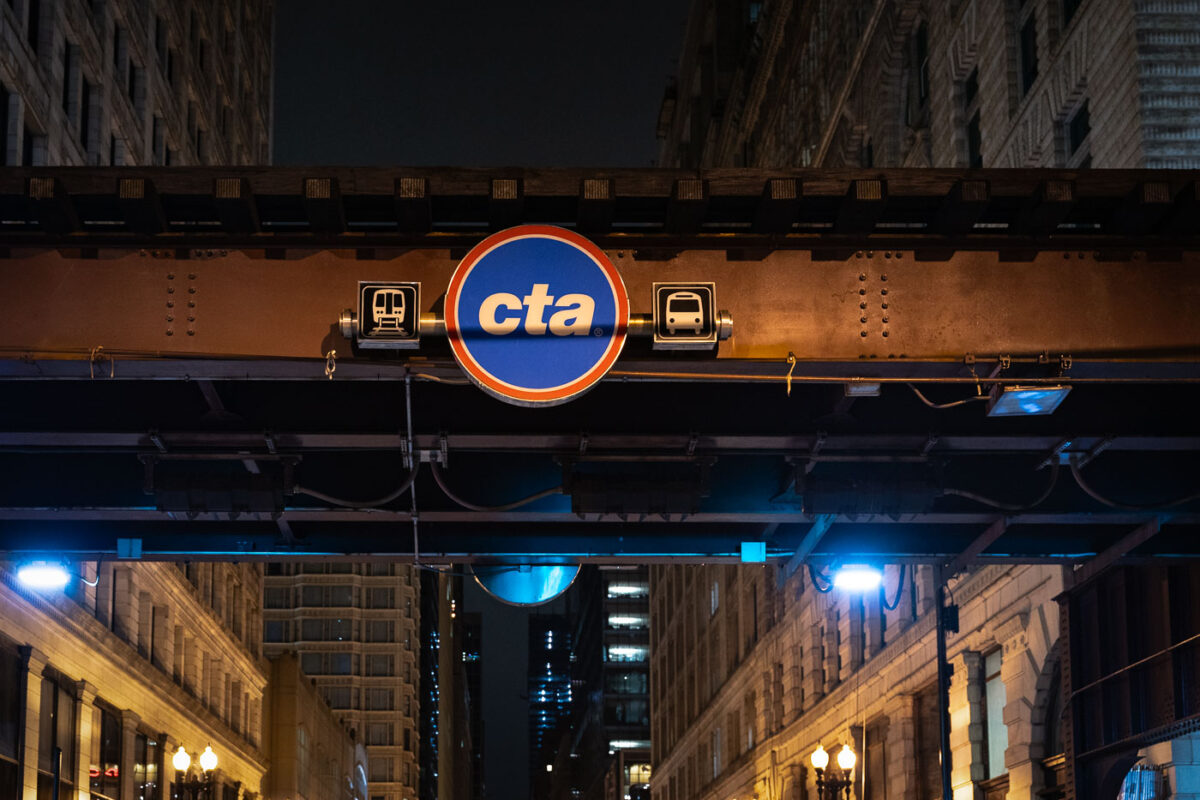
October 2019 — The Chicago Transit Authority (CTA) logo is displayed beneath the steel elevated tracks that define the Loop, the city’s central business district. The structure, part of the “L” system first built in the late 19th century, remains one of Chicago’s most enduring symbols of urban mobility. Overhead girders and riveted beams—many still original to the early 1900s—carry trains above streets lined with early skyscrapers and historic facades. The CTA continues to operate one of the largest and oldest public transit networks in the United States, moving more than a million riders daily through Chicago’s interconnected system of rail and bus lines.