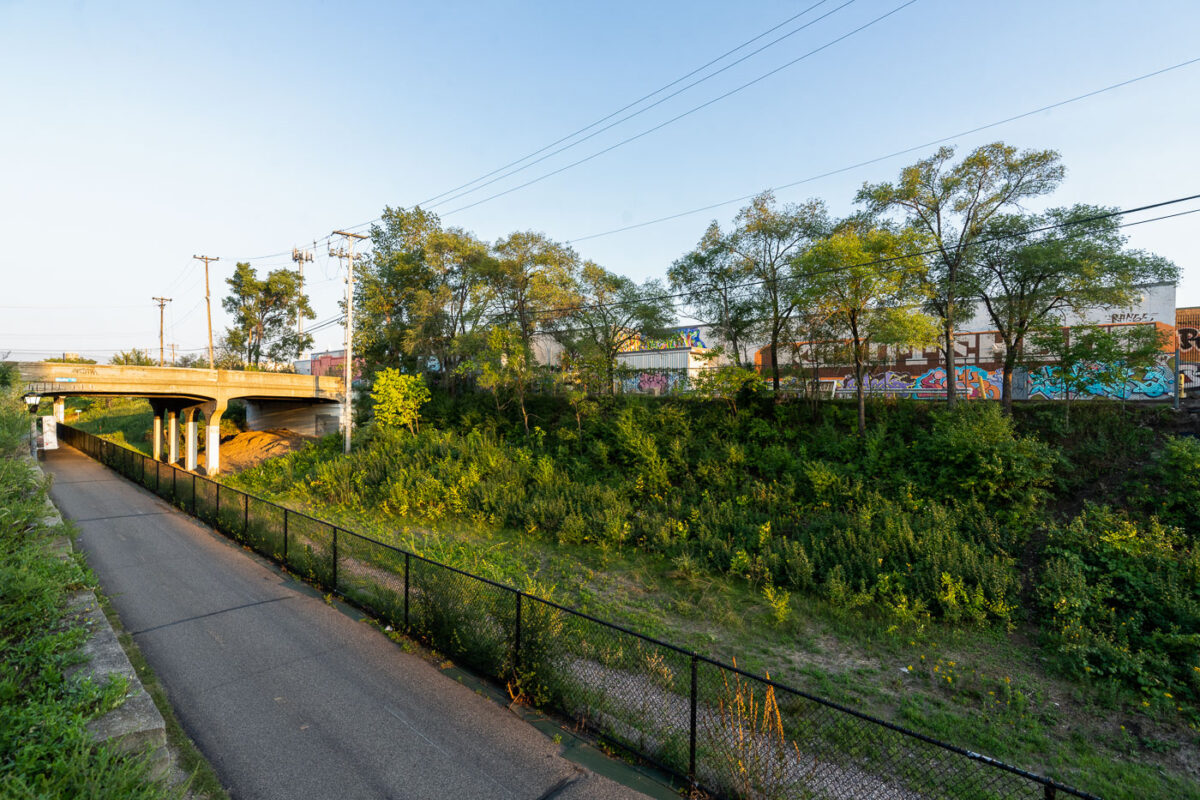
Midtown Greenway, Minneapolis: Overpass and Graffiti
September 2021 —
Explore photos tagged Biking.
September 2021 —
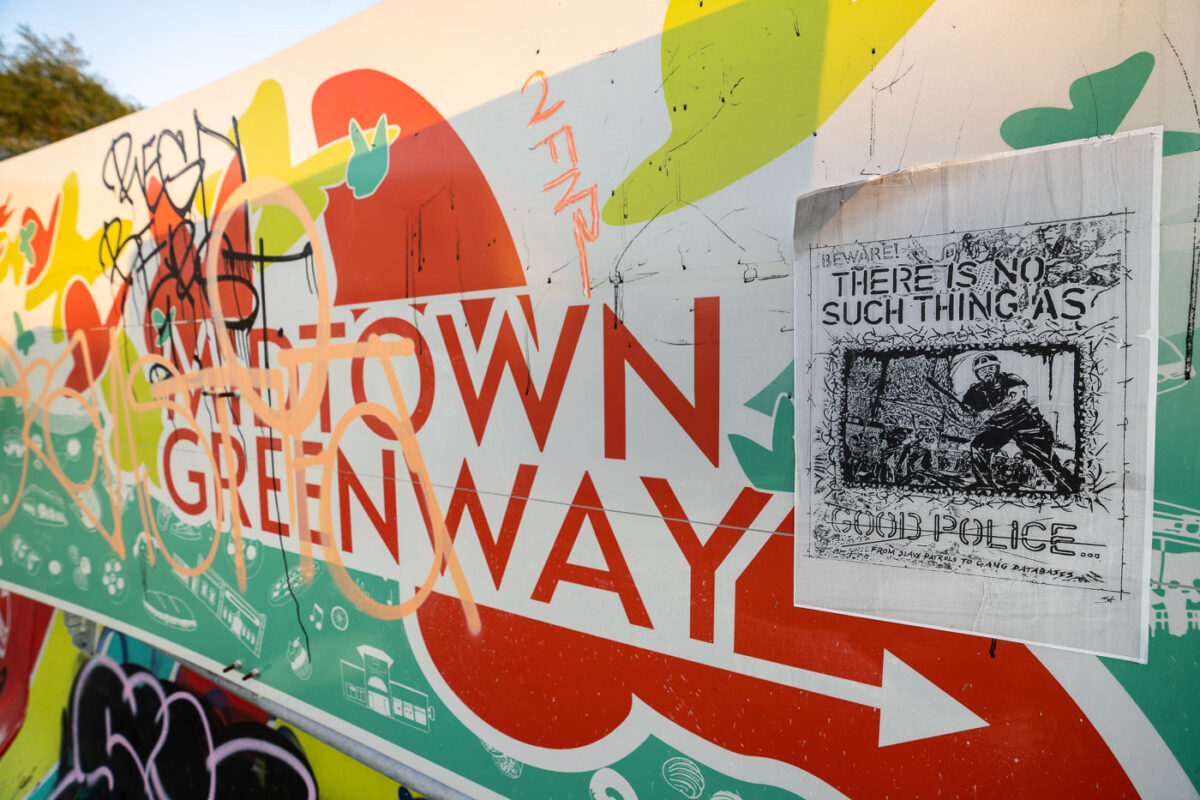
September 2021 — A sign leading to the Midtown Greenway in South Minneapolis.
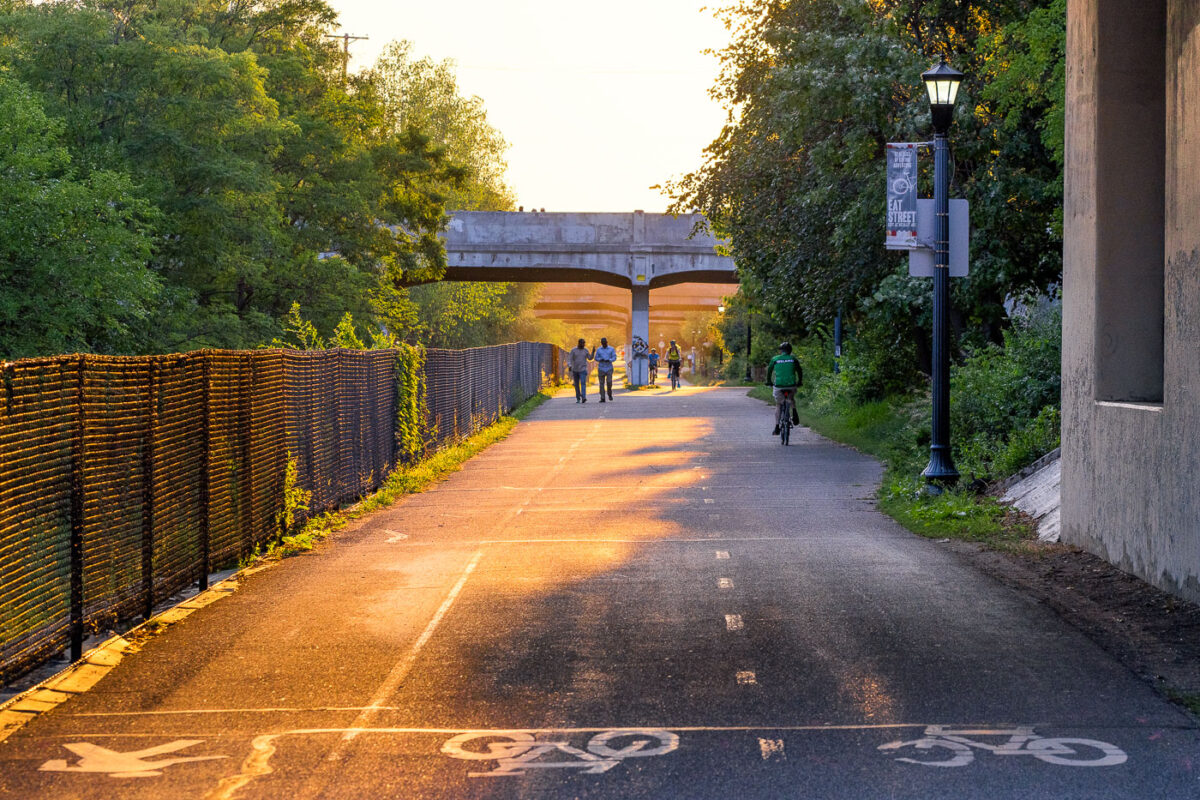
September 2021 — Sunset on the Midtown Greenway in Minneapolis.
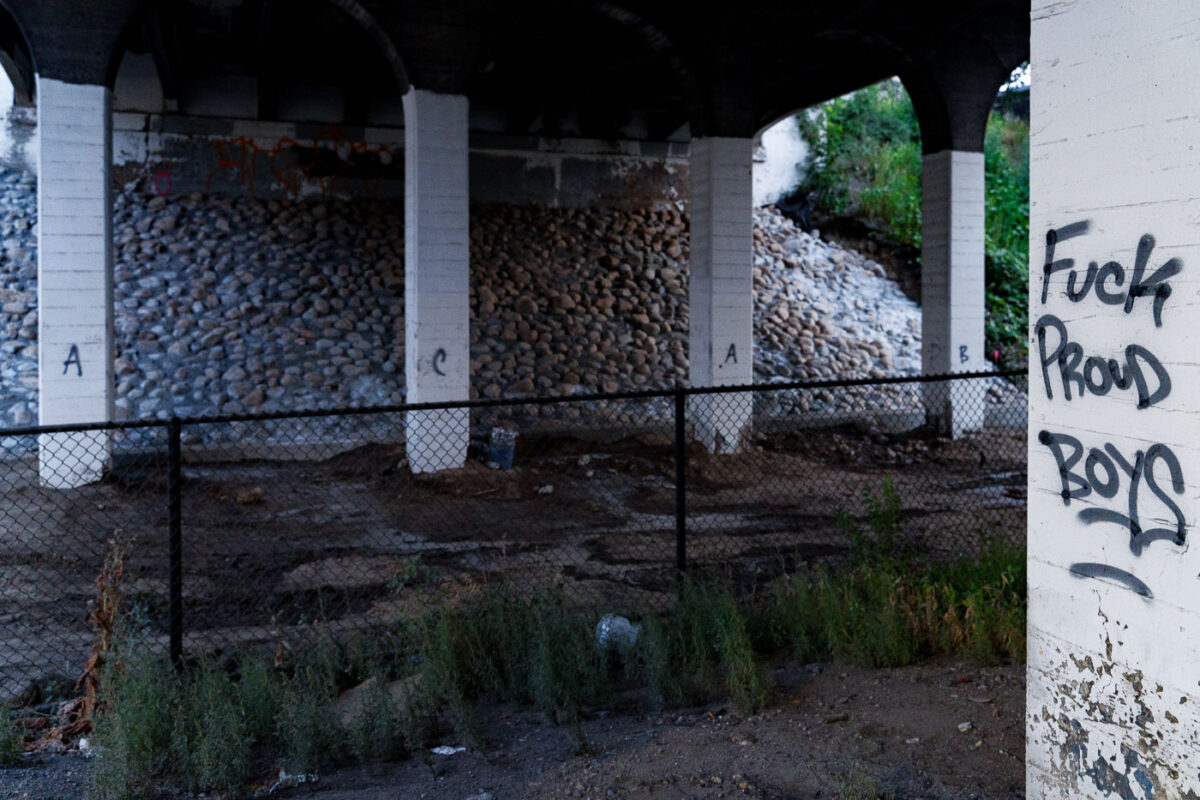
August 2021 — "Fuck Proud Boys" and "ACAB" written under a bridge in South Minneapolis.
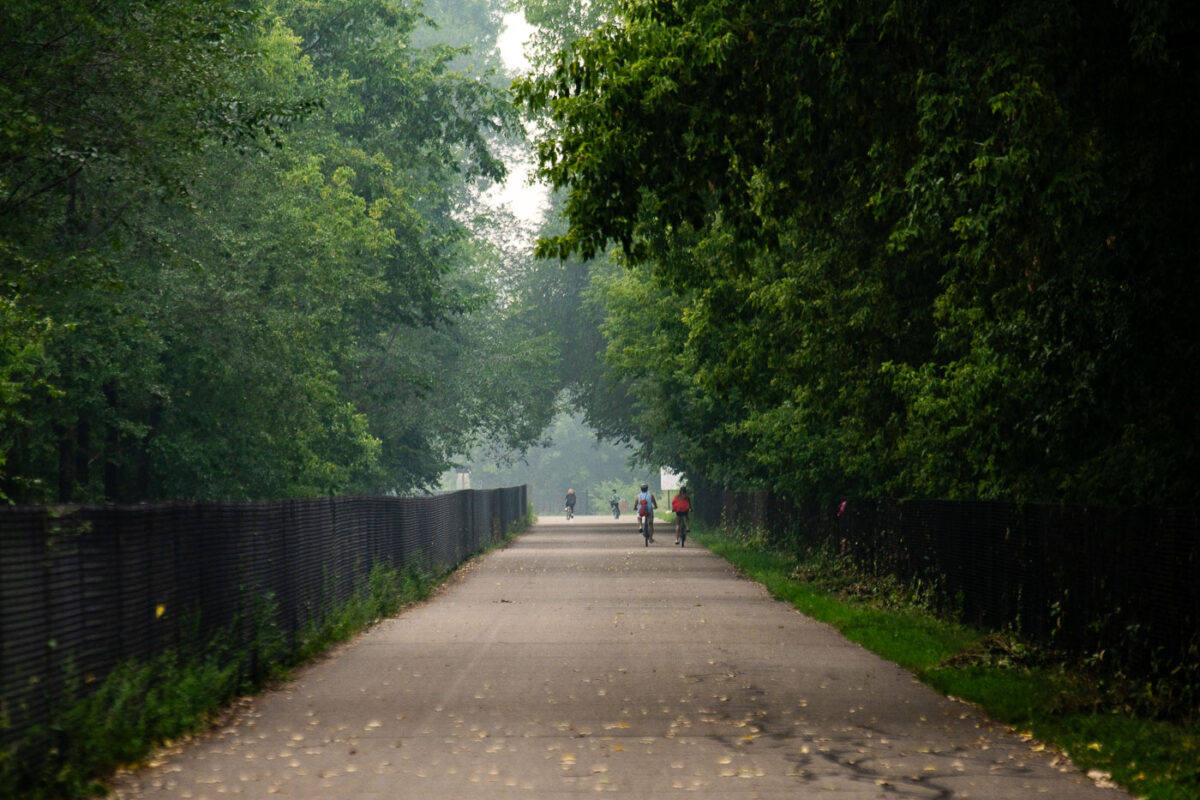
July 2021 — Bikers biking down the Midtown Greenway while wildfire smoke from Canada blankets Minneapolis.
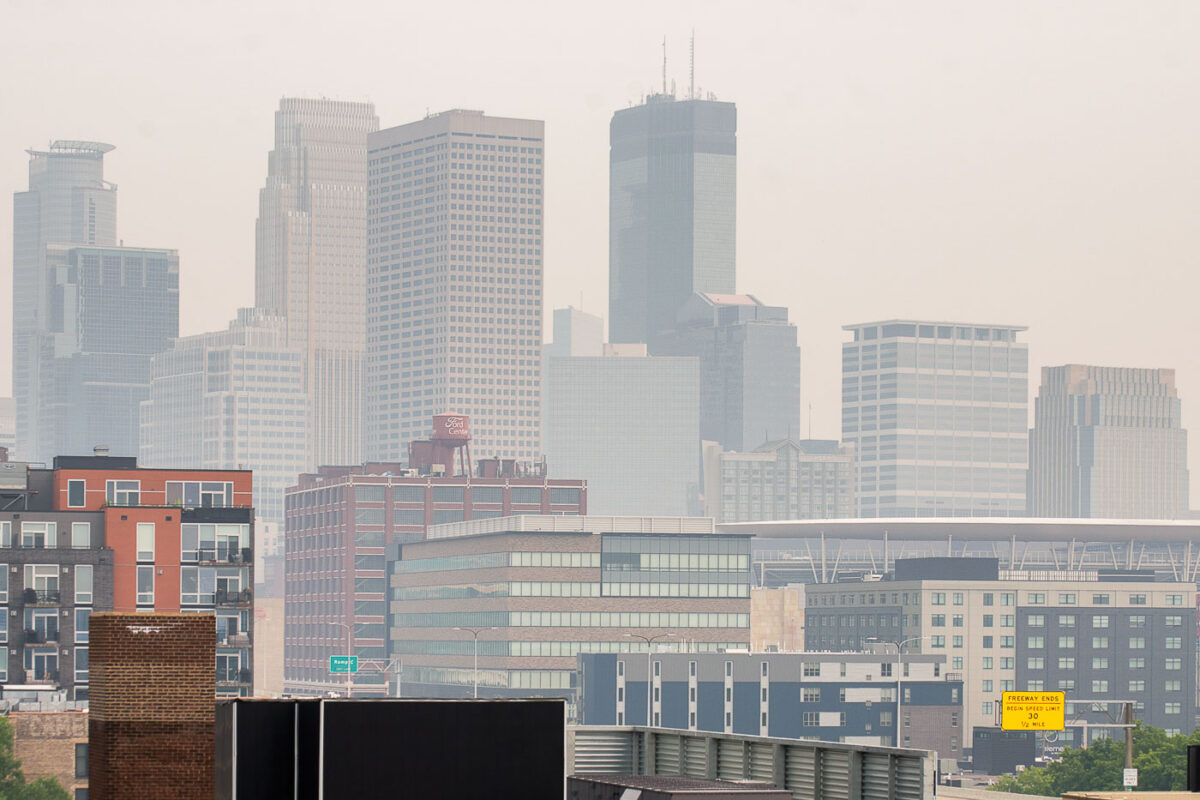
July 2021 — Smoke in Minneapolis from the Canadian wildfires makes the view of downtown hazy. Seen from Minneapolis North Loop.
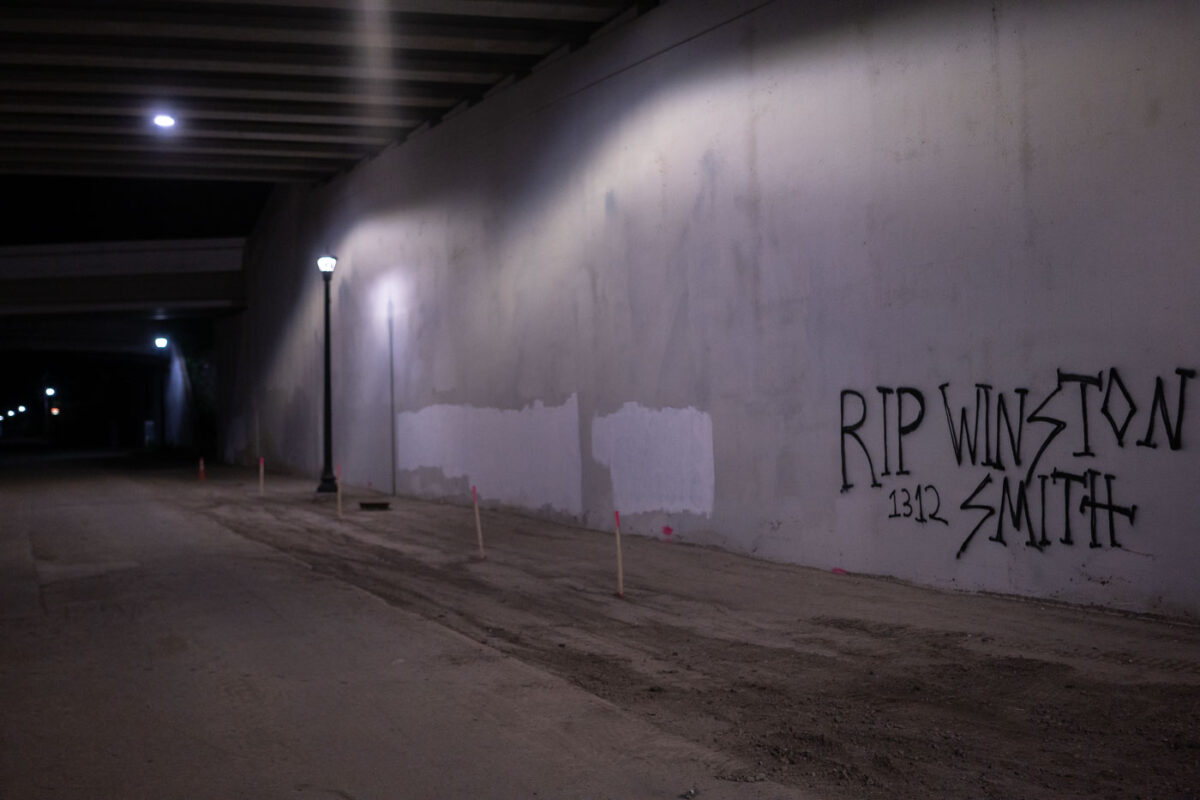
June 2021 — RIP Winston Smith on the Midtown Greenway. Winston Smith was killed by law enforcement on June 3rd, 2021 in Minneapolis.
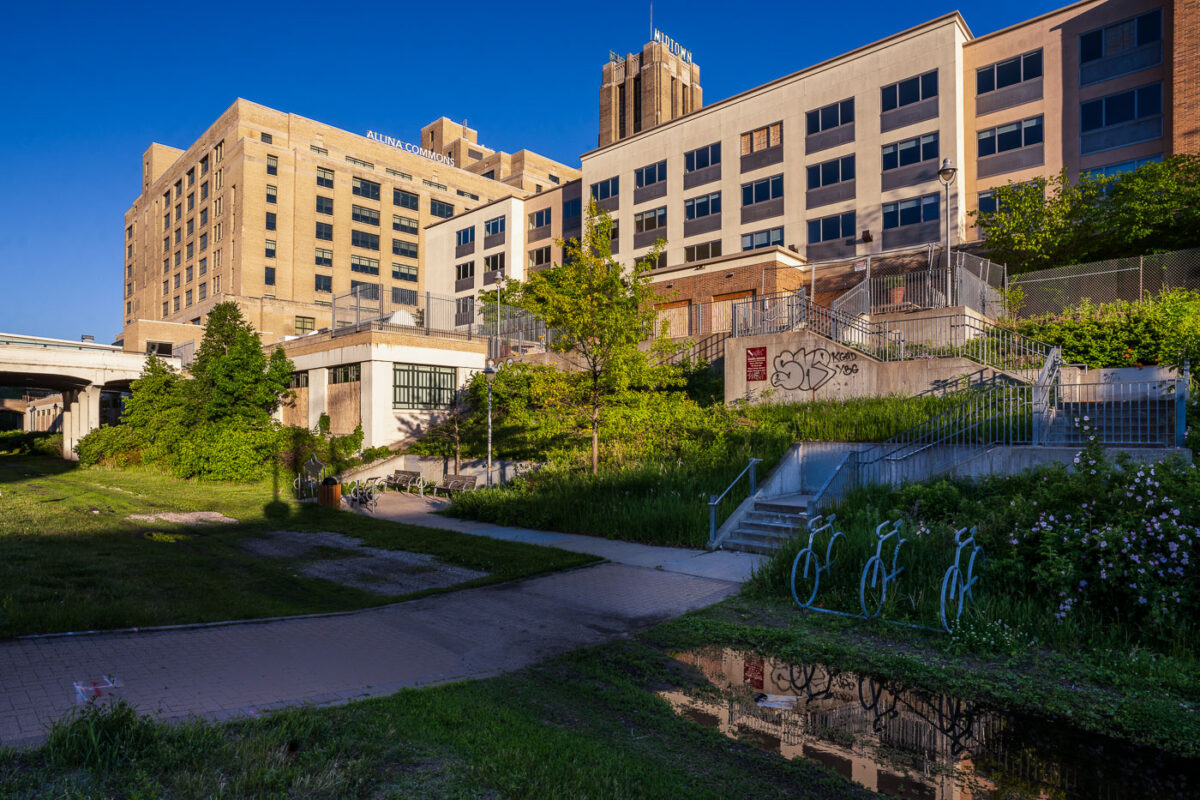
May 2021 — The former Midtown Sheraton Hotel in South Minneapolis.
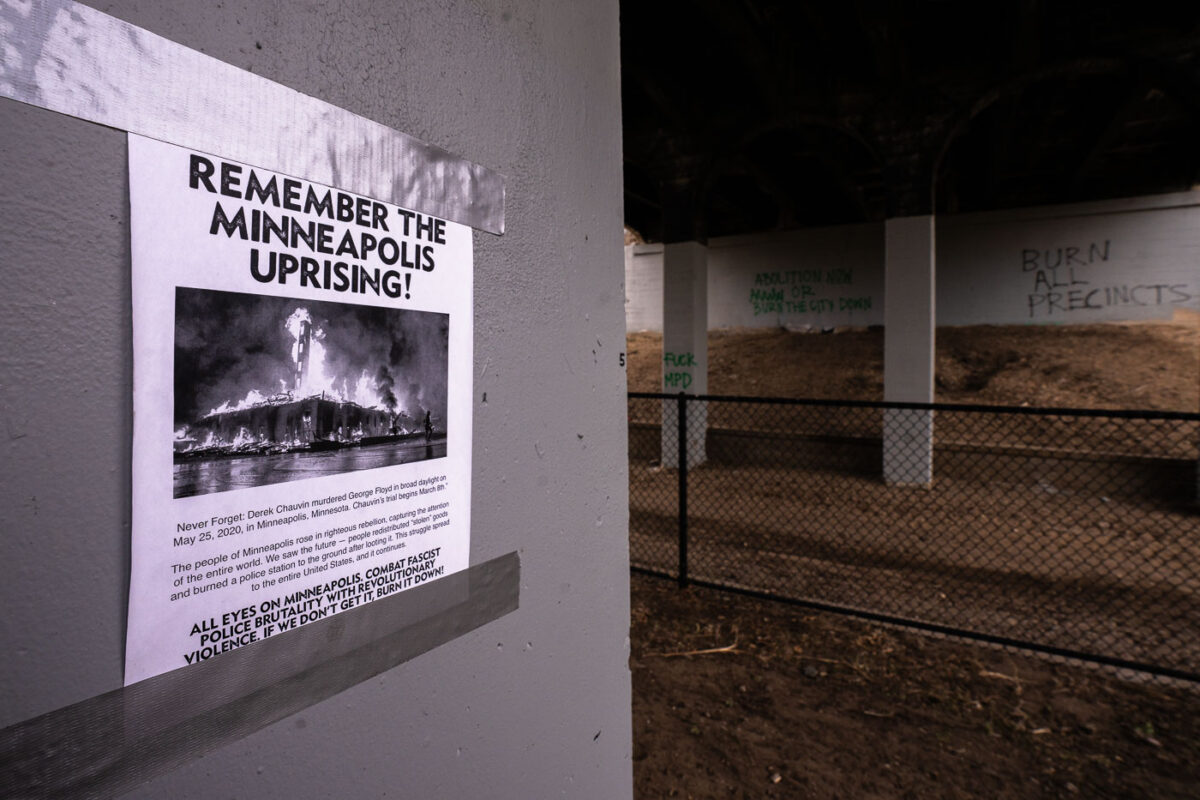
April 2021 — A posting on the Minneapolis Midtown Greenway.
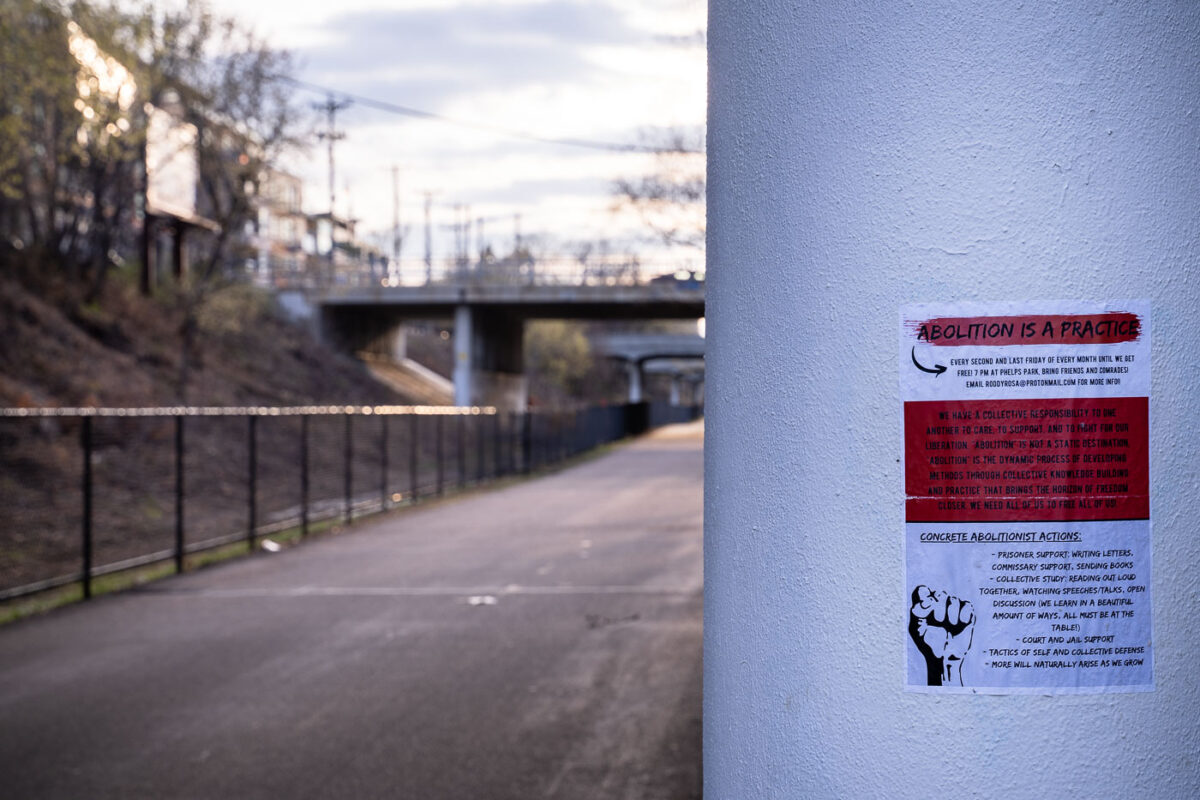
April 2021 — A police abolition sign pasted under a bridge on the Minneapolis Midtown Greenway.
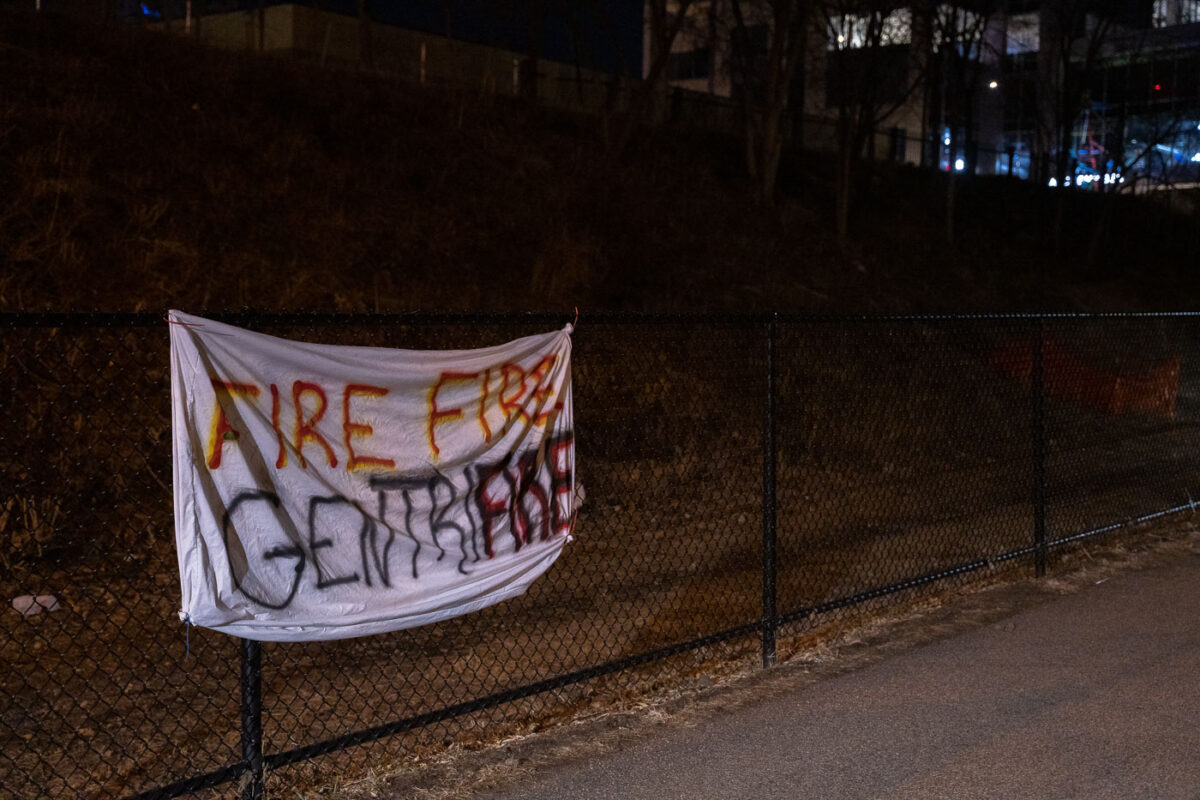
March 2021 — A protest sign seen on the Midtown Greenway that reads "Fire Fire Gentrifire"
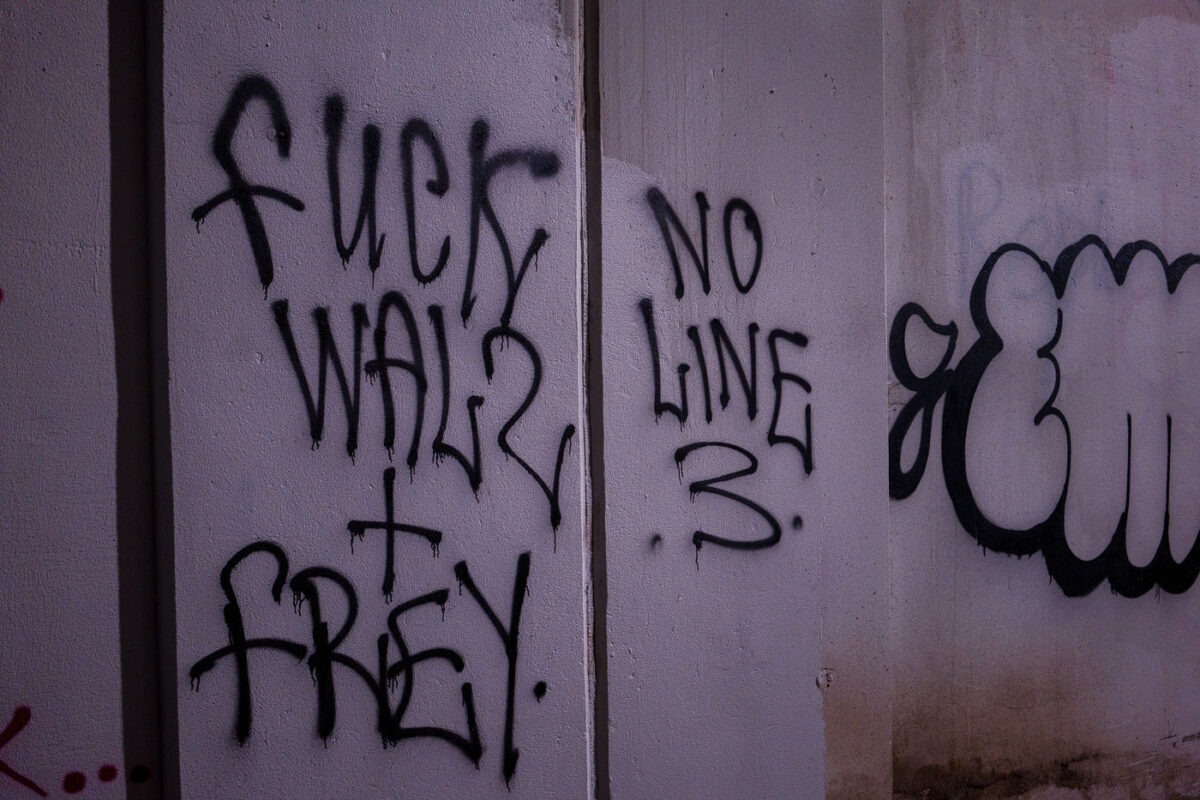
February 2021 — "Fuck Walz + Frey" "No Line 3" written under a bridge on the Midtown Greenway.
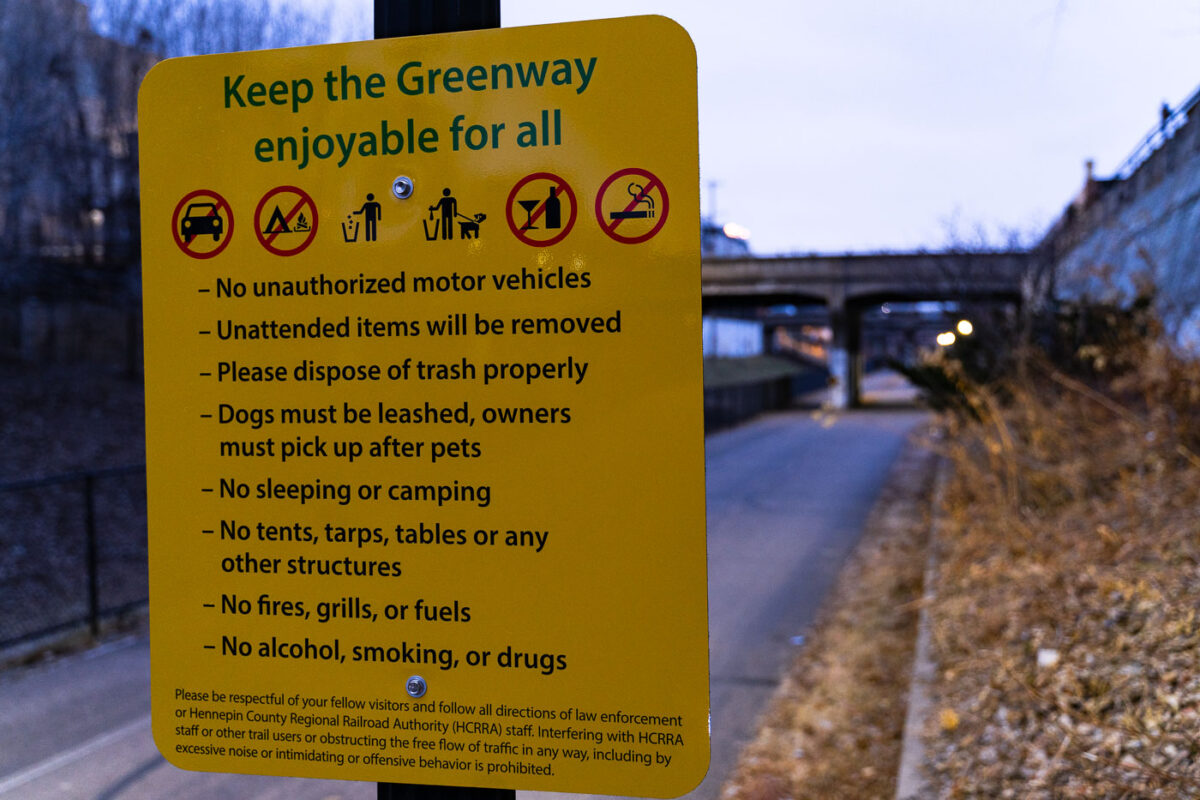
December 2020 — New signs on the greenway that replaced homeless encampment safety notices. The people living along the greenway were evicted on December 17th and 18th.
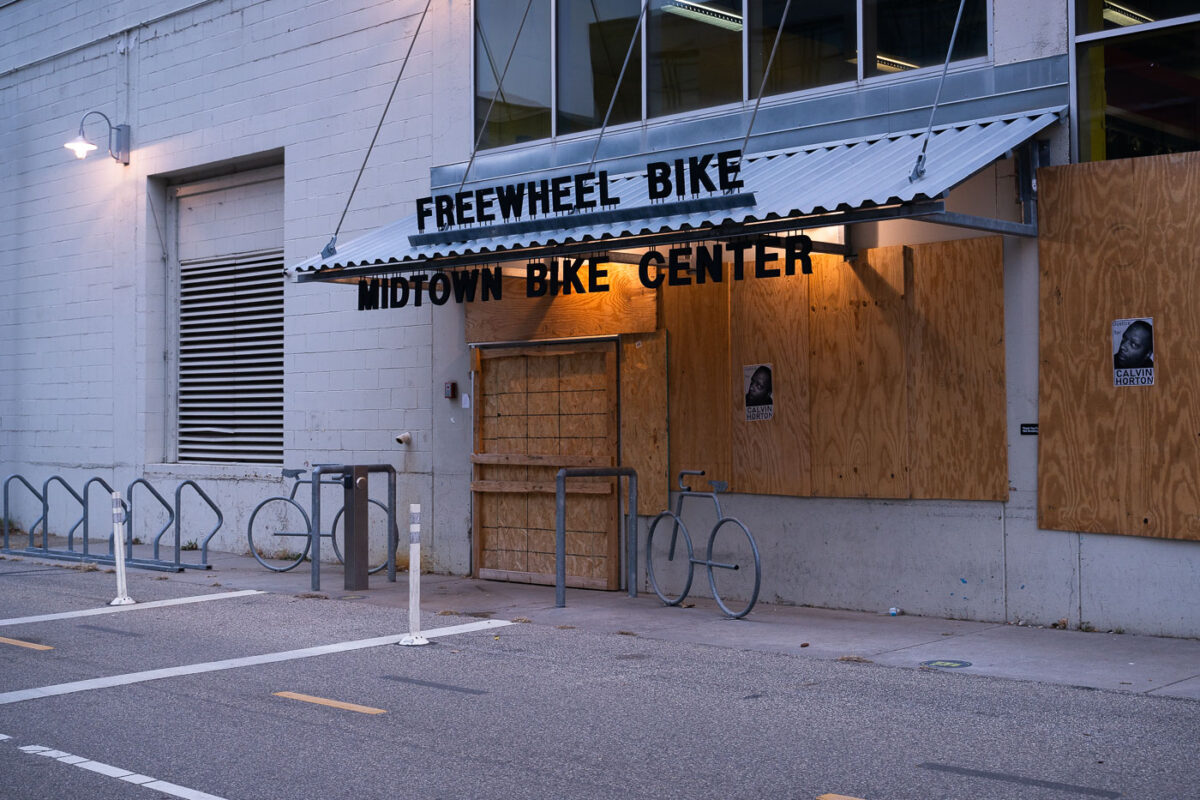
December 2020 — The Freewheel Bike Center located on the Midtown Greenway. Calvin Horton signs posted on the boards. Calvin was allegedly killed by the owner of Cadillac Pawn during the riots that followed George Floyd’s murder. Hennepin County has stated they will not be prosecuting due to "lack of evidence".
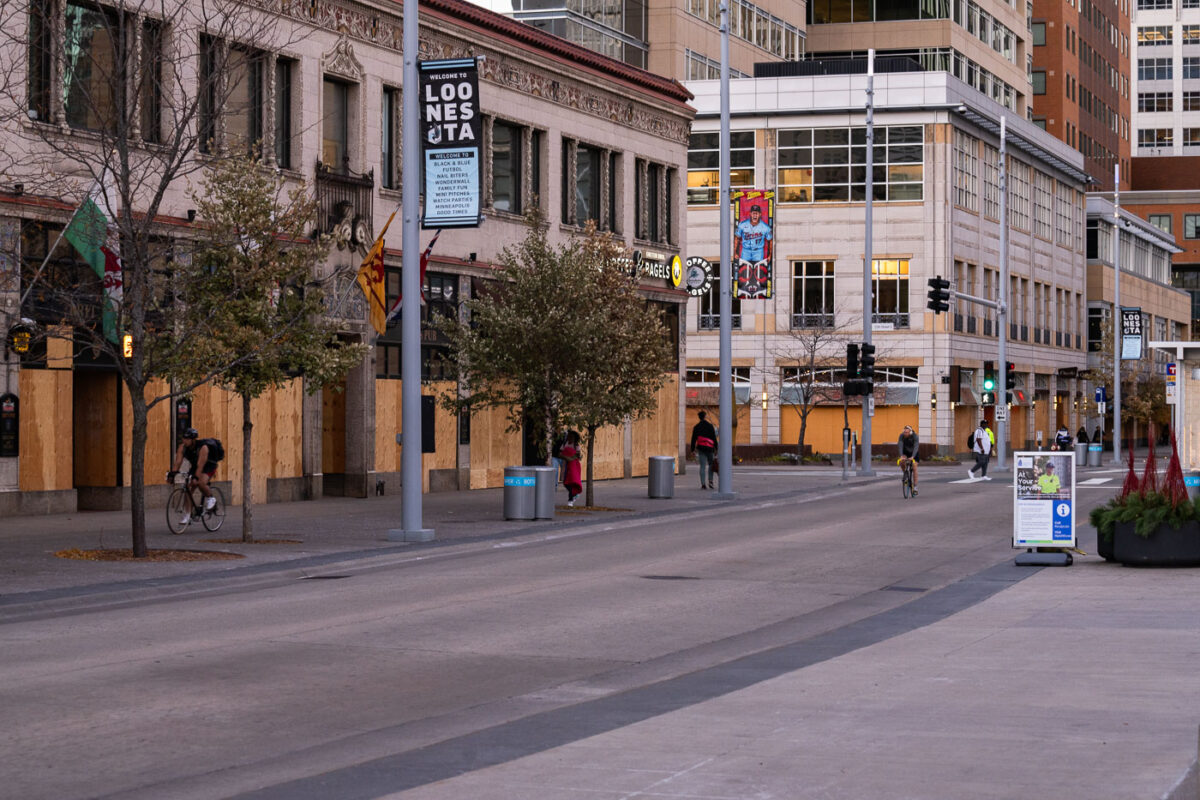
November 2020 — Bikers bike past boarded up buildings on Nicollet Mall in Downtown Minneapolis.
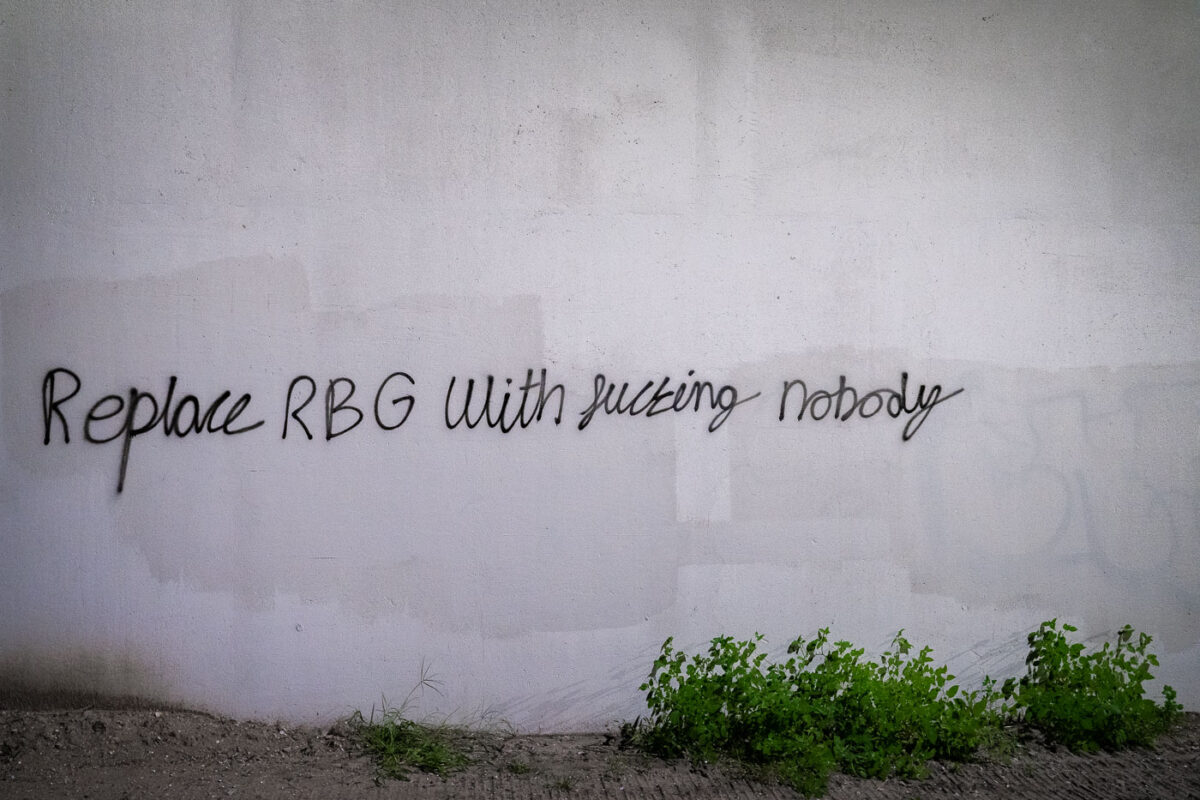
September 2020 — Ruth Bader Ginsburg graffiti on the Midtown Greenway in Minneapolis.
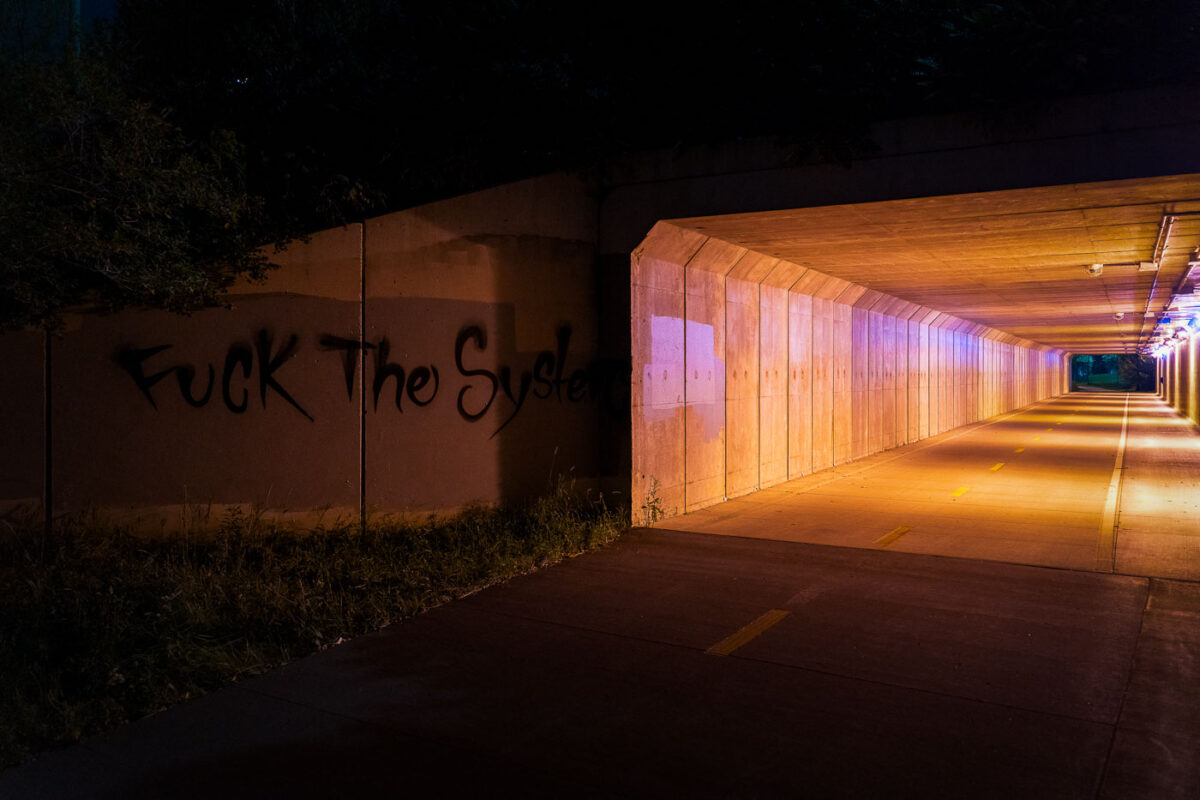
September 2020 — "Fuck The System" written on a bike trail near downtown Minneapolis.
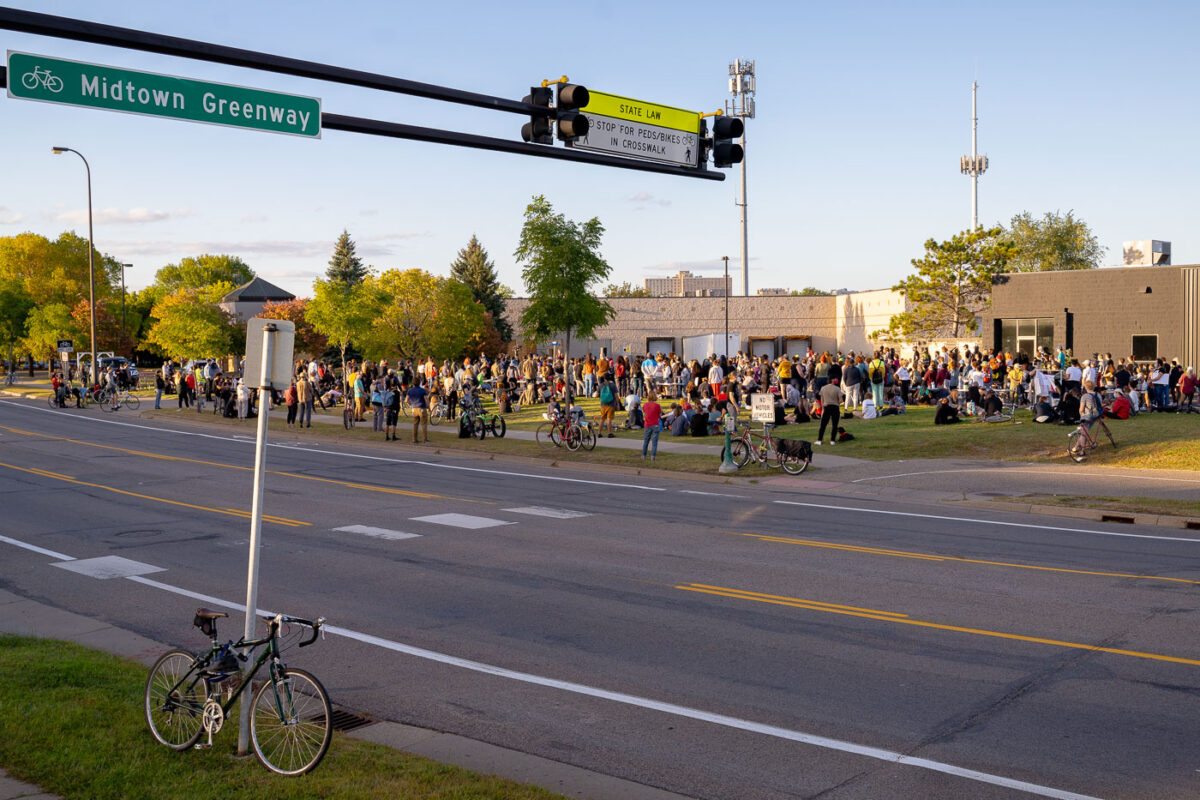
September 2020 — Protesters gather at a "Block Party to Block the Precinct" protest to bring awareness and block any potential lease for a new 3rd precinct. The 3rd precinct police station, located a mile away, was burned by protesters after the May 25th, 2020 death of George Floyd.
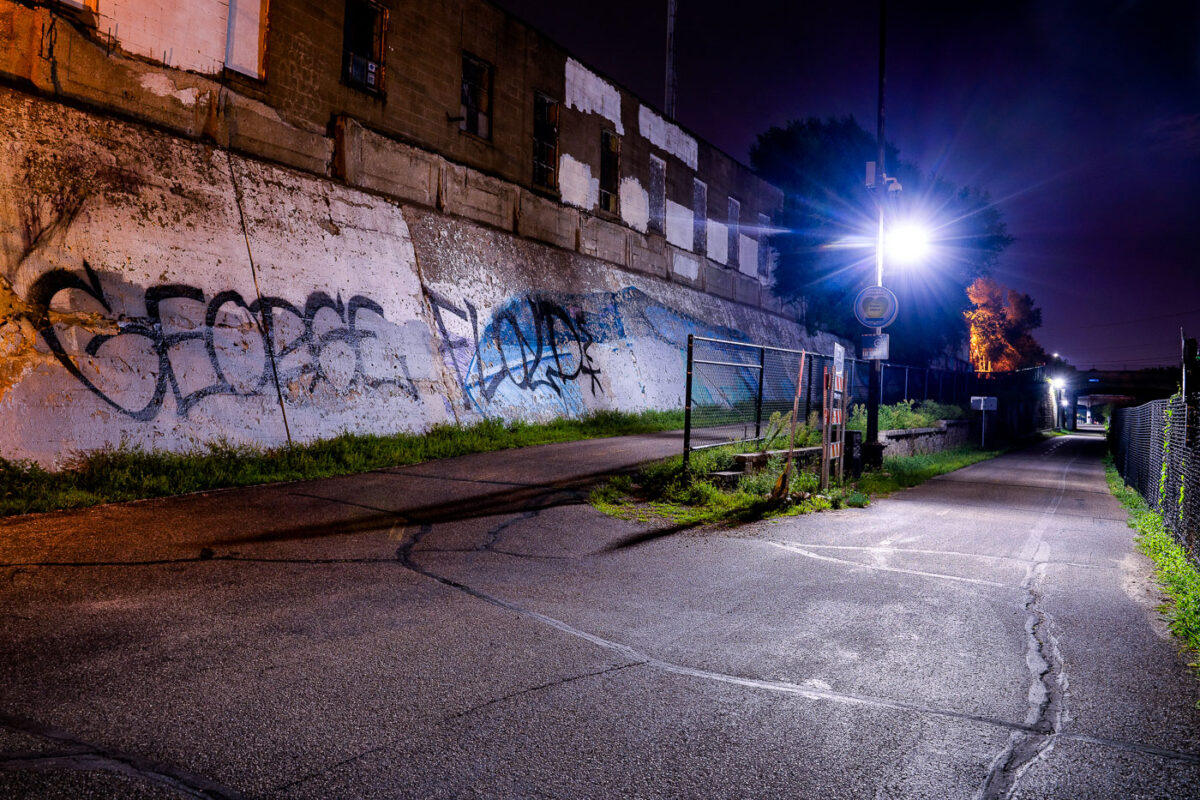
August 2020 — George Floyd graffiti on the Midtown Greenway seen on August 22, 2020.
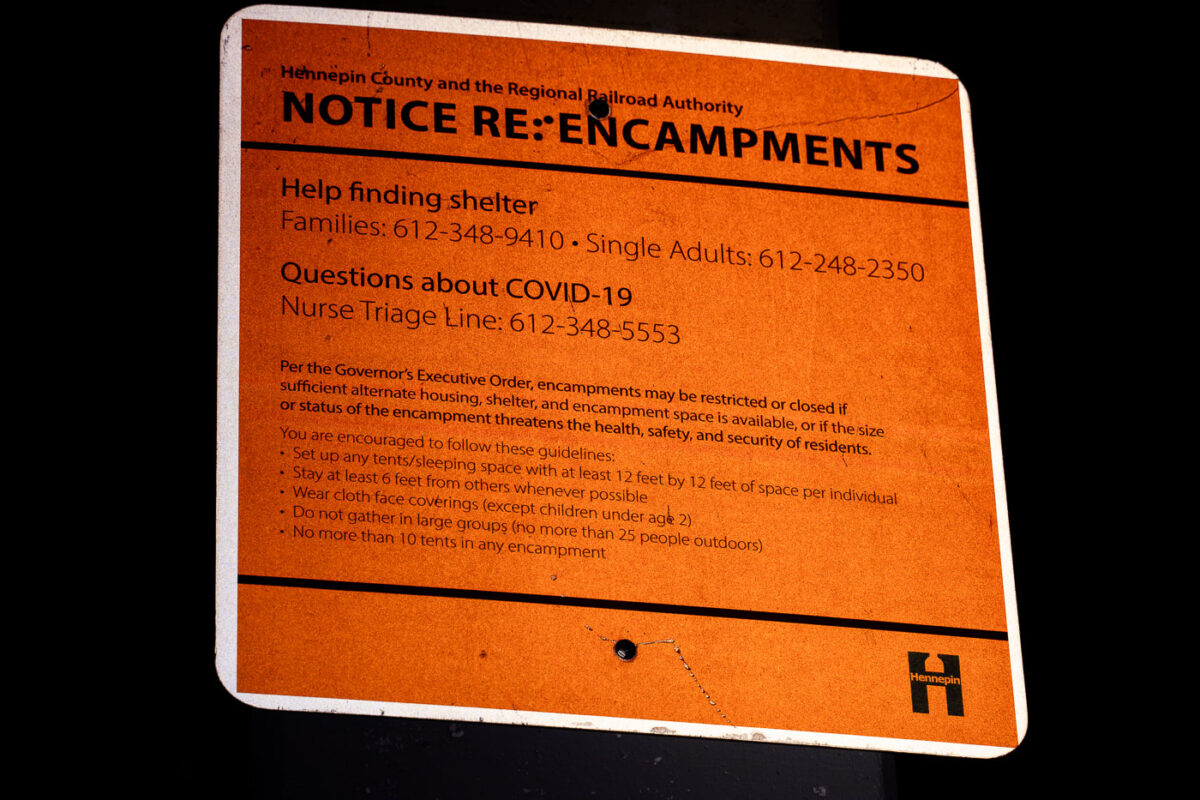
August 2020 — Notice about encampments and COVID-19 posted on the Midtown Greenway in Minneapolis seen on August 10, 2020.
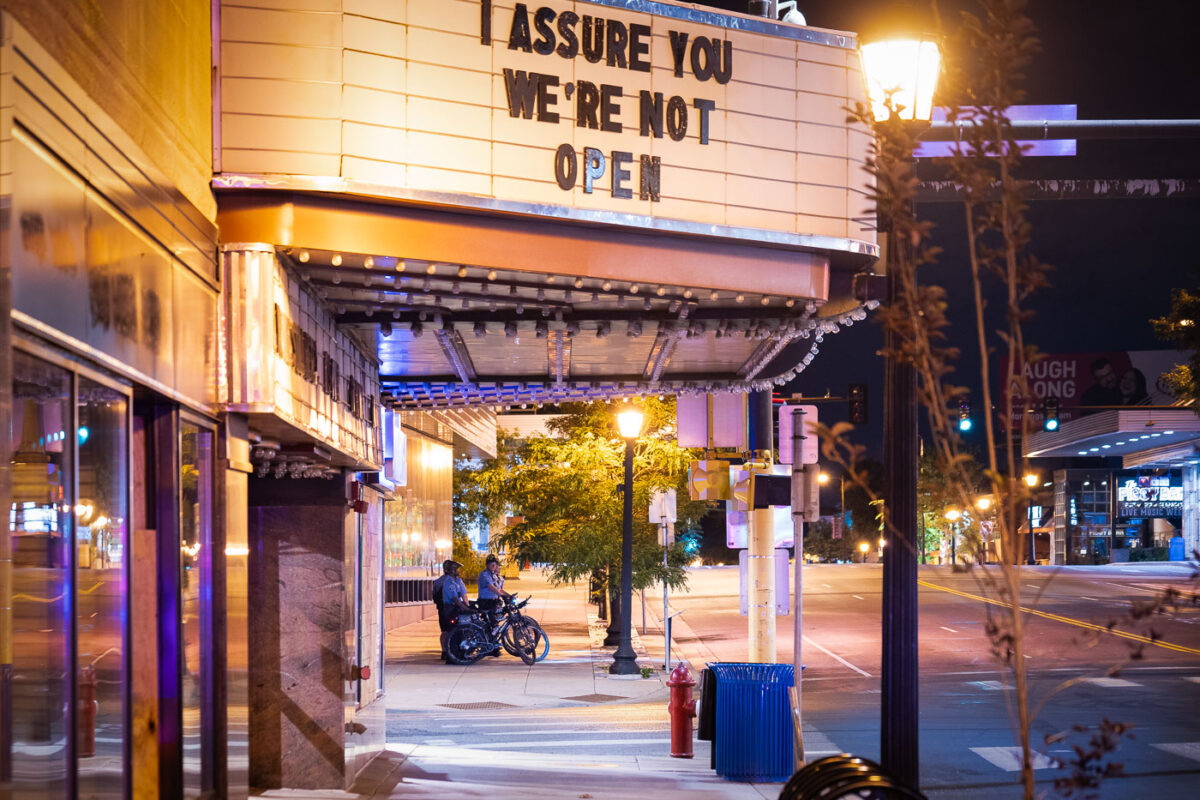
June 2020 — Minneapolis Police on bikes patrol outside the Uptown Theater while hot rudders gather in the area. The streets were closed after nights of street closures.
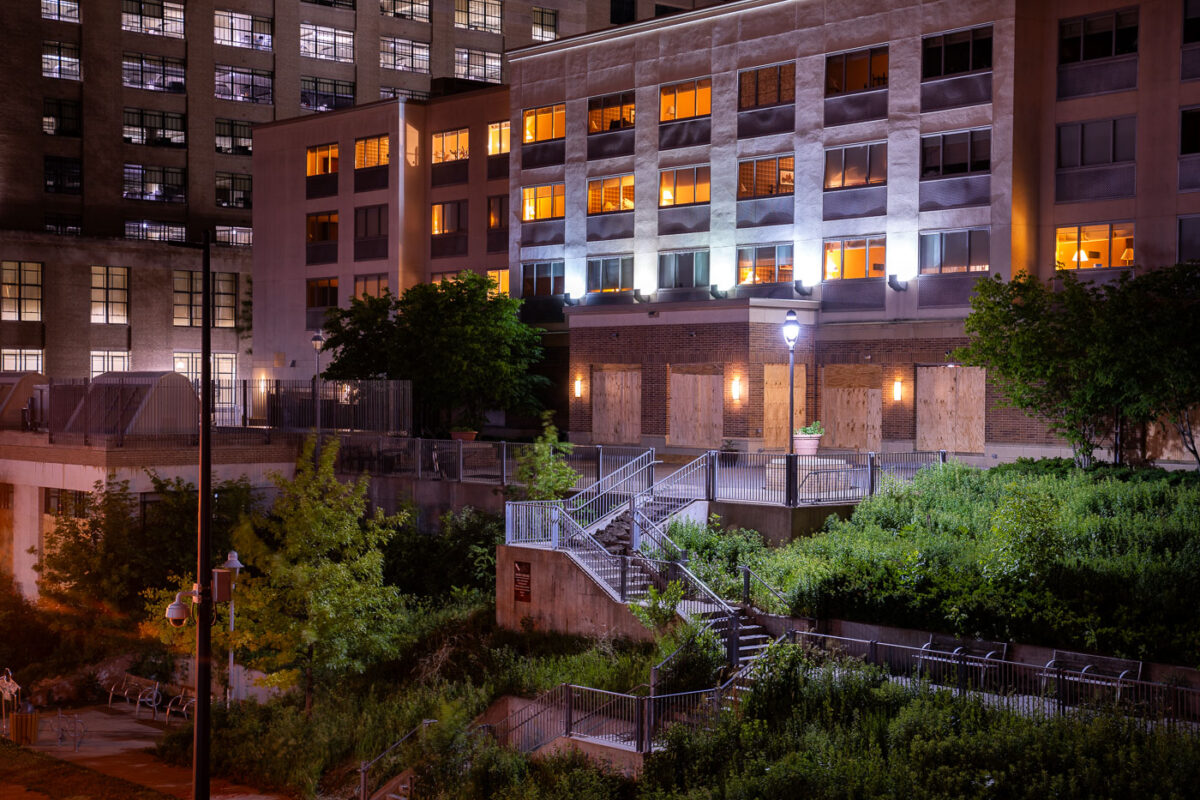
June 2020 — The Sheraton Hotel as seen from the Midtown Greenway days after it was "cleared and closed" by the Minneapolis Police.
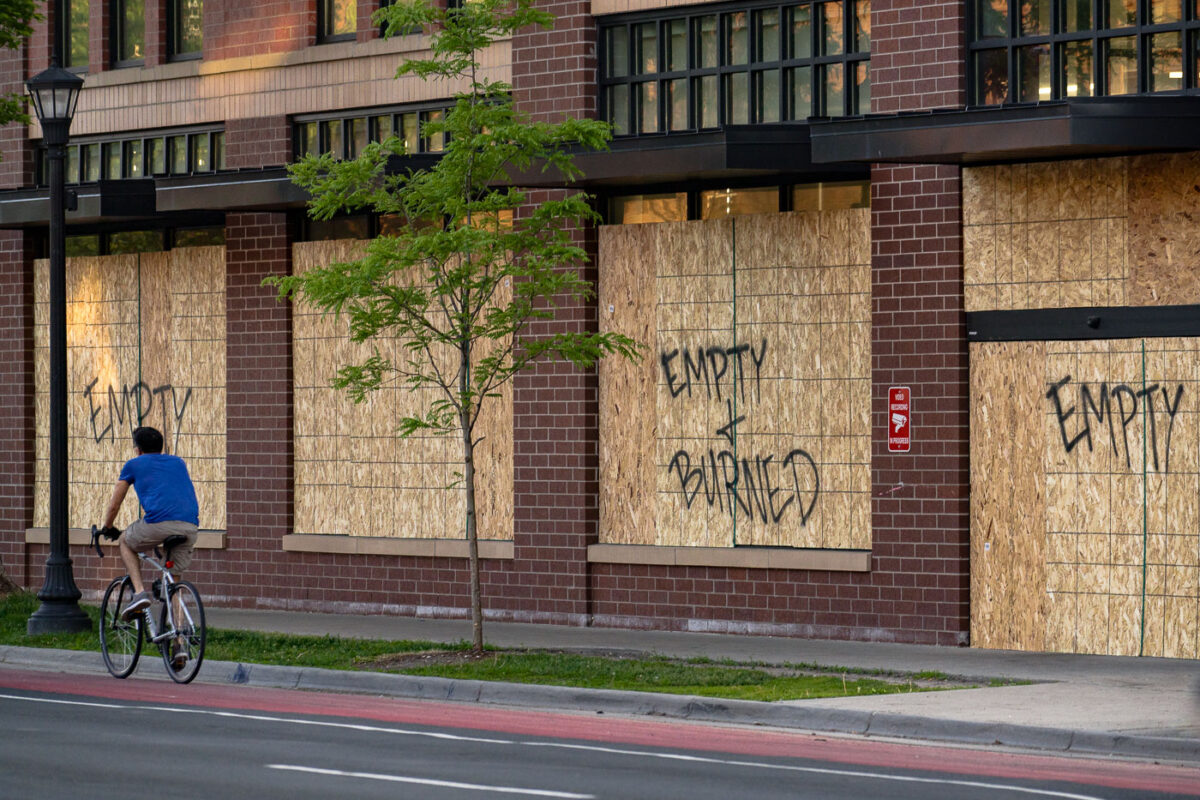
June 2020 — A cyclist bikes down Hennepin Avenue in Uptown Minneapolis past a boarded up Walgreens Pharmacy. Boards were placed after unrest in Minneapolis over the killing of George Floyd on May 25th, 2020.
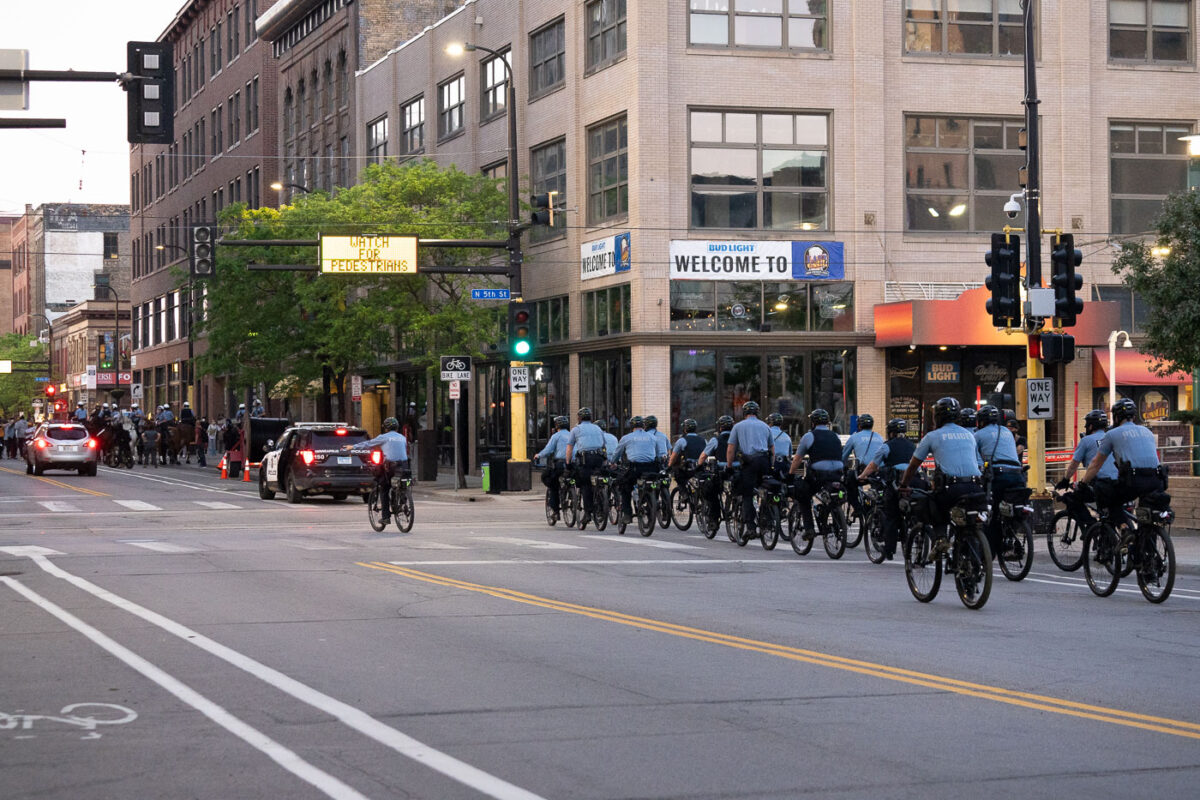
May 2020 — Minneapolis Police on bikes and Mounted Patrol in Downtown Minneapolis on the 3rd day of protests in Minneapolis following the death of George Floyd.
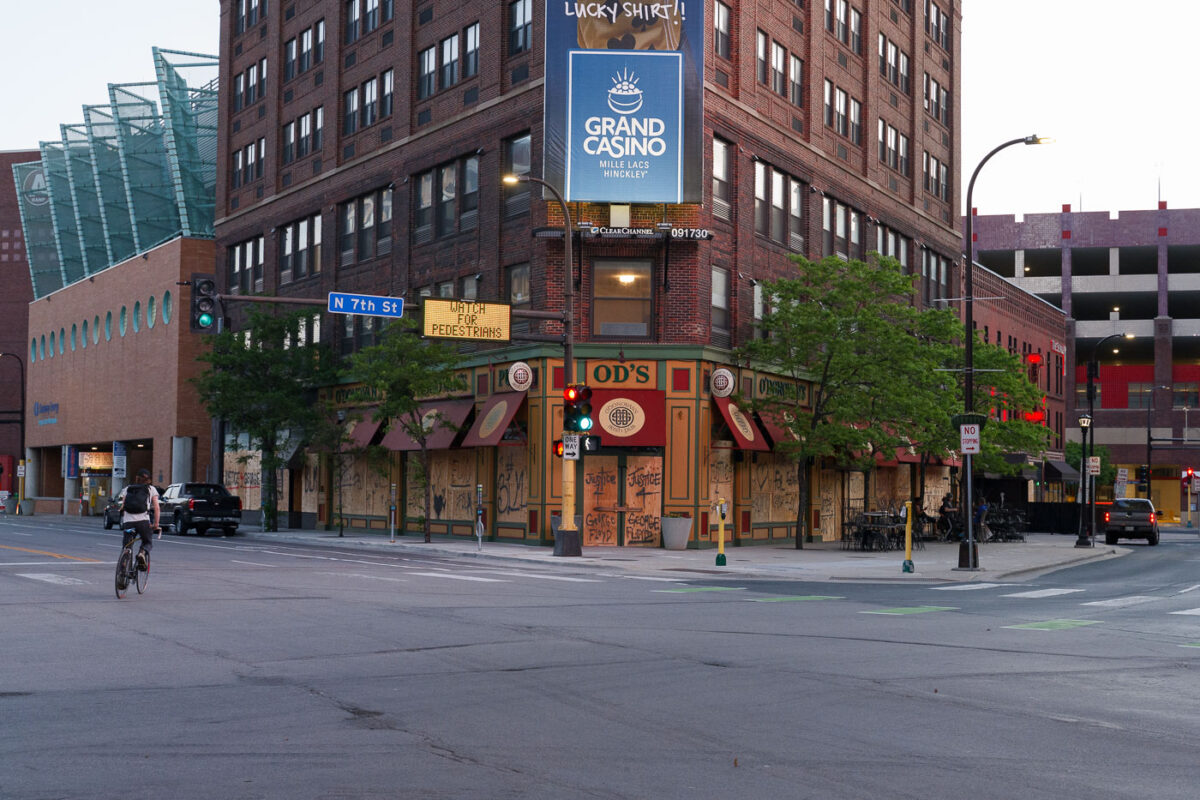
May 2020 — A biker bikes down N 7th St on May 28, 2020 in front of a boarded up O'Donovan's Irish Pub in Downtown Minneapolis on the 3rd day of protests in Minneapolis following the death of George Floyd.
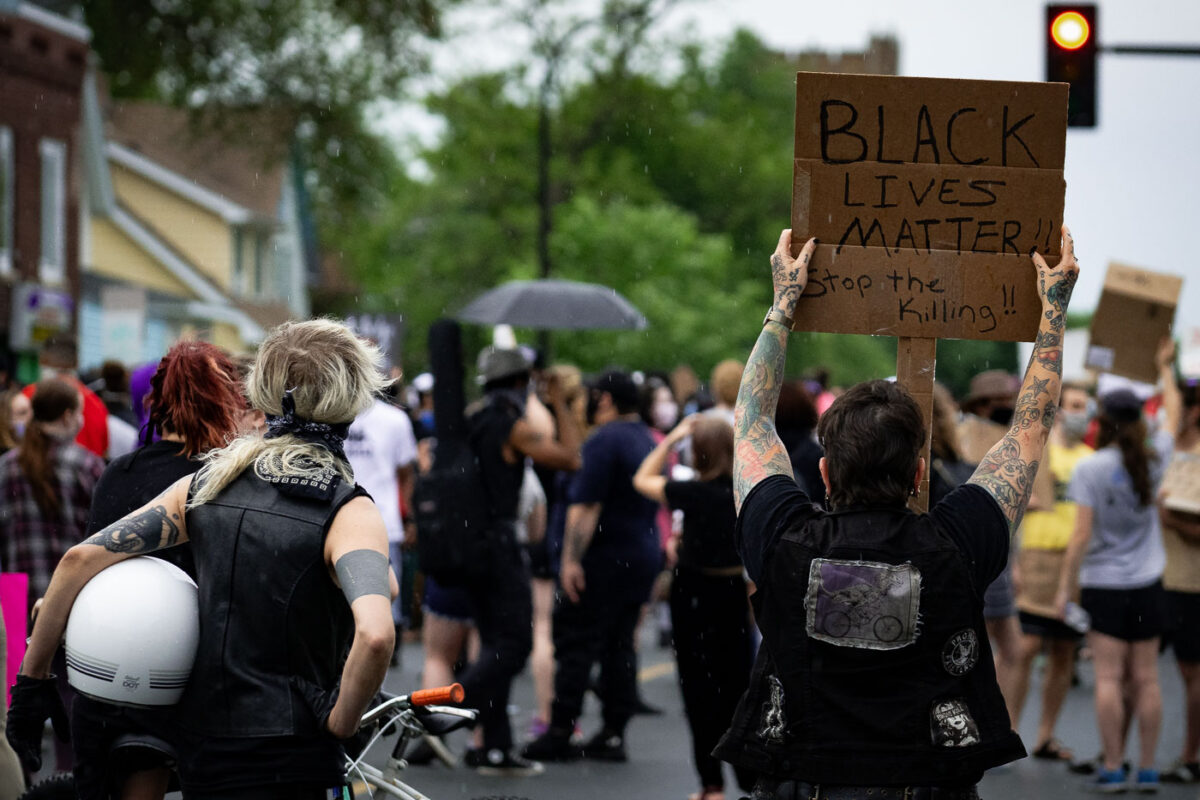
May 2020 —
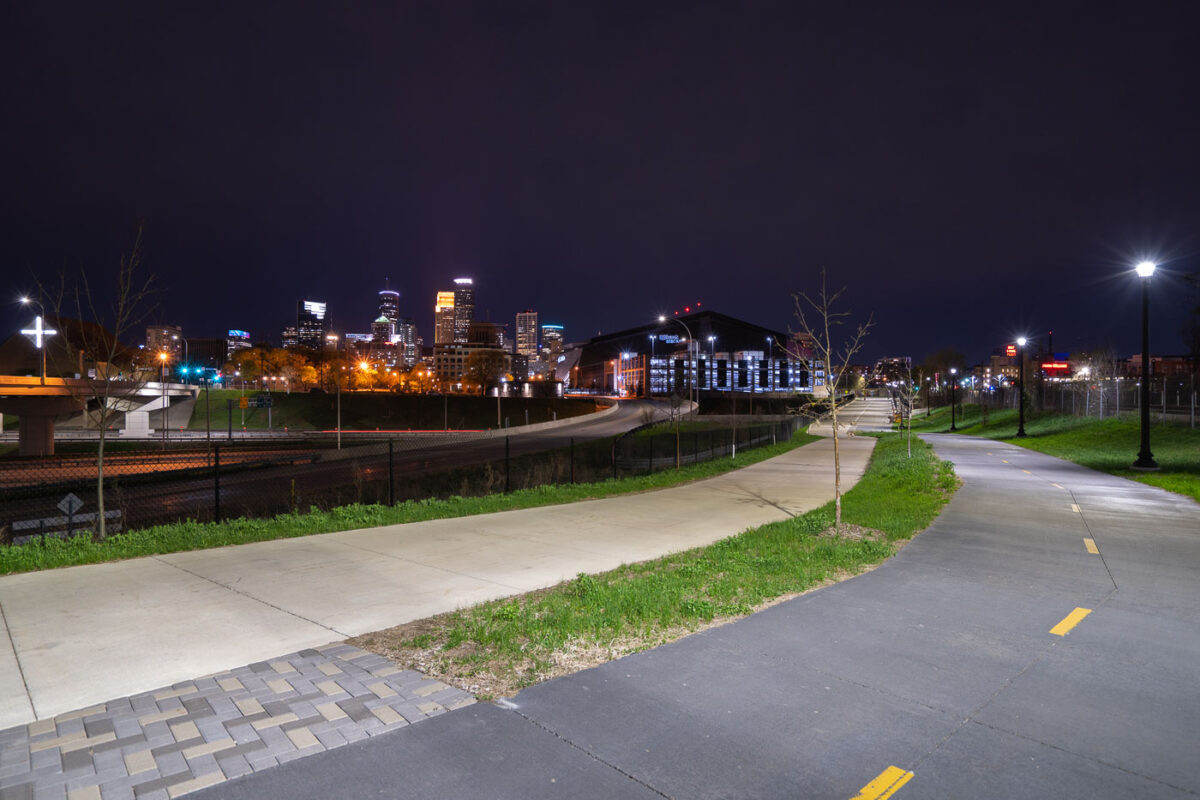
May 2020 — The Samatar Crossing shared use path near downtown Minneapolis. The path leads from Cedar Riverside to near US Bank Stadium.
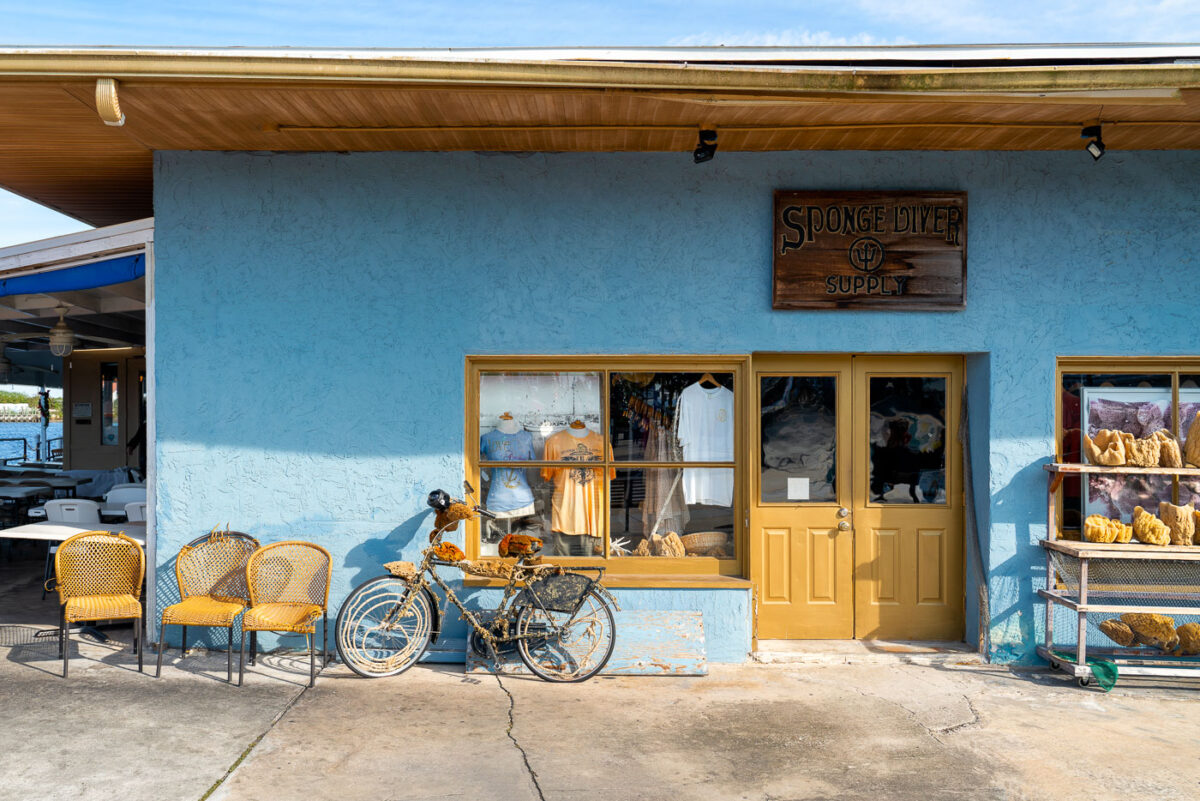
December 2019 — Sponge Diver Supply store in Tarpon Springs, Florida.
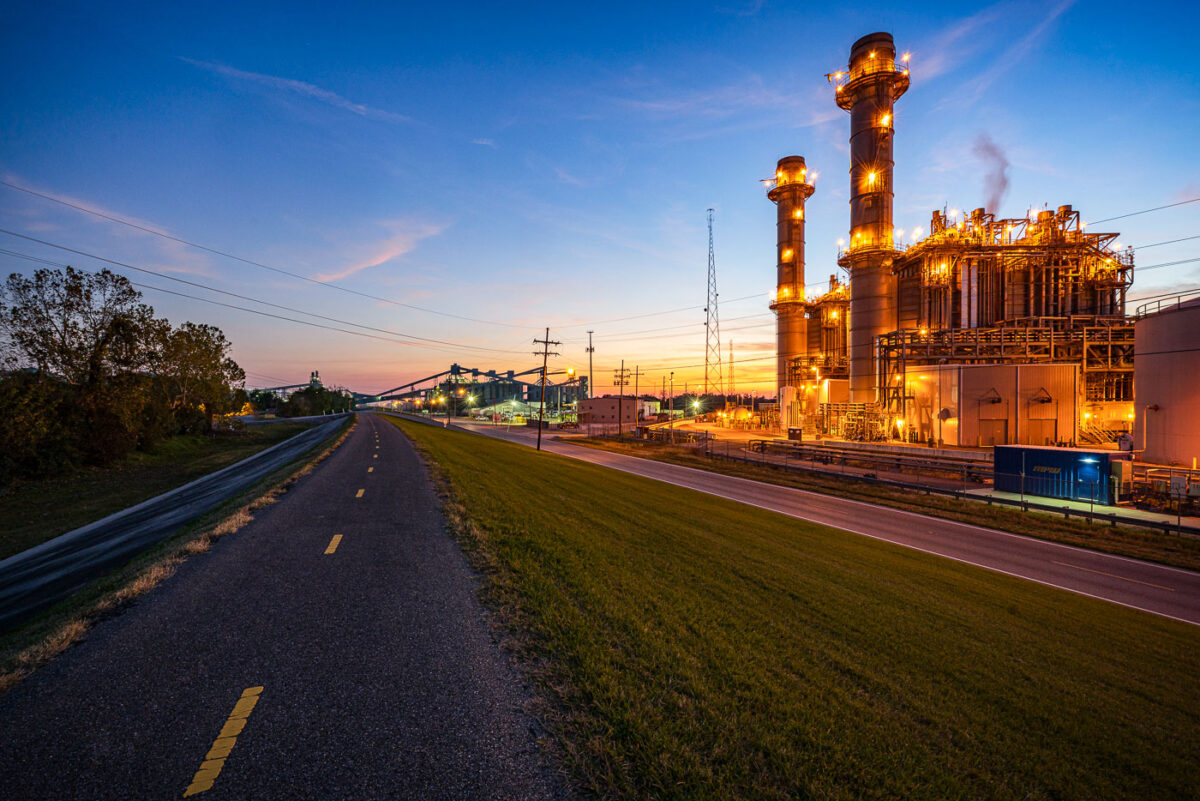
December 2019 — Entergy Corp’s natural gas-fired unit at the Ninemile power plant in Westwego. The 560-megawatt unit (known as Ninemile 6) went online in December of 2014 after a construction cost of $655 million.
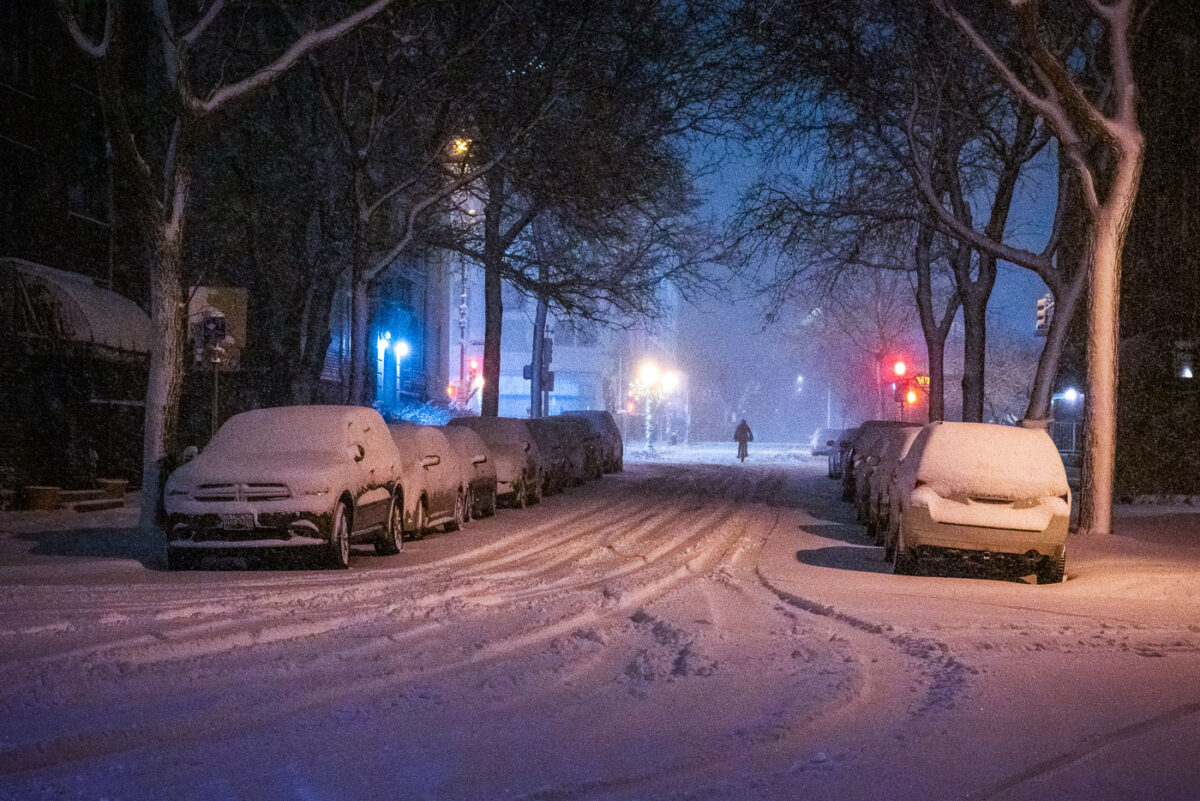
November 2019 — A lone cyclist rides through a snow-covered street in Minneapolis on November 26, 2019, as a major winter storm blankets the city. Streetlights and passing car headlights glow against the falling snow, illuminating parked cars buried in accumulation. The quiet, blue-tinged scene reflects the city’s resilience and rhythm during early-season blizzards that frequently test commuters across the Twin Cities.
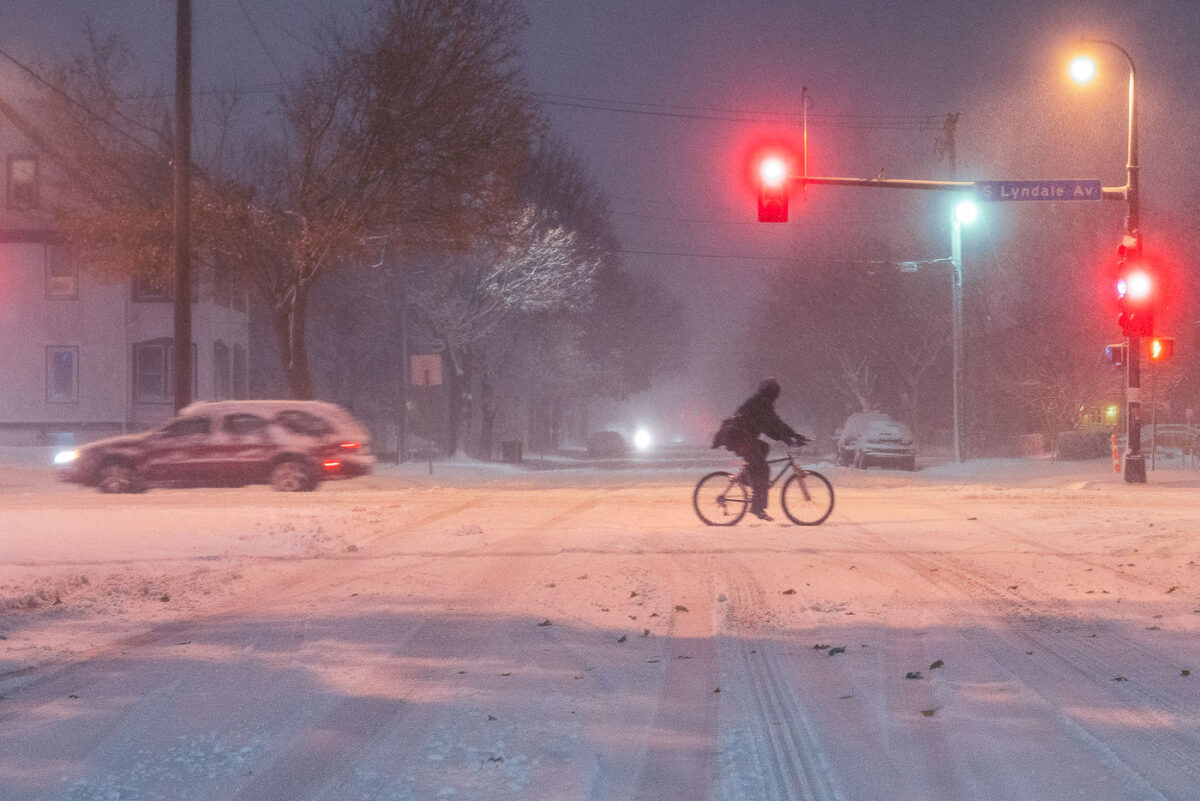
November 2019 — A cyclist crosses Lyndale Avenue South during the heavy November 26, 2019 snowstorm in Minneapolis. Despite low visibility and slick streets, a few commuters still braved the conditions, illuminated by red traffic lights and snow-diffused streetlamps. The image captures the perseverance of winter cycling culture in the Twin Cities, where even severe weather rarely stops movement through the urban grid.
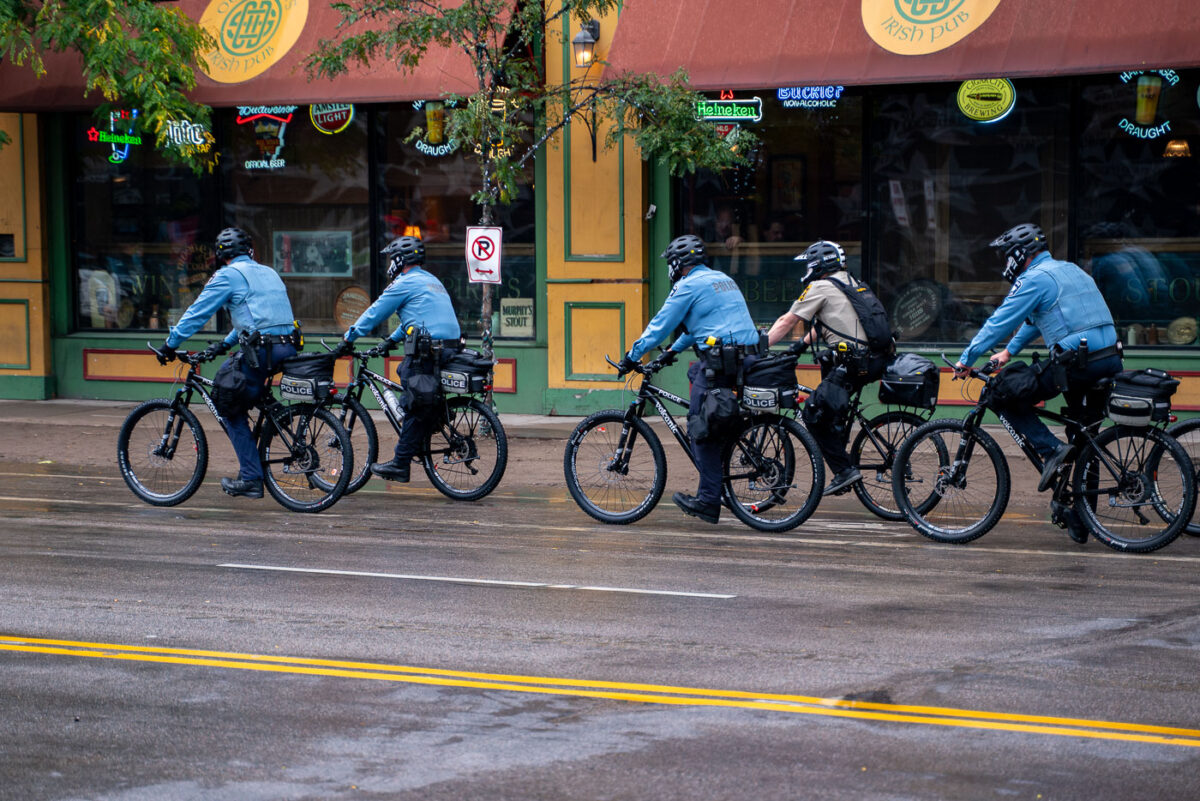
October 2019 — Police on bicycles patrol downtown Minneapolis outside the Target Center while protesters and rally-goers gather ahead of a 2019 Trump campaign event.
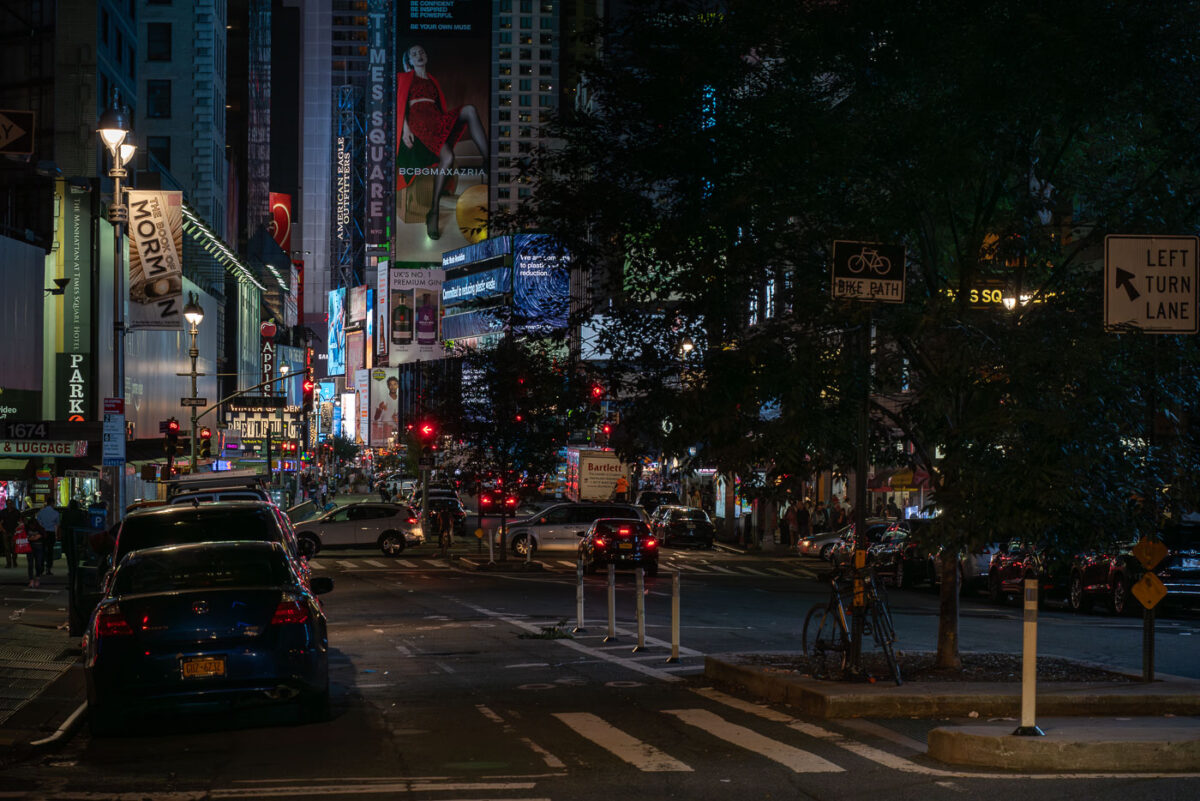
September 2019 — Traffic and illuminated billboards fill Times Square in Manhattan at night, with streams of cars and taxis moving through the crowded intersection. Bright advertisements, theater signs, and neon lights dominate the scene as pedestrians navigate the sidewalks and bike lanes around one of New York City’s busiest landmarks.
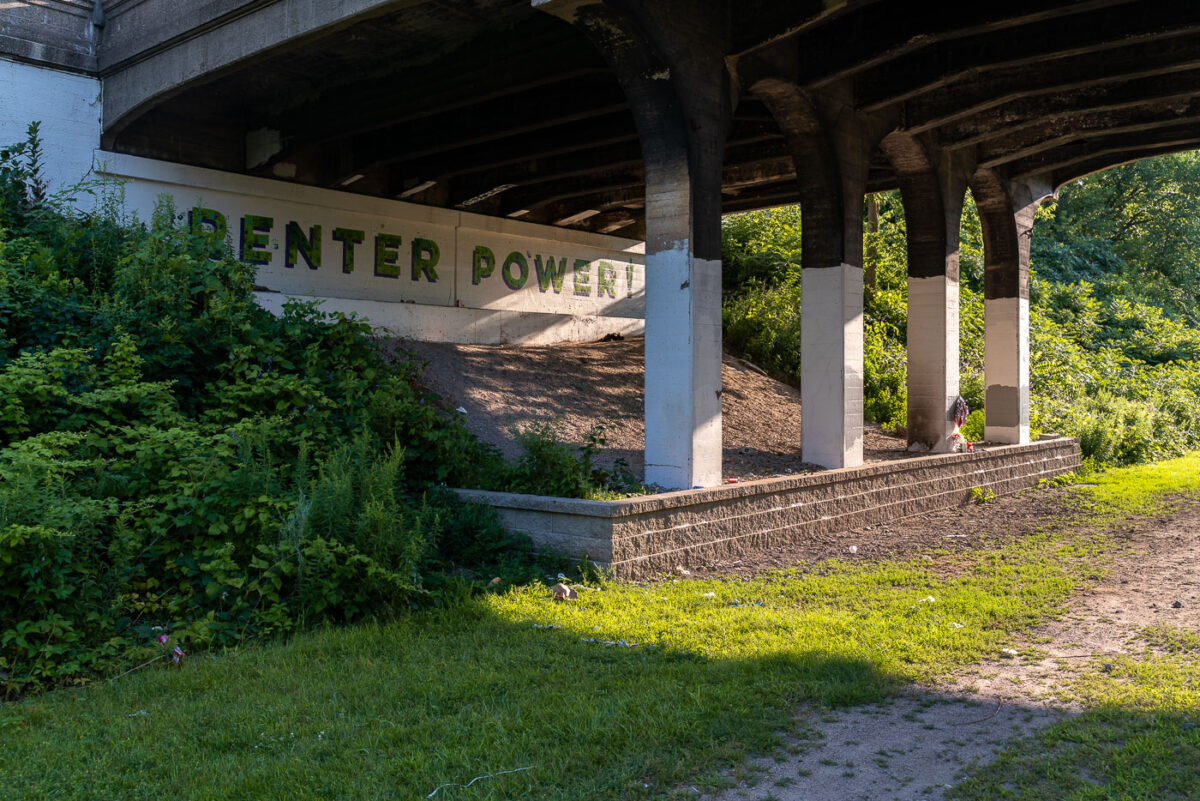
July 2019 — Renter Power! Seen on the Midtown Greenway in Minneapolis, MN
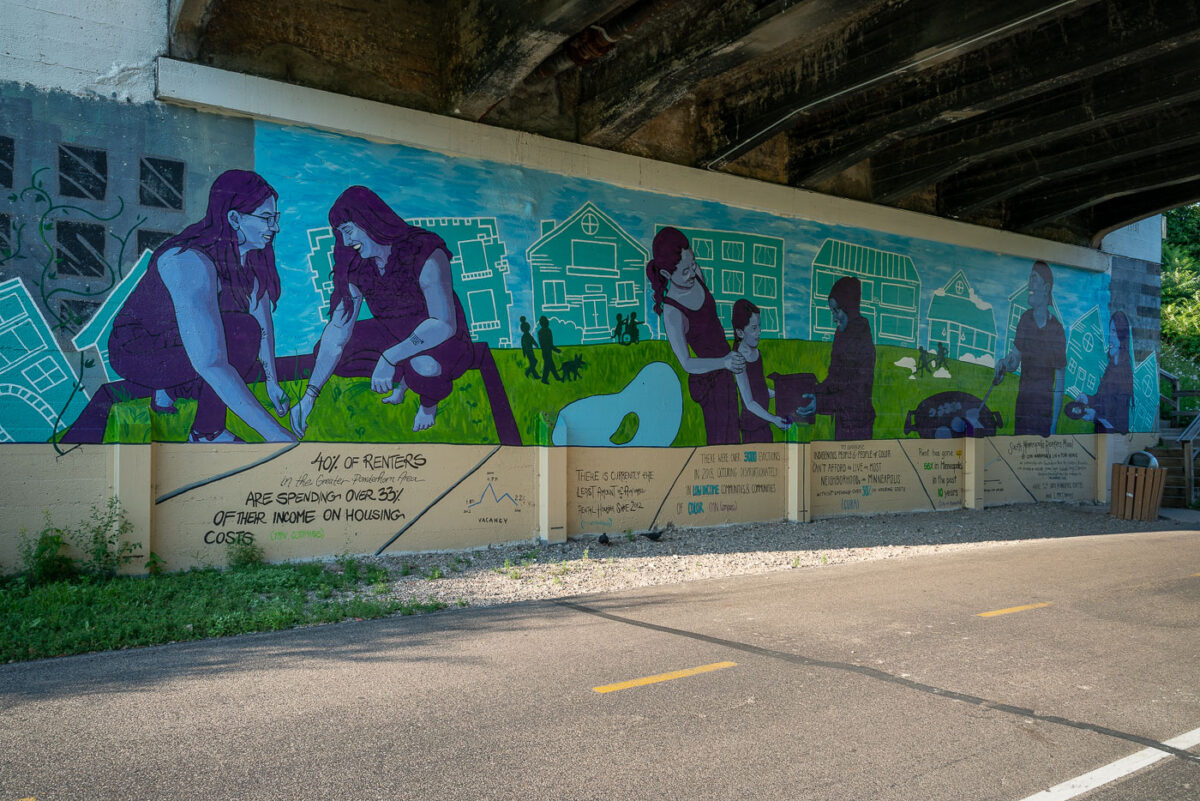
July 2019 — Mural by Cori Nakamura Lin, and Tori Hong on the Midtown Greenway in South Minneapolis.
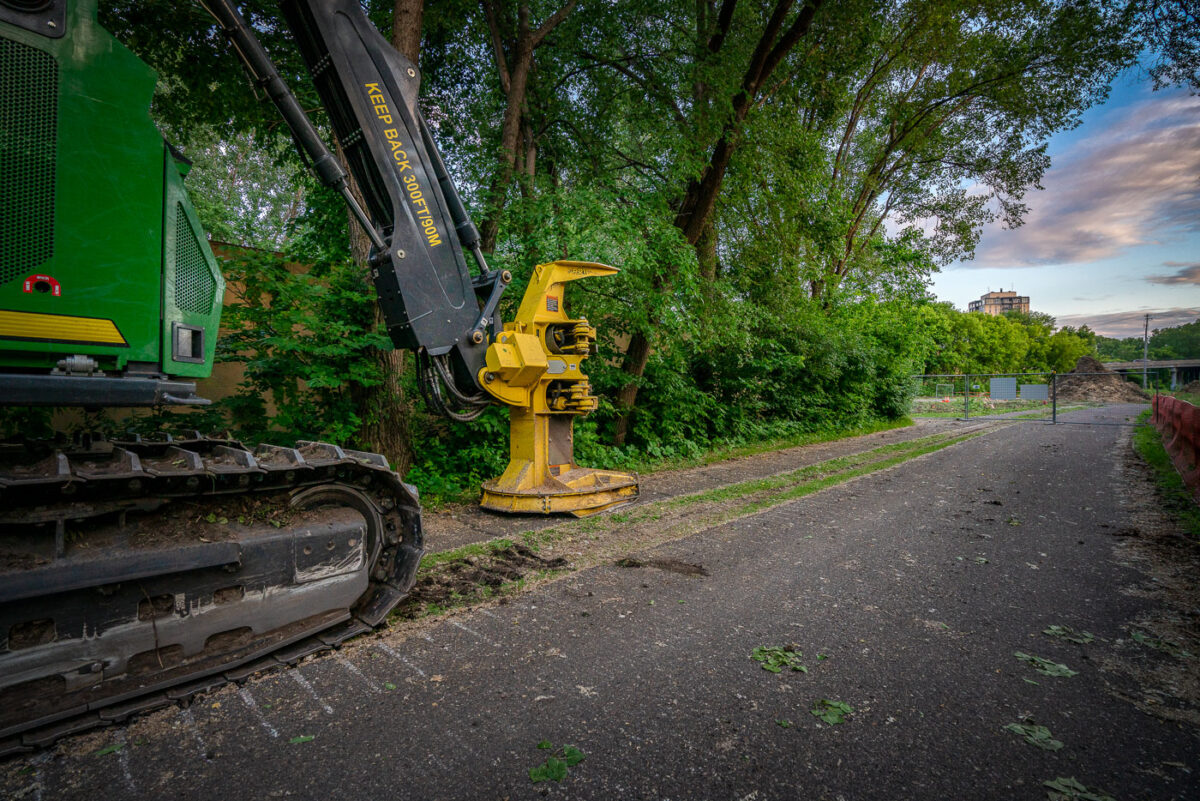
June 2019 — A tracked John Deere feller buncher with a yellow cutting head sits idle beside the Cedar Lake Trail in St. Louis Park, Minnesota, during early site preparation for the Southwest Light Rail Transit (LRT) extension. The machine’s “KEEP BACK 300 FT / 90 M” arm warning and the trail’s closed fencing mark the transition from a popular cycling route to an active construction corridor. In the distance, the bridge approach and industrial structures hint at the scale of redevelopment that reshaped the rail and trail landscape through Minneapolis’s western suburbs.
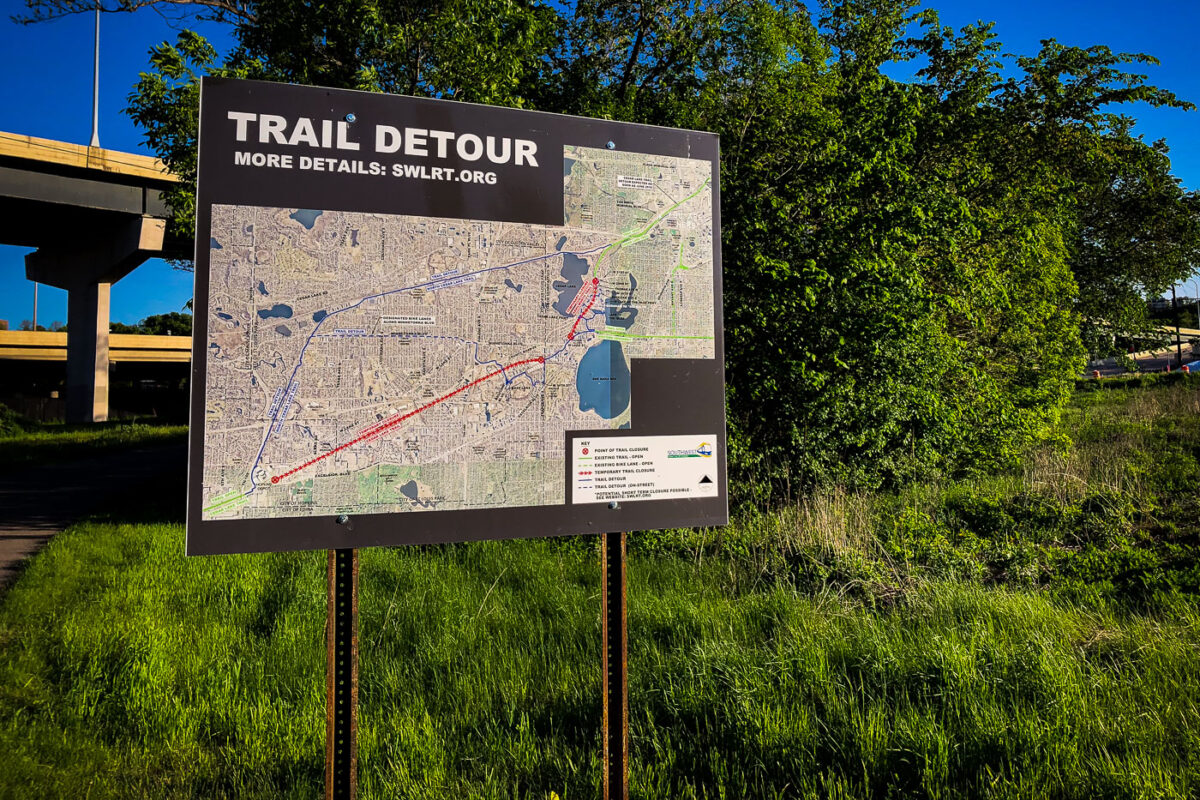
May 2019 — A detour sign for the Southwest Light Rail Transit (SWLRT) project stands beside a bike trail in Minneapolis, showing the rerouted path for cyclists and pedestrians during construction of the Green Line Extension. The detailed map outlines temporary closures through the Kenilworth Corridor and Cedar Lake areas, where new light rail tracks are being installed to connect downtown Minneapolis with the southwestern suburbs. The project, one of the largest public works efforts in Minnesota history, has significantly altered popular urban trails like the Midtown Greenway and Cedar Lake Trail since construction began in the late 2010s.
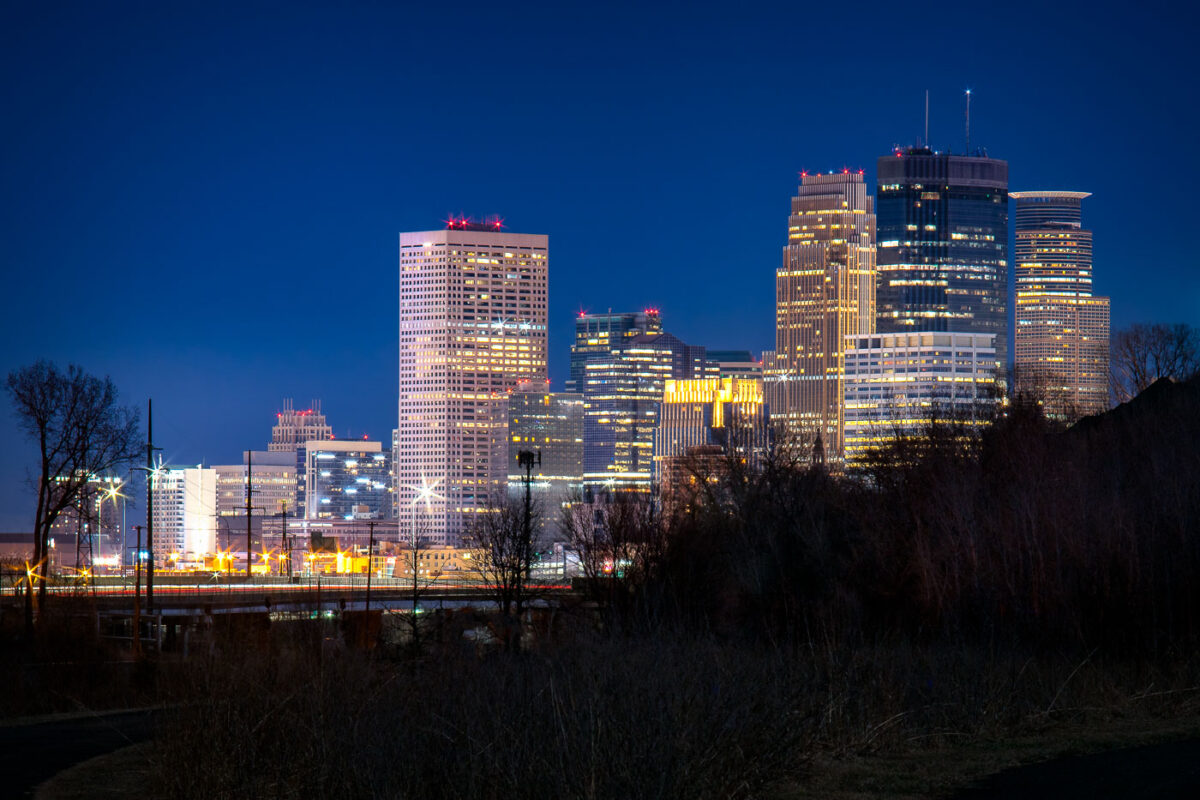
April 2019 — The Minneapolis skyline glows against a deep twilight sky, its mix of modern glass towers and classic architecture illuminated from within. Iconic buildings such as the IDS Center and Wells Fargo Center define the city’s vertical rhythm, while the rail and industrial foreground recall the infrastructure that shaped its early economy. Captured during blue hour, the scene reflects the enduring balance between industry and innovation that characterizes Minneapolis.
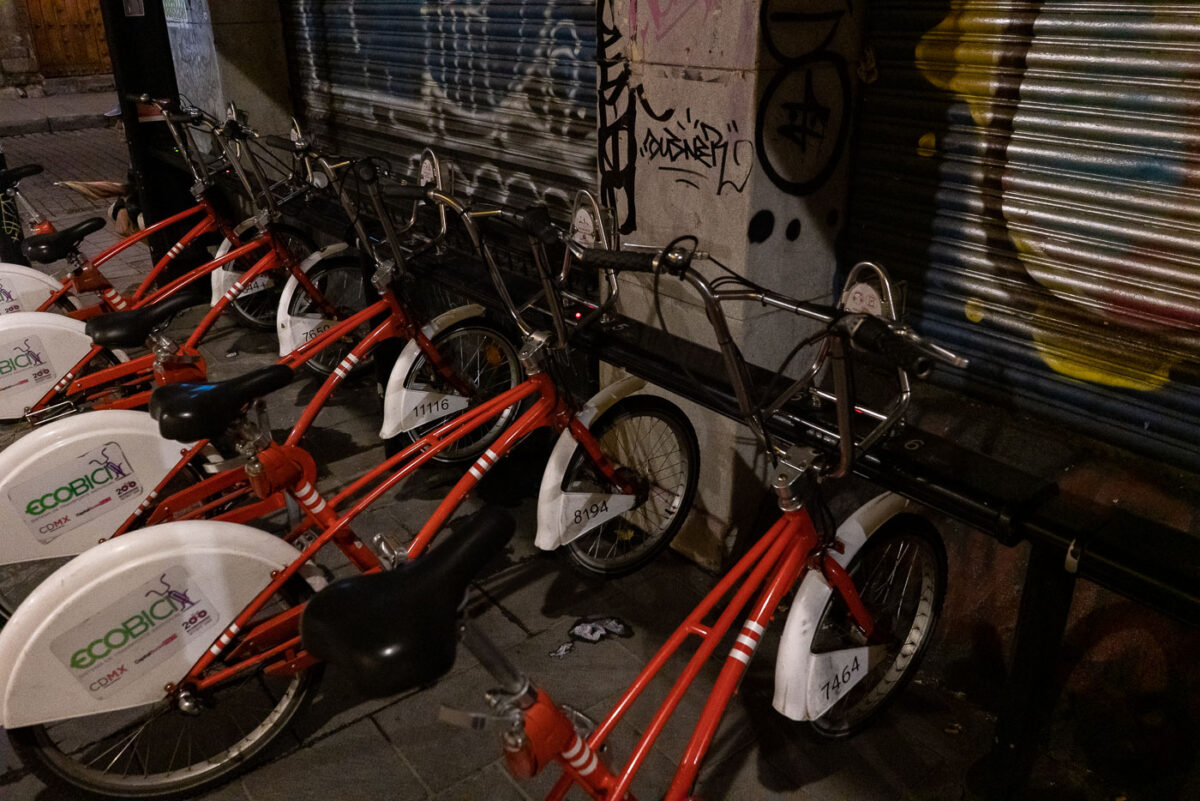
April 2018 — Rows of red Ecobici bicycles line a graffiti-marked wall in Mexico City’s historic center, their white fenders catching what little light remains from nearby street lamps. The city’s bike-share program, launched in 2010, represents one of Latin America’s most ambitious urban mobility projects, linking thousands of residents and commuters through sustainable transport. In the quiet of night, the empty docking station tells a different story — a pause between the day’s rush and the city’s nocturnal hum, where the blend of public art, infrastructure, and wear marks the pulse of daily urban life in the capital.
October 2017 — Evening commuters navigate the cobblestone intersection at Place de l’Alma, a busy roundabout near the Seine that connects several major Parisian avenues. Cyclists, scooters, and cars intermingle beneath the façades of Haussmann-era buildings, a familiar rhythm in the city’s daily life. The area blends elegance and intensity—its limestone balconies and cafés standing in contrast to the constant motion of urban transit. Completed in the mid-19th century, Place de l’Alma became a symbolic gateway between the Right Bank and the Left, linking the fashionable avenues of the 8th and 16th arrondissements. The nearby Pont de l’Alma, inaugurated in 1856 by Napoleon III, was once guarded by four statues of French soldiers—only one, the Zouave, remains today, still serving as an informal flood gauge for the rising Seine.
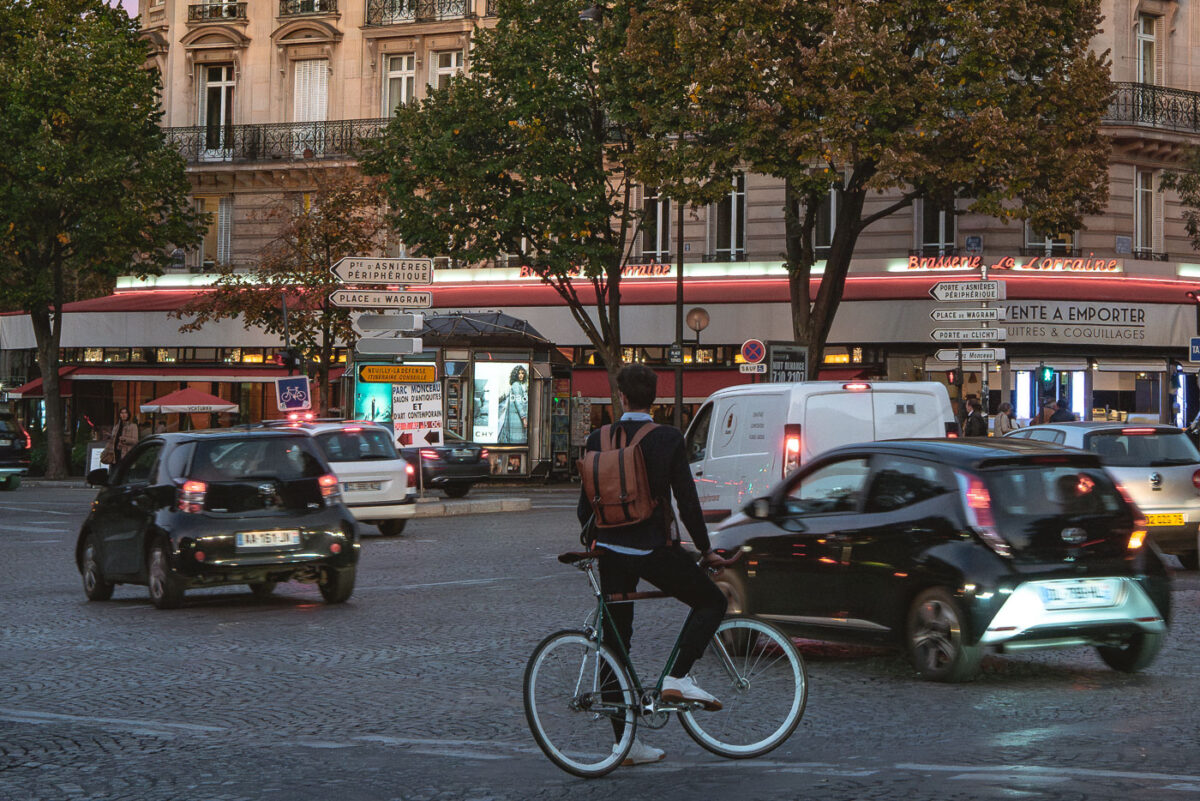
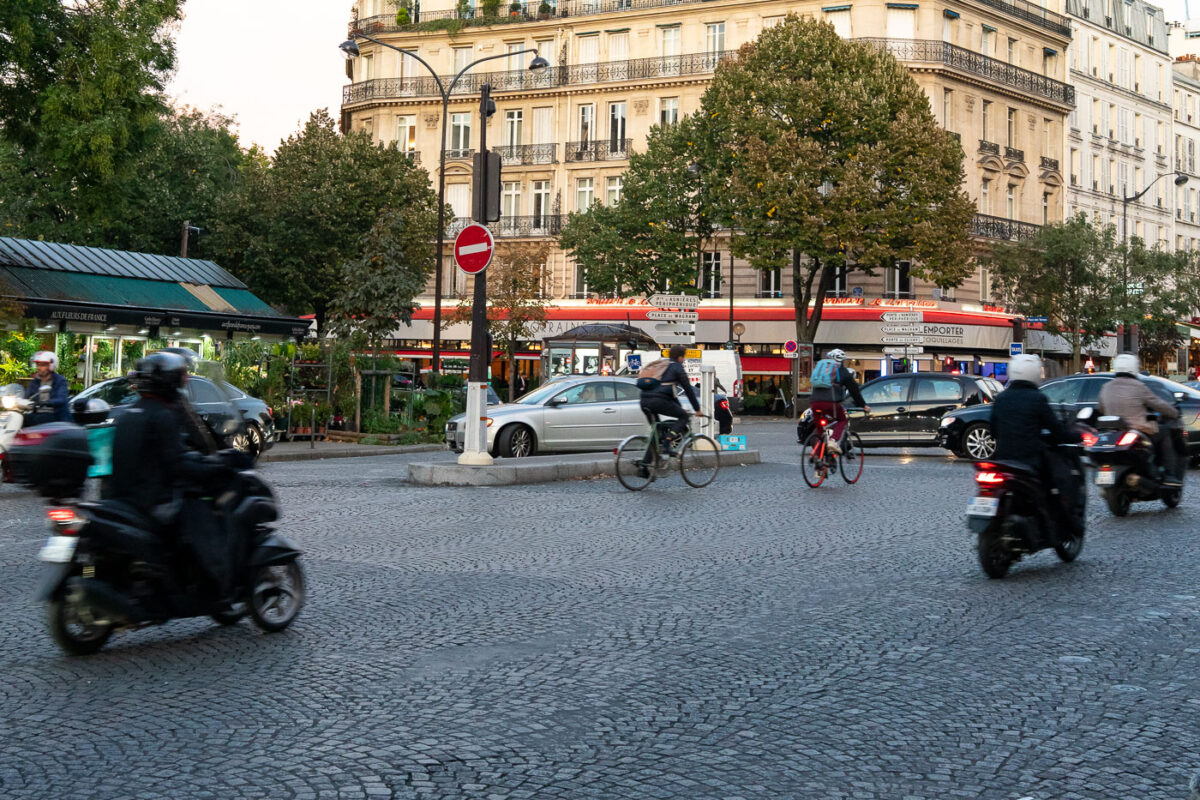
October 2017 — Cyclist at Place des Ternes, Paris evening traffic. A bicyclist with a backpack waits astride a single‑speed bike at a busy intersection at Place des Ternes on the border of Paris’s 8th and 17th arrondissements. Cars and a white delivery van circle the roundabout as storefronts and a news kiosk glow at dusk. The Belle Époque façade of Brasserie La Lorraine is visible across the square, along with direction signs to Porte d’Asnières, the Périphérique, Place de Wagram, and Porte de Clichy. Trees line the square’s cobblestones, and an illuminated ad for a luxury brand is posted on the kiosk, typical of evening rush hour near the Arc de Triomphe corridor. Keywords — Activities: Biking, Commuting, Waiting; Buildings: Brasserie La Lorraine, Haussmannian apartments, News kiosk; Location: Place des Ternes, Paris, France; Objects: Street signs, Backpack, Bicycle, Advertisements, Traffic lights; People: Bicyclist, Pedestrians (unidentified); Moods: Urban bustle, Dusk; Sceneries: City square, Tree‑lined boulevard; Texts: “Brasserie La Lorraine,” “Pte d’Asnières Périphérique,” “Place de Wagram,” “Porte de Clichy,” storefront signage; Companies: Givenchy (advertising); Weather: Clear, mild evening; Plants: Street trees; Animals: None; Vehicles: Compact cars, Delivery van.
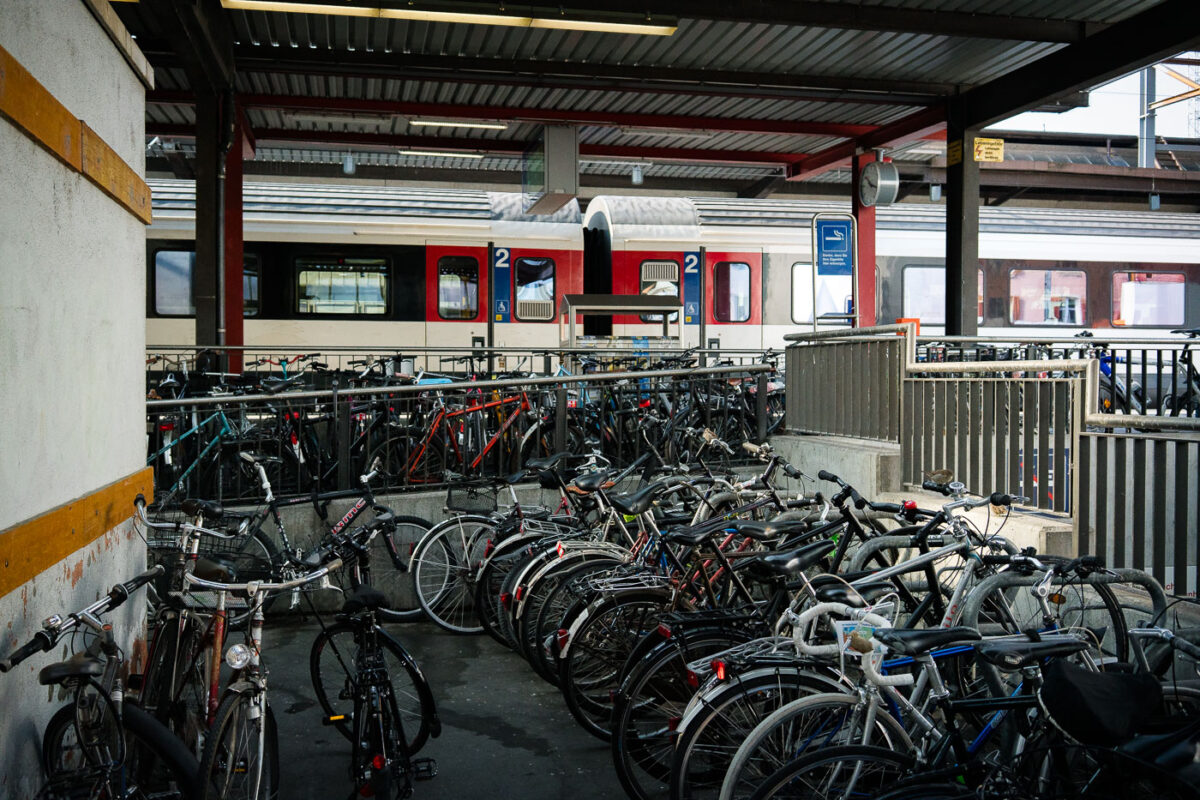
September 2017 — Rows of bicycles fill the parking area beside Zürich Hauptbahnhof, one of Europe’s busiest railway stations. The extensive bike racks serve daily commuters who combine cycling with train travel, a common practice in Swiss cities emphasizing sustainable urban mobility. Behind the bicycles, a Swiss Federal Railways (SBB) regional train waits at the platform, reflecting the integration of rail and cycling infrastructure within Zürich’s public transit system.

September 2017 — The Cedar Lake Trail passes through the industrial district of St. Louis Park, Minnesota, illuminated here by the community’s water tower and nearby grain elevators. This segment of the trail follows a former railroad right-of-way once used by the Minneapolis & St. Louis Railway, which connected local industries to the region’s freight network. The corridor’s transformation into one of the country’s first bicycle “freeways” in the 1990s marked a major milestone in urban redevelopment and sustainable transportation planning. Once lined with lumberyards, steel fabricators, and mills, the area surrounding the trail reflects the industrial origins of St. Louis Park—a community that grew rapidly in the early 20th century due to its proximity to both Minneapolis and key rail junctions. The trail today bridges that history, offering cyclists and commuters a route through a landscape where freight trains, utility towers, and legacy industry remain active reminders of the city’s manufacturing past.
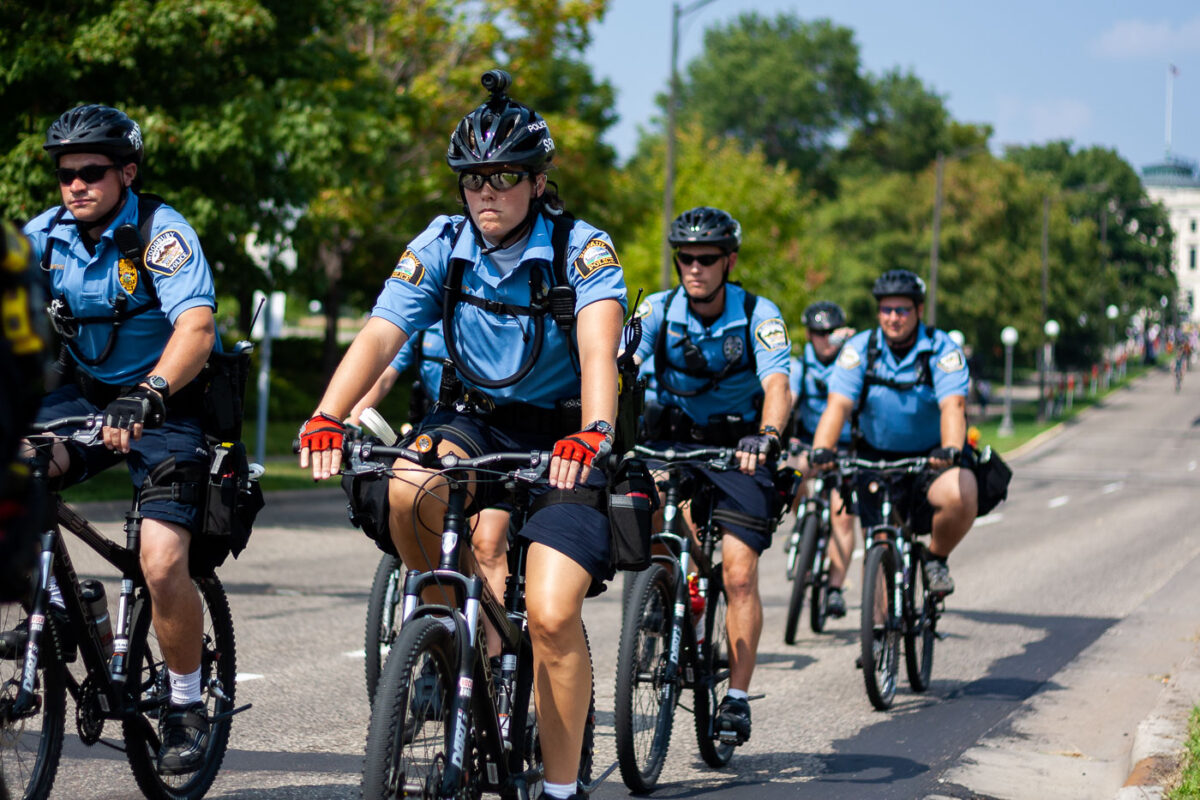
September 2008 — St. Paul Police officers on bikes during the RNC in 2008.