Save America Trump House, Wisconsin
Honk For Tronk, Let's Go Brandon, Dont Blame Me I Voted For Trump, Back The Blue, and a portrait of Donaldl Trump signs on a Wisconsin home.
Honk For Tronk, Let's Go Brandon, Dont Blame Me I Voted For Trump, Back The Blue, and a portrait of Donaldl Trump signs on a Wisconsin home.
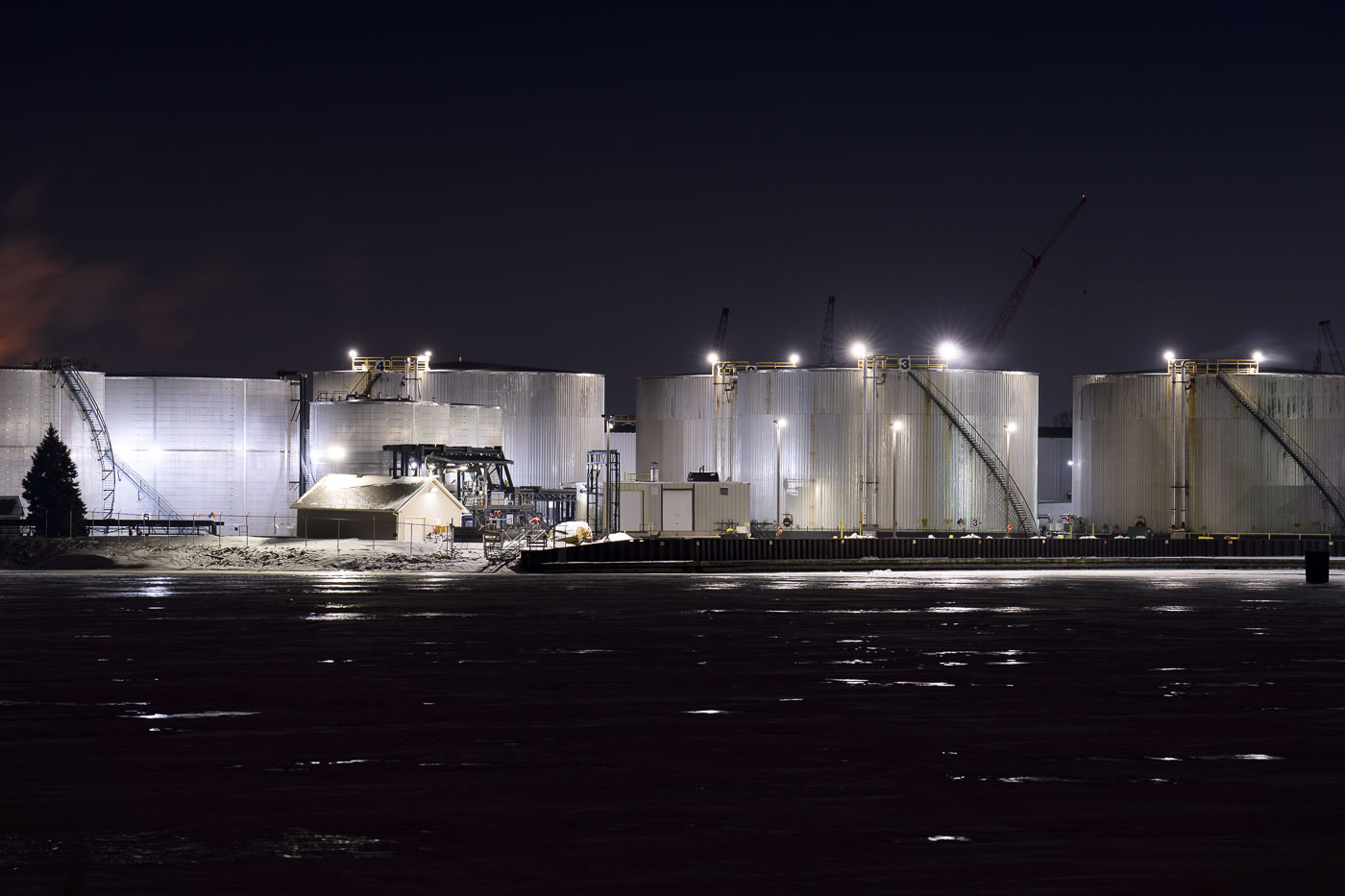
Large cylindrical storage tanks at Construction Resources Management, Inc. line the west bank of the Fox River in Green Bay, Wisconsin. Viewed from across the frozen river on a winter night, the facility is illuminated by perimeter lighting that reflects faintly off the ice. The site serves regional construction and materials operations, part of the industrial corridor that has long defined the waterfront between downtown Green Bay and the port district.
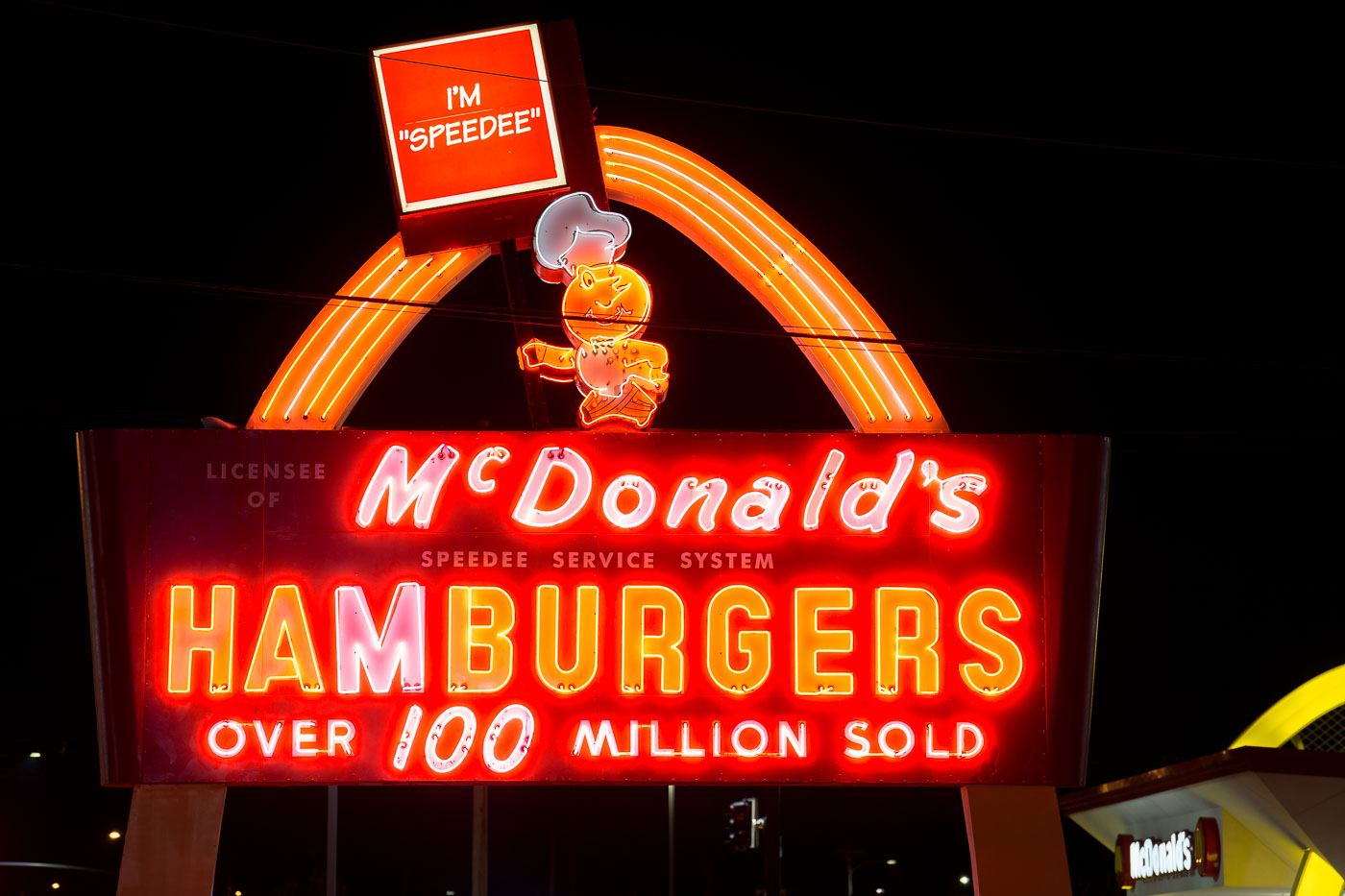
One of the few surviving original McDonald’s neon signs still standing in the United States is located in Green Bay, Wisconsin. Installed during the era before the Golden Arches fully defined the brand, the sign features “Speedee,” the chain’s early mascot introduced in the 1950s to promote the company’s streamlined “Speedee Service System.” The illuminated red-and-yellow marquee—advertising hamburgers and boasting “Over 100 Million Sold”—reflects the rapid national expansion of the franchise during its formative years. Today it serves as both a functioning restaurant sign and a preserved piece of mid-century fast-food history.
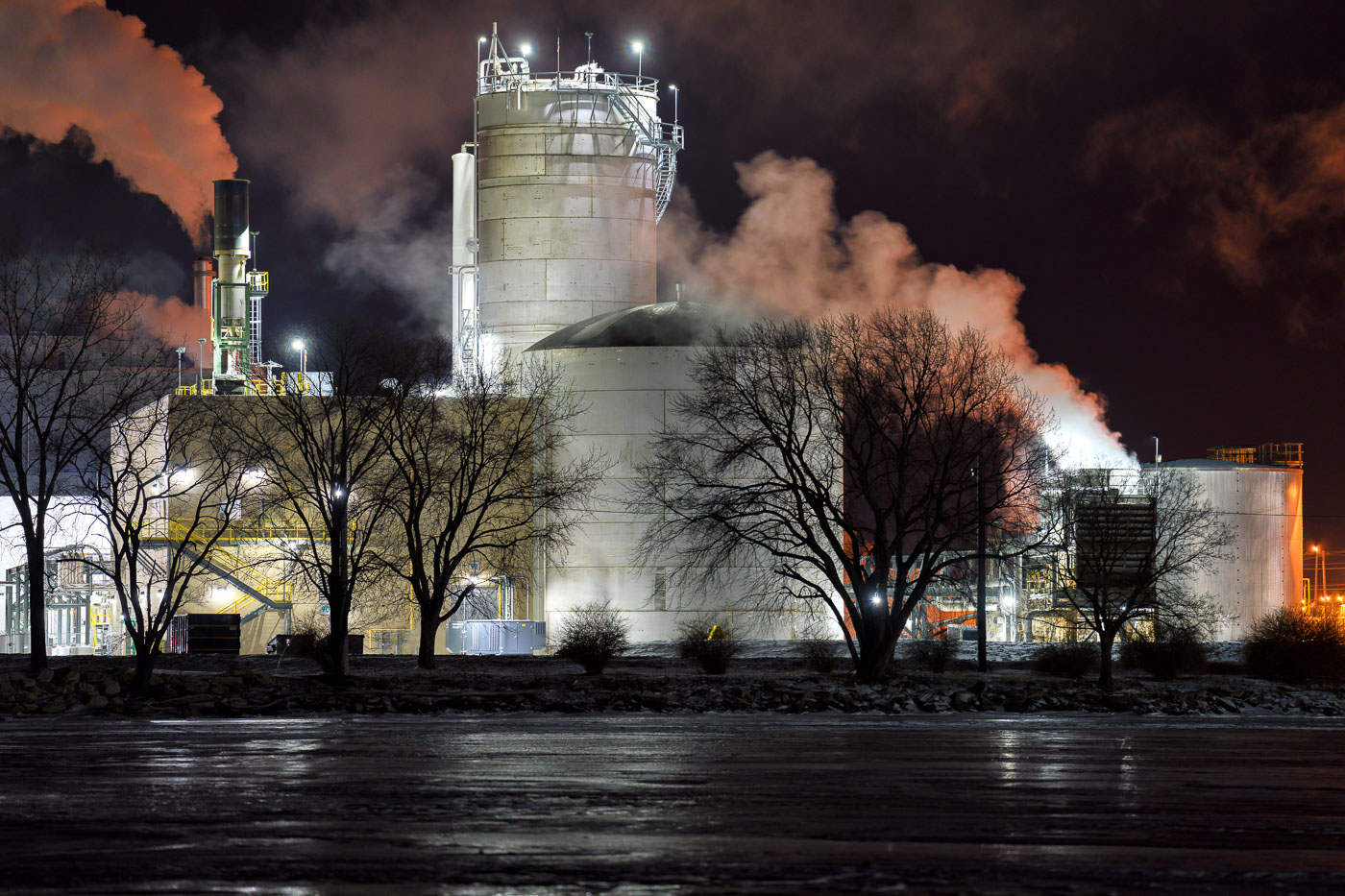
Green Bay Packaging’s modern recycled paper mill rises behind leafless winter trees along the Fox River in Green Bay, Wisconsin. The facility, completed in 2021 as one of the most advanced and energy-efficient mills in the country, emits illuminated plumes of steam that drift across the night sky. The river’s frozen surface reflects the mill’s lights and muted colors, creating a stark industrial winter landscape along the east bank of the Fox River.
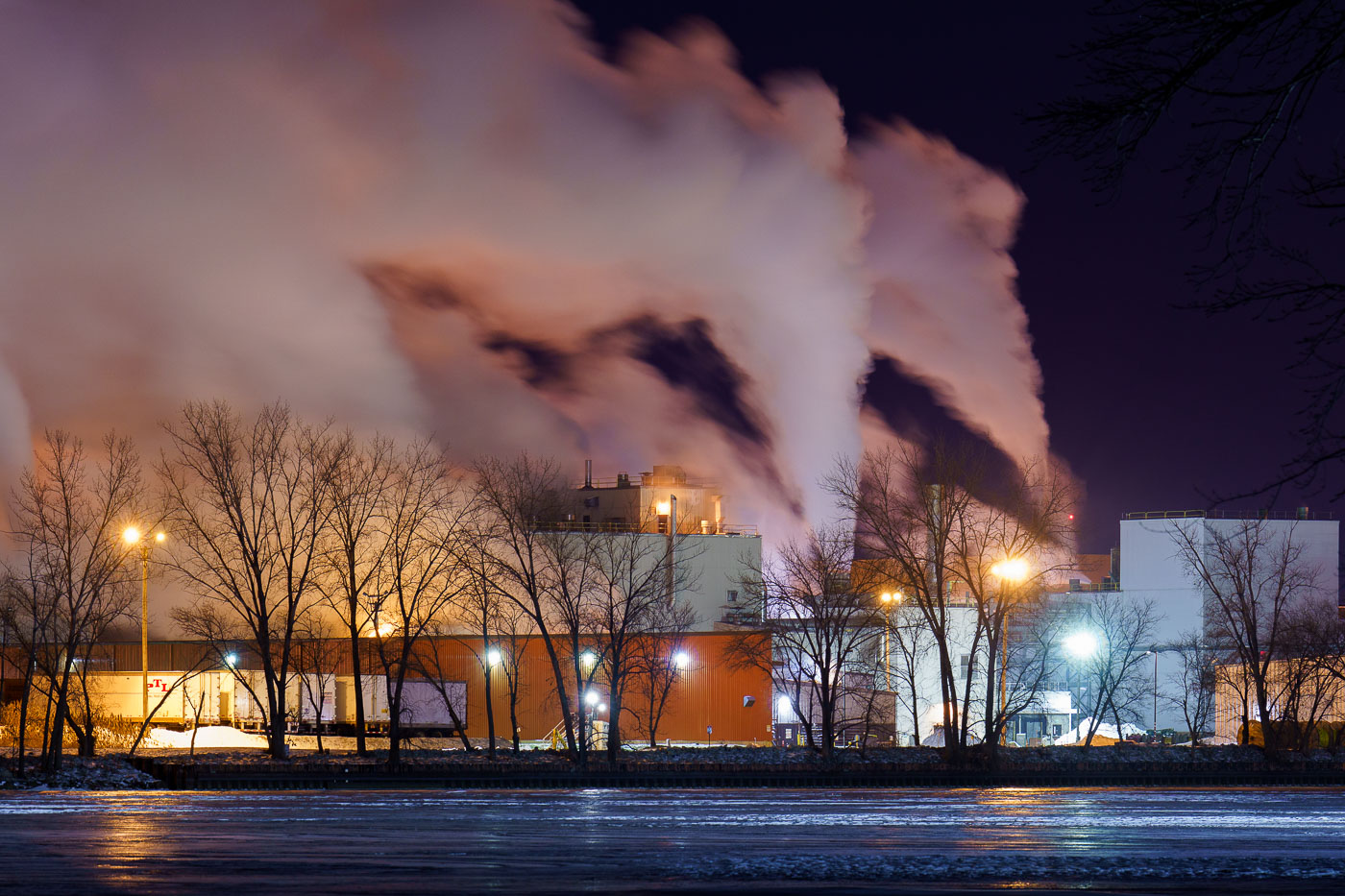
Green Bay Packaging’s state-of-the-art recycled paper mill, completed in 2021 at a cost of roughly $500 million, releases plumes of steam into the winter night as viewed from across the Fox River. The facility replaced the company’s 72-year-old mill and became one of the most advanced recycled-paper operations in the country, designed to dramatically reduce water use and energy consumption while increasing production capacity. The glow from the mill’s lighting and processing equipment diffuses through the cold air, mingling with tree silhouettes along the riverbank and reflecting off the frozen surface of the Fox River.
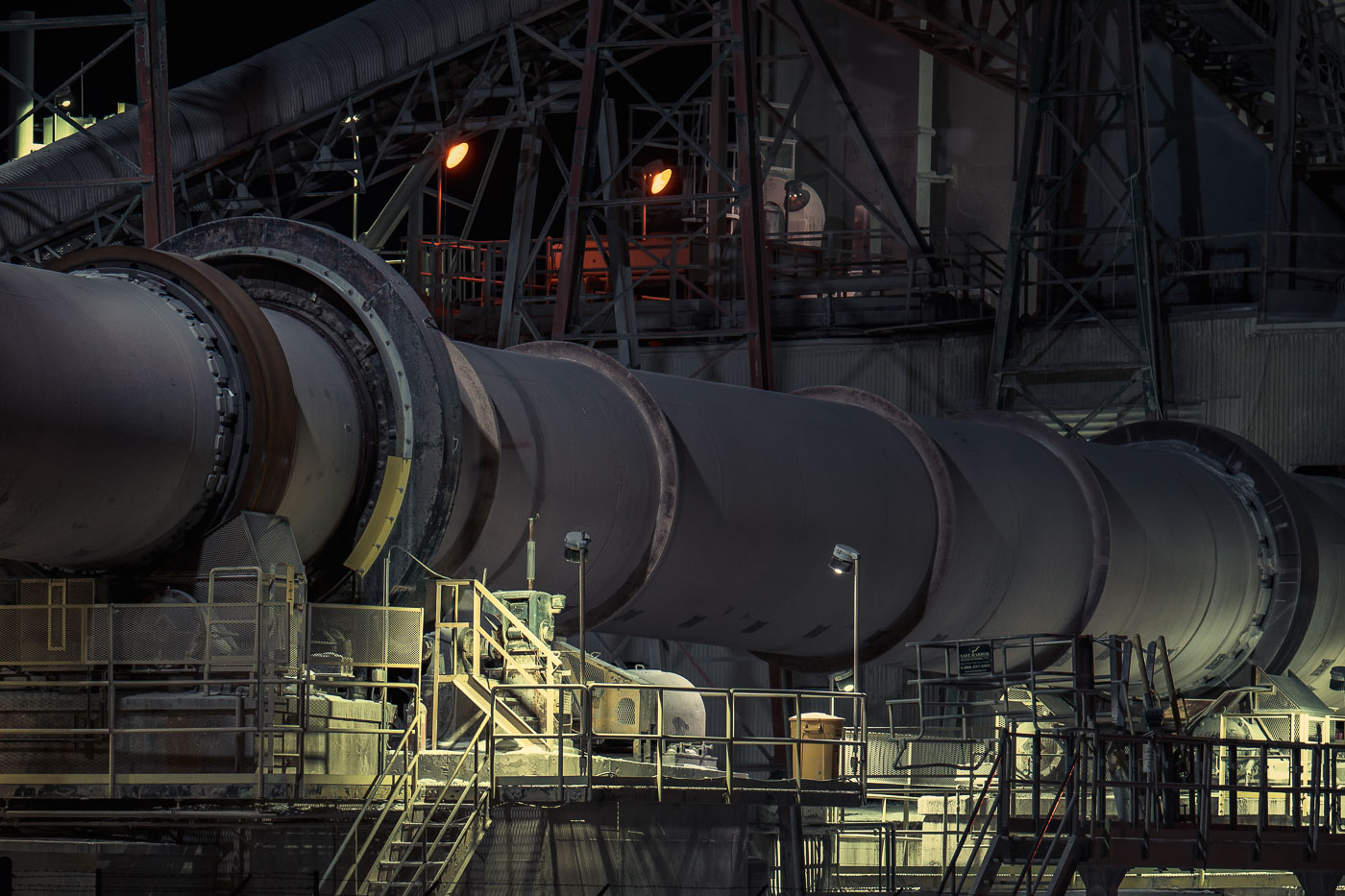
A section of the rotary kiln system at the Graymont lime plant in Green Bay, Wisconsin, captured at night under maintenance and work lights. The massive rotating kiln—central to the calcination process that transforms limestone into high-purity lime—runs along a network of elevated platforms, access stairs, and steel supports. The orange glow from overhead lamps highlights the heat-intensive nature of kiln operations, while the surrounding catwalks and conveyors reflect the layered engineering required to keep the continuous production line moving.
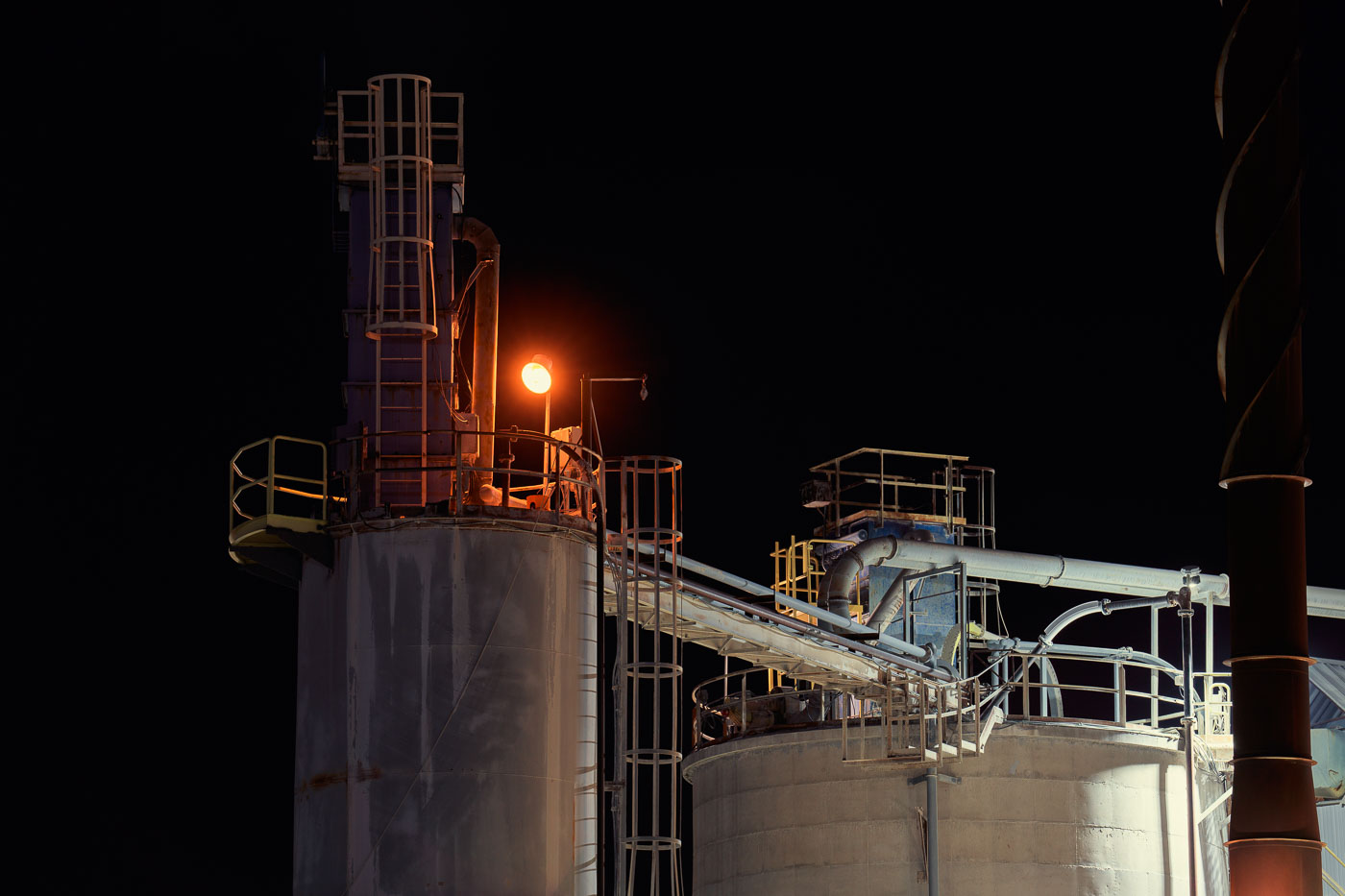
Illuminated by a single amber work light, the upper platforms and transfer pipes of the Graymont lime plant in Green Bay, Wisconsin stand out against the night sky. The cylindrical storage silos are connected by enclosed conveyor and piping systems that move processed lime between different stages of production. Catwalks, ladders, and pipe supports trace the geometry of an industrial site that has long supplied lime for regional steelmaking, water treatment, and construction uses.
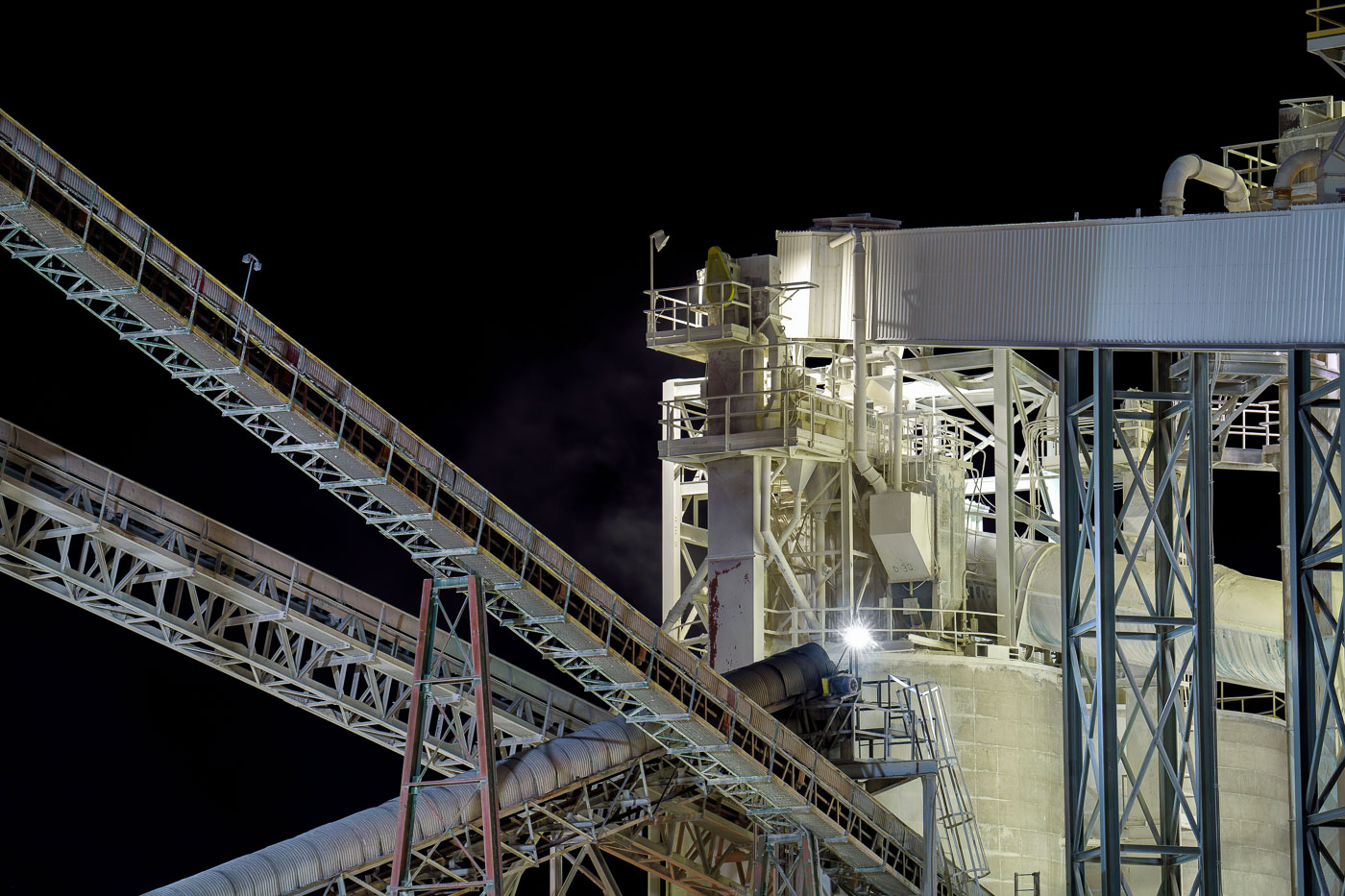
A detailed nighttime view of the conveyor towers and processing equipment at the Graymont lime plant in Green Bay, Wisconsin. The illuminated catwalks, ducts, and steel trusses highlight the facility’s continuous material-handling system, where crushed limestone moves through enclosed conveyors toward the plant’s kilns and storage silos. Fine dust, visible in the lights near the upper platforms, reflects the industrial character of a site that has served the region’s construction and manufacturing sectors for decades.
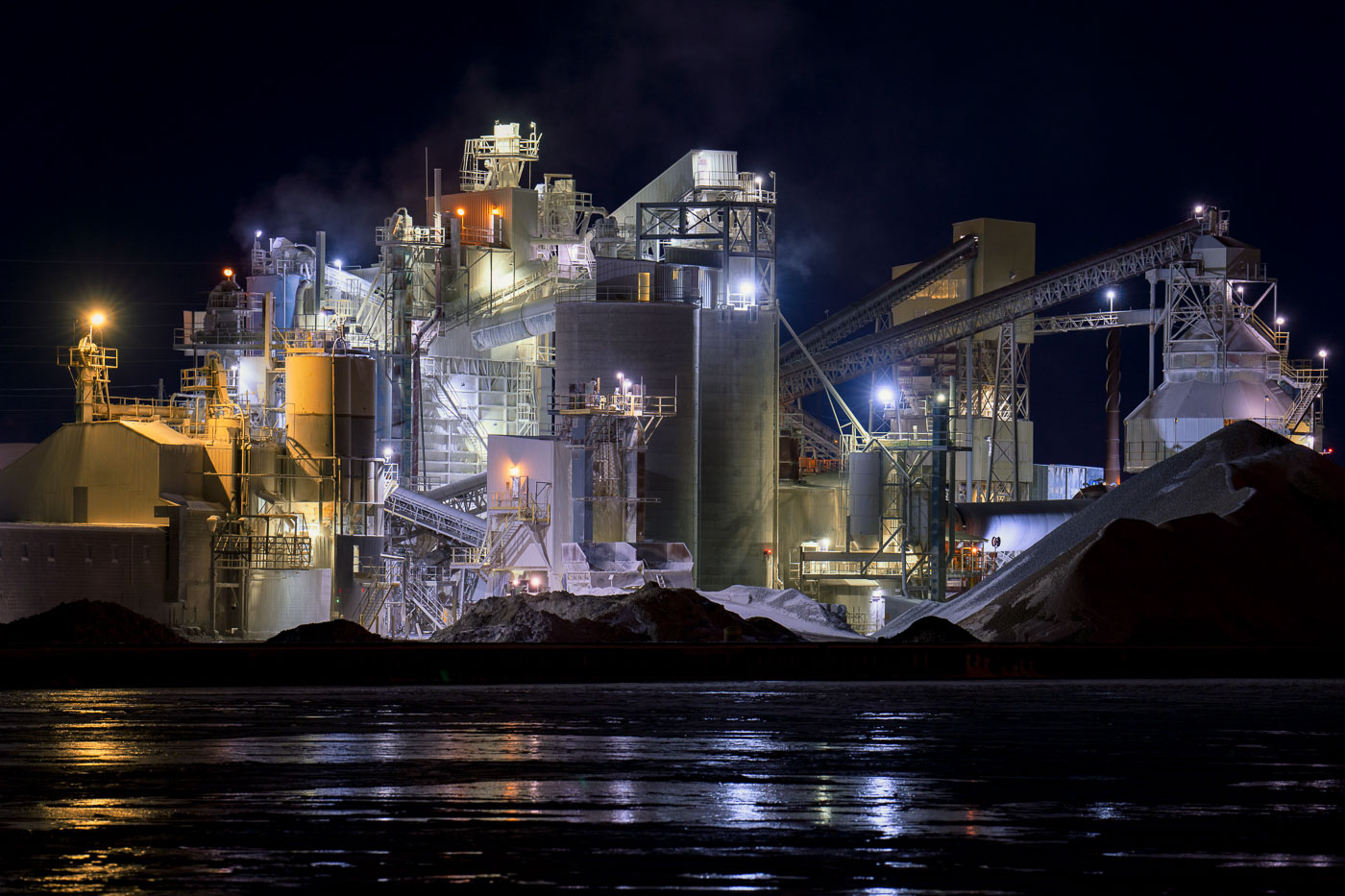
The Graymont lime processing plant along the Fox River in Green Bay, Wisconsin, illuminated during nighttime operations. The facility’s network of silos, conveyors, and dust-collection towers stands out against the dark sky, with steam drifting from active kilns and processing units. Reflections from the plant’s industrial lighting shimmer across the frozen river surface, highlighting the site’s role in the region’s long-standing manufacturing and mineral production corridor.
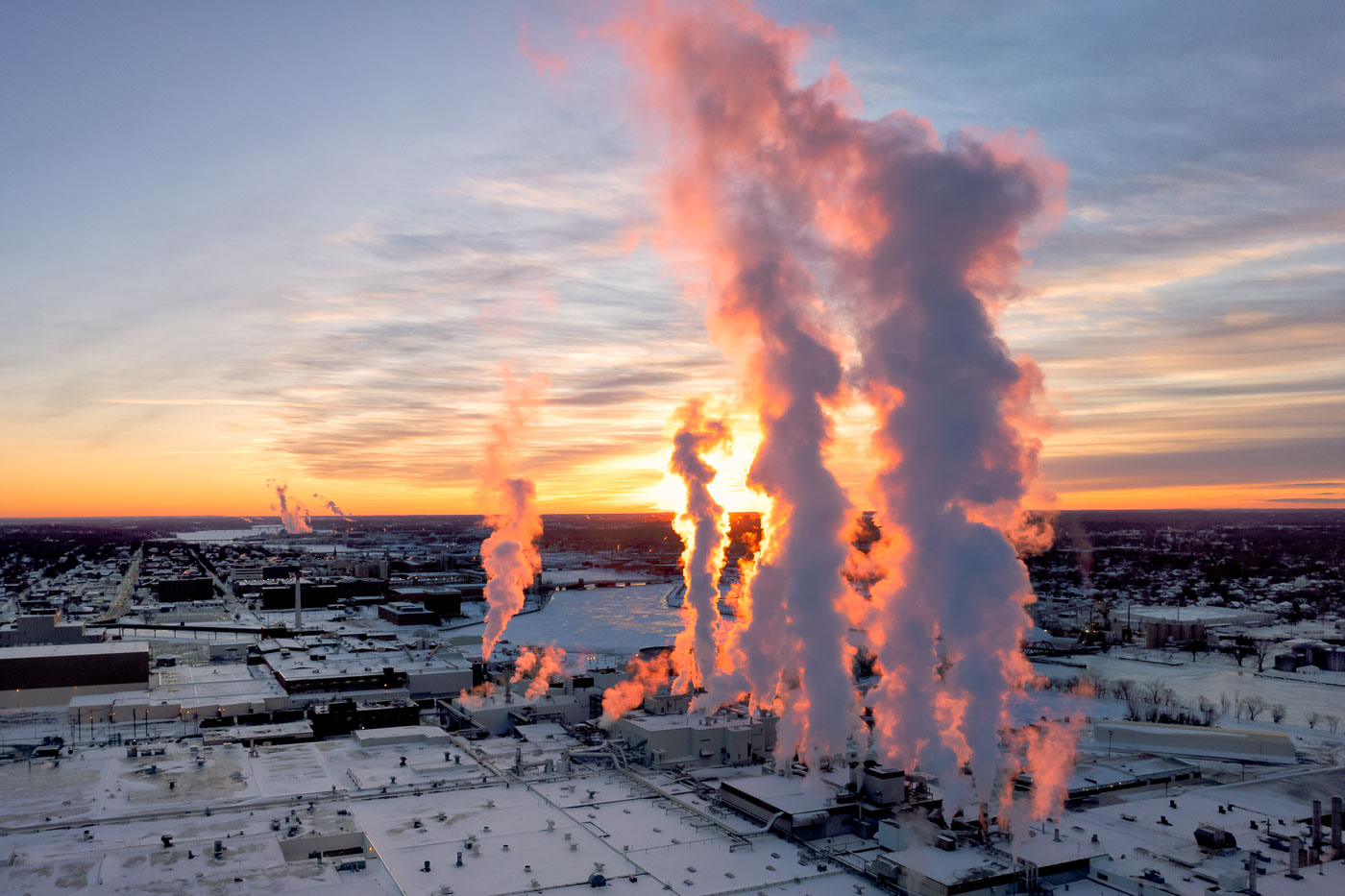
Steam columns rise dramatically from the Procter & Gamble paper mill in Green Bay, Wisconsin, illuminated by the orange and magenta glow of a midwinter sunrise. Captured from the air in January, the image shows the vast industrial complex along the Fox River, with frozen rooftops and intricate piping systems sharply defined against the cold morning light. The steam, tinted by the low sun, becomes a striking visual emblem of the city’s manufacturing heritage and the energy demands of Wisconsin’s paper industry.
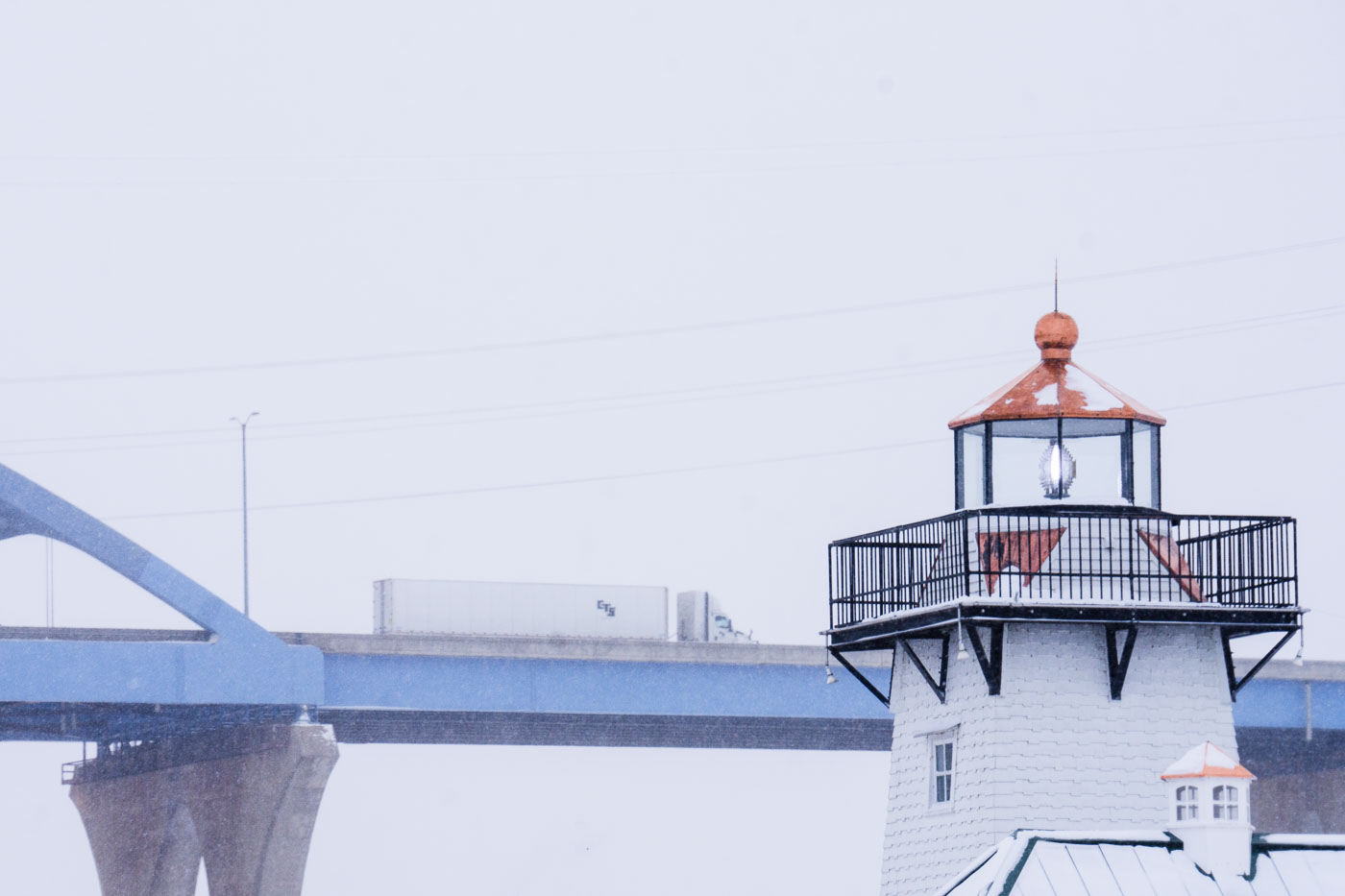
A CTS tractor-trailer crosses the Leo Frigo Memorial Bridge—locally known as the Tower Drive Bridge—during a winter snowstorm in Green Bay, Wisconsin. In the foreground, the familiar shingled lighthouse structure along the riverfront stands out against the white sky, its lantern room partially frosted as lake-effect snow drifts through the scene. The contrast between the elevated highway and the shoreline landmark highlights the mix of transportation corridors that define Green Bay’s industrial waterfront.
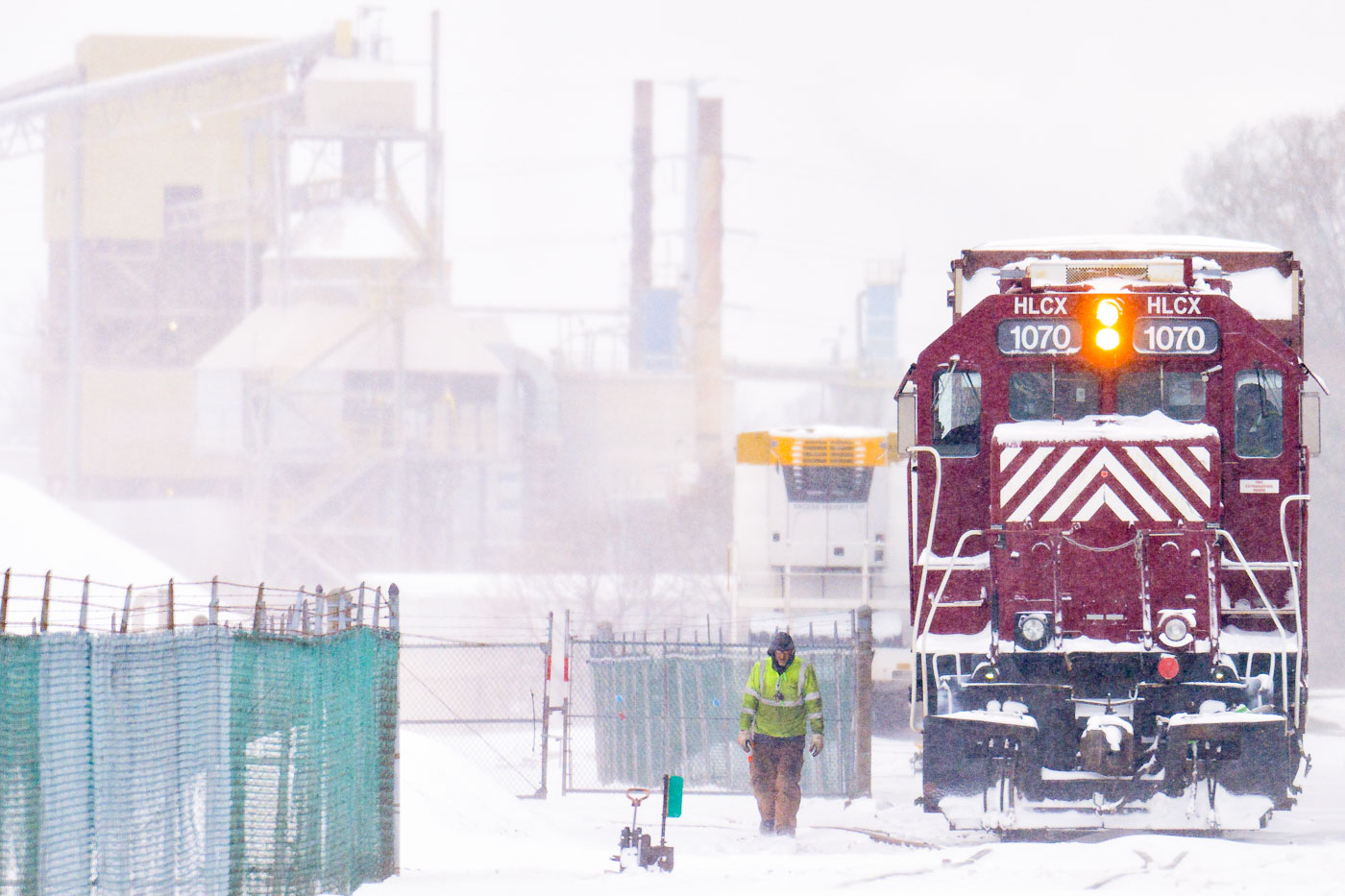
A freight crew member walks alongside HLCX 1070 during a heavy snowstorm at Quincy Street and Eastman Avenue in Green Bay, Wisconsin. The locomotive’s headlights cut through the blowing snow as operations continue despite low visibility and freezing conditions. Industrial structures in the background fade into the whiteout, highlighting how rail work persists year-round across the region’s manufacturing and transportation corridors.
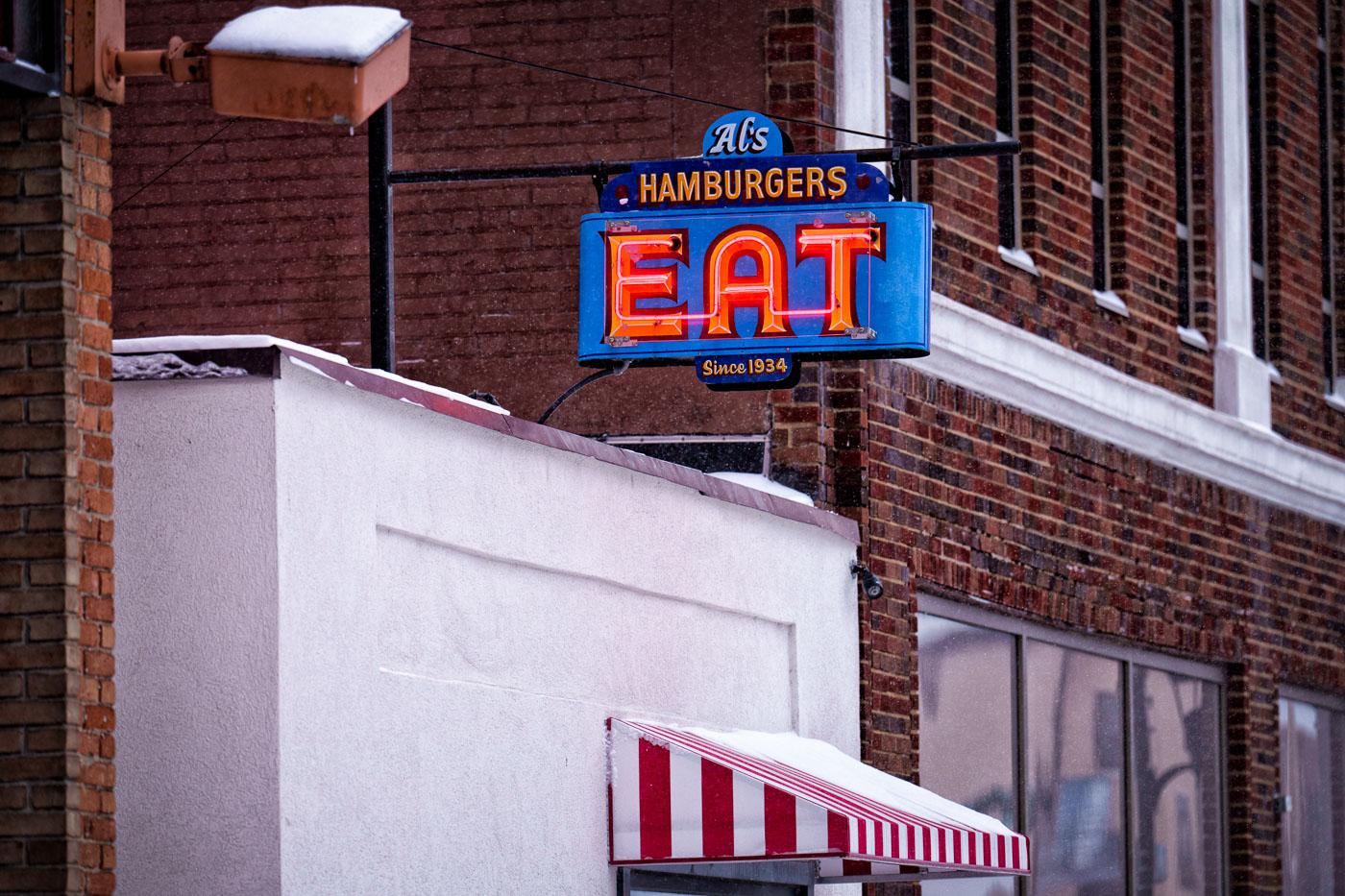
The glowing neon “EAT” sign at Al’s Hamburgers stands out against the snowy backdrop of winter in Minneapolis. The sign, with its bright mid-century colors and bold lettering, has been part of the business’s identity since the diner opened in 1934. Its classic styling reflects the era when small neighborhood restaurants relied on eye-catching storefront signs to draw in passing traffic. Light snow gathers on the striped awning below, adding a seasonal layer to one of the area’s longstanding local landmarks.
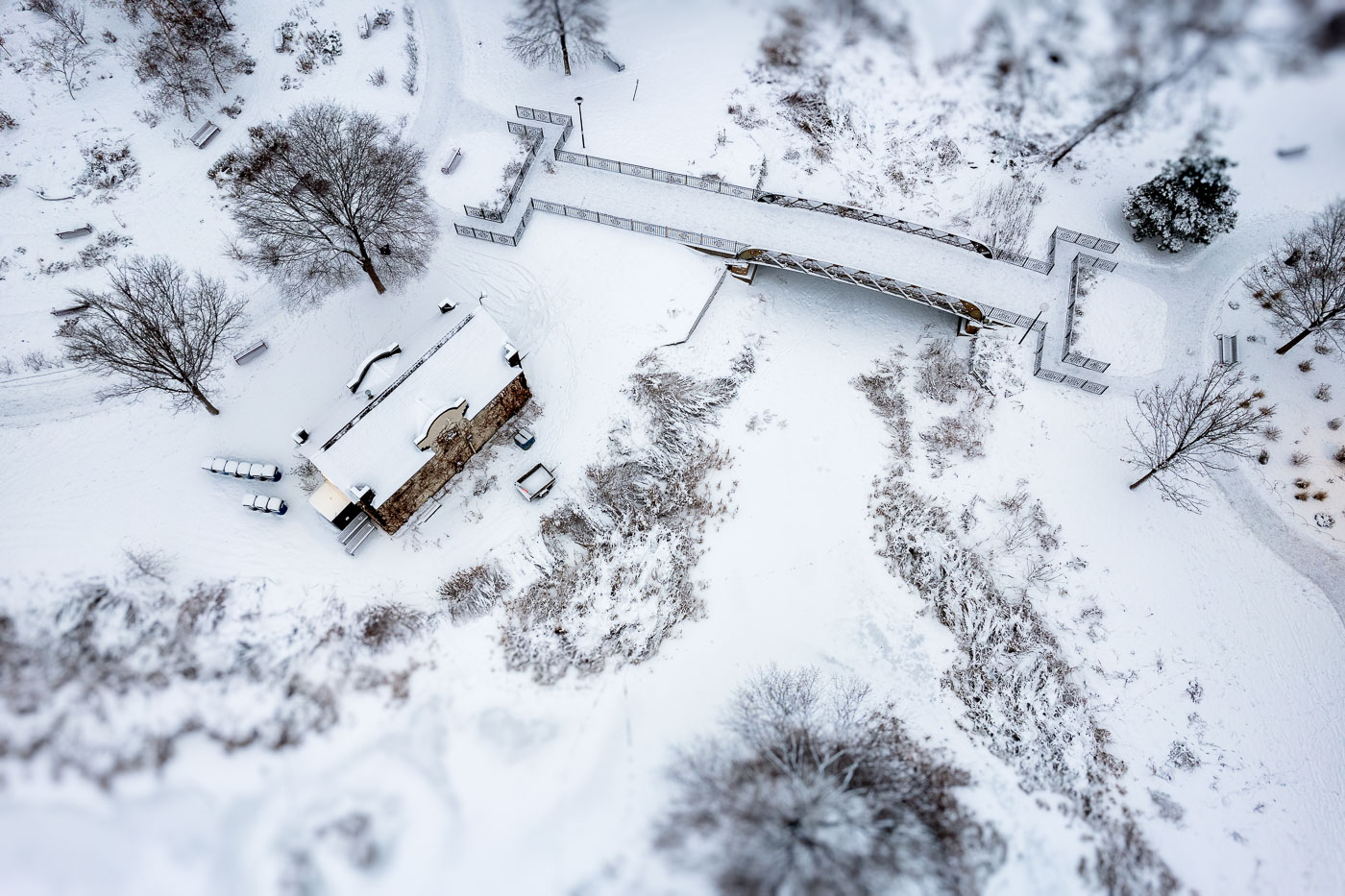
A fresh snowfall settles over Loring Park near downtown Minneapolis, softening the landscape around the park’s pedestrian bridge and historic shelter building. From above, the snow highlights the geometric layout of paths, railings, and terraces surrounding the bridge, which crosses a narrow channel connecting sections of the park’s pond system. Loring Park—a key part of the city’s late-19th-century park plan—remains one of Minneapolis’s most recognizable urban green spaces, bordered by the Loring Greenway and the southern edge of downtown. The new snow creates a uniform winter texture across the lawns, benches, and shoreline vegetation, with only light footprints and plowed walkways hinting at early morning activity in the park.
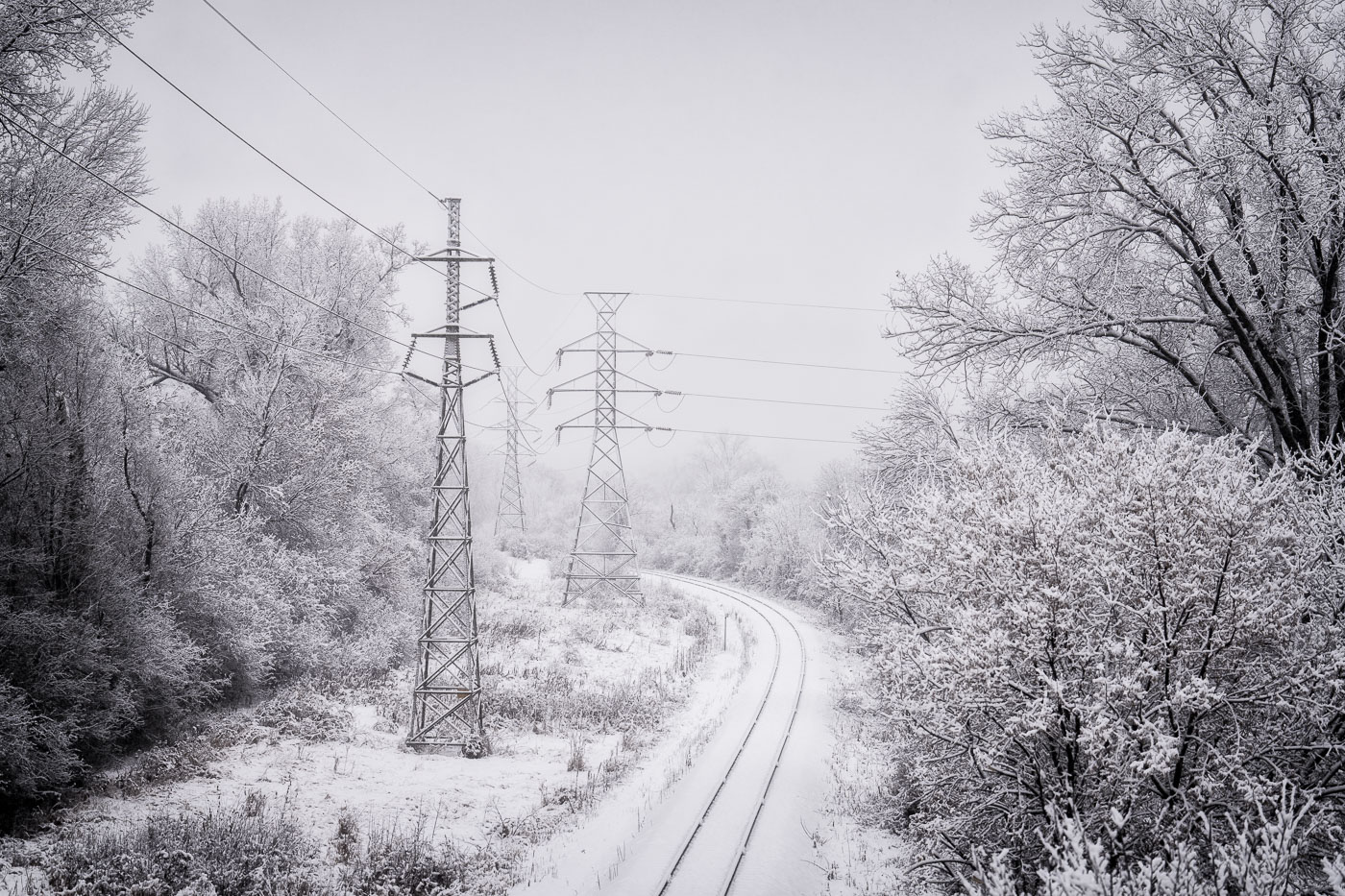
Theodore Wirth Park during a December 15th, 2022 snowfall.
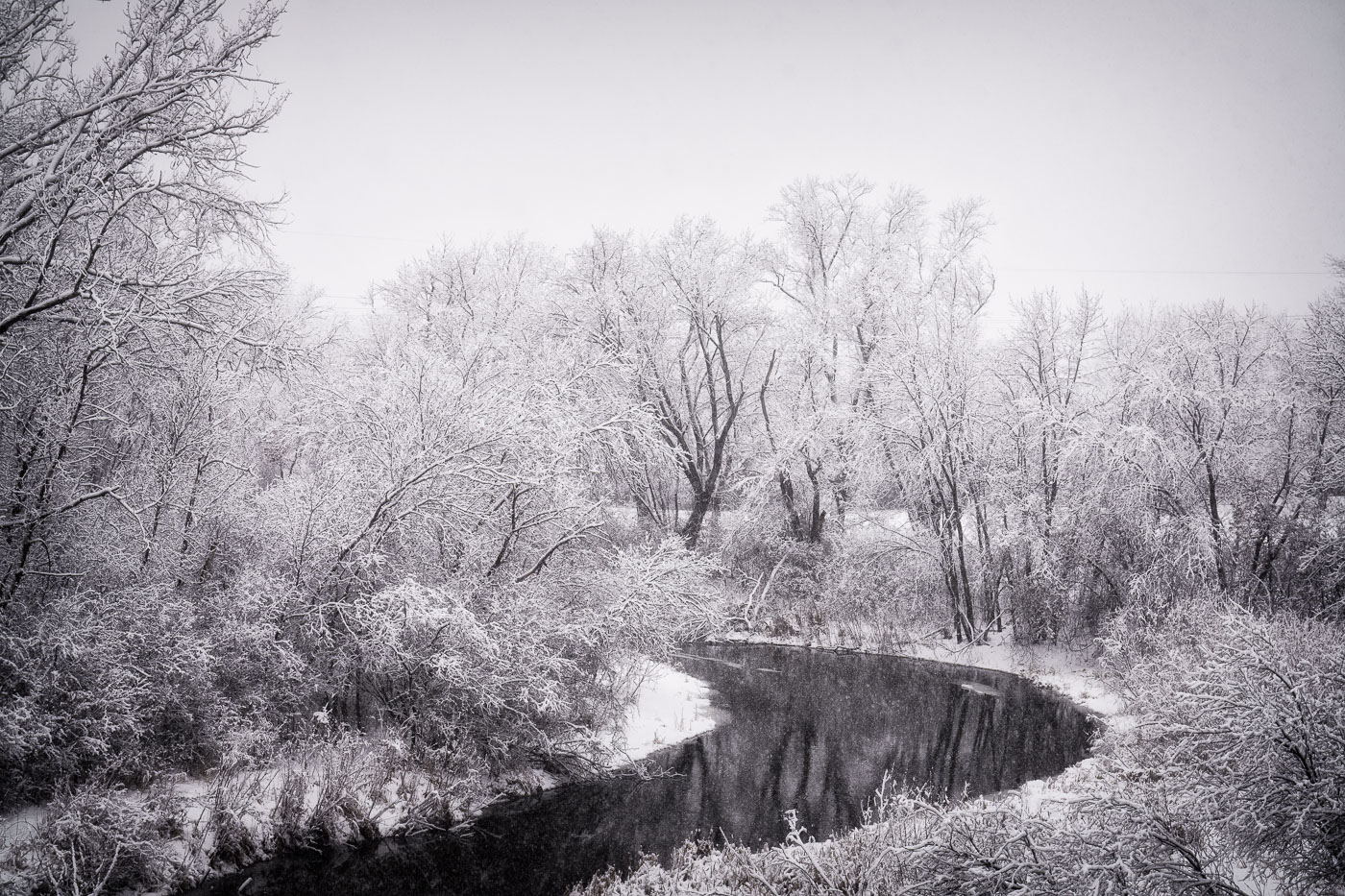
A heavy December 15, 2022 snowfall blankets the woodlands of Theodore Wirth Park in Minneapolis, transforming the Bassett Creek corridor into a monochrome winter landscape. Snow-laden branches bend over the slow curve of the creek, whose dark, unfrozen water provides one of the few contrasts against the dense white canopy. This stretch of Wirth Park—one of the largest urban parks in the Minneapolis park system—follows the natural course of the creek as it winds between restored wetlands, wooded slopes, and ski trails that date back to mid-20th-century park development efforts. The image captures the quiet, insulated atmosphere common in early-season snowstorms, when the park’s trails, waterway edges, and mature hardwoods take on a uniform, frost-covered texture.
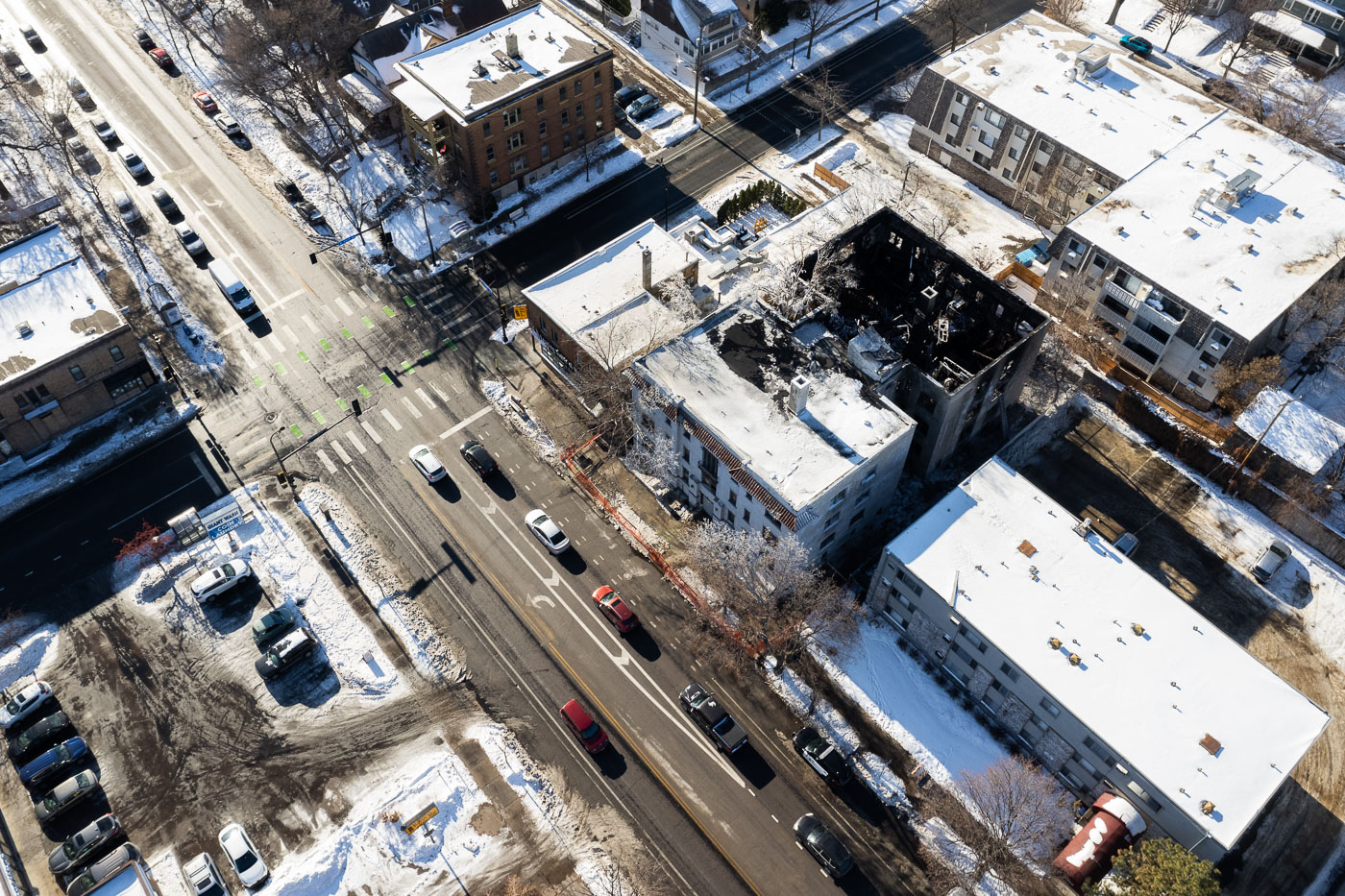
An aerial view of the fire-damaged apartment building along Lyndale Avenue in Minneapolis, photographed the morning after the incident. The structure’s roof is completely gone, and its upper floors are visibly burned out, leaving only the exterior walls and charred framing behind. Surrounding buildings—mostly mid-century apartment blocks—show normal winter conditions, their roofs covered in fresh snow. Traffic moves through the busy Lyndale and 24th Street intersection while the fire scene remains cordoned off with temporary fencing. The image highlights the dense residential fabric of this part of the city and the stark contrast between the intact neighborhood and the gutted building at the center of the block.
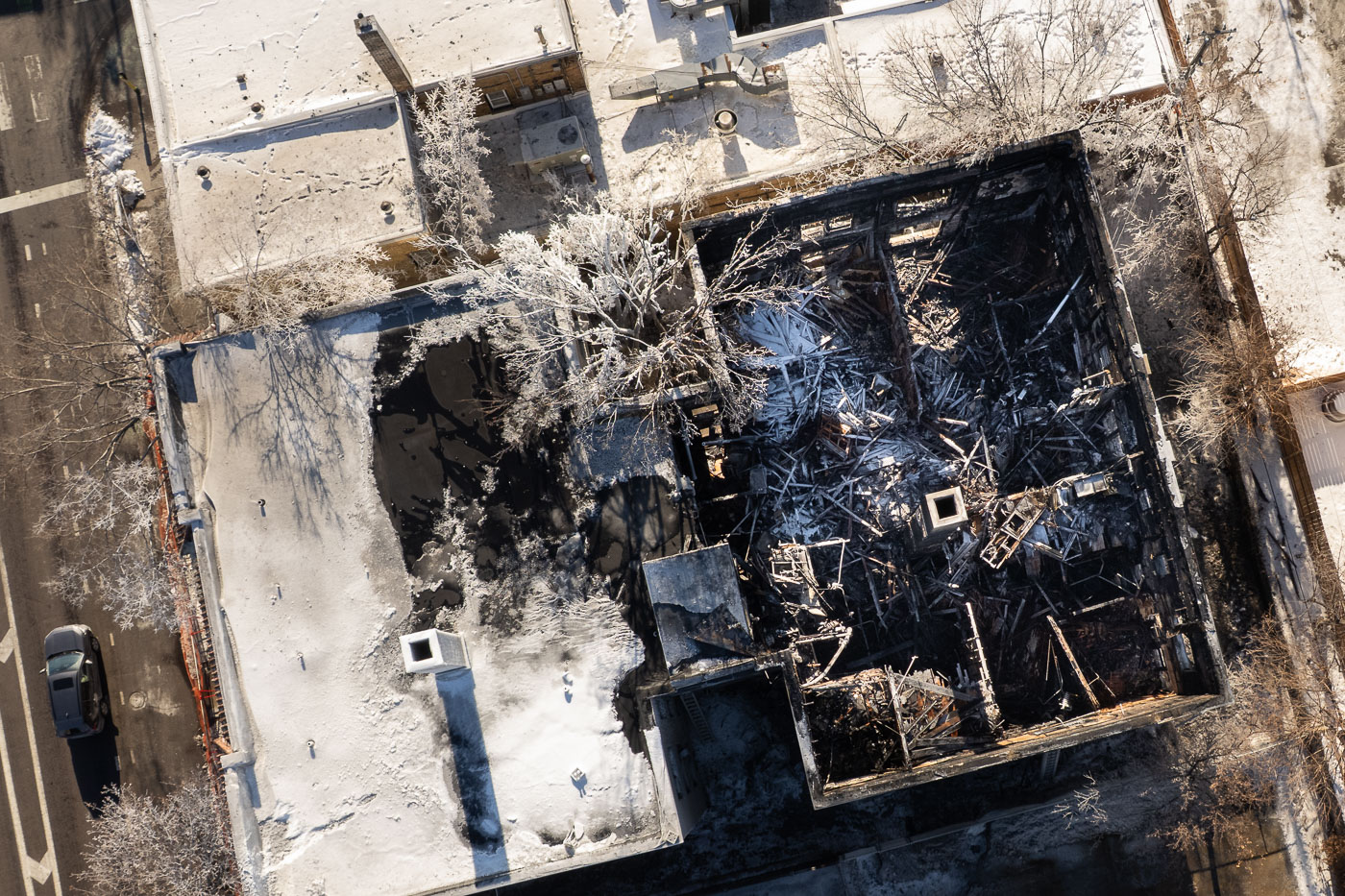
An aerial view shows the charred remains of a vacant apartment building on Lyndale Avenue in Minneapolis the morning after a fire swept through the structure. Snow outlines the building’s footprint and surrounding rooftops, contrasting sharply with the blackened debris and collapsed interior walls. Frozen trees, scorched timbers, and scattered structural fragments highlight both the intensity of the blaze and the rapid onset of winter conditions that followed.
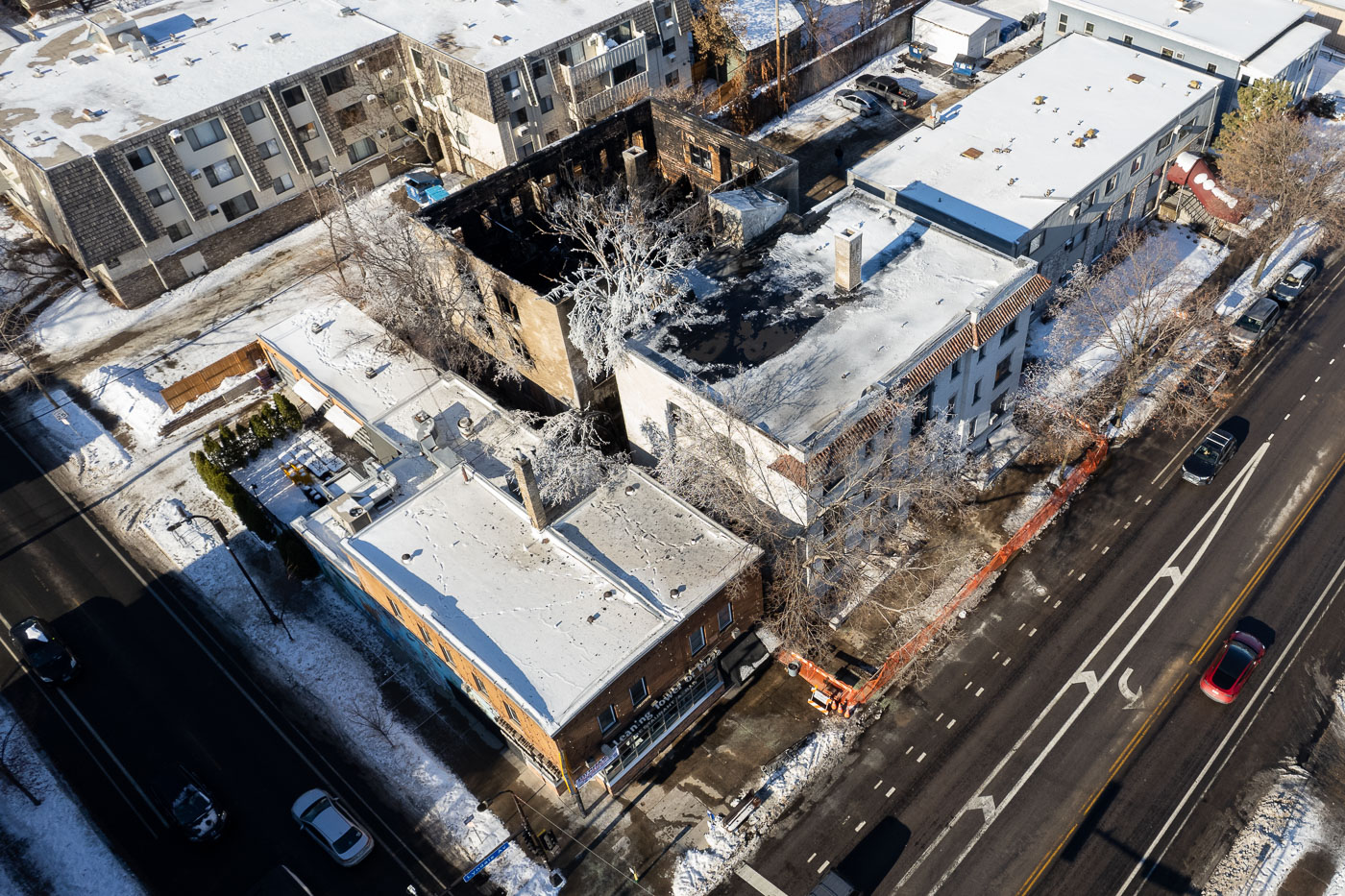
An overhead view of the fire-damaged apartment building along Lyndale Avenue in Minneapolis, photographed the day after the blaze. The structure’s interior is completely burned out, with only the exterior walls still standing. Surrounding rooftops and streets are coated in fresh snow, highlighting the stark contrast between the intact neighboring buildings and the charred remains at the center of the block. Temporary fencing and emergency barriers line the sidewalk as crews begin assessing the site in winter conditions.
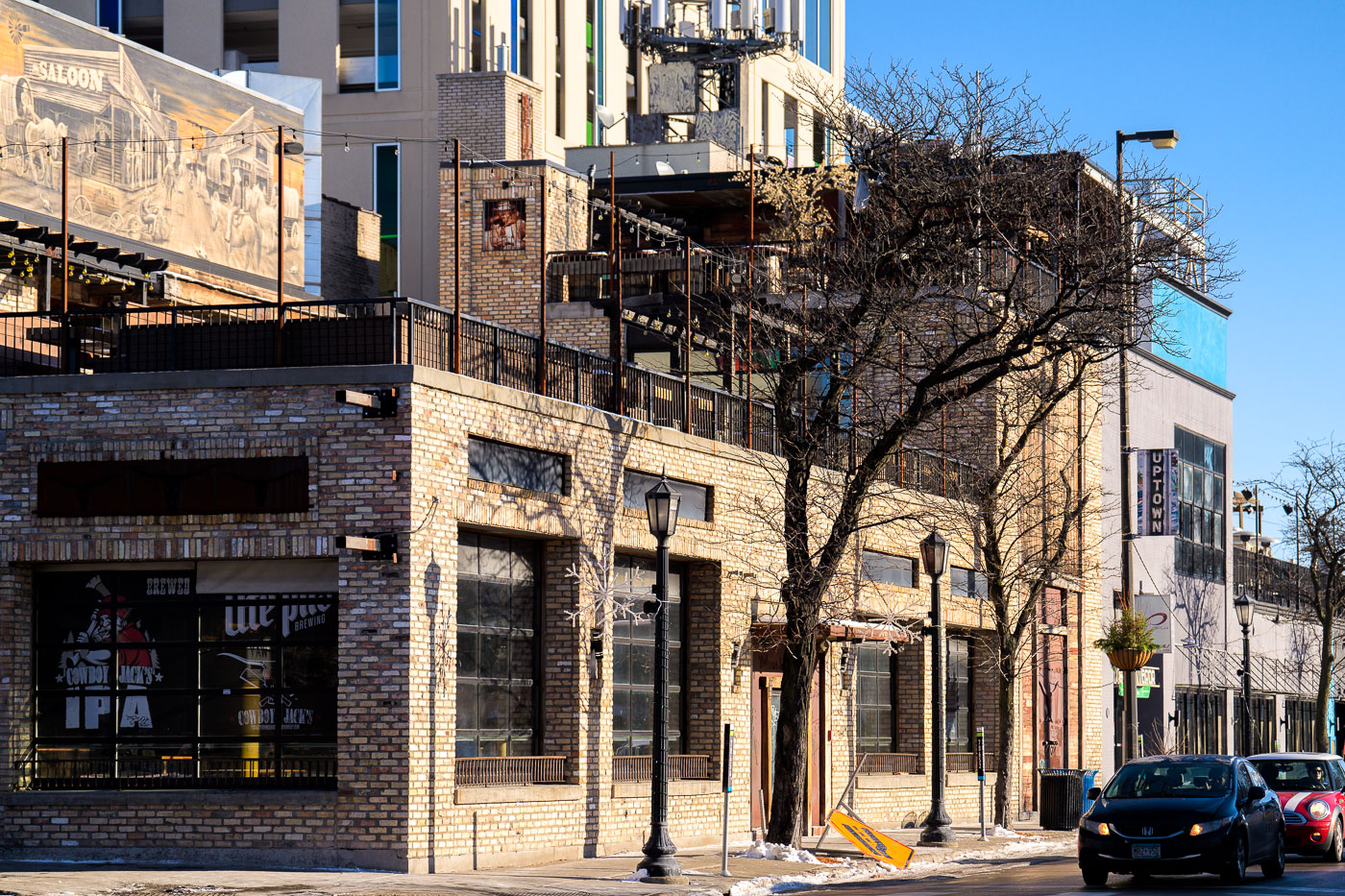
The former Cowboys Slims bar after signage was removed.

A close-up view of a hydraulic excavator’s quick-coupler and demolition attachment during the teardown of the former Southgate Office Tower in Bloomington, Minnesota. The worn steel, hydraulic lines, and layers of dust and debris show the heavy strain placed on equipment during large-scale structural demolition. Piles of shattered concrete, insulation, and twisted metal surrounding the attachment reflect the ongoing dismantling of the mid-century office complex.
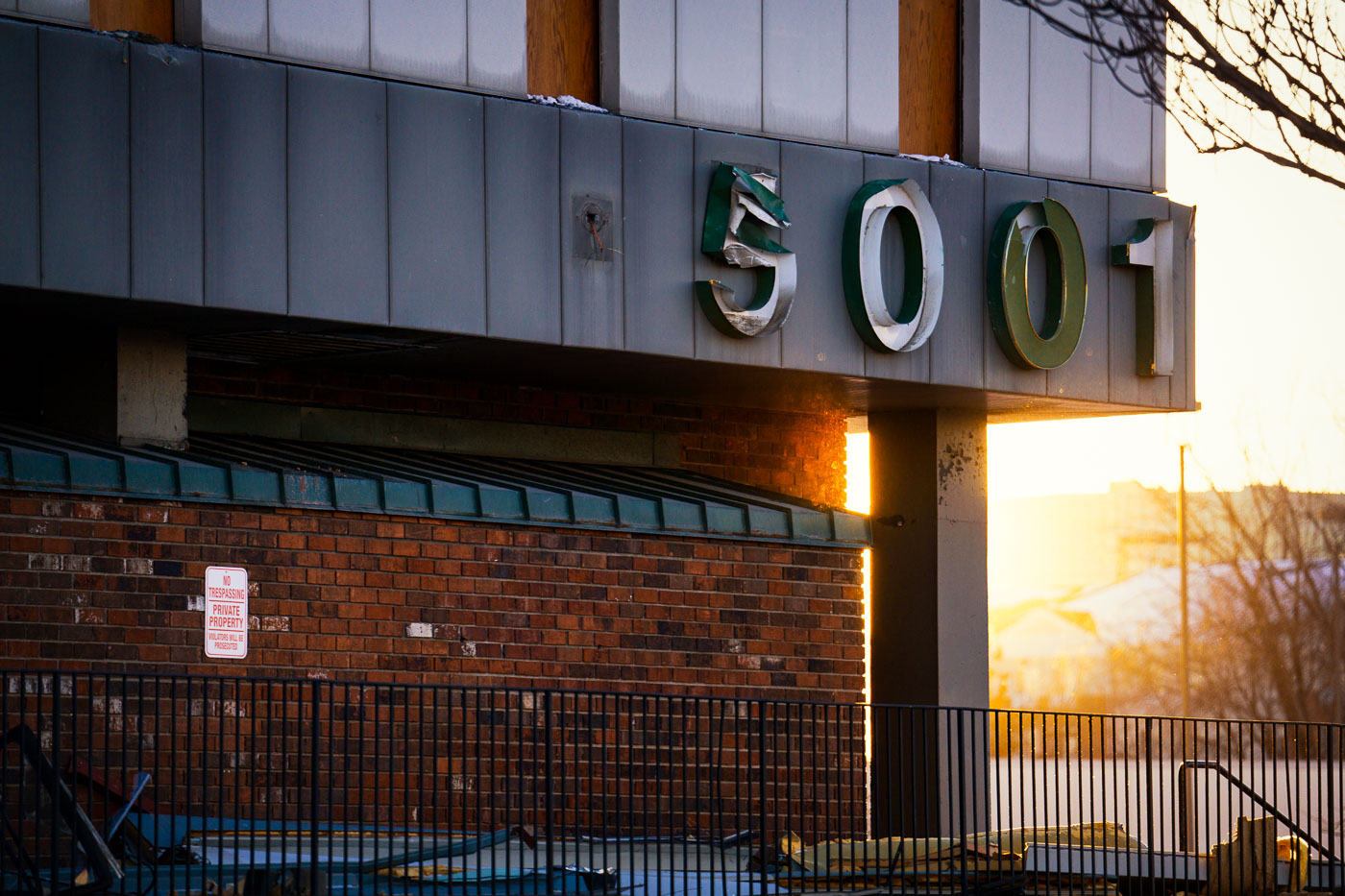
The address numbers 5001 hang damaged and partially peeled from the exterior of the former Southgate Office Tower in Bloomington, Minnesota. Shot during the late-afternoon winter light, the sign shows the wear of a building already deep into demolition. The brick façade, fencing, and scattered debris reflect the final stages of teardown at the long-vacant 1960s-era tower that once stood near I-494 and Portland Avenue.
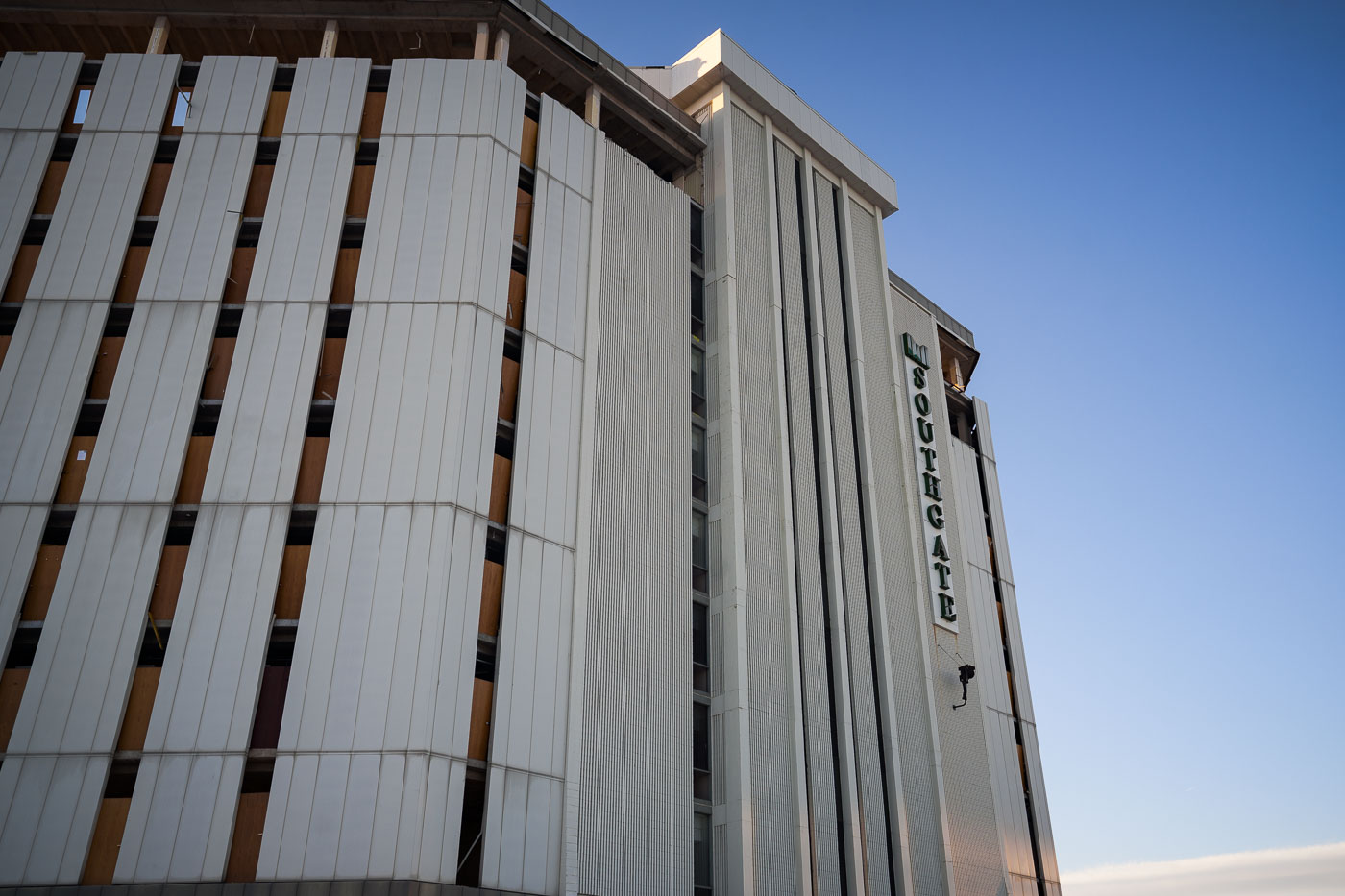
The Southgate Office Tower in Bloomington, Minnesota, stands with its vertical concrete panels and boarded-up windows in the final weeks before demolition. Built in the 1960s as part of a broader commercial corridor near I-494 and Portland Avenue, the building had become long vacant by the 2010s. Its distinctive mid-century façade—once a recognizable landmark for drivers on the interstate—shows stripped interiors and exposed structural elements as crews prepare the site for redevelopment.
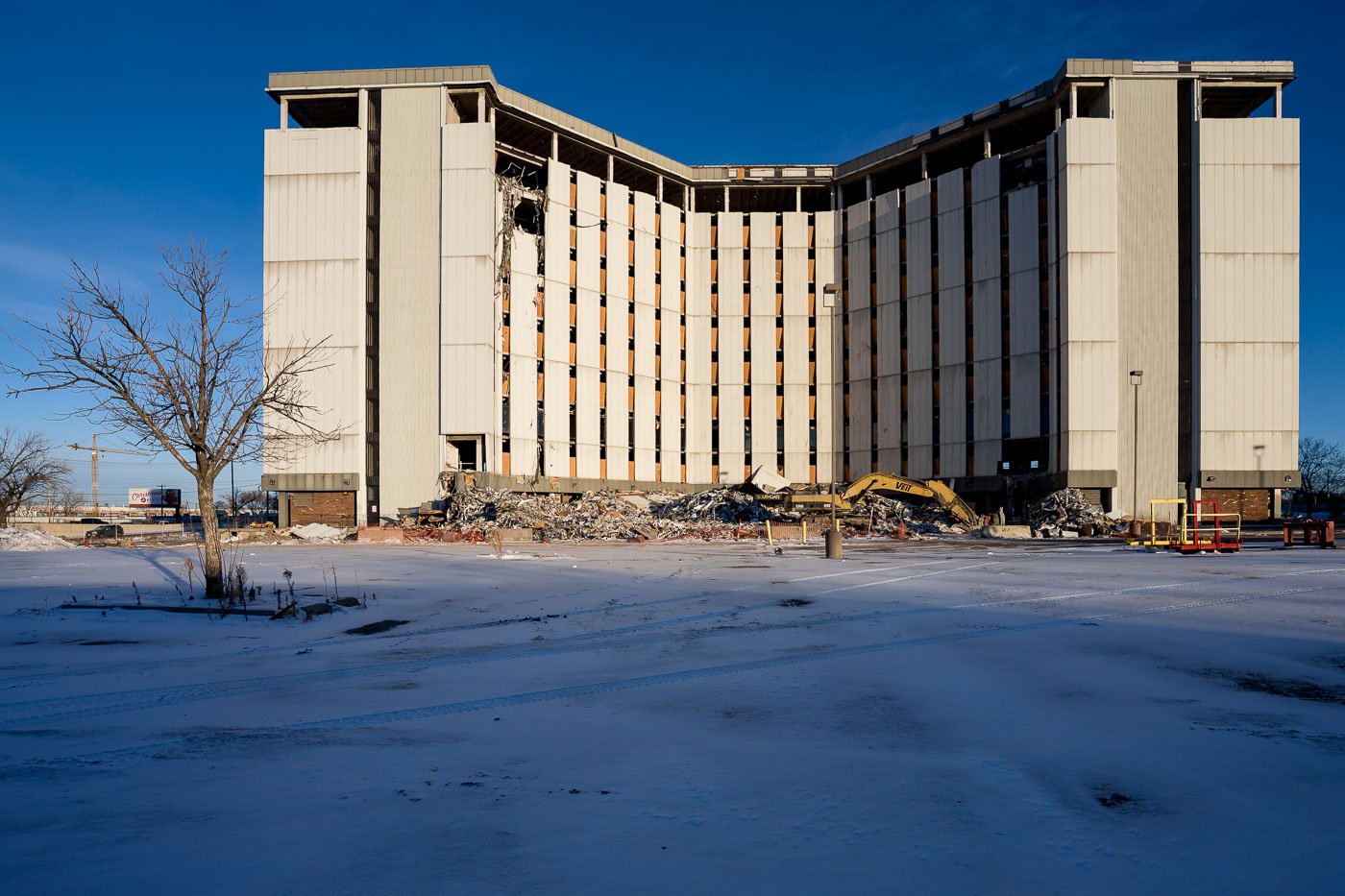
A partially dismantled mid-century office tower stands open to the winter light in Bloomington, Minnesota, as demolition crews continue taking down the long-vacant structure. The building’s exposed interior and collapsed debris field reflect the broader wave of suburban redevelopment that has reshaped commercial corridors near I-494 and the Minneapolis–St. Paul International Airport. Heavy equipment rests at the base of the tower, marking another step in clearing the site for future use amid changing regional land-use patterns.
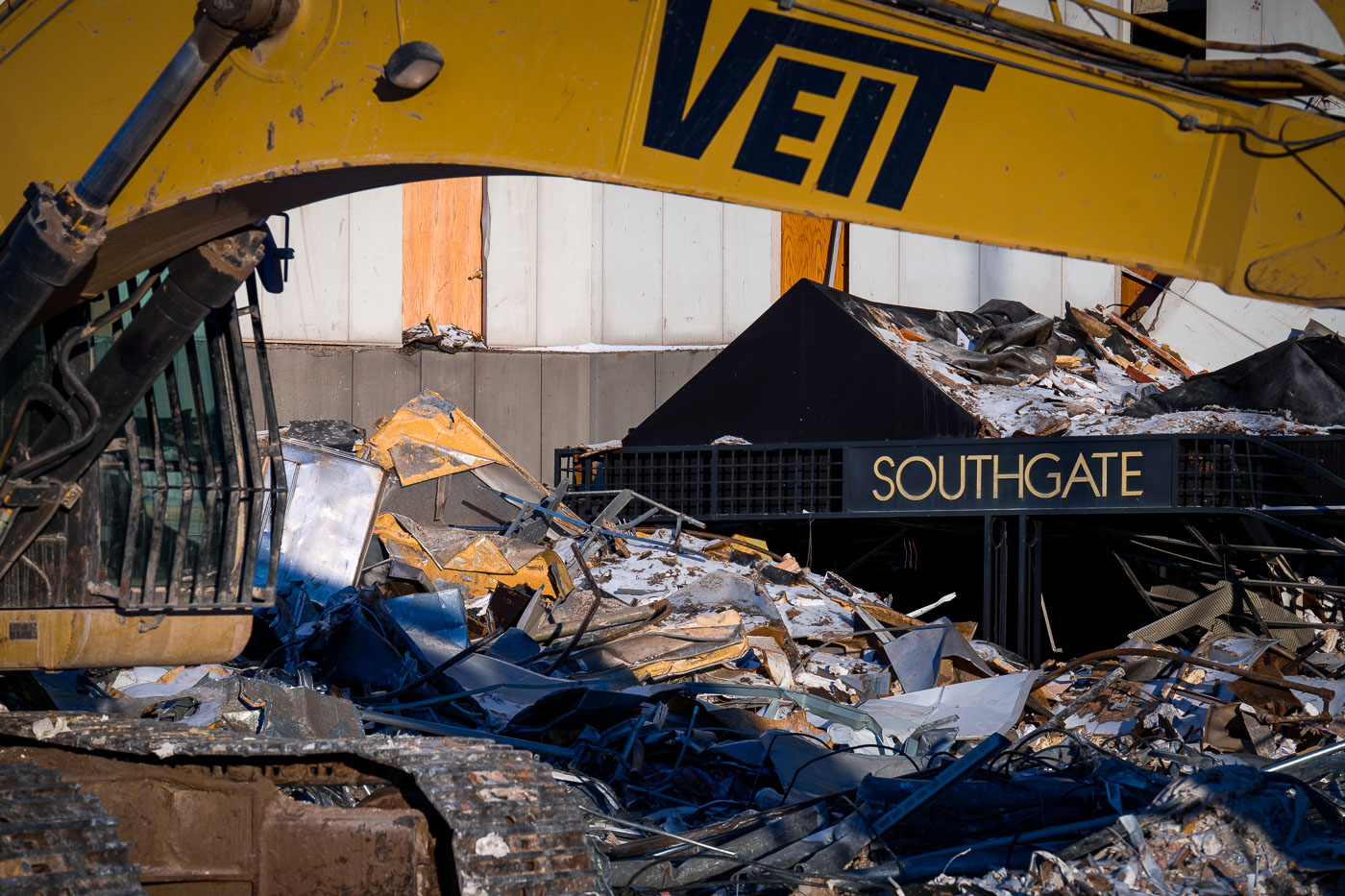
Construction equipment and twisted debris surround the former Southgate entrance canopy as crews continue dismantling the long-vacant tower near I-494 in Bloomington, Minnesota. The Southgate complex, once part of a mid-century office corridor, is being cleared after years of declining occupancy, making way for new redevelopment in one of the metro’s busiest commercial zones. The exposed framework and scattered metal panels highlight the final stages of the structure’s removal.
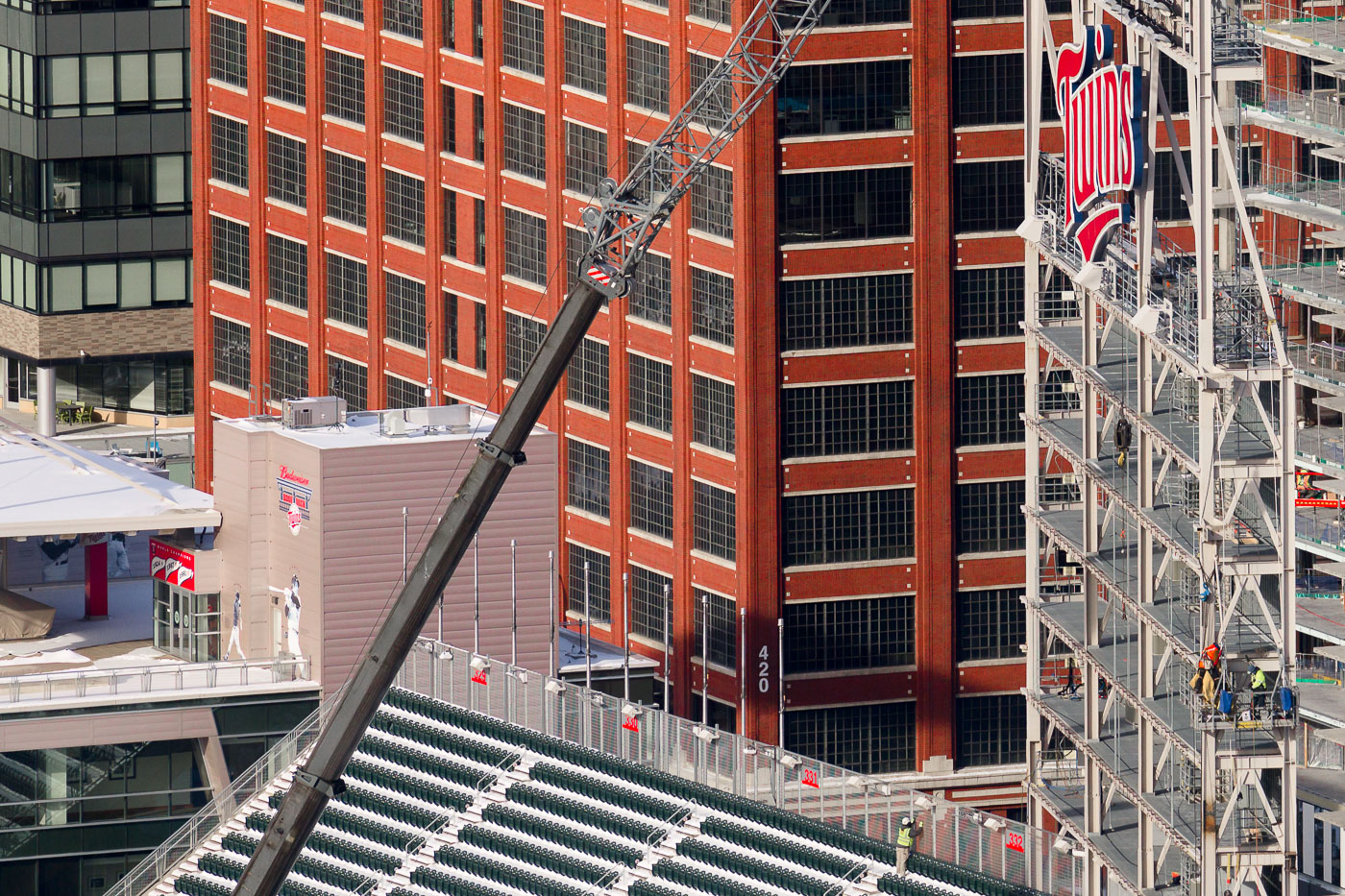
Workers installing a new 76% larger 10,000 square foot LED videoboard at Target Field. @ballparkdigest
says it’ll be the 4th largest video display in Major League Baseball and just the 5th HDR capable board. (Minneapolis, December 2022).
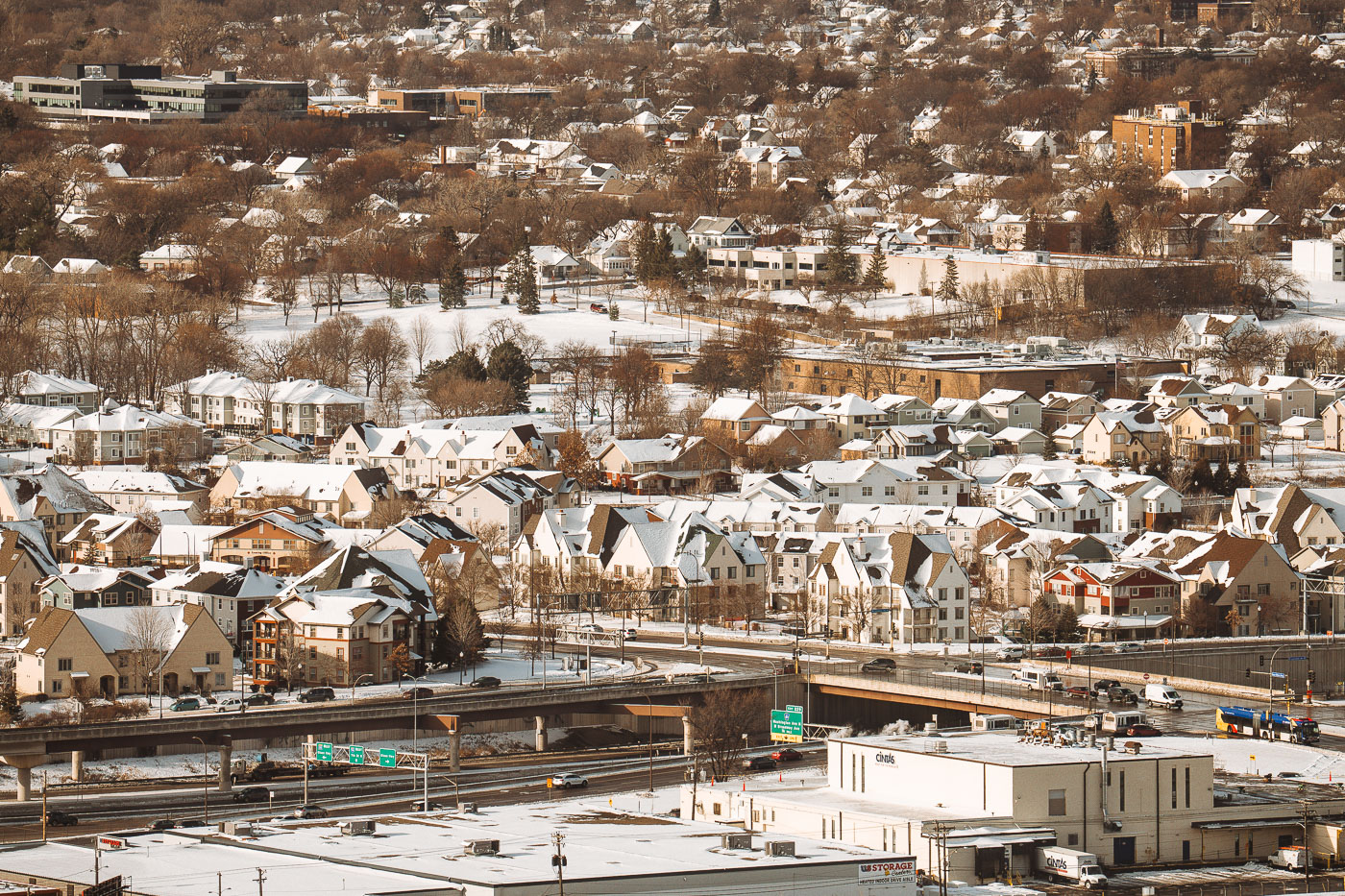
This view looks across the residential neighborhoods bordering Interstate 94 in Minneapolis, an area shaped heavily by mid-20th-century highway construction. When I-94 was built between the 1950s and early 1970s, it cut through several established communities—including parts of Cedar-Riverside, Seward, and Phillips—reshaping street grids, housing patterns, and long-standing cultural districts. The snow-covered homes clustered above the highway reflect a mix of older housing stock and later infill development that emerged after the corridor was completed. The elevated ramps and interchanges shown here connect local streets to one of the region’s primary east–west routes, linking downtown Minneapolis with St. Paul and the wider interstate system.
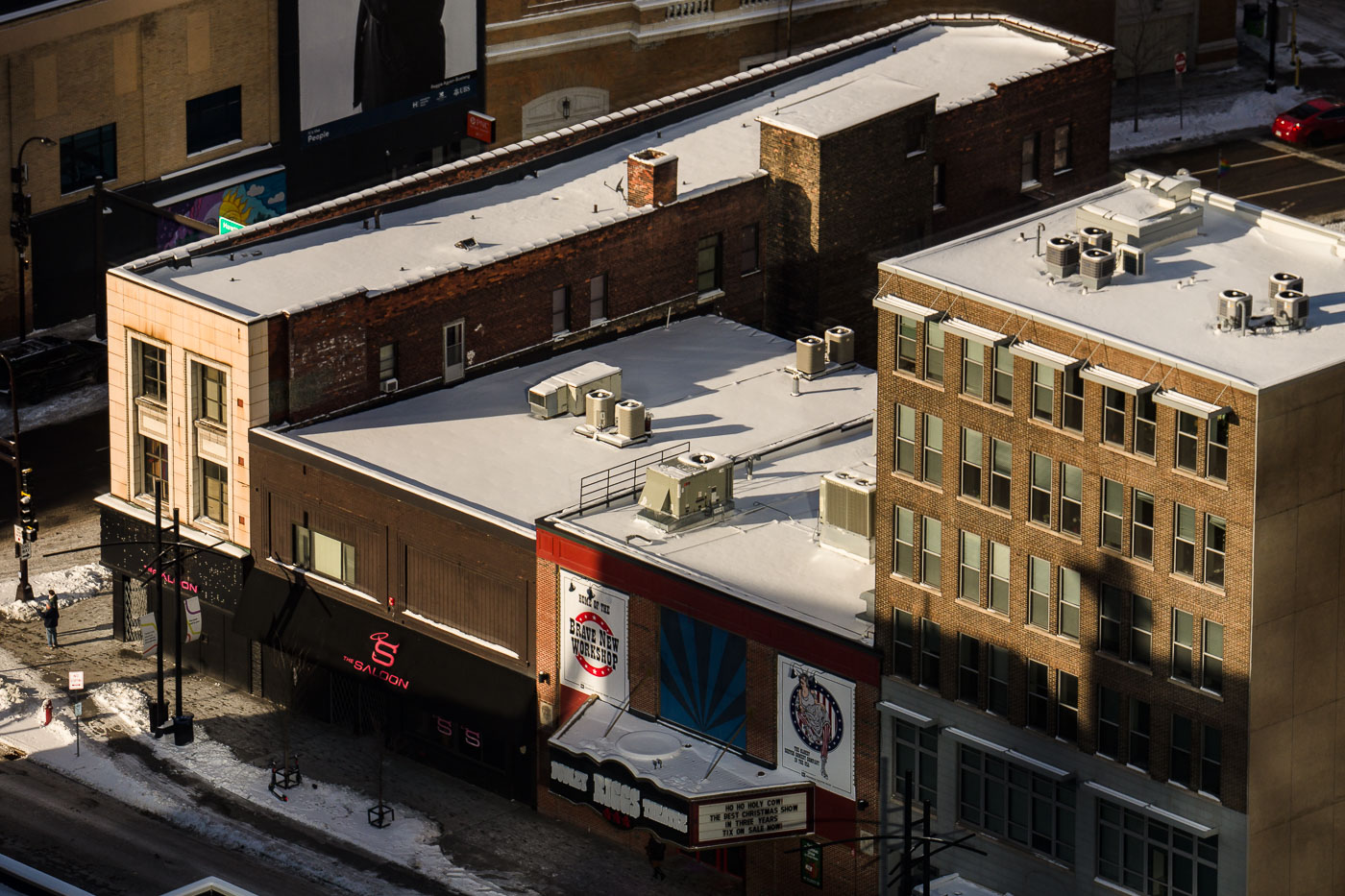
The Saloon and Brave New Workshop on Hennepin Avenue in downtown Minneapolis.