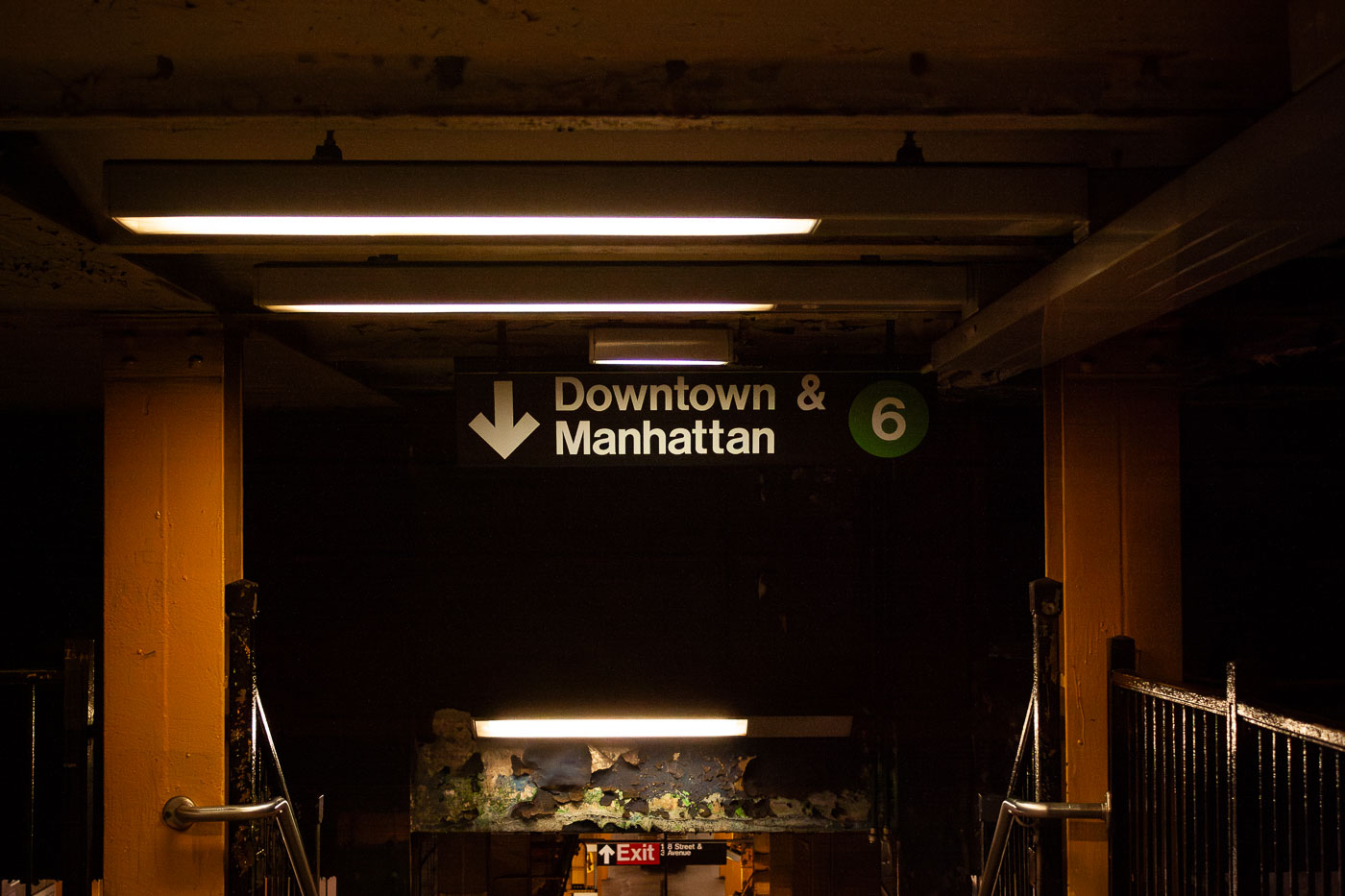
Signage for the downtown-bound 6 Train to Manhattan at a New York City Subway station, indicating the platform and exit.

6 Train Entrance to Downtown Manhattan

Dimly lit by overhead fluorescent lights, this photograph captures the entrance to the downtown-bound 6 train platform in the New York City Subway system. The black-and-white directional sign with the green circle route marker is part of the MTA’s standardized Helvetica signage, directing riders toward Manhattan. The scene’s warm tones from aged steel columns and peeling paint reveal the enduring character of New York’s century-old transit infrastructure — a utilitarian design that continues to serve millions of daily commuters. In the background, the red exit sign points toward street level, where the pulse of the city resumes above ground.
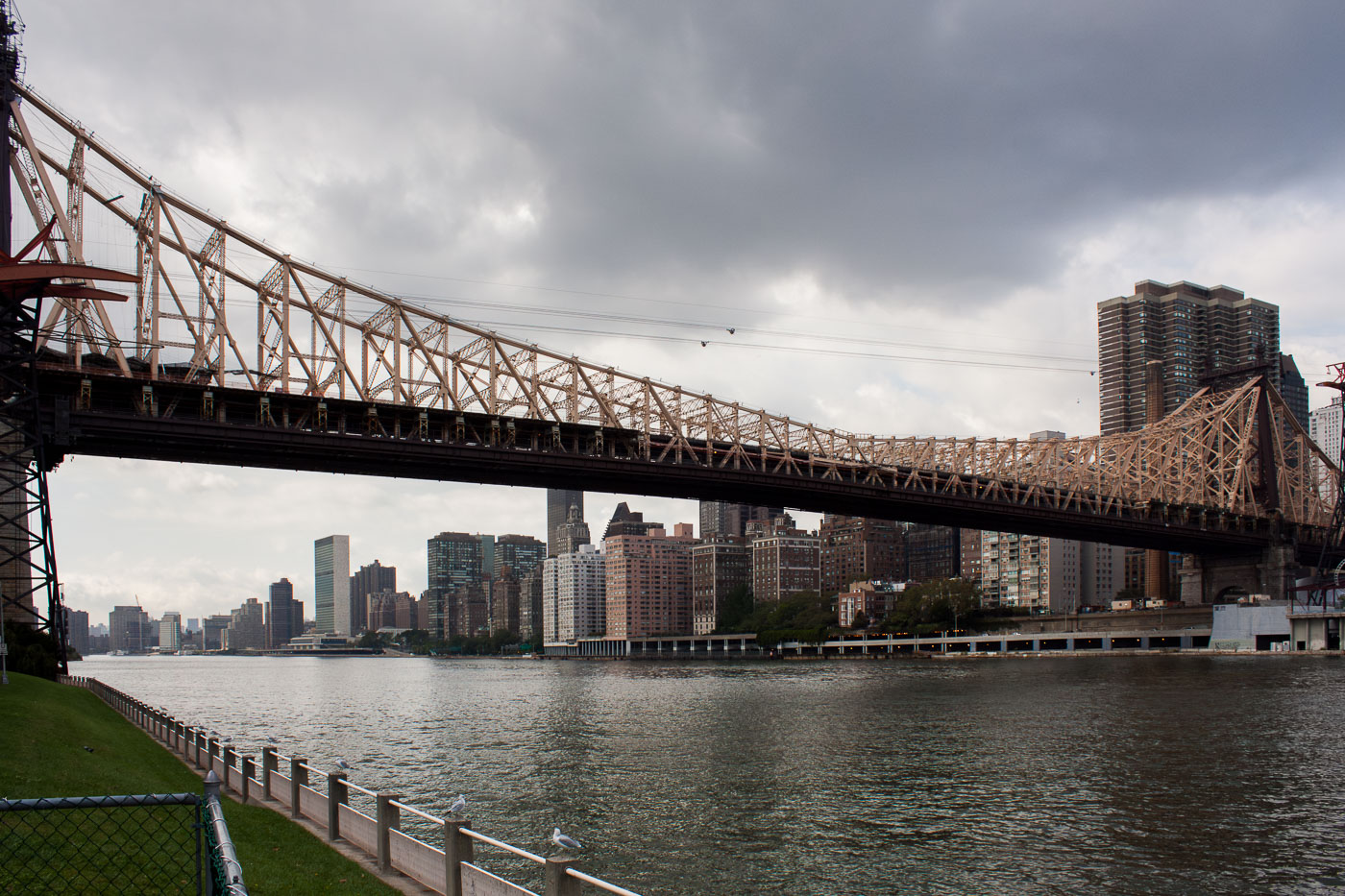
The Ed Koch Queensboro Bridge spans the East River in New York City, with Manhattan buildings in the background.

Ed Koch Queensboro Bridge, East River NYC

The Ed Koch Queensboro Bridge, spanning the East River between Manhattan and Queens, is captured here under an overcast sky from Roosevelt Island. Completed in 1909, this double-deck cantilever bridge remains one of New York City’s most significant engineering landmarks, carrying both vehicular and pedestrian traffic while offering a vital connection between Midtown Manhattan and Long Island City. Above the roadway, the Roosevelt Island Tram cables can be seen tracing parallel to the structure — a modern counterpart to this early 20th-century feat of steelwork. The muted light of the cloudy day accentuates the warm tones of the bridge’s framework against the cool gray skyline of Manhattan.

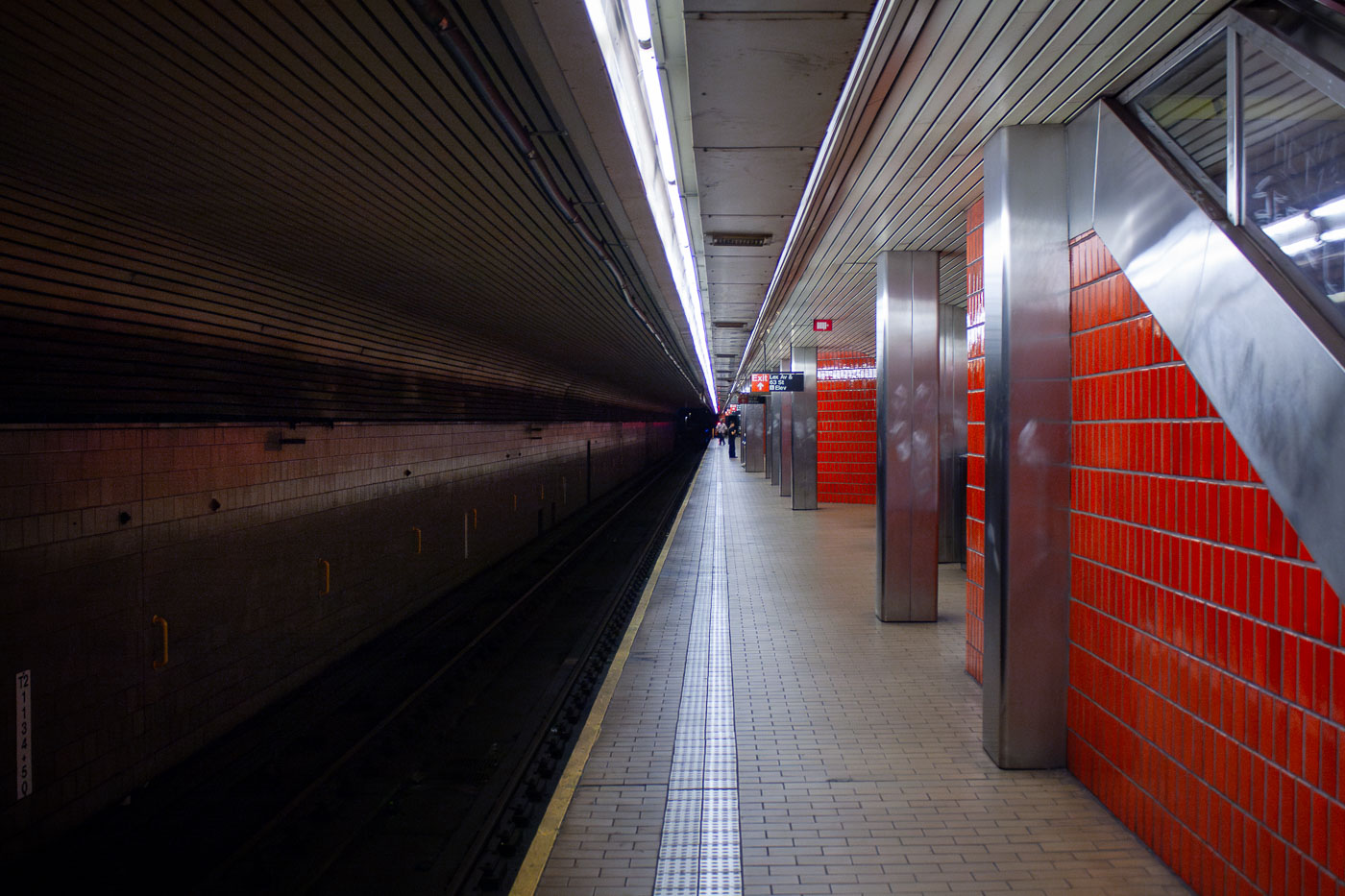
The Lexington Avenue–63rd Street subway station platform in New York City, serving the F and Q trains, features red tiled walls and a long central platform.

Lexington Ave–63rd St Station Platform, NYC Subway

The Lexington Avenue–63rd Street station in Manhattan, part of the IND and BMT lines of the New York City Subway, is shown here in its distinctive red-tiled design. Opened in 1989 as part of the 63rd Street Tunnel project, the station serves the F and Q trains, linking the Upper East Side to Queens and the Second Avenue Subway. Its sharply linear geometry and long central platform exemplify late-20th-century transit architecture, emphasizing function and durability. The bright red glazed brick walls contrast with the metallic fixtures and fluorescent ceiling strips, creating a visual rhythm typical of New York’s underground infrastructure during the city’s major transit expansion era.

Built in Minneapolis

Photographs showcasing change over time

Browse by location, move through long-running series, or start with recent work.