Protest

1,666 photos · 2008–2026

1,666 photographs tagged Protest, 2008–2026.
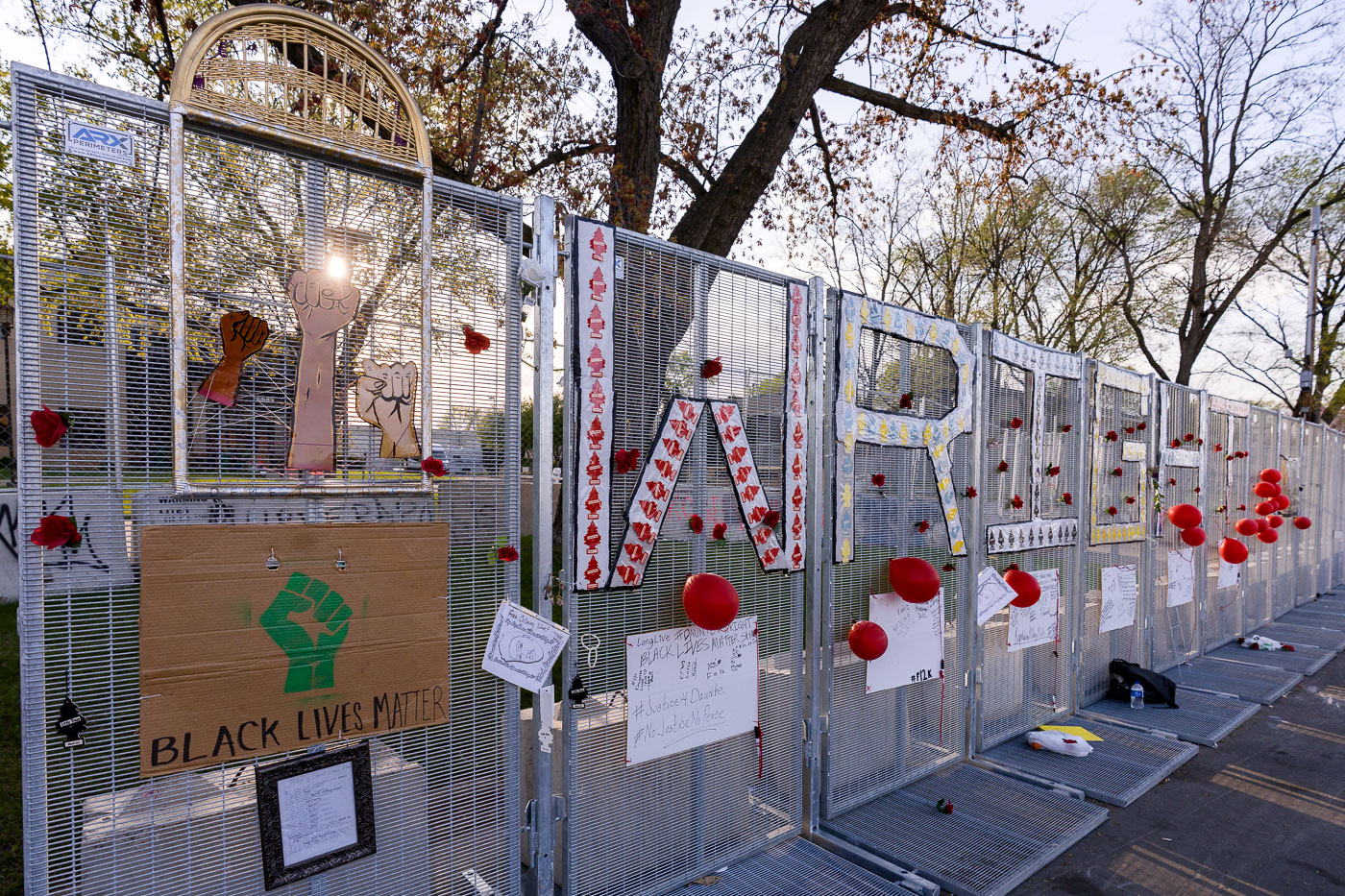
Protest signs around Brooklyn Center police station
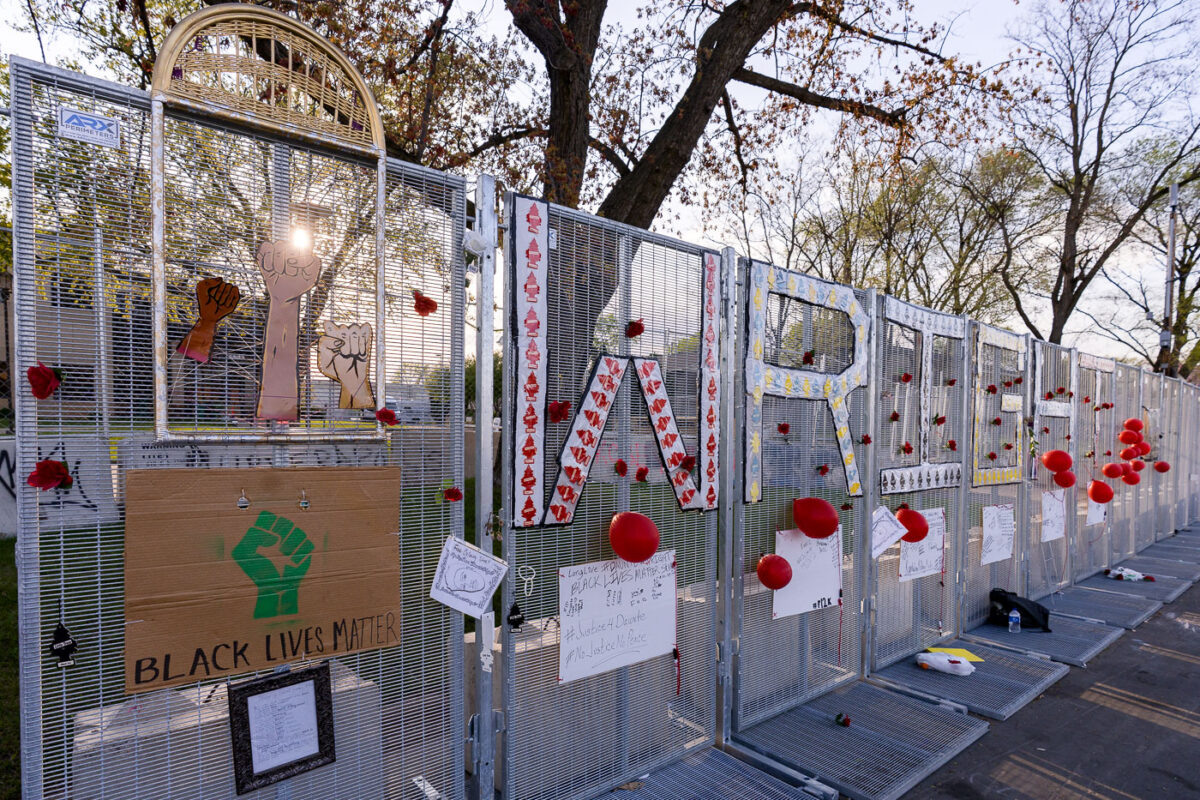
Temporary security fencing surrounds the Brooklyn Center Police Department in Brooklyn Center, Minnesota, following the death of Daunte Wright in April 2021. The fencing, erected to manage crowds and secure the building, became a canvas for public expression.

Brooklyn Center Police Station Fencing with Protest Signs
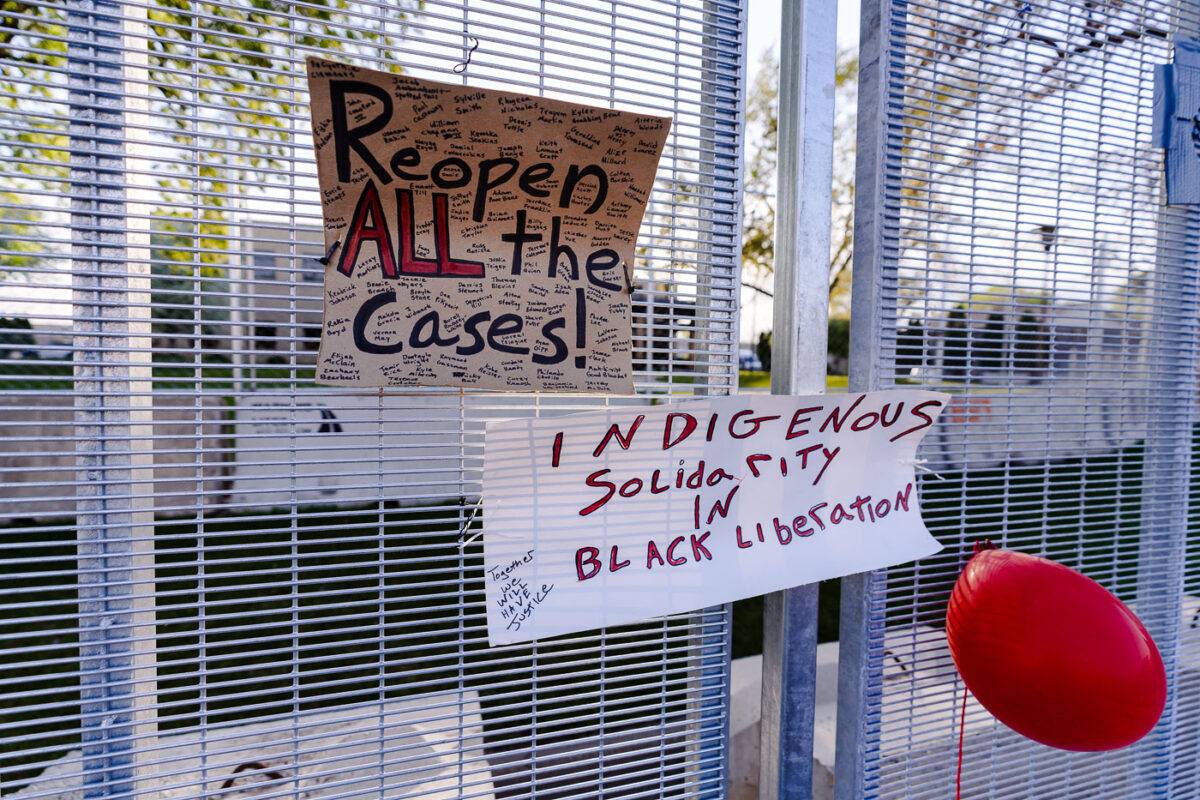
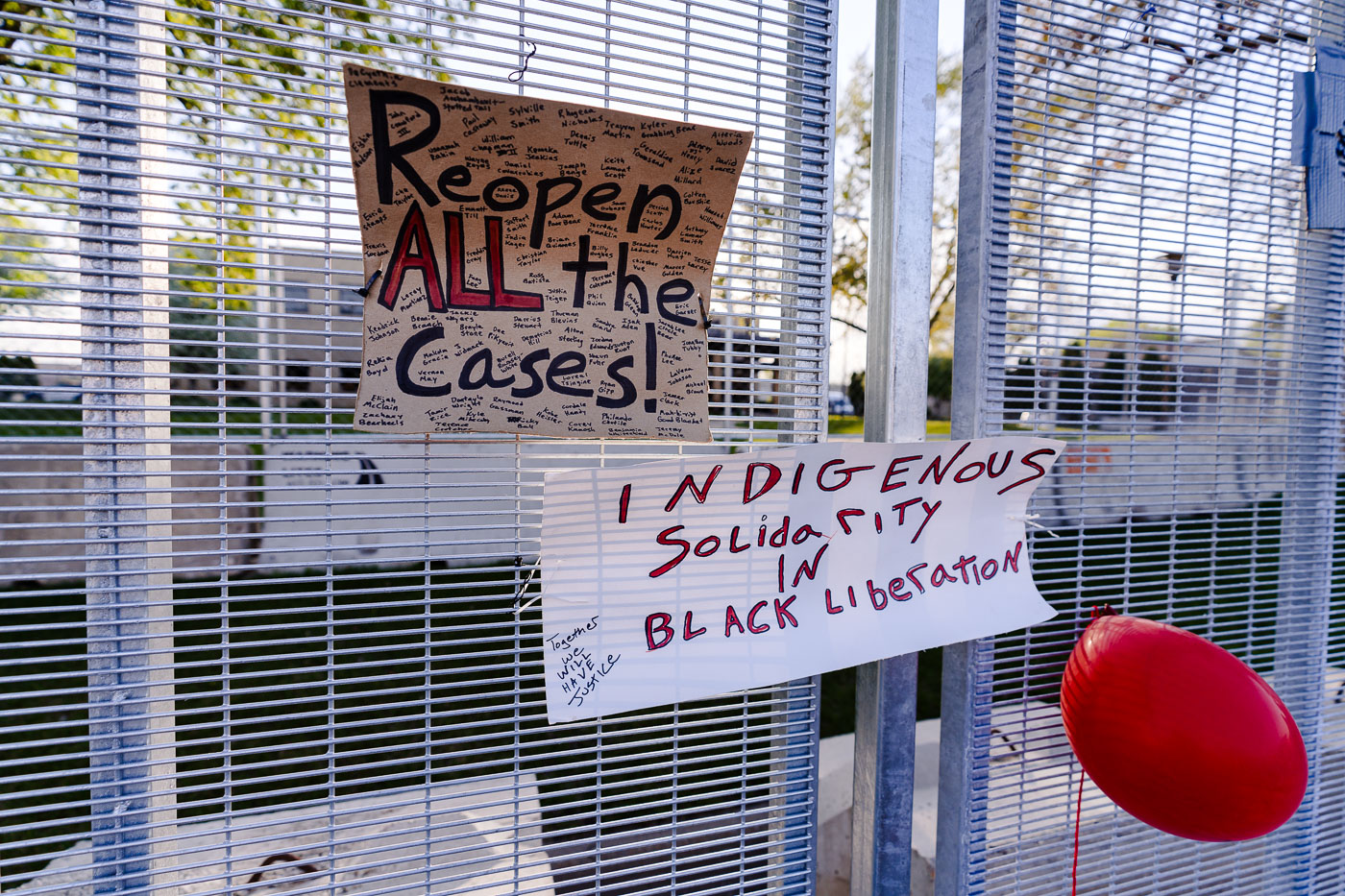
Indigenous Solidarity In Black Liberation protest sign
A sign reading "INDIGENOUS SOLIDARITY IN BLACK LIBERATION" is attached to security fencing outside the Brooklyn Center Police Department. The sign, along with another listing names under the heading "REOPEN ALL THE CASES!", appeared following the death of Daunte Wright.

Indigenous Solidarity in Black Liberation Protest Sign, Brooklyn Center
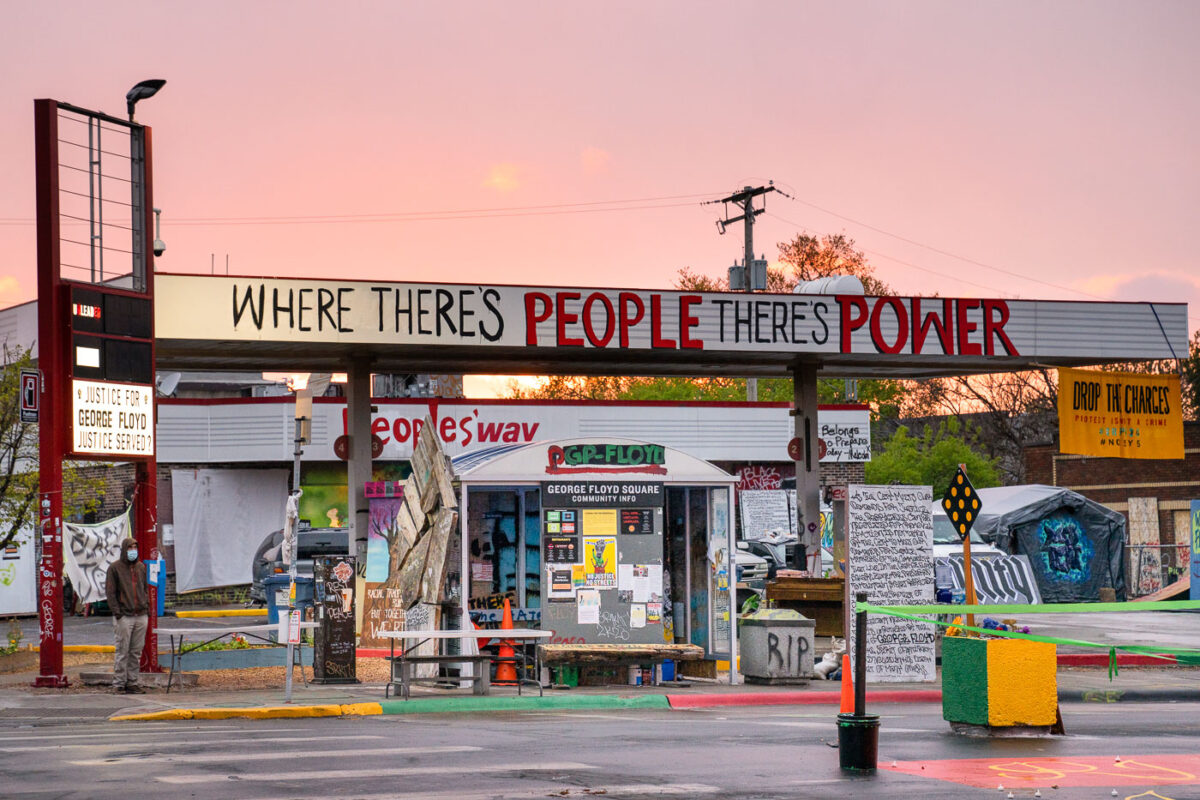
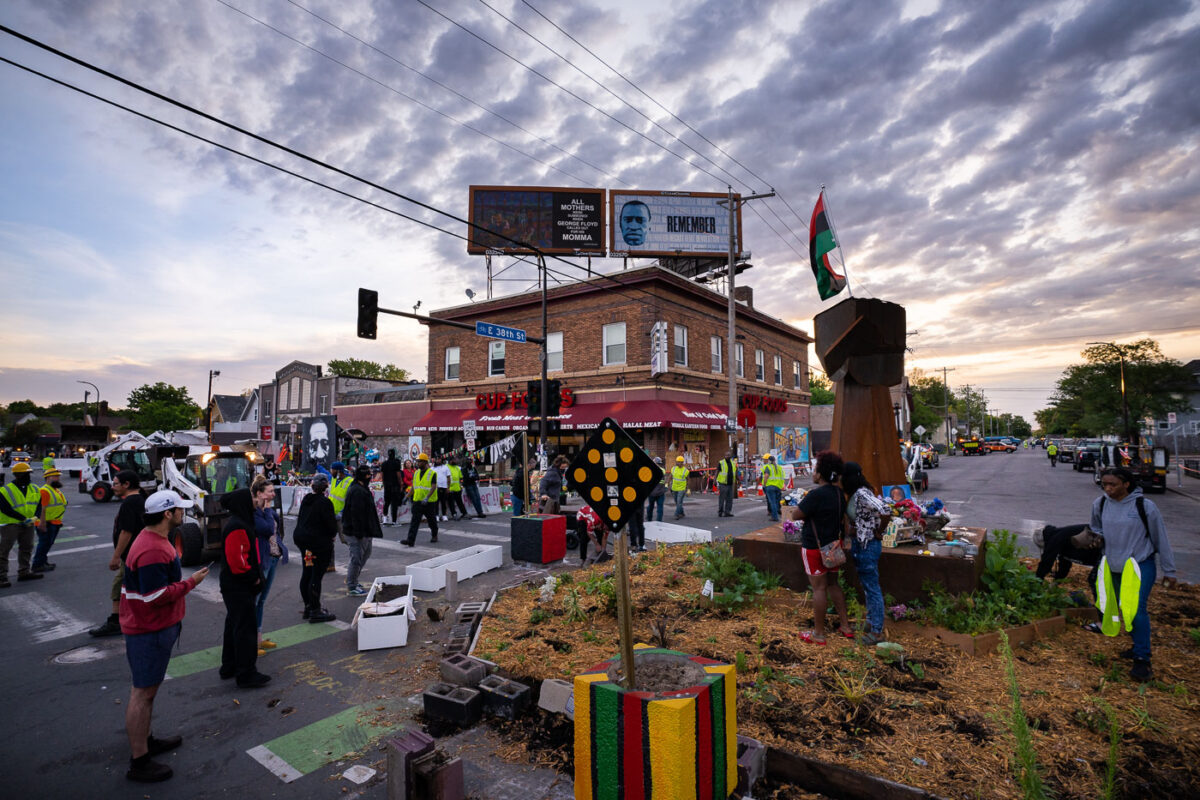
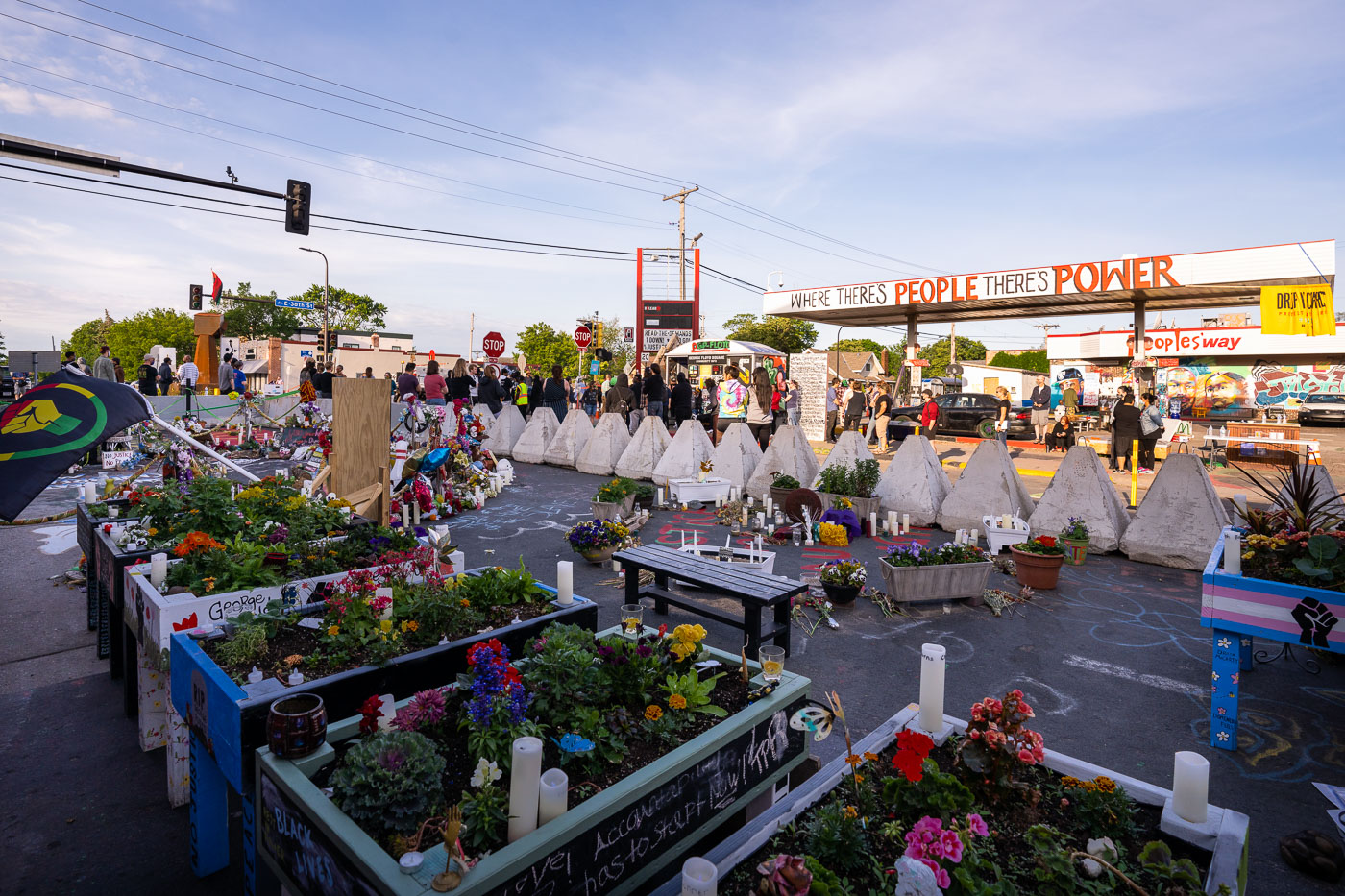
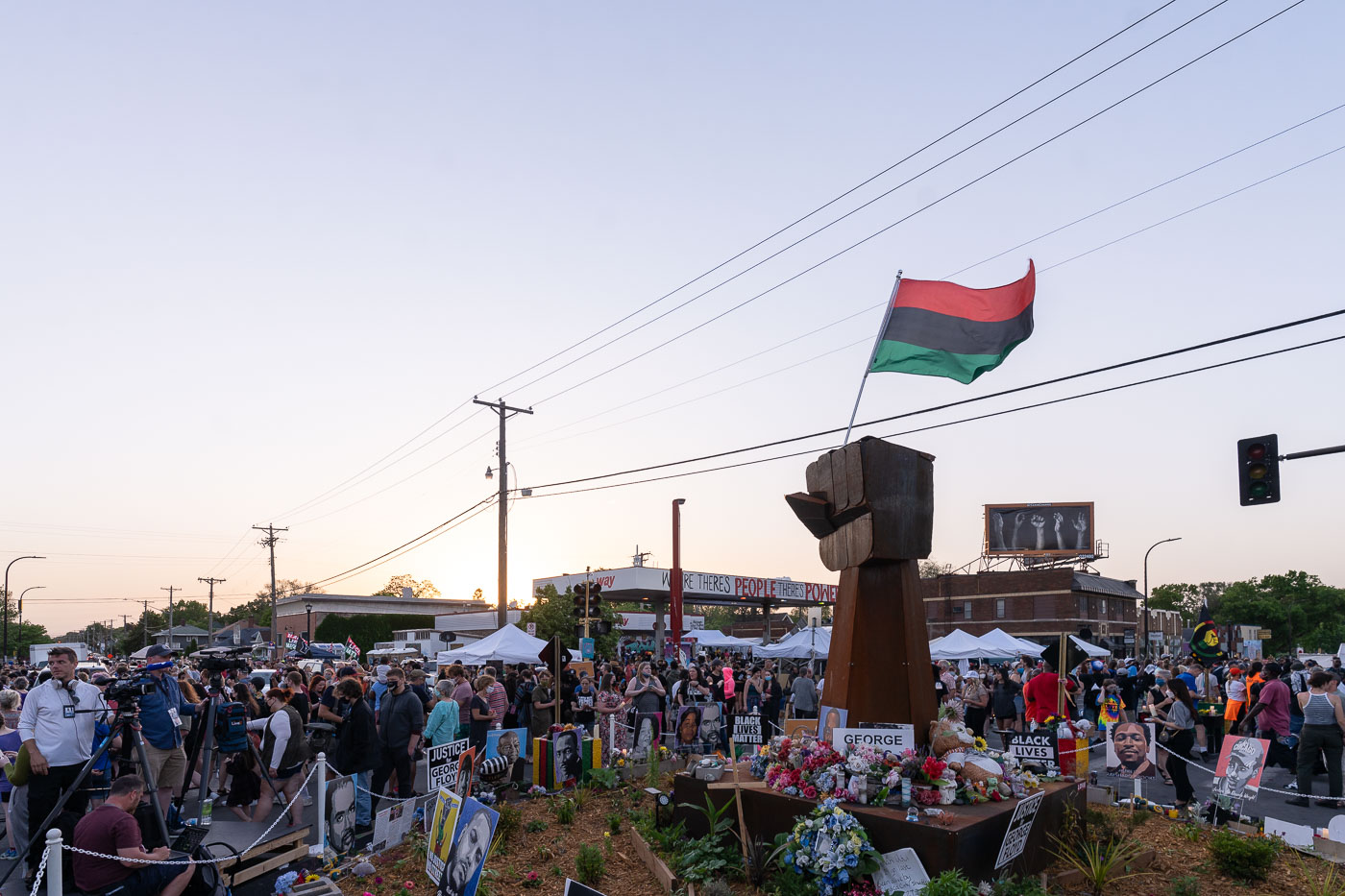
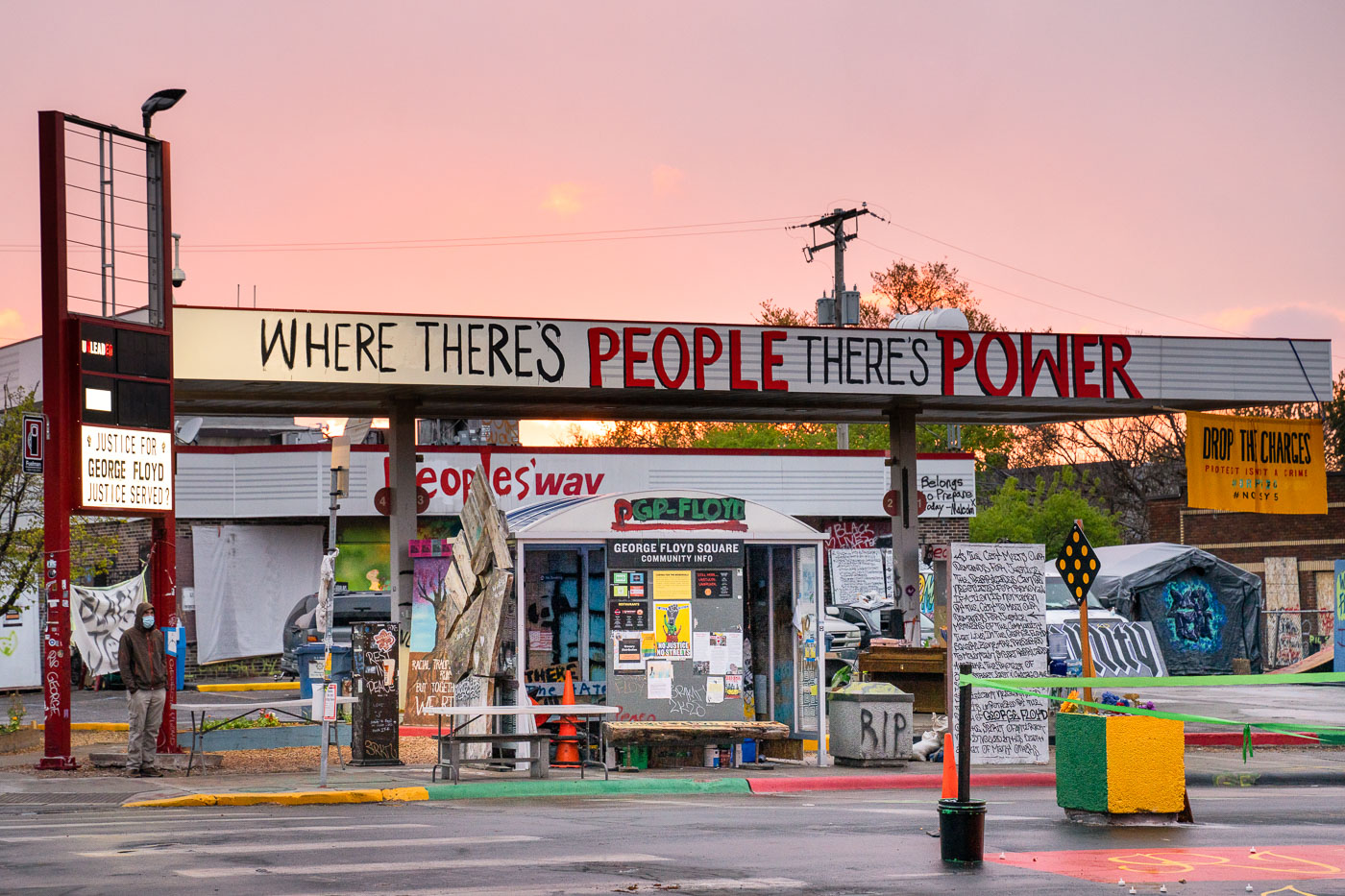
Sun sets behind The Peoples Way at George Floyd Square
The Peoples Way at George Floyd Square in Minneapolis. The area has been a place of protest since the May 2020 killing of George Floyd by Minneapolis Police officers.

George Floyd Square at Sunset, Minneapolis
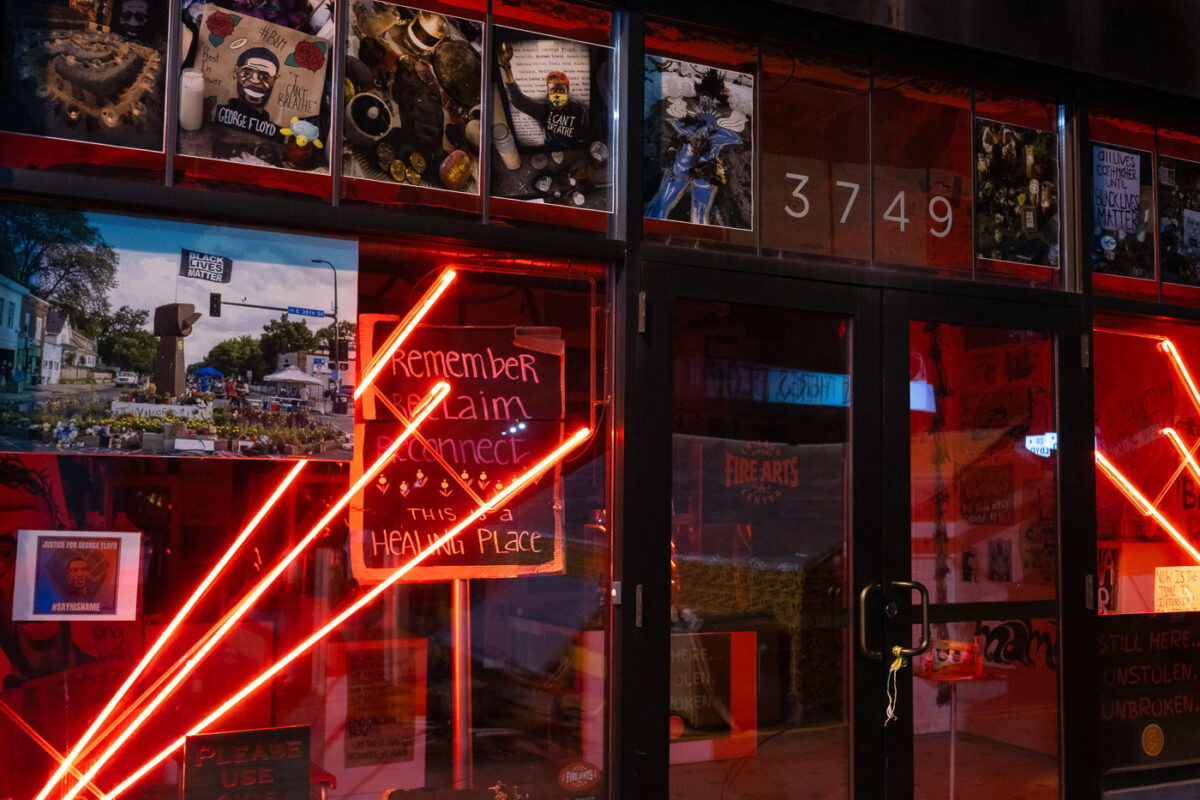
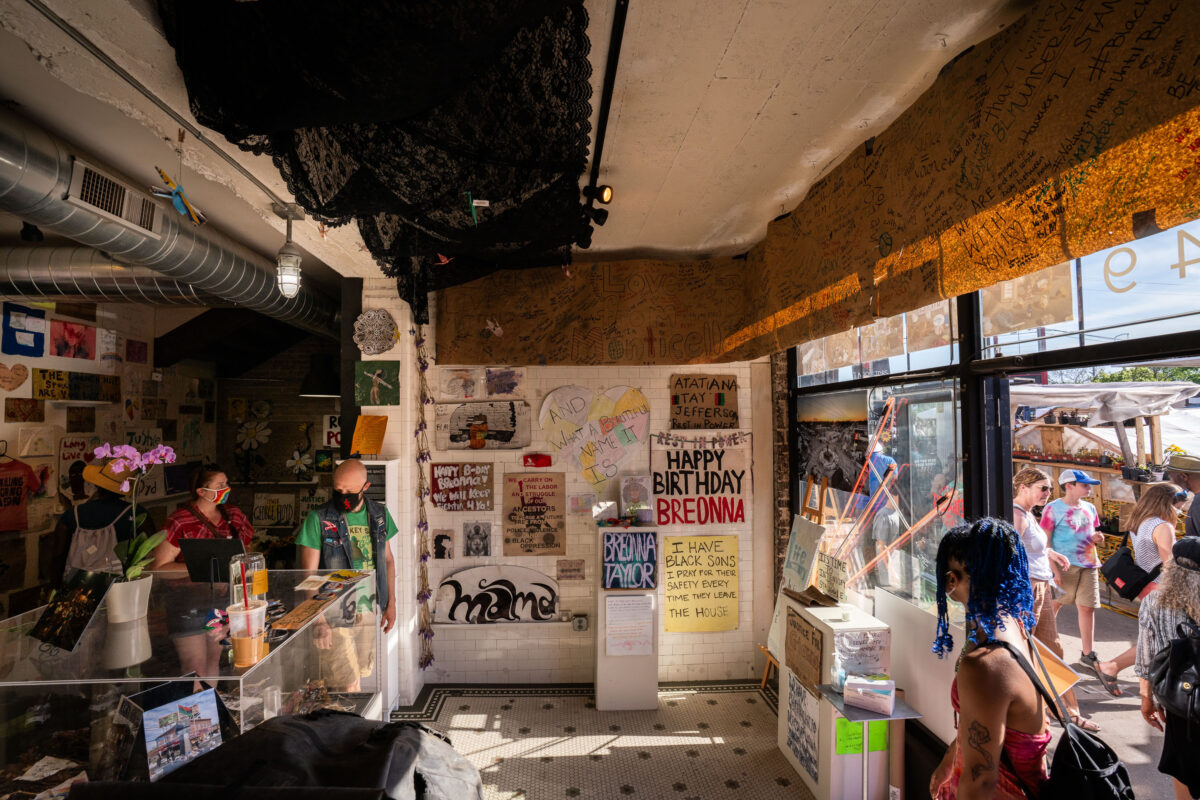
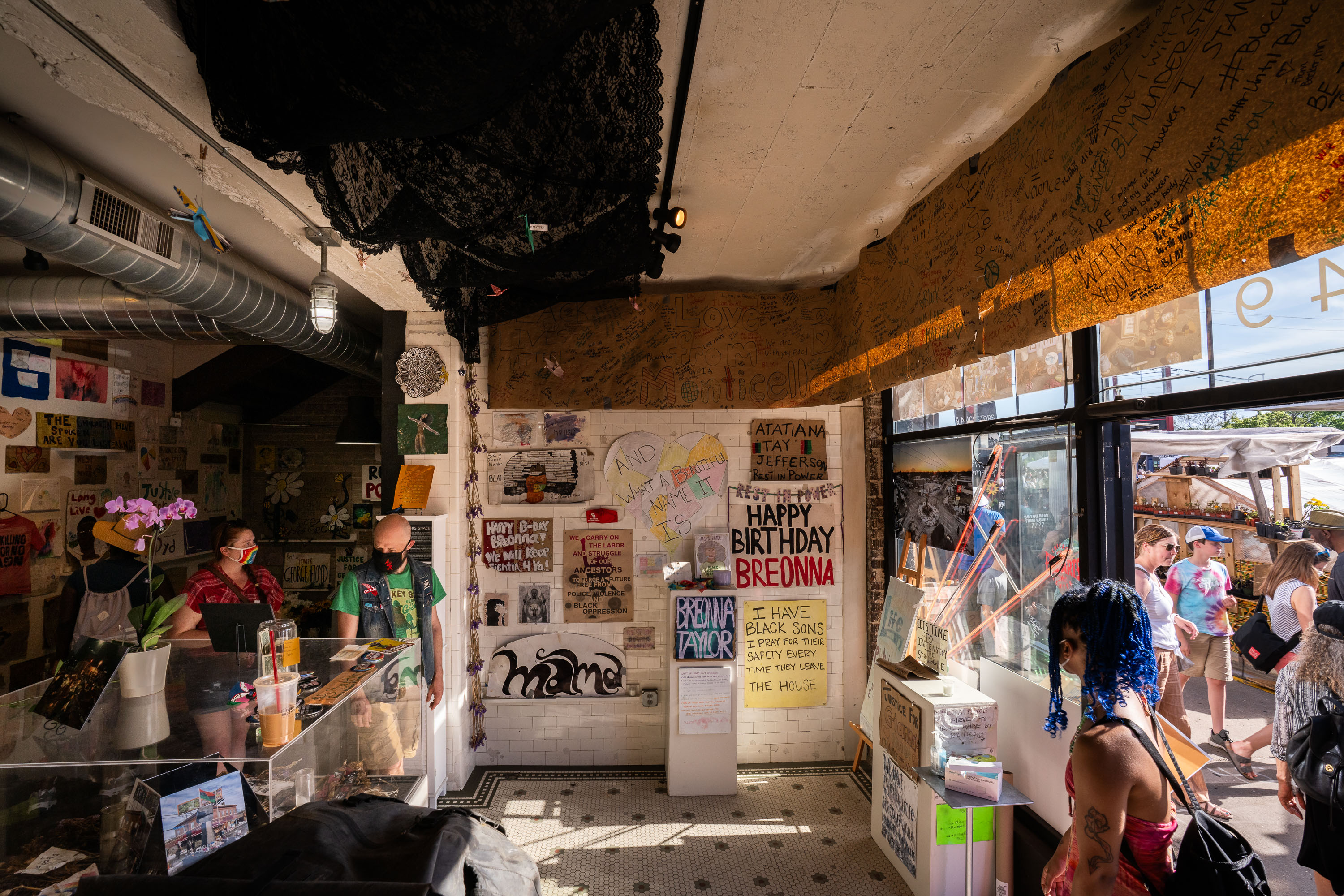
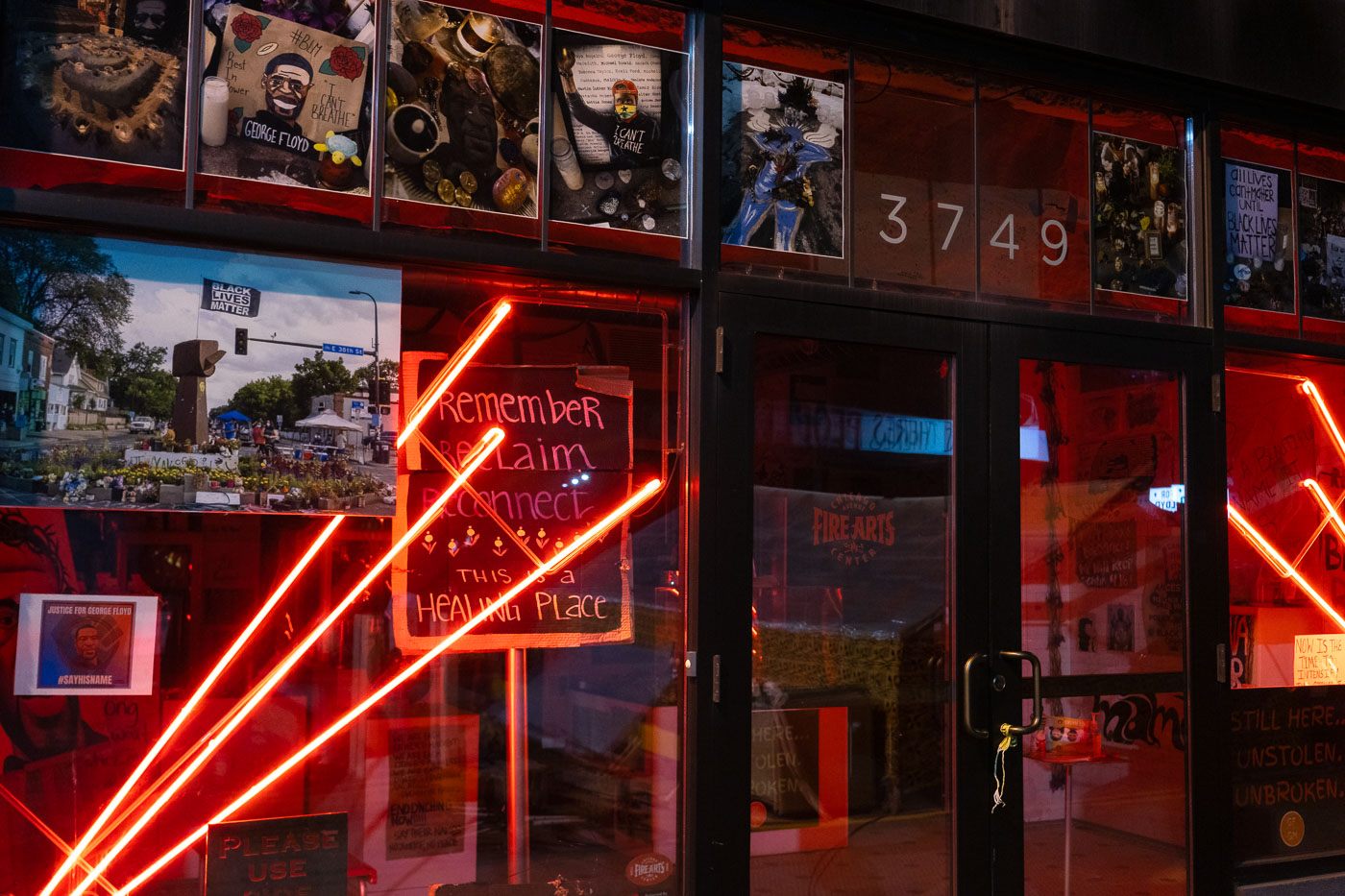
Fire Arts Center in George Floyd Square in May 2021
The Fire Arts Center, located at 3749 Chicago Avenue in South Minneapolis, became a focal point for community expression following the murder of George Floyd in 2020. The center's storefront displays tributes and messages related to the Black Lives Matter movement and the ongoing fight for justice. The surrounding area, known as George Floyd Square, transformed into a memorial and gathering space, reflecting the community's response to racial injustice and police brutality.

Fire Arts Center at George Floyd Square, Minneapolis
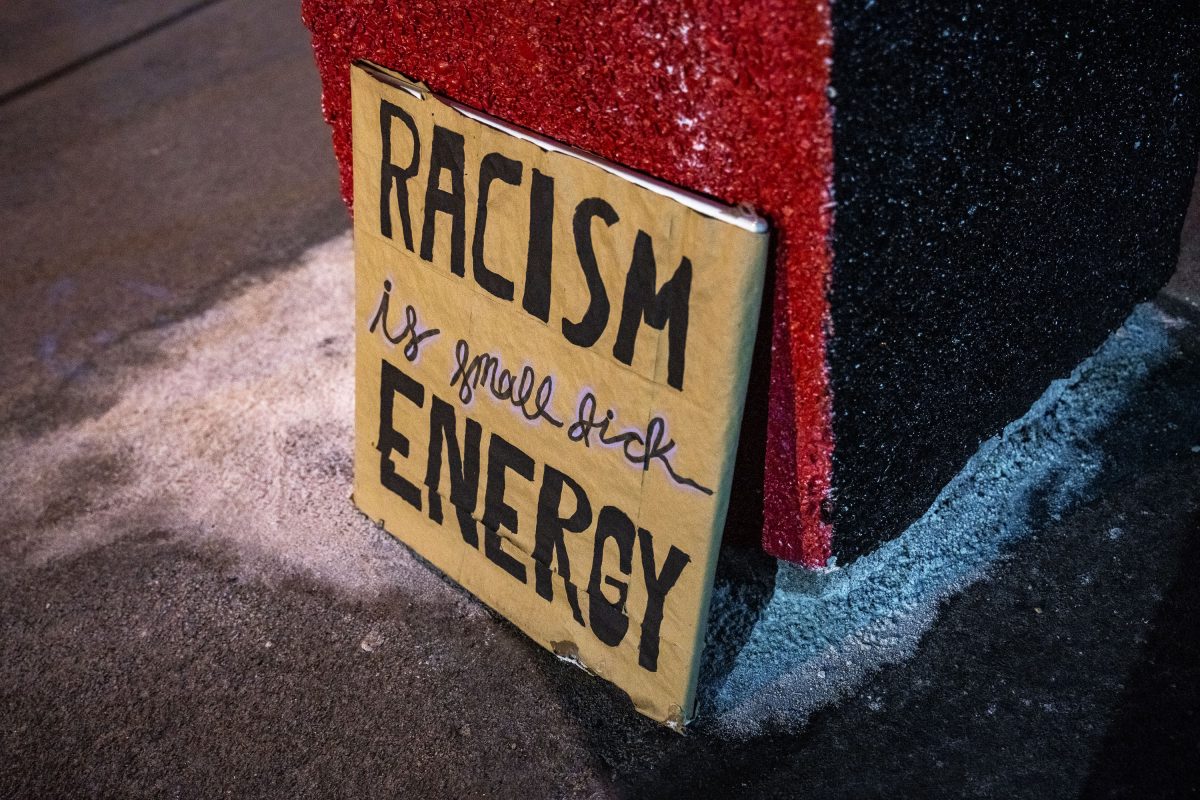
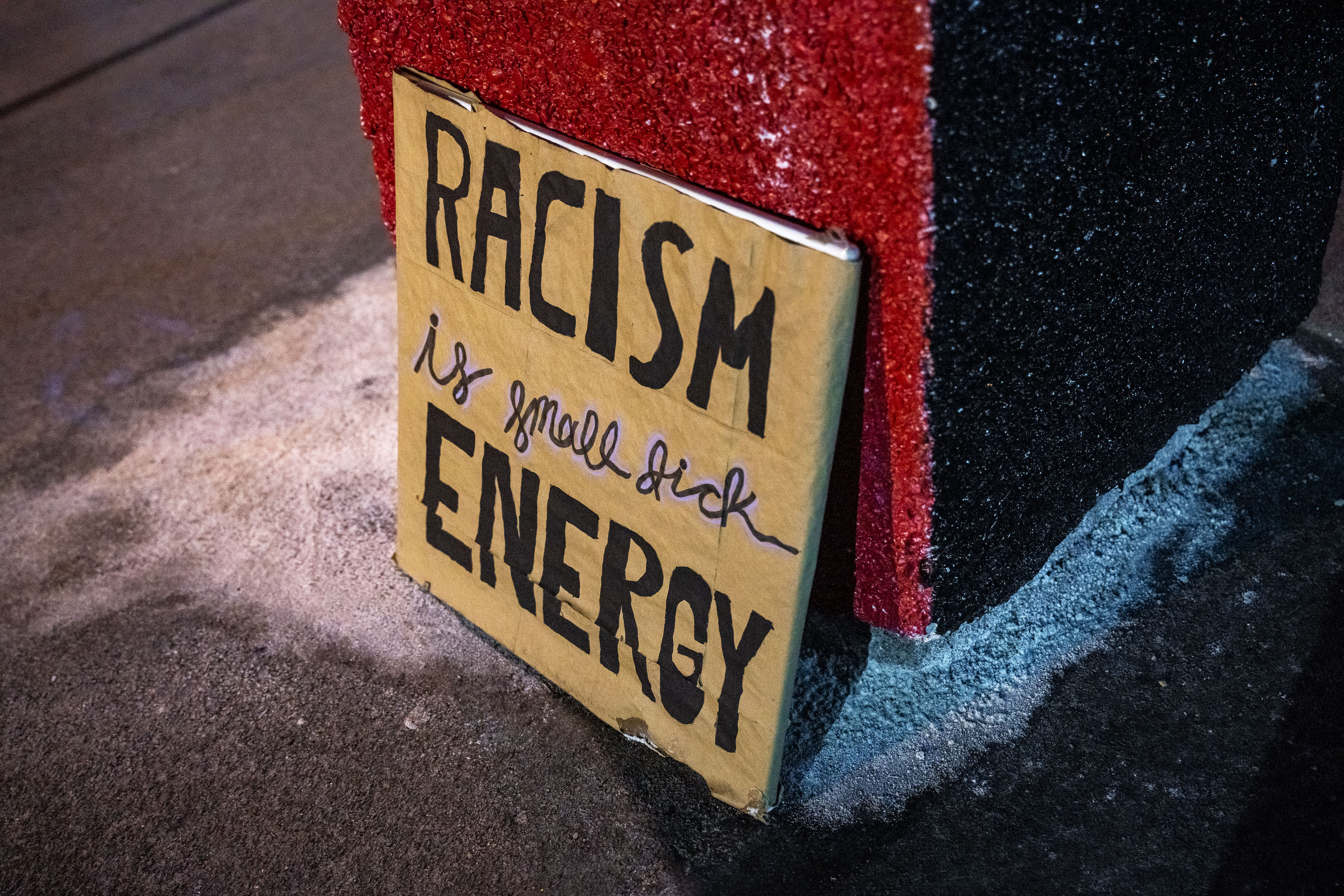
Handwritten sign reading "Racism is small dick energy" placed at George Floyd Square in Minneapolis.
George Floyd Square sits at the intersection of 38th Street and Chicago Avenue in Minneapolis, at the site where George Floyd died in police custody on May 25, 2020. Following his death, the intersection became a self-sustained memorial and protest gathering space, with residents barricading traffic and maintaining art installations, murals, and handwritten signs. Many of the signs left at the square address racism and police violence directly, reflecting the ongoing activism centered at the site. The square remained under community control for over a year before the city moved to reopen it to vehicle traffic in 2021.

Handwritten Protest Sign, George Floyd Square, Minneapolis
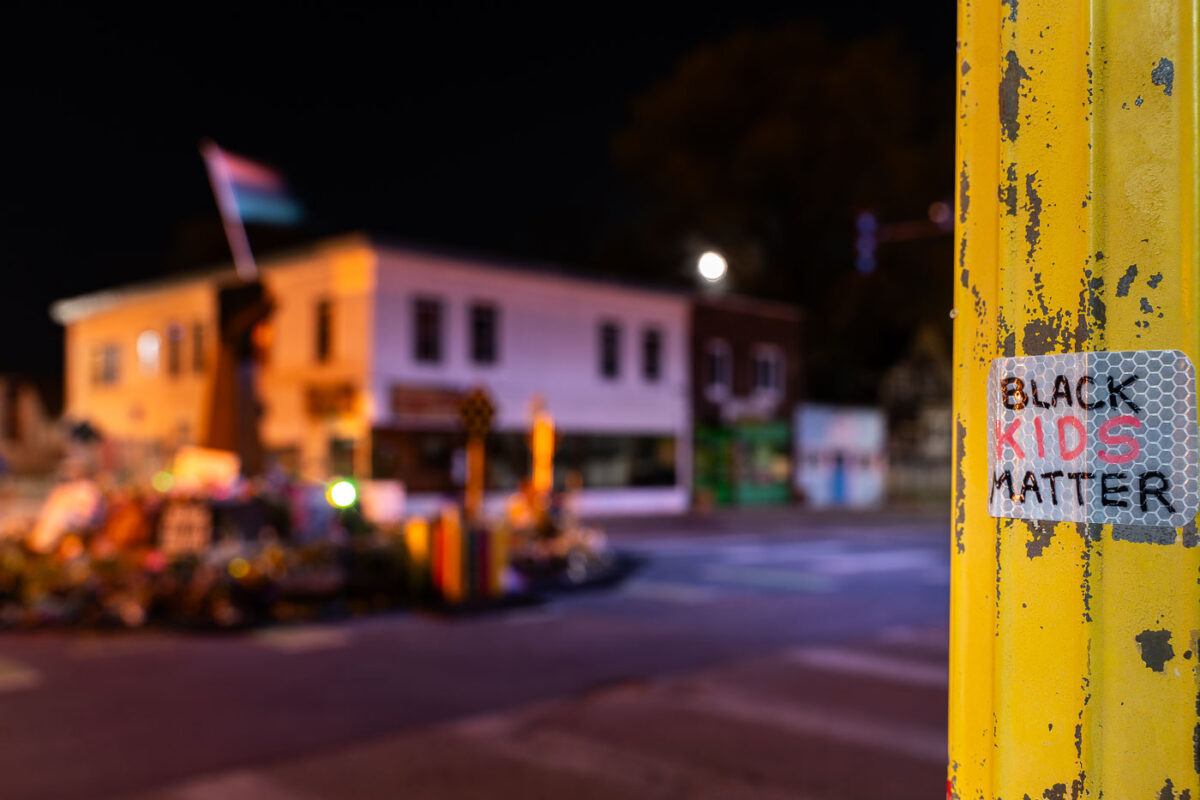
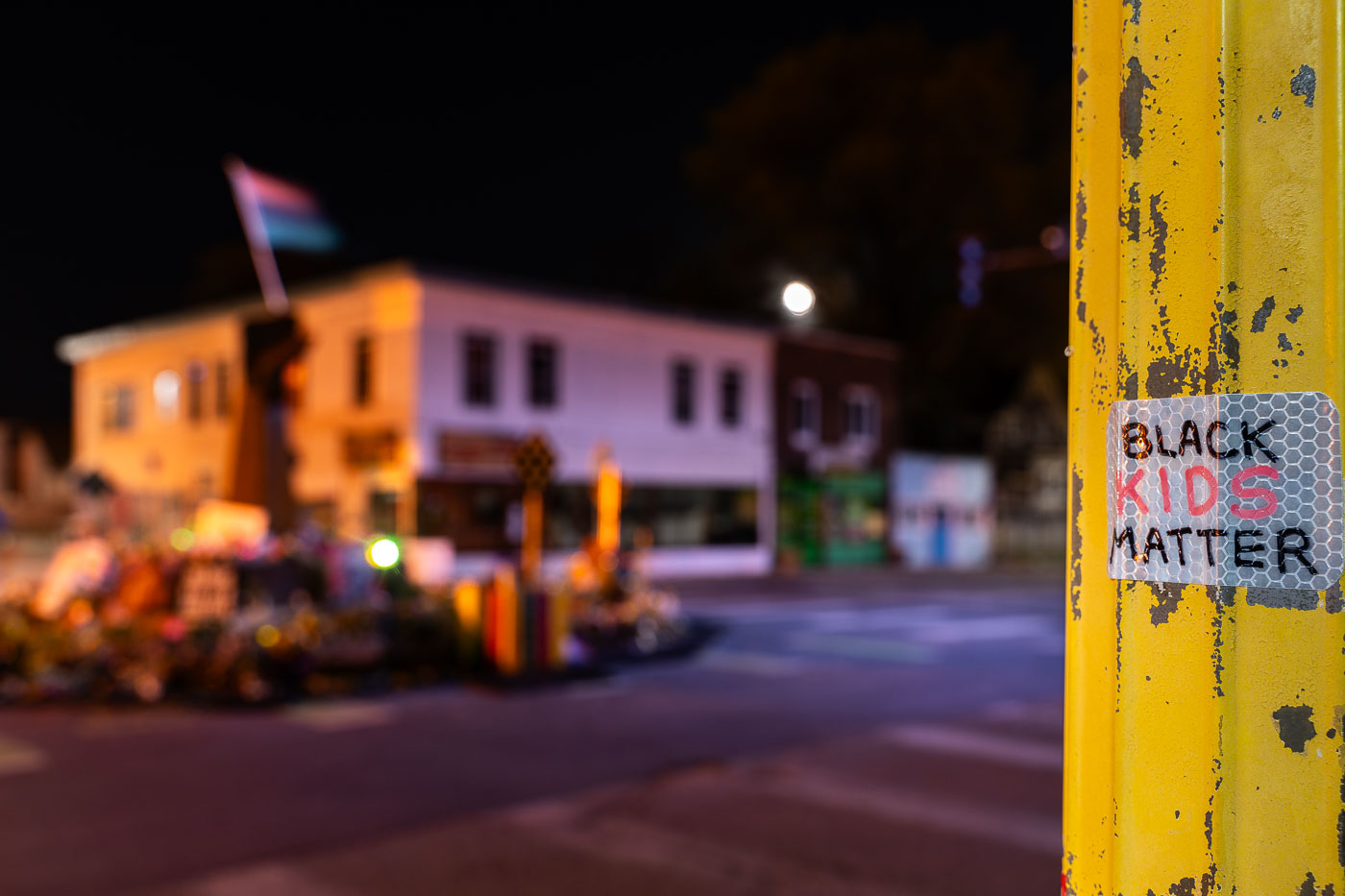
"Black Kids Matter" sticker on a light pole at George Floyd Square, Minneapolis.
A "Black Kids Matter" sticker is affixed to a weathered yellow light pole in George Floyd Square, located in South Minneapolis. This area became a focal point of protests and activism following the murder of George Floyd in May 2020. The square, established by protesters at the intersection of 38th Street and Chicago Avenue, served as a space for community organizing and remembrance. The sticker, a symbol of ongoing advocacy for Black youth, reflects the broader social justice movements that have taken root in this significant urban space.

George Floyd Square: “Black Kids Matter” Sticker on Light Pole
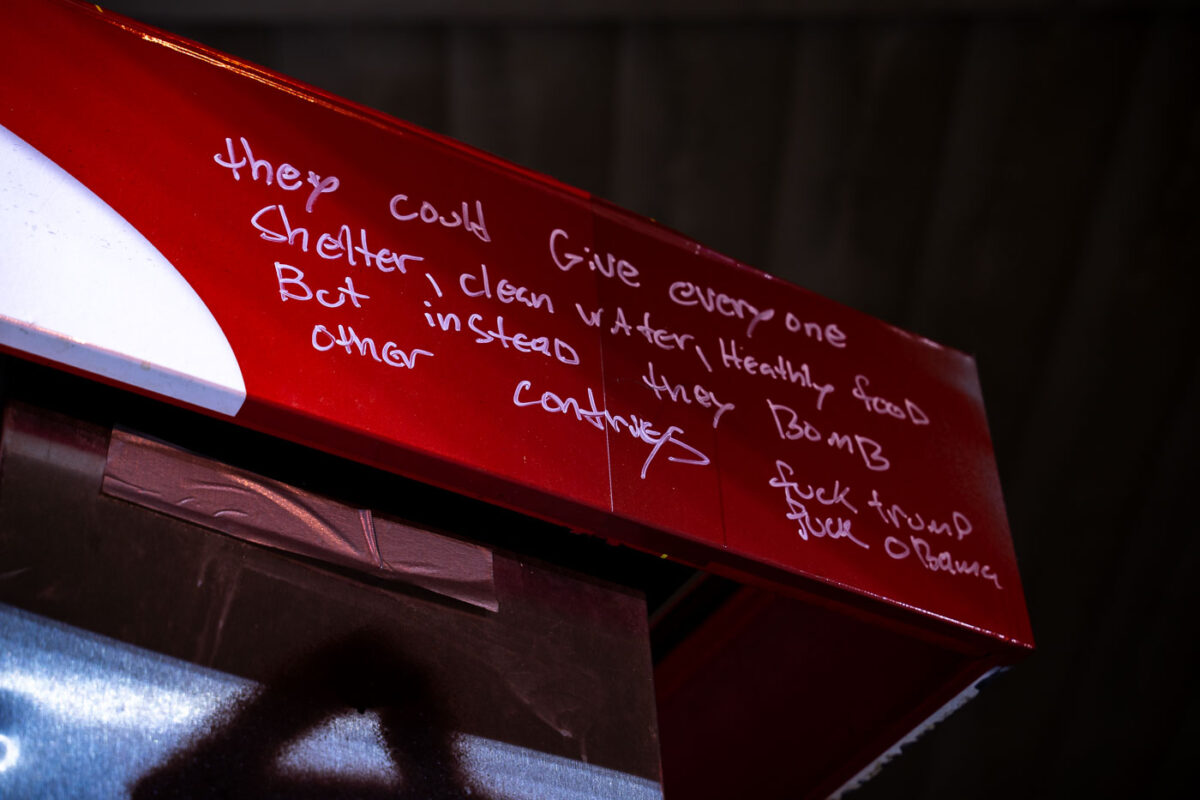
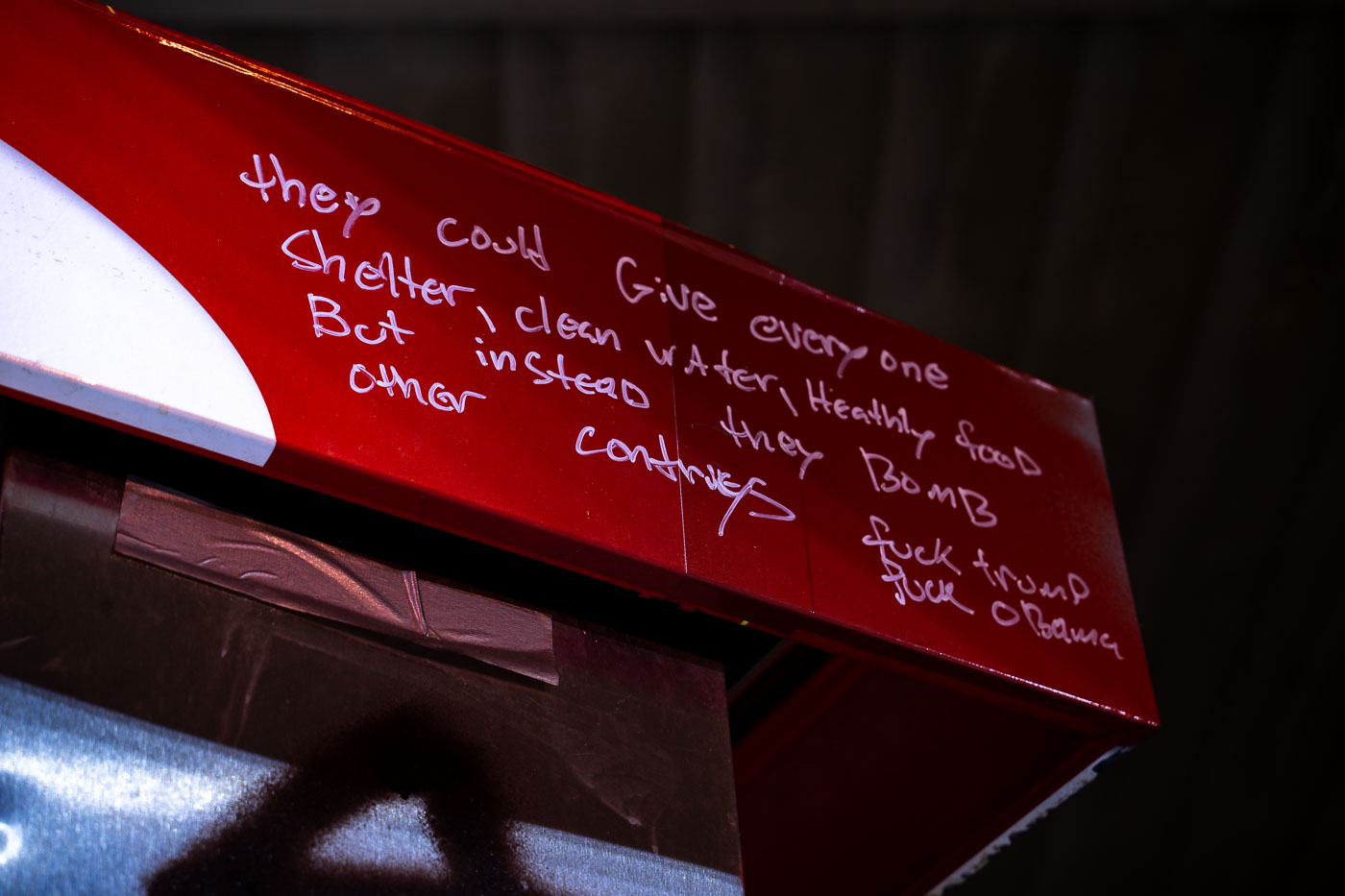
Graffiti on the former Speedway gas station at George Floyd Square in Minneapolis.
Graffiti on the former Speedway gas station at George Floyd Square in Minneapolis reads, "they could give everyone shelter, clean water, healthy food, but instead they bomb other countries. fuck trump fuck obama." This message reflects sentiments expressed during the period of unrest following the murder of George Floyd in May 2020, when the intersection was occupied and renamed by protesters. The Speedway station became a focal point within the autonomous zone, serving as a site for community gathering and artistic expression. The graffiti critiques perceived government priorities and foreign policy.

George Floyd Square Gas Station: “Fuck Trump Fuck Obama” Graffiti
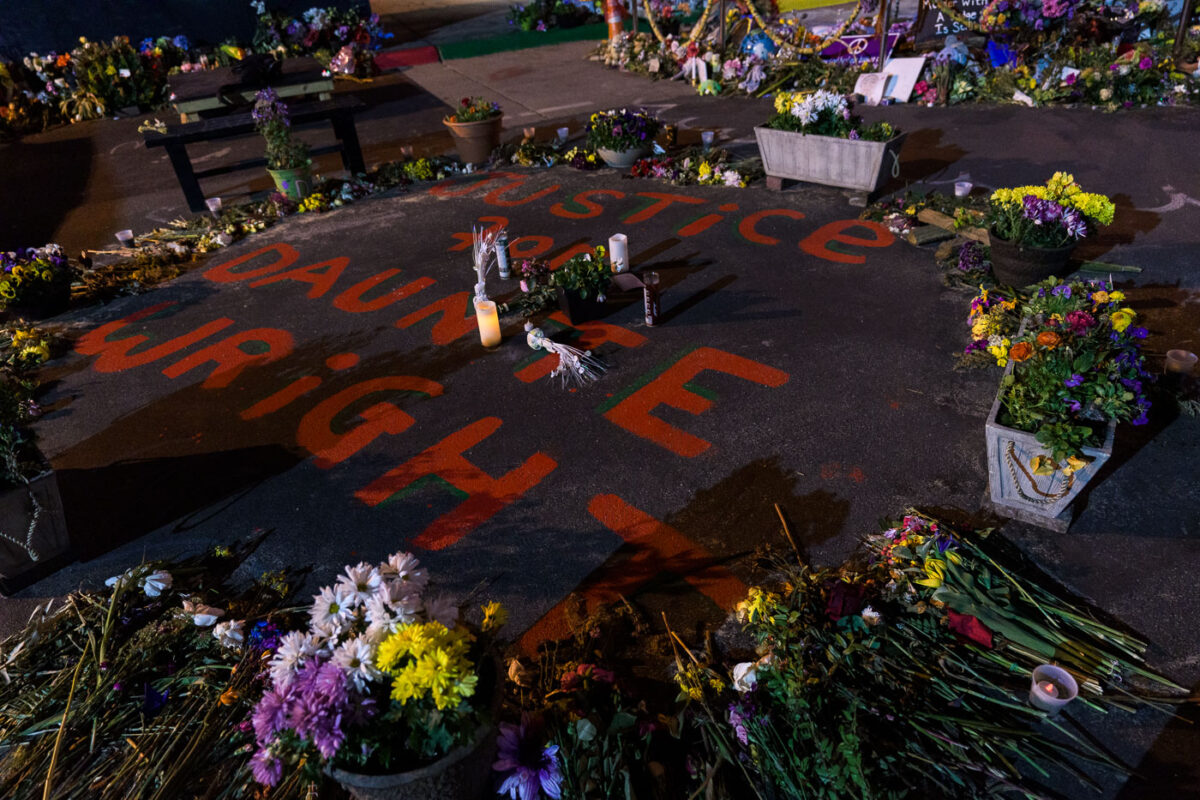
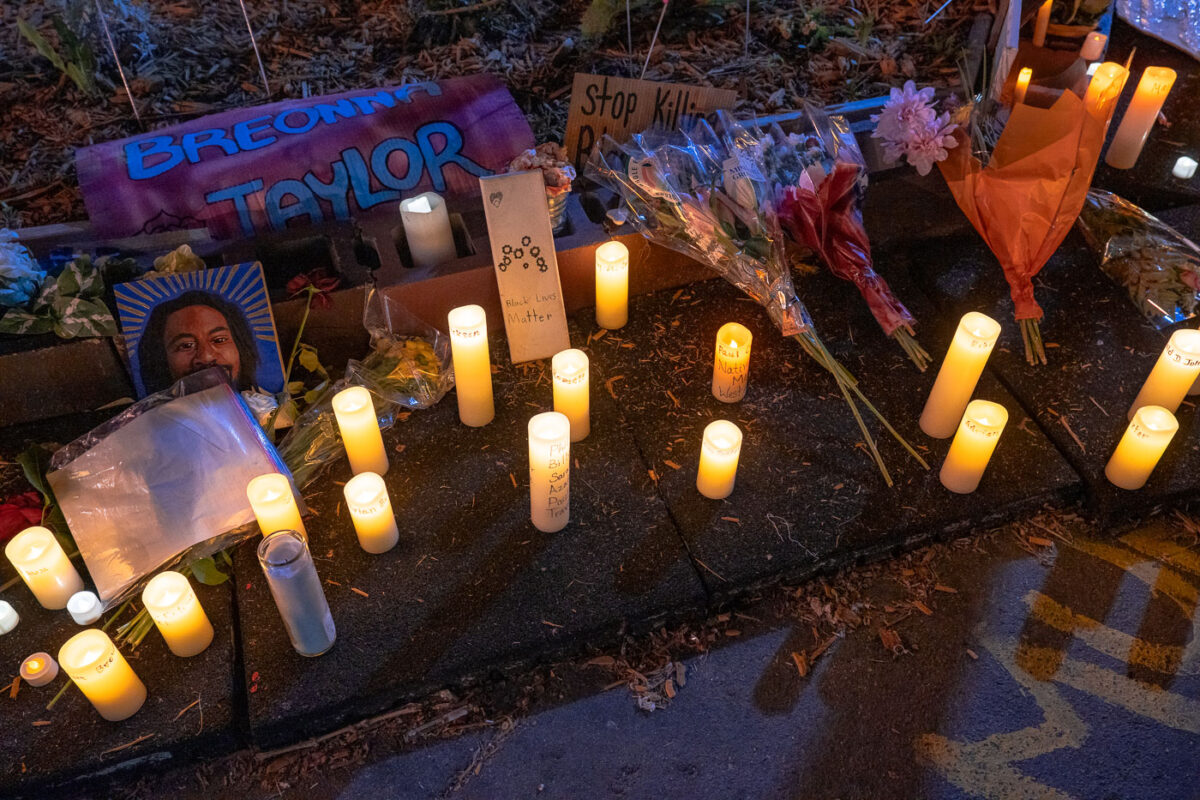
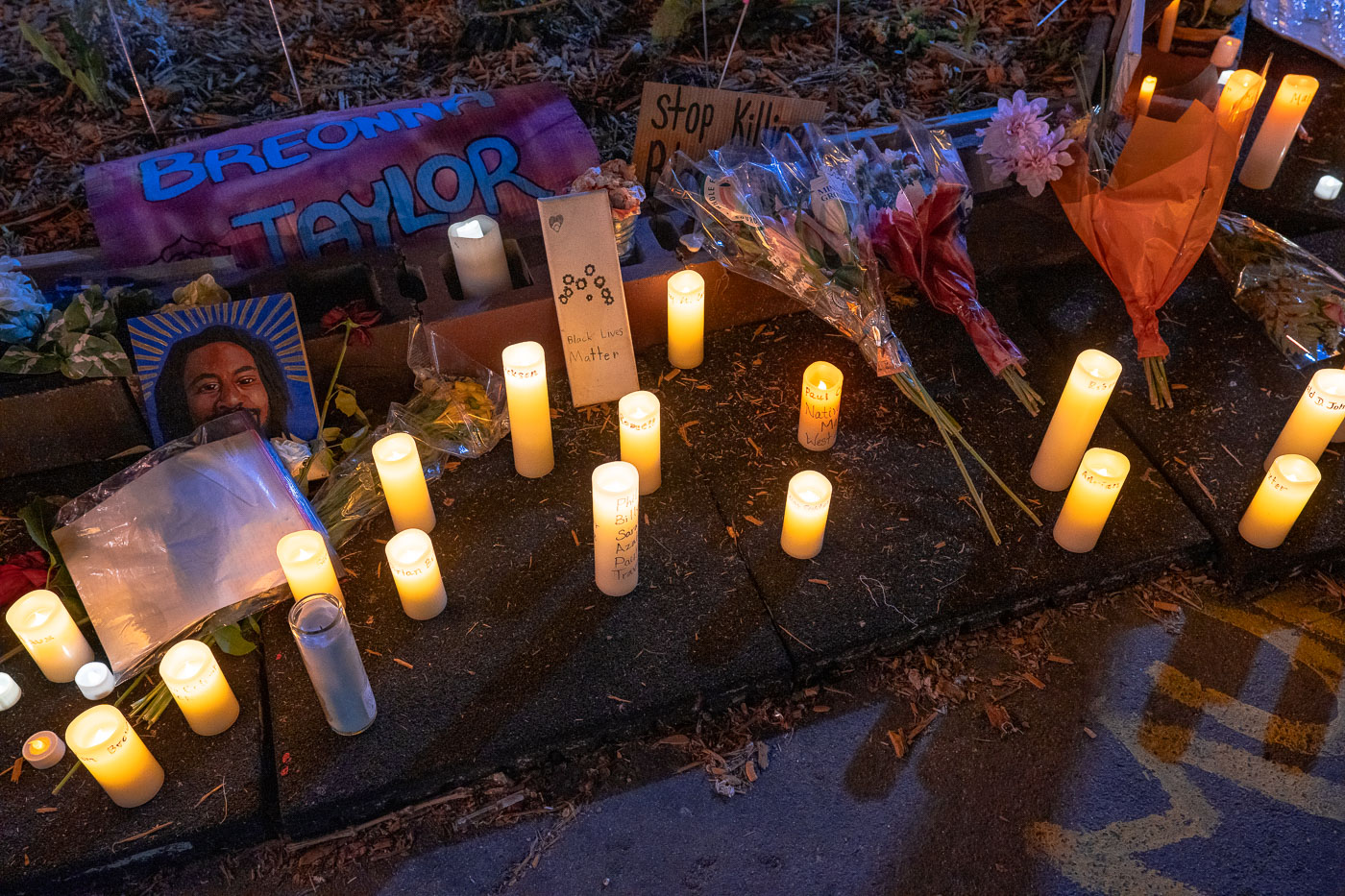
Daunte Wright memorial at George Floyd Square in Minneapolis, surrounded by flowers and candles.
A memorial for Daunte Wright is visible at George Floyd Square in Minneapolis. Wright, a Black man, was fatally shot by Brooklyn Center Police Officer Kim Potter on April 11, 2021, during a traffic stop in nearby Brooklyn Center. The incident sparked protests and unrest in the Minneapolis–Saint Paul metropolitan area. George Floyd Square, located in South Minneapolis, became a focal point for protests following the murder of George Floyd in May 2020.

Daunte Wright Memorial at George Floyd Square, Minneapolis
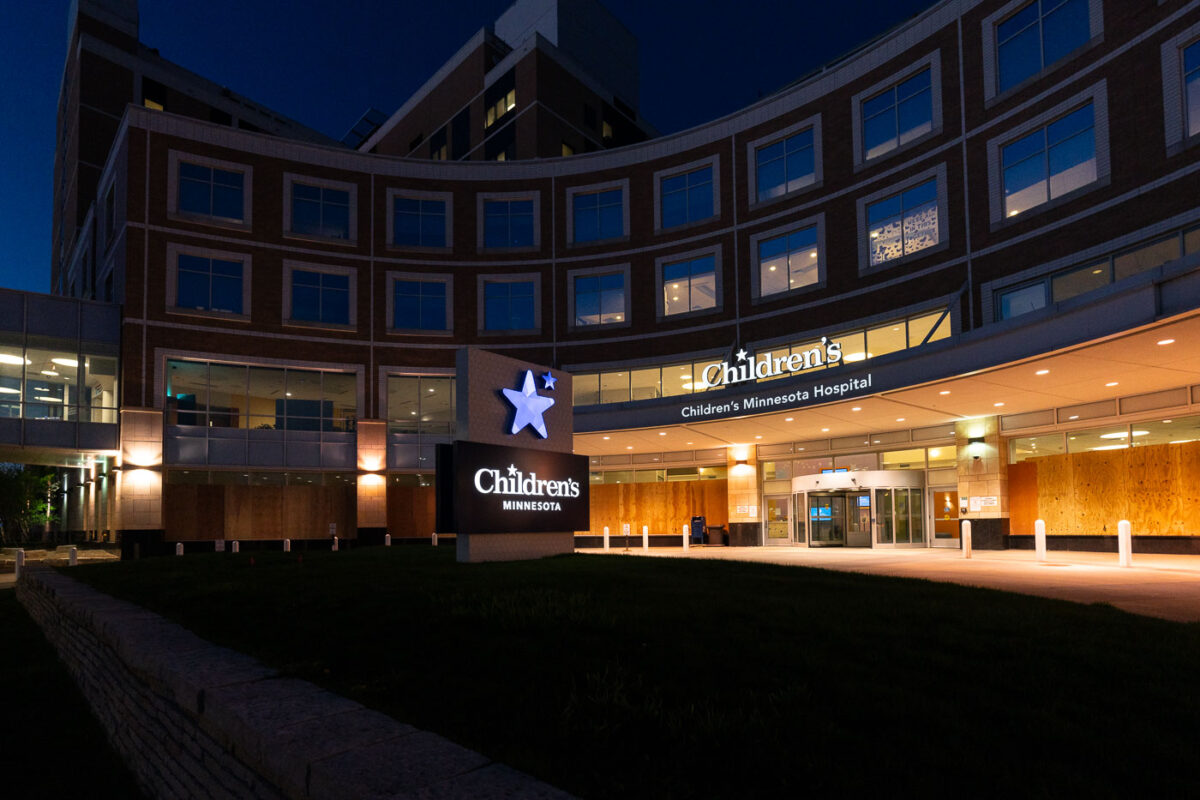
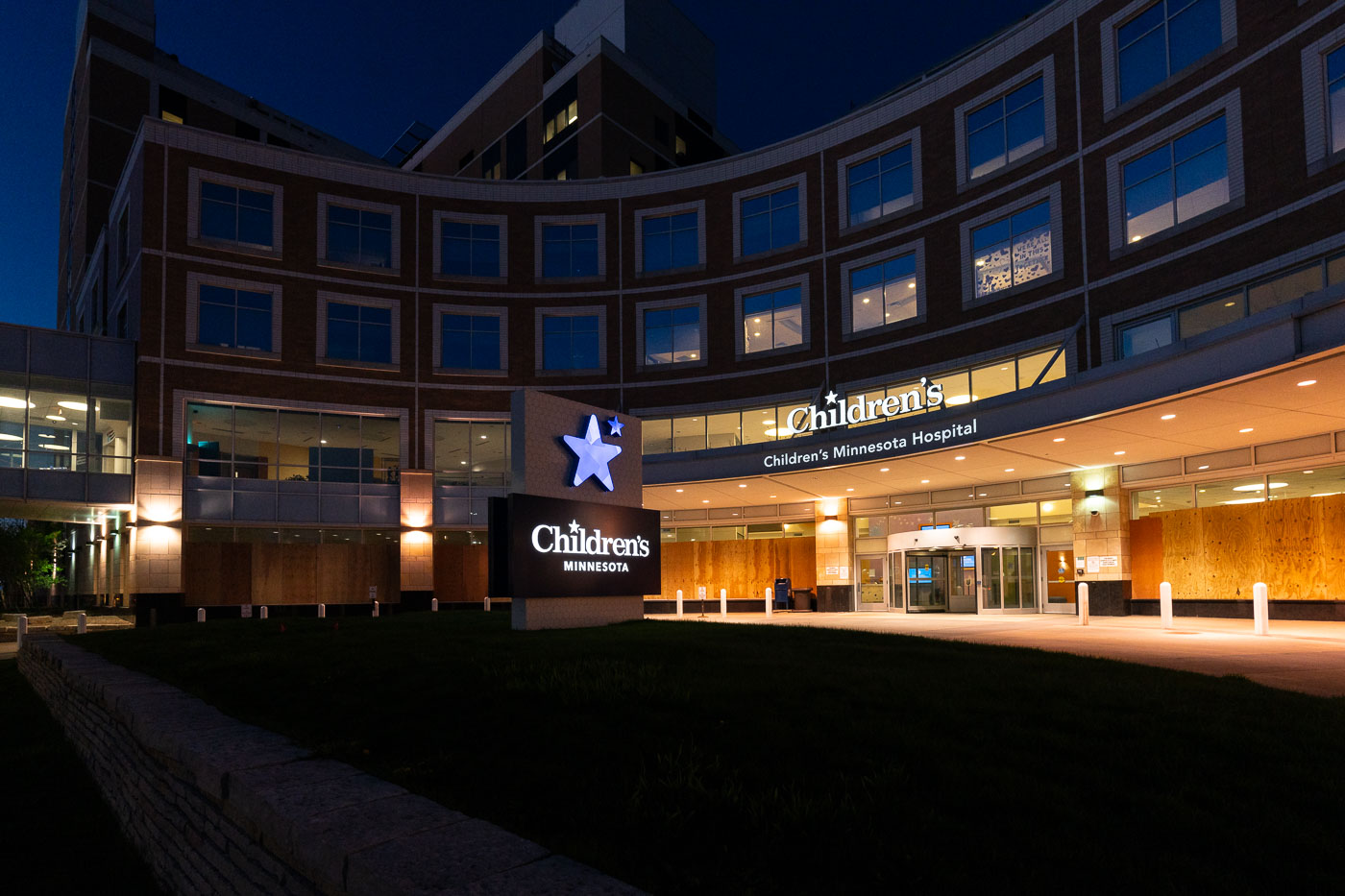
Children's Minnesota Hospital boarded up in Minneapolis during the Chauvin trial.
Children's Minnesota Hospital in South Minneapolis was boarded up in anticipation of potential unrest during the Derek Chauvin murder trial in April 2021. The trial, which followed the death of George Floyd, led to heightened security measures across the city. This hospital, a key medical facility for children in the region, was protected to ensure continued operations and the safety of patients and staff amidst the possibility of civil disturbance.

Children’s Minnesota Hospital Boarded Up for Chauvin Trial
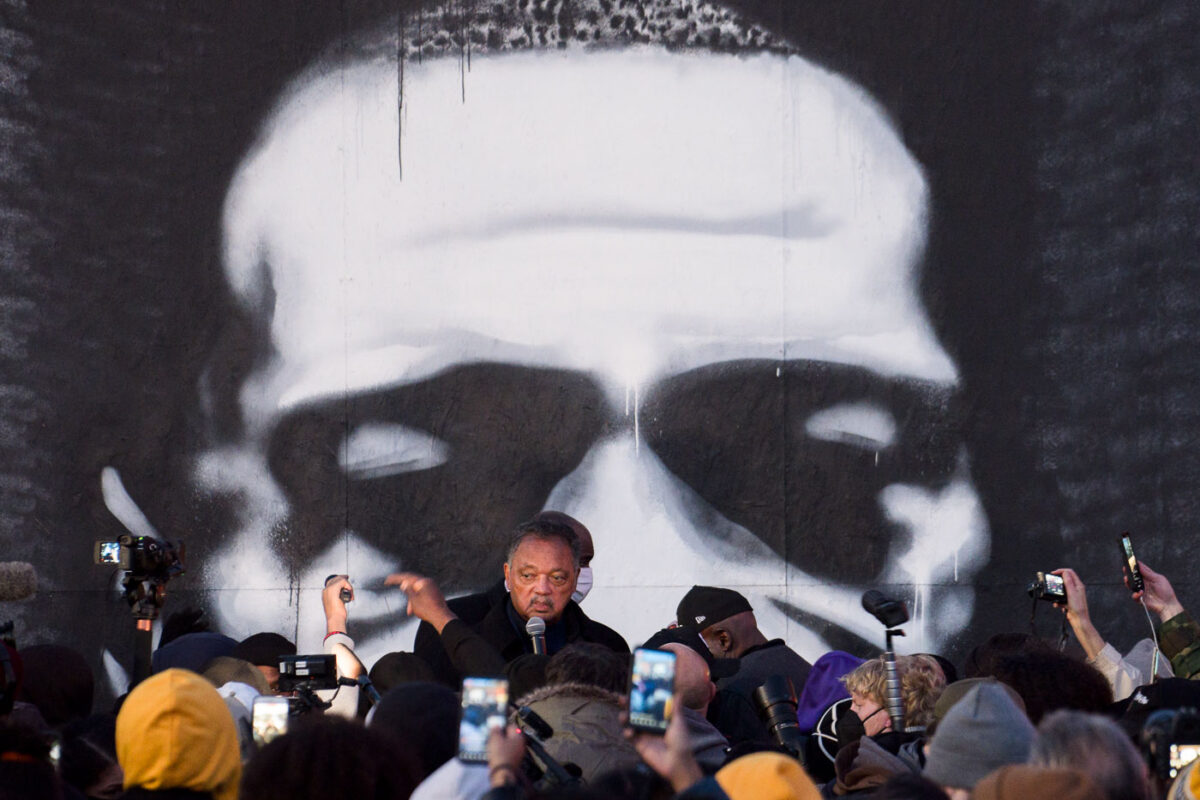
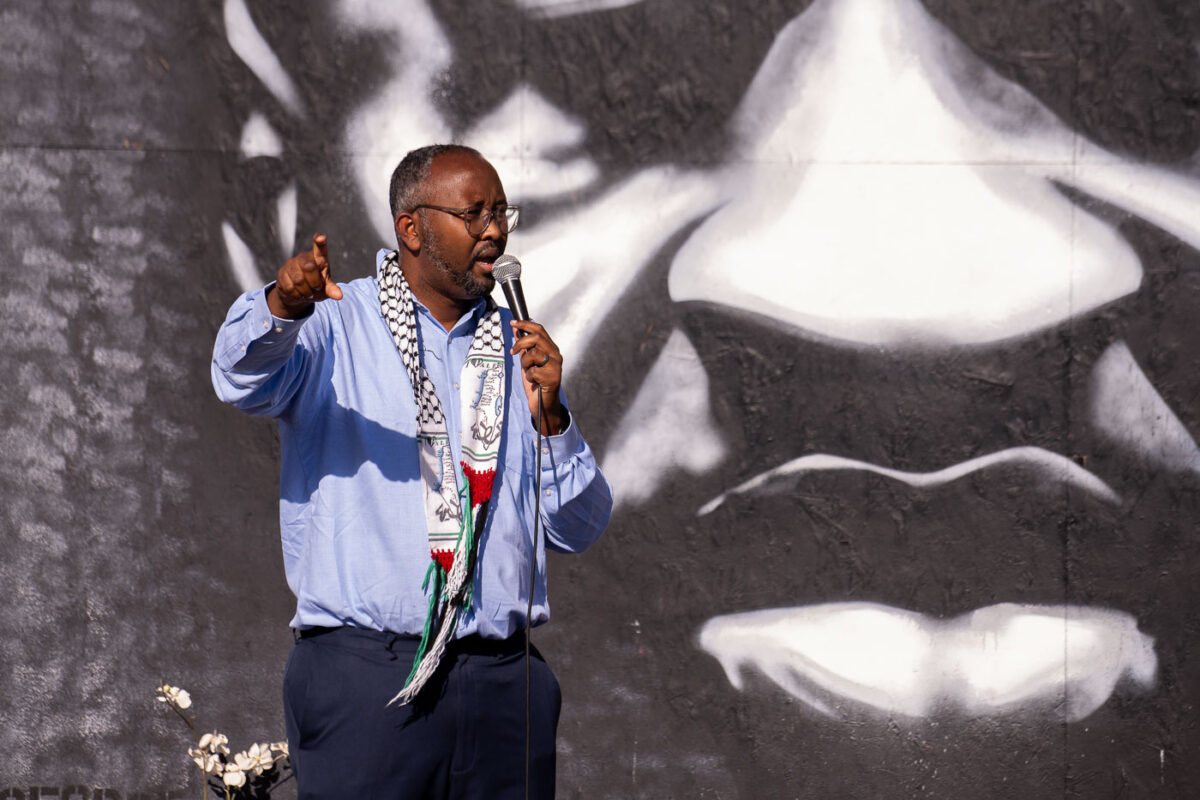
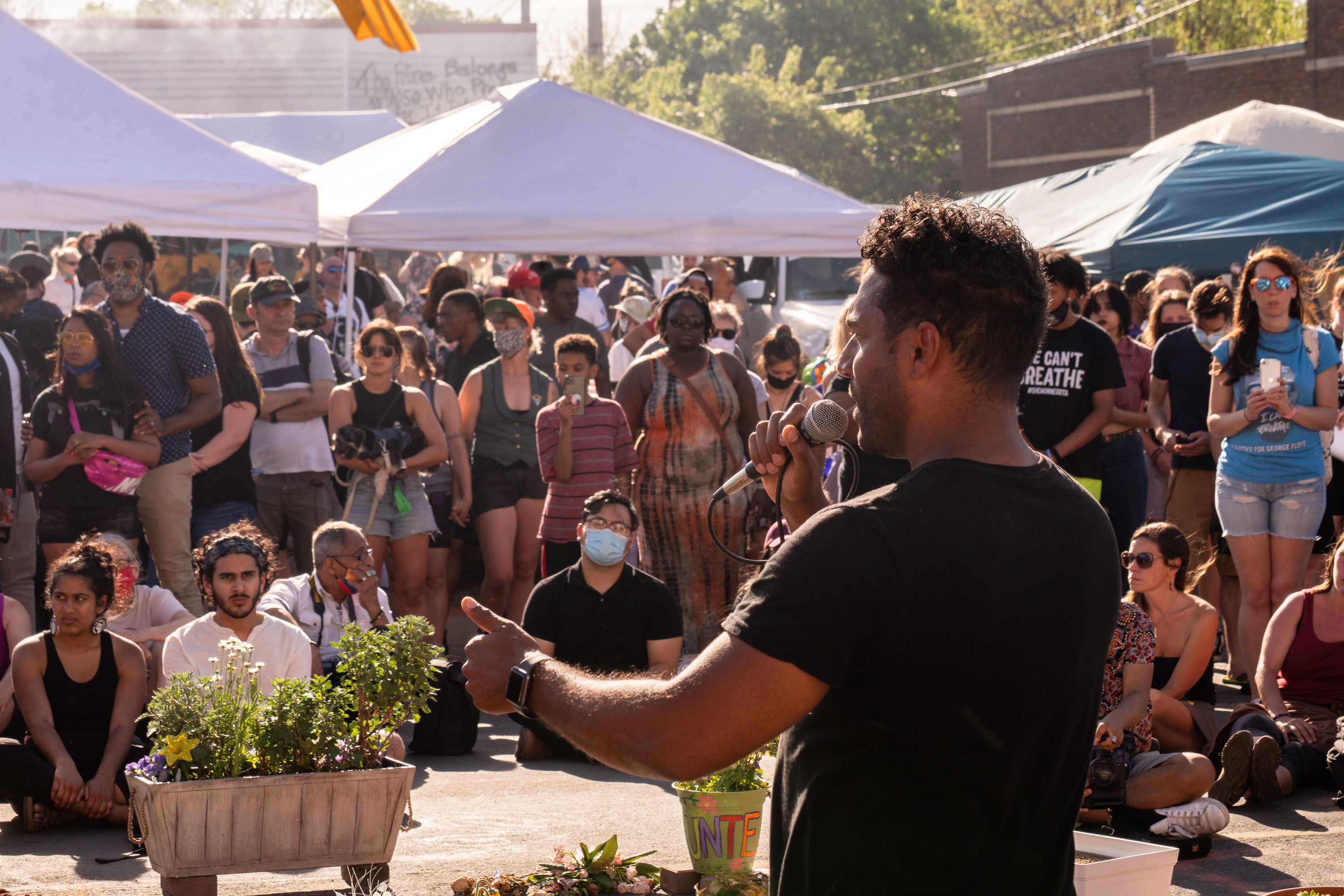
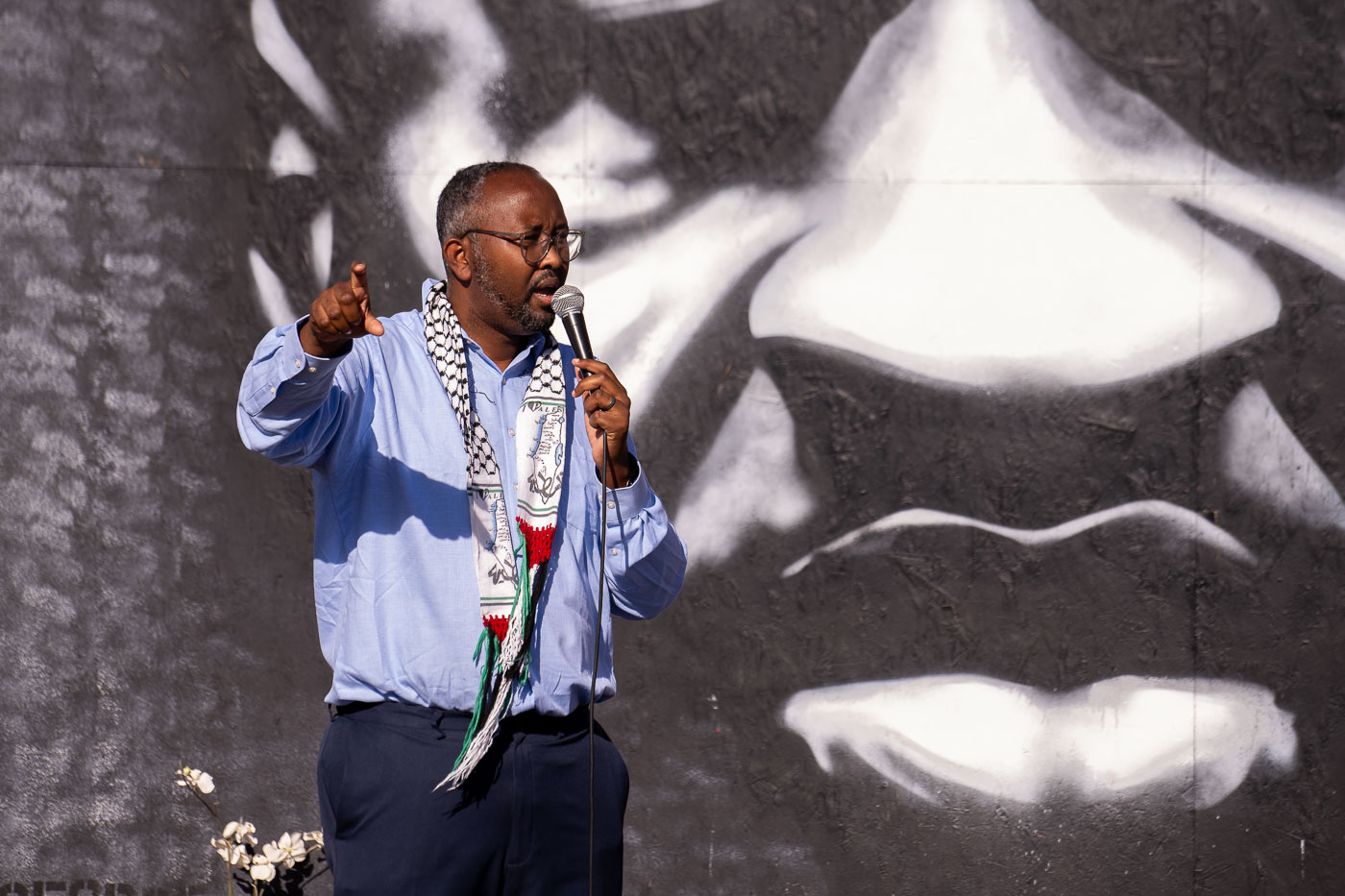
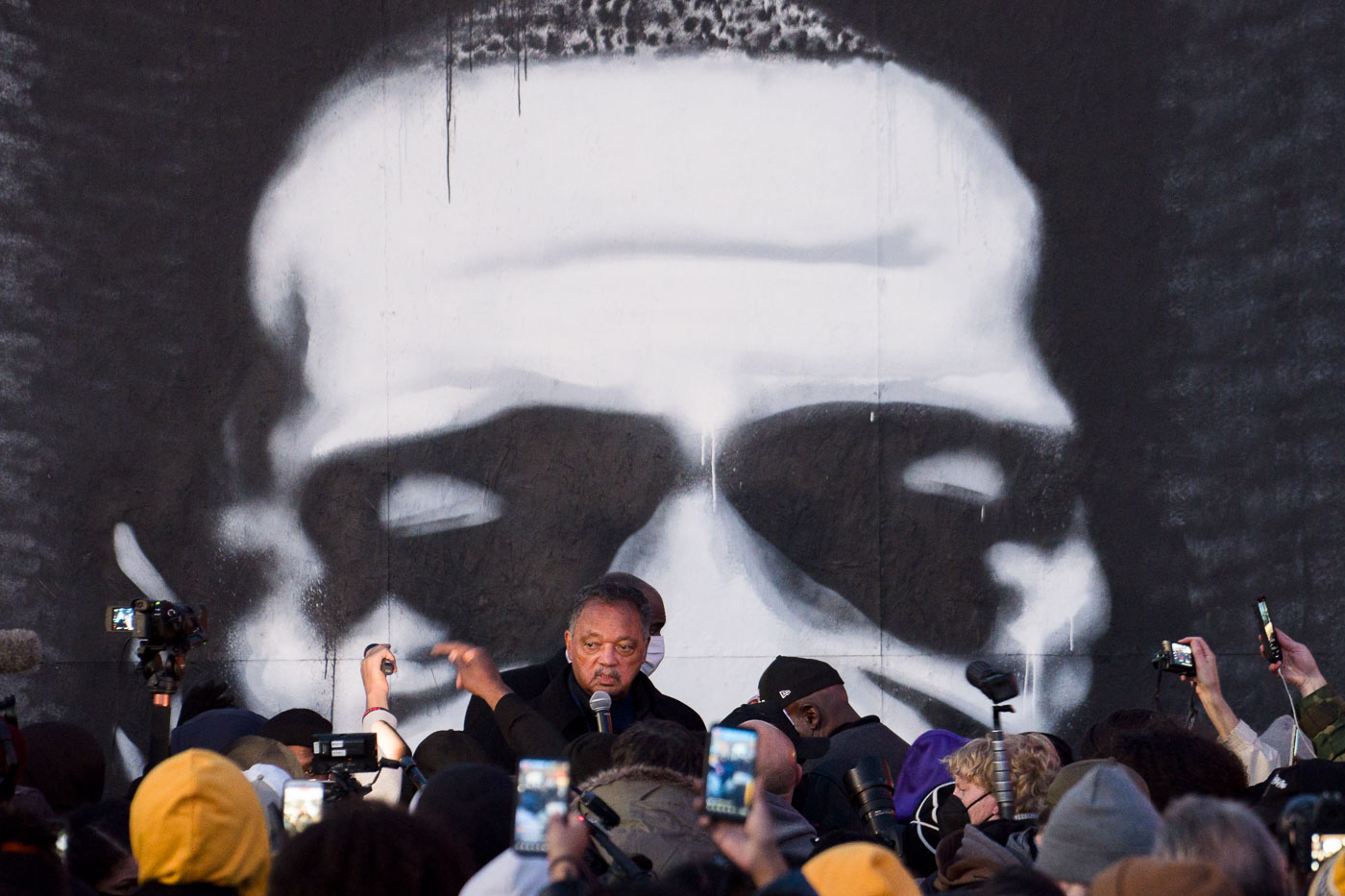
Jesse Jackson speaks at George Floyd Square in Minneapolis before a crowd and mural.
Civil rights leader Jesse Jackson addresses a crowd at George Floyd Square in Minneapolis. The square, located at the intersection of Chicago Avenue and 38th Street, became a focal point for protests following the May 25, 2020, killing of George Floyd by Minneapolis police officers. The area has since been transformed into a memorial and a site for ongoing activism and community gatherings.

Jesse Jackson speaks at George Floyd Square, Minneapolis
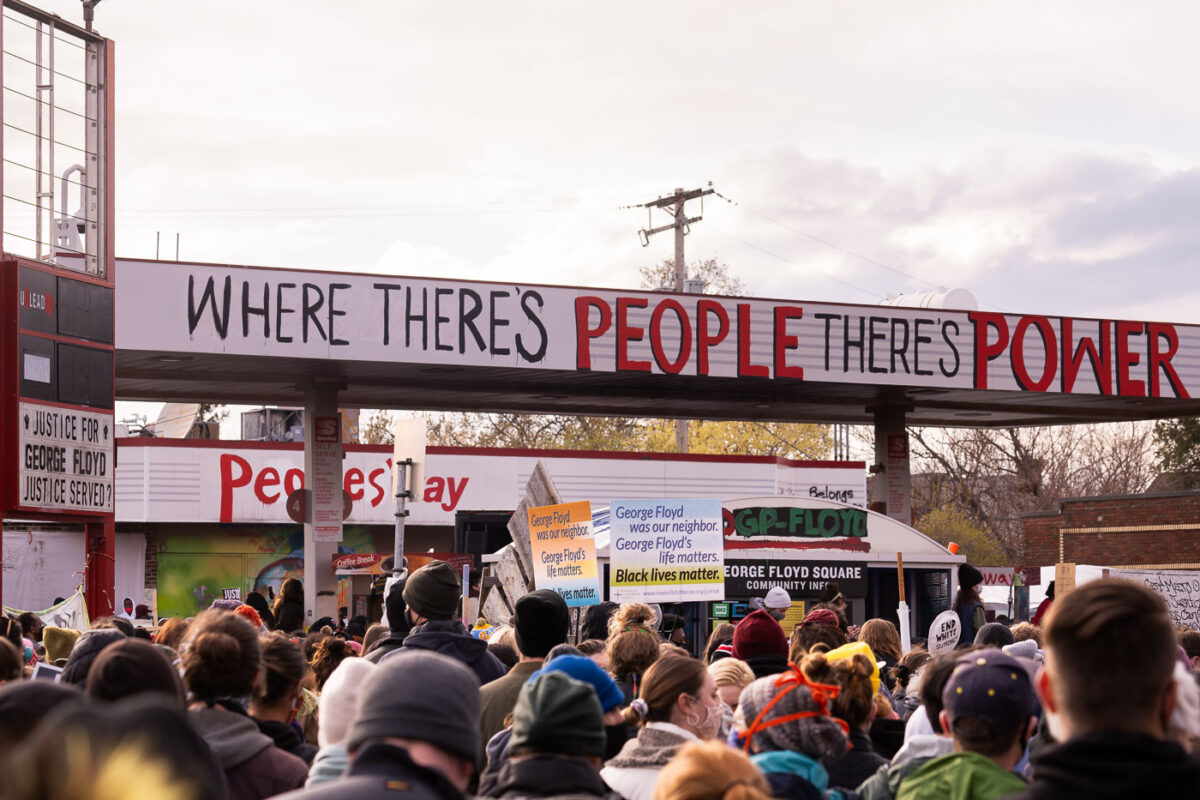
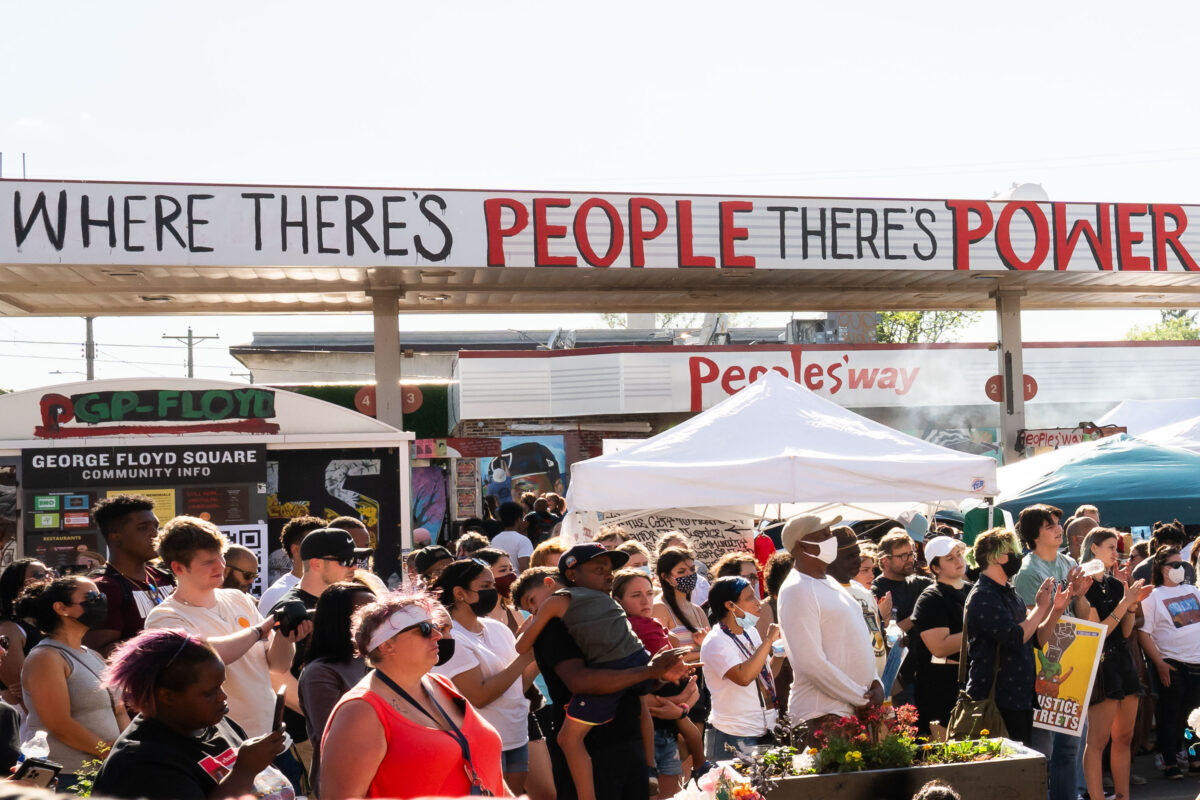
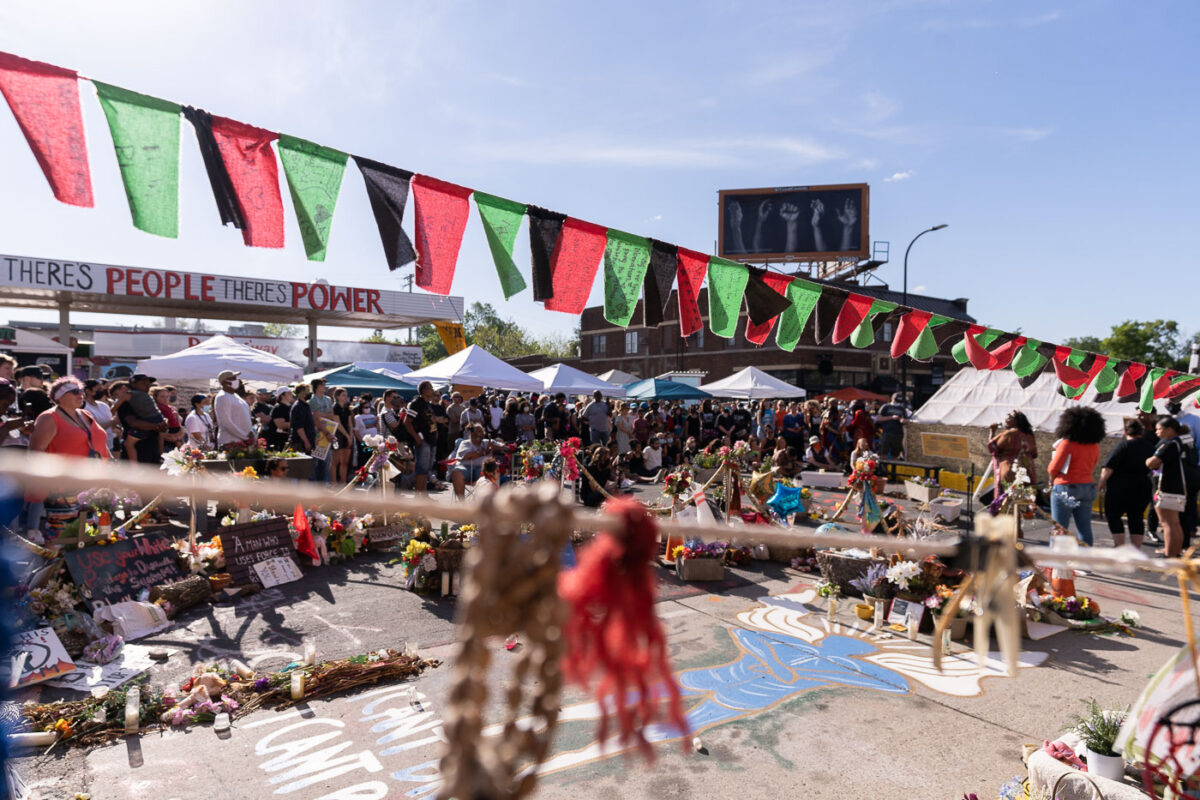
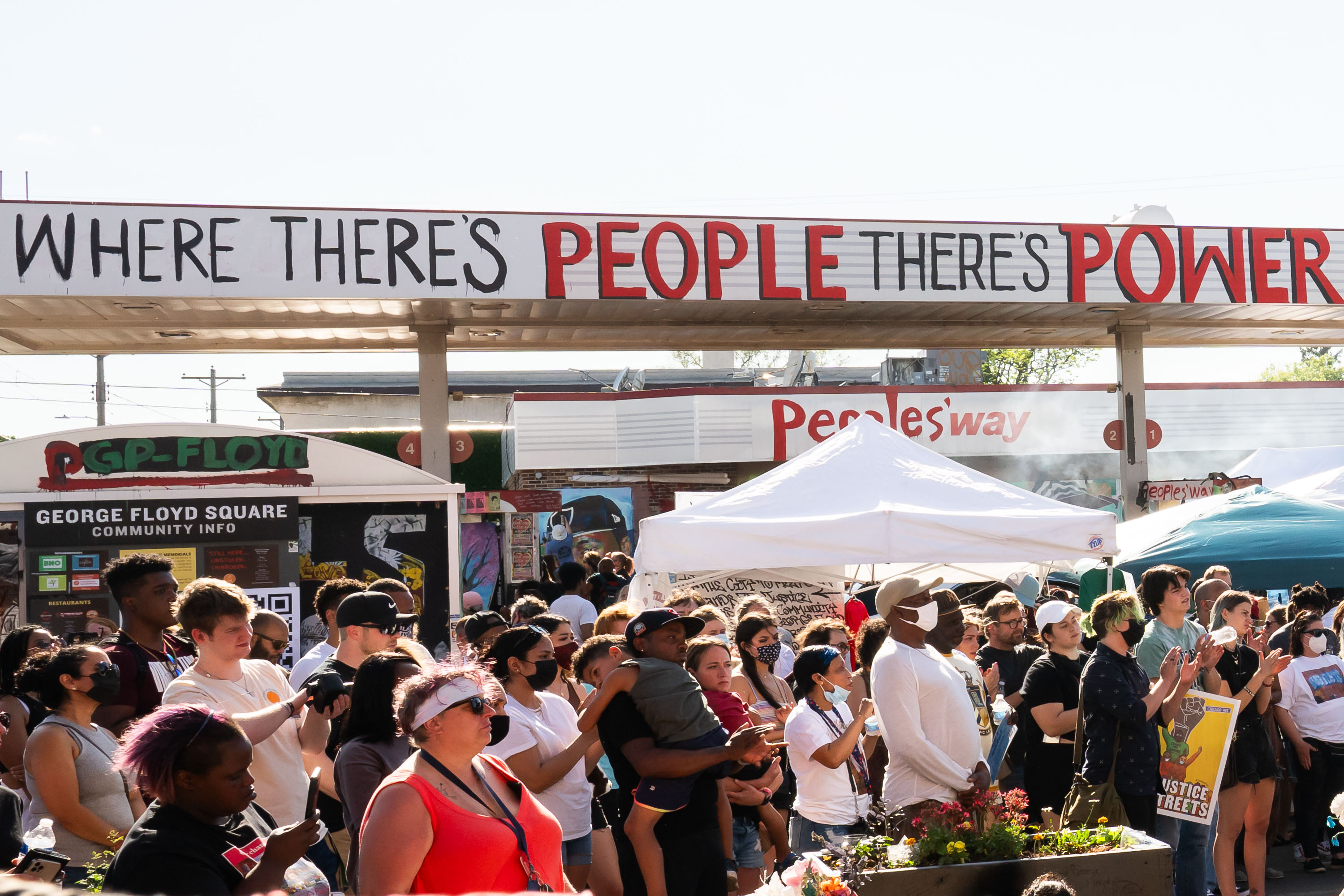
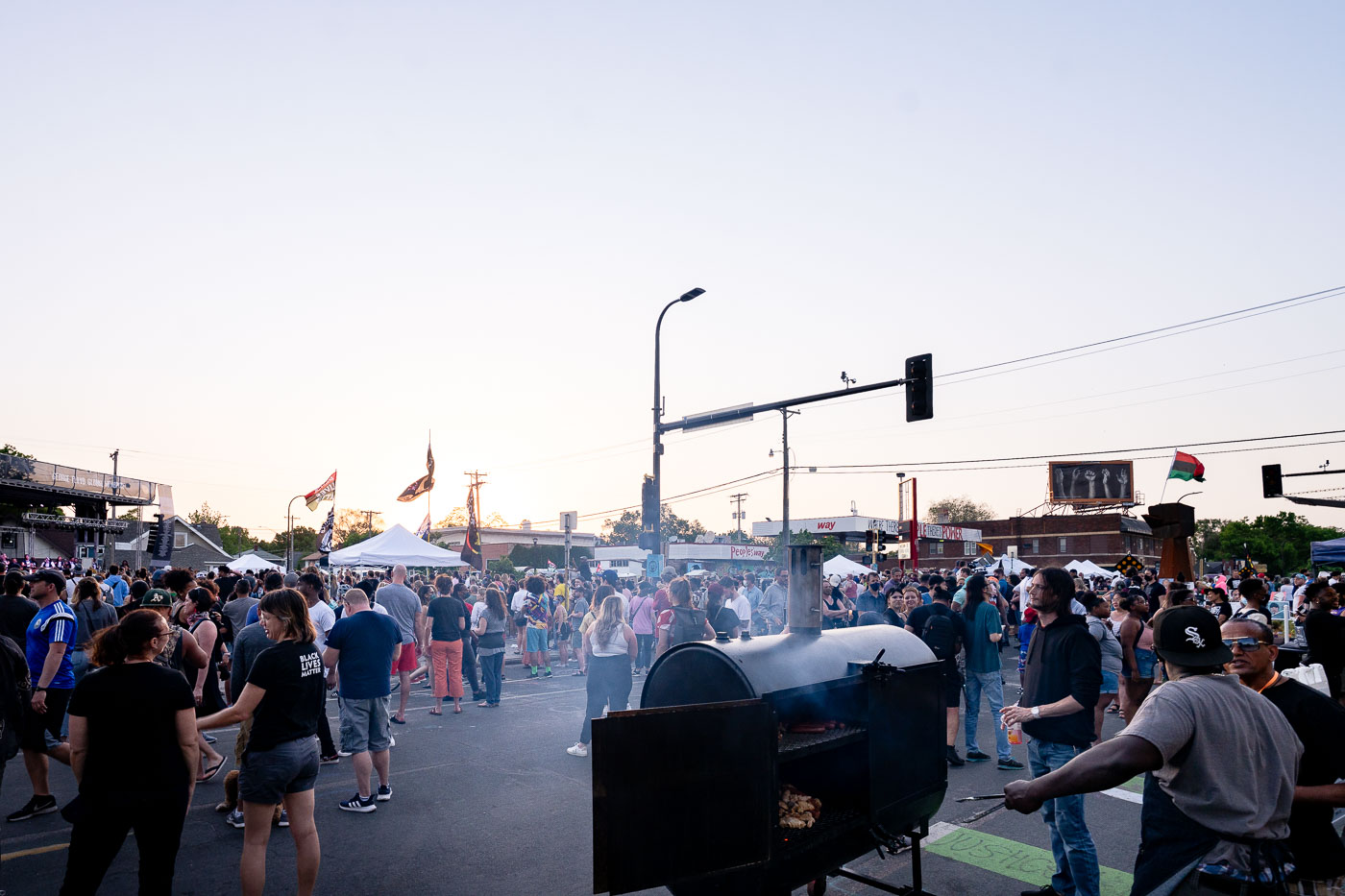
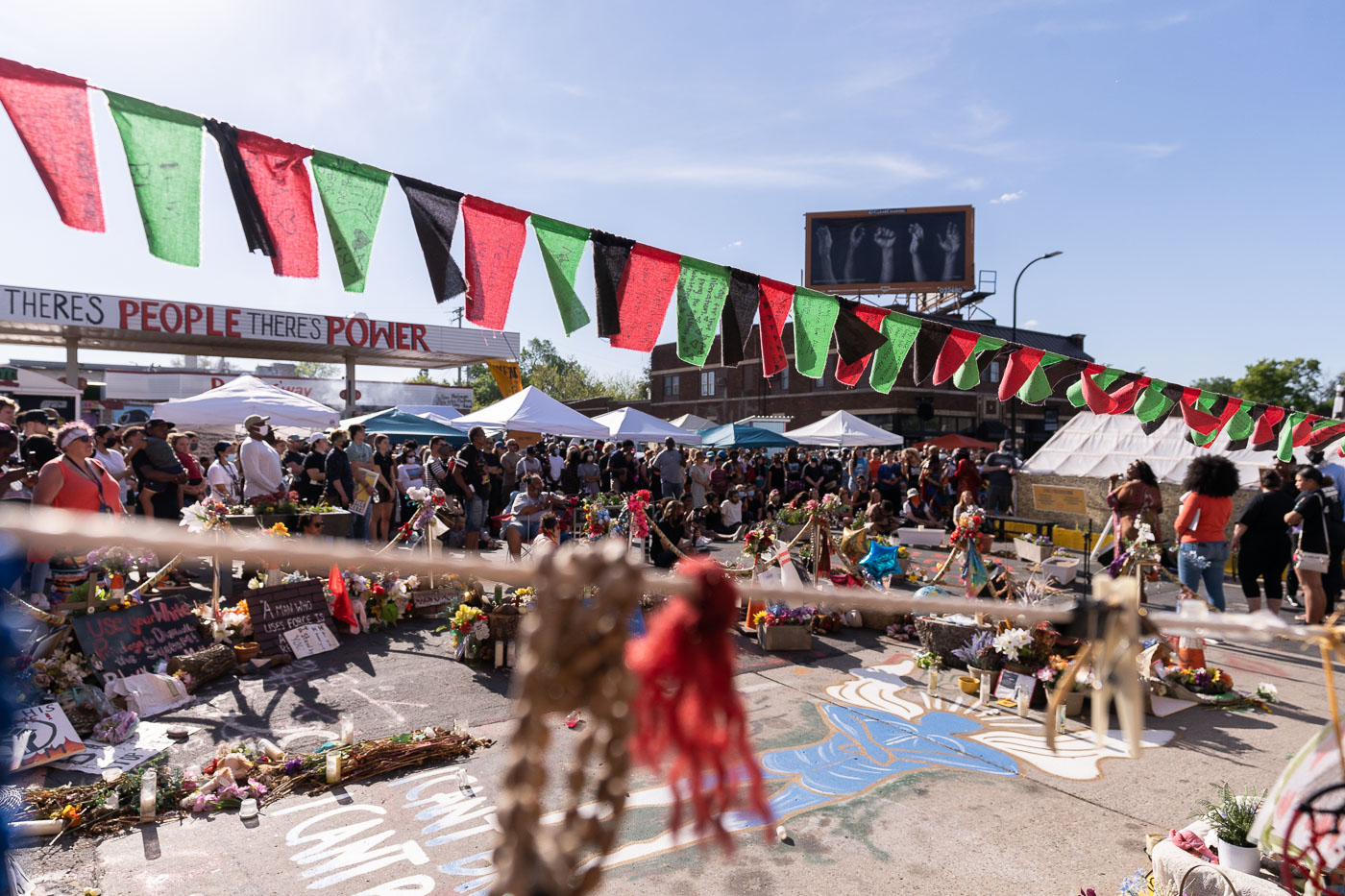
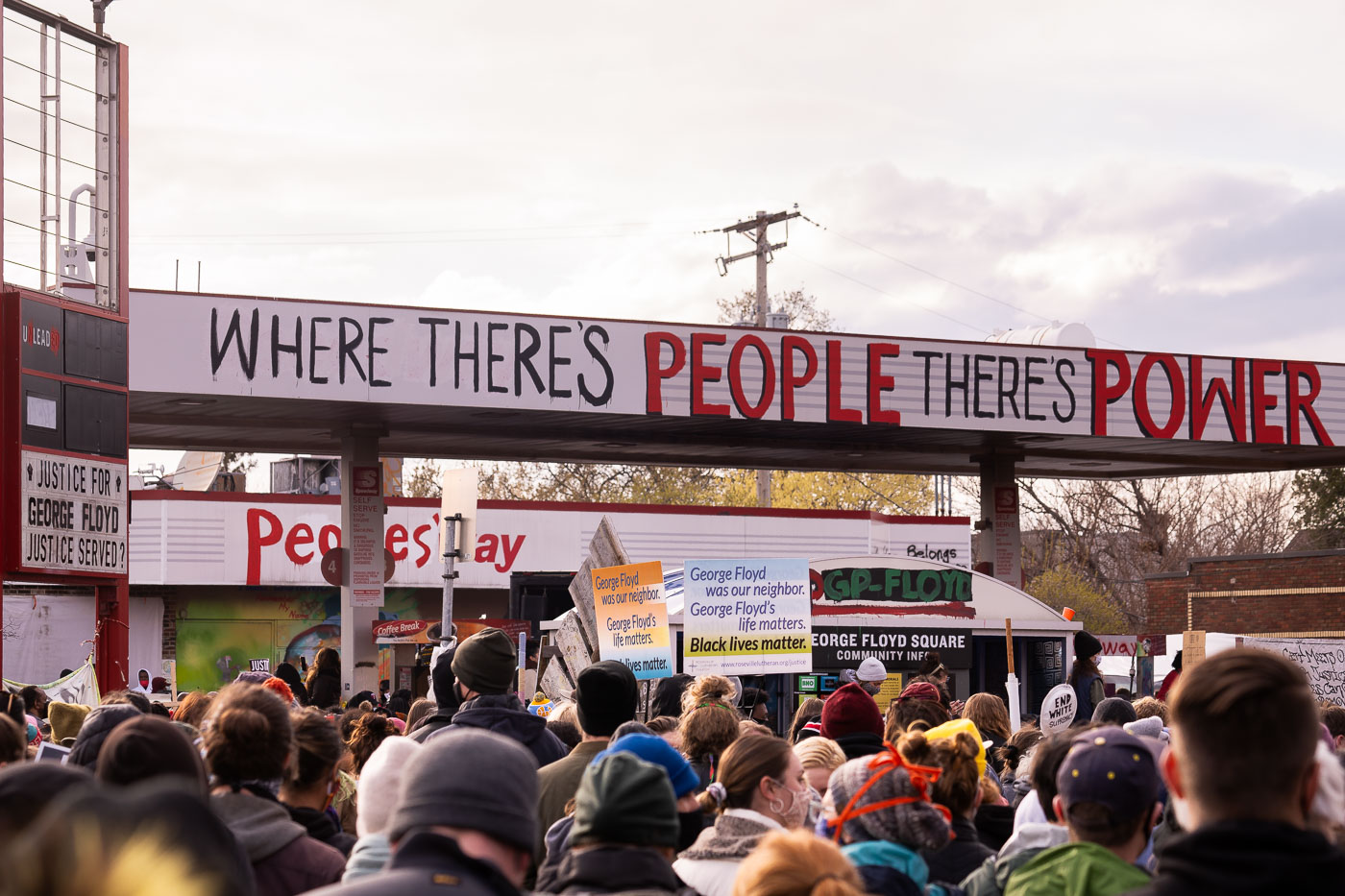
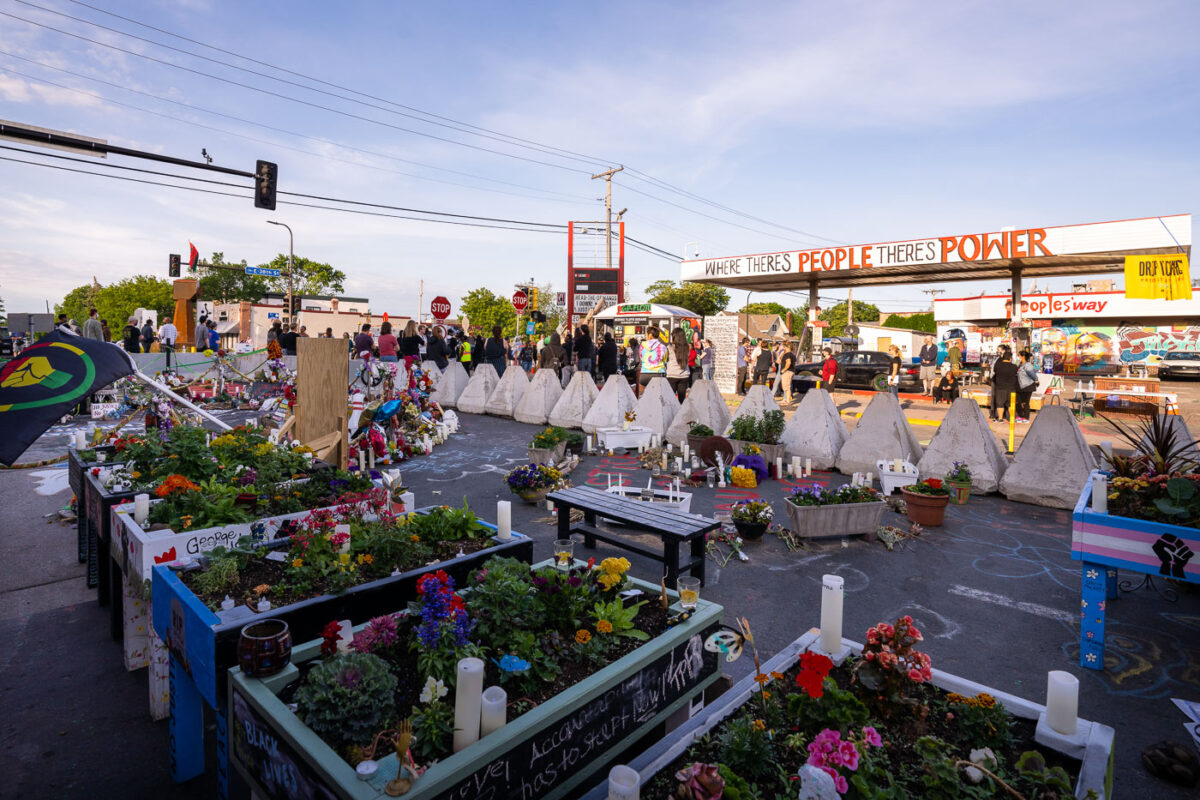
Crowd at George Floyd Square in Minneapolis beneath a "Where there's people there's power" sign.
A crowd gathers at George Floyd Square in Minneapolis following the guilty verdict in the trial of Derek Chauvin, the police officer charged with the murder of George Floyd. The intersection, formerly known as the intersection of 38th Street and Chicago Avenue, became a focal point for protests and activism after Floyd's death in May 2020. Signs and banners, including "WHERE THERE'S PEOPLE THERE'S POWER" and "George Floyd was our neighbor. George Floyd's life matters," reflect the community's ongoing engagement with issues of racial justice and police accountability.

George Floyd Square Gathering After Chauvin Verdict
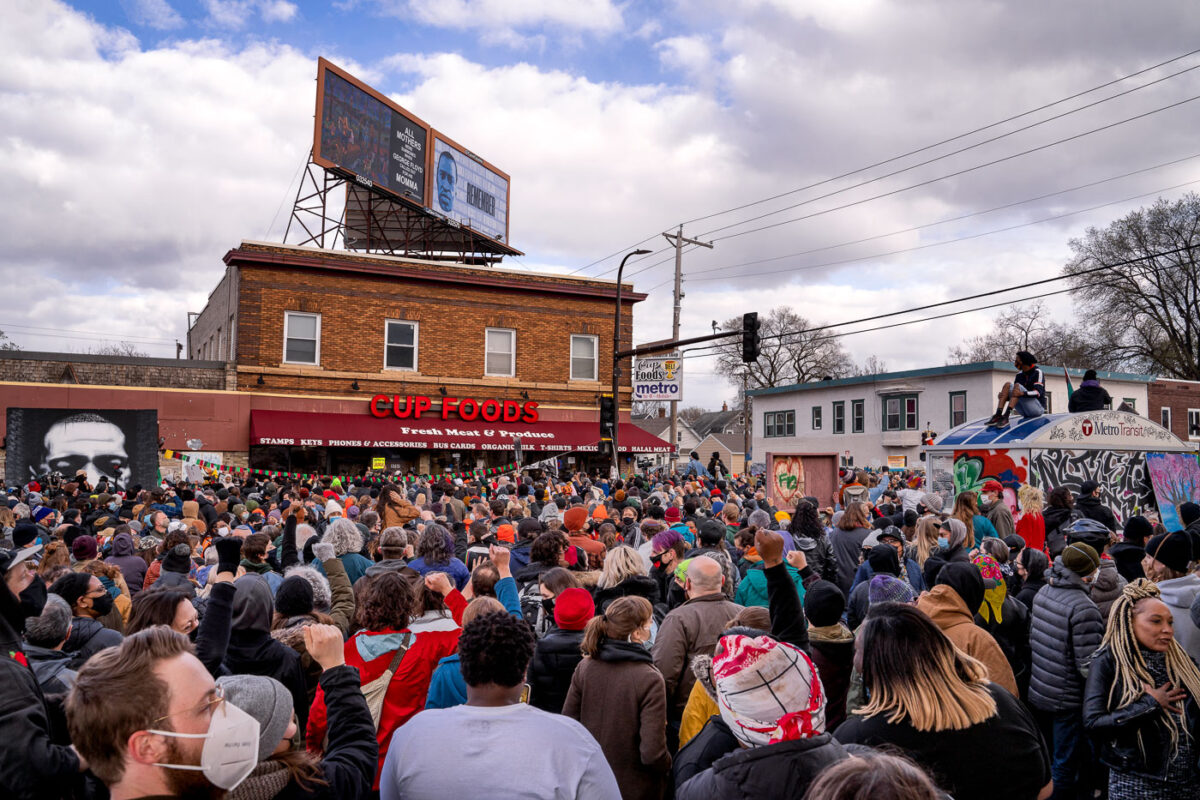
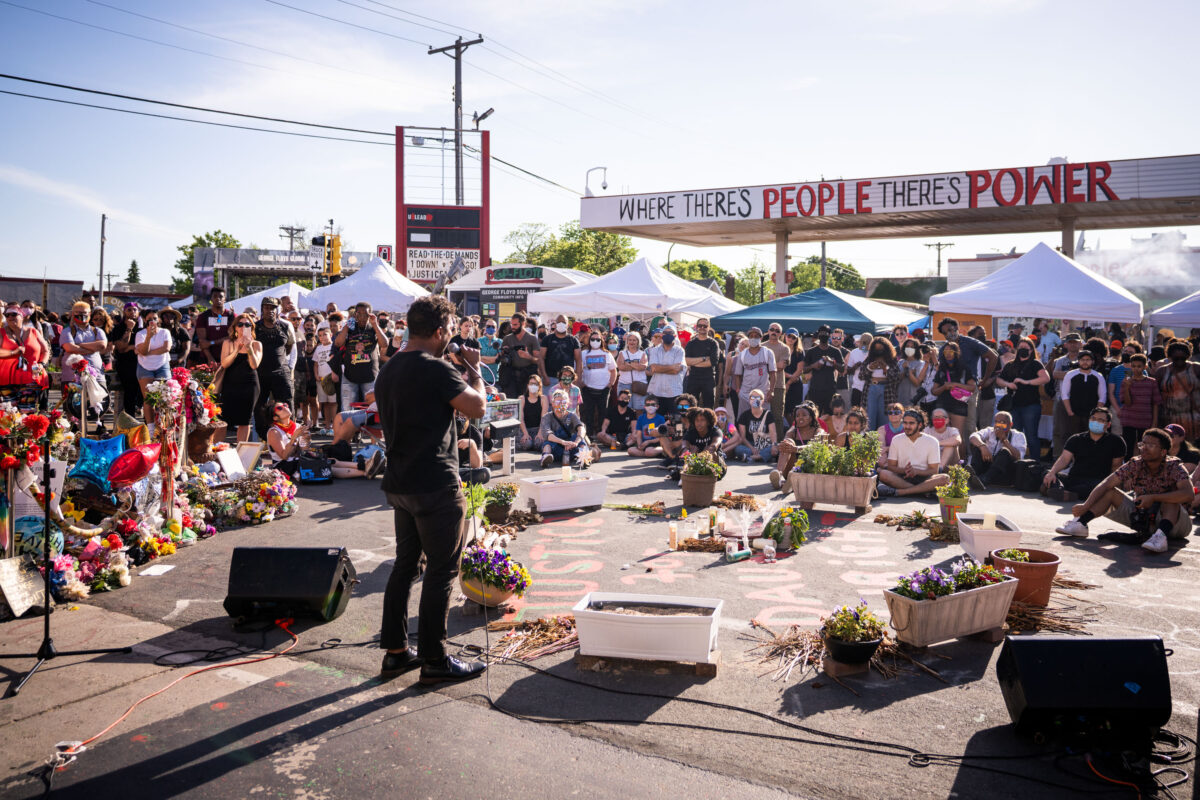
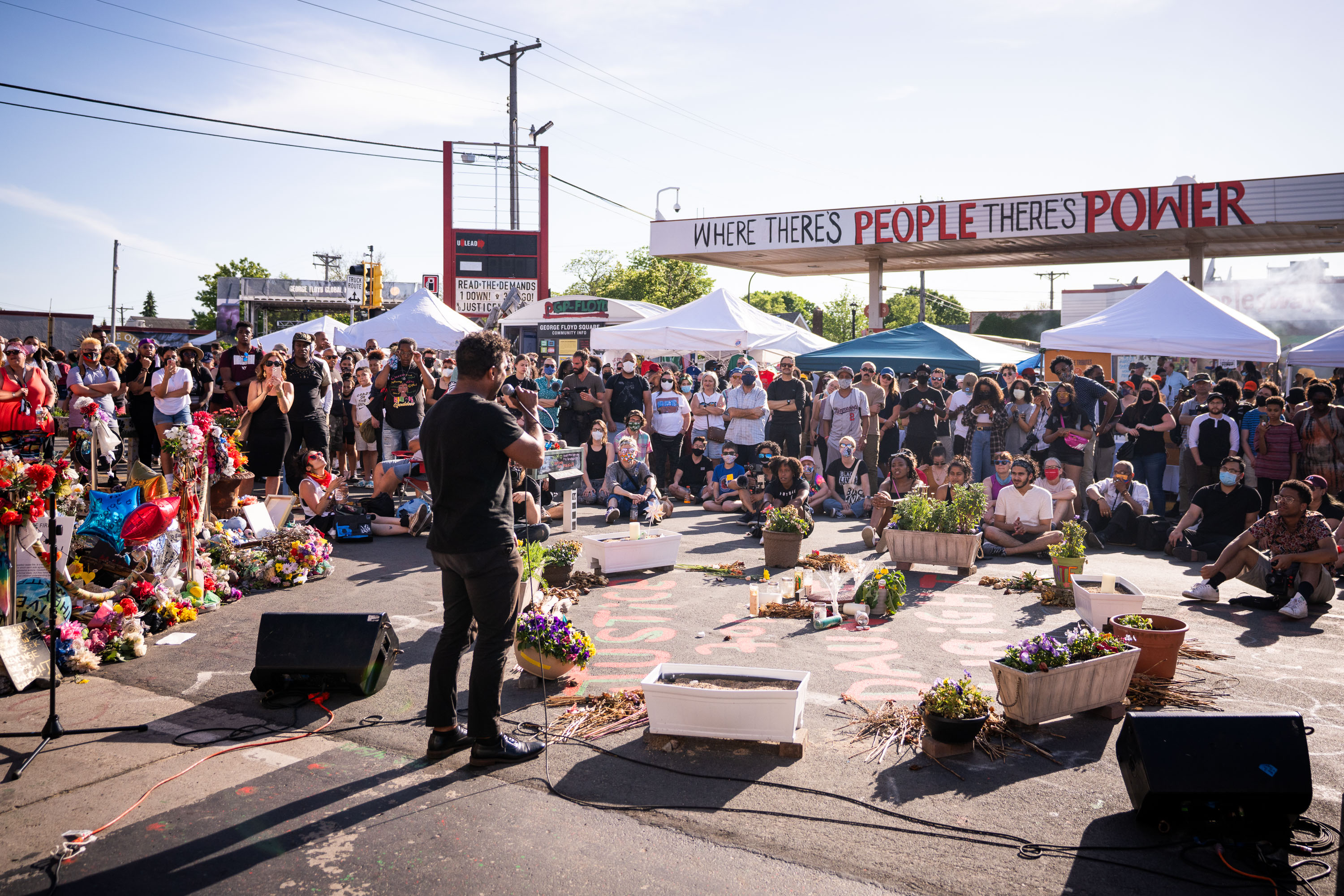
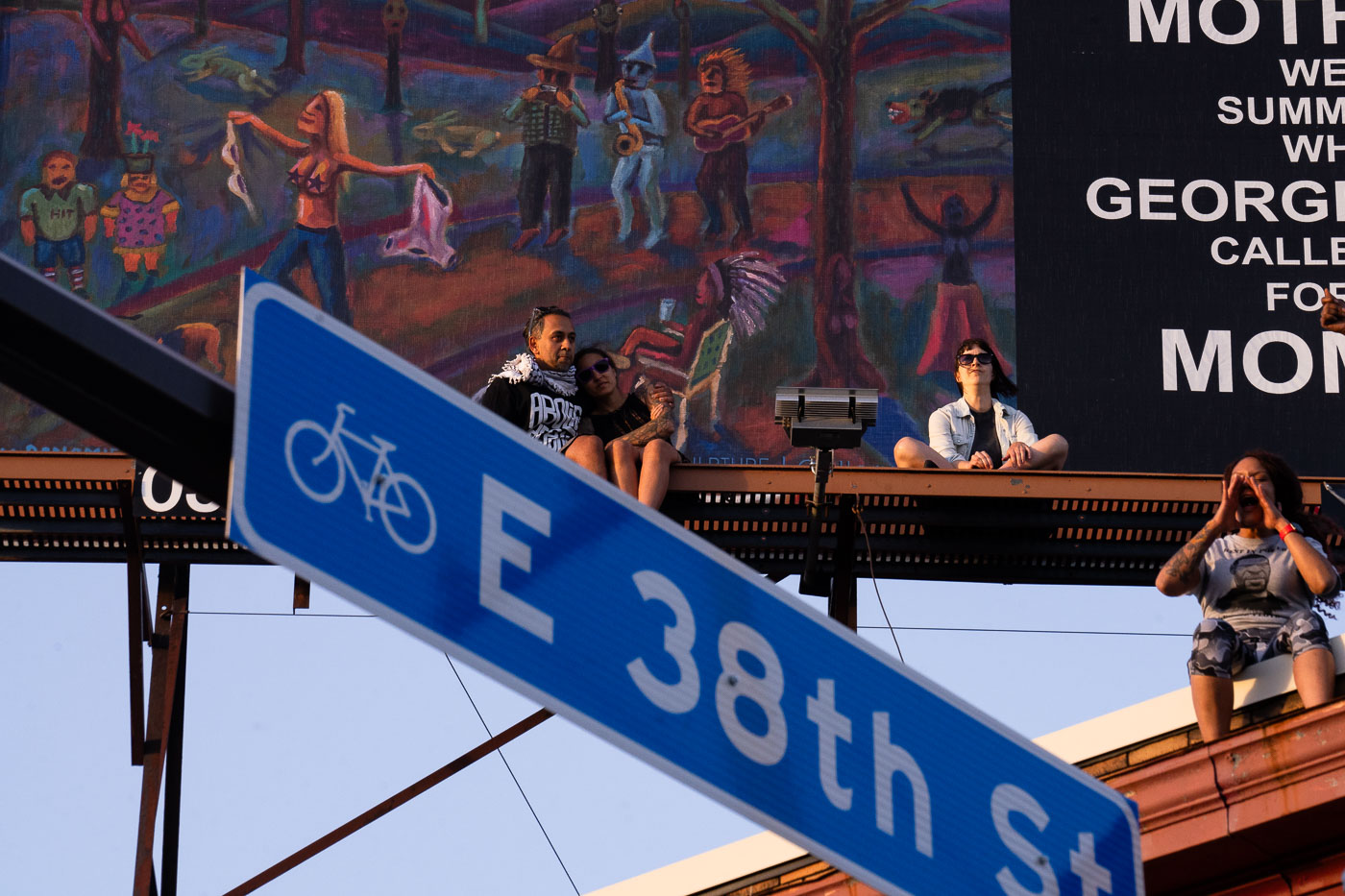
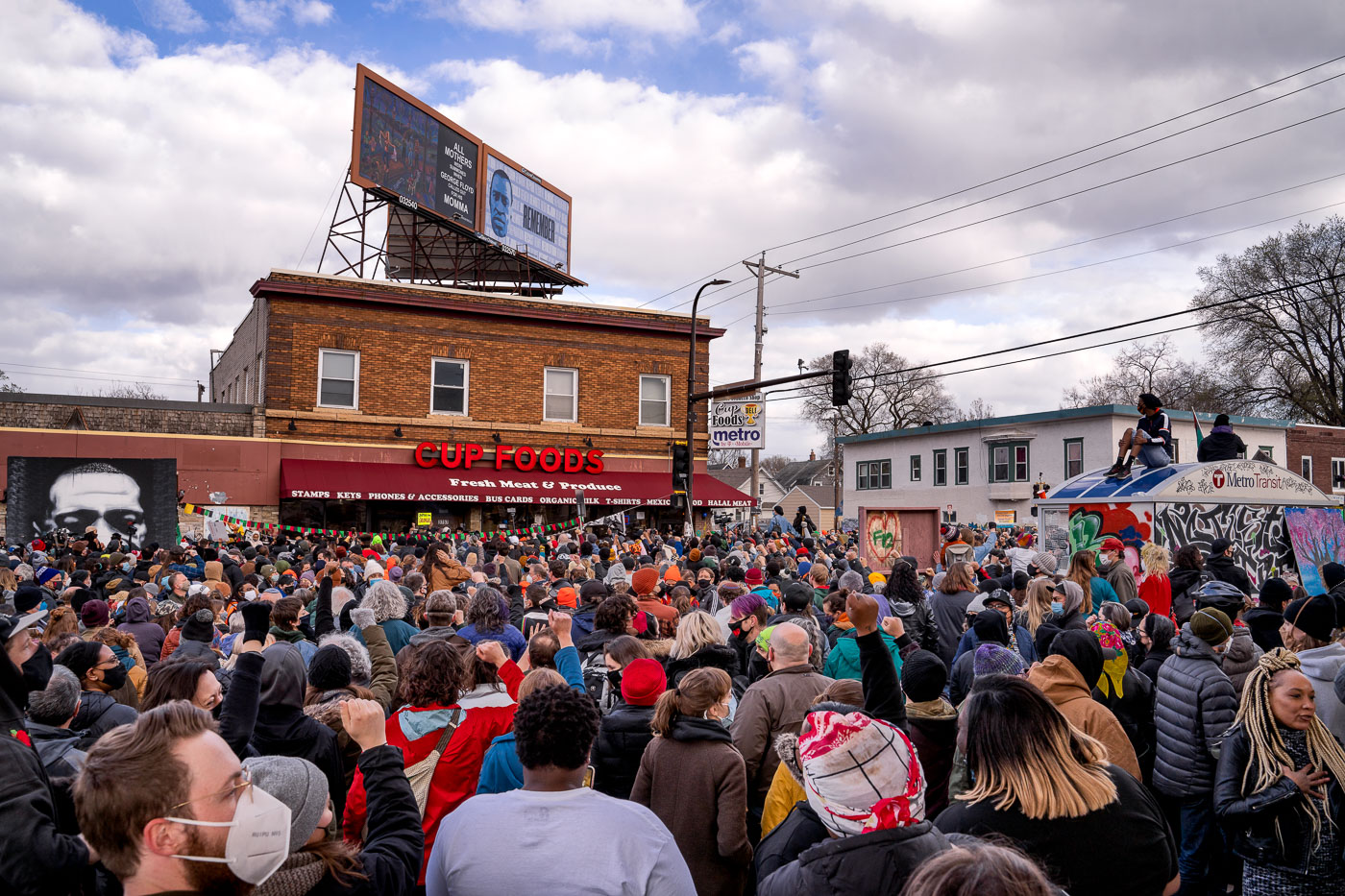
Crowd at George Floyd Square in Minneapolis after the Derek Chauvin verdict.
Crowds gather at George Floyd Square in Minneapolis following the conviction of Derek Chauvin for the murder of George Floyd. The square, located at the intersection of Chicago Avenue and 38th Street, became a focal point for protests and community organizing after Floyd's death in May 2020. The area has been transformed into a memorial and a space for ongoing activism, reflecting the community's demands for racial justice and police accountability. The billboards in the background display messages related to Floyd's death and the broader movement for justice.

Minneapolis: Crowds gather at George Floyd Square after Chauvin verdict
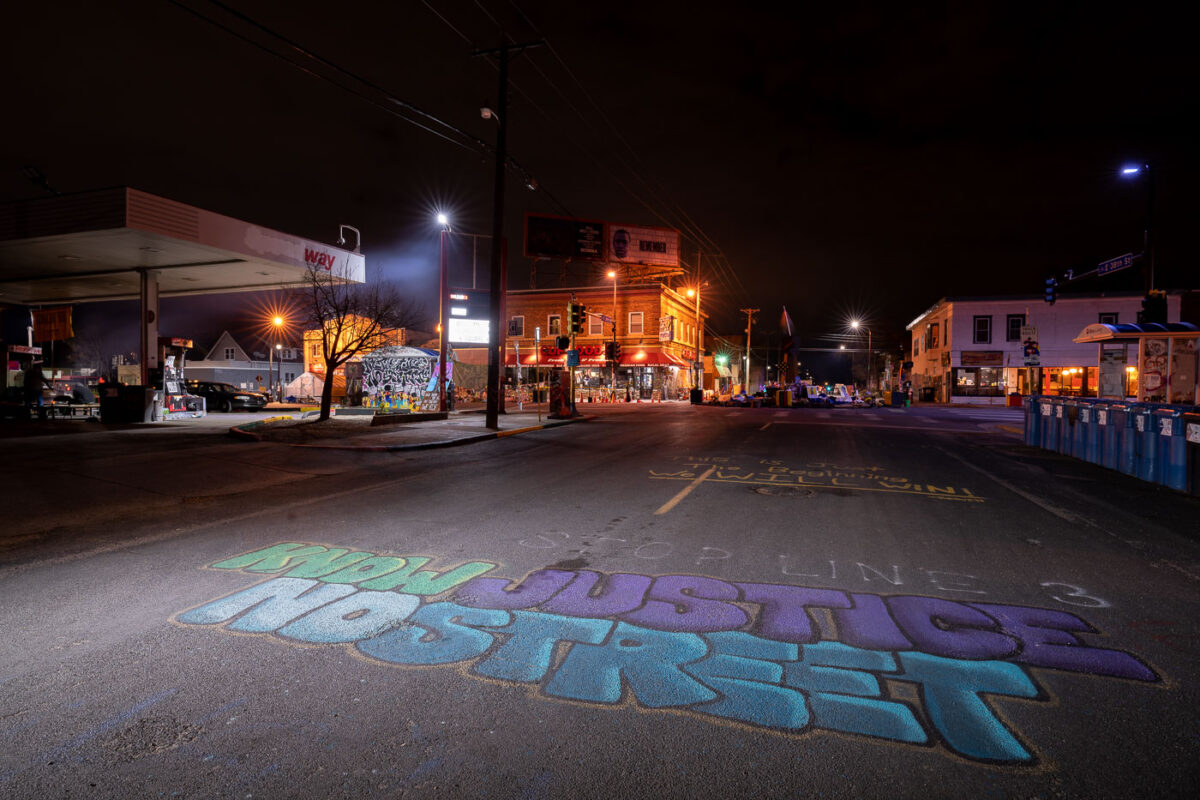
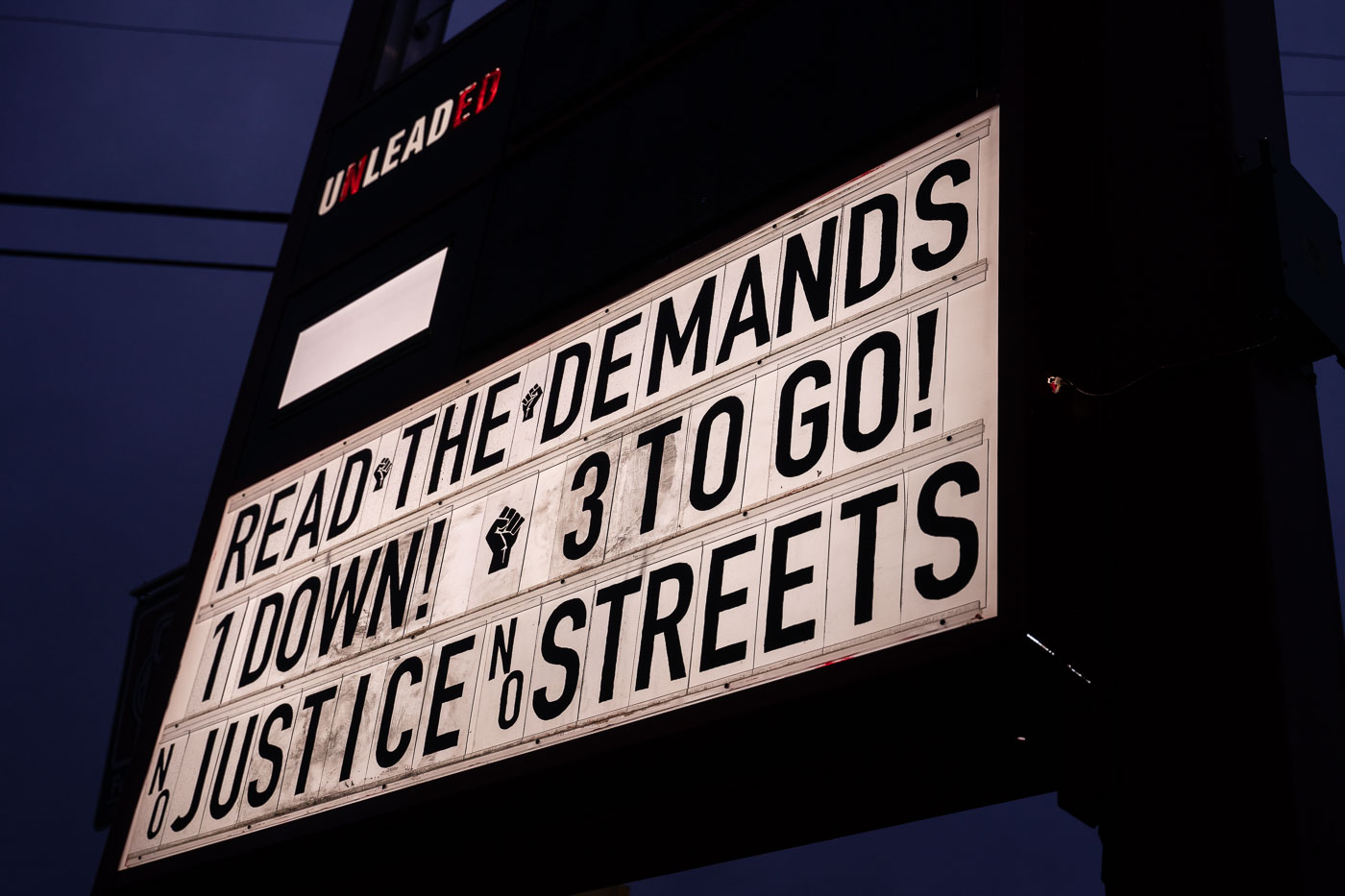
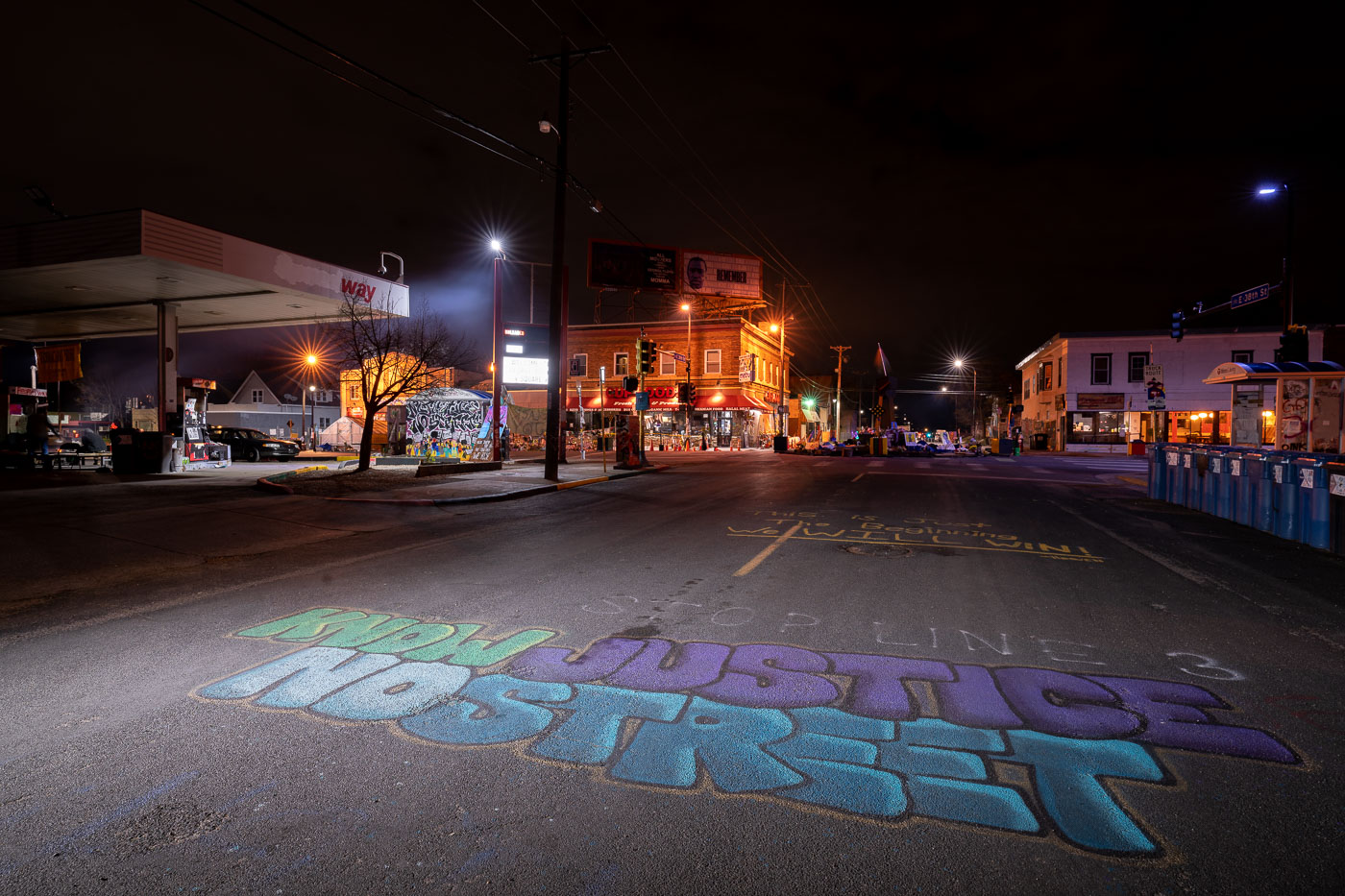
George Floyd Square at 38th Street and Chicago Avenue in Minneapolis with "No Justice No Street" painted on the road.
George Floyd Square, located at the intersection of 38th Street and Chicago Avenue in Minneapolis, became a focal point of protests following the murder of George Floyd in May 2020. The area was occupied by protesters for months, transforming it into a community space and a symbol of resistance. The phrase "No Justice No Street" painted on the asphalt reflects the protesters' demands for accountability and systemic change. The square has since become a significant site of remembrance and activism.

George Floyd Square, Minneapolis: “No Justice No Street”
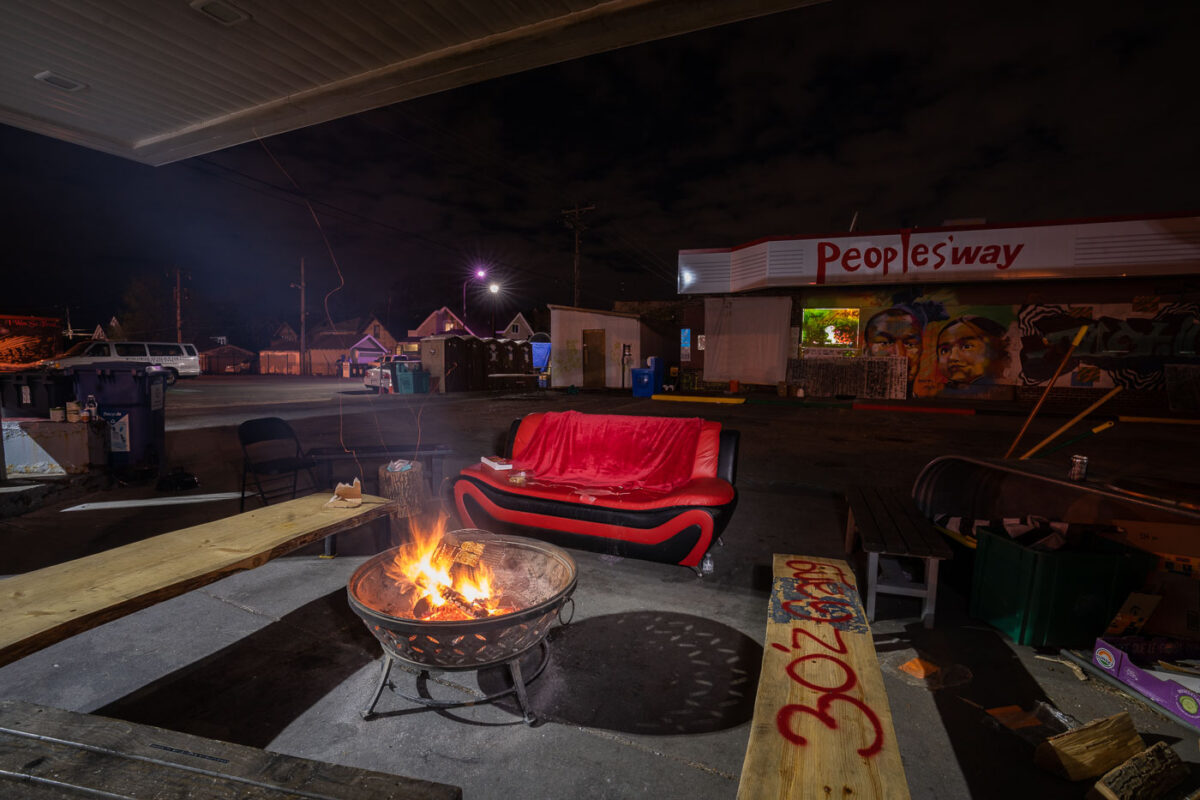
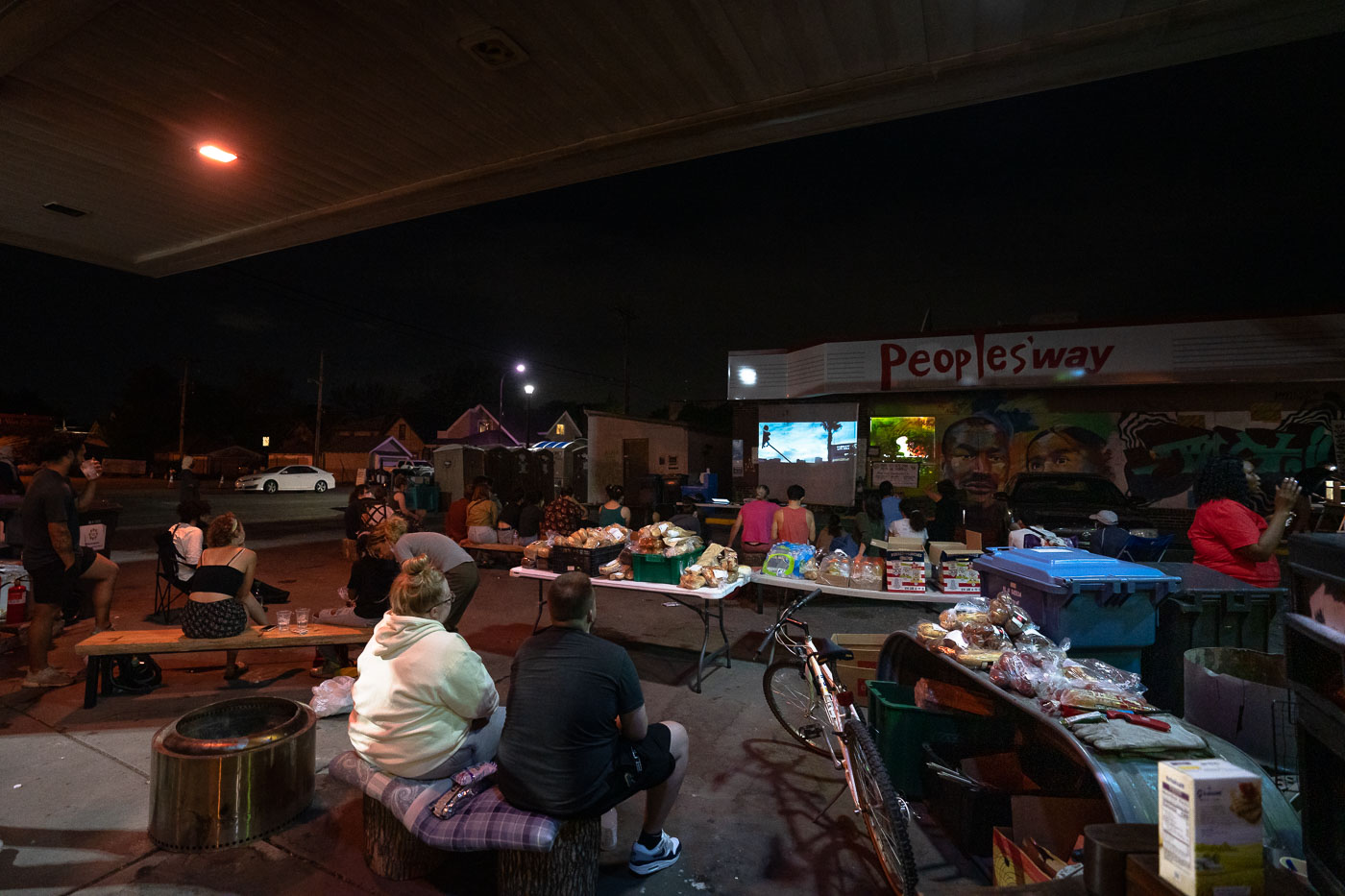
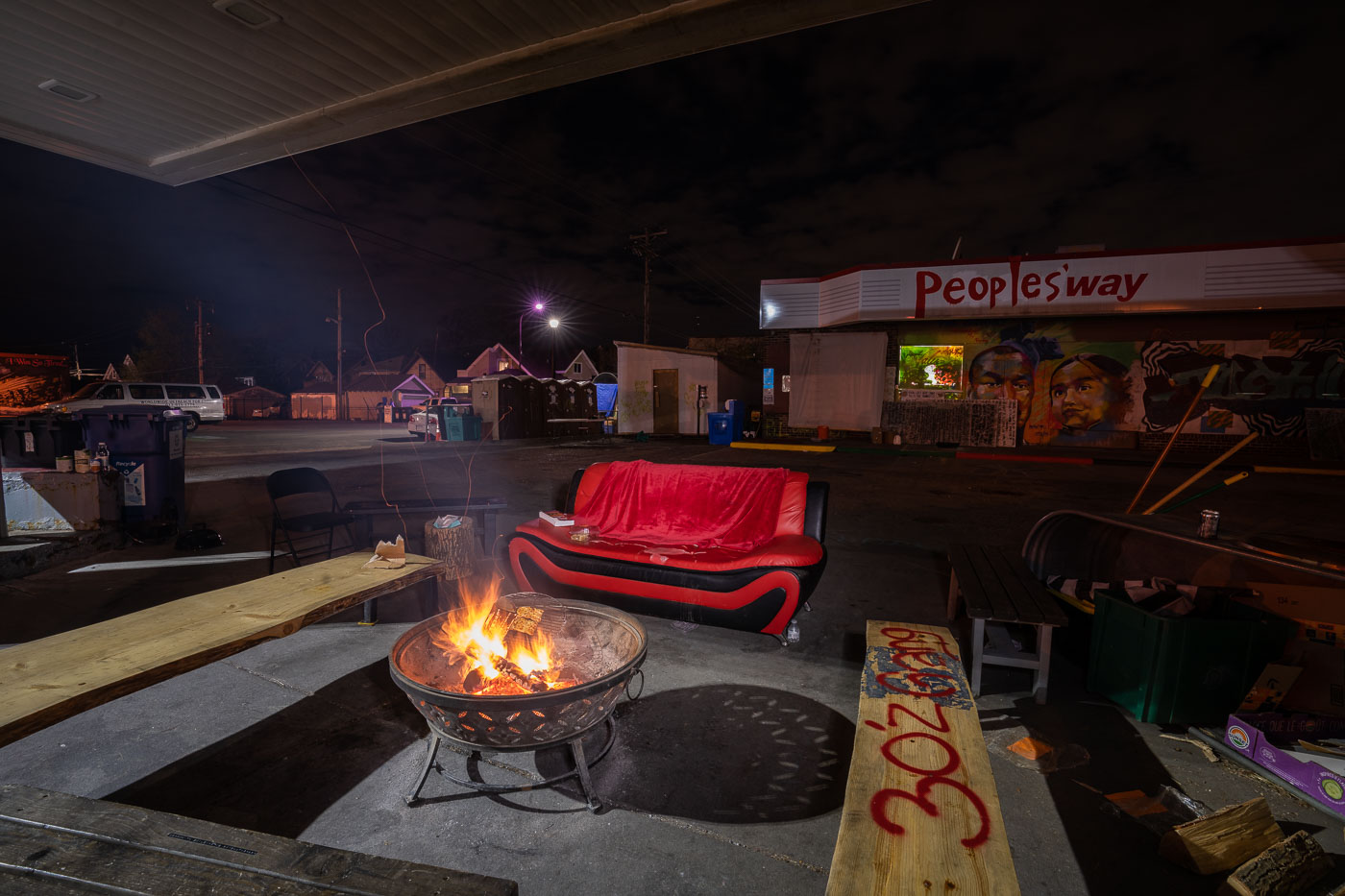
Campfire and seating at George Floyd Square in Minneapolis beneath Peoples Way signage.
A campfire burns at George Floyd Square in Minneapolis, April 2021. The site, located at the intersection of 38th Street and Chicago Avenue, became a focal point for protests following the murder of George Floyd in May 2020. The area was renamed "The People's Way" by activists and served as a space for community gatherings and continued demonstrations against racial injustice. The "Peoples Way" signage visible on the building in the background refers to this renaming.

George Floyd Square Campfire, Minneapolis, April 2011
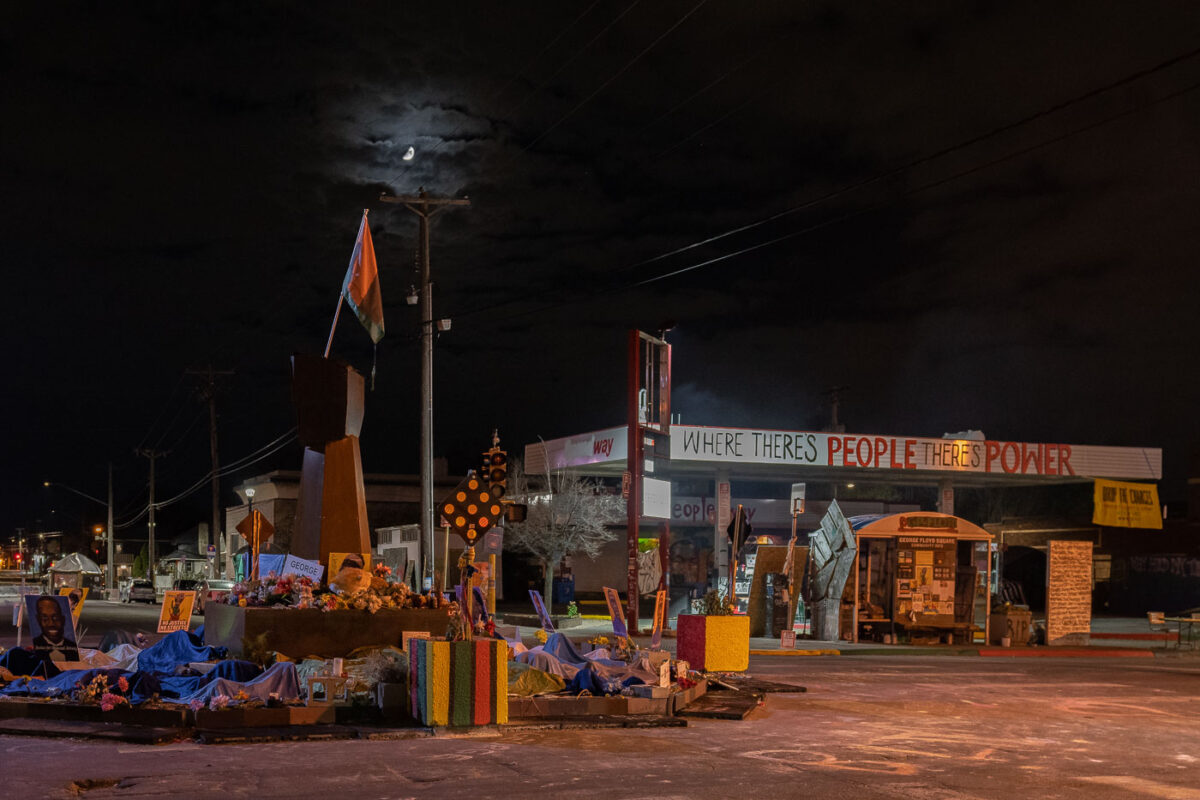
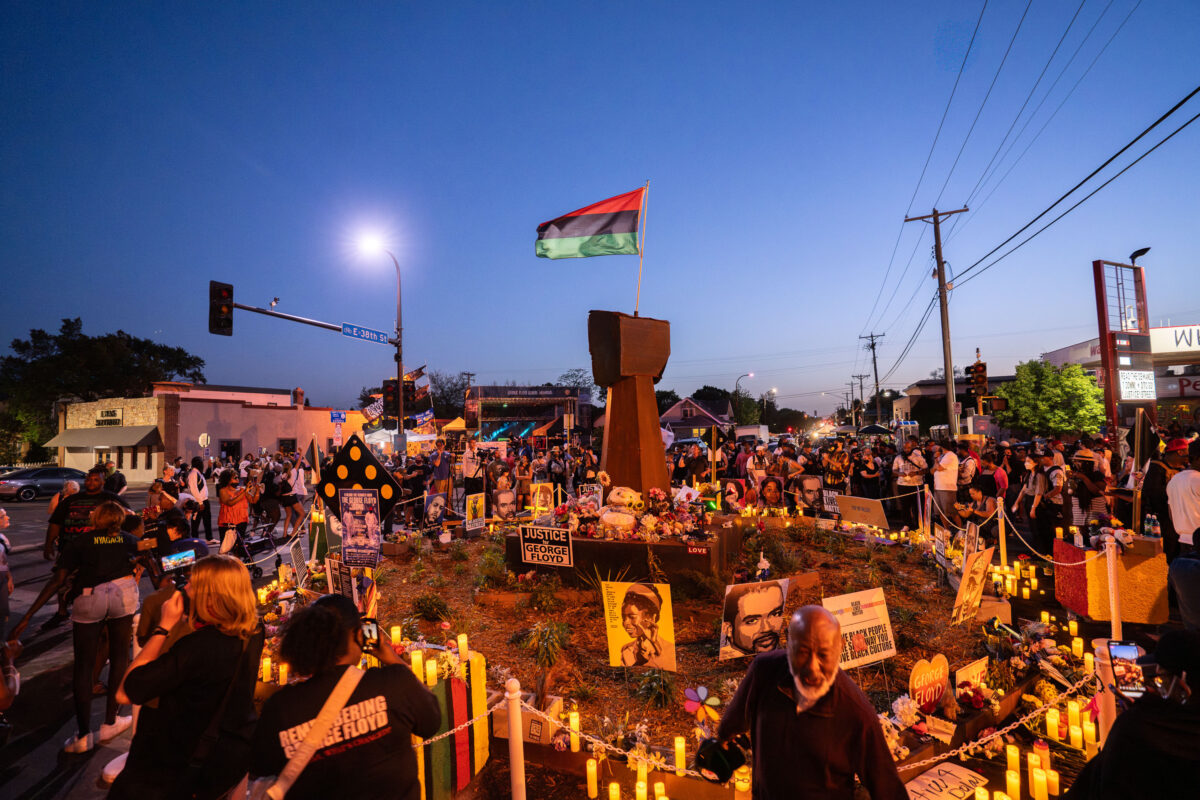
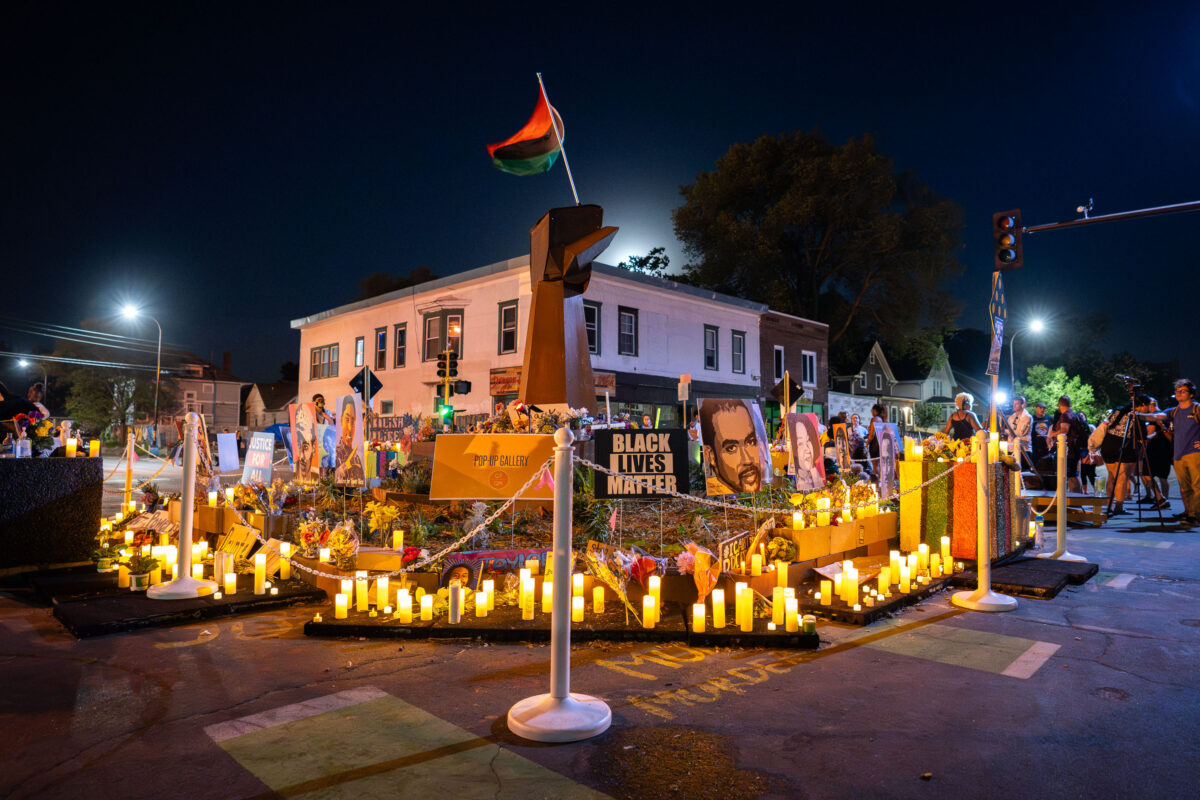
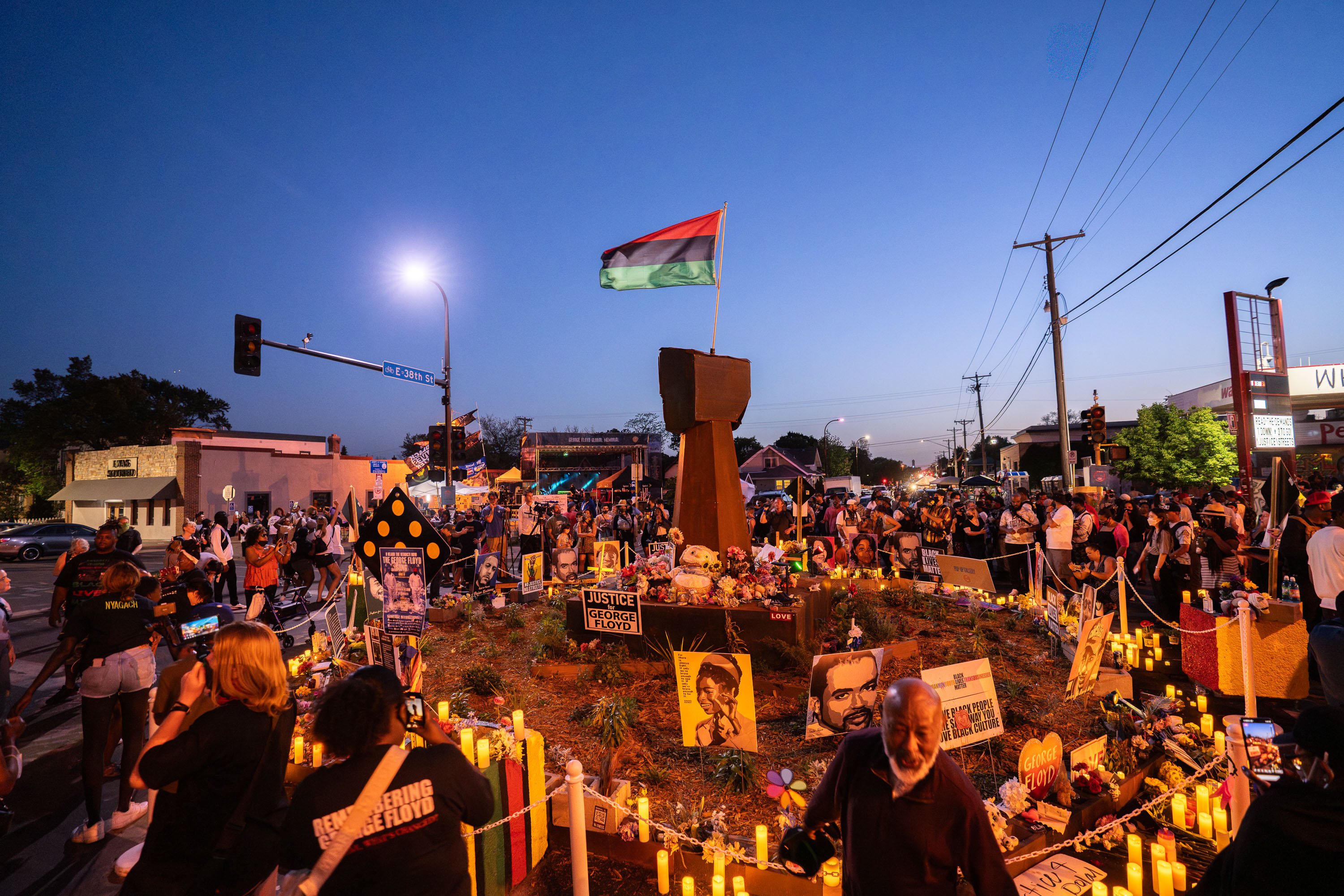
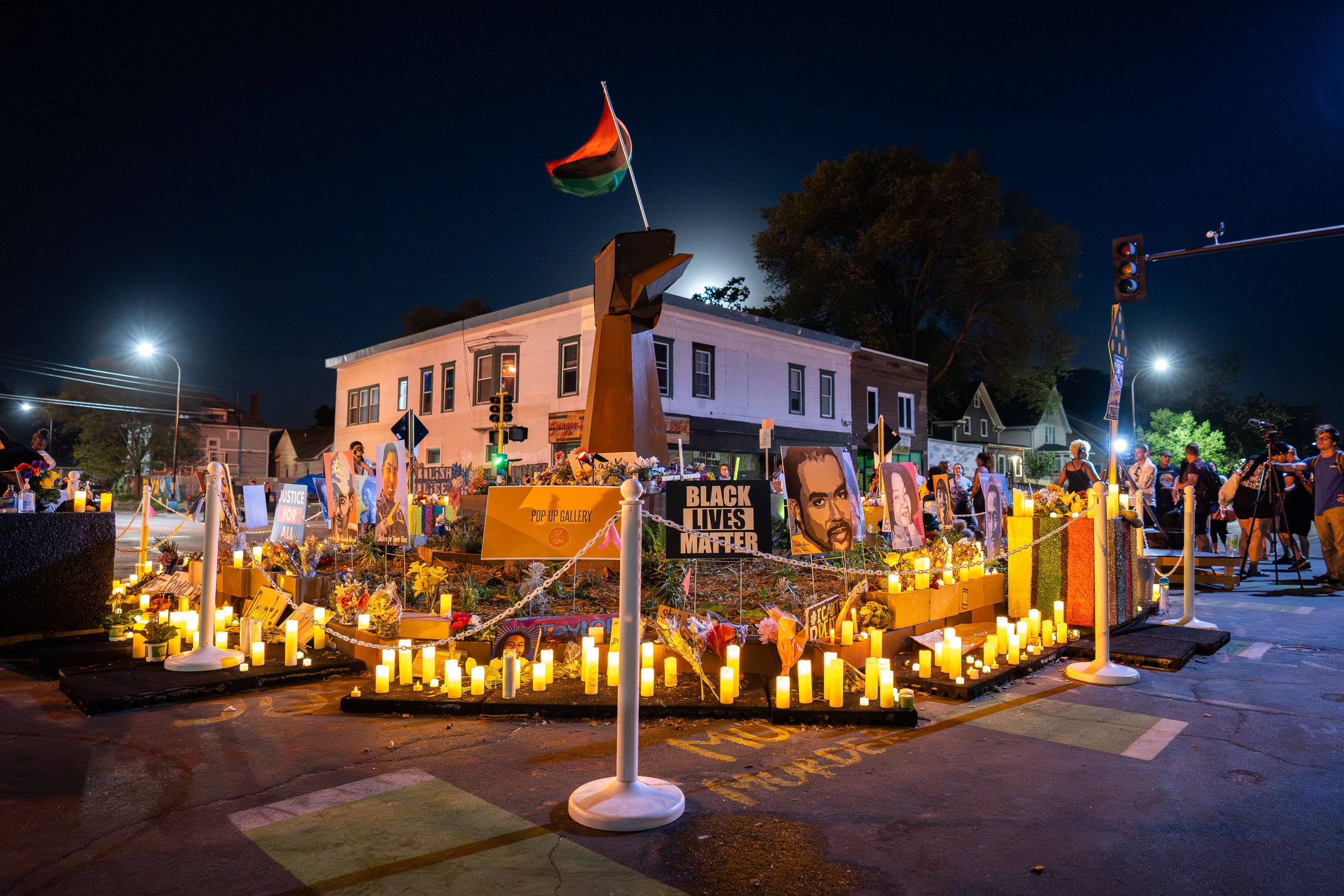
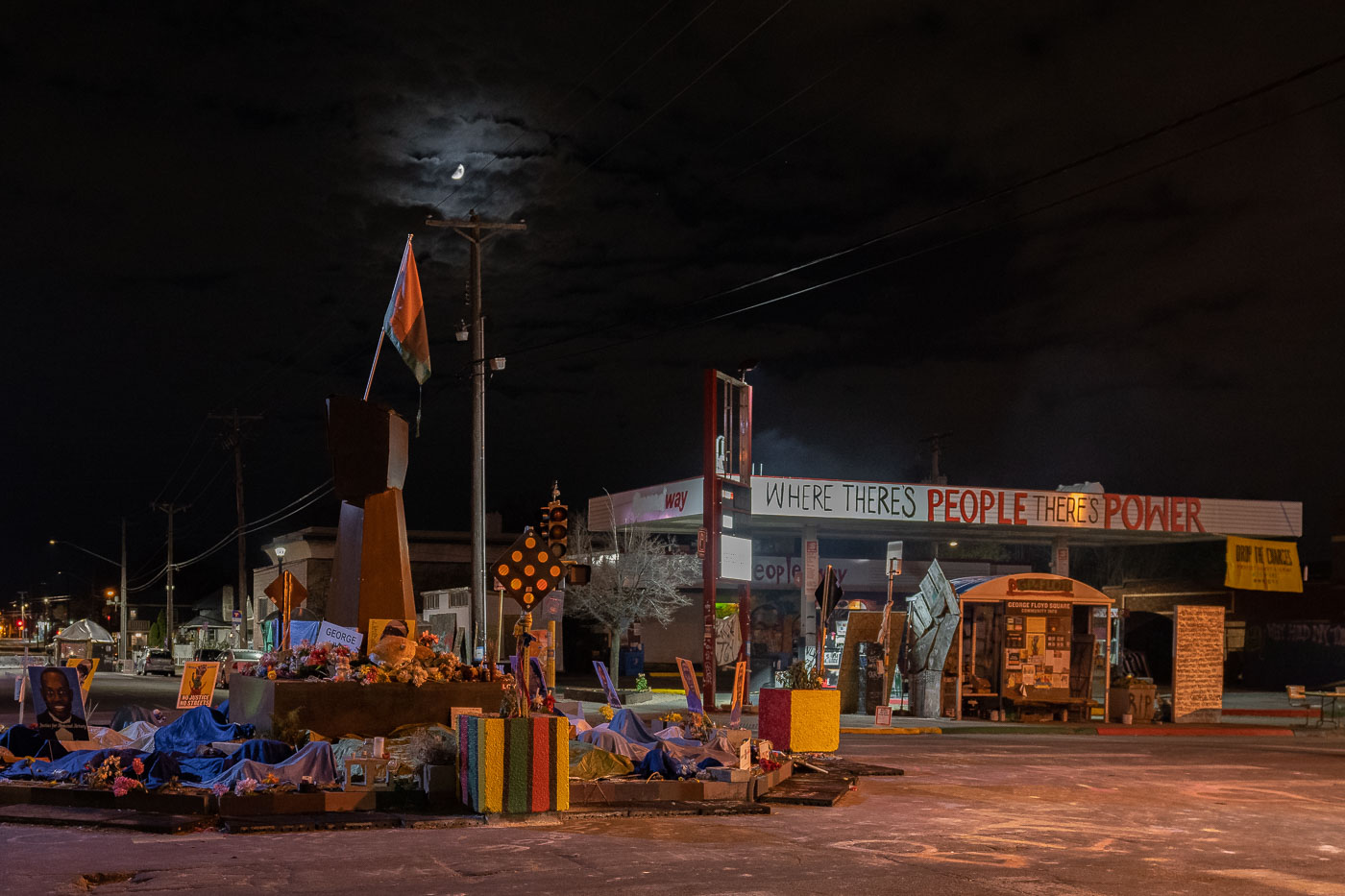
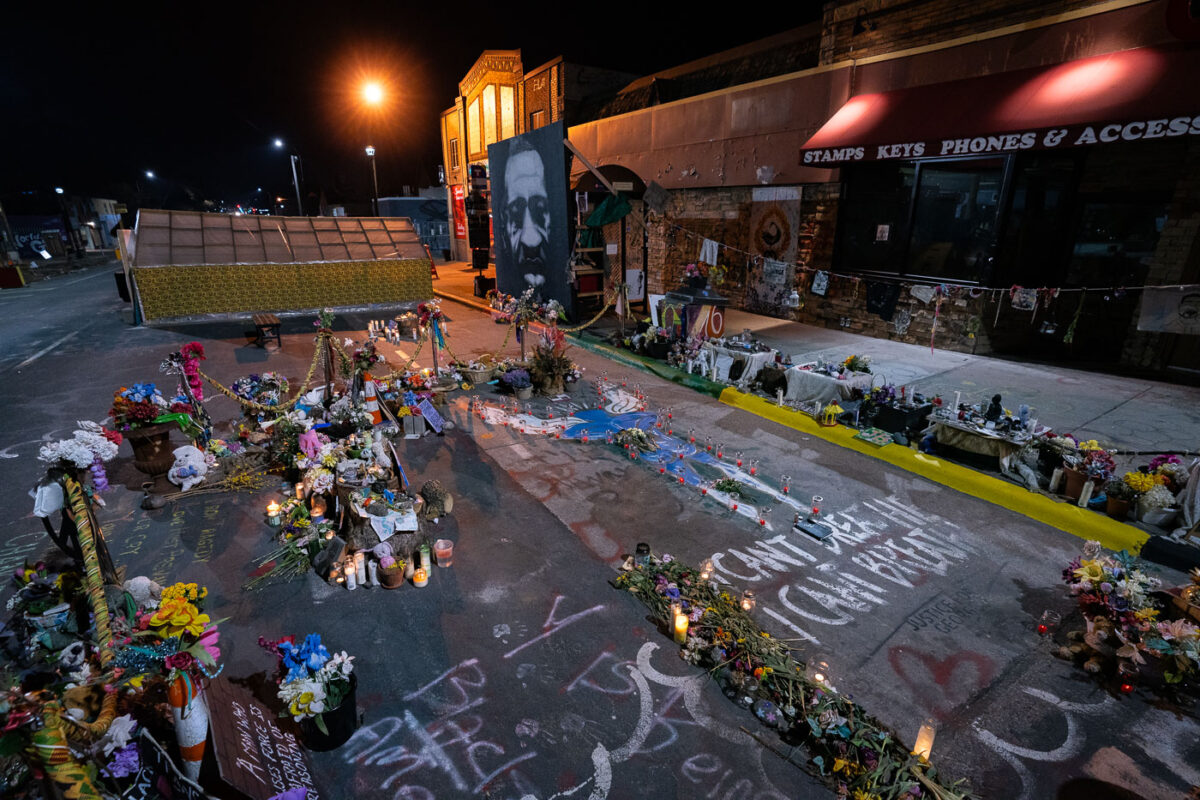
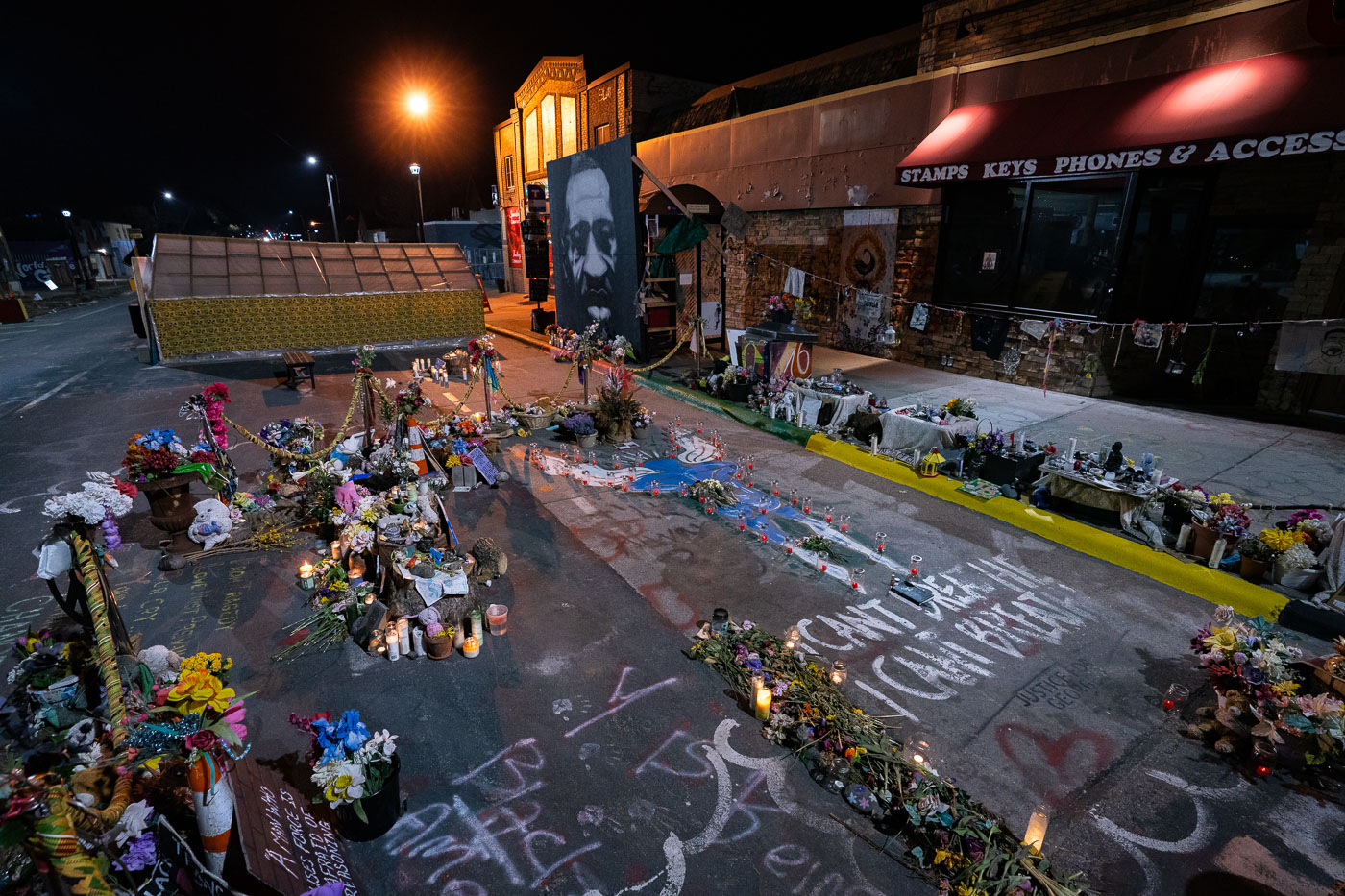
George Floyd Square memorial at 38th and Chicago in Minneapolis at night.
George Floyd Square, also known as "The People's Way," is a four-block area in Minneapolis that has been under community control since the murder of George Floyd on May 25, 2020. This memorial was photographed on the evening the jury began deliberations in the Derek Chauvin murder trial. The site serves as a memorial to George Floyd and other victims of racial injustice, and as a space for community organizing and expression.

George Floyd Square Memorial at Night, Minneapolis
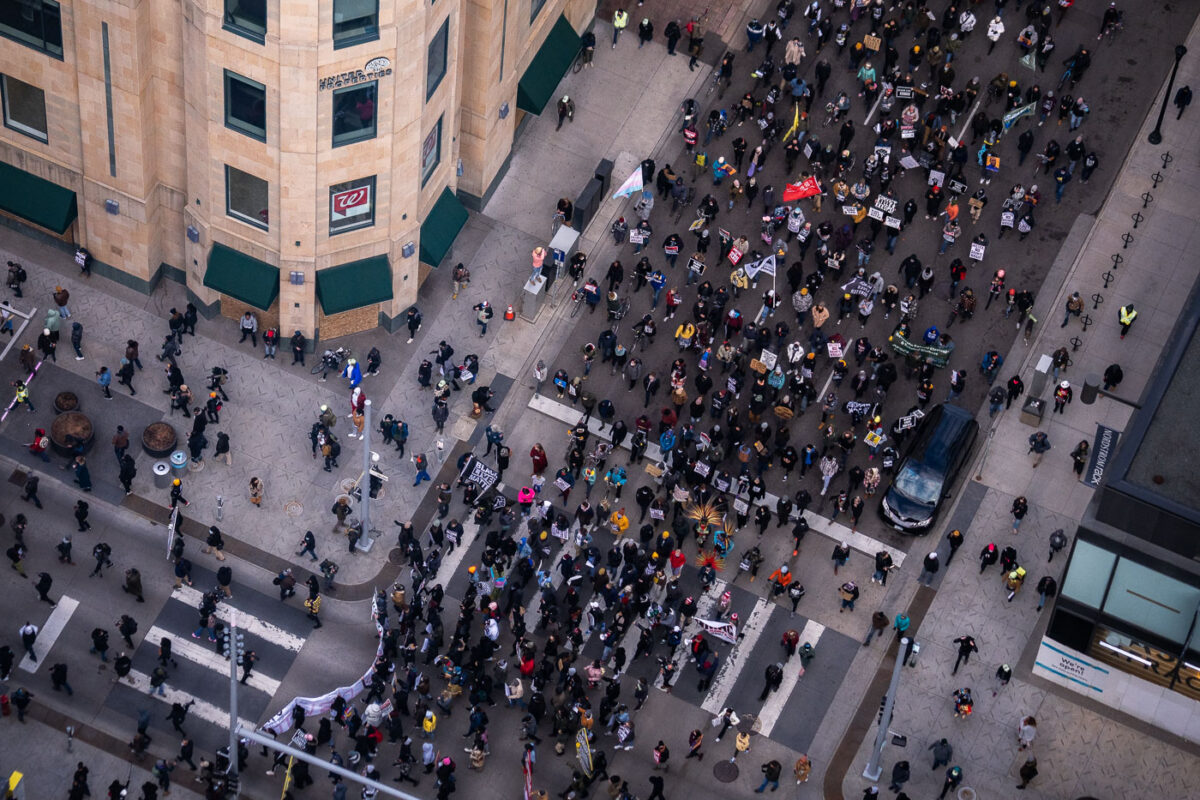
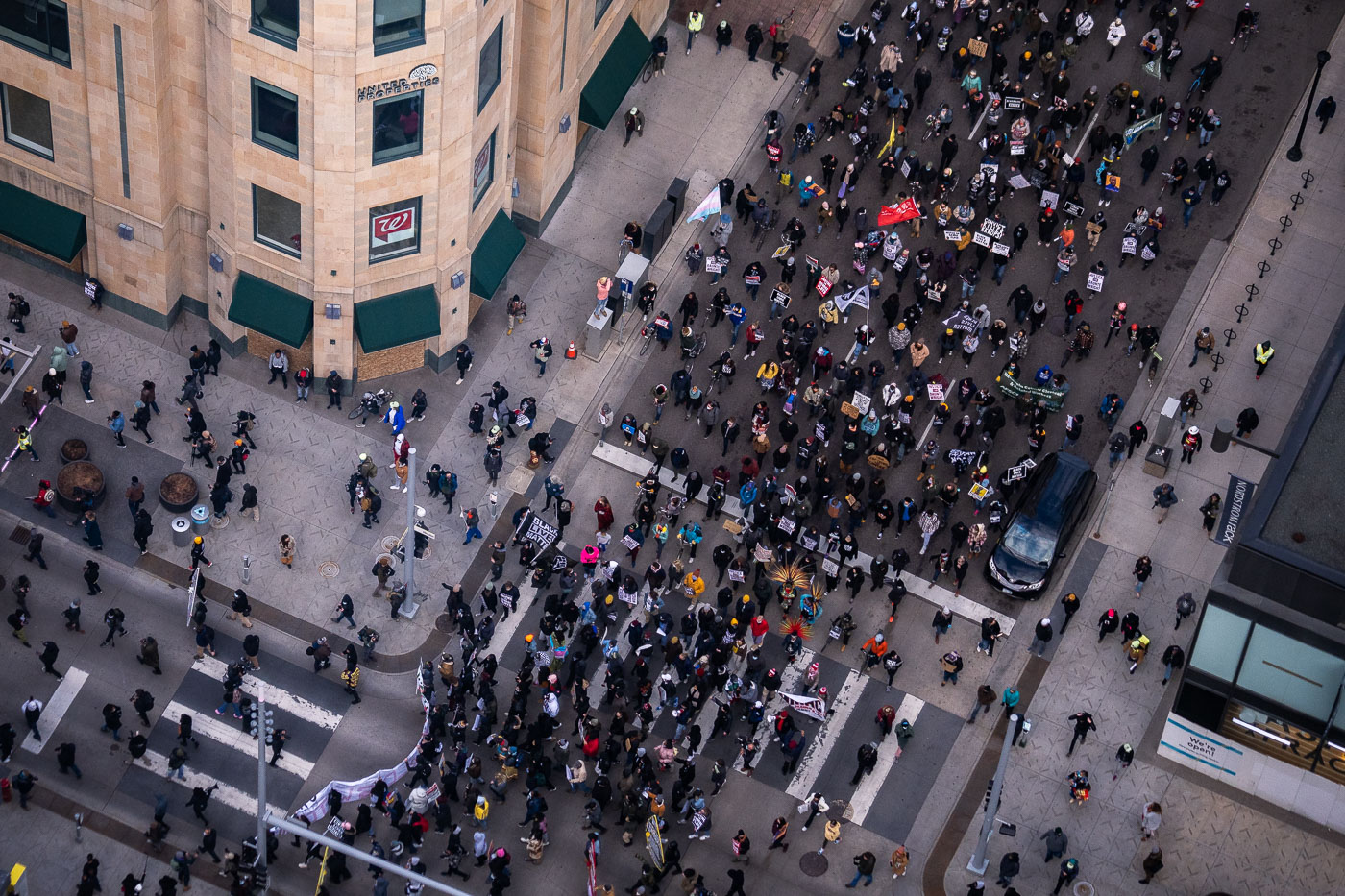
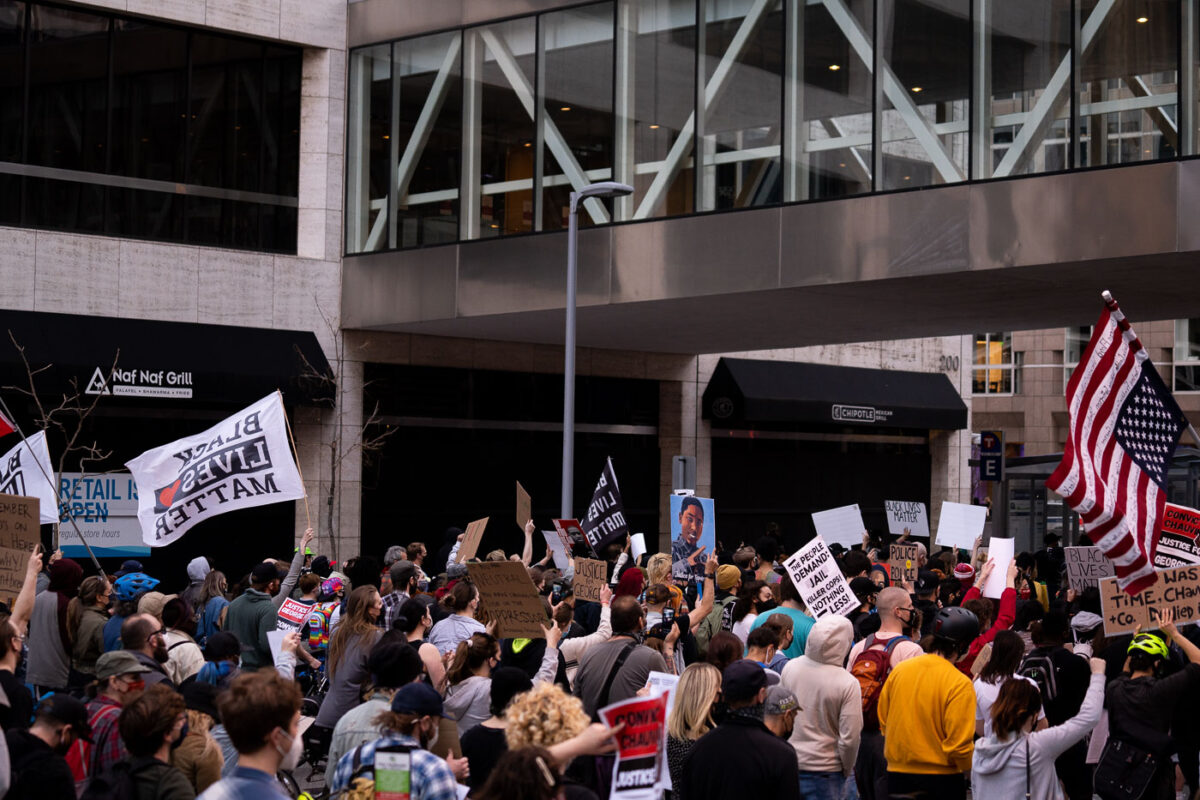
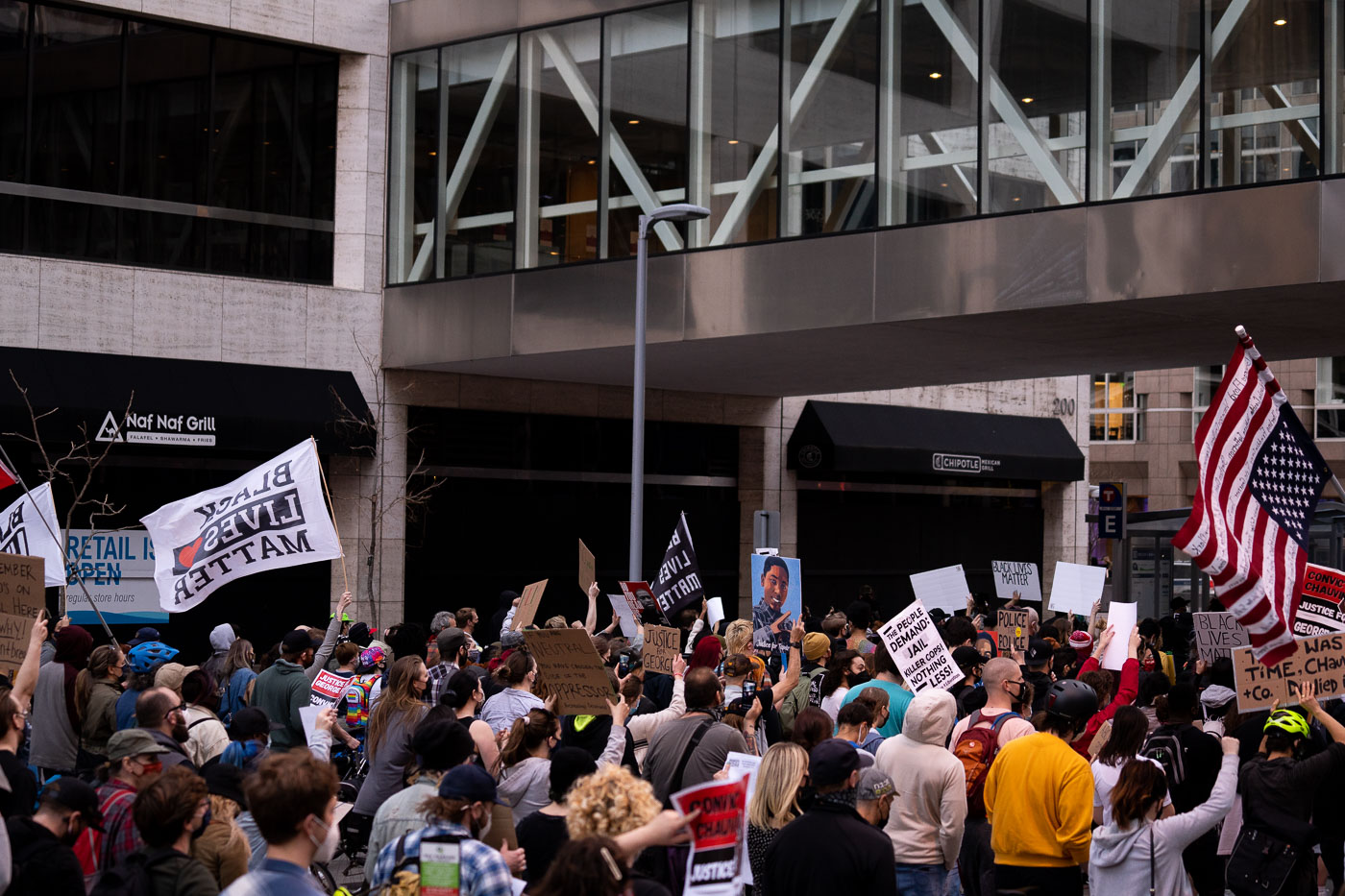
Protest marchers in downtown Minneapolis during jury deliberations in the Derek Chauvin trial.
On April 19, 2021, hundreds marched through downtown Minneapolis as the jury began deliberations in the murder trial of former police officer Derek Chauvin. The protest, which continued the year-long demonstrations for racial justice and police accountability, took place on the anniversary of George Floyd's murder. Protesters carried signs with messages such as "Justice for Daunte Wright" and "Black Lives Matter," reflecting broader concerns about police brutality and systemic racism in the United States. The march occurred in the same city where George Floyd's death in police custody sparked widespread unrest and calls for reform.

Minneapolis Protest for Justice as Chauvin Trial Jury Deliberates
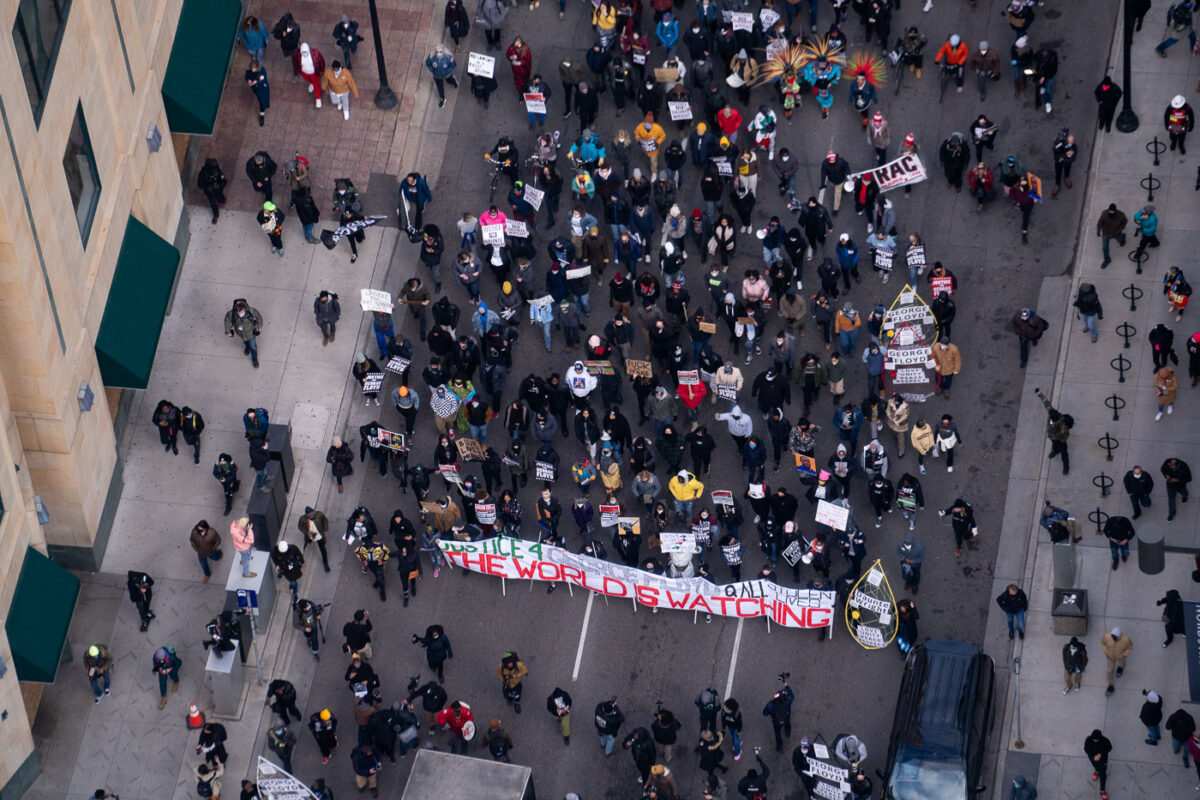
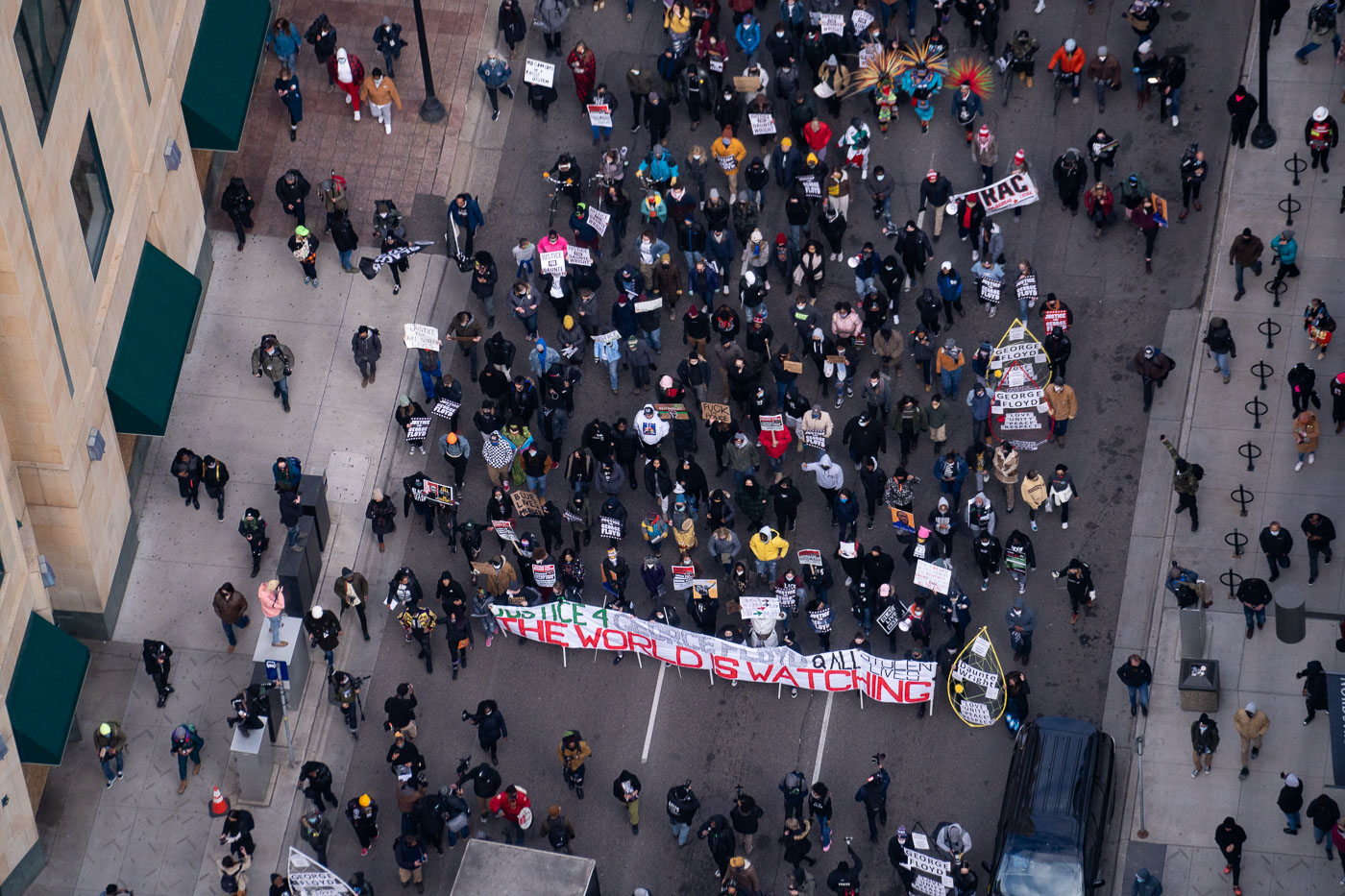
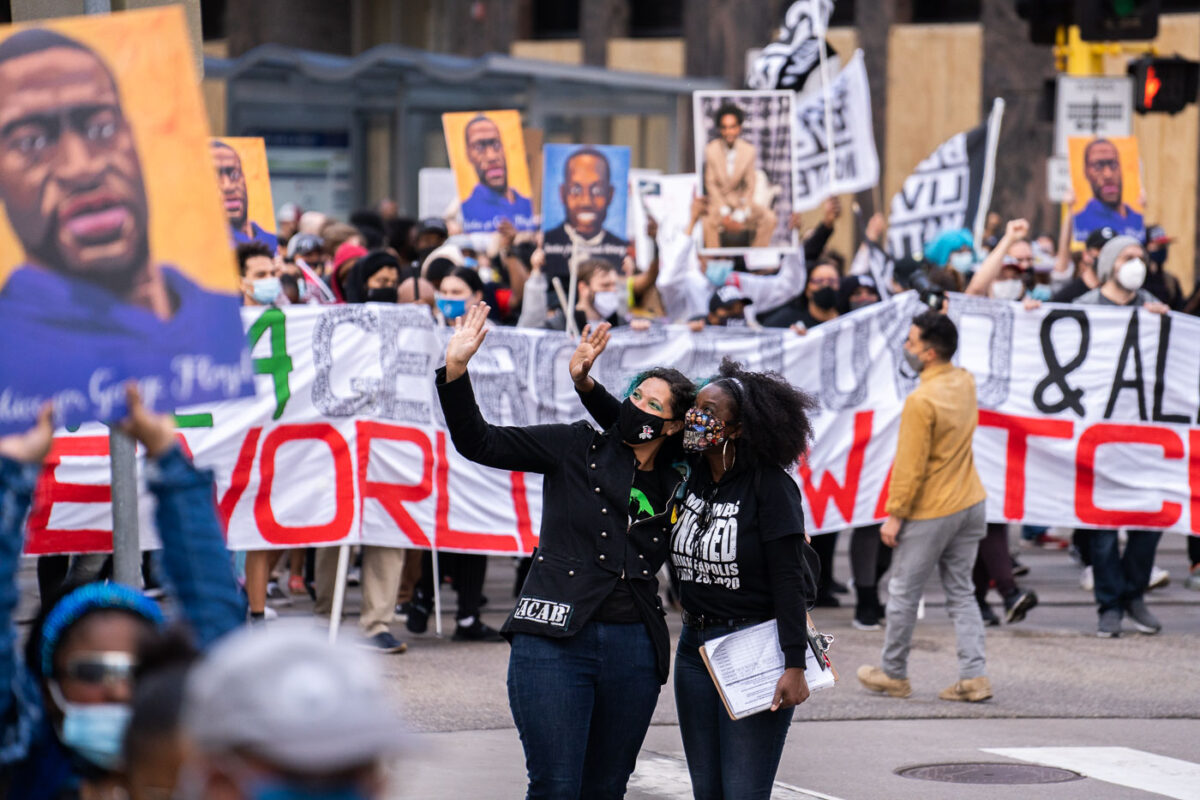
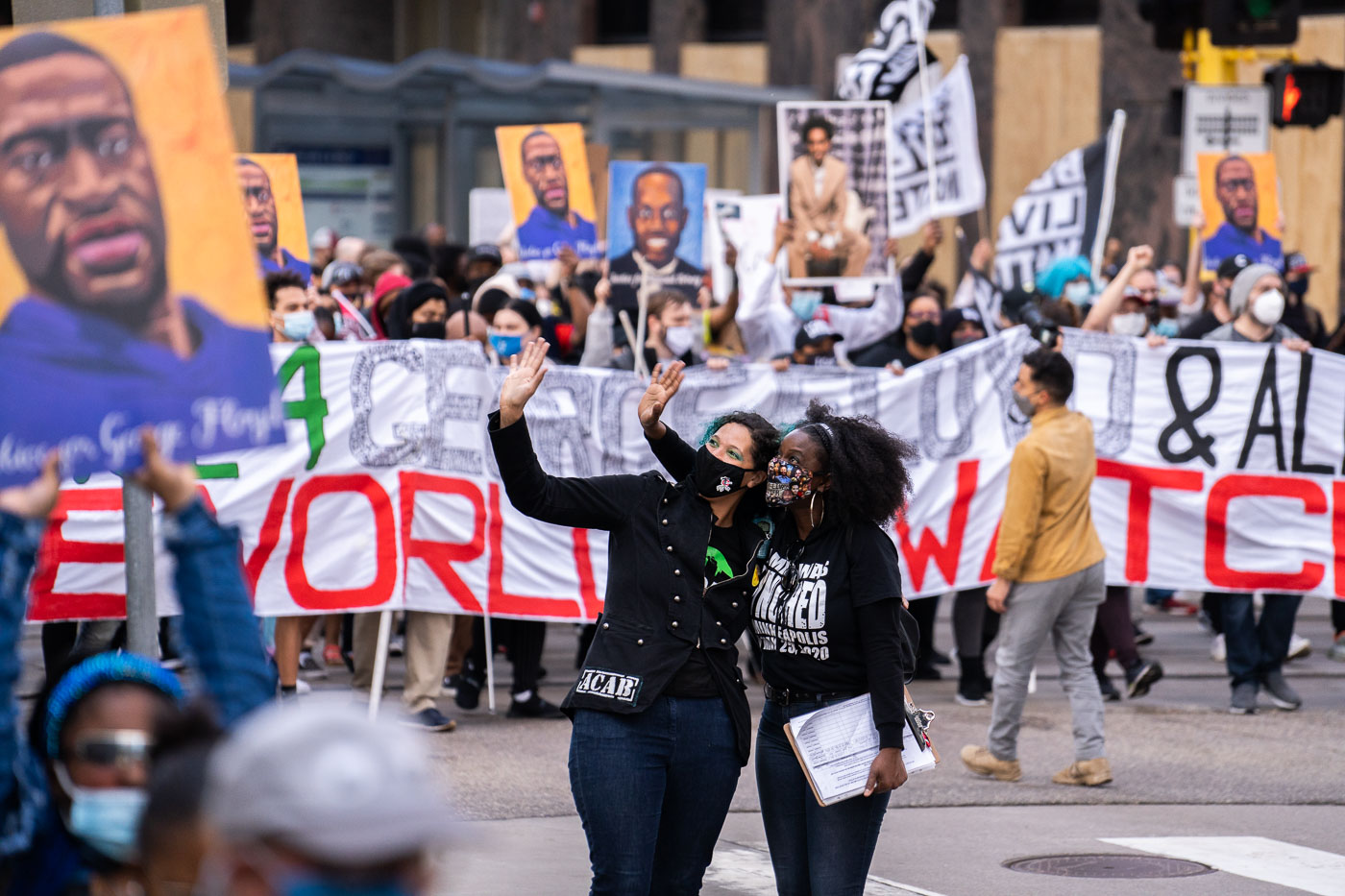
Protesters marching in downtown Minneapolis with a justice banner during the Derek Chauvin trial.
On April 19, 2021, hundreds marched through downtown Minneapolis as the jury began deliberations in the murder trial of Derek Chauvin. This protest was part of ongoing demonstrations that had occurred for nearly a year following the death of George Floyd. The marchers carried signs demanding justice and accountability, reflecting the broader movement for racial equality and police reform that gained national attention in 2020. The event highlighted the continued public engagement with issues of systemic racism and police brutality in the city and across the nation.

Minneapolis Protest for Justice on Chauvin Trial Jury Day
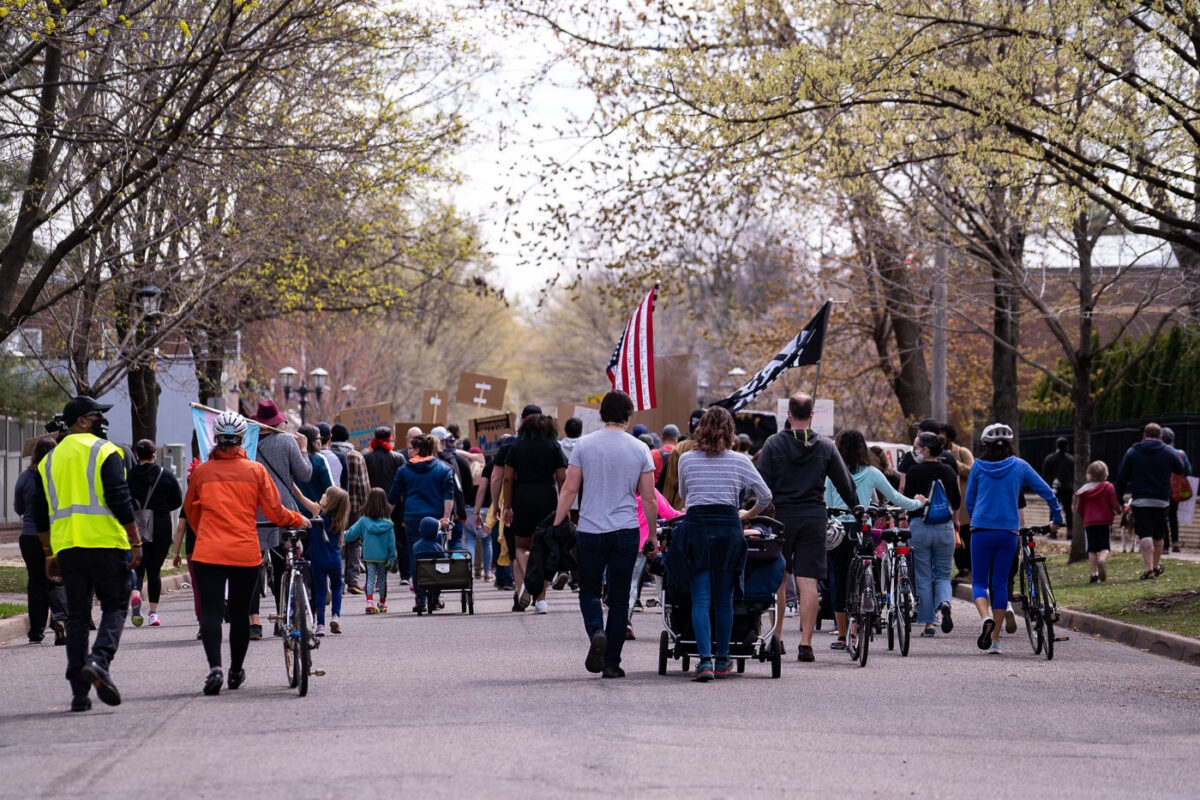
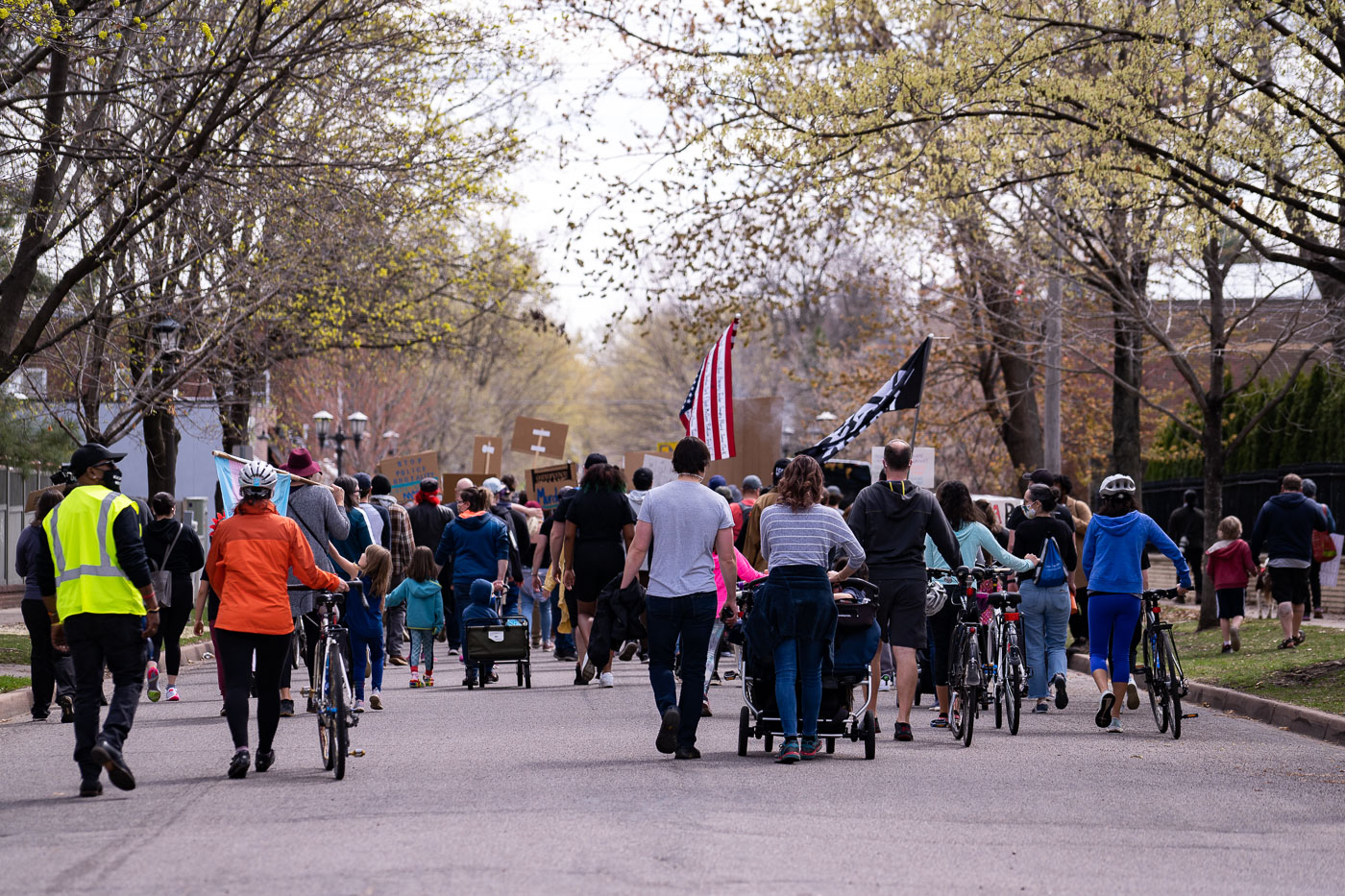
Protesters march toward the Minnesota Governor's Residence in St. Paul with signs, bicycles, and flags.
Protesters marched towards the Minnesota Governor's Residence in St. Paul to voice their concerns regarding the treatment of demonstrators in the preceding week. The march occurred in the context of ongoing protests related to the killing of Daunte Wright in nearby Minneapolis. This event highlights the intersection of public dissent and governmental response, as citizens gathered to express grievances directly to the state's chief executive.

Protesters March at Governor’s Residence in St. Paul
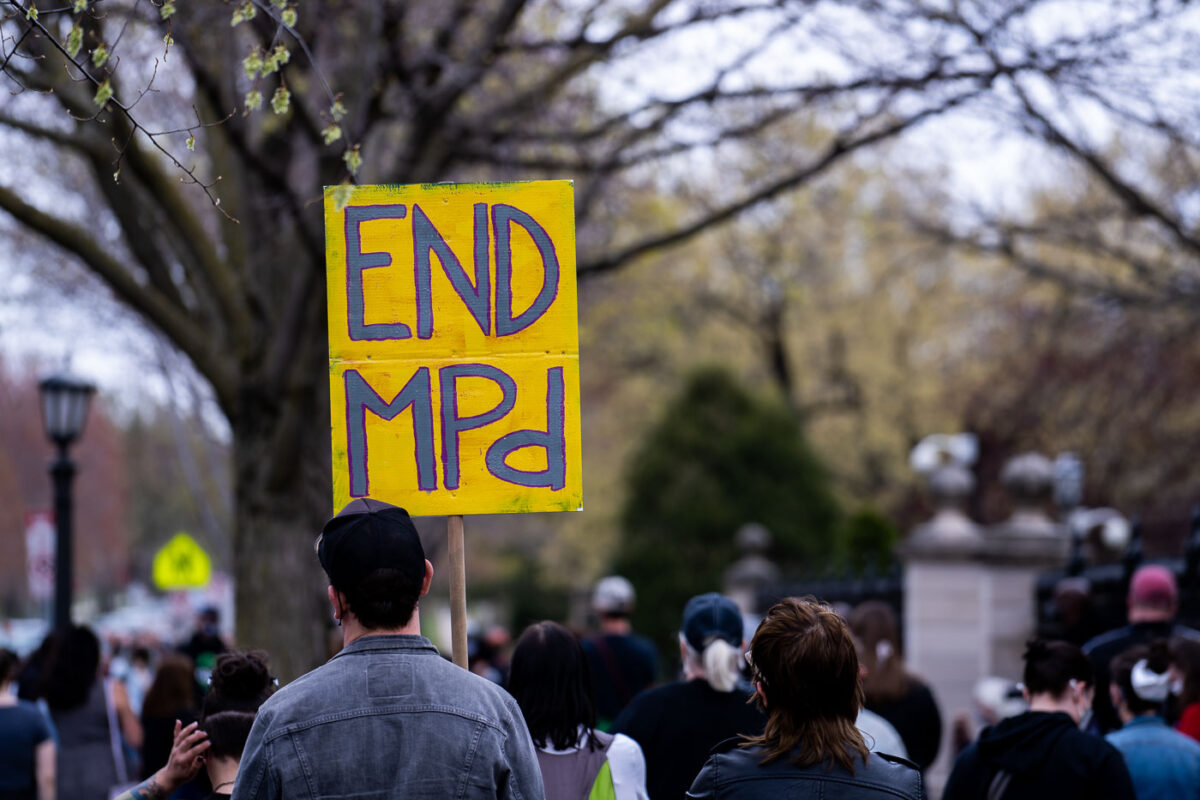
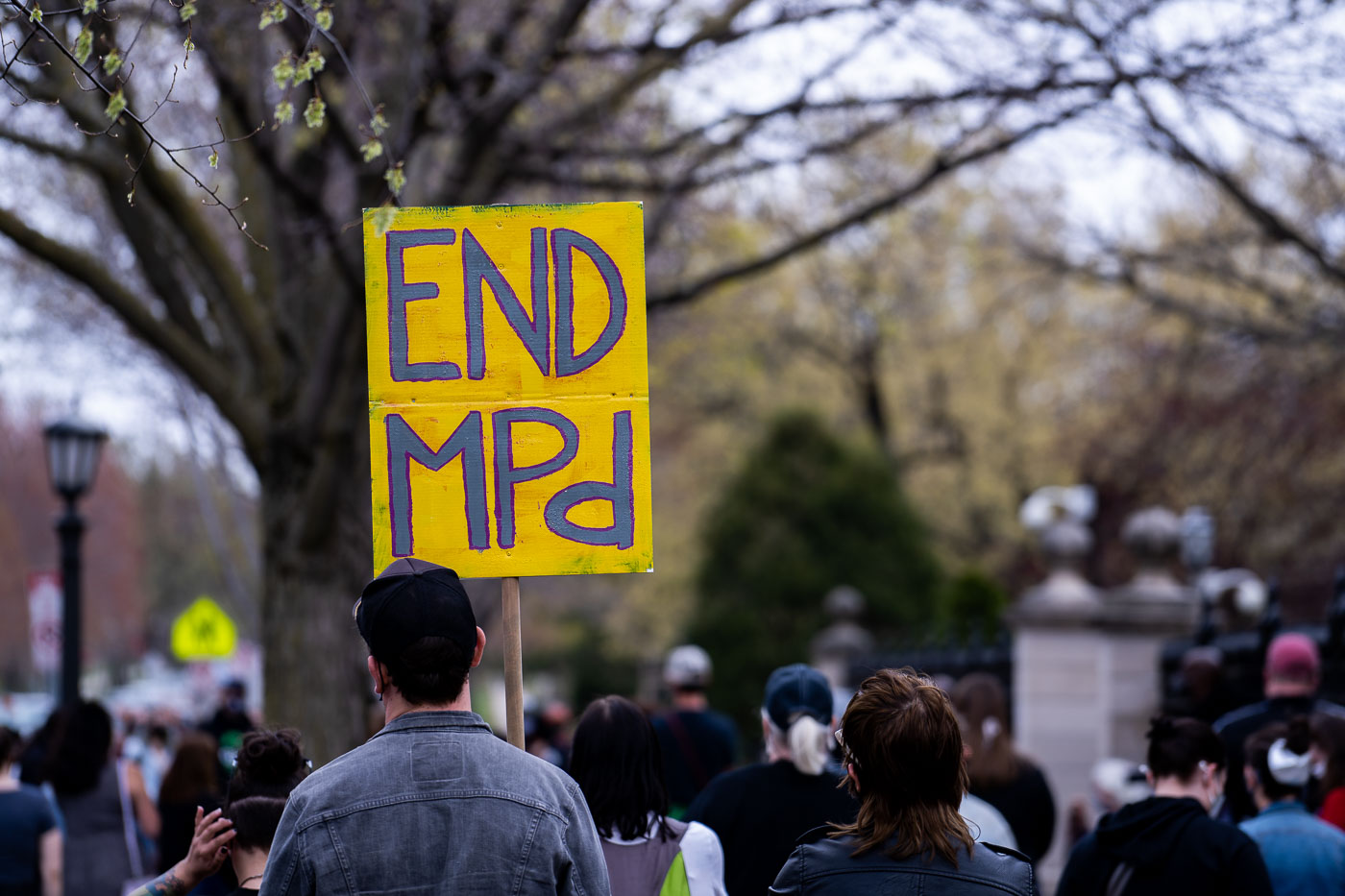
Protester with END MPD sign outside the Minnesota Governor's Residence in St. Paul.
Protesters gathered outside the Minnesota Governor's Residence in Saint Paul, Minnesota, holding signs that read "END MPD." This protest occurred in the context of broader demonstrations and unrest following the killing of Daunte Wright by police in nearby Minneapolis. The "END MPD" slogan calls for the dissolution of the Minneapolis Police Department, reflecting deep-seated concerns about police conduct and accountability that have been amplified by recent events.

Protester holds END MPD sign at Minnesota Governor’s Residence
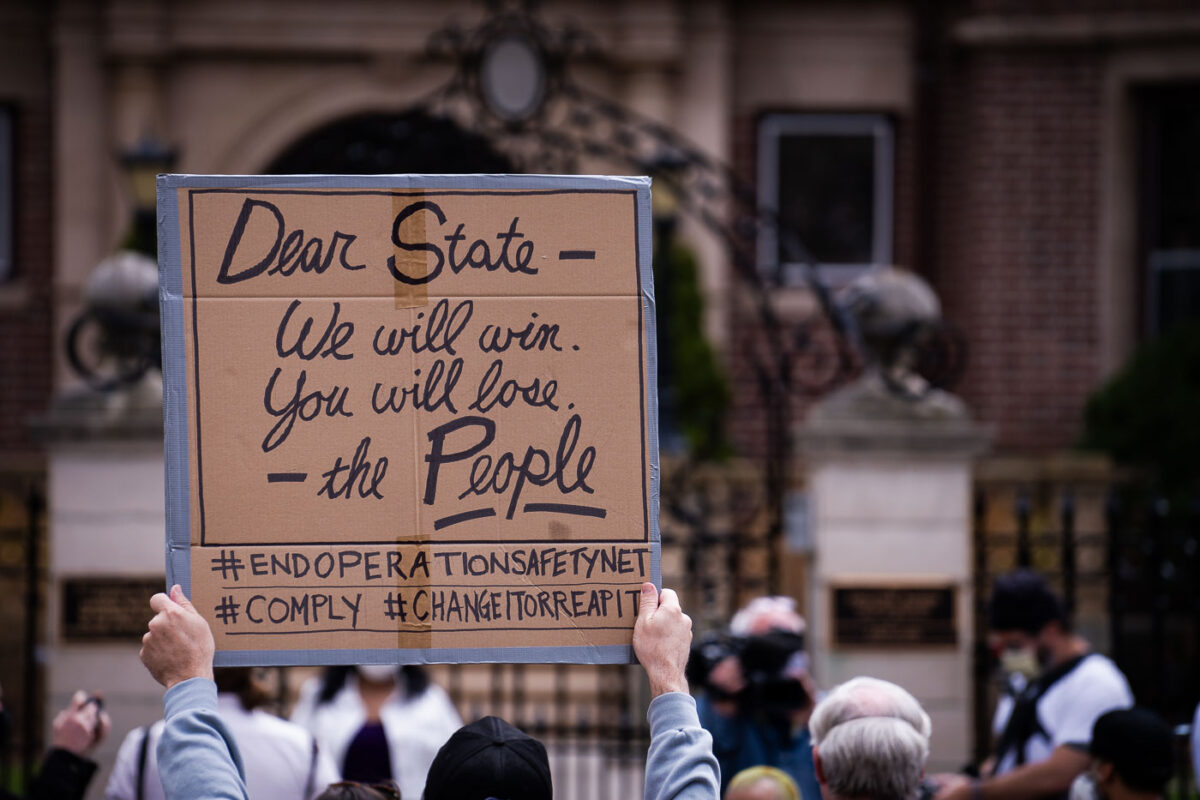
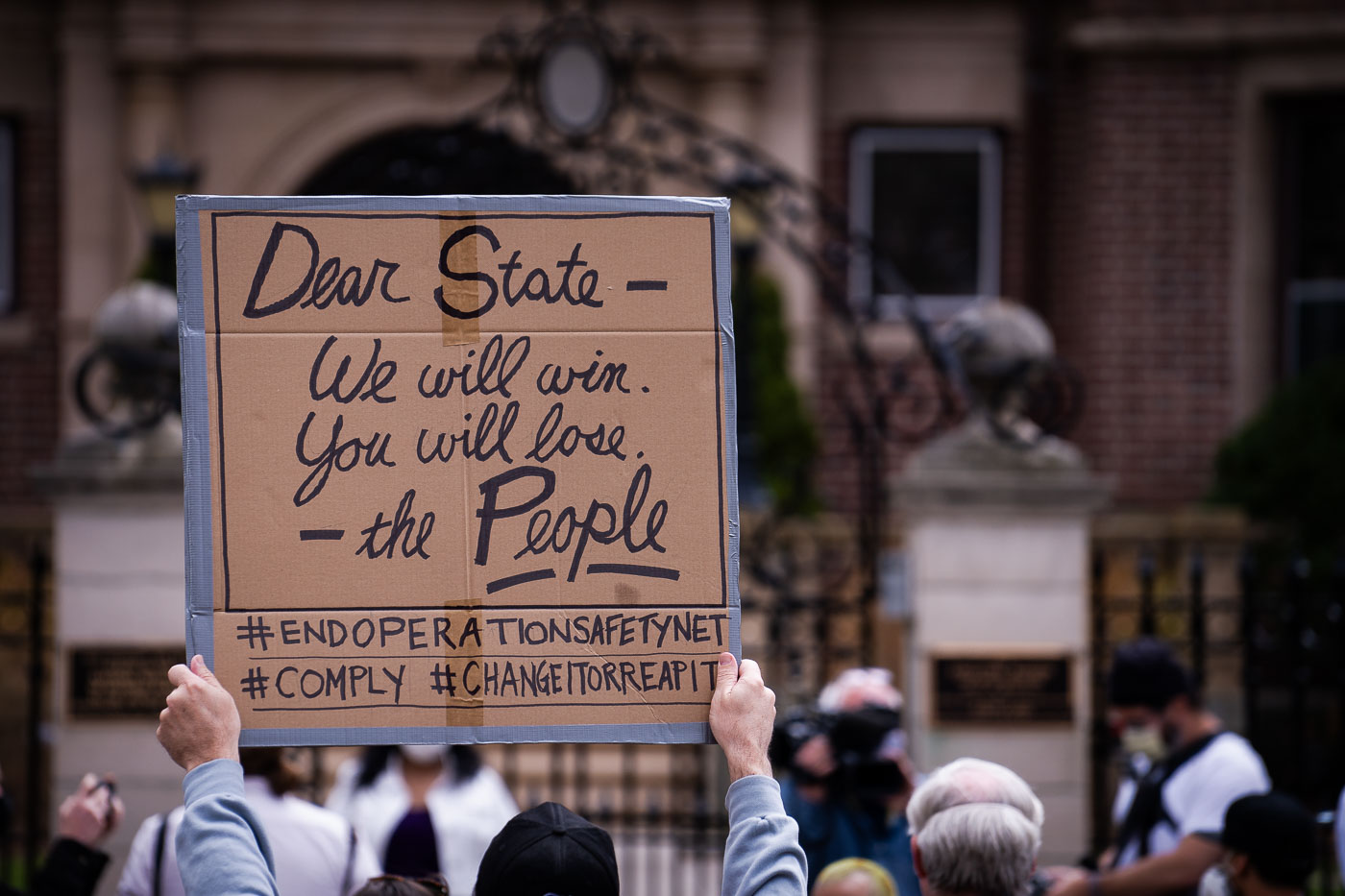
Protest sign at the Minnesota Governor's Residence in St. Paul opposing Operation Safety Net.
Protesters gathered outside the Minnesota Governor's Residence in St. Paul, Minnesota, to protest the treatment of demonstrators during the preceding week. The sign reads, "Dear State – We will win. You will lose. – the People #ENDOPERATIONSAFTEYNET #COMPLY #CHANGEITORREAPIT." This protest occurred in the context of the Minneapolis Uprising, a period of civil unrest following the murder of George Floyd. Operation Safety Net was a coordinated law enforcement response to the protests.

Protest at Minnesota Governor’s Residence: Operation Safety Net
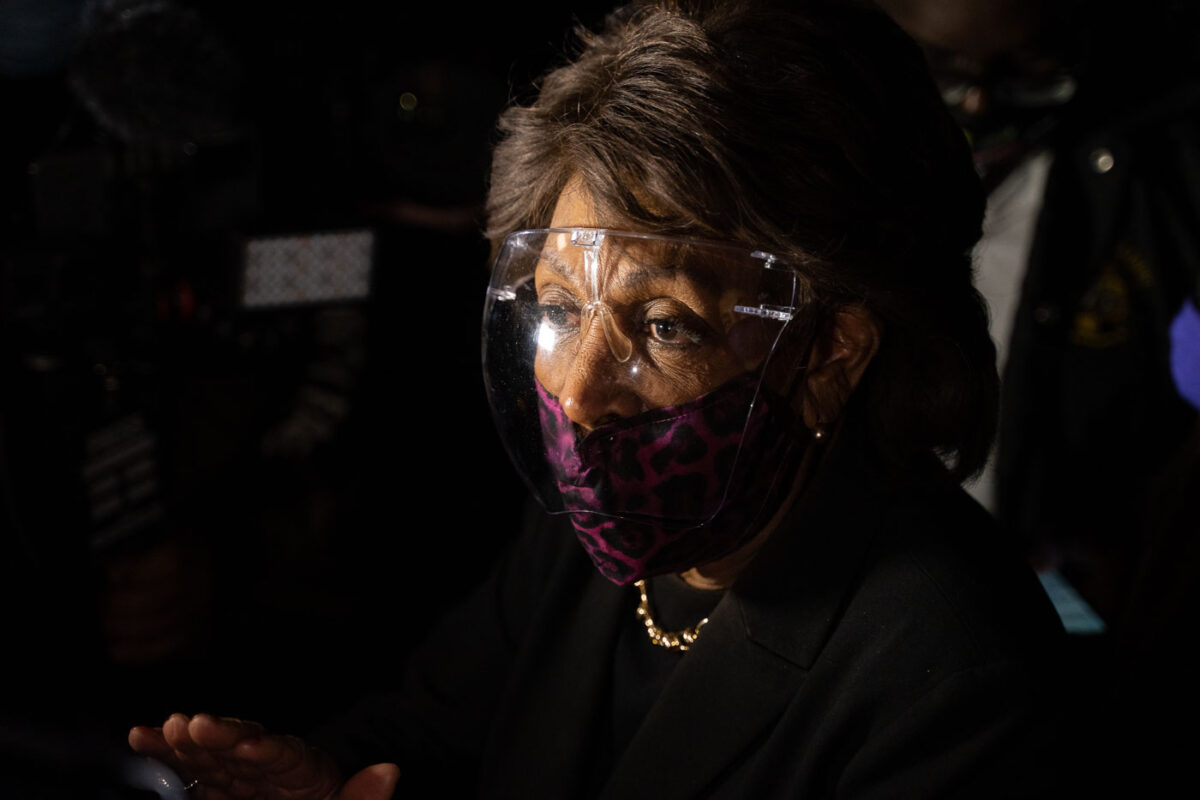
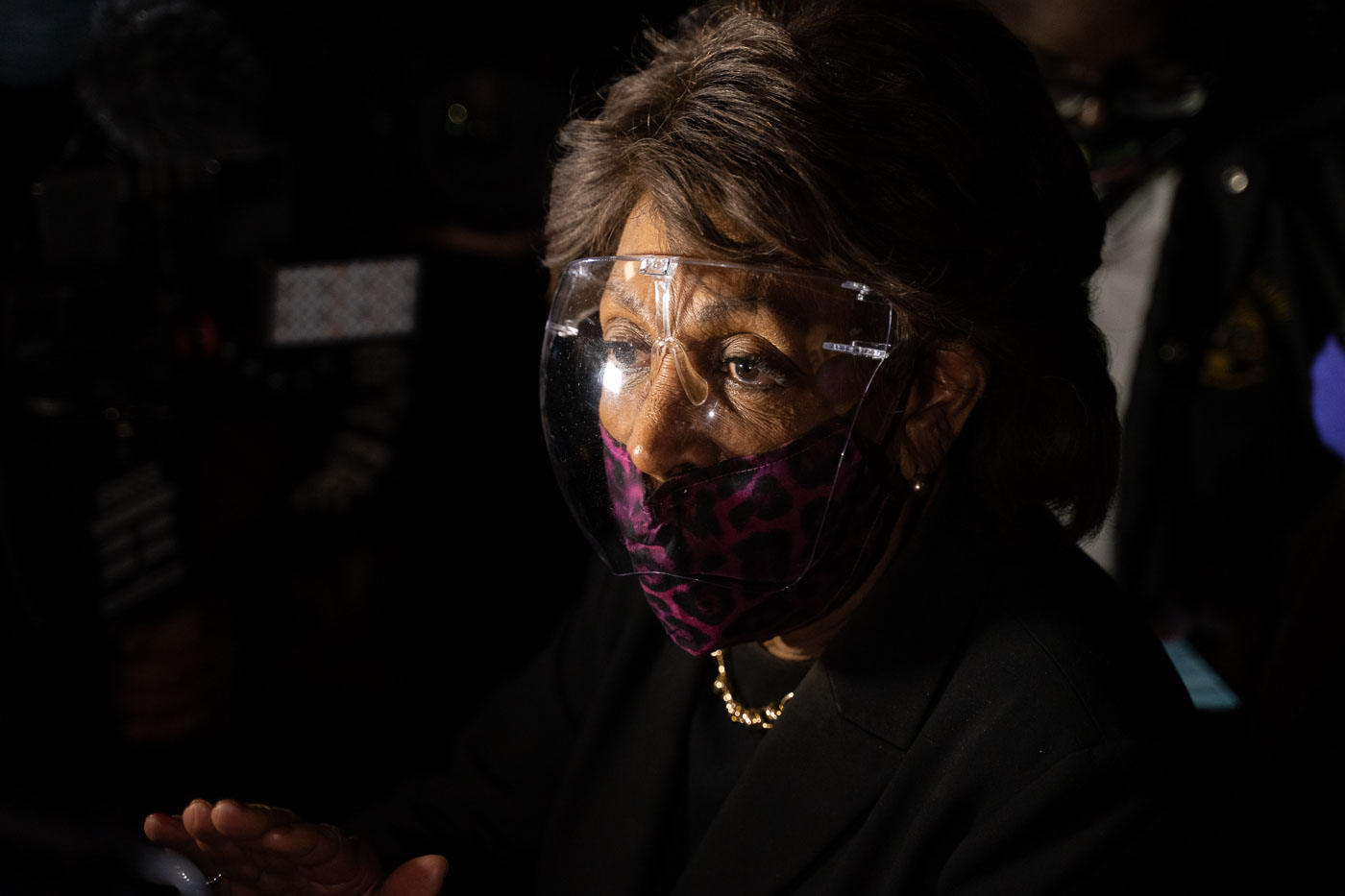
Maxine Waters at a protest in Brooklyn Center, Minnesota.
U.S. Representative Maxine Waters addresses protesters gathered outside the Brooklyn Center Police Department on April 15, 2021. The protests, which entered their seventh consecutive day, were in response to the fatal shooting of Daunte Wright by a Brooklyn Center police officer on April 11. Waters, a prominent figure in civil rights and social justice advocacy, traveled to Brooklyn Center to engage with the community and lend her support to the ongoing calls for accountability and reform.

Maxine Waters Addresses Protesters in Brooklyn Center
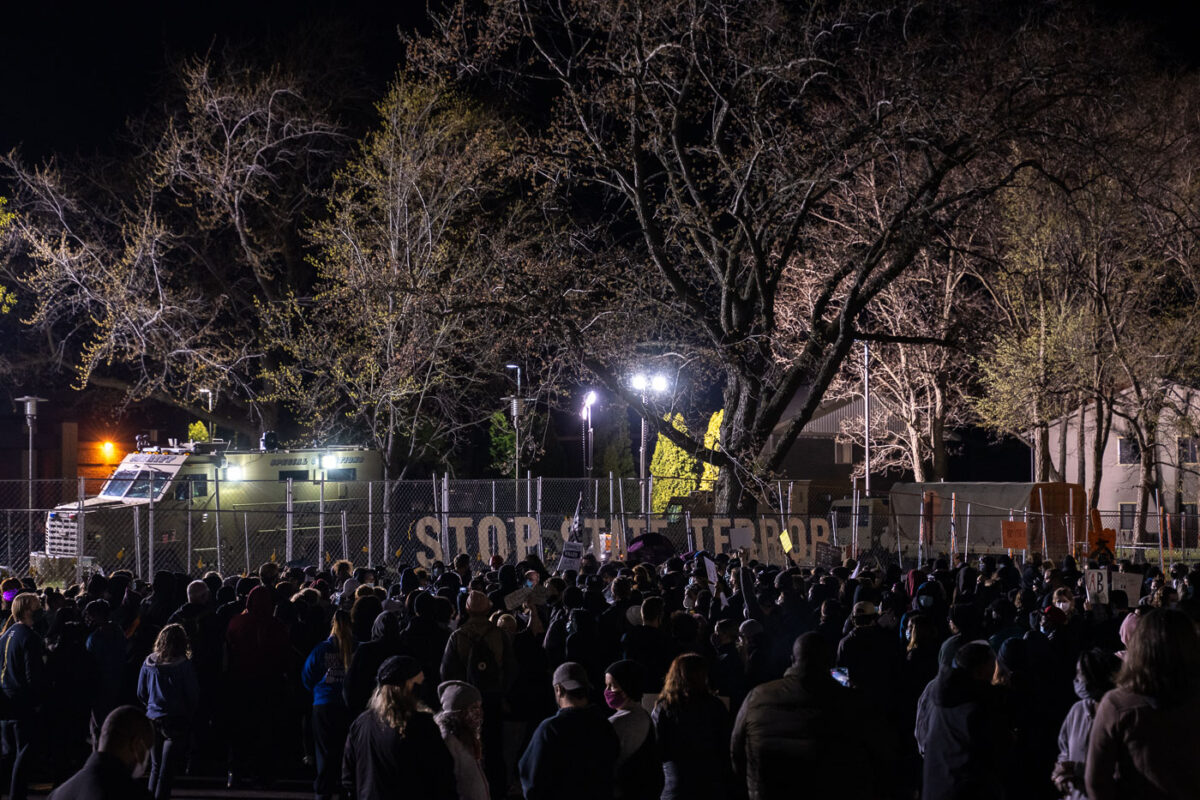
Protesters outside Brooklyn Center Police Department in Minnesota at night, with a police vehicle behind a fence.
Protesters gathered outside the Brooklyn Center Police Department on April 18, 2021, marking the seventh consecutive day of demonstrations. The protests were ignited by the fatal shooting of Daunte Wright, a 20-year-old Black man, by a police officer during a traffic stop in Brooklyn Center, Minnesota, on April 11, 2021. The demonstrations reflect ongoing concerns about police brutality and racial injustice.

Brooklyn Center Protest for Daunte Wright
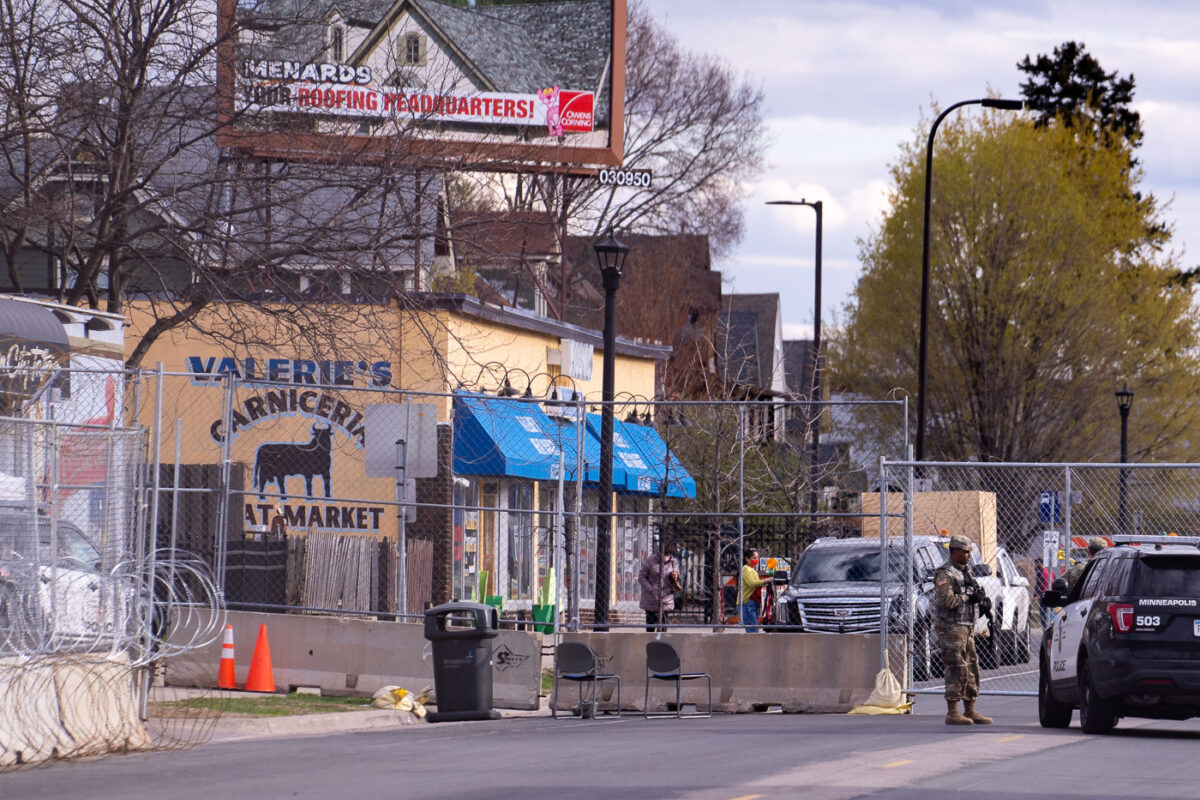
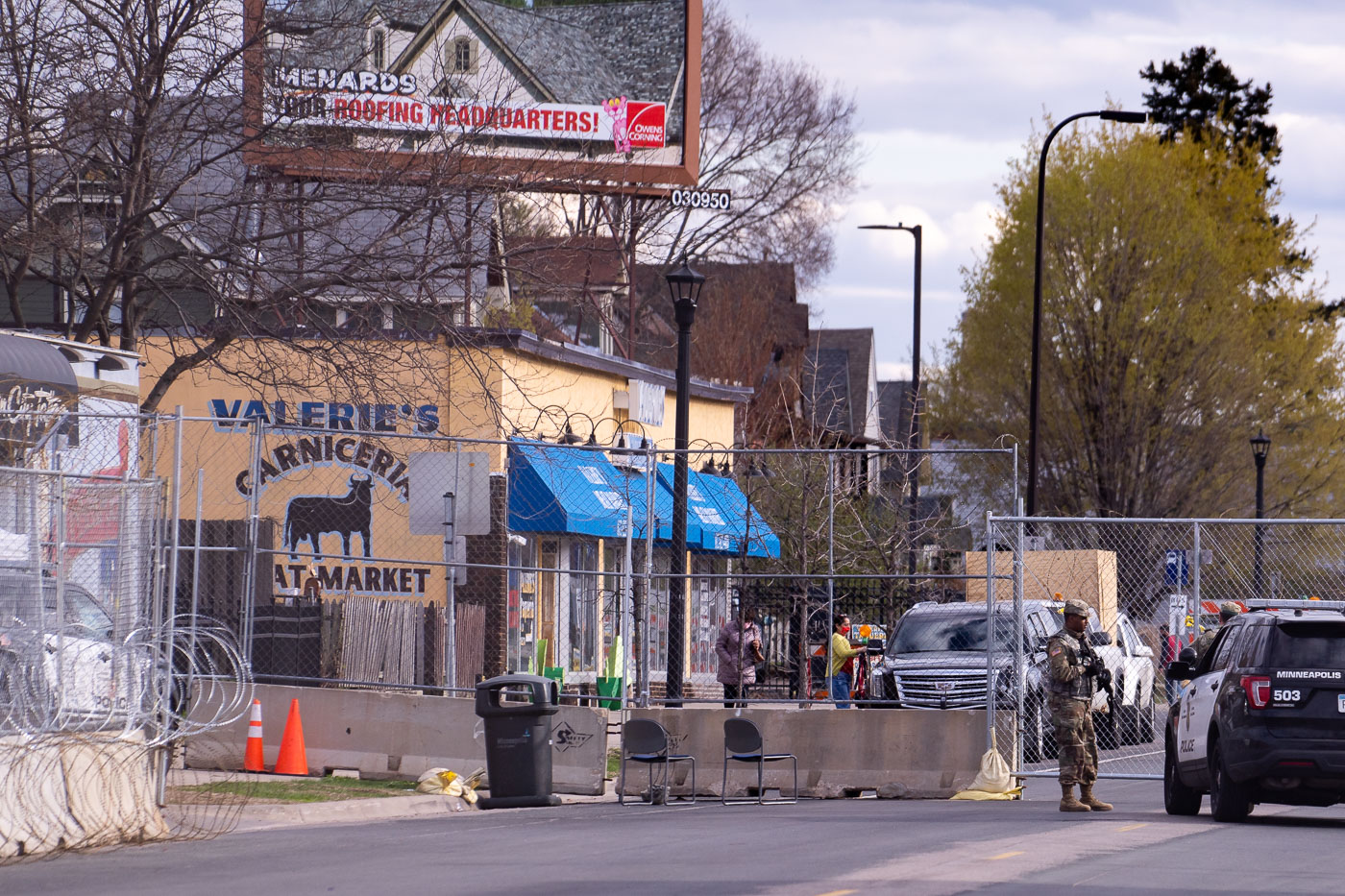
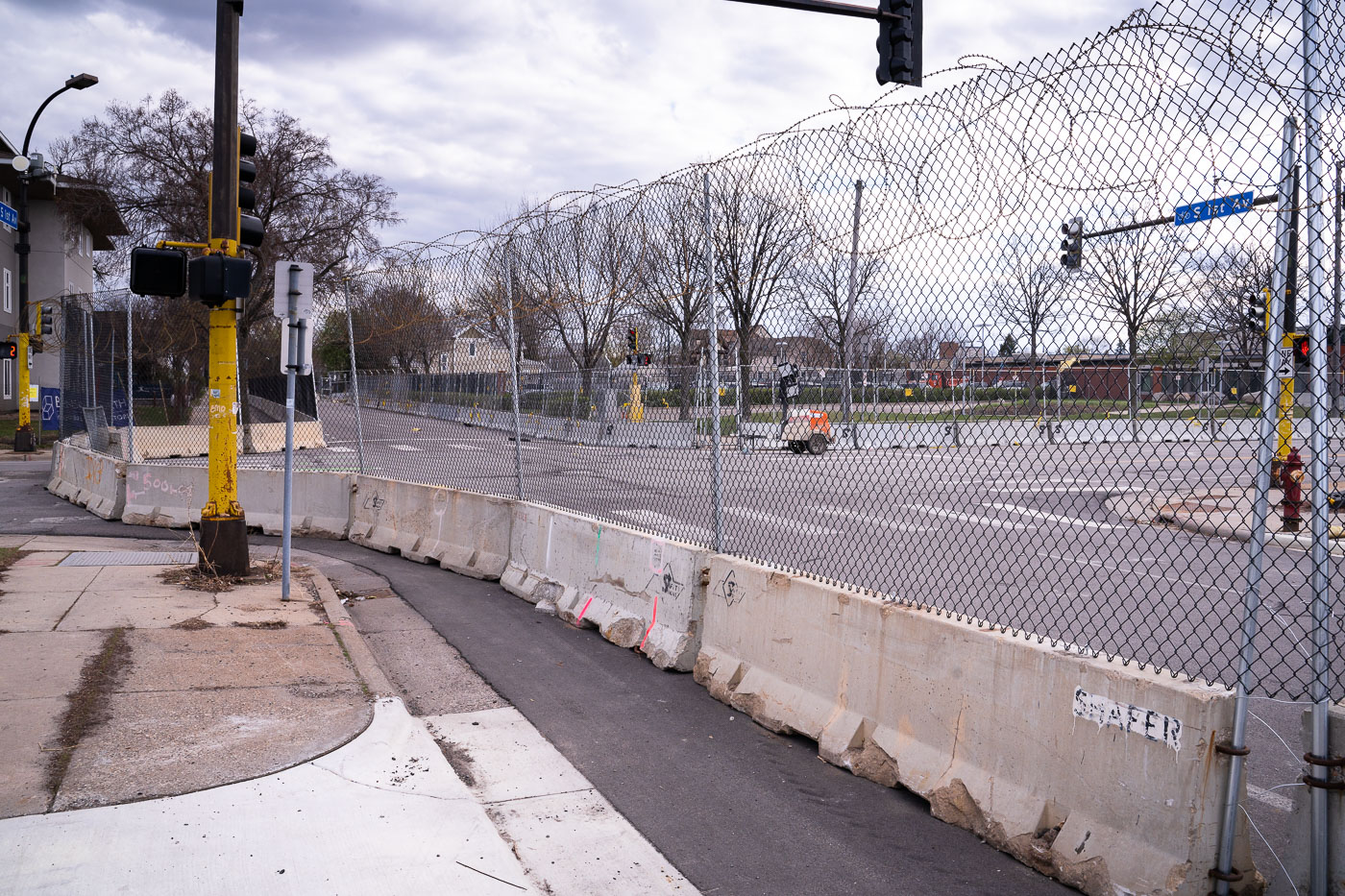
National Guard and police at Minneapolis Fifth Precinct behind fencing and razor wire.
National Guard soldiers and Minneapolis Police officers secure the perimeter of the Minneapolis Police Fifth Precinct in South Minneapolis. The precinct was fortified with concrete barriers and razor wire in response to widespread protests and civil unrest that followed the killing of George Floyd in May 2020 and the subsequent trial of Officer Derek Chauvin. The presence of the National Guard was a visible symbol of the state's response to maintain order during a period of intense public scrutiny and activism.

National Guard at Minneapolis Police Fifth Precinct
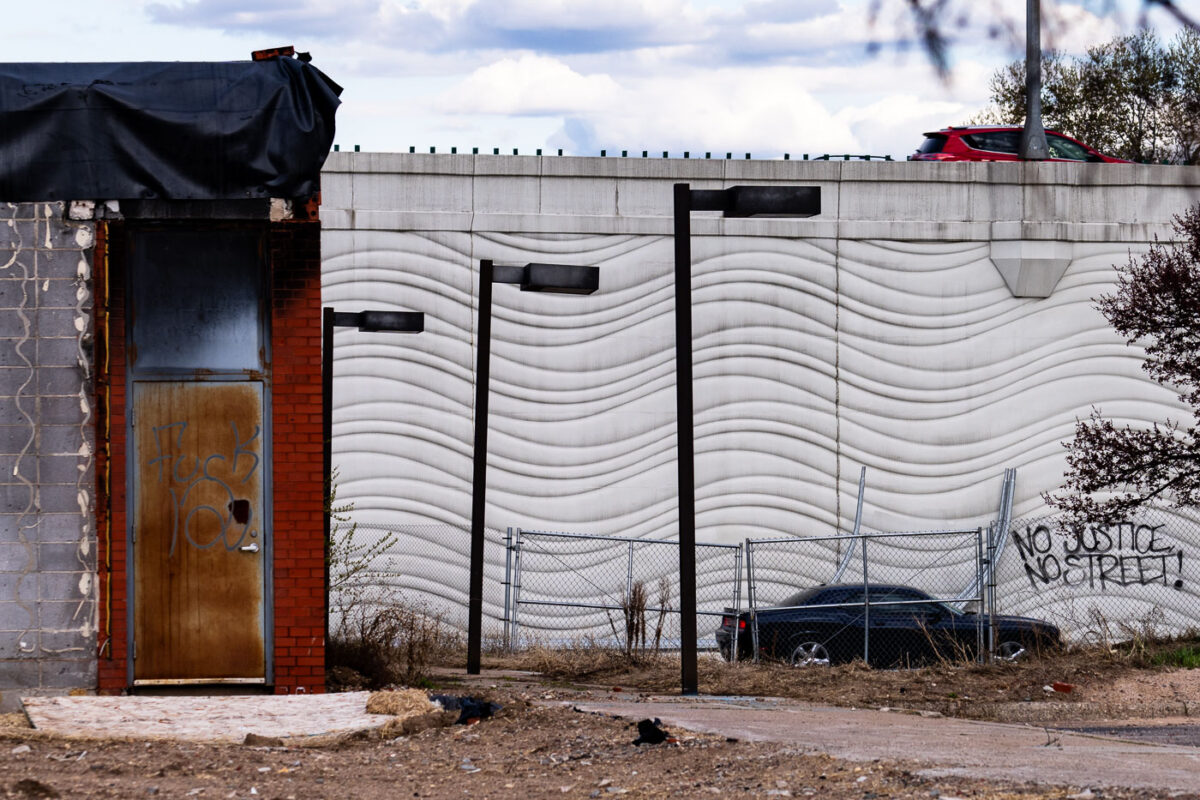
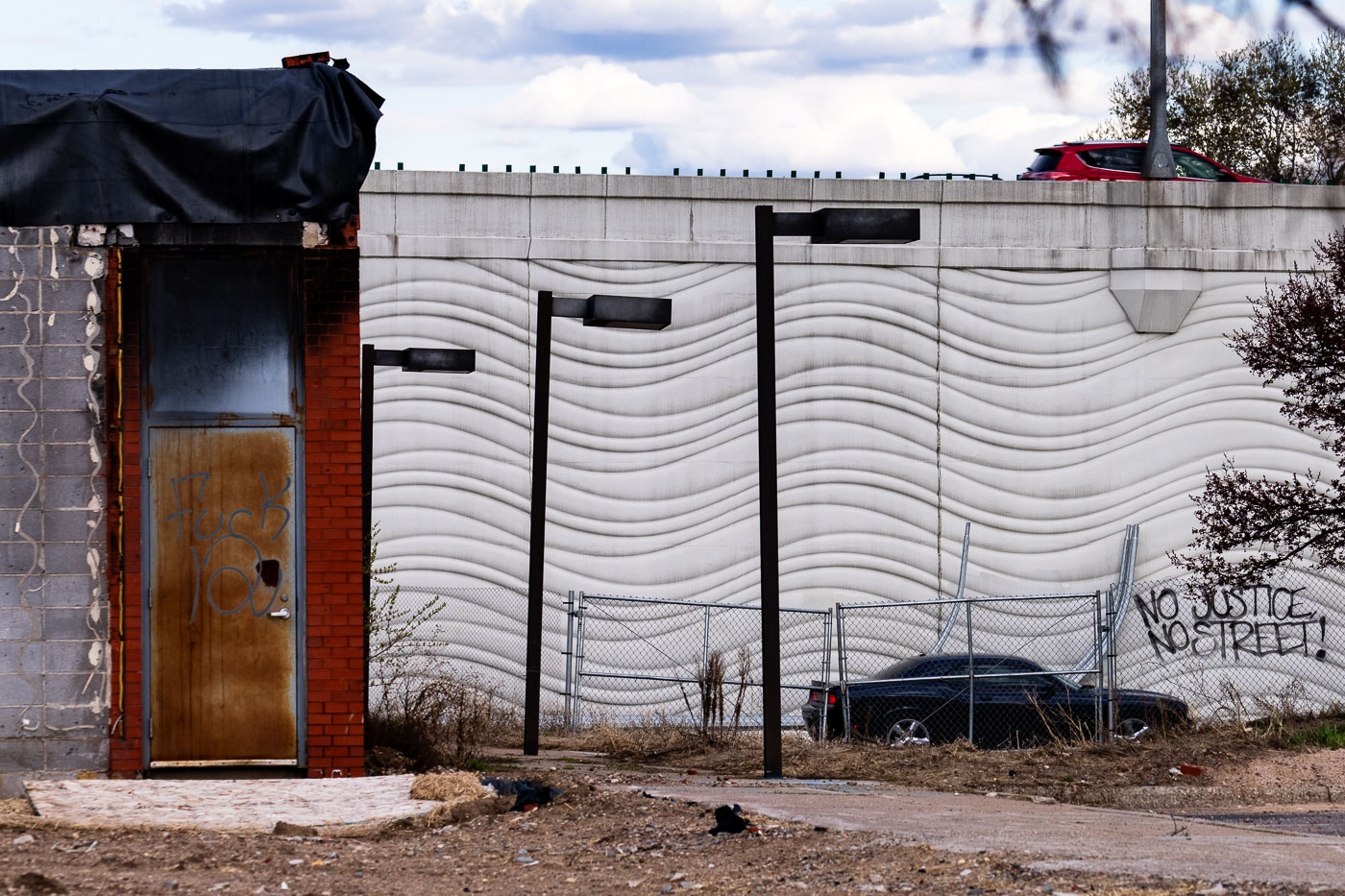
“No Justice No Street” graffiti beside Interstate 35W in Minneapolis.
Graffiti reading "No Justice, No Street!" is spray-painted on a white, wave-patterned wall adjacent to Interstate 35W in Minneapolis. This message emerged during the widespread protests and civil unrest that followed the murder of George Floyd in May 2020 and the subsequent trial of Derek Chauvin. The phrase reflects a sentiment of public anger and a demand for accountability and systemic change within the justice system. The location, near a former post office, and the prominent display on a major transportation artery underscore the public nature and urgency of these demands.

Minneapolis: “No Justice No Street” Graffiti on 35W
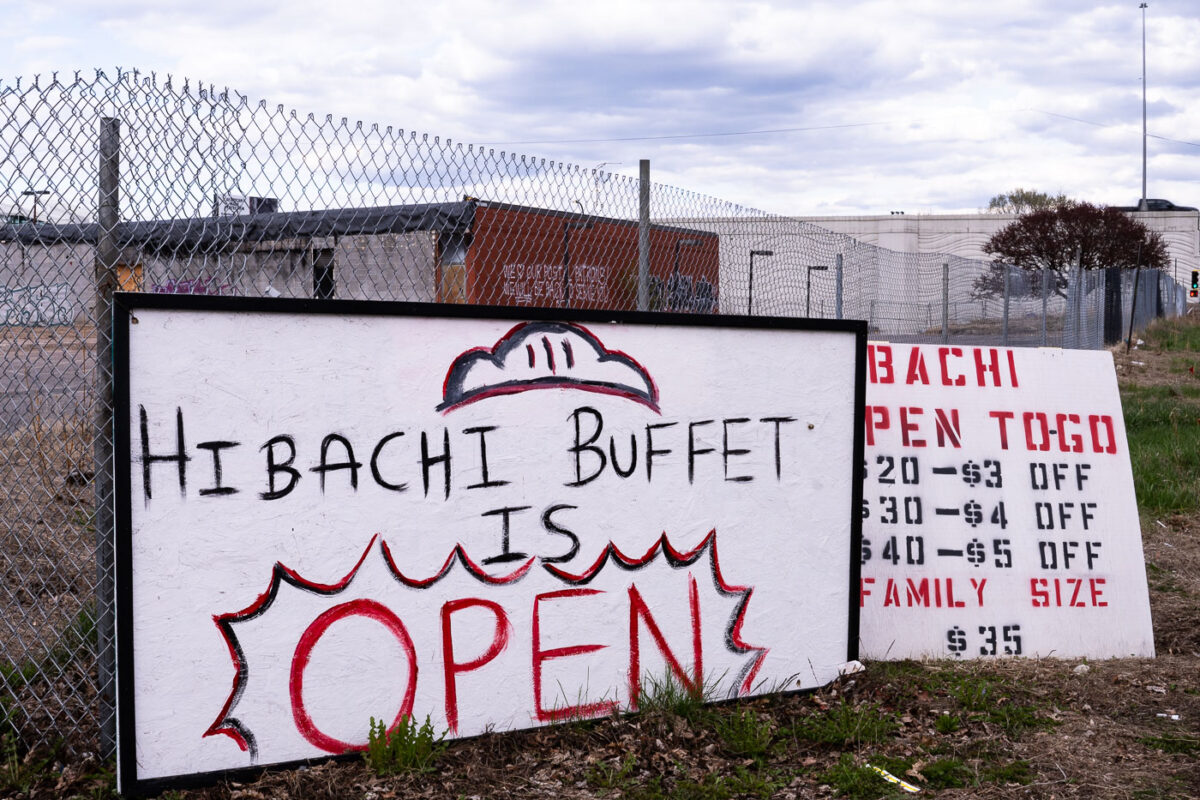
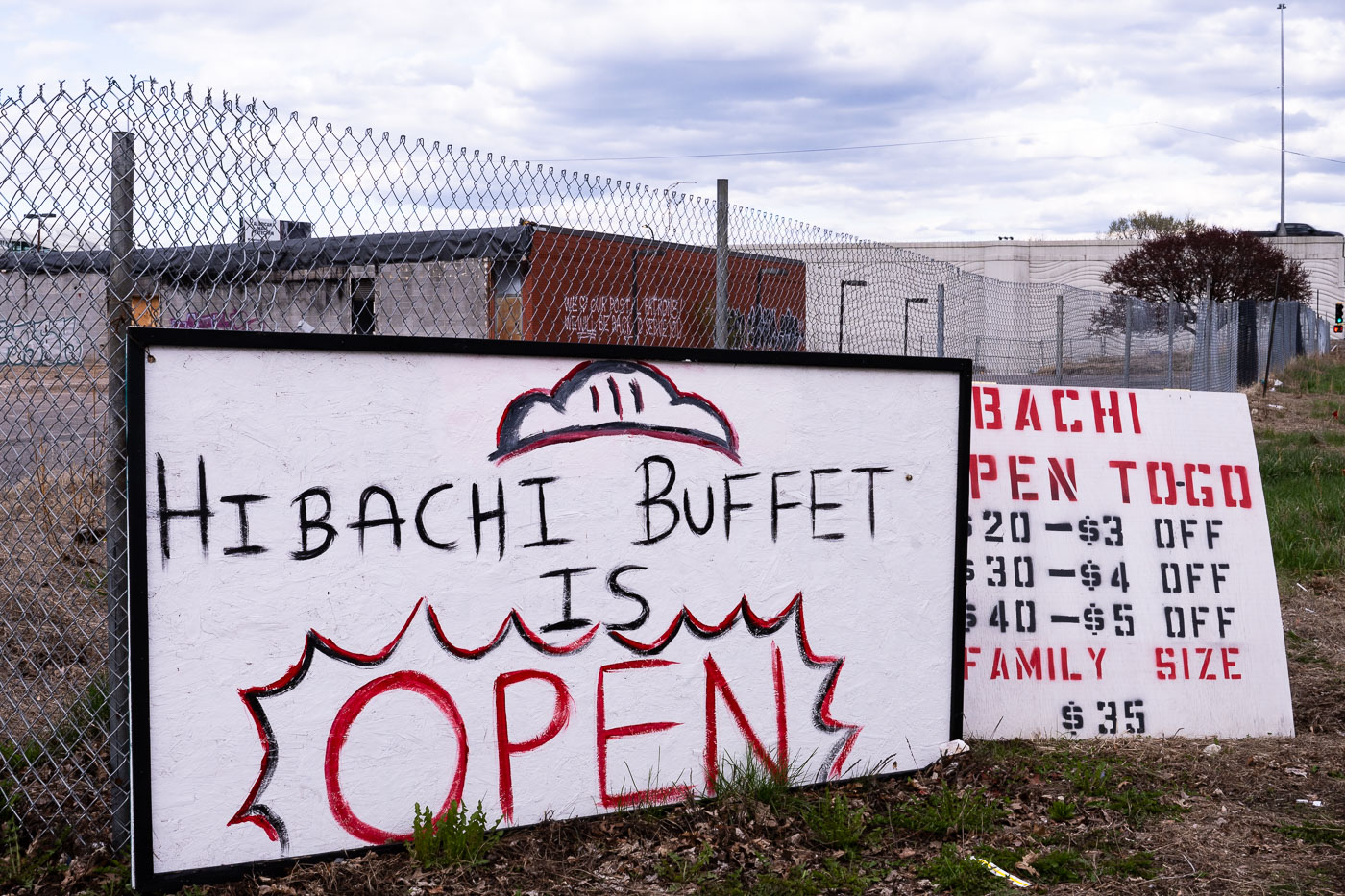
Hibachi Buffet open signs by the damaged Lake Street Station post office in Minneapolis.
A hand-painted sign announces that Hibachi Buffet is open for business, with additional signs detailing "Open Togo" specials. This sign is positioned in front of the burned remains of the Lake Street Station post office in Minneapolis. The post office building was damaged during the civil unrest that followed the murder of George Floyd in May 2020 and the subsequent trial of Derek Chauvin. The area has seen significant rebuilding efforts, but remnants of the unrest, like this temporary signage, remain visible.

Hibachi Buffet Open Sign, Minneapolis
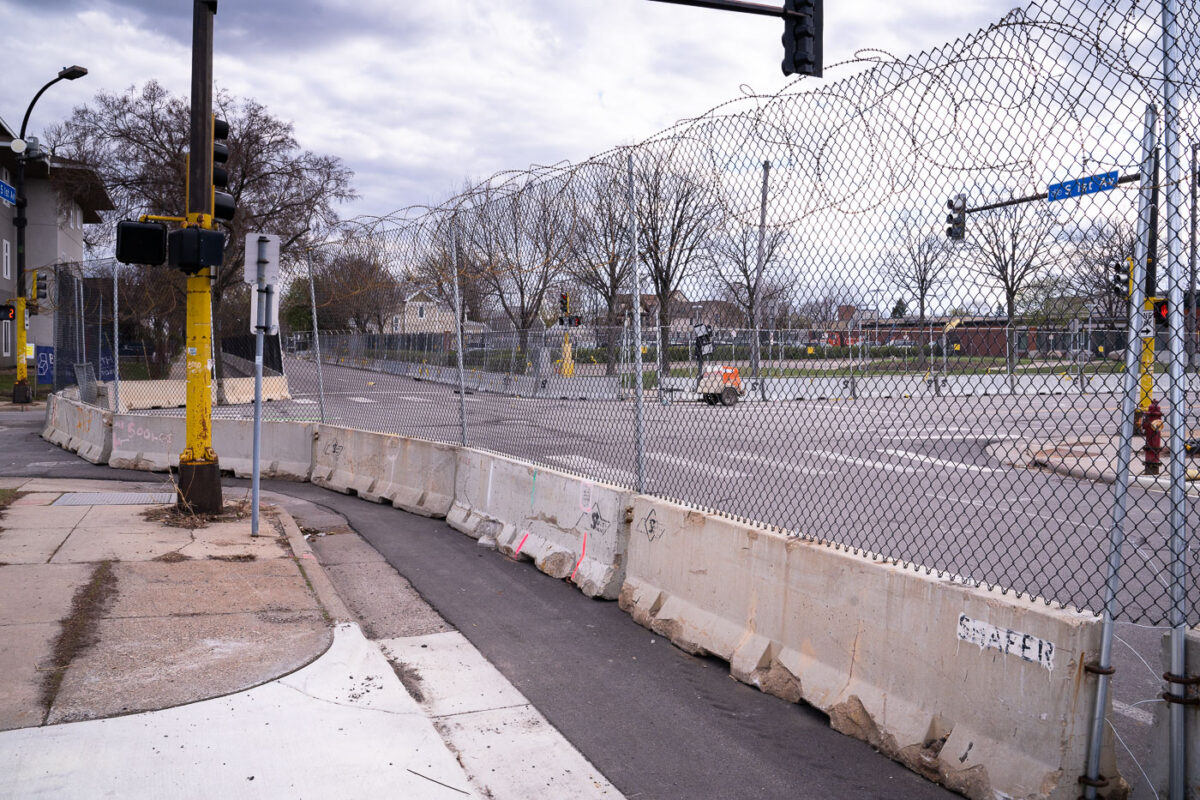
Barricades and razor wire around Minneapolis Police 5th Precinct in Minneapolis.
The Minneapolis Police Fifth Precinct is shown fortified with concrete barriers and razor wire. This security measure was implemented in response to protests and civil unrest that occurred in Minneapolis following the murder of George Floyd in May 2020 and the subsequent trial of Derek Chauvin. The precinct, located in the Powderhorn neighborhood, also experienced heightened security during the trial of Kim Potter for the killing of Daunte Wright in April 2021. The barriers are a physical manifestation of the increased tensions and security concerns surrounding law enforcement facilities during periods of public outcry.

Minneapolis Police 5th Precinct Fortified with Barricades and Razor Wire
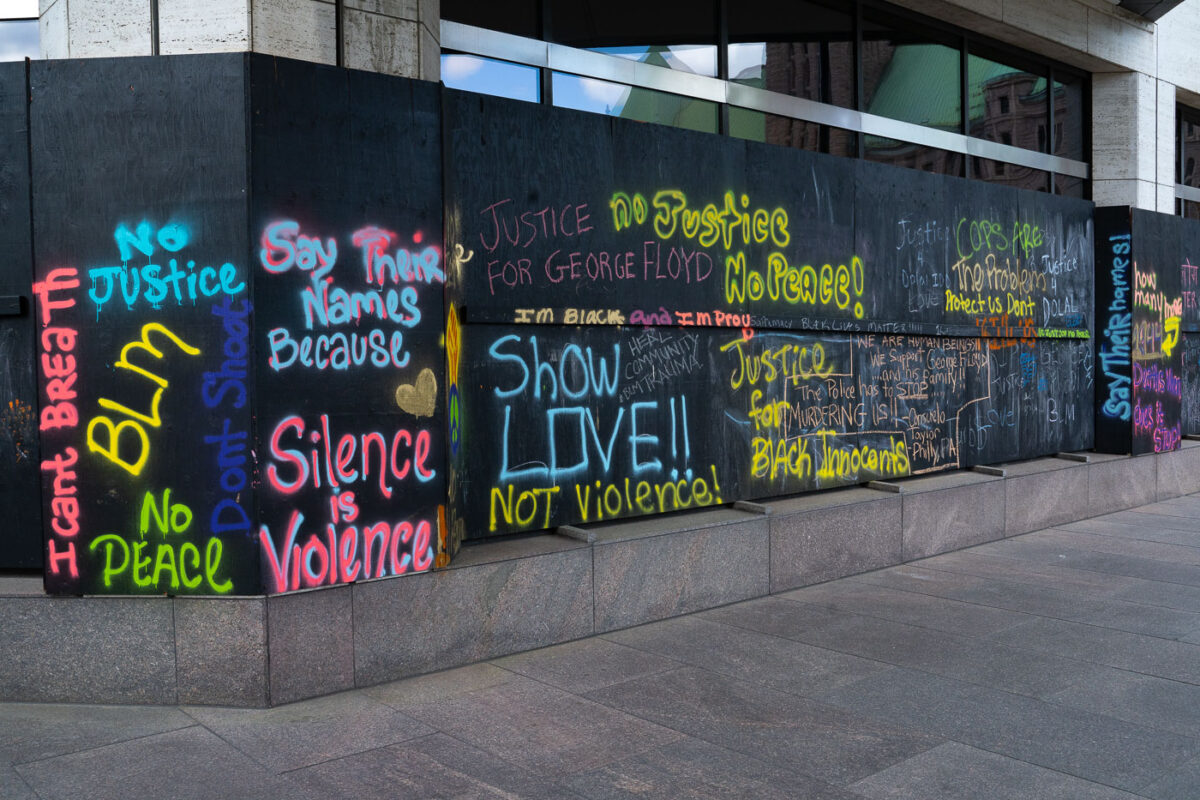
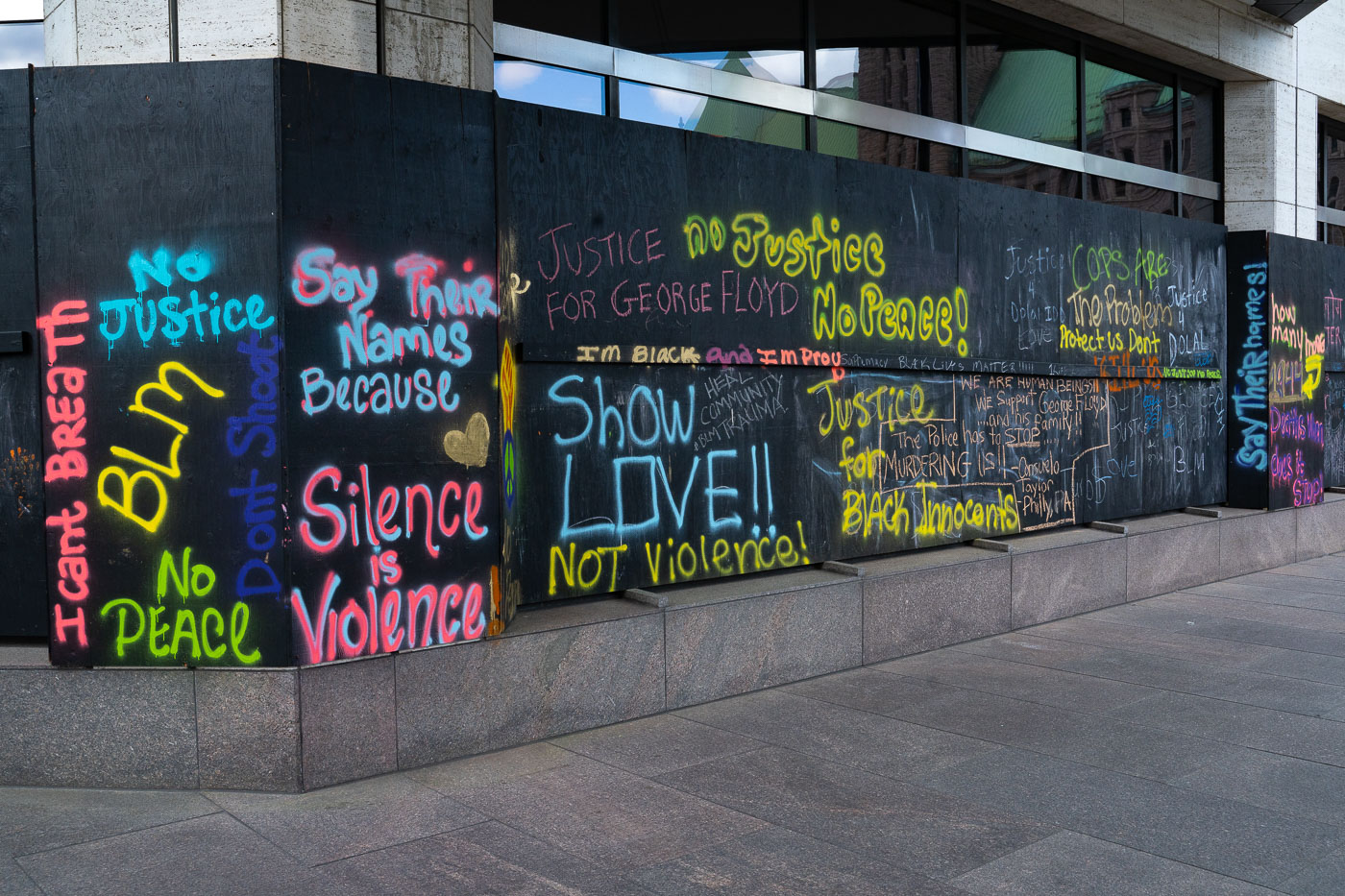
Protest graffiti on plywood outside Hennepin County Government Center in Minneapolis.
Graffiti art adorns plywood barriers erected outside a building in Minneapolis, near the Hennepin County Government Center where the trial of Derek Chauvin was held. The messages, including "No Justice No Peace," "BLM," and "Say Their Names," reflect the widespread protests and calls for racial justice that followed the murder of George Floyd in May 2020. The artwork served as a public expression of grief, anger, and demands for accountability during a period of intense civil unrest and national attention on police brutality.

Minneapolis: Protest Art Near Derek Chauvin Trial Site
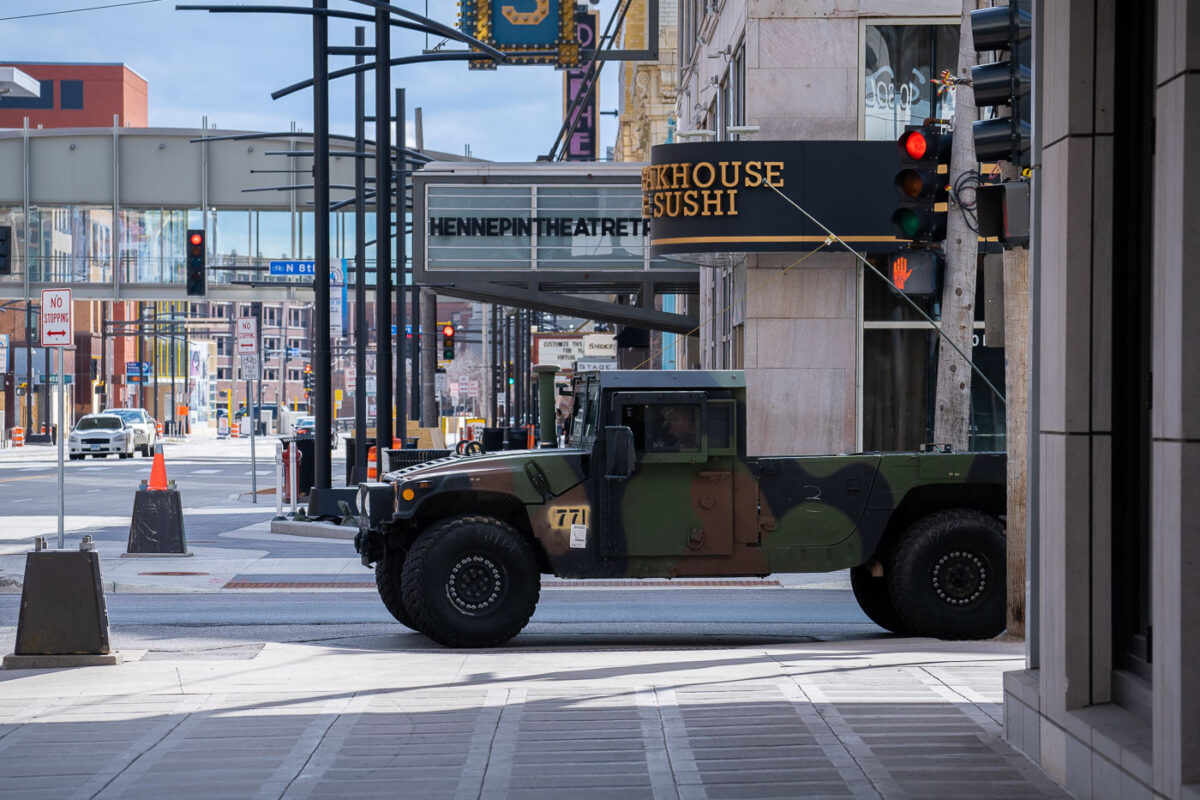
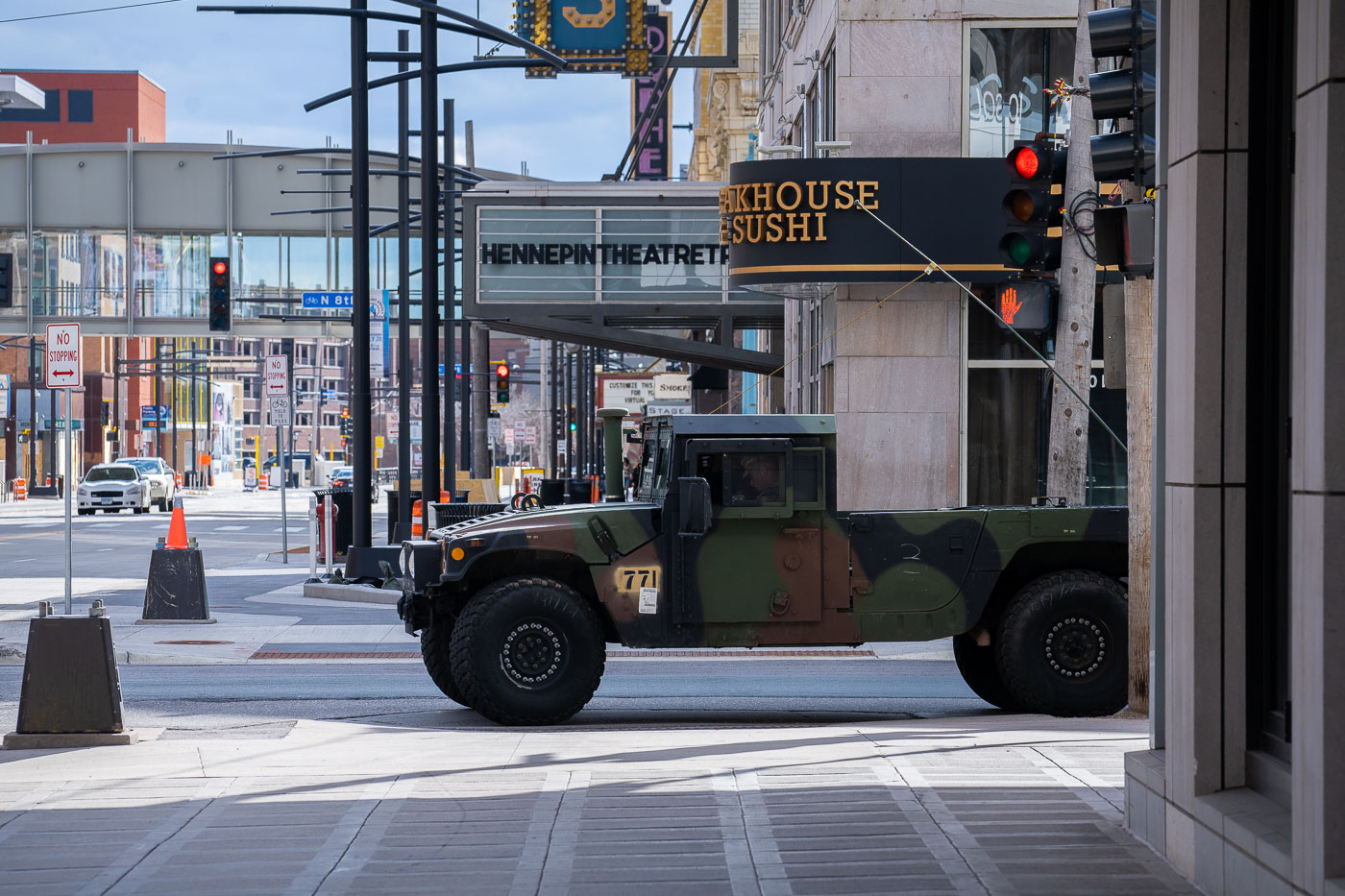
National Guard Humvee on Nicollet Mall in downtown Minneapolis near Hennepin Theatre Trust.
A Minnesota National Guard Humvee is parked on Nicollet Mall in Minneapolis. The presence of military vehicles on the downtown street reflects the heightened security and civil unrest that occurred in the city following the murder trial of Derek Chauvin for the death of George Floyd. Nicollet Mall, a pedestrian-oriented street, is a central commercial and cultural hub in Minneapolis, and its use by military vehicles underscores the extraordinary circumstances of the period.

National Guard Humvee on Nicollet Mall, Minneapolis
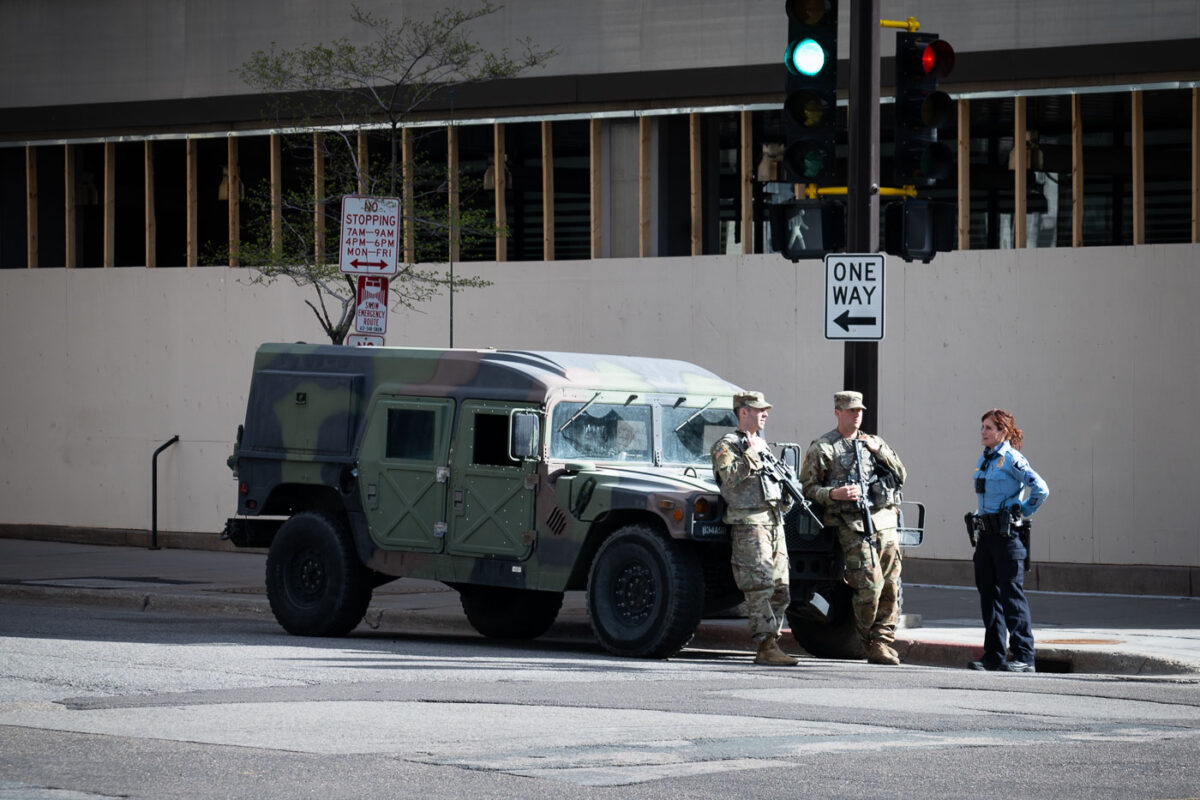
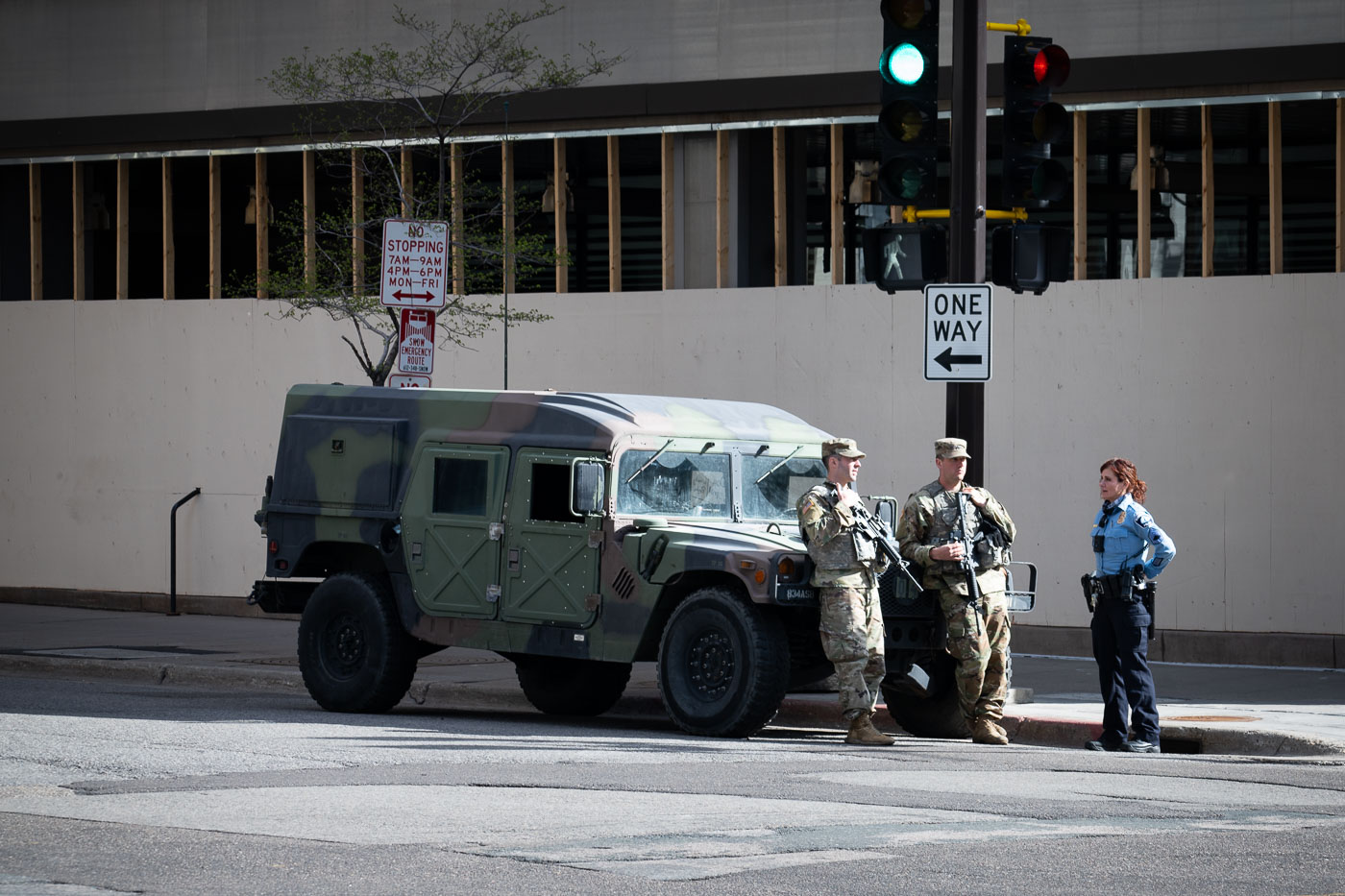
National Guard soldiers and a police officer beside a military vehicle in downtown Minneapolis.
National Guard and Minneapolis Police officers stand on duty near a military vehicle during the trial of Derek Chauvin in Minneapolis. The trial, which concluded in April 2021, stemmed from the May 25th, 2020, killing of George Floyd. The presence of law enforcement and military personnel underscored the heightened tensions in the city following Floyd's death and in anticipation of the trial's verdict.

Minneapolis National Guard and Police on Duty During Chauvin Trial
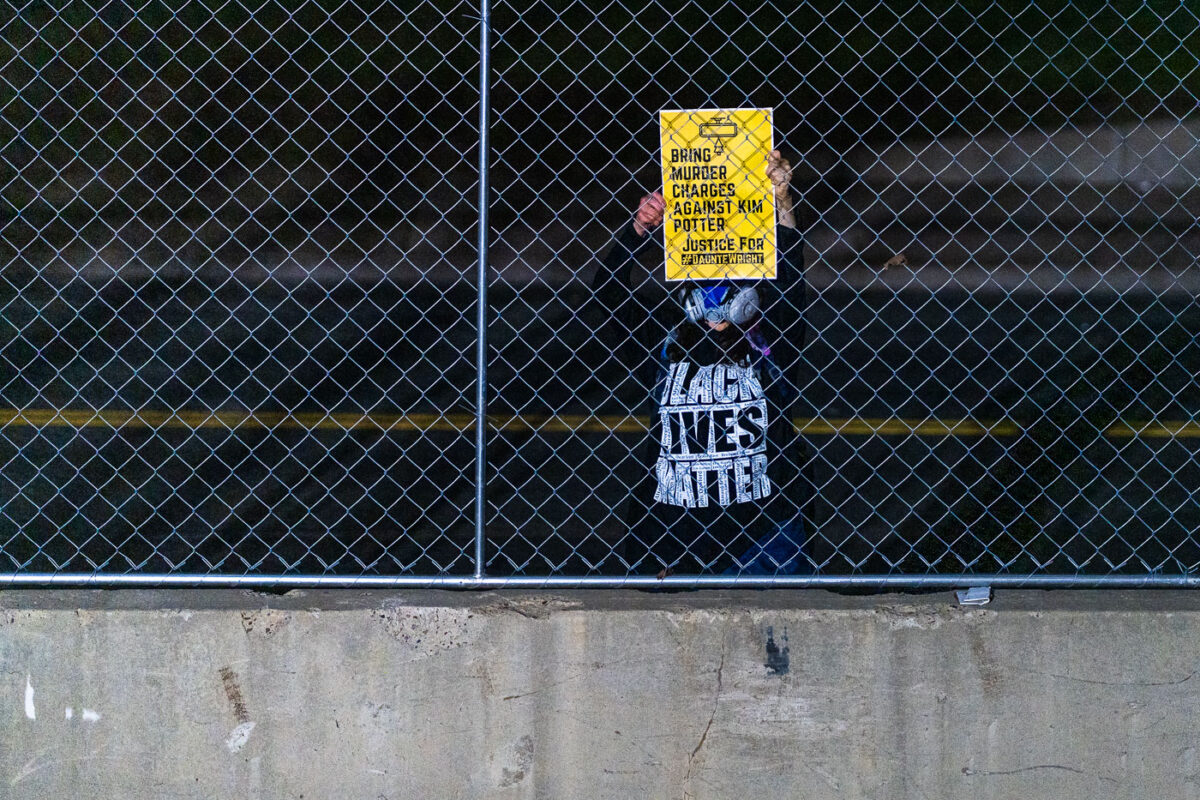
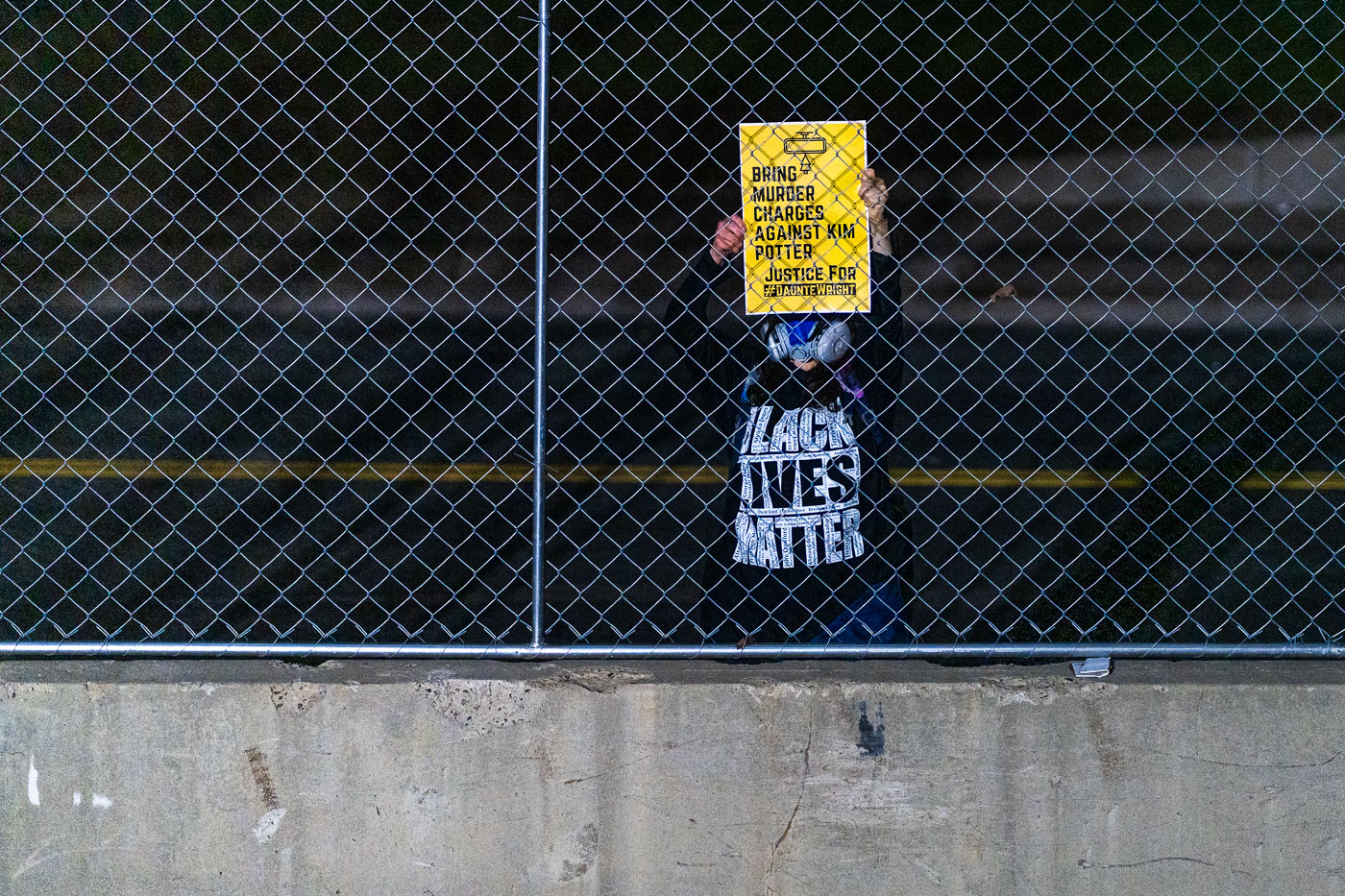
Protester behind a fence in Minneapolis holds sign demanding murder charges against Kim Potter.
A protester holds a sign demanding murder charges against former Brooklyn Center police officer Kim Potter, following the death of Daunte Wright. The protest took place outside the Hennepin County Government Center, a courthouse in Minneapolis. Wright was killed during a traffic stop in Brooklyn Center on April 11, 2021, and Potter was later convicted of second-degree manslaughter. The sign also includes the hashtag #DaunteWright, connecting the protest to the broader movement for racial justice and police accountability.

Protester holds sign for murder charges against Kim Potter in Brooklyn Center
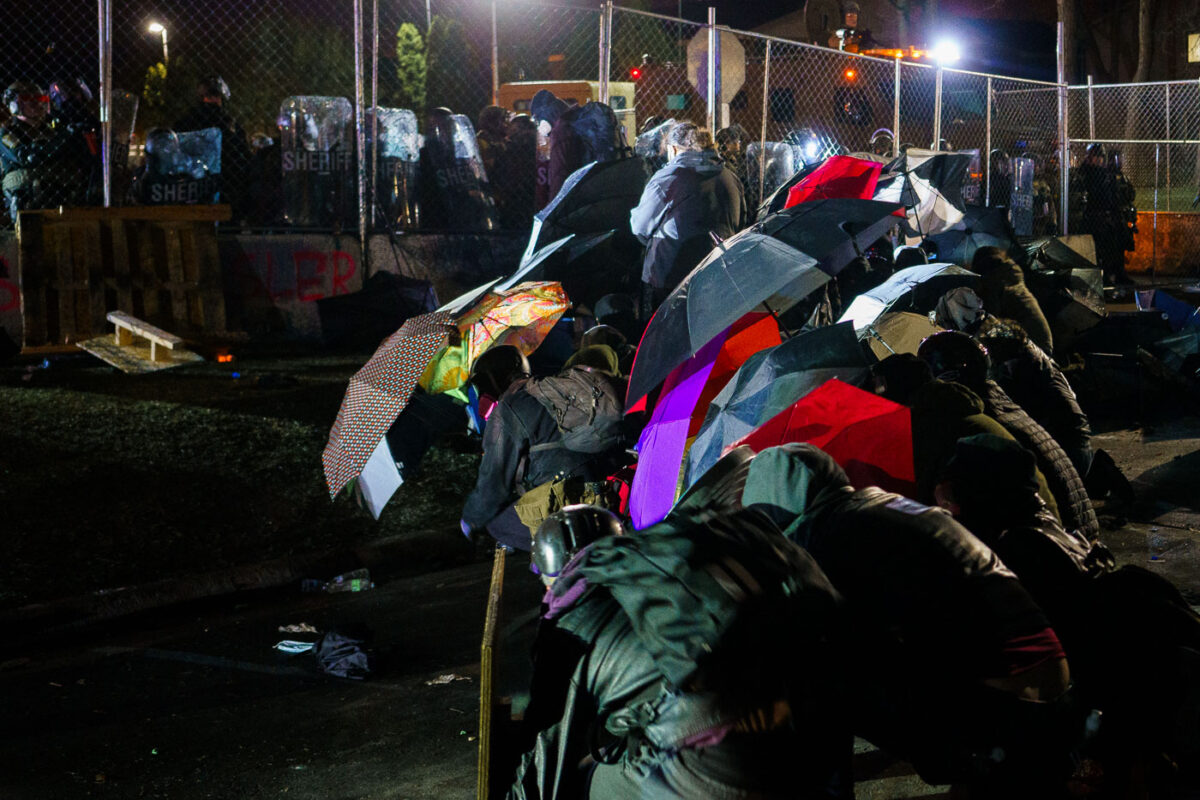
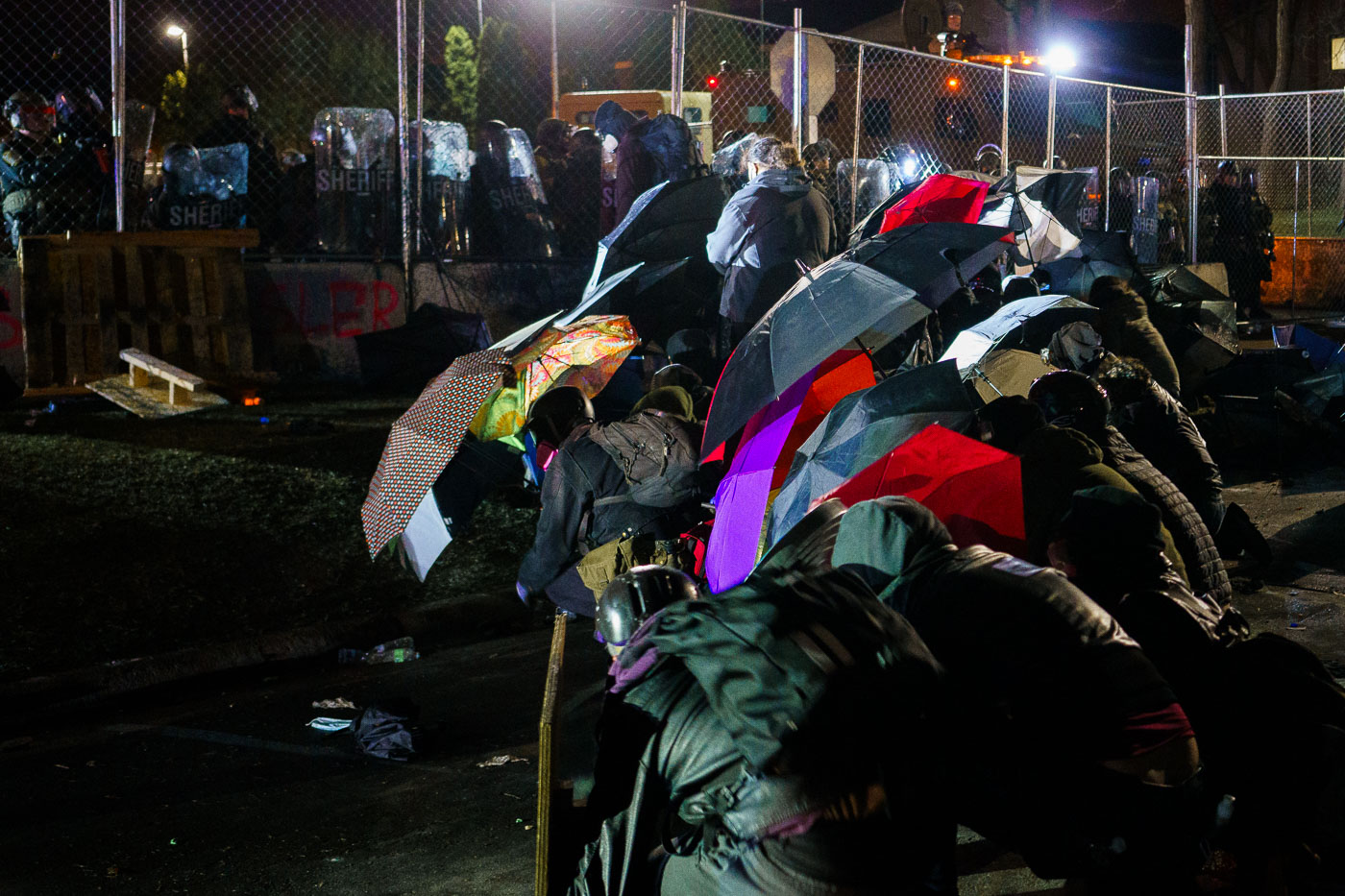
Protesters with umbrellas face sheriff's deputies outside Brooklyn Center Police Department, Minnesota.
Protesters gathered outside the Brooklyn Center Police Department in Brooklyn Center, Minnesota, on April 12, 2021. The protest was in response to the fatal shooting of Daunte Wright by a police officer the previous day. The Brooklyn Center Police Department is a municipal law enforcement agency serving the city of Brooklyn Center. The events of April 2021 marked a period of significant unrest and public outcry regarding police brutality and racial injustice in the Minneapolis–Saint Paul metropolitan area.

Protesters with umbrellas outside Brooklyn Center Police Department
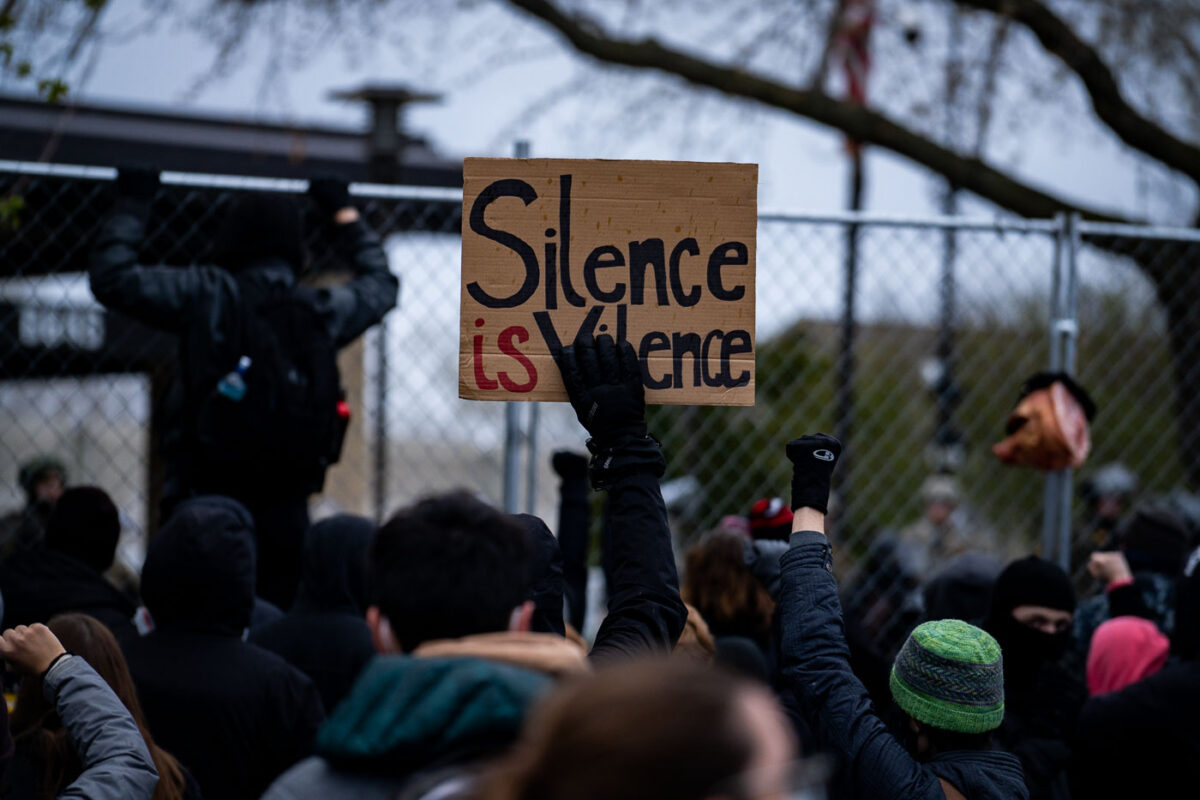
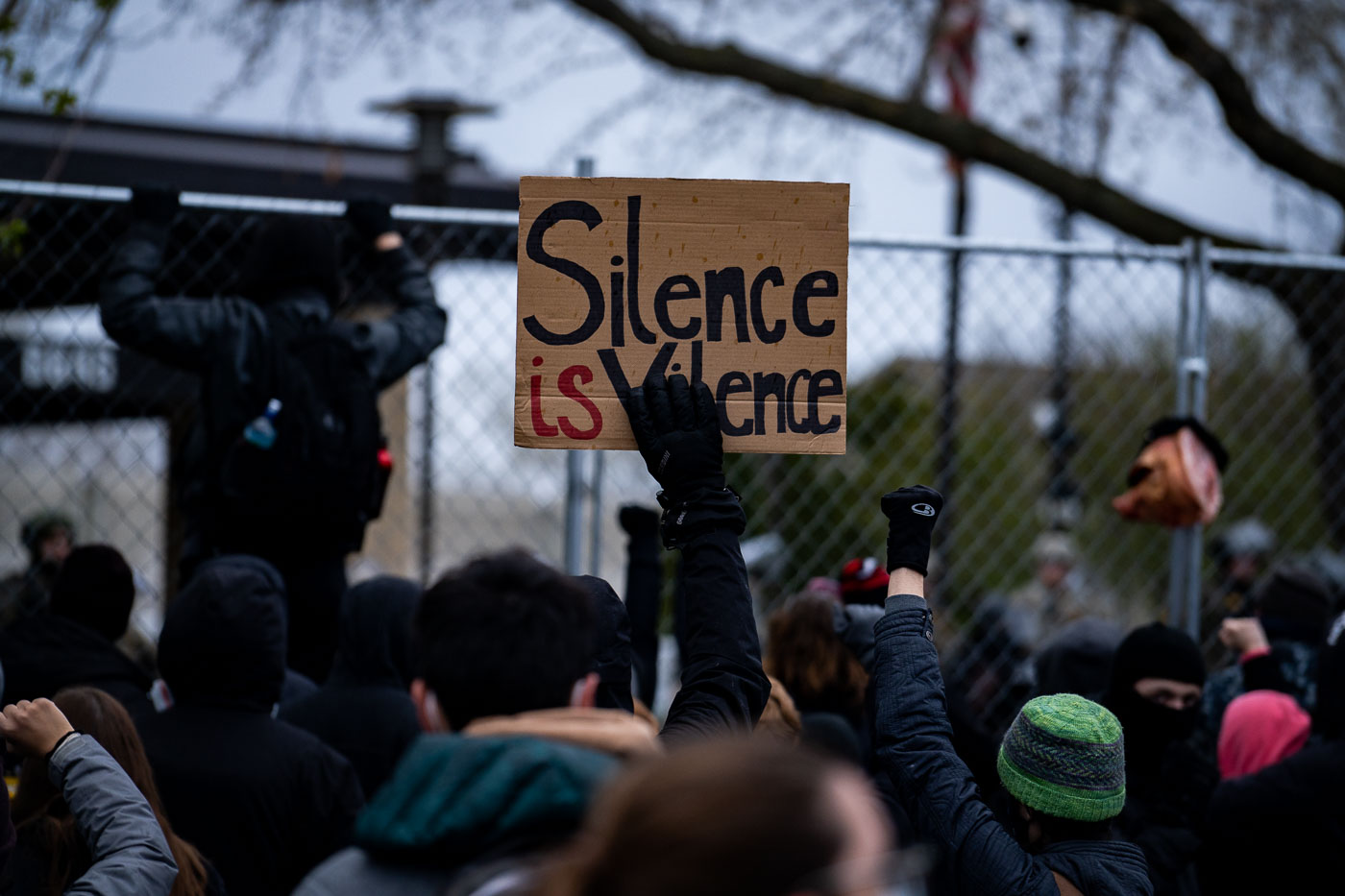
Protesters outside Brooklyn Center Police Department hold a "Silence is Violence" sign.
Protesters gathered outside the Brooklyn Center Police Department following the fatal shooting of Daunte Wright by officer Kim Potter on April 11, 2021. The incident sparked widespread protests and unrest in the Minneapolis suburb. The signs held by demonstrators, such as "Silence is Violence," reflect the broader movement against police brutality and racial injustice that gained national attention following the murder of George Floyd in 2020. The Brooklyn Center Police Department serves a diverse community and has been the focal point of public scrutiny regarding its policing practices.

Protesters at Brooklyn Center Police Dept. after Daunte Wright shooting
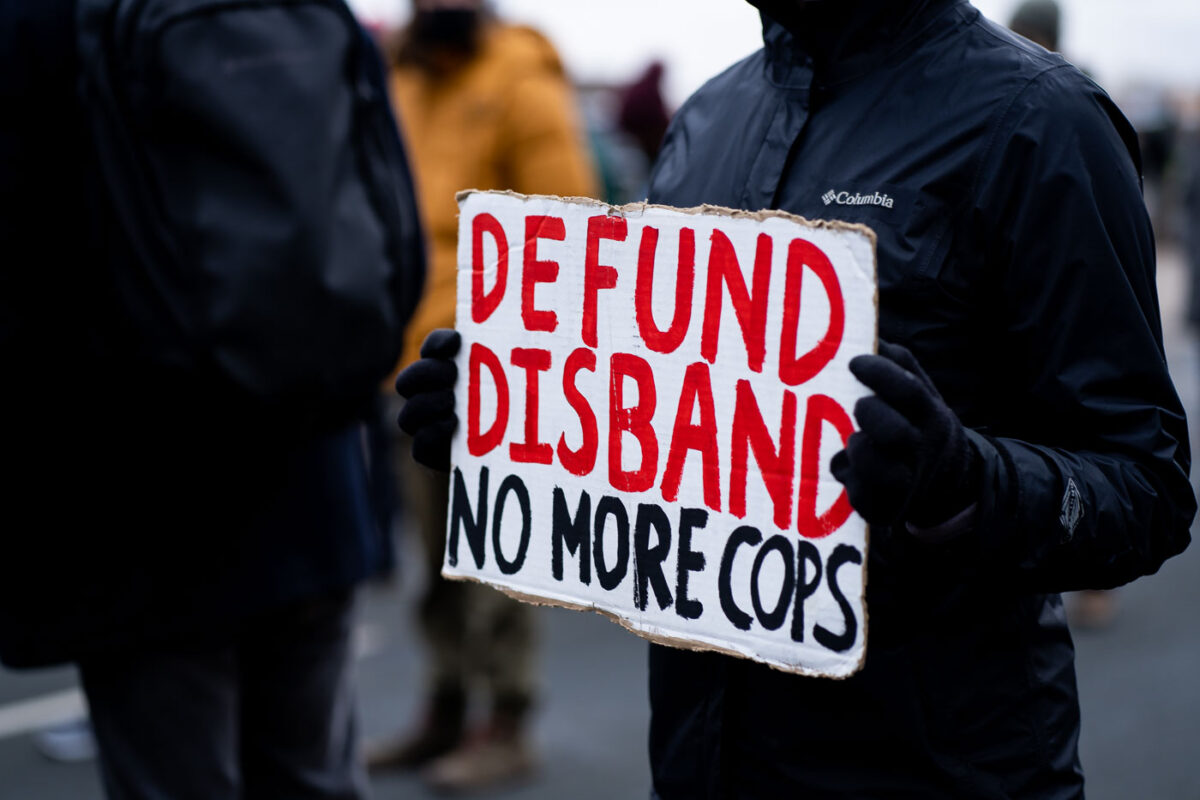
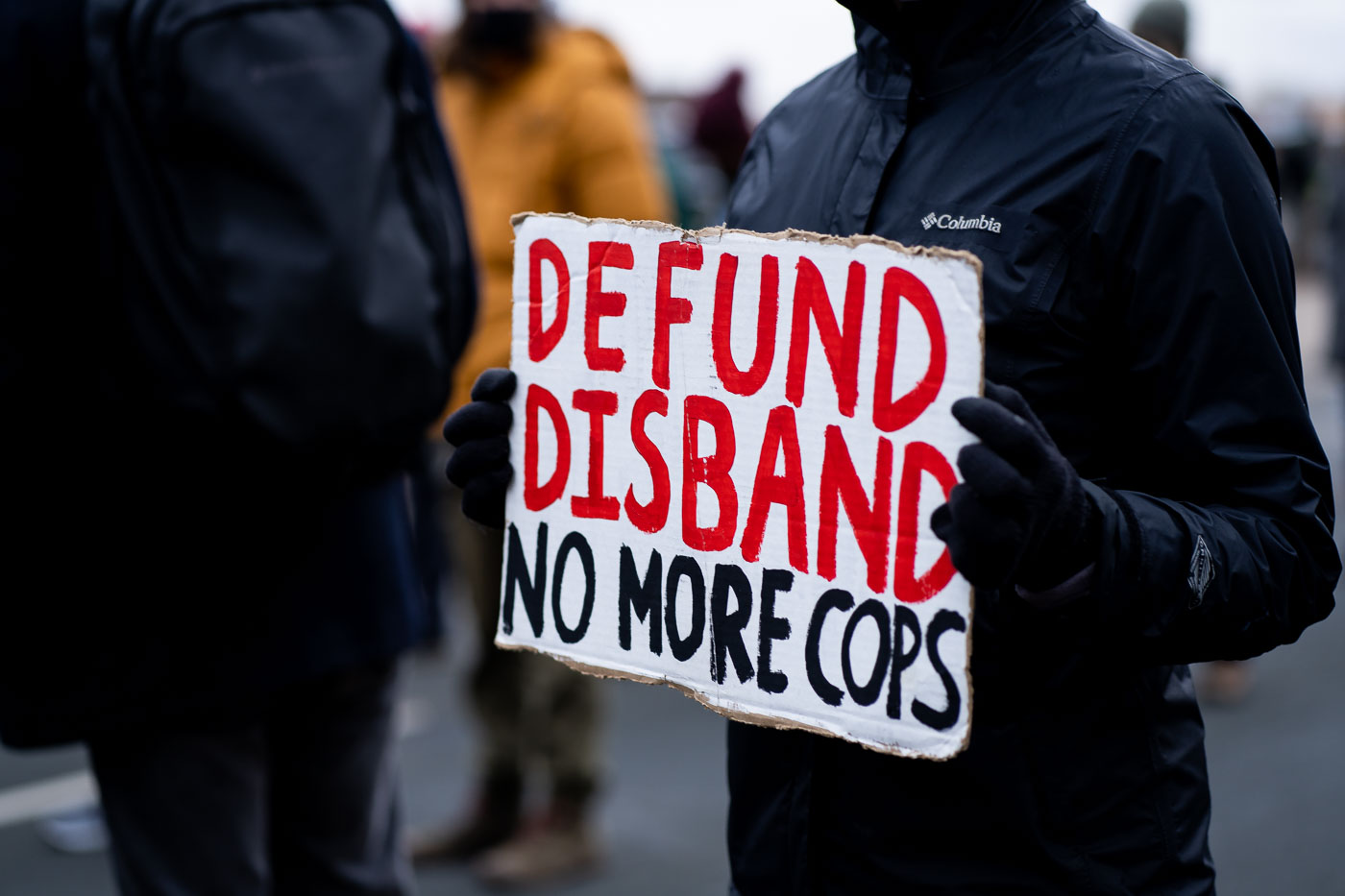
Protester holding "Defund Disband No More Cops" sign in Brooklyn Center, Minnesota.
A protester holds a sign reading "Defund Disband No More Cops" outside the Brooklyn Center Police Department. This protest occurred in the wake of the killing of Daunte Wright by police officer Kim Potter in April 2021. The incident sparked widespread demonstrations and calls for police reform and accountability in Minneapolis and across the United States. The movement to "defund the police" advocates for reallocating funds from law enforcement to community services and social programs.

Brooklyn Center Protest: Sign Demands Defund, Disband Police
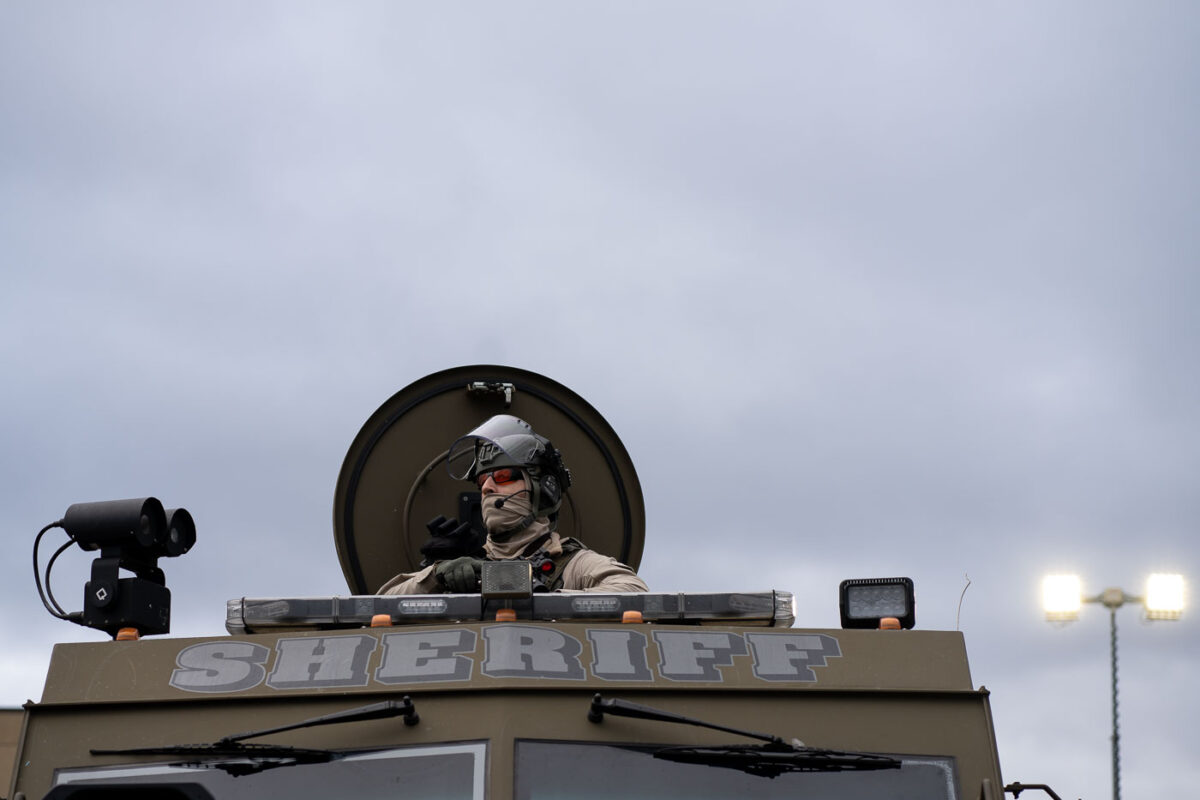
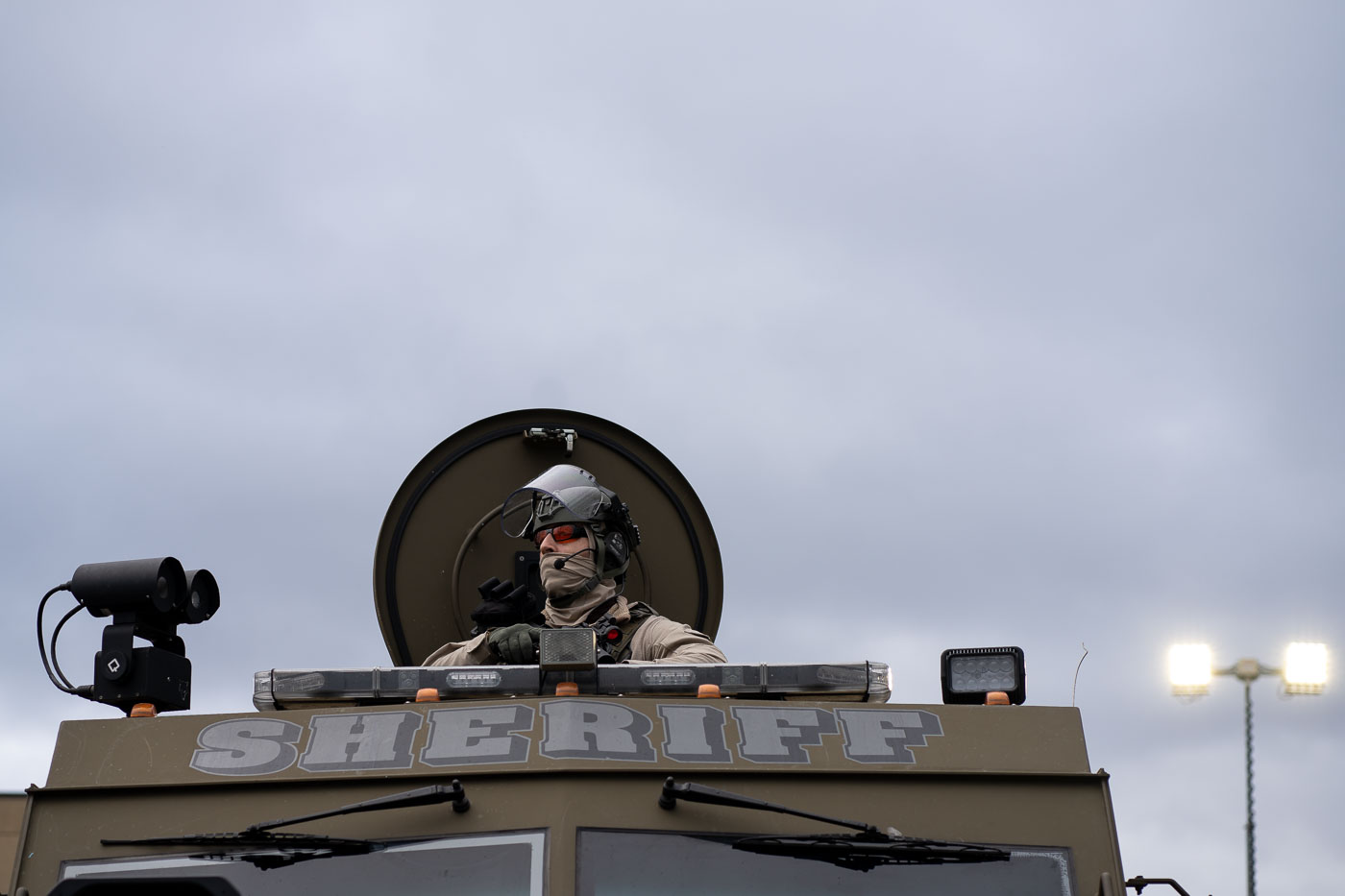
Sheriff's deputy in riot gear atop an armored vehicle at Brooklyn Center Police Department, Minnesota.
A sheriff's deputy in riot gear stands atop a department vehicle outside the Brooklyn Center Police Department. This image was taken during protests that erupted following the fatal shooting of Daunte Wright by a police officer in the Minneapolis suburb on April 11, 2021. The protests led to unrest and clashes with law enforcement in the days that followed. The Brooklyn Center Police Department serves a community of approximately 30,000 residents and is responsible for maintaining public safety and order.

Sheriff’s Officer on Duty at Brooklyn Center Police Department
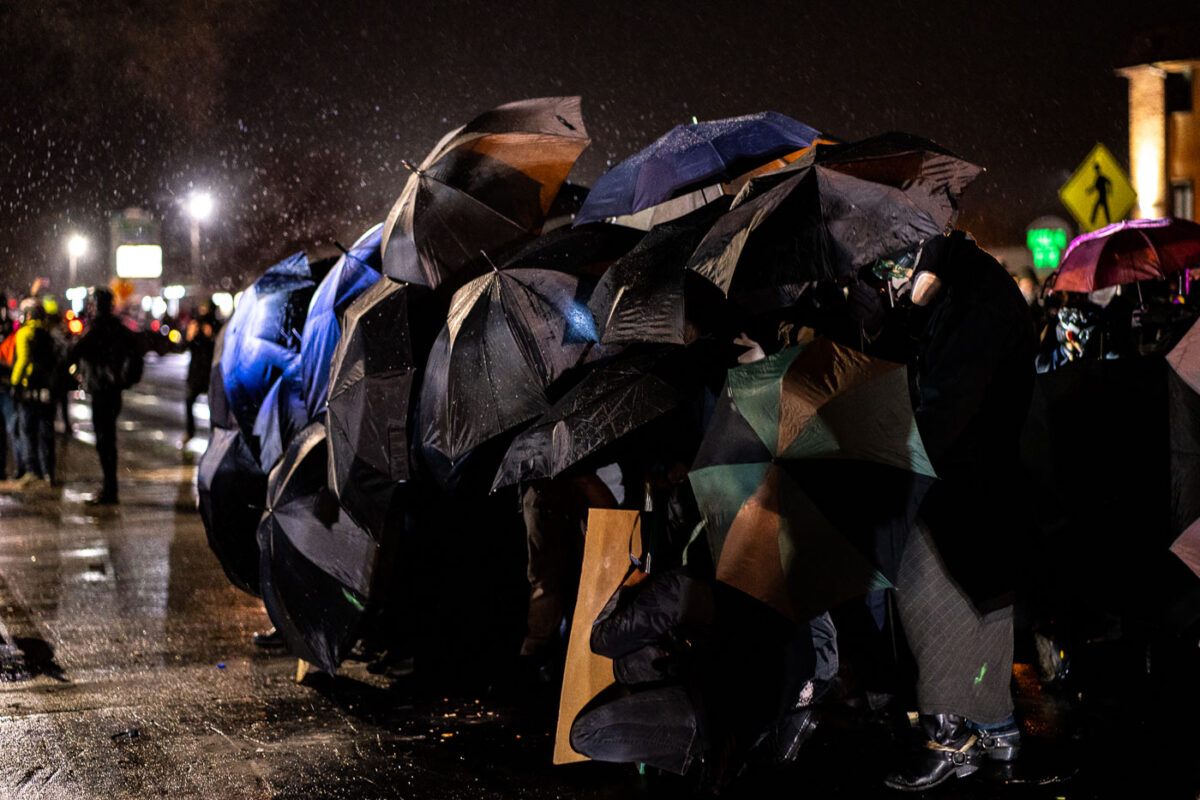
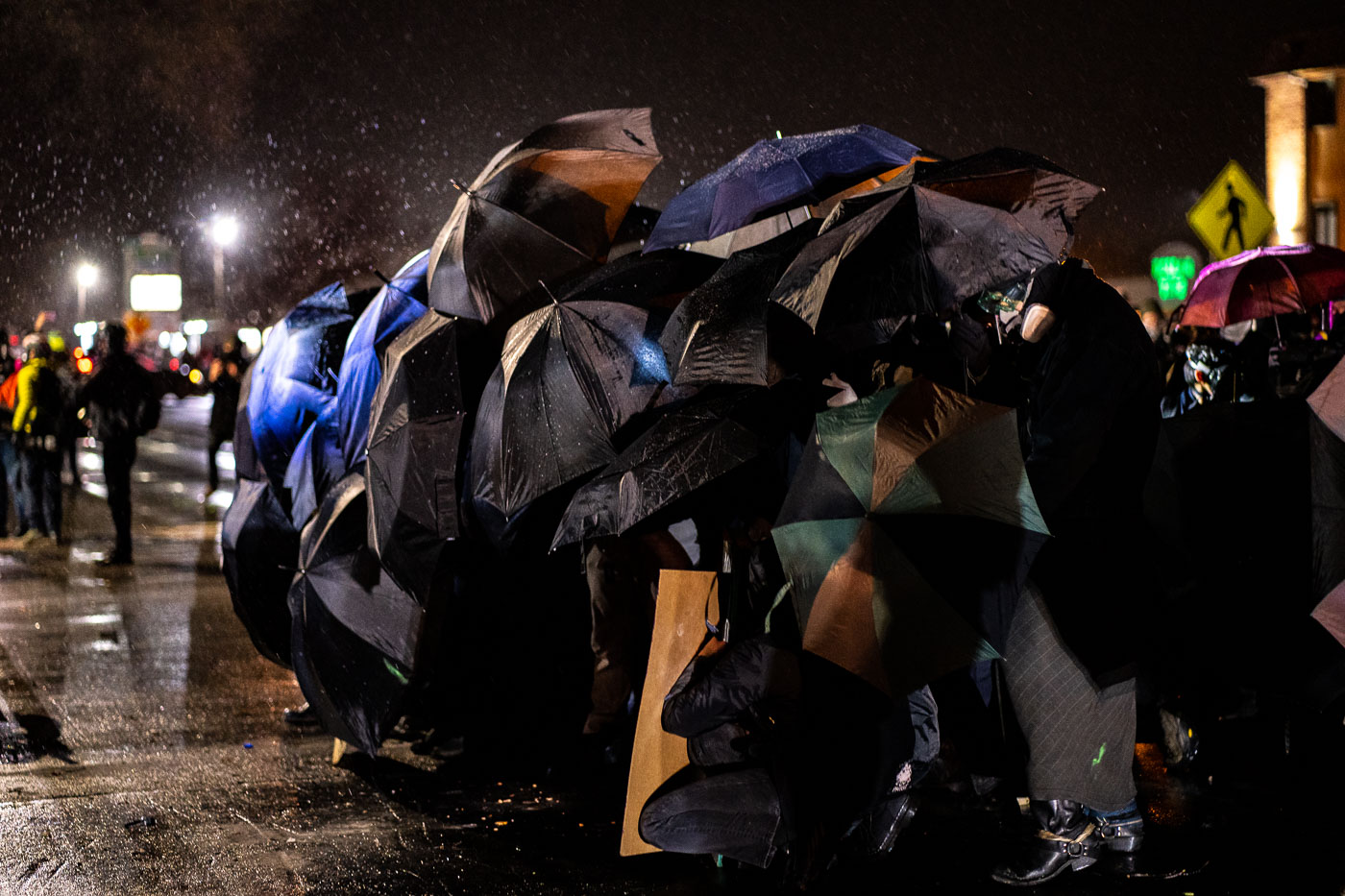
Protesters with umbrellas outside Brooklyn Center Police Department during the Daunte Wright protest.
Protesters gathered outside the Brooklyn Center Police Department on April 11th, 2021, to protest the shooting death of Daunte Wright. The demonstration occurred the day after Wright, a 20-year-old Black man, was killed by police during a traffic stop. Protesters used umbrellas to shield themselves from chemical irritants deployed by law enforcement.

Brooklyn Center protesters use umbrellas during Daunte Wright protest
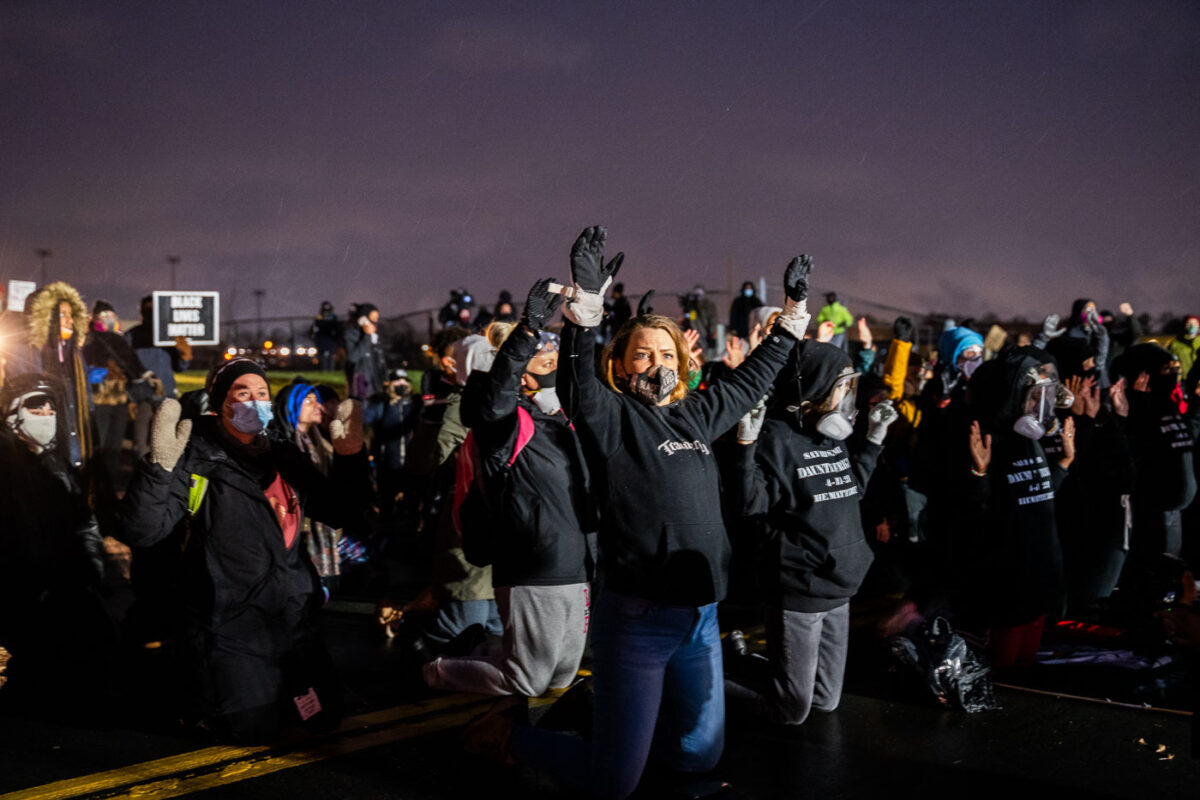
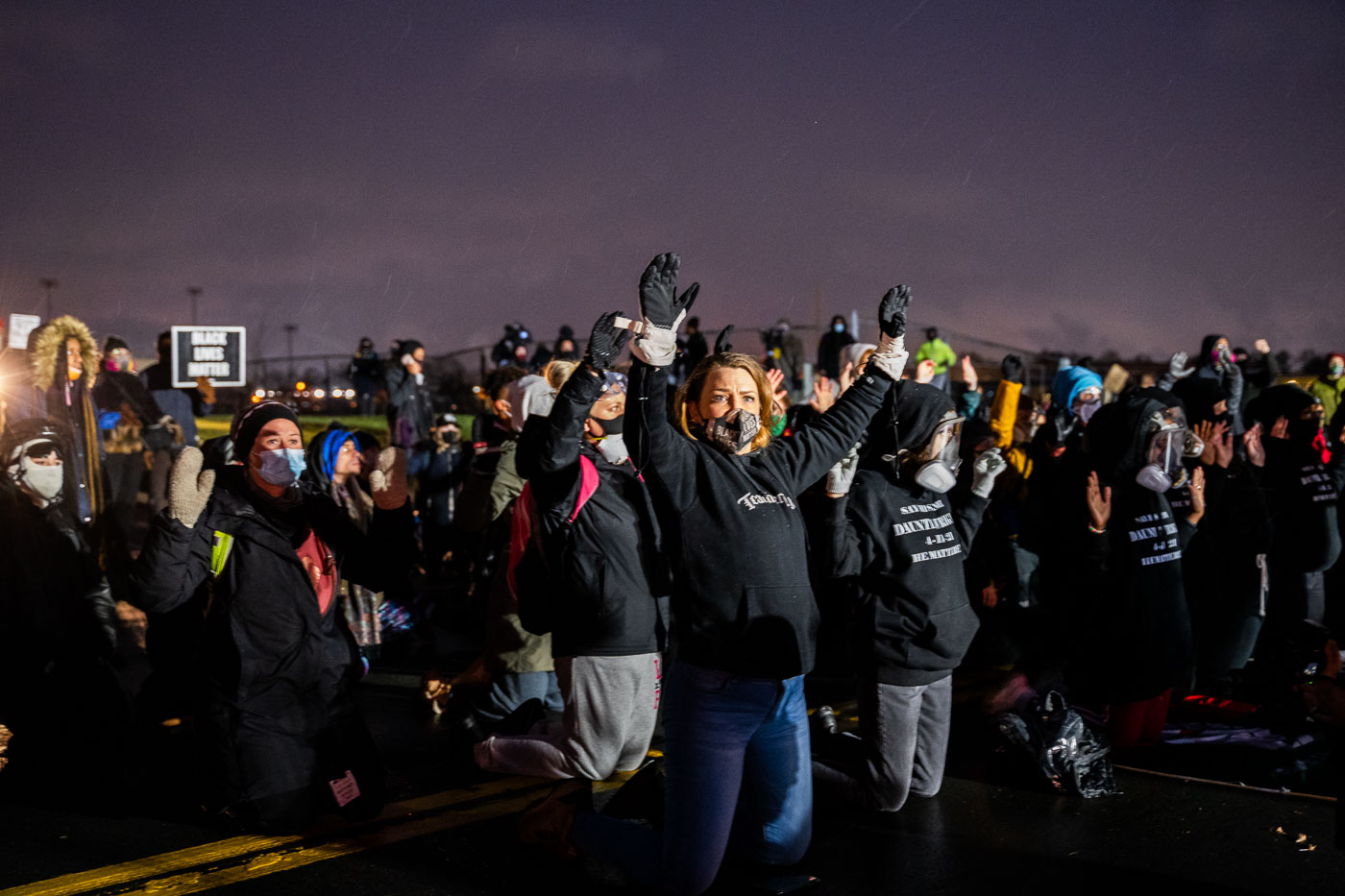
Protesters kneel with hands raised outside Brooklyn Center Police Department after Daunte Wright's killing.
Protesters gather outside the Brooklyn Center Police Department following the death of Daunte Wright. Wright, a 20-year-old Black man, was fatally shot by officer Kim Potter during a traffic stop on April 11, 2021. The incident sparked widespread protests and calls for police reform in Brooklyn Center, a suburb of Minneapolis.

Protesters with hands raised outside Brooklyn Center Police Department

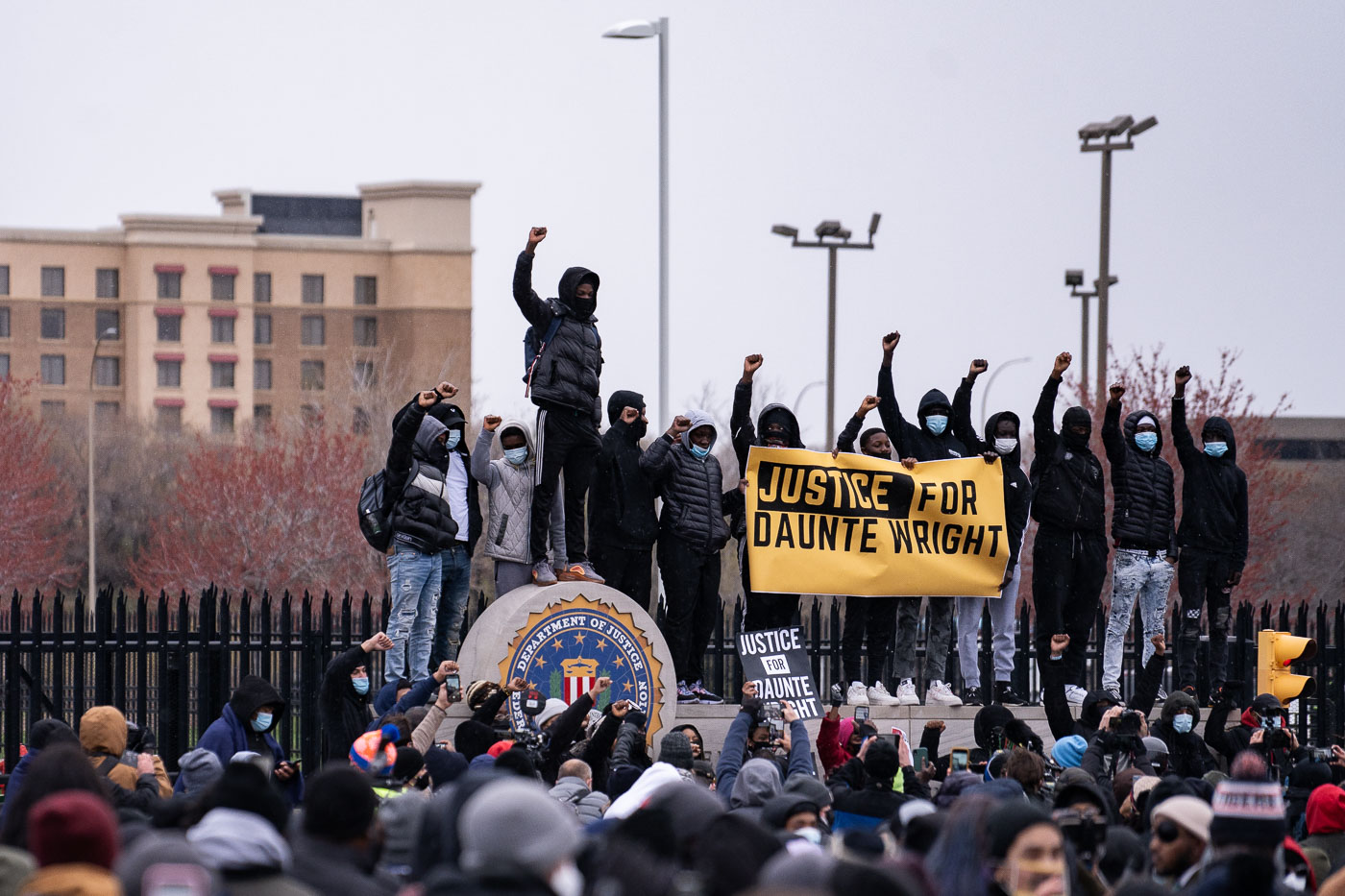
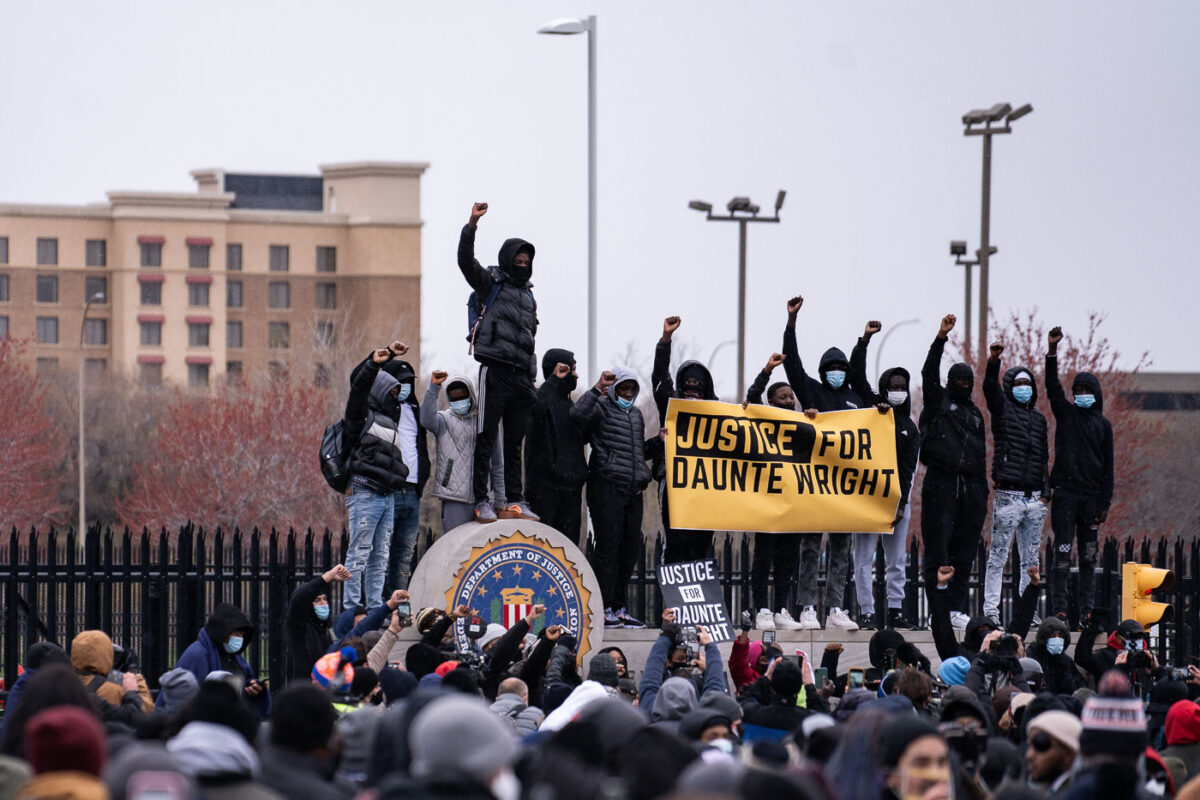
Protesters outside the FBI Minneapolis Field Office with a Justice for Daunte Wright banner.
Protesters gathered outside the FBI Minneapolis Field Office on April 12, 2021, to protest the death of Daunte Wright. Wright, a 20-year-old Black man, was fatally shot by Brooklyn Center Police officer Kim Potter during a traffic stop the previous day. The incident sparked widespread outrage and protests across the Minneapolis–Saint Paul metropolitan area. The FBI Minneapolis Field Office is a federal law enforcement facility responsible for a range of investigative and security operations within the region.

Protesters at FBI Minneapolis Field Office for Daunte Wright
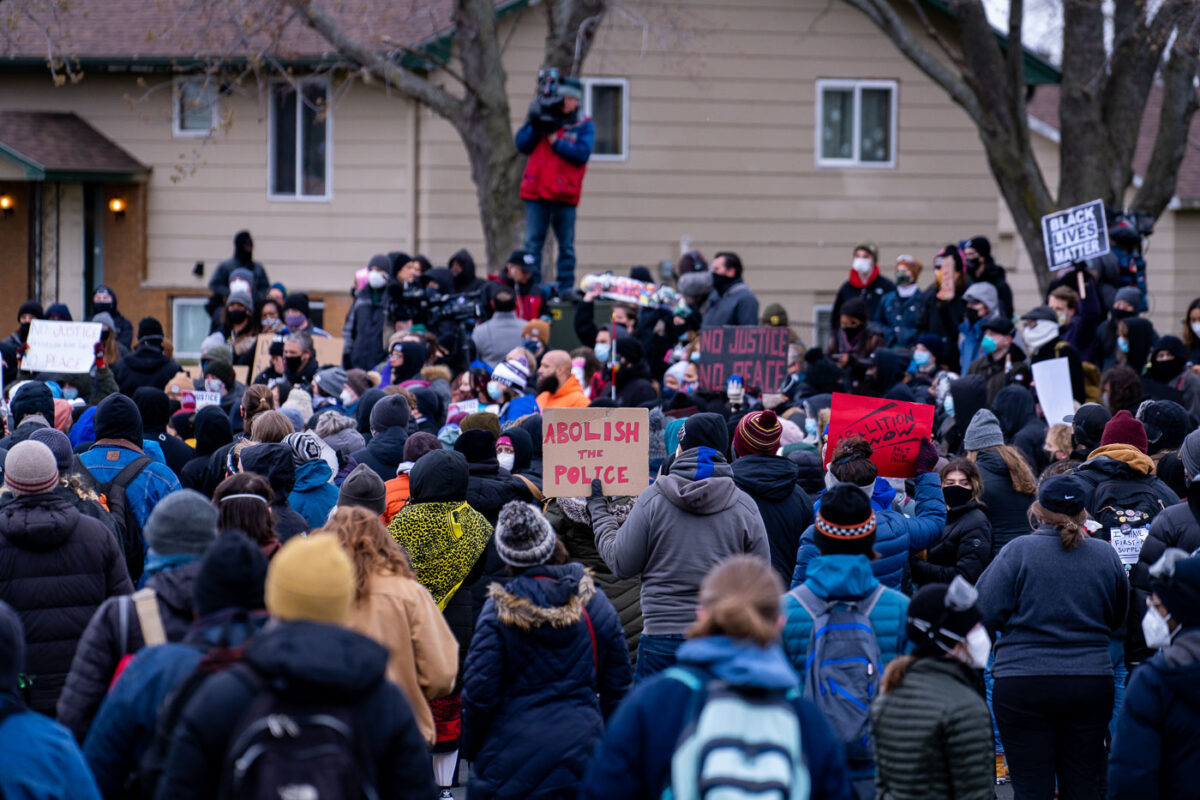
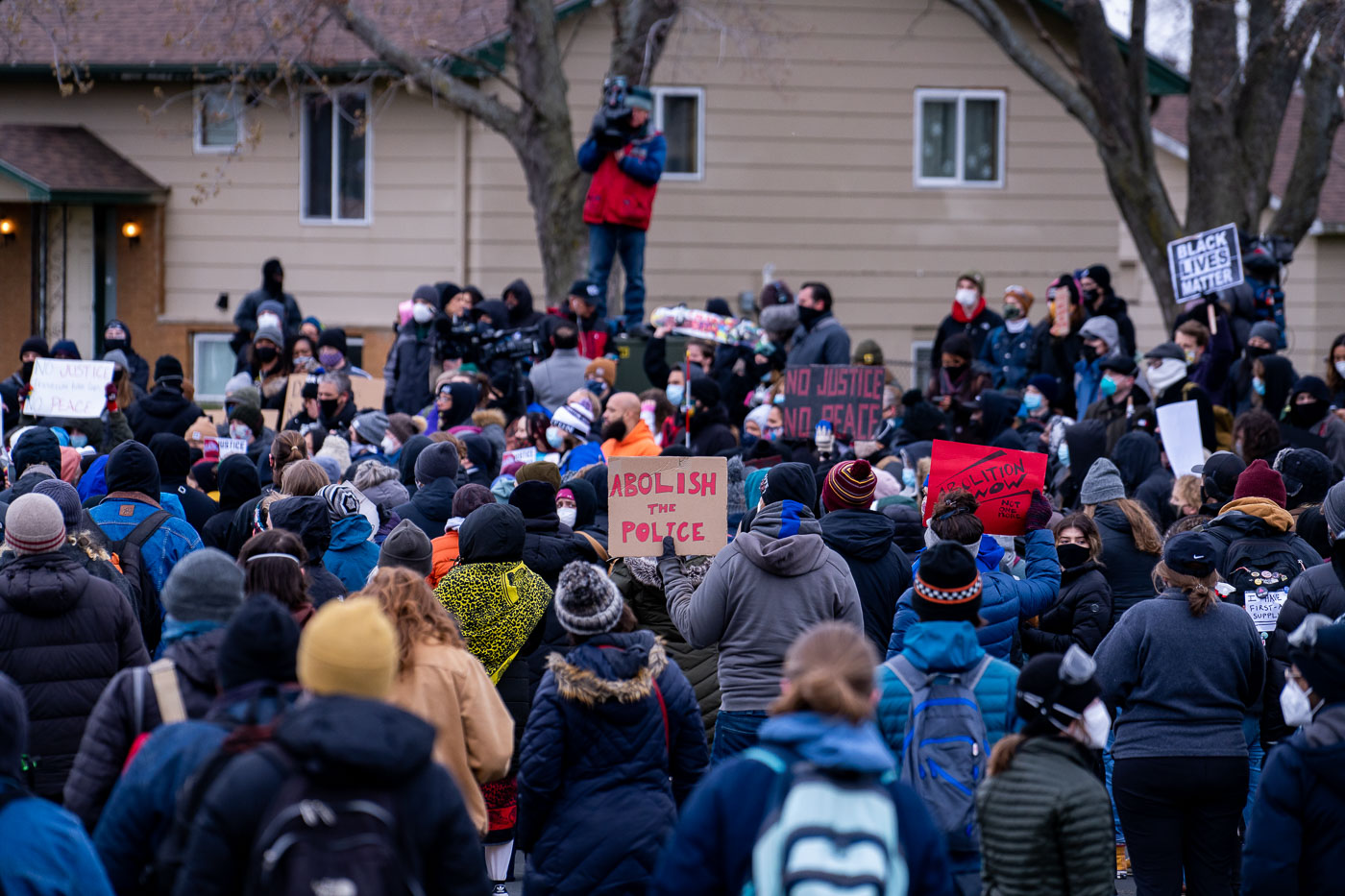
Protesters outside Brooklyn Center Police Department after the Daunte Wright shooting.
Protesters gathered outside the Brooklyn Center Police Department following the fatal shooting of Daunte Wright on April 11, 2021. The incident, which occurred during a traffic stop, ignited widespread protests and unrest in the Minneapolis area. Demonstrators voiced anger and called for justice and police reform, with signs reading "Abolish the Police" and "No Justice No Peace." The events highlighted ongoing tensions surrounding police conduct and racial injustice in the United States.

Protesters at Brooklyn Center Police Dept. after Daunte Wright shooting
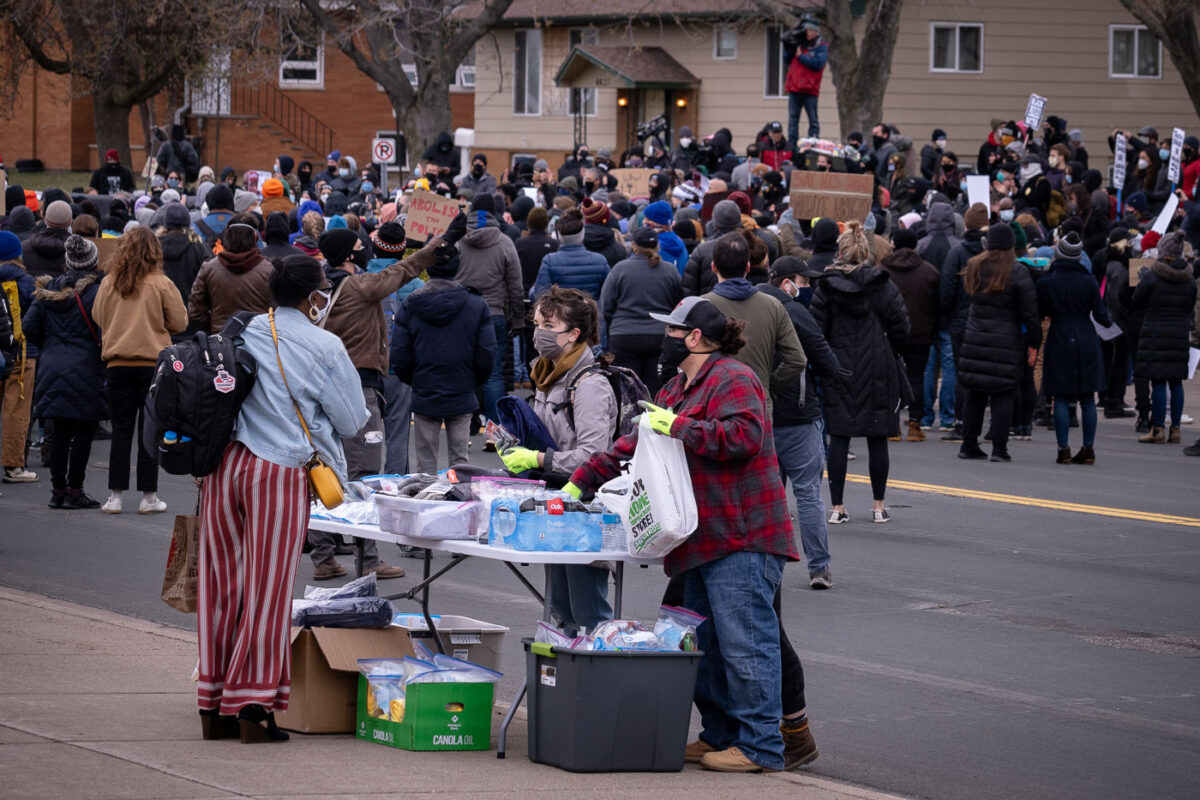
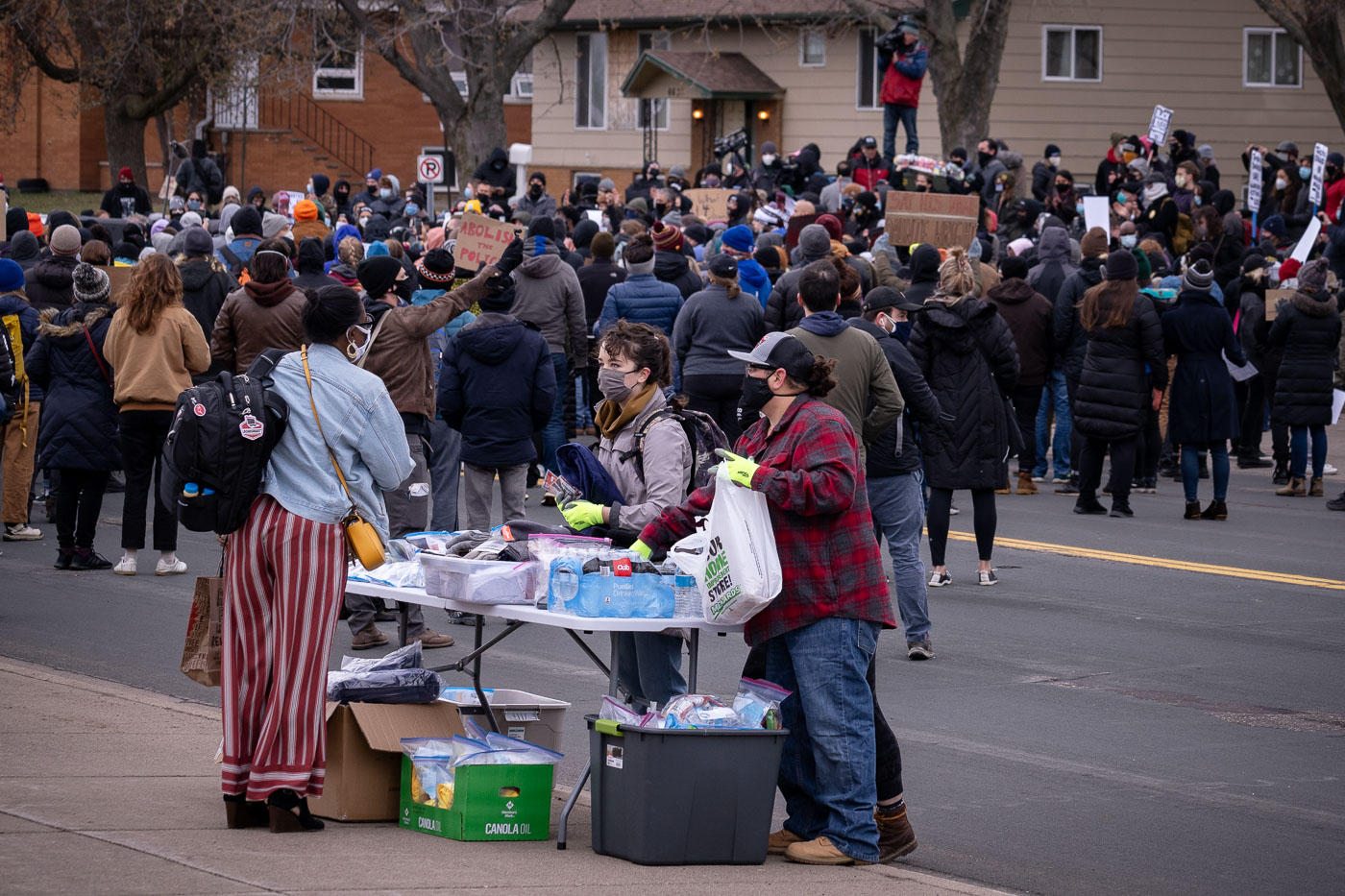
Support table distributing supplies during a protest in Brooklyn Center, Minnesota.
During protests following the death of Daunte Wright in Brooklyn Center, Minnesota, a support table was set up to distribute essential supplies to participants. The protests, which began on April 11, 2021, occurred outside the Brooklyn Center Police Department and in surrounding areas. This table provided items such as water, masks, and other necessities to those gathered. The distribution of supplies highlights the community's efforts to sustain and support the ongoing demonstrations.

Brooklyn Center protest support table distributing supplies
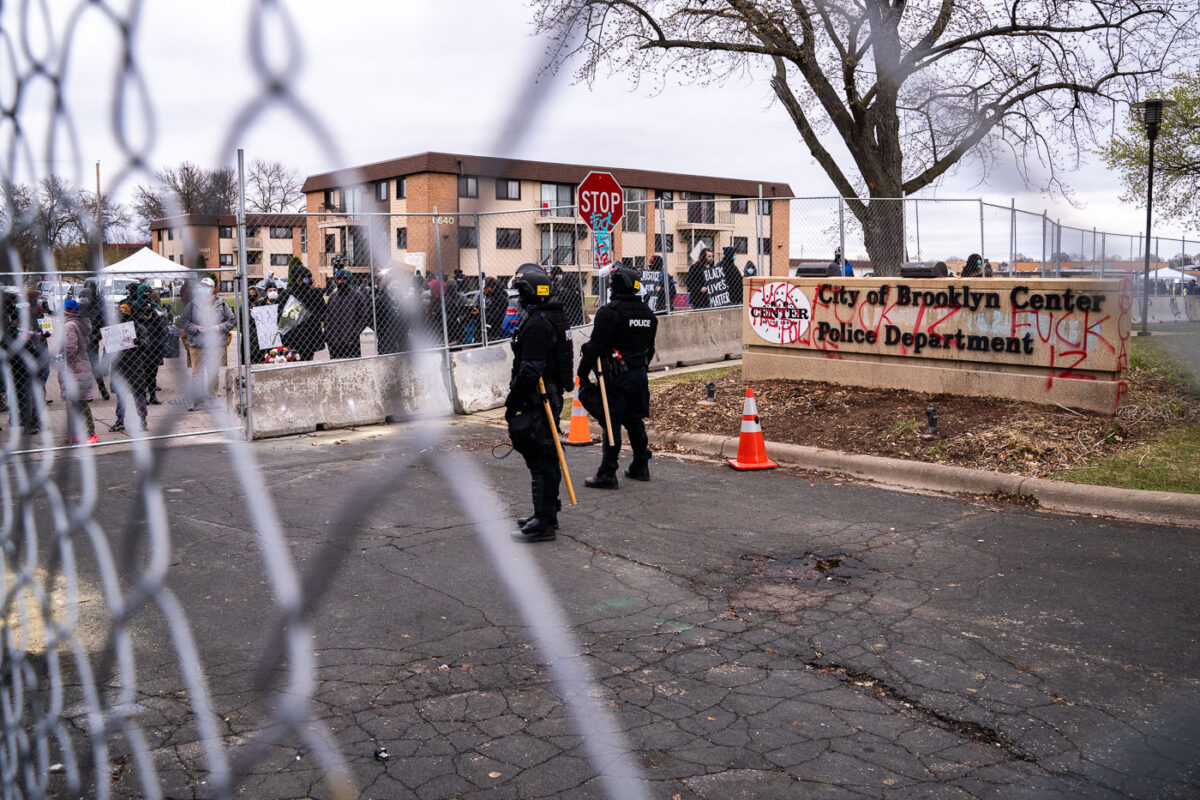
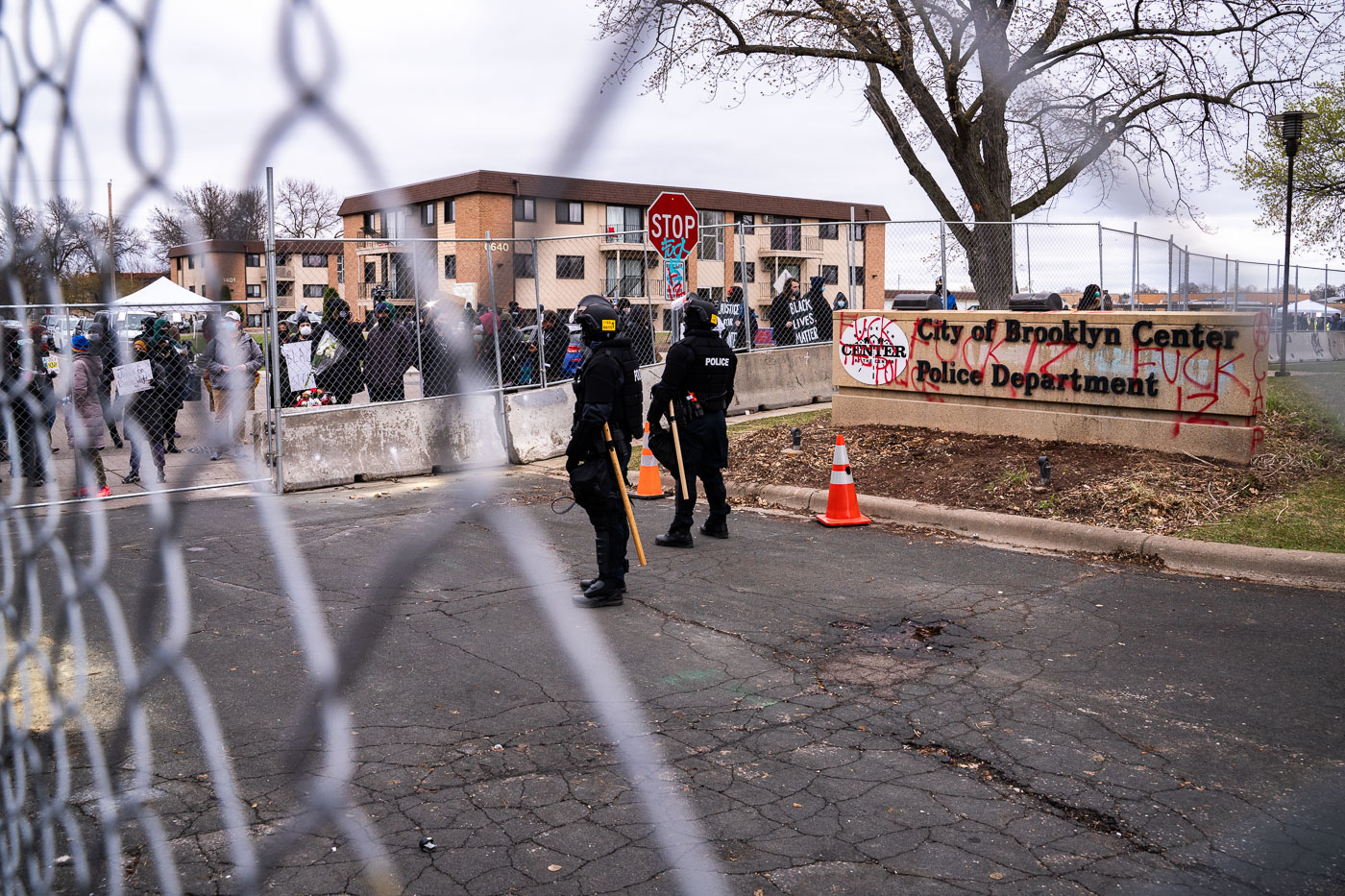
Police face protesters outside Brooklyn Center Police Department after Daunte Wright shooting, April 2021.
Protesters gathered outside the Brooklyn Center Police Department on April 11, 2020, following the fatal shooting of Daunte Wright by a police officer earlier that day. The incident sparked widespread protests and unrest in the Minneapolis area. The building's signage was defaced with graffiti, indicating the anger and frustration directed at the police department. This event became a significant moment in the ongoing national conversation about police brutality and racial justice.

Brooklyn Center Police Department protest, April 11, 2020
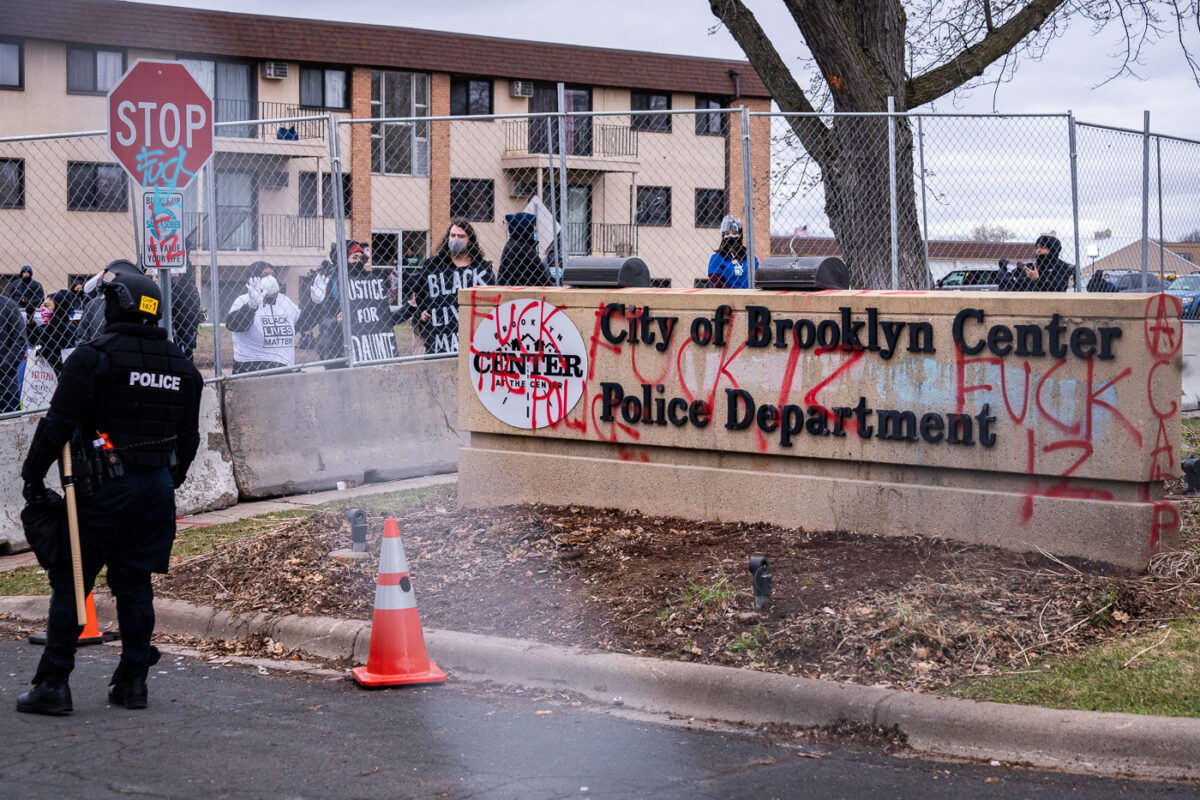
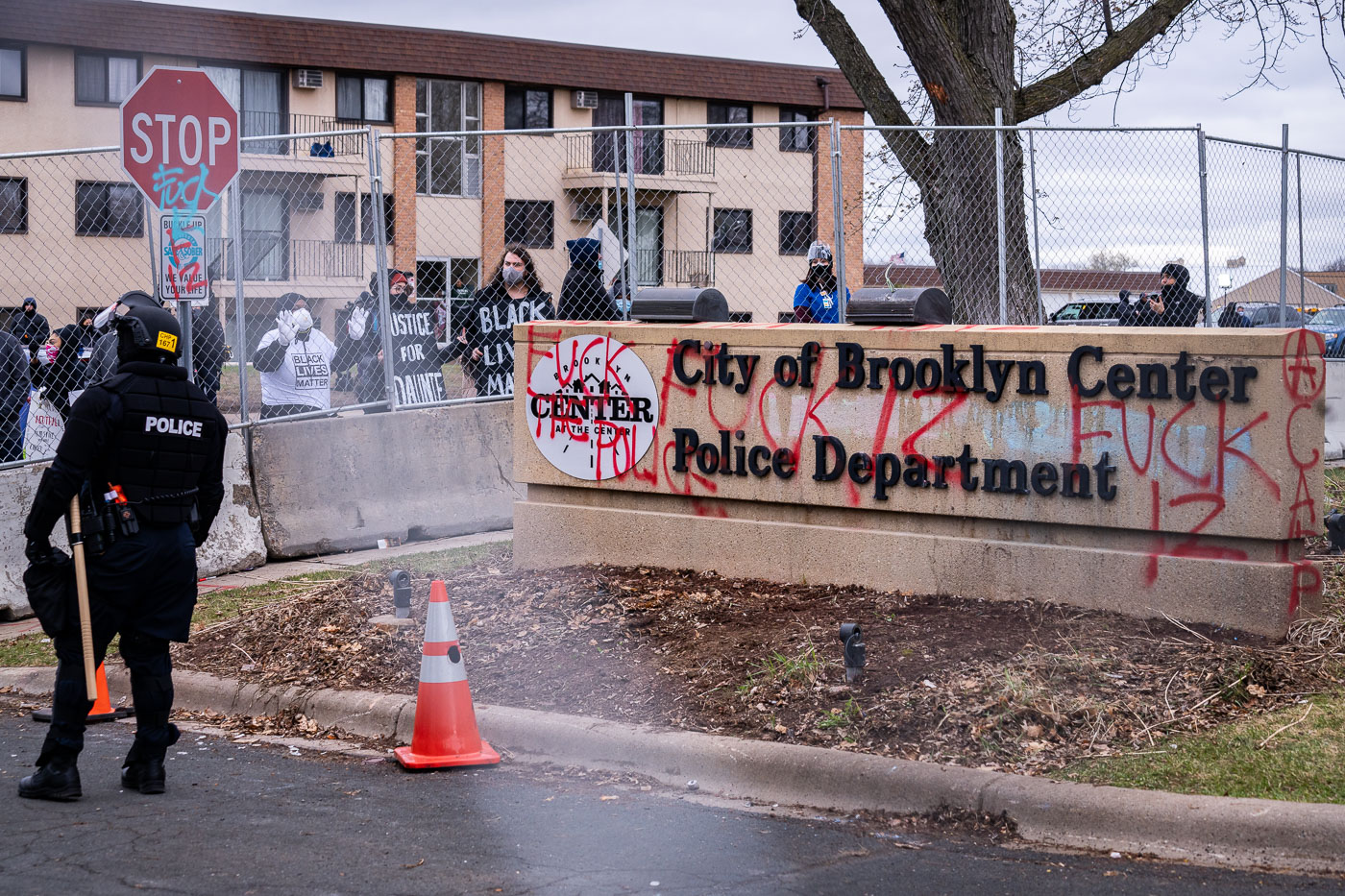
Graffiti-covered Brooklyn Center Police Department sign during a protest in Brooklyn Center, Minnesota.
Protesters gathered outside the Brooklyn Center Police Department following the fatal shooting of Daunte Wright on April 11, 2021. The department building and its signage were defaced with graffiti during the unrest. The protests, which occurred in Brooklyn Center, Minnesota, were part of a larger wave of demonstrations against police brutality and racial injustice that followed the incident.

Brooklyn Center Police Department Graffiti and Protest
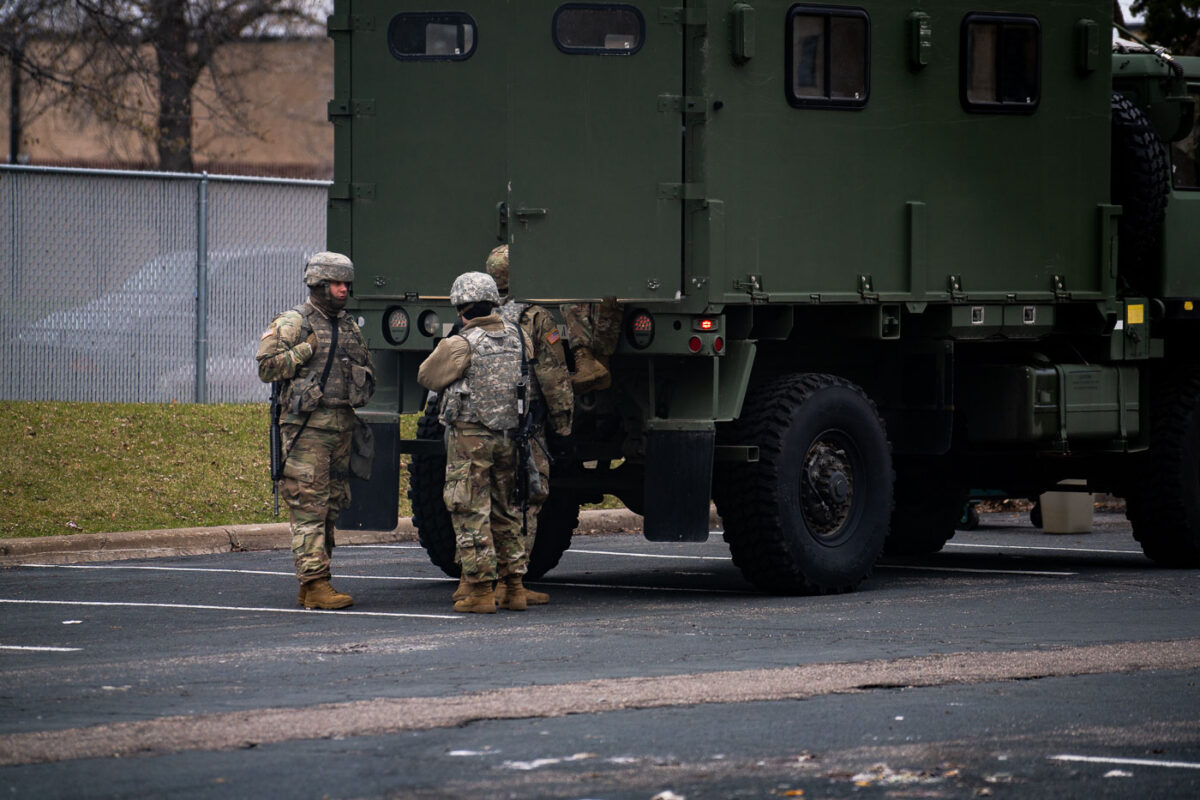
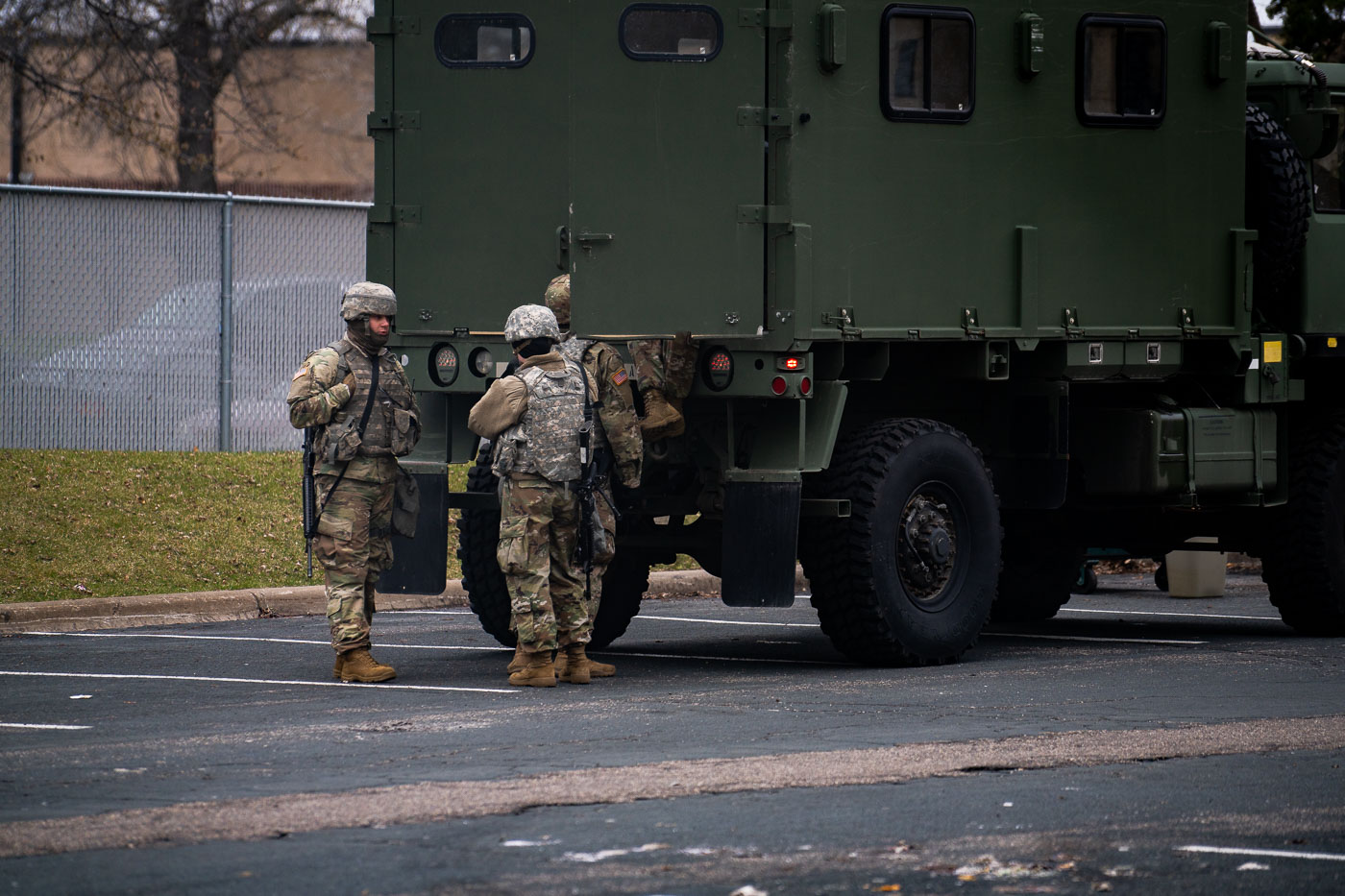
Minnesota National Guard troops beside a military truck at Brooklyn Center Police Department in Brooklyn Center.
Members of the Minnesota National Guard are pictured outside the Brooklyn Center Police Department. The deployment occurred in April 2021 following protests and unrest after the fatal shooting of Daunte Wright by a police officer in the city. The National Guard was activated to support local law enforcement and maintain order during the period of civil disturbance. This event highlighted the complex relationship between law enforcement, community, and military presence during times of heightened tension.

Minnesota National Guard at Brooklyn Center Police Department
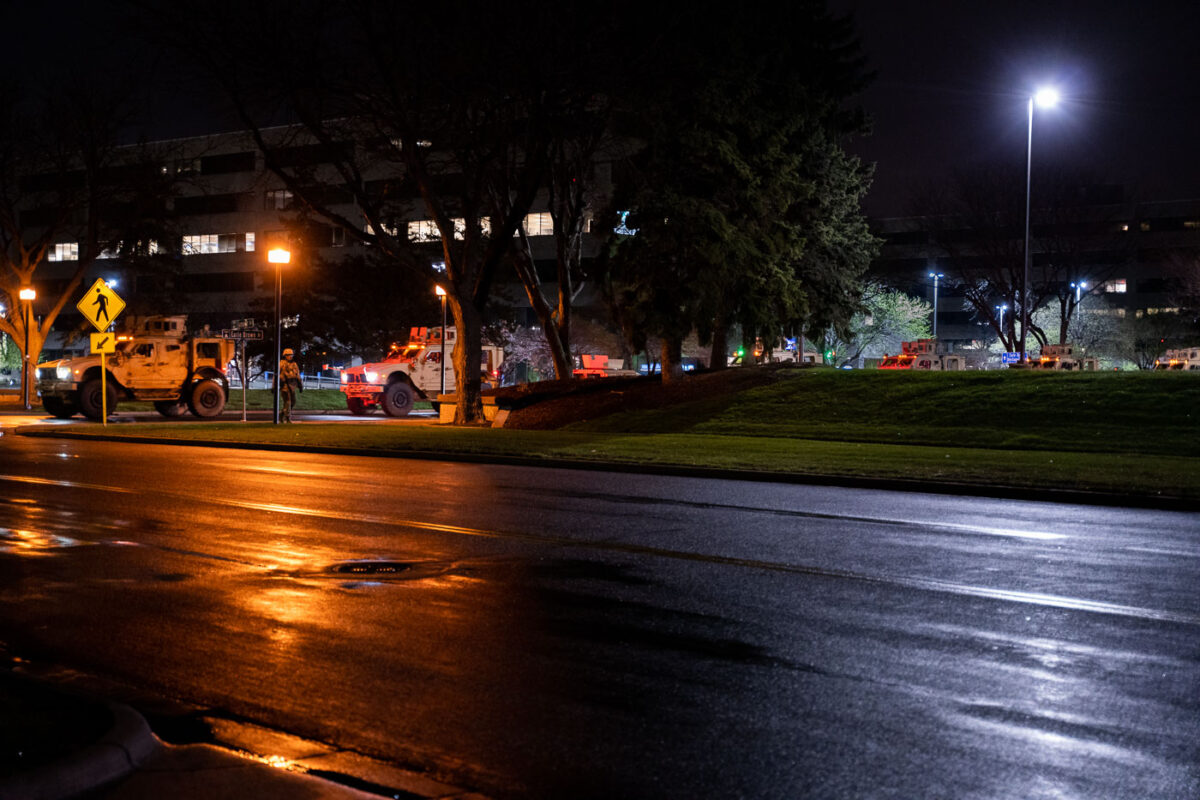
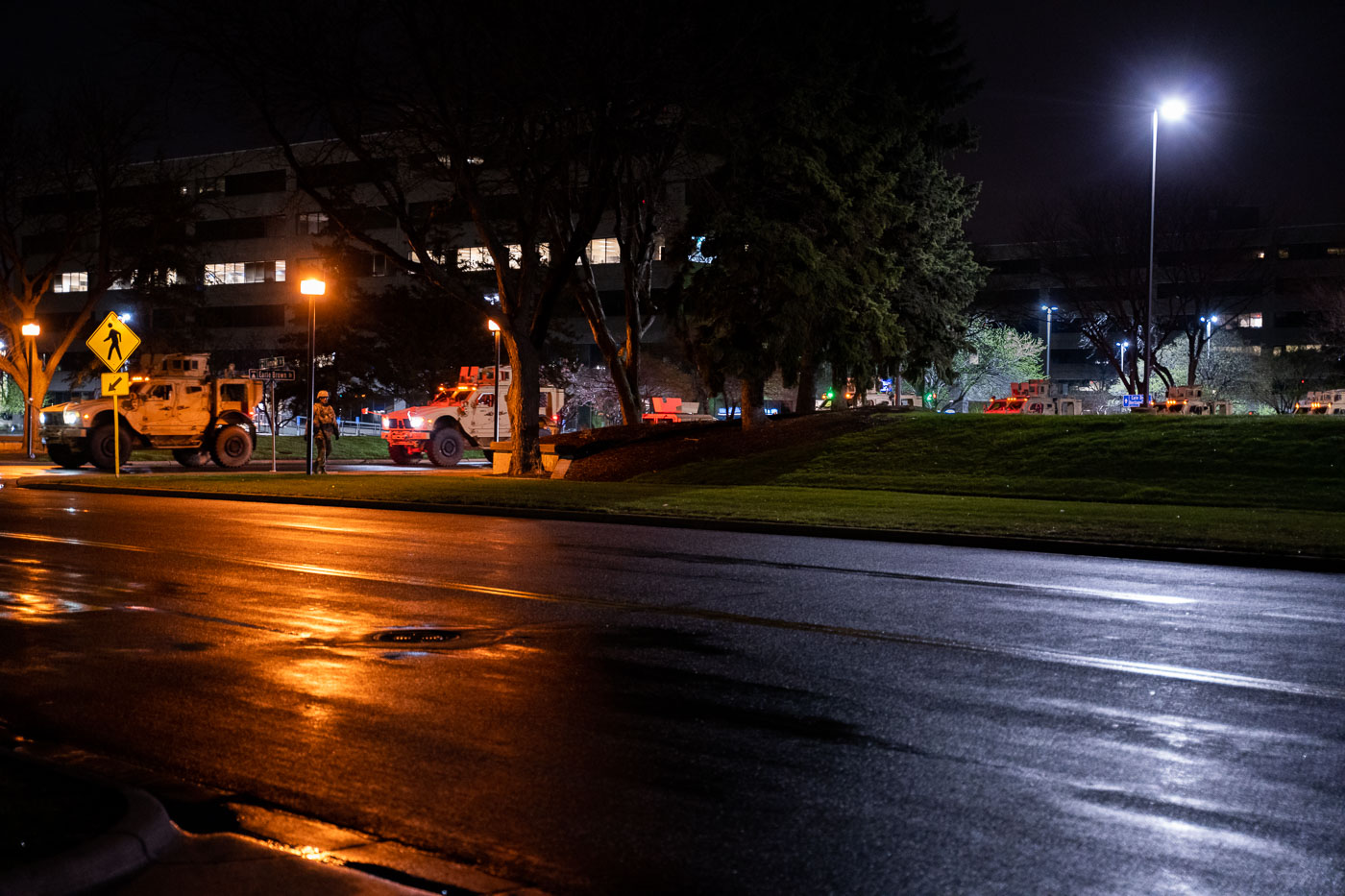
National Guard vehicles on Earle Brown Drive in Brooklyn Center at night.
National Guard vehicles are staged on Earle Brown Drive in Brooklyn Center, Minnesota, during a period of unrest following the death of Daunte Wright. The presence of military vehicles underscores the significant response to protests that occurred in the Minneapolis area. Brooklyn Center, a suburb of Minneapolis, became a focal point for demonstrations and police activity in April 2021.

National Guard vehicles on Earle Brown Drive, Brooklyn Center
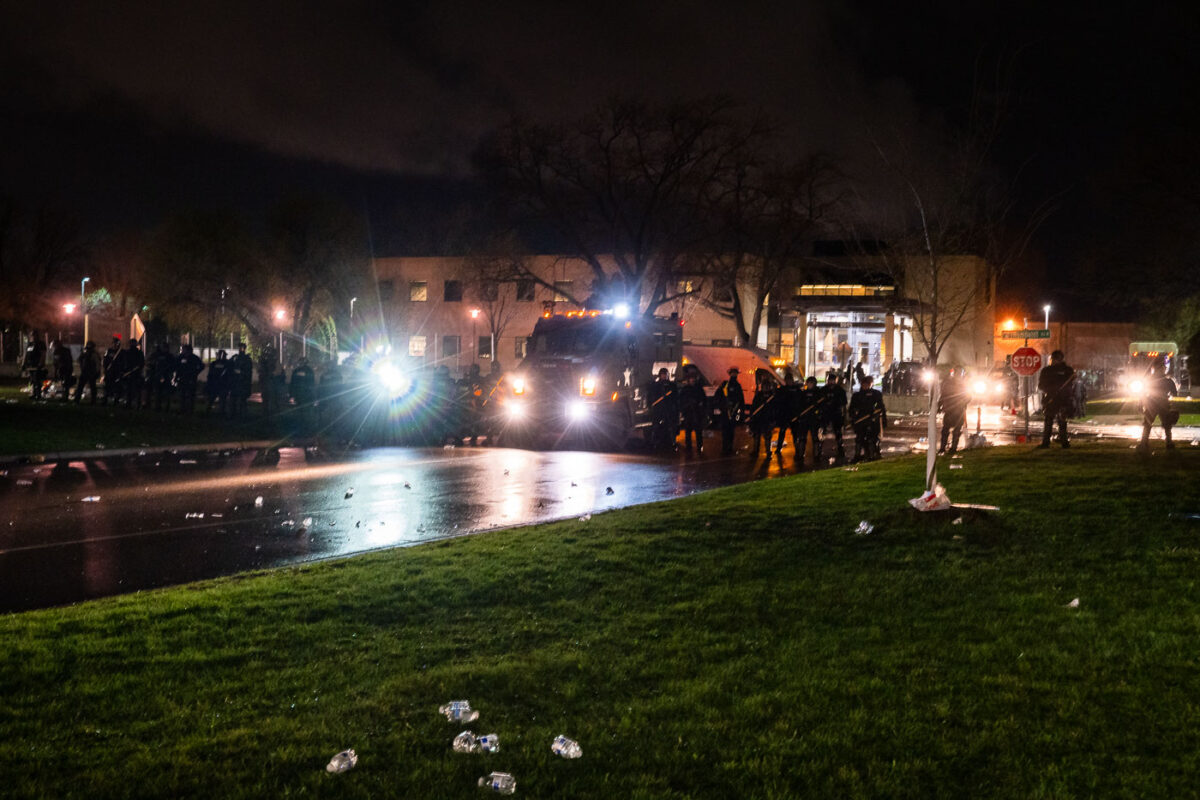
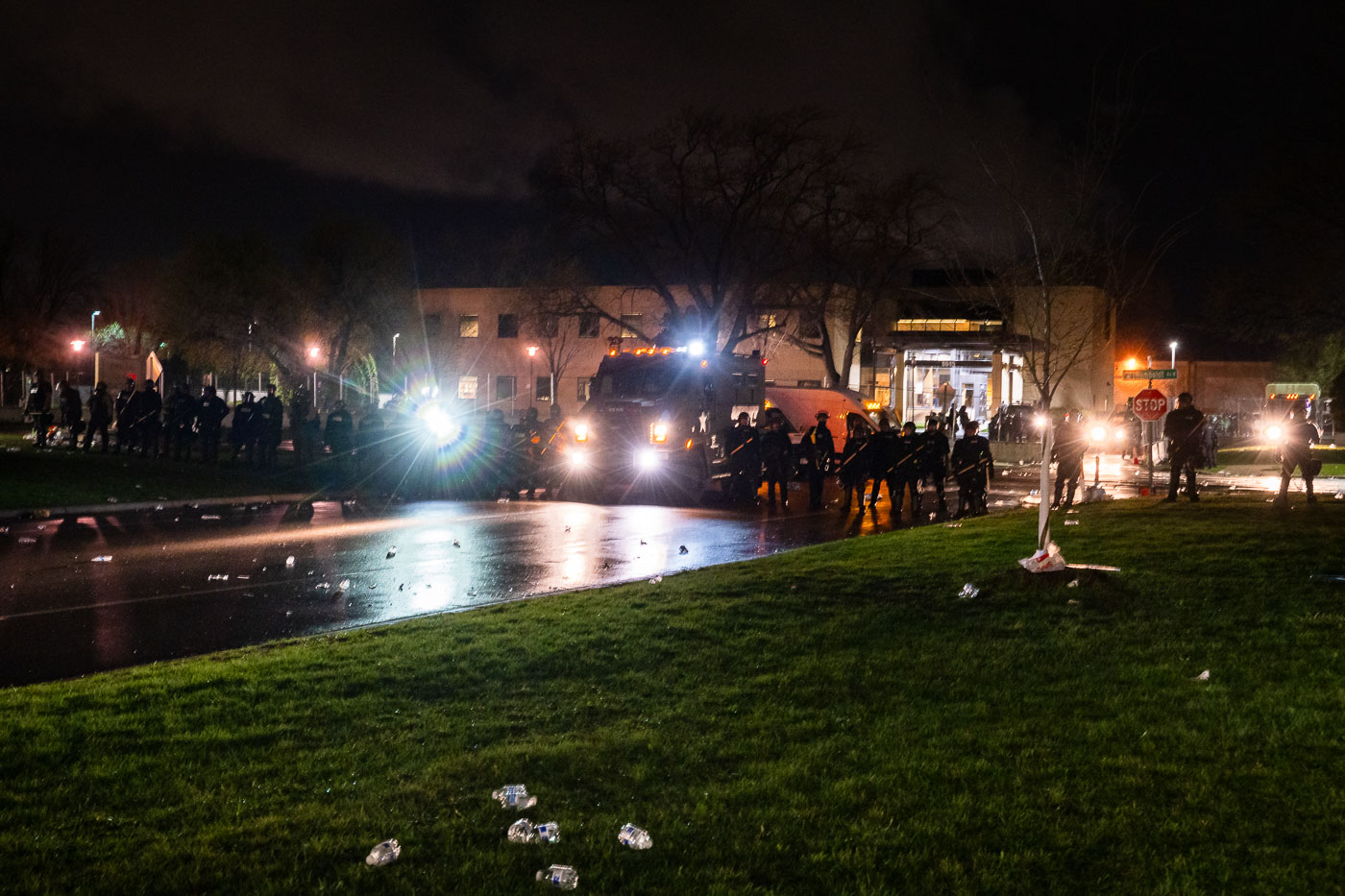
Brooklyn Center Police Disperse Daunte Wright Protest\
Police in riot gear confront protesters outside the Brooklyn Center Police Department on April 11, 2021. The protest followed the shooting death of Daunte Wright by a police officer the previous day.

Brooklyn Center Police Disperse Daunte Wright Protest
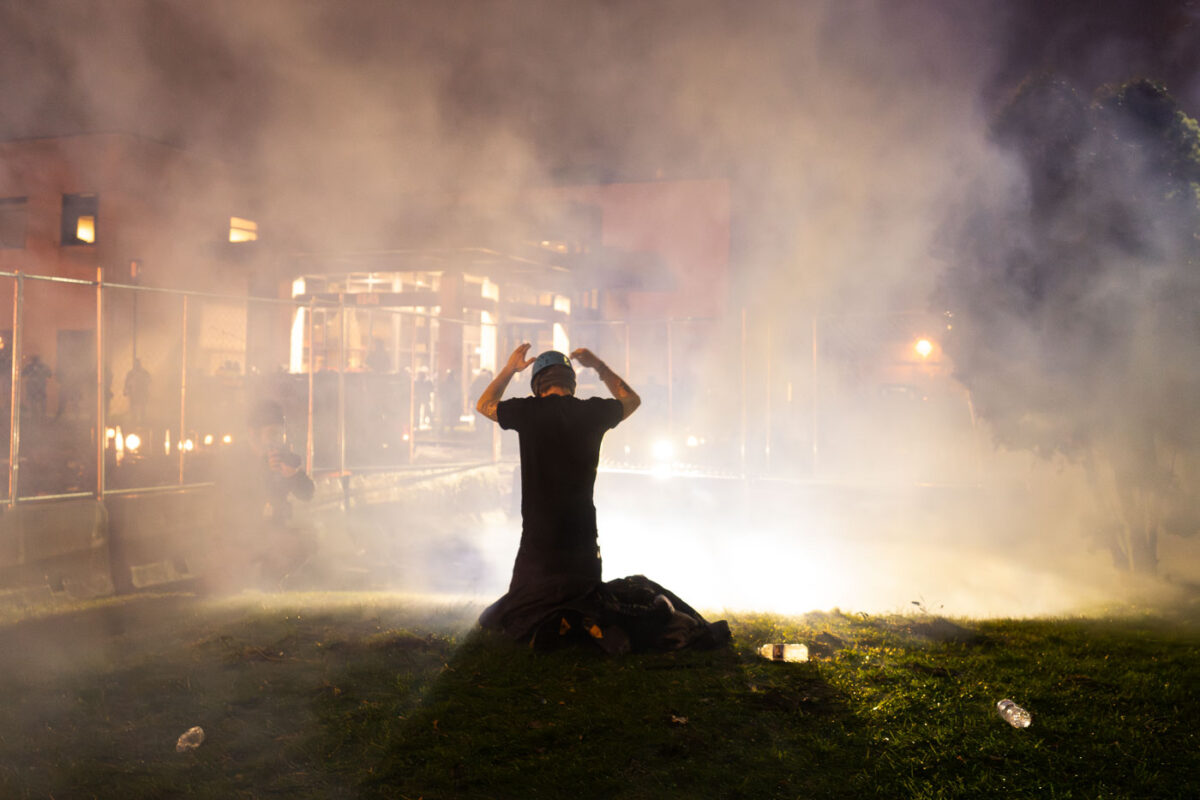
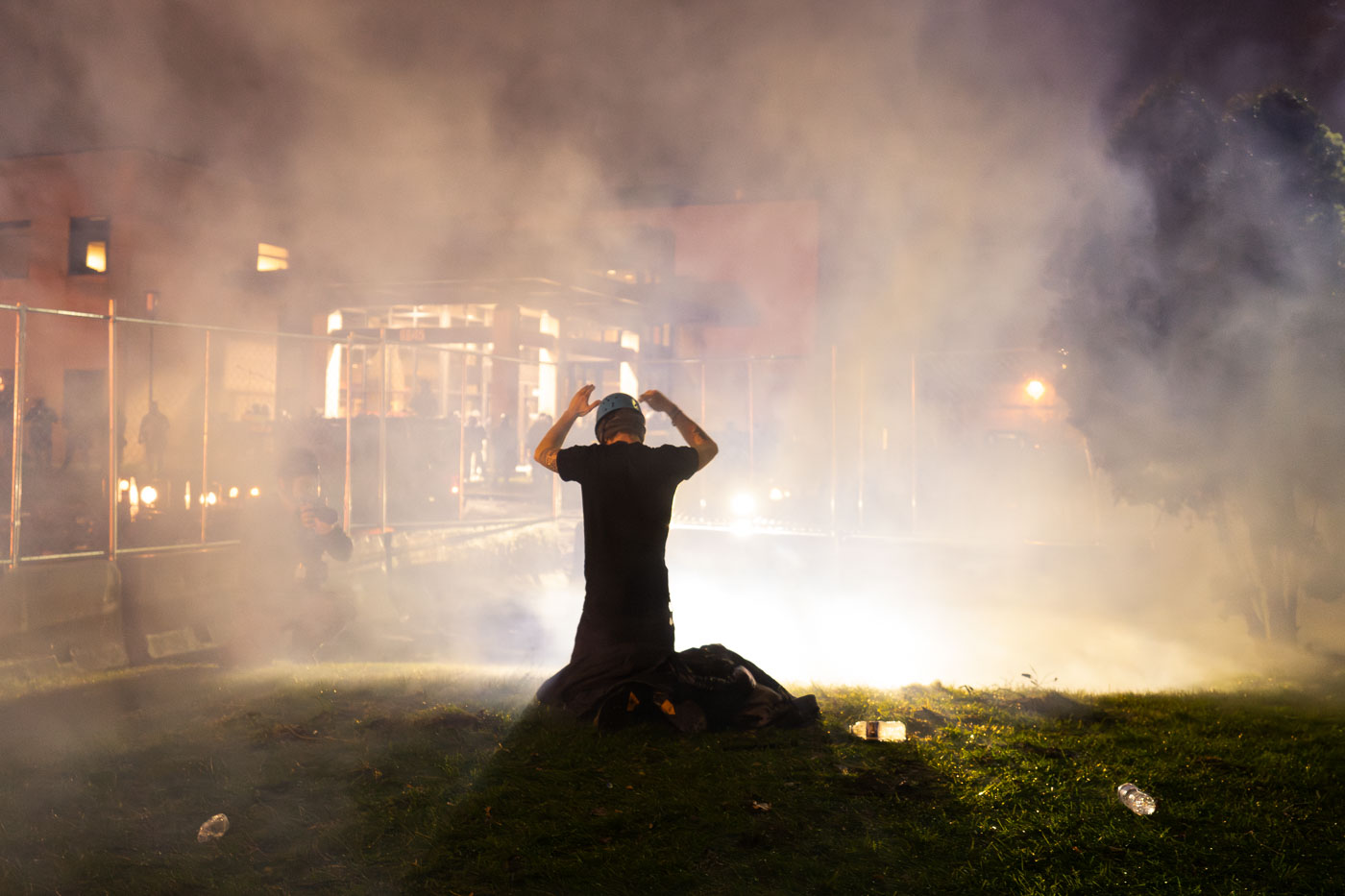
Protester in tear gas outside Brooklyn Center Police Department in Brooklyn Center, Minnesota.
Protesters gathered outside the Brooklyn Center Police Department on April 11, 2021, following the fatal shooting of Daunte Wright by an officer earlier that day. The incident sparked widespread protests and unrest in the Minneapolis suburb. Law enforcement responded with tear gas and other crowd control measures as demonstrators voiced their anger and grief over Wright's death and broader issues of police violence.

Brooklyn Center Police use tear gas on protesters
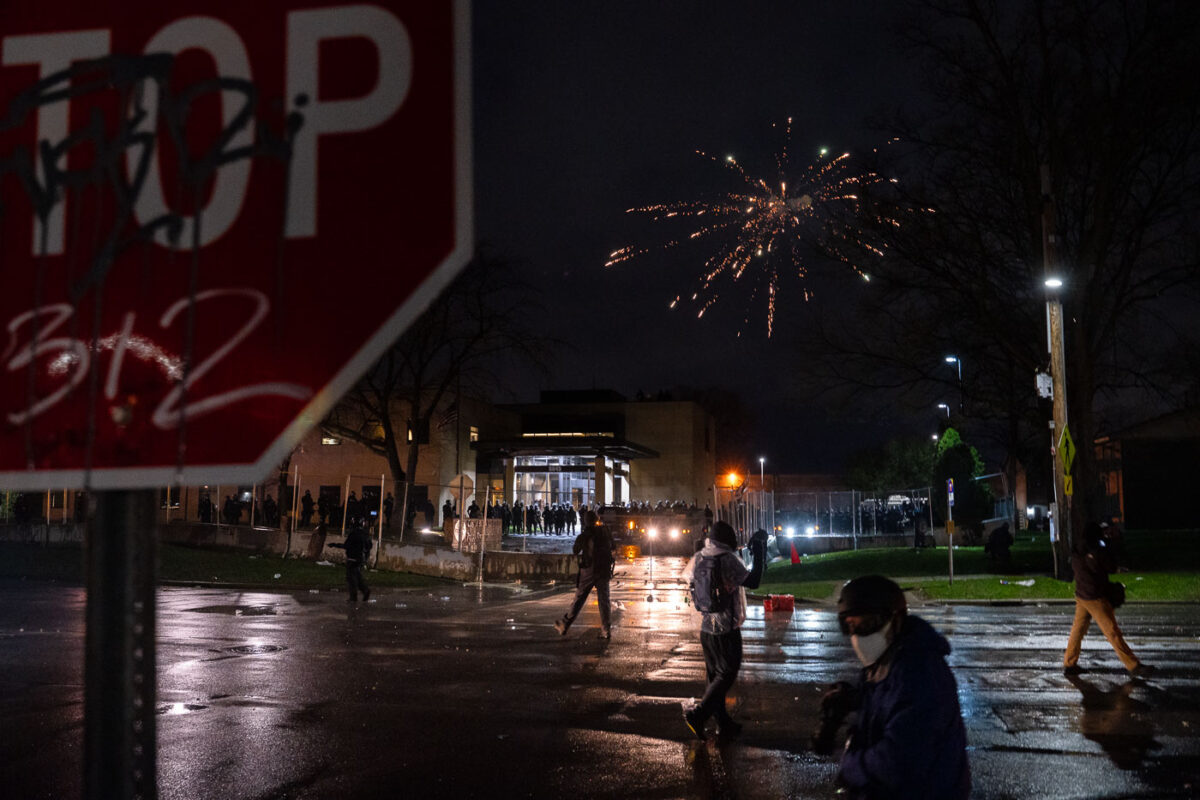
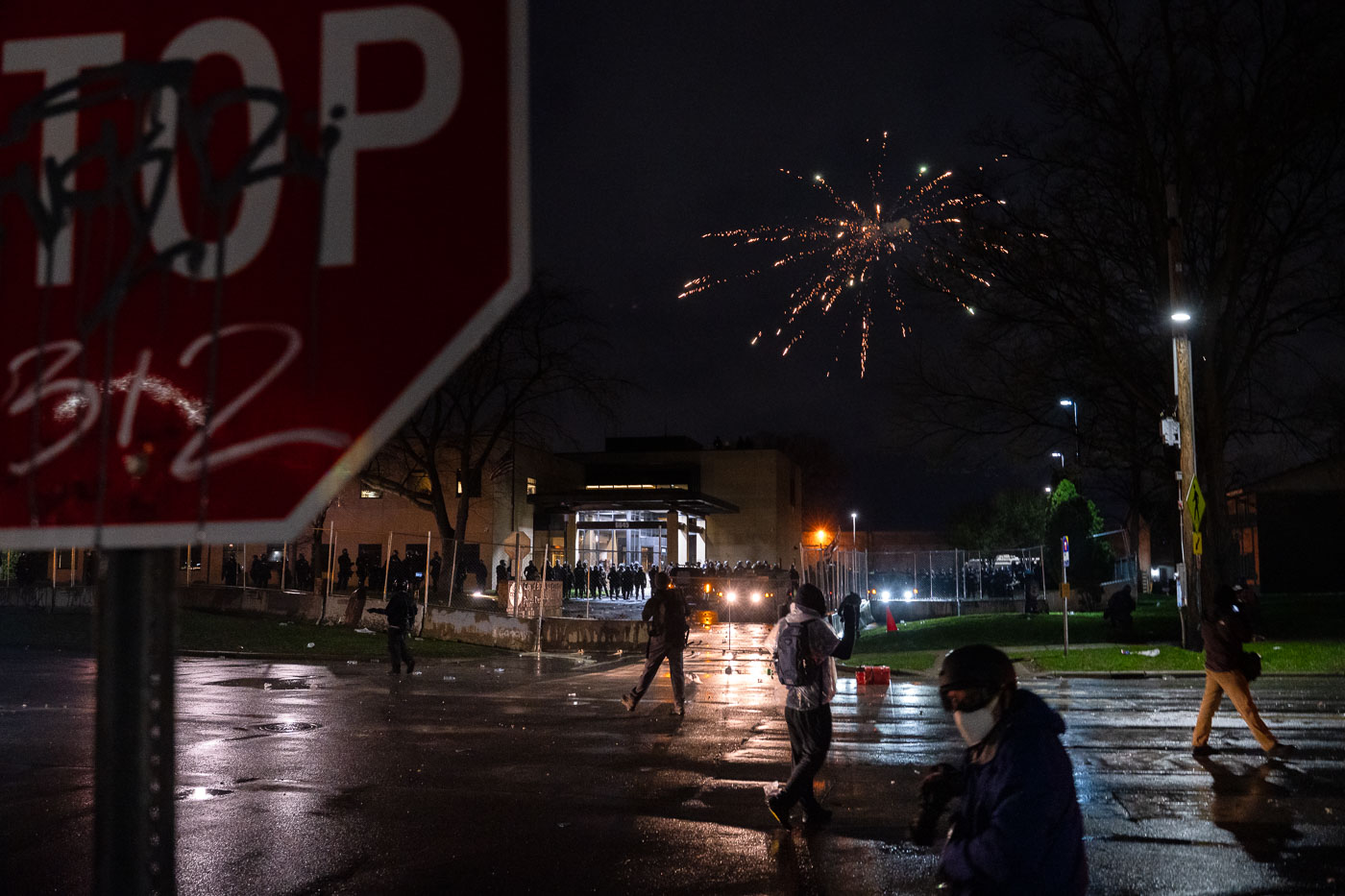
Fireworks over the Brooklyn Center Police Department during a protest in Brooklyn Center, Minnesota.
Protesters gathered outside the Brooklyn Center Police Department on April 11, 2021, following the fatal shooting of Daunte Wright by a police officer the previous day. The event marked the one-year anniversary of Wright's death, which had sparked widespread protests and unrest in the Minneapolis area. Fireworks were set off during the gathering, illuminating the night sky above the police station.

Brooklyn Center Police Department protest with fireworks
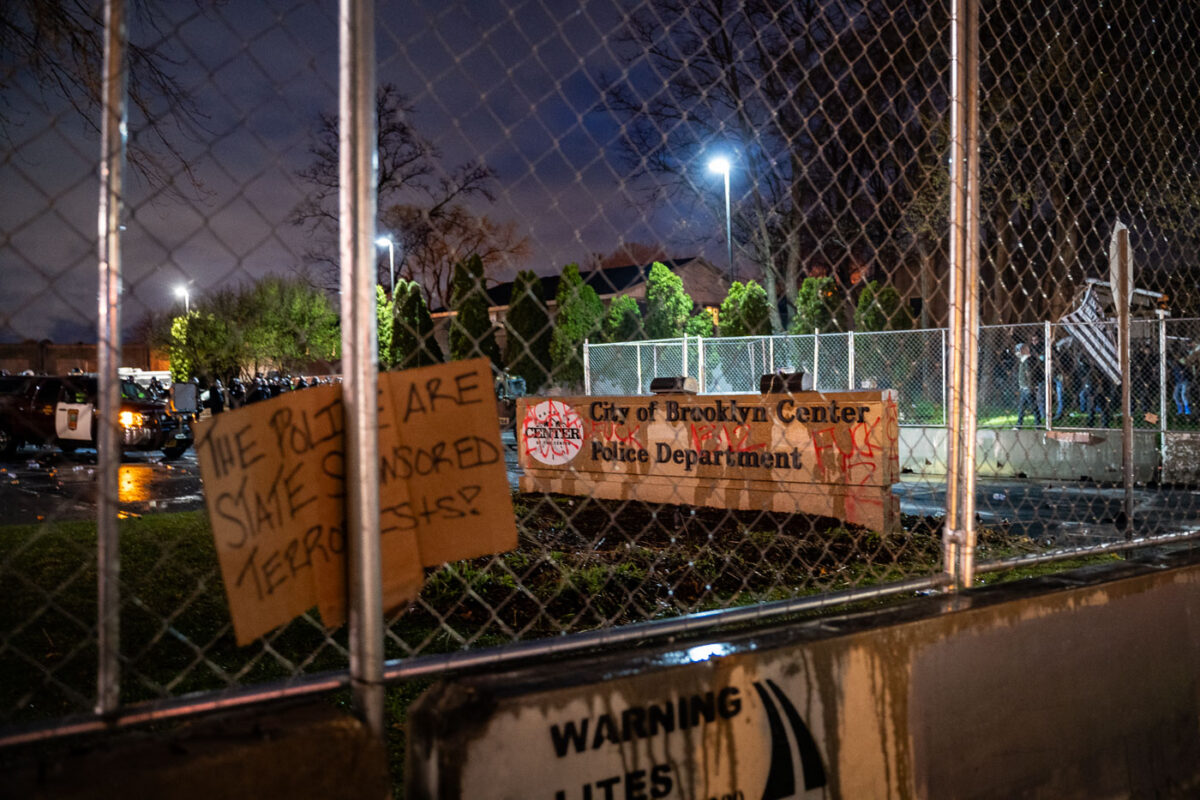
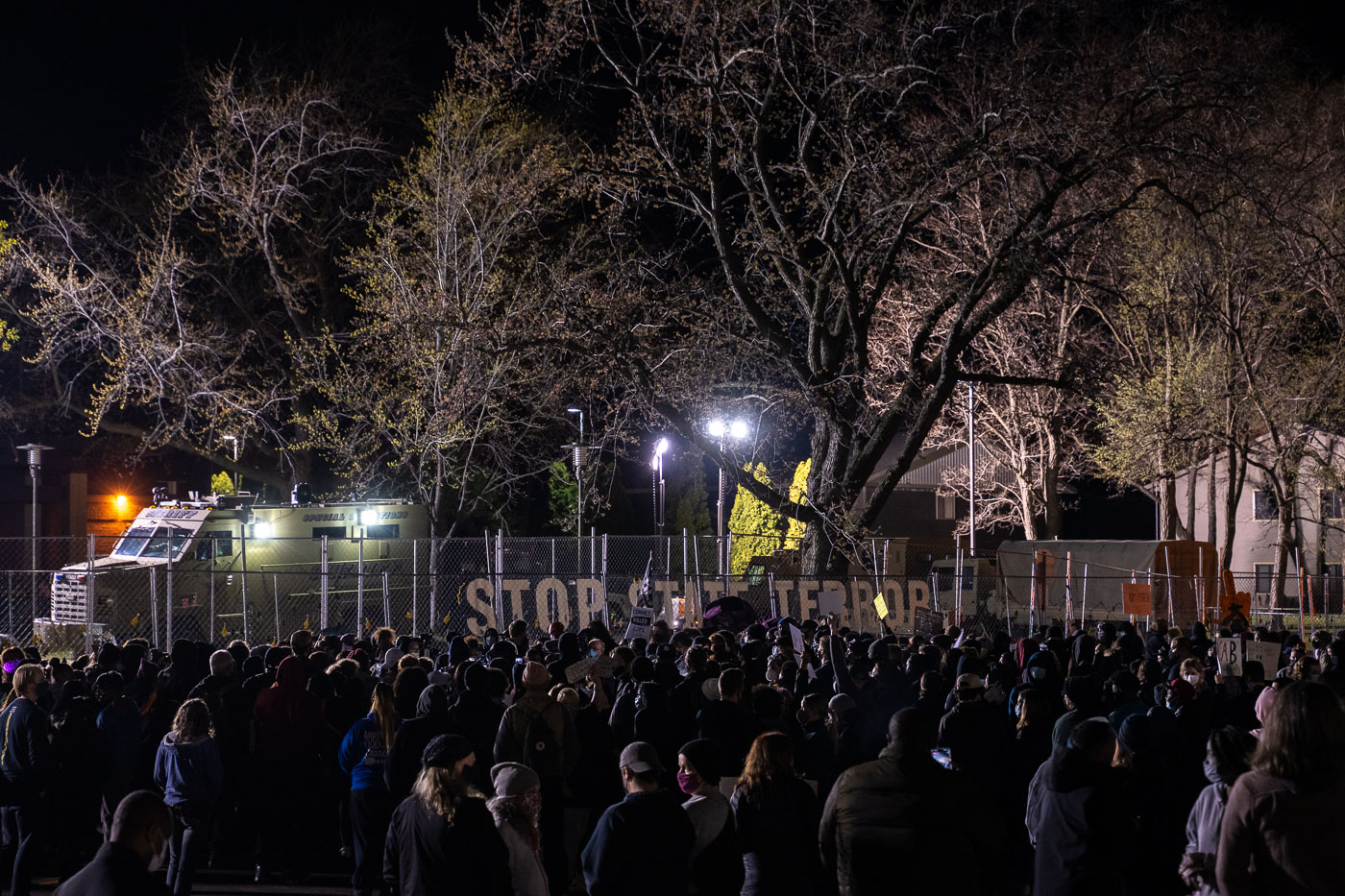
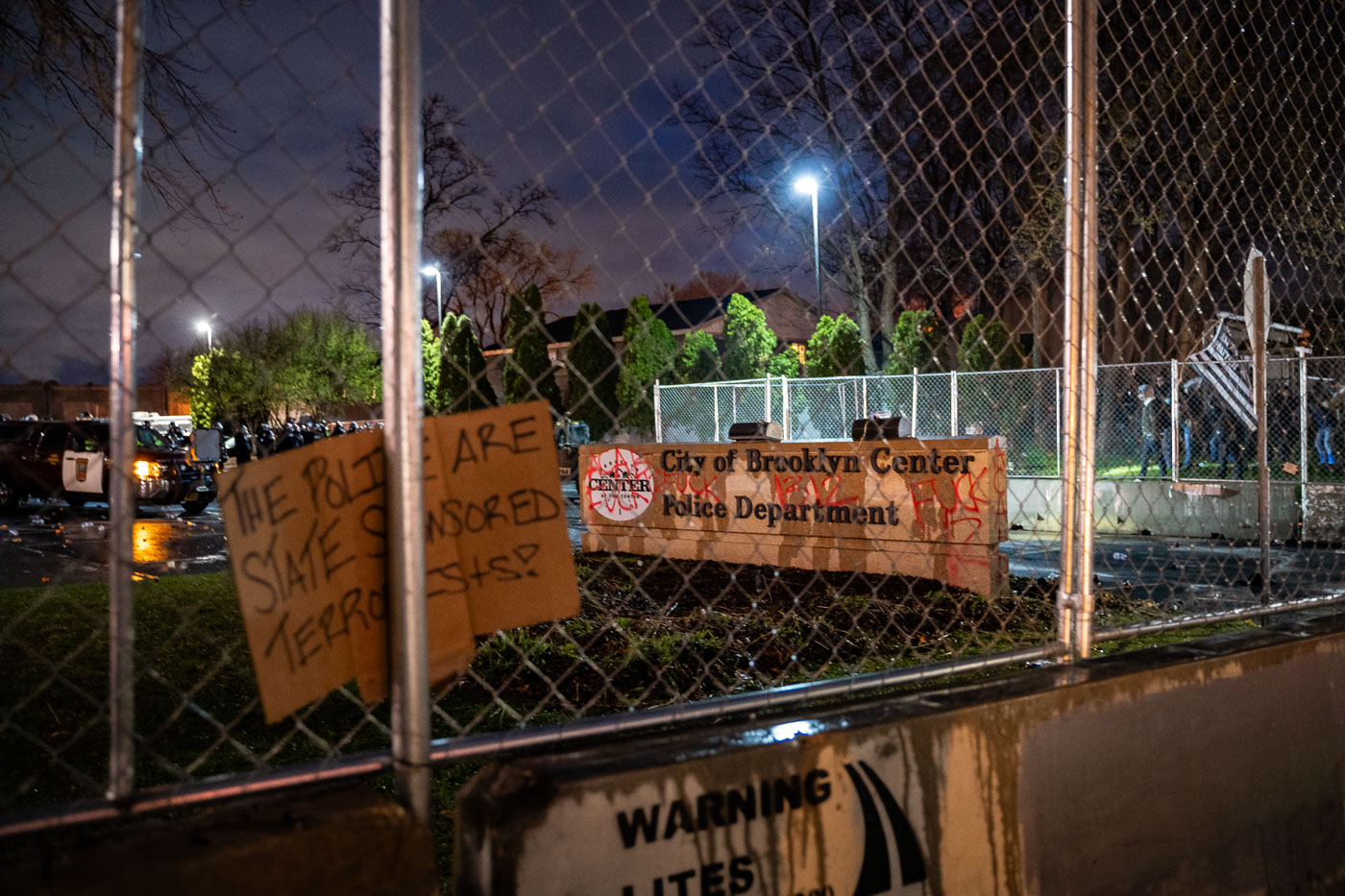
Protest sign outside Brooklyn Center Police Department in Minnesota at night.
Protesters gathered outside the Brooklyn Center Police Department following the fatal shooting of Daunte Wright on April 11, 2021. The sign visible reads, "The Police Are State Terrorists," reflecting the anger and distrust directed at law enforcement during the protests. The Brooklyn Center Police Department is the municipal law enforcement agency responsible for public safety in Brooklyn Center, Minnesota. The events of April 2021 marked a significant period of unrest and calls for police reform in the Minneapolis–Saint Paul metropolitan area.

Brooklyn Center Police Dept. Protest Sign: “The Police Are State Terrorists”
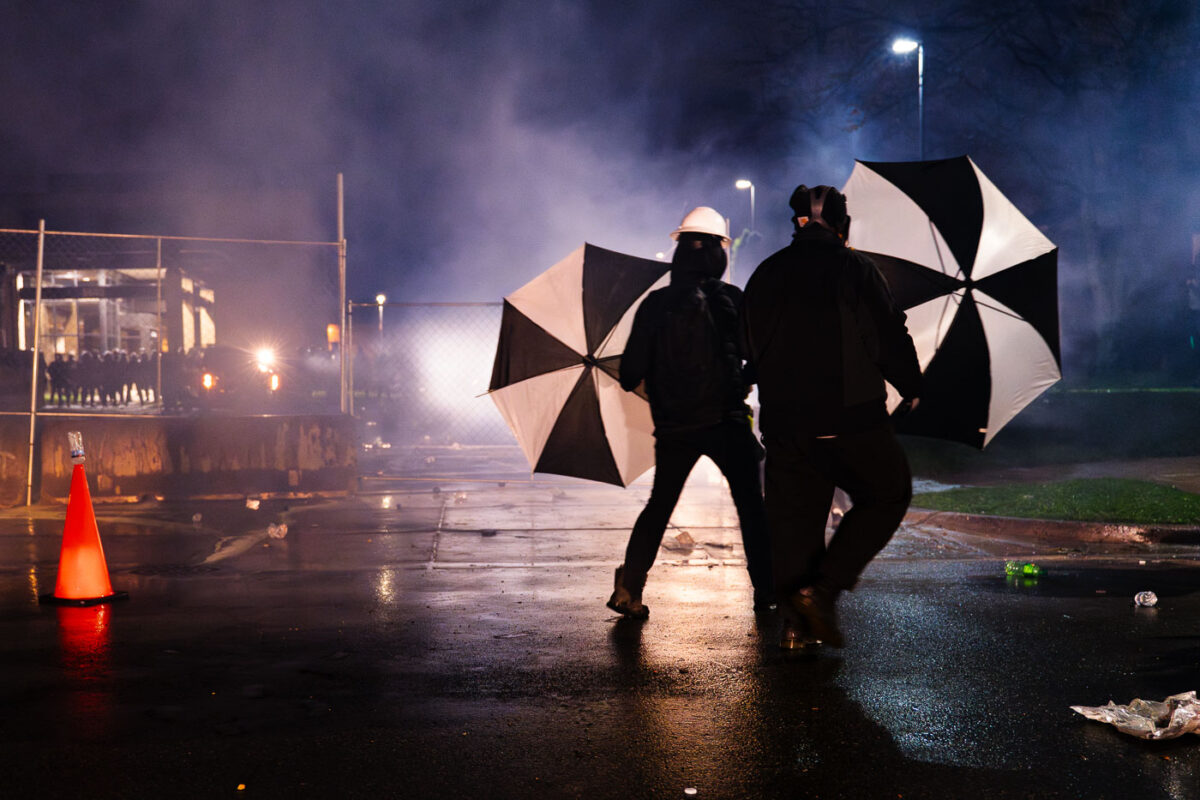
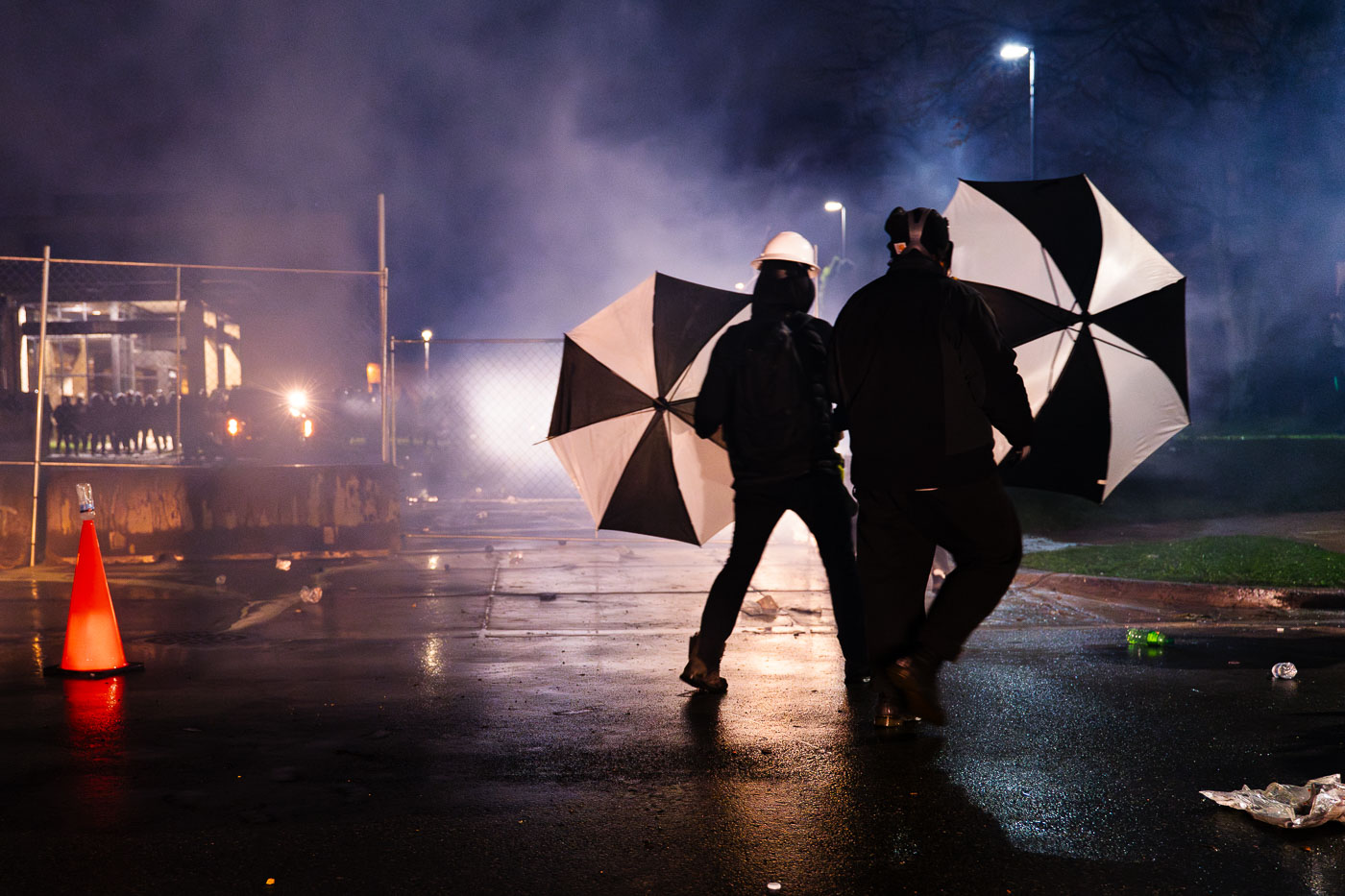
Protesters with umbrellas outside Brooklyn Center Police Department amid smoke at night.
Protesters gathered outside the Brooklyn Center Police Department following the fatal shooting of Daunte Wright on April 11, 2021. The incident sparked widespread protests and unrest in the Minneapolis suburb. The image shows individuals holding umbrellas amidst a smoky atmosphere, with police presence visible in the background behind a fence. The event highlighted ongoing tensions surrounding police conduct and racial justice in the United States.

Brooklyn Center Police Department Protest with Umbrellas
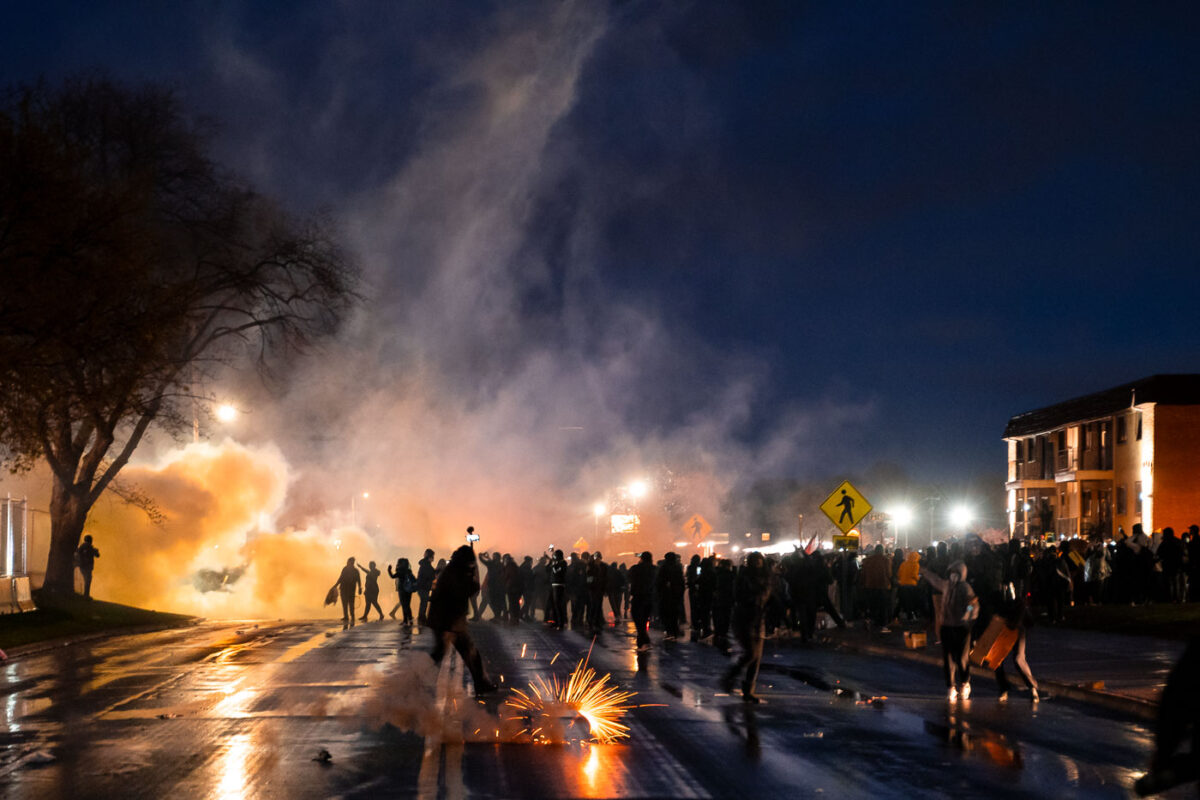
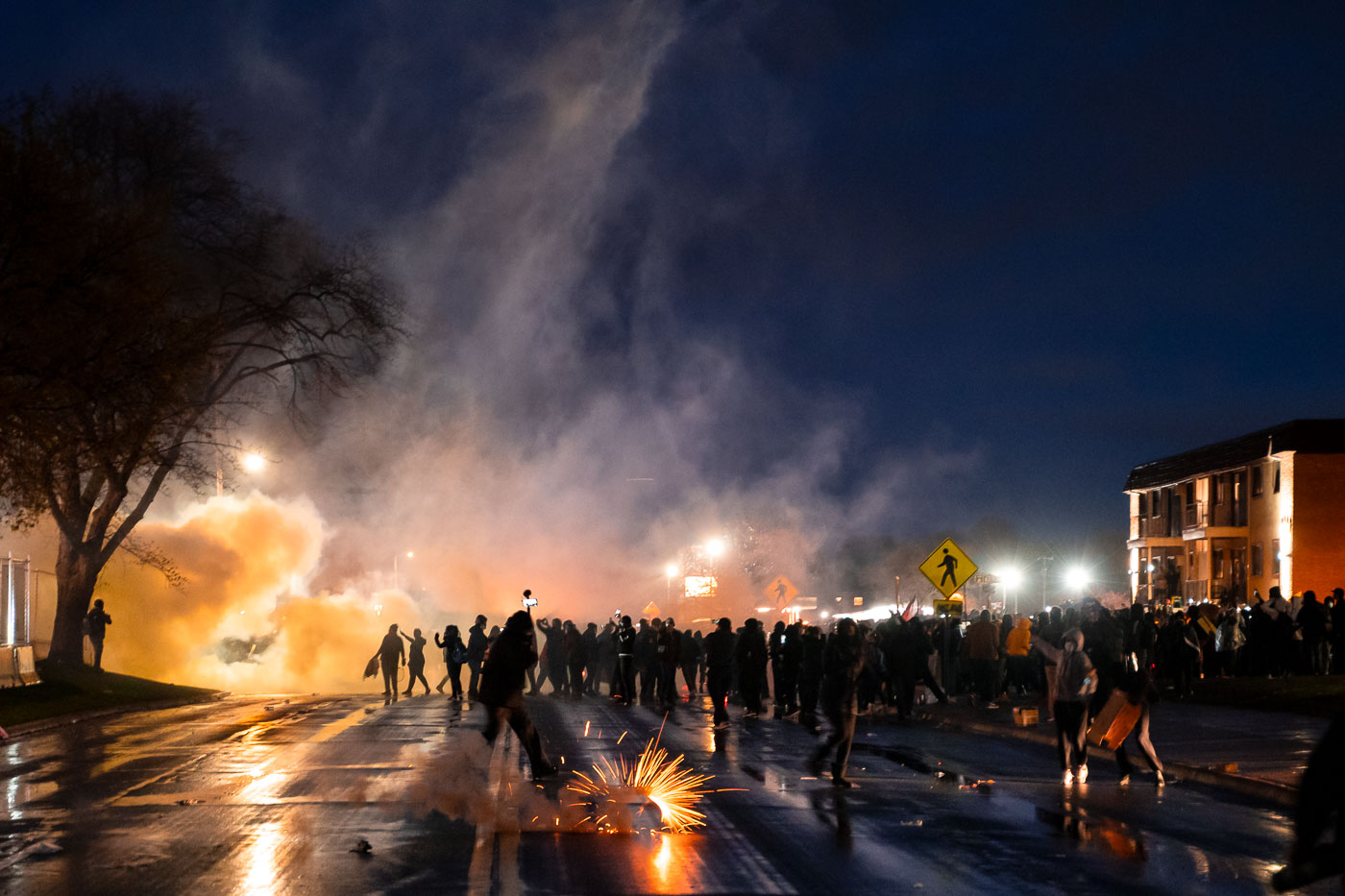
Protesters amid tear gas in Brooklyn Center, Minnesota, after the police shooting of Daunte Wright.
Protesters gathered in front of the Brooklyn Center Police Department in Brooklyn Center, Minnesota, on April 12, 2021. The protest was in response to the fatal shooting of Daunte Wright by a police officer earlier that day. Law enforcement deployed tear gas and less-lethal munitions to disperse the crowd. The incident sparked further unrest and demonstrations in the Minneapolis area, highlighting ongoing tensions surrounding police violence and accountability.

Brooklyn Center Police Use Tear Gas on Protesters
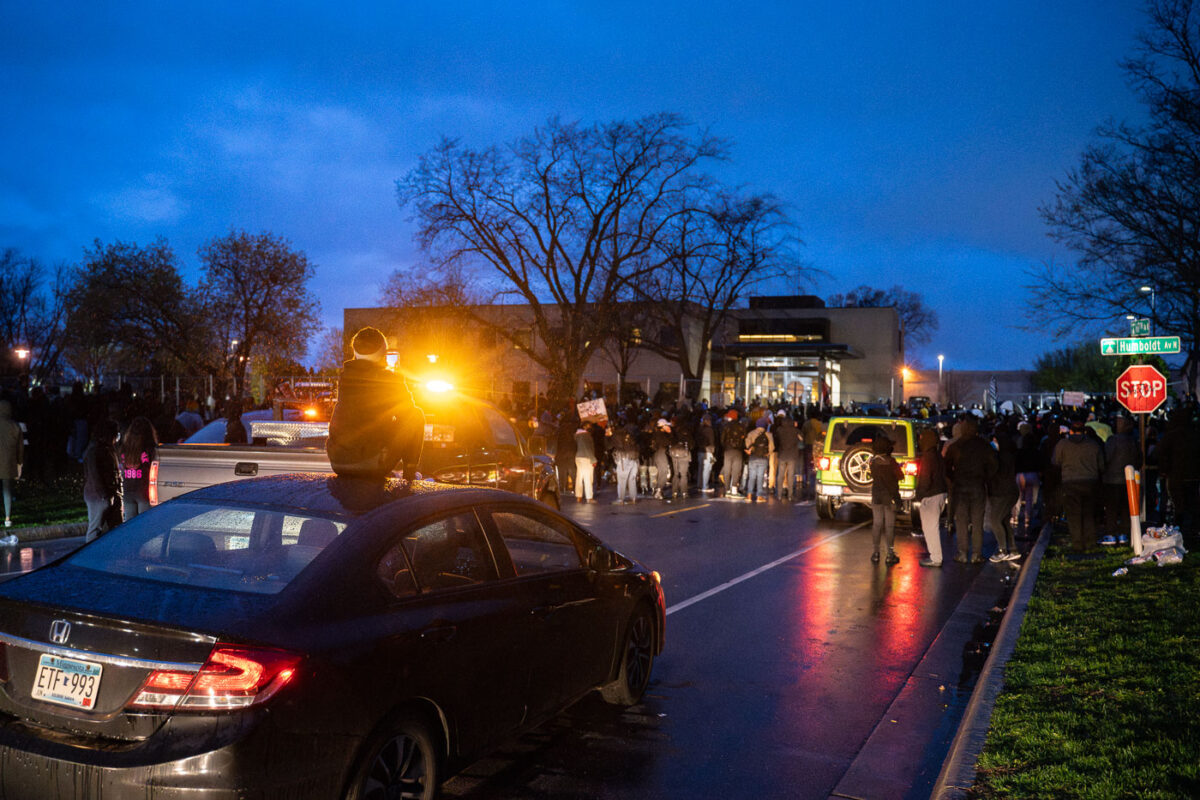
Protesters outside Brooklyn Center Police Department after the Daunte Wright shooting.
Protesters gathered outside the Brooklyn Center Police Department following the fatal shooting of Daunte Wright. Wright, a 20-year-old Black man, was killed by a police officer during a traffic stop on April 11, 2021, in Brooklyn Center, Minnesota. The incident sparked widespread protests and unrest in the Minneapolis metropolitan area, drawing national attention to issues of police brutality and racial injustice. The gathering at the police department reflects the community's response to the event and its demand for accountability.

Protest at Brooklyn Center Police Dept. after Daunte Wright shooting
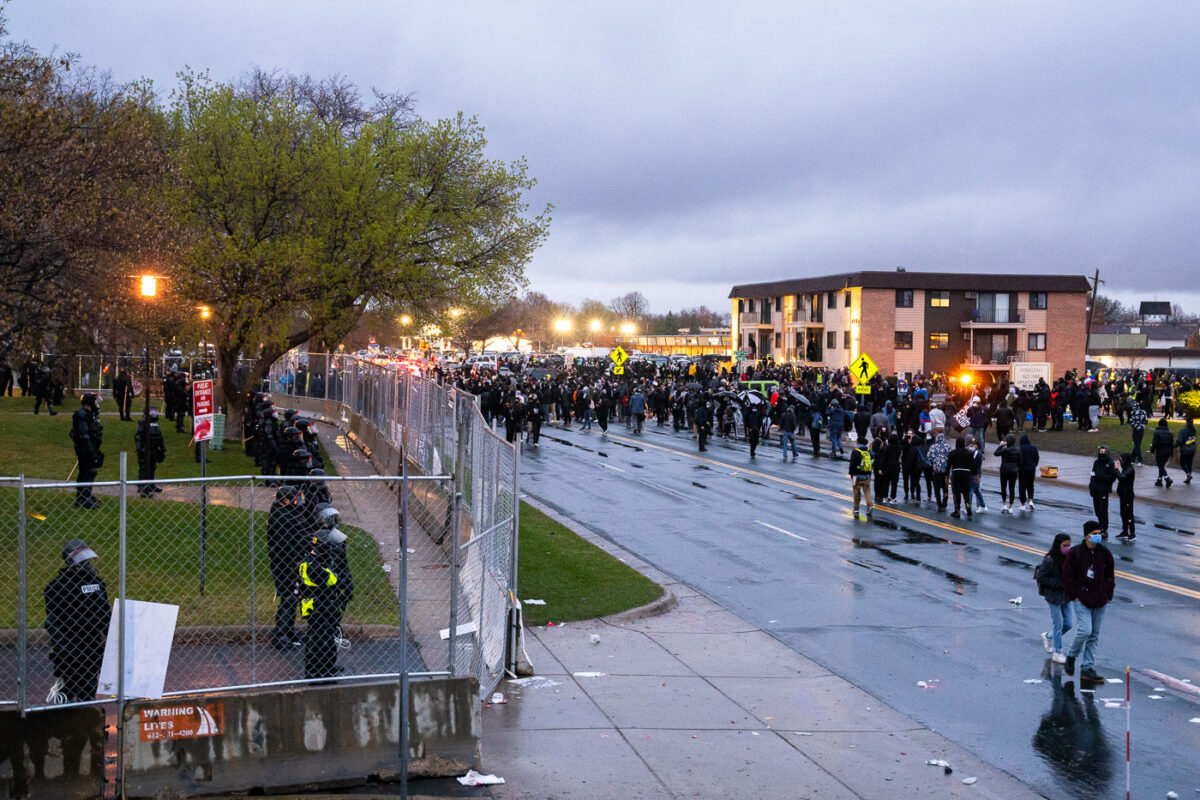
Protesters and police outside Brooklyn Center Police Department after the Daunte Wright shooting.
Protesters gathered outside the Brooklyn Center Police Department on April 11, 2021, following the fatal shooting of Daunte Wright by an officer the previous day. The incident, which occurred during a traffic stop, ignited widespread protests and unrest in the Minneapolis-St. Paul metropolitan area. The Brooklyn Center Police Department is a municipal law enforcement agency serving the city of Brooklyn Center, Minnesota.

Protesters Gather at Brooklyn Center Police Department After Daunte Wright Shooting
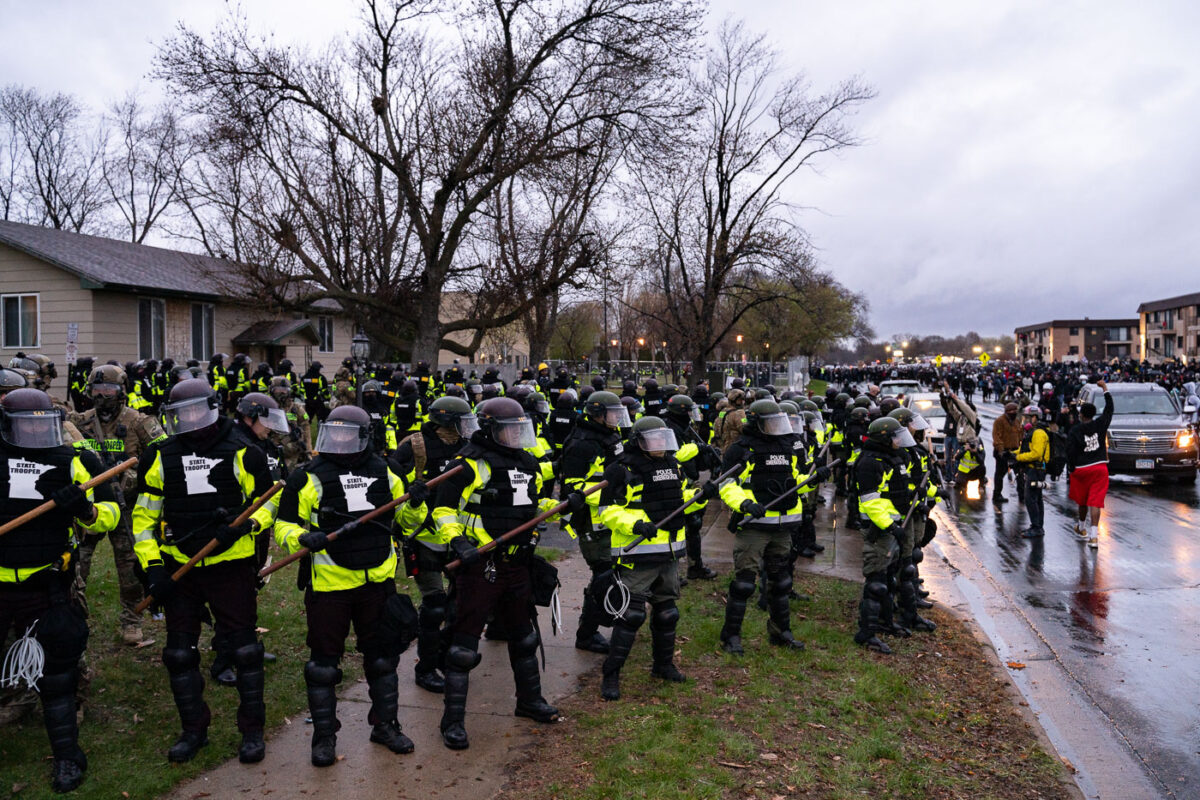
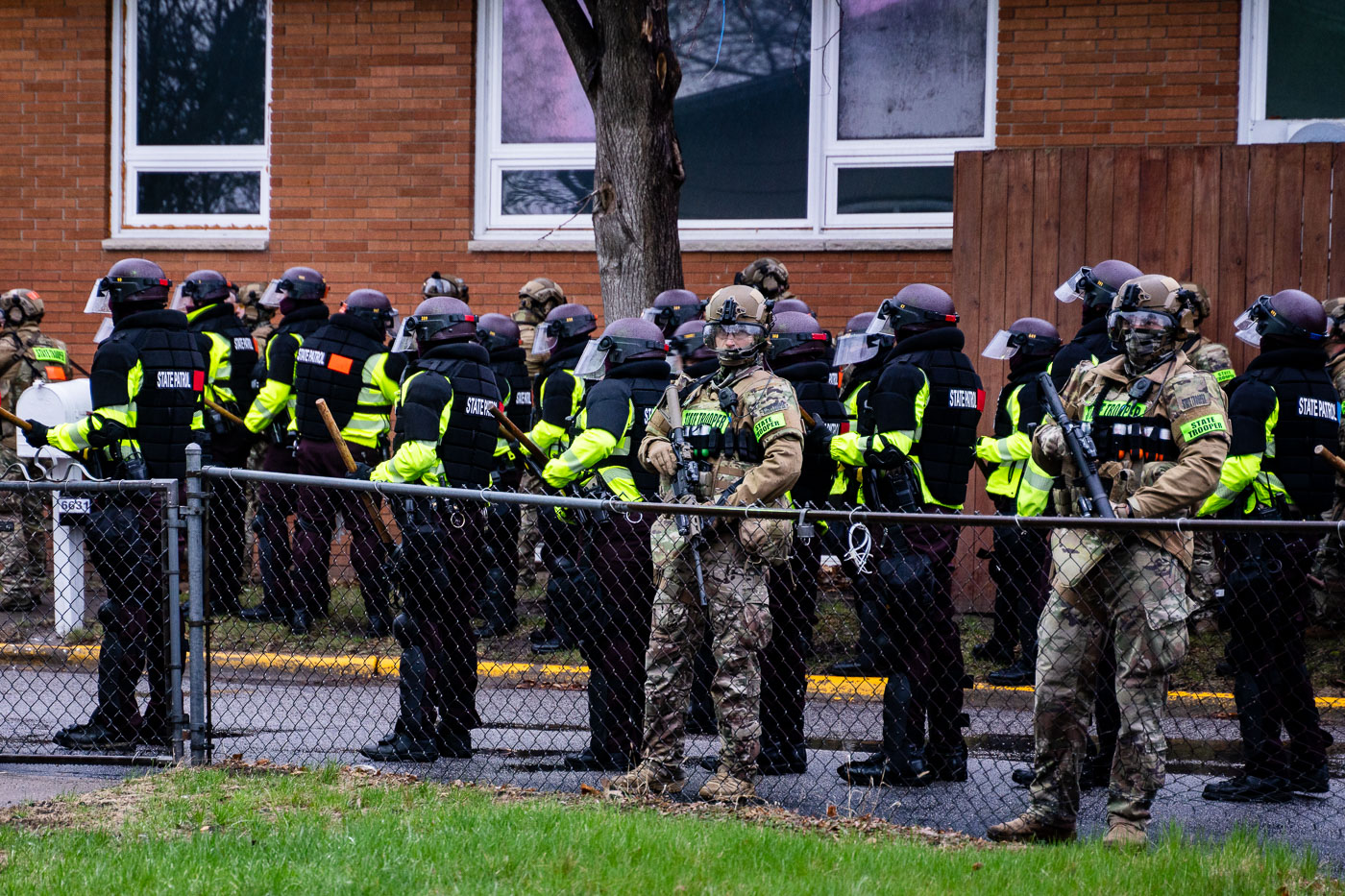
Minnesota State Patrol officers face protesters near Brooklyn Center Police Department after Daunte Wright shooting.
Minnesota State Patrol officers stand in formation near the Brooklyn Center Police Department on April 12, 2021. The deployment followed the fatal shooting of Daunte Wright by a Brooklyn Center police officer during a traffic stop the previous day. The incident sparked protests and unrest in the community, leading to a significant law enforcement presence.

Minnesota State Patrol near Brooklyn Center Police Dept after Daunte Wright shooting
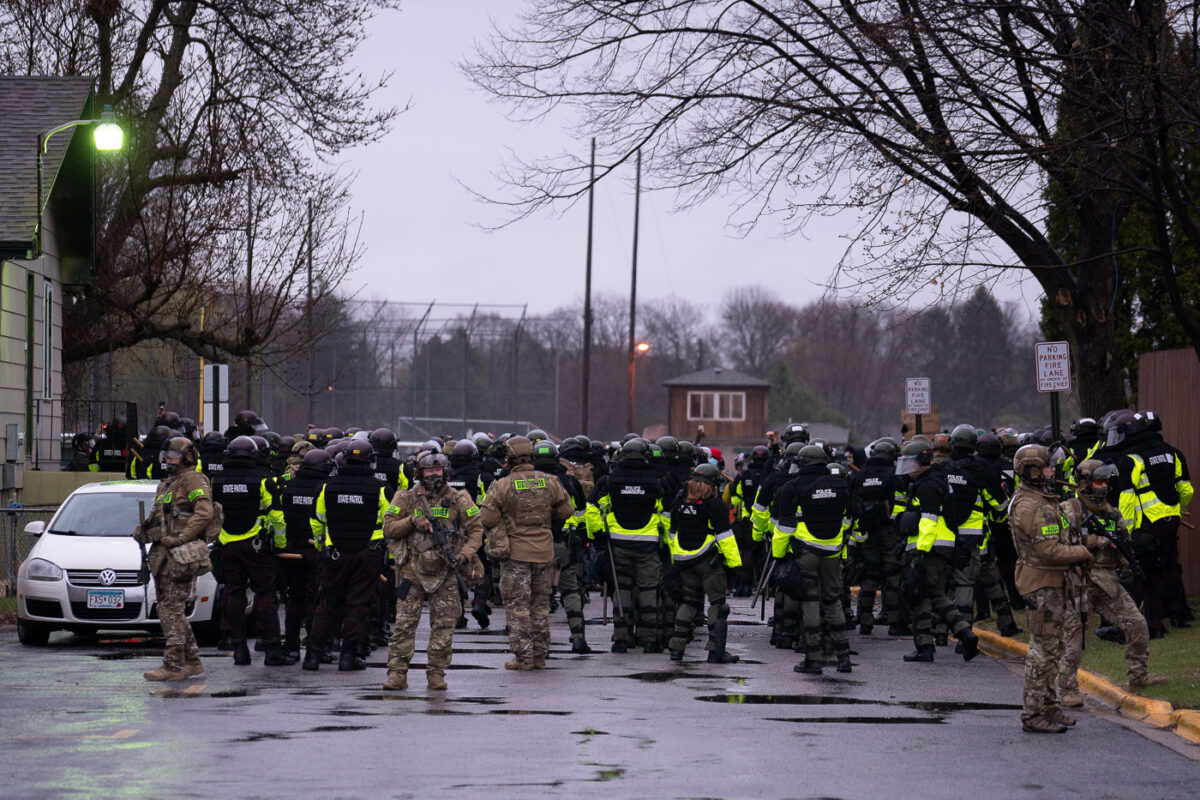
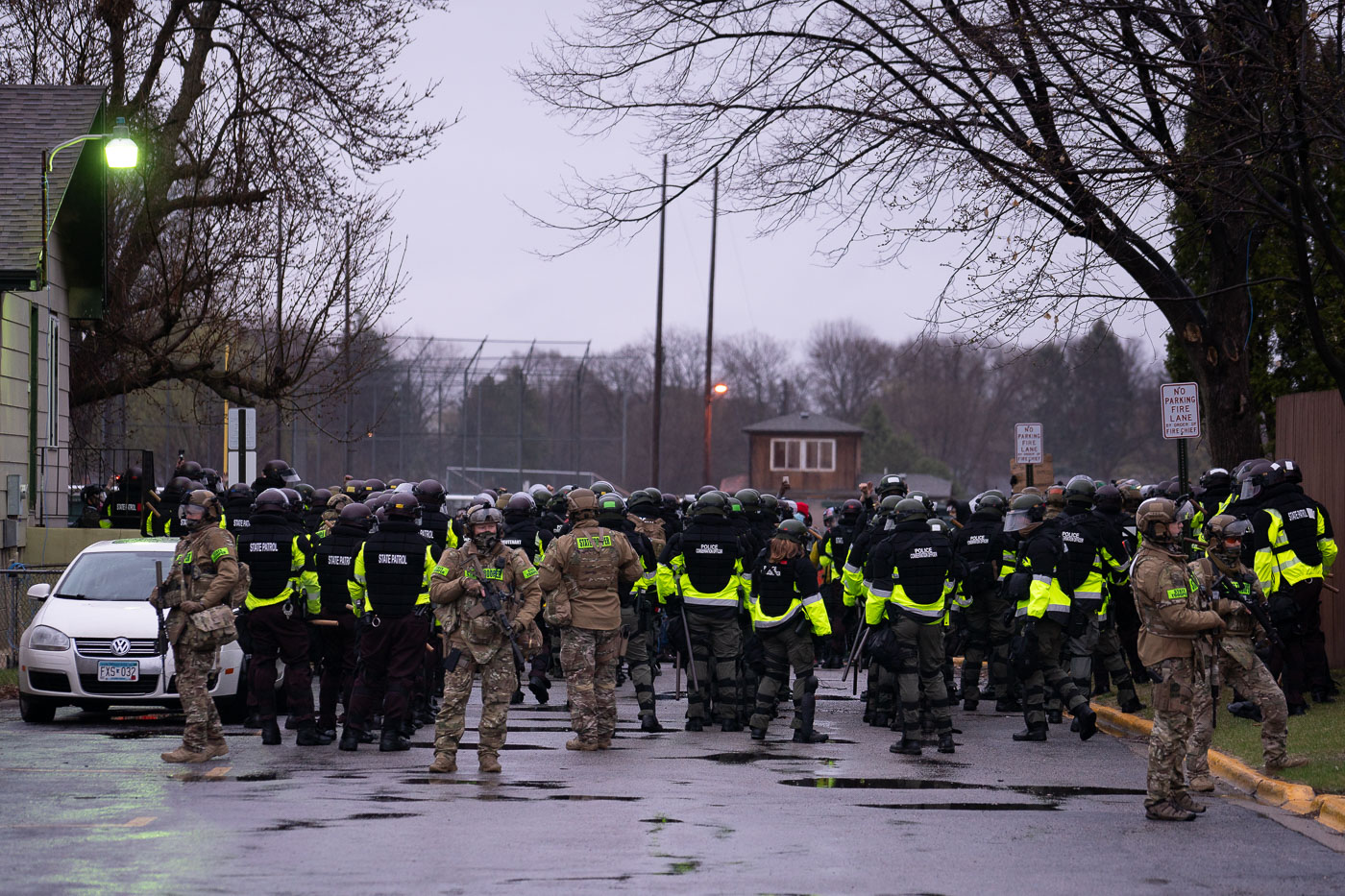
Minnesota State Patrol officers mass on a residential street in Brooklyn Center after Daunte Wright's killing.
Minnesota State Patrol officers are mobilized in Brooklyn Center, a suburb of Minneapolis, following the fatal shooting of Daunte Wright by a police officer on April 11, 2021. The mobilization occurred as protesters gathered near the Brooklyn Center Police Department. The incident sparked widespread protests and unrest in the Minneapolis–Saint Paul metropolitan area. The presence of state patrol and other law enforcement agencies was a response to the escalating public reaction and demonstrations.

Minnesota State Patrol Mobilized in Brooklyn Center
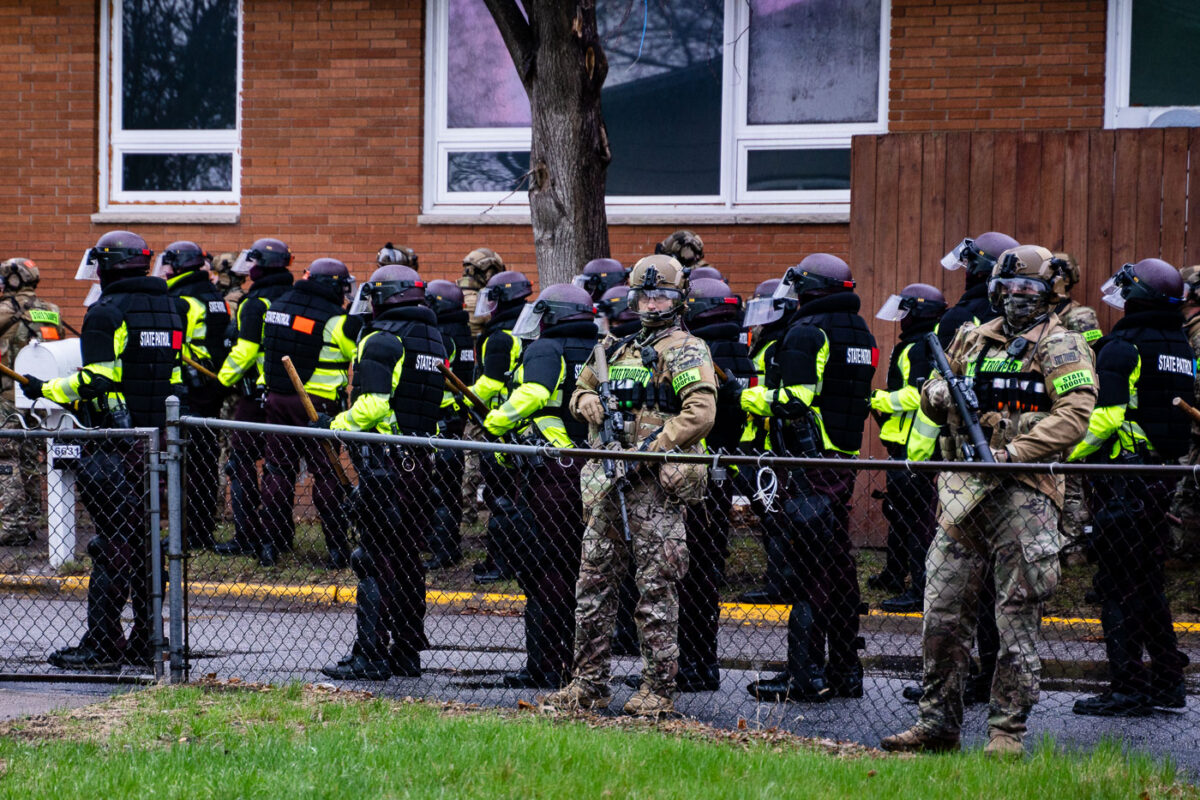
State troopers in riot gear outside the Brooklyn Center Police Department in Brooklyn Center, Minnesota.
State Troopers and other law enforcement officers are mobilized in Brooklyn Center, Minnesota, following the fatal shooting of Daunte Wright by a Brooklyn Center Police officer on April 11, 2021. The mobilization occurred as protests erupted in the area, with officers tasked with clearing demonstrators from the vicinity of the Brooklyn Center Police Department. This event marked a significant moment of unrest in the Minneapolis–Saint Paul metropolitan area, drawing national attention to issues of police violence and racial justice.

State Troopers Mobilize in Brooklyn Center, MN
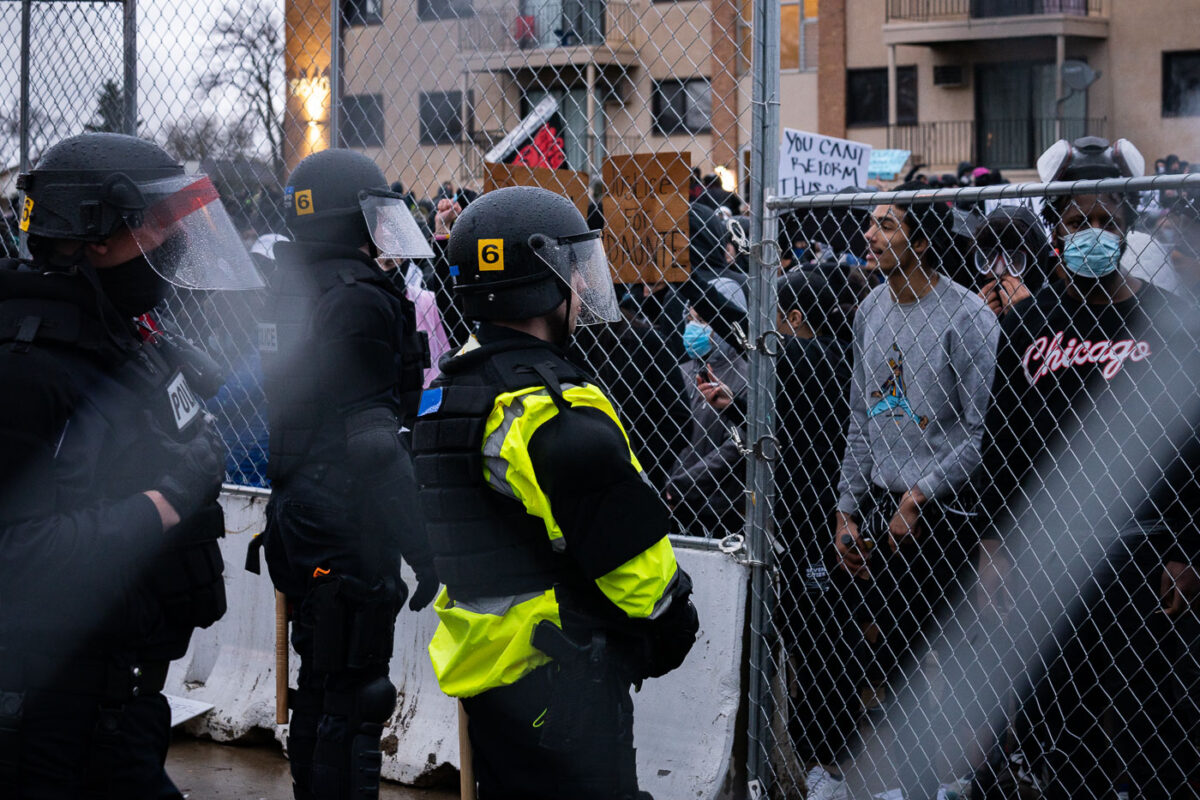
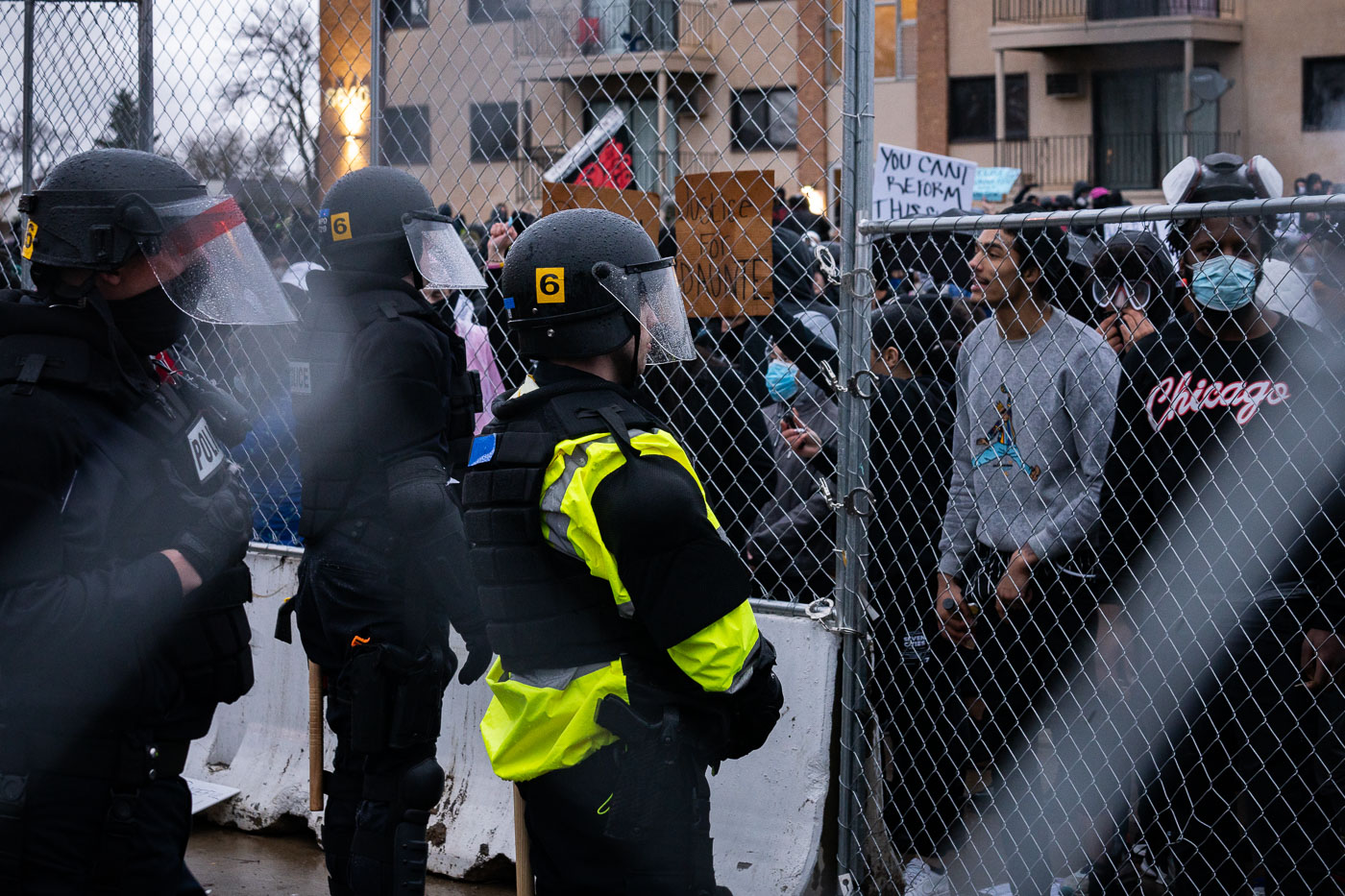
Police and protesters separated by a fence at Brooklyn Center Police Department, Minnesota.
Protesters gather behind a chain-link fence, facing law enforcement officers in riot gear outside the Brooklyn Center Police Department in Brooklyn Center, Minnesota. The protests erupted following the fatal shooting of Daunte Wright by a police officer on April 11, 2021. The image captures the tense standoff between demonstrators demanding justice and police maintaining a perimeter. Signs visible in the crowd express sentiments such as "You can't reform this," reflecting the deep-seated anger and distrust that fueled the unrest.

Brooklyn Center Police Face Protesters Through Fence
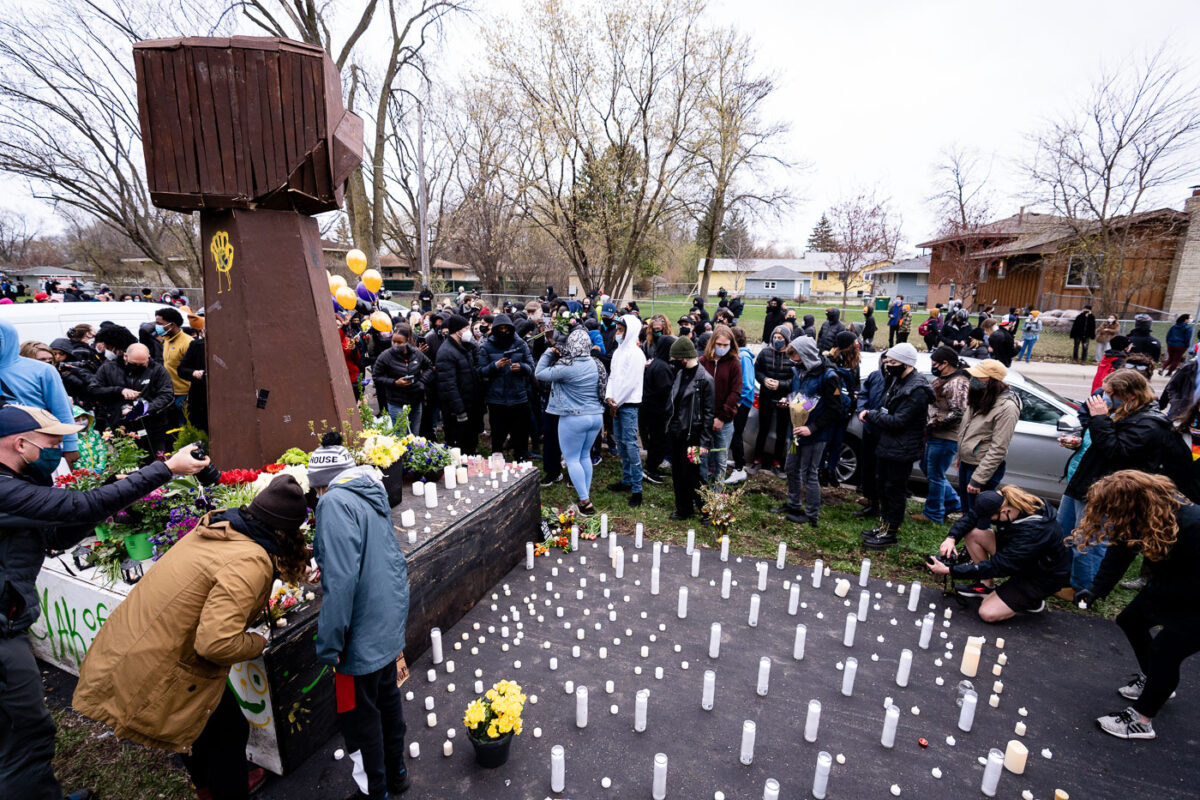
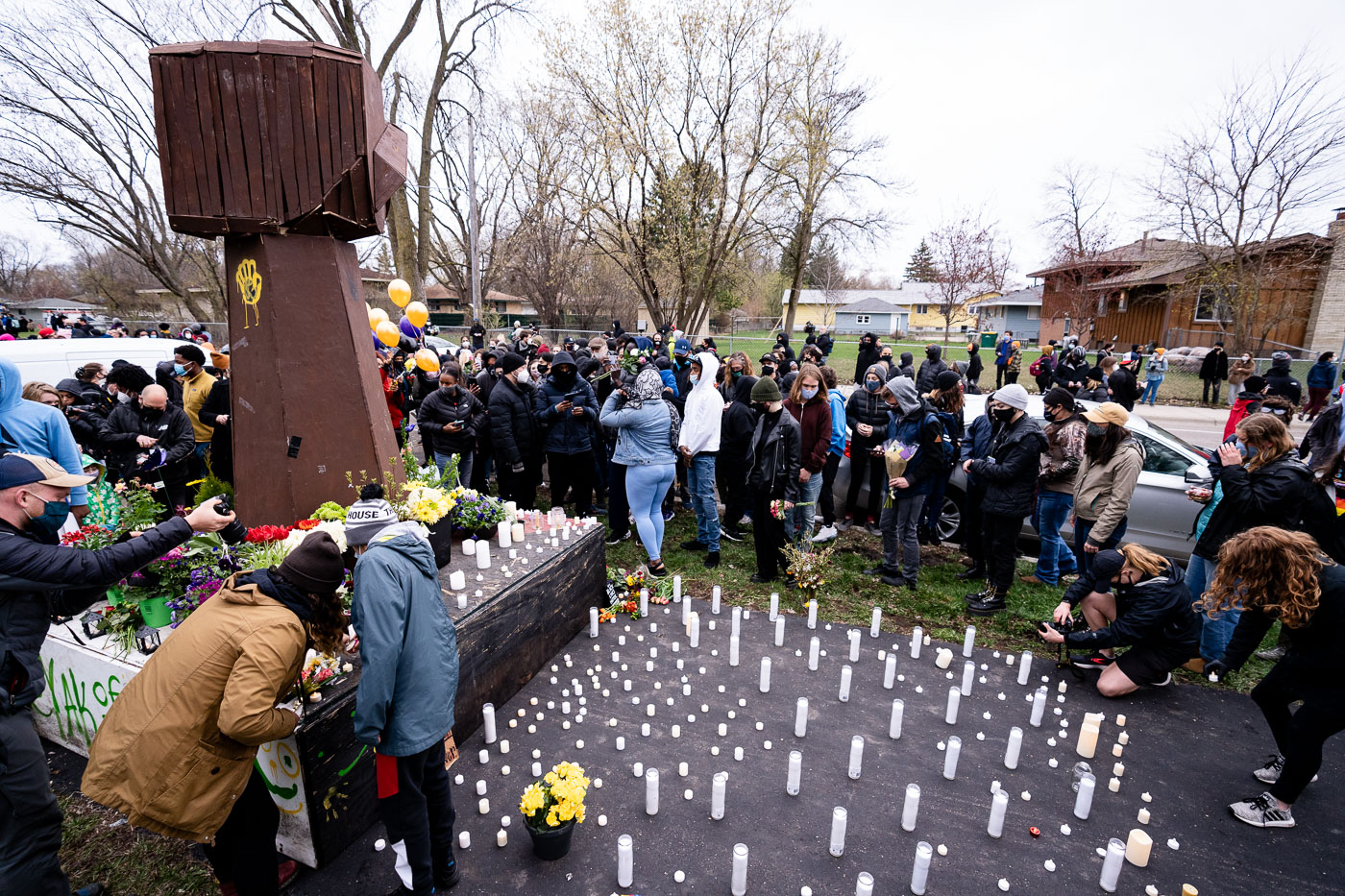
Mourners gather at the Daunte Wright memorial in Brooklyn Center, Minnesota.
A memorial grows at the site where Daunte Wright was killed by police in Brooklyn Center, Minnesota, on April 11, 2021. The memorial, which includes numerous candles, flowers, and balloons, serves as a gathering place for mourners and activists. Wright's death sparked protests and vigils throughout the Minneapolis–Saint Paul metropolitan area, highlighting ongoing concerns about police violence and racial injustice.

Daunte Wright Memorial Growing in Brooklyn Center
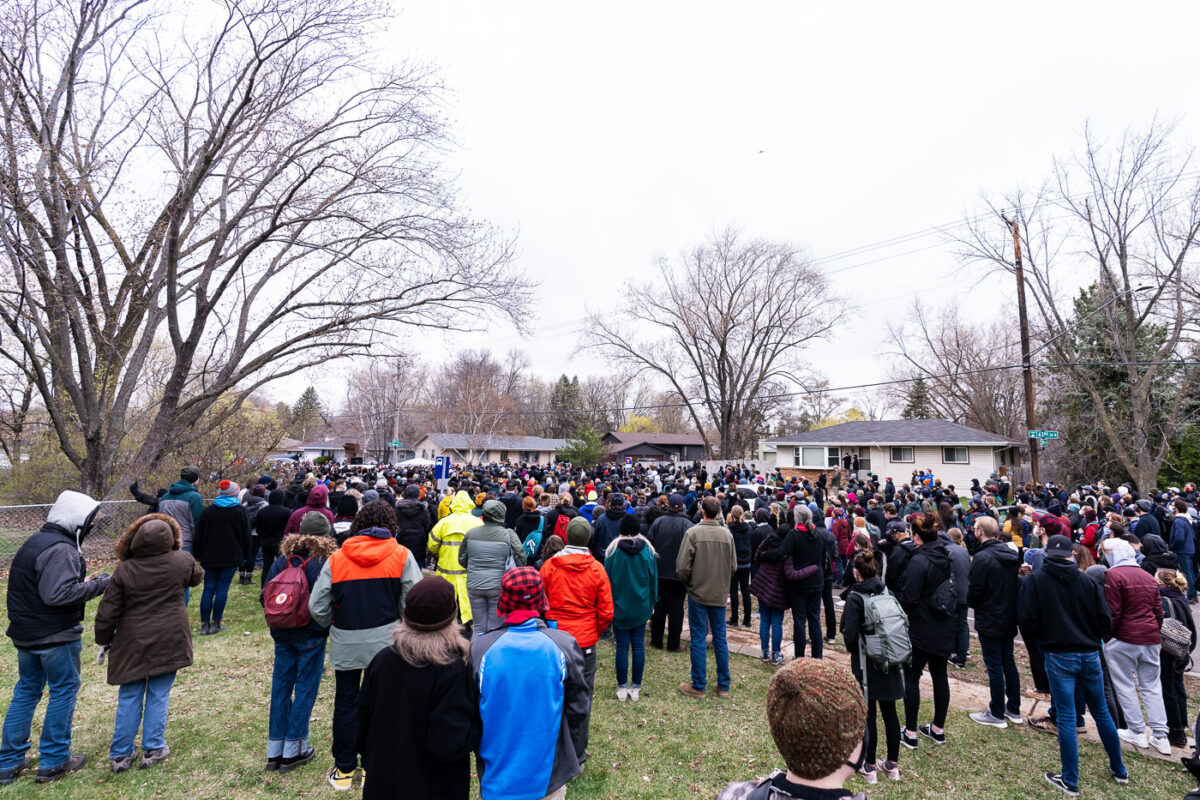
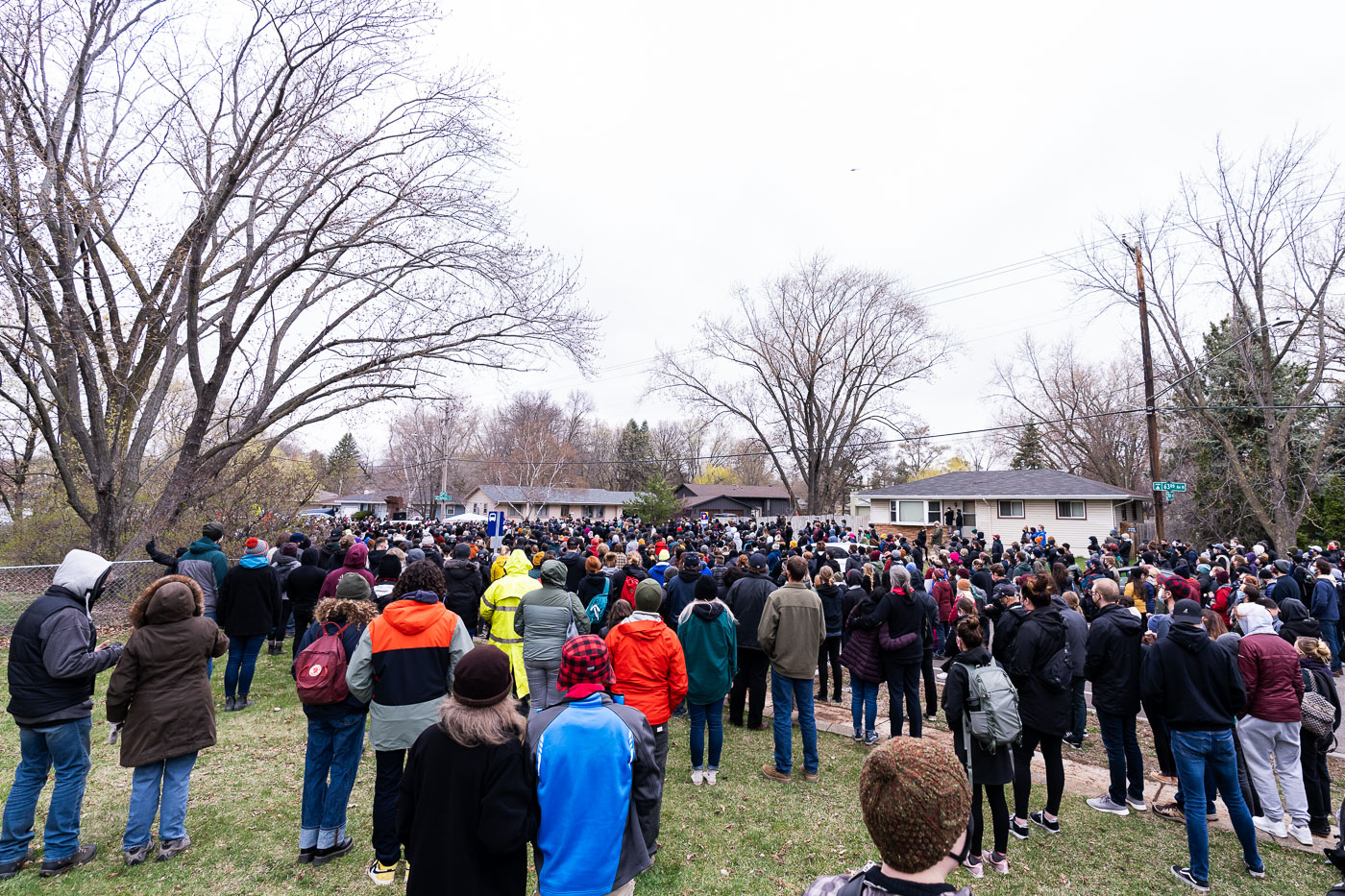
Crowd at the Daunte Wright memorial in Brooklyn Center, Minnesota.
A crowd gathers in Brooklyn Center, Minnesota, at the site where Daunte Wright was killed by police officer Kim Potter on April 11, 2021. The protest occurred in the days following Wright's death, as news of the incident and Potter's upcoming trial on November 30, 2021, spread. Wright's killing, which occurred during a traffic stop, ignited widespread protests against police violence and racial injustice in the Minneapolis–Saint Paul metropolitan area and beyond.

Protest at Daunte Wright memorial, Brooklyn Center, MN
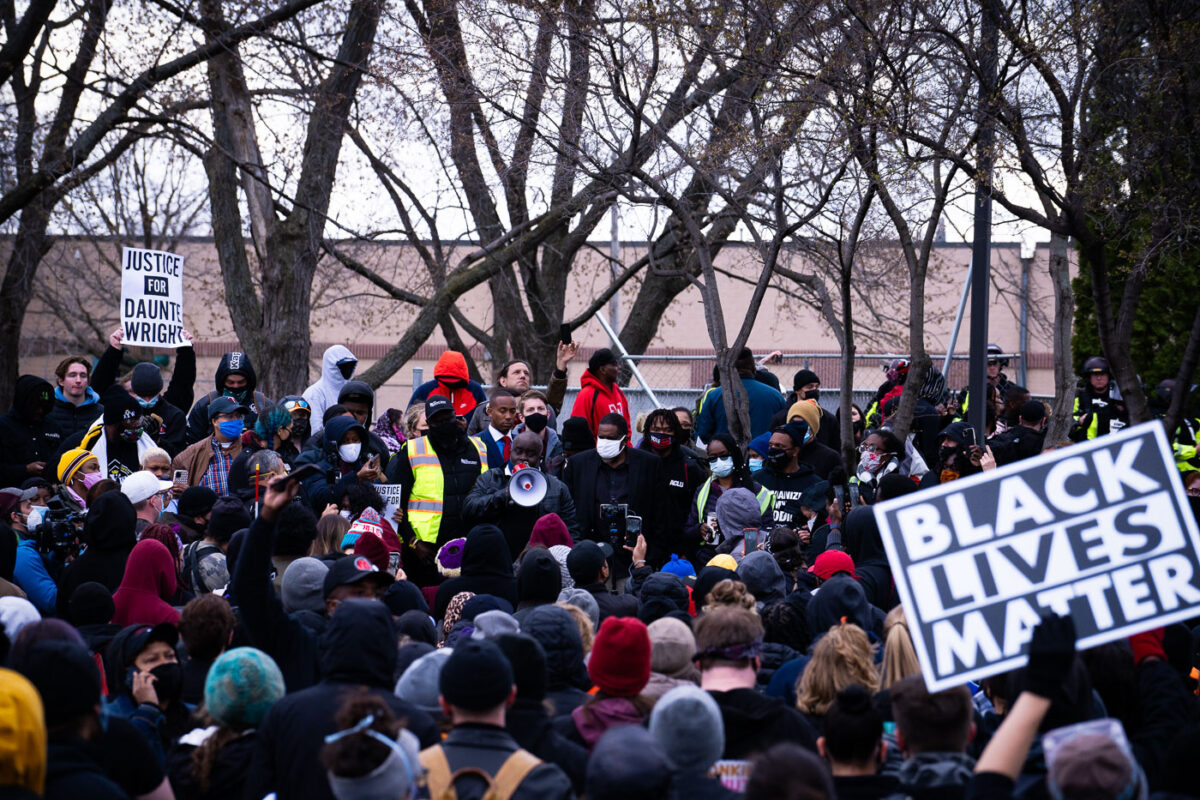
Protesters outside Brooklyn Center Police Department after the killing of Daunte Wright, Minnesota.
Protesters gathered outside the Brooklyn Center Police Department in Brooklyn Center, Minnesota, following the fatal shooting of Daunte Wright on April 11, 2021. The incident sparked widespread protests and calls for justice, drawing national attention to issues of police brutality and accountability. Former Brooklyn Center police officer Kim Potter was later indicted and faced trial for her role in the shooting, which occurred during a traffic stop.

Protestors outside Brooklyn Center Police Department for Daunte Wright
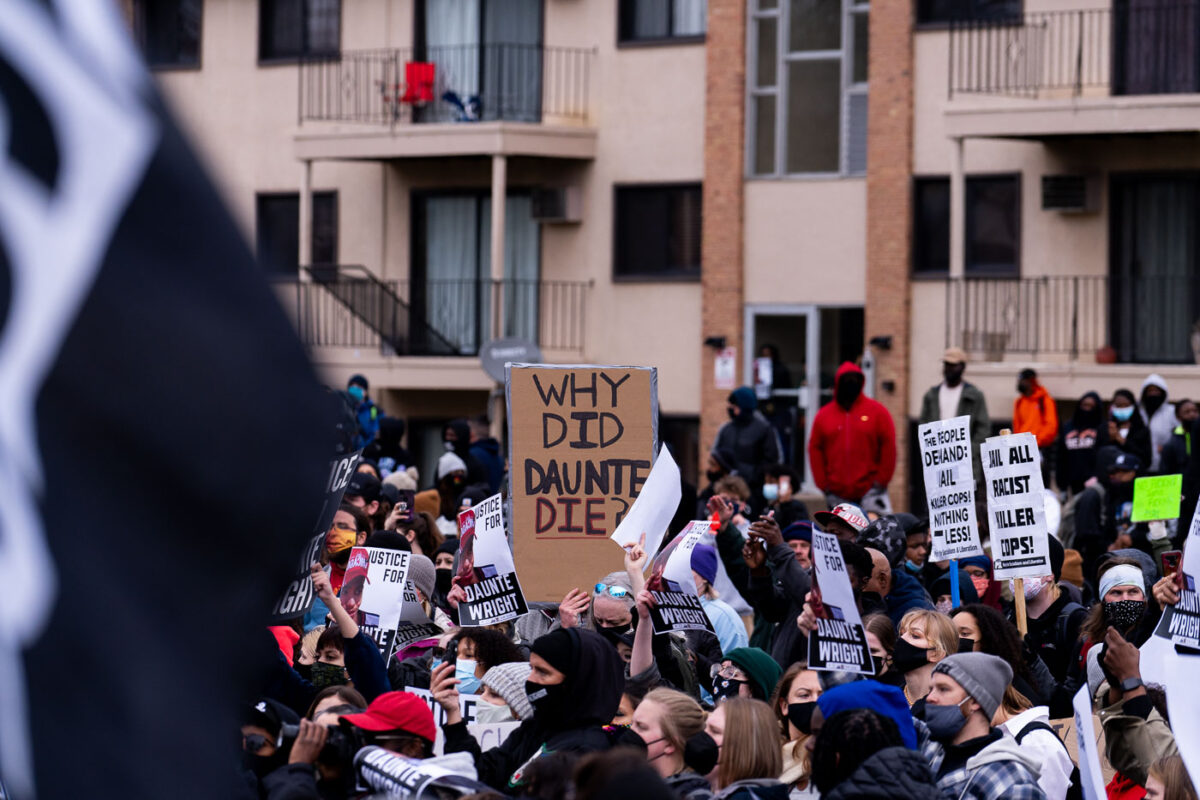
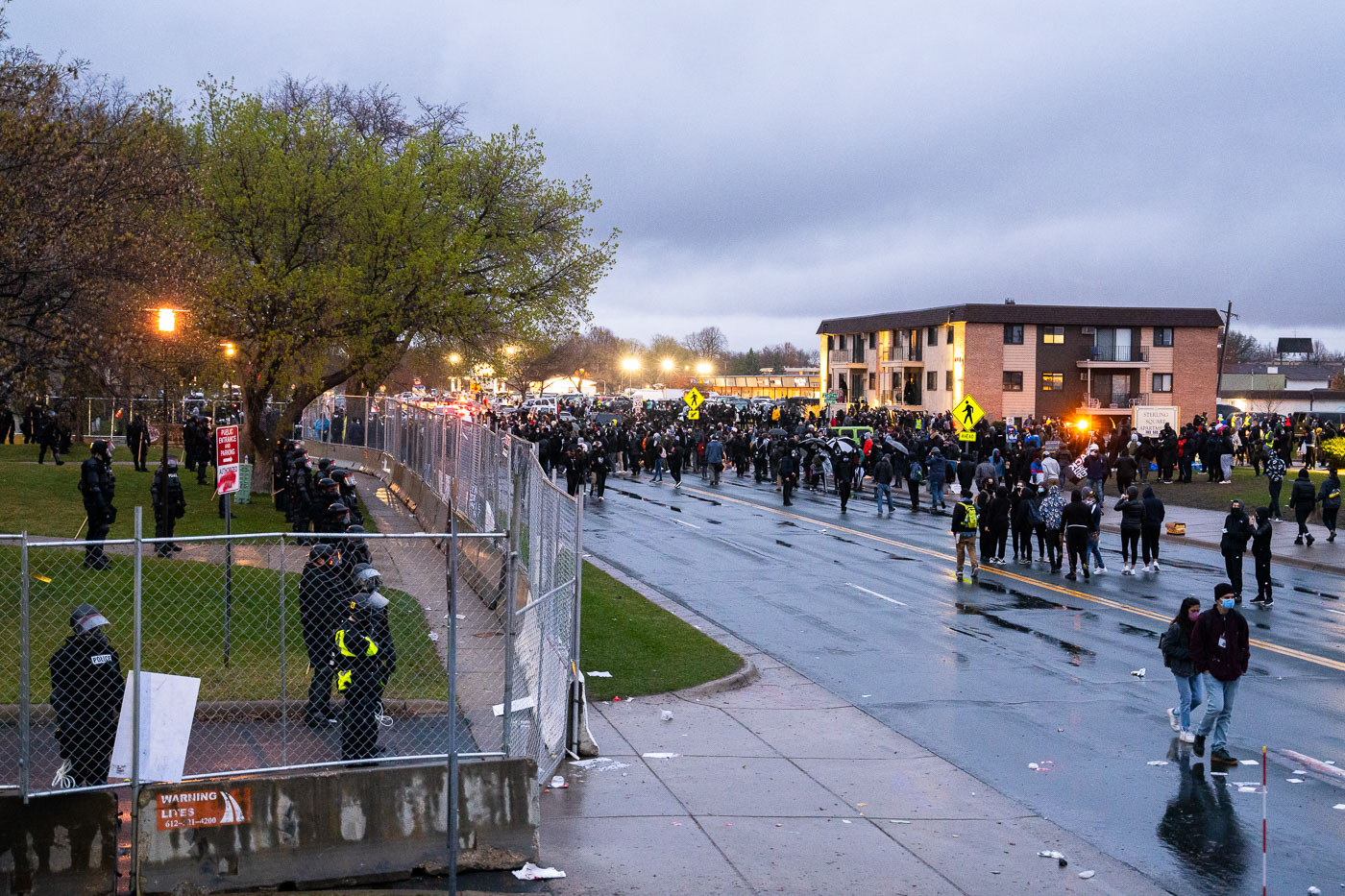
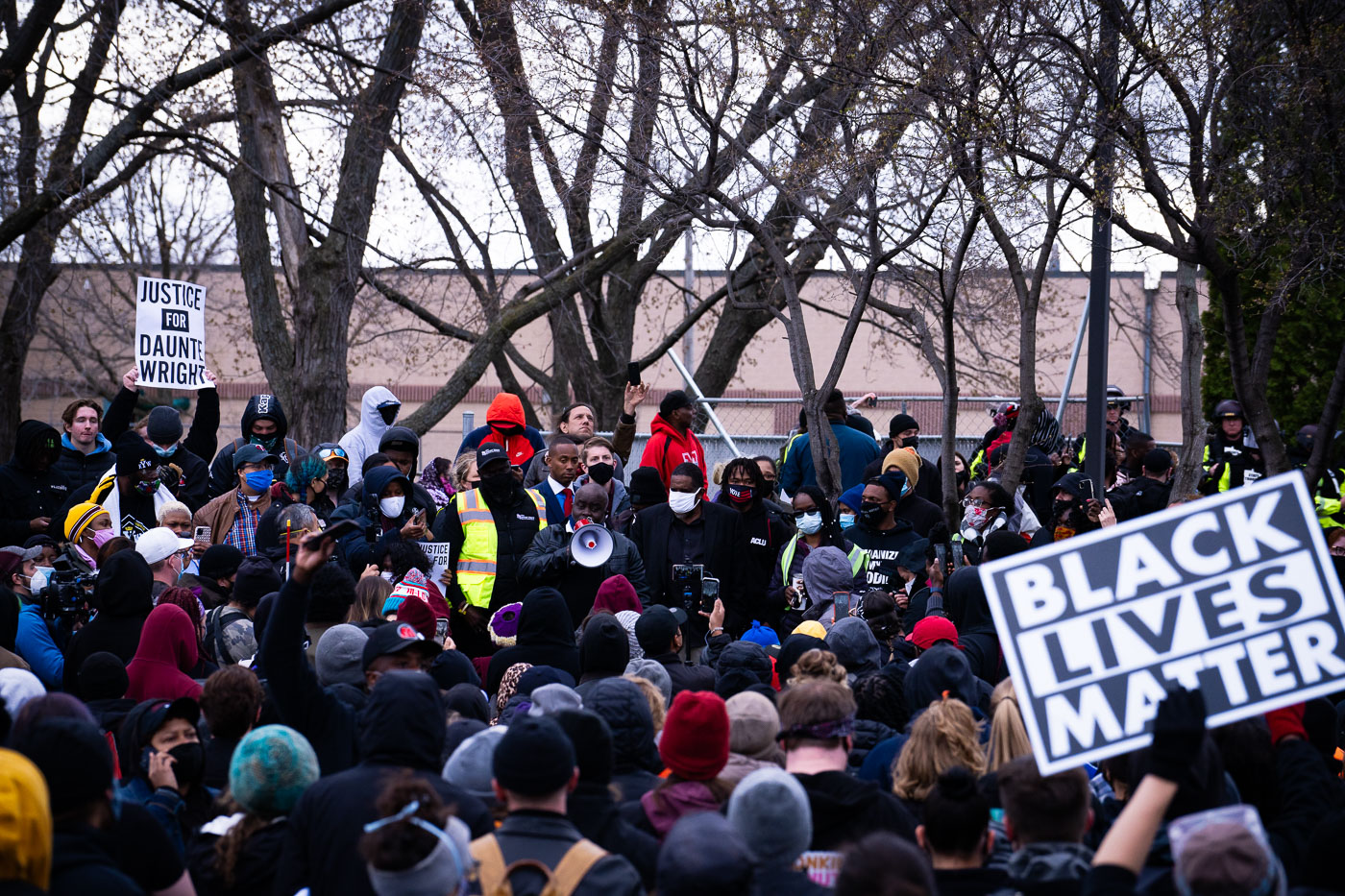
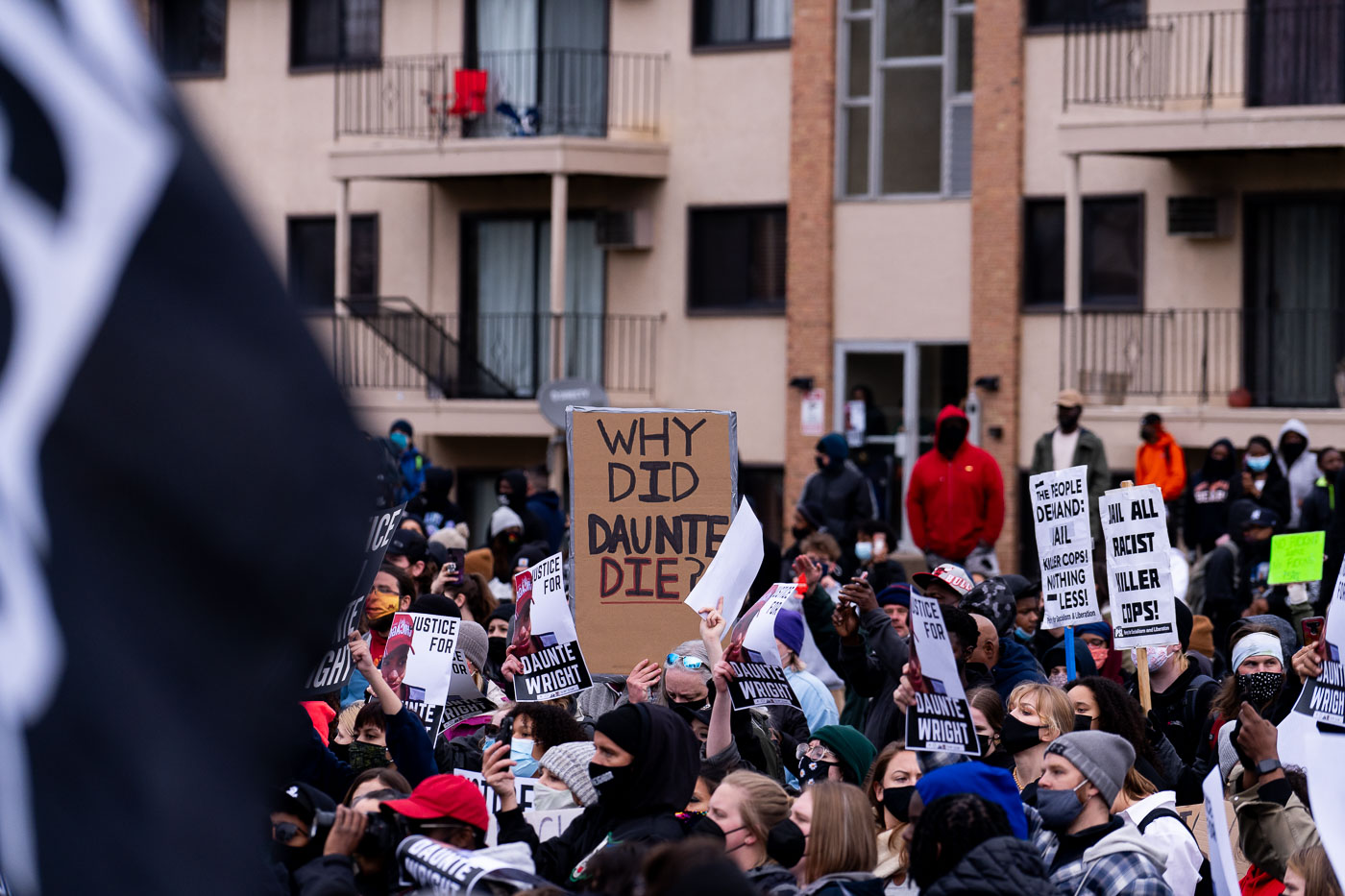
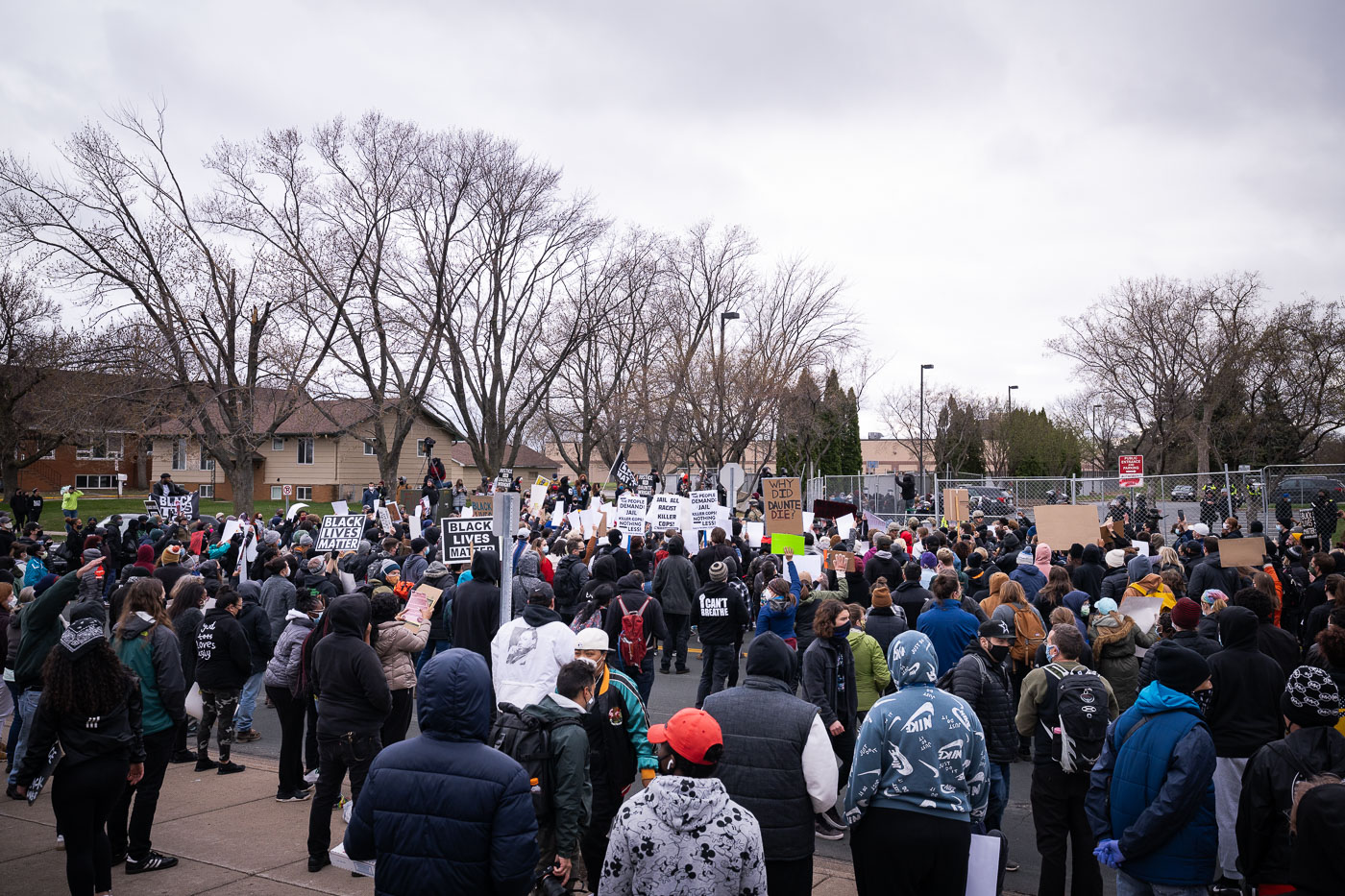
Protesters in Brooklyn Center, Minnesota, hold signs including "Why Did Daunte Die?" after Daunte Wright's killing.
Protesters gathered outside the Brooklyn Center Police Department in Brooklyn Center, Minnesota, following the killing of Daunte Wright. The crowd held signs demanding justice and accountability, with one prominent sign asking, "Why Did Daunte Die?" The residential apartments visible across the street from the police department underscore the proximity of the community to the site of the incident. These protests, part of a broader movement against police violence, occurred in the wake of Wright's death during a traffic stop on April 11, 2021.

Brooklyn Center Protest: “Why Did Daunte Die?” Sign
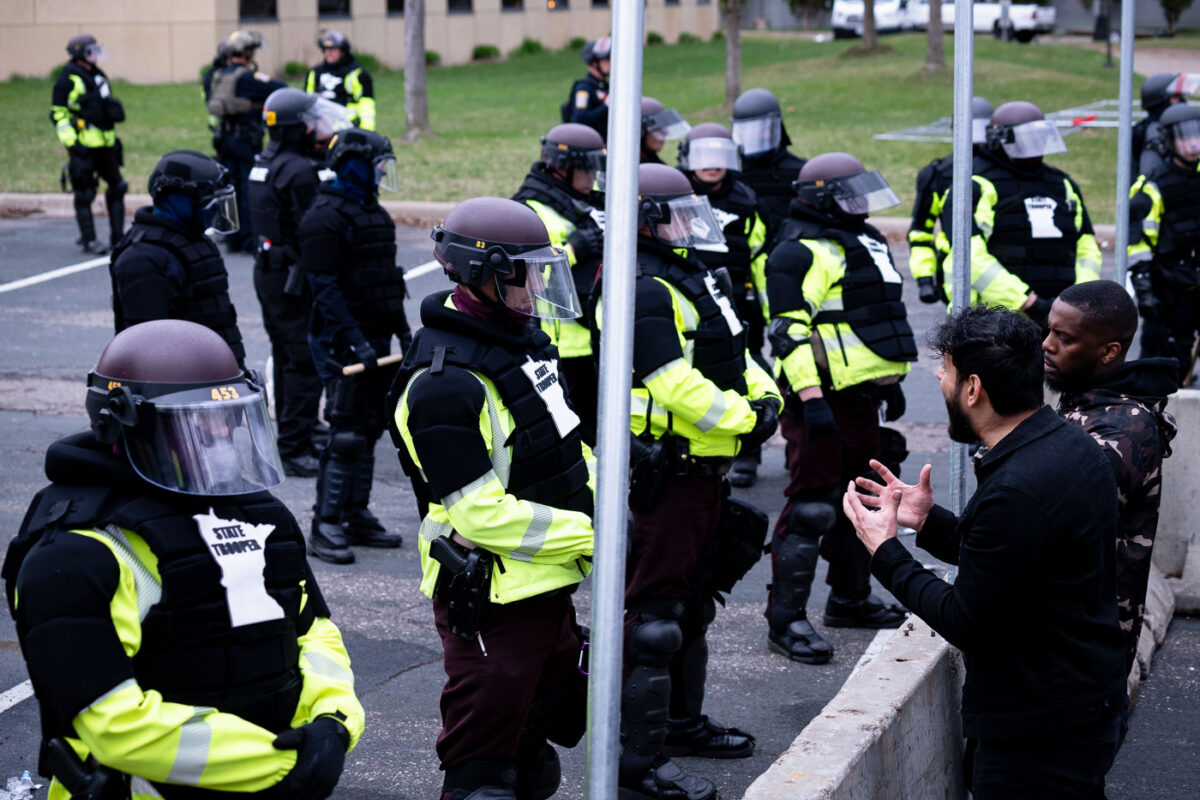
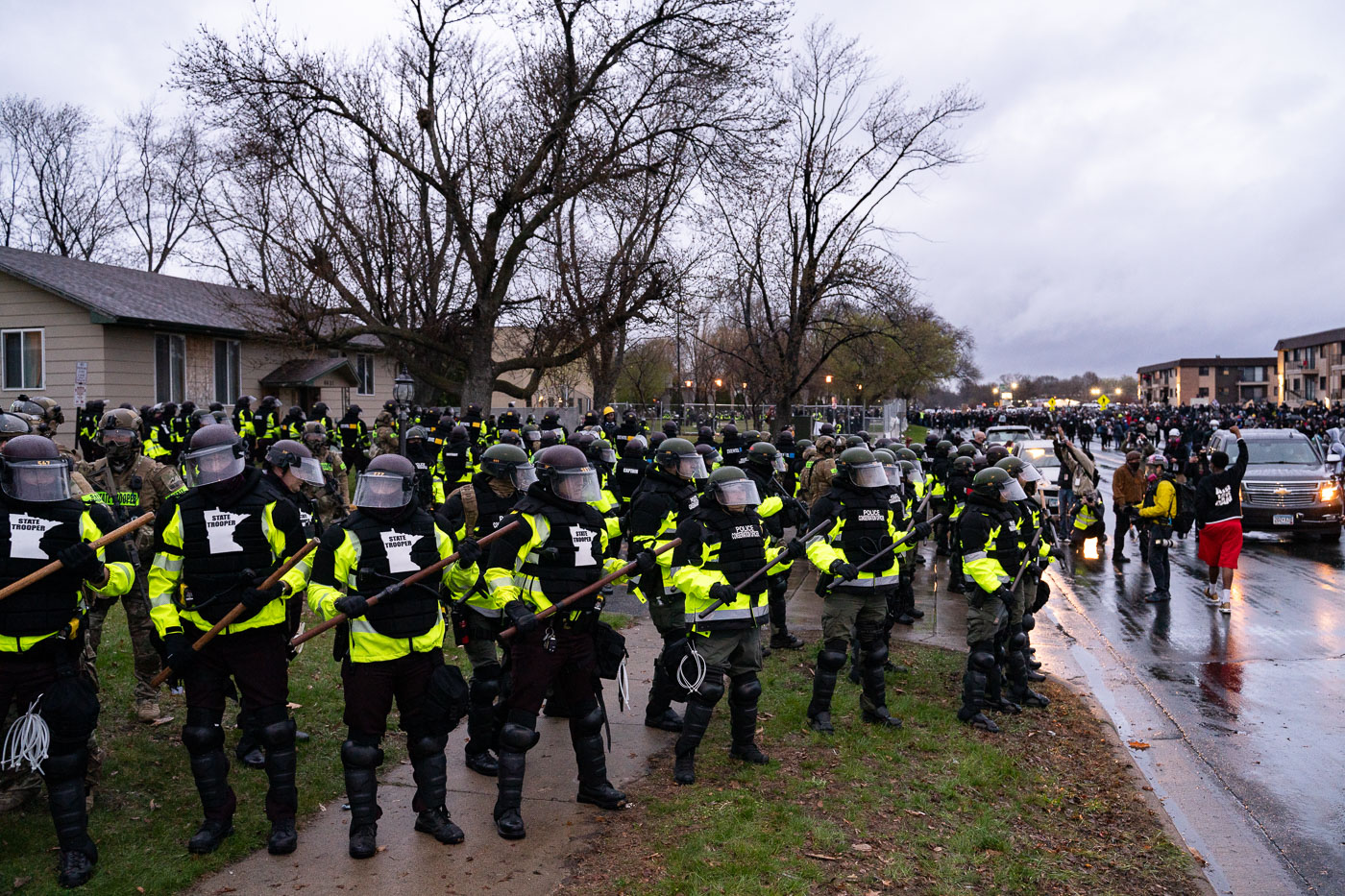
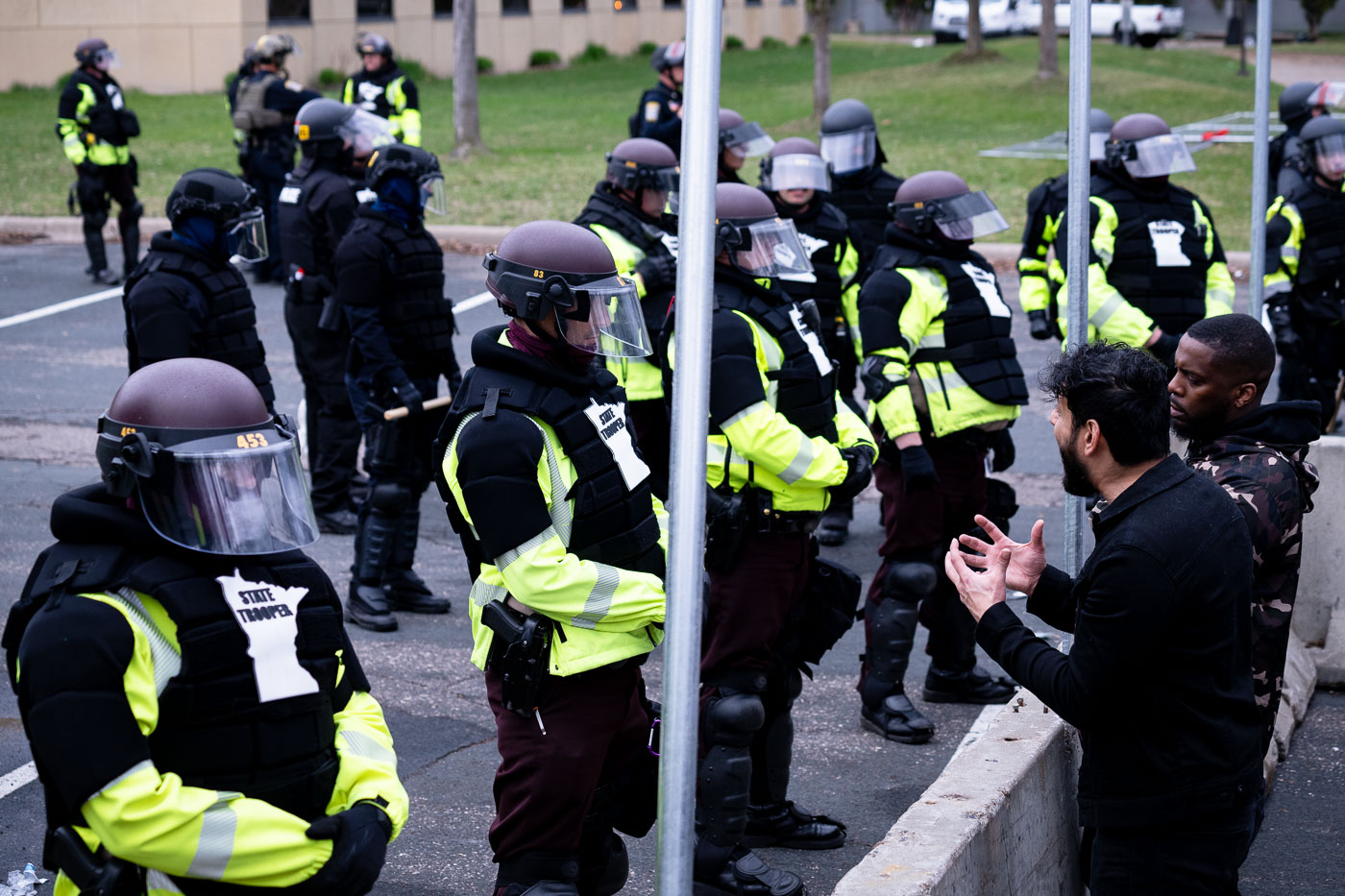
Man speaks with Minnesota State Patrol officers outside Brooklyn Center Police Department.
A man speaks with Minnesota State Patrol officers outside the Brooklyn Center Police Department on April 12, 2021. The previous evening, Daunte Wright, a Black man, was shot and killed by Brooklyn Center Police officer Kim Potter during a traffic stop. His death sparked protests and unrest in the Minneapolis suburb. State Patrol officers, identifiable by their riot gear and "State Trooper" patches, were deployed to maintain order amidst the ongoing public reaction to Wright's killing.

Brooklyn Center: Man speaks with State Patrol after Daunte Wright killing
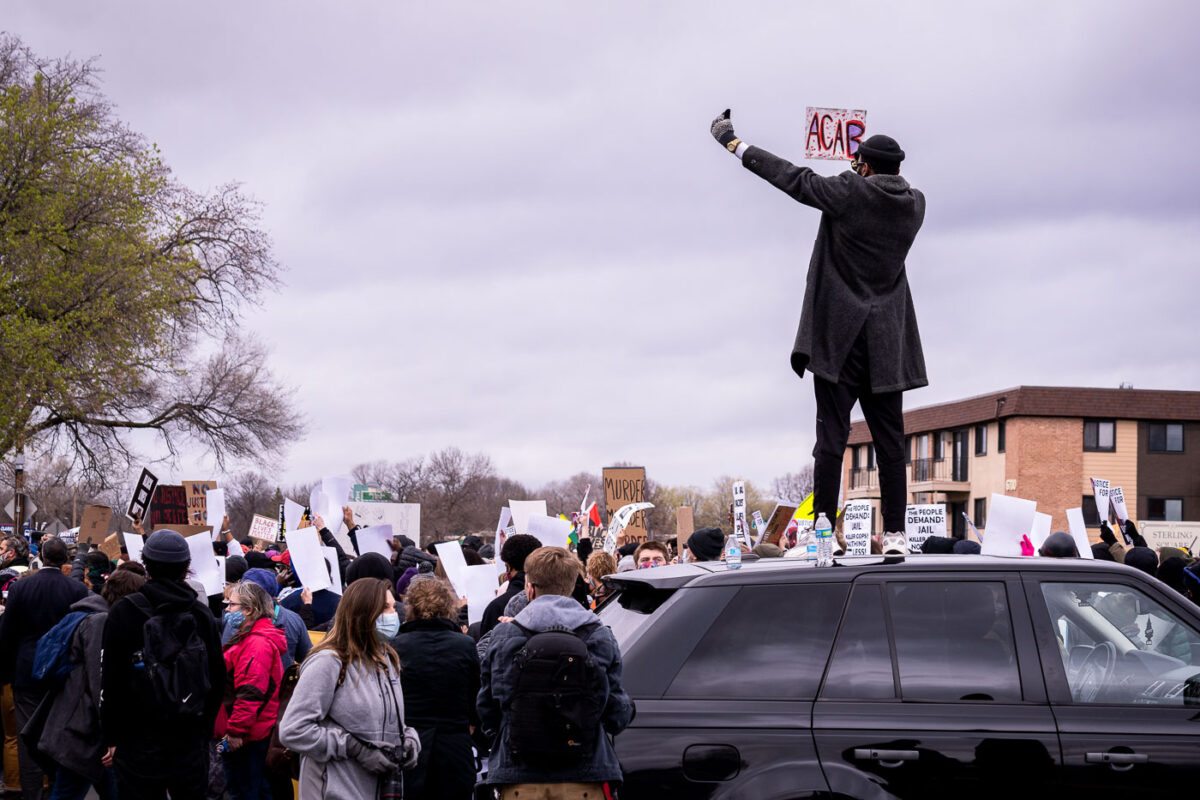
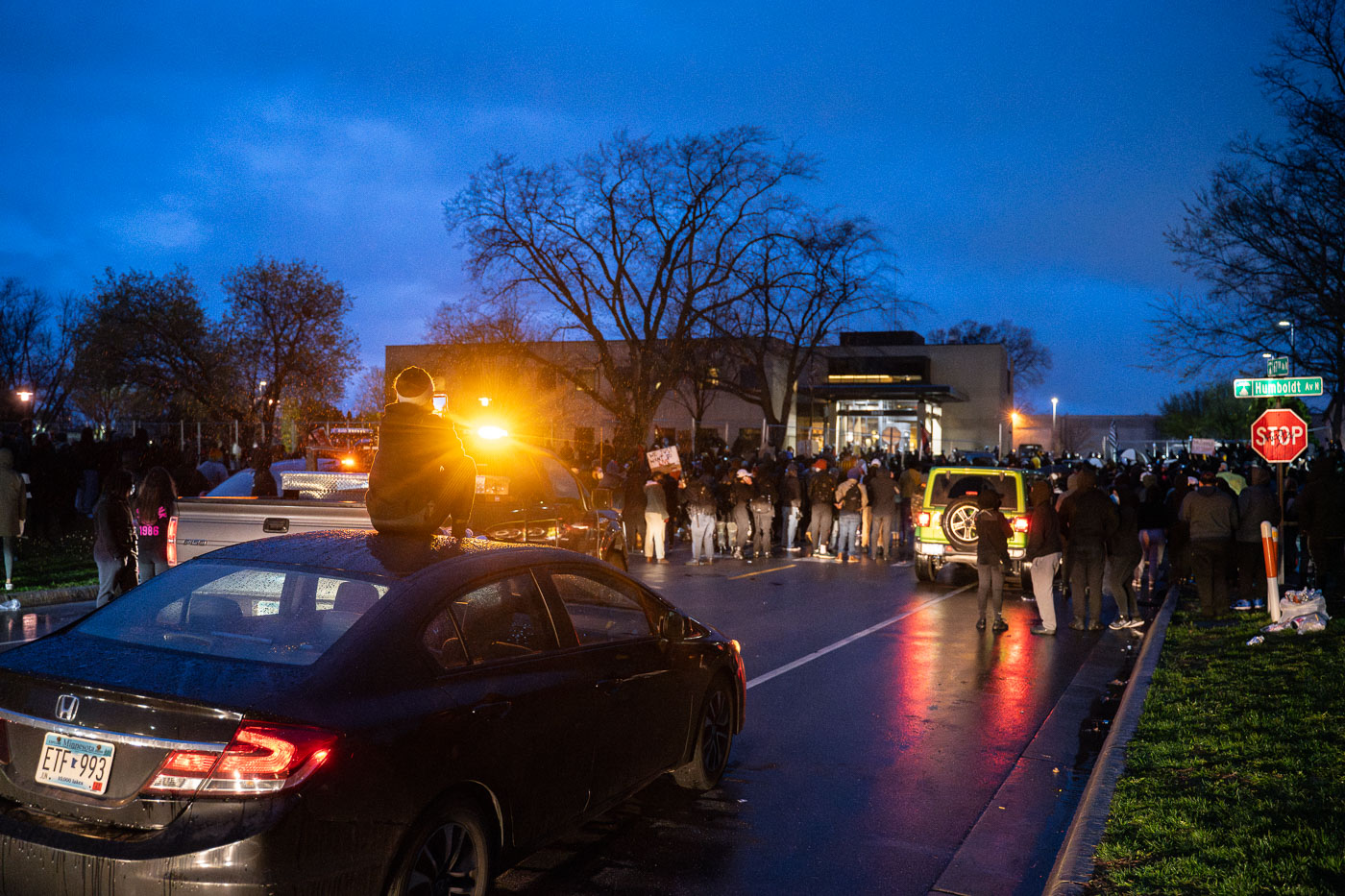
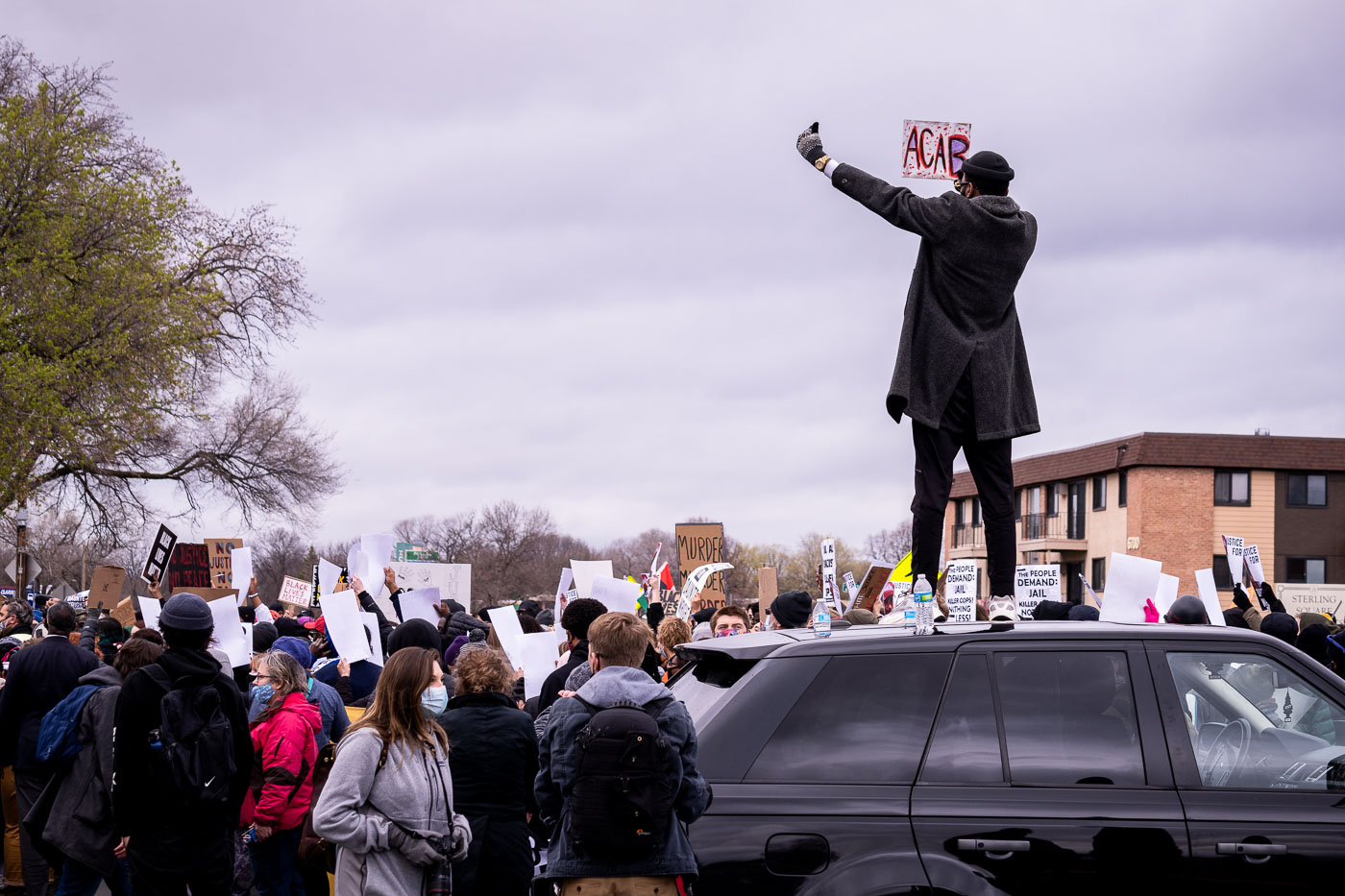
Protester atop an SUV at a Daunte Wright protest in Brooklyn Center, Minnesota.
Protesters gathered outside the Brooklyn Center Police Department in April 2021 following the killing of Daunte Wright. The event led to widespread protests and calls for justice, highlighting ongoing concerns about police violence. Former Brooklyn Center Police Officer Kim Potter was later indicted and faced trial for her role in the incident, which occurred on April 11, 2021.

Brooklyn Center Protest for Daunte Wright, April 2021
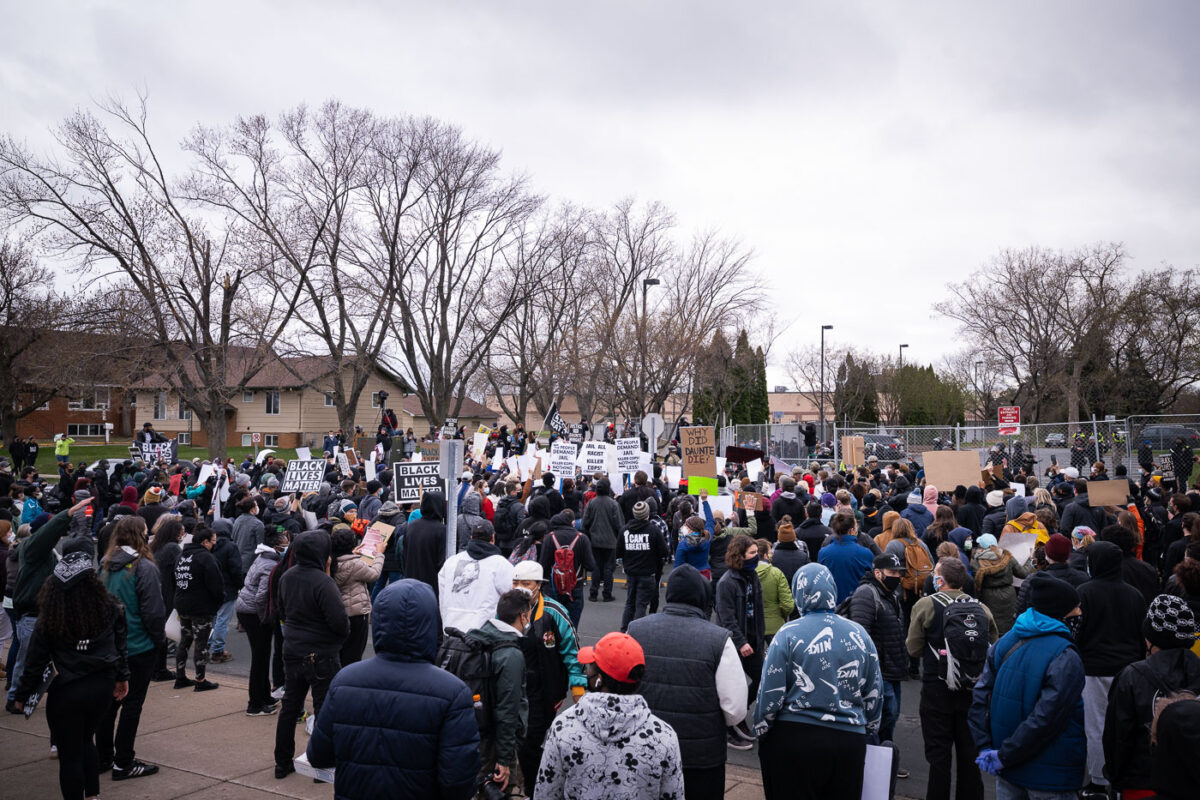
Protesters outside Brooklyn Center Police Department after Daunte Wright's killing, with Black Lives Matter signs.
Protesters gathered outside the Brooklyn Center Police Department on April 11th, 2021, following the killing of Daunte Wright. The event was part of a larger wave of protests against police violence that occurred across the United States. Demonstrators held signs with messages such as "Black Lives Matter" and "Why Did Daunte Die?" The protest highlighted ongoing concerns about racial injustice and police accountability.

Protest at Brooklyn Center PD after Daunte Wright killing
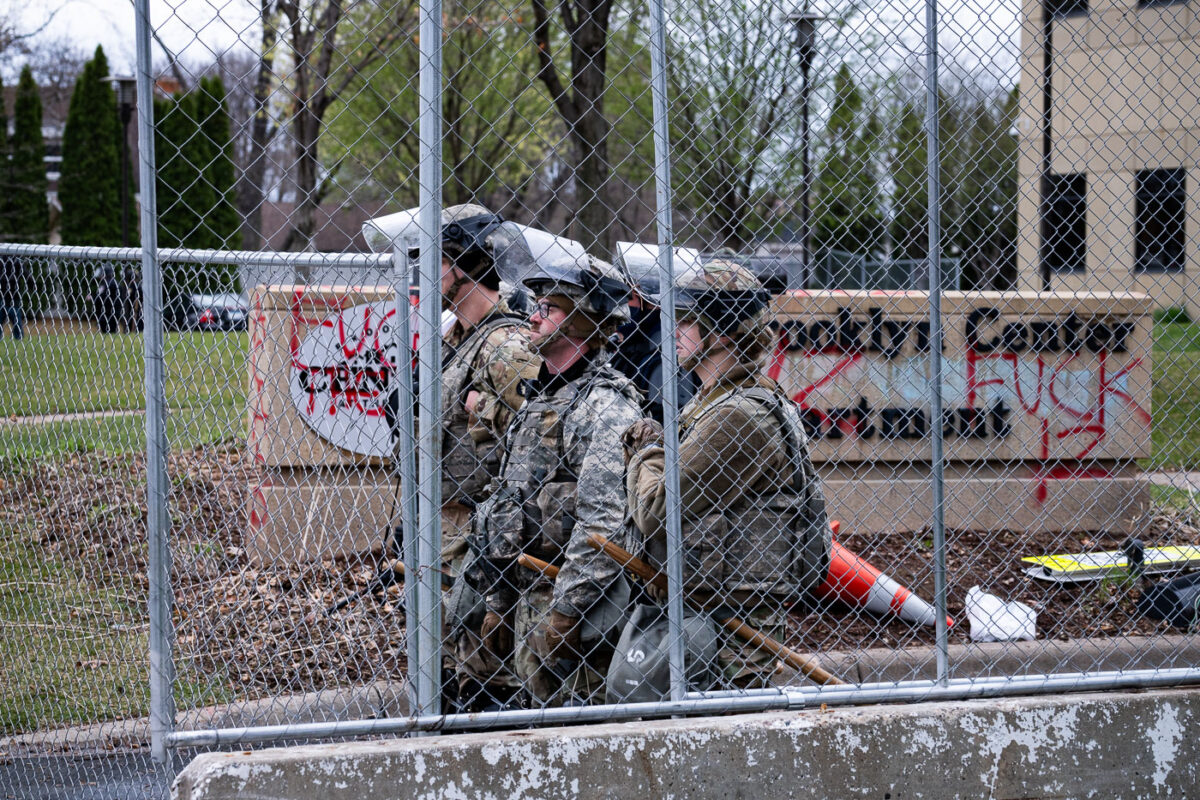
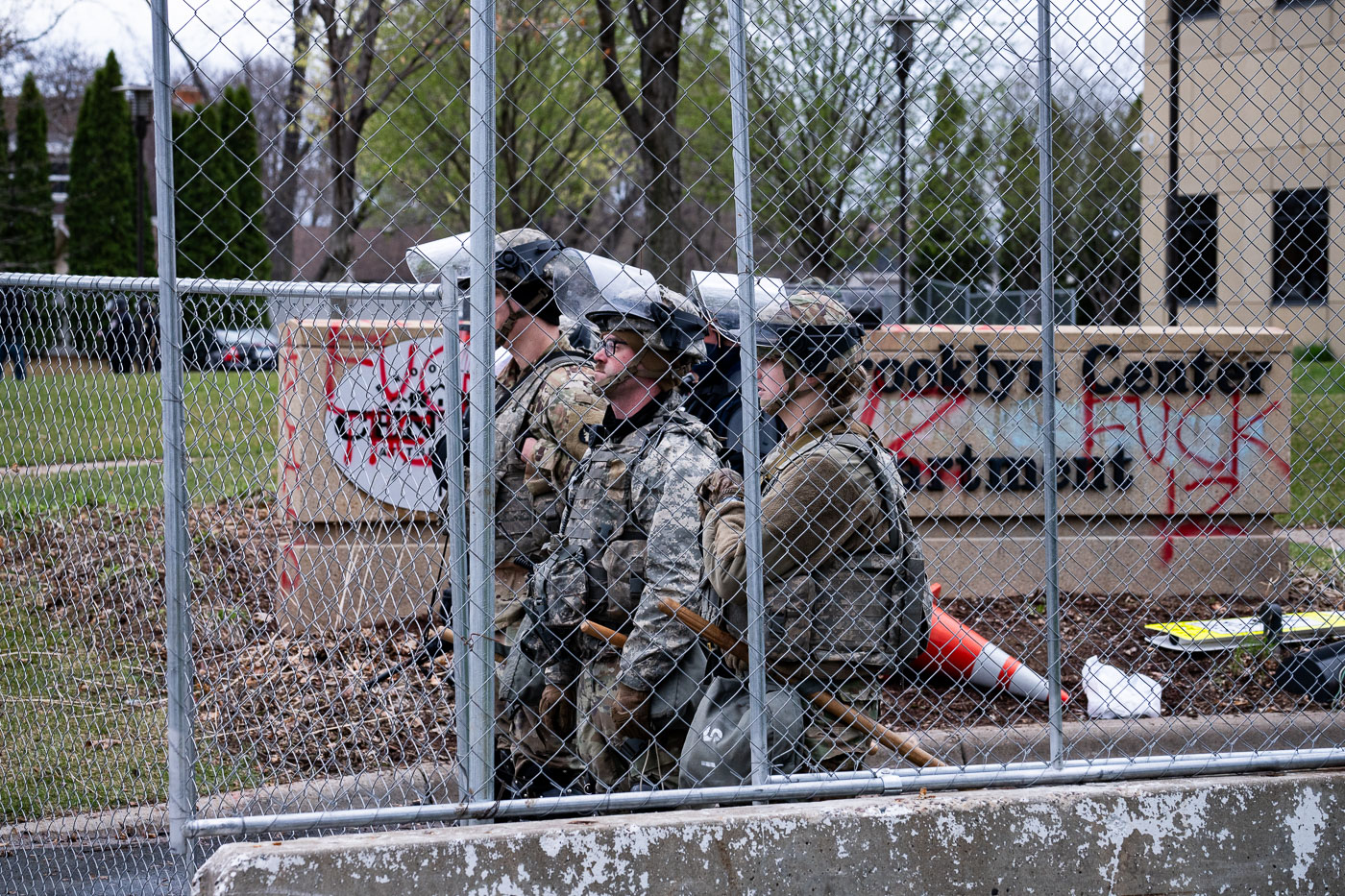
National Guard soldiers behind fencing at Brooklyn Center Police Department, Minnesota.
National Guard soldiers stand in formation outside the Brooklyn Center Police Department on April 12, 2021. The previous day, Daunte Wright, a 20-year-old Black man, was killed during a traffic stop by Officer Kim Potter, who was a veteran of the force. Wright's death sparked protests and unrest in Brooklyn Center, a suburb of Minneapolis. The police station was fortified with fencing and barricades in anticipation of further demonstrations.

Brooklyn Center Police Station Guarded After Daunte Wright Killing
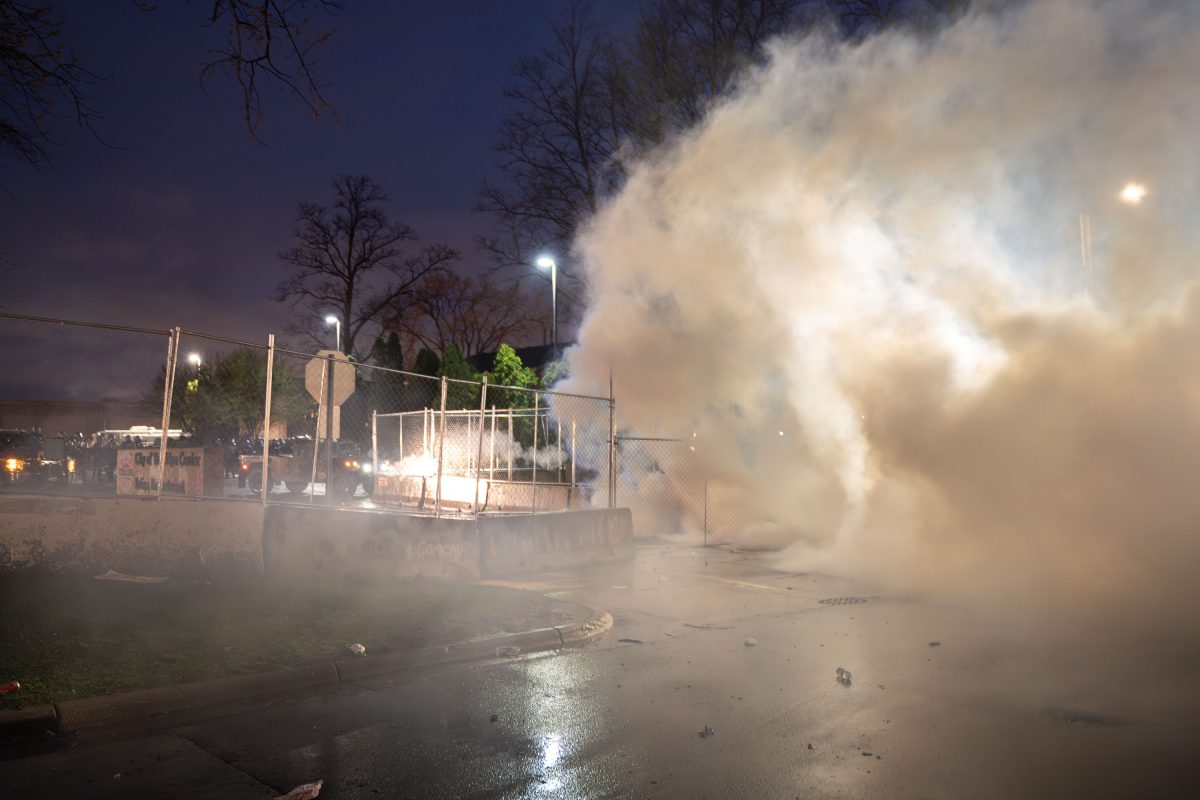
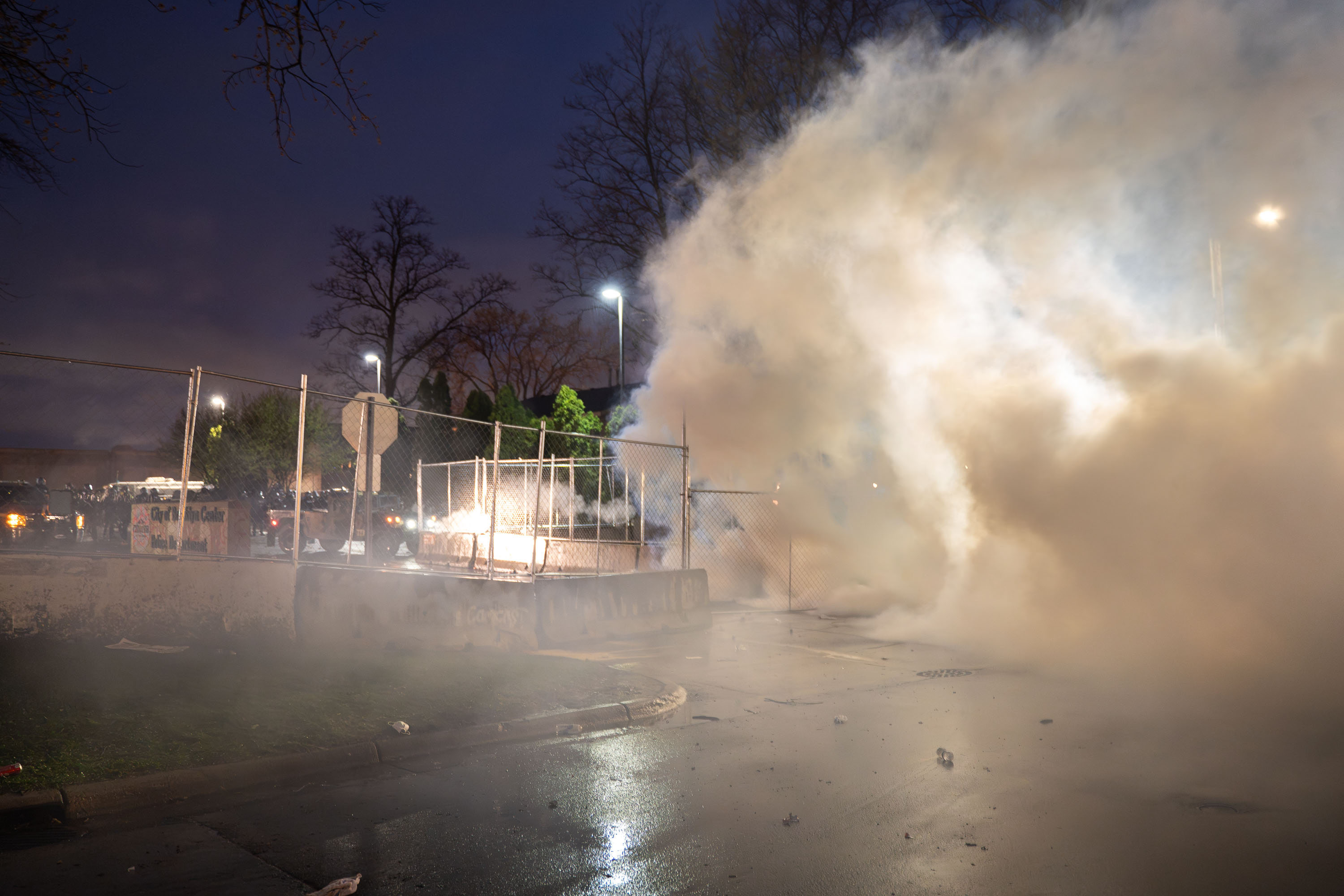
Tear gas at Brooklyn Center Police Department in April 2021
Police deploy tear gas on protesters gathering at the Brooklyn Center Police Department after 20-year old Daunte Wright was shot and killed by a Brooklyn Center Police on April 11th, 2020.

Tear Gas at Brooklyn Center Police Department in April 2021

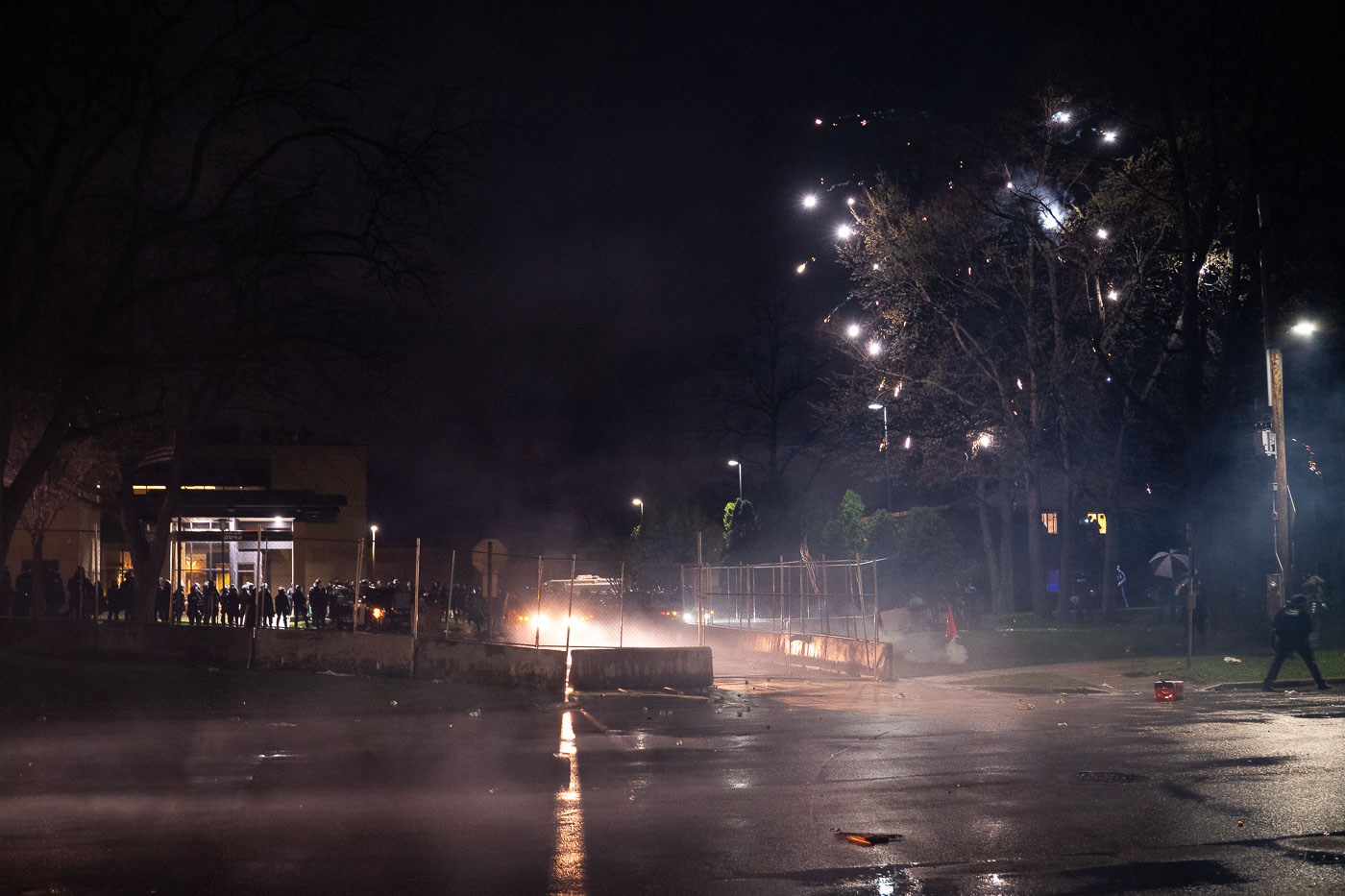
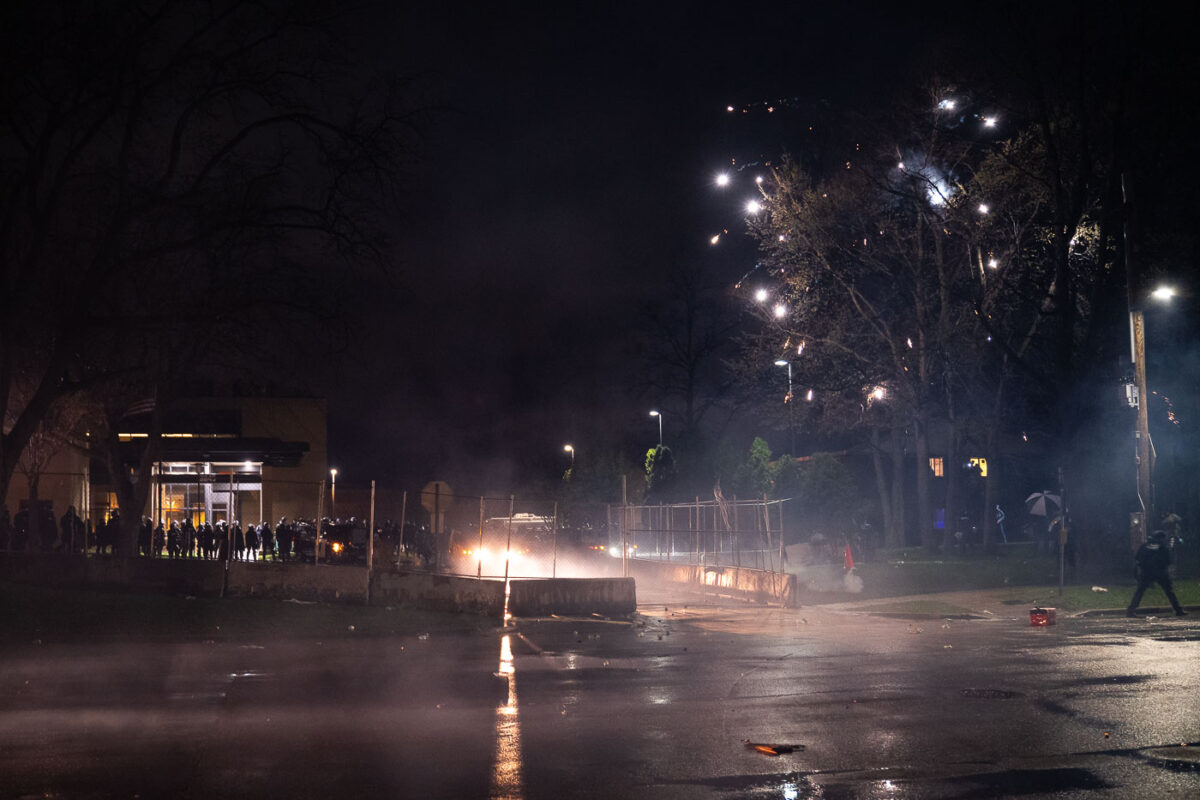
Fireworks over the Brooklyn Center Police Department during a protest in Brooklyn Center, Minnesota.
Protesters gathered outside the Brooklyn Center Police Department on April 11, 2020, following the fatal shooting of Daunte Wright by an officer earlier that day.

Fireworks explode over Daunte Wright Protest at Police Station
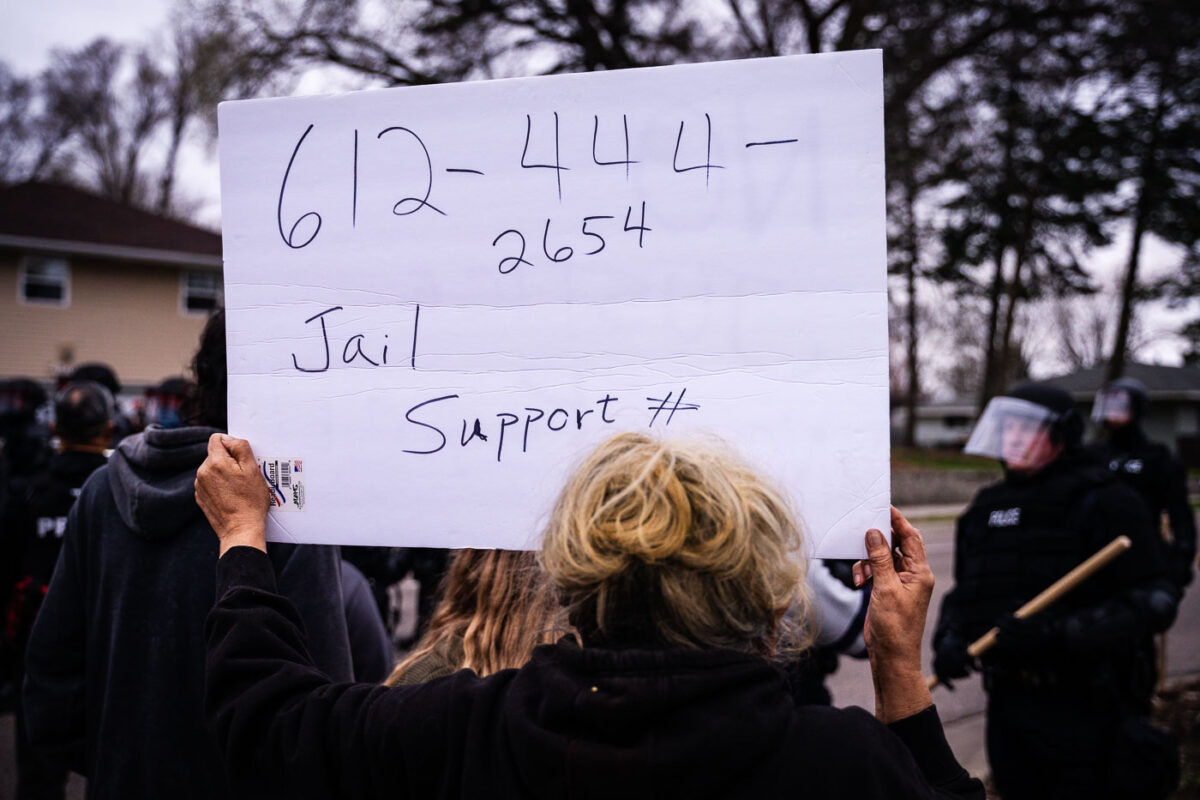
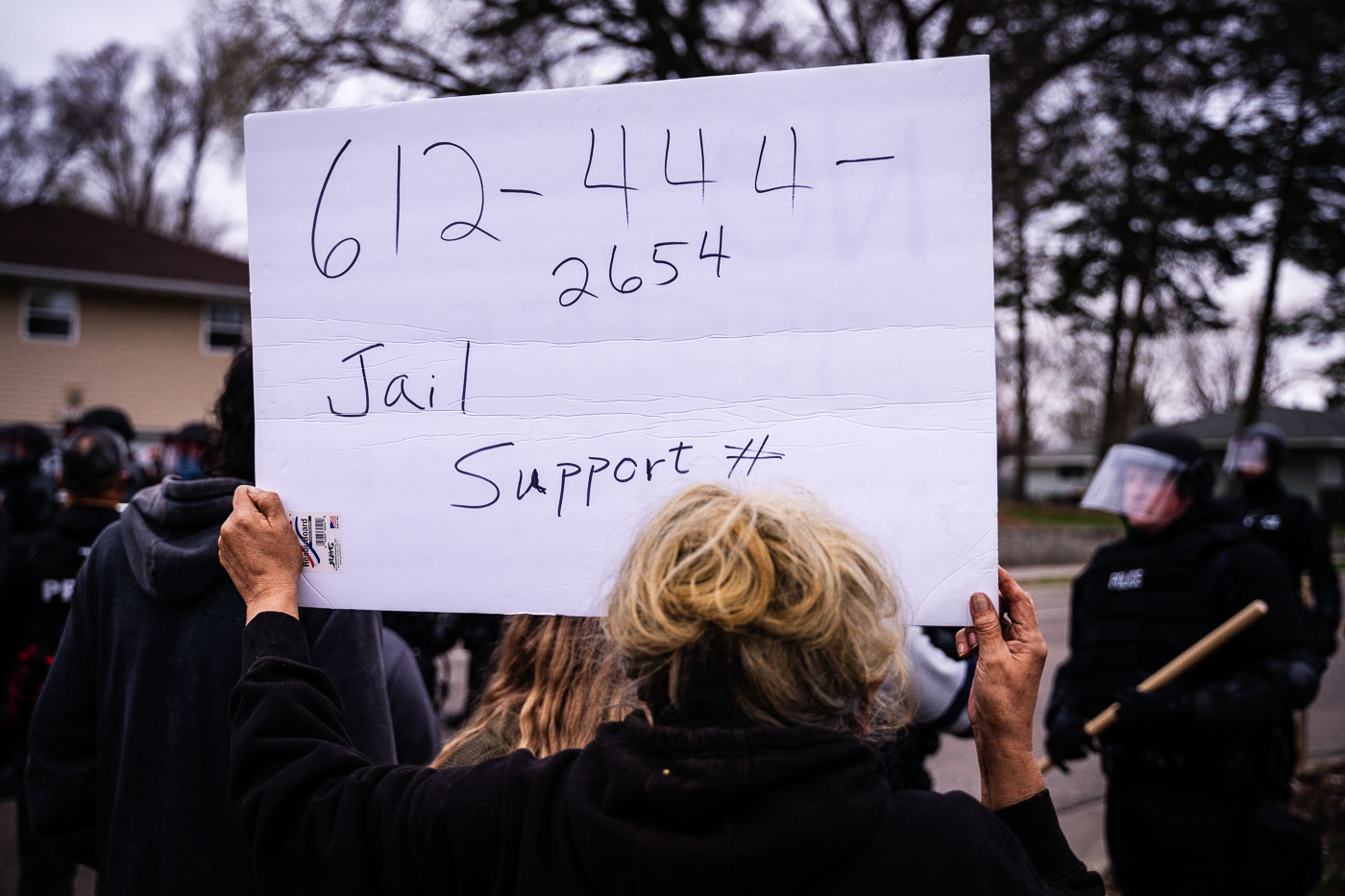
Protester with a jail support number sign in Brooklyn Center, Minnesota, facing police in riot gear.
During protests in Brooklyn Center, Minnesota, following the death of Daunte Wright in April 2021, a demonstrator holds a sign displaying a phone number for jail support. This number, likely for the National Lawyers Guild or a similar organization, was intended to provide legal assistance to those arrested during the demonstrations. The presence of law enforcement in riot gear underscores the tense atmosphere of the protests, which were a response to police violence and systemic issues.

Brooklyn Center Protest: Jail Support Number Displayed
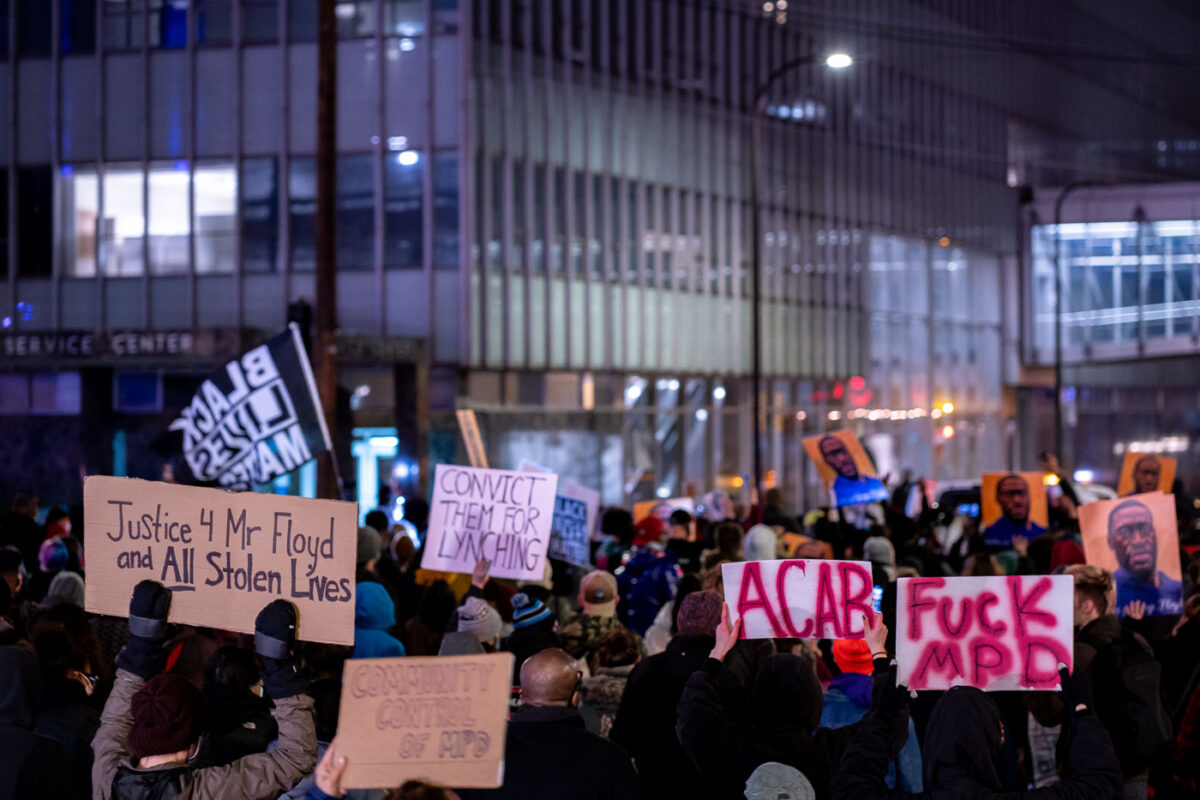
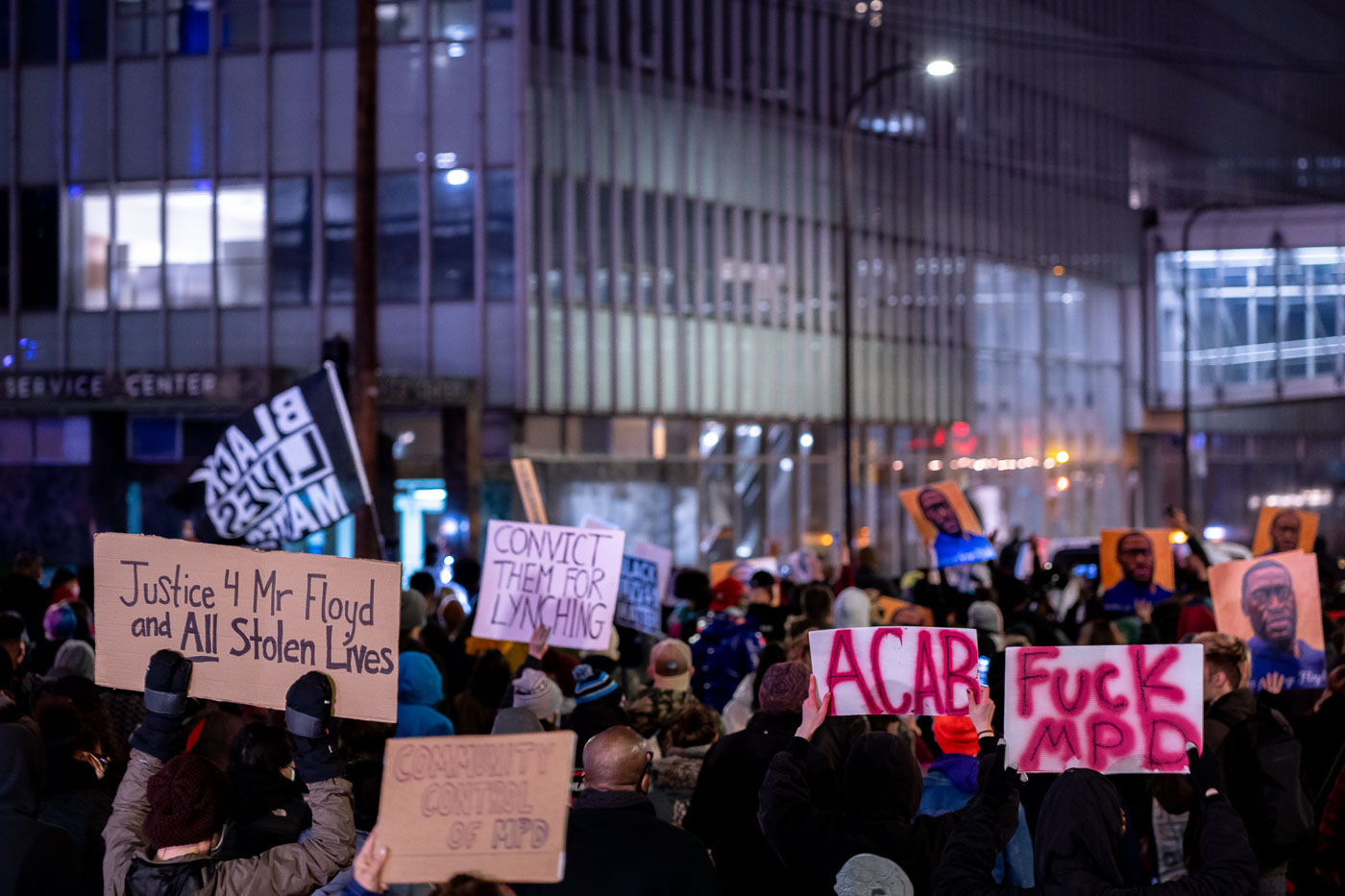
Protesters in downtown Minneapolis during the Derek Chauvin trial hold signs for George Floyd and against police.
Protesters gathered in downtown Minneapolis during the trial of Derek Chauvin, the police officer accused of murdering George Floyd. The demonstrations, which occurred in the spring of 2021, were part of a broader movement demanding justice for Floyd and other victims of police brutality. Signs held by participants called for accountability for Floyd's death and systemic changes within law enforcement. The protests highlighted ongoing tensions between the community and the Minneapolis Police Department.

Minneapolis Protest: Justice for George Floyd and All Stolen Lives
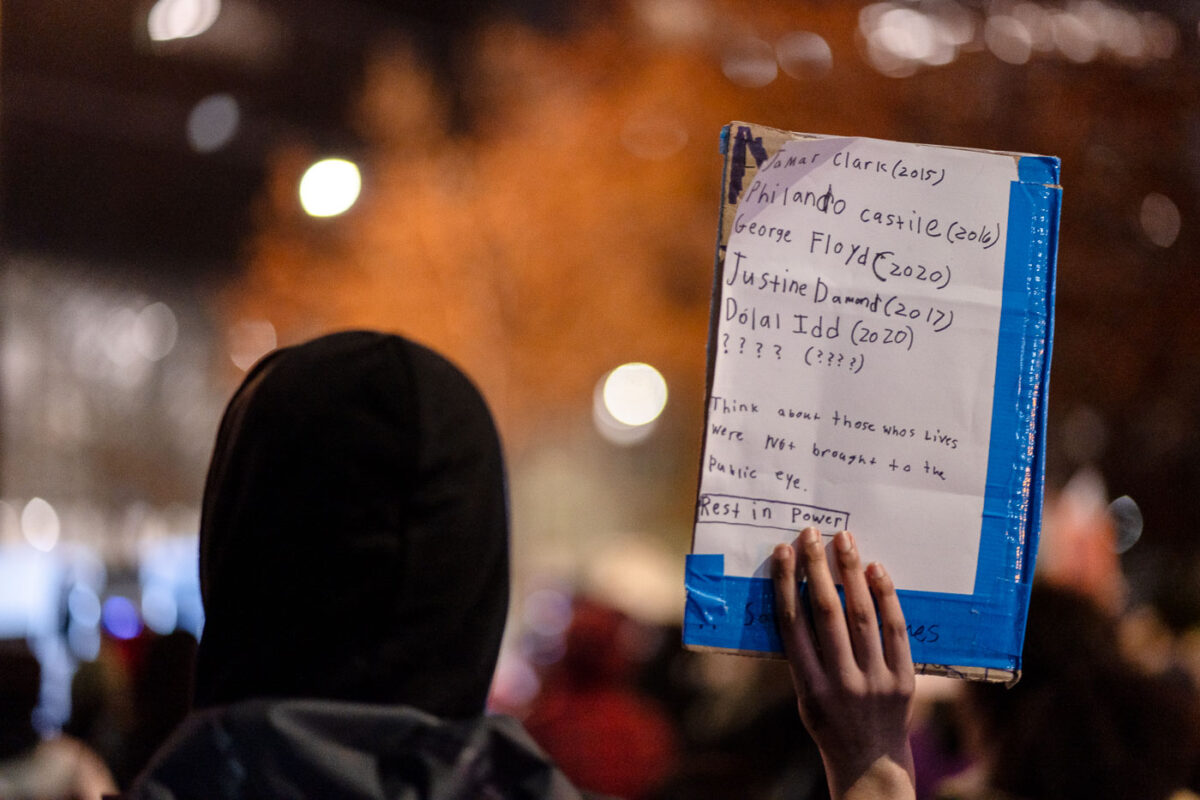
Protester in downtown Minneapolis holds a sign naming George Floyd and other people killed by police.
Protesters marched through downtown Minneapolis during the trial of Derek Chauvin, the former police officer accused in the murder of George Floyd. The sign held by a demonstrator lists names of individuals, including Floyd, Philando Castile, and Tamir Rice, who died in encounters with law enforcement. The list serves as a memorial to victims of police brutality and a call for accountability. The protest occurred amidst widespread national attention on racial injustice and police conduct.

Minneapolis Protest During Derek Chauvin Trial
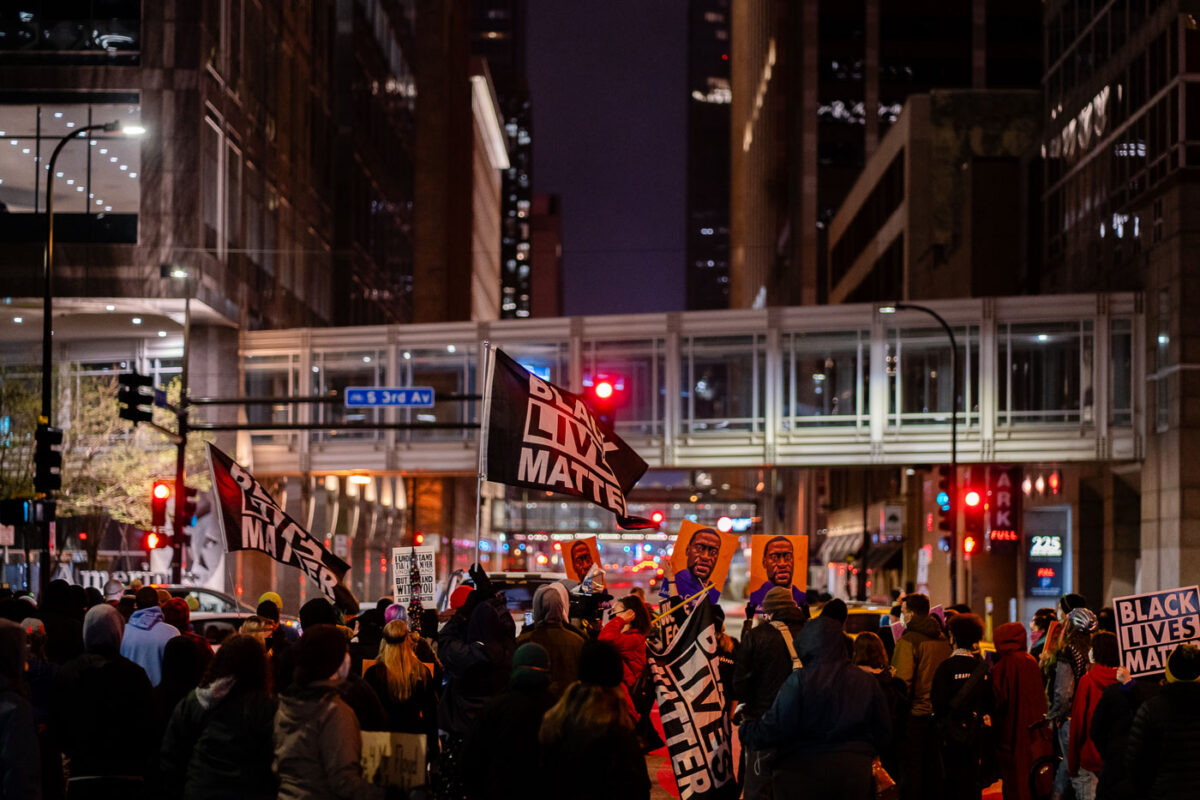
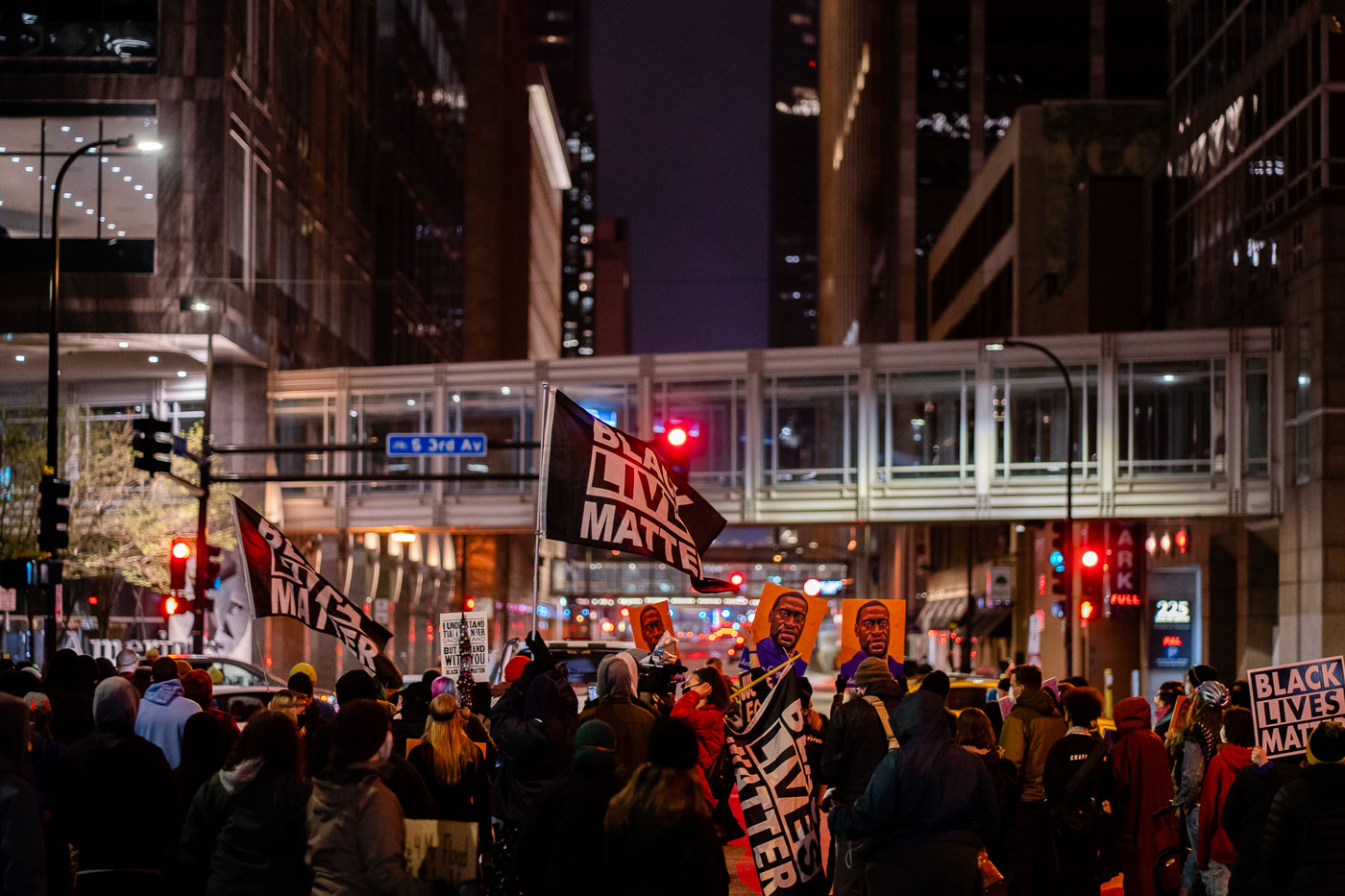
Protesters with Black Lives Matter flags on 3rd Avenue in downtown Minneapolis.
Protesters gathered in downtown Minneapolis outside the Hennepin County Government Center during the trial of Derek Chauvin, the former police officer charged in the murder of George Floyd. The "Black Lives Matter" flags and signs bearing Floyd's image reflect the broader movement for racial justice and police accountability that gained national attention following Floyd's death in May 2020. The courthouse, a significant civic building in Minneapolis, served as a focal point for demonstrations demanding justice and systemic change.

Minneapolis Protest for George Floyd Outside Hennepin County Courthouse
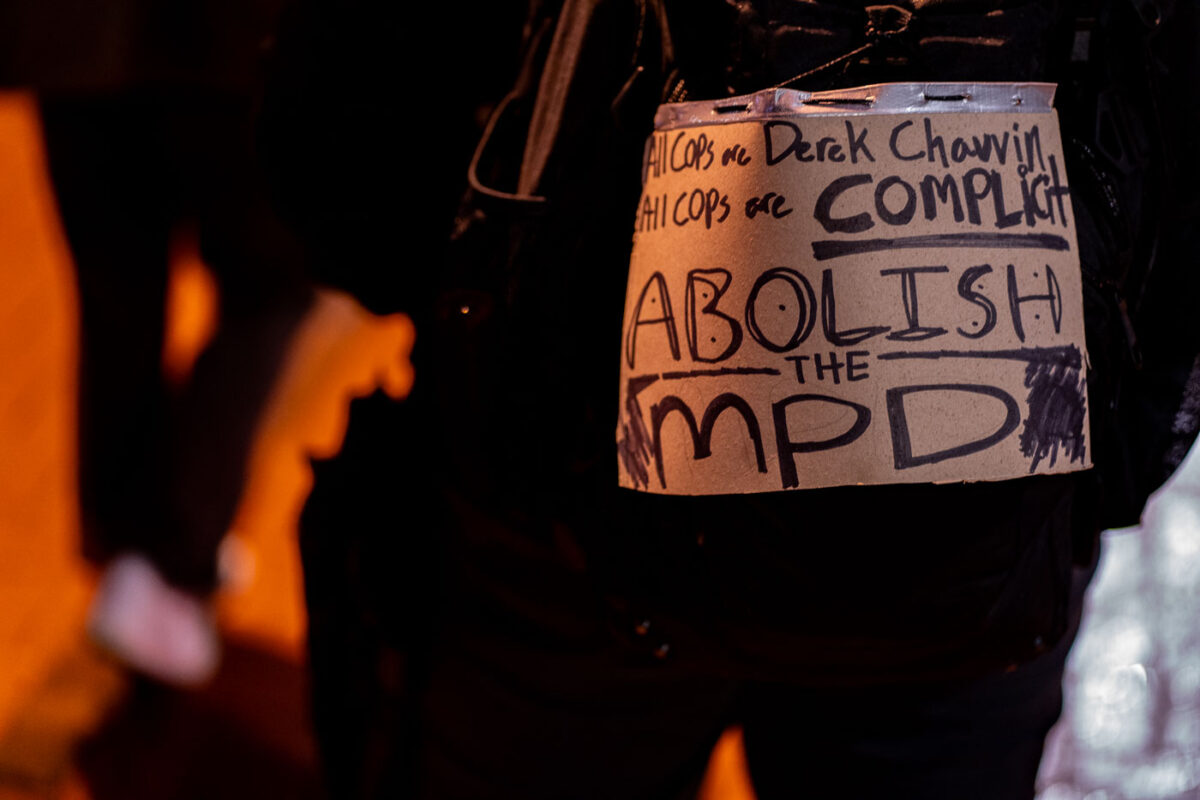
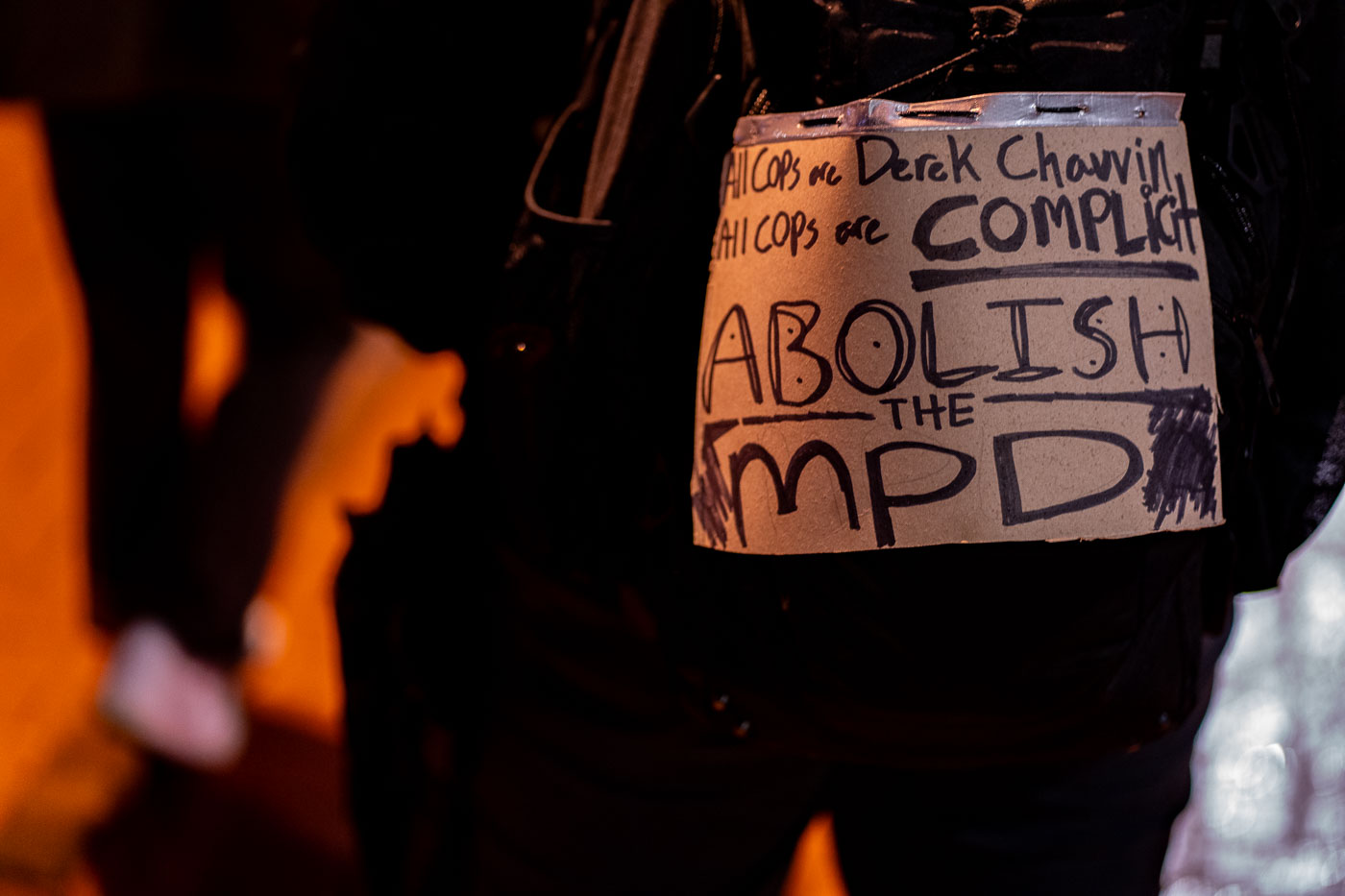
Abolish the MPD sign on a marcher in downtown Minneapolis.
Abolish the MPD protest sign on someones back during a march through downtown Minneapolis.

Minneapolis Protest Sign: Abolish the MPD
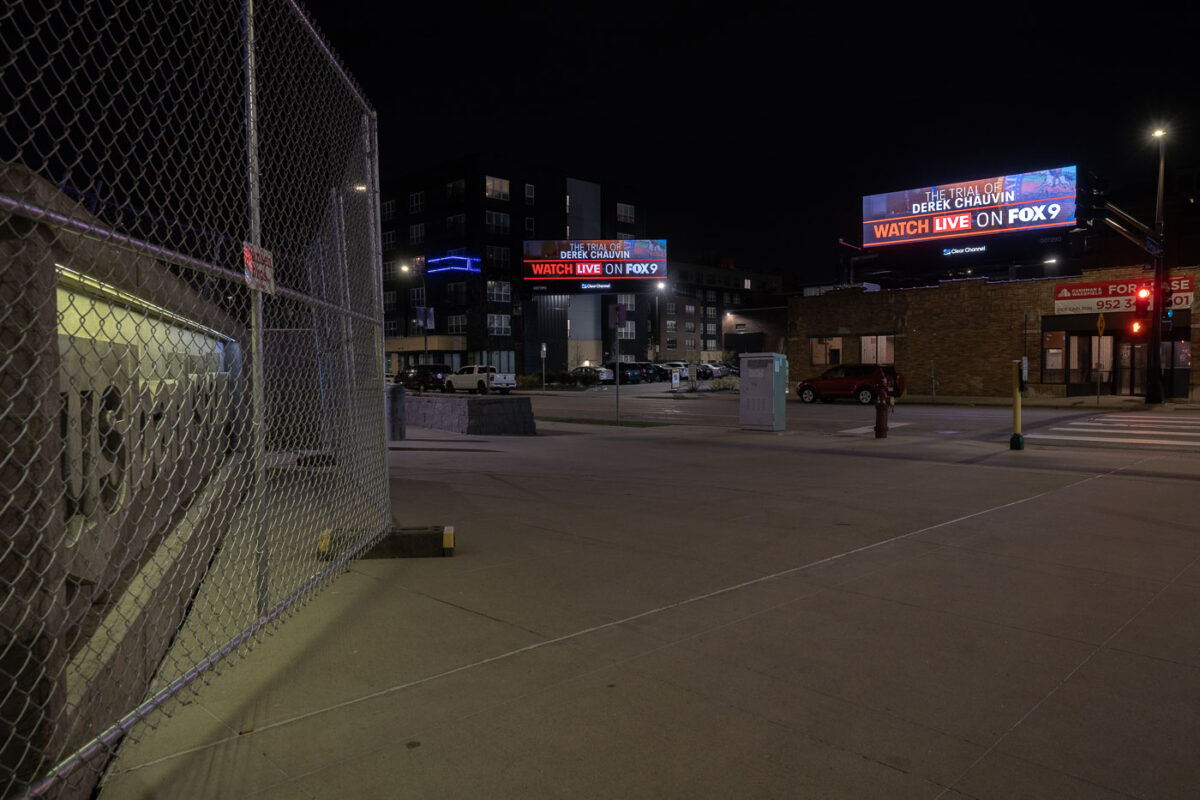
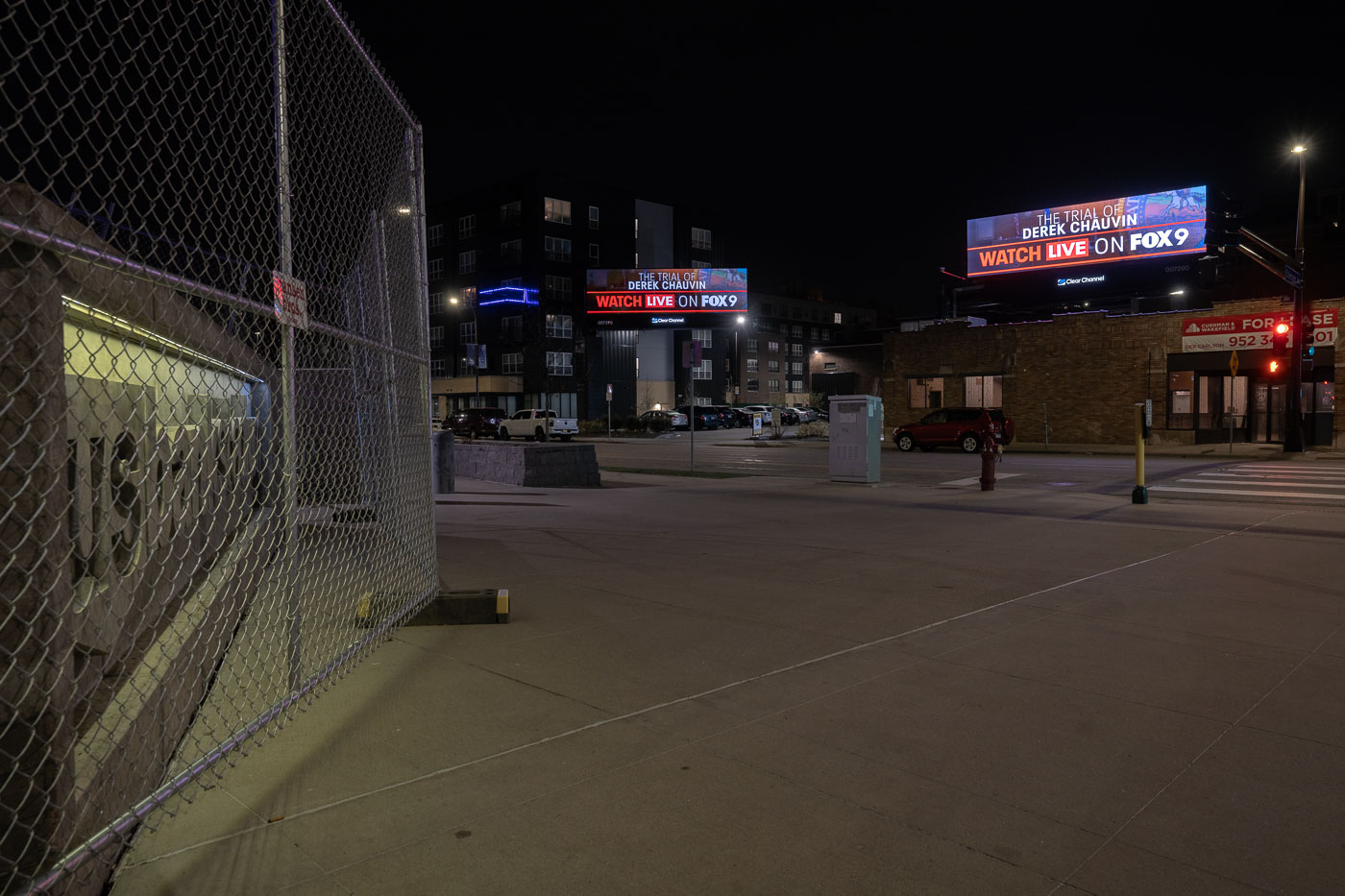
FOX9 billboards for the Derek Chauvin trial in downtown Minneapolis beside security fencing.
FOX9 billboards in downtown Minneapolis. US Bank Stadium to the left behind security fencing.

Minneapolis: FOX9 Billboards for Derek Chauvin Trial

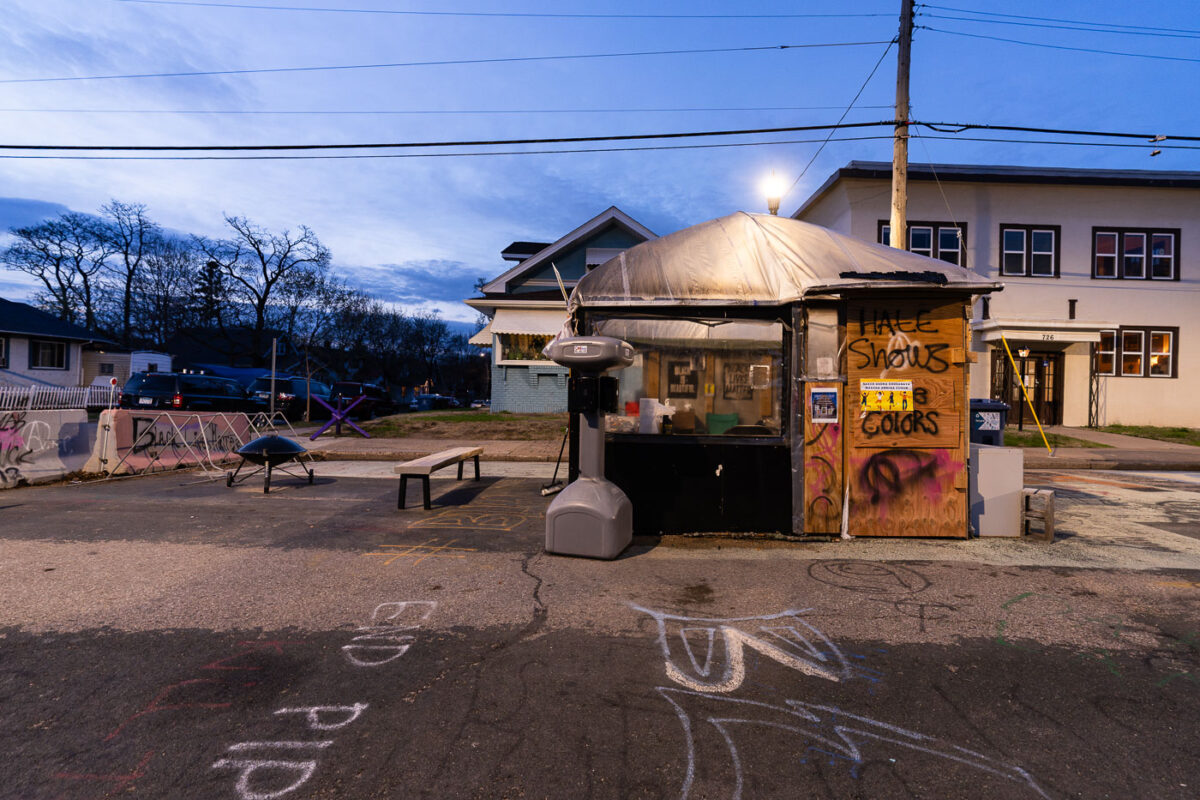
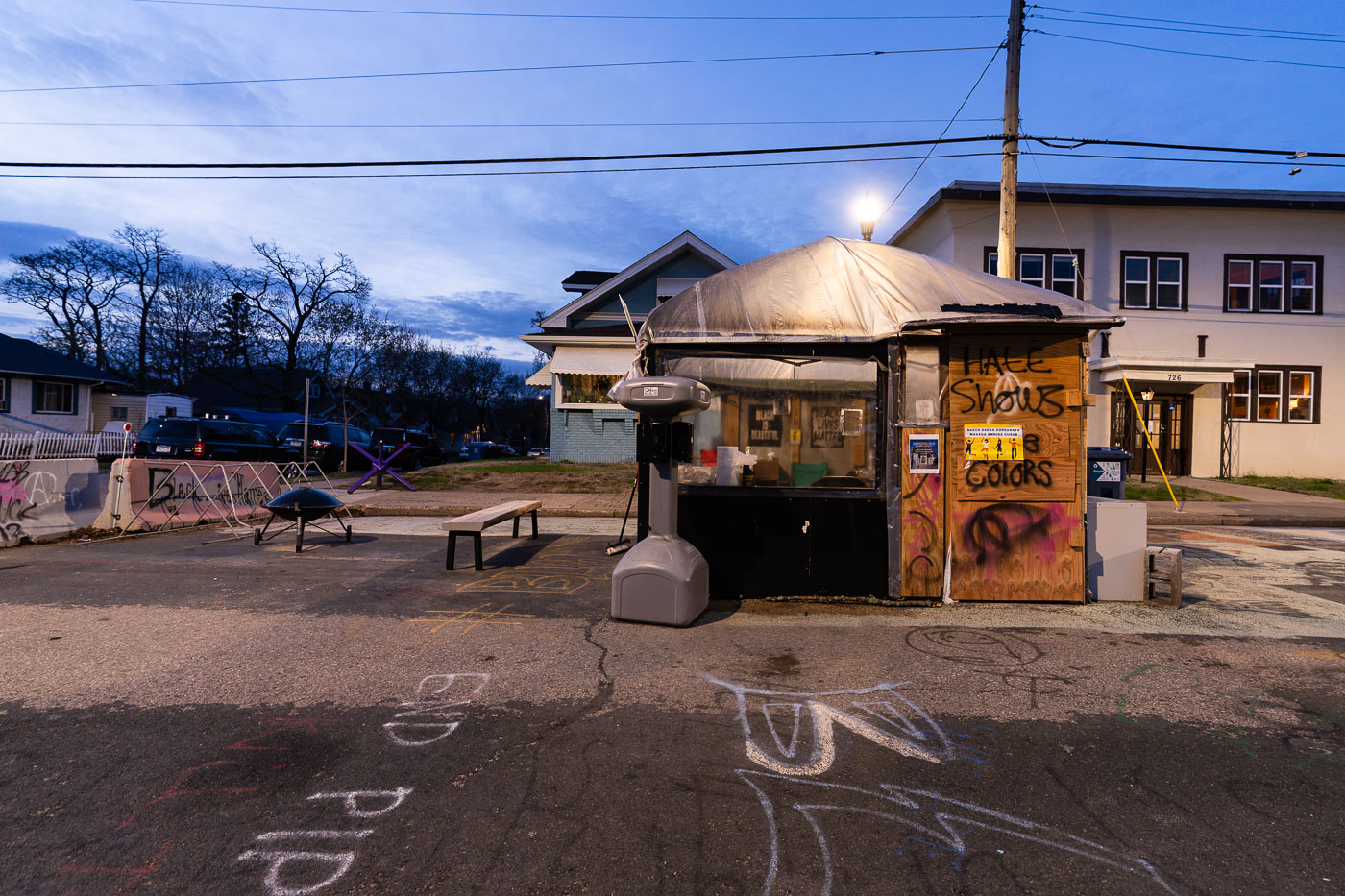
Warming station and barricades at George Floyd Square in Minneapolis.
George Floyd Square in Minneapolis was the site of a protest encampment following the murder of George Floyd in May 2020. This image from April 2021 shows a warming station and barricades that were erected by protesters to control access to the area. The square, located at the intersection of 38th Street and Chicago Avenue, became a symbol of the uprising and a space for community organizing and mutual aid. The warming station provided shelter and resources to those present, while the barricades served to protect the occupied space from external interference.

George Floyd Square Warming Station and Barricade, Minneapolis

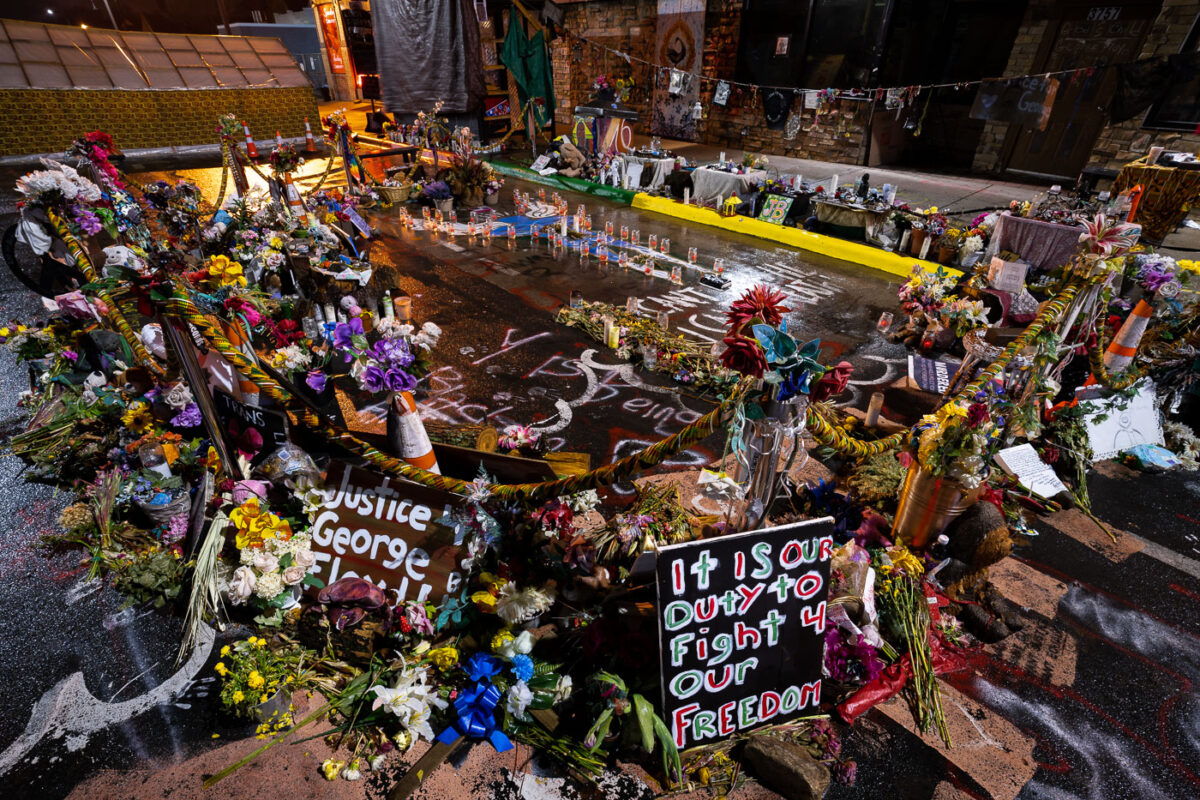
George Floyd memorial at George Floyd Square in Minneapolis, surrounded by flowers, candles, and protest signs.
The George Floyd Memorial at George Floyd Square in Minneapolis, Minnesota, on April 7, 2021. This site became a focal point for protests and activism following the murder of George Floyd in May 2020. The memorial, located at the intersection where Floyd was killed, features numerous tributes including flowers, candles, signs, and personal mementos. It serves as a space for remembrance, community gathering, and continued calls for racial justice and police reform.

George Floyd Square Memorial, Minneapolis, April 7 2021

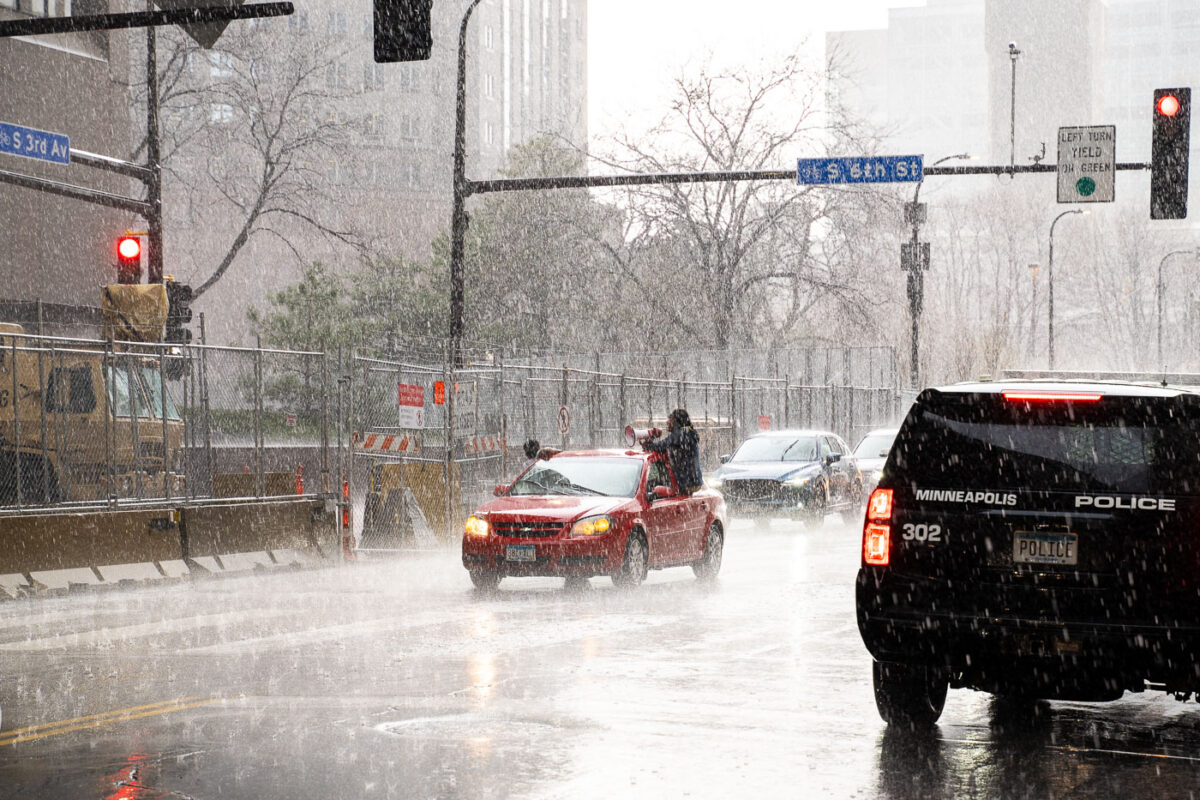
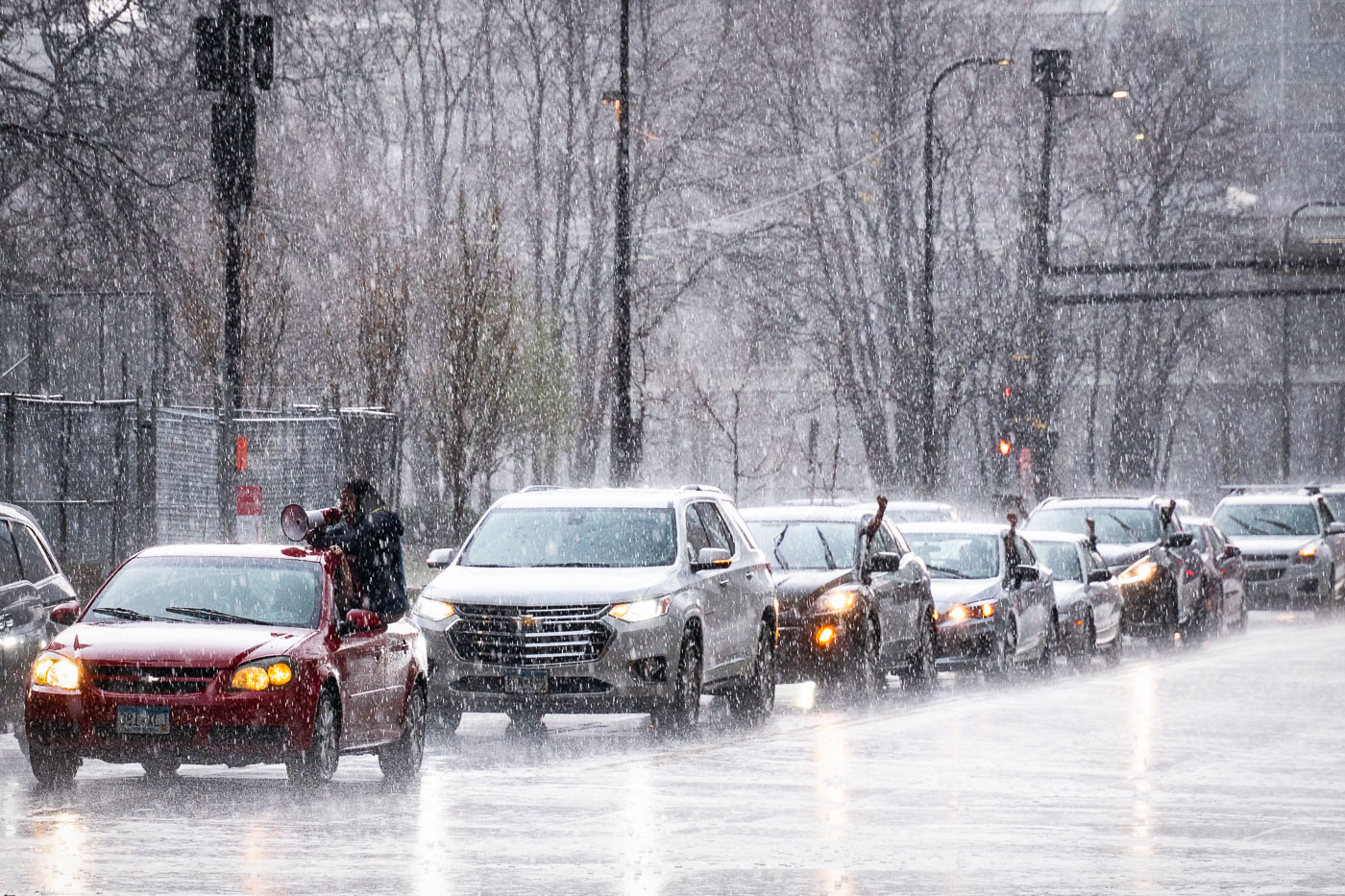
Protest caravan on South 5th Street in downtown Minneapolis during heavy rain.
A protest caravan navigates through heavy rain in downtown Minneapolis, approaching the Hennepin County Government Center. This event occurred during the trial of Derek Chauvin, the former Minneapolis police officer charged with the murder of George Floyd on May 25, 2020. The caravan's presence underscored the ongoing public attention and activism surrounding the trial and the broader issues of racial justice and police accountability.

Minneapolis protest caravan during Derek Chauvin trial in rain

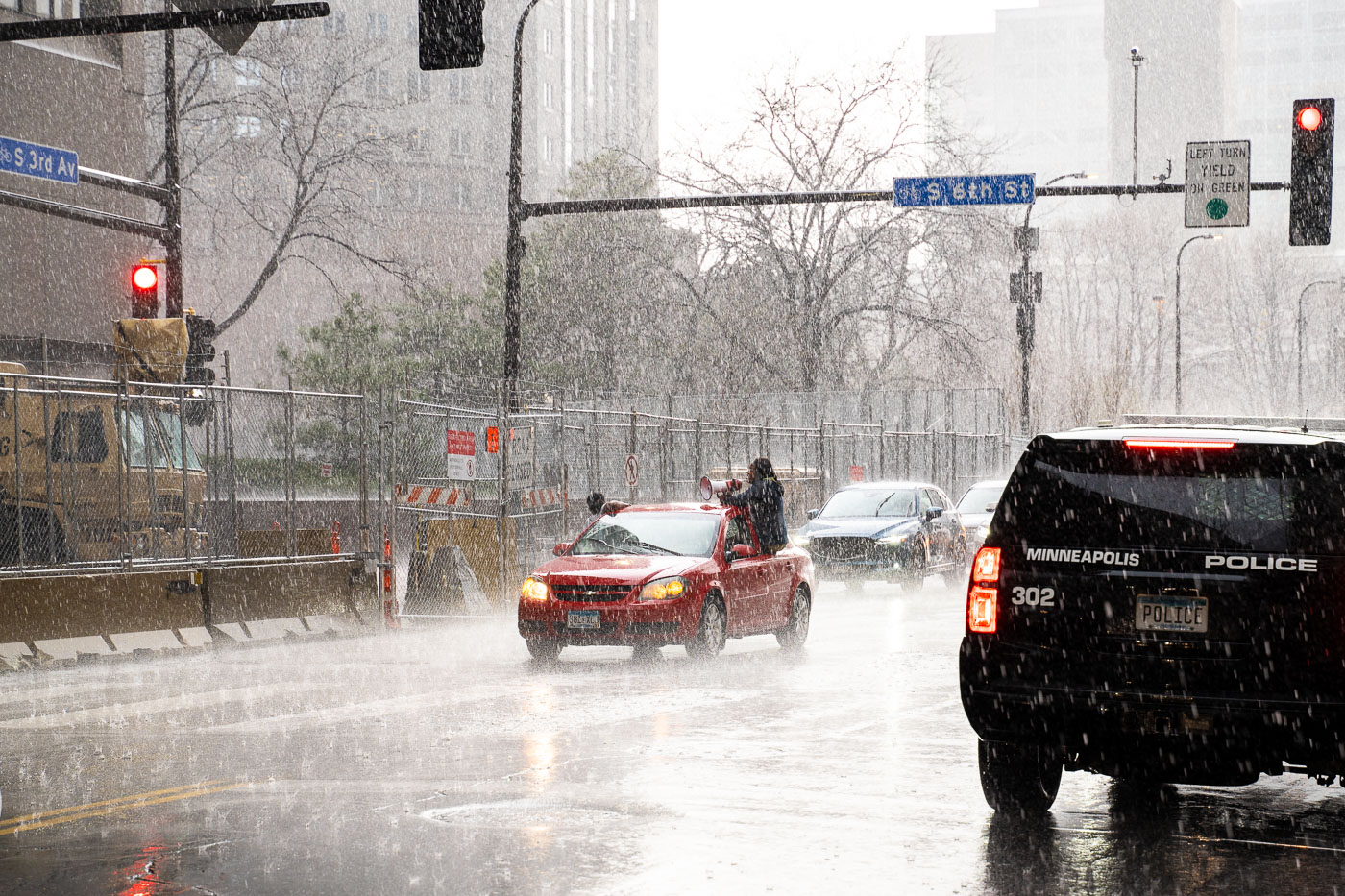
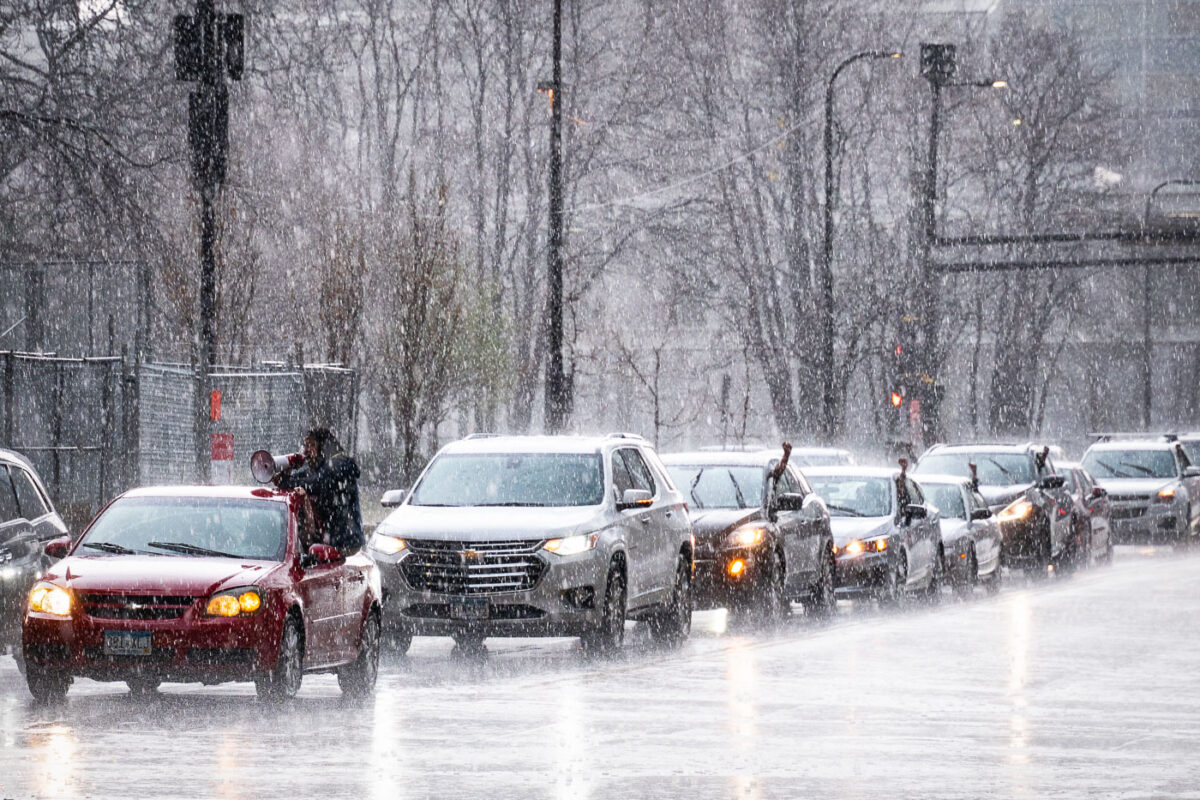
Protest caravan in downtown Minneapolis during heavy rain near the Hennepin County Government Center.
A protest caravan proceeds through downtown Minneapolis in heavy rain on April 19, 2021. The procession circled the Hennepin County Government Center, where the trial of former police officer Derek Chauvin was underway. Chauvin was on trial for the murder of George Floyd, an event that occurred on May 25, 2020, in South Minneapolis and sparked widespread protests. The caravan's route highlighted the courthouse's significance as the site of this nationally scrutinized legal proceeding.

Minneapolis Protest Caravan in Pouring Rain During Chauvin Trial

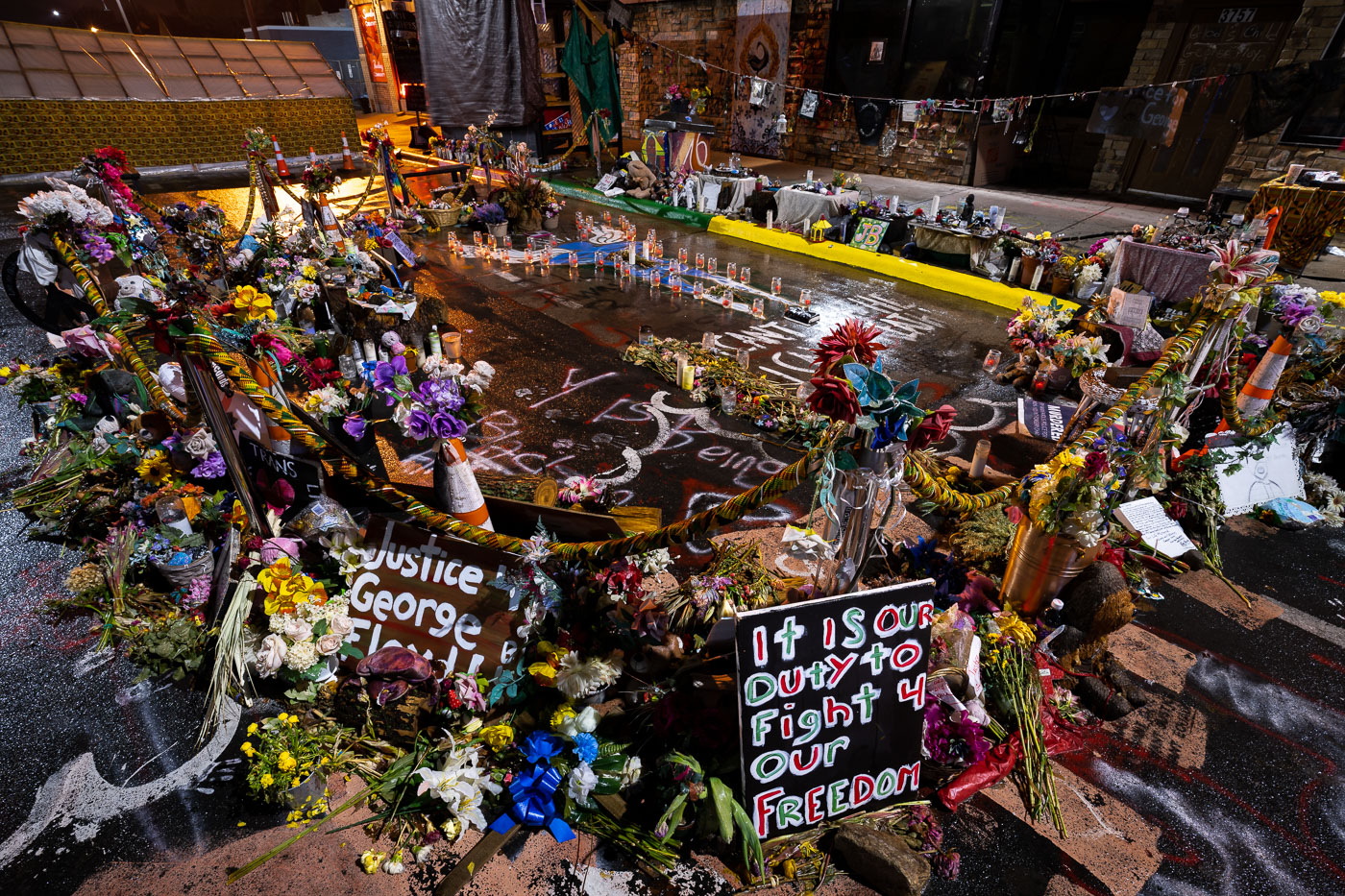
George Floyd Square memorial in Minneapolis with tributes and street messages at night.
George Floyd Square in Minneapolis, April 2021, is a memorial site established following the murder of George Floyd by police on May 25, 2020. The intersection, formerly known as the intersection of 38th Street and Chicago Avenue, became a focal point for protests against racial injustice and police brutality. The memorial features numerous tributes, including flowers, candles, artwork, and messages written on the pavement, such as "I Can't Breathe." This site served as a space for community remembrance and continued activism in the months following Floyd's death.

George Floyd Square Memorial, Minneapolis, April 2021

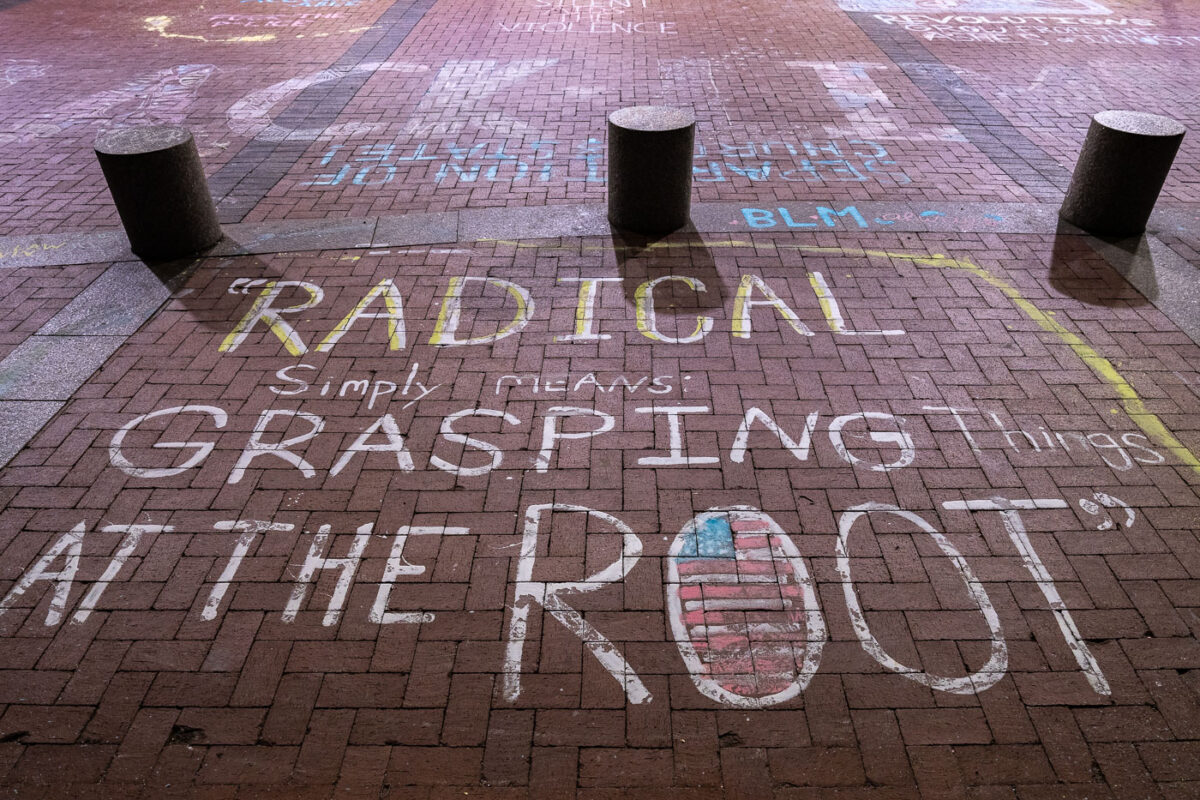
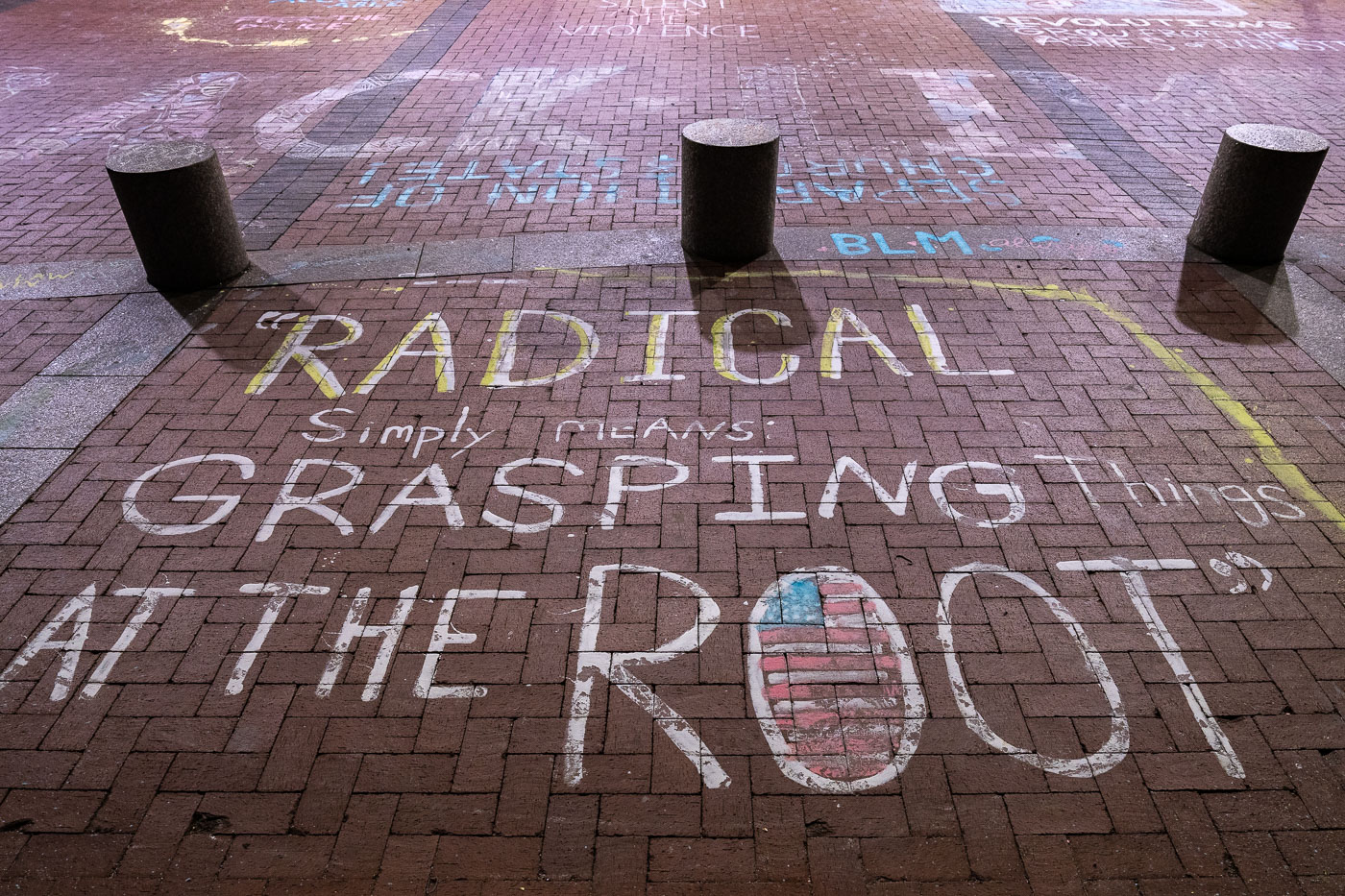
Chalk protest messages outside Hennepin County Government Center in Minneapolis, including “Radical” and “BLM.”
Chalk messages, including "RADICAL SIMPLY MEANS: GRASPING THINGS AT THE ROOT" and "BLM," adorn the plaza outside the Hennepin County Government Center in Minneapolis. This occurred during the period when the courthouse was the site of the Derek Chauvin murder trial. Chauvin was charged in the death of George Floyd on May 25, 2020, in South Minneapolis, an event that sparked widespread protests and a reckoning with racial injustice.

Chalk message outside Hennepin County Government Center, Minneapolis

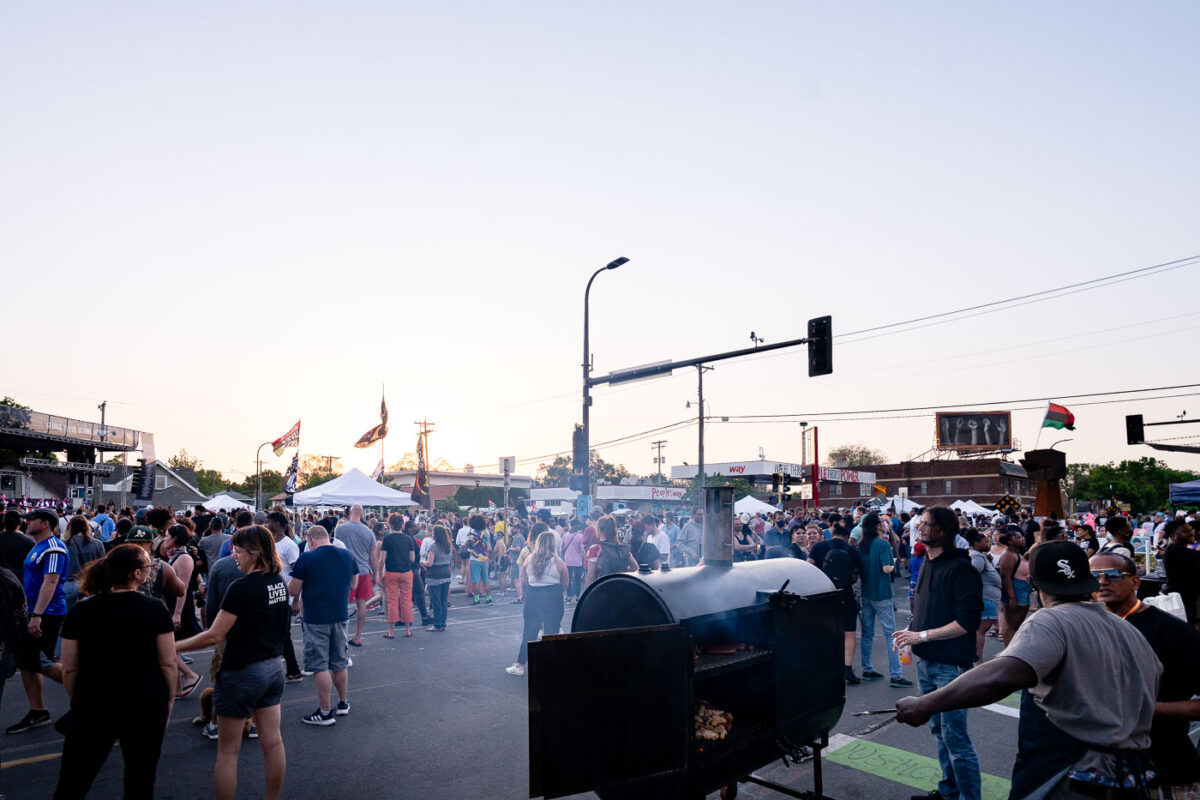
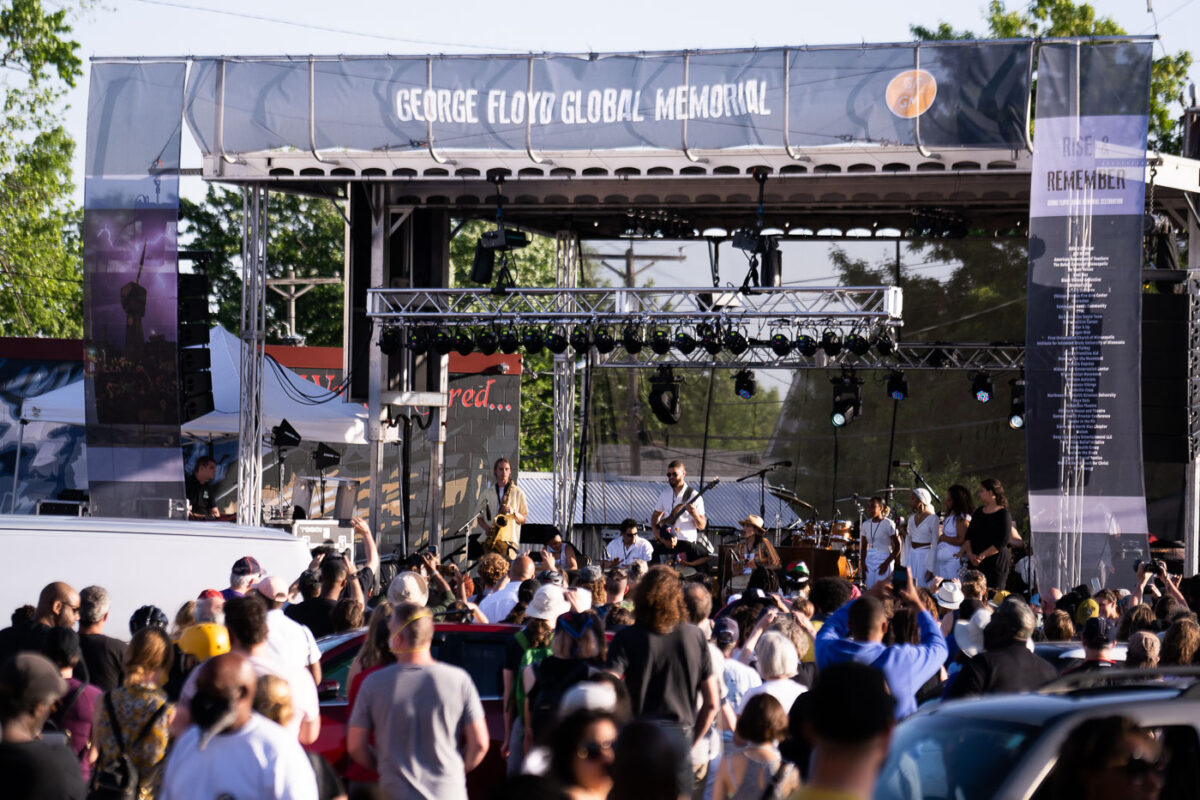
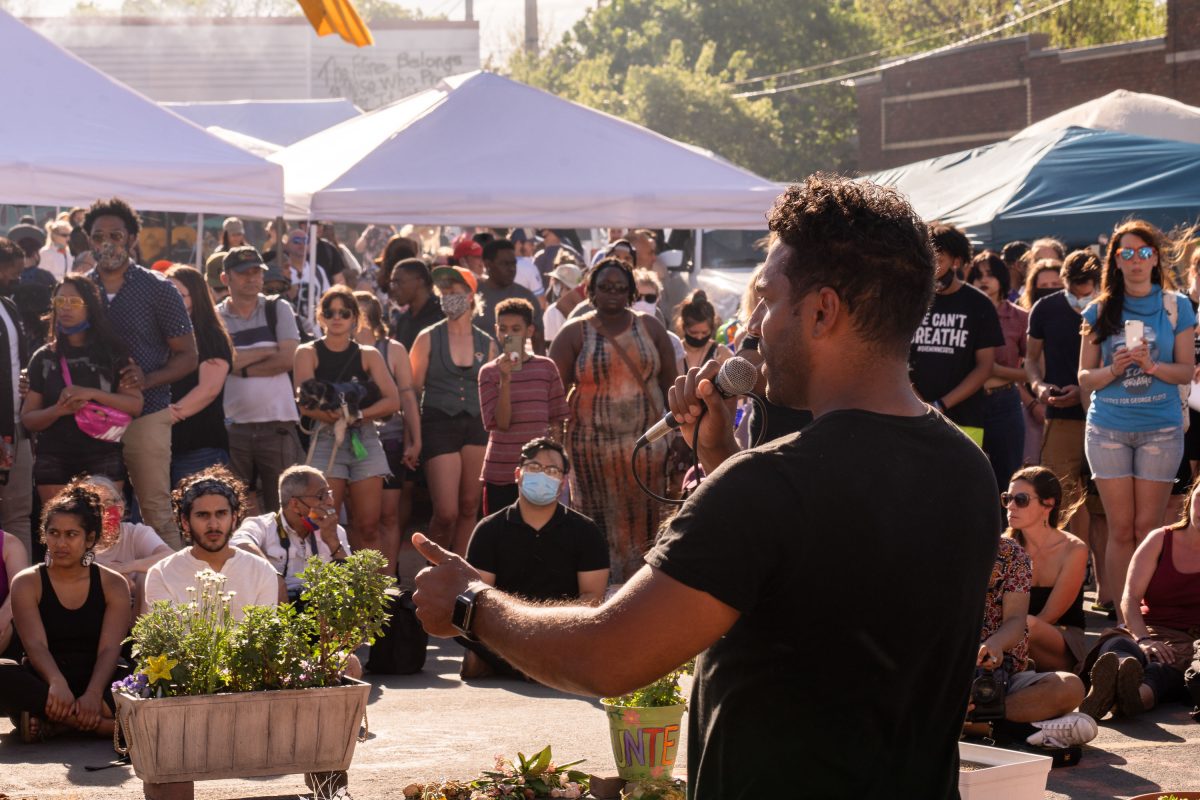
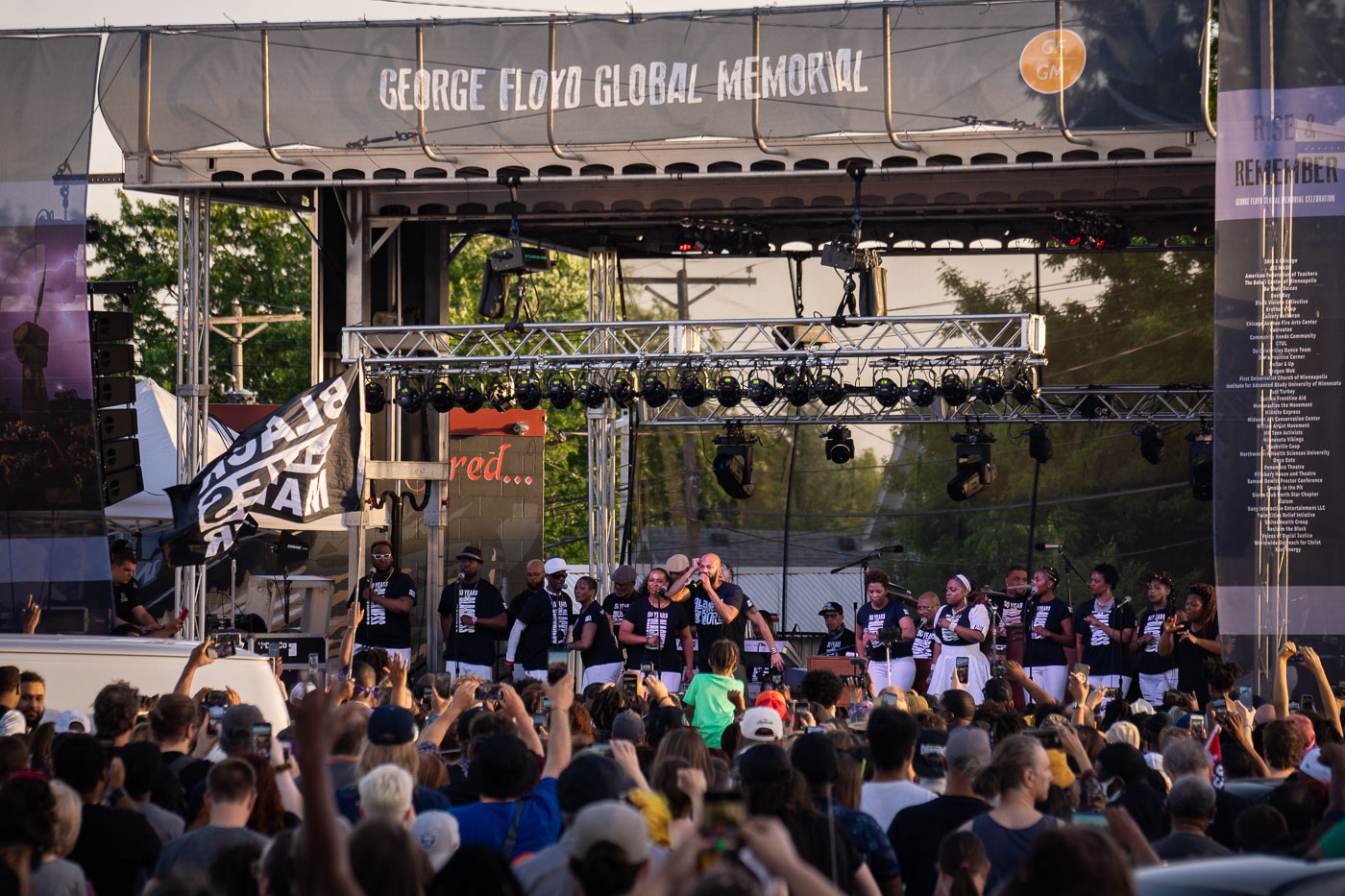
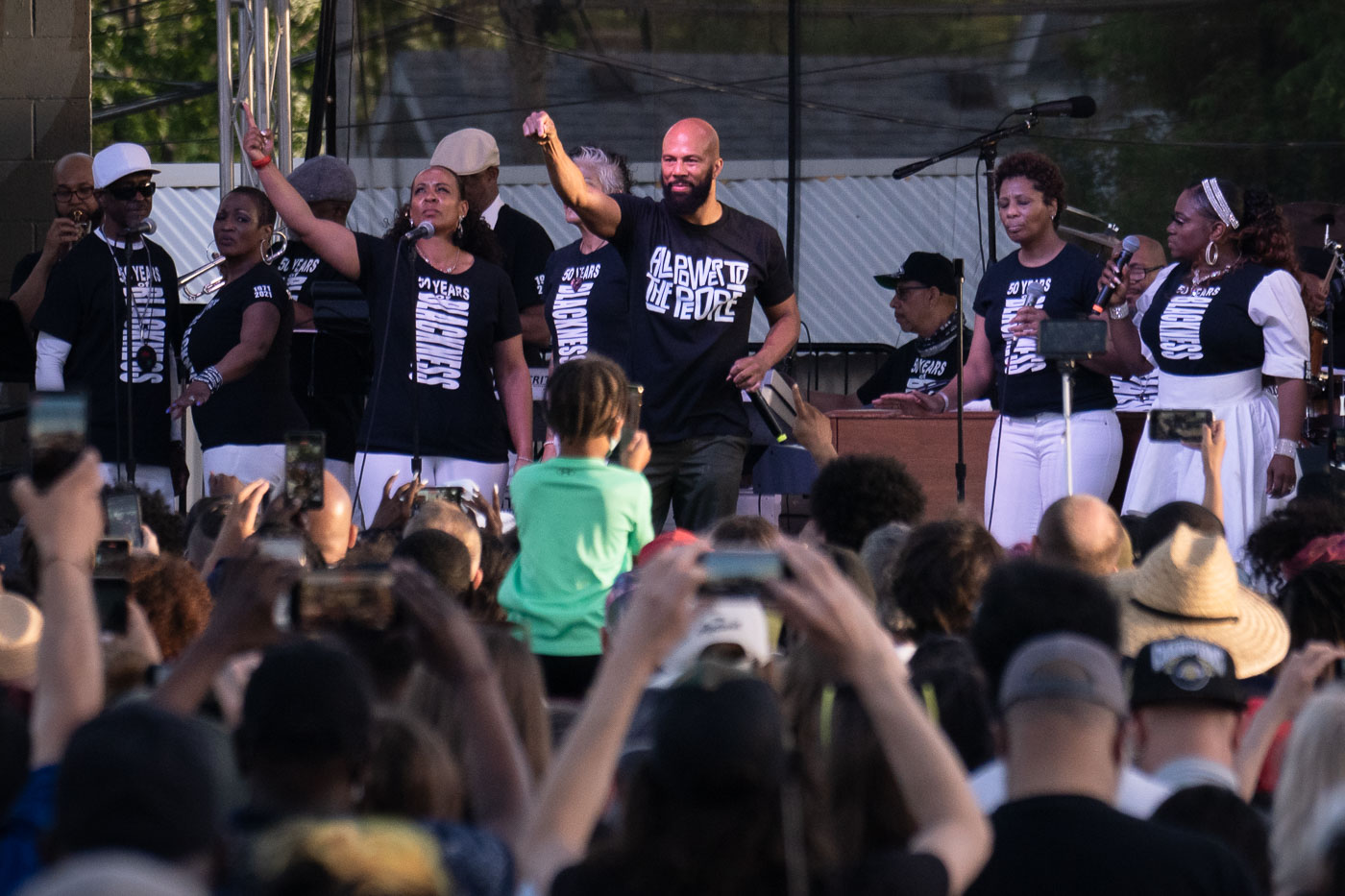
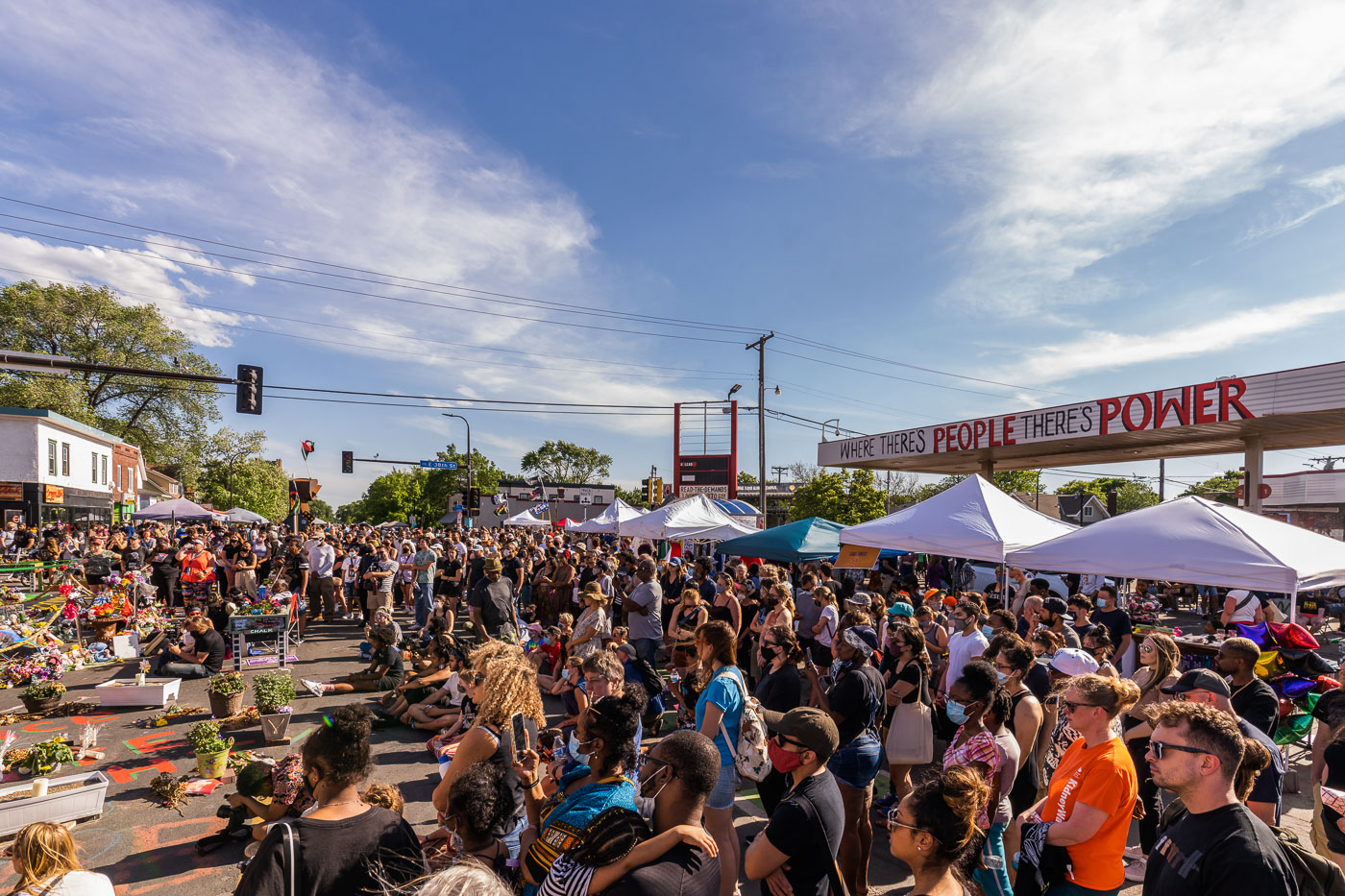
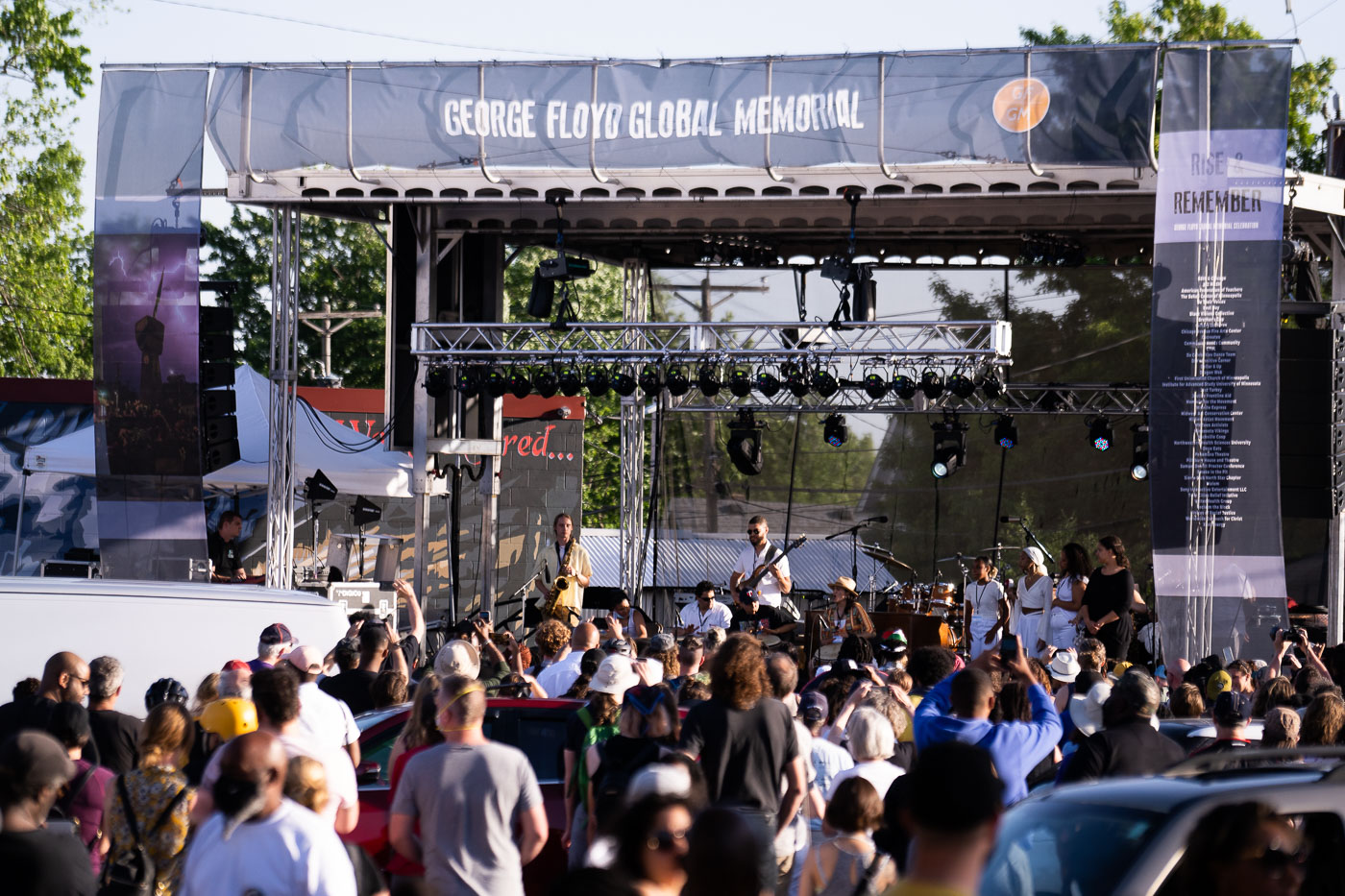
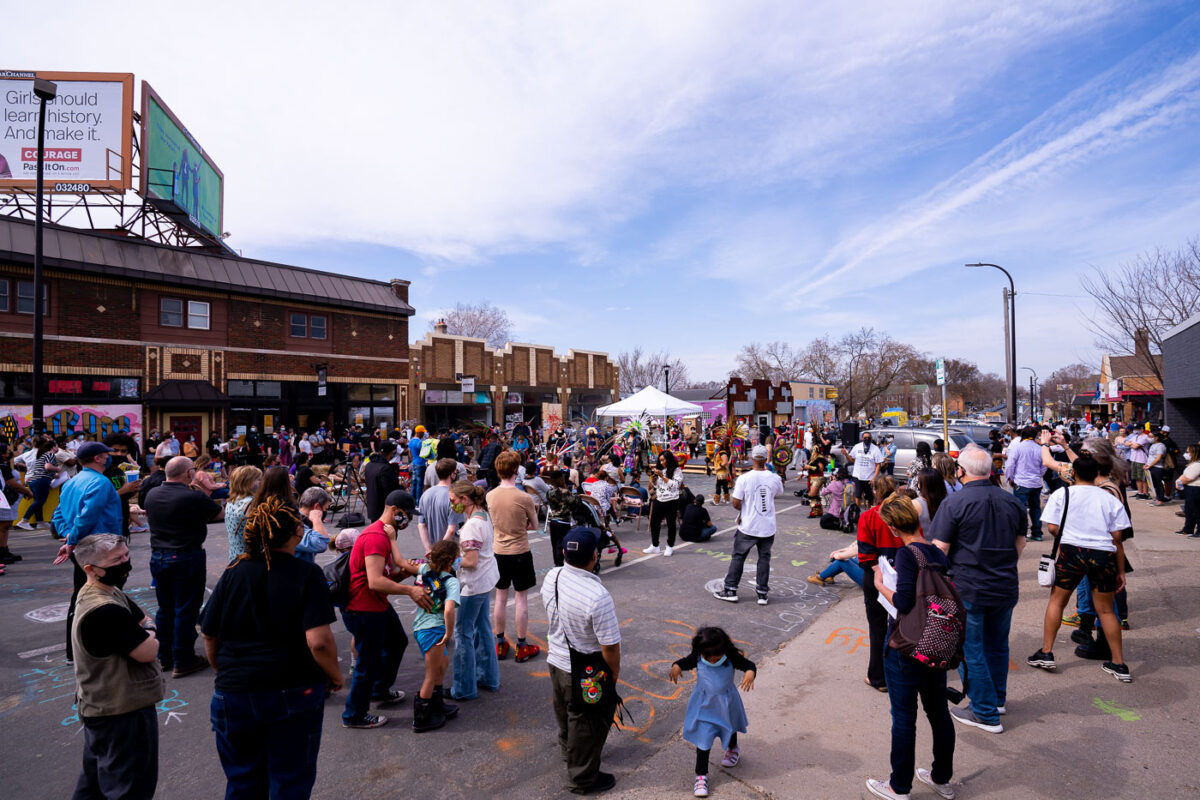
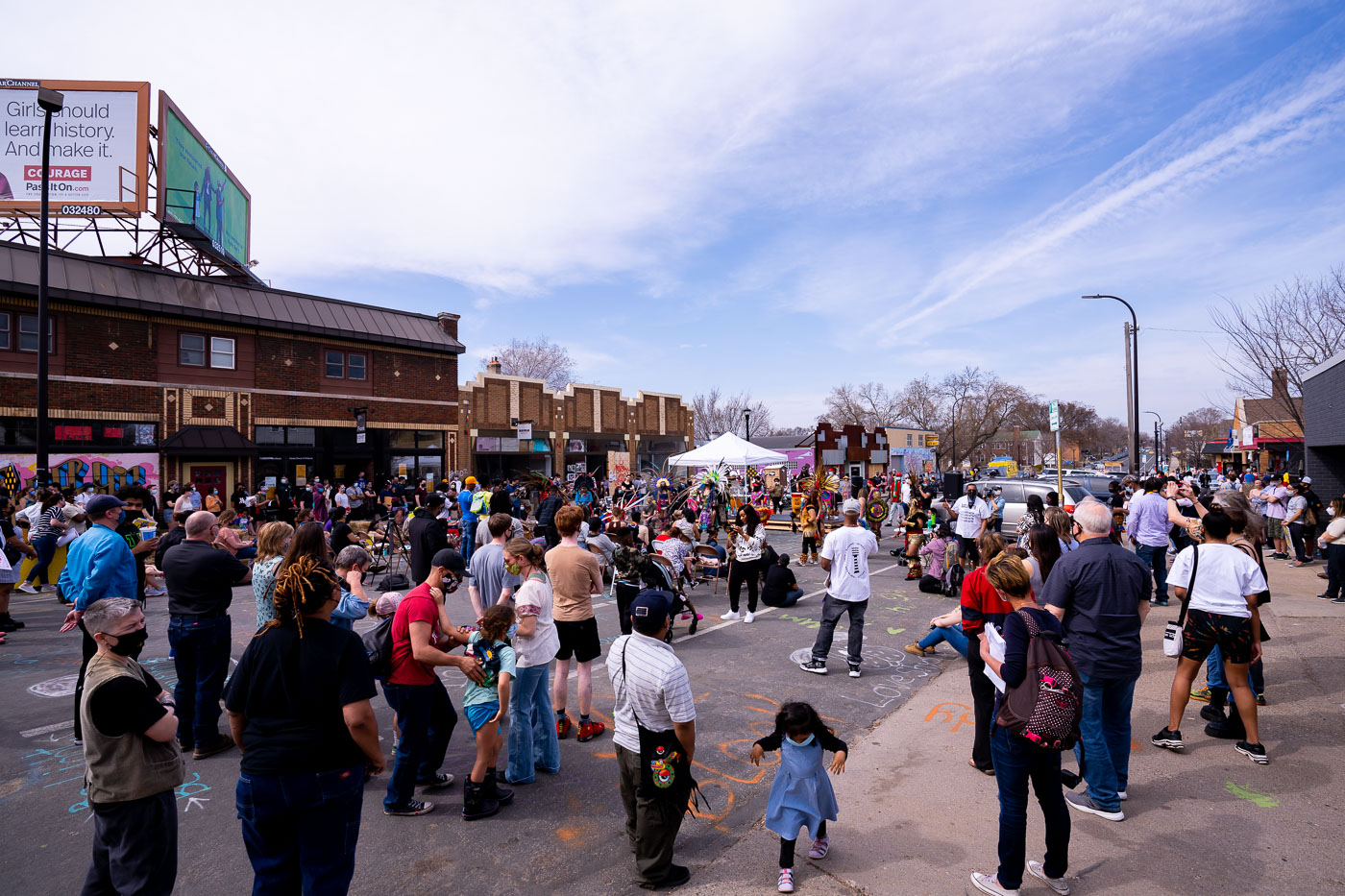
Crowd at George Floyd Square in Minneapolis during the Peoples Power Love Fest.
The Peoples Power Love Fest, a community gathering, took place at George Floyd Square in Minneapolis. This location, formerly known as the intersection of 38th Street and Chicago Avenue, became a focal point for protests and activism following the murder of George Floyd in May 2020. The square has since transformed into a space for remembrance, community organizing, and cultural expression, reflecting the ongoing impact of the uprising and calls for racial justice. The festival itself featured music, performances, and community engagement, underscoring the square's continued significance as a hub for social and political dialogue.

Peoples Power Love Fest at George Floyd Square, Minneapolis

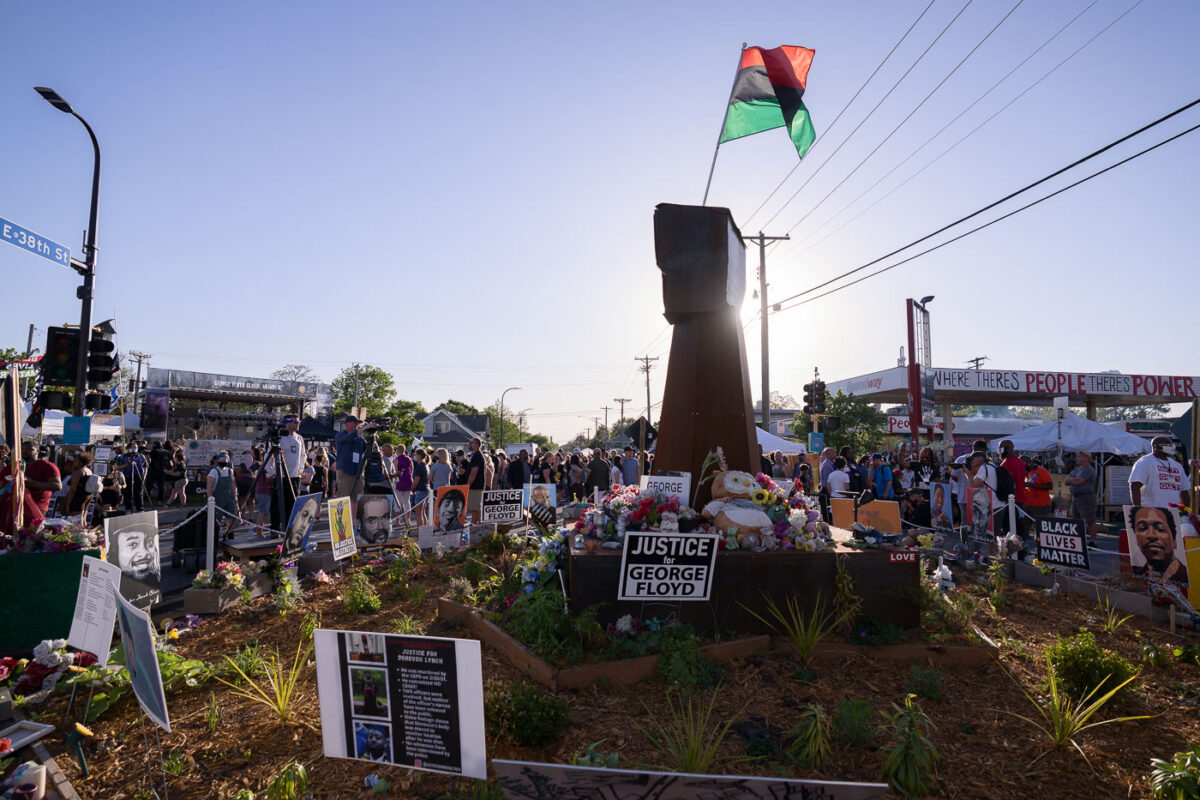
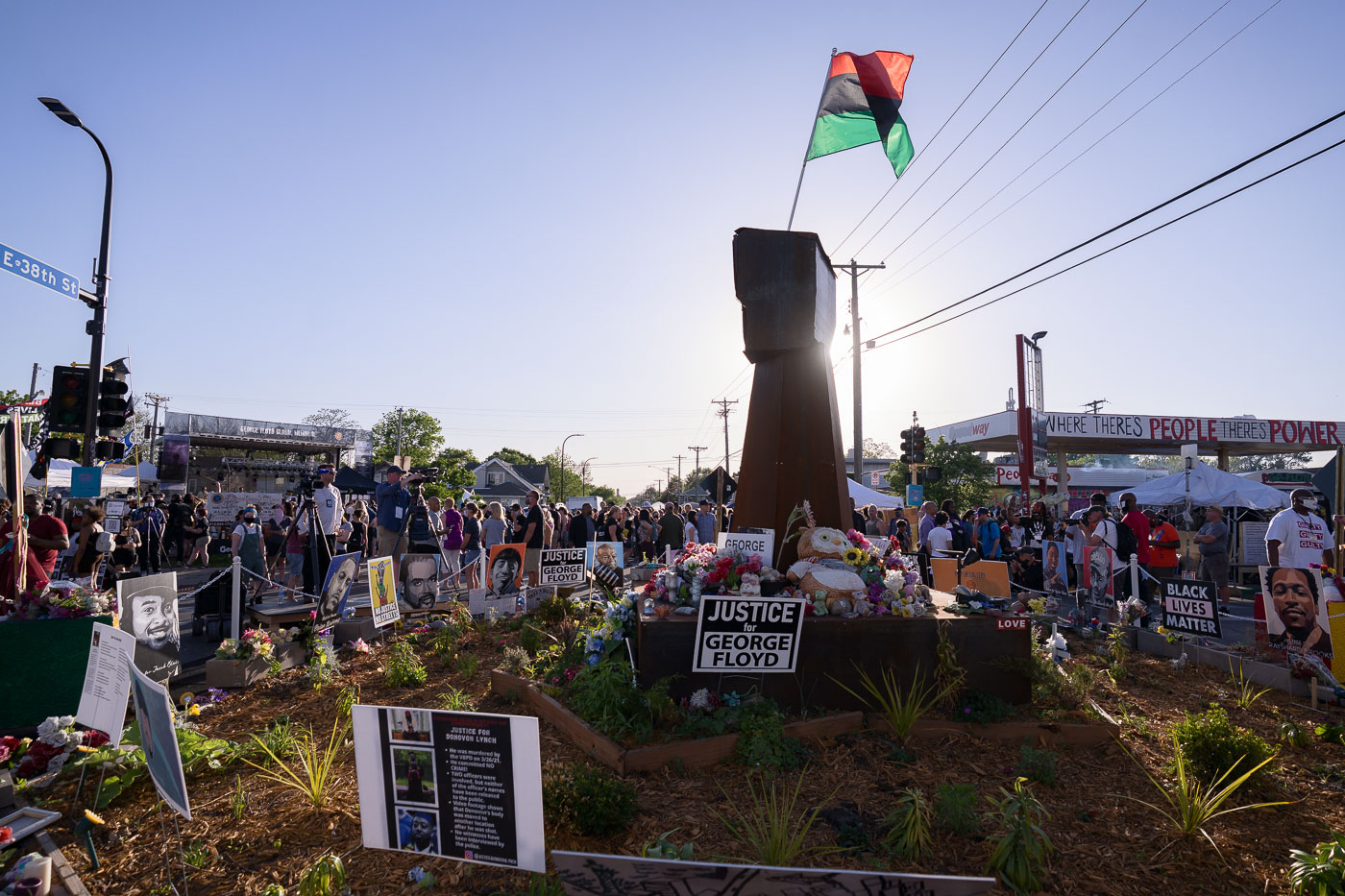
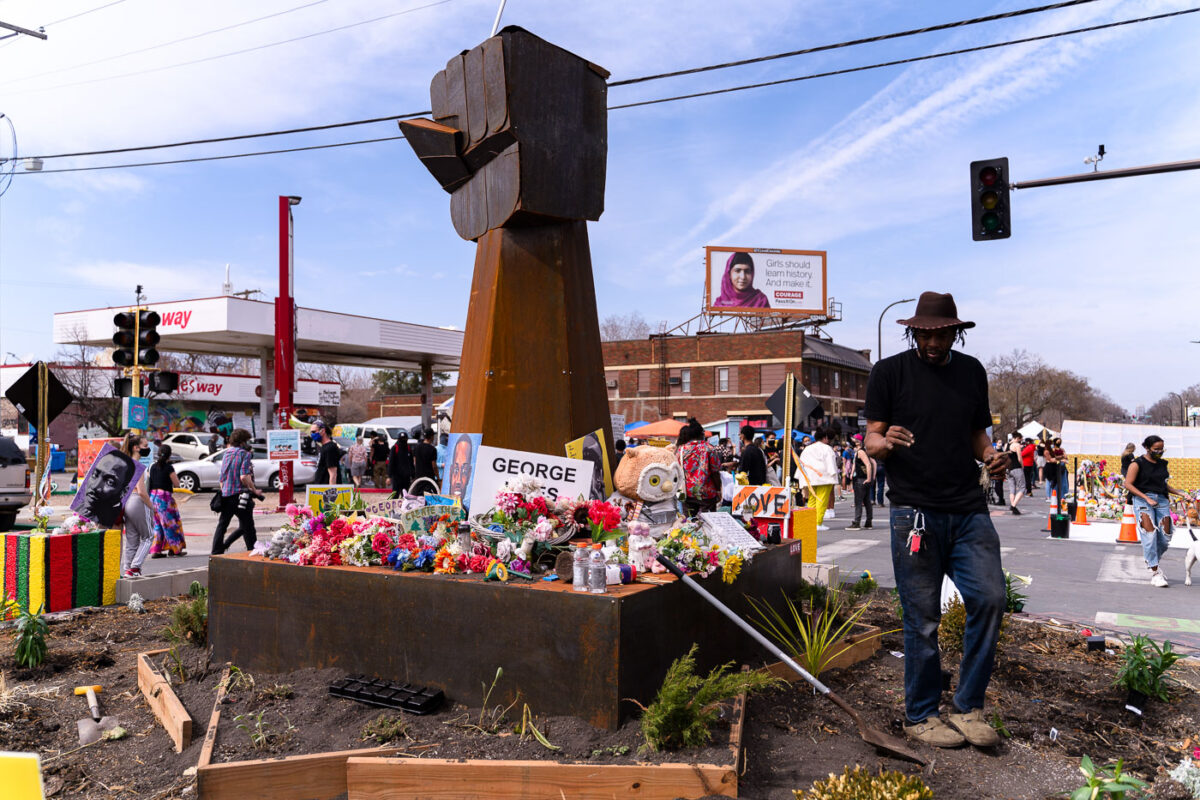
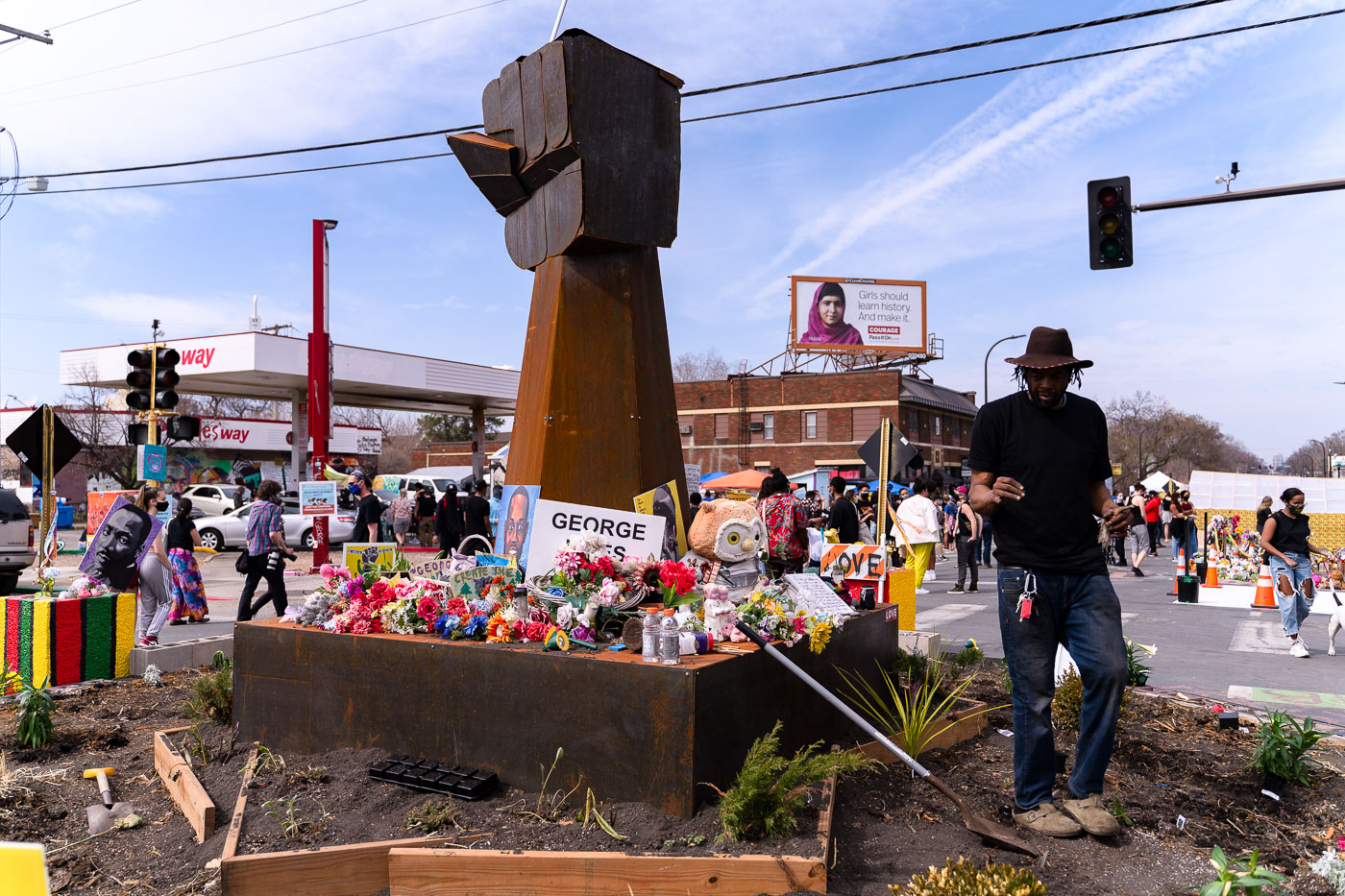
George Floyd memorial garden at George Floyd Square in Minneapolis with floral tributes and raised-fist sculpture.
The George Floyd Square Memorial Garden in Minneapolis is a space dedicated to the memory of George Floyd, who died in police custody in May 2020. The square, located at the intersection of 38th Street and Chicago Avenue, became a focal point for protests against racial injustice and police brutality following Floyd's murder. This memorial garden, with its central sculpture and surrounding floral tributes, serves as a place of remembrance, reflection, and ongoing community engagement. It represents the community's efforts to transform a site of tragedy into a space of healing and activism.

George Floyd Square Memorial Garden, Minneapolis

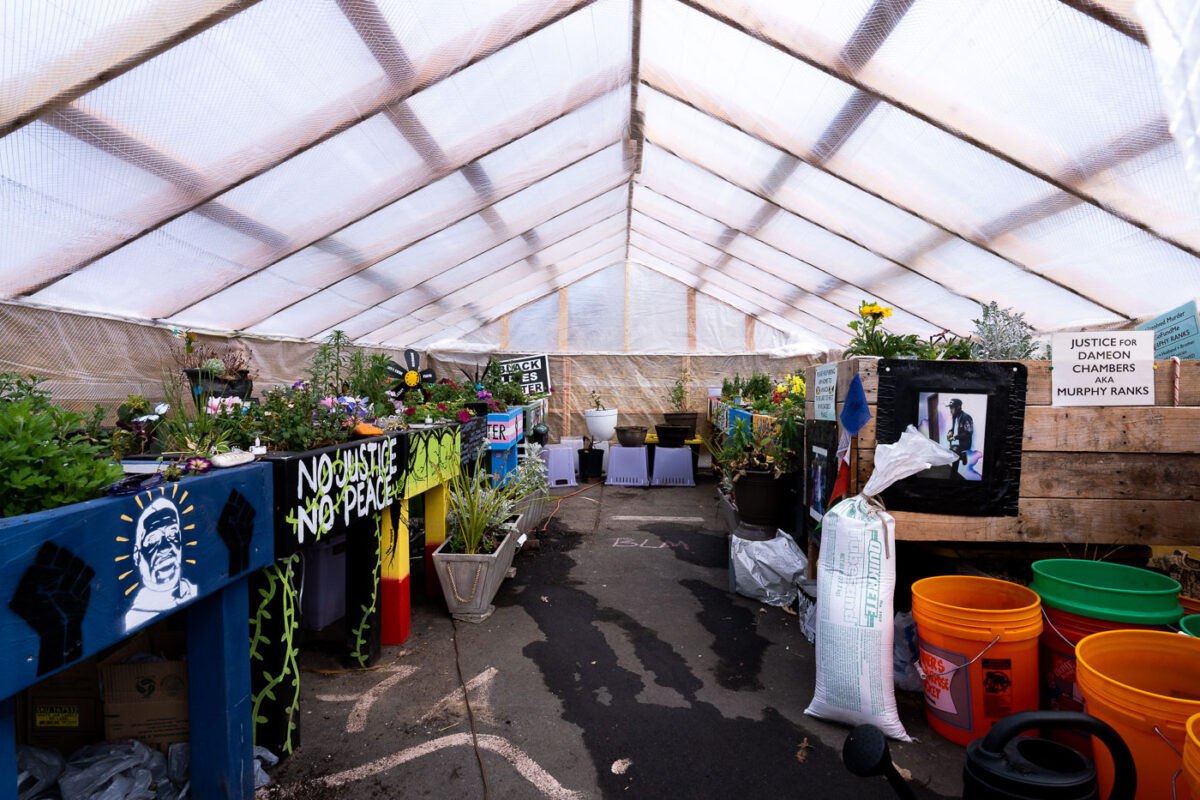
Greenhouse at George Floyd Square in Minneapolis with memorial signs and painted planters.
This greenhouse at George Floyd Square in Minneapolis served as a protected space for plants during the winter months, following the memorialization of George Floyd. The structure, adorned with tributes and artwork, including references to "No Justice No Peace" and "Black Lives Matter," reflects the ongoing significance of the square as a site of protest and remembrance. The plants, now brought back into the square, symbolize resilience and continued growth amidst the historical context of racial justice activism.

Greenhouse at George Floyd Square, Minneapolis

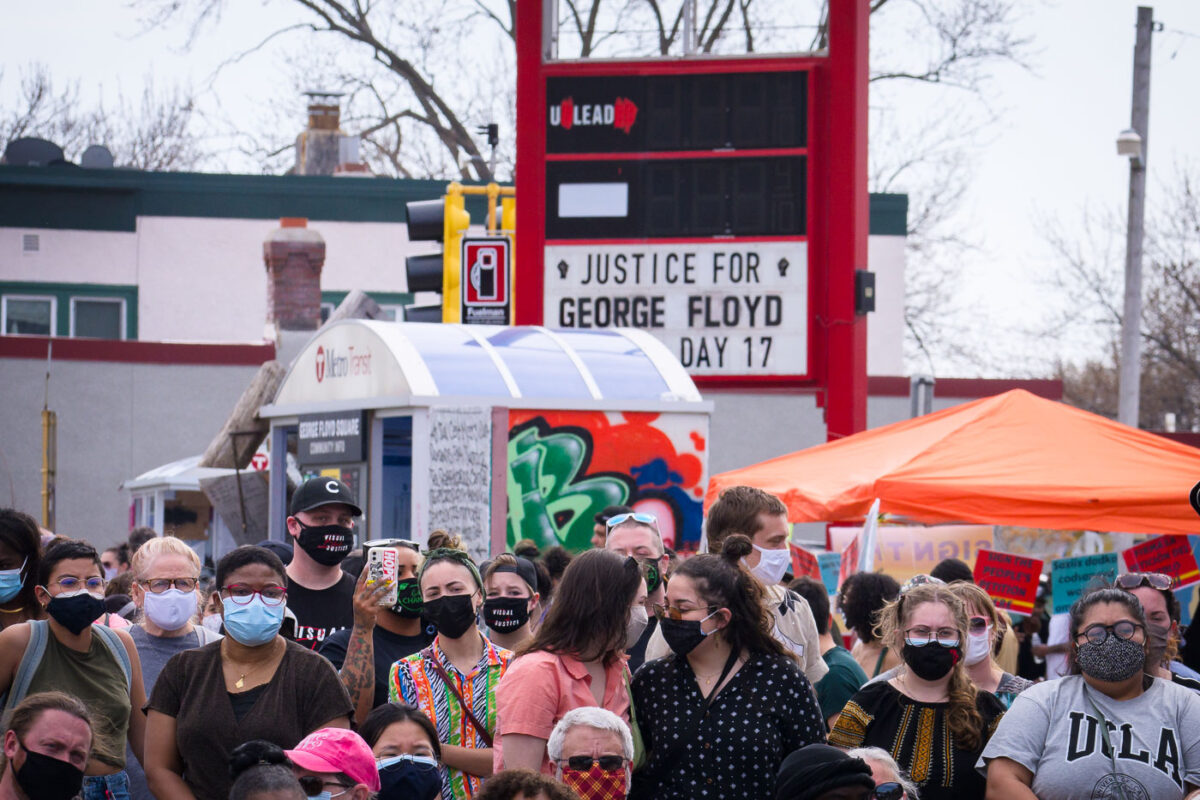
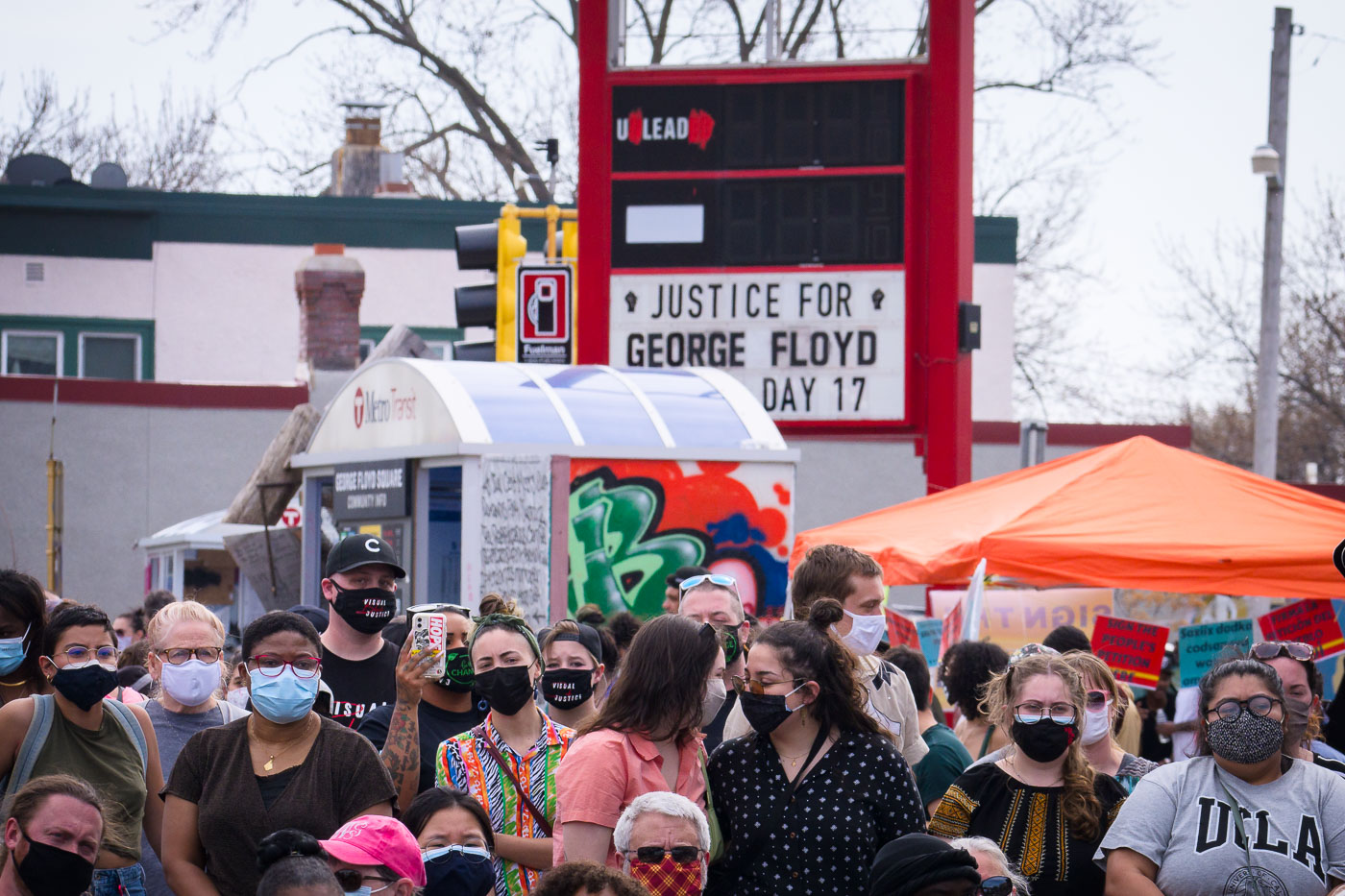
Protesters at George Floyd Square in Minneapolis beneath a Justice for George Floyd Day 17 sign.
Protesters gather at George Floyd Square in Minneapolis in April 2021, marking the 17th day of demonstrations following the murder of George Floyd. This intersection, formerly known as the intersection of 38th Street and Chicago Avenue, became a focal point for racial justice protests and a symbol of community resistance. The square was established by activists and residents in the days following Floyd's death on May 25, 2020, and remained a site of ongoing activism and community organizing.

George Floyd Square Protest, Minneapolis, April 2021

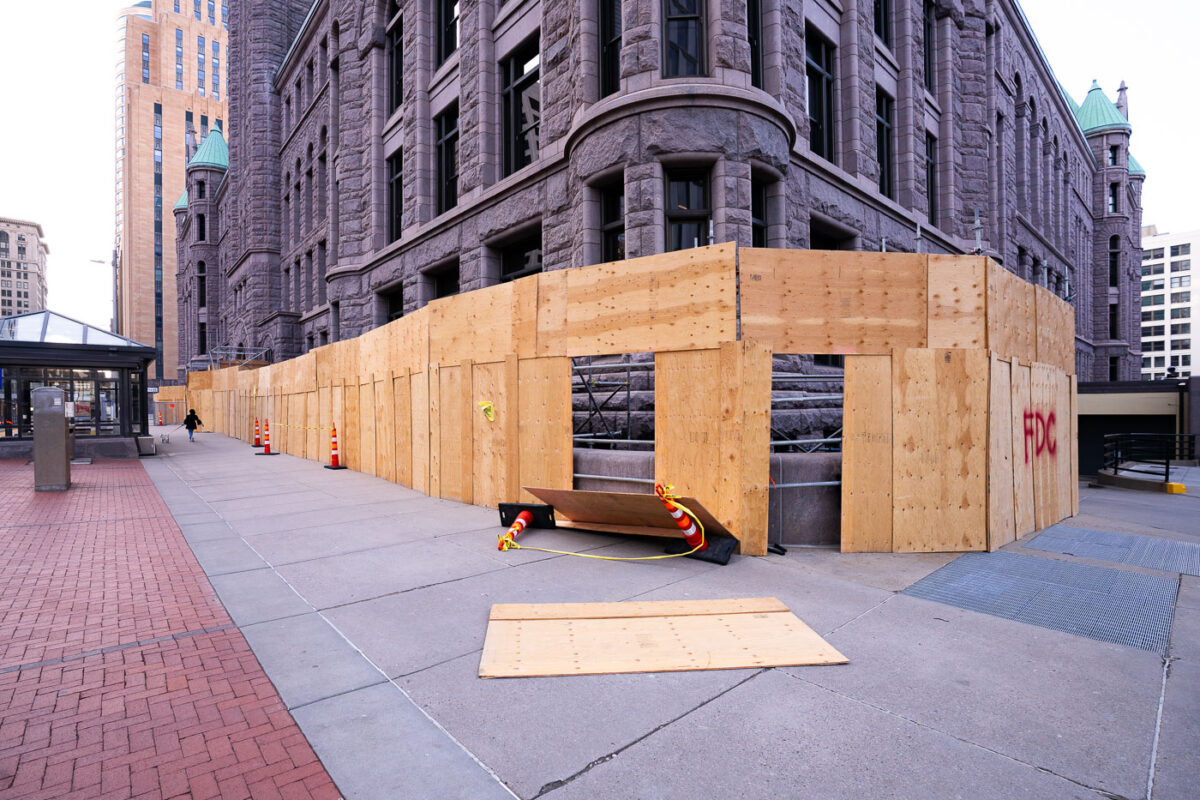
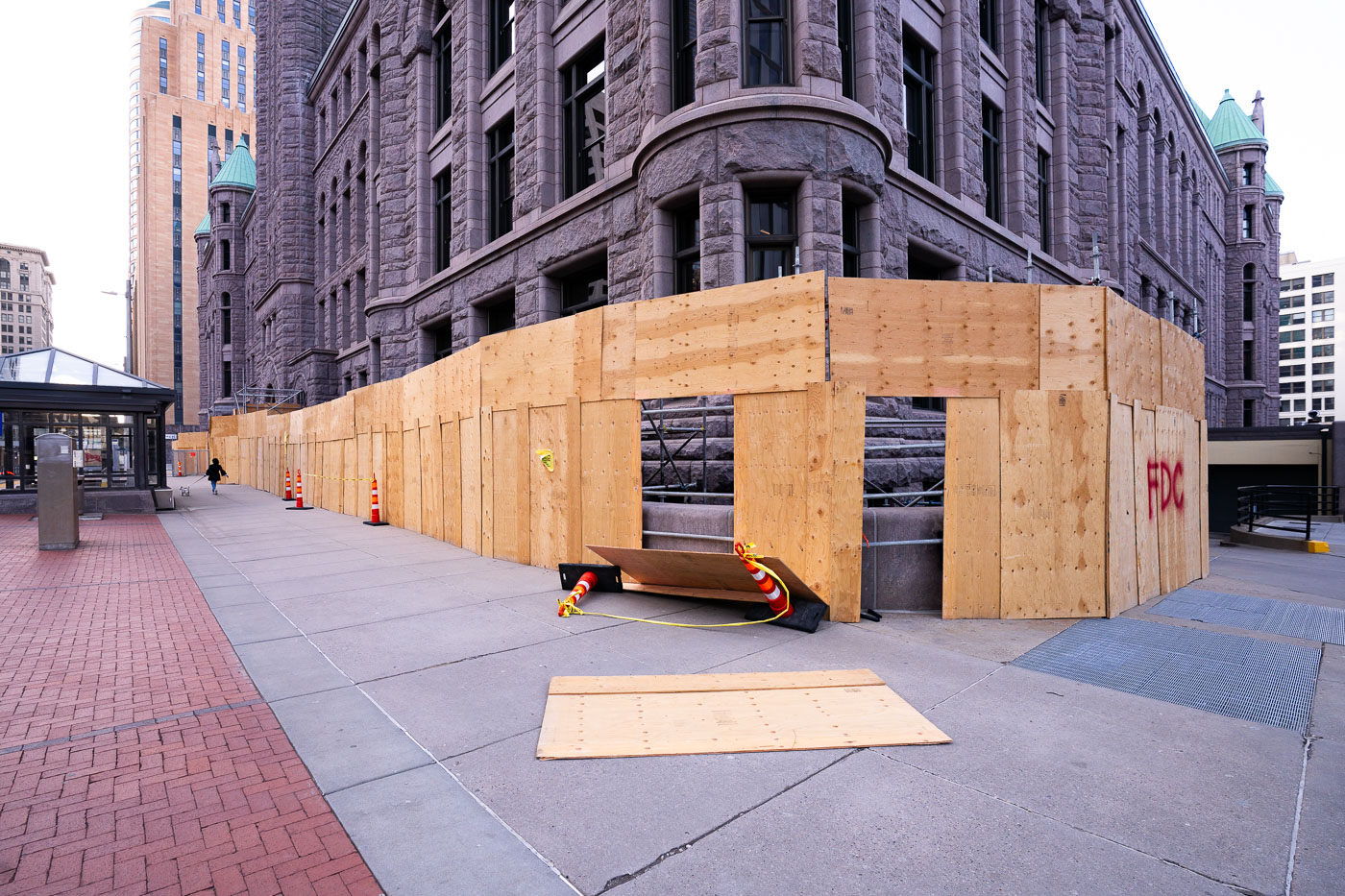
Plywood boarding surrounds Minneapolis City Hall's entrance following wind damage to the historic downtown building.
Minneapolis City Hall, a Beaux-Arts style building completed in 1909, is seen here boarded up following damage from heavy winds.

Plywood Barricades Surround Minneapolis City Hall

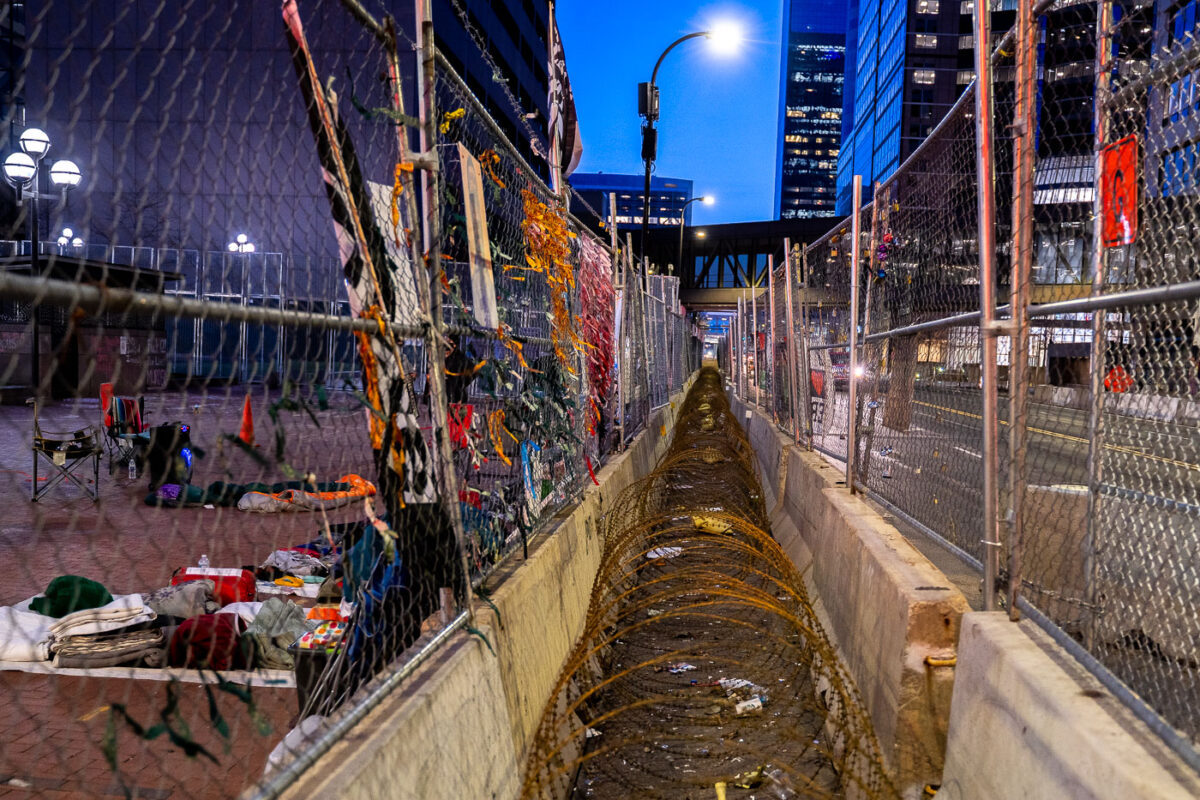
Razor wire and protest signs at Hennepin County Government Center in Minneapolis during the Derek Chauvin trial.
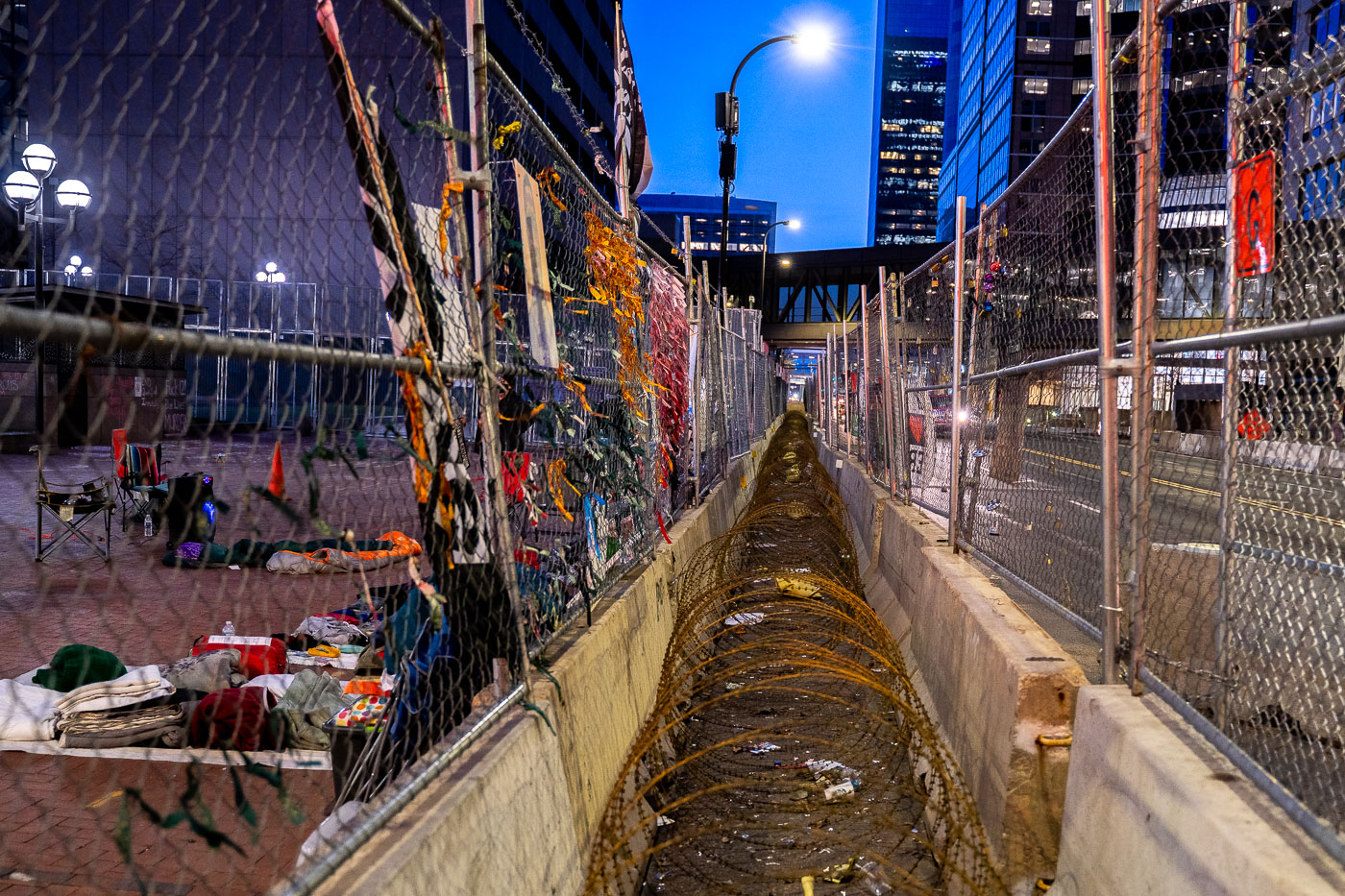
Razor wire and protest signs surround the Hennepin County Government Center in Minneapolis during the trial of Derek Chauvin. The security measures were put in place following the death of George Floyd on May 25, 2020, and the subsequent protests. The area has become a focal point for demonstrations, with protesters decorating the fencing with signs and ribbons, indicating a continuous occupation of the space.

Minneapolis Government Center: Razor wire and protest signs

Blankets and clothing for protesters at Hennepin County Government Center in Minneapolis.
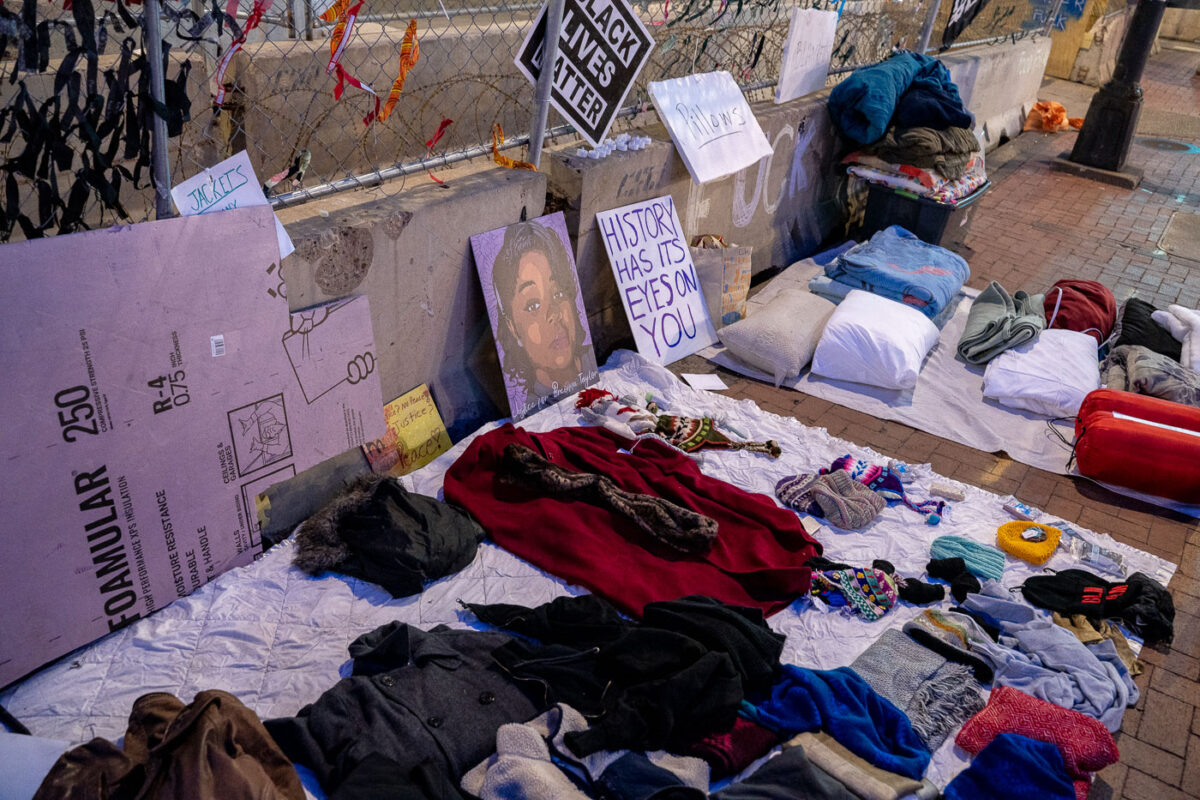
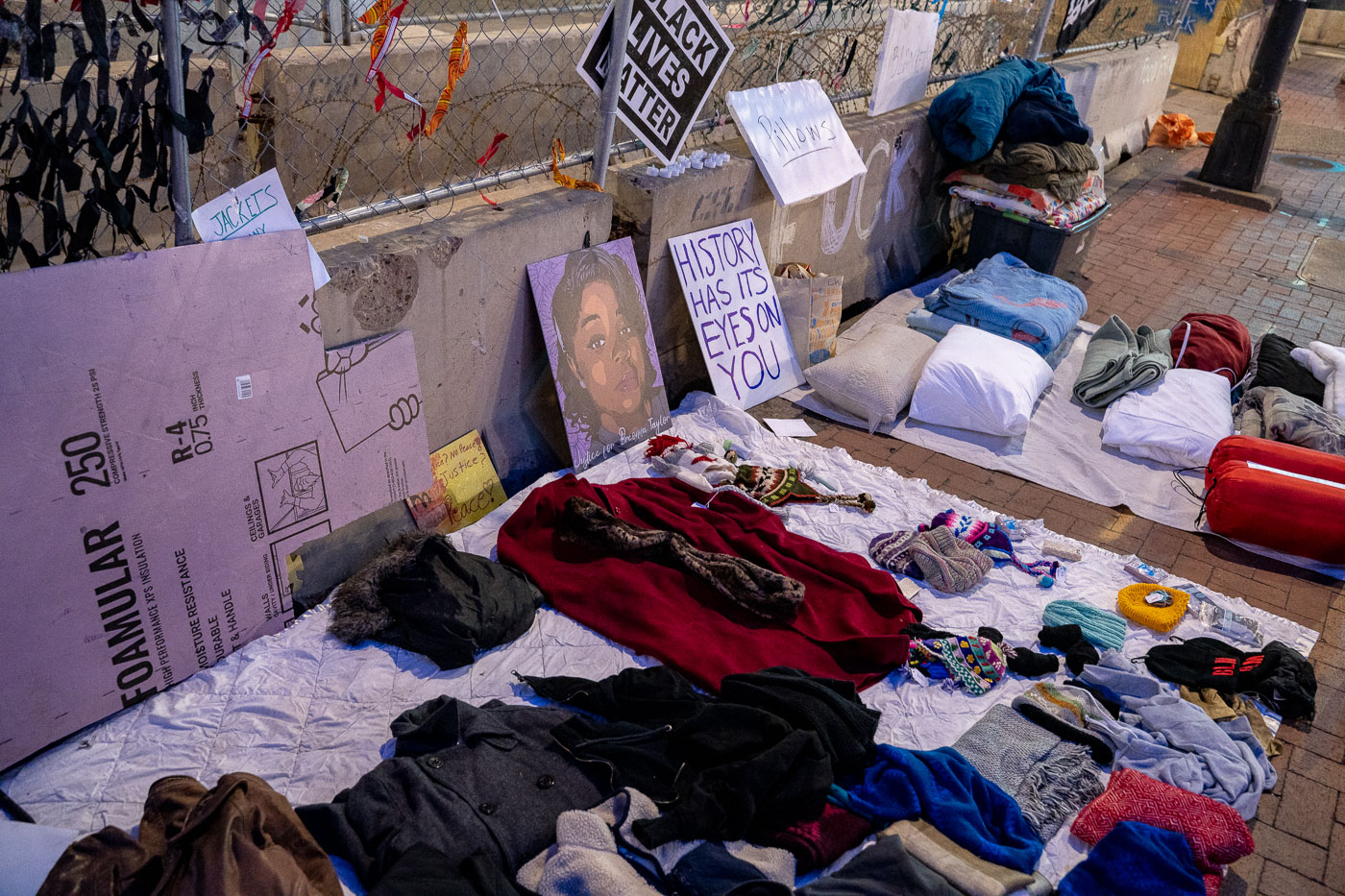
Supplies including blankets, pillows, and jackets were made available to protesters occupying the Hennepin County Government Center in Minneapolis. The occupation occurred during the 2021 Derek Chauvin trial, a period of heightened activism following the murder of George Floyd. The presence of these supplies highlights the sustained nature of the protest and the community's efforts to support those participating. The "Black Lives Matter" signs and portraits of victims of police brutality, such as Breonna Taylor, underscore the movement's core demands for racial justice and police accountability.

Minneapolis: Supplies for protesters at Hennepin County Government Center

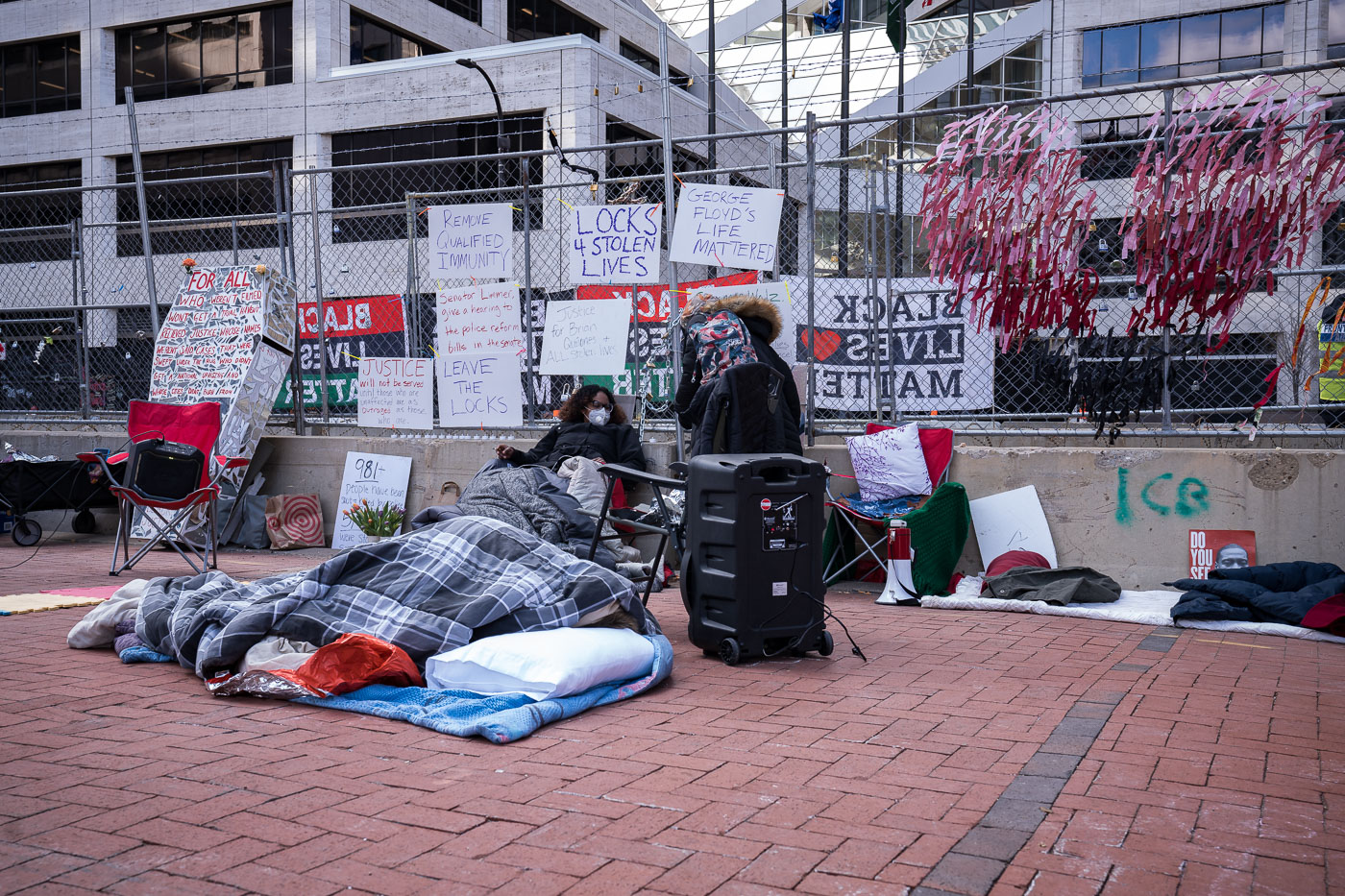
Protesters occupy courthouse property during George Floyd trial
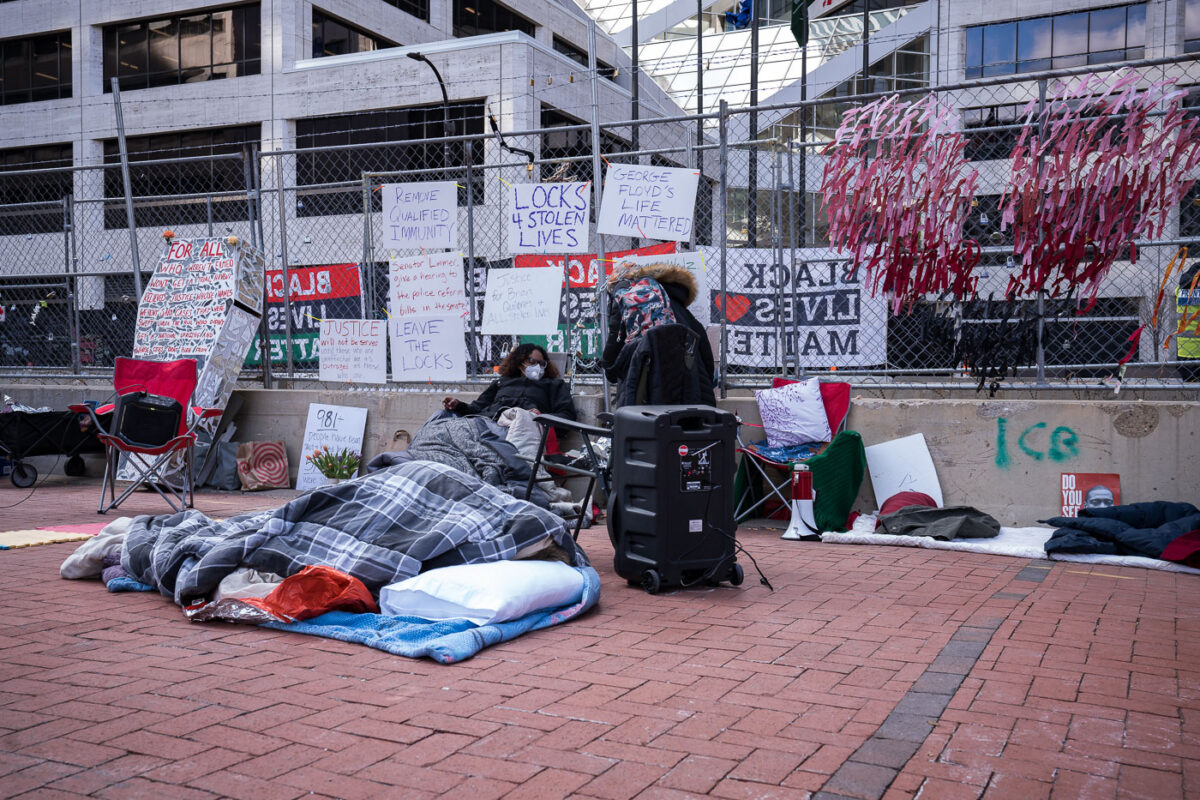
Since March 15th, families and supporters have been placing locks inscribed with the names of victims of police brutality on the fencing surrounding the Hennepin County Government Center in Minneapolis. These locks are periodically removed by authorities, prompting protesters to maintain a continuous presence, with individuals locking themselves to the fence 24/7. Their demands include meetings with city and state officials, the abolition of qualified immunity for police officers, and legislative action on police accountability bills. The protest highlights ongoing concerns about police violence and accountability in the wake of high-profile incidents.

Hennepin County Courthouse Protest: Locks for Stolen Lives

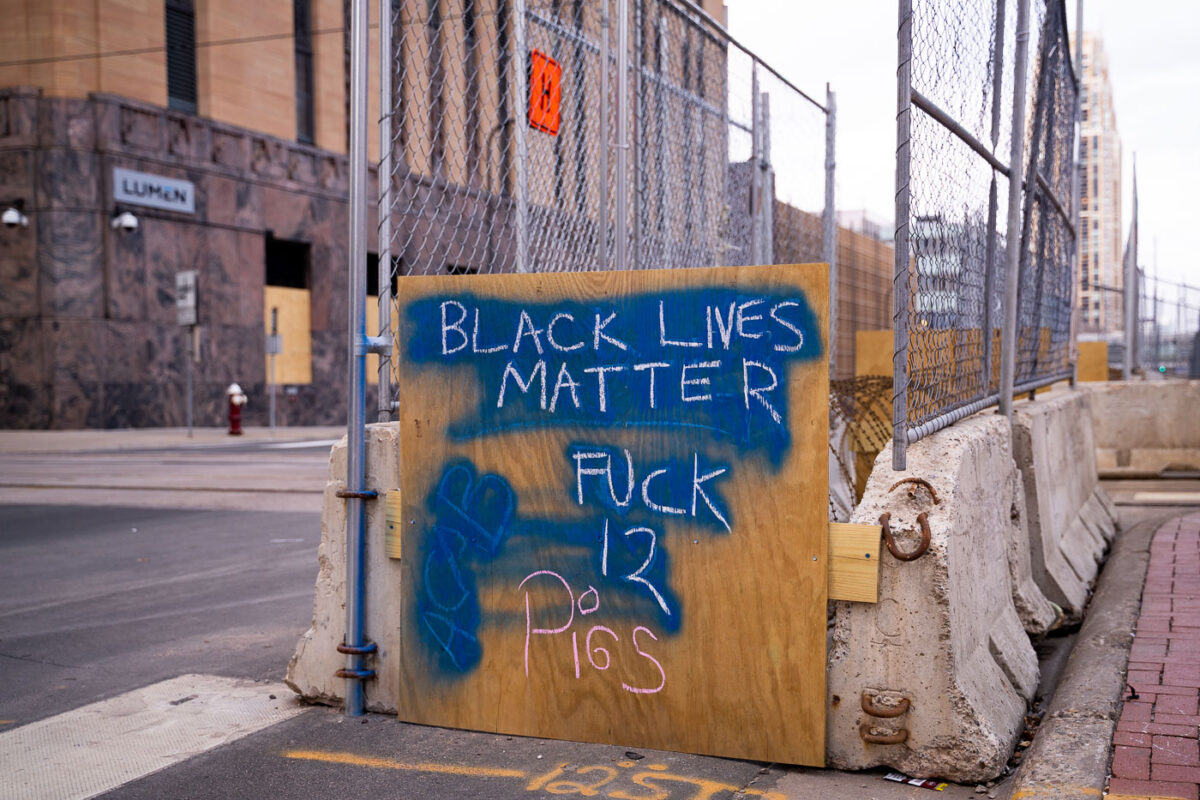
Black Lives Matter ACAB Fuck 12 Pigs
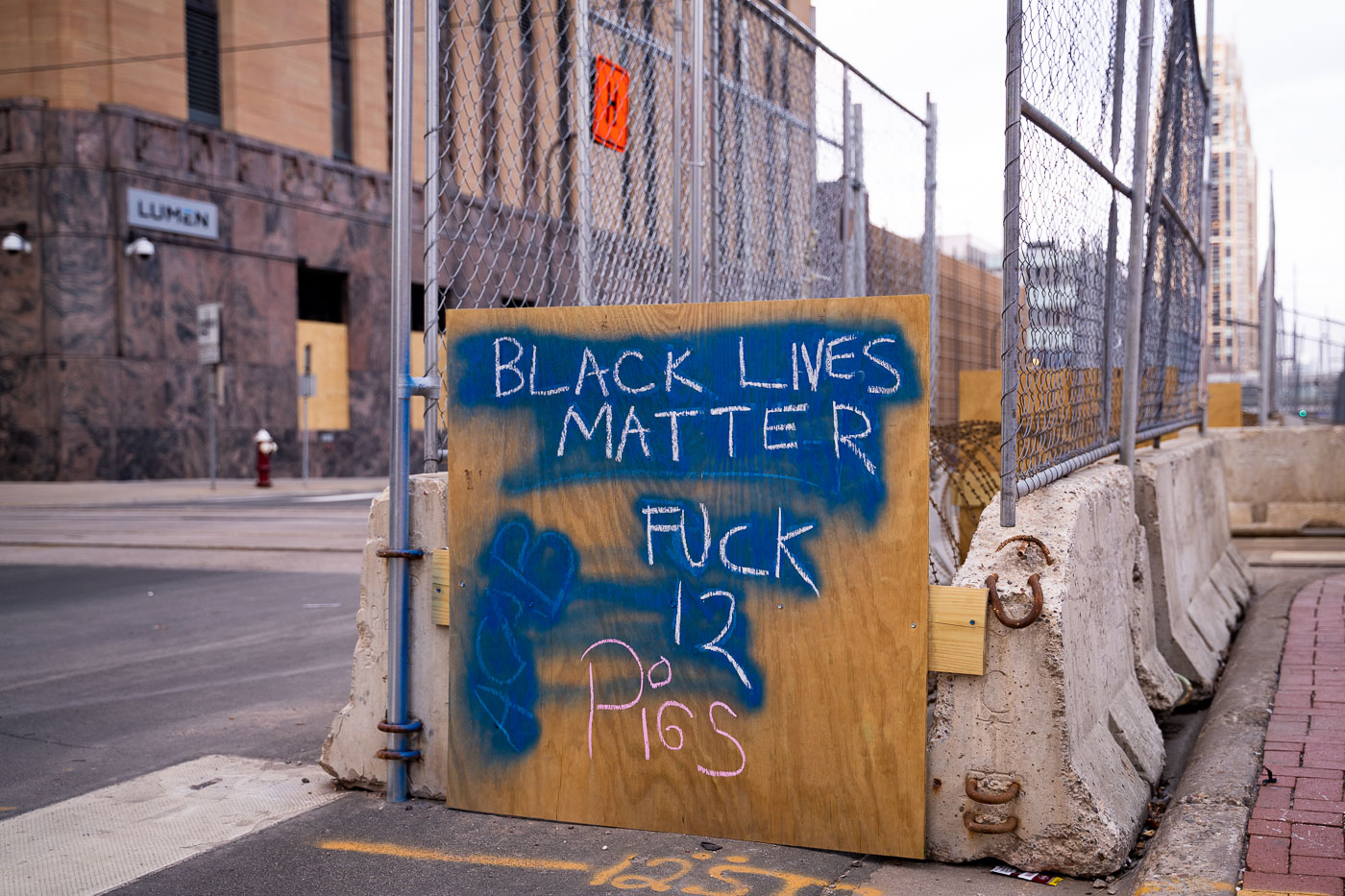
Security fencing and concrete barriers surround the Hennepin County Government Center in Minneapolis, a measure taken during the trial of Derek Chauvin for the murder of George Floyd. The plywood barrier displays protest art, including "Black Lives Matter" and "Fuck 12 Pigs," reflecting the sentiments of demonstrators. This fencing was erected to secure the courthouse and maintain order amidst significant public attention and potential unrest surrounding the trial.

Minneapolis Government Center Fencing with Protest Art

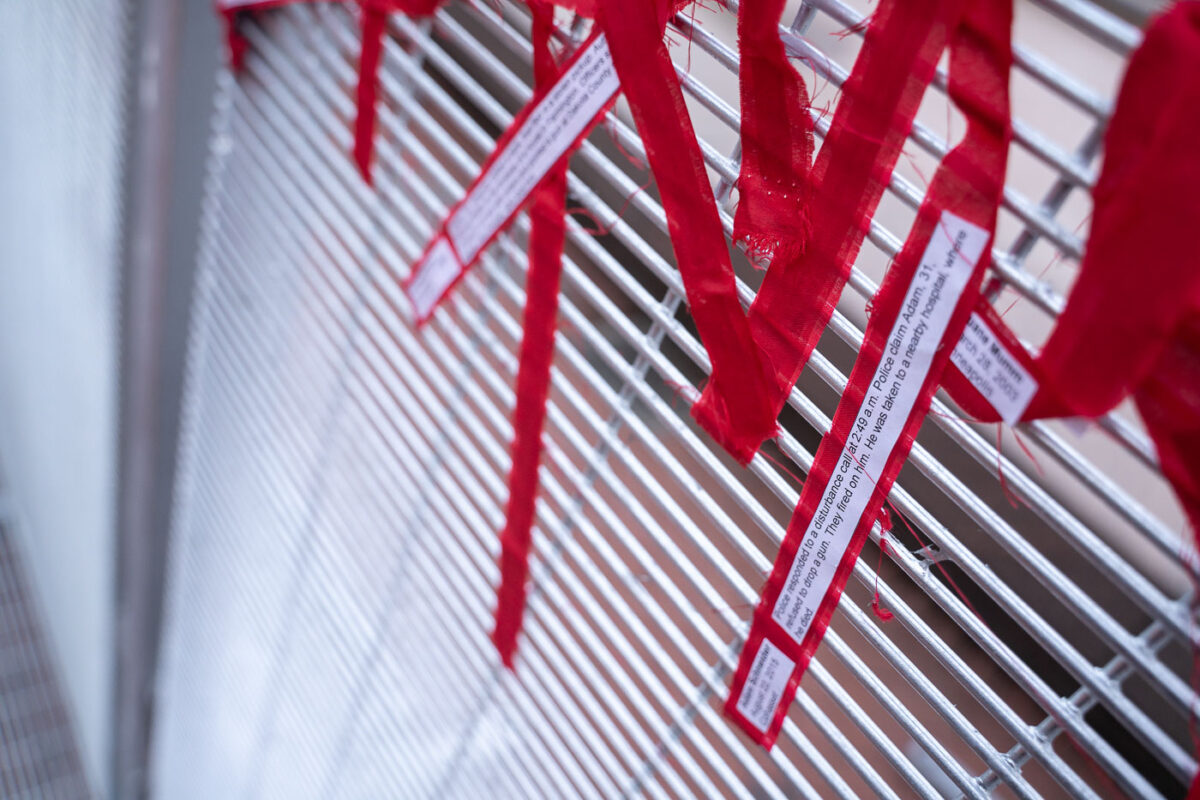
Art installation outside Hennepin County Courthouse
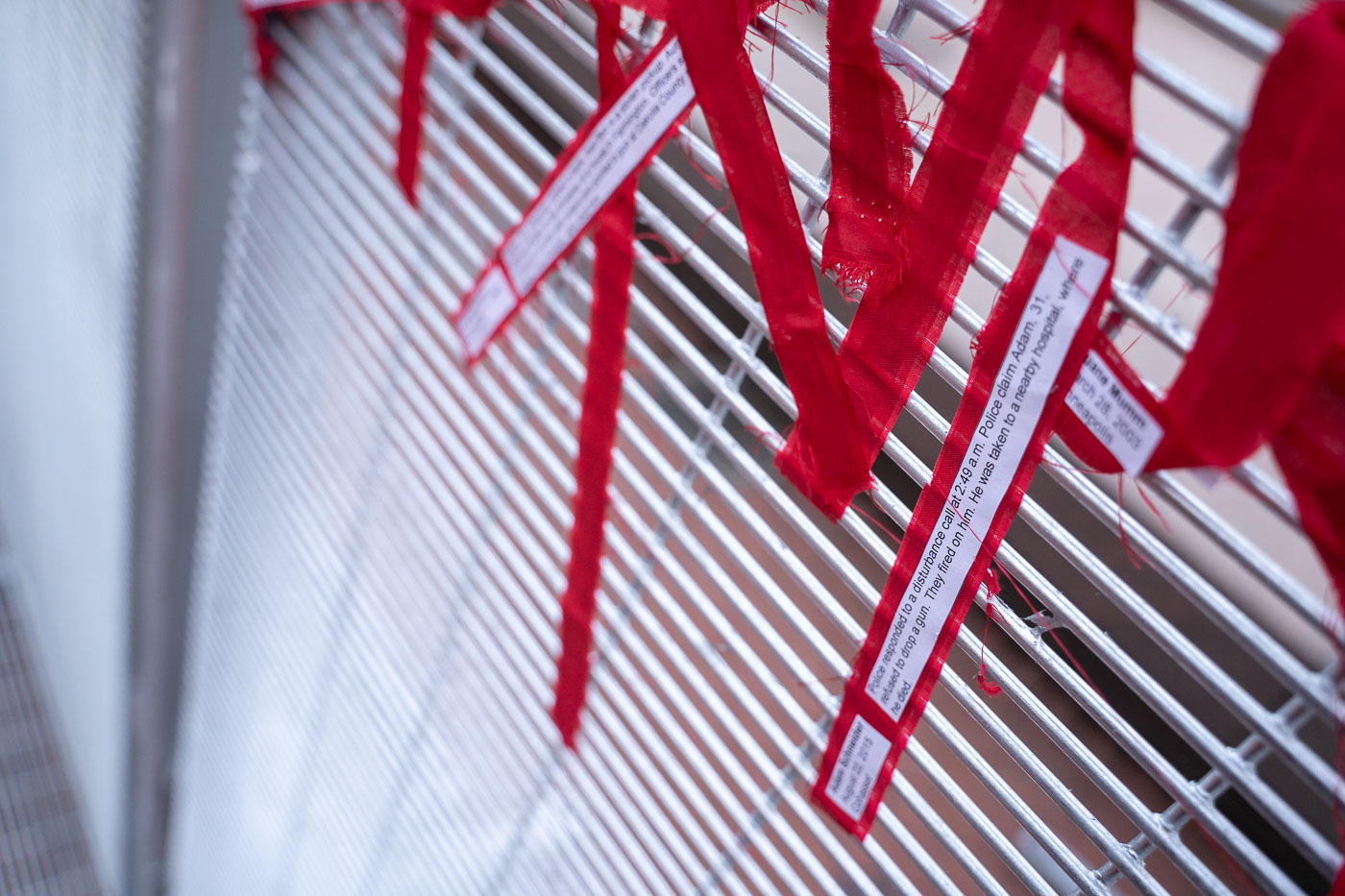
Red ribbons bearing the names and brief accounts of victims of police brutality are affixed to the security fencing surrounding the Hennepin County Government Center in Minneapolis. This display was visible on the day opening statements began in the trial of Derek Chauvin, who was accused of murdering George Floyd on May 25, 2020. The ribbons serve as a memorial and a protest, highlighting broader issues of police violence that have been a focus of public attention and activism.

Red ribbons with names of victims of police brutality on fence at Hennepin County Courthouse

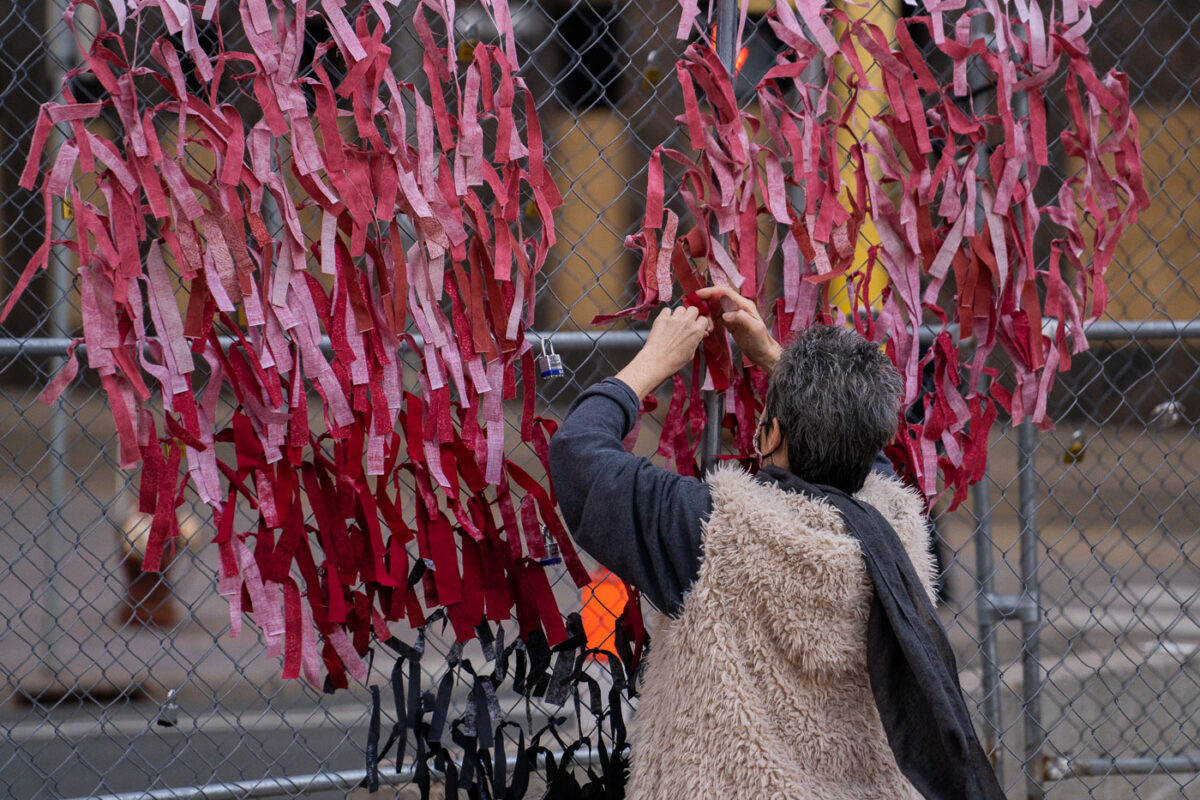
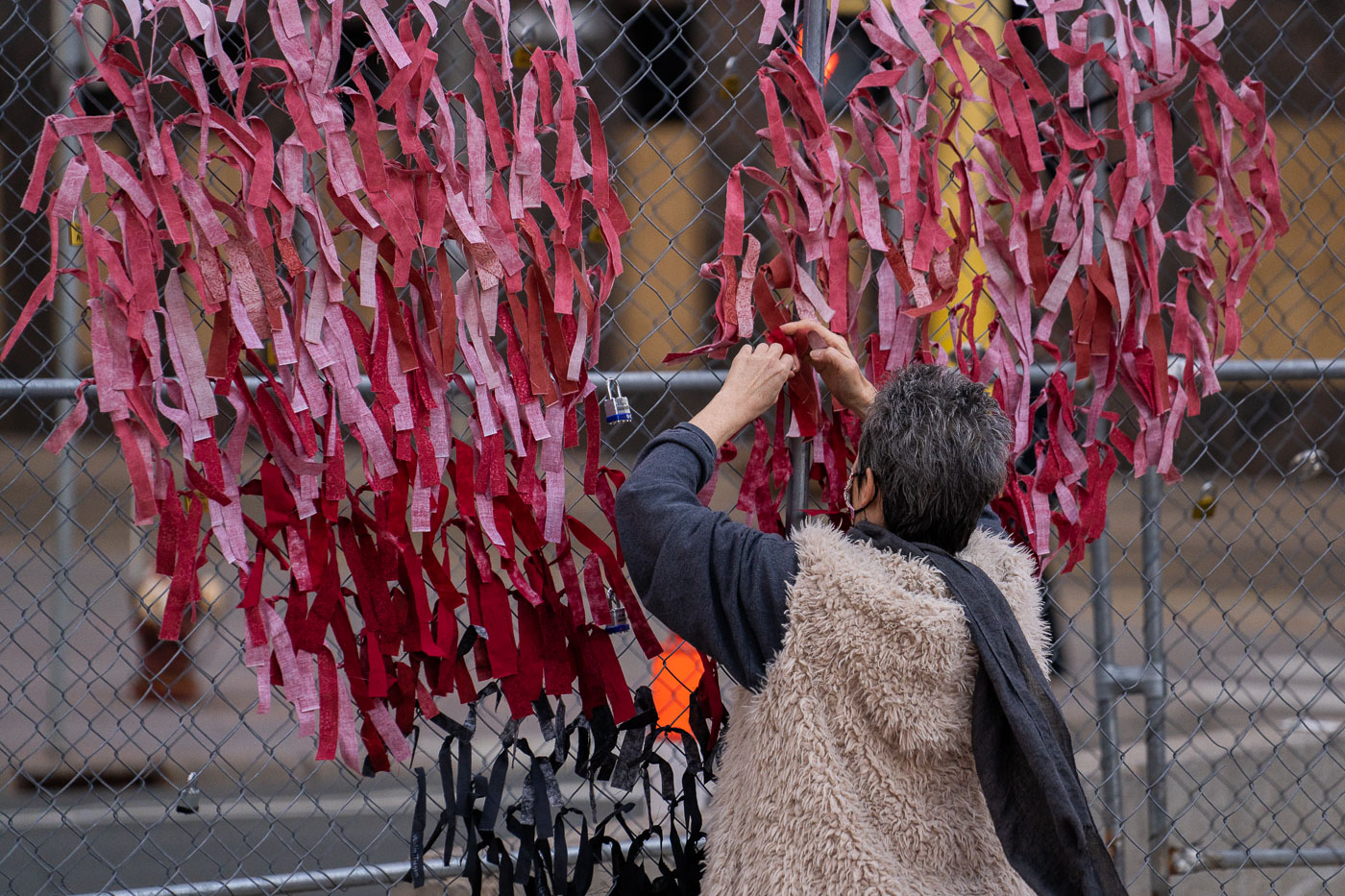
Art being put up on fence outside Chauvin trial
On March 29, 2021, the first day of opening statements in the trial of Derek Chauvin, a former Minneapolis police officer accused of murdering George Floyd, a woman tied red ribbons to security fencing surrounding the Hennepin County Government Center. The ribbons, arranged in the shape of a heart, served as a public memorial and a symbol of solidarity. The security measures were put in place due to anticipated protests and unrest following the trial, which was a focal point for national conversations about racial justice and police brutality.

Minneapolis: Ribbons on Chauvin Trial Security Fence

Protesters rally in downtown Minneapolis during George Floyd opening statements
Protesters gathered in Downtown Minneapolis on March 29, 2021, the day opening statements began in the trial of former police officer Derek Chauvin. Chauvin was accused of murdering George Floyd on May 25, 2020, an event that sparked widespread protests against racial injustice and police brutality. The signs carried by the crowd reflect the ongoing calls for accountability and justice for Floyd and other victims of police violence.

Minneapolis Protest for George Floyd Trial Opening Statements

Protester with ACAB patch during Chauvin march
On the opening day of the Derek Chauvin trial, protesters gathered in Downtown Minneapolis to march and rally. Chauvin, a former Minneapolis police officer, was accused of murdering George Floyd on May 25, 2020. The protest signifies the ongoing public response to Floyd's death and the subsequent calls for justice and police reform.

Minneapolis Protest for George Floyd, Chauvin Trial Opening

Handcuffed Knee on Neck 8 Minutes 46 Secs Premeditated Murder
Protesters gathered in Downtown Minneapolis on March 29, 2021, the day opening statements began in the murder trial of former police officer Derek Chauvin. Chauvin was accused of killing George Floyd on May 25, 2020, after a video showed him kneeling on Floyd's neck for over eight minutes. The protest highlighted the duration of the restraint and the circumstances surrounding Floyd's death, which sparked widespread demonstrations against police brutality and racial injustice.

Minneapolis Protest: Chauvin Trial Begins, Signs Detail Floyd Murder

Man with a Black Lives Matter flag in downtown Minneapolis
A protestor carries a Black Lives Matter flag through Downtown Minneapolis on March 8, 2021, the day opening statements began in the trial of Derek Chauvin. Chauvin, a former Minneapolis police officer, was accused of murdering George Floyd on May 25, 2020, an event that sparked widespread protests against police brutality and racial injustice. The trial took place in Hennepin County District Court, with significant public attention and ongoing demonstrations in the city.

Minneapolis: BLM protestor walks during Chauvin trial opening statements

Hennepin County police look down on protesters at Chauvin trial
On March 8, 2021, protesters gathered outside the Hennepin County Government Center in Minneapolis to rally and march on the day opening statements began in the trial of Derek Chauvin. Chauvin, a former Minneapolis police officer, was accused of murdering George Floyd on May 25, 2020. The building, located at 300 South Sixth Street, serves as the seat of county government and houses courtrooms and administrative offices. Security forces, including National Guard members, were visible on the building's upper levels, and barricades were erected around the perimeter.

Hennepin County Government Center: Police observe Chauvin trial protest

Protester with I Cant Breathe shirt on at start of George Floyd trial
Protesters gathered in Downtown Minneapolis on March 8, 2021, the day opening statements began in the trial of Derek Chauvin, the former police officer accused of murdering George Floyd on May 25, 2020. The shirt worn by the individual in the foreground displays "I Can't Breathe" along with portraits of Floyd and other Black individuals who died in encounters with law enforcement. This protest was part of a broader movement demanding justice for Floyd and accountability for police brutality.

Minneapolis Protest for George Floyd Trial

All Eyez on Justice protest sign
A protest sign reading "All Eyez On Justice" with the subtitle "Justice for George Floyd" is displayed outside the Hennepin County Courthouse in Minneapolis. The sign features a gas mask with a shattered lens, symbolizing the urgency and severity of the call for justice. This image was taken on March 29, 2021, during the trial of Derek Chauvin, the former Minneapolis police officer charged with the murder of George Floyd. The protest and subsequent trial drew national and international attention to issues of police brutality and racial injustice.

All Eyez on Justice protest sign for George Floyd, Minneapolis

Opening Statement Protest in downtown Minneapolis
Protesters gathered outside the Hennepin County Government Center in Minneapolis on March 29, 2021, as opening statements began in the murder trial of former police officer Derek Chauvin. The trial followed the death of George Floyd, who died in police custody in Minneapolis in May 2020, sparking widespread protests against police brutality. The signs held by the demonstrators reflect sentiments of community support and a call for justice, with one banner stating, "America's Very Soul is on Trial!" The Hennepin County Government Center serves as a key judicial and administrative hub for the county.

Minneapolis Protest Outside Hennepin County Government Center

Protest day before Chauvin trial opening statements
Protesters march through downtown Minneapolis on March 7, 2021, the day before opening statements in the trial of Derek Chauvin. The former Minneapolis police officer was charged with murder and manslaughter in the death of George Floyd, an incident that occurred in the same city in May 2020. The marchers carried signs with images of Floyd and messages calling for justice, reflecting the widespread public outcry and demands for police accountability that followed Floyd's death.

Minneapolis Protest Day Before Chauvin Trial Opening Statements

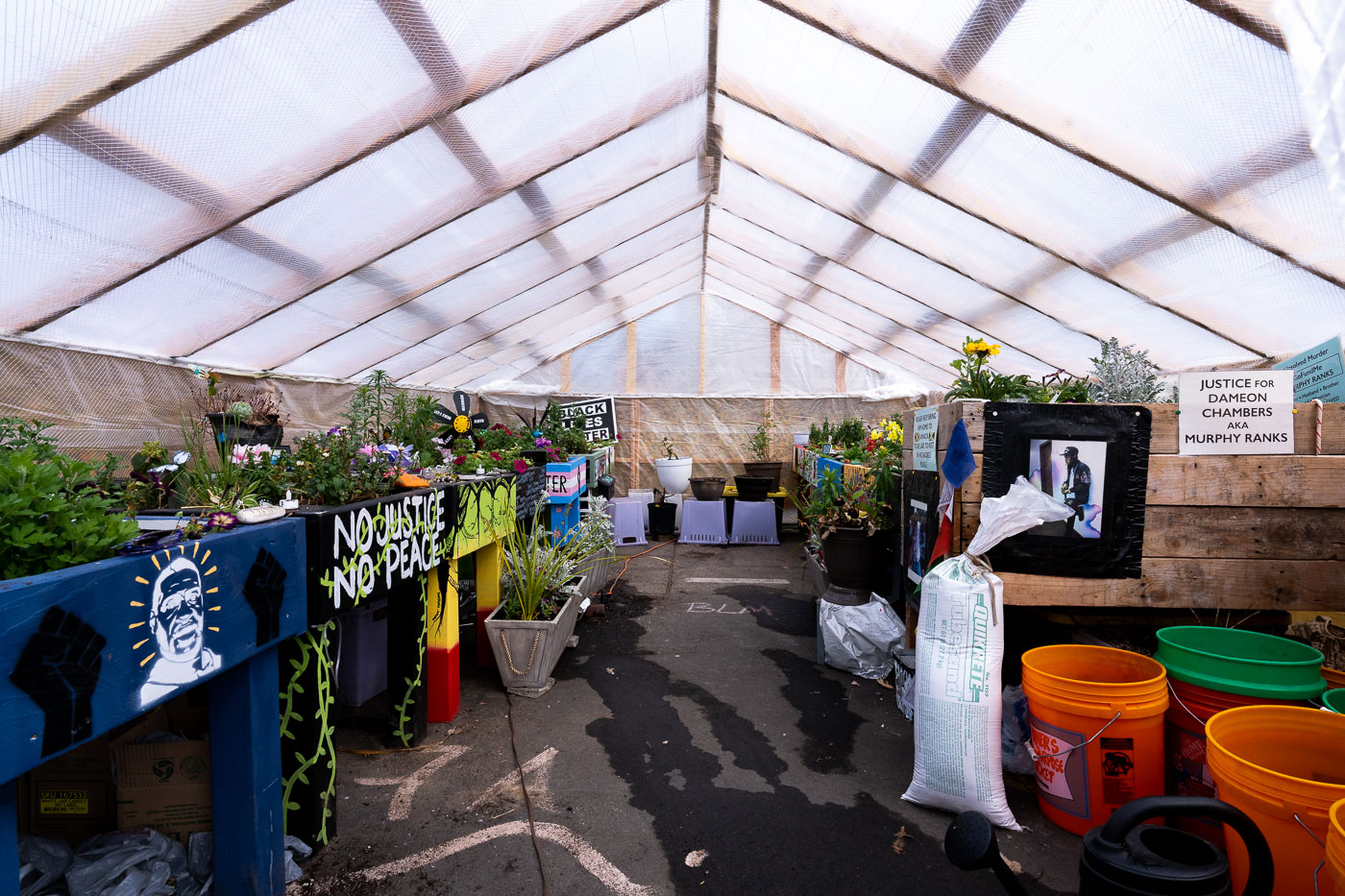
George Floyd Square Greenhouse in March 2021
A greenhouse at George Floyd Square in Minneapolis, March 2021, served as a space for cultivating plants and flowers through the winter months. The square became a focal point for protests and activism following the murder of George Floyd in May 2020. This structure, adorned with signs and tributes such as "Black Lives Matter" and "Justice for George Floyd," reflects the community's ongoing commitment to remembrance and social justice.

George Floyd Square Greenhouse, Minneapolis, March 2021

George Floyd mural at Cup Foods in Minneapolis
The George Floyd Memorial mural, located at Cup Foods on the corner of 38th Street and Chicago Avenue in South Minneapolis, was created in the aftermath of George Floyd's murder in May 2020. The mural serves as a focal point for remembrance and protest, situated at the epicenter of the "George Floyd Square" autonomous zone established by activists. This site became a significant gathering place for demonstrations and a symbol of the broader Black Lives Matter movement.

George Floyd Mural at Cup Foods, Minneapolis

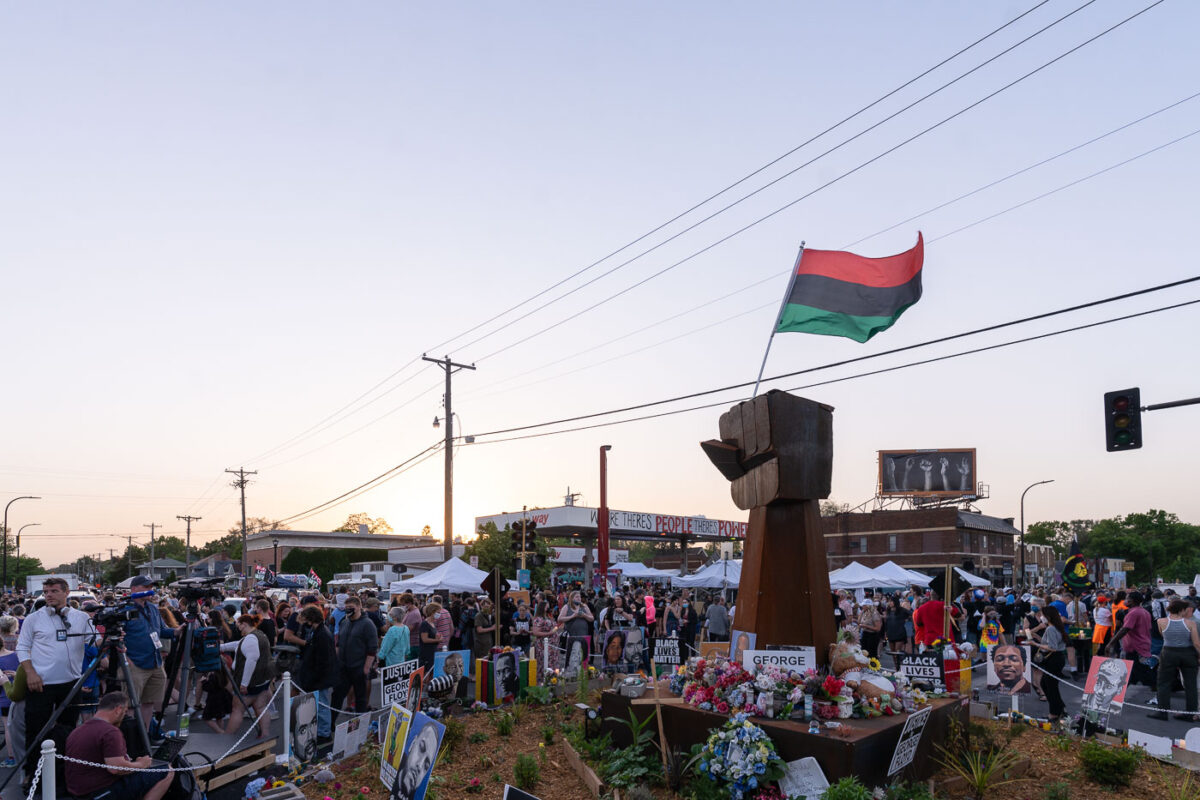
Fist at George Floyd Square in March 2021
A raised fist sculpture and the Pan-African flag fly at George Floyd Square in Minneapolis in March 2021. The square, located at the intersection of Chicago Avenue and 38th Street, became a focal point for protests following the murder of George Floyd by Minneapolis police officer Derek Chauvin in May 2020. The area was occupied by protesters for an extended period, transforming it into a space for community gathering and activism. The fist and flag symbolize Black Power and solidarity, reflecting the ongoing movement for racial justice.

George Floyd Square Fist and Pan-African Flag, March 2021

Radisson RED behind boards in downtown Minneapolis
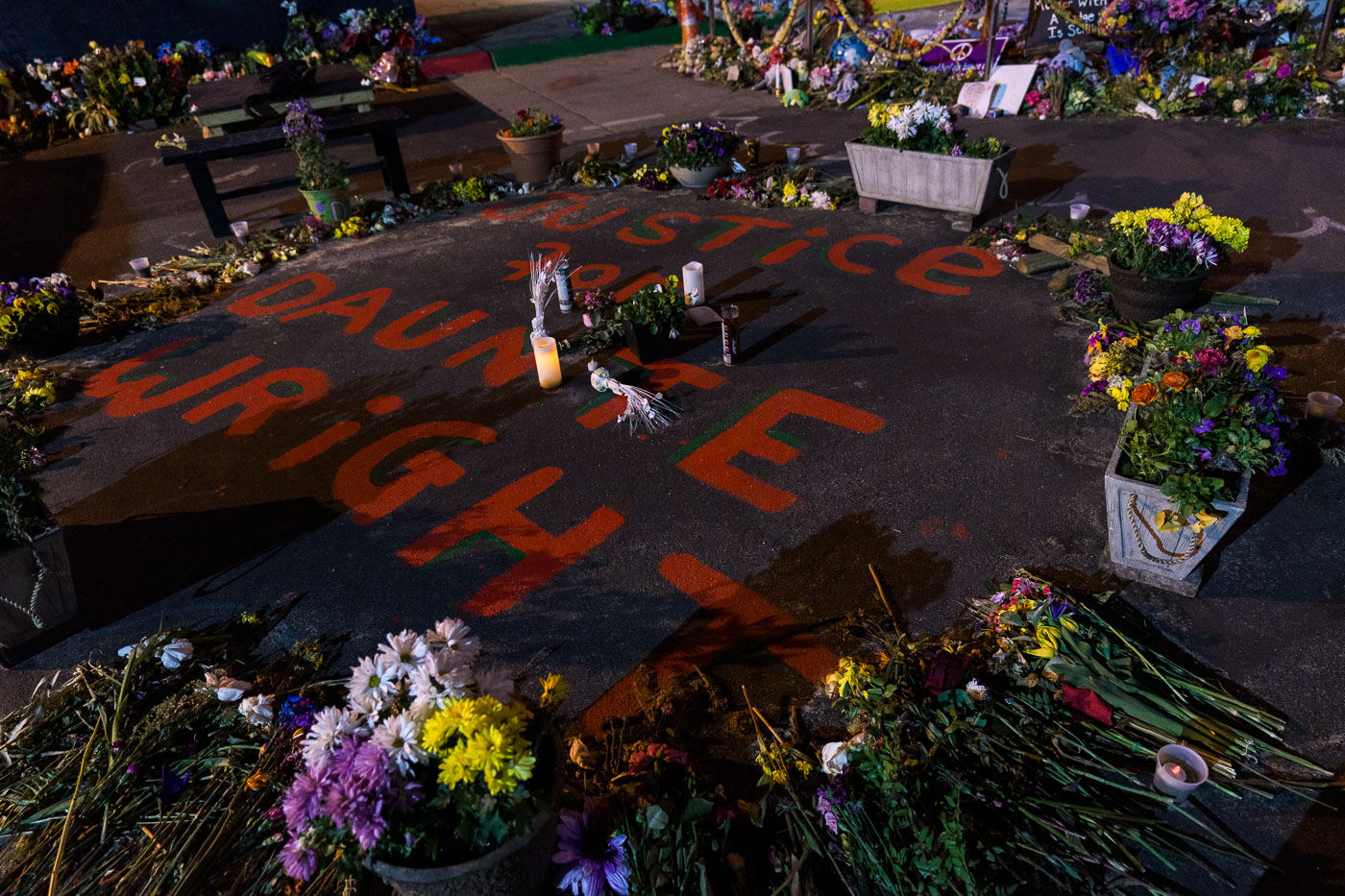
The Radisson RED Hotel in downtown Minneapolis is shown boarded up at night. This temporary measure was implemented following the civil unrest and protests that occurred in the city in the spring of 2020. The plywood covering the building's facade served to protect the property from potential damage during a period of heightened social and political tension. The hotel, located in the heart of the city, is a contemporary lodging establishment known for its unique design and amenities.
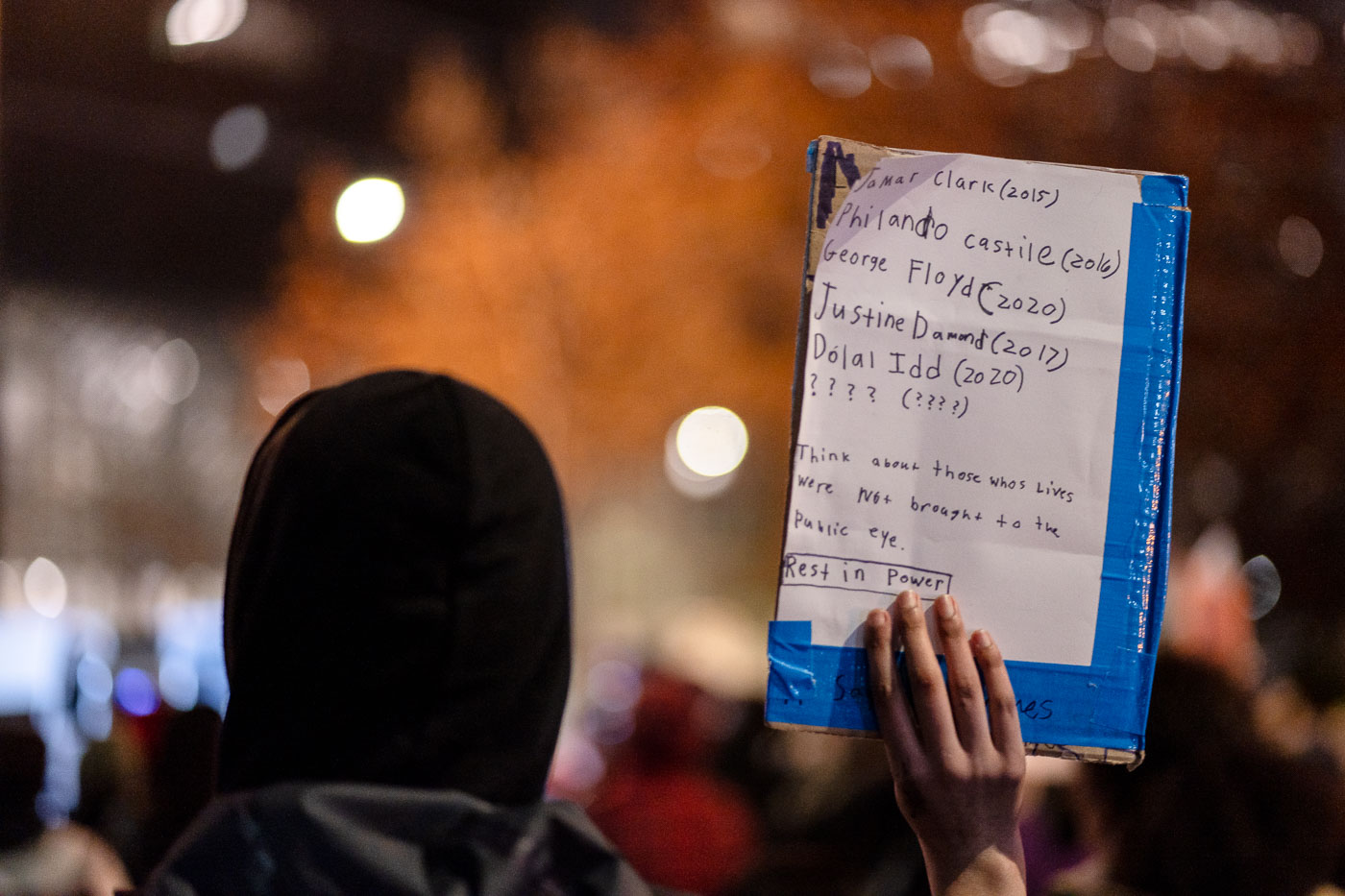
Radisson RED Hotel Boarded Up Downtown Minneapolis

Items at George Floyd Square
A handwritten letter and beaded necklaces are displayed at George Floyd Square in Minneapolis, a site that became a focal point for protests following the murder of George Floyd in May 2020. The area, located at the intersection of 38th Street and Chicago Avenue, was occupied by protesters for months. This memorial serves as a space for remembrance, reflection, and continued activism related to racial justice and police brutality.

Letter and beads at George Floyd Square, Minneapolis

Think about how many werent filmed at George Floyd Square
Protest signs, including one reading "ACAB" (All Cops Are Bastards) and another with the slogan "THINK ABOUT HOW MANY WEREN'T FILMED," are displayed near Cup Foods in George Floyd Square, Minneapolis. A teddy bear and flowers are placed as tributes. This area became a focal point for protests following the murder of George Floyd in May 2020, and has since been a site of ongoing activism and community organizing. The signs reflect sentiments expressed during the Minneapolis Uprising and subsequent movements advocating for police reform and racial justice.

George Floyd Square: ACAB protest signs and teddy bear

George Floyd mural on Chicago Ave March 2021
A mural honoring George Floyd is displayed on the exterior of Cup Foods in South Minneapolis, the site where Floyd was killed in May 2020. The mural, painted on the 38th Street side of the store, features Floyd's portrait and the names of other Black individuals who have died due to police brutality. The area around the mural has become a memorial, with flowers, signs, and other tributes placed on the sidewalk. This location, often referred to as George Floyd Square, became a focal point for protests and activism following Floyd's death.

George Floyd Mural at Cup Foods, Minneapolis

Fire Fire Gentrifire Protest sign
A protest sign reading "Fire Fire Gentrifire" is displayed on a fence along the Midtown Greenway in Minneapolis. The sign reflects concerns about gentrification, a process often associated with rising housing costs and displacement of long-term residents. The Midtown Greenway is a popular multi-use trail built on a former railroad corridor, connecting various neighborhoods in Minneapolis. This sign likely emerged during a period of heightened social and political activism, possibly in relation to the Minneapolis Uprising or broader discussions about urban development and community impact.

Midtown Greenway Protest Sign: Fire Fire Gentrifire

Protesters march at Minnesota State Capitol March 2021
Protesters gathered at the Minnesota State Capitol in St. Paul in March 2021 to demand justice for George Floyd and an end to police brutality. The demonstration occurred nearly a year after Floyd's murder by Minneapolis police, an event that sparked widespread protests across the nation and globally. The Minnesota State Capitol building, completed in 1905, serves as the seat of government for the state and is a prominent landmark in the Twin Cities.

Black Lives Matter Protest at Minnesota State Capitol, March 2021

Justice 4 George sign on Minneapolis home
A sign reading "Justice 4 George" is displayed on a home at 3338 21st Avenue South in Minneapolis. This message reflects the widespread public outcry and protests that followed the murder of George Floyd, a Black man who died in police custody in Minneapolis in May 2020. The sign serves as a visible statement of solidarity and a demand for accountability within the community. The Minneapolis Uprising, sparked by Floyd's death, brought national and international attention to issues of racial injustice and police brutality.

Justice 4 George sign on Minneapolis home, 3338 21st Ave S

George Floyd Square Warming Shelter
A temporary warming shelter was erected at George Floyd Square in Minneapolis in March 2021, near the barricades that had been established following the murder of George Floyd. This structure provided refuge during cold weather for individuals present at the occupied space. The square, a focal point of protests and activism, was transformed into a community space after Floyd's death in May 2020. The shelter's presence highlights the ongoing community organizing and mutual aid efforts within the protest zone.

George Floyd Square Warming Shelter, Minneapolis, March 2021

George Floyd Square Community Info
The "George Floyd Square Community Info" board, photographed on March 16, 2021, served as a central hub for information and resources within the occupied zone in Minneapolis. The board lists various neighborhood organizations, community services like medical support and advocacy groups, and local restaurants. It also includes a "Please Do Not Disturb the Memorial" notice, indicating the site's designation as a sacred space maintained by community caretakers. The "George Floyd Global Memorial Community Story Preservation" section highlights efforts to document and preserve the history of the site and the events that led to its establishment.

George Floyd Square Community Info Board, Minneapolis

Protest in the snow outside Chauvin trial in Minneapolis
Protesters gathered in downtown Minneapolis during a snowstorm outside the Hennepin County Government Center. The demonstration occurred during the trial of Derek Chauvin, the former Minneapolis police officer charged in the death of George Floyd. The "Black Lives Matter" flags visible indicate the protest's alignment with the movement advocating for racial justice and police accountability.

Minneapolis Protest in Snow Outside Chauvin Trial

Protest looks at National Guard officers during Chauvin trial
During the trial of former Minneapolis Police Officer Derek Chauvin, protesters gathered outside the Hennepin County Government Center. The trial, which began in March 2021, concerned the murder of George Floyd on May 25, 2020. The presence of the National Guard and barricades indicated the heightened security measures in place due to the potential for civil unrest, a concern amplified by the ongoing protests and the Minneapolis Uprising that followed Floyd's death.

Minneapolis: Protesters face National Guard during Chauvin trial

Snow falls at Hennepin County Courthouse with protesters
Protesters gathered in falling snow outside the Hennepin County Government Center in Minneapolis, demanding a fair jury selection process in the trial of Derek Chauvin. Chauvin, a former Minneapolis police officer, was accused of murdering George Floyd on May 25, 2020. The government center serves as a primary administrative and judicial hub for Hennepin County. This protest occurred during the trial, highlighting public scrutiny of the justice system.

Protesters March in Snow at Hennepin County Government Center

A Man Was Lynched Yesterday Protest Signs
Protesters gathered outside the Hennepin County Government Center in Minneapolis during a snowstorm. The courthouse was the site of the Derek Chauvin murder trial, who was charged in the death of George Floyd. Signs carried by the protesters read "A Man Was Lynched Yesterday," referencing the ongoing racial injustice and police brutality protests that followed Floyd's murder on May 25, 2020.

Minneapolis Protest: “A Man Was Lynched Yesterday” Signs

Toussaint Morrison speaks outside Chauvin trial
Toussaint Morrison addresses a crowd during a protest in Minneapolis on March 15, 2021. The protest occurred during the trial of Derek Chauvin, the former Minneapolis police officer charged in the murder of George Floyd. The trial, which began on March 8, 2021, brought renewed attention to racial injustice and police brutality in the United States. This event was part of a series of demonstrations that took place across the country following Floyd's death in May 2020.

Toussaint Morrison speaks at Minneapolis protest during Chauvin trial

No Justice No Peace lock at Chauvin trial
A padlock inscribed with "No justice, No peace" is affixed to a chain-link fence surrounding the Hennepin County Government Center in Minneapolis. This security measure was in place during the 2021 trial of Derek Chauvin, a former Minneapolis police officer charged with the murder of George Floyd. The trial, held in the same building, drew significant public attention and protests related to racial justice and police brutality.

Minneapolis: Lock on fence at Hennepin County Government Center during Chauvin trial

Theres Blood In These Streets mirror art
Mirrored panels bearing protest messages, including "There's Blood In These Streets" and "No Justice No Peace," are displayed outside the Hennepin County Government Center in Minneapolis. The courthouse was the site of the trial for Derek Chauvin, a former Minneapolis police officer charged in the death of George Floyd on May 25, 2020. The messages reflect the ongoing protests and calls for justice that followed Floyd's murder and highlighted systemic issues within law enforcement.

Minneapolis: Mirror Art at Hennepin County Government Center During Chauvin Trial

Signs on fencing around burned Minneapolis police station
Protest signs adorn the exterior of the former Minneapolis Police Third Precinct building, which was set ablaze during the unrest following the May 25th death of George Floyd. The signs, including messages such as "Justice for George Floyd," "Defund the Police," and "Black Lives are Sacred," reflect the sentiments of the community and the broader movement for racial justice. The precinct, a symbol of law enforcement in the neighborhood, became a focal point of protests and a site of significant destruction. The presence of these signs on the barricaded structure serves as a visual testament to the events of spring and summer 2020.

Minneapolis Police 3rd Precinct Fencing with Protest Signs

Roses in blood art installation at Chauvin trial
Roses, some appearing to be stained with red paint to resemble blood, were placed in a puddle outside the Hennepin County Government Center in Minneapolis. This installation occurred during the trial of Derek Chauvin, a former Minneapolis police officer charged with the murder of George Floyd. The trial, held in April 2021, drew significant national attention to issues of police brutality and racial justice.

Roses in paint outside Hennepin County Government Center during Chauvin trial

Reflect art installation outside Chauvin trial
An art installation reading "REFLECT" stands outside the Hennepin County Government Center in Minneapolis. The installation was present during the trial of Derek Chauvin, a former Minneapolis police officer charged with the murder of George Floyd on May 25, 2020. The trial, which began on March 8, 2021, drew significant public attention and protests related to police brutality and racial justice. The "REFLECT" installation, along with scattered roses and protest signs, served as a visual reminder of the ongoing discourse surrounding Floyd's death and its broader implications.

Reflect art installation outside Hennepin County Government Center

Protesters with mirrors and flowers outside Chauvin trial
Flowers and mirrors are placed on the street outside the Hennepin County Government Center in Minneapolis, Minnesota. This display occurred during the period of protests and unrest following the murder of George Floyd in May 2020 and the subsequent trial of Derek Chauvin. The mirrors, some bearing red paint, likely symbolize reflection and accountability, while the flowers serve as a memorial to victims of police brutality. The Hennepin County Government Center was a focal point for many demonstrations during this time.

Flowers and mirrors outside Hennepin County Government Center

Built in Minneapolis

Minneapolis Photographer

Browse by location, move through long-running series, or start with recent work.