Delivery Scooter Crossing Central Road, Kabukichō, Tokyo
March 2023
—
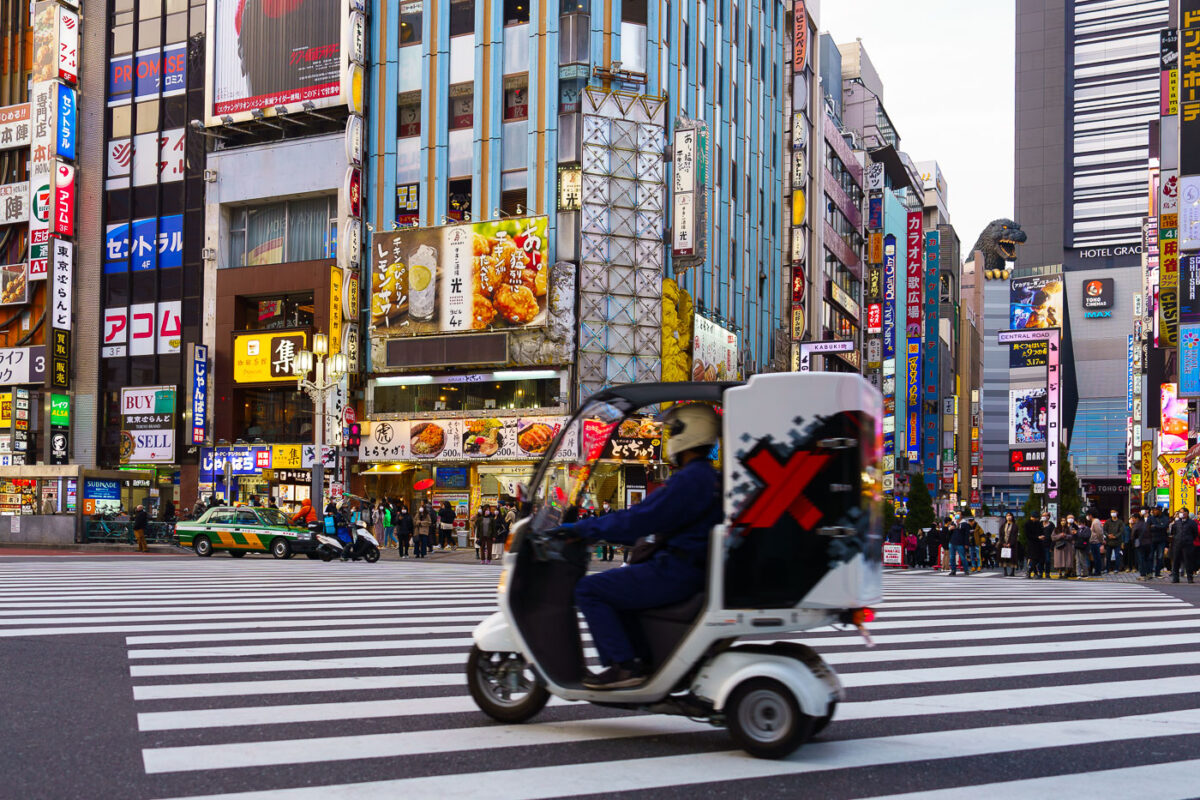
A delivery scooter moves through the large scramble crossing on Central Road in Kabukichō, one of Shinjuku’s busiest commercial corridors. This stretch of the district, located just north of Yasukuni-dōri, has been a dense entertainment zone since the postwar reconstruction era, eventually becoming known for its mix of cinemas, restaurants, arcades, karaoke towers, and neon advertising stacked across narrow mid-rise buildings.
The tall signs and narrow storefronts reflect the vertical commercial pattern typical of Shinjuku’s nightlife blocks, where multiple businesses occupy each floor and compete for visibility at street level. In the distance, the Godzilla head mounted atop the Hotel Gracery Shinjuku—installed in 2015 as part of the Toho Cinemas complex—has become one of the district’s most recognizable landmarks, connecting the area’s contemporary tourism appeal with Japan’s long-running film history.
Toyota Crown Comfort Taxi, Kabukichō, Shinjuku
March 2023
—
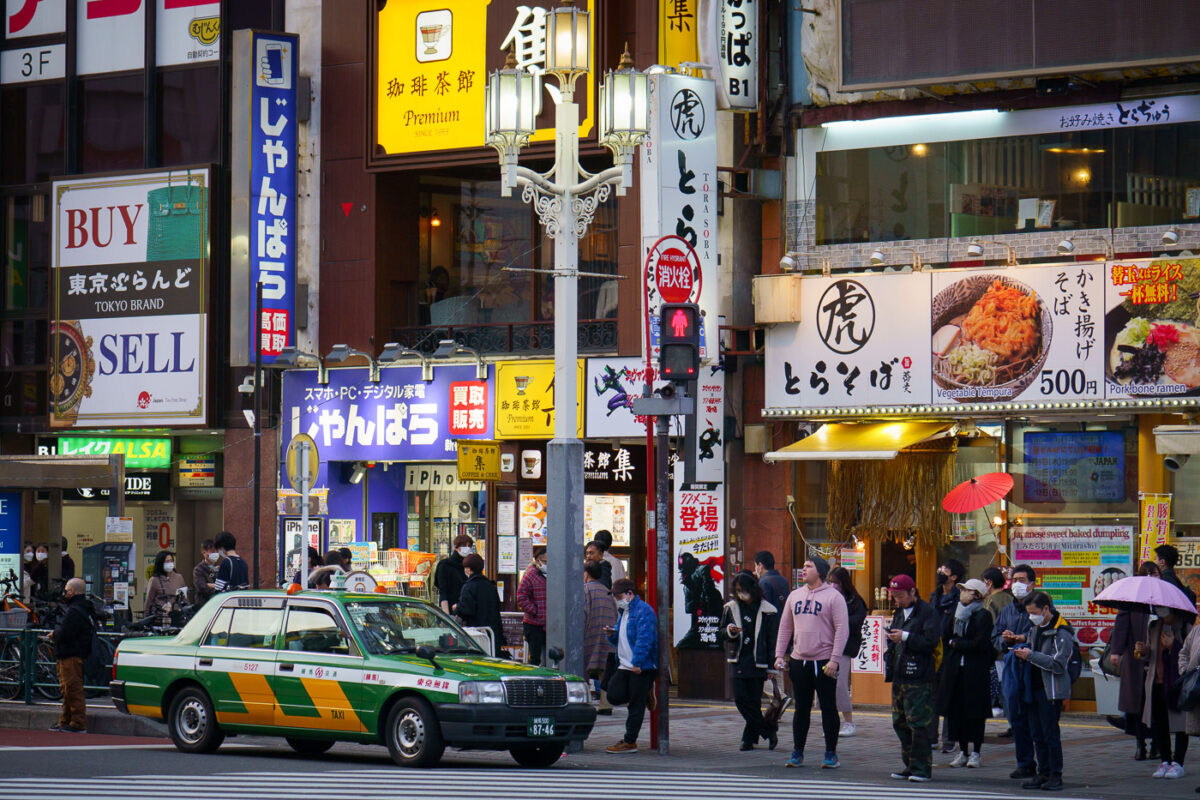
A Tokyo taxi waits at a crossing in Kabukichō, the entertainment district of Shinjuku known for its dense concentration of restaurants, bars, and late-night businesses. The area around Yasukuni-dōri and Shinjuku Station’s east side has long been one of Tokyo’s busiest pedestrian zones, with a mix of small eateries, electronics resellers, and long-established cafés occupying the mid-rise commercial blocks.
The green-and-yellow taxi livery seen here is one of Tokyo’s standard color schemes, used by several of the city’s major cab companies since the late twentieth century. The surrounding storefronts reflect Kabukichō’s layered commercial history, where postwar restaurants, national chains, and contemporary pop-culture signage coexist within the same streetscape.
Godzilla Statue atop Toho Cinemas, Kabukichō, Shinjuku
March 2023
—
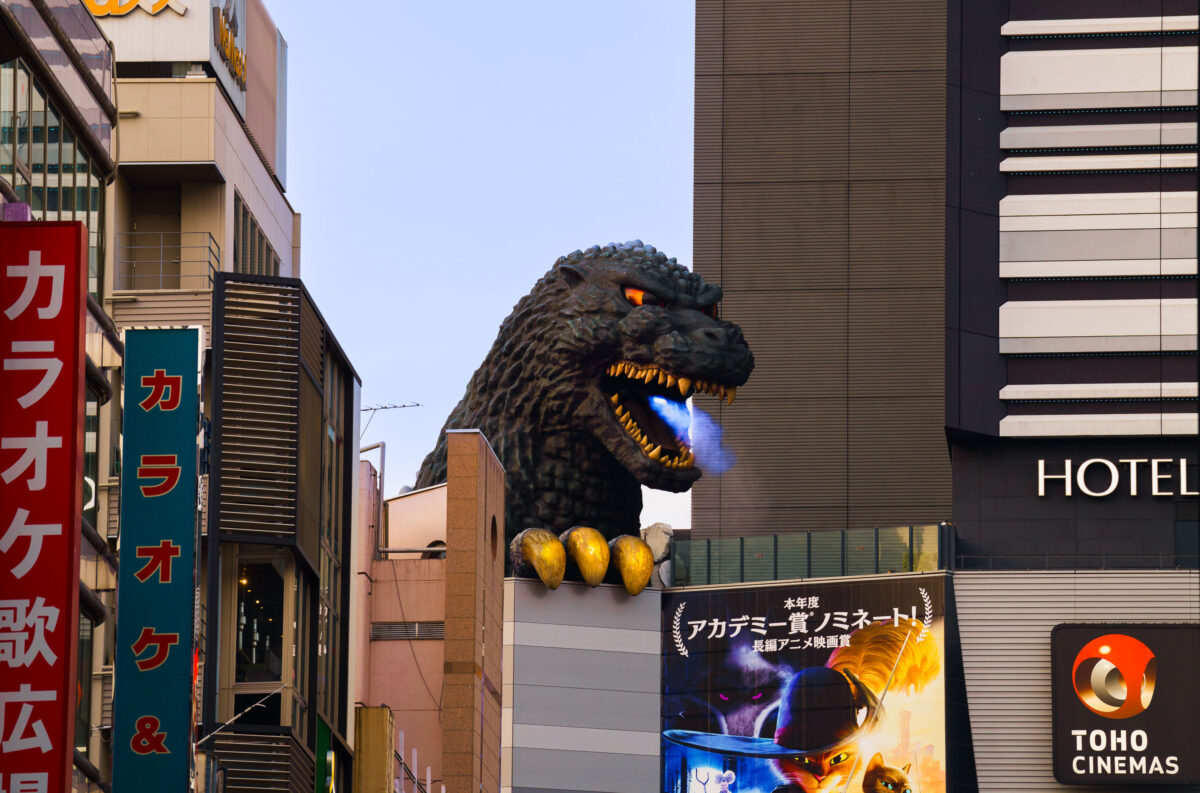
The Godzilla Head overlooking Kabukichō is one of Shinjuku’s most recognizable modern landmarks. Installed in 2015 to mark the opening of the Toho Cinemas Shinjuku complex—the studio responsible for the original 1954 Godzilla film—the sculpture rises above the building’s eighth floor, facing the main entertainment district.
The installation recreates Godzilla’s appearance from the 1990s Heisei-era films, and several times a day it emits sound, smoke, and light effects that mimic the creature’s trademark atomic breath. Positioned above the Kabukichō streetscape, the figure is intended as both a tribute to Japan’s most famous movie monster and a visual anchor for this entertainment-heavy part of Shinjuku.
Shinjuku 24-Hour DVD and Internet Cafe Neon Signs
March 2023
—
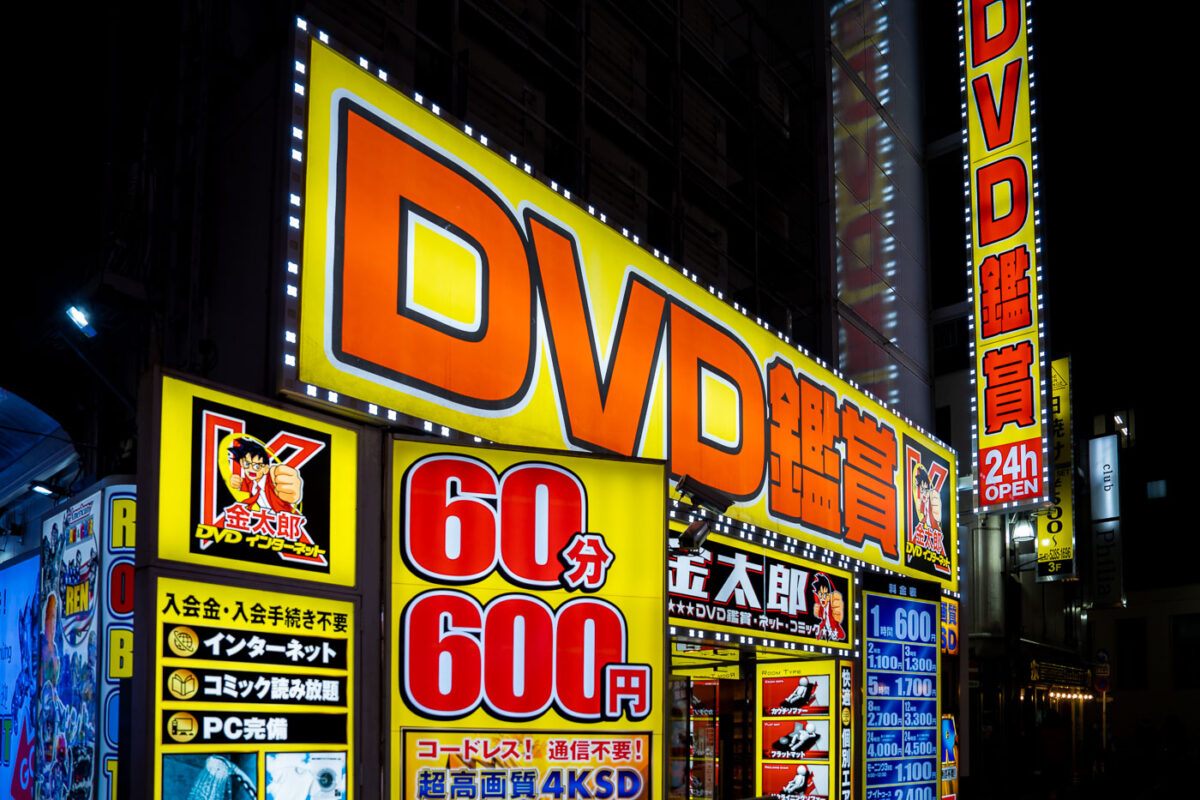
In Tokyo’s Shinjuku district, the saturated glow of neon signage spills across the streets, advertising one of the countless 24-hour DVD and manga shops that once defined the city’s late-night entertainment culture. Massive orange and yellow panels compete for attention, illuminated by LED frames and plastered with bold pricing for hourly booths and media rentals. These storefronts — dense with color, typography, and nostalgia — reflect the enduring presence of Japan’s analog media scene even as digital streaming dominates elsewhere. The atmosphere captures Tokyo’s constant dialogue between old and new, where high-tech convenience meets the tactile energy of Showa-era retail culture under an endless canopy of light.
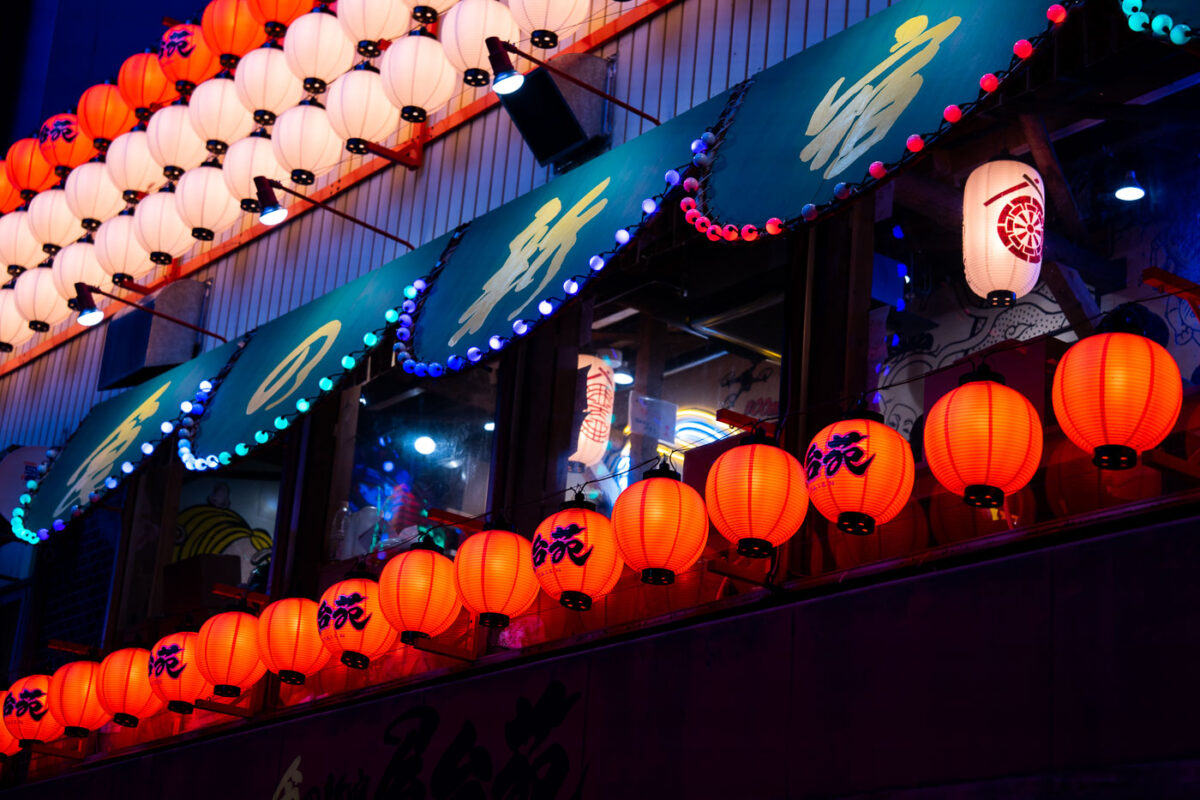
Paper Lanterns at a Kabukichō Izakaya, Shinjuku
March 2023
—
A cascade of red and white paper lanterns illuminates the facade of an izakaya in Shinjuku, Tokyo, casting a warm glow against the cool blue tones of the evening. Each lantern is hand-painted with calligraphy, evoking a blend of tradition and nightlife energy that defines Tokyo’s dense entertainment districts. The upper awnings—lined with blue bulbs and framed by wooden beams—hint at the layered complexity of urban Japan, where old-world craftsmanship meets electric color and constant reinvention. The faint reflections of neon and interior lighting merge through the windows, creating a luminous dialogue between the street and the world within.
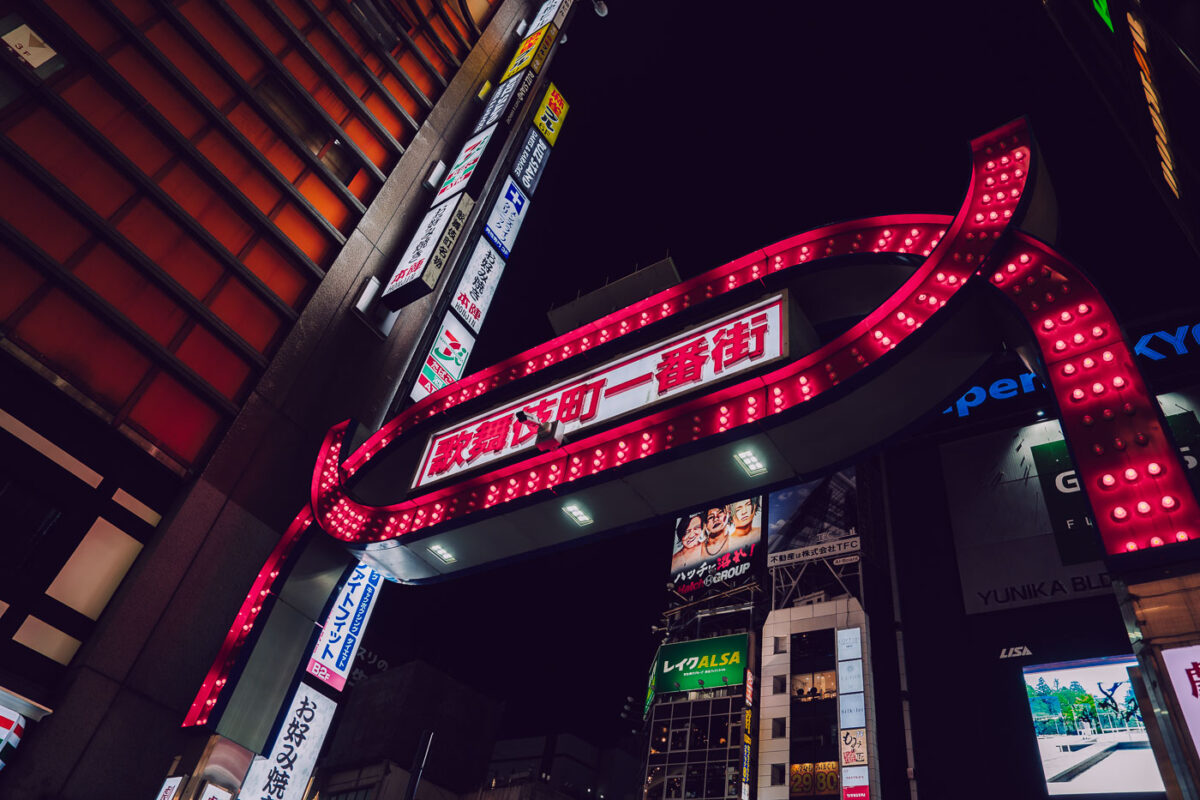
Kabukichō Ichiban-gai Arch, Shinjuku, Tokyo
March 2023
—
The iconic illuminated gate marking Kabukichō Ichiban-gai, photographed in Shinjuku, Tokyo. Installed in the late 1960s and redesigned several times since, the red archway has become one of the most recognizable entrances to Tokyo’s largest entertainment district.
Kabukichō developed after World War II as a planned theater district—its name comes from a never-built kabuki theater—before evolving into a dense zone of restaurants, bars, cinemas, and nightlife venues. The gate’s bright bulbs and bold lettering serve as a symbolic threshold into the neighborhood’s tightly packed streets, which remain active late into the night.
Built in Minneapolis
Minneapolis Photographer
Browse by location, move through long-running series, or start with recent work.