Factory

37 photos · 2009–2024

37 photographs tagged Factory, 2009–2024.
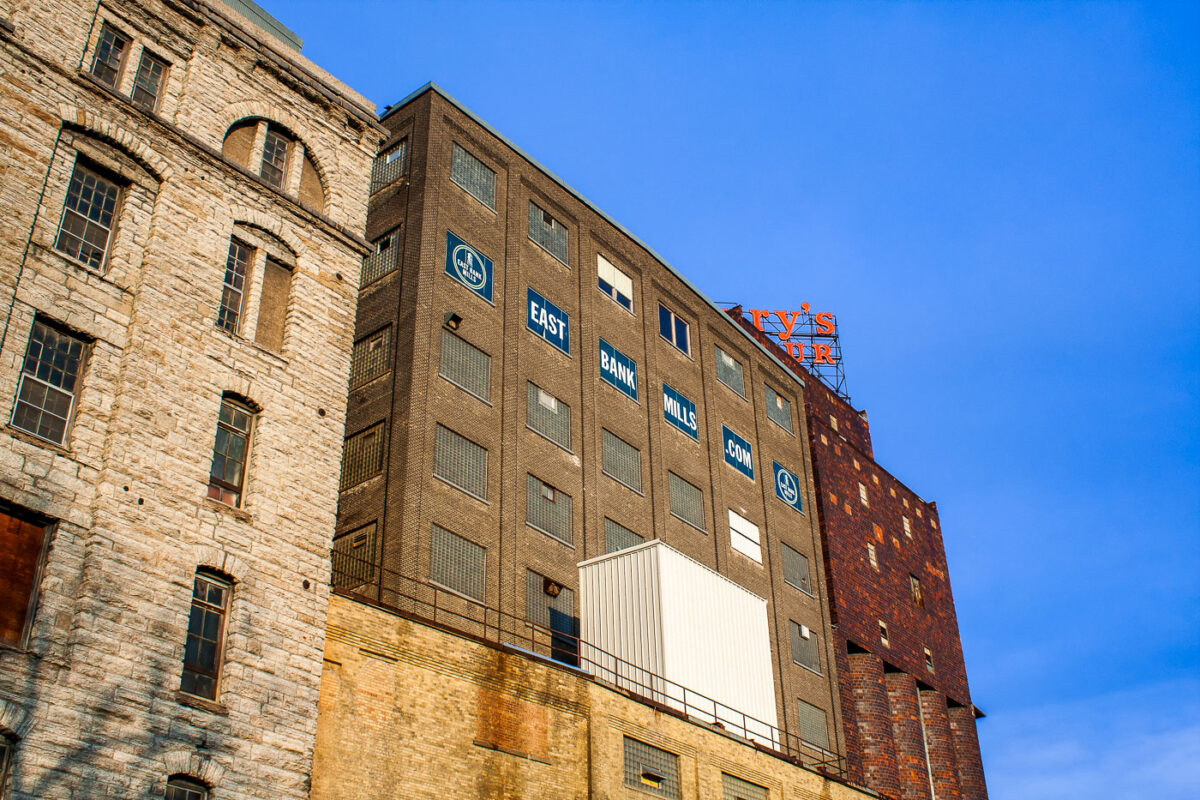
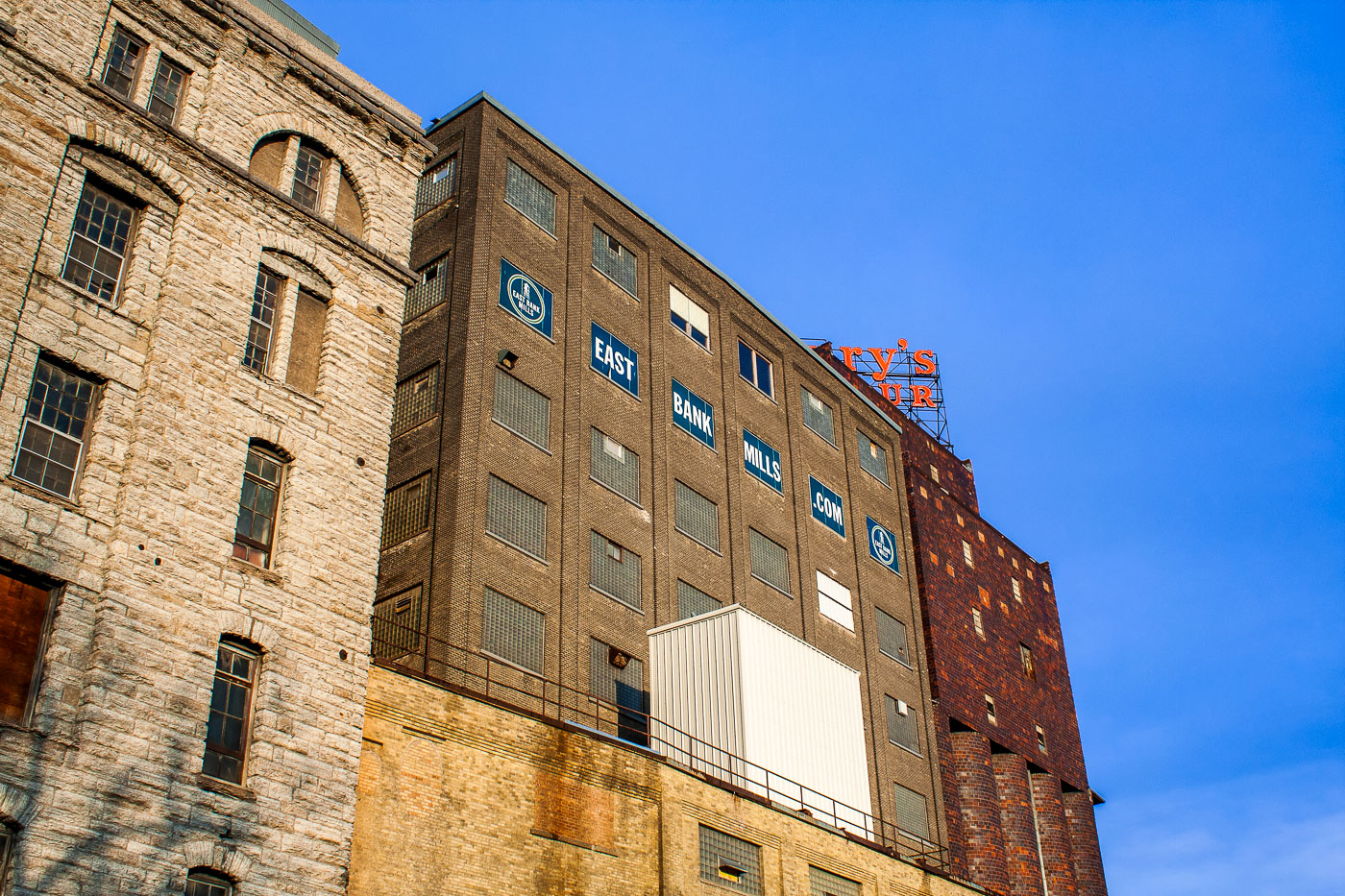
East Bank Mills historic flour mill complex in Northeast Minneapolis with blue signage on tan brick buildings under clear sky.
East Bank Mills is a historic flour mill complex in Northeast Minneapolis. The industrial buildings visible here are part of the milling operations that made Minneapolis a major flour production center in the late 19th and early 20th centuries.

East Bank Mills Signage on a Northeast Minneapolis Flour Mill
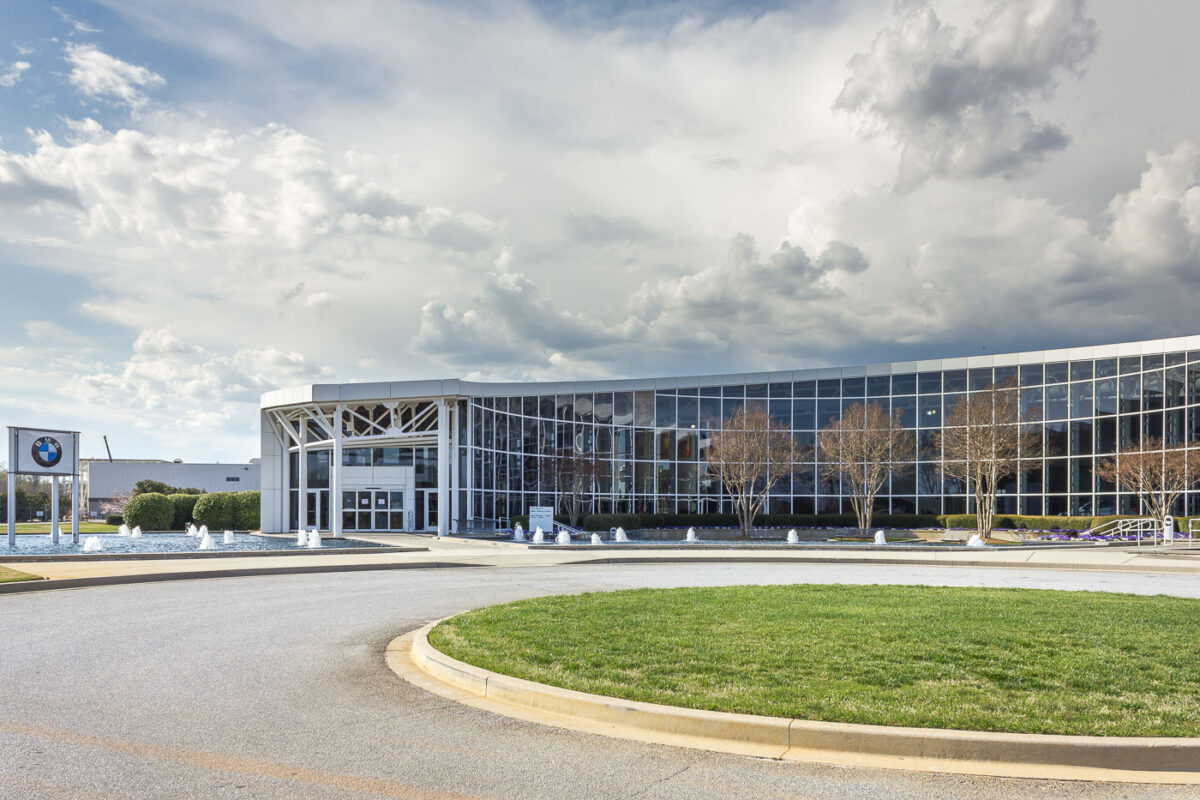
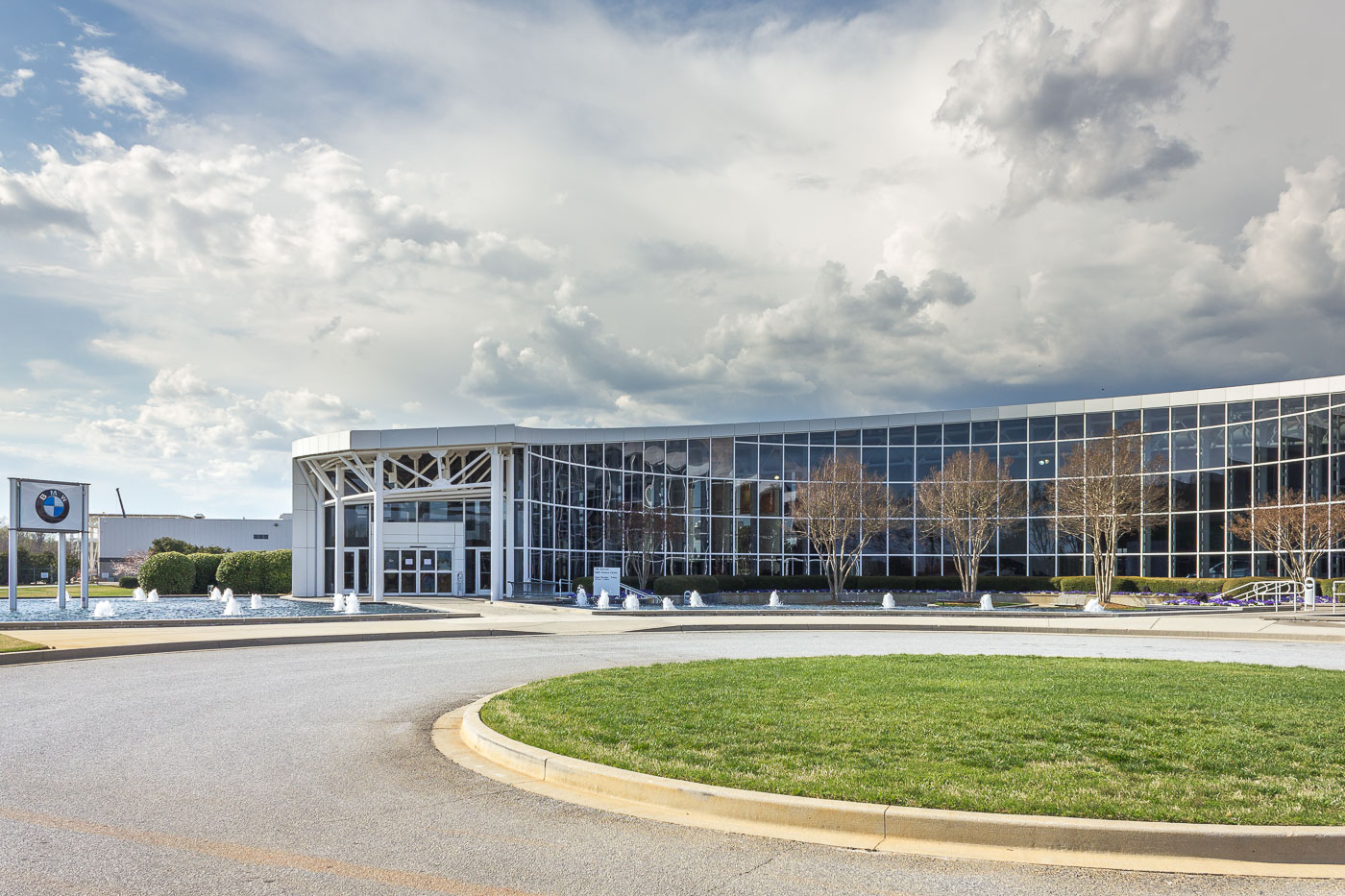
BMW US Manufacturing Center in Greer, South Carolina, with a glass-fronted entrance.
BMW US Manufacturing Center in Greer, South Carolina, is BMW’s first wholly owned factory in the United States. Opened in 1994, the Spartanburg County complex is the company’s largest plant worldwide by volume and produces vehicles for domestic and export markets.

BMW US Manufacturing Center, Greer, South Carolina
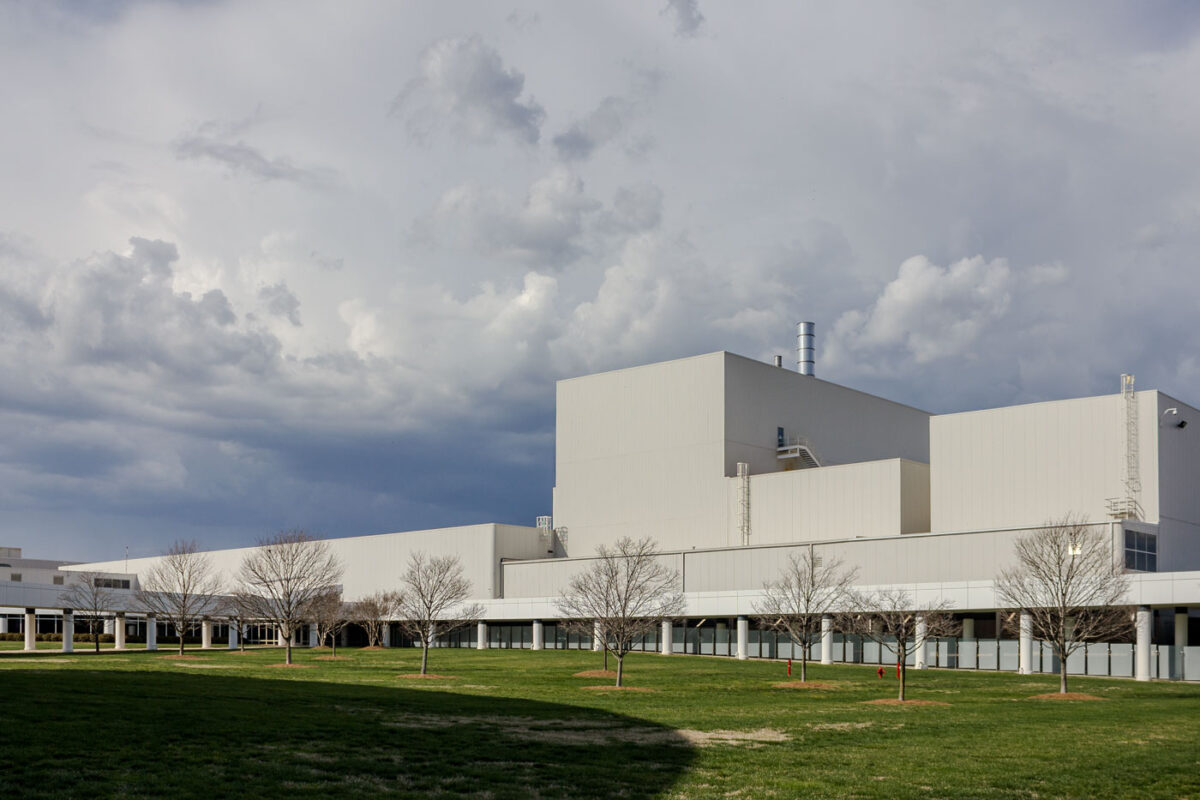
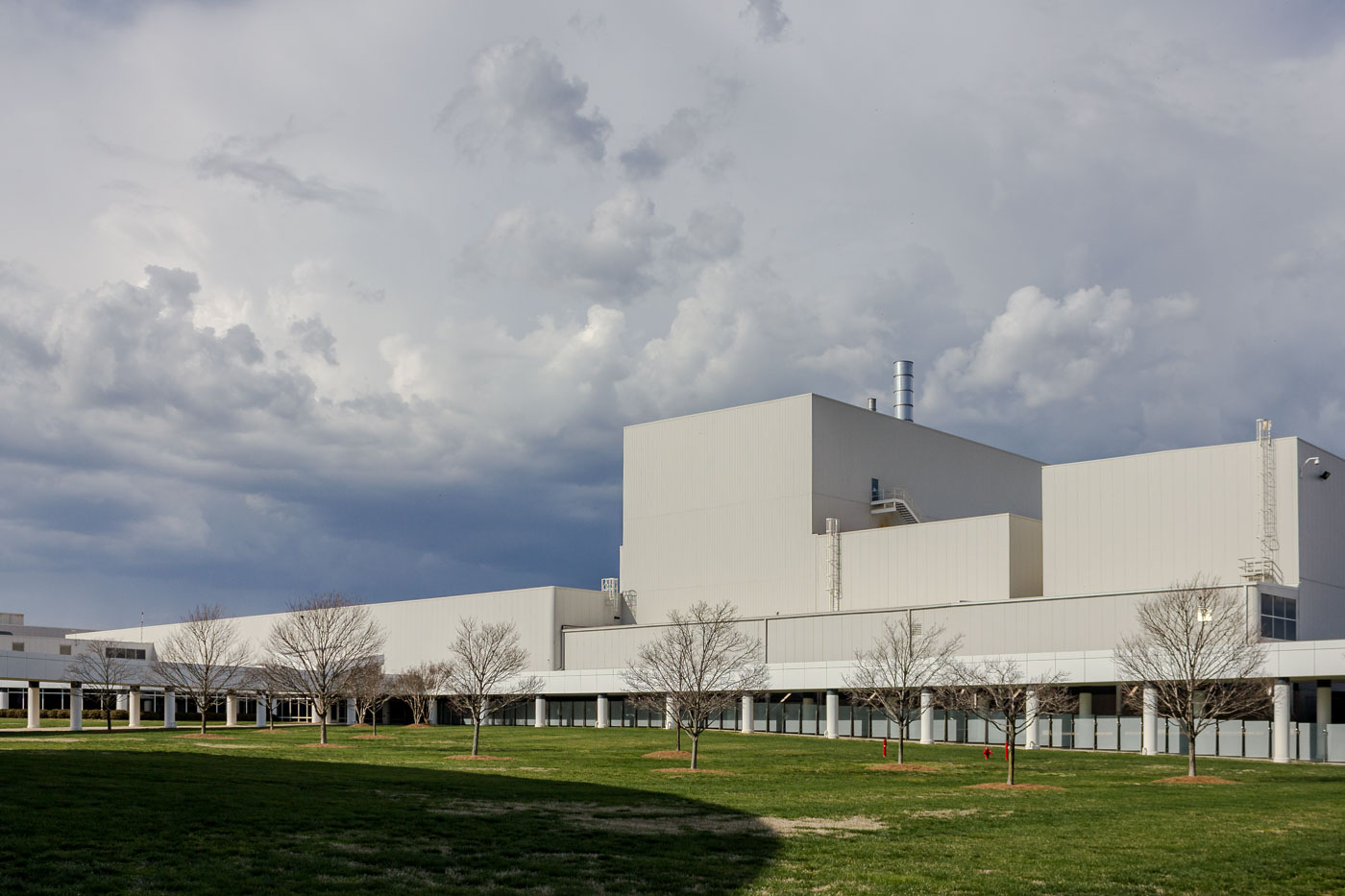
BMW US Manufacturing Plant in Greer, South Carolina, under a cloudy sky.
BMW US Manufacturing Plant in Greer, South Carolina, is BMW’s only production facility in the United States. Opened in 1994, the plant began by assembling the Z3 roadster and now builds several X model SUVs for global markets.

BMW US Manufacturing Plant in Greer, South Carolina
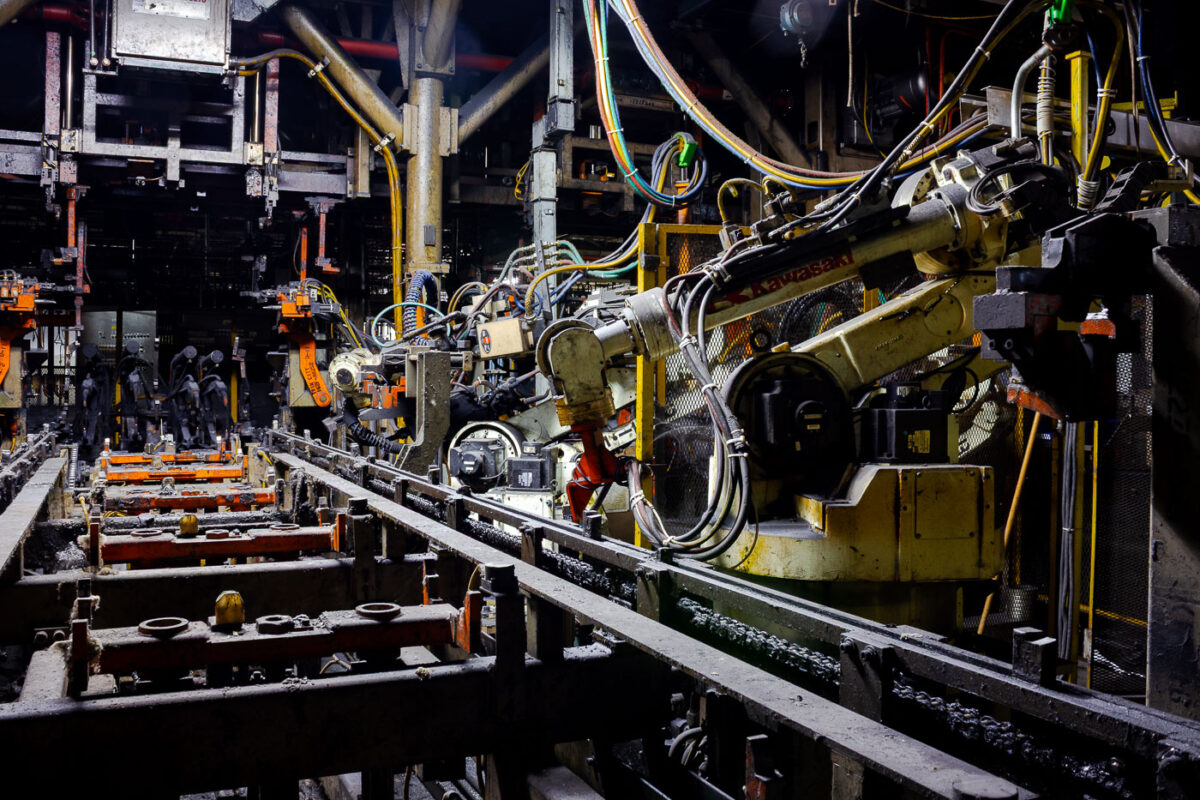
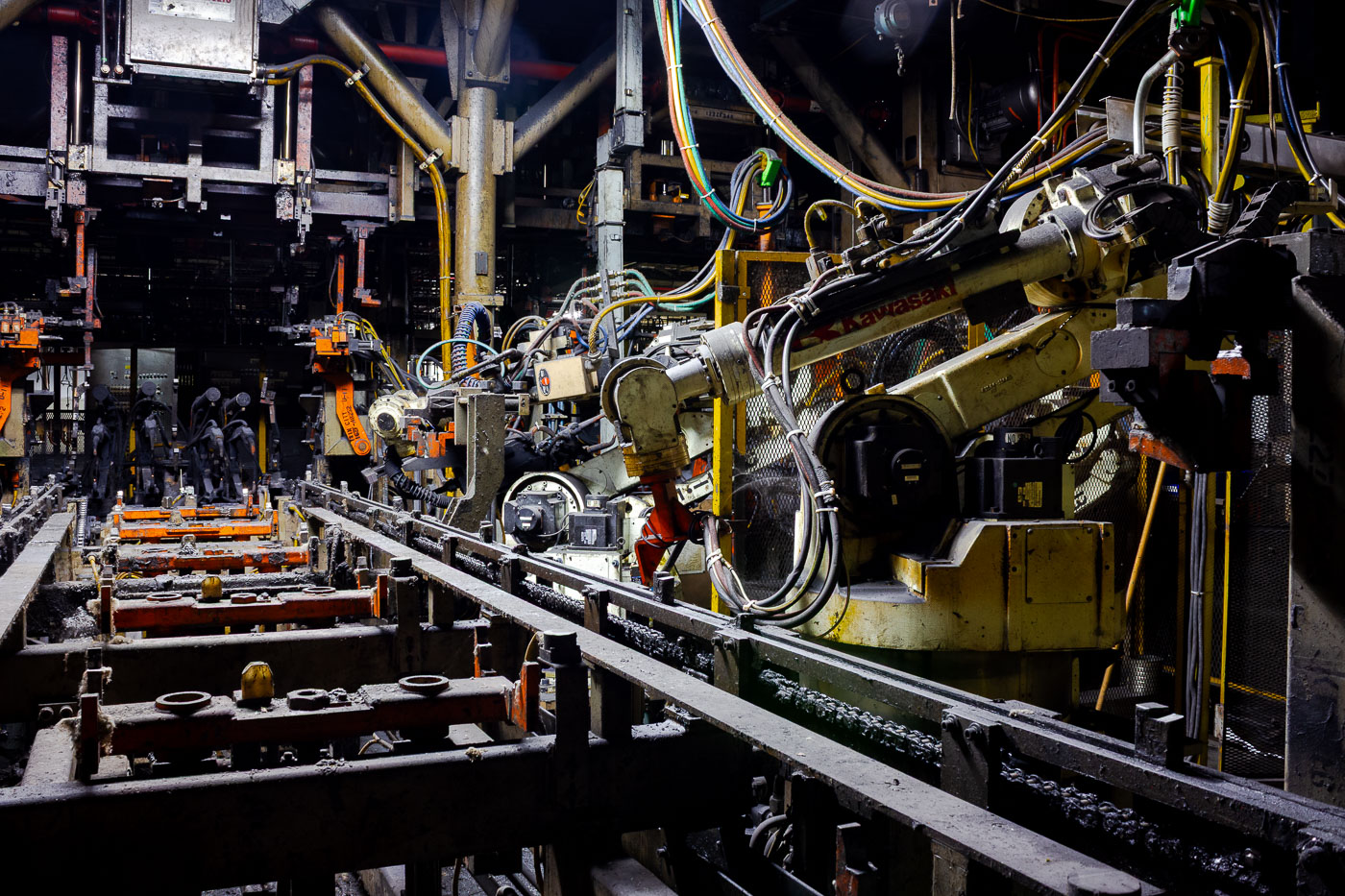
Robotic arms and conveyor systems on the Ford Ranger assembly line at an automotive plant, showcasing automated vehicle manufacturing processes.
Automated robotic arms and conveyor systems are visible on the assembly line at a Ford automotive plant. This facility was responsible for the production of the Ford Ranger pickup truck. The image showcases the complex machinery and infrastructure required for modern vehicle manufacturing, highlighting the integration of robotics and automated processes in the automotive industry.

Ford Ranger Assembly Line, Automotive Plant
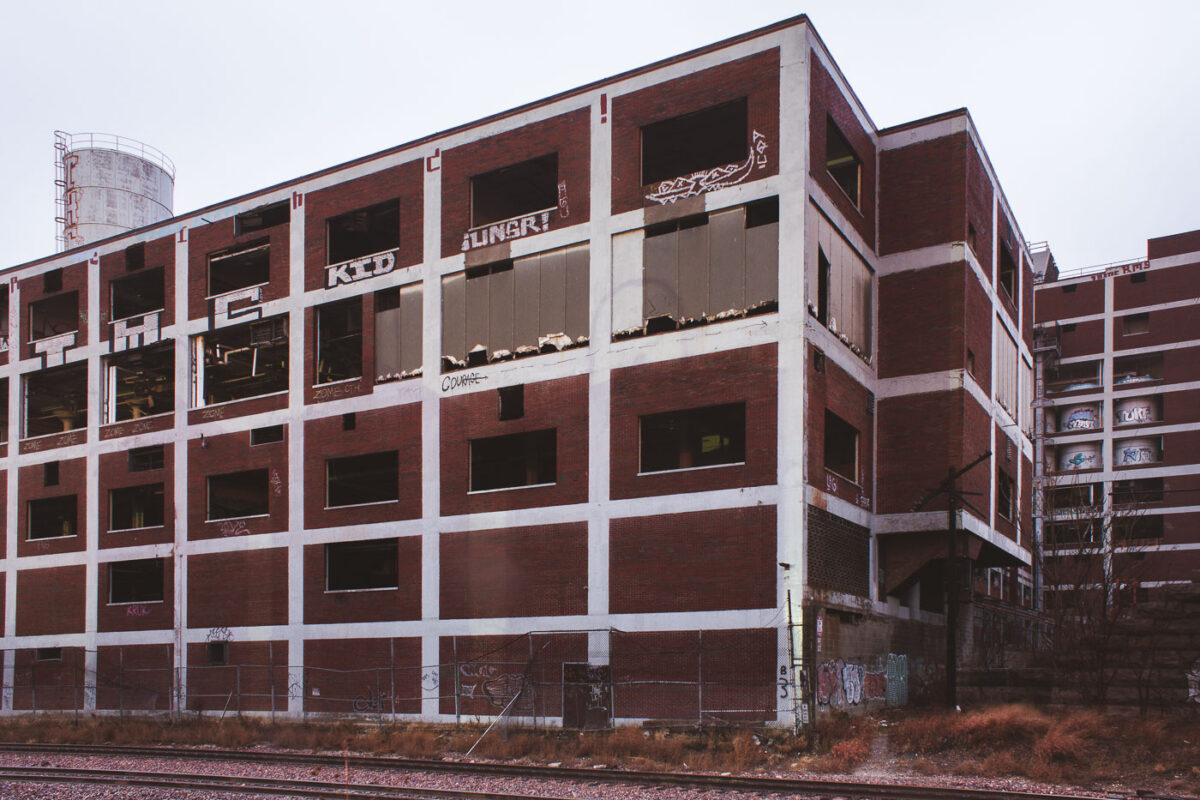
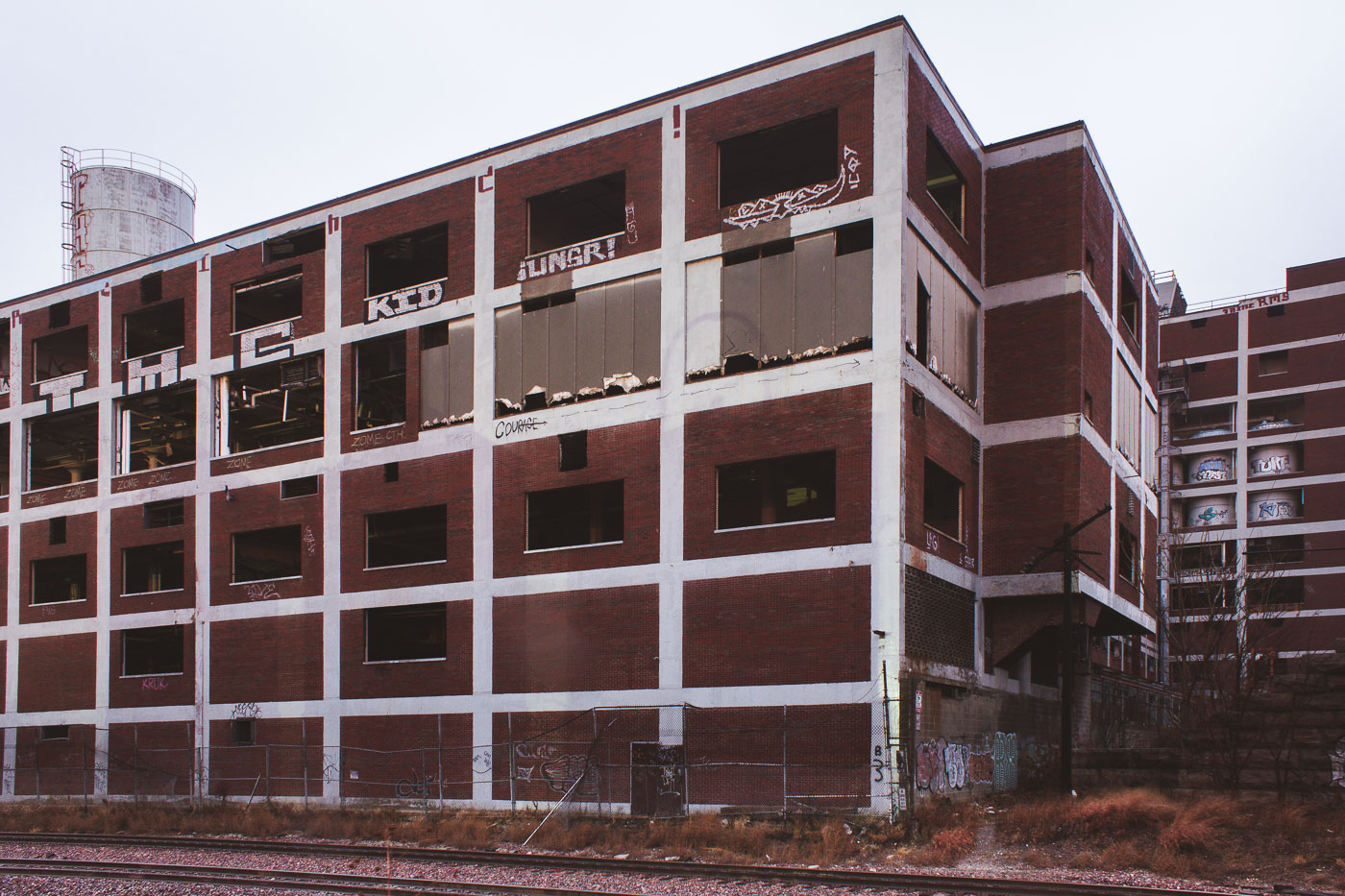
The abandoned Brach's Candy Factory in Cicero, Illinois, a large brick industrial structure with graffiti, stands as a relic of its confectionery production past.
The Brach's Candy Factory in Cicero, Illinois, was a significant industrial site that once produced a wide variety of confections. The factory complex, known for its large-scale production, operated for decades before its closure. This image shows the abandoned brick structure, a testament to the site's industrial past. Following its demolition, the land was repurposed as a semi-truck parking lot.

Brach’s Candy Factory Before Demolition, Cicero IL
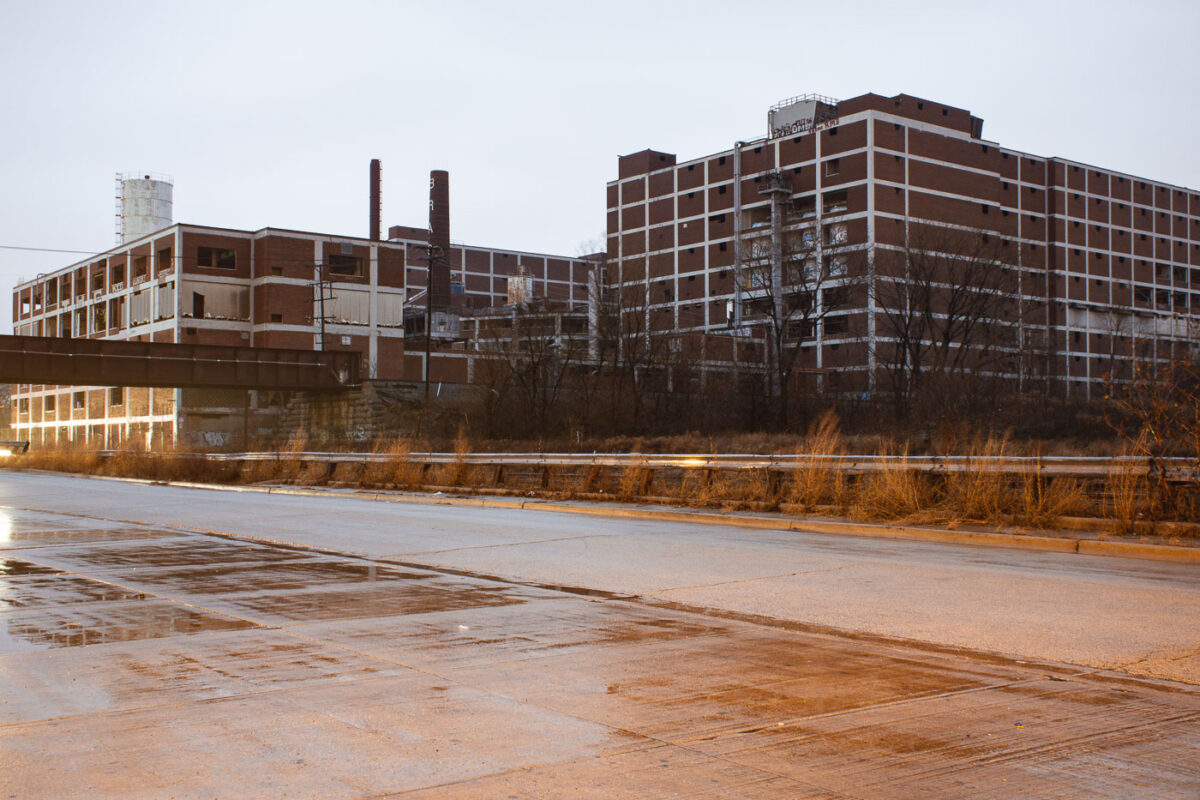
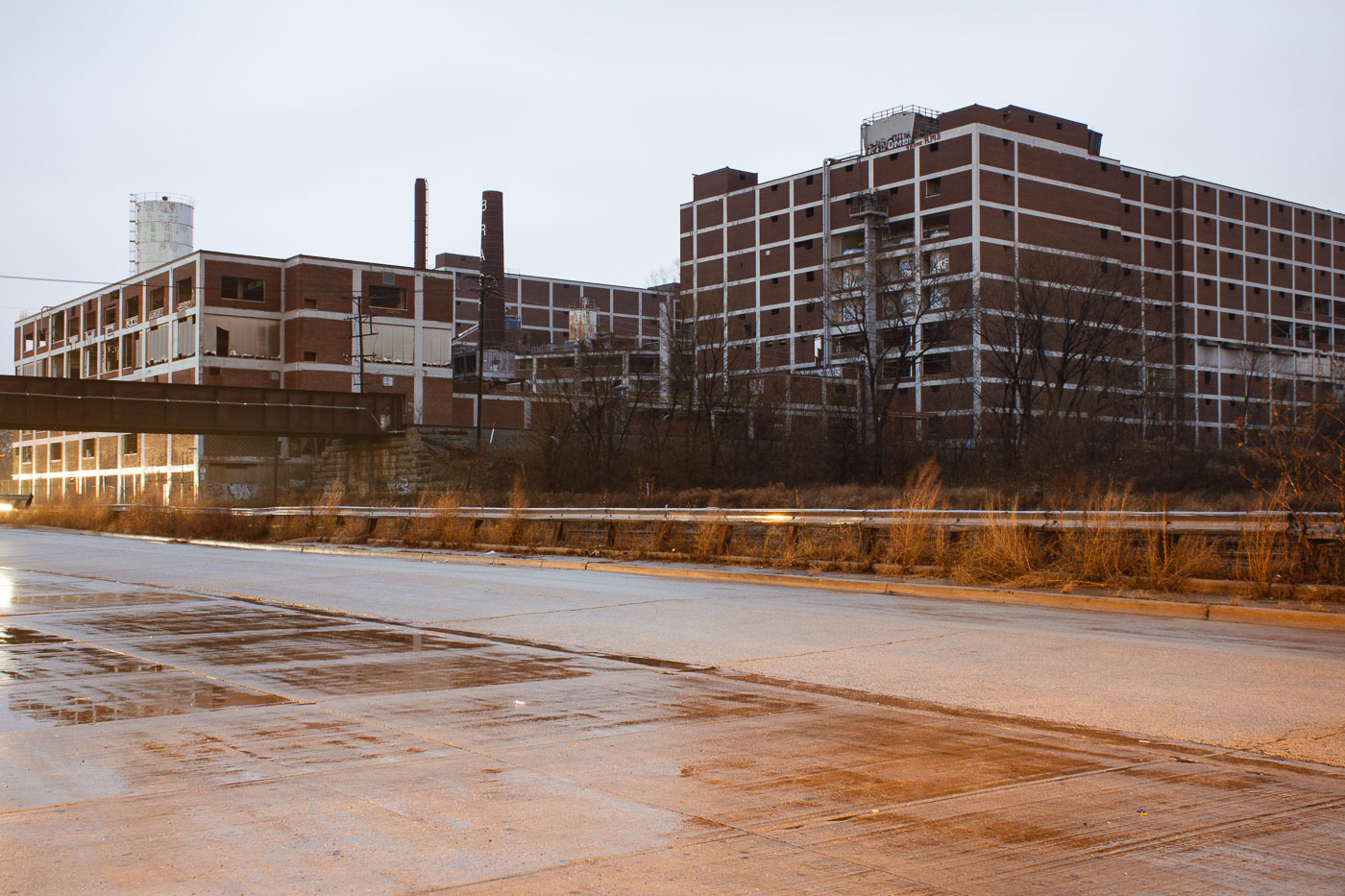
Brach's Candy Factory in Cicero, Illinois, stands abandoned before demolition.
Brach's Candy Factory in Cicero, Illinois, is shown in a state of abandonment before demolition. The former confectionery complex occupied a large industrial site on the Chicago area's near-west side and later became one of the region's best-known vacant factories.

Brach’s Candy Factory, Cicero, Illinois

Brach's factory site in Chicago with a guard dogs warning sign on a chain-link fence.
A security warning sign is mounted on a chain-link fence at the former Brach's Candy Factory site in Chicago. The sign states that the property is under 24-hour video security and protected by guard dogs. Brach's closed the factory in 2003, and the site was later demolished.

Brach’s Factory Site Security Sign, Chicago
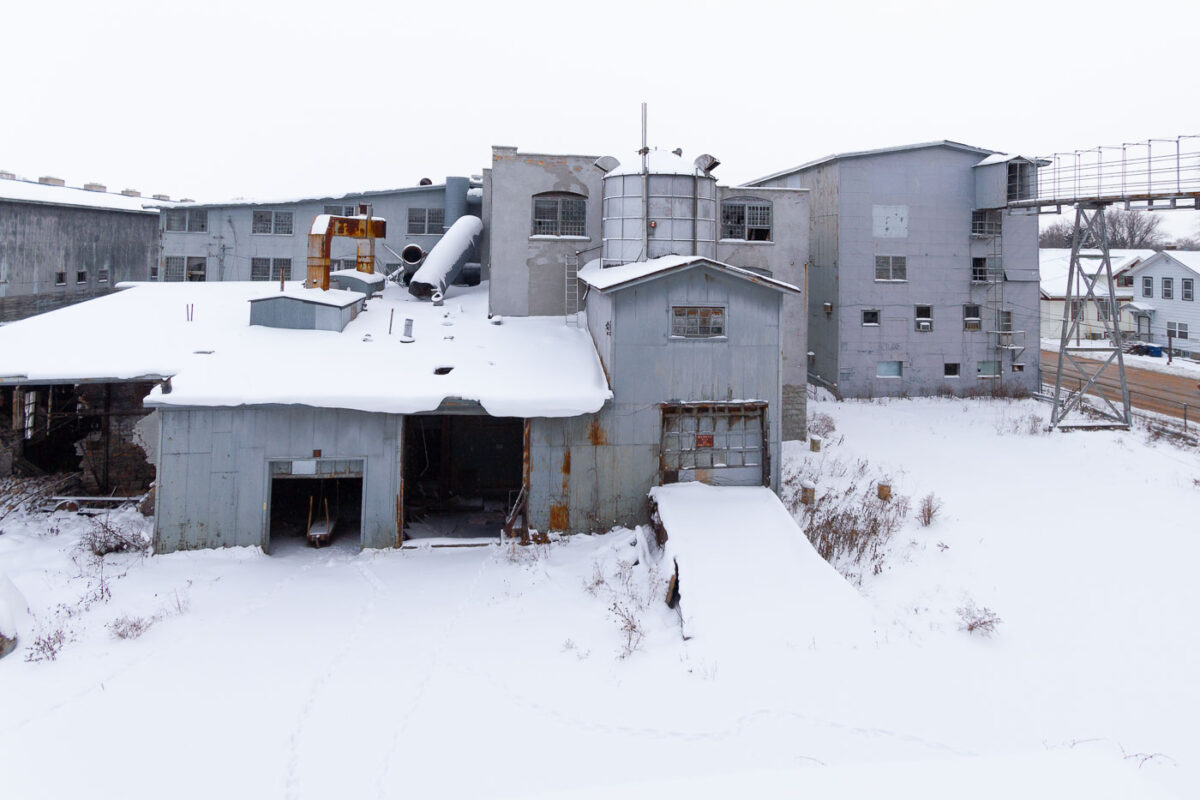
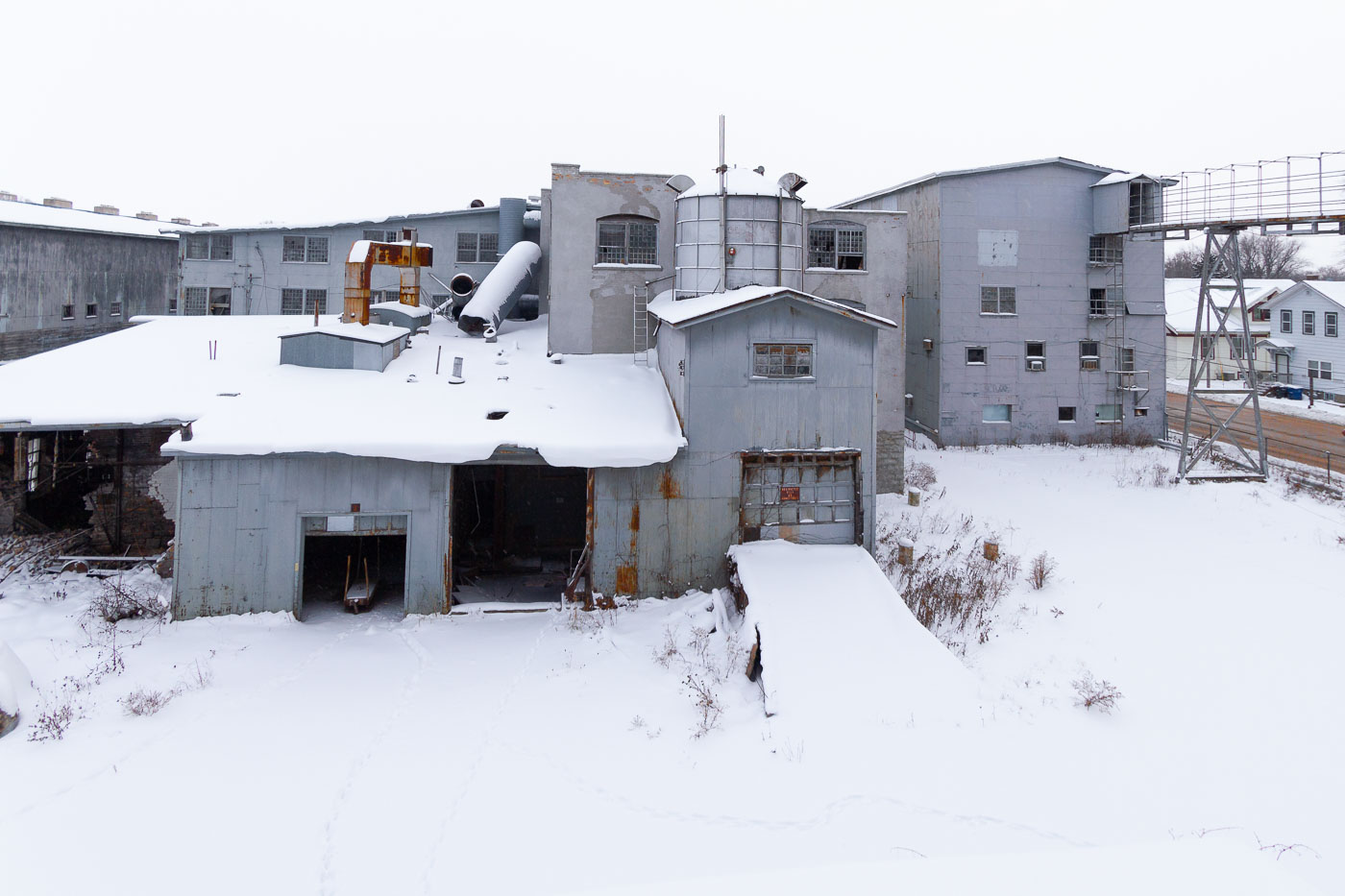
The abandoned Buckstaff Furniture Factory in Oshkosh, Wisconsin, covered in snow. The early 20th-century structure was a significant regional employer.
The former Buckstaff Furniture Factory in Oshkosh, Wisconsin, stands abandoned and covered in snow. Established in the early 20th century, the factory was a significant employer in the region, producing furniture for decades. Its industrial architecture, characterized by large, utilitarian structures and extensive piping, reflects the manufacturing processes it once housed. The factory's closure marked a shift in Oshkosh's economic landscape, leaving behind this imposing structure as a reminder of its industrial past.

Buckstaff Furniture Factory, Oshkosh, Wisconsin in Winter
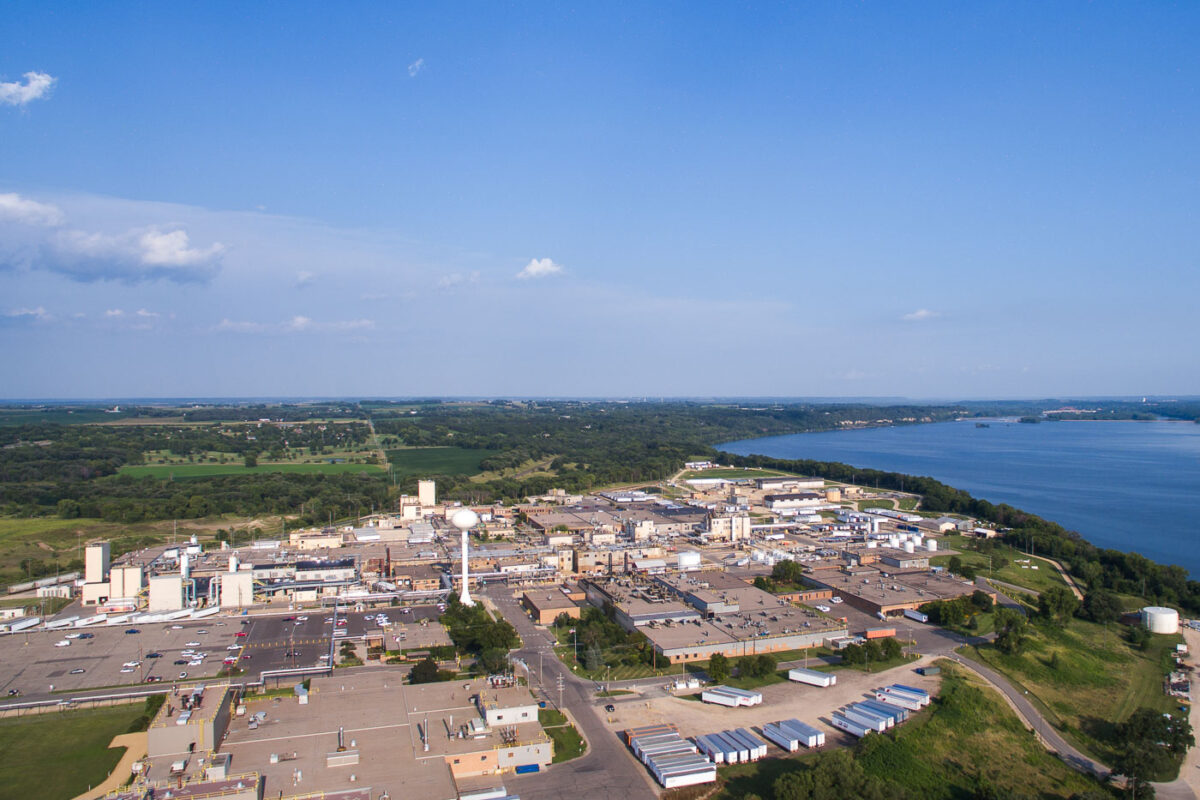
3M Manufacturing Plant in Cottage Grove, Minnesota, along the Mississippi River.
The 3M Manufacturing Plant in Cottage Grove, Minnesota, is an industrial complex along the Mississippi River. The facility has long supported 3M production and logistics in the Twin Cities area. Its riverfront location has provided access for transport and large-scale operations.

3M manufacturing plant on the Mississippi River, Cottage Grove
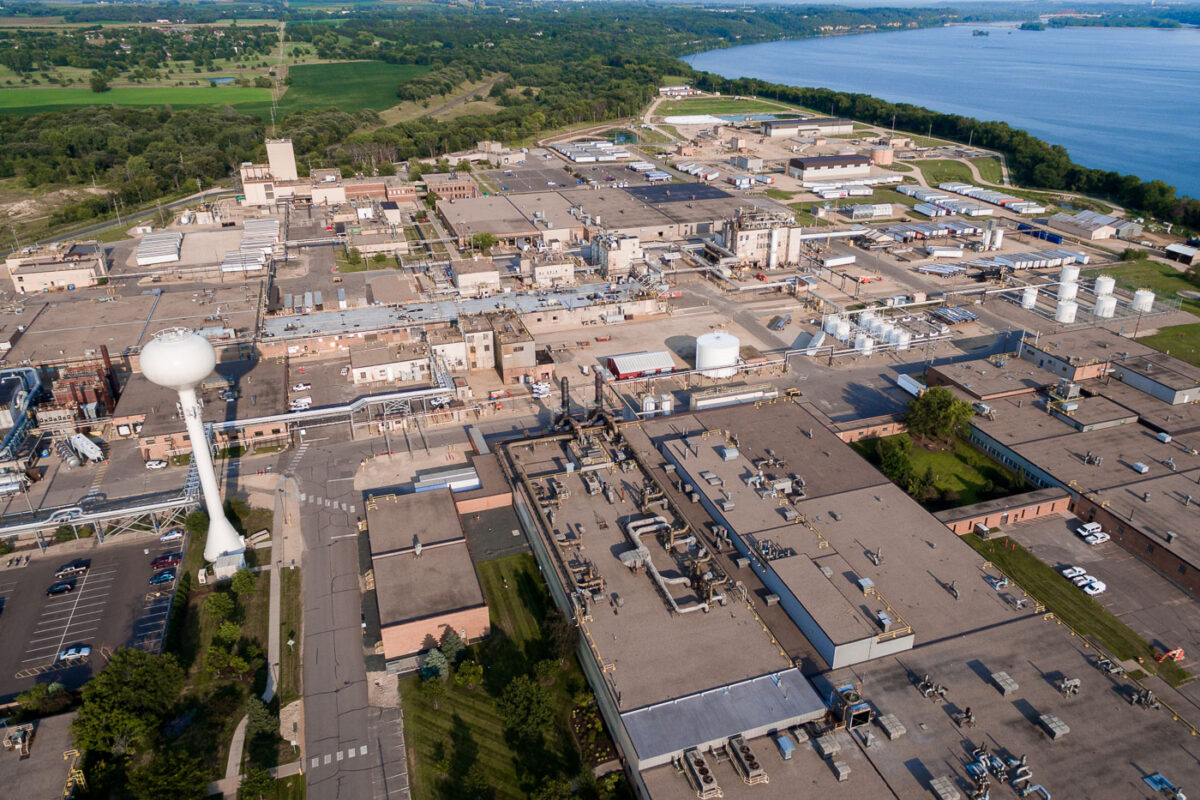
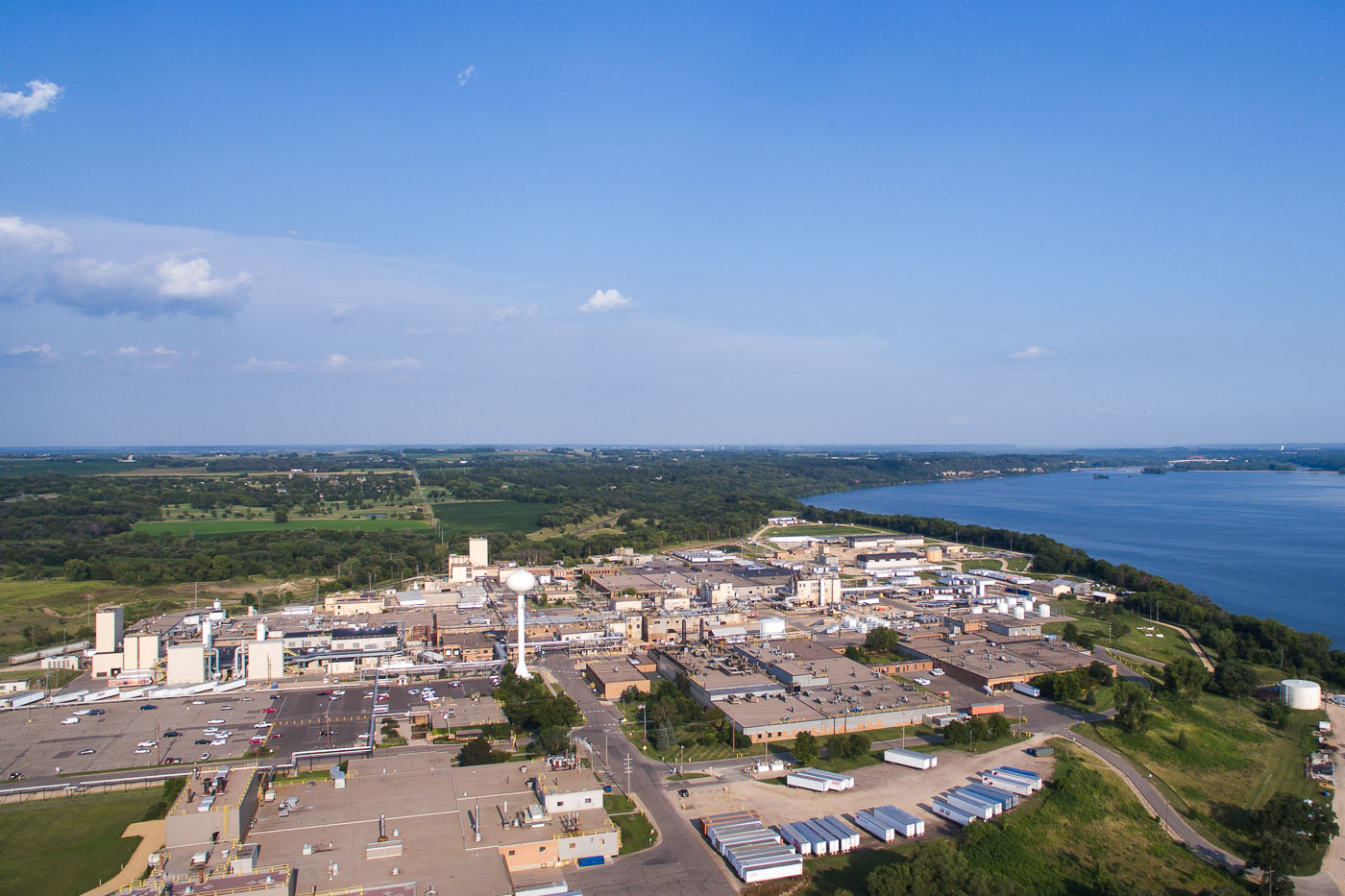
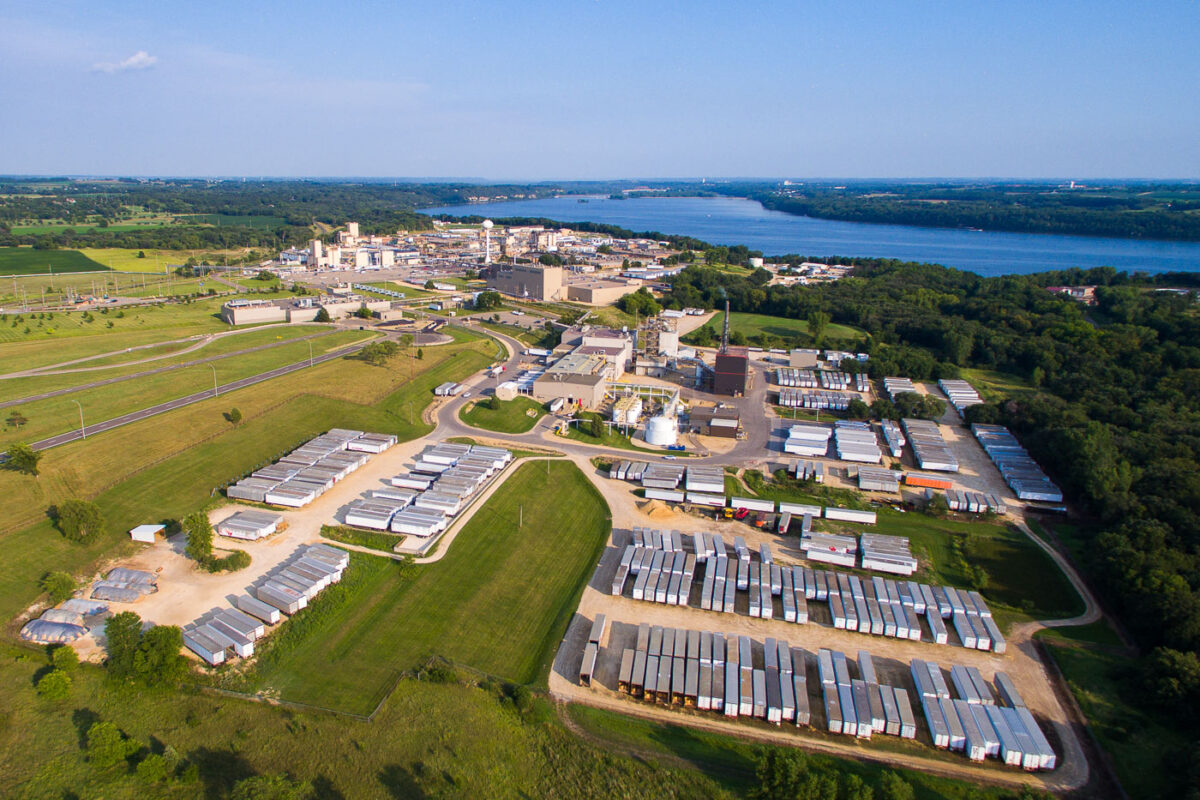
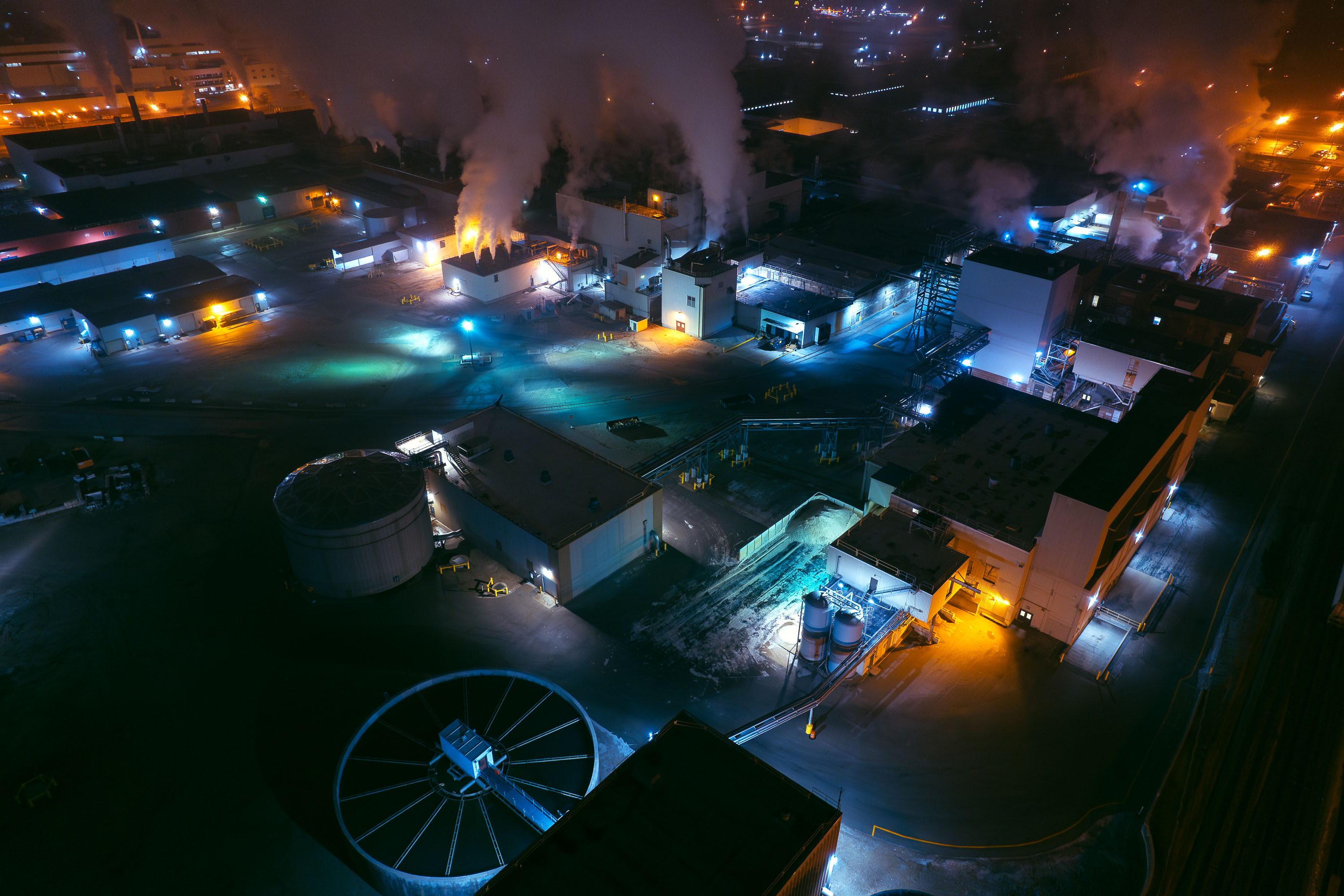
Aerial view of 3M’s manufacturing plant in Cottage Grove, Minnesota, beside the Mississippi River.
3M’s manufacturing plant in Cottage Grove, Minnesota, fills a large site along the Mississippi River. The aerial view shows multiple factory buildings, storage areas, service roads, and a water tower within the industrial complex.

3M Manufacturing Plant, Cottage Grove

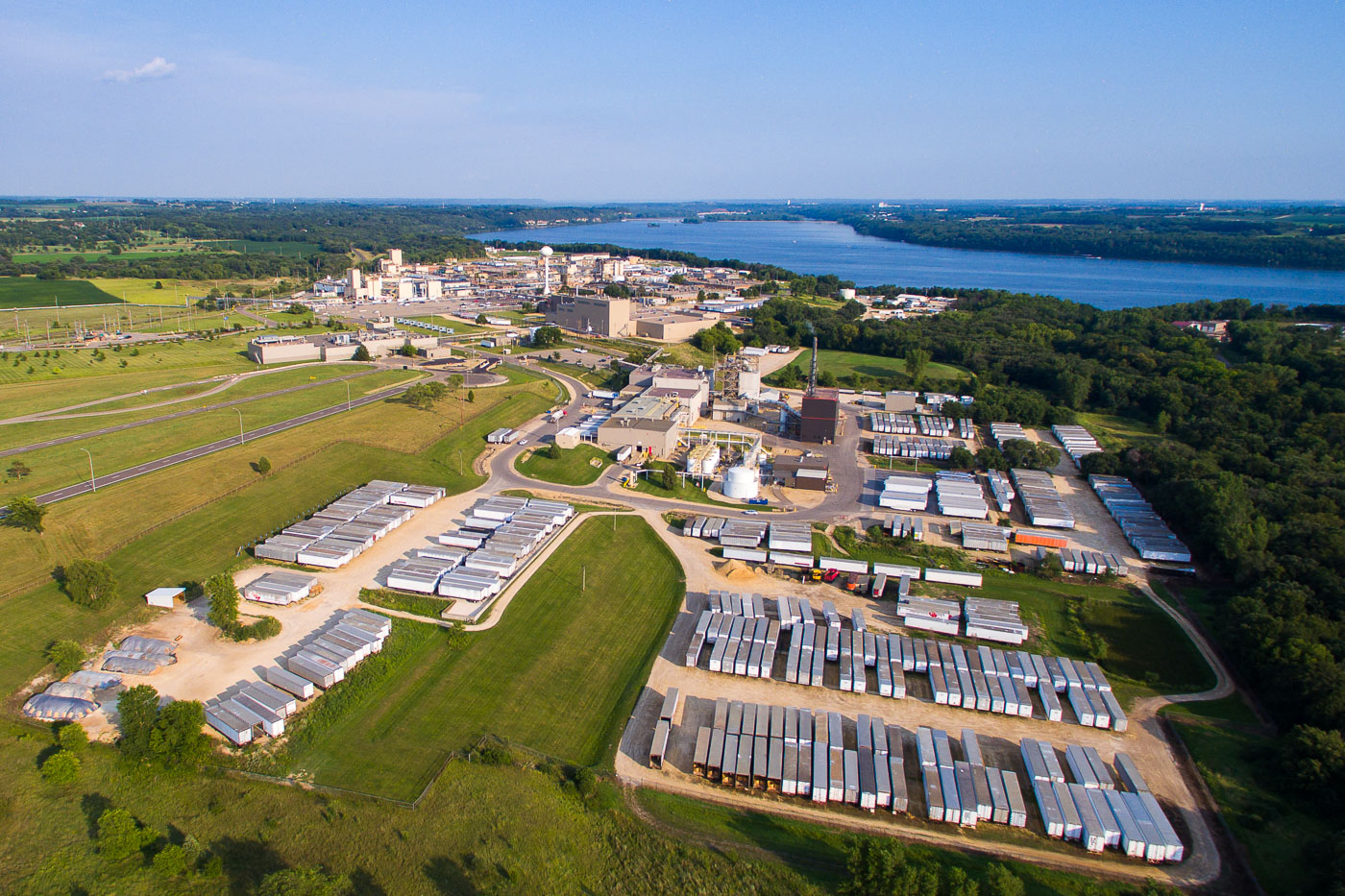
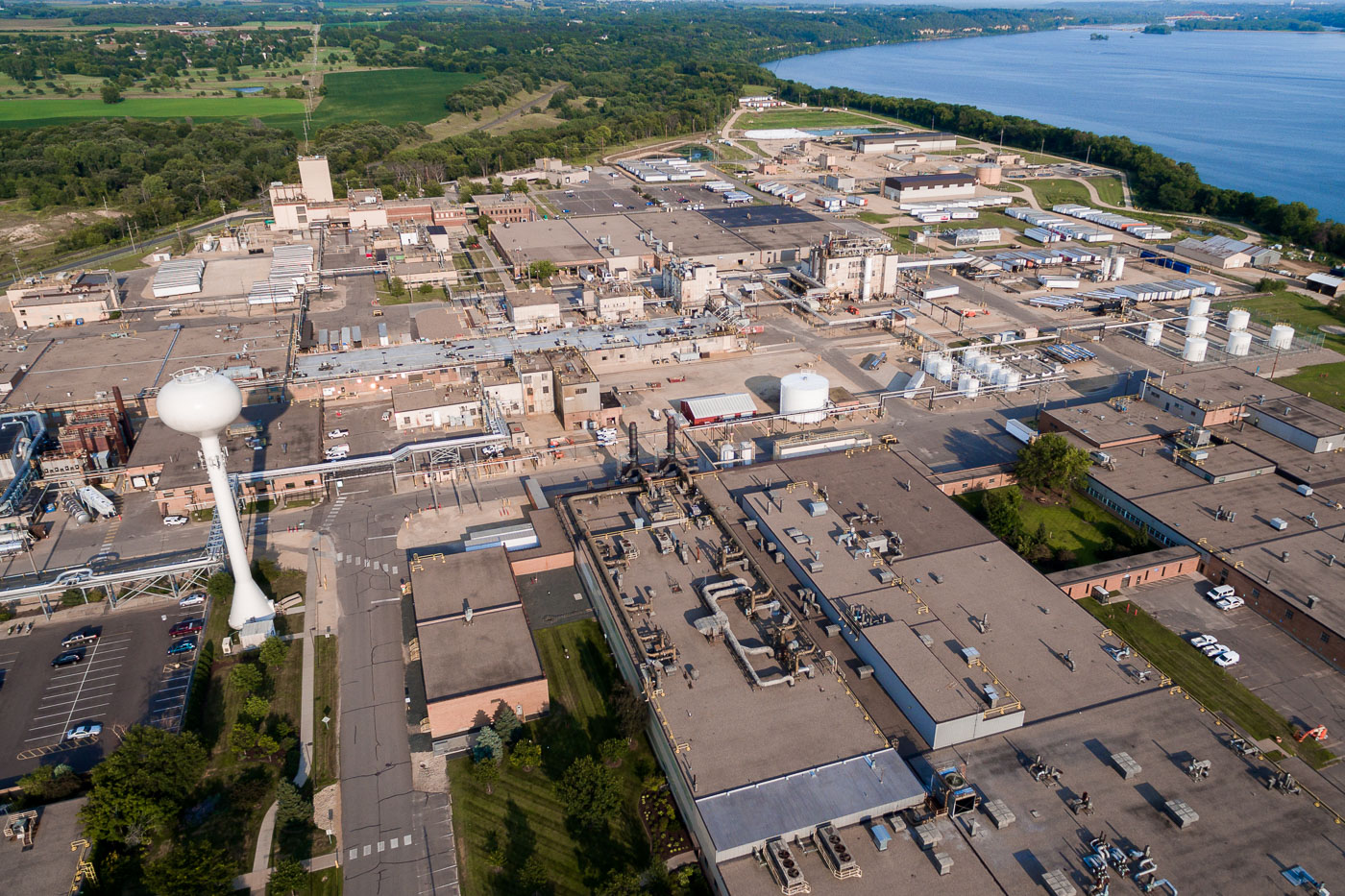
3M manufacturing plant in Cottage Grove, Minnesota, beside the Mississippi River
3M’s manufacturing plant in Cottage Grove, Minnesota, sits beside the Mississippi River. The facility occupies a large industrial campus with processing buildings, storage areas, and access roads spread across the riverfront site.

3M Plant on the Mississippi River, Cottage Grove
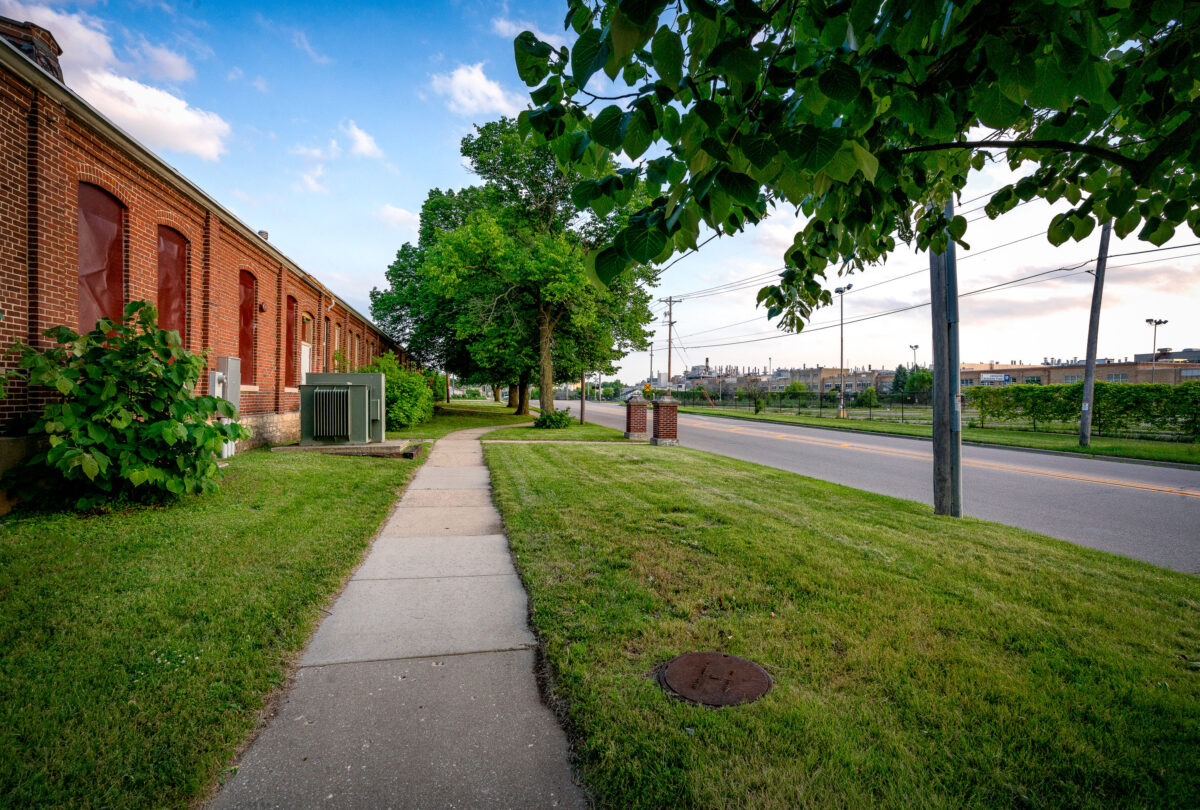
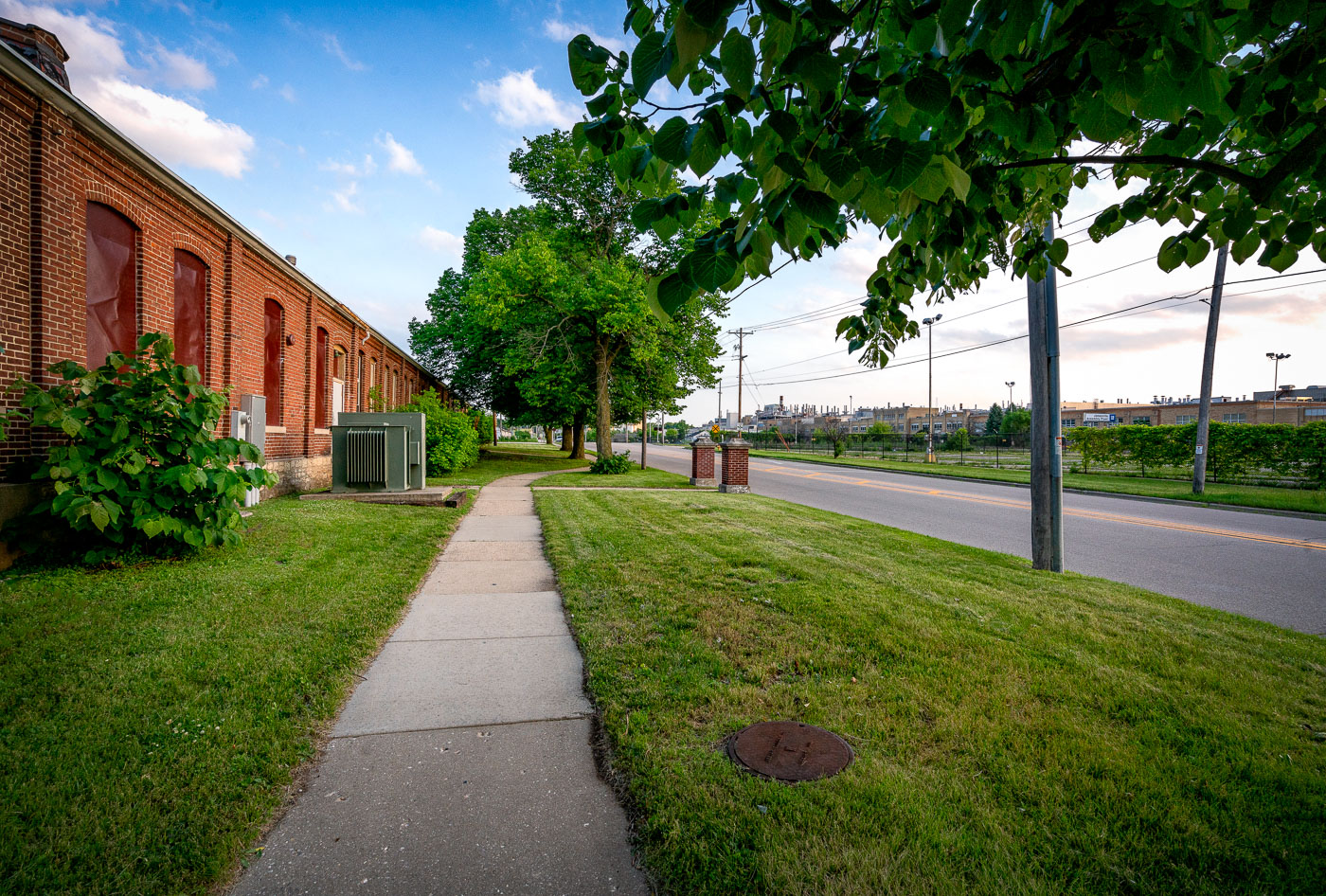
Janesville Assembly Plant site in Janesville, Wisconsin, beside a road and former factory buildings.
Janesville Assembly Plant site in Janesville, Wisconsin, along a road bordering the former General Motors complex. The plant operated for decades before closing in 2008 and was later demolished. The site remains part of Janesville’s industrial history.

Janesville Assembly Plant Site, Janesville, Wisconsin
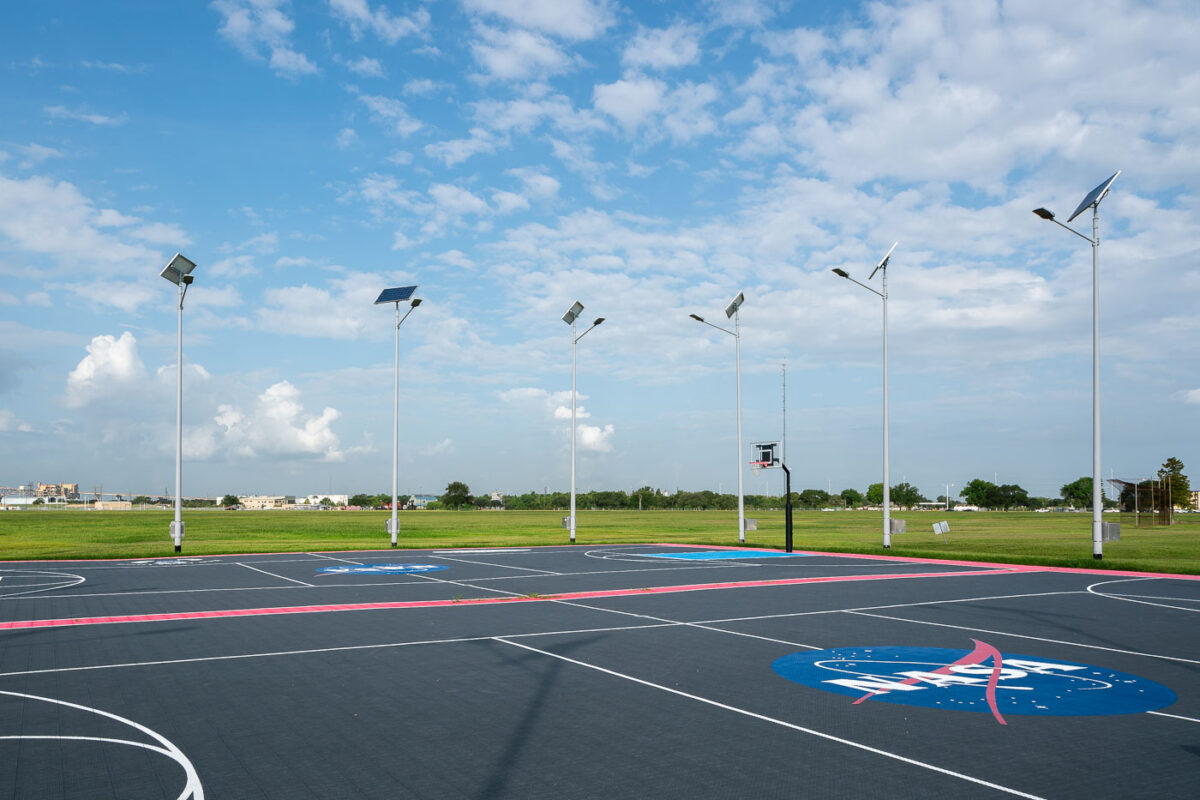
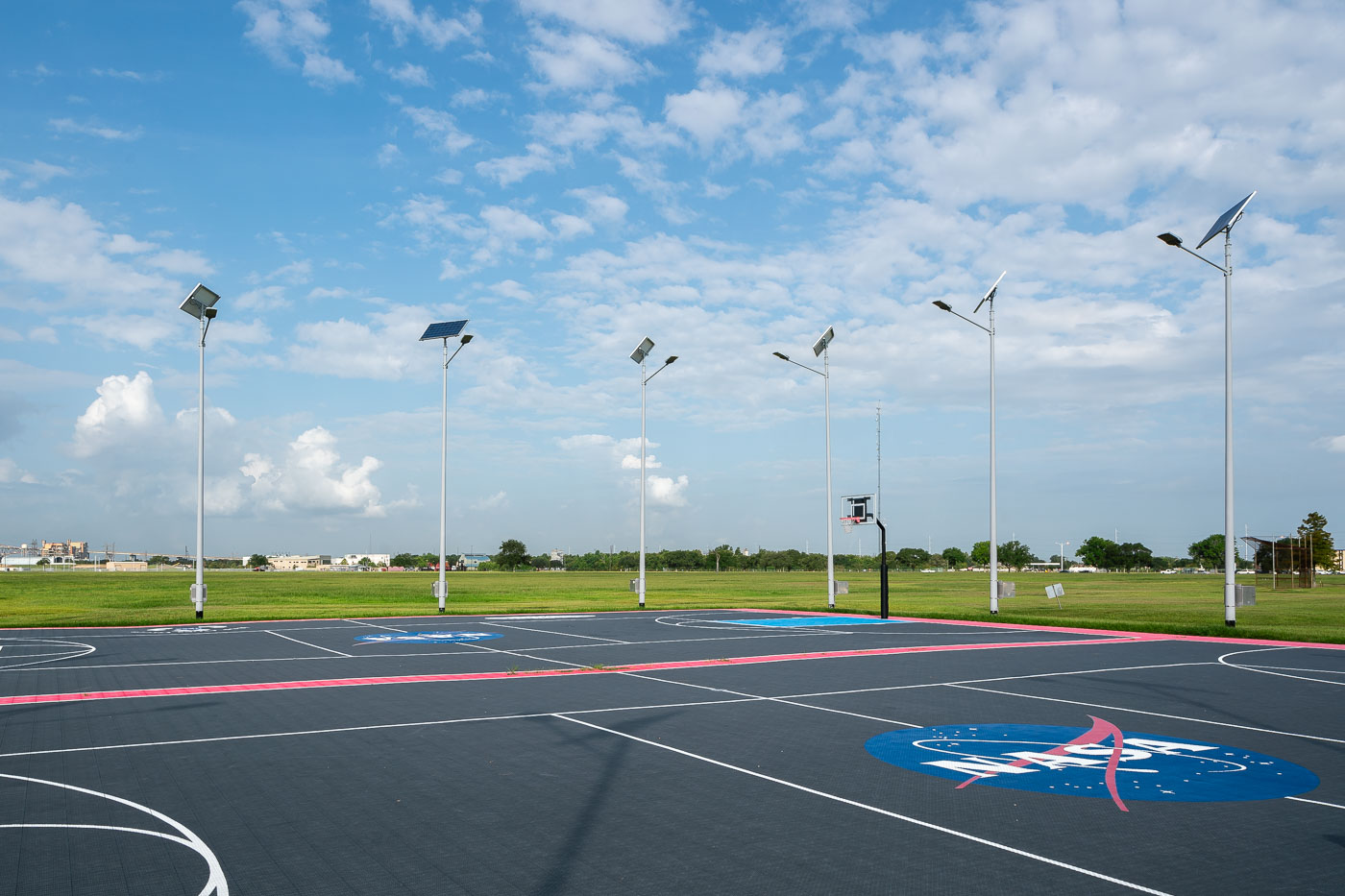
Basketball court outside Michoud Assembly Facility
A basketball court featuring the NASA insignia at center court and solar-powered lighting is located at the NASA Michoud Assembly Facility in New Orleans, Louisiana. This expansive campus holds a significant history in aerospace manufacturing, having produced components for the Saturn V rockets and Space Shuttle external tanks. Today, Michoud remains a vital center for engineering and production, fabricating large-scale aerospace hardware, including rocket stages for programs like the Space Launch System (SLS) and Artemis missions.

NASA Basketball Court, Solar Lights – Michoud Assembly Facility
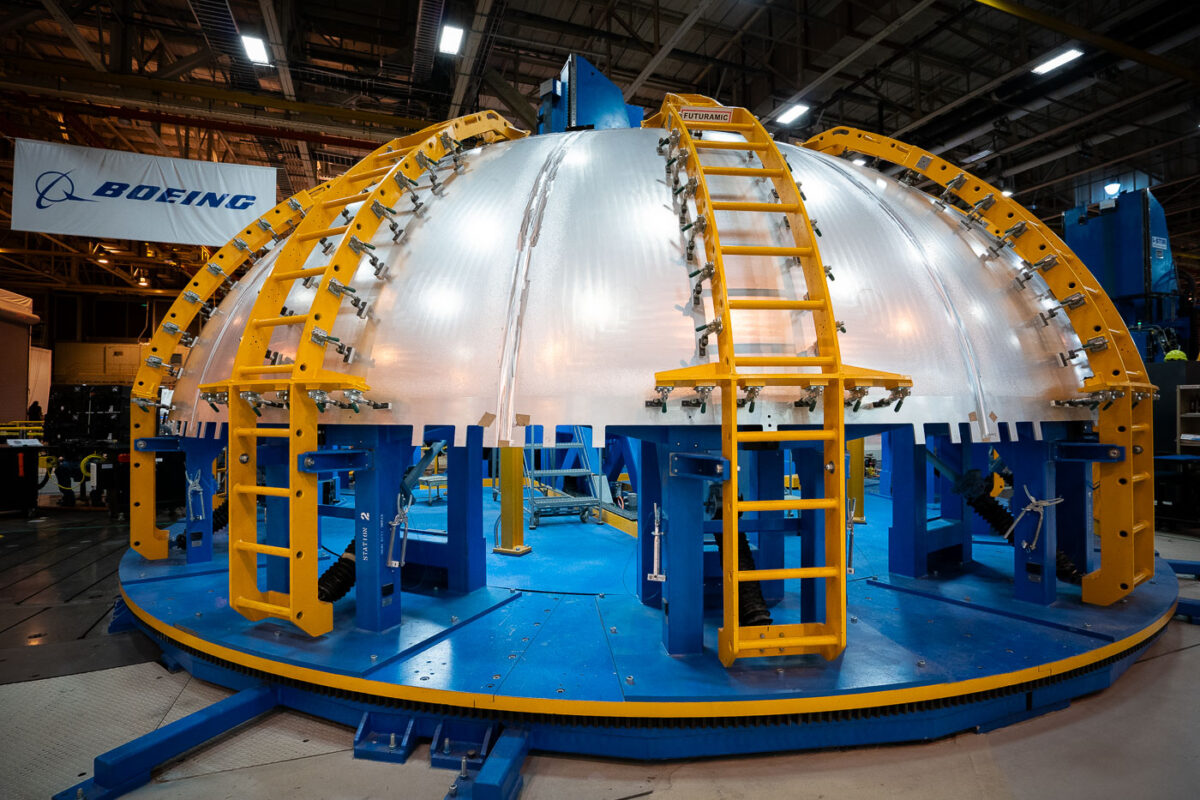
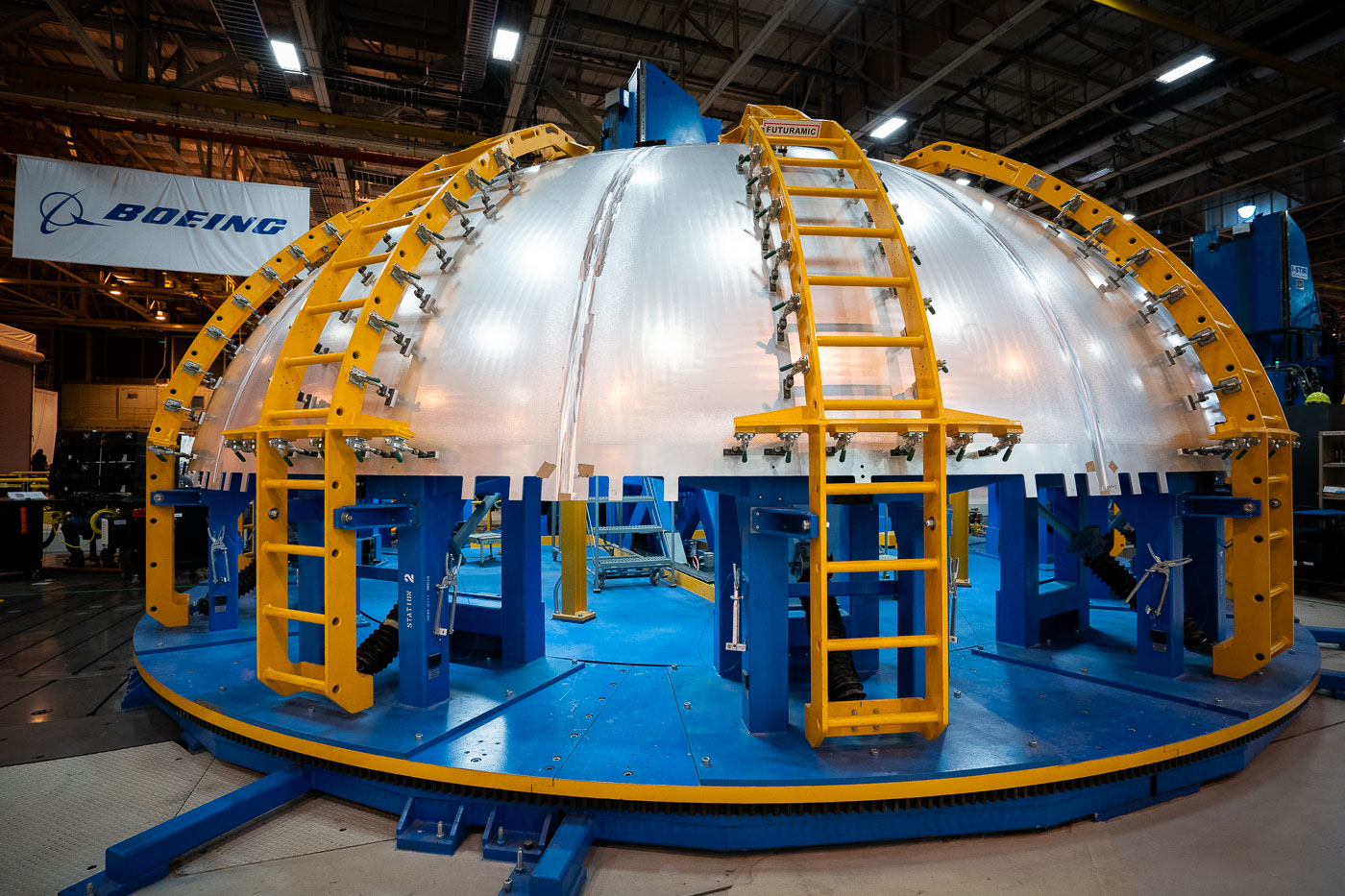
Friction Stir Dome Assembly at NASA Michoud
At NASA’s Michoud Assembly Facility in New Orleans, Louisiana, a large aluminum dome section for the Space Launch System (SLS) undergoes friction-stir welding. This advanced technique, performed by a PAR Systems I-Stir Friction Welder, joins thick aerospace materials by using frictional heat and mechanical pressure to create strong, defect-free joints without melting the metal. Boeing engineers utilize this precision process for critical rocket and space vehicle components, supporting the Artemis program's deep space exploration missions. The Michoud facility has a long history of large-scale fabrication for space programs, including the Saturn V and Space Shuttle, continuing its legacy as a vital center for American spaceflight infrastructure.

Boeing SLS Dome Friction-Stir Welding at NASA Michoud
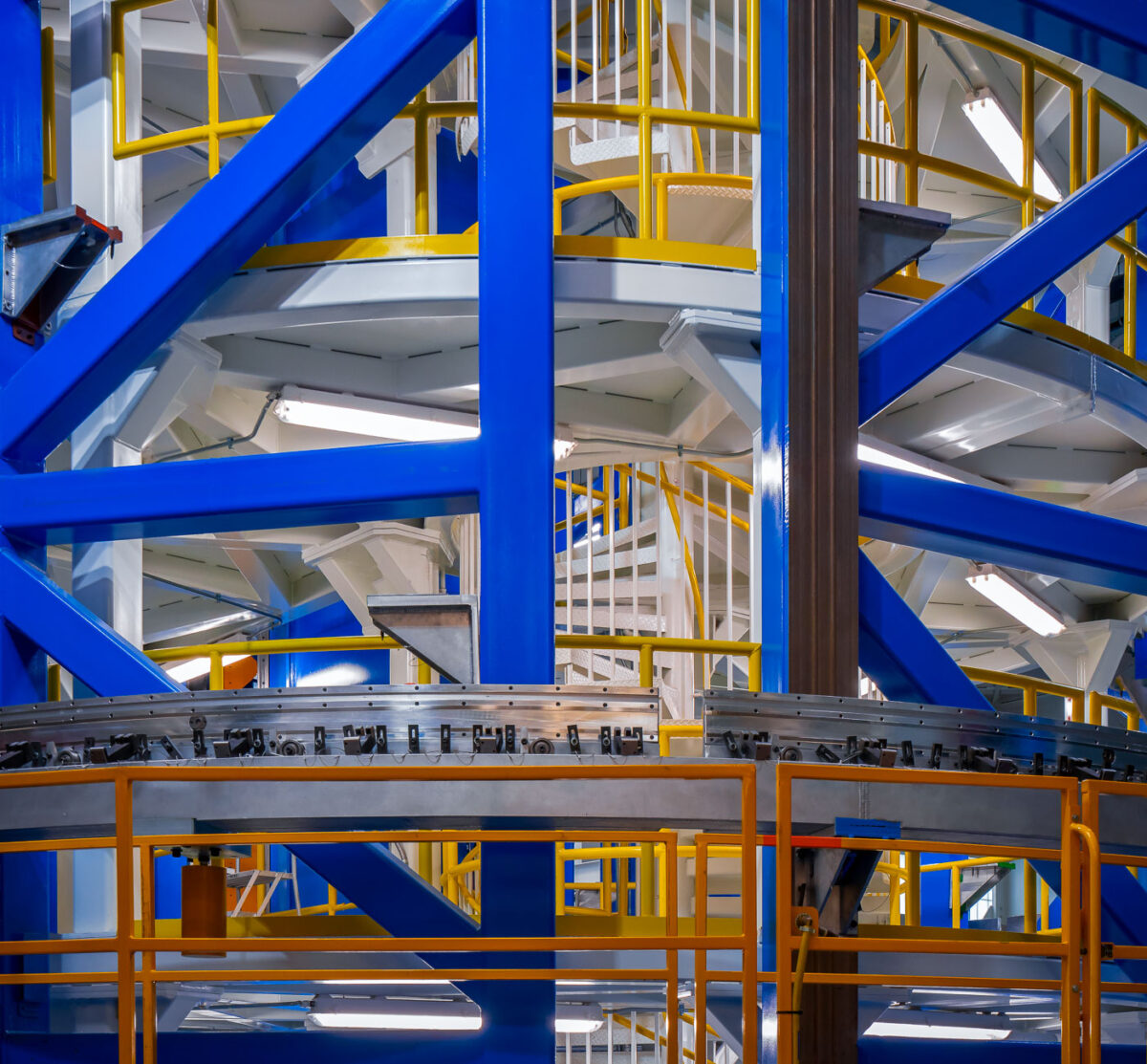
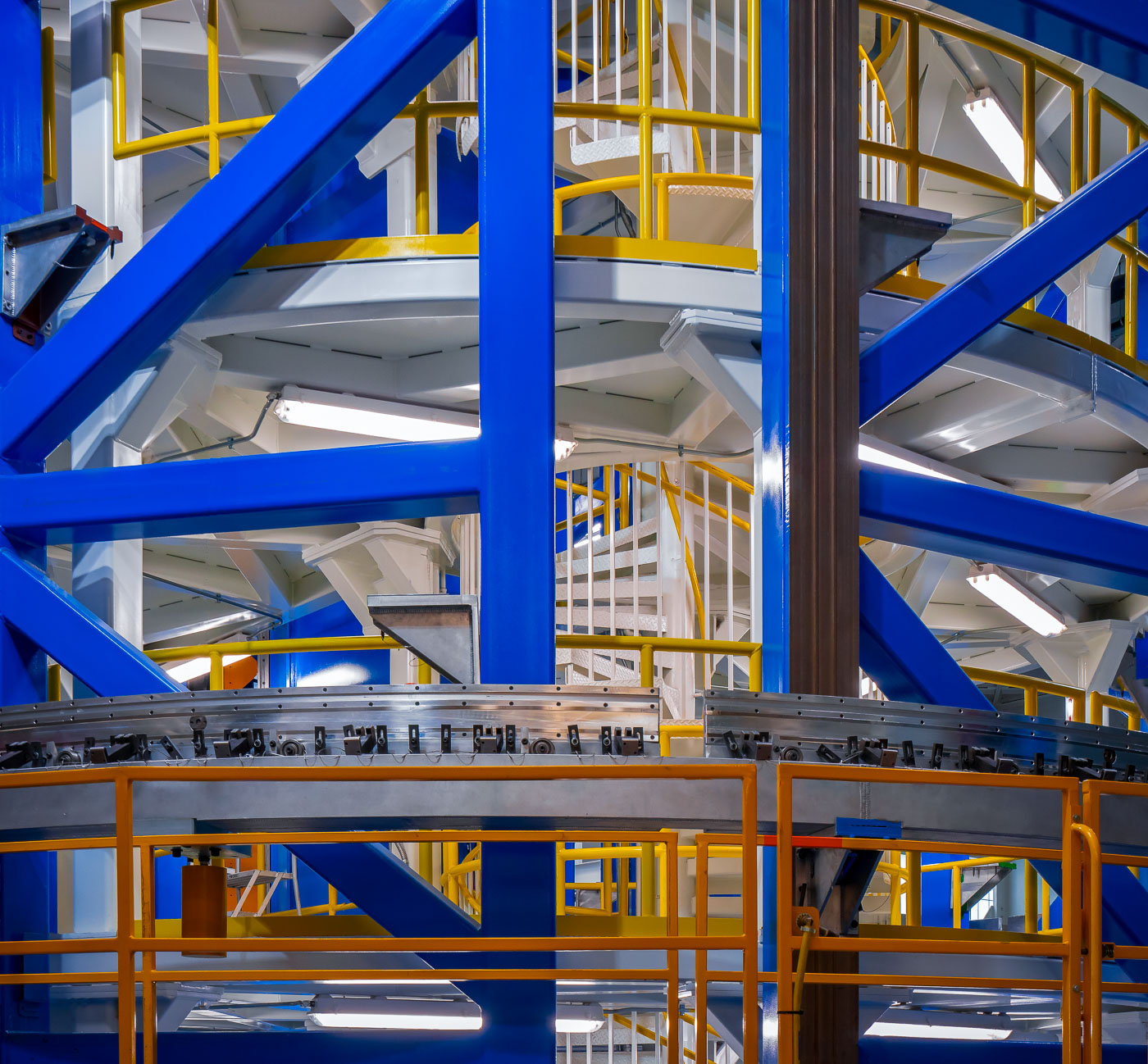
Inside the NASA Michoud Assembly Facility
The Vertical Weld Center (VWC) at NASA’s Michoud Assembly Facility, which is producing components for the Space Launch System (SLS) and Artemis rockets. Shown here is the tool used to do the barrel fabrication. From NASA: The Barrel Fabrication process consists of the sequential trimming and welding of Barrel Panels on the Vertical Weld Center (VWC) to form a 8.4-meter barrel. Post-weld non-destructive evaluation is also performed while the Barrel is positioned on the VWC. Barrels will be fabricated for the LH2 Tank, LO2 Tank, Forward Skirt, and Engine Section and transported to Building 110 for weld operations on the Vertical Assembly Center. NASA says there are 40 different Barrel Panel configurations with various thicknesses and heights and the 32 barrels to be fabricated each weight between 6,600 to 9,500 pounds. Established in 1961, Michoud has been a critical manufacturing hub for American space programs, notably producing the Saturn V first stages for the Apollo missions and external tanks for the Space Shuttle program. Today, the facility is central to NASA's Artemis program, fabricating the core stage of the SLS rocket, which is designed to return humans to the Moon and eventually journey to Mars. This vast complex houses specialized tooling and assembly jigs, underscoring the precision engineering required for deep-space exploration.

NASA Vertical Weld Center, SLS & Artemis Production
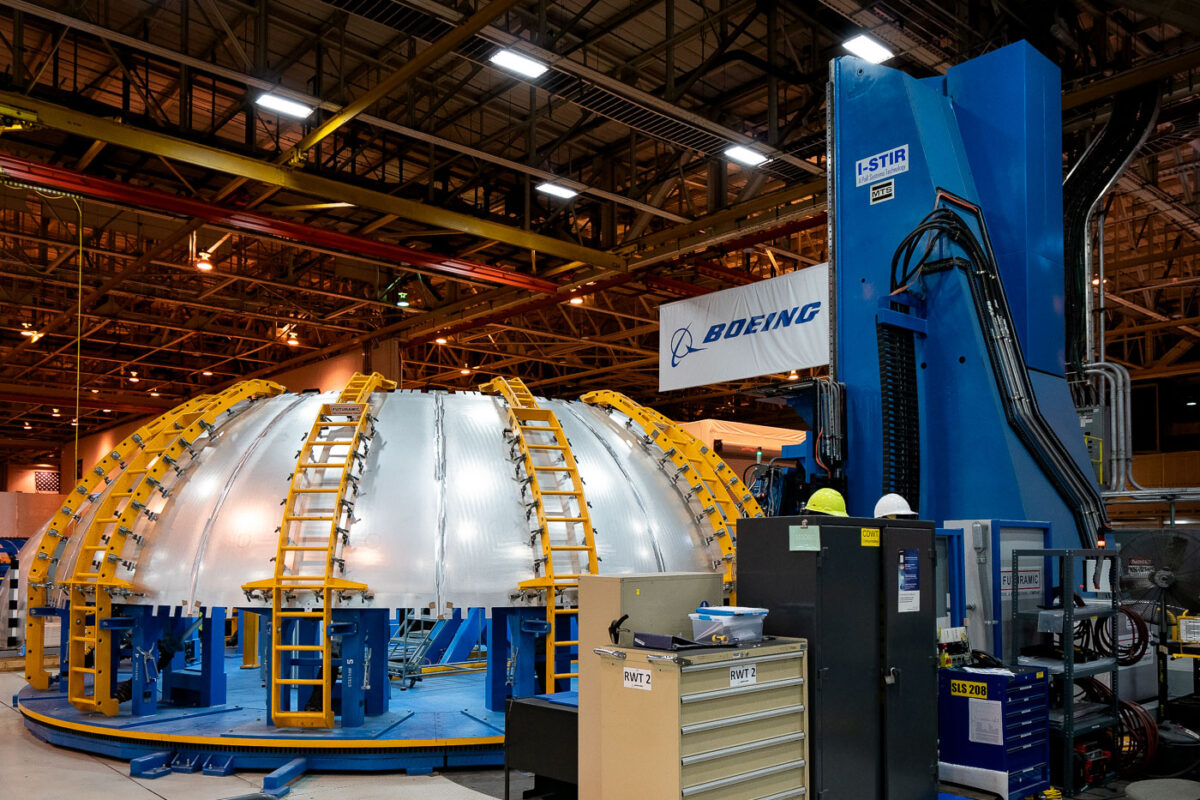
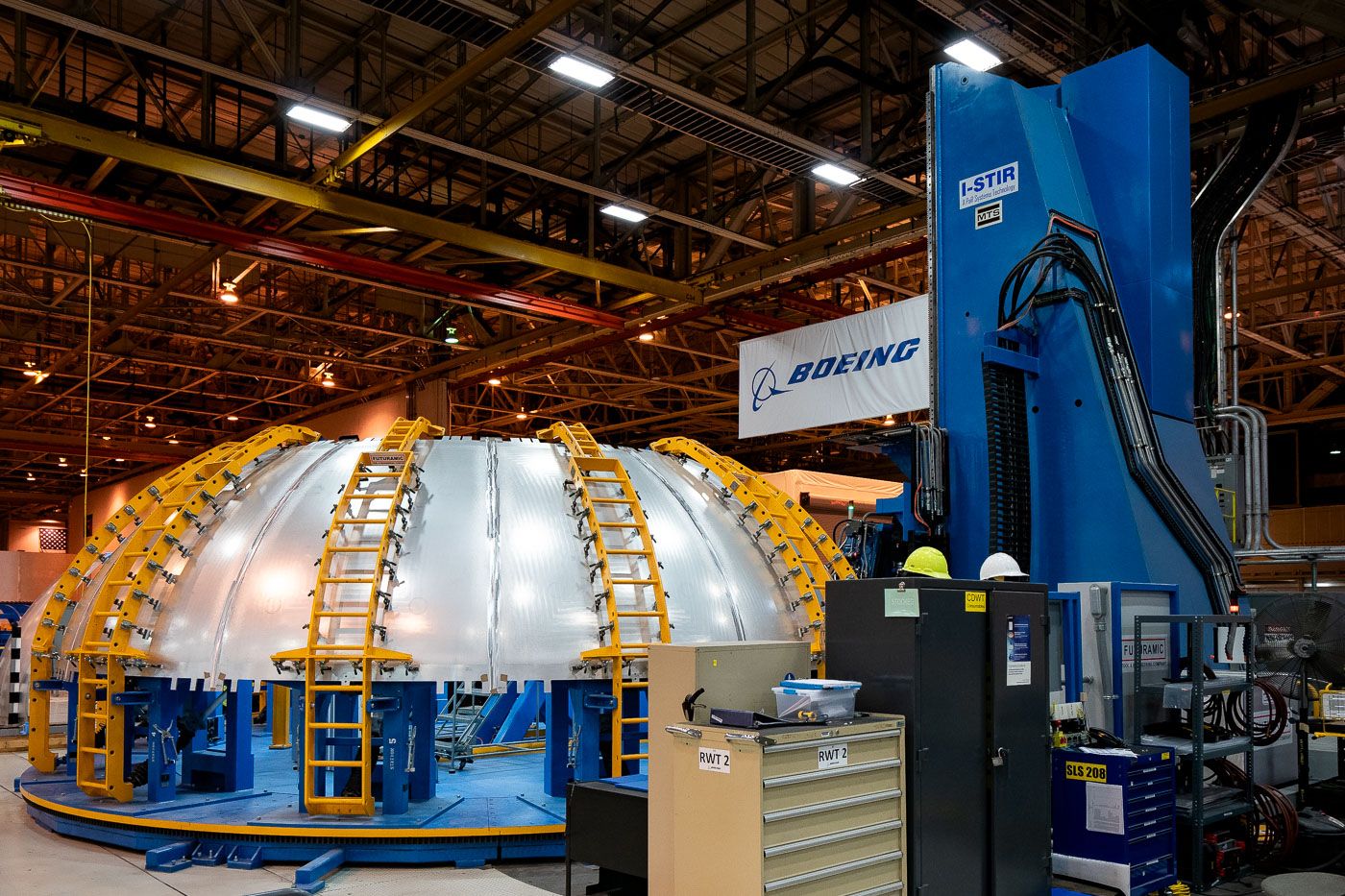
Boeing Dome Section on ISTIR Welder NASA Michoud
At NASA’s Michoud Assembly Facility in New Orleans, Louisiana, Boeing engineers operate a PAR Systems I-STIR Friction-Stir Welder. This specialized equipment is used to join massive aluminum dome sections, which are critical components for next-generation aerospace vehicles such as the Space Launch System (SLS) for the Artemis program. The friction-stir welding process forges metal under intense pressure and heat without melting it, producing welds with exceptional structural integrity for rocket fuel tanks and spacecraft pressure vessels. Michoud has a significant history in spaceflight hardware production, having previously manufactured components for the Saturn V rockets and Space Shuttle external tanks. The facility continues its role as a key national center for large-scale precision manufacturing and assembly of spaceflight hardware, supporting ongoing deep space exploration.

Futuramic Gore Weld Tool

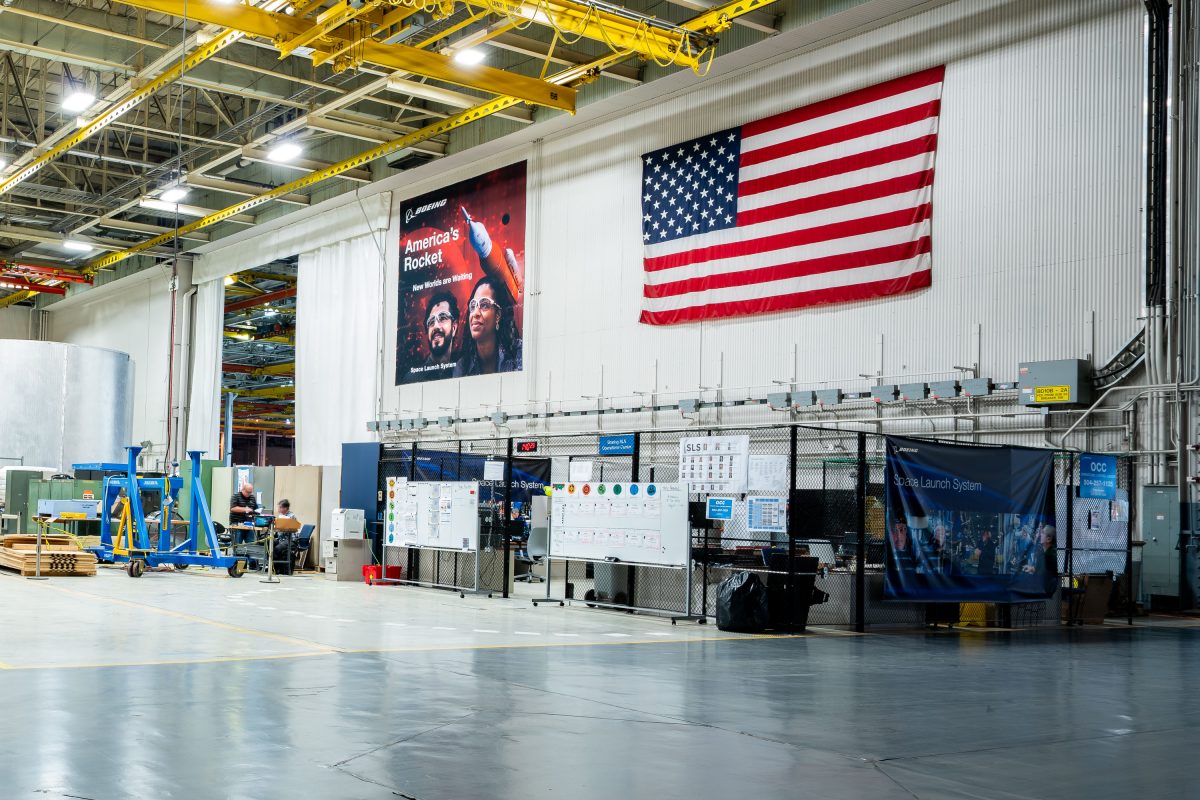
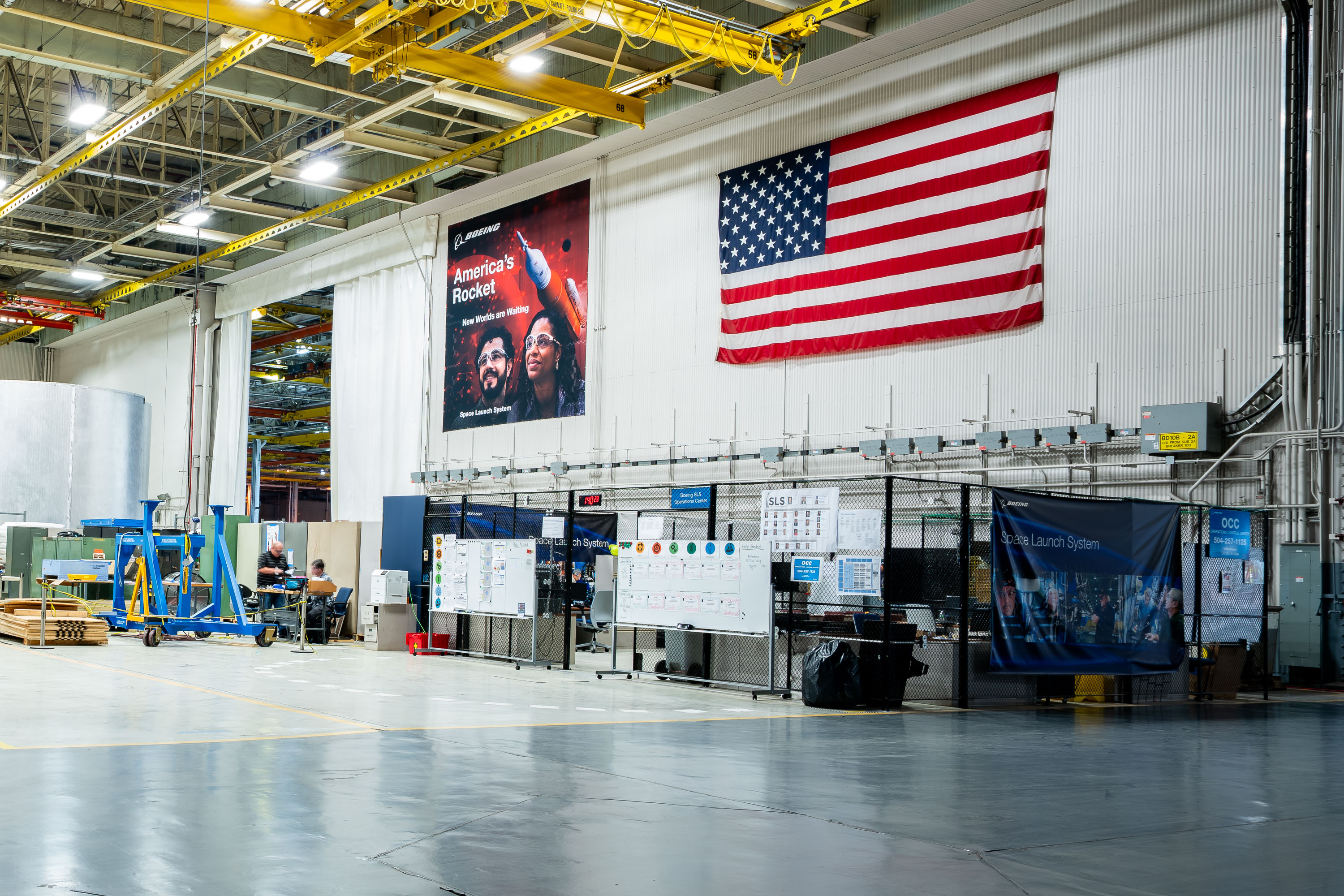
Boeing Space Launch System Operations Center at NASA's Michoud Assembly Facility in New Orleans.
Boeing operates the Space Launch System Operations Center inside NASA's Michoud Assembly Facility in eastern New Orleans. Michoud is a government-owned, contractor-operated site covering 832 acres, with a main manufacturing building enclosing about 43 acres under one roof. NASA has used the facility since 1961, previously for Saturn V stages and space shuttle external tanks. Boeing builds the SLS core stage there, the structure that houses the rocket's propellant tanks and four RS-25 engines. The core stage measures 212 feet long, making it the largest rocket stage NASA has ever flown.

Boeing SLS Operations Center, Michoud Assembly Facility
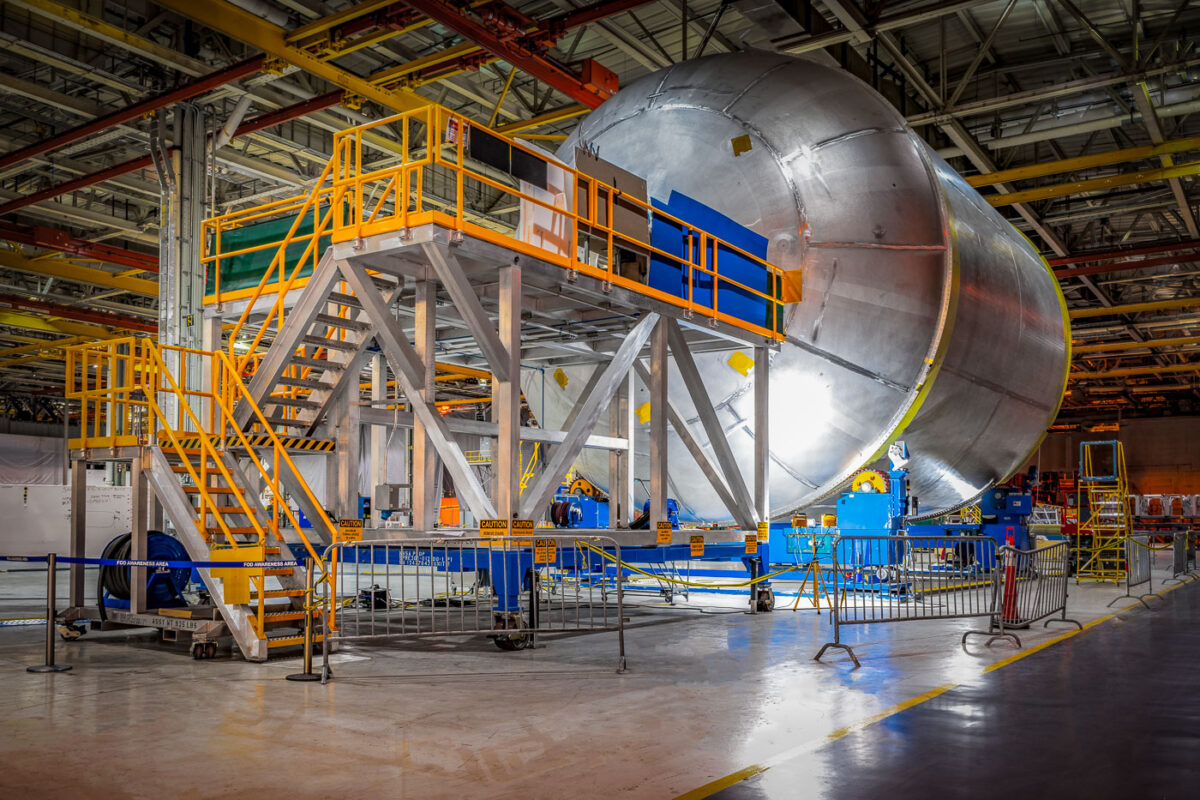
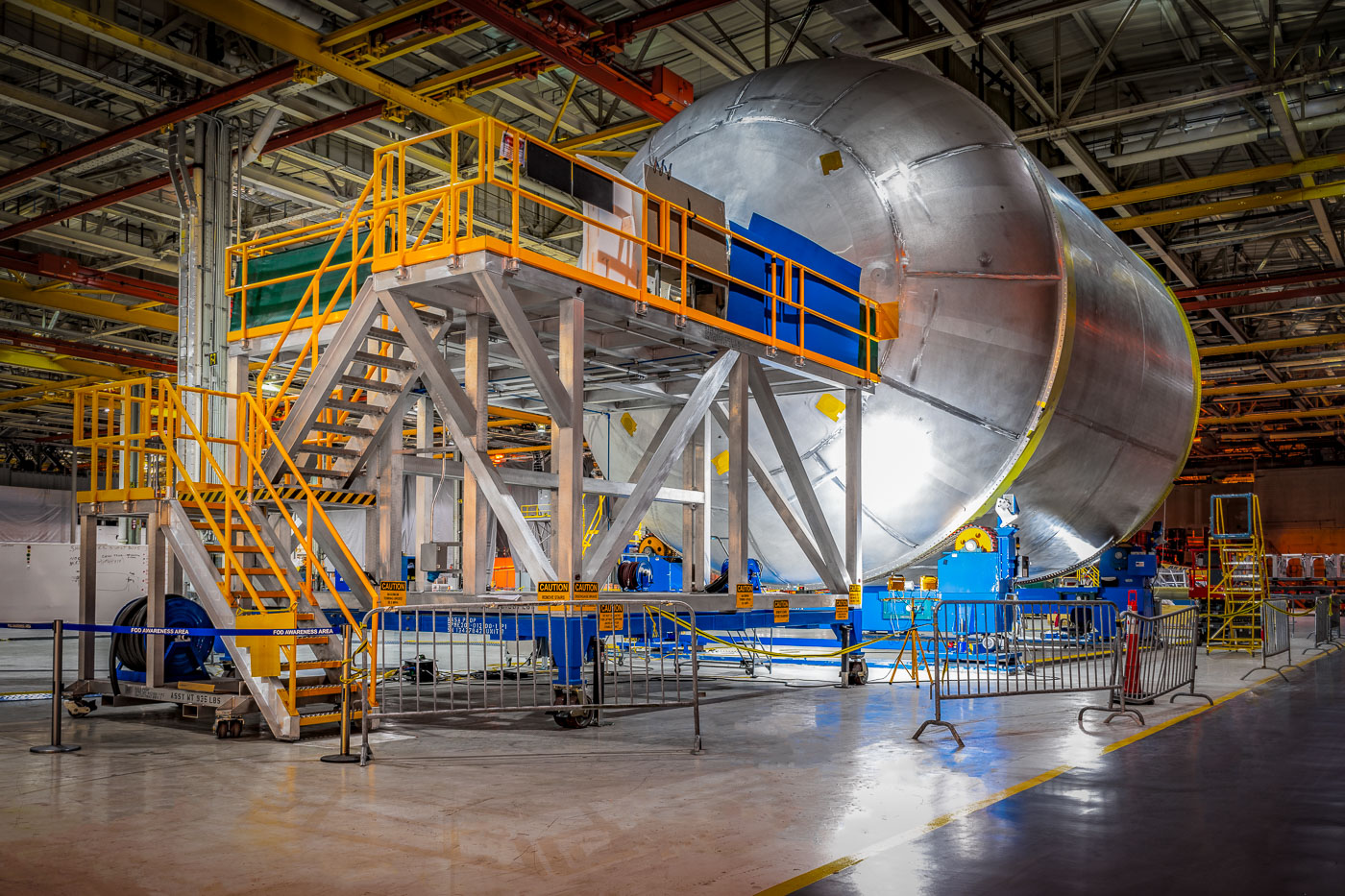
NASA Space Launch System Liquid Oxygen Tank
A liquid oxygen tank for NASA’s Space Launch System core stage is positioned for processing inside the Michoud Assembly Facility. Formed from welded aluminum-lithium sections, the tank stores supercooled liquid oxygen that feeds the RS-25 engines during launch. Together with the larger liquid hydrogen tank, it supplies the propellants required to generate thrust for missions in NASA’s Artemis program.

NASA Space Launch System Liquid Oxygen Tank
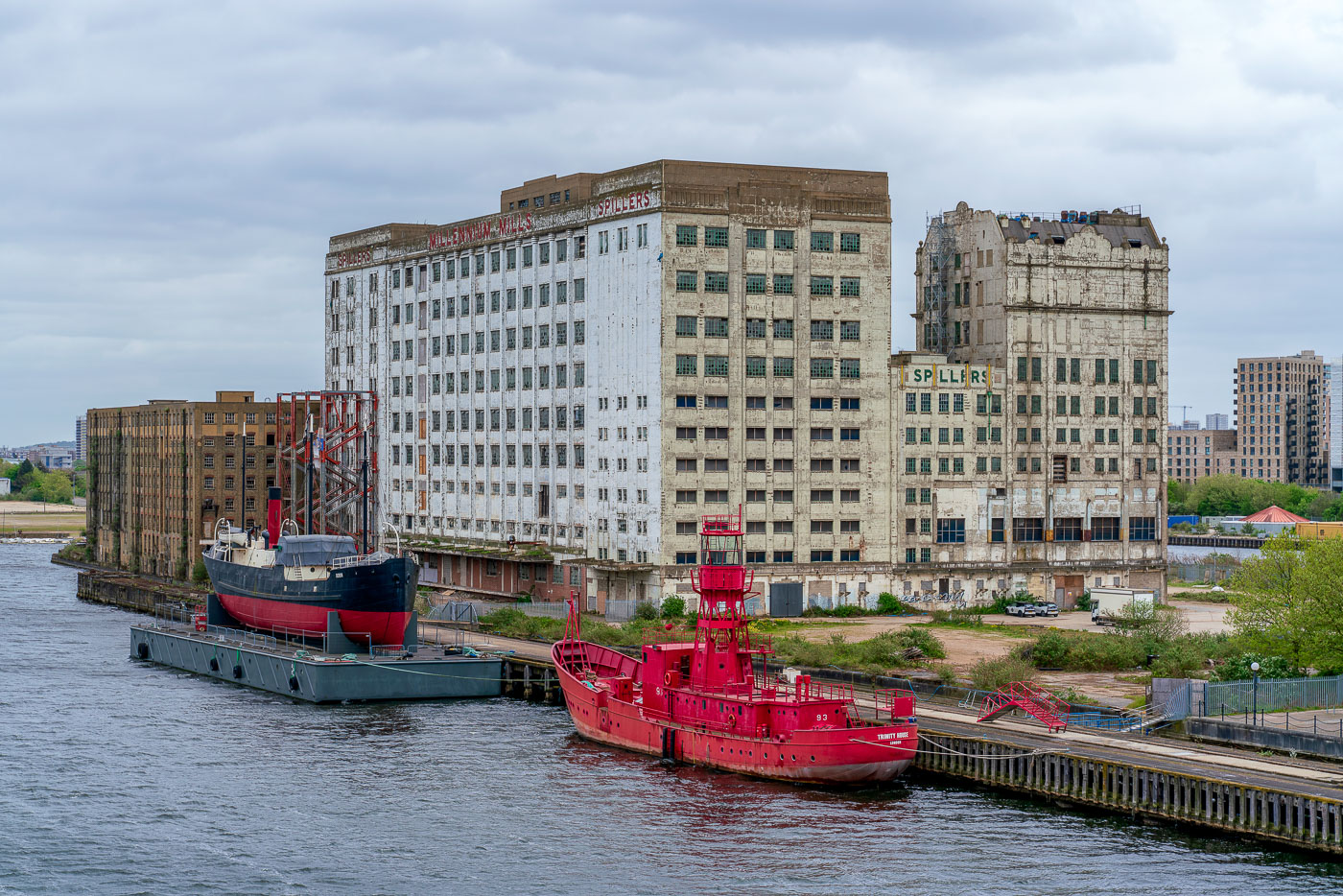
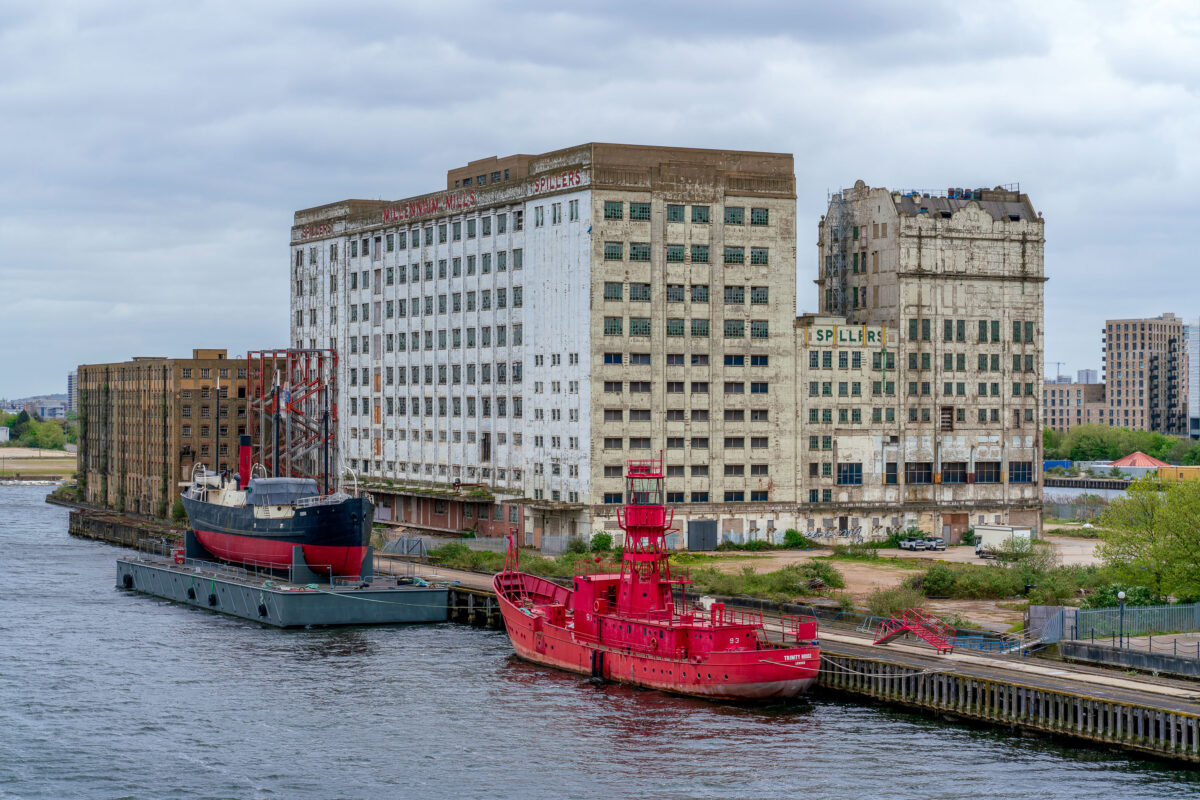
Millennium Mills and Trinity House Lightship 93 at Royal Victoria Dock, London
Millennium Mills stands on the south side of the Royal Victoria Dock in Silvertown, London, beside Trinity House Lightship 93. The former Spillers flour mill was built in 1905 and later closed in the 1980s. The lightship is moored at the dock edge in front of the derelict mill buildings.

Millennium Mills and Trinity House Lightship 93, Royal Docks
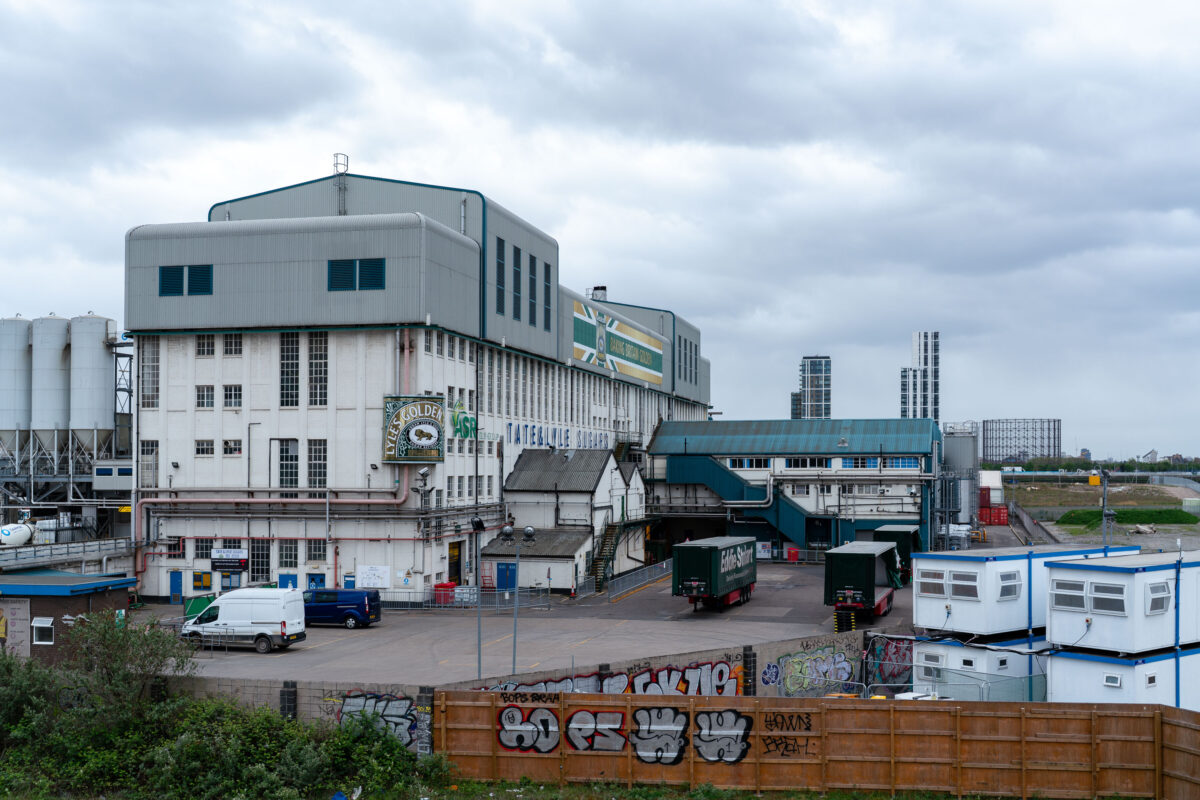
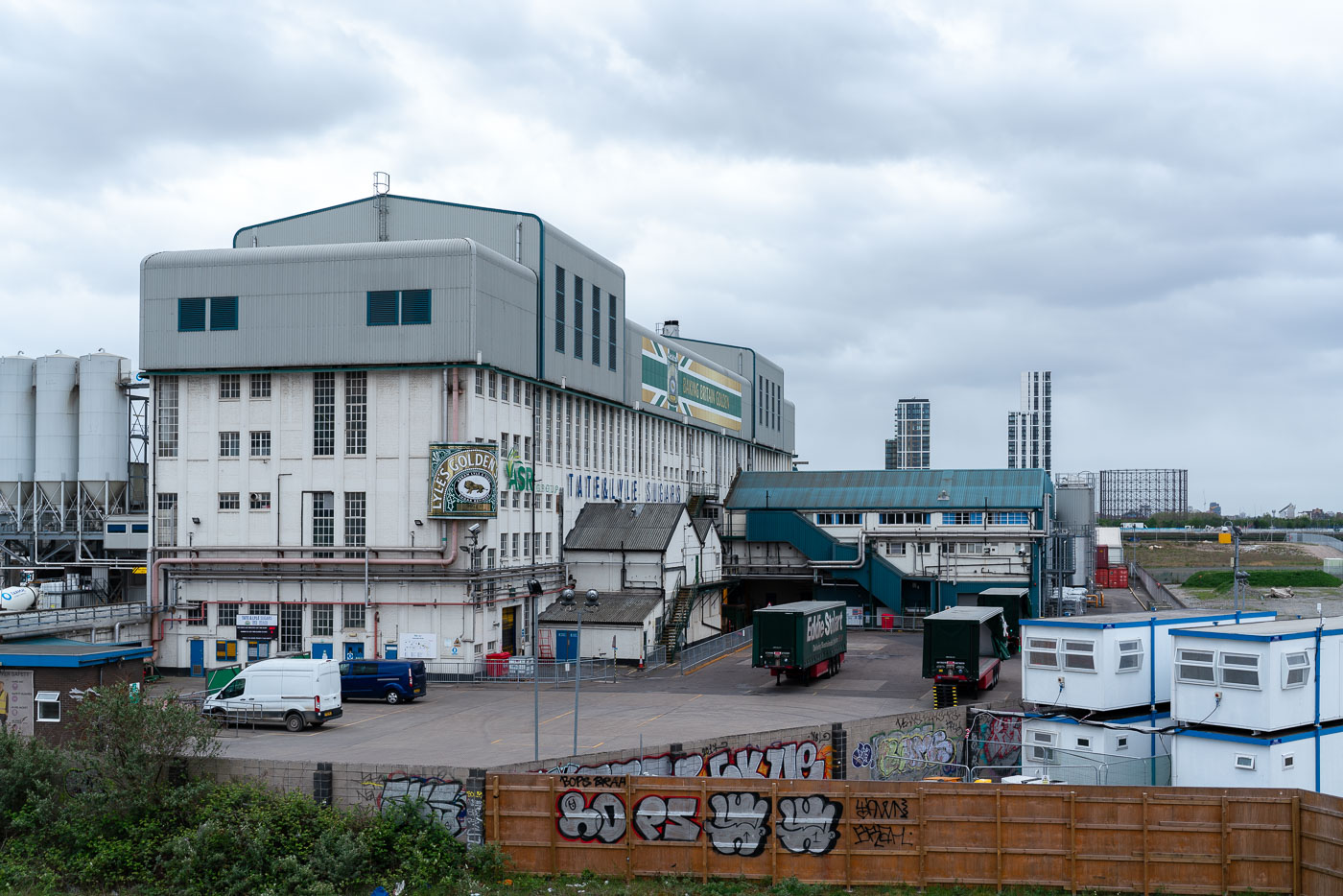
Tate & Lyle sugar refinery in Silvertown, London, with trucks and industrial buildings.
Tate & Lyle’s sugar refinery in Silvertown, east London, operates on the Royal Docks waterfront. The complex processes sugar and is associated with Lyle’s Golden Syrup, a product long linked to the site and its branding.

Tate & Lyle Sugar Refinery, Silvertown, London
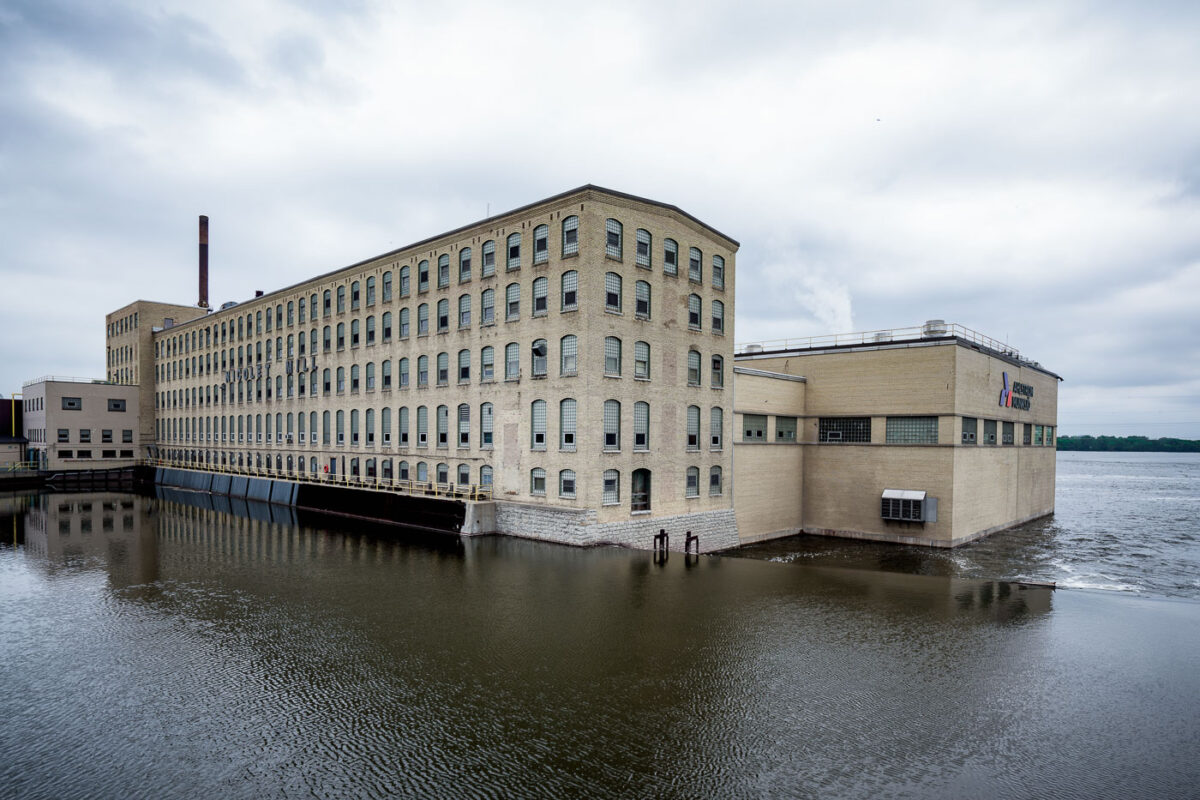
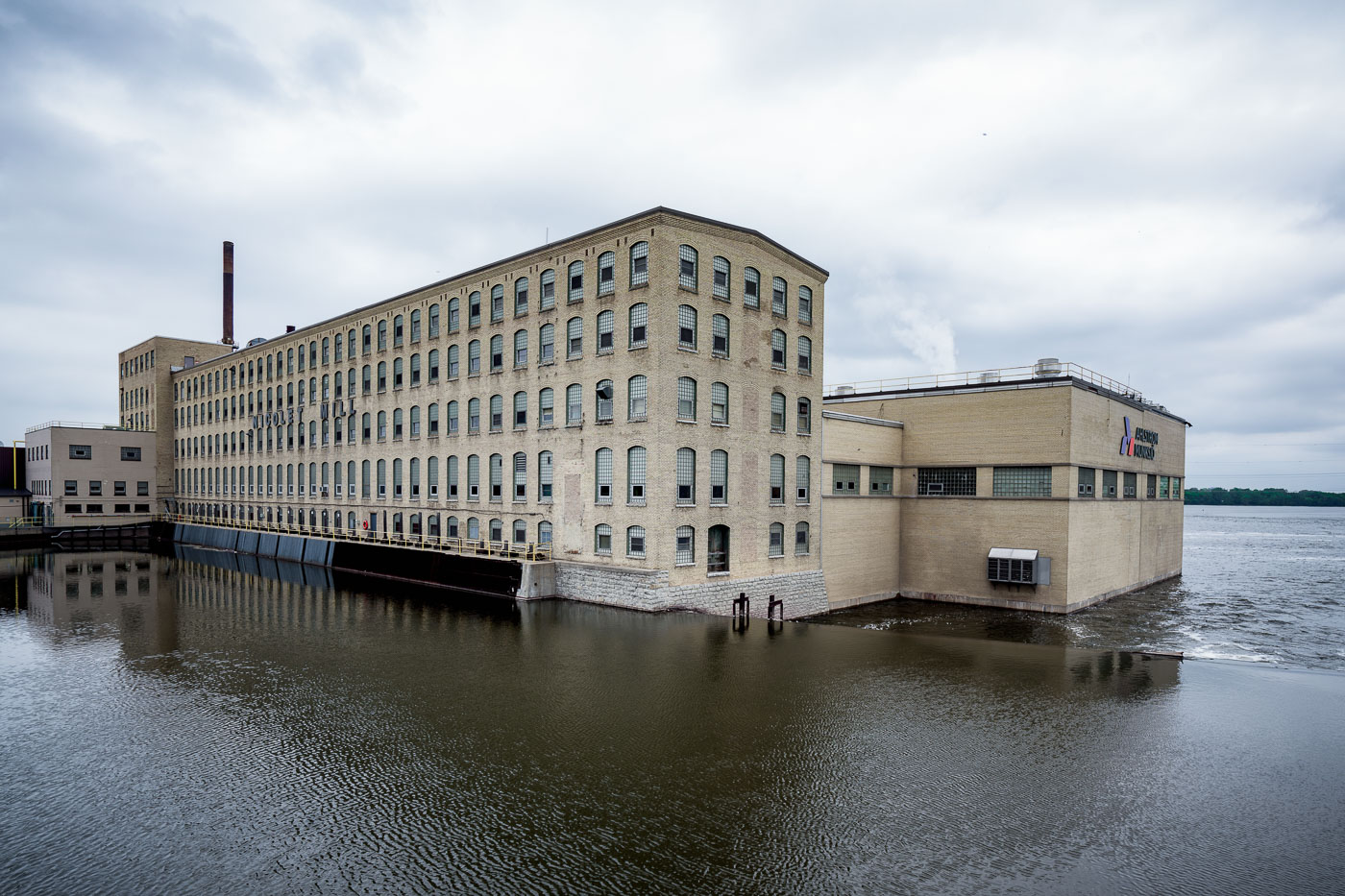
Nicolet Mill, a brick paper manufacturing facility, sits on the Fox River in De Pere, Wisconsin.
The Nicolet Mill traces its roots to 1904, when the Nicolet Paper Company began producing specialty papers along the Fox River in De Pere. The site became part of Ahlstrom-Munksjö after a 2017 merger between Finland's Munksjö and France's Ahlstrom Corporation, and it continues to manufacture specialty papers, including release liners and other technical grades. De Pere sits within the Fox River Valley, a stretch of Wisconsin once known as "Paper Valley" for having one of the highest concentrations of paper mills per mile anywhere in the world, powered by the river's series of locks and dams. The mill remains one of the valley's longest continuously operating paper-production sites.

Ahlstrom-Munksjö’s Nicolet Mill on the Fox River in De Pere
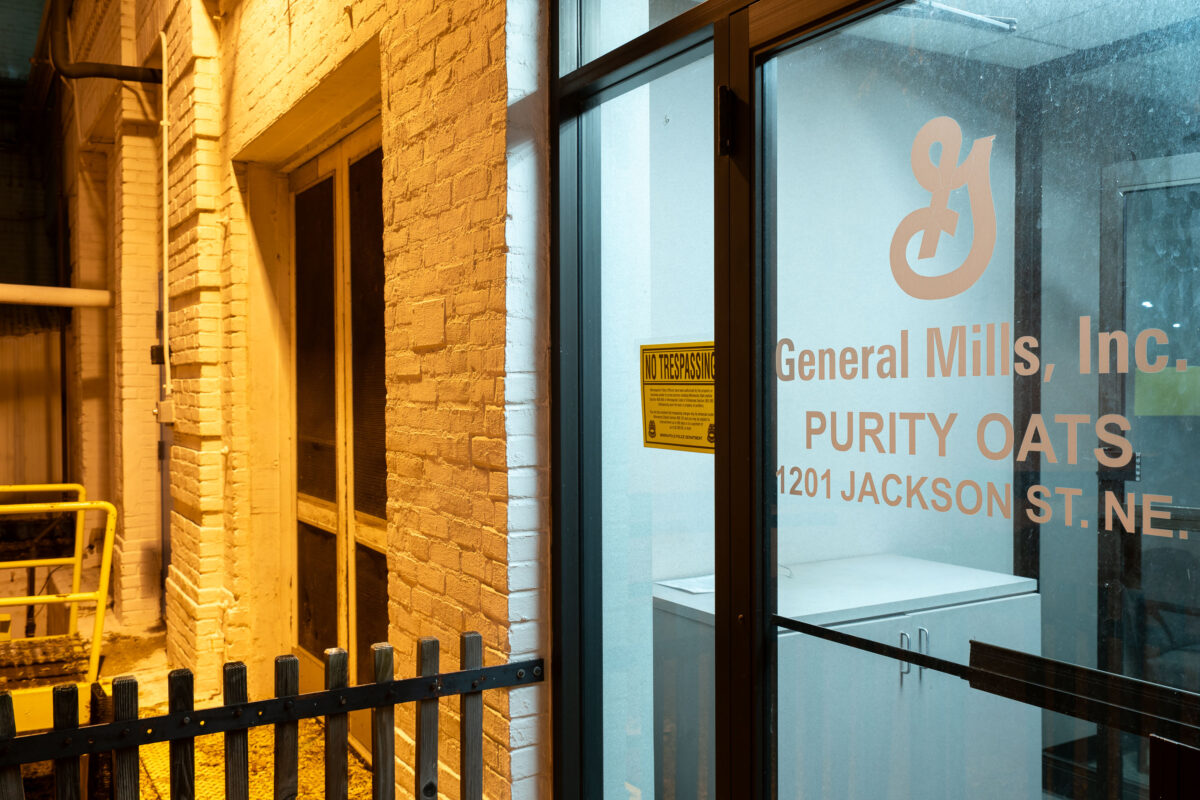
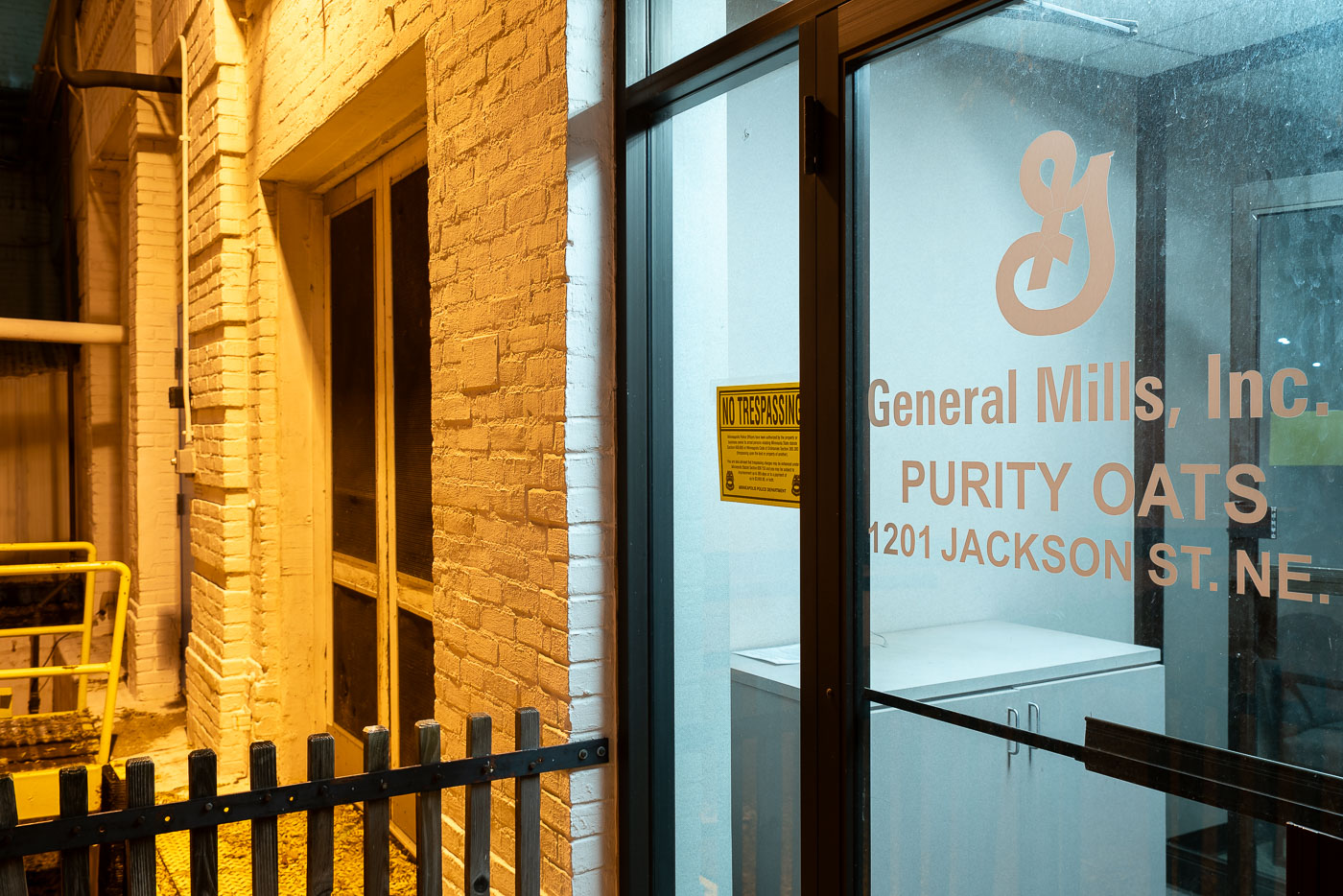
General Mills Purity Oats facility storefront at 1201 Jackson Street NE in Northeast Minneapolis.
General Mills Purity Oats Facility, Minneapolis, at 1201 Jackson Street NE. The former industrial building in Northeast Minneapolis was part of General Mills’ grain and cereal processing operations.

General Mills Purity Oats Entrance on Jackson Street NE
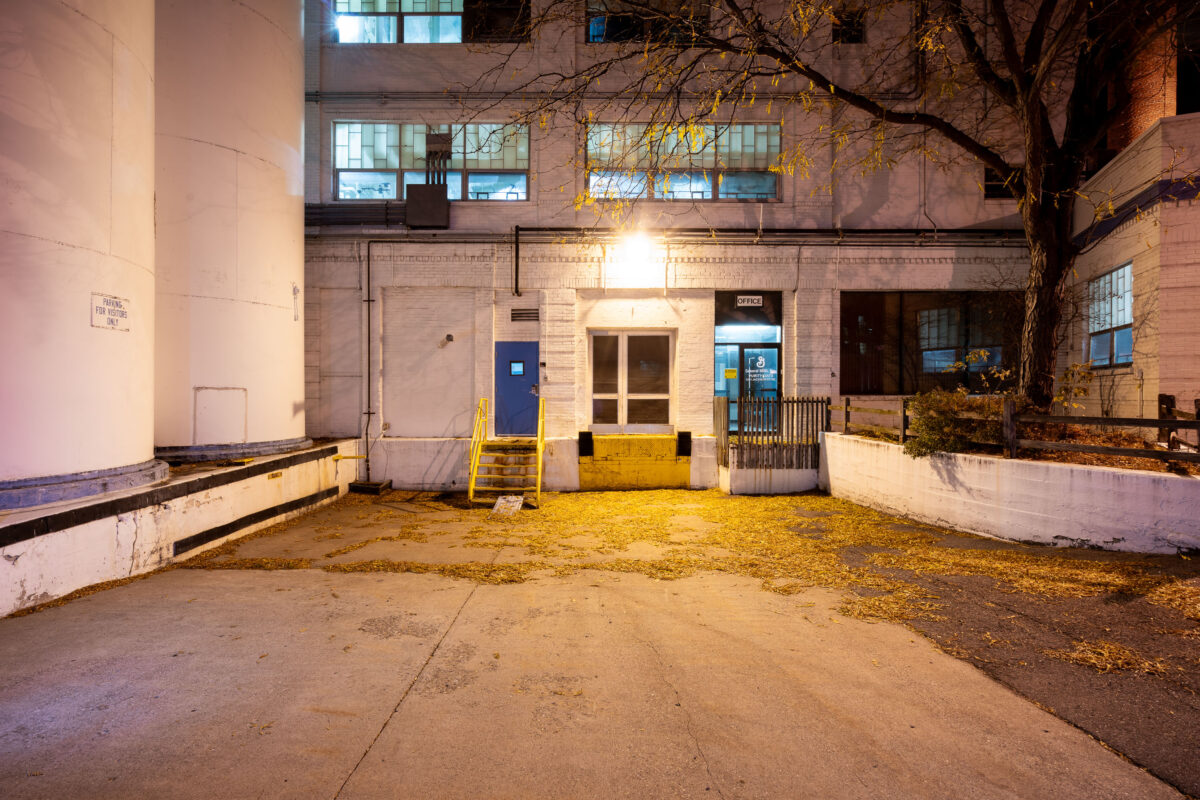
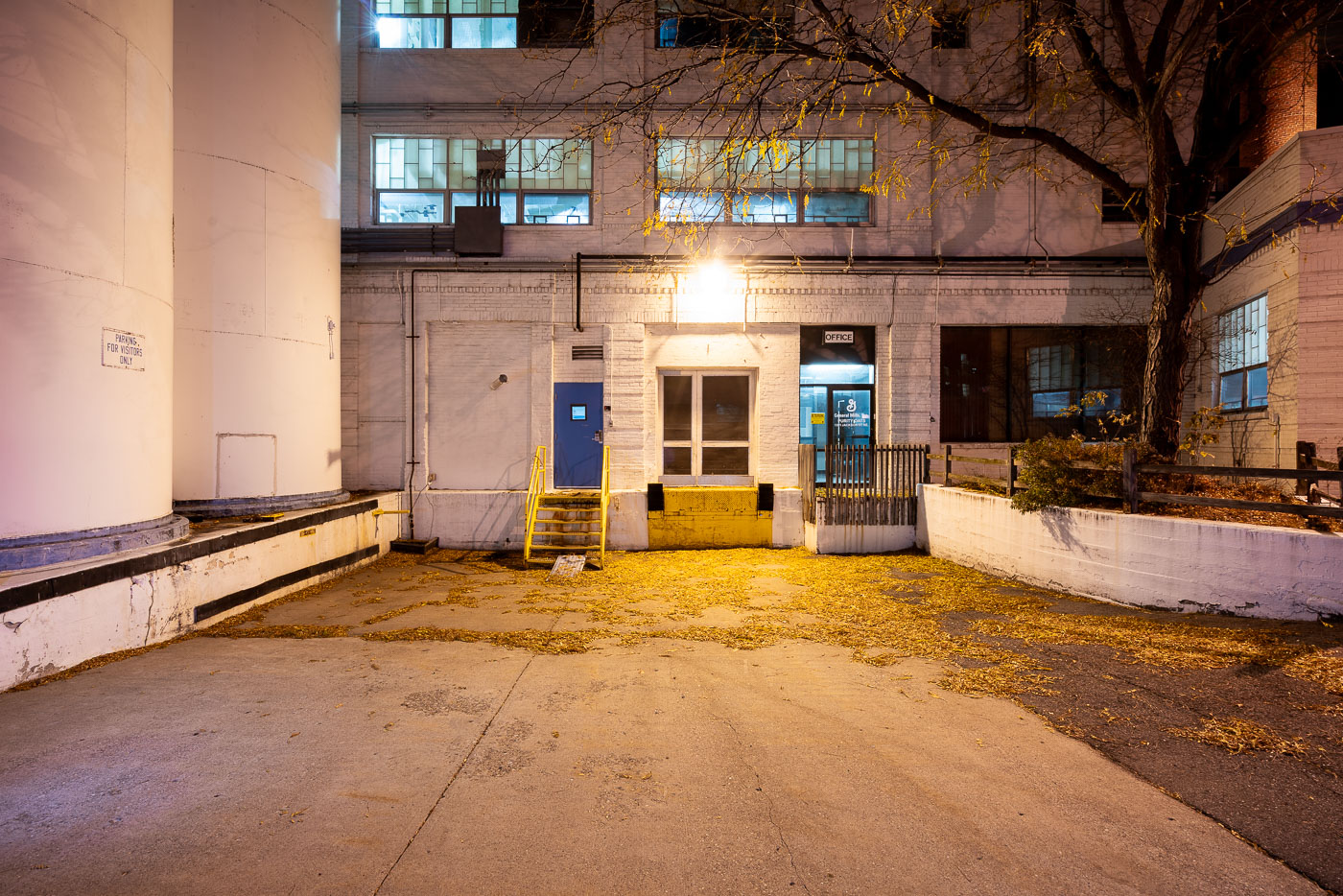
Rear loading entrance of the former General Mills Purity Oats plant in Northeast Minneapolis, illuminated at night.
This view shows the rear loading and office entrance of the former General Mills Purity Oats facility in Northeast Minneapolis. Built during the city’s industrial boom, the complex once handled oat processing and packaging for one of the nation’s largest cereal producers.

Rear Entrance of the General Mills Purity Oats Plant at Night
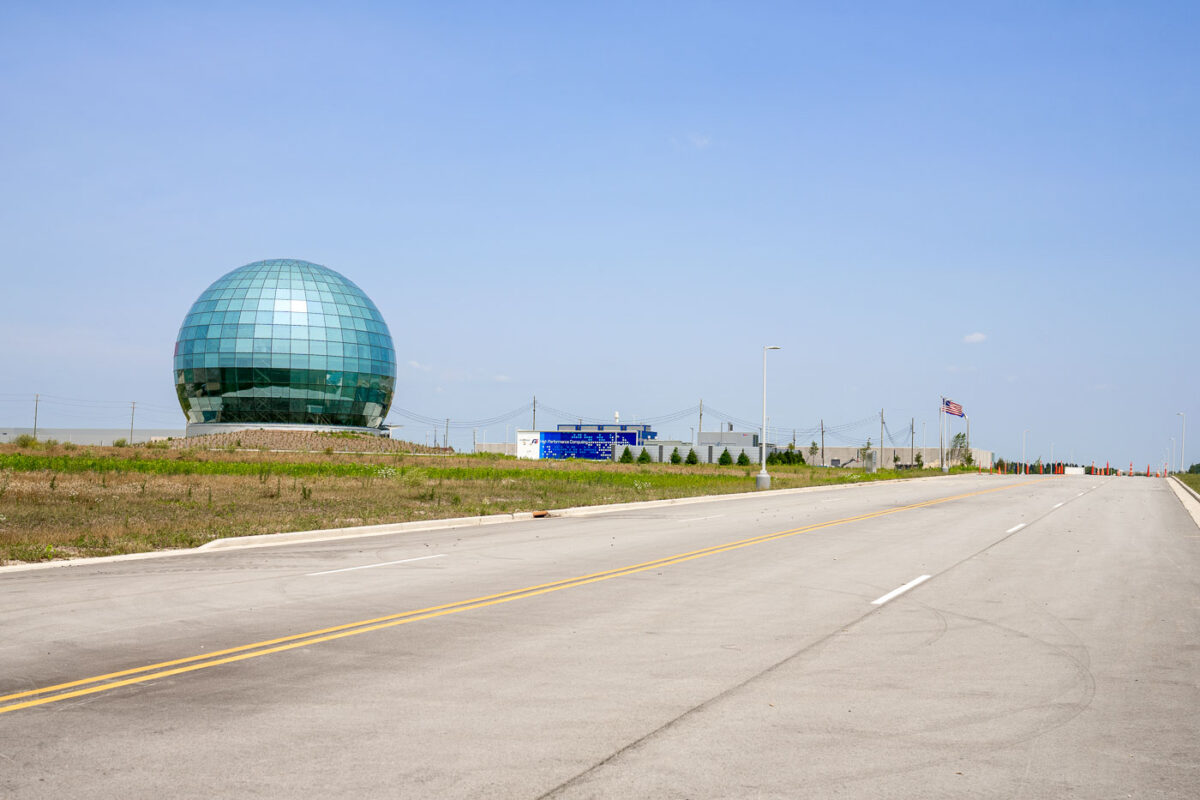
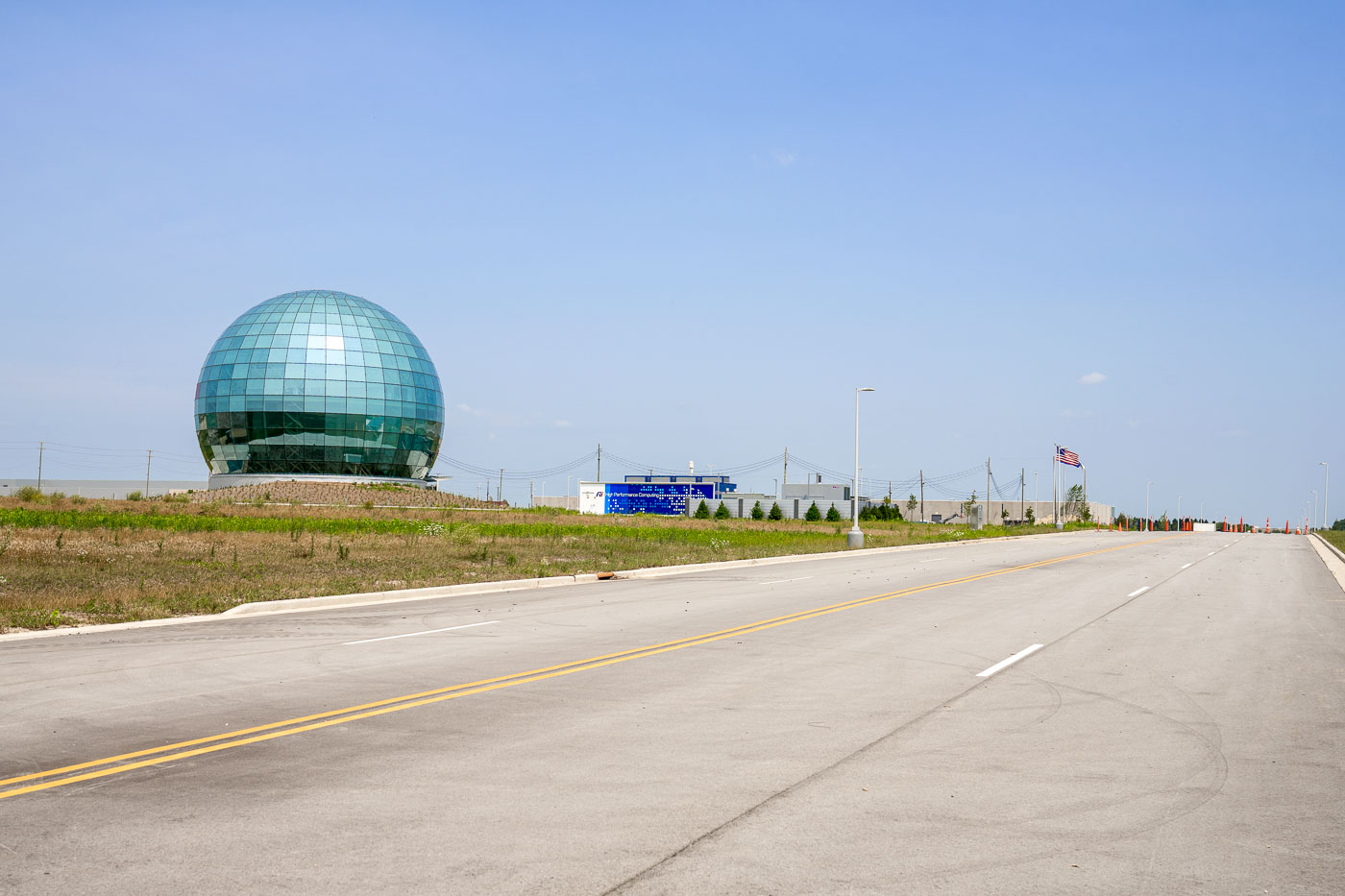
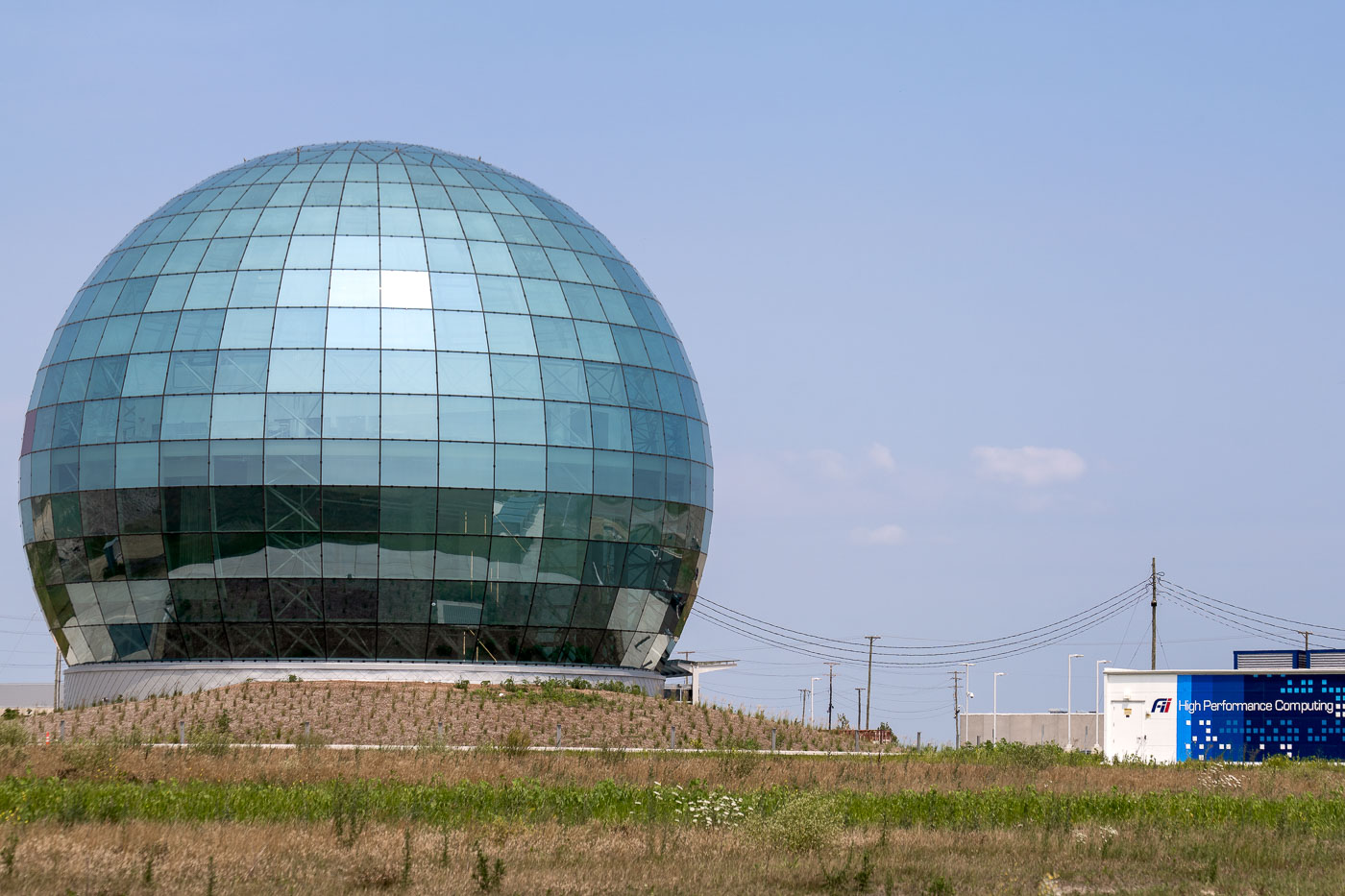
The Foxconn mirrored-glass globe facility on Wisconn Valley Way in Mount Pleasant, Wisconsin.
The mirrored-glass sphere sits along Wisconn Valley Way, a road built to serve the Foxconn Technology Group development in Mount Pleasant. Foxconn and the state of Wisconsin struck a deal in 2017 for a manufacturing campus originally billed as a Gen 10.5 LCD panel plant, a project that carried more than $3 billion in state and local incentives. The plan was scaled back repeatedly in the years that followed, and the site has since housed smaller-scale assembly and data operations rather than the large LCD fabrication facility first announced.

Mirrored Globe Along Wisconn Valley Way in Mount Pleasant
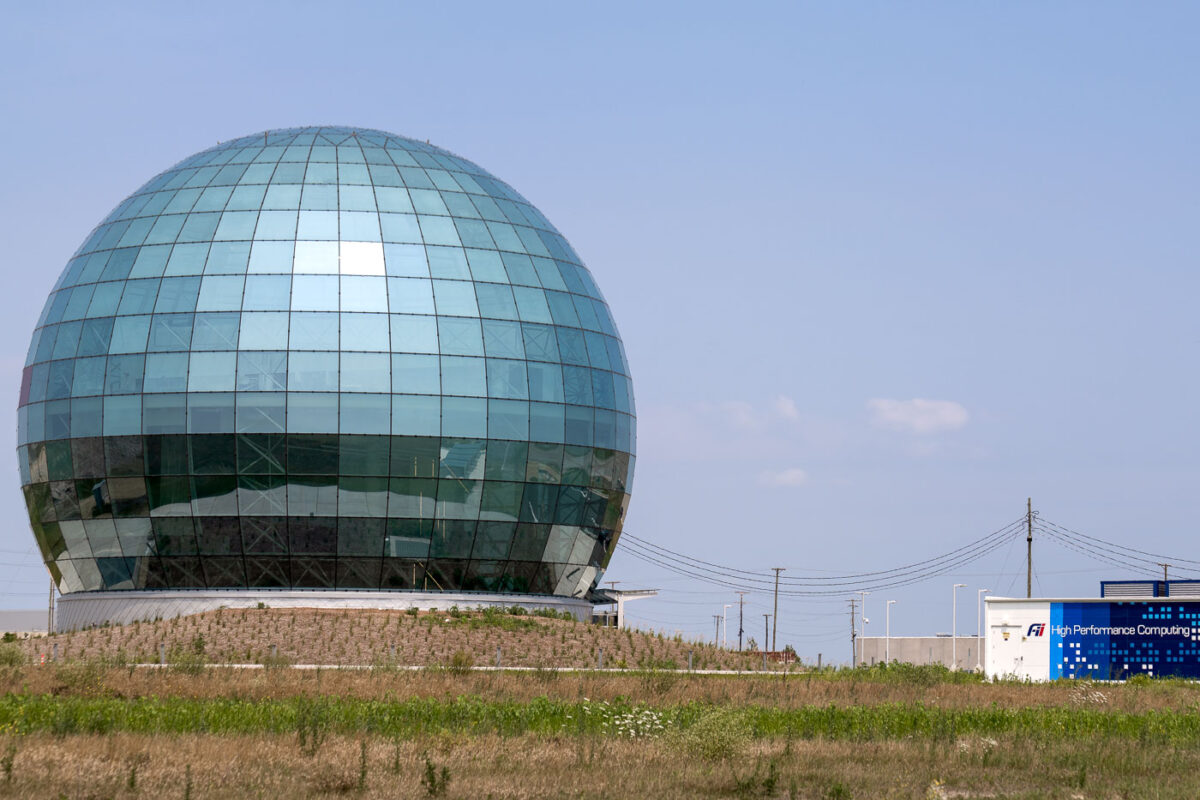
Spherical glass dome structure at Foxconn facility in Mount Pleasant, Wisconsin.
The glass sphere sits at the center of Foxconn Industrial Internet's campus along Braun Road in Mount Pleasant, part of the Wisconn Valley Science and Technology Park. Foxconn built the orb-shaped structure around 2019 as the architectural centerpiece and entrance to its planned Gen 10.5 LCD fabrication campus, a project originally announced in 2017 with state and local incentives exceeding $3 billion. That manufacturing plan was later abandoned, and Foxconn Industrial Internet (FII) repurposed the surrounding buildings for data center and high-performance computing operations instead. The company has used the globe building for administrative offices and as a showcase space rather than for the large-scale electronics manufacturing it was first designed to support.

The Glass Sphere at Foxconn’s Wisconn Valley Science and Technology Park
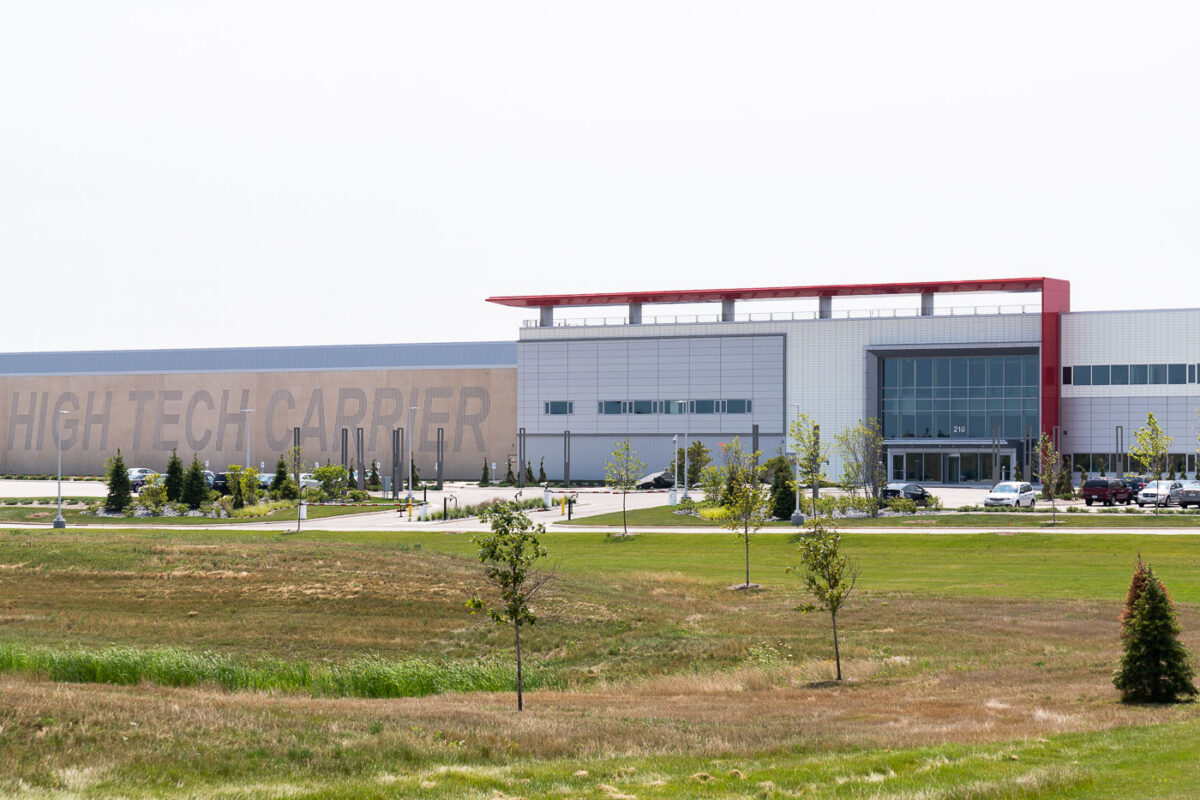
Foxconn High Tech Carrier facility in Mount Pleasant, Wisconsin, featuring modern industrial architecture with a red steel canopy.
The "High Tech Carrier" building is part of the Foxconn Industrial Internet complex in Mount Pleasant, Wisconsin, developed following the company's 2017 agreement with the state to build an LCD manufacturing campus. Foxconn later scaled back those plans, shifting its stated focus toward smaller electronics and server assembly rather than large-scale display production. The surrounding Wisconn Valley Science and Technology Park was designed to house multiple Foxconn-affiliated buildings along I-94 near Racine County.
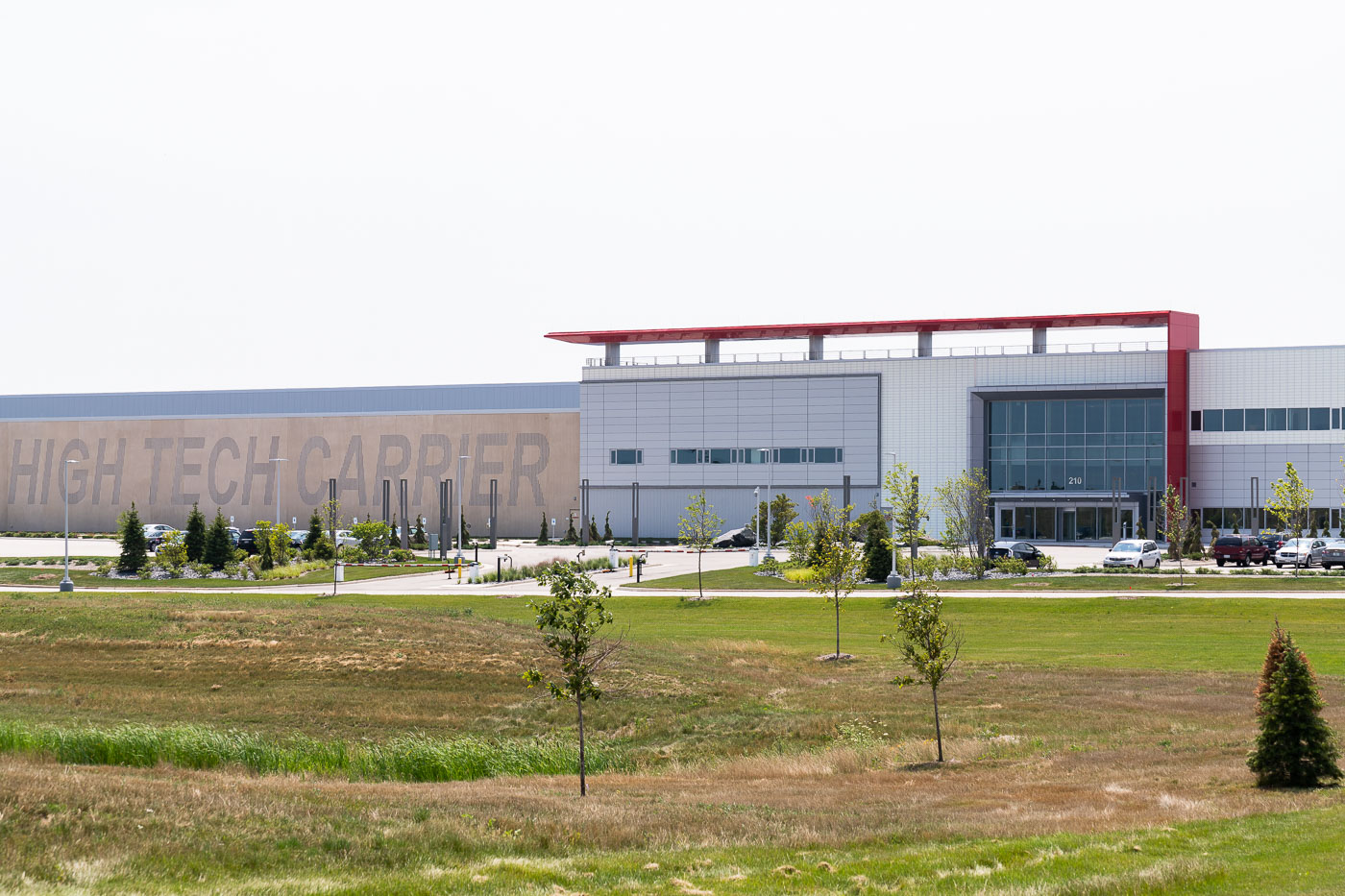
“High Tech Carrier” Building at Foxconn’s Mount Pleasant Campus
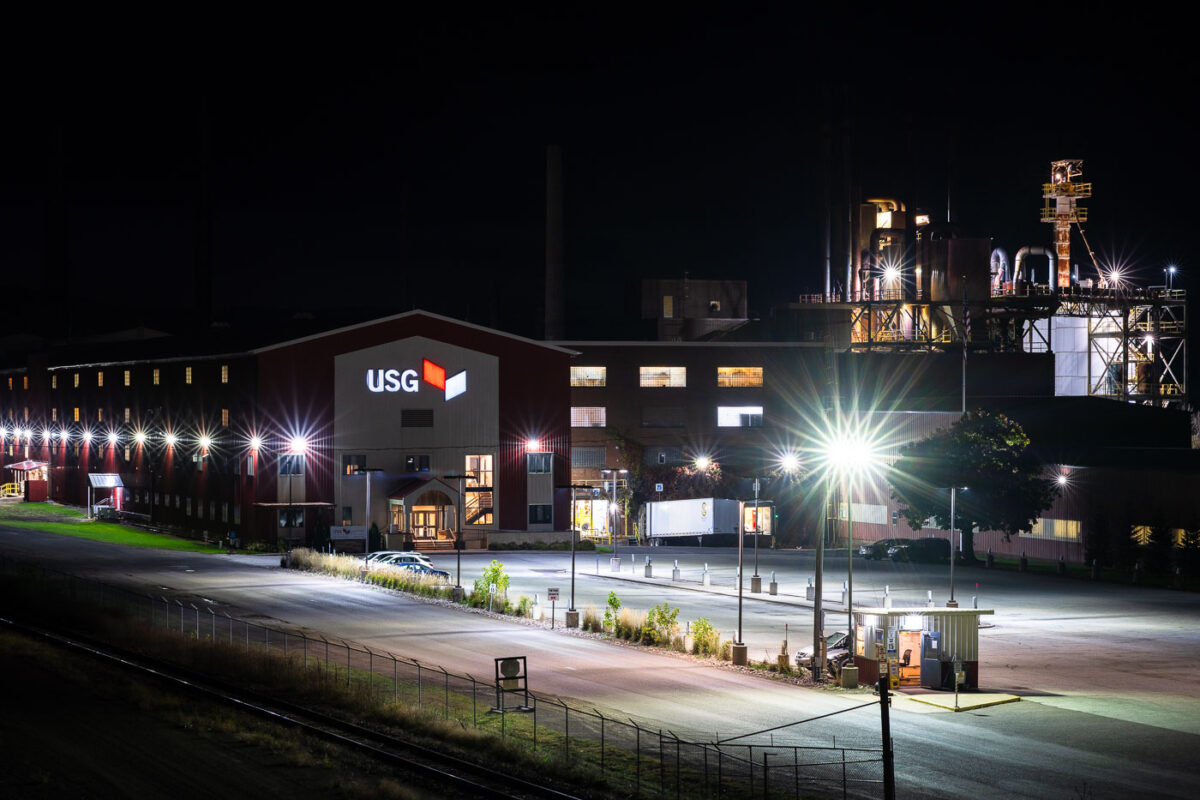
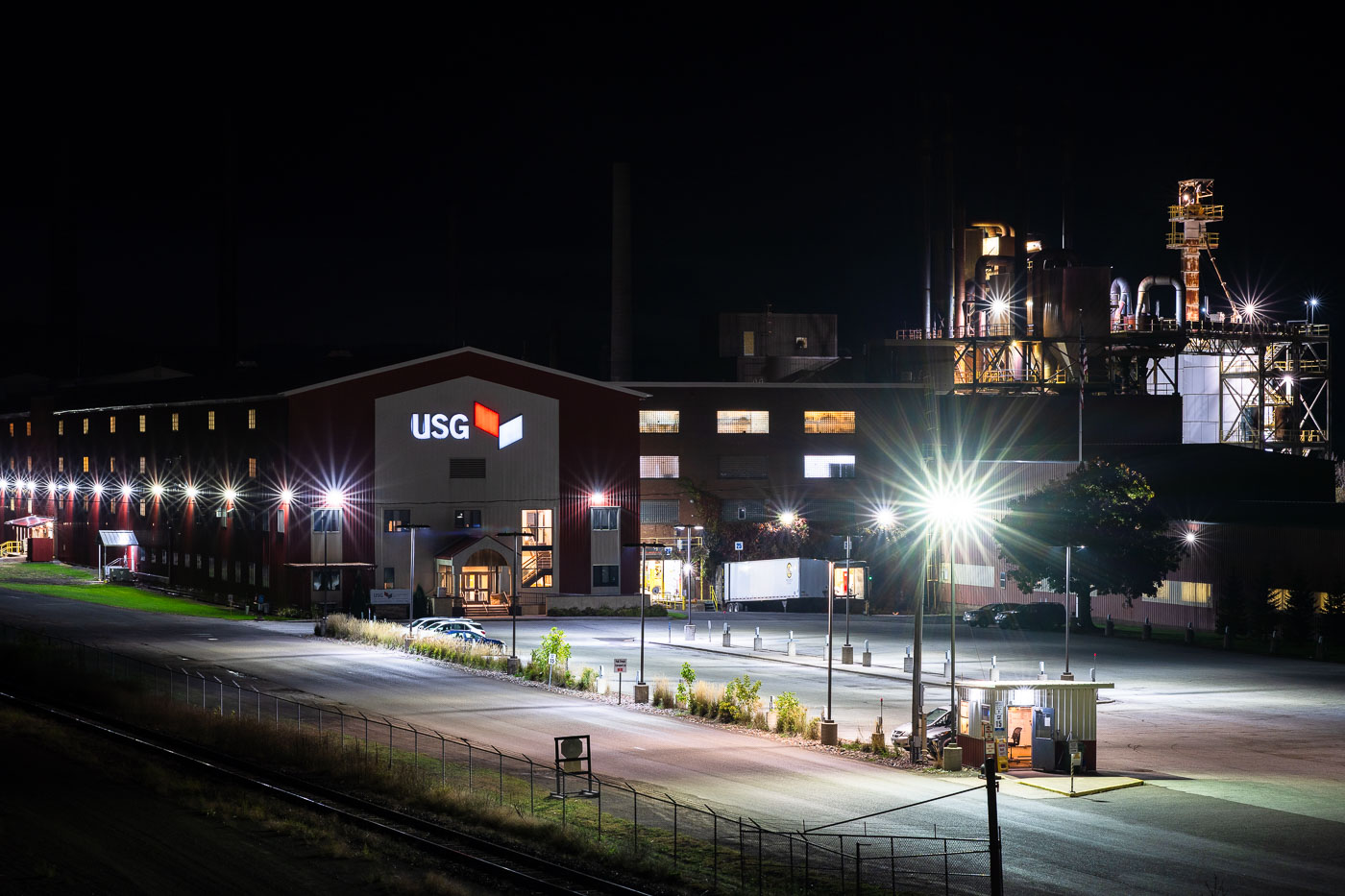
USG paper mill facility illuminated at night in Cloquet, Minnesota, with industrial buildings and production infrastructure.
USG Paper Mill in Cloquet, Minnesota, operates as an industrial manufacturing complex on the city’s south side. The facility includes a guarded entrance, rail siding, and large production buildings associated with United States Gypsum’s paper operations. Night security lighting illuminates the plant and adjacent yard.

USG Plant at Night in Cloquet

USG directional sign at the Cloquet, Minnesota manufacturing facility.
USG Corporation, once known as United States Gypsum, traces its roots to 1902 and today ranks among the largest manufacturers of gypsum wallboard in North America. The company's Cloquet facility sits in a Carlton County city long tied to the region's timber and forest products economy. USG's core products include drywall, joint compound, and ceiling systems sold to builders and contractors across the continent.

USG Sign Pointing the Way at Its Cloquet Facility

Destroyed 7Sigma Factory in Minneaolis
The 7-Sigma facility, located near the Minneapolis Police Department's Third Precinct, was destroyed by arson during the protests that followed the murder of George Floyd in May 2020. The building's destruction became a focal point of the unrest, symbolizing broader anger and frustration within the community. The site has since been fenced off, awaiting future development or demolition.

7-Sigma Factory Arson Site, Minneapolis
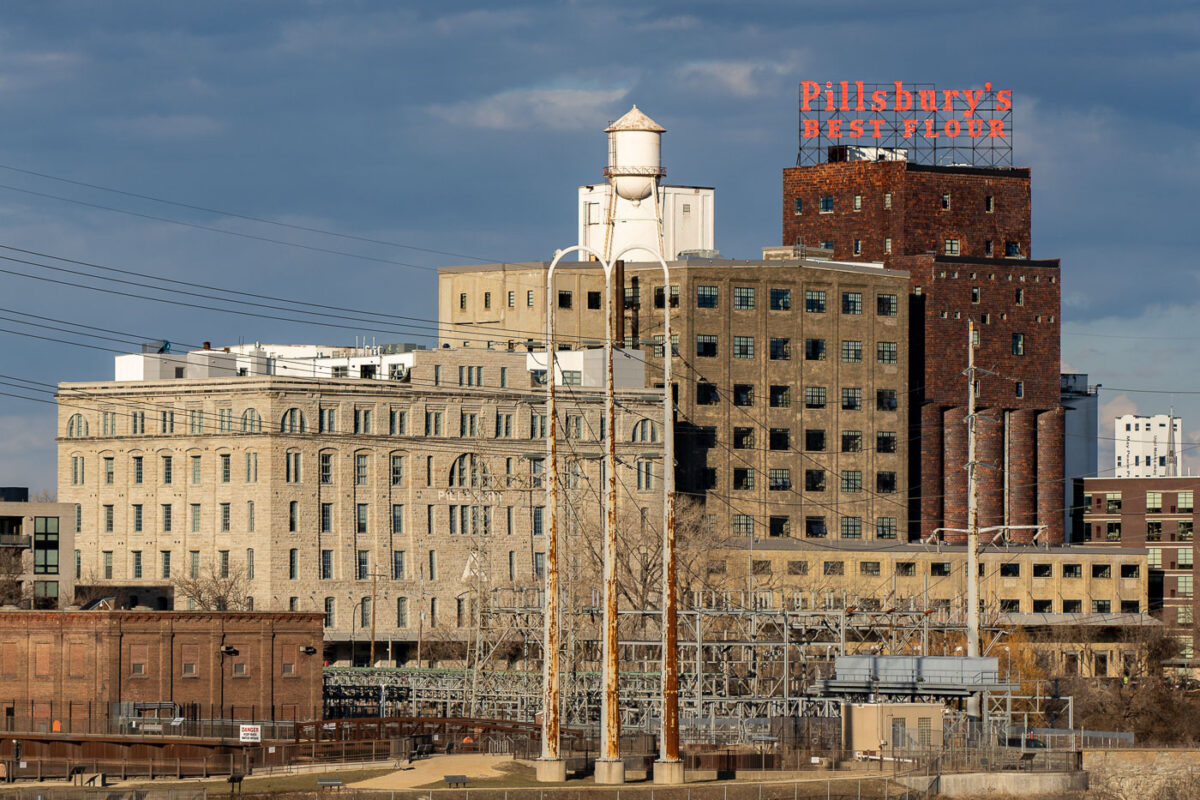
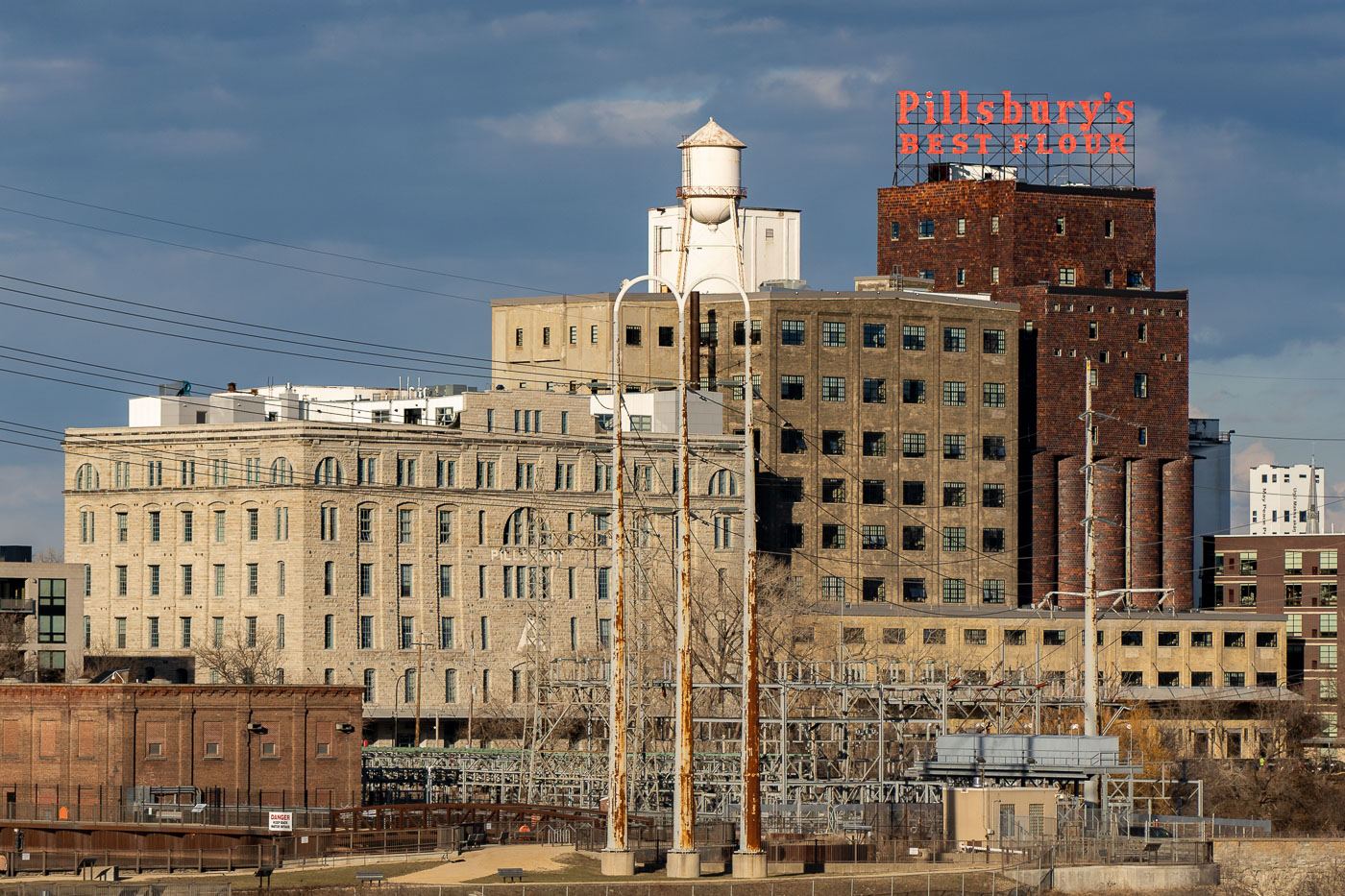
Pillsbury A Mill complex with red neon sign on brick building overlooking Mississippi River in Minneapolis.
Pillsbury A Mill complex in Minneapolis stands on the east bank of the Mississippi River near St. Anthony Falls. Built for the Pillsbury Company in the 1880s, the former flour mill was part of the city’s milling district and later adapted for other uses.

Pillsbury’s Best Flour Sign Atop the A Mill in Minneapolis
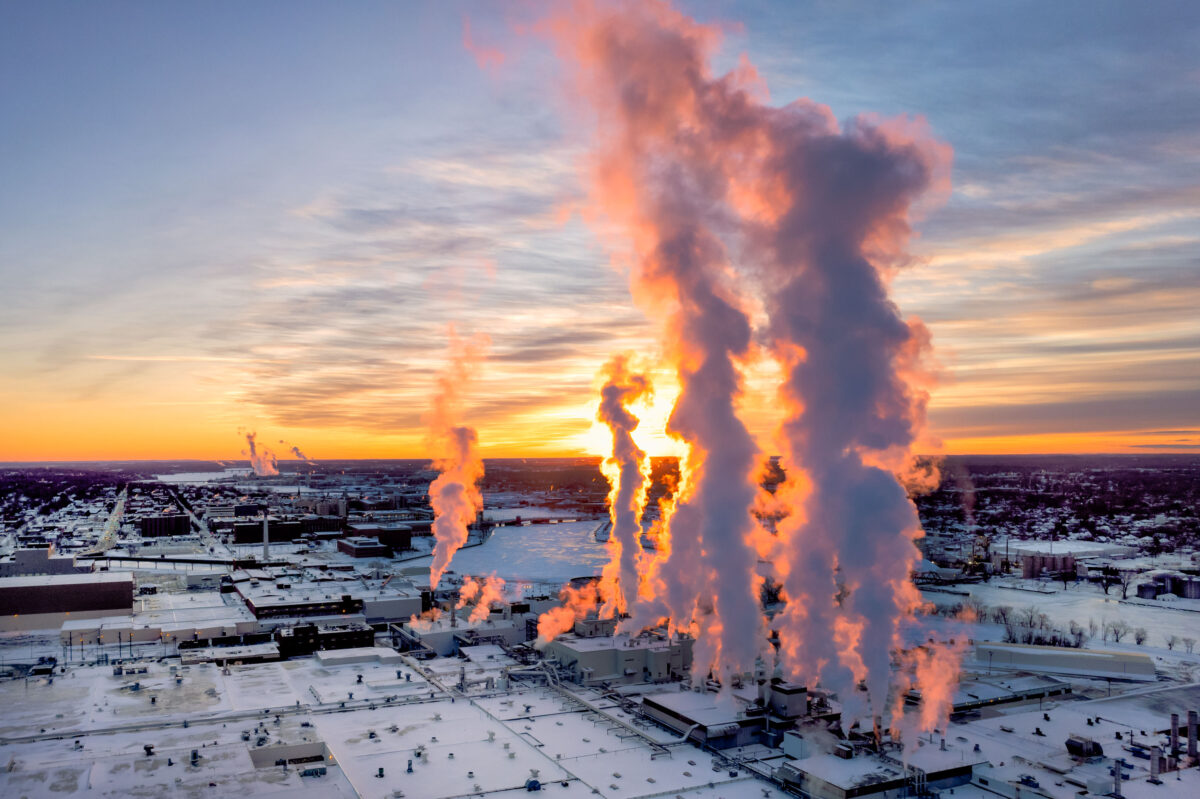
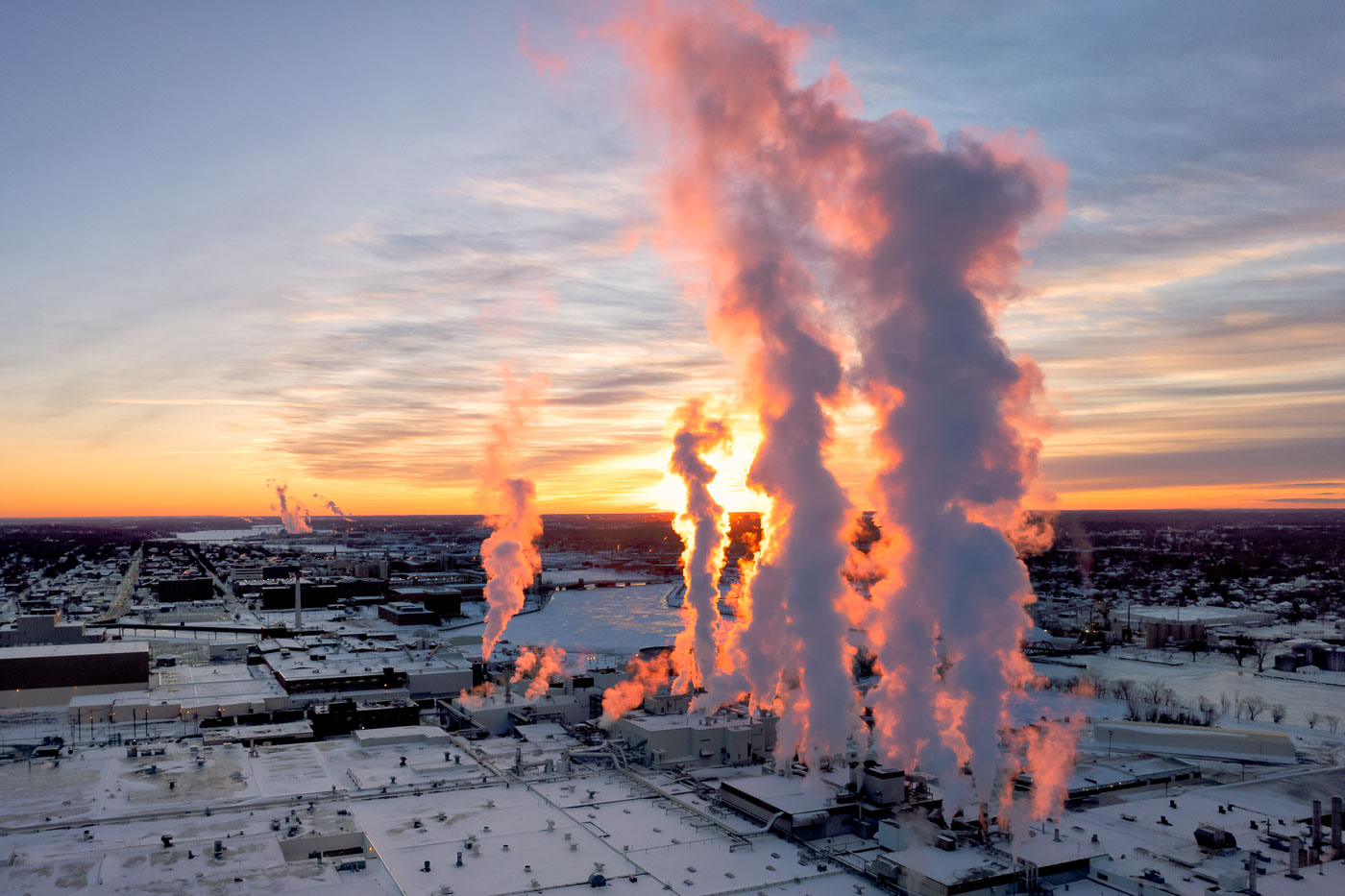
Procter & Gamble paper mill in Green Bay, Wisconsin releases steam columns at sunrise over the frozen Fox River.
The Procter & Gamble plant on Quincy Street began as the Charmin Paper Mills, founded in Green Bay in 1892 and acquired by P&G in 1957. The site sits along the Fox River and remains one of the company's primary manufacturing locations for Charmin bathroom tissue and Bounty paper towels. Steam from the mill's process stacks is a routine byproduct of pulp and paper production, most visible on cold mornings when it condenses in the winter air. Green Bay's paper industry dates to the 19th century, when the Fox River's flow made it an early center for mills converting wood pulp into finished paper goods.

Steam Plumes Over the P&G Paper Mill on Green Bay’s Fox River
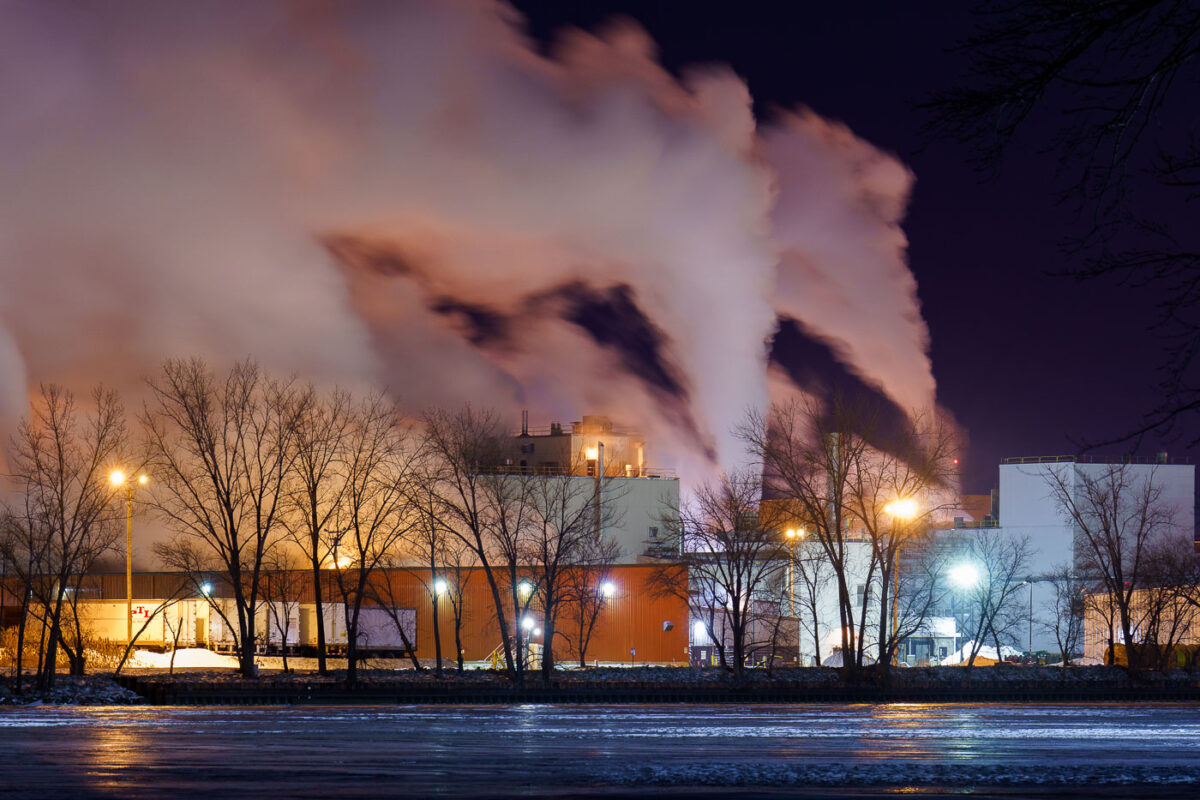
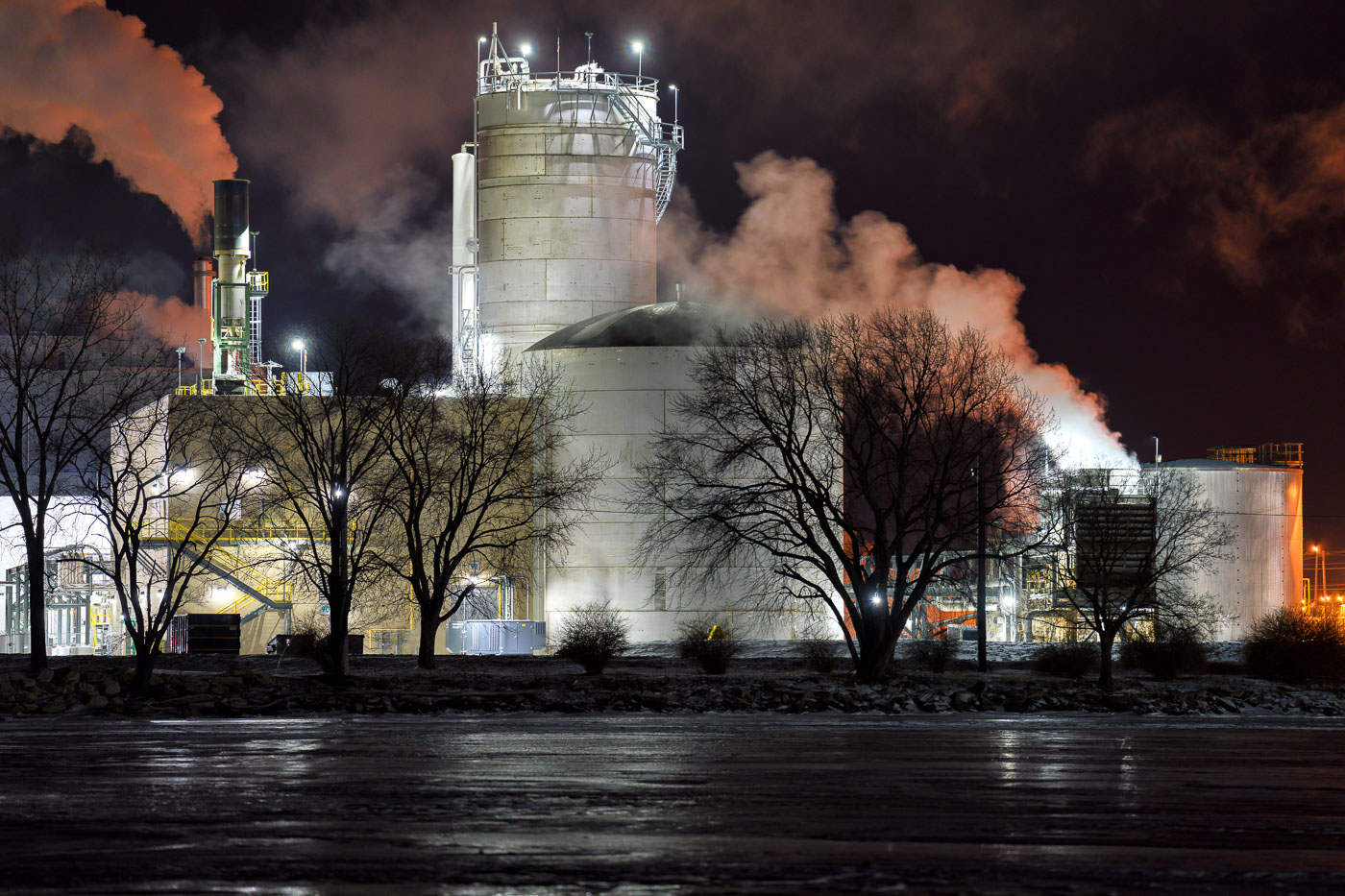
Green Bay Packaging mill on the Fox River in Wisconsin releases steam into the winter night sky.
Green Bay Packaging's recycled paper mill sits on the Fox River in Green Bay, Wisconsin. The company completed the $500 million facility in 2021, replacing a containerboard mill that had operated on the site for more than seven decades. The new mill was built to use recycled fiber as its primary raw material while cutting water and energy use compared to the plant it replaced. Green Bay Packaging is an employee-owned company that has operated in the city since 1933.

Winter Steam Over Green Bay Packaging’s Fox River Mill
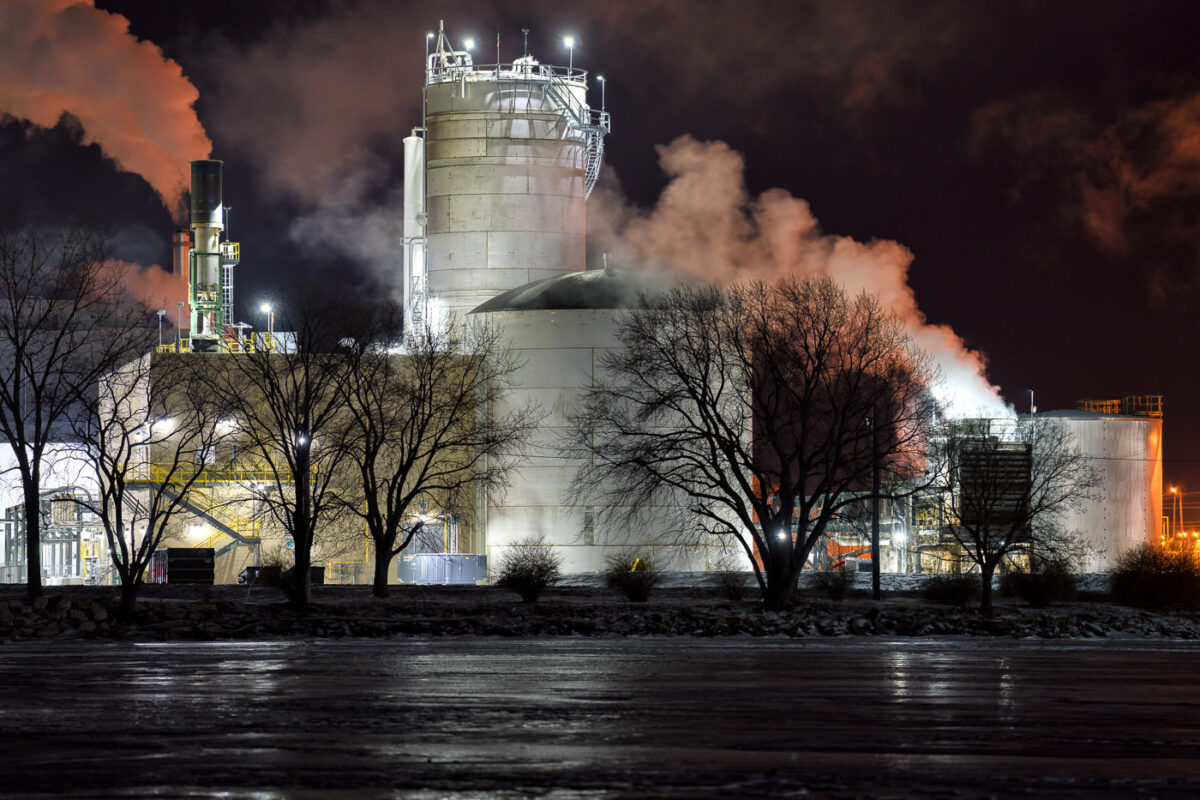
Green Bay Packaging's modern paper mill on the Fox River in Wisconsin emits steam plumes into the winter night sky.
Green Bay Packaging's recycled paper mill sits along the Fox River in Green Bay, Wisconsin. The company completed this containerboard mill in 2021, replacing an older facility and consolidating production into a single advanced plant designed to cut water and energy use. The mill produces recycled containerboard used in corrugated packaging, drawing on the company's long history as a family-owned packaging manufacturer based in Green Bay. Steam from its process operations is a routine byproduct of papermaking, generated by the heat required to pulp and dry recycled fiber into new board.

Winter Steam at the Green Bay Packaging Mill
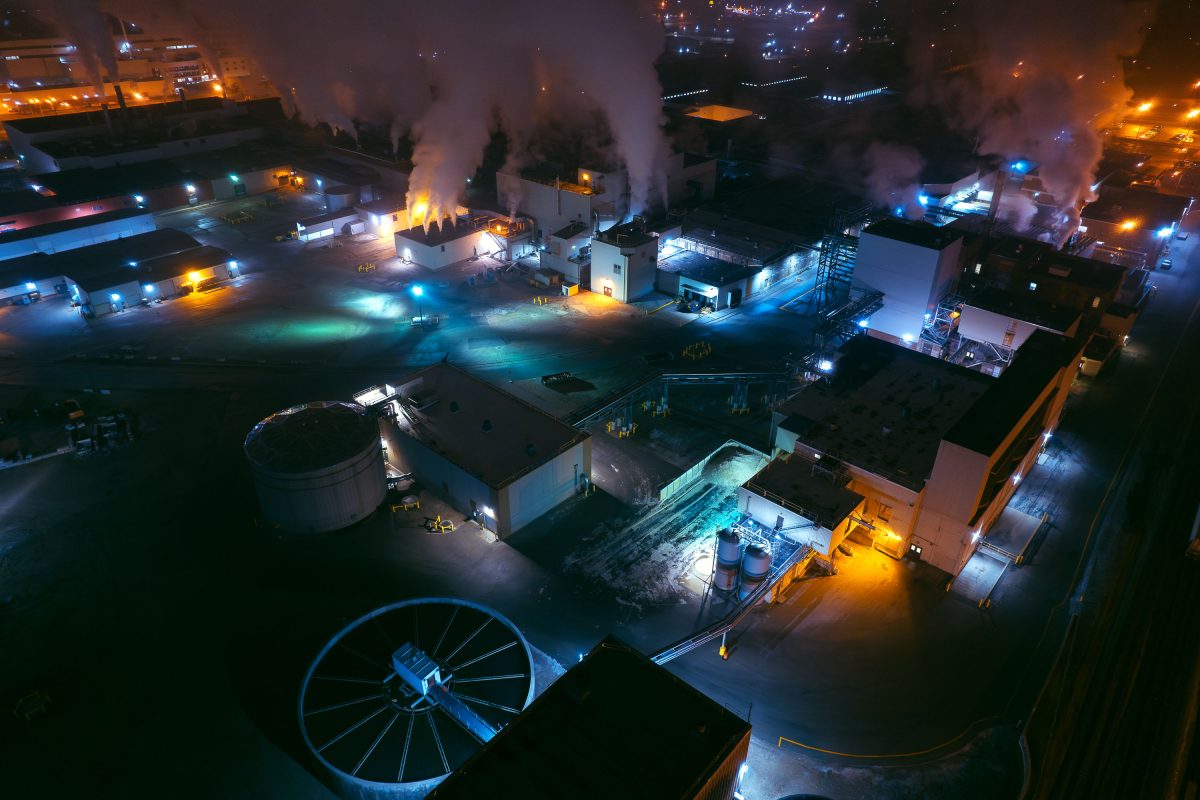
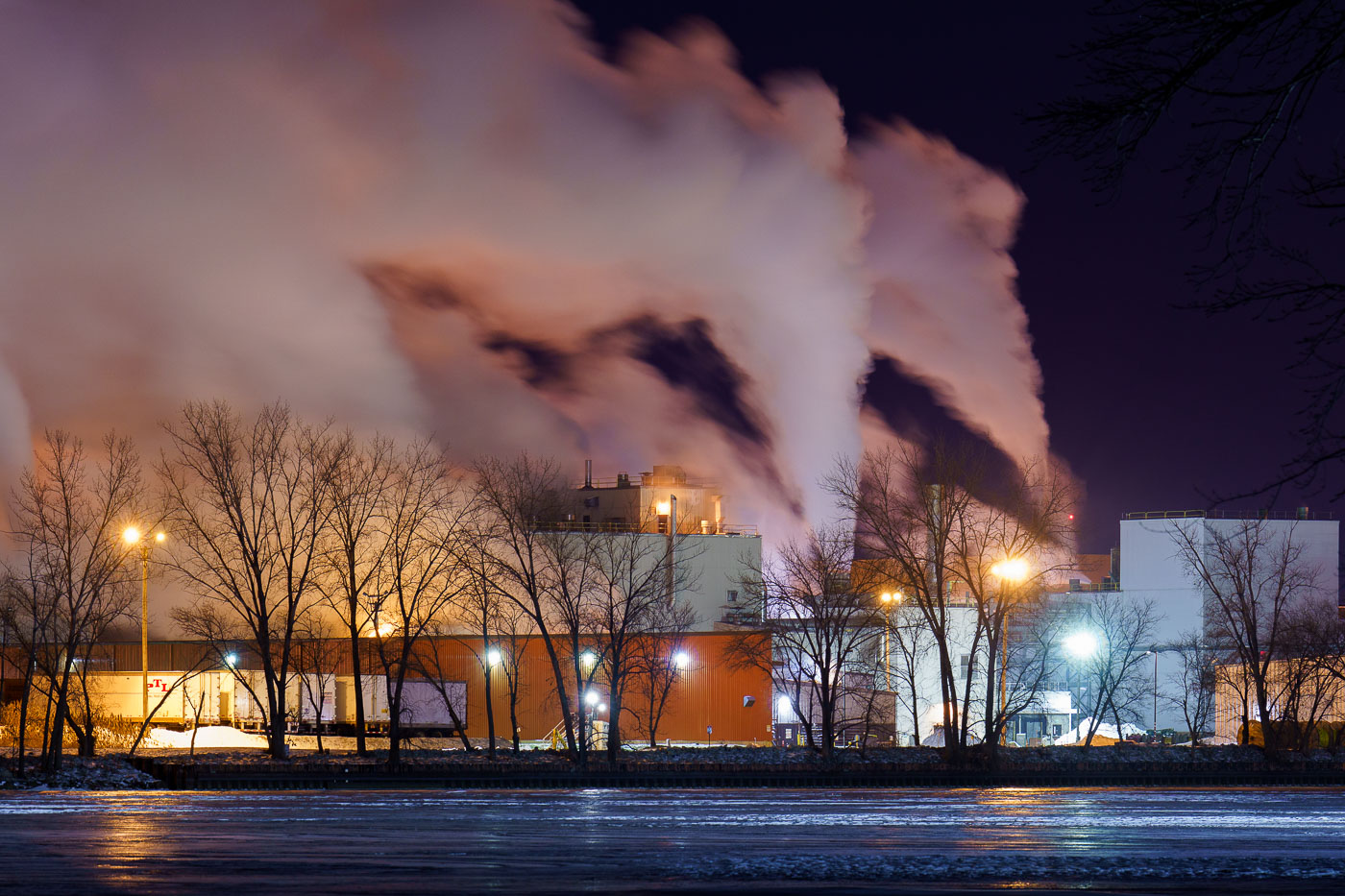
Procter & Gamble Charmin paper mill in Green Bay, Wisconsin, emits steam plumes at night with illuminated industrial structures and storage tanks.
Procter & Gamble's Green Bay facility produces Charmin toilet paper, part of a tissue operation the company built up after acquiring the Charmin Paper Company in 1957. The plant sits along the Fox River, a corridor that has anchored paper manufacturing in the region for well over a century thanks to easy access to water and rail transport. Round-the-clock production is typical at mills of this scale, where steam stacks and drying operations run continuously to keep pace with national distribution demands.

Night Shift at the P&G Charmin Plant in Green Bay
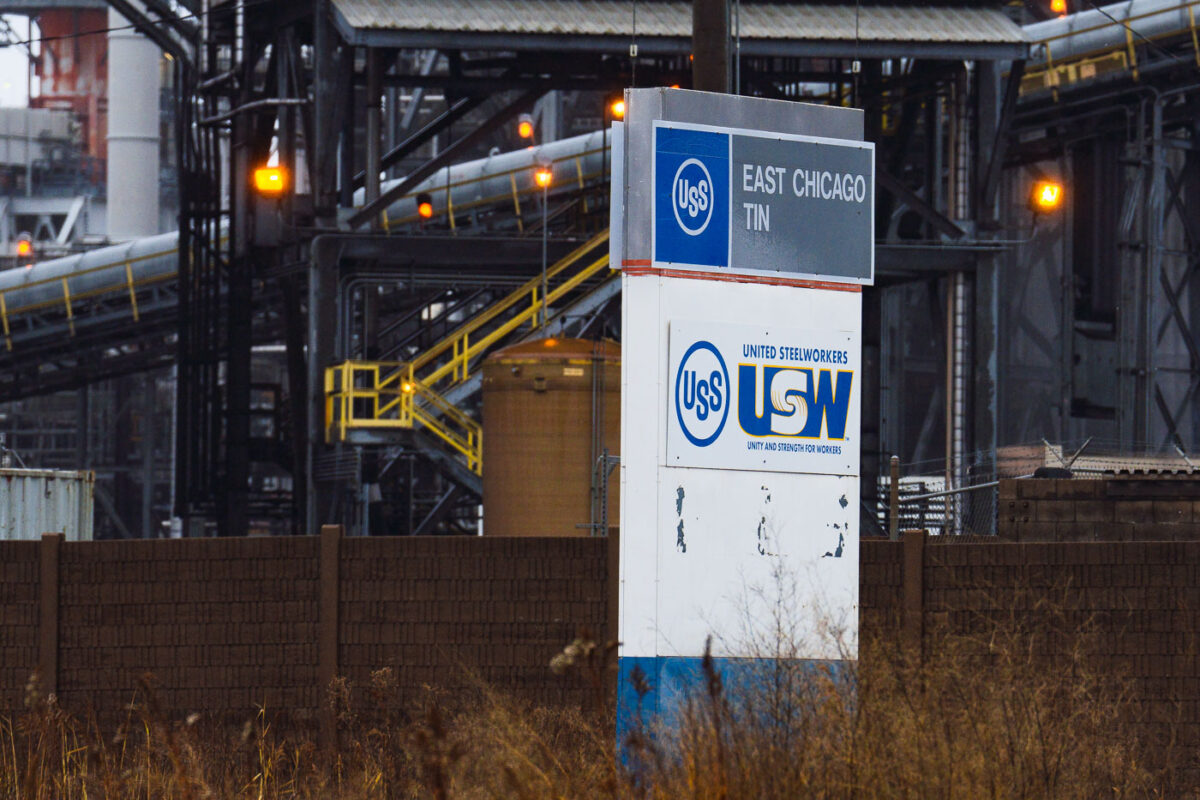
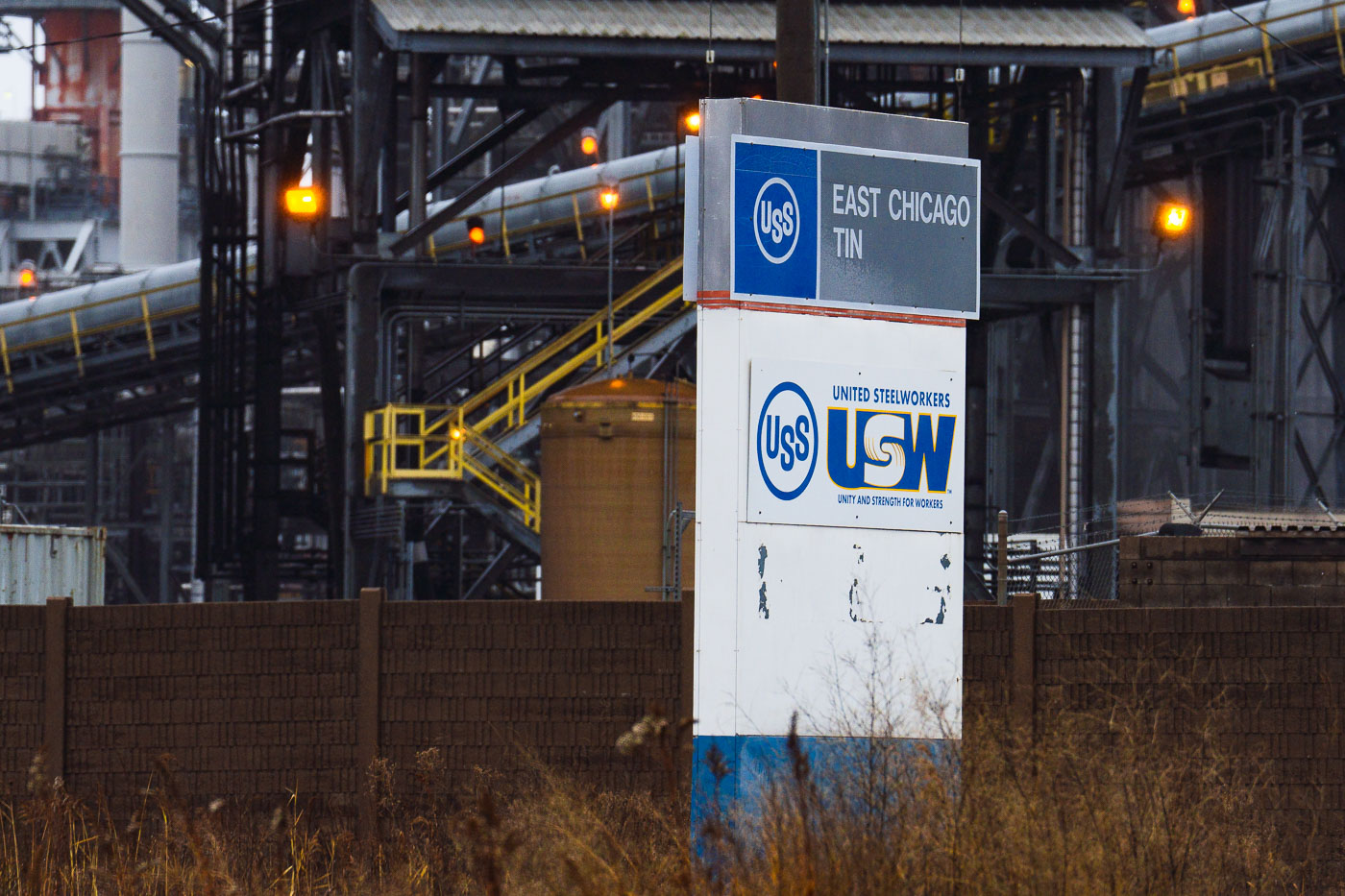
US Steel East Chicago Tin Plant signage with United Steelworkers union logo and industrial steel mill infrastructure in background.
The U.S. Steel East Chicago Tin plant stands in the Indiana Harbor section of East Chicago, Indiana. The facility processed steel for tin mill products used in packaging and other industrial applications, and U.S. Steel ended operations at the plant in 2015. Signage at the site includes the United Steelworkers union, reflecting the plant’s long association with organized steel labor in the Calumet industrial corridor.

USS East Chicago Tin Sign and Steelworkers Union Logo
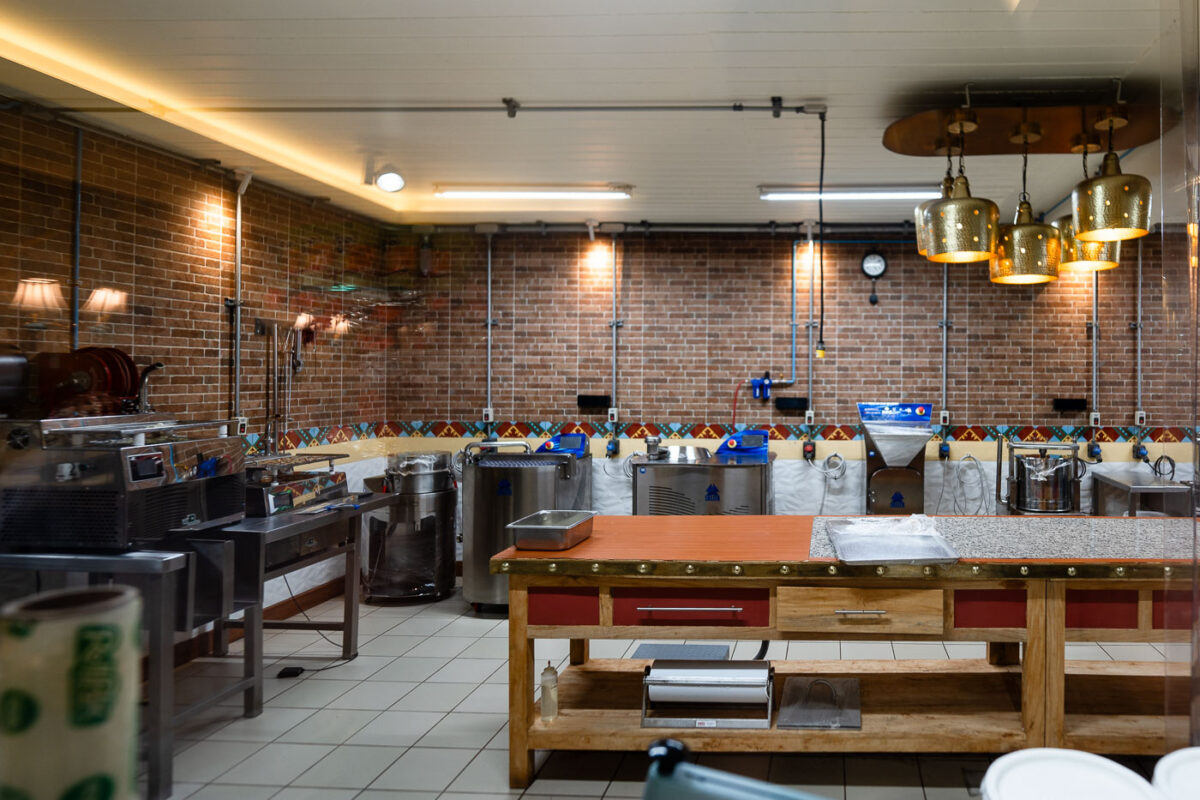
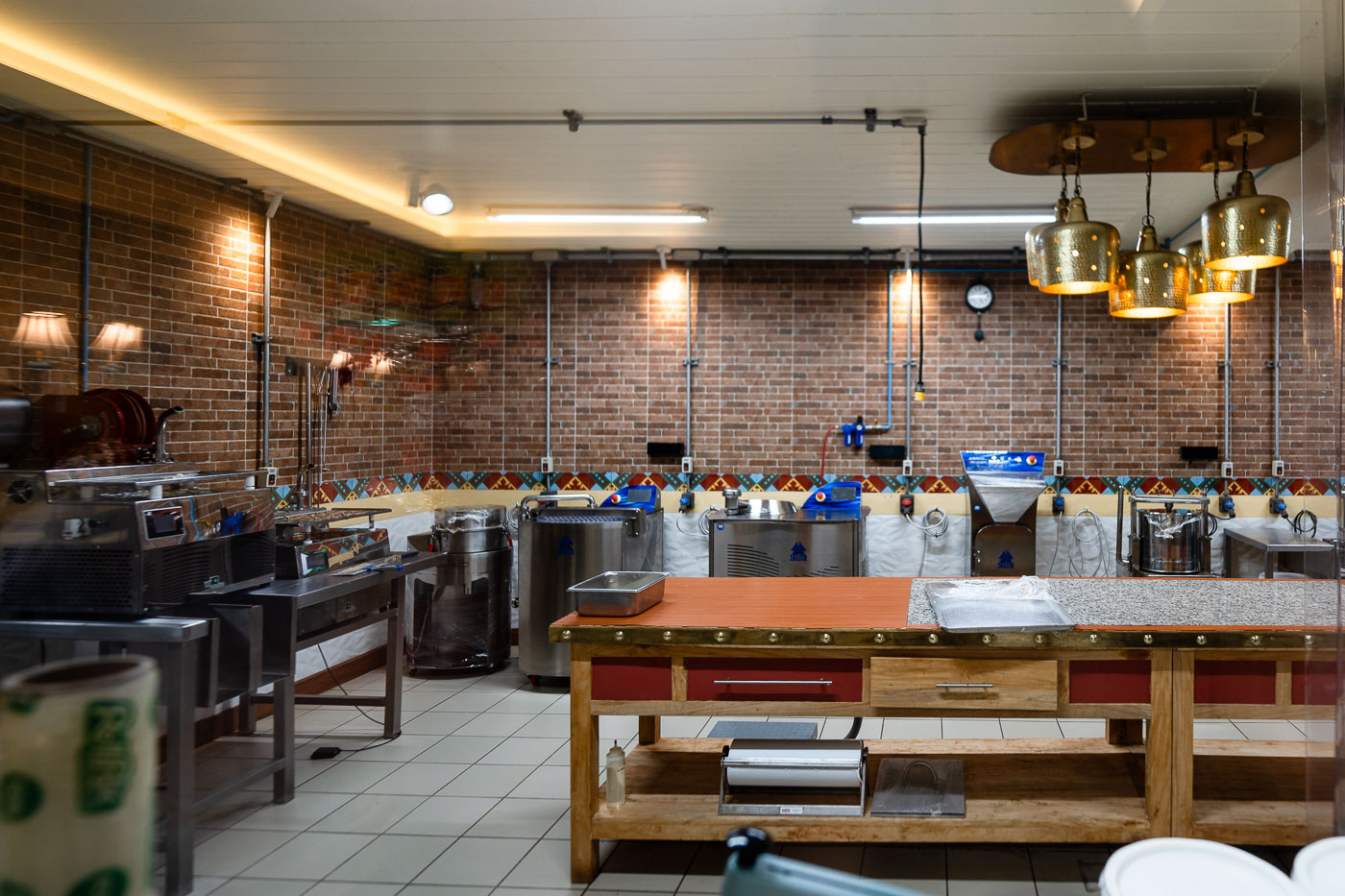
Villa Cocoa chocolate factory production room in San Sebastián del Oeste, Mexico, with equipment, worktables, and copper pendant lights.
Villa Cocoa chocolate factory in San Sebastián del Oeste, Jalisco, Mexico. The production room contains chocolate-making equipment, worktables, and processing machines used for small-batch confectionery production.

Inside the Production Room at Villa Cocoa
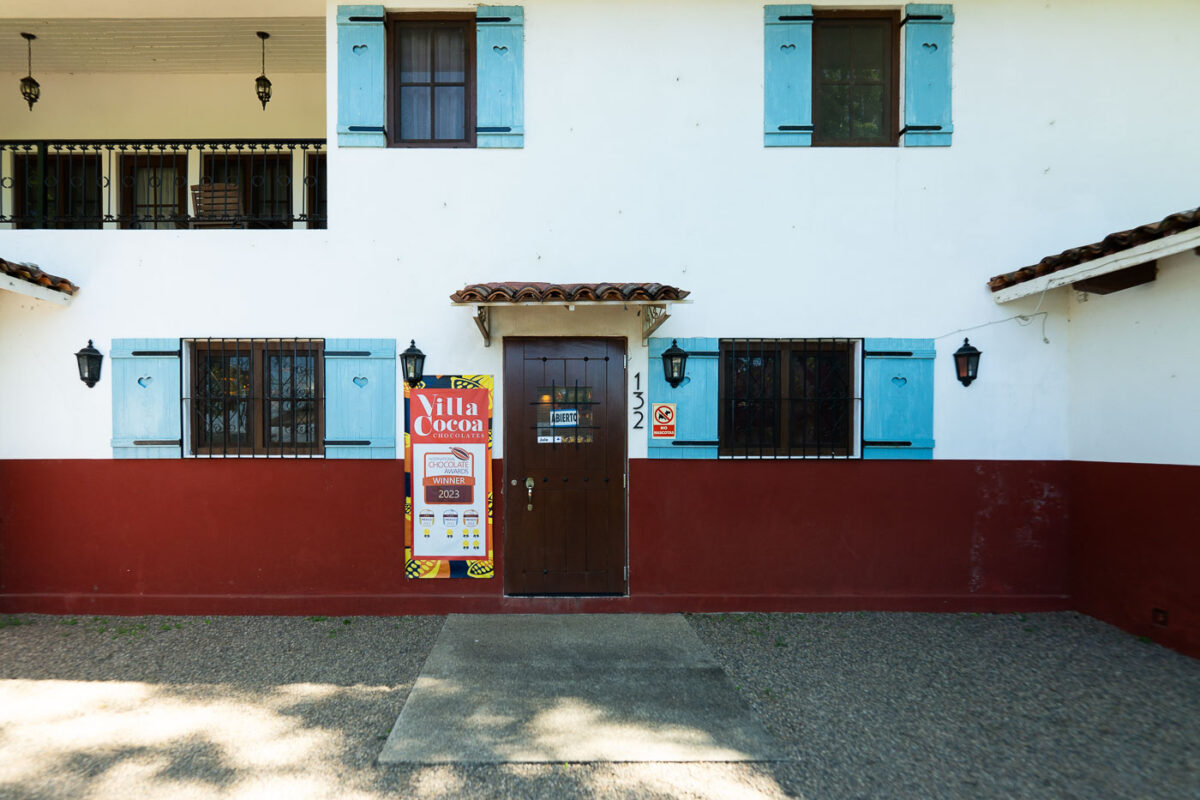
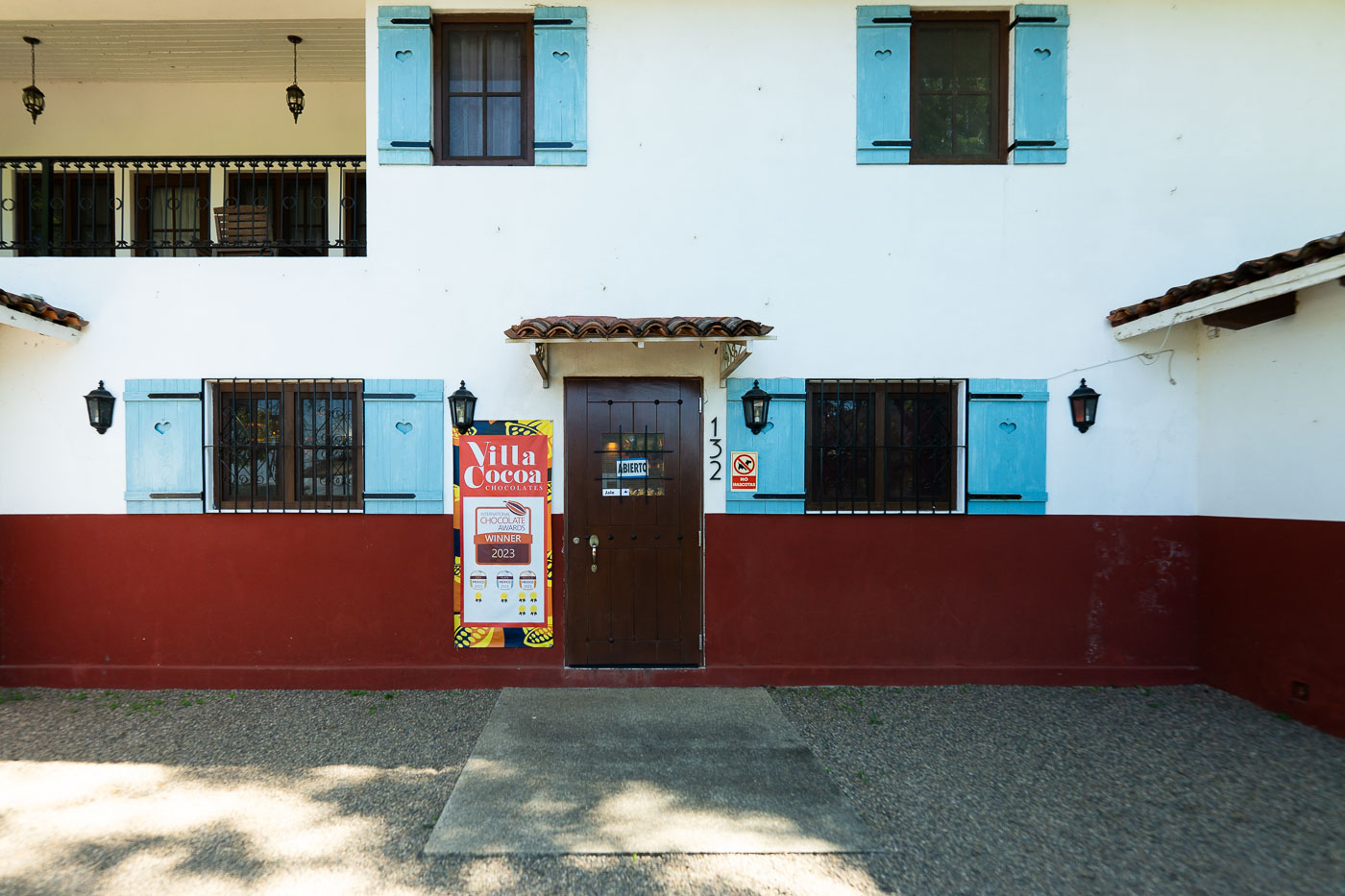
Villa Cocoa Chocolates chocolate factory storefront on Calle 132 in San Sebastián del Oeste, Jalisco, Mexico.
Villa Cocoa Chocolates is a chocolate factory on Calle 132 in San Sebastián del Oeste, Jalisco, Mexico. The shop operates from a white-and-red stucco building with blue shutters and a central entrance marked by signage noting its 2023 International Chocolate Awards recognition.

Villa Cocoa’s Award-Winning Storefront in San Sebastián del Oeste

Built in Minneapolis

Minneapolis Photographer

Browse by location, move through long-running series, or start with recent work.