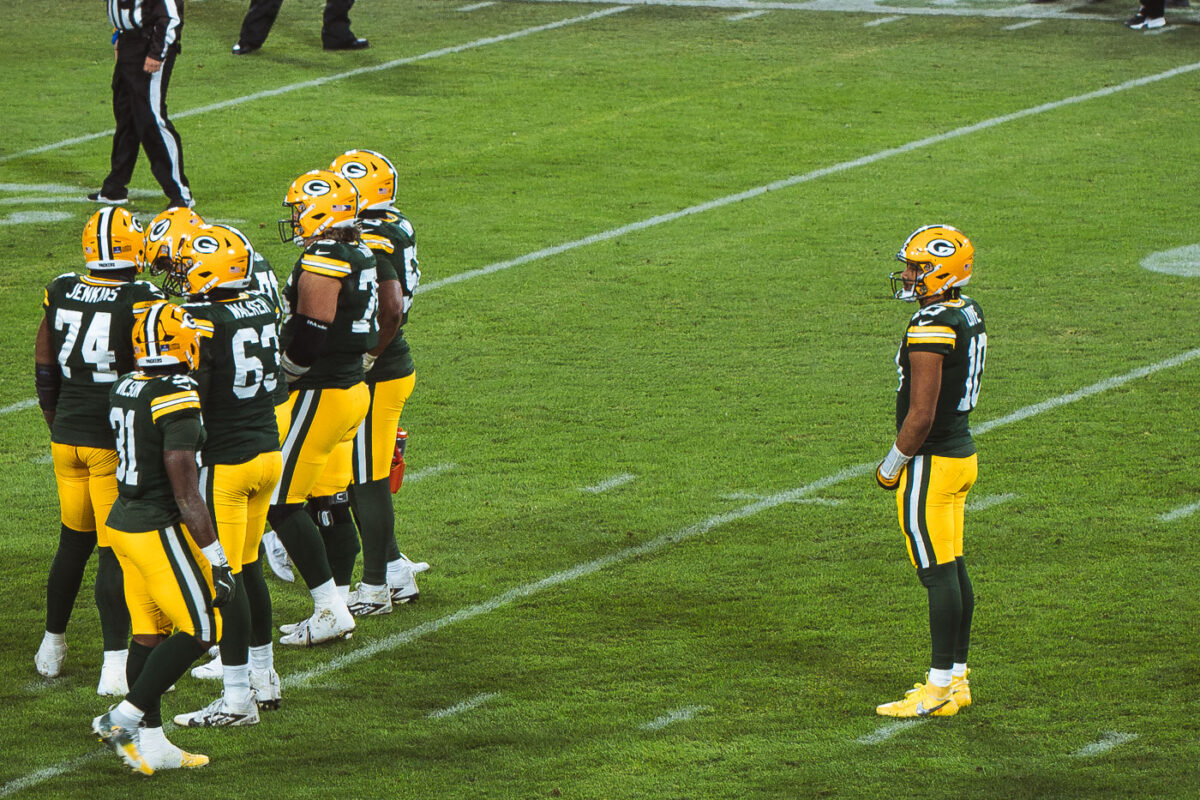
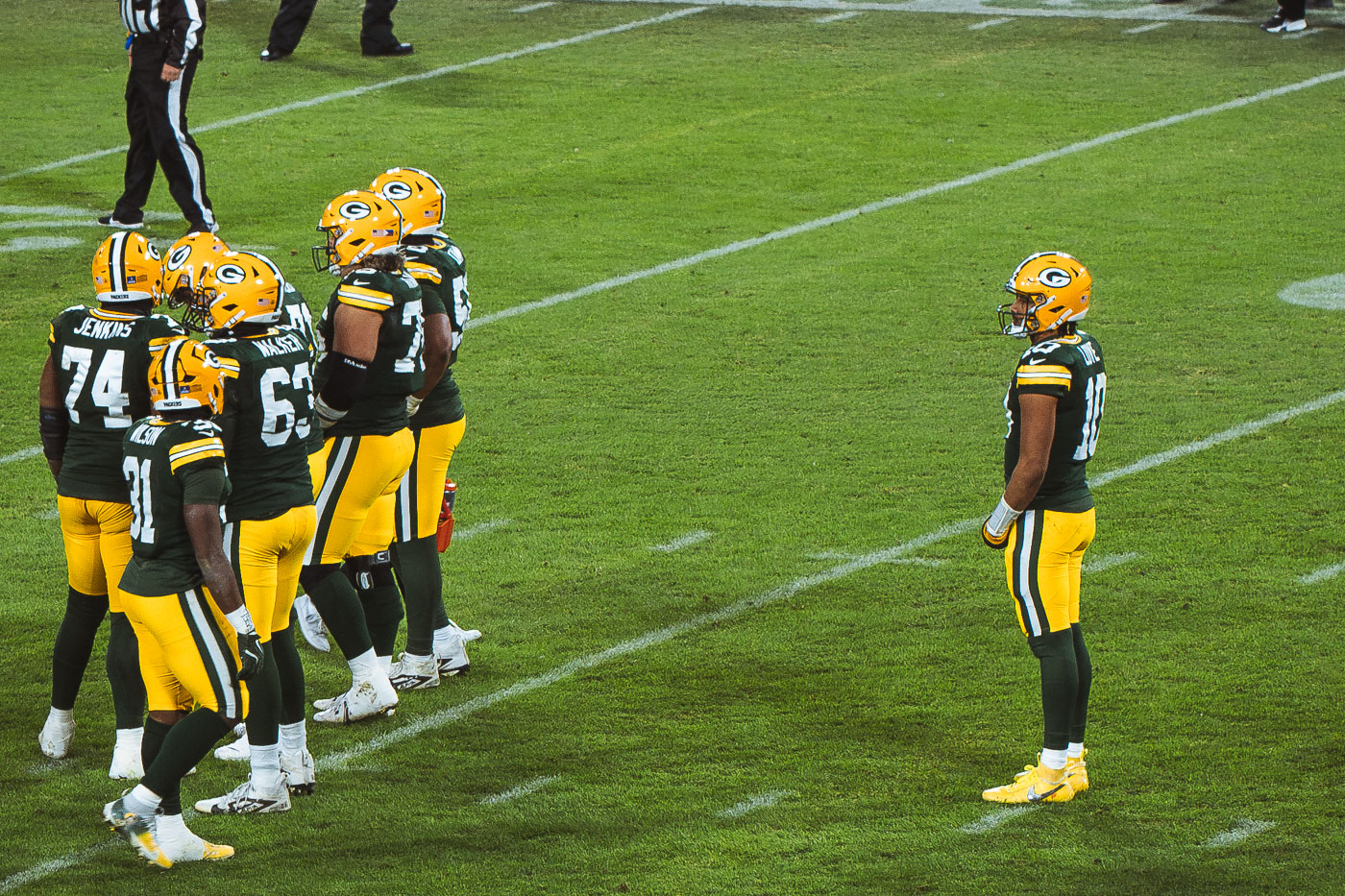
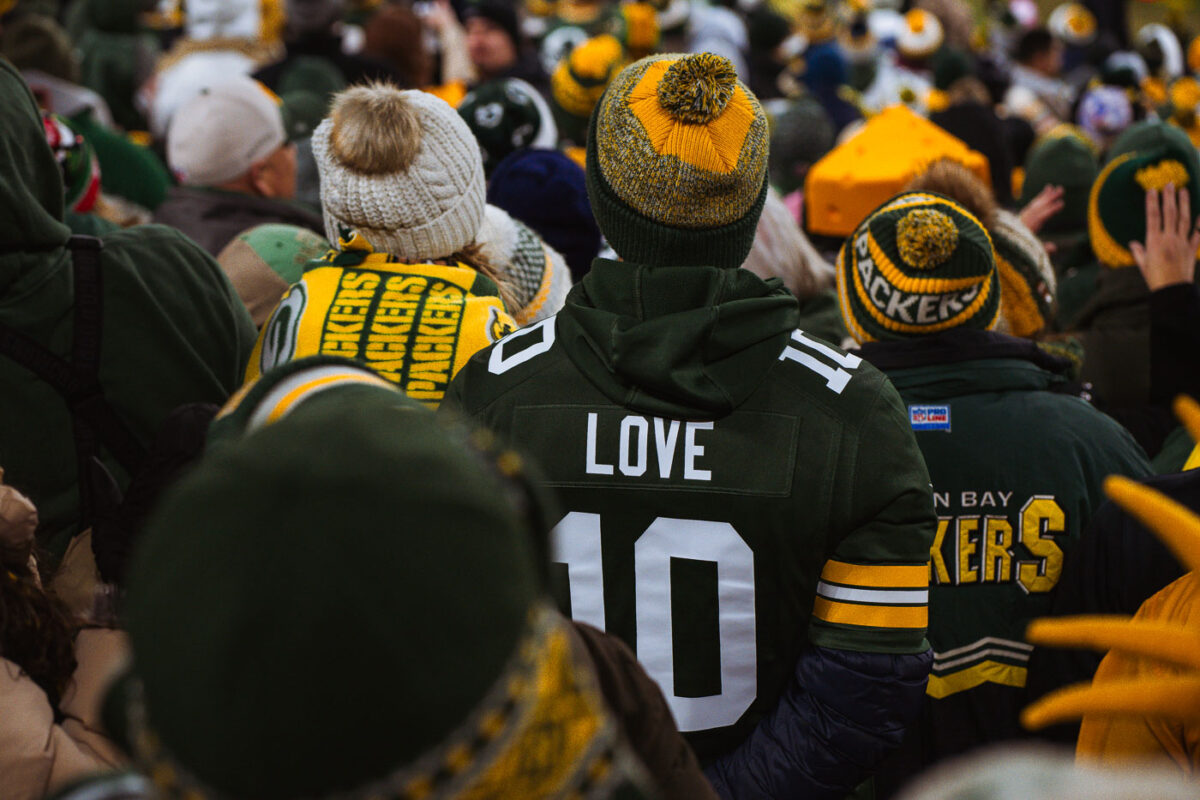
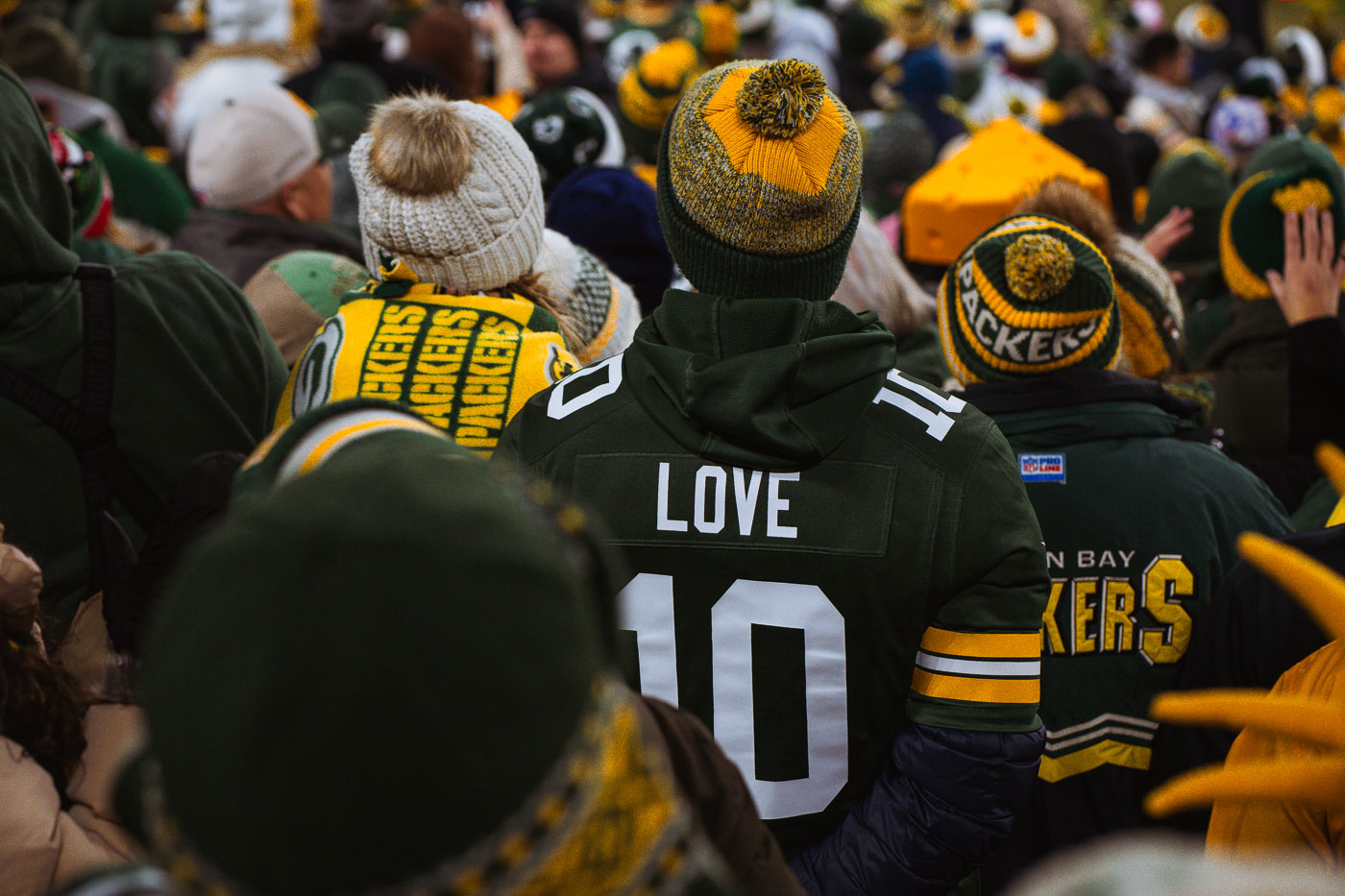
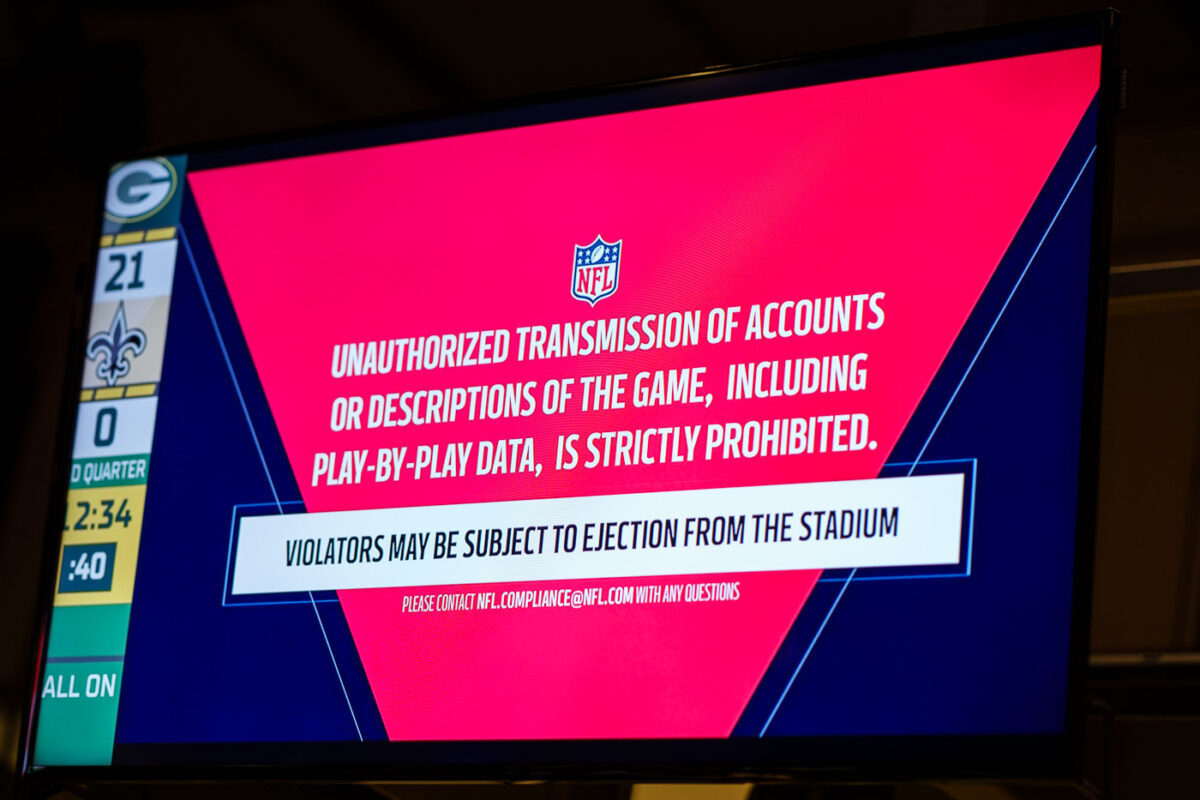
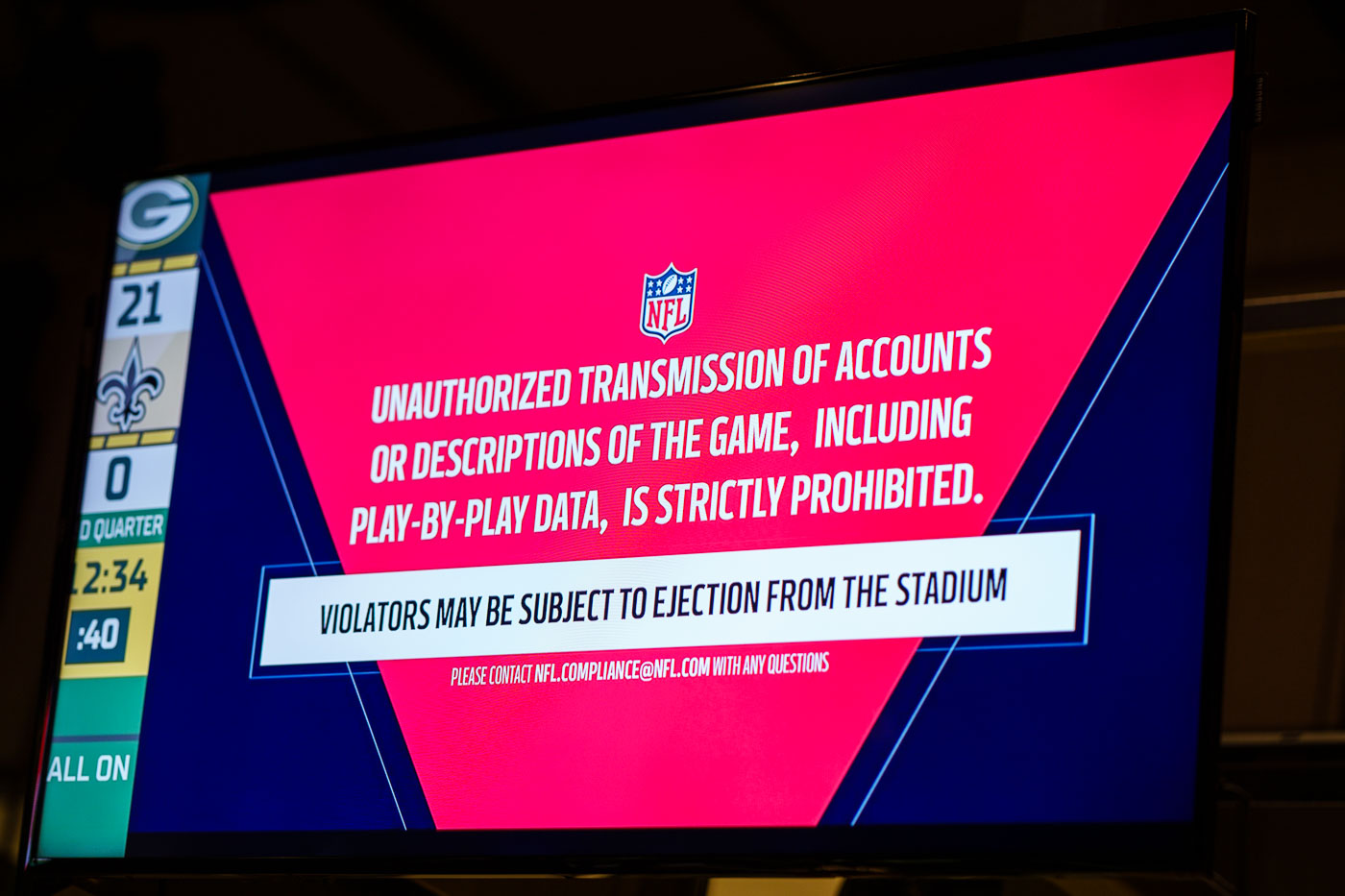
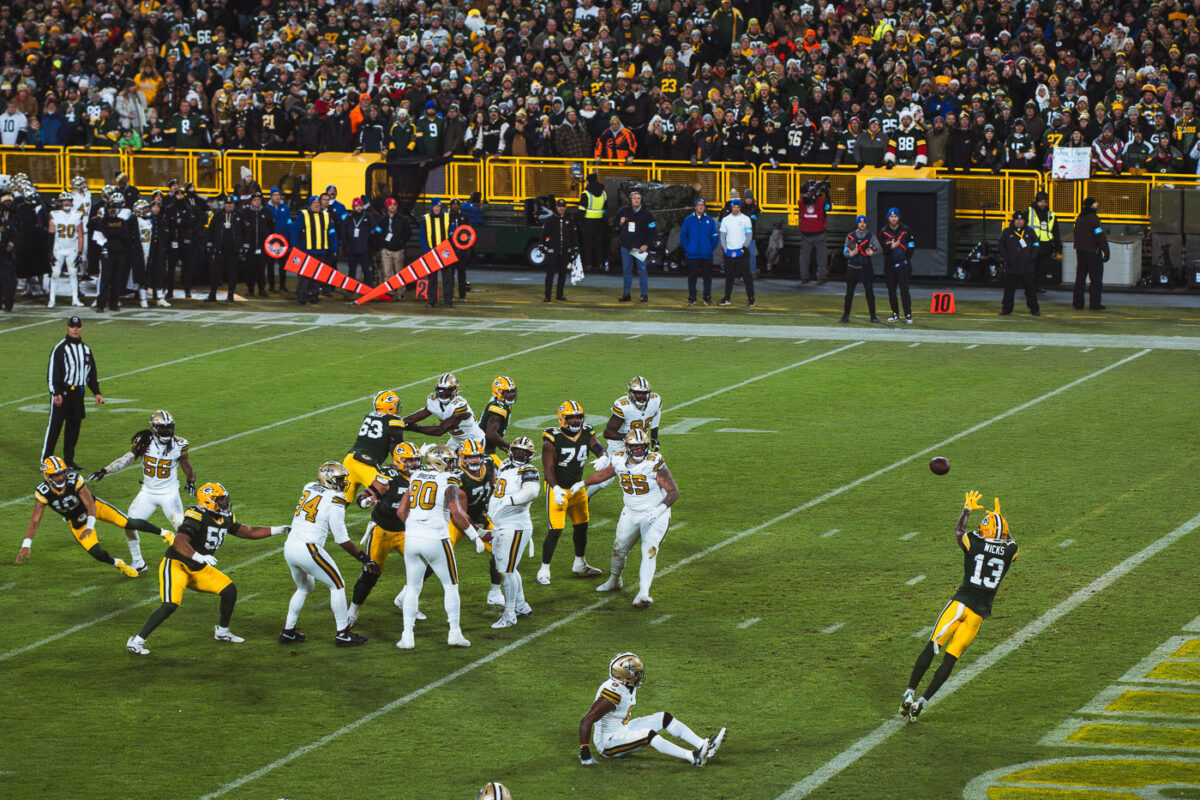
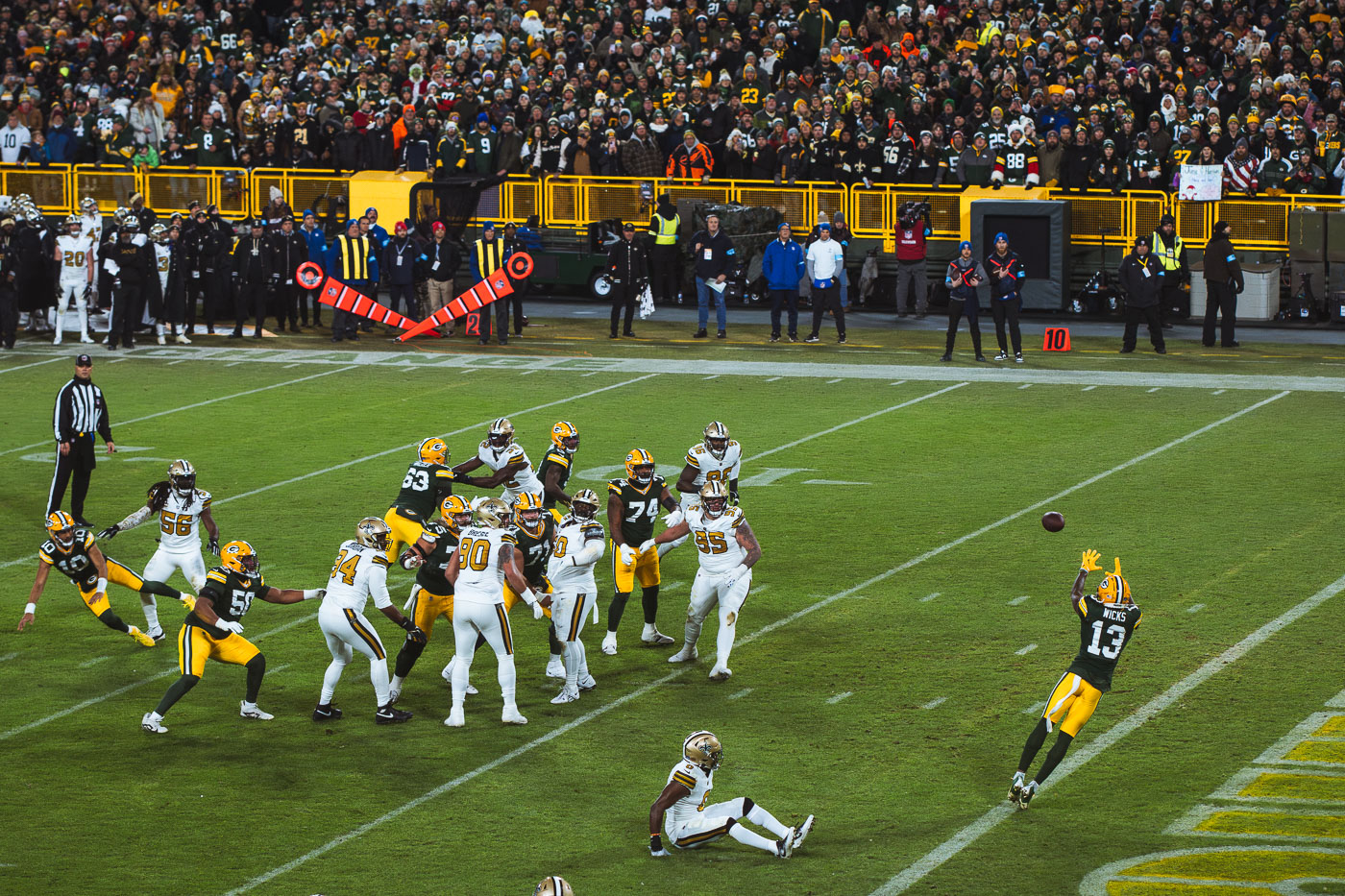
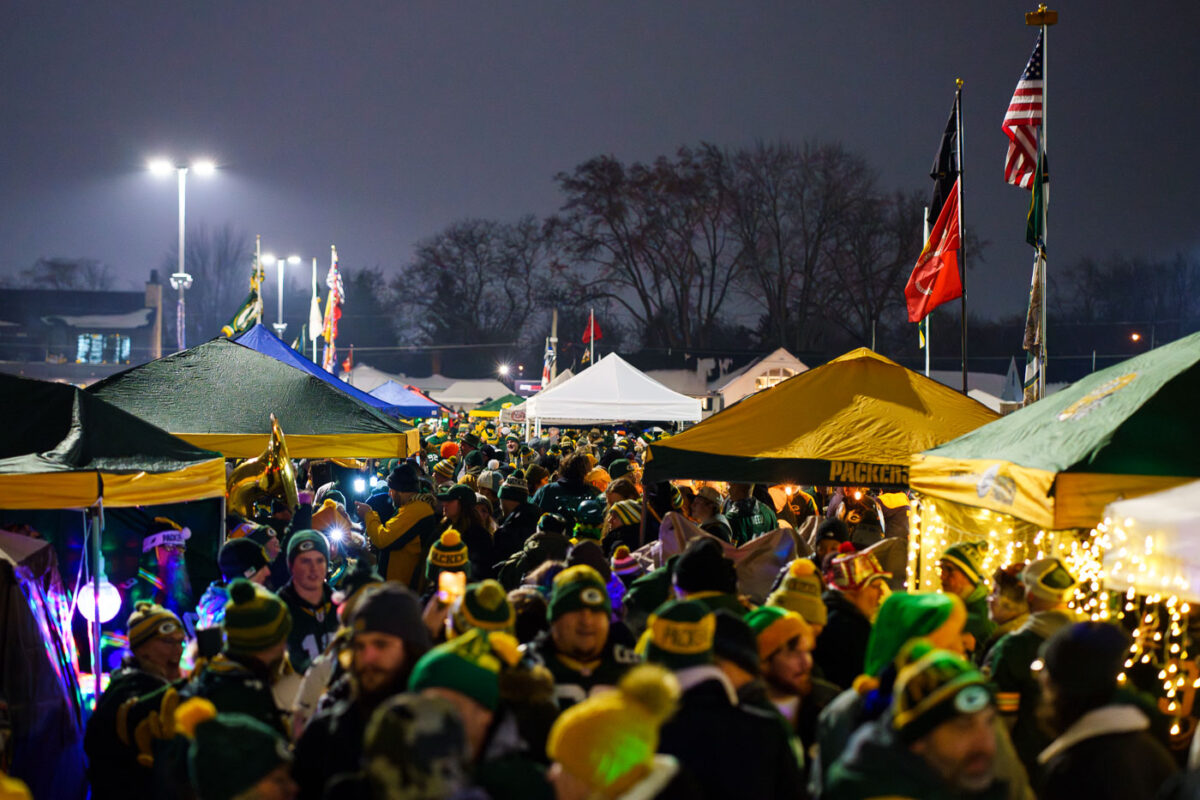
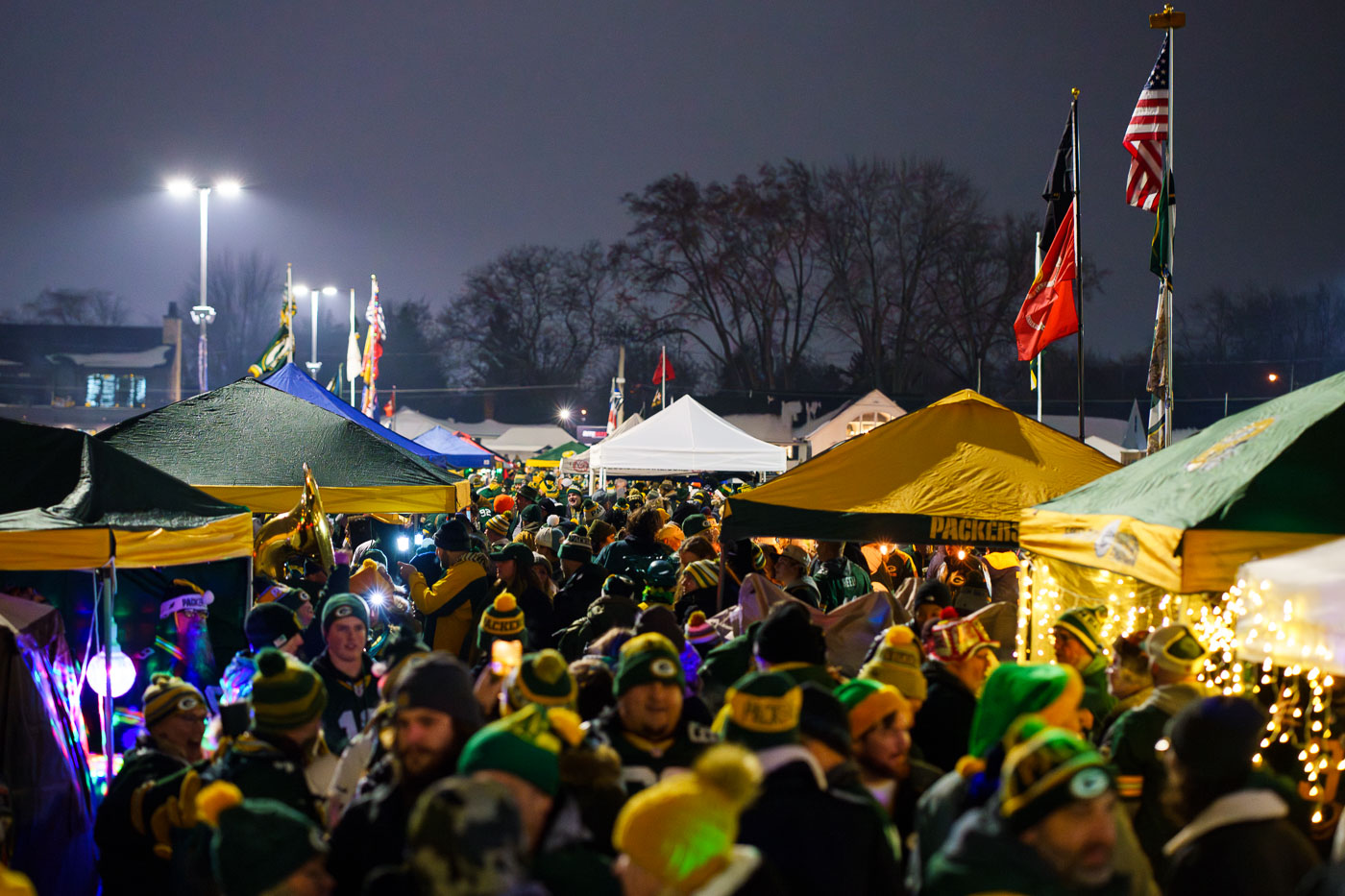
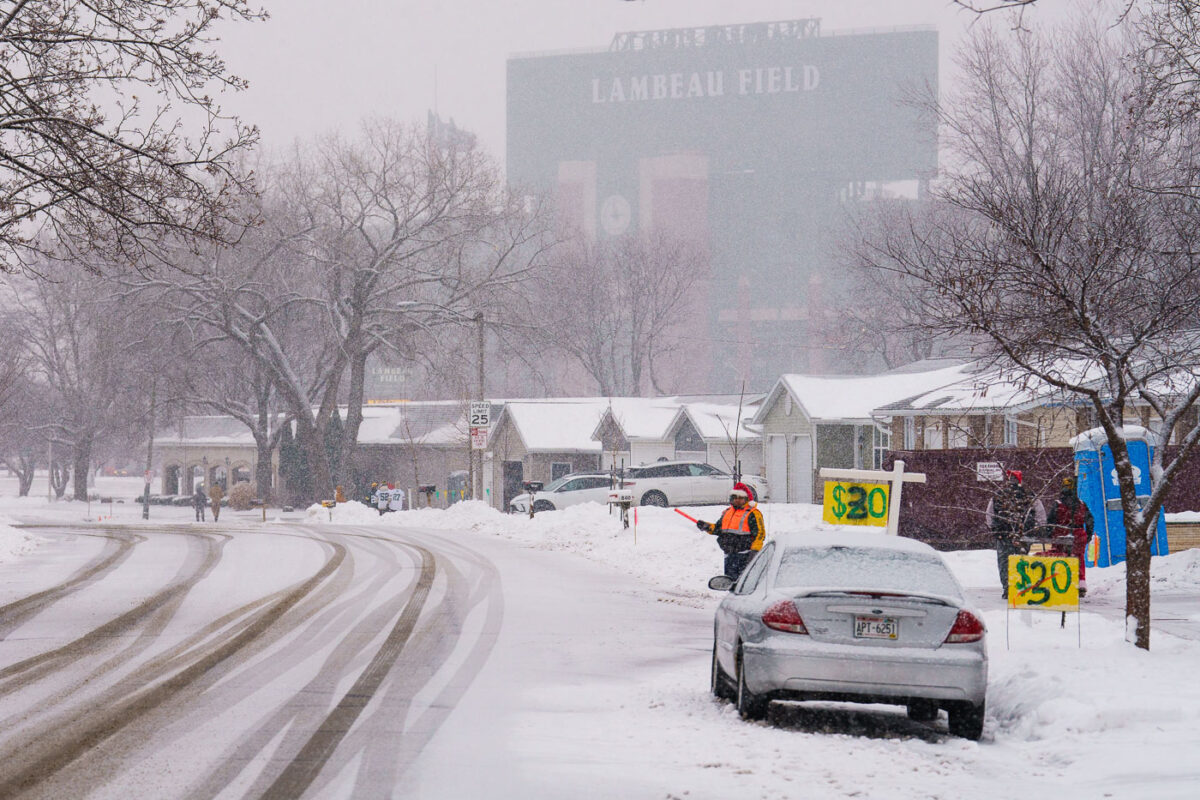
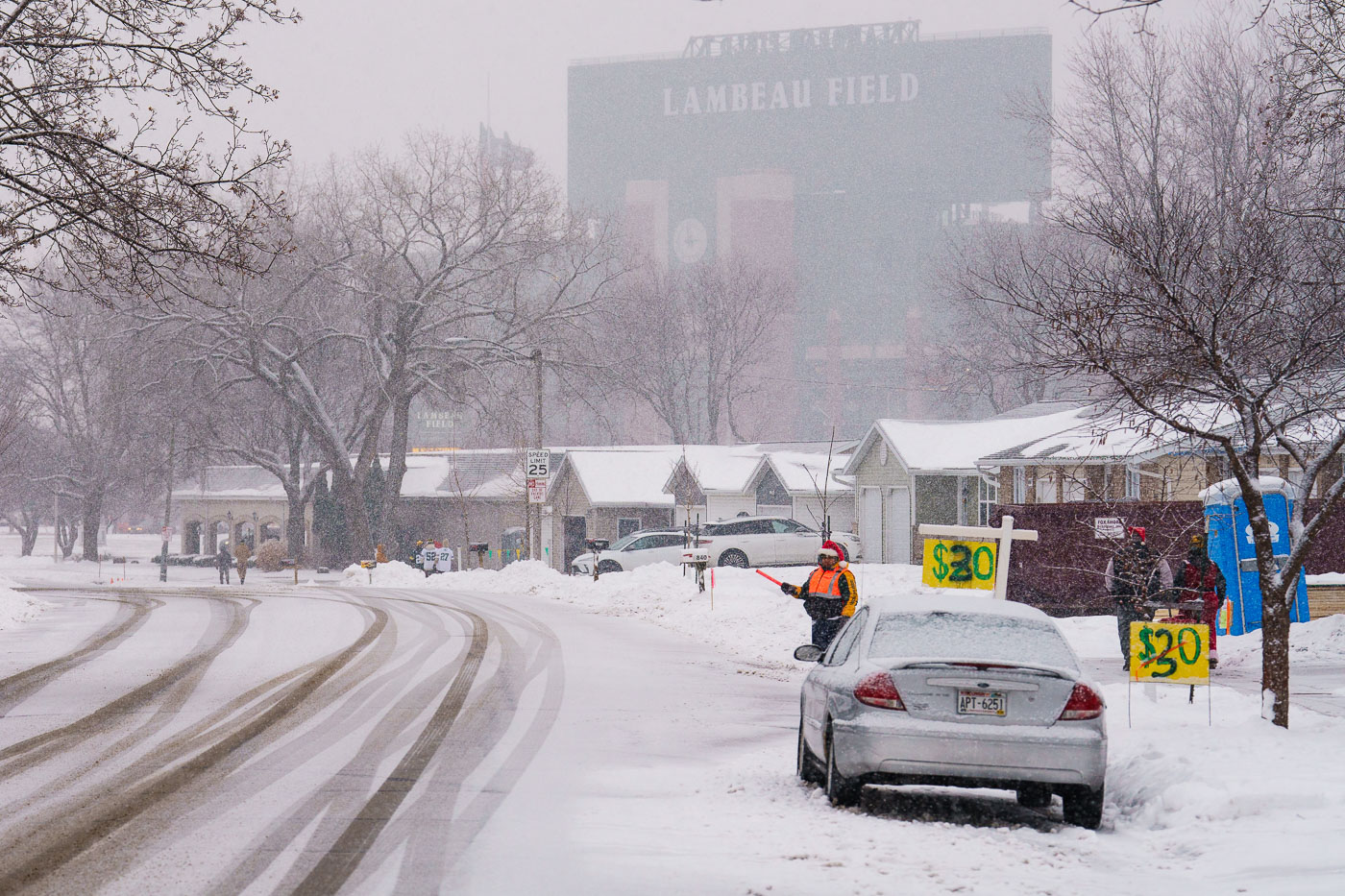
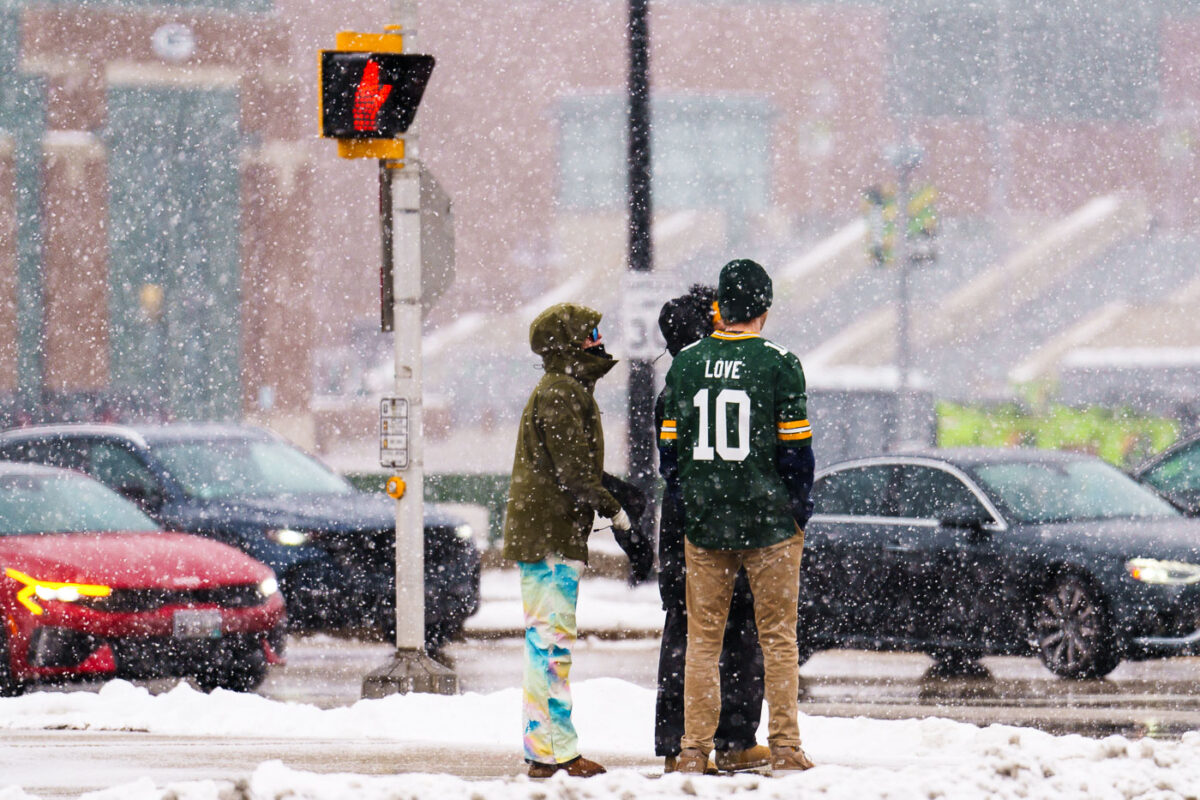
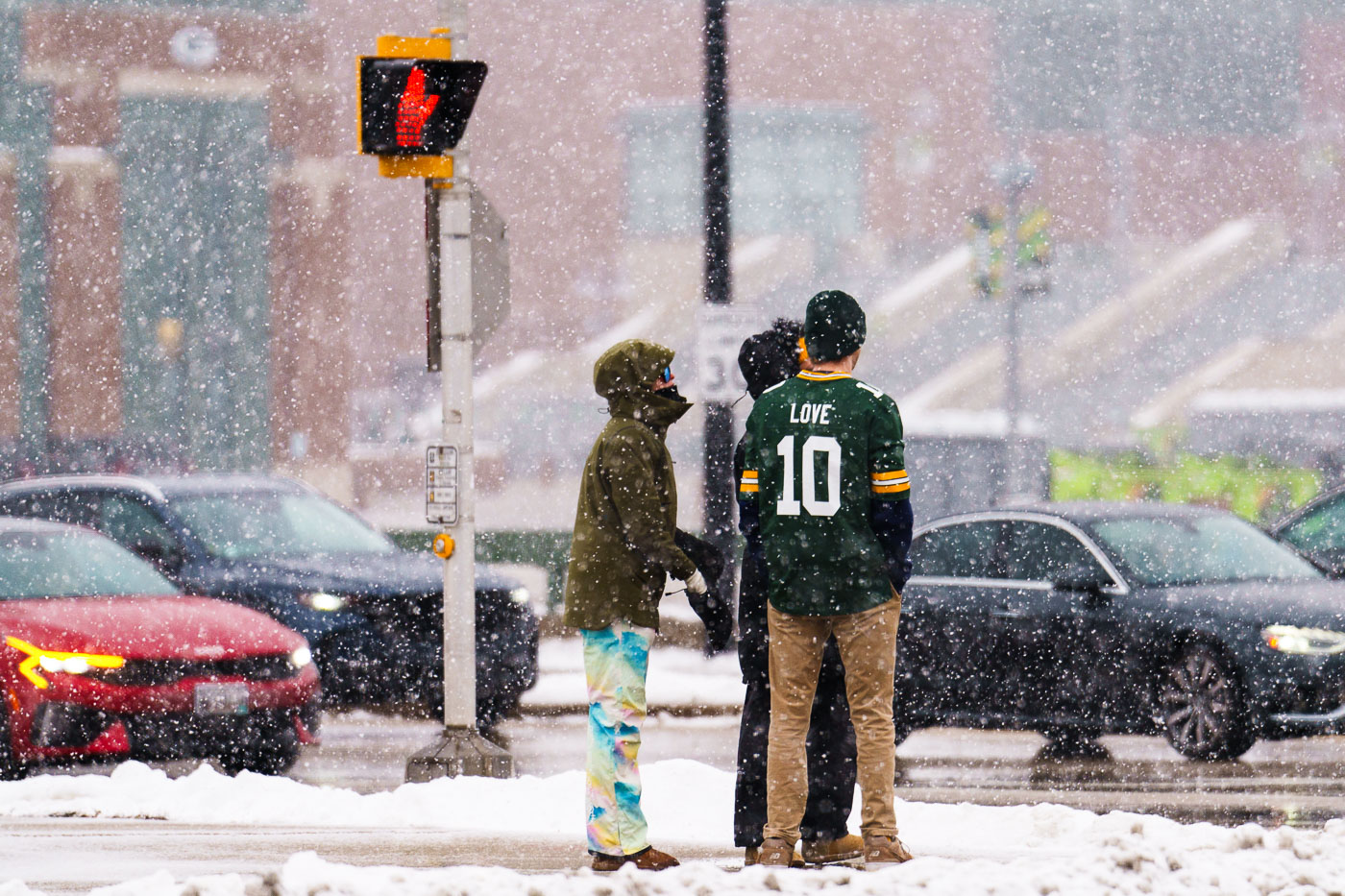
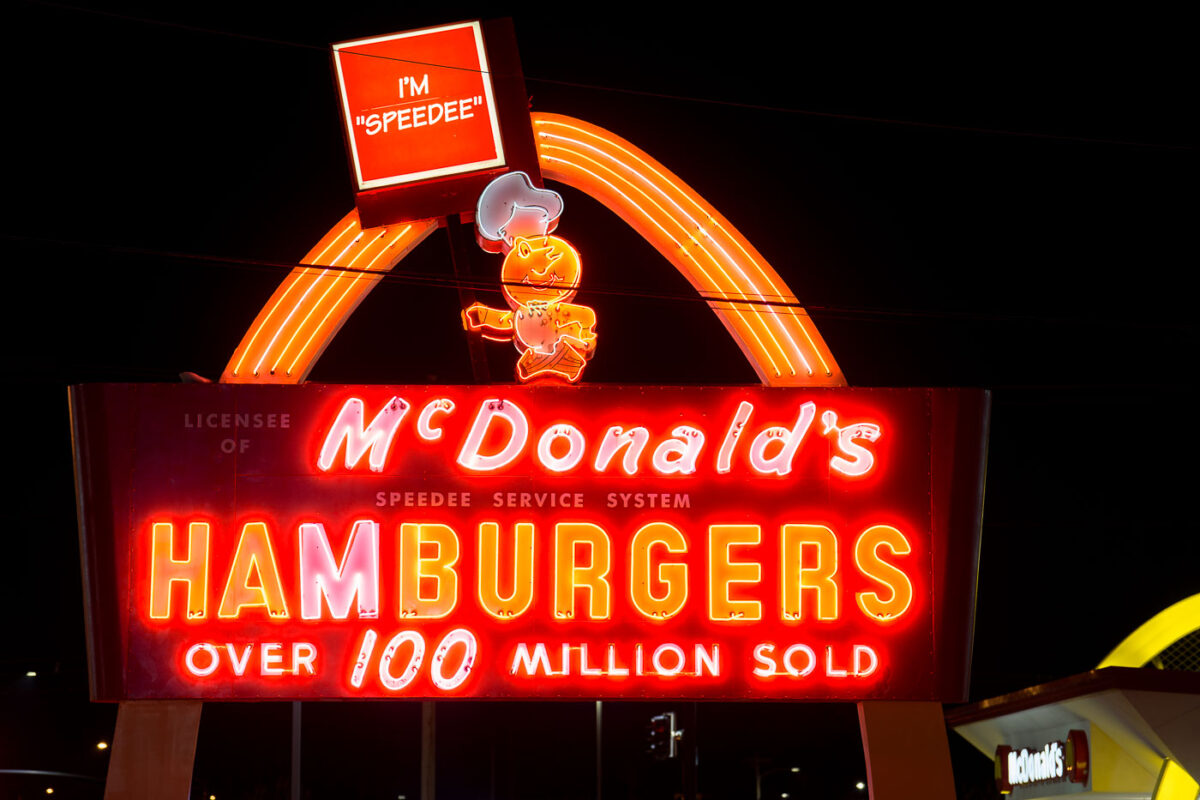
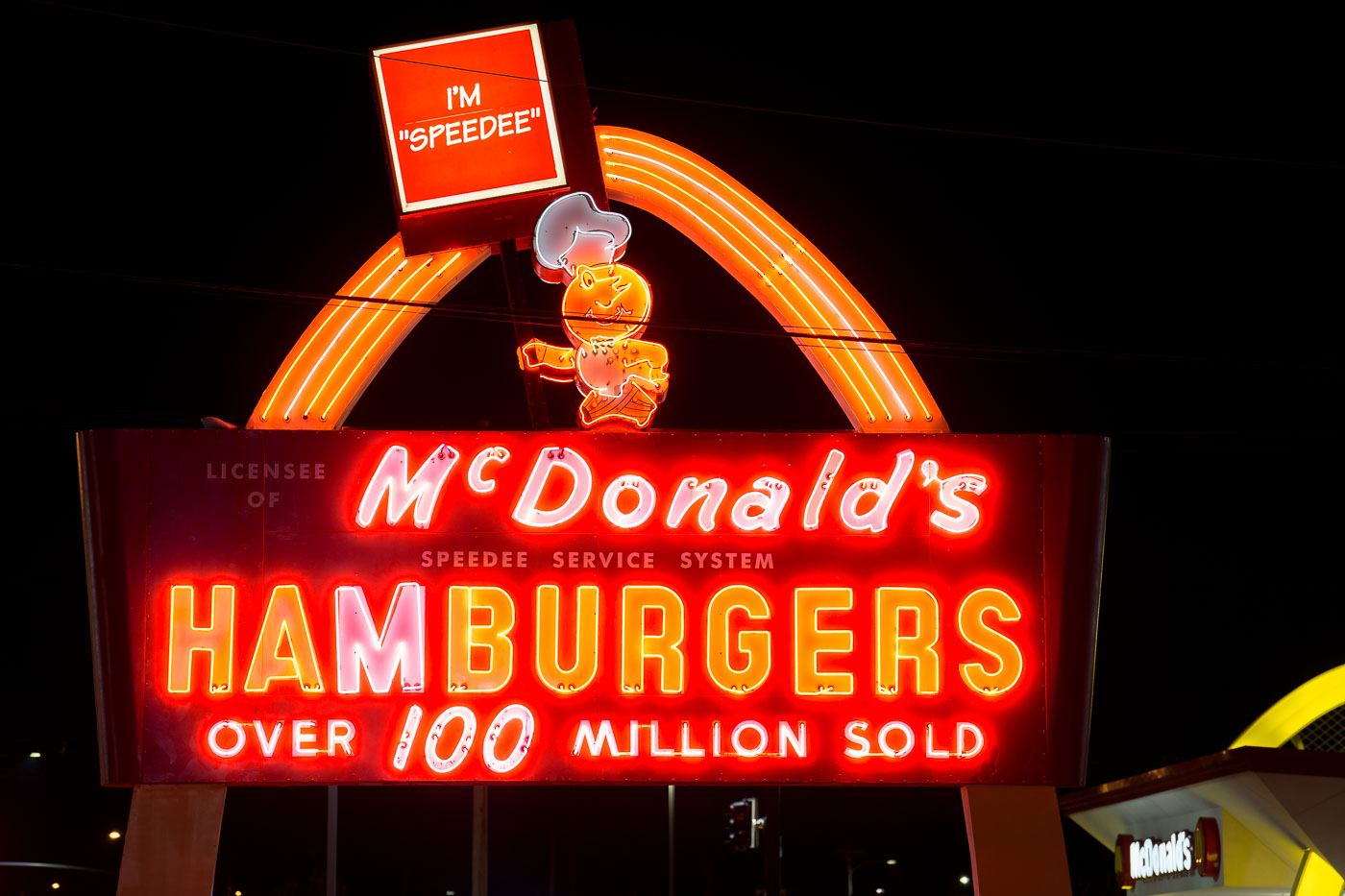
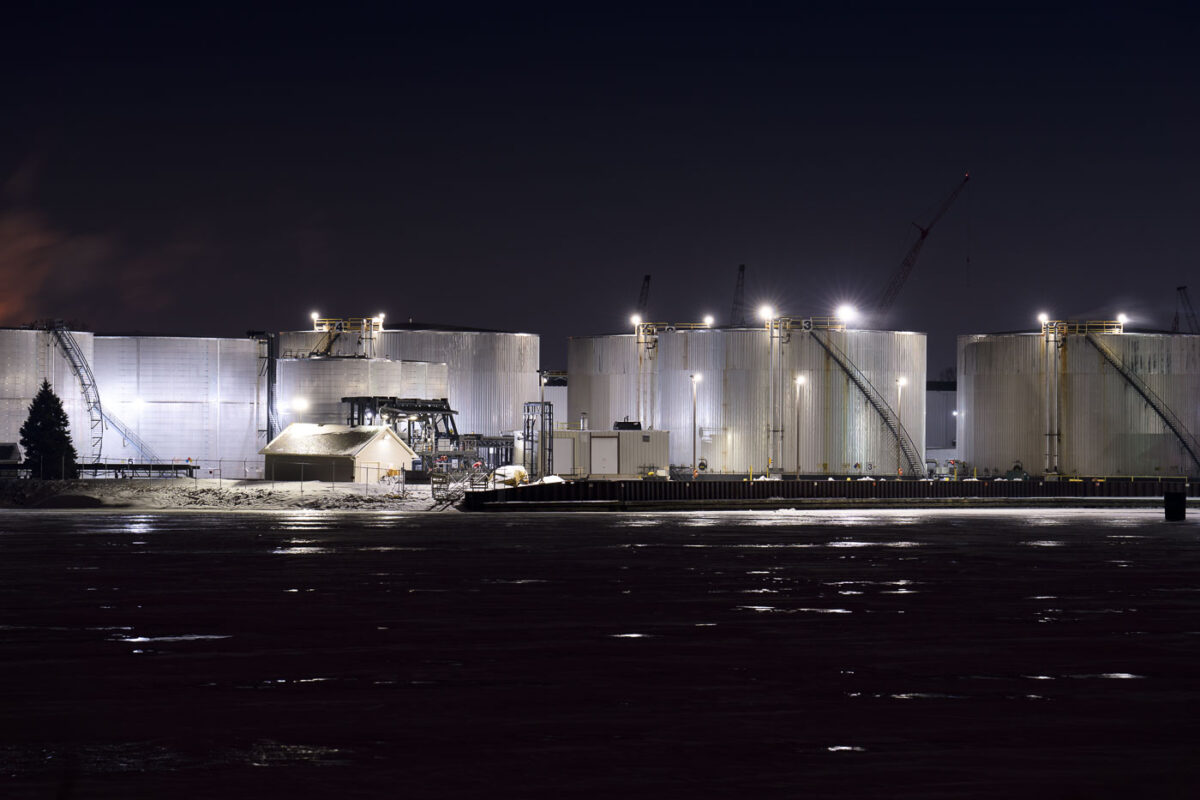
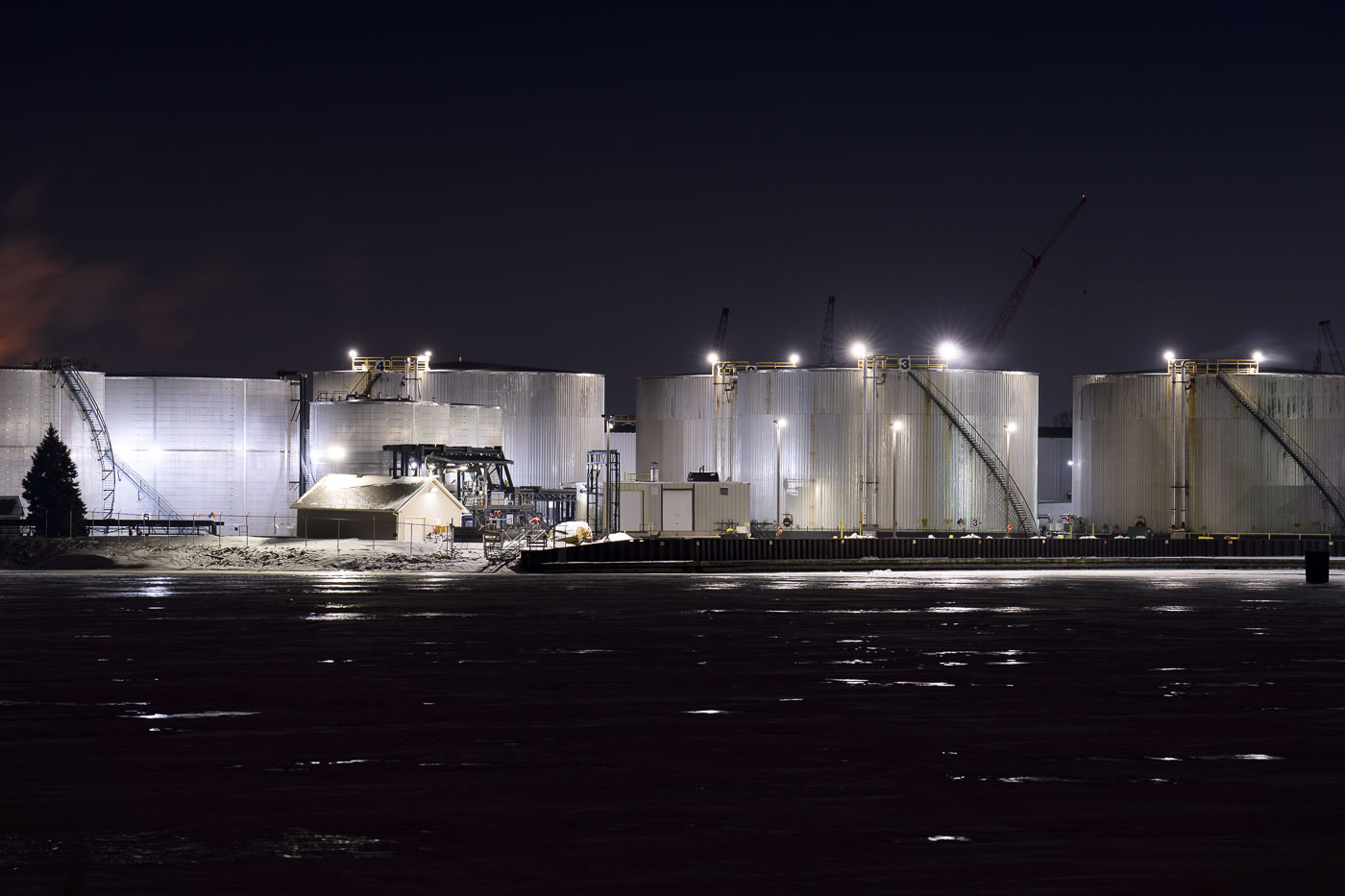
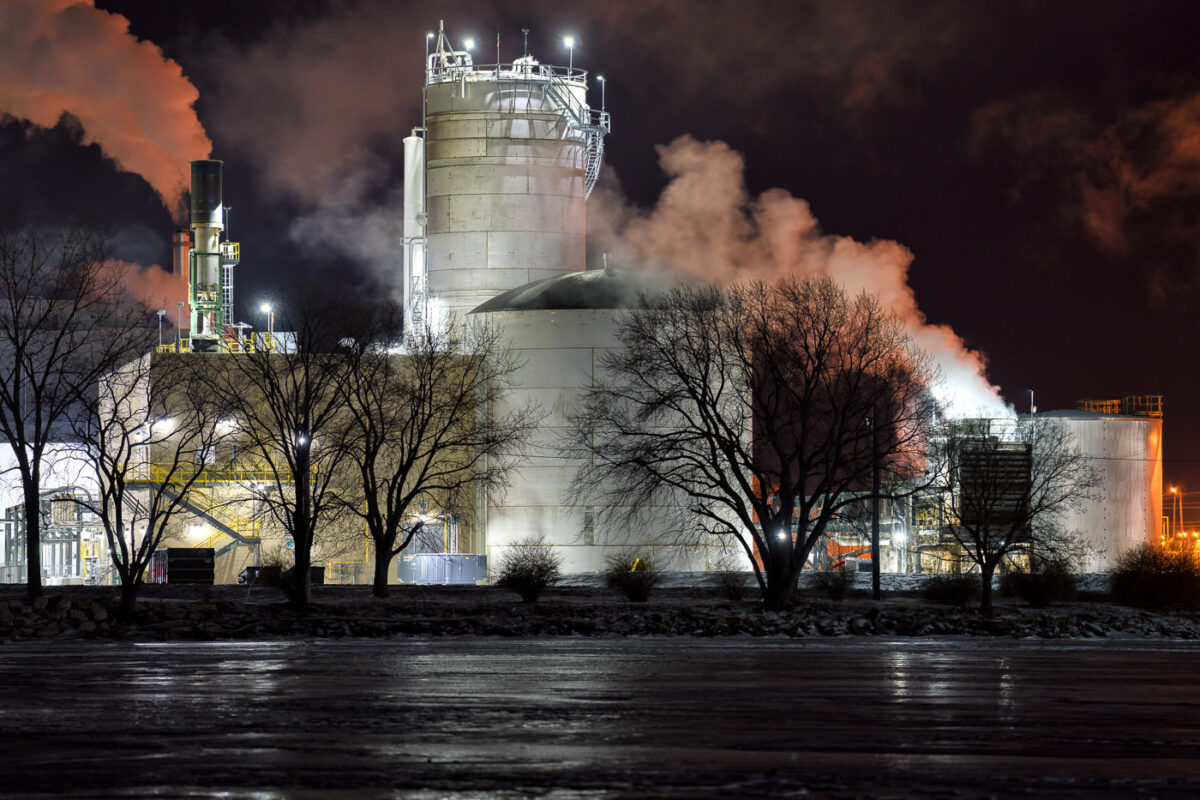
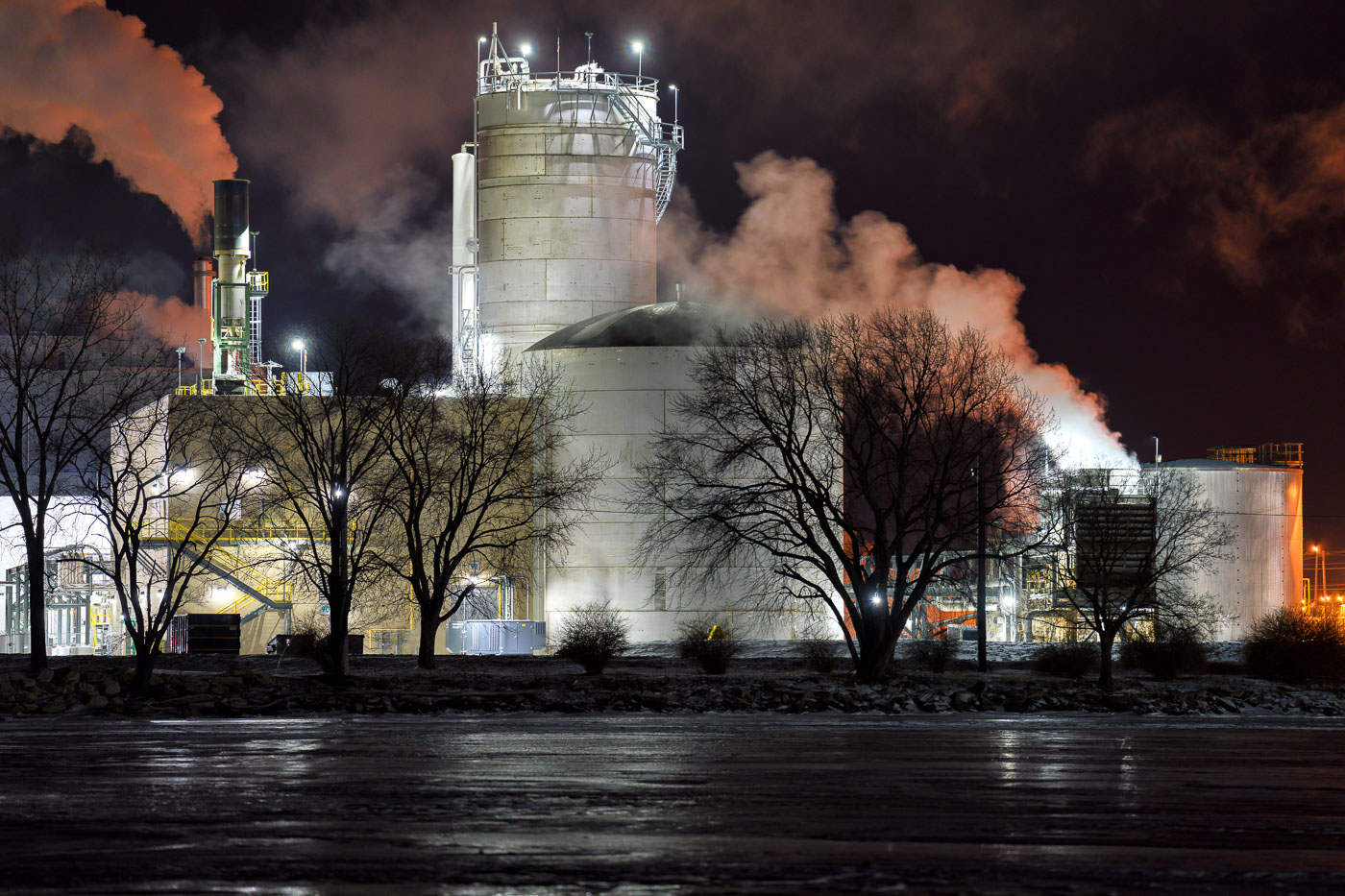
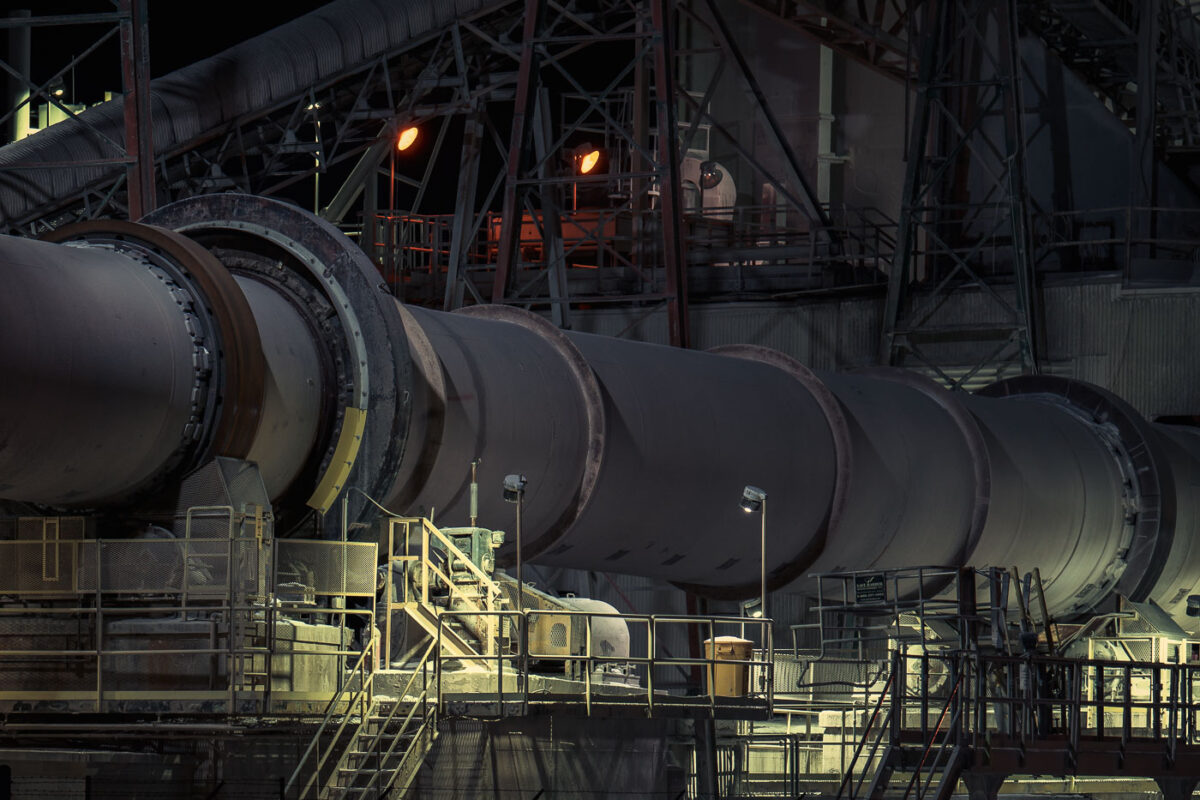
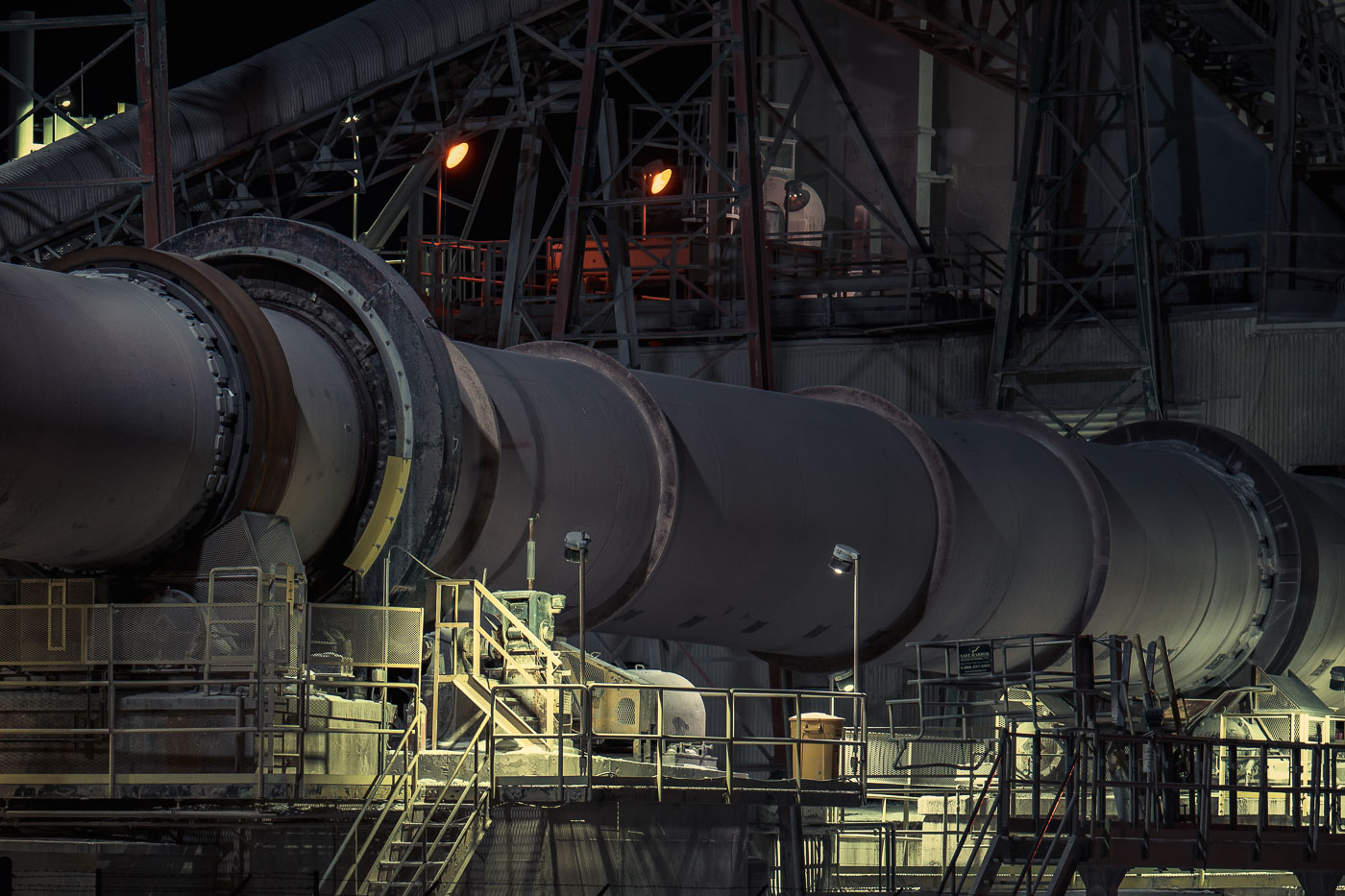
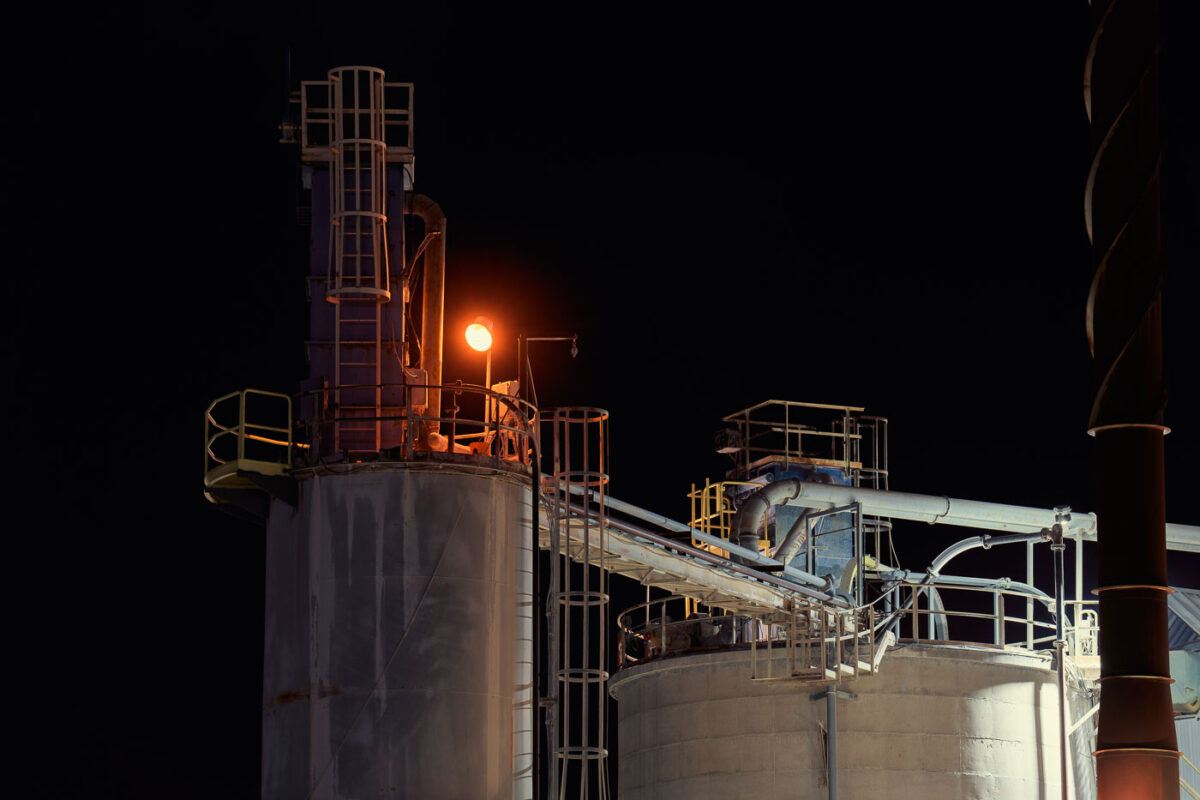
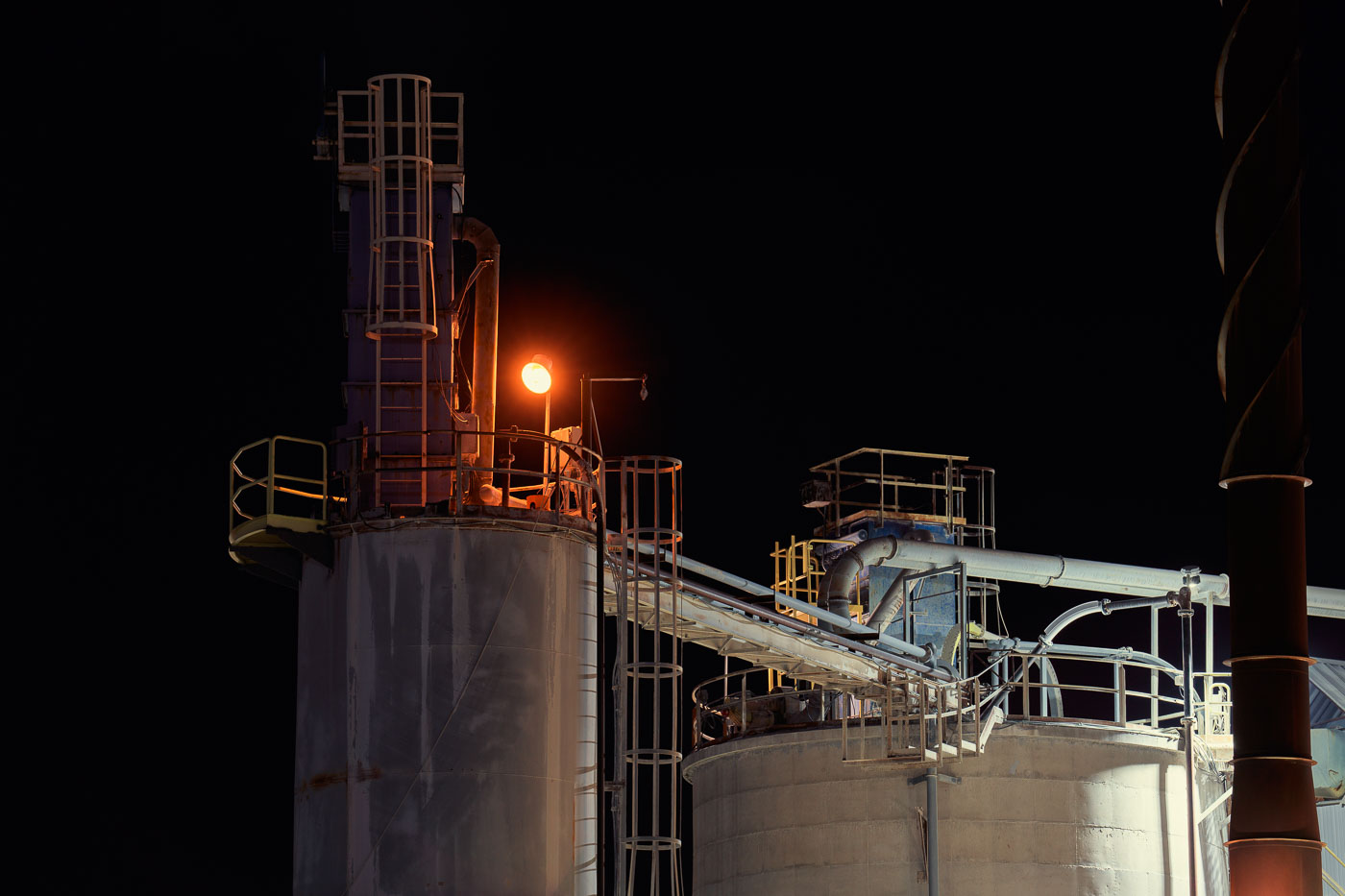
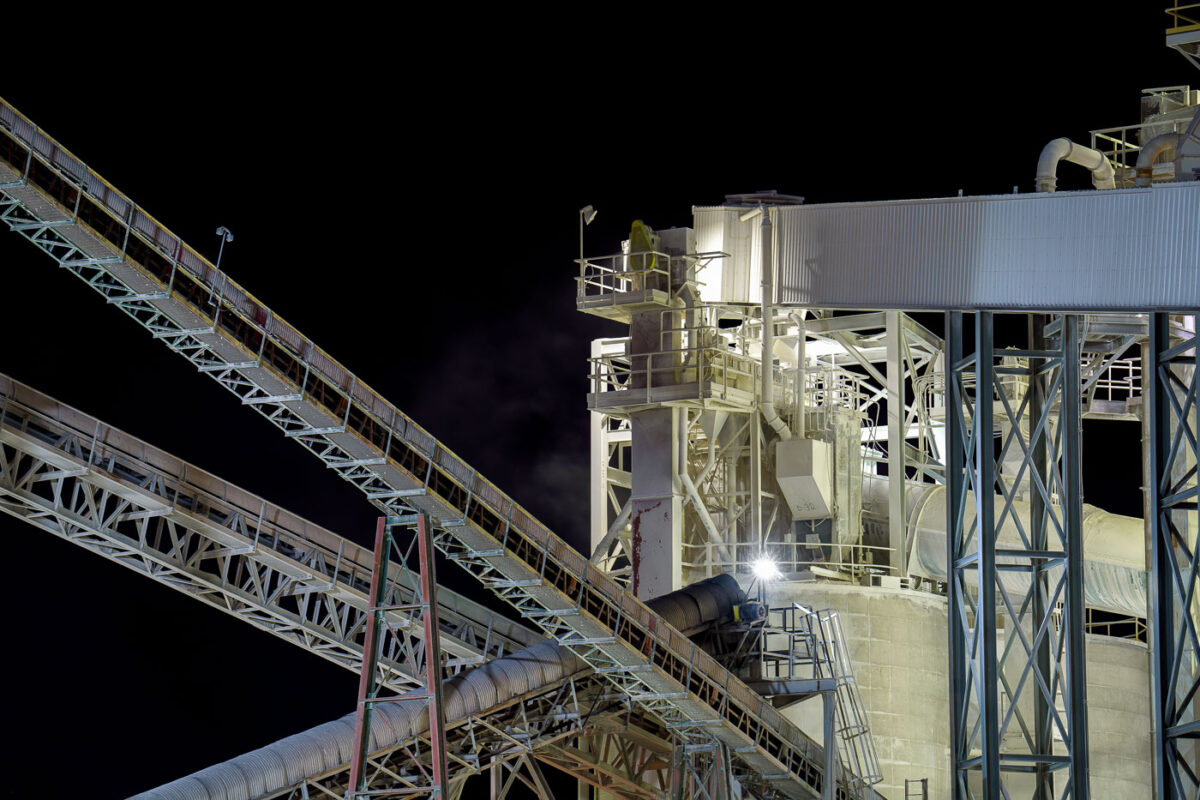
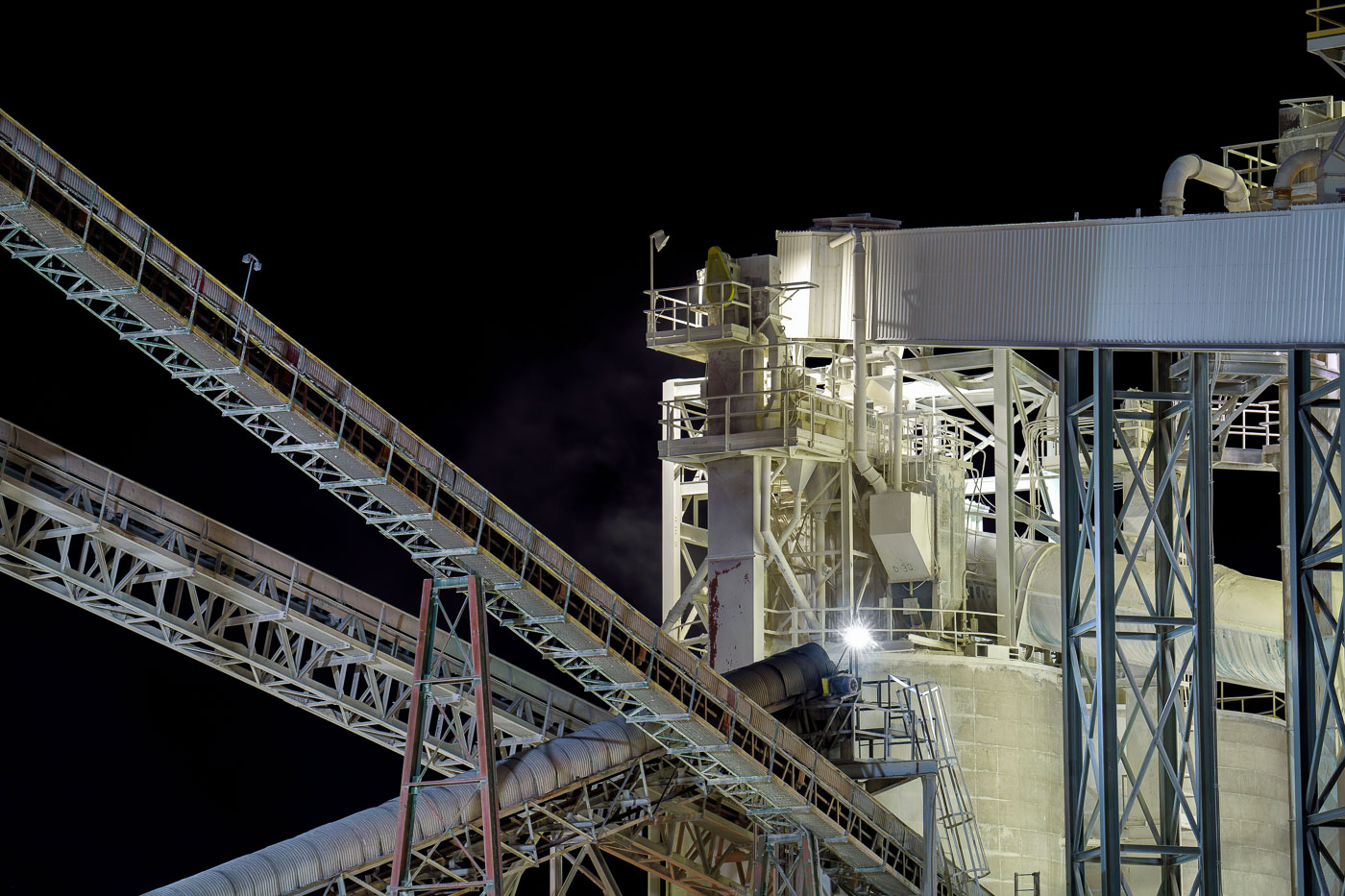
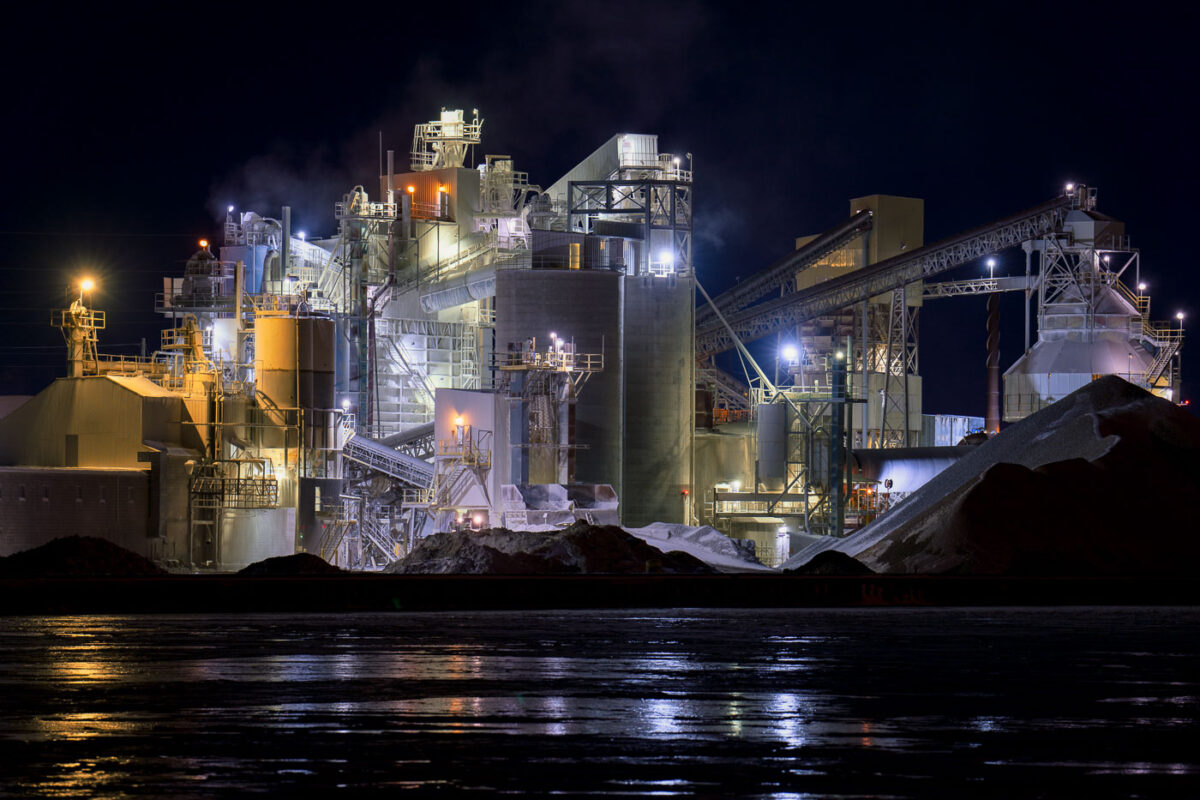
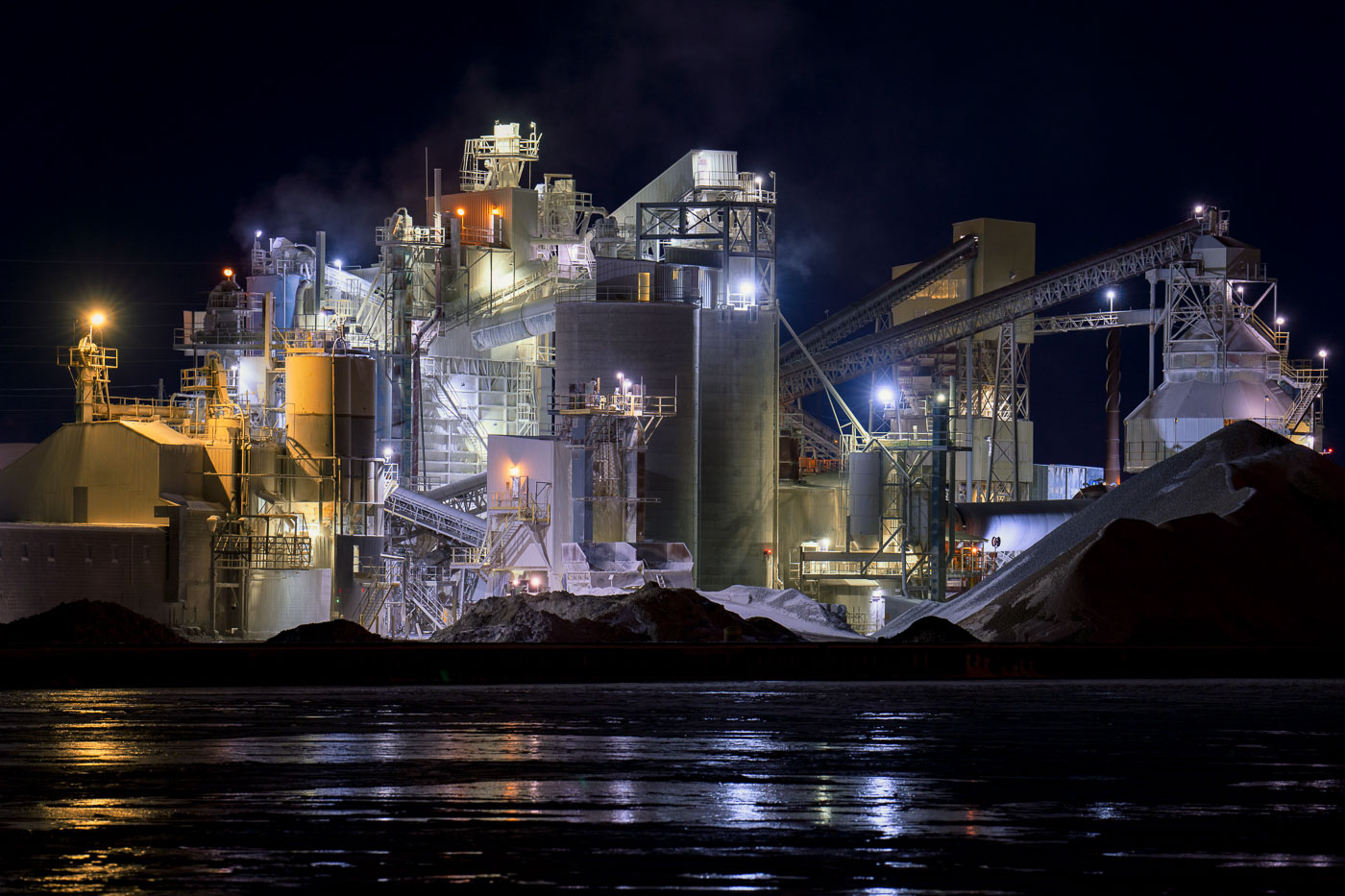
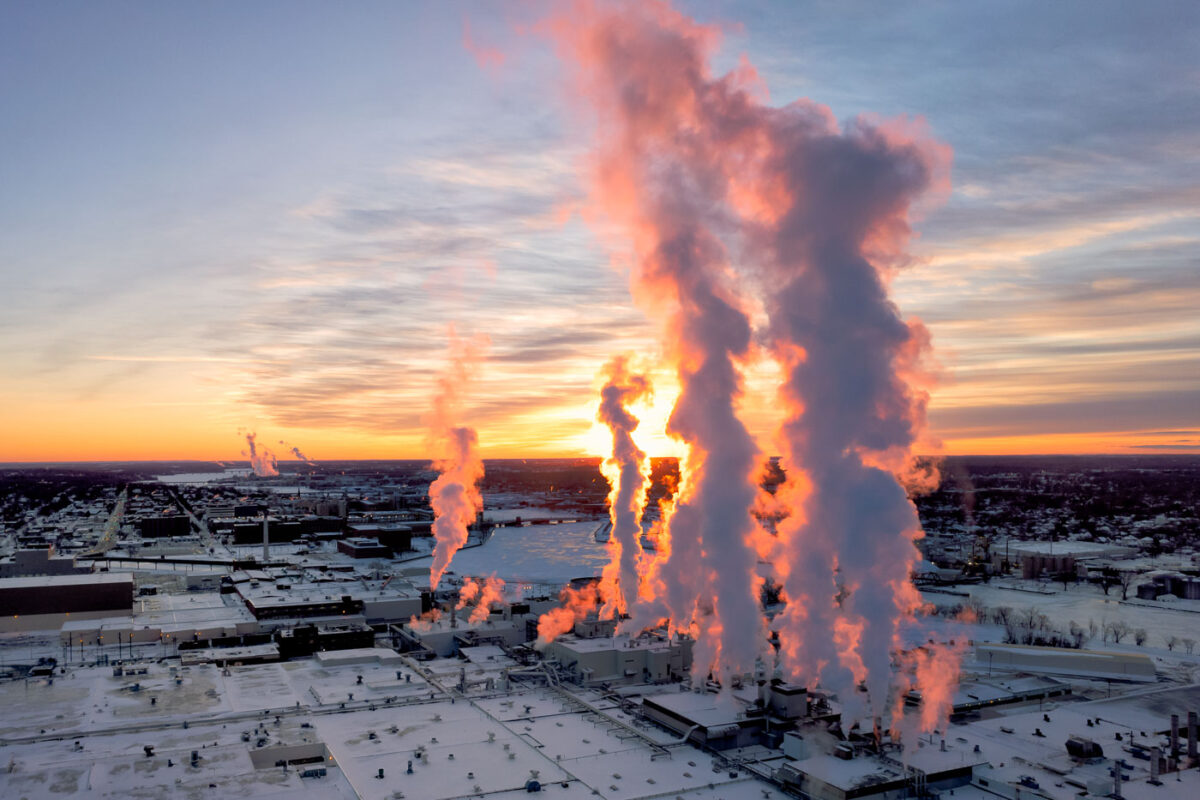
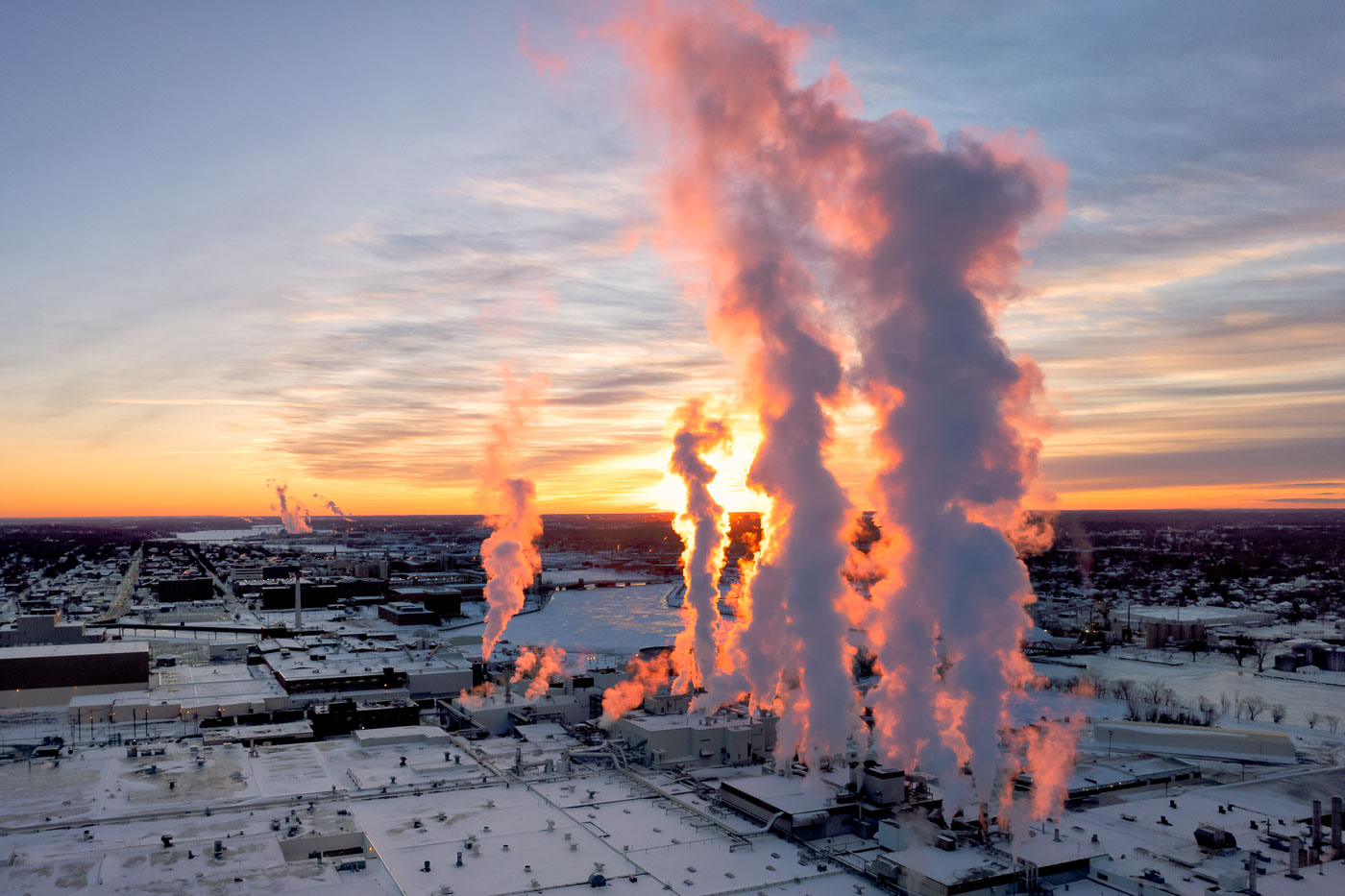
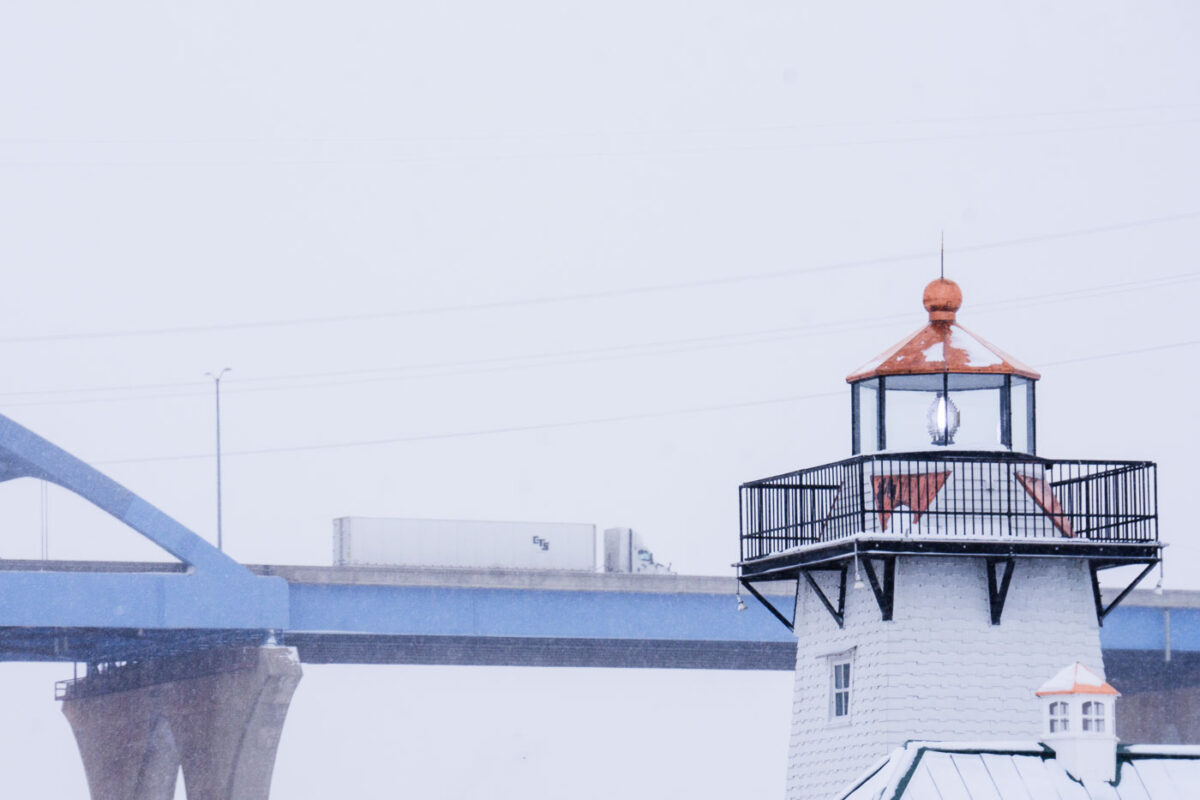
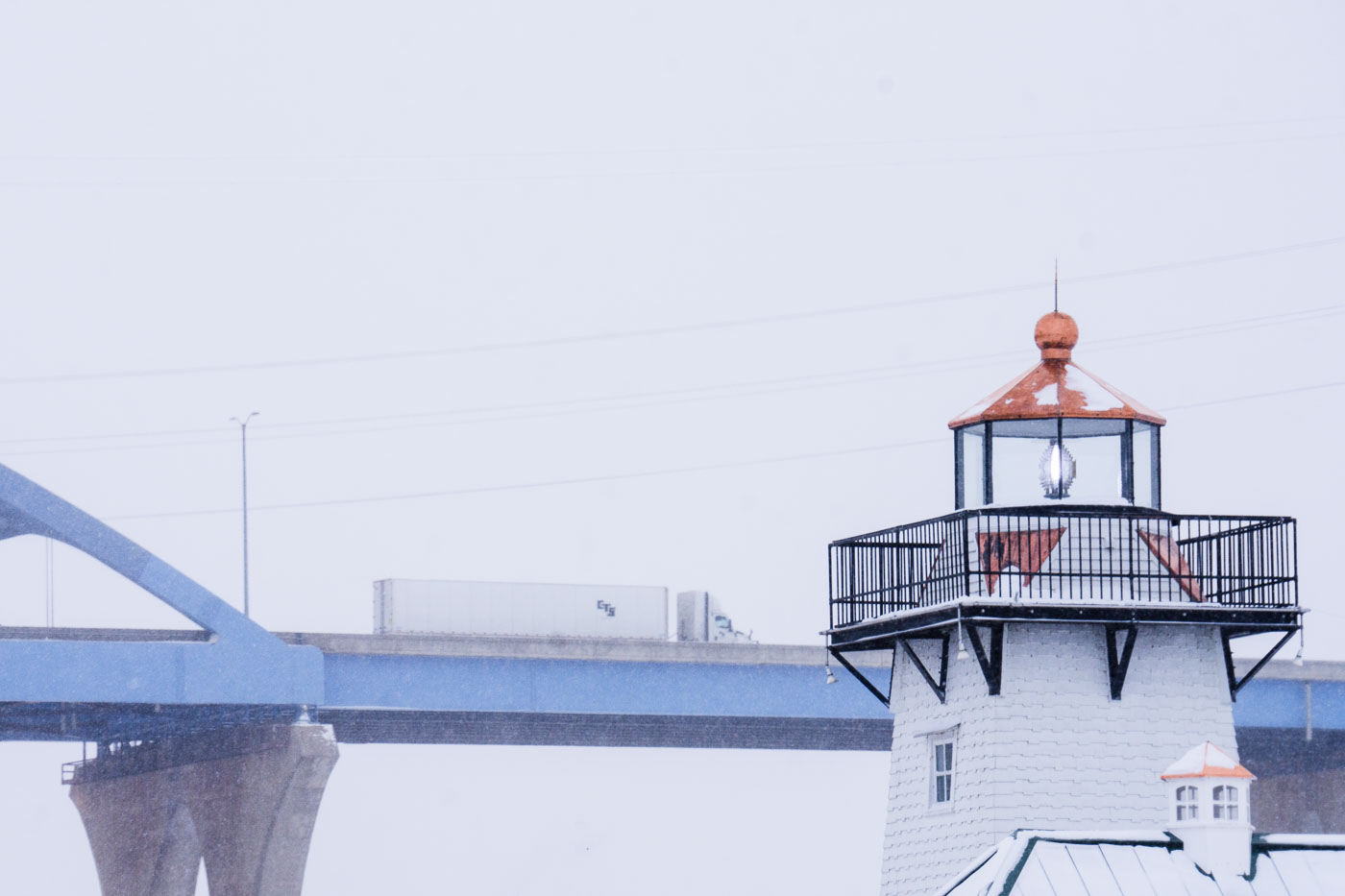
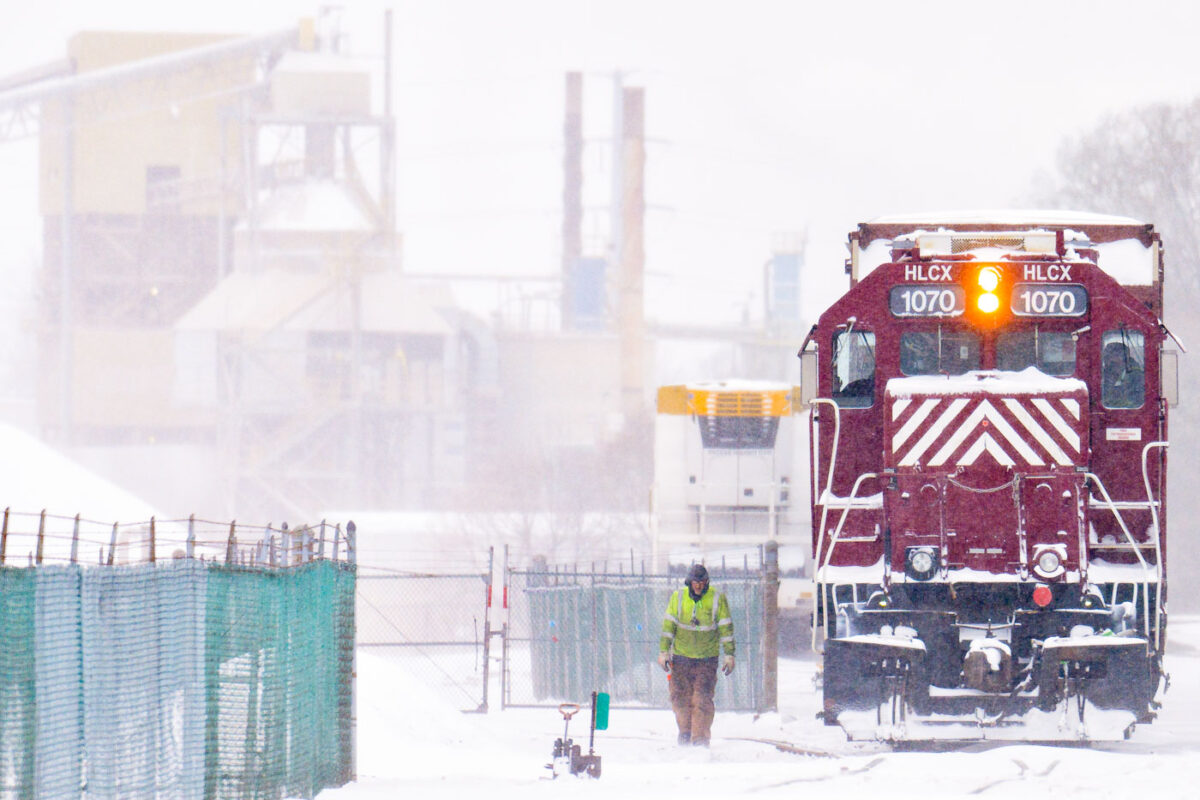
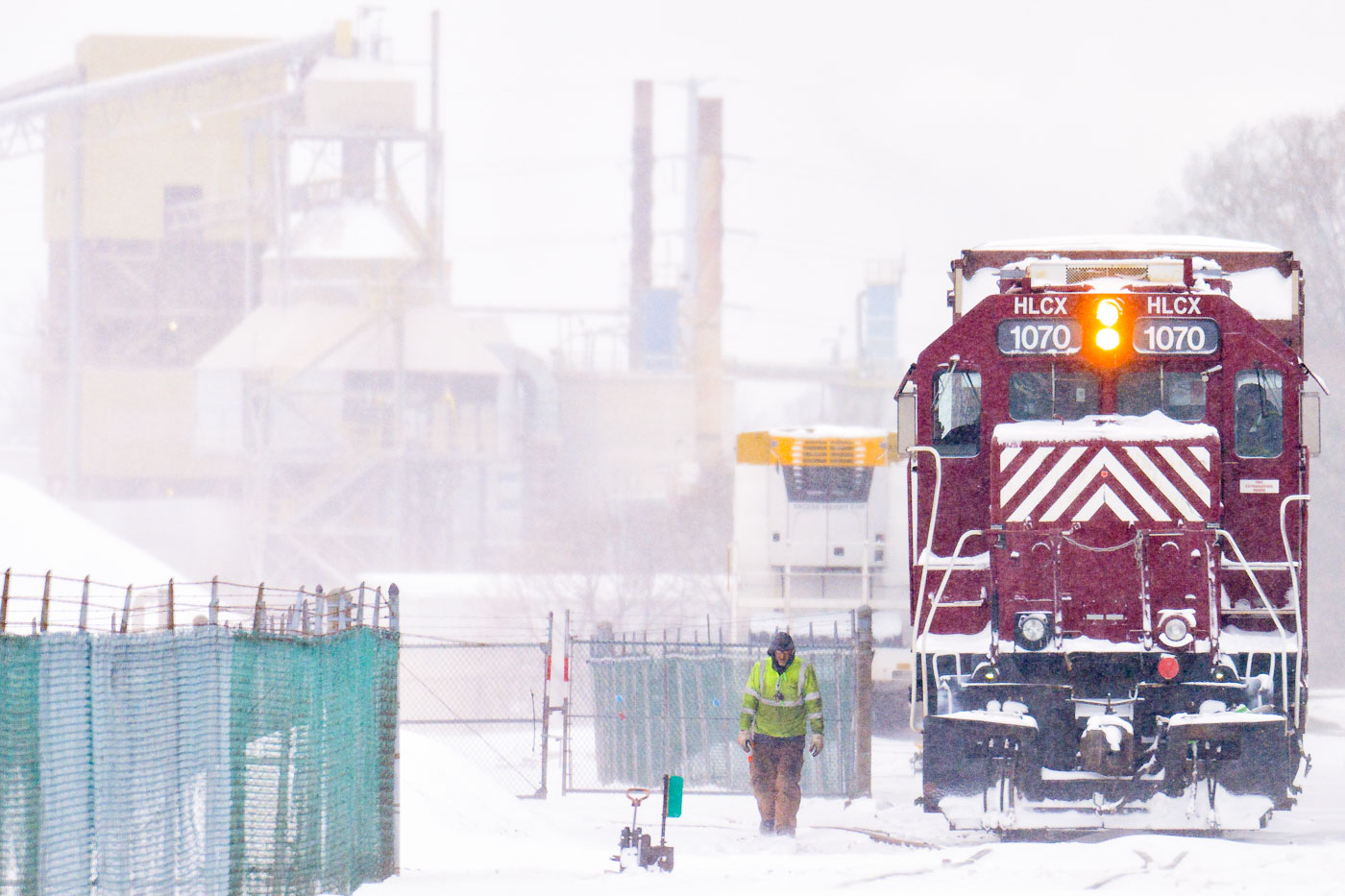
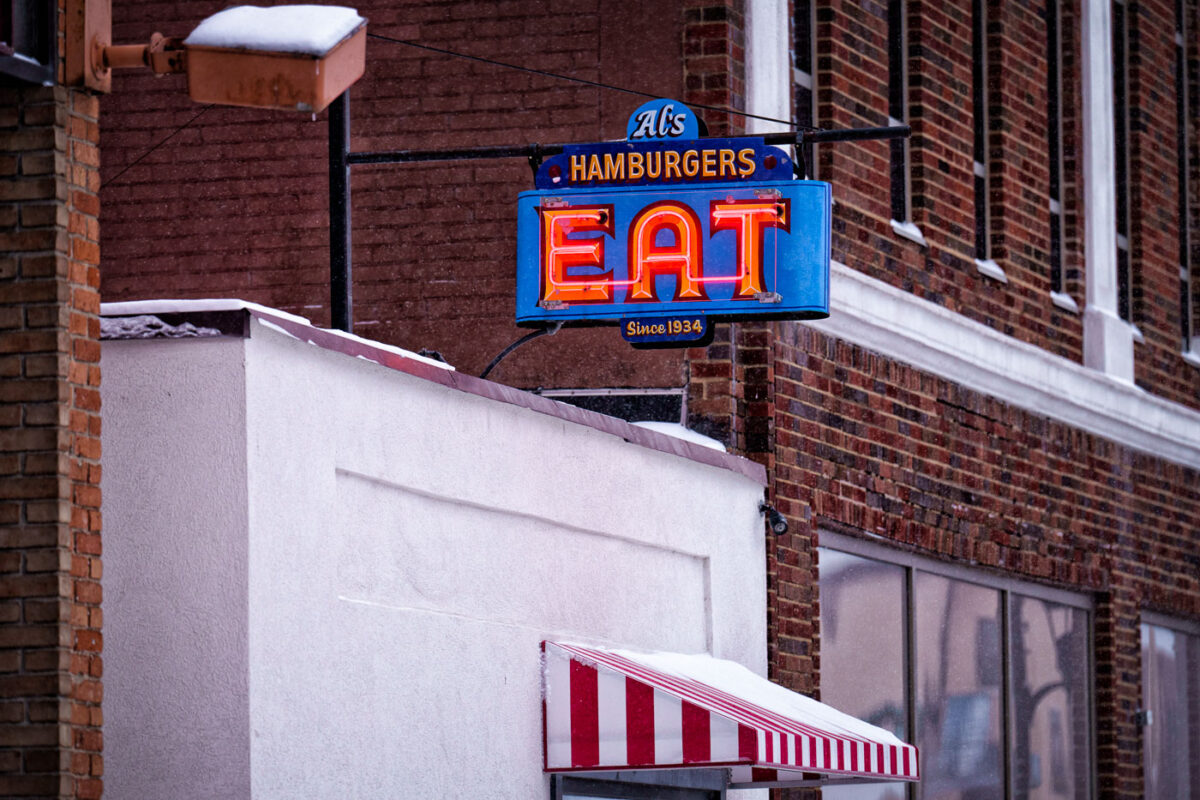
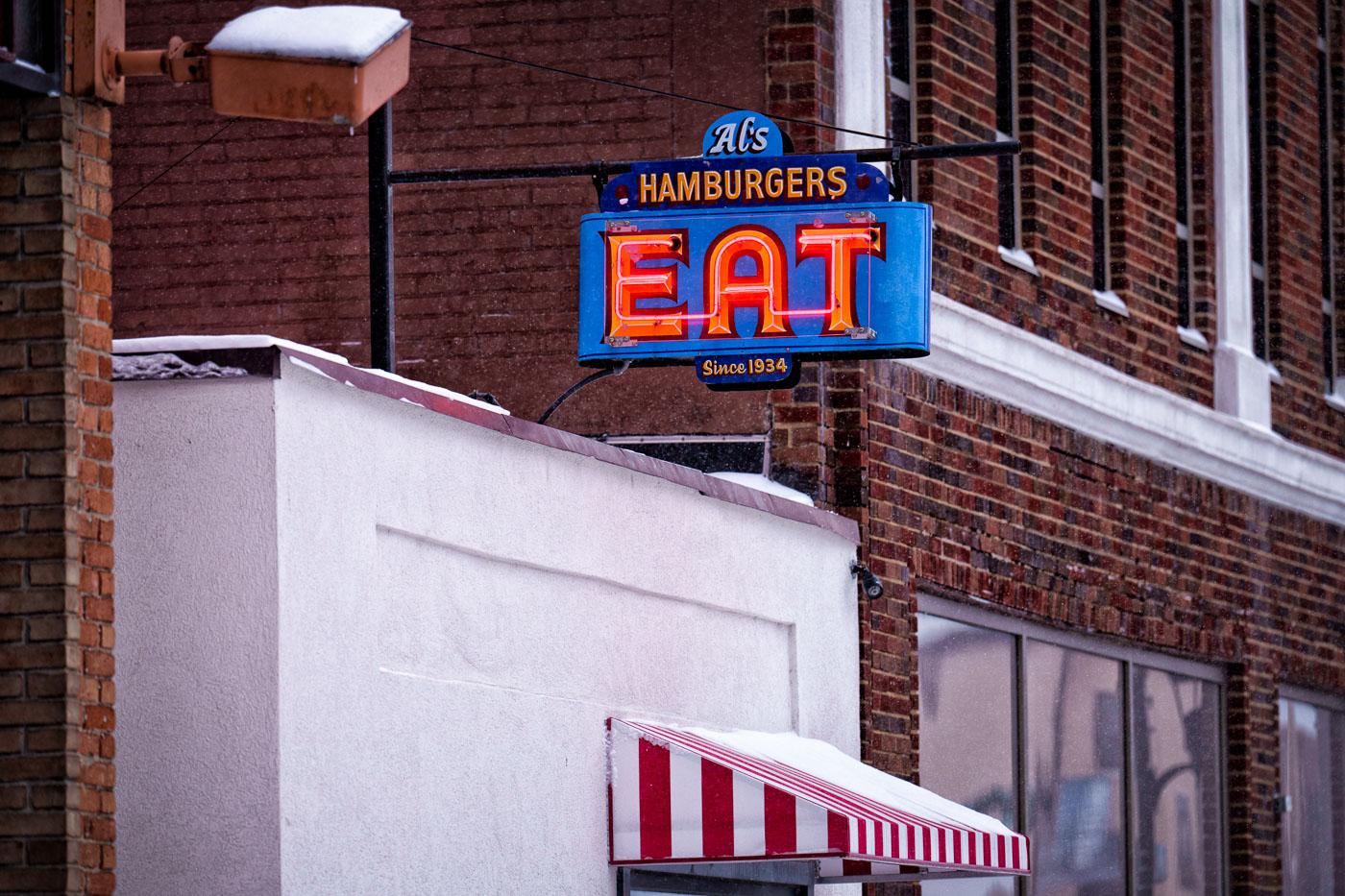
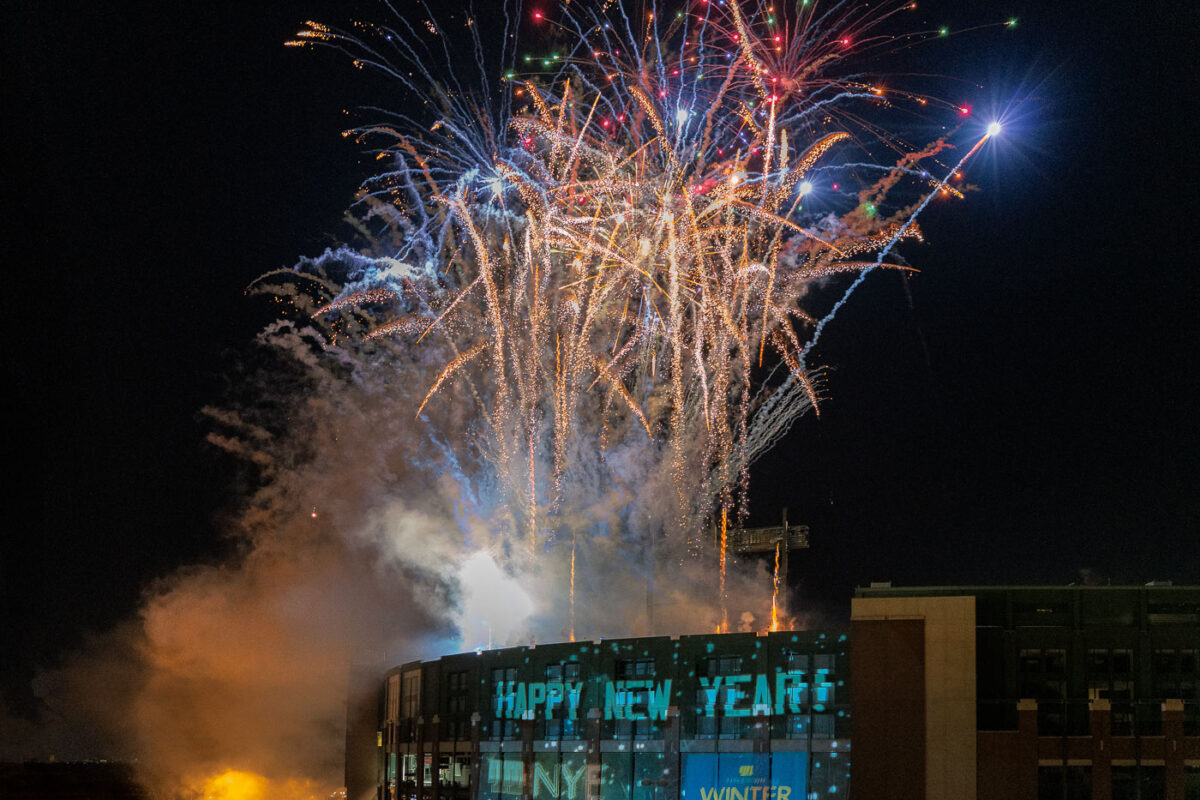
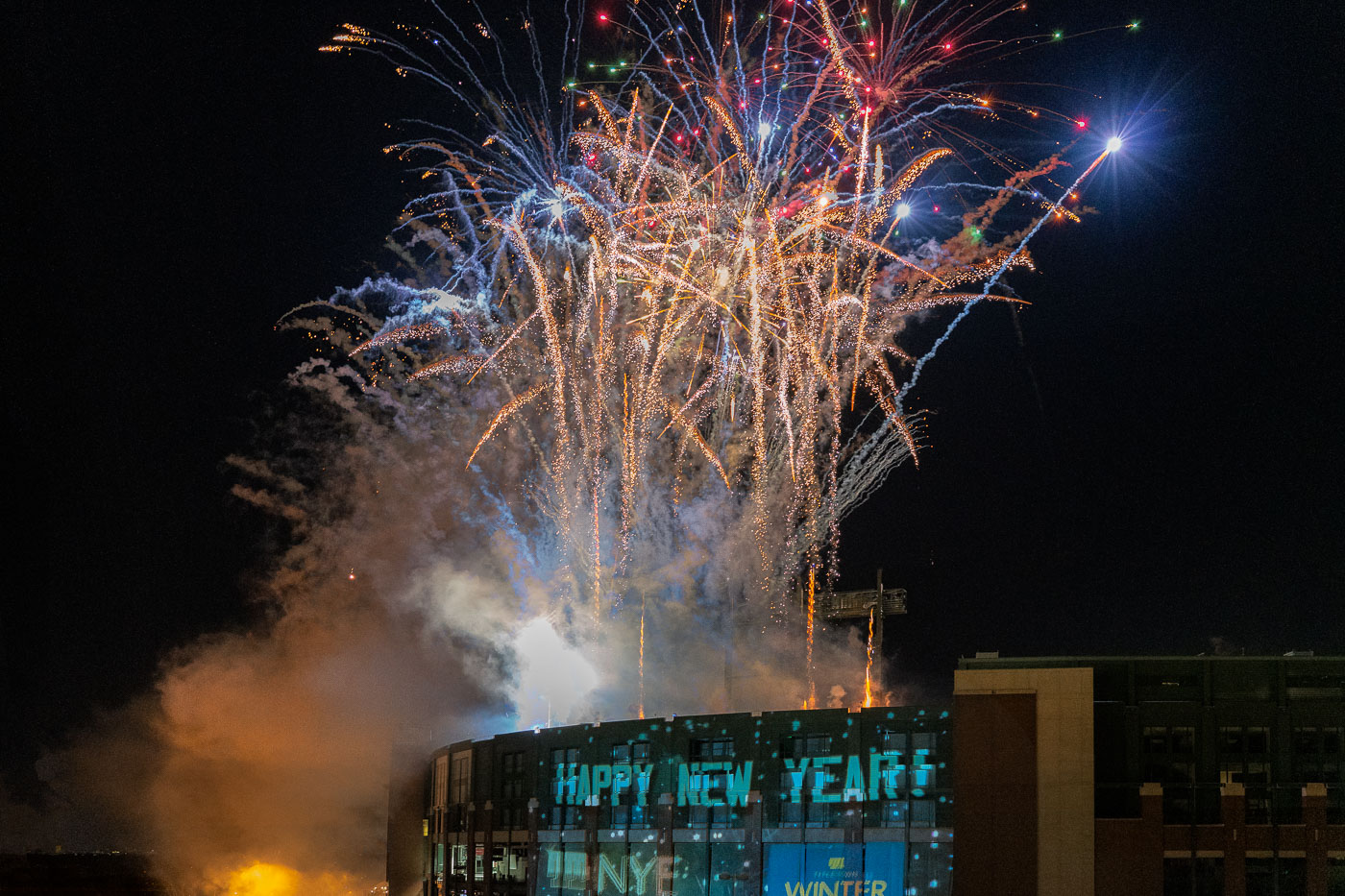
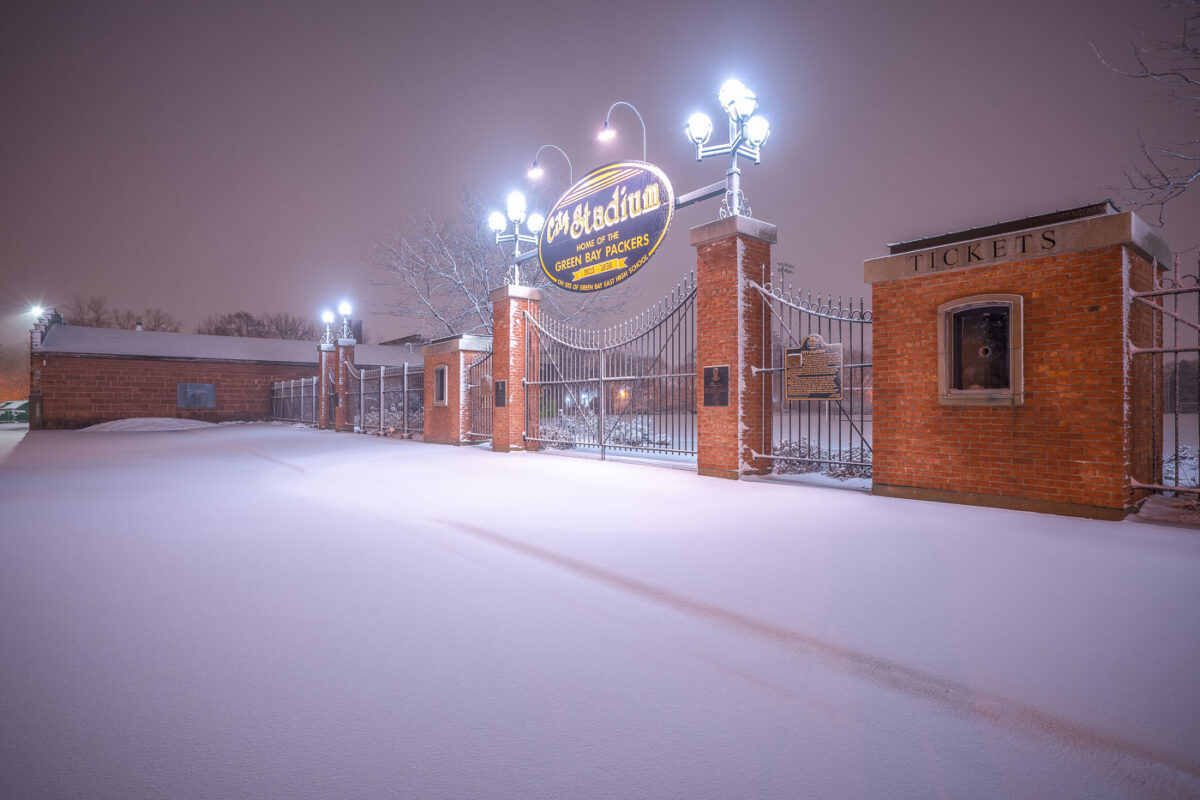
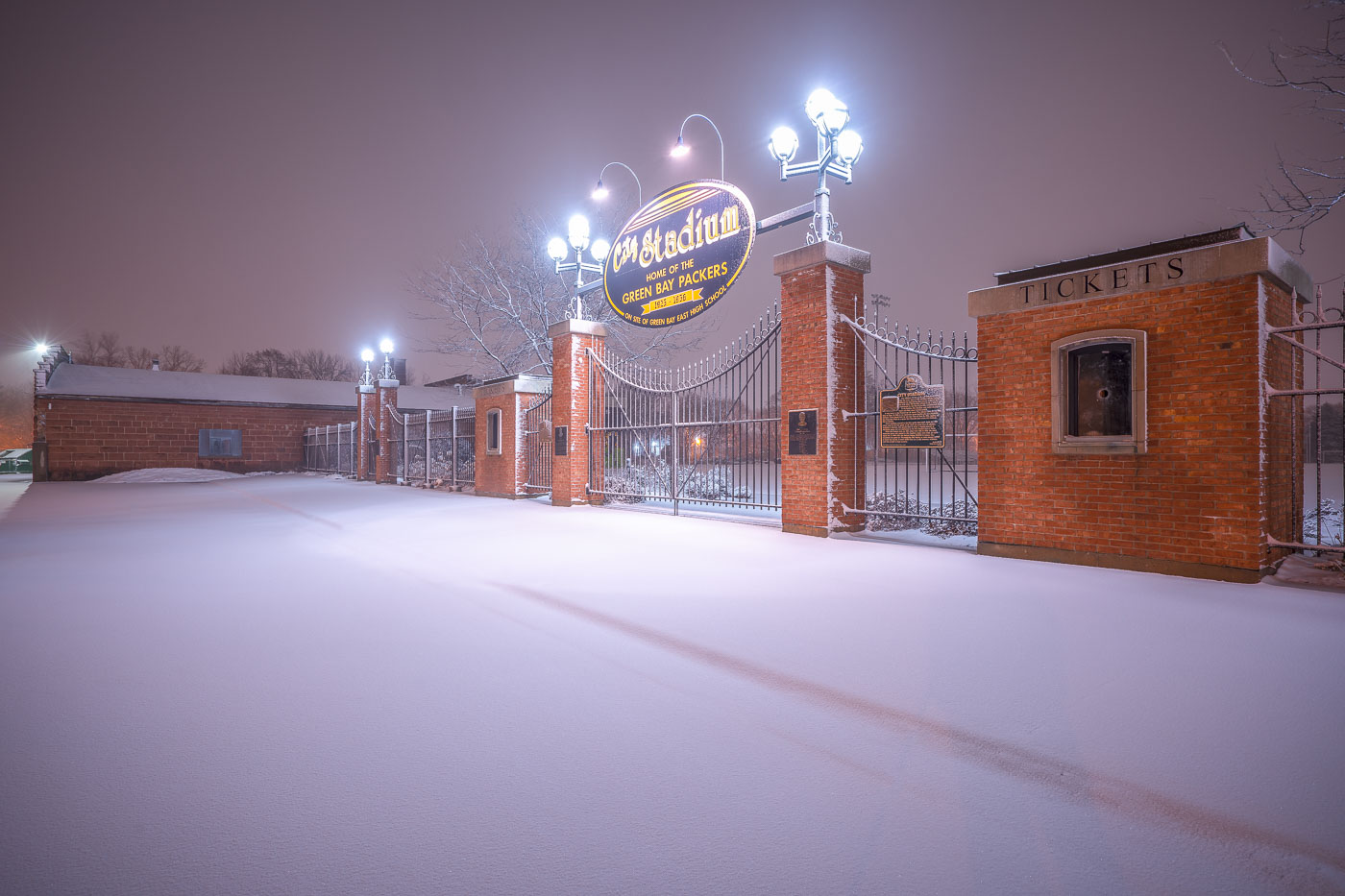
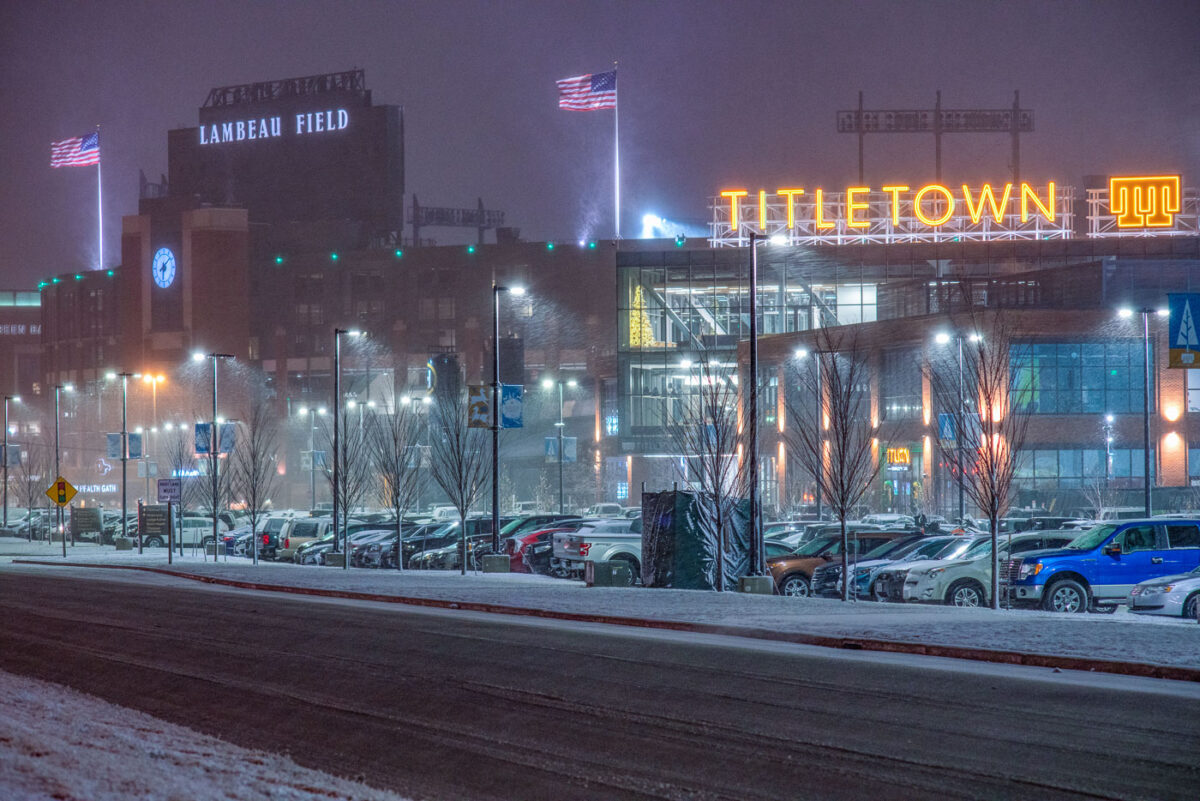
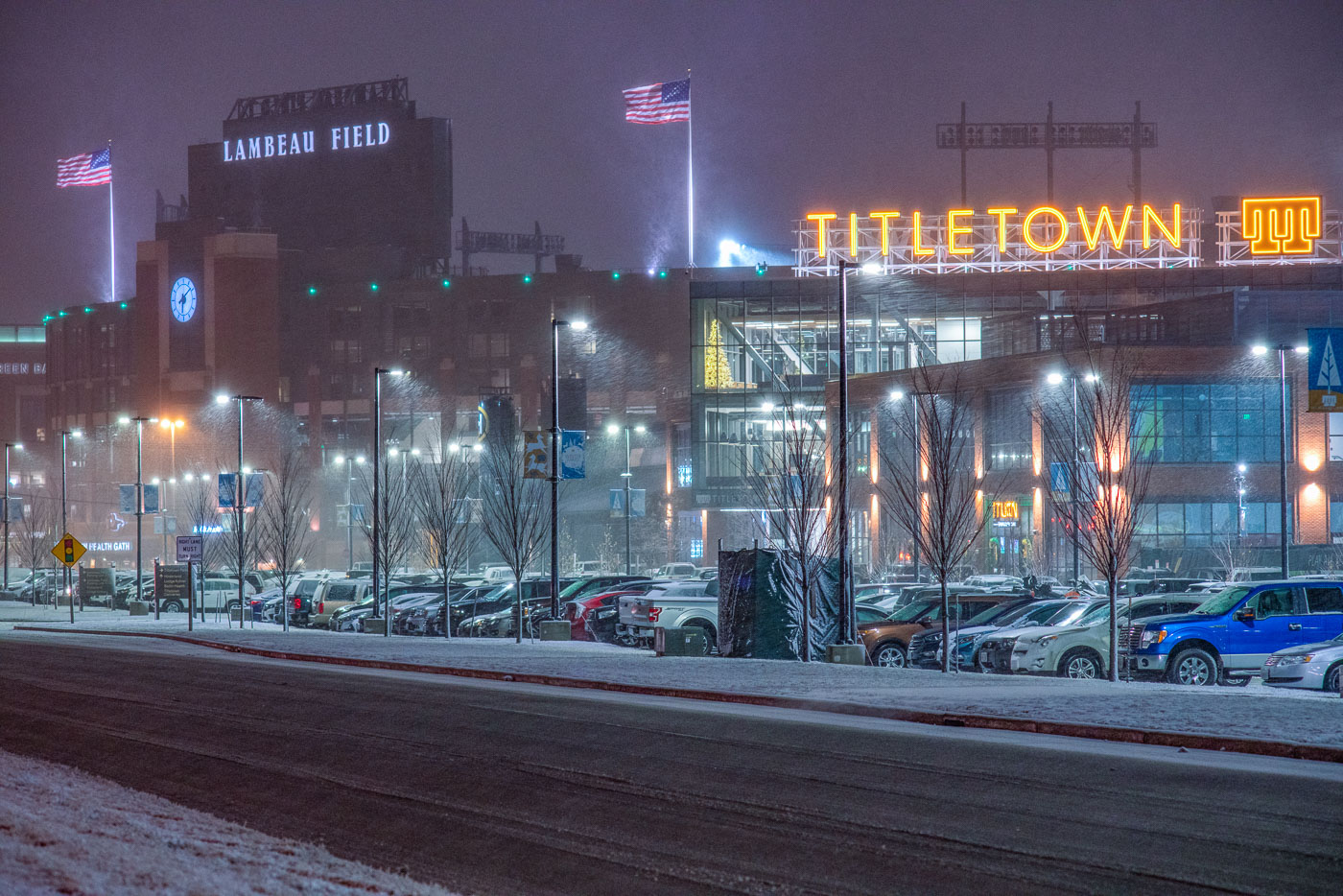
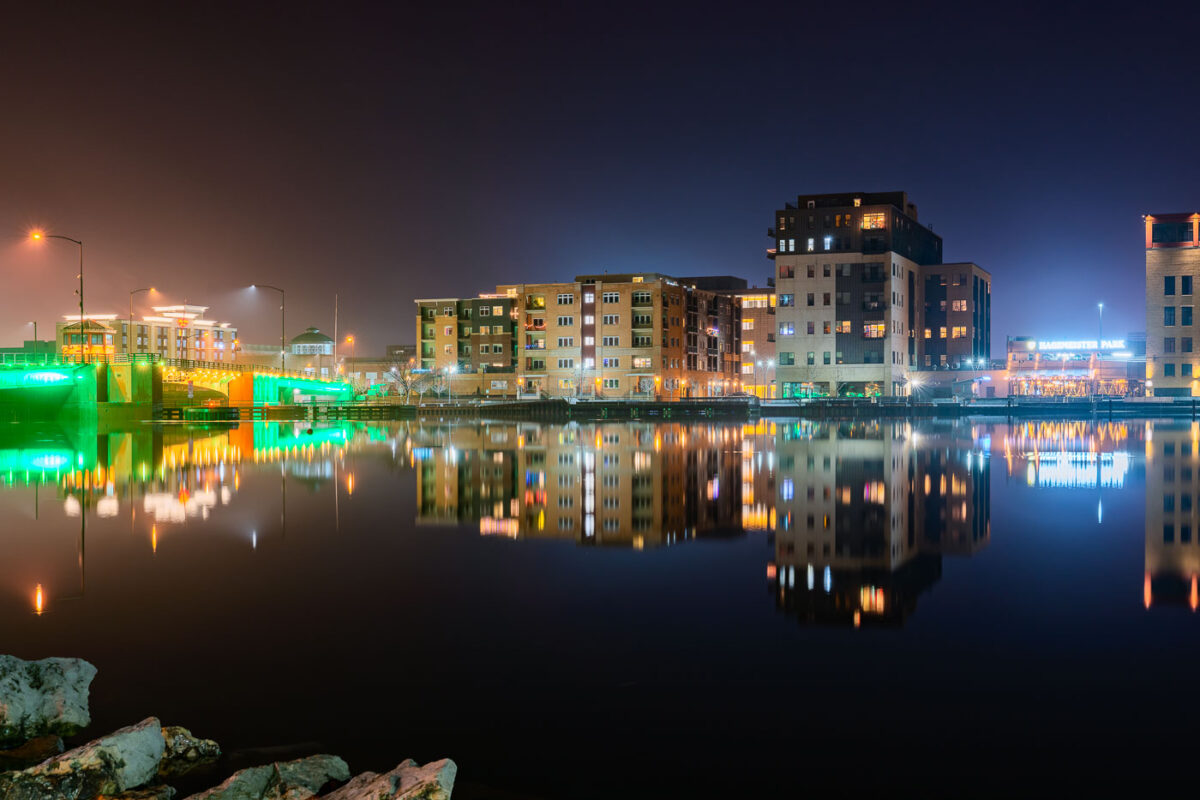
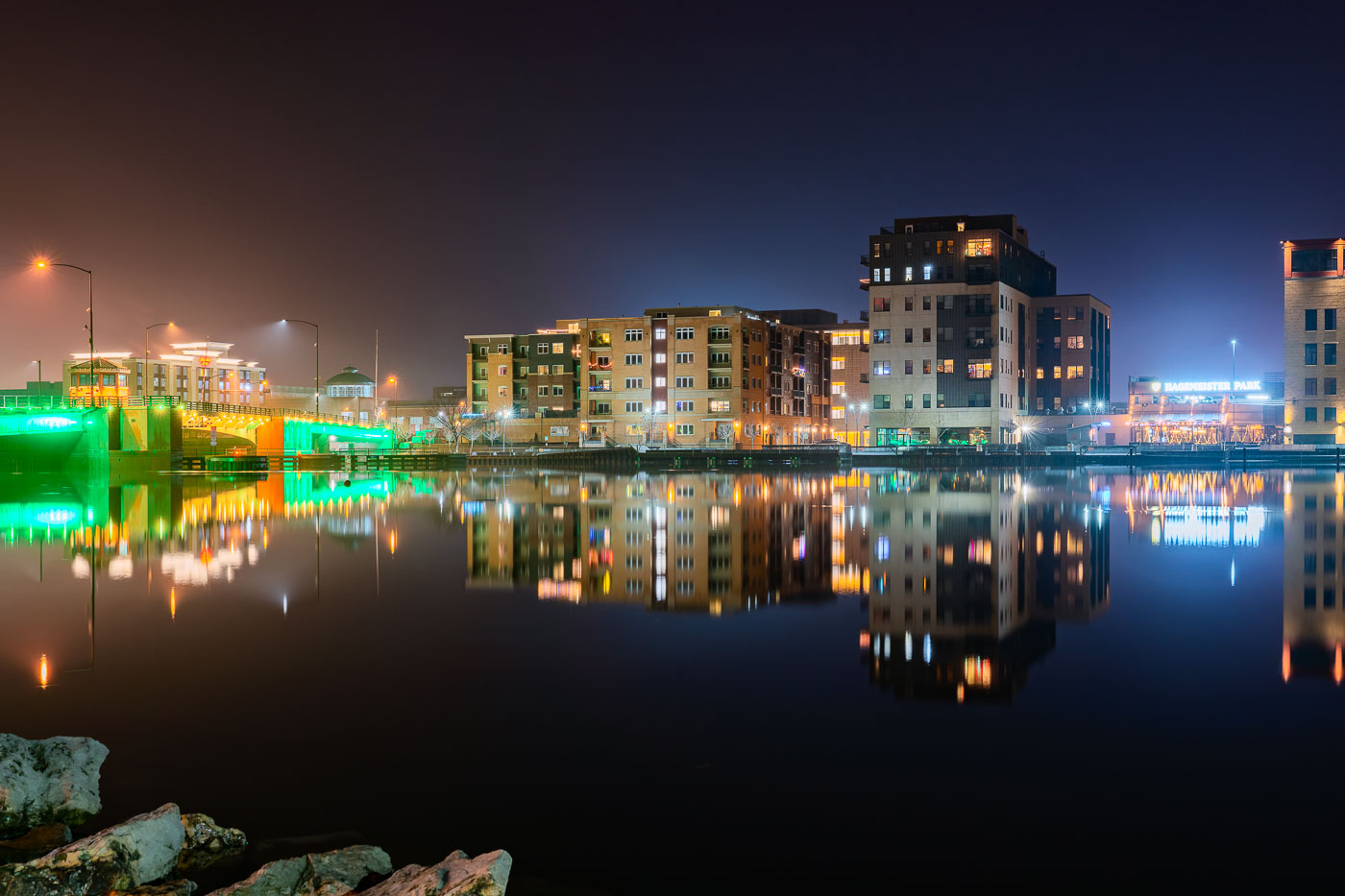
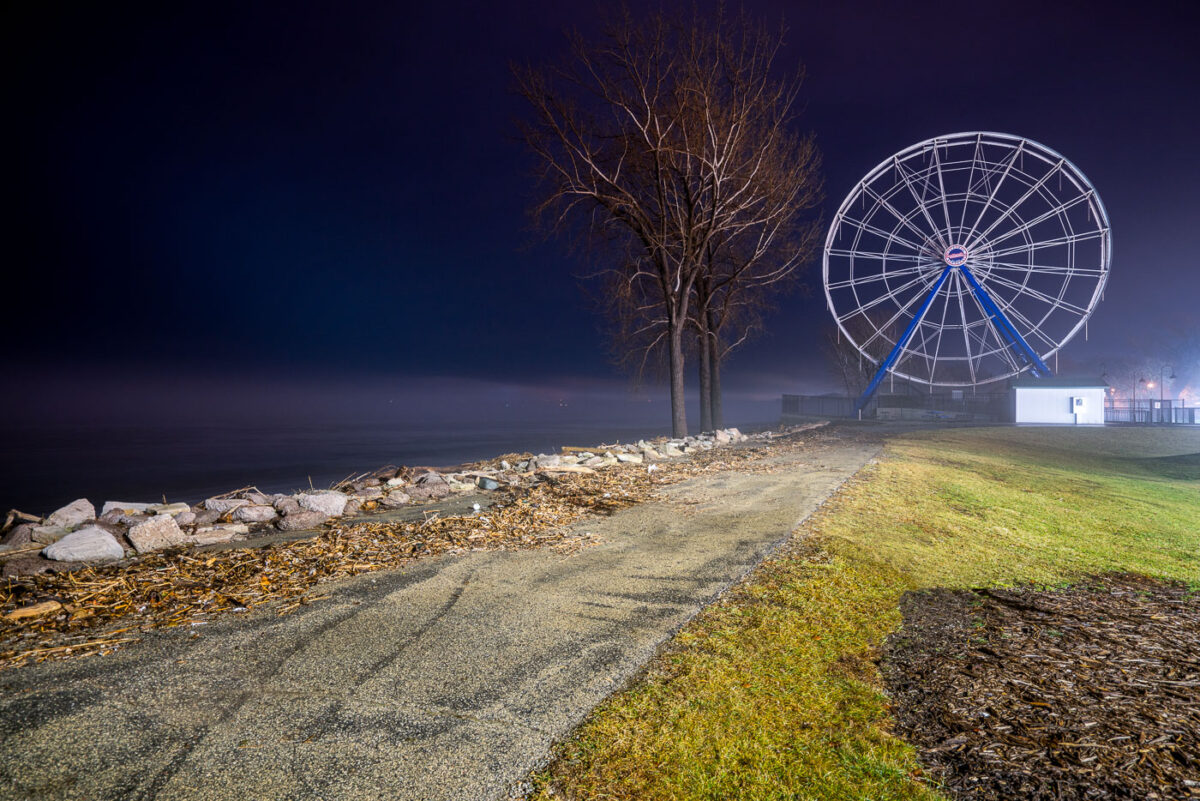
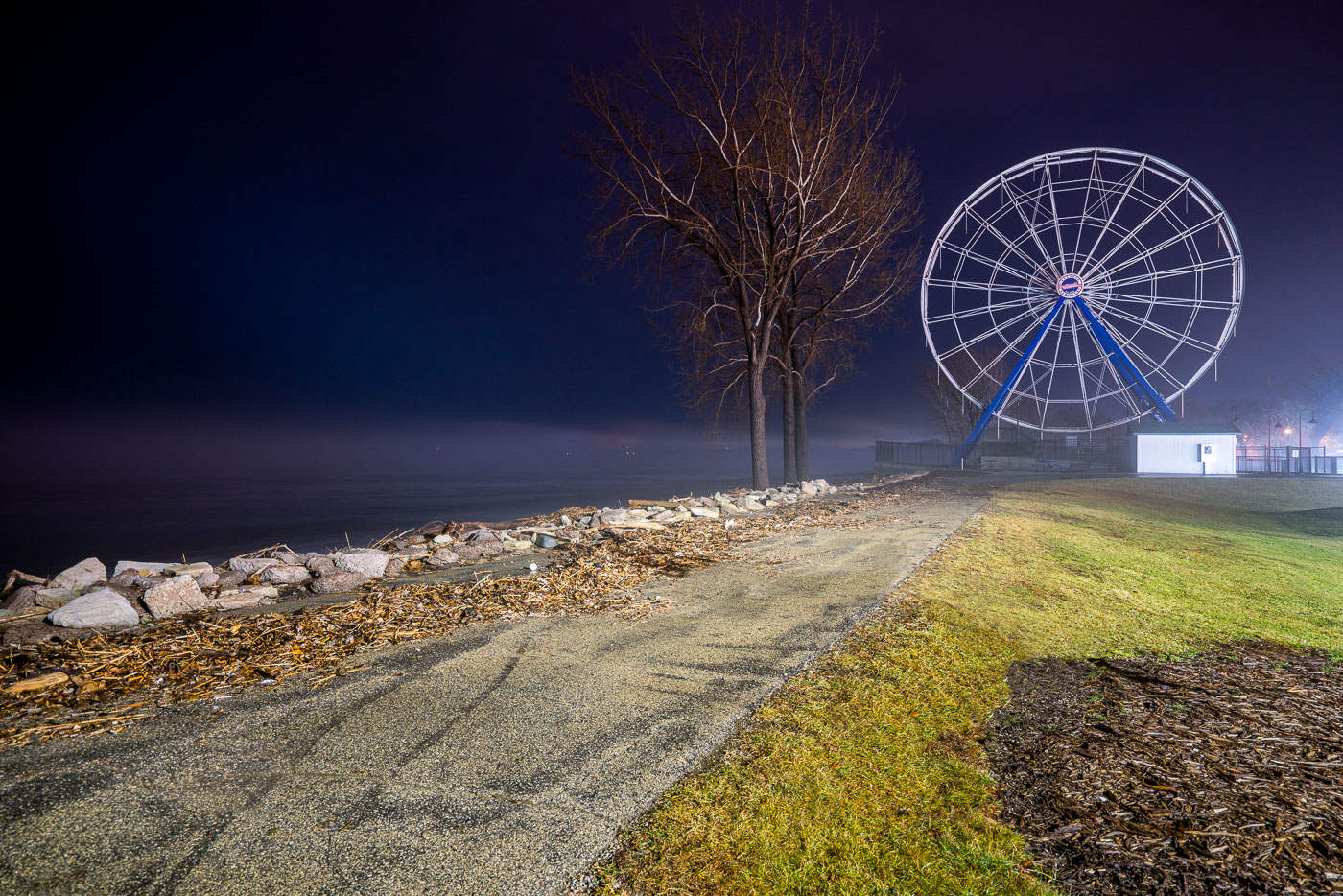
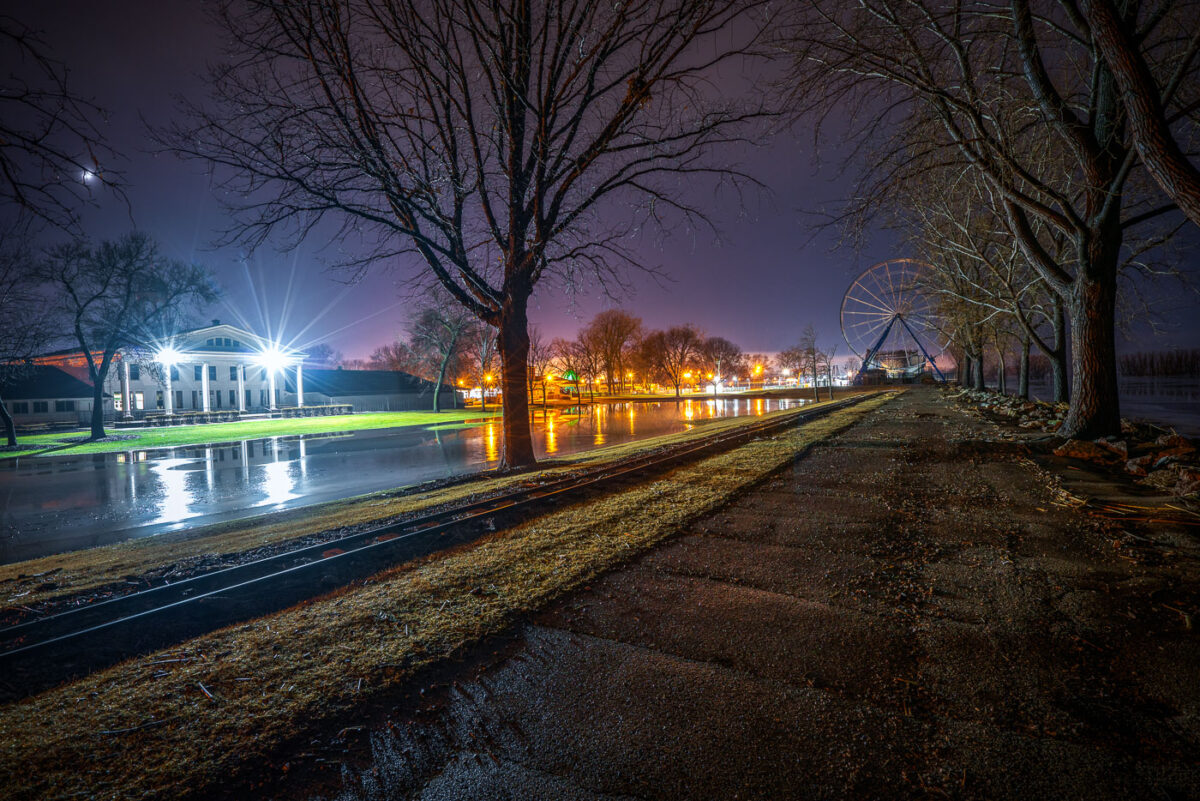
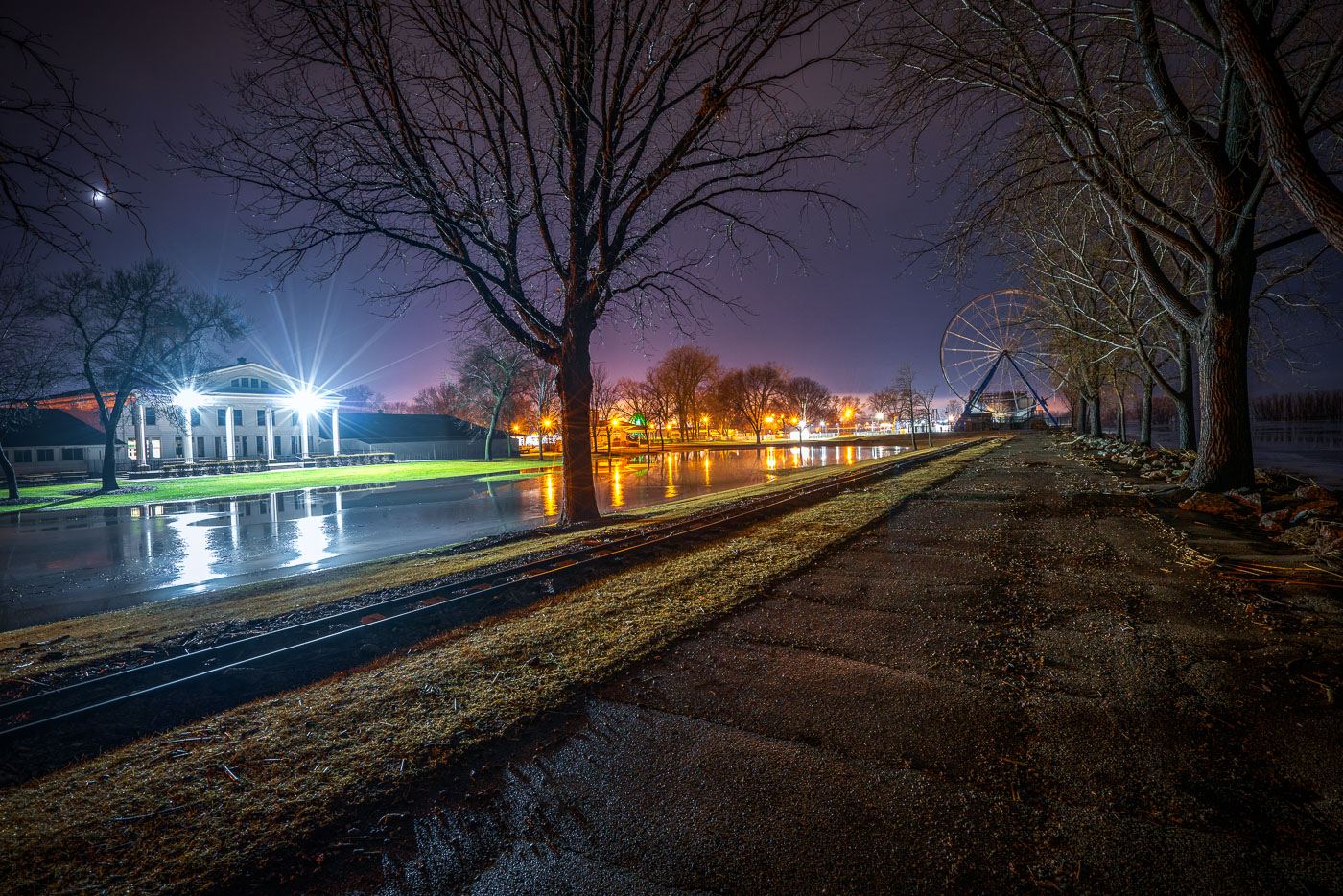
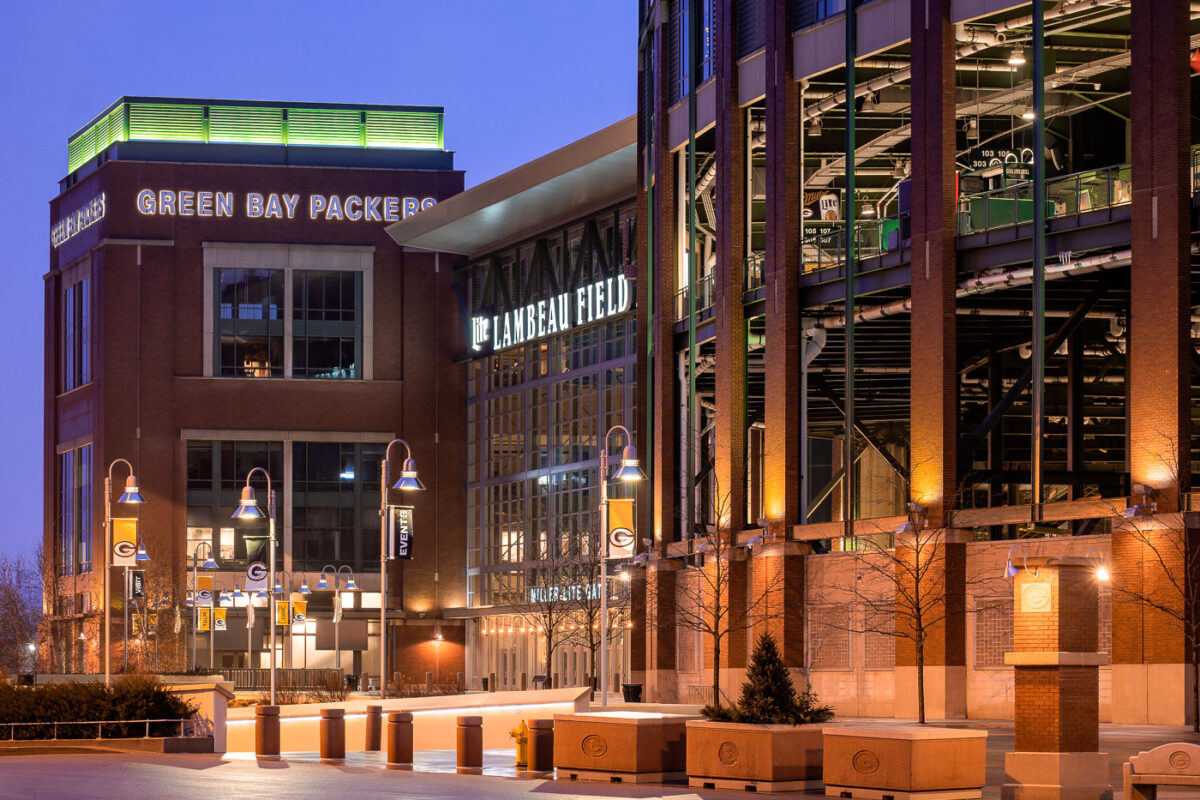
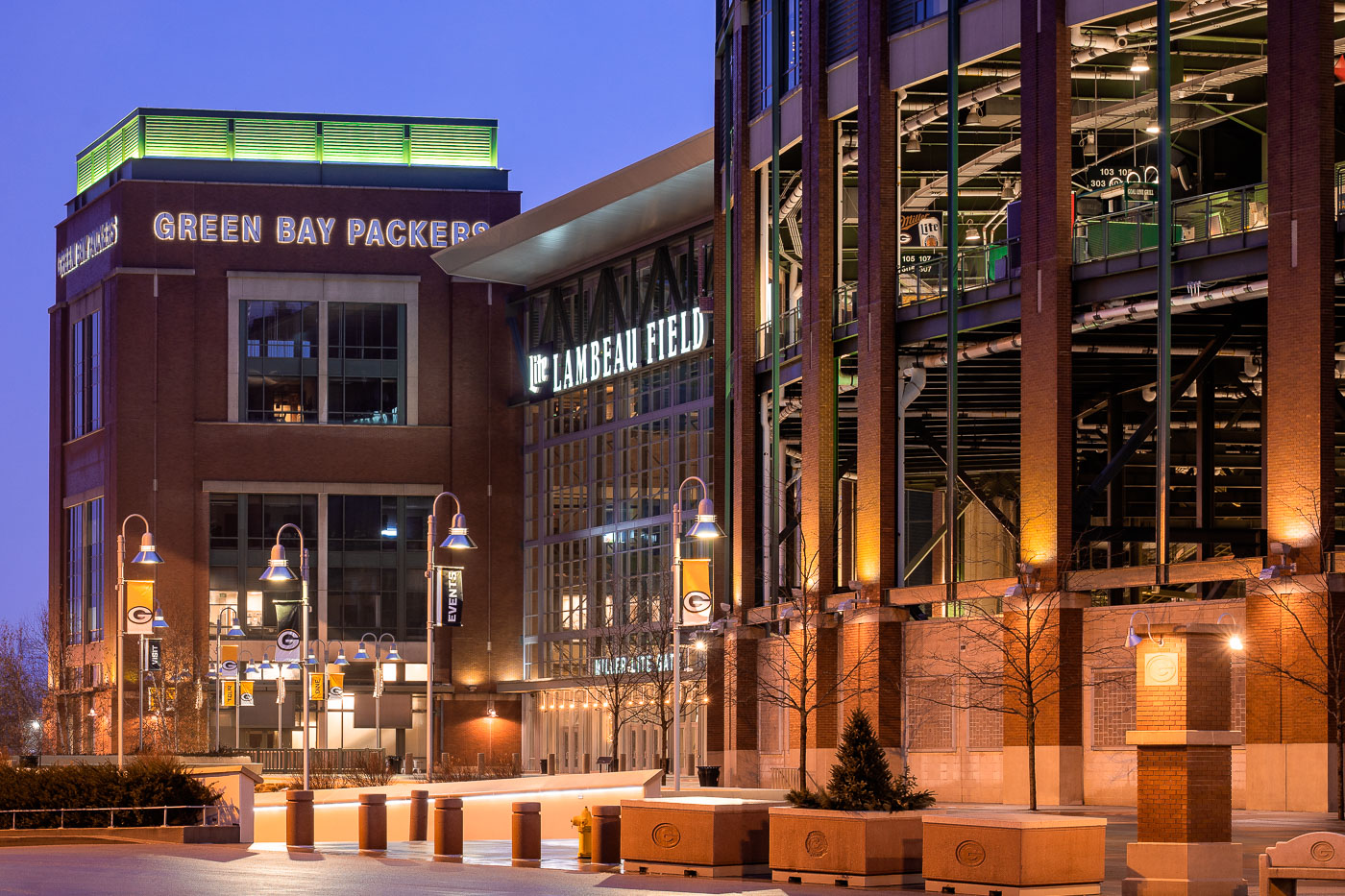
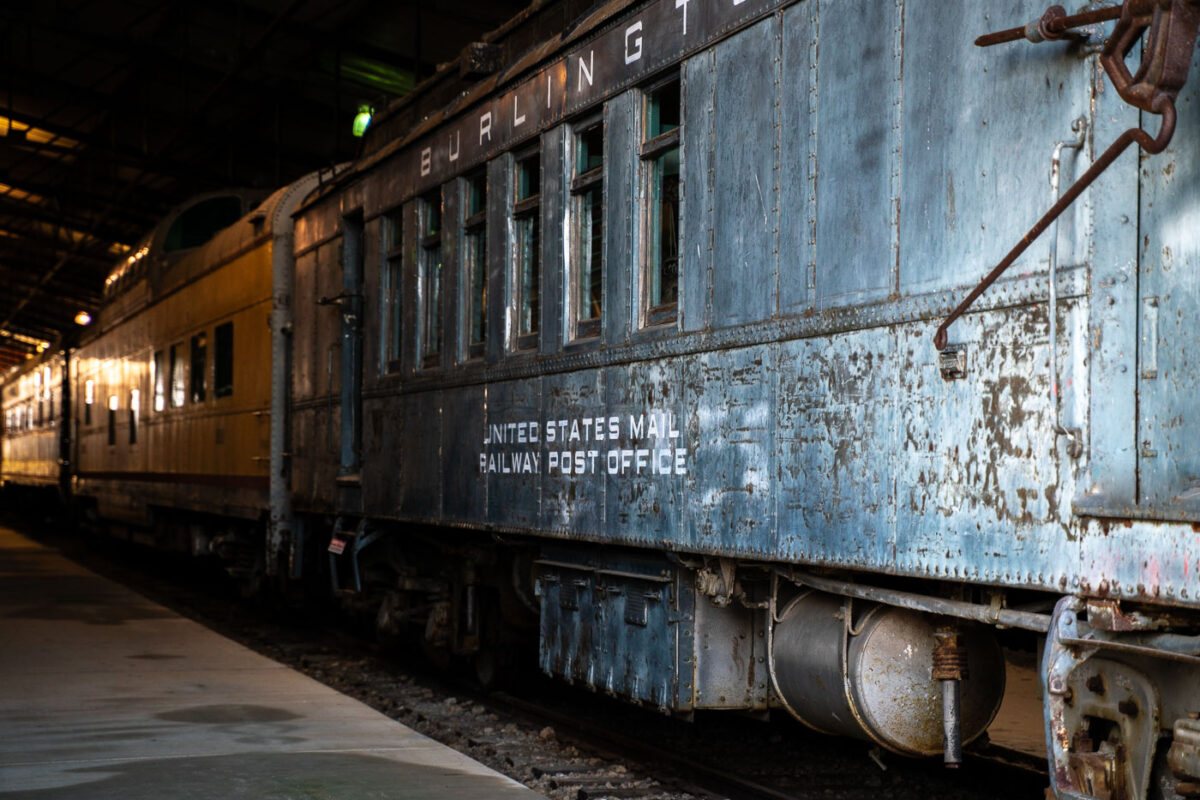
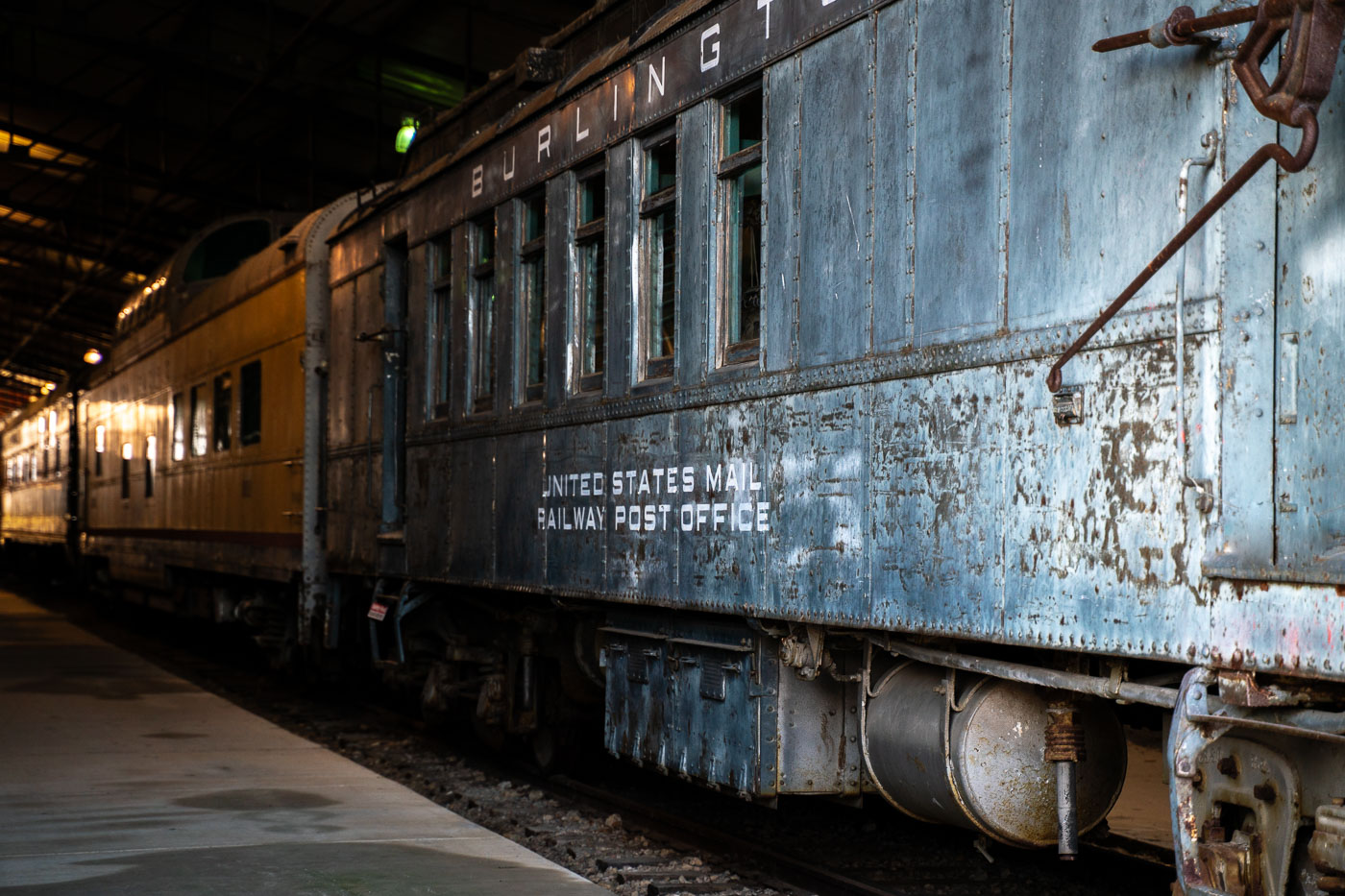
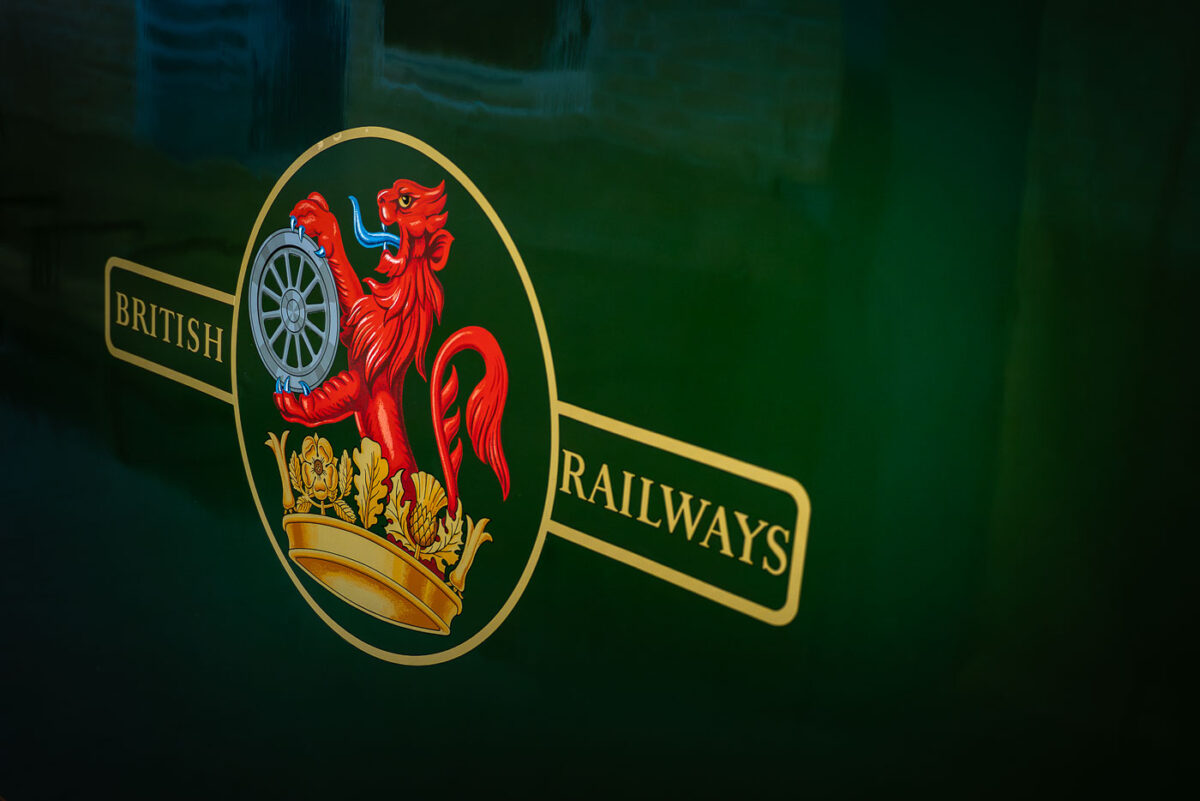
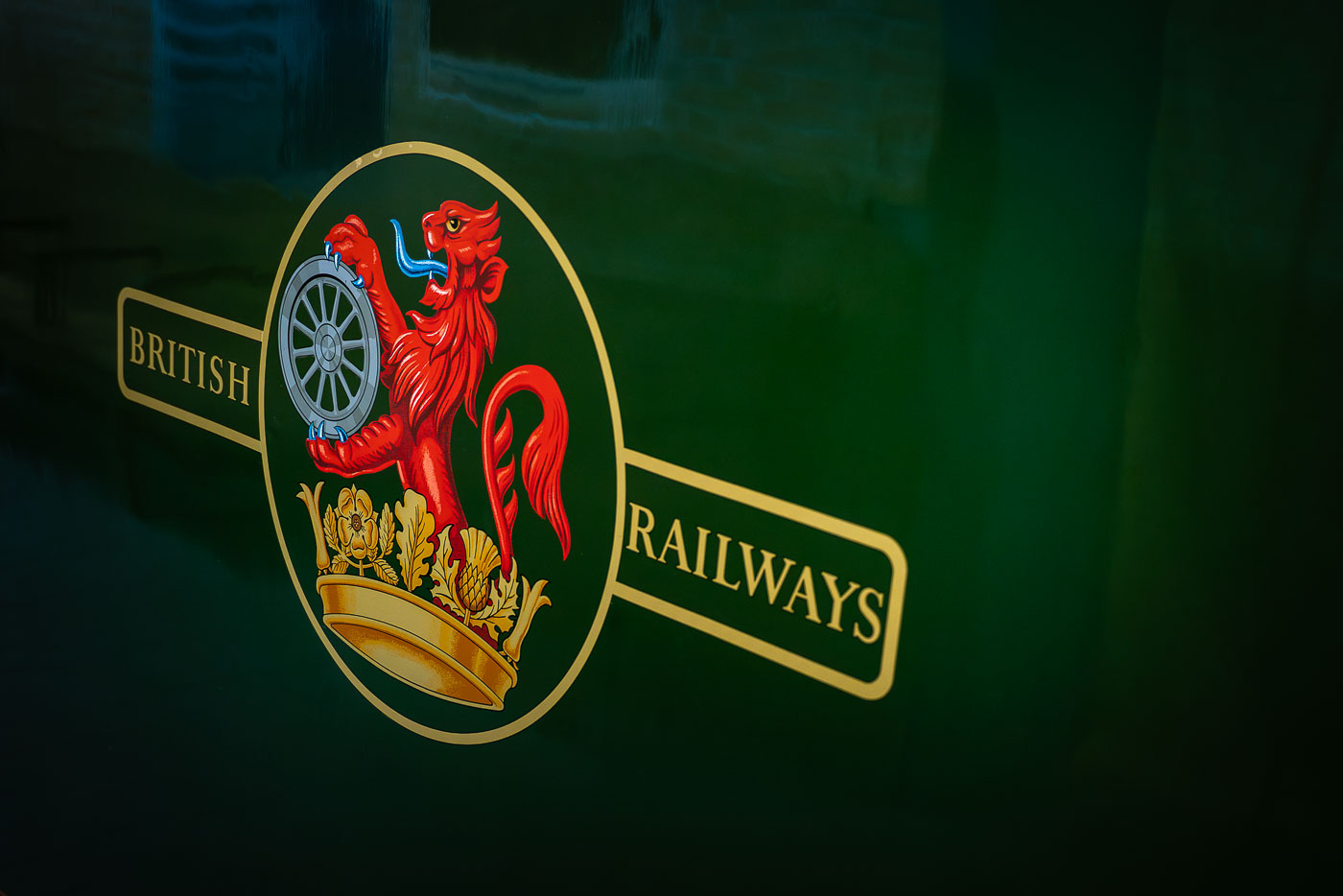
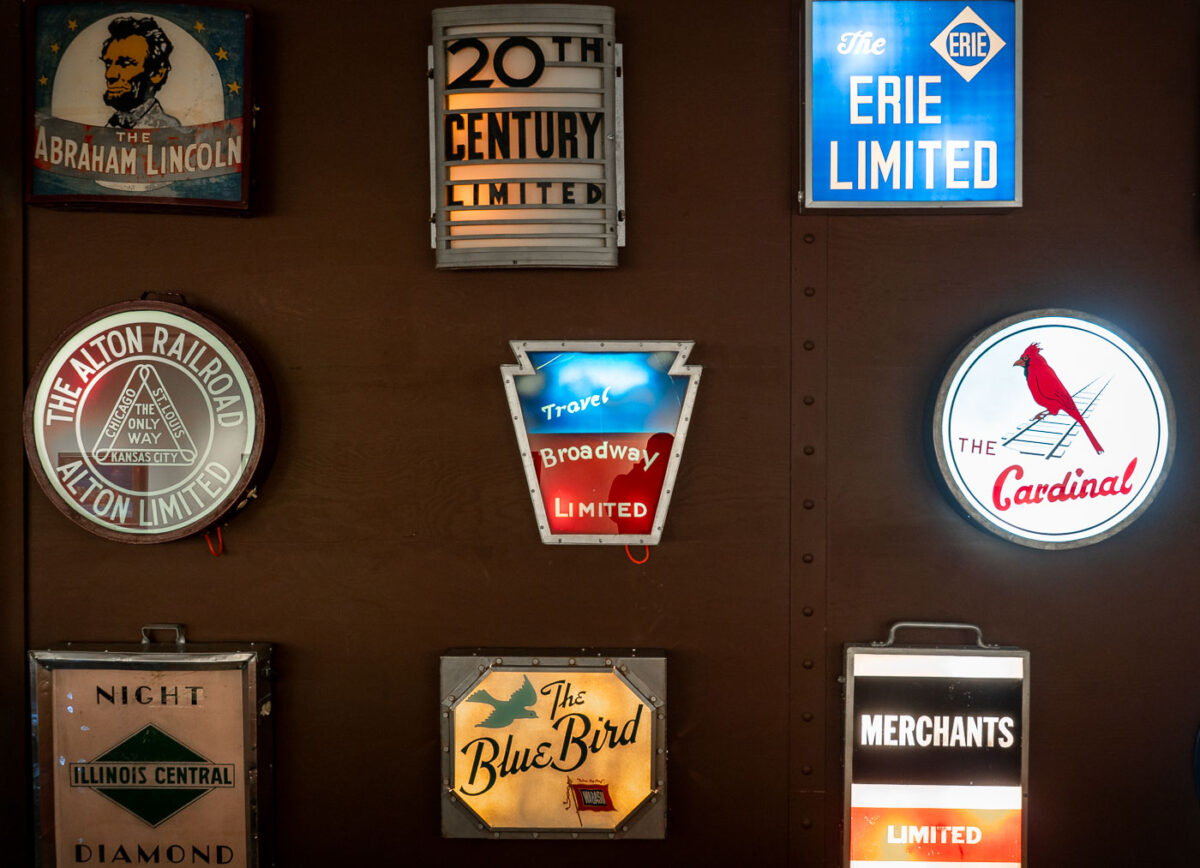
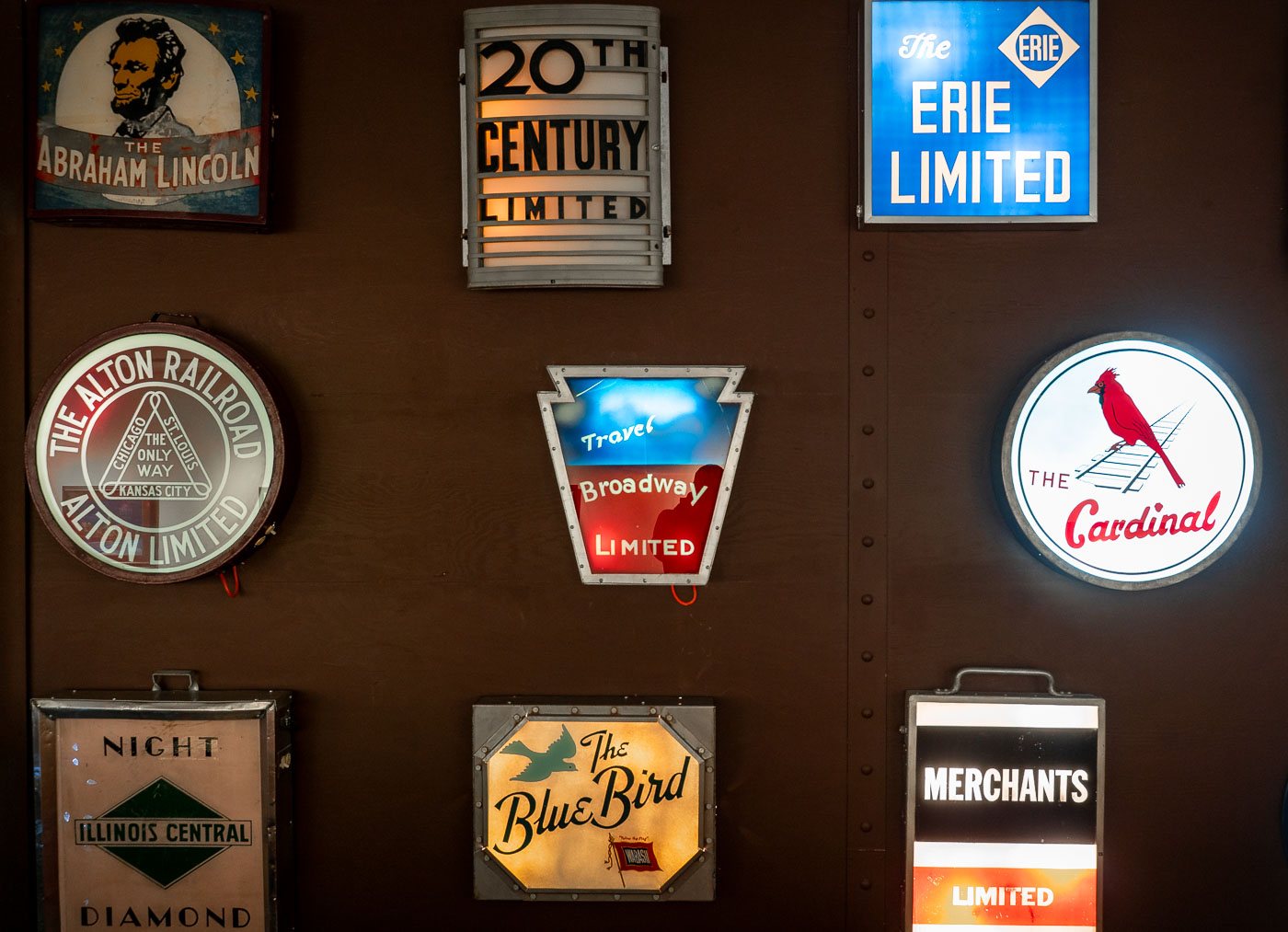
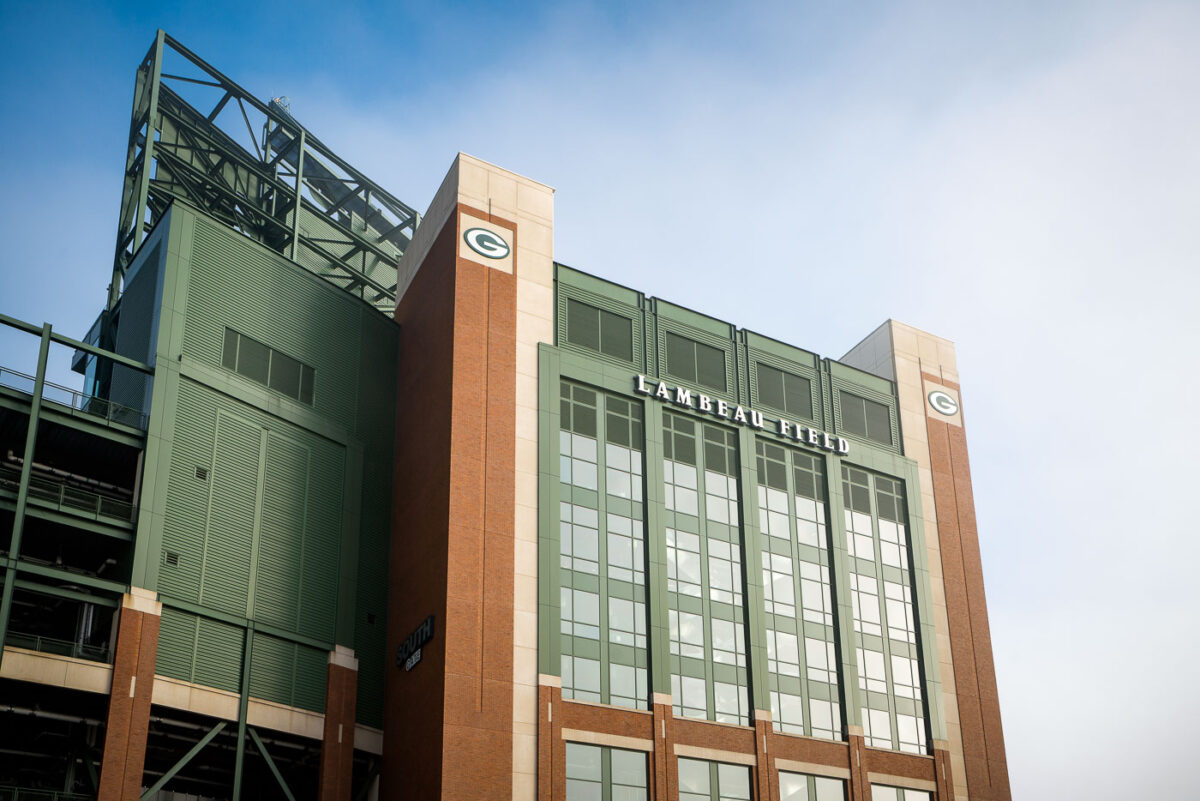
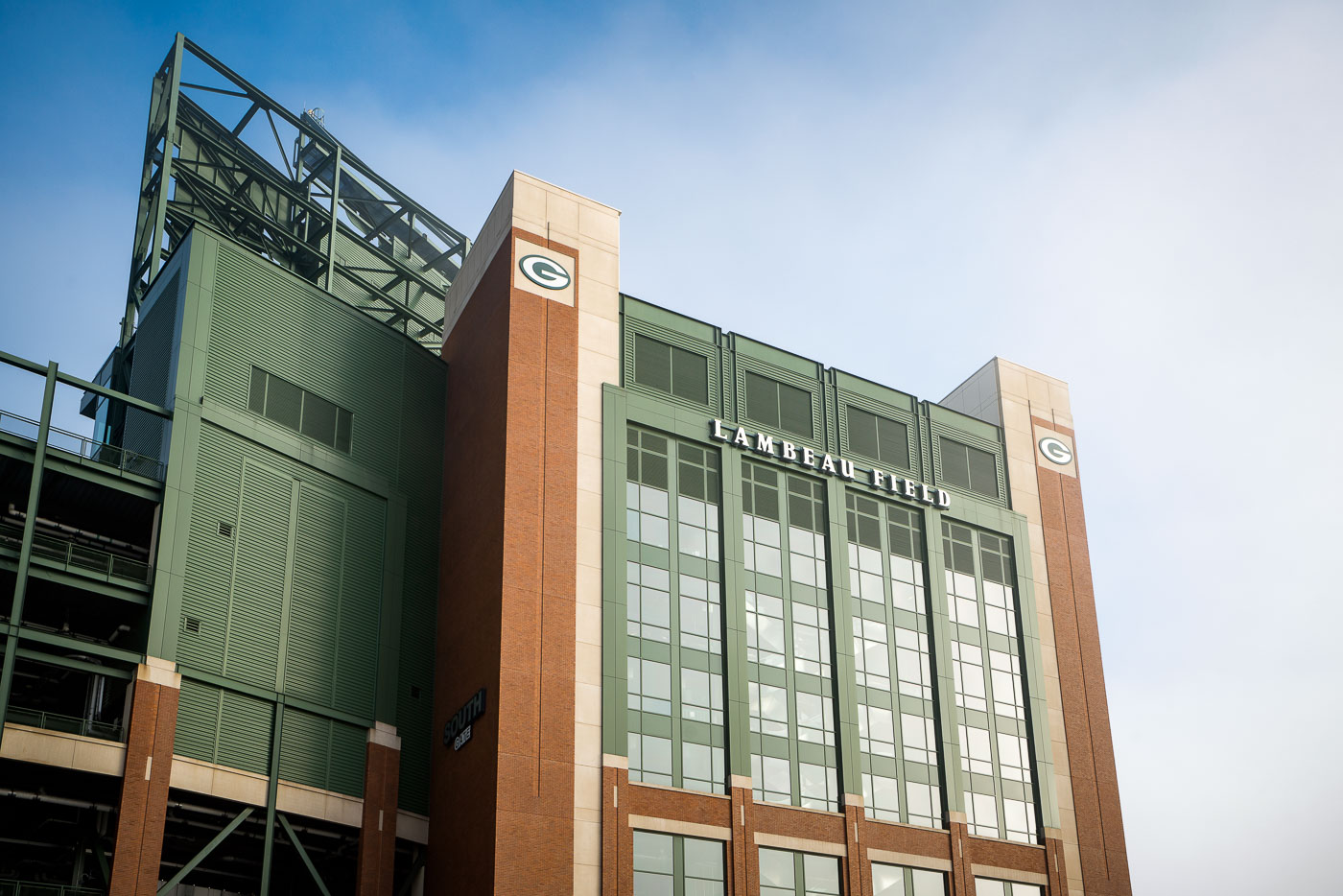
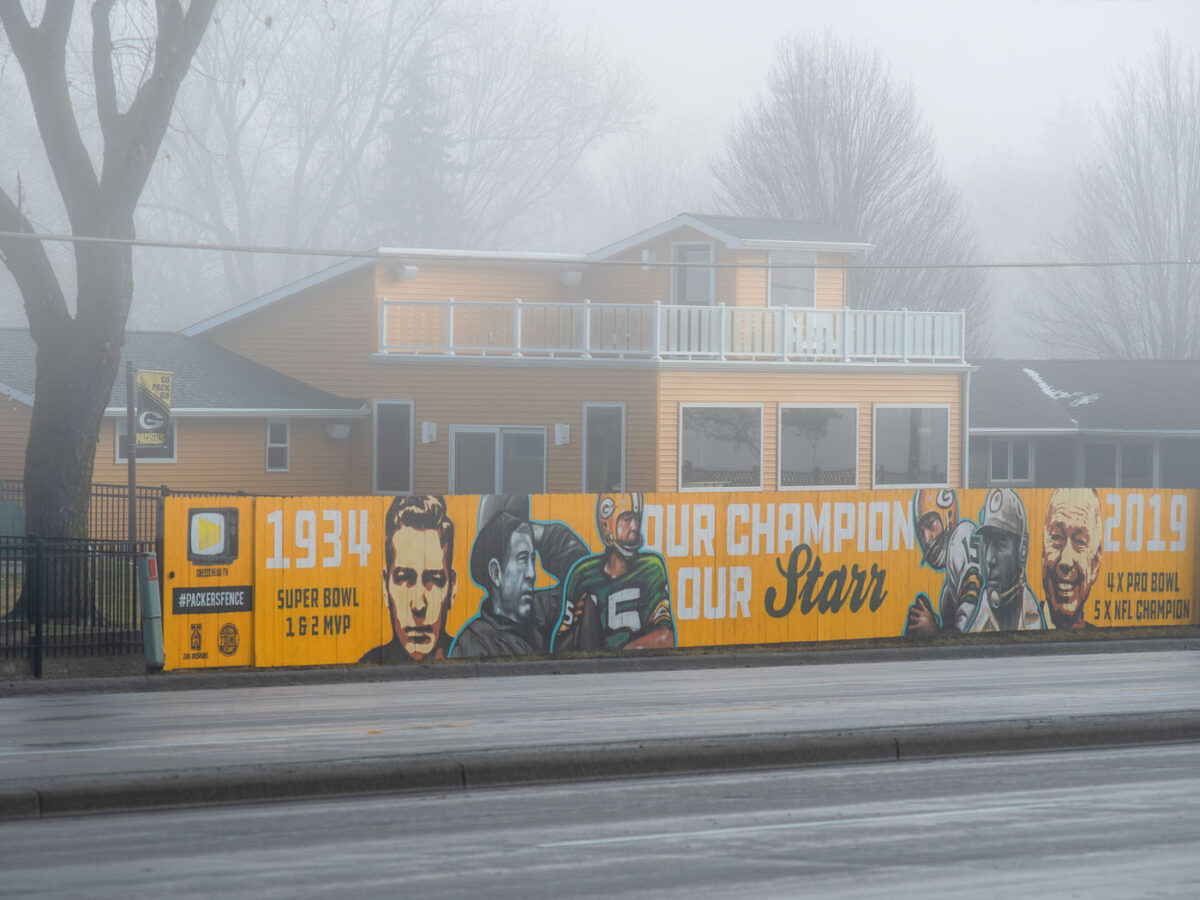
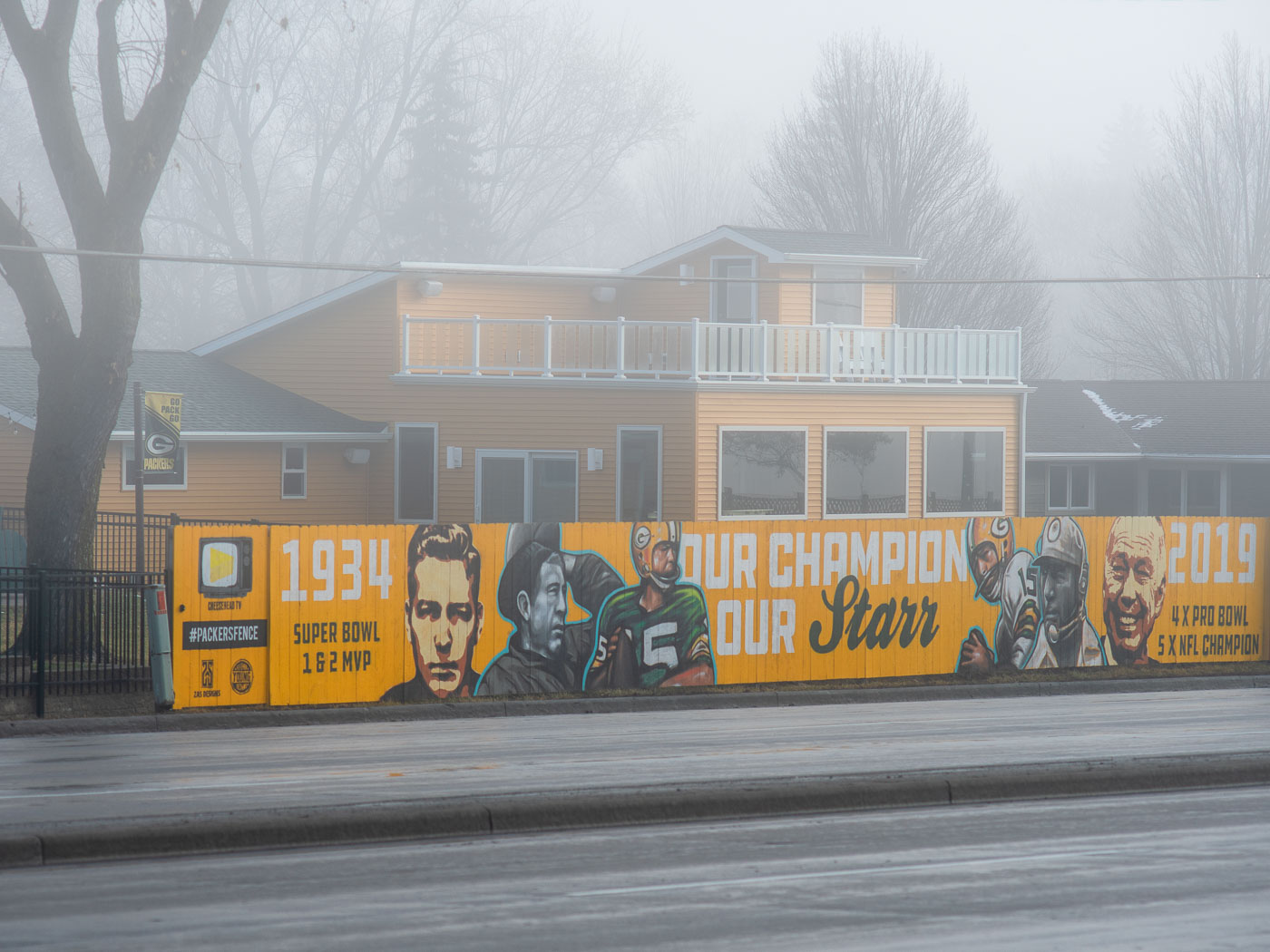
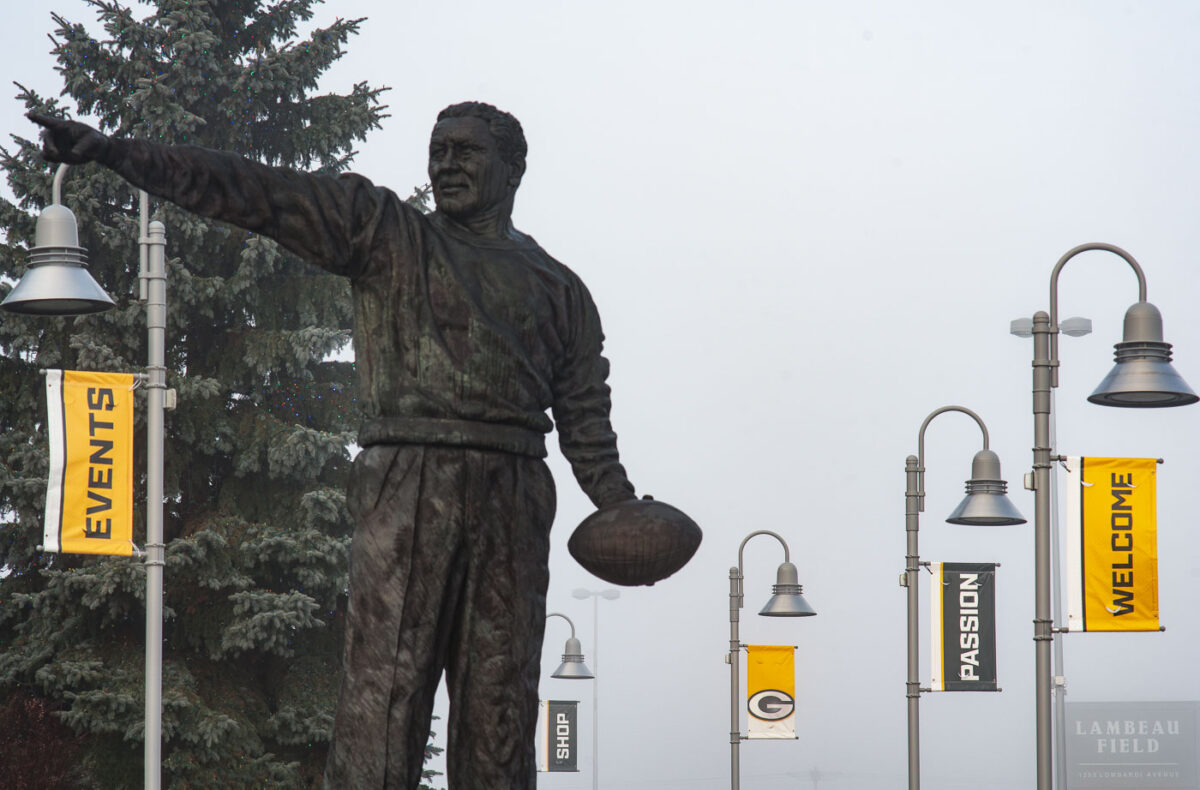
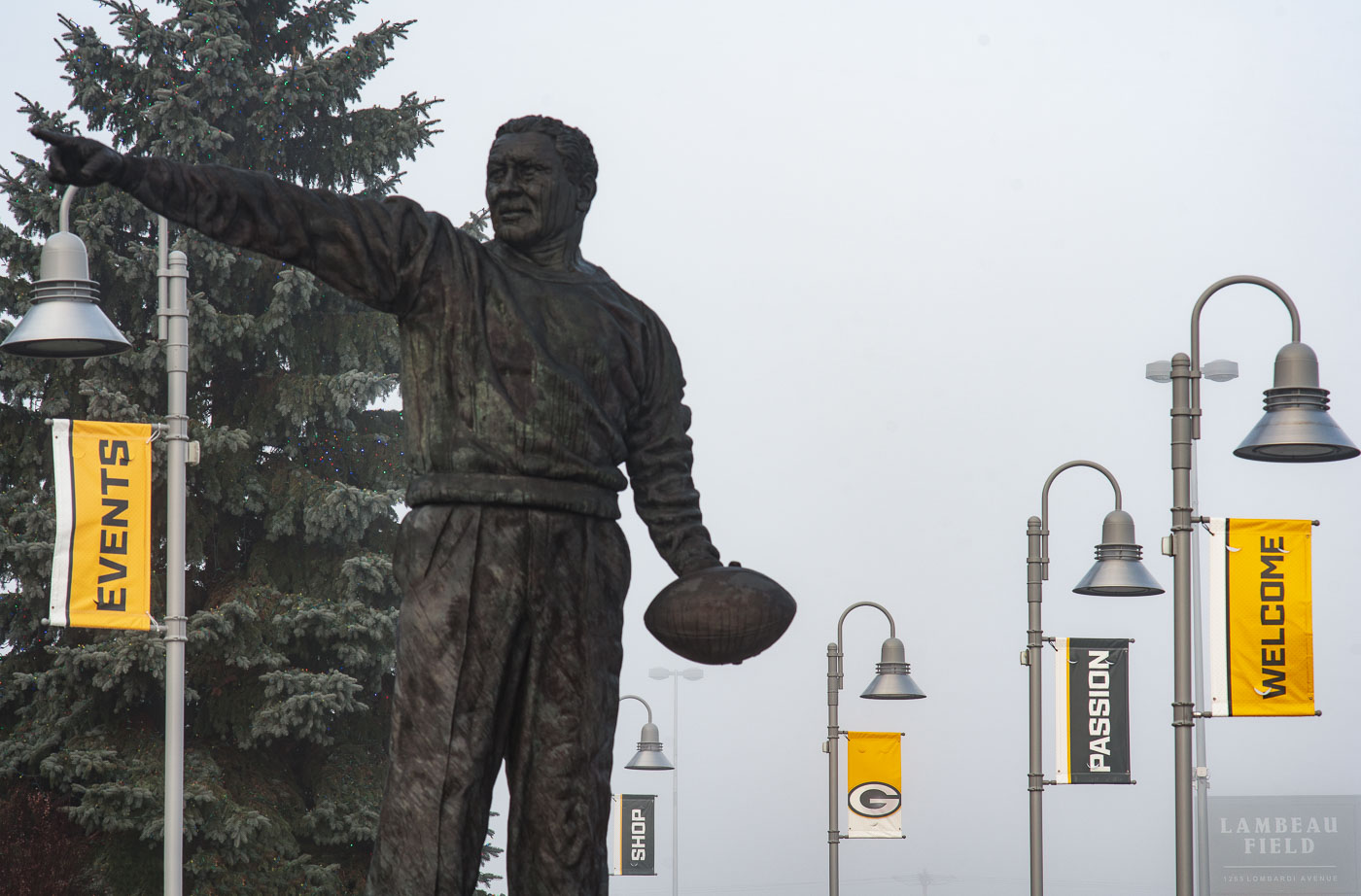
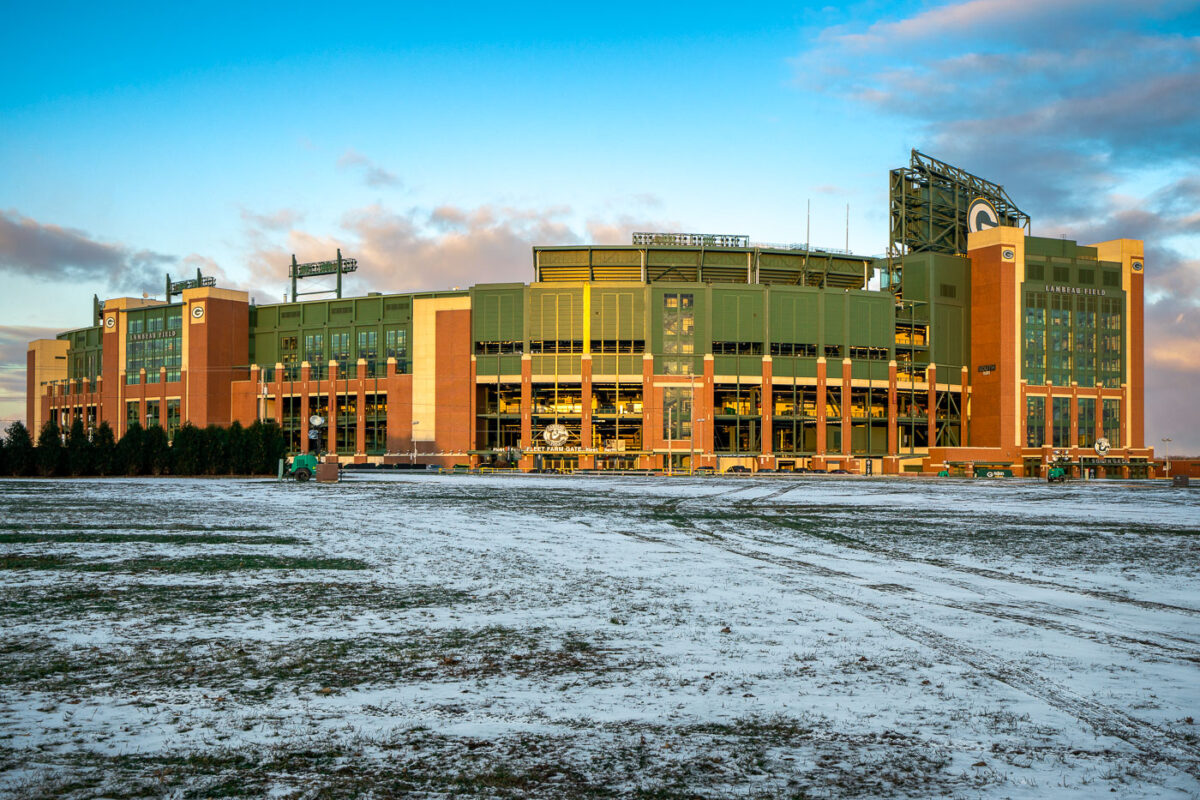
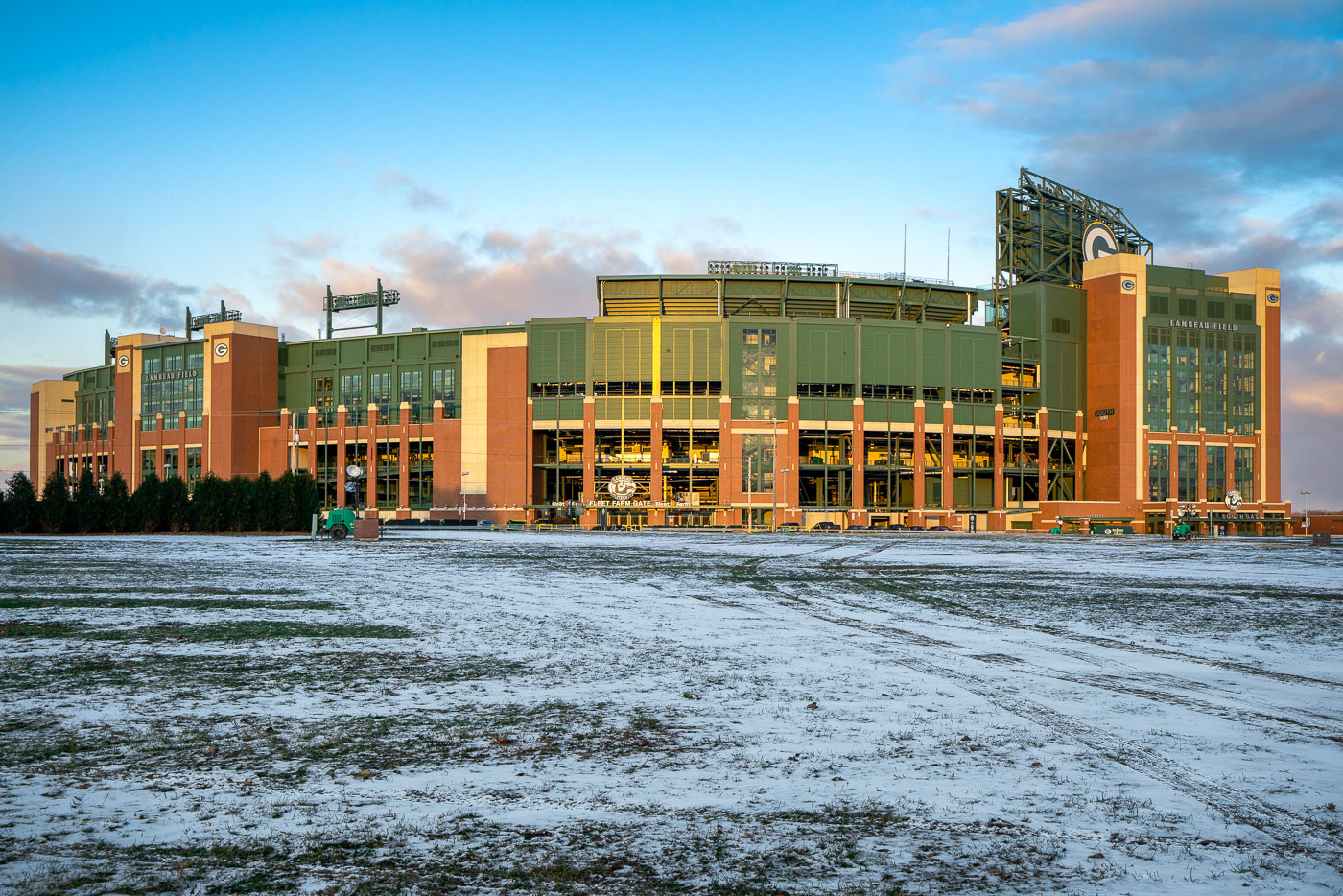
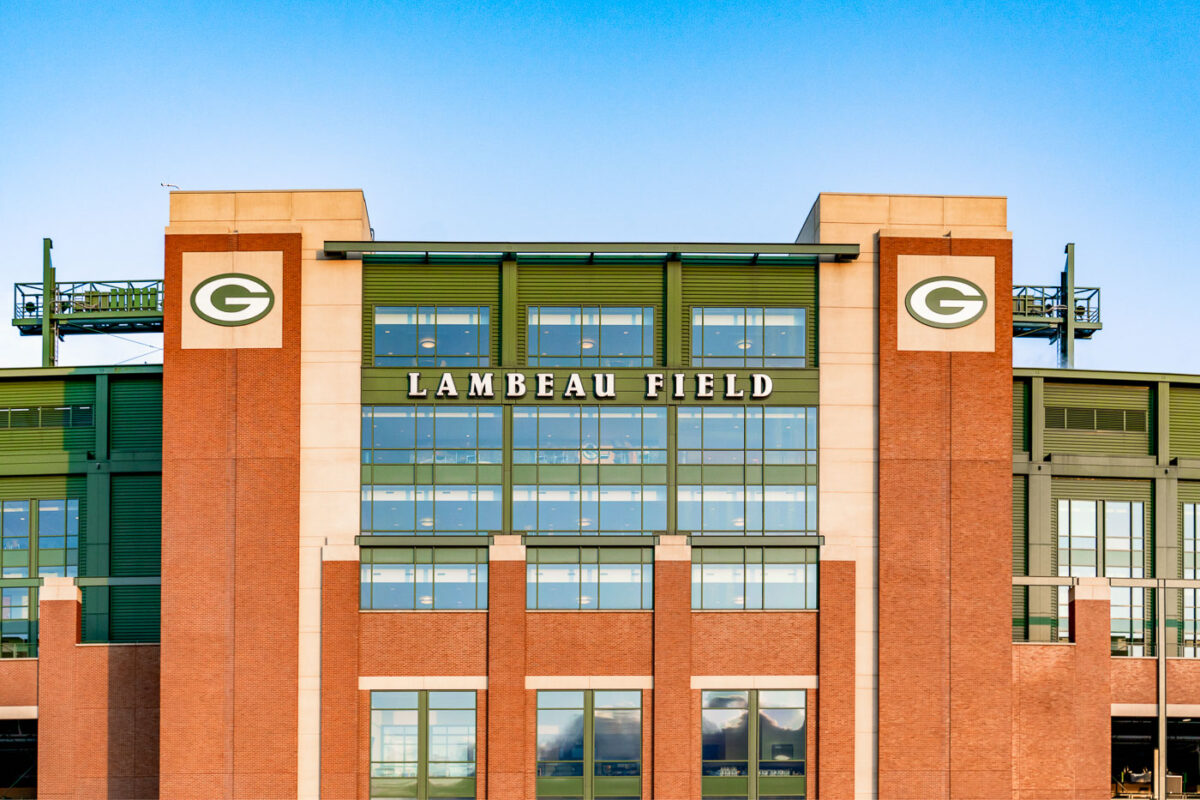
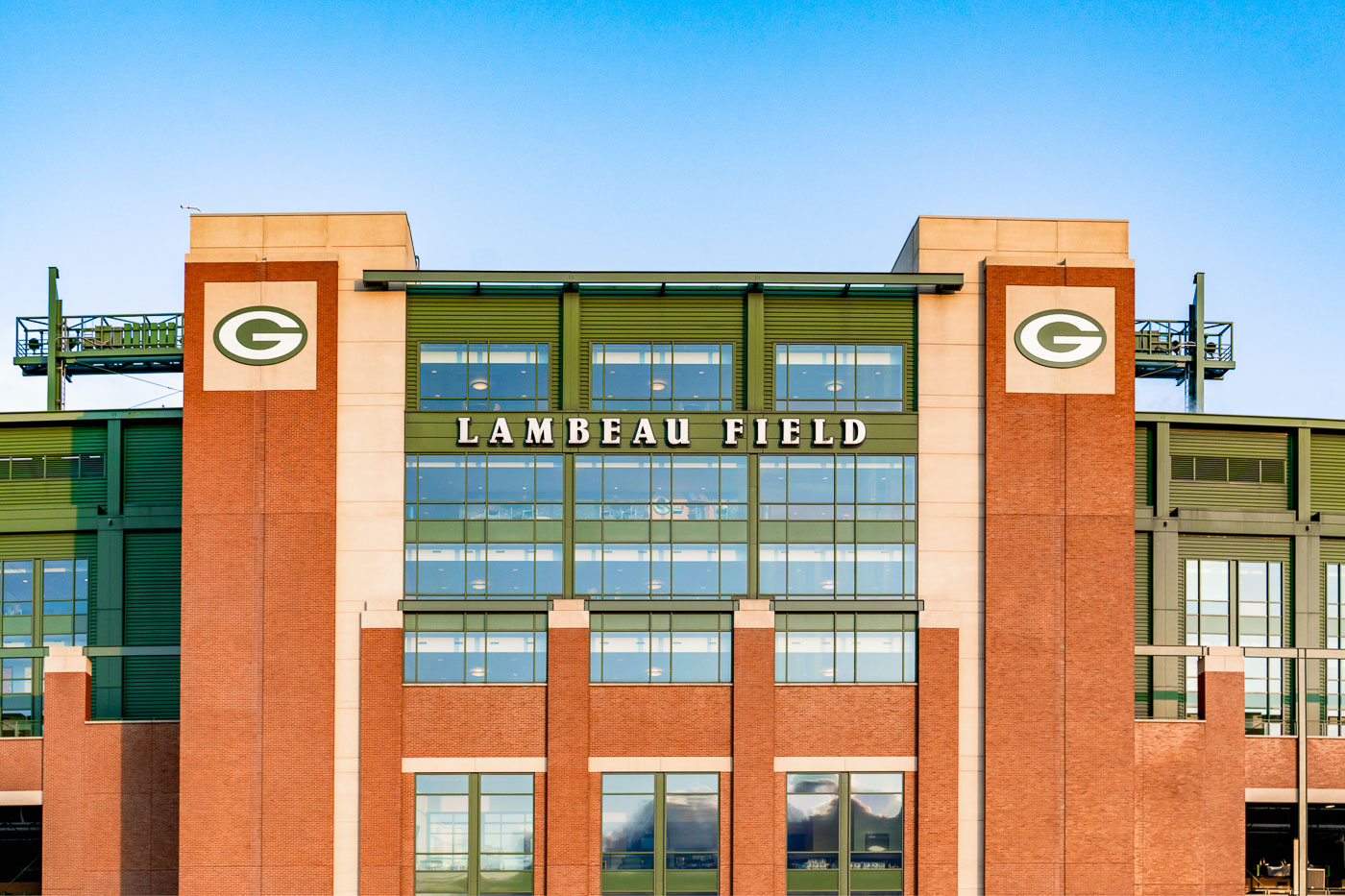
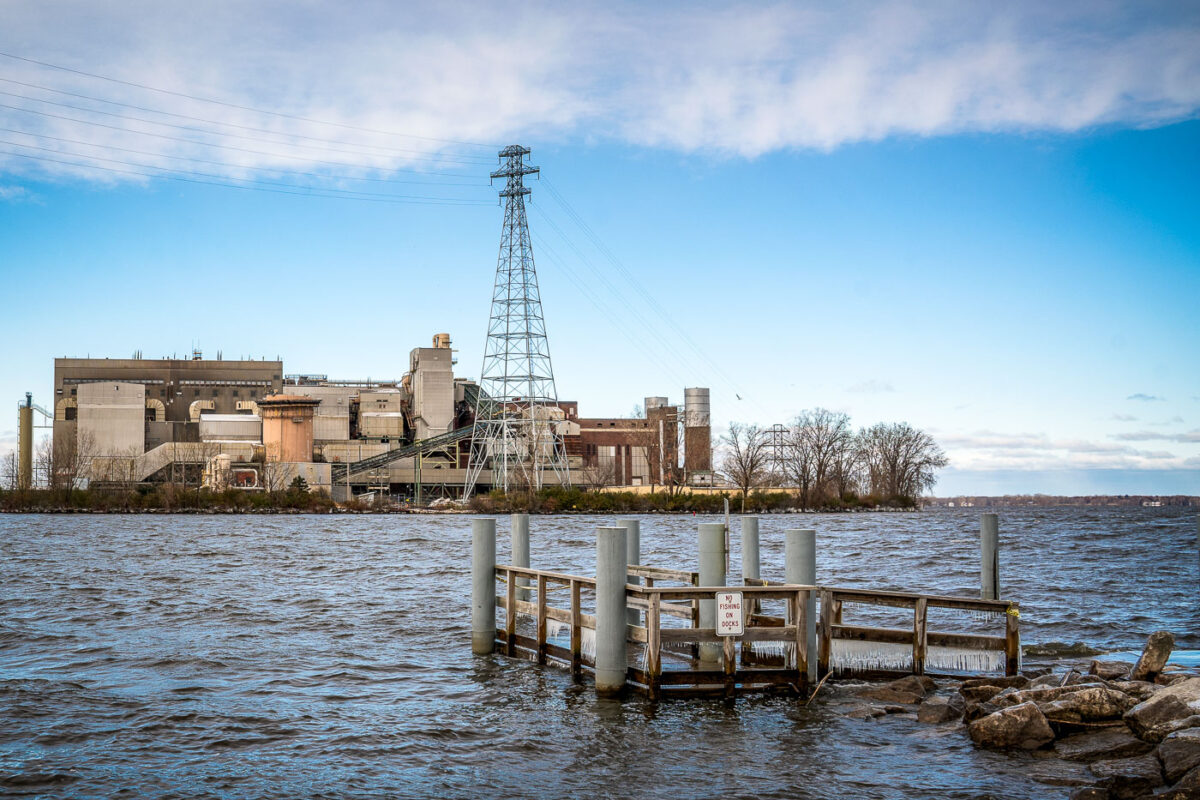
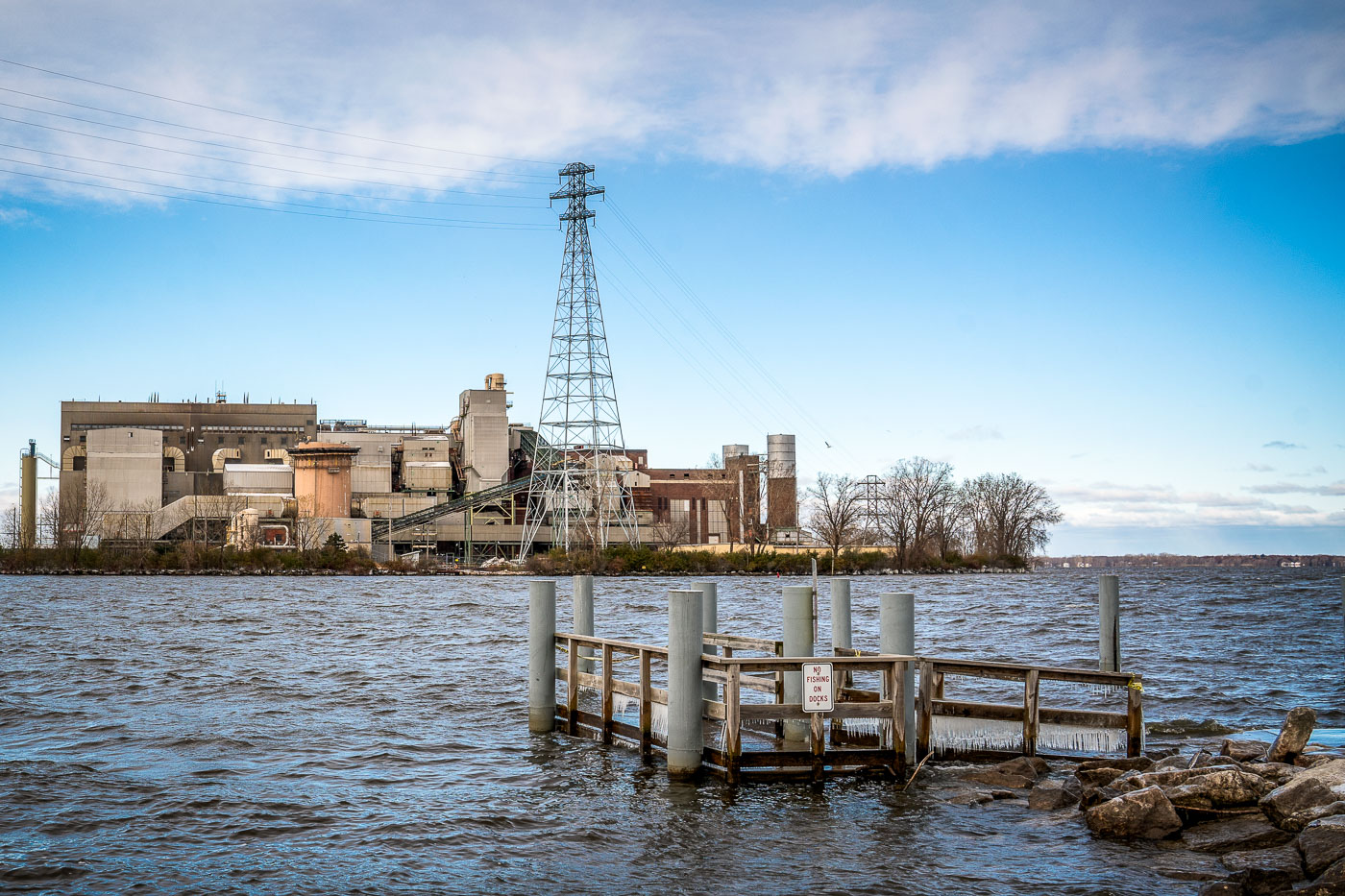
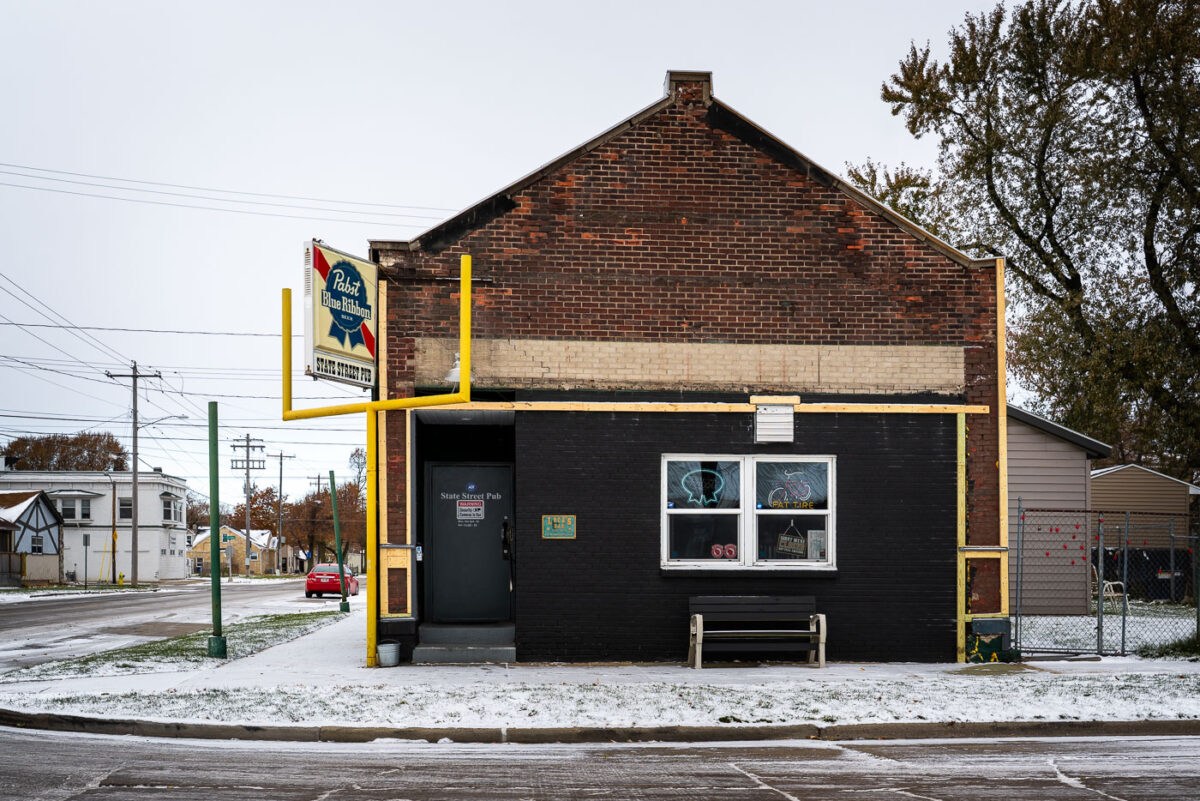
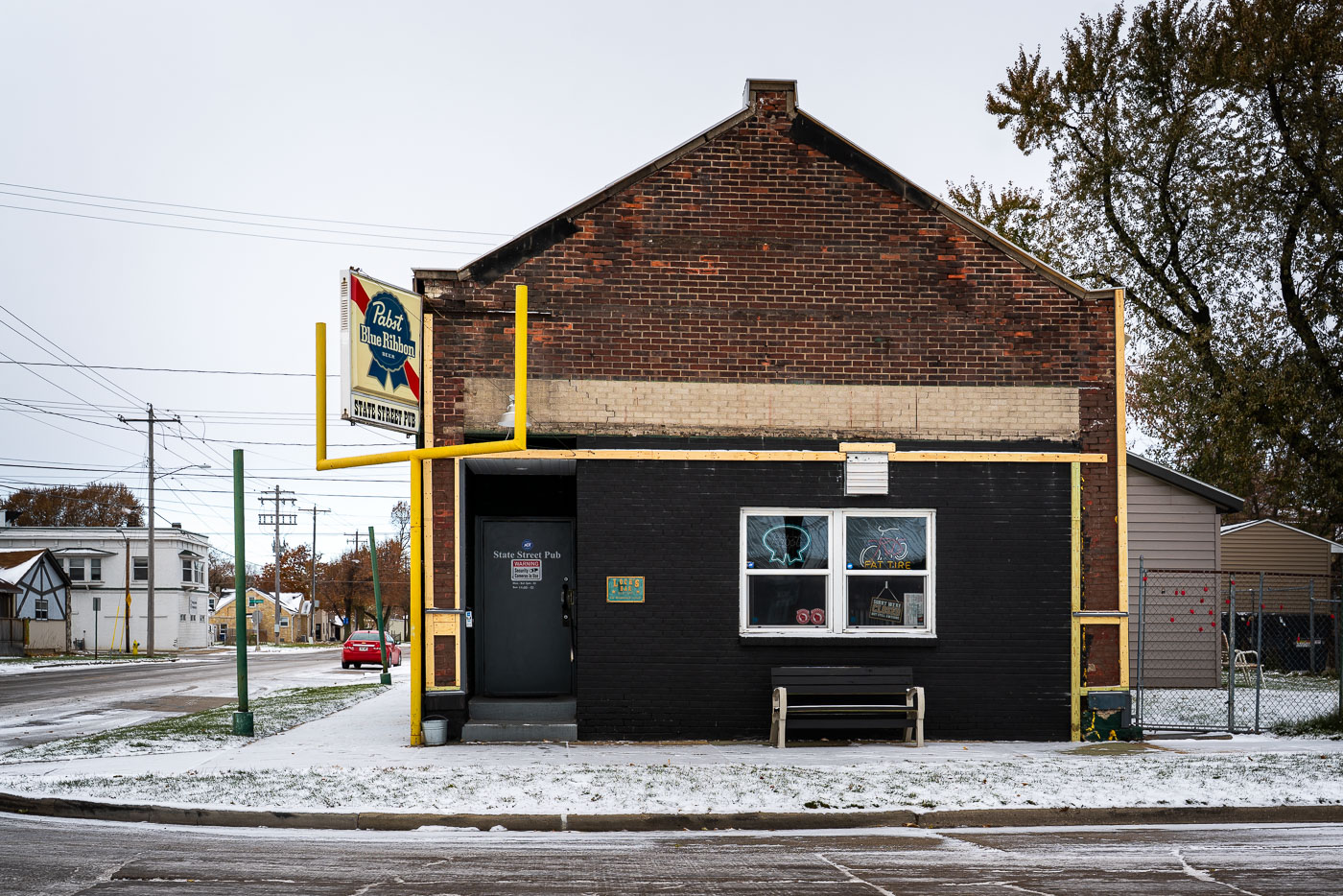
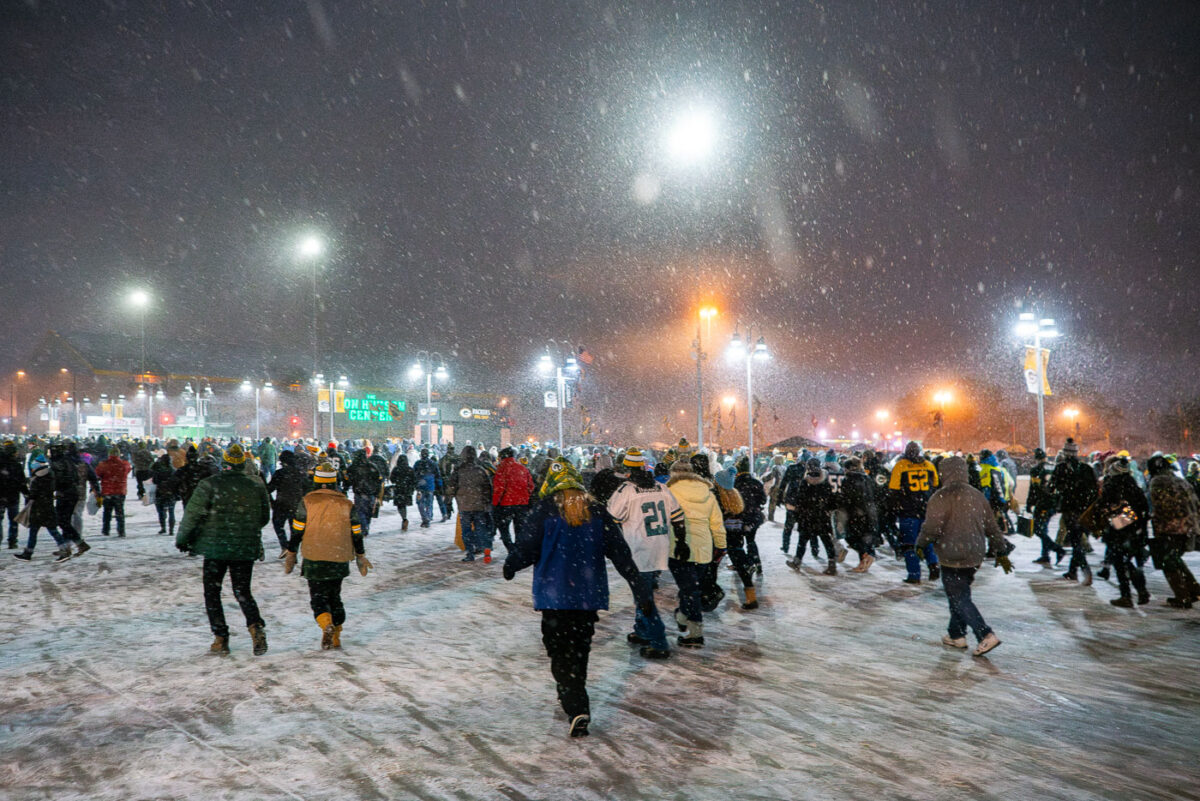
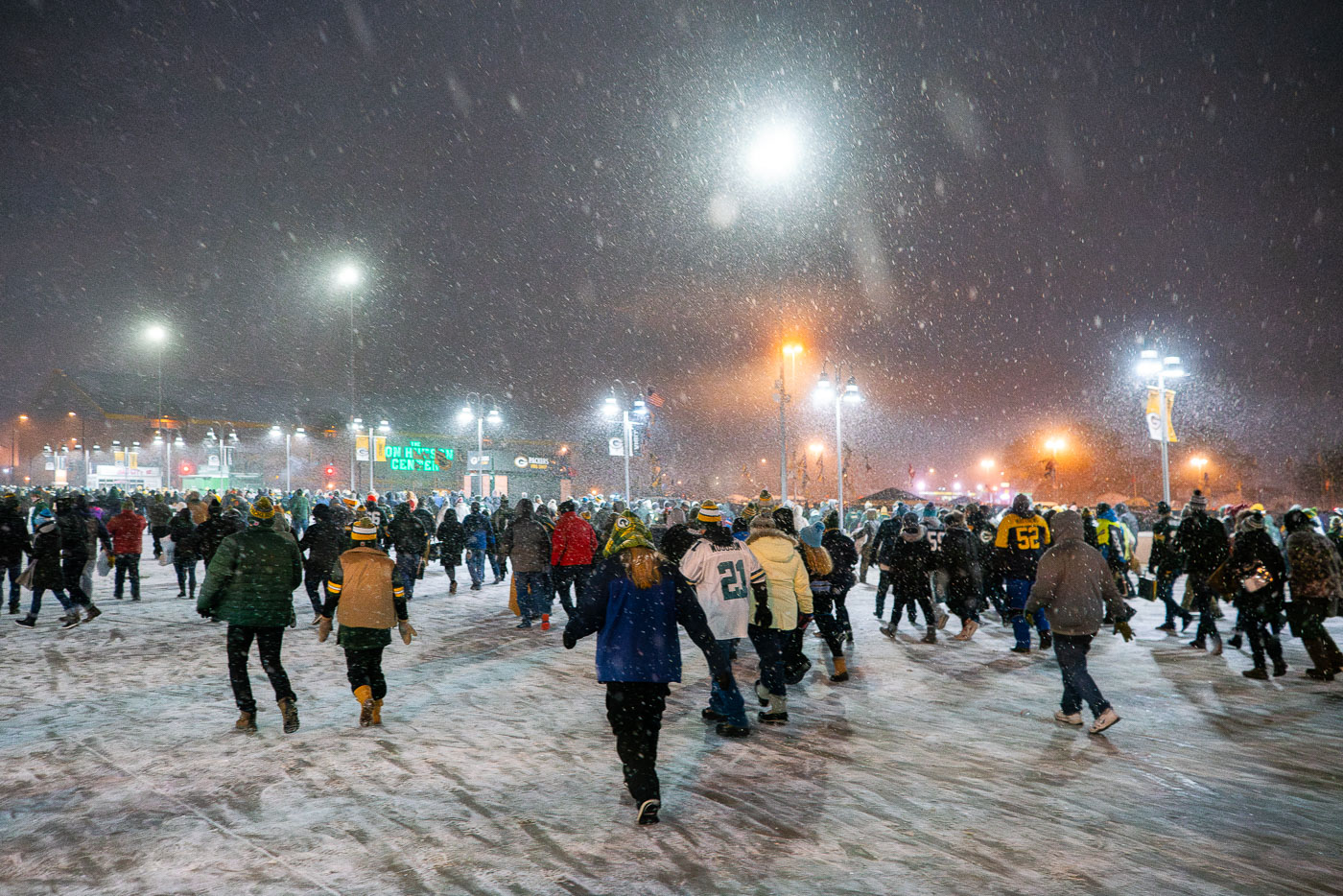
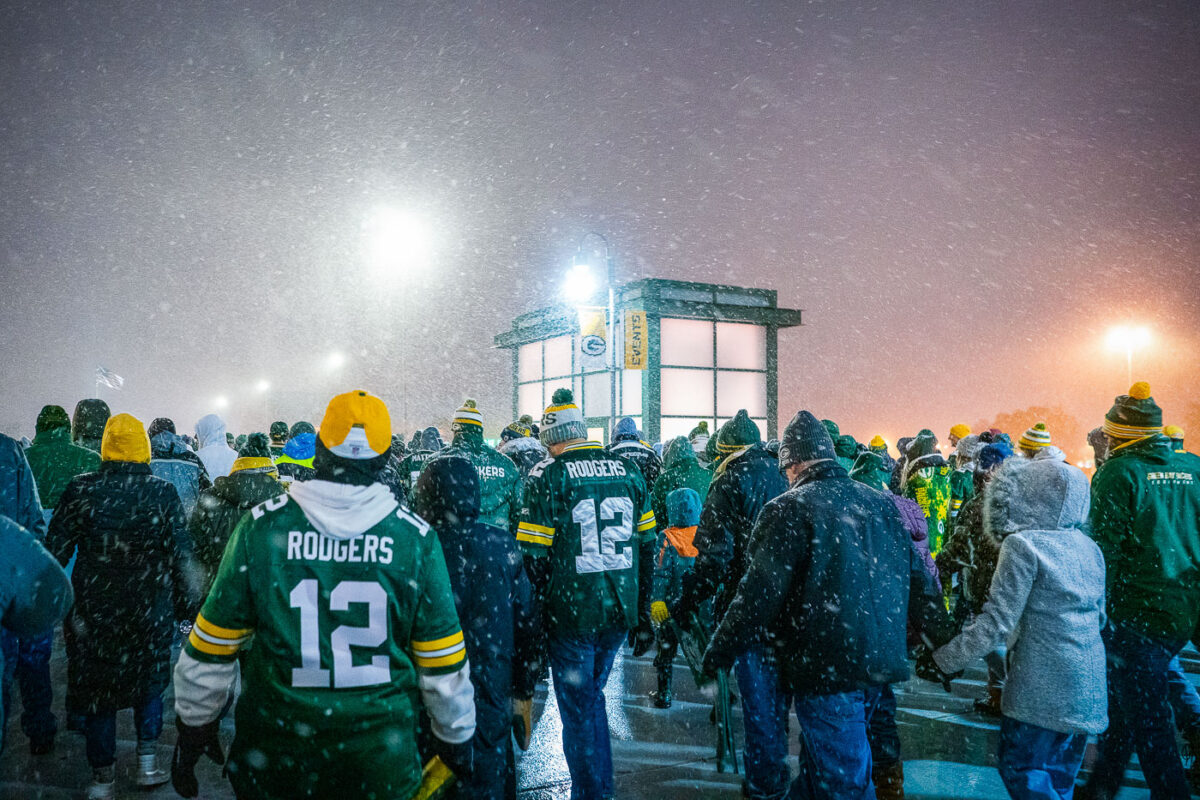
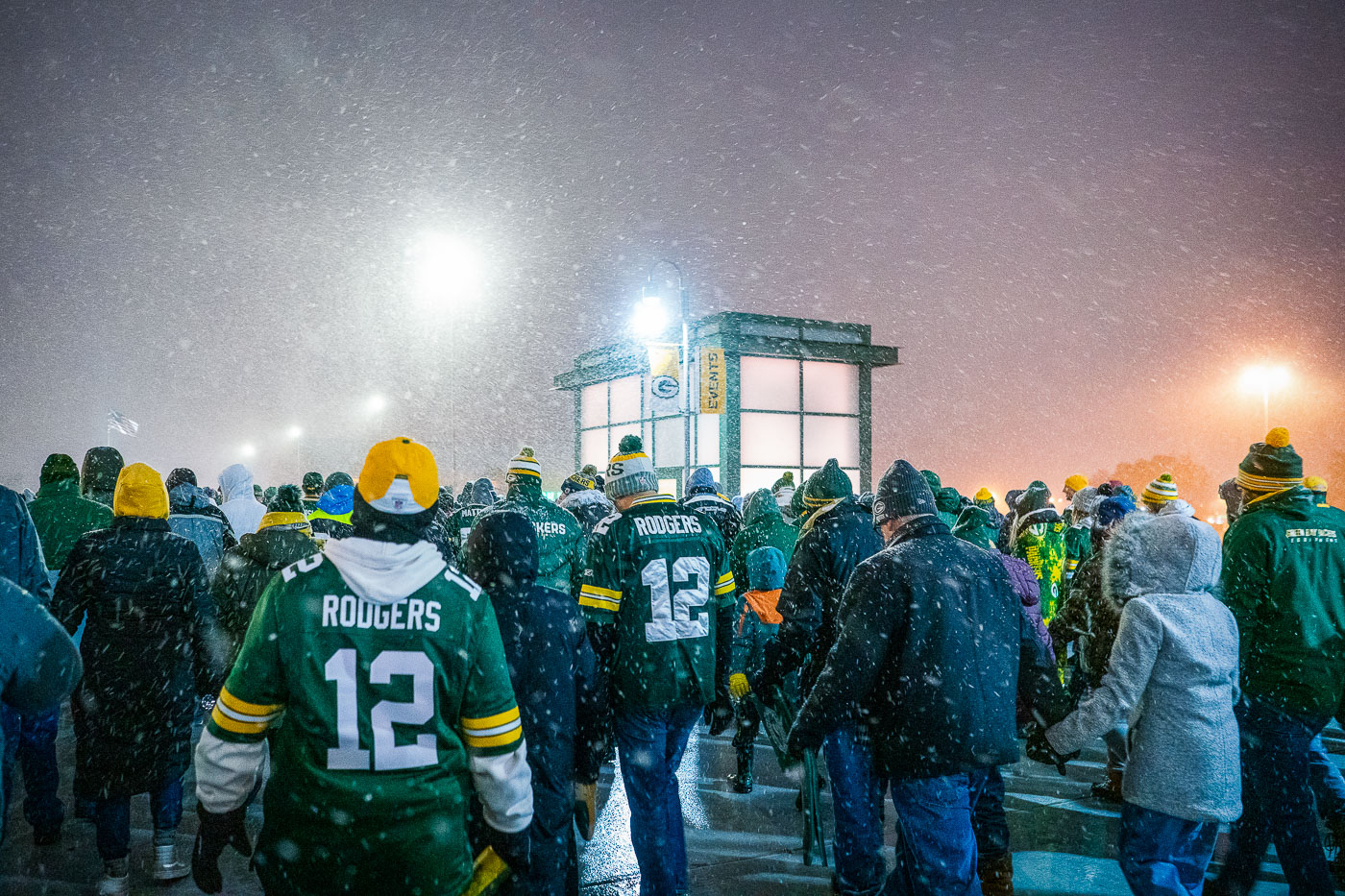
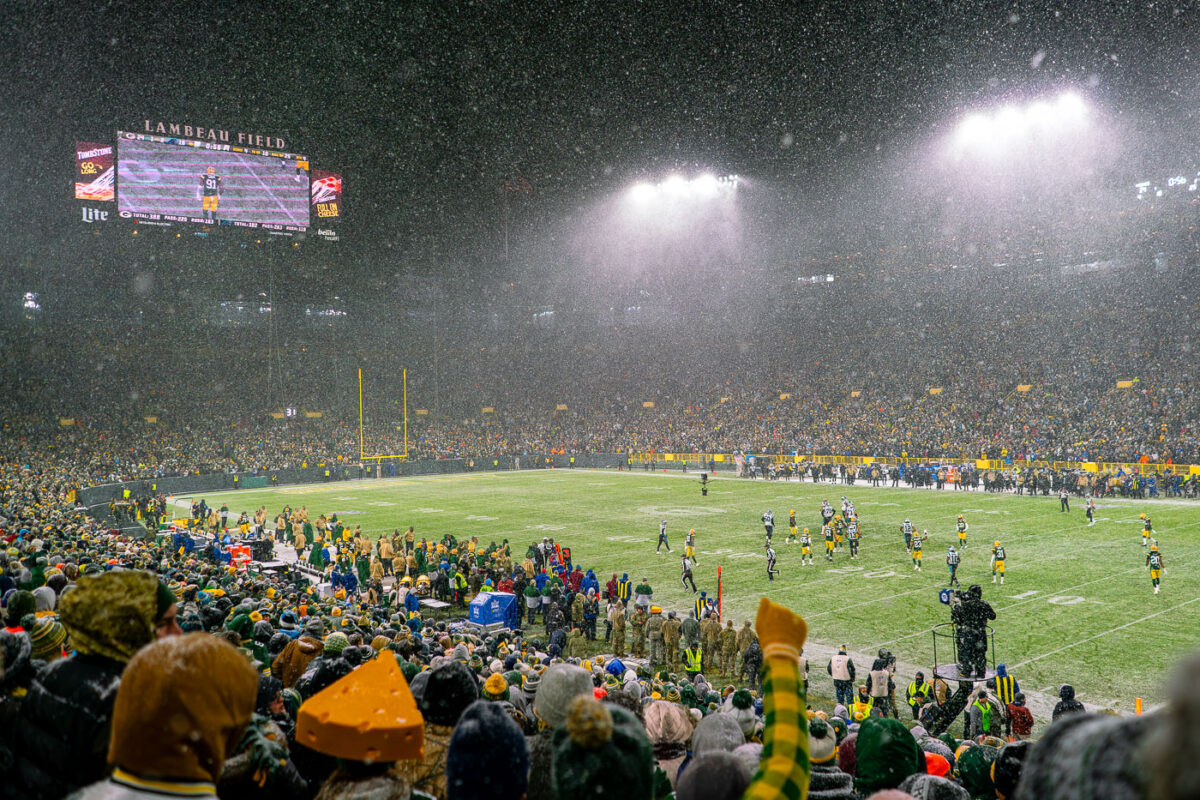
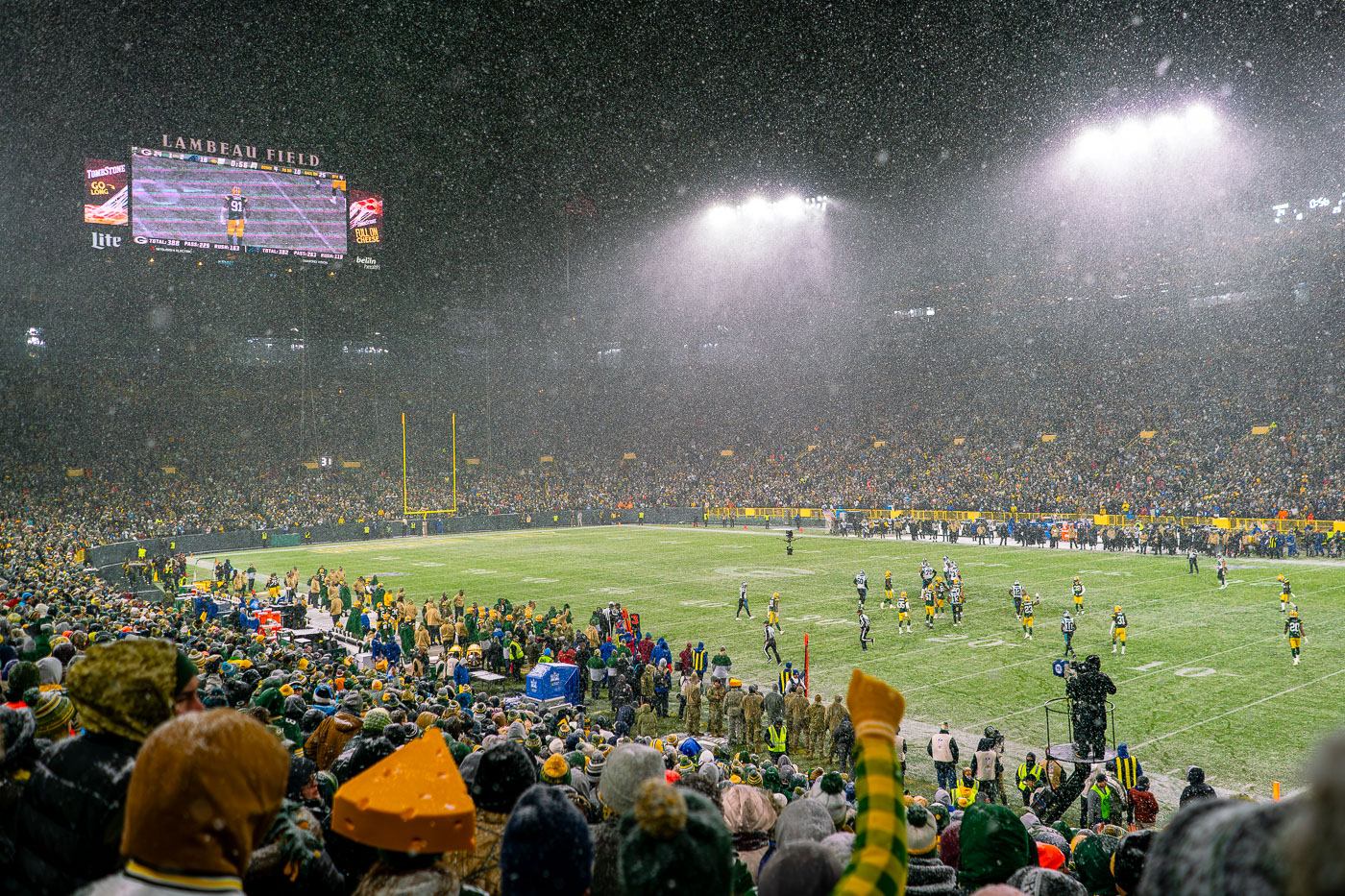
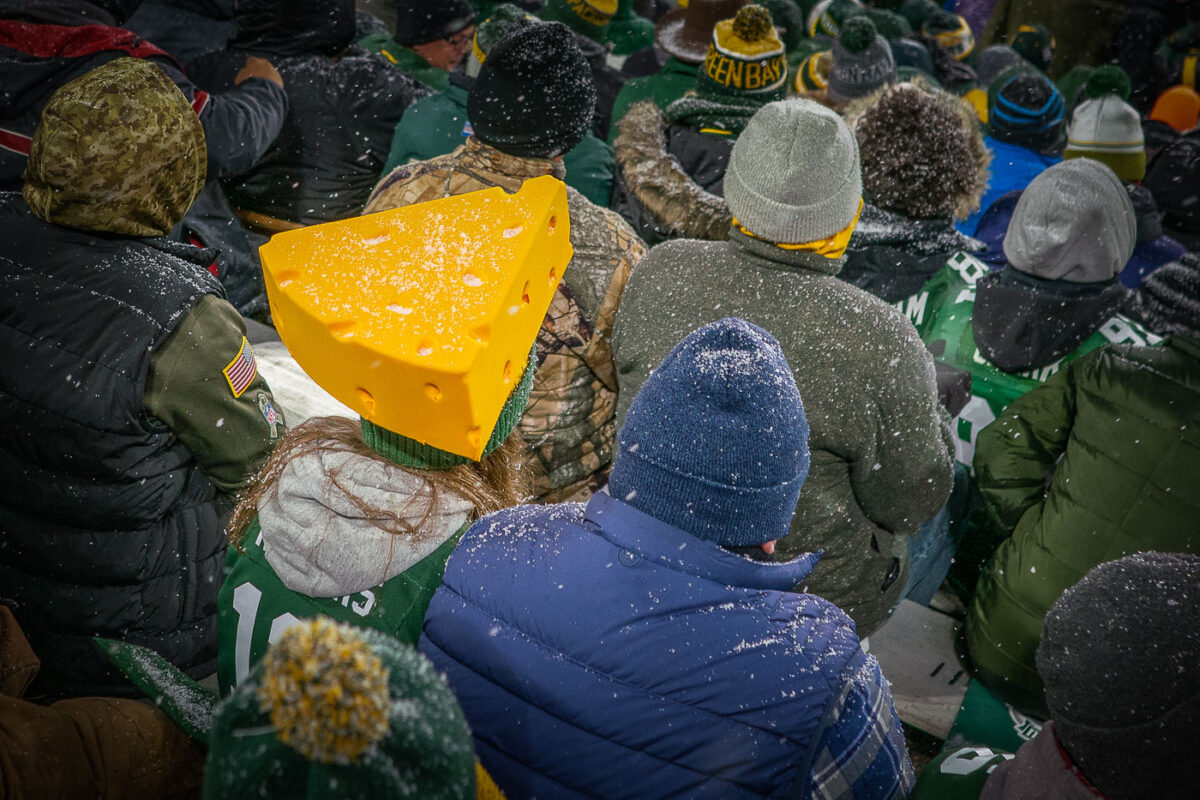
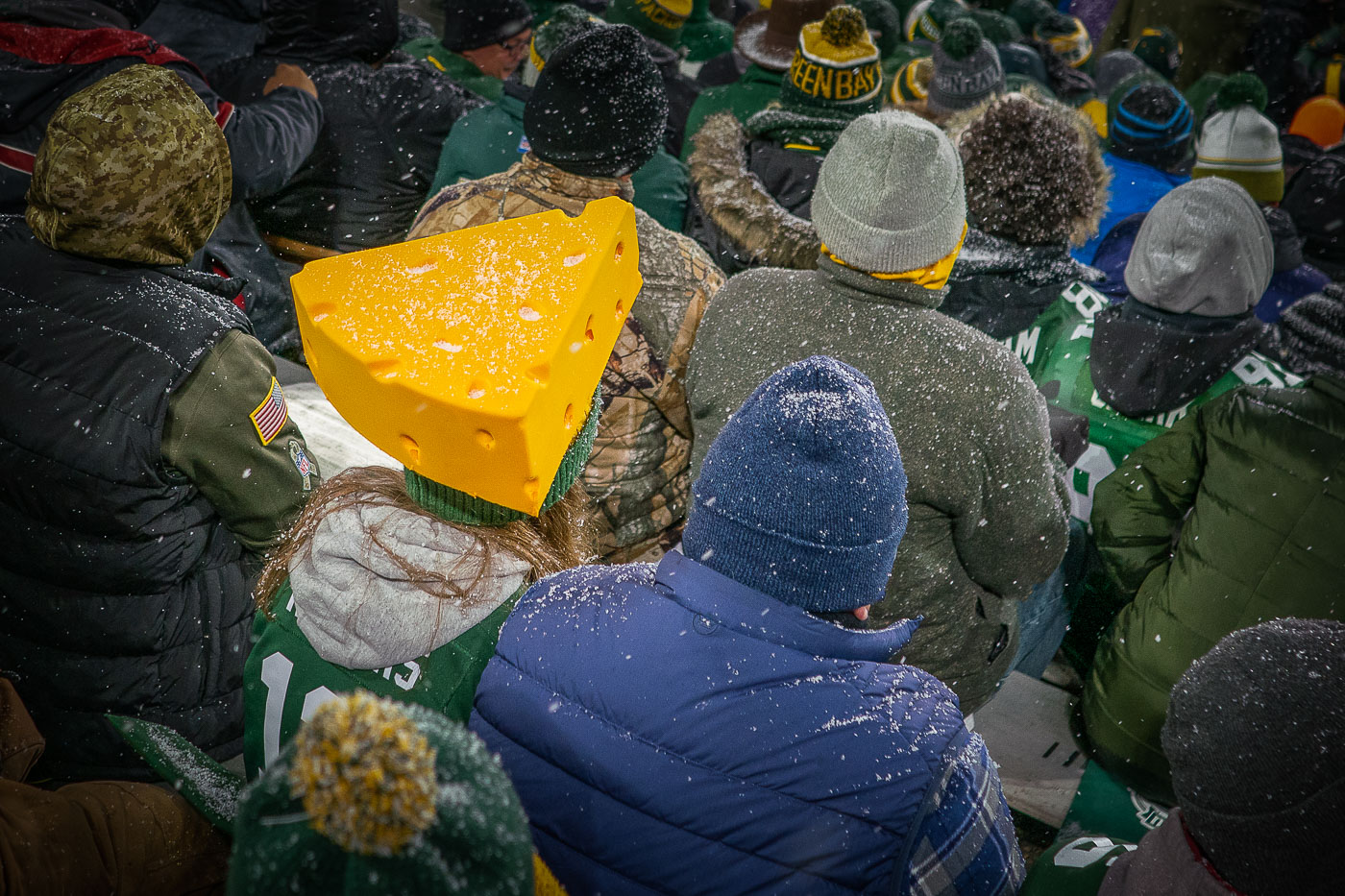
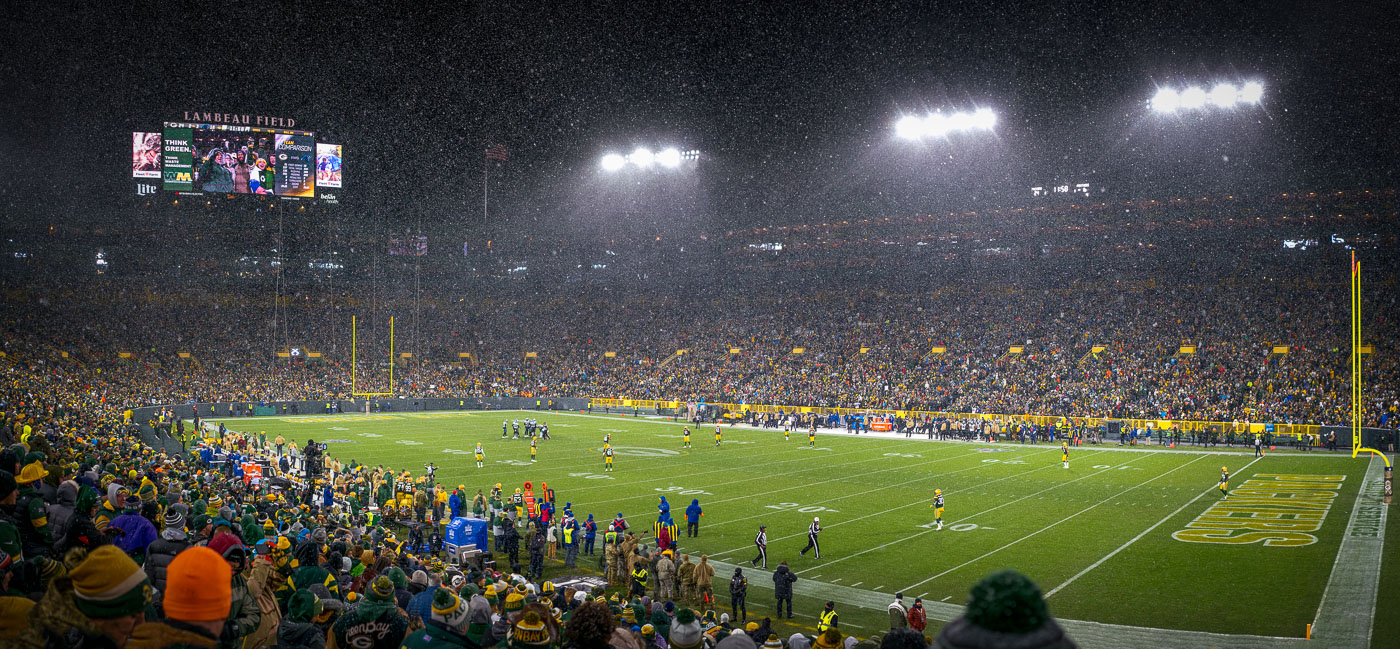
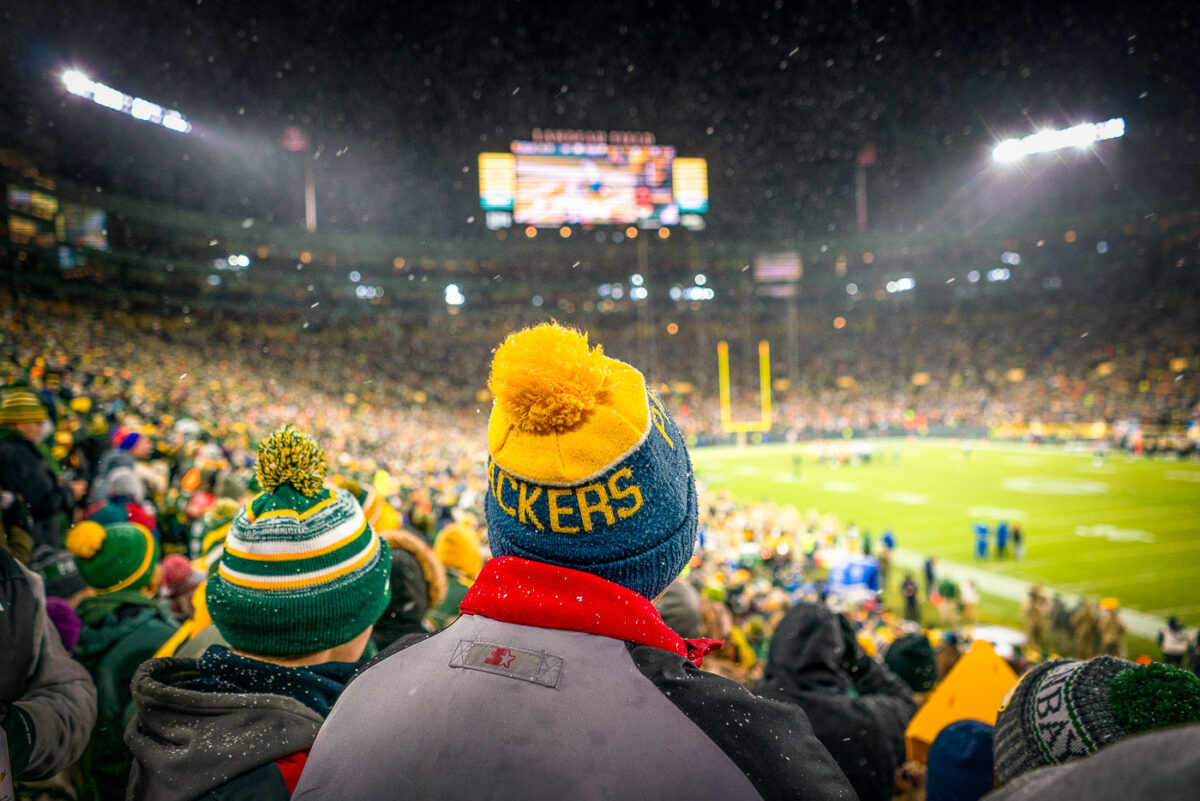
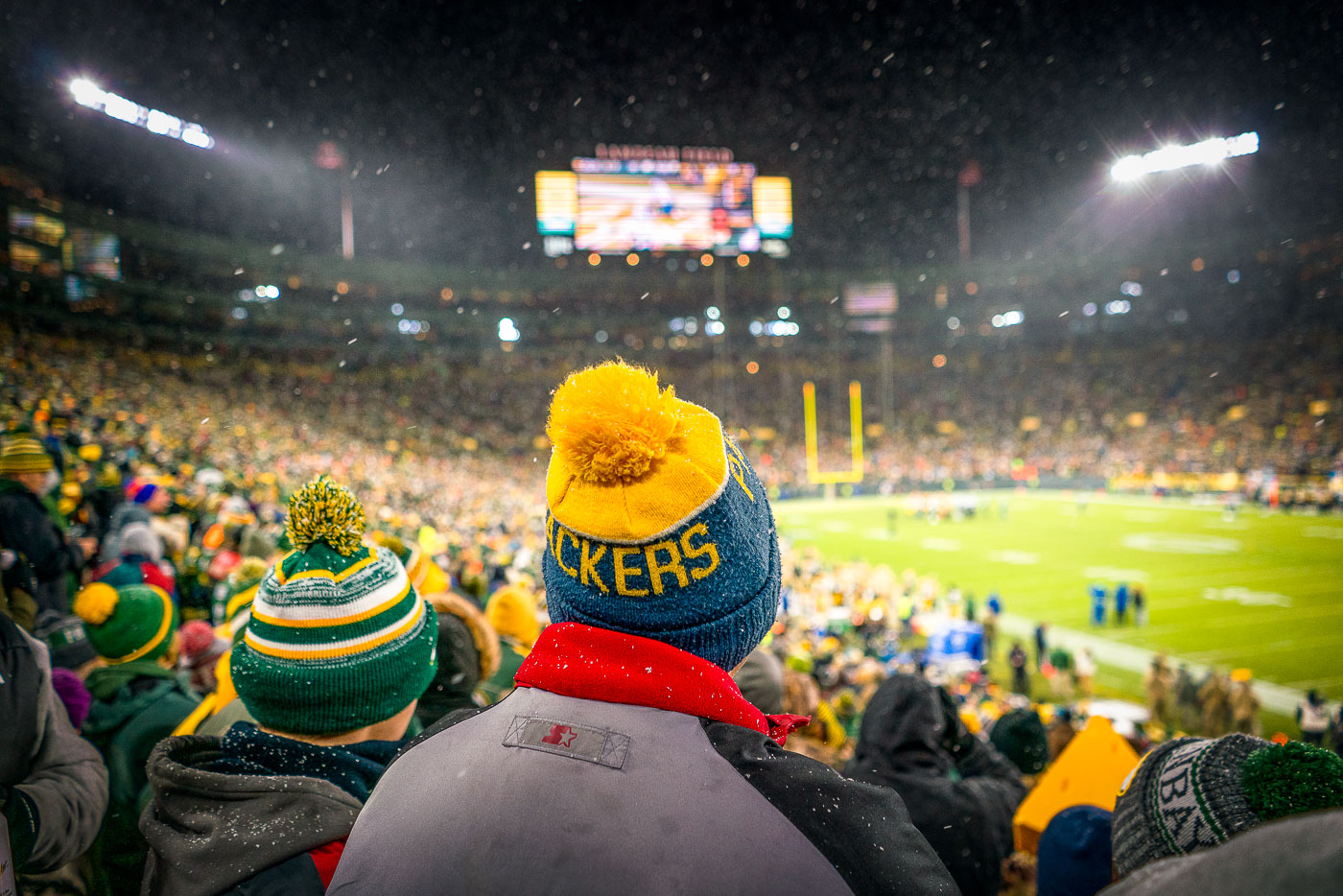
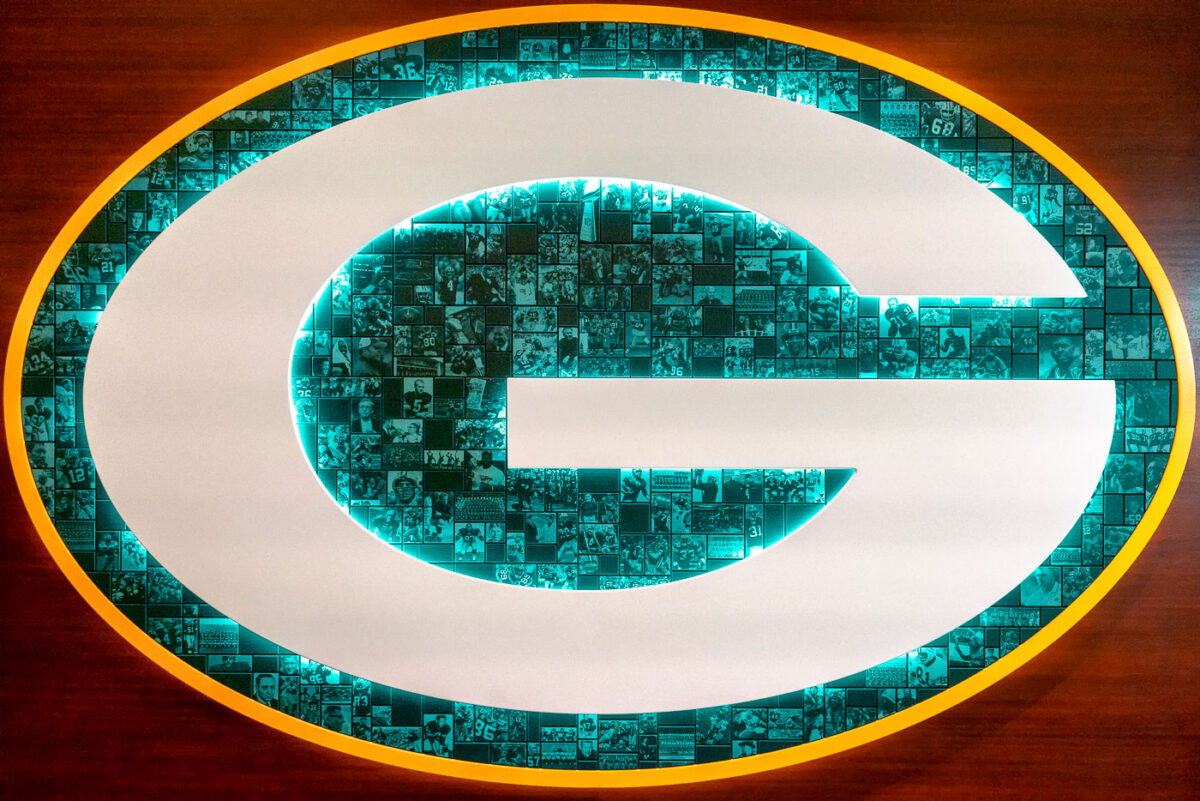
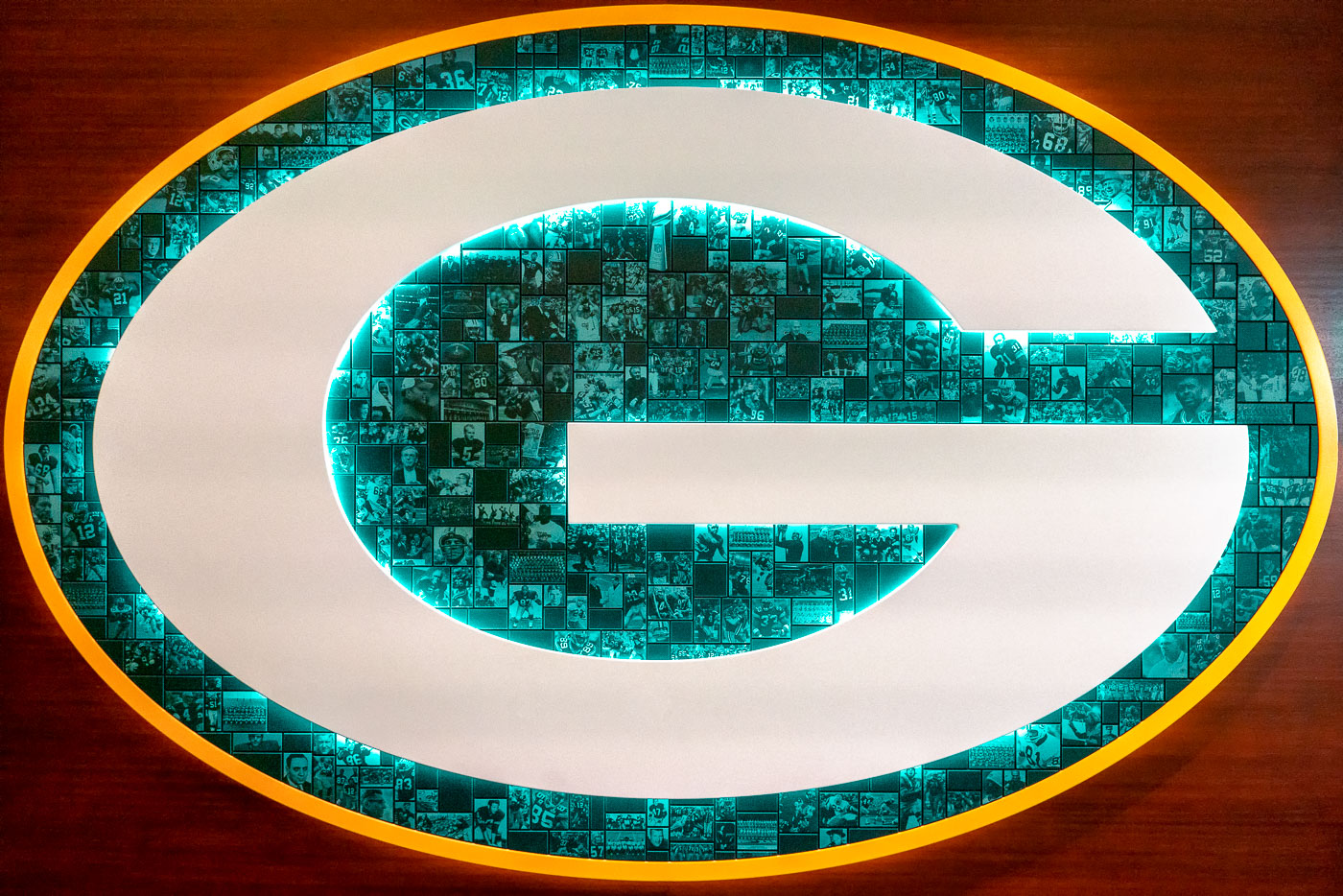
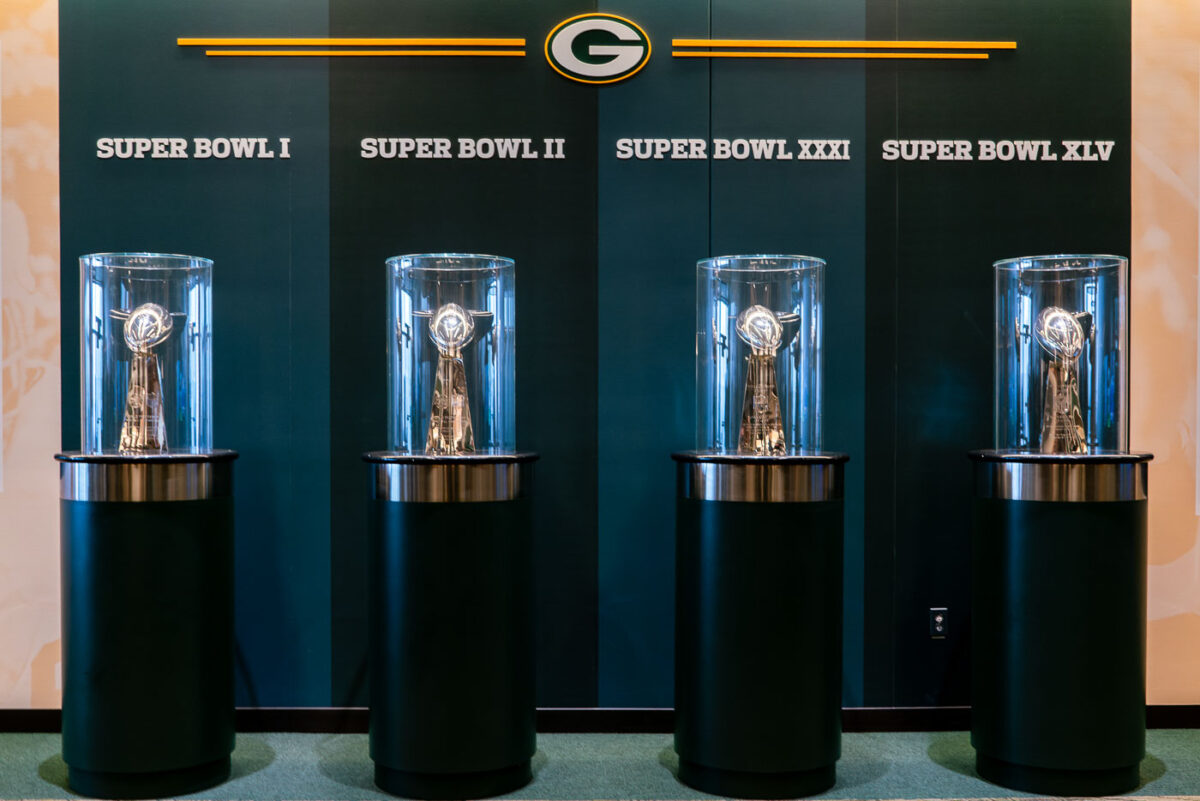
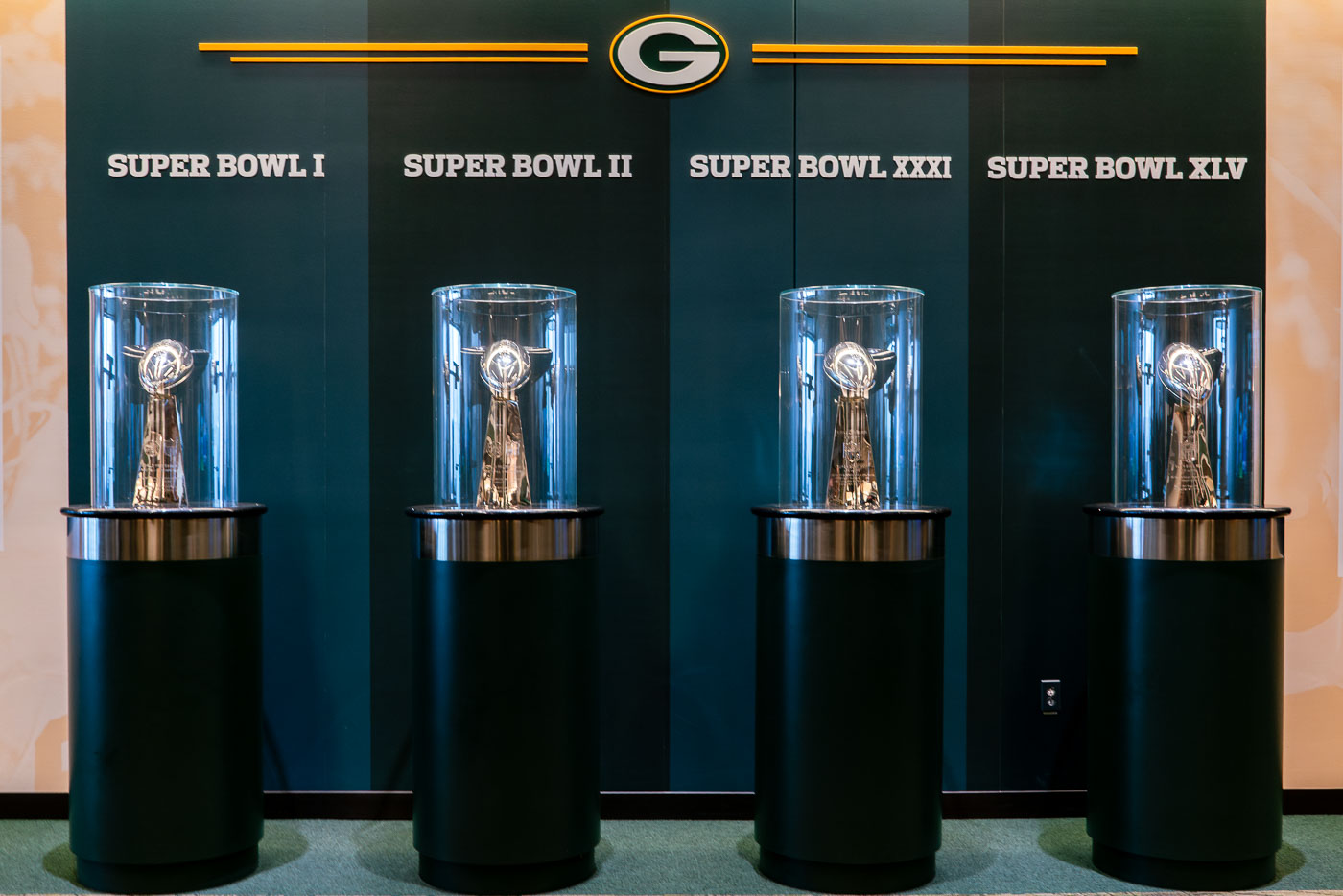
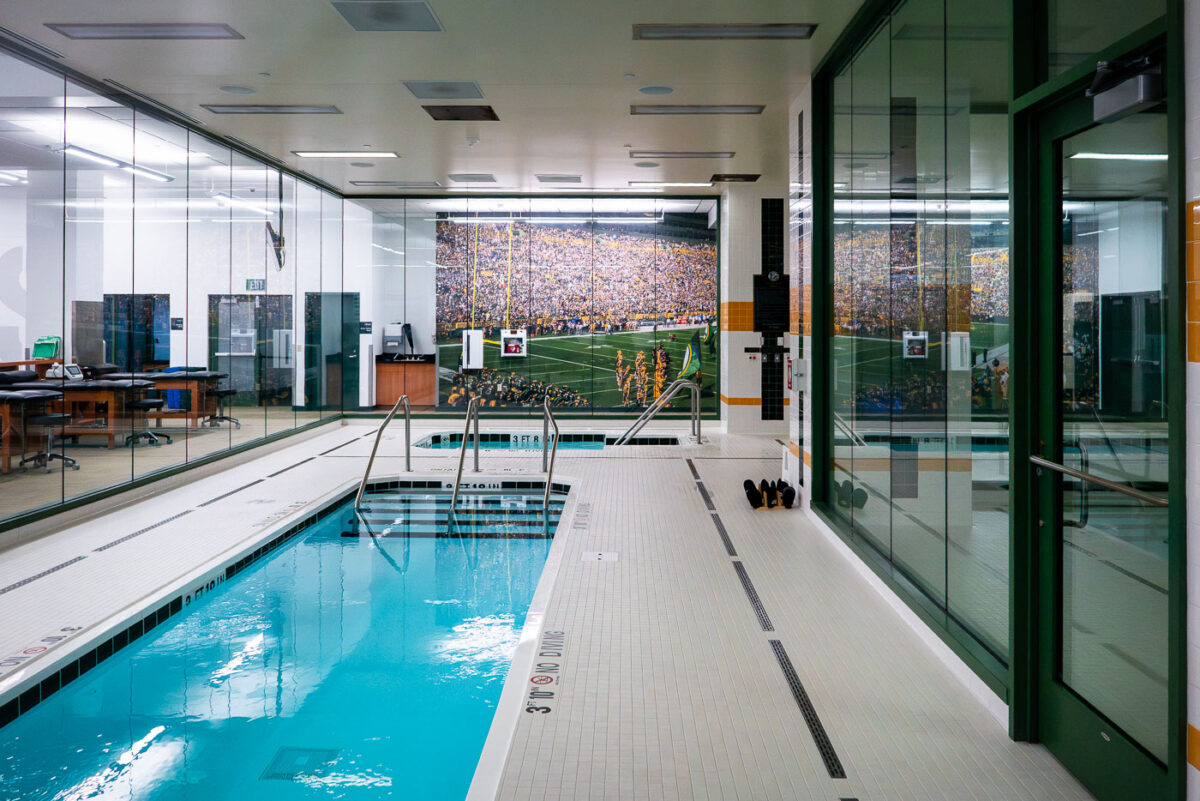
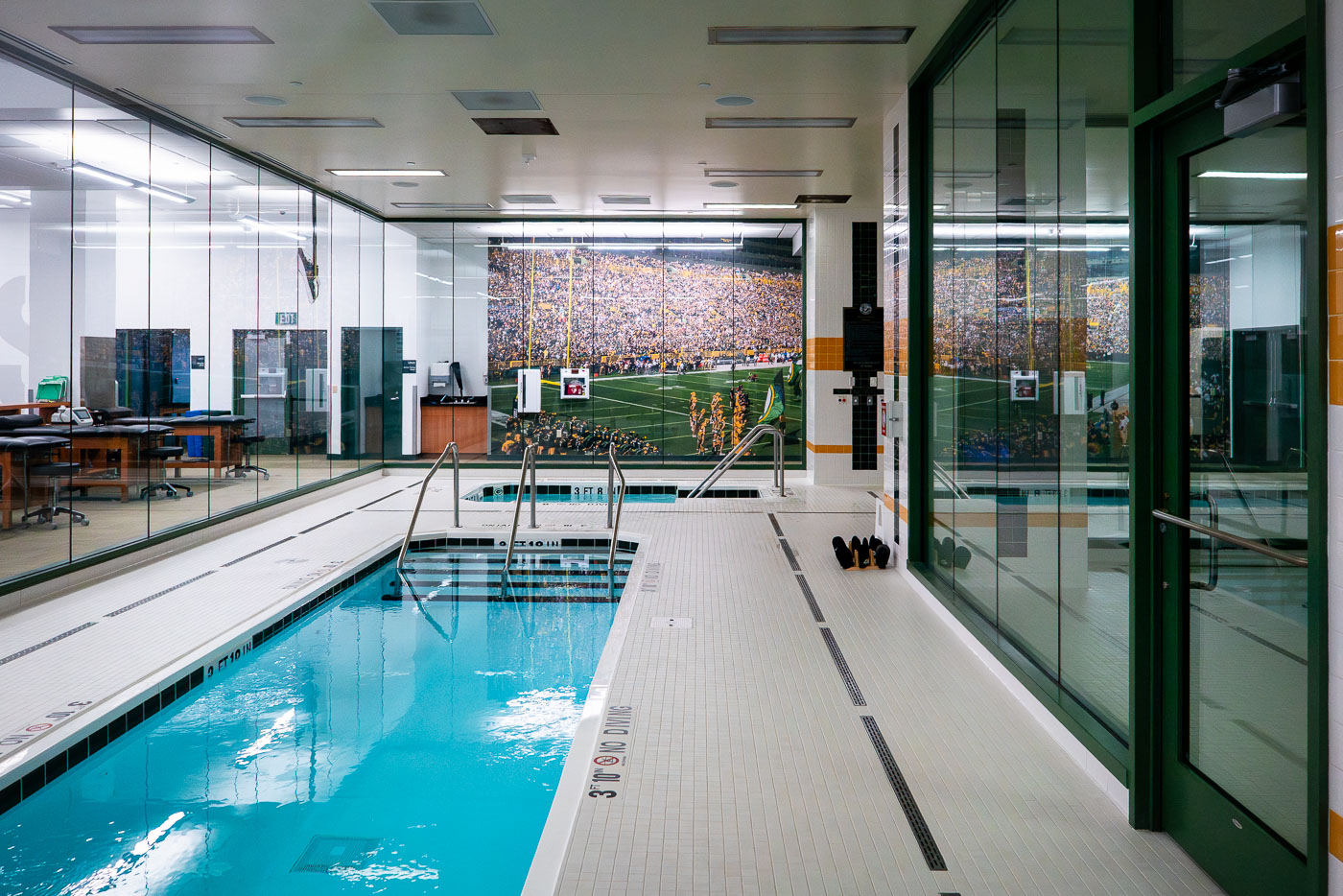
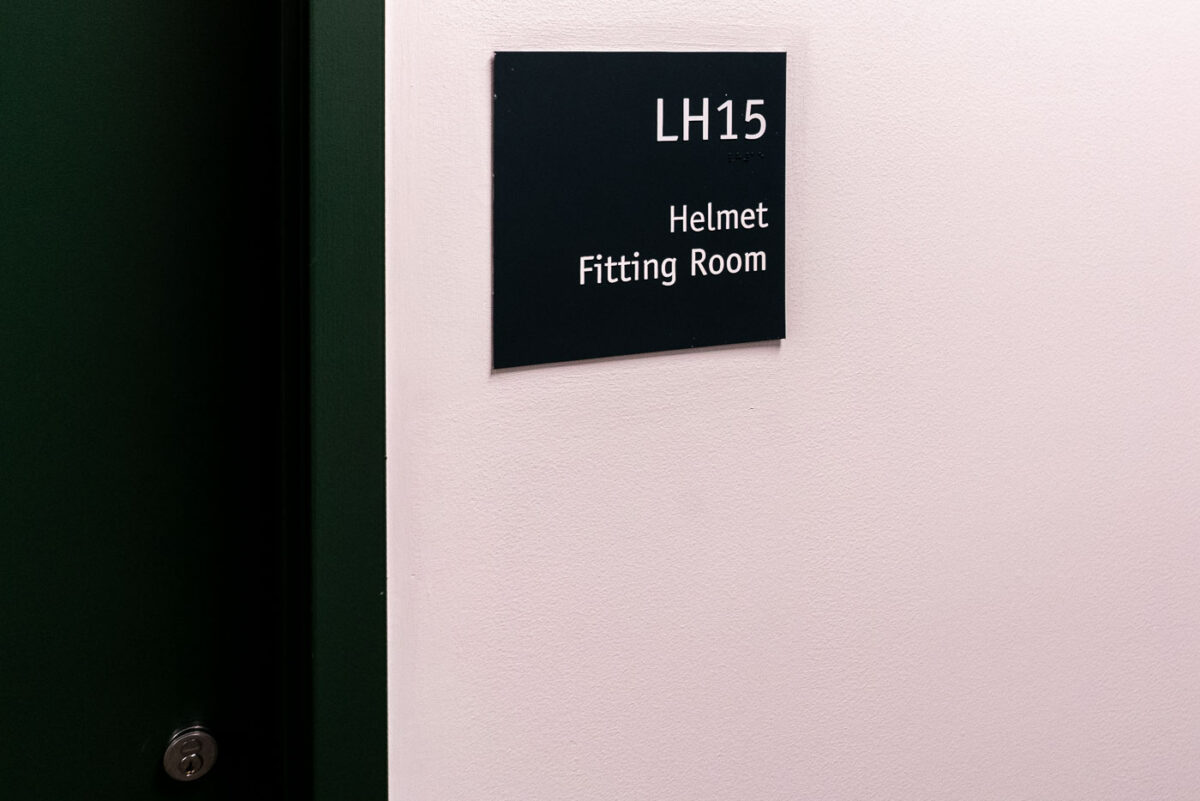
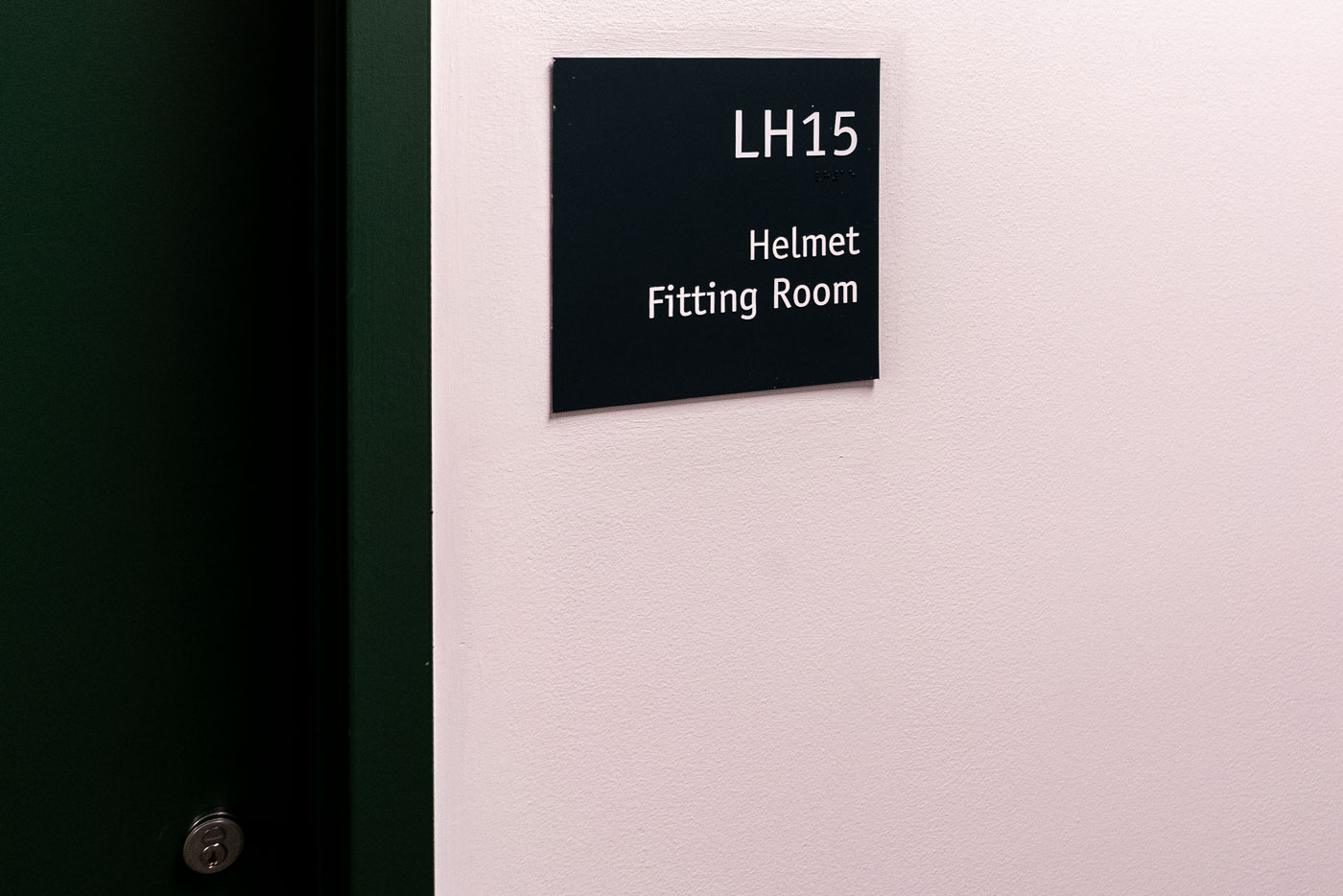
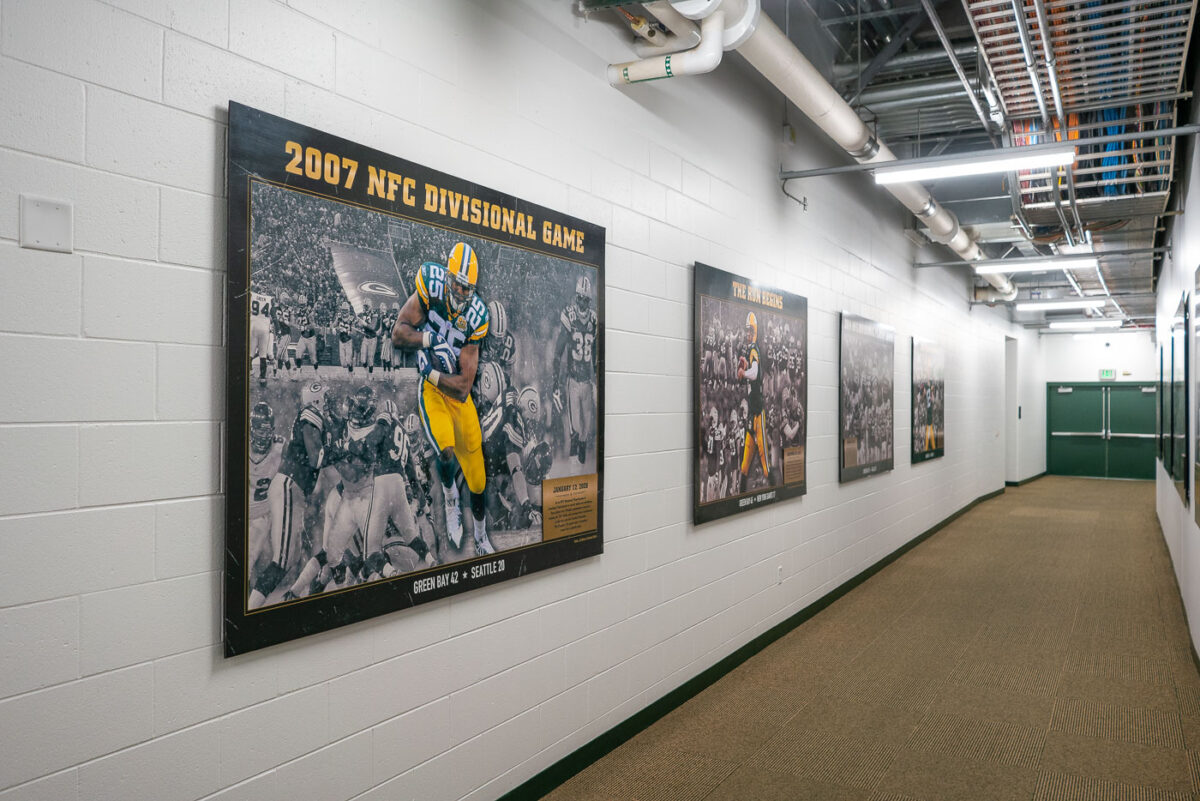
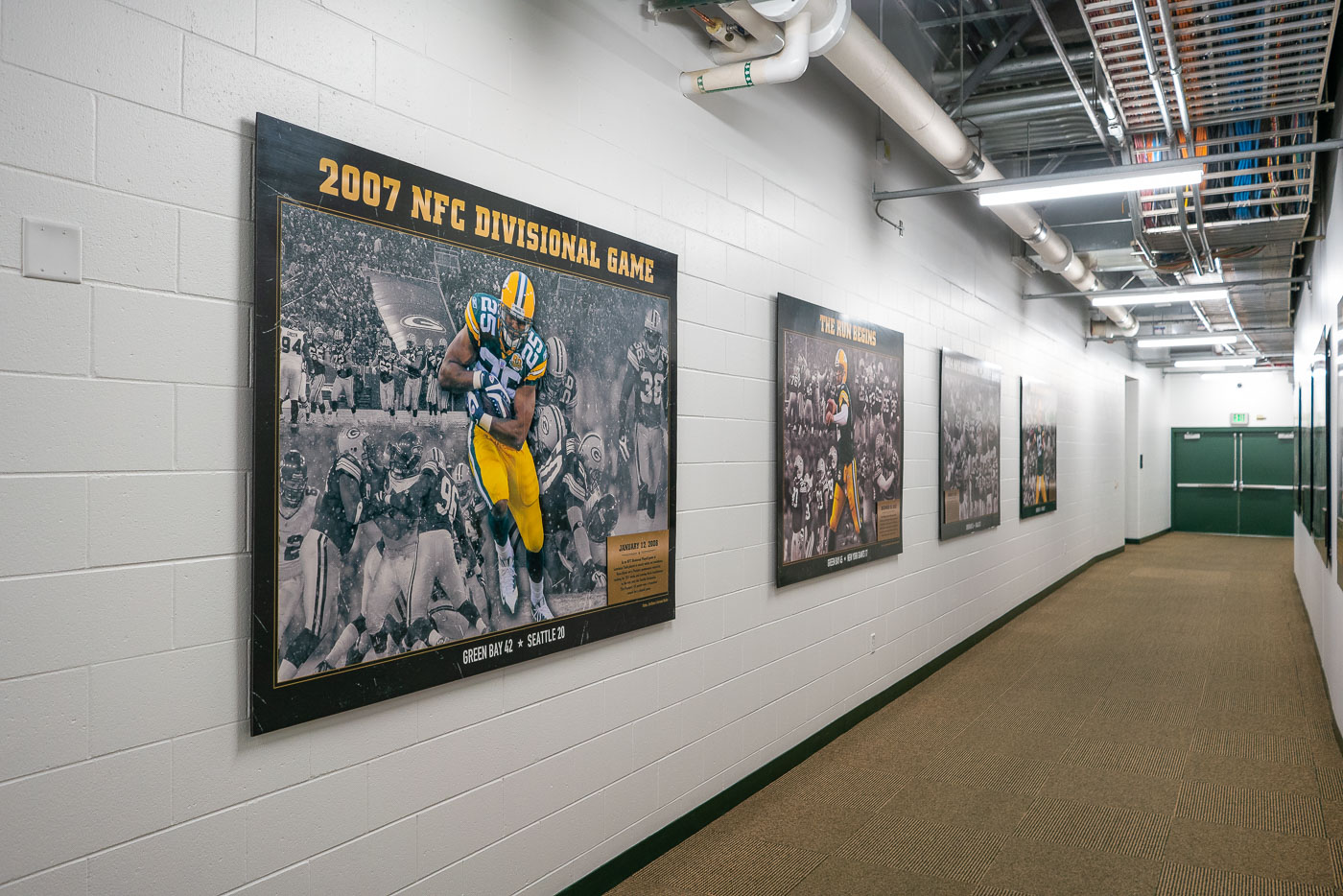
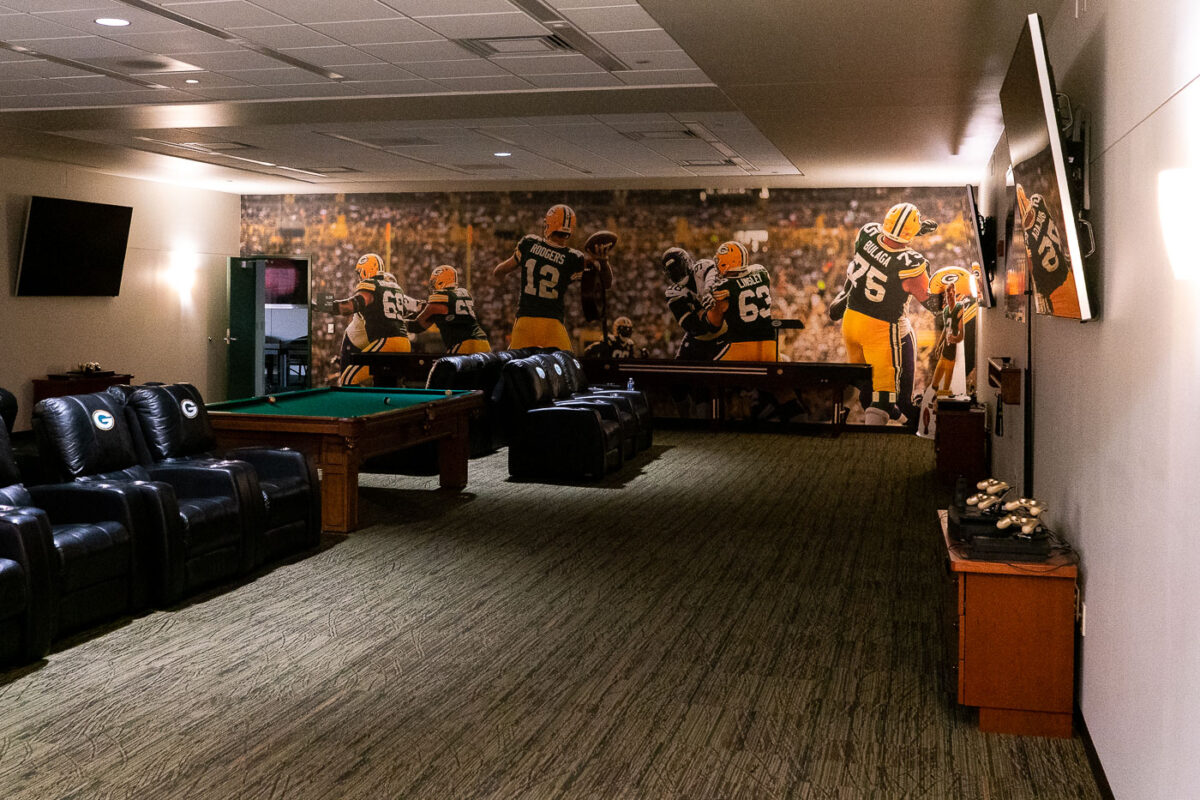
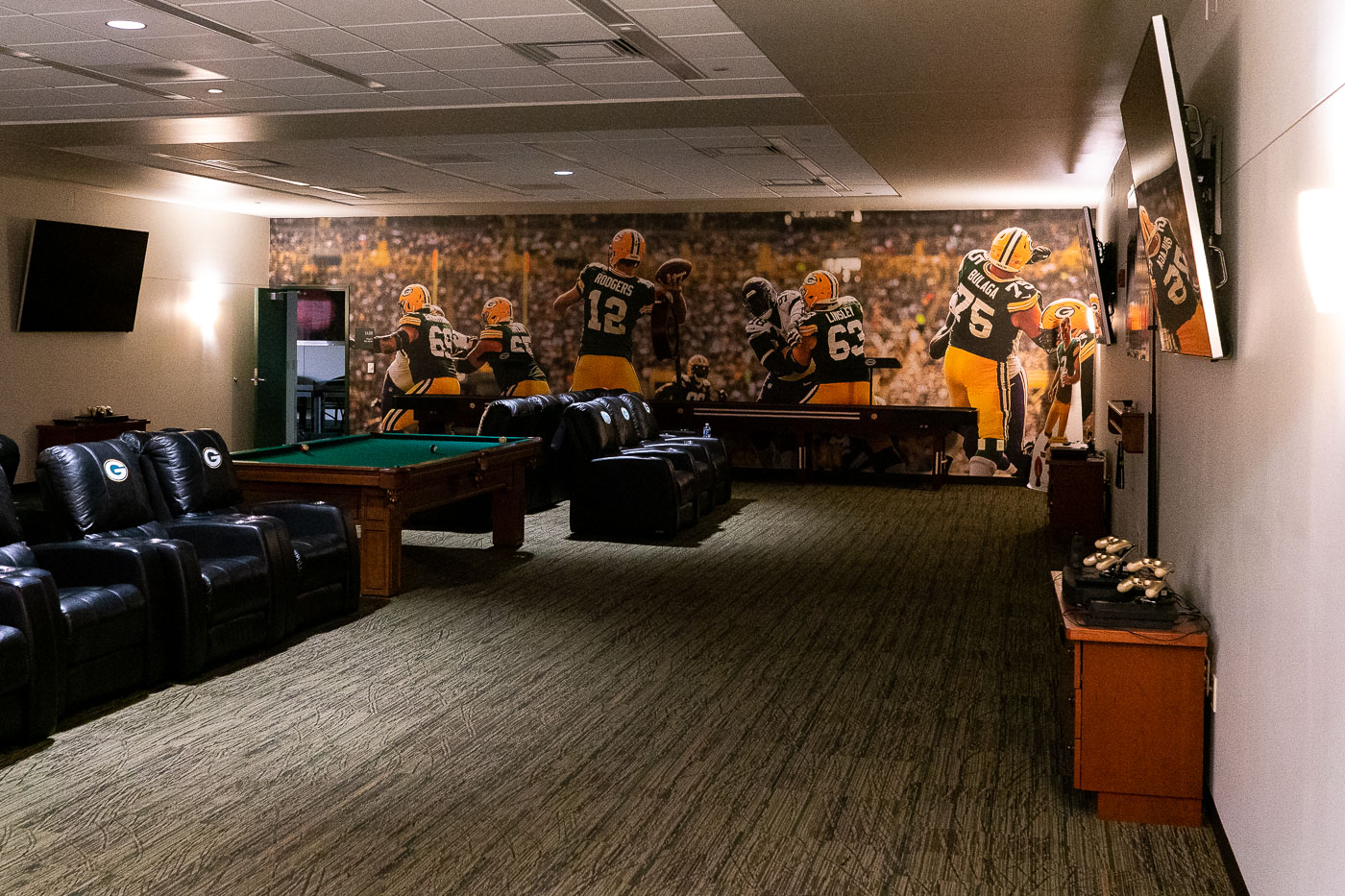
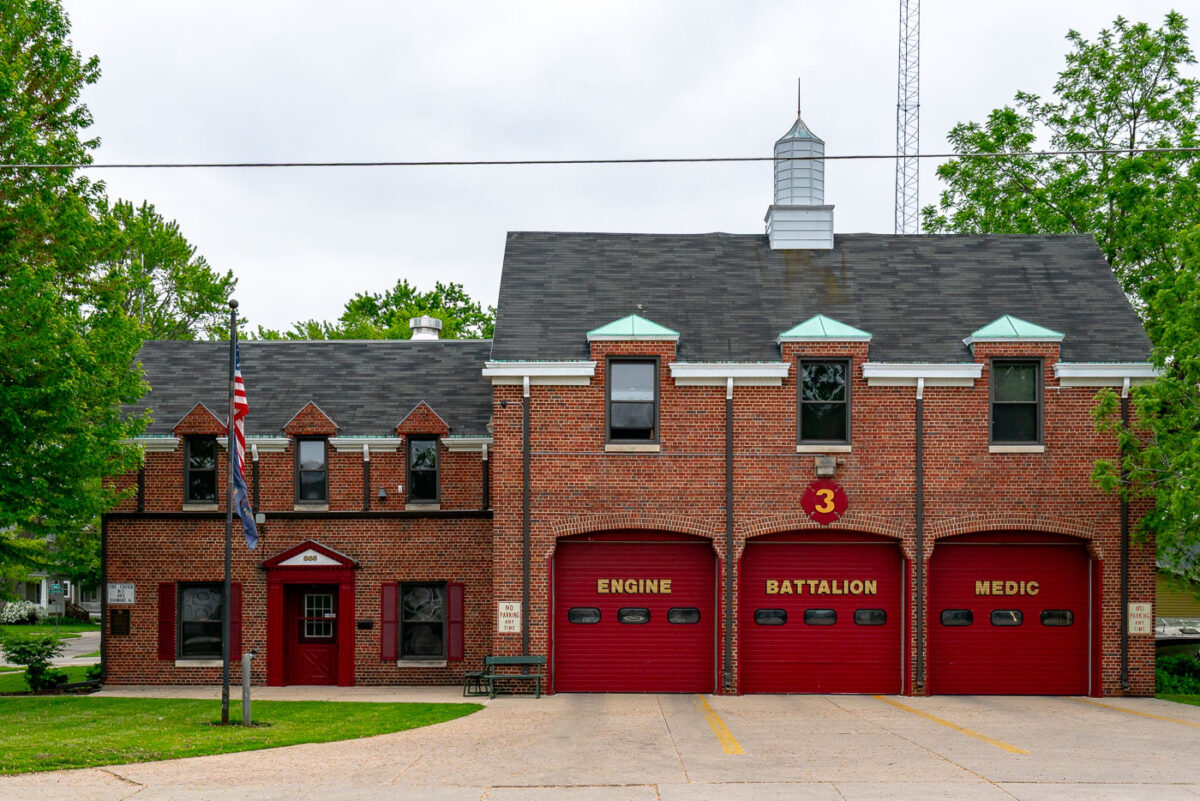
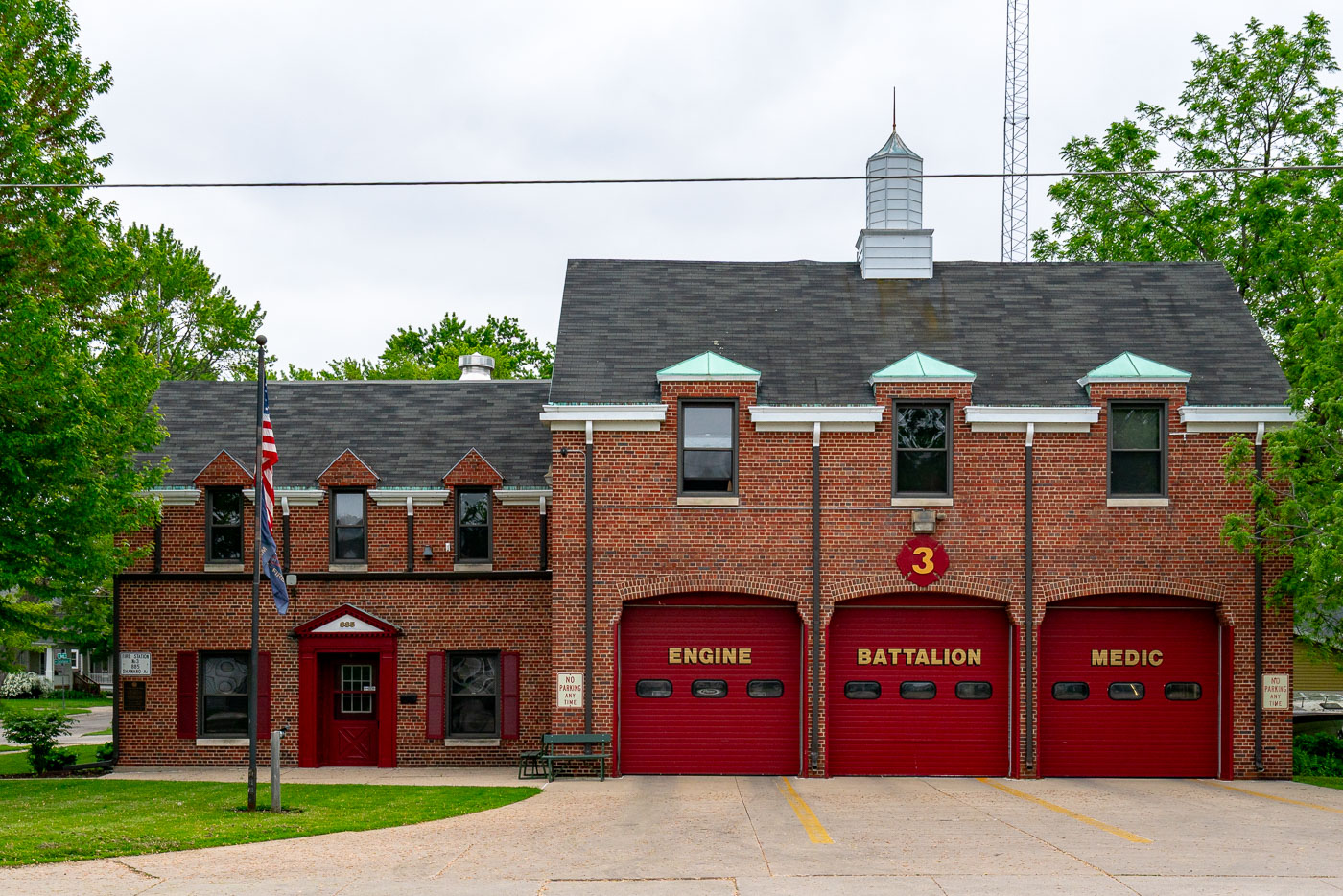
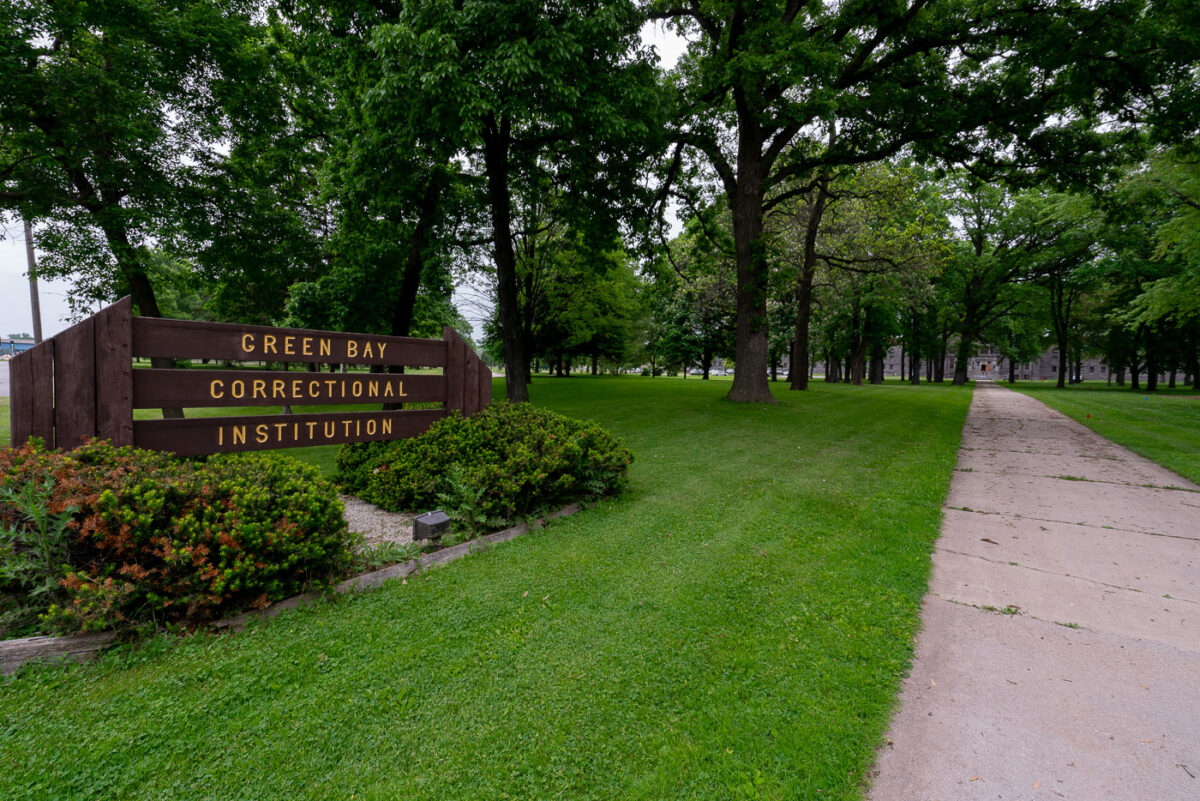
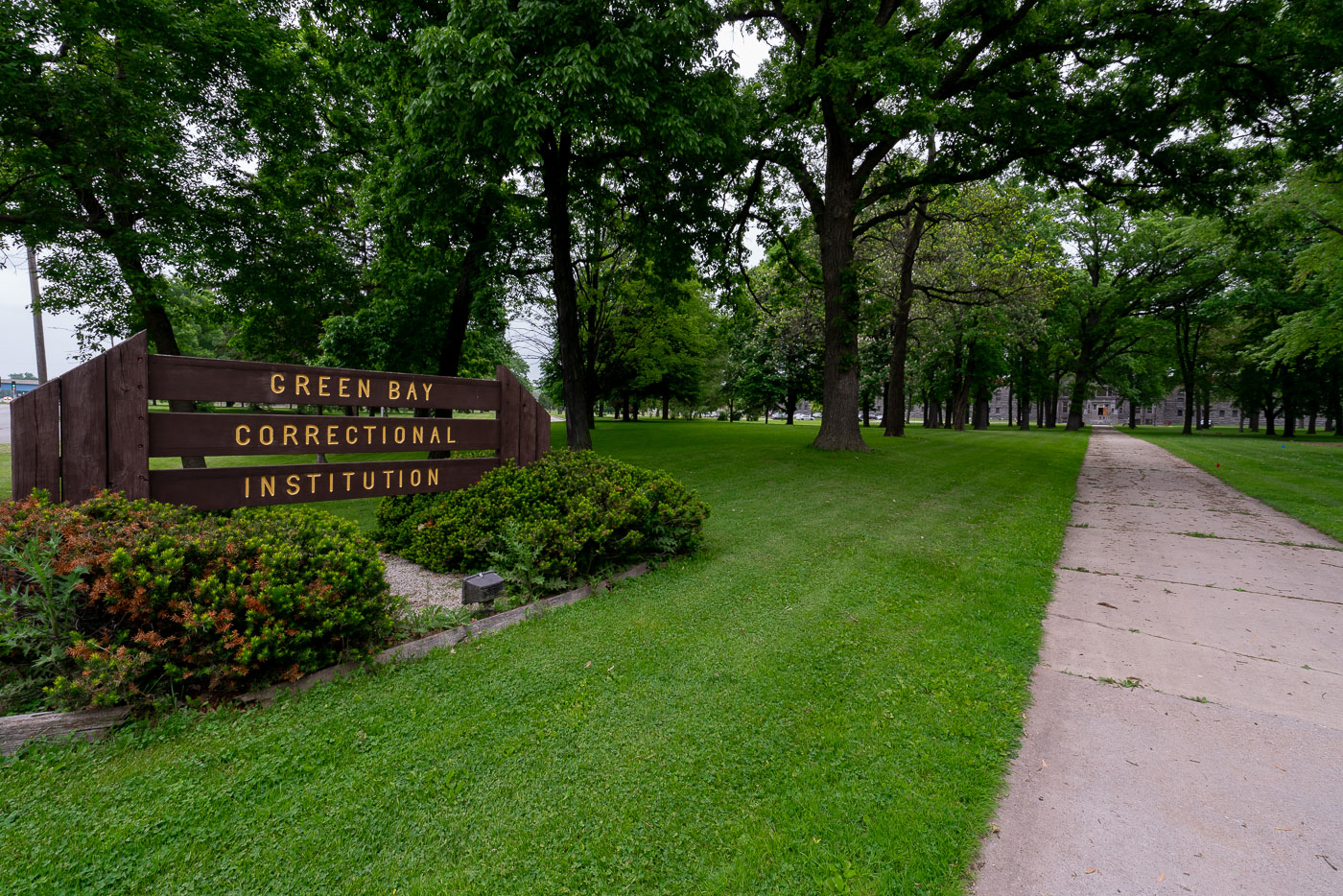
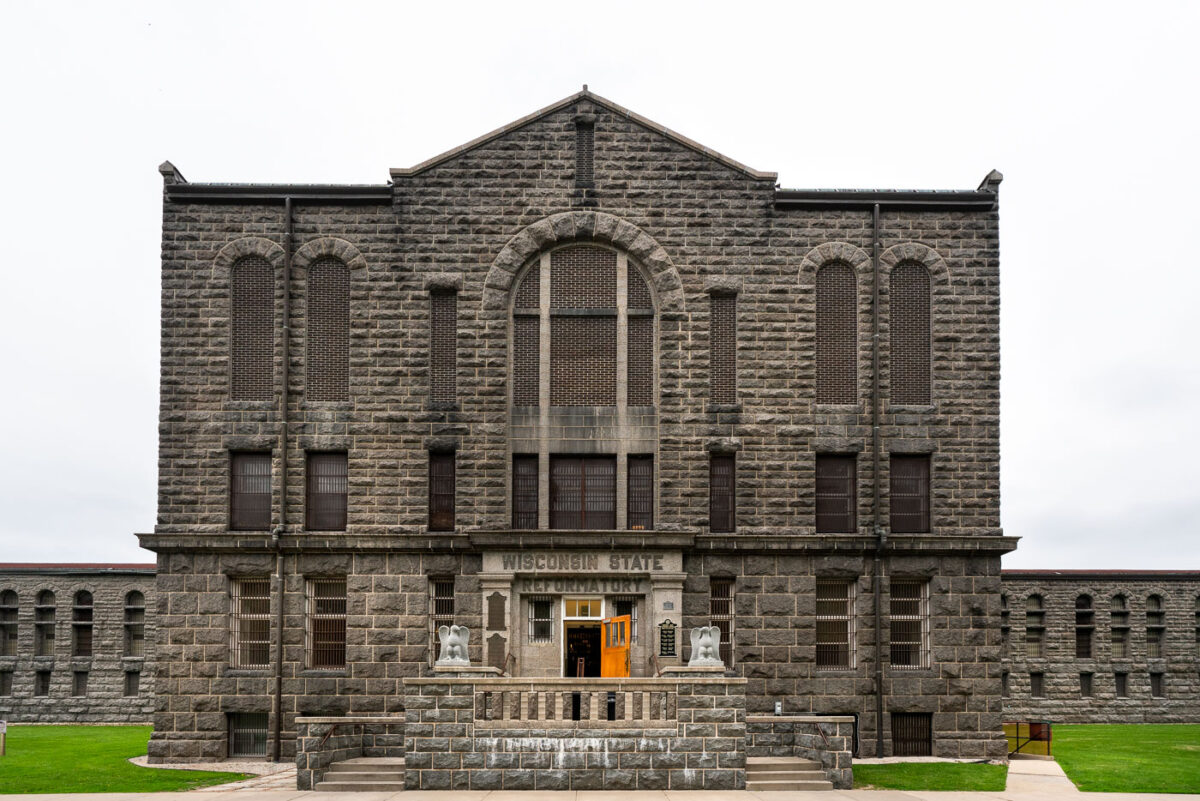
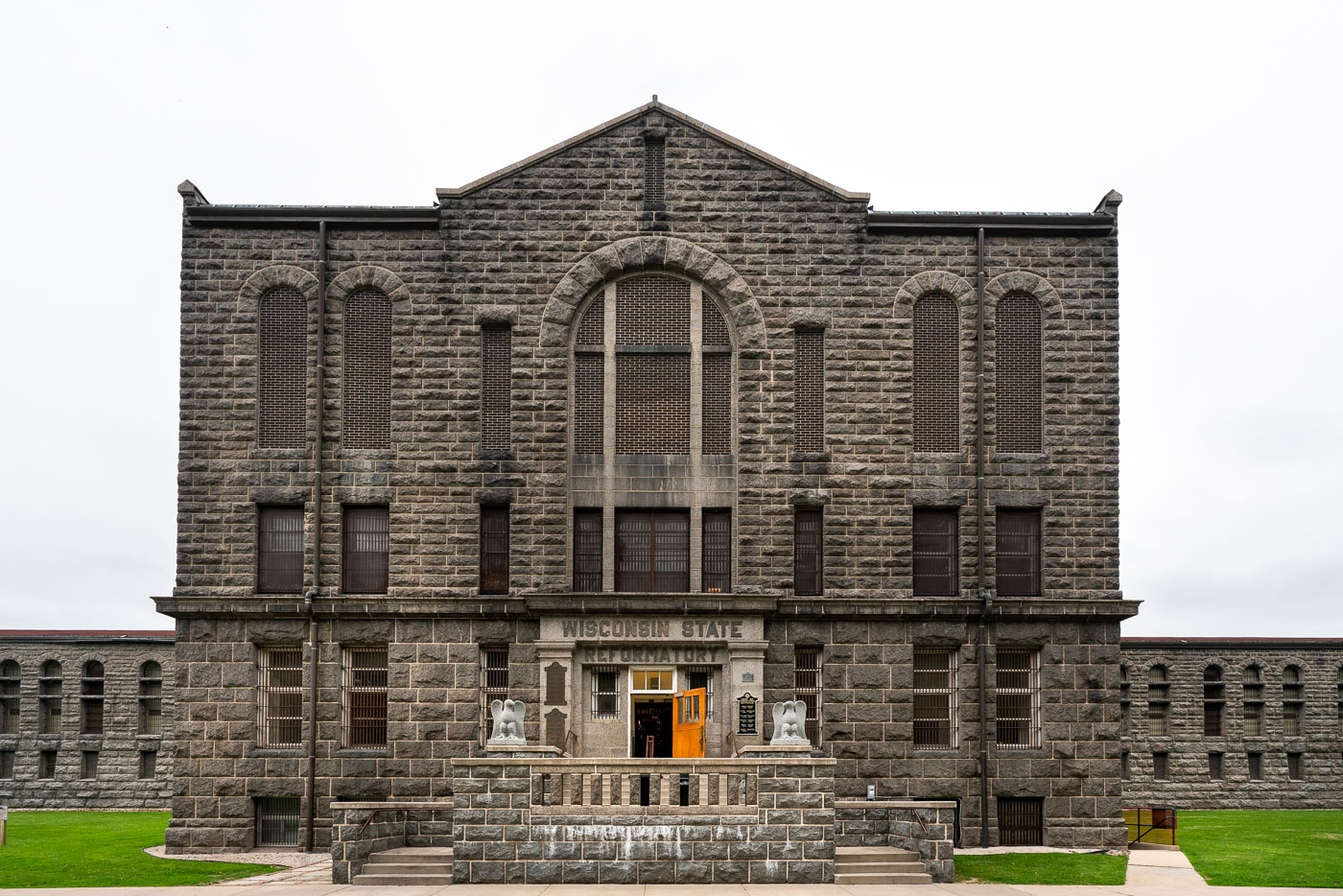
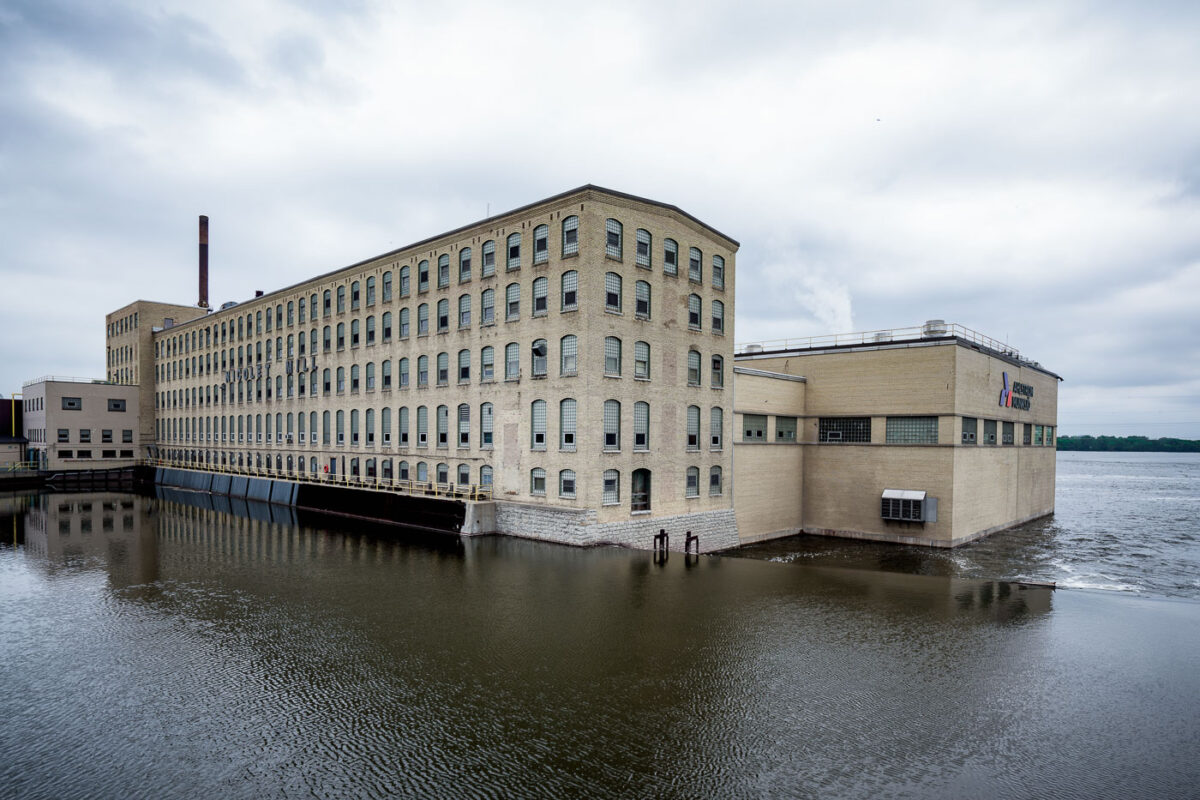
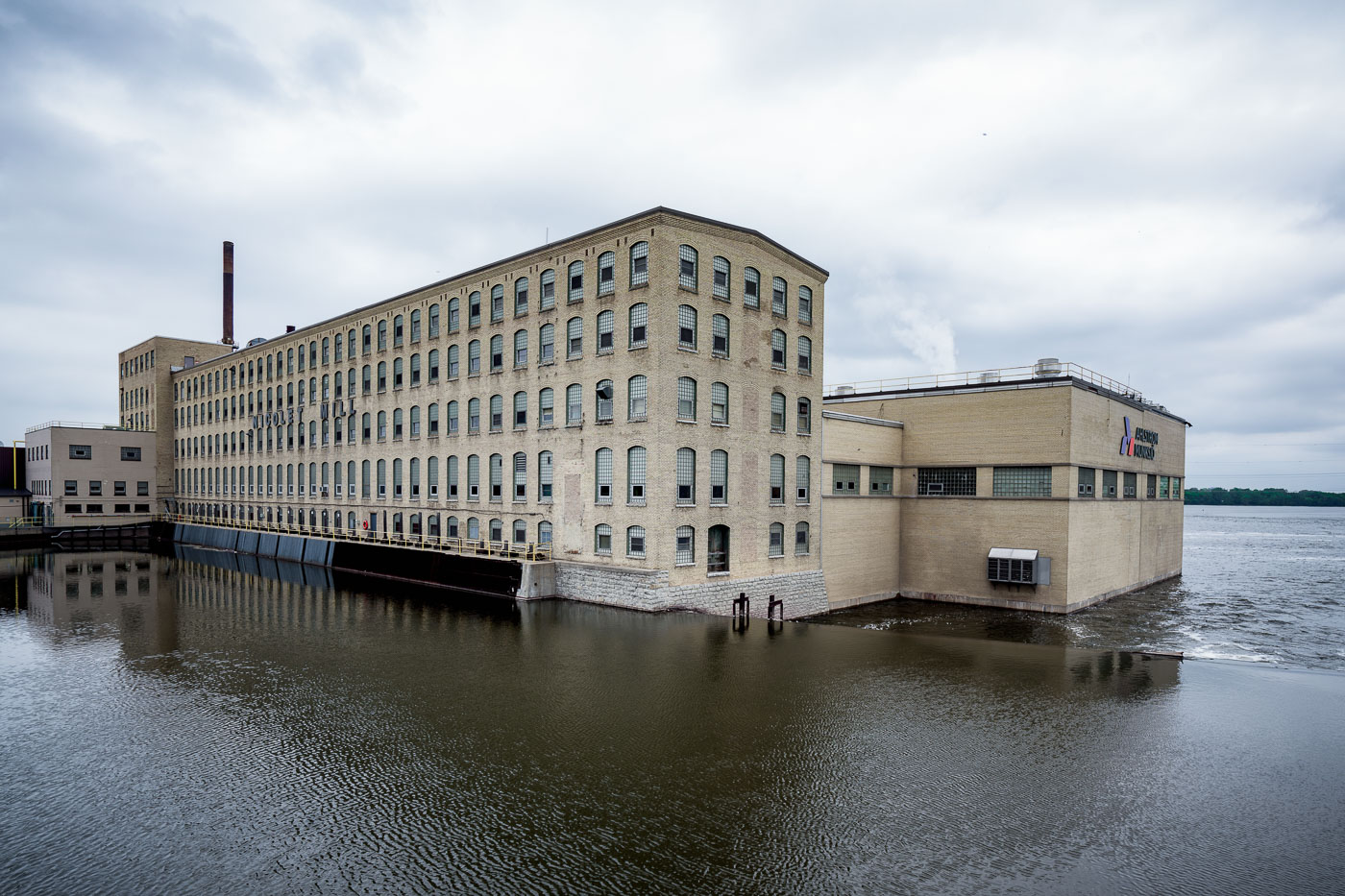
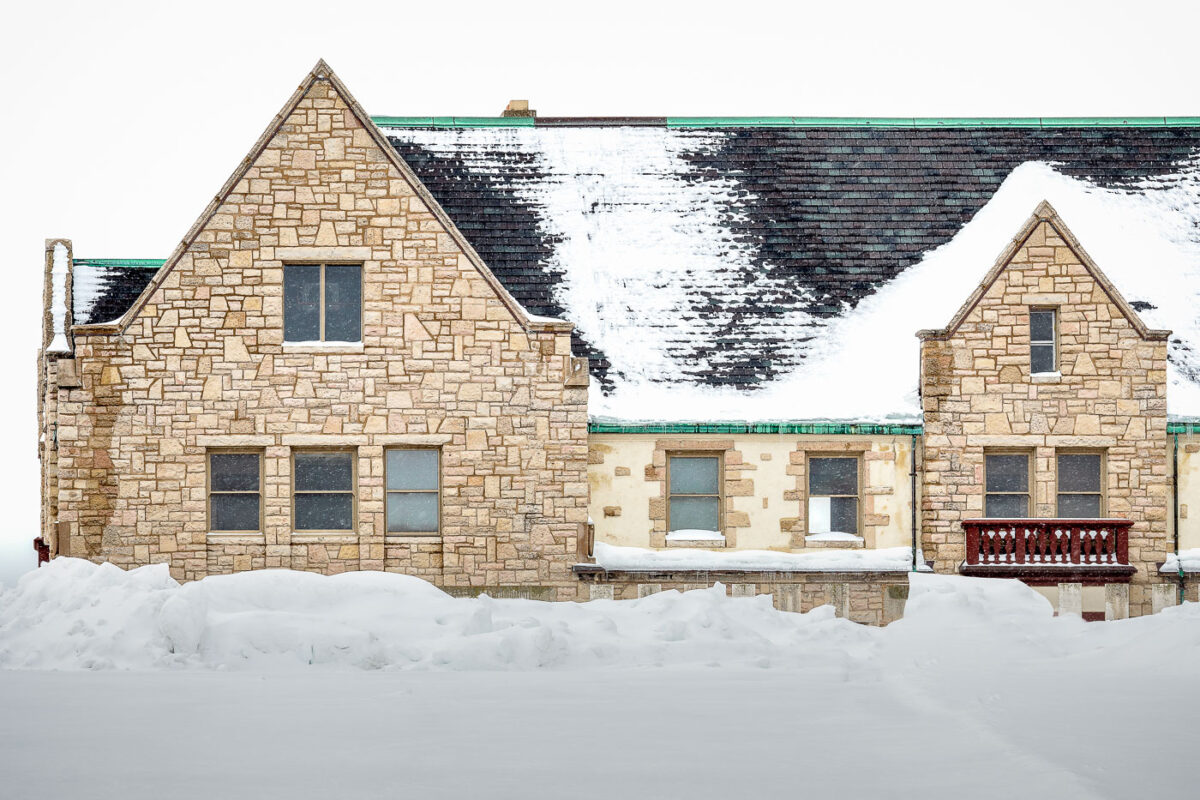
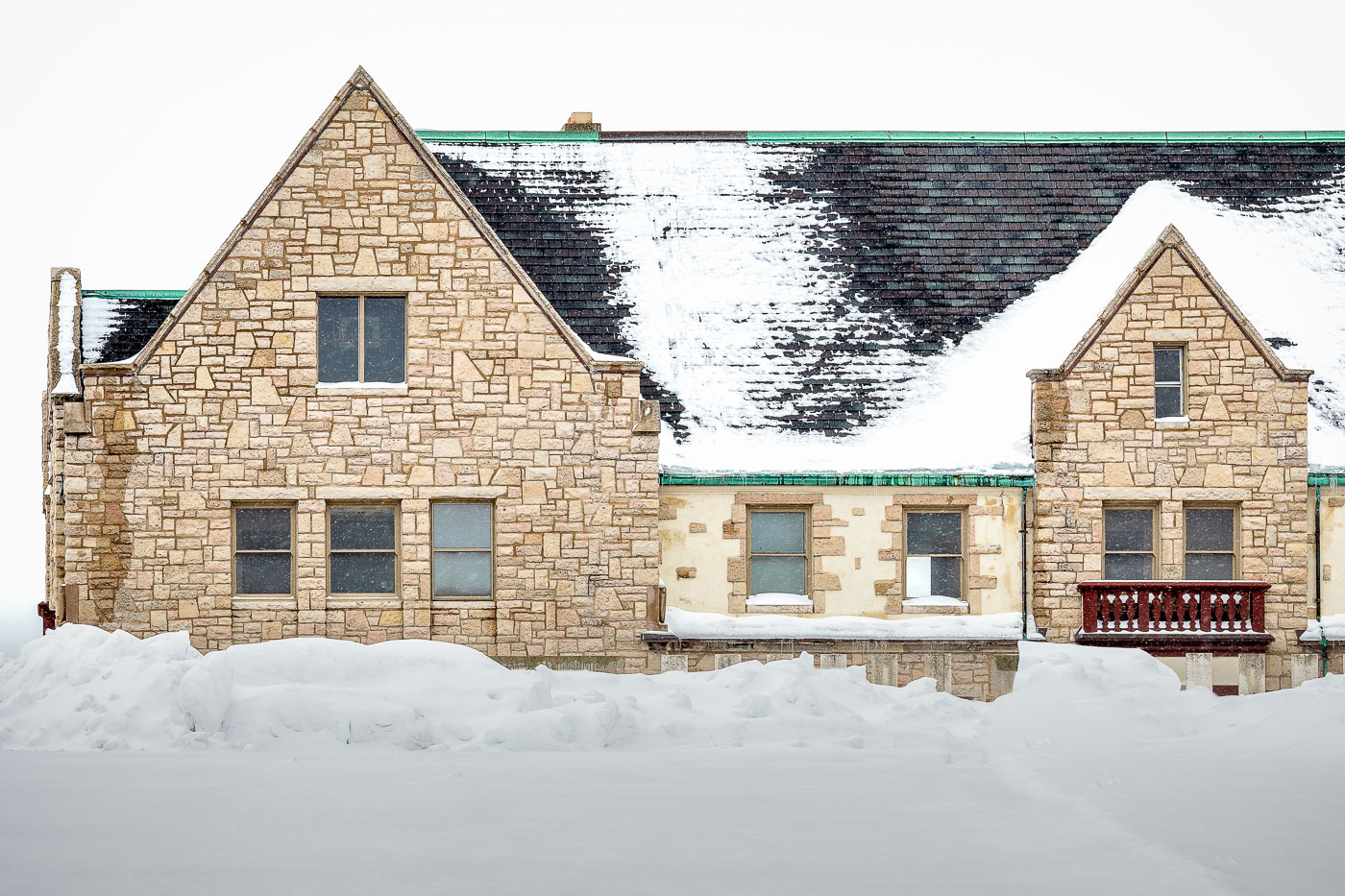
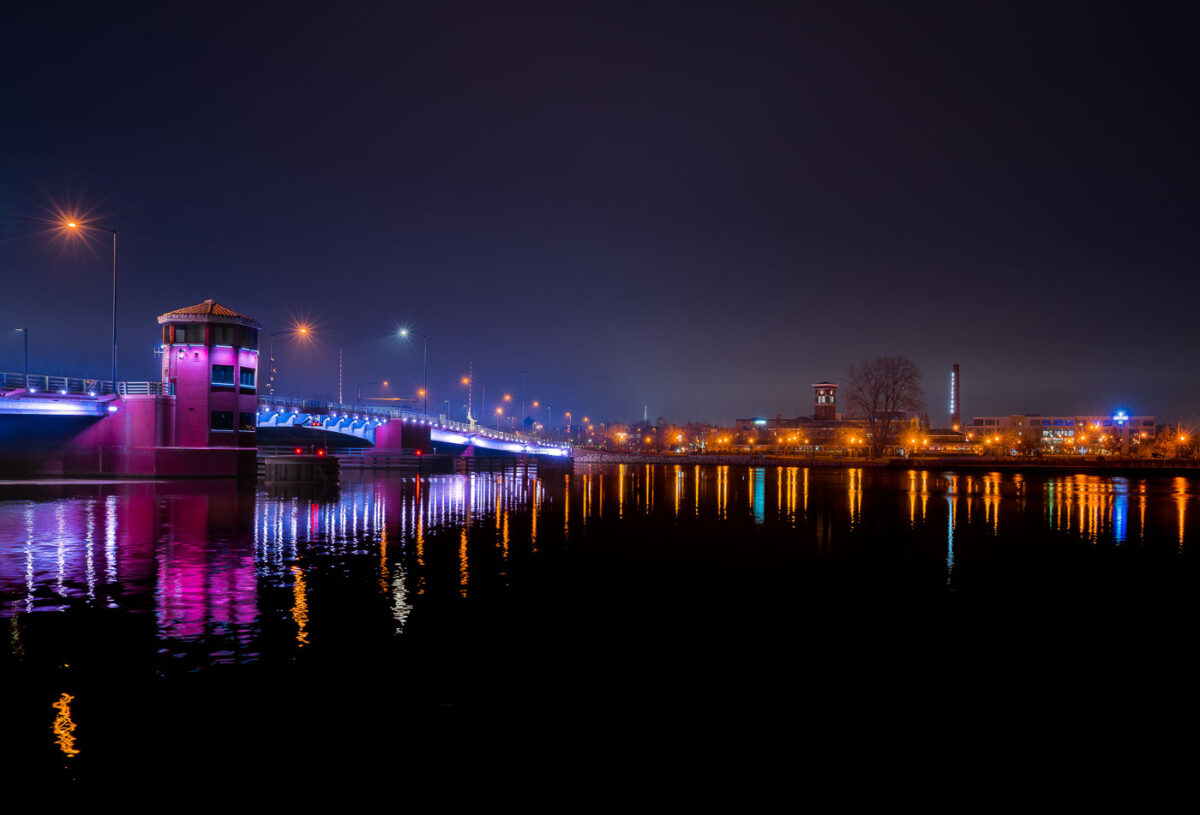
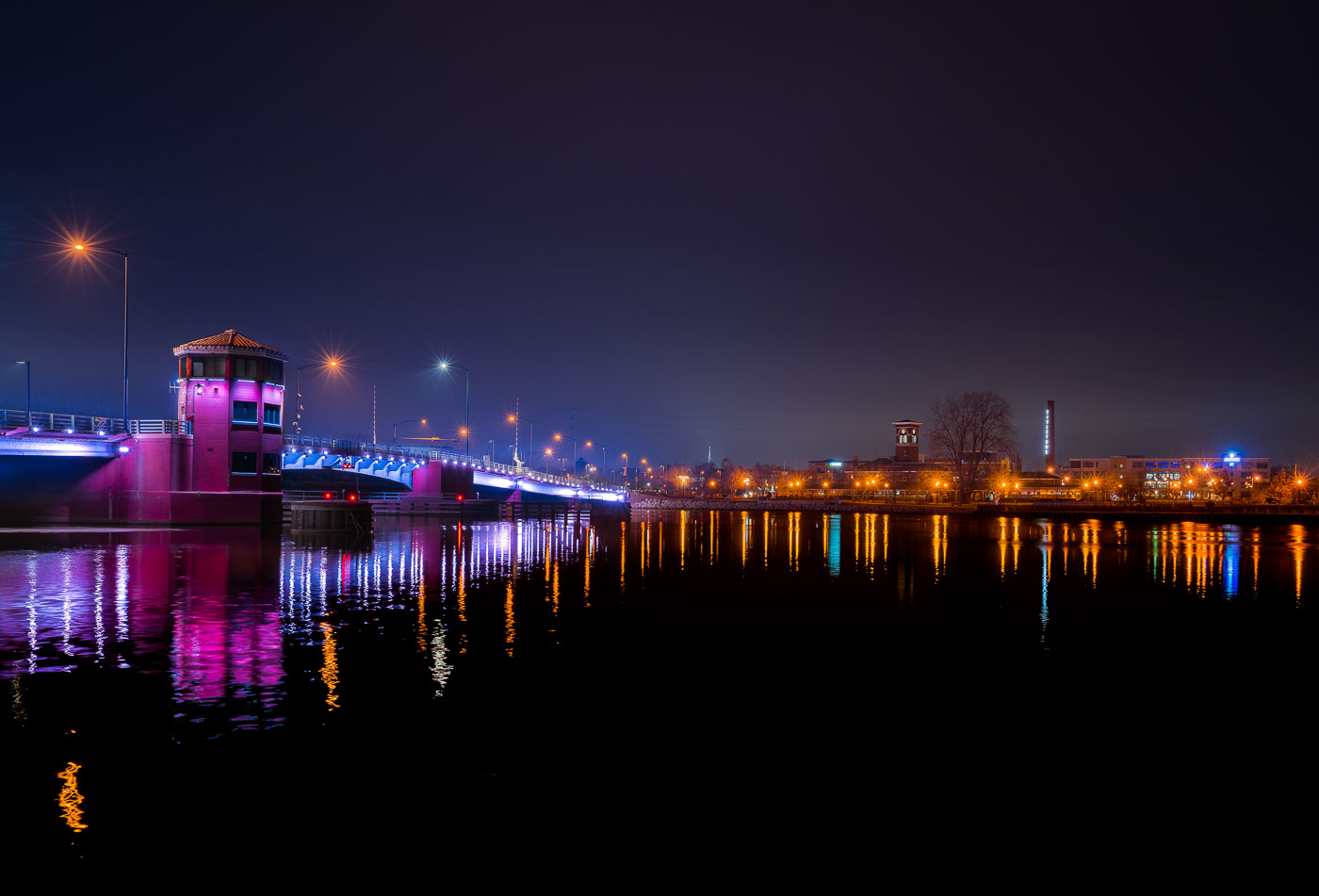
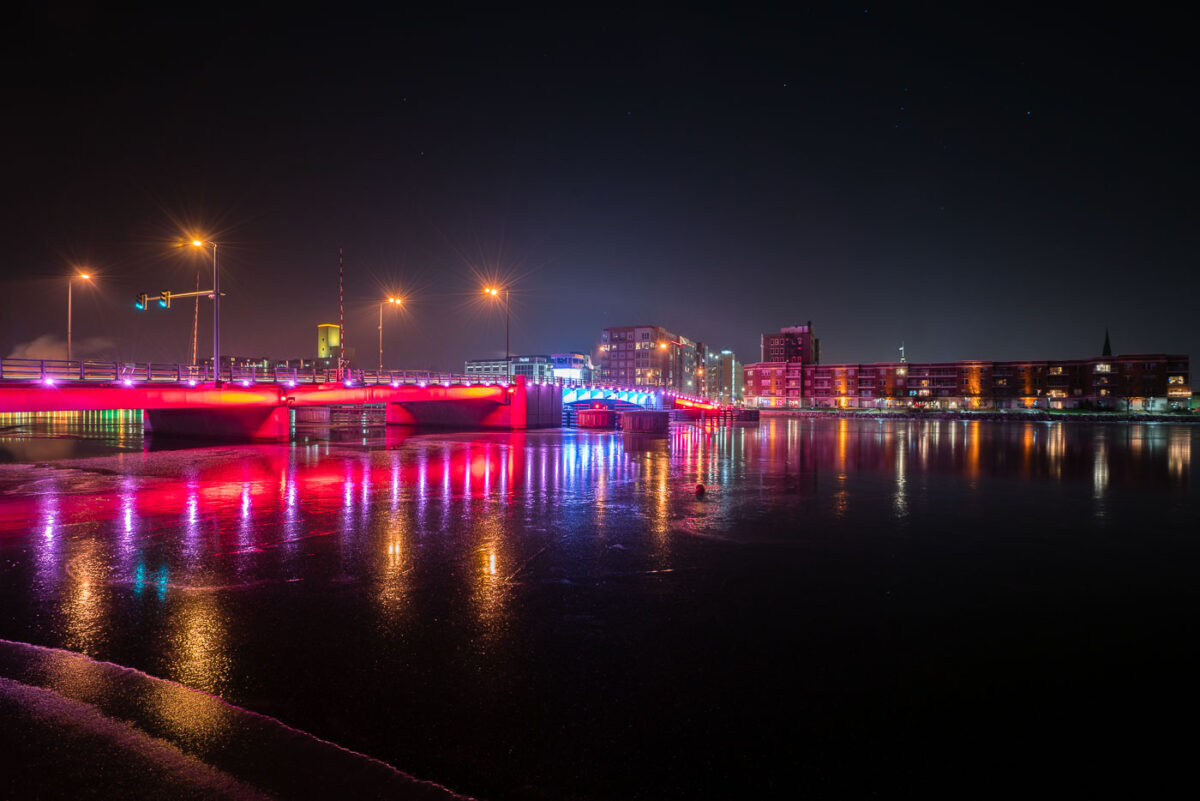
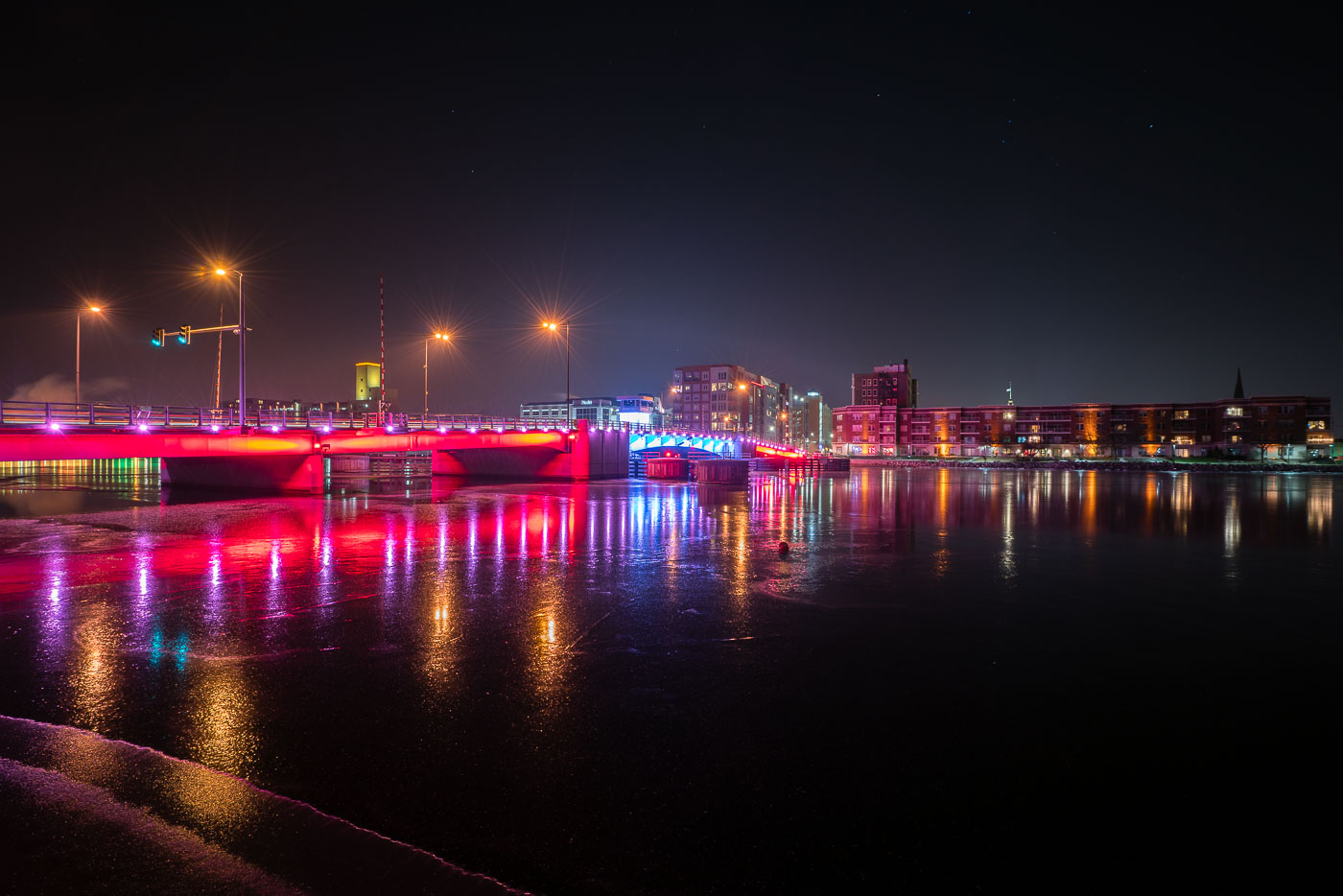
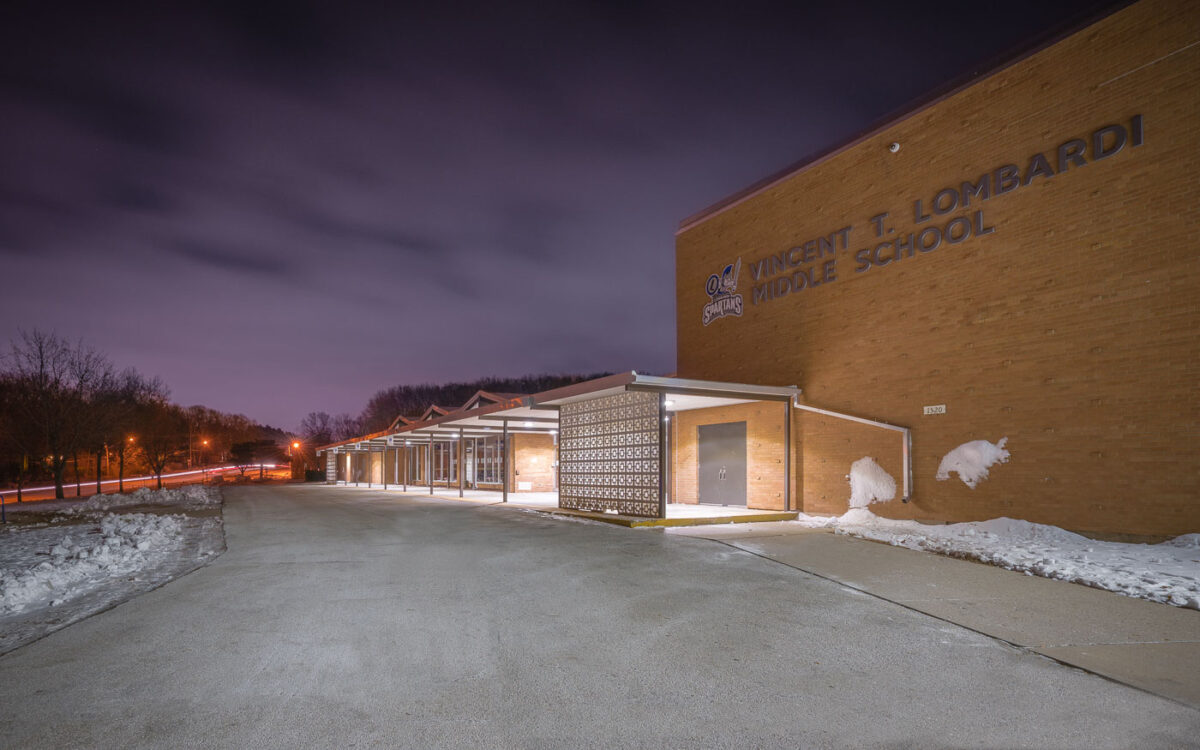
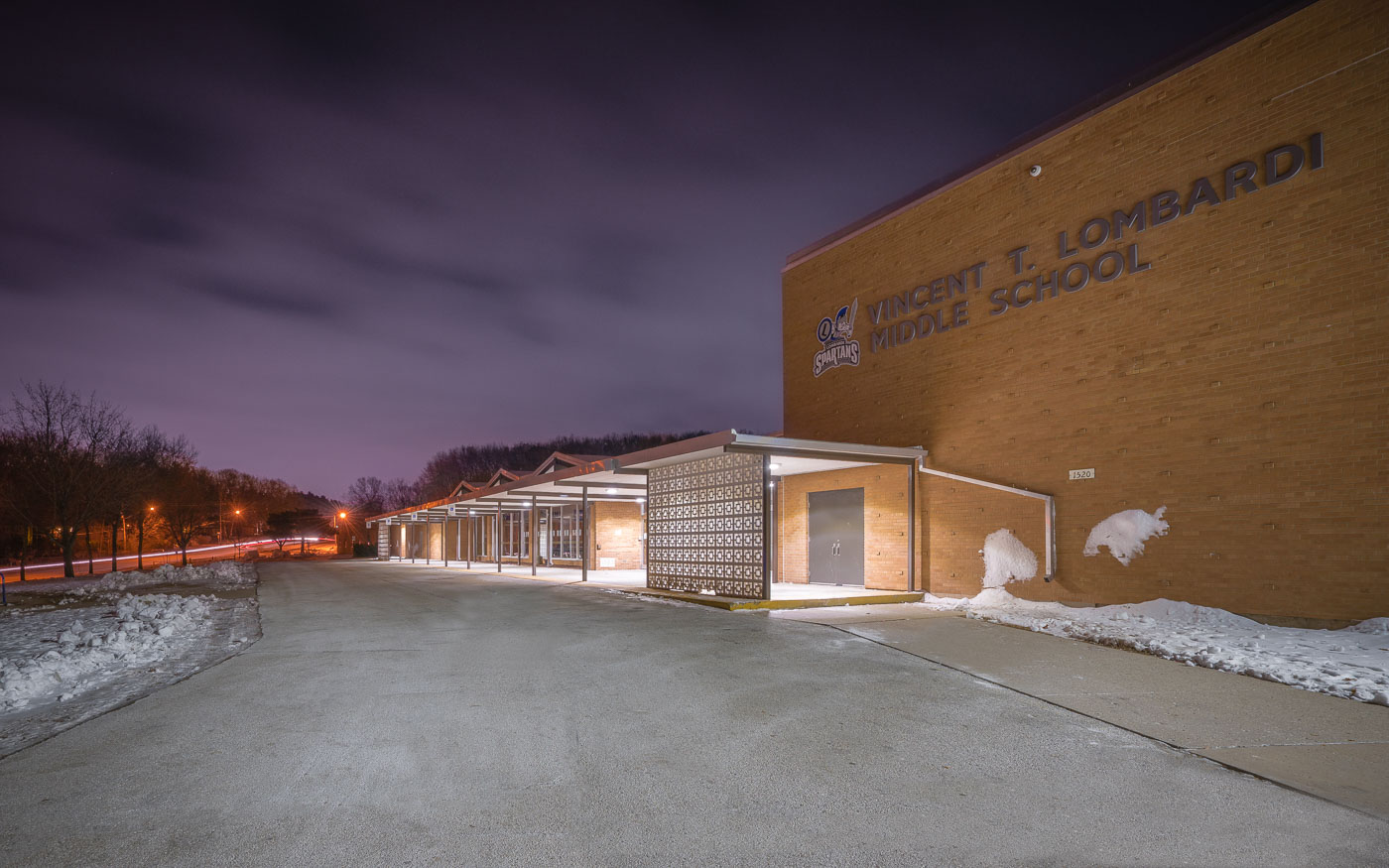
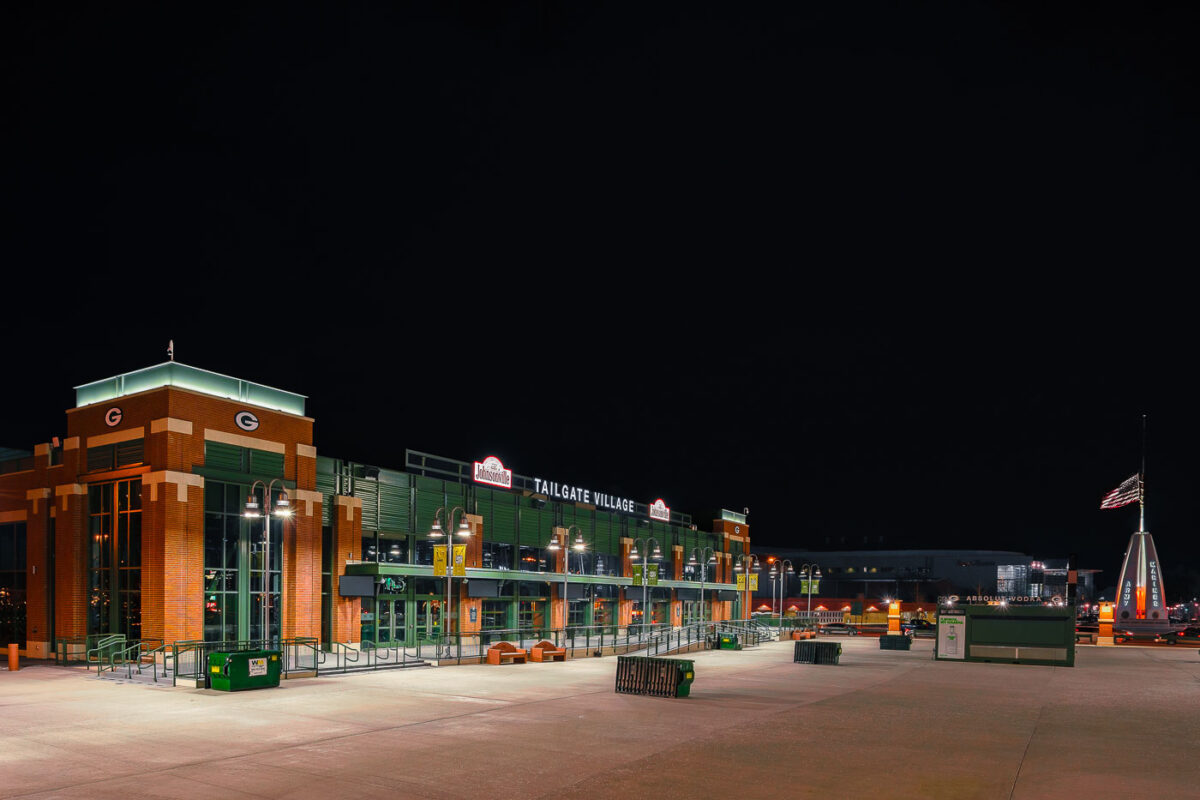
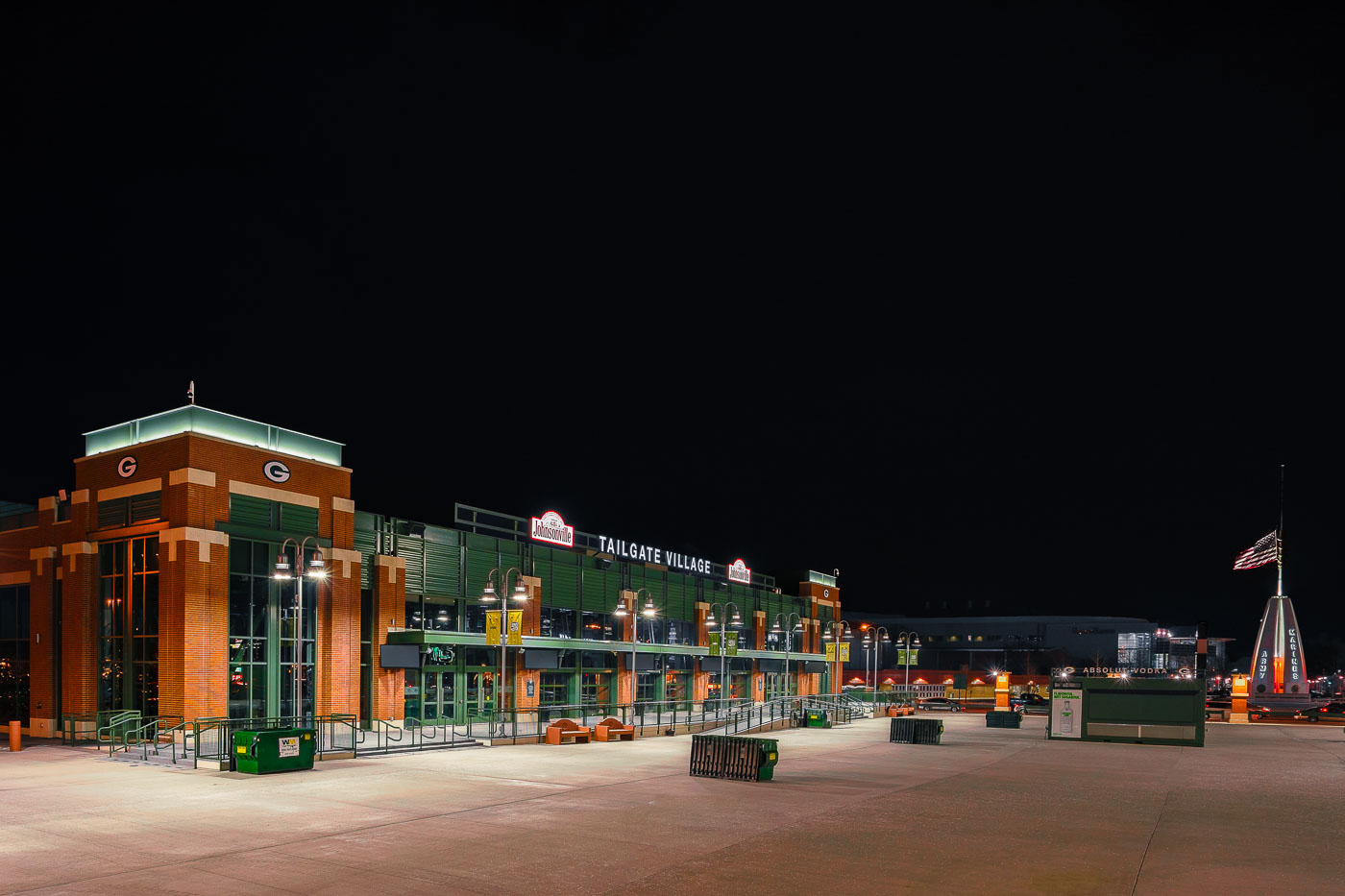
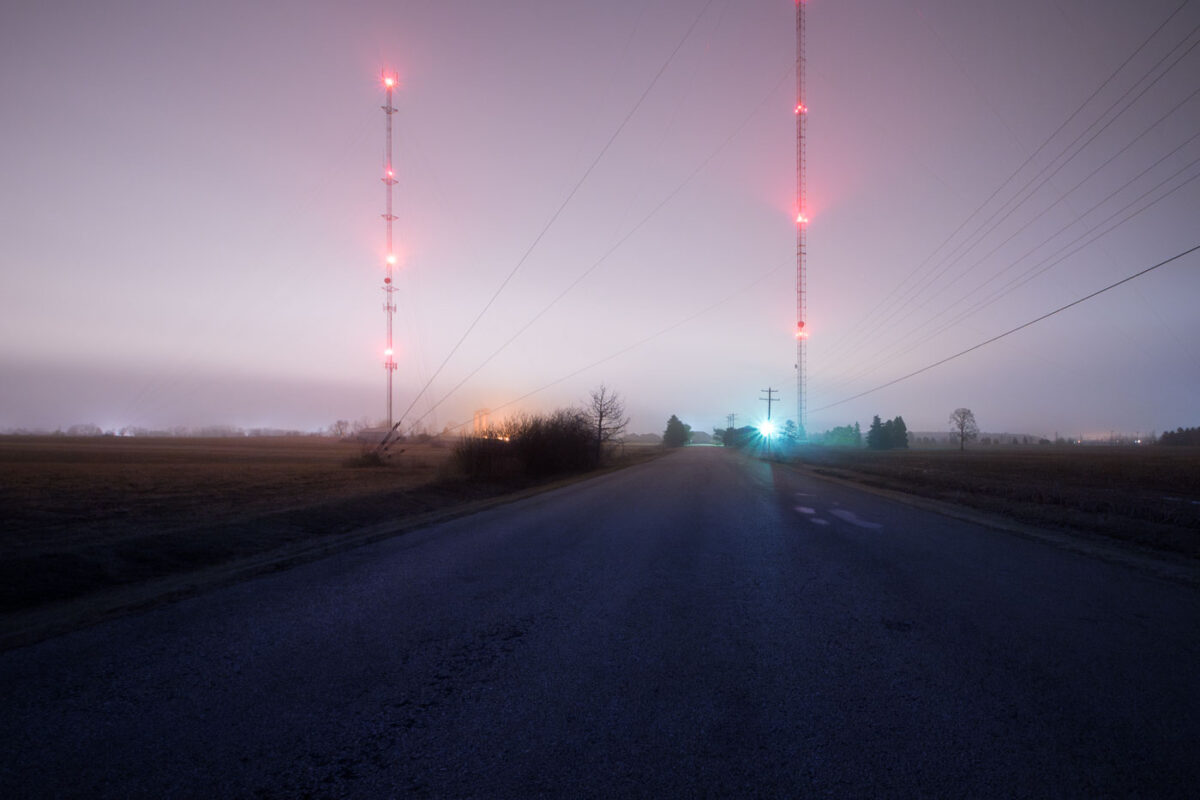
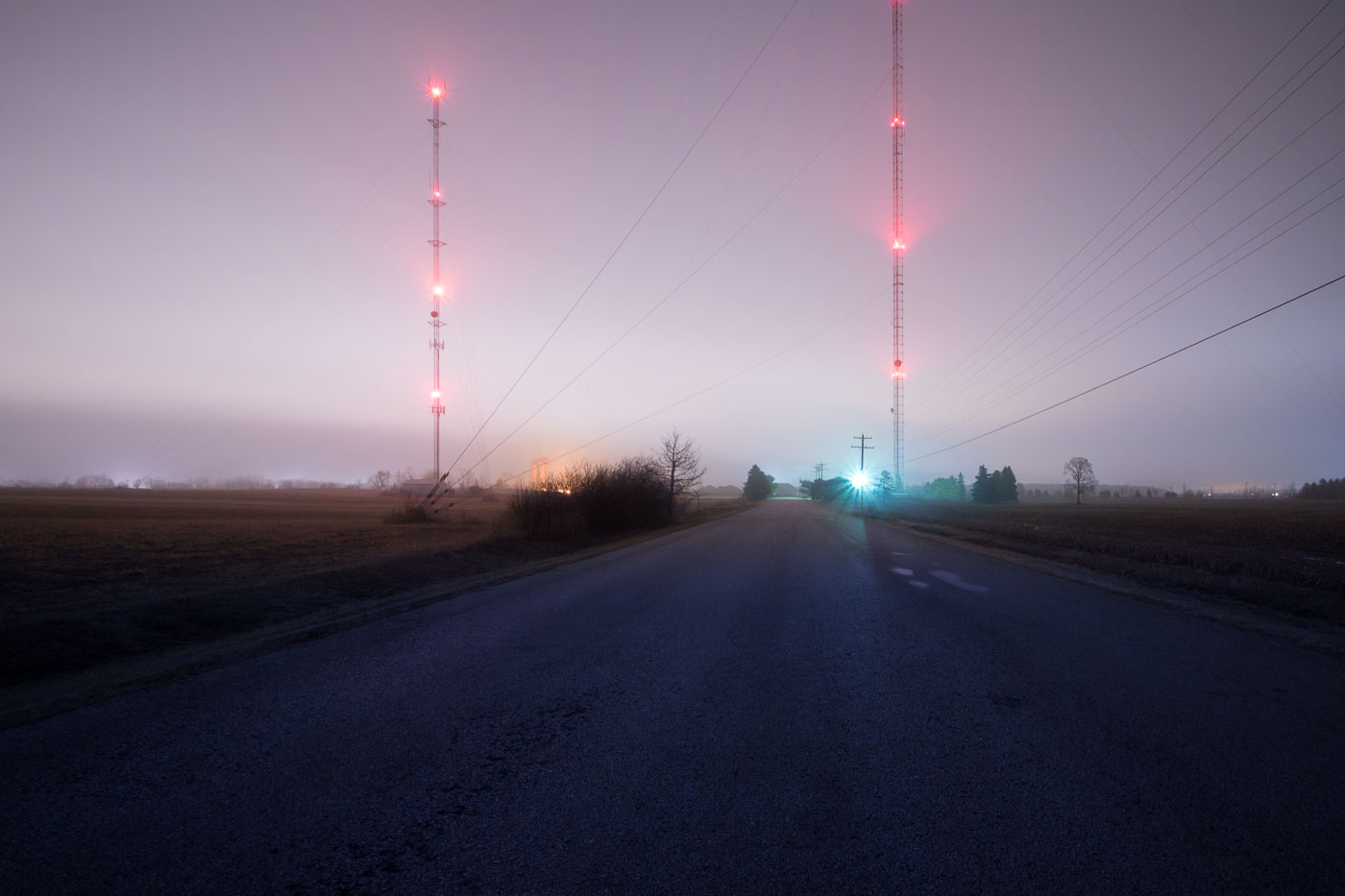
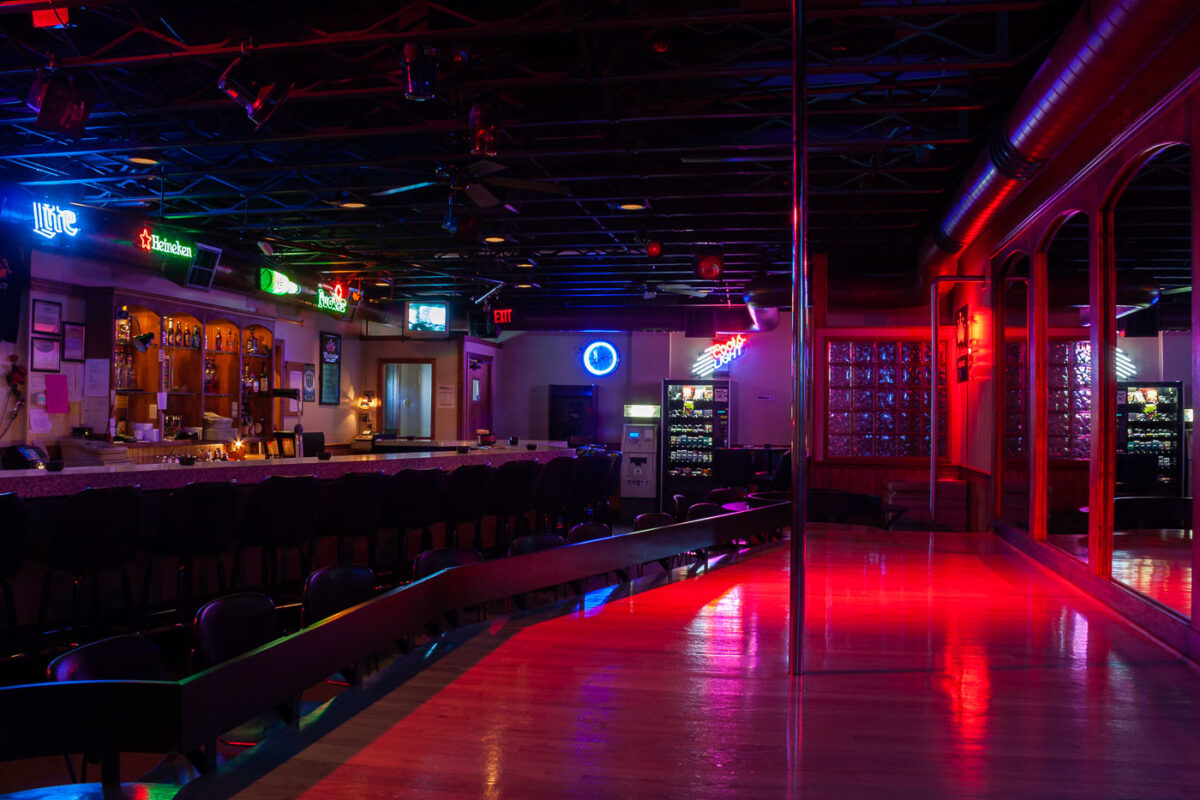
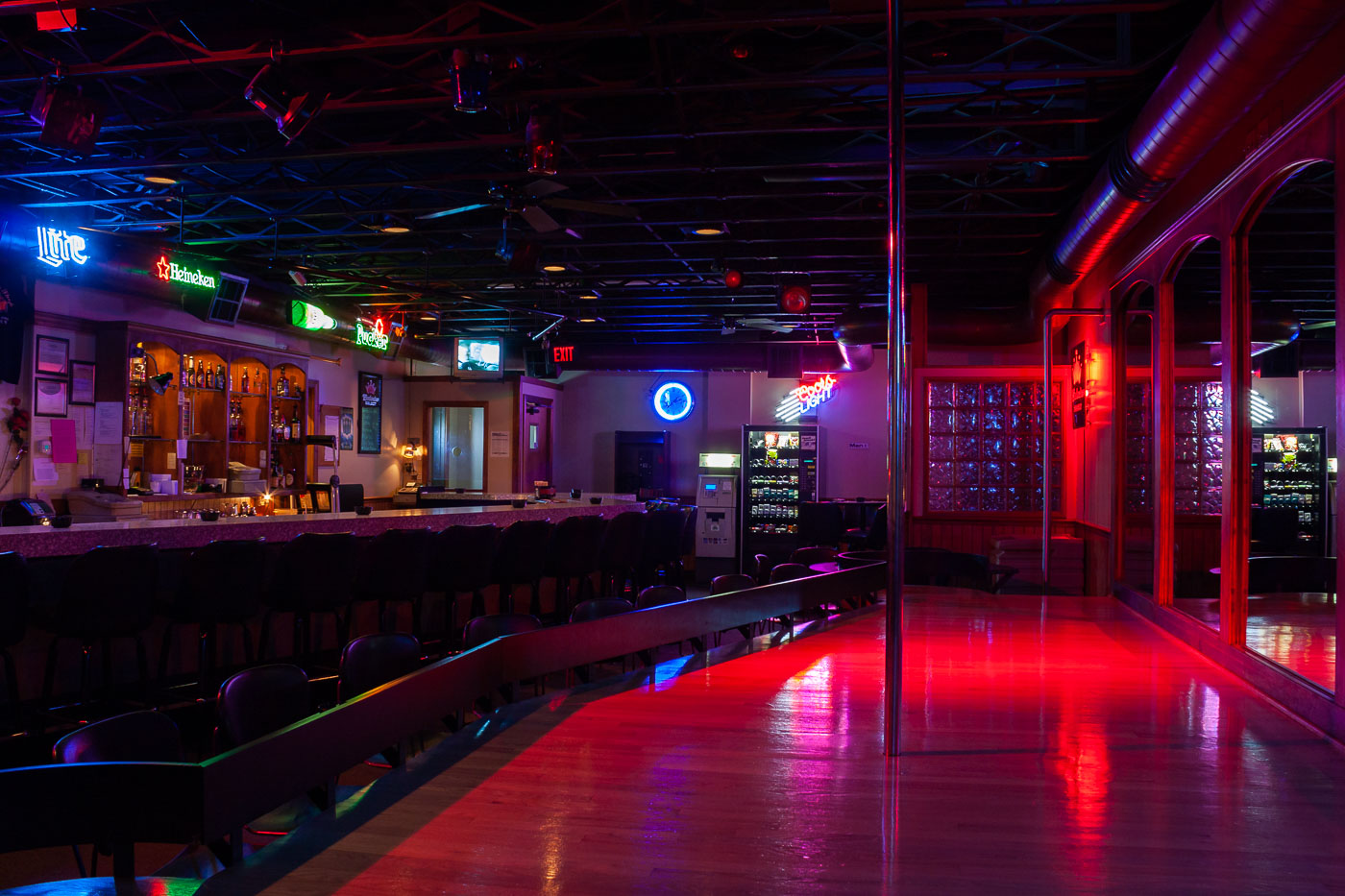
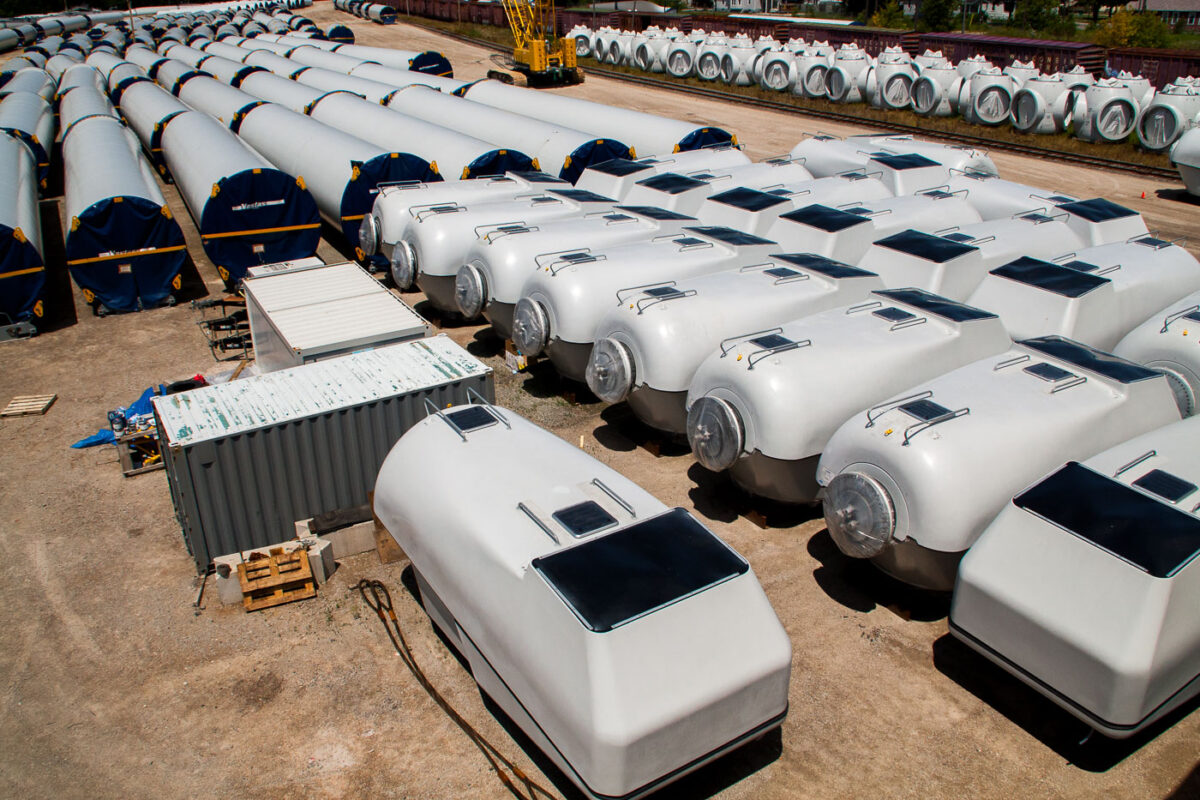
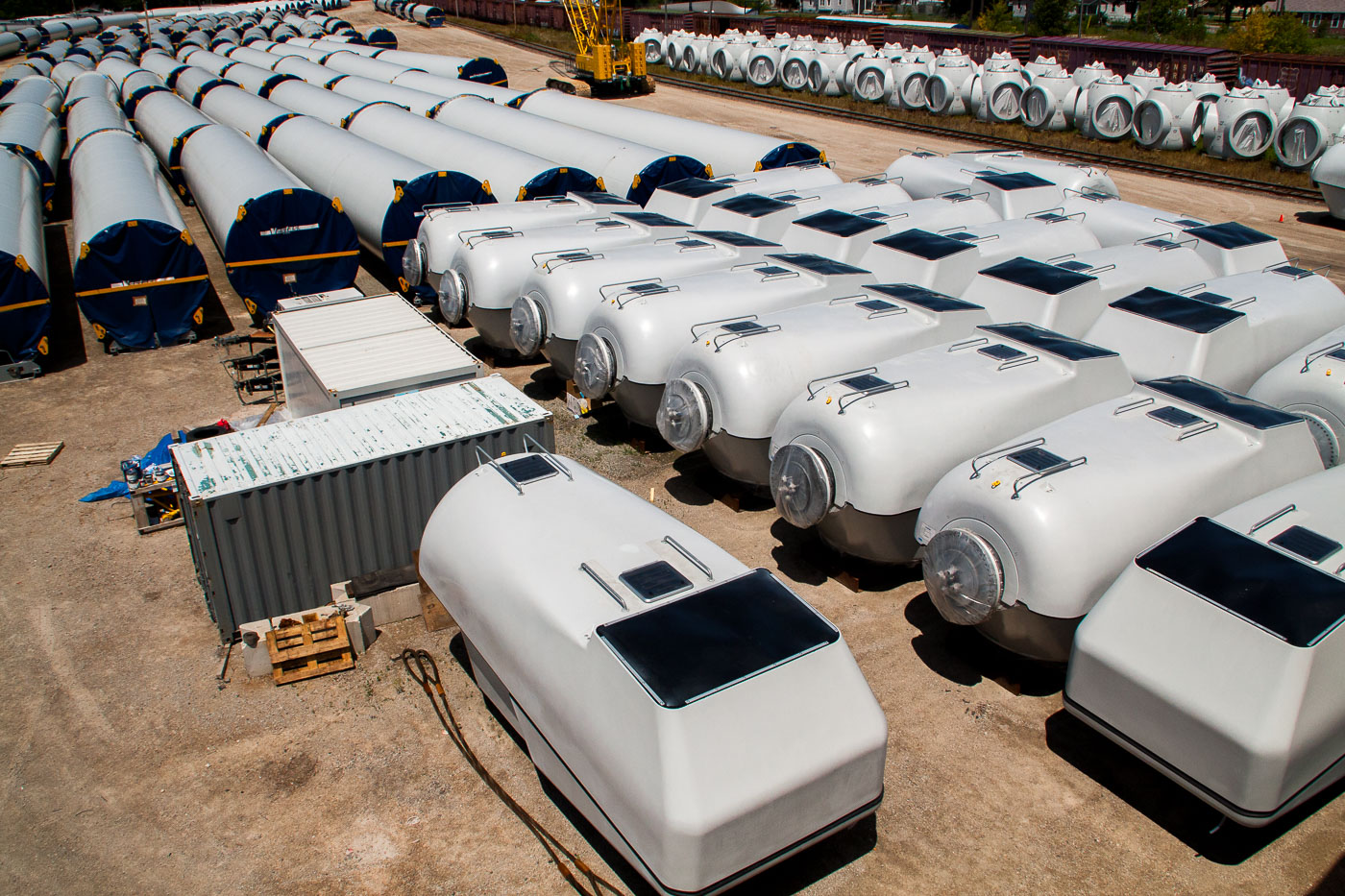
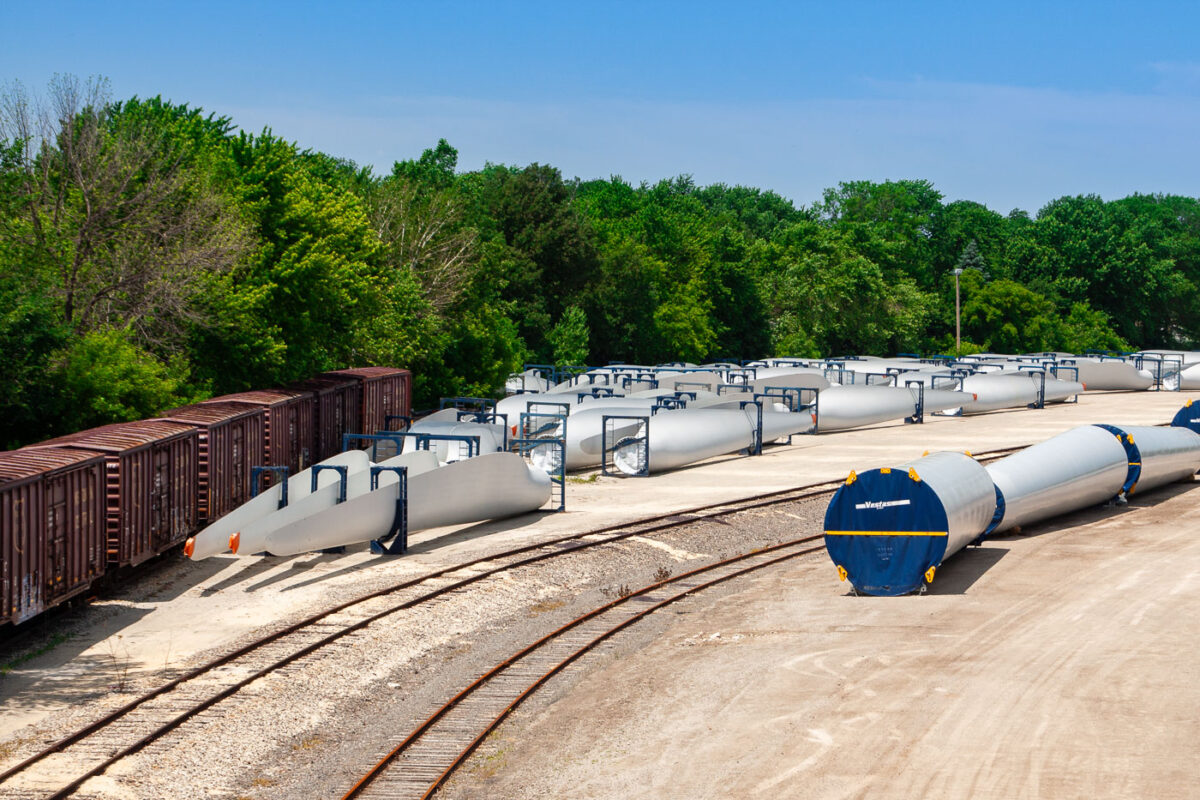
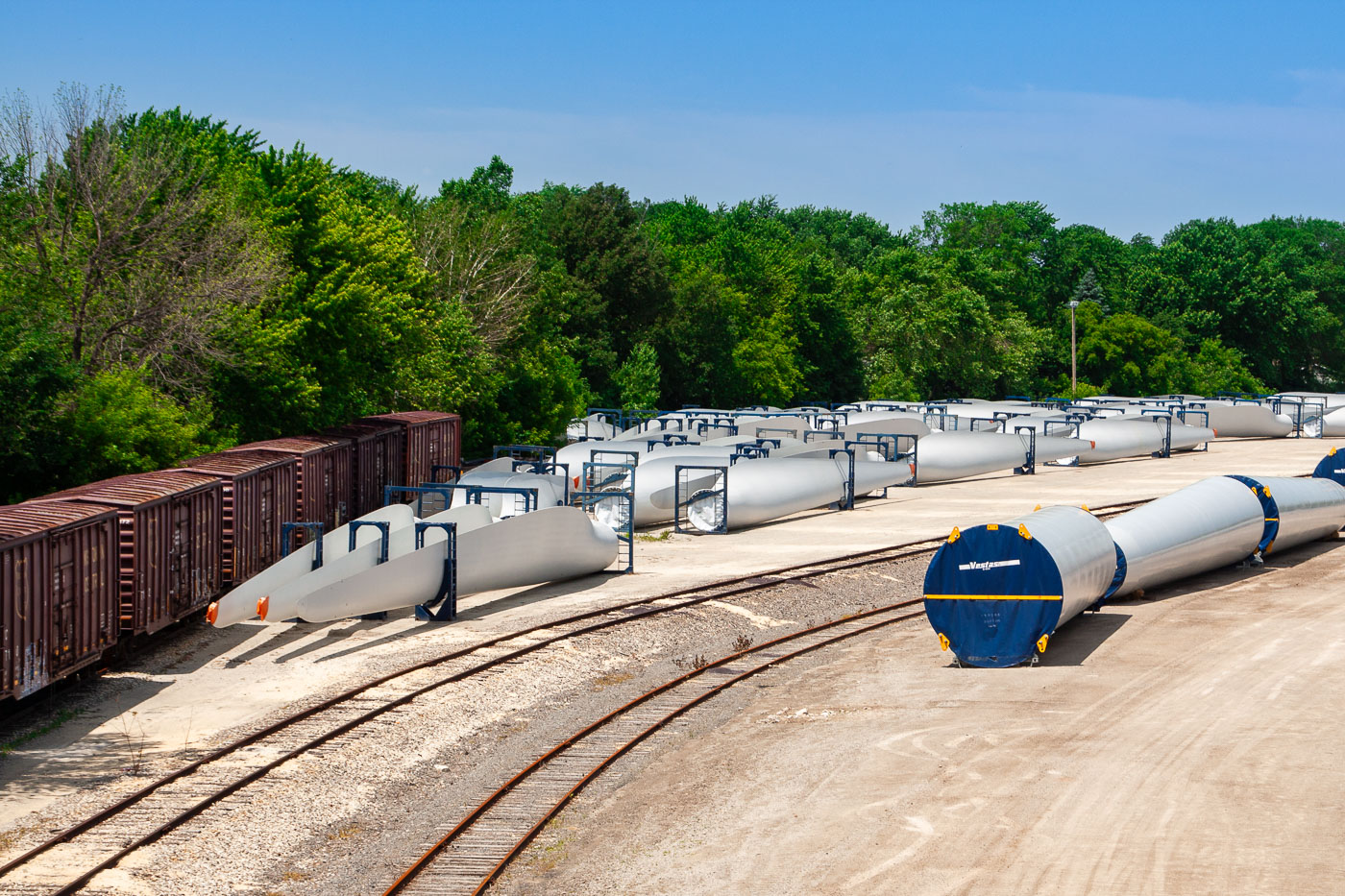
December 23, 2024 — Green Bay Packers wide receiver Christian Watson leaves the field on December 23, 2024 in a game vs the New Orleans Saints.December 23, 2024 — Jordan Love and the offensive line at Lambeau Field on December 23, 2024 vs the New Orleans Saints. Packers won 34-0.December 23, 2024 — Fan wears a Jordan Love jersey at the Green Bay Packers vs New Orleans Saints at Lambeau Field on December 23, 2024December 23, 2024 — "Unauthorized transmission of accounts or descriptions of the game, including play-by-play data, is strictly prohibited. Violators may be subject to ejection from the stadium."December 23, 2024 — Dontayvion Wicks catches a touchdown pass from Jordan Love on December 23, 2024. The Green Bay Packers beat the New Orleans Saints 34-0.December 23, 2024 — Tailgating at Lambeau Field on December 23, 2024. The Green Bay Packers beat the New Orleans Saints 34-0.December 23, 2024 — Parking for sale in neighborhoods around Lambeau Field on December 23, 2024. The Green Bay Packers beat the New Orleans Saints 34-0.December 23, 2024 — A man wears a Green Bay Packers Jordan Love jersey on Lombardi Avenue outside of Lambeau Field on December 23, 2024. The Green Bay Packers beat the New Orleans Saints 34-0.December 28, 2022 — One of the few surviving original McDonald’s neon signs still standing in the United States is located in Green Bay, Wisconsin. Installed during the era before the Golden Arches fully defined the brand, the sign features “Speedee,” the chain’s early mascot introduced in the 1950s to promote the company’s streamlined “Speedee Service System.” The illuminated red-and-yellow marquee—advertising hamburgers and boasting “Over 100 Million Sold”—reflects the rapid national expansion of the franchise during its formative years. Today it serves as both a functioning restaurant sign and a preserved piece of mid-century fast-food history.December 28, 2022 — Large cylindrical storage tanks at Construction Resources Management, Inc. line the west bank of the Fox River in Green Bay, Wisconsin. Viewed from across the frozen river on a winter night, the facility is illuminated by perimeter lighting that reflects faintly off the ice. The site serves regional construction and materials operations, part of the industrial corridor that has long defined the waterfront between downtown Green Bay and the port district.December 26, 2022 — Green Bay Packaging’s modern recycled paper mill rises behind leafless winter trees along the Fox River in Green Bay, Wisconsin. The facility, completed in 2021 as one of the most advanced and energy-efficient mills in the country, emits illuminated plumes of steam that drift across the night sky. The river’s frozen surface reflects the mill’s lights and muted colors, creating a stark industrial winter landscape along the east bank of the Fox River.December 26, 2022 — A section of the rotary kiln system at the Graymont lime plant in Green Bay, Wisconsin, captured at night under maintenance and work lights. The massive rotating kiln—central to the calcination process that transforms limestone into high-purity lime—runs along a network of elevated platforms, access stairs, and steel supports. The orange glow from overhead lamps highlights the heat-intensive nature of kiln operations, while the surrounding catwalks and conveyors reflect the layered engineering required to keep the continuous production line moving.December 26, 2022 — Illuminated by a single amber work light, the upper platforms and transfer pipes of the Graymont lime plant in Green Bay, Wisconsin stand out against the night sky. The cylindrical storage silos are connected by enclosed conveyor and piping systems that move processed lime between different stages of production. Catwalks, ladders, and pipe supports trace the geometry of an industrial site that has long supplied lime for regional steelmaking, water treatment, and construction uses.December 26, 2022 — A detailed nighttime view of the conveyor towers and processing equipment at the Graymont lime plant in Green Bay, Wisconsin. The illuminated catwalks, ducts, and steel trusses highlight the facility’s continuous material-handling system, where crushed limestone moves through enclosed conveyors toward the plant’s kilns and storage silos. Fine dust, visible in the lights near the upper platforms, reflects the industrial character of a site that has served the region’s construction and manufacturing sectors for decades.December 26, 2022 — The Graymont lime processing plant along the Fox River in Green Bay, Wisconsin, illuminated during nighttime operations. The facility’s network of silos, conveyors, and dust-collection towers stands out against the dark sky, with steam drifting from active kilns and processing units. Reflections from the plant’s industrial lighting shimmer across the frozen river surface, highlighting the site’s role in the region’s long-standing manufacturing and mineral production corridor.December 26, 2022 — Steam columns rise dramatically from the Procter & Gamble paper mill in Green Bay, Wisconsin, illuminated by the orange and magenta glow of a midwinter sunrise. Captured from the air in January, the image shows the vast industrial complex along the Fox River, with frozen rooftops and intricate piping systems sharply defined against the cold morning light. The steam, tinted by the low sun, becomes a striking visual emblem of the city’s manufacturing heritage and the energy demands of Wisconsin’s paper industry.December 23, 2022 — A CTS tractor-trailer crosses the Leo Frigo Memorial Bridge—locally known as the Tower Drive Bridge—during a winter snowstorm in Green Bay, Wisconsin. In the foreground, the familiar shingled lighthouse structure along the riverfront stands out against the white sky, its lantern room partially frosted as lake-effect snow drifts through the scene. The contrast between the elevated highway and the shoreline landmark highlights the mix of transportation corridors that define Green Bay’s industrial waterfront.December 23, 2022 — A freight crew member walks alongside HLCX 1070 during a heavy snowstorm at Quincy Street and Eastman Avenue in Green Bay, Wisconsin. The locomotive’s headlights cut through the blowing snow as operations continue despite low visibility and freezing conditions. Industrial structures in the background fade into the whiteout, highlighting how rail work persists year-round across the region’s manufacturing and transportation corridors.December 22, 2022 — The glowing neon “EAT” sign at Al’s Hamburgers stands out against the snowy backdrop of winter in Minneapolis. The sign, with its bright mid-century colors and bold lettering, has been part of the business’s identity since the diner opened in 1934. Its classic styling reflects the era when small neighborhood restaurants relied on eye-catching storefront signs to draw in passing traffic. Light snow gathers on the striped awning below, adding a seasonal layer to one of the area’s longstanding local landmarks.January 1, 2020 — Fireworks at Lambeau Field on New Years Eve. The stadium is home to the NFL's Green Bay Packers.December 30, 2019 — The entrance gates to City Stadium in Green Bay, Wisconsin, are pictured here in winter. This stadium served as the home field for the Green Bay Packers, an NFL team, from 1925 to 1956. The site of City Stadium is now occupied by Green Bay East High School. The stadium was a significant venue for professional football during its operational years, hosting numerous games that contributed to the Packers' early history and legacy.December 30, 2019 — Lambeau Field and the Titletown District on Lombardi Avenue in Green Bay, WI.December 29, 2019 — Downtown Green Bay, viewed from the west side of the Fox River. Main Street Bridge lit up to the left of the frame.December 29, 2019 — Ferris Wheel at Bay Beach Amusement Park in Green Bay, Wisconsin on a foggy December evening.December 29, 2019 — Water pools up behind the main building at Bay Beach Amusement Park just before the winter freeze.December 29, 2019 — The Lambeau Field Atrium in Green Bay, Wisconsin, serves as a year-round destination for Green Bay Packers fans and visitors. The atrium connects various amenities, including suites, club seating, and the Oneida Nation entrance, to the historic stadium. The Oneida Nation, a federally recognized Native American tribe, has a long-standing partnership with the Green Bay Packers, highlighted by this prominent entrance. The area is designed to enhance the fan experience, offering a glimpse into the team's history and providing access to premium seating and event spaces.December 29, 2019 — The Don Hutson Center in Green Bay, Wisconsin, serves as the indoor practice facility for the Green Bay Packers. Adjacent to Lambeau Field, this facility was built in 2003 and named after Hall of Fame receiver Don Hutson. It provides a climate-controlled environment for team training and practice sessions, regardless of weather conditions.December 29, 2019 — The Lambeau Field Atrium in Green Bay, Wisconsin, serves as a year-round hub for the Green Bay Packers and their fans. Opened in 2003, the Atrium is an expansion of the historic Lambeau Field, which was built in 1957 and is the oldest continuously operating NFL stadium. The Atrium houses team offices, a team store, a restaurant, and event spaces, allowing for continuous engagement with the team and its legacy beyond game days. Its architecture integrates modern design with the brick and steel elements characteristic of the original stadium, reflecting the enduring spirit of the Green Bay Packers franchise.December 27, 2019 — This Burlington Railway Post Office Car, preserved at the National Railroad Museum in Green Bay, Wisconsin, represents a vital piece of American postal history. These specialized railcars were essential for the efficient sorting and transportation of mail across the country during the late 19th and 20th centuries. Mail clerks would sort letters and packages en route, significantly speeding up delivery times compared to traditional methods. The "United States Mail Railway Post Office" lettering clearly indicates its former function. The car's presence at the museum highlights the critical role railroads played in connecting communities and facilitating commerce through the postal service.December 27, 2019 — The "Cycling Lion" logo, representing British Railways, is displayed on the side of a train car at the Green Bay Railroad Museum. This logo was in use from 1948 to 1965, during the period when British Railways was a nationalized entity formed from the amalgamation of numerous private railway companies. The emblem features a red lion rampant, a symbol of Scotland, holding a spoked wheel, signifying rail transport, and is encircled by a crown, representing the monarchy. The museum preserves and exhibits railway heritage, including rolling stock from various eras of British rail history.December 27, 2019 — A collection of illuminated drumhead signs from various historic American passenger trains is displayed at the National Railroad Museum in Green Bay, Wisconsin. These signs, once mounted on the observation cars of luxury and express trains, served as both branding and navigational aids. Featured are signs for notable routes such as the New York Central's "20th Century Limited," the Pennsylvania Railroad's "Broadway Limited," and the Alton Railroad's "Abraham Lincoln" and "Blue Bird," which connected Chicago and St. Louis.December 26, 2019 — Lambeau Field, located in Green Bay, Wisconsin, is the home stadium of the Green Bay Packers NFL team. Originally opened in 1957, it is one of the oldest and most historic stadiums in the league. The stadium has undergone numerous renovations and expansions over the decades to accommodate a growing fanbase and modernize its facilities. It is renowned for its passionate fan base and its role in the history of professional football, particularly for its association with legendary players and coaches.December 26, 2019 — This mural, located across from Lambeau Field in Green Bay, Wisconsin, celebrates the Green Bay Packers' history and legendary quarterback Bart Starr. The artwork features Starr, along with other team champions and significant dates such as "1934 SUPER BOWL 1 & 2 MVP" and "2019 5 X NFL CHAMPION." The mural serves as a tribute to the team's enduring legacy and its connection to the community, particularly in the vicinity of their historic stadium.December 26, 2019 — The statue of Curly Lambeau, founder and first coach of the Green Bay Packers, stands outside Lambeau Field in Green Bay, Wisconsin. Lambeau Field, named after him, is one of the oldest and most historic stadiums in the National Football League. Opened in 1957, it has been the home of the Packers for over six decades. The stadium is renowned for its passionate fanbase and its often frigid playing conditions, contributing to its legendary status in professional football.November 11, 2019 — Lambeau Field, located in Ashwaubenon, Wisconsin, is the historic home of the Green Bay Packers. Opened in 1957, it is the second-oldest stadium in the NFL and has undergone numerous renovations and expansions to maintain its status as a premier professional football venue. The stadium is renowned for its passionate fanbase and its role in the Packers' storied history, including multiple Super Bowl victories. It continues to host NFL games and other events, serving as a significant landmark for the team and the community.November 11, 2019 — Lambeau Field, located in Green Bay, Wisconsin, is the home stadium of the Green Bay Packers of the National Football League. Opened in 1957, it is the second-oldest stadium in the NFL and is renowned for its historic significance and passionate fanbase. The stadium has undergone numerous renovations and expansions over the decades to accommodate modern amenities and increased capacity. Lambeau Field continues to serve as a vital community gathering place and a landmark for professional football in Wisconsin.November 11, 2019 — The J. P. Pulliam Generating Station, located on the Fox River in Green Bay, Wisconsin, was a significant industrial facility for electricity generation. Named after former Wisconsin Public Service Corporation president John Page Pulliam, the plant primarily utilized sub-bituminous coal, with natural gas as a backup fuel. Decommissioned in 2018, its coal-fired units ceased operation, leaving only a natural gas unit active. The station was connected to the regional power grid via 138 kV and 69 kV transmission lines, underscoring its role in supplying power to the area.November 11, 2019 — State Street Pub, a dive bar located at 1238 State Street in Green Bay, Wisconsin, is known for its association with Pabst Blue Ribbon beer and its popularity as a "Packers Bar." The establishment serves as a neighborhood gathering place, reflecting the local culture and community spirit of Green Bay. Its exterior, featuring a prominent Pabst sign and brick facade, indicates a long-standing presence in the urban environment.November 10, 2019 — Fans depart Lambeau Field in Green Bay, Wisconsin, amidst a snowfall following a Green Bay Packers game. Lambeau Field, originally known as City Stadium, opened in 1957 and is one of the oldest and most historic venues in the National Football League. It has undergone numerous renovations and expansions to accommodate its growing fanbase and maintain its status as a premier football stadium. The Packers' victory over the Carolina Panthers, 24-16, marked another chapter in the team's storied history played out in challenging weather conditions.November 10, 2019 — Fans depart Lambeau Field in Green Bay, Wisconsin, amidst snowfall following a Green Bay Packers victory. The stadium, a historic venue for the National Football League, has been the home of the Packers since 1957. Lambeau Field is renowned for its passionate fanbase and its ability to host games in extreme weather conditions, contributing to its legendary status in professional football. The image captures the dedication of fans who brave the elements to support their team, even after a win.November 10, 2019 — Lambeau Field, home of the Green Bay Packers, hosts a snowy NFL game between the Packers and the Carolina Panthers. Opened in 1957, Lambeau Field is one of the oldest and most historic stadiums in the National Football League, known for its cold-weather games. The stadium's enduring presence reflects the deep connection between the team, the city of Green Bay, and its passionate fanbase. This particular game saw the Packers secure a 24-16 victory over the Panthers amidst heavy snowfall, a common occurrence that adds to the venue's storied atmosphere.November 10, 2019 — A fan wearing a "Cheesehead" hat and an Aaron Rodgers jersey braves snowfall at Lambeau Field in Green Bay, Wisconsin. The Green Bay Packers, a professional American football team, have played at Lambeau Field since 1957. The stadium is known for its cold-weather games, and fans often embrace the challenging conditions with team spirit. This image captures the dedication of fans during a game where the Packers defeated the Carolina Panthers 24-16.November 10, 2019 — Snowy evening at Lambeau Field in Green Bay, WINovember 10, 2019 — Fans brave snowy conditions at Lambeau Field in Green Bay, Wisconsin, for an NFL game between the Green Bay Packers and the Carolina Panthers. Lambeau Field, opened in 1957, is one of the oldest and most historic stadiums in the National Football League. It is renowned for its passionate fanbase and its ability to host games in extreme weather, contributing to its legendary status in professional football.November 9, 2019 — A mosaic featuring the Green Bay Packers' iconic "G" logo is displayed within the team's player facility at 1265 Lombardi Avenue in Green Bay, Wisconsin. The logo is composed of numerous small photographs, each depicting moments and figures from the team's extensive history. This installation serves as a visual tribute to the franchise's legacy, celebrating its players, coaches, and significant achievements. Lambeau Field, the Packers' home stadium, is one of the oldest and most storied venues in the National Football League.November 9, 2019 — The Vince Lombardi Trophies awarded to the Green Bay Packers for their Super Bowl victories are displayed at Lambeau Field. The trophies represent championships won in Super Bowl I (1967), Super Bowl II (1968), Super Bowl XXXI (1997), and Super Bowl XLV (2011). Lambeau Field, located in Green Bay, Wisconsin, has been the home stadium for the Packers since 1957 and is one of the oldest and most historic venues in the NFL. This display serves as a testament to the team's rich history and success in professional football.November 9, 2019 — The Green Bay Packers Headquarters in Green Bay, Wisconsin, features an indoor pool and workout area designed for player rehabilitation and training. The facility includes a therapy pool and a larger swimming area, reflecting the team's commitment to maintaining peak physical condition for its athletes. Large photographic murals of Lambeau Field, the Packers' historic home stadium, adorn the walls, serving as a constant reminder of the team's legacy and the environment in which they compete. This space is integral to the team's year-round operations, supporting player wellness and performance.November 9, 2019 — The Helmet Fitting Room, designated LH15, is located within the Green Bay Packers Headquarters at Lambeau Field. This facility serves the essential function of ensuring players are properly outfitted with protective helmets. The room's existence underscores the team's commitment to player safety and performance within the National Football League. Lambeau Field itself, a historic venue, has been the home of the Packers since 1957, undergoing numerous renovations and expansions to maintain its status as a premier NFL stadium.November 9, 2019 — Players only hallway at the Green Bay Packers Headquarters.November 9, 2019 — The players lounge at the Green Bay Packers Headquarters.June 9, 2019 — Green Bay Fire Station No. 3, located at 885 Shawano Avenue in Green Bay, Wisconsin, is a testament to mid-20th-century civic architecture. Constructed with a red brick façade, the station features prominent arched bay doors for its engine, battalion chief, and medic units. This facility has long served the west side of Green Bay, providing essential emergency response services to both residential and commercial districts. Its design reflects a period when public buildings prioritized both robust functionality and enduring aesthetic qualities.June 9, 2019 — The entrance to the Green Bay Correctional Institution in Allouez, Wisconsin, is marked by a wooden sign. Established in 1898 as the Wisconsin State Reformatory, this facility is one of the state's oldest correctional institutions. Its original design reflected late 19th-century penological philosophies emphasizing reform, with spacious grounds and classical stone architecture. The institution continues to operate under the Wisconsin Department of Corrections, serving as a significant site in the state's correctional history and architectural record.June 9, 2019 — The Wisconsin State Reformatory, established in 1898 in Green Bay, is a significant example of late 19th-century correctional architecture. Constructed from locally quarried gray limestone, its Romanesque Revival style, characterized by fortress-like symmetry and heavy masonry, was intended to convey authority. The institution was designed with progressive ideals of the era, aiming for rehabilitation over punishment. The building, which still bears its original nameplate, represents a notable surviving example of penal architecture from Wisconsin's early history.June 9, 2019 — The Nicolet Mill complex in De Pere, Wisconsin, is situated along the Fox River, a testament to the area's historical prominence in the paper-making industry. The main brick structure, dating to the early 20th century, reflects the industrial architecture that characterized Wisconsin's river-powered mills. Today, the facility, now operated by Ahlstrom Munksjö, continues its legacy of paper production, integrating modern manufacturing elements with its vintage industrial design.March 10, 2019 — The downtown YMCA in Green Bay, Wisconsin, was constructed in 1924 and is listed on the National Register of Historic Places. Originally built to serve as a community center and lodging for young men, the YMCA provided facilities for physical fitness, education, and social activities. Its stone construction and architectural style reflect the period of its construction. The building continues to serve its community, offering programs and services to residents of Green Bay.December 27, 2018 — The Walnut Street bridge over the Fox River near Downtown Green Bay in Wisconsin,.December 8, 2018 — The Mason Street bridge lit up red and blue in downtown Green Bay, Wisconsin. The bridge is over the Fox River.December 8, 2018 — Lombardi Middle School in Green Bay, WI. The school on the city's far west side is named after legendary Green Bay Packers coach Vince Lombardi.December 8, 2018 — Tailgate Village, outside of Lambeau Field in Green Bay, WI.December 26, 2014 — Radio and television towers stand tall on Video Lane in De Pere, Wisconsin, their red warning lights piercing the foggy night. These structures are essential for broadcasting signals across the Green Bay area, serving as critical communication infrastructure. The presence of multiple towers in this location highlights its historical importance as a hub for media transmission in the region. Their functional purpose continues today, facilitating the distribution of radio and television programming to a wide audience.August 11, 2008 — The interior of the Body Shop, a strip club located in Green Bay, Wisconsin. The establishment featured a prominent bar area, seating, and a central stage with a pole for performances. Neon signs advertising beer brands like Miller Lite and Heineken are visible, typical of such venues. The club has since been demolished, marking the end of an era for this particular entertainment establishment in Green Bay.July 1, 2008 — Rows of Vestas wind turbine components are staged in a rail yard in Fond du Lac County, Wisconsin. These large sections, including nacelles and tower segments, are awaiting transport to wind farm construction sites. The rail yard serves as a critical logistical hub for the distribution of renewable energy infrastructure. The components are manufactured by Vestas, a global leader in wind energy solutions, underscoring the region's role in the expansion of wind power generation.July 1, 2008 — Rows of Vestas wind turbine blades are staged at a rail yard in Fond du Lac County, Wisconsin, awaiting transport to a wind farm. These large components are essential for generating renewable energy and represent a significant investment in sustainable power infrastructure. The rail yard serves as a critical logistical hub, facilitating the movement of these oversized materials from manufacturing facilities to their final installation sites. The presence of these blades underscores the growth of wind energy as a major contributor to the nation's power grid.
Built in Minneapolis
Photographs made over time, focused on place, public life, and ongoing reporting.
Browse by location, move through long-running series, or start with recent work.