Place Archive

Mexico City

This set documents Mexico City's Centro Histórico, major boulevards such as Paseo de la Reforma, and components of urban mobility including the Metro, Metrobus and Ecobici bike-share. Images show civic landmarks—Palacio de Bellas Artes, Alameda Central and the Zócalo—alongside street-level activity including vendors, taxis and cyclists. Architectural photographs range from colonial façades and restored hotels to mid-century and contemporary office towers. The collection also includes landscape views of Nevado de Toluca, illustrating the metropolitan area's proximity to volcanic peaks.

2 photo sets 30 photos

Photo Sets

Map

Photo Map

Markers

Mexico City Photo Locations

29 geotagged photos

Photos
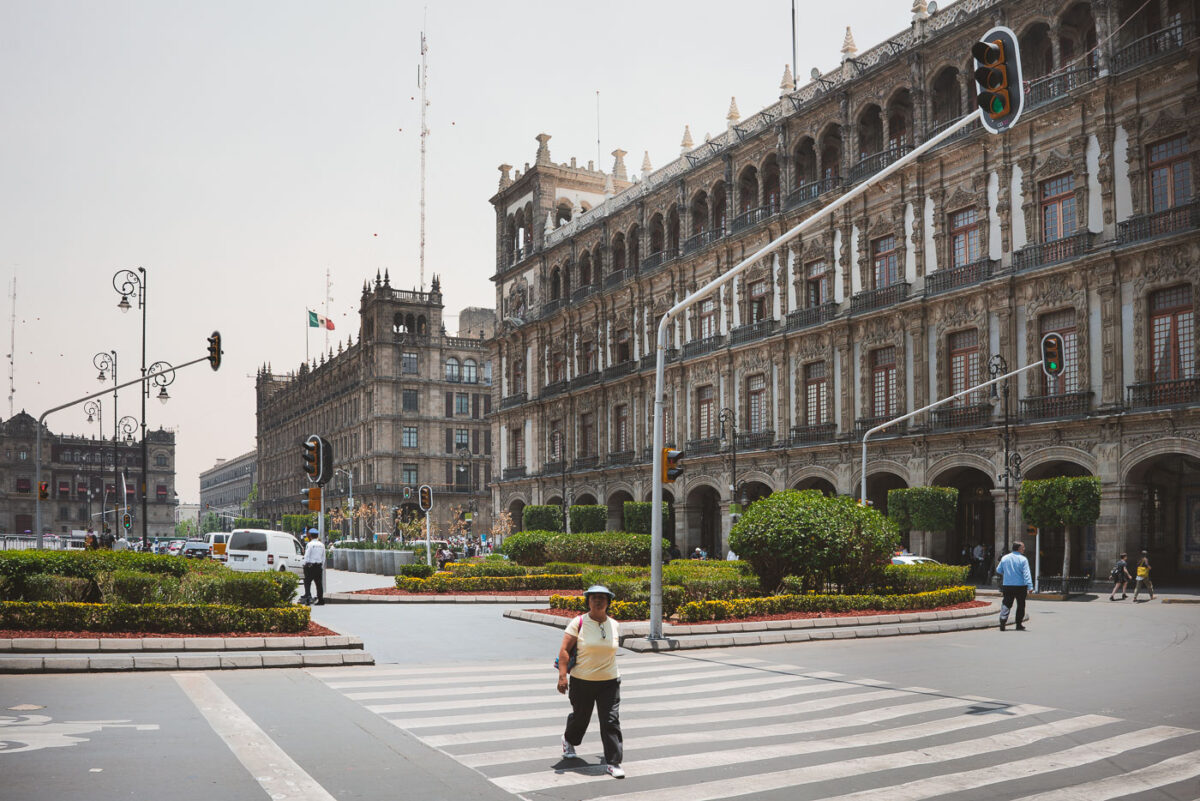
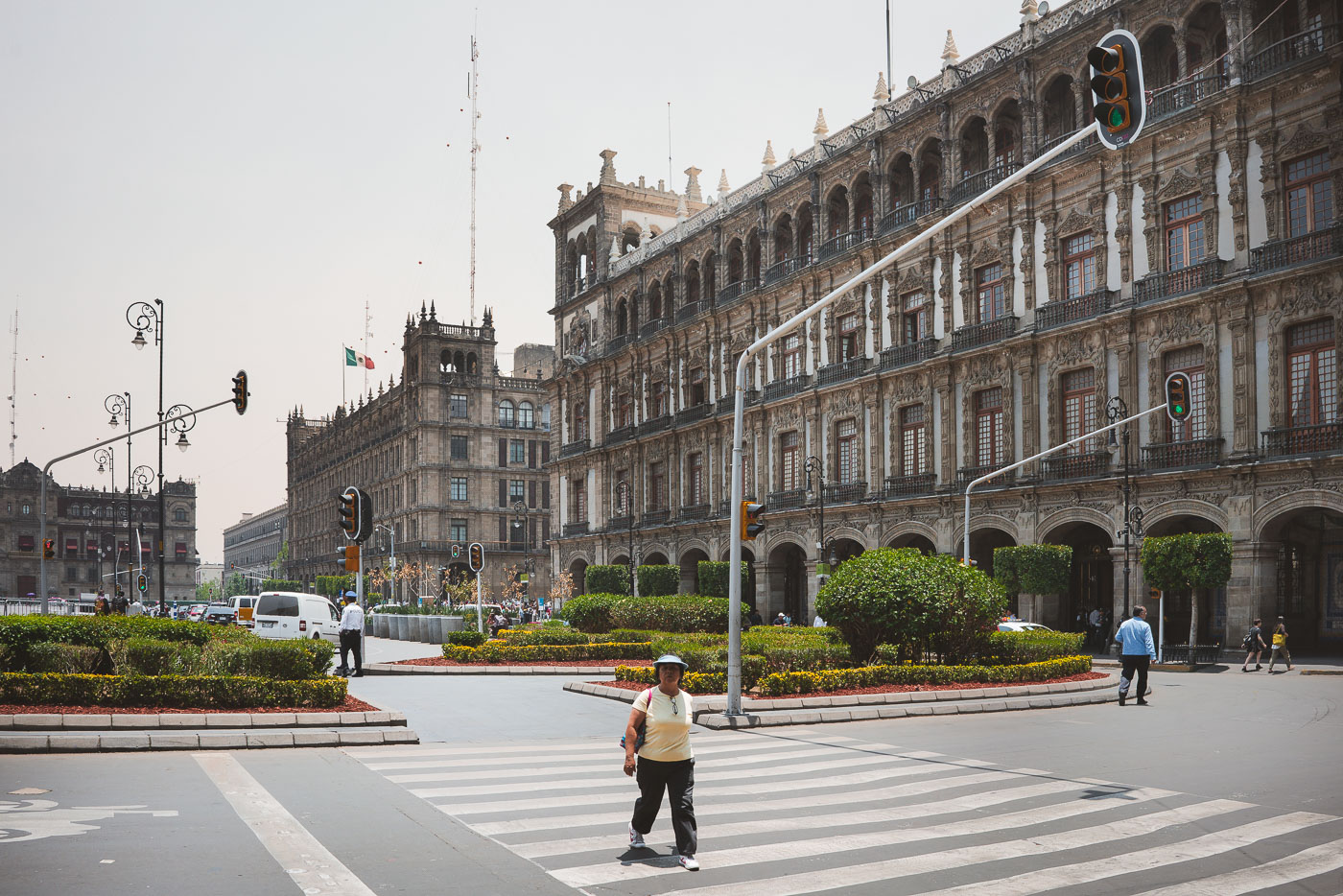
Mexico City Government Plaza and Pedestrians
Mexico City's Zócalo, the city's main public square, is bordered by historic administrative buildings, including the Palacio Nacional (National Palace) visible on the left and the Palacio de Justicia (Palace of Justice) on the right. The Zócalo, originally the ceremonial center of the Aztec city of Tenochtitlan, has been the site of significant historical events and public gatherings since the colonial era. Today, it remains a vital hub for civic life, with pedestrians crossing its busy intersections amidst the grandeur of its colonial architecture.
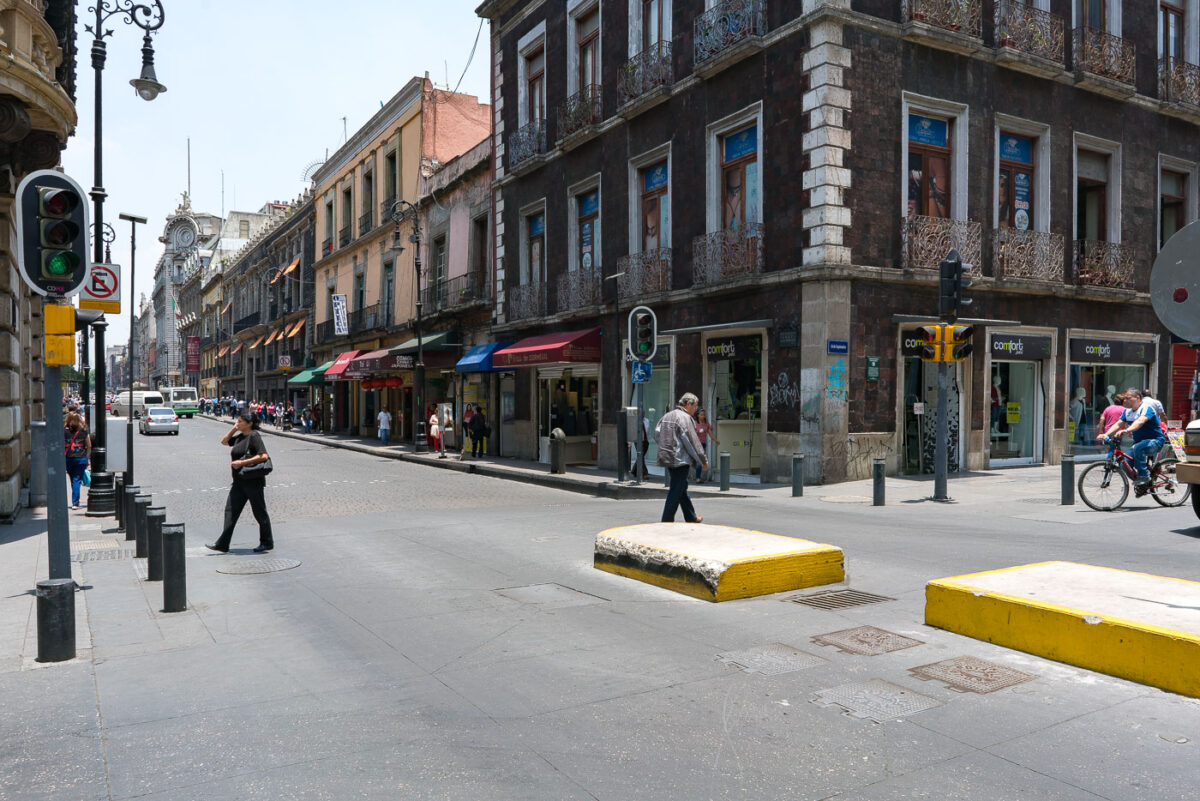
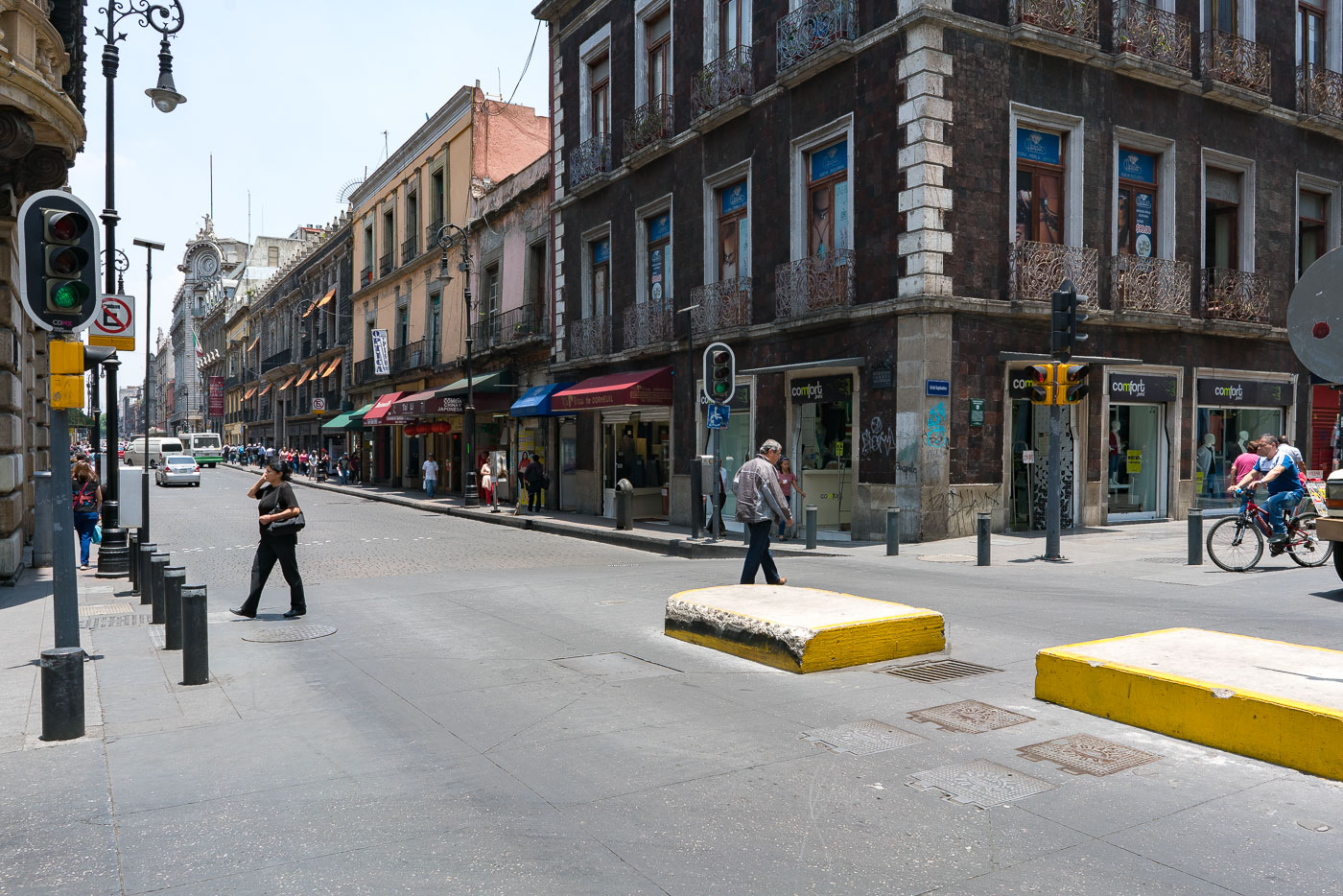
Mexico City Intersection
Street life in Mexico City's historic center, a UNESCO World Heritage site, showcases the area's enduring commercial activity. The colonial-era buildings, characterized by their ornate balconies, house a variety of shops at street level, reflecting centuries of urban development. Pedestrians and cyclists navigate the busy thoroughfares, demonstrating the continued vitality of this central district as a hub for commerce and daily life.
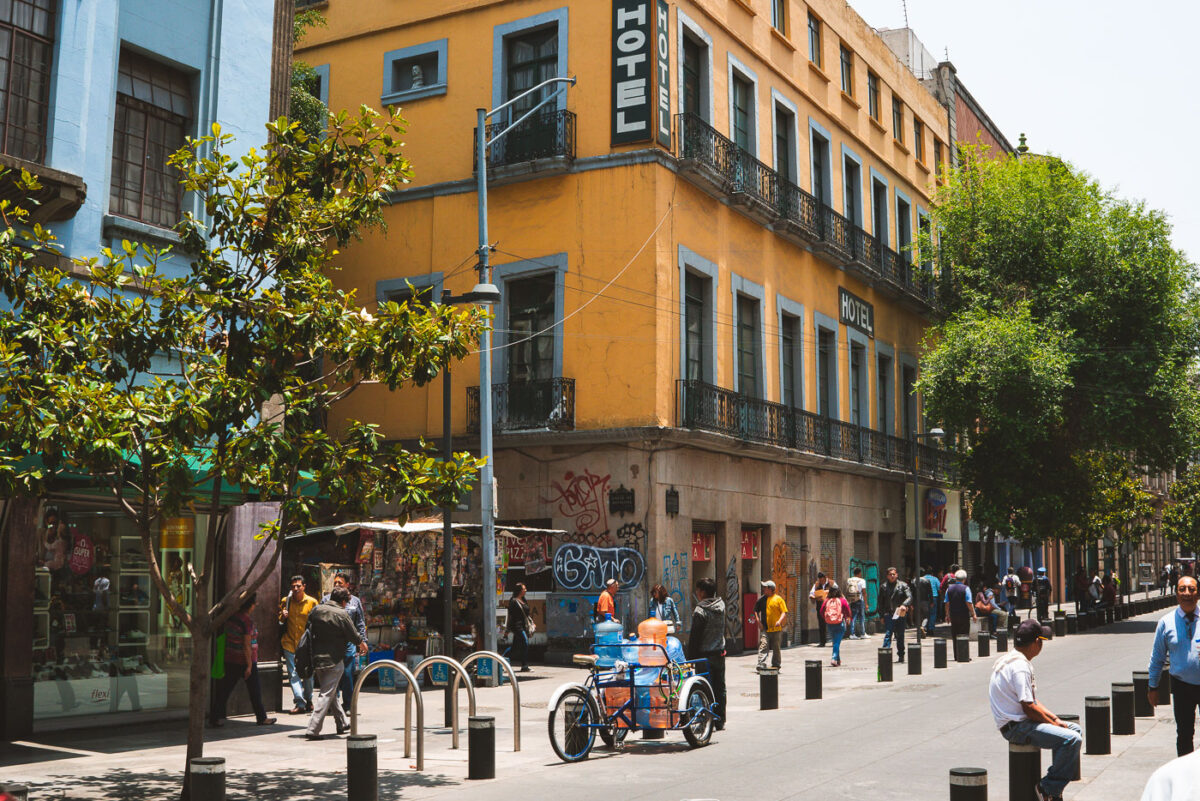
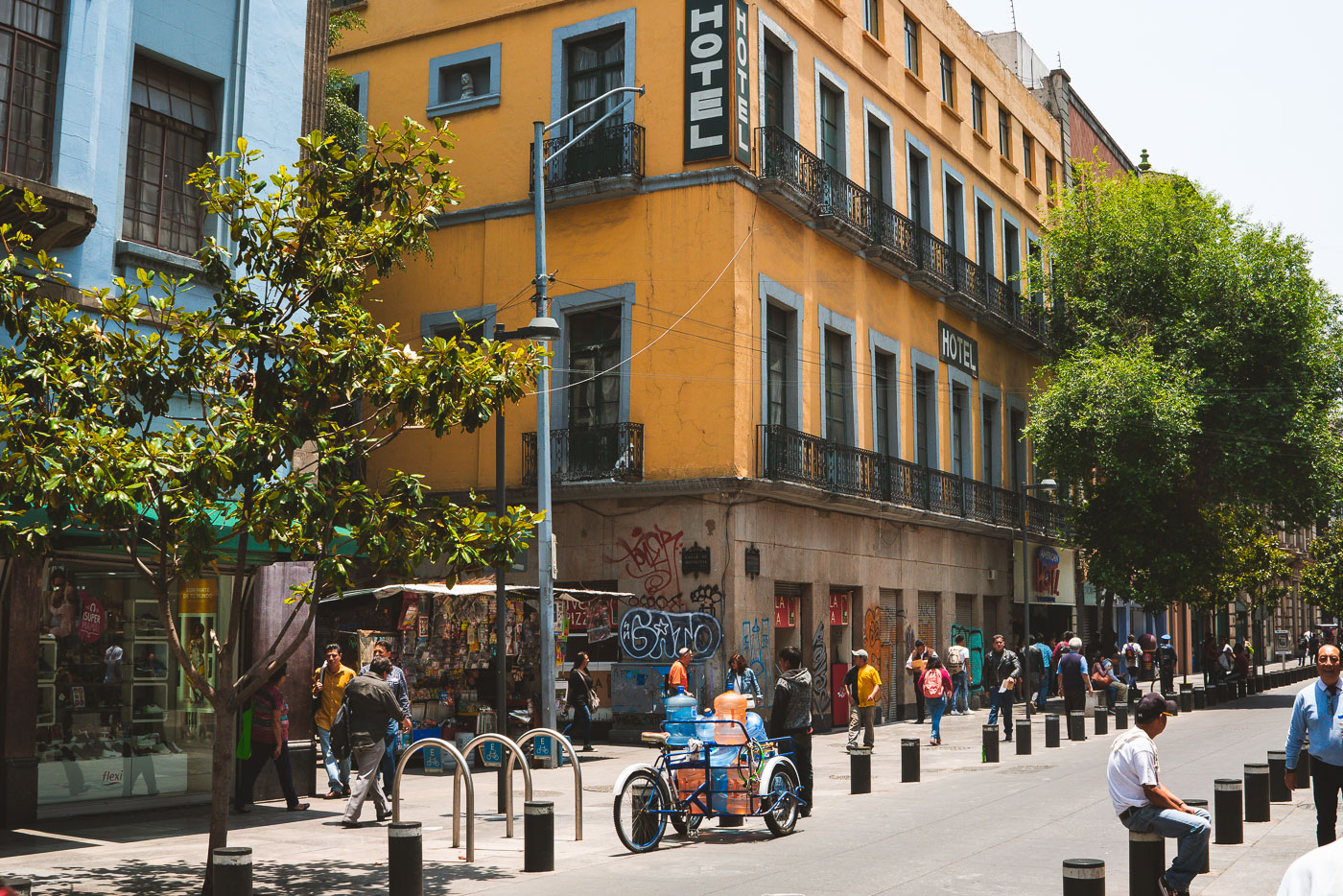
Pedestrians in Mexico City
Pedestrians navigate a street in Mexico City's historic center, a UNESCO World Heritage site known for its colonial-era architecture and vibrant street life. The "HOTEL" sign on the bright yellow building indicates its function as lodging, a common feature in this densely populated urban core. The presence of street vendors, a water delivery tricycle, and diverse pedestrian activity highlights the area's ongoing role as a commercial and social hub.
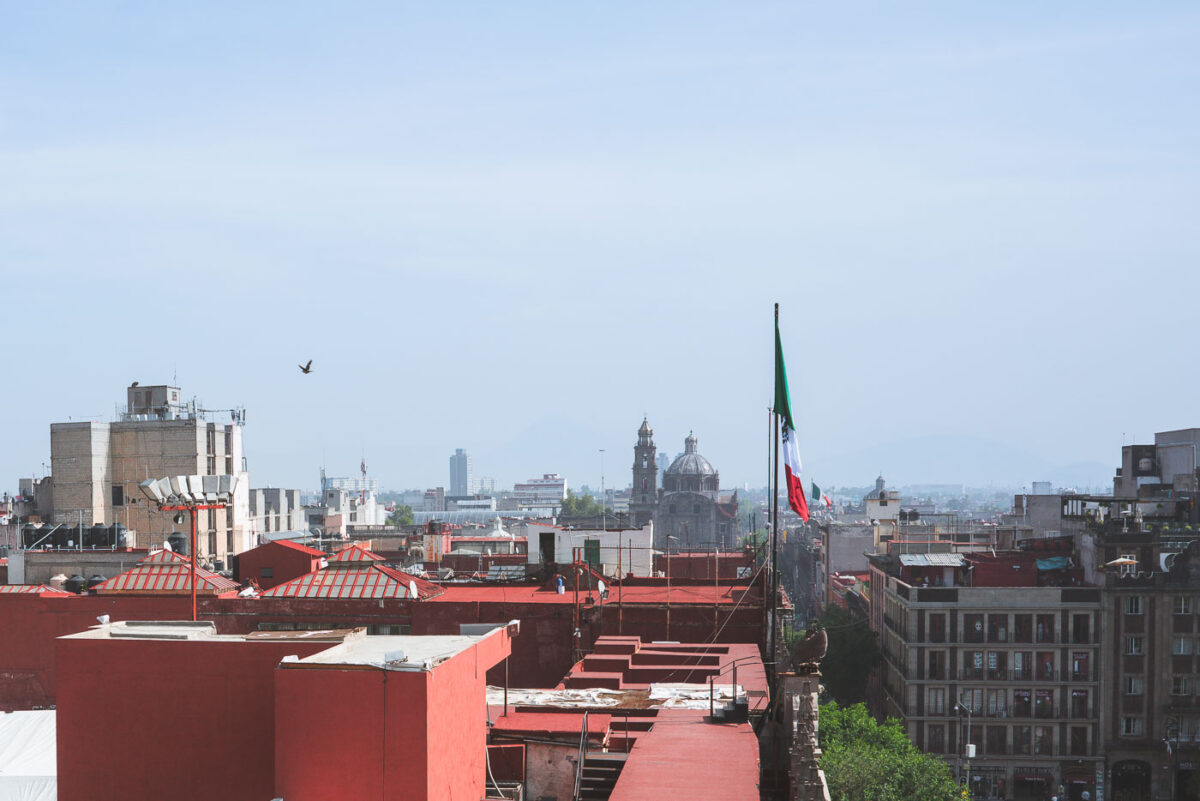
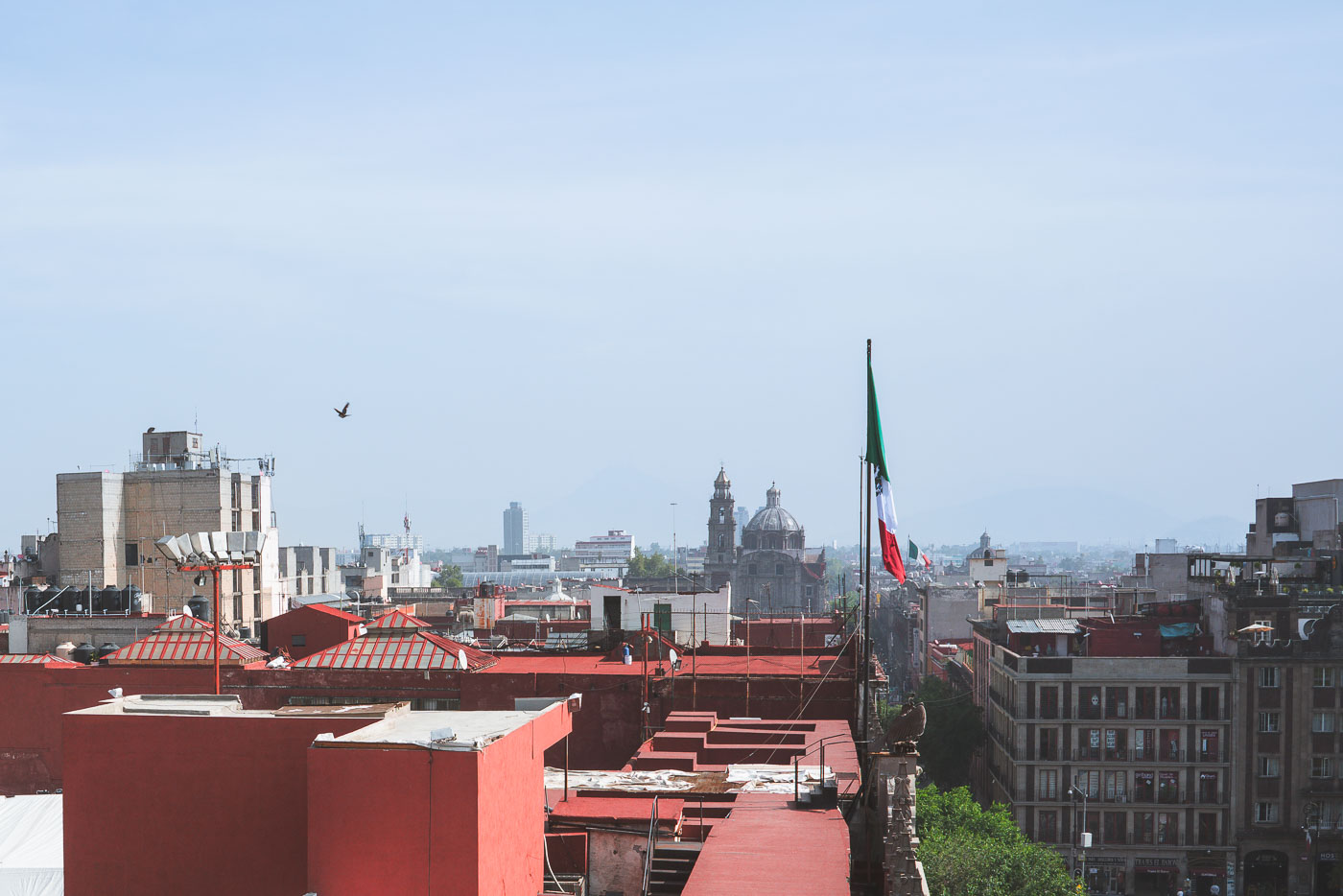
Rooftop in Mexico City near Zocalo
A view of Mexico City's historic center from above, with the Mexican flag prominently displayed near the Zócalo. The image showcases a mix of architectural styles, including the domes and towers of colonial-era churches juxtaposed with modern high-rise buildings. This area, the heart of the city, has been a center of political and cultural life since the Aztec era and continues to be a vital urban environment.
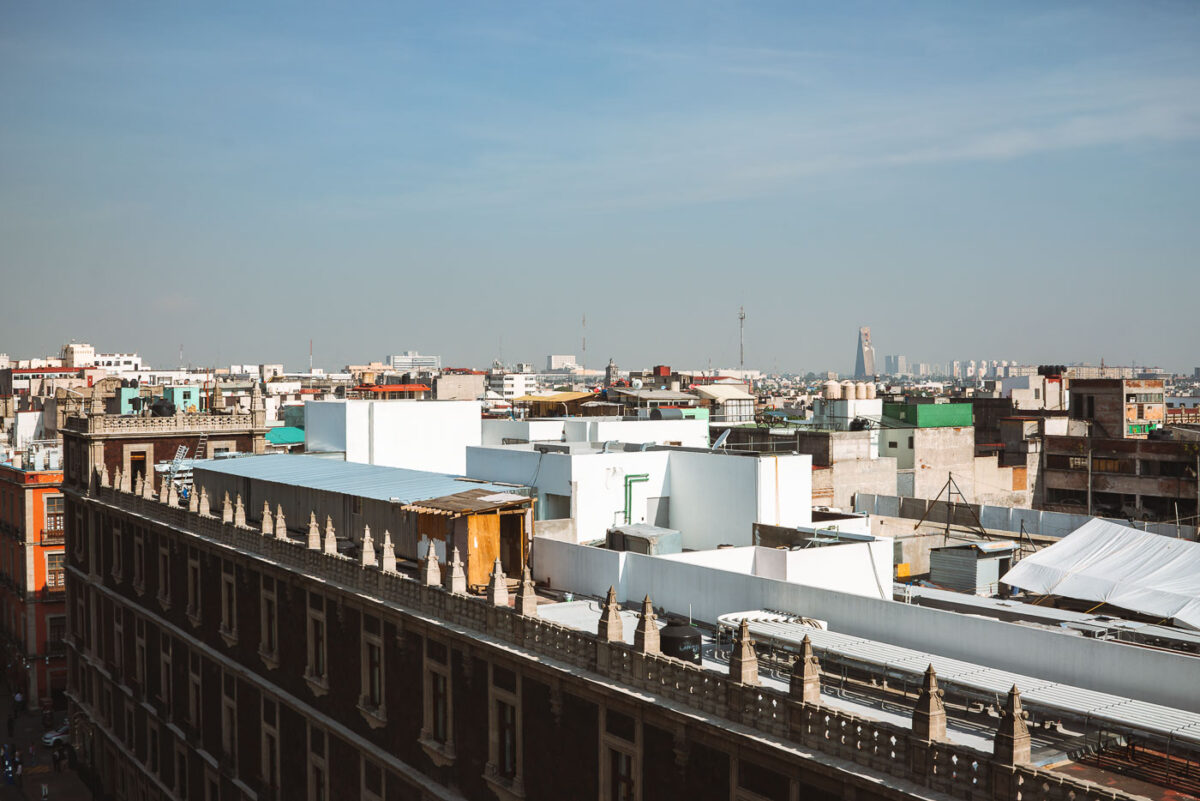
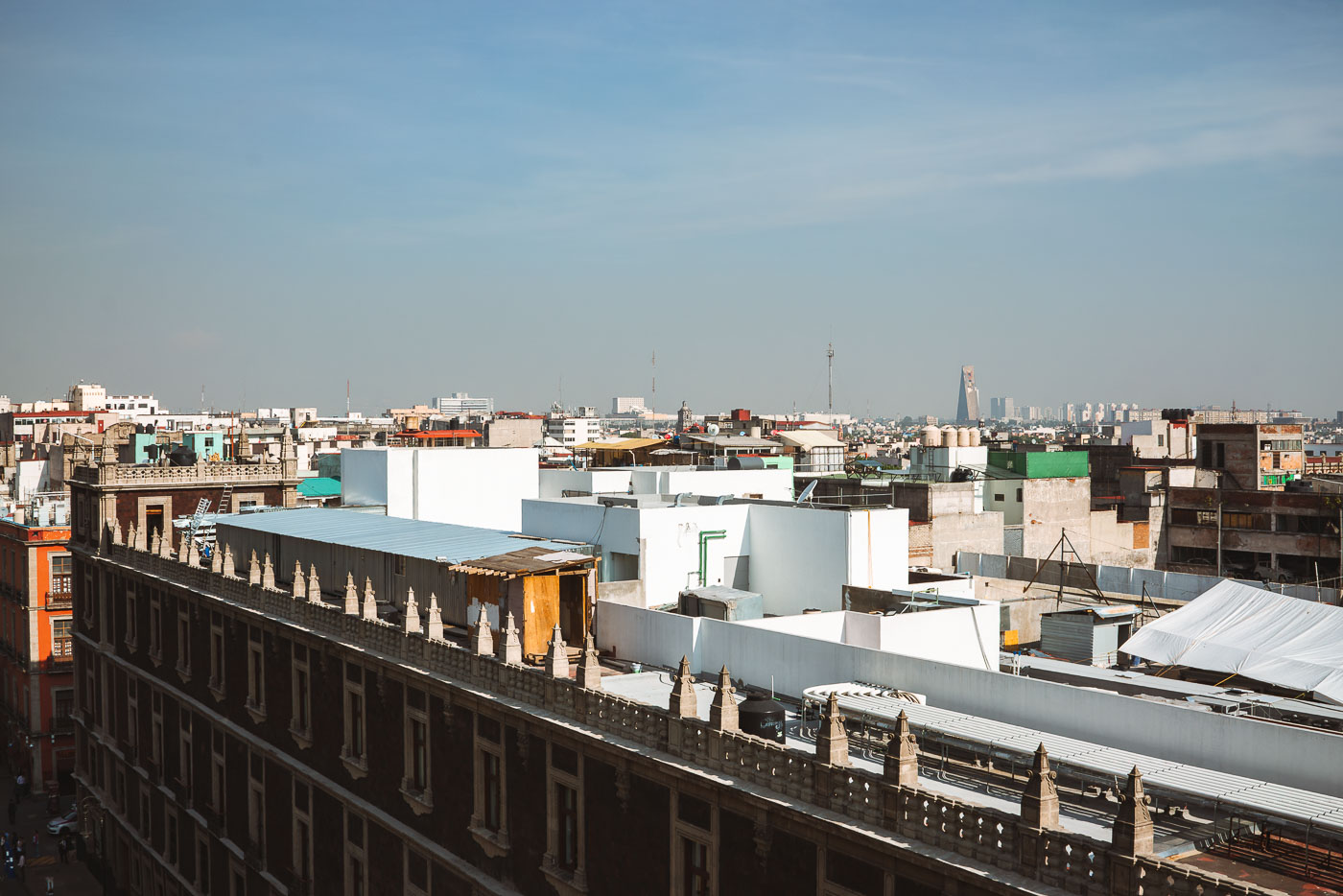
Mexico City Central District Rooftop
Rooftops in Mexico City's historic Central District reveal a mix of architectural styles and urban infrastructure. The foreground features ornate stonework and classical window designs on older buildings, while the mid-ground shows functional elements like water tanks and modern additions. In the distance, contemporary skyscrapers such as Torre Latinoamericana and Torre Reforma punctuate the horizon, representing the city's ongoing development and its status as a major economic hub.
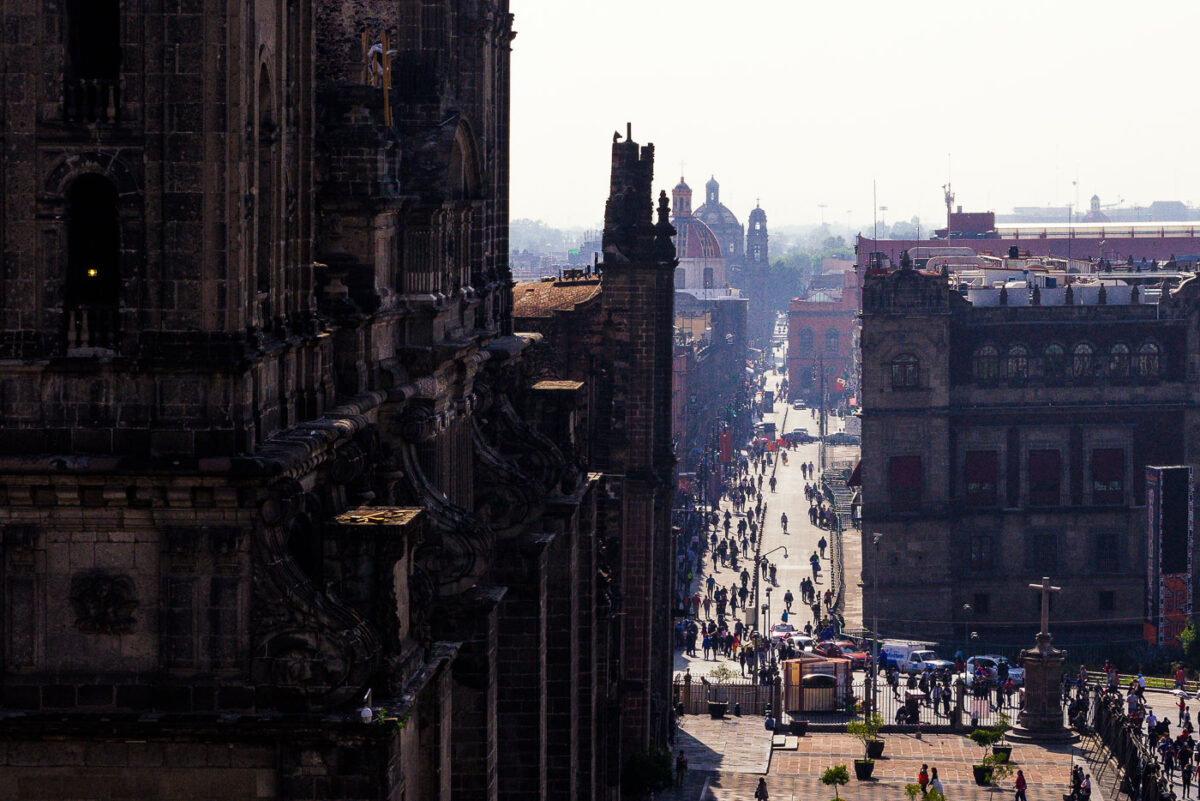
Mexico City Architecture in 2018
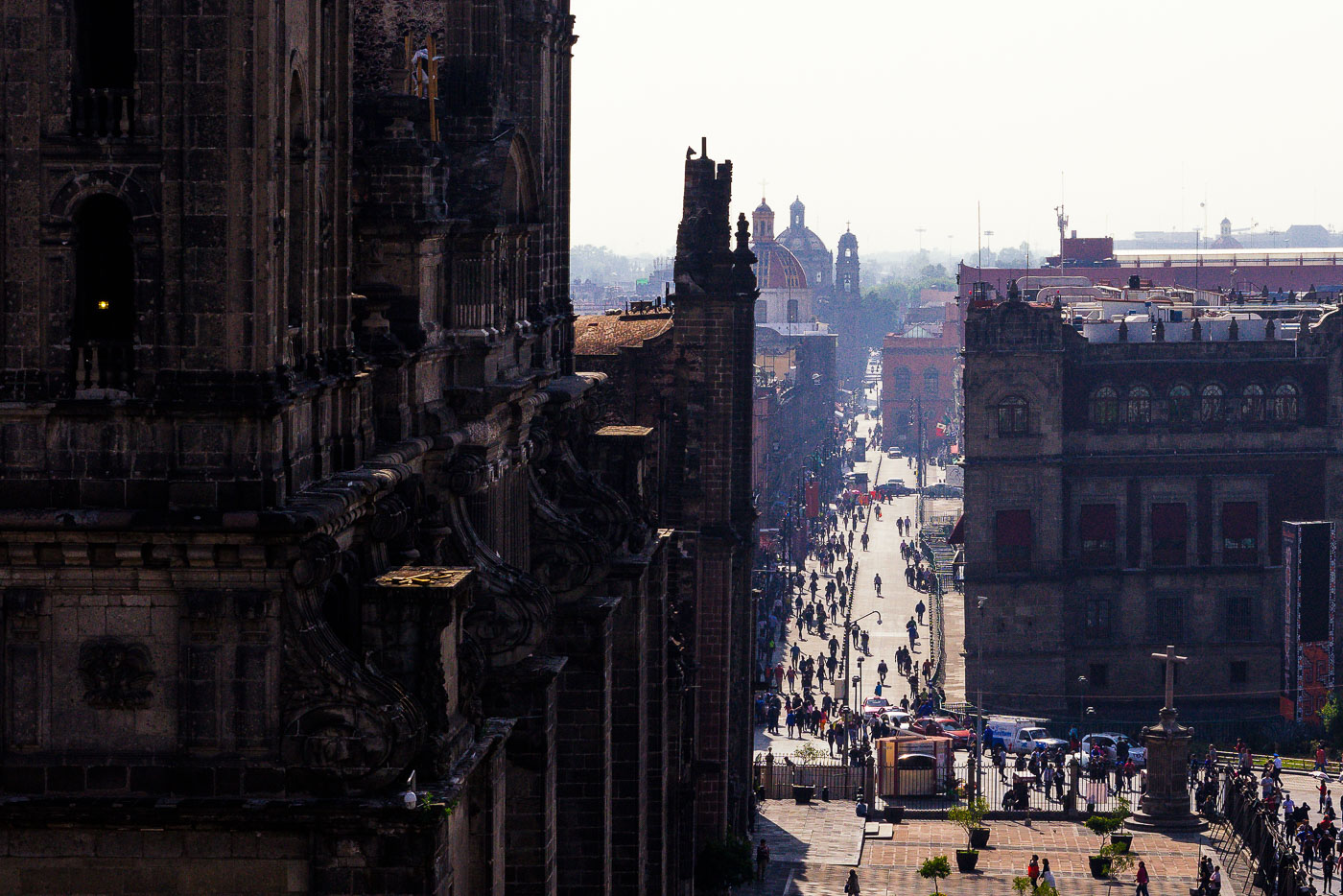
A view down Francisco I. Madero Avenue from the Metropolitan Cathedral in Mexico City's historic center. This thoroughfare, a major artery in the city's downtown, is lined with colonial-era buildings and leads towards the east. The Metropolitan Cathedral, a significant religious and architectural landmark, was constructed over centuries, with its origins dating back to the 16th century. The avenue itself has been a central part of the city's urban fabric for centuries, facilitating commerce and public life.
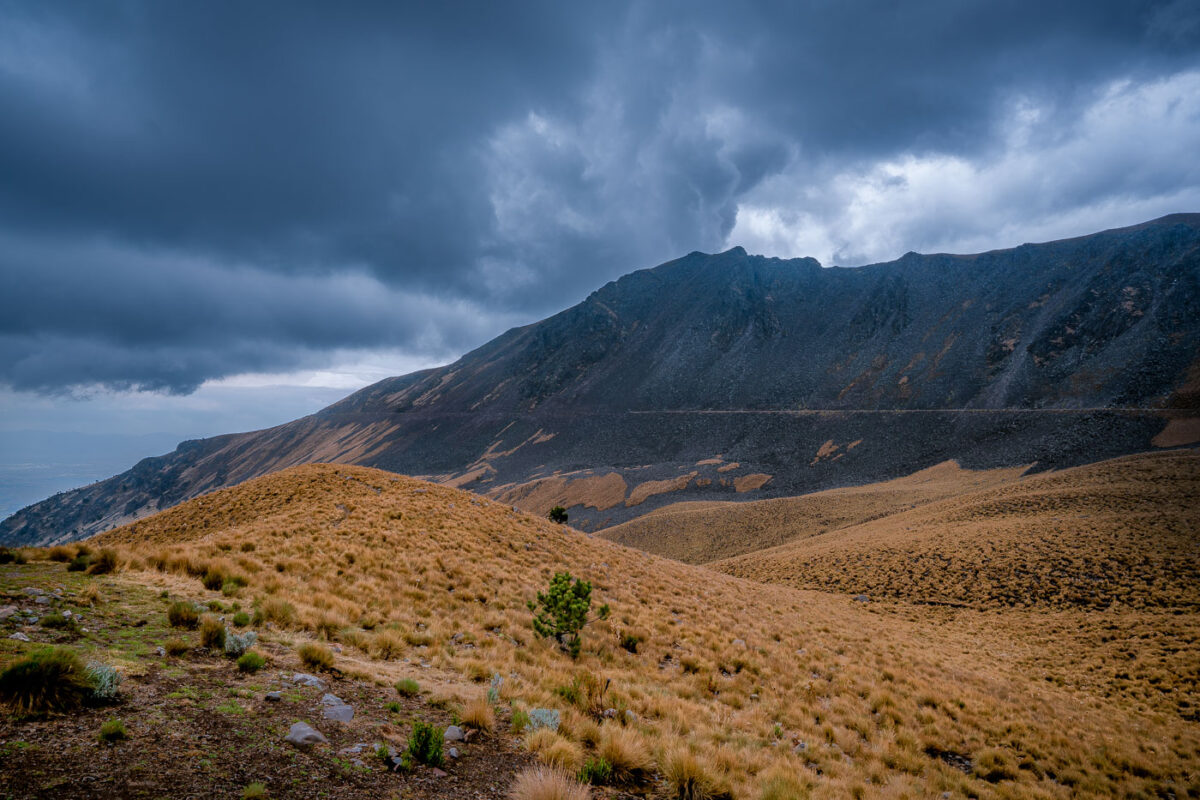
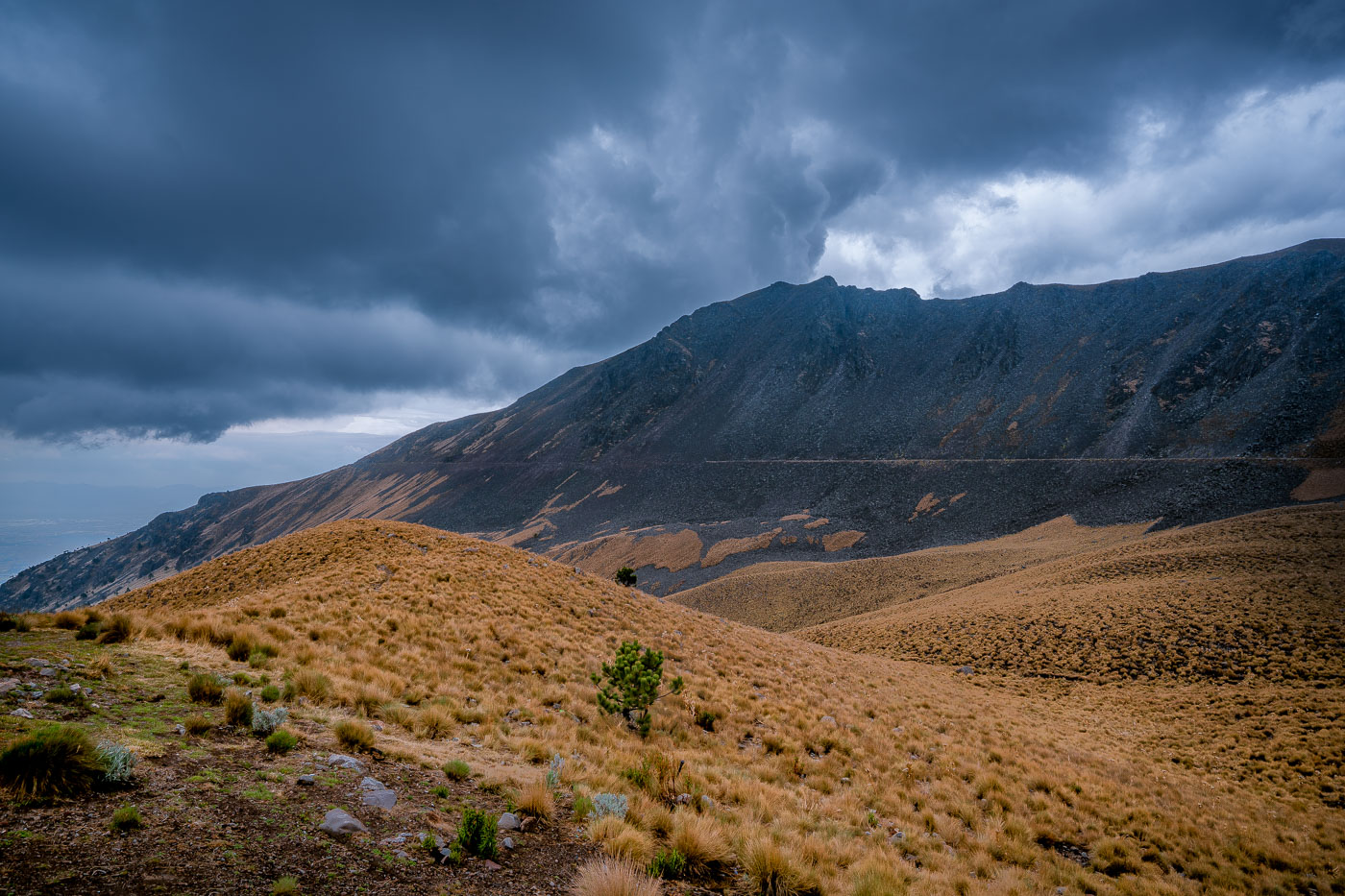
Nevado de Toluca stratovolcano in Central Mexico, a protected natural park known for its crater lakes and hiking trails.
Nevado de Toluca, a stratovolcano in central Mexico, is part of the Trans-Mexican Volcanic Belt. The volcano's caldera contains several crater lakes, including the popular Nevado de Toluca Lake. Historically, the area has been a significant site for indigenous cultures, with evidence of ritualistic practices dating back to pre-Hispanic times. Today, it is a protected natural park and a popular destination for hiking and mountaineering, offering panoramic views of the surrounding landscape.
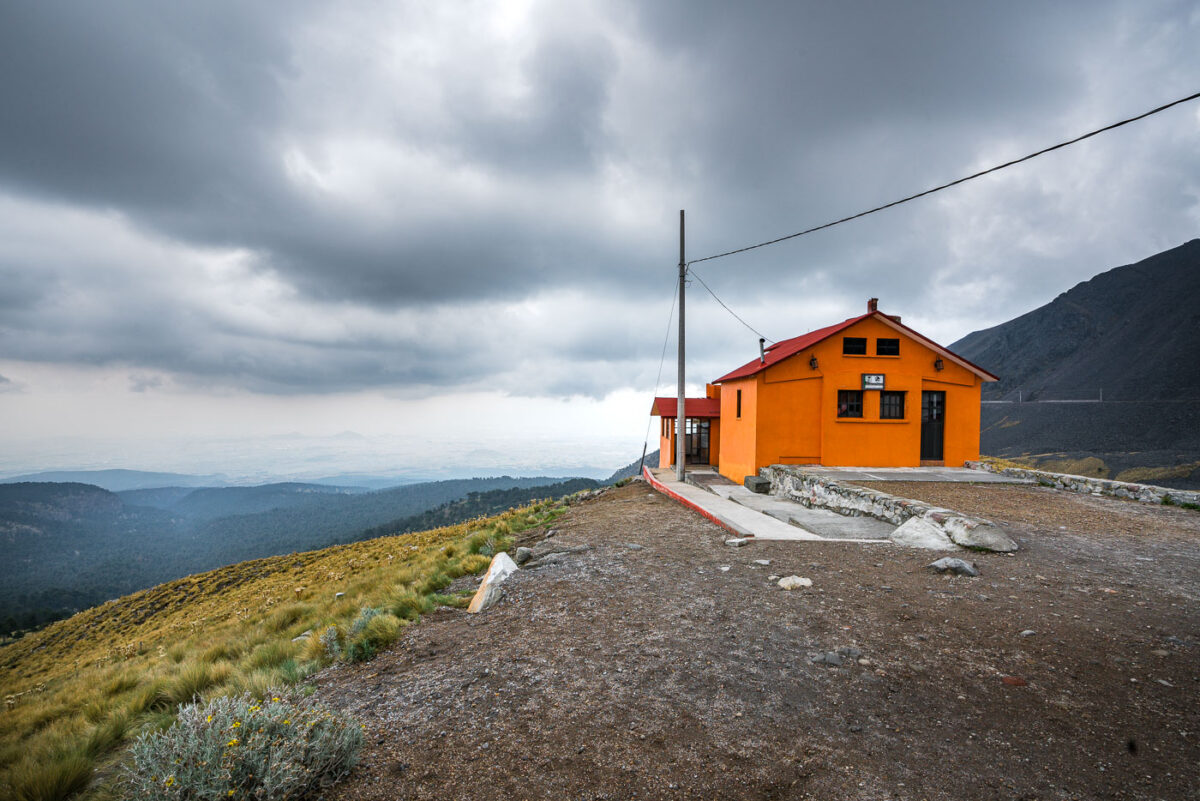
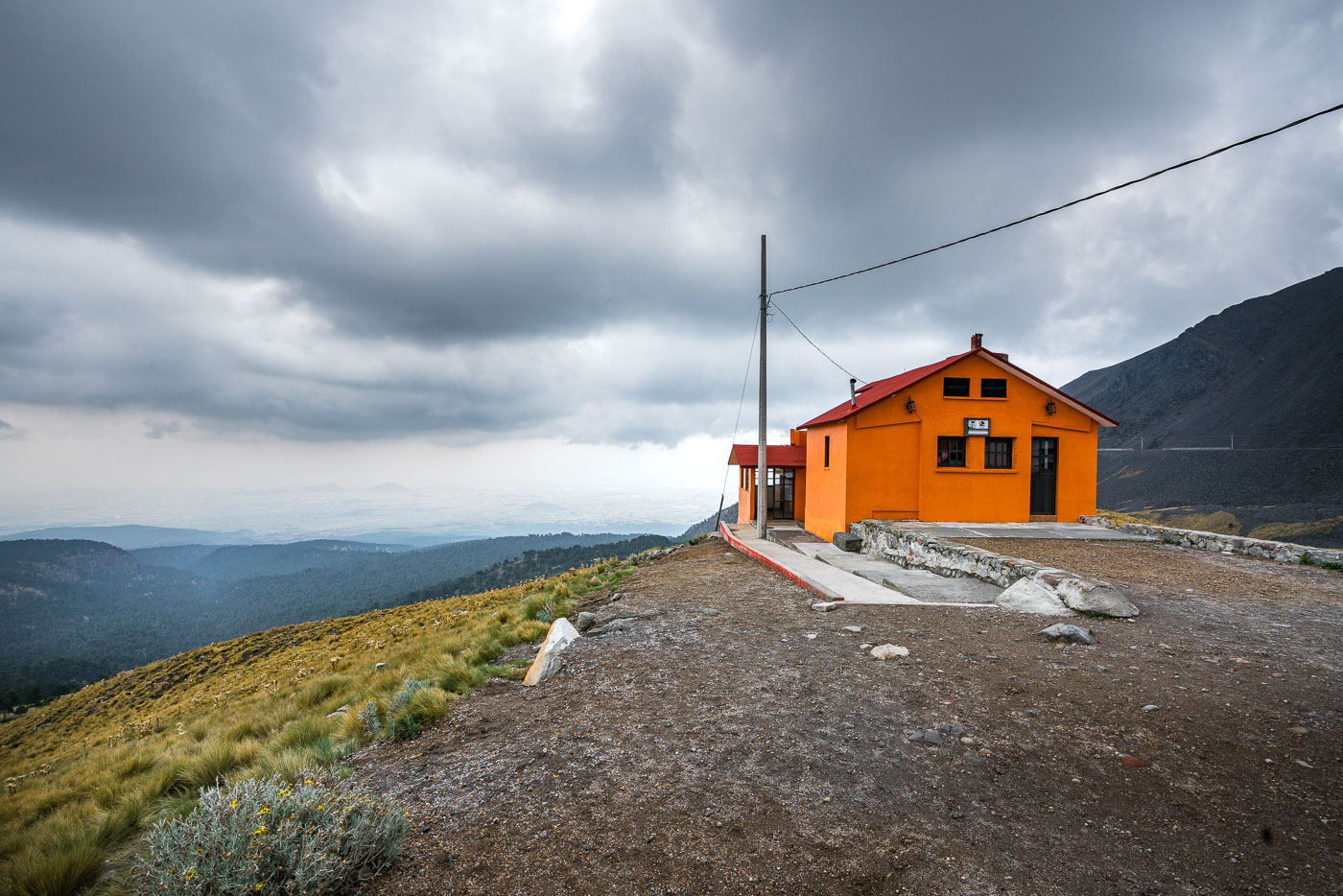
Orange mountain refuge building on Nevado de Toluca, Mexico, a stratovolcano west of Mexico City known for its crater lakes and alpine flora.
This orange building is situated on Nevado de Toluca, a stratovolcano in the Trans-Mexican Volcanic Belt, located approximately 80 kilometers west of Mexico City. The structure appears to be a mountain refuge or research station, providing shelter and facilities for visitors and scientists exploring the high-altitude environment. Nevado de Toluca is a significant natural landmark, known for its crater lakes and unique alpine flora, and serves as a popular destination for hiking and mountaineering.
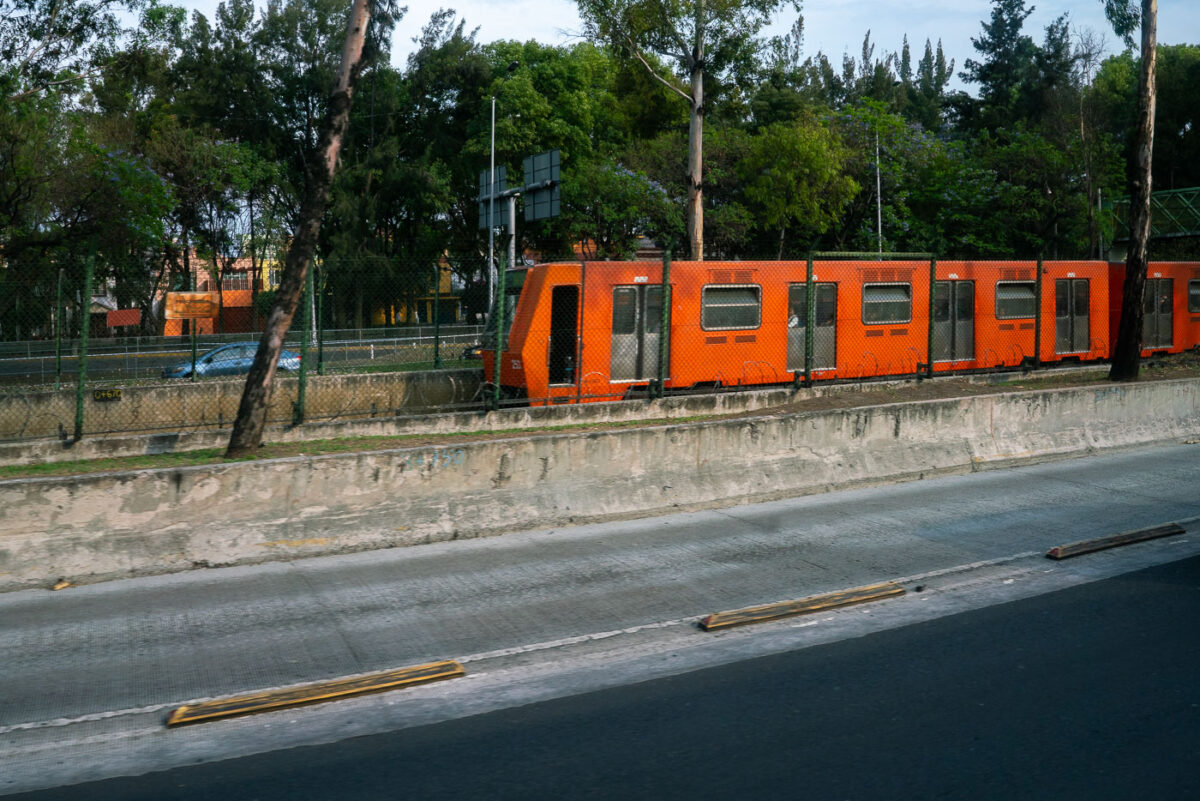
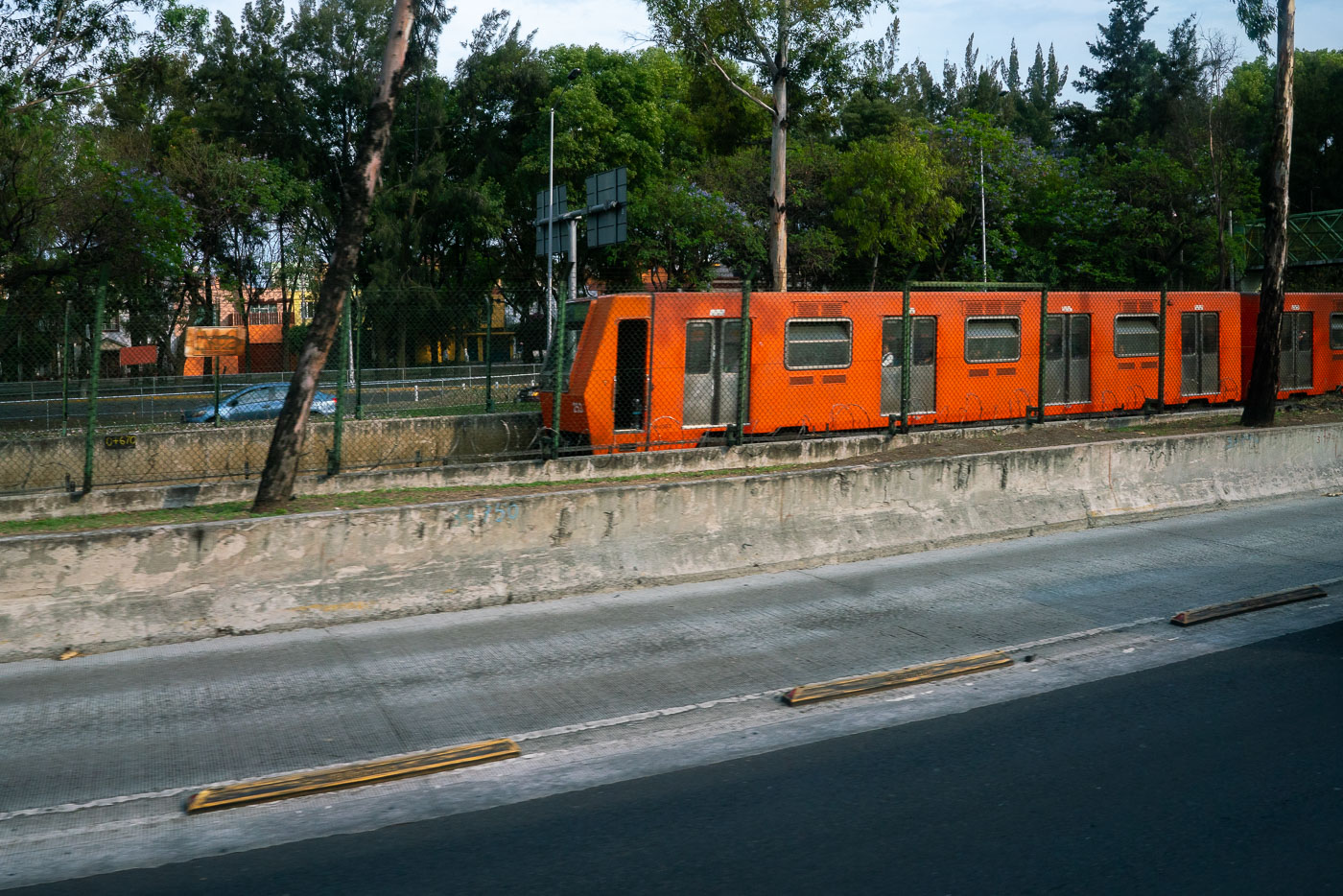
Subway train aboveground in Mexico City
An orange train on Mexico City Metro Line 1 travels alongside the Viaducto elevated highway. Opened in 1969, the Mexico City Metro is one of the largest subway systems in the world, serving millions of passengers daily. The rubber-tired trains, originally designed for the city's challenging seismic conditions, navigate both underground tunnels and elevated tracks. This section of Line 1, running adjacent to a major traffic artery, highlights the Metro's crucial role in the city's transportation network and its integration into the urban fabric.
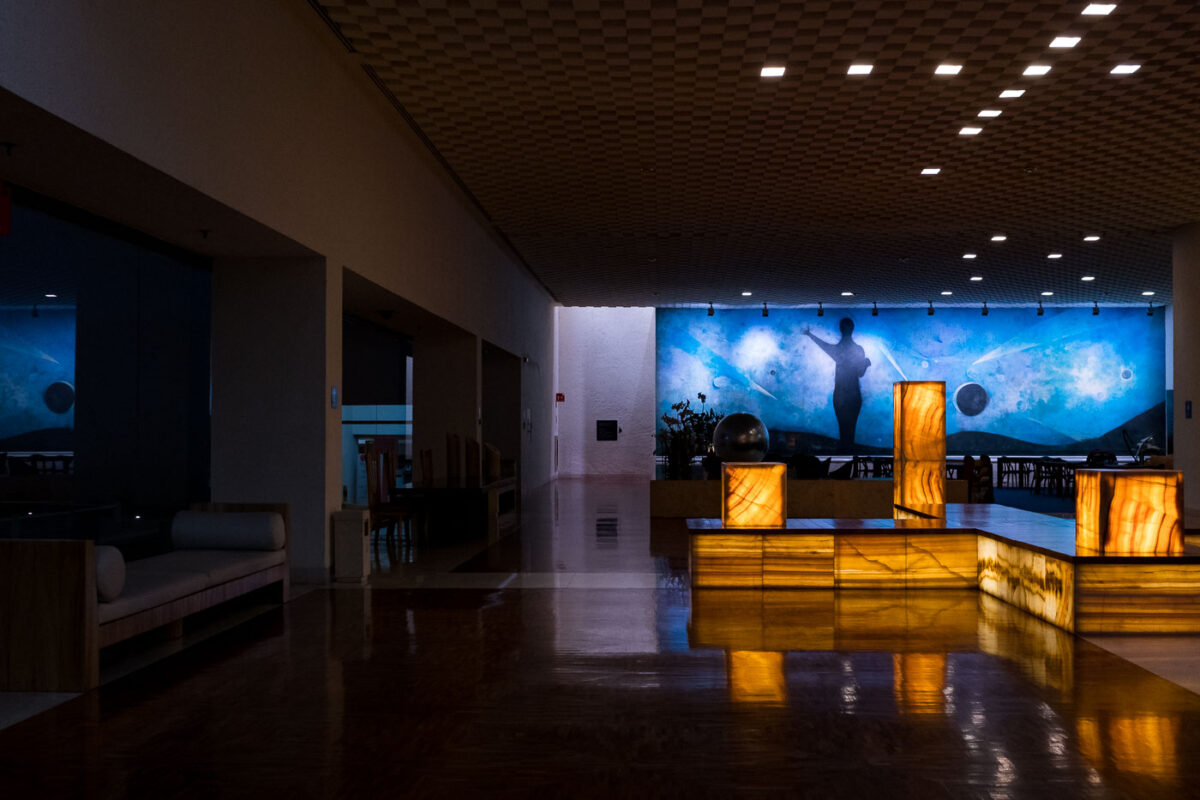
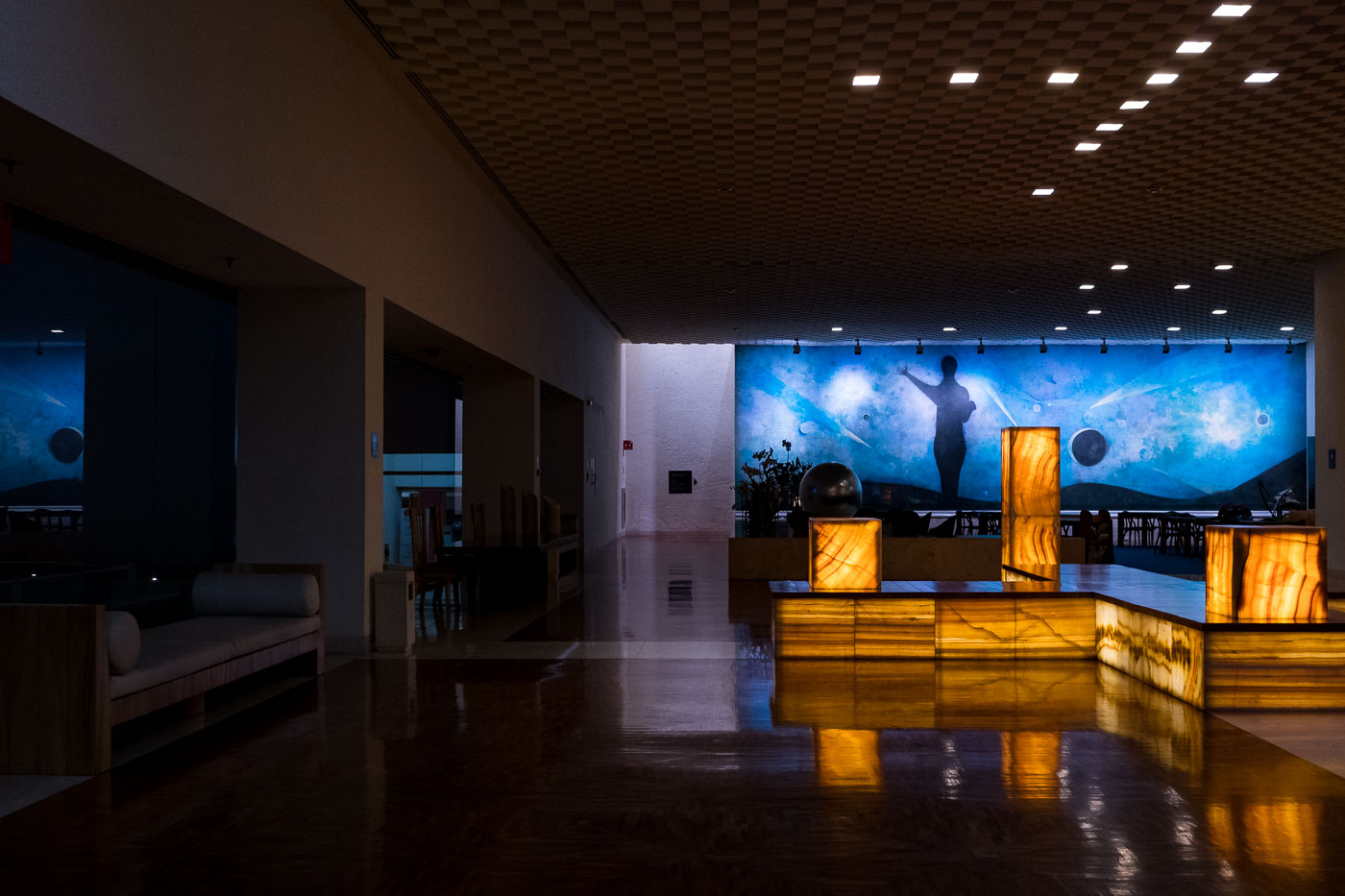
Indside a Mexico City Hotel
The lobby of a Mexico City hotel features a large mural depicting celestial forms, a common element in the city's architectural design that integrates public art. Illuminated onyx columns and a polished marble floor create a sophisticated ambiance, reflecting modernist principles with natural materials. This design approach, emphasizing clean lines and subtle symmetry, is characteristic of upscale hotels in the capital, offering a sense of luxury and restraint.
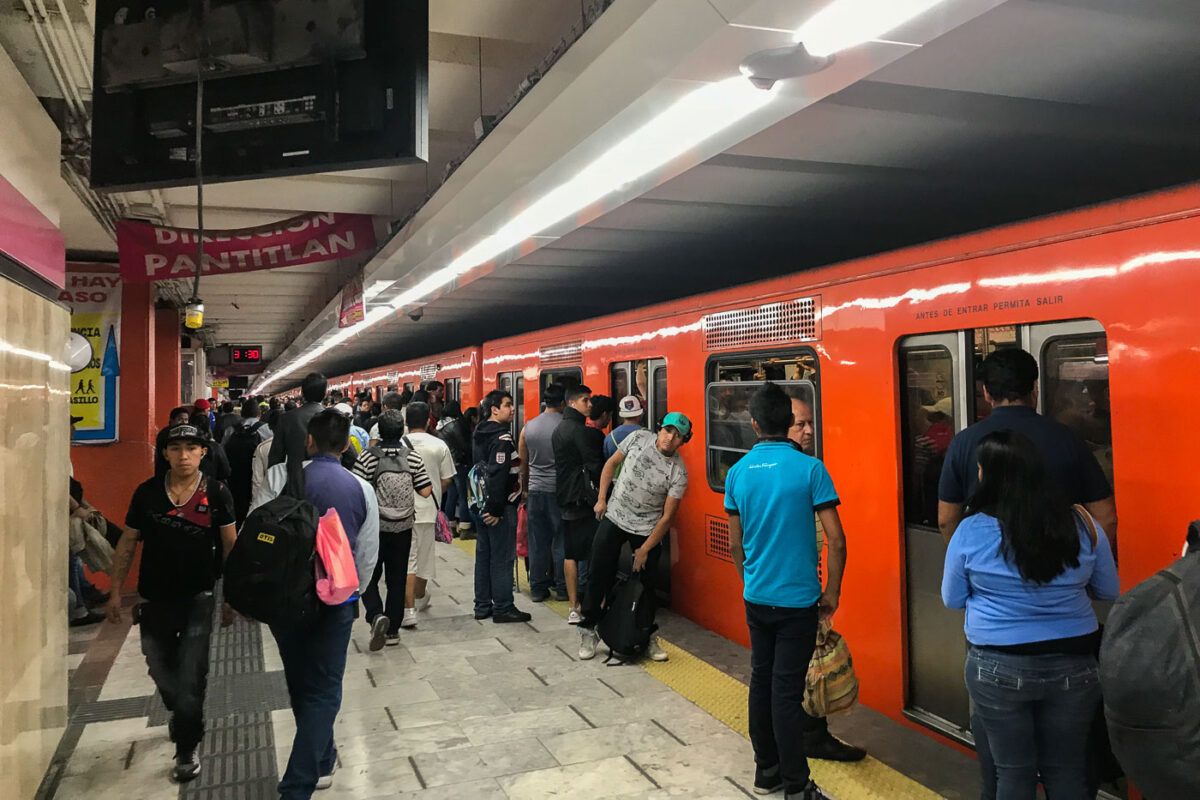
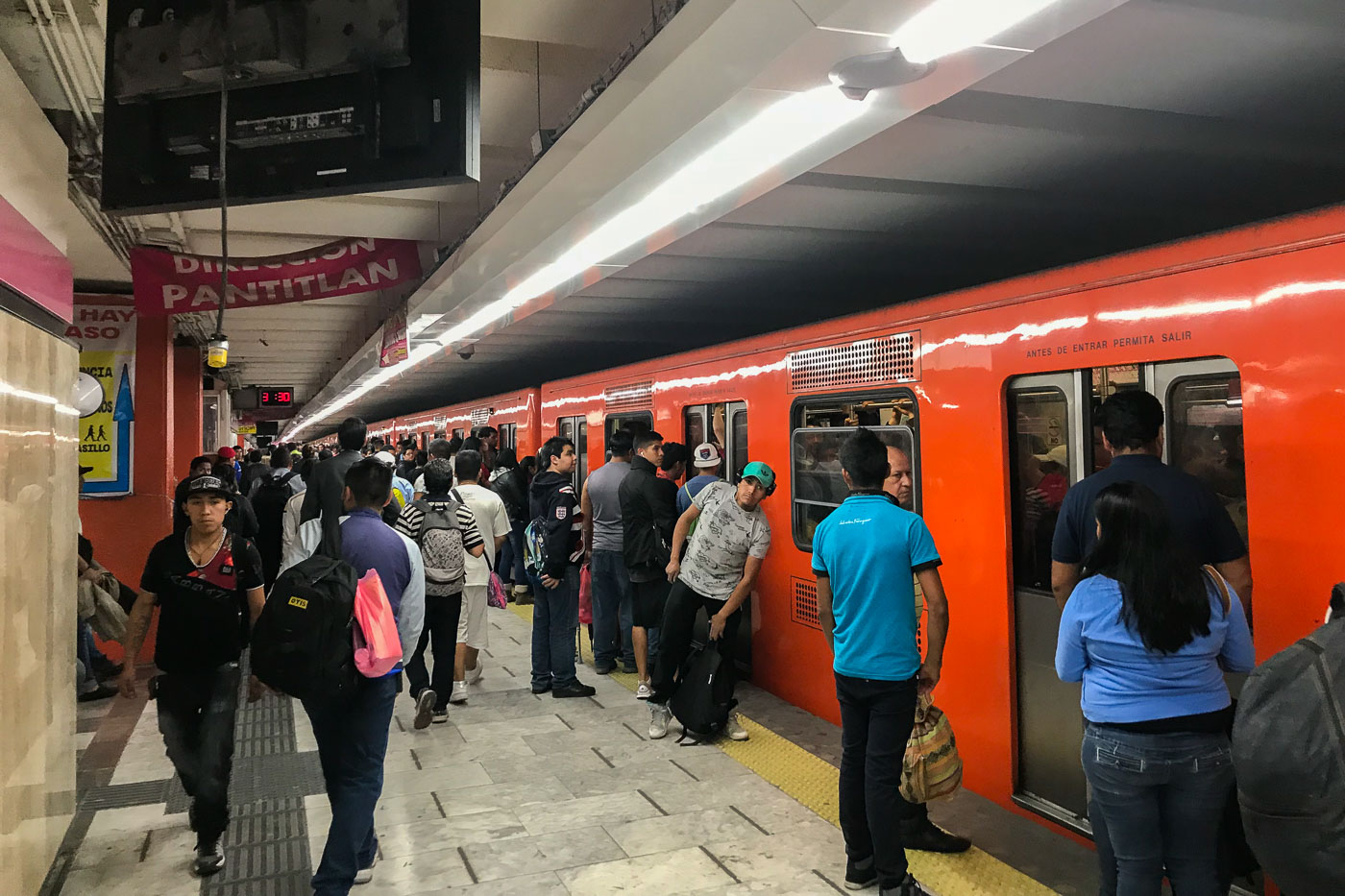
Passengers wait on the platform at Pantitlan Station, a major transfer point for Mexico City Metro Lines 1, 5, 9, and A. An orange train is stopped at the platform.
Passengers wait on the platform at Pantitlan Station, a major transfer point for Mexico City Metro Lines 1, 5, 9, and A. An orange train is stopped at the platform, with signage indicating "DIRECCION PANTITLAN" and "ANTES DE ENTRAR PERMITA SALIR." Pantitlan Station serves as a critical hub for commuters in the eastern part of Mexico City, connecting multiple lines and facilitating travel across the vast metropolitan area. Its design and function are central to the daily transit of millions of residents, reflecting the city's extensive public transportation network. Keywords: Mexico City Metro, Pantitlan Station, Public Transit, Subway, Commuter Rail, Urban Transportation, Mexico City
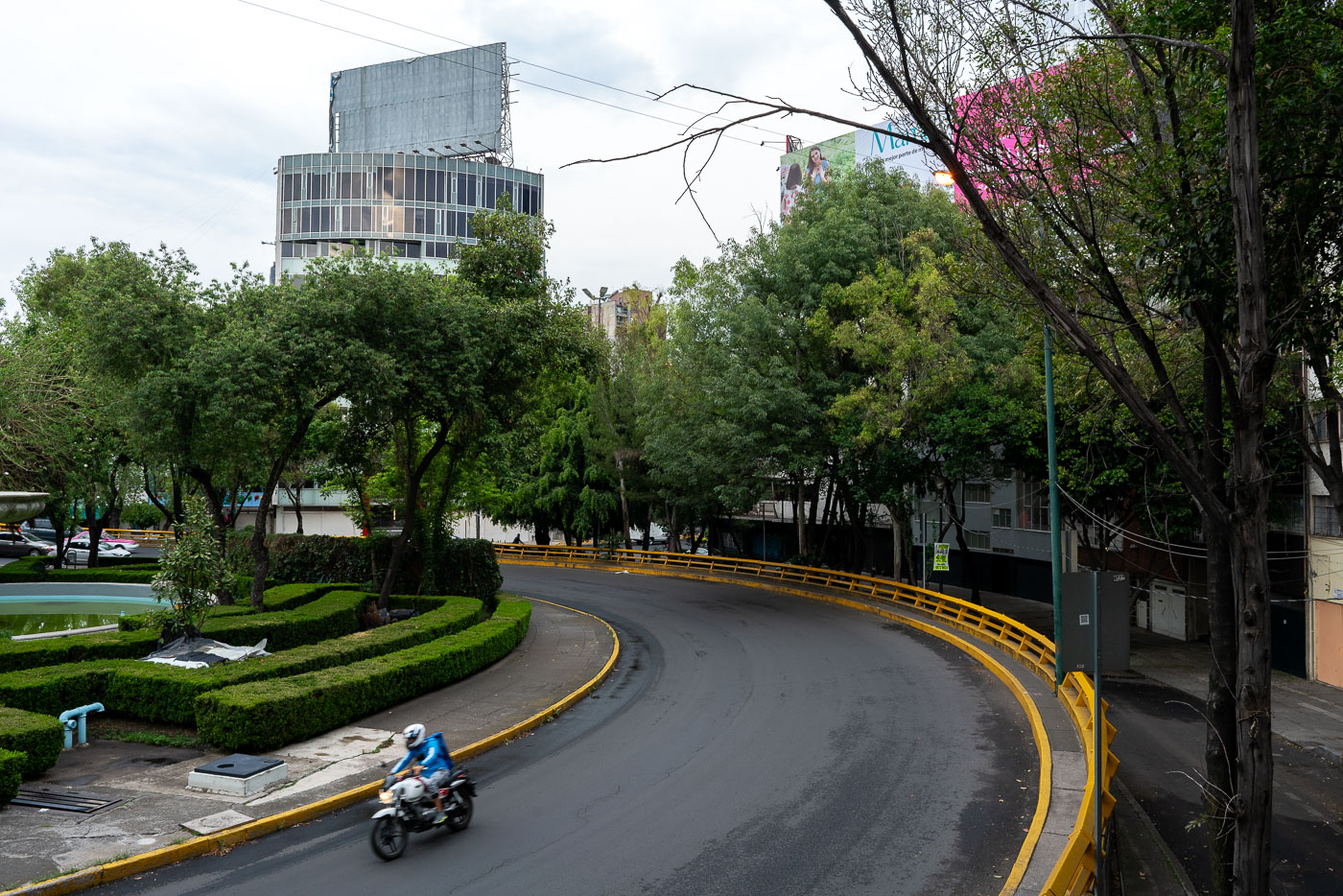
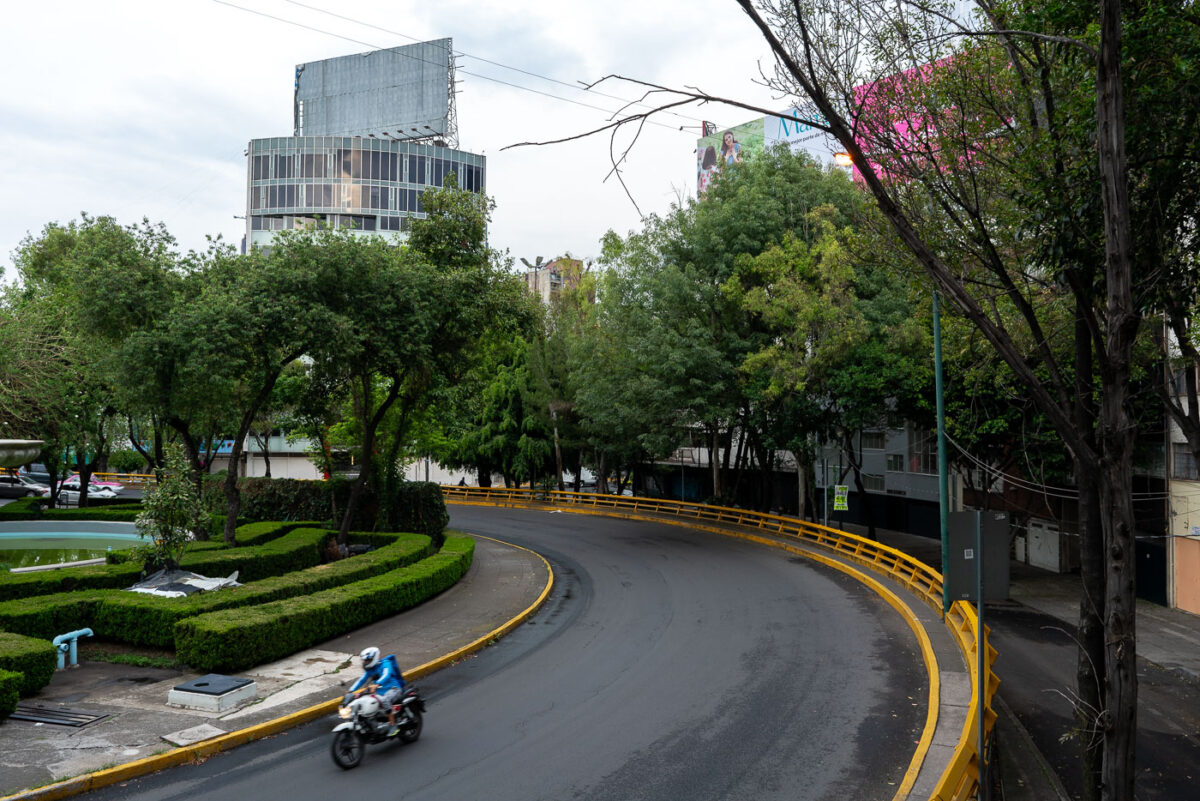
A motorcyclist rides on a curved road near the Fuente de los Buhos in Mexico City's Bosque de Chapultepec park.
A motorcyclist navigates a curved road adjacent to the Fuente de los Buhos in Mexico City. This public space, known for its owl sculptures, is a notable landmark within the city's Bosque de Chapultepec park. The park itself is one of the oldest and largest urban parks in the Western Hemisphere, serving as a vital green lung and cultural hub for the metropolis. The surrounding architecture reflects the modern development of the area, contrasting with the historical significance of the park.
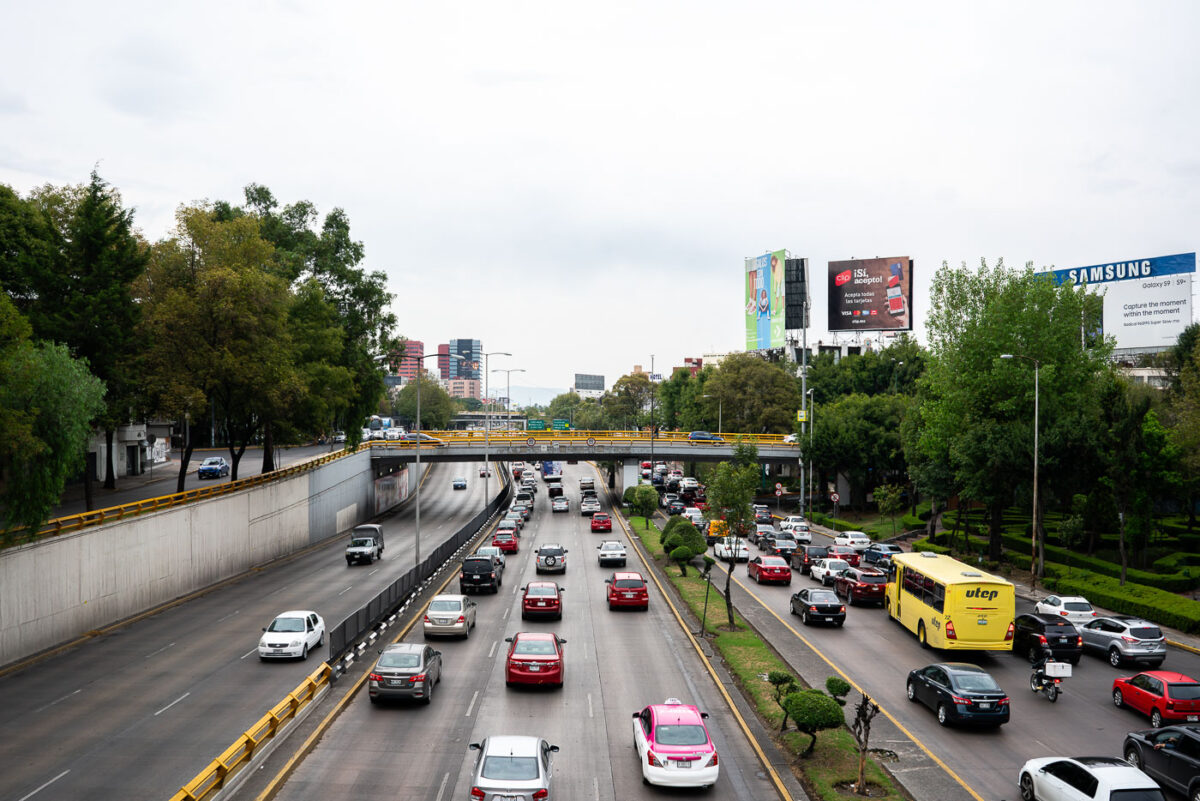
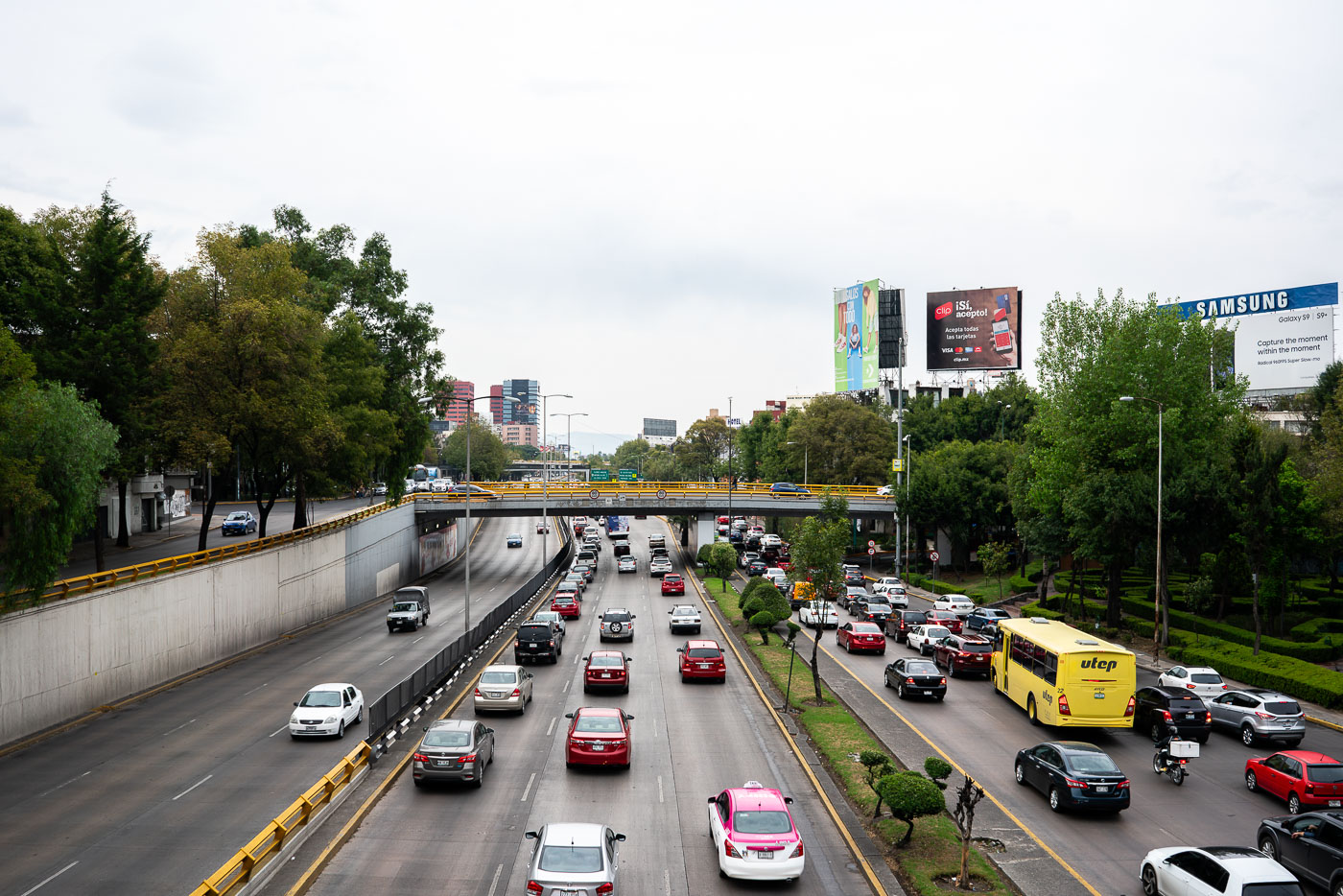
Traffic on Circuito Interior Melchor Ocampo, a major artery in Mexico City, facilitates daily transportation and economic activity.
Circuito Interior Melchor Ocampo, a major artery in Mexico City, is a vital component of the city's transportation network. This elevated highway and its surrounding roadways facilitate the movement of thousands of vehicles daily, connecting various districts and easing congestion. The infrastructure, characterized by its multi-level design and extensive traffic flow, reflects the ongoing development and expansion of Mexico City as a global metropolis. Its continuous operation is essential for the daily lives of residents and the economic activity of the region.
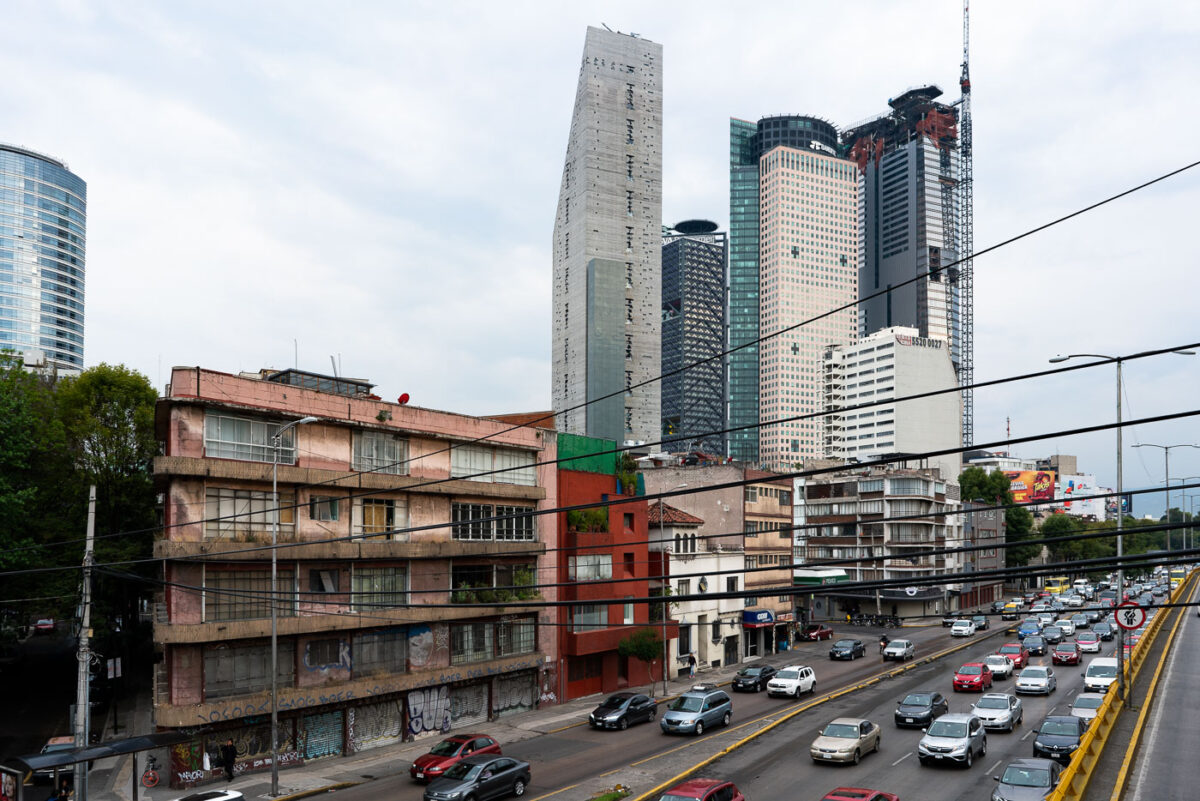
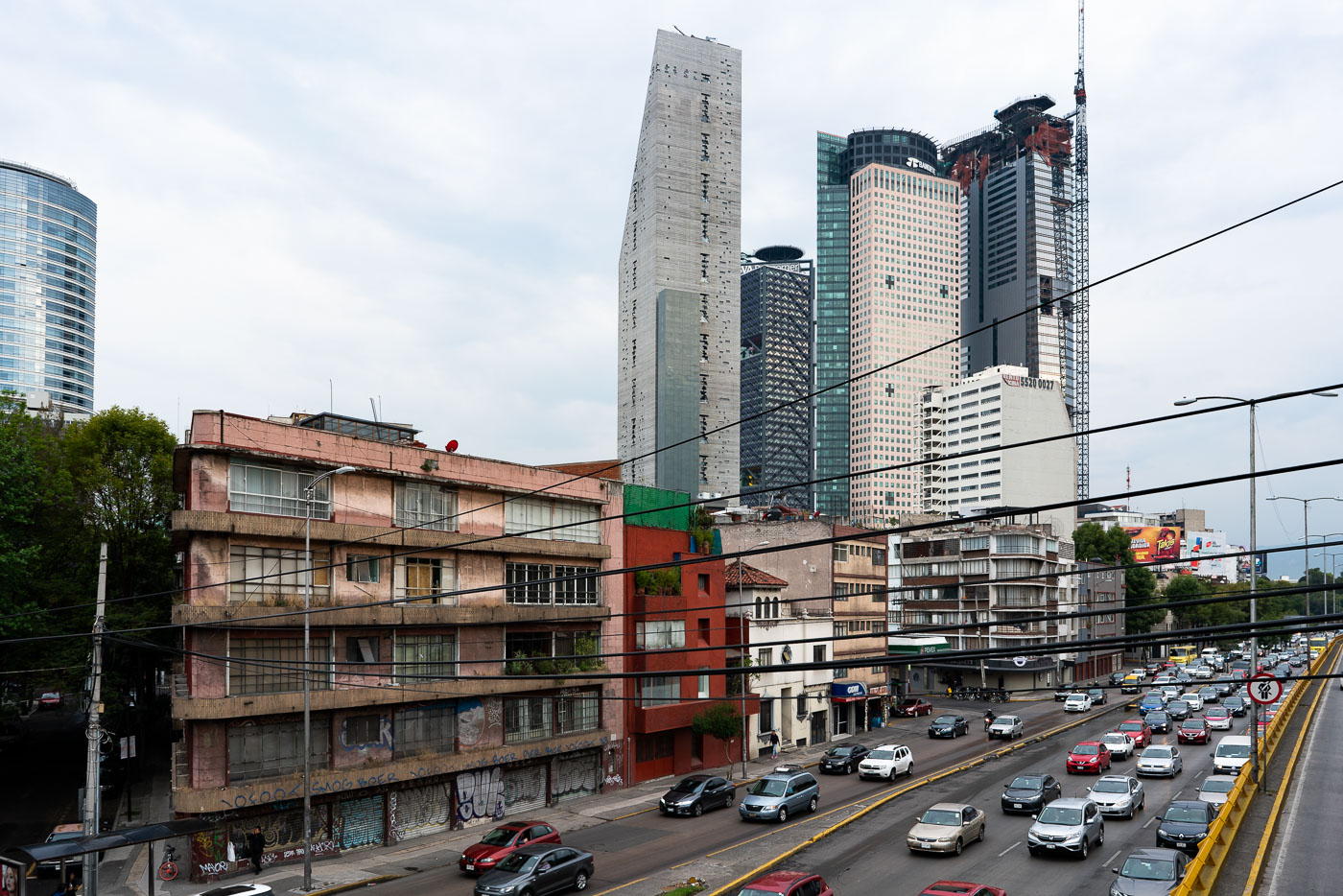
High rise development in Mexico City
Avenida Paseo de la Reforma in Mexico City showcases the city's rapid development, juxtaposing mid-20th-century architecture with contemporary skyscrapers. The older buildings, some showing signs of wear and graffiti, represent the city's past, while the towering glass and steel structures like Torre Reforma, Torre BBVA, and Torre Mayor signify its status as a major financial center in Latin America. This thoroughfare, a key artery of the city, facilitates westward traffic towards Chapultepec Park, reflecting the continuous growth and dynamism of Mexico City.
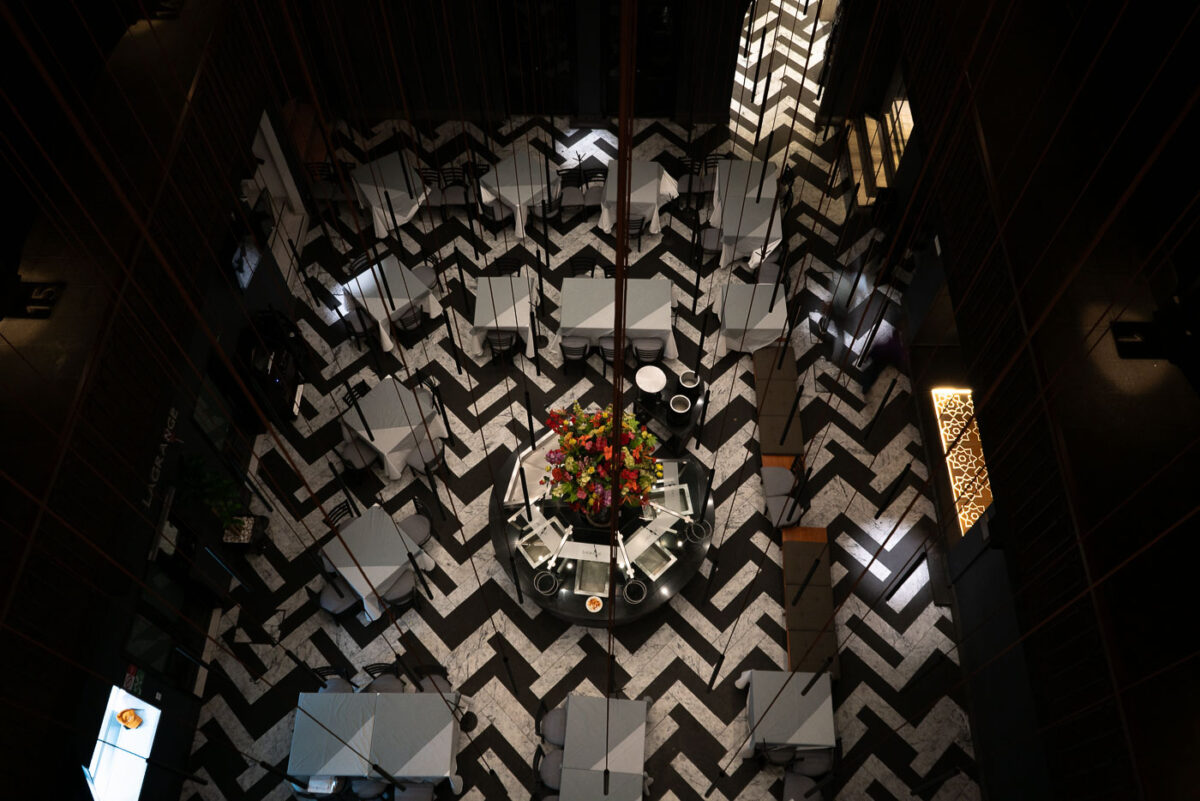
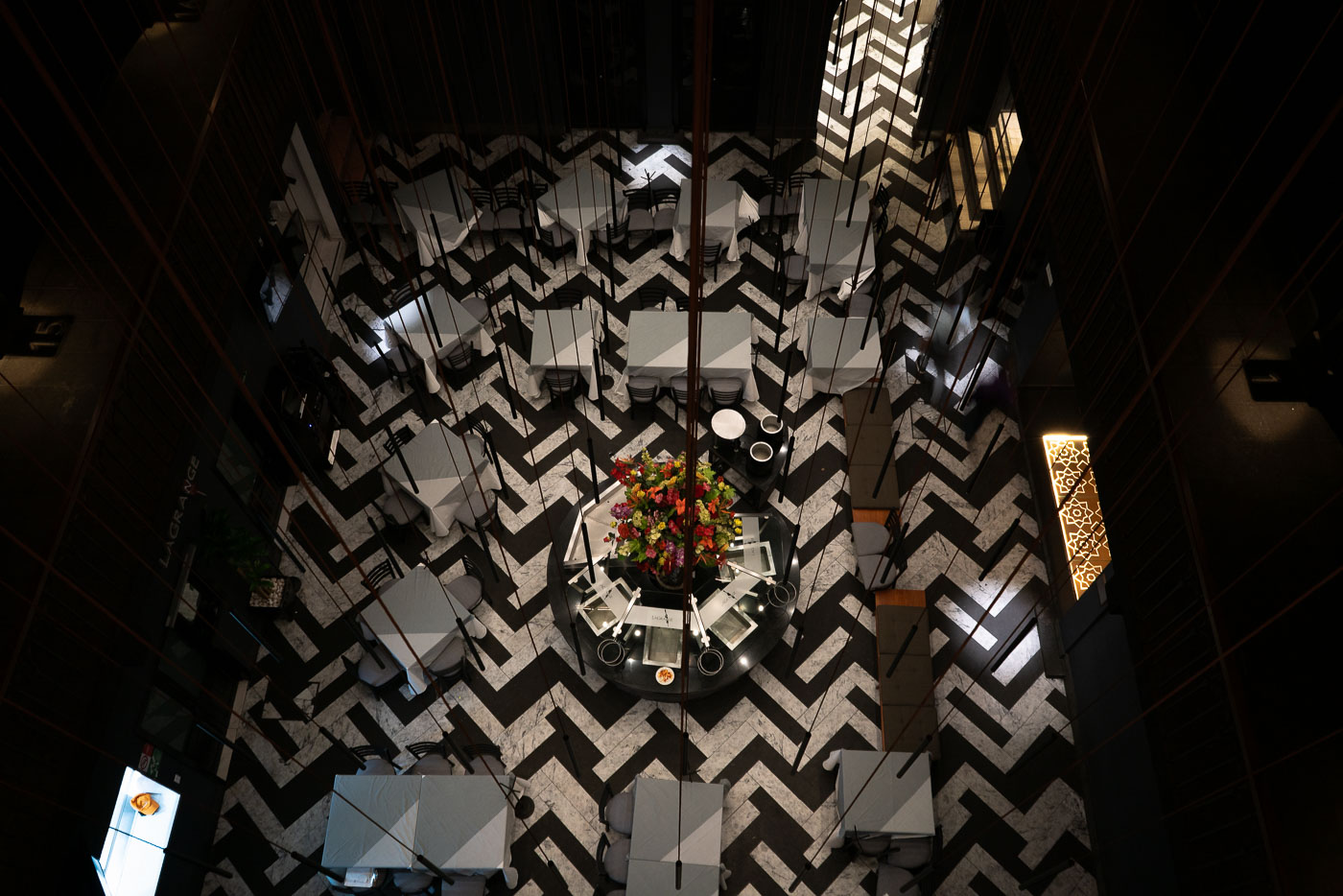
The interior of Hotel Punta MX restaurant in Mexico City features a black and white chevron floor with tables set for dining.
The interior of the restaurant at Hotel Punta MX in Mexico City is characterized by its striking black and white chevron-patterned floor. The space is set up with multiple tables, many covered in white tablecloths, suggesting a formal dining environment. The overhead perspective highlights the geometric design of the flooring and the arrangement of the dining area, creating a visually dynamic composition.
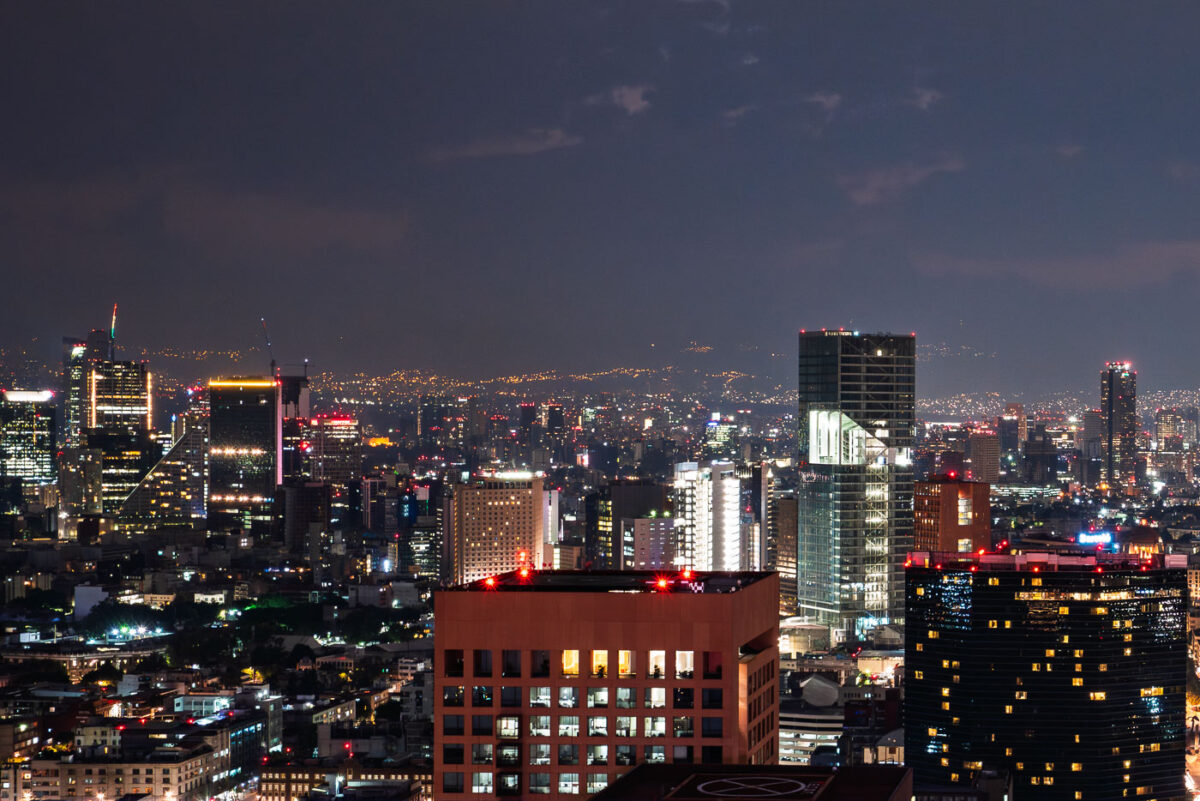
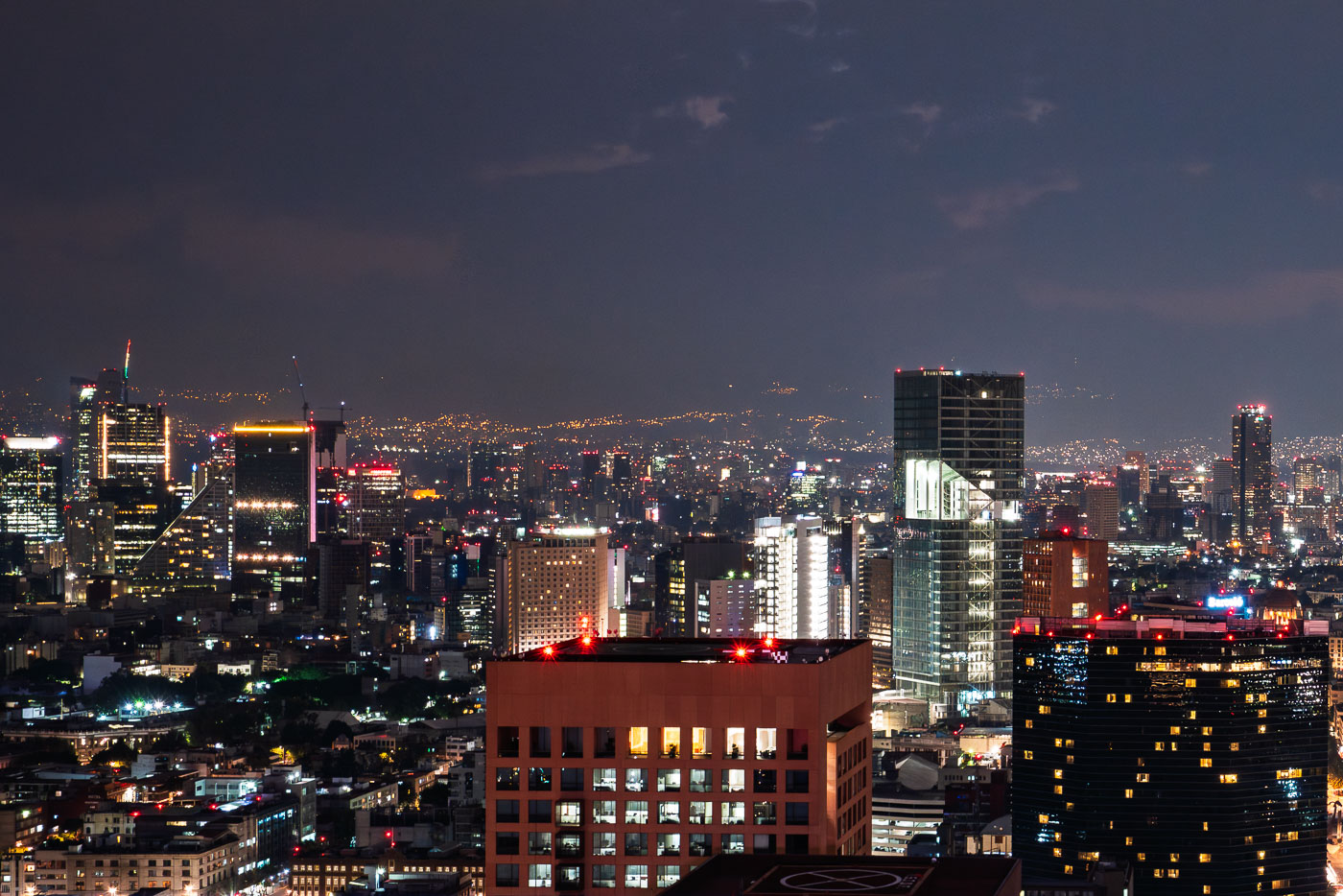
Mexico City's illuminated skyline at night showcases modern development in the Western Hemisphere's largest metropolitan area.
Mexico City's skyline is illuminated at night, showcasing the city's modern development. The metropolitan area, one of the largest in the Western Hemisphere, has a rich history dating back to its founding as Tenochtitlan by the Aztecs in 1325. Today, it serves as a major economic, cultural, and political center for Mexico. The dense concentration of high-rise buildings reflects its status as a global city and a hub for commerce and innovation.
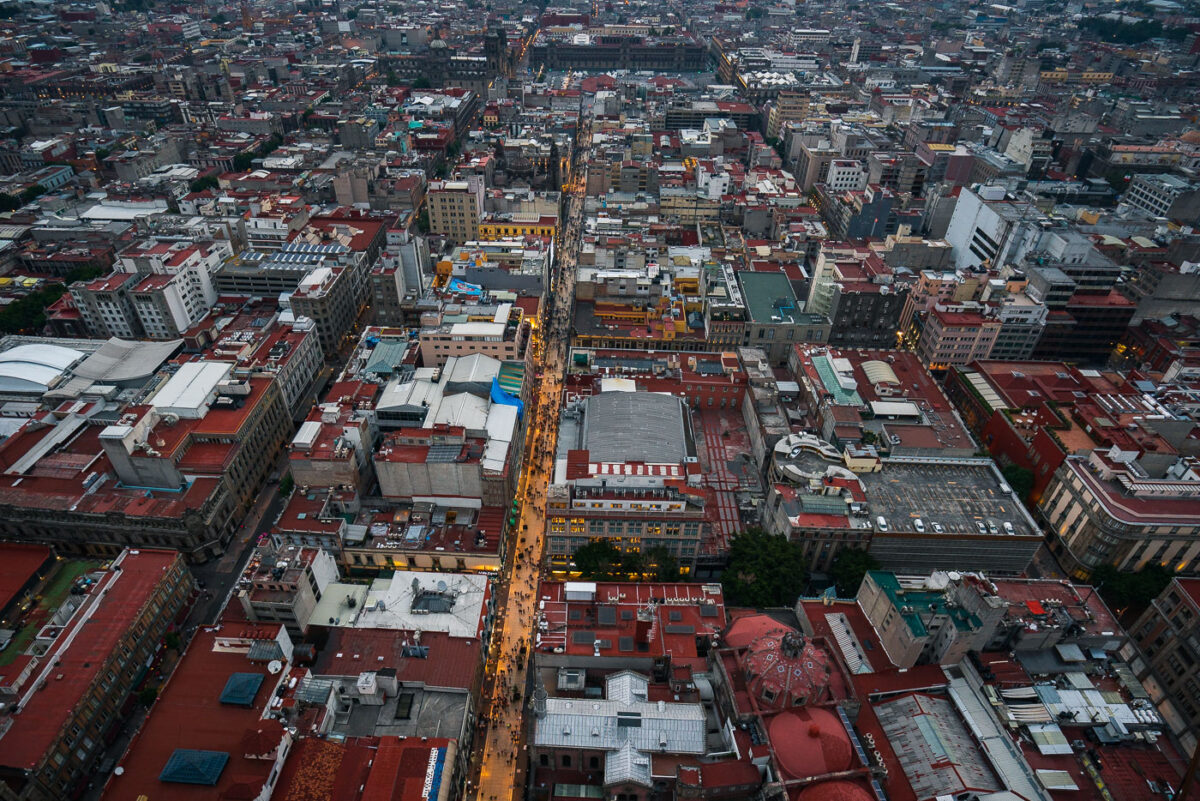
Evening view of Calle Francisco I. Madero, a pedestrian street in Mexico City's Centro Histórico, lined with historic architecture and bustling with people.
Calle Francisco I. Madero, a primary pedestrian thoroughfare in Mexico City's Centro Histórico, is shown at dusk. This street, historically a commercial hub since colonial times, was pedestrianized in 2010, transforming it into one of Latin America's busiest walkways. It connects significant landmarks such as the Torre Latinoamericana and the Zócalo, and is lined with historic architecture, retail spaces, and notable buildings like the Casa de los Azulejos.
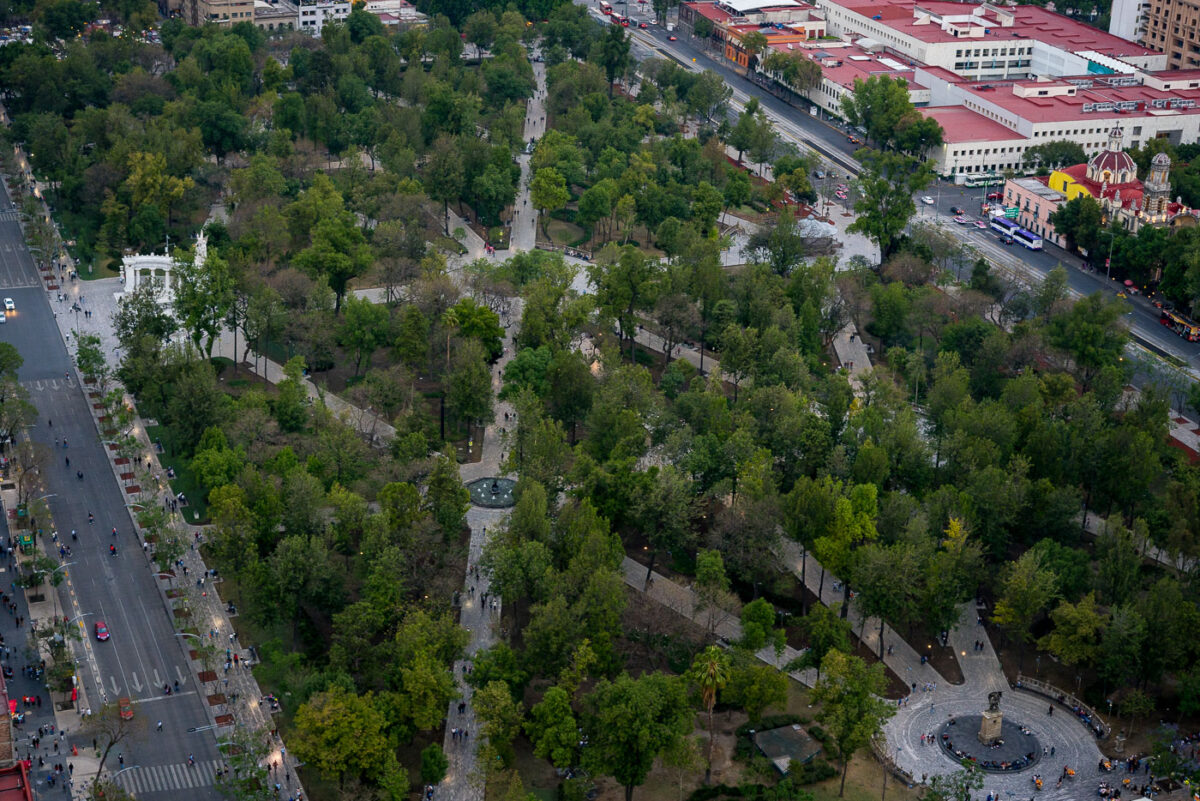
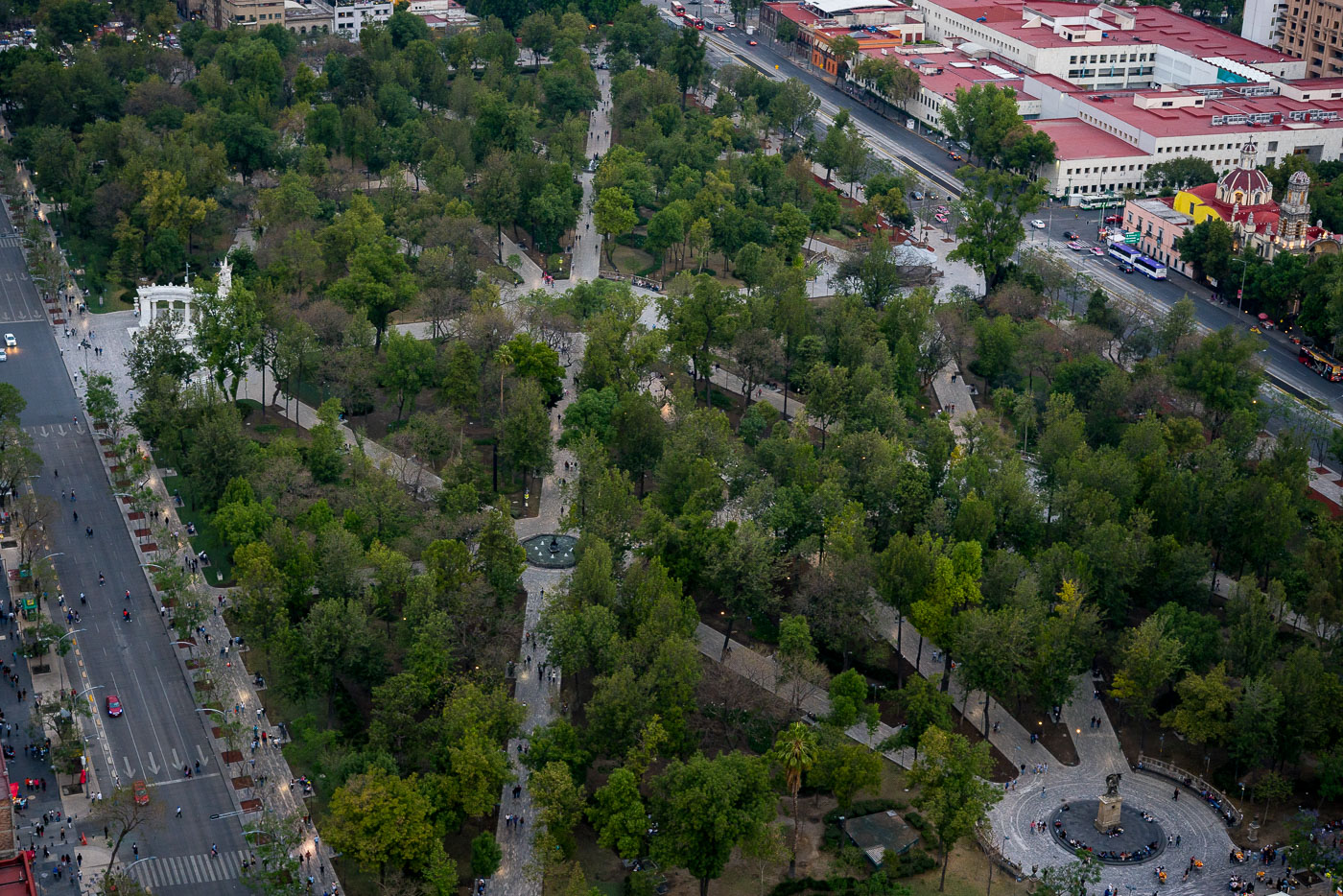
Alameda Central and the Hemiciclo a Juarez from Above
An aerial view of Alameda Central, Mexico City’s oldest public park, established in 1592 and redesigned in the 19th century in the European style. The white semicircular monument visible on the left is the Hemiciclo a Juárez, erected in 1910 to honor President Benito Juárez. The park’s grid of walkways, fountains, and neoclassical sculptures serves as a green centerpiece of the Centro Histórico, surrounded by civic and cultural landmarks like the Palacio de Bellas Artes.
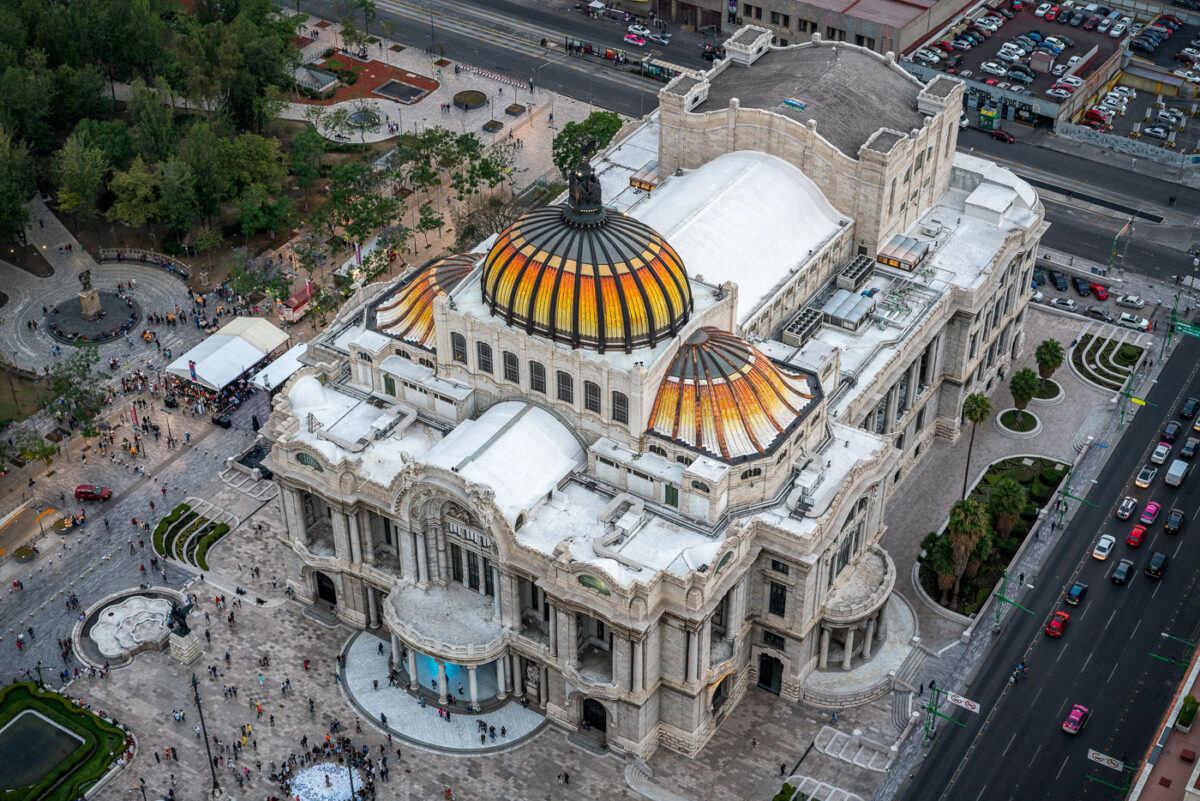
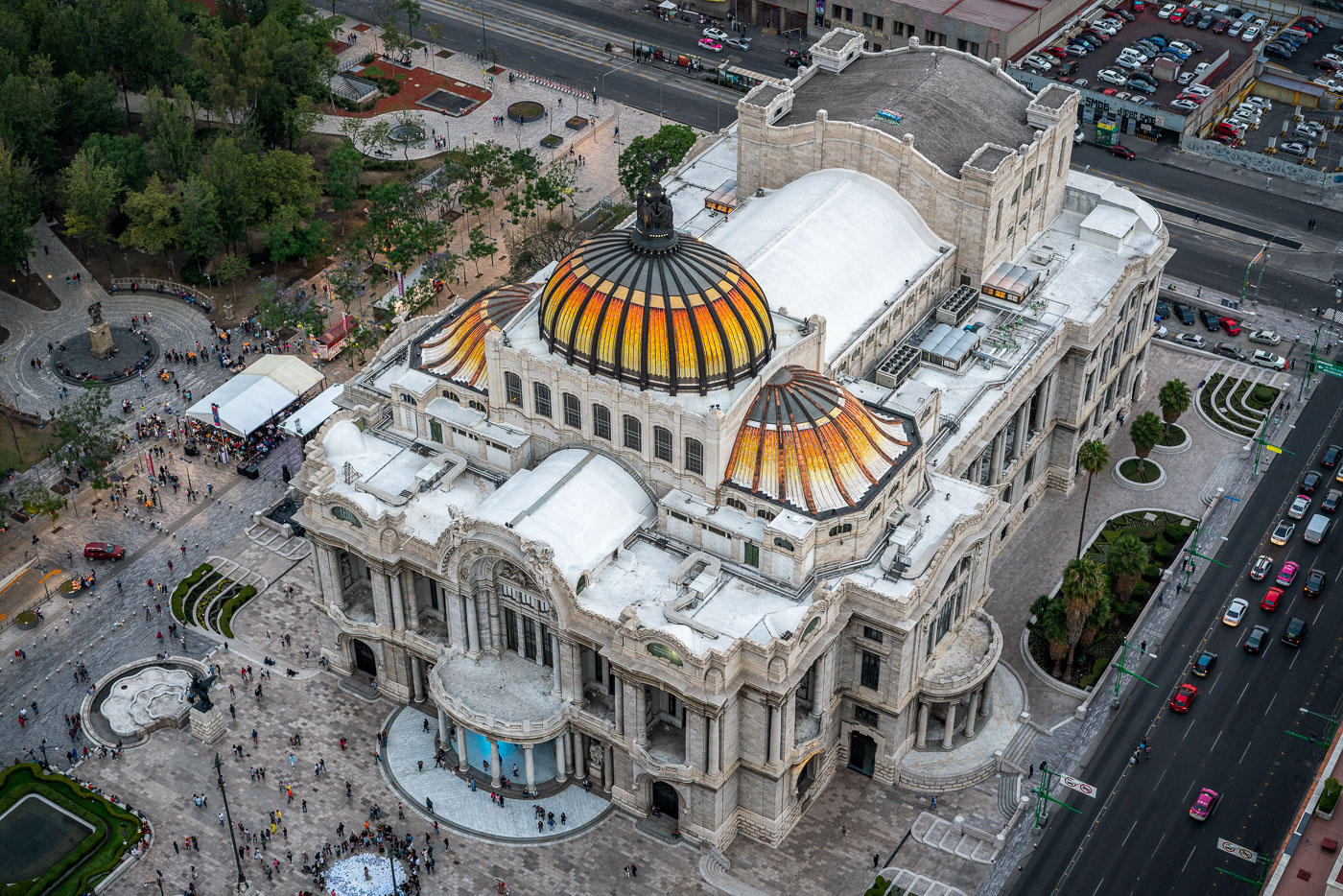
Palacio de Bellas Artes in Mexico City 2018
The Palacio de Bellas Artes, a prominent cultural landmark in Mexico City, is viewed from above. Construction began in 1908 and concluded in 1934, resulting in a structure that blends Art Nouveau and Art Deco architectural styles. Its distinctive tiled dome, a vibrant mosaic of orange and yellow, crowns the building. The palace serves as a venue for performing arts and houses significant murals by Mexican artists. Adjacent to the palace is the Alameda Central, Mexico City's oldest public park, which continues to be a gathering space for diverse groups.
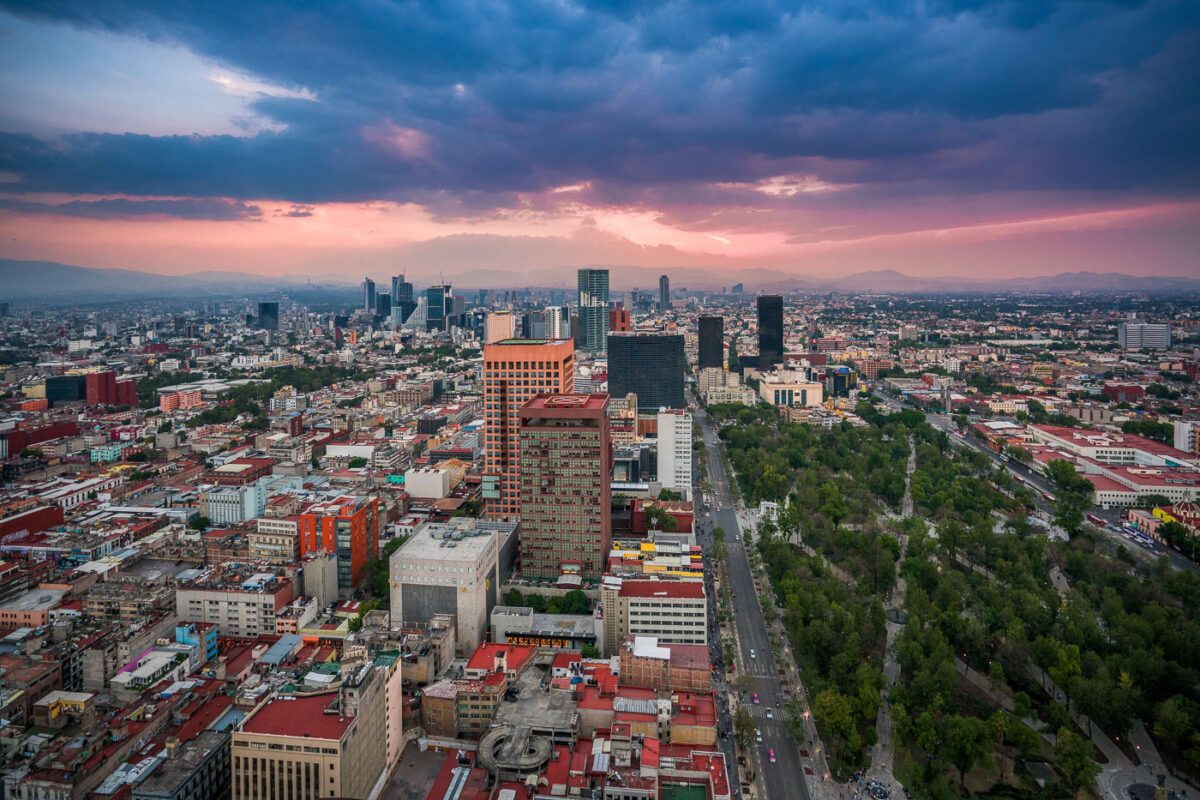
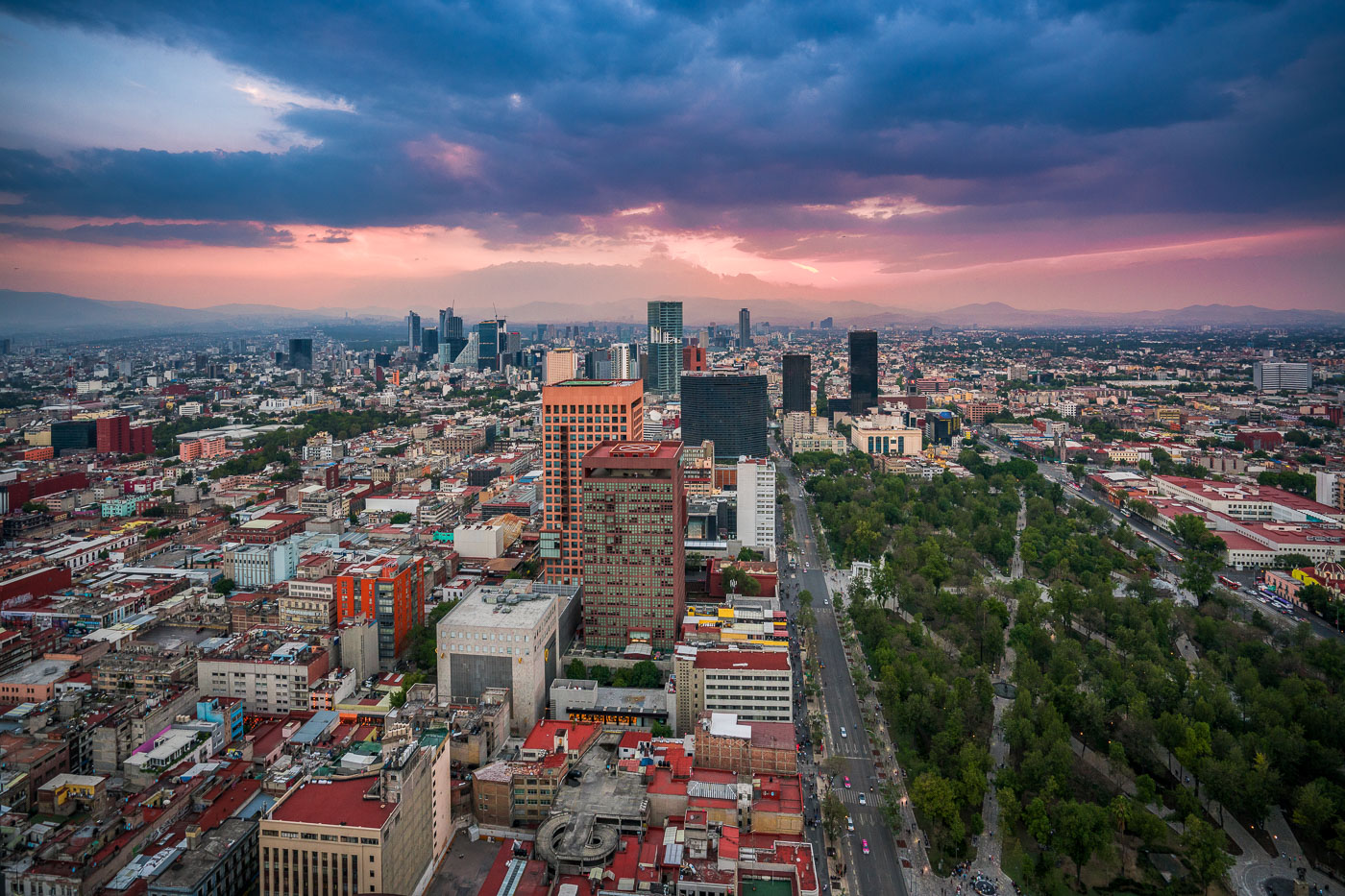
Mexico City Sunset above Paseo de la Reforma
Mexico City's Paseo de la Reforma, a grand boulevard inspired by European boulevards, cuts diagonally through the urban landscape at dusk. Originally conceived in the 1860s as Paseo de la Emperatriz, it was renamed and reconfigured over time to become a central artery for the city. The boulevard is flanked by historic parks like Alameda Central and modern high-rise office towers, reflecting the city's continuous development. This avenue serves as a primary route for transportation, public events, and as a symbol of Mexico City's economic and cultural dynamism.
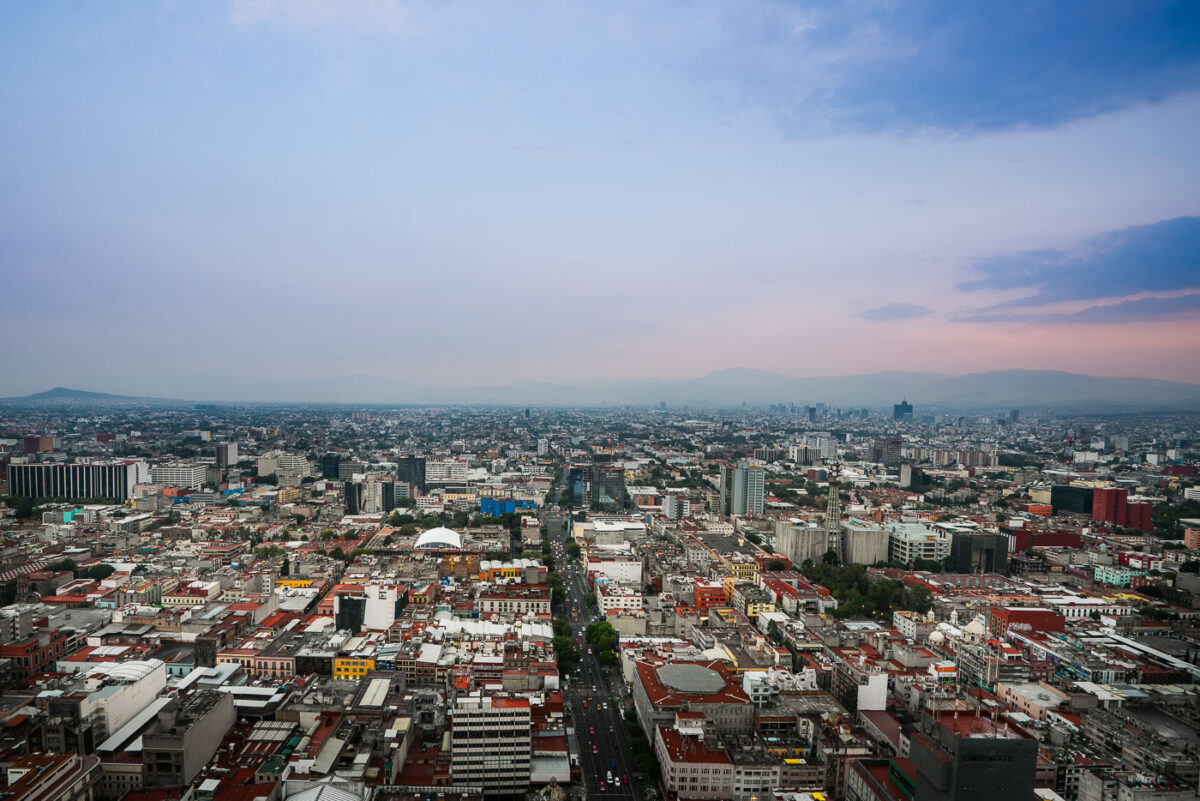
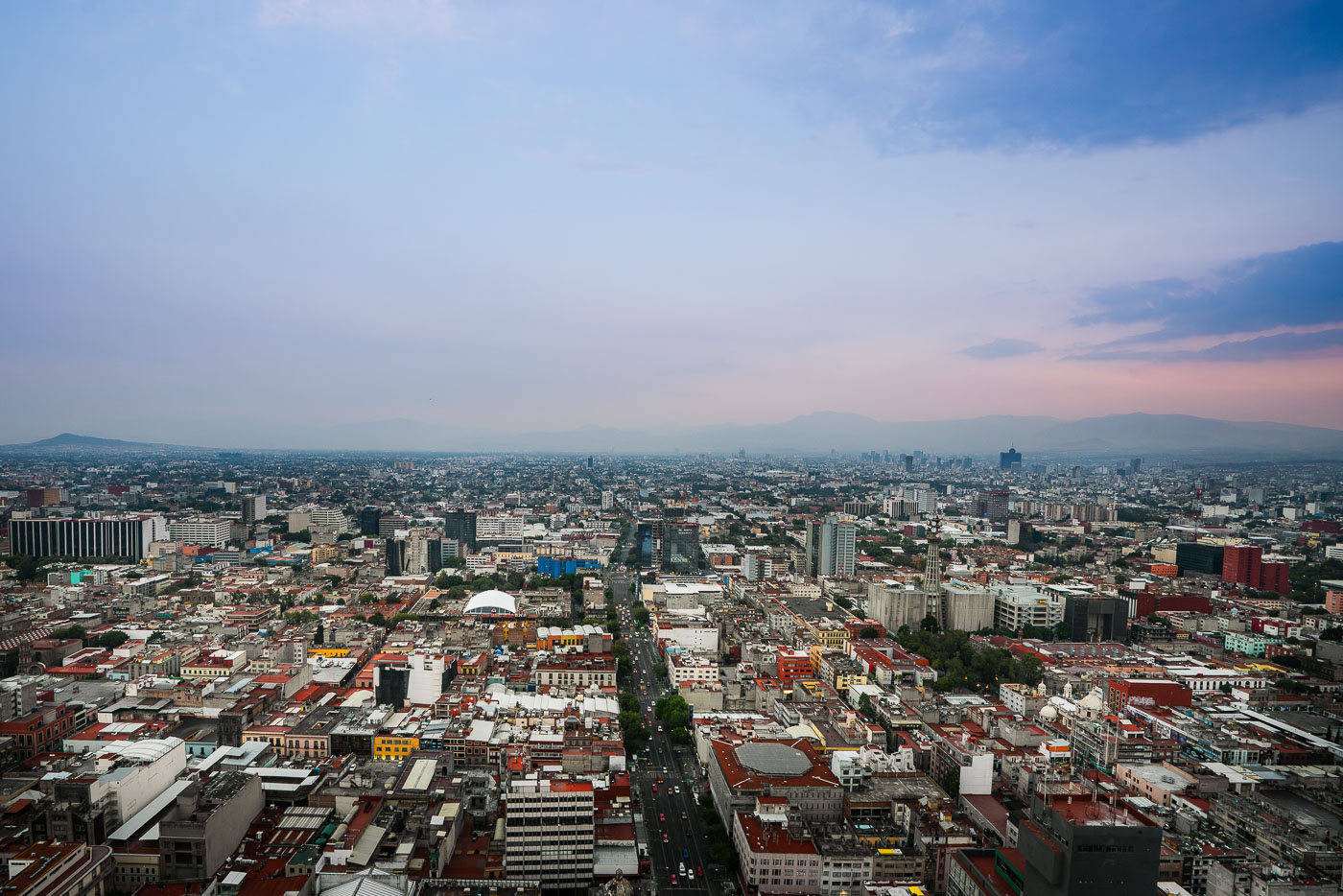
Looking out in Mexico City at the city from above
Looking south from the Torre Latinoamericana, this panoramic view captures the vast scale of Mexico City as it extends across the Valley of Mexico. The dense grid of the Centro Histórico transitions into modern commercial districts, framed by the distant volcanic mountains. Visible near the center are landmarks like Eje Central Avenue and the white dome of the historic Arena Coliseo, testifying to the city’s complex layering of colonial architecture and modern urban growth.
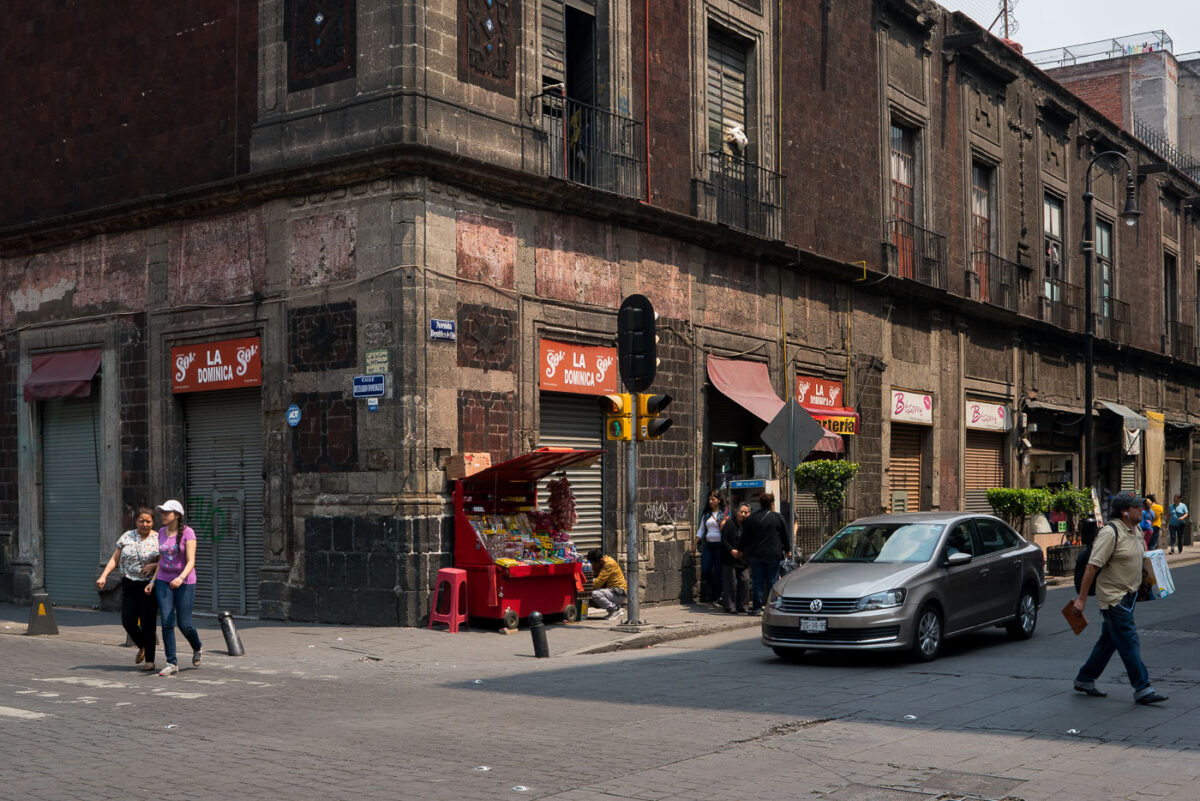
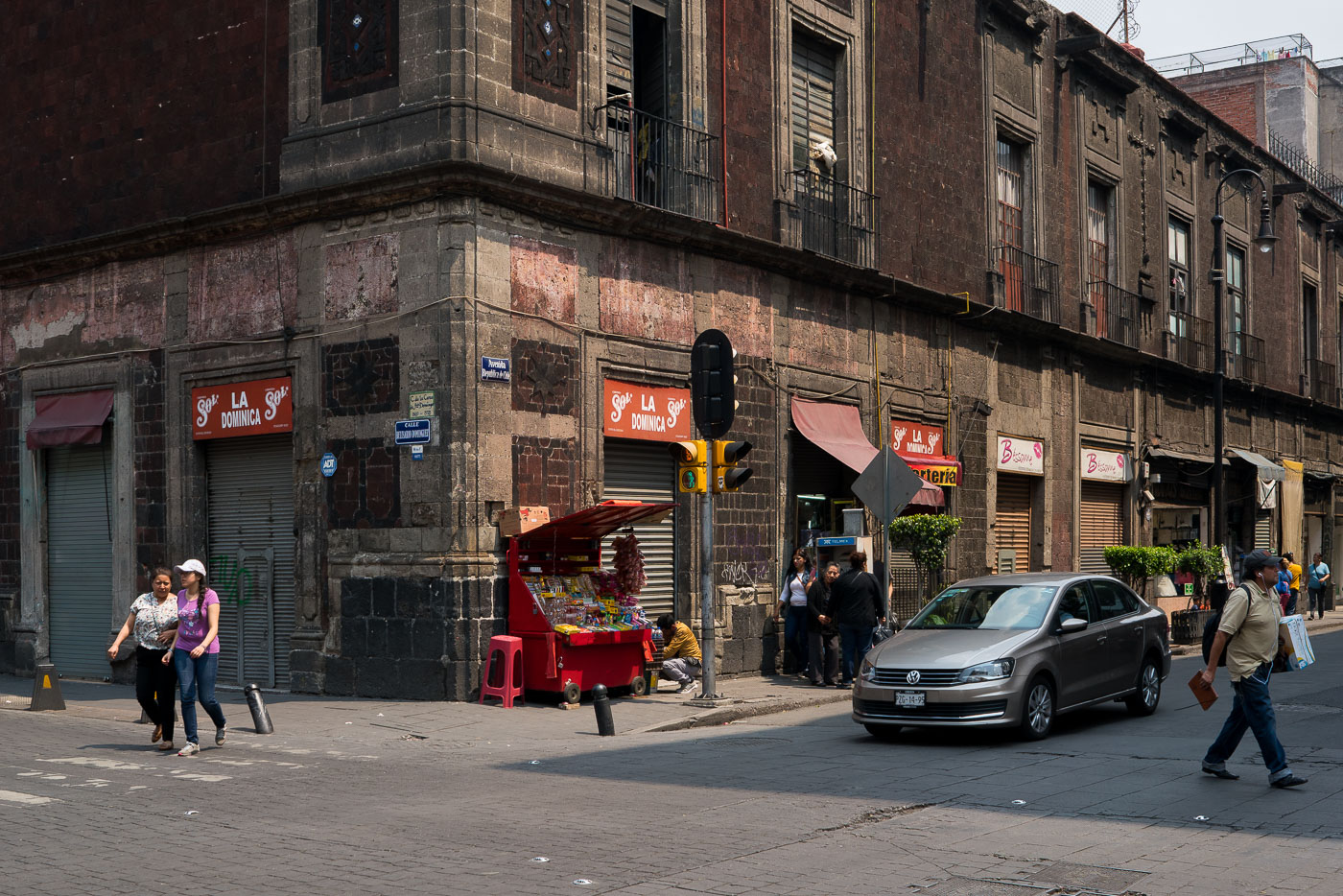
Corner of Calle República de Uruguay and Calle 5 de Febrero
A busy corner in Mexico City’s Centro Histórico where Calle República de Uruguay meets Calle 5 de Febrero. The block’s centuries-old volcanic stone buildings, typical of the colonial period, now house small shops and street vendors that reflect the area’s dense commercial activity. The facade’s weathered cantera stone and red tezontle give the structure its distinctive character, common in pre-19th century civic architecture throughout the historic core.
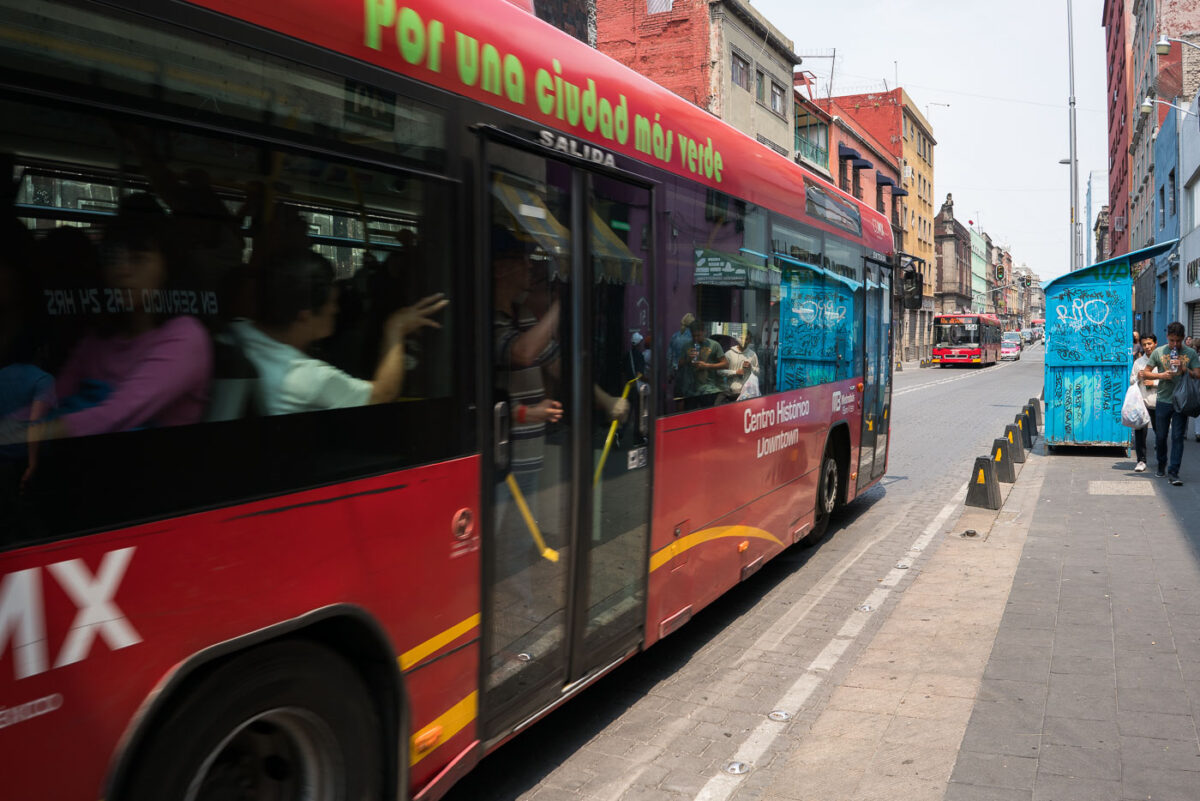
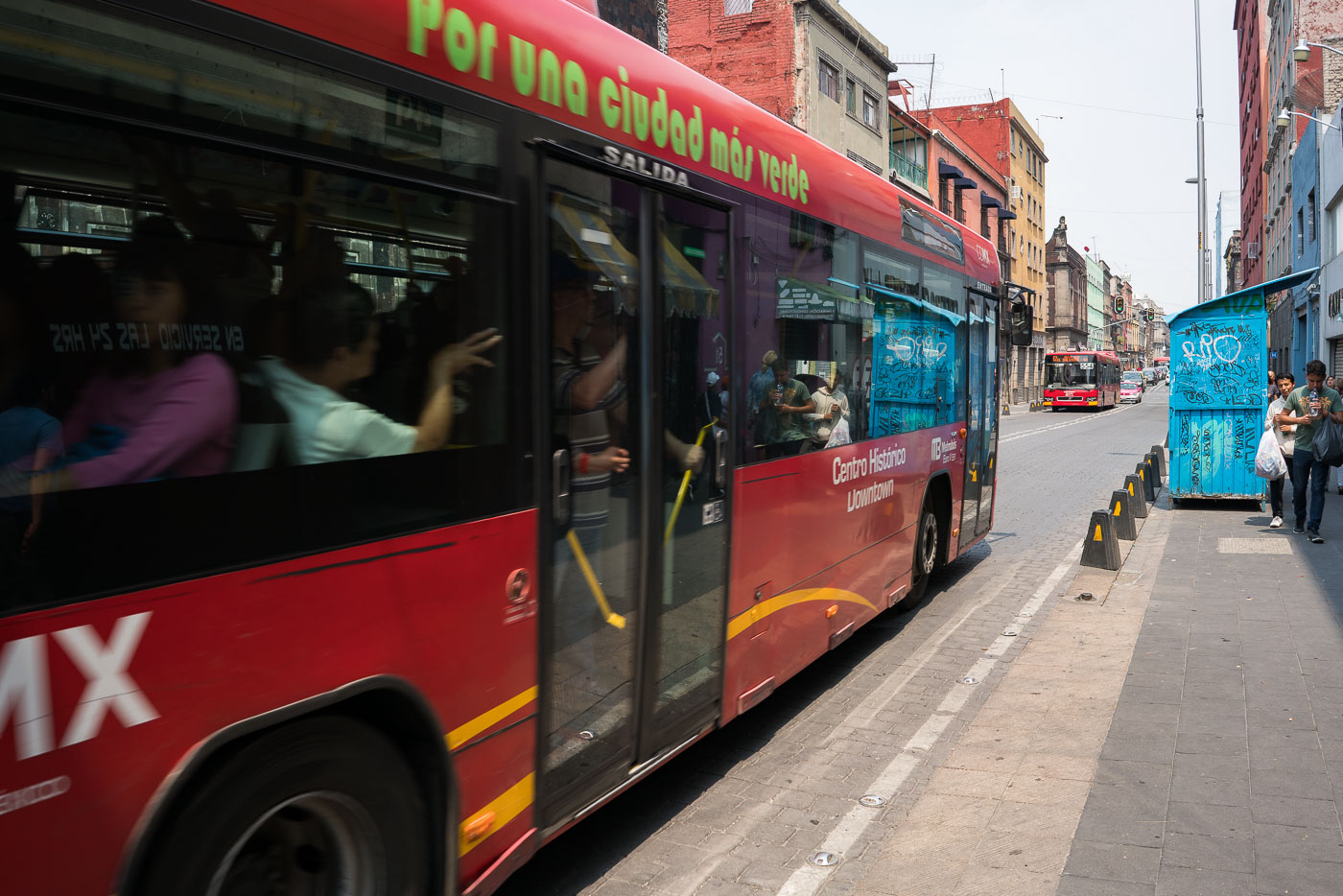
Metrobus Line 4 through Centro Historico
A Mexico City Metrobus on Line 4 passes through the narrow streets of the Centro Histórico, heading toward the San Lázaro terminus. This route, introduced in 2012, was designed to connect the downtown core with the city’s main transit hubs and the airport while reducing congestion in one of Latin America’s most crowded historic districts. The red articulated buses operate along corridors like República de Uruguay and República de El Salvador, part of an effort to modernize and green urban mobility.
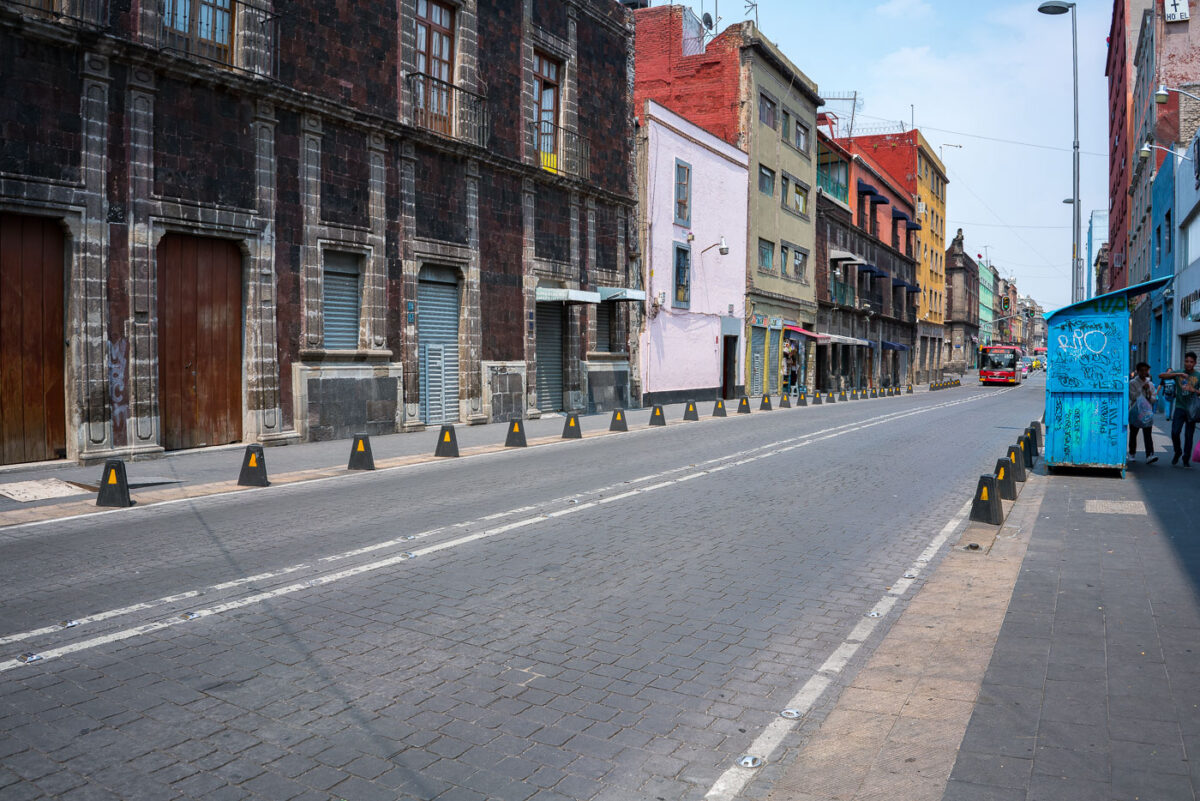
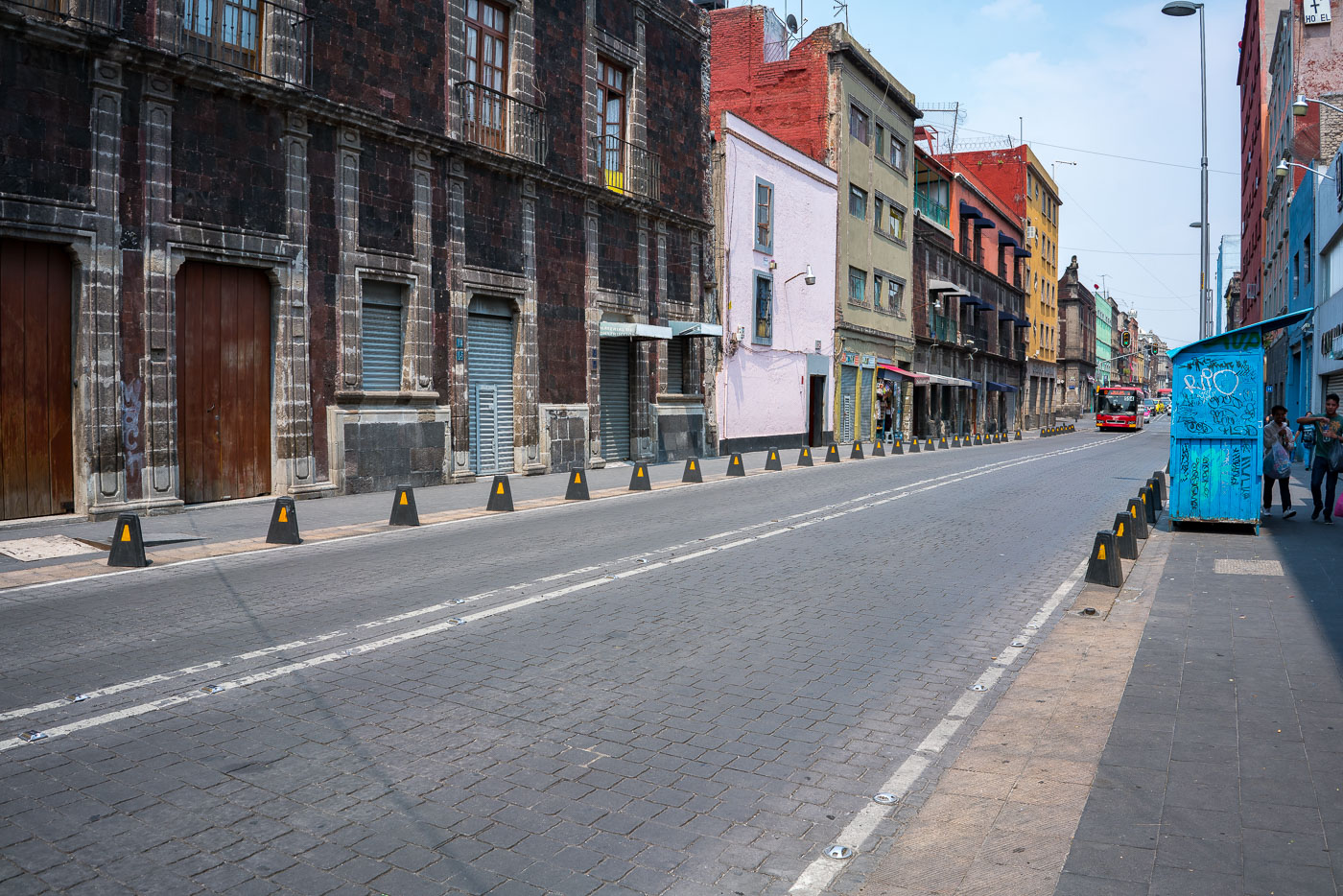
Calle Republica de Uruguay in Mexico Citys Historic Core
Calle República de Uruguay in the heart of Mexico City’s Centro Histórico, lined with colonial-era stone façades and early 20th-century buildings showing layers of renovation and age. The street, paved with basalt cobblestones, reflects the city’s dense architectural history where 18th-century walls coexist with modern storefronts and utilities. The corridor connects the Zócalo area with Eje Central, serving as one of the oldest commercial arteries in the capital.

Built in Minneapolis

Photographs made over time, focused on place, public life, and ongoing reporting.

Browse by location, move through long-running series, or start with recent work.

© 1996–2026 Chad Davis