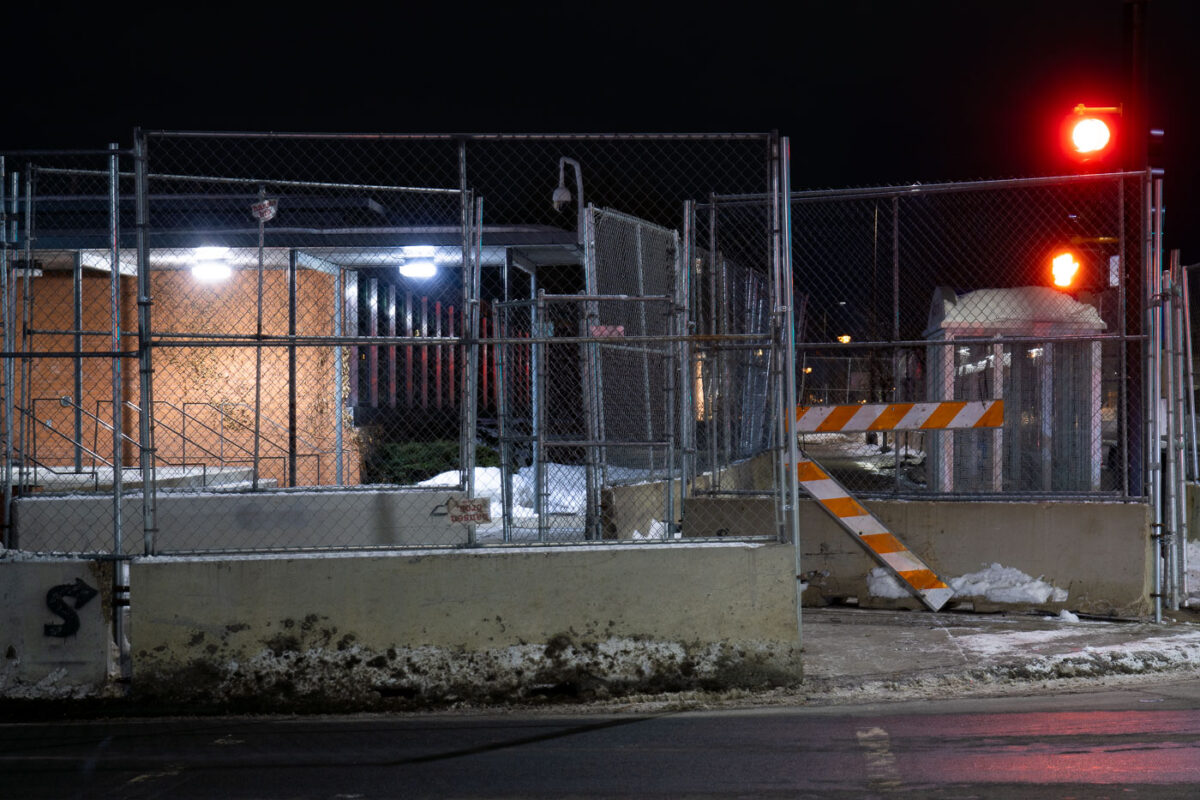
Minneapolis Police 5th Precinct Barricaded at Night
January 2023 — Security fencing installed again around the precinct just as written closing arguments are submitted in the case of Tou Thao.
Explore photos in Uncategorized.
January 2023 — Security fencing installed again around the precinct just as written closing arguments are submitted in the case of Tou Thao.
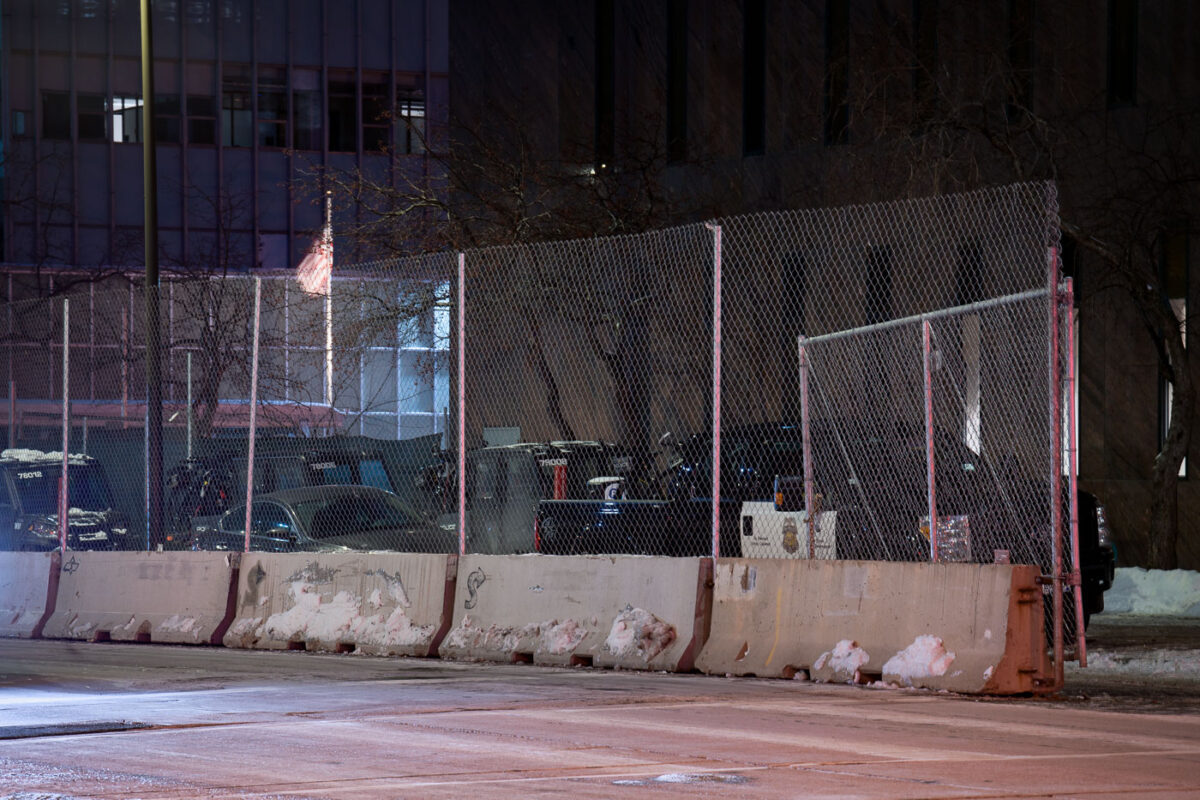
January 2023 — Minneapolis police vehicles parked outside a barricaded temporary third precinct on January 28, 2023. The temporary precinct is due to the original third precinct being burned on May 28th, 2020.
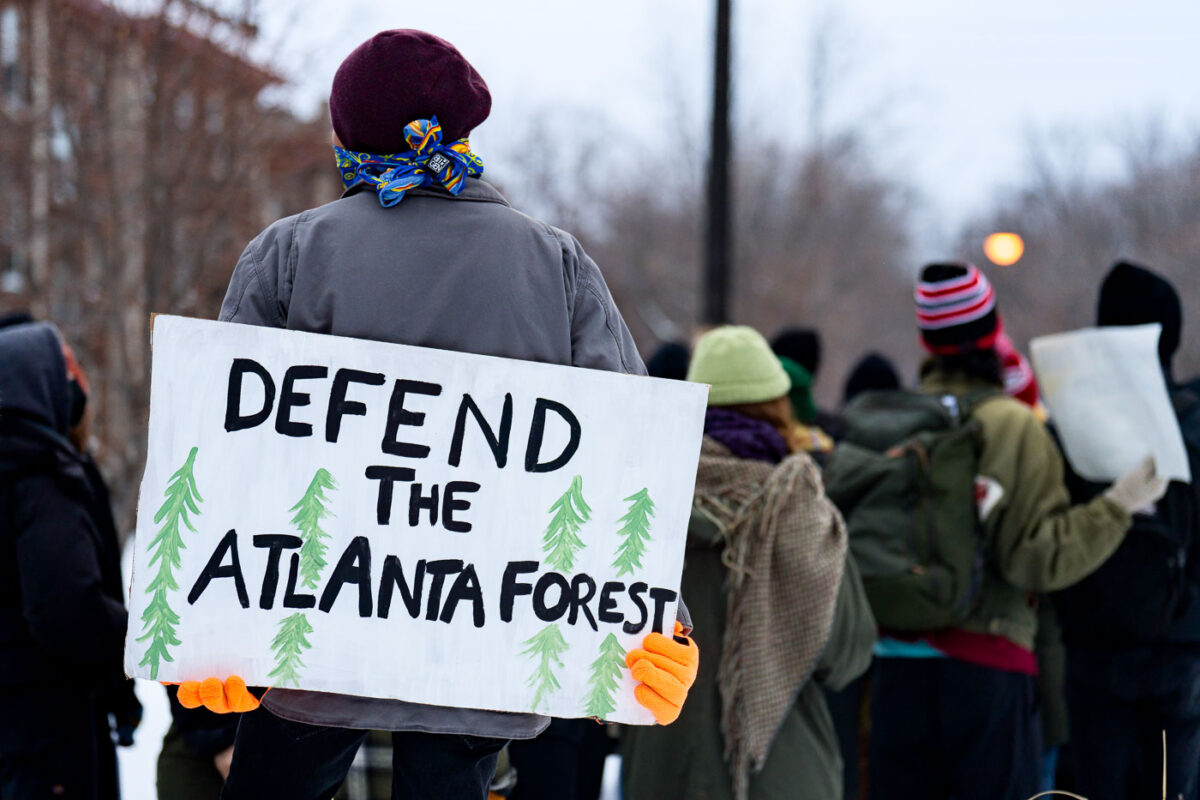
January 2023 — Protesters marching in Minneapolis near Hennepin/Lake remembering Manuel Teran(Tort), who was shot and killed by officers at a prolonged protest in an Atlanta forest after they say he fired upon them. They stopped at Lake/Girard where protester Deona Marie was killed on 06/13/21.
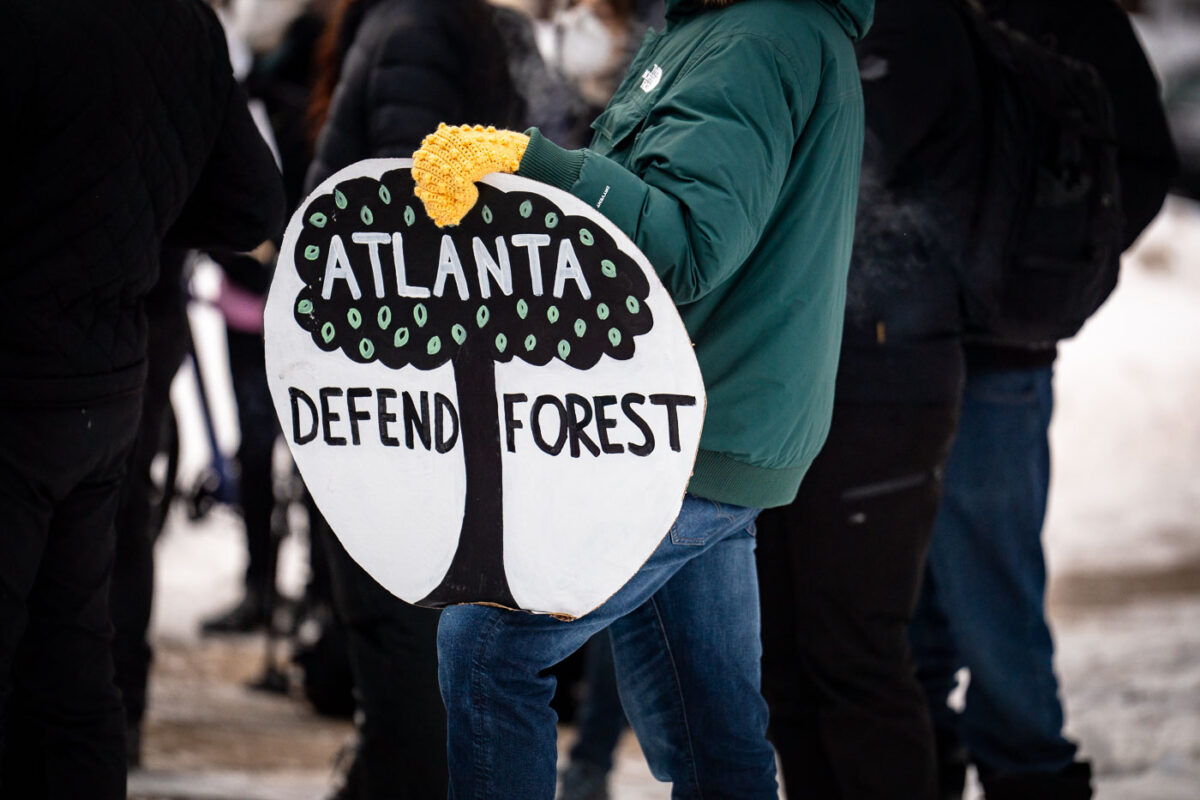
January 2023 — rotesters gather near Hennepin Avenue and Lake Street in Minneapolis to honor Manuel “Tort” Teran, who was killed during a long-running protest effort in the South River Forest near Atlanta. Demonstrators held signs and marched in solidarity with organizers nationwide, linking the Atlanta case to local histories of protest in Minneapolis. The group paused at Lake Street and Girard Avenue, the site where Deona Marie was killed on June 13, 2021, during demonstrations following the police shooting of Winston Smith. The march connected these separate events through a shared emphasis on community memory, public accountability, and the long-term impacts of protest-related violence.

January 2023 — A close-up view of a classic foosball table shows rows of molded player figures lined up on chrome-plated rods, illuminated by soft afternoon light from a nearby window. The design—bright jerseys, simple facial features, and sturdy construction—reflects the durable style common in commercial and recreational tables since the mid-20th century. Often found in community centers, break rooms, and pubs, foosball tables like this one are built for fast play and social interaction, with standardized layouts that mirror the positioning of real soccer formations.
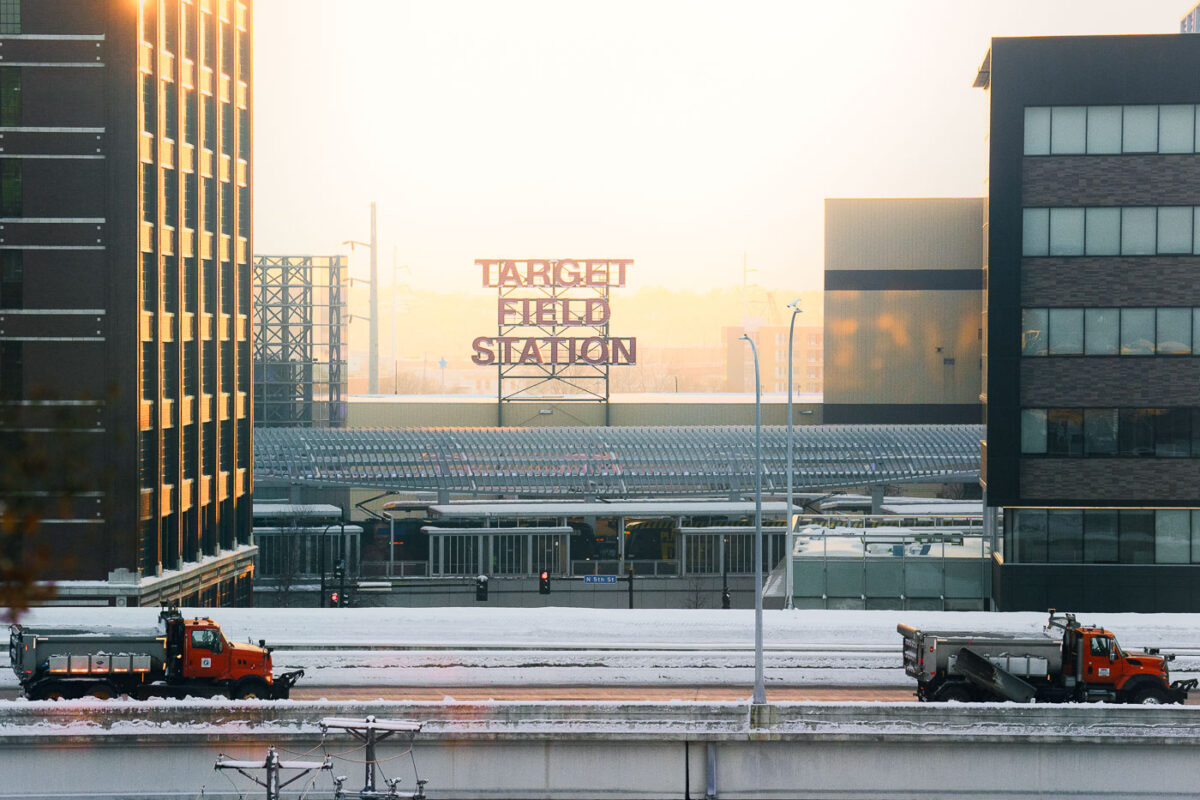
January 2023 — Target Field Station in Minneapolis during a winter sunrise, viewed across the railyard as snowplow trucks clear nearby roadways. Opened in 2014, the station serves as the western terminus for METRO Blue and Green Line light-rail service and functions as a multimodal hub for events at Target Field and the surrounding North Loop district. Its distinctive steel canopy and track arrangement were designed to accommodate both current transit operations and future extensions, reflecting the region’s long-term rail planning strategy. The elevated vantage also highlights the mix of transit, freight infrastructure, and redevelopment that continues to reshape this former warehouse district.
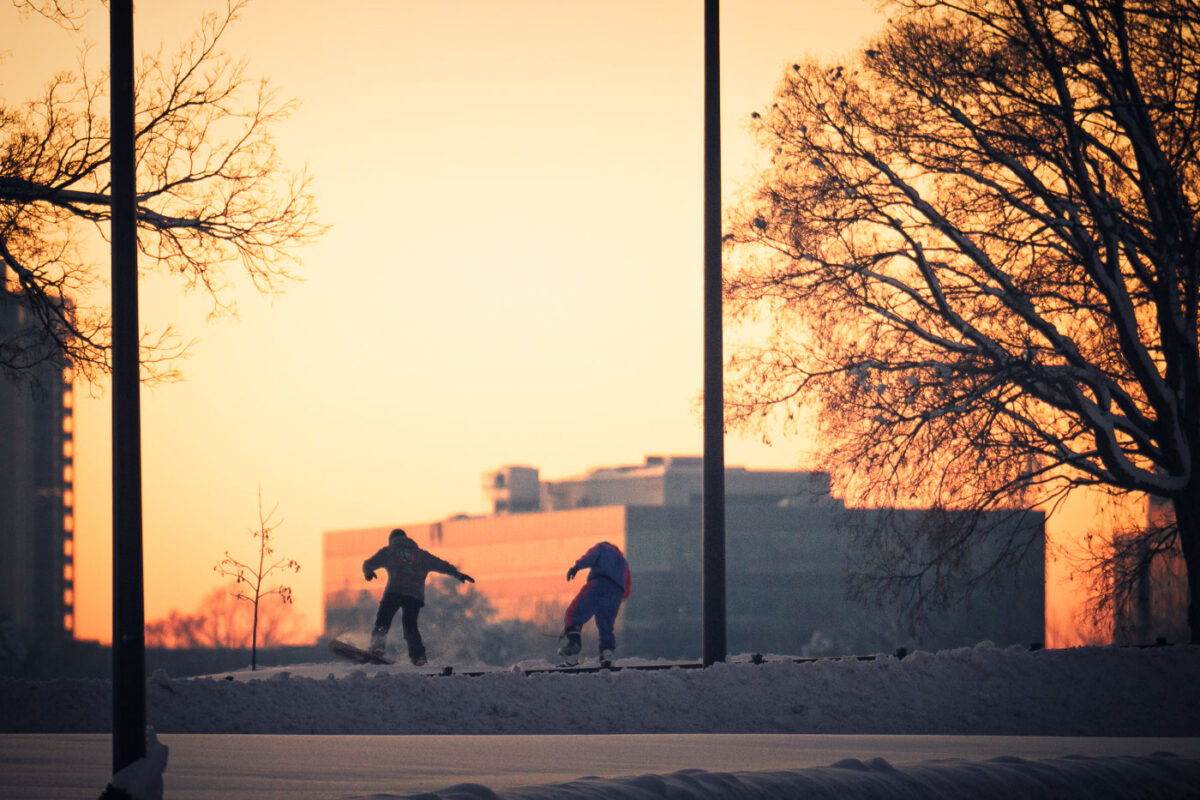
January 2023 — Two snowboarders make use of fresh snow along the parkway near Bde Maka Ska in Minneapolis after a major winter storm. The lake—renamed in 2018 to restore its Dakota place name—anchors the Chain of Lakes system and serves as one of the city’s most heavily used recreation areas year-round. Heavy snowfall often transforms the surrounding trails and embankments into informal terrain for skiing, snowboarding, and winter biking, reflecting how quickly the area adapts to seasonal conditions. The early-morning light and cleared parkway signal the coordinated snow-response efforts that keep the city’s lakes district accessible even during severe weather.
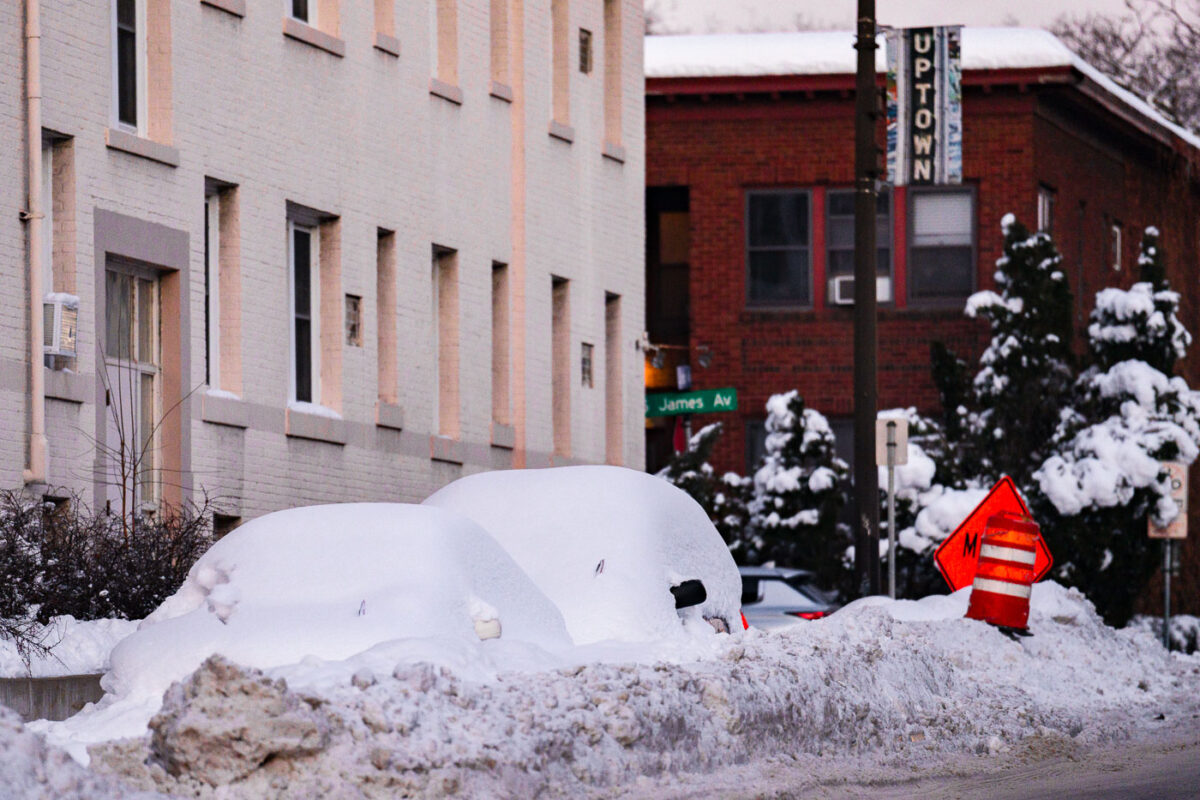
January 2023 — Cars under the snow following a 14" snowfall in Uptown Minneapolis.
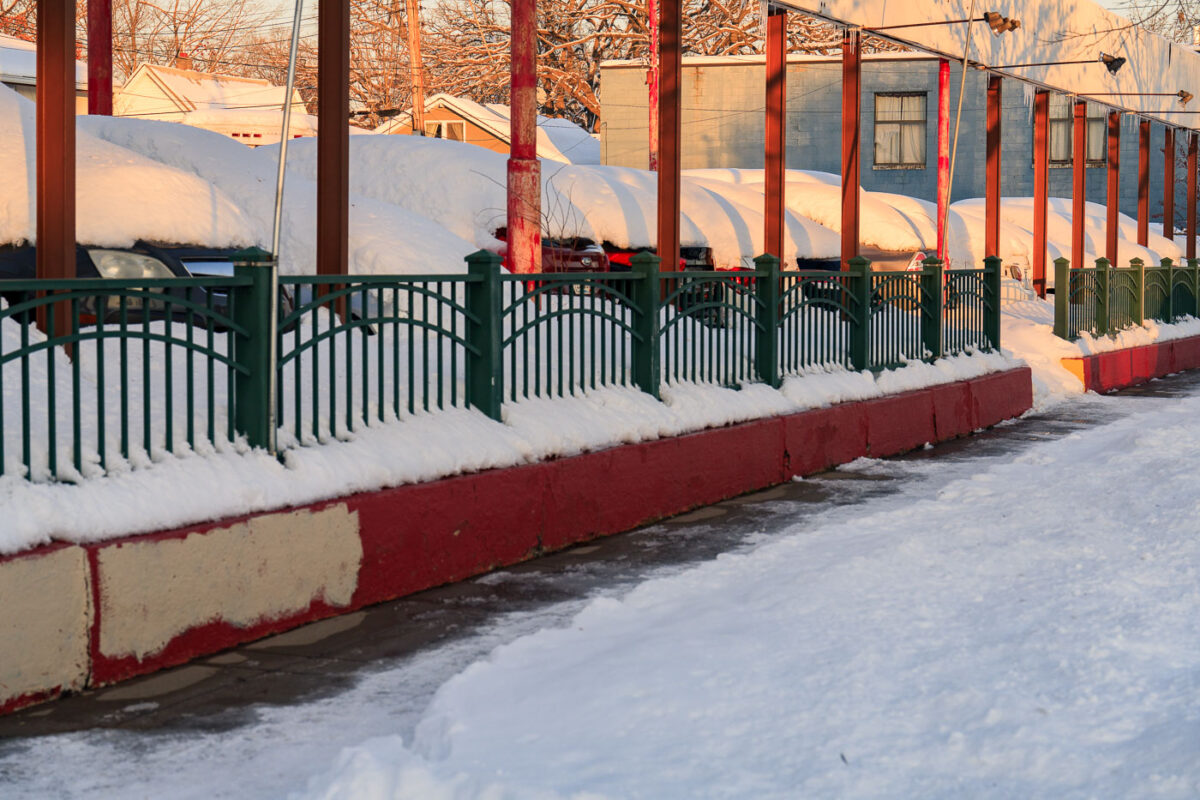
January 2023 — Snow covering cars at a dealership on Lake Street in Minneapolis on January 7, 2023.
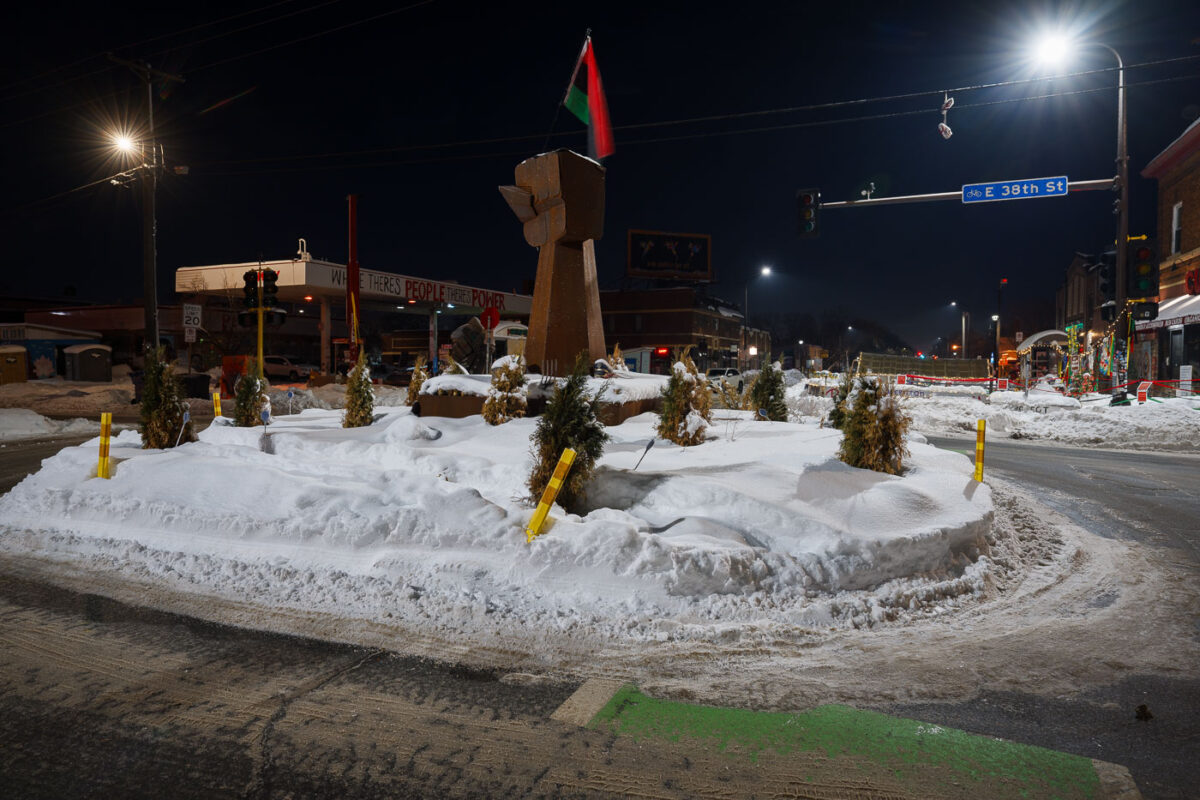
January 2023 — The first at the intersection of 38th and Chicago Avenue on January 7, 2023 in Minneapolis near where George Floyd was murdered. The area has been an active protest zone since May 2020 and is known as George Floyd Square.
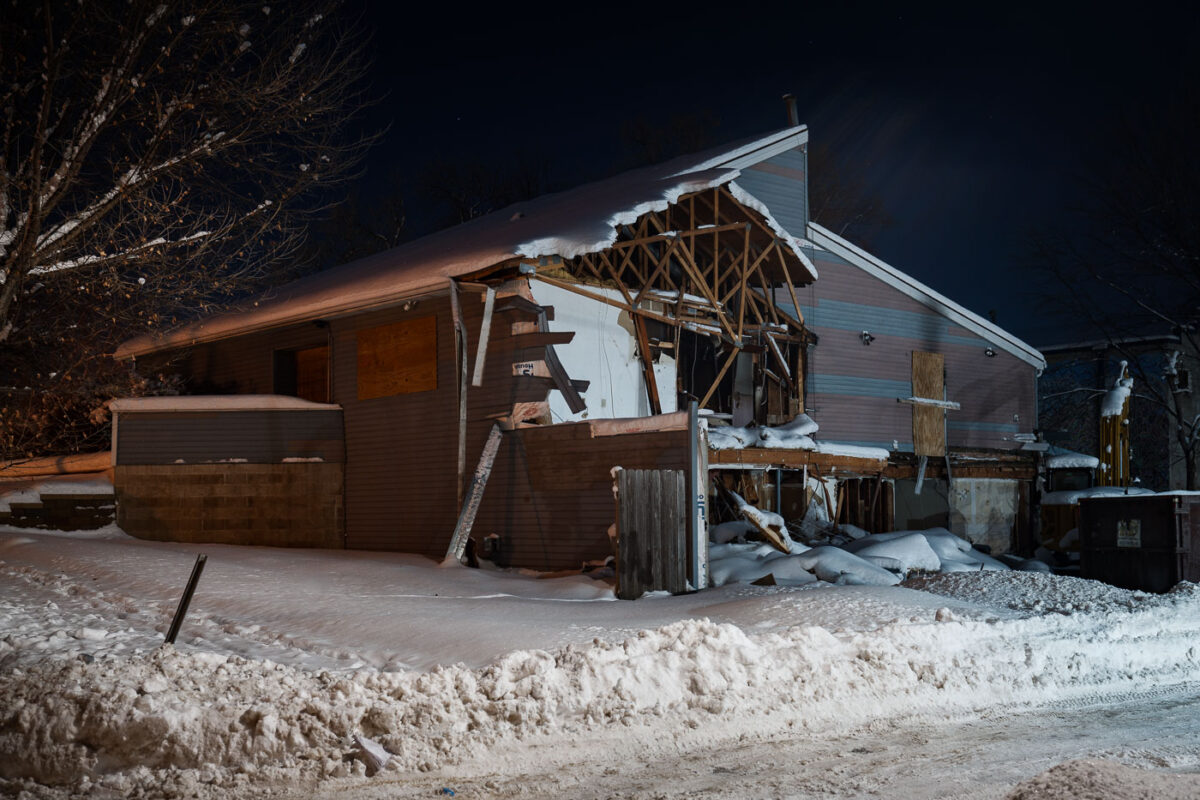
January 2023 — The remains of "the blue house", a building near George Floyd Square on January 7, 2023. It had sat vacant after a fire broke out inside. It's since been demolished.
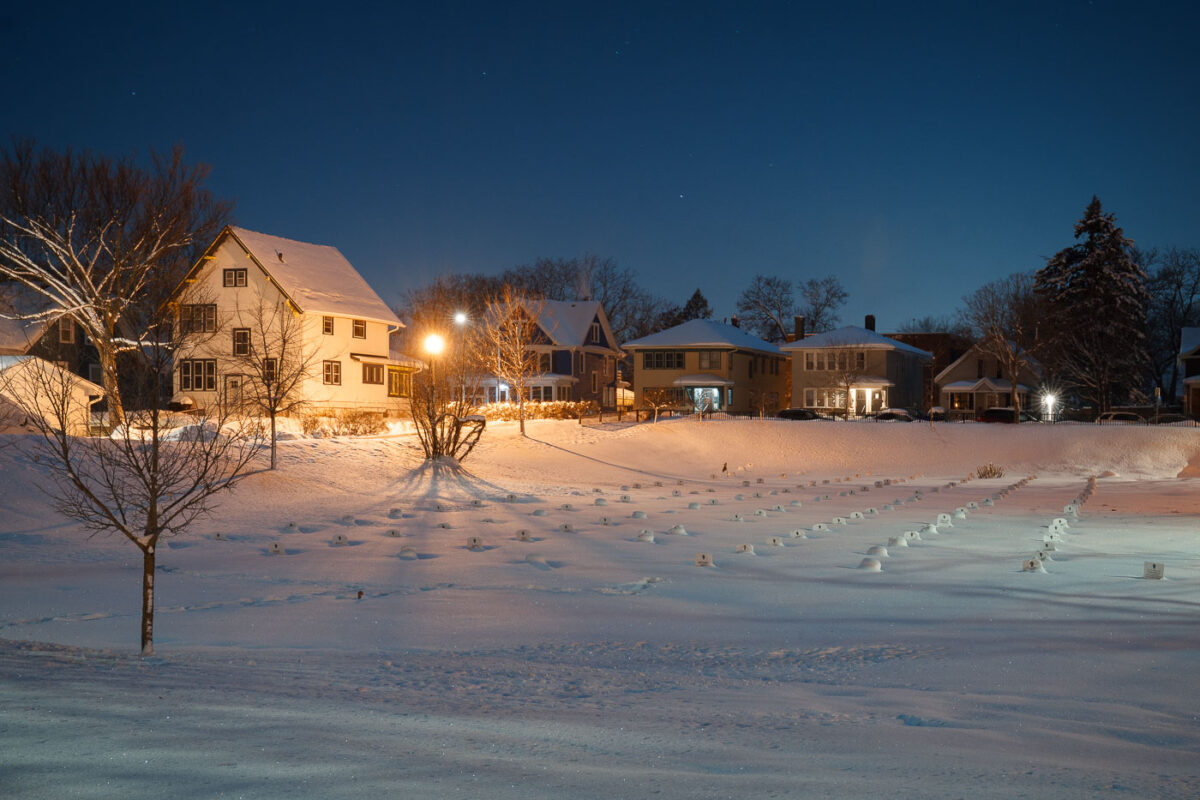
January 2023 — "Say Their Names Cemetery" near George Floyd Square on January 7, 2023. The memorial was installed not long after George Floyd's murder in May 2020. Each headstone holds the name of a victim of police violence.
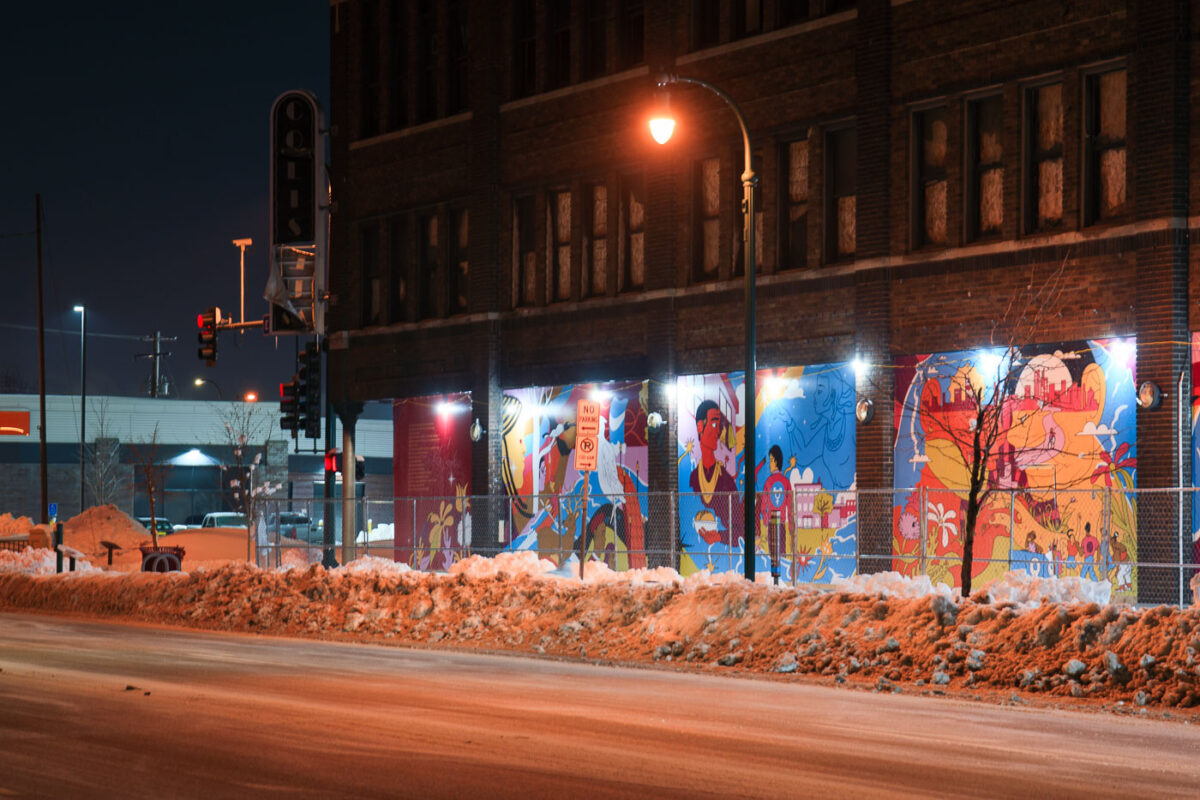
January 2023 — The Coliseum Building on east Lake Street in Minneapolis on January 7, 2023.
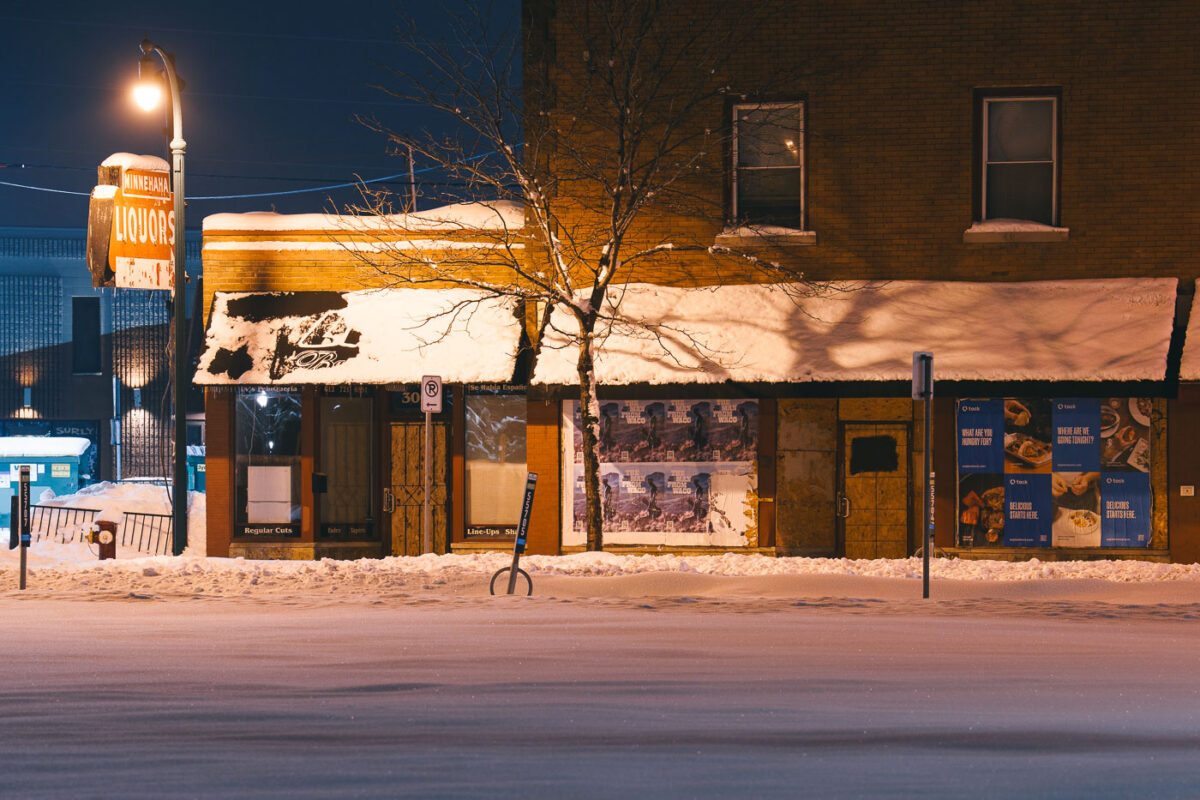
January 2023 — A Minnehaha Liquors sign on the 27th Ave side of the block the liquor store used to stand. The store was burned down in 2020 during unrest over the murder of George Floyd.
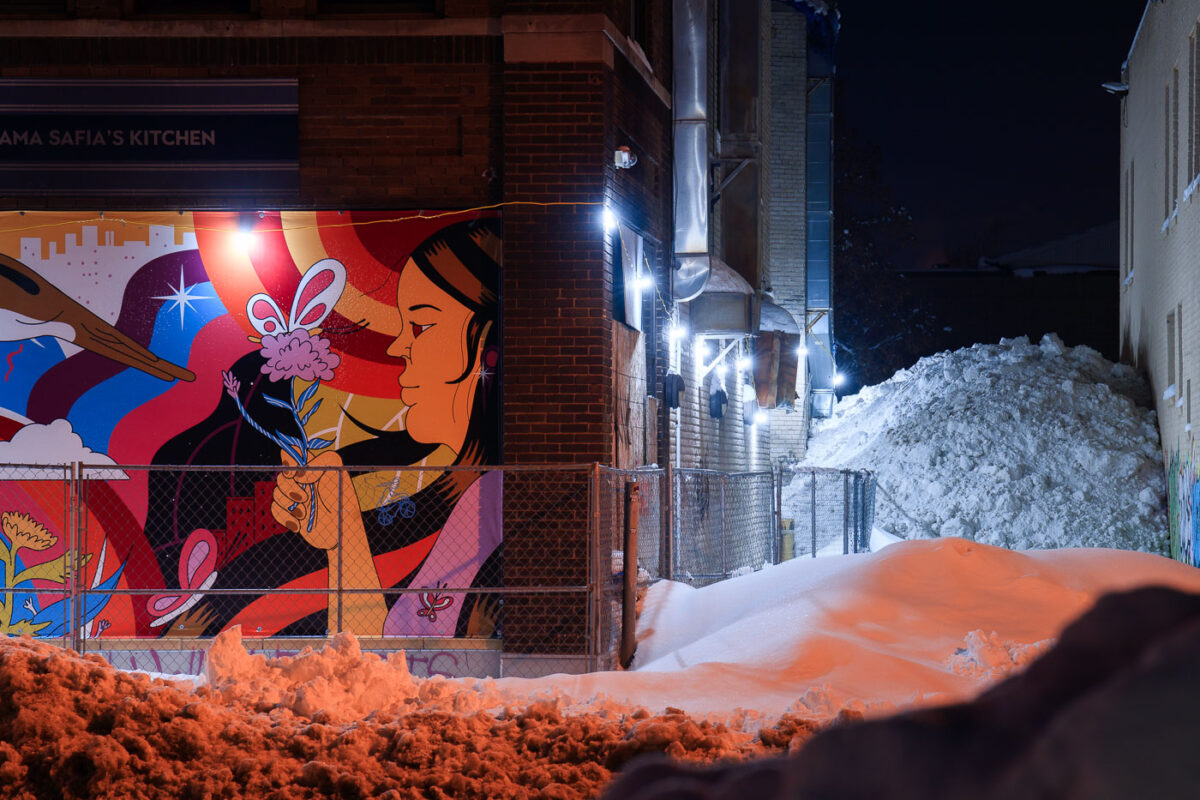
January 2023 — Large piles of snow next to the Coliseum building on Lake Street in Minneapolis on January 7, 2023. The building is being renovated after being destroyed during riots following the murder of George Floyd.
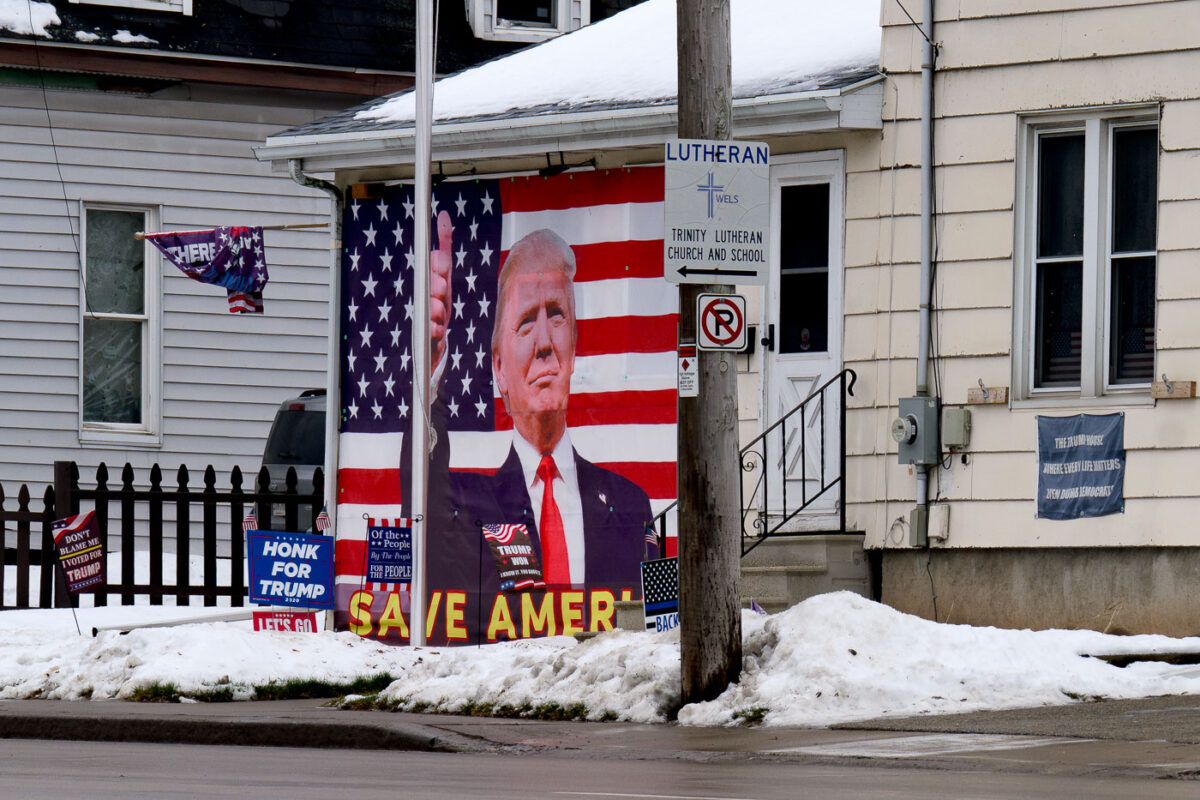
December 2022 — Honk For Tronk, Let's Go Brandon, Dont Blame Me I Voted For Trump, Back The Blue, and a portrait of Donaldl Trump signs on a Wisconsin home.
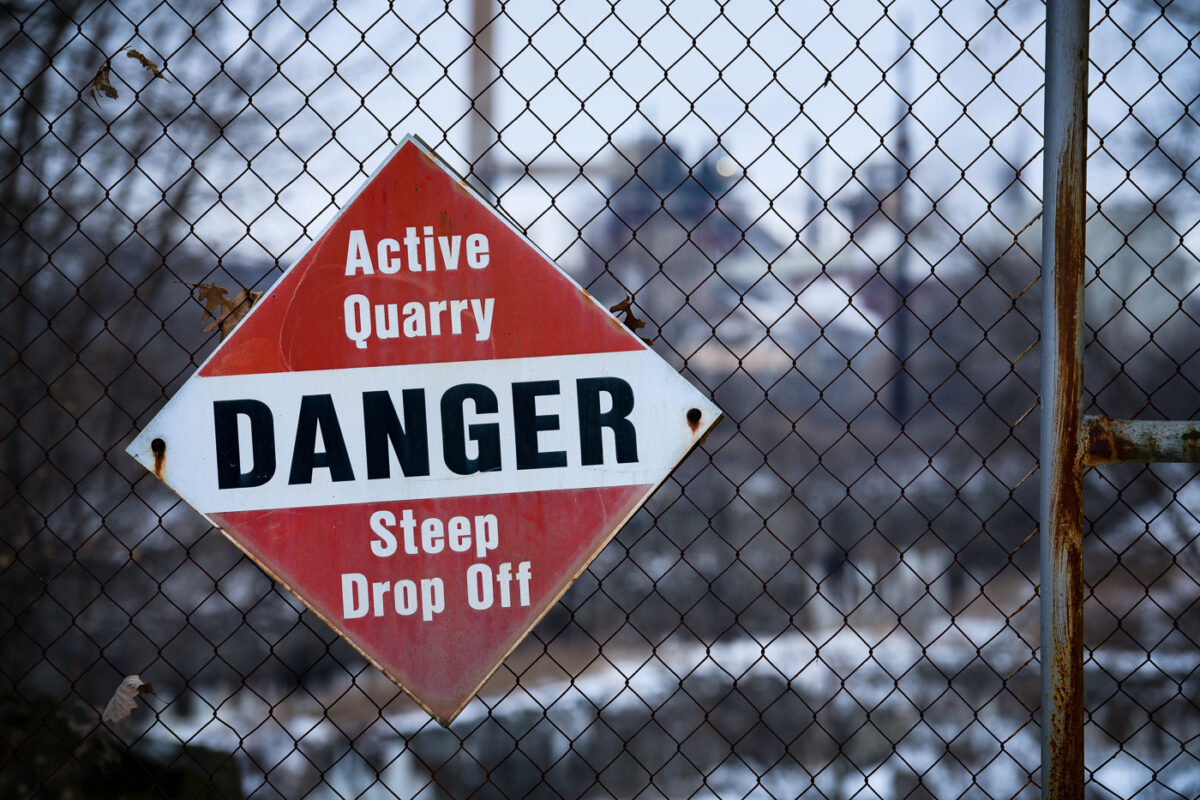
December 2022 — An active quarry danger sign found in Northeast Wisconsin.
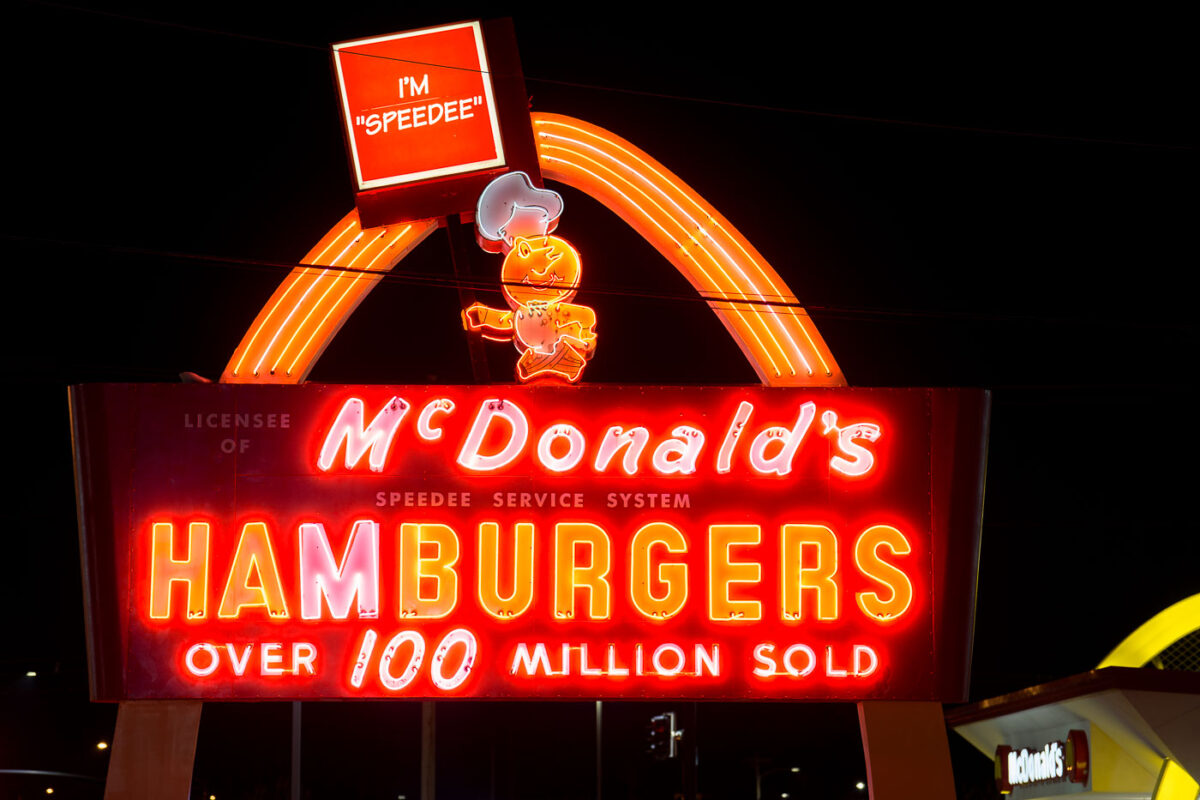
December 2022 — One of the few surviving original McDonald’s neon signs still standing in the United States is located in Green Bay, Wisconsin. Installed during the era before the Golden Arches fully defined the brand, the sign features “Speedee,” the chain’s early mascot introduced in the 1950s to promote the company’s streamlined “Speedee Service System.” The illuminated red-and-yellow marquee—advertising hamburgers and boasting “Over 100 Million Sold”—reflects the rapid national expansion of the franchise during its formative years. Today it serves as both a functioning restaurant sign and a preserved piece of mid-century fast-food history.
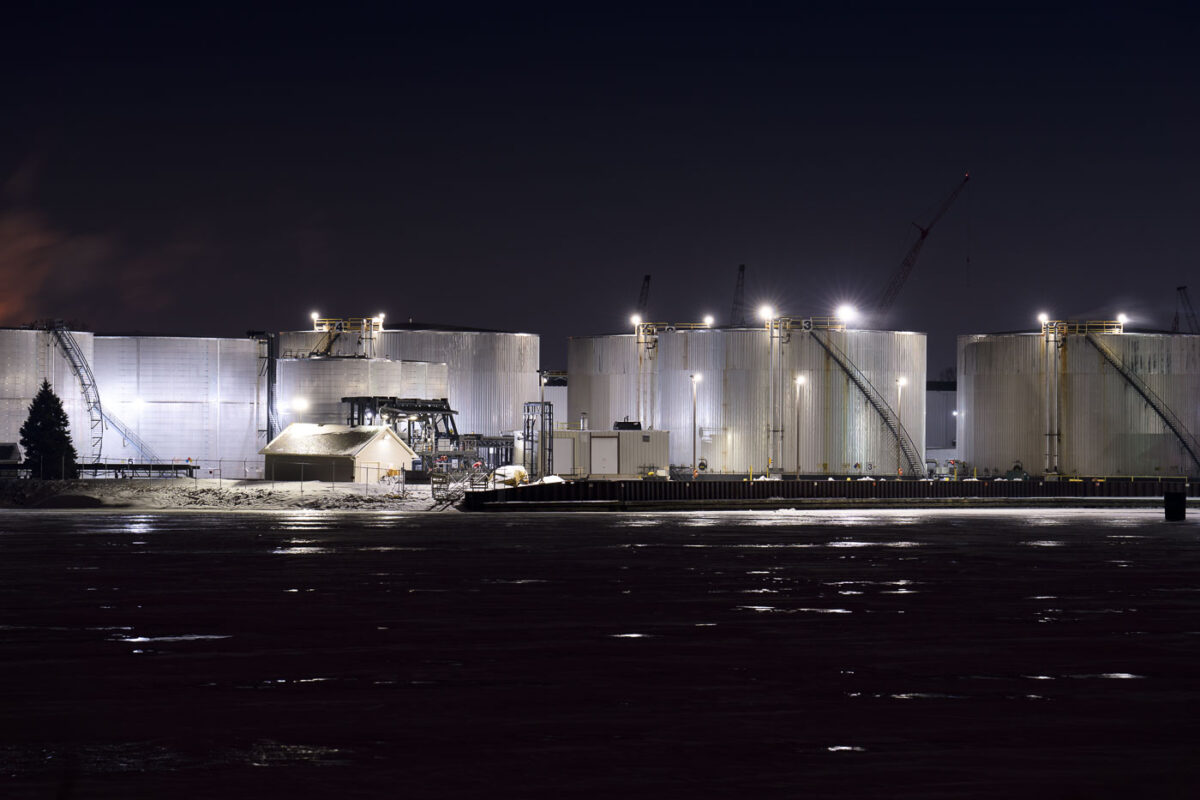
December 2022 — Large cylindrical storage tanks at Construction Resources Management, Inc. line the west bank of the Fox River in Green Bay, Wisconsin. Viewed from across the frozen river on a winter night, the facility is illuminated by perimeter lighting that reflects faintly off the ice. The site serves regional construction and materials operations, part of the industrial corridor that has long defined the waterfront between downtown Green Bay and the port district.
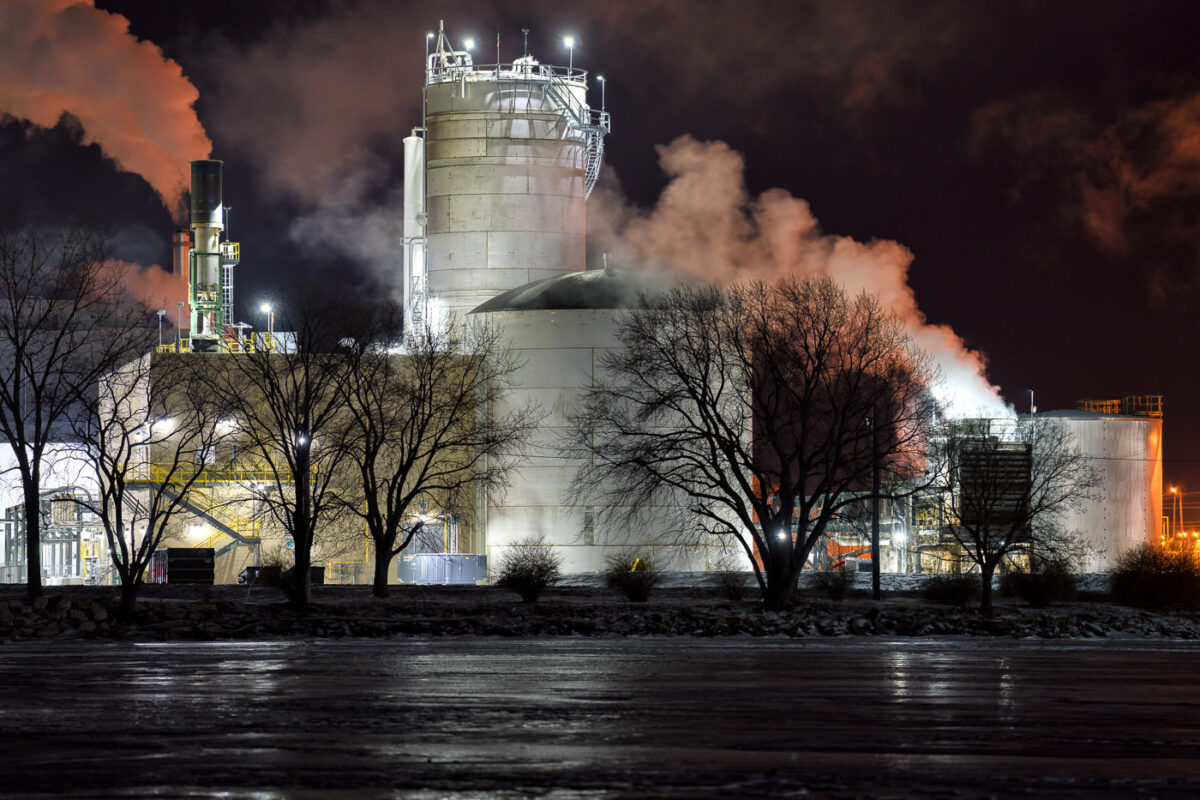
December 2022 — Green Bay Packaging’s modern recycled paper mill rises behind leafless winter trees along the Fox River in Green Bay, Wisconsin. The facility, completed in 2021 as one of the most advanced and energy-efficient mills in the country, emits illuminated plumes of steam that drift across the night sky. The river’s frozen surface reflects the mill’s lights and muted colors, creating a stark industrial winter landscape along the east bank of the Fox River.
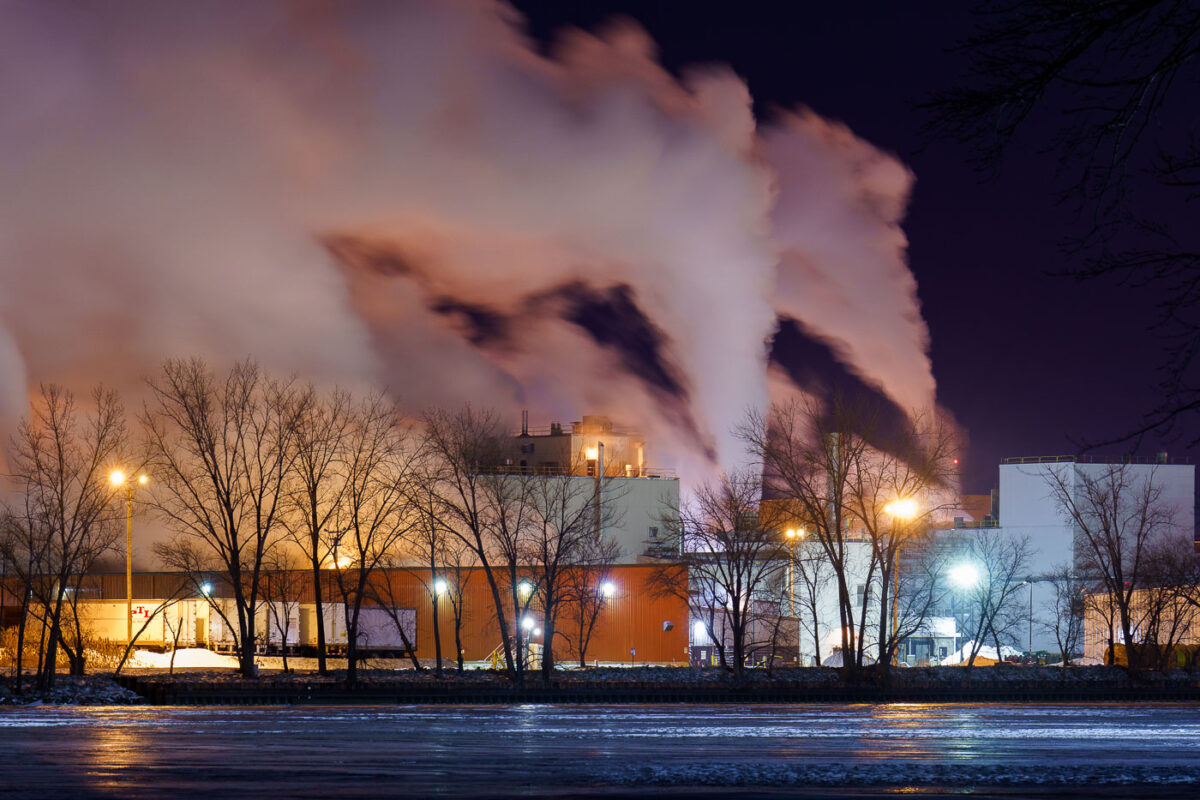
December 2022 — Green Bay Packaging’s state-of-the-art recycled paper mill, completed in 2021 at a cost of roughly $500 million, releases plumes of steam into the winter night as viewed from across the Fox River. The facility replaced the company’s 72-year-old mill and became one of the most advanced recycled-paper operations in the country, designed to dramatically reduce water use and energy consumption while increasing production capacity. The glow from the mill’s lighting and processing equipment diffuses through the cold air, mingling with tree silhouettes along the riverbank and reflecting off the frozen surface of the Fox River.
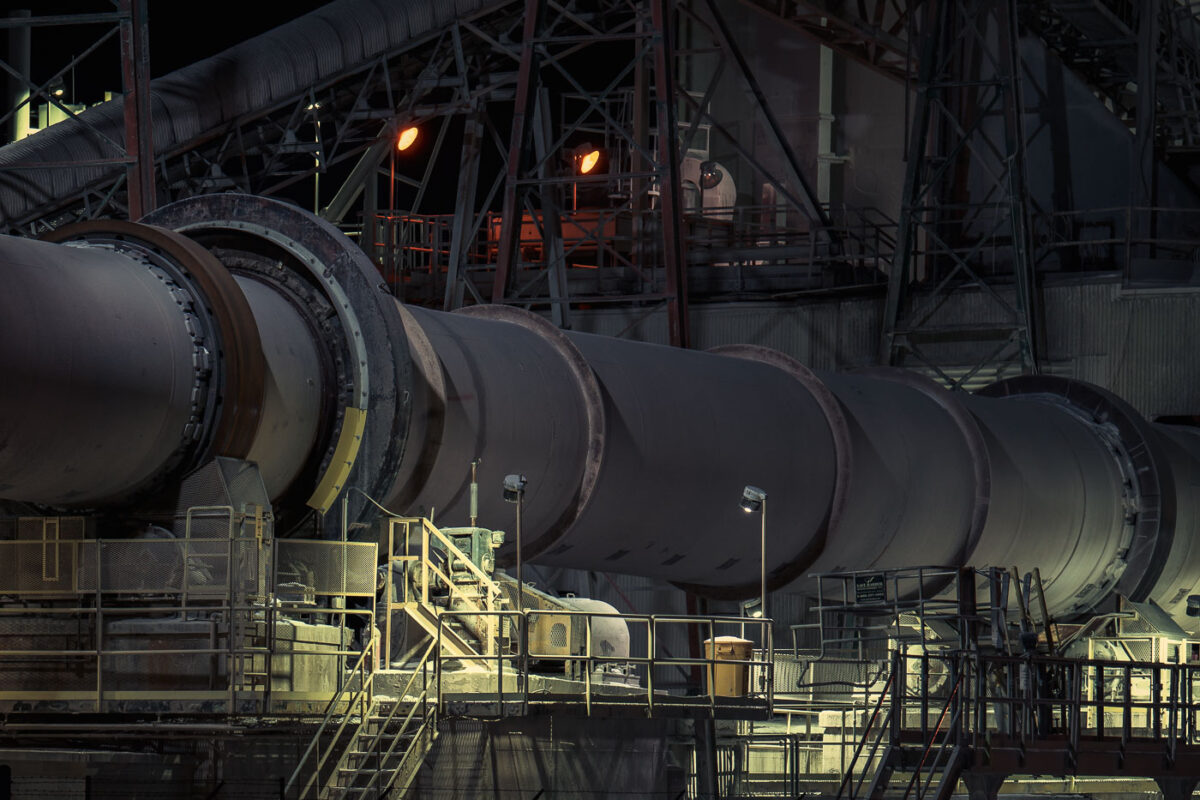
December 2022 — A section of the rotary kiln system at the Graymont lime plant in Green Bay, Wisconsin, captured at night under maintenance and work lights. The massive rotating kiln—central to the calcination process that transforms limestone into high-purity lime—runs along a network of elevated platforms, access stairs, and steel supports. The orange glow from overhead lamps highlights the heat-intensive nature of kiln operations, while the surrounding catwalks and conveyors reflect the layered engineering required to keep the continuous production line moving.
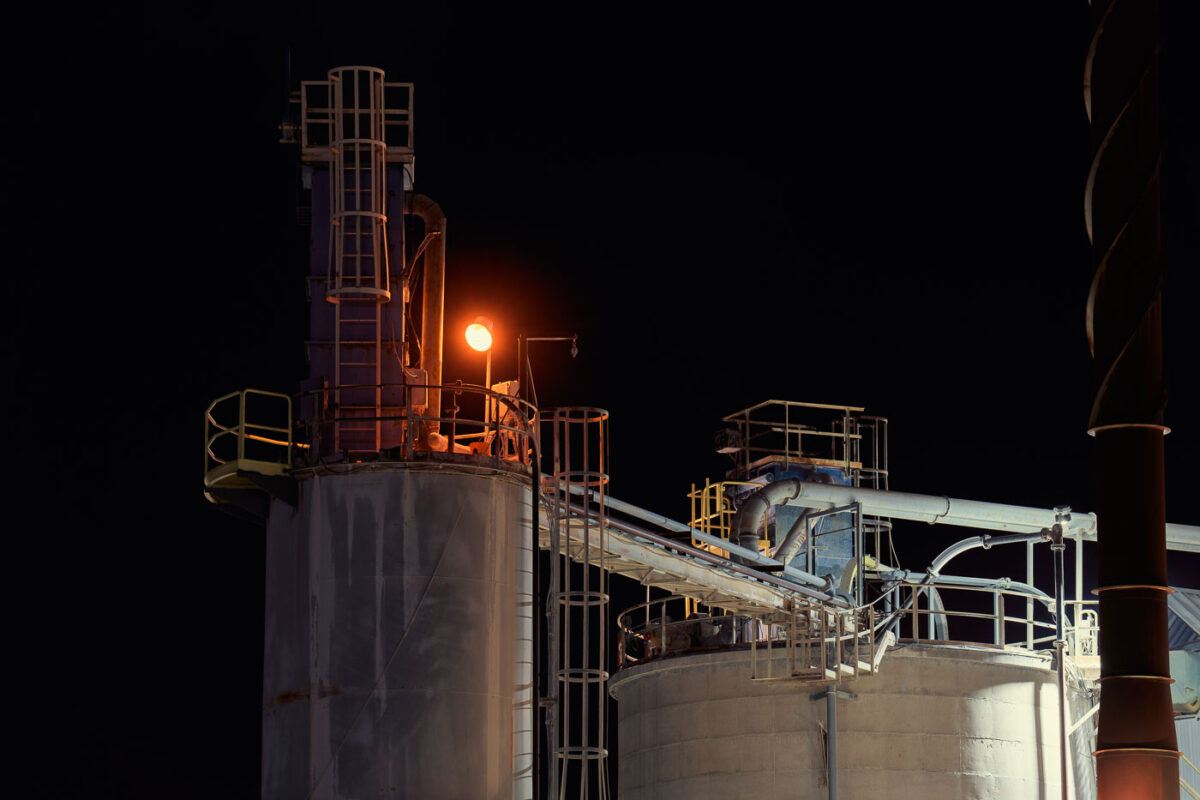
December 2022 — Illuminated by a single amber work light, the upper platforms and transfer pipes of the Graymont lime plant in Green Bay, Wisconsin stand out against the night sky. The cylindrical storage silos are connected by enclosed conveyor and piping systems that move processed lime between different stages of production. Catwalks, ladders, and pipe supports trace the geometry of an industrial site that has long supplied lime for regional steelmaking, water treatment, and construction uses.
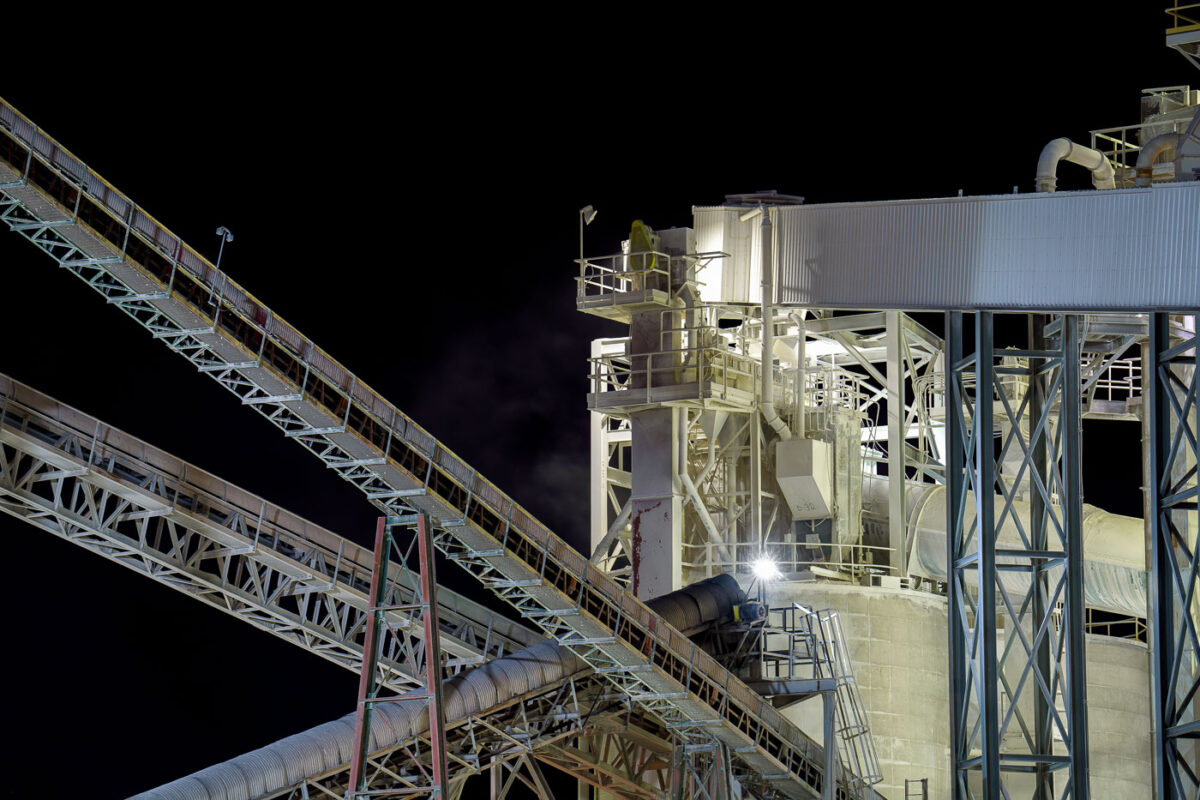
December 2022 — A detailed nighttime view of the conveyor towers and processing equipment at the Graymont lime plant in Green Bay, Wisconsin. The illuminated catwalks, ducts, and steel trusses highlight the facility’s continuous material-handling system, where crushed limestone moves through enclosed conveyors toward the plant’s kilns and storage silos. Fine dust, visible in the lights near the upper platforms, reflects the industrial character of a site that has served the region’s construction and manufacturing sectors for decades.
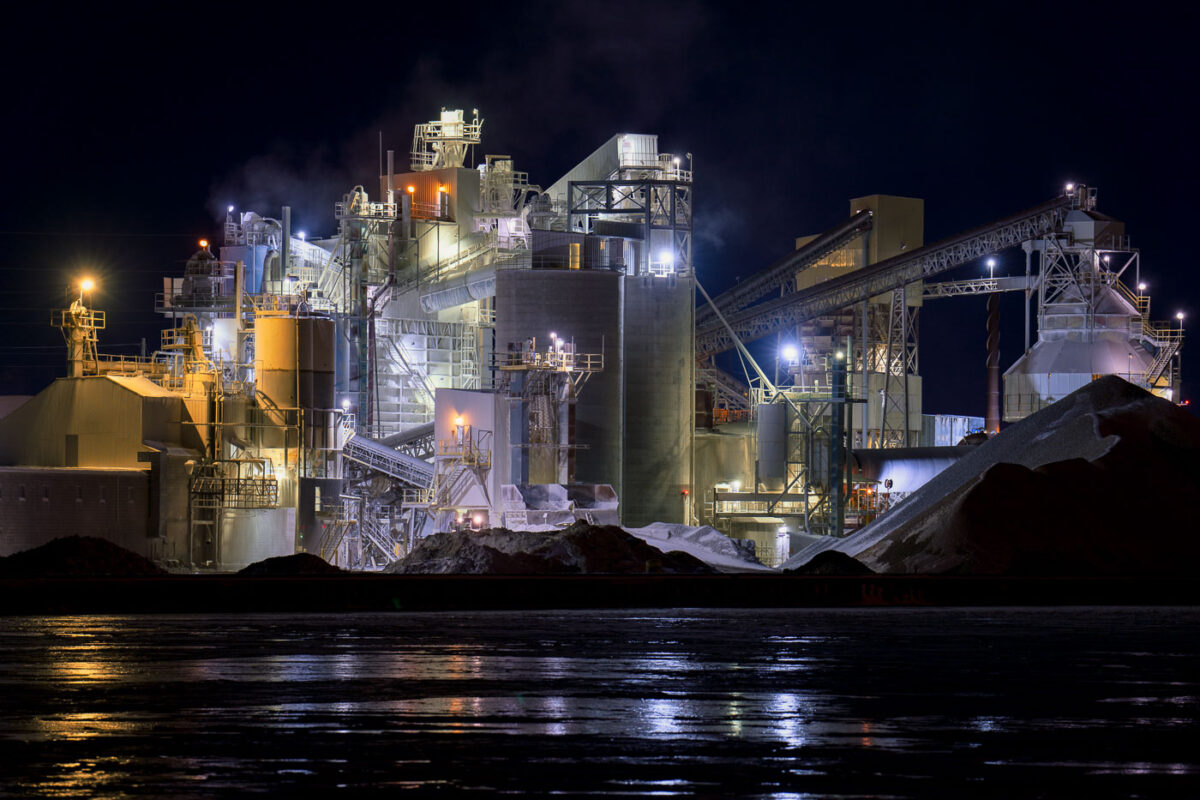
December 2022 — The Graymont lime processing plant along the Fox River in Green Bay, Wisconsin, illuminated during nighttime operations. The facility’s network of silos, conveyors, and dust-collection towers stands out against the dark sky, with steam drifting from active kilns and processing units. Reflections from the plant’s industrial lighting shimmer across the frozen river surface, highlighting the site’s role in the region’s long-standing manufacturing and mineral production corridor.
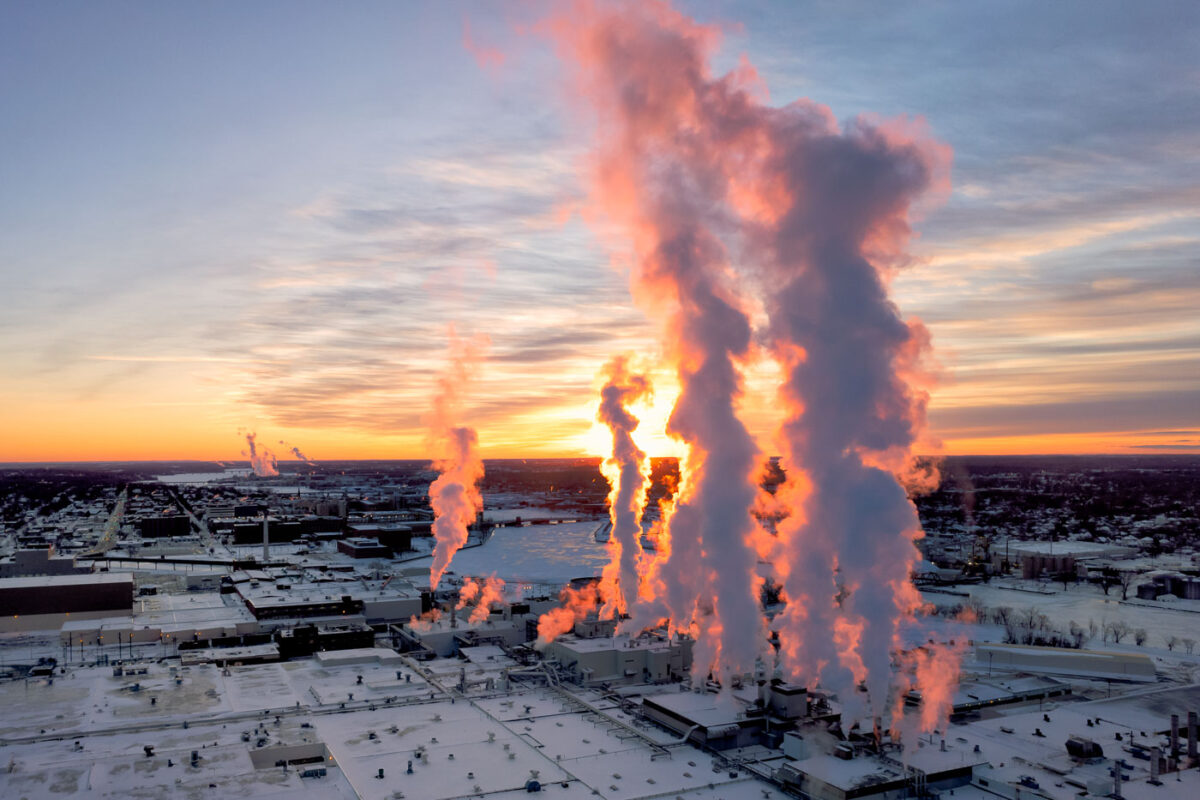
December 2022 — Steam columns rise dramatically from the Procter & Gamble paper mill in Green Bay, Wisconsin, illuminated by the orange and magenta glow of a midwinter sunrise. Captured from the air in January, the image shows the vast industrial complex along the Fox River, with frozen rooftops and intricate piping systems sharply defined against the cold morning light. The steam, tinted by the low sun, becomes a striking visual emblem of the city’s manufacturing heritage and the energy demands of Wisconsin’s paper industry.
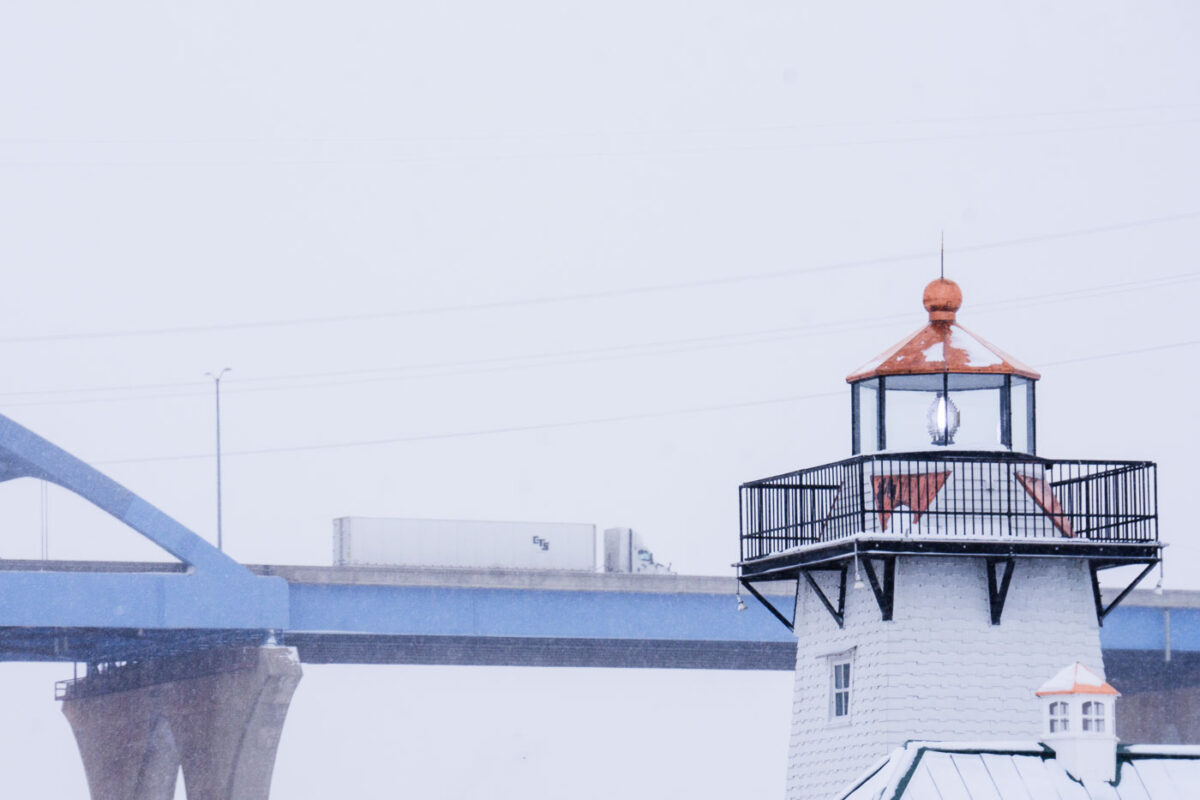
December 2022 — A CTS tractor-trailer crosses the Leo Frigo Memorial Bridge—locally known as the Tower Drive Bridge—during a winter snowstorm in Green Bay, Wisconsin. In the foreground, the familiar shingled lighthouse structure along the riverfront stands out against the white sky, its lantern room partially frosted as lake-effect snow drifts through the scene. The contrast between the elevated highway and the shoreline landmark highlights the mix of transportation corridors that define Green Bay’s industrial waterfront.
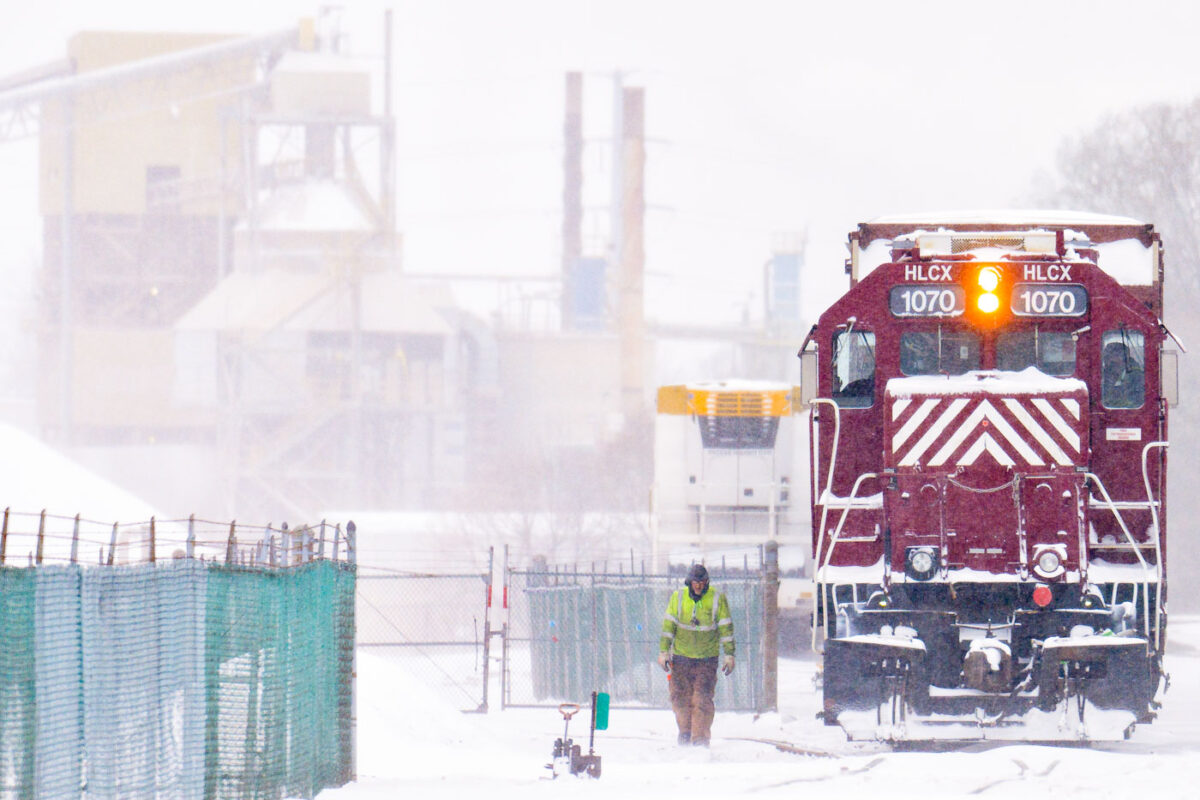
December 2022 — A freight crew member walks alongside HLCX 1070 during a heavy snowstorm at Quincy Street and Eastman Avenue in Green Bay, Wisconsin. The locomotive’s headlights cut through the blowing snow as operations continue despite low visibility and freezing conditions. Industrial structures in the background fade into the whiteout, highlighting how rail work persists year-round across the region’s manufacturing and transportation corridors.
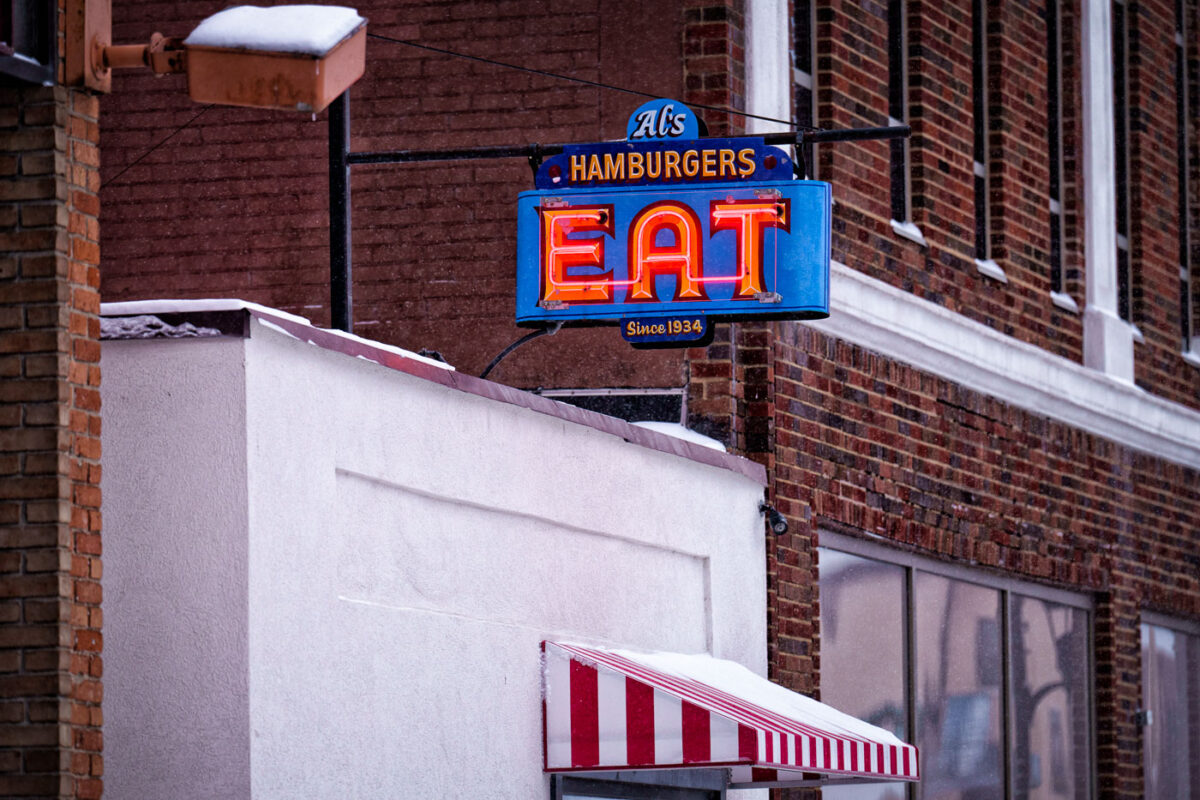
December 2022 — The glowing neon “EAT” sign at Al’s Hamburgers stands out against the snowy backdrop of winter in Minneapolis. The sign, with its bright mid-century colors and bold lettering, has been part of the business’s identity since the diner opened in 1934. Its classic styling reflects the era when small neighborhood restaurants relied on eye-catching storefront signs to draw in passing traffic. Light snow gathers on the striped awning below, adding a seasonal layer to one of the area’s longstanding local landmarks.
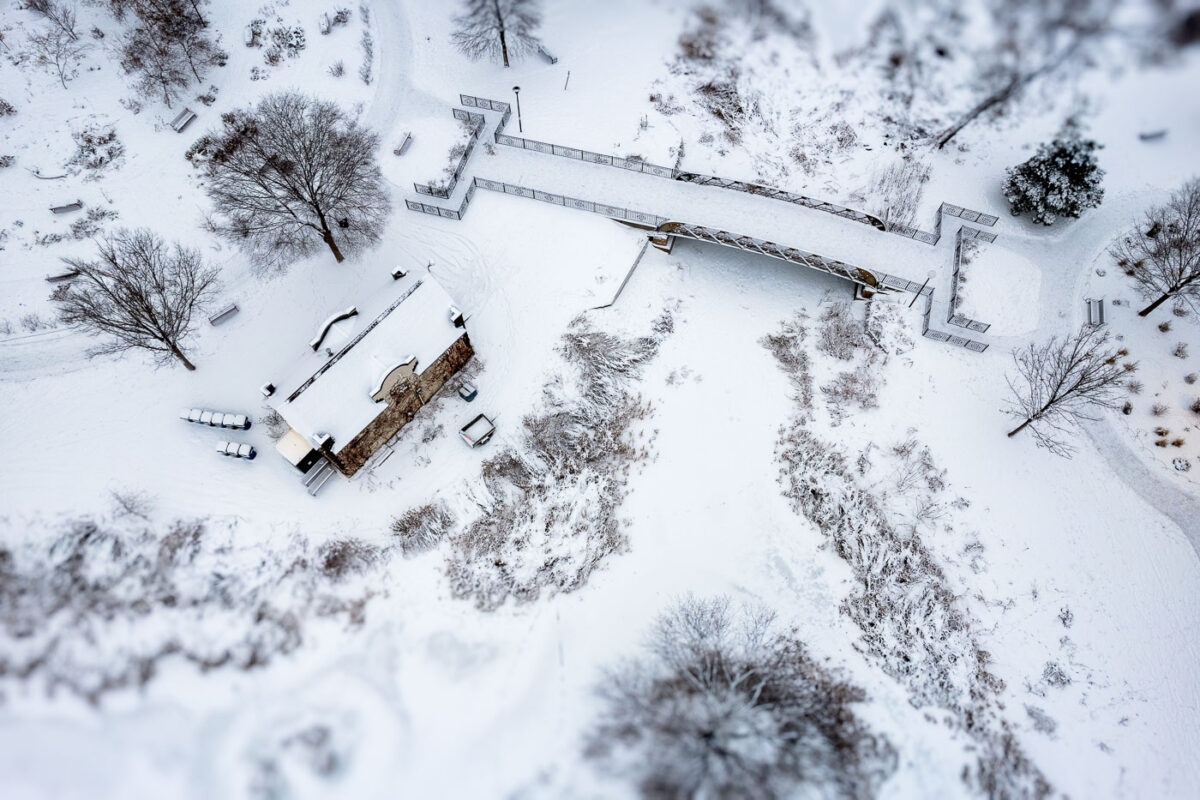
December 2022 — A fresh snowfall settles over Loring Park near downtown Minneapolis, softening the landscape around the park’s pedestrian bridge and historic shelter building. From above, the snow highlights the geometric layout of paths, railings, and terraces surrounding the bridge, which crosses a narrow channel connecting sections of the park’s pond system. Loring Park—a key part of the city’s late-19th-century park plan—remains one of Minneapolis’s most recognizable urban green spaces, bordered by the Loring Greenway and the southern edge of downtown. The new snow creates a uniform winter texture across the lawns, benches, and shoreline vegetation, with only light footprints and plowed walkways hinting at early morning activity in the park.
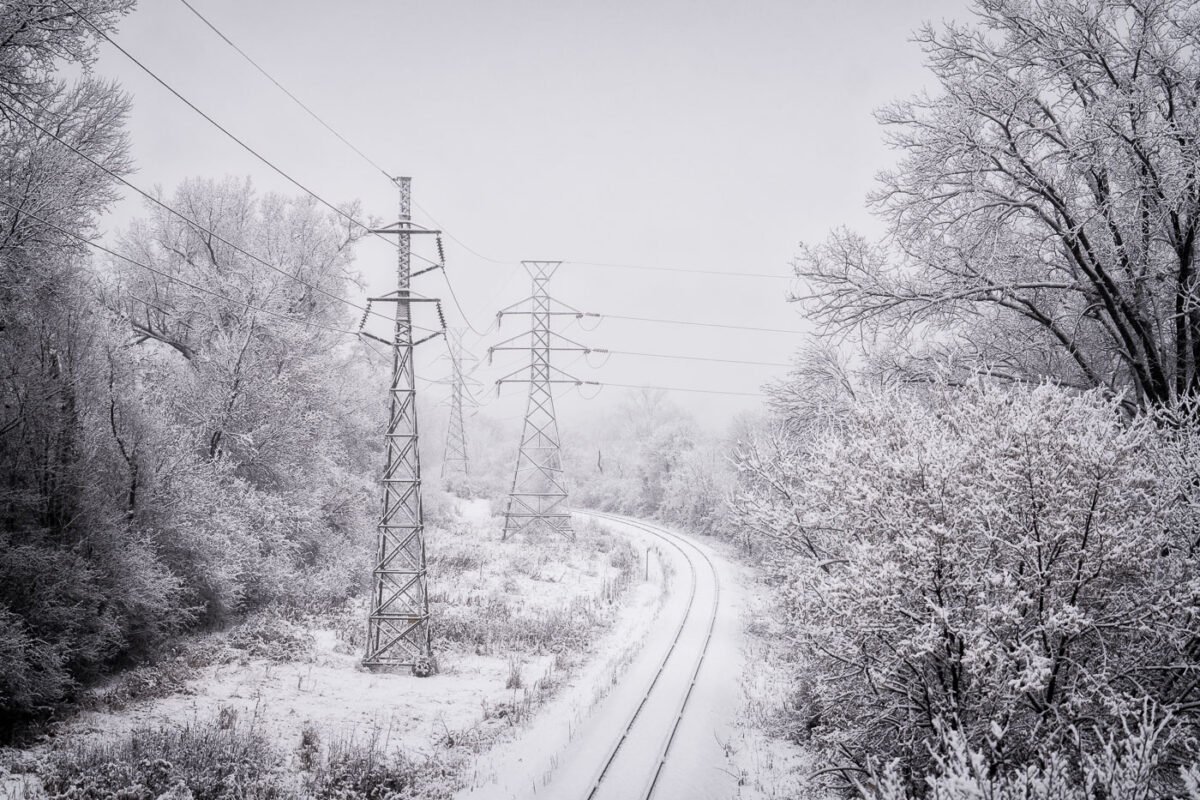
December 2022 — Theodore Wirth Park during a December 15th, 2022 snowfall.
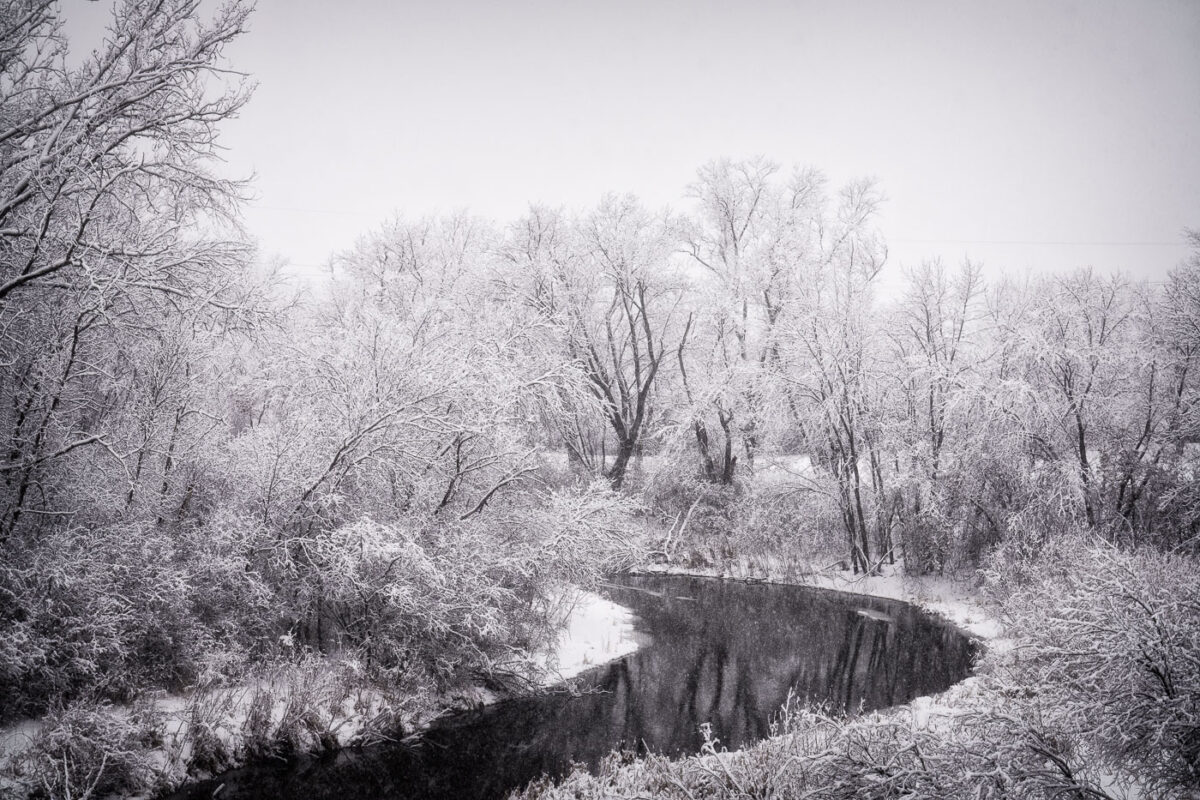
December 2022 — A heavy December 15, 2022 snowfall blankets the woodlands of Theodore Wirth Park in Minneapolis, transforming the Bassett Creek corridor into a monochrome winter landscape. Snow-laden branches bend over the slow curve of the creek, whose dark, unfrozen water provides one of the few contrasts against the dense white canopy. This stretch of Wirth Park—one of the largest urban parks in the Minneapolis park system—follows the natural course of the creek as it winds between restored wetlands, wooded slopes, and ski trails that date back to mid-20th-century park development efforts. The image captures the quiet, insulated atmosphere common in early-season snowstorms, when the park’s trails, waterway edges, and mature hardwoods take on a uniform, frost-covered texture.
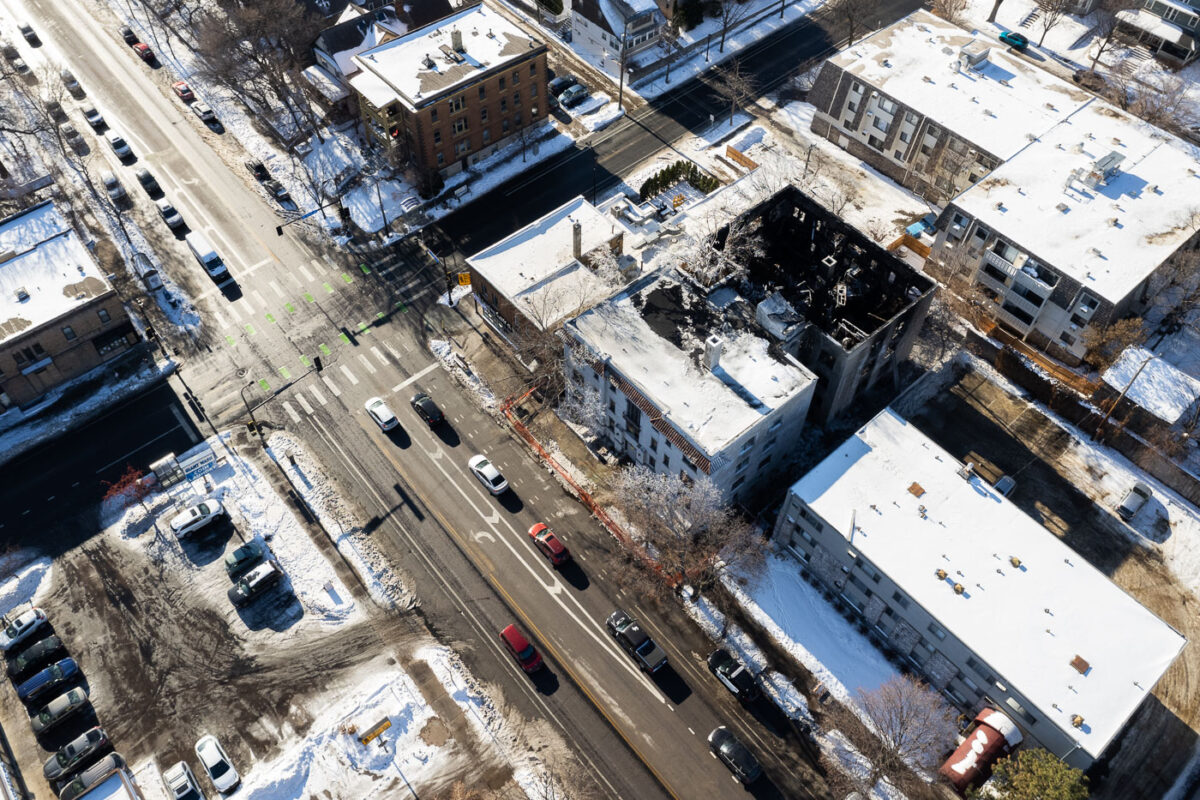
December 2022 — An aerial view of the fire-damaged apartment building along Lyndale Avenue in Minneapolis, photographed the morning after the incident. The structure’s roof is completely gone, and its upper floors are visibly burned out, leaving only the exterior walls and charred framing behind. Surrounding buildings—mostly mid-century apartment blocks—show normal winter conditions, their roofs covered in fresh snow. Traffic moves through the busy Lyndale and 24th Street intersection while the fire scene remains cordoned off with temporary fencing. The image highlights the dense residential fabric of this part of the city and the stark contrast between the intact neighborhood and the gutted building at the center of the block.
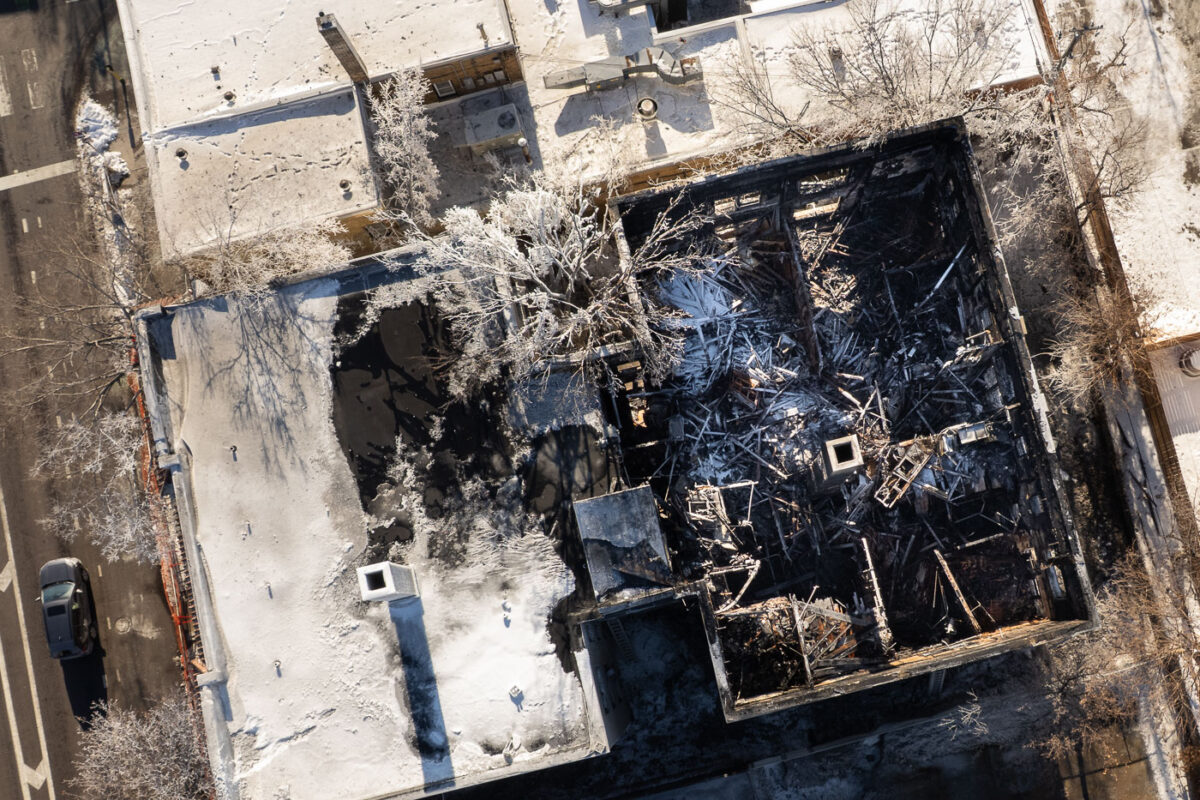
December 2022 — An aerial view shows the charred remains of a vacant apartment building on Lyndale Avenue in Minneapolis the morning after a fire swept through the structure. Snow outlines the building’s footprint and surrounding rooftops, contrasting sharply with the blackened debris and collapsed interior walls. Frozen trees, scorched timbers, and scattered structural fragments highlight both the intensity of the blaze and the rapid onset of winter conditions that followed.
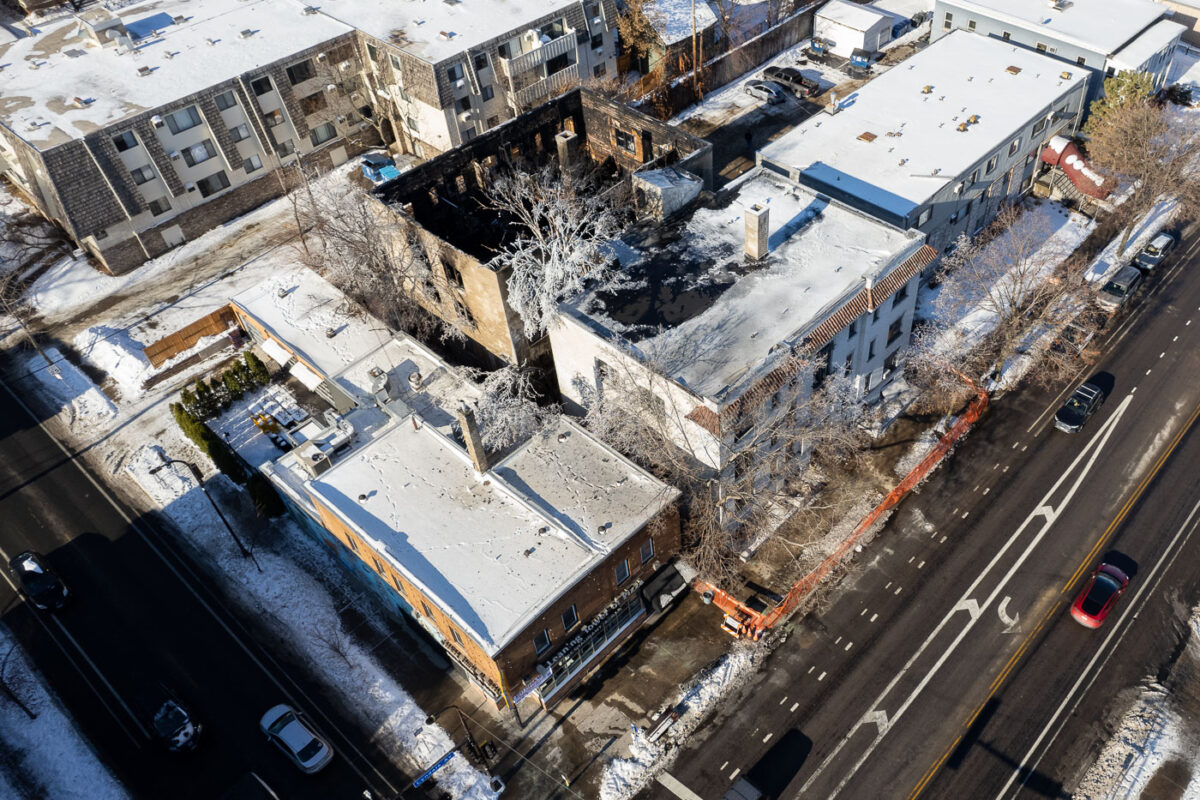
December 2022 — An overhead view of the fire-damaged apartment building along Lyndale Avenue in Minneapolis, photographed the day after the blaze. The structure’s interior is completely burned out, with only the exterior walls still standing. Surrounding rooftops and streets are coated in fresh snow, highlighting the stark contrast between the intact neighboring buildings and the charred remains at the center of the block. Temporary fencing and emergency barriers line the sidewalk as crews begin assessing the site in winter conditions.
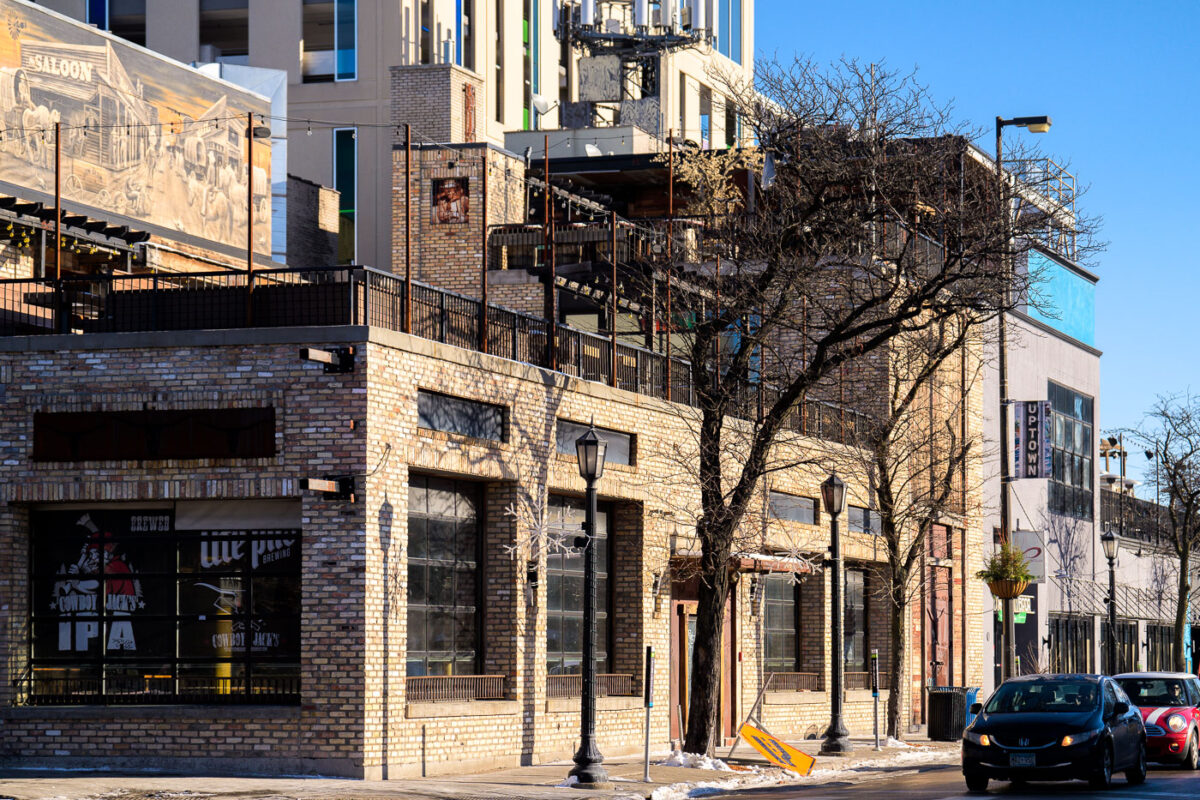
December 2022 — The former Cowboys Slims bar after signage was removed.

December 2022 — A close-up view of a hydraulic excavator’s quick-coupler and demolition attachment during the teardown of the former Southgate Office Tower in Bloomington, Minnesota. The worn steel, hydraulic lines, and layers of dust and debris show the heavy strain placed on equipment during large-scale structural demolition. Piles of shattered concrete, insulation, and twisted metal surrounding the attachment reflect the ongoing dismantling of the mid-century office complex.
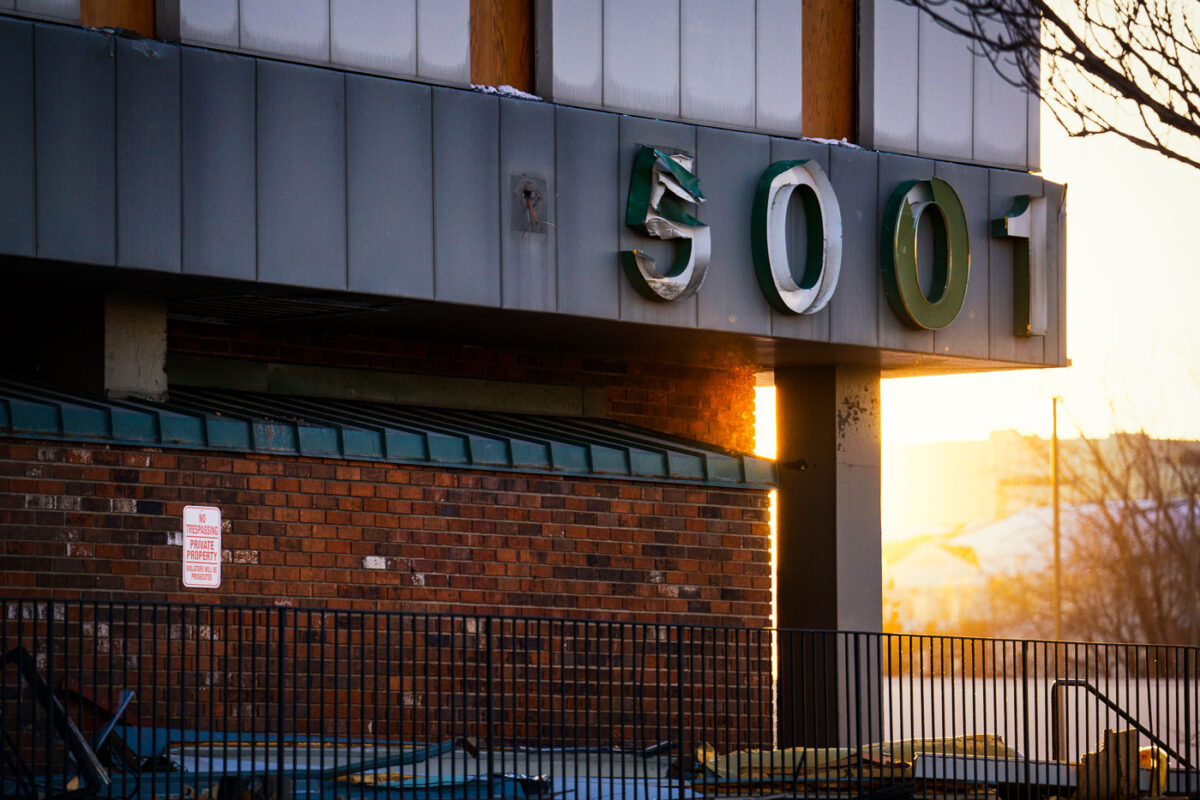
December 2022 — The address numbers 5001 hang damaged and partially peeled from the exterior of the former Southgate Office Tower in Bloomington, Minnesota. Shot during the late-afternoon winter light, the sign shows the wear of a building already deep into demolition. The brick façade, fencing, and scattered debris reflect the final stages of teardown at the long-vacant 1960s-era tower that once stood near I-494 and Portland Avenue.
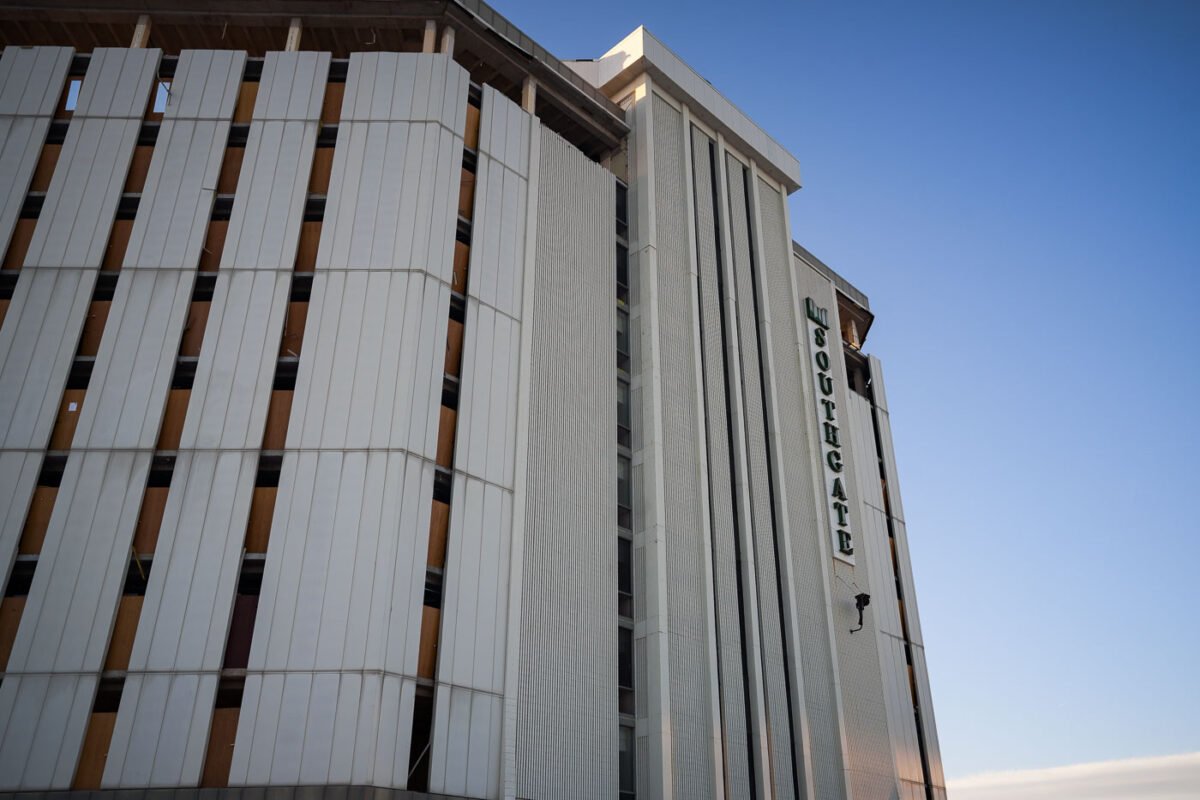
December 2022 — The Southgate Office Tower in Bloomington, Minnesota, stands with its vertical concrete panels and boarded-up windows in the final weeks before demolition. Built in the 1960s as part of a broader commercial corridor near I-494 and Portland Avenue, the building had become long vacant by the 2010s. Its distinctive mid-century façade—once a recognizable landmark for drivers on the interstate—shows stripped interiors and exposed structural elements as crews prepare the site for redevelopment.
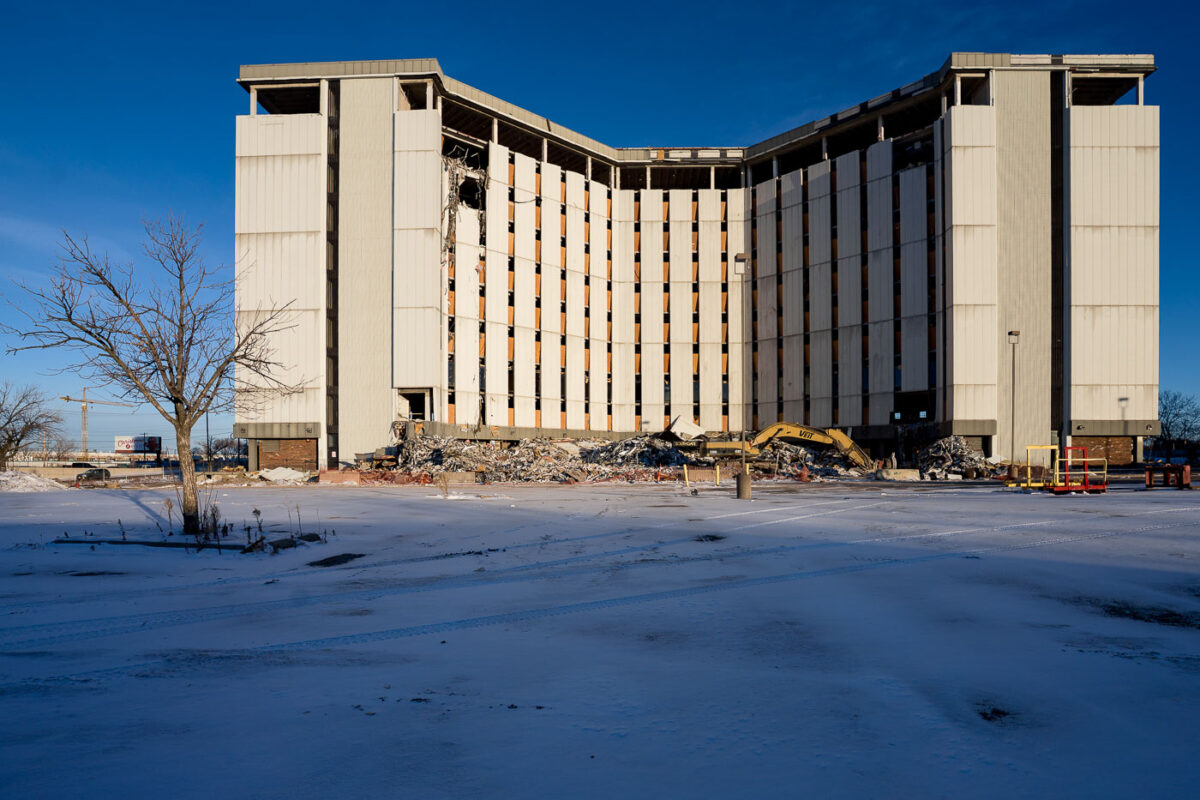
December 2022 — A partially dismantled mid-century office tower stands open to the winter light in Bloomington, Minnesota, as demolition crews continue taking down the long-vacant structure. The building’s exposed interior and collapsed debris field reflect the broader wave of suburban redevelopment that has reshaped commercial corridors near I-494 and the Minneapolis–St. Paul International Airport. Heavy equipment rests at the base of the tower, marking another step in clearing the site for future use amid changing regional land-use patterns.
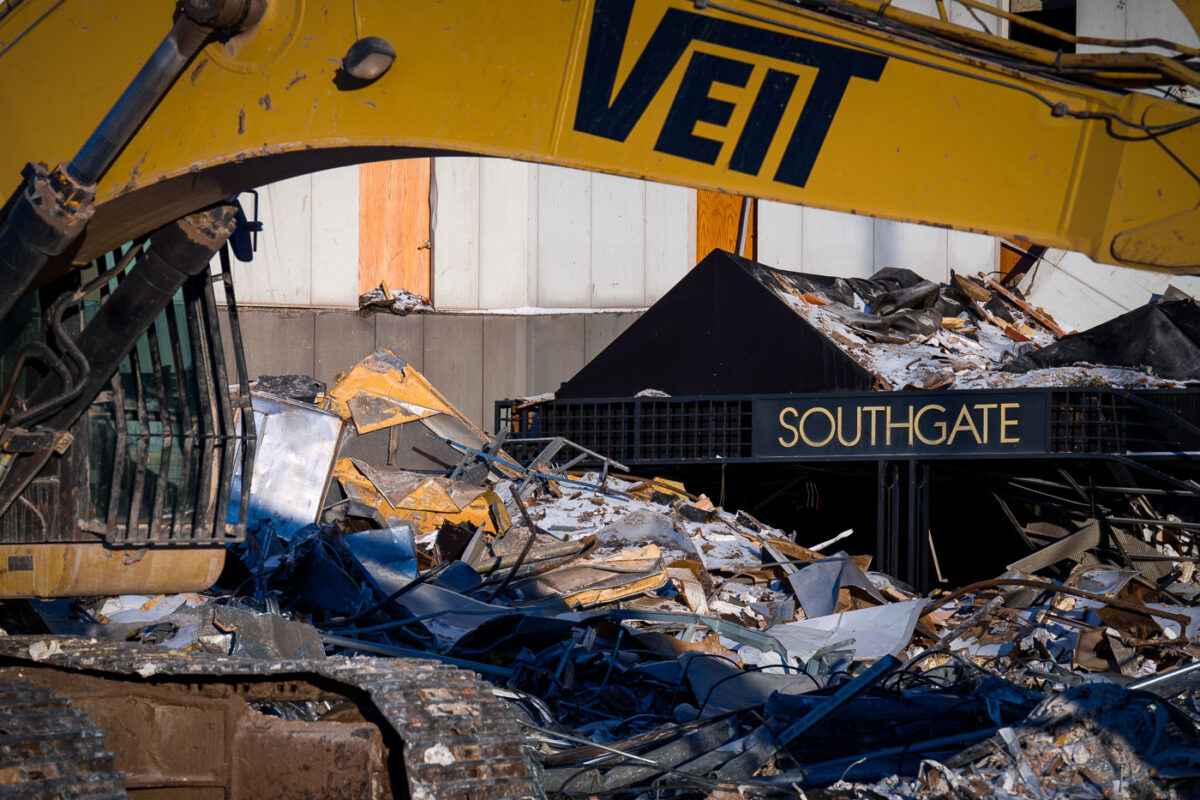
December 2022 — Construction equipment and twisted debris surround the former Southgate entrance canopy as crews continue dismantling the long-vacant tower near I-494 in Bloomington, Minnesota. The Southgate complex, once part of a mid-century office corridor, is being cleared after years of declining occupancy, making way for new redevelopment in one of the metro’s busiest commercial zones. The exposed framework and scattered metal panels highlight the final stages of the structure’s removal.
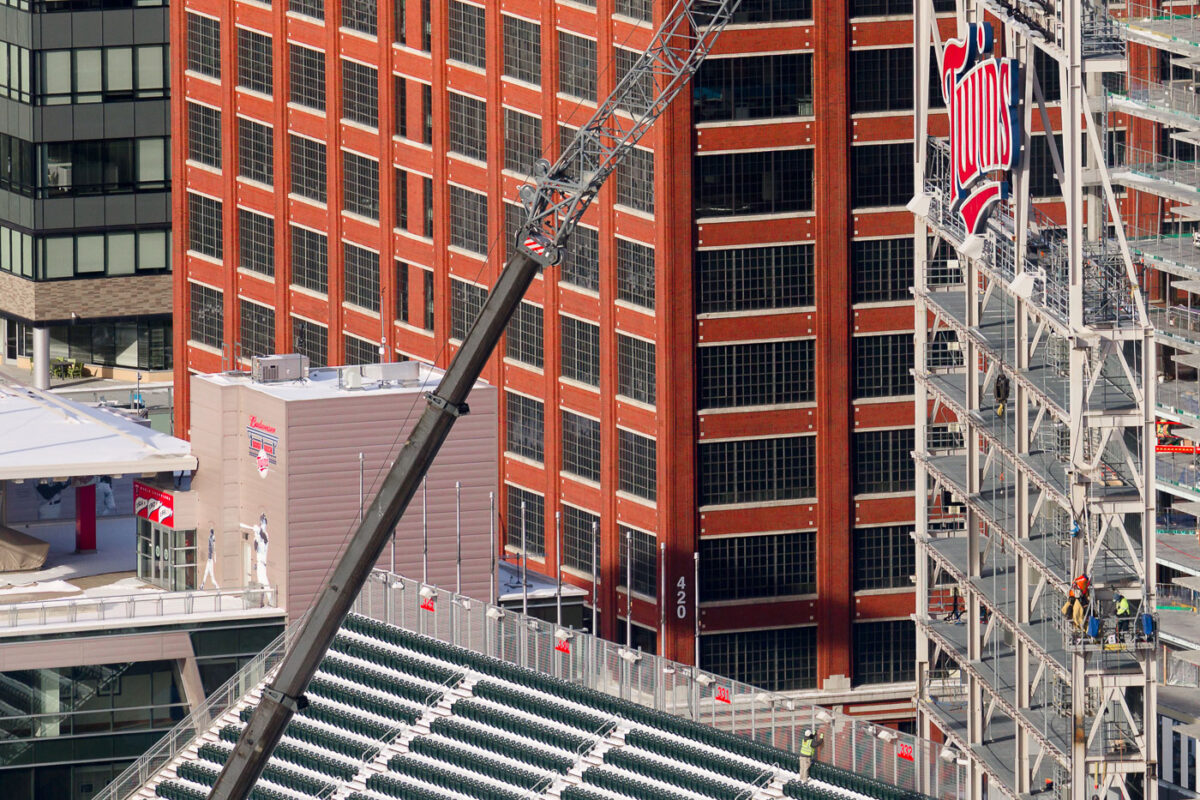
December 2022 — Workers installing a new 76% larger 10,000 square foot LED videoboard at Target Field. @ballparkdigest says it'll be the 4th largest video display in Major League Baseball and just the 5th HDR capable board. (Minneapolis, December 2022).
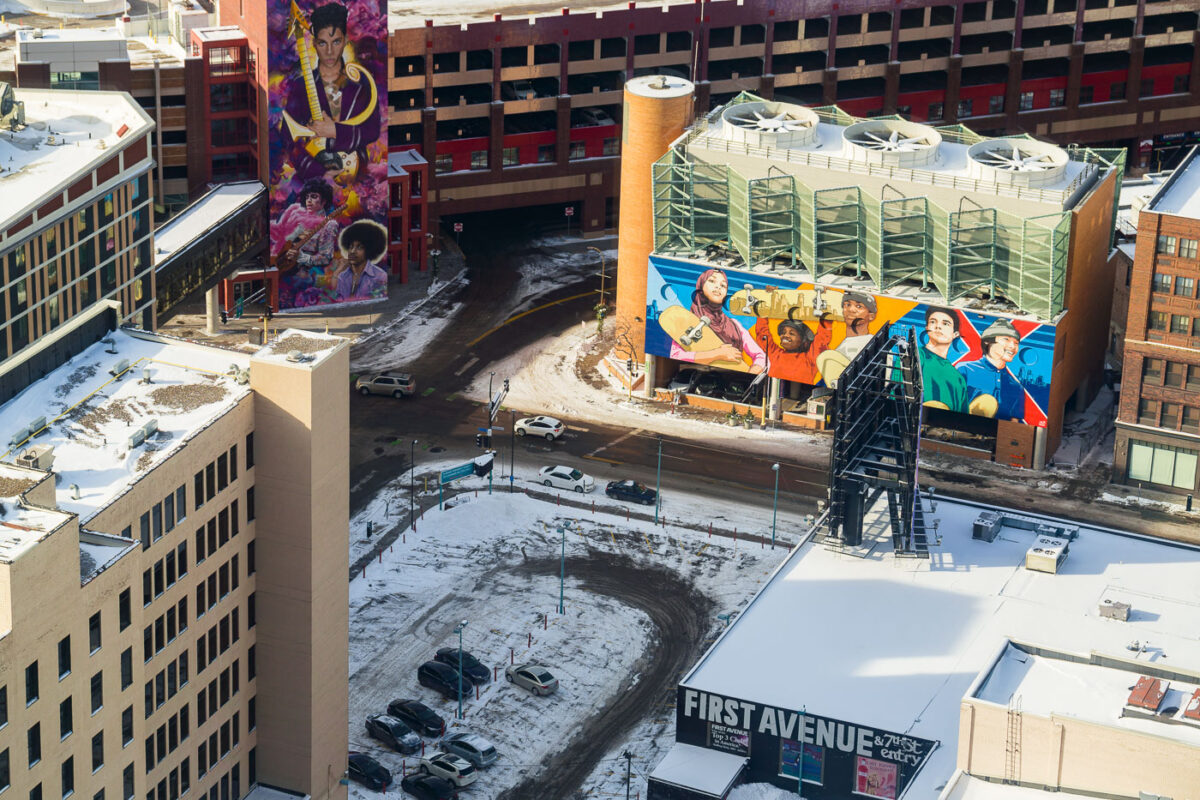
December 2022 — Prince mural in downtown Minneapolis near First Avenue.
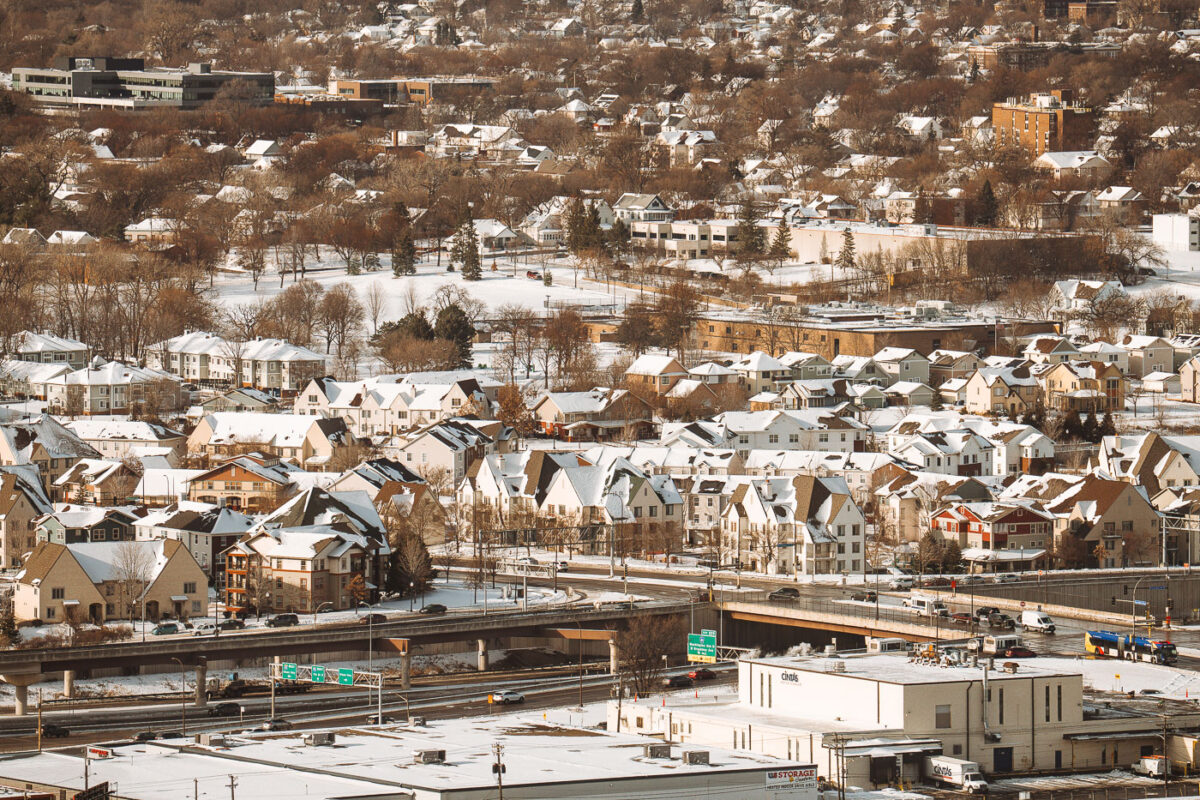
December 2022 — This view looks across the residential neighborhoods bordering Interstate 94 in Minneapolis, an area shaped heavily by mid-20th-century highway construction. When I-94 was built between the 1950s and early 1970s, it cut through several established communities—including parts of Cedar-Riverside, Seward, and Phillips—reshaping street grids, housing patterns, and long-standing cultural districts. The snow-covered homes clustered above the highway reflect a mix of older housing stock and later infill development that emerged after the corridor was completed. The elevated ramps and interchanges shown here connect local streets to one of the region’s primary east–west routes, linking downtown Minneapolis with St. Paul and the wider interstate system.
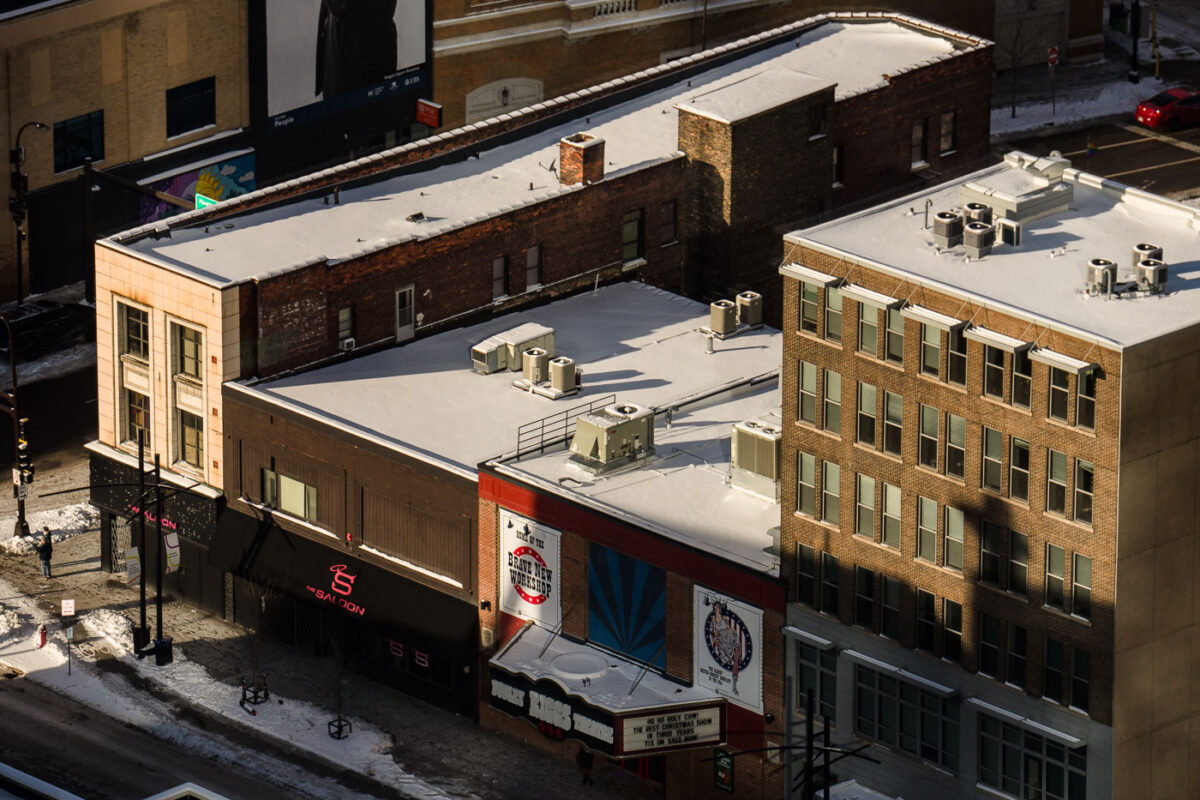
December 2022 — The Saloon and Brave New Workshop on Hennepin Avenue in downtown Minneapolis.
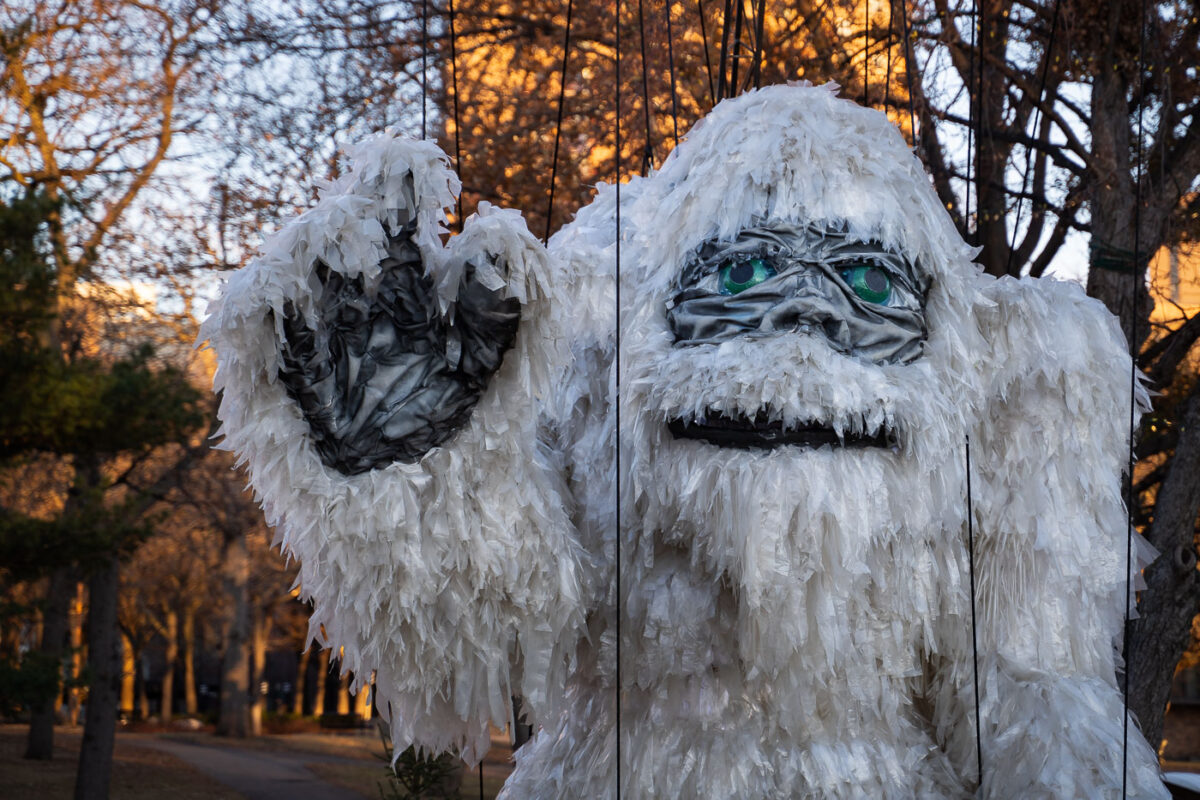
November 2022 — The Holidazzle Yeti at Loring Park in Minneapolis.
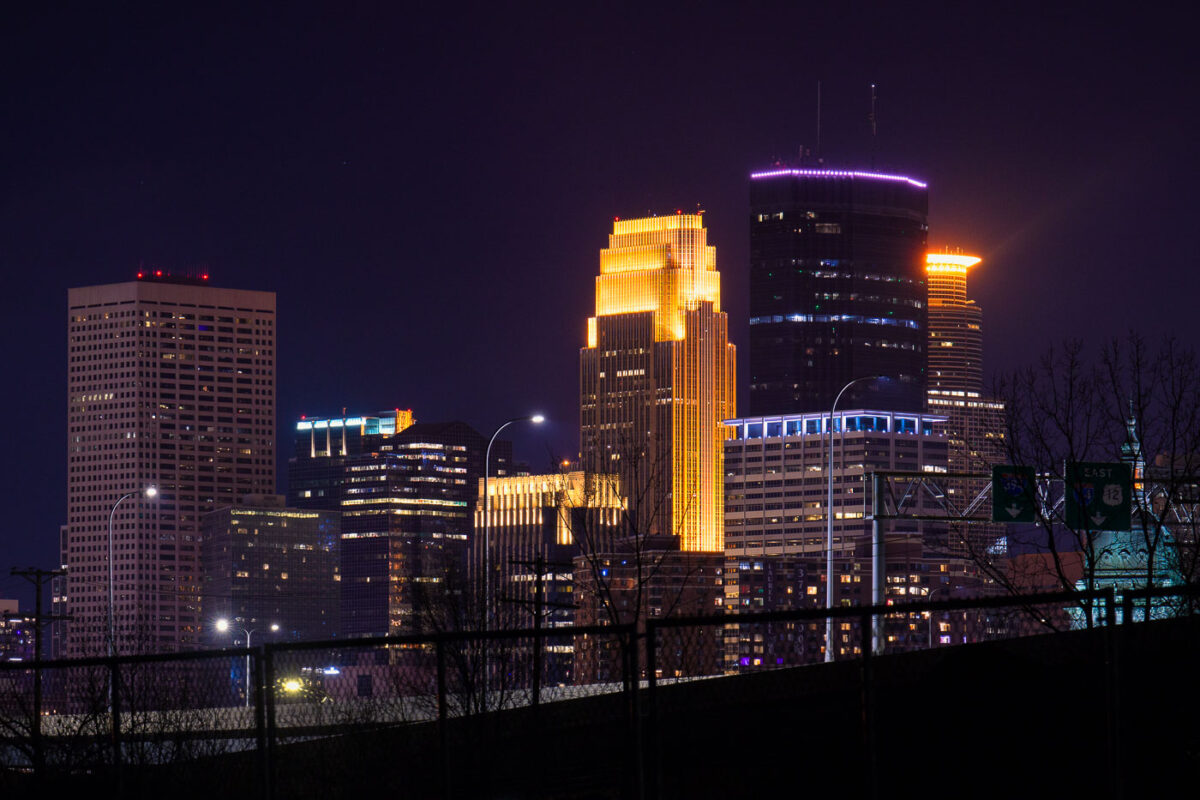
November 2022 — Downtown Minneapolis skyline seen in November 2022.
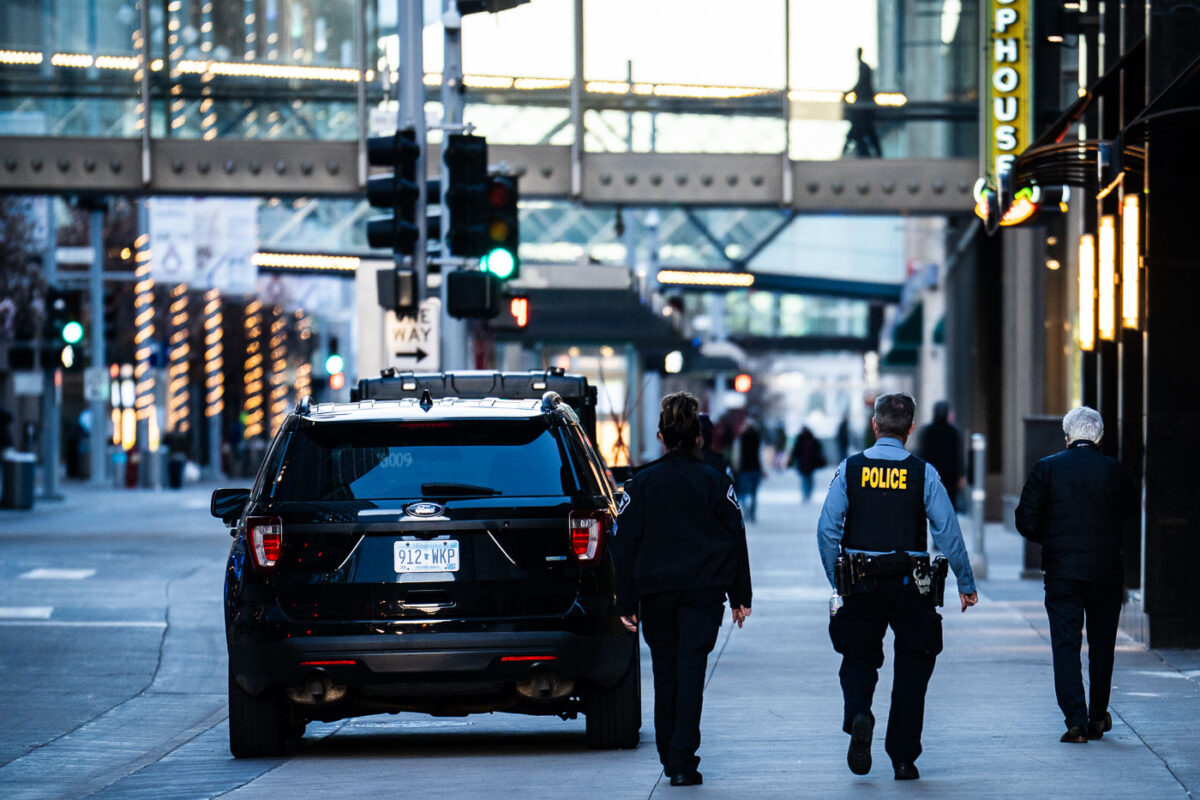
November 2022 — Minneapolis police walk downtown Minneapolis as part of "Operation Endeavor".
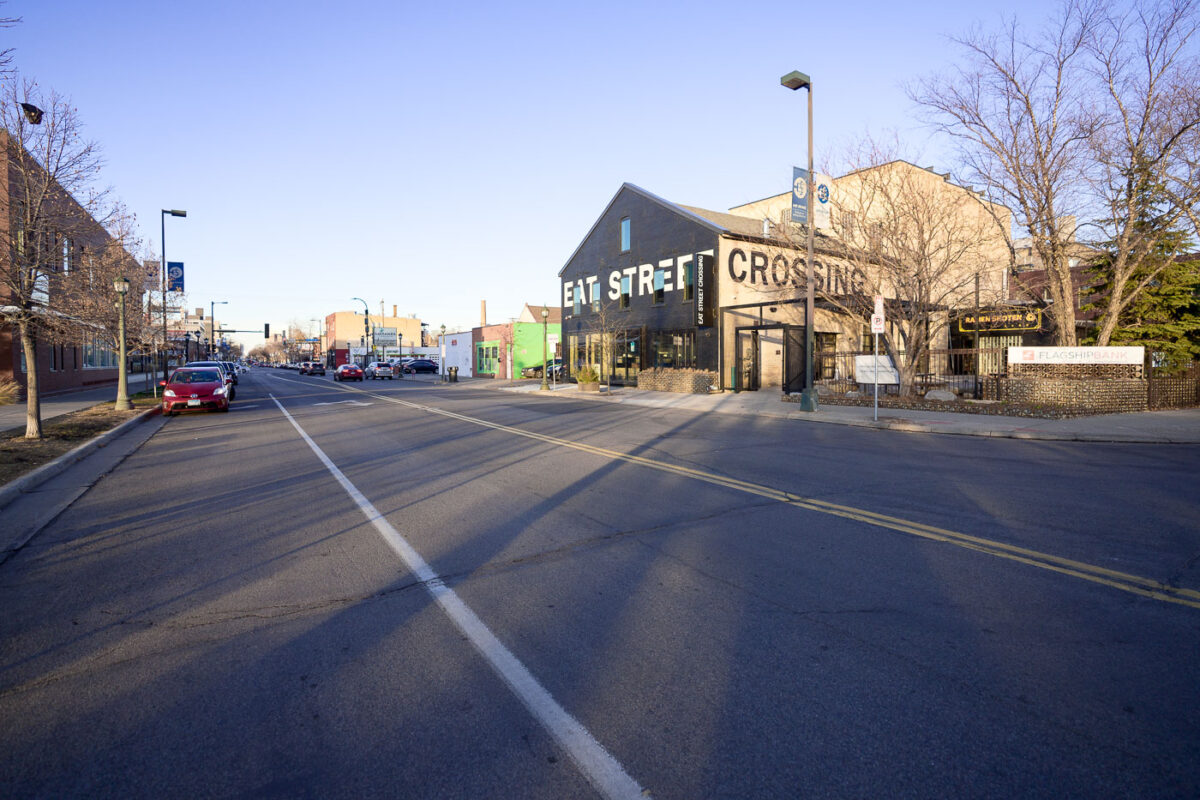
November 2022 — Looking down Nicollet Avenue in South Minneapolis. Eat Street Crossing on the right.
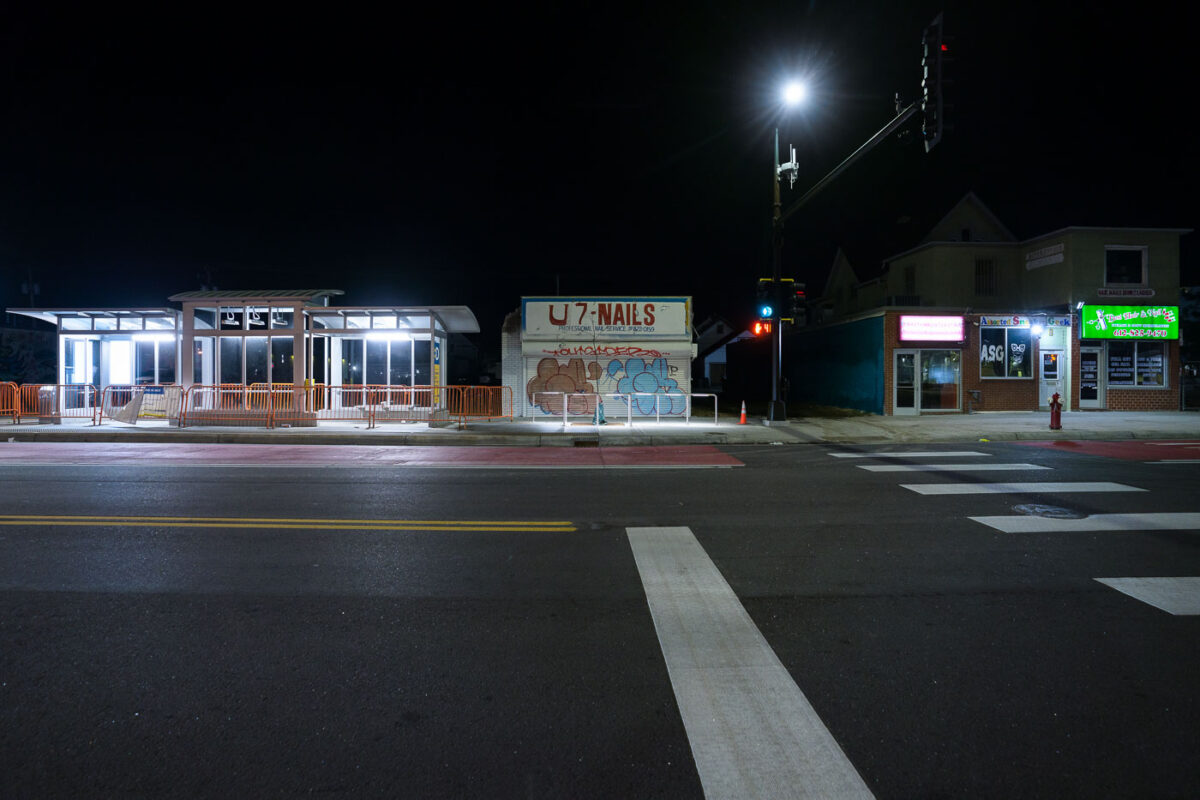
November 2022 — Metro Transit D-Line Chicago-Lake Transit Center on Chicago Avenue in Minneapolis.
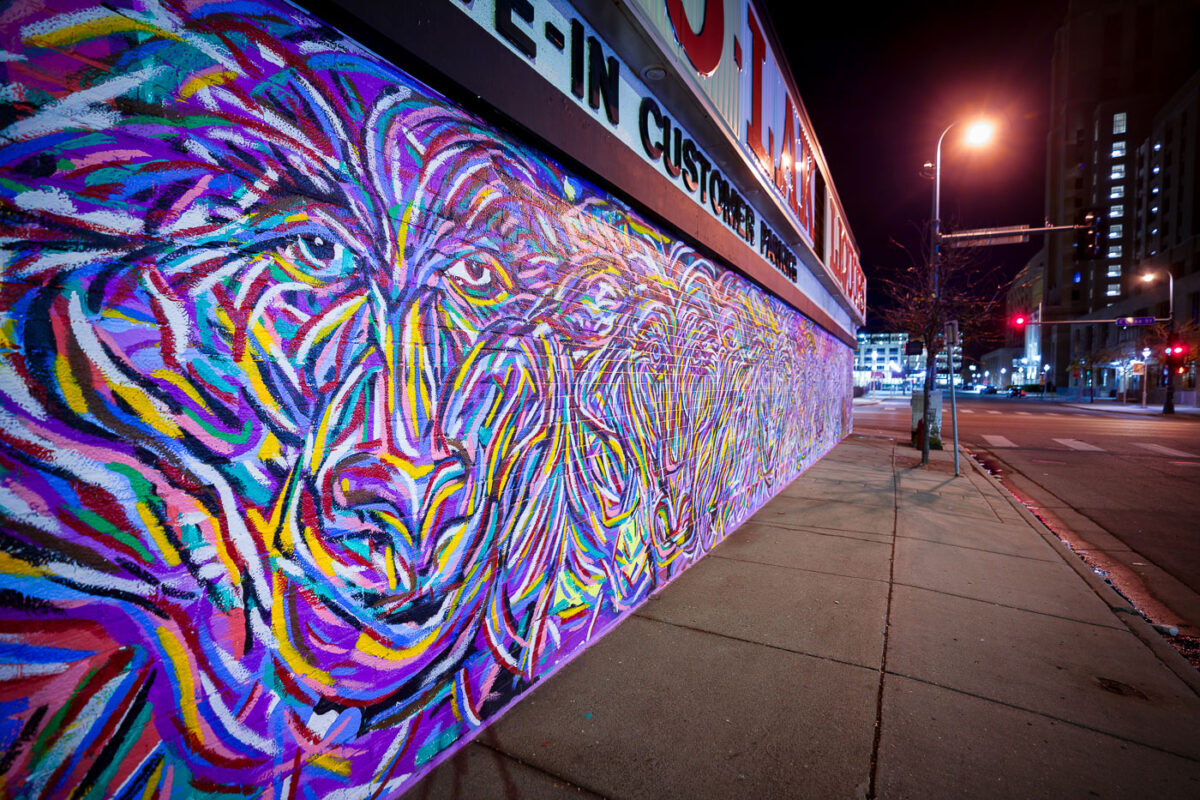
November 2022 — A new mural from Jimmy Longoria wraps around the Chicago-Lake Liquors building and covering the front metal shutters.
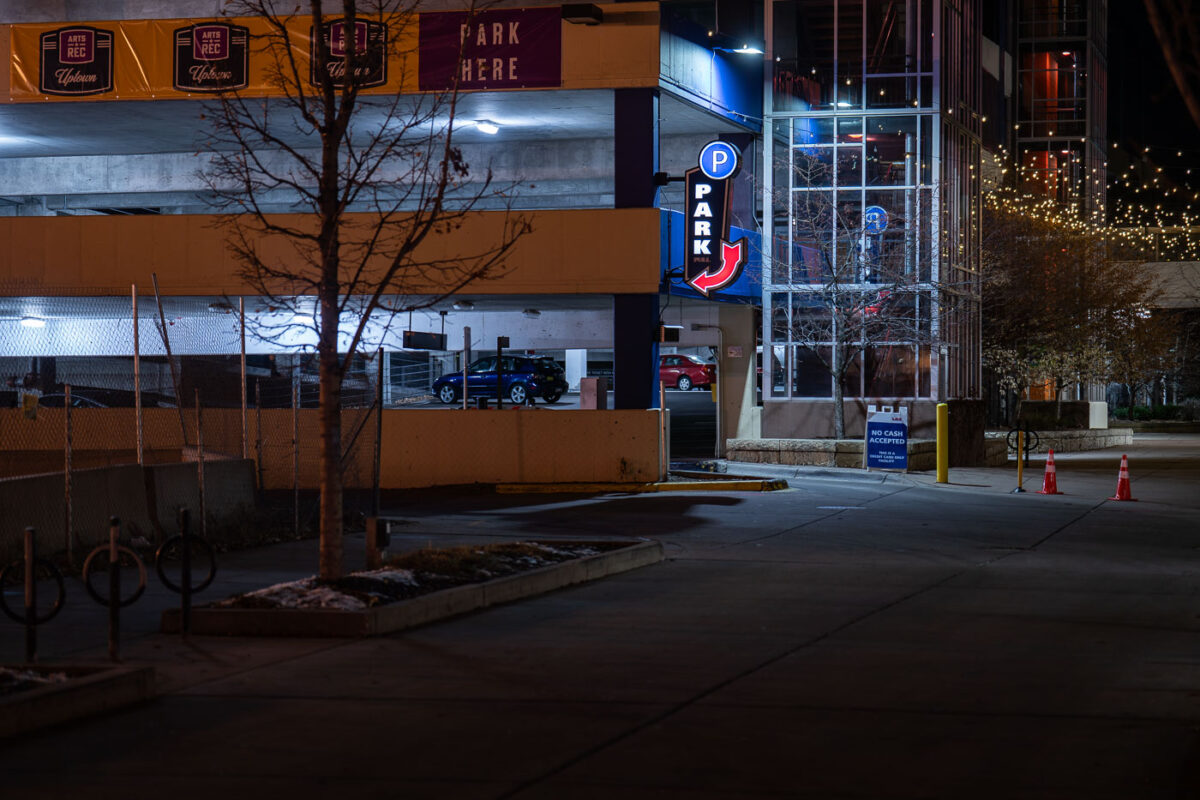
November 2022 — Seven Points Parking ramp on Lake Street in November 2022. Winston Smith was killed by law enforcement in June 2021 at the top of the ramp.
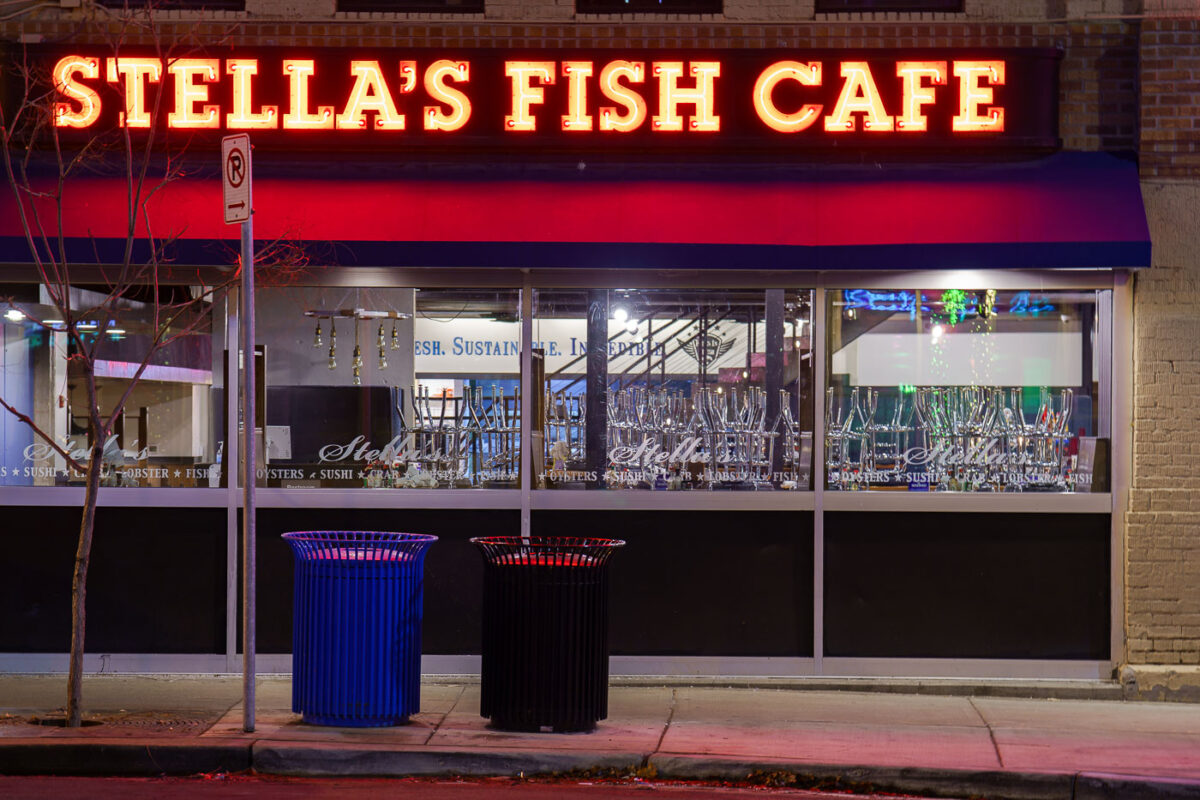
November 2022 — Stella's Fish Cafe on Lake Street in Minneapolis.
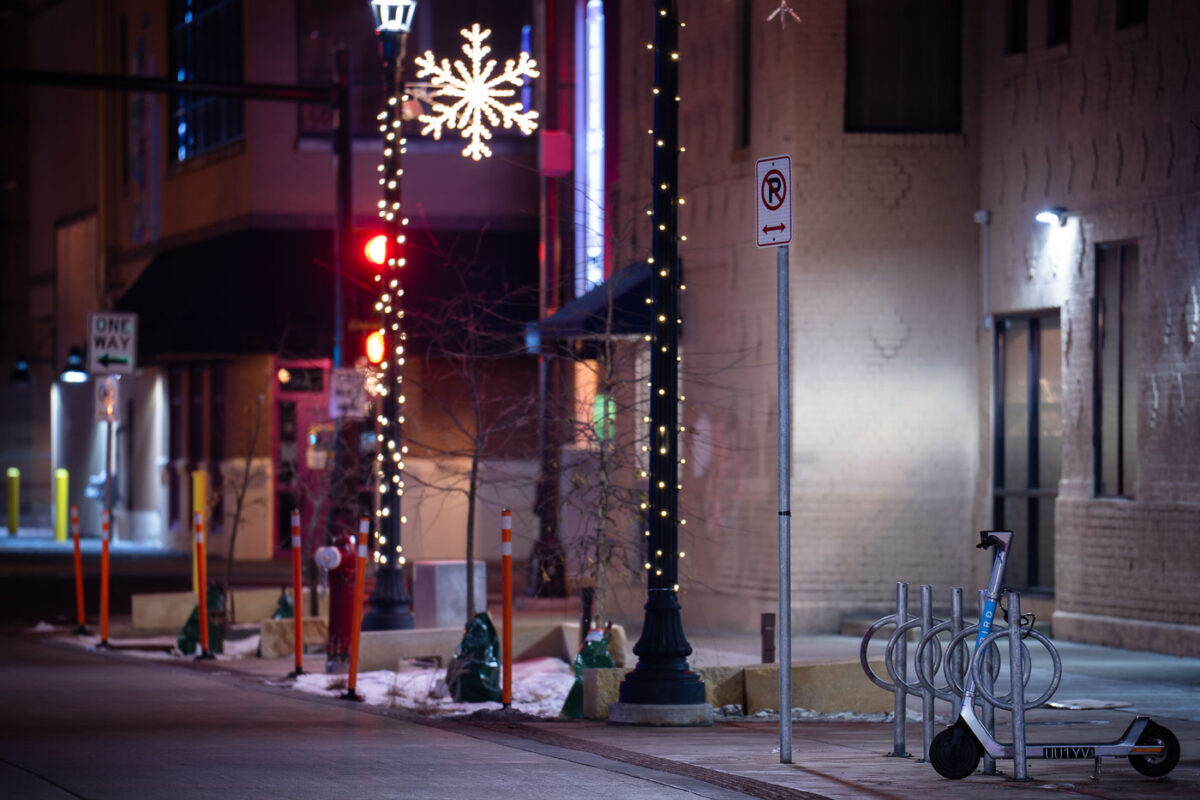
November 2022 — A Bird scooter on Girard in Uptown Minneapolis in November 2022.
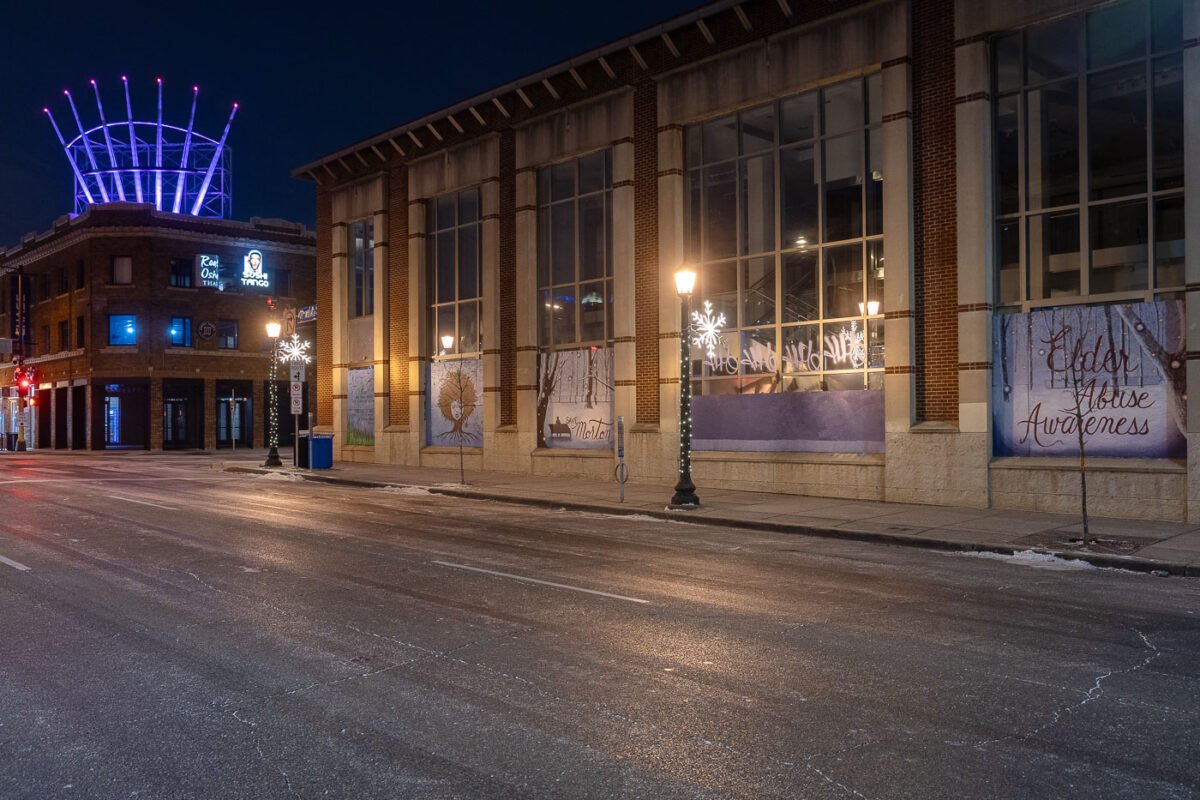
November 2022 — Boards on the former Victoria Secret and Gap building at Lake and Hennepin. Until recently, the building still had all of the original boards from June 2020 that went up following the May 25, 2020 murder of George Floyd.

November 2022 — A large pencil sculpture stands partly buried in fresh snow near Lake of the Isles in Minneapolis. The piece—well-known to neighborhood walkers and cyclists—sits on the lawn of a private residence and has become a quiet local landmark. Framed by stone steps, evergreens, and early-season snowfall, it reflects the eclectic public-facing art found throughout the surrounding residential areas of the Chain of Lakes.
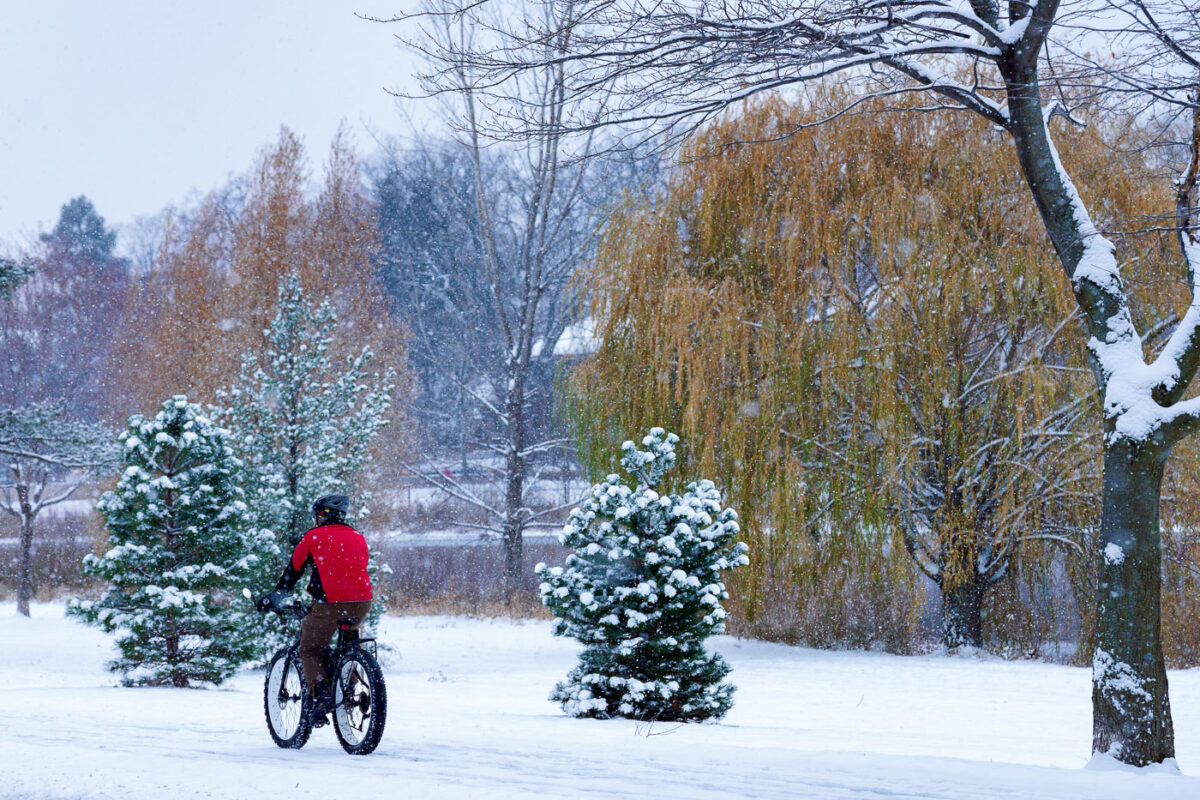
November 2022 — A biker on Lake of the Isles in Minneapolis during the seasons first snowfall.
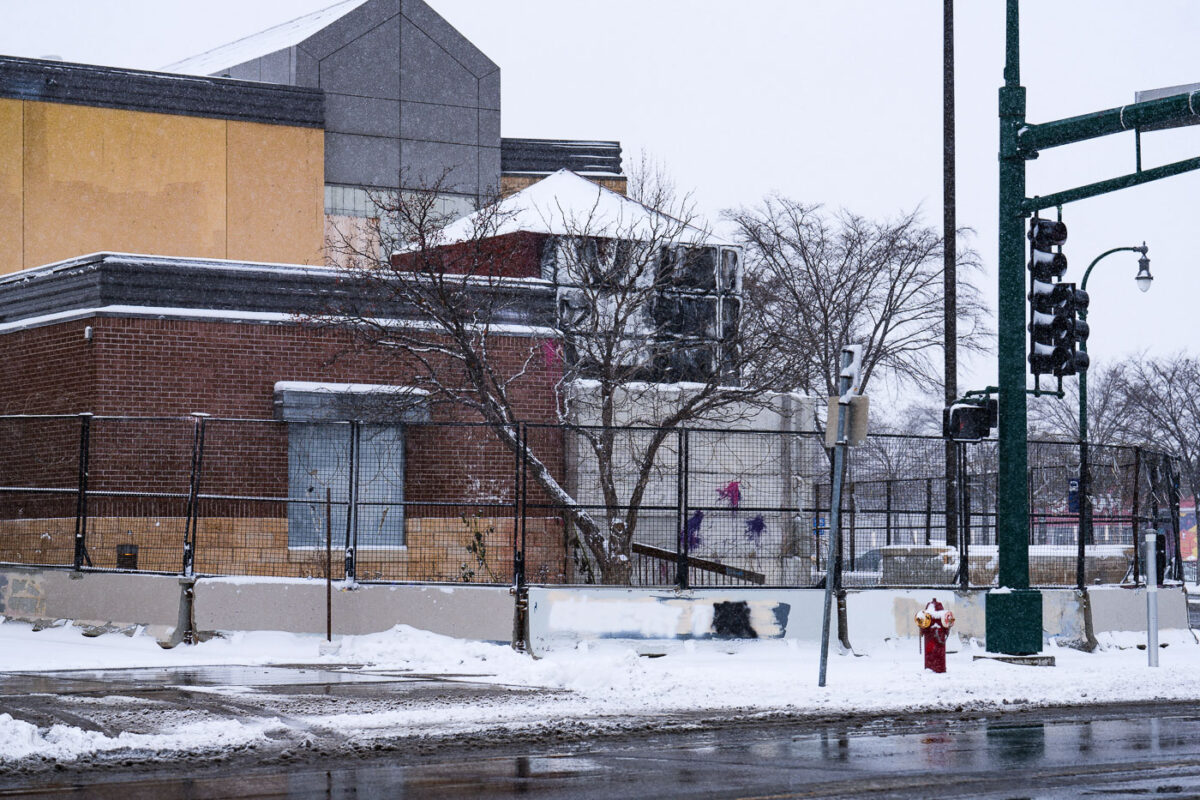
November 2022 — The former Minneapolis Police third precinct in South Minneapolis. The precinct was burned in 2020 by protesters following the May 25, 2020 murder of George Floyd.
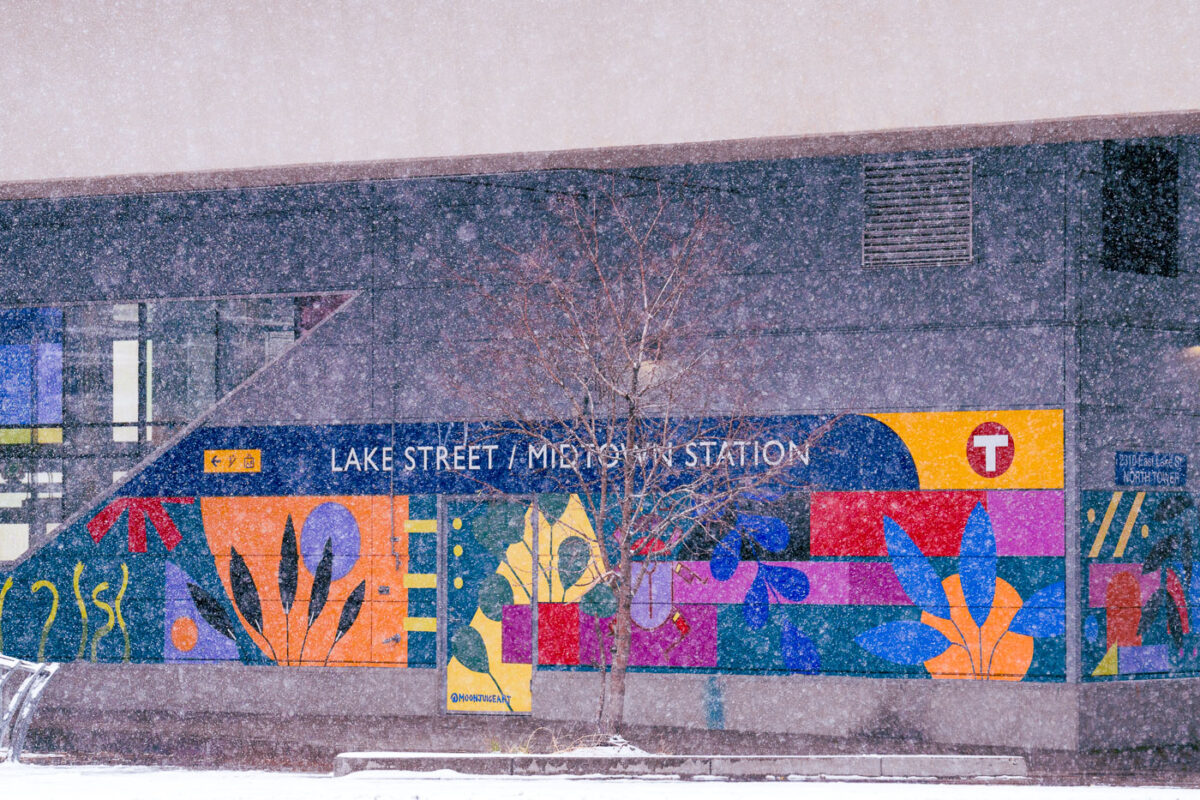
November 2022 — Lake Street / Midtown Station in South Minneapolis during November snowfall.
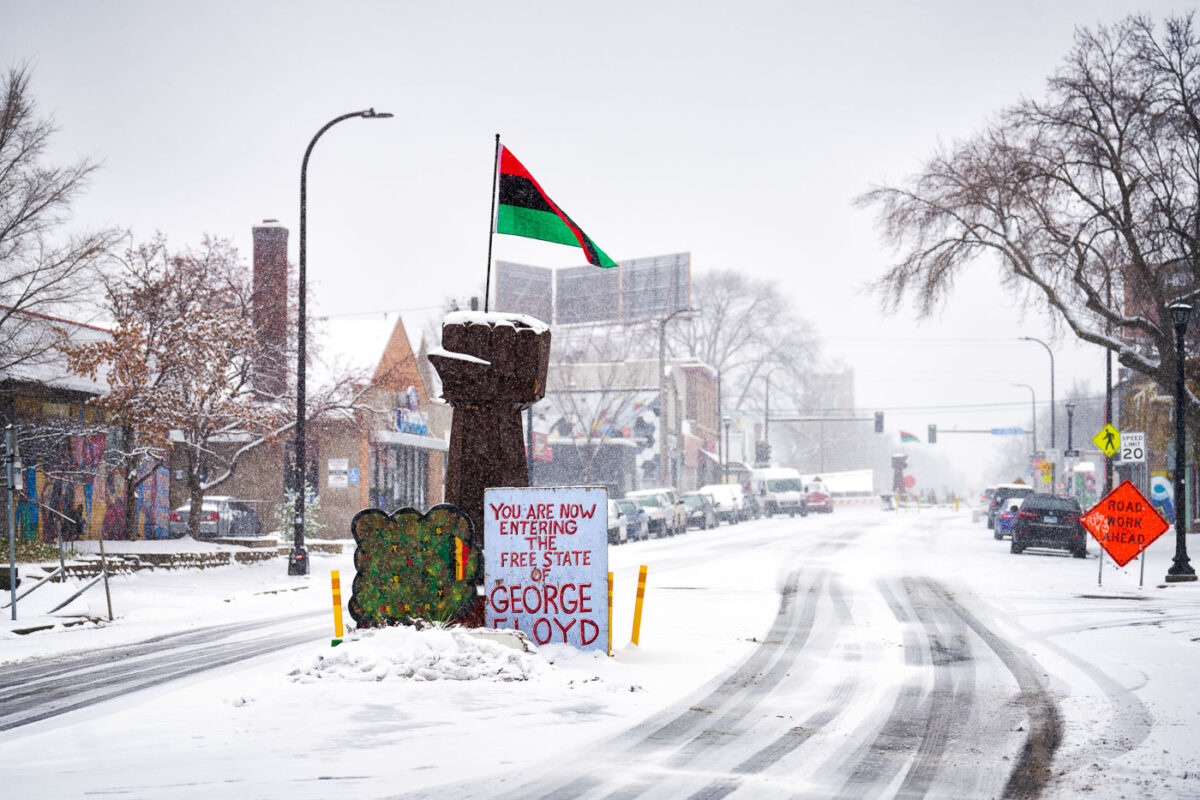
November 2022 — Snow falls on Chicago Avenue. George Floyd Square has been a place of protest since the May 25, 2020 murder of George Floyd.
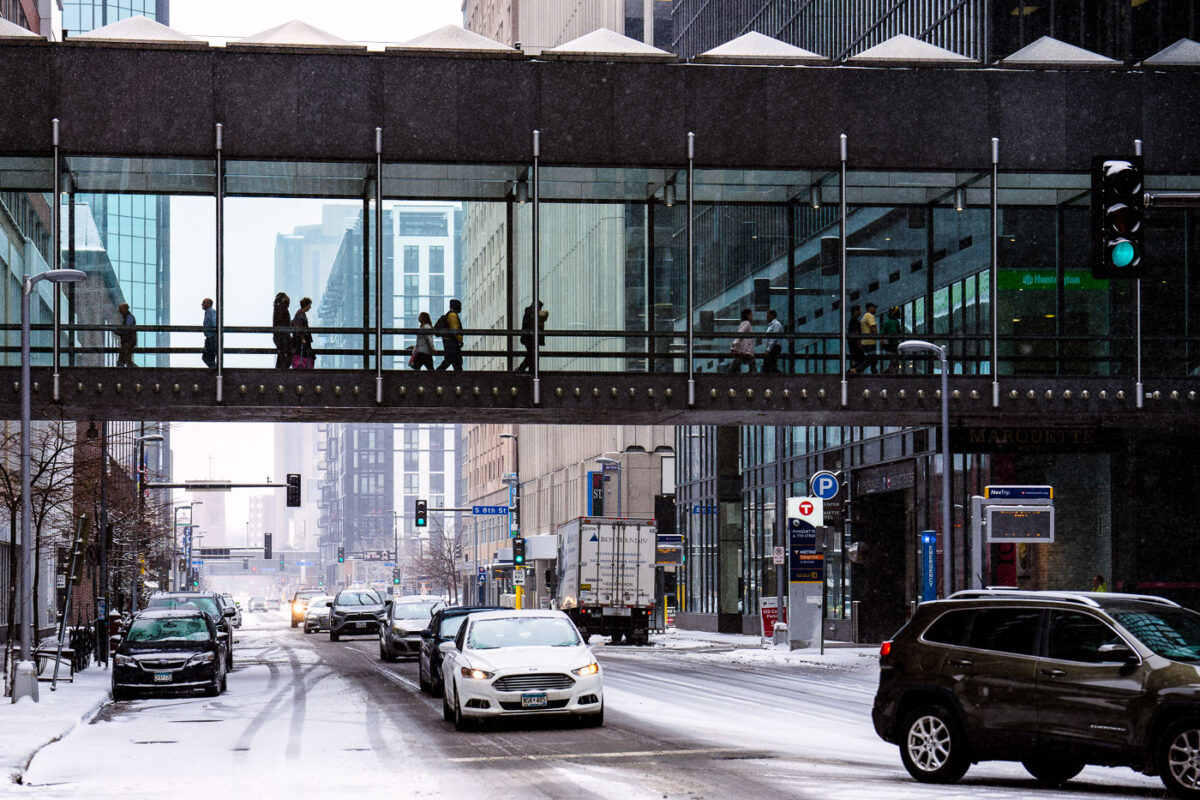
November 2022 — Outside the IDS Center in downtown Minneapolis during the first snowfall of the season.
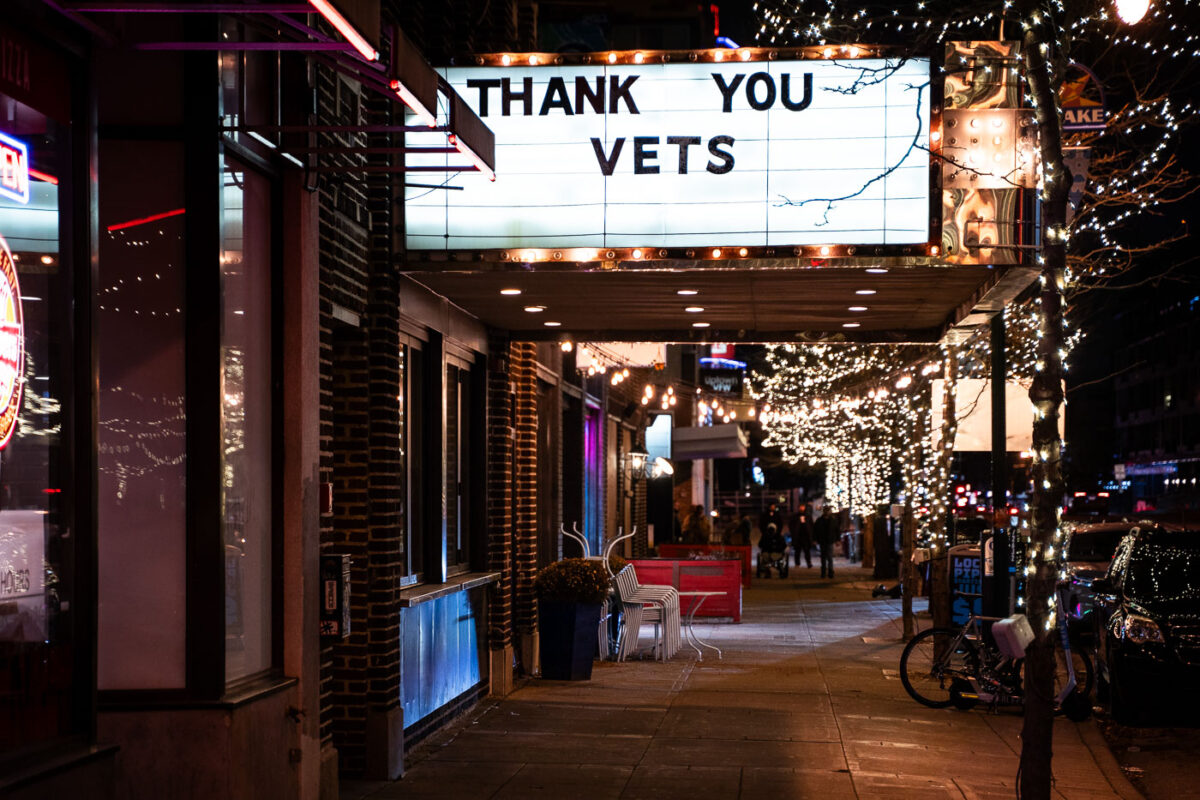
November 2022 — Thank You Vets on a marquee on Lyndale in Uptown Minneapolis.
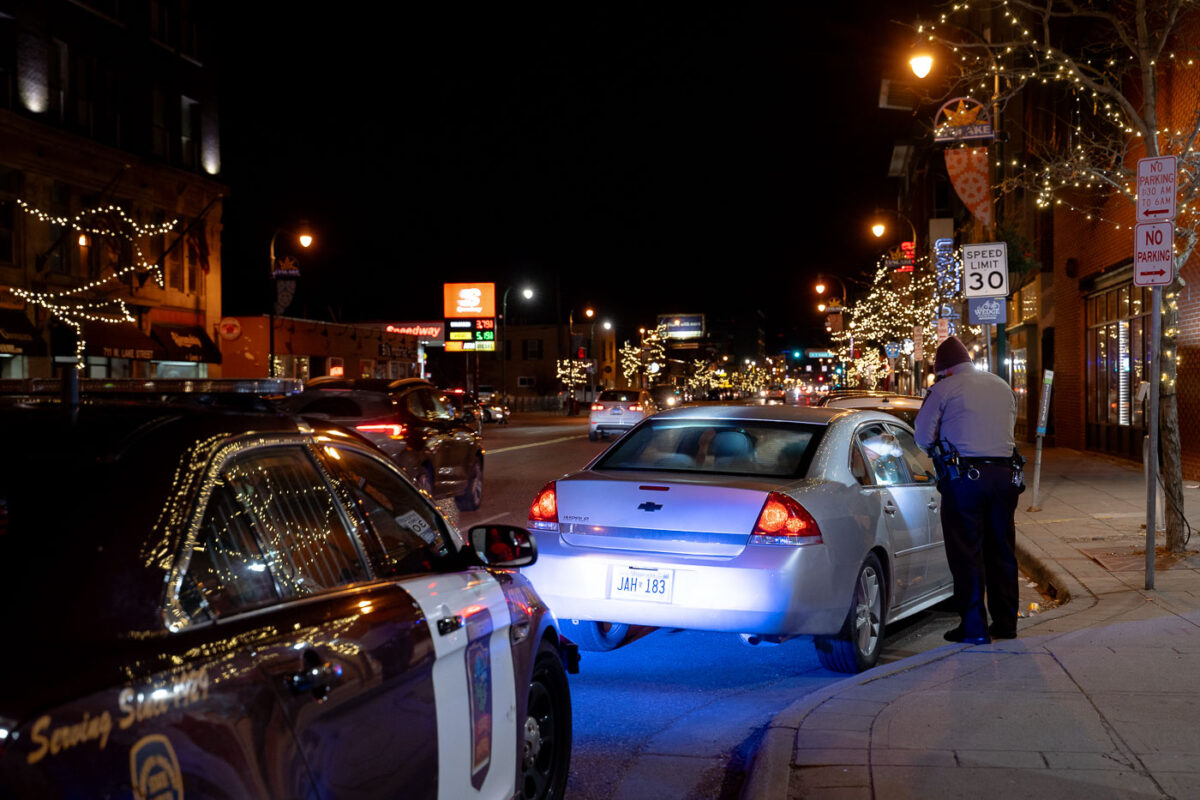
November 2022 — Minnesota State Patrol and a pulled over vehicle with a dog in the window. The Minnesota State Patrol was assisting Minneapolis Police.
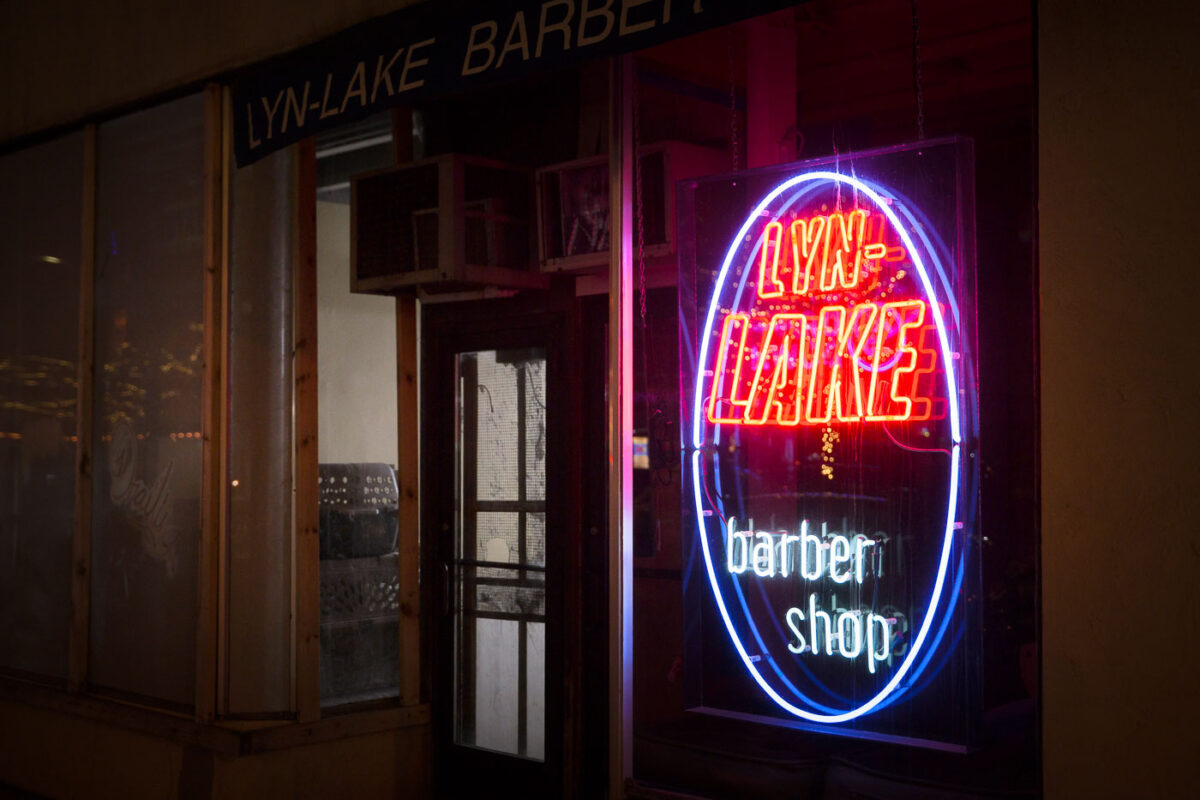
November 2022 — Lyn-Lake Barber Shop on Lyndale Avenue in South Minneapolis.
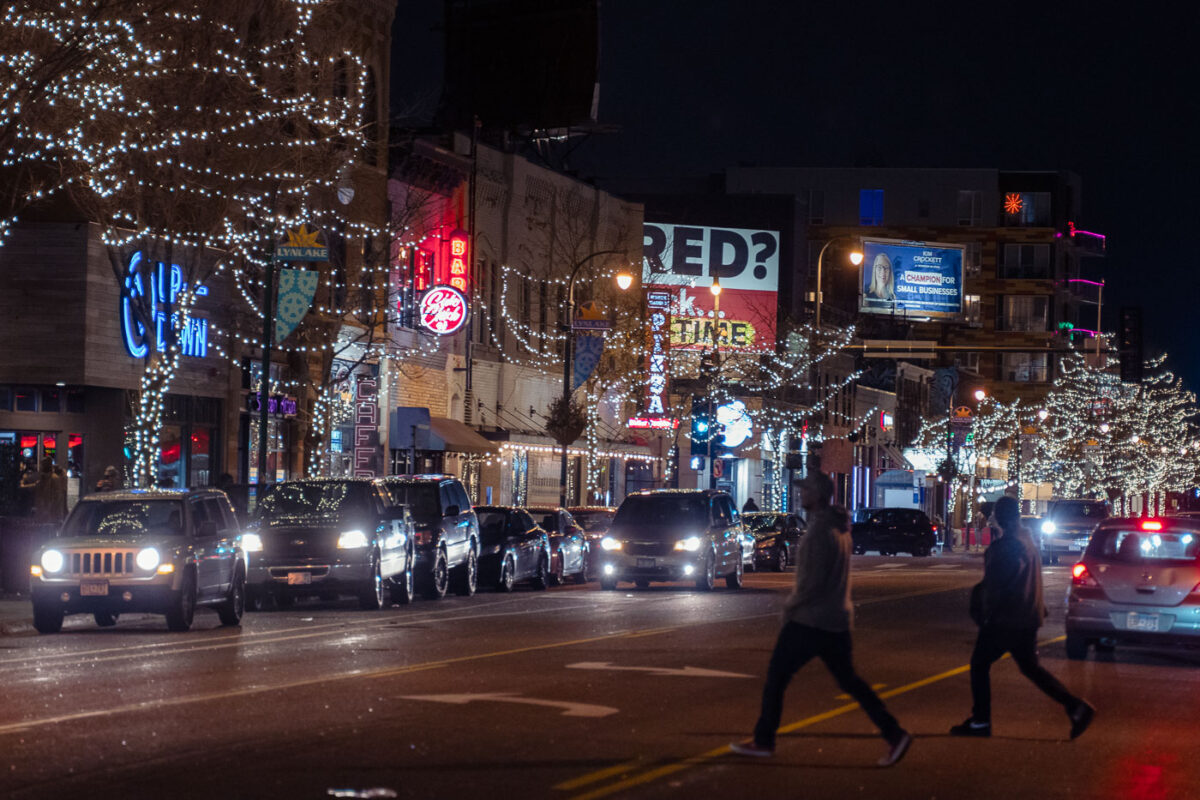
November 2022 — People walk across Lyndale Avenue in Minneapolis in November 2022.
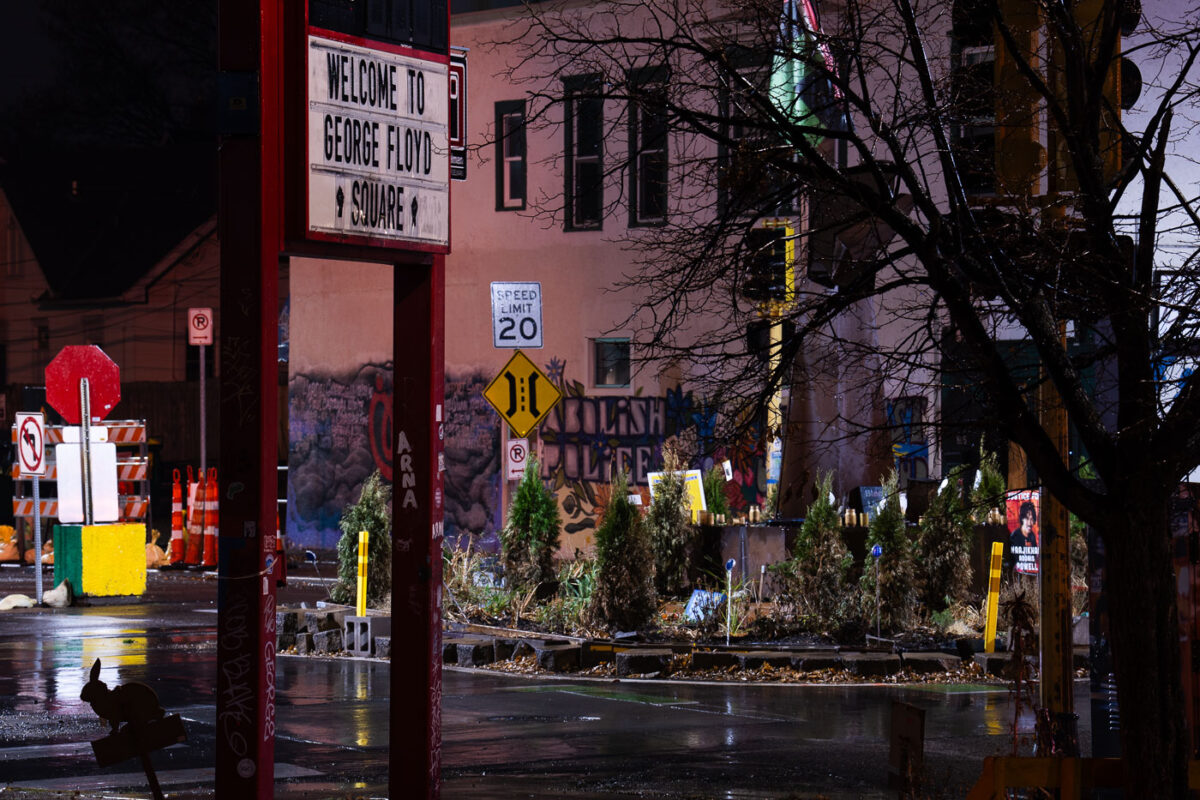
November 2022 — George Floyd Square in a late fall November rain. The intersection has been a place off protest since the May 25, 2020 murder of George Floyd.
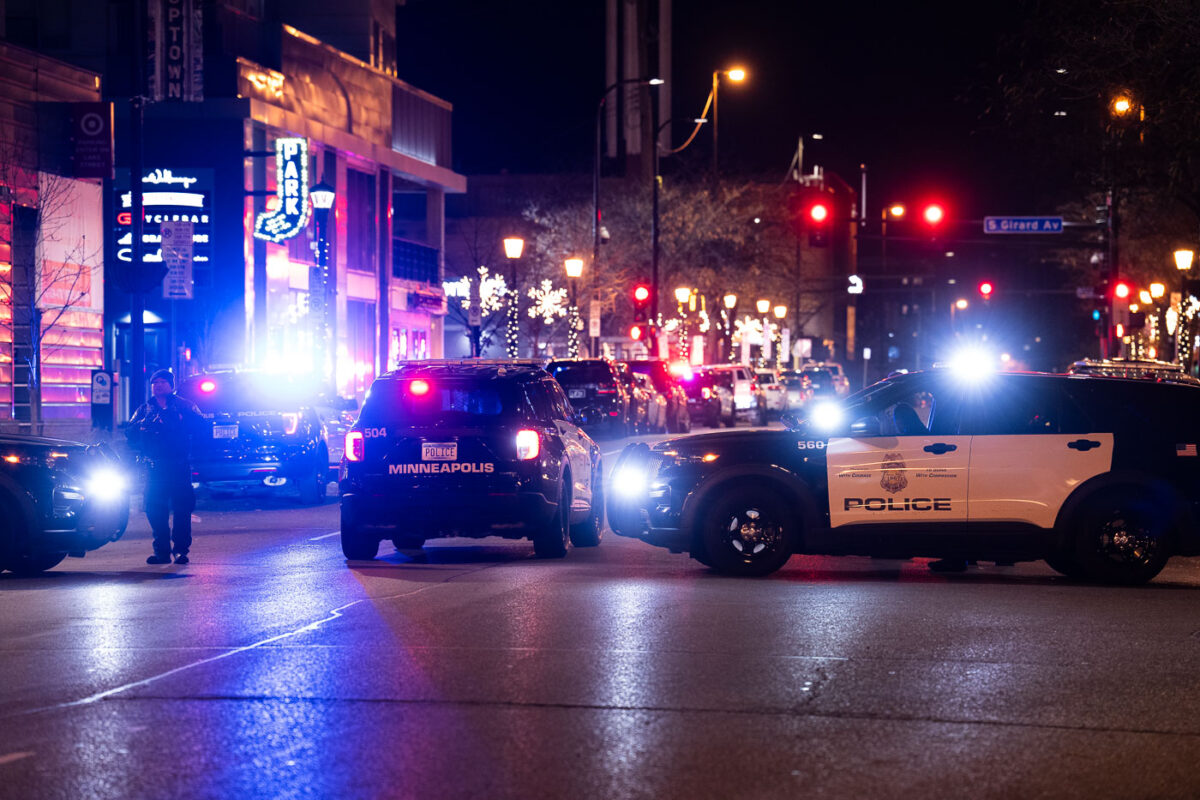
November 2022 — Minneapolis Police squads parked on Lagoon Ave in Uptown Minneapolis.
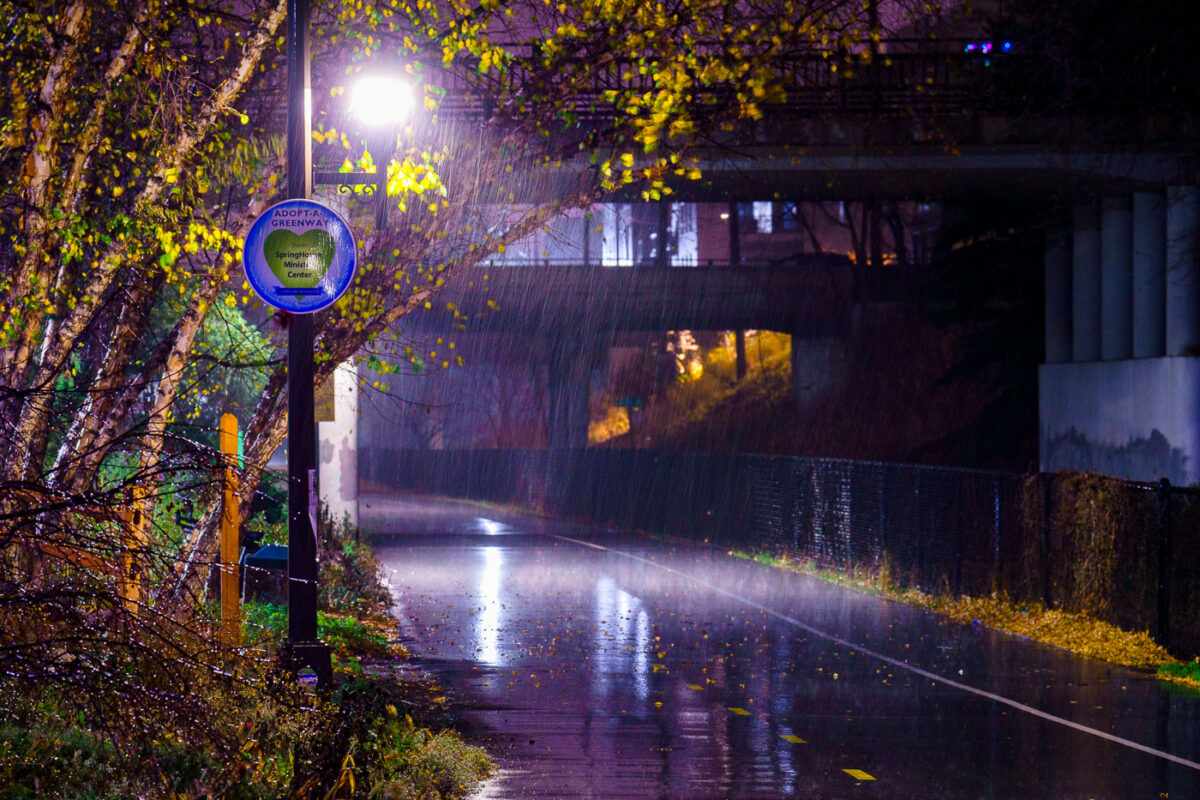
November 2022 — The Midtown Greenway during a late November rain. The bike trail runs through South Minneapolis.
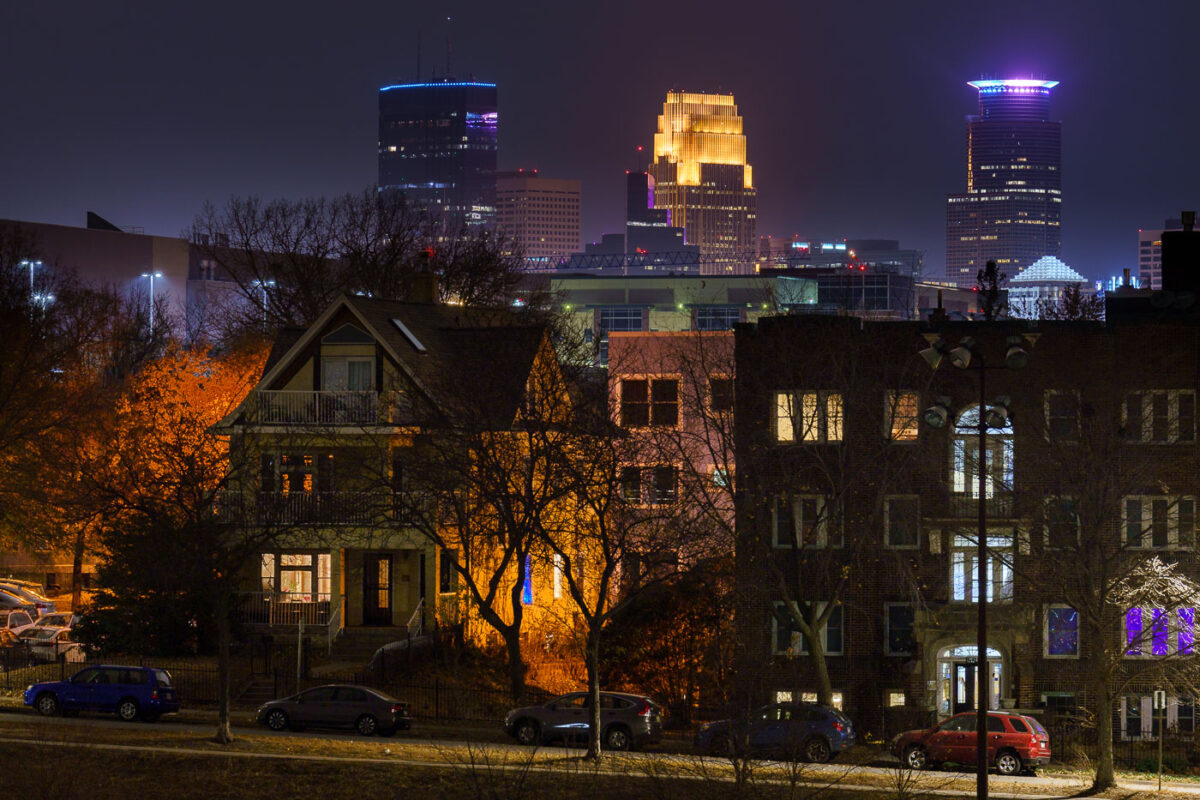
November 2022 — Minneapolis skyline as seen from Powderhorn Park.
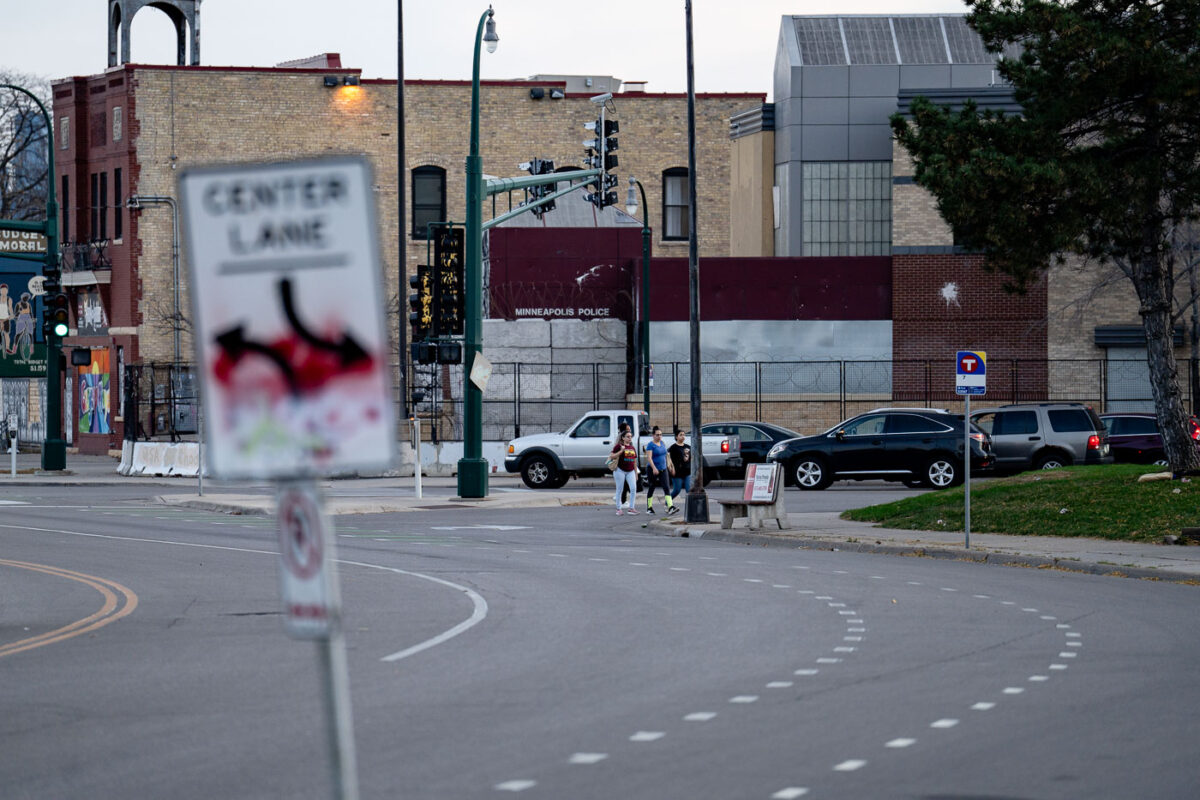
November 2022 — The former Minneapolis police third precinct. The precinct was burned by protesters in May 2020 following the murder of George Floyd.
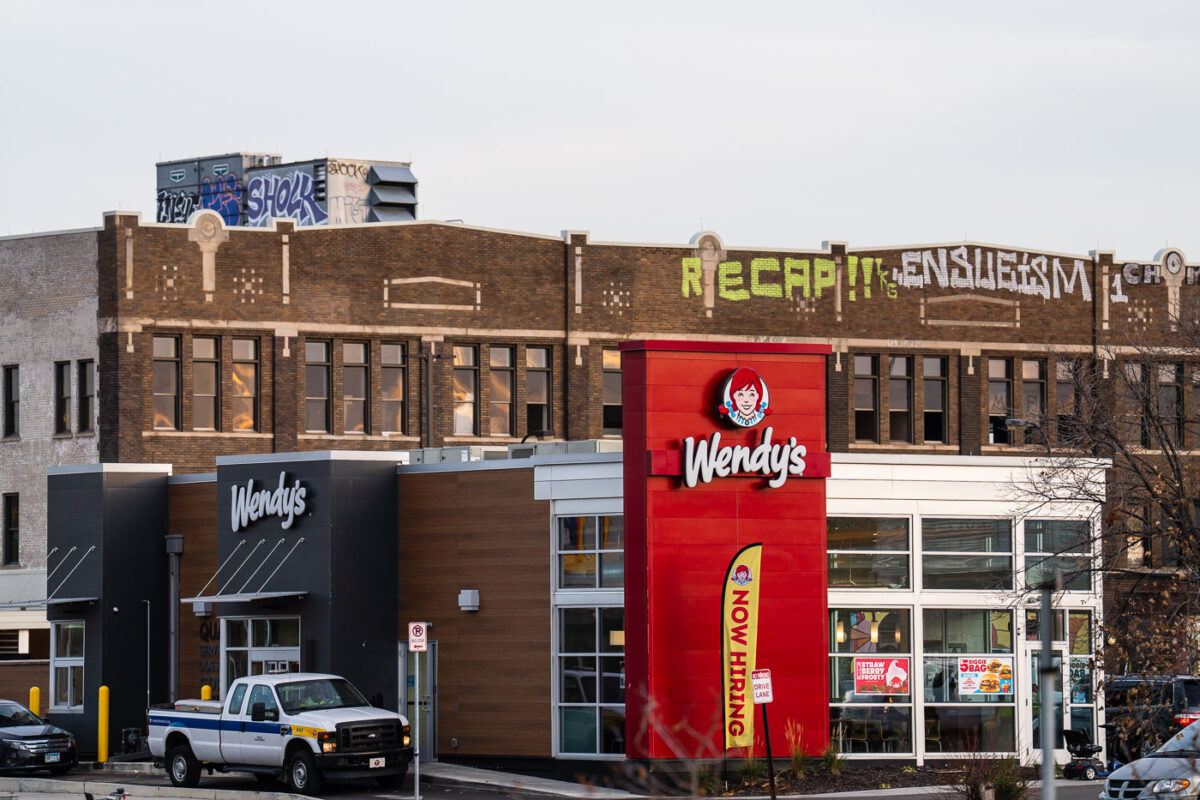
November 2022 — A newly built Wendy's in Minneapolis. The restaurant was burned down in May 2020 during riots following the murder of George Floyd.
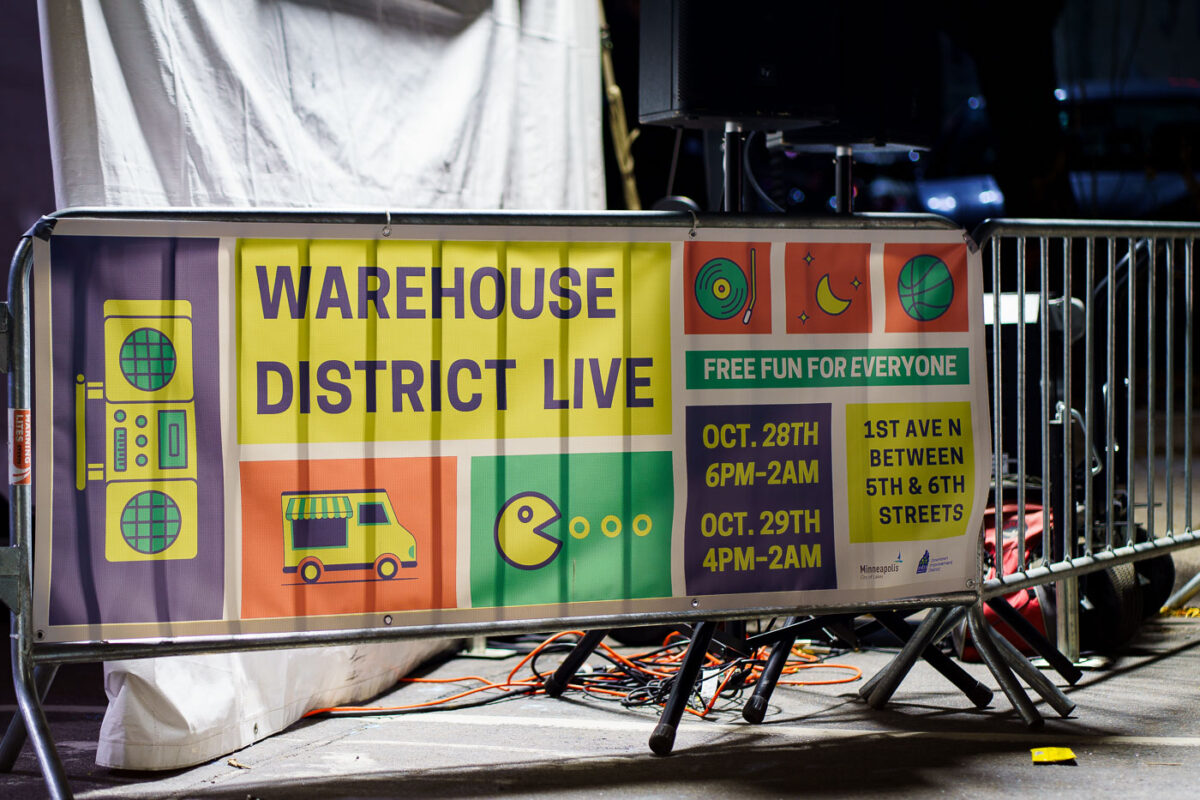
October 2022 — A Warehouse District Live sign in Downtown Minneapolis as seen on Halloween.
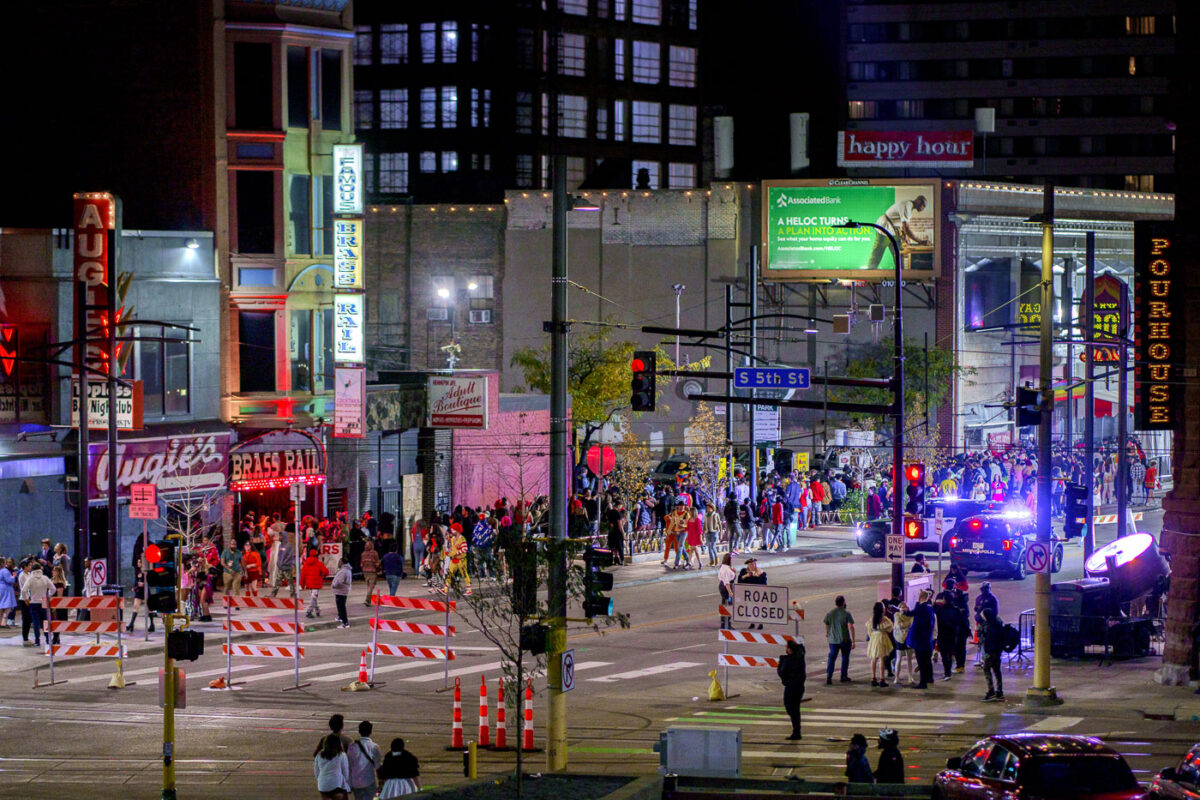
October 2022 — Thousands of costumed people downtown last night for various parties. Part of 1st Avenue was closed for Warehouse District Live with food trucks, arcades, and basketball hoops. Saw lots of bananas.
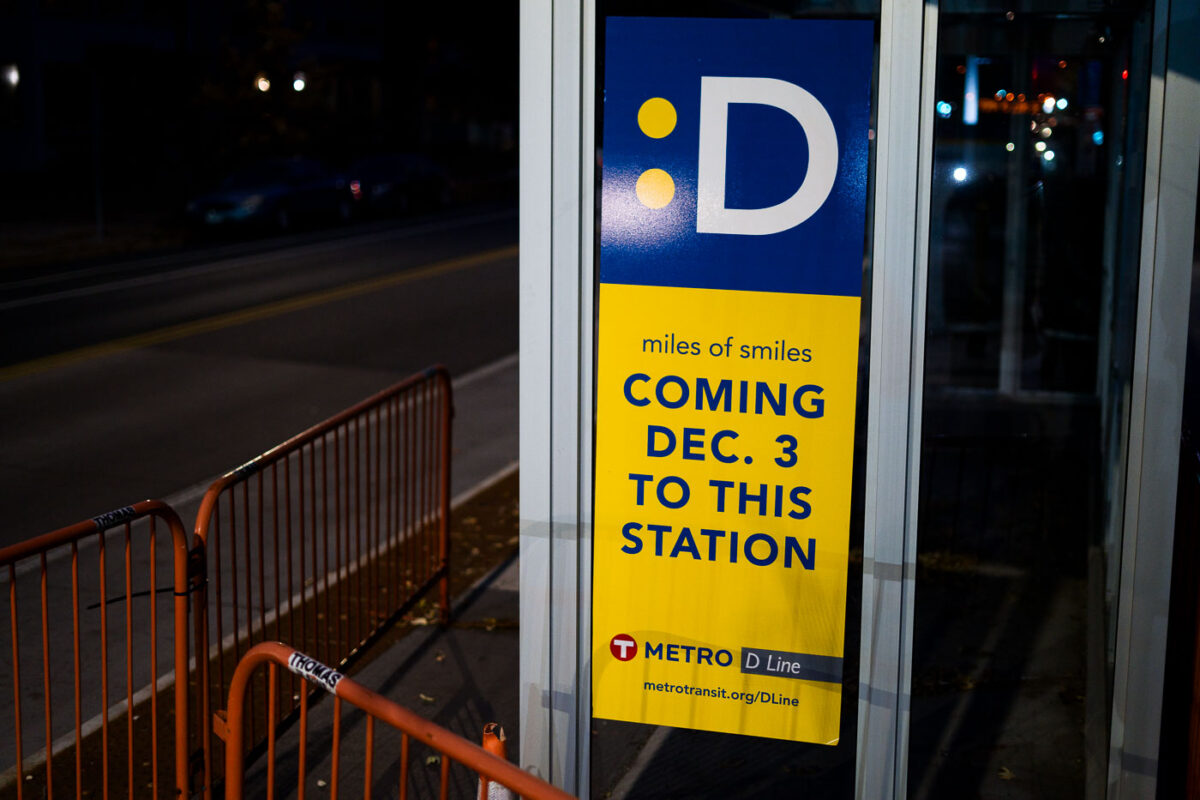
October 2022 — New Metro Transit D Line signage on Chicago Avenue in Minneapolis.
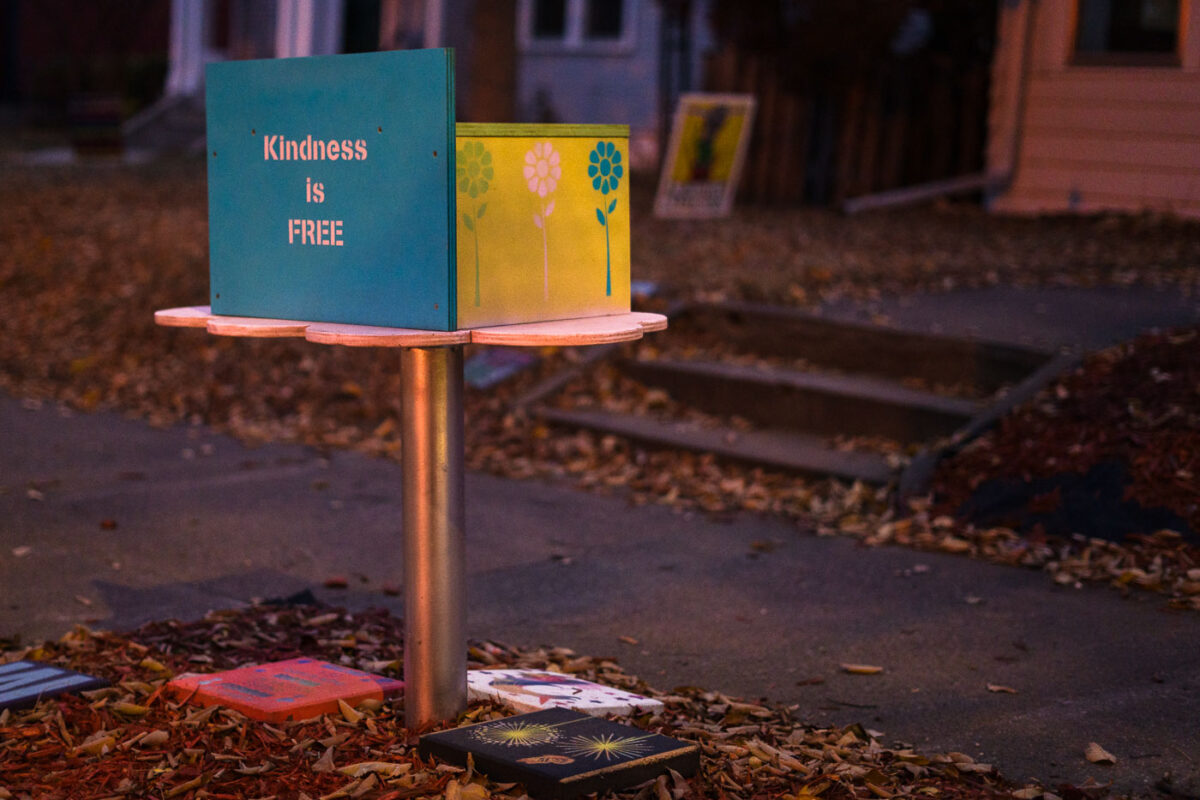
October 2022 — "Kindness is Free" as seen in Minneapolis.
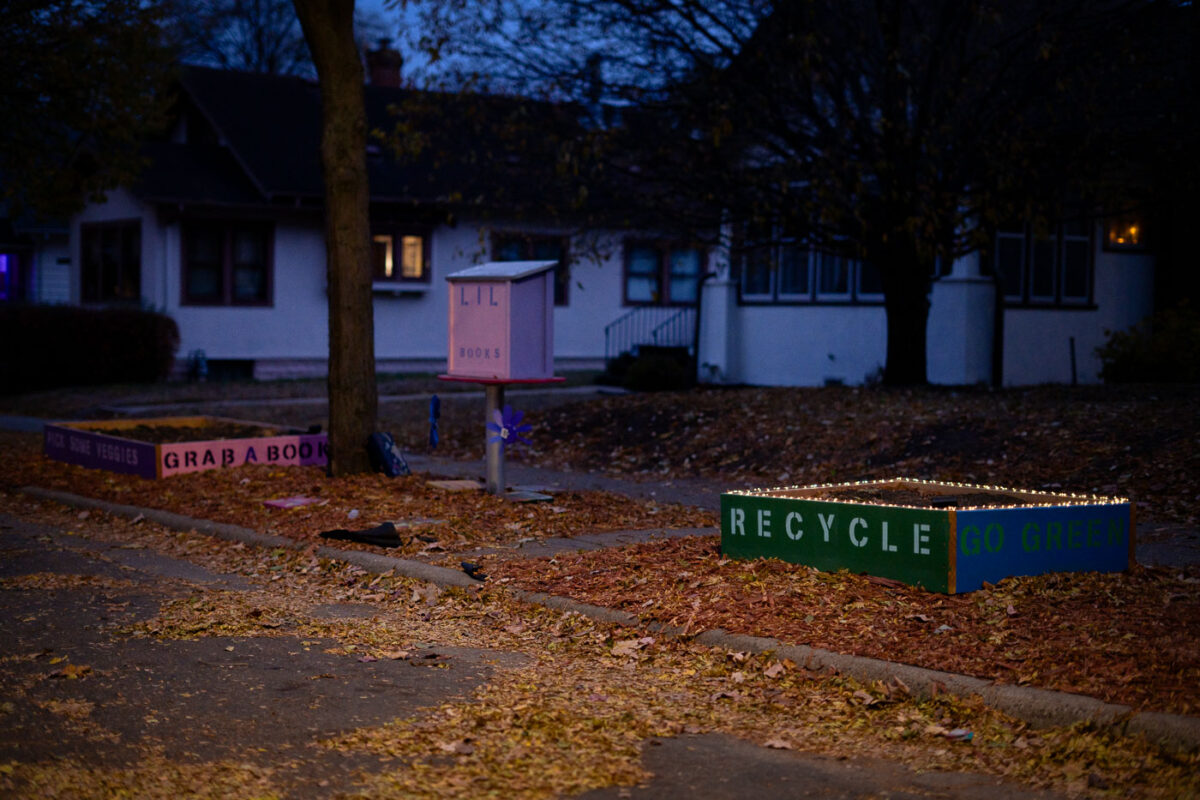
October 2022 — Flower bed boxes in a South Minneapolis neighborhood.
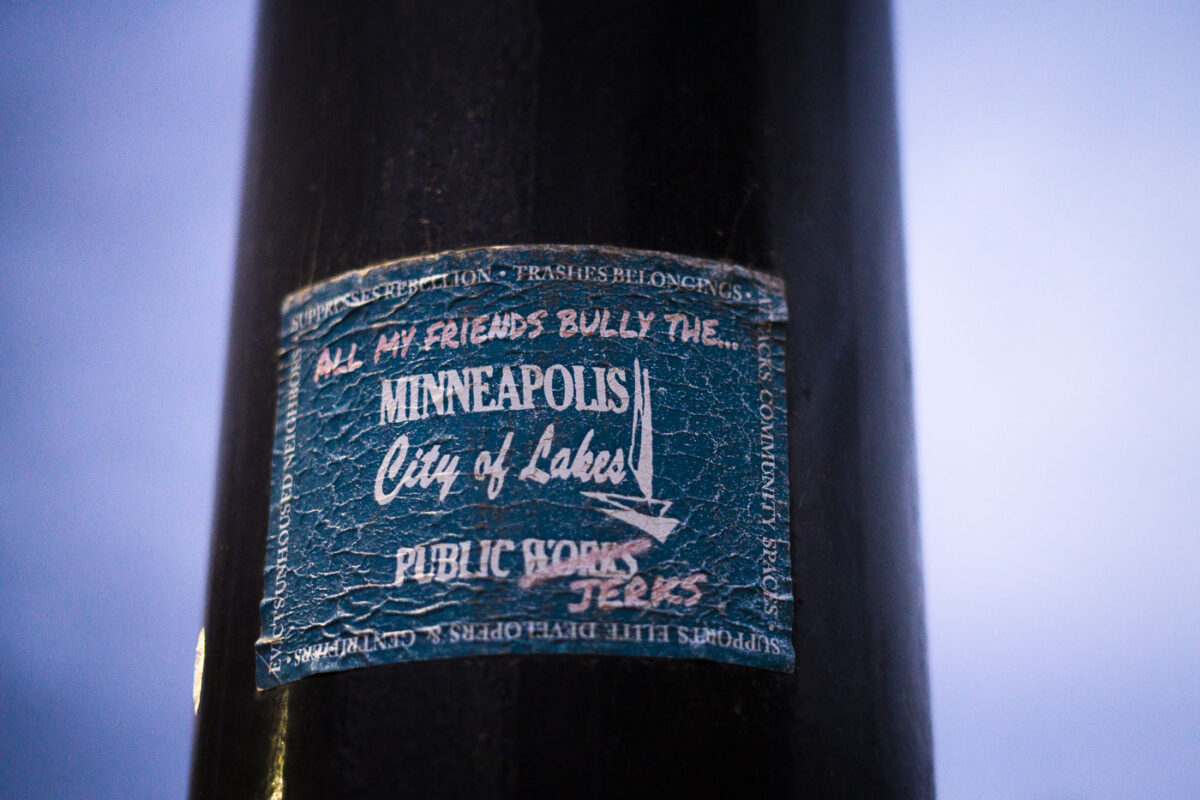
October 2022 — "All my friends bully the Minneapolis Public Works(Jerks)" sticker on a light pole. In response to Public Works participating in encampment clearings.

October 2022 — Scott Jensen, the GOP challenger to Governor Tim Walz, has his face on a billboard directly above the George Floyd mural at George Floyd Square.

October 2022 — A flyer advertising a speaking event by Arturo Castillon.

October 2022 — Scott Jensen, the GOP challenger to Governor Tim Walz, has his face on a billboard directly above the George Floyd mural at George Floyd Square.

October 2022 — Minneapolis police chief nominee Brian O’Hara speaking to South Minneapolis community members gathered at Stewart Park for a meet and greet. He spent time talking about the consent decree process Newark went through and differences between Newark and Minneapolis.
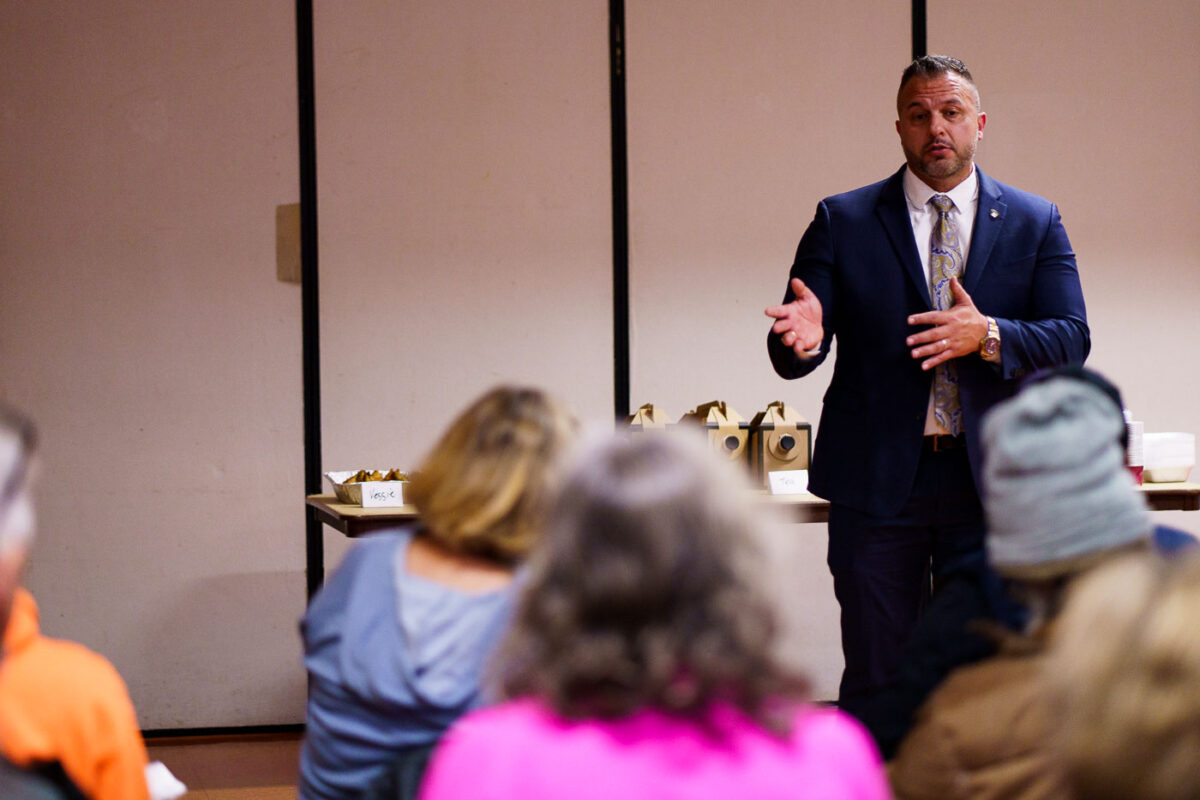
October 2022 — Minneapolis police chief nominee Brian O’Hara speaking to South Minneapolis community members gathered at Stewart Park for a meet and greet. He spent time talking about the consent decree process Newark went through and differences between Newark and Minneapolis.

October 2022 — Minneapolis police chief nominee Brian O’Hara speaking to South Minneapolis community members gathered at Stewart Park for a meet and greet. He spent time talking about the consent decree process Newark went through and differences between Newark and Minneapolis.
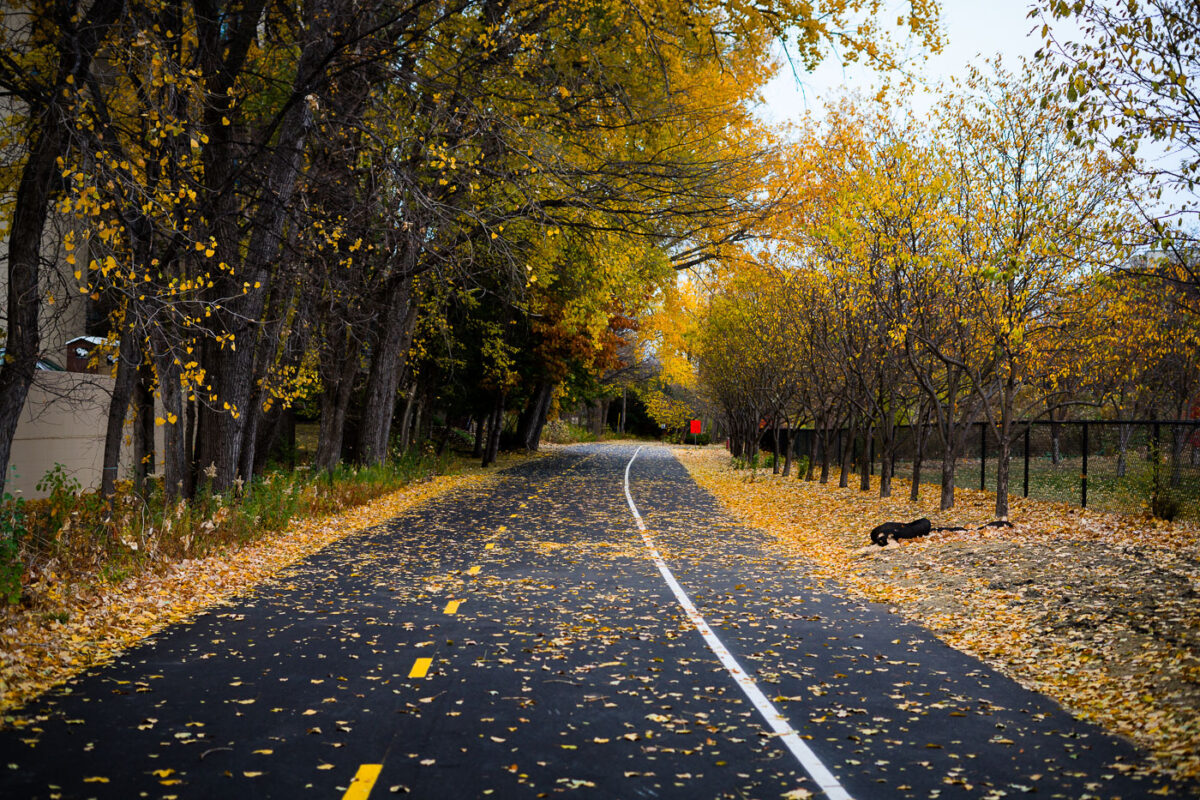
October 2022 — The Midtown Greenway in the fall.

October 2022 —
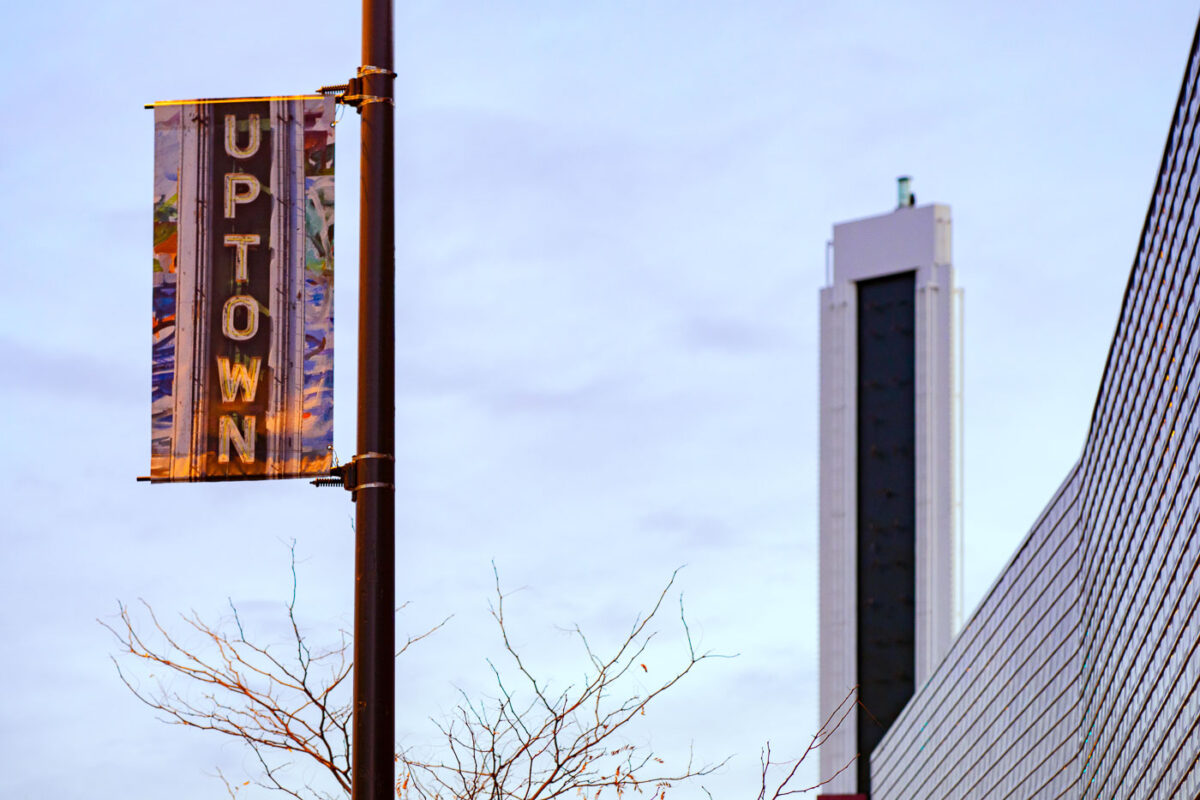
October 2022 — The missing uptown theatre letters. The developer says they are rehabbing them.
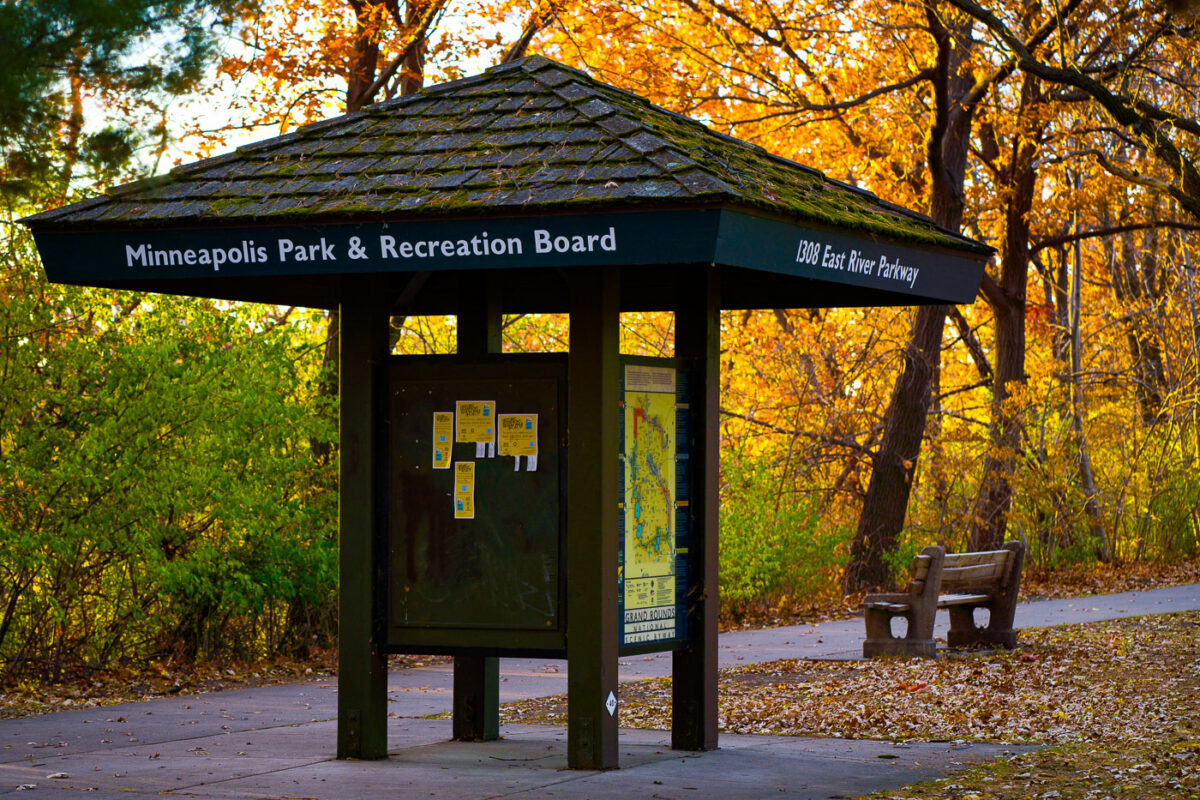
October 2022 — A Minneapolis Park & Recreation Board kiosk on East River Parkway in Minneapolis.
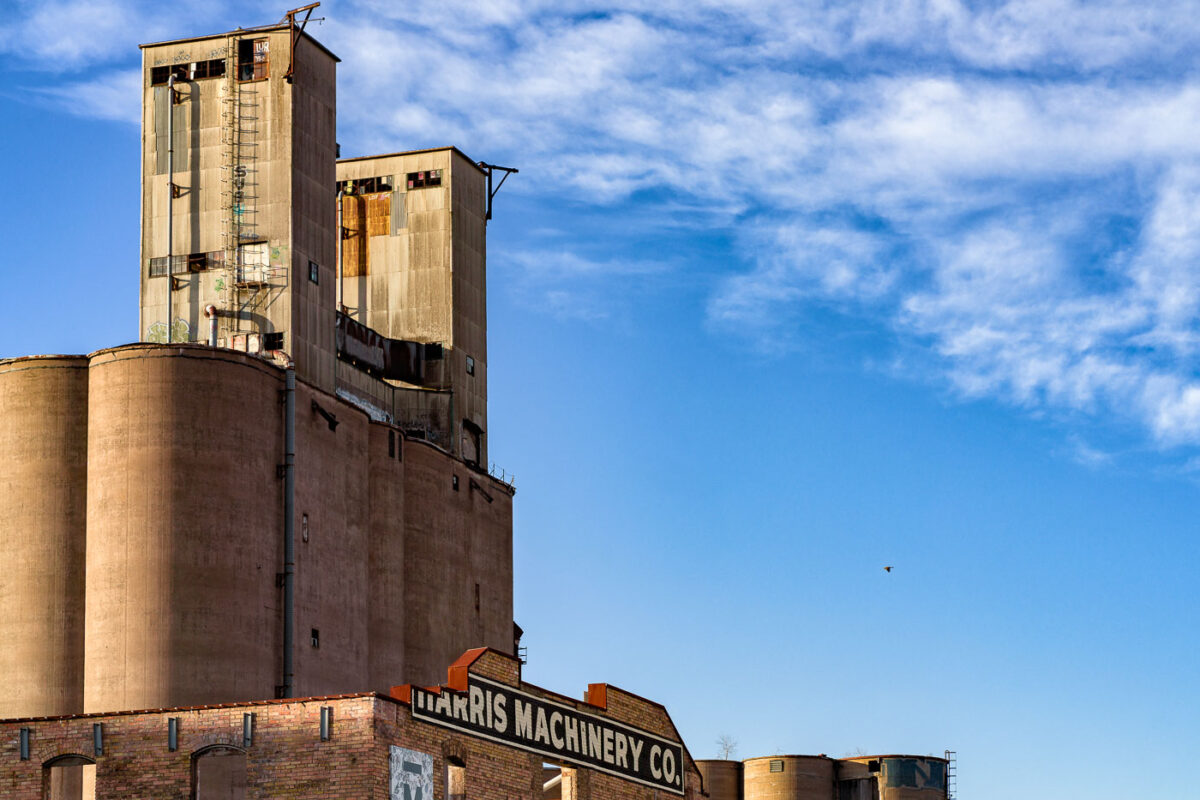
October 2022 — The aging ADM grain elevator rises over the Harris Machinery Co. building in Minneapolis, a reminder of the city’s long industrial relationship with grain milling and riverfront commerce. These concrete storage silos and metal-clad headhouses were once central to moving Midwestern grain through the milling district, part of an infrastructure network that fueled Minneapolis’s identity as the “Flour Milling Capital of the World.” Harris Machinery Co., a longtime supplier of industrial equipment, occupies the foreground, its brick façade contrasting with the weathered surfaces of the towering elevator. The structures together illustrate the layered industrial history of the city’s working riverfront.
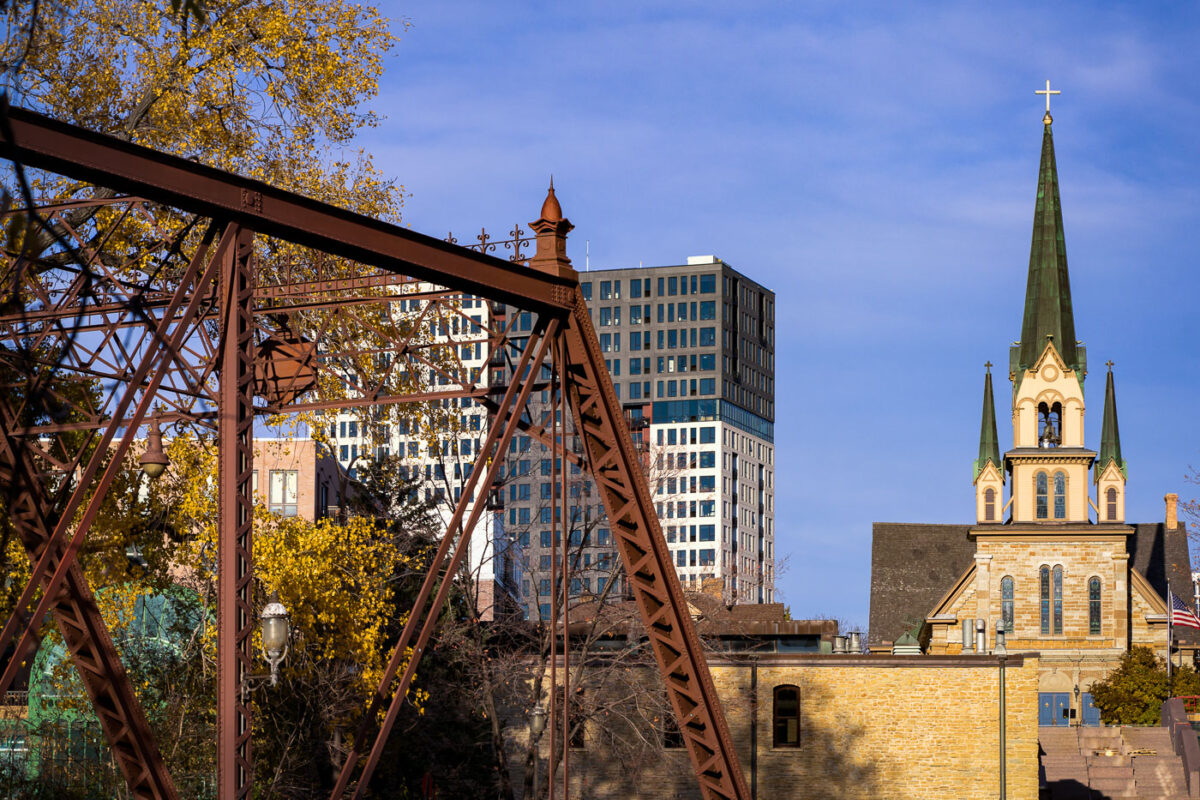
October 2022 — Nicollet Island East Bank in Minneapolis.
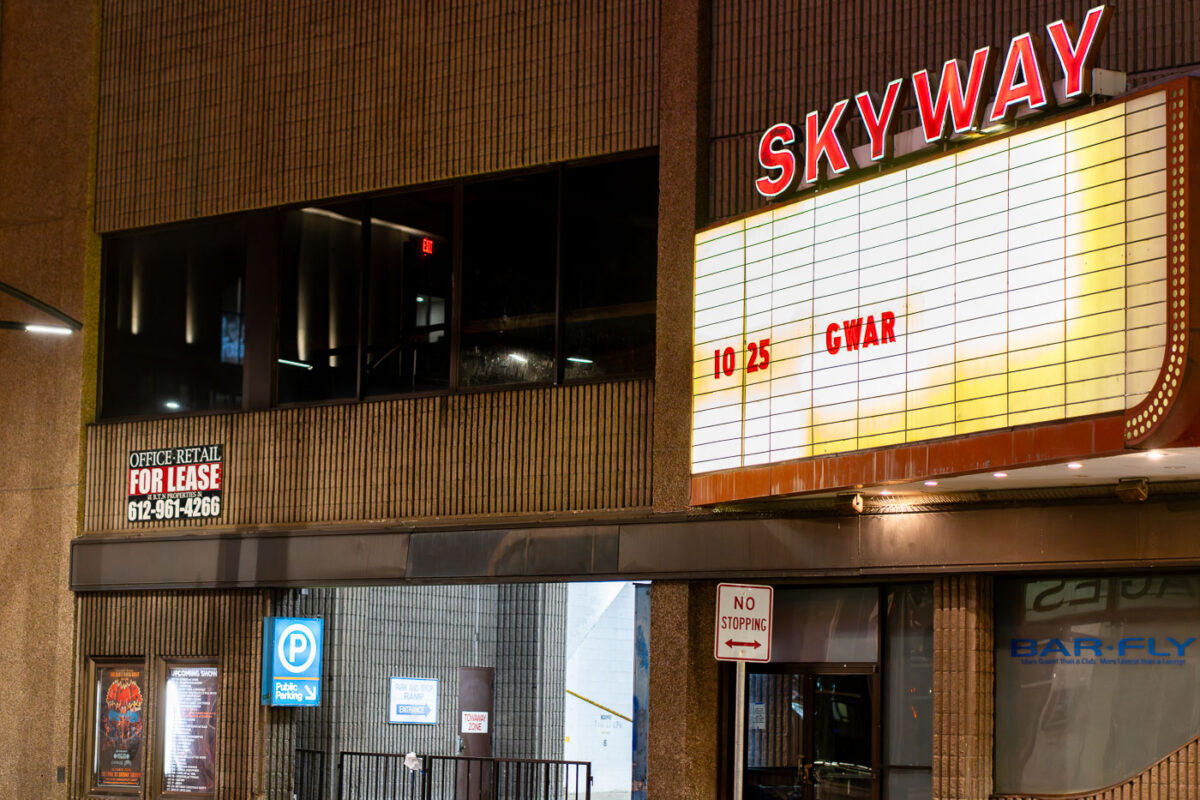
October 2022 — Gwar on the marquee of the Skyway Theatre in downtown Minneapolis.
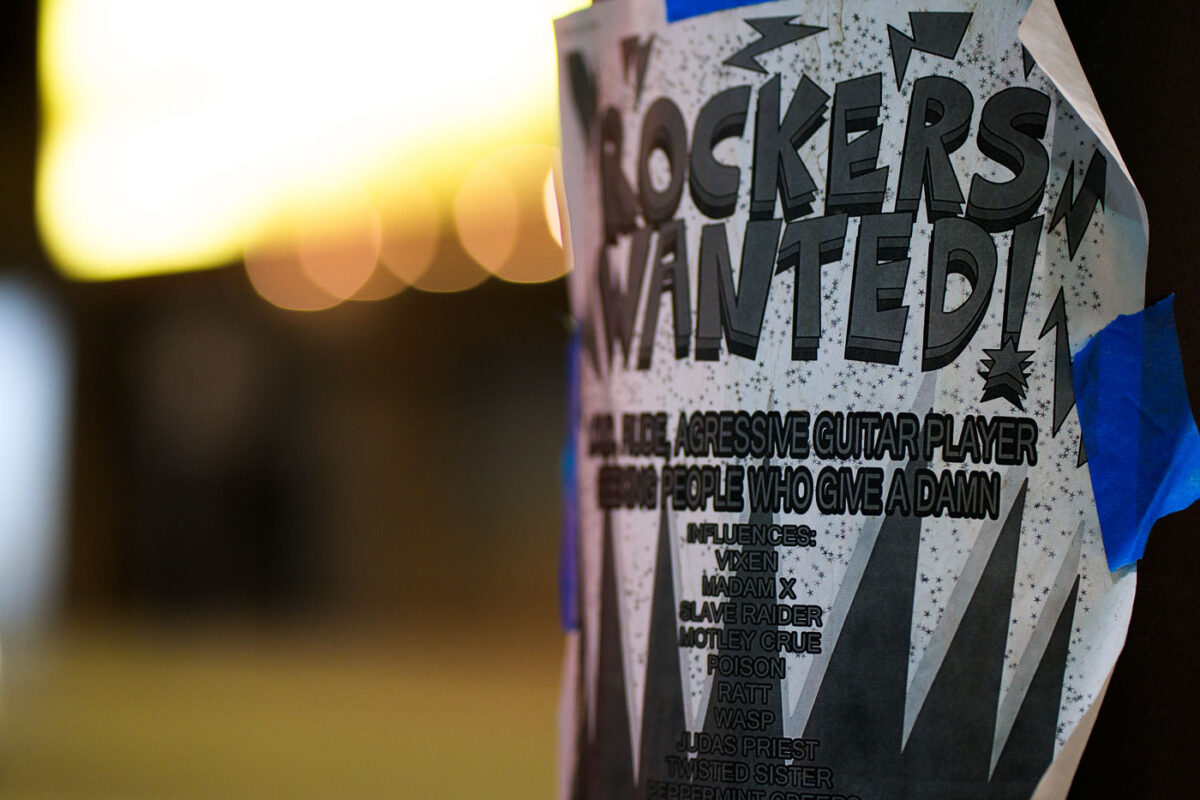
October 2022 — A flyer taped to a pole in downtown Minneapolis advertises a search for an “aggressive guitar player” and “people who give a damn,” echoing the recruitment style of 1980s metal bands. The poster lists influences ranging from Vixen and Madam X to Mötley Crüe, Poison, Ratt, and Judas Priest—names that shaped the Twin Cities’ hard-rock and glam-metal culture during the era of small clubs and independent bands. Its DIY design and bold typography reflect the ongoing tradition of grassroots music promotion that still surfaces in the city’s urban corridors.
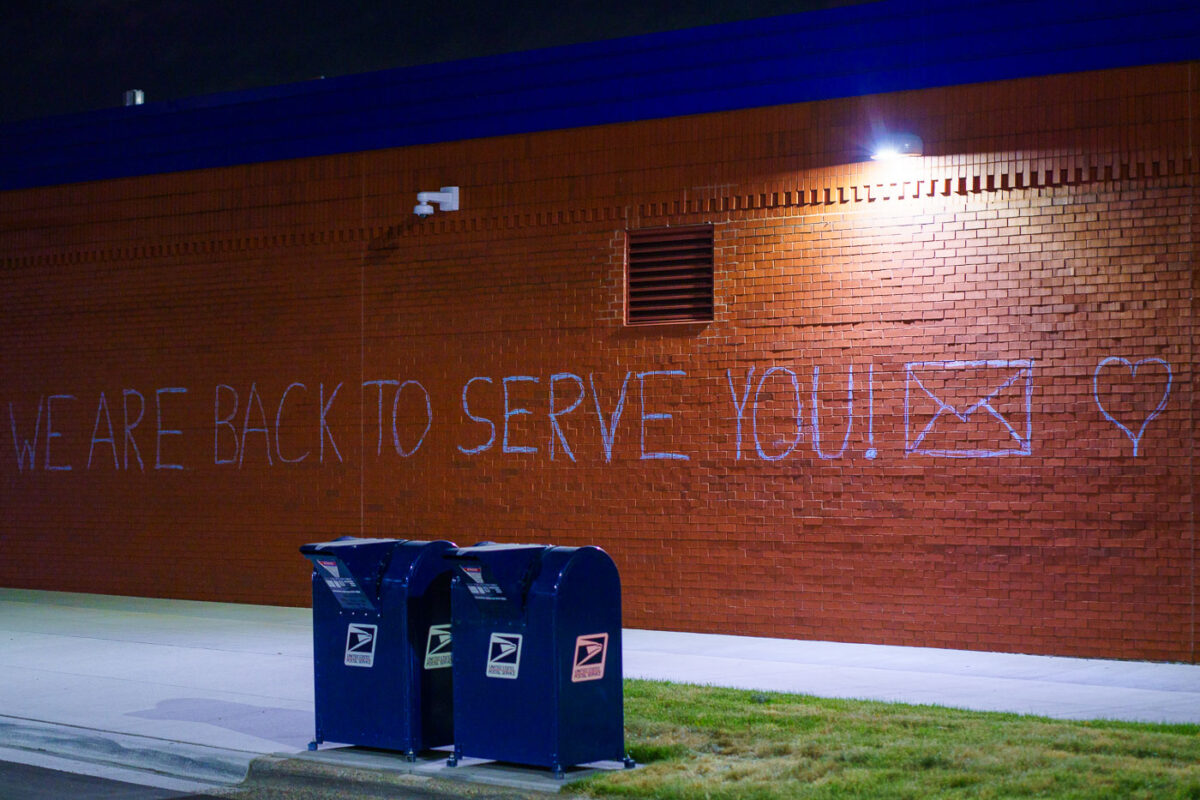
October 2022 — "We are back to serve you!" written on the side of the newly opened Lake Street Station. The post office was burned down during protests that followed the May 25th, 2020 murder of George Floyd.
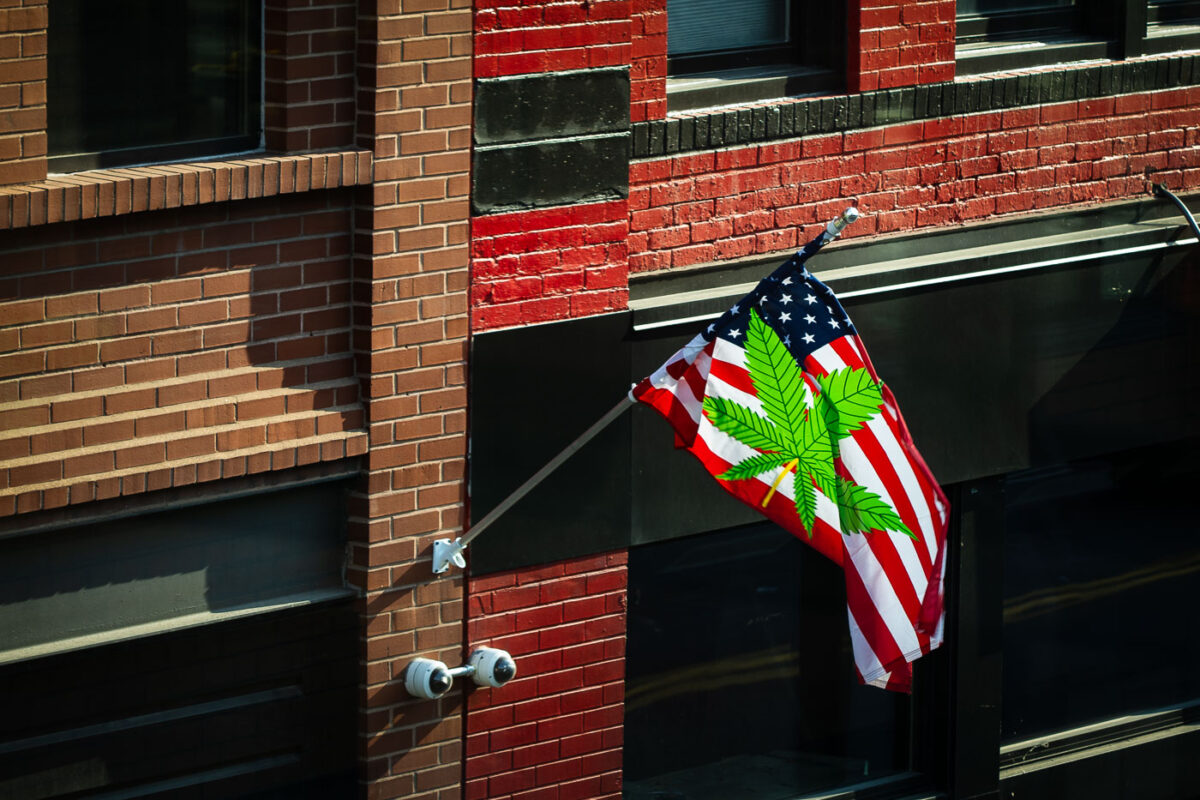
October 2022 — A flag hanging in downtown Minneapolis.
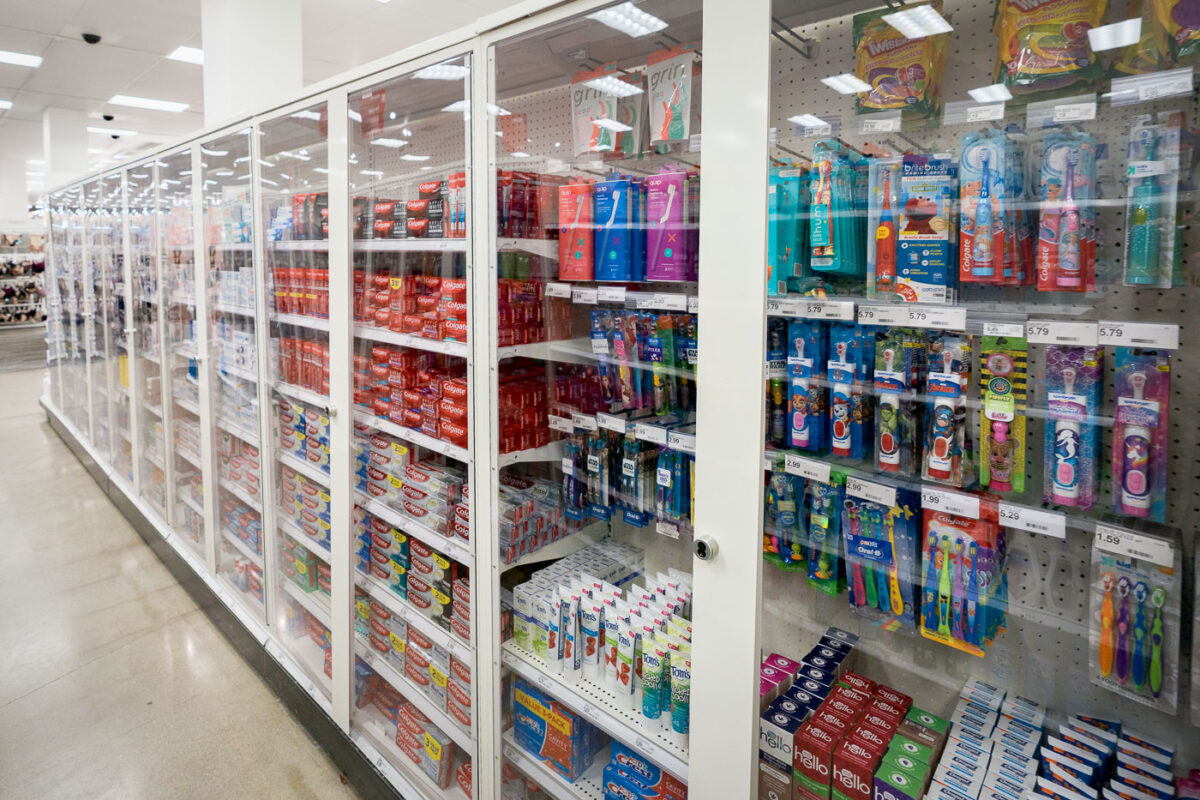
October 2022 — Personal-care items—including toothpaste, toothbrushes, and other everyday hygiene products—sit behind locked Plexiglas cabinets at the Target flagship store in downtown Minneapolis. In recent years, large retailers across U.S. urban centers have expanded the use of secured cases for small, easily resold goods in response to rising shrink and merchandise loss. At this location, much of the oral-care section now requires staff assistance to access, reflecting a broader shift in store security strategies and retail operations in high-traffic downtown corridors.
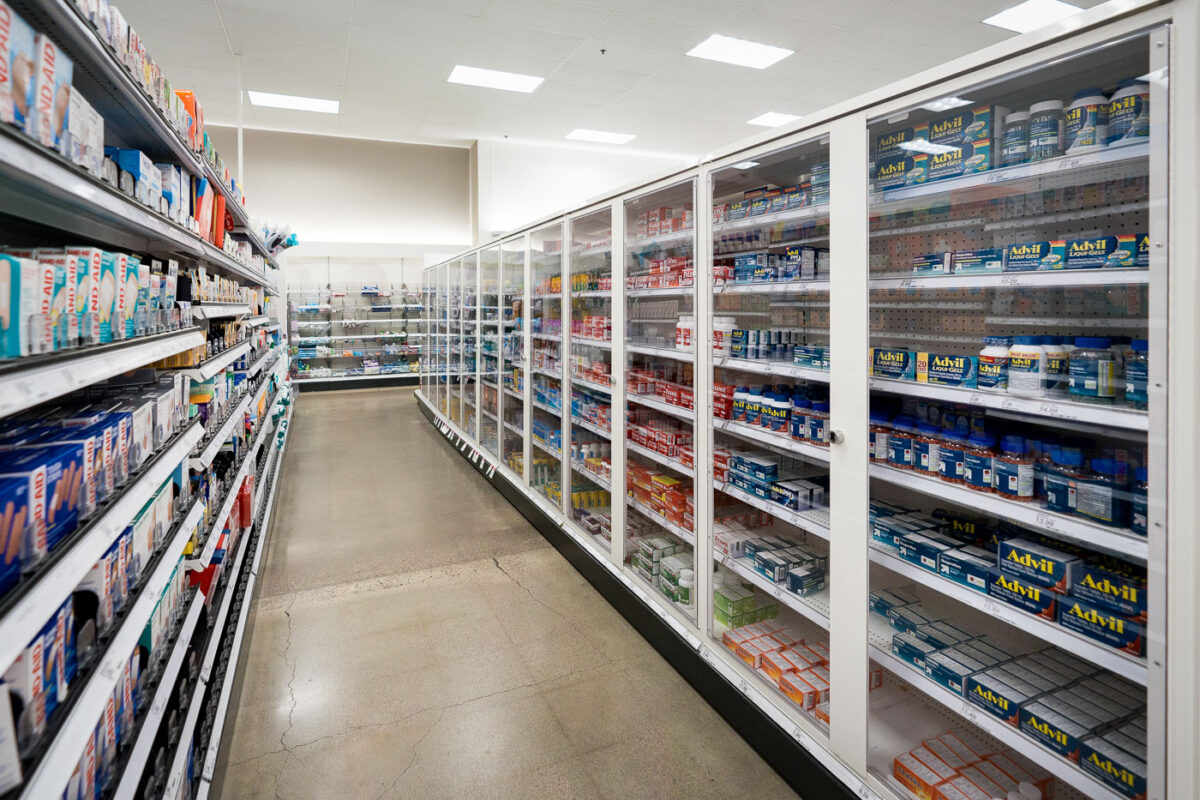
October 2022 — Items behind locked cabinets at the flagship Target store in downtown Minneapolis.
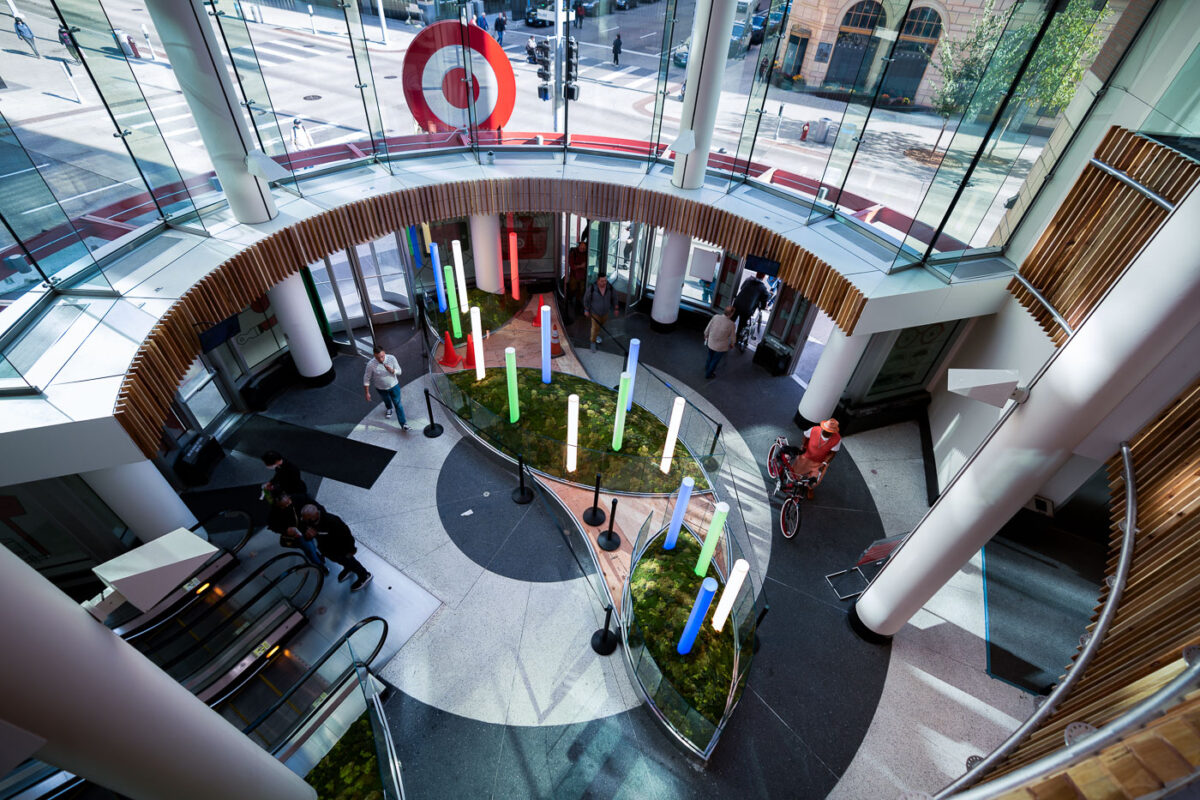
October 2022 — The new entrance at the flagship Target store in downtown Minneapolis.

October 2022 —
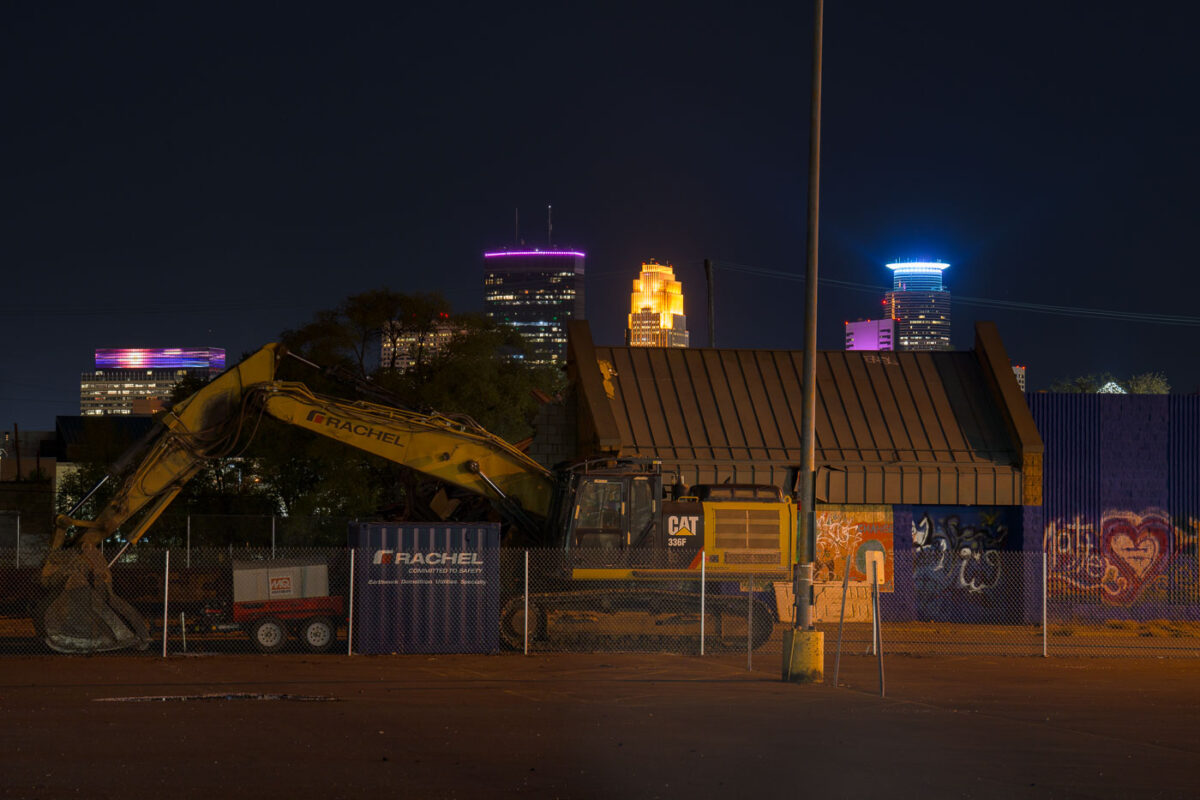
October 2022 — The demolition of the former supervalu store on Lake Street in South Minneapolis.
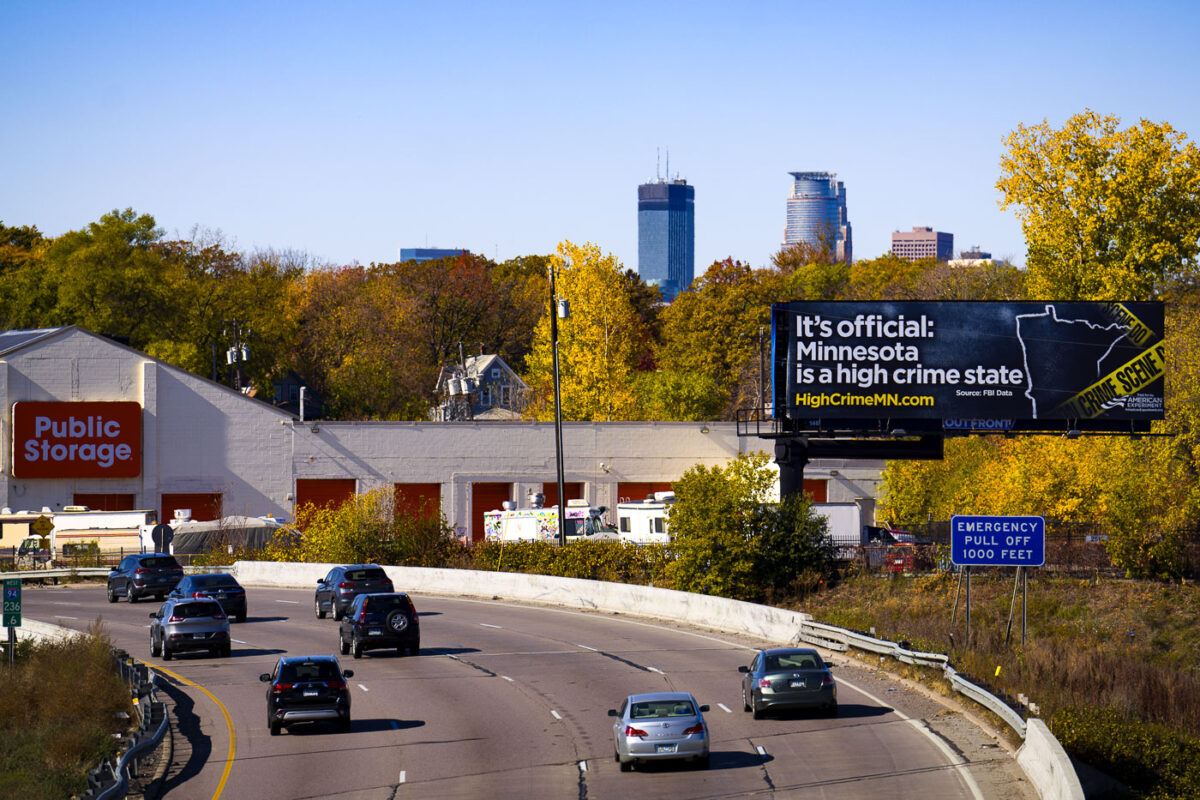
October 2022 — A billboard by a self described "leading public policy organization" at the I-94 Minneapolis border declares “It’s official” and directs motorists to a page where their interpretation of crime data shows crime rising years prior to the mass quitting of police officers in 2020-22.
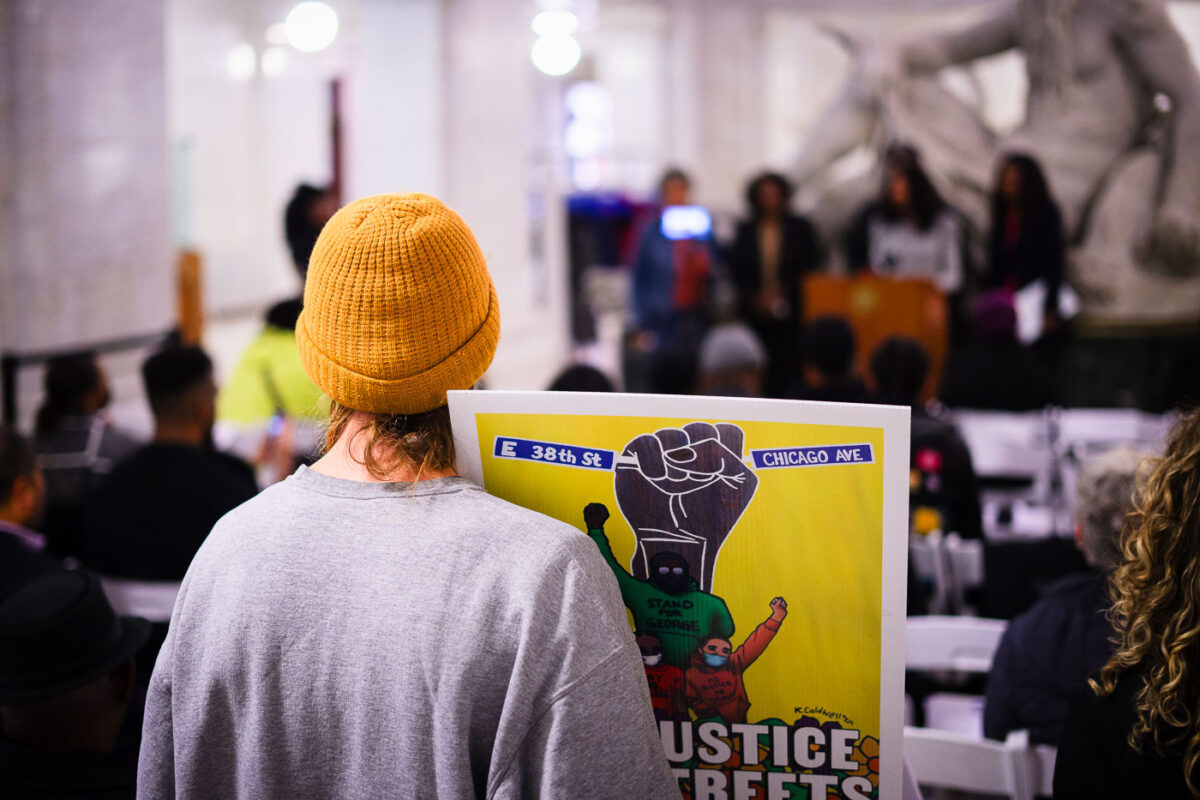
October 2022 — A protester holds up a sign reading “No Justice No Streets” as the Mayor Jacob Frey proclaims it George Floyd Day. It would have been Floyd’s 49th birthday.
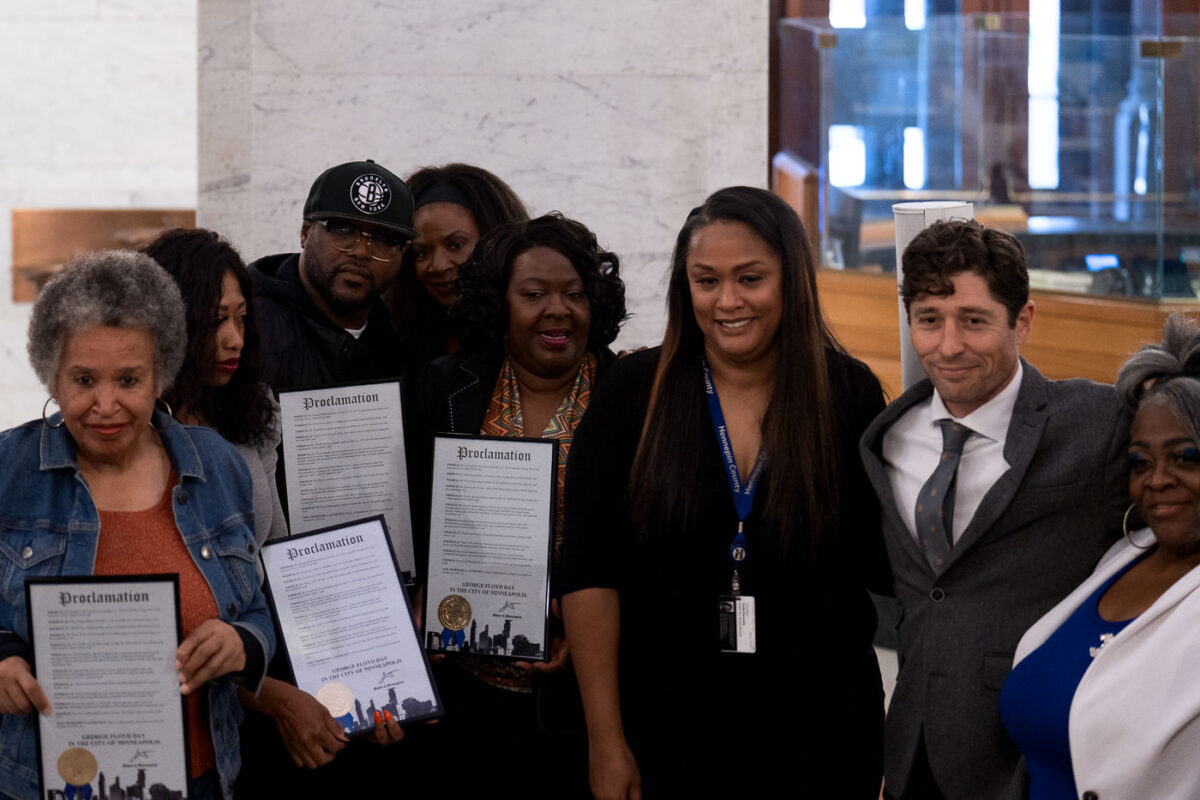
October 2022 — Jacob Frey, the Mayor of Minneapolis, poses with the family of George Floyd on what would have been Floyd’s 49th birthday. The mayor had proclaimed it George Floyd Day. Terrence Floyd, Paris Stevens, Angela Harrelson.

October 2022 — Jacob Frey, Mayor of Minneapolis, proclaims it George Floyd Day on what would have been Floyd’s 49th birthday.
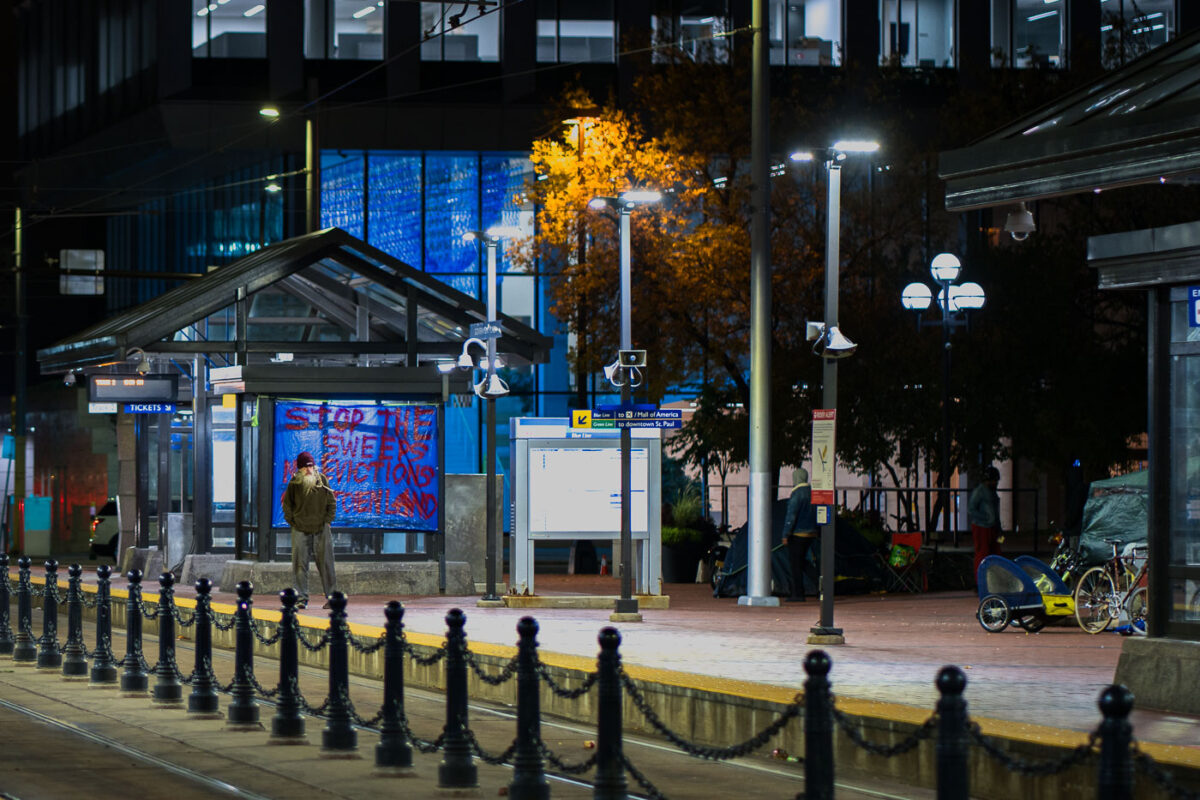
October 2022 — Protesters holding space at City Hall. They say they demand "a complete moratorium on the clearing of encampments, clear guidelines regarding the encampments and proof of funding for more permanent housing for unhoused residents and people in need"
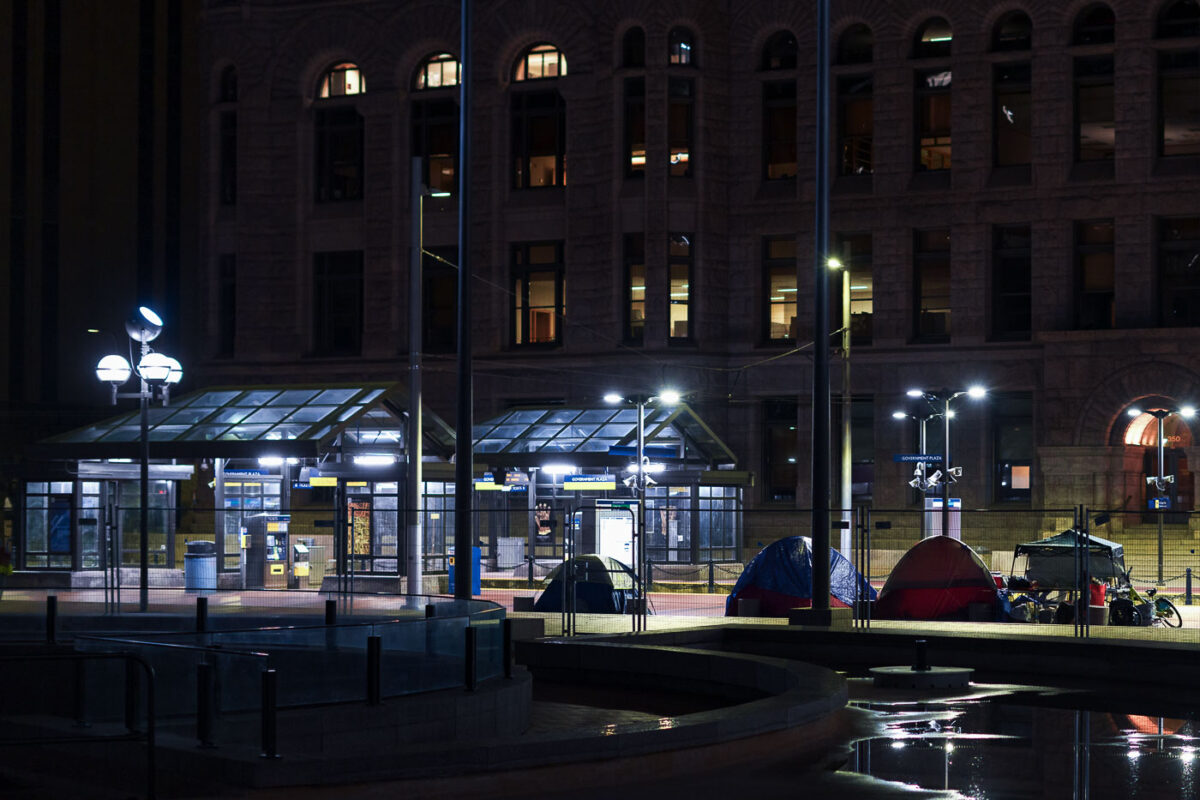
October 2022 — Protesters holding space at City Hall. They say they demand "a complete moratorium on the clearing of encampments, clear guidelines regarding the encampments and proof of funding for more permanent housing for unhoused residents and people in need"
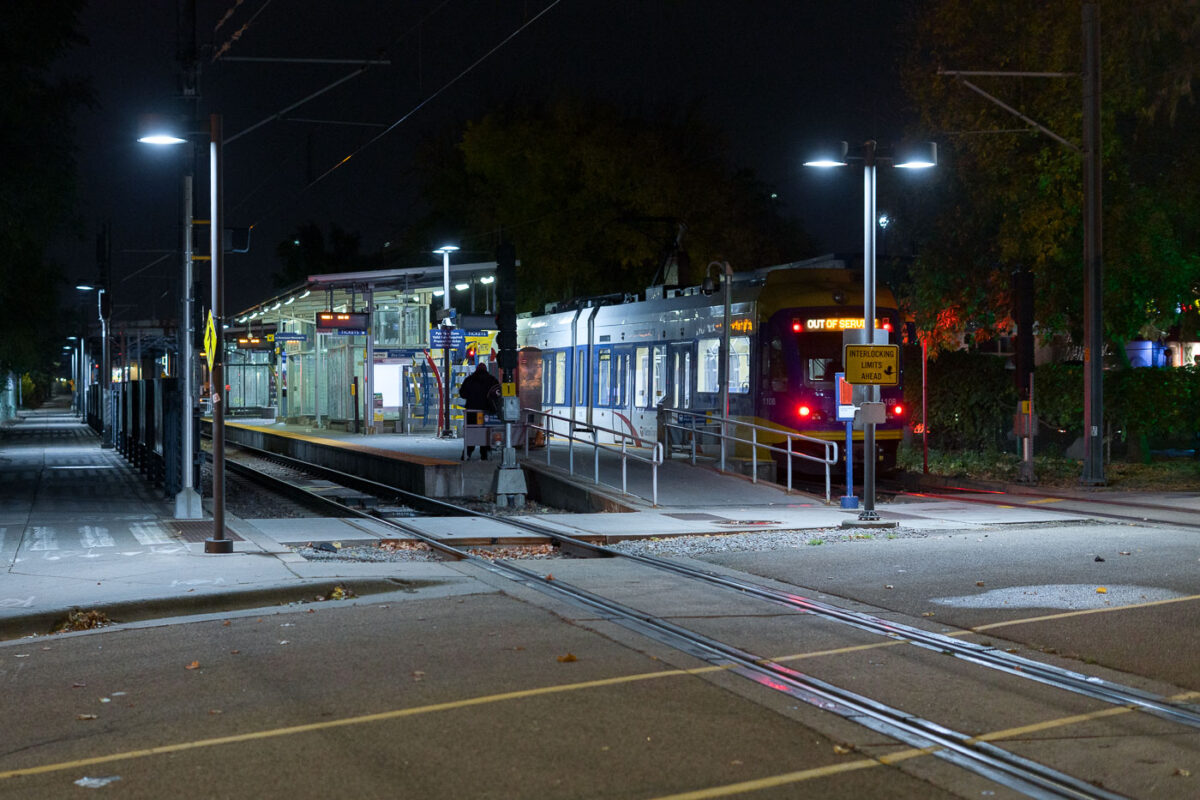
October 2022 — Cedar-Riverside train station in South Minneapolis.
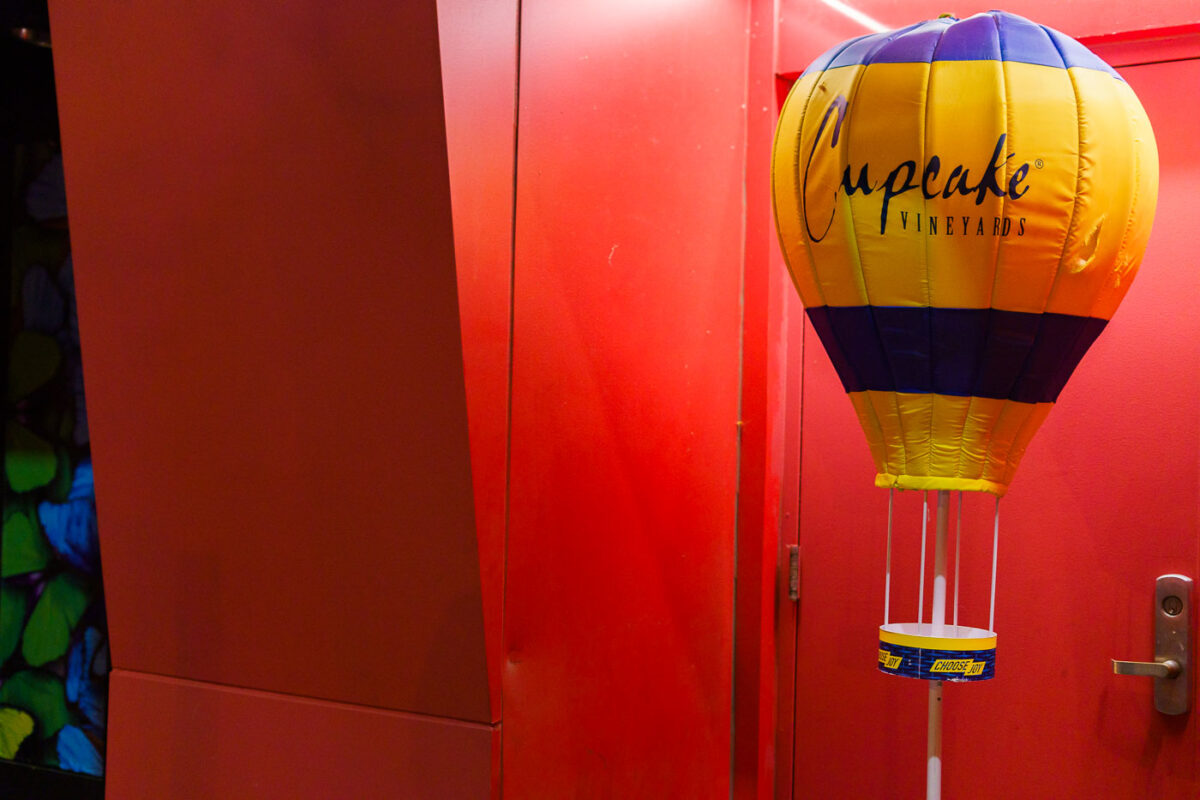
October 2022 — A Cupcake Vineyards promotional hot-air-balloon display stands at the edge of a red-lit entryway, its bright yellow and deep blue panels catching the saturated glow from the surrounding walls. These inflatable point-of-sale displays are common in liquor stores and bar entry corridors, designed to stand out under mixed lighting and draw attention to featured brands. The scene’s heavy red cast—likely from LED wash lighting or a painted interior corridor—creates a striking contrast with the cooler tones of the balloon, giving the space a graphic, almost stage-set quality often found in Minneapolis nightlife districts where narrow passages and dramatic lighting create strong visual color blocks.
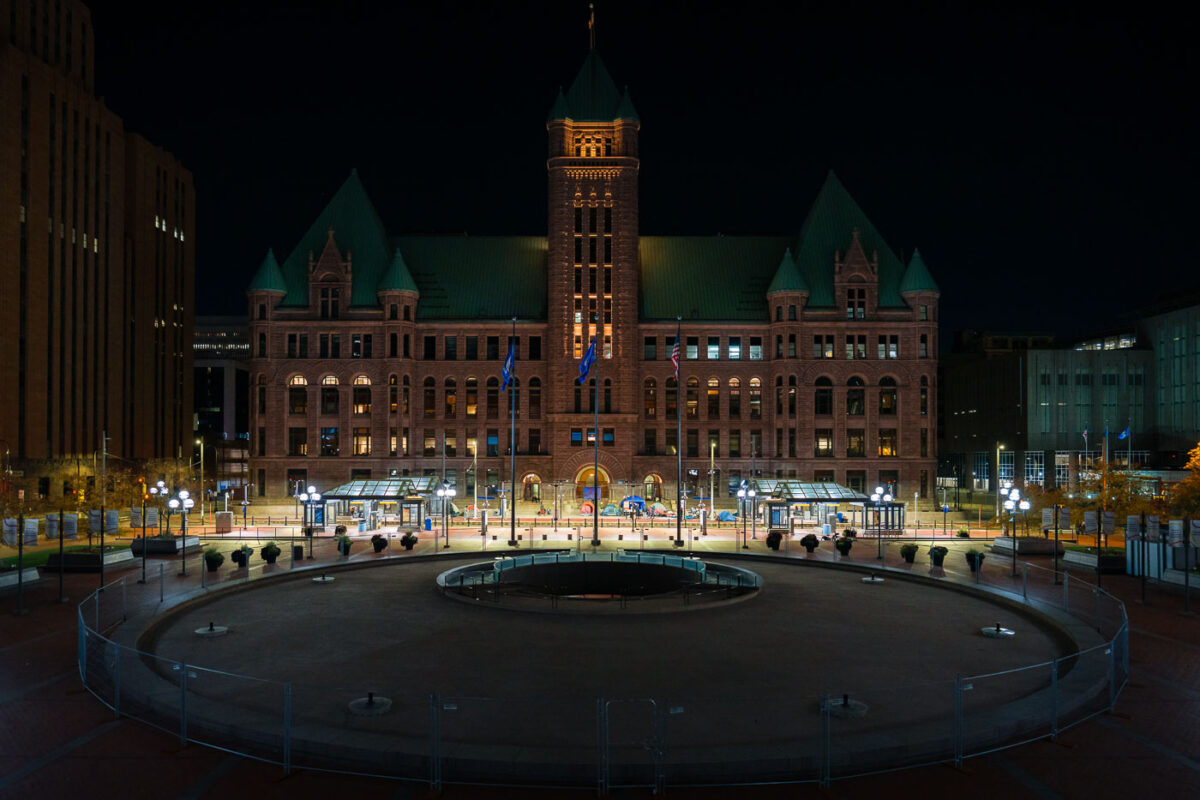
October 2022 — Protesters holding space at City Hall. They say they demand "a complete moratorium on the clearing of encampments, clear guidelines regarding the encampments and proof of funding for more permanent housing for unhoused residents and people in need"
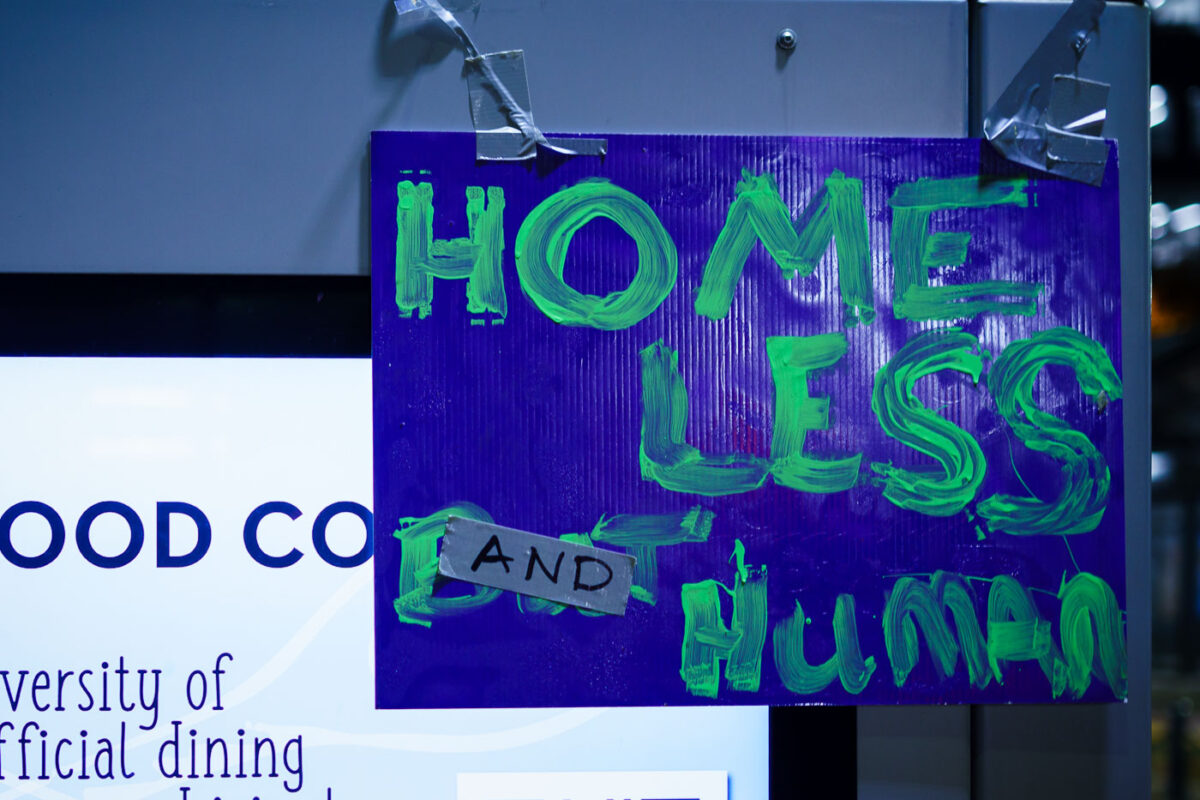
October 2022 — Protesters holding space at City Hall. They say they demand "a complete moratorium on the clearing of encampments, clear guidelines regarding the encampments and proof of funding for more permanent housing for unhoused residents and people in need"
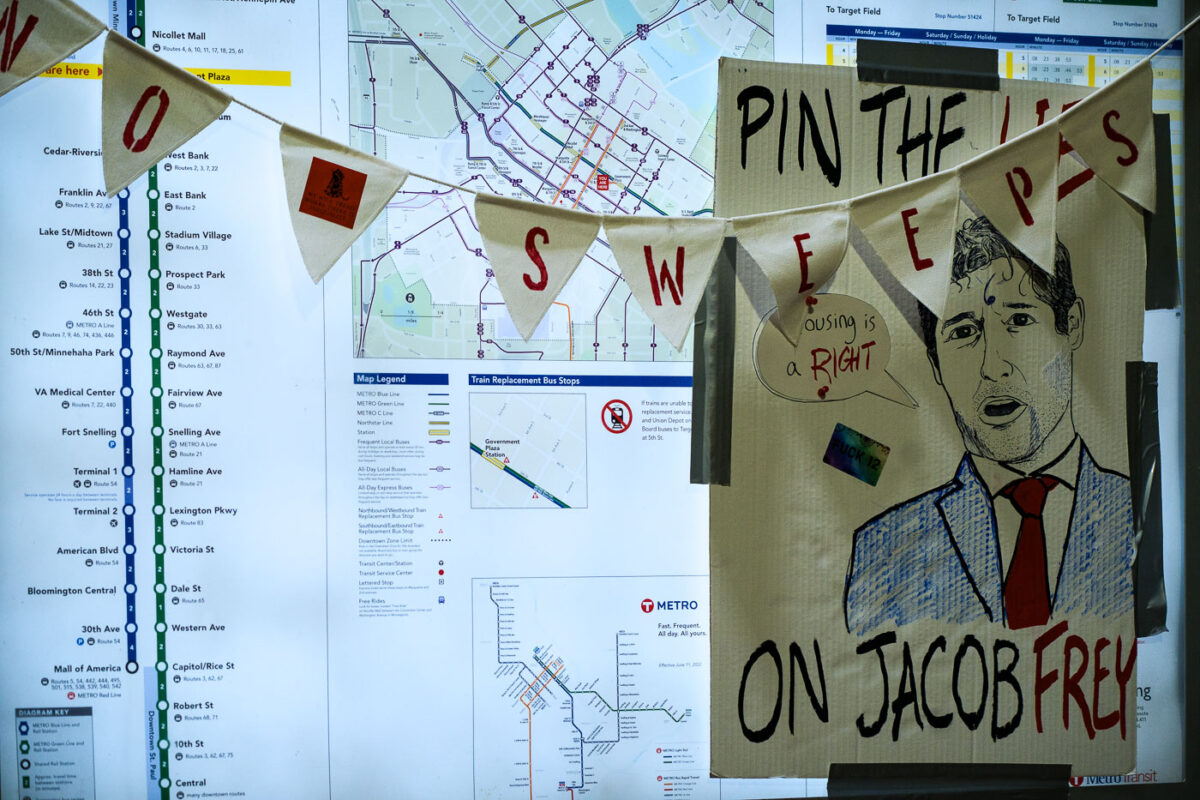
October 2022 — Protesters holding space at City Hall. They say they demand "a complete moratorium on the clearing of encampments, clear guidelines regarding the encampments and proof of funding for more permanent housing for unhoused residents and people in need"
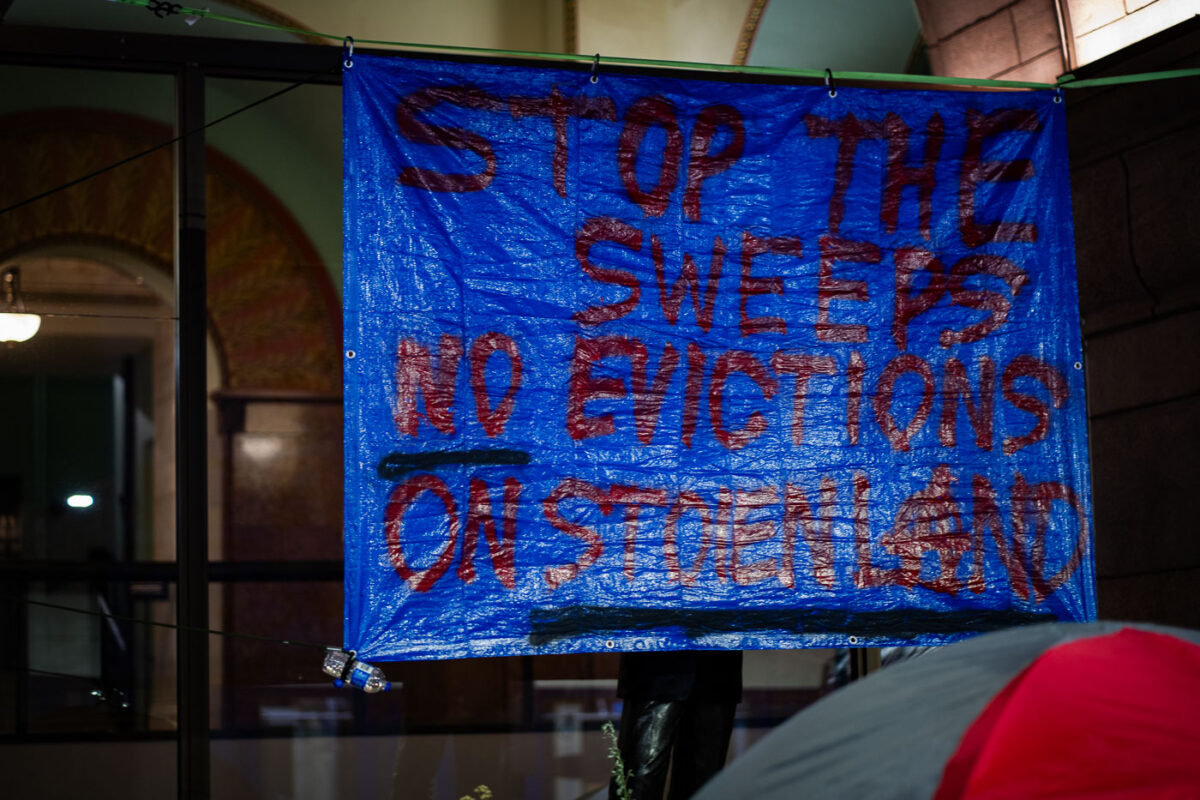
October 2022 — Protesters holding space at Minneapolis City Hall. They say they demand "a complete moratorium on the clearing of encampments, clear guidelines regarding the encampments and proof of funding for more permanent housing for unhoused residents and people in need”.
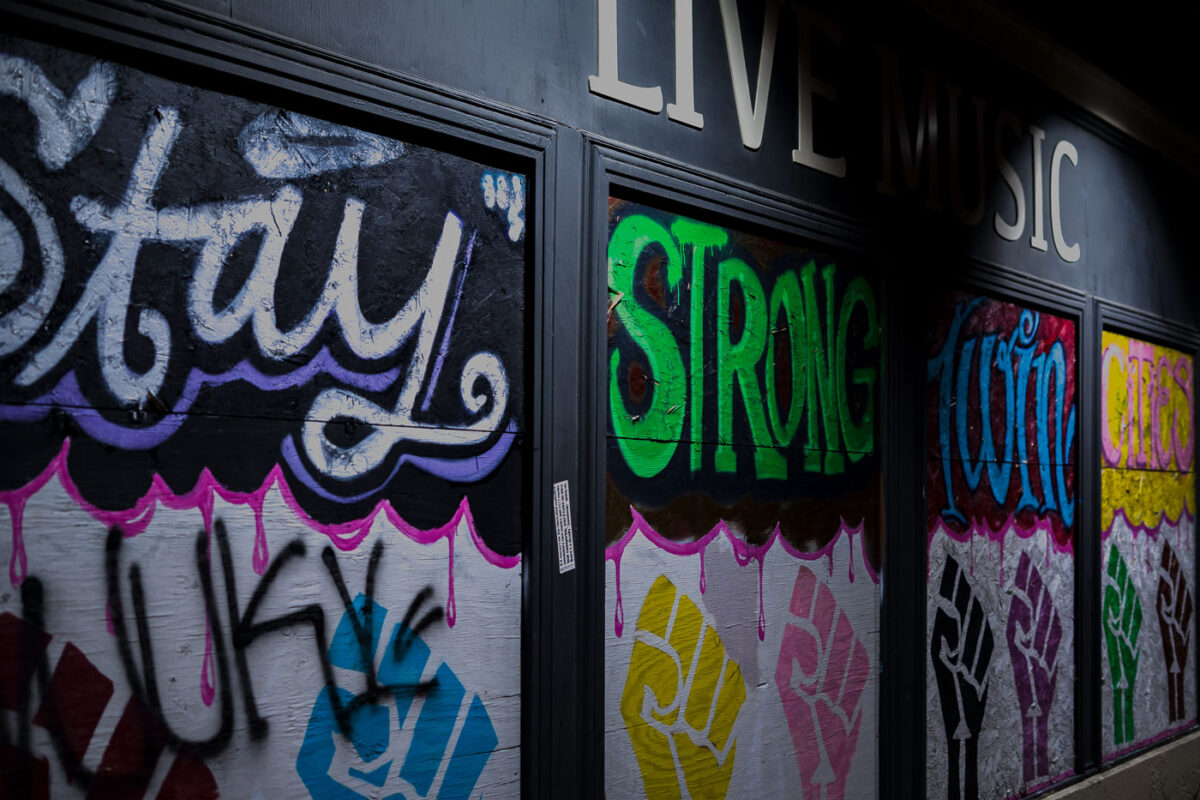
October 2022 — Painted boards on Mortimer's on Lyndale Avenue in Minneapolis.
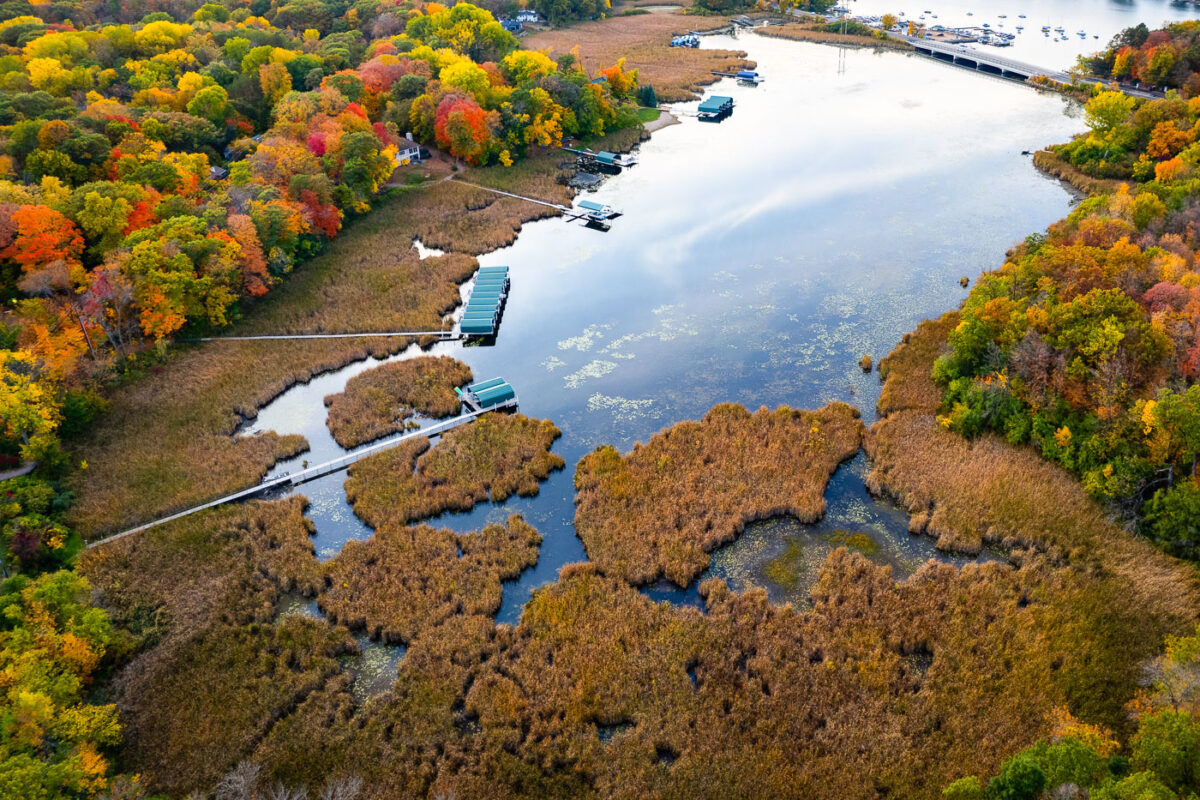
October 2022 — This aerial view looks over one of Lake Minnetonka’s shallow eastern bays, where a broad wetland of cattails and floating vegetation meets a line of private docks and covered boat slips. These marshy inlets are among the lake’s most ecologically important areas, filtering runoff, supporting migratory birds, and preserving habitat that once covered far more of the shoreline before 20th-century dredging and residential development. The fall canopy surrounding the bay shows the mix of hardwoods common in the Deephaven and Greenwood areas, with red maples, oaks, and ash trees creating a dense belt of color around the water. Farther in the distance, the channel and bridge leading toward Carson’s Bay hint at the lake’s extensive network of connected basins, many of which were linked by canals built in the late 1800s to support early resort traffic.
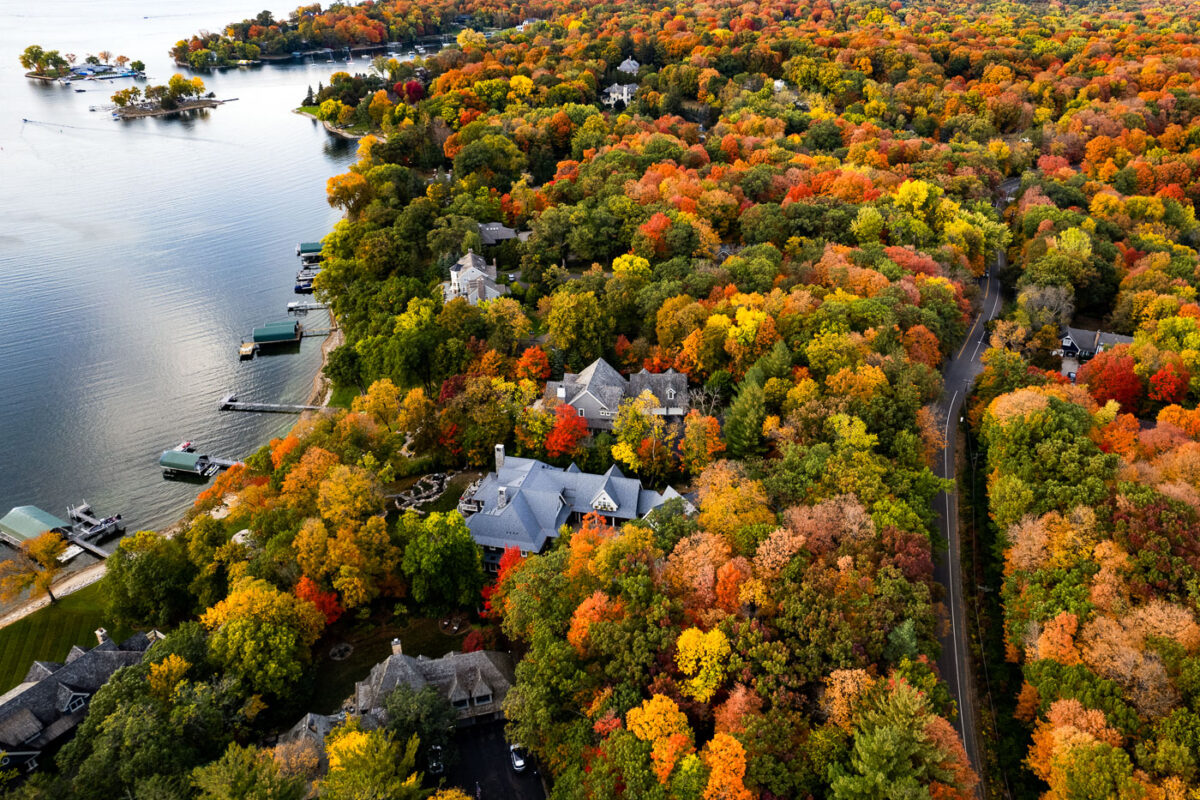
October 2022 — This aerial view follows the wooded shoreline of Deephaven, a small lakeside community on the southeast edge of Lake Minnetonka. The neighborhood developed around a combination of 19th-century summer cottages and later year-round homes, many of which were built on large forested lots that still preserve much of the area’s original tree cover. In autumn, the mix of maple, oak, and basswood trees creates a dense canopy of reds, yellows, and orange tones that nearly conceals the homes and winding shoreline roads below. Deephaven’s bay-front docks, protected inlets, and narrow peninsulas are distinctive features of this part of Minnetonka, reflecting the lake’s long history as a regional retreat and residential enclave.
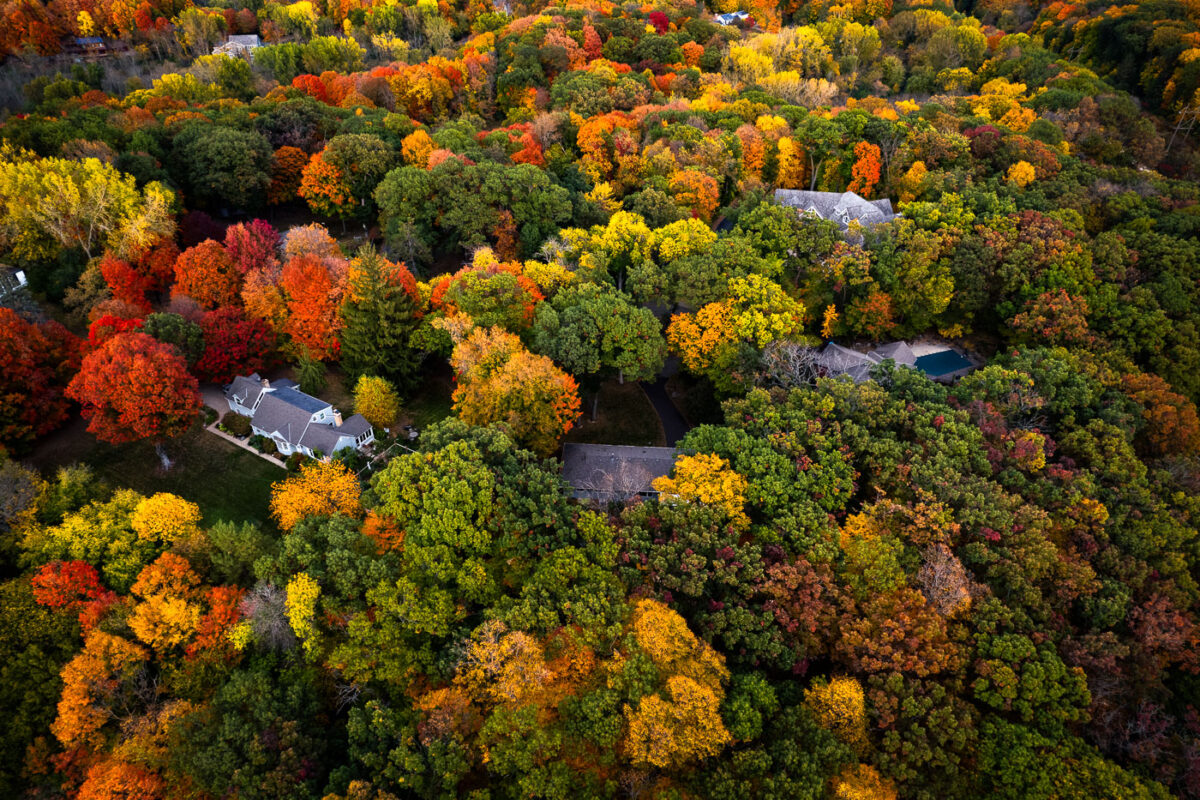
October 2022 — An aerial view over Deephaven captures the dense hardwood canopy that defines the residential areas near Lake Minnetonka each autumn. The neighborhood’s winding roads and homes sit almost entirely beneath mature maple, oak, and basswood trees, which turn a concentrated mix of red, orange, and gold during peak color change. This part of the Minnetonka shoreline developed slowly through the mid-20th century, preserving large wooded lots and green corridors that create the nearly continuous tree cover seen from above. The forested character of these communities—rare for a metropolitan area—remains a major feature of Deephaven’s identity and contributes to its secluded, park-like landscape.

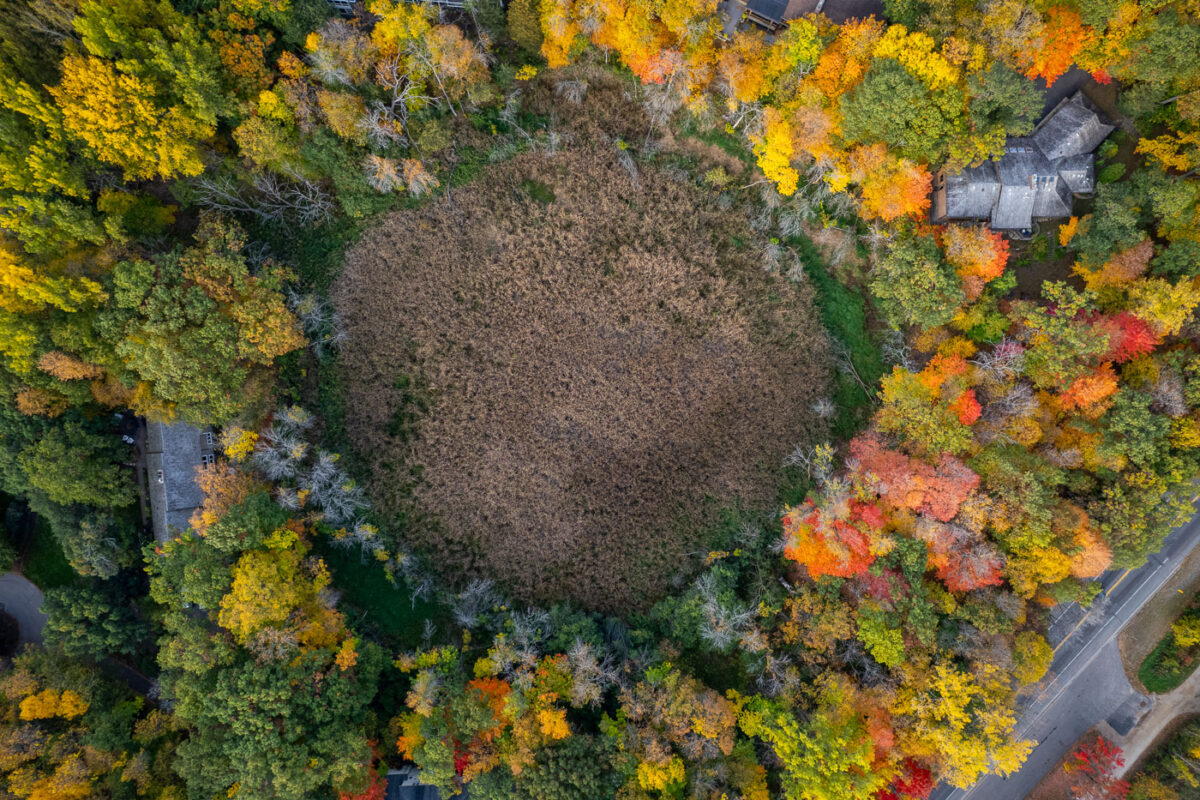
October 2022 — An overhead view of a small wetland basin in Deephaven shows the transition into late fall around Lake Minnetonka. Seasonal drawdown has exposed the cracked mudflats around the pond’s edge, while a layer of duckweed or algae collects in the remaining water at the center — a common pattern in shallow basins fed by spring runoff and intermittent groundwater. Surrounding hardwoods and pines move through peak color, forming the dense forest cover typical of the Minnetonka shoreline communities, where preserved ravines, lowlands, and wooded parcels give the area its distinctive mix of lakefront development and natural habitat.

October 2022 — An aerial view captures the dense fall canopy around Lake Minnetonka in Deephaven, where mature hardwoods and pines create a patchwork of orange, yellow, and deep red. Many of the winding roads in this part of the Lake Minnetonka shoreline were laid out in the early 20th century as the area transitioned from summer cottages to year-round neighborhoods. Today the tree cover remains one of Deephaven’s defining features, with protected woodland corridors and long-established residential plots preserving the character of this lakeside community.
October 2022 — Fall colors around Lake Minnetonka in Deephaven, Minnesota.
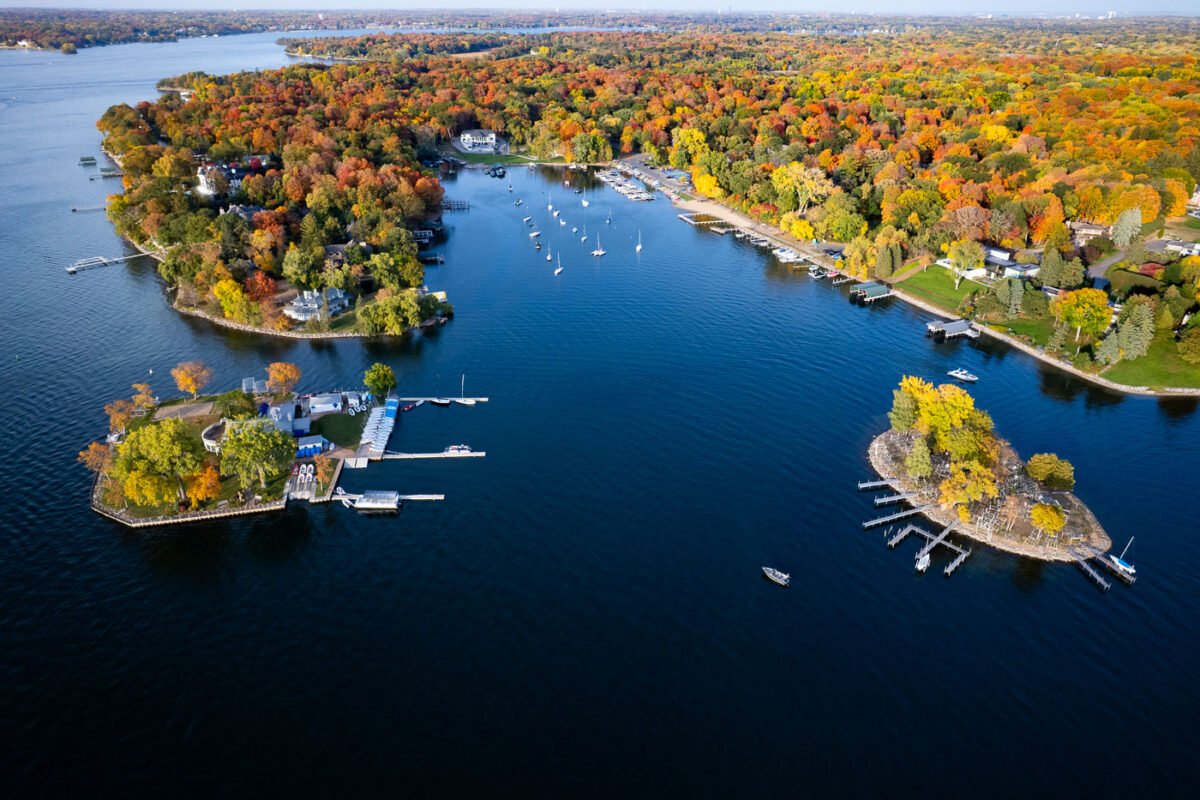
October 2022 — A high-elevation view over Lake Minnetonka captures several of the lake’s narrow peninsulas and sheltered bays at peak autumn color. The lake’s fragmented shoreline—shaped by glacial meltwater during the last Ice Age—creates dozens of protected inlets that became ideal sites for marinas, sailing clubs, and early resort development in the late 19th and early 20th centuries. In this part of the lake, the docks and clustered sailboats reflect the area’s long-standing boating culture, while the densely wooded neighborhoods show how residential development was built around access to quiet coves rather than wide-open water. The surrounding canopy, shifting from green to deep red and gold, highlights why Lake Minnetonka remains one of the most photographed fall landscapes in the Twin Cities region.

October 2022 — A wide aerial view looks east toward the Minneapolis skyline, rising above the dense canopy of the Kenwood and Lowry Hill neighborhoods during peak autumn color. This part of the city was developed in the late 19th and early 20th centuries as a streetcar suburb, designed around curving streets, large residential lots, and proximity to the Chain of Lakes. Many of the homes below are early Minneapolis mansions built by lumber and milling-era industrialists, now tucked beneath mature trees that give the neighborhood one of the city’s most dramatic fall transitions. In the middle distance, the Basilica of Saint Mary, Loring Park, and the early downtown warehouse district reflect Minneapolis’s layered growth—from industrial rail corridors to modern glass towers. The contrast between the dense urban core and the tree-covered residential districts highlights how closely the city’s historic neighborhoods were shaped by parks, lakes, and the parkway system planned by Theodore Wirth in the early 1900s.
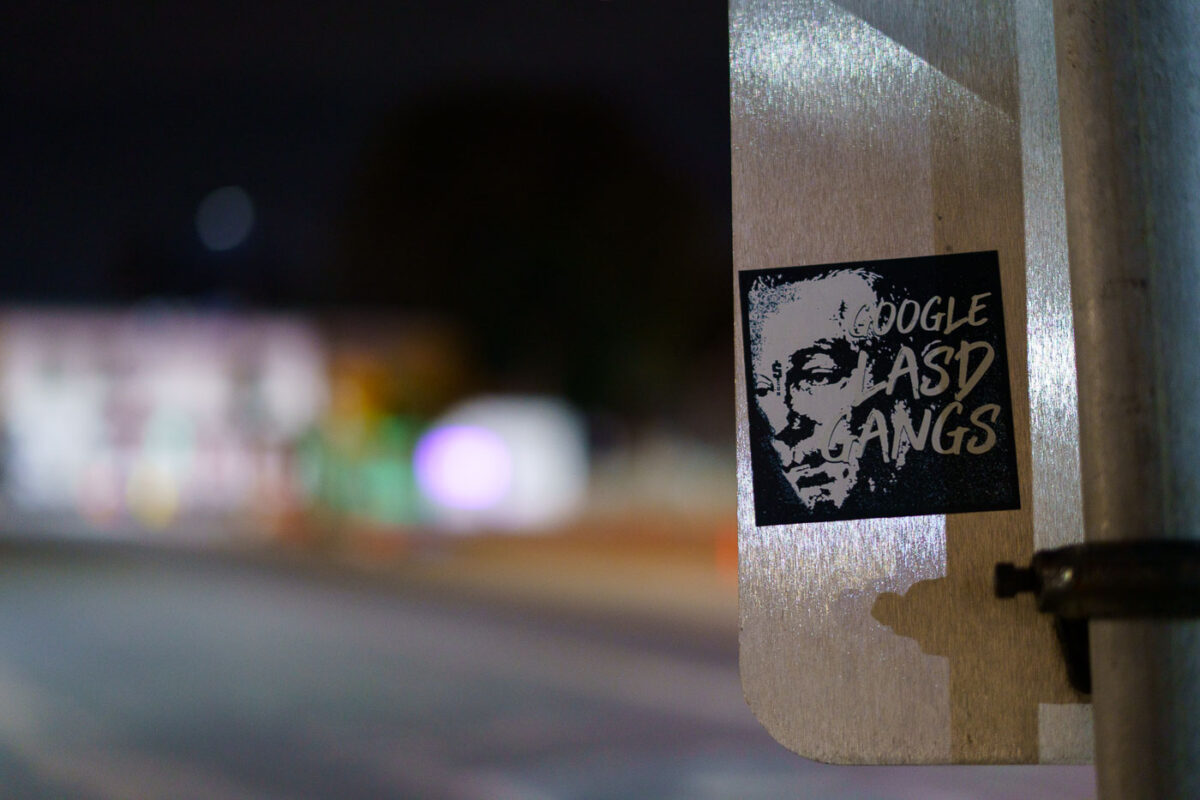
October 2022 — A sticker on a Minneapolis signpost references long-running allegations surrounding deputy “gangs” within the Los Angeles County Sheriff’s Department (LASD). Civil rights groups, journalists, and county oversight bodies have documented concerns for decades about informal deputy subgroups—some using matching tattoos or symbols—that critics say foster misconduct, retaliation, and internal loyalty structures. Seeing a reference to those controversies on a street sign in Minneapolis reflects how national policing debates and accountability issues often circulate far beyond their place of origin, with artists and activists using stickers, posters, and small-scale street graphics to raise awareness or prompt online searches.