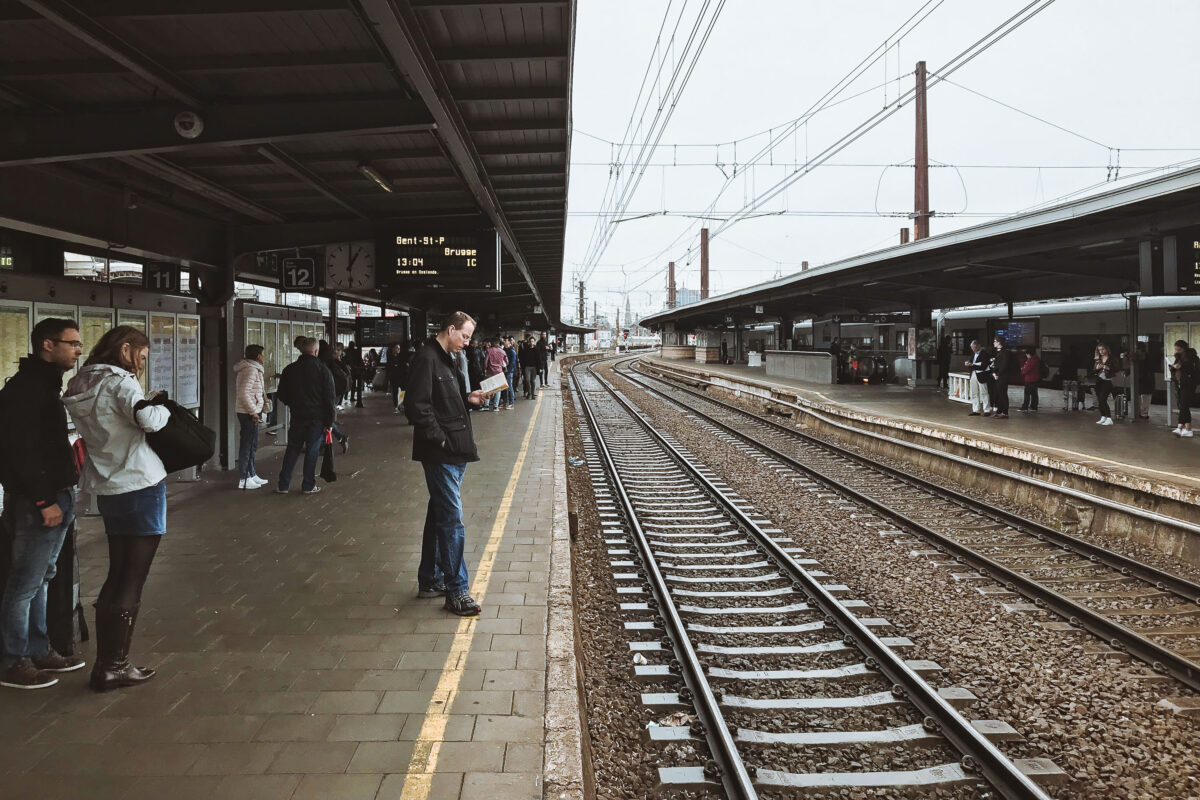
Brussels-Midi Station Platform with Train Tracks
September 2017 —
Explore photos tagged Train Station.
September 2017 —
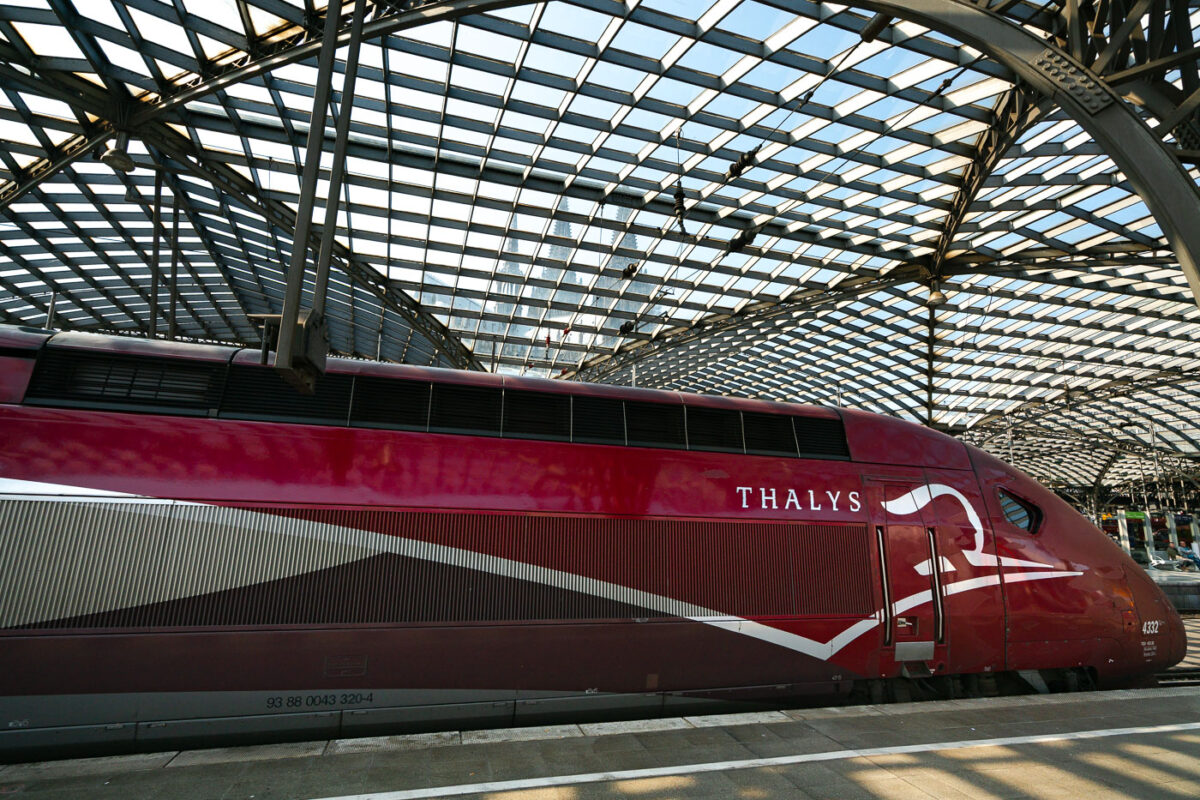
September 2017 — A Thalys PBKA high-speed train waits at Köln Hauptbahnhof beneath the station’s large arched glass canopy. The streamlined red train, built by Alstom and operated on international routes between Germany, Belgium, France, and the Netherlands, reflects the late-afternoon light along its metallic bodywork. Overhead, the steel lattice roof filters the daylight across the platforms, and through the patterned glass, the spires of Cologne Cathedral rise faintly in the background—a visual reminder of the station’s central location beside one of Europe’s most recognizable landmarks.
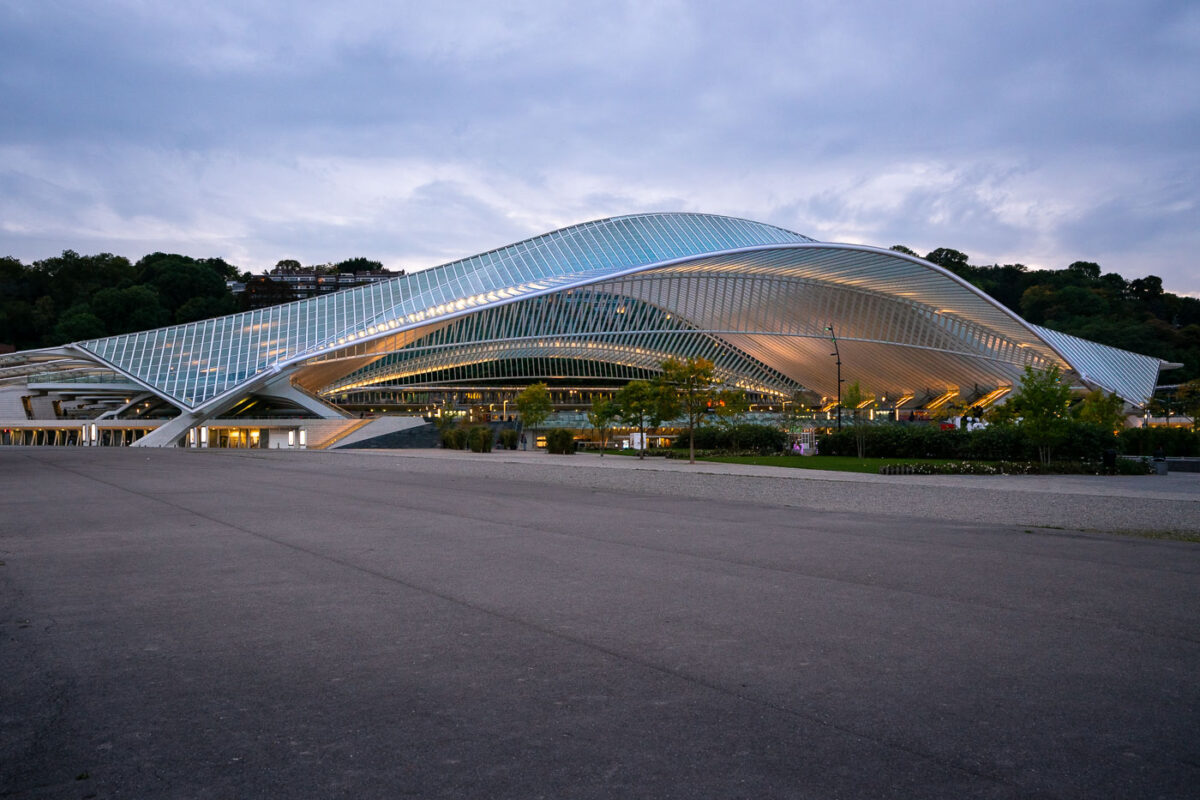
September 2017 — Liège-Guillemins Station, located in Liège, Belgium, serves as one of the country’s primary high-speed rail hubs and a striking example of modern European transport architecture. The current structure, designed by Spanish architect Santiago Calatrava, officially opened on September 18, 2009, following nearly a decade of planning and construction. Built to accommodate Belgium’s integration into the European high-speed rail network, the station connects Liège with major cities such as Brussels, Paris, Aachen, and Cologne through Thalys, ICE, and InterCity services. The building’s sweeping glass and steel canopy extends over 160 meters in length and 32 meters in height, eliminating the need for traditional walls and creating a sense of openness and transparency. Beneath its arched form, five railway platforms are arranged along ten tracks, with pedestrian bridges and elevators providing clear lines of movement between levels. The structure replaced a 1958 station on the same site, symbolizing Liège’s transition from its industrial past toward a contemporary, design-focused identity. Today, Liège-Guillemins stands not only as a critical piece of transportation infrastructure but also as a civic landmark. The station anchors a redeveloped district along the Meuse River, linking the city’s historic center with new public spaces, and continues to draw attention for its combination of engineering precision and architectural expression.
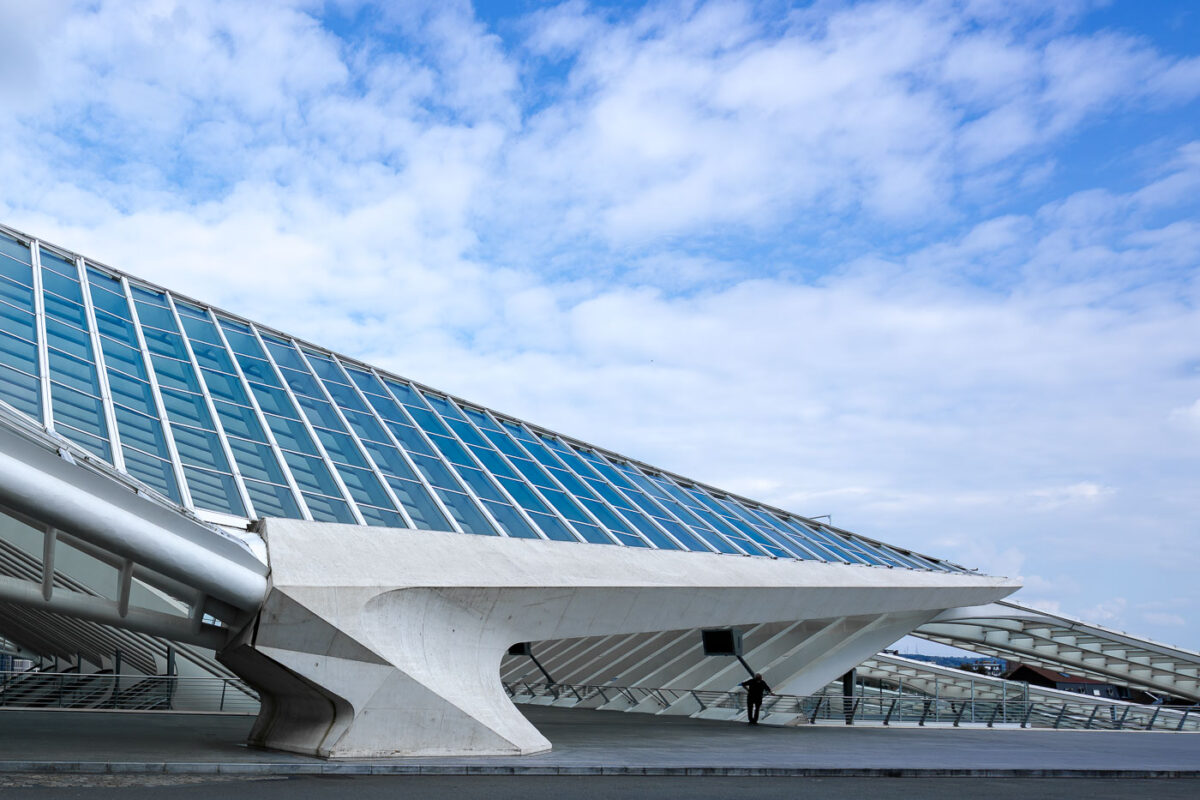
September 2017 — The sweeping steel-and-glass structure of Liège-Guillemins railway station stands as one of Europe’s most recognizable contemporary transport terminals. Designed by Spanish architect Santiago Calatrava and opened in 2009, the station was conceived as both a functional rail hub and a civic landmark, replacing an older mid-20th-century facility on the same site. Its vast, arching roof—constructed without a traditional façade—allows daylight to flood the platforms while emphasizing openness and movement rather than enclosure. Liège-Guillemins serves as a major junction on Belgium’s high-speed rail network, connecting Liège with Brussels, Paris, Cologne, and Frankfurt. The station’s design reflects early 21st-century priorities in European rail infrastructure: intermodality, passenger flow efficiency, and architectural visibility as a symbol of urban reinvestment. The exposed structure, rhythmic ribs, and inclined glazing make the engineering legible, turning the building itself into an expression of transit in motion.
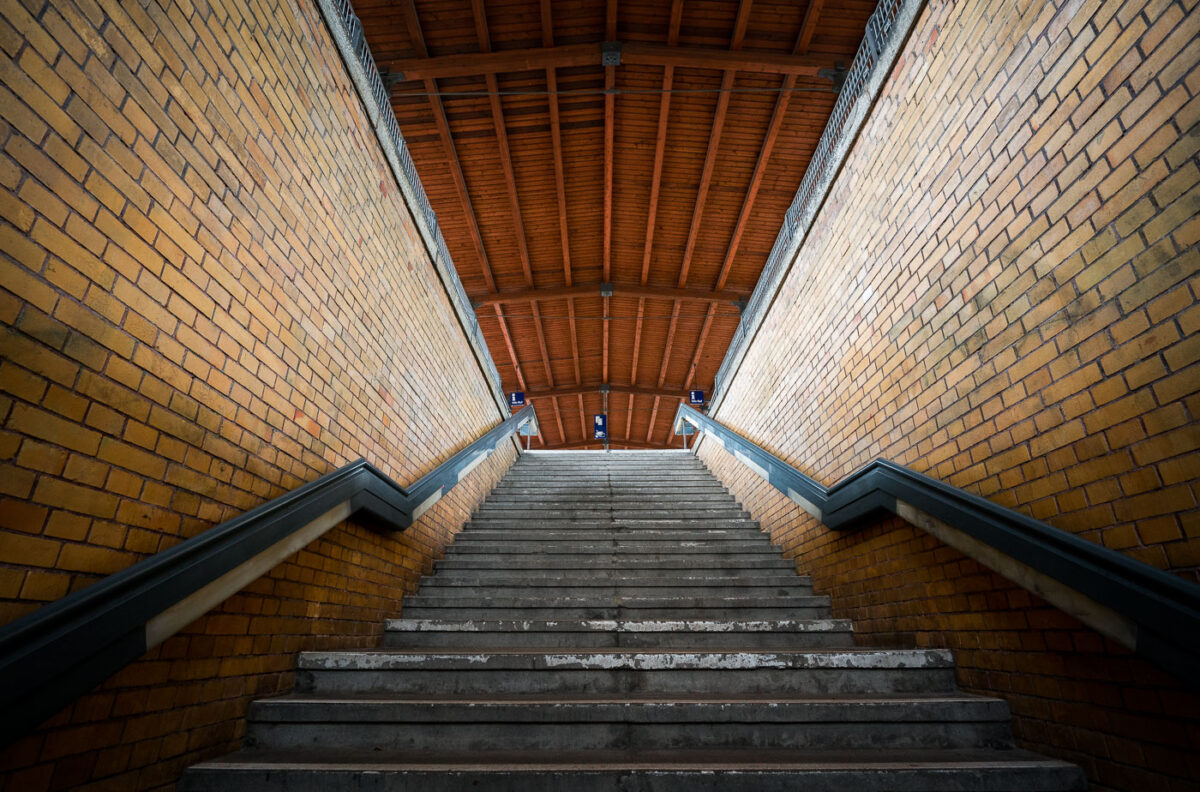
September 2017 — Entering a Berlin train station.
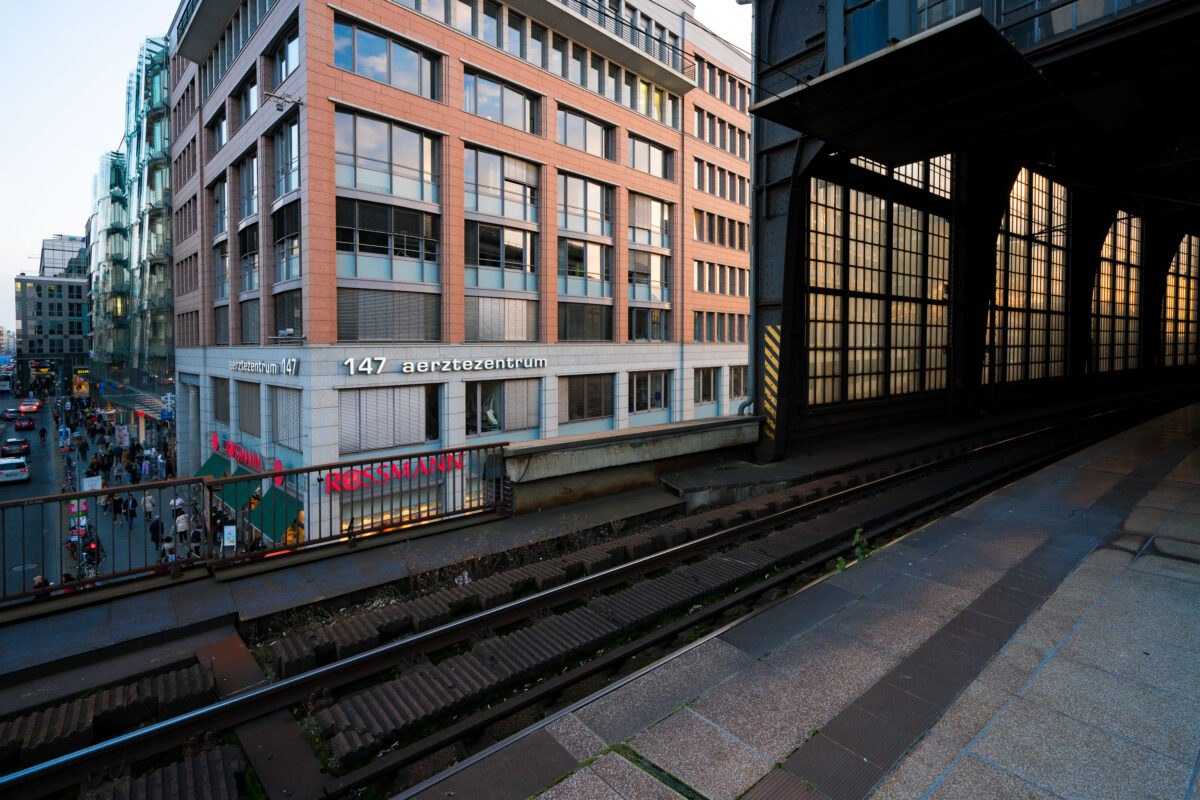
September 2017 — View from the platform at Berlin Friedrichstraße station overlooking Georgenstraße below. The elevated tracks run alongside a mix of modern and postwar office buildings, including the Aerztezentrum at No. 147. Pedestrians and cyclists move through the busy commercial street beneath, while the station’s glass and steel structure reflects the late-day light.
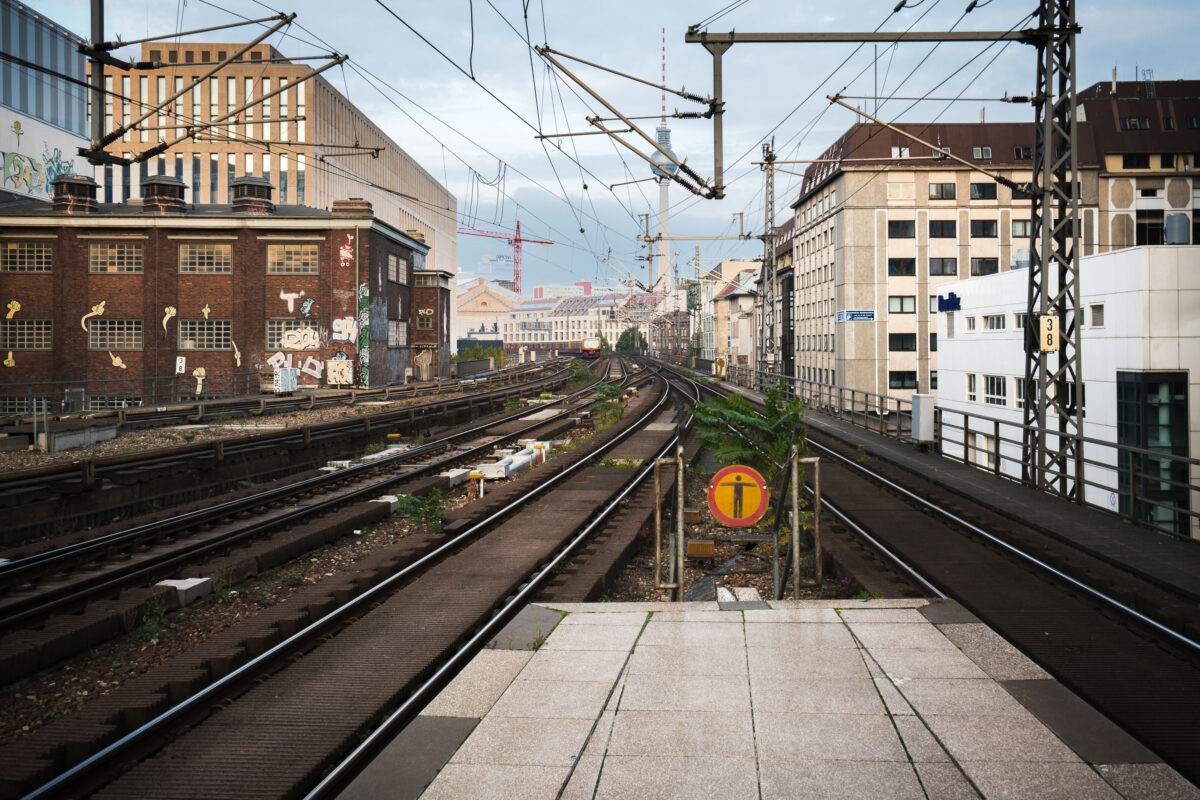
September 2017 — View east from Berlin Friedrichstraße station showing the elevated S-Bahn tracks leading toward Alexanderplatz. Overhead wires and supporting steel structures frame the route, with graffiti-covered industrial buildings on the left and mid-century offices on the right. The Berlin TV Tower (Fernsehturm) rises in the distance, a landmark visible across the city skyline.
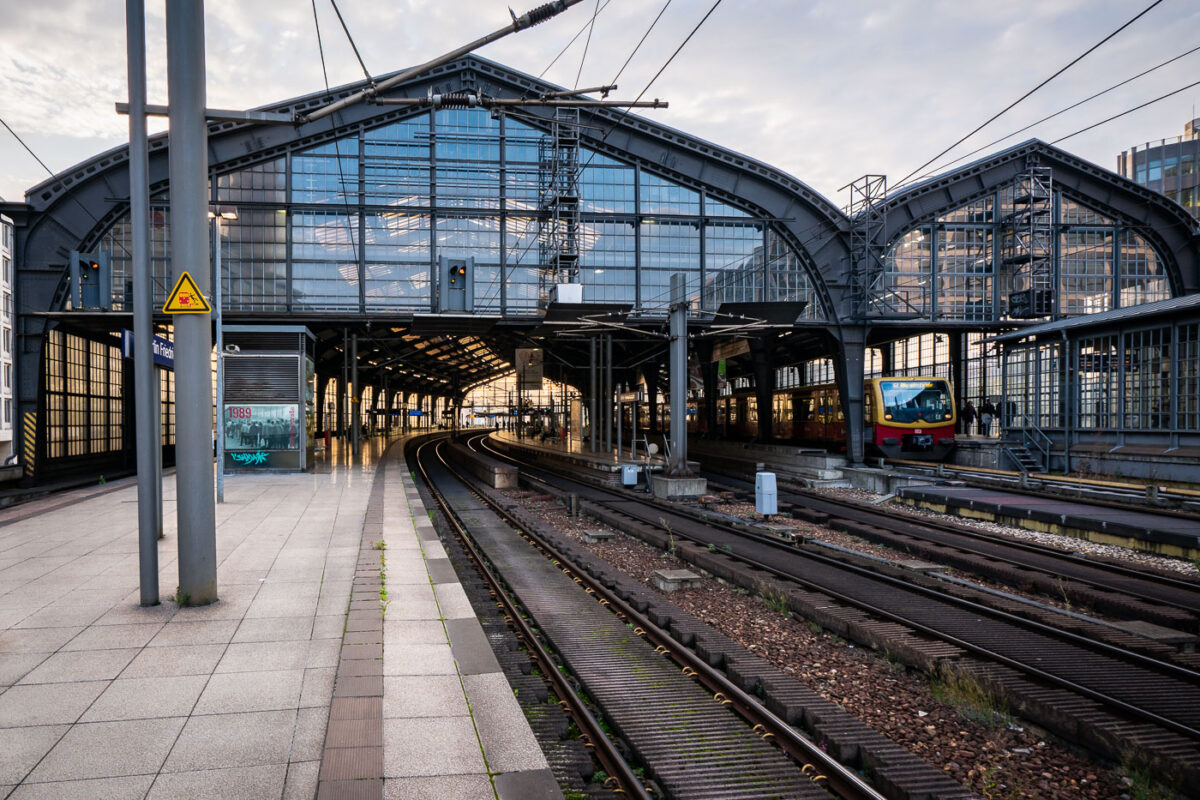
September 2017 — Berlin Friedrichstraße station in the early evening, with an S-Bahn BR 481 series train stopped under the steel and glass canopy. The curved elevated tracks lead into the main hall, a design characteristic of the city’s prewar rail architecture. Overhead wires and support structures frame the scene, while a few commuters move along the quiet platform as daylight fades into artificial light.
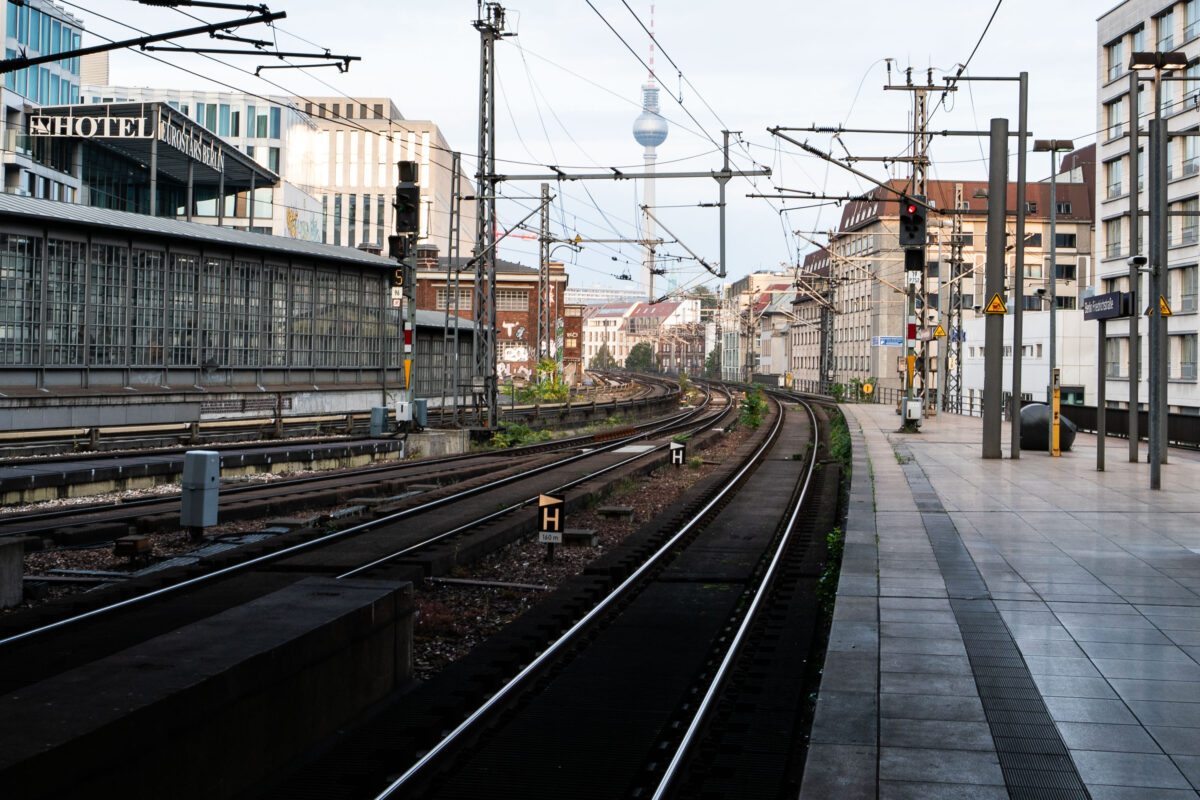
September 2017 — Tracks curve eastward from Berlin Friedrichstraße station, one of the city’s busiest S-Bahn and regional rail interchanges. The elevated viaduct carries multiple lines, including the S3, S5, S7, and S9, which link central Berlin with its outer districts and neighboring cities. The view looks toward Alexanderplatz, with the Fernsehturm television tower visible in the distance — a defining landmark of the former East Berlin skyline. Friedrichstraße station opened in 1882 and served as a symbolic and logistical border crossing during the Cold War, when it connected both East and West Berlin rail networks. Today, the station remains a major transit hub, handling thousands of passengers daily and sitting at the junction of the north–south and east–west S-Bahn corridors. The surrounding area has since been redeveloped with modern offices, hotels, and shops while retaining its role as one of Berlin’s central transport arteries.
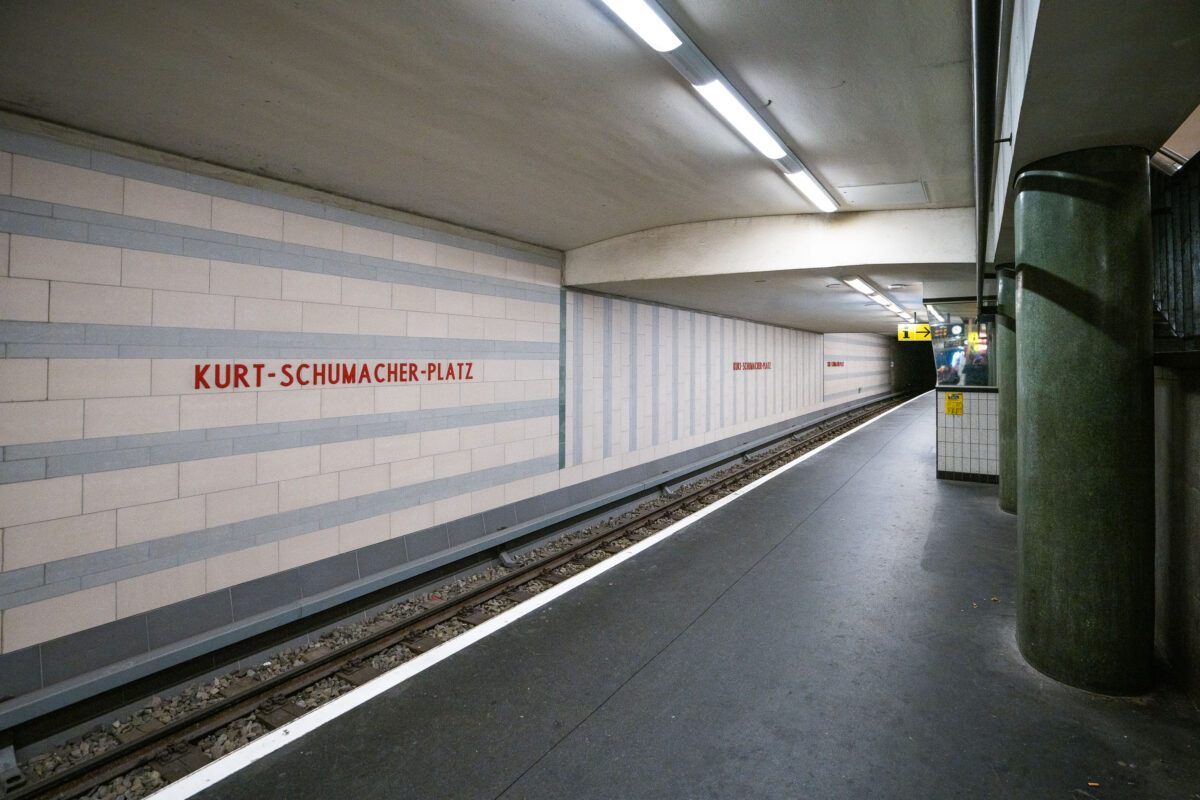
September 2017 — Kurt-Schumacher-Platz station serves Berlin’s U6 U-Bahn line in the Reinickendorf district, located in the city’s northwest. Opened on May 3, 1956, the station was part of the first postwar U-Bahn expansion and named after German statesman Kurt Schumacher, a key figure in rebuilding the Social Democratic Party after World War II. The station features light-colored wall tiles with horizontal gray stripes and minimalist red lettering, reflecting mid-1950s West Berlin design. It includes a central island platform and two tracks, serving as an important stop between Afrikanische Straße and Scharnweberstraße. Above ground, the station connects to several bus routes and lies near the approach to the U6 tunnel under the former Tegel Airport area. Today, it remains a key link for northern Berlin commuters traveling toward the city center.
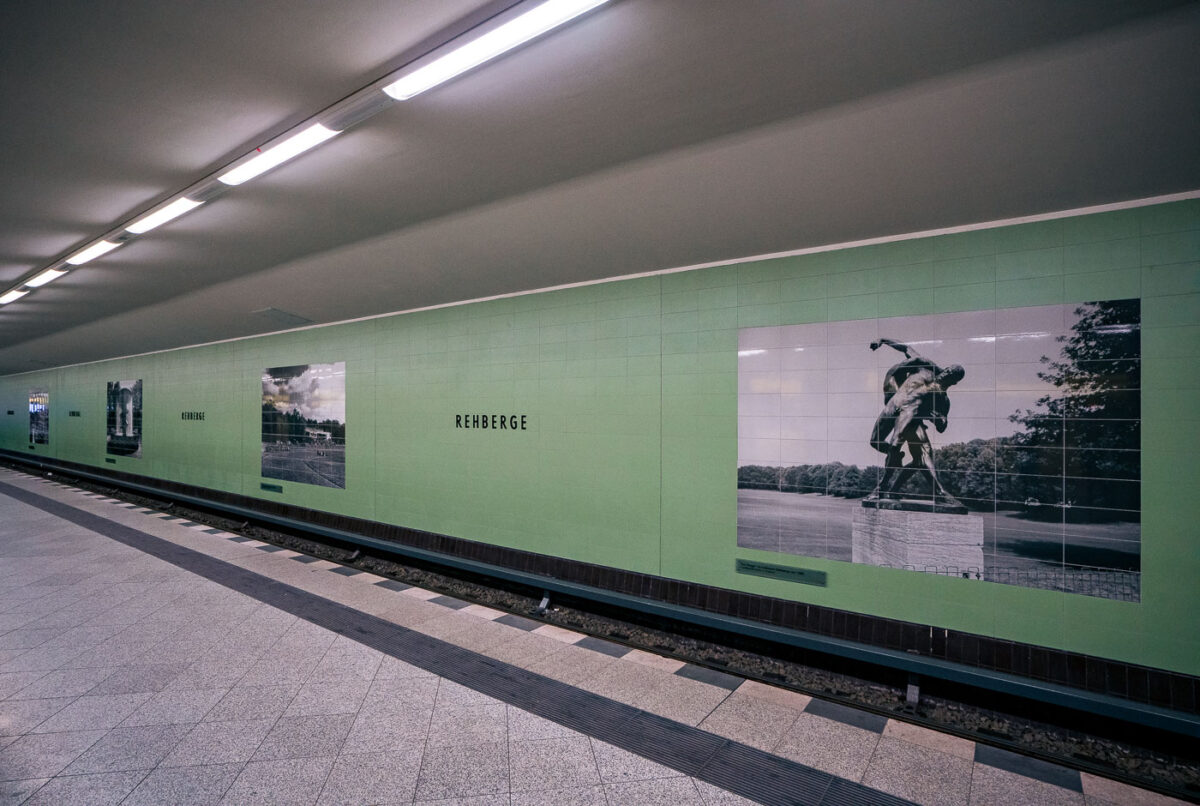
September 2017 — Rehberge U-Bahn Station, Berlin
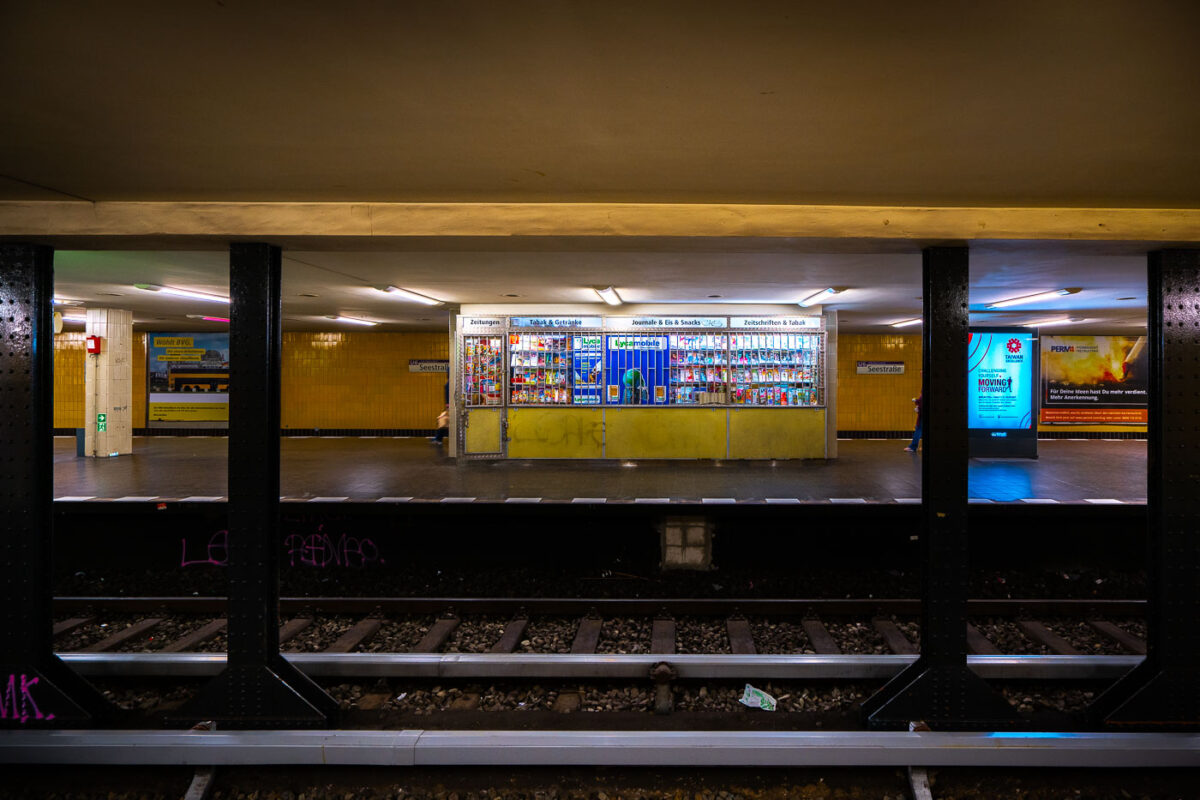
September 2017 — A store at the Seestrabe Station in Berlin.
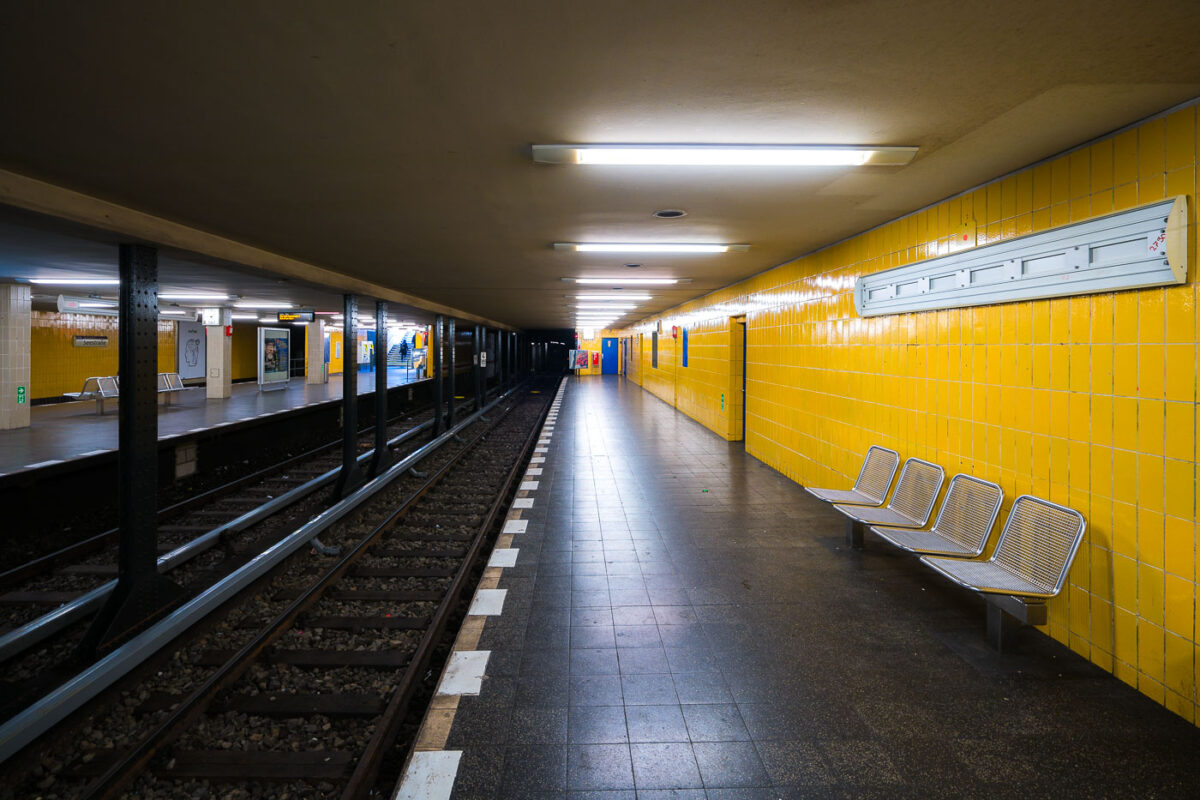
September 2017 — Seestraße U-Bahn Station, Berlin Germany
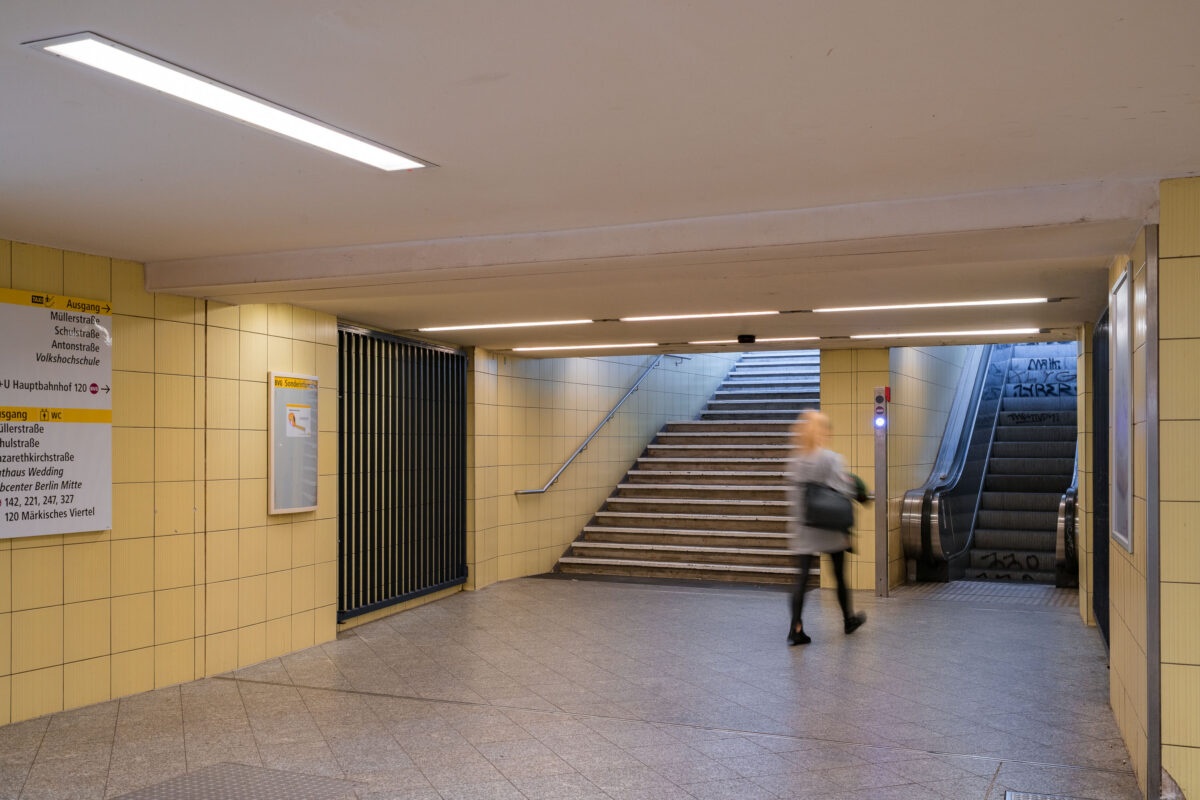
September 2017 — An underground passageway connects the platforms of Wedding U-Bahn station to its street-level exits on Müllerstraße in Berlin’s Mitte district. The corridor is tiled in light yellow ceramic, part of the BVG’s standardized postwar design used throughout many West Berlin stations rebuilt or renovated in the 1960s and 1970s. Directional signage guides passengers toward exits, connecting bus routes, and public facilities, while an escalator and stairway lead to the main entrance. The faint graffiti on the walls and motion blur of a passing commuter emphasize the station’s everyday function within Berlin’s public transport network. Wedding station serves both the U6 line and the S-Bahn Ring, forming a key interchange point in the city’s northern transit system.
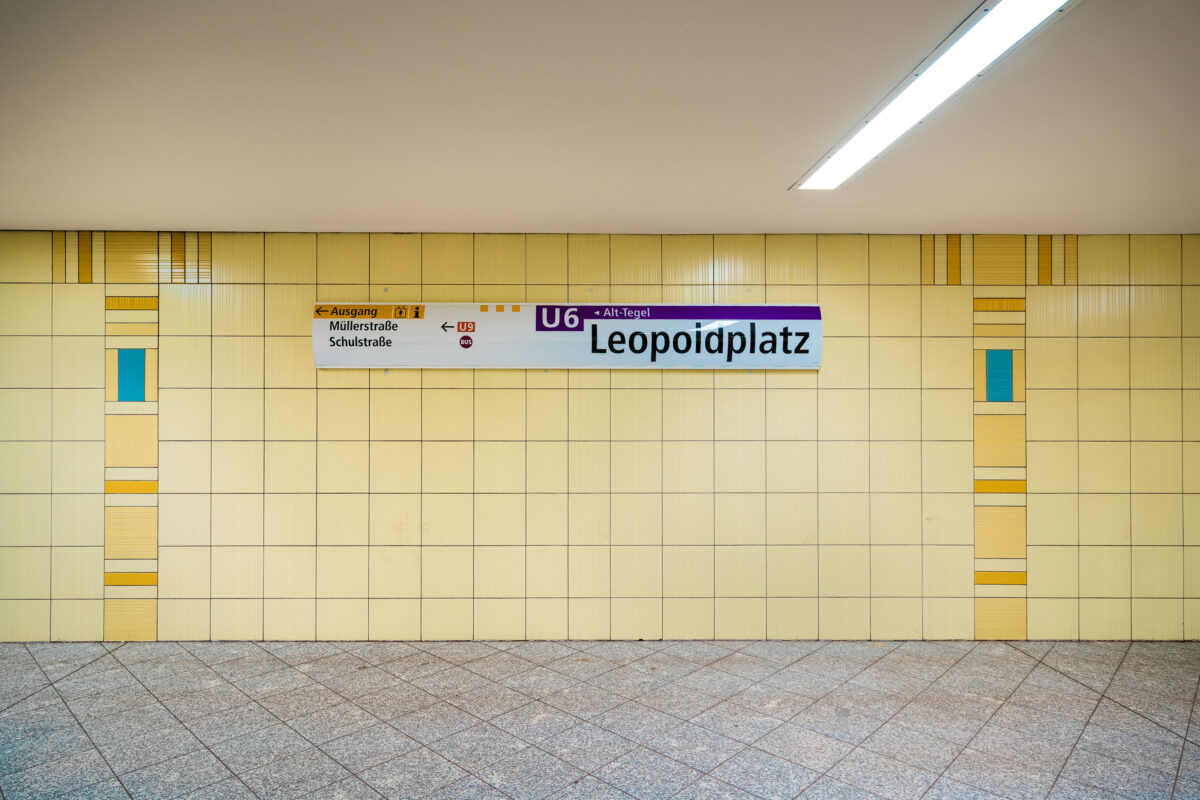
September 2017 — The Leopoldplatz U-Bahn Station in Berlin Germany.
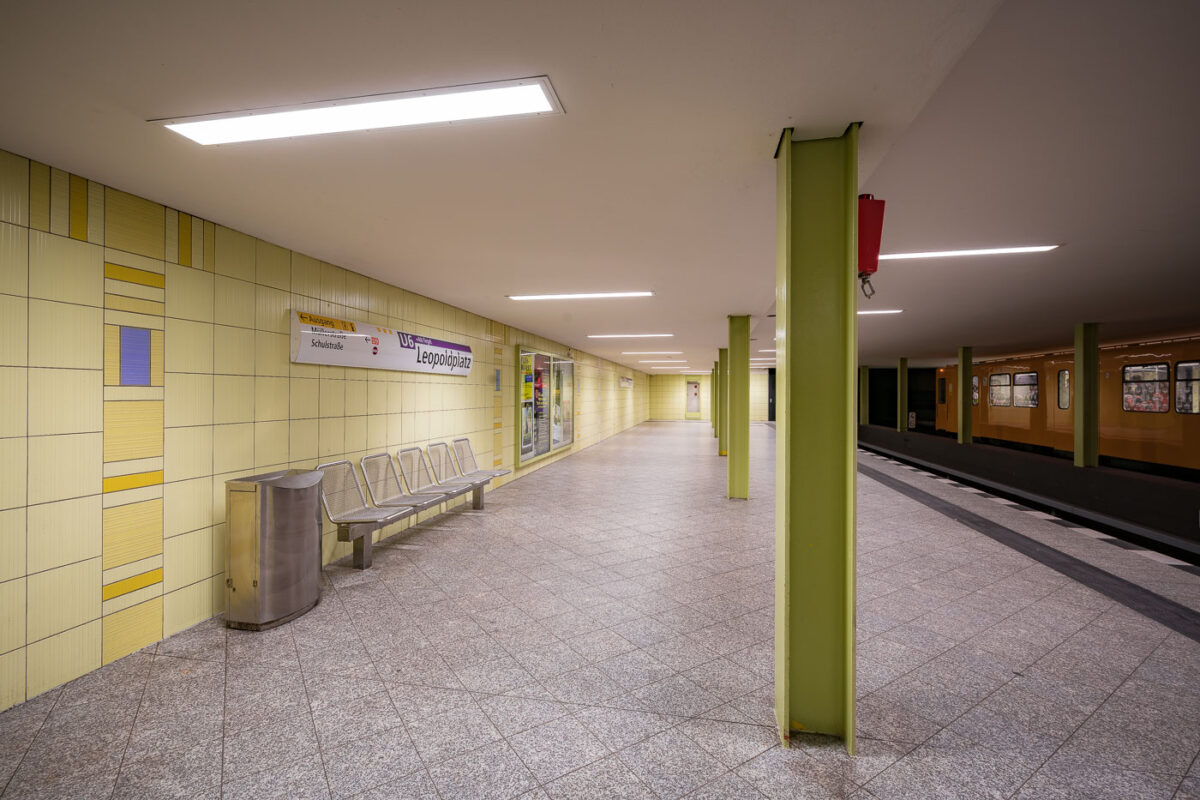
September 2017 — The Leopoldplatz U-Bahn Station in Berlin Germany.
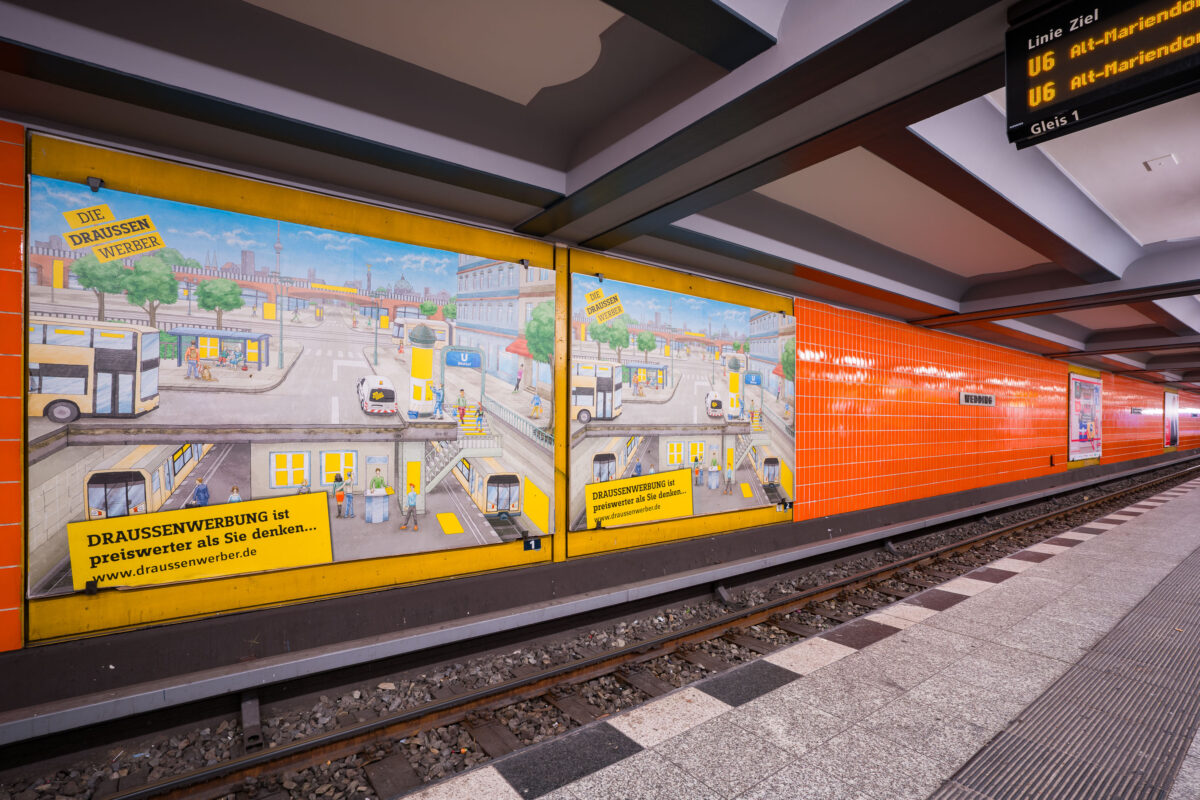
September 2017 — Wittenbergplatz station on Berlin’s U2 line features a distinctive orange-tiled design characteristic of the city’s postwar modernization of U-Bahn interiors. The platform level seen here includes advertising panels with hand-illustrated city scenes, part of a campaign promoting outdoor advertising (“Draussenwerbung”) by Wall GmbH, a longtime transit advertising company in Berlin. Opened in 1902 as part of the city’s first underground railway, Wittenbergplatz is one of Berlin’s oldest stations and a key junction serving the U1, U2, and U3 lines. The orange tiles were installed during mid-20th-century refurbishments to brighten the subterranean space, contrasting with the original Jugendstil architecture preserved at the main hall above. The modern signage displays U6 connections, while the station’s layout—with three island platforms—continues to serve one of the busiest interchange points in Berlin’s U-Bahn network.
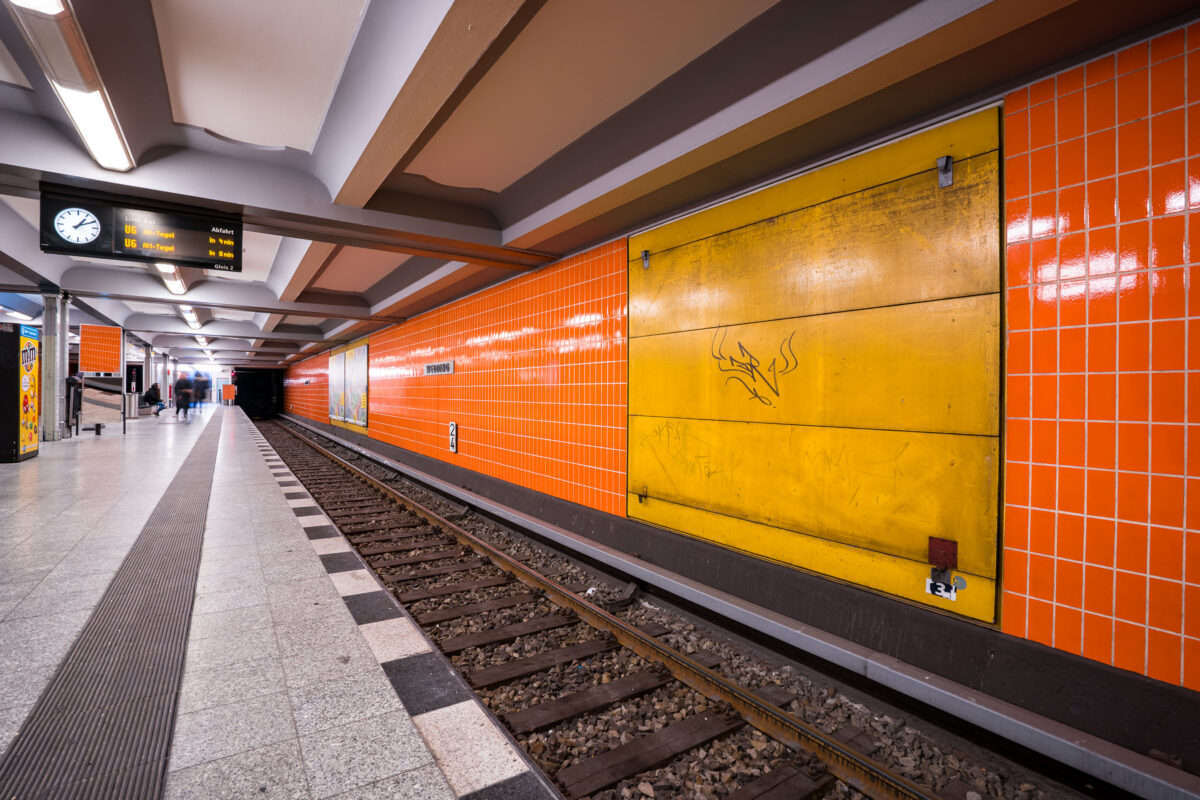
September 2017 — Berlin-Wedding station S-Bahn station in Berlin, Germany
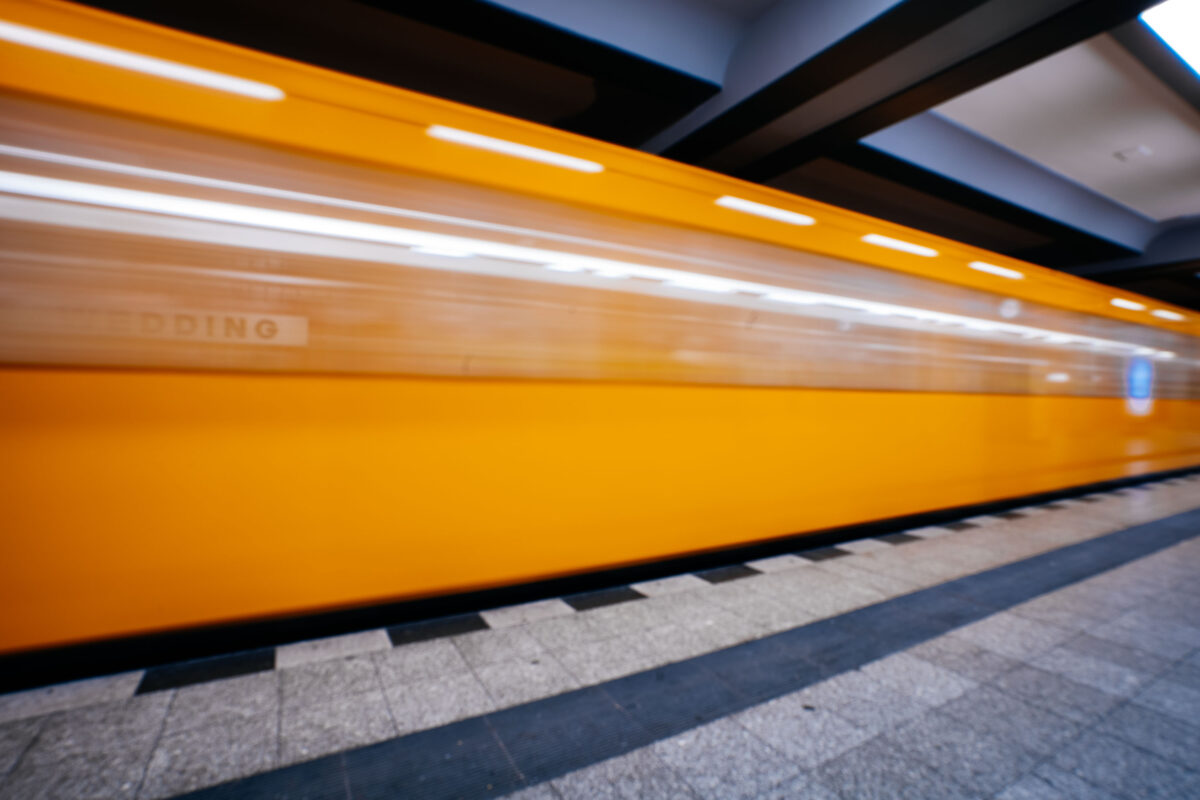
September 2017 — A train passes through the Wedding station in Berlin Germany.
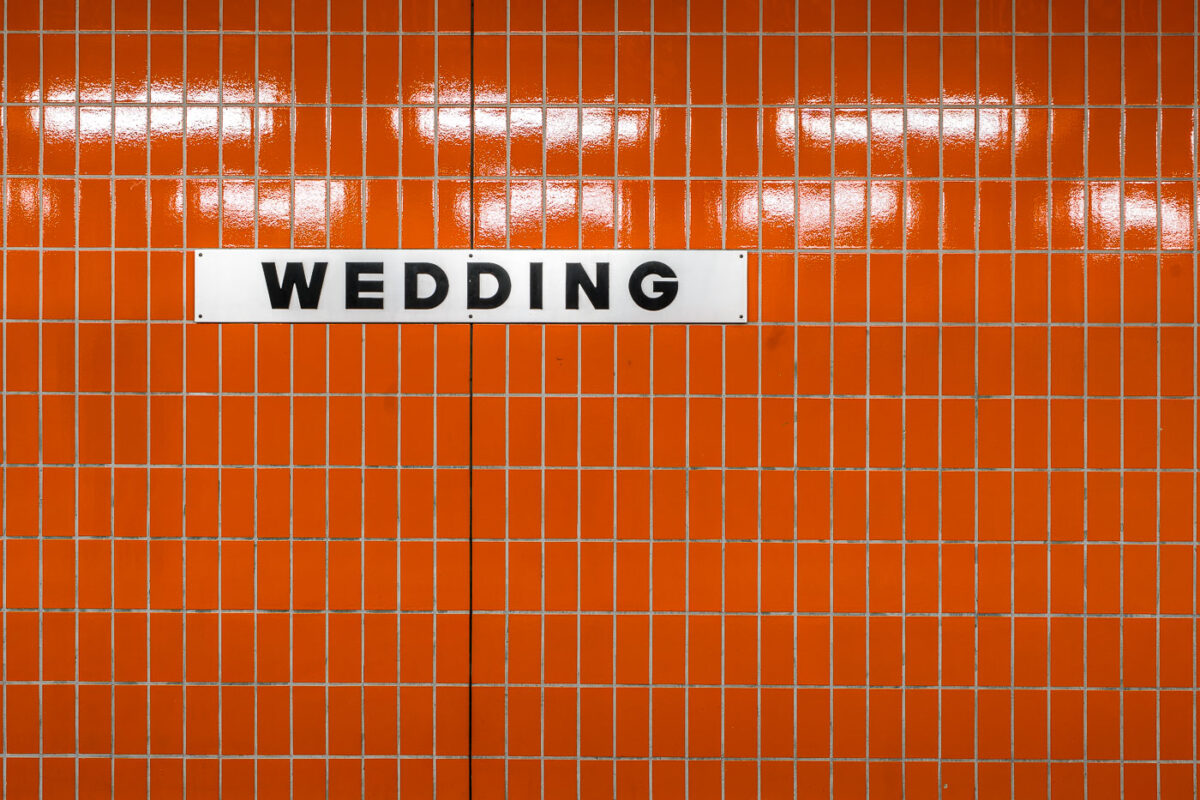
September 2017 — A white station sign reading “Wedding” in black block letters is mounted on an orange, small-rectangle tiled wall inside Wedding station in Berlin, Germany. The station serves the Wedding neighborhood in the Mitte district and functions as an interchange between the U6 U‑Bahn line and the Berlin Ringbahn S‑Bahn. The stark typography and modular tiles reflect the practical design found across much of Berlin’s postwar transit architecture. Operated by BVG for the U‑Bahn and S‑Bahn Berlin GmbH for suburban rail, Wedding is a local hub for commuters moving between the north of the city and central Berlin. No passengers are visible in the frame, emphasizing the graphic clarity of the station’s wayfinding.
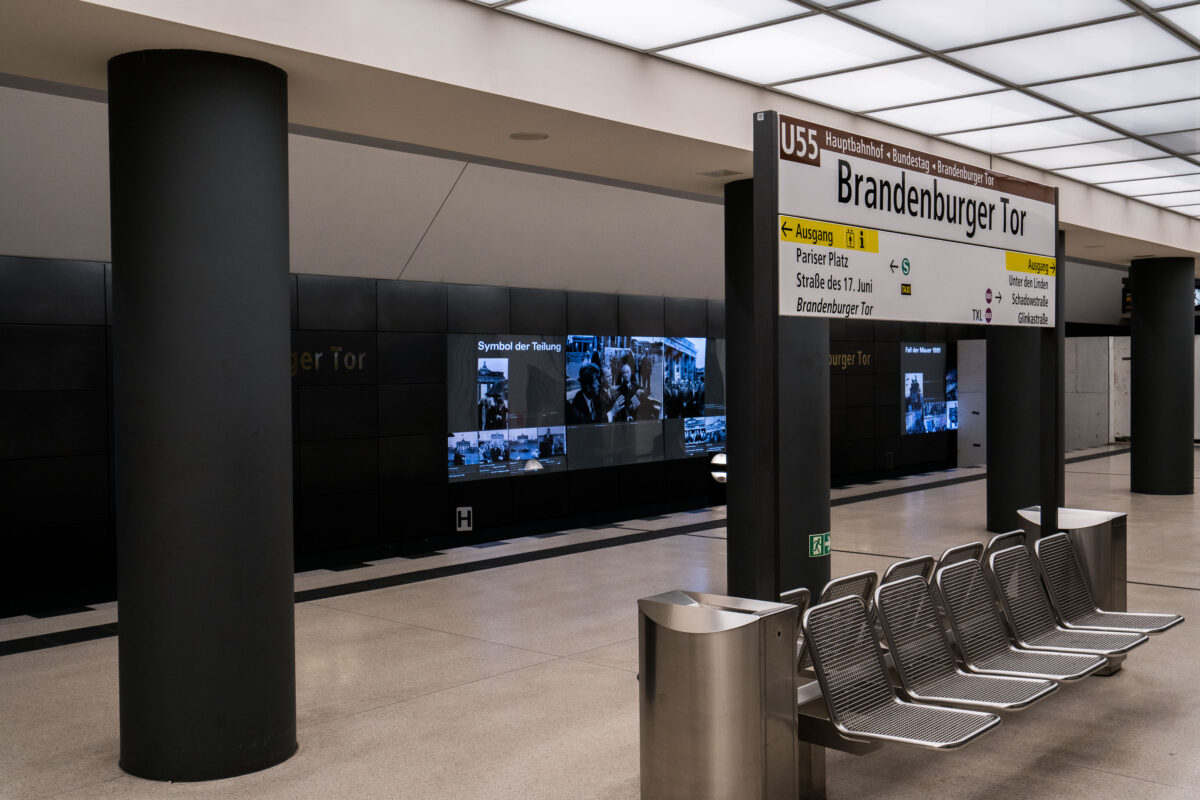
September 2017 — The Brandenburger Tor station in Berlin, Germany. Metal benches on the train platform.
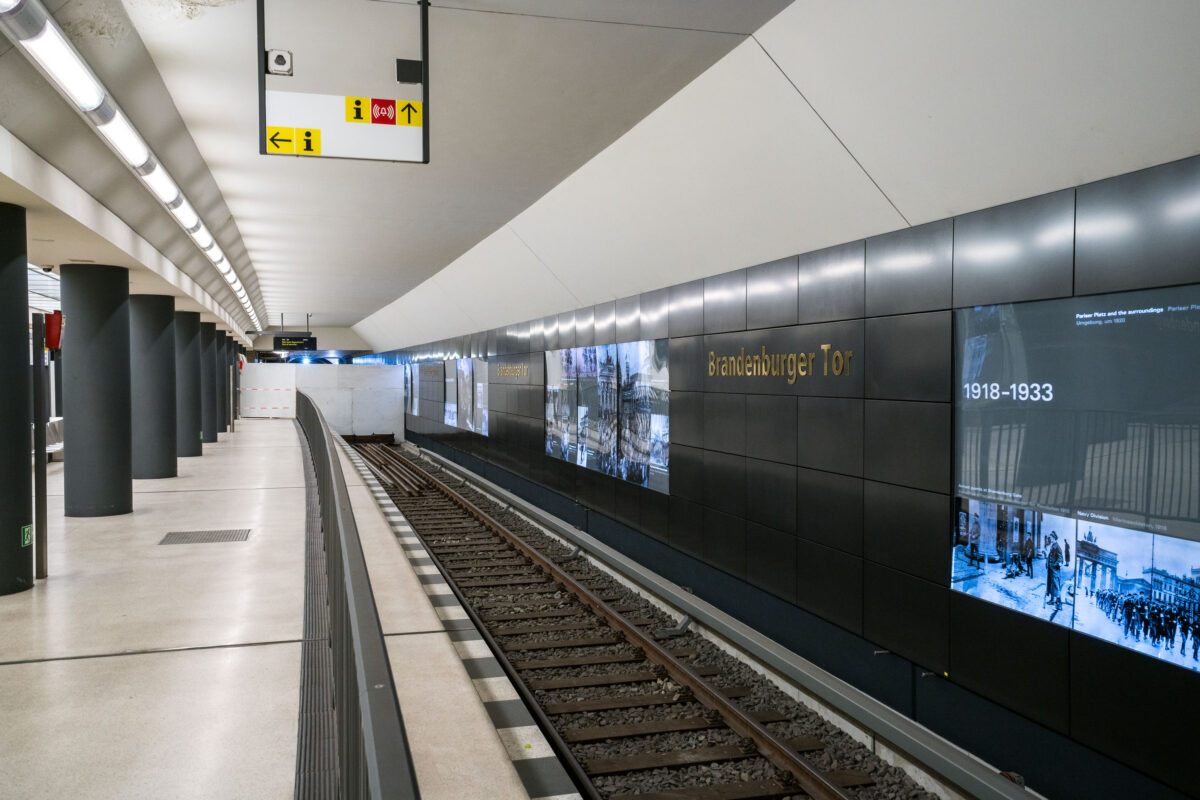
September 2017 — The Brandenburger Tor station on Berlin’s U5 line sits directly beneath Pariser Platz, adjacent to the Brandenburg Gate. The interior features dark composite wall panels inlaid with gold lettering and a series of illuminated displays tracing Berlin’s 20th-century history, including the city’s division and post-reunification development. Originally opened in 2009 as part of the short U55 shuttle between Hauptbahnhof and Bundestag, the station became a through stop in December 2020 when the U5 extension to Alexanderplatz was completed, reconnecting the eastern and western portions of the U-Bahn network after nearly six decades of separation.
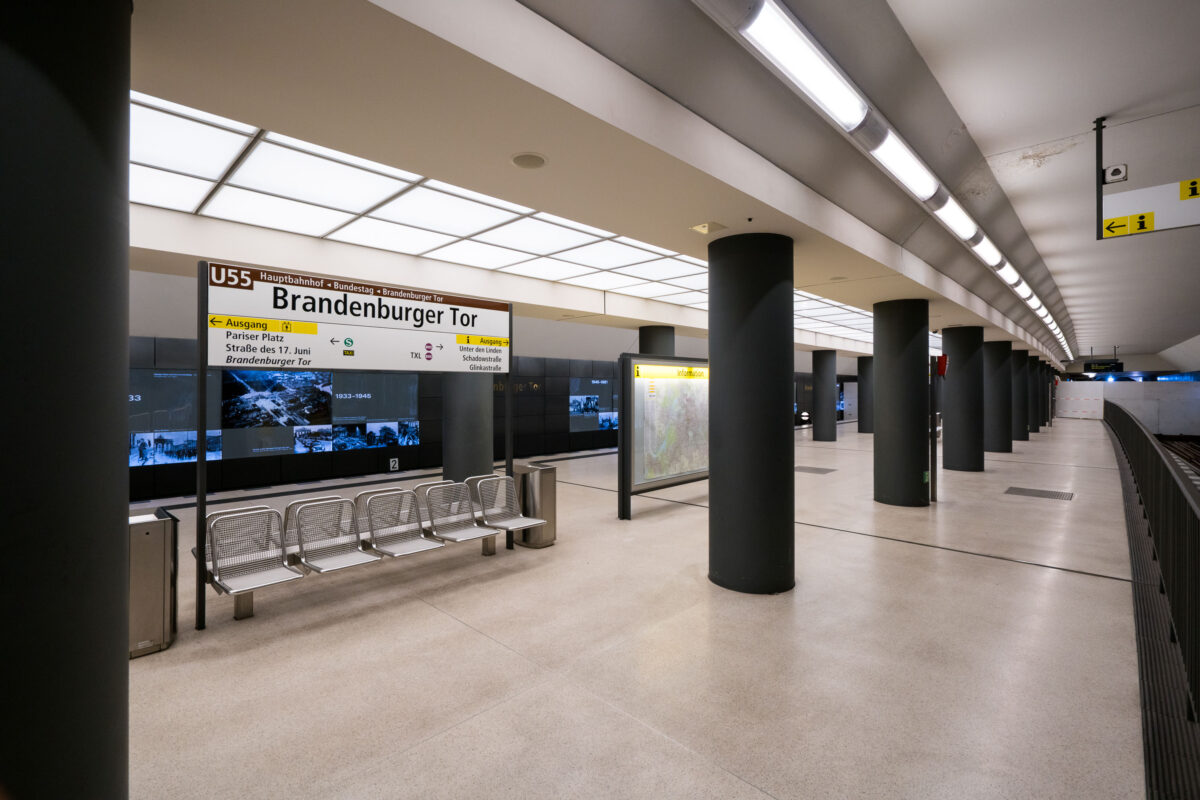
September 2017 — The Brandenburger Tor station in Berlin, Germany.
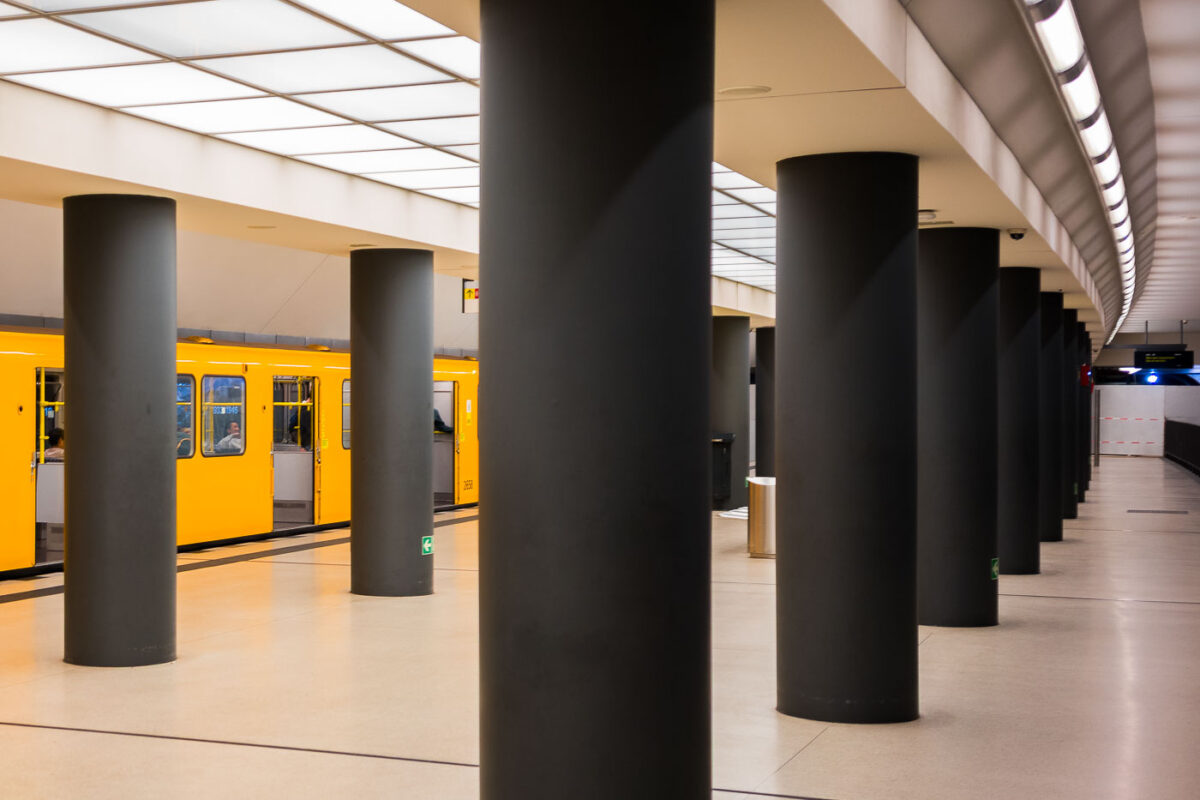
September 2017 — The Brandenburger Tor station in Berlin, Germany.
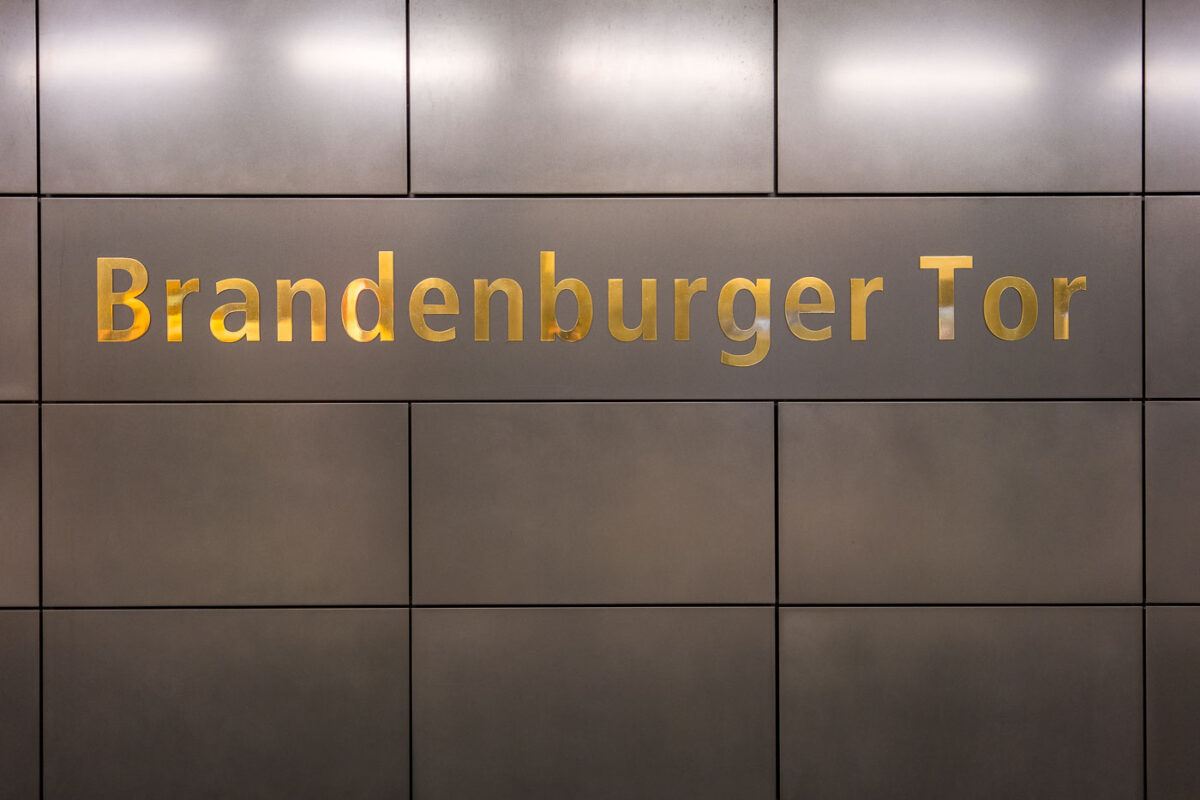
September 2017 — The Brandenburger Tor station in Berlin, Germany.
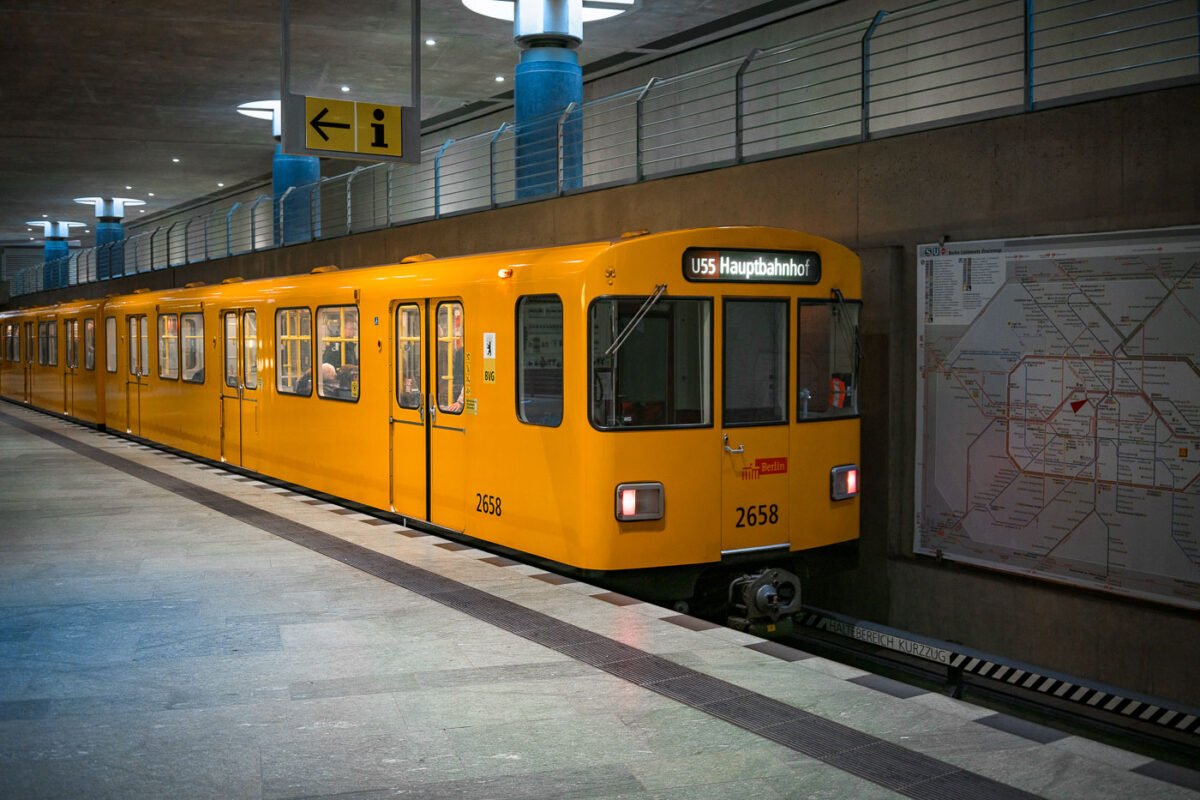
September 2017 — A bright yellow BVG U-Bahn train marked “U55 Hauptbahnhof” stands at the underground platform of Berlin Hauptbahnhof. An information sign with an arrow hangs above the platform, while a large network map of the S- and U-Bahn lines is mounted on the concrete wall to the right. Through the windows, a few seated passengers are visible inside the multi-door carriage numbered 2658. The U55 operated as a short shuttle between Berlin Hauptbahnhof and Brandenburger Tor, opened in 2009 to link the new central station with the government quarter. In December 2020 the shuttle was integrated into the extended U5 line, a major step in Berlin’s east‑west metro connection.
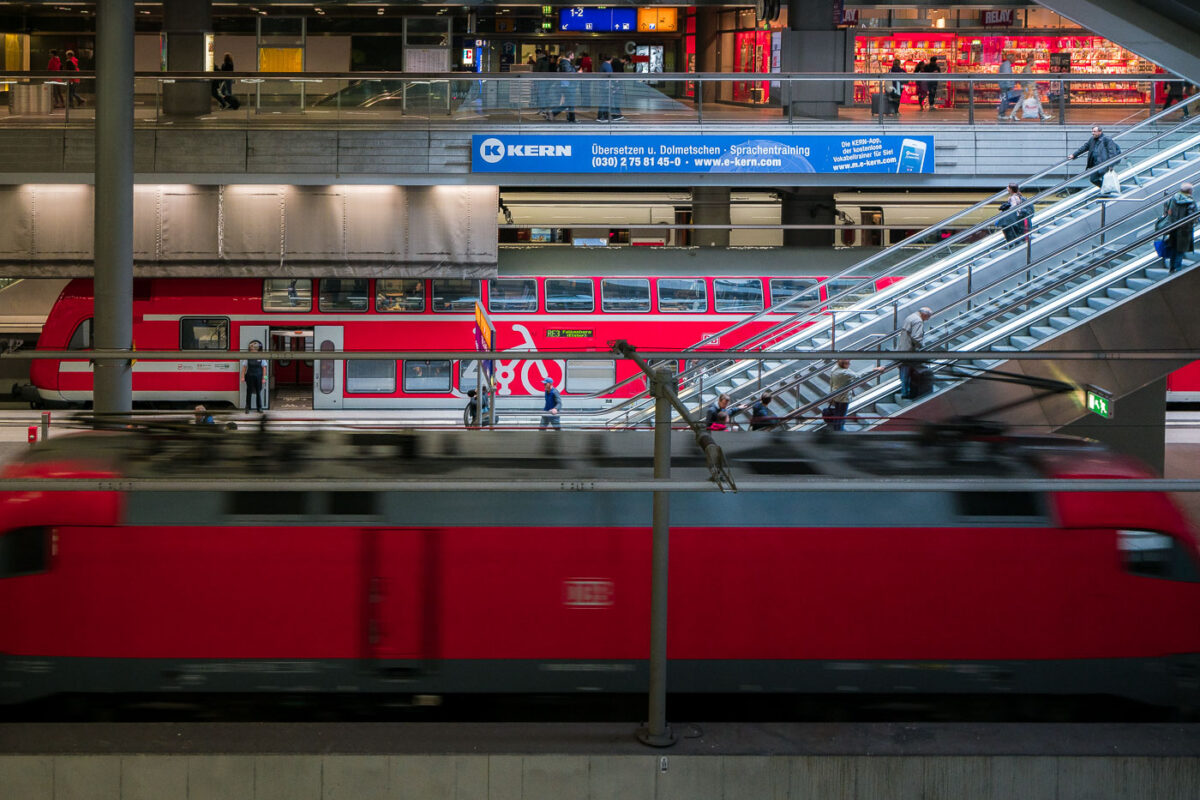
September 2017 — The Berlin Central Station in Berlin, Germany.
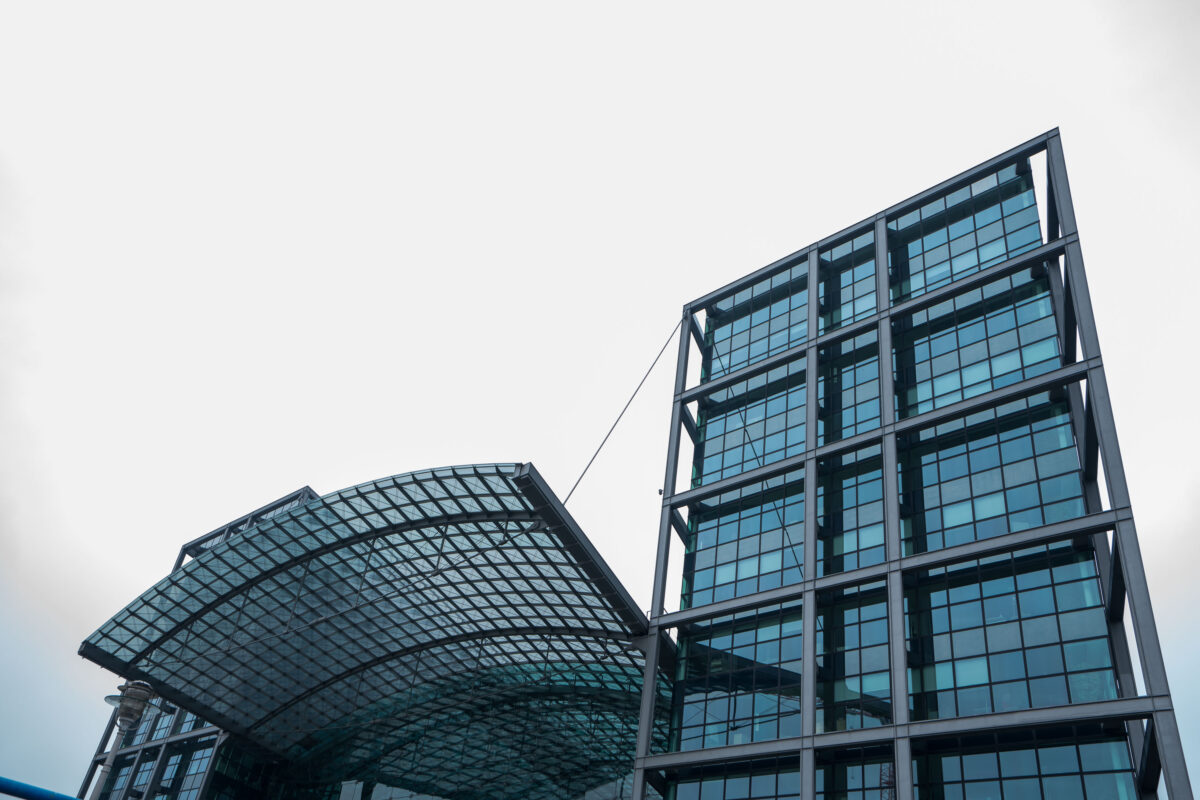
September 2017 — The Berlin Central Station in Berlin, Germany.
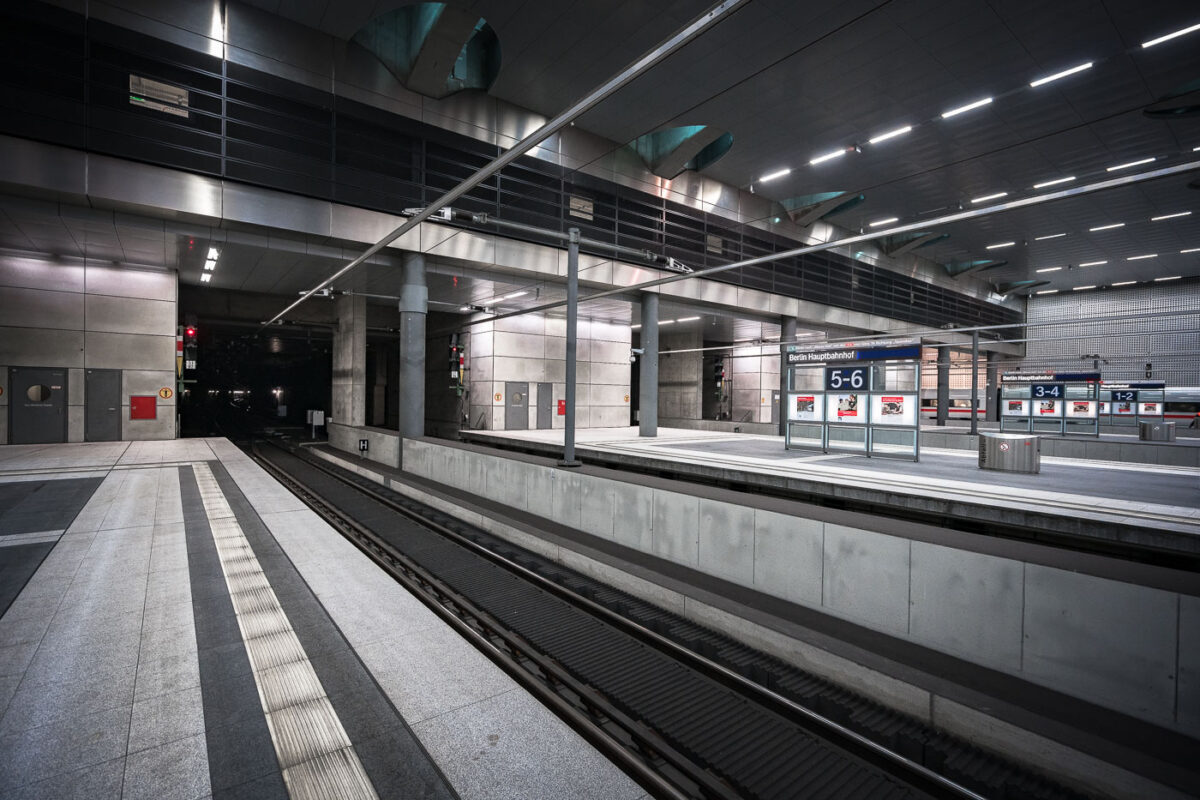
September 2017 — Berlin Hauptbahnhof’s lower-level platforms, located roughly 15 meters below street level, form part of Germany’s central north–south high-speed rail corridor. The underground section, opened in 2006 alongside the completion of the station’s glass-and-steel main hall, accommodates long-distance and regional trains running through the Tiergarten tunnel. The design emphasizes polished concrete, steel, and indirect lighting—elements typical of the Deutsche Bahn architectural style of the early 2000s. Platforms 1 through 8 serve ICE and IC services linking Berlin with cities such as Munich, Frankfurt, and Hamburg, while upper levels connect to the S-Bahn and U-Bahn networks.
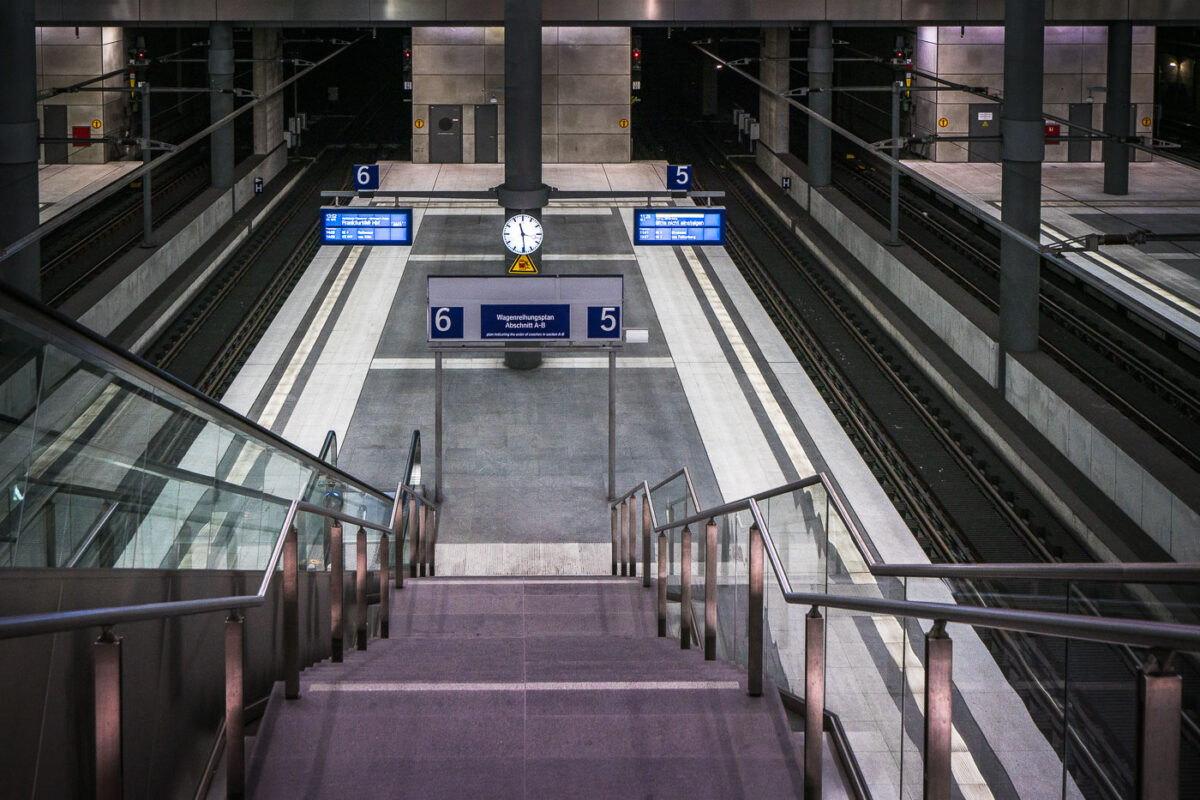
September 2017 — The lower platforms of Berlin Hauptbahnhof, serving tracks 5 and 6, form part of the deep-level north–south route opened with the station in 2006. This subterranean level, approximately 15 meters below ground, connects long-distance ICE services between Hamburg, Leipzig, and Munich through the Tiergarten Tunnel. The design reflects the precision and uniformity of modern German rail architecture—clean concrete forms, stainless steel fixtures, and bright LED signage. The symmetrical layout, glass partitions, and central clock emphasize efficiency and clarity, key elements of the Hauptbahnhof’s function as Europe’s largest crossing-station hub.
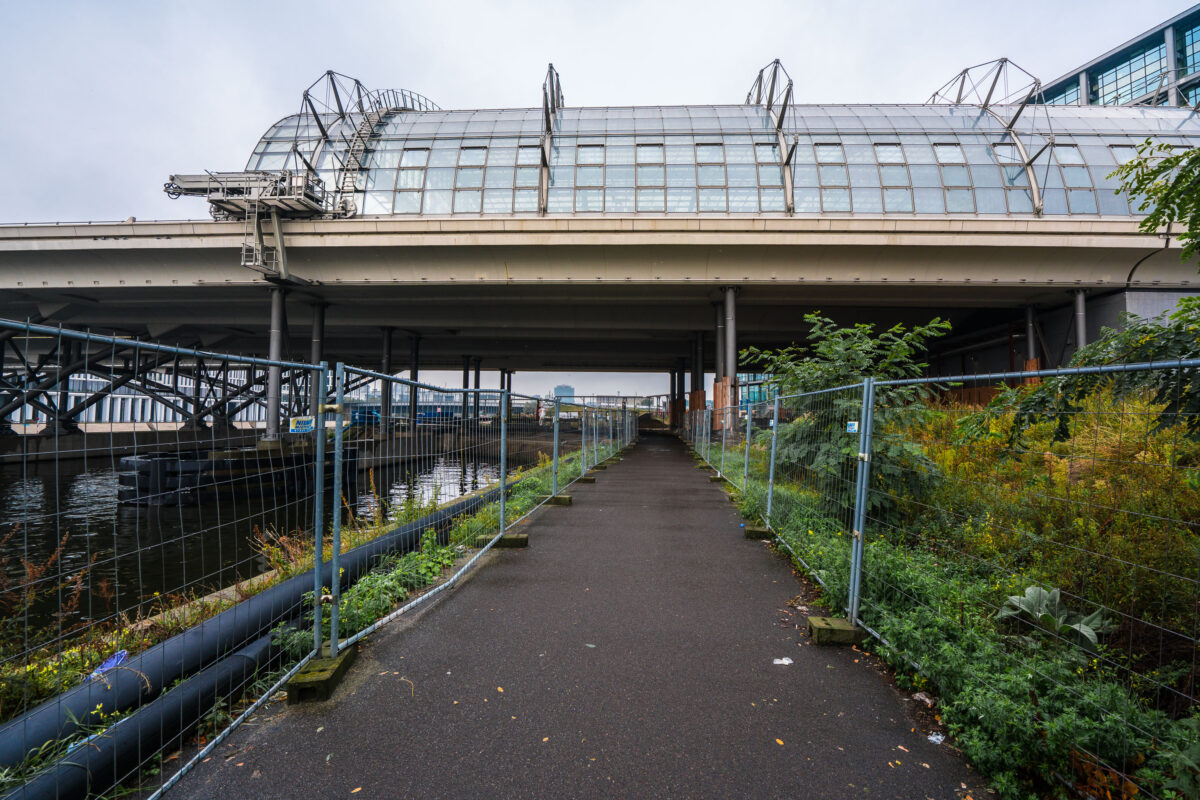
September 2017 — A narrow, fenced pathway runs beneath the towering structure of Berlin Hauptbahnhof — Germany’s largest and most complex railway station — where elevated train lines stretch above the Spree River. The gleaming glass panels and steel framework of the upper platforms contrast sharply with the damp pavement and industrial underpass below. Puddles glisten from a recent rain, while construction barriers and wild greenery frame the scene, hinting at the city’s perpetual state of transformation. Built as a symbol of reunified Berlin, the Hauptbahnhof connects north to south, east to west — a convergence of architecture, engineering, and history that mirrors Berlin’s layered identity. The stillness here beneath the trains creates a hidden perspective on one of Europe’s busiest transport hubs, where modern motion meets quiet decay.

September 2017 —
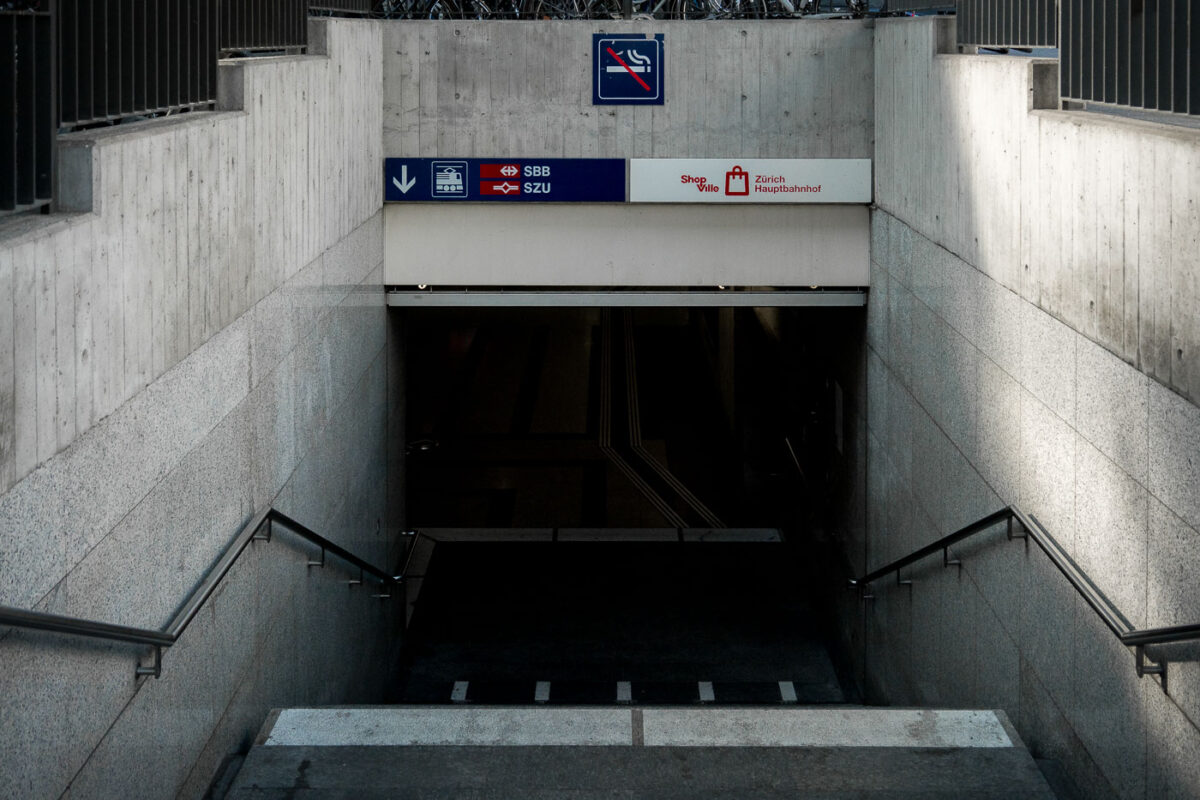
September 2017 — Entrance to the underground level of Zürich Hauptbahnhof (Zurich Central Station), one of Europe’s busiest railway hubs, serving over 400,000 passengers daily. The signage indicates access to the SBB national rail network and SZU suburban lines, along with the underground shopping complex “ShopVille.” Built into the heart of the city, Zürich HB’s design integrates modern transport infrastructure with pedestrian access and retail spaces, showcasing Switzerland’s efficiency in urban transit engineering.
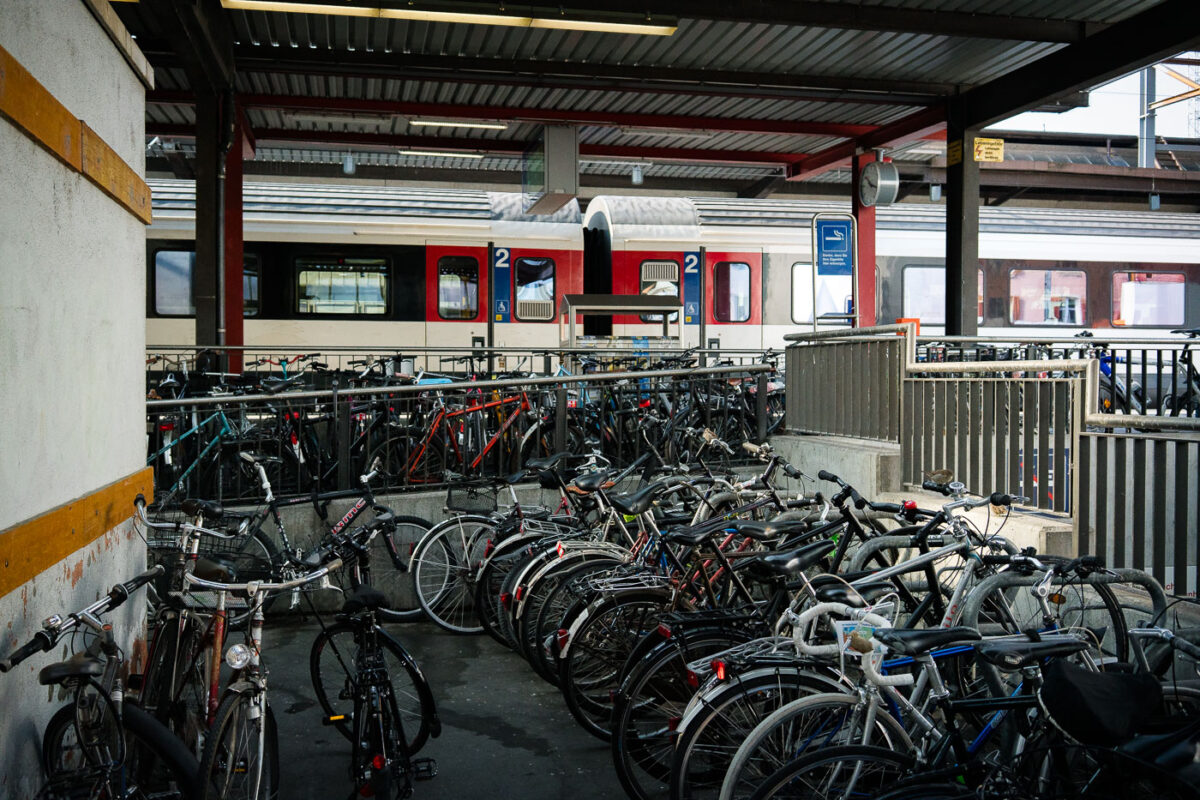
September 2017 — Rows of bicycles fill the parking area beside Zürich Hauptbahnhof, one of Europe’s busiest railway stations. The extensive bike racks serve daily commuters who combine cycling with train travel, a common practice in Swiss cities emphasizing sustainable urban mobility. Behind the bicycles, a Swiss Federal Railways (SBB) regional train waits at the platform, reflecting the integration of rail and cycling infrastructure within Zürich’s public transit system.
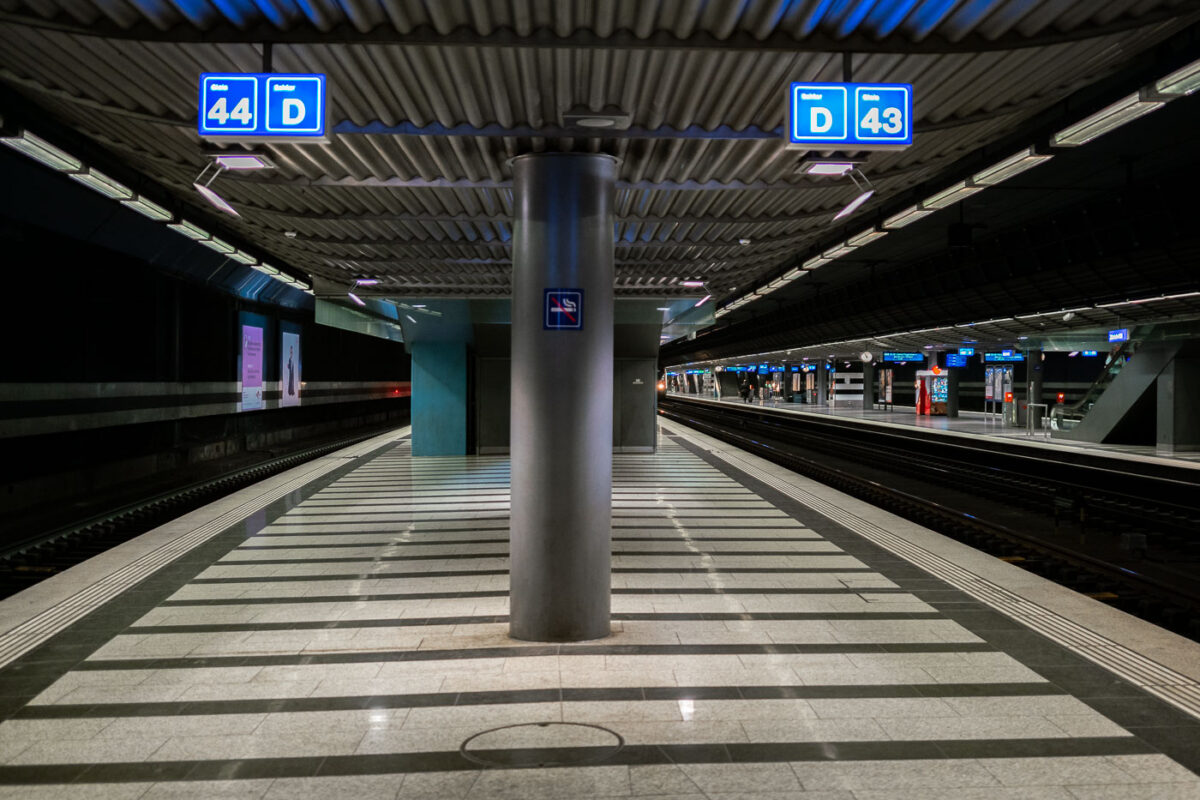
September 2017 — An underground train platform at Zürich Airport station, with tracks 43 and 44 visible. The station features striped tile flooring, overhead signage, and modern lighting. Few passengers are present, and escalators can be seen in the background leading to the upper levels.
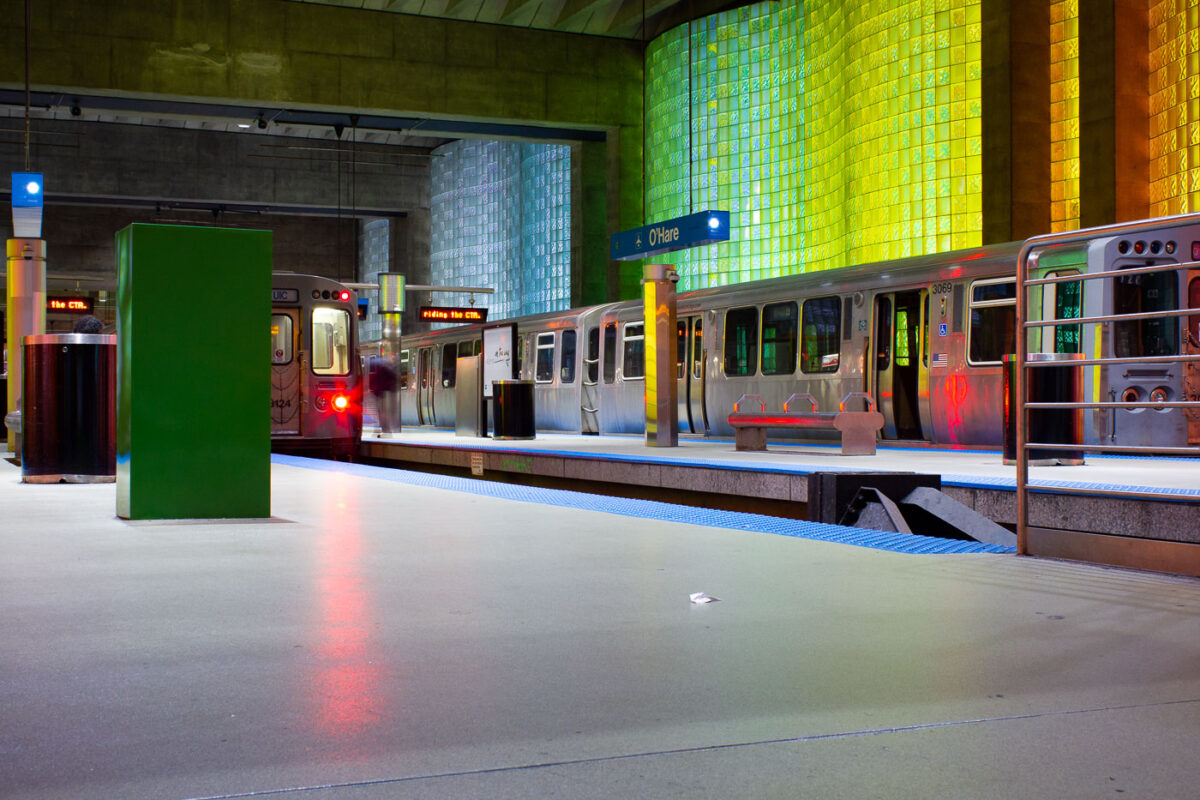
December 2012 — Trains at O'Hare International Airport in Chicago.
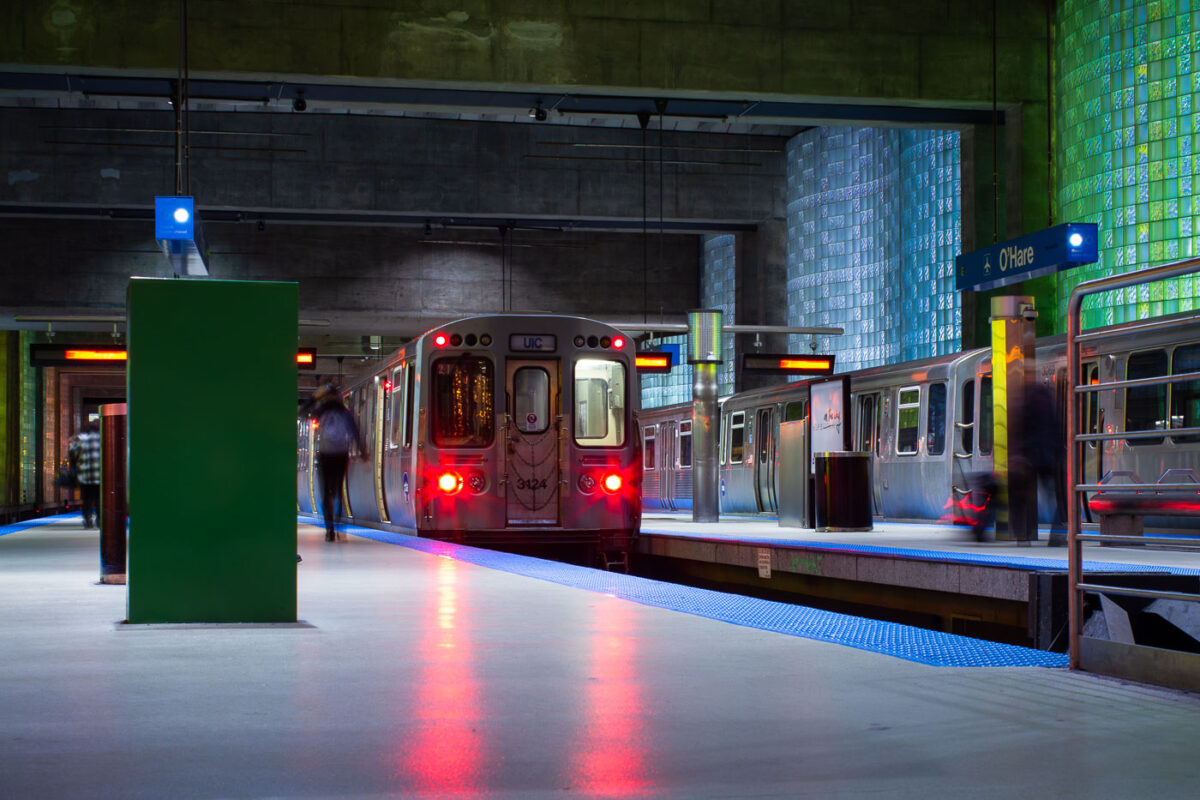
December 2012 — The O'Hare Train Station in Chicago.
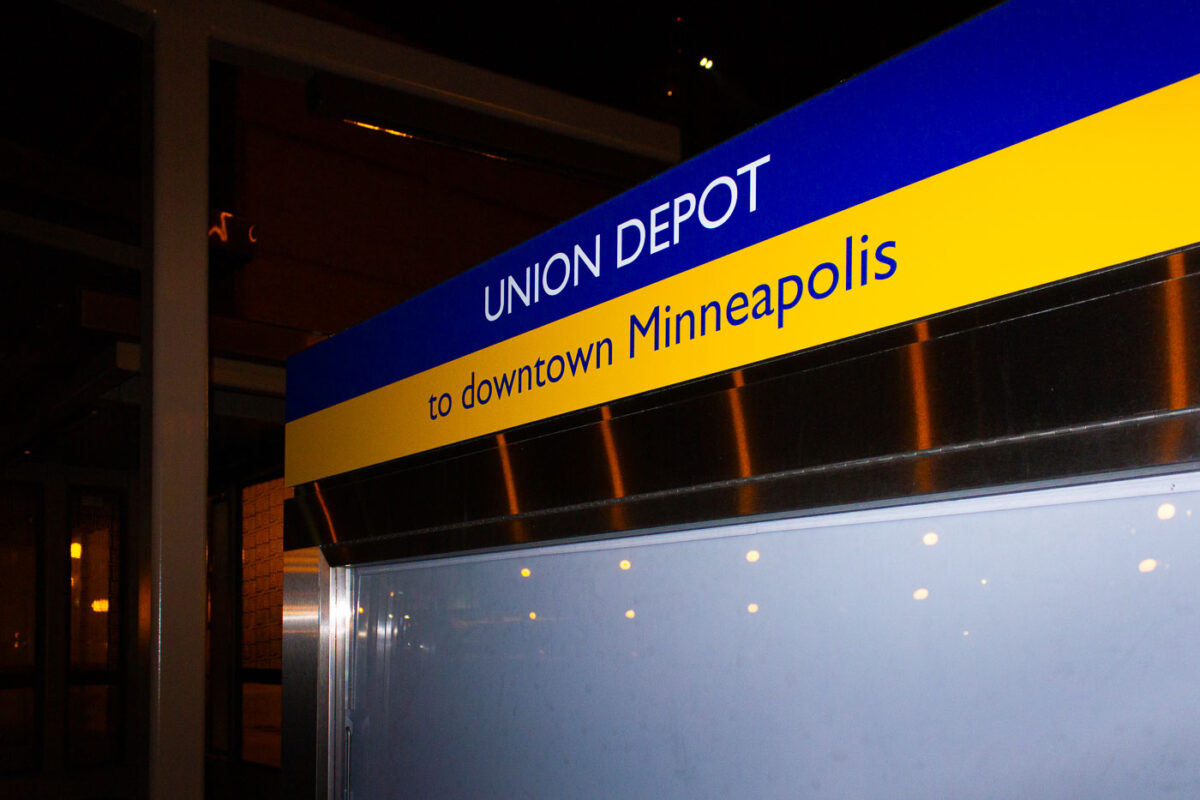
July 2012 — Union Depot station in St. Paul, Minnesota.
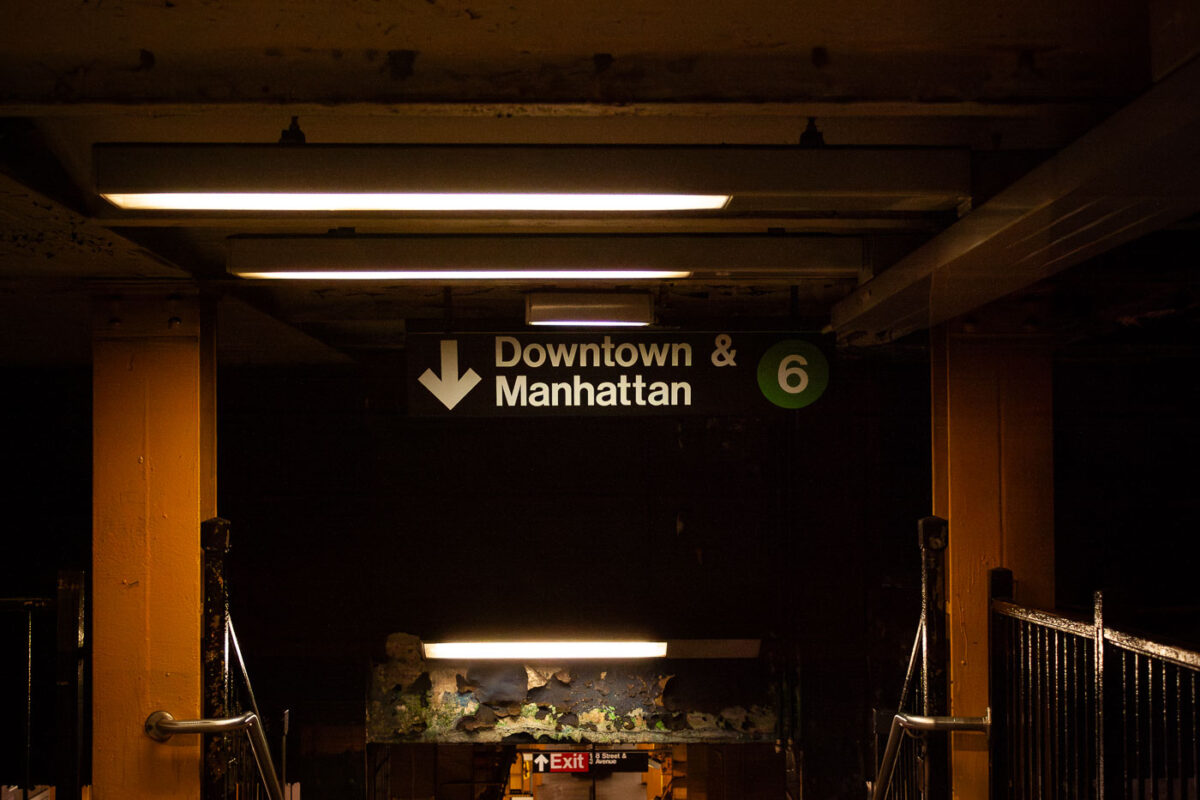
September 2008 — Dimly lit by overhead fluorescent lights, this photograph captures the entrance to the downtown-bound 6 train platform in the New York City Subway system. The black-and-white directional sign with the green circle route marker is part of the MTA’s standardized Helvetica signage, directing riders toward Manhattan. The scene’s warm tones from aged steel columns and peeling paint reveal the enduring character of New York’s century-old transit infrastructure — a utilitarian design that continues to serve millions of daily commuters. In the background, the red exit sign points toward street level, where the pulse of the city resumes above ground.
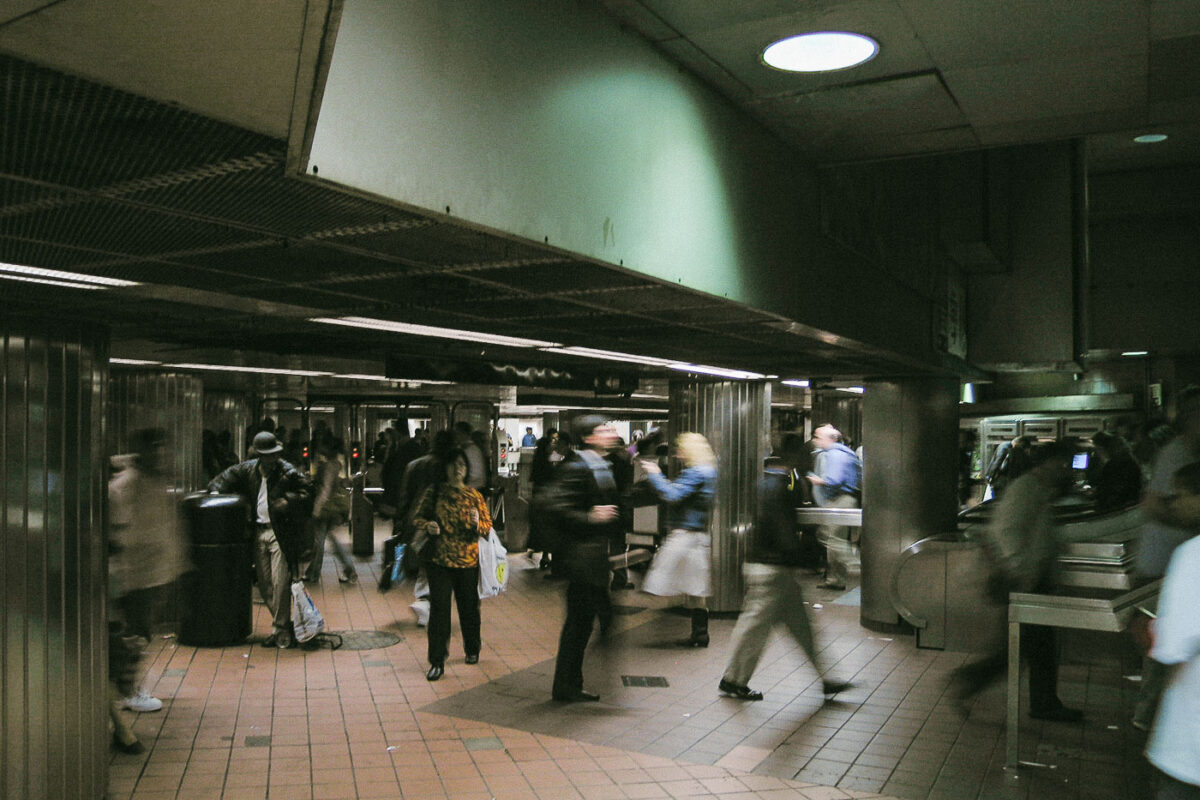
May 2005 — People walking through a New York City subway station in May 2005.