New Orleans

61 photos · 2009–2024

61 photographs tagged New Orleans, 2009–2024.
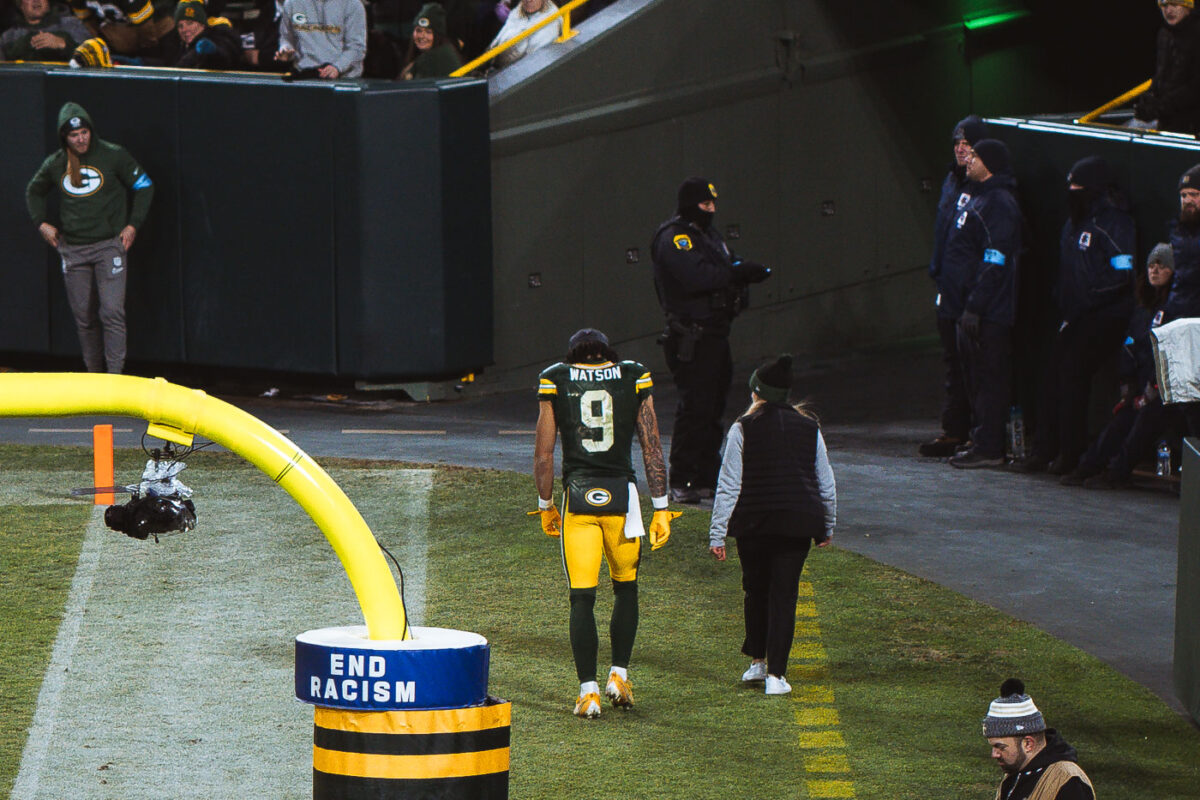
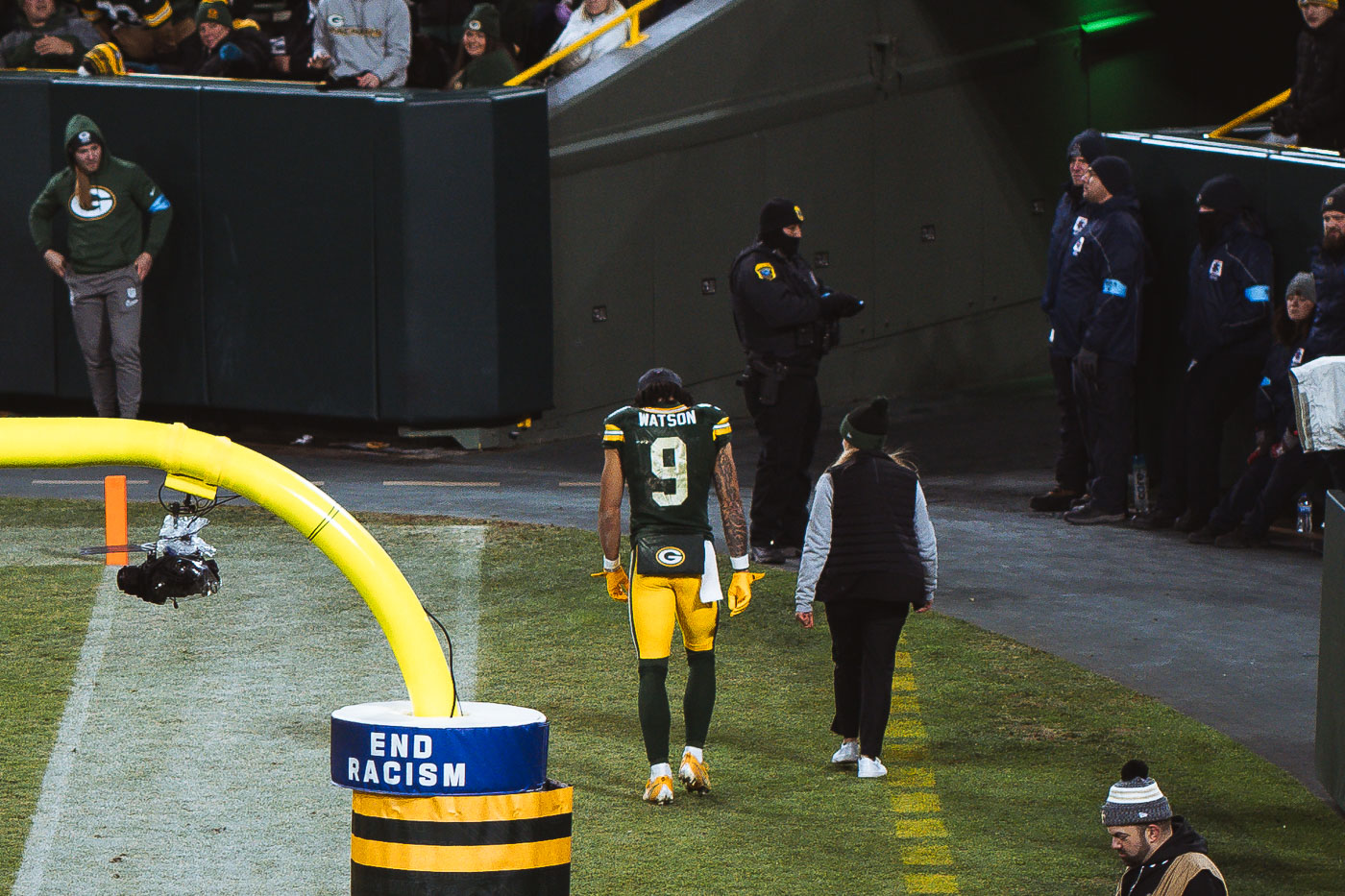
Green Bay Packers wide receiver Christian Watson walks off the field at Lambeau Field during a December 2024 game against the New
Christian Watson, a Green Bay Packers wide receiver since being drafted in the second round out of North Dakota State in 2022, plays home games at Lambeau Field, which opened in 1957 and holds just over 81,000 fans. The "END RACISM" message painted in the end zone has appeared at NFL stadiums since 2020, part of a league-wide initiative allowing messaging on game-day fields. Watson wore number 9 for Green Bay before later being traded to the Dallas Cowboys in 2025.

Christian Watson Heads to the Sideline at Lambeau Field
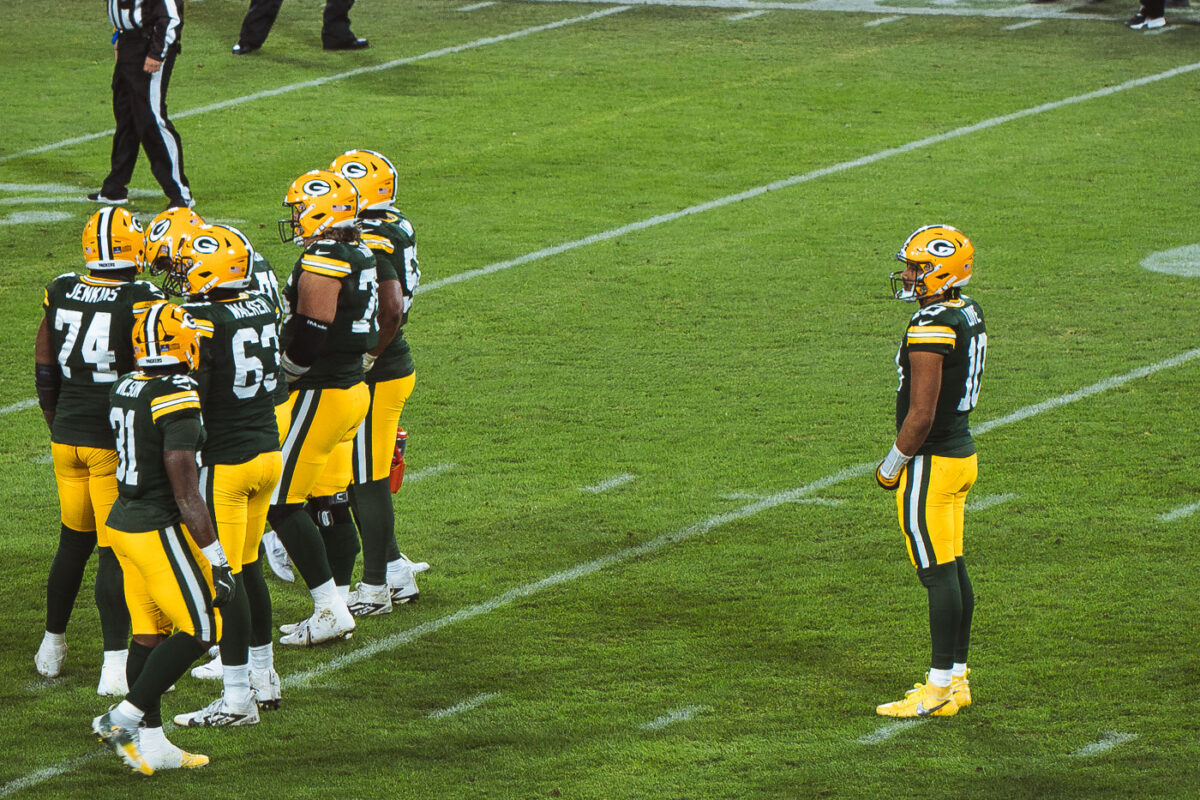
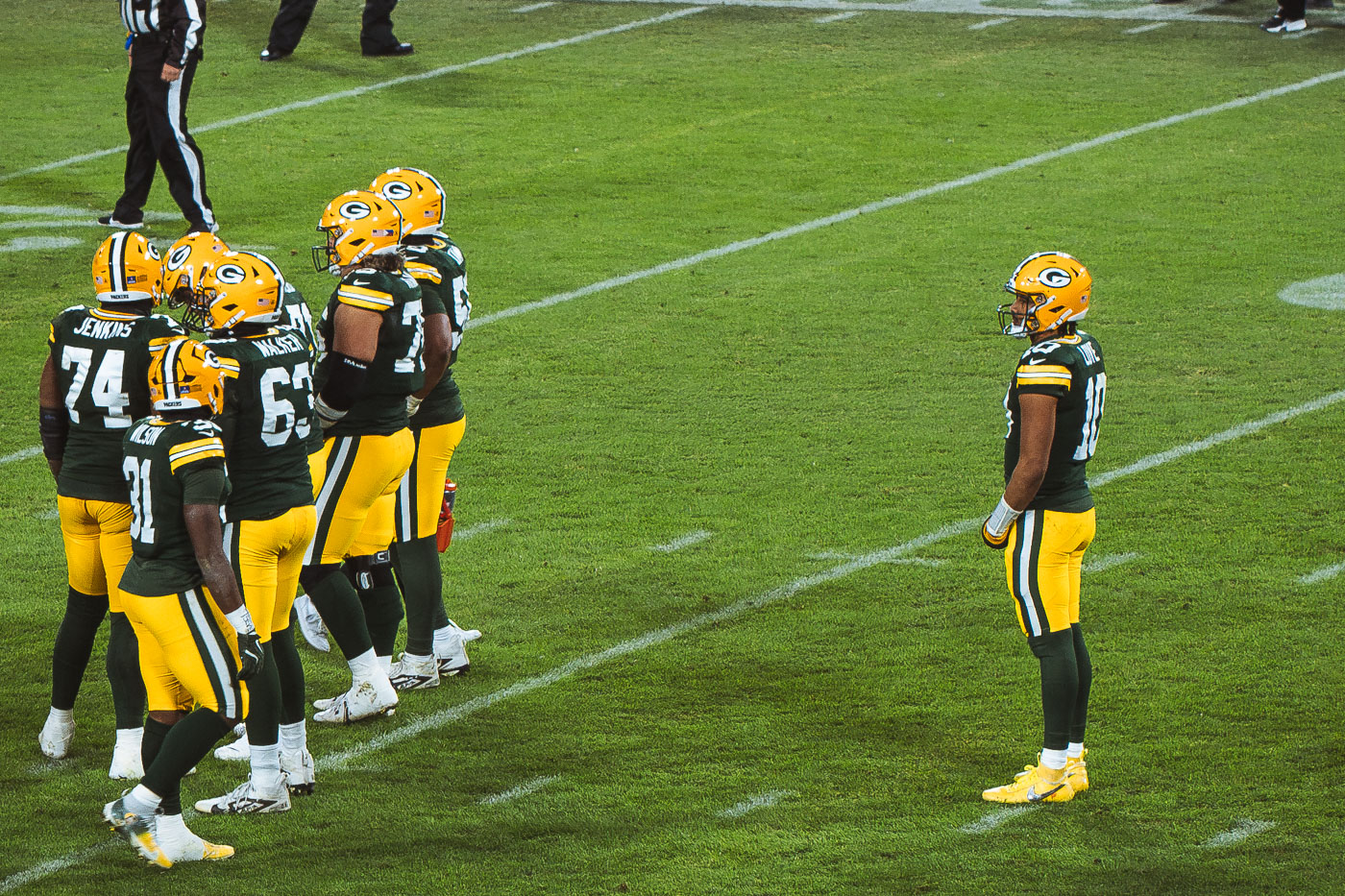
Green Bay Packers quarterback Jordan Love and offensive linemen huddle on the field during an NFL game at Lambeau Field.
Lambeau Field has hosted the Green Bay Packers since 1957, making it the oldest continually operating stadium in the NFL. Jordan Love took over as the team's starting quarterback in 2023 after four seasons as a backup to Aaron Rodgers. On December 23, 2024, Green Bay shut out the New Orleans Saints 34-0 in a game played under the stadium's outdoor lights, a rarity for the Packers' late-season home schedule. The win extended Green Bay's streak of home victories that season and kept the team in playoff contention heading into the final weeks of the regular season.

Packers Huddle Forms Around Jordan Love at Lambeau Field
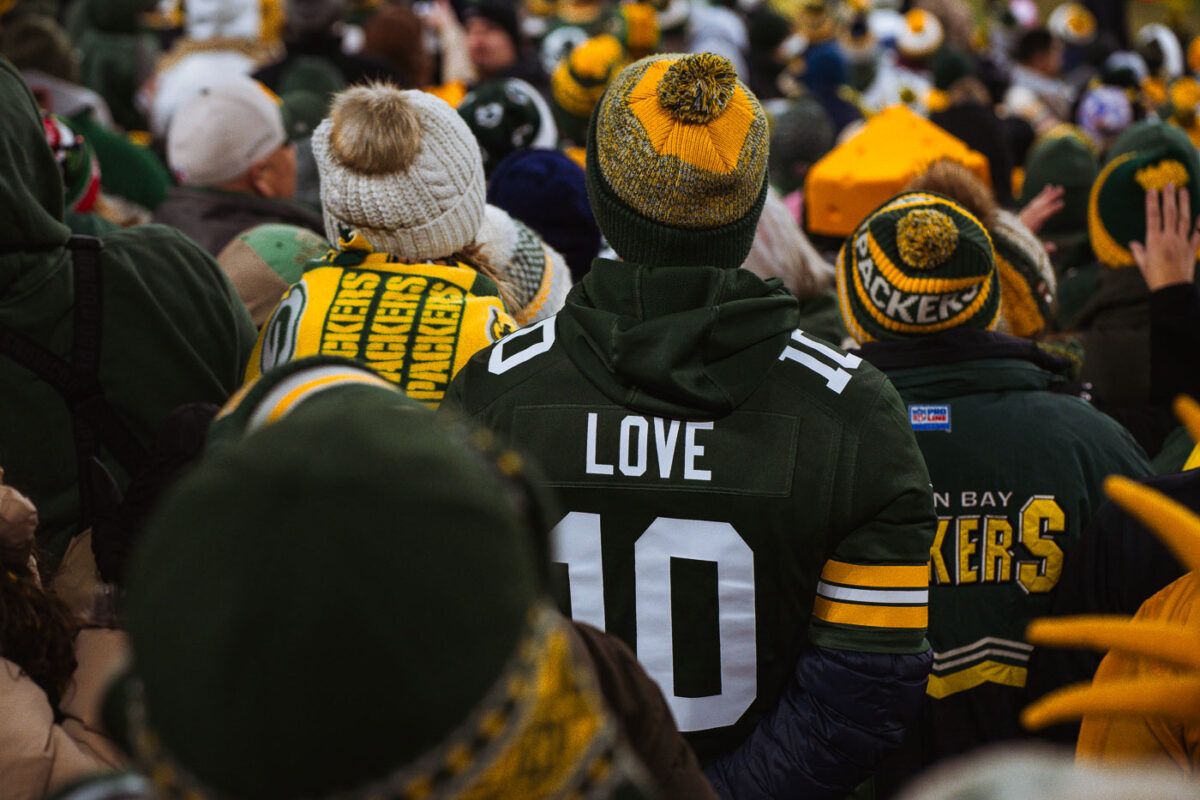
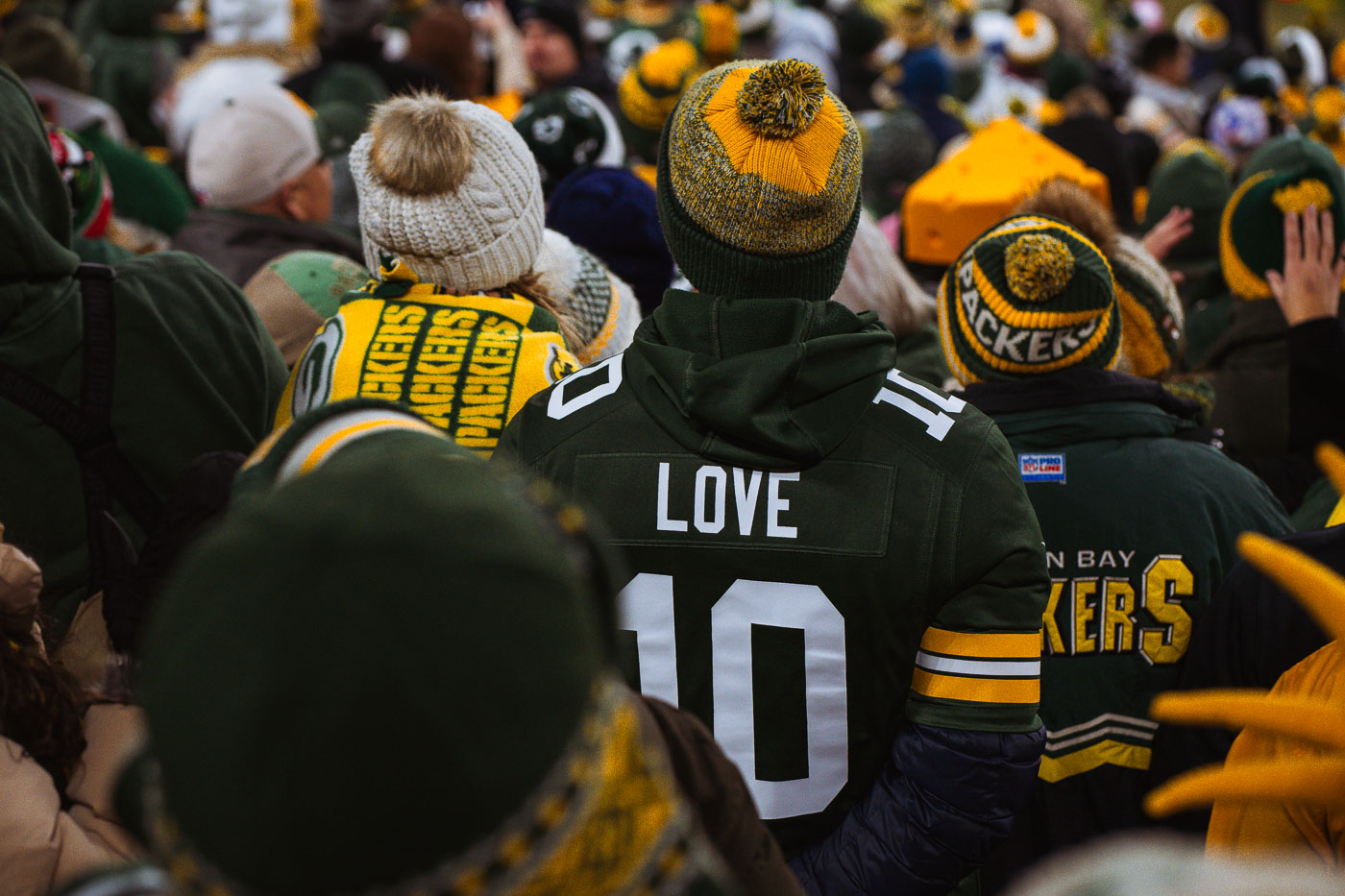
Green Bay Packers fans wearing team apparel and Jordan Love jersey gather outdoors at Lambeau Field.
Lambeau Field has served as the home of the Green Bay Packers since 1957, making it the oldest continuously operating stadium in the NFL. The venue holds roughly 81,441 fans, nearly all of whom are shareholders in the publicly owned franchise, one of the last of its kind in American professional sports. Jordan Love took over as the Packers' starting quarterback in 2023 and wears No. 10, the number visible on jerseys throughout the stands. This game, played December 23, 2024, pitted the Packers against the New Orleans Saints in a regular-season NFC matchup.

A Packers Fan’s Jordan Love Jersey Amid the Lambeau Field Crowd
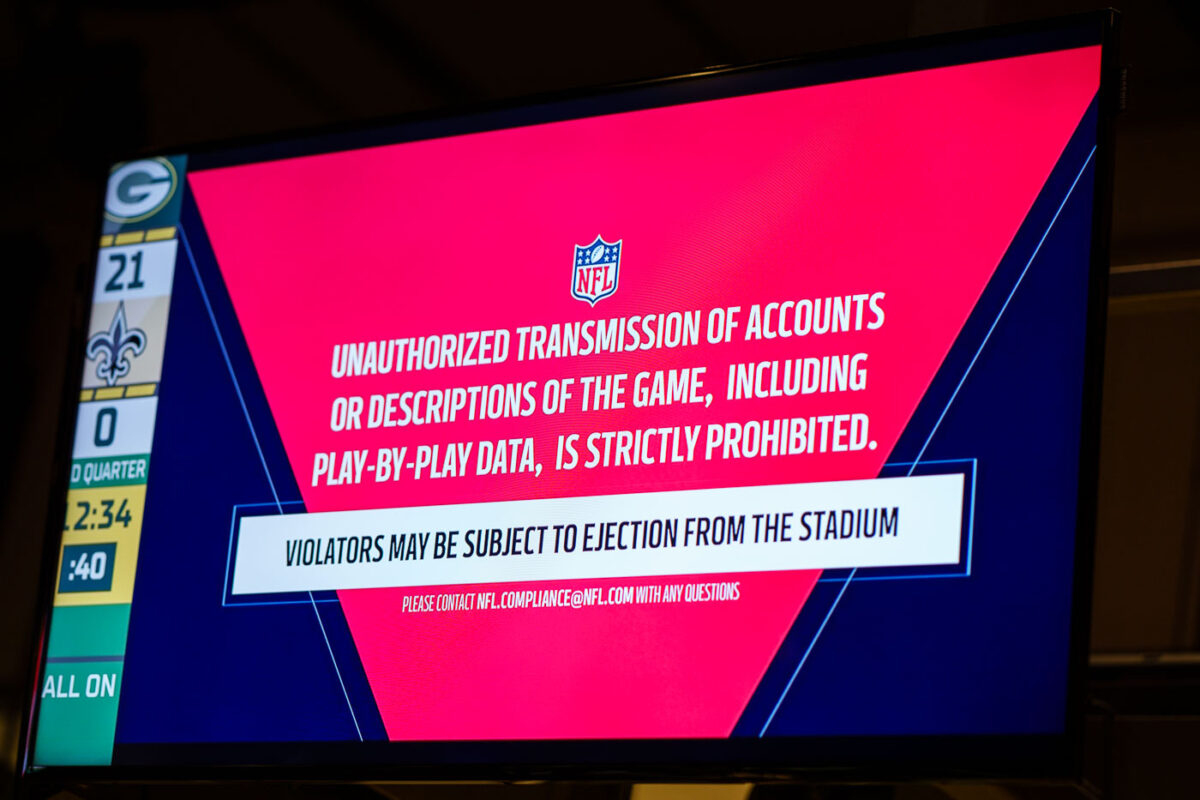
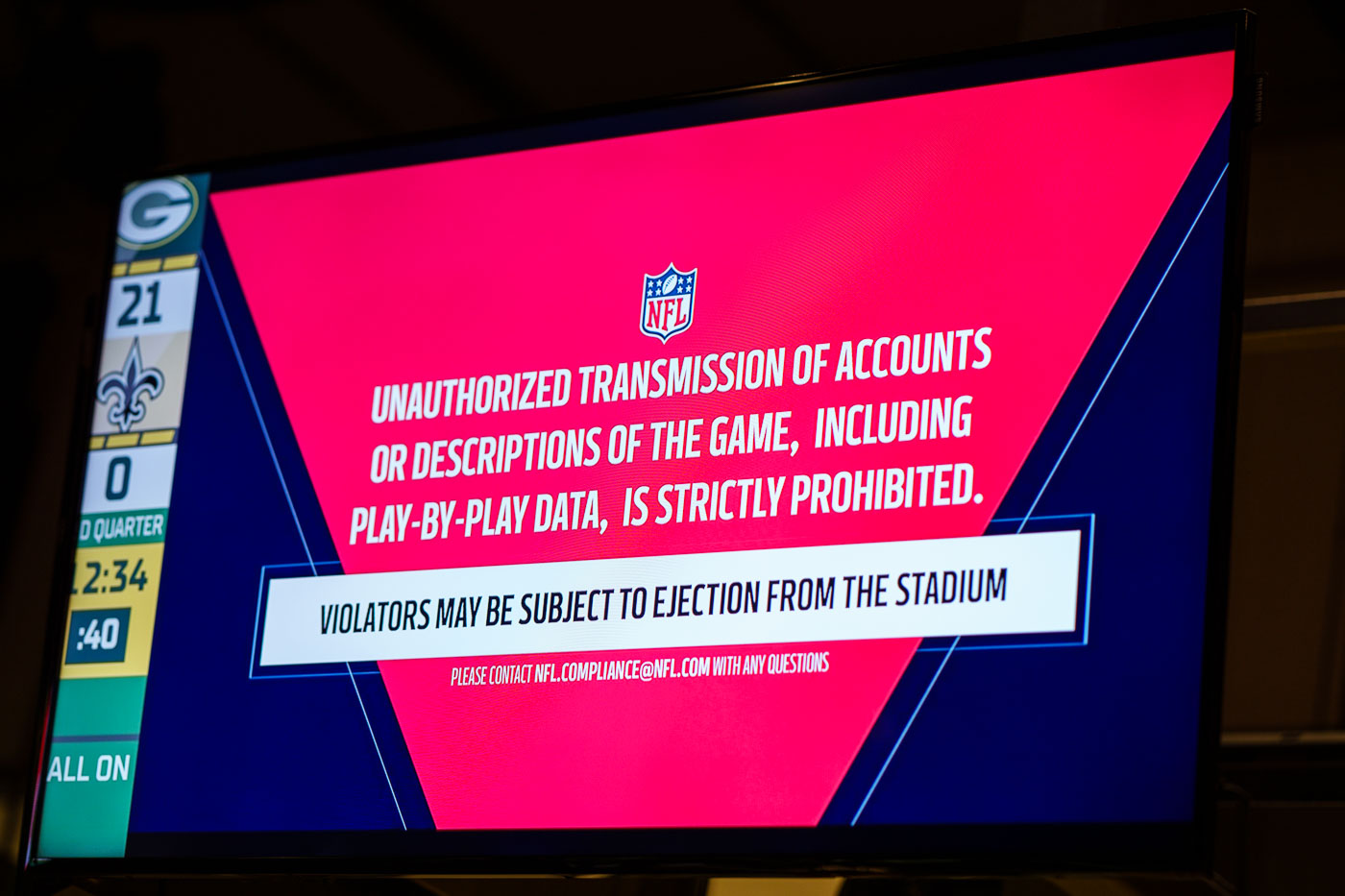
NFL unauthorized transmission warning displayed on stadium screen at Lambeau Field during Green Bay Packers game.
Lambeau Field's video board carries a standard NFL warning during Green Bay Packers home games, cautioning against unauthorized transmission of the broadcast, including play-by-play accounts of the action. The notice states that violators may be ejected from the stadium and directs questions to the league's compliance office, a standard condition tied to the NFL's media rights enforcement. The accompanying game strip shows a Packers-Saints matchup from the 2024 season.

NFL Broadcast Warning Screen at Lambeau Field
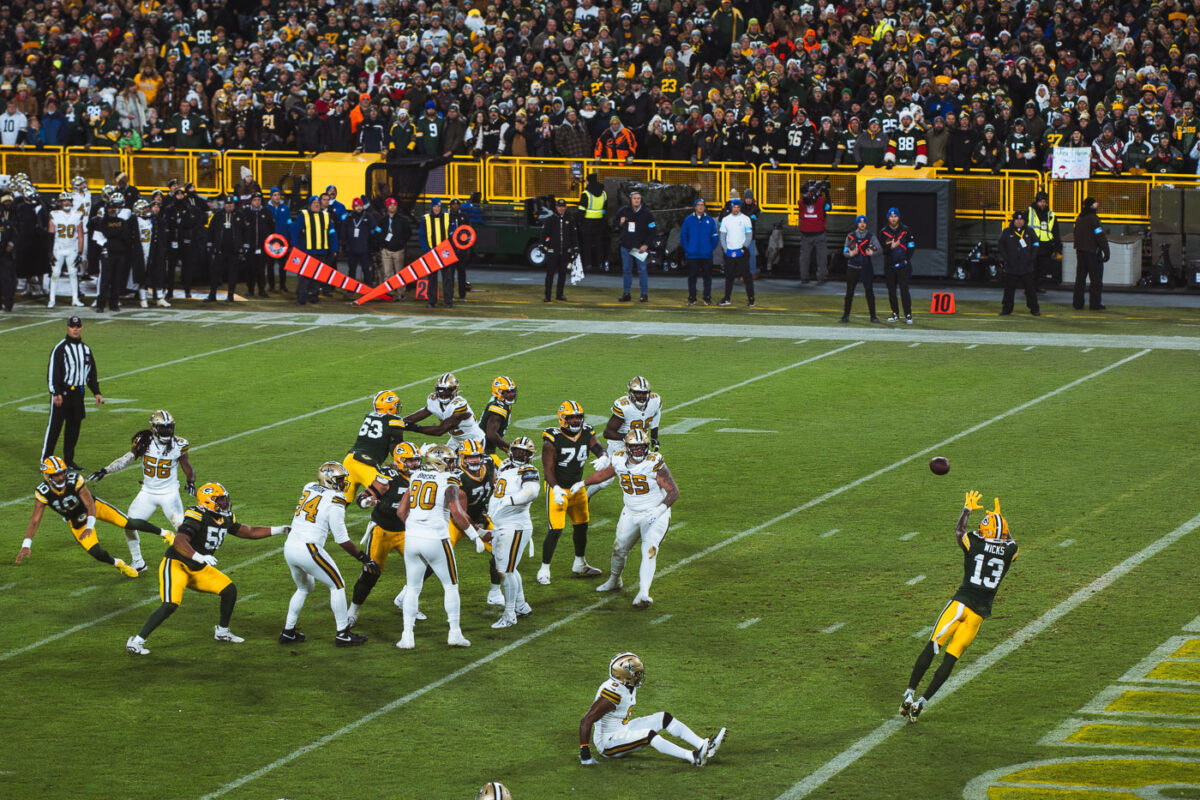
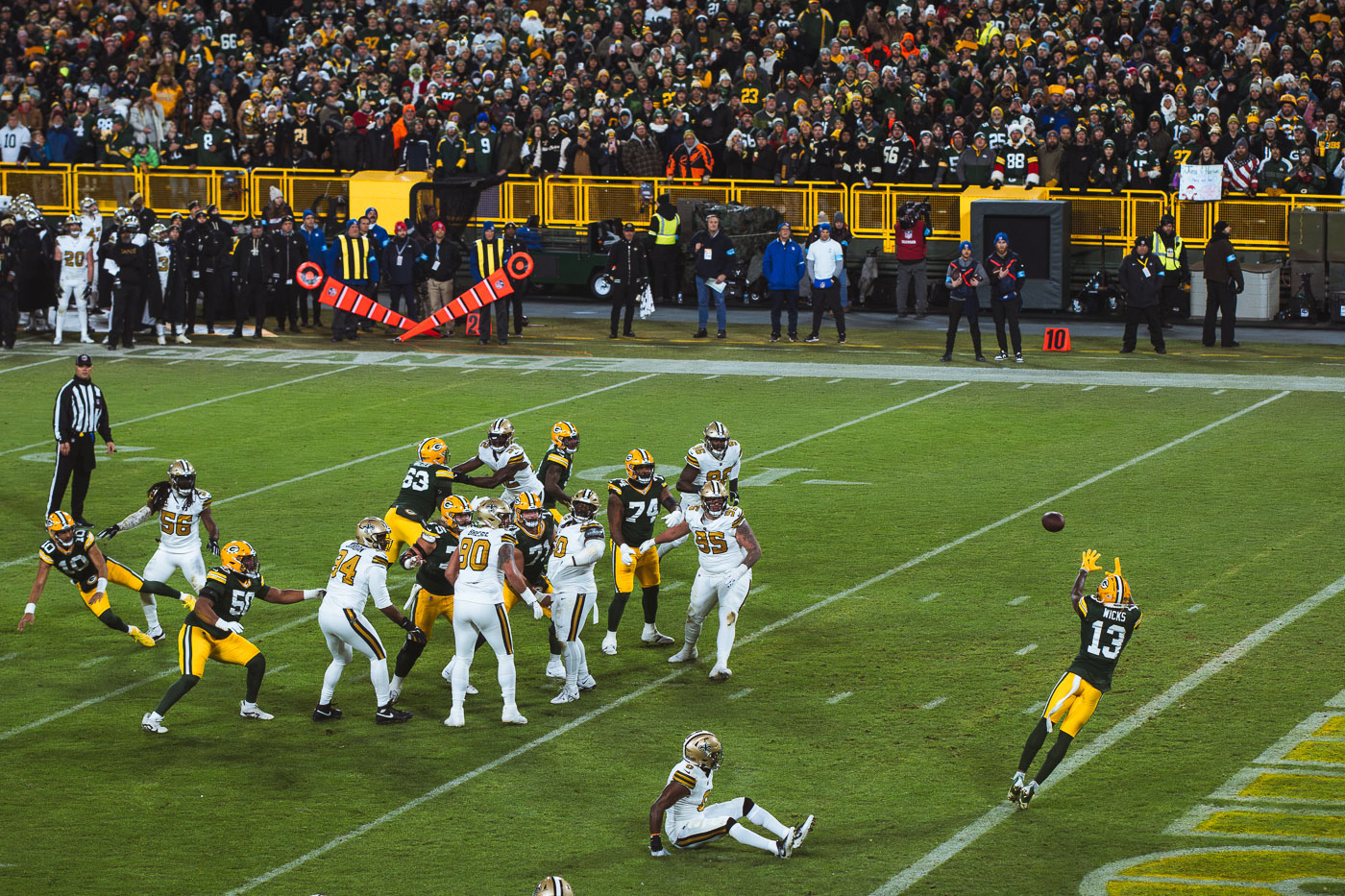
Green Bay Packers player catches touchdown pass during NFL game against New Orleans Saints at Lambeau Field.
Dontayvion Wicks caught a touchdown pass for the Green Bay Packers during a 34-0 win over the New Orleans Saints at Lambeau Field on December 23, 2024. Wicks, a fifth-round pick out of Virginia in 2023, has been part of Green Bay's receiving corps alongside quarterback Jordan Love. Lambeau Field, opened in 1957, holds just over 81,000 fans and is the oldest continuously operating stadium in the NFL. The Packers have played there since the stadium's construction, making it one of the league's most enduring home venues.

Dontayvion Wicks Hauls In a Touchdown Pass at Lambeau Field
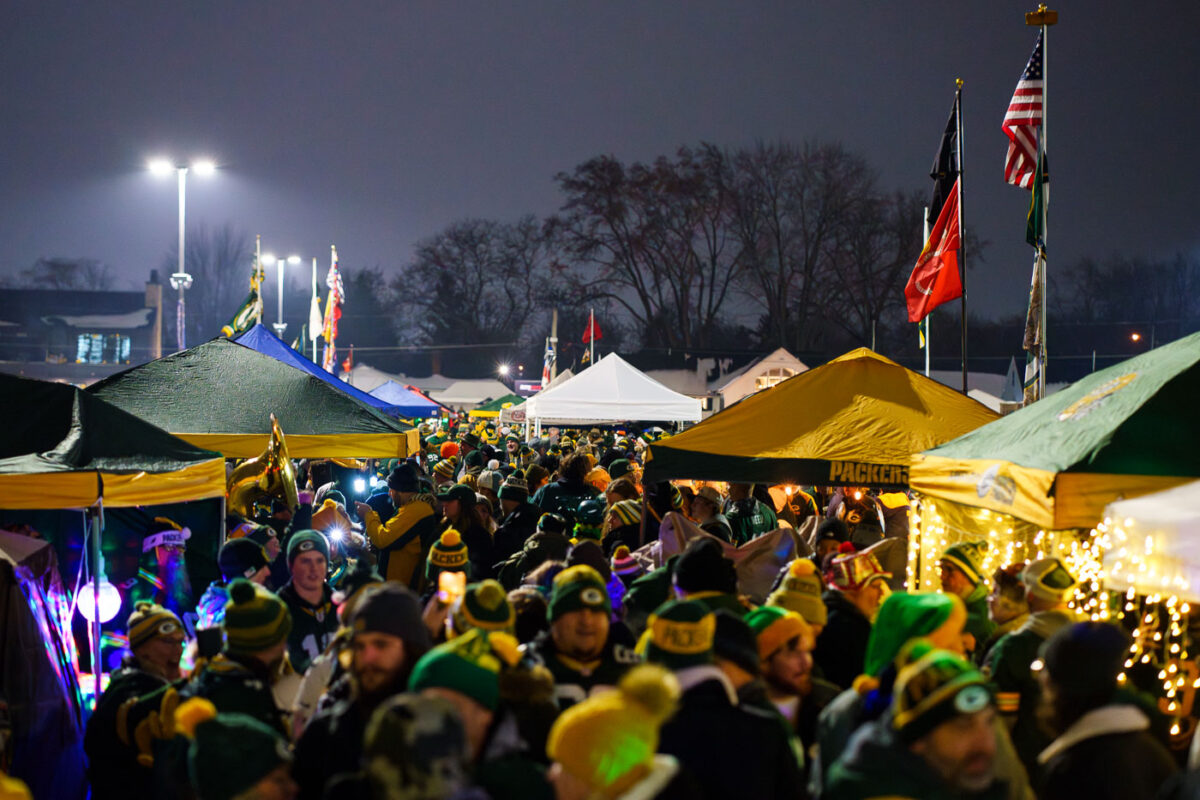
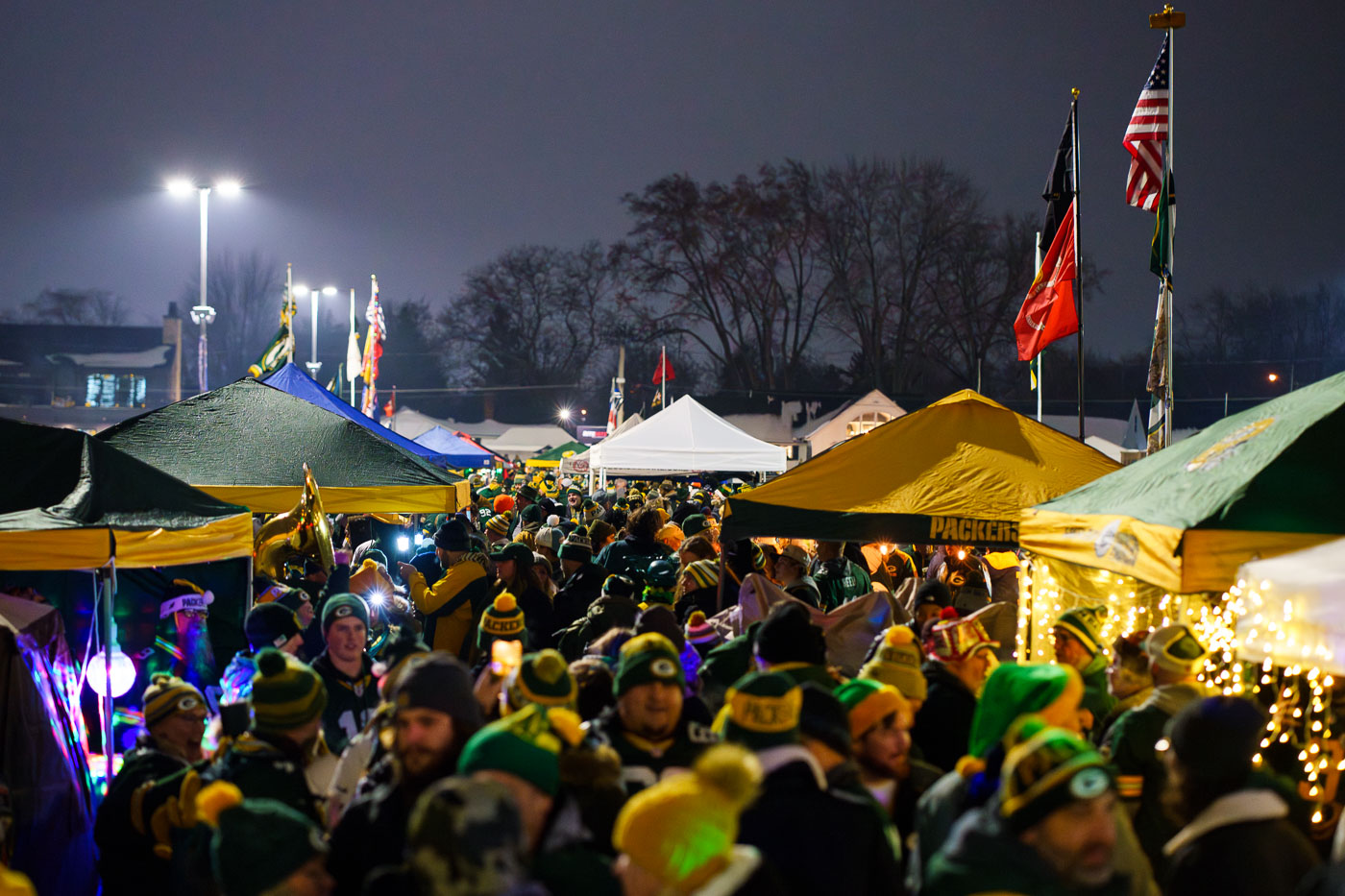
Fans gather in yellow and green team colors at a nighttime tailgate outside Lambeau Field in Green Bay, Wisconsin.
Lambeau Field has hosted Green Bay Packers home games since 1957, and the parking lots surrounding it fill with tailgaters on game days regardless of the weather. The stadium seats more than 81,000 and sits at 1265 Lombardi Avenue, named for former head coach Vince Lombardi. This tailgate preceded a December 23, 2024 matchup in which the Packers shut out the New Orleans Saints 34-0. Green and gold gear, popcorn stands, and makeshift bars set up out of trailers and tents are a fixture of the pregame ritual here, drawing fans hours before kickoff.

Packers Fans Tailgate Before Night Game at Lambeau Field
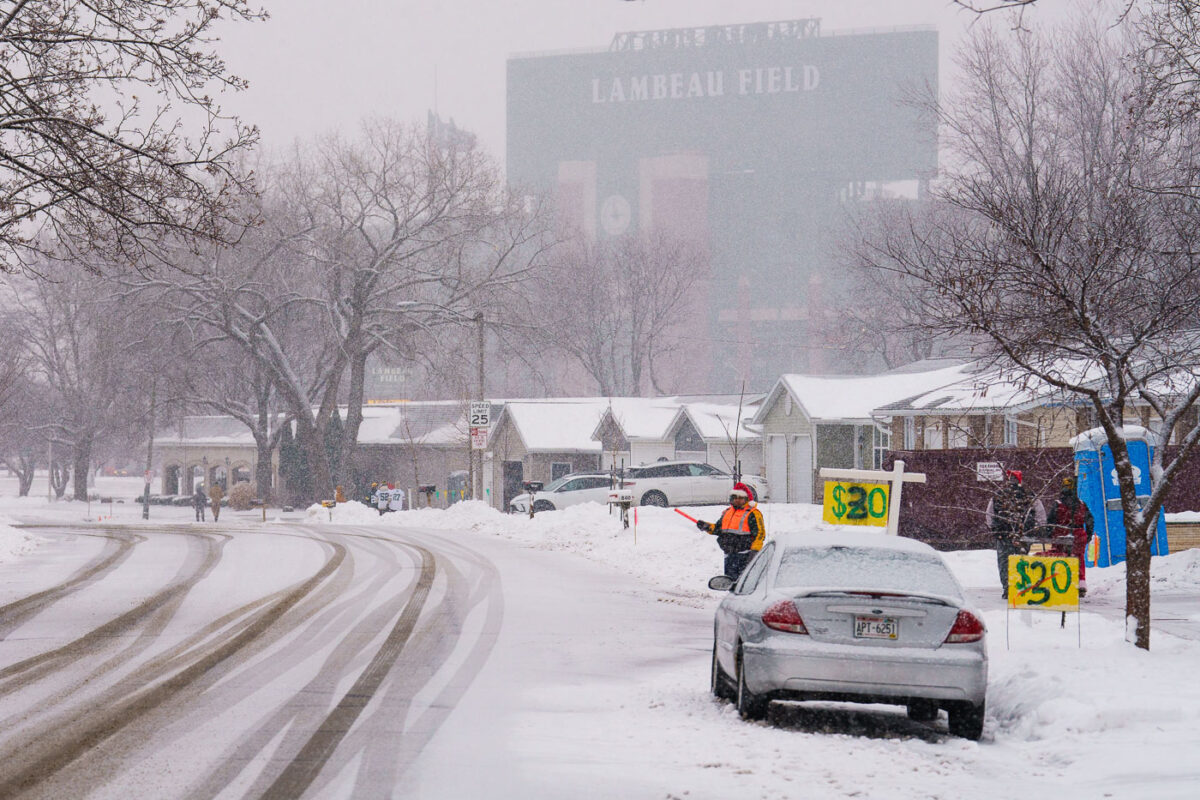
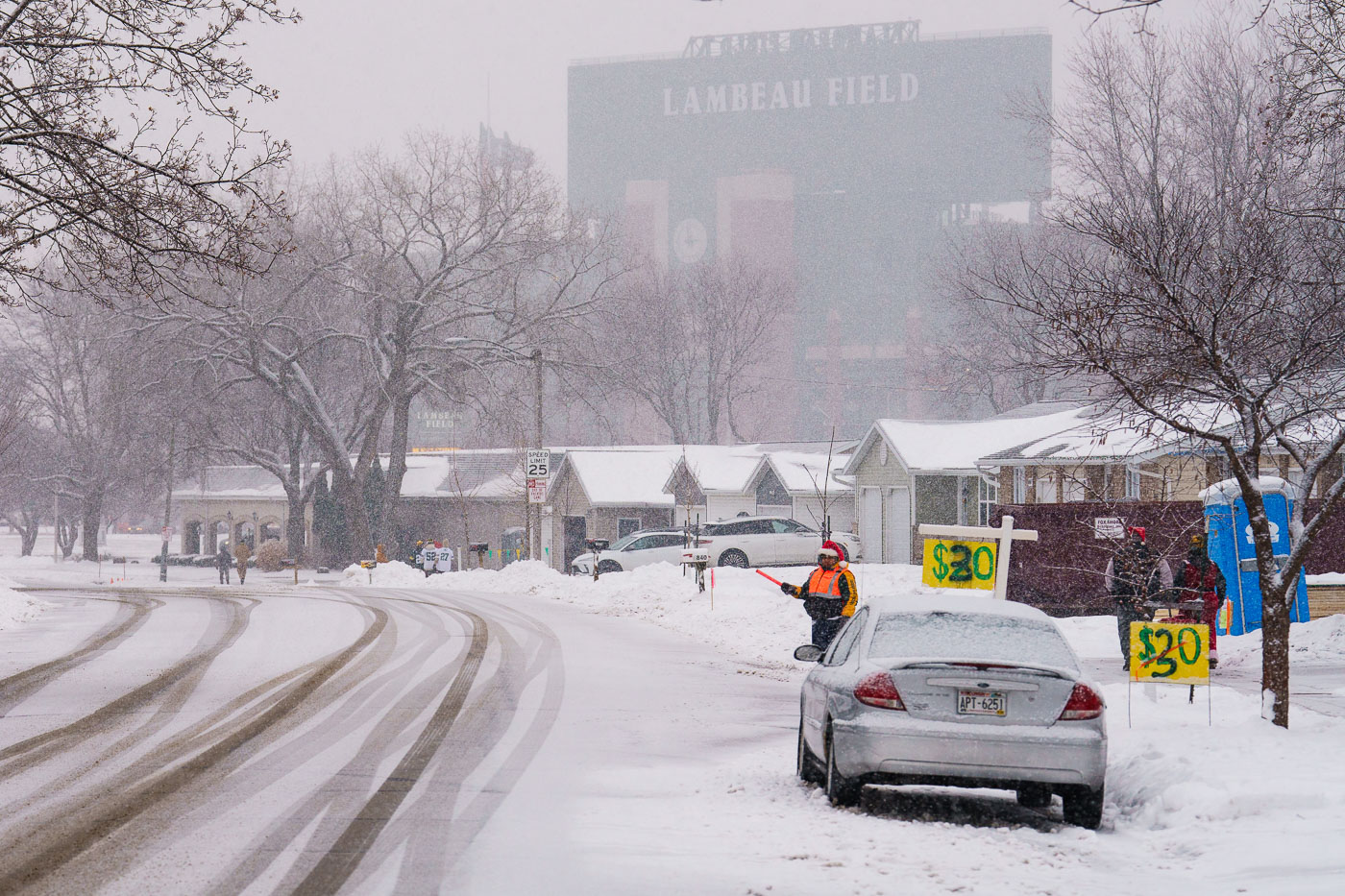
Person in safety vest directs cars to residential driveway parking for twenty dollars near Lambeau Field in snowy Green Bay.
Homeowners near Lambeau Field rent out their driveways for gameday parking, a long-standing practice in the neighborhoods surrounding the stadium. Rates typically run $20 to $40 depending on proximity to the gates and demand for that day's matchup. The stadium, home to the Green Bay Packers since 1957, holds over 81,000 fans and sits along Lombardi Avenue in Green Bay, Wisconsin. On snowy game days, city crews and private lot owners alike depend on volunteers or paid staff to direct traffic through the narrow residential streets that ring the property.

Snowy Driveway Parking Near Lambeau Field
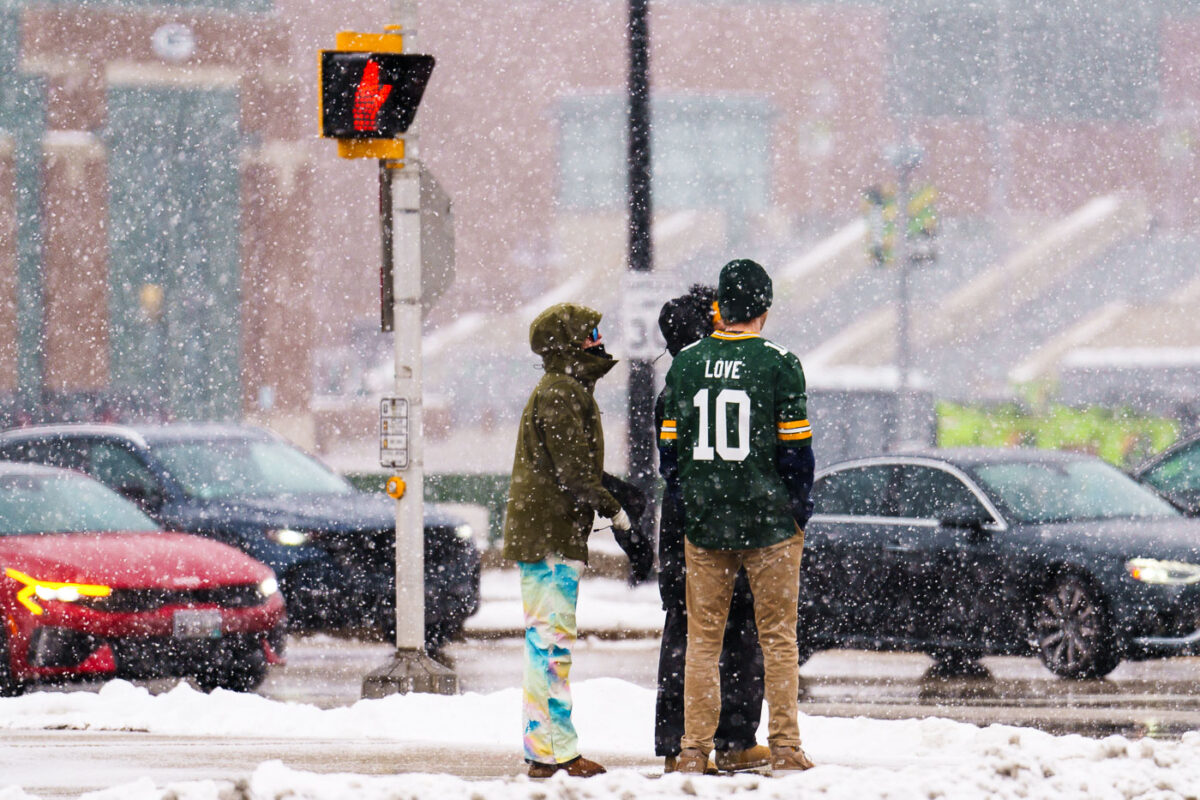
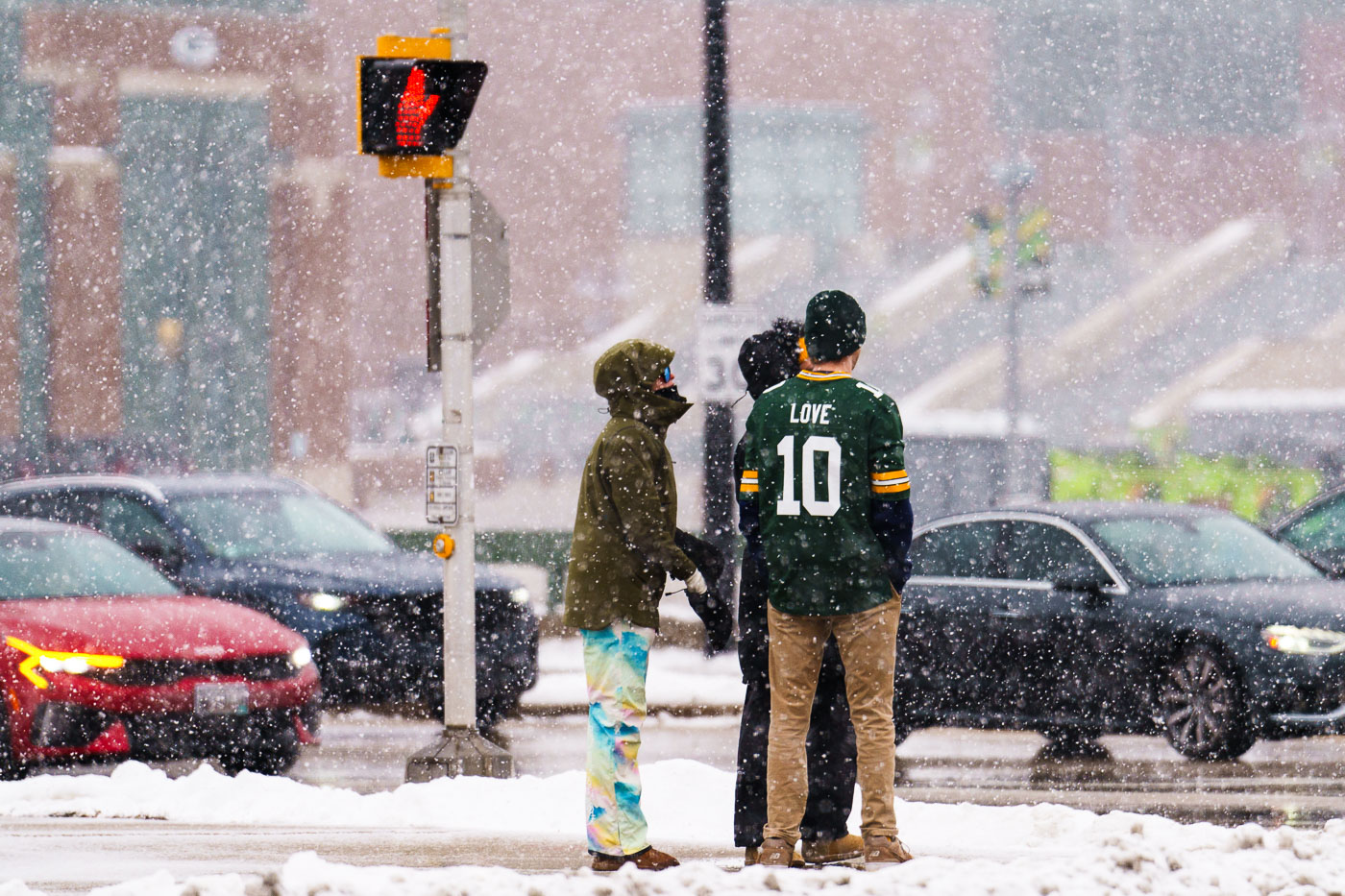
Fan wearing Jordan Love jersey stands on snowy Lombardi Avenue outside Lambeau Field in Green Bay during December snowstorm.
Lombardi Avenue runs along the west side of Lambeau Field, connecting the stadium's main gates to the parking lots and the Don Hutson Center. Fans walking it on December 23, 2024, were heading to a game against the New Orleans Saints, which Green Bay won 34-0. The street is named for Vince Lombardi, who coached the Packers to five NFL championships between 1959 and 1967 and whose name has been attached to the Super Bowl trophy since 1970.

Crossing Lombardi Avenue Before a Packers Snow Game
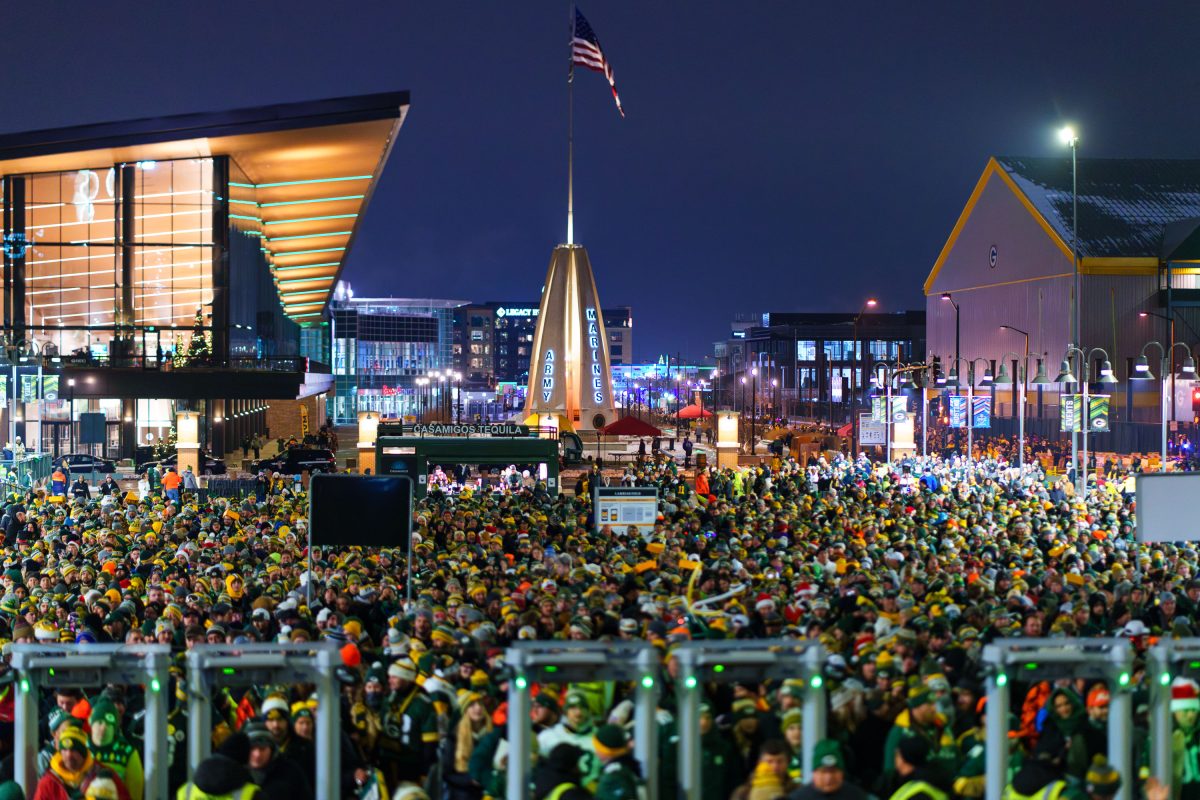
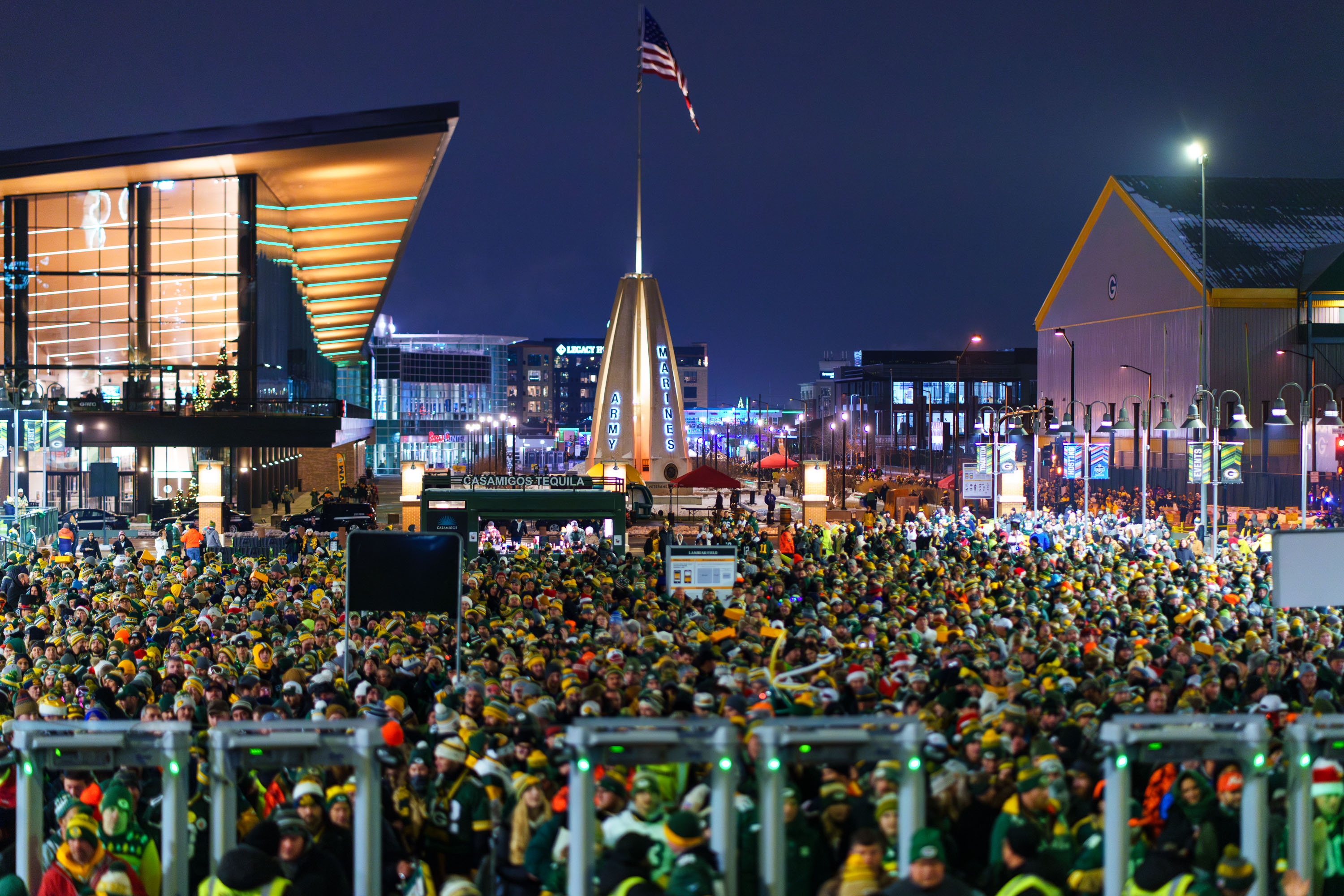
Thousands of fans gather at Lambeau Field in Green Bay for a Packers game against the New Orleans Saints.
Lambeau Field has been home to the Green Bay Packers since 1957, making it the oldest continuously operating stadium in the NFL. Its official capacity is 81,441, following a series of expansions that included the 2003 addition of the Titletown atrium on the stadium's south end. The Packers hosted the New Orleans Saints here on December 23, 2024, winning 34-0. The stadium takes its name from Curly Lambeau, who co-founded the franchise in 1919 and served as its head coach for 29 seasons.

Crowds Pass Through Security Gates at Lambeau Field
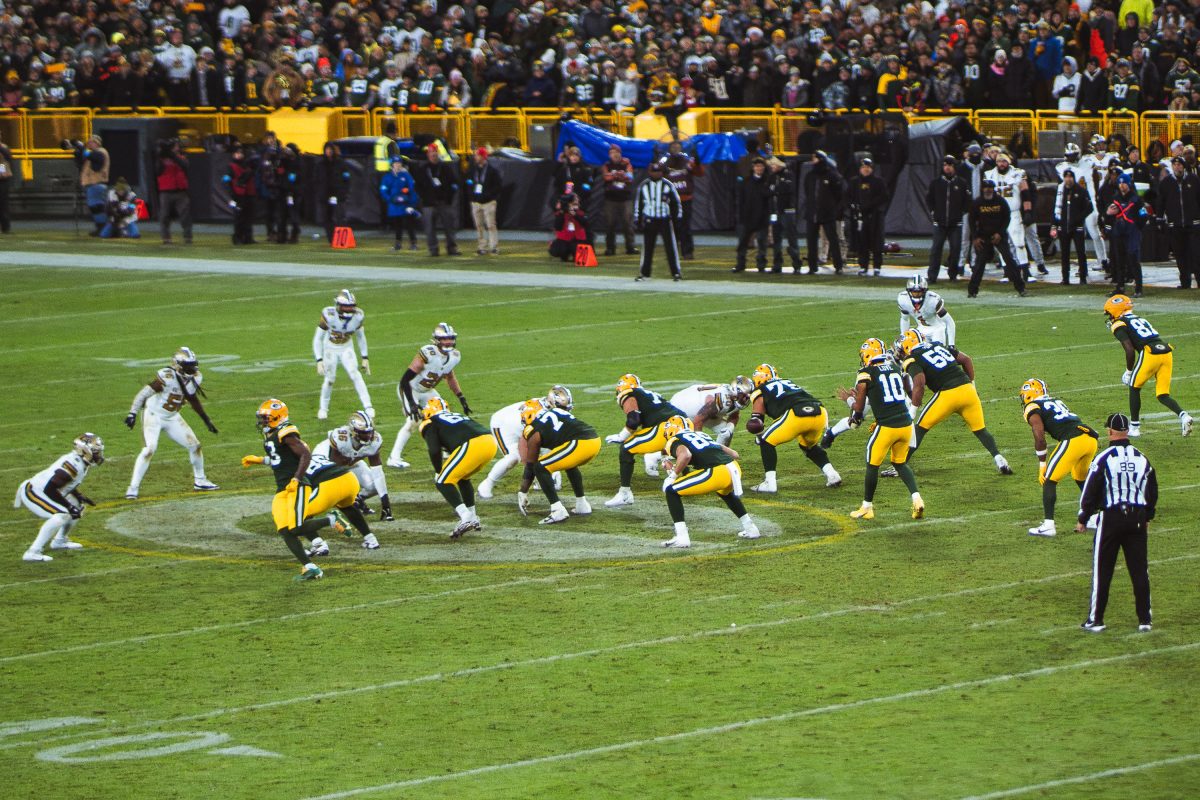
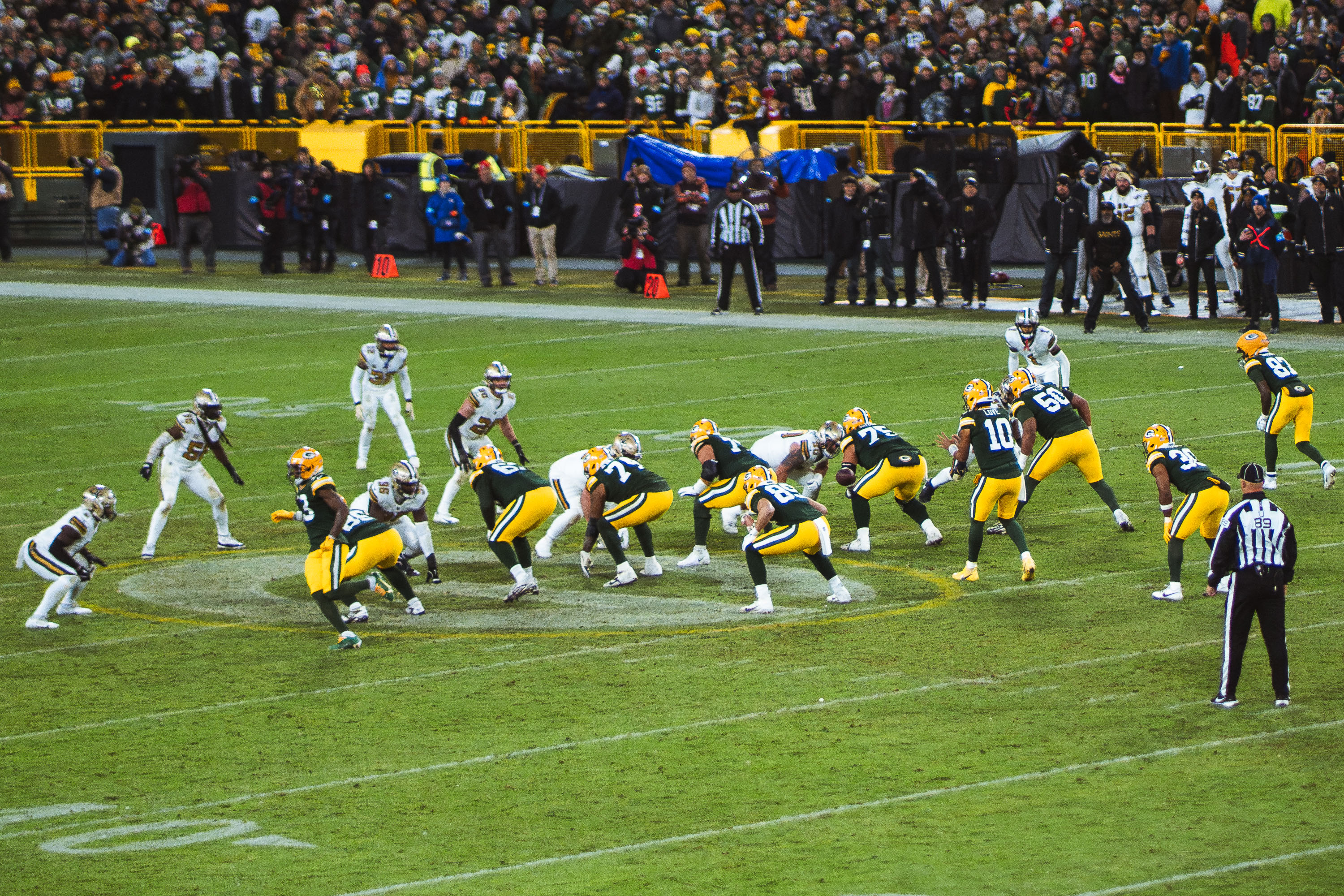
Green Bay Packers quarterback Jordan Love leads offense against New Orleans Saints at Lambeau Field.
Lambeau Field has hosted the Green Bay Packers since 1957, making it the oldest continually operating stadium in the NFL. It sits at 1265 Lombardi Avenue, a name honoring former head coach Vince Lombardi, and holds more than 81,000 fans on game day. Jordan Love became the Packers' starting quarterback in 2023, three years after Green Bay drafted him in the first round. On December 23, 2024, the Packers hosted the New Orleans Saints at Lambeau Field in a late-season game.

Packers Face Saints at Lambeau Field

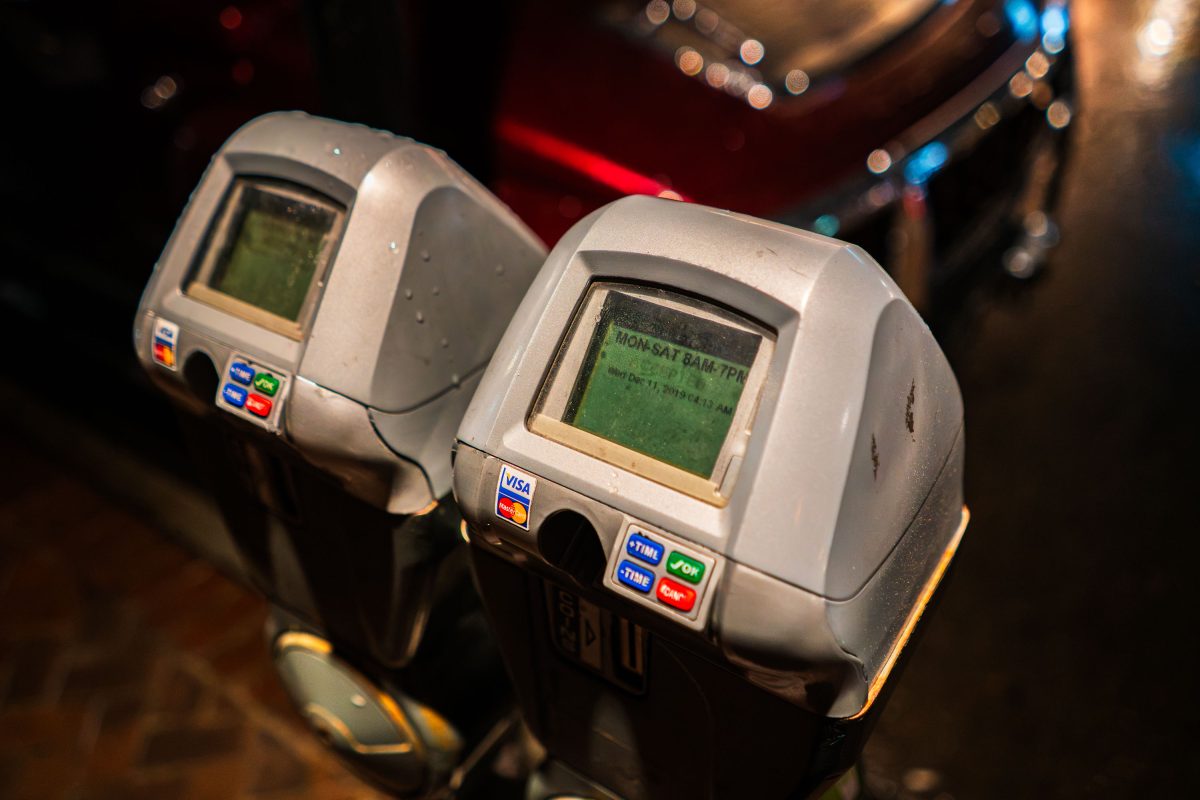
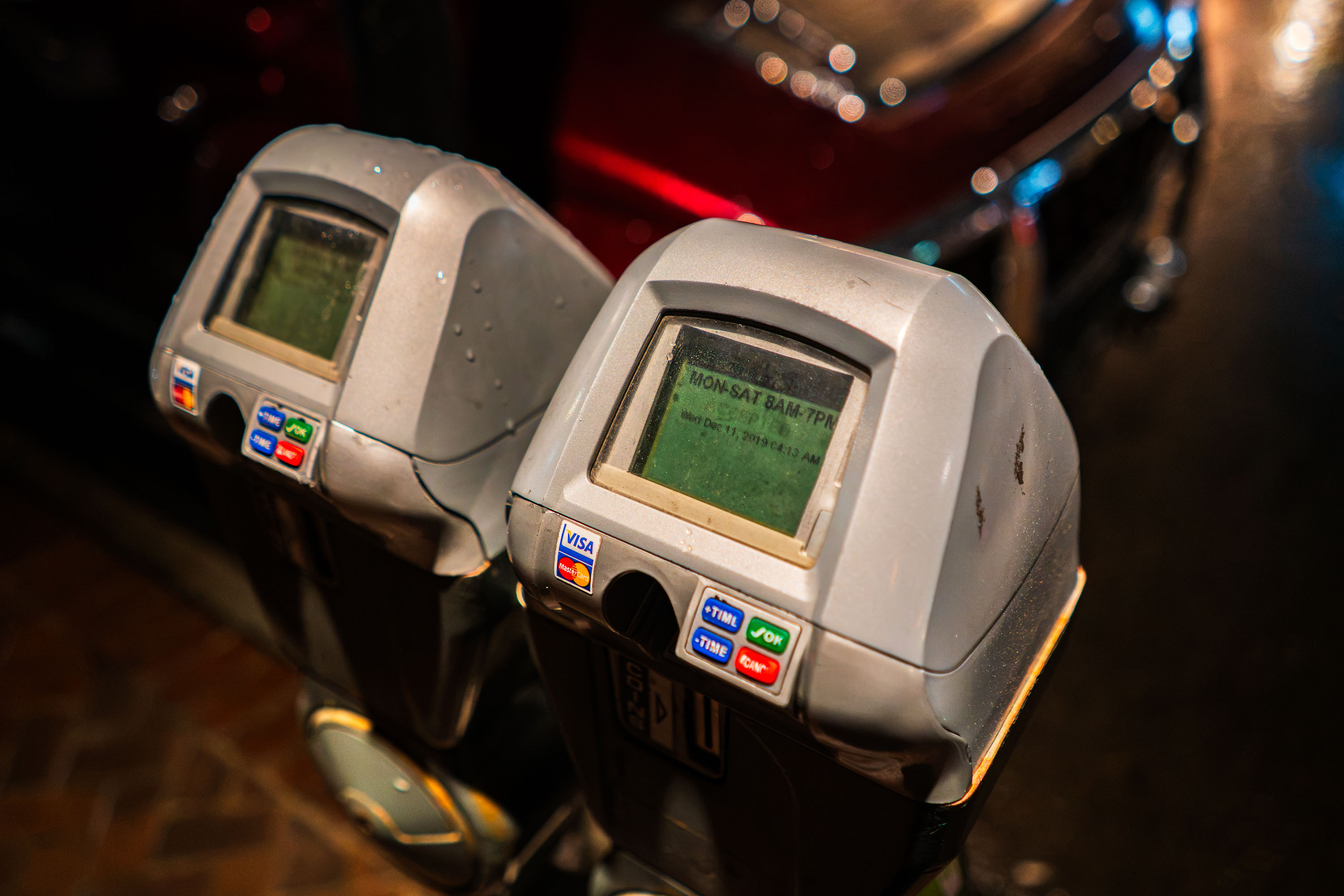
Two vintage parking meters with green LCD displays and illuminated button panels at night.
New Orleans converted its on-street parking system to electronic single-space meters, replacing older coin-operated models across the French Quarter and downtown districts. The city's Department of Public Works oversees meter enforcement, with most units accepting both coin and credit card payment, including Visa and Mastercard. Standard posted hours in commercial zones typically run Monday through Saturday, 8 a.m. to 7 p.m., matching the operating hours displayed on the units themselves. Revenue collected from parking meters funds a portion of the city's Parking Enforcement Division and infrastructure maintenance budget.

Electronic Parking Meters, New Orleans
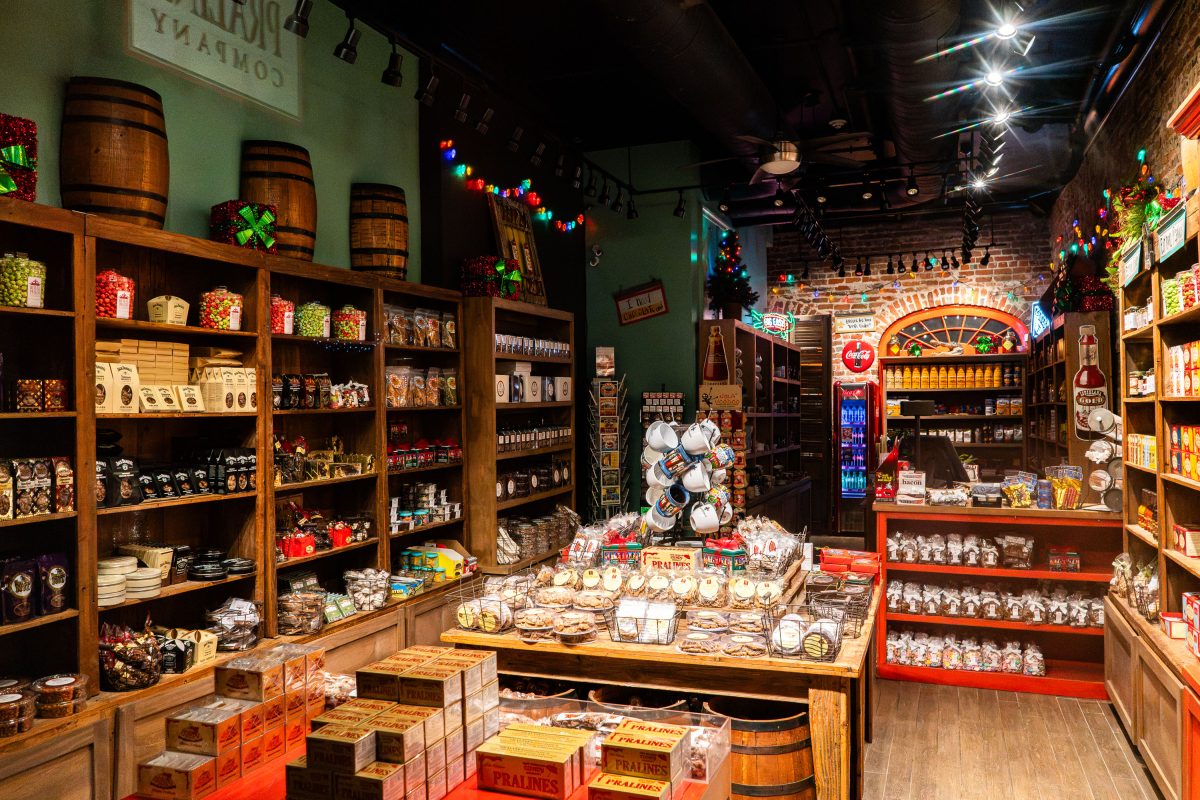
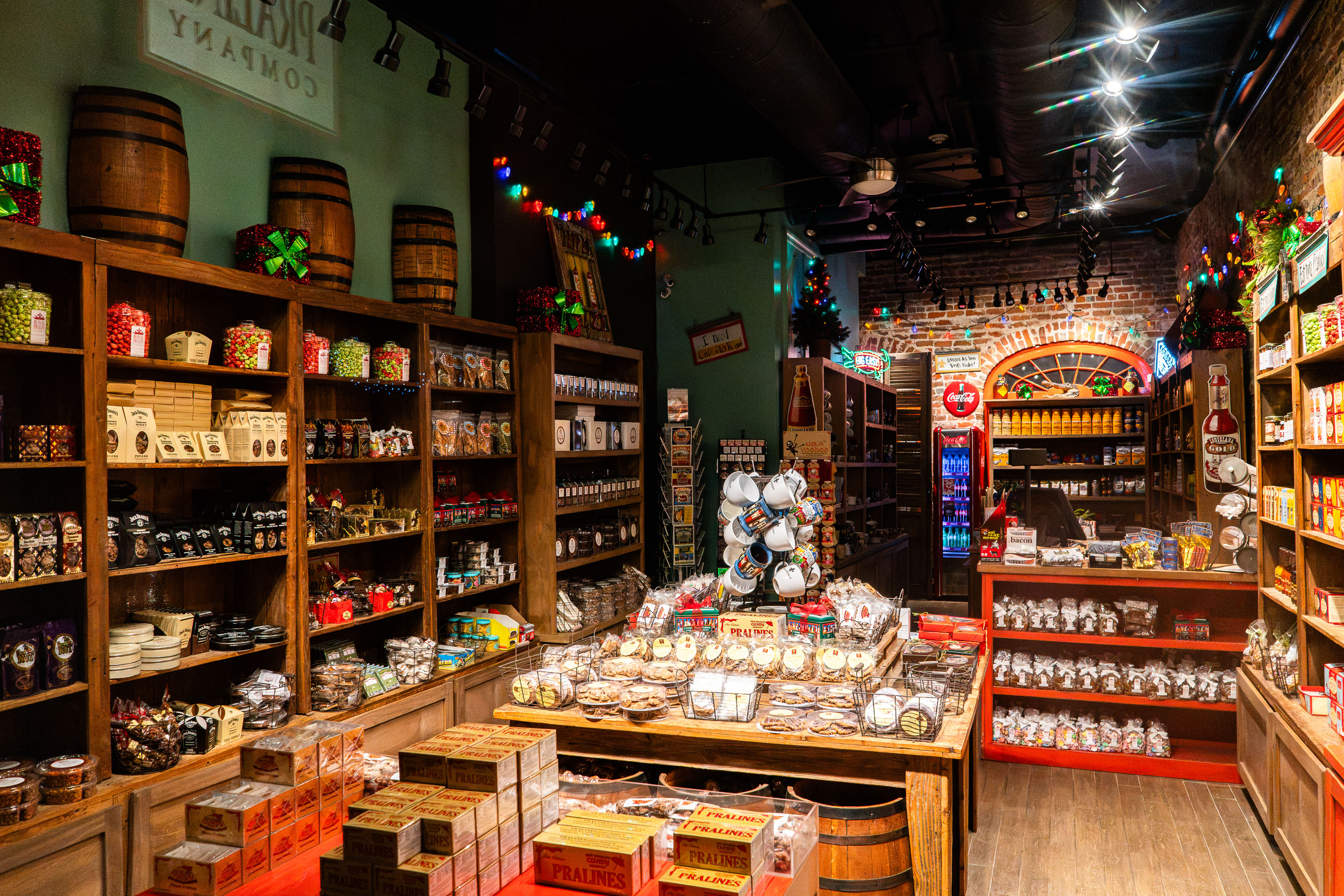
Praline Company shop interior in New Orleans displaying candies, coffee, and local specialties on wooden shelves and barrels.
Praline Company sells the classic New Orleans confection made from sugar, butter, cream, and pecans, a candy that traces its roots to French settlers who adapted a similar treat first made in the Poitou-Charentes region. Pecan pralines became a New Orleans specialty by the 19th century, sold by street vendors known as "pralinières" who often set up along the French Quarter. The shop's shelves carry the trade's usual staples alongside them — jarred candies, coffee, and hot sauces common to Louisiana specialty stores. Brick walls and barrel accents nod to the French Quarter's historic commercial buildings, many of which date to the late 1700s and early 1800s after fires destroyed earlier wooden structures.

Inside the Praline Company Shop in the French Quarter
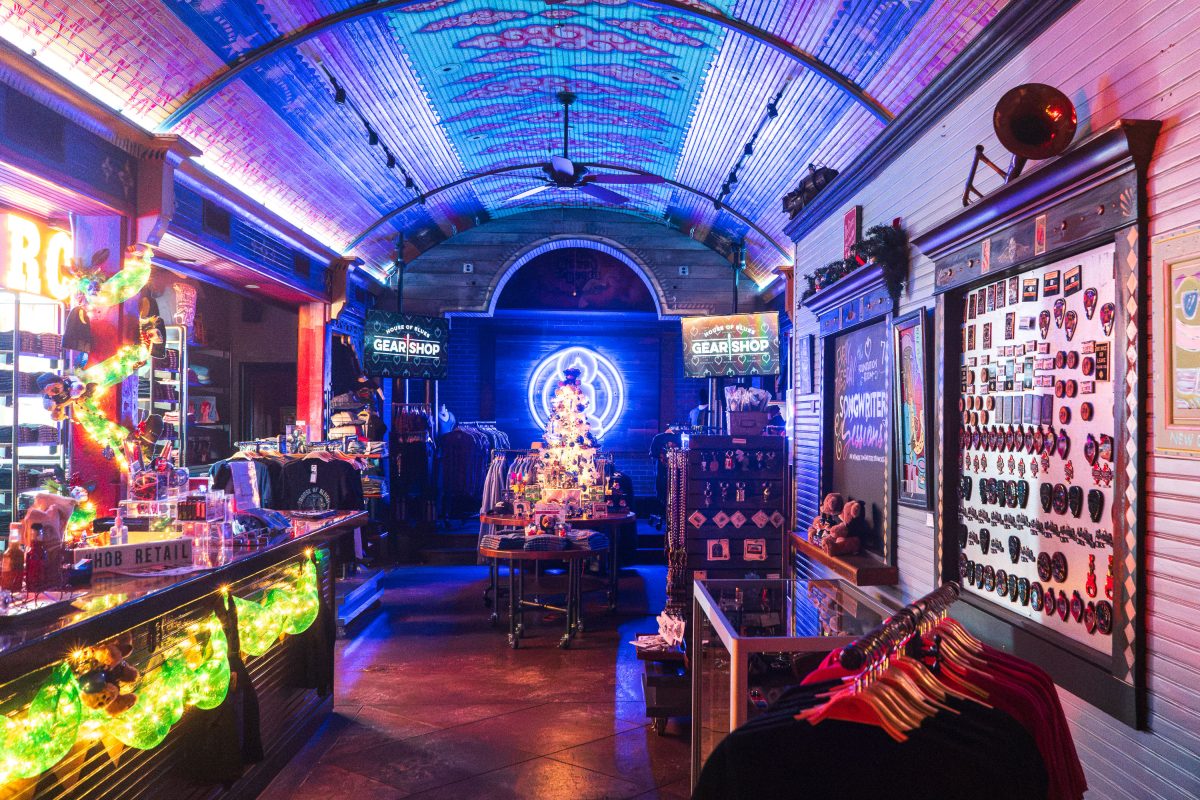
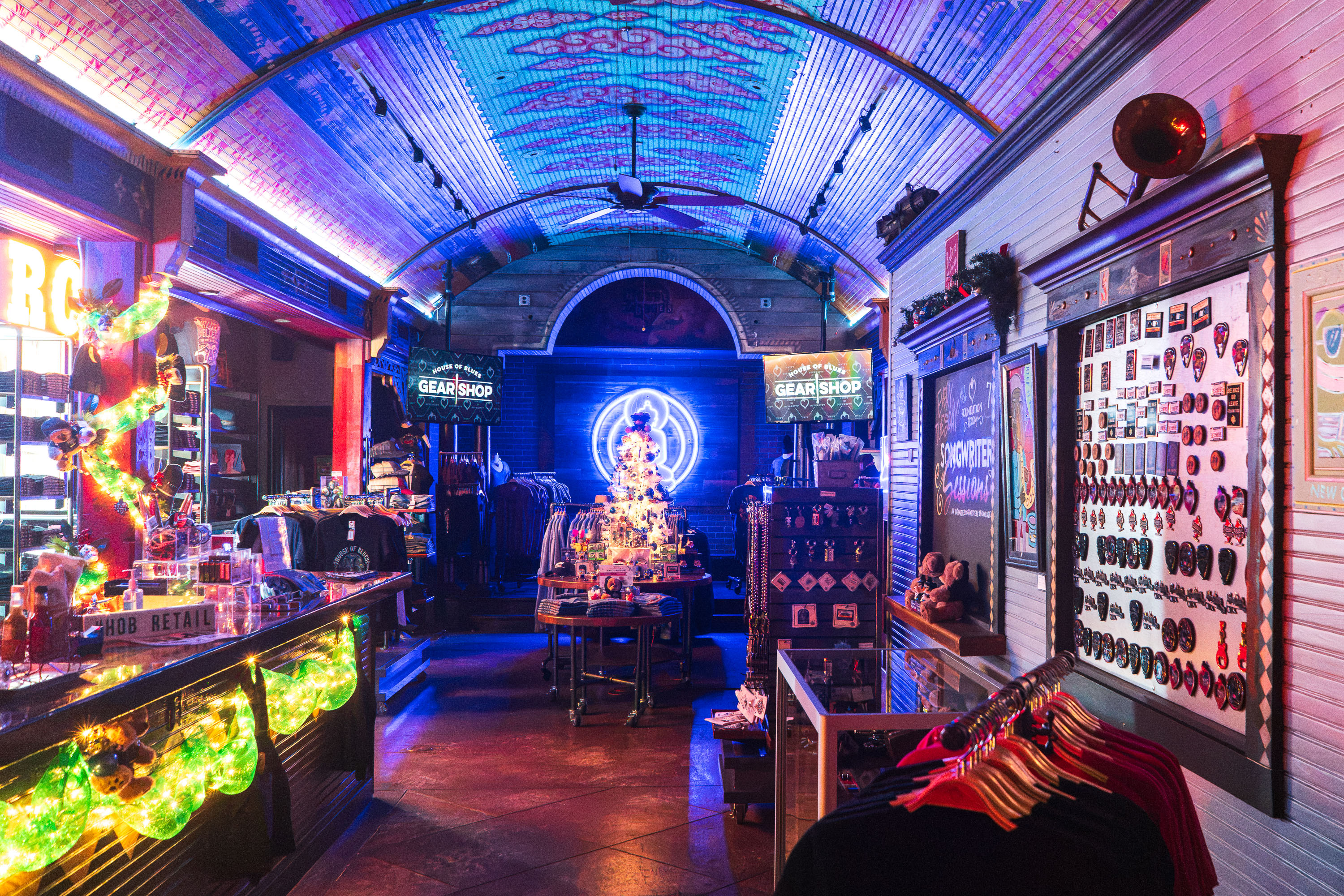
House of Blues Gear Shop interior on Decatur Street in New Orleans French Quarter with neon signage and merchandise displays.
The House of Blues New Orleans opened in 1994 on Decatur Street in the French Quarter, one of the original locations of the chain founded by Isaac Tigrett and Dan Aykroyd. The Gear Shop sells branded merchandise, guitar picks, and memorabilia tied to the adjoining music hall and restaurant. Folk art and religious icons collected from the Mississippi Delta and greater New Orleans region fill the building's interior, assembled under the direction of art director Robert "Mudcat" Hodge. The music hall next door has booked touring blues, rock, and jazz acts since the venue's opening, part of a franchise that at its peak included clubs in Chicago, Las Vegas, and Los Angeles.

Inside the Gear Shop at House of Blues New Orleans
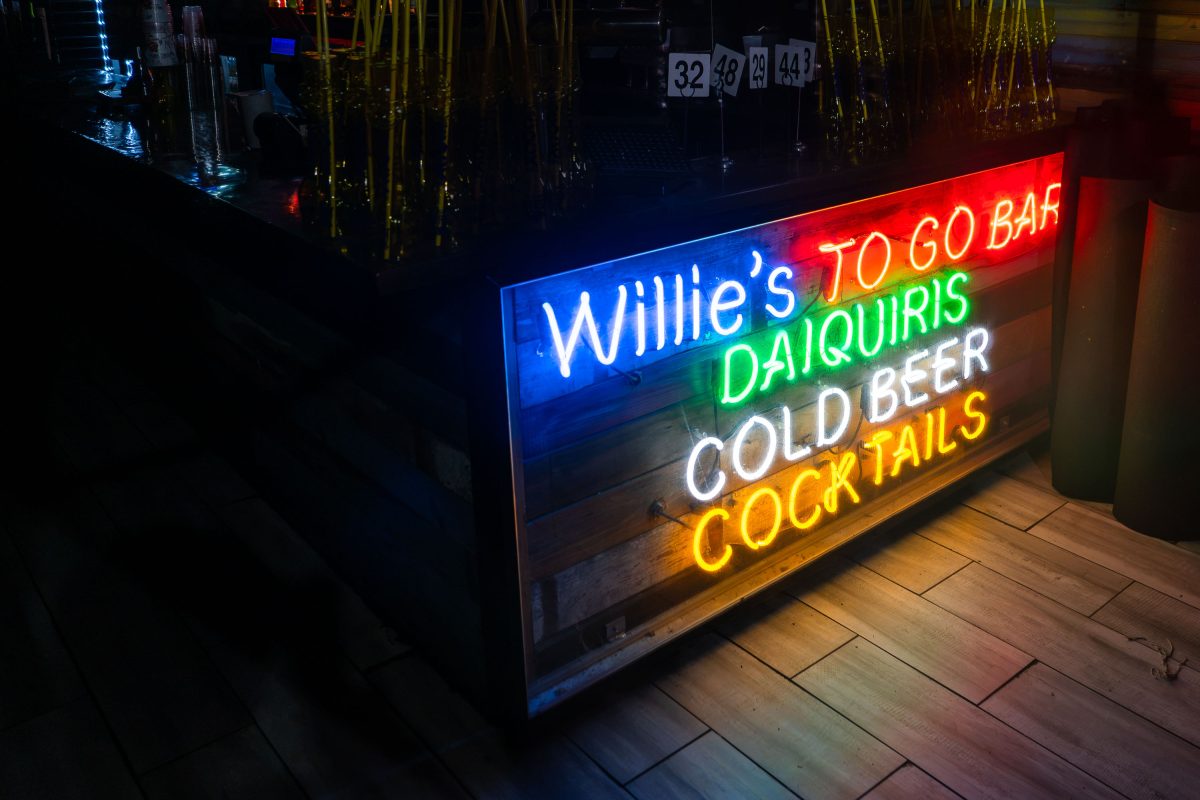
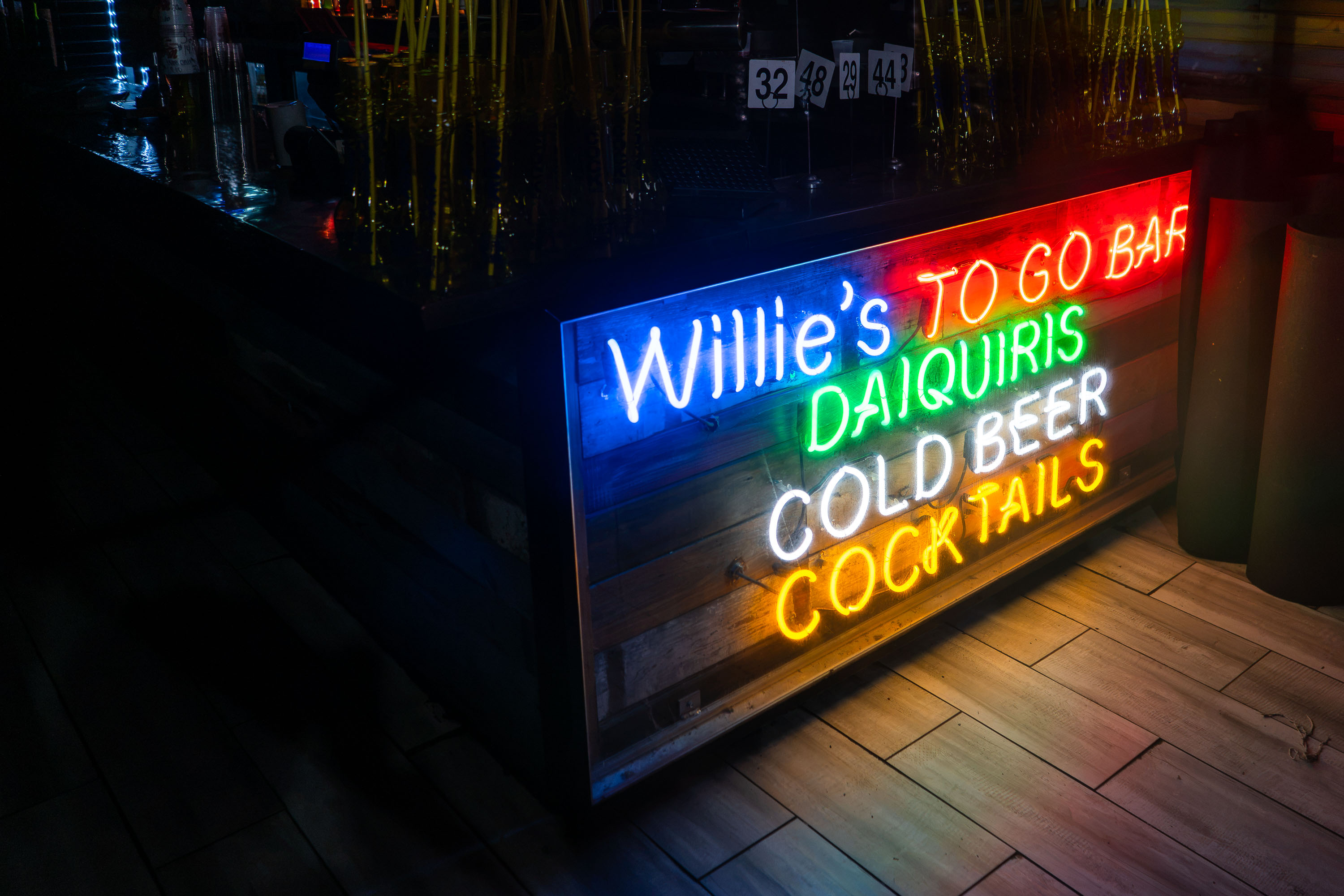
Willie's To Go Bar neon sign advertises daiquiris, cold beer, and cocktails on a New Orleans street at night.
Willie's To Go Bar advertises daiquiris, cold beer, and cocktails through a neon sign built for sidewalk and street visibility, a common fixture at walk-up daiquiri counters throughout New Orleans. To-go bars like this one operate under Louisiana's allowance for sealed to-go alcoholic drinks, a practice largely unique to the state.

Neon Sign for Willie’s Daiquiris and Cold Beer, New Orleans
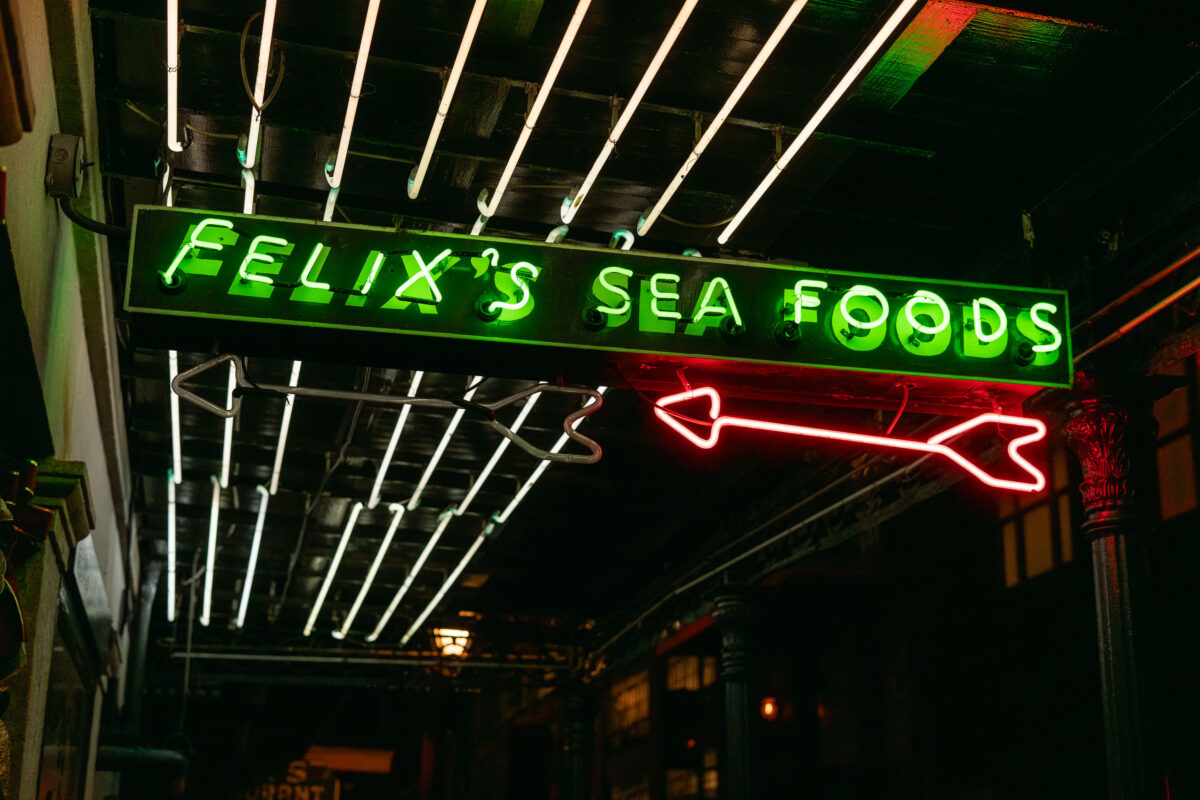
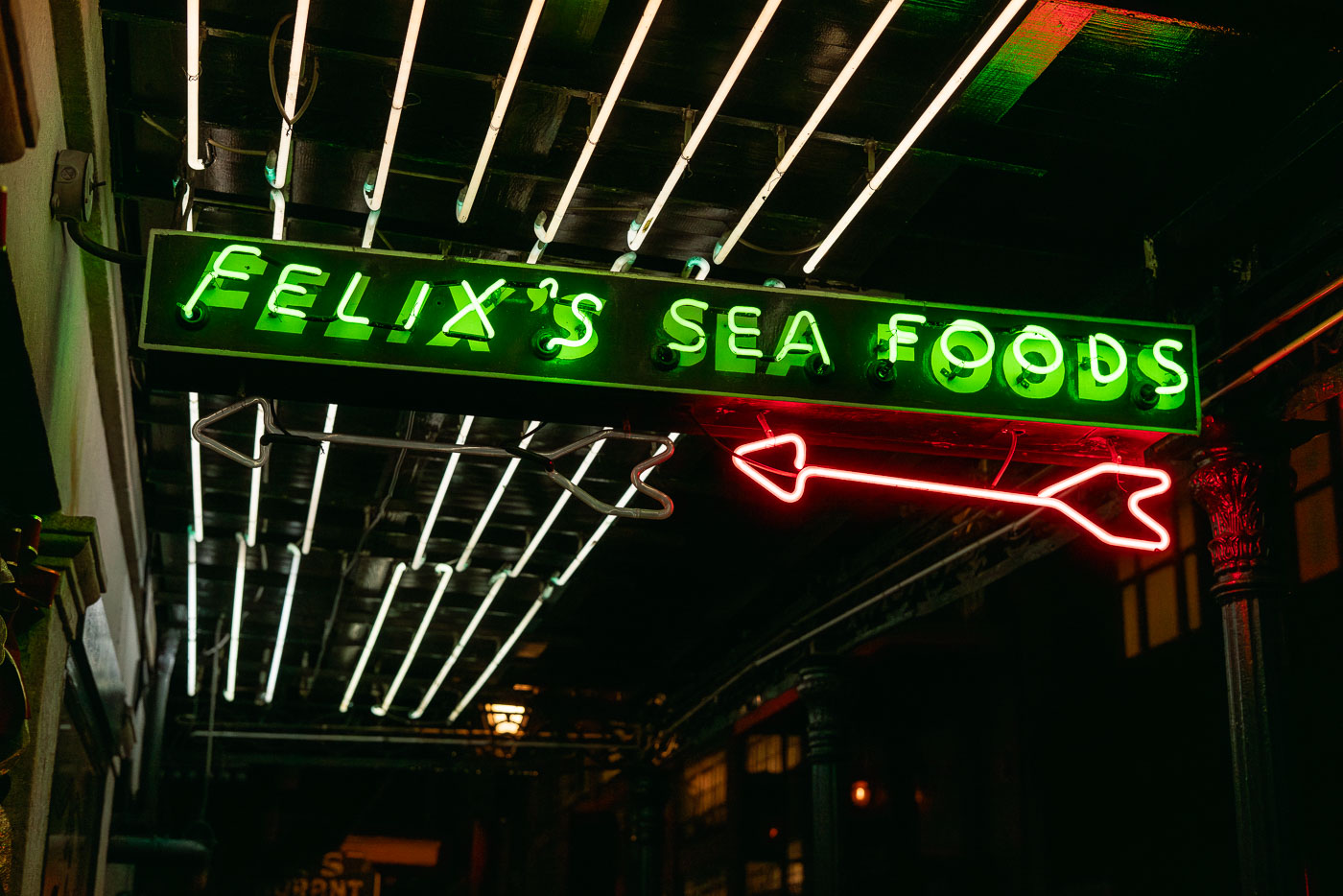
Felix's Sea Foods neon sign glows green and red above the restaurant entrance in New Orleans' French Quarter.
Felix's Sea Foods sign marks the restaurant entrance in the French Quarter of New Orleans. The business, established in 1946, is a long-running seafood restaurant associated with oysters and other Gulf Coast fare. Its neon storefront sign is part of the commercial signage along the Quarter's restaurant and nightlife corridors.

Neon Sign at Felix’s Oyster Bar in the French Quarter
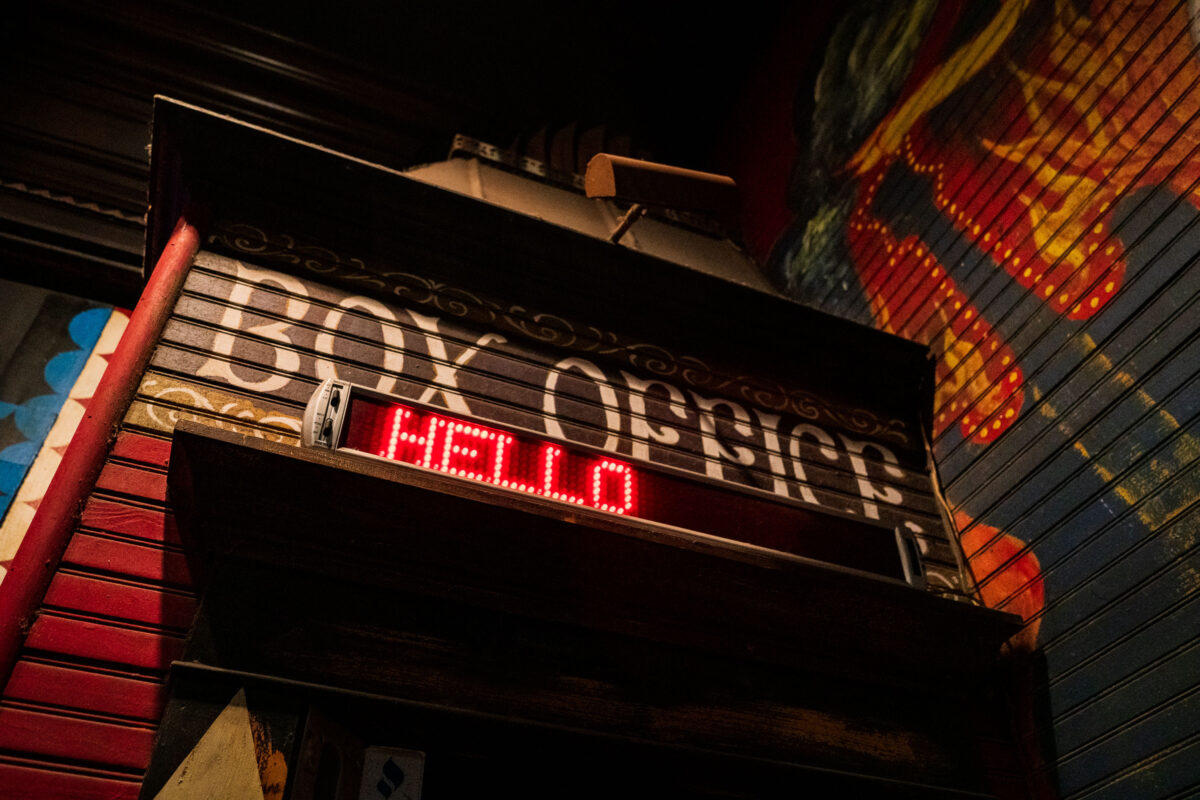
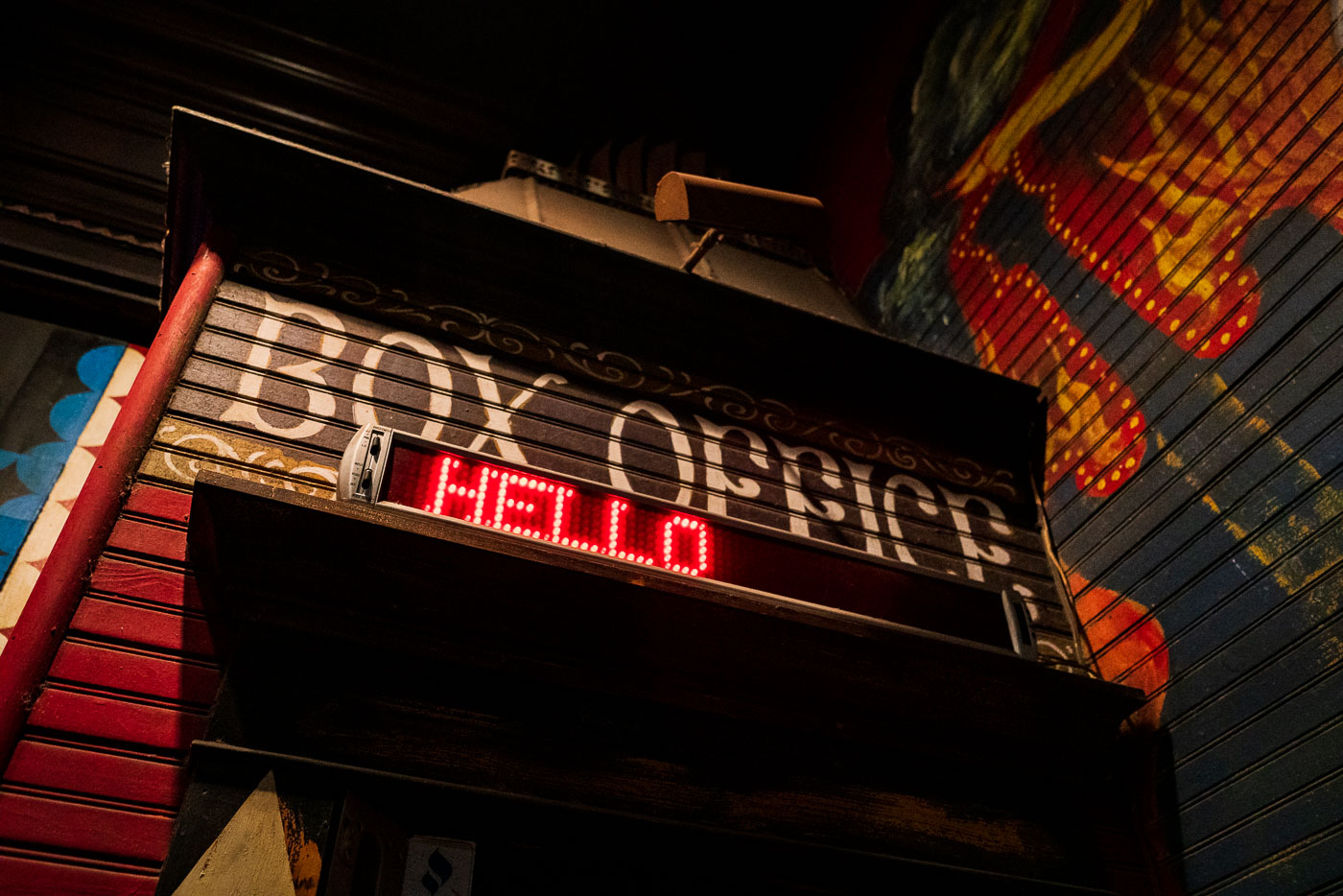
Box office sign with red LED "HELLO" display on a New Orleans building at night.
A box office sign with a red LED message reading HELLO is mounted on a New Orleans building. The sign appears above a closed opening, likely associated with a theater or music venue.

“Box Office” Sign with LED “Hello” Message at Abandoned Six Flags New Orleans
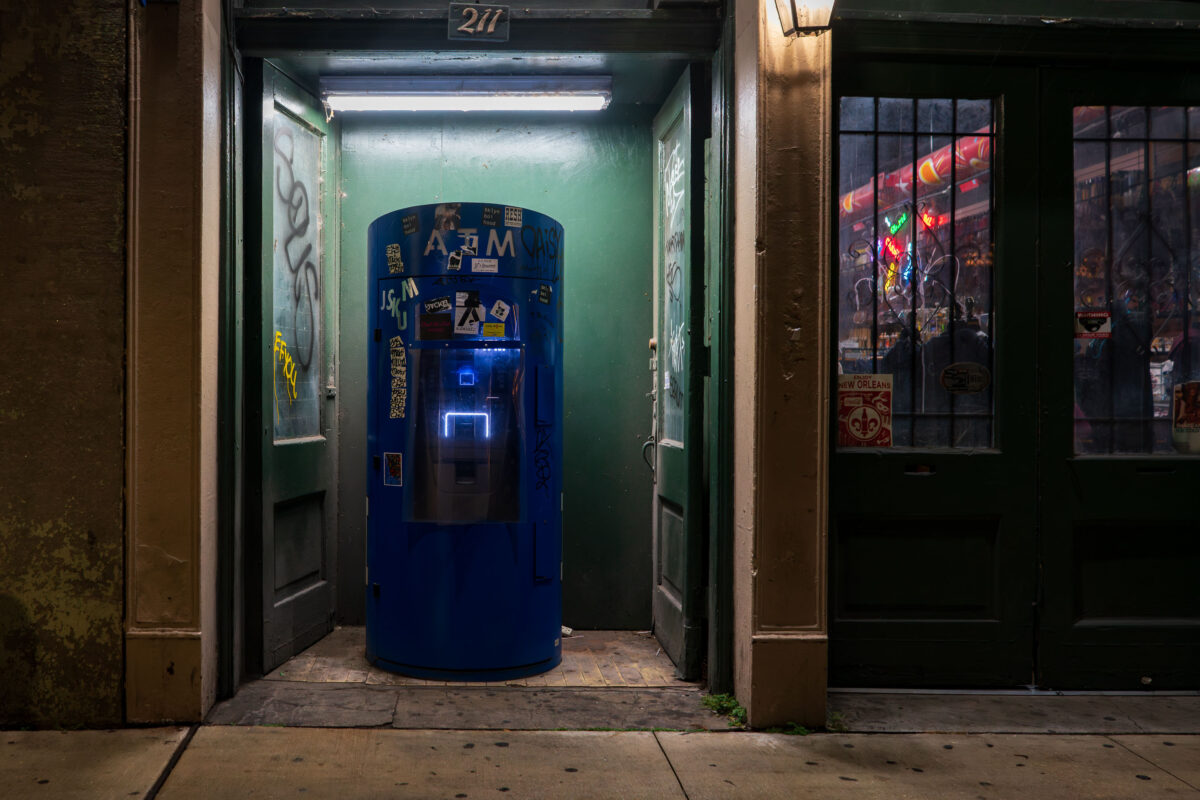
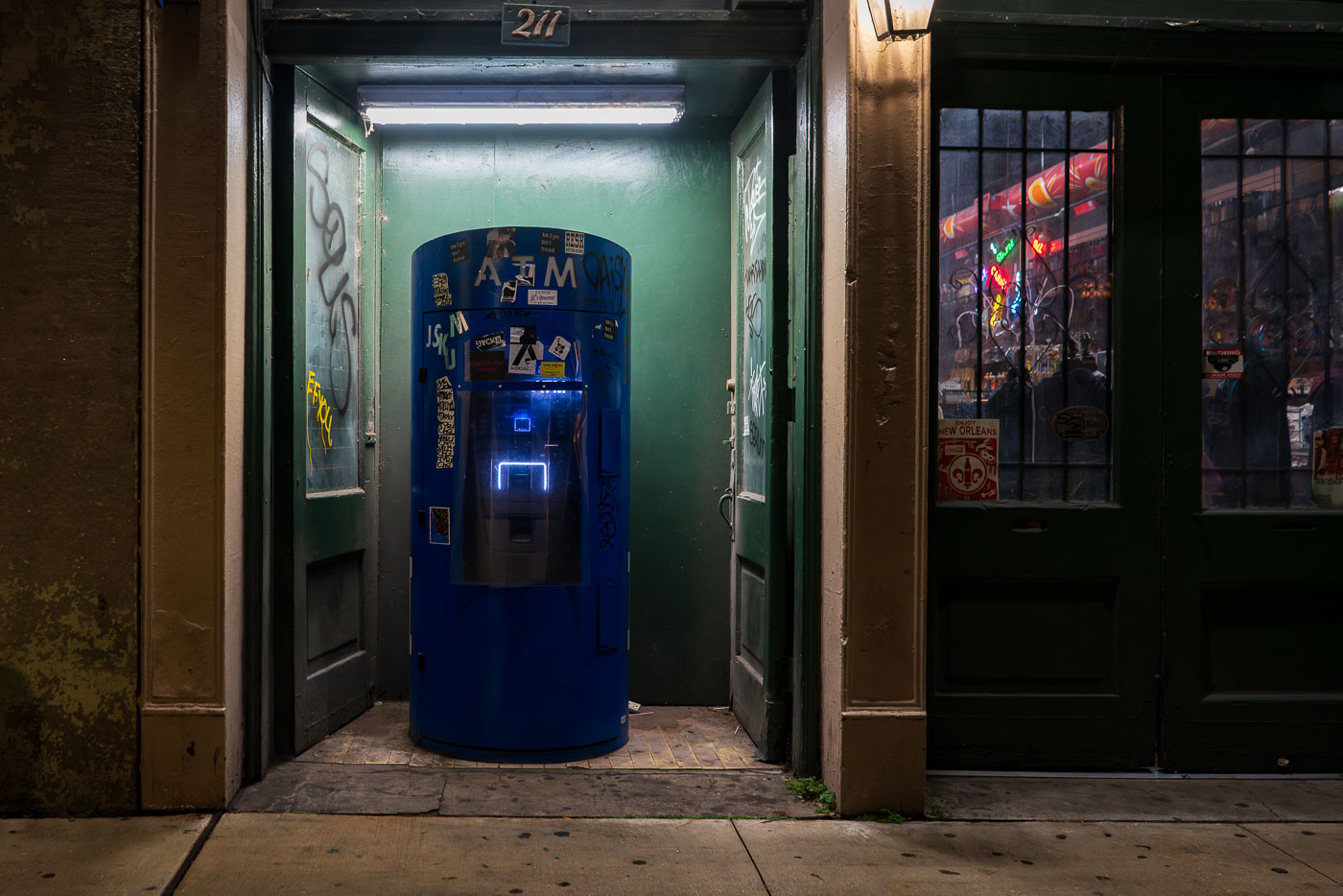
Blue ATM recessed in a narrow doorway at 211 Decatur Street in New Orleans' French Quarter.
211 Decatur Street in New Orleans’ French Quarter contains a freestanding ATM recessed in a narrow doorway. The machine is covered with graffiti and stickers. Decatur Street is a commercial corridor in the historic French Quarter.

Graffiti-Covered ATM in a Decatur Street Doorway
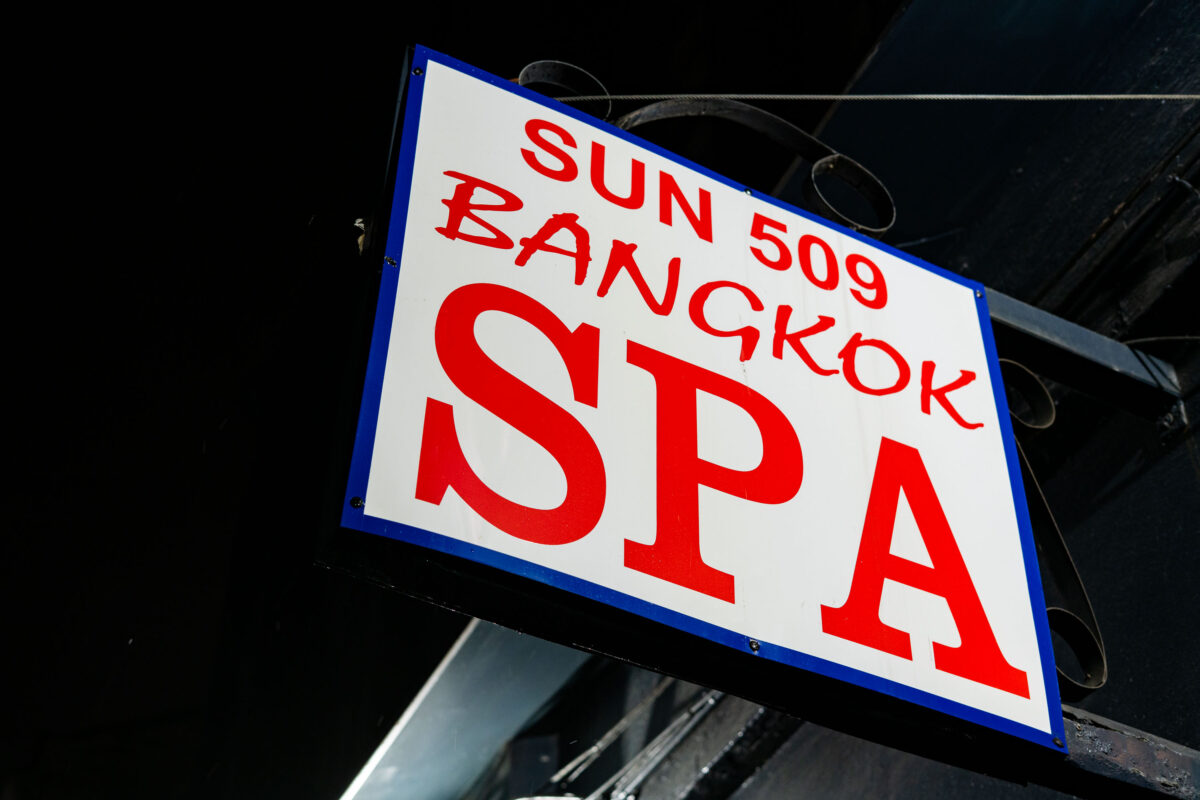
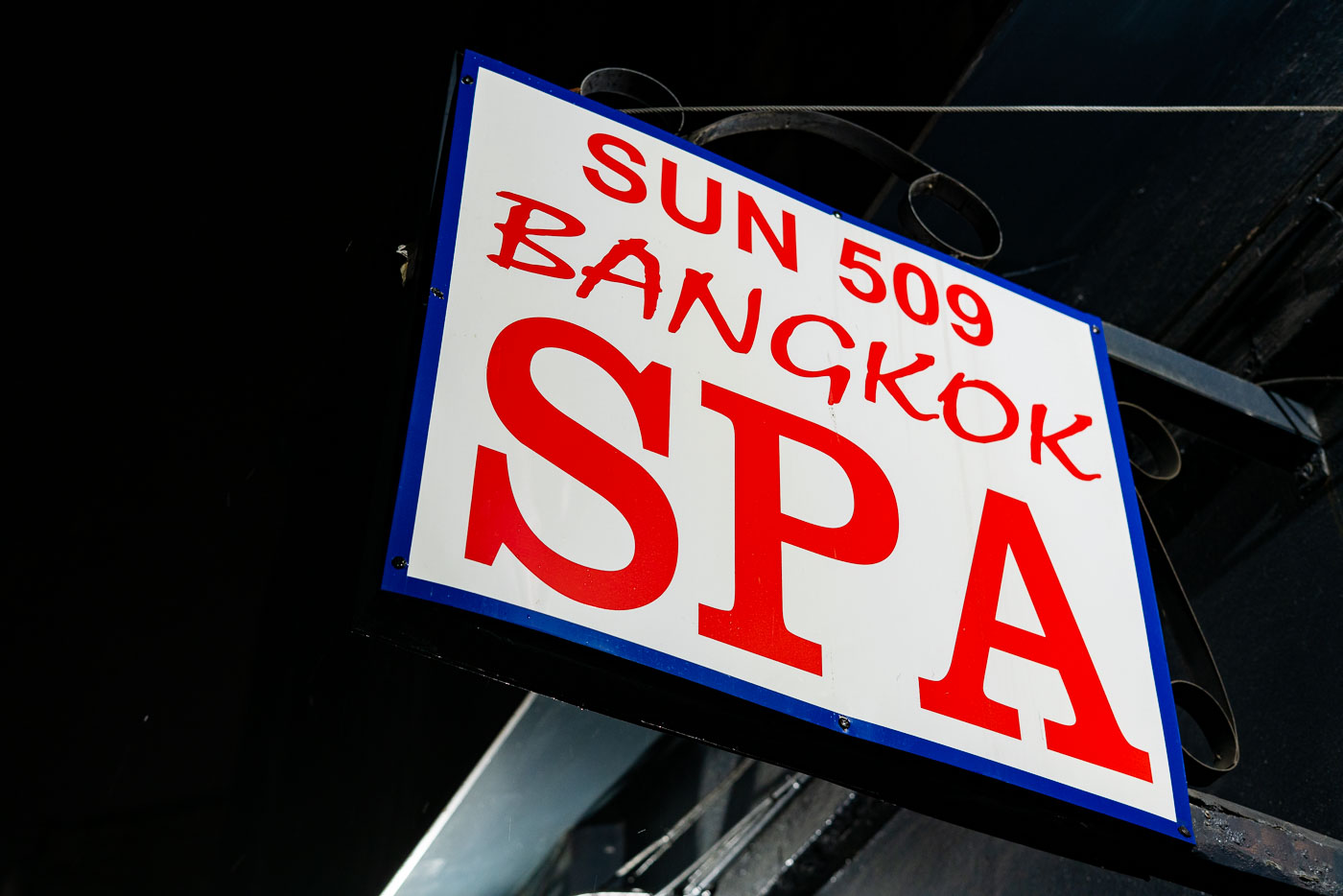
Sun 509 Bangkok Spa neon sign on Bourbon Street in New Orleans' French Quarter.
Sun 509 Bangkok Spa operates at 509 Bourbon Street in the French Quarter, offering massage and spa services in a neighborhood dense with bars, restaurants, and tourist-oriented businesses. The address places it within one of New Orleans' busiest commercial corridors, blocks from Jackson Square and the Mississippi River. Bourbon Street storefronts in this stretch of the Quarter often carry hand-painted or simply lettered signage rather than elaborate design, a practical choice suited to the street's high foot traffic and frequent business turnover.

Sun 509 Bangkok Spa Sign on Bourbon Street
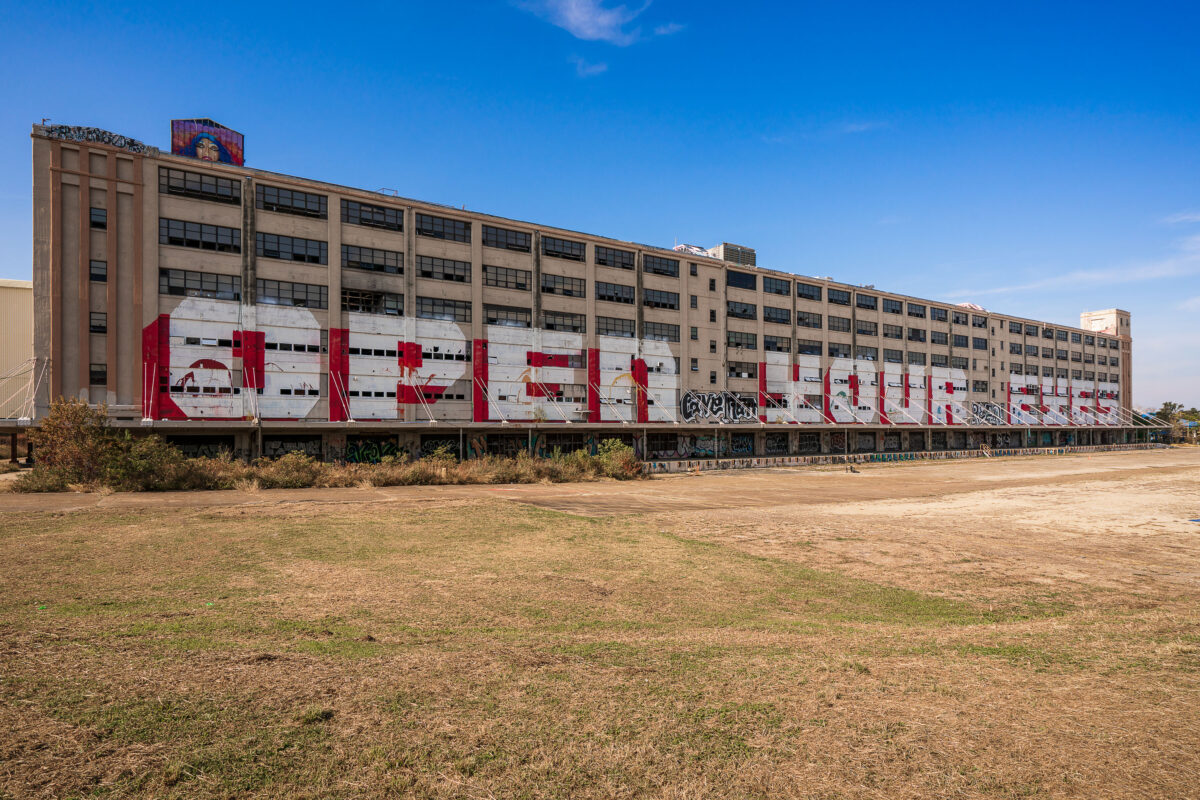
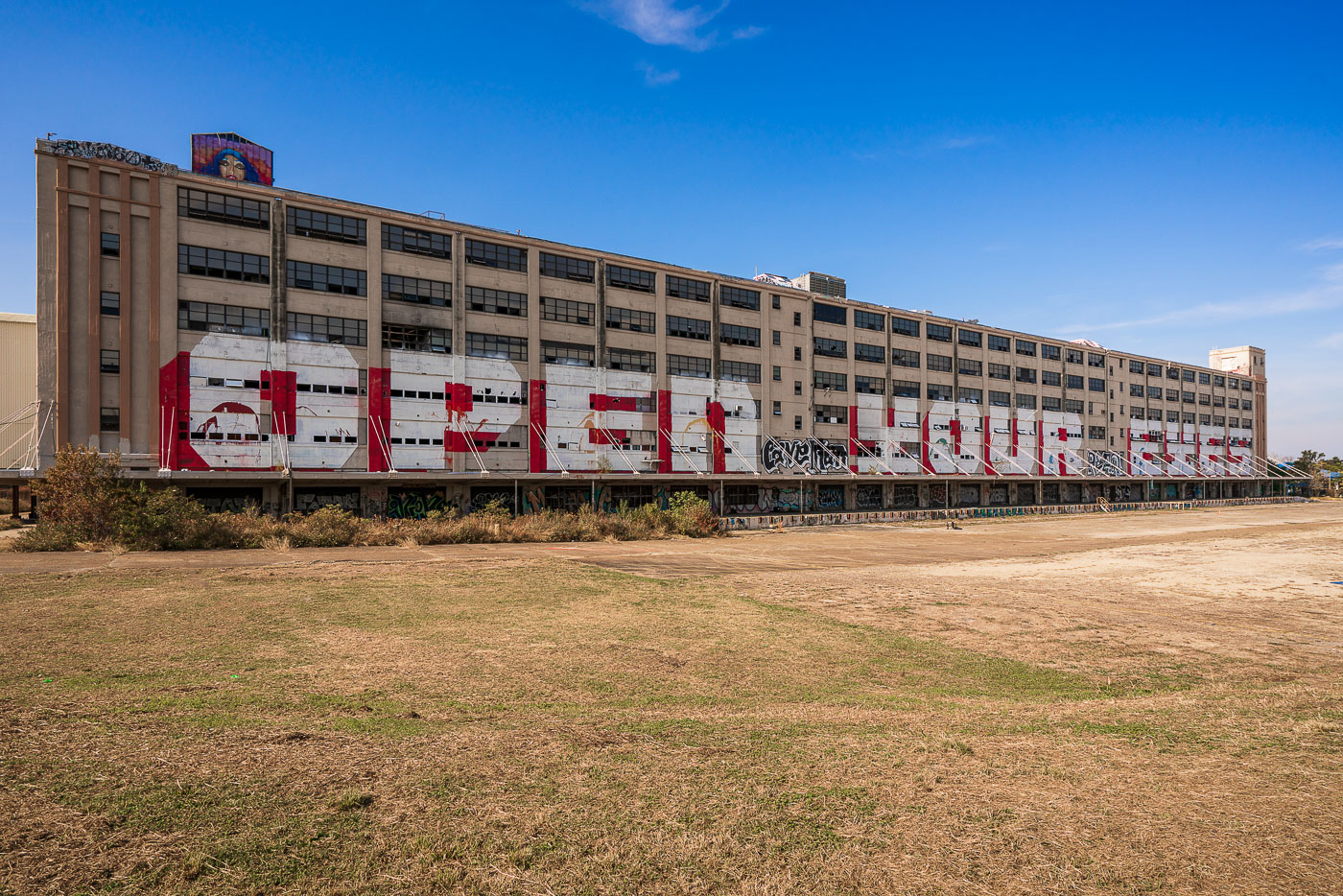
Large-scale red and white graffiti mural covers the facade of an abandoned Naval Support Activity warehouse in New Orleans.
Naval Support Activity New Orleans warehouse, New Orleans. The former military logistics building on the Mississippi River front has been covered with large-scale graffiti murals and tags. The base was decommissioned and has been awaiting redevelopment.

Large-Scale Graffiti Murals on the Naval Support Activity Warehouse
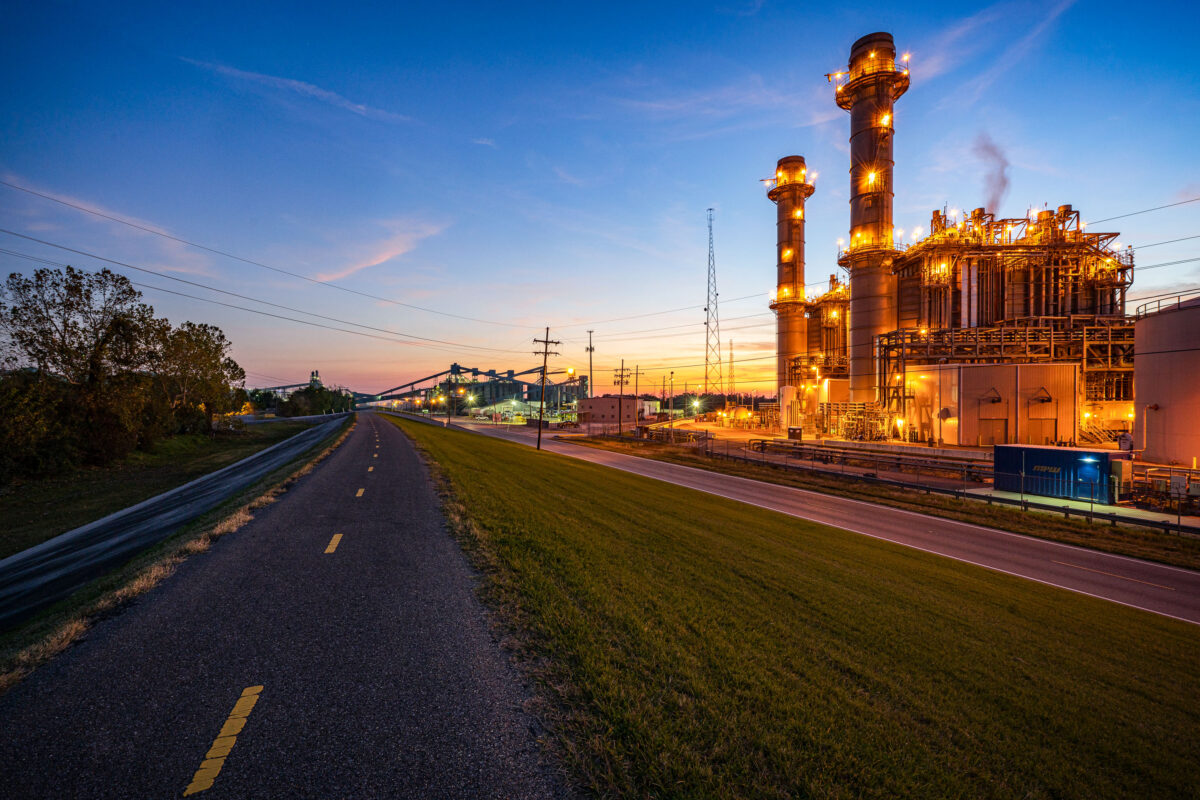
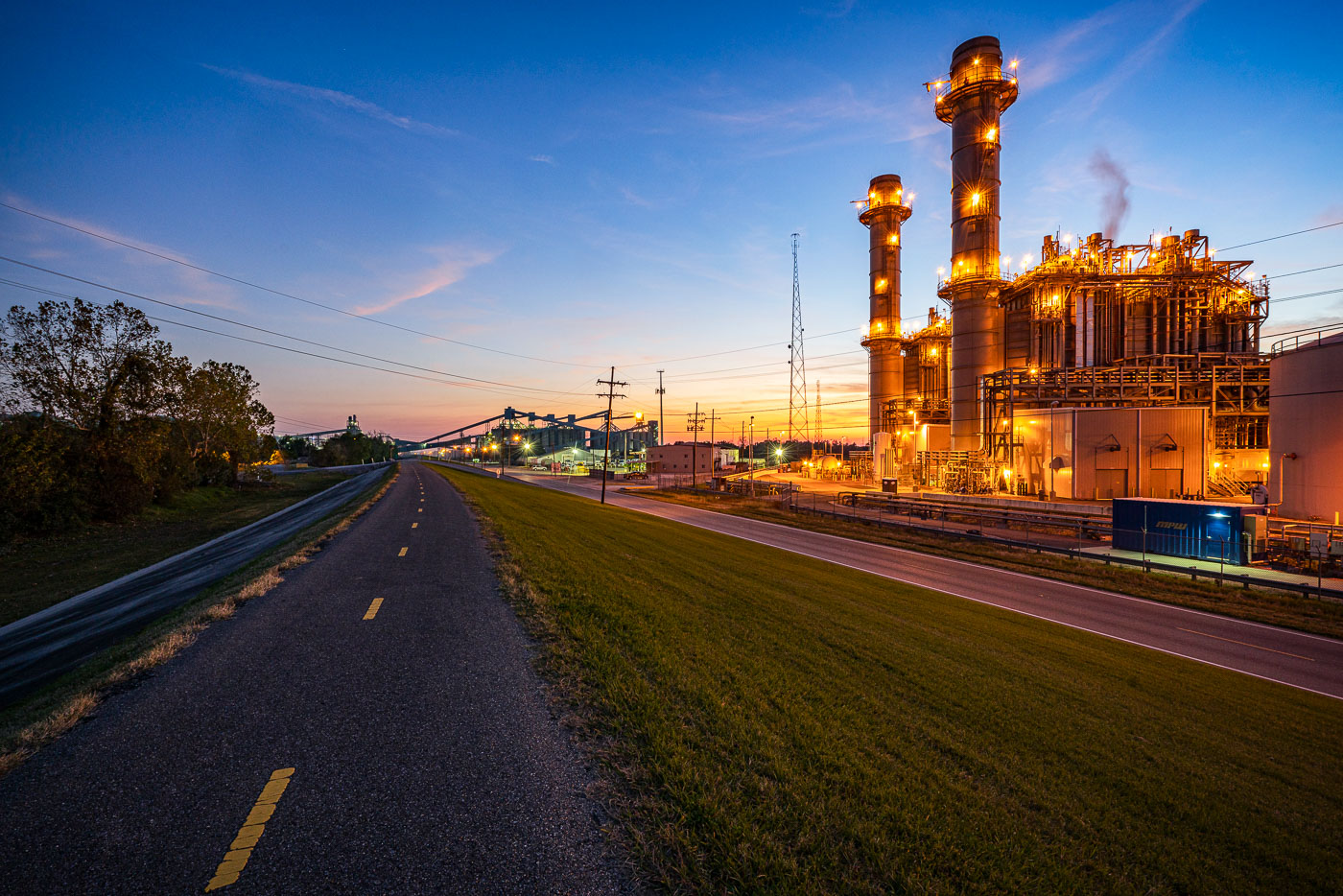
Entergy Ninemile 6 natural gas power plant illuminated at dusk along a levee trail in Westwego, Louisiana.
Entergy Ninemile 6 Power Plant in Westwego, Louisiana, is a natural gas-fired generating unit operated by Entergy Corporation. The facility began operation in 2014 and supplies electricity to the New Orleans area.

Ninemile 6 Power Plant at Dusk Along the Westwego Levee Trail

Overgrown courtyard of the abandoned Mrs. John Dibert Administration Building at Hope Haven near New Orleans.
The Mrs. John Dibert Administration Building on the Hope Haven campus near New Orleans, LA.

Overgrown Courtyard of the Dibert Building at Hope Haven

Abandoned turquoise room with multiple doors and ceiling fan at Hope Haven facility near New Orleans.
Abandoned Hope Haven Facility near New Orleans, LA.

Faded Bedroom at Hope Haven in Marrero

Abandoned children's room at Hope Haven near New Orleans with handmade yellow moon decoration and stuffed bear.
Inside the long abandoned Hope Haven near New Orleans, LA.

Stuffed Bear Toy on a Door at Hope Haven

Abandoned interior room with deteriorating walls, exposed flooring, and barred doors at Hope Haven facility near New Orleans.
Inside the abandoned Hope Haven facility near New Orleans, LA.

Peeling Paint and Security Glass Door at Hope Haven
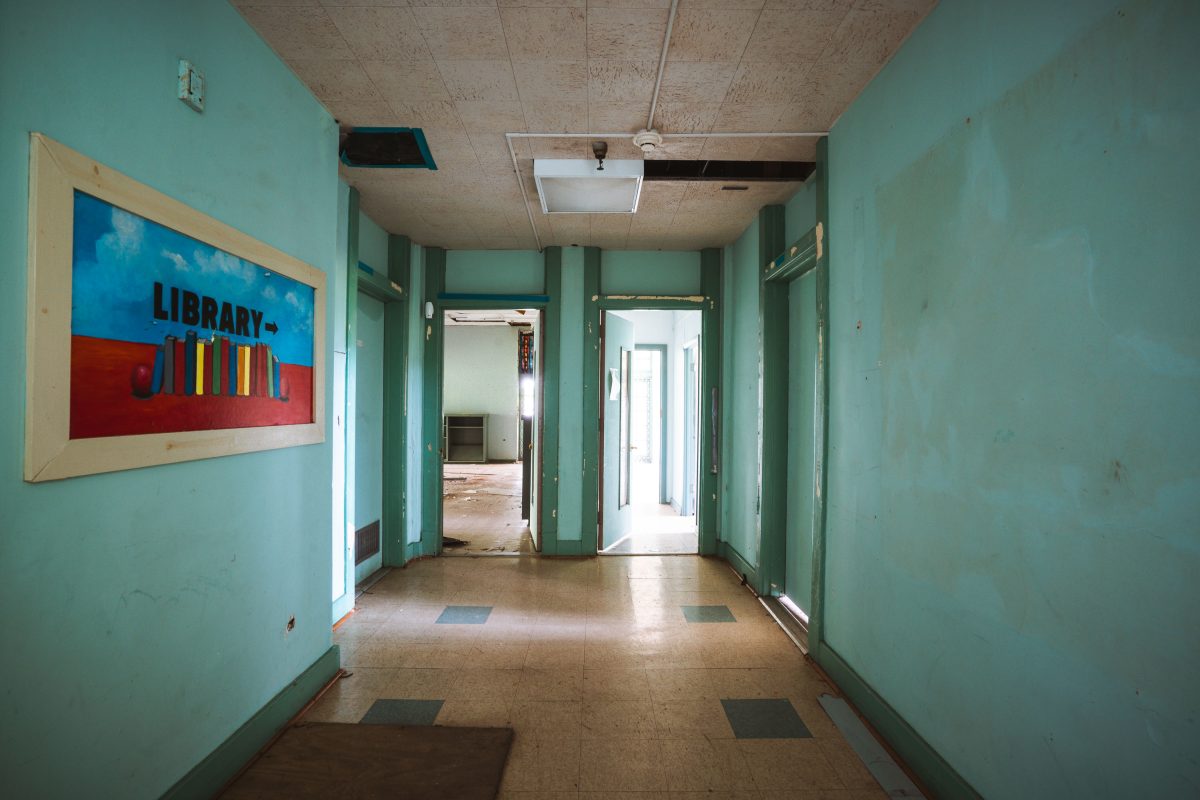
Abandoned library interior with turquoise walls and a colorful "Library" sign in Hope Haven, New Orleans.
Inside the abandoned Hope Haven facility new New Orleans, LA.

“Library” Sign in a Hallway at Hope Haven

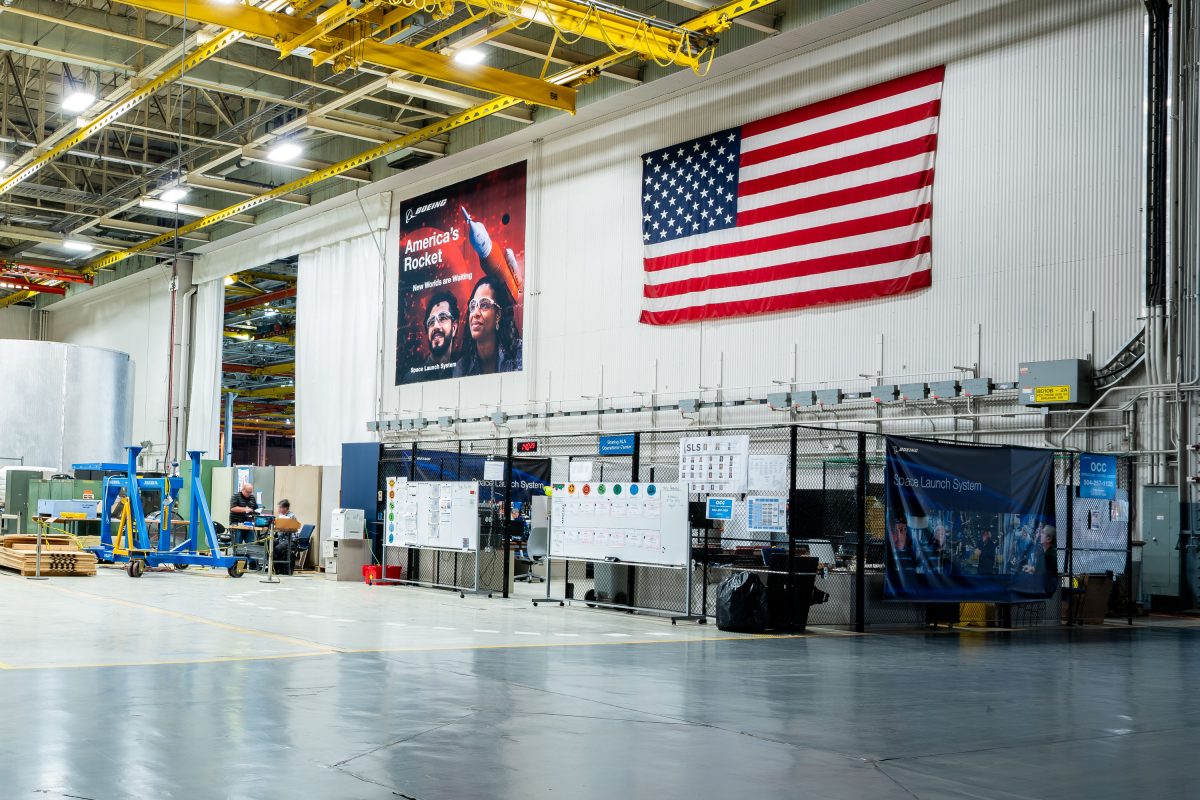
Boeing Space Launch System Operations Center at NASA's Michoud Assembly Facility in New Orleans.
Boeing operates the Space Launch System Operations Center inside NASA's Michoud Assembly Facility in eastern New Orleans. Michoud is a government-owned, contractor-operated site covering 832 acres, with a main manufacturing building enclosing about 43 acres under one roof. NASA has used the facility since 1961, previously for Saturn V stages and space shuttle external tanks. Boeing builds the SLS core stage there, the structure that houses the rocket's propellant tanks and four RS-25 engines. The core stage measures 212 feet long, making it the largest rocket stage NASA has ever flown.

Boeing SLS Operations Center, Michoud Assembly Facility
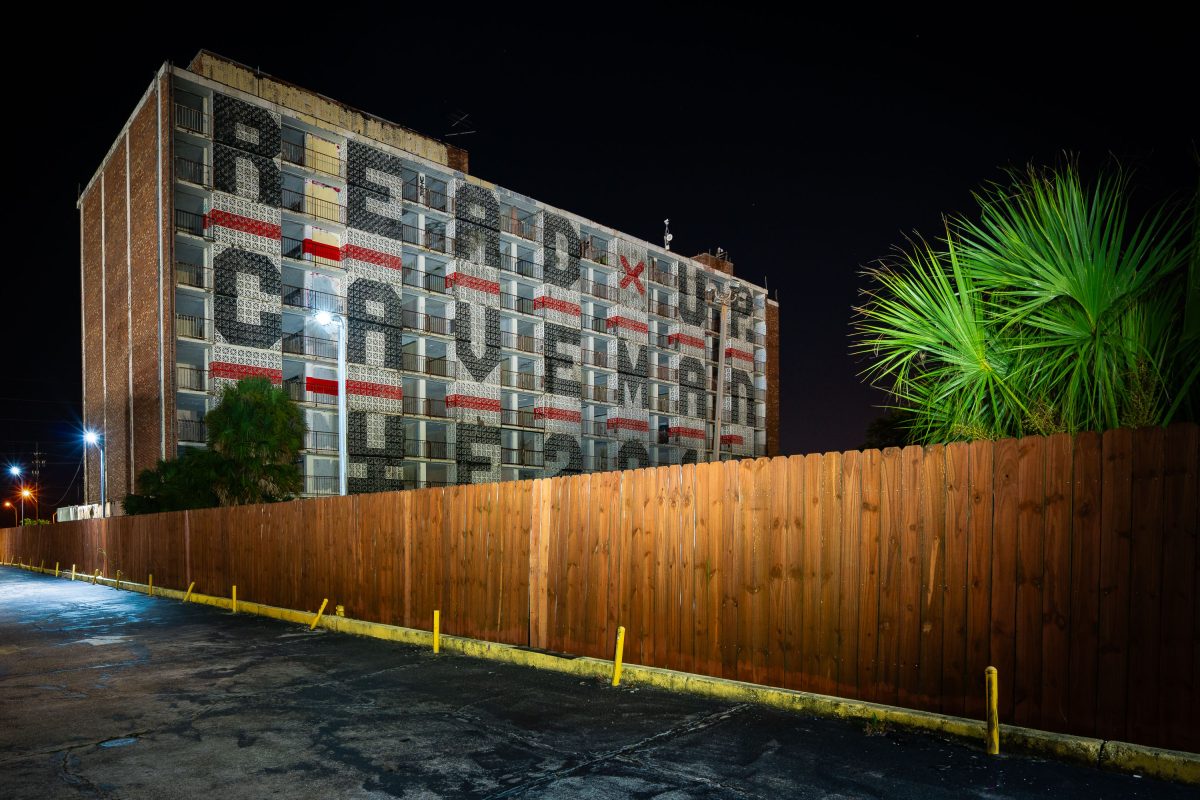
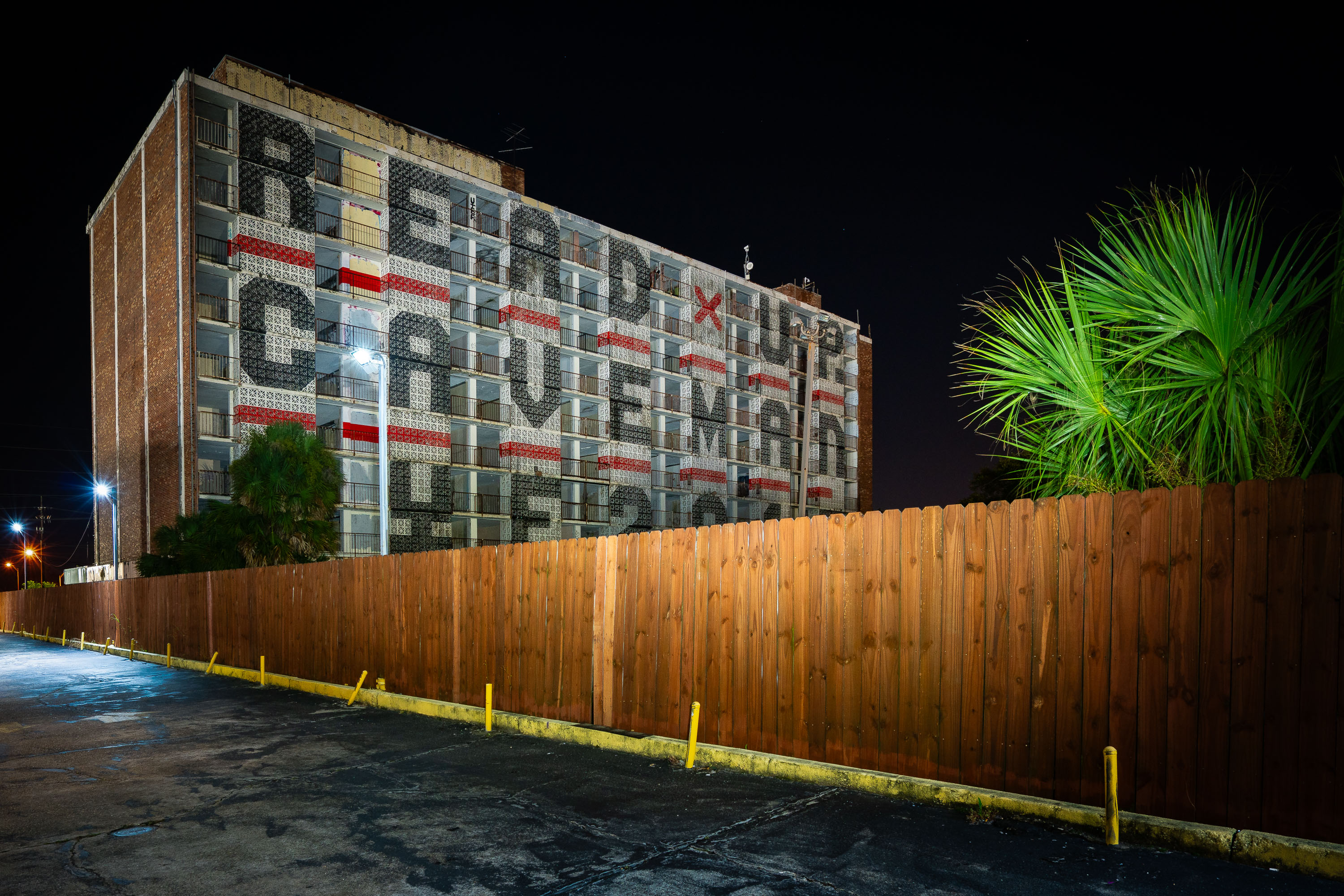
Caveman building in New Orleans with large-scale graffiti text on facade behind wooden construction barrier at night.
READ UP CAVEMAN building in New Orleans. The graffiti on the former Holiday Inn was removed in 2022 when the building was renovated to housing.

“Read Up Caveman” Graffiti on a Former Holiday Inn at Night

Storm-damaged service building at abandoned Six Flags New Orleans with Mega Zeph roller coaster structure behind.
Six Flags New Orleans opened in 2000 as Jazzland before Six Flags took over operations in 2002. Hurricane Katrina's storm surge flooded the eastern New Orleans park with several feet of saltwater in August 2005, damaging structures like this one beyond repair. The park never reopened, and ownership reverted to the city of New Orleans, which has weighed demolition and redevelopment proposals for the 227-acre site for years. The Mega Zeph, the wooden coaster visible behind the building, operated at the park from 2000 until the storm.

Broken Windows at a Service Building Beneath the Mega Zeph

Abandoned Six Flags New Orleans midway with mermaid-themed facade and Mega Zeph roller coaster structure.
Six Flags New Orleans opened in 2000 as Jazzland before Six Flags took over operations in 2003, adding coasters and reworking the park's themed sections. The Mega Zeph, a wooden roller coaster visible looping through this plaza, was named for the Zephyr, a wood-framed coaster that ran at the city's old Pontchartrain Beach amusement park from 1939 until that park's closure in 1983. Hurricane Katrina's storm surge submerged the park under several feet of saltwater in August 2005, destroying rides and structures beyond repair. The park never reopened, and ownership disputes between Six Flags and the city of New Orleans over the leased land kept the site in legal limbo for years afterward.

Mermaid Facade and Midway Path at Six Flags New Orleans

The Jester roller coaster entrance sign at the abandoned Six Flags New Orleans amusement park.
The Jester was a steel roller coaster manufactured by Vekoma, featuring a signature "cobra roll" inversion element. It operated at the park—then known as Jazzland—starting in 2000, before the property was acquired by Six Flags the following year. Hurricane Katrina's floodwaters submerged the site in 2005, and the park never reopened. Its coasters and structures were left standing in the abandoned grounds for years afterward, corroding in the salt air and humidity of eastern New Orleans.

“The Jester” Coaster Entrance at Six Flags New Orleans

Skycoaster Gifts storefront at abandoned Six Flags New Orleans amusement park, with neon sign and green doors.
Skycoaster Gifts sold souvenirs near the park's Skycoaster swing ride, one of the attractions along the abandoned midway at Six Flags New Orleans. The park opened in 2003 on the site of the former Jazzland and closed permanently after Hurricane Katrina flooded the grounds in 2005. Ownership of the property later passed to the City of New Orleans, and the rides and buildings were left standing for years afterward.

Skycoaster Gifts Storefront Beneath Its Neon Sign

Abandoned Cool Zone plaza at Six Flags New Orleans with Mega Zeph roller coaster structure visible beyond wooden buildings.
Six Flags New Orleans opened in 2000 as Jazzland before Six Flags took over operations in 2002. Hurricane Katrina's floodwaters submerged the park in up to seven feet of saltwater in August 2005, corroding rides and structures beyond repair. The park never reopened to the public, and the Mega Zeph wooden coaster, visible looping through the site, remained standing for years as a landmark of the abandonment. The state of Louisiana and the city of New Orleans have held ownership disputes over the land, with demolition plans surfacing periodically since the storm.

Deserted Midway Near the Mega Zeph at Six Flags New Orleans

Abandoned amusement park midway with red wooden structures and green roller coaster framework at shuttered Six Flags New Orleans.
Six Flags New Orleans opened in 2000 as Jazzland before Six Flags took over operations in 2002. Hurricane Katrina flooded the 227-acre site in 2005 with several feet of saltwater, corroding rides and structures beyond repair. The park never reopened and Six Flags let its lease lapse in 2009, leaving ownership with the city of New Orleans. Rides including the Mega Zeph wooden coaster and Batman: The Ride remained standing on the grounds for years after the storm, slowly dismantled by decay, scrapping, and later demolition efforts.

Rain Puddles in the Midway at Six Flags New Orleans

Abandoned P. Joe's Pretzels and Churros concession stand at Six Flags New Orleans amusement park.
P. Joe's Pretzels and Churros operated as a concession stand at Six Flags New Orleans, a 140-acre amusement park in the Eastern New Orleans neighborhood of New Orleans East. The park opened in 2000 as Jazzland before Six Flags took over operations in 2002 and rebranded it the following year. Six Flags New Orleans closed permanently after Hurricane Katrina flooded the site with several feet of saltwater in August 2005, and ownership disputes with the City of New Orleans have kept it shuttered ever since. Several ride structures from the park's operating years remain standing nearby.

P. Joe’s Pretzels and Churros Stand Near the Mega Zeph Midway

Wooden storefront building with "Rita's Creole Kitchen" sign at abandoned Six Flags New Orleans amusement park.
Rita's Creole Kitchen was one of the food concessions built along the Jazzland-era midway that became Six Flags New Orleans in 2003. The park sits on former wetlands in eastern New Orleans, near Interstate 10 and the Industrial Canal. Hurricane Katrina's storm surge flooded the property with several feet of saltwater in August 2005, and the site never reopened. Six Flags terminated its lease with the land's owner in 2009, leaving the wooden storefronts and painted signage to weather in place for years afterward.

Rita’s Creole Kitchen Storefront at Abandoned Six Flags New Orleans

Abandoned "It's Playtime!" promotional cutout at Six Flags New Orleans amusement park with roller coaster in background.
Six Flags New Orleans opened in 2000 as Jazzland before Six Flags acquired it in 2002. Hurricane Katrina flooded the park under several feet of brackish water in August 2005, and it never reopened. The property, owned by the City of New Orleans and leased to Six Flags, sat abandoned for years afterward, with rides, signage, and promotional displays left standing amid the wreckage. Six Flags and the city eventually ended their lease agreement, and the site remained vacant while various redevelopment plans stalled.

Barker Cutout and “Playtime!” Sign at Six Flags New Orleans

Abandoned Cosmopolitan Hotel facade and French Quarter-themed streetscape at shuttered Six Flags New Orleans amusement park.
The Cosmopolitan Hotel facade fronts a stretch of Jazzland's old French Quarter-themed streetscape at Six Flags New Orleans. The park opened as Jazzland in 2000 and was rebranded under the Six Flags name in 2003, with sections designed to evoke New Orleans architecture. Hurricane Katrina's storm surge in 2005 flooded the site under several feet of saltwater, corroding structures and ending operations for good. The property has sat undisturbed in eastern New Orleans in the years since, with ownership disputes between the city and Six Flags stalling redevelopment plans.

French Quarter Streetscape at Six Flags New Orleans

Jackson Square Confectionary building at abandoned Six Flags New Orleans with colorful French Quarter-style facades.
Jackson Square Confectionary anchored the park's Mardi Gras-themed section, designed to evoke the French Quarter facades that inspired its name. The building's cast-iron balconies and pastel paint scheme mimicked the architecture found around the real Jackson Square in downtown New Orleans. Six Flags New Orleans closed permanently after Hurricane Katrina flooded the park in August 2005, and the confectionary has stood empty since, part of a site that has never reopened to the public.

French Quarter-Style Facades on the Abandoned Six Flags Midway

Theatre building with New Orleans-style architecture at the abandoned Six Flags New Orleans amusement park.
Six Flags New Orleans occupied a 227-acre site in New Orleans East, built around a Jazzland-themed streetscape meant to evoke old New Orleans architecture, complete with wrought-iron balconies and shuttered facades like those on this building's theatre storefront. The park opened as Jazzland in 2000 and was purchased by Six Flags in 2002. Hurricane Katrina flooded the property with several feet of saltwater in August 2005, and the park never reopened. Ownership passed to the city of New Orleans, and the site has sat vacant for years amid repeated redevelopment proposals.

Faded Theatre Storefront at Six Flags New Orleans

Basin Street Bakery storefront at abandoned Six Flags New Orleans with Mega Zeph roller coaster visible beyond.
Basin Street Bakery once sold snacks to visitors at Six Flags New Orleans, a theme park in the city's Eastern New Orleans neighborhood built on the site of the former Jazzland park. Six Flags took over operations in 2003, two years before Hurricane Katrina's floodwaters inundated the site in 2005. The park never reopened, and its rides and buildings were left to decay for years afterward. The Mega Zeph wooden roller coaster, visible beyond the bakery, was one of the park's signature attractions before the storm.

Graffiti-Tagged Basin Street Bakery Near the Mega Zeph

Ornate swing ride at abandoned Six Flags New Orleans amusement park, untouched since Hurricane Katrina in 2005.
The swing ride at Six Flags New Orleans has stood untouched since Hurricane Katrina flooded the park with several feet of saltwater in August 2005. The park, then known as Jazzland before Six Flags acquired it in 2002, never reopened; ownership reverted to the city of New Orleans, which has left the grounds largely intact for two decades. A Ferris wheel and a wooden roller coaster remain visible nearby, part of the same abandoned midway.

Abandoned Swing Ride and Ferris Wheel at Six Flags New Orleans

The SkyCoaster gift shop building at the abandoned Six Flags New Orleans amusement park.
Skycoaster Gifts sold souvenirs near the SkyCoaster attraction at the former Six Flags New Orleans, a 140-acre amusement park in the city's eastern section. The park, originally opened in 2000 as Jazzland before Six Flags took over operations in 2002, flooded under several feet of water when Hurricane Katrina breached nearby levees in August 2005. Six Flags never reopened the property, and its lease with the local development authority was later terminated amid disputes over storm damage and unpaid rent. The site has sat abandoned for years, with the New Orleans Redevelopment Authority fielding various redevelopment proposals that have yet to materialize.

Faded “Skycoaster” Sign at Six Flags New Orleans

Ferris wheel and colorful drop tower stand abandoned at the shuttered Six Flags New Orleans amusement park.
Six Flags New Orleans opened in 2000 as Jazzland before Six Flags acquired the park a year later. Built on low-lying land in eastern New Orleans near Lake Pontchartrain, the site sat under several feet of floodwater for weeks after Hurricane Katrina made landfall in August 2005. Six Flags terminated its lease with the city in the years that followed, and the property has remained closed ever since, with rides like its Ferris wheel and drop tower left standing in place. New Orleans officials have periodically floated redevelopment plans for the roughly 140-acre site, but as of this the park's structures were still intact and abandoned.

Pavilions and Ferris Wheel Along the Midway at Six Flags New Orleans

Abandoned Six Flags New Orleans amusement park midway with Mega Zeph roller coaster and colorful closed ride structures.
Six Flags New Orleans opened in 2000 as Jazzland before Six Flags took over operations in 2002. The park sits in eastern New Orleans, near Lake Pontchartrain, on land that flooded under several feet of water when Hurricane Katrina struck in August 2005. Mega Zeph, the wooden-steel hybrid coaster visible here, was one of the park's signature rides before the storm. Six Flags never reopened the property, and the company's lease with the city ended in 2009 amid disputes over demolition and redevelopment plans. The site has remained largely intact since the flooding, drawing ers and urban explorers to its rusting rides and empty walkways.

Pink Food Stand Beneath the Coasters at Six Flags New Orleans

Jococo's Gift Shop stands beneath the deteriorating Mega Zeph wooden coaster at abandoned Six Flags New Orleans.
Jococo's Gift Shop stood near the entrance of the Batman: Coming Soon area of Six Flags New Orleans, formerly Jazzland, on the eastern edge of the city. The park opened in 2000 and was sold to Six Flags in 2002. Hurricane Katrina's floodwaters submerged the grounds for weeks in 2005, and the park never reopened. The wooden coaster looming behind the shop, known as the Mega Zeph, was left standing but structurally compromised by saltwater corrosion. Six Flags let its lease lapse in 2009, and the site has remained in legal limbo between the company and the City of New Orleans ever since.

Jococo’s Gift Shop and the Mega Zeph at Six Flags New Orleans

Abandoned green and blue roller coaster structure at Six Flags New Orleans amusement park after Hurricane Katrina.
Six Flags New Orleans in eastern New Orleans features an abandoned green roller coaster with blue support beams. The park closed after Hurricane Katrina in 2005 and remained shut in 2009.

Mega Zeph’s Loops Rise Over Abandoned Six Flags New Orleans

Abandoned Mega Zeph wooden roller coaster structure at Six Flags New Orleans after Hurricane Katrina damage.
The Mega Zeph, a wooden roller coaster built in 2000, once anchored the amusement park at the eastern edge of New Orleans, then known as Jazzland before Six Flags took over operations in 2002. Floodwaters from Hurricane Katrina inundated the park in 2005, and the ride's structure was never repaired or reopened. Six Flags allowed its lease with the local levee district to lapse in 2009, leaving the coaster and the rest of the park to sit derelict for years afterward.

Mega Zeph’s Track Rising Above an Abandoned Walkway at Six Flags

Abandoned Mega Zeph roller coaster with green and blue track structure at shuttered Six Flags New Orleans amusement park.
Mega Zeph was a wooden-steel hybrid coaster at Six Flags New Orleans, built in 2000 and reaching roughly 100 feet at its tallest drop. The park, originally opened in 2000 as Jazzland before Six Flags took over operations in 2002, flooded under several feet of saltwater when Hurricane Katrina breached the levees in 2005. Six Flags never reopened the property, and ownership reverted to the City of New Orleans, which has struggled for years to find a developer for the site. Mega Zeph's rusting track remained standing long after the ride itself stopped operating, one of the few recognizable structures left among the wreckage of the shuttered park.

Green and Blue Steel Coaster Loops at Six Flags New Orleans

Abandoned fermentation tanks in the yard of the closed Dixie Brewery on Tulane Avenue in New Orleans.
Dixie Brewery operated at this site on Tulane Avenue from 1907 until Hurricane Katrina forced its closure in 2005. Founded by Valentine Merz, the brewery was once one of the largest beer producers in the South, known for its Dixie Beer and Blackened Voodoo Lager brands. The circular concrete structures in the yard held the fermenting and lagering tanks used in the brewing process. Production never resumed at the original plant after the storm, and Dixie Beer is now contract-brewed elsewhere, leaving the historic complex vacant.

Overgrown Tank Yard at the Former Dixie Brewery

Deteriorating courtyard behind the abandoned Dixie Brewery on Tulane Avenue in New Orleans, with rusted metal stairway and
Dixie Brewery operated on Tulane Avenue in New Orleans from 1907 until Hurricane Katrina forced its closure in 2005. Founded by Valentine Merz, it was for decades the city's most recognized locally brewed beer, distributed throughout Louisiana and the Gulf South. The complex grew in stages over the twentieth century, combining brick production buildings with wood-frame additions used for storage and processing. After the storm, ownership disputes and unresolved insurance claims kept the site vacant for years, and the brand was eventually licensed out for brewing elsewhere while the original buildings sat empty.

Courtyard Tanks and Catwalk Behind the Dixie Brewery

Abandoned Dixie Brewery courtyard in New Orleans with concrete tank foundations and overgrown vegetation.
Dixie Brewing Company operated at this Tulane Avenue site from 1907 until Hurricane Katrina forced its closure in 2005. The circular concrete pads scattered across the courtyard once anchored large storage tanks used in the brewing process. Founded by Valentine Merz, Dixie was for decades the dominant local beer in New Orleans, sold under the "the beer you love, in the city you love." After the flood damaged the plant beyond repair, production moved elsewhere while the original buildings sat vacant. Wooden siding, exterior stairways, and open bays from the old production building still frame the overgrown yard.

Overgrown Tank Pads Behind the Dixie Brewery’s Production Building

Red steel door inside the abandoned Dixie Brewery building in New Orleans.
Dixie Brewery operated on Tulane Avenue in New Orleans from 1907 until Hurricane Katrina forced its closure in 2005. Founded by Valentine Merz, it was one of the last independent breweries in the South, known for Dixie Beer, a regional staple for much of the 20th century. Floodwaters and looting damaged the plant badly enough that production never resumed on site, though the Dixie Beer brand was later revived and brewed elsewhere. The building has sat empty since the storm, part of a stretch of Mid-City New Orleans slow to recover from the 2005 flooding.

Green-Walled Brewhouse Bay at the Former Dixie Brewery

Weathered industrial pendant lamp hangs inside the abandoned Dixie Brewery in New Orleans.
Dixie Brewery opened on Tulane Avenue in 1907 and brewed Dixie Beer for nearly a century, becoming one of New Orleans' best-known regional labels. Flooding and wind damage from Hurricane Katrina in 2005 forced the plant to shut down, and brewing operations never resumed at the site. The Dixie Beer brand was later revived and is now brewed elsewhere, while the original building has sat empty for close to two decades. Fixtures like this pendant lamp remain from the plant's working days, left in place as the structure awaits redevelopment.

Industrial Pendant Lamp and Exhaust Fan at Dixie Brewery

Second-floor gallery interior of the abandoned Dixie Brewery on Tulane Avenue in New Orleans.
Dixie Brewery operated on Tulane Avenue from 1907 until Hurricane Katrina forced its closure in 2005. Founded by Valentine Merz, it was Louisiana's oldest brewery and once produced Dixie Beer, a regional staple sold throughout the South. The main production hall shows the timber framing and raised gallery level typical of early 20th-century brewhouse construction, built to accommodate brewing equipment and grain storage above the working floor. The site has stood vacant since the storm, with redevelopment plans debated for years amid its listing on preservation watch lists for historic industrial buildings in New Orleans.

Open Timber-Framed Production Hall at Dixie Brewery

Raised wooden platform and support columns inside the abandoned Dixie Brewery production floor in New Orleans.
Dixie Brewery opened in 1907 on Tulane Avenue and brewed Dixie Beer, once one of the best-known labels in New Orleans. Flooding from Hurricane Katrina in 2005 knocked out the brewery's equipment and forced production to move elsewhere under contract brewing arrangements. The Tulane Avenue building was never reopened for brewing and sat vacant for years afterward. Wooden support posts and a raised loading platform remain from the plant's original production floor.

Loading Dock and Wooden Posts Inside the Dixie Brewery

Wooden support columns and plank flooring inside the abandoned Dixie Brewery in New Orleans.
Dixie Brewery operated on Tulane Avenue in New Orleans from 1907 until Hurricane Katrina forced its closure in 2005. The brand was founded by Valentine Merz and became one of the city's best-known regional beers before production shifted elsewhere and the original complex was abandoned. Wooden support columns and plank flooring throughout the building reflect its early-20th-century industrial construction. The site has remained vacant for years, subject to redevelopment proposals that stalled amid disputes over its historic status.

Open Timber Framing on the Upper Floor of Dixie Brewery

Ornate wrought-iron gates at the entrance to the former Dixie Brewery on Tulane Avenue in New Orleans.
Dixie Brewery operated on Tulane Avenue from 1907 until Hurricane Katrina forced its closure in 2005, making it one of New Orleans' longest-running regional beer producers. The wrought-iron gates seen here mark one of the site's entrances, decorative ironwork typical of the era's industrial architecture. The brewery building was later added to the National Register of Historic Places, though redevelopment plans for the property have stalled for years amid disputes over its future.

Wrought-Iron Gate Shadows Inside the Former Dixie Brewery

Abandoned machine room at Dixie Brewery in New Orleans with industrial equipment bases and overhead piping.
Dixie Brewery operated on Tulane Avenue from 1907 until Hurricane Katrina forced its closure in 2005, making it one of the longest-running breweries in New Orleans history. The complex fell into disrepair in the years after the storm, with equipment and fixtures left in place as the buildings deteriorated. Floor-mounted machine bases and overhead piping remain from the brewery's production era, remnants of the systems once used to process and package beer. The property has been the subject of redevelopment proposals for years, though much of the original structure has continued to sit vacant.

Equipment Bases and Overhead Piping Inside Dixie Brewery

Abandoned interior of Dixie Brewery in New Orleans filled with bagged debris and discarded furniture.
Dixie Brewery operated at 2401 Tulane Avenue in New Orleans from 1907 until Hurricane Katrina forced its closure in 2005. Founded by Valentine Merz, it was one of the city's last local breweries before shutting down, and its beer had been a regional staple for much of the 20th century. By the time this photo was taken in 2009, the plant had sat vacant for years, filled with abandoned furniture, bagged debris, and leftover industrial equipment from its final days of production.

Trash Bags and Office Chairs in the Dixie Brewery Production Hall

Wire-mesh partitions divide the abandoned production floor of the Dixie Brewery in New Orleans.
The Dixie Brewery operated at 2401 Tchoupitoulas Street from 1907 until Hurricane Katrina forced its closure in 2005. Founded by Valentine Merz, it was for decades the only brewery still operating in New Orleans, producing Dixie beer for regional distribution. Flooding and storm damage ended production at the site, and ownership later shifted brewing operations elsewhere while the original building sat vacant. The wood-frame floors and caged partitions inside date to the plant's early twentieth-century construction, built to separate work areas within the production floor.

Caged Partitions on the Production Floor at Dixie Brewery

Abandoned Market Street Power Plant with brick masonry walls and arched windows on Tchoupitoulas Street, New Orleans.
Market Street Power Plant on Tchoupitoulas Street in New Orleans is a former electric generating station built in the early 20th century. The facility supplied power to the city before closing and later becoming an abandoned industrial property. Its large masonry walls and arched windows are characteristic of the plant’s original industrial architecture.

Smokestacks and Arched Windows of the Market Street Power Plant

Built in Minneapolis

Minneapolis Photographer

Browse by location, move through long-running series, or start with recent work.