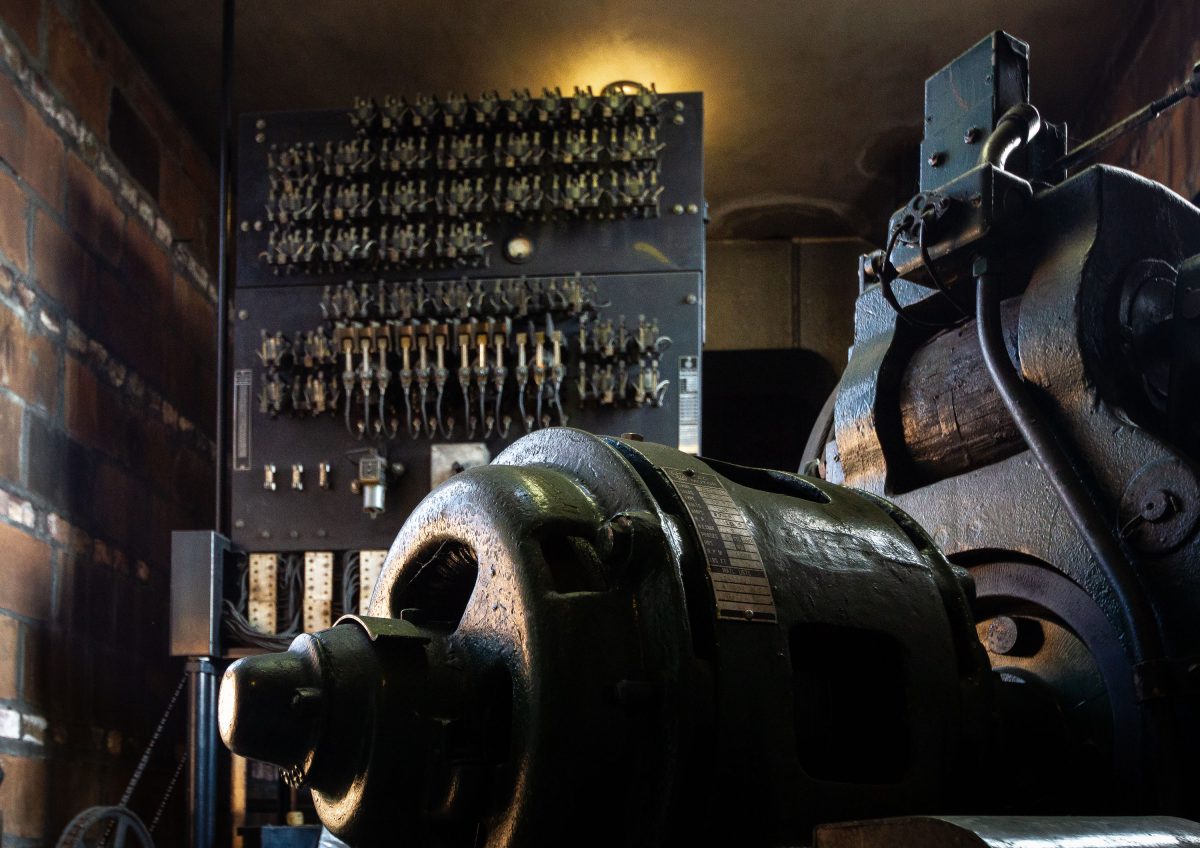
Motor Control Room, Grain Elevator
June 2013 —
Explore photos tagged Industrial.
June 2013 —
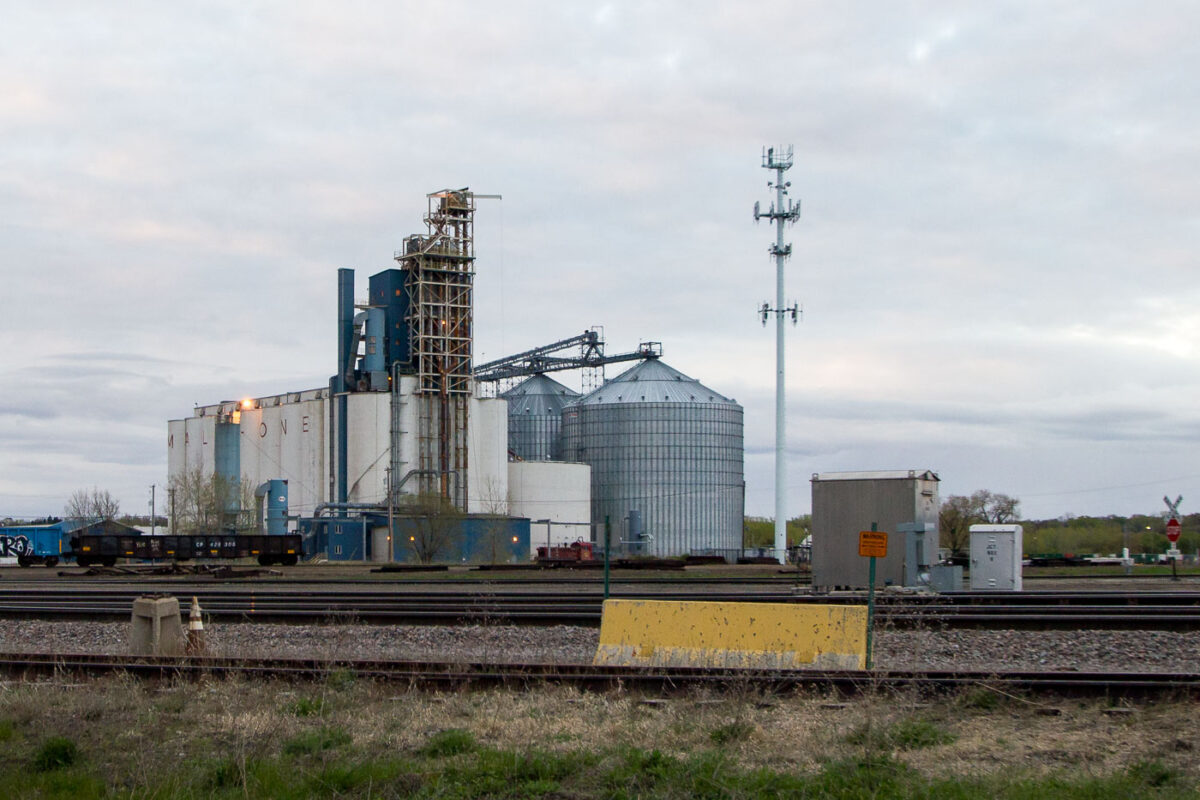
May 2014 — MaltOne Elevator, Minneapolis
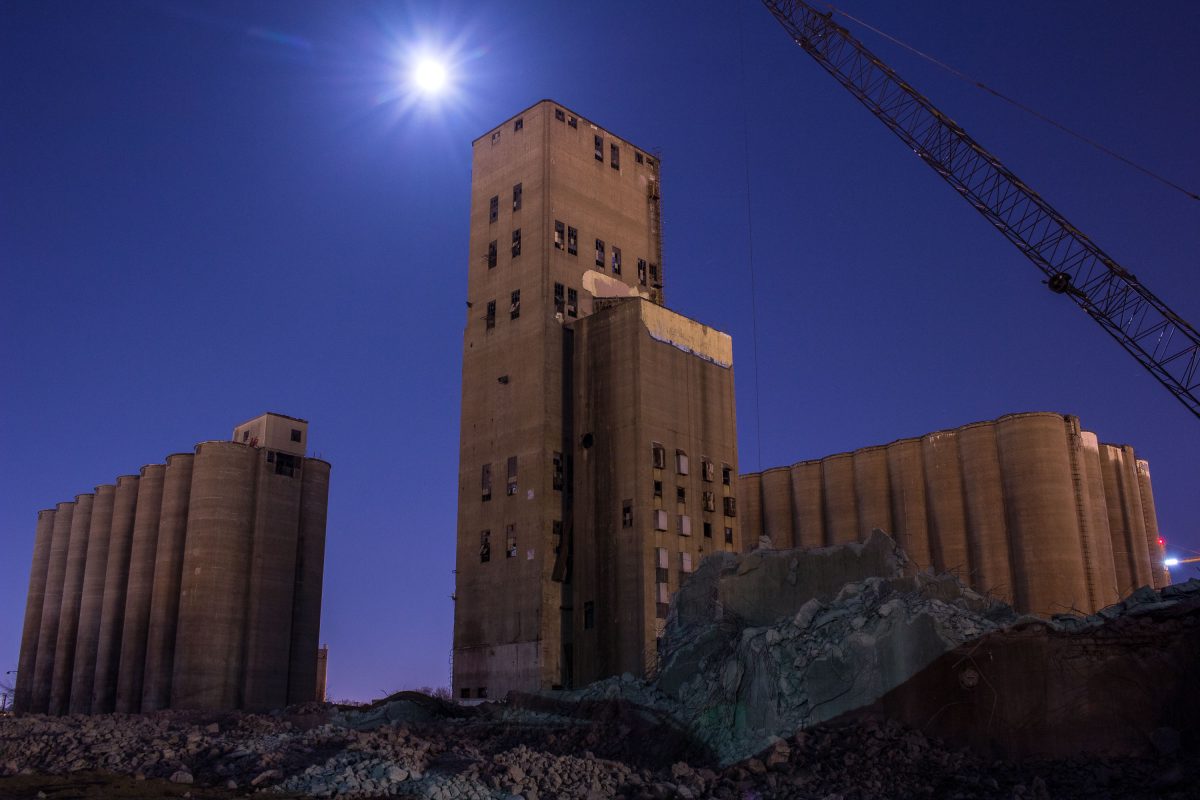
February 2017 —
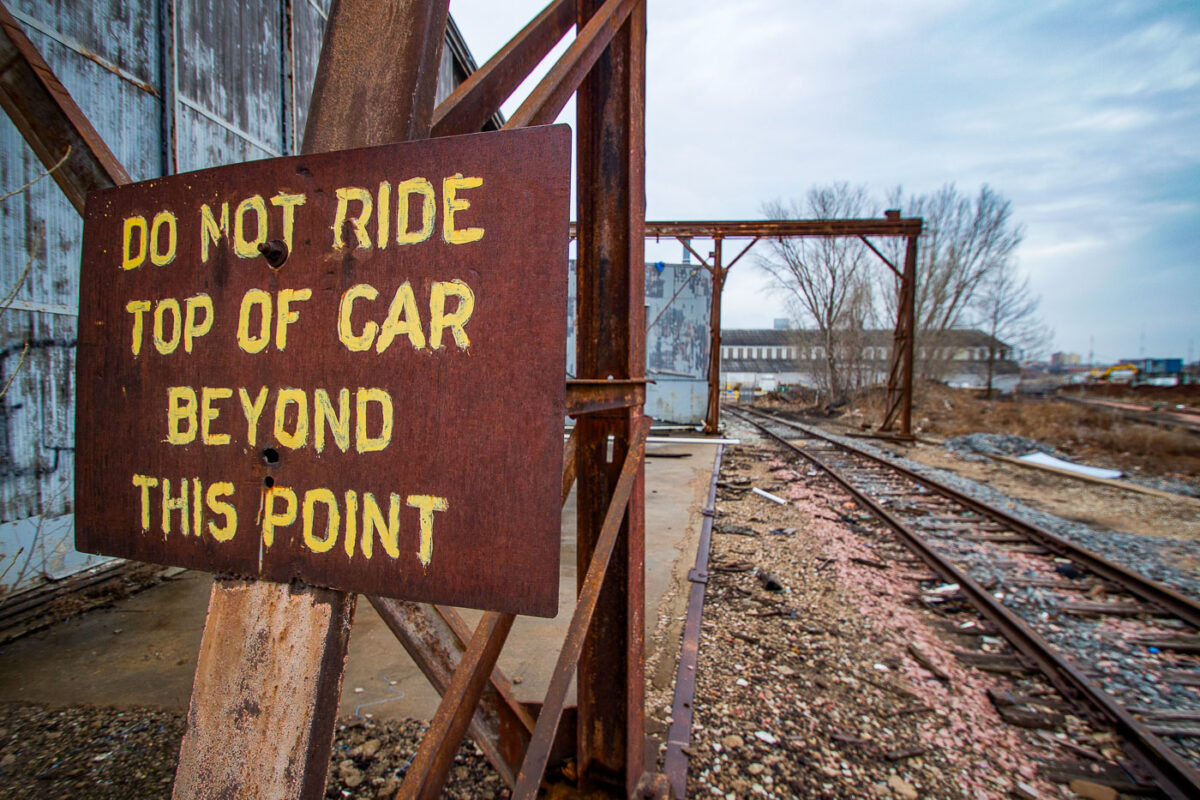
February 2017 — Sign that reads "Do not ride top of car beyond this point". Found in Omaha, NE.
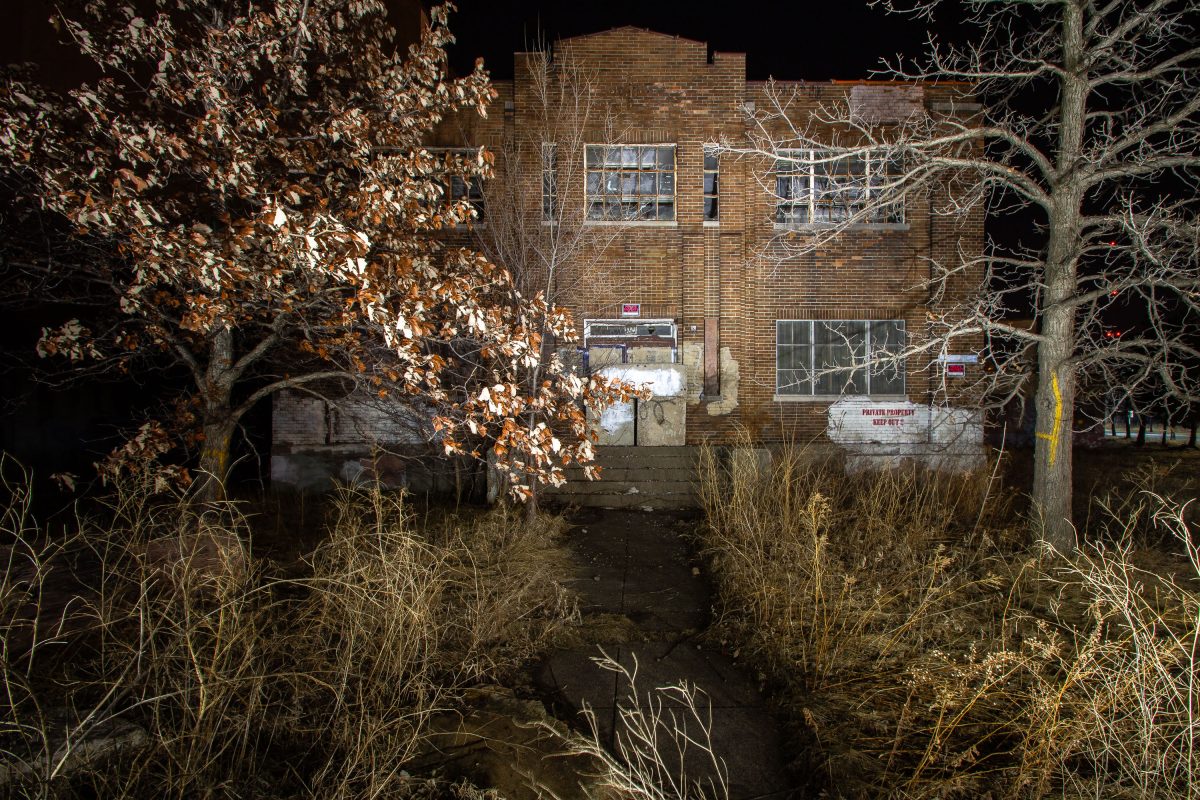
February 2017 —
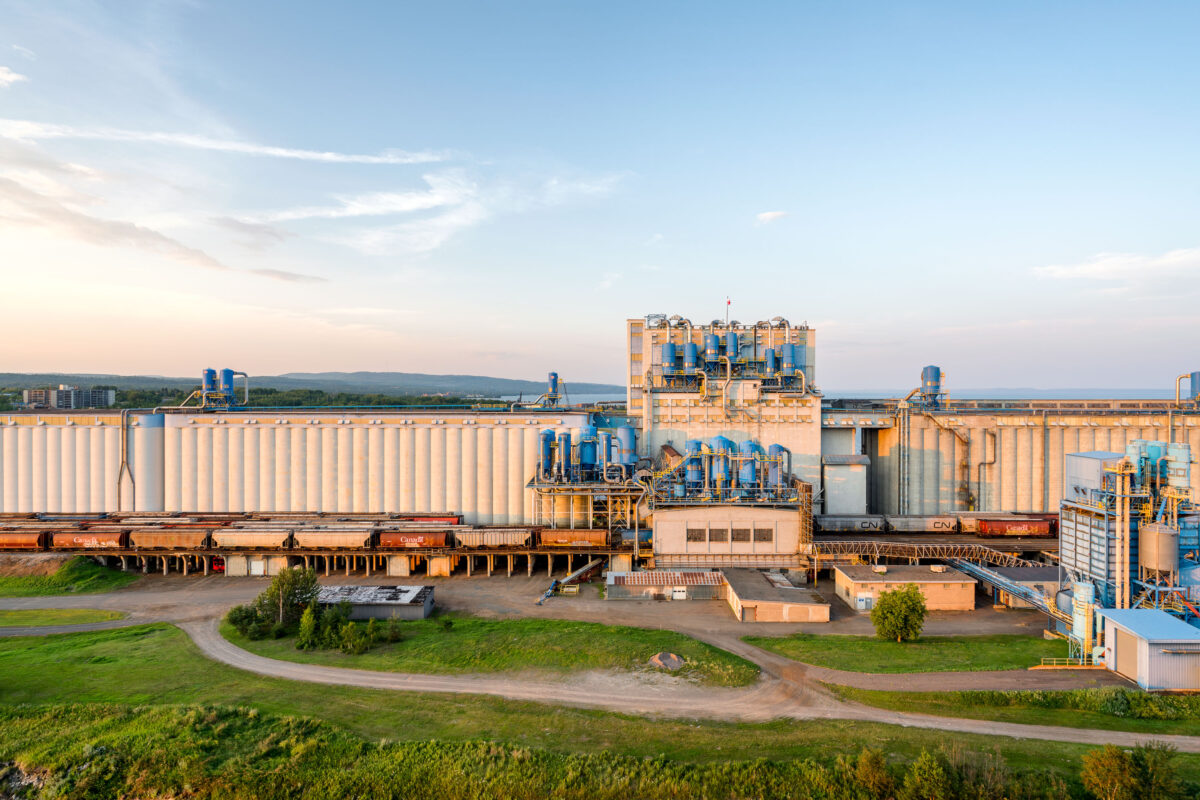
July 2017 — Grain Elevator in Thunder Bay, Canada.
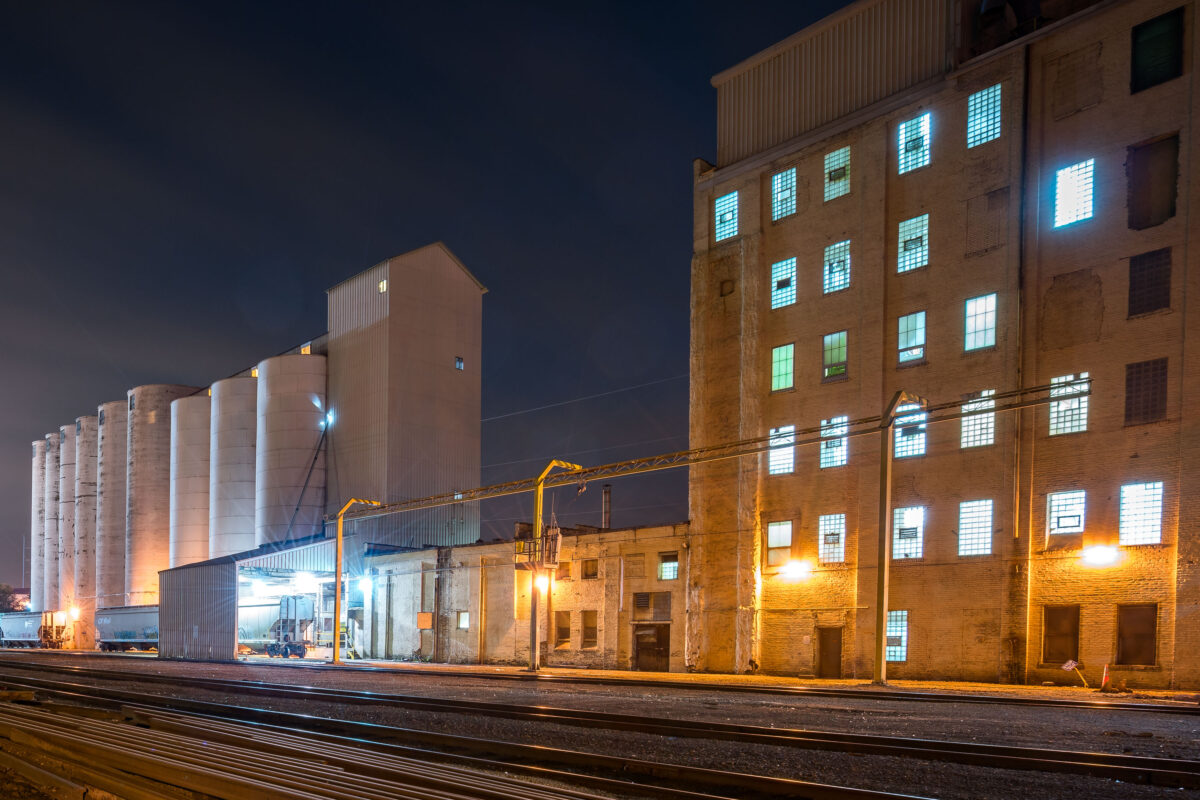
September 2017 —
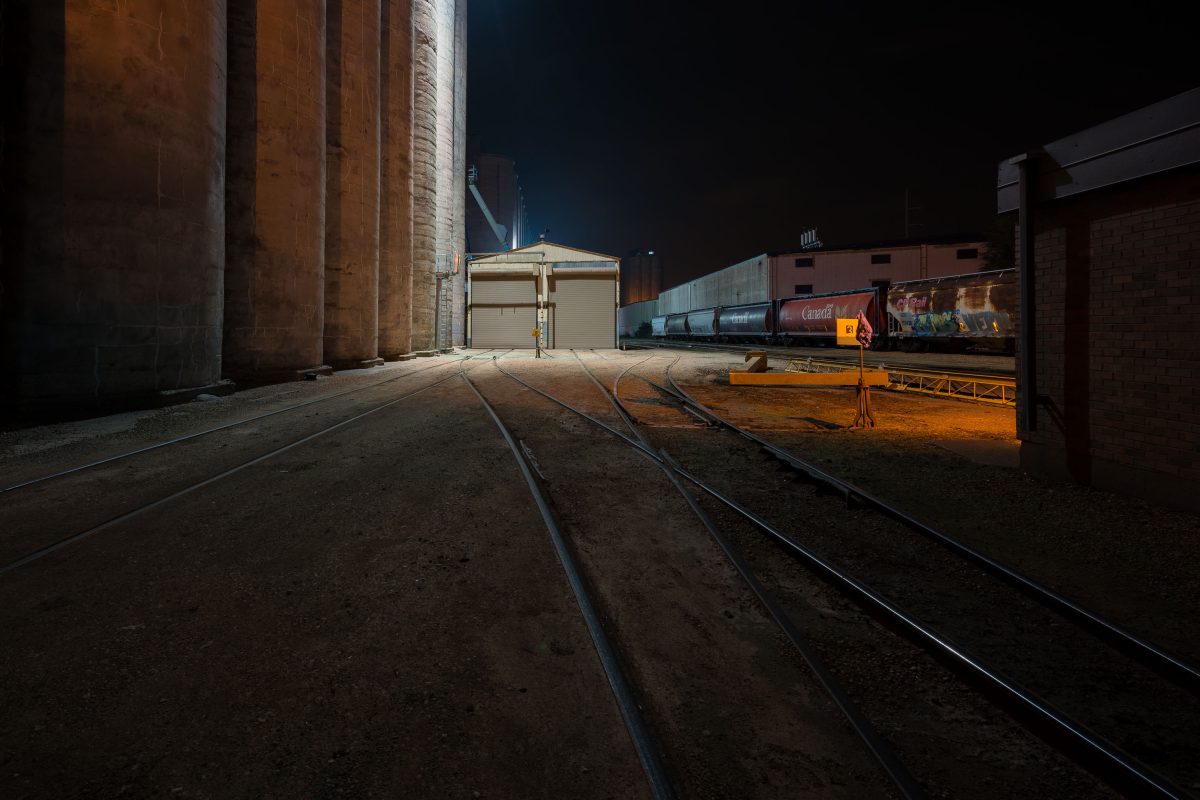
September 2017 —
September 2017 —
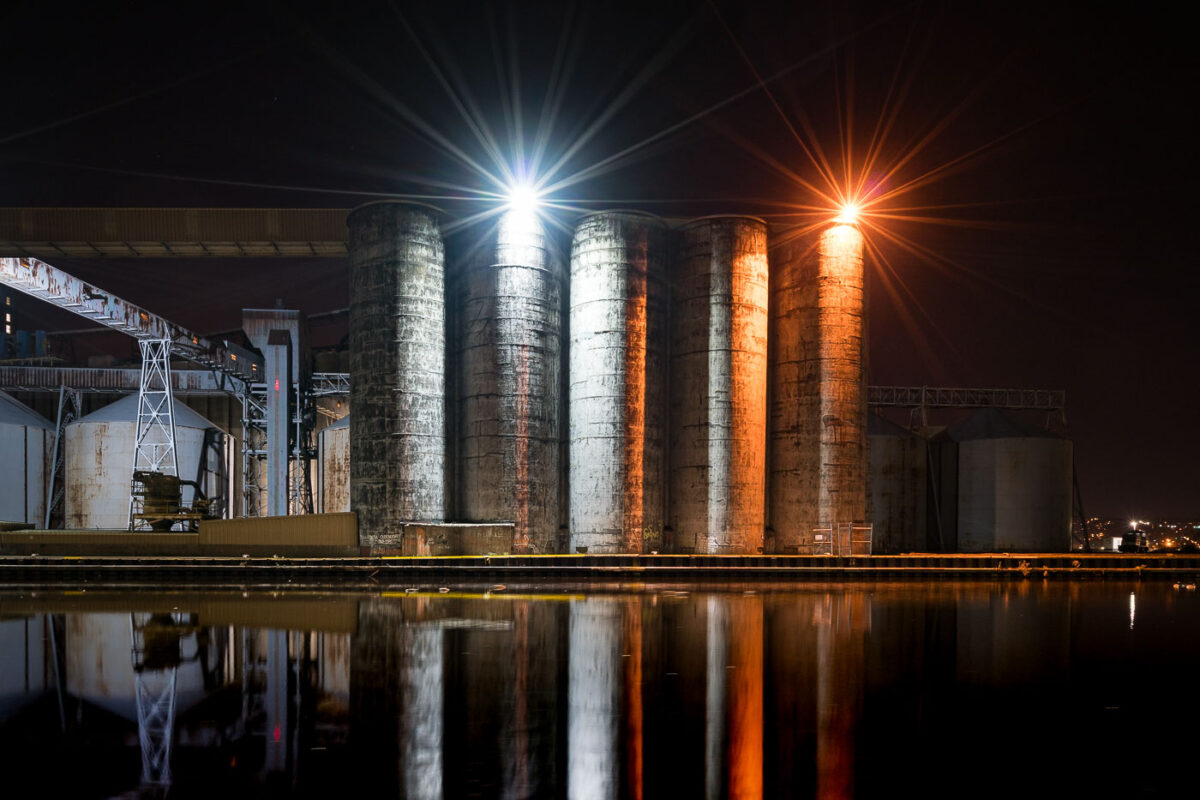
October 2017 — CHS elevators in Superior, Wisconsin.
November 2017 —
March 2018 —
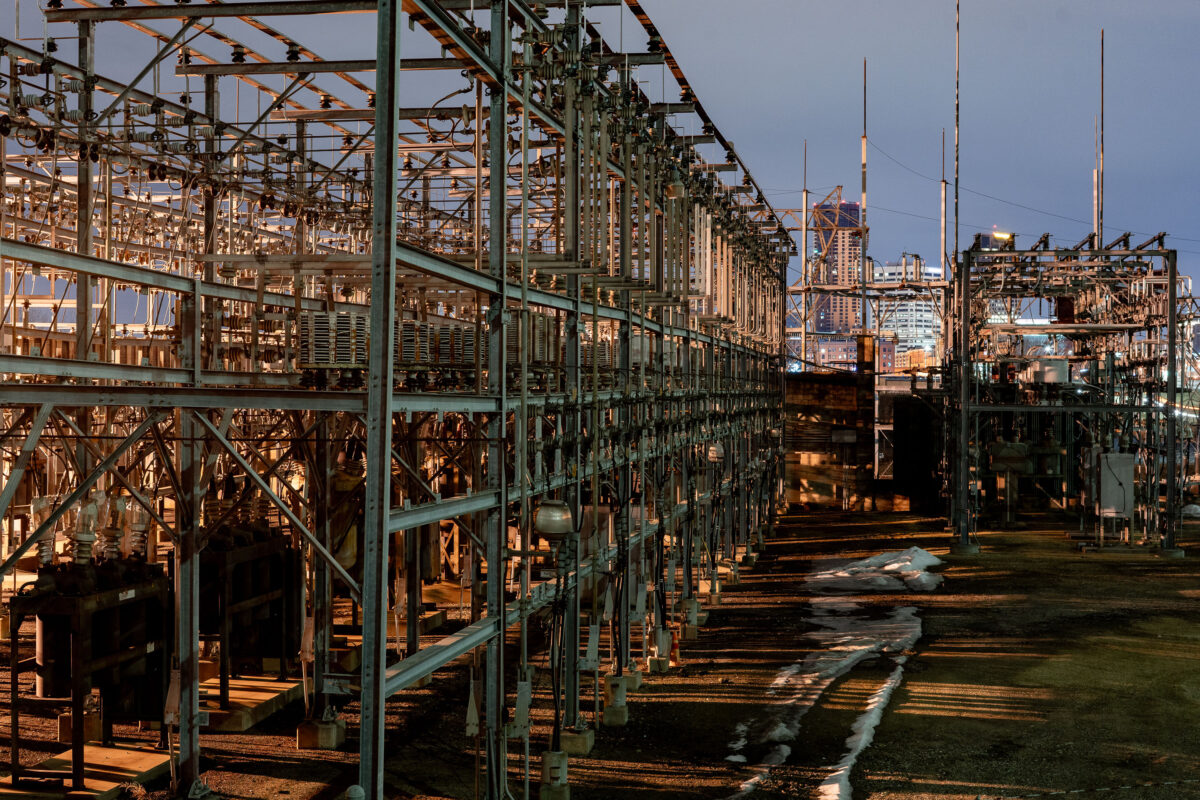
April 2018 — An Xcel Energy substaton near Downtown St. Paul, Minnesota.
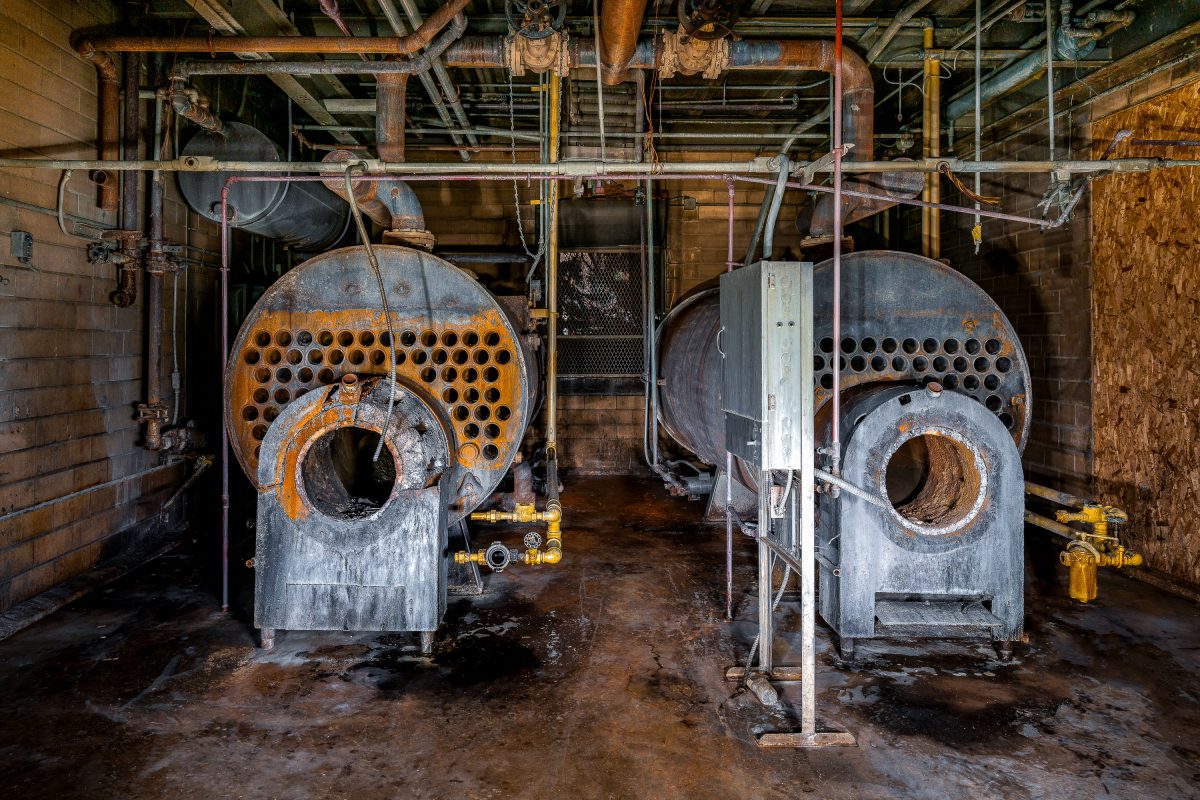
August 2018 —
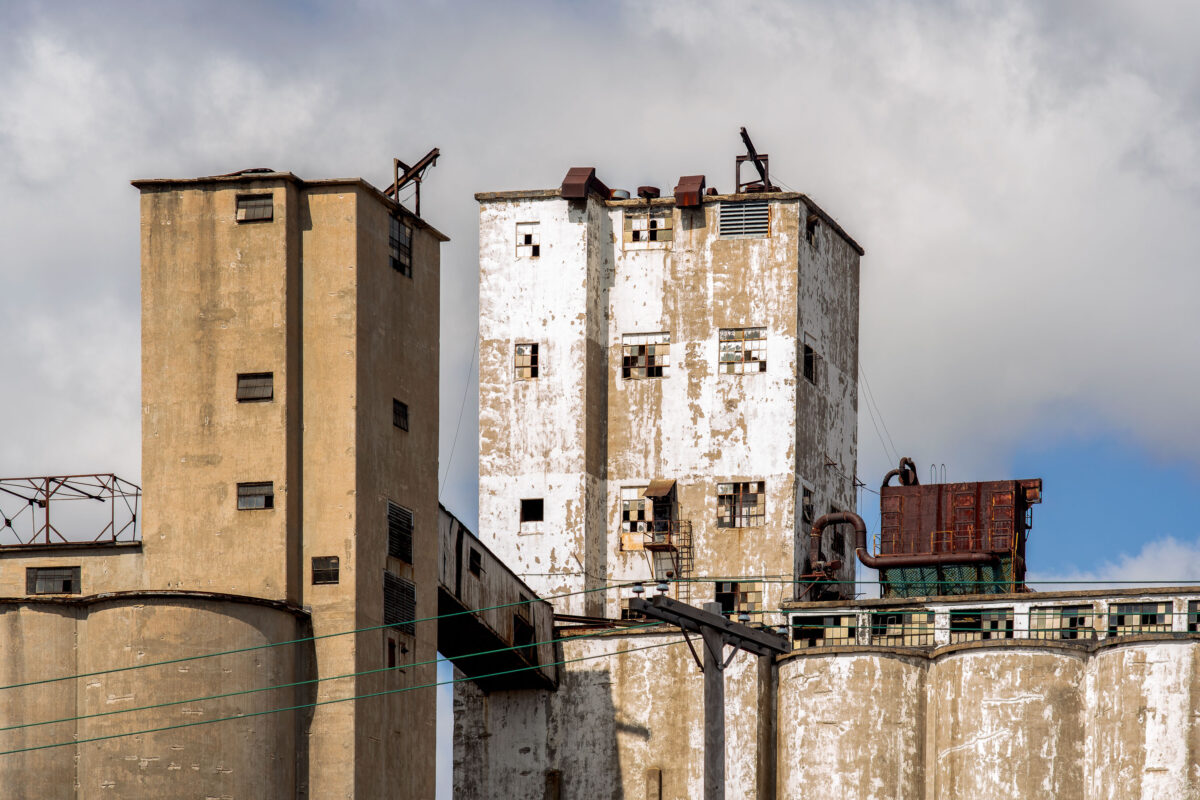
April 2019 — Weathered and monumental, these grain elevators in Kansas City, Missouri stand as relics of the city’s early 20th-century agricultural dominance. The concrete silos and headhouses—once vital for storing and shipping grain along the Missouri River—still loom over the industrial district near the rail corridors. Layers of peeling paint and rusted conveyor housings reveal decades of exposure to the Midwestern climate, while their towering form recalls the scale of regional commerce that helped define Kansas City’s role as a national freight and grain hub.
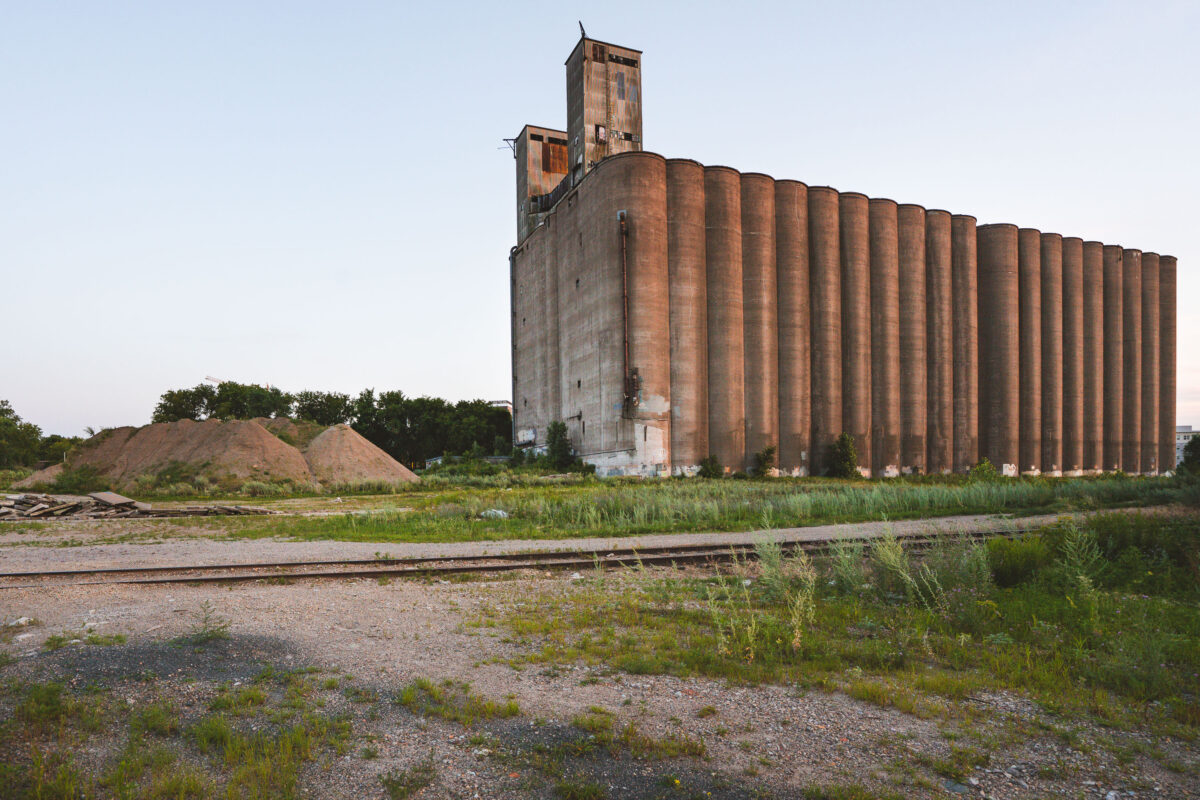
July 2019 — The long abandoned massive concrete Archer-Daniels-Midland Delmar Elevator No. 7 in Minneapolis.
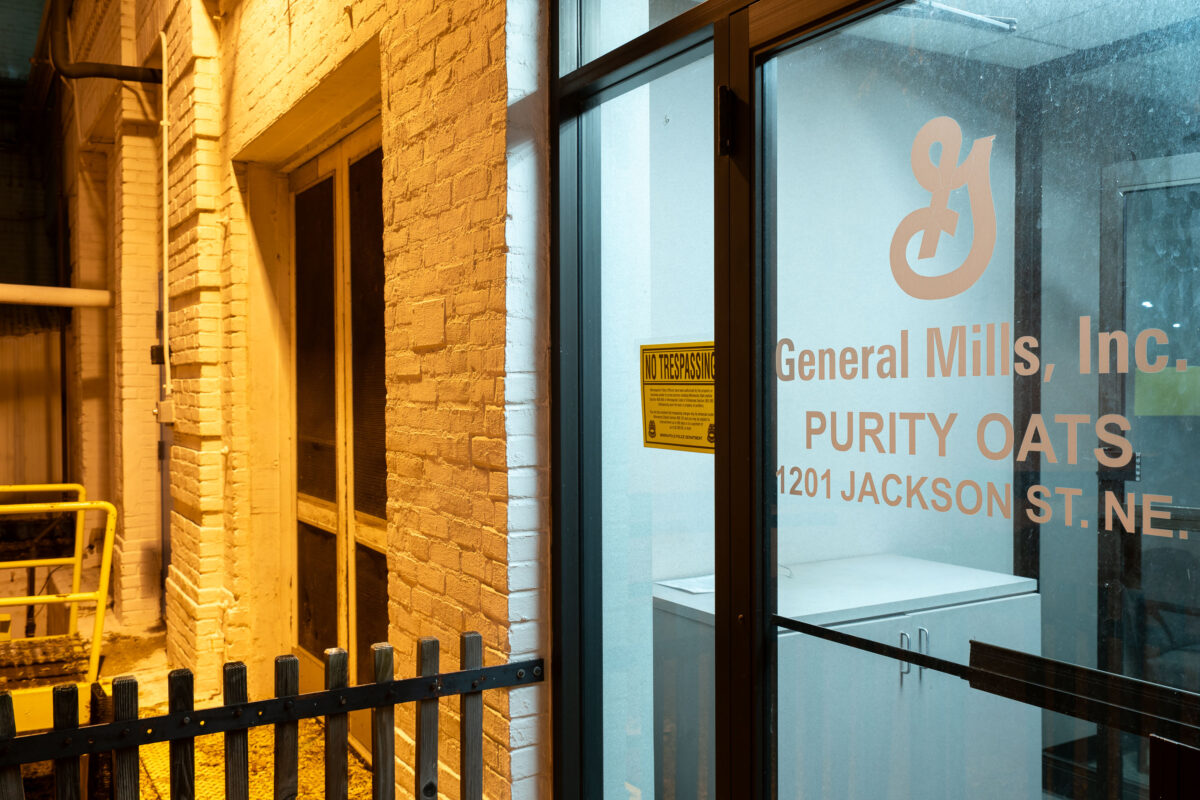
November 2019 — Once part of the vast milling network that shaped Minneapolis’s industrial identity, this now-closed General Mills Purity Oats plant at 1201 Jackson Street NE reflects the city’s transition from global grain hub to post-industrial reuse. The modest brick complex, still bearing its original signage, served as a specialized processing site within the company’s broader cereal operations before its eventual closure. Its preservation offers a glimpse into the city’s enduring ties to the flour and oat industries that once defined the Mississippi River corridor.
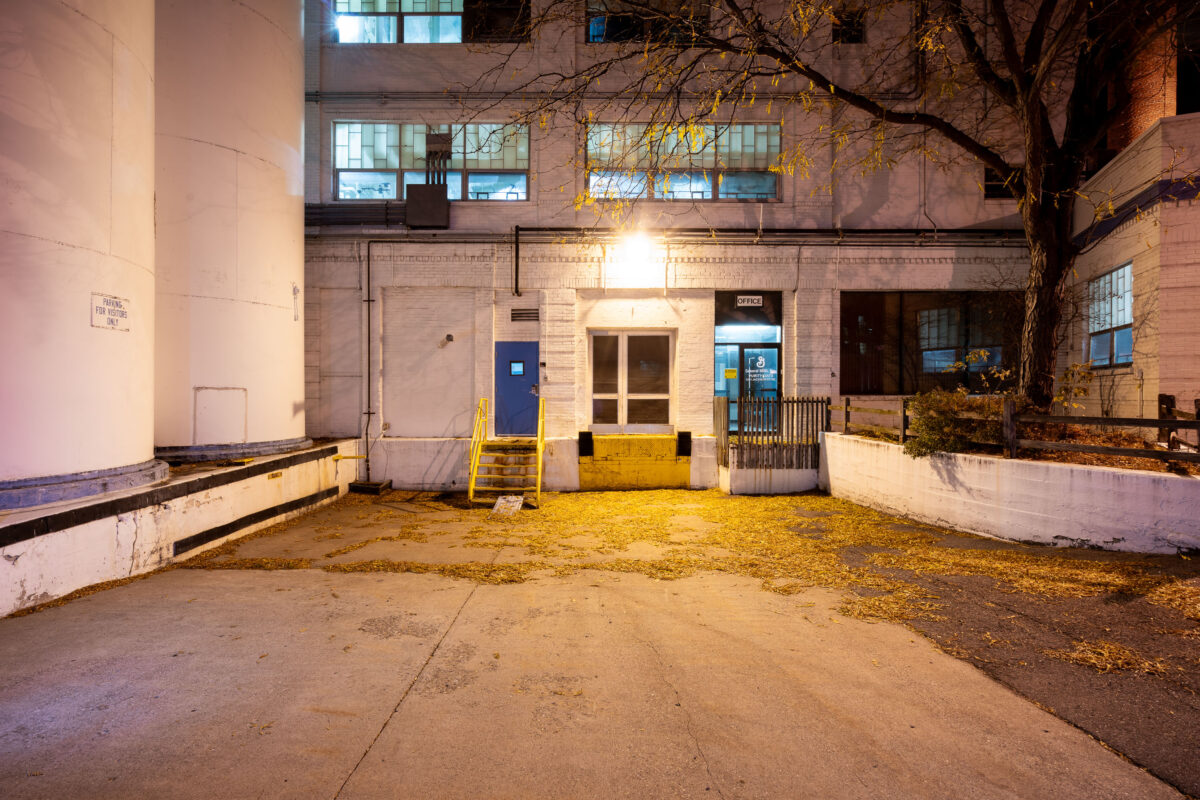
November 2019 — This view shows the rear loading and office entrance of the former General Mills Purity Oats facility in Northeast Minneapolis. Built during the city’s industrial boom, the complex once handled oat processing and packaging for one of the nation’s largest cereal producers. The structure’s painted brick walls, grain silos, and utilitarian layout are characteristic of mid-20th-century food-processing plants that supported the city’s reputation as the “Flour Milling Capital of the World.”
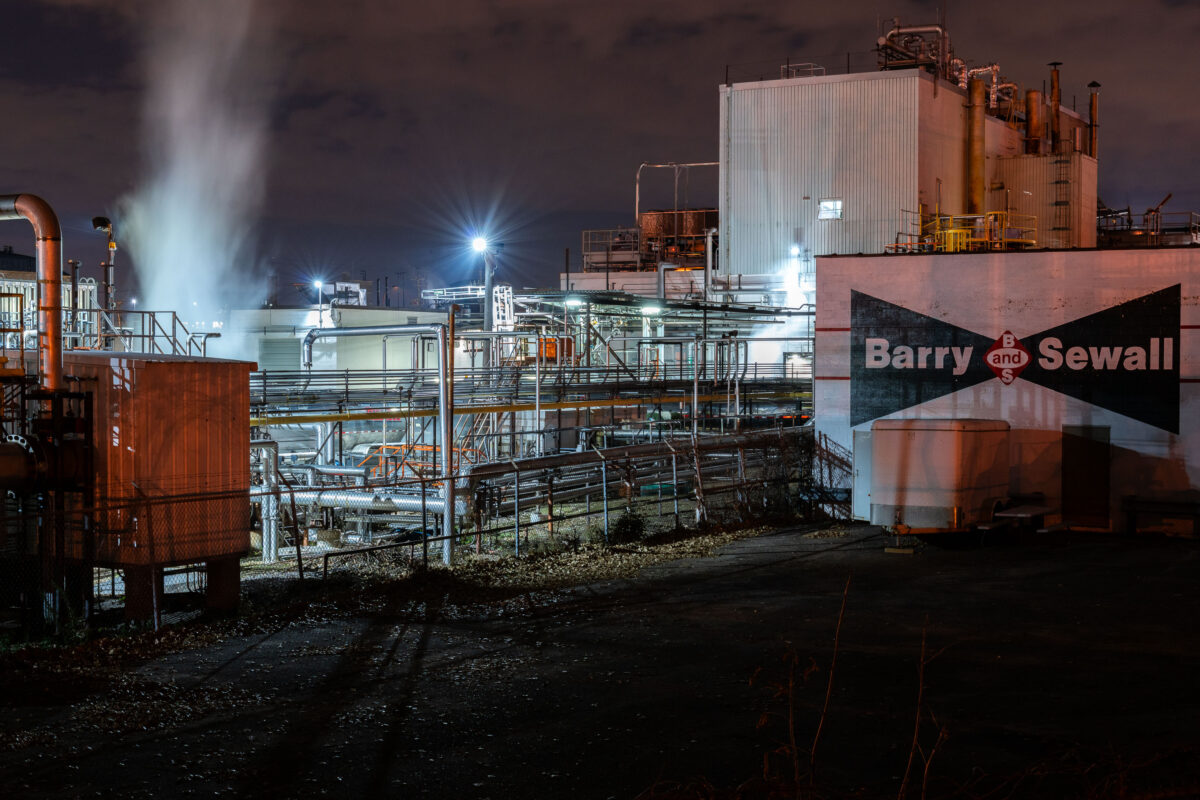
November 2019 — Steam rises from the Barry & Sewall Chemical Company complex in Northeast Minneapolis, a facility known for producing adhesives, coatings, and specialty chemicals for over a century. Illuminated by floodlights and framed by dense pipe networks, the site reflects the city’s enduring industrial infrastructure along the rail and river corridors. The hand-painted logo on the wall remains a remnant of mid-20th-century branding still visible across many older manufacturing sites in the Twin Cities.
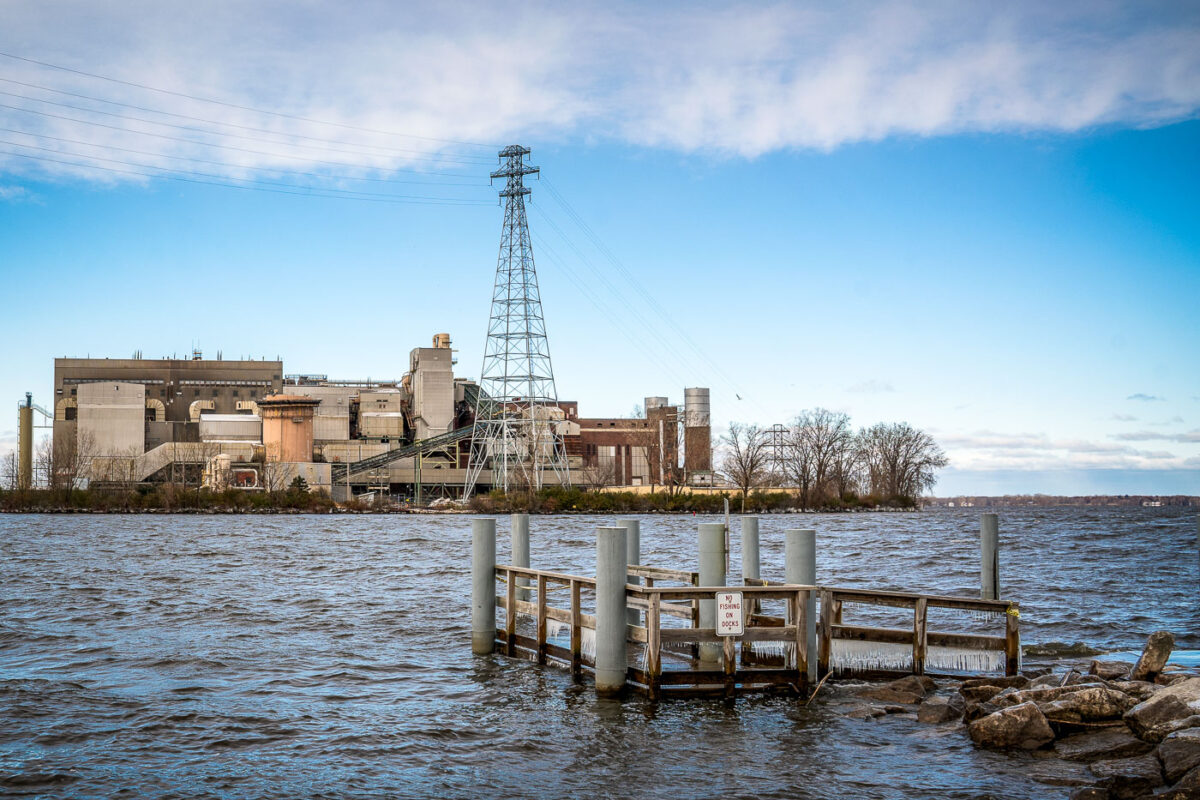
November 2019 — J. P. Pulliam Generating Station was an electrical power station powered by sub-bituminous coal, which could also be substituted by natural gas. It was located in Green Bay, Wisconsin in Brown County. The plant was named after the former Wisconsin Public Service Corporation president John Page Pulliam (–June 15, 1951). The plant units were connected to the power grid via 138 kV and 69 kV transmission lines. The remaining coal units on site were decommissioned in 2018 leaving only the natural gas fired P31 unit active at the site.
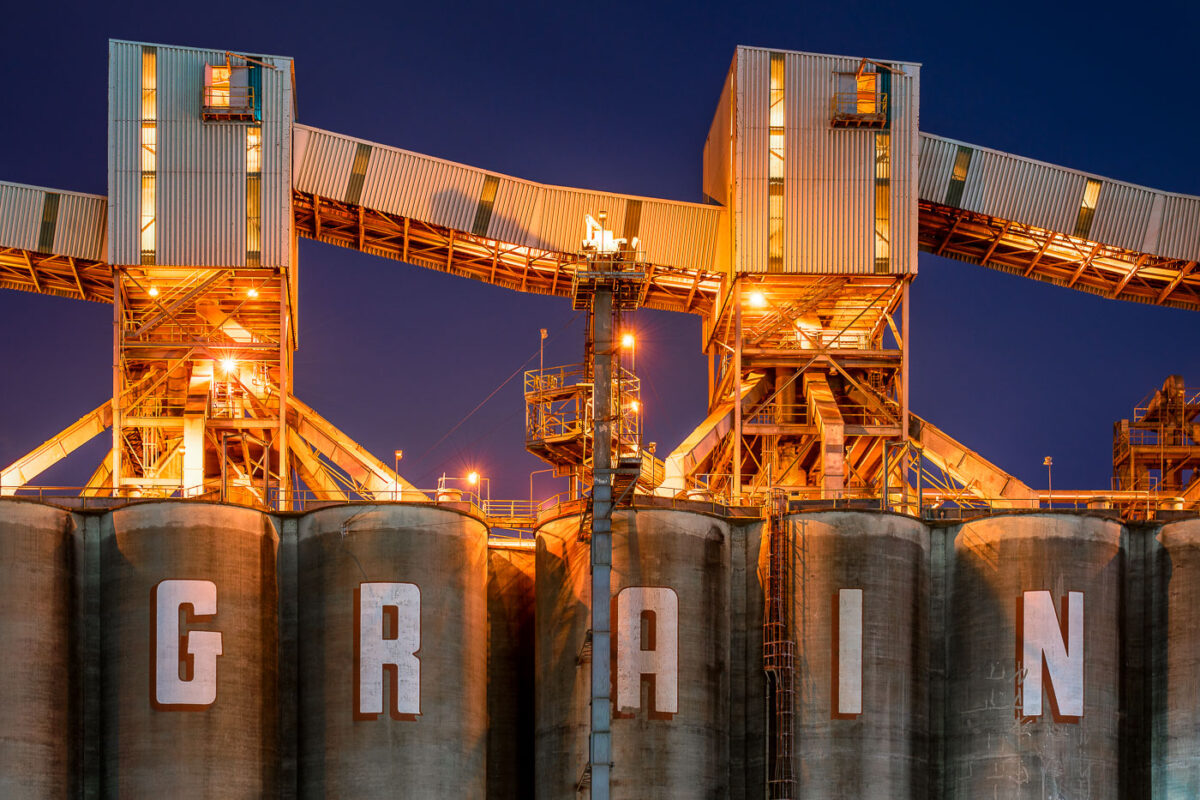
December 2019 — Illuminated under floodlights, the massive concrete grain silos of the Zen-Noh Grain Corporation terminal rise over the Mississippi River in Convent, Louisiana. Operated by a U.S. subsidiary of Japan’s Zen-Noh agricultural cooperative, this export facility plays a critical role in shipping Midwestern grain to international markets. The illuminated conveyors and loading structures highlight the region’s industrial link between river transport and global food supply chains.
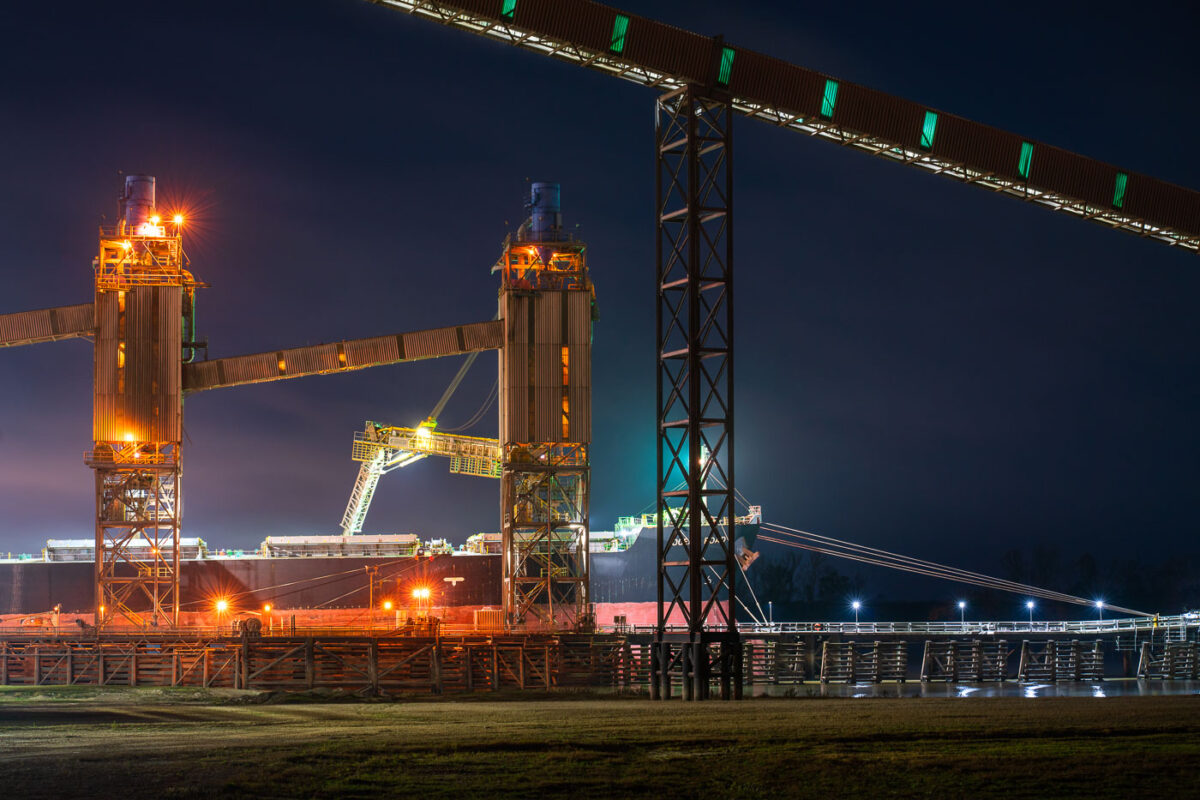
December 2019 —
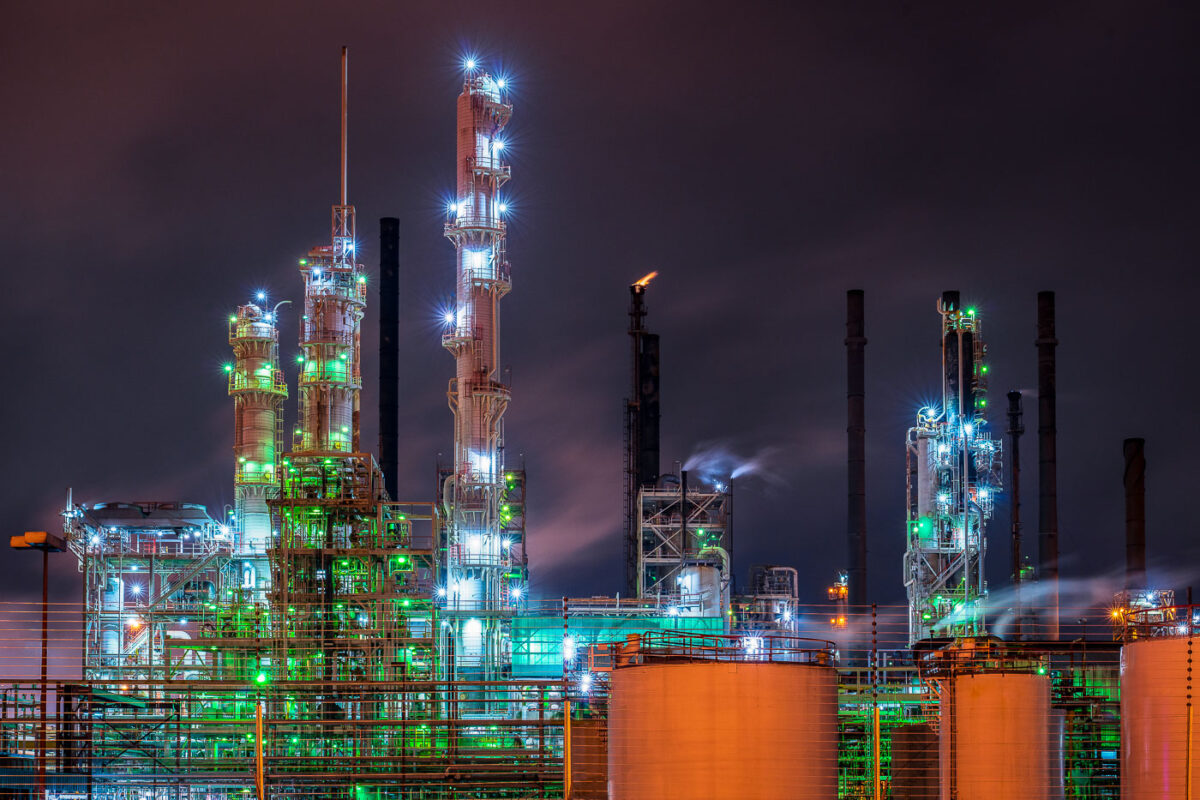
December 2019 — This nighttime industrial scene is from Baton Rouge, Louisiana, home to one of the largest oil refining and petrochemical hubs in the United States. The brightly lit towers and distillation columns belong to facilities along the Mississippi River Industrial Corridor, where refineries like ExxonMobil Baton Rouge operate around the clock. Steam and flares mark the ongoing refining processes that produce gasoline, diesel, and chemical feedstocks central to the region’s economy. The image captures the city’s long-standing connection to the energy and manufacturing industries.
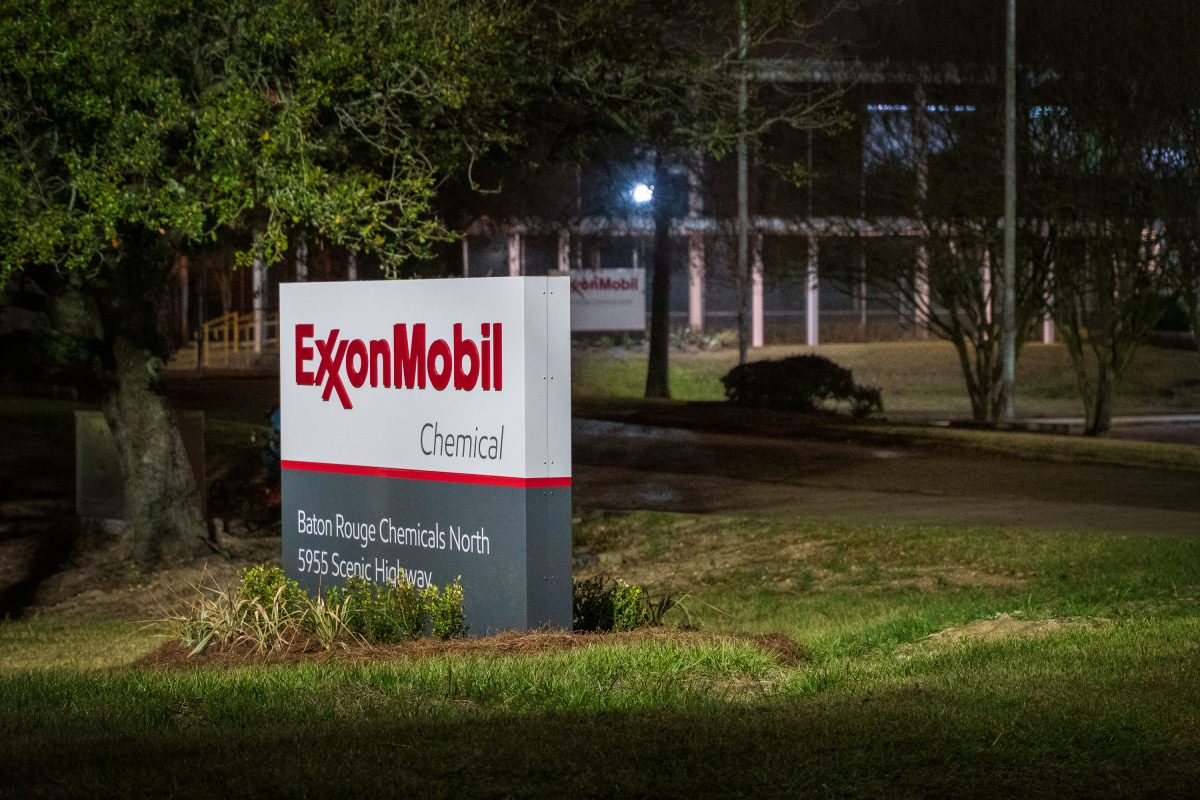
December 2019 —
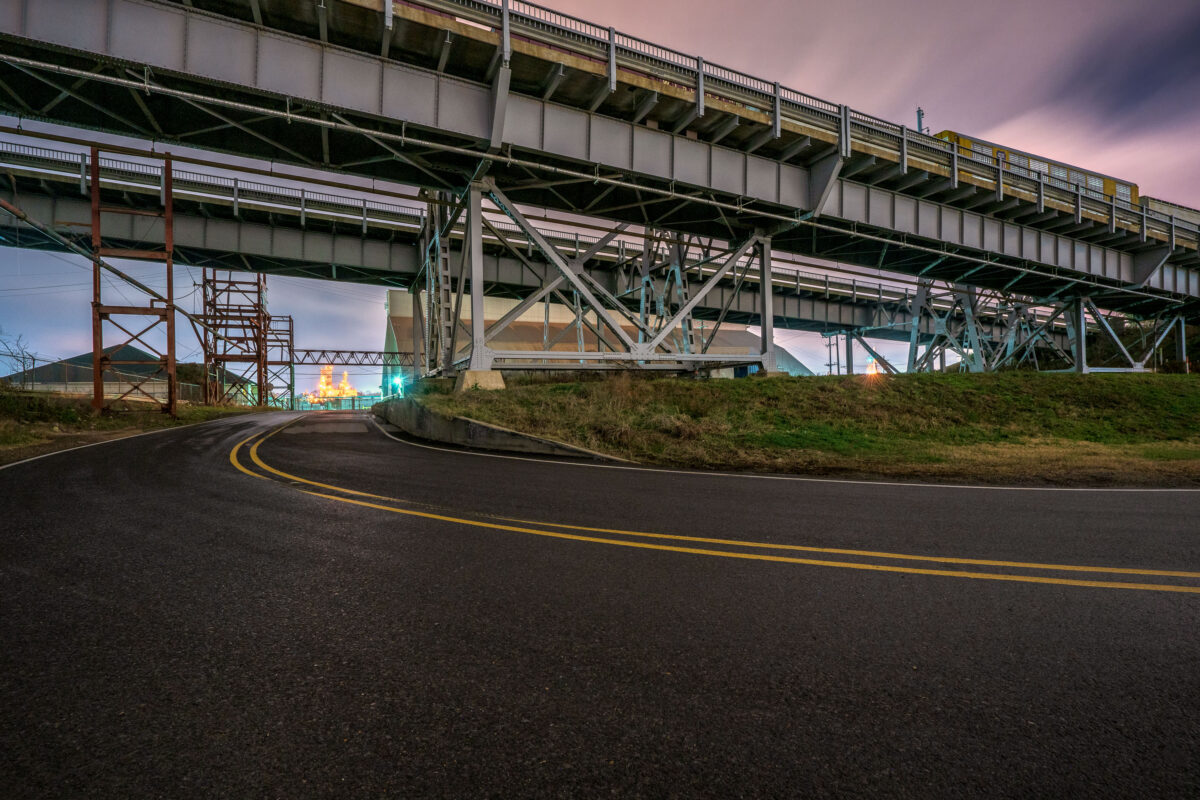
December 2019 — On Baton Rouge’s Airline Highway, the road snakes beneath a tangle of overpasses and steel supports, a striking symbol of mid-20th-century infrastructure. Originally developed as a major bypass route, Airline Highway became one of Louisiana’s busiest commercial arteries, linking petrochemical plants, warehouses, and neighborhoods across the capital region. At dusk, the glow of distant lights cuts through the industrial sprawl, underscoring how this corridor remains a vital — if gritty — backbone of the city’s economy and daily life.
December 2019 —
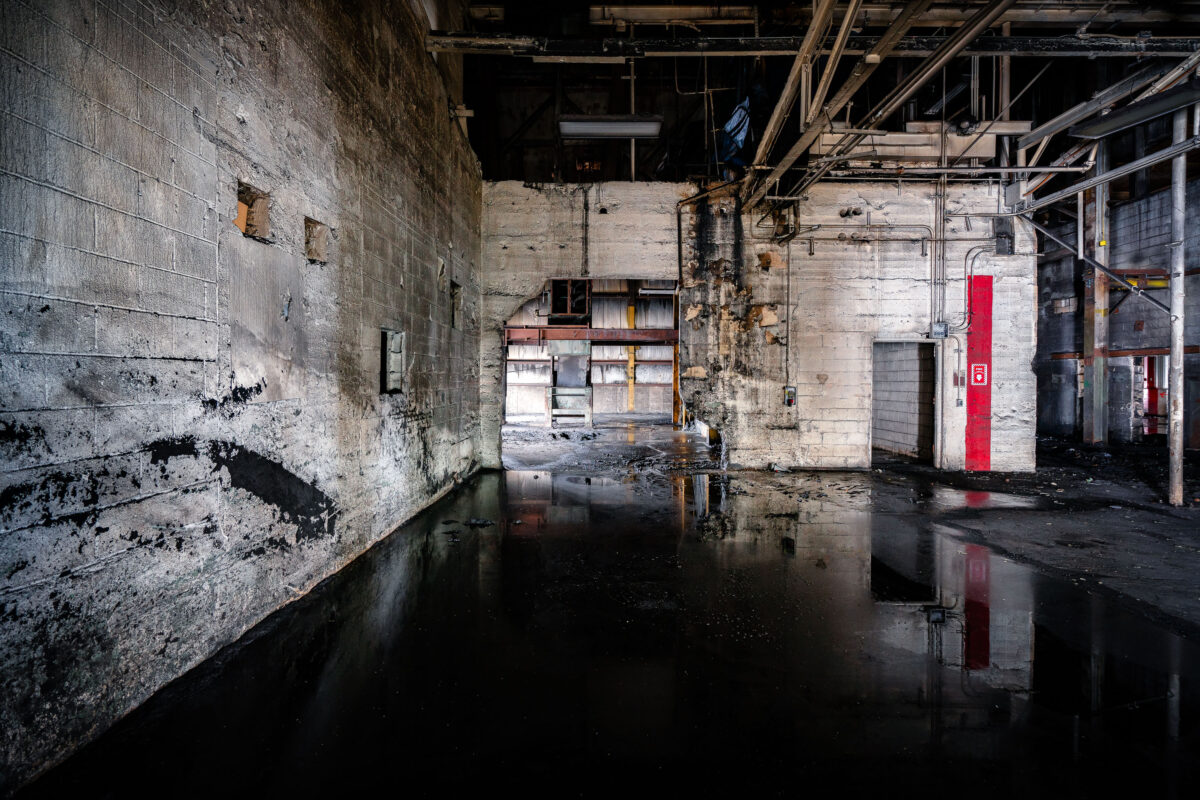
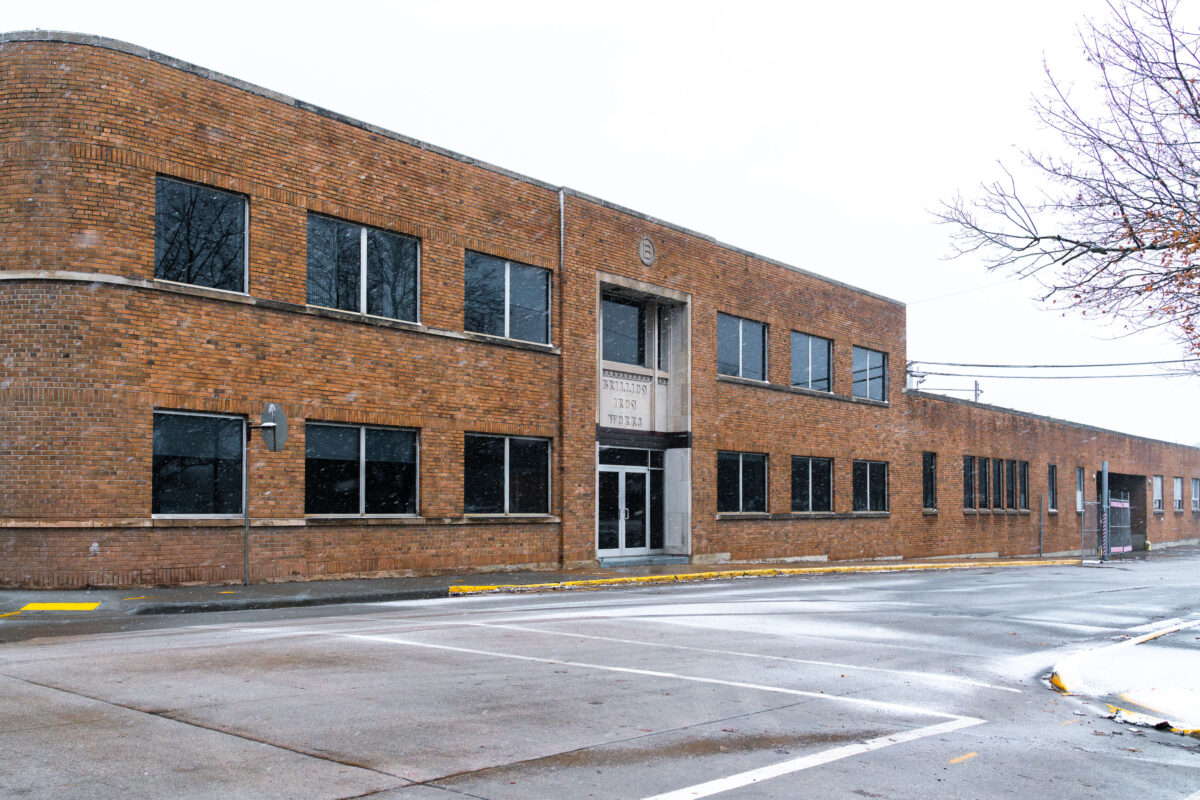
December 2019 — The Brillion Iron Works (BIW) foundry in Wisconsin. The site was closed in 2016 and demolished in 2019.
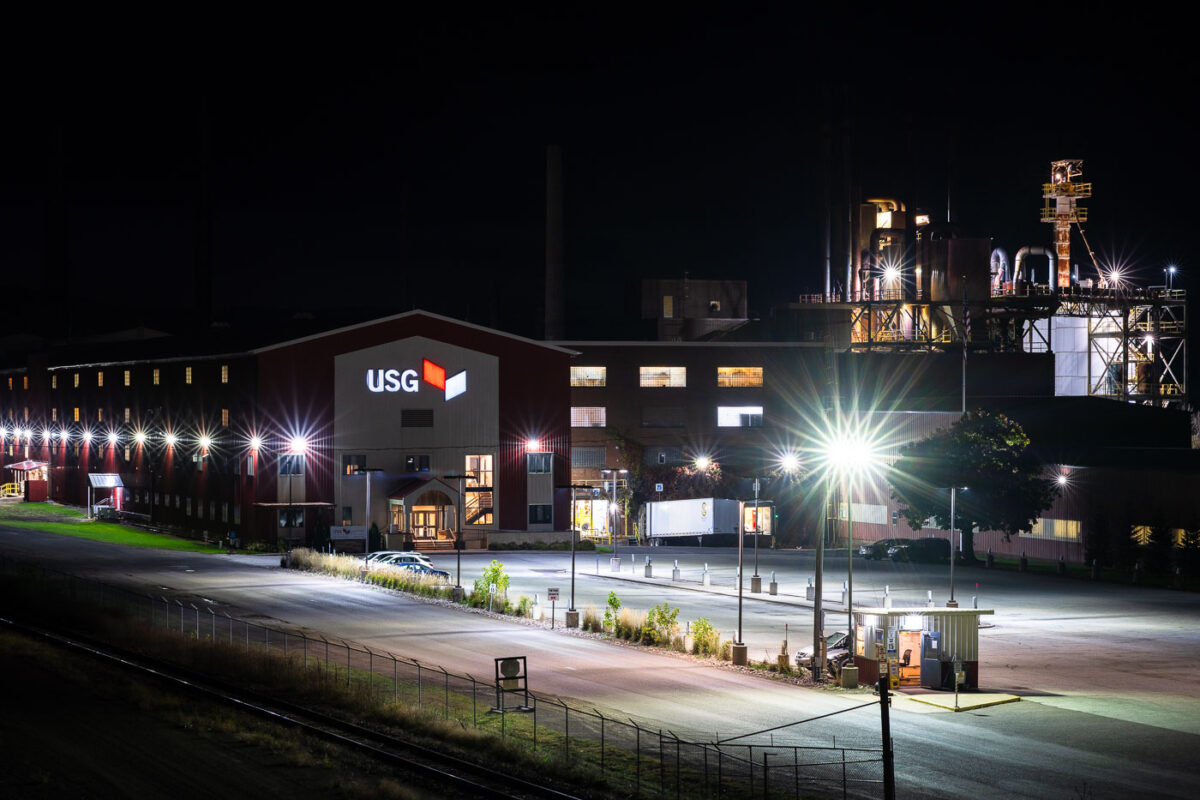
September 2021 — A nighttime view of the USG industrial plant glows under rows of bright sodium and LED security lights. The red-sided facility’s sign stands out sharply in white and red against the dark sky, while the complex’s metallic towers and piping shimmer under spotlights in the background. The quiet lot, railway siding, and small illuminated guard booth in the foreground add a sense of stillness to an otherwise powerful industrial scene — a snapshot of modern manufacturing infrastructure at rest, yet poised for constant operation.
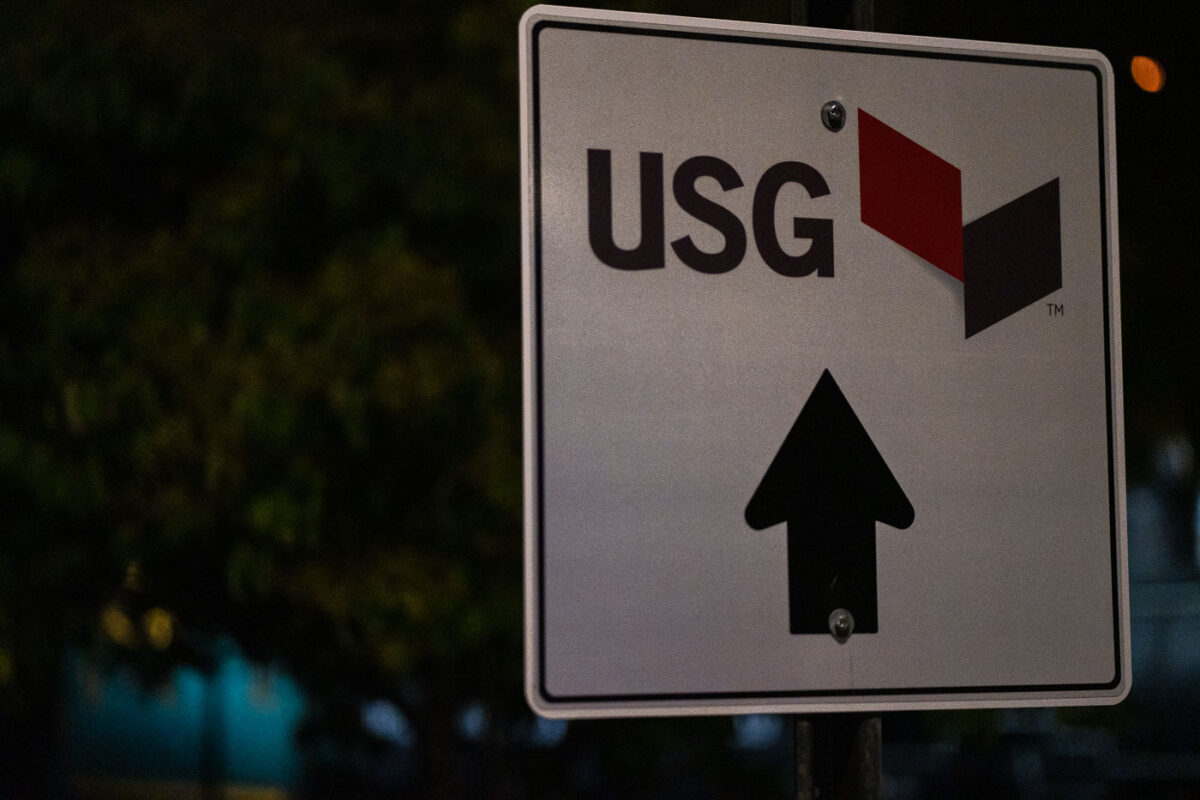
September 2021 — A USG Corporation sign in Cloquet, Minnesota.
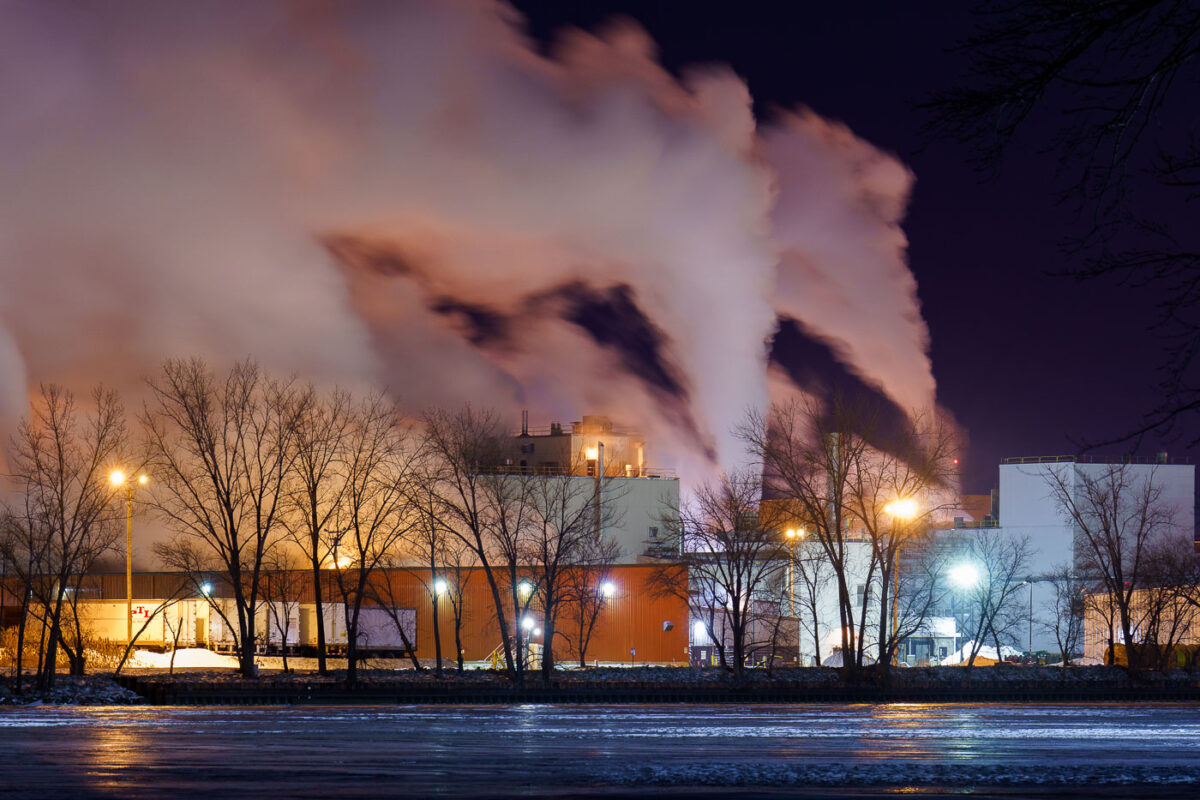
December 2022 — Green Bay Packaging’s state-of-the-art recycled paper mill, completed in 2021 at a cost of roughly $500 million, releases plumes of steam into the winter night as viewed from across the Fox River. The facility replaced the company’s 72-year-old mill and became one of the most advanced recycled-paper operations in the country, designed to dramatically reduce water use and energy consumption while increasing production capacity. The glow from the mill’s lighting and processing equipment diffuses through the cold air, mingling with tree silhouettes along the riverbank and reflecting off the frozen surface of the Fox River.
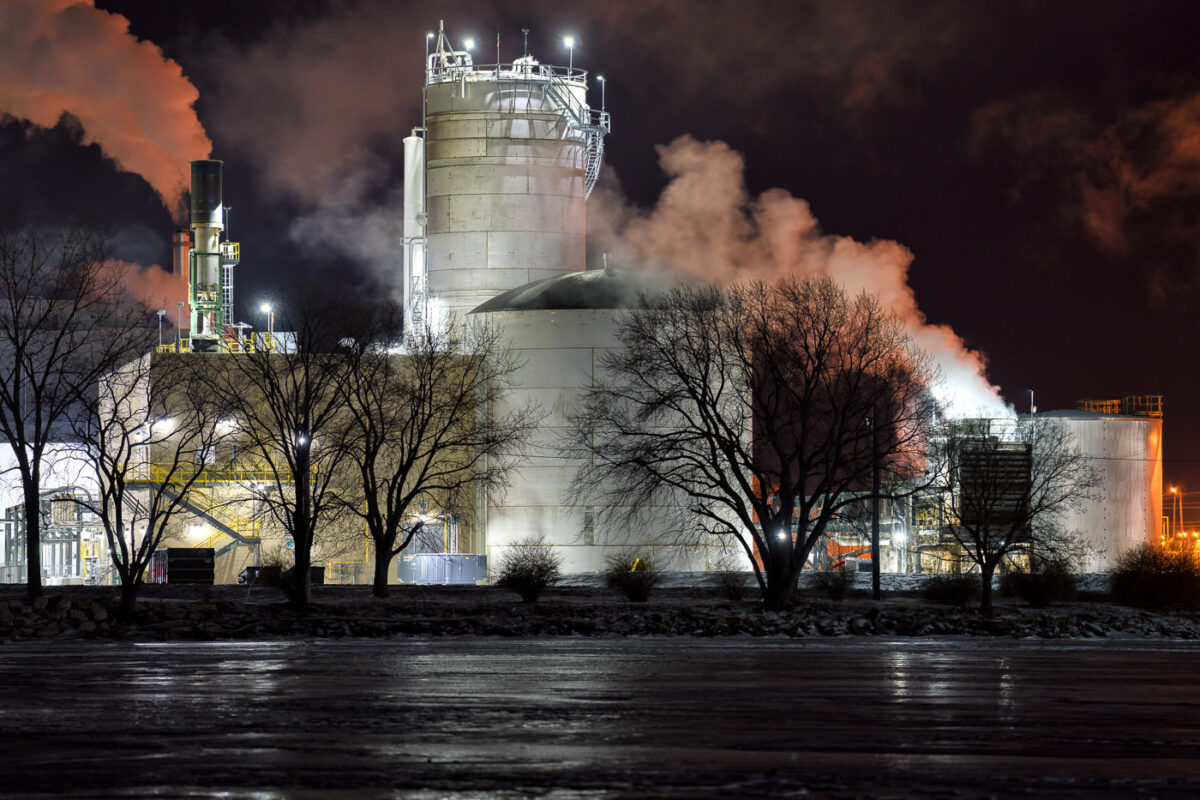
December 2022 — Green Bay Packaging’s modern recycled paper mill rises behind leafless winter trees along the Fox River in Green Bay, Wisconsin. The facility, completed in 2021 as one of the most advanced and energy-efficient mills in the country, emits illuminated plumes of steam that drift across the night sky. The river’s frozen surface reflects the mill’s lights and muted colors, creating a stark industrial winter landscape along the east bank of the Fox River.
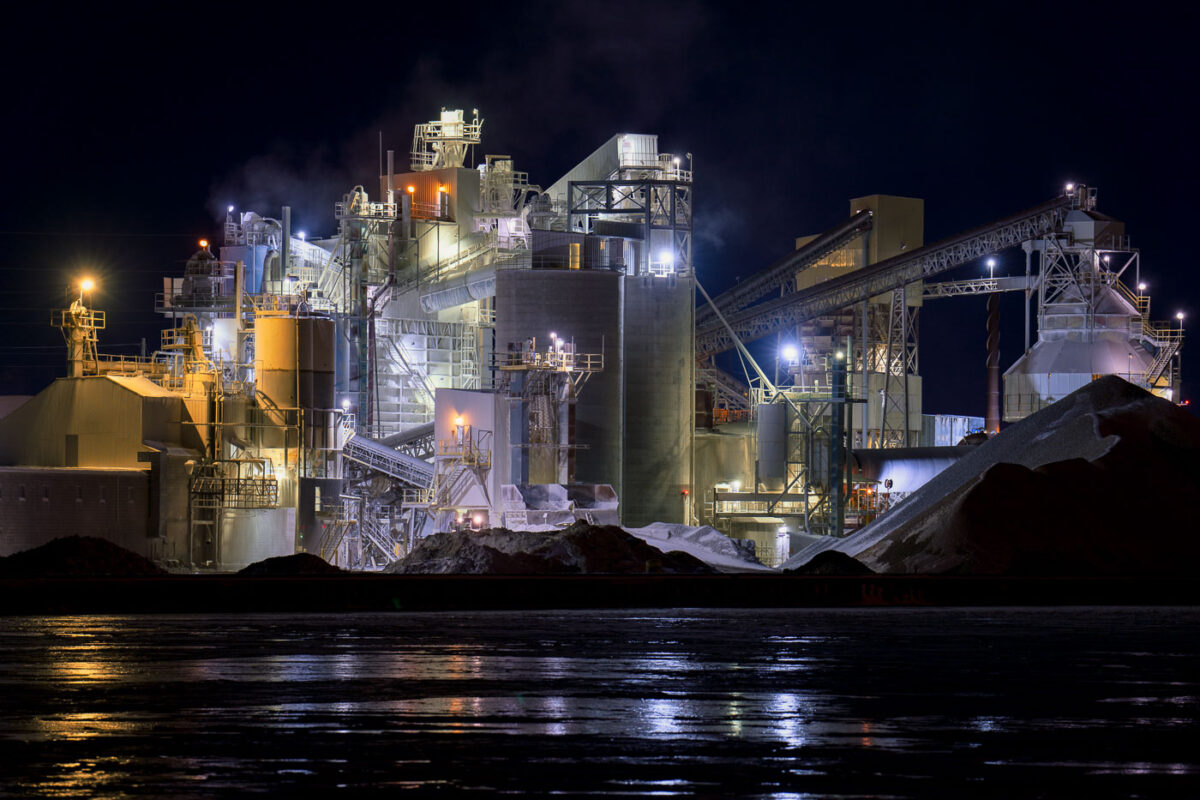
December 2022 — The Graymont lime processing plant along the Fox River in Green Bay, Wisconsin, illuminated during nighttime operations. The facility’s network of silos, conveyors, and dust-collection towers stands out against the dark sky, with steam drifting from active kilns and processing units. Reflections from the plant’s industrial lighting shimmer across the frozen river surface, highlighting the site’s role in the region’s long-standing manufacturing and mineral production corridor.
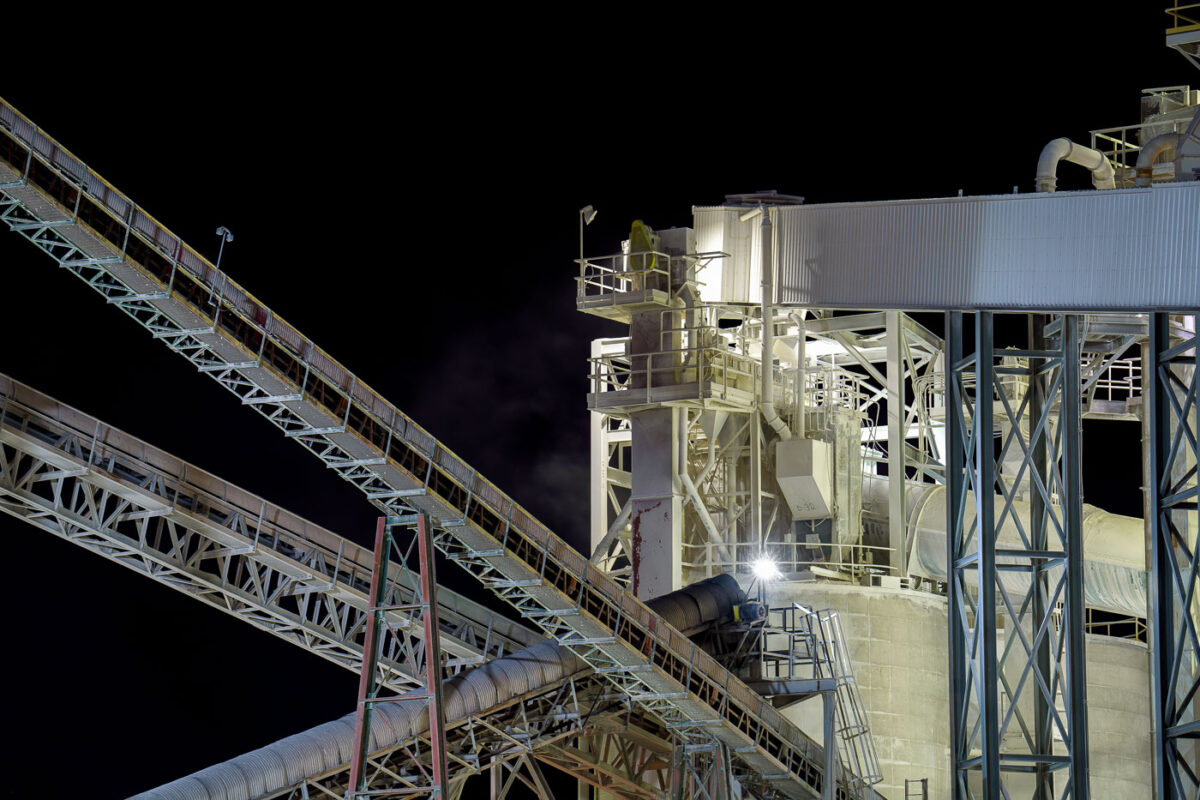
December 2022 — A detailed nighttime view of the conveyor towers and processing equipment at the Graymont lime plant in Green Bay, Wisconsin. The illuminated catwalks, ducts, and steel trusses highlight the facility’s continuous material-handling system, where crushed limestone moves through enclosed conveyors toward the plant’s kilns and storage silos. Fine dust, visible in the lights near the upper platforms, reflects the industrial character of a site that has served the region’s construction and manufacturing sectors for decades.
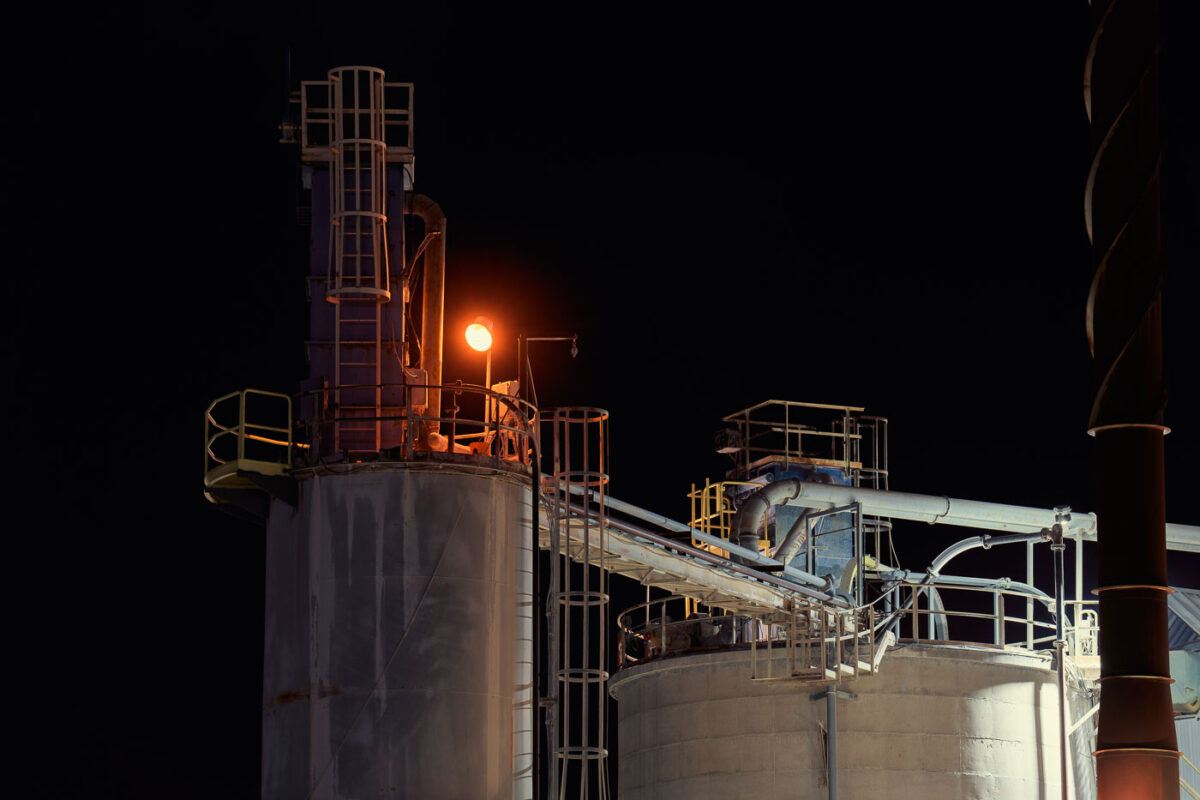
December 2022 — Illuminated by a single amber work light, the upper platforms and transfer pipes of the Graymont lime plant in Green Bay, Wisconsin stand out against the night sky. The cylindrical storage silos are connected by enclosed conveyor and piping systems that move processed lime between different stages of production. Catwalks, ladders, and pipe supports trace the geometry of an industrial site that has long supplied lime for regional steelmaking, water treatment, and construction uses.
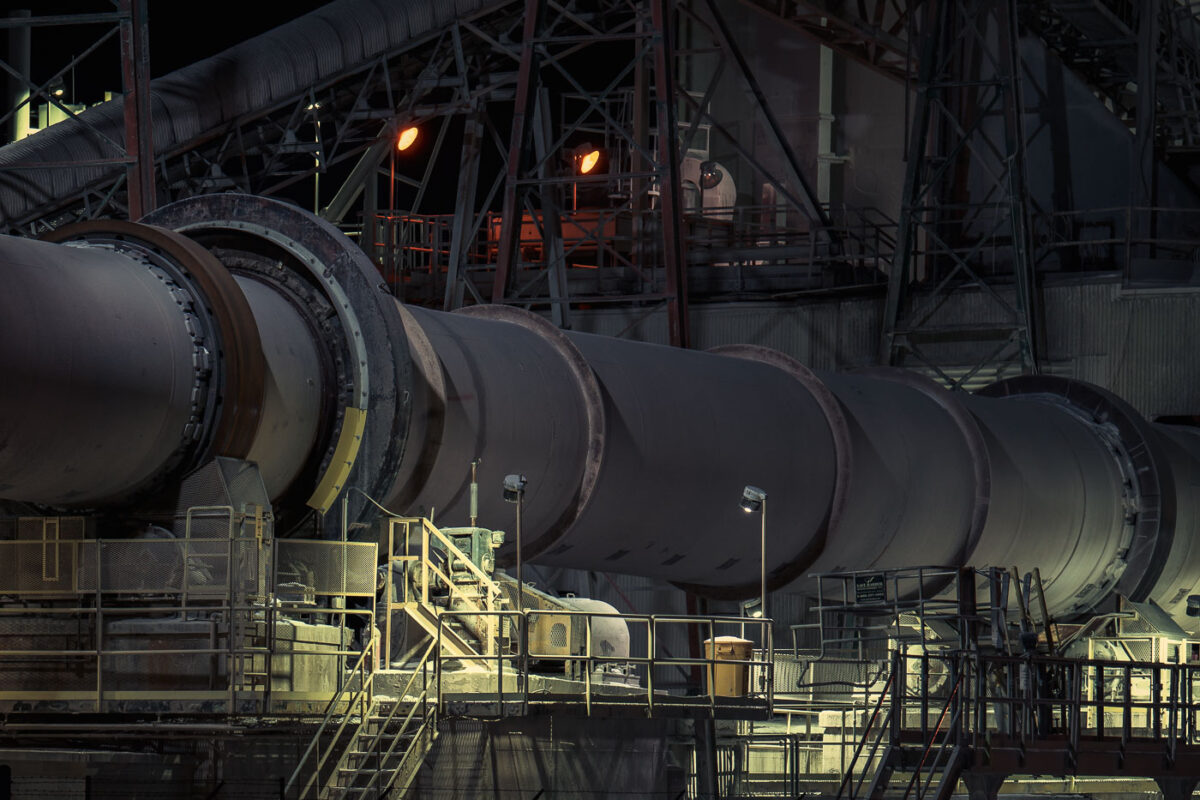
December 2022 — A section of the rotary kiln system at the Graymont lime plant in Green Bay, Wisconsin, captured at night under maintenance and work lights. The massive rotating kiln—central to the calcination process that transforms limestone into high-purity lime—runs along a network of elevated platforms, access stairs, and steel supports. The orange glow from overhead lamps highlights the heat-intensive nature of kiln operations, while the surrounding catwalks and conveyors reflect the layered engineering required to keep the continuous production line moving.
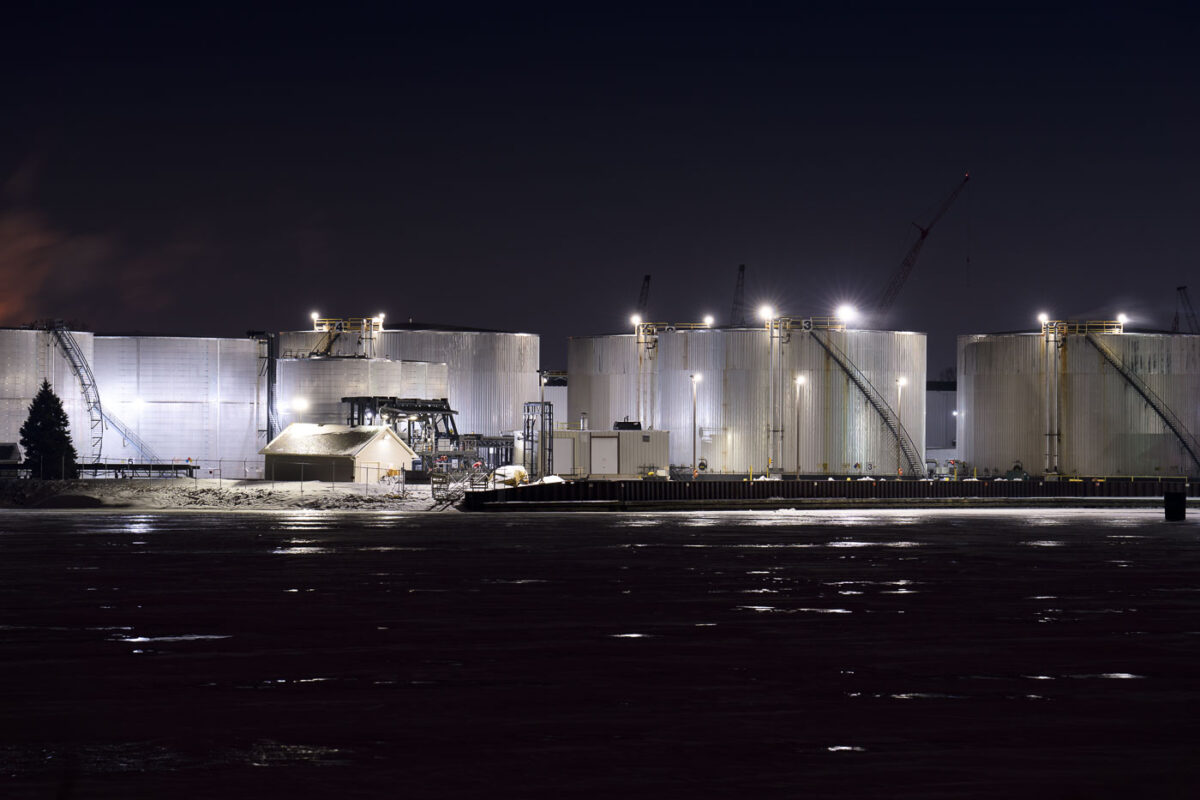
December 2022 — Large cylindrical storage tanks at Construction Resources Management, Inc. line the west bank of the Fox River in Green Bay, Wisconsin. Viewed from across the frozen river on a winter night, the facility is illuminated by perimeter lighting that reflects faintly off the ice. The site serves regional construction and materials operations, part of the industrial corridor that has long defined the waterfront between downtown Green Bay and the port district.
December 2023 —
December 2023 —
December 2023 —
December 2023 —
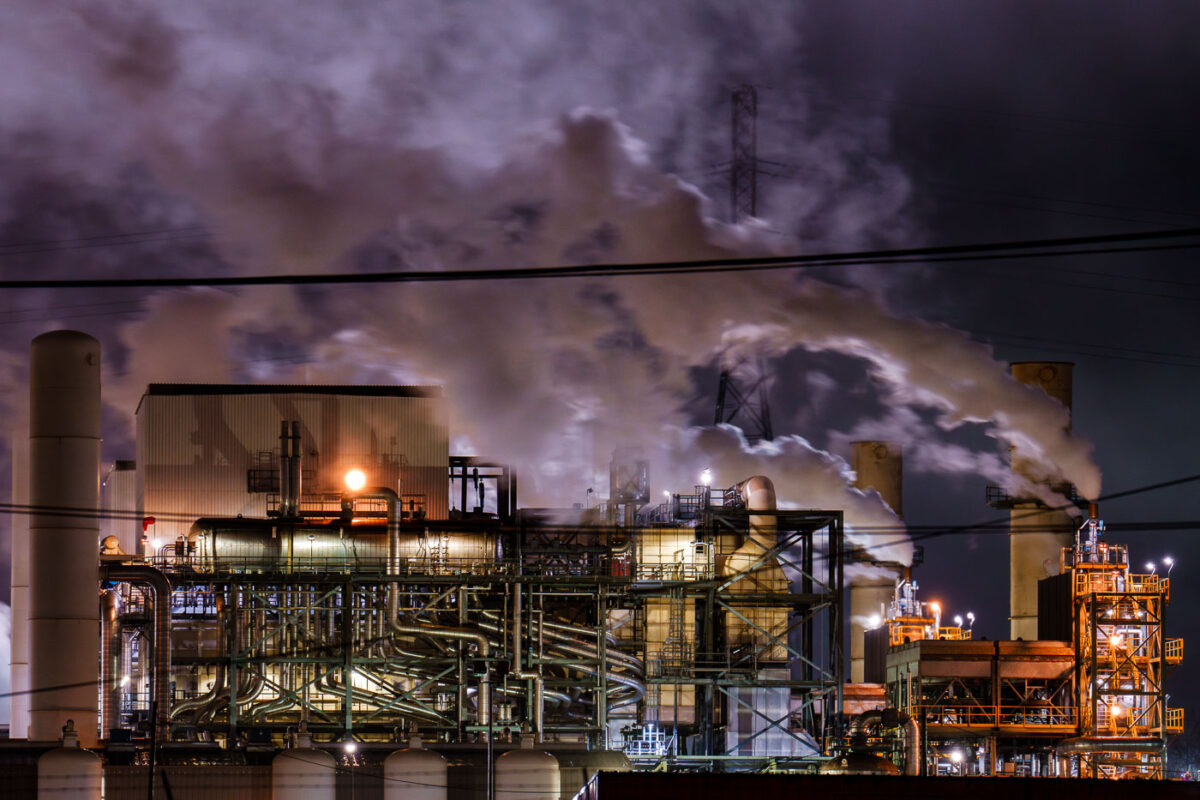
December 2023 —
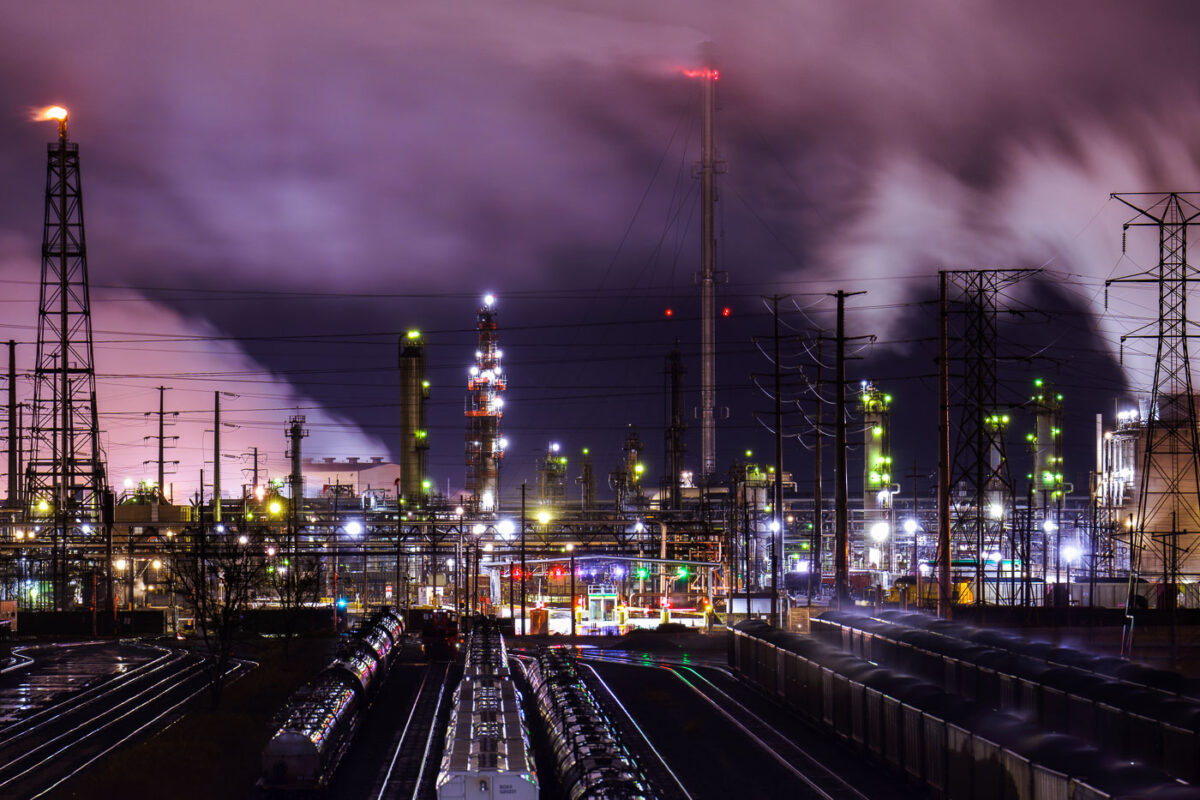
December 2023 —