Black Elk Peak Trail Descent at Dusk, Black Hills, South Dakota
July 2019
—
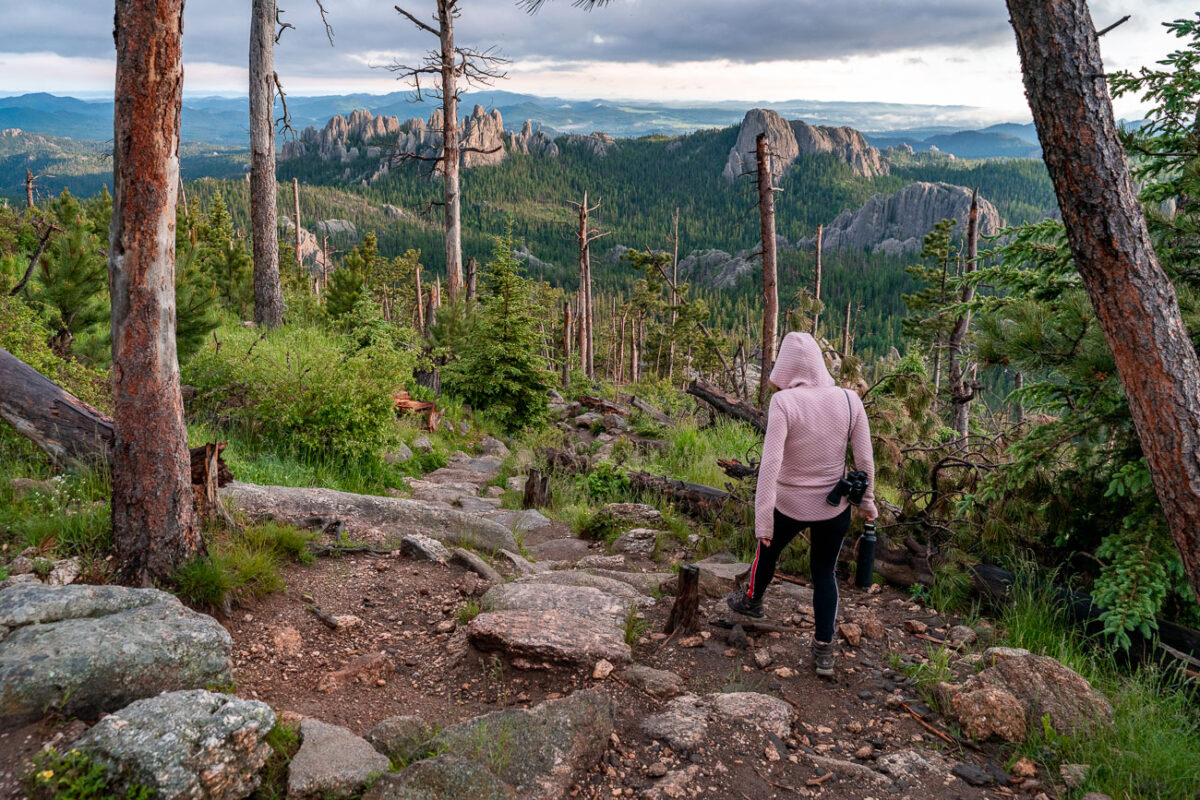
A hiker descends the rugged granite path from Black Elk Peak, the highest summit in South Dakota, as the evening light softens over the Cathedral Spires. The trail—part of the Norbeck Wildlife Preserve within Custer State Park—winds through a landscape shaped by ancient uplift and erosion, where ponderosa pines cling to stone outcrops and fire-scarred trunks bear witness to the region’s cycles of renewal. From this vantage point, the Black Hills stretch endlessly toward the horizon, a place sacred to the Lakota people and enduringly wild in its beauty.
Cathedral Spires, Black Hills, South Dakota, Morning Fog
July 2019
—
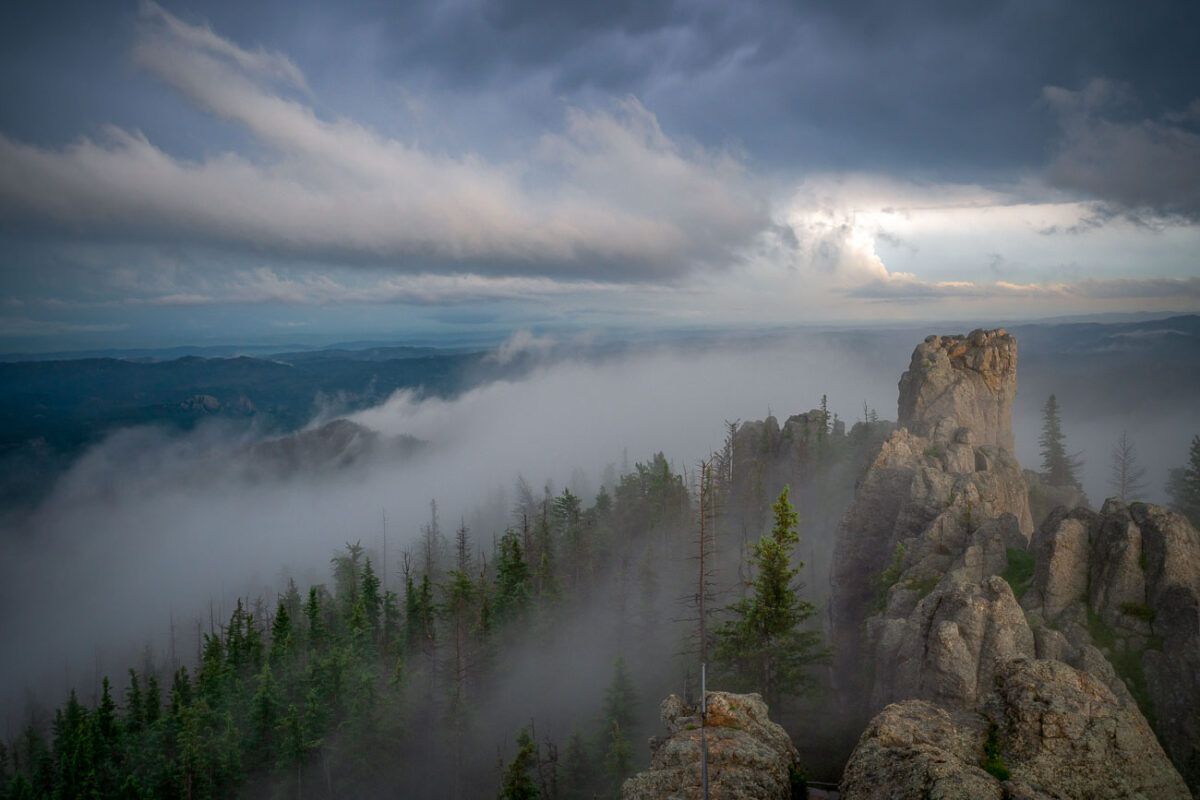
Low clouds sweep across the granite pinnacles of the Cathedral Spires in the Black Hills of South Dakota, wrapping the rugged landscape in drifting fog just after dawn. These towering formations—some rising more than 5,000 feet above sea level—are part of the Needles range within Custer State Park, a region shaped by millions of years of erosion and uplift. The rock spires, composed primarily of Harney Peak granite, are a hallmark of the park’s dramatic geology and a favorite destination for climbers and photographers. On mornings like this, the fog often settles in the valleys below, creating a fleeting illusion of islands floating above the forest, while the peaks catch the first light breaking through the storm-heavy sky.
Horseback riders on Black Elk Peak trail, South Dakota
July 2019
—
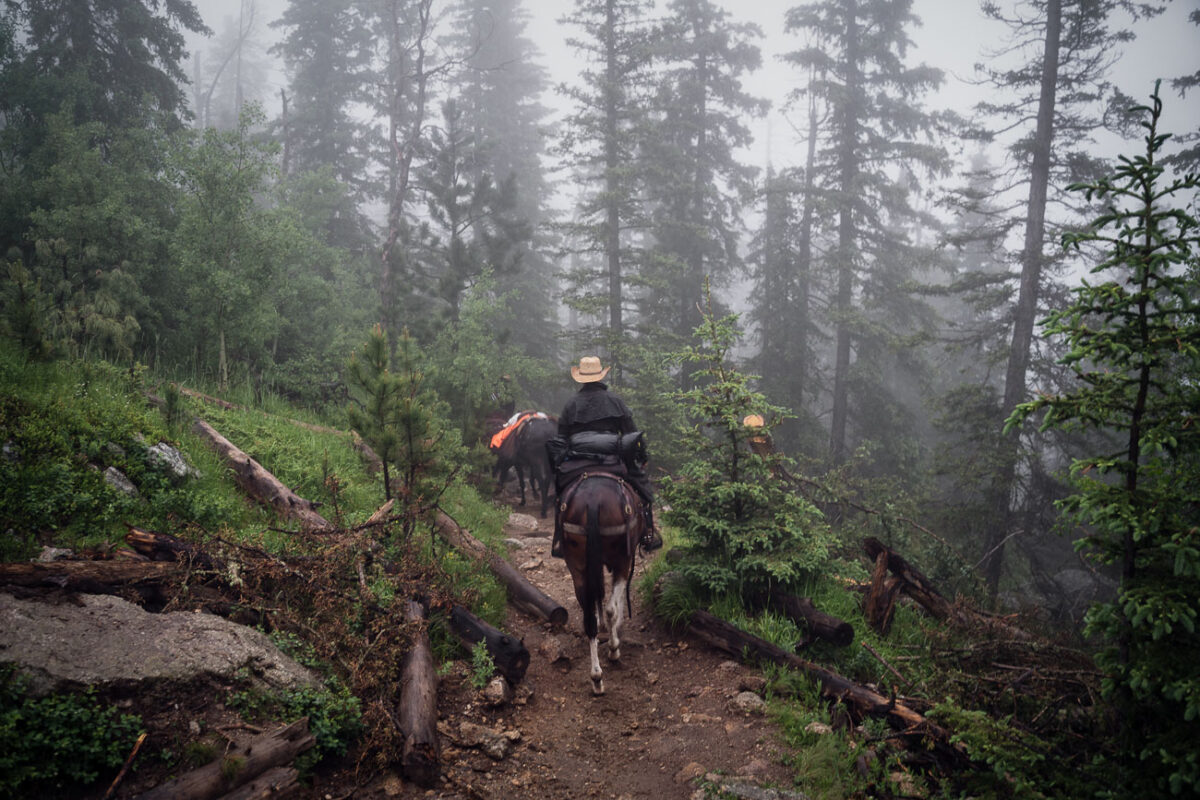
Horseback riders navigate a mist-covered trail near the summit of Black Elk Peak in South Dakota’s Black Hills. The fog clings to the ponderosa pines, softening the rugged landscape that rises above Custer State Park. This peak—renamed in 2016 to honor Lakota spiritual leader Black Elk—has long served as both a place of pilgrimage and a vantage point over the vast granite formations and pine forests of the region.
Black Elk Peak Trail in Fog, South Dakota
July 2019
—
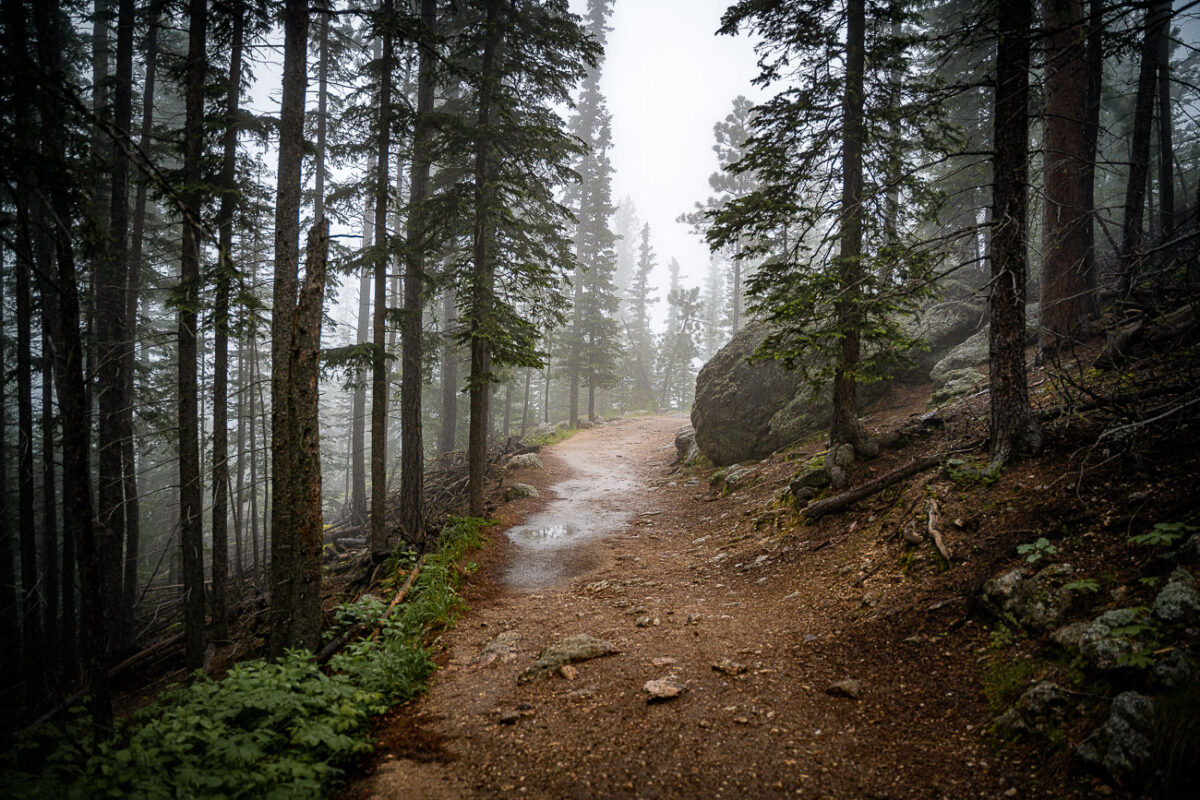
A narrow trail winds through the fog-drenched forest of Black Elk Peak, South Dakota, as light rain dampens the granite path and pine needles. The area—part of the rugged Black Hills—sits at over 7,200 feet, the highest elevation east of the Rockies. The mist settles among ponderosa pines and spruce, creating a hushed, atmospheric climb through terrain sacred to the Lakota people and known for its sweeping, often cloud-hidden views.
Black Elk Peak Summit in Fog, Black Hills, South Dakota
July 2019
—
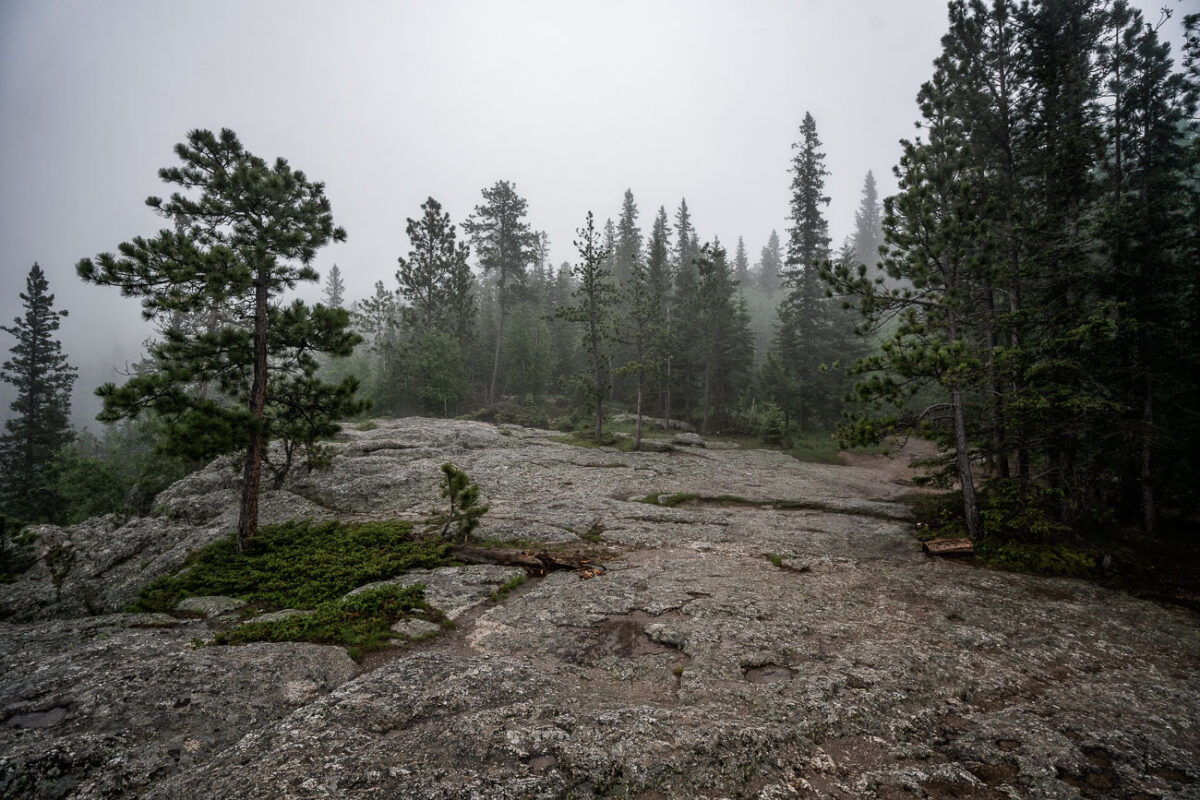
A dense fog envelops the granite summit area of Black Elk Peak, the highest natural point in South Dakota at 7,242 feet. The rocky terrain and scattered pines of the Black Hills fade into the mist, creating an ethereal atmosphere above Custer State Park. Once known as Harney Peak, the mountain holds deep spiritual significance for the Lakota Sioux and remains a striking natural landmark where weather and history intertwine in quiet solitude.
Black Elk Peak Trail in Fog, Black Hills, South Dakota
July 2019
—
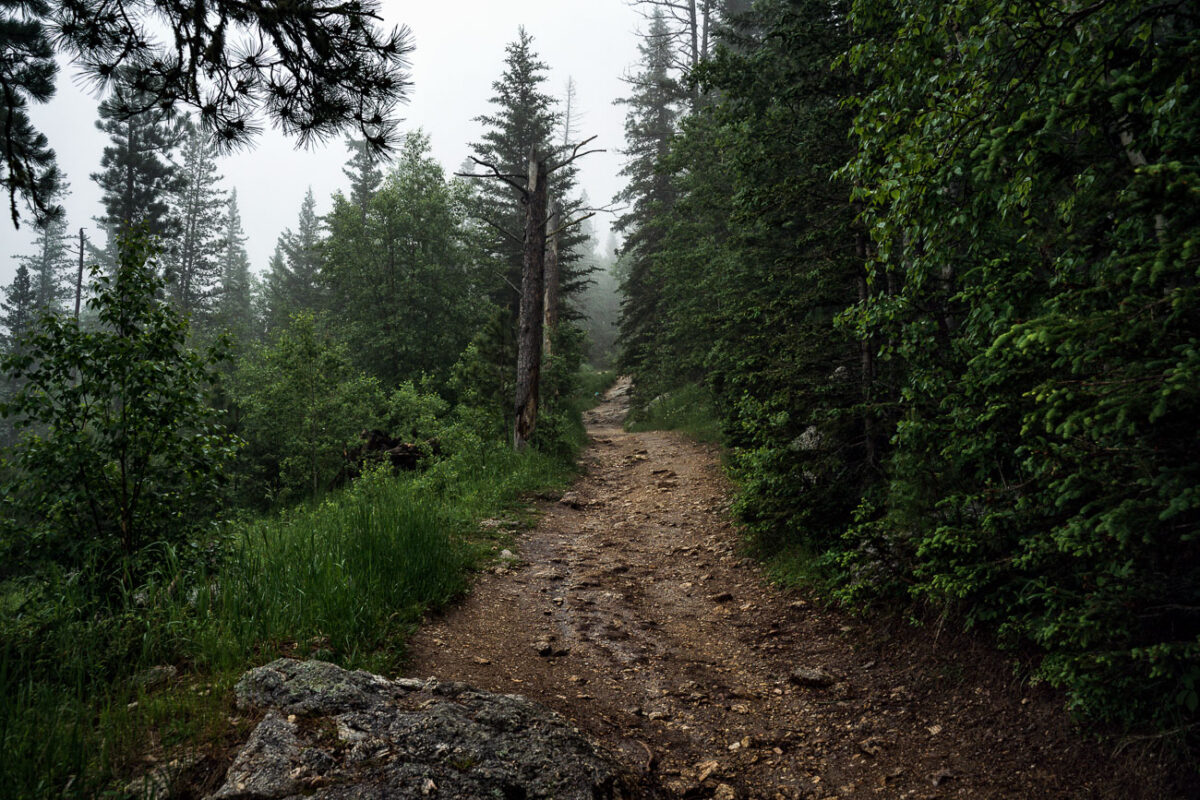
A fog-covered hiking trail winds through the dense pines and granite slopes of Black Elk Peak in South Dakota’s Black Hills. The path, slick with rain and scattered with stones, climbs steadily toward the summit through ponderosa pine, birch, and spruce. This mountain—sacred to the Lakota and once called Harney Peak—rises to 7,244 feet, making it the highest natural point between the Rockies and the Pyrenees. In the early morning fog, the quiet forest and damp earth lend the trail a timeless stillness, recalling centuries of spiritual and geological history beneath the mist.
Black Elk Peak Trail in Fog, Black Hills, South Dakota
July 2019
—
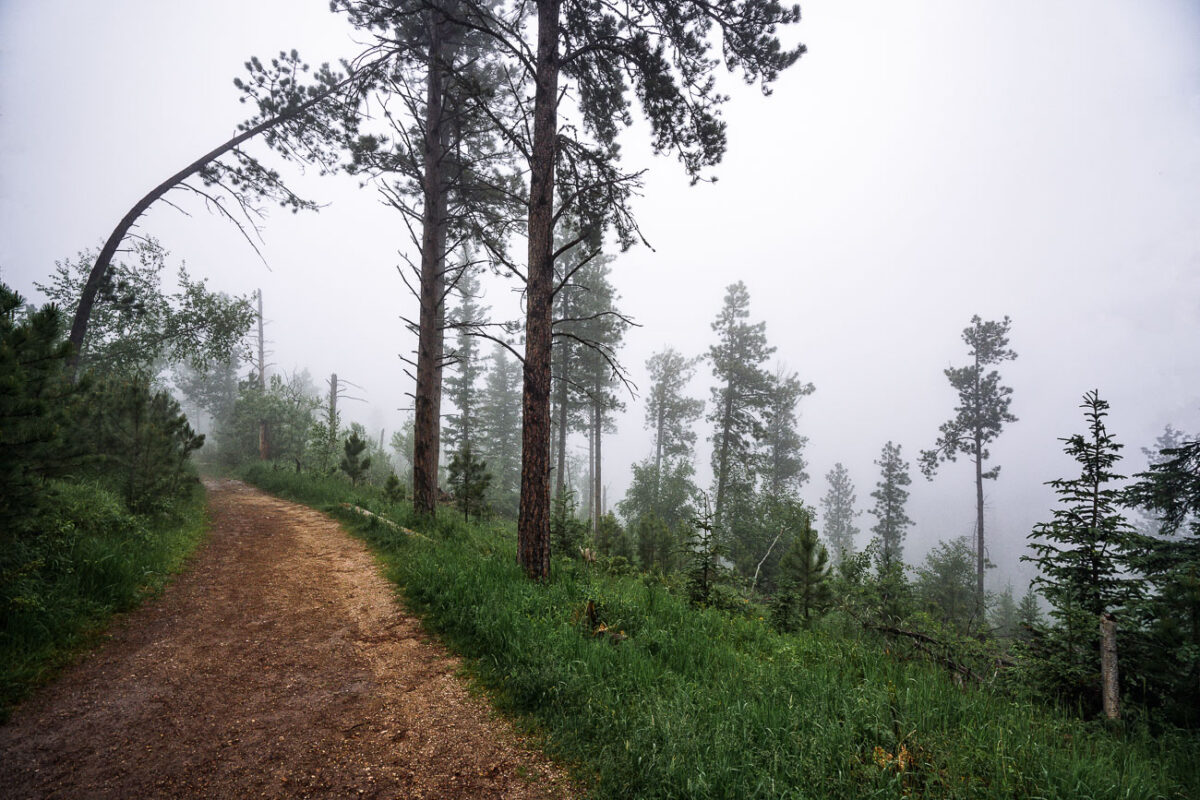
A mist-laden trail winds through the ponderosa pine forest near the summit of Black Elk Peak in the Black Hills of South Dakota. The fog softens the rugged terrain, reducing the visibility of distant ridges and creating a quiet, atmospheric stillness in the morning air. This area, once known as Harney Peak, stands as the highest point east of the Rocky Mountains and is a sacred place to the Lakota Sioux, where natural beauty and cultural heritage converge in the clouds.
The Needles at Sunset, Custer State Park, South Dakota
July 2019
—
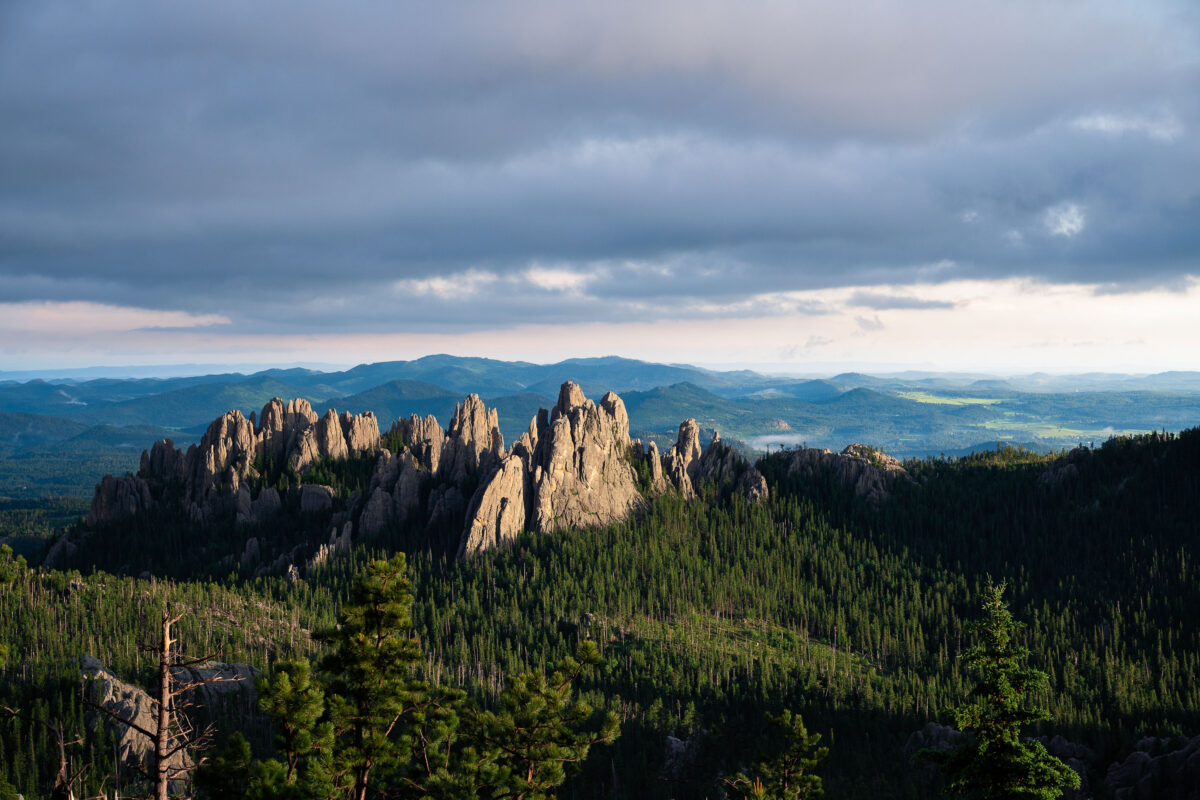
Evening light breaks through heavy clouds to illuminate the Needles, a cluster of towering granite spires rising above dense pine forest in the Black Hills of South Dakota. The sharp pinnacles, part of Custer State Park’s Cathedral Spires formation, are composed of eroded granite that dates back more than a billion years, sculpted by time and weather into their distinctive vertical forms. This region, accessible by the winding Needles Highway, is both a geological marvel and a spiritual landscape—its rugged skyline long revered by the Lakota Sioux and later celebrated by photographers, climbers, and travelers drawn to the surreal beauty of South Dakota’s mountain heartland.
Black Elk Peak Summit Fog and Stone Tower
July 2019
—
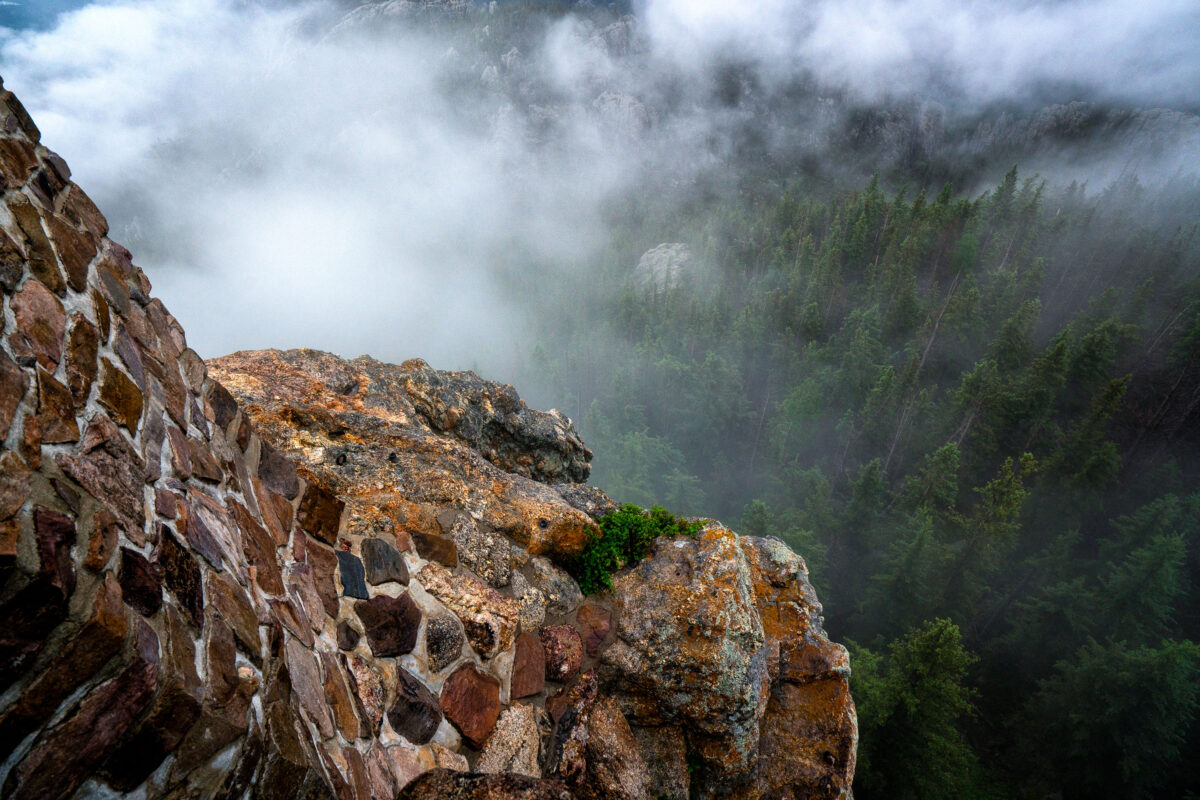
At the summit of Black Elk Peak, low clouds roll through the granite spires and dense pine forest below, wrapping the mountain in a shifting veil of fog. The historic stone fire tower, built by the Civilian Conservation Corps in the 1930s, stands as a testament to early forest conservation in the Black Hills. From this vantage point—the highest in South Dakota—views often stretch into Wyoming and Nebraska, but on misty mornings like this one, the world feels confined to the mountaintop itself, suspended between rock and cloud.
Black Elk Peak Fog, Black Hills, South Dakota
July 2019
—
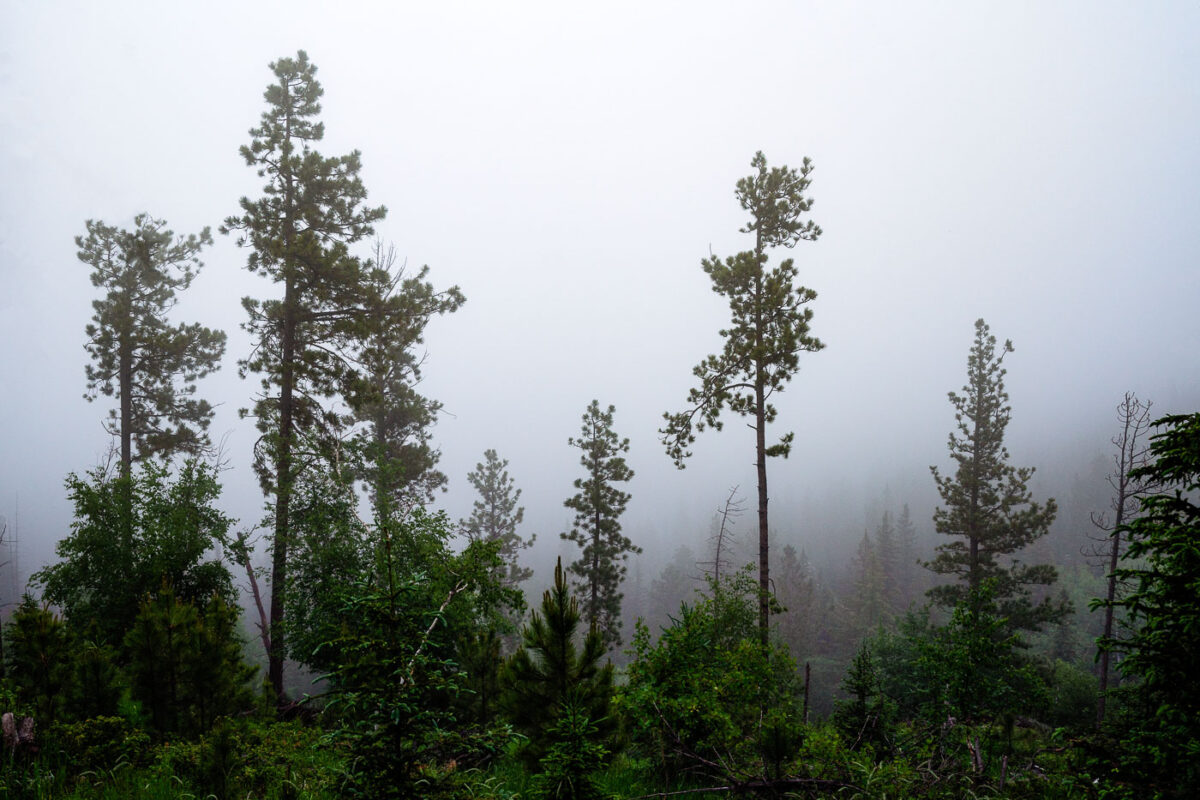
A dense morning fog envelops the Ponderosa pines of the Black Hills in South Dakota, softening the outlines of the forest and muting the green tones of early summer. The moisture-laden air clings to the tall trunks, creating an atmosphere of quiet stillness and mystery. This type of fog commonly forms in the higher elevations near Custer State Park and the Needles Highway, where rapid temperature shifts cause mist to settle among the rugged hillsides and conifer stands, briefly transforming the landscape into an ethereal woodland veil.
Built in Minneapolis
Minneapolis Photographer
Browse by location, move through long-running series, or start with recent work.