Place Archive

Badlands National Park

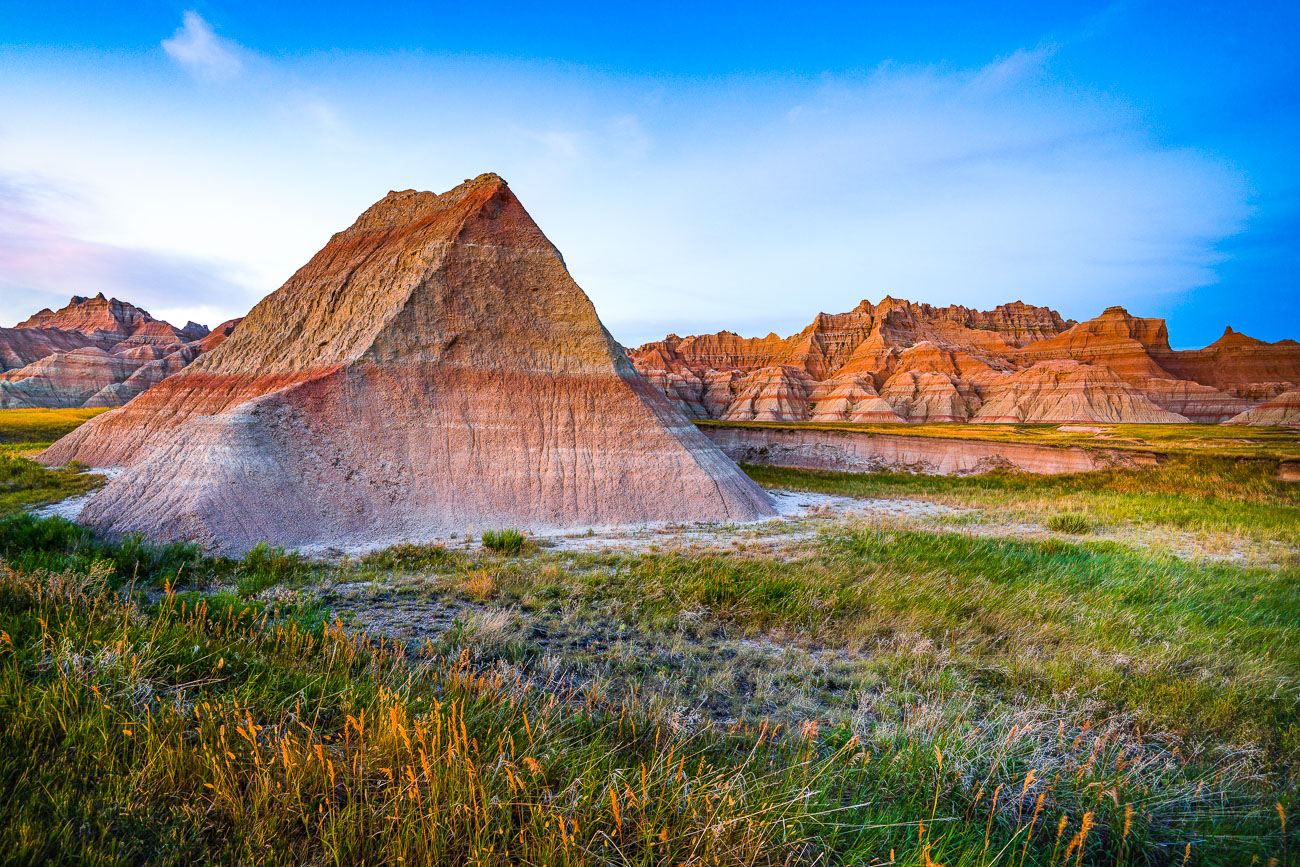
Sheep Mountain Road and Indian Creek Drive cut through Badlands National Park’s eroded buttes and grasslands, revealing sedimentary layers shaped over millions of years. The Saddle Pass Trailhead on Highway 240 offers views of the Badlands Wall and White River Valley, highlighting the park’s paleontological sites and prairie ecosystem.

Map

Photo Map

Markers

Badlands National Park Photo Locations

9 geotagged photos

Photos
Blacktop in Scenic South Dakota
Highway 44, a key east-west route in South Dakota, traverses the dramatic geological formations of Badlands National Park. This paved road, completed in stages over decades, provides essential access through the park's southern region, connecting communities and facilitating tourism. The highway's construction through this rugged terrain highlights the human effort to navigate and utilize the natural landscape. Its presence allows visitors to experience the unique erosional features of the badlands, which have been shaped by wind and water over millions of years.
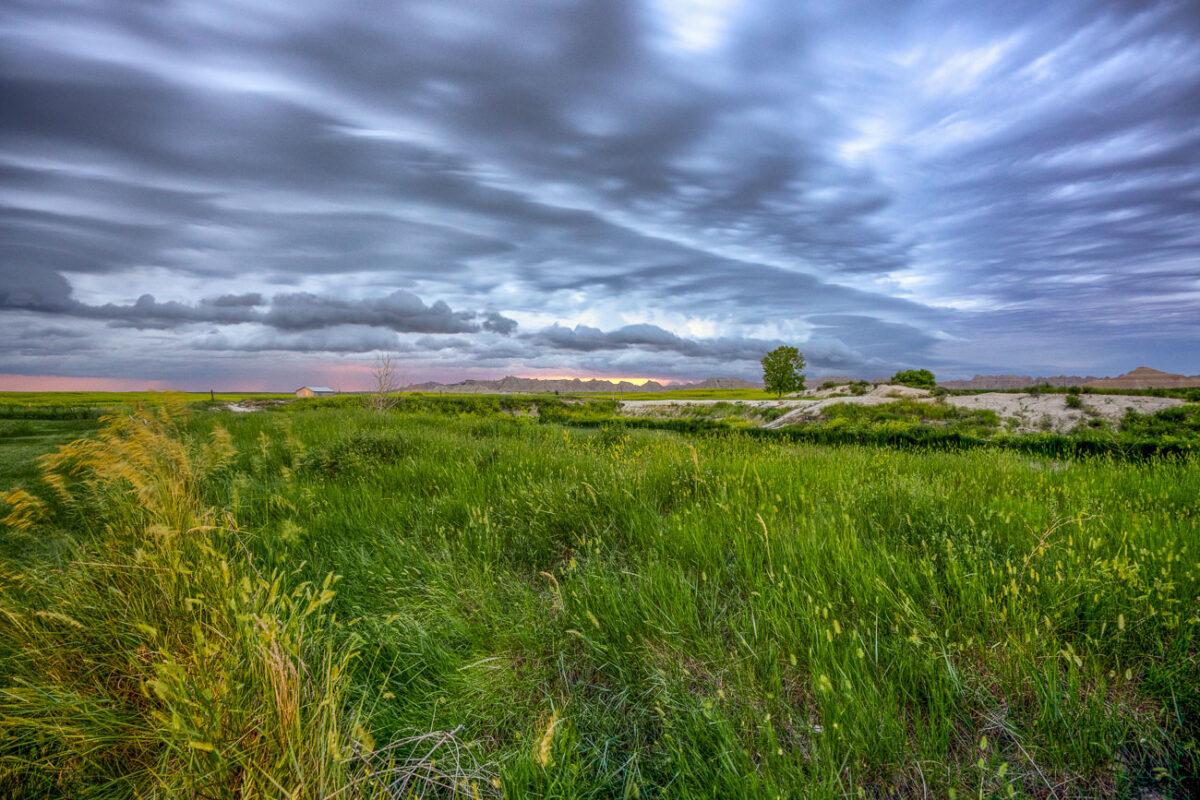
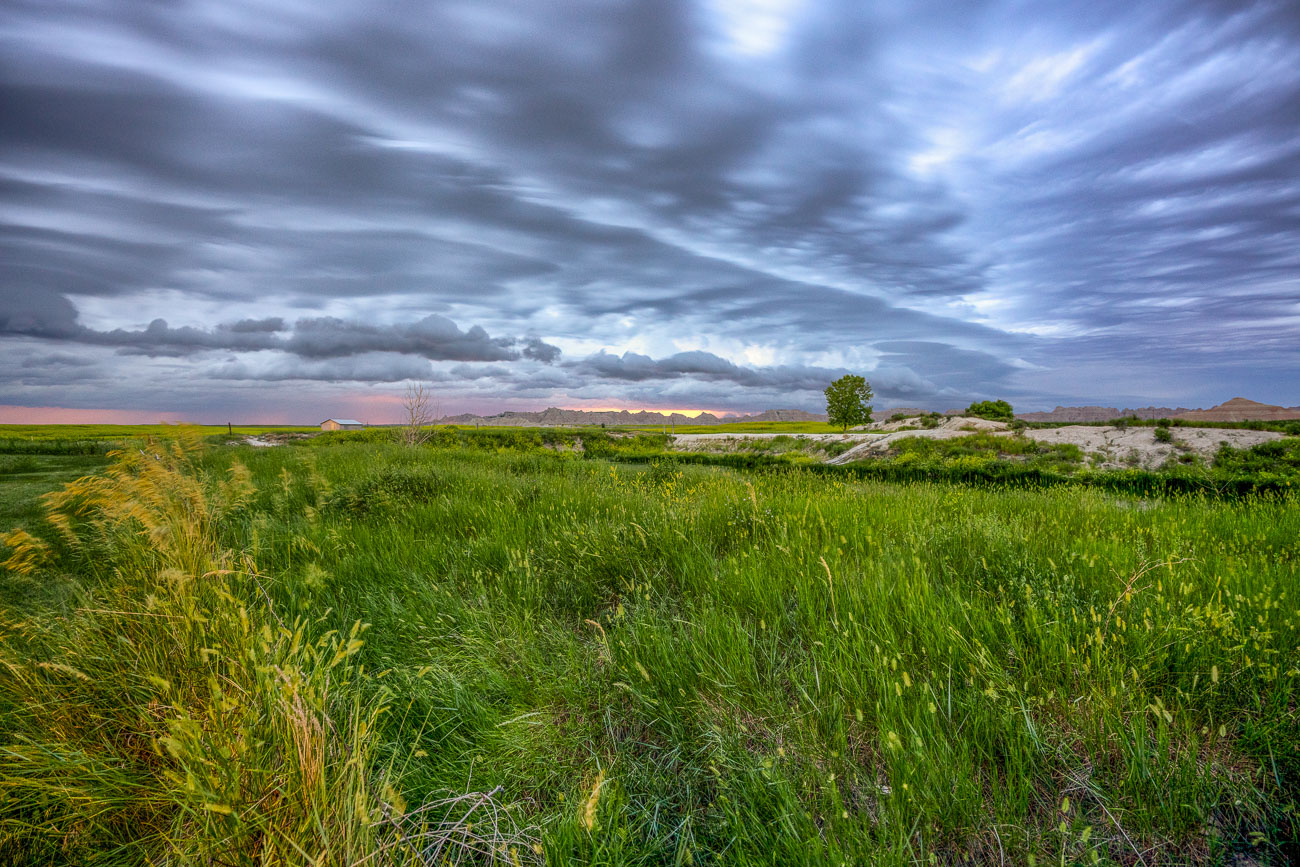
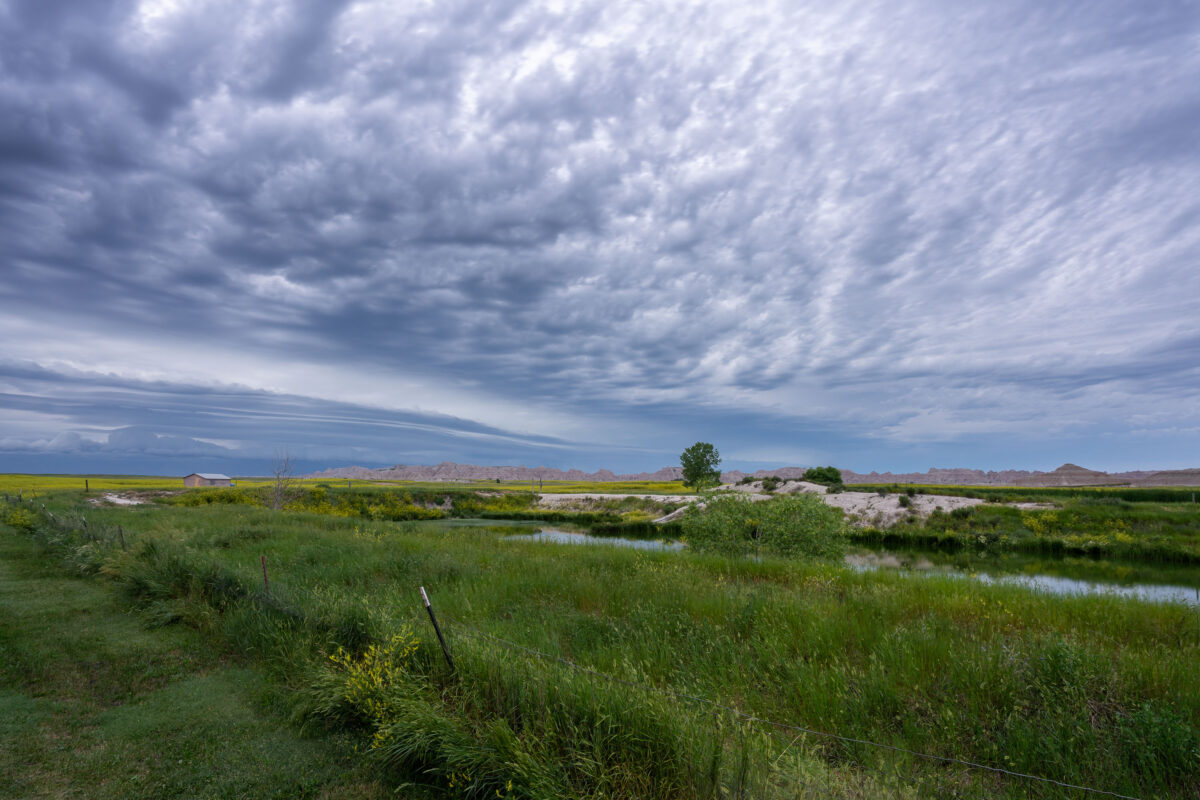
Storm clouds over a South Dakota ghost town
Storm clouds gather over the grasslands near Badlands National Park in South Dakota. The park, established in 1978, preserves a vast area of eroded buttes, pinnacles, and spires formed by sedimentary rock. These geological formations represent millions of years of Earth's history, offering insights into ancient environments and fossil records. The surrounding grasslands are a vital ecosystem, supporting diverse wildlife and maintaining the unique landscape.
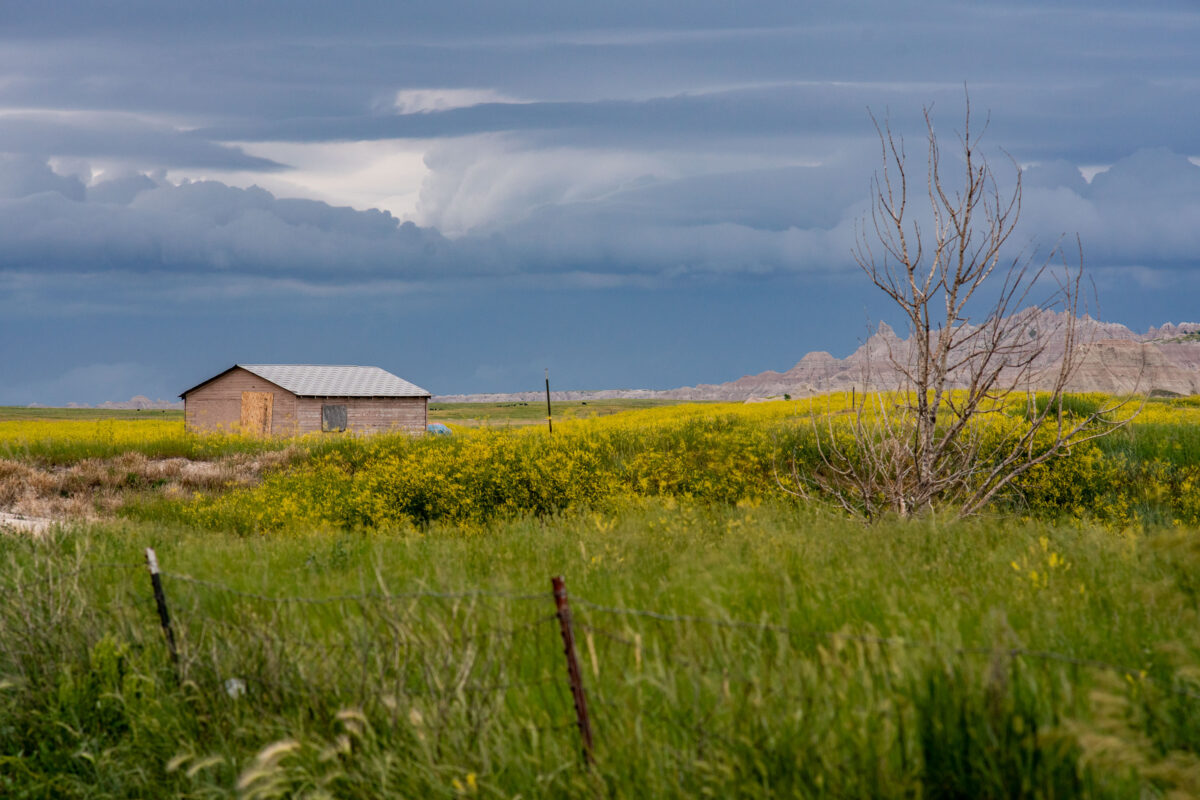
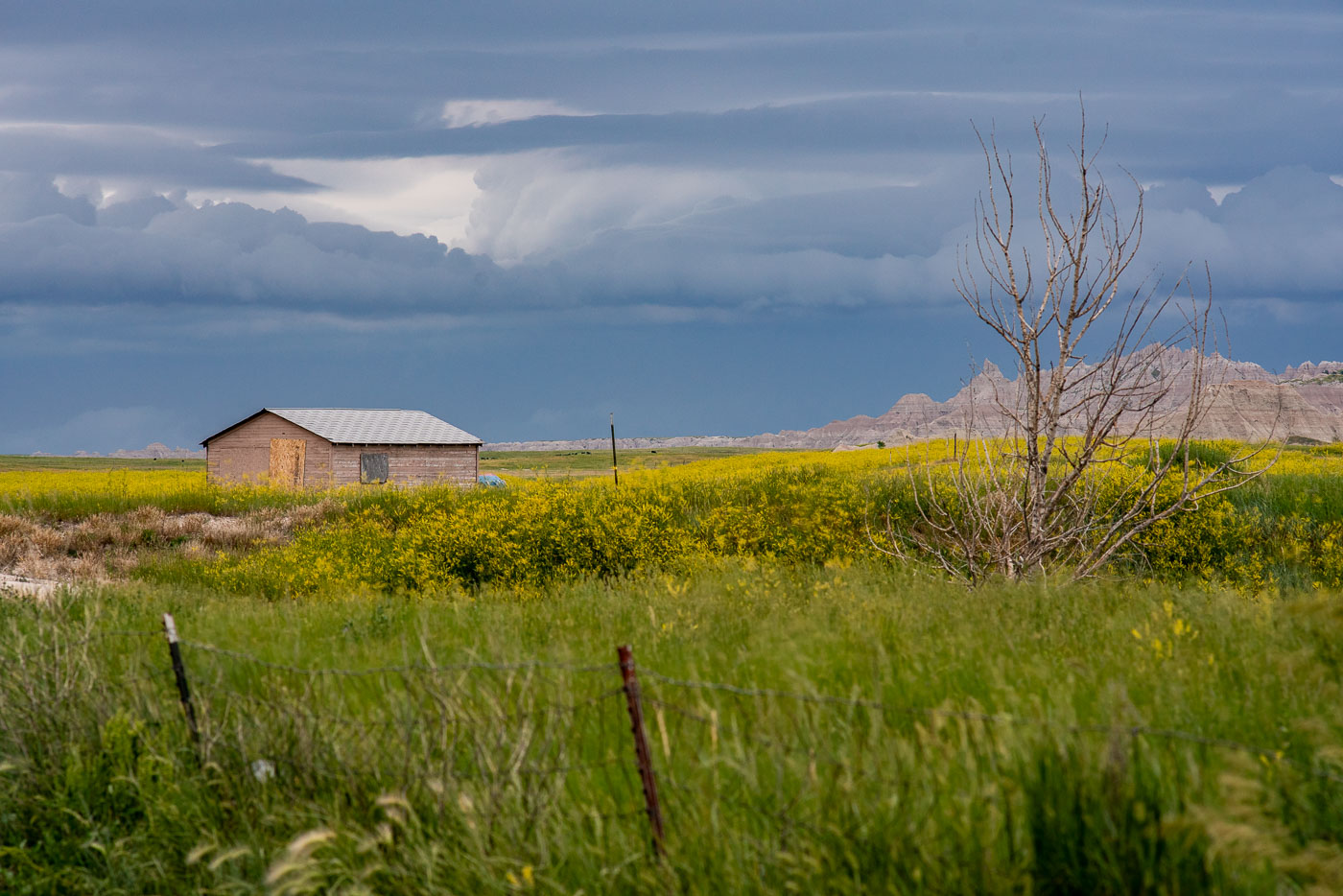
A wooden shed stands in a field of yellow wildflowers near Badlands National Park, South Dakota, under approaching storm clouds.
A wooden shed, likely a remnant of early homesteading or ranching in the area, stands in a field of yellow wildflowers near Interior, South Dakota, on the edge of Badlands National Park. The structure, with its boarded windows, suggests a history of human presence in this rugged landscape. The approaching storm clouds over the distinctive geological formations of the Badlands indicate the region's unpredictable weather patterns. This image reflects the enduring relationship between human endeavors and the vast, untamed prairie environment of the American West.
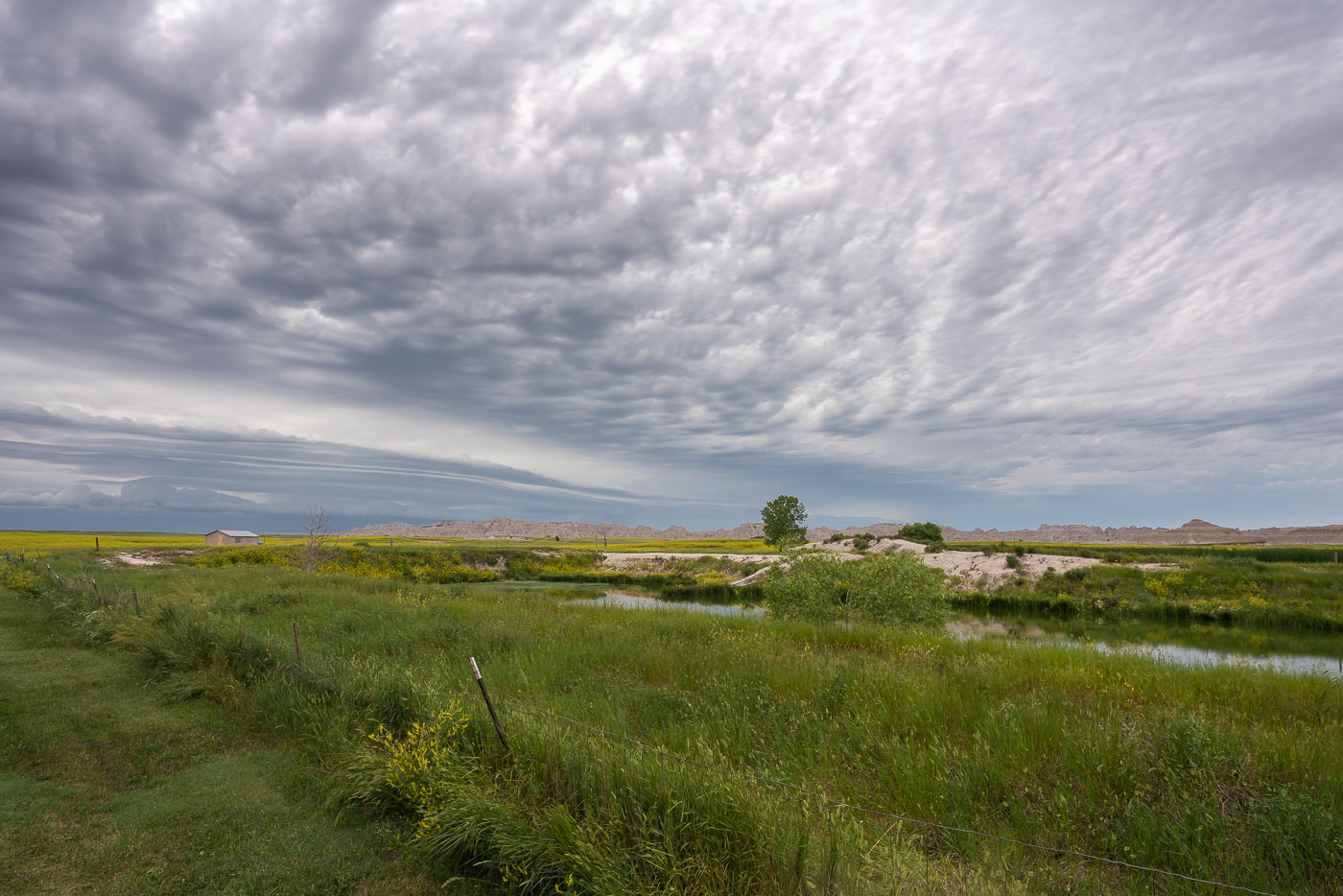
Storm clouds gather over the Badlands National Park, South Dakota, a landscape of eroded buttes and prairie with a small structure and fence in the foreground.
Storm clouds gather over the Badlands National Park near Interior, South Dakota. The park, established in 1939, preserves a unique geological landscape characterized by eroded buttes, pinnacles, and spires formed over millions of years. This area, once home to Native American tribes and later settled by ranchers, now protects a significant portion of the mixed-grass prairie ecosystem. The presence of a small structure and fence line in the foreground indicates the historical and ongoing human interaction with this rugged environment.
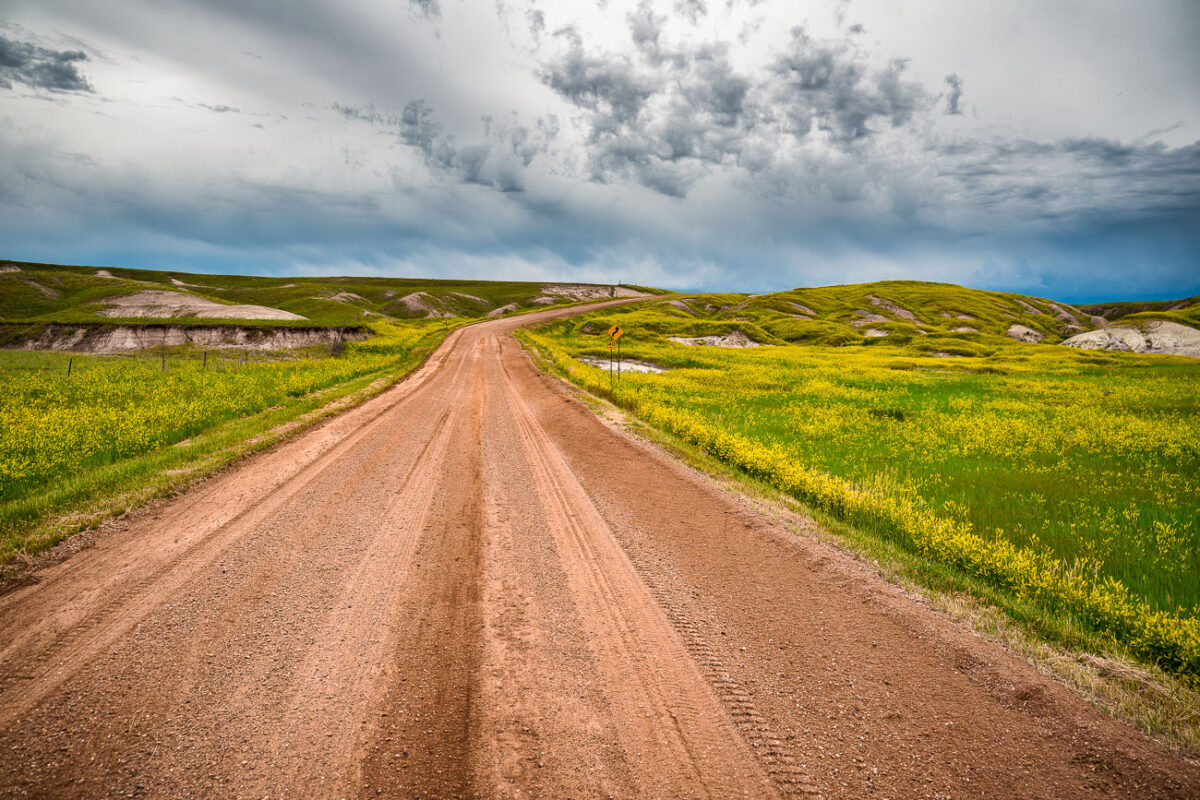
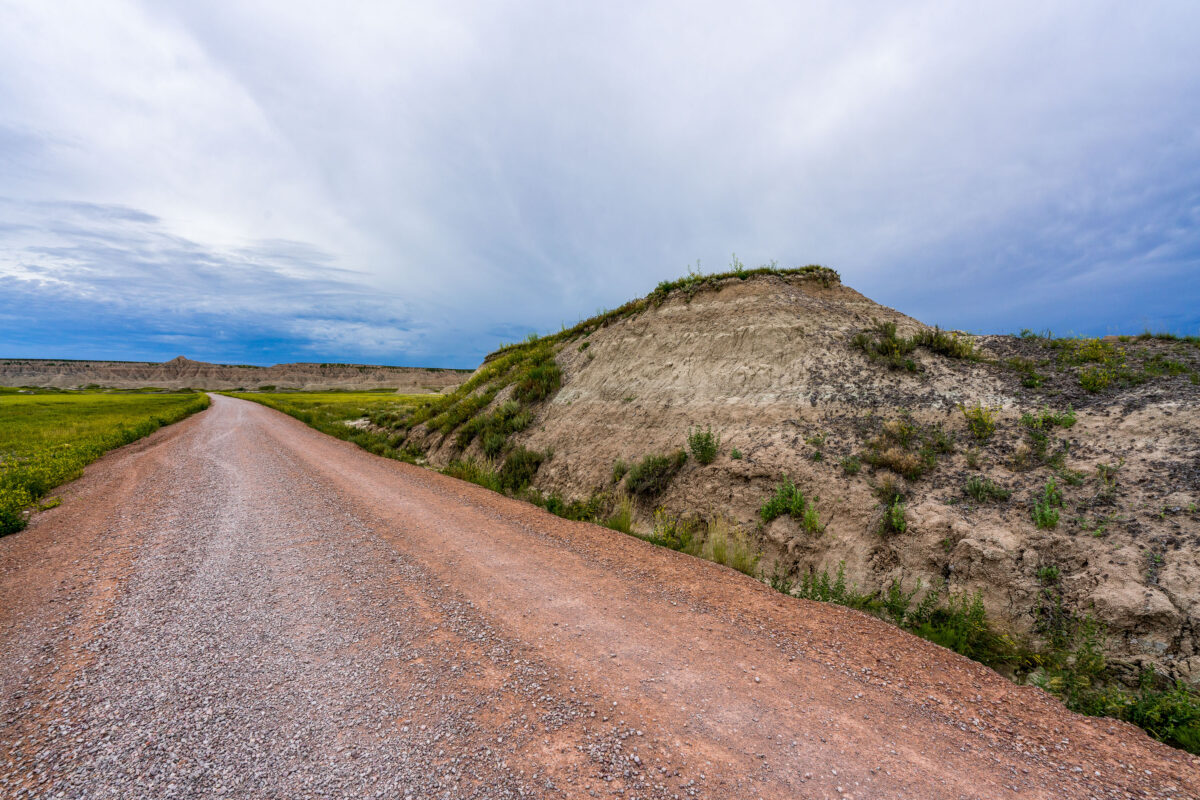
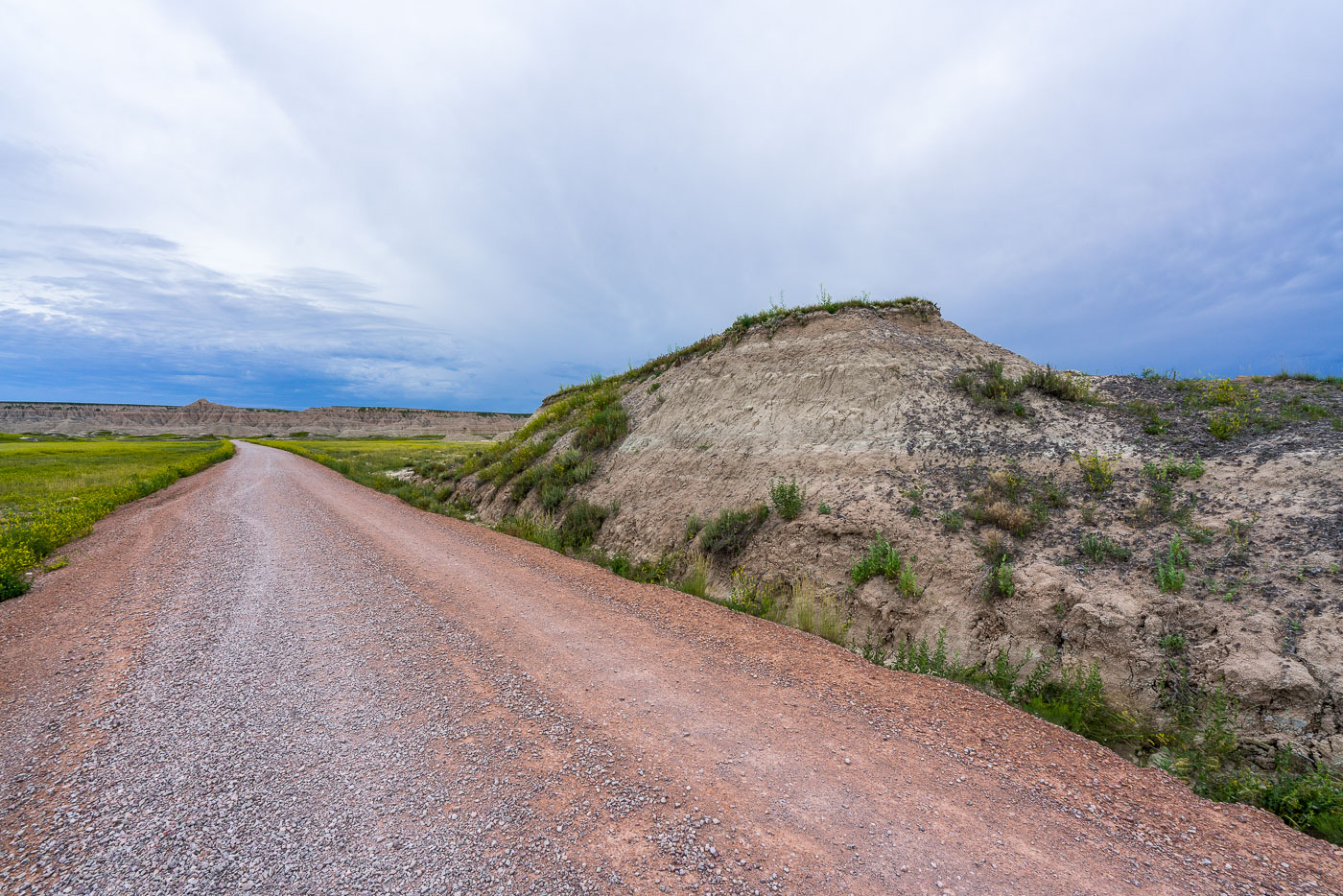
Storm clouds on Sheep Mountain Road
Indian Creek Drive, a gravel road, traverses the rugged landscape of Badlands National Park in South Dakota. This route, located in the park's western section near Scenic, offers access to less-visited areas characterized by erosion-carved buttes and expansive grasslands. The area's geological formations are the result of millions of years of sedimentation and erosion, creating a unique environment that supports diverse plant and animal life. The road itself serves as a vital artery for park visitors seeking a more remote experience, allowing exploration of the park's natural beauty under a vast prairie sky.
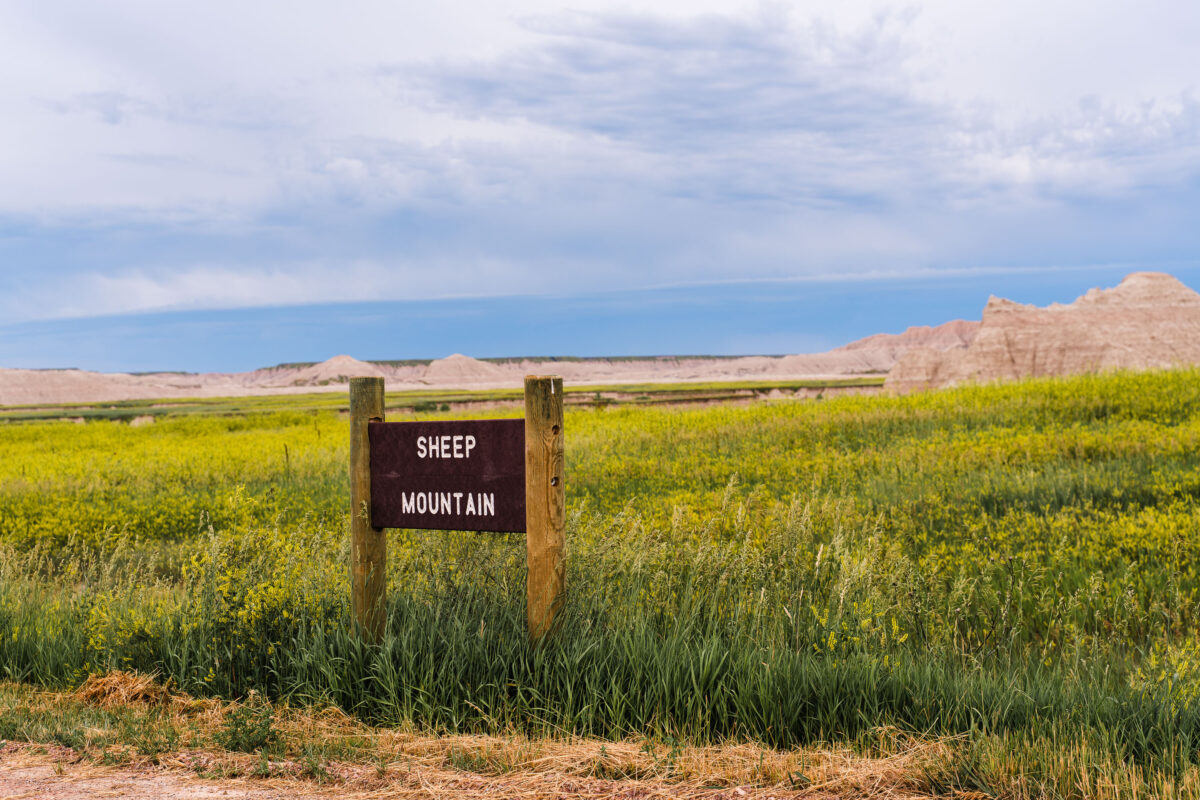
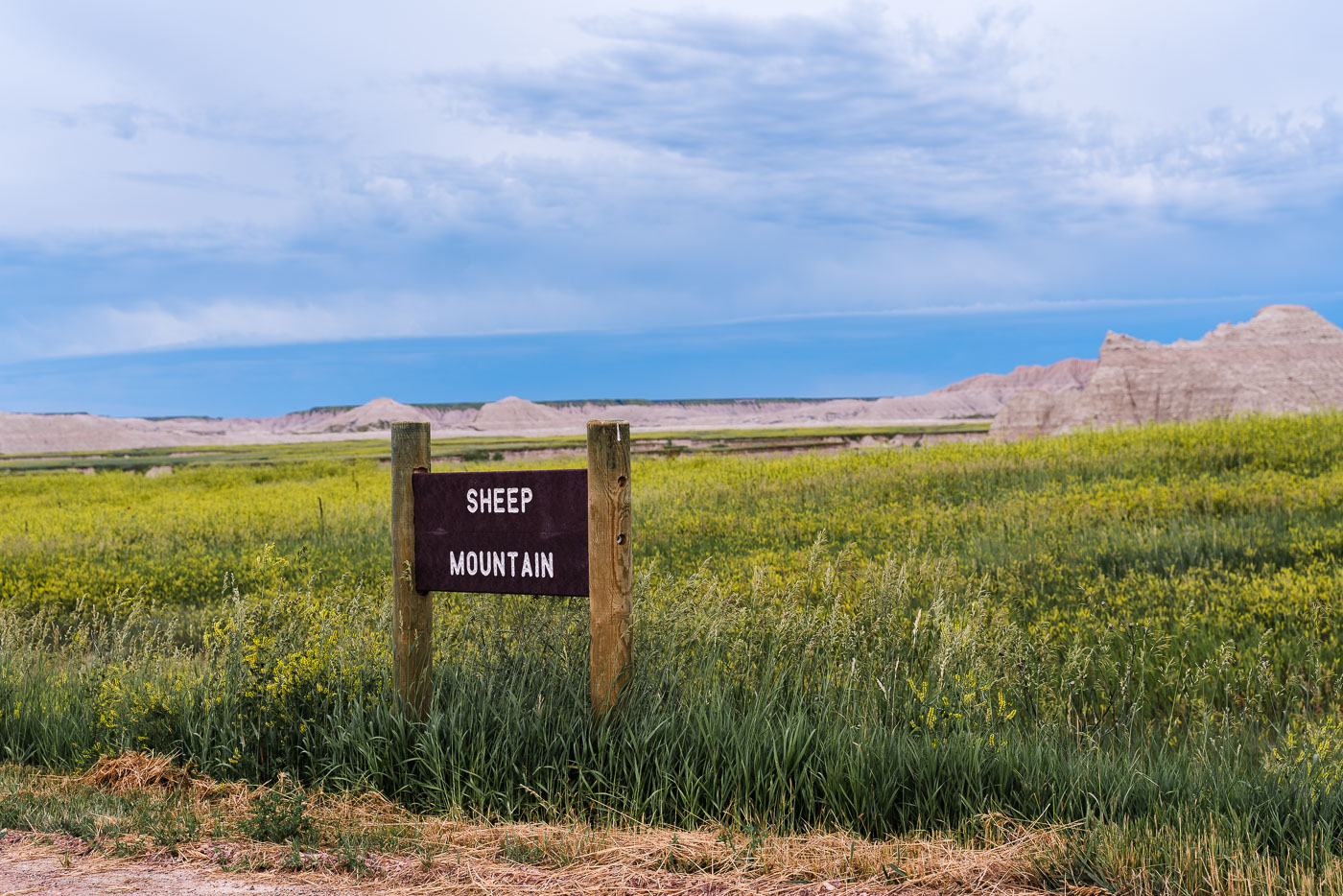
A sign reading Sheep Mountain stands in a field of yellow wildflowers in Badlands National Park, South Dakota, with eroded geological formations in the background.
A sign marks Sheep Mountain within Badlands National Park in South Dakota. The park preserves the dramatic eroded landscape of the Badlands, a region characterized by its sedimentary rock formations, which have been carved by wind and water over millions of years. These geological features provide a unique record of Earth's history. Sheep Mountain is one of the prominent geological formations within the park, offering visitors a glimpse into the region's natural heritage.
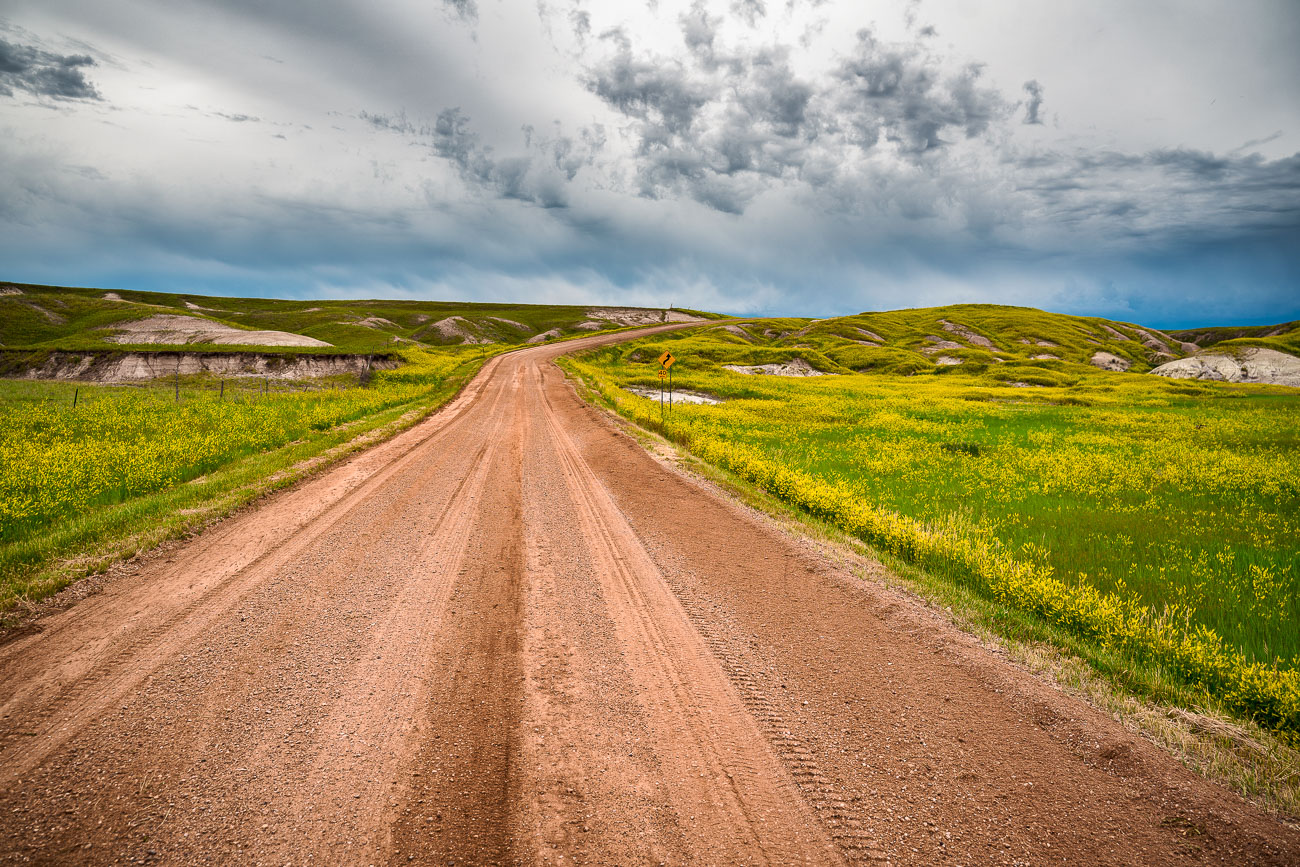
Sheep Mountain Road, a gravel route through the eroded buttes of Badlands National Park, South Dakota, offers access to remote overlooks on Oglala Lakota lands.
Sheep Mountain Road provides access to a remote overlook within Badlands National Park, South Dakota. This unpaved route traverses the rugged terrain of the park's southern section, which is characterized by eroded buttes and prairies. The area is situated on Oglala Lakota lands and is part of the Buffalo Gap National Grassland. Sheep Mountain offers visitors a less-trafficked experience of the Badlands' unique geological formations and cultural significance.
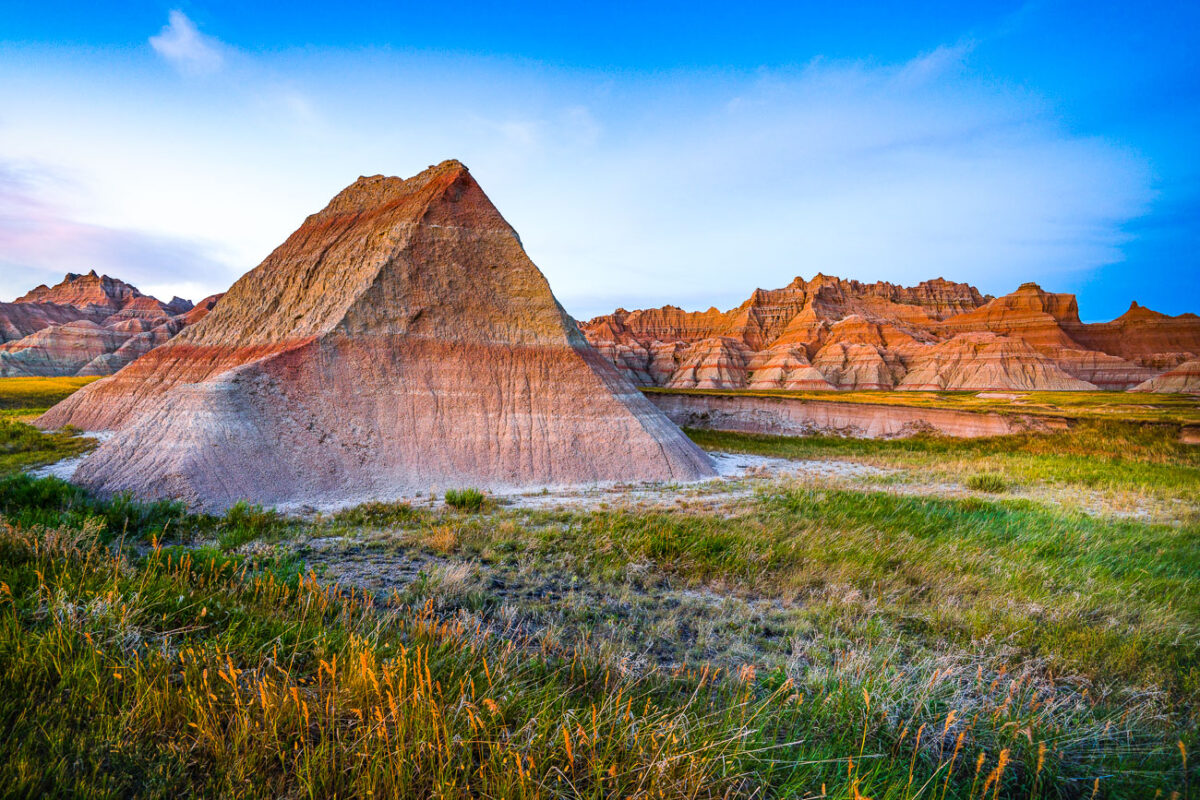
Blue skies and badland formations
Badlands National Park, South Dakota, is characterized by its rugged, eroded landscape of sedimentary rock formations. The Saddle Pass Trailhead area, accessible via Highway 240, provides access to the Badlands Wall. This geological region, formed over millions of years by erosion, offers a glimpse into the area's paleontological history, with numerous fossil beds discovered within the park. The short hike from Saddle Pass leads to panoramic views of the White River Valley, showcasing the park's unique geological features and vast prairie ecosystems.
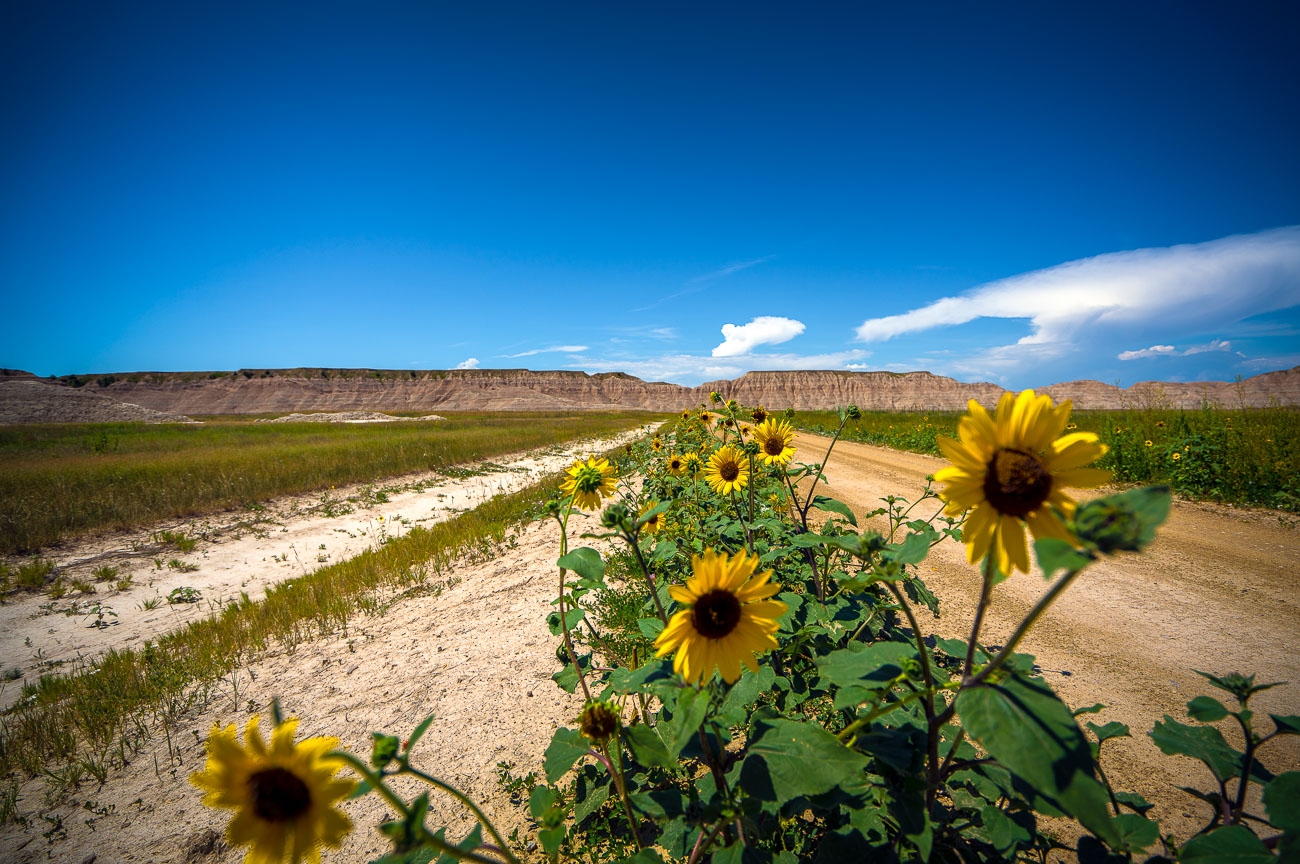
Sunflowers on Sheep Mountain Road
Sunflowers bloom along Sheep Mountain Road in Badlands National Park, South Dakota. This area, known for its unique geological formations, is a popular destination for visitors seeking to experience the natural beauty of the Northern Plains. The road itself provides access to various overlooks and trails within the park, allowing for exploration of the rugged landscape. The presence of wildflowers like sunflowers adds a vibrant contrast to the arid environment, highlighting the resilience of plant life in this challenging ecosystem.

Built in Minneapolis

Photographs showcasing change over time

Browse by location, move through long-running series, or start with recent work.