Tokyo Photography

Explore photos and posts tagged Tokyo.

Shinjuku Neon — Tokyo’s 24-Hour Glow

Shinjuku Neon — Tokyo’s 24-Hour Glow

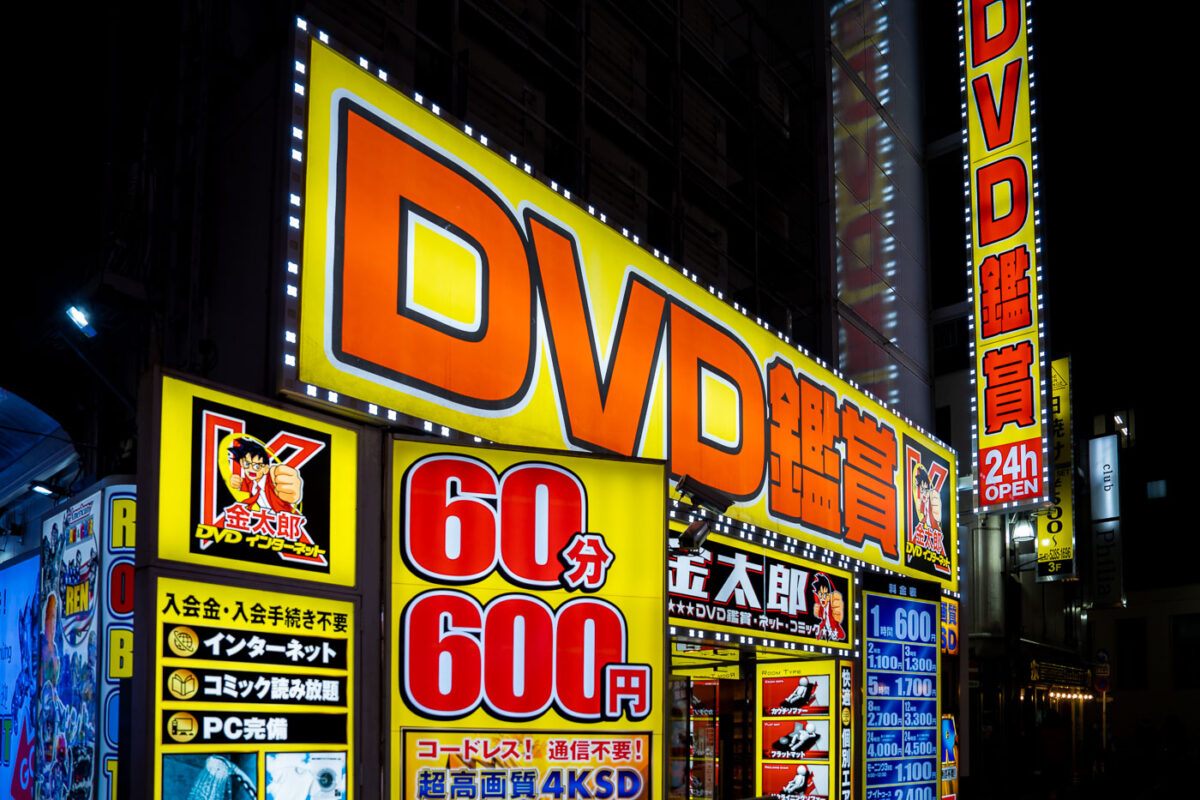
In Tokyo’s Shinjuku district, the saturated glow of neon signage spills across the streets, advertising one of the countless 24-hour DVD and manga shops that once defined the city’s late-night entertainment culture. Massive orange and yellow panels compete for attention, illuminated by LED frames and plastered with bold pricing for hourly booths and media rentals. These storefronts — dense with color, typography, and nostalgia — reflect the enduring presence of Japan’s analog media scene even as digital streaming dominates elsewhere. The atmosphere captures Tokyo’s constant dialogue between old and new, where high-tech convenience meets the tactile energy of Showa-era retail culture under an endless canopy of light.
Kabukicho Ichiban-gai Gate at Night

Kabukicho Ichiban-gai Gate at Night

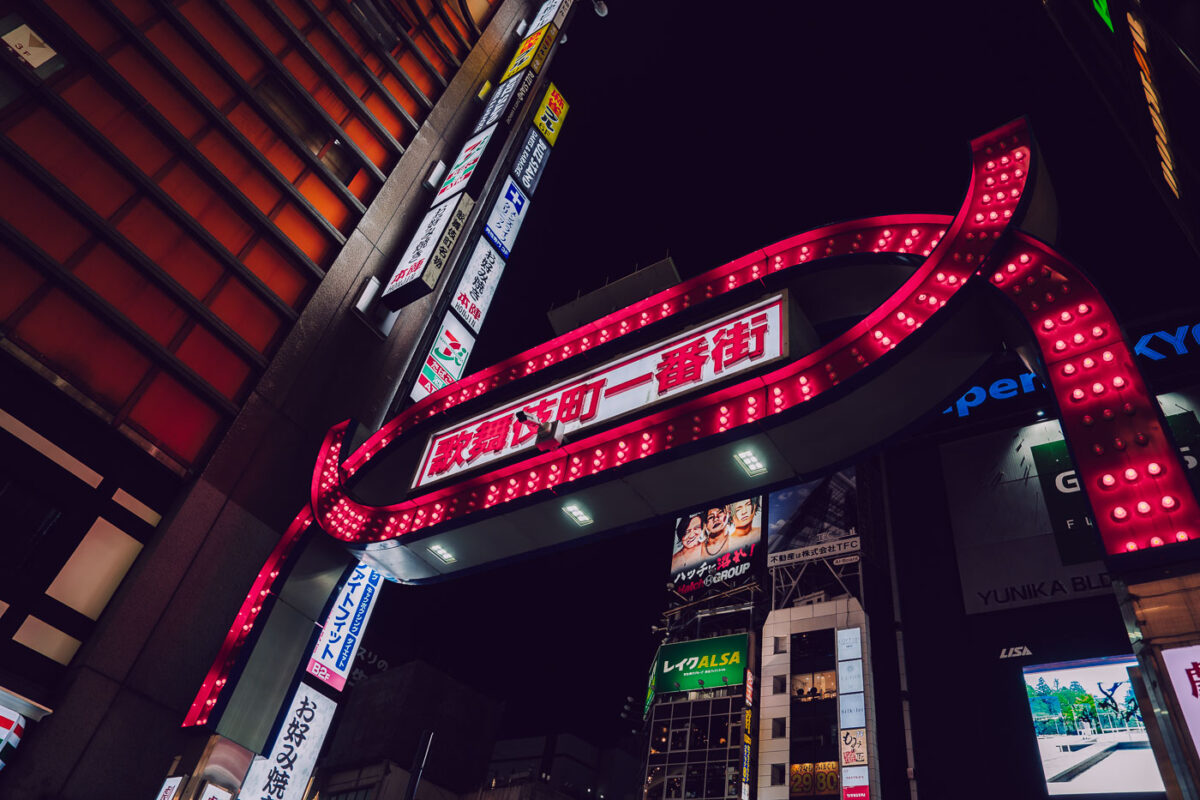
The iconic illuminated gate marking Kabukichō Ichiban-gai, photographed in Shinjuku, Tokyo. Installed in the late 1960s and redesigned several times since, the red archway has become one of the most recognizable entrances to Tokyo’s largest entertainment district.

Kabukichō developed after World War II as a planned theater district—its name comes from a never-built kabuki theater—before evolving into a dense zone of restaurants, bars, cinemas, and nightlife venues. The gate’s bright bulbs and bold lettering serve as a symbolic threshold into the neighborhood’s tightly packed streets, which remain active late into the night.

Shinjuku Community Road Sign

Shinjuku Community Road Sign

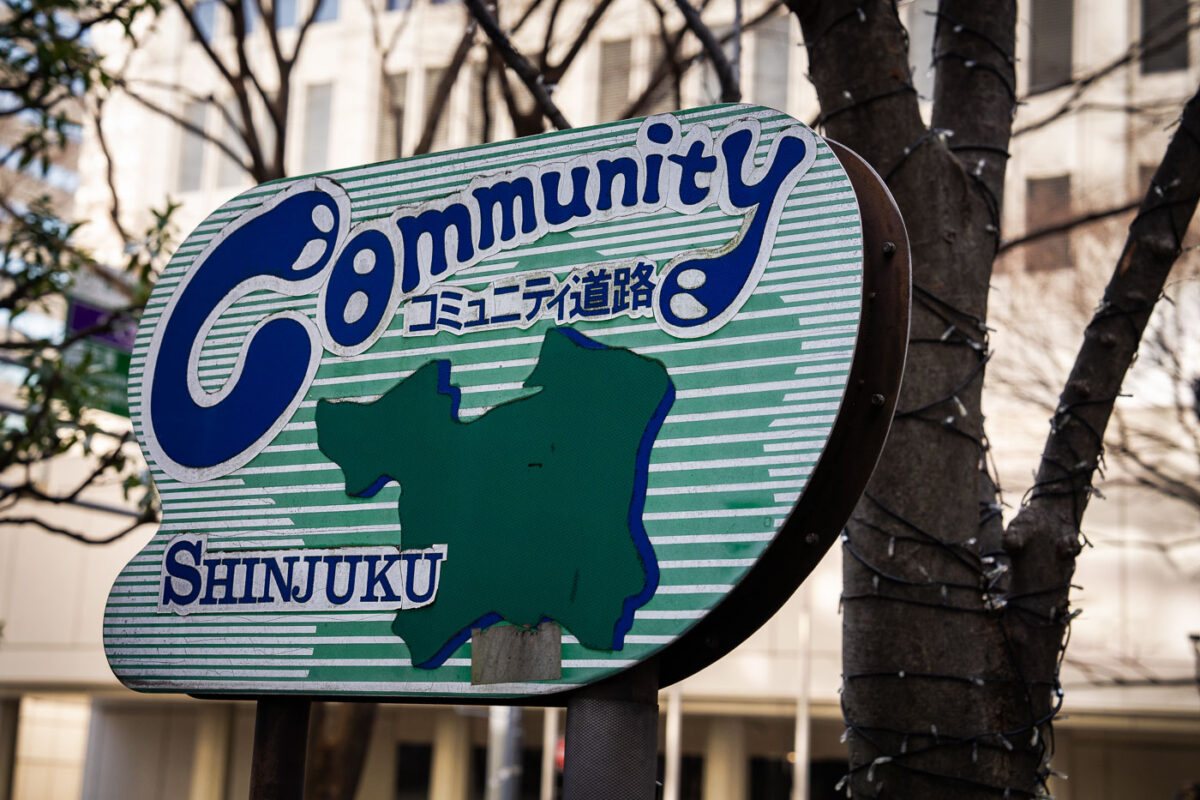
An older enamel “Community Road” sign in Shinjuku, Tokyo, photographed in March 2023. These signs—marked with コミュニティ道路 (“community road”) and a stylized map of the ward—were installed beginning in the late 1970s and 1980s as part of a municipal effort to identify quieter local streets prioritized for pedestrians, schools, and neighborhood traffic rather than through-traffic.

Although many have faded or disappeared as Shinjuku redeveloped, surviving signs like this one remain a small reminder of earlier phases of the ward’s streetscape planning. The hand-drawn lettering, green stripes, and simplified ward outline reflect the graphic design style common in Tokyo’s municipal signage of that era.

Inside Yodobashi Camera in Shinjuku

Inside Yodobashi Camera in Shinjuku

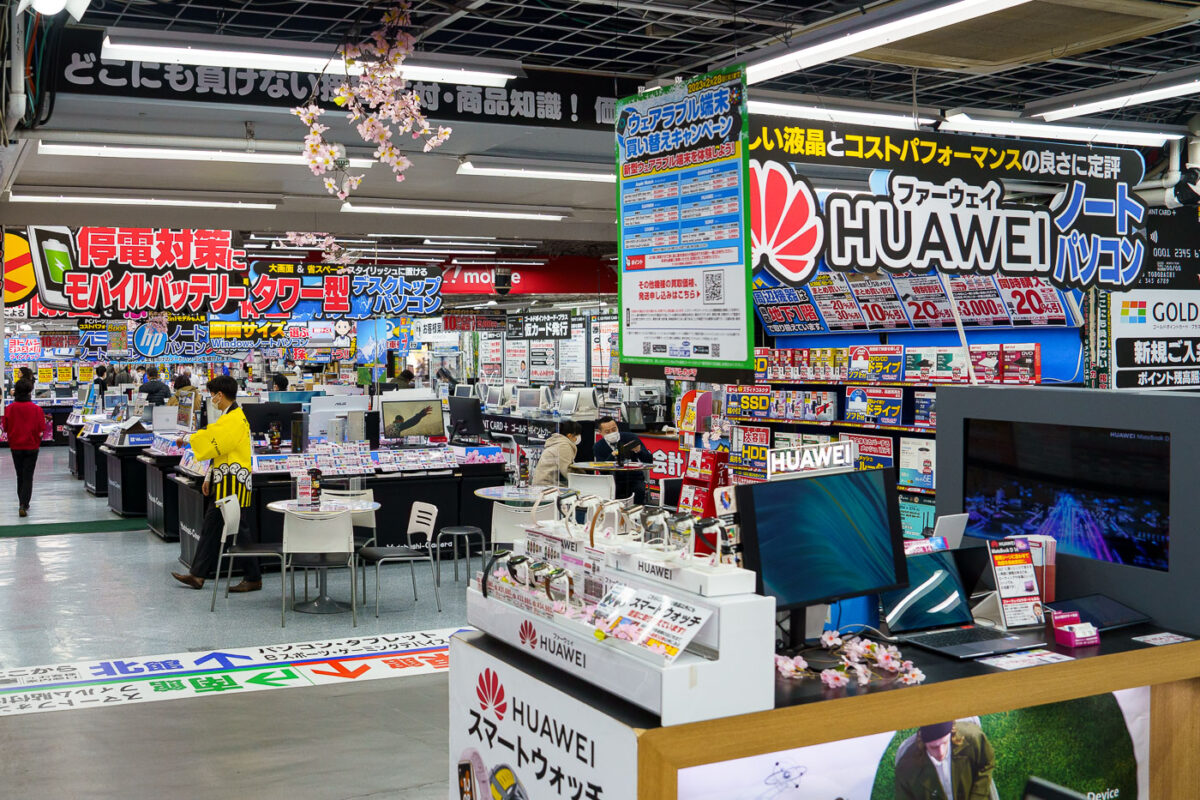
An interior view of Yodobashi Camera’s sprawling Shinjuku complex in March 2023, showing the densely organized electronics floor where computer hardware, mobile devices, and accessories are displayed under bold, color-saturated signage. The store’s characteristic layout—aisles packed with laptops, desktop components, peripherals, and promotional displays—reflects its role as one of Tokyo’s most comprehensive electronics retailers.

Prominent branding for Huawei laptops and smartwatches fills the foreground, while the surrounding aisles feature comparative pricing banners, point-reward offers, and emergency power supply promotions. Yodobashi Camera’s Shinjuku location spans multiple interconnected buildings near the west exit of Shinjuku Station, drawing commuters, hobbyists, and tourists with its high inventory turnover, product variety, and multilingual support.

Battery Display at Yodobashi Camera Shinjuku

Battery Display at Yodobashi Camera Shinjuku

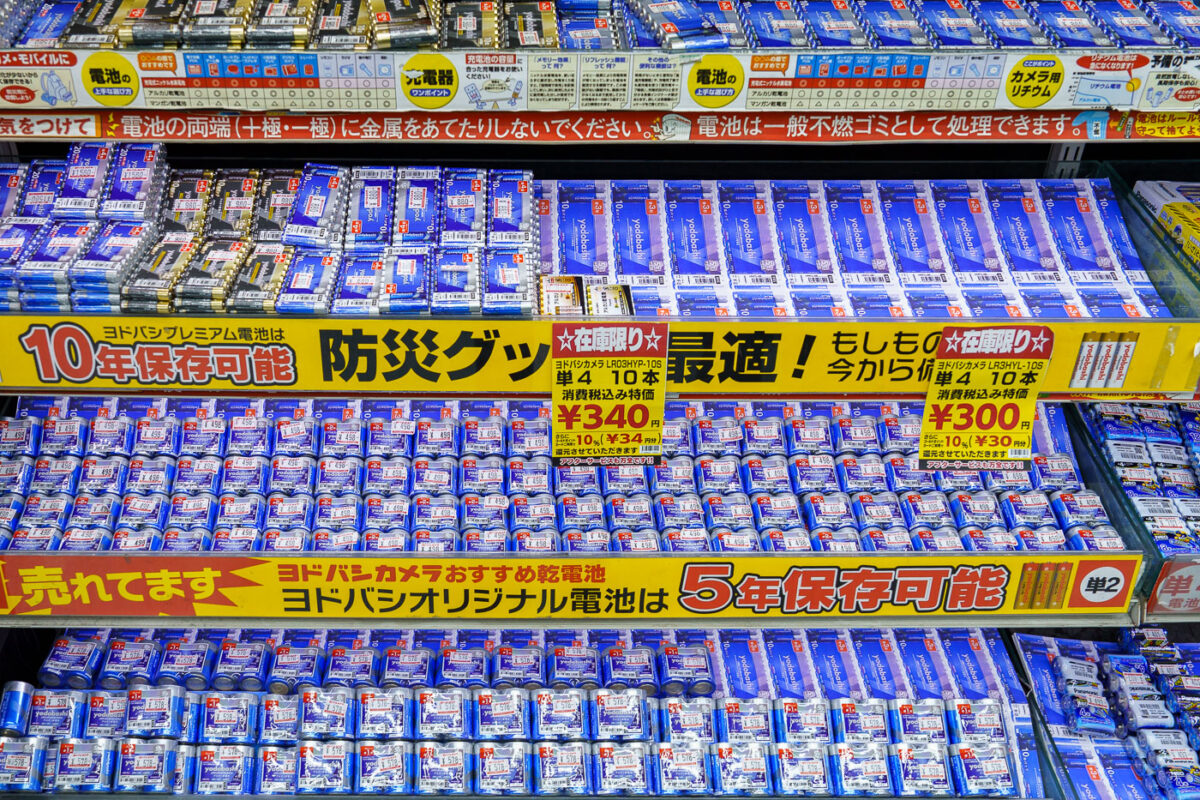
A densely stocked battery display inside Yodobashi Camera’s Shinjuku complex in March 2023. Yodobashi’s in-house battery line is prominently featured, with signage advertising long shelf-life options—10-year storage for premium models and 5-year storage for standard packs. Clear price labeling, bulk multi-pack options, and emergency-preparedness messaging reflect the store’s emphasis on reliability and daily-use electronics.

Yodobashi Camera Shinjuku is one of Tokyo’s largest electronics hubs, spanning multiple buildings near the west exit of Shinjuku Station. Its battery aisles exemplify the retailer’s merchandising style: bright color-coded labels, multilingual product cues, and high-volume stock arranged for quick comparison by commuters and tourists alike.

Outside Yodobashi Camera in Shinjuku

Outside Yodobashi Camera in Shinjuku

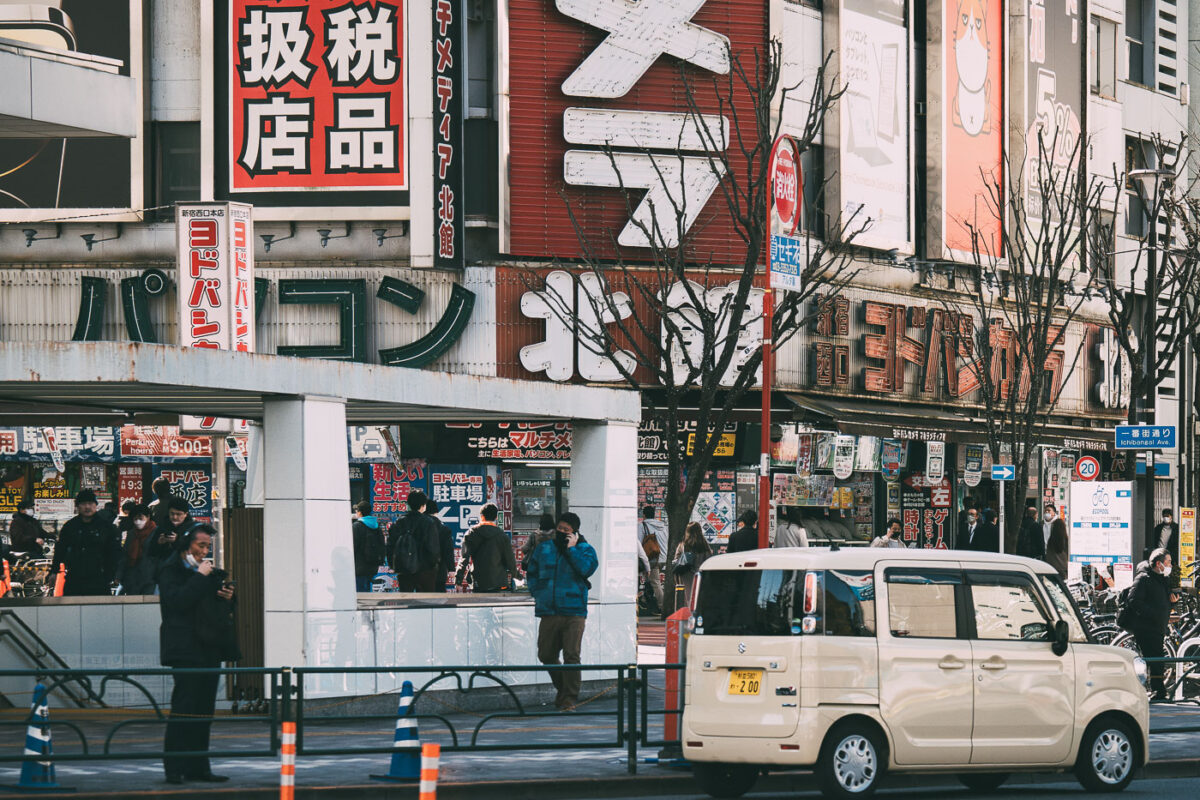
Outside Yodobashi Camera’s flagship complex in Shinjuku, one of Tokyo’s largest and most recognizable electronics retail districts. The chain has been a central part of Shinjuku’s commercial landscape since the 1970s, growing alongside the area’s transformation into a major hub for cameras, audio equipment, computers, and home electronics.

By the early 2000s the Shinjuku stores had expanded into a multi-building network around the west side of the station, offering tax-free shopping, dedicated gaming and computer floors, and an extensive camera department that continues to attract both professionals and tourists. Shinjuku’s dense signage, narrow traffic lanes, and steady crowds reflect the district’s role as one of Japan’s busiest shopping zones, with Yodobashi Camera remaining a key anchor of the neighborhood’s retail identity through 2023.

Tokyo Metro Safety Poster – “Rushing Is Dangerous”

Tokyo Metro Safety Poster – “Rushing Is Dangerous”

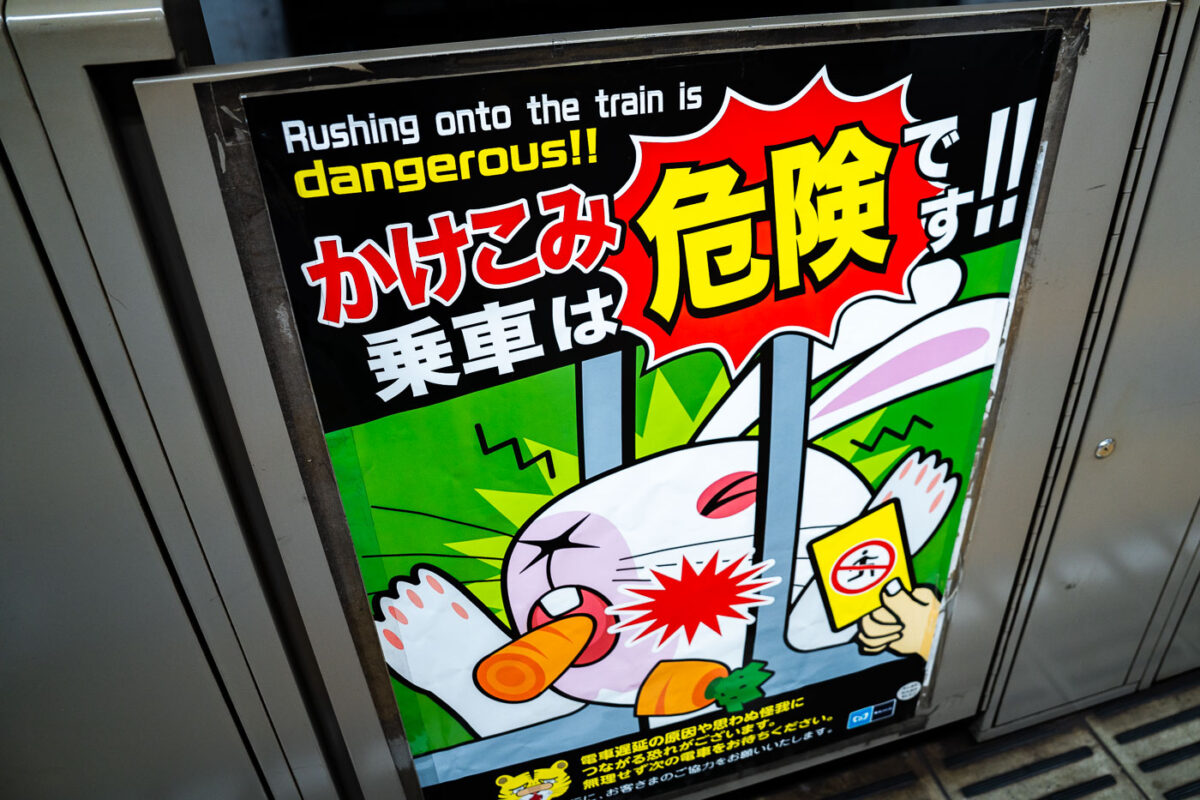
A safety poster inside a Tokyo Metro station warns passengers not to rush onto closing trains—a longstanding focus of the network’s passenger-safety campaigns. Tokyo’s subway operators, including Tokyo Metro and Toei, use a mix of mascots and bold graphic styles to discourage last-second boarding, which remains one of the most common causes of platform accidents and door malfunctions.

These posters are typically placed on or near platform screen doors, which have been installed progressively across the network since the early 2000s to reduce injuries and improve train-dwell consistency. The messaging reflects Japan’s broader public-transportation safety culture: preventing delays, protecting passengers, and maintaining precise headways in some of the most heavily used rail corridors in the world.

This particular design features a cartoon warning style common in Metro stations along lines such as the Marunouchi, Yamanote interchanges, and the Keisei connection points at Ueno and Nippori.

Marunouchi Line, Tokyo Metro, station infrastructure

Marunouchi Line, Tokyo Metro, station infrastructure

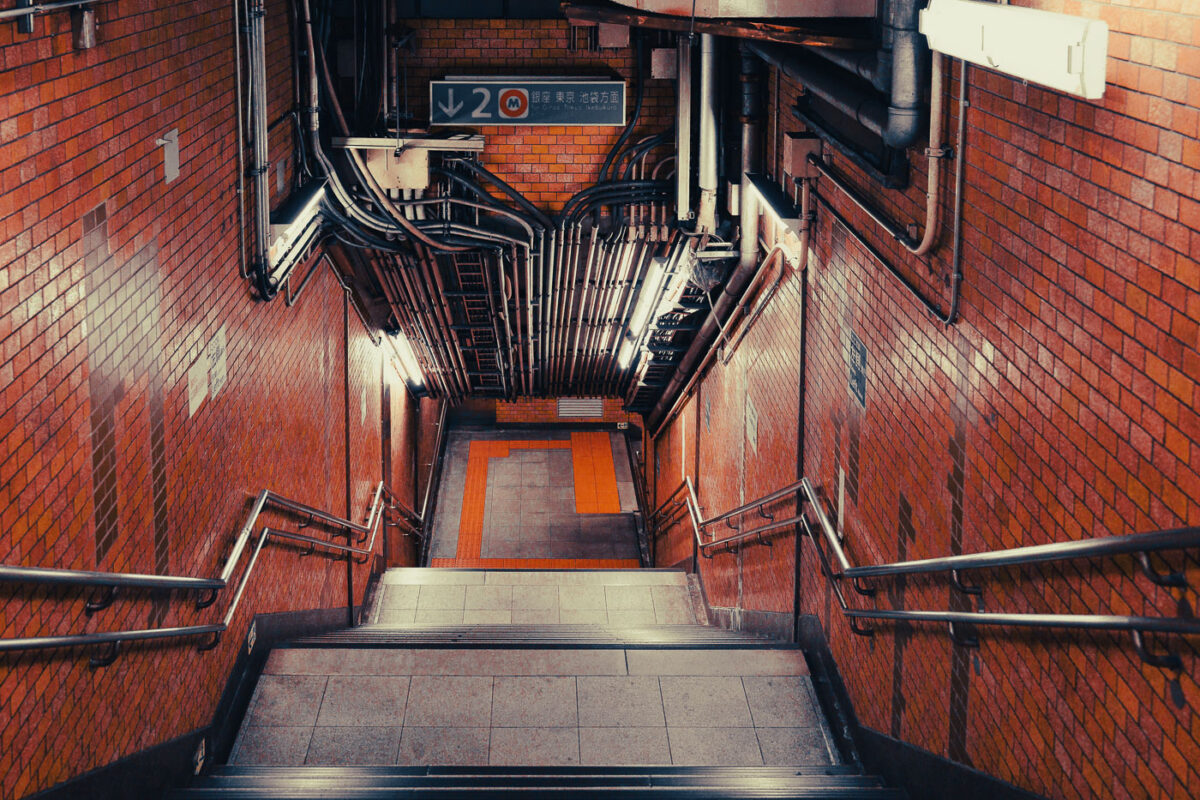
A passageway leading down to the Tokyo Metro Marunouchi Line, part of one of Tokyo’s oldest surviving subway corridors. The Marunouchi Line began opening in stages between 1954 and 1962, making it the second-oldest subway line in the city after the Ginza Line. Many stations along the route—especially the early central segments—retain architectural and material choices from Japan’s postwar reconstruction period, including ceramic wall tile, exposed conduit, and compact stairways built before modern accessibility standards were introduced.

The dense overhead wiring found in older Marunouchi Line interchanges reflects decades of retrofits to accommodate improved lighting, ventilation, fire-suppression systems, and communication networks, all integrated into the original structural envelope. These spaces remain essential transfer points connecting central Tokyo’s commercial districts with major JR East hubs such as Shinjuku, Tokyo Station, and Ochanomizu.

Although the Marunouchi Line has undergone rolling upgrades—including new rolling stock (02 series replacements), platform screen doors, and improved wayfinding—the underlying layout in many stations still conveys the functional, space-efficient design philosophy of mid-20th-century Japanese subway engineering.

Yamanote Line Interior During Tokyo’s Evening Rush

Yamanote Line Interior During Tokyo’s Evening Rush

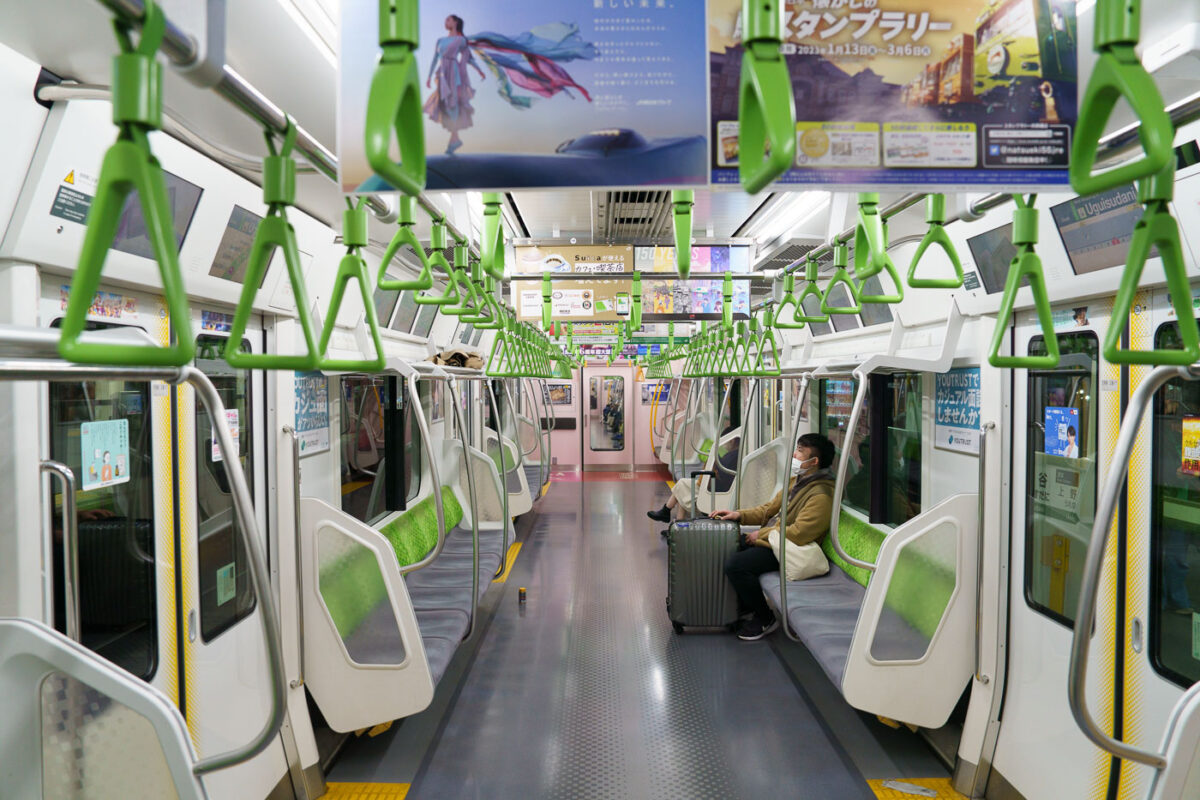
An interior view of a JR East E235 series train on the Yamanote Line, photographed in March 2023. Introduced beginning in 2015, the E235 fleet modernized one of Tokyo’s busiest rail corridors with full-width LCD displays, energy-efficient systems, and redesigned seating meant to improve passenger flow during peak congestion.

The Yamanote Line has operated as Tokyo’s central loop since 1925, linking major districts such as Shinjuku, Shibuya, Ueno, and Tokyo Station. Its frequent headways—often under three minutes—make it a fundamental component of the city’s rail network.

In this off-peak moment, the largely empty car highlights features typical of contemporary JR East design: bright color-coded grab handles, platform-screen door alignment, and extensive in-car advertising screens catering to both commuters and visitors navigating the metropolitan loop.

Transfer Stairway to the Keisei Line at Nippori Station

Transfer Stairway to the Keisei Line at Nippori Station

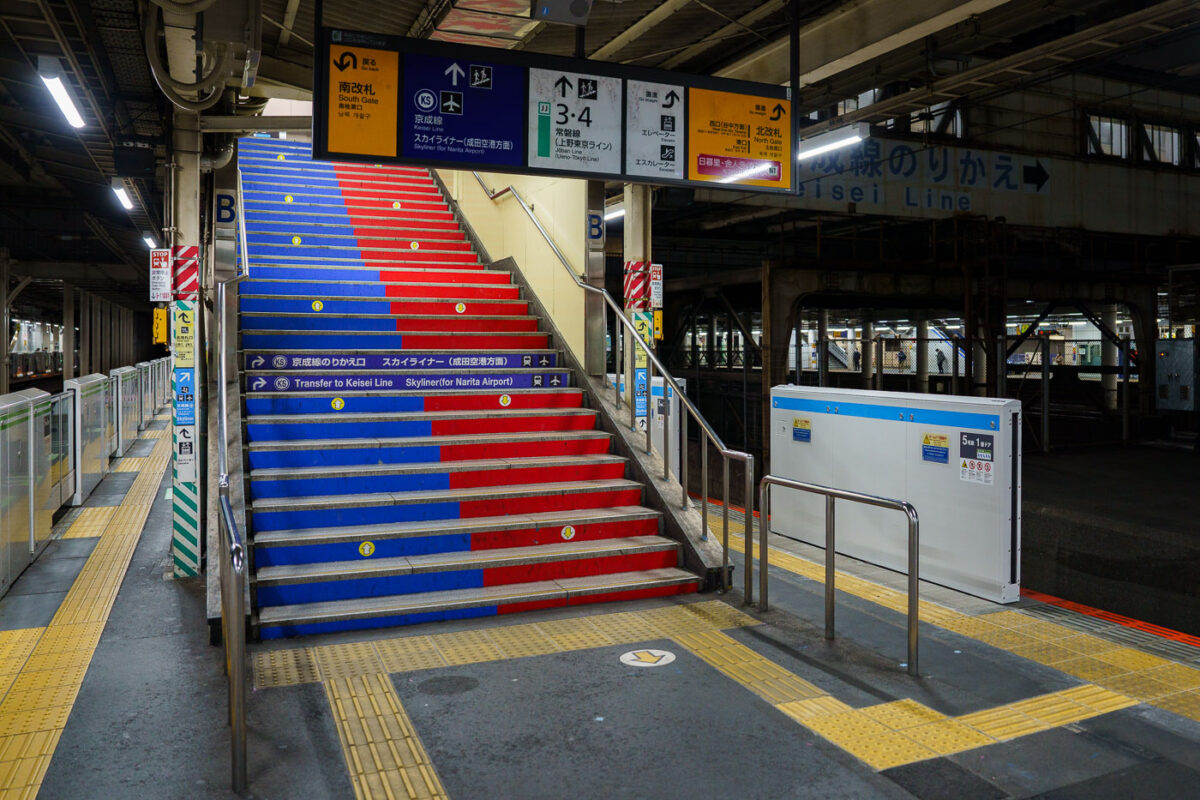
A color-coded stairway inside Nippori Station directs passengers to the Keisei Line platforms, the primary transfer point for travelers heading to Narita Airport on the high-speed Skyliner. Nippori serves as a major interchange between JR East lines, the Keisei Main Line, and the Nippori–Toneri Liner, linking northern Tokyo neighborhoods to the broader regional network. The mixed architecture—older steel passageways alongside newer safety upgrades like platform-edge barriers—reflects the station’s layered development since its opening in 1905. Today, Nippori remains one of Tokyo’s most important cross-rail transfer nodes, especially for airport-bound passengers navigating the city’s extensive transit system.

Keisei Line Transfer Passage at Nippori Station

Keisei Line Transfer Passage at Nippori Station

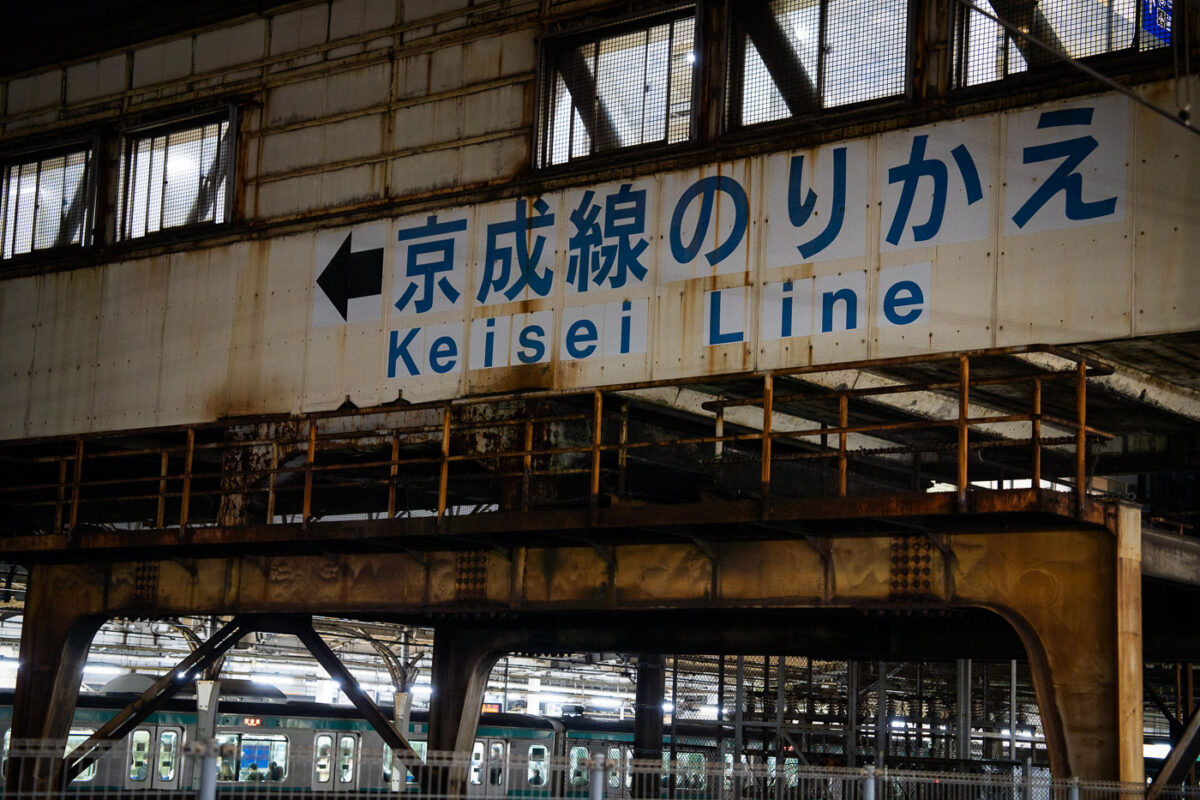
A weathered overhead passage at Nippori Station directs passengers toward the Keisei Line, one of Tokyo’s key links to Narita Airport via the Skyliner service. Nippori has served as a major interchange since the early 20th century, connecting JR East’s Yamanote, Keihin-Tōhoku, and Jōban lines with the private Keisei network.

The aging steelwork and faded signage reflect the layered construction of the station complex, where older elevated structures remain in daily use alongside modernized ticketing halls and platform edge barriers. Despite its utilitarian appearance, this transfer point moves thousands of airport-bound travelers each day, making it one of Tokyo’s busiest cross-rail connections.

Night Streets Near Nippori Station, Tokyo

Night Streets Near Nippori Station, Tokyo

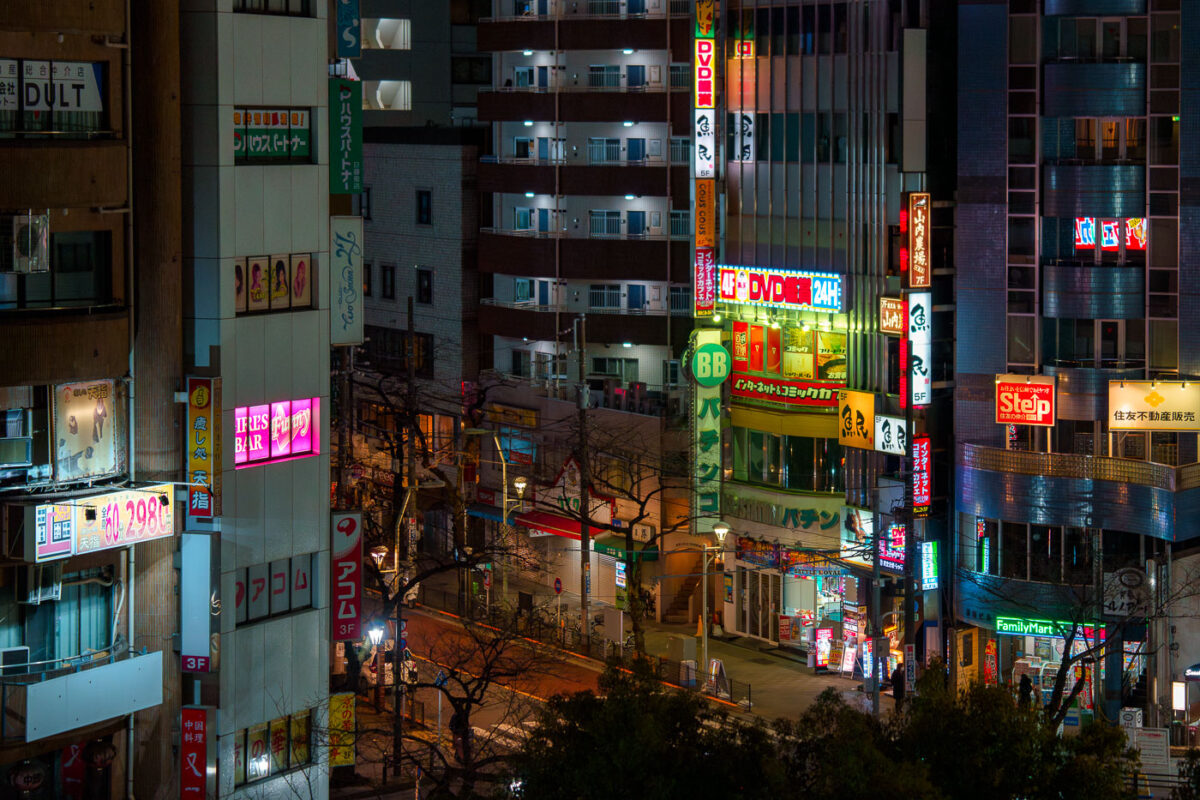
A nighttime view of the commercial streets southwest of Nippori Station in Tokyo’s Arakawa ward, where pachinko parlors, DVD shops, cafés, and convenience stores fill the dense blocks between Nippori and Nishi-Nippori stations. The brightly lit BB Pachinko building and the FamilyMart at street level serve as local landmarks, with narrow side streets branching off toward older residential buildings. The mix of neon signage, small restaurants, and multi-story entertainment businesses reflects the typical streetscape found along the fringe of Tokyo’s major commuter hubs.

This part of Nippori sits just outside the historic Yanaka district, one of the few neighborhoods that survived the 1923 Great Kantō Earthquake and wartime bombing. As the city expanded after the war, the areas around Nippori Station developed into a transit-oriented commercial zone—first serving textile shops and wholesalers, then gradually shifting toward pachinko centers, cafés, and commuter-friendly stores. Today the district remains a blend of old and new Tokyo: dense, walkable, illuminated late into the night, yet still closely connected to the quieter temple districts just a few blocks away.

Rails outside Nippori Station in Tokyo

Rails outside Nippori Station in Tokyo

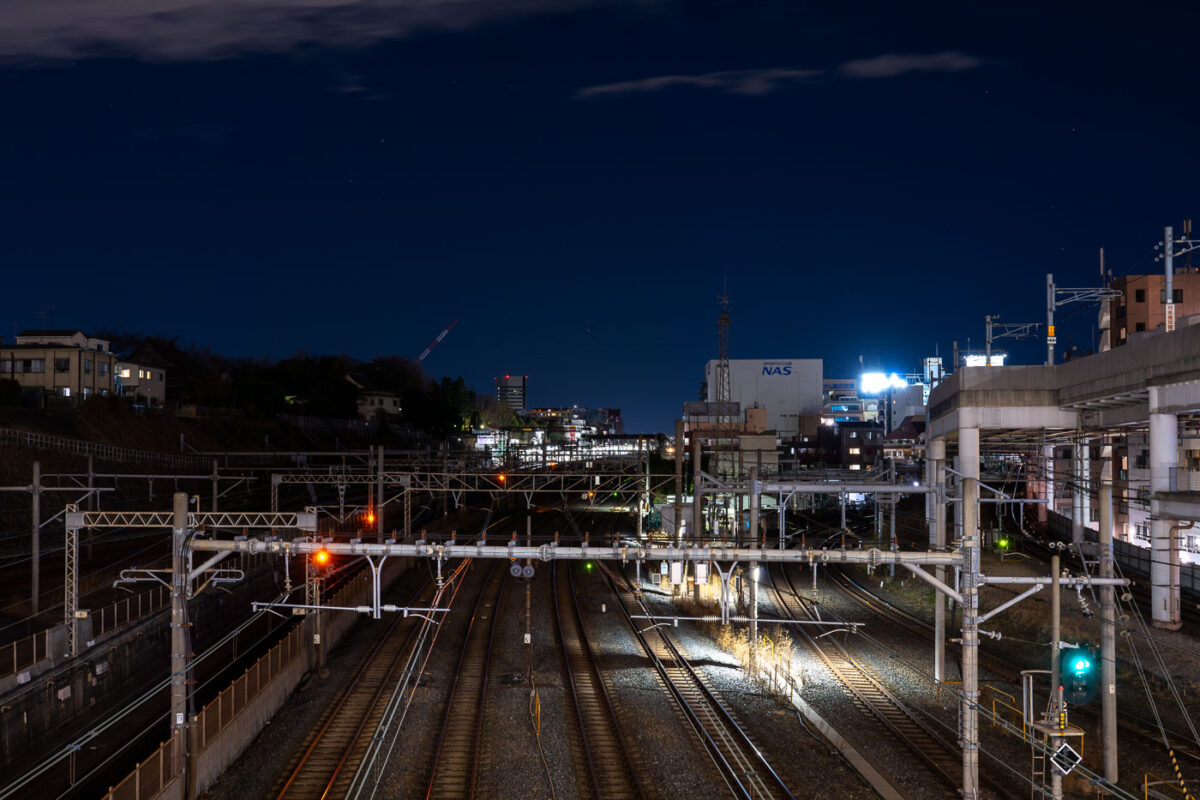
Multiple rail lines converge near Nippori Station in Tokyo, a key junction connecting the JR Yamanote, Keisei, and Joban lines. The illuminated signals and overhead power lines reveal the complexity of the city’s rail infrastructure as it weaves through residential and industrial zones. To the right, elevated expressway supports and nearby buildings frame the corridor, emphasizing Tokyo’s dense layering of transport systems and urban development.

Nippori Station at night

Nippori Station at night

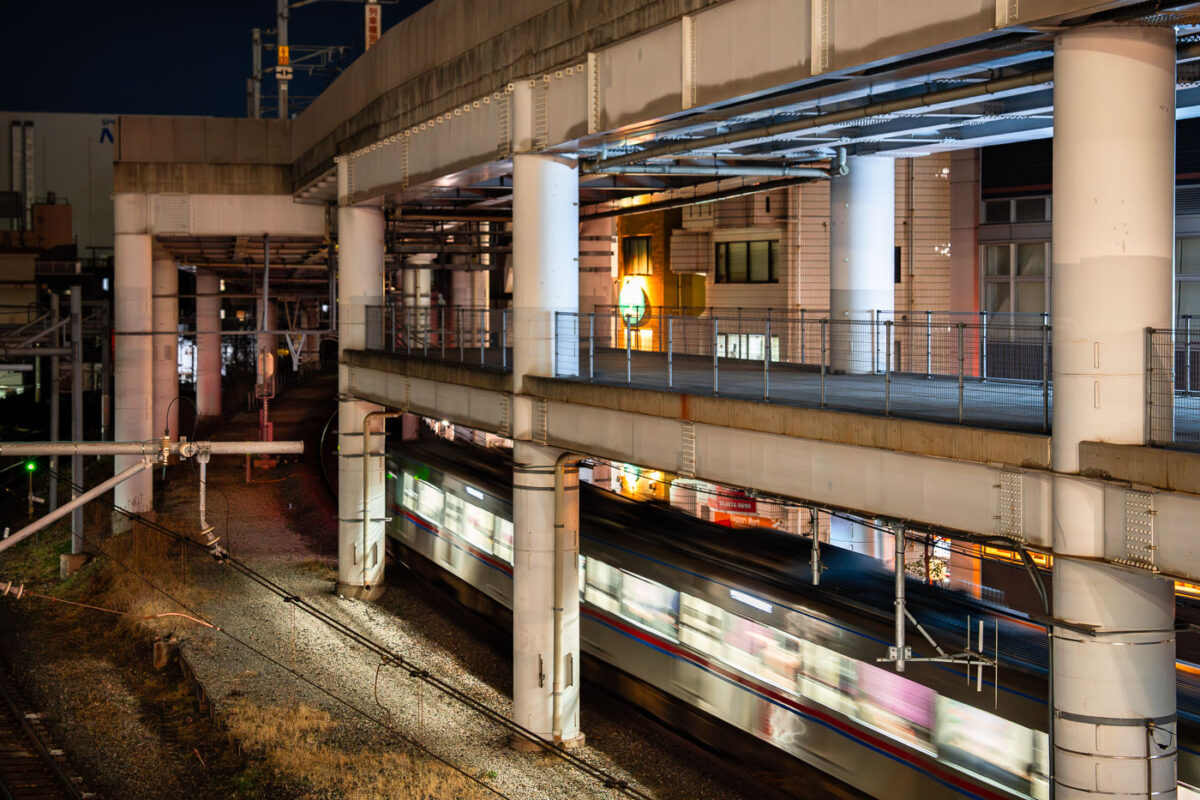
A commuter train passes through Nippori Station in Tokyo beneath an elevated expressway. Nippori is a major interchange for the JR Yamanote, Keisei, and Joban lines, connecting central Tokyo with Narita Airport and surrounding neighborhoods. The scene reflects the district’s tightly integrated infrastructure, where multiple rail lines and highways converge within a compact urban corridor.

NTT Pay Phone In Japan

NTT Pay Phone In Japan

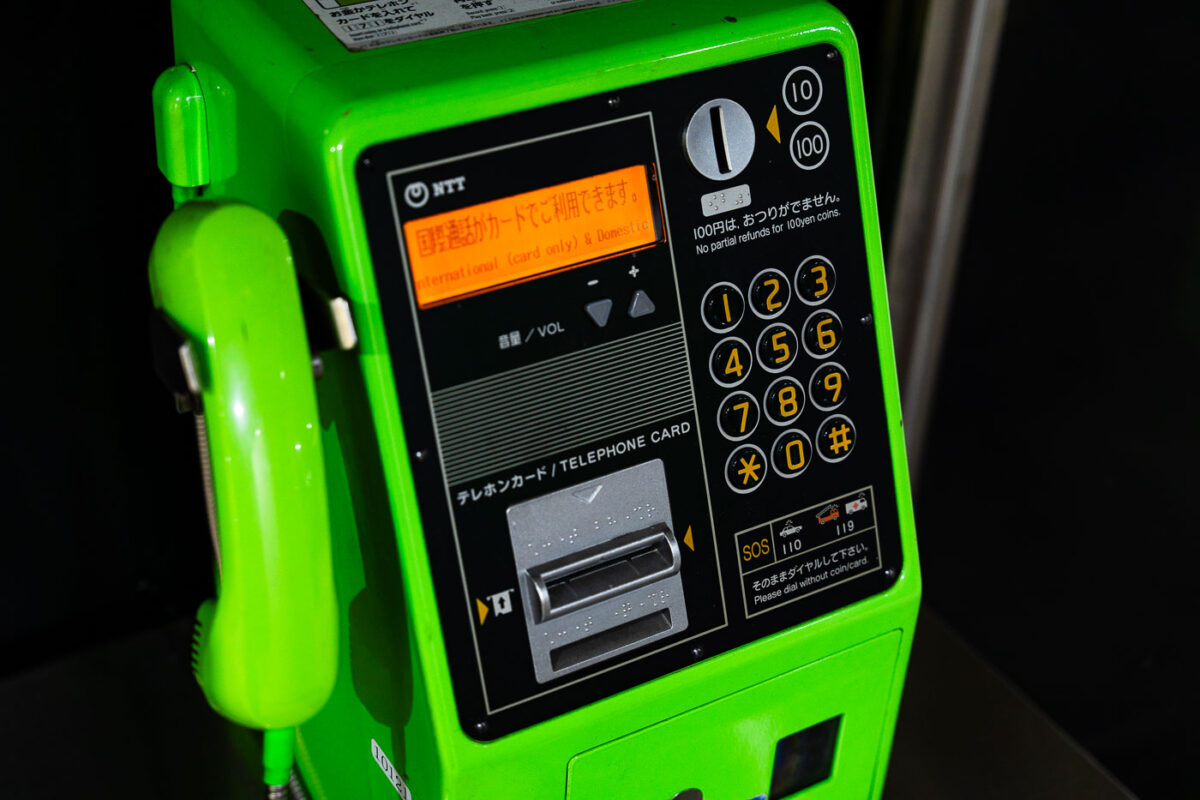
A bright green NTT public payphone, once a fixture of every Japanese street corner and train station, stands as a reminder of Japan’s pre-smartphone era. Its sturdy metal receiver, telephone card slot, and bilingual instructions highlight the country’s enduring attention to accessibility and precision. Still functional today, these phones remain a quiet symbol of Japan’s blend of reliability and retro technology.

Asakusa Station Entrance Tokyo

Asakusa Station Entrance Tokyo

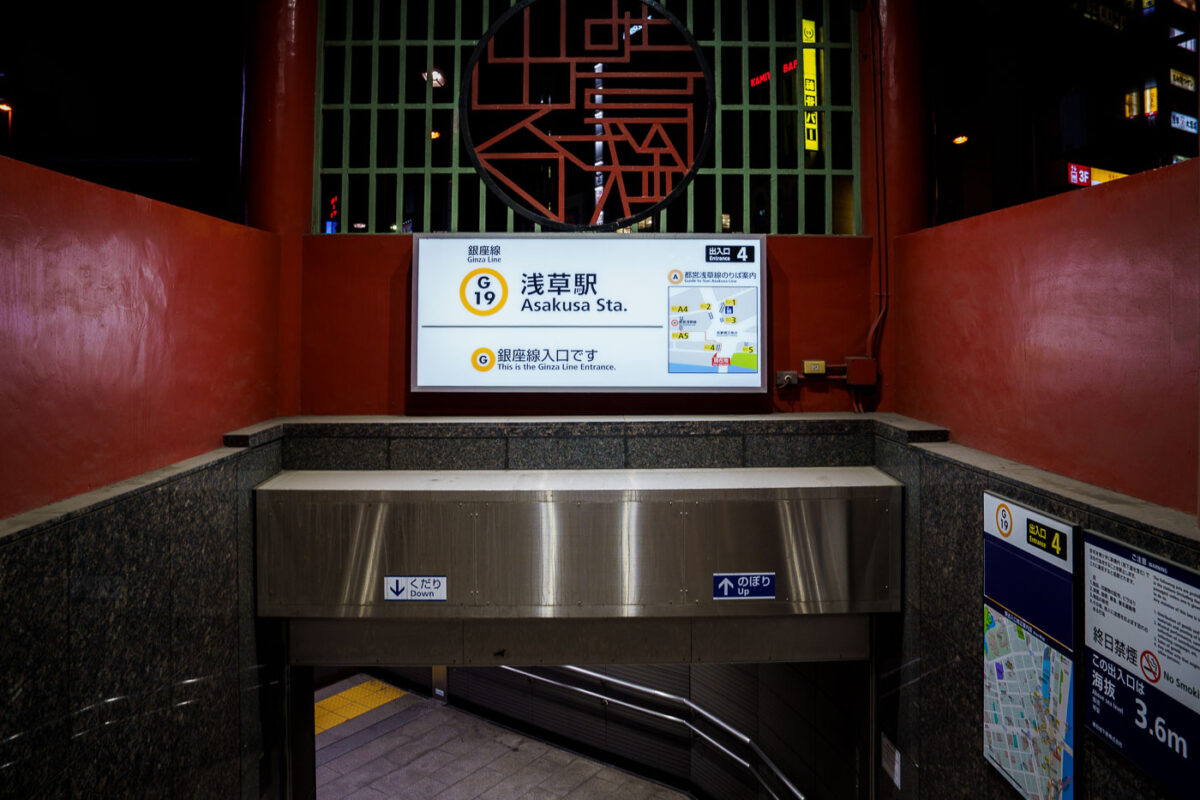
An entrance to Tokyo Metro’s Asakusa Station on the Ginza Line, marked with the station code G-19, leads commuters down a clean, tiled stairway under the red-painted gateway structure. The illuminated signage displays route maps and directional guidance, combining modern wayfinding with the surrounding area’s traditional aesthetic. Located near Sensō-ji Temple, this entrance reflects Asakusa’s balance of old Tokyo charm and contemporary transit design.

Asakusa Underground Street Soba Counter

Asakusa Underground Street Soba Counter

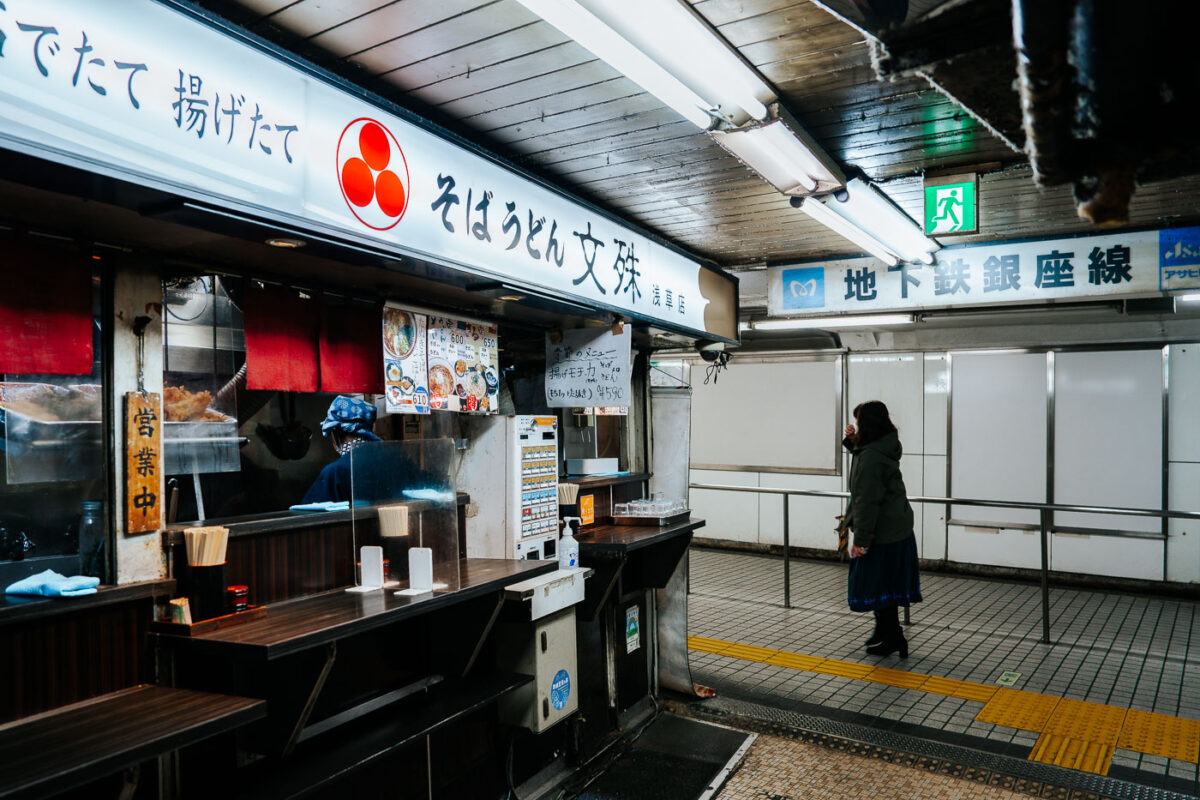
A small soba counter operates inside Asakusa Underground Street, one of Tokyo’s oldest surviving subterranean shopping arcades. Tucked beneath the streets near Asakusa Station, these compact eateries serve quick bowls of soba and udon to commuters and visitors moving between the metro and the surrounding neighborhood.

Opened in 1955, Asakusa Underground Street is considered the oldest underground shopping street in Japan. Its narrow corridors, low ceilings, and tightly packed storefronts preserve a postwar atmosphere that has largely vanished from Tokyo as major stations modernized. The passageway originally developed as a practical connection point for transit riders, but it evolved into a lively network of bars, snack counters, tobacconists, and small service shops. Today, despite gradual renovation, it remains one of the city’s most atmospheric relics of mid-20th-century urban life—an example of how Tokyo’s underground spaces doubled as both transportation infrastructure and neighborhood social hubs.

Tokyo Metro Marunouchi Line Series 2000 Train Interior, Japan

Tokyo Metro Marunouchi Line Series 2000 Train Interior, Japan

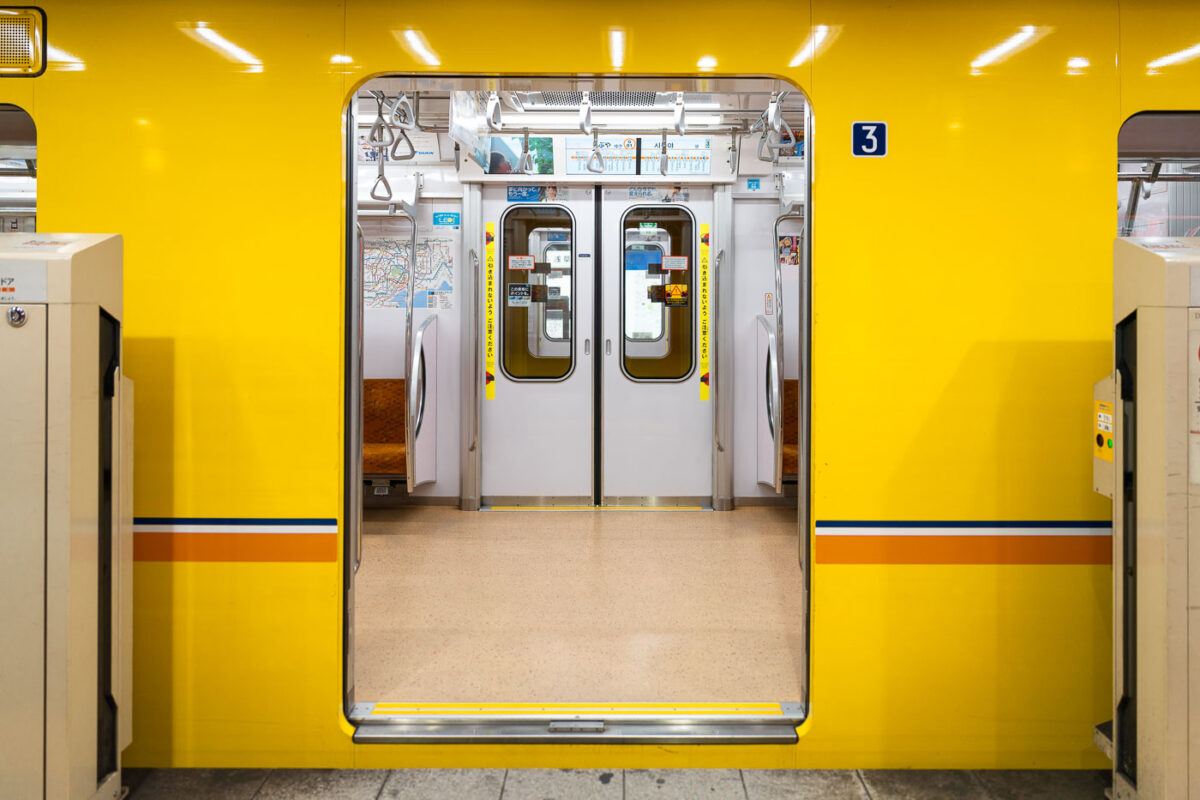
Tokyo’s Marunouchi Line is one of Japan’s oldest and busiest subway routes, linking major commercial and governmental districts through a network that dates back to 1954. This view shows the Series 2000 rolling stock, a modernized fleet introduced by Tokyo Metro beginning in 2019 to replace aging Series 02 cars.

The trains feature energy-efficient LED lighting, regenerative braking, and improved accessibility through wider doorways and level boarding. Their bright yellow exterior, trimmed with red and blue stripes, preserves the line’s traditional color while emphasizing the sleek, minimalist design typical of contemporary Japanese transit engineering.

Inside, the cabin layout prioritizes capacity and passenger flow, with longitudinal bench seating covered in patterned orange upholstery and overhead digital route displays in both Japanese and English. The Marunouchi Line operates on a 1,500 V DC overhead catenary and runs entirely underground except for a brief surface section near Nakano-Sakaue, connecting Ikebukuro to Ogikubo over a 24.2-kilometer route that handles hundreds of thousands of passengers daily.

Morning Rush on the Tokyo Metro Ginza Line

Morning Rush on the Tokyo Metro Ginza Line

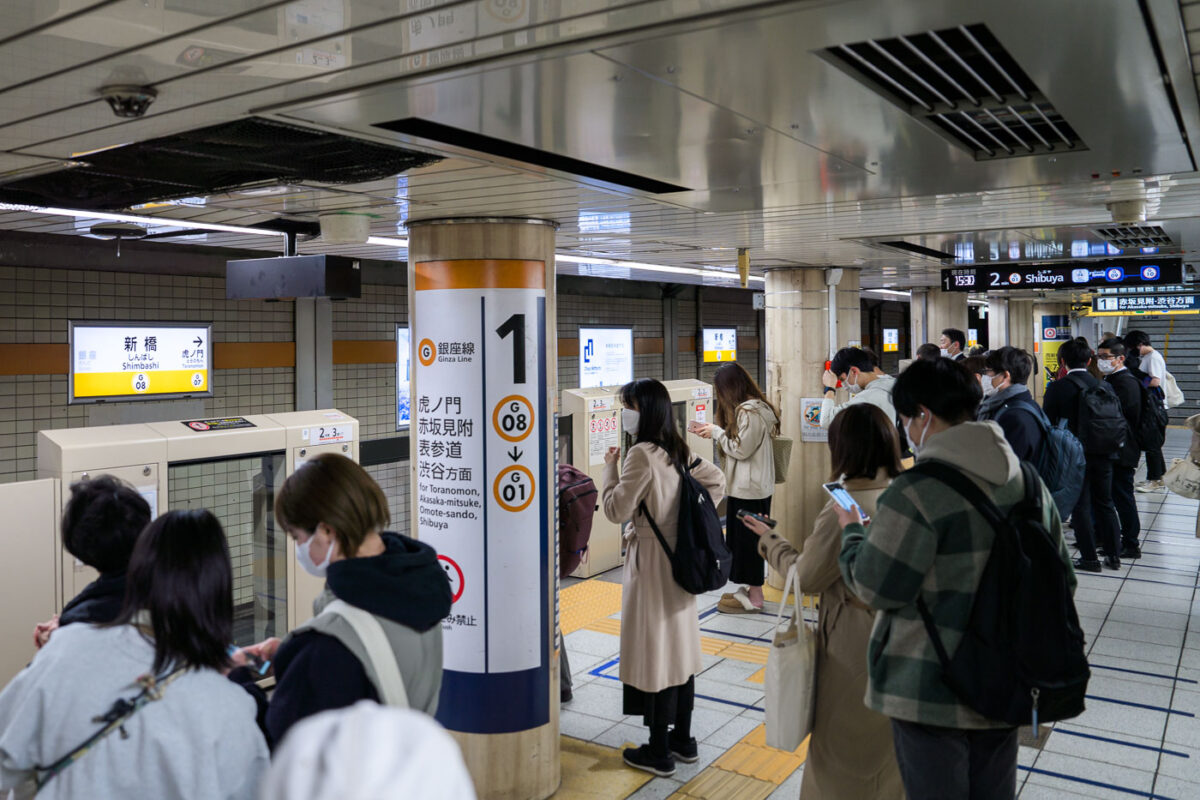
Commuters wait for the next train on the Tokyo Metro Ginza Line, Japan’s oldest underground subway line and one of the city’s most heavily traveled routes. This platform—serving trains toward Toranomon, Akasaka-mitsuke, Omote-sando, and Shibuya—captures a typical weekday scene with riders lining up at designated doors, phones in hand, as screen doors stand ready to open with the arriving train.

Opened progressively between 1927 and 1939, the Ginza Line was Asia’s first subway, modeled after London’s Underground and New York’s early lines. Its development helped shape modern Tokyo by linking emerging commercial districts—including Asakusa, Ginza, and Shibuya—into a cohesive urban network. Today, despite being nearly a century old, the line remains a backbone of the city’s transportation system, continually upgraded with platform doors, advanced signaling, and refreshed stations to meet the demands of one of the world’s busiest transit cities.

Shinkansen ticket vending machines

Shinkansen ticket vending machines

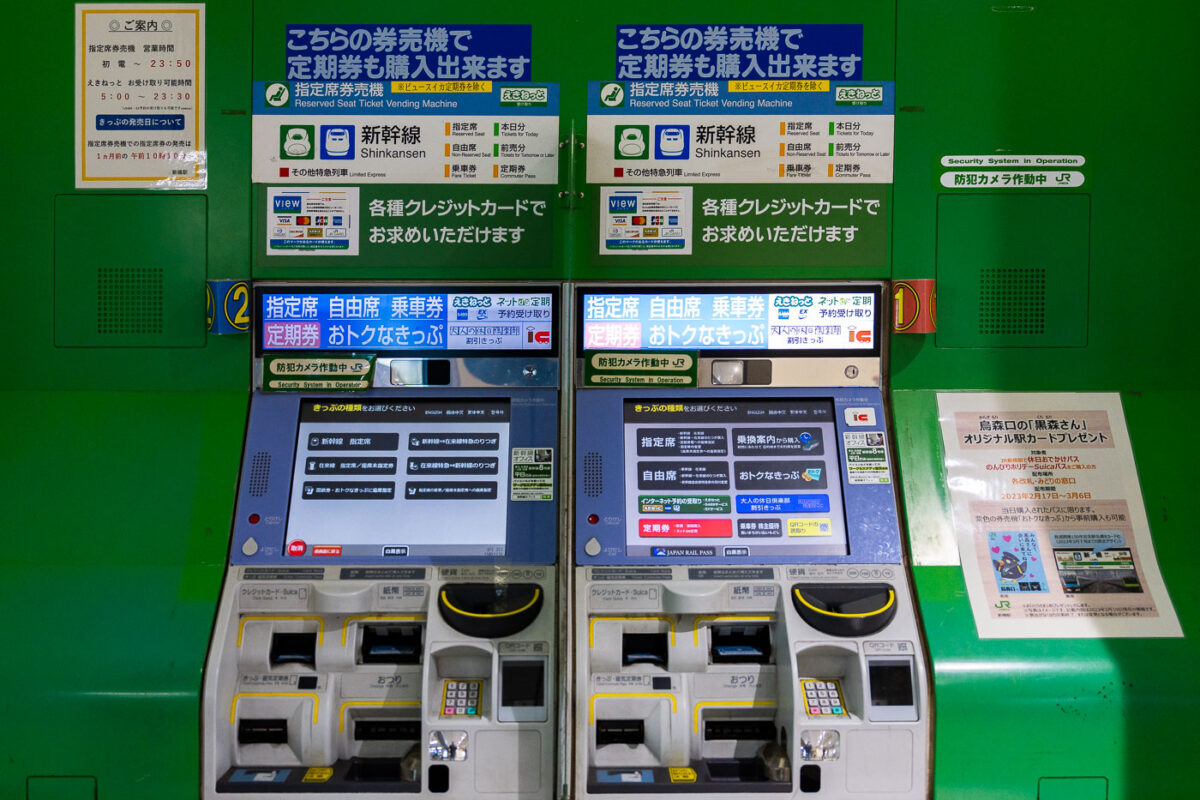
A pair of Shinkansen ticket vending machines at a Japanese railway station, featuring multilingual touchscreens and payment slots for both cash and IC cards. These machines allow travelers to purchase reserved and non-reserved tickets for Japan’s high-speed rail network, as well as commuter passes and regional fare cards. The bright green backdrop and clear signage reflect Japan Rail’s emphasis on efficiency and accessibility, enabling quick transactions even during the busiest travel hours.

Loading more photos…