North Carolina

18 photos · 2012–2019

18 photographs tagged North Carolina, 2012–2019.
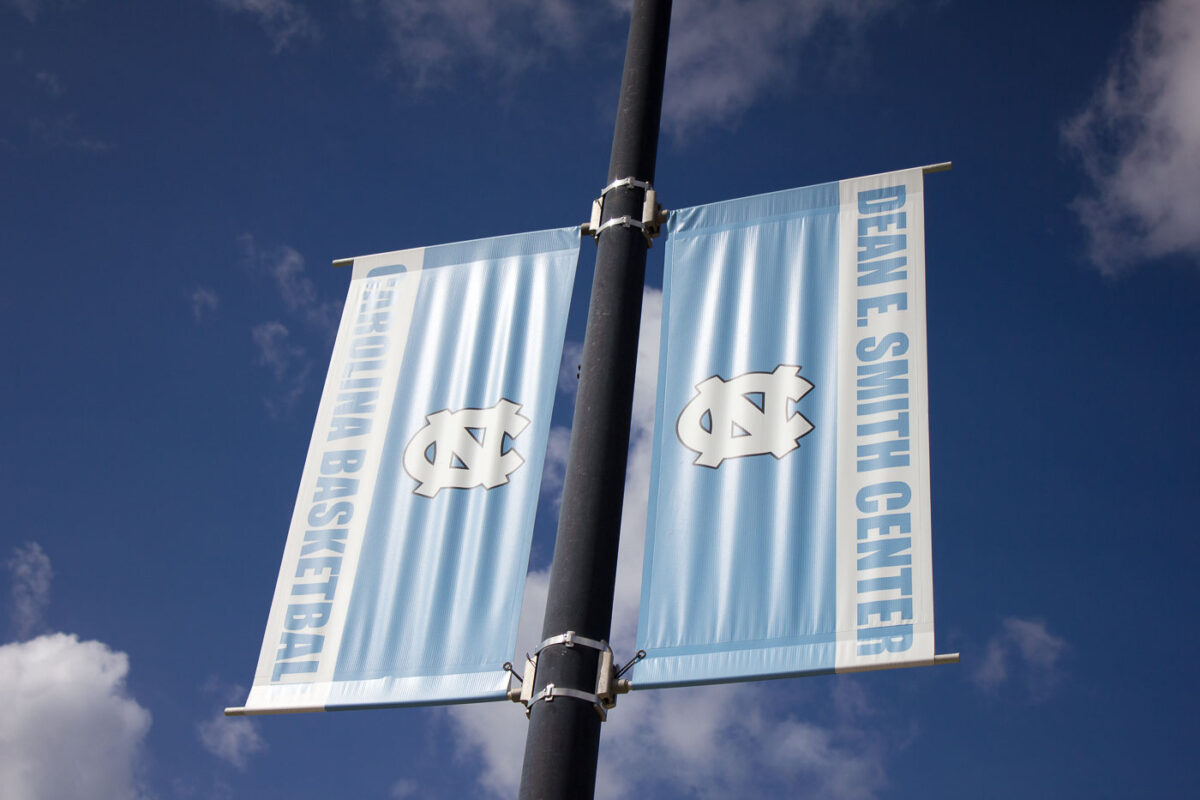
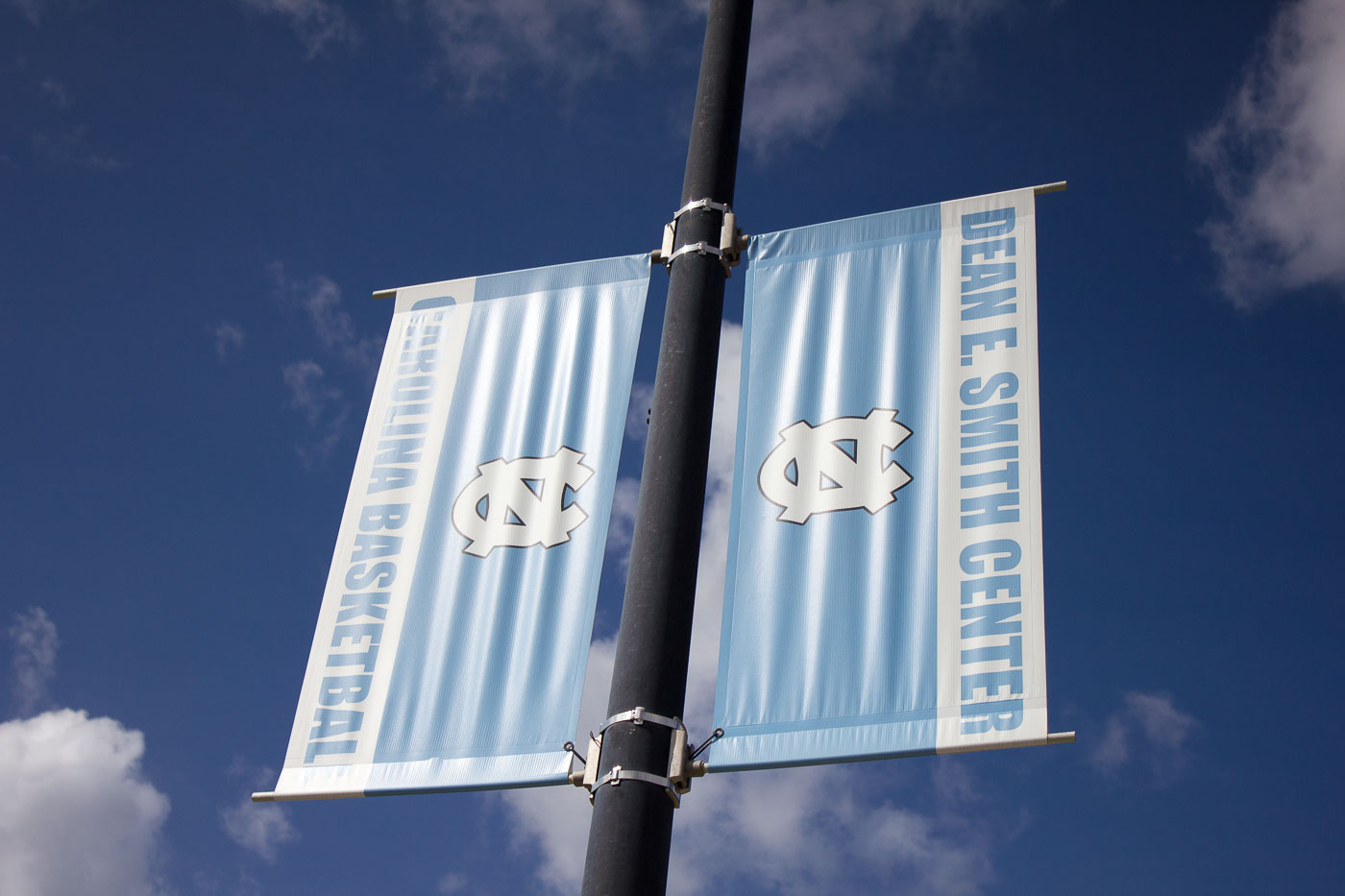
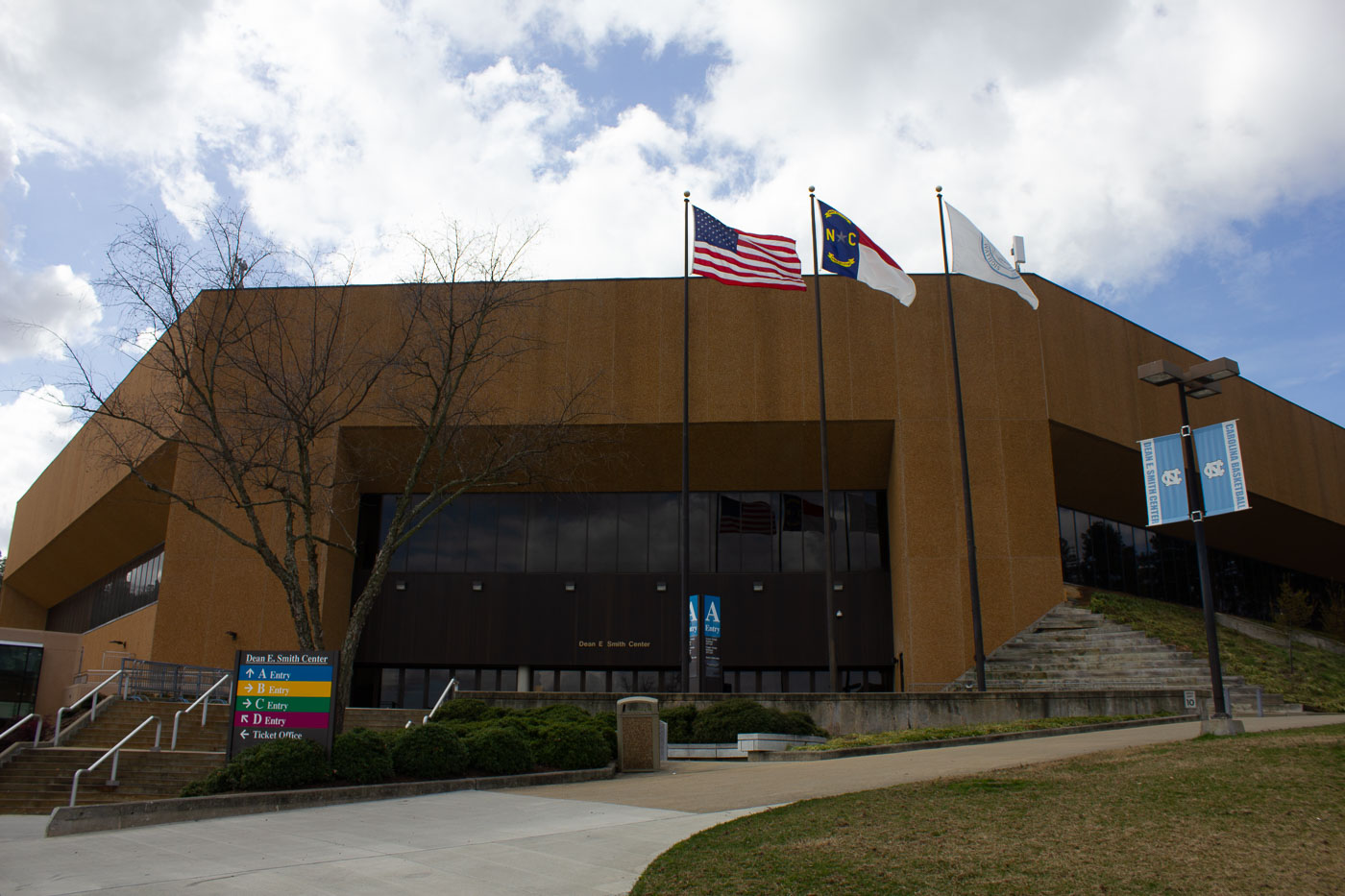
University of North Carolina Tar Heels basketball banners hanging from a pole outside the Dean E. Smith Center in Chapel Hill.
The Dean E. Smith Center opened in 1986 as the home arena for University of North Carolina basketball. It replaced Carmichael Auditorium and was named for Dean Smith, who coached the Tar Heels for 36 seasons and won two NCAA championships, in 1982 and 1993. The arena seats more than 21,000 and is nicknamed the "Dean Dome" by fans and sportswriters alike.

Banners Outside the Dean E. Smith Center in Chapel Hill
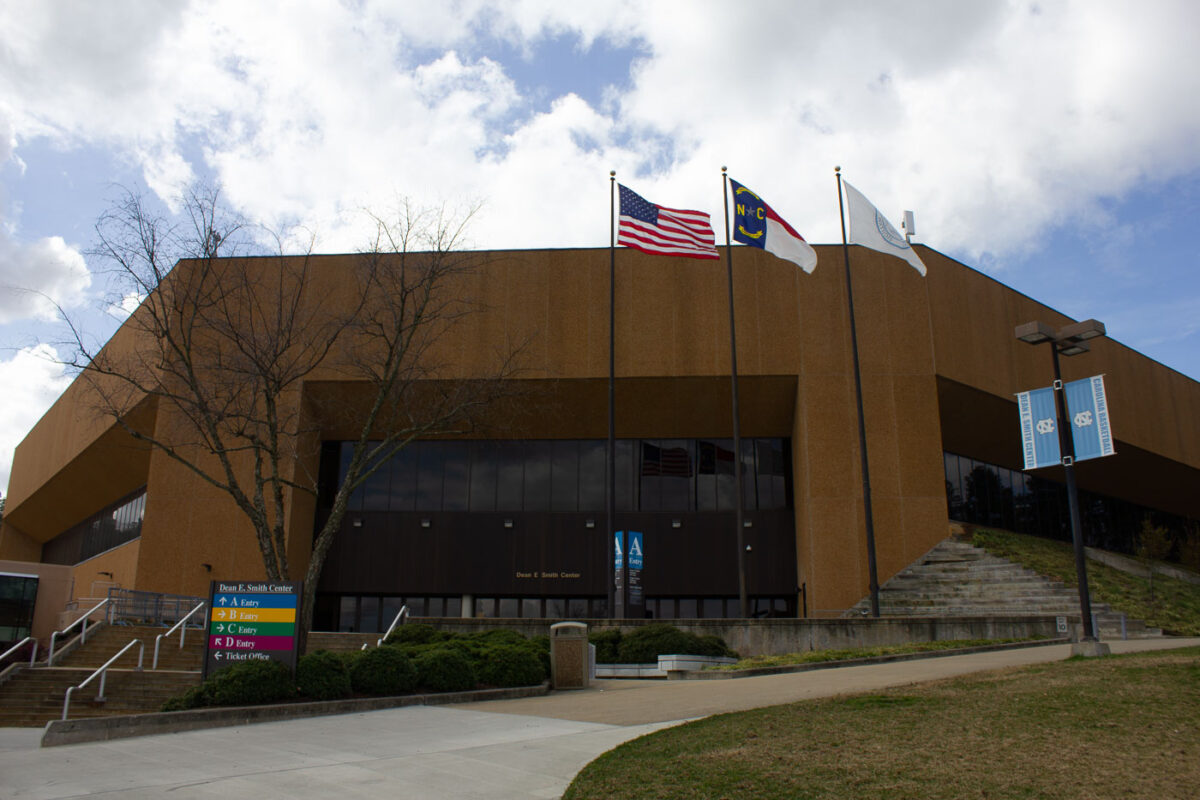
Dean E. Smith Center, UNC's basketball arena, displays American and institutional flags on its tan exterior.
The Dean E. Smith Center opened in 1986 on the University of North Carolina at Chapel Hill campus, replacing Carmichael Auditorium as the home of Tar Heels basketball. Named for longtime coach Dean Smith, who led the program to two national championships, the arena seats more than 21,000 and ranks among the largest on-campus basketball venues in the country. Students have nicknamed it the "Dean Dome" since its construction. Beyond basketball, the building hosts commencement ceremonies, concerts, and other university events throughout the year.

Entrance to the Dean E. Smith Center in Chapel Hill
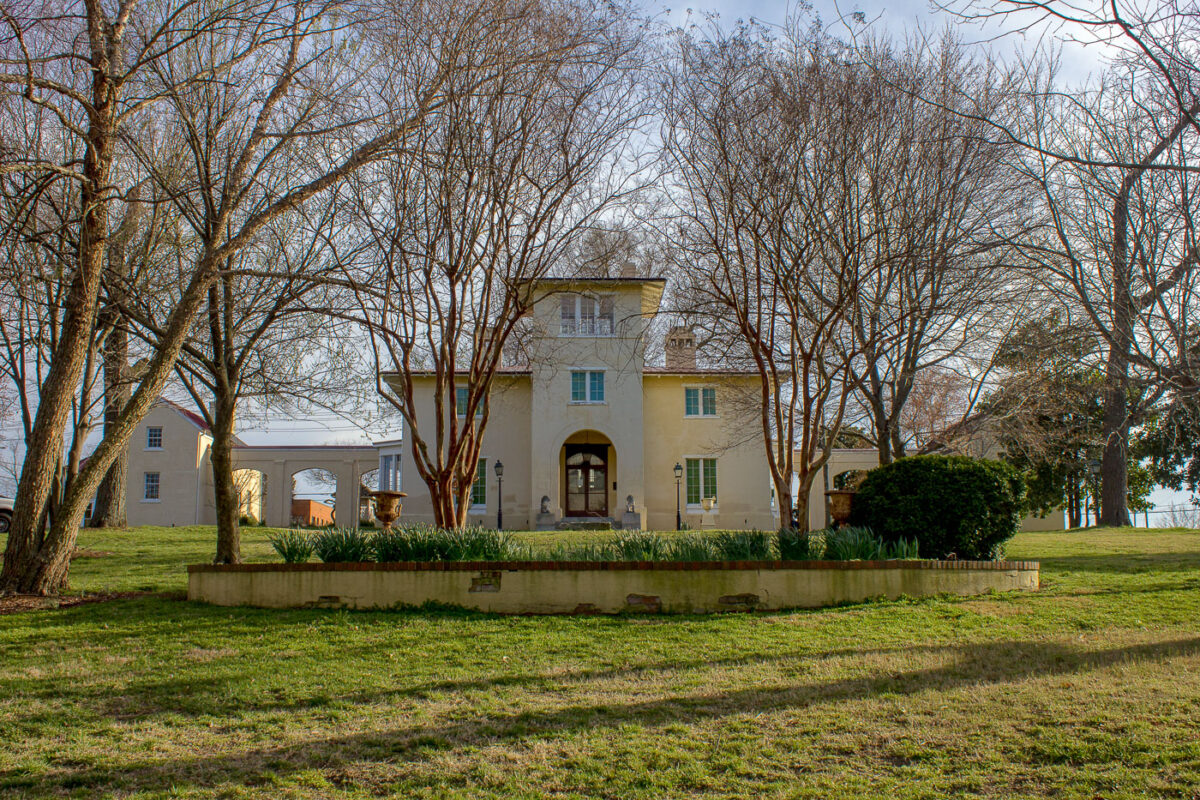
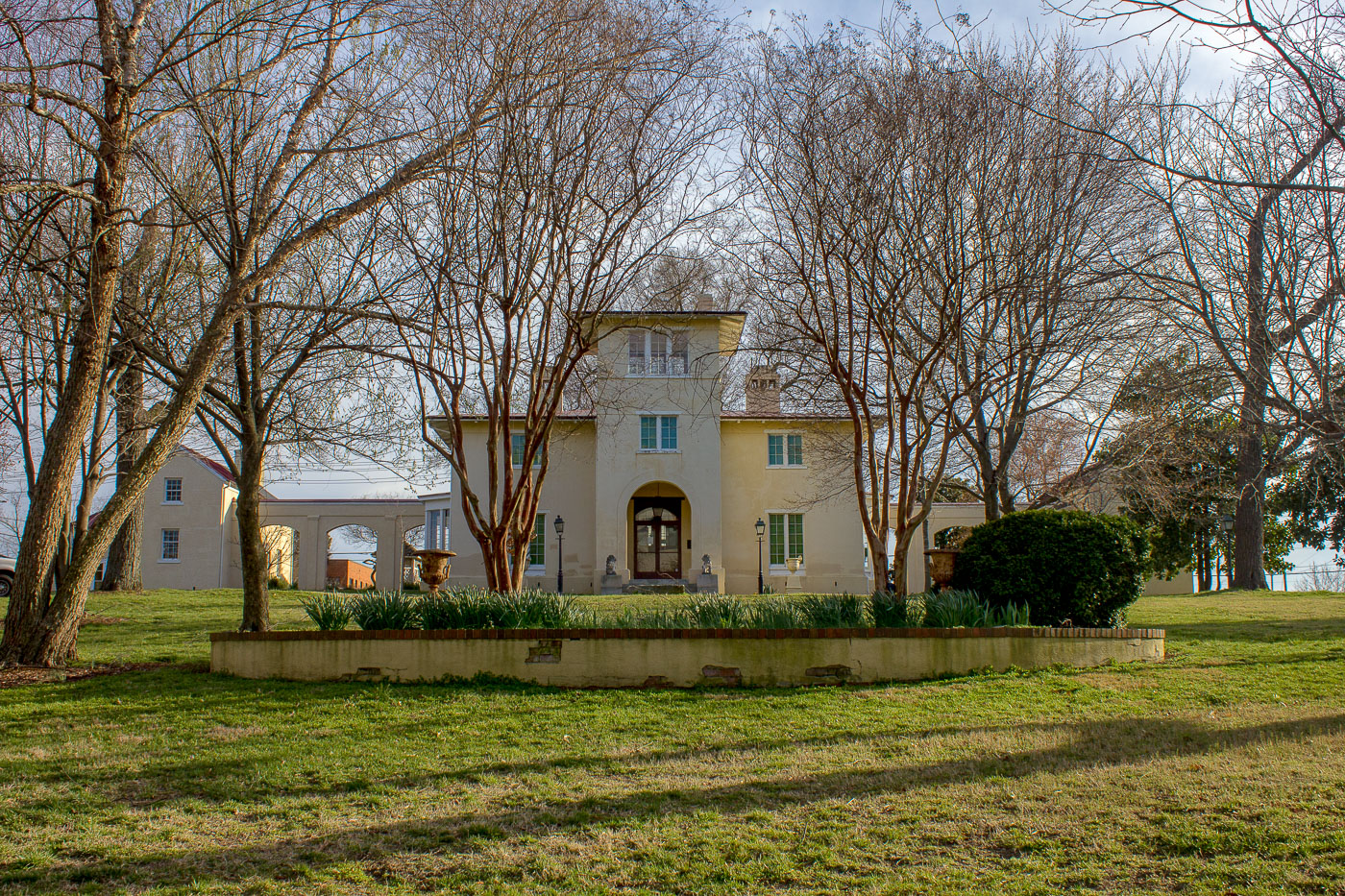
Blandwood Mansion, an Italianate villa-style house with a central tower in Greensboro, North Carolina.
Blandwood Mansion began as a Federal-style farmhouse built around 1795 for Charles Bland. Governor John Motley Morehead purchased the property in 1844 and hired architect Alexander Jackson Davis to remodel it into an Italianate villa, complete with the square tower that still marks the house today. Davis was a leading American architect of the period, known for popularizing the Italianate style in the United States, and Blandwood is considered the earliest full example of that style in the country. Threatened with demolition in the 1960s, the house was saved by Preservation Greensboro and now operates as a historic house museum open to the public.

Blandwood Mansion’s Tower Rises Above Winter Trees in Greensboro
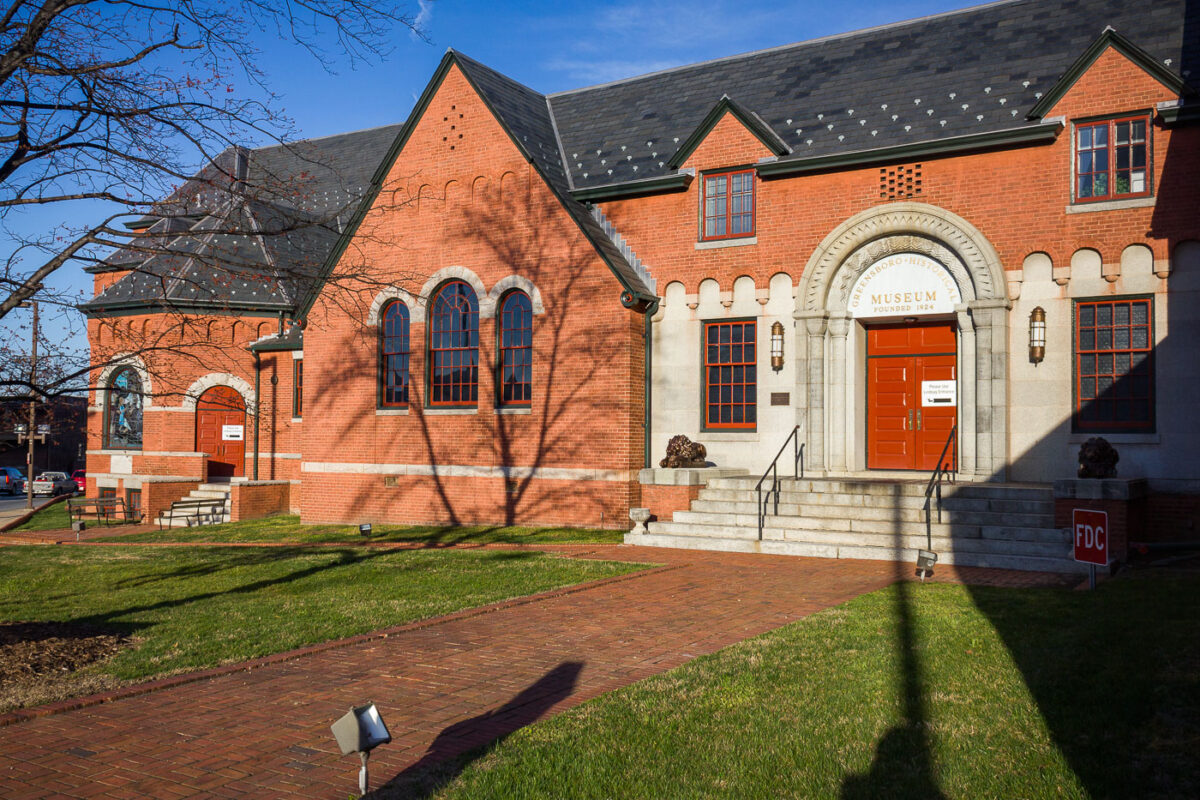
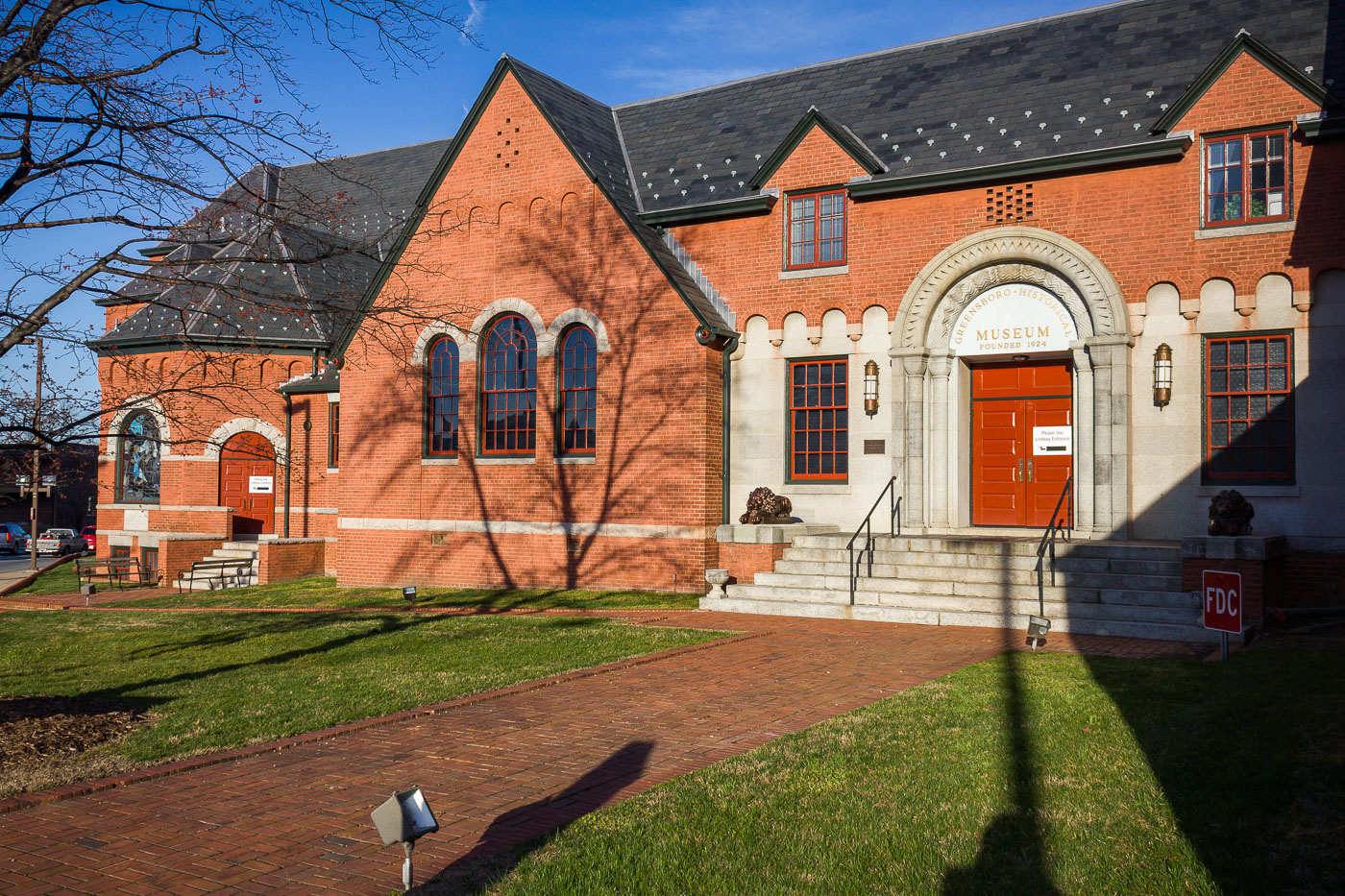
Greensboro History Museum in the former First Presbyterian Church, a red brick building with cream stone entrance at 130 Summit
The Greensboro History Museum occupies the former First Presbyterian Church at 130 Summit Avenue, a Gothic Revival building completed in 1892 with later additions, including the Smith Memorial Building. The congregation moved to a new location in the 1920s, after which the structure was adapted for museum use. Today it houses exhibits on the city's social and industrial history, including displays on textile manufacturing and civil rights. The building is listed on the National Register of Historic Places.

Greensboro History Museum’s Summit Avenue Entrance
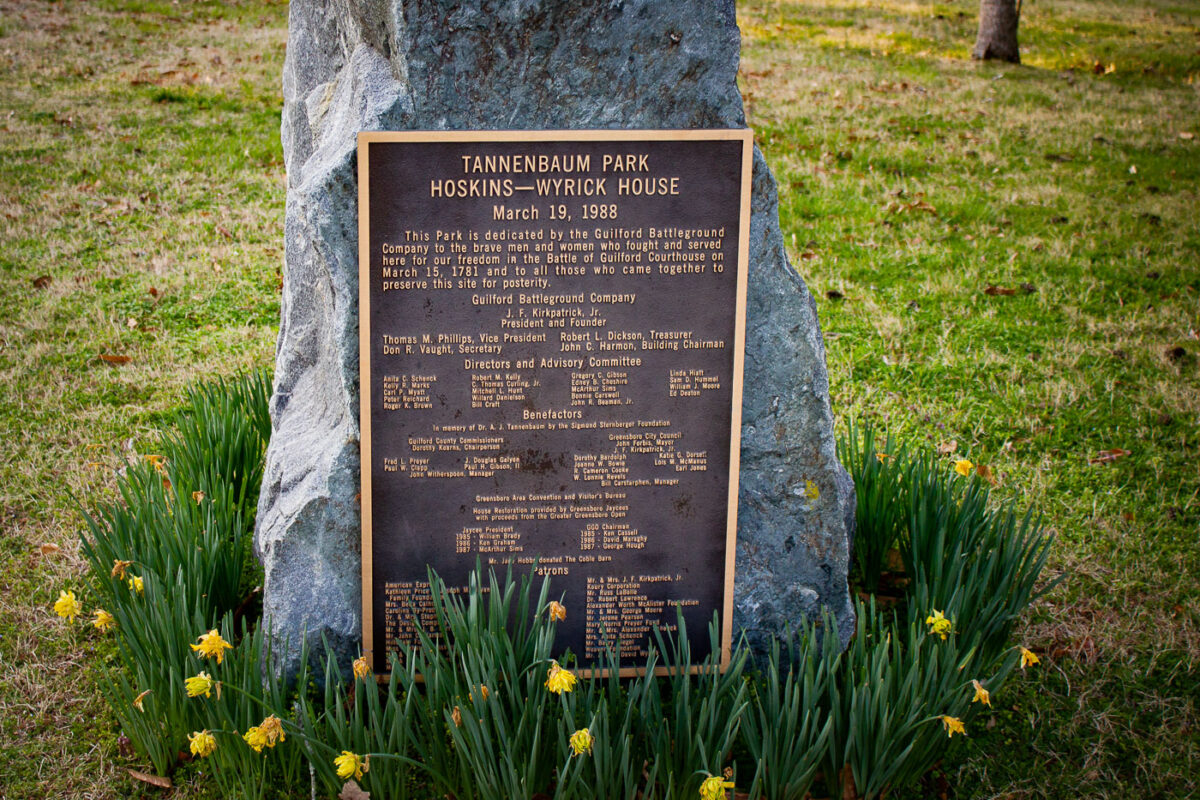
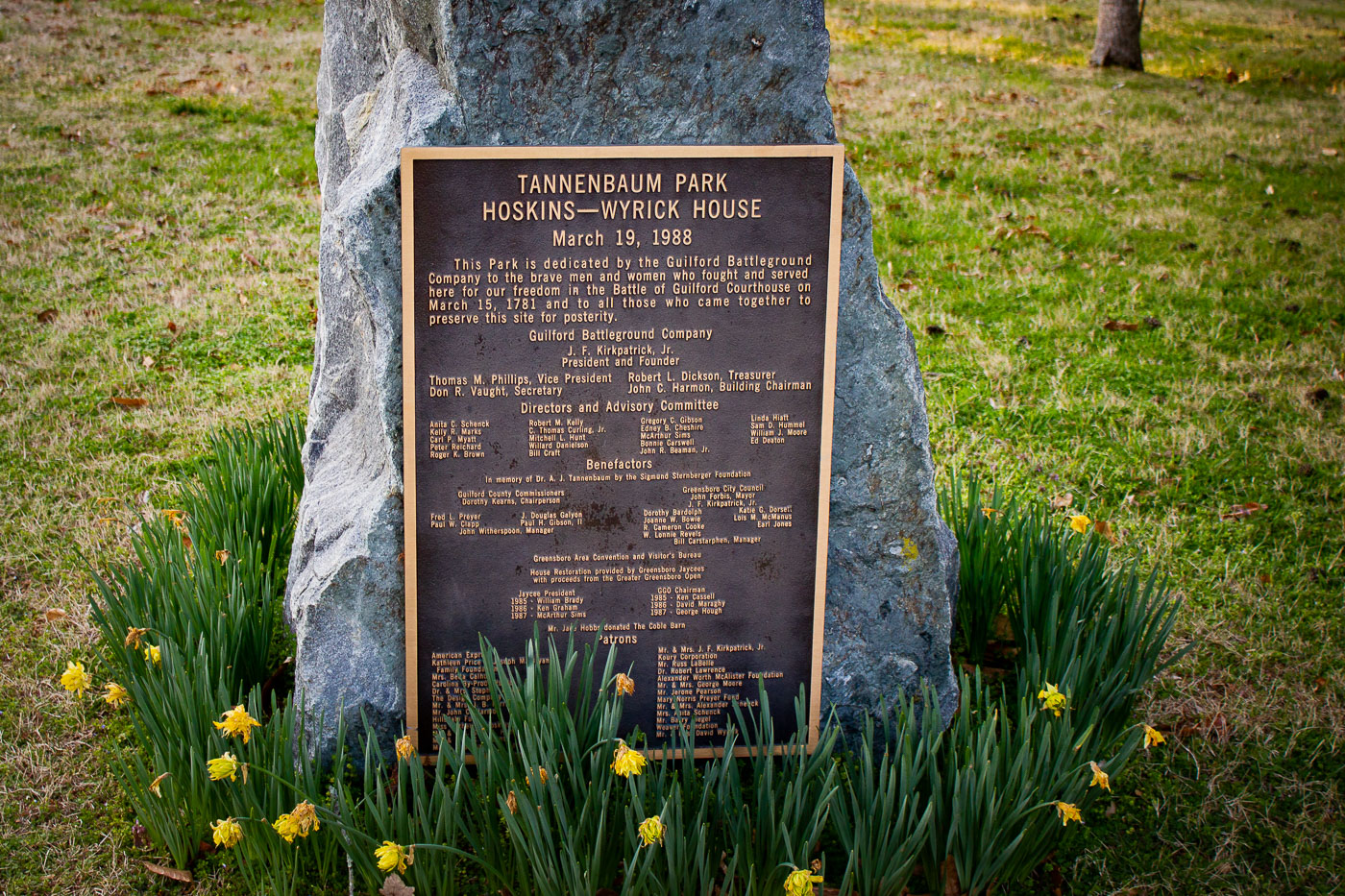
Tannenbaum Park dedication plaque for the Hoskins-Wyrick House in Greensboro, North Carolina, dated March 19, 1988.
Tannenbaum Park sits on the site of the 1781 Battle of Guilford Courthouse, where General Nathanael Greene's forces clashed with Lord Cornwallis's British troops during the Rary War. The Guilford Battleground Company dedicated this plaque on March 19, 1988, commemorating both the battle and the volunteers who worked to preserve the grounds. The Hoskins-Wyrick House, a restored 19th-century farmhouse moved to the park, stands nearby as one of the site's historic structures. The marker lists the park's founders, directors, and benefactors who funded its restoration through the Greensboro Jaycees and other local organizations.

Dedication Plaque at Tannenbaum Park’s Hoskins-Wyrick House
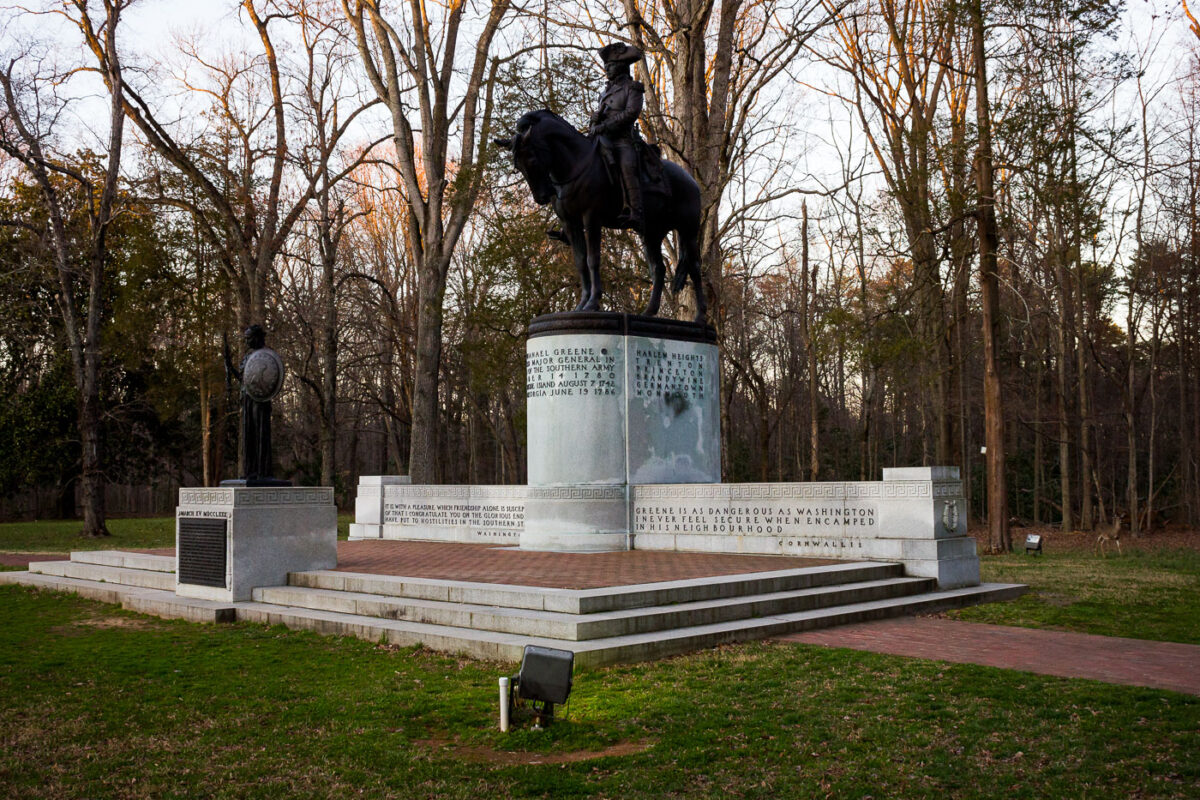
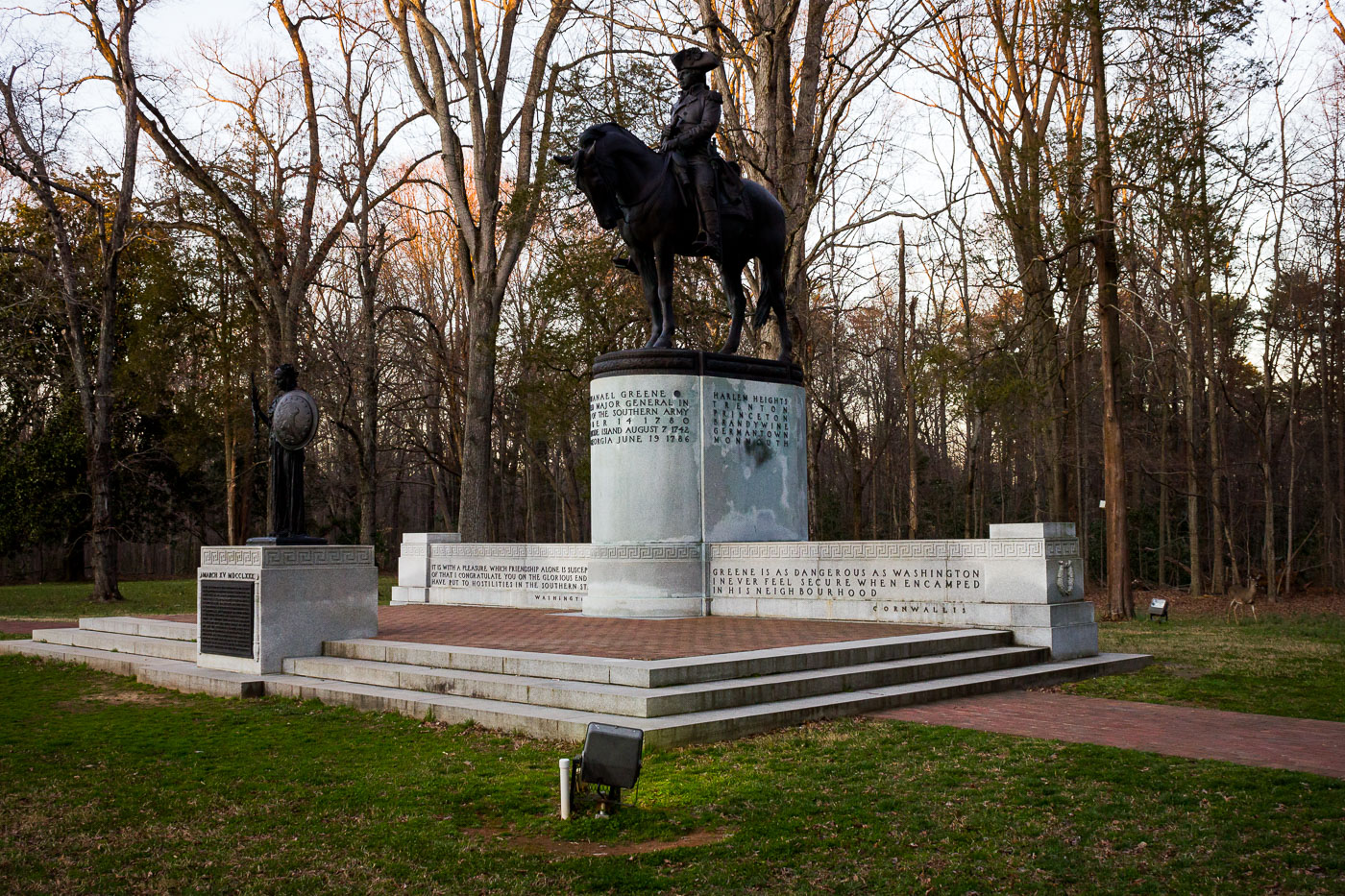
Nathanael Greene Monument in Greensboro, North Carolina, featuring an equestrian statue honoring the Continental Army general.
Nathanael Greene commanded the Continental Army's Southern Department starting in 1780, leading a campaign of strategic retreats and skirmishes that wore down Lord Cornwallis's forces across the Carolinas. His tactics at the Battle of Guilford Courthouse in March 1781, fought just a few miles from this site, left Cornwallis's army so depleted that it withdrew toward Virginia and ultimately surrendered at Yorktown later that year. The monument's base carries a line attributed to Cornwallis himself: "Greene is as dangerous as Washington; I never feel secure when encamped in his neighbourhood." Greensboro, founded in 1808, was named in Greene's honor for his role in turning the tide of the war in the South.

Equestrian Statue of Nathanael Greene in Greensboro
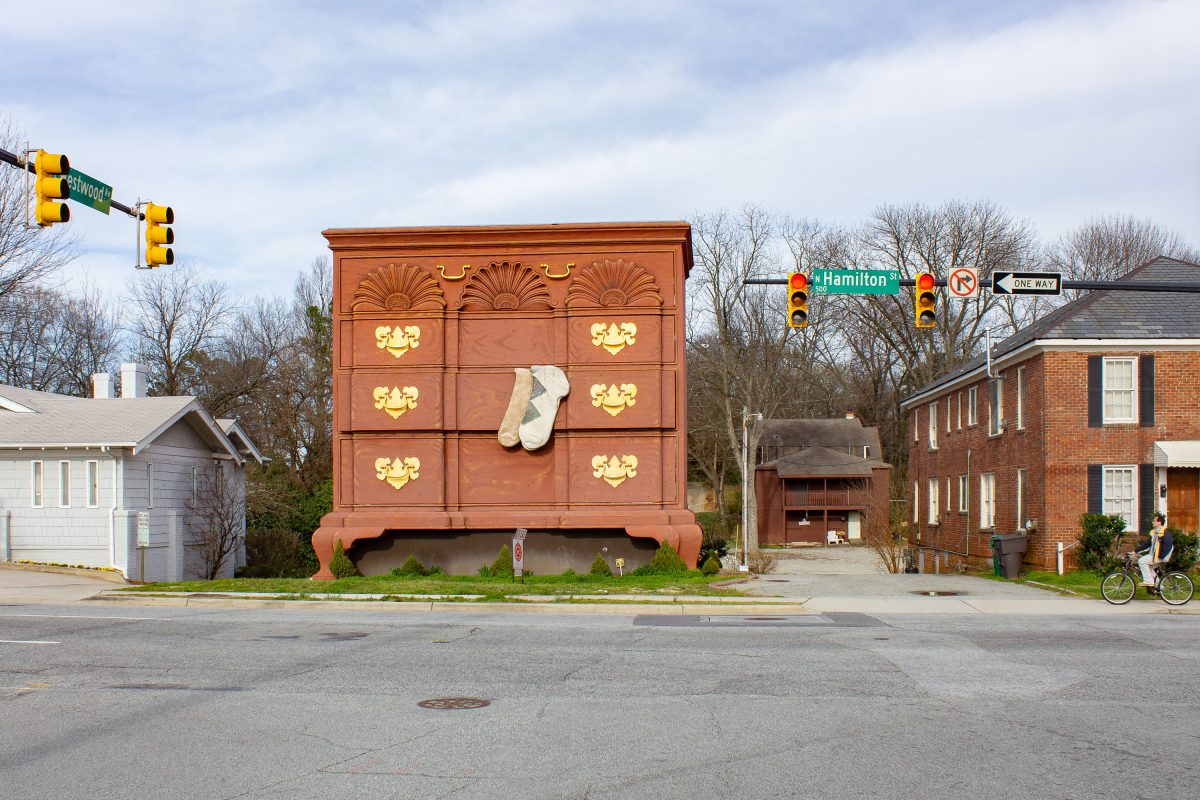
The World's Largest Chest of Drawers, a roadside attraction in High Point, North Carolina
The World's Largest Chest of Drawers, a roadside attraction in High Point, North Carolina, was erected in 1926. Originally serving as a functional office for the local Chamber of Commerce, the structure was designed to promote High Point as the "Furniture Capital of the World." The building is shaped like a giant mahogany chest of drawers, complete with oversized brass drawer pulls and decorative fan motifs.

World’s Largest Chest of Drawers, High Point, NC
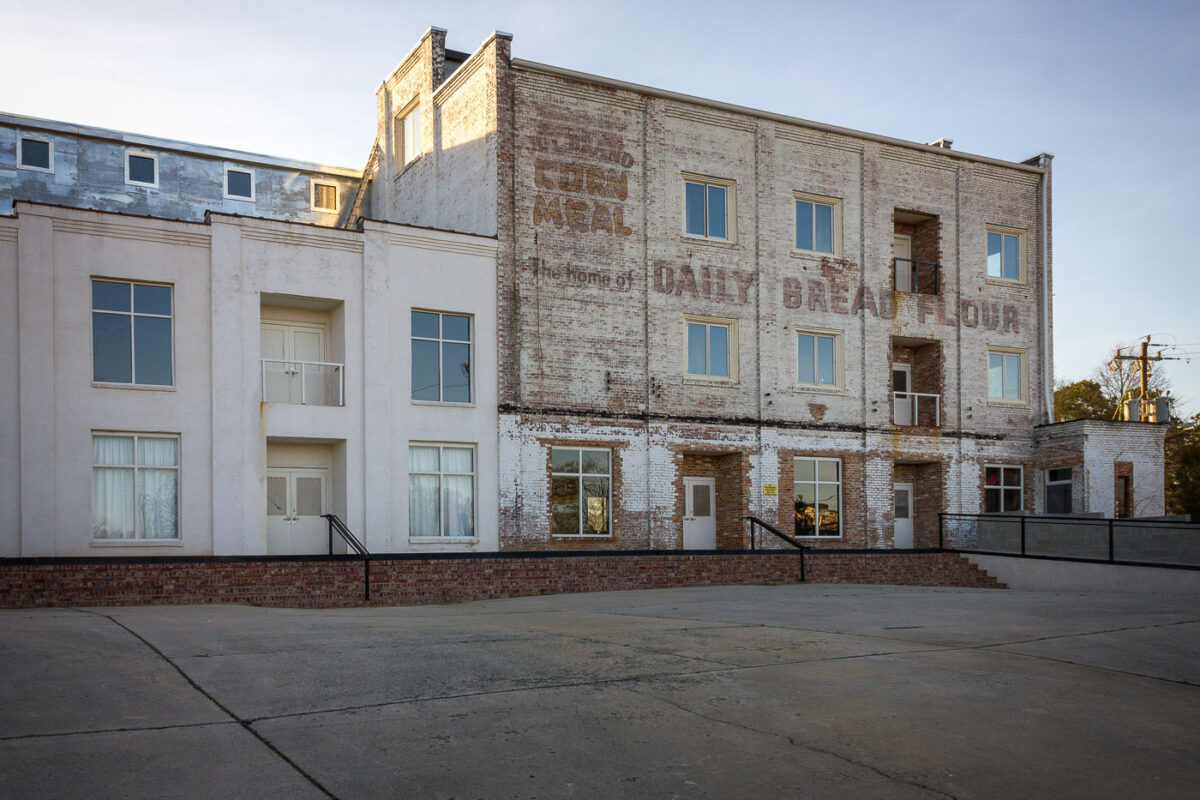
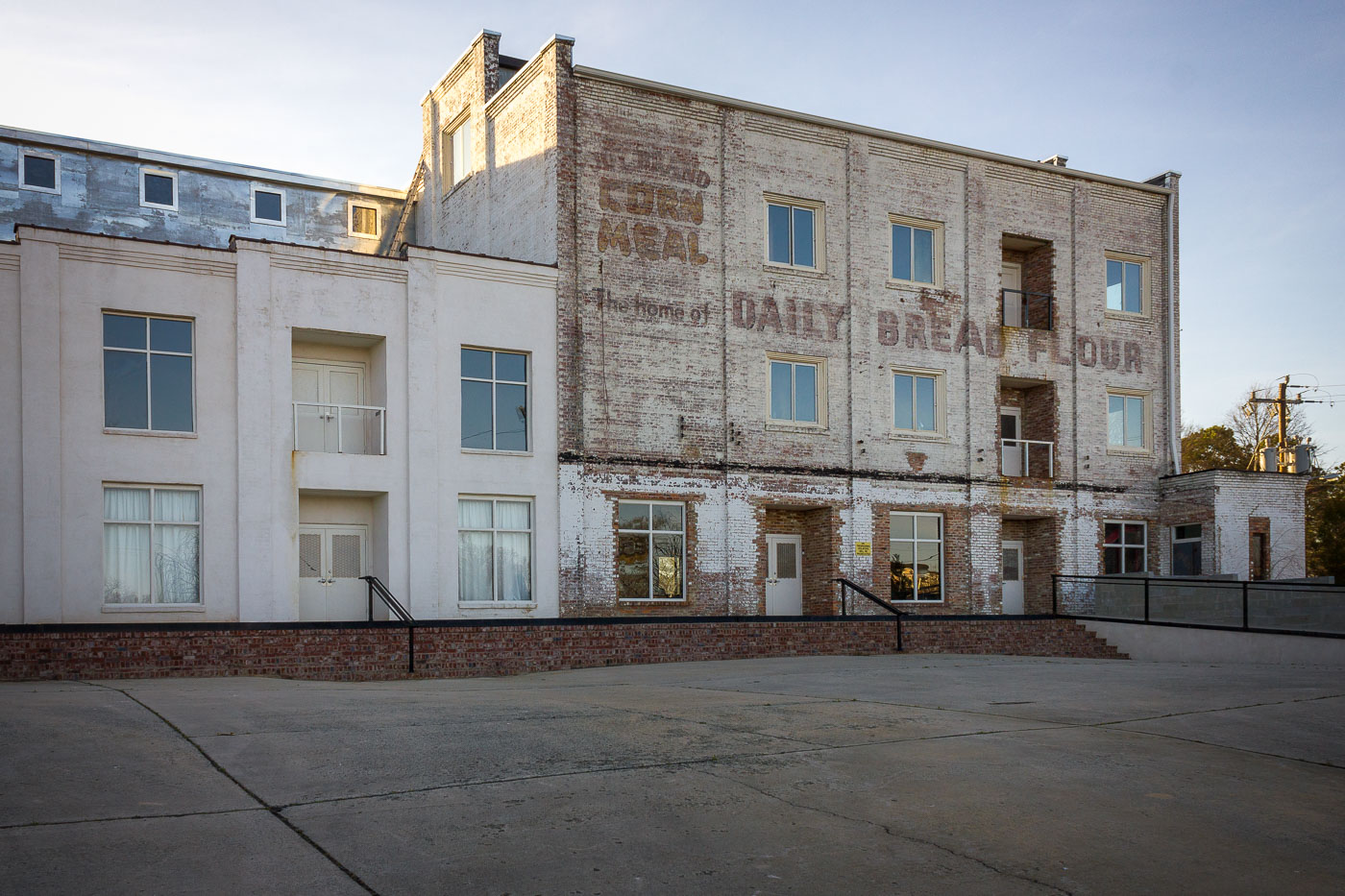
Joy Brand Corn Meal Mill in Greensboro, North Carolina, featuring a faded ghost sign advertising "Daily Bread Flour."
The faded brick advertisement for "Joy Brand Corn Meal" and "The Home of Daily Bread Flour" marks a former grain milling operation that once supplied the Greensboro area. Painted signage of this kind was a common form of early 20th-century advertising, applied directly to a mill's exterior walls to promote its products to passing rail and road traffic. The building has since been converted into residential units, with its original brick and ghost sign left exposed alongside newer stucco additions.

Converted Joy Brand Mill Building on Greensboro’s East Side
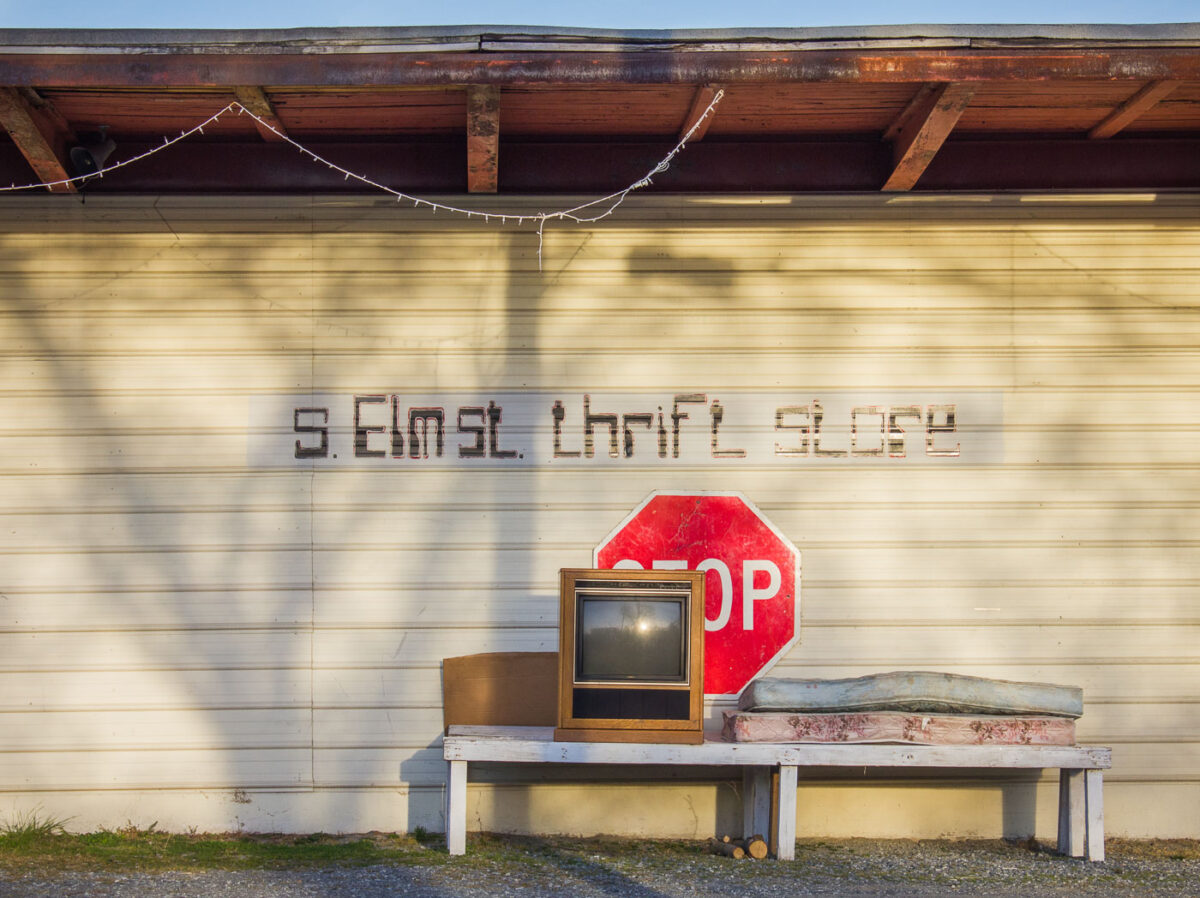
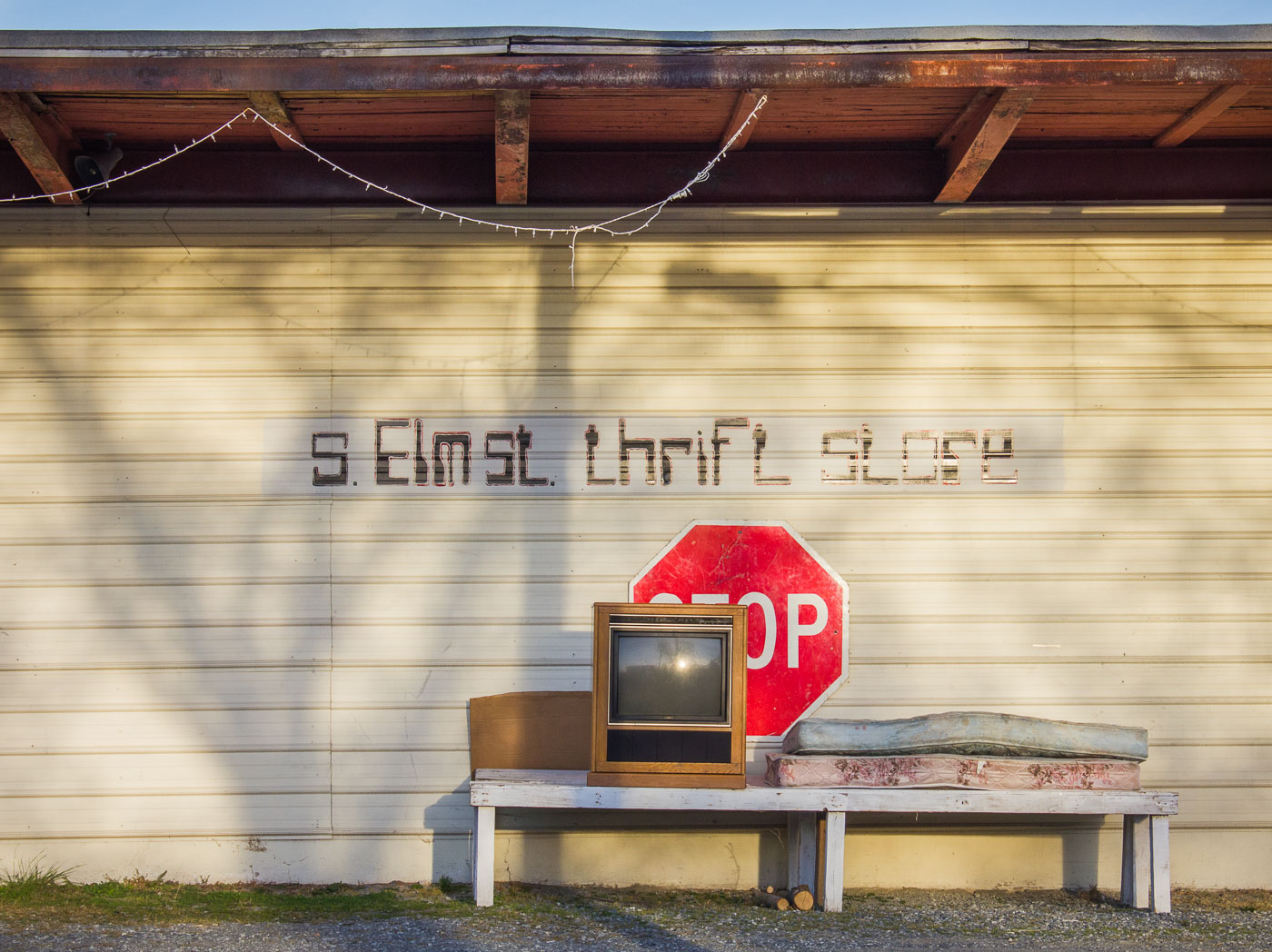
S. Elm Street Thrift Store in Greensboro displays a television, mattresses, and stop sign outside its yellow building.
S. Elm Street runs through south Greensboro, a stretch of the city lined with small, independently run shops rather than chain retailers. A thrift store along the street keeps its name hand-painted directly on the building's metal siding rather than on a manufactured sign. Secondhand goods set out front — a television, a stop sign, and bedding among them — reflect the resale and salvage trade common to small thrift operations, where merchandise often rotates through outdoor display before reaching the sales floor inside.

Secondhand Wares Outside S. Elm St. Thrift Store
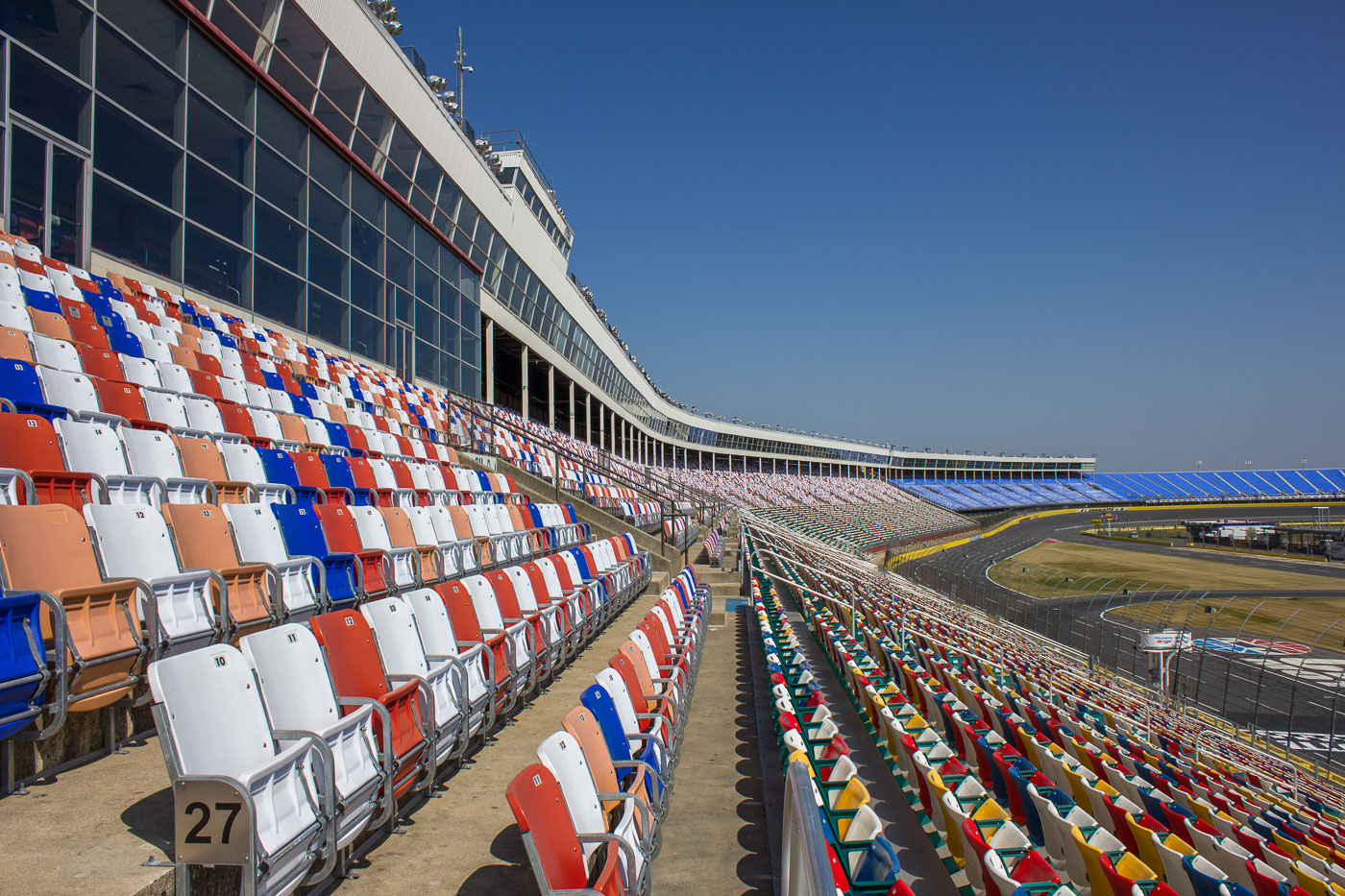
Empty grandstands with red, white, and blue seats at Charlotte Motor Speedway in Concord, North Carolina.
Charlotte Motor Speedway opened in 1960 in Concord, North Carolina, built by Bruton Smith and Curtis Turner as a 1.5-mile oval. The track hosts NASCAR's Coca-Cola 600 each Memorial Day weekend, the longest race on the Cup Series calendar, along with the Bank of America ROVAL 400 on its combined oval-road course layout. Grandstand seating has grown through successive renovations to exceed 95,000 permanent seats, supplemented by suites and club-level sections added in the 1990s and 2000s. The speedway also contains a dirt track and a drag strip within its larger complex, known collectively as the Charlotte Motor Speedway campus.

Empty Grandstands Curve Along Charlotte Motor Speedway’s Oval
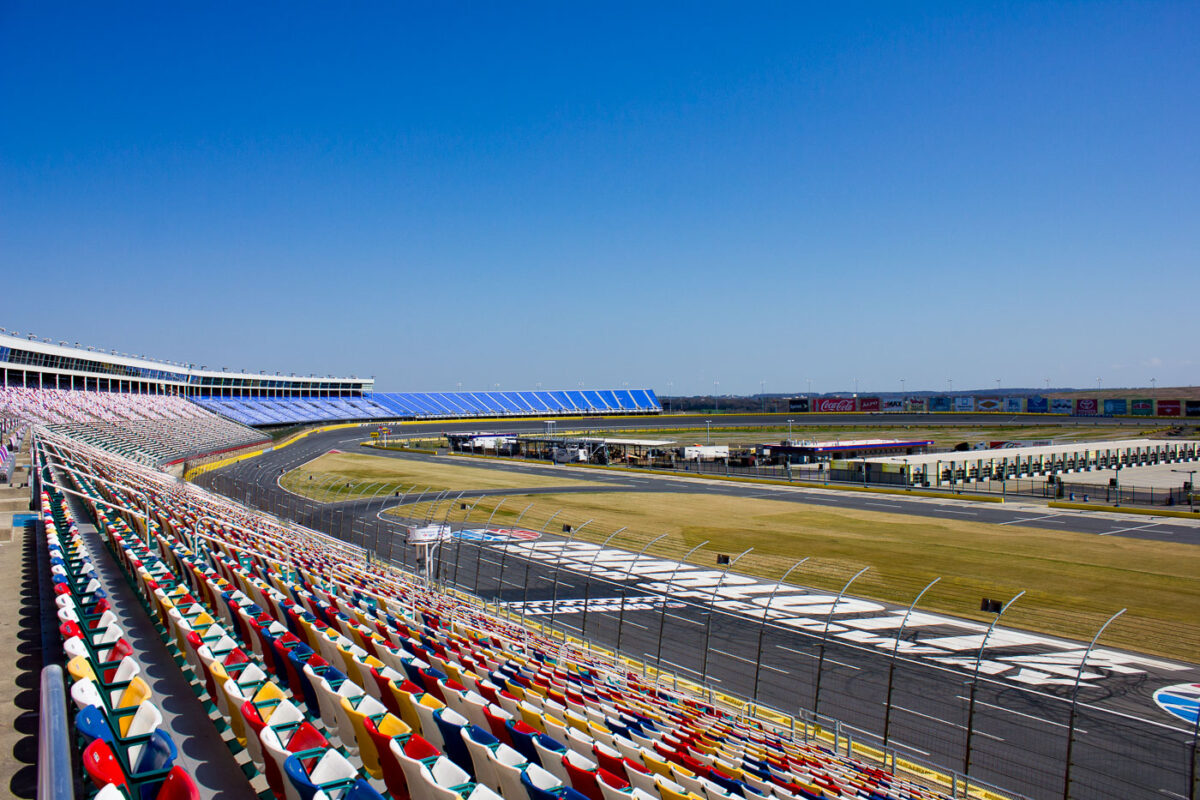
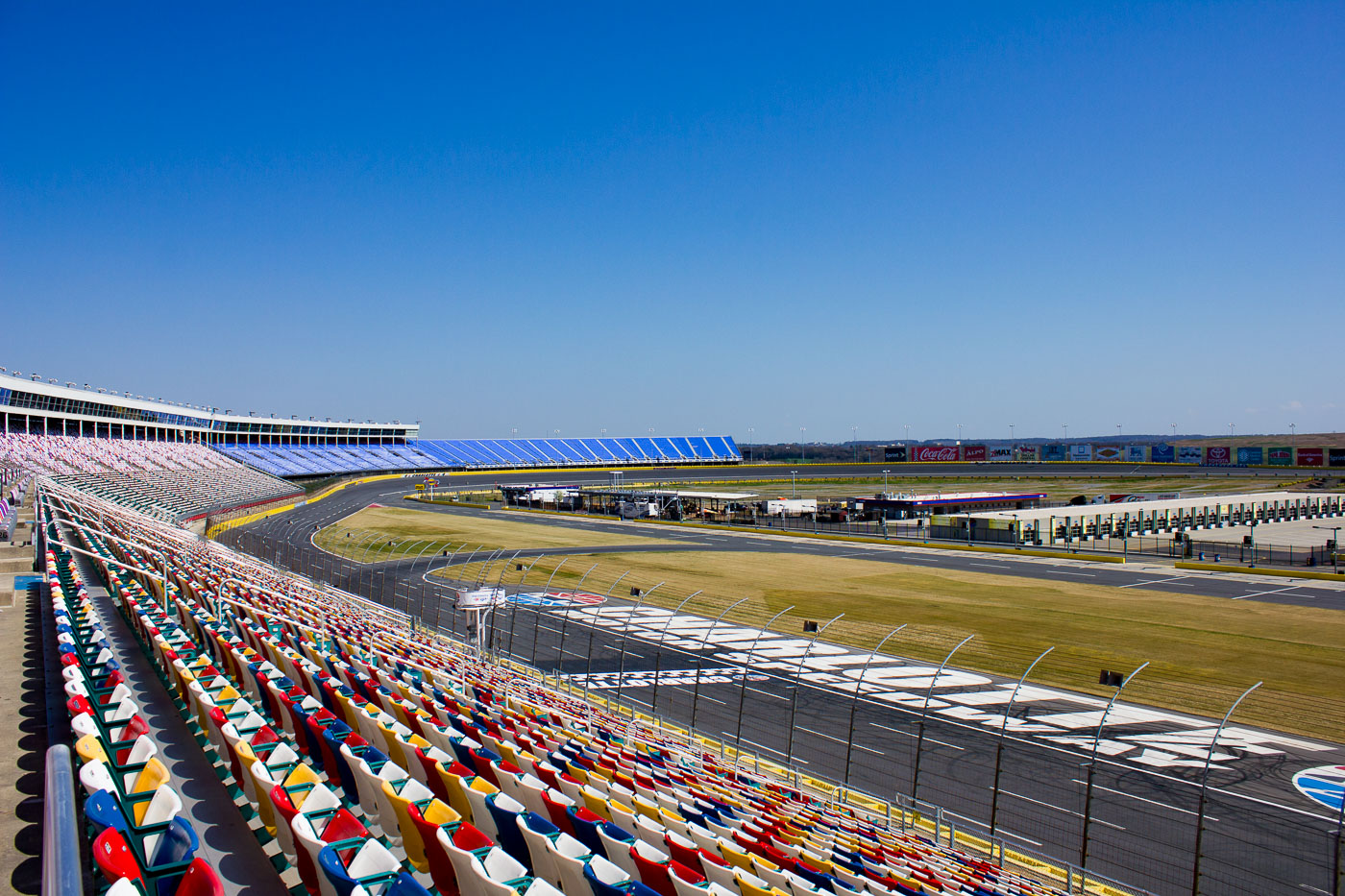
Charlotte Motor Speedway's empty grandstands and 1.5-mile oval track in Concord, North Carolina.
Charlotte Motor Speedway in Concord, North Carolina, opened in 1960 as a 1.5-mile oval and remains one of NASCAR's premier venues. The track hosts the Coca-Cola 600 each Memorial Day weekend, the longest race on the NASCAR Cup Series calendar. Its grandstands hold more than 95,000 spectators, supplemented by suites and club seating added during later renovations. The facility also includes a dirt track and a road course configuration used for other racing series throughout the year.

Empty Grandstands at Charlotte Motor Speedway
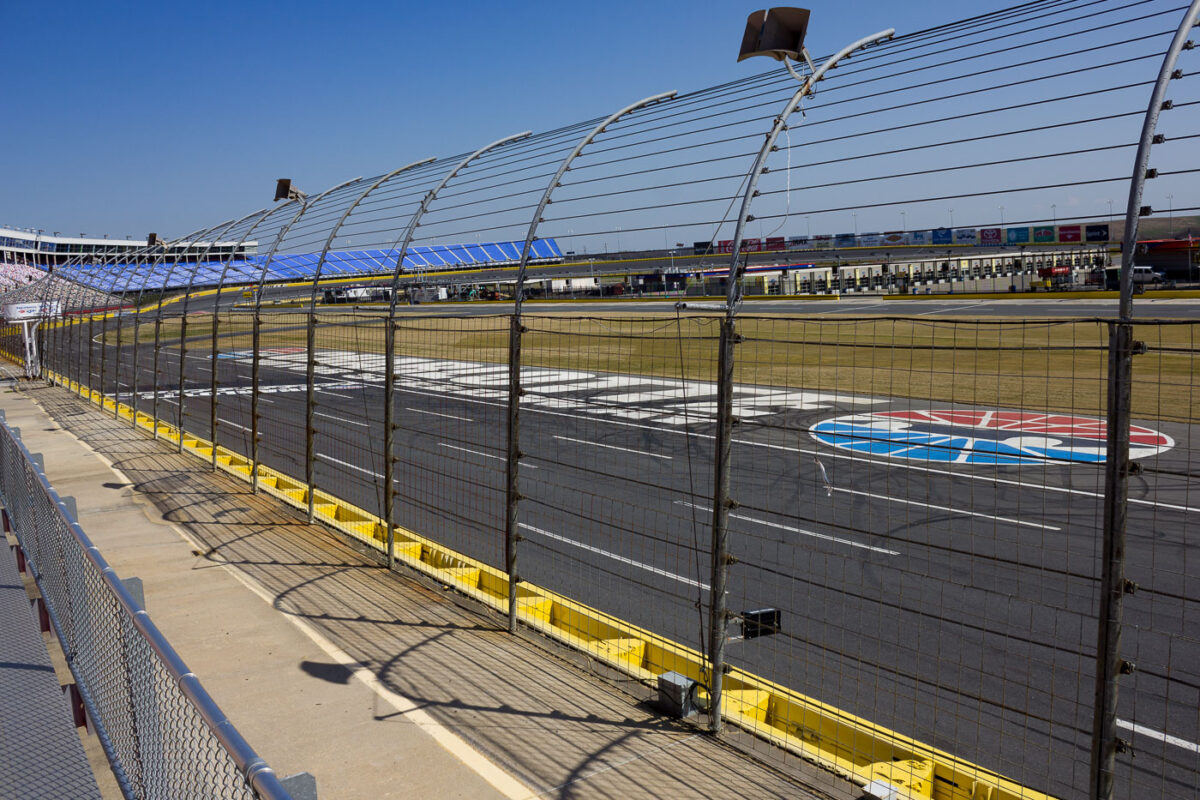
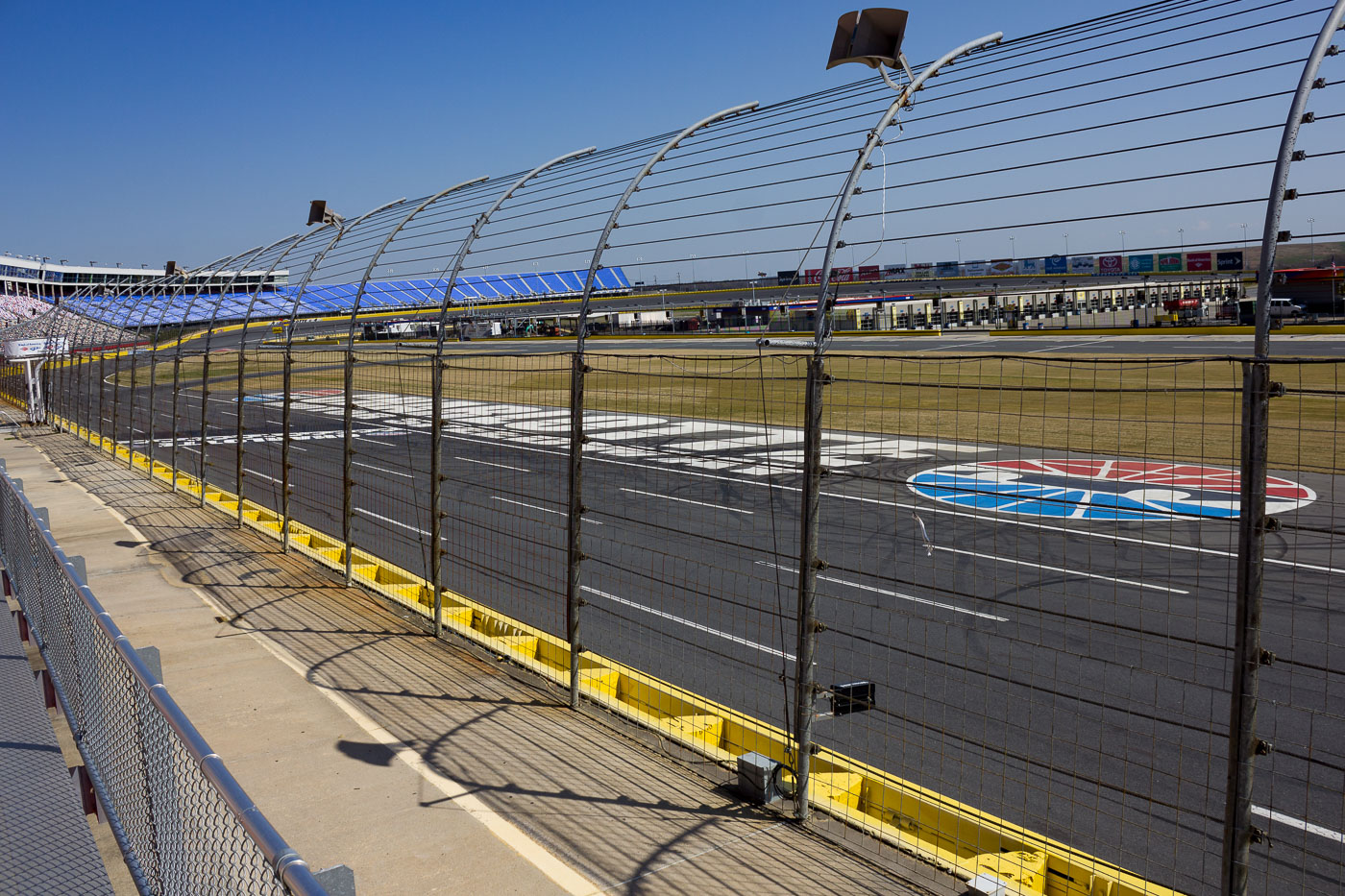
Charlotte Motor Speedway's 1.5-mile oval track with protective barriers and empty grandstands in Concord, North Carolina.
Charlotte Motor Speedway opened in 1960 as part of a push to bring major stock car racing to the Carolinas, home turf for many NASCAR teams. The track is a 1.5-mile oval with high-banked turns, configured for both oval racing and, since a later addition, a infield road course. It hosts the Coca-Cola 600, NASCAR's longest race, run every Memorial Day weekend since 1960. The speedway sits in Concord, just northeast of Charlotte, and the surrounding area has grown into a hub for racing teams and NASCAR-related businesses.

Catch Fencing Along the Frontstretch at Charlotte Motor Speedway
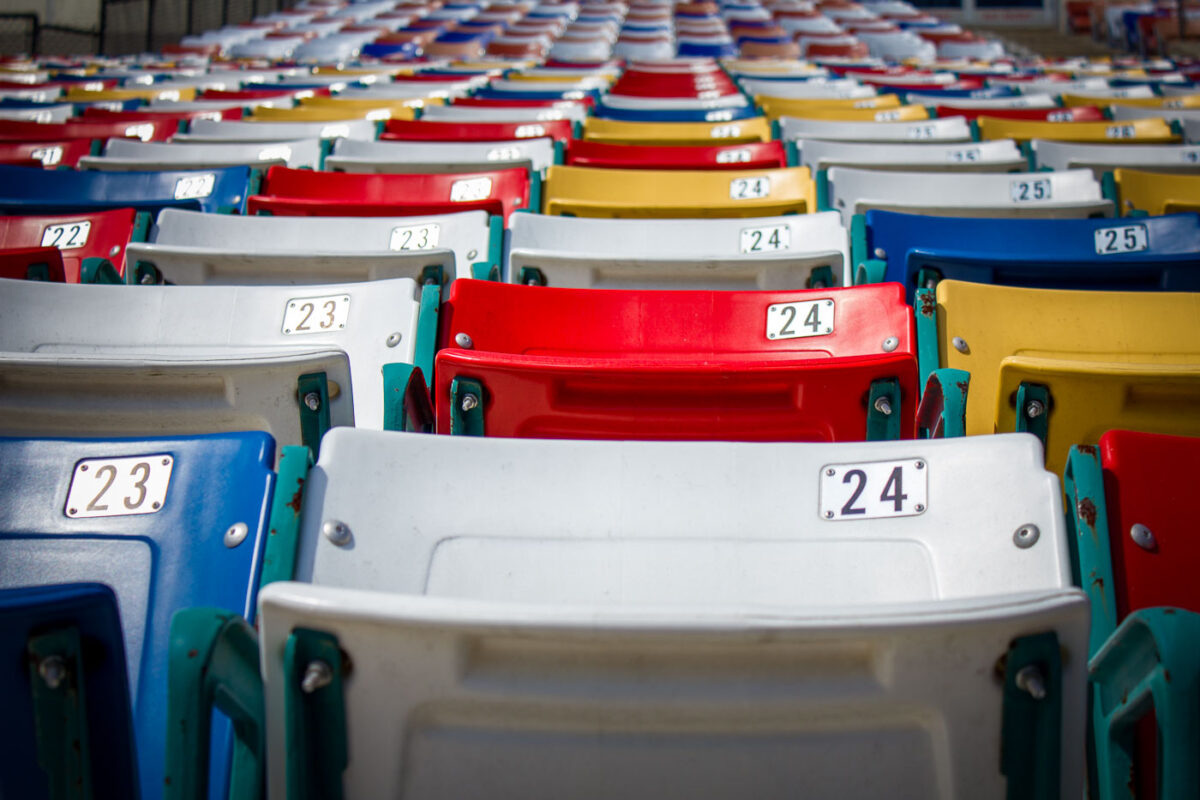
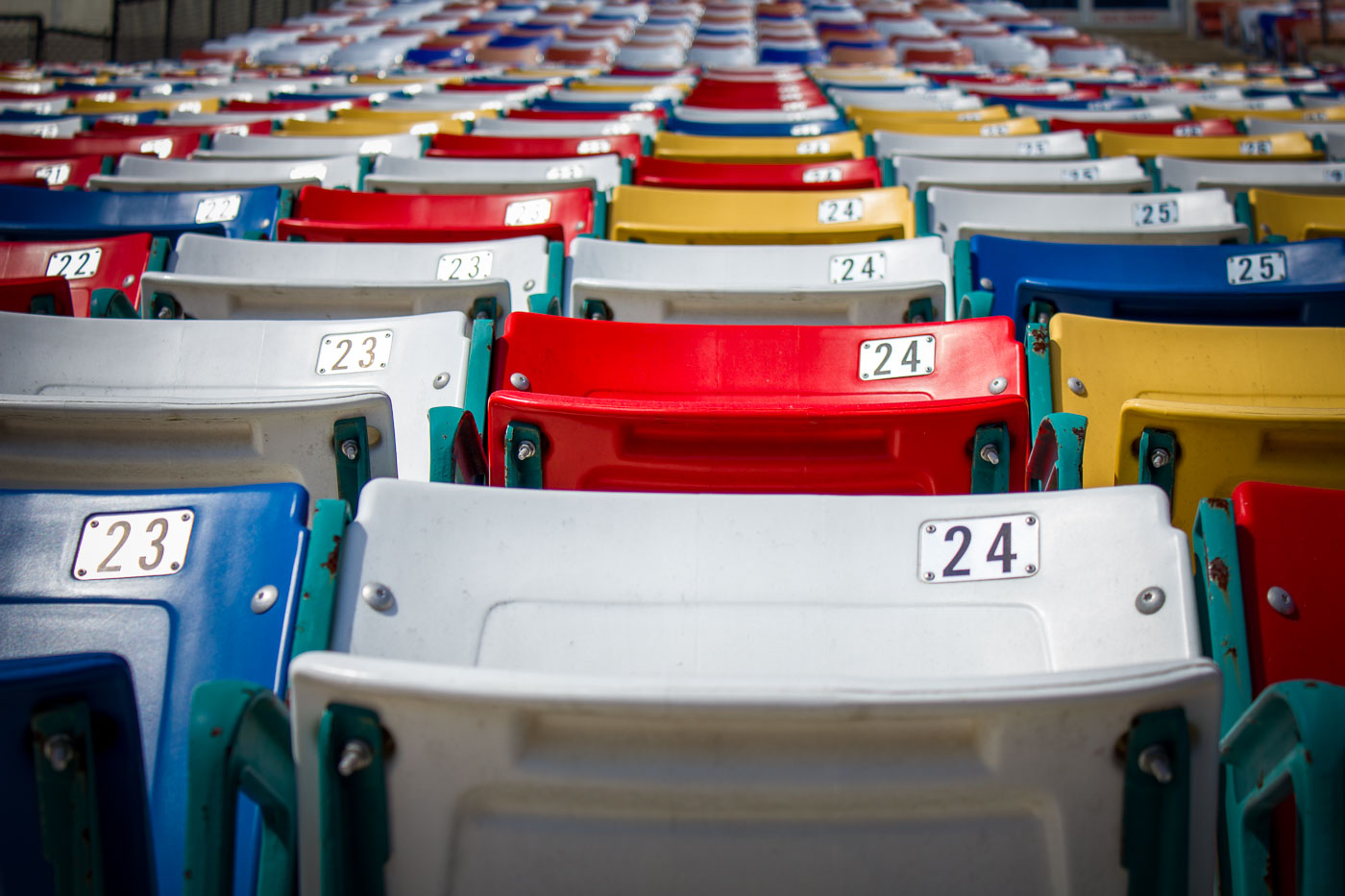
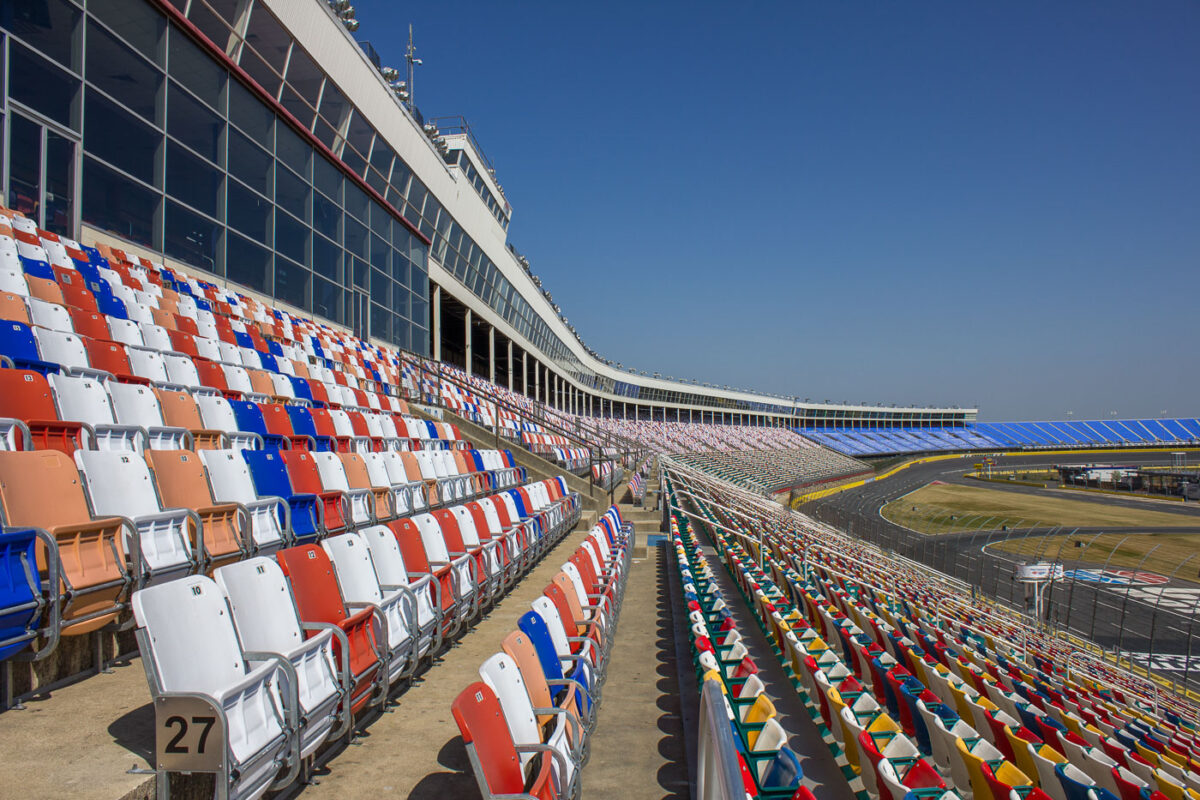
Rows of numbered stadium seats in red, white, blue, and yellow at Charlotte Motor Speedway.
Charlotte Motor Speedway, located in Concord, North Carolina, opened in 1960 as home to NASCAR's Coca-Cola 600 and other major stock car races. The speedway has been renovated multiple times since its founding, with seating sections numbered to help the roughly 95,000 fans who can be accommodated find their places. Each grandstand is divided into color-coded blocks, a system tracks use at many large motorsports venues to speed entry and exit on race day.

Numbered Grandstand Seats at Charlotte Motor Speedway
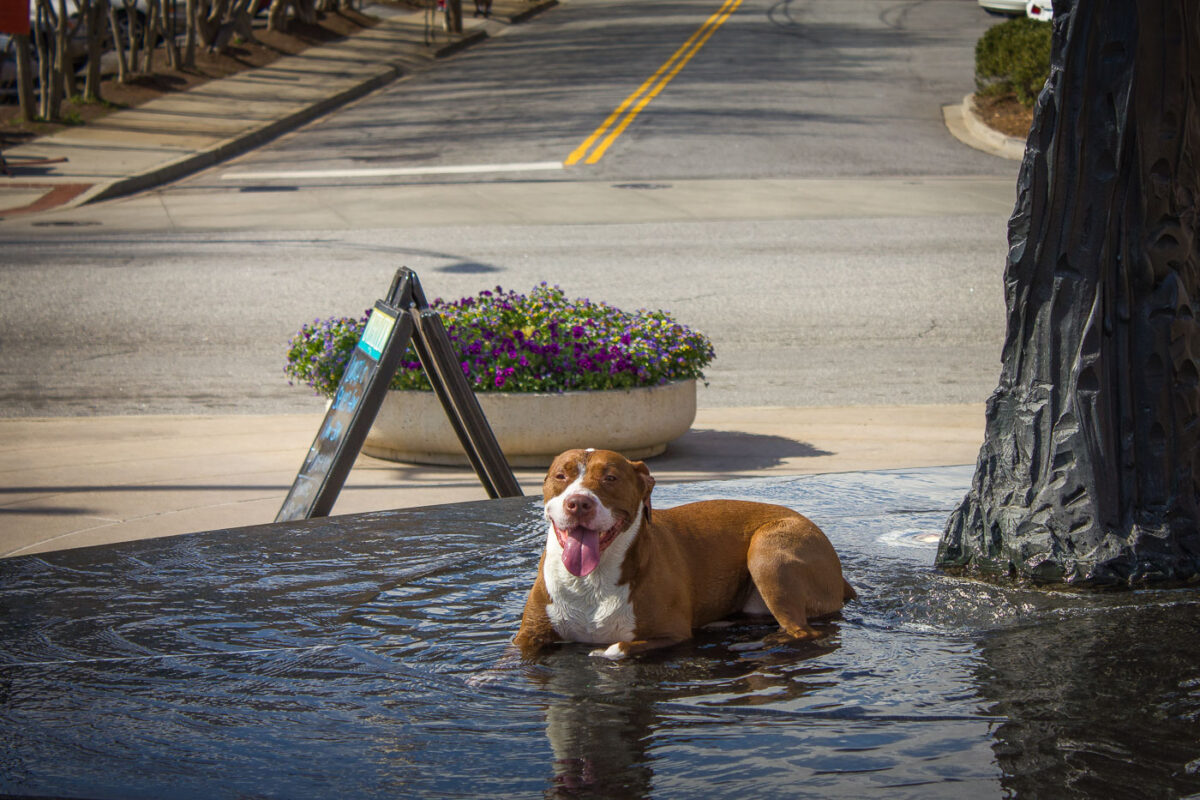
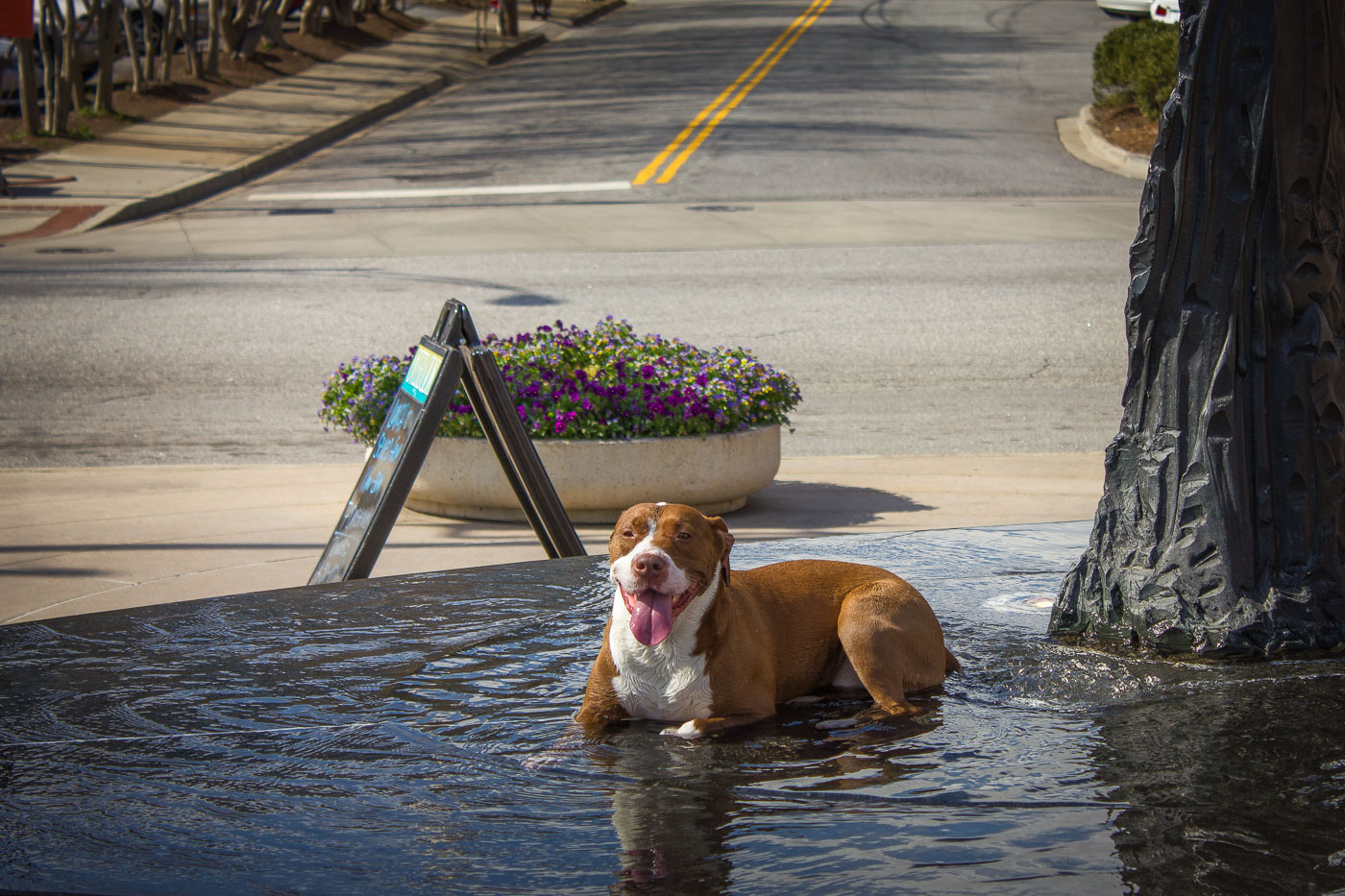
Brown and white dog cooling off in a water fountain in Greensboro, North Carolina.
A pit bull mix wades into a public fountain along a downtown Greensboro street, tongue out and soaking in the water. Downtown fountains like this one typically double as public art and informal cooling spots during warmer months, drawing both people and pets. The surrounding sidewalk planters and street furniture suggest a pedestrian-oriented commercial district designed for foot traffic.

Pit Bull Takes a Dip in a Downtown Greensboro Fountain
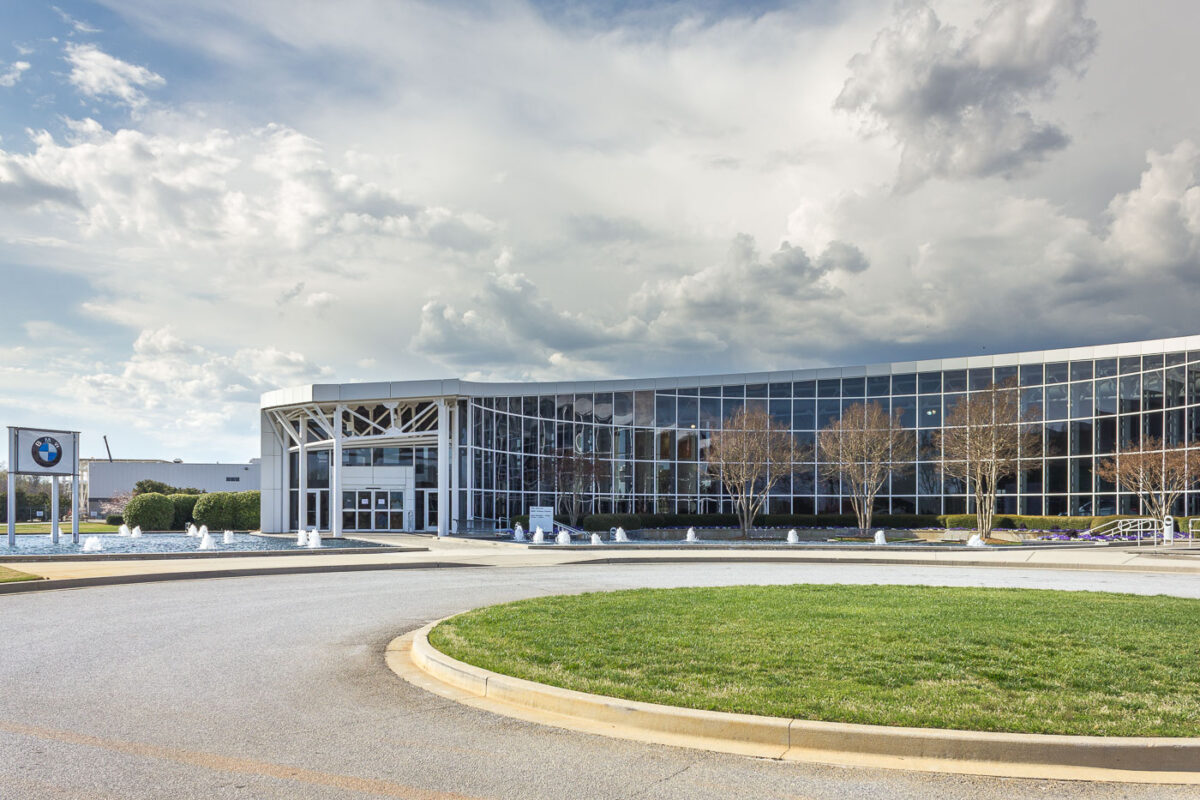
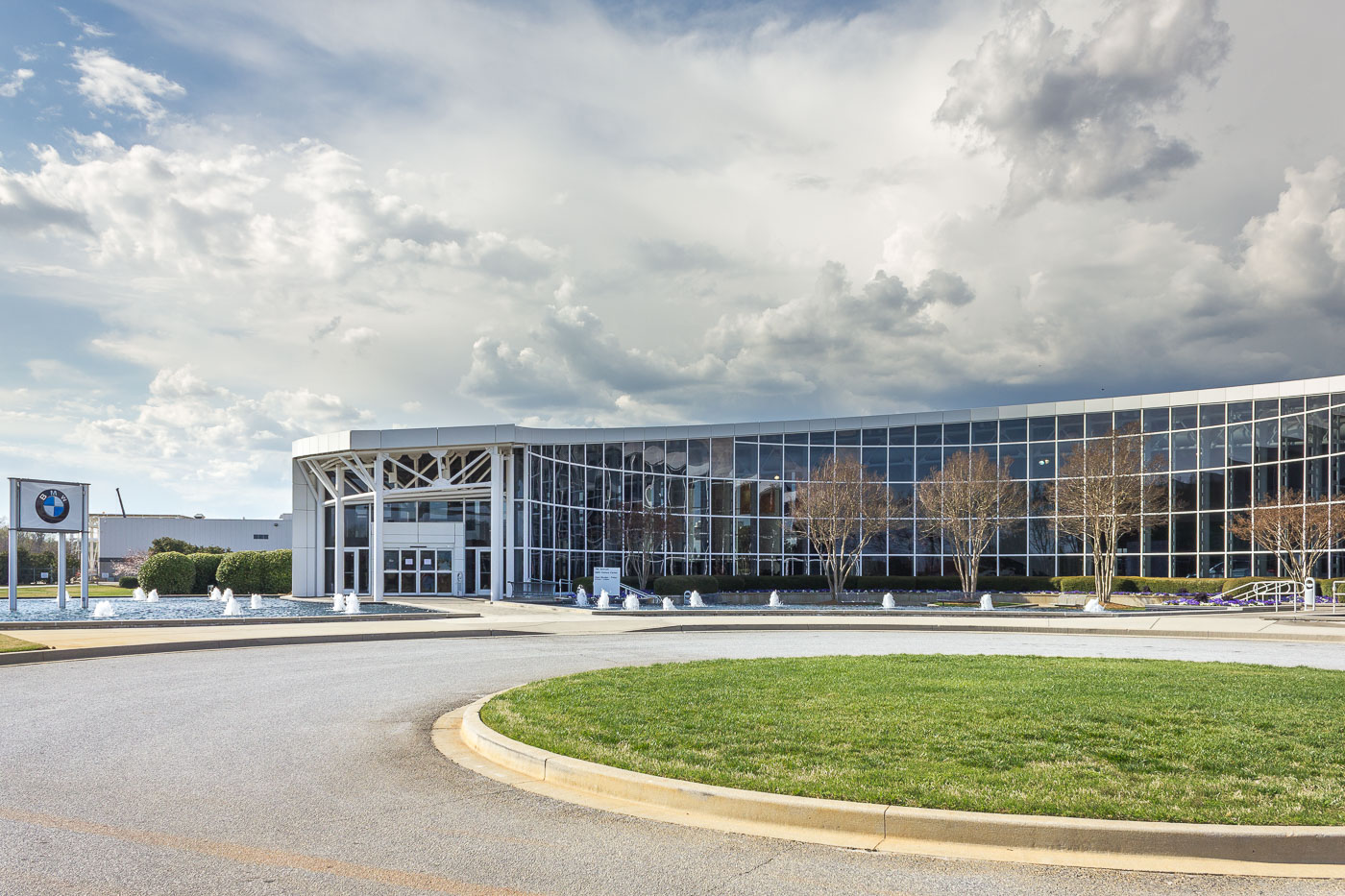
BMW US Manufacturing Center in Greer, South Carolina, with a glass-fronted entrance.
BMW US Manufacturing Center in Greer, South Carolina, is BMW’s first wholly owned factory in the United States. Opened in 1994, the Spartanburg County complex is the company’s largest plant worldwide by volume and produces vehicles for domestic and export markets.

BMW US Manufacturing Center, Greer, South Carolina
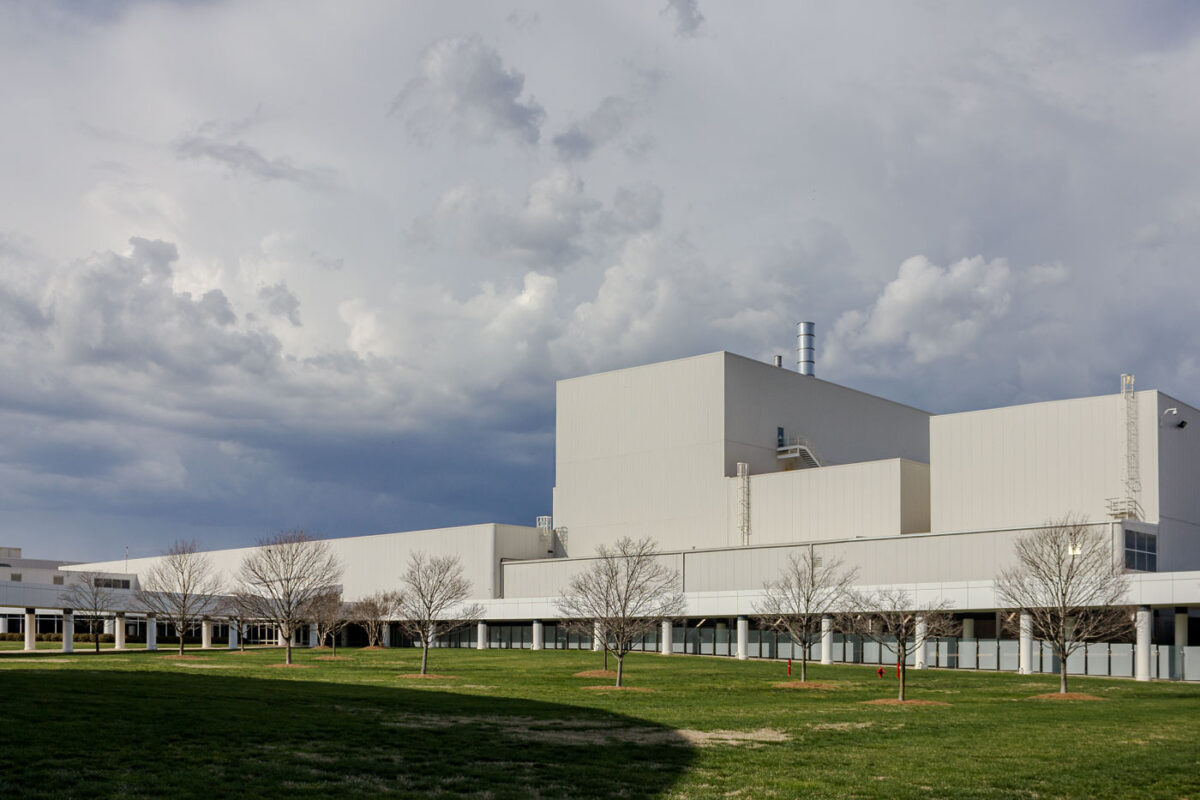
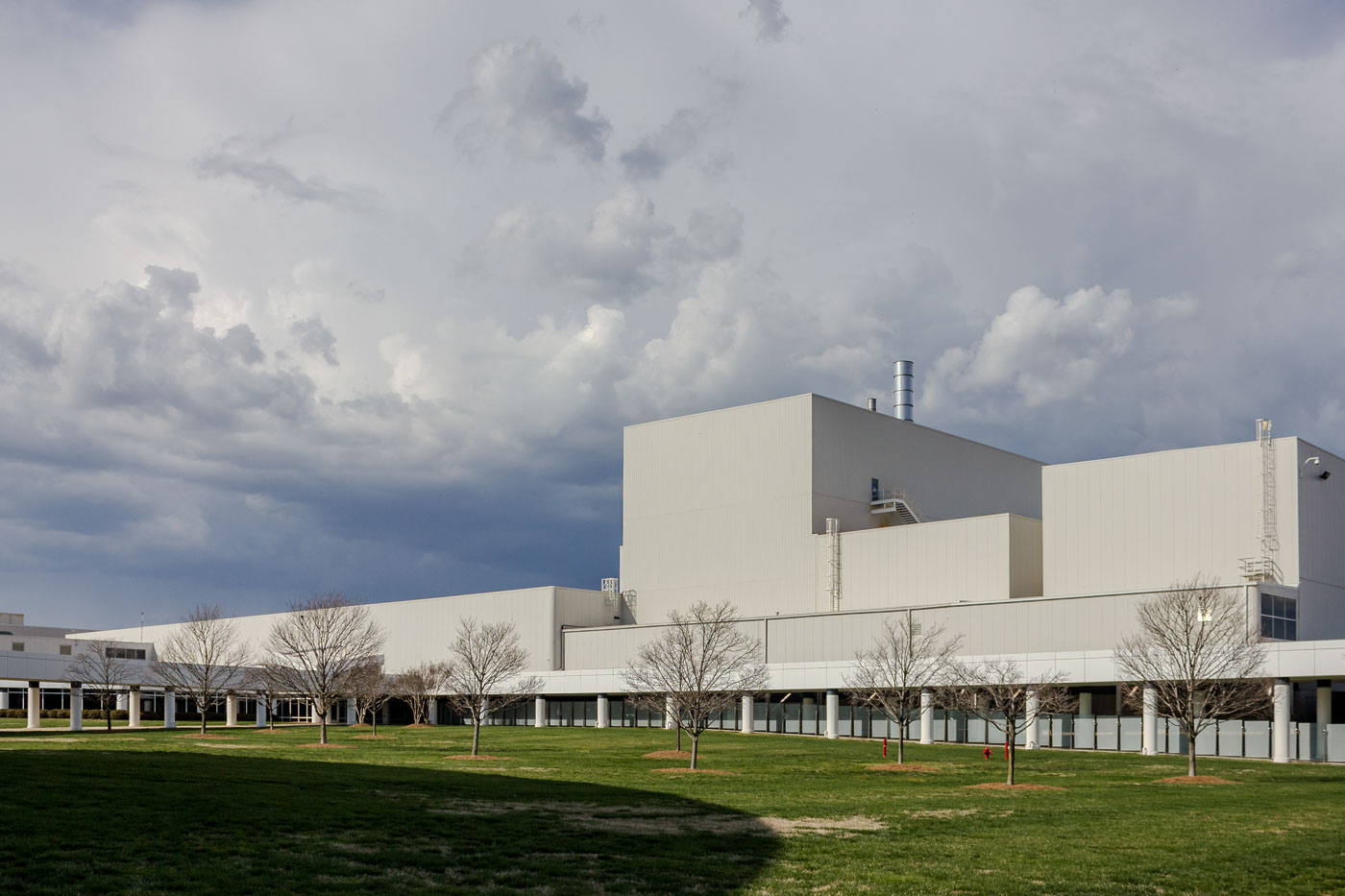
BMW US Manufacturing Plant in Greer, South Carolina, under a cloudy sky.
BMW US Manufacturing Plant in Greer, South Carolina, is BMW’s only production facility in the United States. Opened in 1994, the plant began by assembling the Z3 roadster and now builds several X model SUVs for global markets.

BMW US Manufacturing Plant in Greer, South Carolina
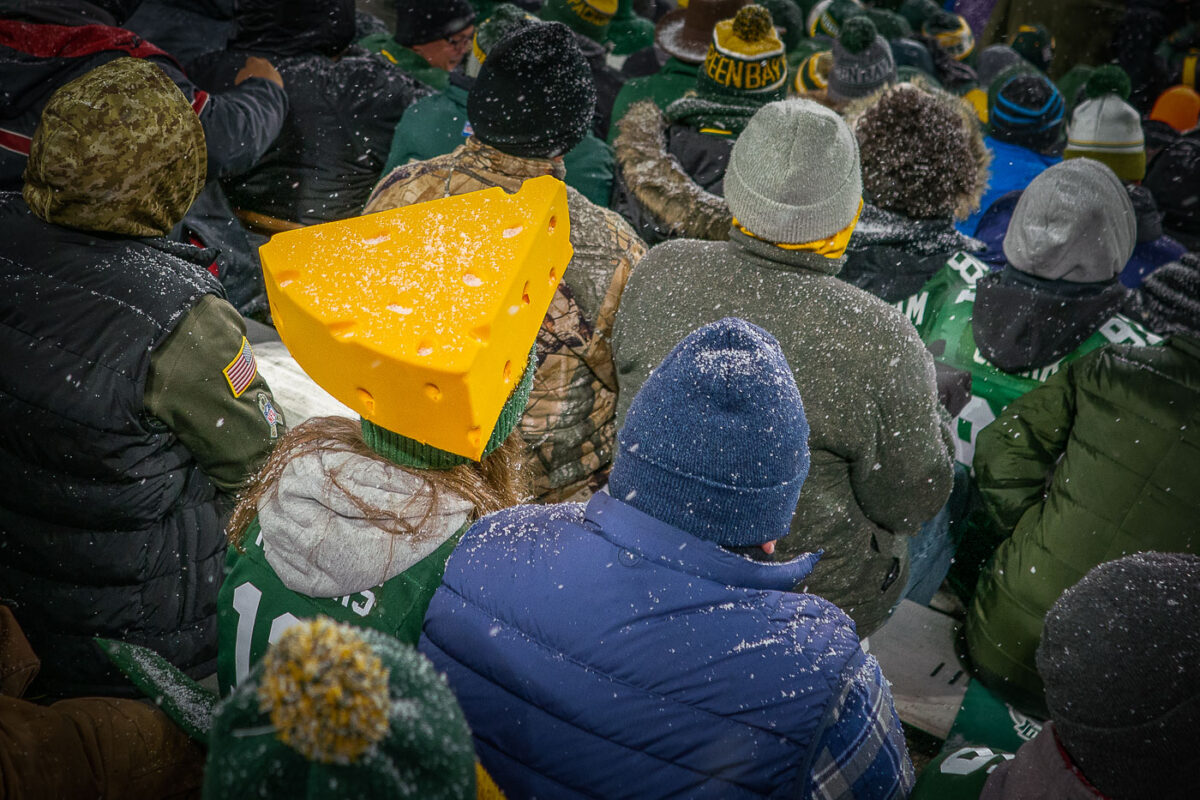
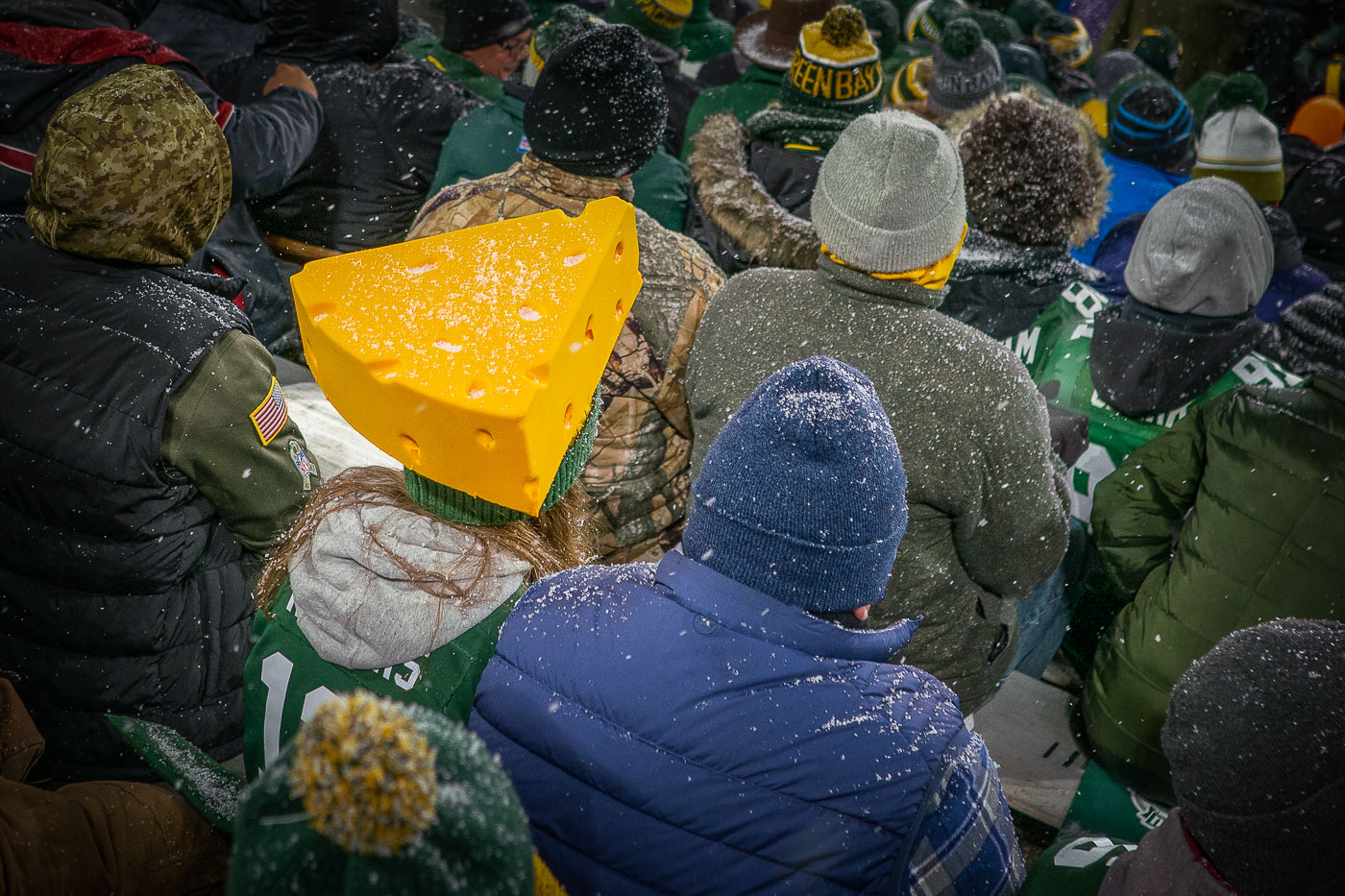
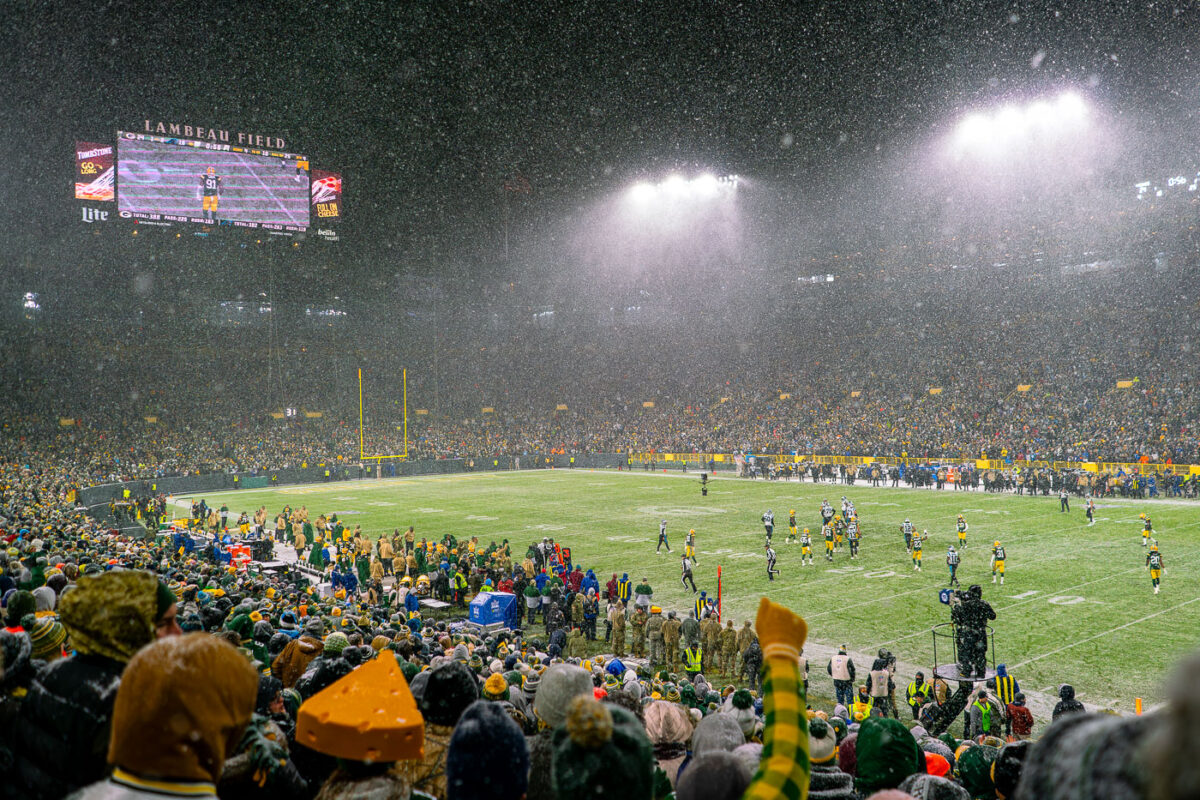
A fan wearing a Cheesehead hat braves snowfall at Lambeau Field in Green Bay, Wisconsin.
A fan wearing a "Cheesehead" hat braves snowfall at Lambeau Field in Green Bay, Wisconsin. The Green Bay Packers have played at the stadium, known for its cold-weather games, since 1957. This image captures fan dedication during a game where the Packers defeated the Carolina Panthers 24-16.

Fan in Snow at Lambeau Field

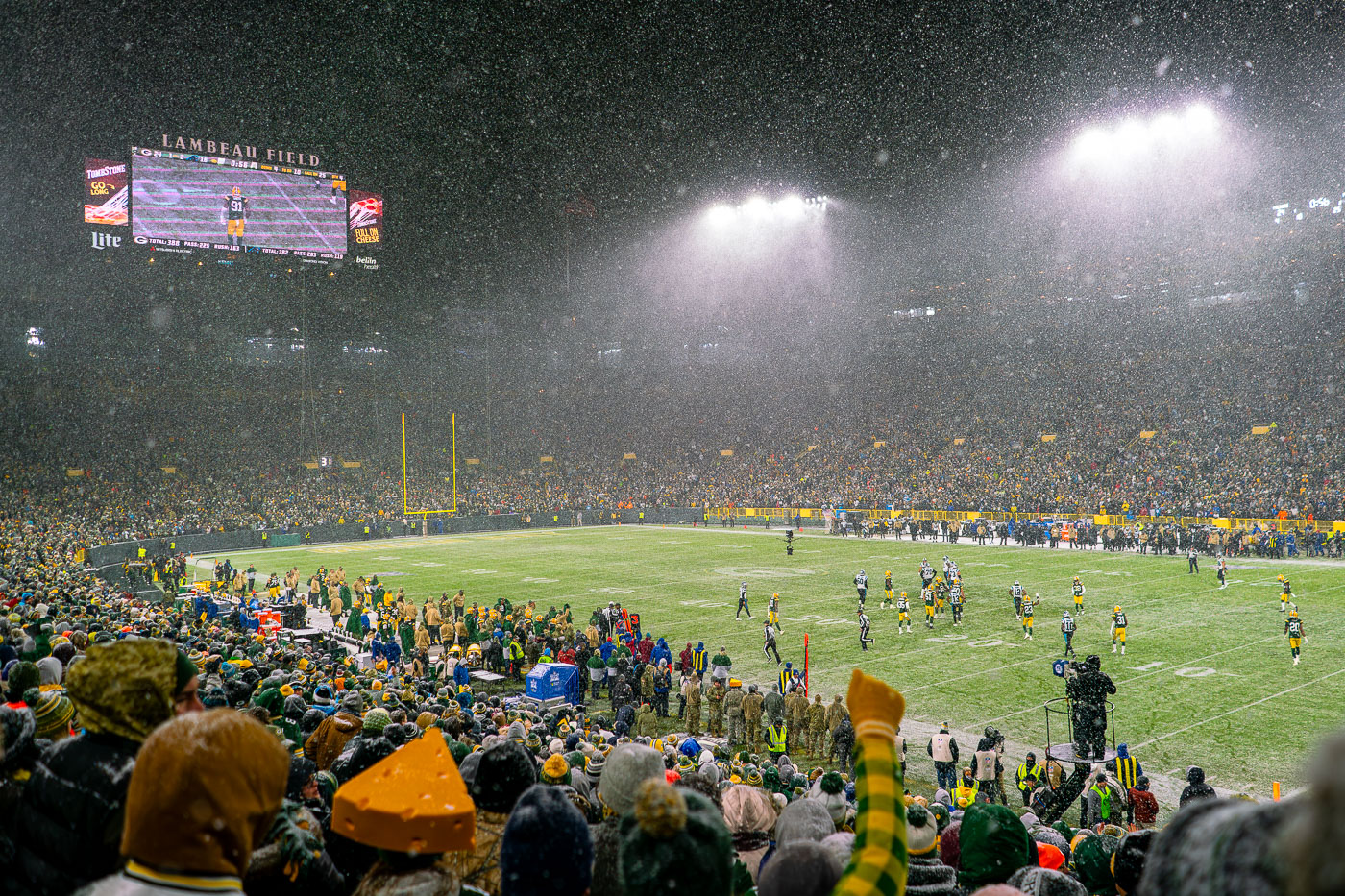
Snowfall at Lambeau Field in Green Bay during an NFL game between the Packers and Panthers.
Snow falls on Lambeau Field during an NFL game between the Green Bay Packers and the Carolina Panthers in Green Bay, Wisconsin. Opened in 1957, Lambeau Field is one of the oldest and most historic stadiums in the league, renowned for its cold-weather games. The Packers secured a 24-16 victory in this matchup amidst heavy snowfall.

Snowfall at Lambeau Field, Green Bay

Built in Minneapolis

Minneapolis Photographer

Browse by location, move through long-running series, or start with recent work.