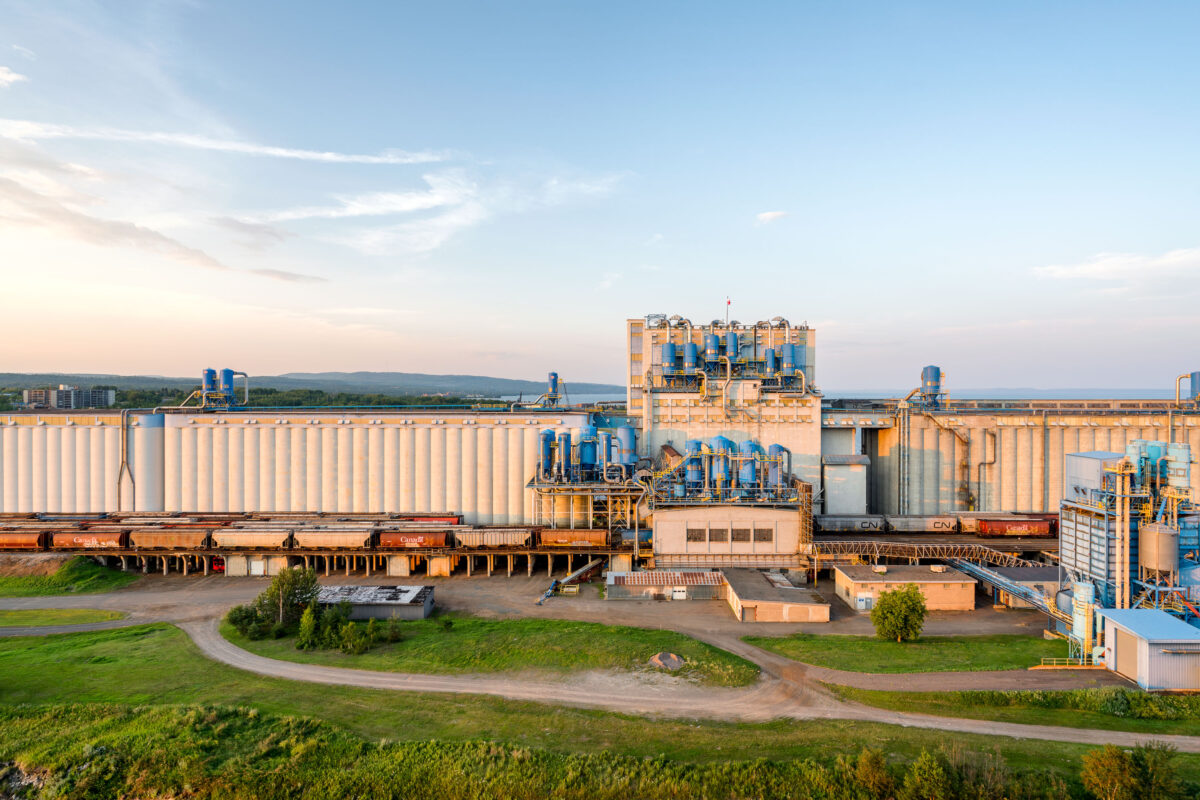
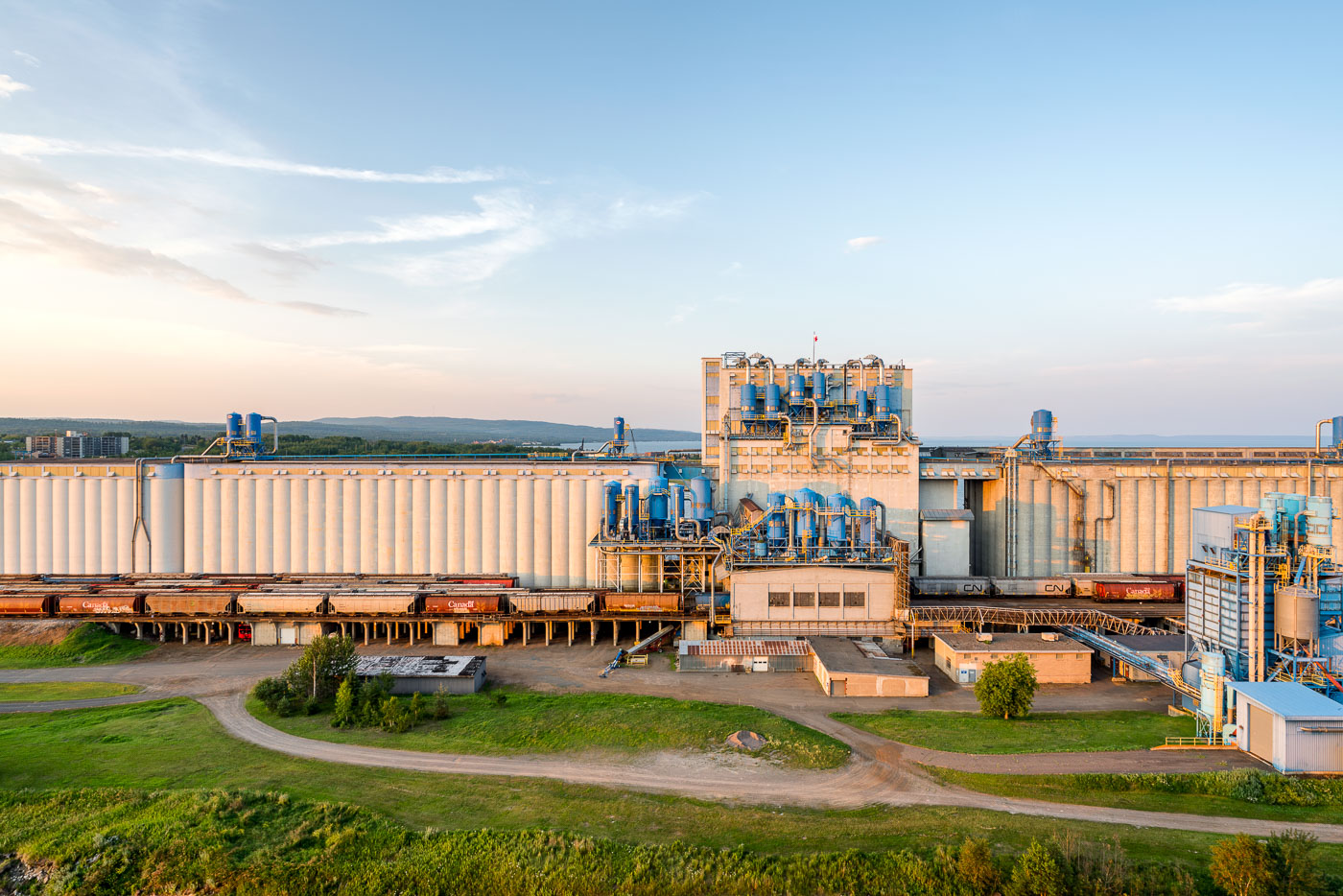
Thunder Bay Grain Elevators in 2017
July 2017 — Grain Elevator in Thunder Bay, Canada.
Explore photos tagged Industry.
July 2017 — Grain Elevator in Thunder Bay, Canada.
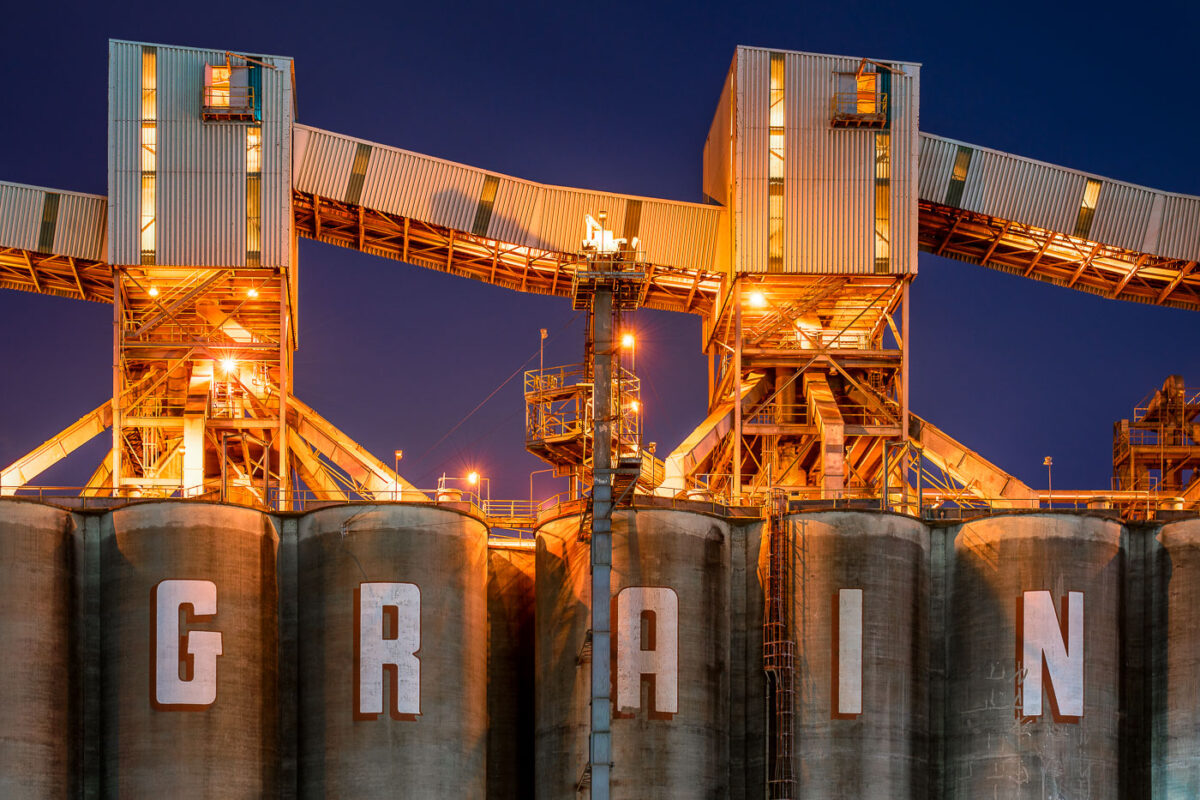
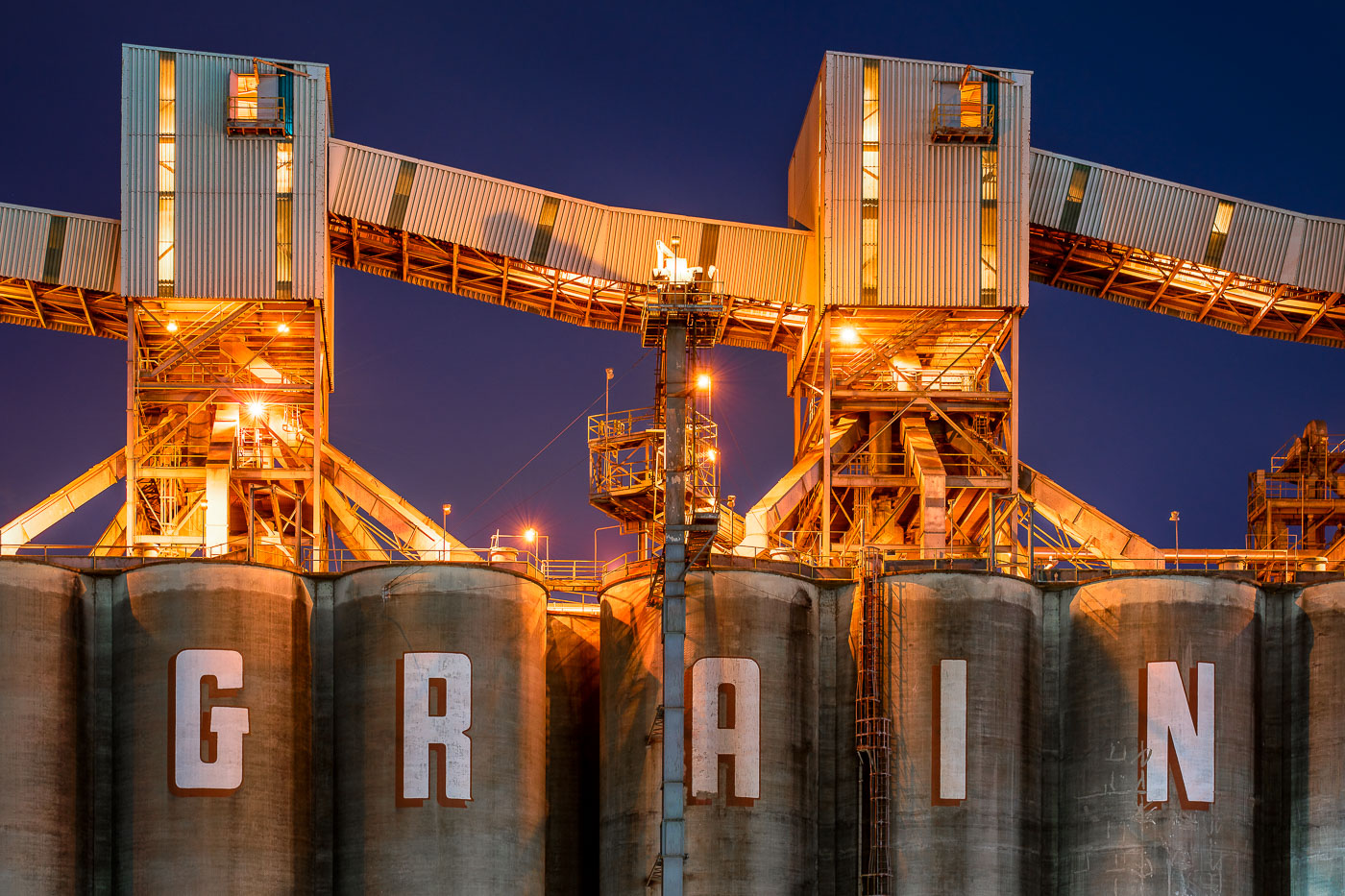
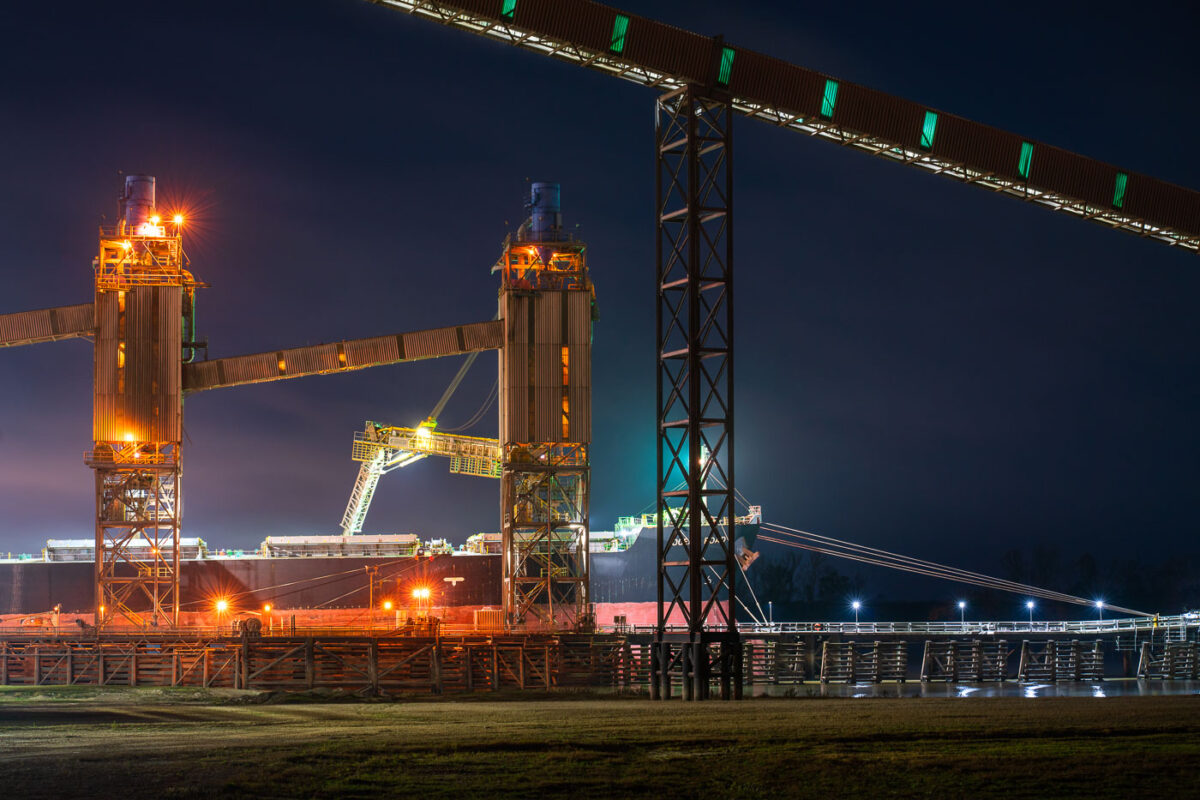
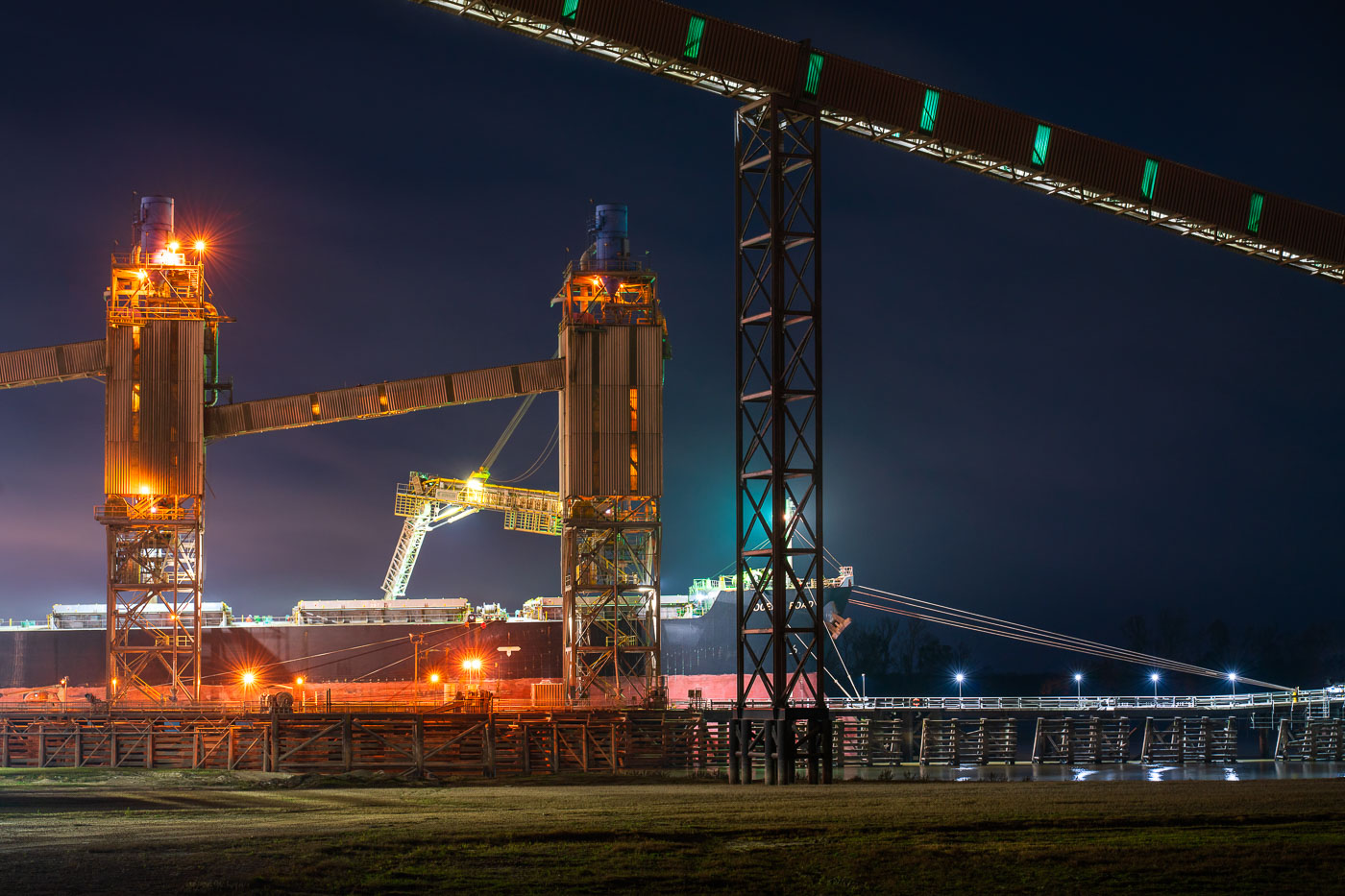
December 2019 — Illuminated under floodlights, the massive concrete grain silos of the Zen-Noh Grain Corporation terminal rise over the Mississippi River in Convent, Louisiana. Operated by a U.S. subsidiary of Japan’s Zen-Noh agricultural cooperative, this export facility plays a critical role in shipping Midwestern grain to international markets. The illuminated conveyors and loading structures highlight the region’s industrial link between river transport and global food supply chains.
December 2019 — The Zen-Noh Grain Corporation export facility in Convent, Louisiana, operates along the Mississippi River between Baton Rouge and New Orleans. The terminal handles millions of tons of corn, soybeans, and other grains each year, transferring them from rail and barge to ocean-going vessels for global shipment. At night, the towering conveyor systems and loading arms glow under industrial lights, reflecting the region’s central role in U.S. agricultural exports.
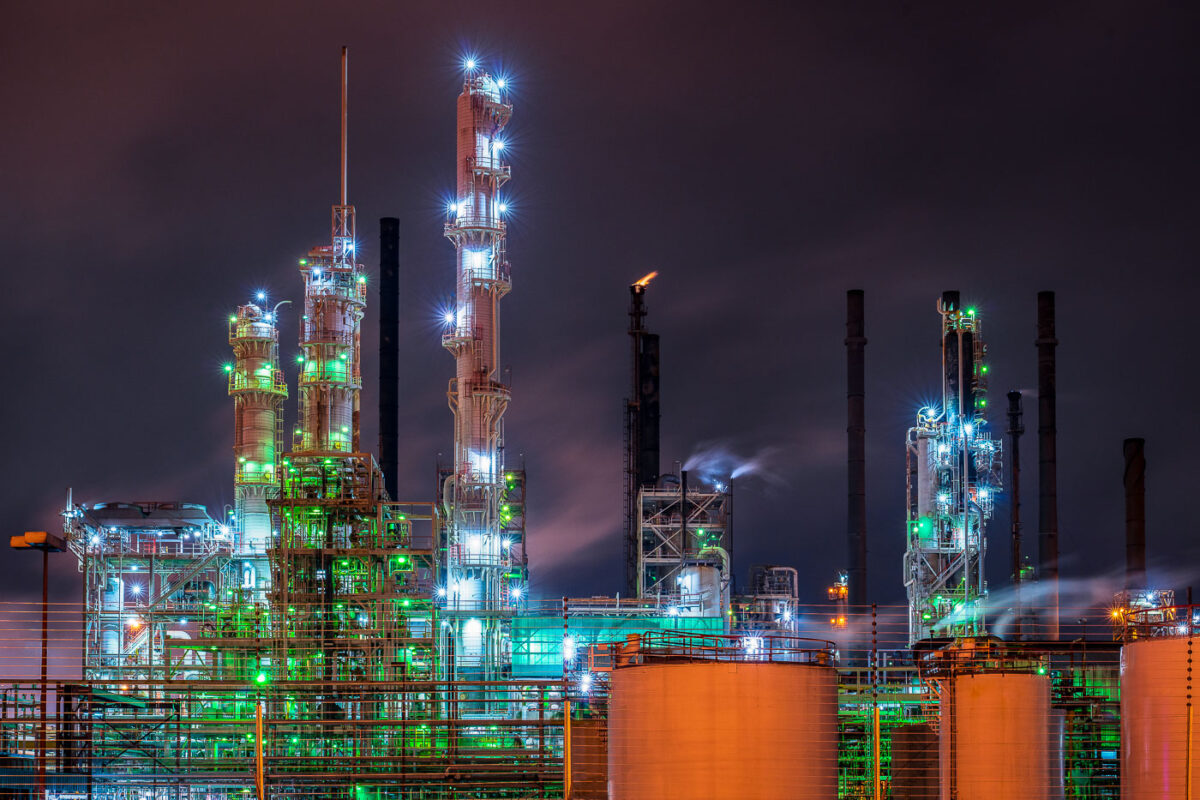
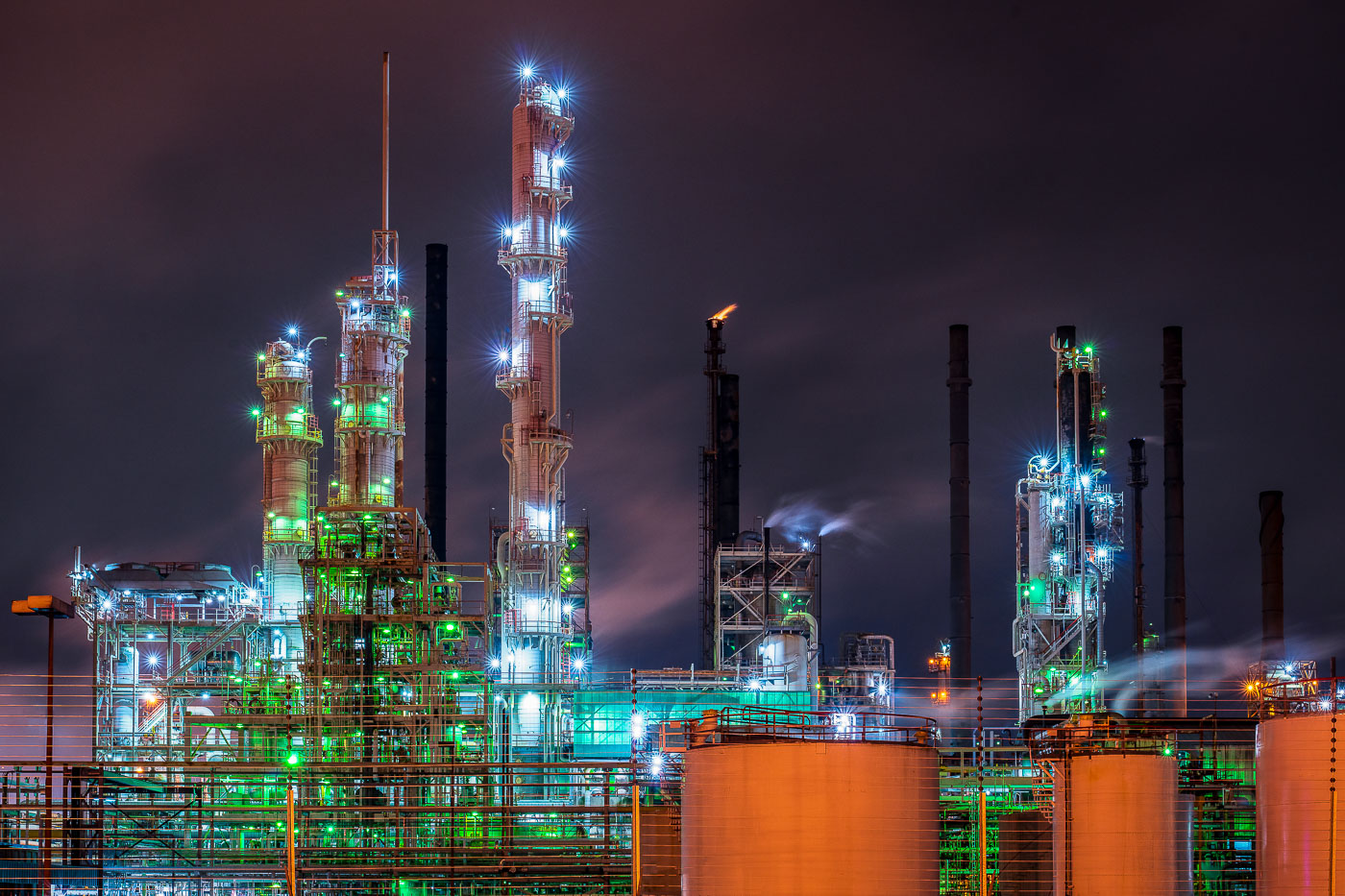
December 2019 — This nighttime industrial scene is from Baton Rouge, Louisiana, home to one of the largest oil refining and petrochemical hubs in the United States. The brightly lit towers and distillation columns belong to facilities along the Mississippi River Industrial Corridor, where refineries like ExxonMobil Baton Rouge operate around the clock. Steam and flares mark the ongoing refining processes that produce gasoline, diesel, and chemical feedstocks central to the region’s economy. The image captures the city’s long-standing connection to the energy and manufacturing industries.
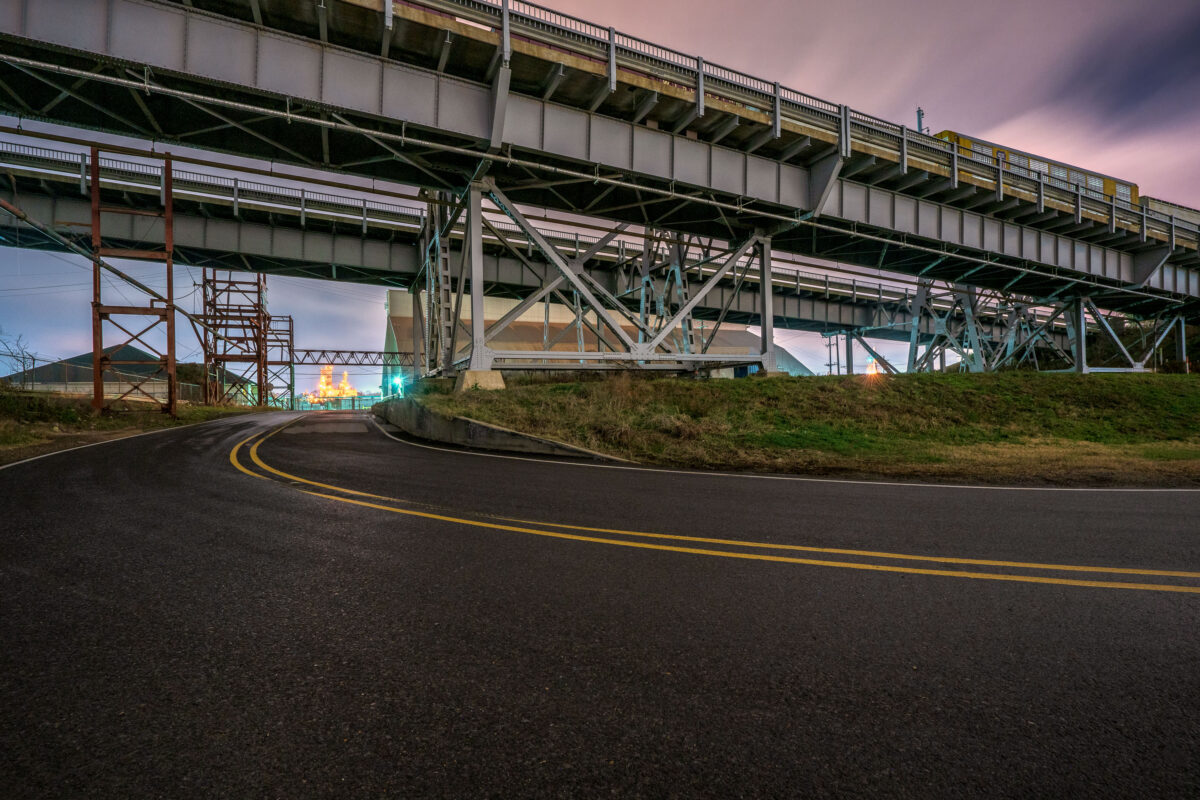
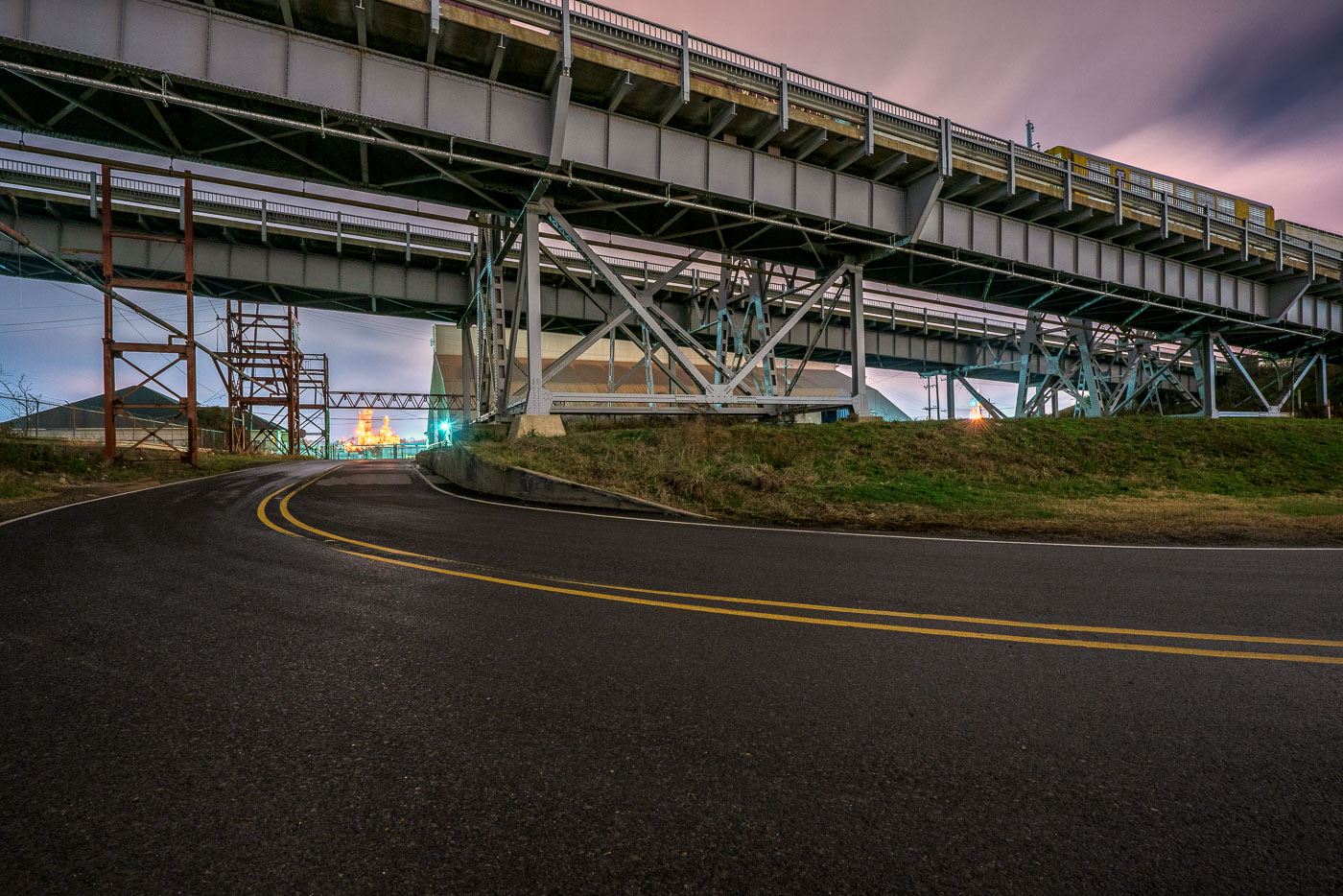
December 2019 — On Baton Rouge’s Airline Highway, the road snakes beneath a tangle of overpasses and steel supports, a striking symbol of mid-20th-century infrastructure. Originally developed as a major bypass route, Airline Highway became one of Louisiana’s busiest commercial arteries, linking petrochemical plants, warehouses, and neighborhoods across the capital region. At dusk, the glow of distant lights cuts through the industrial sprawl, underscoring how this corridor remains a vital — if gritty — backbone of the city’s economy and daily life.
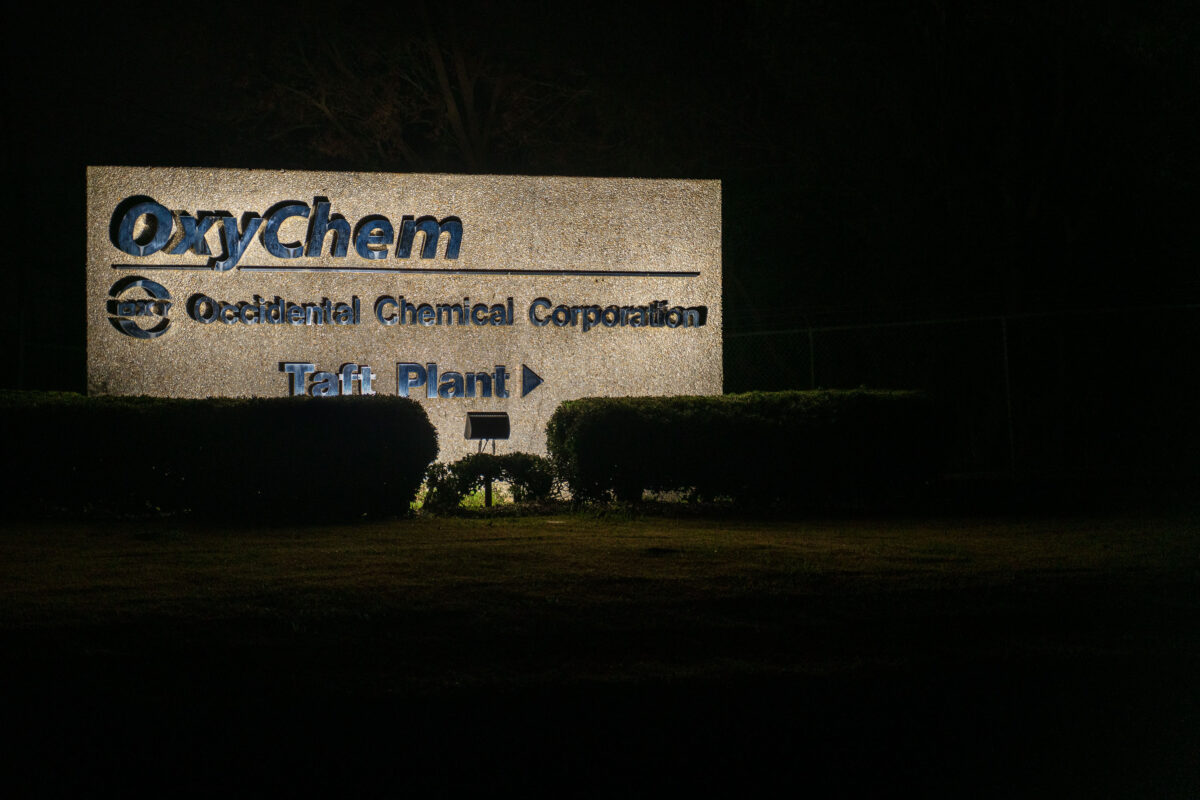
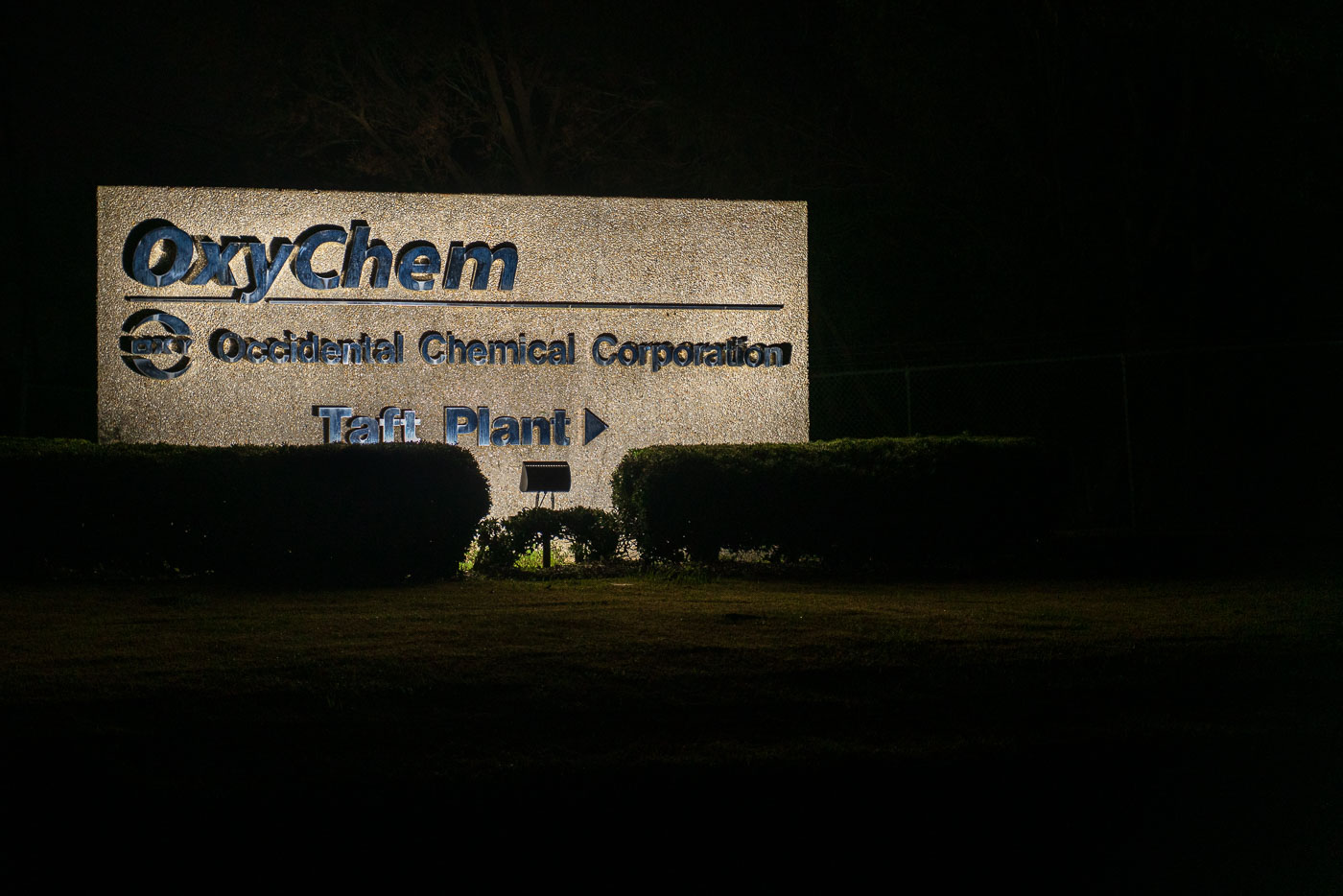
December 2019 — The Taft Plant, operated by Occidental Chemical Corporation (OxyChem), sits along Louisiana’s heavily industrialized river corridor between Baton Rouge and New Orleans. Like many facilities in the region, the plant plays a role in the state’s vast petrochemical network, producing essential compounds for plastics, coatings, and other materials that fuel modern life. At night, its illuminated sign cuts through the darkness, a quiet marker of the sprawling industry that has shaped both the economy and the environmental debates of the Mississippi River corridor.