Place Archive

Berlin

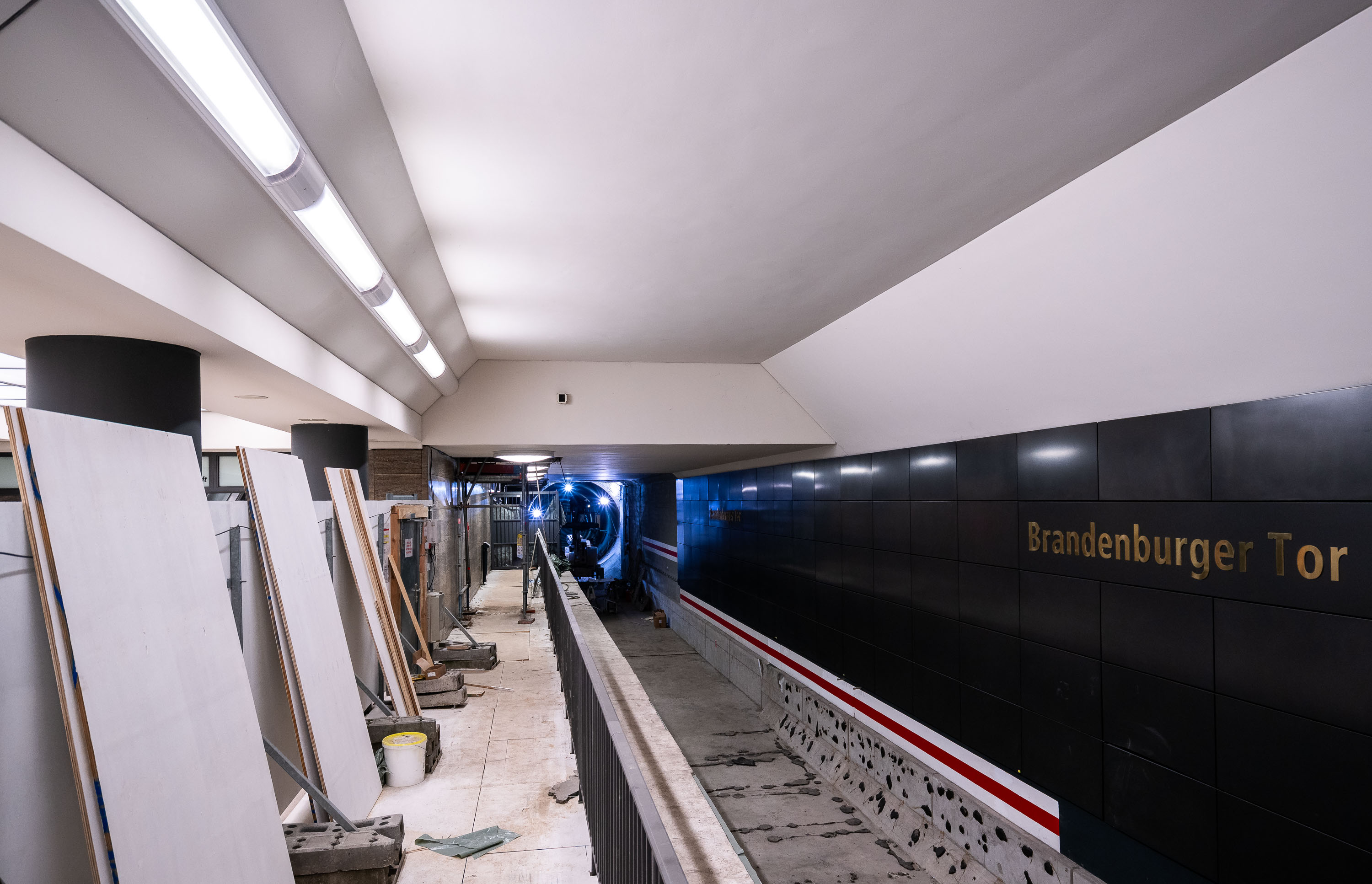
Berlin’s transportation network integrates historical U-Bahn stations like Wedding and Seestraße with the modernist architecture of Berlin Hauptbahnhof, Europe’s largest multi-level rail hub. The city’s tram lines, including extensively maintained BVG routes, and subway platforms such as those at Brandenburger Tor, illustrate the evolution of Berlin’s transit infrastructure alongside its political and urban renewal since reunification.

34 photos

Photos from Berlin
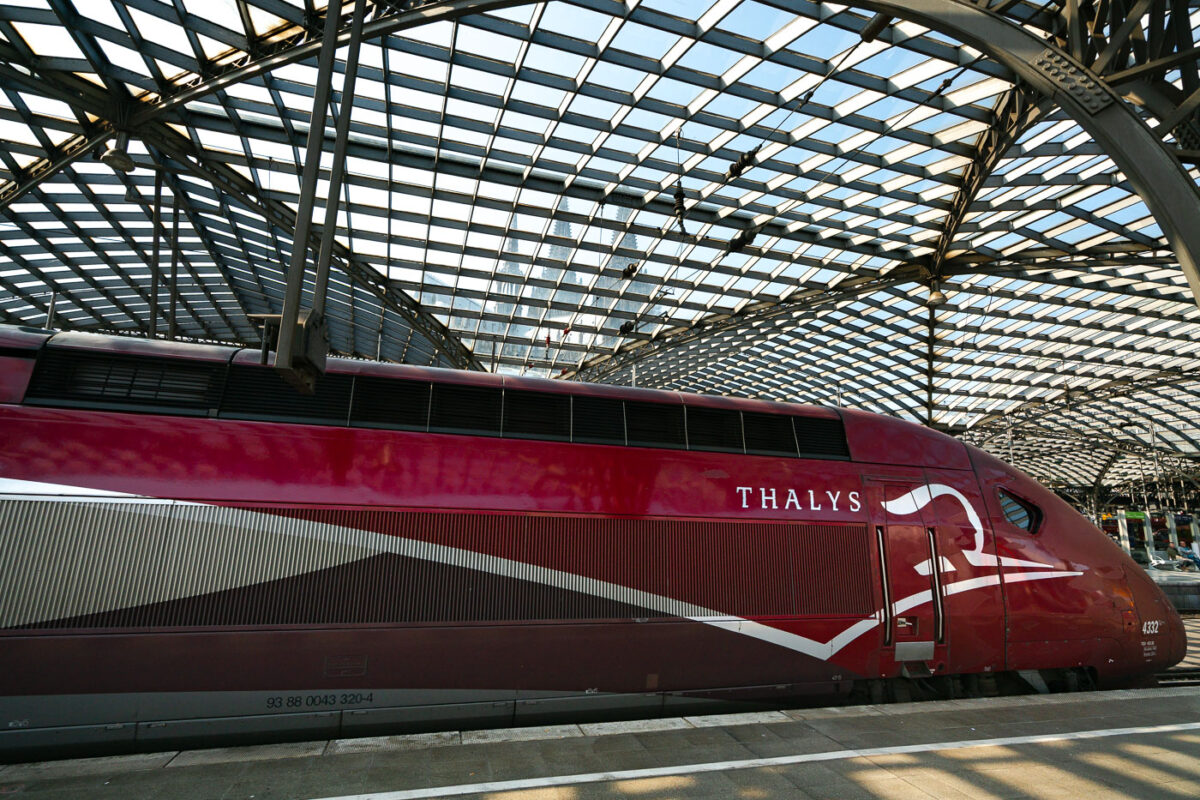
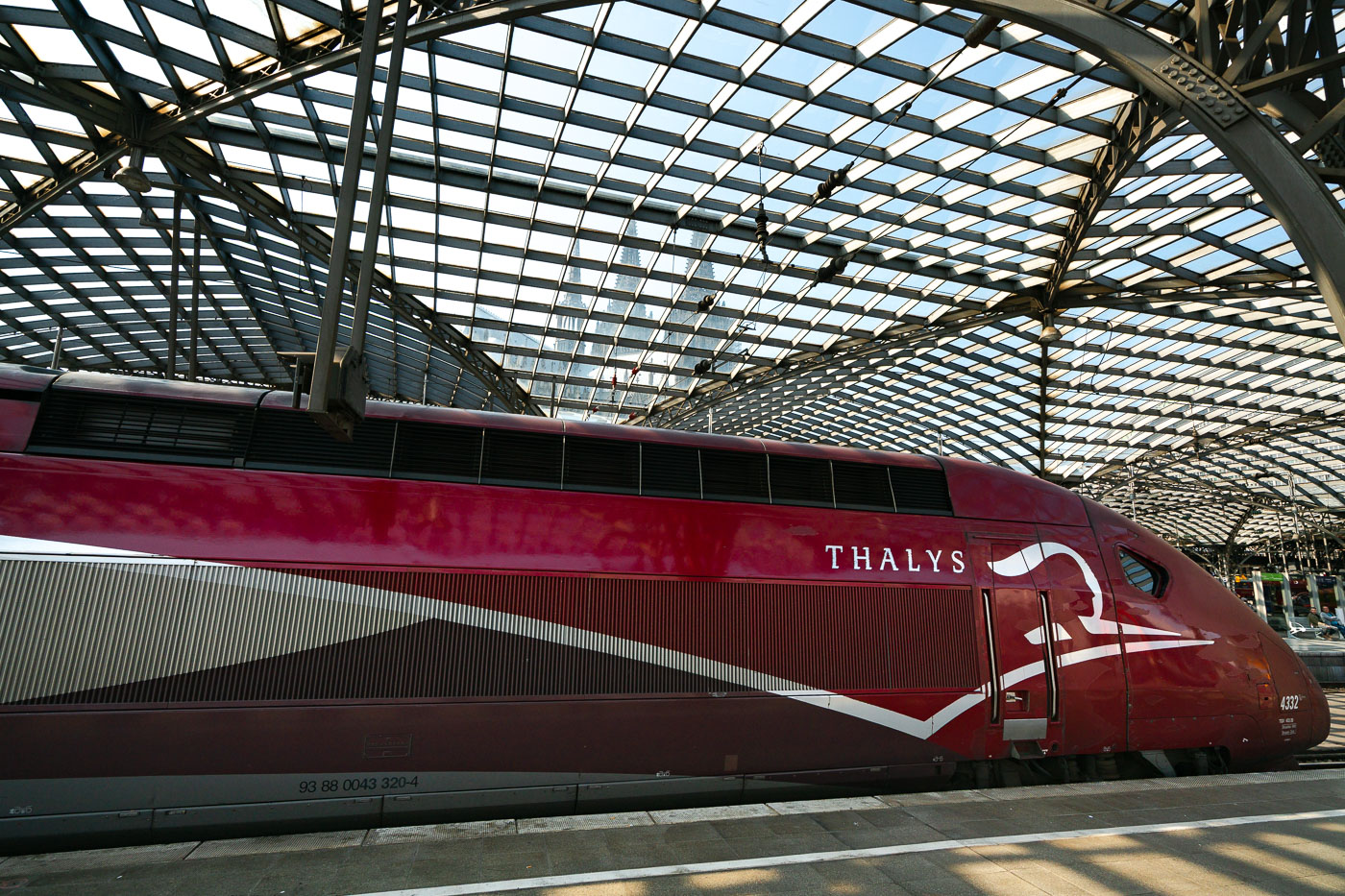
A Thalys high-speed train is parked under the glass and steel canopy of Cologne Central Station, Germany. The station is a major hub for international rail travel.
A Thalys PBKA high-speed train is positioned beneath the expansive glass and steel canopy of Köln Hauptbahnhof, Cologne's central railway station. This station, a vital hub for international and domestic travel, was originally constructed in the early 20th century and has undergone numerous expansions and modernizations. The Thalys service connects Germany with Belgium, France, and the Netherlands, representing a key element of European high-speed rail infrastructure. The station's distinctive roof, a marvel of engineering, filters daylight onto the platforms, with the spires of Cologne Cathedral visible in the distance, underscoring the station's proximity to this historic landmark.
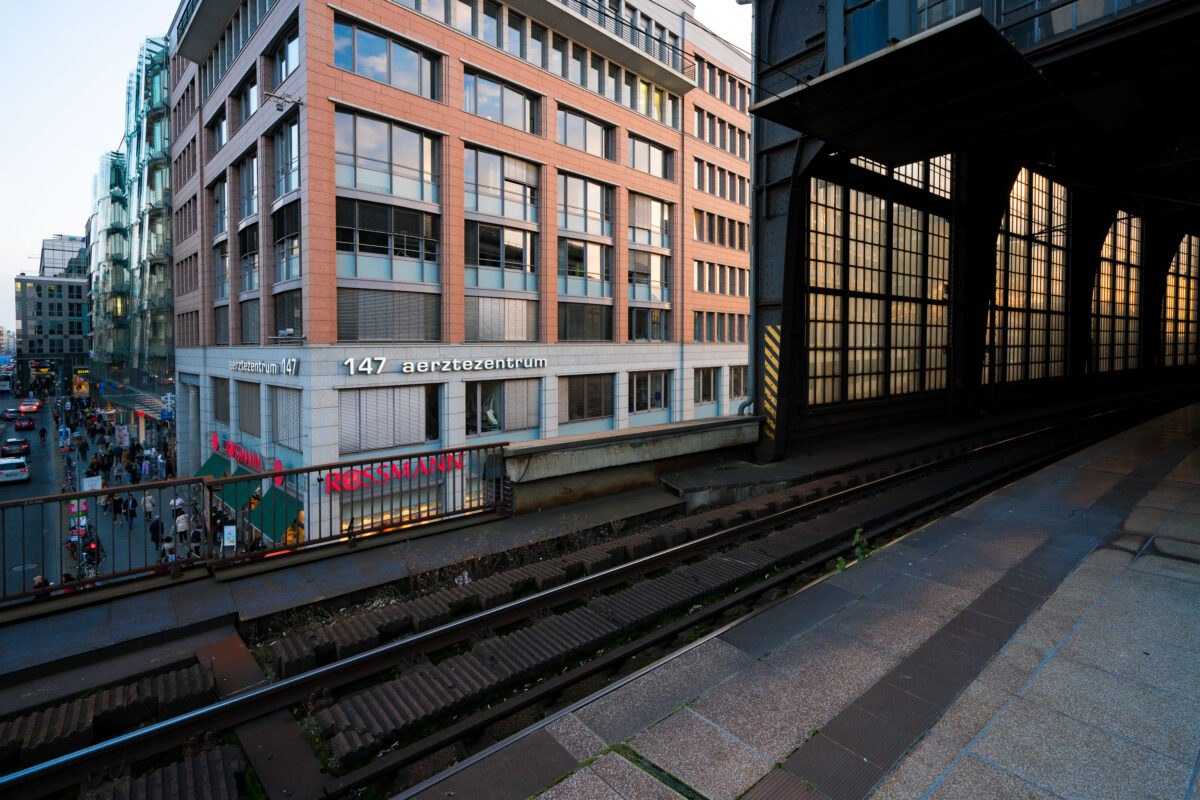
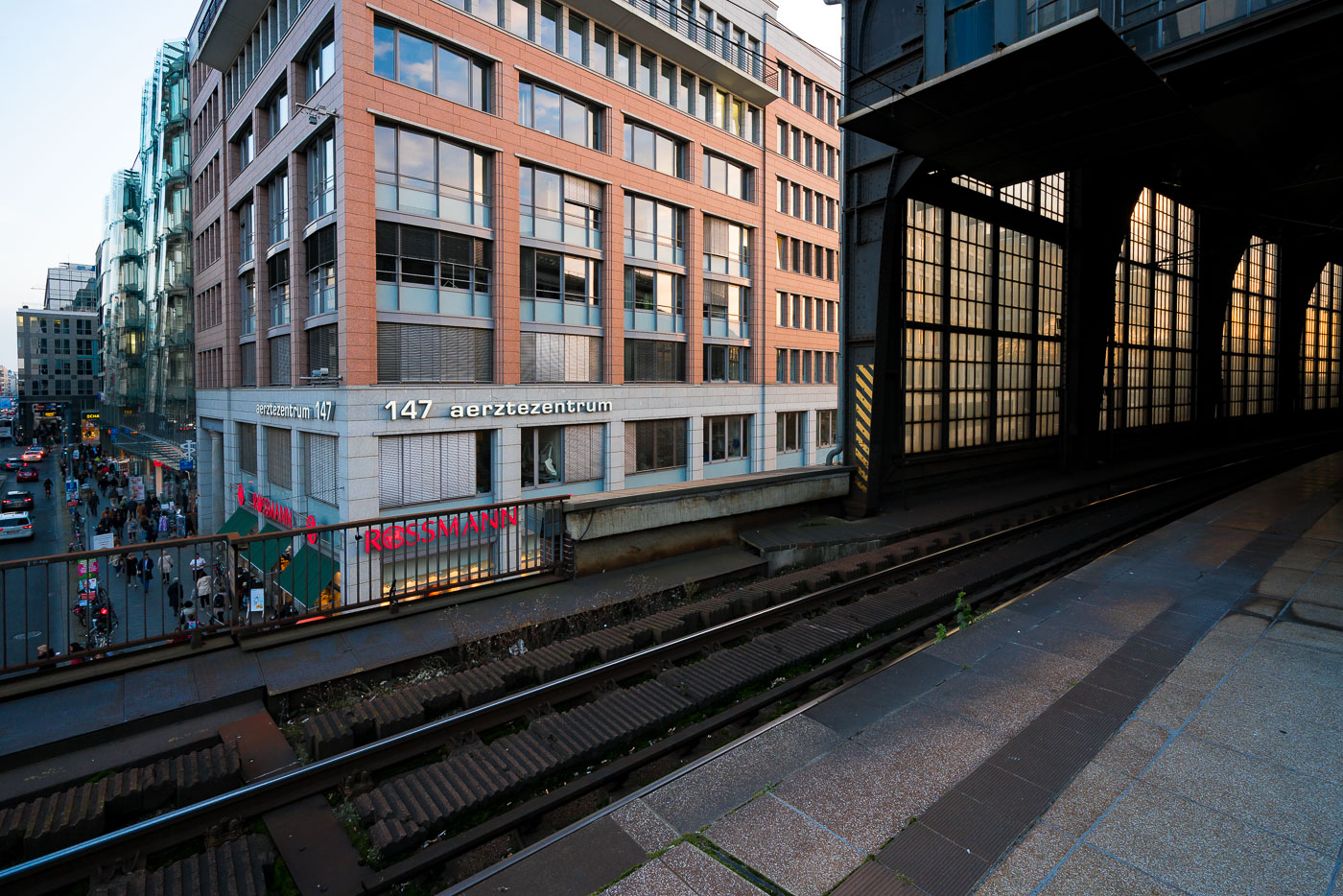
Elevated tracks at Berlin Friedrichstraße station
Berlin Friedrichstraße Station, a major transport hub, features elevated railway tracks that run parallel to Georgenstraße. The station's historic iron and glass architecture, dating from its 19th-century origins, contrasts with the modern office buildings that now line the street, including the Aerztezentrum at No. 147. This area serves as a vital connection point for commuters and travelers in the heart of Berlin, reflecting the city's continuous development.
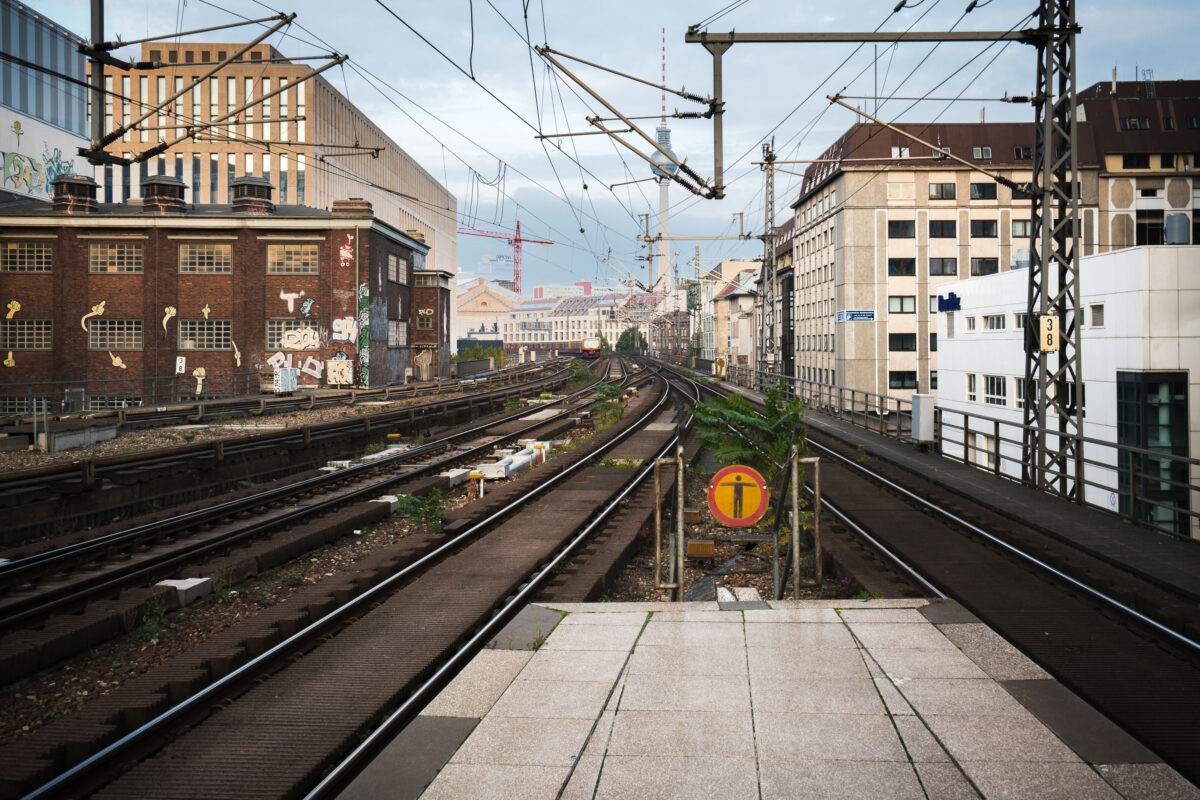
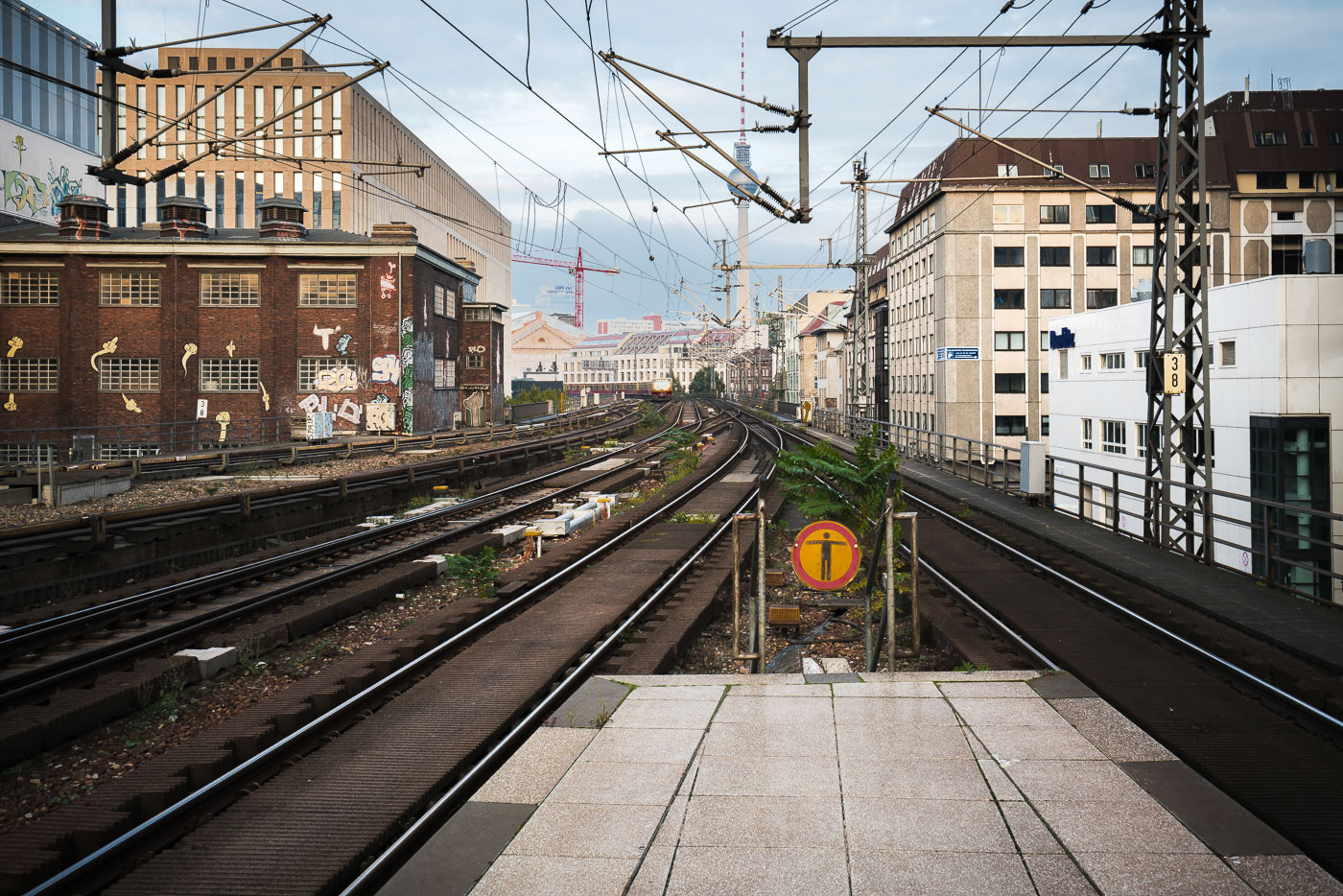
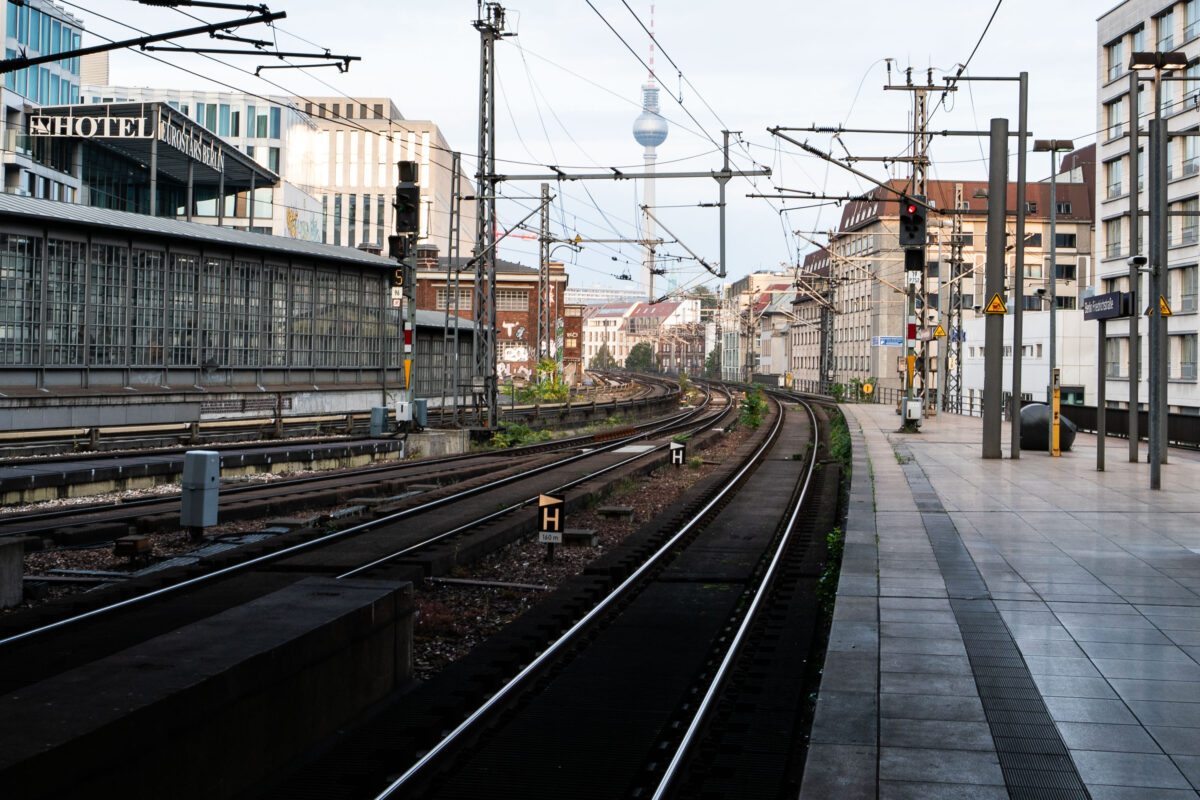
Berlin Friedrichstraße train station S Bahn Tracks
View east from Berlin Friedrichstraße station along the elevated S-Bahn tracks. This vital transportation artery, established in the early 20th century, connects key points across the city. The surrounding architecture reflects Berlin's development, with older industrial buildings juxtaposed against modern office structures. In the distance, the Fernsehturm, a prominent television tower built during the GDR era, serves as a constant visual reference point.
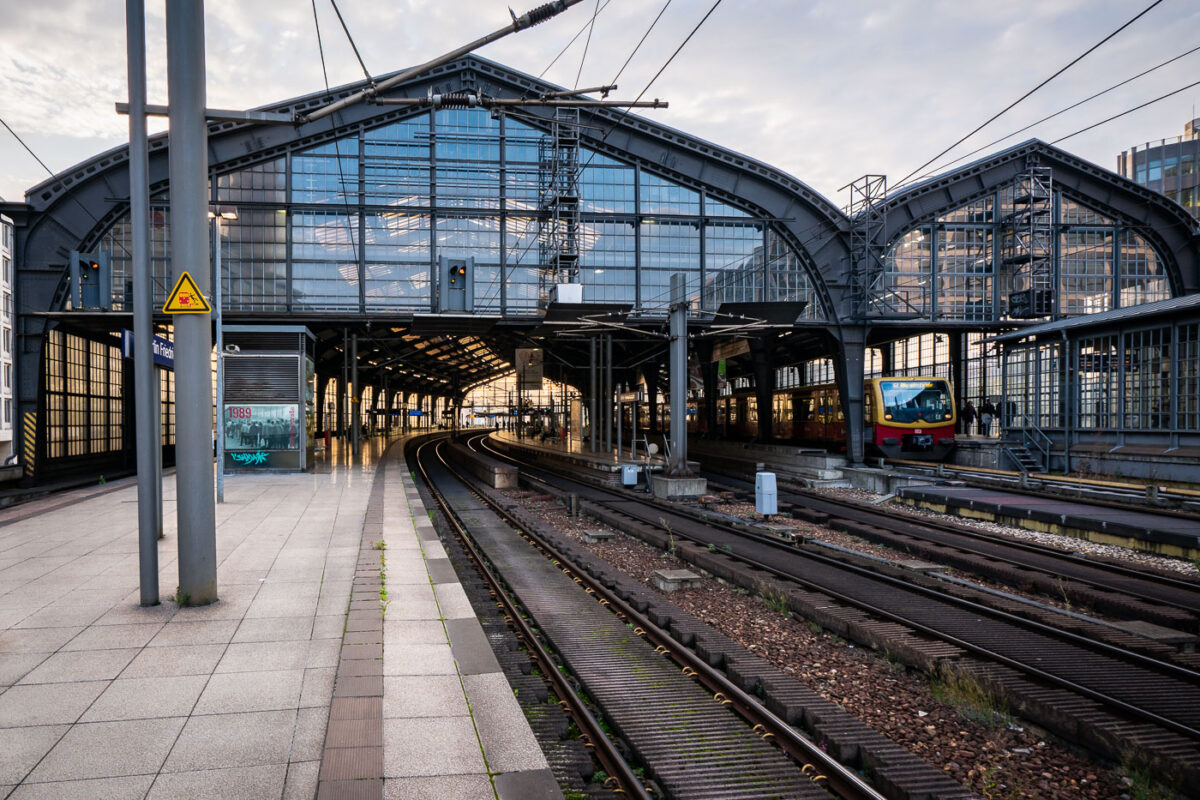
S Bahn BR 481 train at train station
Berlin Friedrichstraße Station, a major transport hub in Berlin, Germany, features a distinctive steel and glass canopy covering its elevated S-Bahn platforms. Originally opened in 1882, the station's architecture reflects prewar German railway design, characterized by its curved tracks and expansive roof structures. Today, it remains a vital link for commuters, serving multiple S-Bahn lines and connecting to regional and long-distance services. The station's historical significance is underscored by its survival through decades of Berlin's complex history.
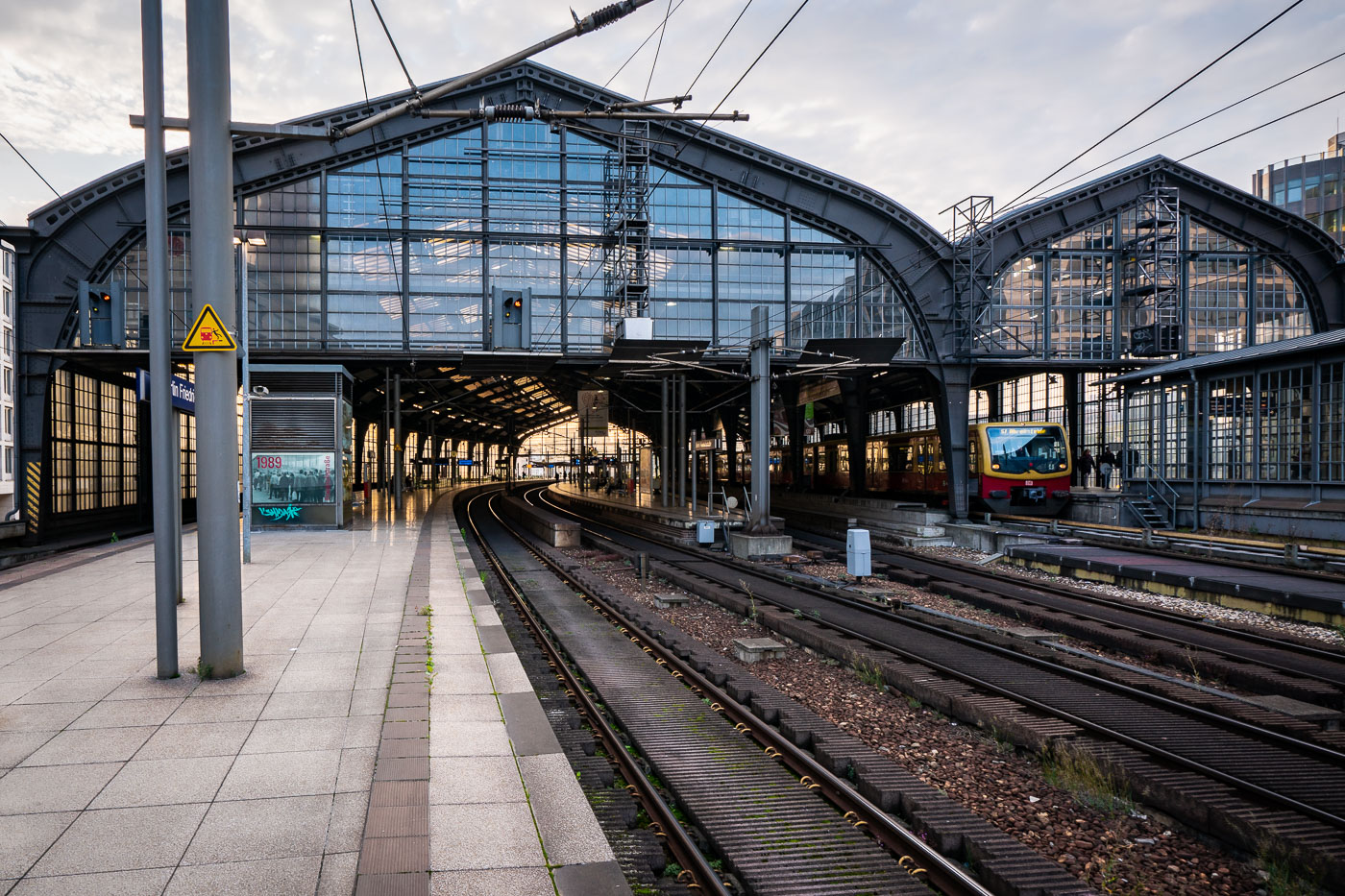
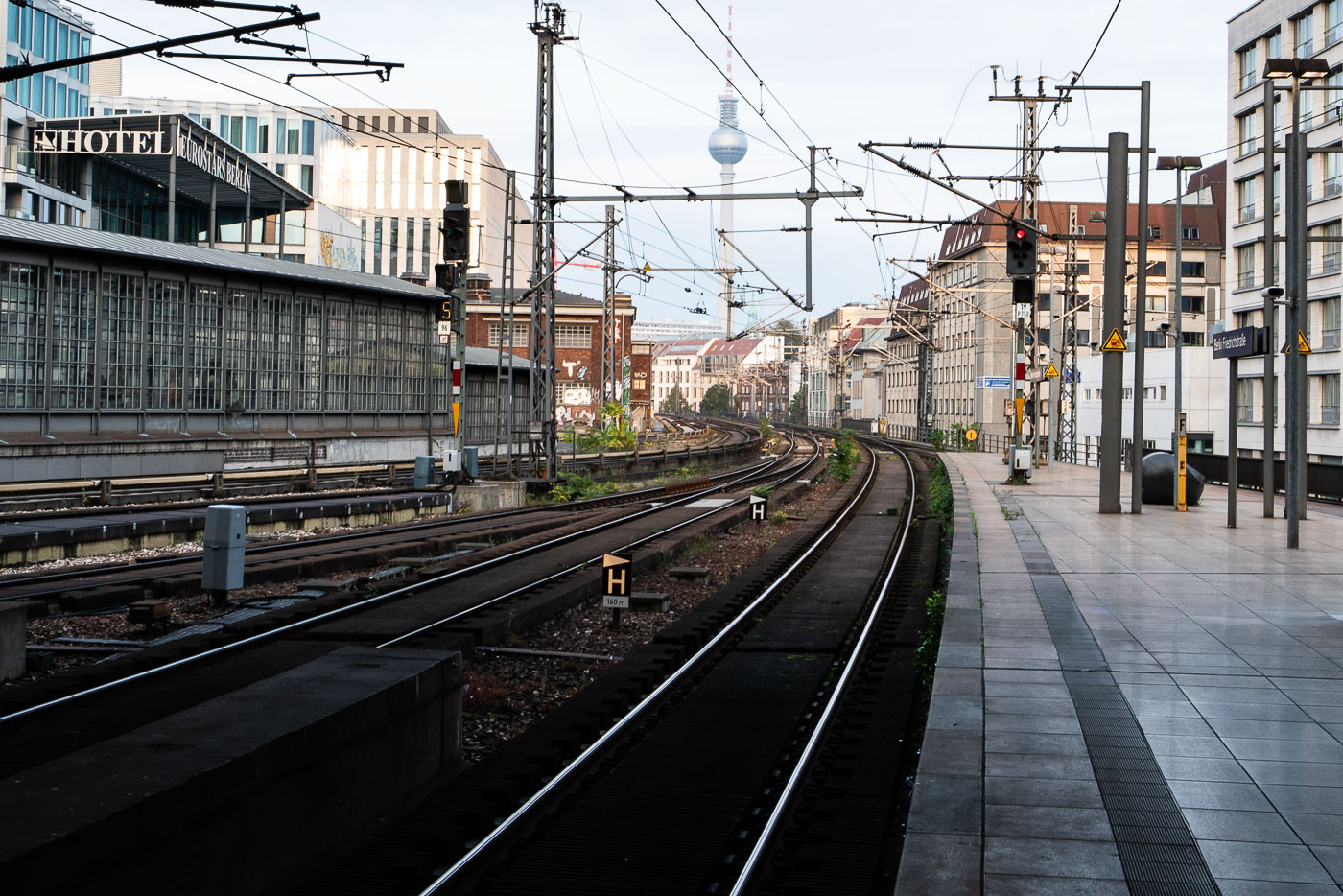
Eastward Curve at Berlin Friedrichstrabe
Tracks curve eastward from Berlin Friedrichstraße Station, a vital S-Bahn and regional rail hub. Opened in 1882, the station played a significant role as a border crossing during the Cold War, connecting East and West Berlin. Today, it remains a central transport artery, facilitating daily commutes and regional travel. In the distance, the Fernsehturm television tower, a landmark of former East Berlin, is visible.
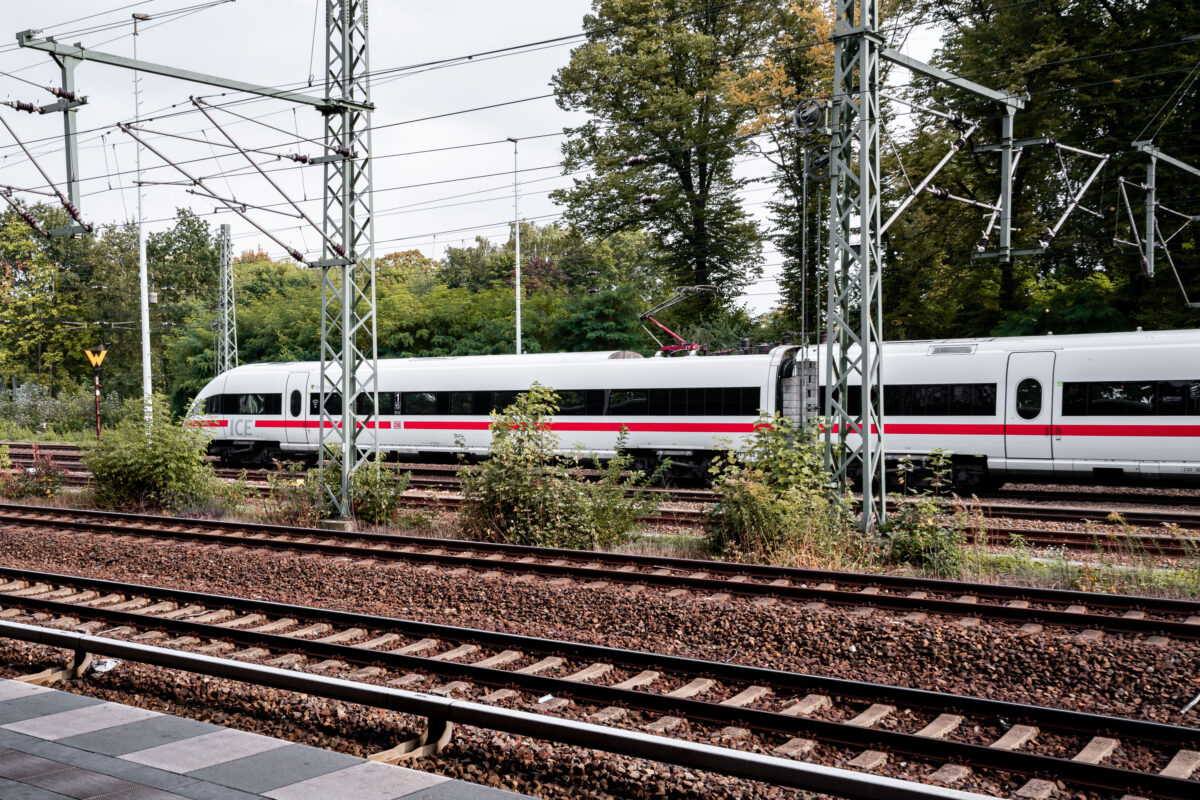
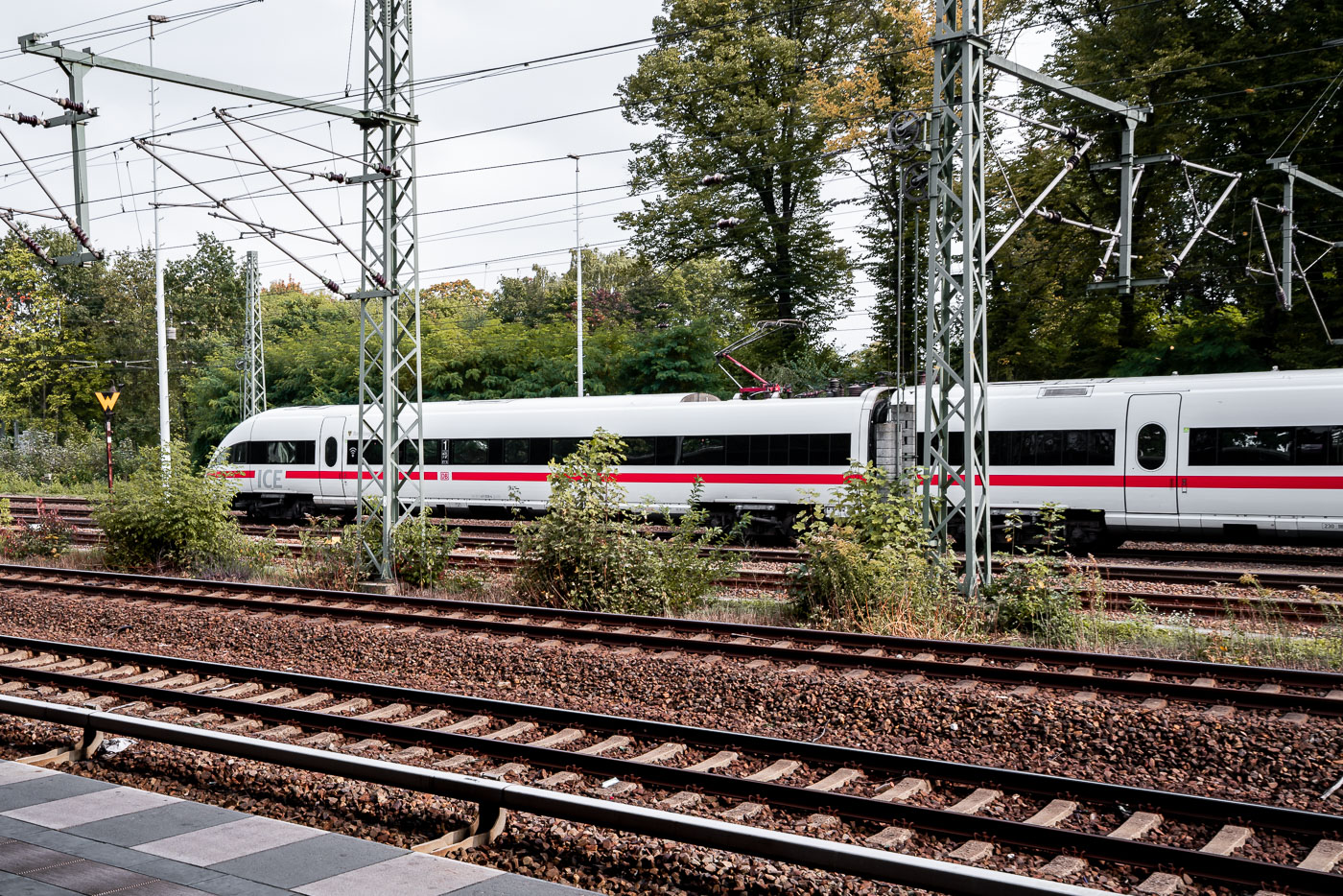
Deutsche Bahn Intercity Express Train
A Deutsche Bahn Intercity-Express (ICE) 3 train, identifiable by its white livery and red stripe, operates on the Berlin rail network. Introduced in the early 1990s, the ICE network forms the core of Germany's long-distance passenger rail service, connecting major cities at speeds up to 300 km/h. The infrastructure includes overhead catenary lines powered by 15 kV AC, typical for German mainlines, and lattice-steel gantries supporting the power supply. This system exemplifies the organized and interconnected nature of German rail, facilitating both domestic and international travel.
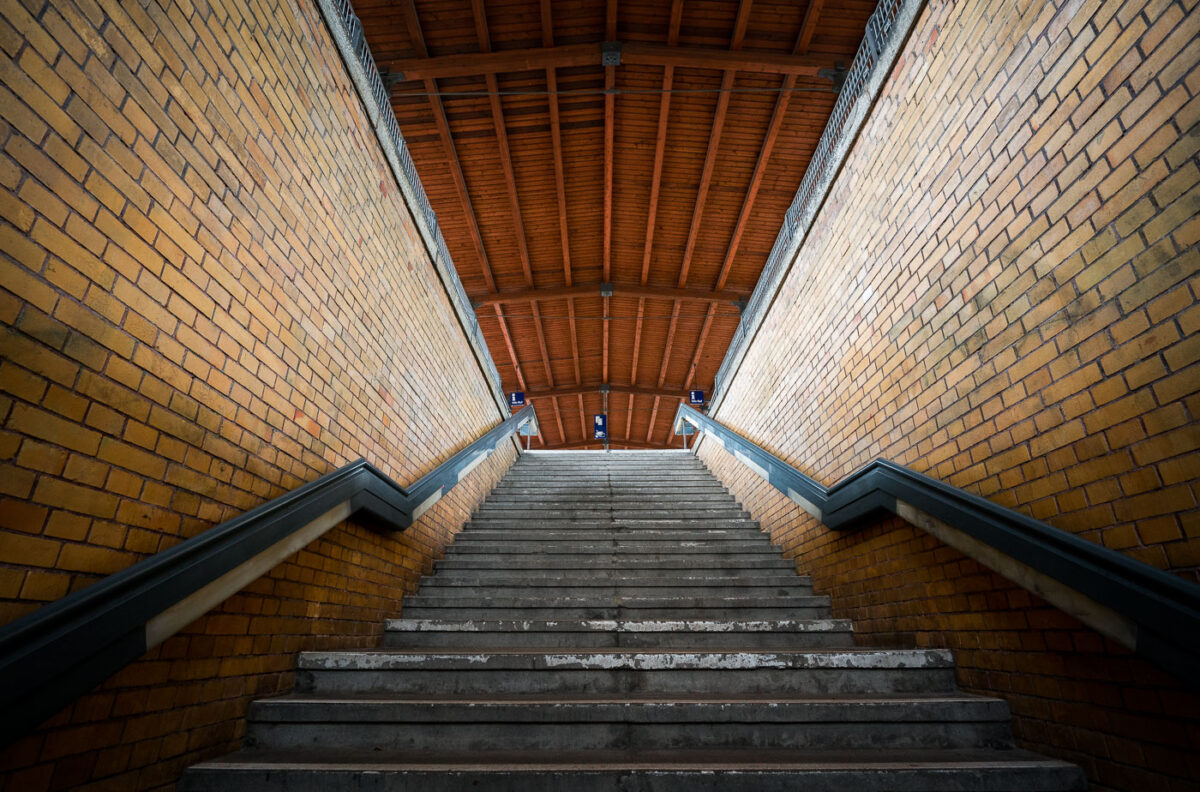
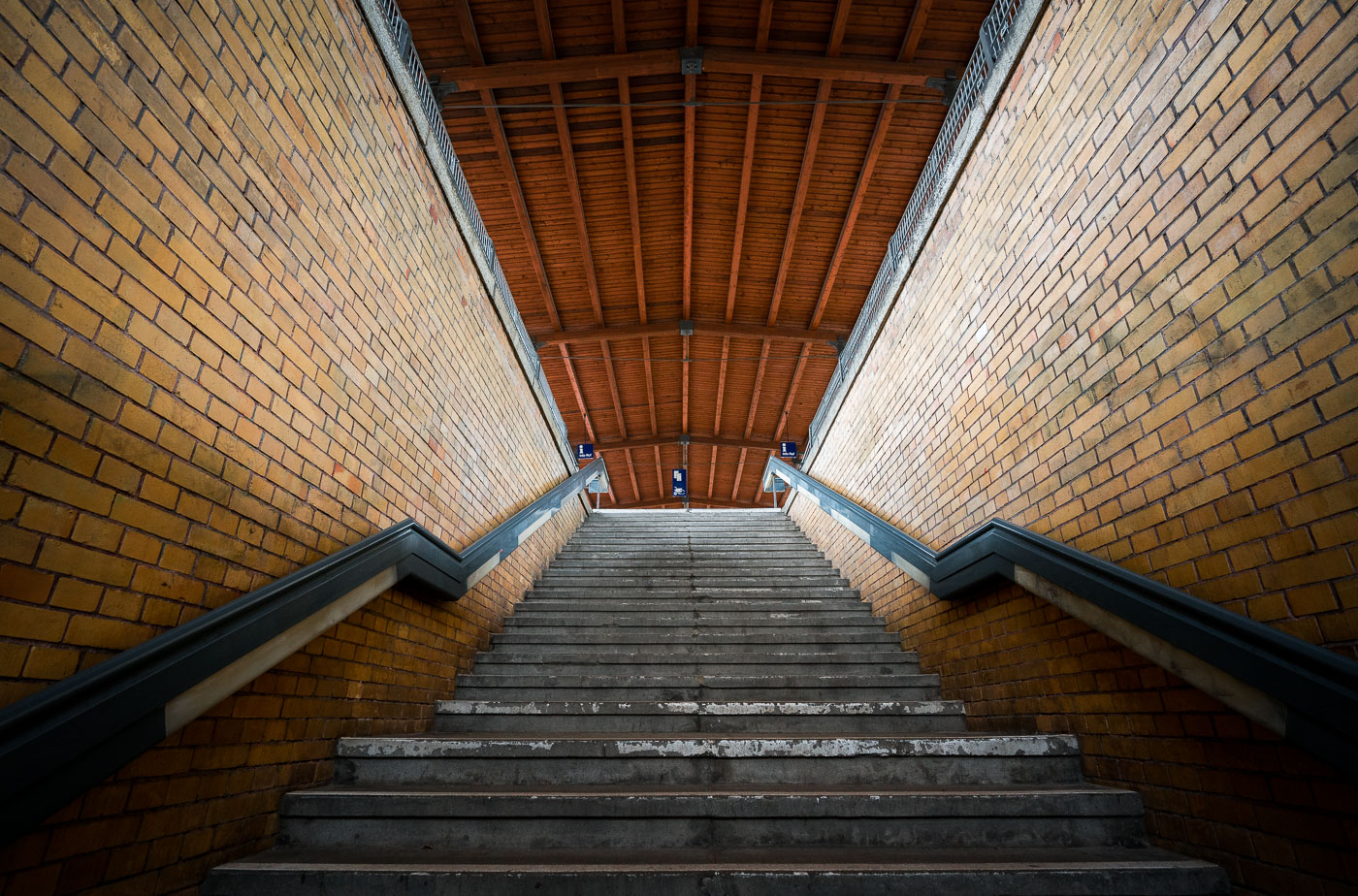
Stairs ascend towards a wooden ceiling inside a Berlin train station, characterized by yellow brick walls and a timber roof structure.
A view of the stairs and wooden ceiling inside a Berlin train station. The station's architecture features yellow brick walls and a distinctive timber roof structure. These stations serve as vital transportation hubs, connecting different parts of the city and facilitating daily commutes for thousands of residents and visitors.
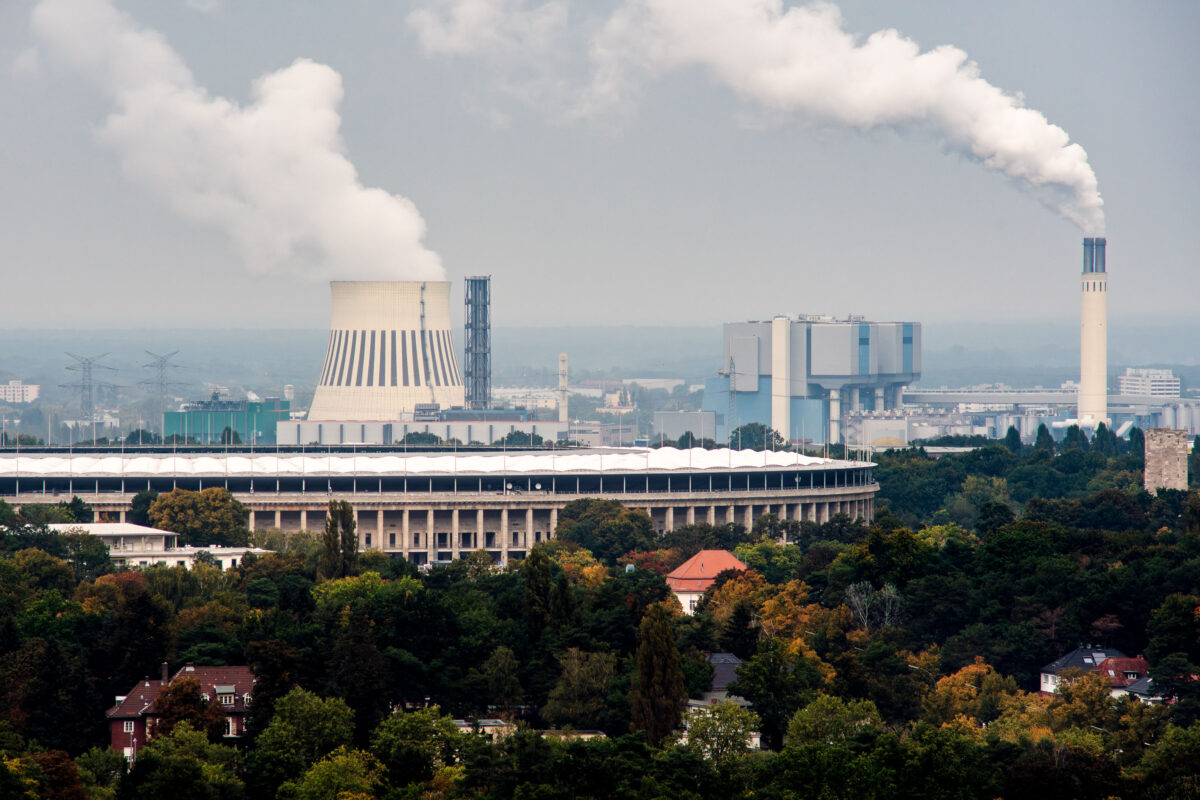
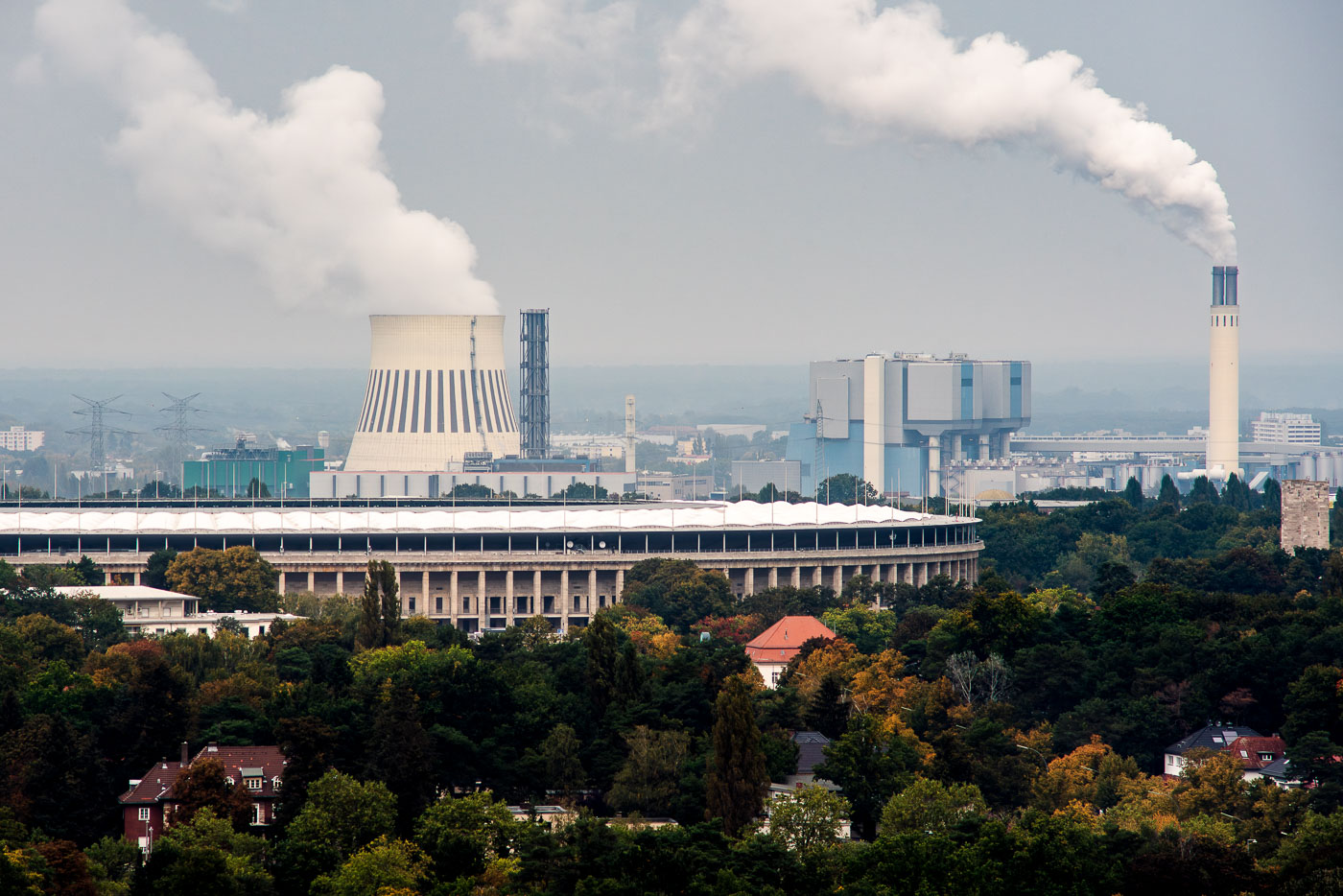
Olympiastadion Berlin and Reuter Power Plant
The Olympiastadion, constructed for the 1936 Olympic Games, is seen in the foreground, nestled within Berlin's Westend district. Behind it, the Reuter power plants, including the Reuter West plant (commissioned in the late 1980s) and the older Reuter facility (dating to 1930), contribute to the city's energy infrastructure. These plants, operated by Vattenfall, feature a large natural-draft cooling tower and a tall chimney, signifying Berlin's ongoing need for power generation and district heating. The juxtaposition of the stadium's classical architecture with the industrial presence of the power plants highlights the complex development of this area on Berlin's western edge.
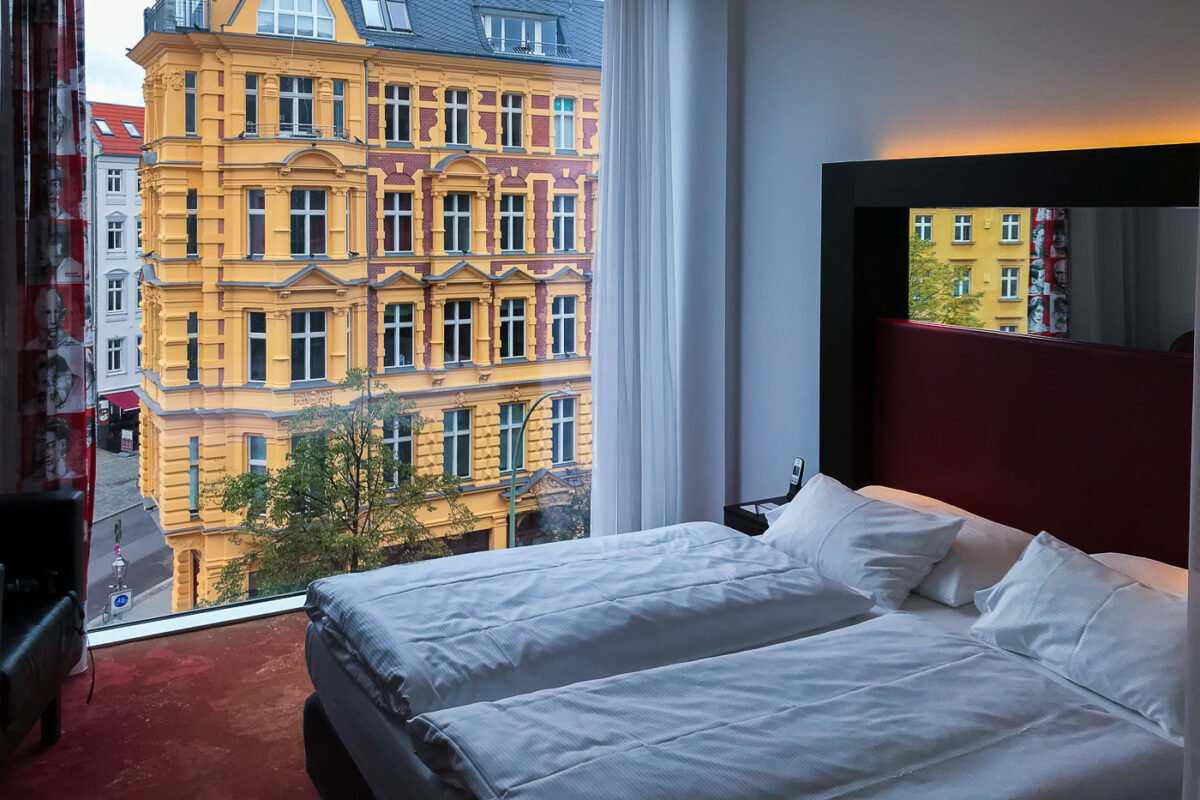
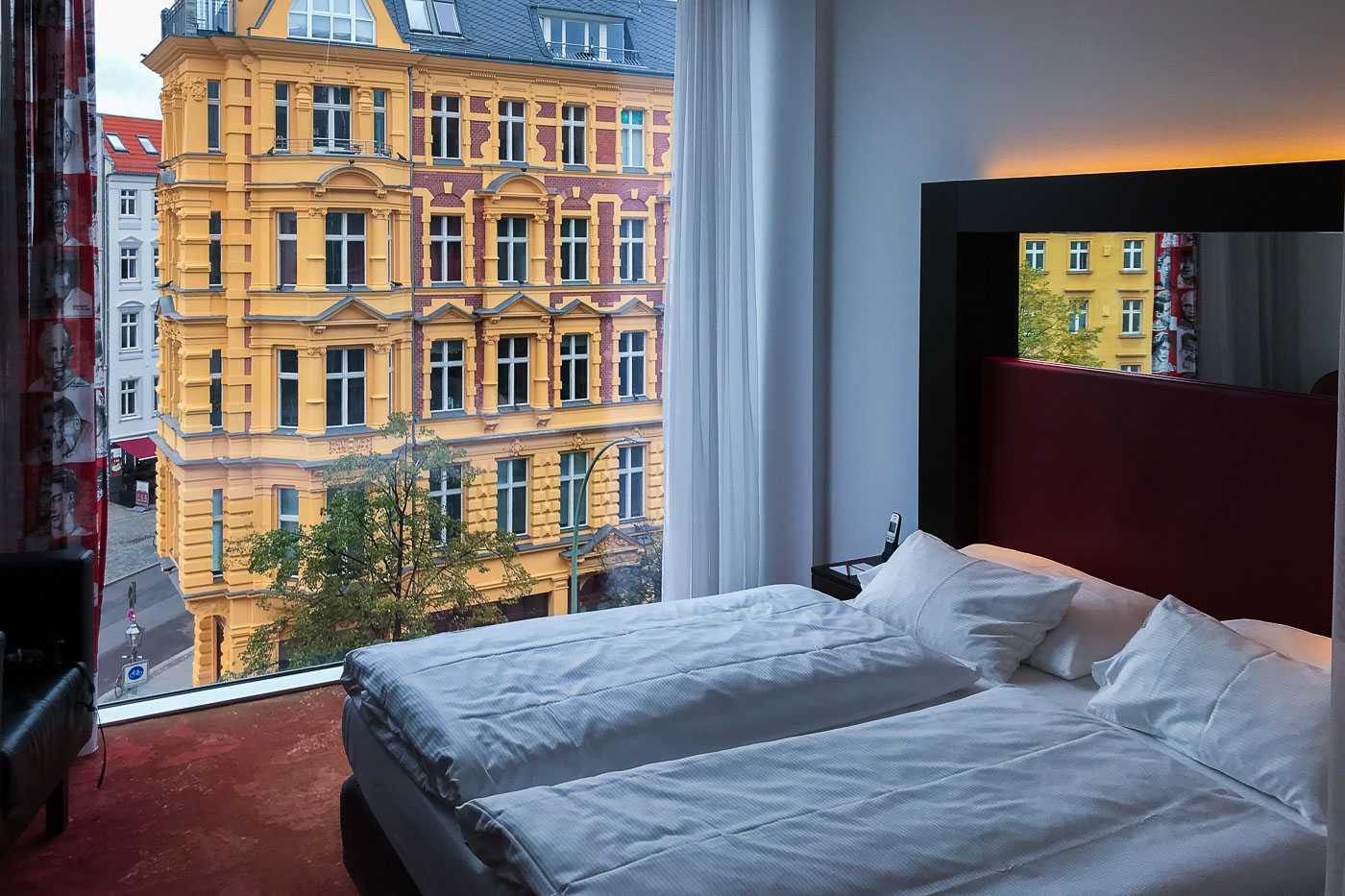
Arcotel Velvet Berlin Hotel Room
A hotel room in Berlin Mitte offers a view of a restored Gründerzeit building, a style of architecture prevalent in Germany during the late 19th century. The building's yellow stucco and red-brick detailing, along with its tall windows and cornices, are characteristic of this period. This juxtaposition highlights the blend of historical preservation and modern development in central Berlin, a district significantly reshaped after reunification. The street below, lined with trees and featuring a bicycle lane, indicates the area's current use as a vibrant urban environment with cafes and cultural attractions.
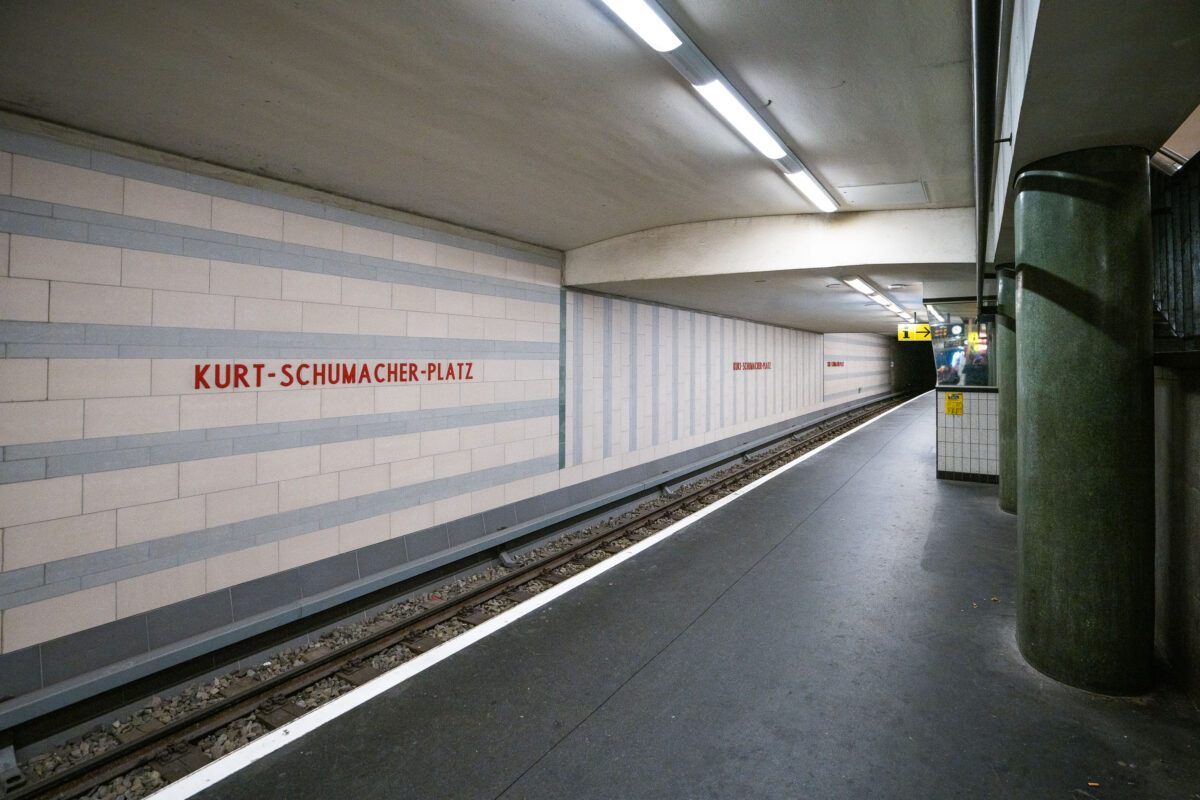
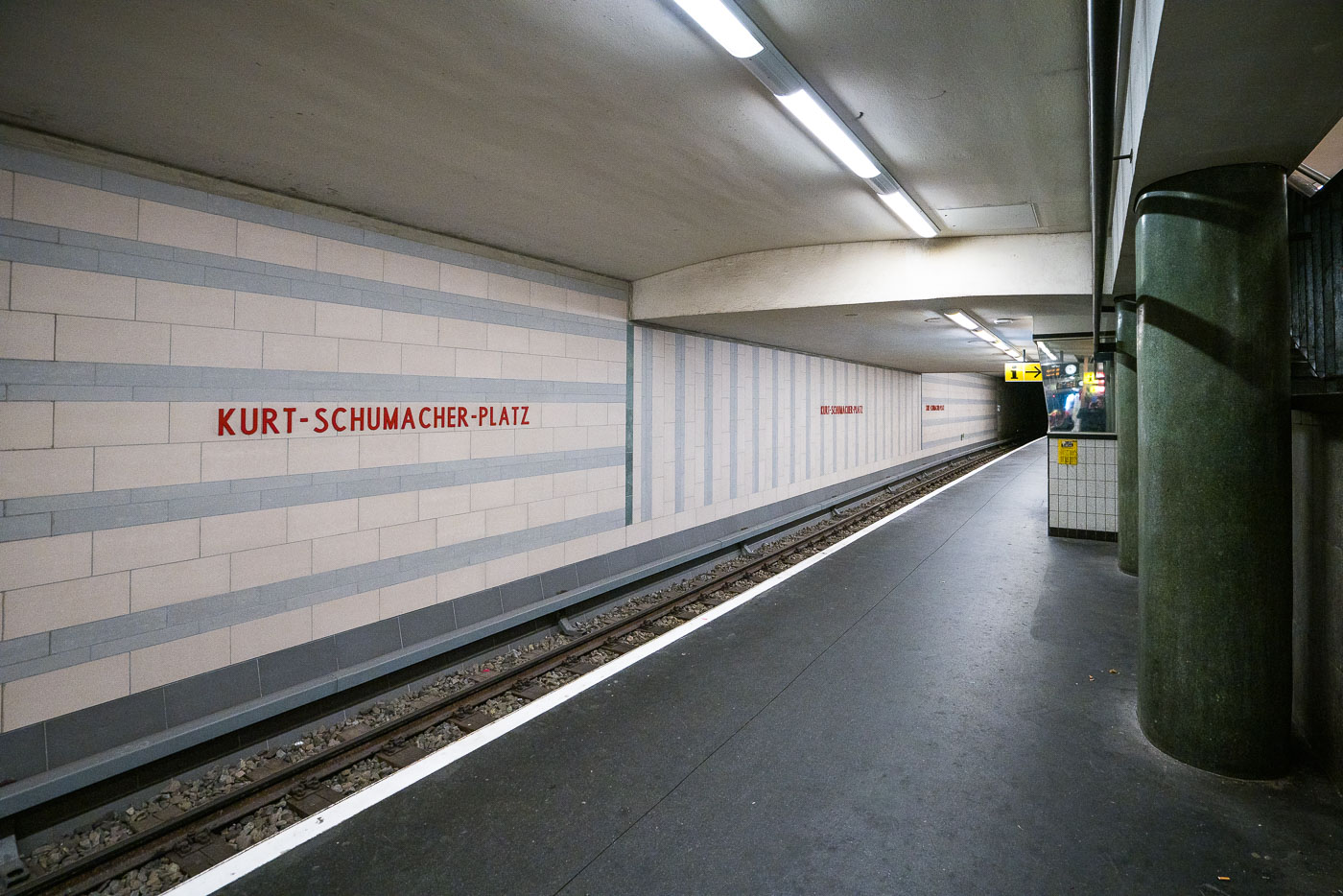
Kurt Schumacher Platz Train Station Berlin
Kurt-Schumacher-Platz station, located in Berlin's Reinickendorf district, is a key stop on the U6 U-Bahn line. Opened in 1956 as part of the first postwar U-Bahn expansion, it was named after the influential Social Democratic Party leader Kurt Schumacher. The station's design, characterized by light-colored tiles with gray stripes and minimalist lettering, reflects mid-1950s West Berlin aesthetics. Today, it continues to serve as a vital transit hub for commuters in northern Berlin, connecting them to the city center and other bus routes.
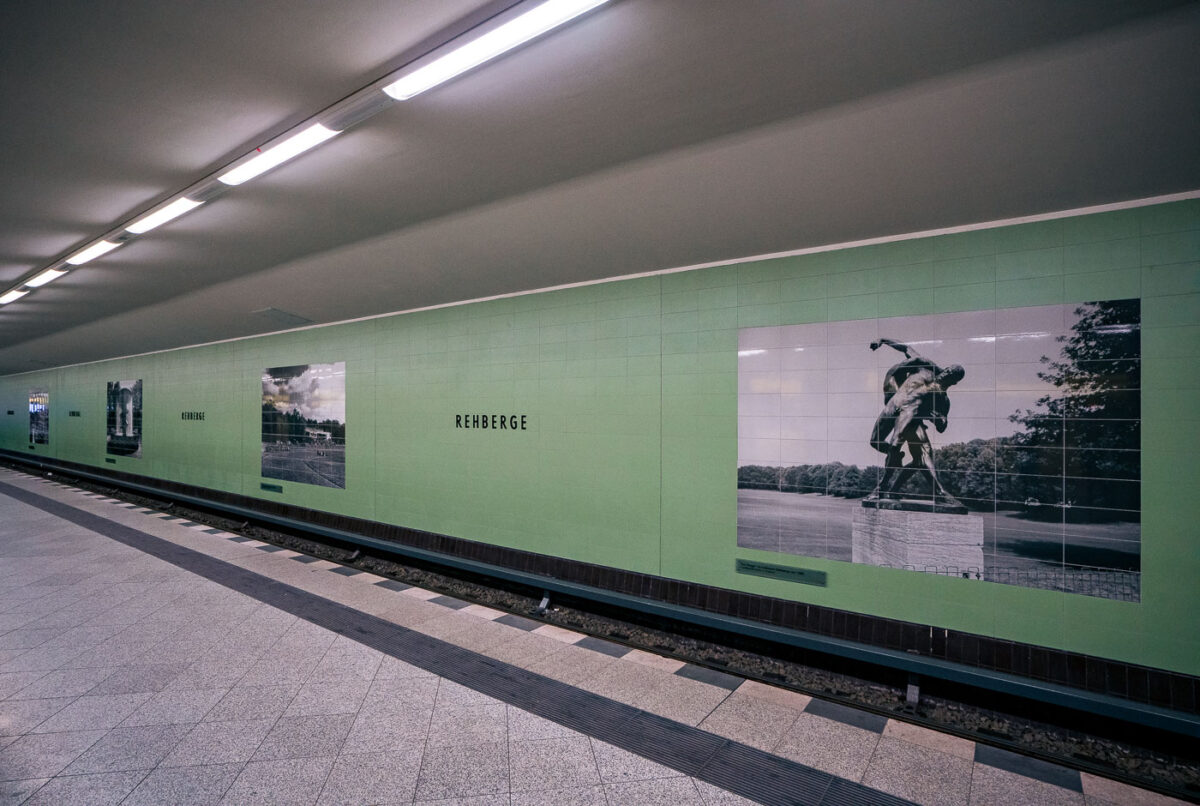
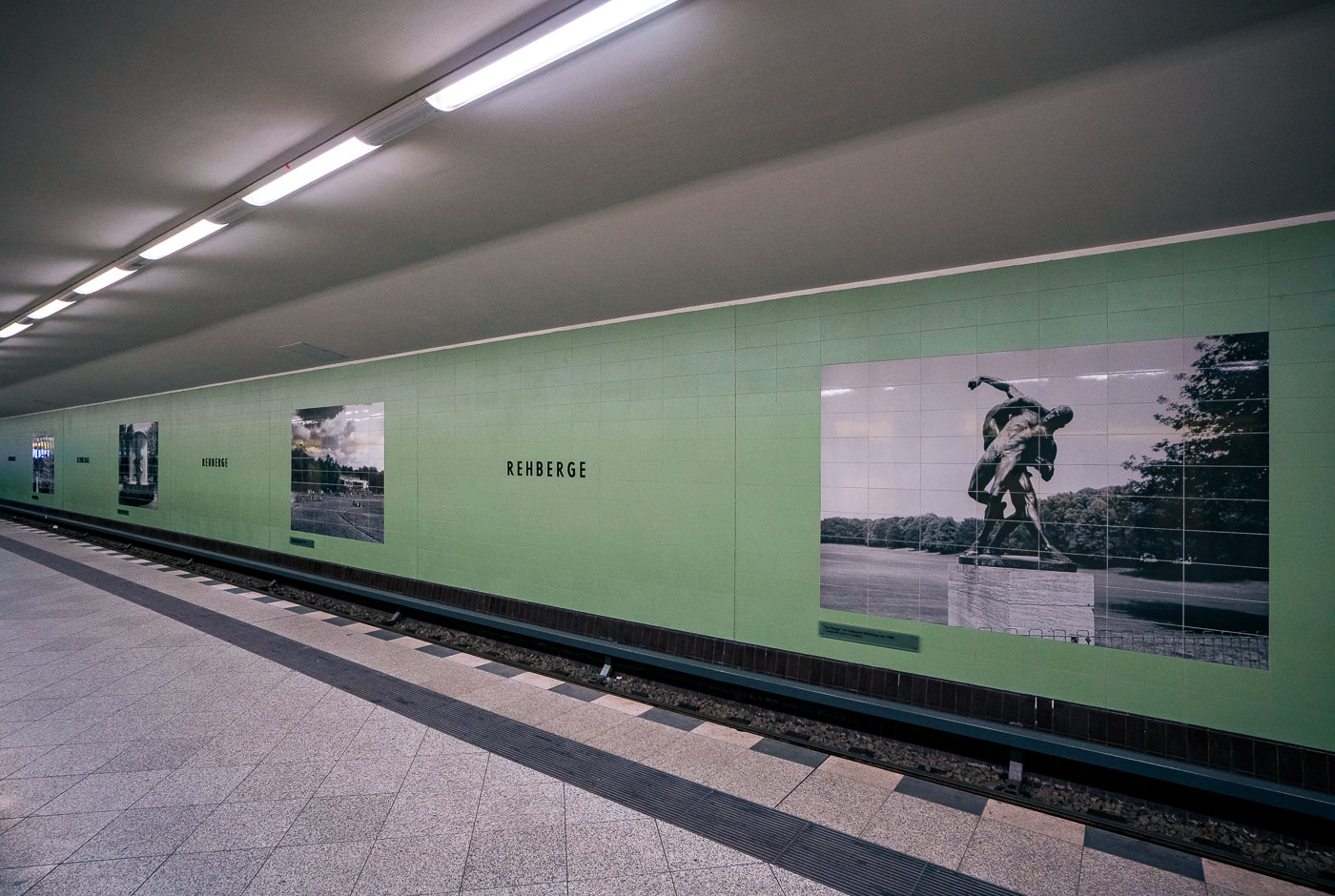
Green train platform Rehberge U-Bahn Station
Rehberge U-Bahn Station, located in Berlin's Wedding district, opened in 1956 as part of the postwar expansion of the U6 line. The station's platform features mint-green tiled walls adorned with large photographic murals depicting local park landscapes and public sculptures, including a piece titled "Der Ringer" in Volkspark Rehberge. These visual elements connect the transit space to its surrounding urban environment and history. Serving as a vital link for commuters, the station continues to function as a key component of Berlin's public transportation network operated by BVG.
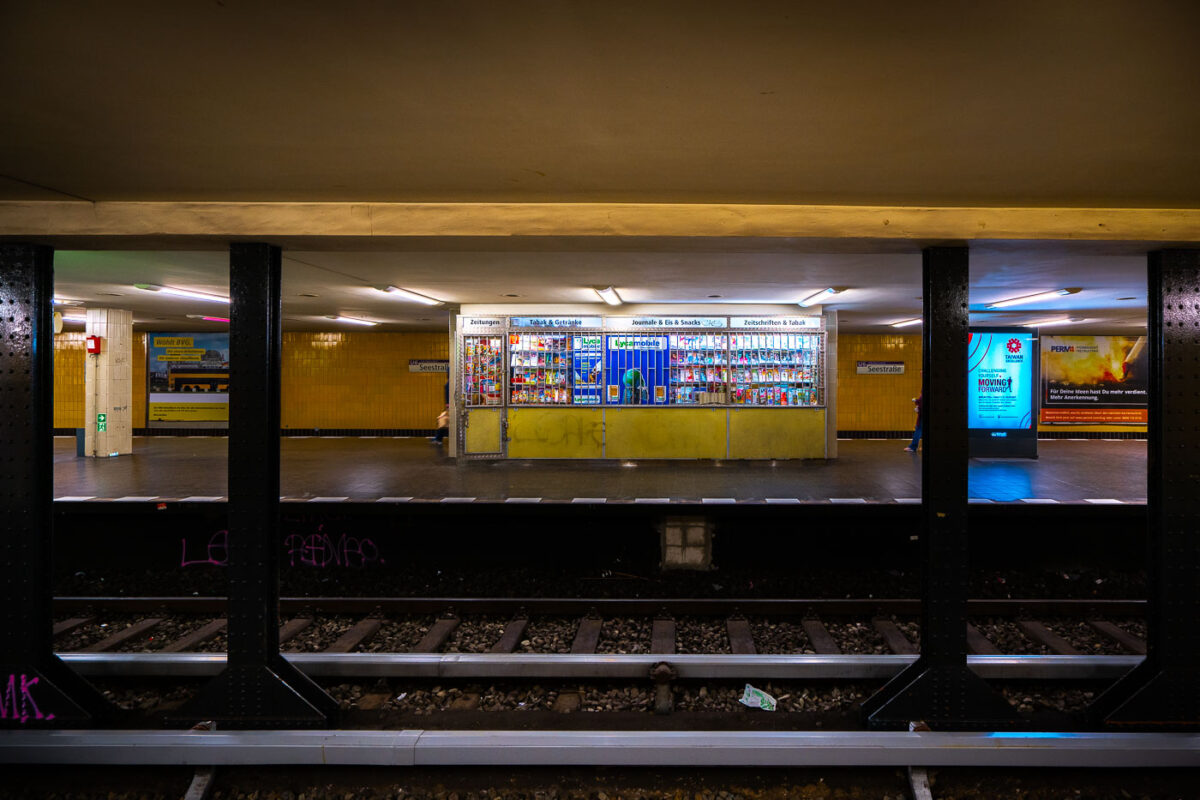
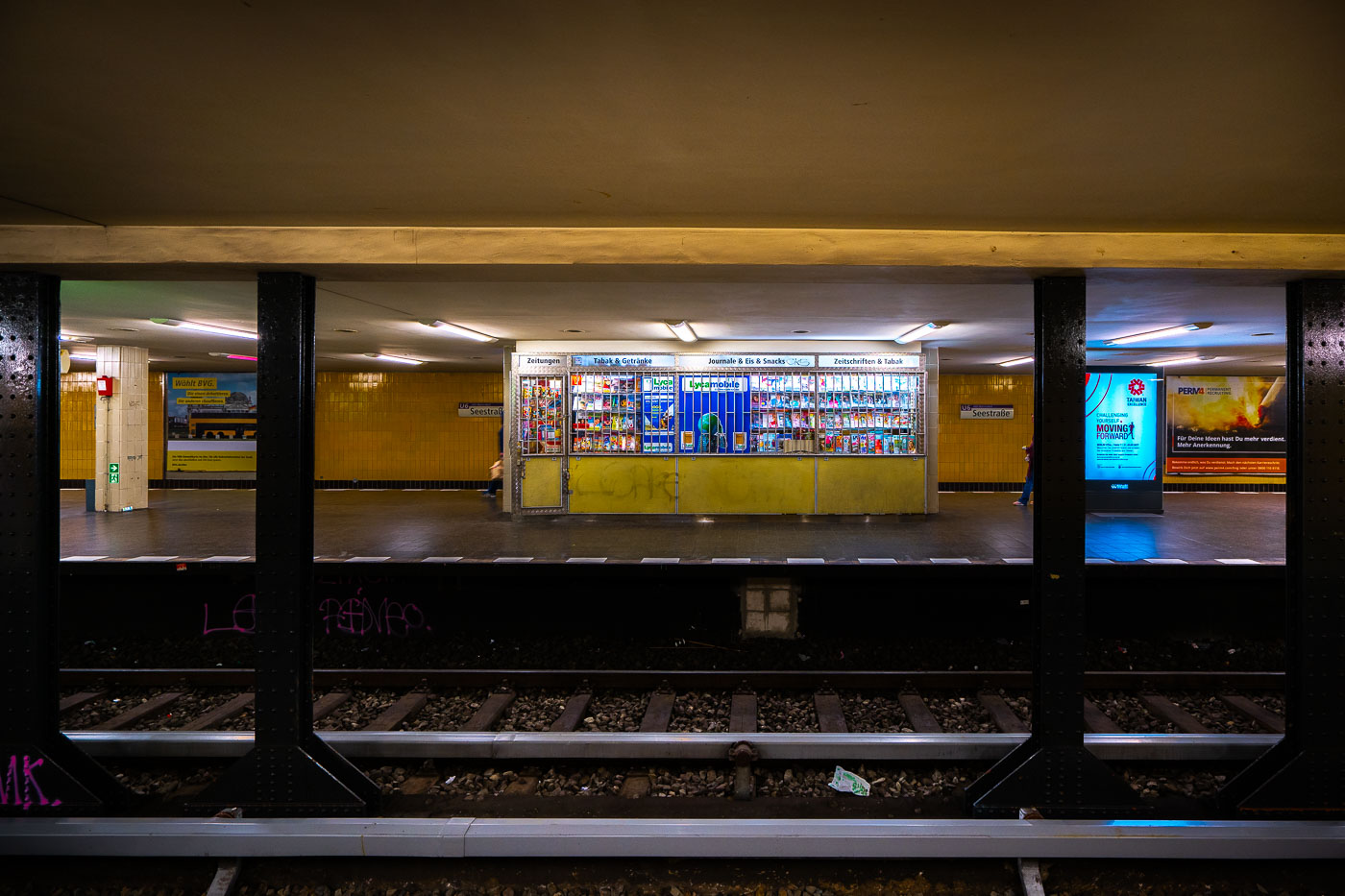
Market at the Seestrabe Station in Berlin
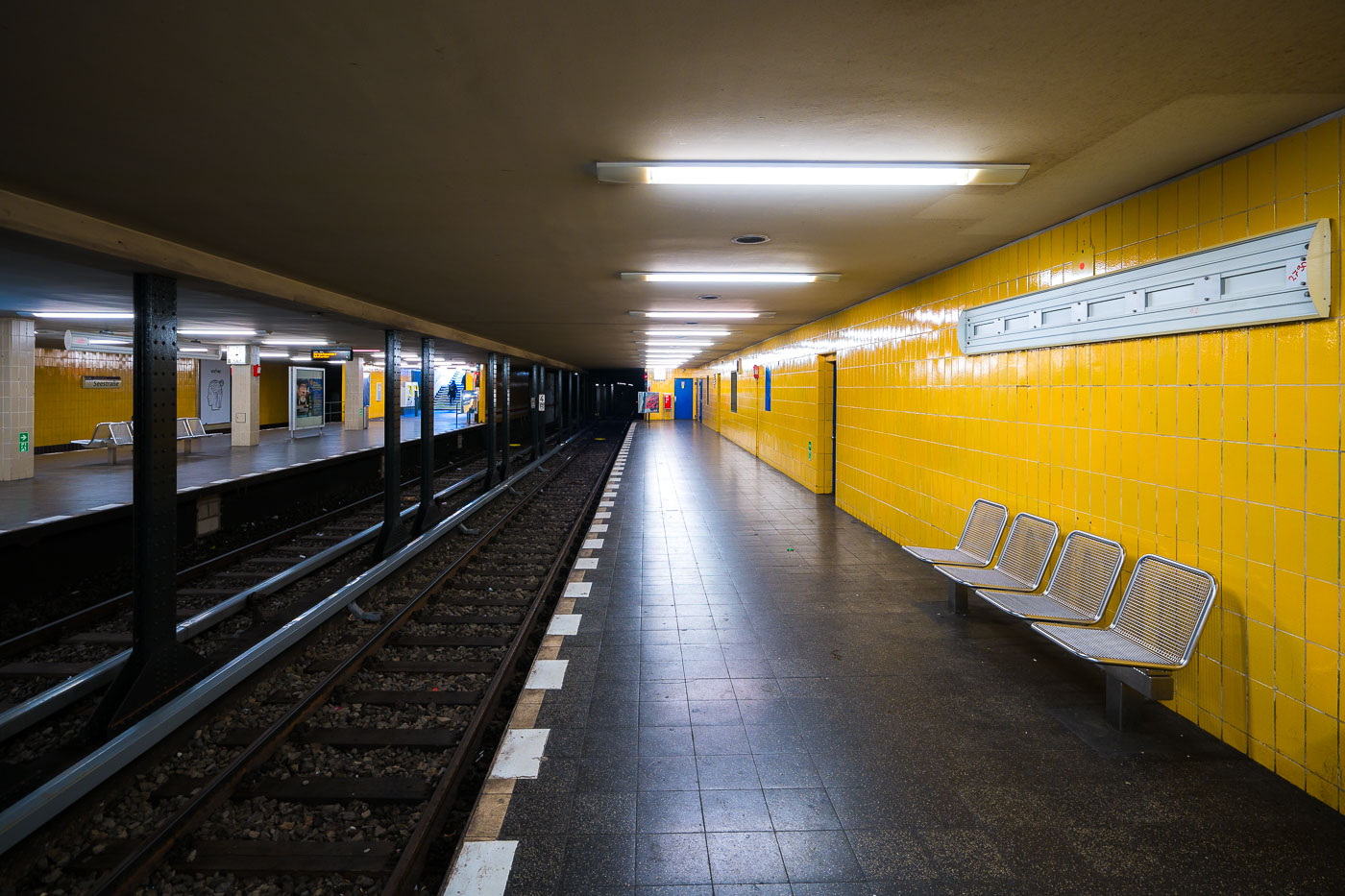
The Seestraße U-Bahn station in Berlin's Wedding district, opened in 1923, served as a key northern terminus for the U6 line until the late 1950s. The station's platform features a central kiosk offering magazines, drinks, and snacks, a common amenity in Berlin's public transit network. Yellow tiled walls and riveted columns are characteristic of the station's original architecture, reflecting its long history as a vital node for commuters.
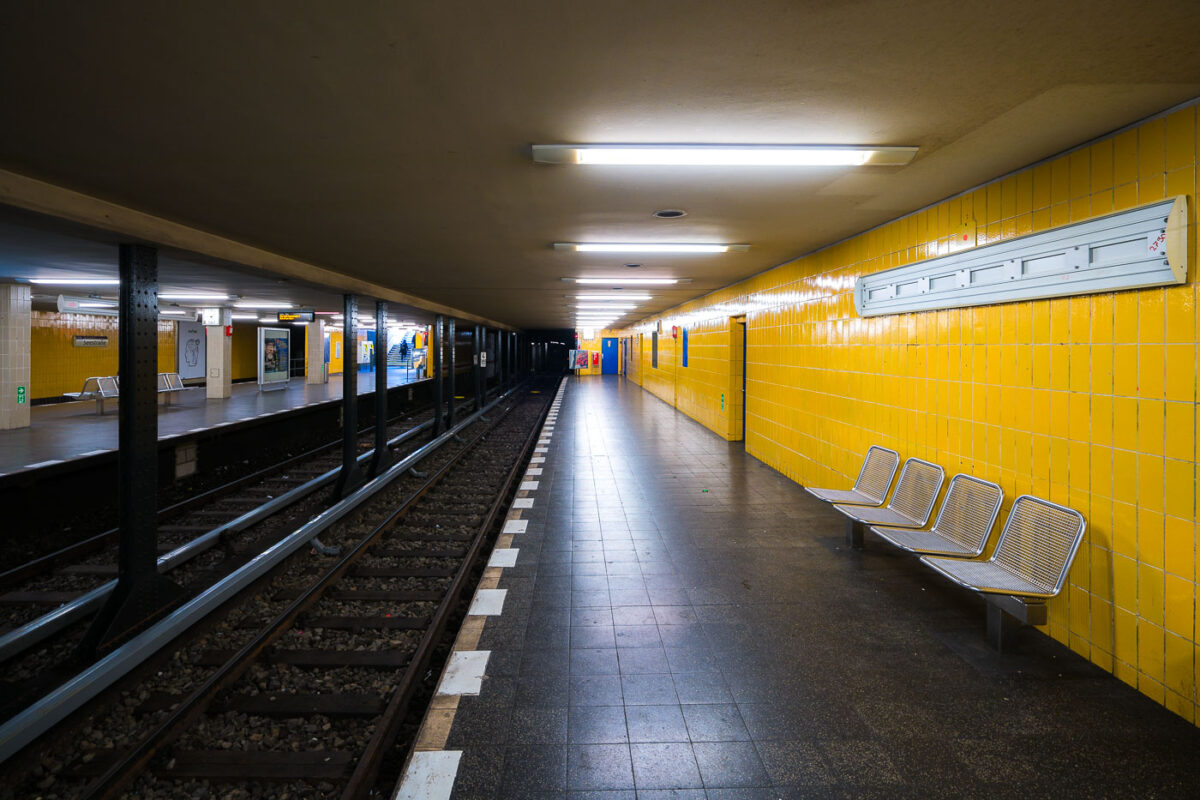
Seestrabe U-Bahn Station in Berlin
The Seestraße U-Bahn station in Berlin's Wedding district features platforms lined with bright yellow tiles and minimalist metal benches. Opened in 1923 as part of the expansion of Berlin's underground network, it originally served Line C and now serves Line U6. The station's design, with its twin side platforms flanking two tracks, reflects the interwar period's architectural trends for public transit infrastructure. Seestraße remains a vital transit hub, connecting local residents to other public transport services.
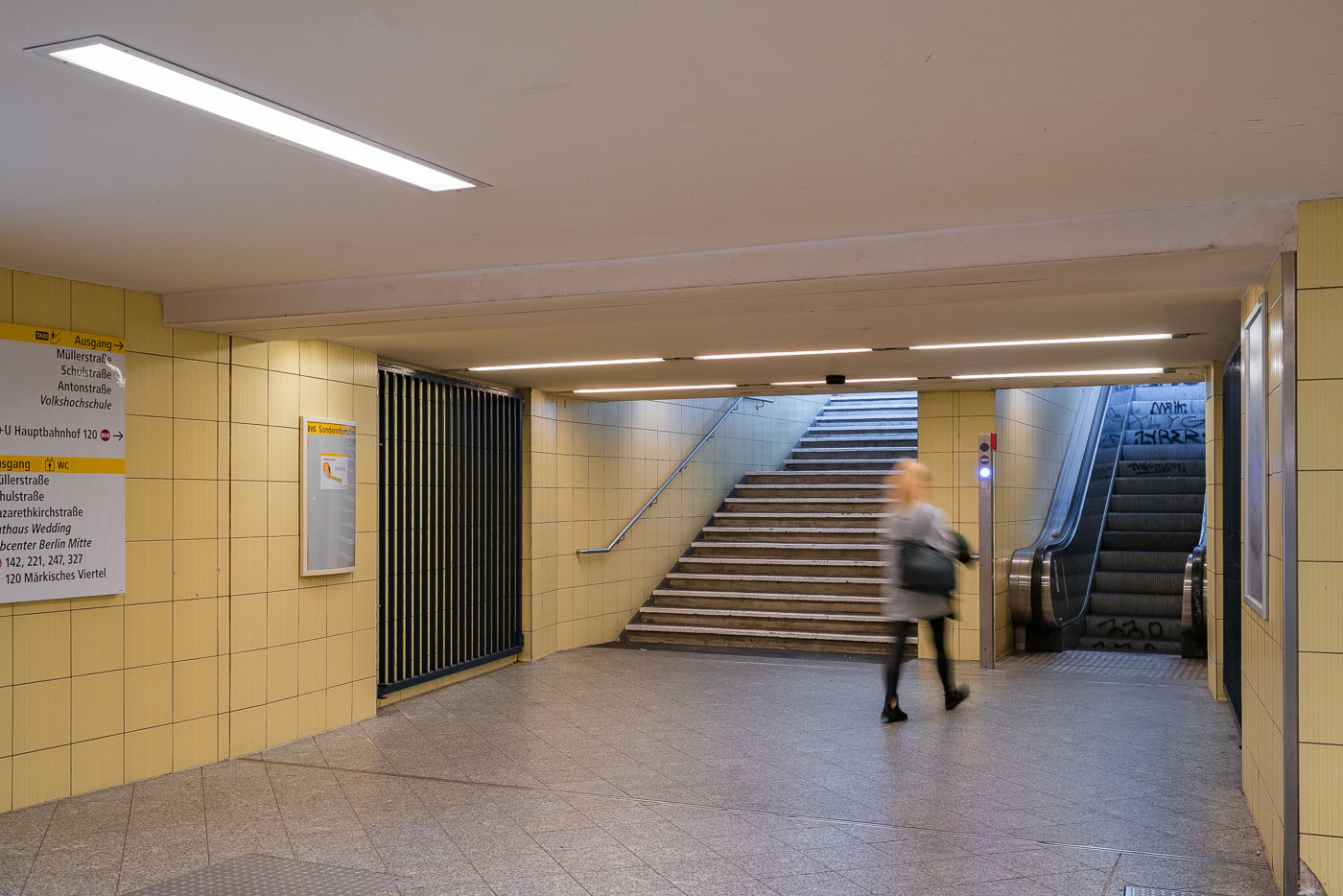
Woman walking in the Leopoldplatz train station
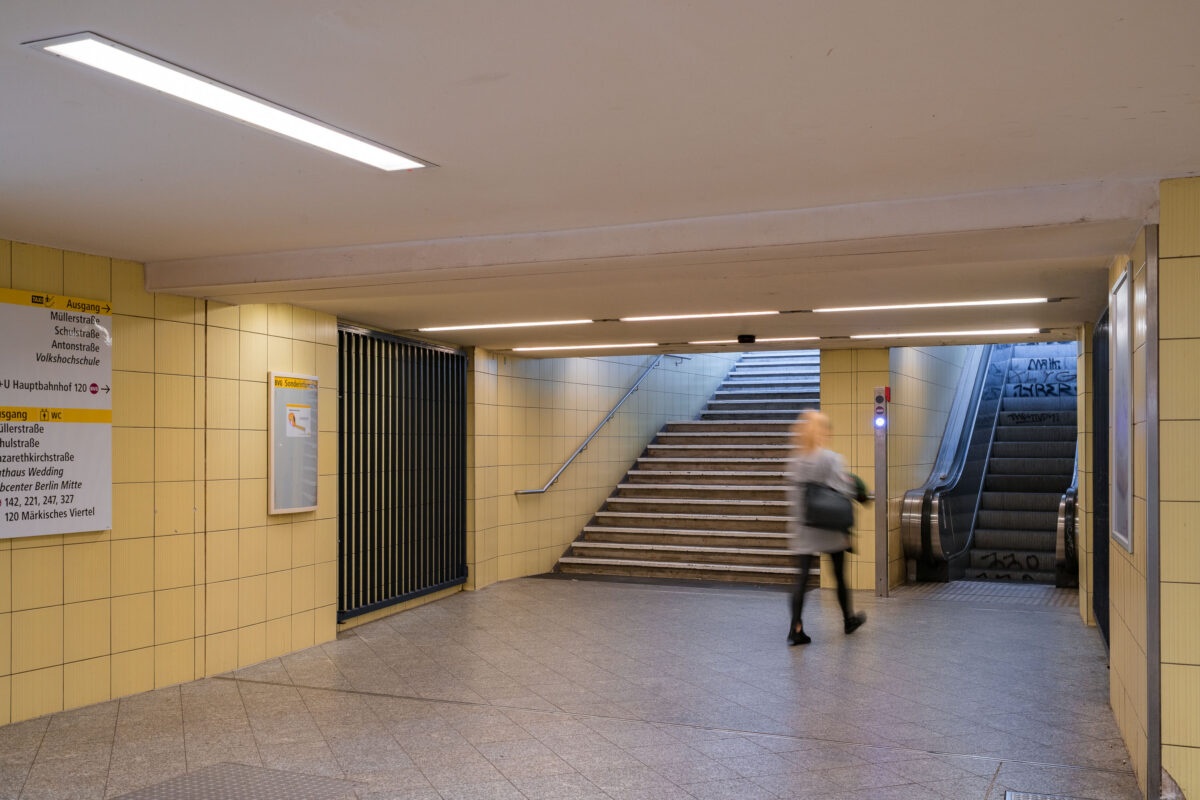
The passageway at Wedding U-Bahn station in Berlin's Mitte district features light yellow ceramic tiles, characteristic of BVG's standardized postwar design from the 1960s and 1970s. This underground corridor connects the station's platforms to street-level exits on Müllerstraße and serves as a vital transit hub, including connections to bus routes. The station, which serves both the U6 line and the S-Bahn Ring, is a key interchange point in the city's northern transit system. Signage directs passengers, while the presence of graffiti and motion blur from commuters highlights its ongoing daily use.
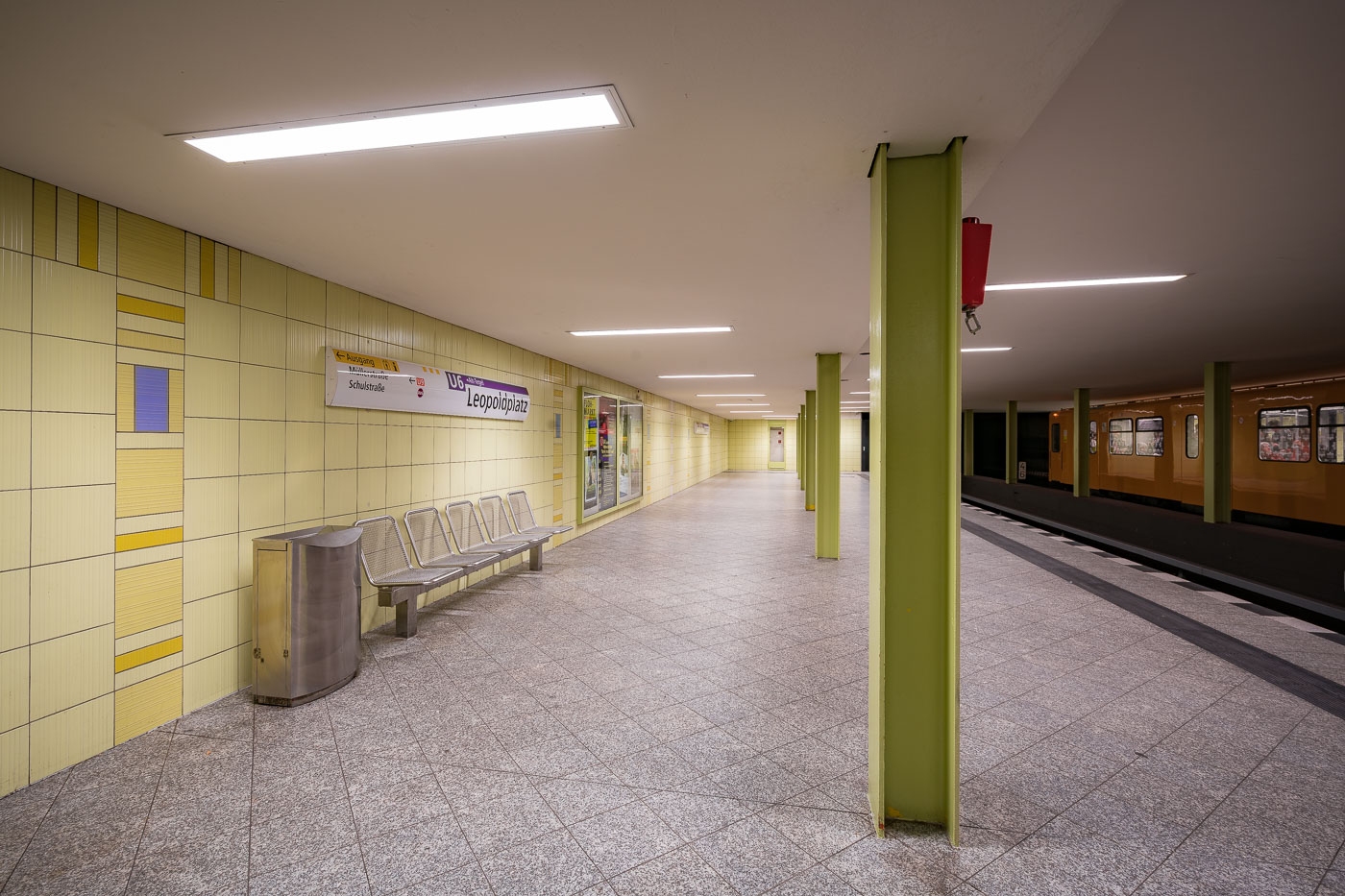
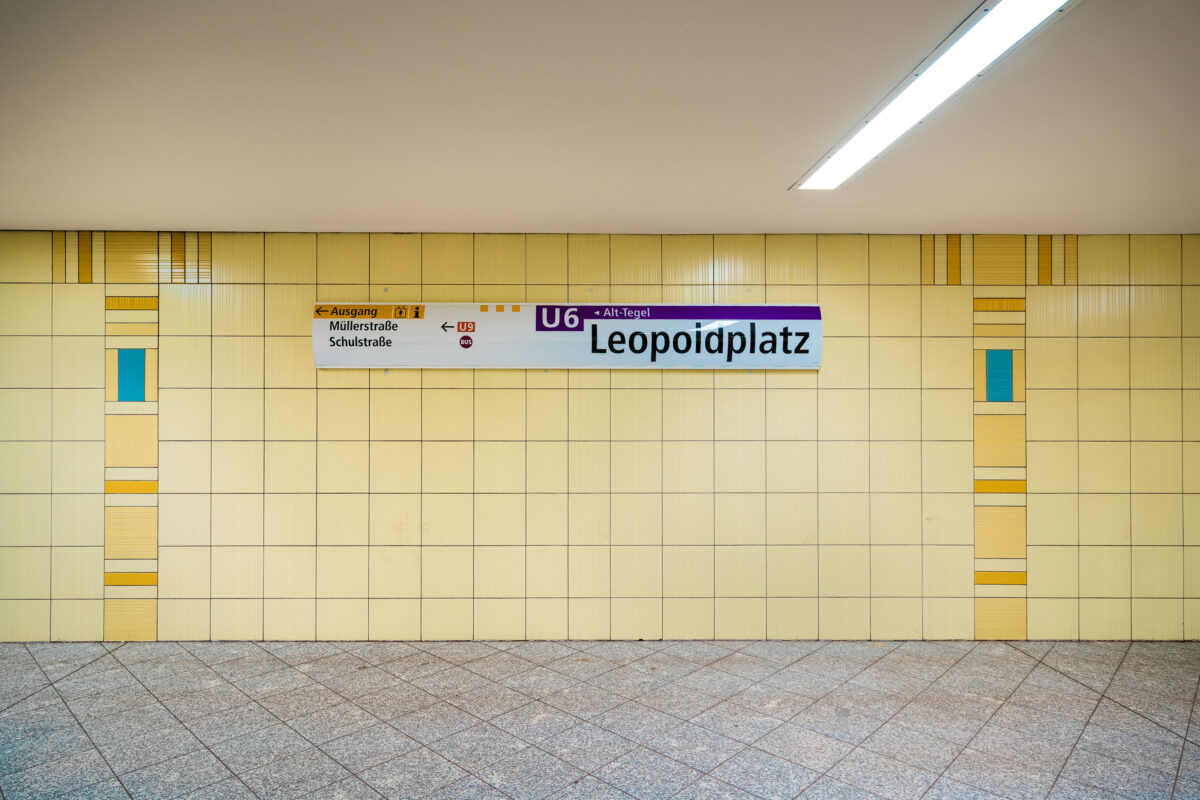
Leopoldplatz U Bahn Train Station
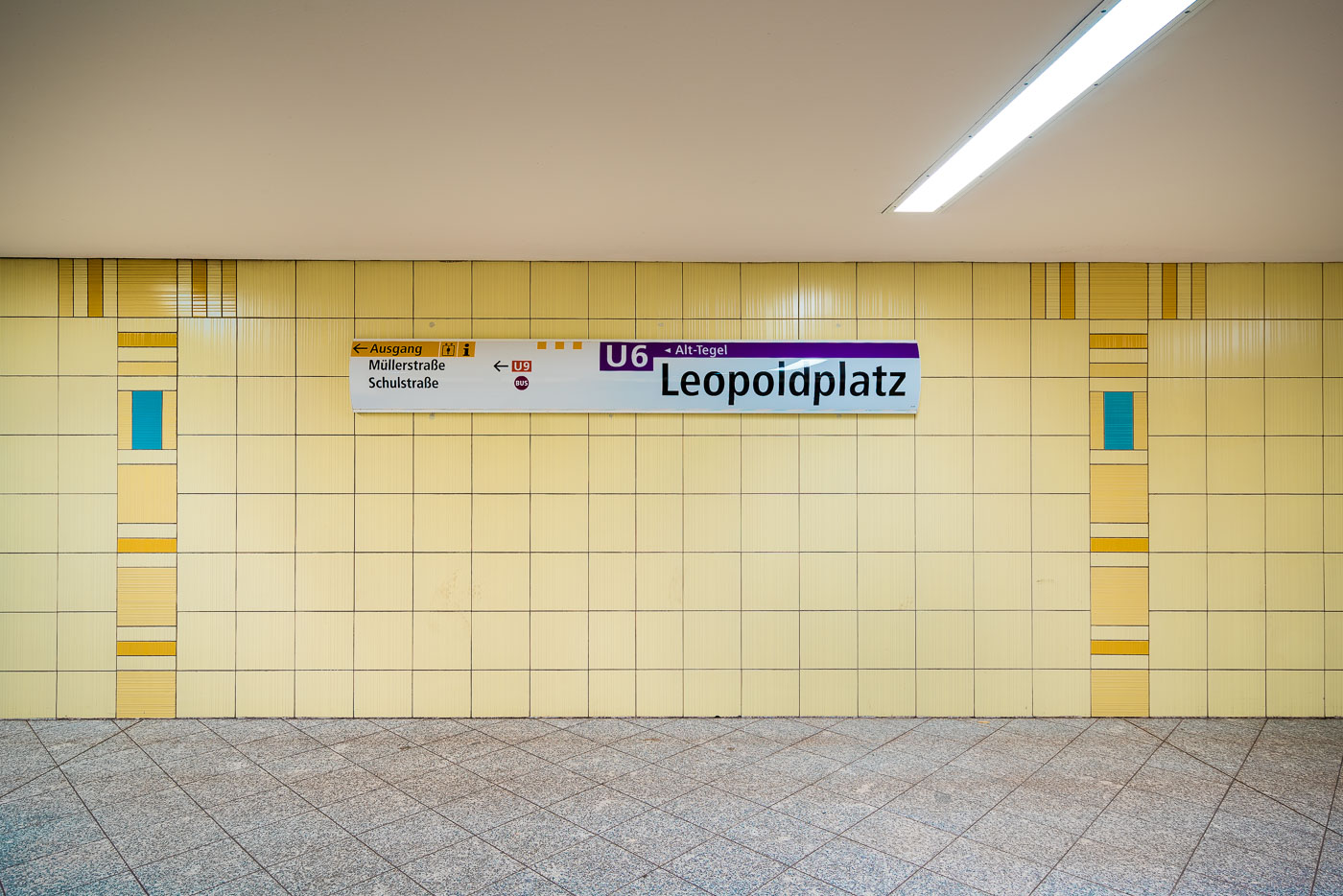
Leopoldplatz U-Bahn Station in Berlin features a distinctive 1960s design characterized by pale yellow ceramic tiles with minimalist blue and ochre accents. This station serves as a crucial interchange for the U6 and U9 lines, located beneath the Wedding district. The tilework reflects the Berlin transport authority's (BVG) mid-century design philosophy, prioritizing clarity, durability, and a functional color-coding system for passengers. The clean lines and restrained signage are typical of German transit architecture from that era, built for efficiency in high-traffic urban environments.
Leopoldplatz U-Bahn Station September 2017
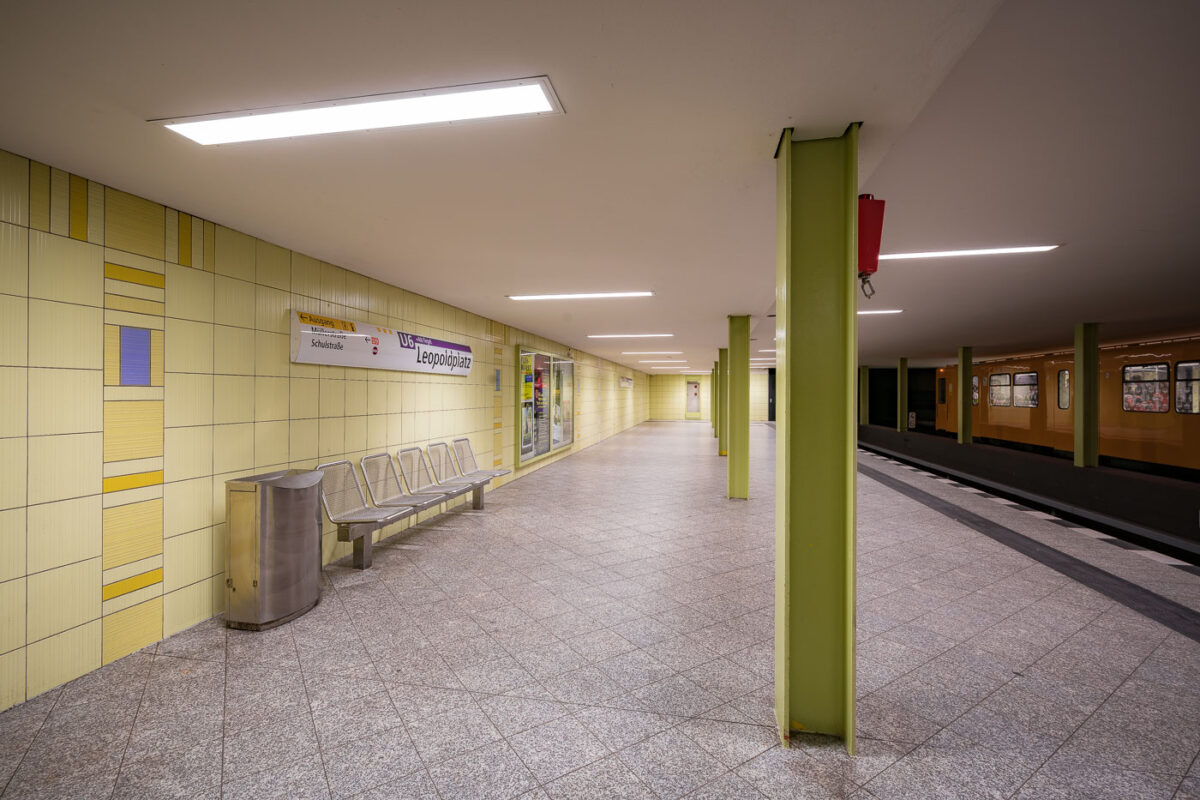
This view of Leopoldplatz’s lower-level U9 platform highlights the minimalist postwar design typical of 1960s Berlin infrastructure. The use of pale yellow tiles, stainless steel seating, and green-painted support columns was chosen to create a bright, efficient environment for high-traffic commuter service. The station connects to major commercial and residential zones and is part of the BVG modernization program maintaining accessibility and structural updates across Berlin’s U-Bahn network.
Berlin Wedding train station 2017
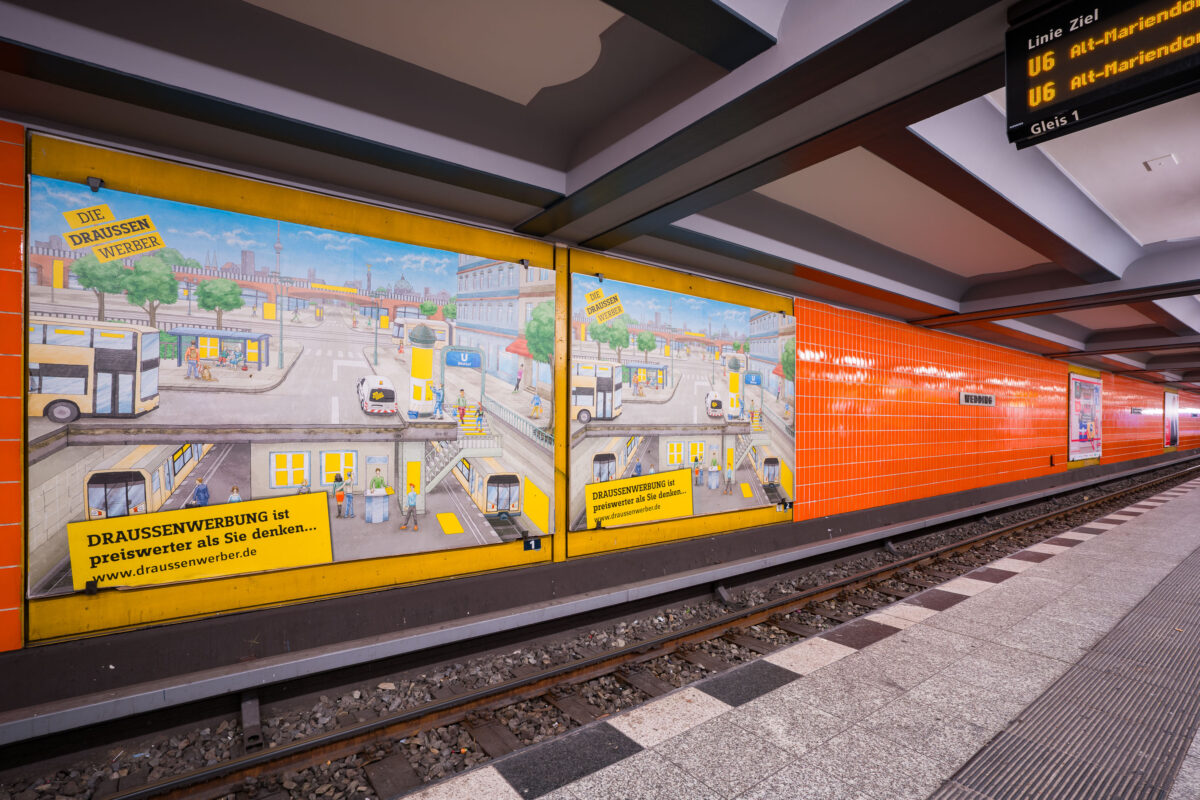
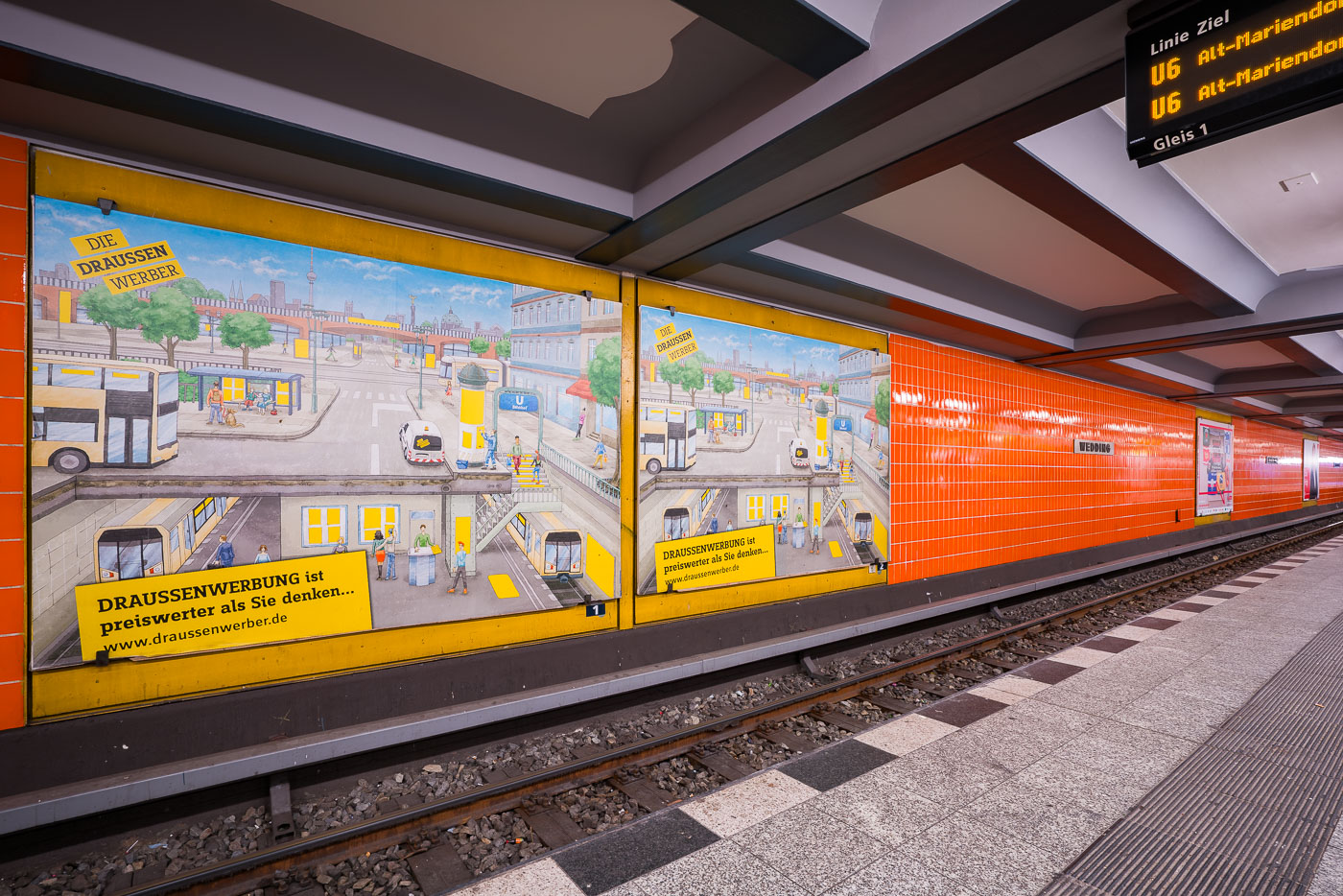
The Wedding U-Bahn station in Berlin showcases its characteristic orange tiled platform, a design element introduced during mid-20th-century renovations to brighten the underground environment. The station, originally opened in 1902, serves as a vital interchange for multiple U-Bahn lines. The platform walls are adorned with large-scale artwork promoting outdoor advertising, illustrating scenes of urban life and transit, a collaboration with Wall GmbH, a prominent Berlin advertising company. This artwork highlights the station's ongoing role as a busy transit hub within the city's public transportation network.
Berlin Wedding train station platform
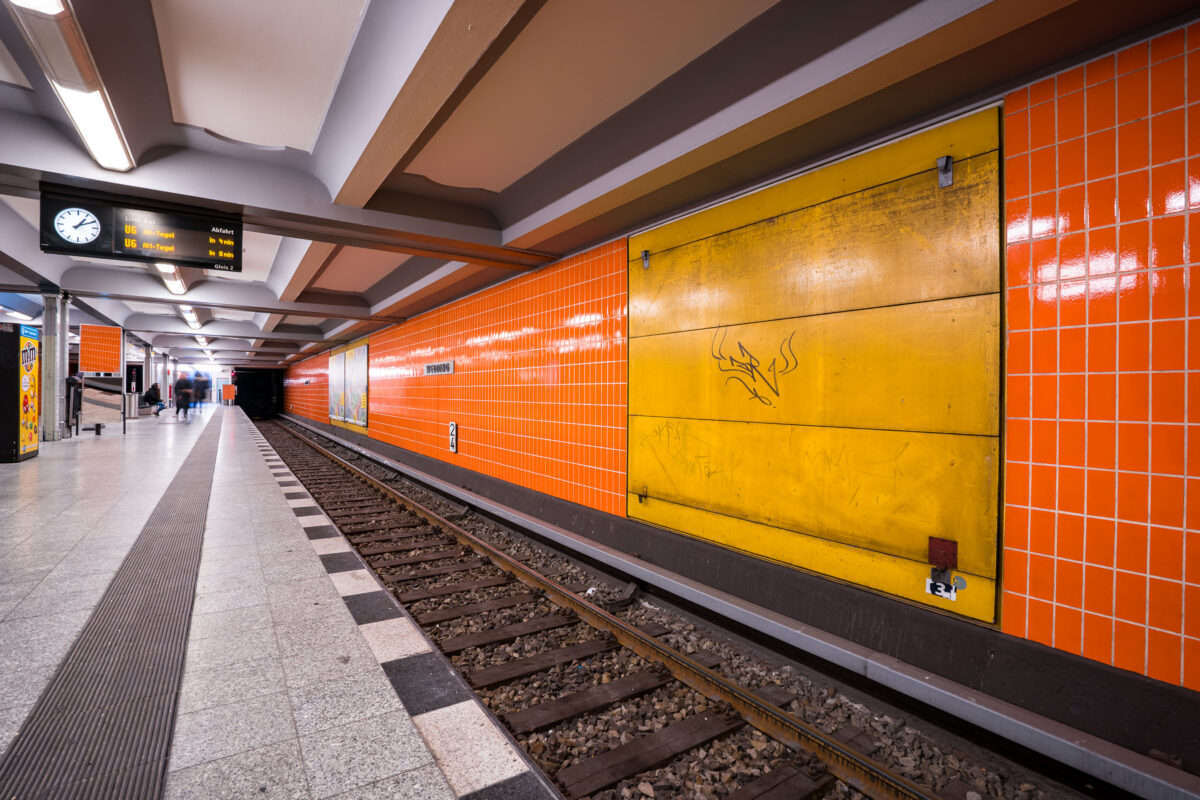
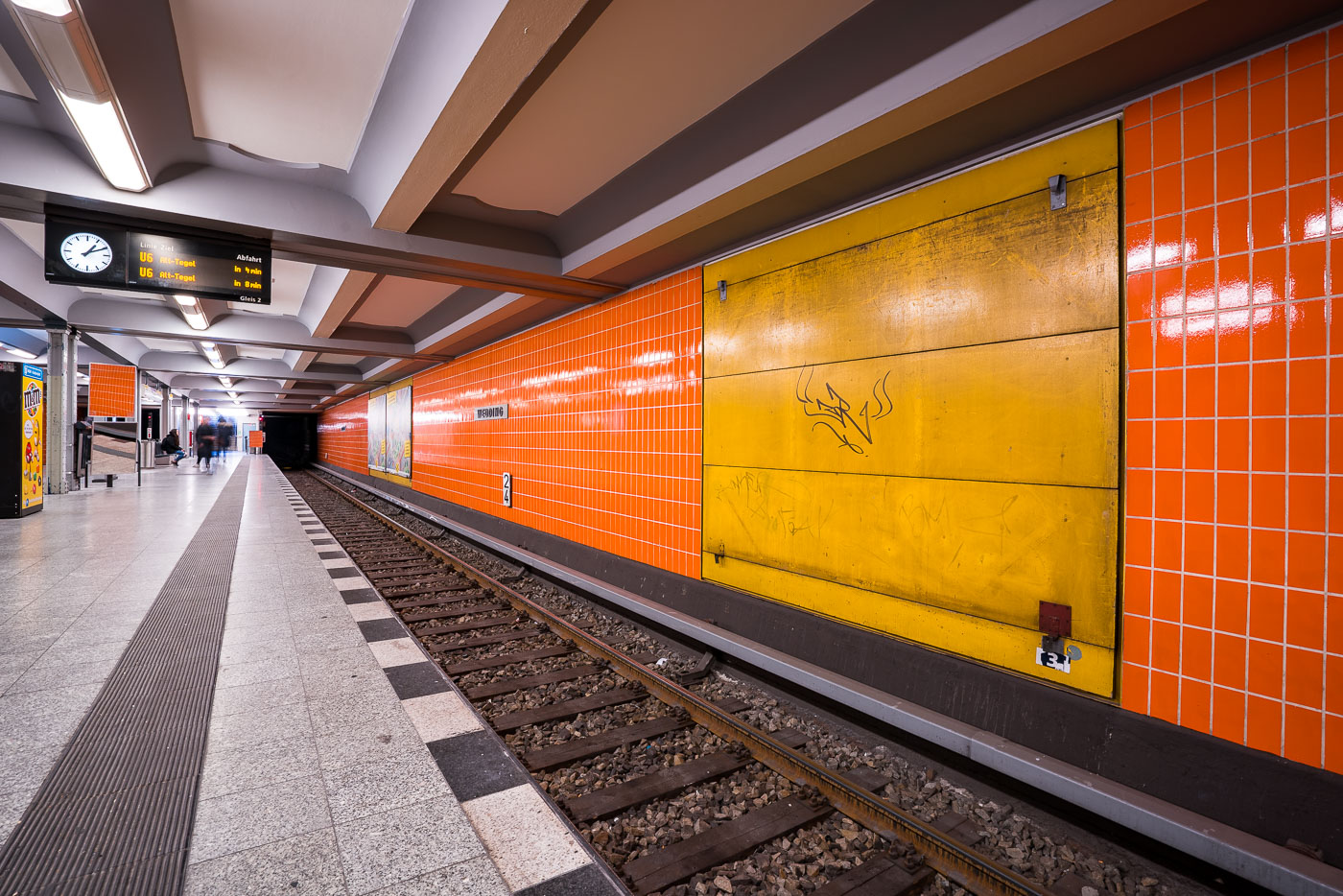
The Wedding U-Bahn station in Berlin features bright orange tiled walls and yellow service panels, a design characteristic of renovations reflecting the BVG's color-coding system. Opened in 1923, the station is served by the U6 line, which historically connected northern districts to central Berlin and the former border zone at Kochstraße during the Cold War. Today, Wedding Station continues to serve as a vital transit hub for diverse working-class and immigrant neighborhoods, illustrating Berlin's complex transportation history.
Subway train at the Wedding station in Berlin
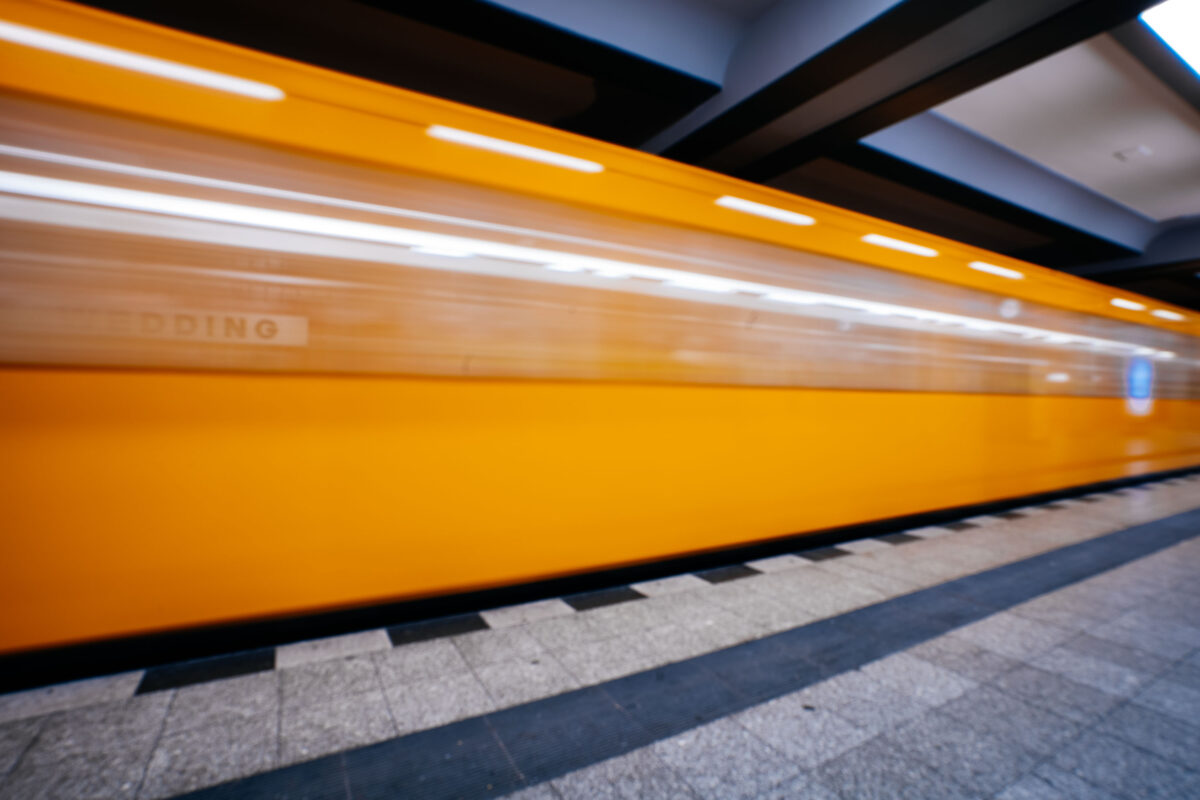
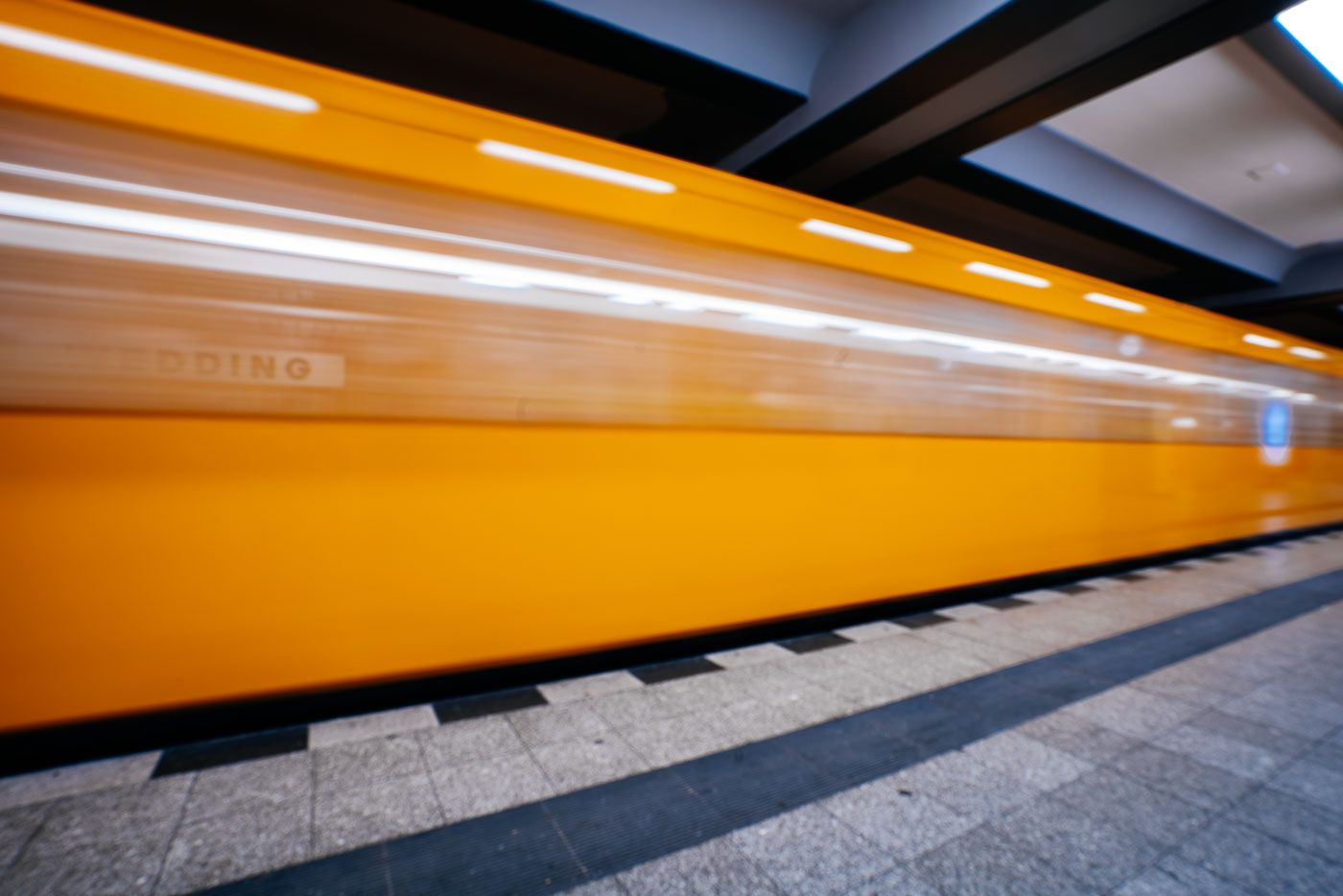
The U6 line of Berlin's U-Bahn subway system passes through Wedding station, a stop that has served the city since its opening in 1923. The station, located in one of Berlin's historic working-class districts, has undergone modernization while retaining its early 20th-century architectural layout. The bright orange trains, a common sight on the BVG network, represent the continuous movement of public transportation through the city's northern districts.
Berlin Wedding Train Station in Germany
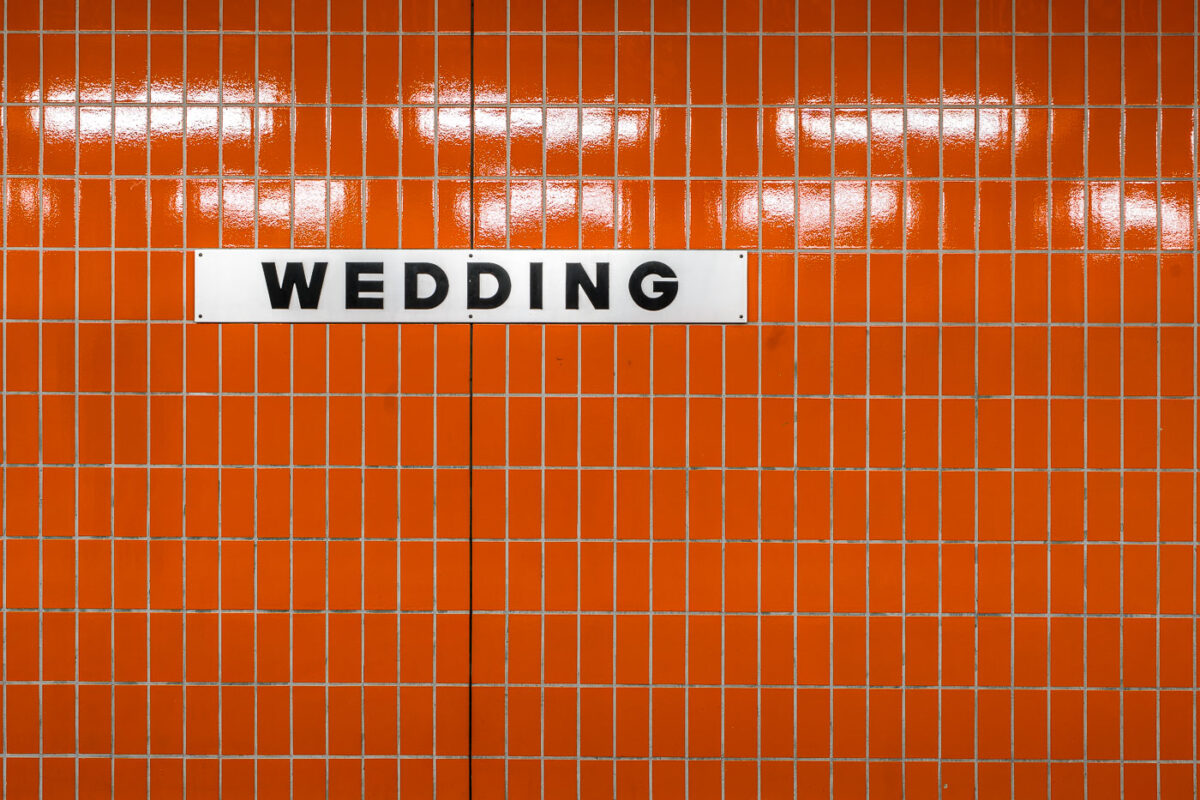
A station sign for "Wedding" is mounted on a wall of bright orange rectangular tiles within the Wedding U-Bahn station in Berlin, Germany. This station serves as a crucial interchange for the U6 line and the Berlin Ringbahn S-Bahn, connecting commuters across the city. The utilitarian design, characterized by modular tiles and clear signage, is typical of Berlin's post-war public transit architecture, reflecting a focus on functionality and durability. Wedding station, operated by BVG and S-Bahn Berlin GmbH, remains a vital hub for daily transit in the Mitte district.
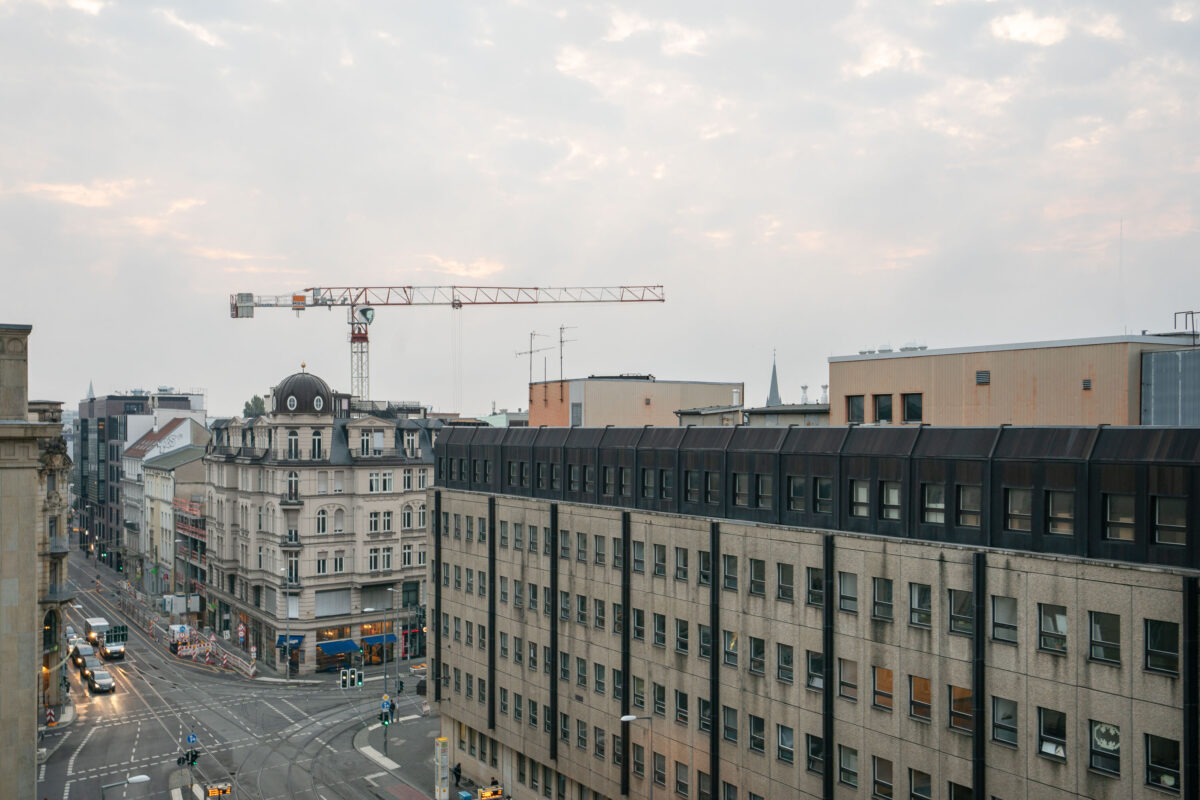
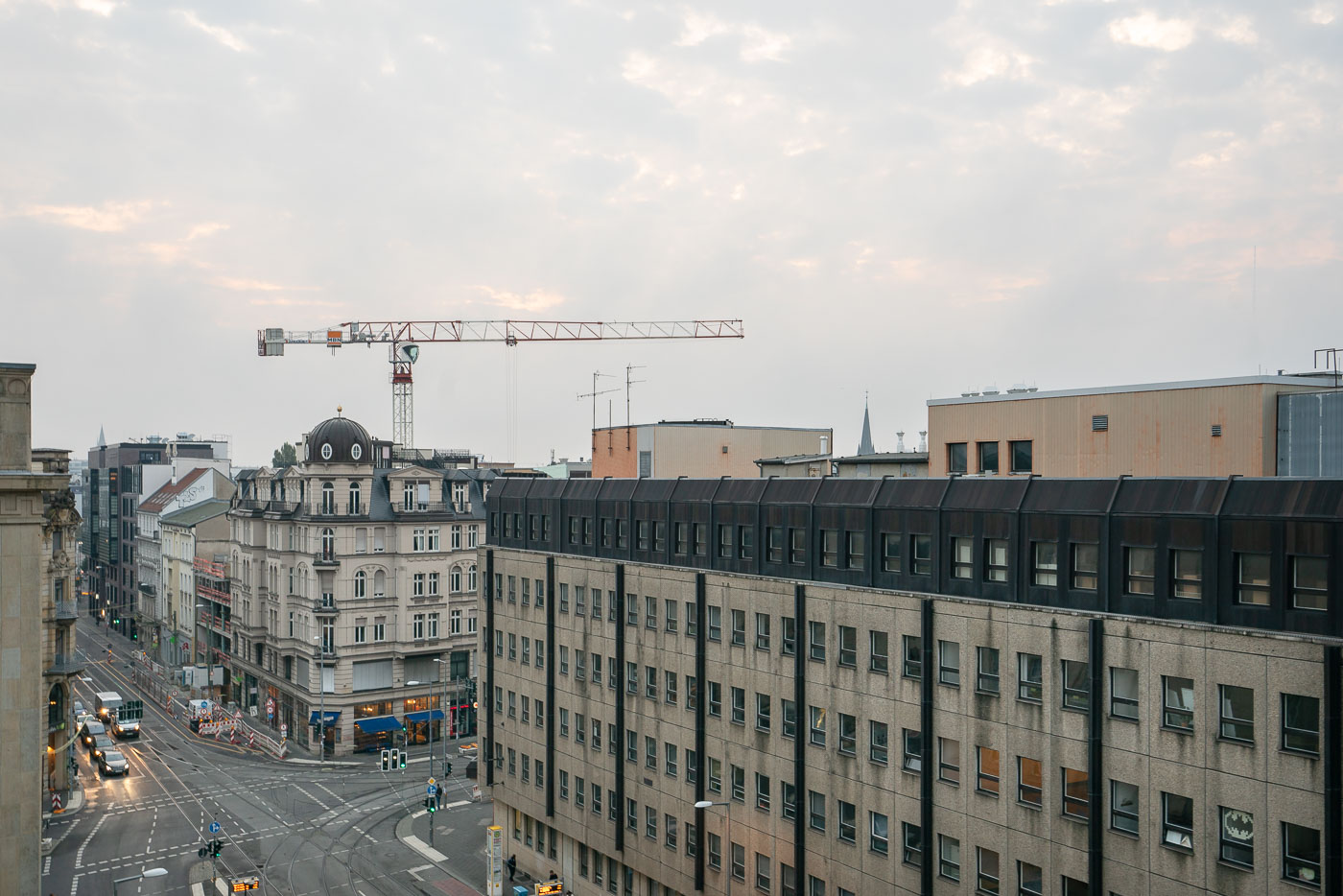
Invalidenstrabe Berlin Germany
An elevated perspective shows the intersection of Friedrichstraße and Dorotheenstraße in Berlin, near the Spittelmarkt. The area, which experienced significant destruction during World War II, has been rebuilt with a mix of architectural styles, including postwar concrete structures and a restored 19th-century building with a domed roof. A construction crane signifies ongoing development in a city marked by its complex history and continuous transformation.
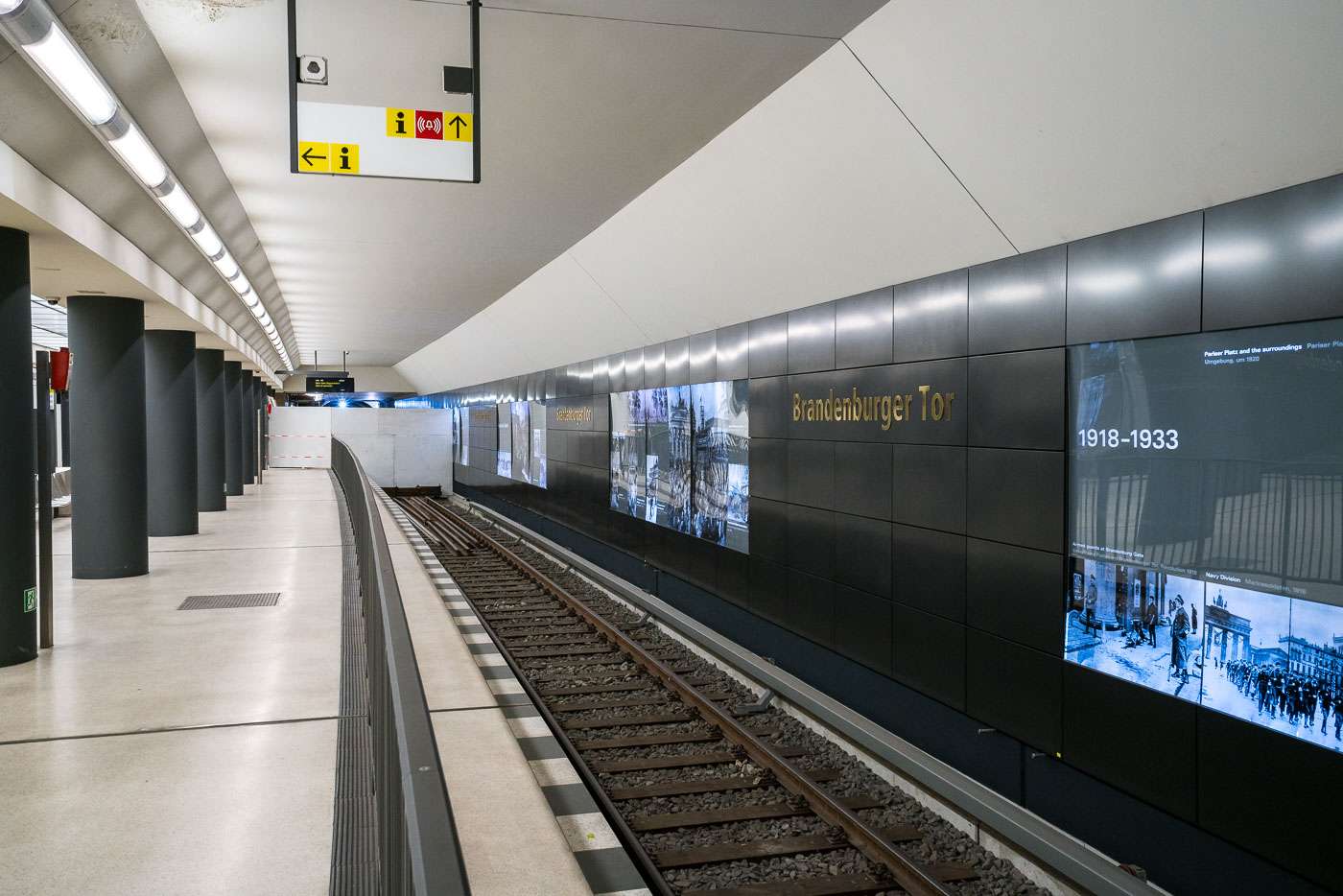
Benches At Brandenburger Tor Train Station
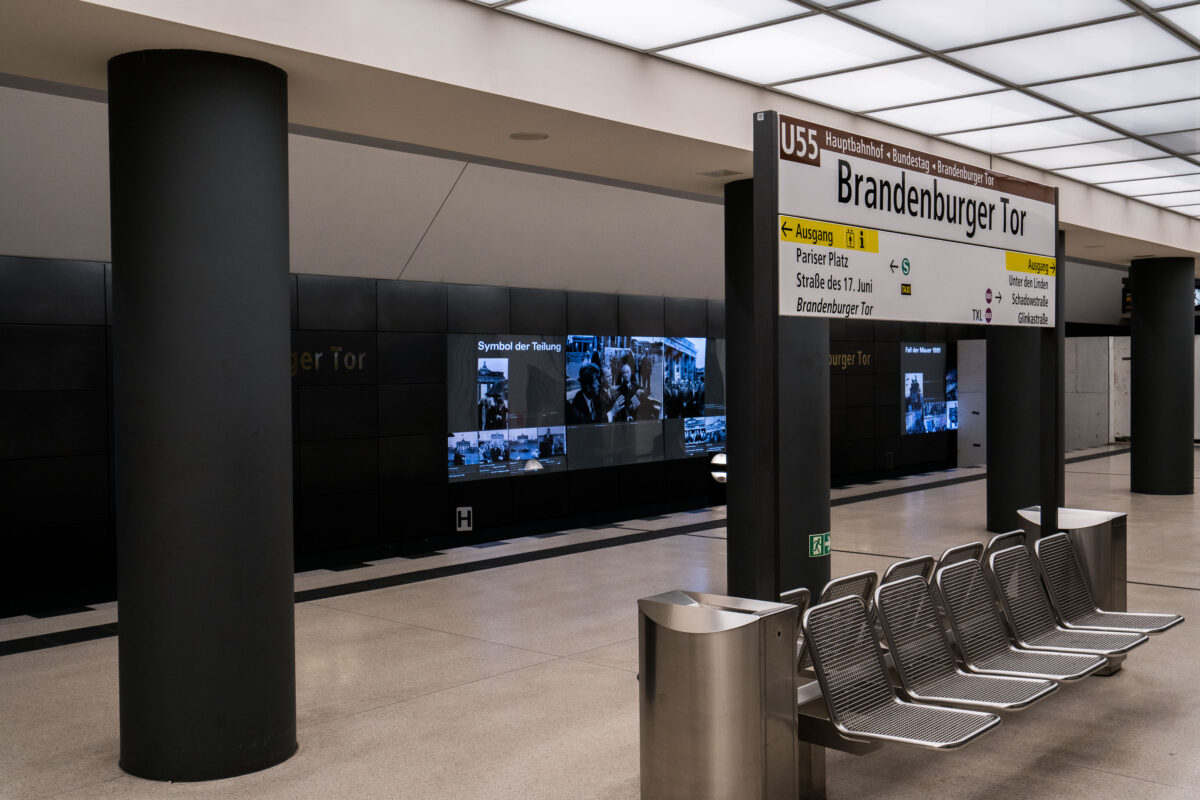
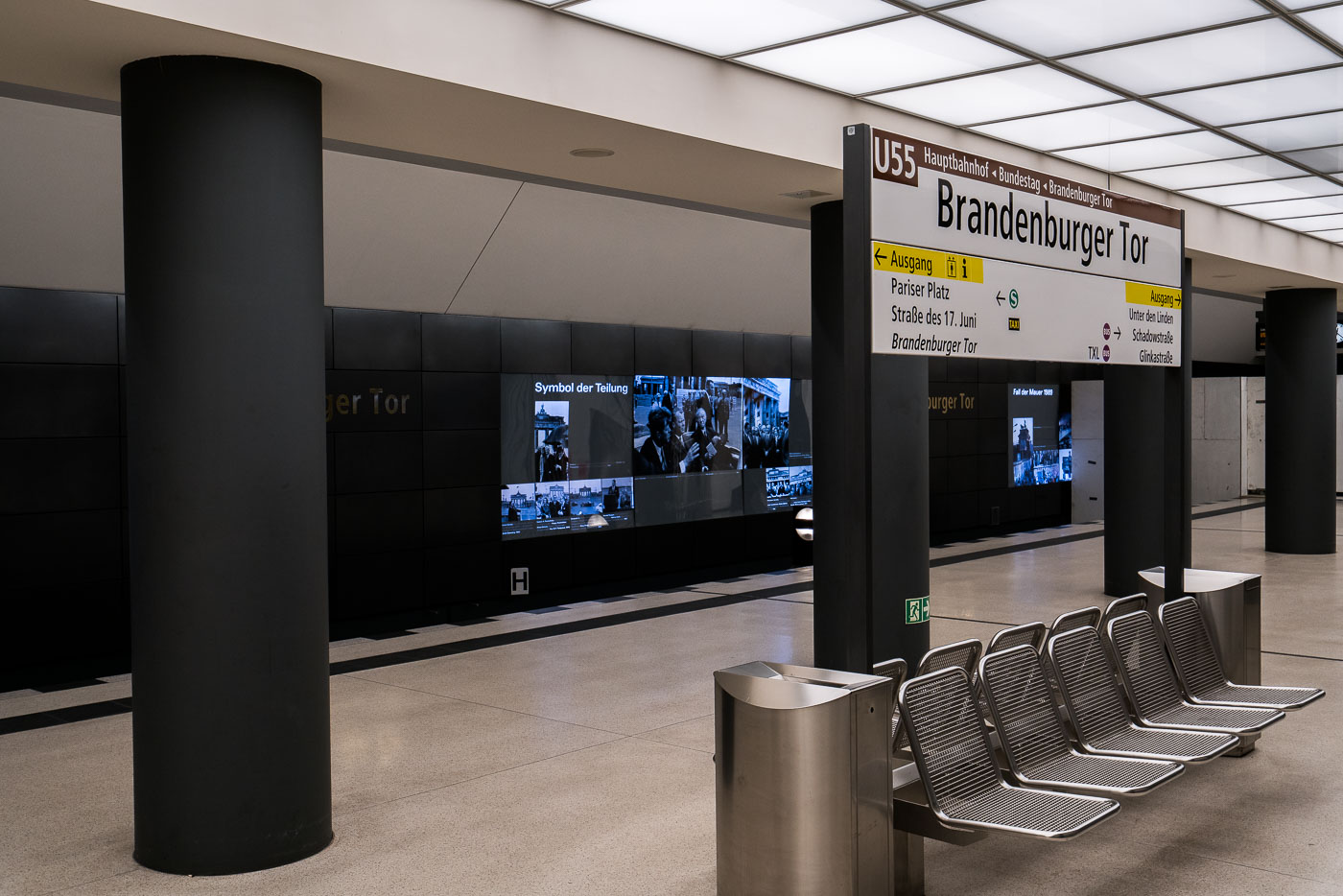
Brandenburger Tor station, part of Berlin's U5 subway line, serves as a transit hub and exhibition space beneath Pariser Platz. Opened in 2009 as part of the U55 shuttle and later integrated into the full U5 line in 2020, the station's platform features digital displays showcasing historical imagery under the theme "Symbol der Teilung" (Symbol of Division). These exhibits commemorate the station's proximity to the former Berlin Wall and its significance in the city's postwar history. The station's modern, minimalist design contrasts with the historical context presented by the displays.
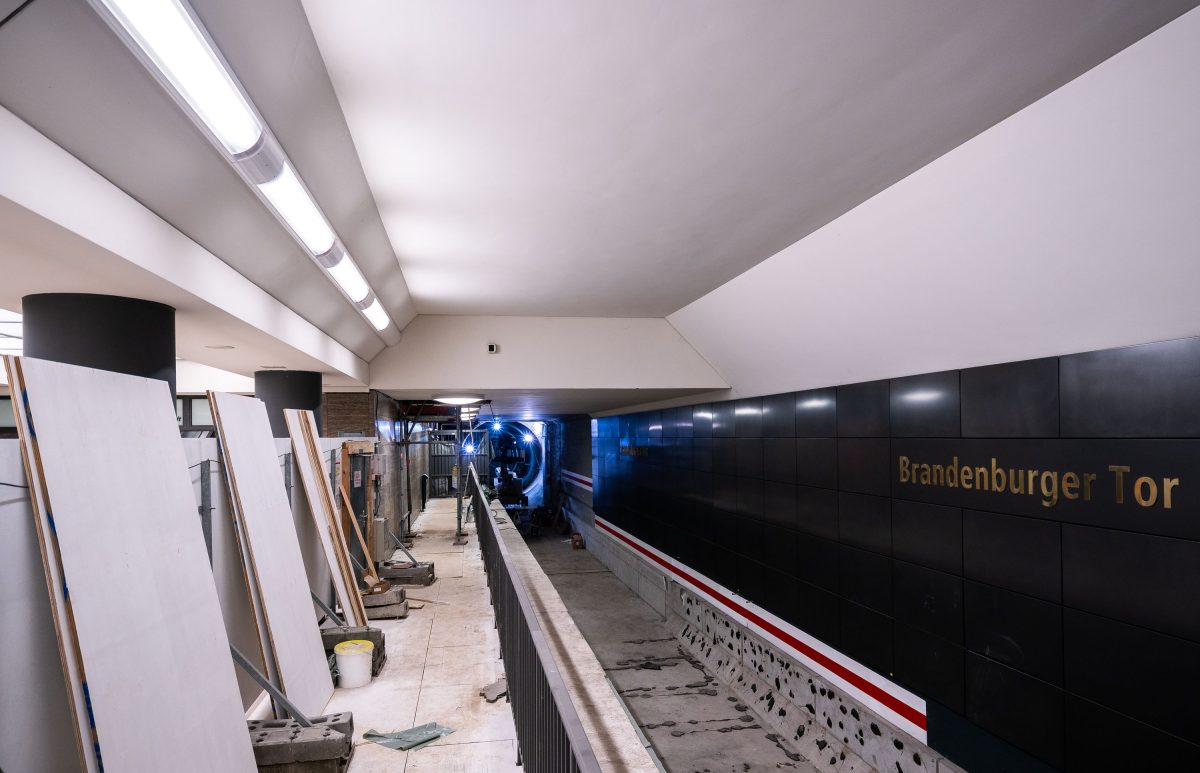
Brandenburger Tor station U5 line
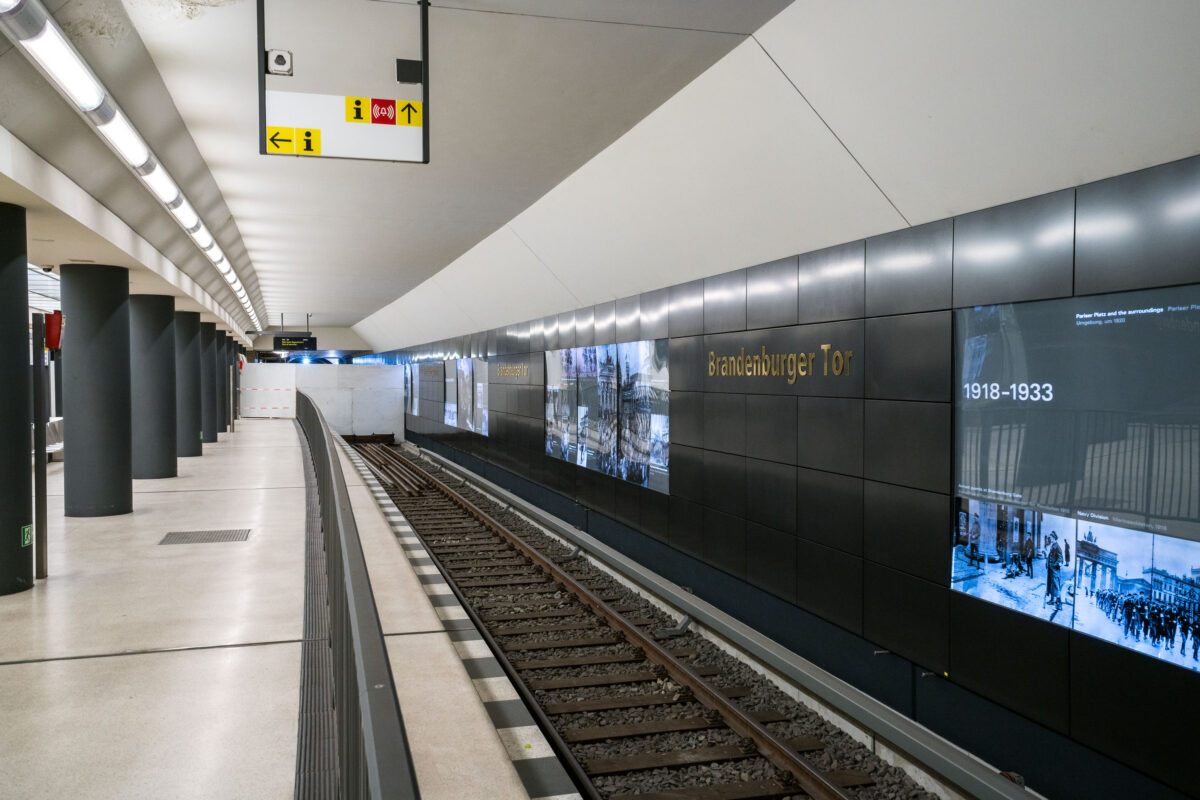
The Brandenburger Tor U-Bahn station, located beneath Pariser Platz in Berlin, serves as a vital transit hub and a historical archive. Opened in 2009 as part of the U55 line and integrated into the main U5 line in 2020, it now connects eastern and western Berlin. The station's interior features dark panels with gold lettering and illuminated displays that chronicle Berlin's 20th-century history, including its division and reunification.
Brandenburger Tor station in Berlin
The Brandenburger Tor U-Bahn station in Berlin serves as a key transit hub, connecting major landmarks such as the Reichstag, Unter den Linden, and Pariser Platz. Originally part of the U55 shuttle line, it was integrated into the extended U5 line in 2020. The station's design is characterized by minimalist architecture, featuring grey pillars, illuminated ceilings, and historical display panels that document significant events in Berlin's 20th-century history. Its clean geometry and subdued color palette provide a modern backdrop to the historically charged district it serves.

Built in Minneapolis

Photographs showcasing change over time

Browse by location, move through long-running series, or start with recent work.