Place Archive

Harvard University

This photo set documents built landmarks, storefronts and street postings around Harvard University in Cambridge, MA. Images include architectural studies of Sever Hall, Emerson Hall, Memorial Hall, the Harvard Science Center and Harvard Hall alongside photographs of the Harvard Book Store storefront and students walking nearby. Multiple images show political flyers, posters and advocacy stickers affixed to utility poles and other public surfaces, with subjects ranging from Gaza and Israel to Donald Trump, Elon Musk and ICE. One photograph shows Harvard Library at night. The collection provides a cross-section of campus architecture, commercial life and visible political messaging in and around Harvard Square.

15 photos

Map

Photo Map

Markers

Harvard University Photo Locations

15 geotagged photos

Photos
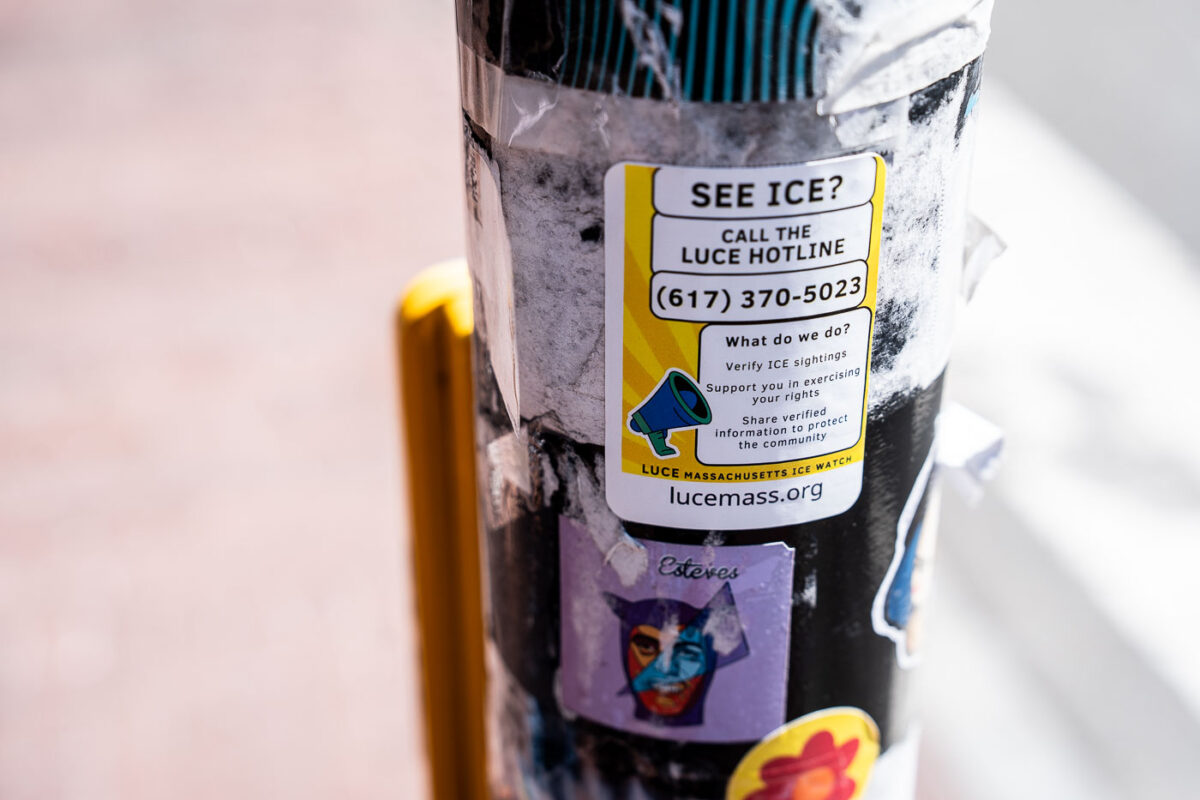
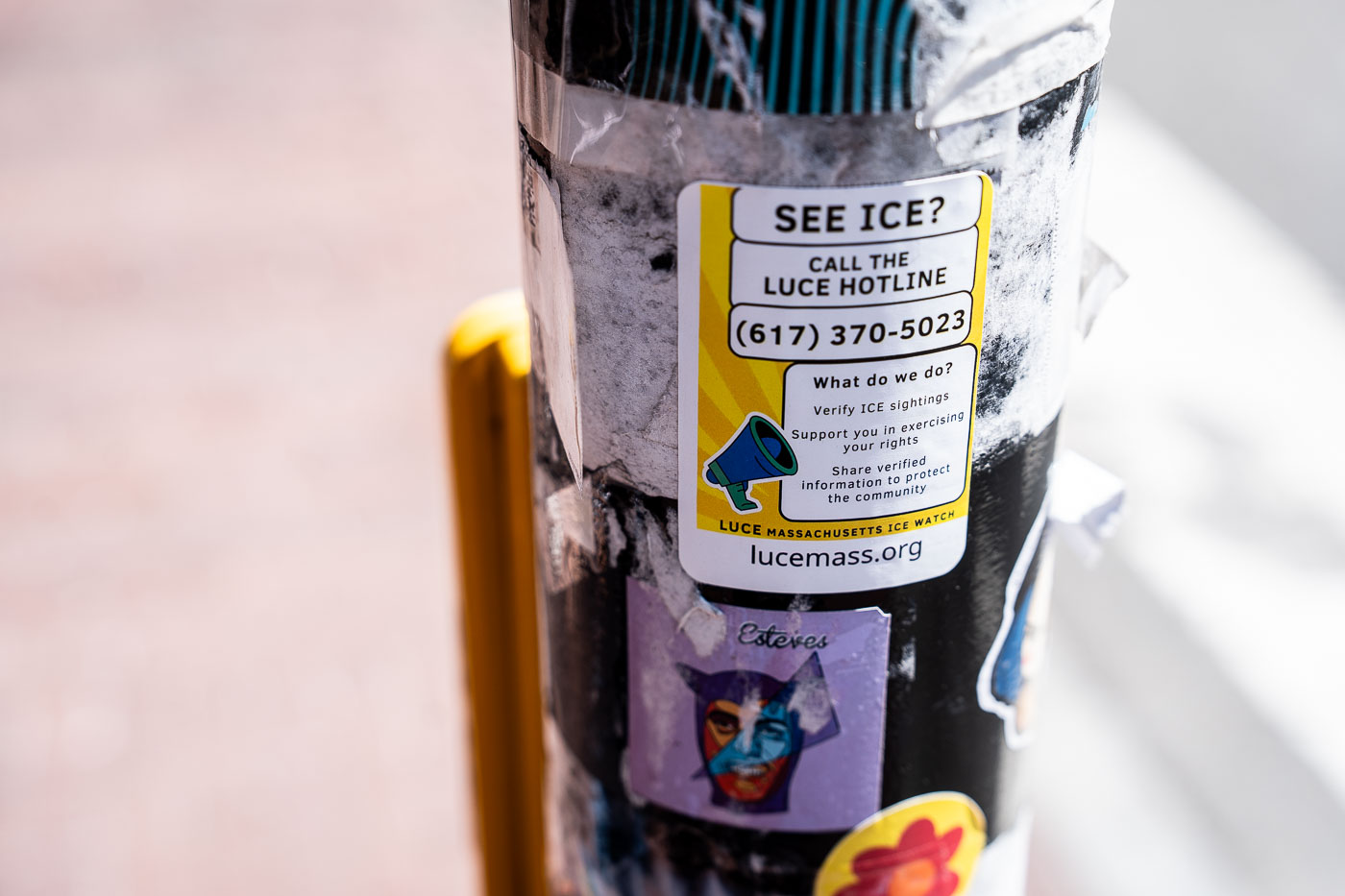
LUCE Massachusetts Ice Watch sticker at Harvard
A small advocacy sticker from LUCE Massachusetts is posted to a city pole at Harvard, urging passersby to report ICE sightings and verify enforcement activity through the community hotline. Below it, layers of older stickers and weathered tape add to the textured urban collage—evidence of civic messaging and street culture intersecting. The sticker’s bold yellow and black design stands out against the faded background, capturing a snapshot of immigrant rights activism in a public space.
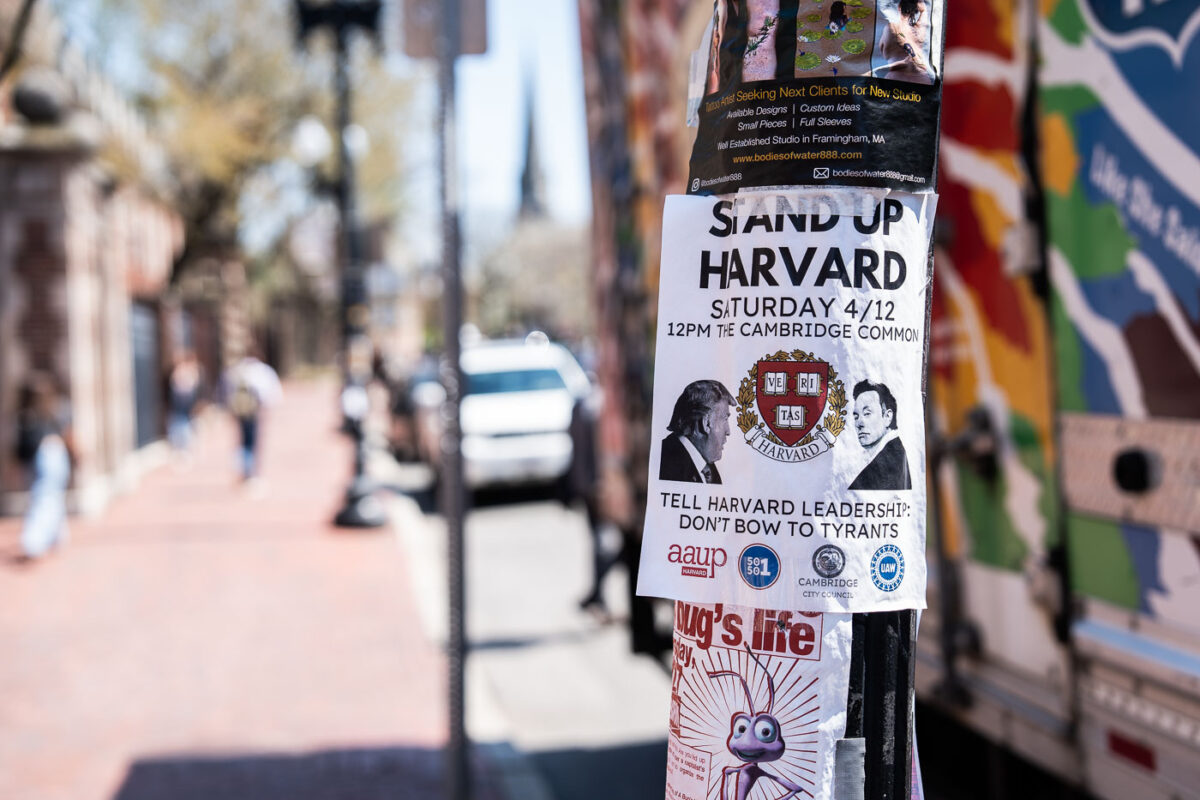
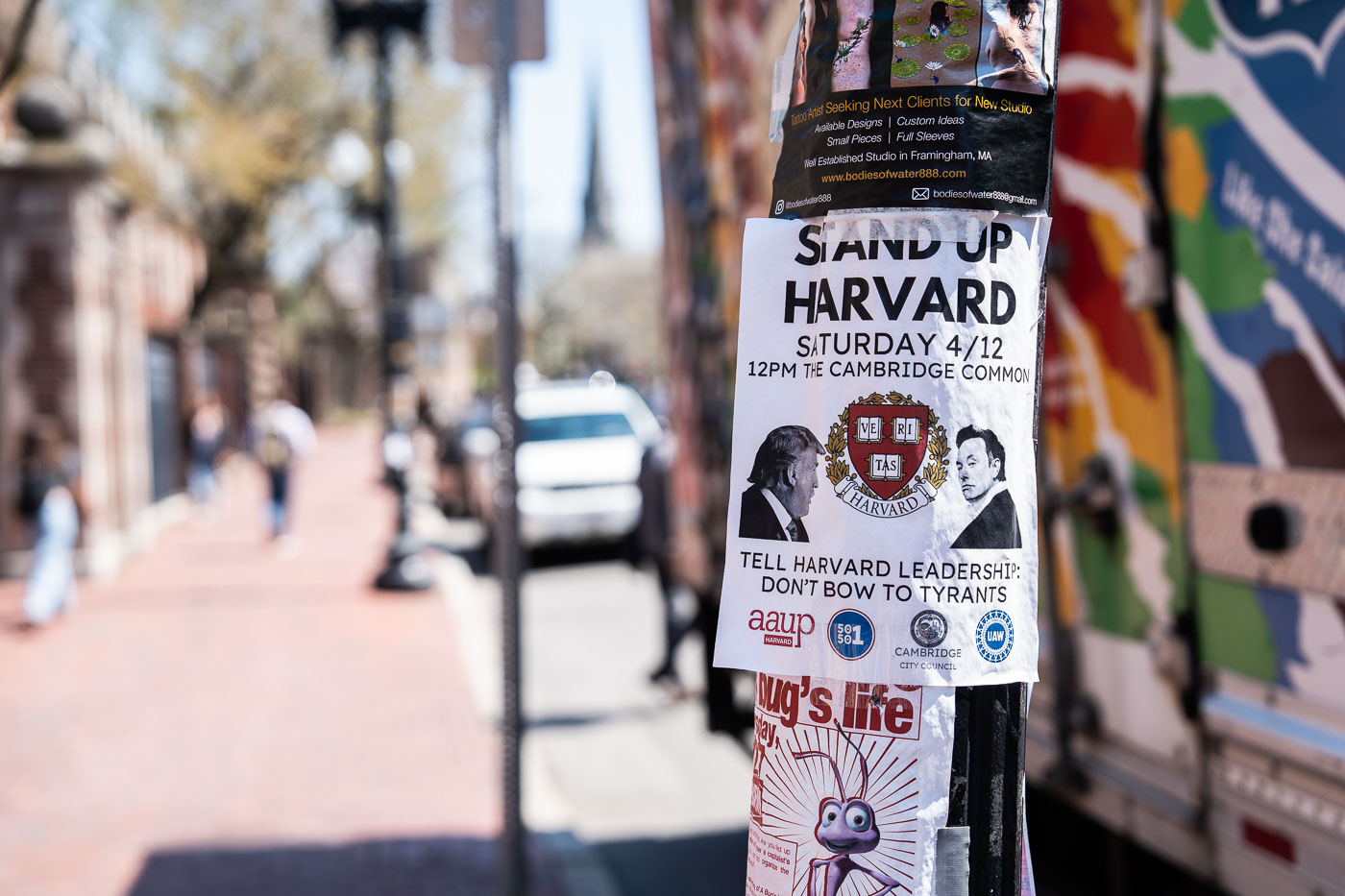
Stand Up Harvard protest sign with Elon Musk and Donald Trump
A politically charged flyer near Harvard Square calls for a demonstration at the Cambridge Common, urging the university community to “Stand Up Harvard.” Affixed to a utility pole along Massachusetts Avenue, it features the Harvard crest and contrasting portraits of public figures, symbolizing tension between authority and academic independence. The red-brick sidewalks and blurred foot traffic behind it evoke the constant movement and civic engagement that define this historic Cambridge neighborhood.
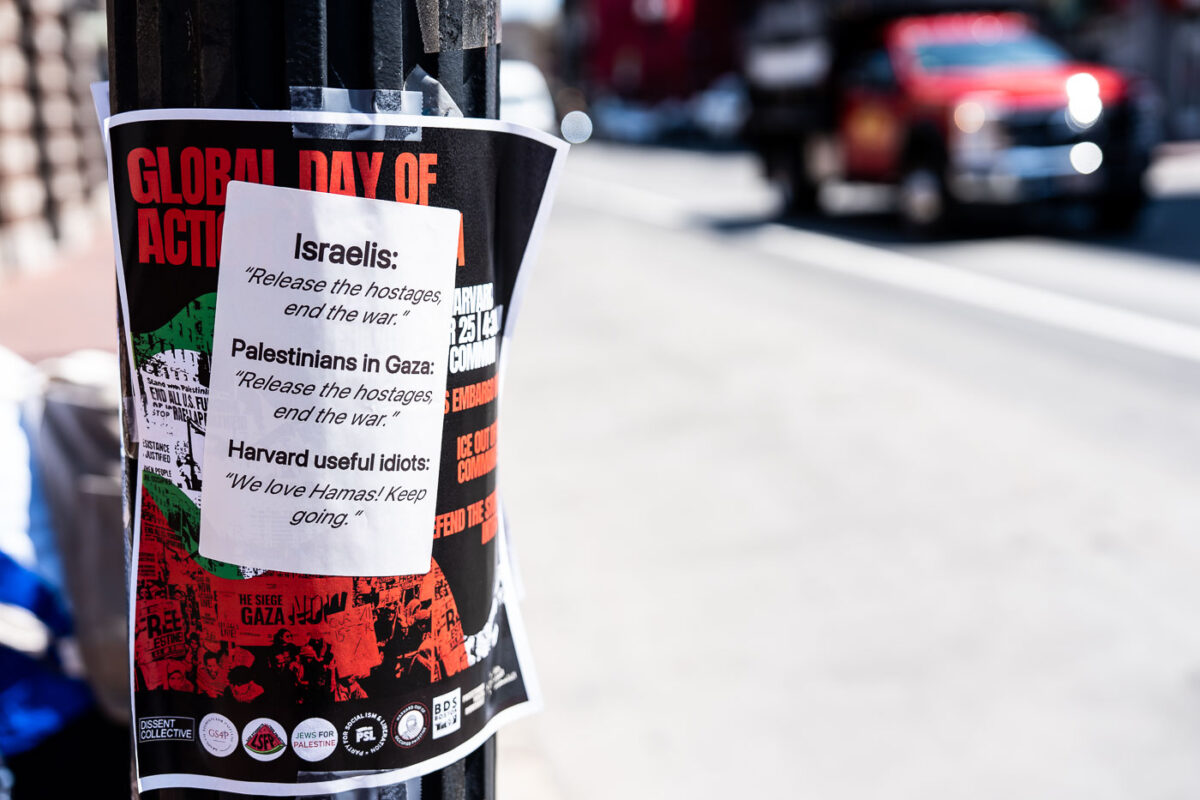
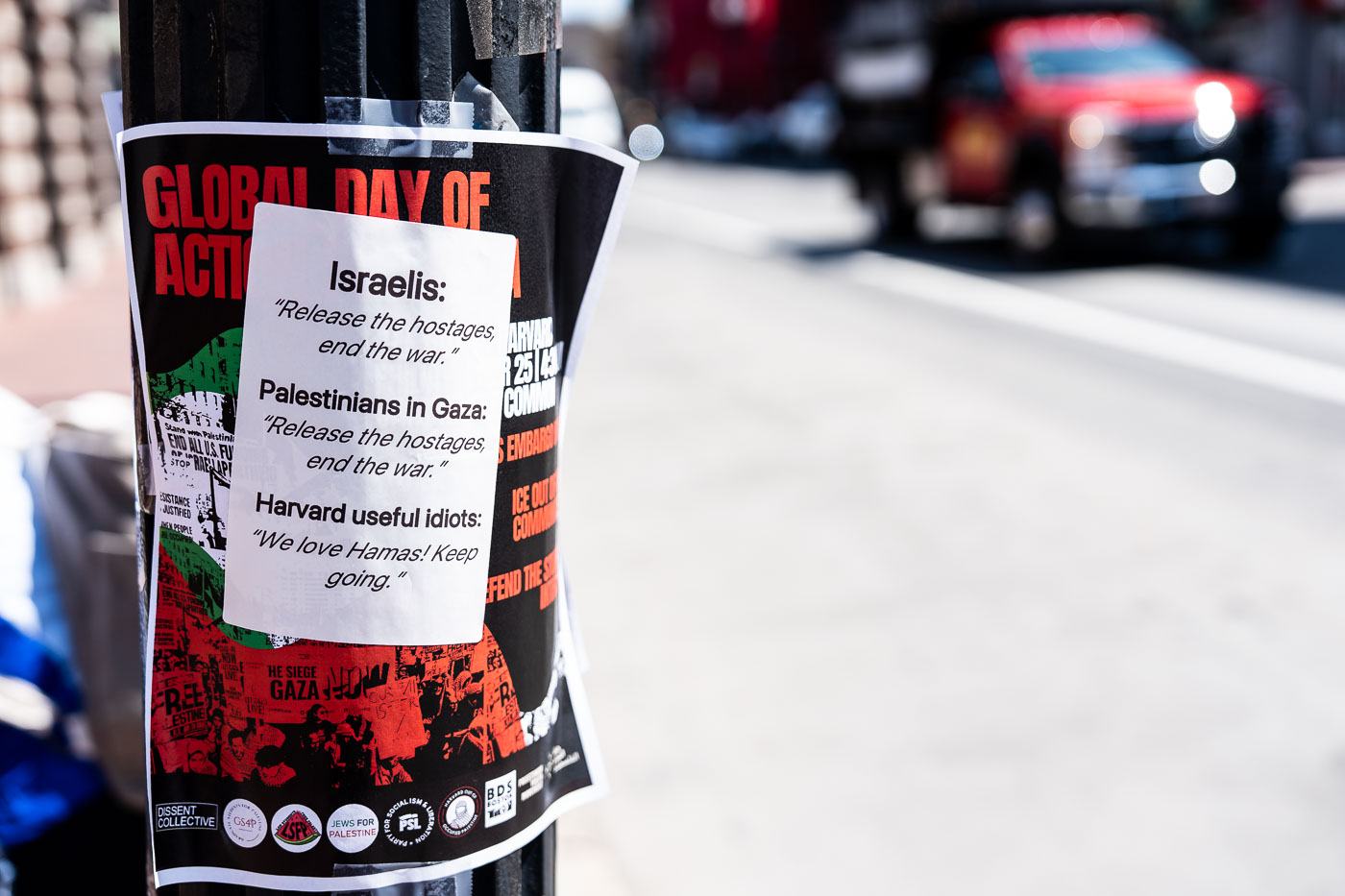
Global day of action protest flyers at Harvard University
A layered set of flyers taped to a pole near Harvard Square reveals the intense atmosphere surrounding debates on the Israel–Gaza conflict. The underlying poster promotes a “Global Day of Action for Gaza,” while a separate sheet on top adds a sharply critical response, contrasting the slogans of various groups with mocking commentary. This kind of street pole collage — layered, confrontational, and public — captures the friction between activism and counter-activism common around Harvard Square’s sidewalks, where local and global politics often meet in view of passing students and commuters.
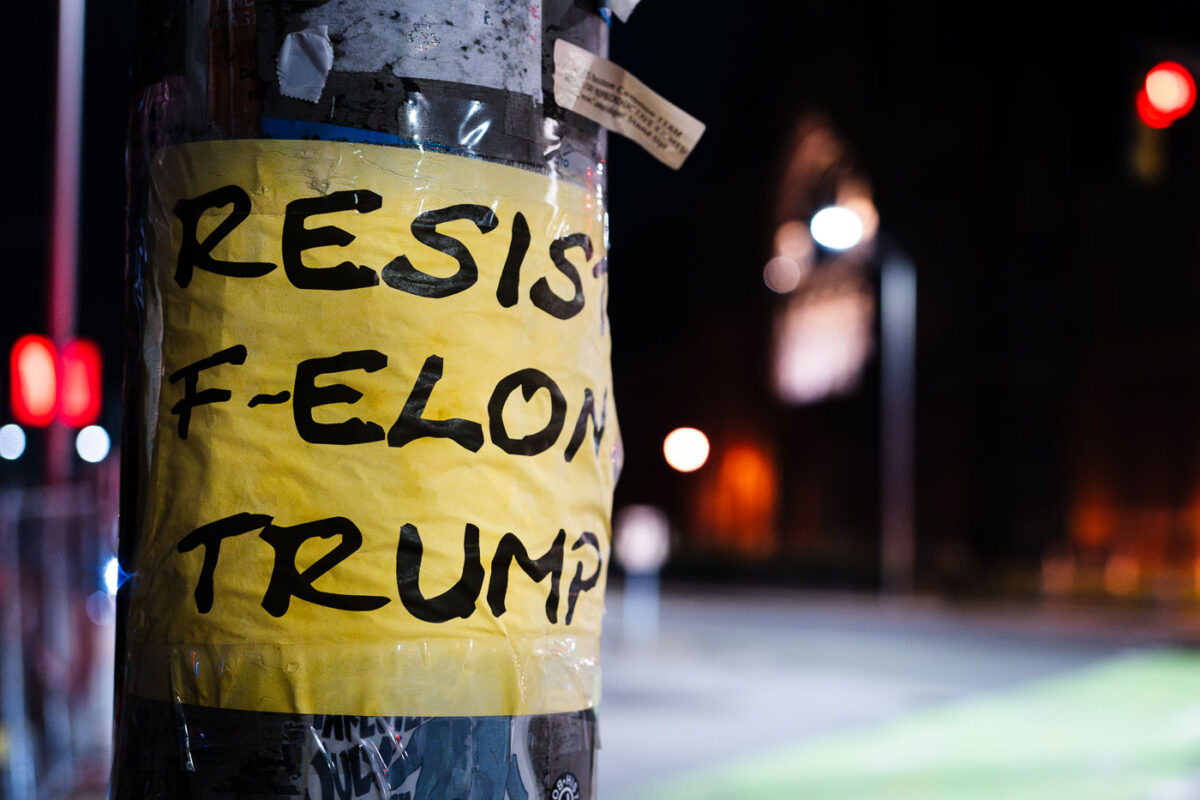
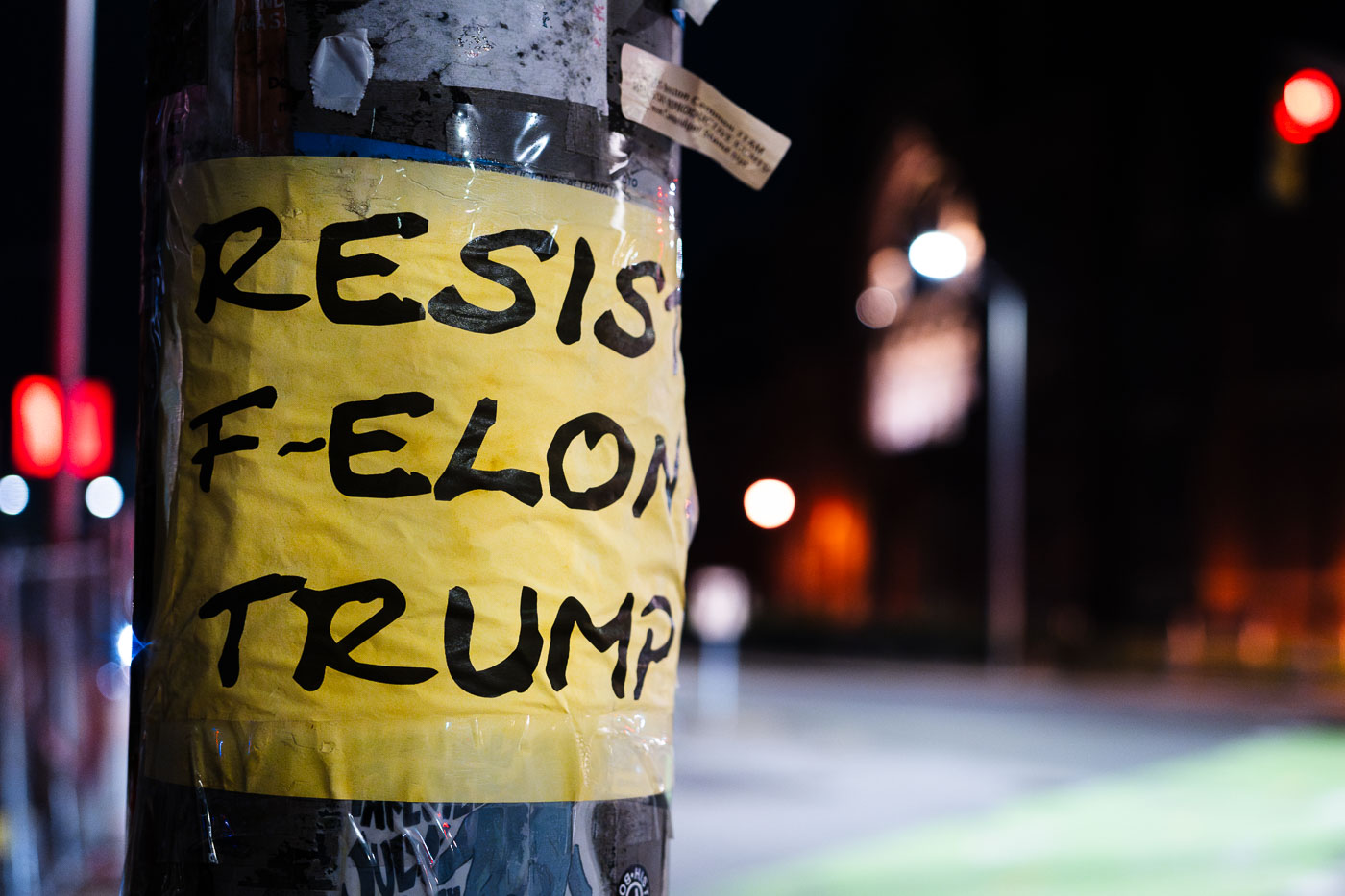
Anti Musk and Trump protest sign at Harvard University
Taped to a pole at Harvard University, "Resist F-Elon Trump at Harvard University".
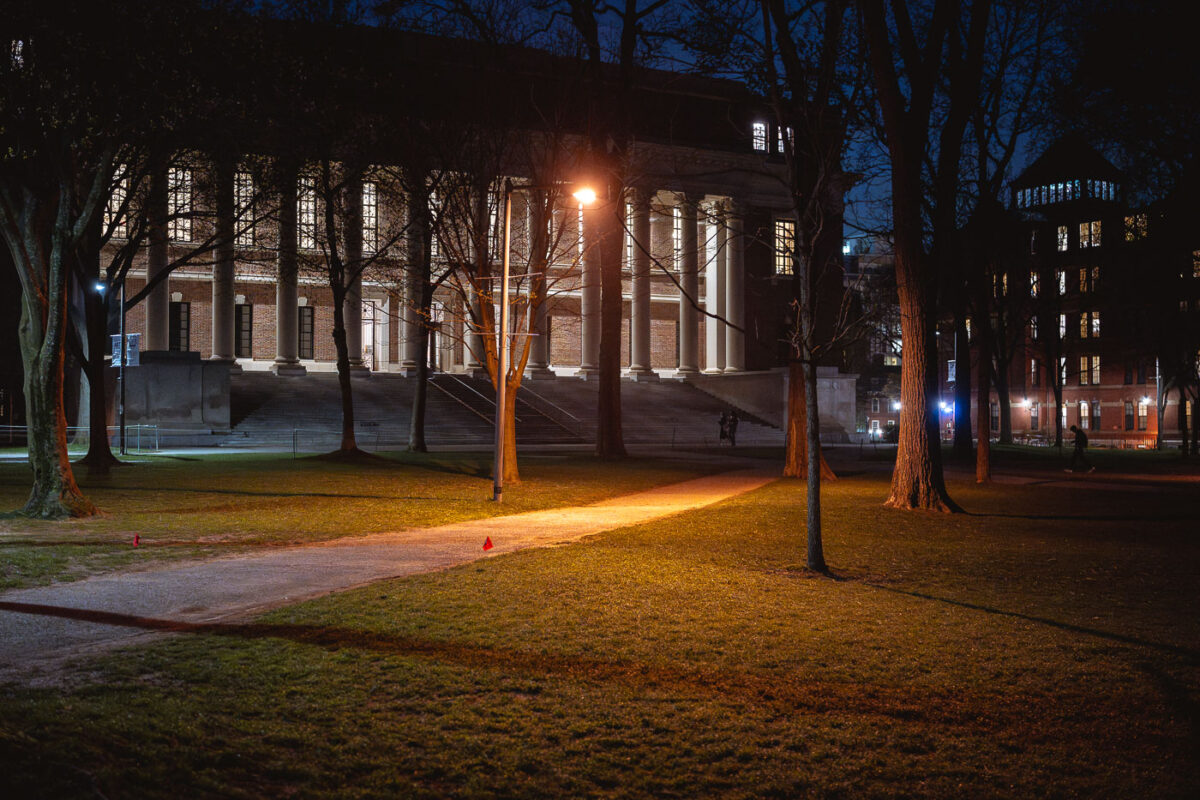
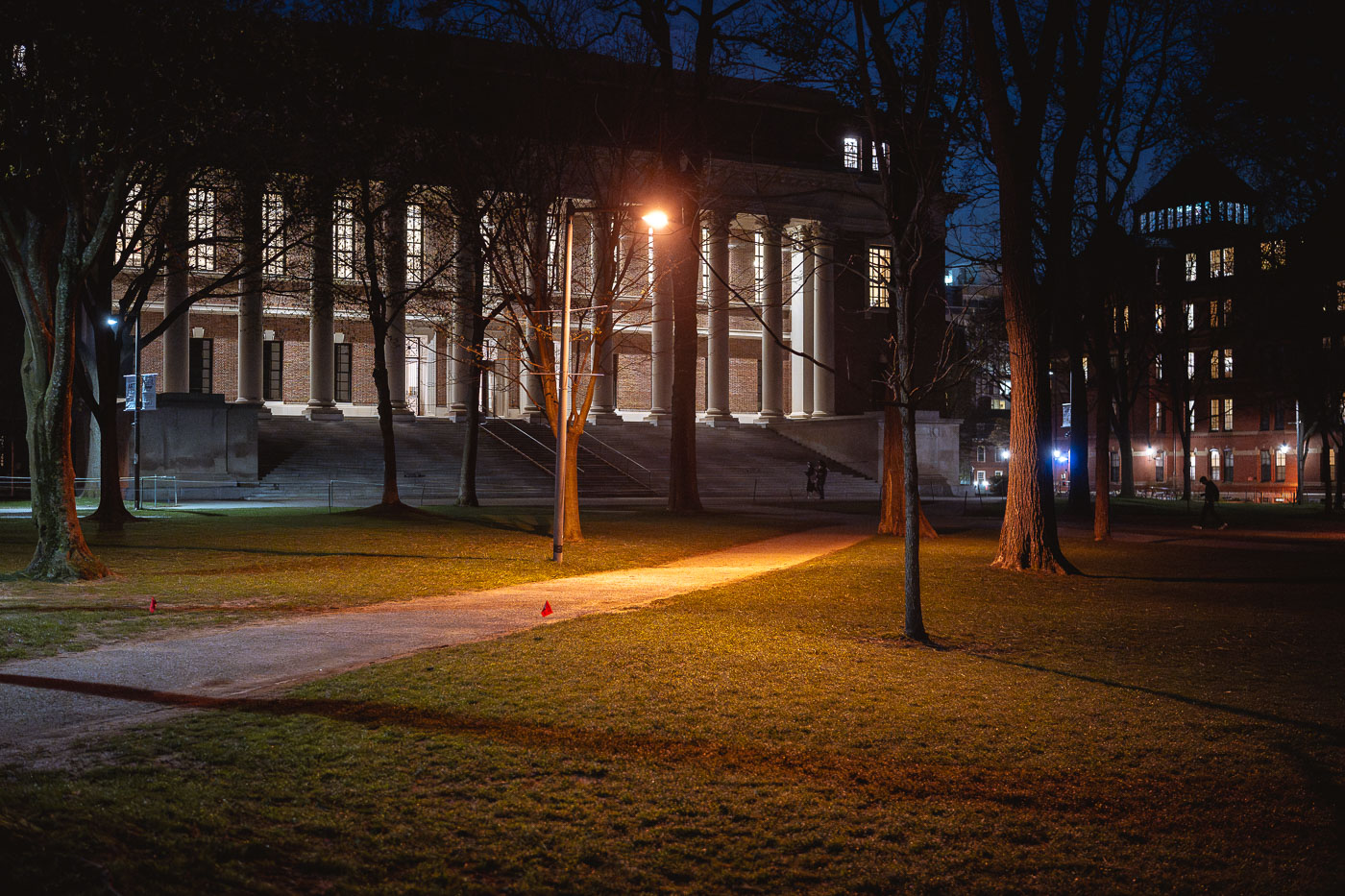
Harvard Library in Cambridge at night
Harvard Library at night in Cambridge, MA.
You're in a Cult Trump Fascist poster
Poster on a pole at Harvard University. You're in a Cult" in the form of the Kool-Aid man with a link that redirects to The Council on Foreign Relations's definition of fascism.
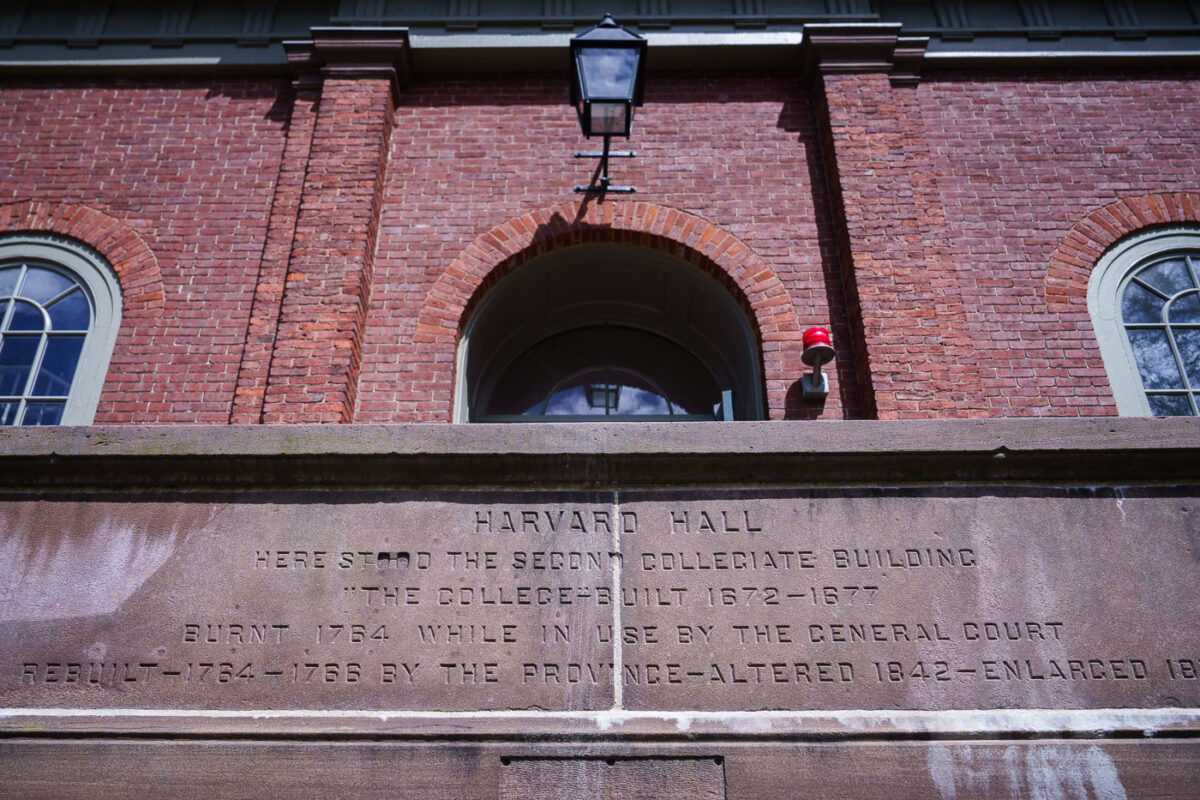
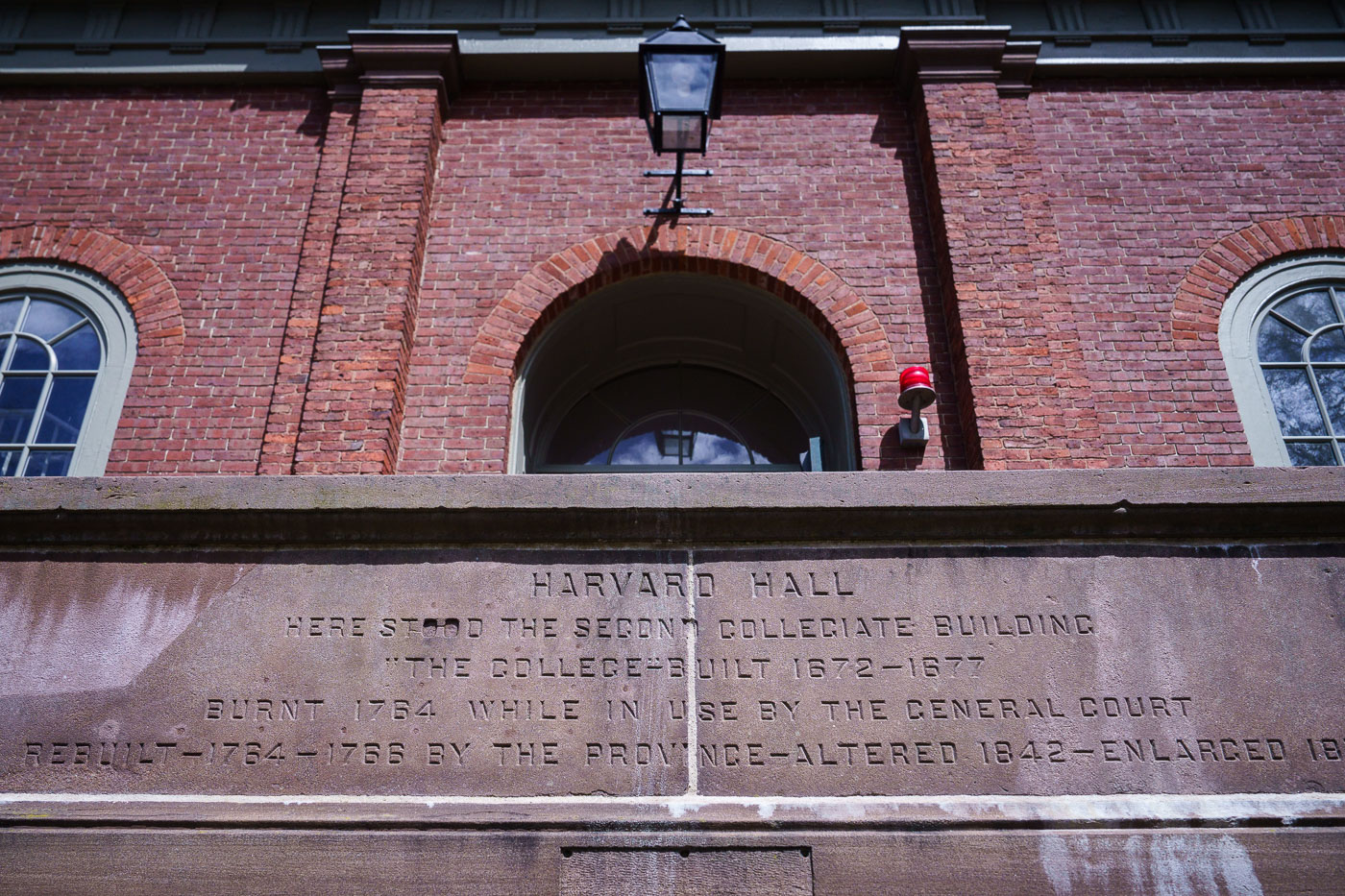
Harvard Hall at Harvard University red bricks
Harvard Hall, located in the center of Harvard Yard, stands as one of the university’s most historically significant buildings. The inscription records its long story: the original “College” building from the 1670s was destroyed by fire in 1764 while housing the General Court of Massachusetts. The structure was rebuilt between 1764 and 1766, later modified and expanded in the 19th century. The current red-brick Georgian design reflects both colonial craftsmanship and the evolving architectural heritage of the campus. Once home to classrooms and the early Harvard library, Harvard Hall remains a symbol of the institution’s resilience and academic continuity.
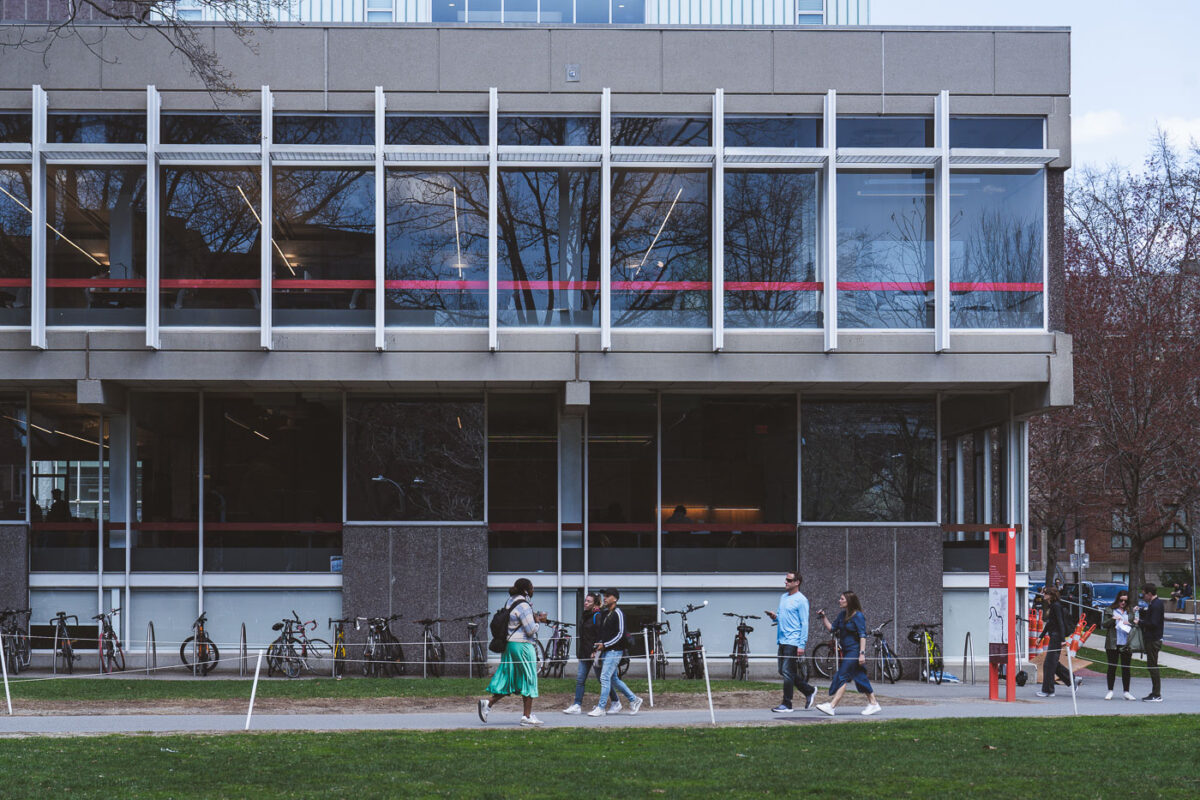
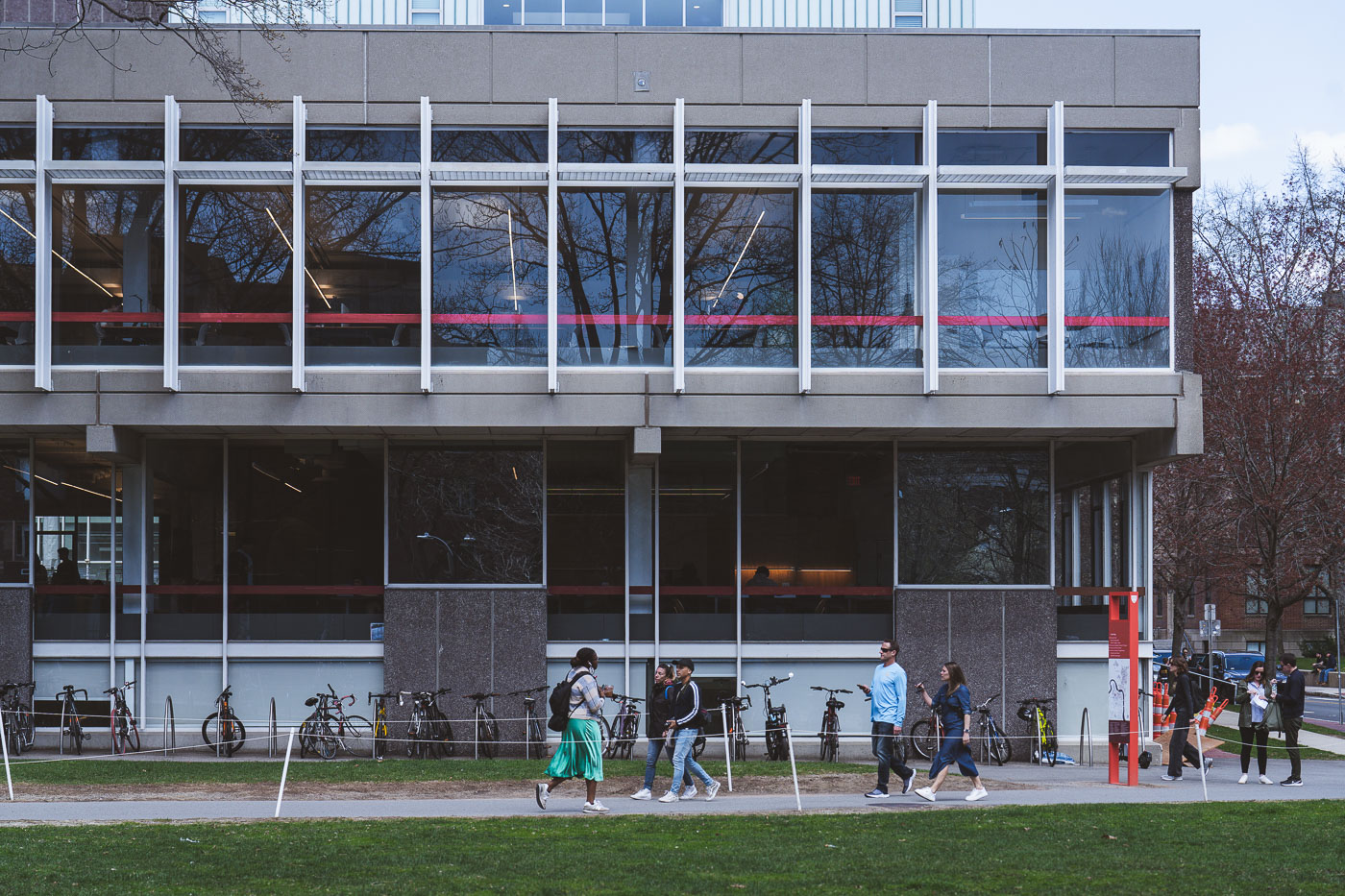
Cabot Science Library Harvard University
The Harvard Science Center, completed in 1972 and designed by Josep Lluís Sert, exemplifies mid-century modernist architecture within Harvard’s historic campus. Its concrete frame and ribbon-window façade reflect Sert’s functionalist style, emphasizing natural light and open interior spaces for teaching and research. Situated near Harvard Yard, the building houses classrooms, laboratories, and lecture halls serving the university’s science departments. In the photo, students and visitors walk along the adjacent green, with rows of bicycles lined beneath the structure—an everyday scene that captures the energy and rhythm of life in Cambridge’s academic core.
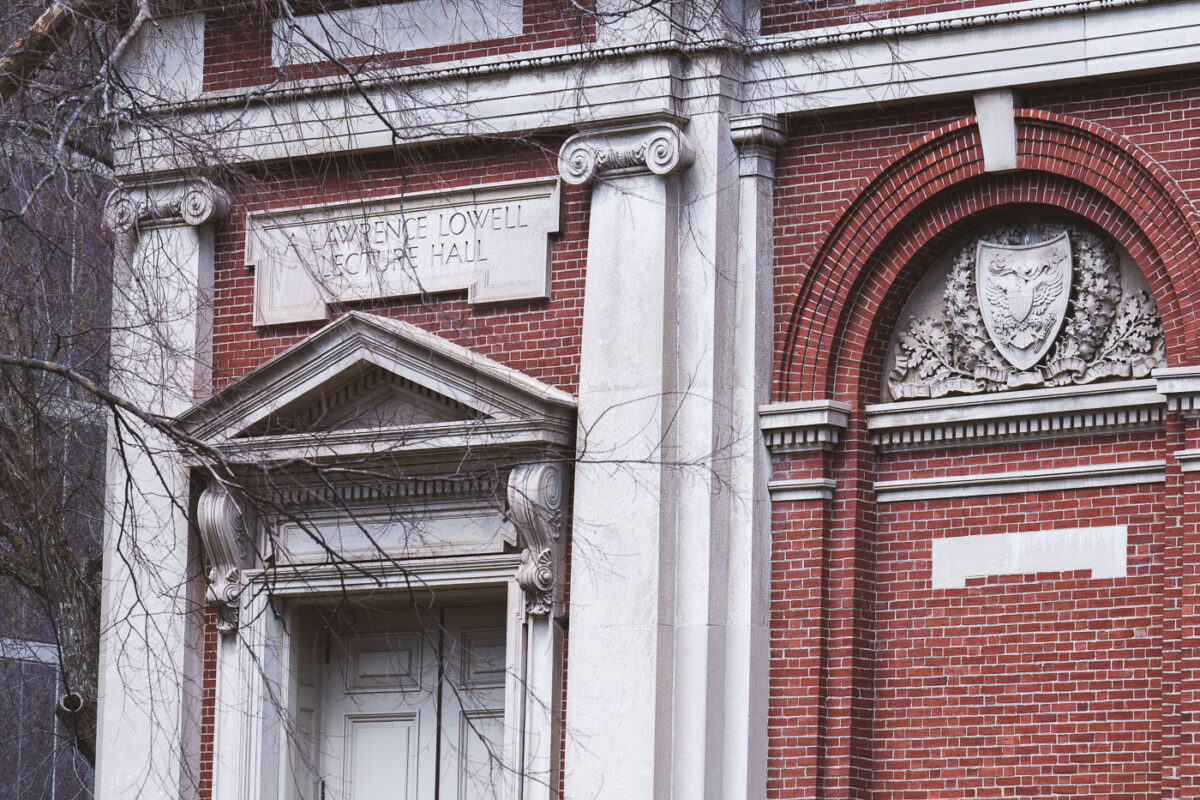
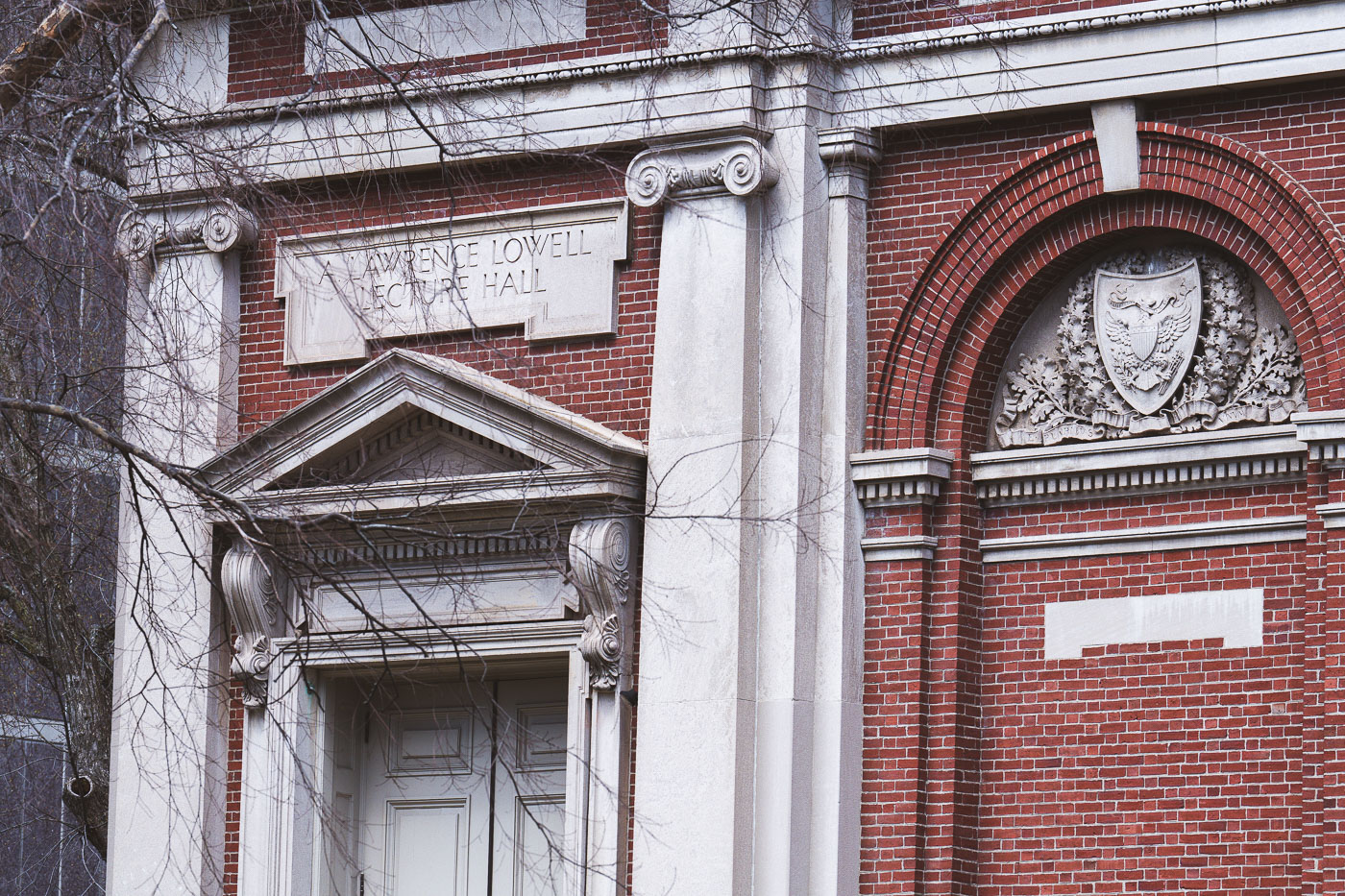
Lawrence Lowell Lecture Hall at Harvard University
The Lawrence Lowell Lecture Hall, located at Harvard University in Cambridge, Massachusetts, showcases the classic Georgian Revival style that defines much of the campus’s early 20th-century architecture. Its symmetrical red-brick façade is framed by limestone pilasters and ornamented with carved details, including an arched relief of the Harvard shield and eagle motif. Constructed in 1902 and named after former university president A. Lawrence Lowell, the hall remains an active academic venue for lectures, conferences, and student gatherings, standing as a symbol of the university’s architectural continuity and scholarly tradition.
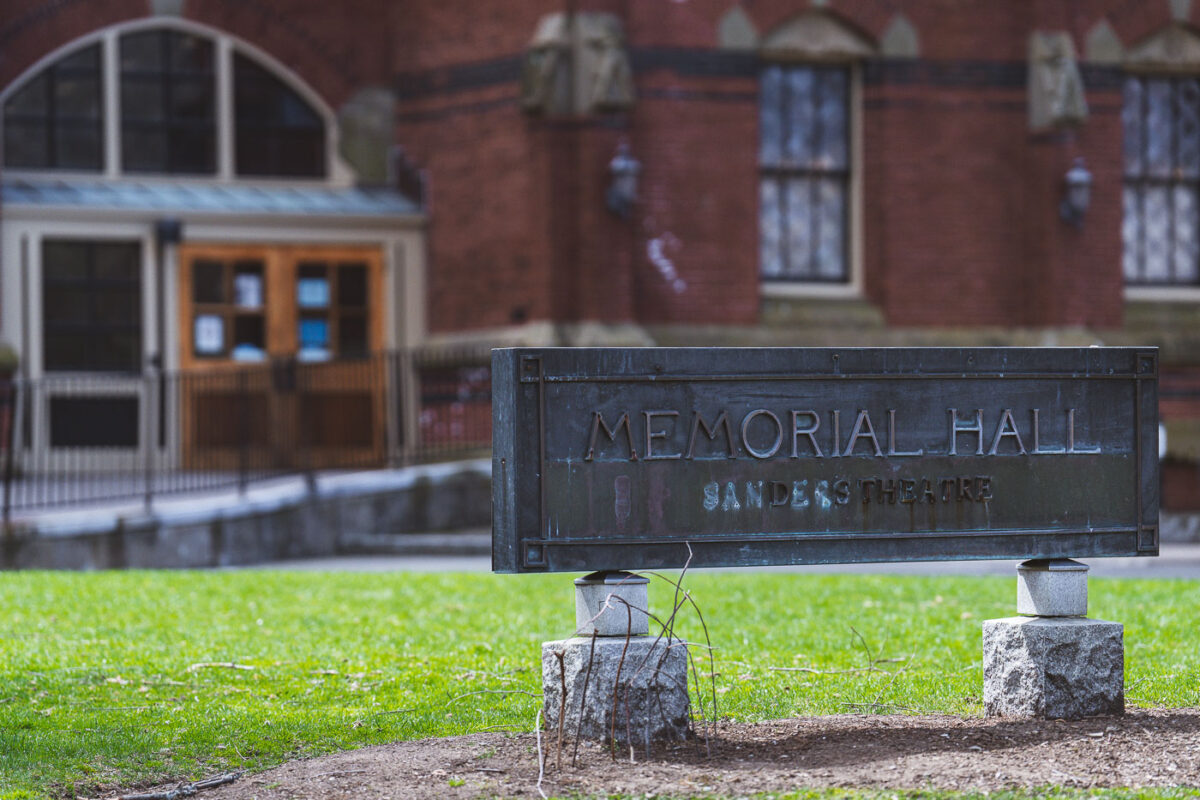
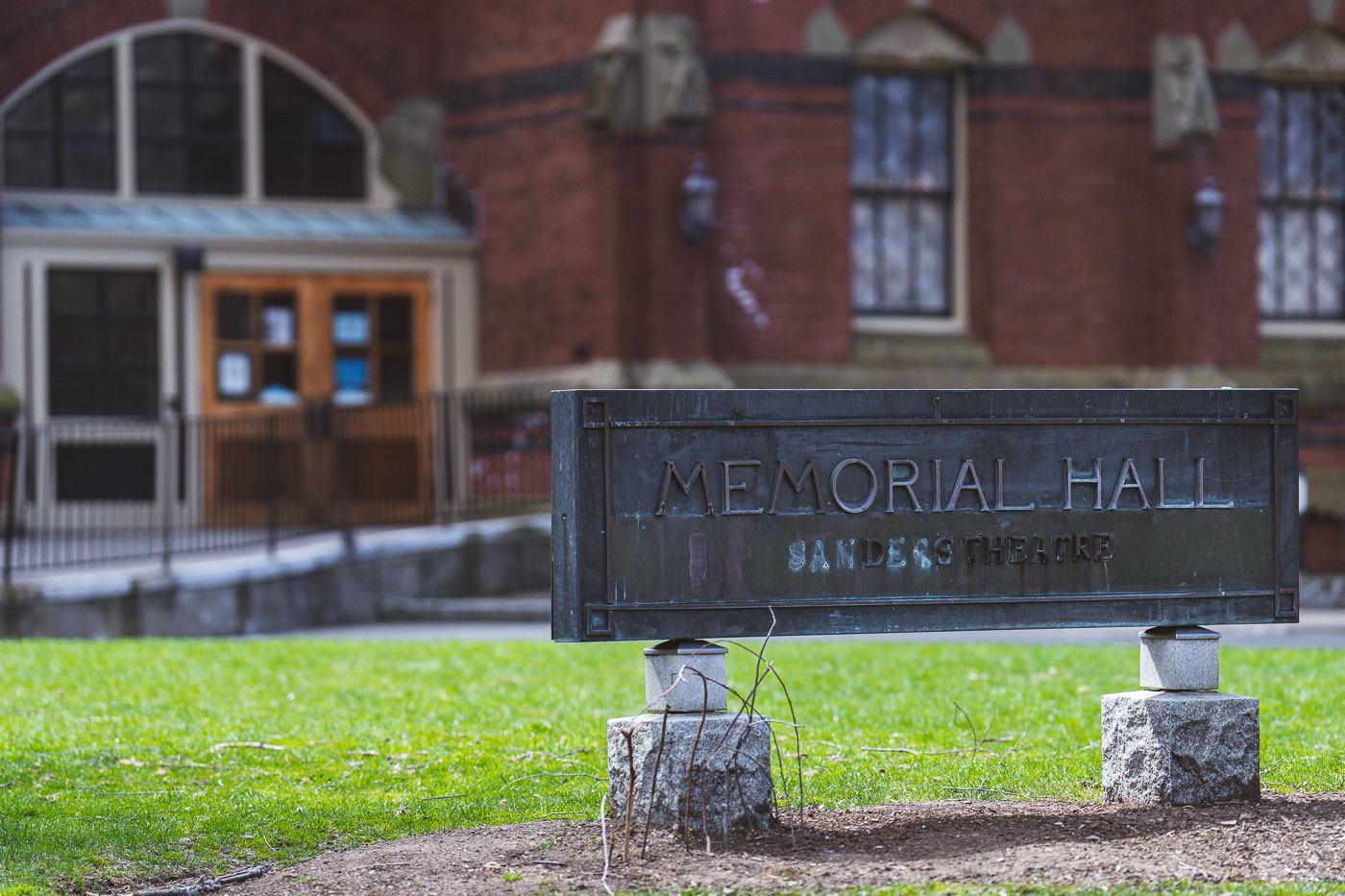
Memorial Hall Sanders Theatre Harvard University
Memorial Hall at Harvard University stands as one of the most significant examples of High Victorian Gothic architecture in the United States. Completed in 1878, the hall was built to honor Harvard alumni who fought for the Union during the Civil War. The building’s iconic red-brick façade, accented by intricate stone trim and stained glass, houses the famed Sanders Theatre—a grand auditorium known for its exceptional acoustics and historic lectures. The bronze plaque in the image marks the entrance to this enduring landmark, which continues to serve as a centerpiece for academic and cultural life in Cambridge, Massachusetts.
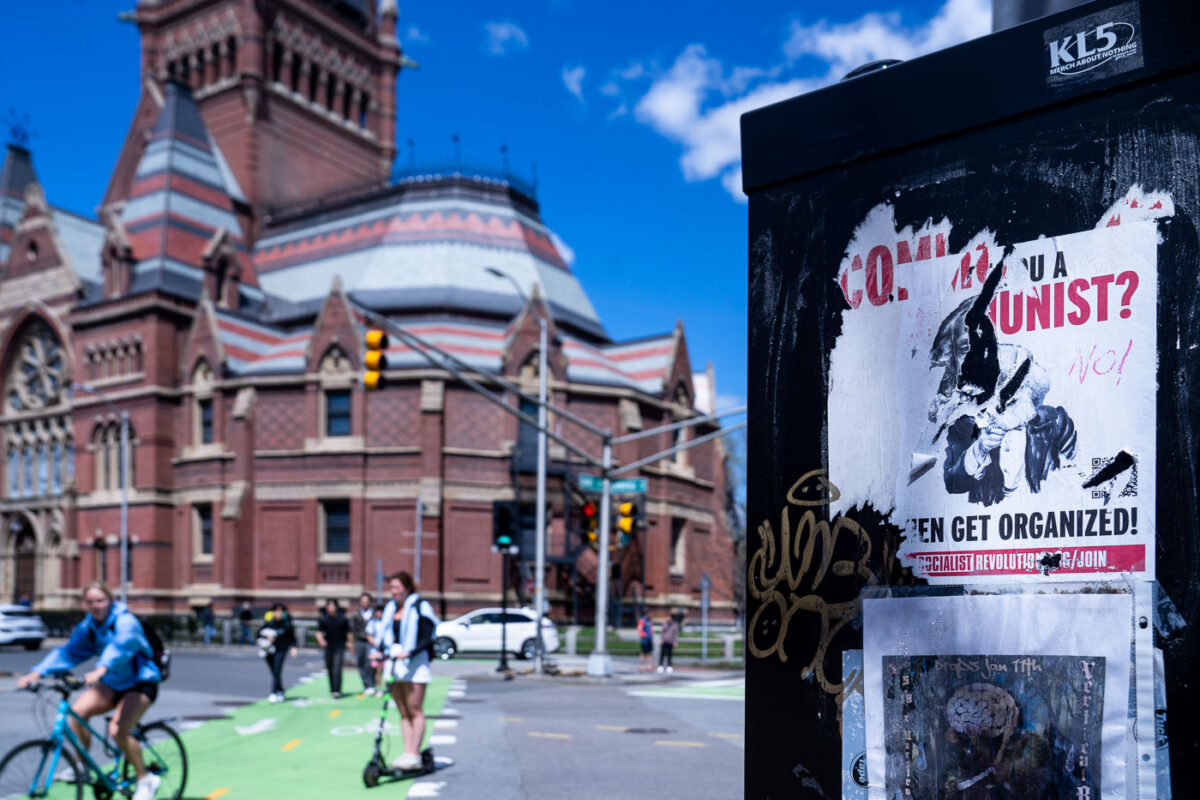
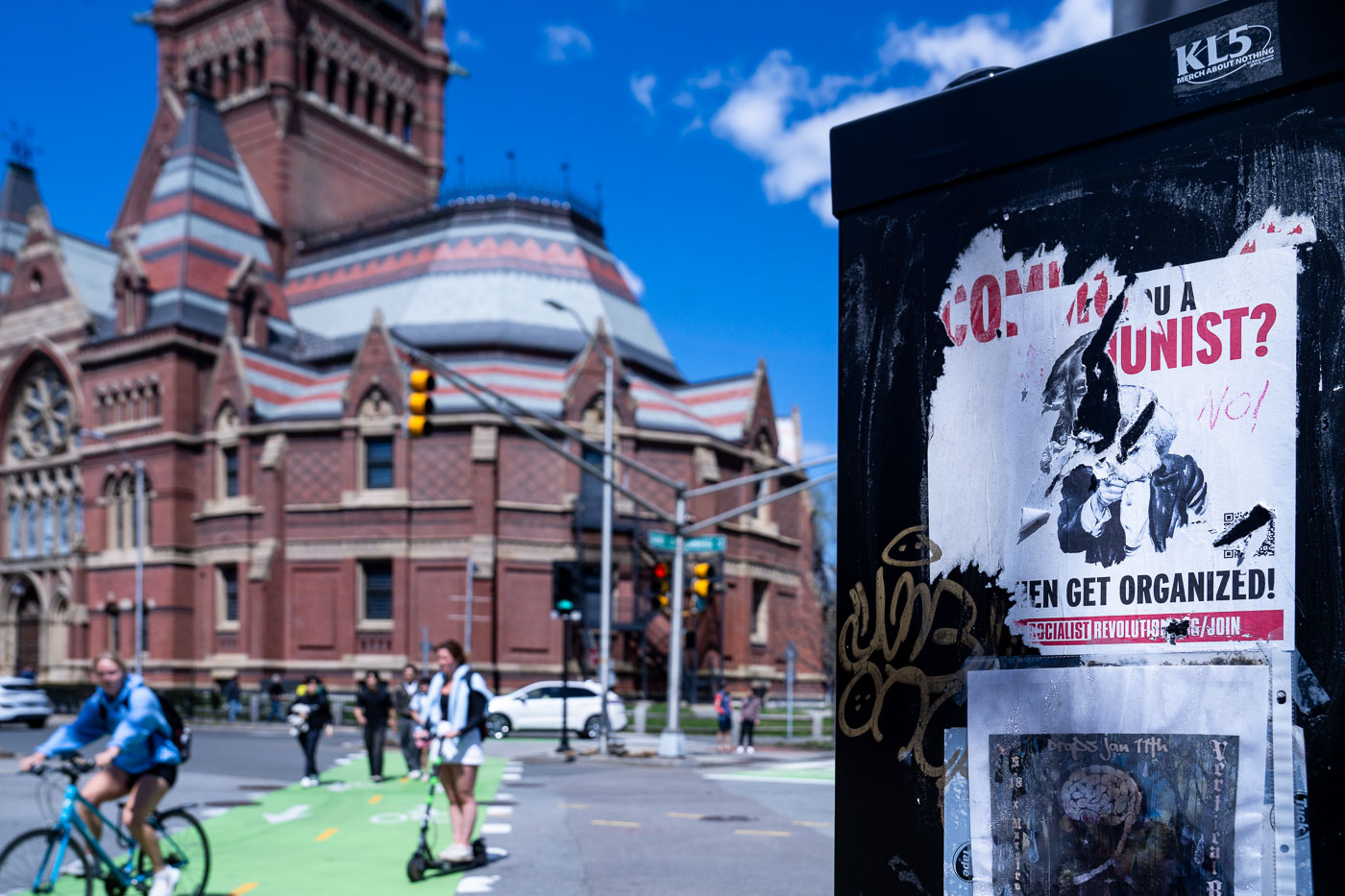
Are you a communist flyer at Harvard
A "Are you a communist?" flyer found at Harvard University. I have seen these same flyers wheat pasted in Minneapolis over the last few months.
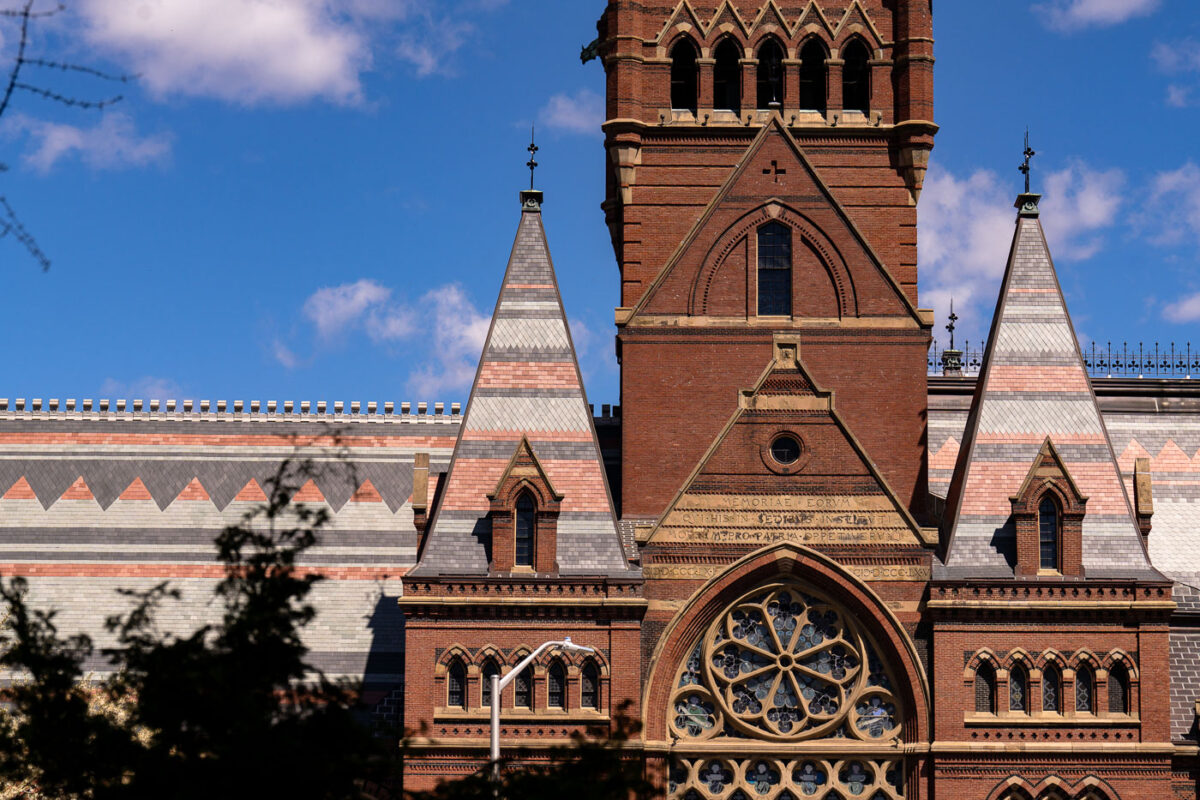
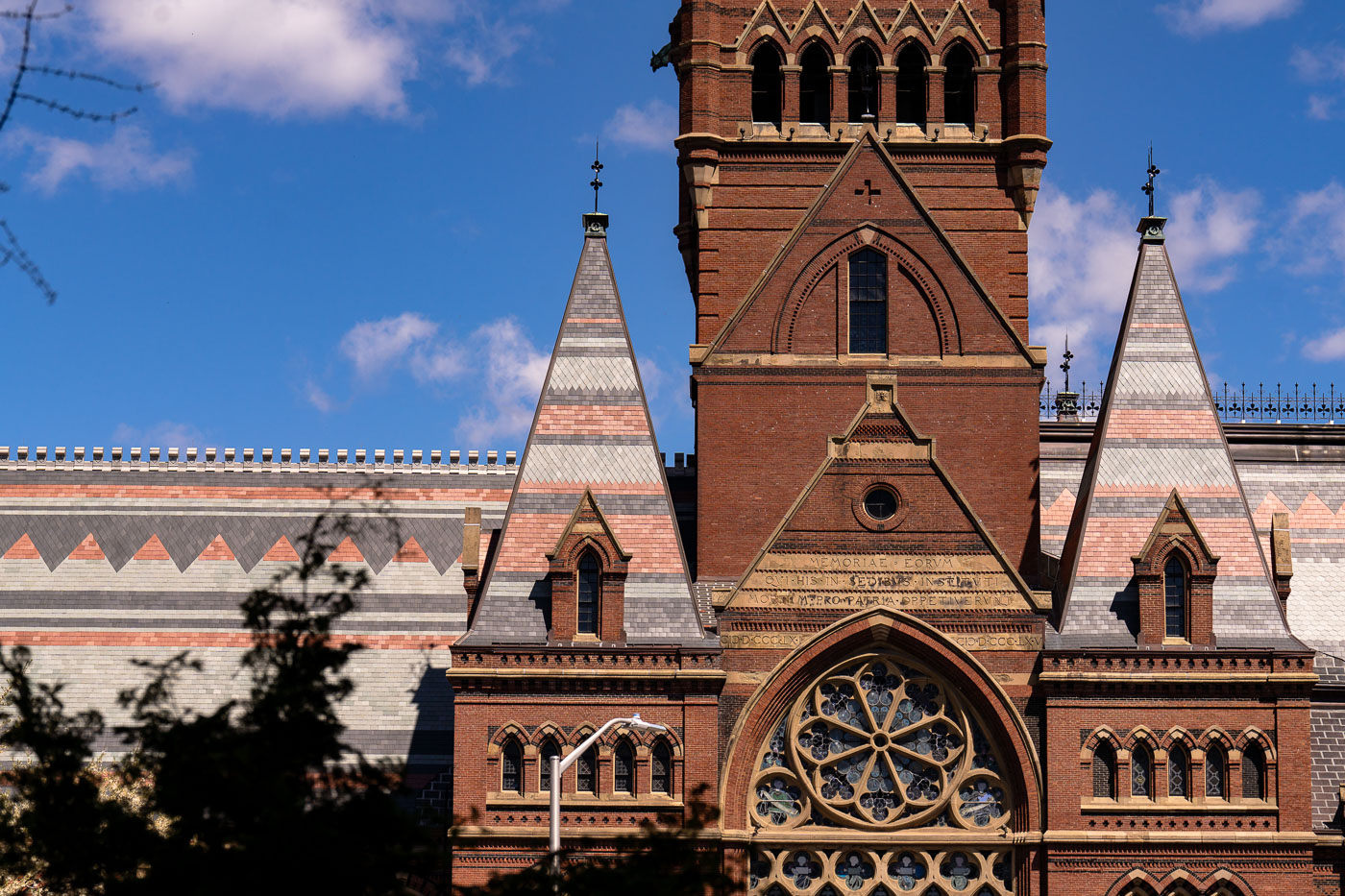
Neo Gothic Memorial Hall at Harvard University
The intricate brick and slate facade of Harvard University’s Memorial Hall rises sharply against a crisp blue sky in this detailed architectural study. Completed in 1878, the building embodies the High Victorian Gothic style with its polychromatic slate roof, pointed arches, and elaborate terracotta trim. The Latin inscription and rose window dominate the composition, framed by twin spires and ornamental ironwork. Memorial Hall was built to honor Harvard alumni who fought for the Union during the Civil War, and today houses Sanders Theatre and Annenberg Hall—standing as one of Cambridge’s most iconic architectural landmarks.
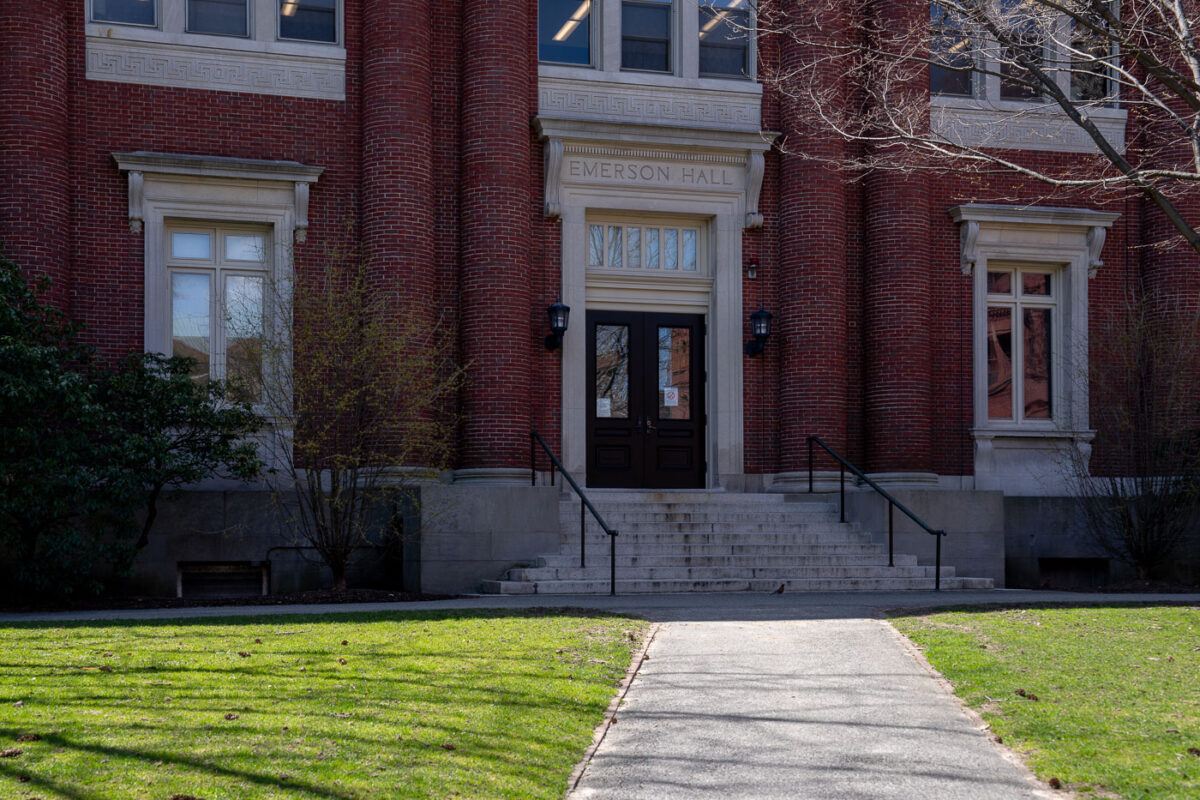
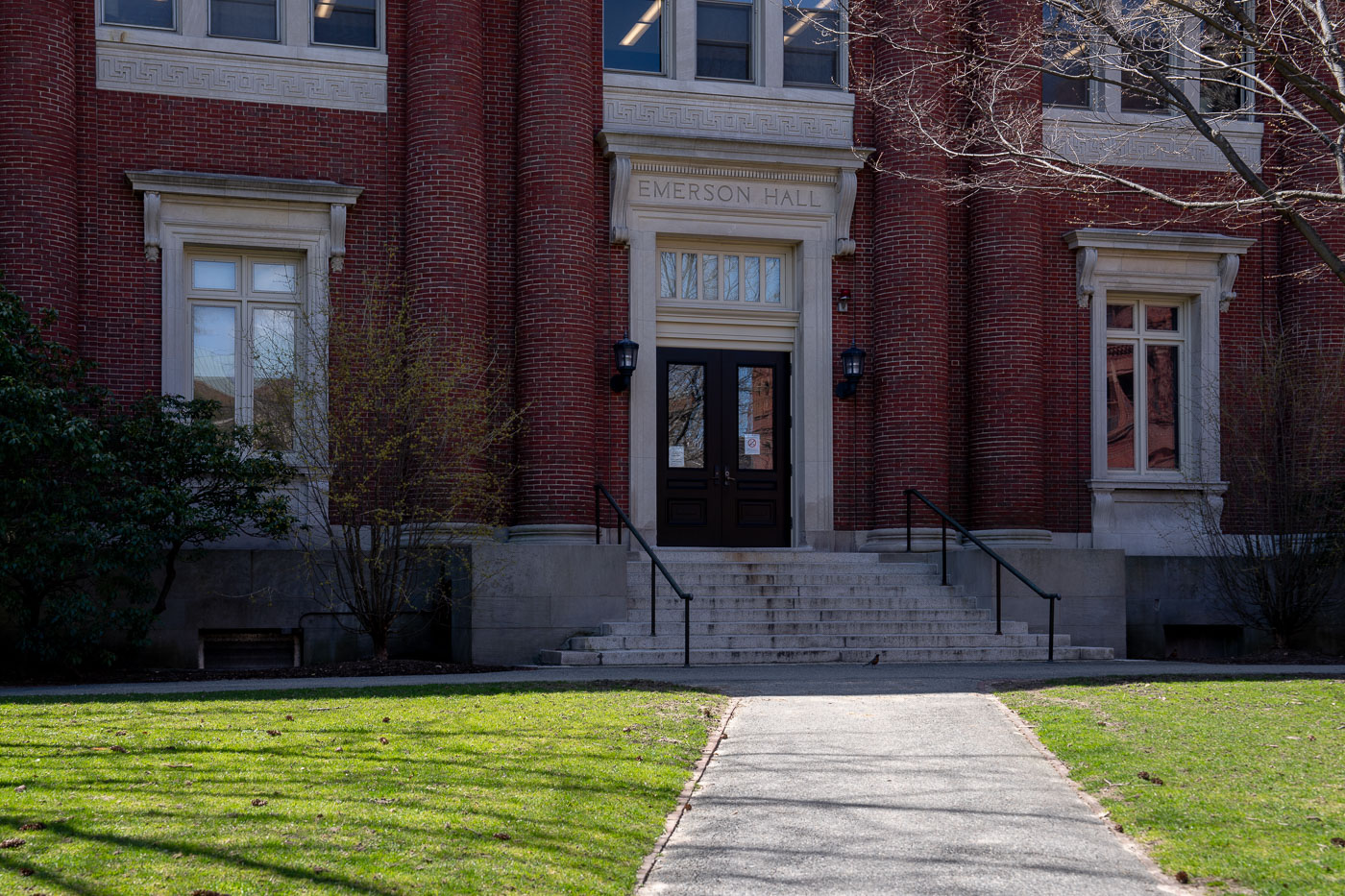
Exterior photo of Emerson Hall at Harvard
The neoclassical brick facade of Emerson Hall, located in Harvard Yard, is framed by early spring light in this photograph. Completed in 1900 and designed by Guy Lowell, the building houses Harvard’s Department of Philosophy and is named after transcendentalist writer and alumnus Ralph Waldo Emerson. Its symmetrical design features Ionic pilasters, limestone trim, and a grand central staircase leading to wooden double doors. Emerson Hall stands as a quiet academic landmark amid the historic core of Harvard University, reflecting the campus’s architectural balance between formality and contemplation.
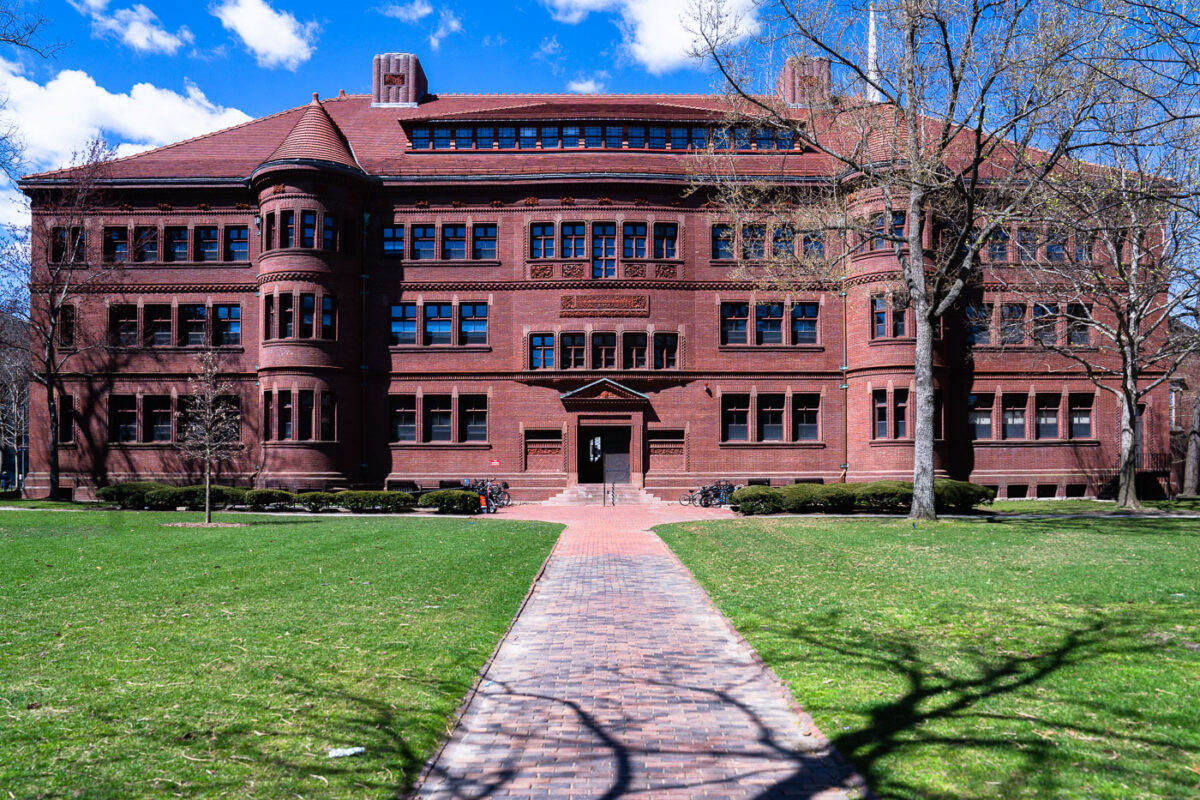
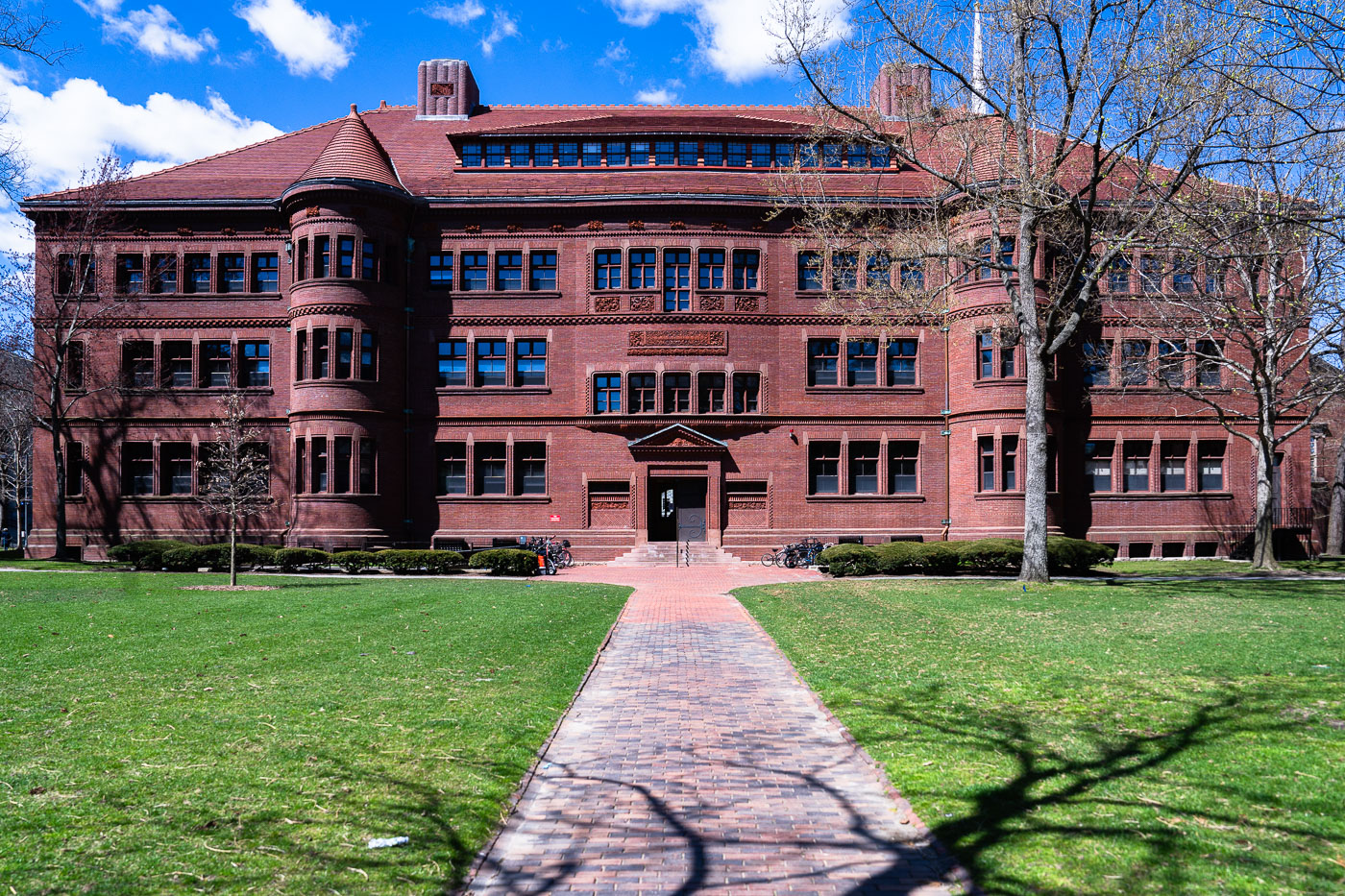
Exterior photo of Sever Hall at Harvard University
Designed by Henry Hobson Richardson and completed in 1880, Sever Hall stands as one of the most distinguished examples of Richardsonian Romanesque architecture on the Harvard campus. Built from over 1.3 million red bricks with intricate recessed patterns and rounded turrets, the building’s symmetrical form and arched entrance exemplify Richardson’s mastery of proportion and texture. Located in Harvard Yard, Sever Hall has long served as a classroom building for the Faculty of Arts and Sciences. Its distinctive masonry and quietly monumental design earned it recognition as one of the architect’s finest works and a National Historic Landmark.
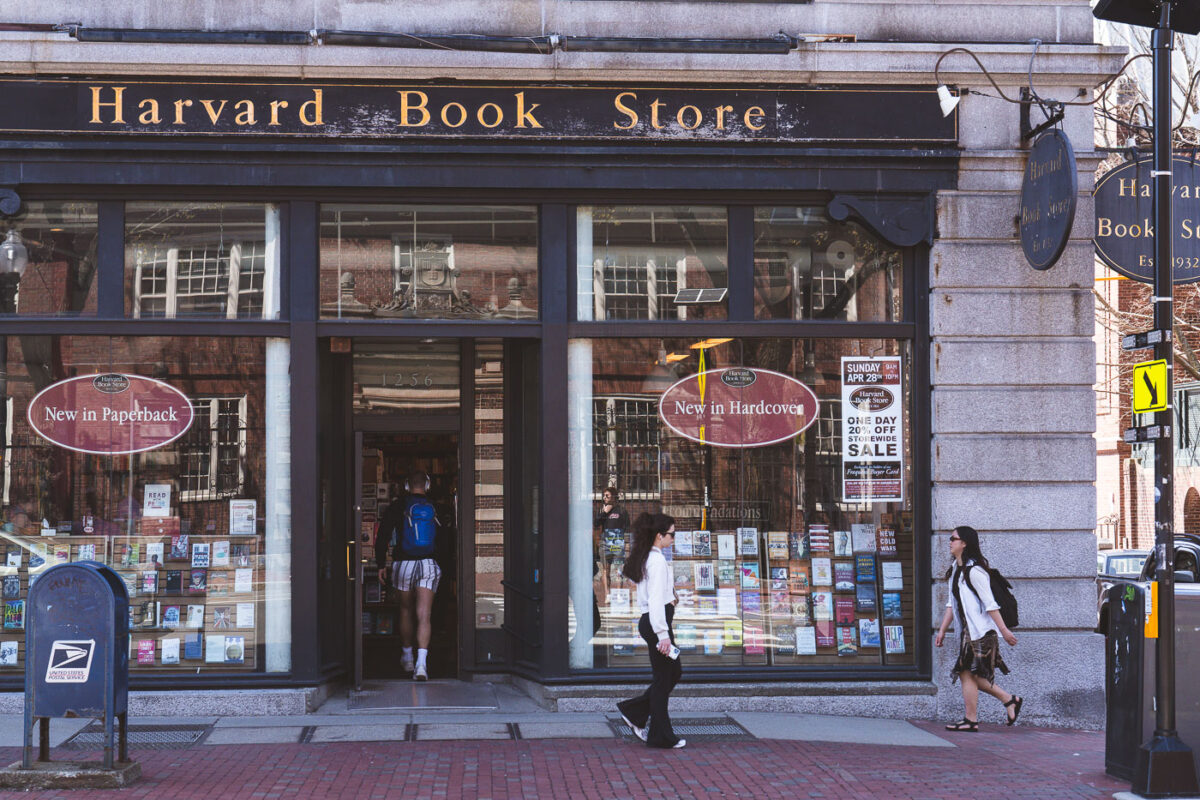
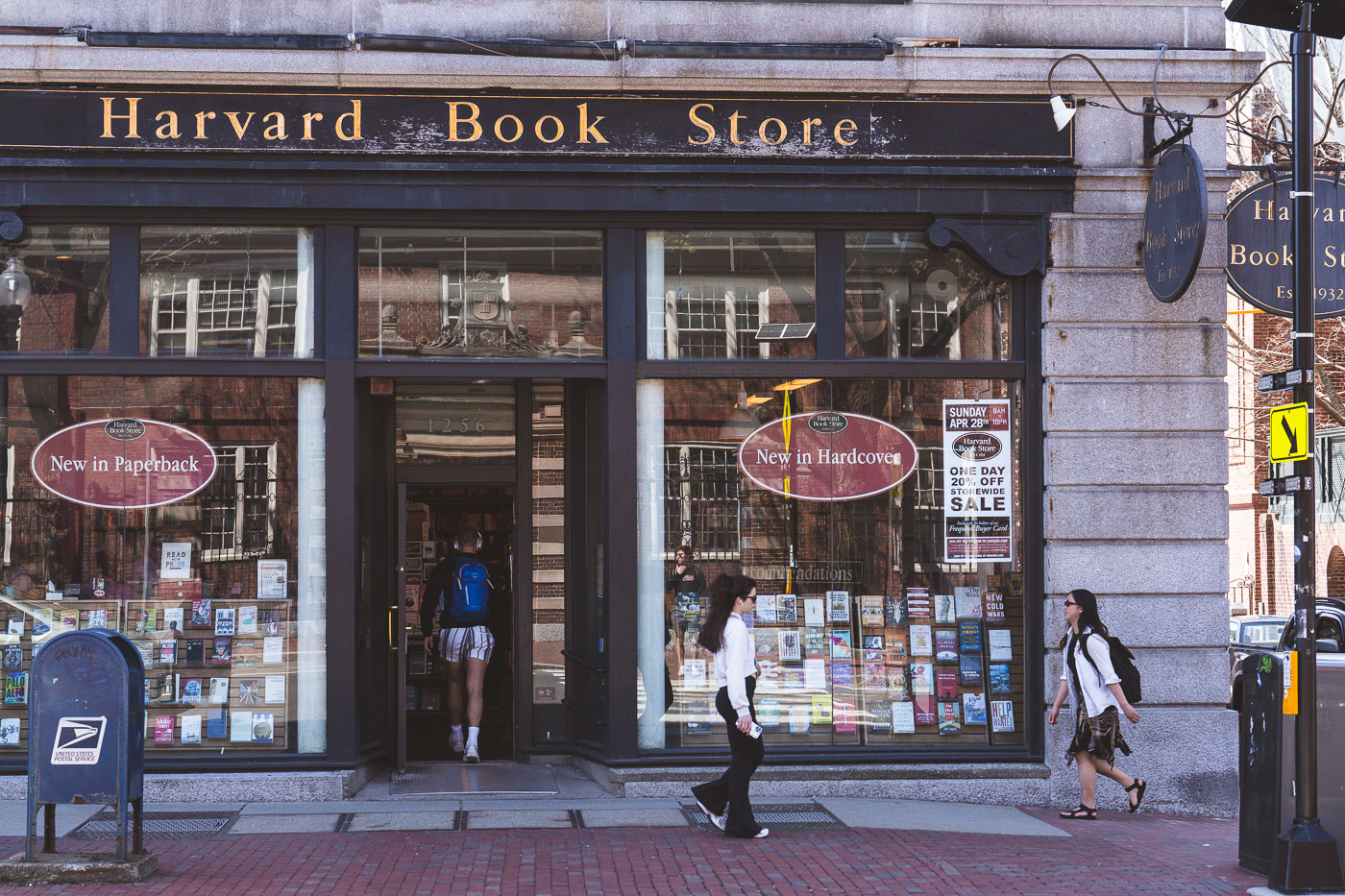
Students walking outside the Harvard University book store
Located in the heart of Harvard Square in Cambridge, Massachusetts, the Harvard Book Store has been a cornerstone of the local literary community since its founding in 1932. Known for its carefully curated selection of new and used books, author events, and a commitment to independent publishing, the shop serves both university students and the wider public. Its iconic storefront, with gold-lettered signage and deep window displays, reflects the enduring culture of scholarship and reading that defines the neighborhood around Harvard University.

Built in Minneapolis

Photographs made over time, focused on place, public life, and ongoing reporting.

Browse by location, move through long-running series, or start with recent work.

© 1996–2026 Chad Davis