Santa Catalina Arch

4 photos · 2020

4 photographs tagged Santa Catalina Arch, 2020.
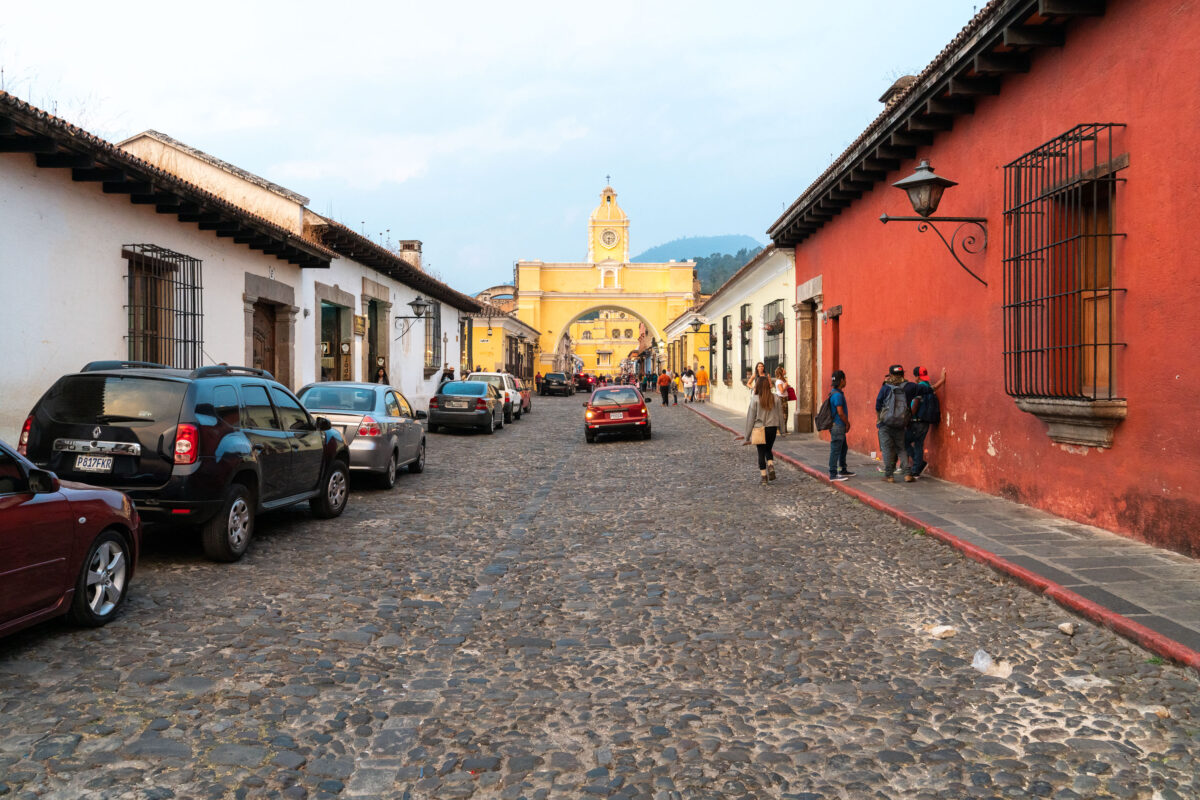
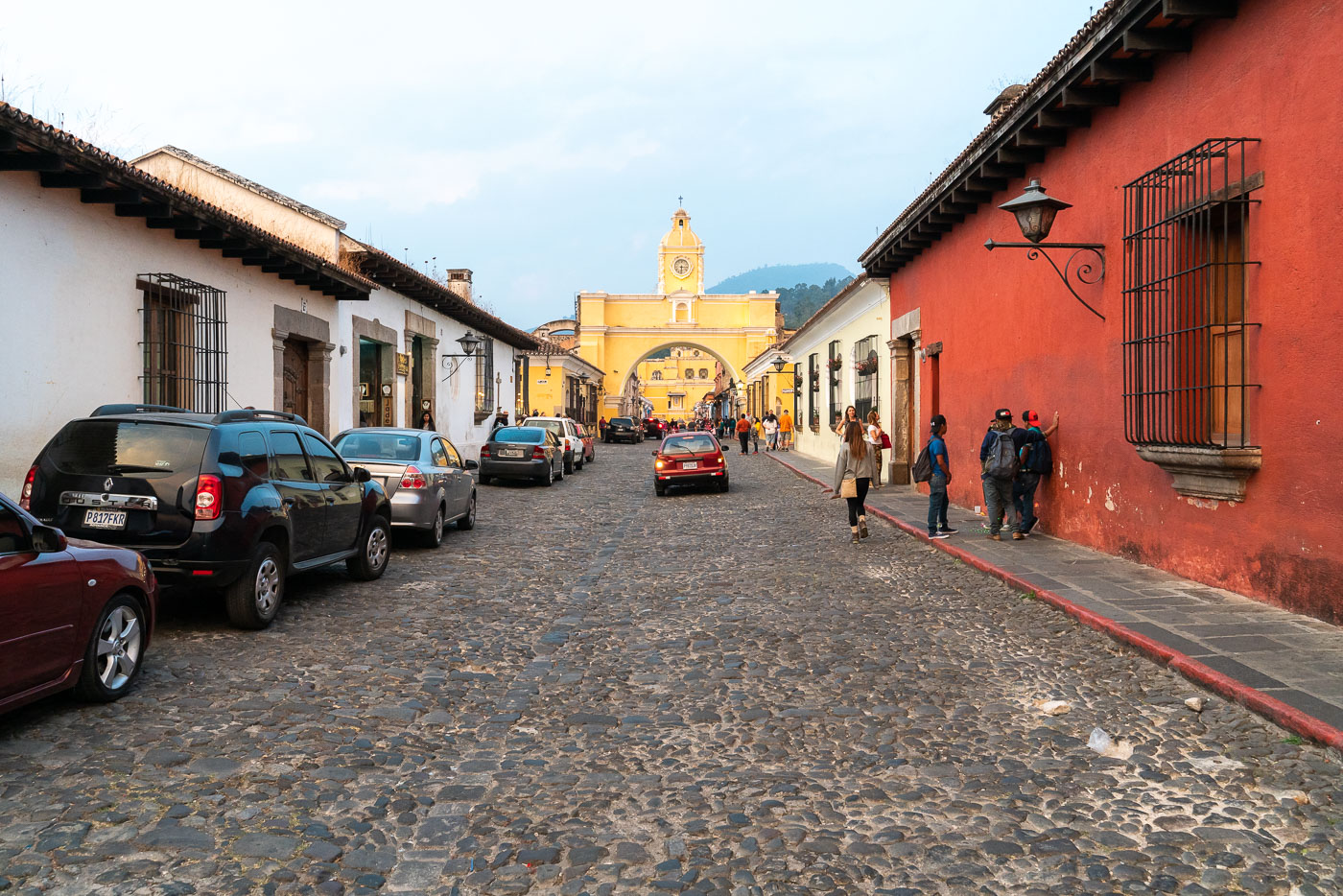
Yellow Santa Catalina Arch with clock tower stands at the end of a cobblestone street lined with colonial buildings in Antigua, Guatemala.
Santa Catalina Arch spans 5a Avenida Norte in Antigua Guatemala, built around 1690 as a covered passage for the Convento de Santa Catalina Virgen y Mártir so cloistered nuns could cross between the convent's two buildings without appearing in public. The convent closed after the 1773 Santa Marta earthquake, but the arch survived and received its clock in the 19th century. Volcán de Agua rises in line with the passage, a view that has made the corridor one of the most ed streets in the city.

5a Avenida Norte Leading to Santa Catalina Arch, Antigua
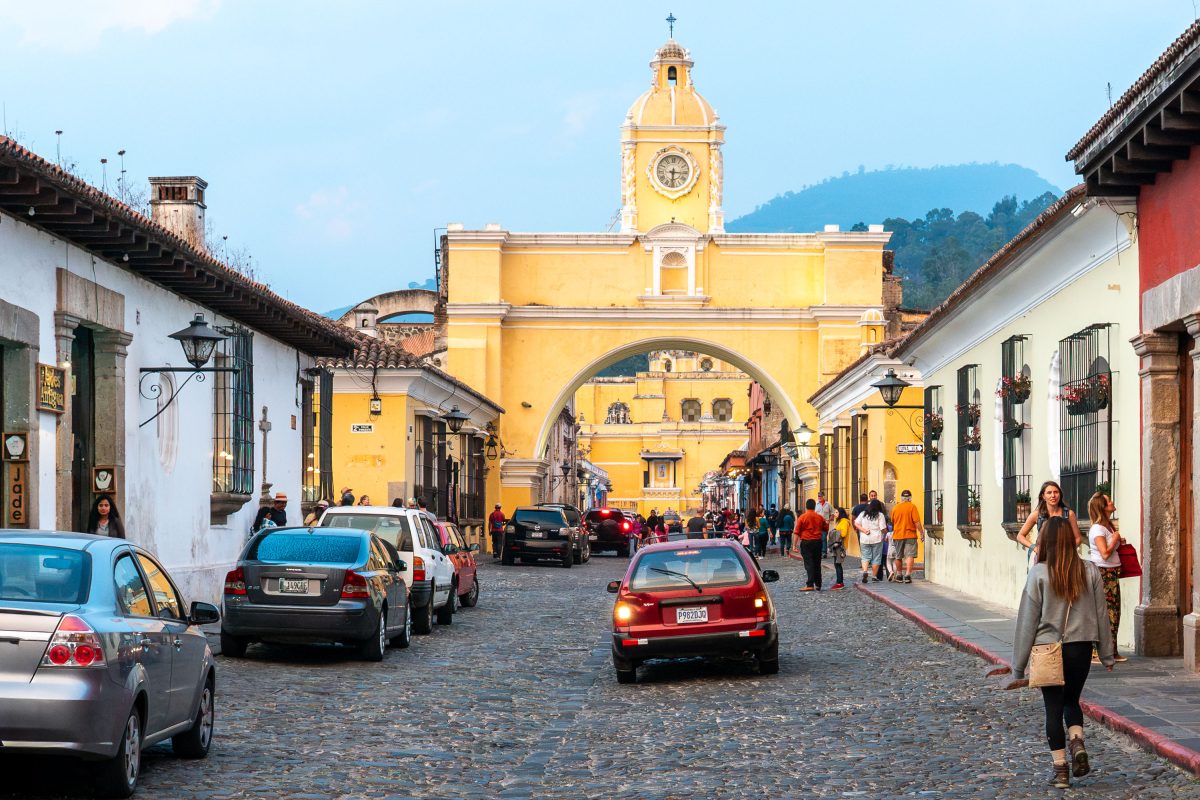
Yellow Santa Catalina Arch spanning a cobblestone street in colonial Antigua Guatemala, with a clock tower visible above the archway.
Santa Catalina Arch crosses 5a Avenida Norte in Antigua, Guatemala. Nuns from the adjoining Santa Catalina convent had the arch built in 1694 so they could pass between the convent and its school without stepping into public view, a practice tied to their cloistered vows. The clock mounted on the arch was added in the 19th century. Antigua's historic center, which includes the arch, was named a UNESCO World Heritage Site in 1979.

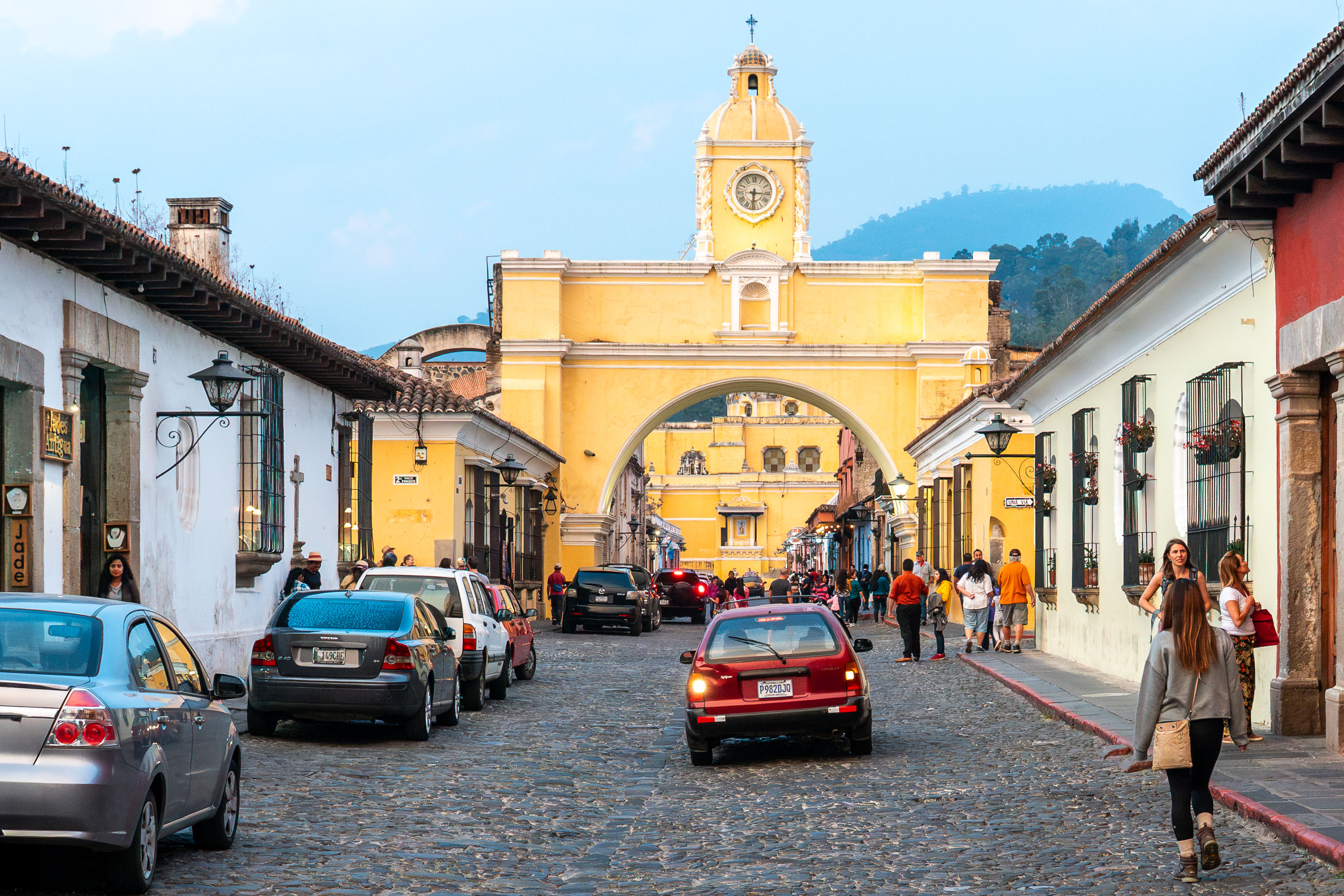
Traffic Beneath Santa Catalina Arch in Antigua Guatemala
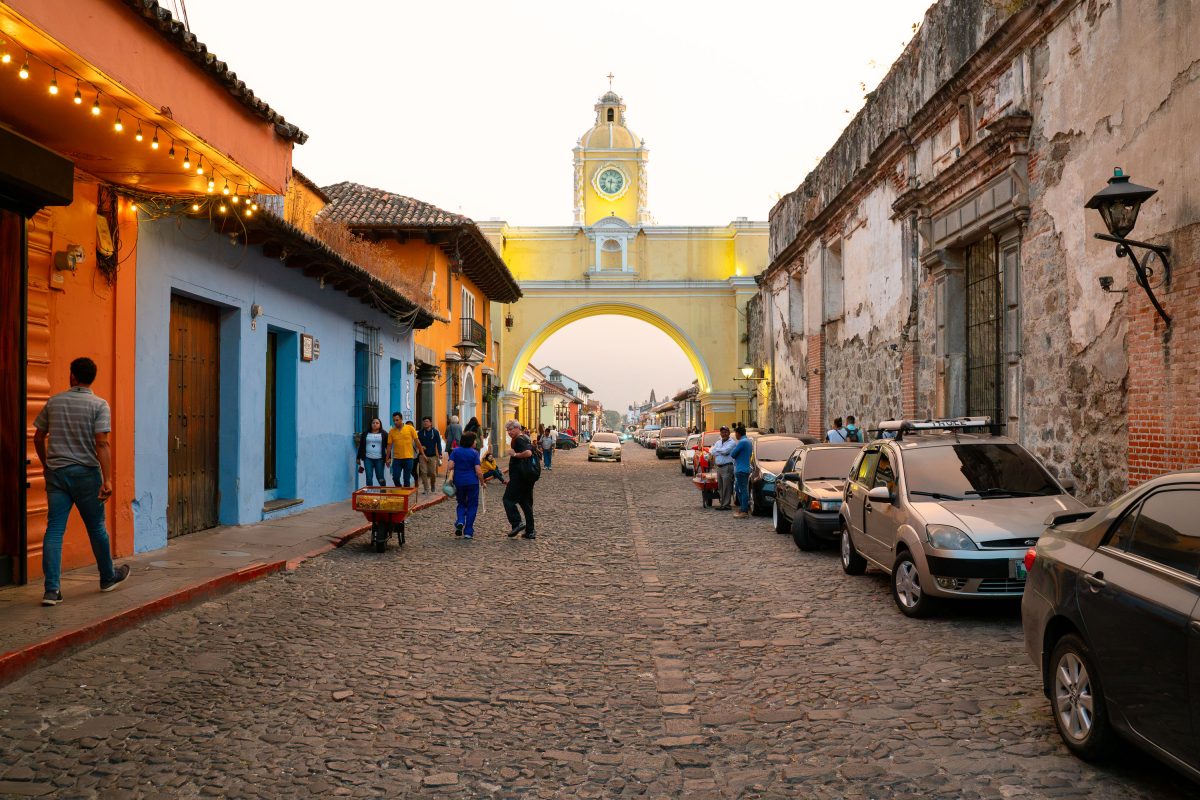
Santa Catalina Arch spans a cobblestone street in Antigua Guatemala, connecting a former convent to a school built by nuns in 1694.
The Santa Catalina Arch spans Calle del Arco in Antigua Guatemala, linking a former Santa Catalina convent to a school on the opposite side of the street. Cloistered nuns had the arch built in 1694 so they could pass between the two buildings without being seen in public, a practice tied to their order's vows of seclusion. A clock was added to the structure in the 19th century. Antigua served as the capital of the Kingdom of Guatemala until a series of earthquakes in 1773 destroyed much of the city, leading the Spanish crown to move the capital to present-day Guatemala City. UNESCO named Antigua a World Heritage Site in 1979 for its preserved Spanish Baroque architecture and colonial street grid.

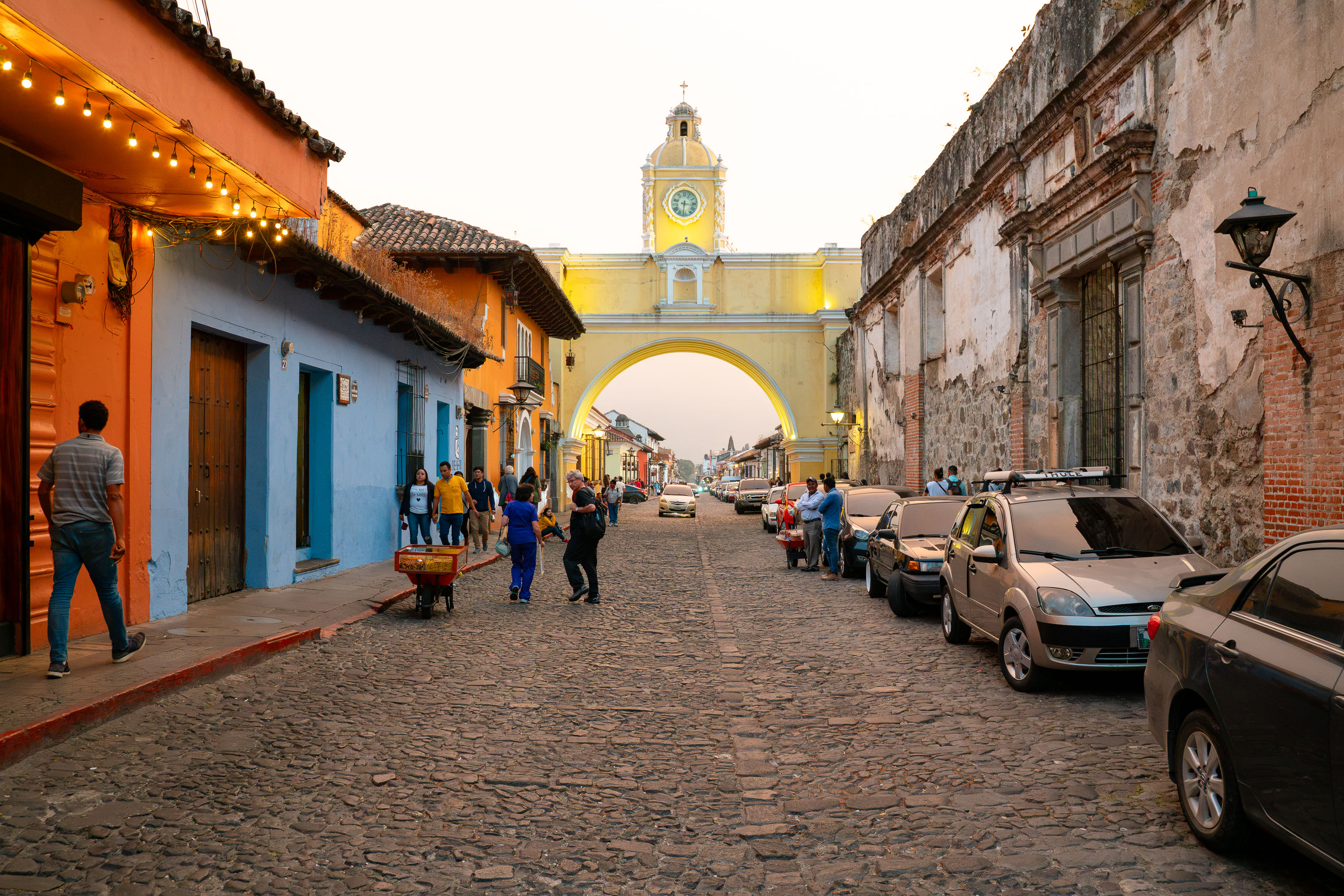
Santa Catalina Arch Over Calle del Arco, Antigua Guatemala
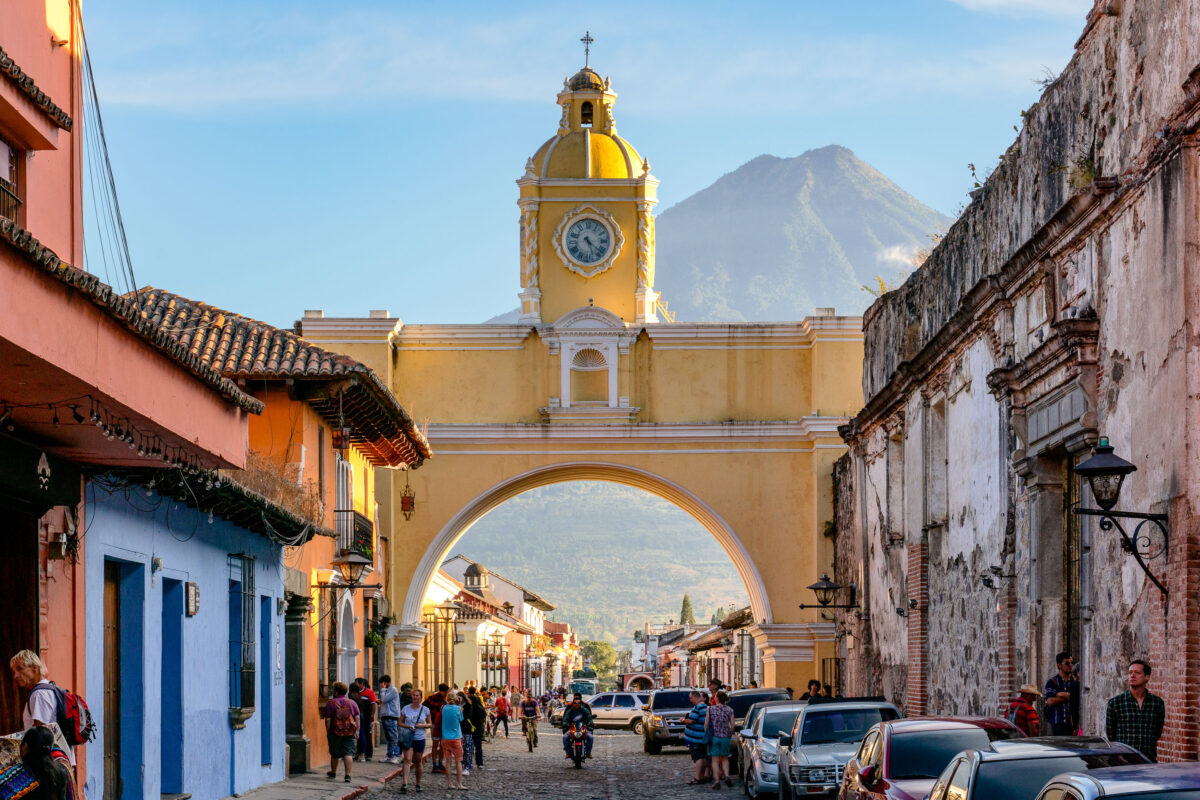
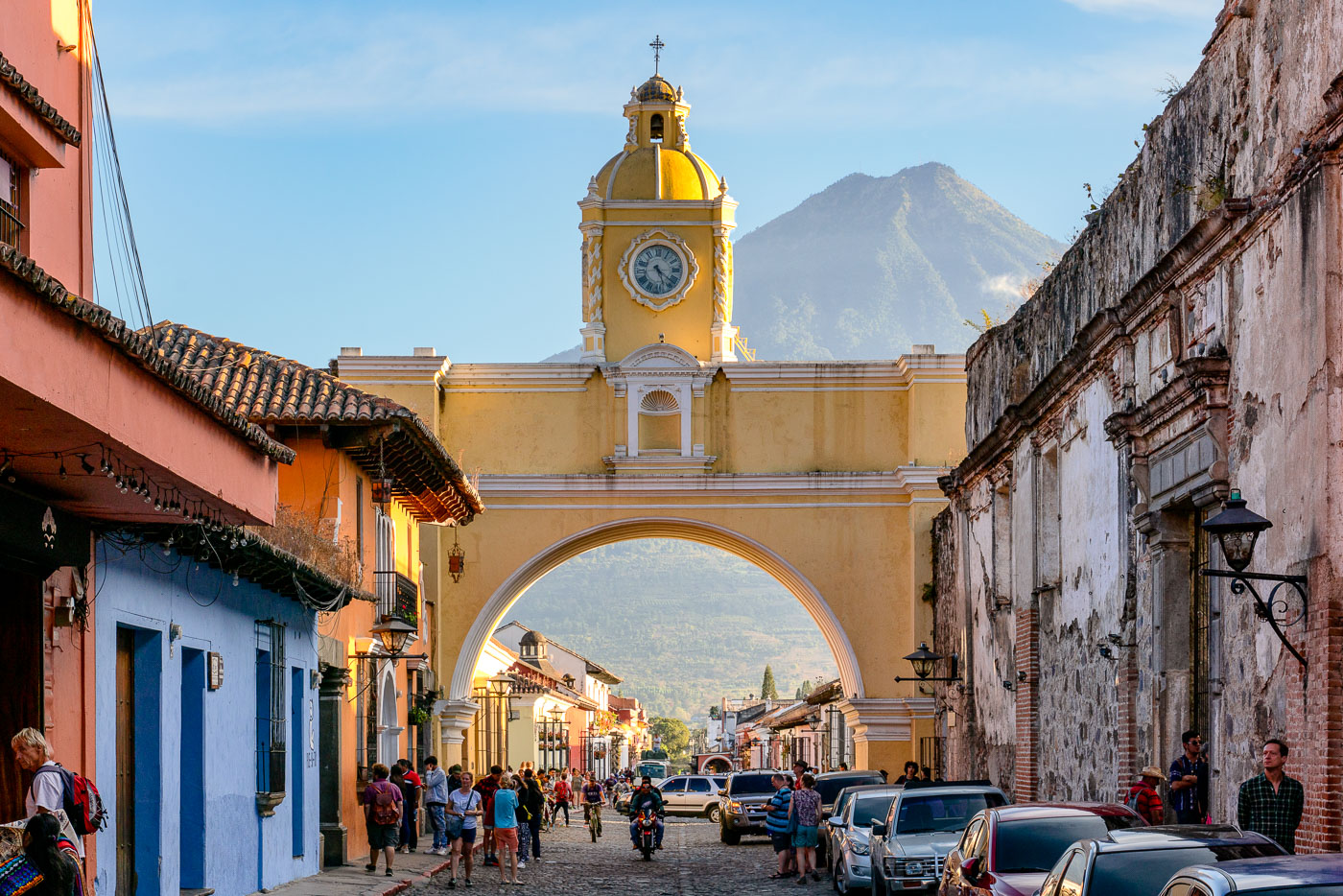
Santa Catalina Arch with its yellow clock tower frames a cobblestone street in colonial Antigua Guatemala, with Volcán de Agua rising in the background.
Santa Catalina Arch spans 5a Avenida Norte in Antigua Guatemala, one of the city's most recognized colonial structures. It was built in 1694 to let cloistered nuns of the Santa Catalina convent cross the street to an adjoining school without being seen in public, as their order's rules forbade. The convent itself was founded in 1609 and largely destroyed by the 1773 earthquake that led Spanish authorities to relocate the colonial capital to present-day Guatemala City. The arch's clock tower was added in the 19th century, after the city had already been abandoned as the seat of government. Volcán de Agua, a roughly 3,760-meter stratovolcano, rises directly south of the city and is visible through the arch on clear days.

Santa Catalina Arch and Volcán de Agua, Antigua Guatemala