Minnesota

5,831 photos · 2008–2026

5,831 photographs tagged Minnesota, 2008–2026.
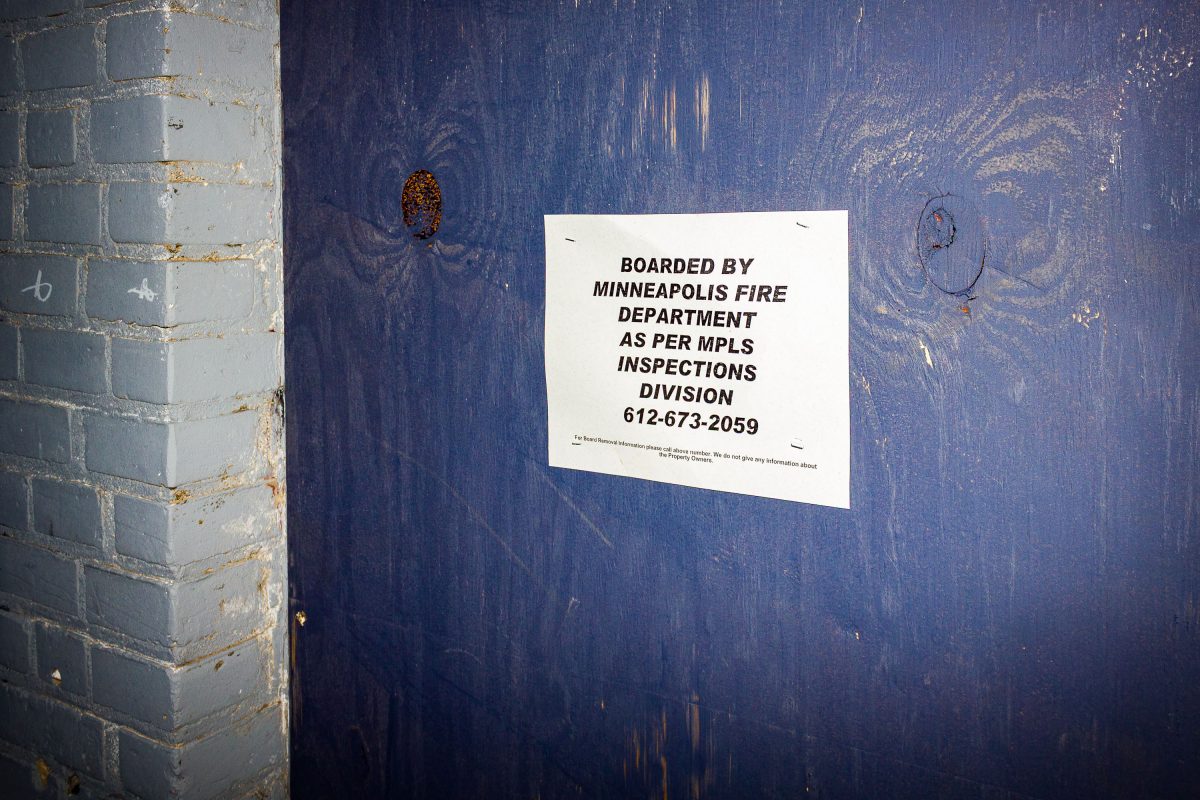
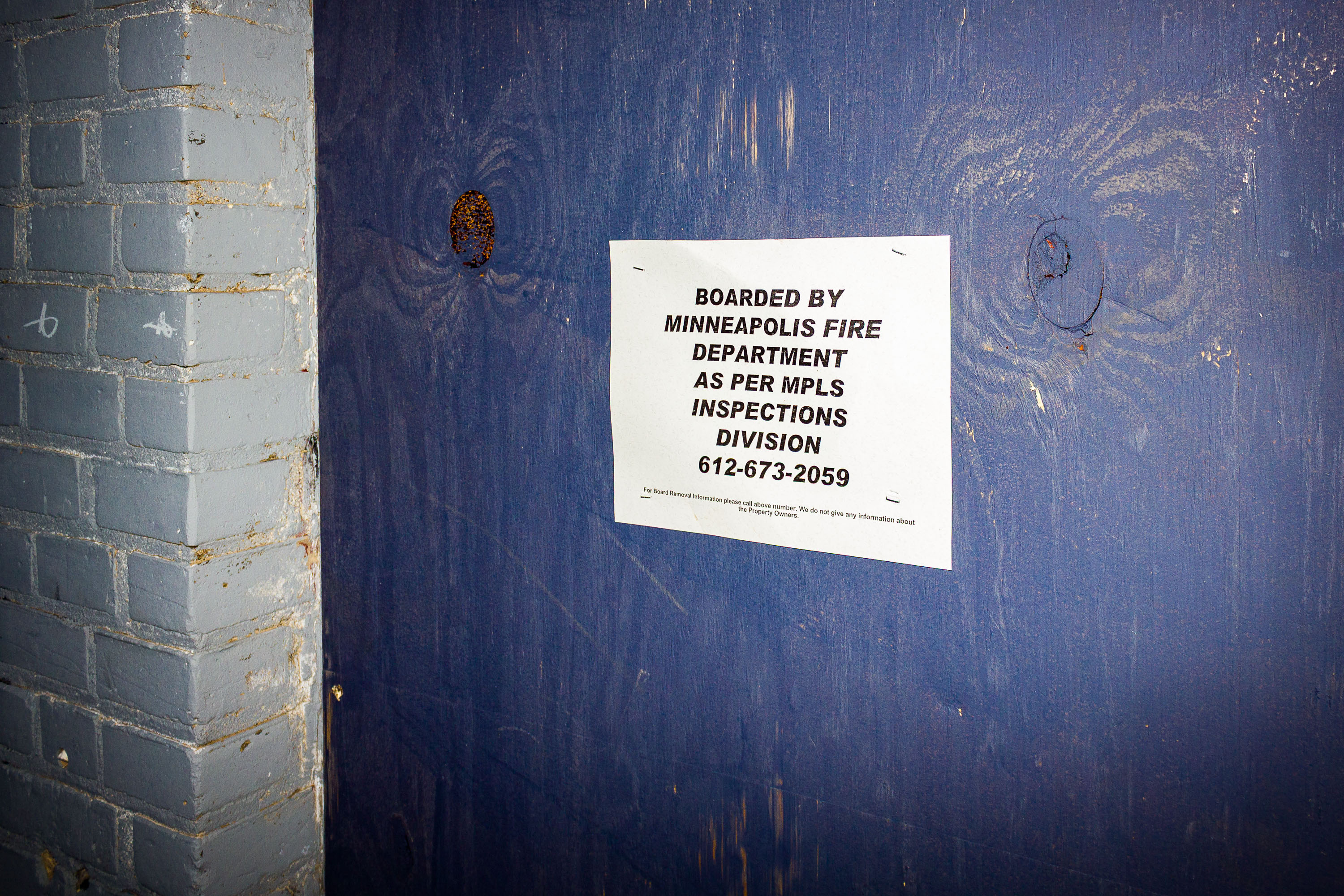
Boarded by Minneapolis Fire Signage
A sign reading Boarded by Minneapolis Fire Department as per MPLS inspections

Boarded by Minneapolis Fire Signage

Dinkytown graffiti in Minneapolis reads, “The banks got bailed out, the people got sold out.”
Dinkytown in Minneapolis is the site of graffiti reading, “The banks got bailed out, the people got sold out.” The wall sits near the University of Minnesota in a neighborhood known for student-oriented businesses and street art.

Dinkytown Banks Got Bailed Out Graffiti, Minneapolis

Minneapolis Convention Center at night with downtown Minneapolis in the background.
The Minneapolis Convention Center in Minneapolis, Minnesota, is a major venue for trade shows, conventions, and public events. Opened in 1990, the complex is known for its domed roof structures. Downtown Minneapolis is visible in the background.

Minneapolis Convention Center at Night

Downtown Minneapolis skyline at night featuring the IDS Center and Capella Tower among surrounding office buildings.
The Minneapolis skyline includes the IDS Center, Capella Tower, and Foshay Tower, three of downtown's best known towers. The IDS Center, completed in 1972, rises 792 feet and remains the tallest building in Minnesota. The Foshay Tower, finished in 1929 as the city's first skyscraper, modeled its stepped shape after the Washington Monument.

Minneapolis Skyline: IDS Center, Capella Tower at Night

Schmidt's Brewery silos and tower in St. Paul, Minnesota, connected by a Landmark walkway.
Schmidt's Brewery in St. Paul, Minnesota, includes a brick tower, concrete silos, and an elevated conveyor walkway marked “Landmark.” The former brewery was founded in 1855 and ceased operations in 2002. The complex remains one of the city’s notable industrial landmarks.

Schmidt’s Brewery Silos and Tower, St. Paul, Minnesota

Downtown St. Paul, Minnesota skyline at night with the Cathedral of Saint Paul on the right.
Downtown St. Paul, Minnesota, is illuminated at night in September 2012. The skyline includes office towers, public buildings, and the Cathedral of Saint Paul on the right. St. Paul is the state capital and Ramsey County seat.

Downtown St. Paul Skyline at Night, September 2012

Abandoned brick house in Egg Harbor, Wisconsin, with a deteriorating roof and boarded windows.
Abandoned brick house in Egg Harbor, Wisconsin. The two-story brick residence has a late 19th- or early 20th-century appearance and is now in poor condition with a deteriorated roof and boarded or broken openings. Its form is consistent with a rural dwelling built during Door County’s early settlement period.

Abandoned brick house in Egg Harbor, Wisconsin
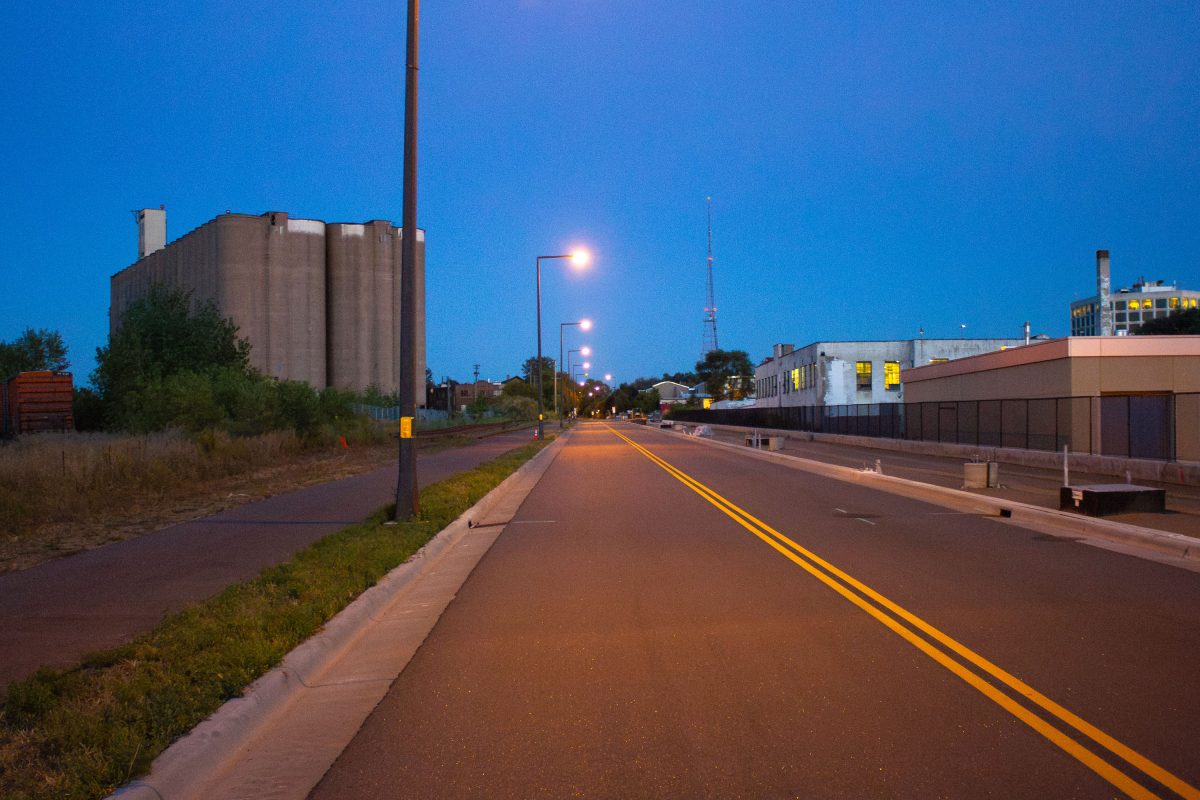
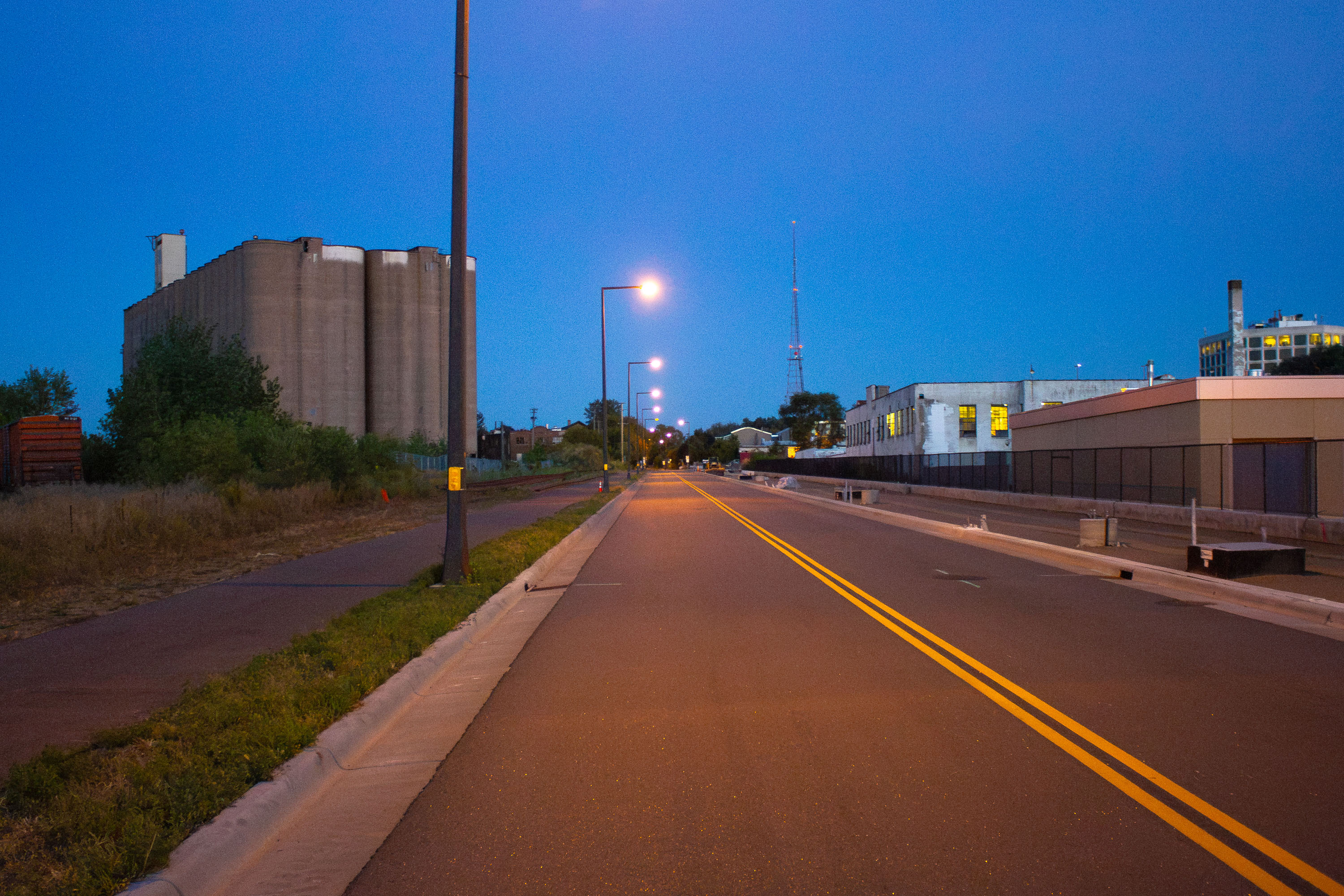
United Crushers grain elevator stands beside the University of Minnesota Transitway in the Dinkytown area of Minneapolis.
The University of Minnesota Transitway runs along the East Bank corridor in Minneapolis, carrying university and Metro Transit buses between the Twin Cities campuses.

United Crushers Elevator Along the Transitway, Minneapolis

HOTTEA yarn installation on a chain-link fence in Minneapolis.
HOTTEA yarn installation in Minneapolis. The temporary site-specific work uses stretched yarn on a chain-link fence near downtown, where the artist regularly creates ephemeral public art in unexpected places.

HOTTEA yarn installation, Minneapolis

Peterson’s House of Balls in Minneapolis, Minnesota, filled with sculptures, masks, and found objects.
Peterson’s House of Balls in Minneapolis, Minnesota, is an art installation created by Lee “Peterson” House. The private space combines found objects, sculptures, masks, and memorabilia in an eccentric indoor assemblage. It has long been known as one of Minneapolis’s most unusual artist-built interiors.

Peterson’s House of Balls, Minneapolis
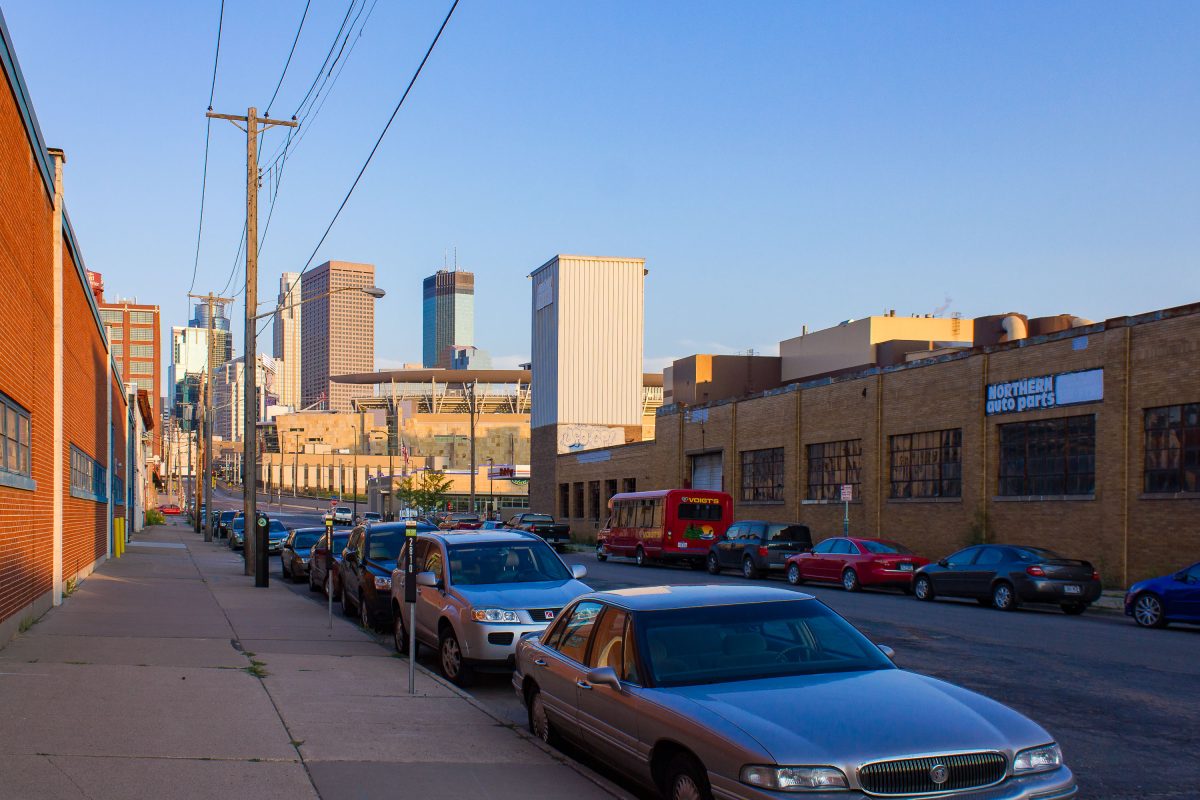
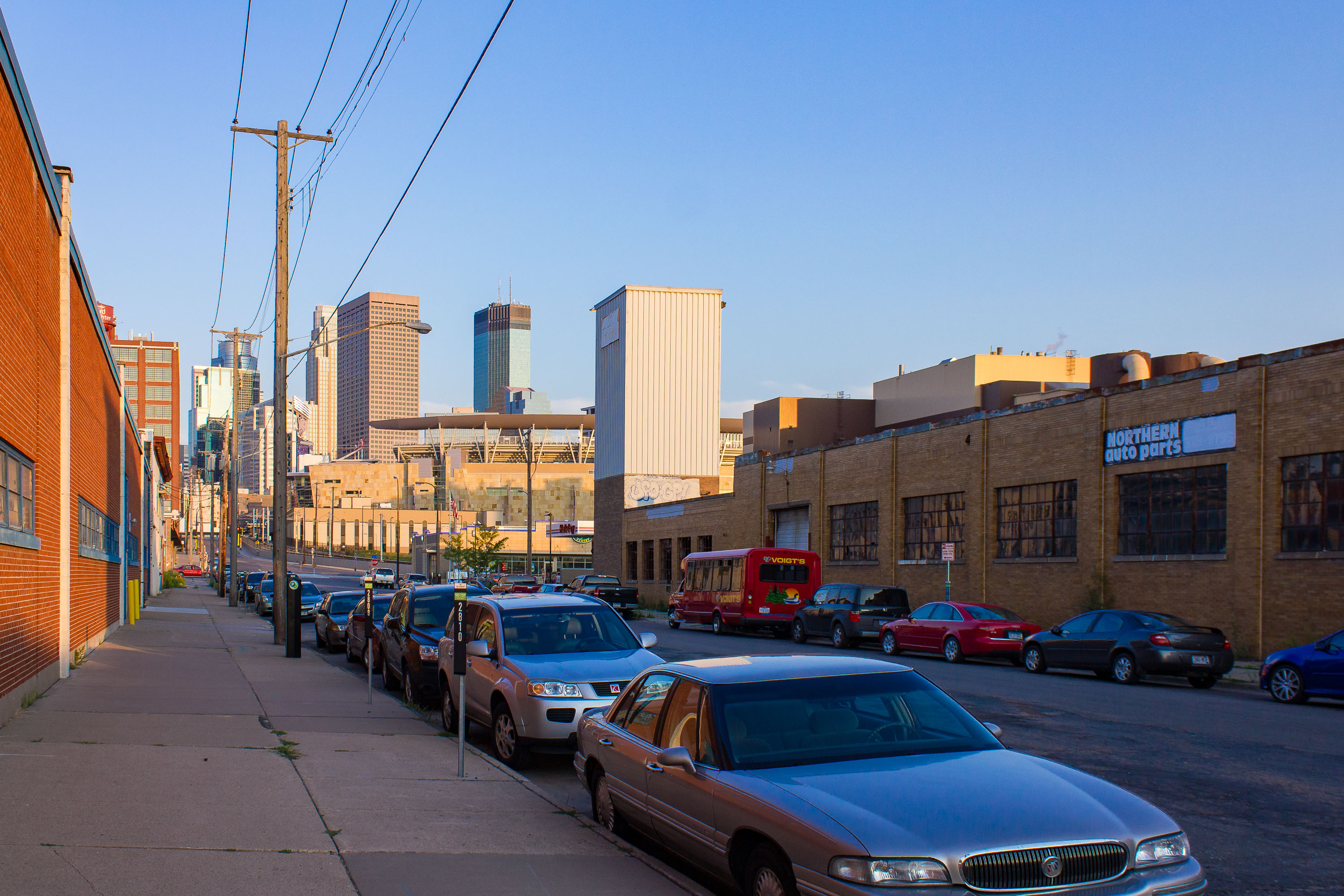
North 5th Street in Minneapolis's North Loop neighborhood with parked cars, brick buildings, and downtown skyline in background.
North 5th Street in the North Loop of Minneapolis before the demolition of Northern Auto Parts. The street is now lined with apartment buildings.

Downtown Minneapolis Skyline Beyond Northern Auto Parts on N 5th Street

Station 4 in St. Paul with a mural of Pabst Blue Ribbon cans and a skull.
Station 4 in St. Paul, Minnesota, features exterior mural art incorporating Pabst Blue Ribbon cans and a skull motif. The West Seventh nightclub has long hosted live music and other events.

Station 4 Pabst Mural, St. Paul

Art Happens Here stencil art on a St. Paul, Minnesota sidewalk.
Art Happens Here stencil art in St. Paul, Minnesota, is painted on a sidewalk. The design combines block lettering with a skyline silhouette inside the text.

Art Happens Here Stencil on St. Paul Sidewalk
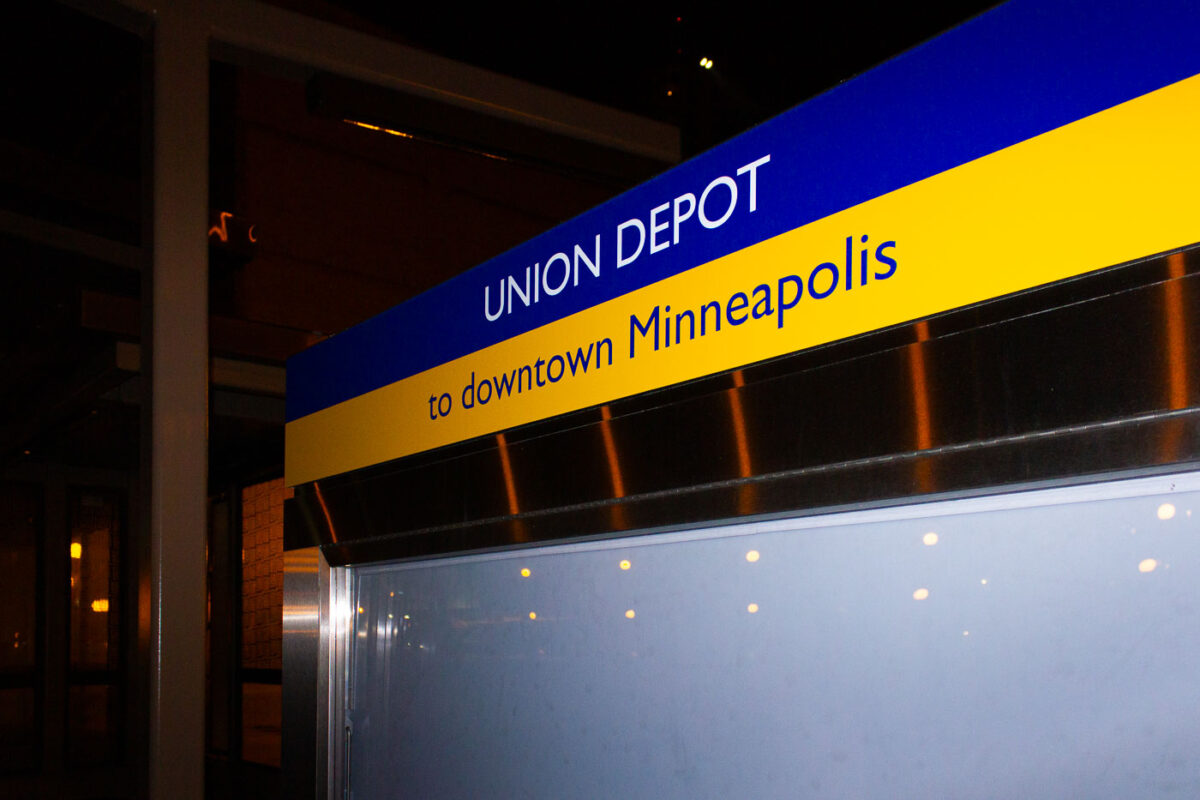
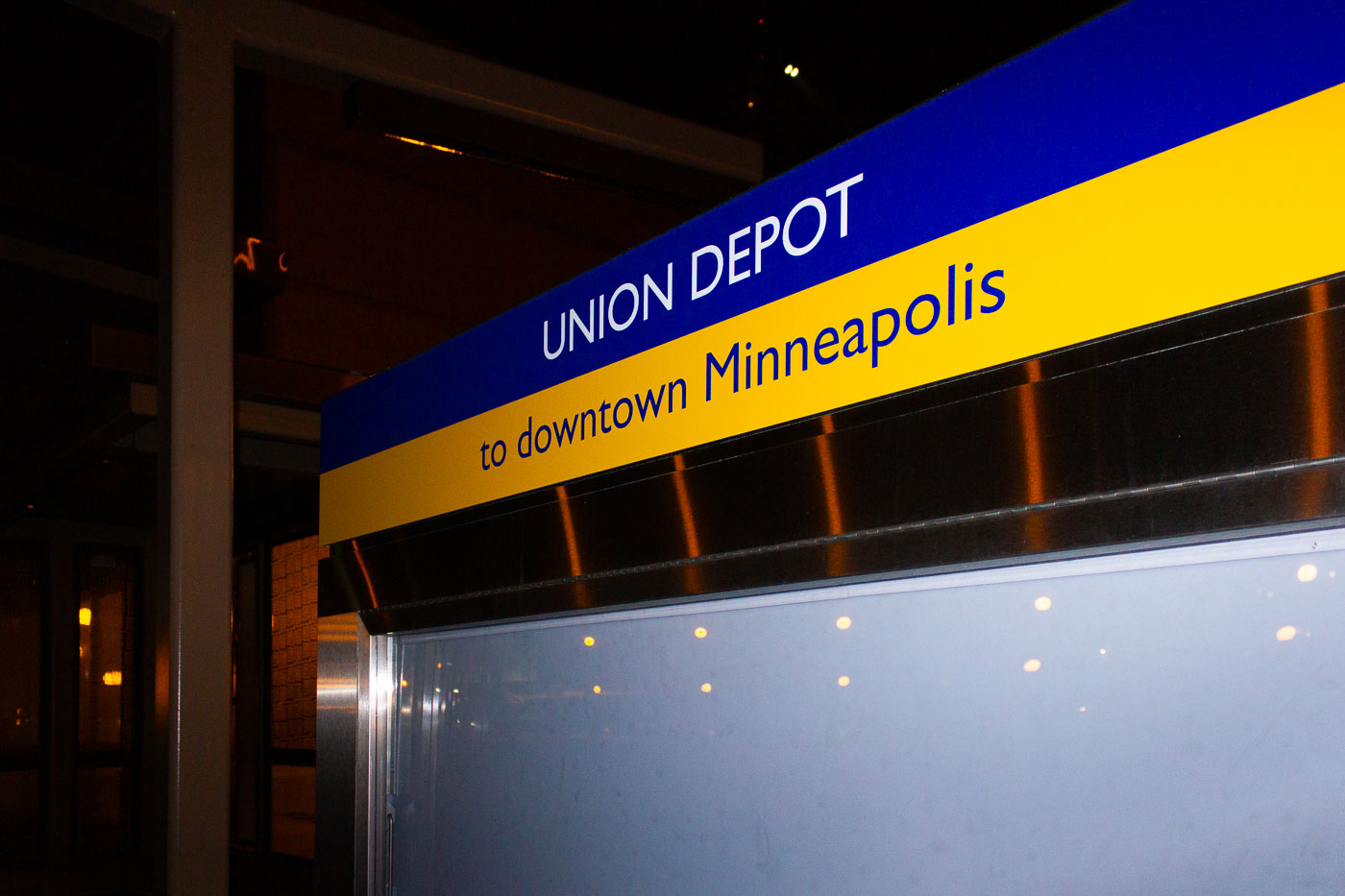
Union Depot station sign in St. Paul directing passengers to downtown Minneapolis via light rail.
Union Depot in St. Paul, Minnesota, is a regional transportation hub serving light rail, buses, and Amtrak. The restored 1923 terminal reopened in 2012 after decades of decline and renovation.

Union Depot Sign for Downtown Minneapolis Service at Night

St. Croix Meadows Dog Track in Hudson, Wisconsin, with cylindrical towers and rainbow bands.
St. Croix Meadows Dog Track in Hudson, Wisconsin, was a greyhound racing facility that opened in 1986. The track operated for more than two decades before closing in 2009 and later being demolished.

St. Croix Meadows Dog Track, Hudson, Wisconsin
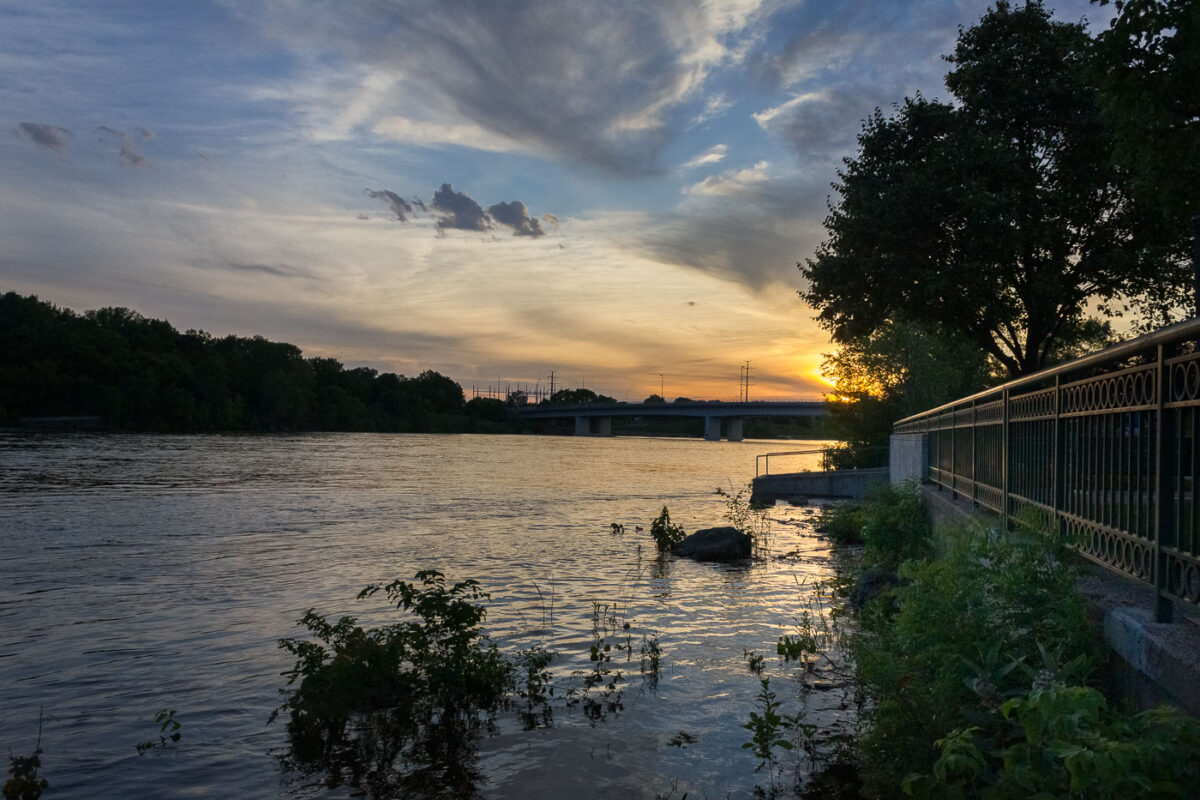
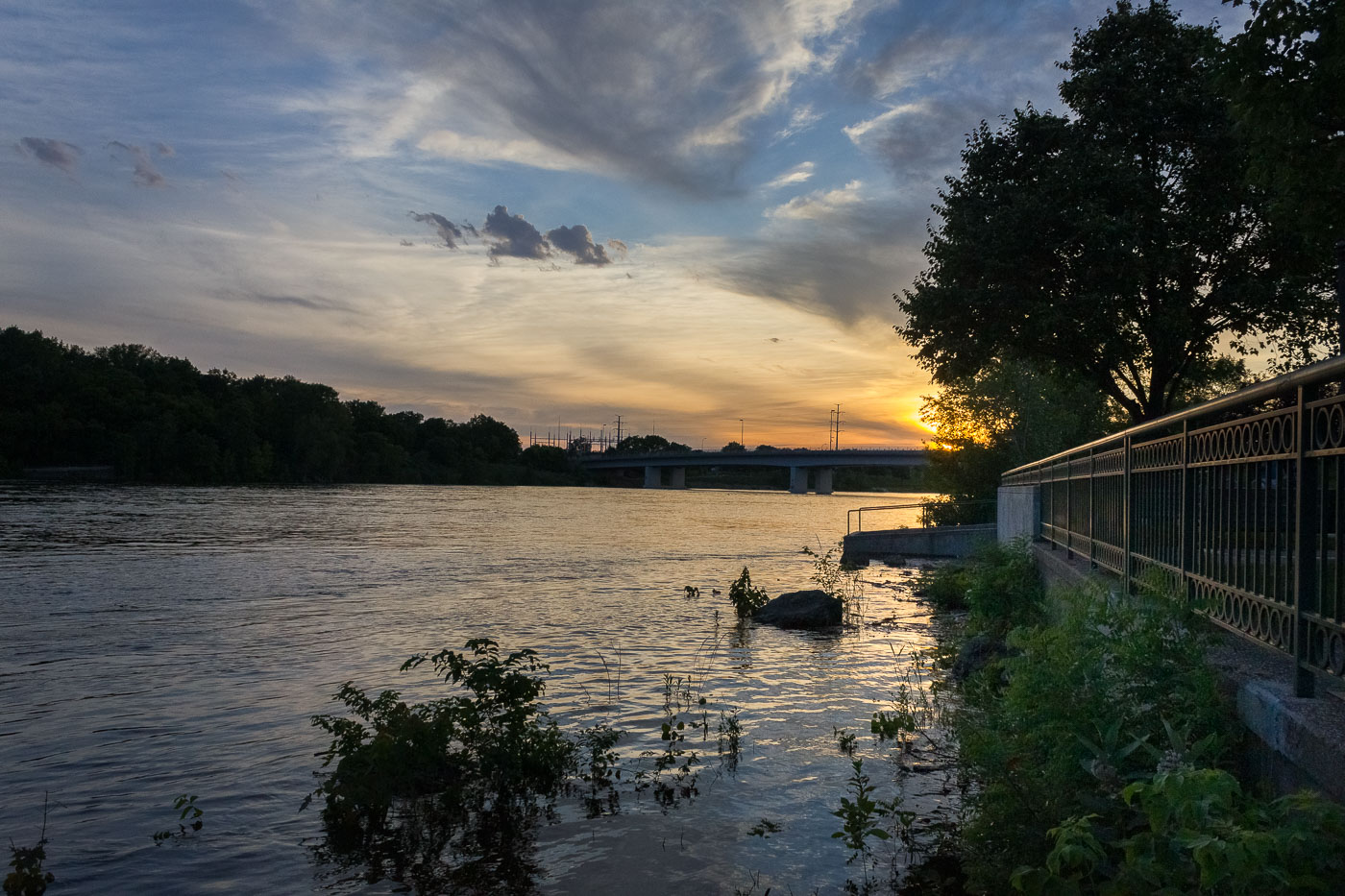
Mississippi River at Boom Island Park in Minneapolis at sunset.
The Mississippi River passes Boom Island Park in Minneapolis at sunset. Boom Island is a park on the river's west bank, north of downtown, with access to the riverfront and views of nearby bridges. The riverfront area was once used for logging and milling before becoming public parkland.

Mississippi River at Boom Island, Minneapolis

My Burger restaurant interior on Excelsior Boulevard in Minneapolis.
My Burger on Excelsior Boulevard in Minneapolis is a burger restaurant at the corner of Excelsior Boulevard and France Avenue. The interior combines a modern industrial design with diner-inspired touches. It is part of the commercial corridor in southwest Minneapolis.

My Burger, Excelsior Boulevard, Minneapolis

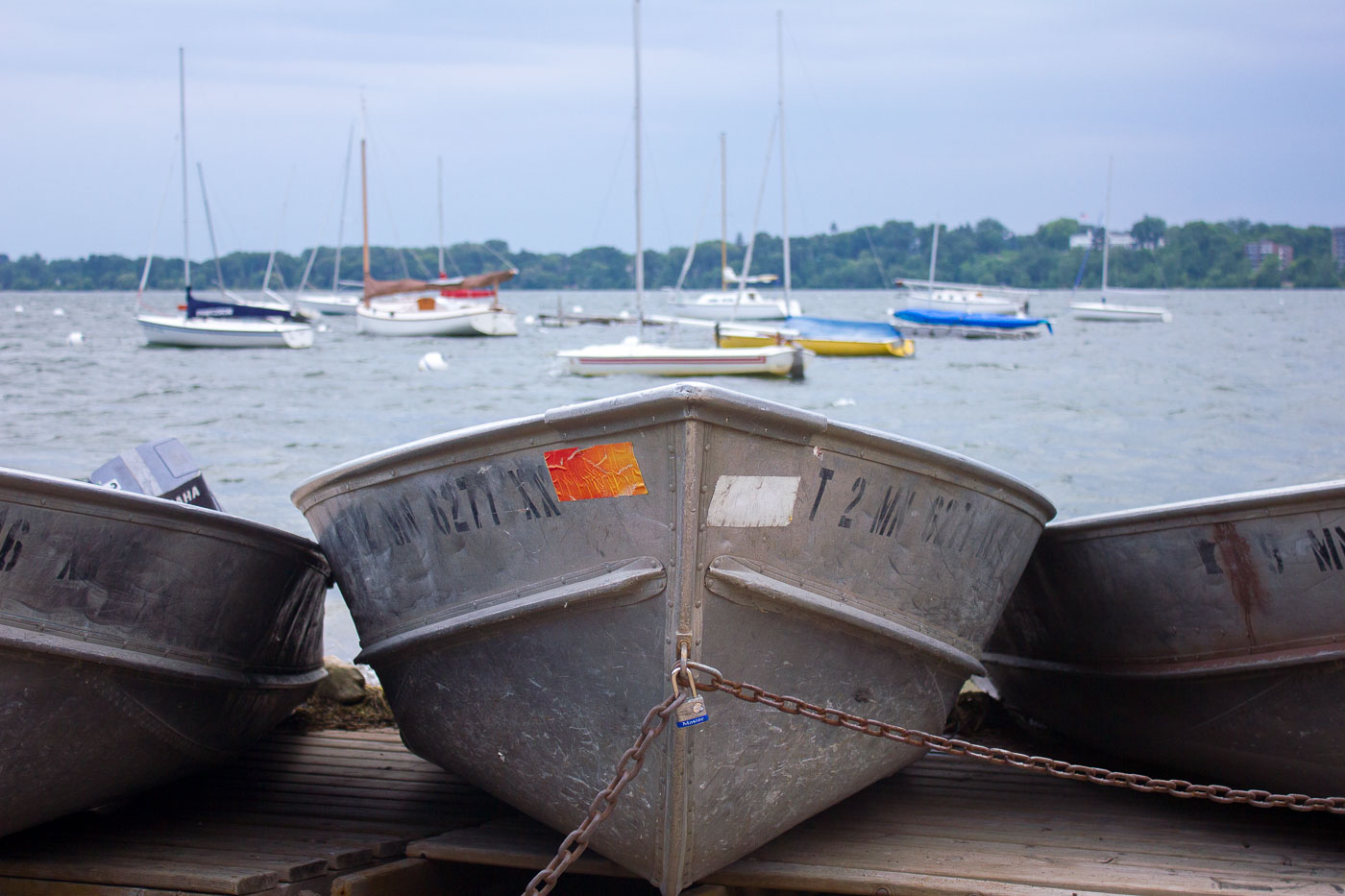
Aluminum boats moored on a wooden dock at Bde Maka Ska in Minneapolis, with sailboats anchored in the background.
Aluminum boats are secured on the wooden dock at Bde Maka Ska in Minneapolis. The lake, formerly known as Lake Calhoun, is one of the most popular bodies of water in the Chain of Lakes park system. It is a central feature of the city's parkland, offering residents and visitors opportunities for boating, swimming, and other water activities.

Rental Boats Chained Up at Bde Maka Ska

Banbury Place elevated walkway in Eau Claire, Wisconsin, with steel supports and enclosed span.
Banbury Place in Eau Claire, Wisconsin, includes this elevated walkway connecting former industrial buildings. The structure is part of the Banbury Place complex, a former manufacturing site adapted from earlier industrial use. Its steel supports and enclosed span are typical of utilitarian plant architecture.

Banbury Place Walkway Span, Eau Claire, Wisconsin
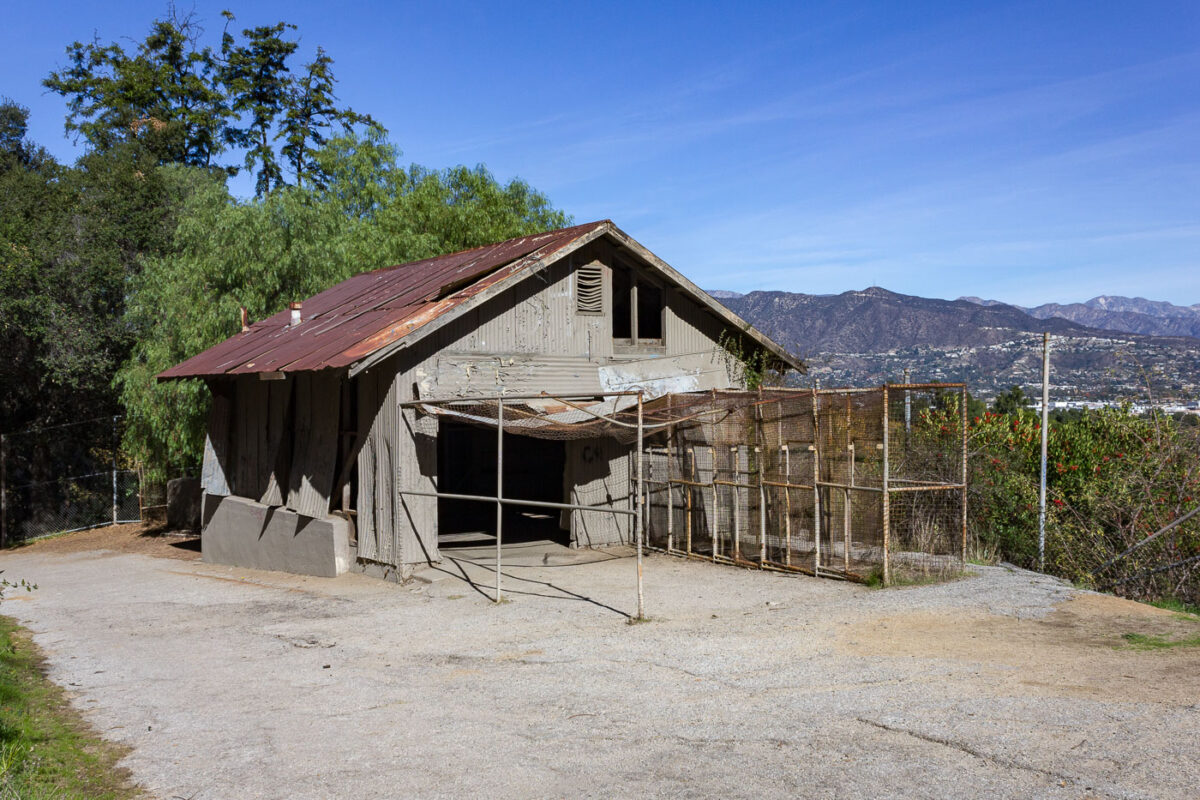
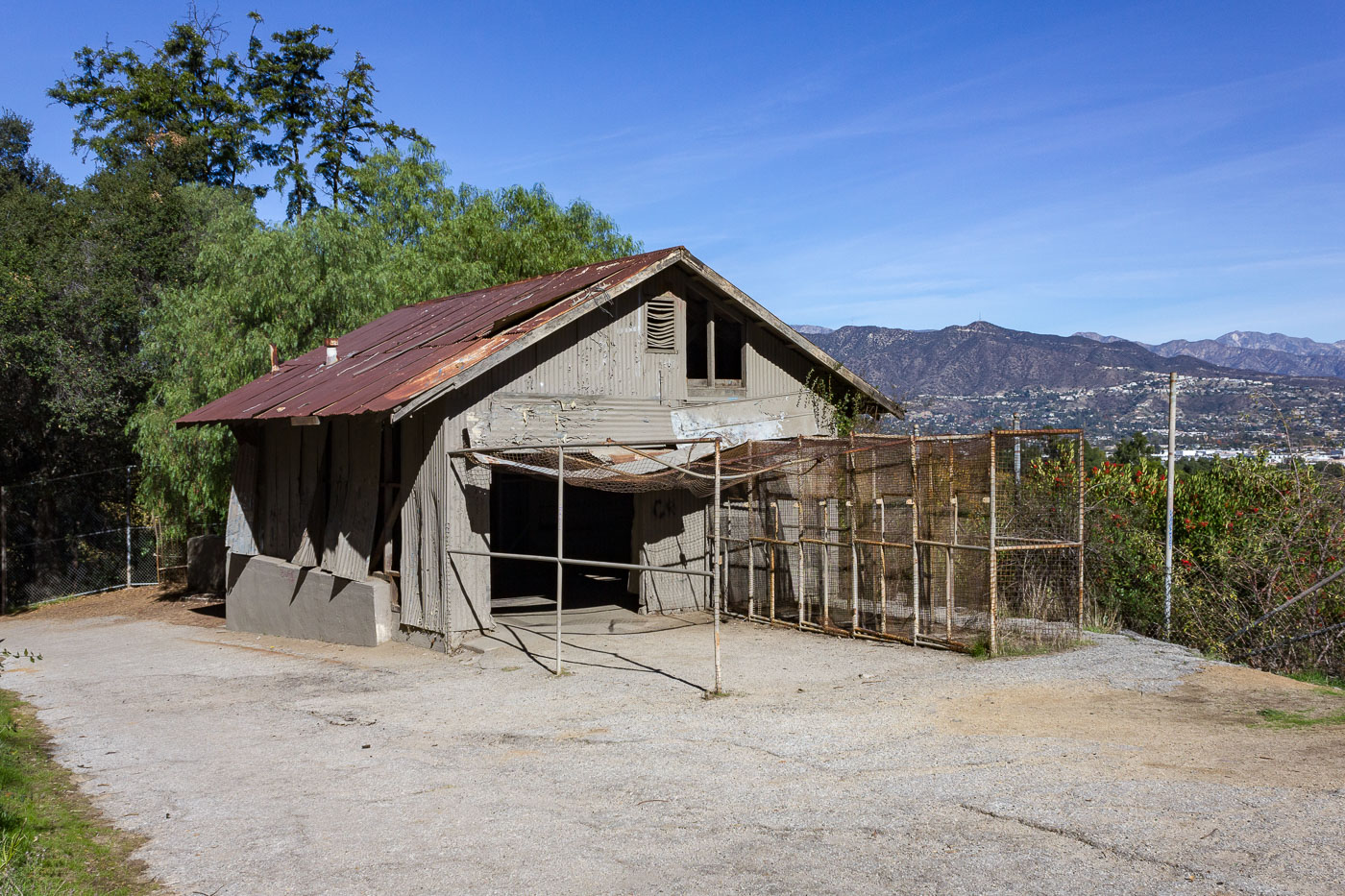
Abandoned animal enclosure from the original Los Angeles Zoo in Griffith Park, operating 1912–1965.
This former animal enclosure is a remnant of the old Griffith Park Zoo, which operated from 1912 to 1965 on the eastern side of the park. The zoo closed when its animals were relocated to the newly built Los Angeles Zoo in the adjacent hills, and the original grounds were left largely intact. Several of the old cages and dens still stand along the park's trails, built from wire mesh, wood, and concrete rather than the steel-reinforced enclosures used in modern zoos. The site is now open to hikers and picnickers as part of Griffith Park's public parkland.

Abandoned Animal Cage at the Old Griffith Park Zoo
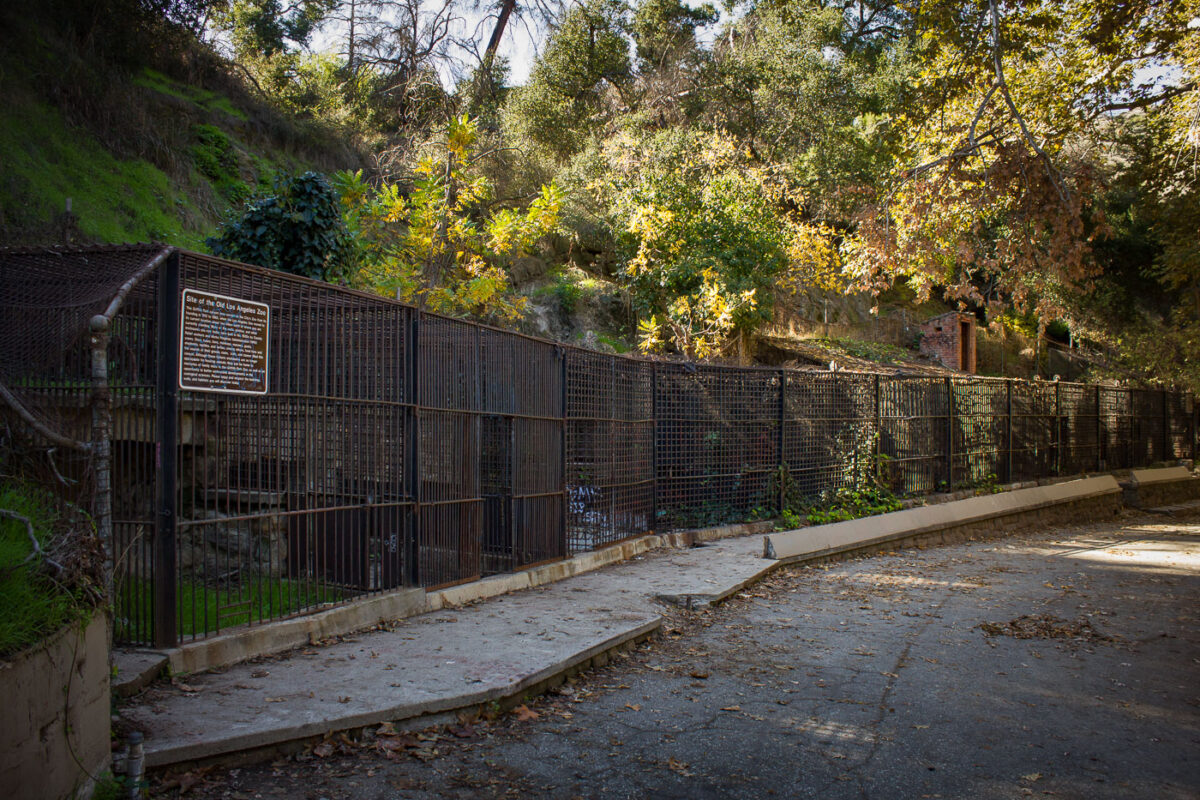
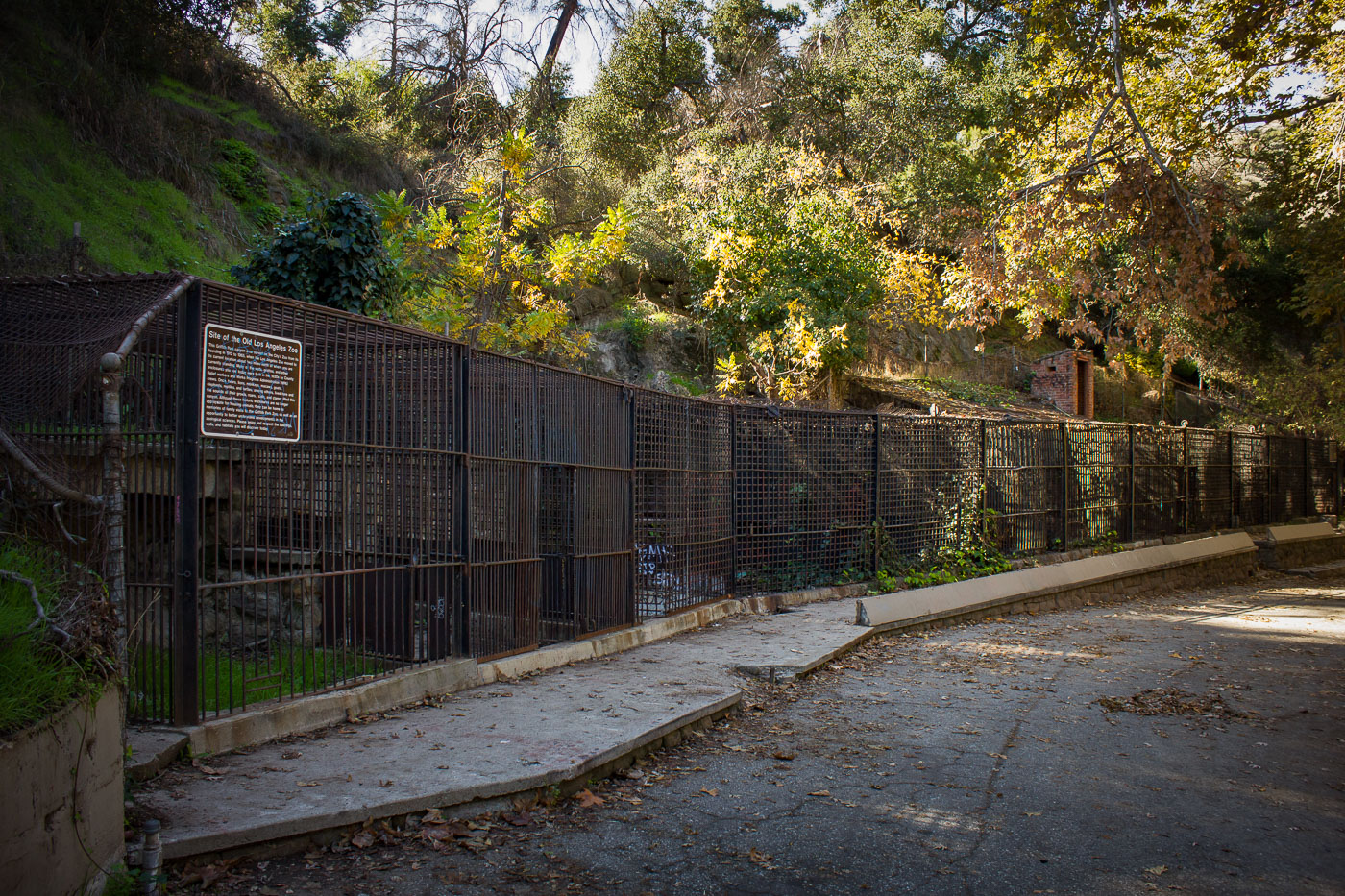
Abandoned animal enclosure with metal fencing and informational sign at the former Griffith Park Zoo, Los Angeles.
The old Griffith Park Zoo operated on this site from 1912 until 1966, when the animals moved to the newly built Los Angeles Zoo nearby. Many of the barred enclosures along this stretch date to the 1930s, when Works Progress Administration crews rebuilt much of the zoo's infrastructure. After closure, the grounds were absorbed into Griffith Park, and the old cages were left standing rather than demolished. Today the site is known informally as the Old Zoo, a picnic and hiking area where visitors can walk past the original enclosures.

Old Cages Along the Path at the Former Griffith Park Zoo
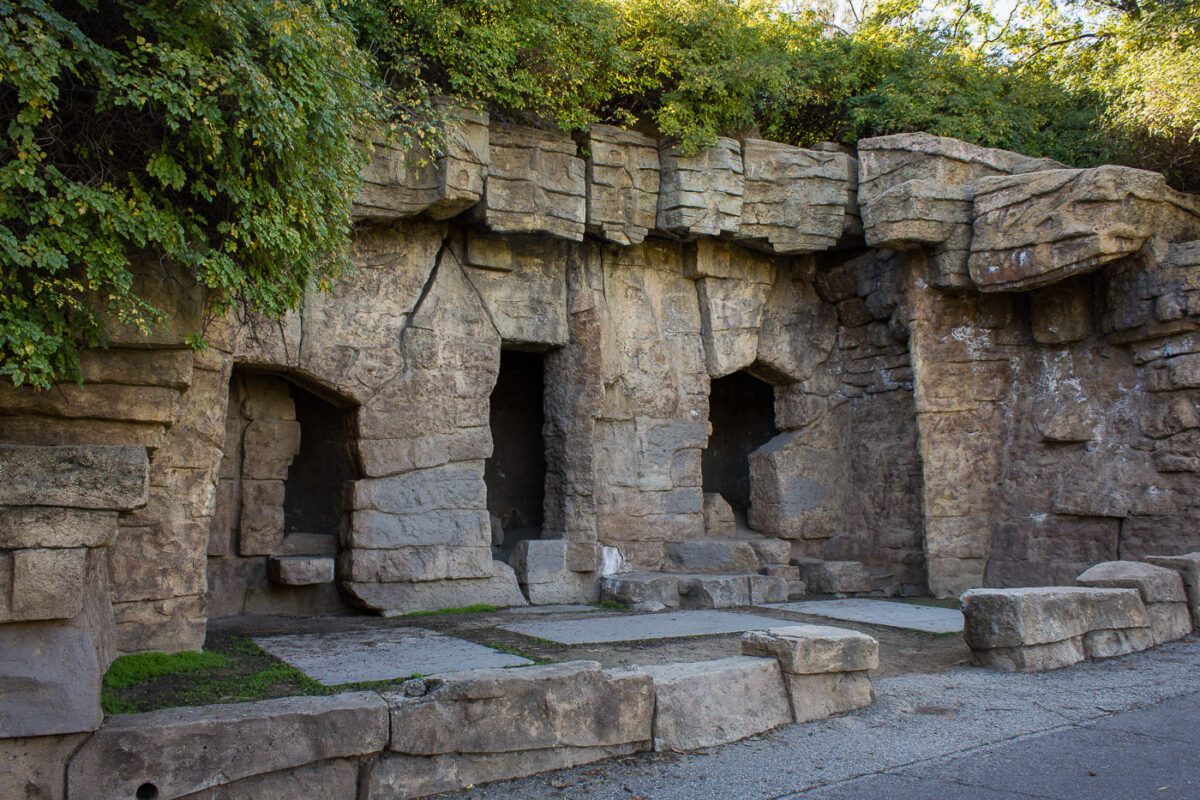
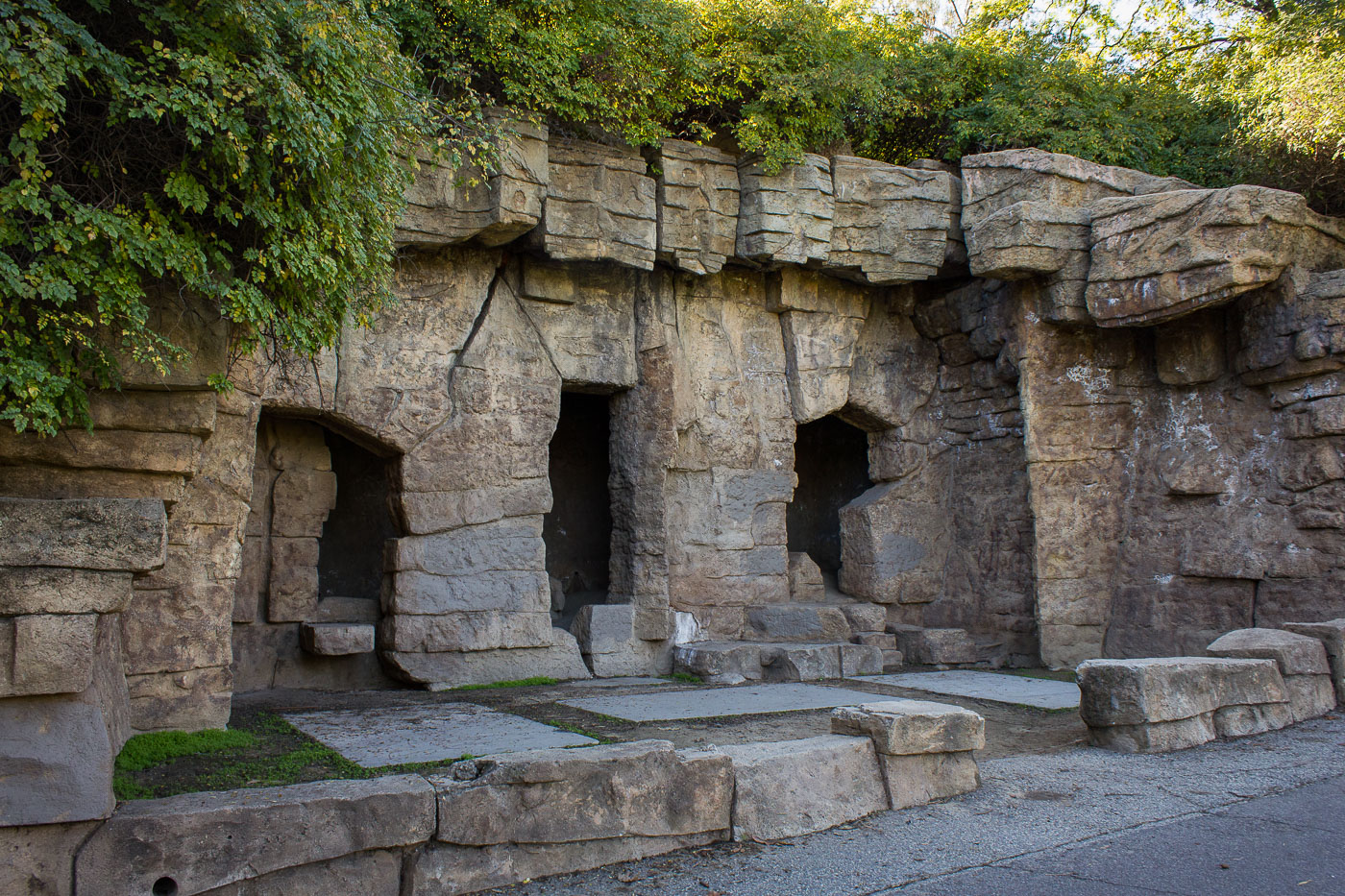
Abandoned stone bear enclosure with arched openings at the original Griffith Park Zoo, Los Angeles, 1912–1965.
These stone grottos are remnants of the original Griffith Park Zoo, which operated from 1912 until 1966. The zoo's bear dens were built into artificial rock formations meant to suggest a more natural enclosure than the barred cages common at the time. When the Los Angeles Zoo opened nearby in 1966, the old zoo grounds were left in place rather than demolished. The enclosures now sit along a paved walking path in Griffith Park, open to visitors as a historic ruin rather than a functioning exhibit.

Old Bear Grottos at the Original Griffith Park Zoo
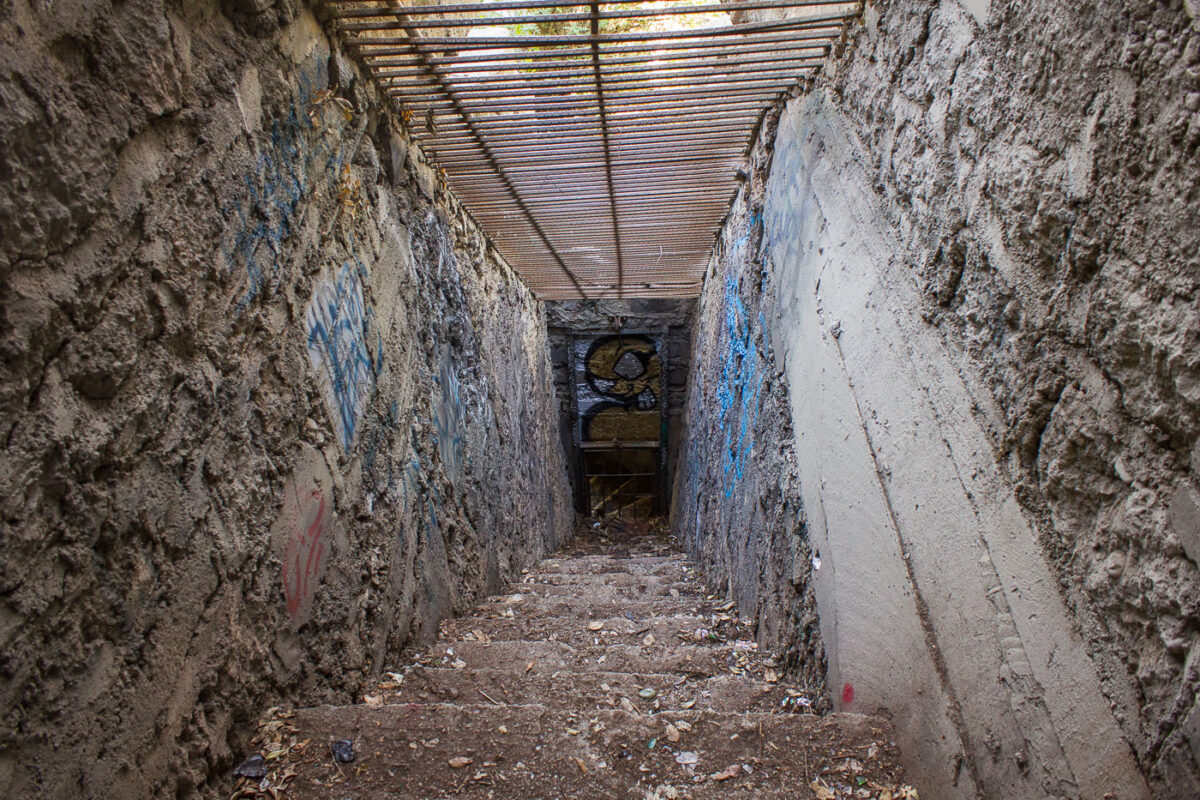
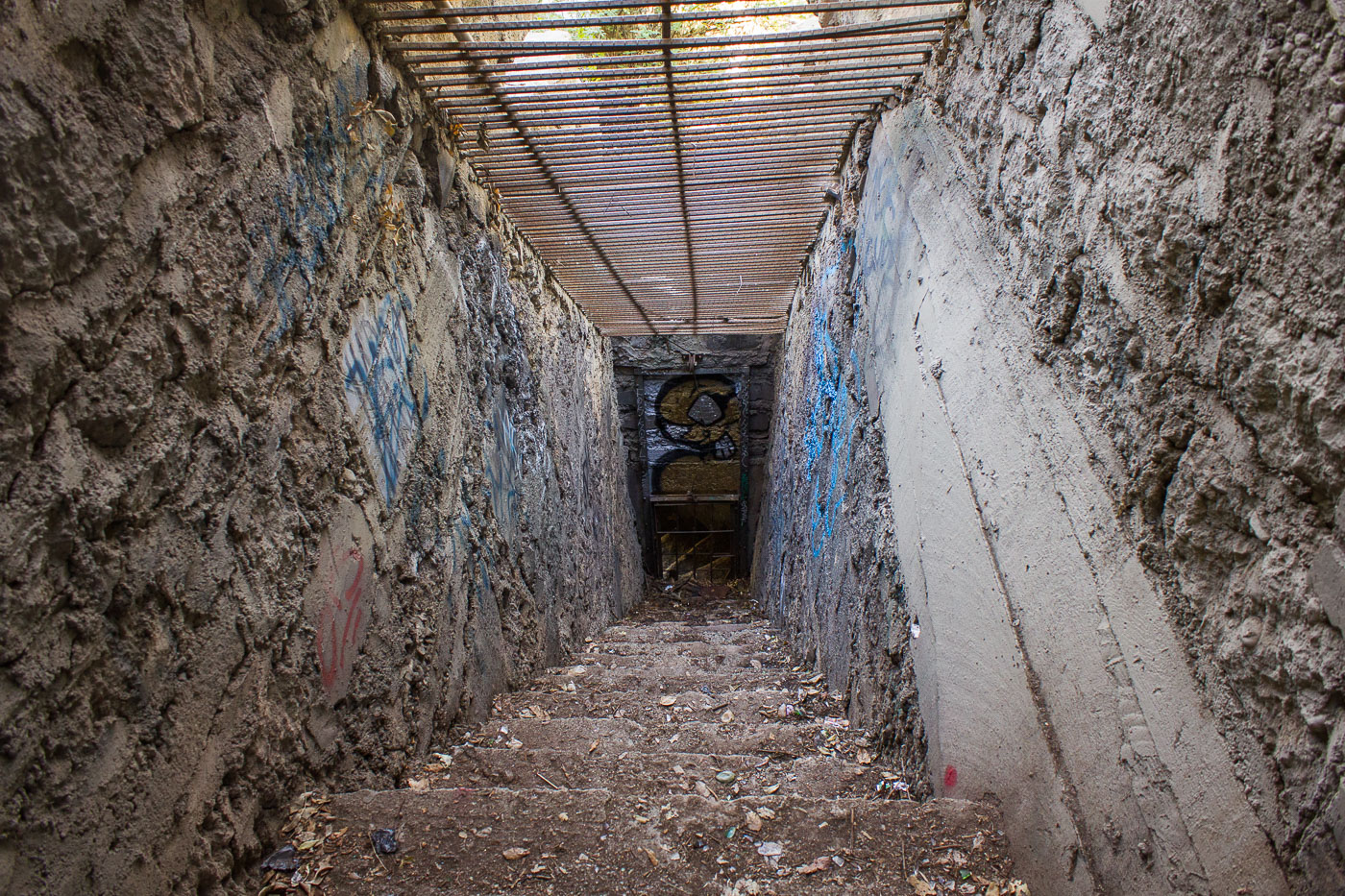
Deteriorated concrete animal enclosure with corrugated metal roof inside the abandoned Griffith Park Zoo, Los Angeles.
Griffith Park Zoo operated from 1912 until 1965, when the Los Angeles Zoo relocated to a new site elsewhere in the park. This stairway once led into one of the old animal enclosures, which held bears, lions, monkeys, and other species during the zoo's five decades of operation. The abandoned structures were left in place after closure and now sit within Griffith Park's Old Zoo Picnic Area, accessible to hikers and visitors. Layers of graffiti have accumulated on the concrete walls in the decades since the enclosures were emptied.

Stairway Into an Old Cage at Griffith Park Zoo
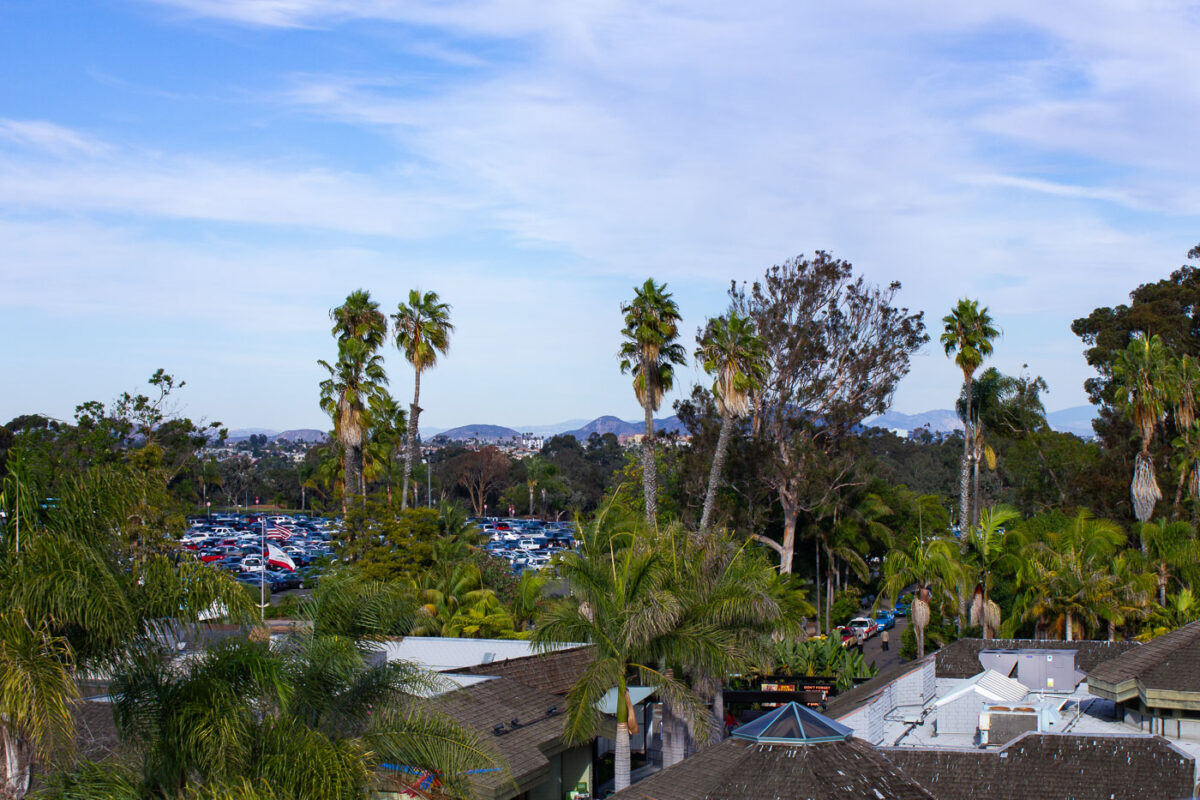
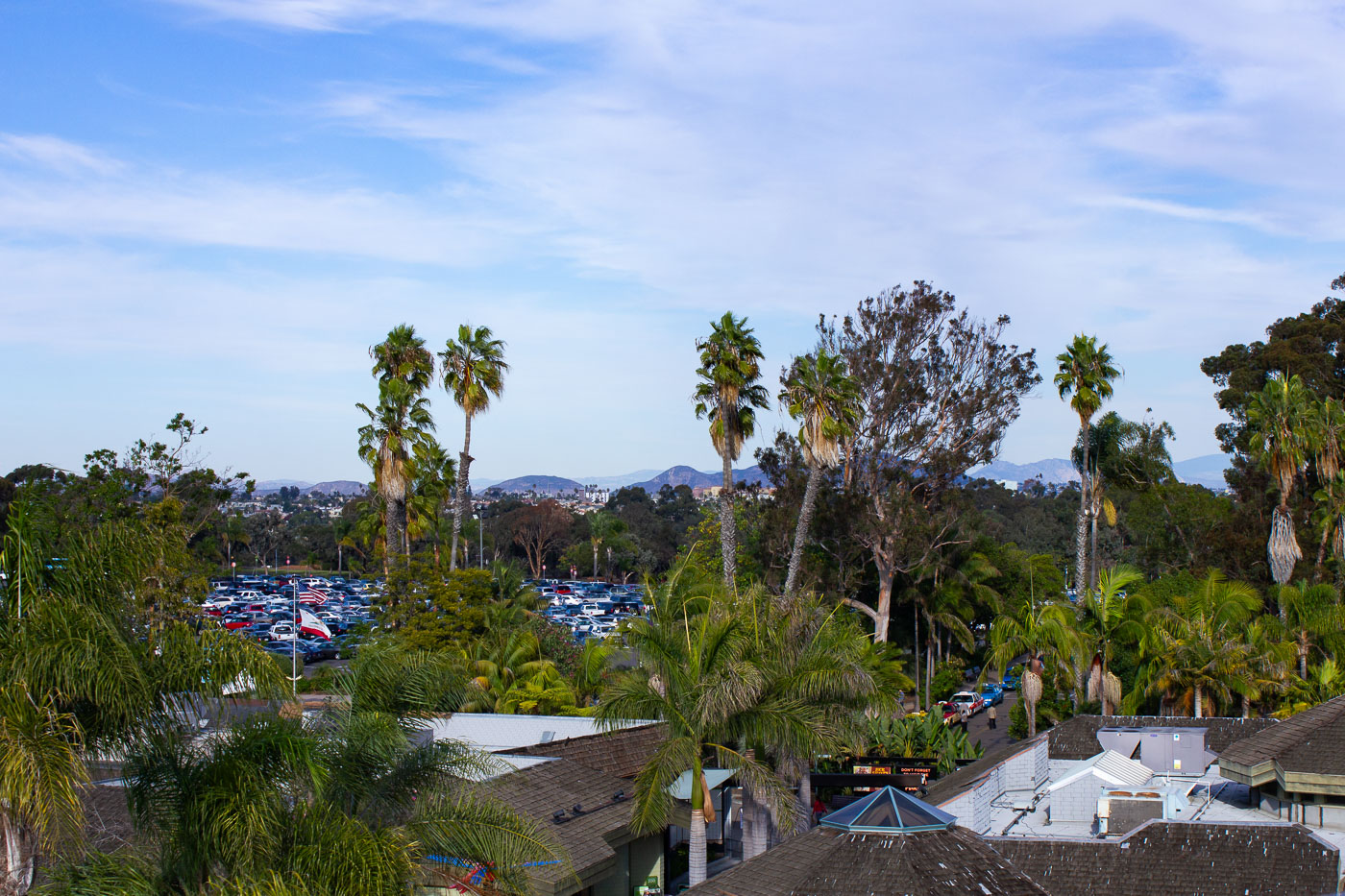
San Diego Zoo parking lot with palm trees and visitor vehicles under blue sky.
The San Diego Zoo sits in Balboa Park, with its parking areas bordered by palm trees near the park's northern edge. The zoo opened in 1916 with animals left over from the Panama-California Exposition. Hills mark San Diego's inland terrain beyond the park's rooflines and tree cover.

Rooftops and Palm Trees Above the San Diego Zoo Parking Lot
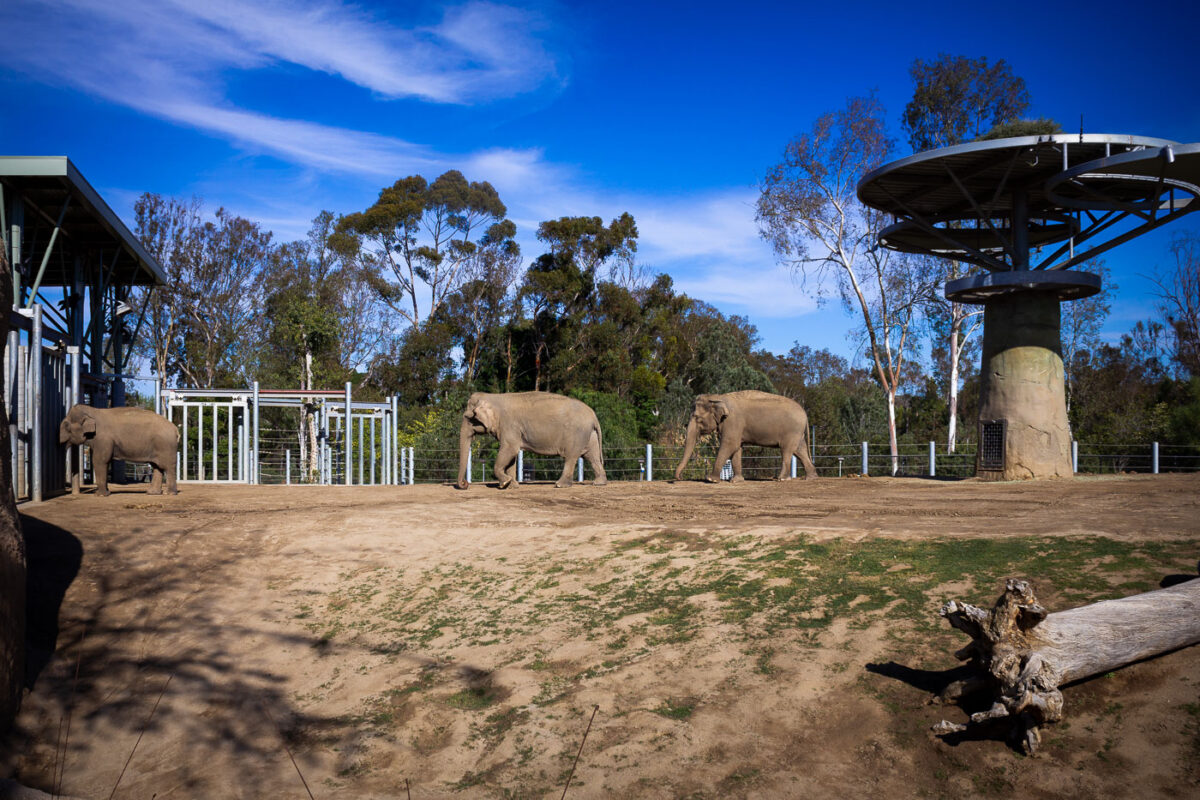
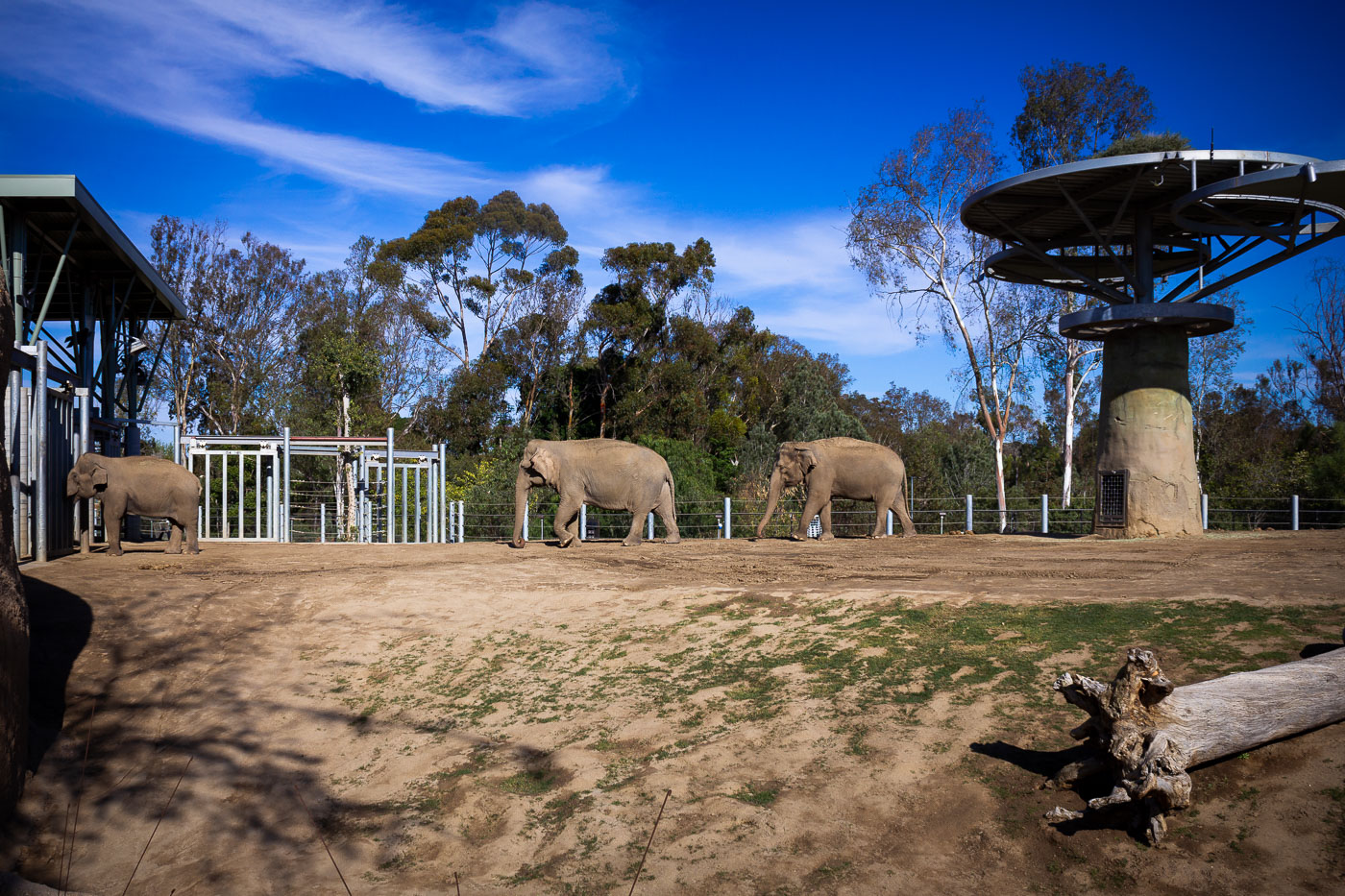
Four Asian elephants walk across a sandy enclosure at San Diego Zoo in California.
Elephant Odyssey is an eight acre exhibit at the San Diego Zoo in Balboa Park, built in 2009 to house the zoo's herd of Asian elephants. The habitat was designed with pools, mud wallows, and varied terrain to encourage the walking and foraging elephants do across large home ranges in the wild. Three elephants walk single file along the fence line while a younger one stays near the building behind them.

Elephant Odyssey Herd Walks Their Enclosure at the San Diego Zoo

Apple tribute marked “4 Ever” and infinity symbol outside an Apple Store in Minneapolis.
An apple, marked with "4 Ever" and an infinity symbol, rests on a display outside the Apple Store in Minneapolis's Uptown neighborhood. This spontaneous tribute appeared on October 5, 2011, following the death of Apple co-founder Steve Jobs.

Tribute to Steve Jobs after his death in October 2011, Minneapolis

Visitor's locker room at the Hubert H. Humphrey Metrodome in Minneapolis, featuring blue metal lockers and seating.
The visitor's locker room at the Hubert H. Humphrey Metrodome in Minneapolis, Minnesota. This facility, which was demolished in 2019, served as the home stadium for the Minnesota Vikings from 1982 to 2013.

Blue Lockers in the Metrodome’s Visitors’ Locker Room

WCCO Radio broadcast booth in the Hubert H. Humphrey Metrodome, Minneapolis.
WCCO Radio Booth 58, Metrodome. This image shows Booth 58, designated for WCCO Radio, within the now-demolished Hubert H. Humphrey Metrodome in Minneapolis, Minnesota. The Metrodome, which opened in 1982, was a multi-purpose stadium that hosted the Minnesota Vikings football team, the Minnesota Twins baseball team, and various other sporting and entertainment events.

WCCO Radio’s Booth 58 Overlooking the Metrodome Field

Interior of the Hubert H. Humphrey Metrodome's air-supported roof in Minneapolis, Minnesota.
The interior of the Hubert H. Humphrey Metrodome's air-supported fabric roof is visible in Minneapolis.

Catwalks Suspended Beneath the Metrodome’s Air-Supported Roof

White yard line markings on artificial turf field of the Hubert H. Humphrey Metrodome in Minneapolis.
The artificial turf field of the Hubert H. Humphrey Metrodome in Minneapolis, Minnesota.

Yard-Line Markings on the Metrodome’s Artificial Turf
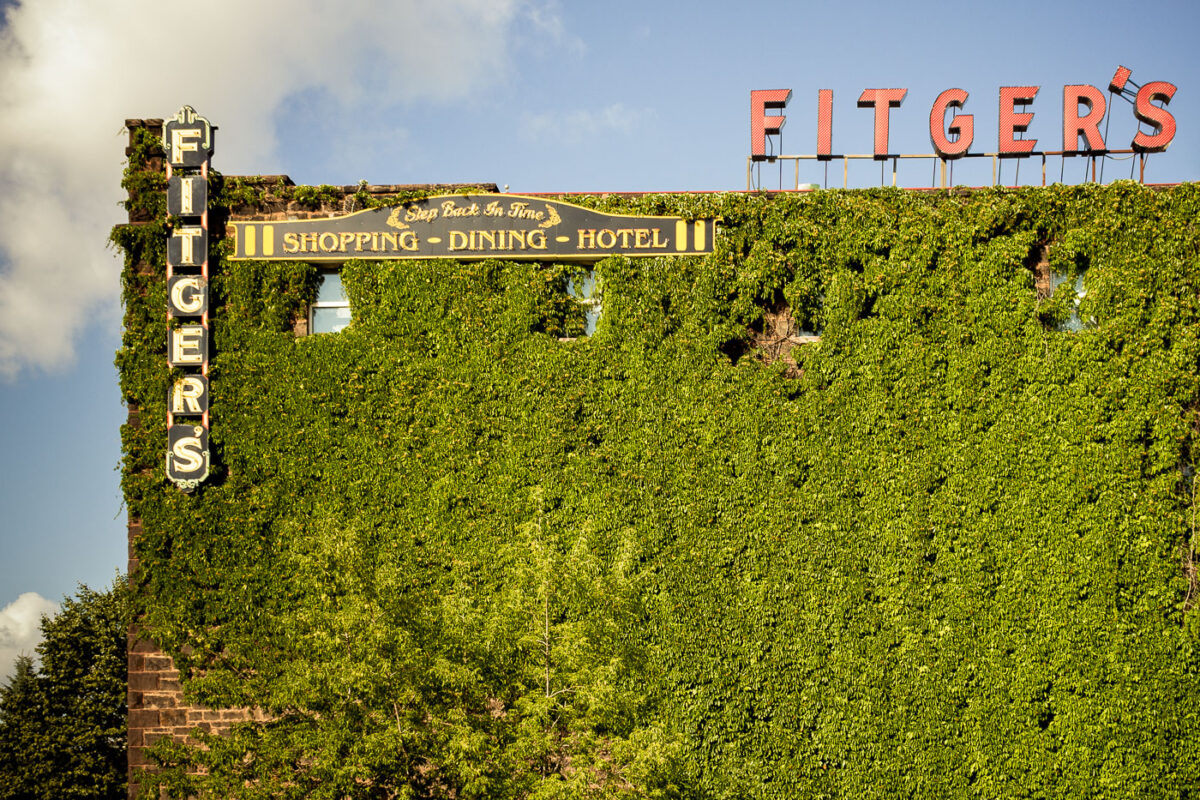
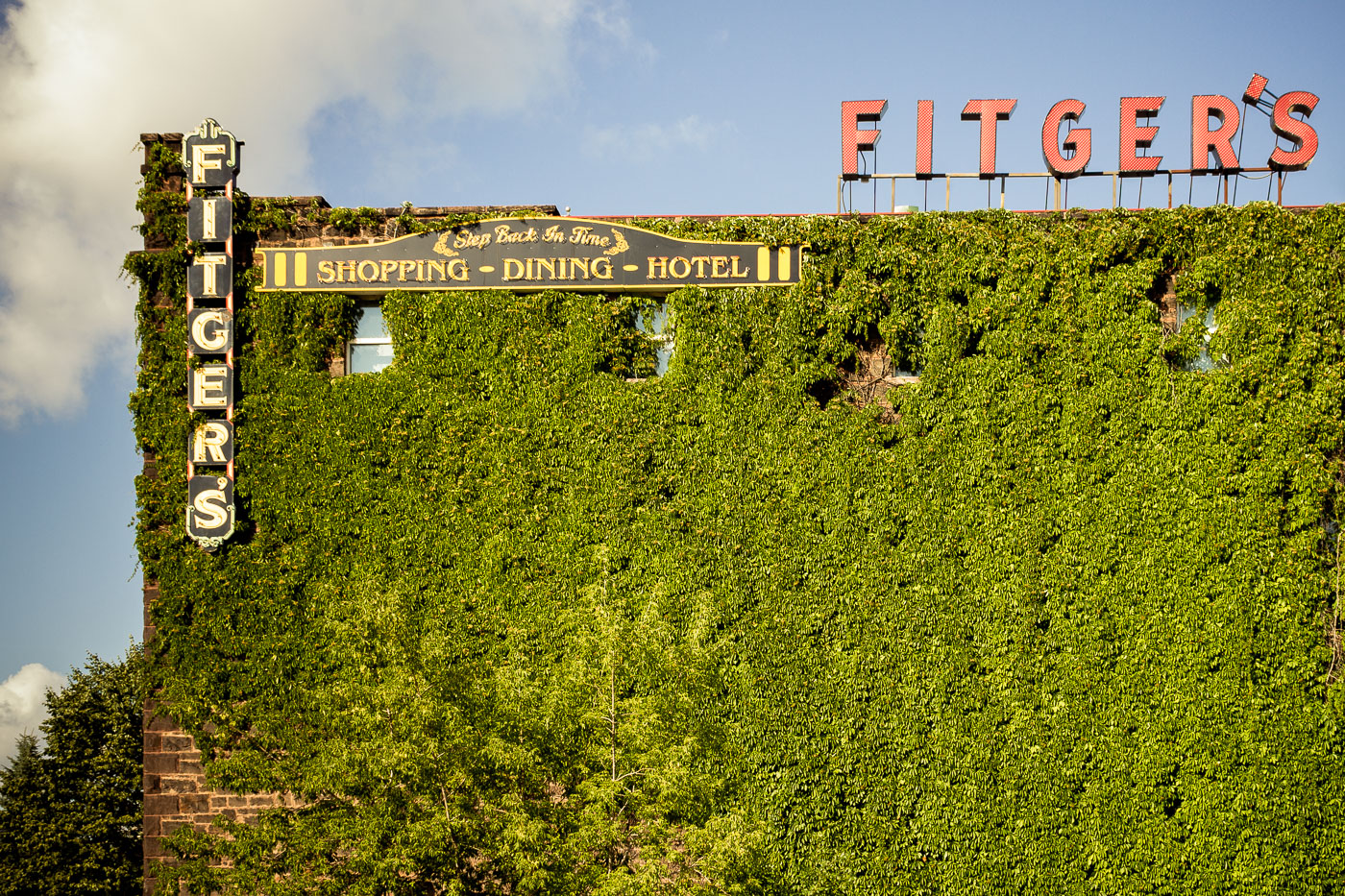
Fitger's historic brewery building in Duluth, Minnesota, with ivy-covered facade and rooftop signage.
Fitger's Historic Complex in Duluth, Minnesota, was originally built as a brewery and hotel. The former industrial building now houses a hotel, restaurant, and retail space on the city's waterfront.

Ivy Covers Fitger’s Brewery Building in Duluth

The Porky's restaurant sign in St. Paul, Minnesota, featuring a cartoon pig, advertised "Twin Cities Best Burger in 2 Minutes" on April 2, 2011, the day the establishment closed.
The Porky's restaurant sign in St. Paul, Minnesota, is pictured here on April 2, 2011, the day the establishment closed its doors.

Porky’s Sign Advertises “Twin Cities Best Burger” in St. Paul

The Lowertown Depot building in St. Paul, Minnesota, formerly the Standard Oil Branch Warehouse, a key industrial structure.
The "Lowertown Depot" building in St. Paul, Minnesota, once served as the Standard Oil Branch Warehouse. This structure was a key component of the city's industrial and commercial infrastructure, facilitating the distribution of petroleum products. Its demolition marked the end of an era for this historic industrial site in the Lowertown district.

Standard Oil Branch Warehouse, St. Paul

Customers line Hennepin Avenue for the Apple Store opening in Uptown Minneapolis.
The Apple Store opening line on Hennepin Avenue in Uptown Minneapolis formed for the store’s June 19, 2010 opening. The store was part of the Uptown commercial corridor near the Uptown Theatre and national retailers. Apple later closed the Uptown Minneapolis store in 2020.

Apple Store Opening Line on Hennepin Avenue, Minneapolis

Apple Store sign at Uptown Minneapolis under a glass facade.
The Apple Store on Hennepin Avenue in Uptown Minneapolis. The store held its grand opening 2 days later. The store was one of the first national chains to move into the area. The store would close ten years later and remain vacant for many years.

Apple Store grand opening in Uptown Minneapolis

Abandoned Exxon gas station in Alabama, damaged by hurricane, stands as a relic of roadside commerce.
This abandoned Exxon gas station in Alabama stands as a relic of a bygone era of roadside commerce. Its prominent red and white branding, once a beacon for travelers, now signifies neglect and disuse. The structure's open-air design, typical of mid-to-late 20th-century service stations, allowed for easy access to fuel pumps. The presence of hurricane damage, as indicated by the keywords, likely contributed to its closure and subsequent abandonment, leaving it a silent testament to the region's vulnerability to natural disasters.

Abandoned Exxon Gas Station, Alabama

The weathered sign for the 45 Outdoor Theater in New London, Wisconsin, a remnant of mid-20th century roadside entertainment, stands as a visual marker of a past era.
The weathered sign for the 45 Outdoor Theater in New London, Wisconsin, is a remnant of mid-20th century roadside entertainment. The "45" likely referred to its location along U.S. Highway 45, a common practice for drive-in theaters that sought to attract travelers. Originally a popular community gathering spot, the theater has long since ceased operations, leaving its prominent, rusting signage as a visual marker of a past era. The sign's current state of decay speaks to the decline of drive-in theaters and the changing landscape of entertainment.

45 Outdoor Theater Sign, New London, Wisconsin

Target Field stadium lights illuminate rain during construction in downtown Minneapolis, October 2009.
Target Field is the outdoor home of the Minnesota Twins in the North Loop neighborhood of downtown Minneapolis.

Target Field Under Construction During a Rainy Night, 2009

Wrigley's Spearmint mural on a brick building in downtown Stillwater, Minnesota.
Wrigley's Spearmint mural in downtown Stillwater, Minnesota. The painted advertisement on a brick building promotes Wrigley’s Spearmint gum and includes the “Purity Package” graphic and the line “The Flavor Lasts After Every Meal.” It remains next to The Chef’s Gallery storefront on Main Street.

Wrigley’s Spearmint Mural, Stillwater, Minnesota
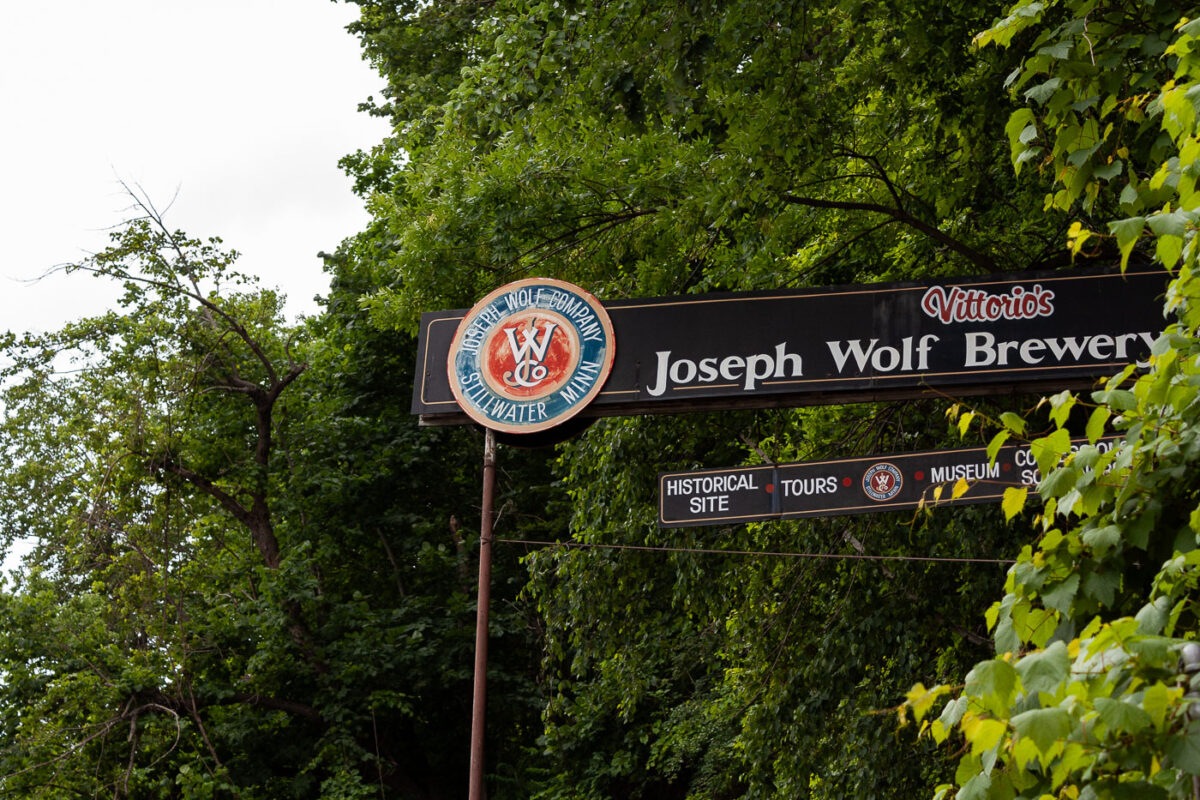
Joseph Wolf Brewery sign in Stillwater, Minnesota, marking a historical site and museum.
Joseph Wolf Brewery in Stillwater, Minnesota, is marked by a sign identifying it as a historical site, museum, and tour location. The site preserves the legacy of the Joseph Wolf Brewing Company in the city’s brewing history.

Joseph Wolf Brewery sign, Stillwater, Minnesota

Globe and chess set inside a Stillwater, Minnesota bookstore.
A globe and chess set are displayed on a table inside a bookstore in Stillwater, Minnesota. Bookshelves line the room, creating a retail setting centered on books and related objects.

Bookstore Globe and Chess Set, Stillwater, Minnesota

David Draiman of Disturbed performs at Target Center in Minneapolis during Music As A Weapon IV.
David Draiman fronts Disturbed, the Chicago-formed metal band he co-founded in 1994. This performance was during the band's "Music as a Weapon IV" tour, a package outing Disturbed headlined alongside other hard rock and metal acts. Draiman, known for his shaved head and intense stage presence, has fronted the band through multiple platinum-selling albums, including "The Sickness" and "Ten Thousand Fists."

David Draiman of Disturbed Performs at Target Center, Minneapolis

Abandoned barracks at Fort Snelling, Minneapolis, Minnesota, a historic military installation constructed in the early 20th century.
These abandoned barracks at Fort Snelling, Minnesota, represent a portion of the historic military installation. Constructed in the early 20th century, these buildings served as housing for soldiers. Fort Snelling has a long history dating back to 1819, playing a significant role in the region's military and economic development. The barracks, like much of the fort's infrastructure, have fallen into disuse and disrepair, standing as silent reminders of past military presence.

Abandoned Barracks at Fort Snelling, Minneapolis

Abandoned brick building at Fort Snelling, Minnesota, showing signs of disrepair and neglect.
This brick building, located at Fort Snelling near Minneapolis, Minnesota, is in a state of disrepair. The structure appears to be a former residential or administrative building, likely part of the historic military post. Its crumbling facade and damaged roof indicate significant abandonment and neglect. Fort Snelling has a long history, established in the 1820s, and has served various military functions throughout different eras of American history.

Fort Snelling Abandoned Building, Minneapolis

Boarded-up brick building at Fort Snelling, Minnesota, a historic military installation near Minneapolis.
This brick building, located at Fort Snelling near Minneapolis, Minnesota, has boarded-up windows and doors, indicating disuse. Fort Snelling is a historic military installation that served as a key strategic post for the U.S. Army in the Upper Midwest. The fort's history dates back to its establishment in 1819, and it played a significant role in westward expansion and military operations throughout the 19th and 20th centuries. The architectural style of the building suggests it may have been constructed during the fort's active military period, likely serving administrative or residential purposes for personnel.

Fort Snelling Building with Boarded Windows

The United States Department of the Interior, Bureau of Mines building in Minneapolis
The United States Department of the Interior, Bureau of Mines building in Minneapolis/ Established in 1910, the Bureau of Mines was tasked with promoting the conservation and efficient utilization of the nation's mineral and fuel resources. It has since been demolished.

US Department of the Interior, Bureau of Mines – Minneapolis

A Northwest Airlines Airbus A320 takes off from Minneapolis-Saint Paul International Airport (MSP) in Bloomington, Minnesota.
A Northwest Airlines Airbus A320 aircraft lifts off from Minneapolis-Saint Paul International Airport (MSP). MSP Airport, a primary air traffic hub for the Upper Midwest, handles millions of passengers annually and was historically a major base for Northwest Airlines. The airline, which merged with Delta Air Lines in 2010, operated a significant fleet from this location.

Northwest Airlines Airbus A320 Takeoff from MSP Airport

The Minneapolis Bureau of Mines building, part of the Department of the Interior, was a federal facility for mining research. Located in Minneapolis, Minnesota, it was closed in 1996.
The Minneapolis Bureau of Mines building, part of the Department of the Interior, was a federal facility dedicated to research and development in mining and mineral resources. Established to advance the understanding and utilization of the nation's mineral wealth, the Bureau played a significant role in geological surveys, safety research, and resource management. This building, located in Minneapolis, Minnesota, served as a hub for these critical scientific and governmental functions. Its demolition signifies the changing landscape of federal research facilities and the eventual closure of the Bureau of Mines itself in 1996.

Minneapolis Bureau of Mines Building, Department of the Interior

Grand Rounds Scenic Byway wayfinding sign at Bde Maka Ska park in Minneapolis.
A wayfinding sign for the Grand Rounds Scenic Byway stands at Bde Maka Ska in Minneapolis. The Grand Rounds is a system of parkways designed by Horace Cleveland in the late 19th century to connect Minneapolis's chain of lakes and parks.

Trail Signs for Grand Rounds Scenic Byway at Bde Maka Ska

Abandoned Smart Start educational electronics device lying in debris on the ground.
VTech's Smart Start was a battery-powered learning toy marketed in the 1980s to teach preschool-age children colors, numbers, and basic letters through a simplified keyboard interface. The company, originally known as Video Technology and based in Hong Kong, built the line as part of its early expansion into educational electronics for children under six. Color-coded keys and a small LCD screen guided kids through matching games rather than true programming, positioning Smart Start below VTech's more advanced computer-style toys for older children. VTech later grew into one of the world's largest makers of electronic learning toys, though units like this one were commonly discarded once newer models took their place.

VTech Smart Start Learning Toy, Abandoned in Minnesota

Illuminated neon sign for Broadway Liquors on a brick building in North Minneapolis.
Broadway Liquors is a retail liquor store located on Broadway in North Minneapolis. The establishment's neon signage, characteristic of mid-20th century commercial storefronts, identifies the business and its street presence. Neon signs such as this were standard features of neighborhood commercial districts, providing wayfinding and establishing visual identity along commercial corridors.

Broadway Liquors neon sign, Broadway and West Broadway, Minneapolis

Fourth Police Precinct building with marquee sign in North Minneapolis, 2009.
The Minneapolis Police Fourth Precinct is a law enforcement facility serving North Minneapolis. The building's marquee advertises a precinct meeting scheduled for March 17, 2009, reflecting ongoing community engagement activities. The facility operates as a neighborhood police station within the city's public safety infrastructure.

Fourth Police Precinct, North Minneapolis

Paul Masson brandy bottle and McDonald's fries box discarded on grass in North Minneapolis.
A Paul Masson brandy bottle and McDonald's French fries box lie discarded on grass and dead leaves in North Minneapolis. The image litter found in an urban neighborhood, showing the presence of branded consumer products in public spaces.

Discarded Bottles and Food Packaging, North Minneapolis

The Minneapolis Police Department's 4th Precinct building in North Minneapolis, Minnesota, photographed in 2009. The precinct served as a law enforcement facility for the area.
The Minneapolis Police Department's 4th Precinct building, located in North Minneapolis, served as a key law enforcement facility for the area. Established to provide public safety and community services, the precinct's operations were integral to the functioning of this part of the city.

Minneapolis Police 4th Precinct, North Minneapolis, 2009
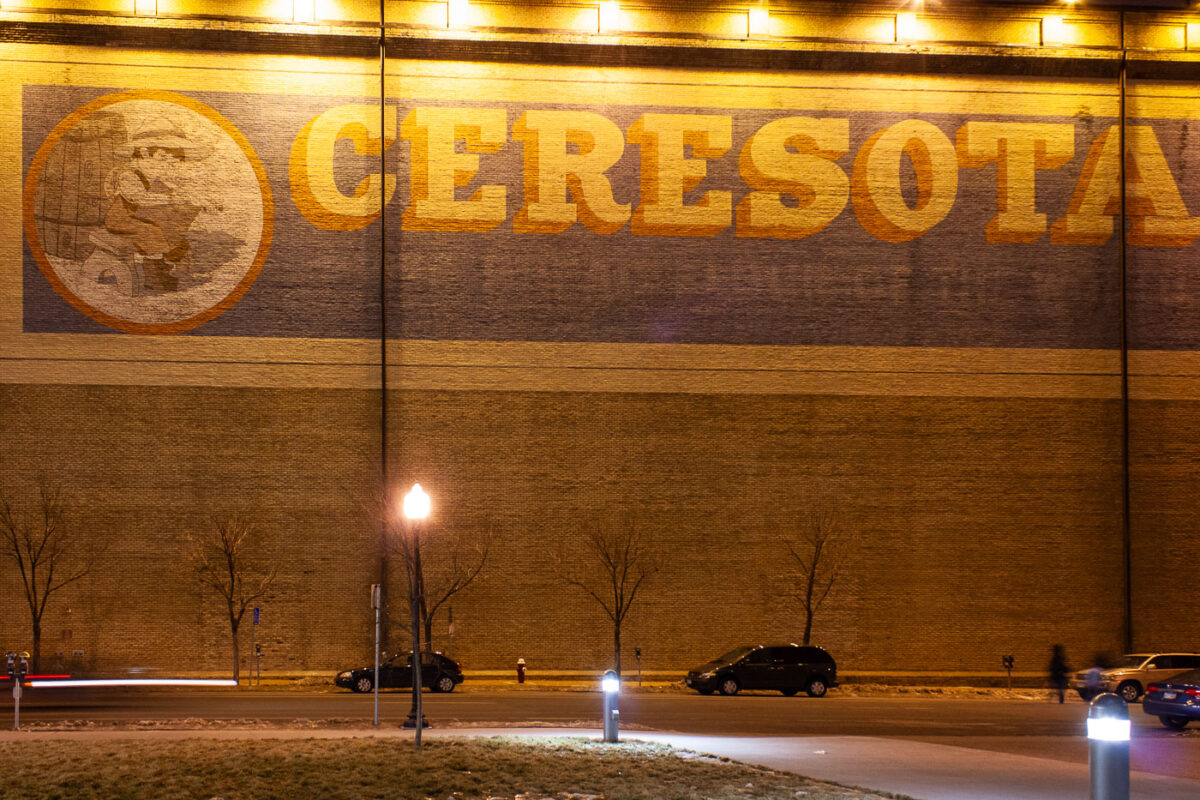
Golden Ceresota Building mural with portrait on brick facade, downtown Minneapolis.
The Ceresota Building mural in downtown Minneapolis commemorates the Ceresota Milling Company, a major flour miller that operated in the city. The building's prominent brick facade displays a portrait and the company name in large golden letters. Ceresota was one of numerous milling operations that made Minneapolis the nation's leading flour production center in the late 19th and early 20th centuries.

Ceresota Building Mural, Minneapolis

Illuminated Boom Island Lighthouse on the Mississippi River with Minneapolis skyline at night.
The Boom Island Lighthouse stands on the Mississippi River in Minneapolis, illuminated at night with the city skyline visible beyond. Built as a navigational aid for river traffic, the structure now functions as a landmark within Boom Island Park. The park occupies a former industrial site along the river, providing public access to the waterfront and views of downtown Minneapolis.

Boom Island Lighthouse, Minneapolis

Wafana's Grocery and Deli storefront on Lyndale Avenue, North Minneapolis, with orange and cream facade.
Wafana's Grocery and Deli operated on Lyndale Avenue in North Minneapolis as a neighborhood retail establishment offering both grocery and deli services. The storefront displays signage for WIC and EBT acceptance, participation in federal food assistance programs. Boarded sections of the facade reflect the commercial challenges faced by small retail businesses in the area.

Wafana’s Grocery and Deli, Lyndale Avenue

White-tailed deer on snowy slope in Father Hennepin Bluff Park, Minneapolis.
A white-tailed deer traverses a snow-covered slope in Father Hennepin Bluff Park, a natural area along the Mississippi River in Minneapolis. Established in 1961, the park preserves bluff habitat within the city. The deer's presence demonstrates the park's role in supporting wildlife populations in an urban setting.

White-tailed deer, Father Hennepin Bluff Park, Minneapolis
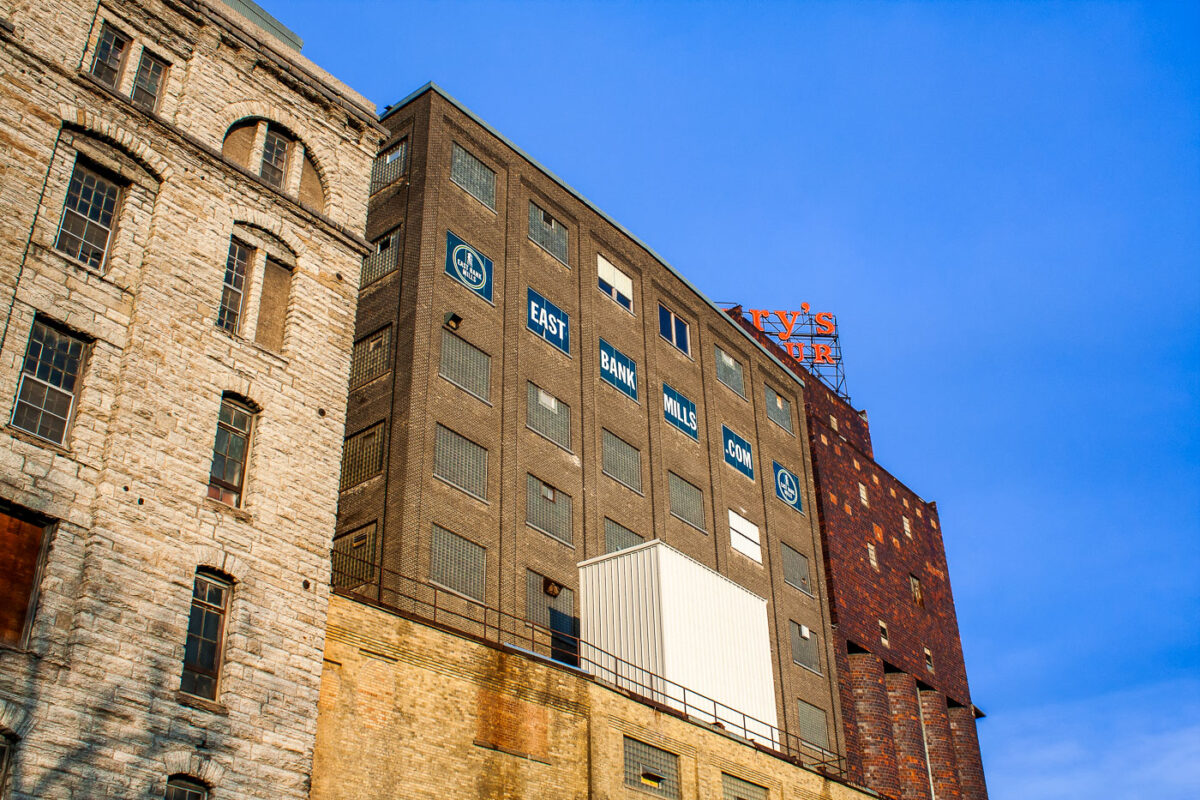
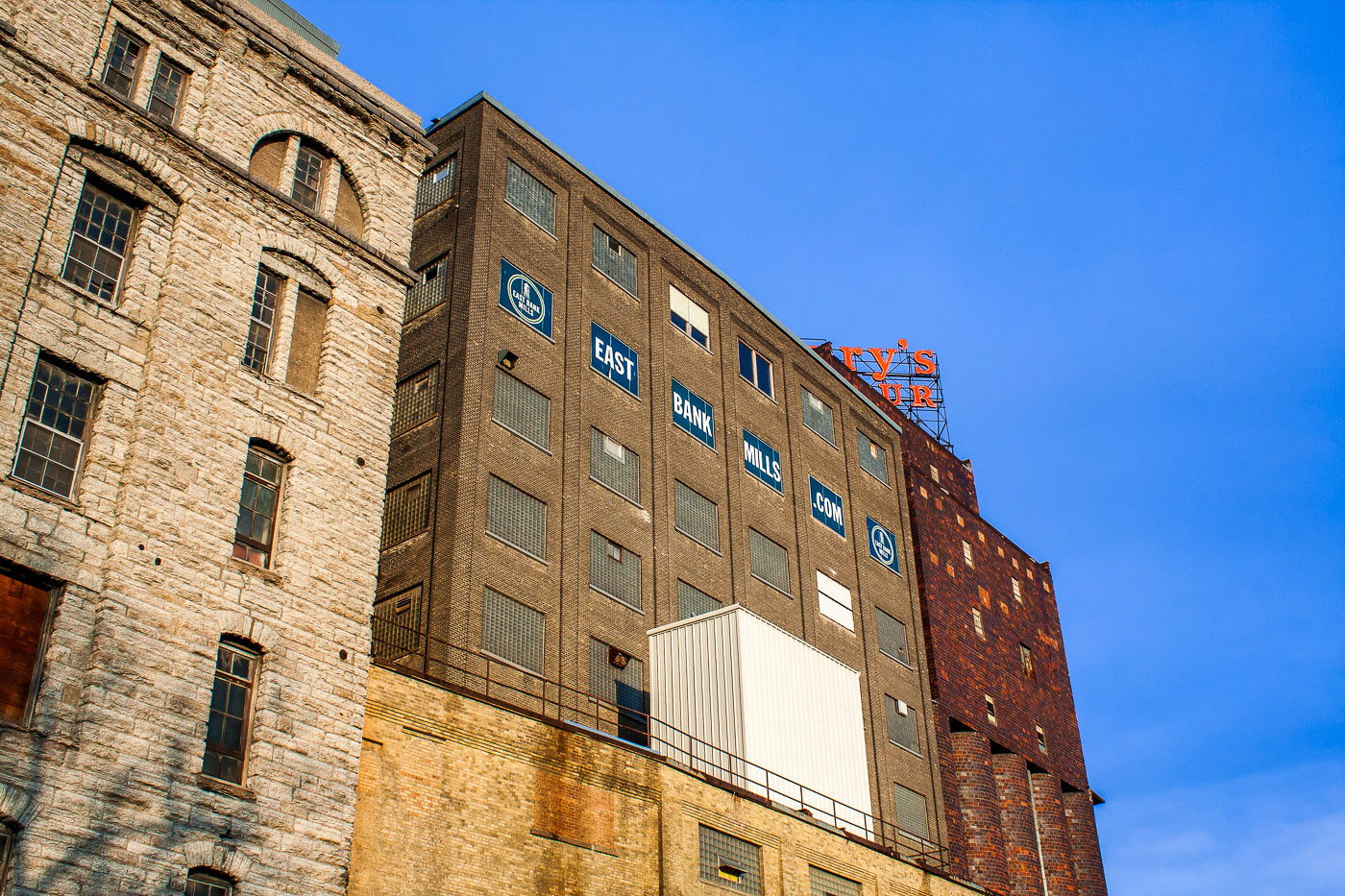
East Bank Mills historic flour mill complex in Northeast Minneapolis with blue signage on tan brick buildings under clear sky.
East Bank Mills is a historic flour mill complex in Northeast Minneapolis. The industrial buildings visible here are part of the milling operations that made Minneapolis a major flour production center in the late 19th and early 20th centuries.

East Bank Mills Signage on a Northeast Minneapolis Flour Mill

Boarded foreclosure auction house with yellow and black signage in North Minneapolis.
A residential property in North Minneapolis advertises a public foreclosure auction with open house dates and contact information displayed on boarded windows. The auction resulted from lender foreclosure proceedings. Foreclosure auctions were common outcomes of mortgage defaults during the 2008–2009 financial crisis, which significantly impacted housing markets and neighborhoods across Minneapolis.

Lender Foreclosure Auction, North Minneapolis

Interior view of the Lowry Avenue Bridge steel truss structure, Minneapolis, 1905–2009.
The Lowry Avenue Bridge connected north and south Minneapolis across the Mississippi River. Built in 1905 as a steel truss structure, the bridge served the city for over a century. Structural deterioration led to its closure in April 2008, and it was demolished by controlled explosions in June 2009 to make way for a replacement.

Lowry Avenue Bridge, Minneapolis, 1905-2009
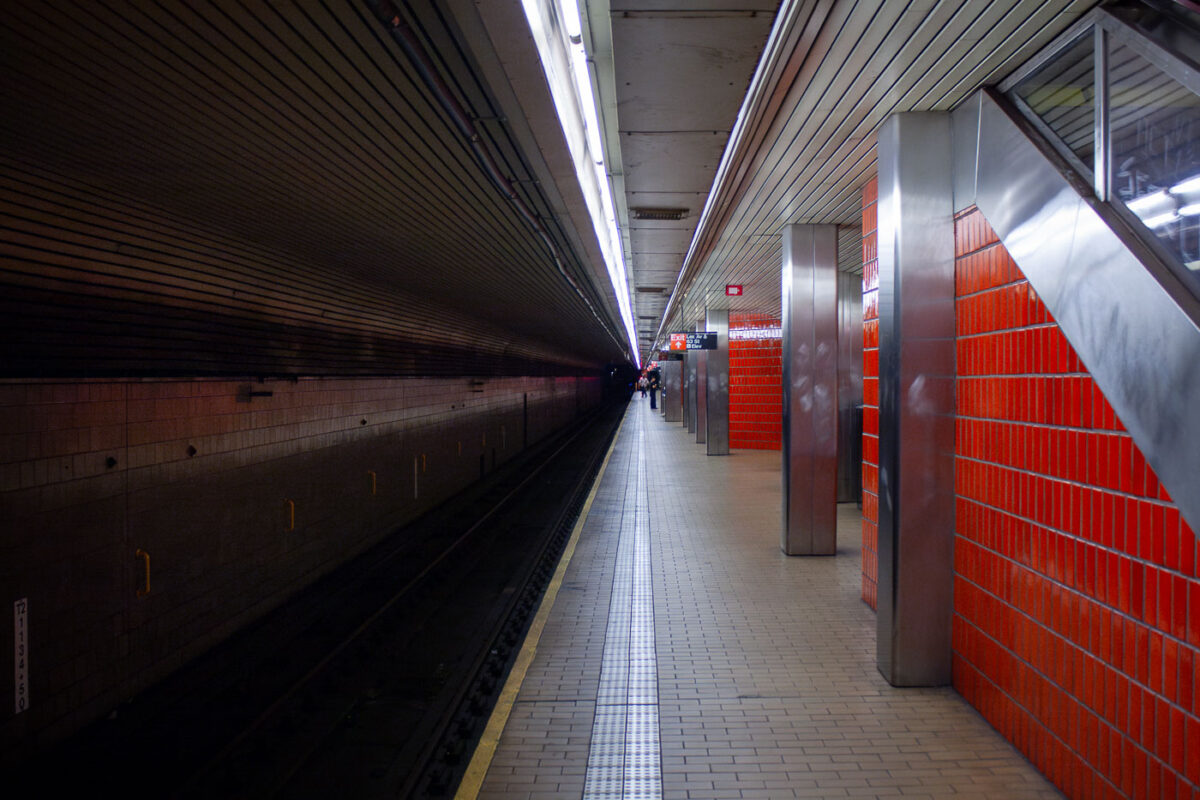
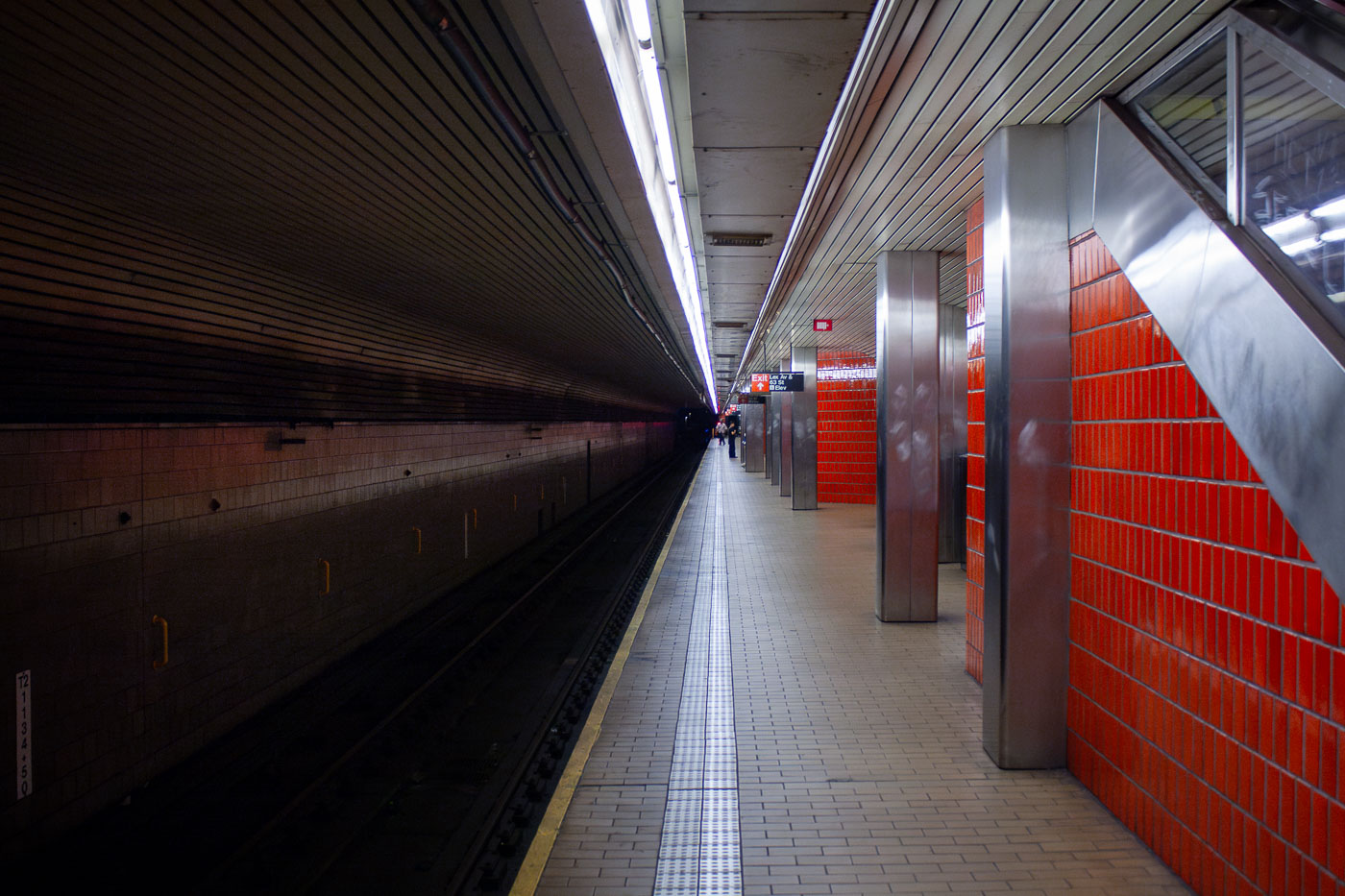
Empty platform at Lexington Avenue–63rd Street subway station in Manhattan with red brick wall and metal support columns.
Lexington Avenue–63rd Street station platform in Manhattan. Opened in 1989 as part of the 63rd Street Tunnel project, the station links the Upper East Side with Queens through the IND 63rd Street Line. It is served by the F train at all times and by the Q train on weekdays.

Red-Tiled Platform at Lexington Avenue–63rd Street Station

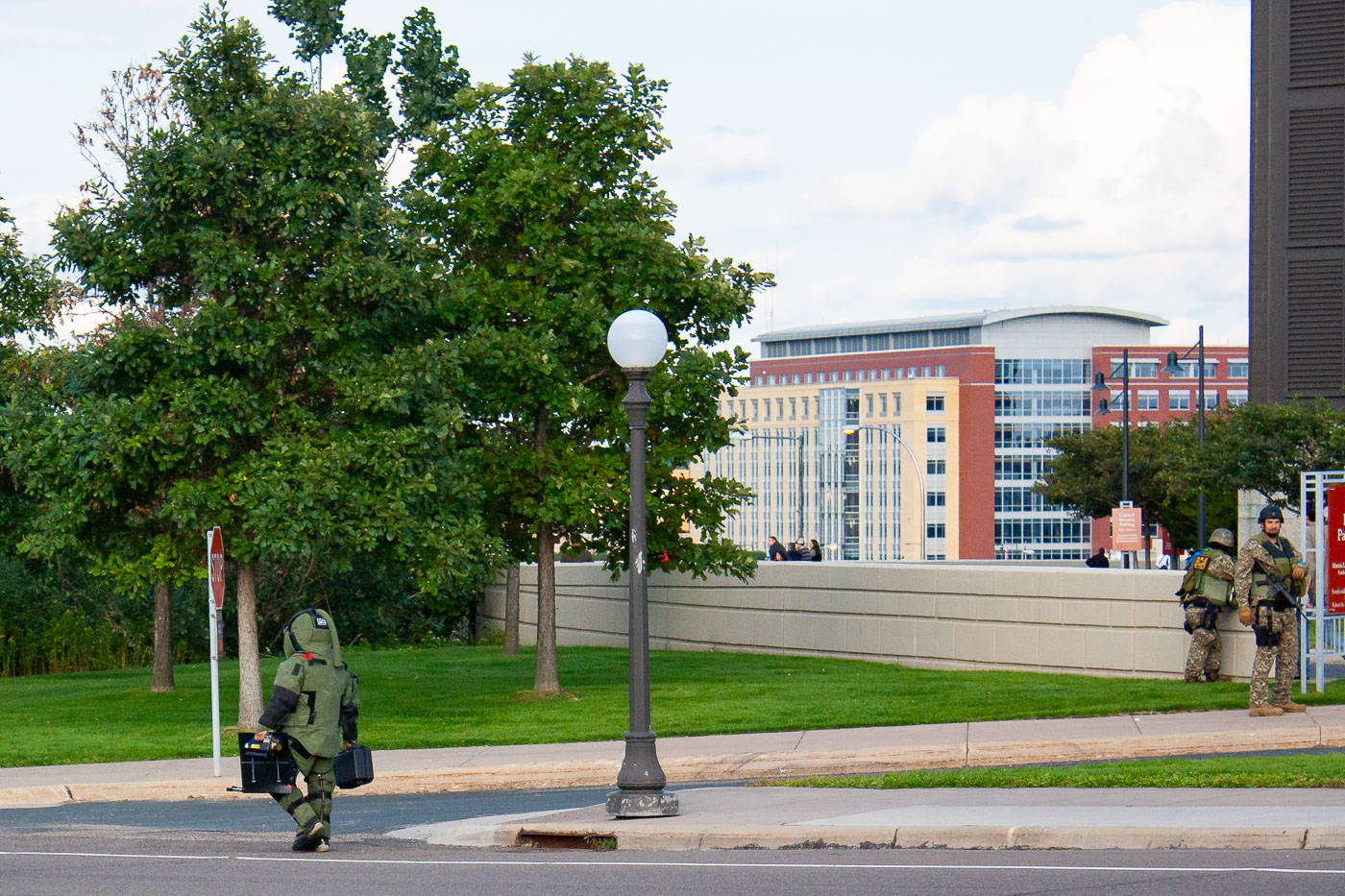
Bomb squad member in protective gear during 2008 Republican National Convention security operations in St. Paul.
A bomb squad member in protective gear patrols near the Xcel Energy Center during the 2008 Republican National Convention in St. Paul. The convention, held September 1-4, 2008, required extensive security operations by federal, state, and local law enforcement agencies. Specialized units including the bomb squad were deployed throughout the city to address security concerns during the four-day political event.

Bomb Squad at 2008 Republican National Convention, St. Paul

Bike police officers patrol in St. Paul during the 2008 Republican National Convention.
Bike police officers patrol a street in St. Paul, Minnesota, during the 2008 Republican National Convention. The convention was held September 1–4, 2008, at the Xcel Energy Center and required coordinated security and crowd-management operations across the city. Uniform patches identify officers from multiple Minnesota departments working as bicycle patrol units during convention week.

Bike Police Patrol in St. Paul During 2008 RNC

Code Pink protesters with satirical effigies at the 2008 Republican National Convention in St. Paul, Minnesota.
Code Pink protesters demonstrated outside the 2008 Republican National Convention in St. Paul, using satirical effigies and banners to criticize government spending and military policy. The anti-war organization staged the protest during the convention held at the Xcel Energy Center, which drew demonstrations from multiple groups opposing the wars in Iraq and Afghanistan.

Code Pink Protest, 2008 Republican National Convention, St. Paul

Abandoned Wisconsin farmhouse room with a rocking chair, vinyl records, and a leaning box spring.
An abandoned farmhouse room in Wisconsin contains a rocking chair, vinyl records, and a detached box spring leaning against wood-paneled walls. The scattered albums include Arthur Fiedler and the Boston Pops' World's Most Beautiful Waltzes. Green patterned carpet, yellow curtains, and a small stand remain in the room.

Abandoned Wisconsin Farmhouse Room with Vinyl Records

Spalling masonry exposes red brick on an abandoned church wall in Minnesota.
Spalling masonry on an abandoned church in Minnesota exposes red brick beneath a cracked concrete exterior. The wall section has failed mortar, broken concrete facing, and lichen growth near the damaged joint.

Spalling Masonry on Abandoned Minnesota Church

An abandoned yellow brick farmhouse has a roof antenna in rural Wisconsin.
An abandoned yellow brick farmhouse stands in rural Wisconsin. The two-story house has broken and boarded windows, a front porch, and a roof-mounted television antenna. Tall grass and brush surround the property, with a small detached outbuilding nearby.

Abandoned Yellow Brick Farmhouse, Wisconsin

Myth Nightclub entrance in Maplewood, Minnesota, with blue neon lighting and people outside at night.
Myth Nightclub in Maplewood, Minnesota, was a live music and entertainment venue that opened in 2008. Blue neon trim and a large MYTH sign identify the building’s entrance. Concertgoers are gathered near the doors, ticket area, and will-call window.

Myth Nightclub Entrance, Maplewood, Minnesota

Tornado damaged homes in Hugo, Minnesota, stand beside a flooded field after the May 25, 2008 storm.
Tornado damaged homes in Hugo, Minnesota, were hit by the May 25, 2008 tornado. Roof sections, siding, and exterior walls were torn from multiple houses in the neighborhood. The damage is adjacent to a flooded field at the edge of the residential area.

Tornado Damaged Homes, Hugo, Minnesota

Best Buy headquarters campus in Richfield, Minnesota, with angular glass office buildings along a broad roadway.
Best Buy headquarters campus in Richfield, Minnesota, consists of multiple modern office buildings with dark glass facades and angular end walls. The campus houses corporate offices for the electronics retailer, whose logo is visible on one of the buildings. The complex sits along a broad roadway with surface parking and campus landscaping.

Best Buy Headquarters Campus, Richfield