Hotel

177 photos · 2008–2026

177 photographs tagged Hotel, 2008–2026.
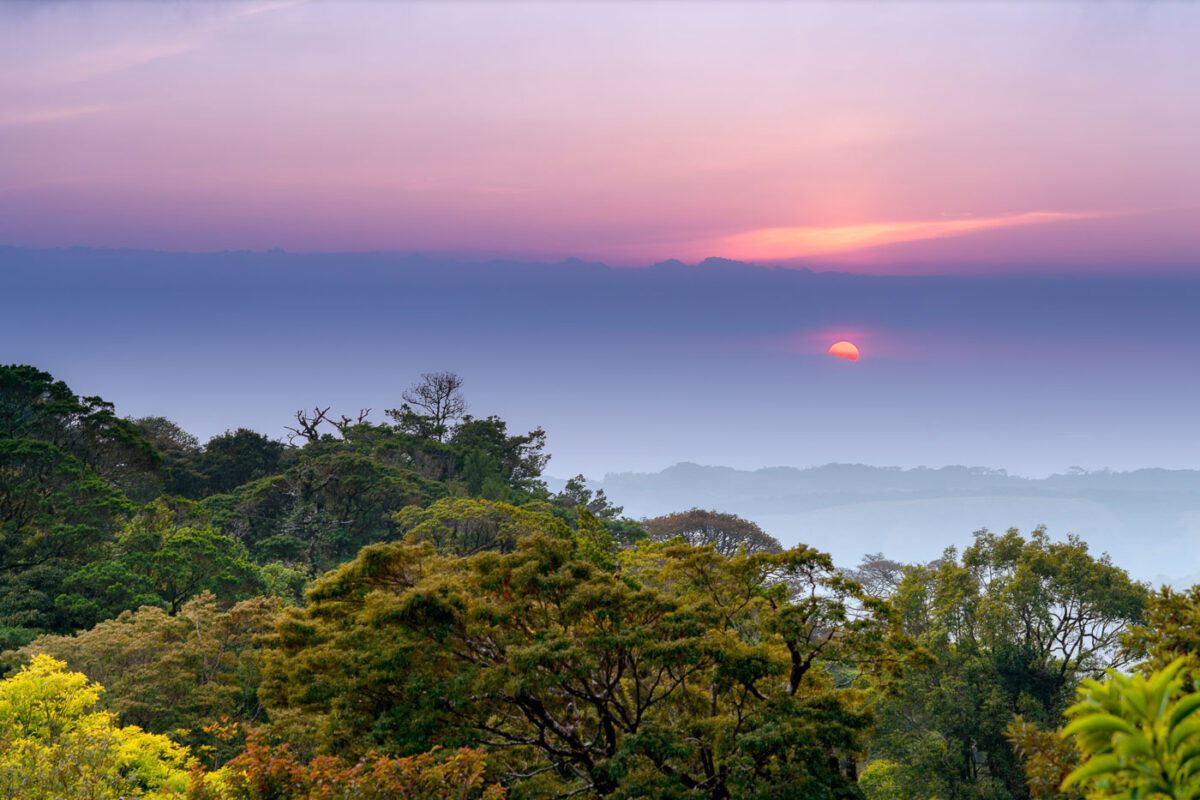
Sun setting over the Monteverde Cloud Forest canopy in Costa Rica with layered mist and vegetation visible below.
The Tilarán Mountains form the continental divide that runs through the Monteverde region, separating Caribbean-draining slopes from those facing the Pacific. Monteverde's cloud forest sits at elevations between roughly 1,400 and 1,800 meters, where moisture-laden trade winds condense into the persistent mist that defines the ecosystem. The Monteverde Cloud Forest Biological Reserve, established in 1972 by the Tropical Science Center, protects more than 10,500 hectares of this habitat and borders the adjacent Children's Eternal Rainforest, one of the largest private reserves in Central America. The region's elevation and position along the divide create the shifting light and layered haze that mark the transition between day and night over the forest canopy.

Sunset Over the Tilarán Mountains Near Monteverde
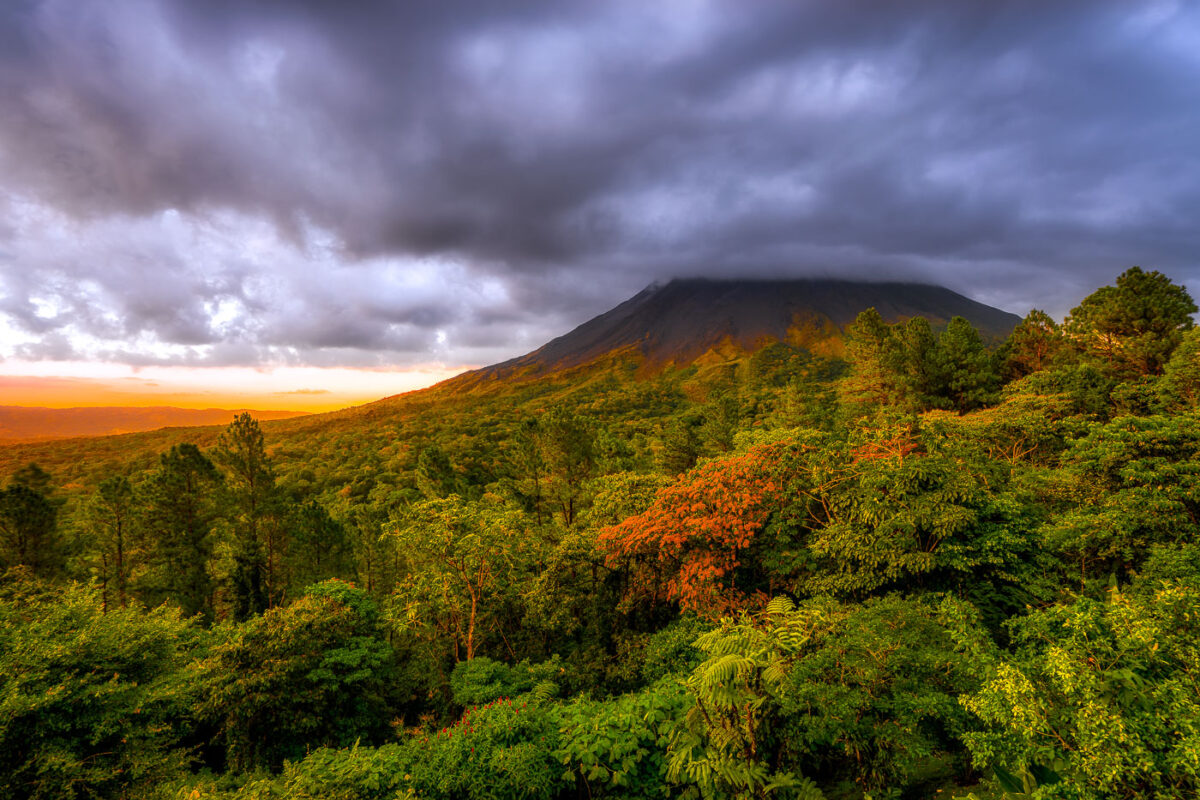
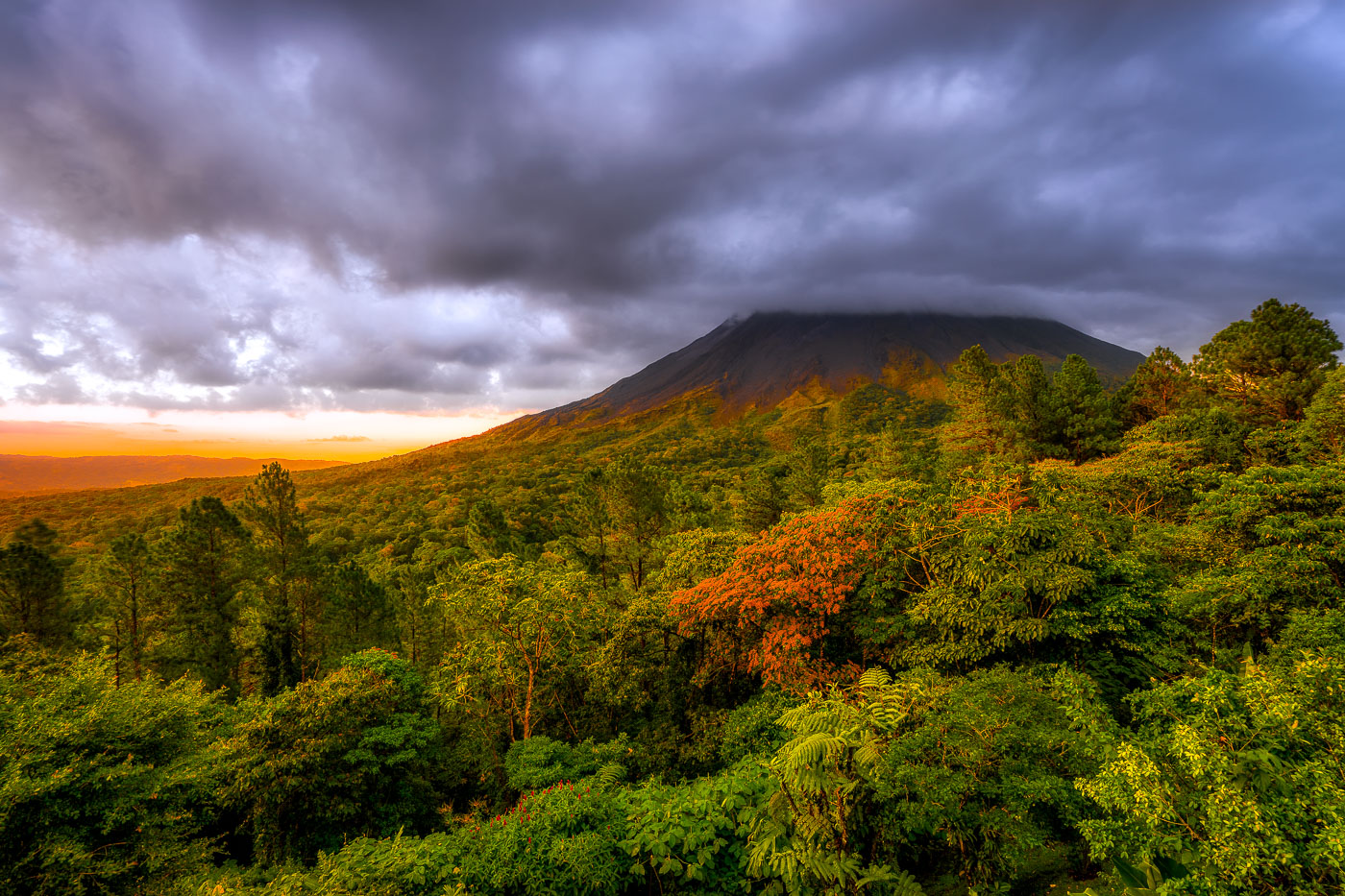
Arenal Volcano rises above dense rainforest canopy under stormy skies near La Fortuna, Costa Rica.
Arenal Volcano rises 1,657 meters above the plains of northern Costa Rica, near the town of La Fortuna in Alajuela Province. The stratovolcano stayed dormant for centuries before an eruption in 1968 destroyed the nearby village of Tabacón and reshaped its slopes with the lava flows still visible today. It erupted continuously from 1968 until activity ceased in 2010, making it one of the youngest active volcanoes in Central America during that period. The surrounding land was designated Arenal Volcano National Park in 1991, protecting the rainforest that now covers much of the mountain's lower flanks.

Sunset Light Breaks Over Arenal Volcano Near La Fortuna
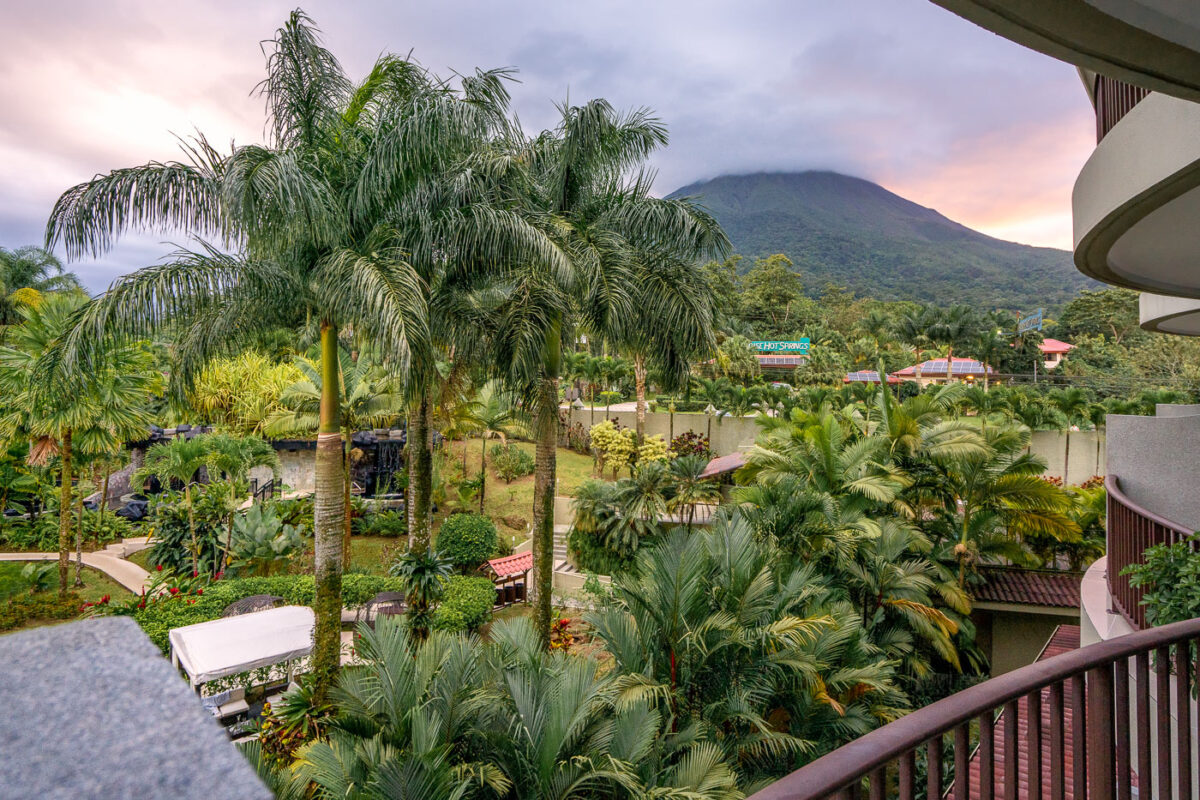
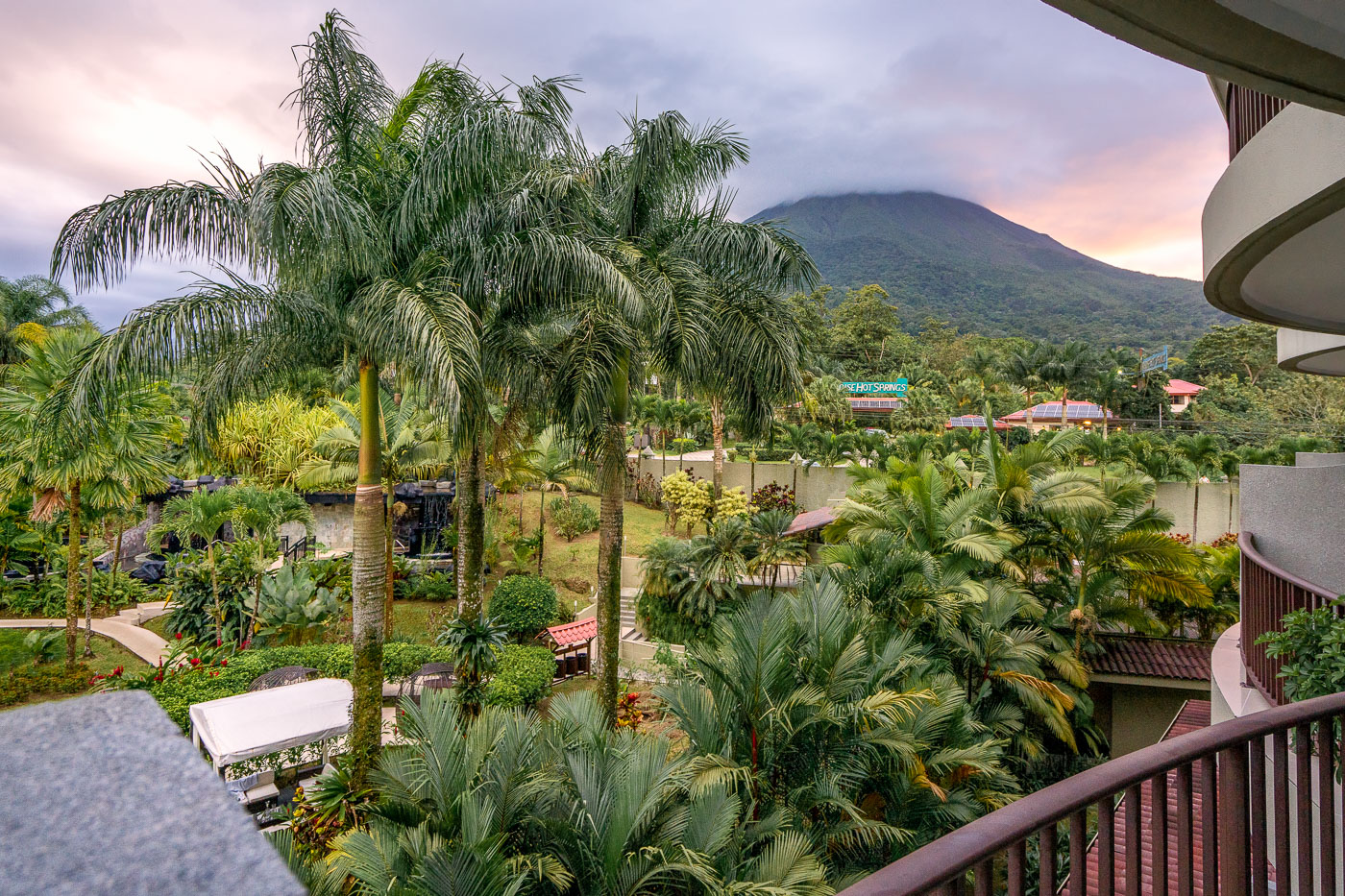
Arenal Volcano rises behind the Royal Corin Thermal Water and Spa Resort near La Fortuna in Costa Rica's Alajuela Province.
Arenal Volcano rises above the Royal Corin Thermal Water and Spa Resort near La Fortuna in Costa Rica's Alajuela Province. The stratovolcano, at 1,670 meters, was continuously active from 1968 until its eruptive activity ceased in 2010, making it one of Central America's most studied volcanoes during that period. Its near-symmetrical cone sits within Arenal Volcano National Park, established in 1991 to protect the surrounding forest and wildlife. La Fortuna, the town at the volcano's base, grew largely around tourism tied to the volcano's decades of visible activity.

Royal Corin Resort Gardens Beneath Arenal Volcano
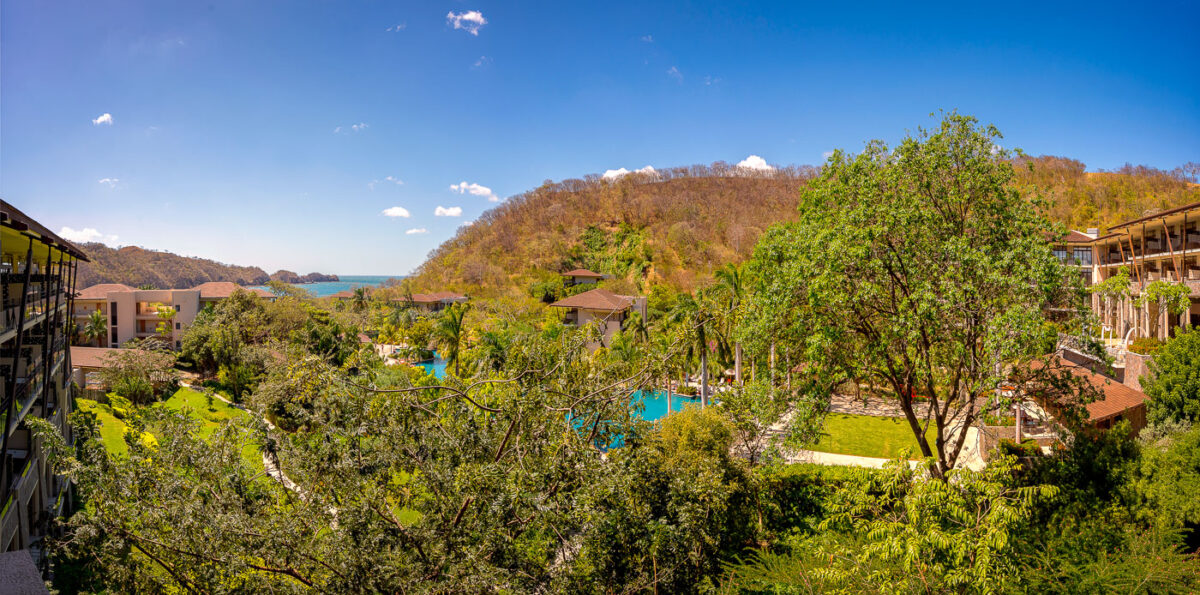
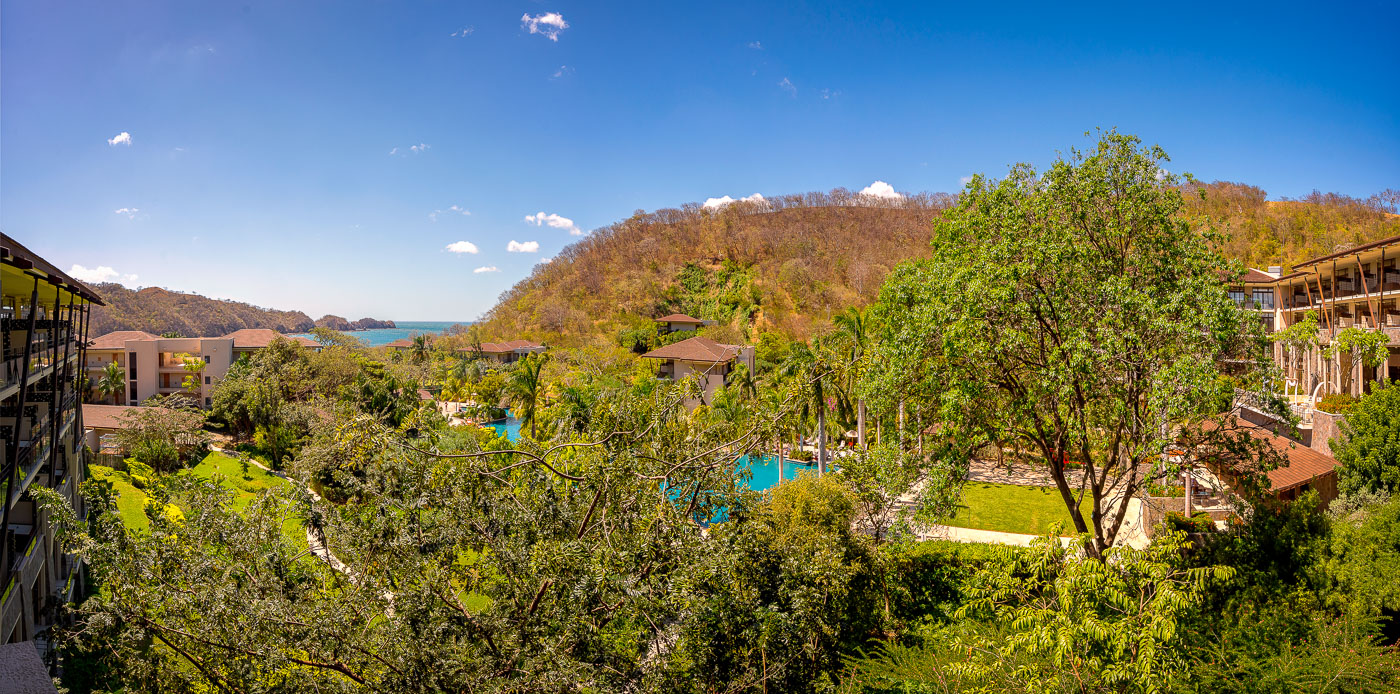
Dreams Las Mareas Resort overlooks Jobo Bay and the Pacific Ocean in Guanacaste, Costa Rica.
Dreams Las Mareas Resort sits along Jobo Bay on Costa Rica's Pacific coast, near the town of La Cruz close to the Nicaraguan border. The all-inclusive property opened in 2014, part of an effort to extend beach tourism north of more established Guanacaste destinations like Tamarindo and Papagayo. Its buildings and gardens step down a forested hillside toward the bay below.

Hillside Grounds of Dreams Las Mareas Resort, Guanacaste
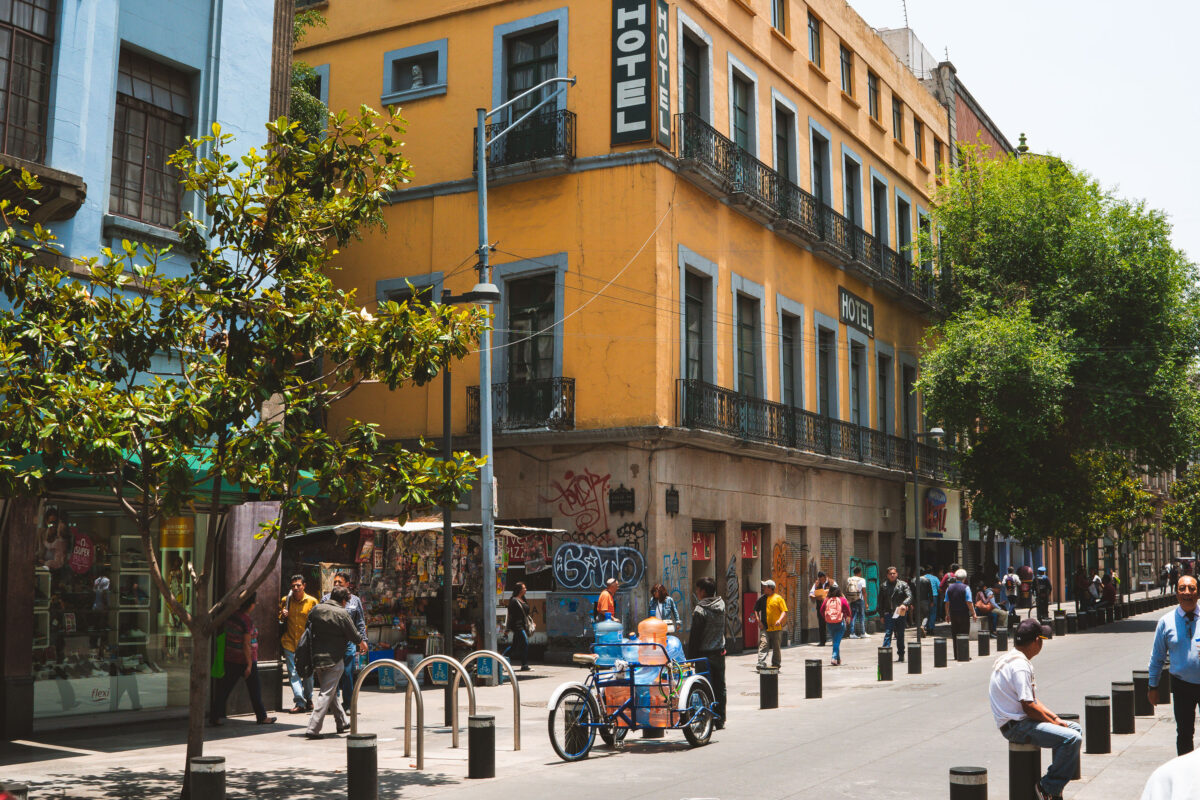
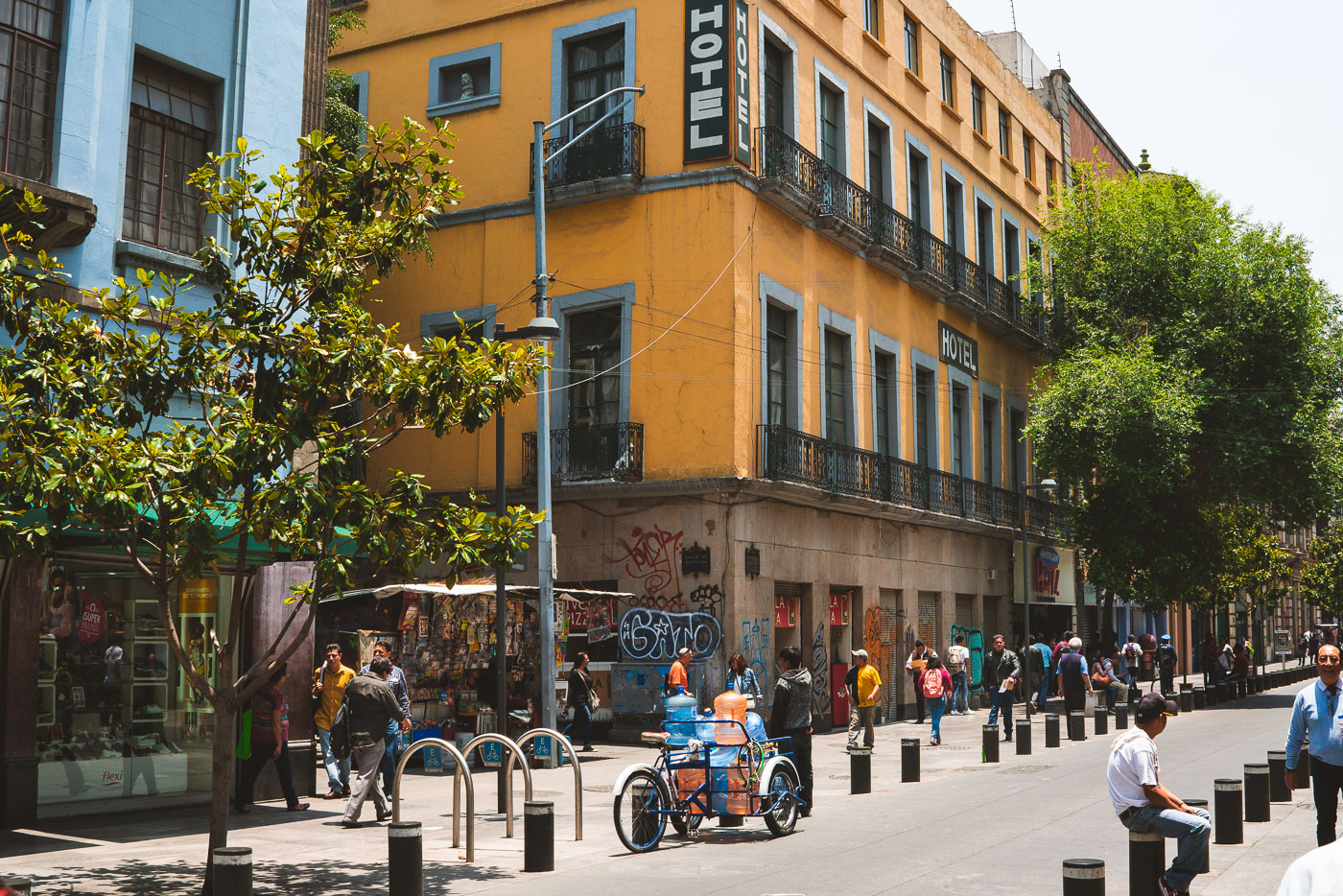
A yellow colonial-era hotel with blue trim stands on a pedestrian street in Mexico City's historic center surrounded by foot traffic and street vendors.
A hotel on Calle República de Uruguay in Mexico City's historic center anchors a busy pedestrian block near the city’s colonial-era core. The ground floor includes street-level storefronts and the surrounding block is used heavily by pedestrians and vendors.

Street Vendors Beneath a Hotel on Calle República de Uruguay
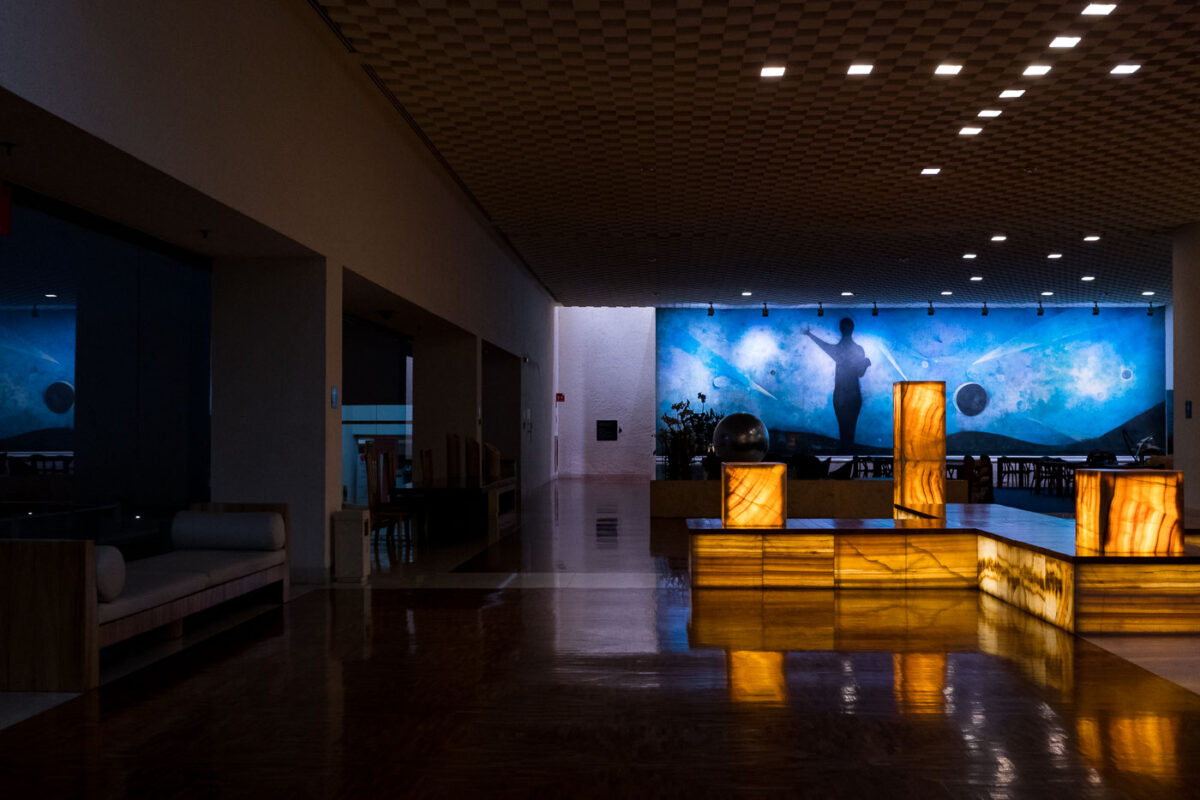
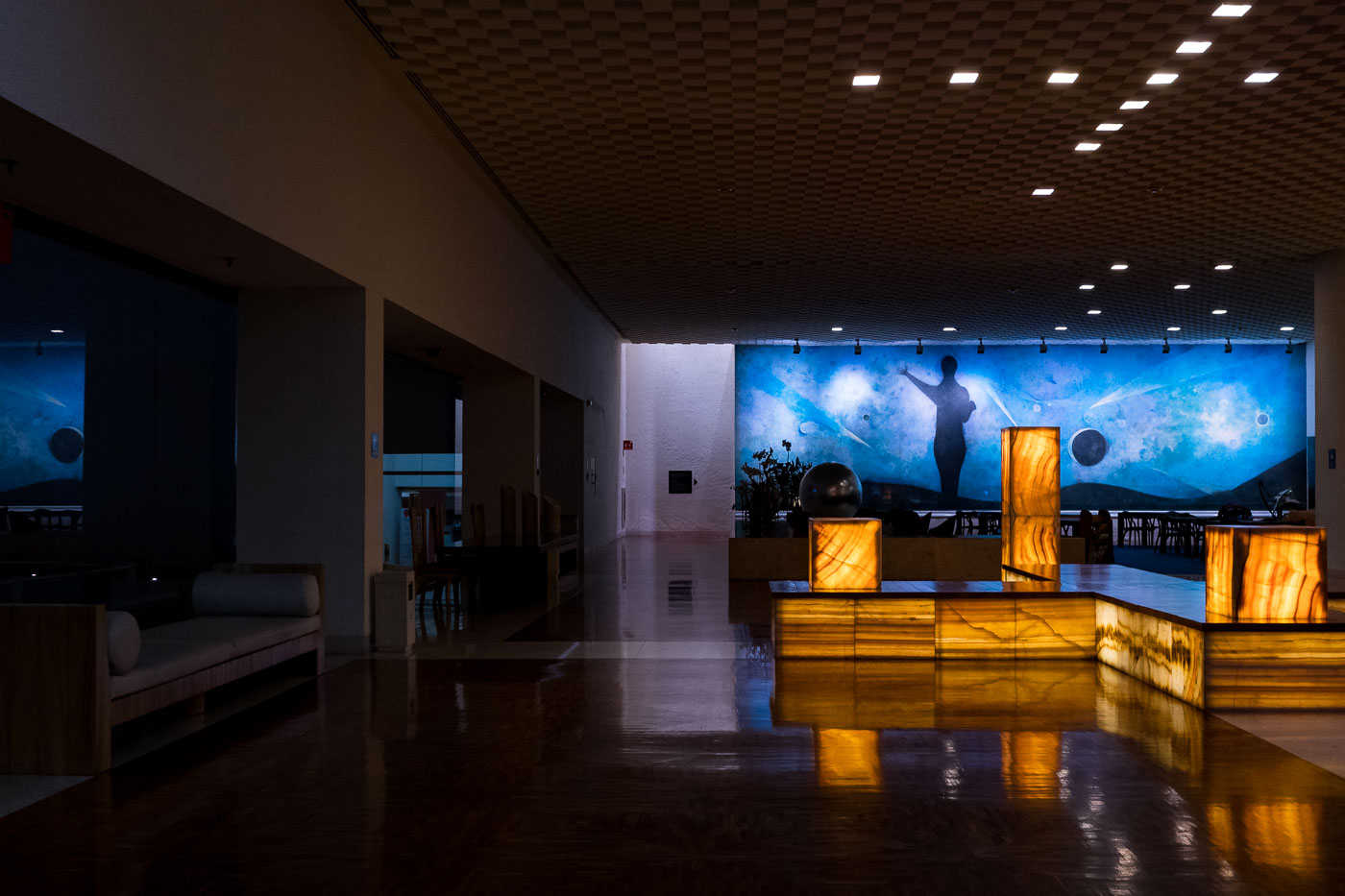
Modern hotel lobby in Mexico City features illuminated onyx fixtures and a large celestial mural on the back wall.
Mexico City hotel lobby with a large celestial mural and illuminated onyx fixtures. The interior combines modernist design elements with public art and natural stone finishes.

Illuminated Onyx Fixtures Beneath a Celestial Mural, Mexico City Hotel
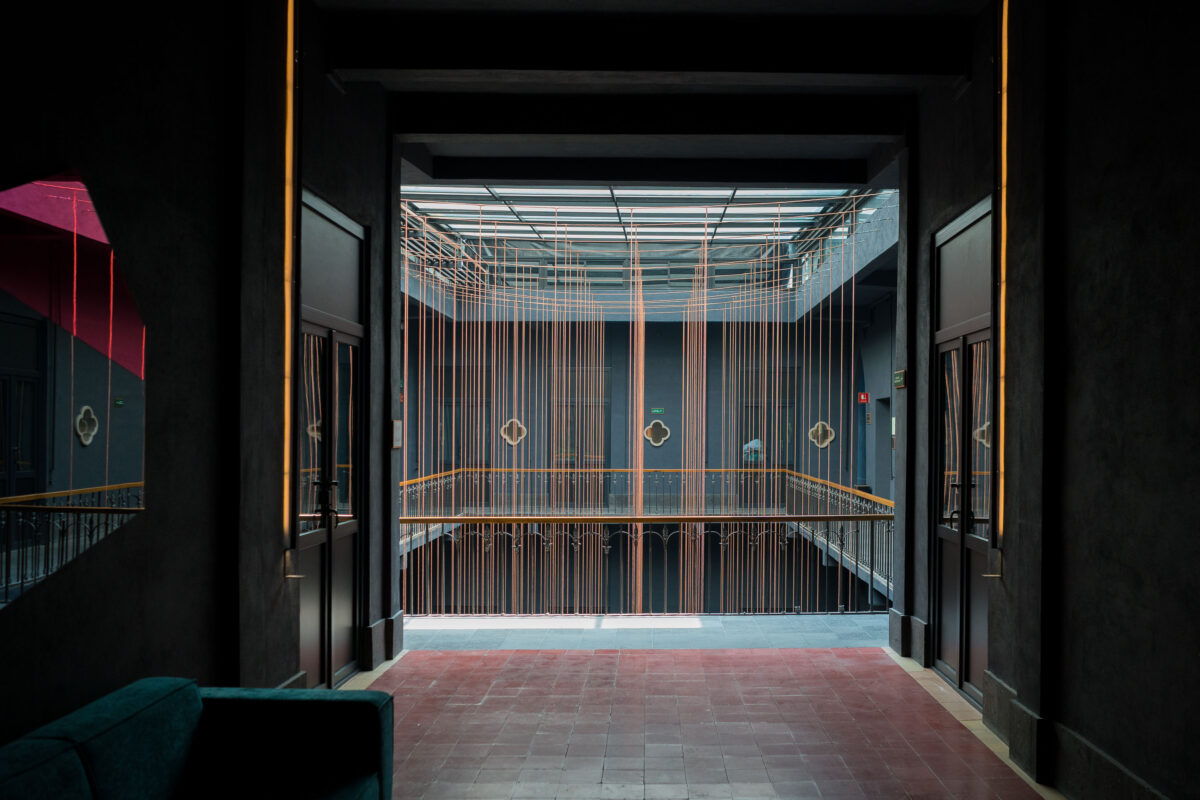
Contemporary copper-wire installation suspended within a historic Mexico City hotel atrium with multi-level galleries.
A boutique hotel atrium in Mexico City’s Centro Histórico combines a restored historic building with a contemporary interior installation. The space uses suspended copper-colored lines and minimalist lighting within a multi-level courtyard.

Suspended Copper Threads in a Mexico City Hotel Courtyard
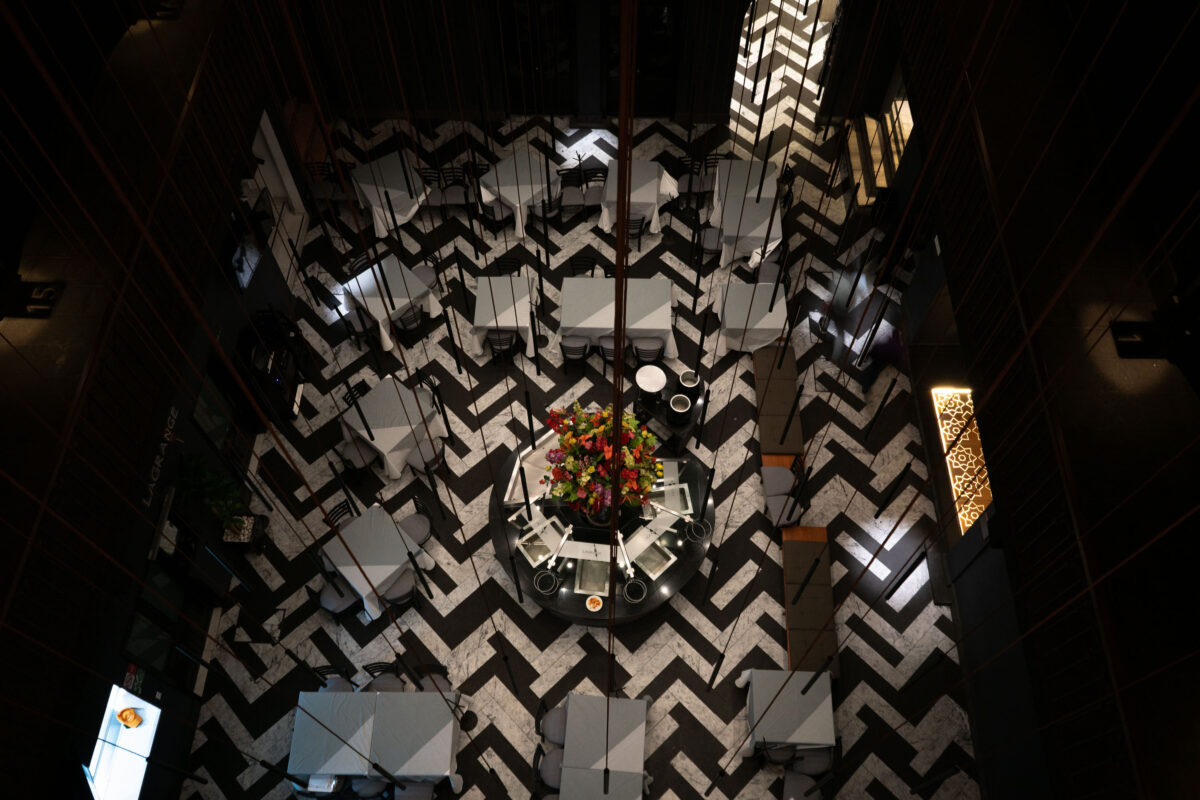
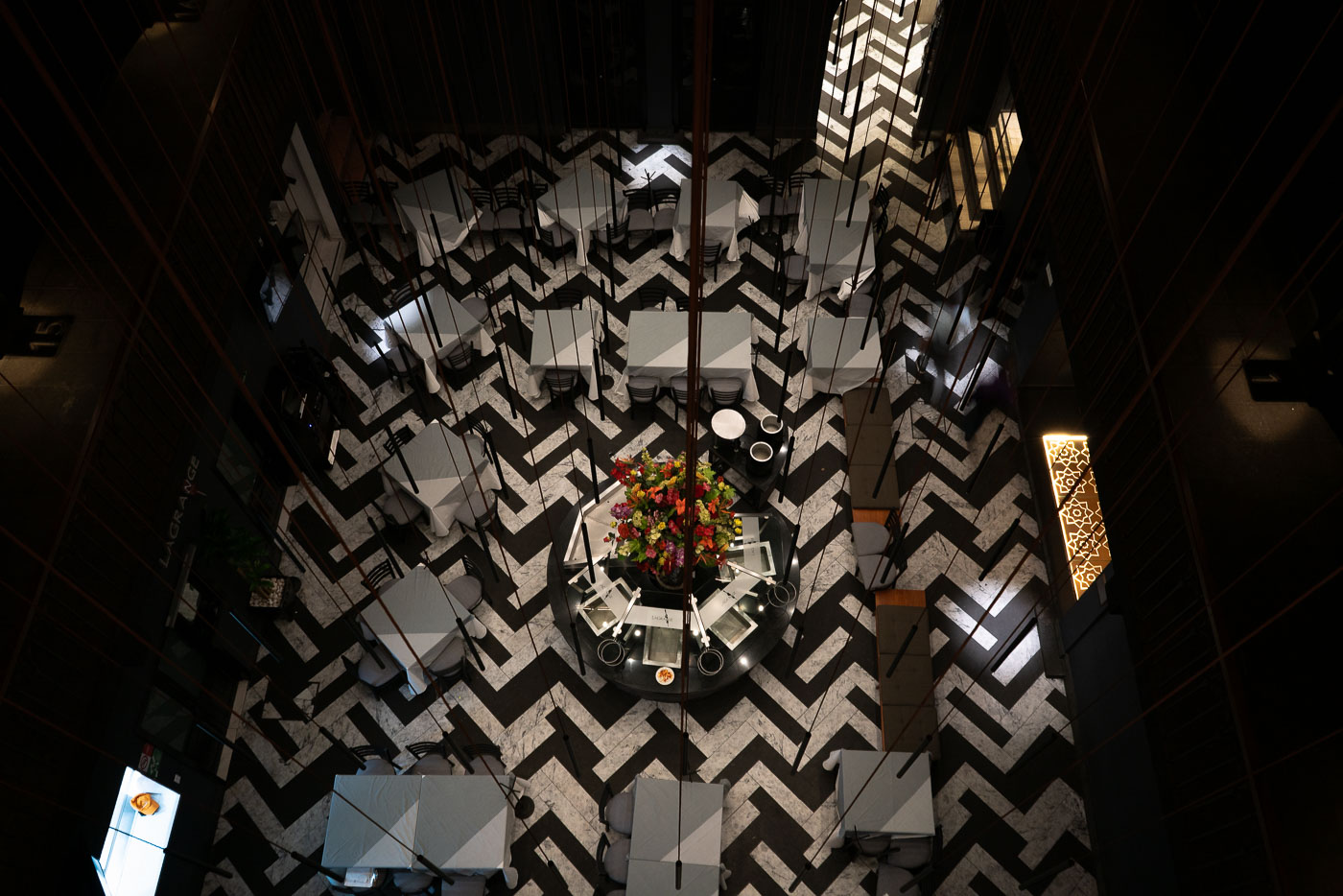
Overhead view of Hotel Punta MX restaurant dining room with black-and-white chevron floor and central floral arrangement in Mexico City.
Hotel Punta MX Restaurant in Mexico City occupies a dining room with a black-and-white chevron floor pattern. The restaurant is part of Hotel Punta MX, a downtown property near the historic center. Its tables are arranged around a central decorative display, creating a formal dining layout.

Chevron-Floored Dining Room at Hotel Punta MX
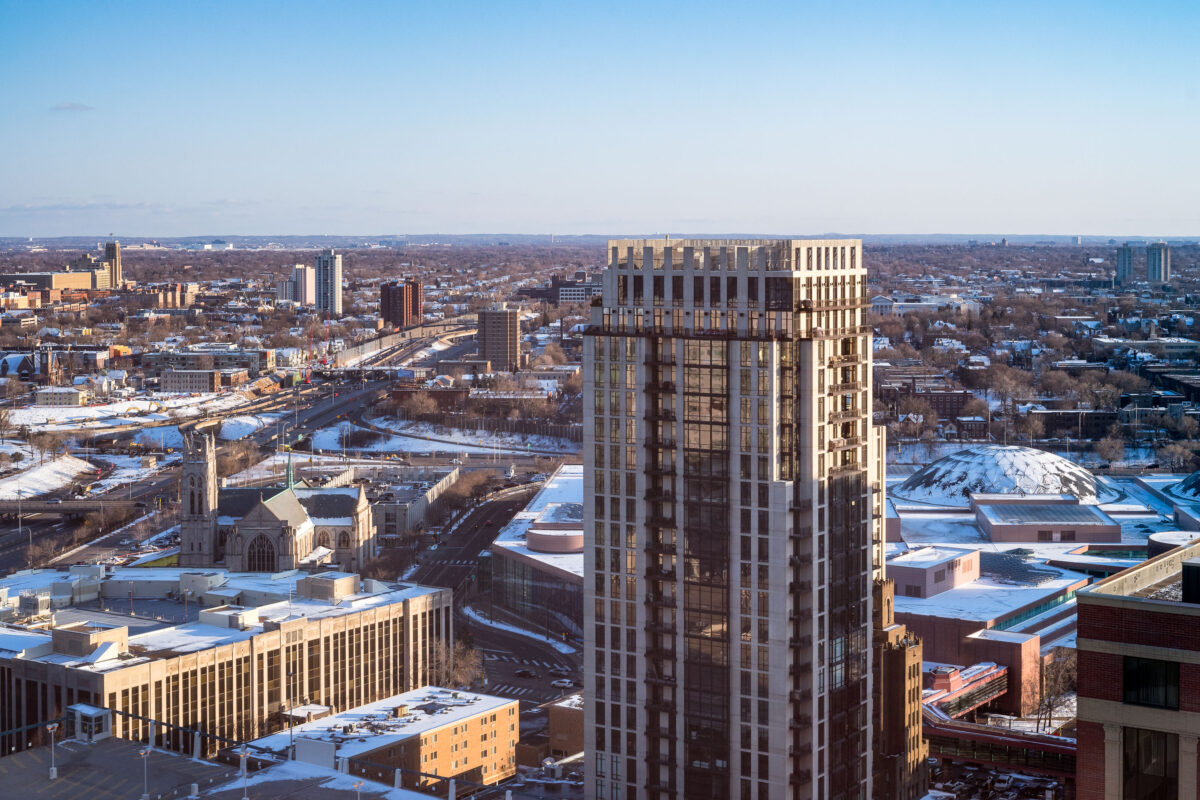
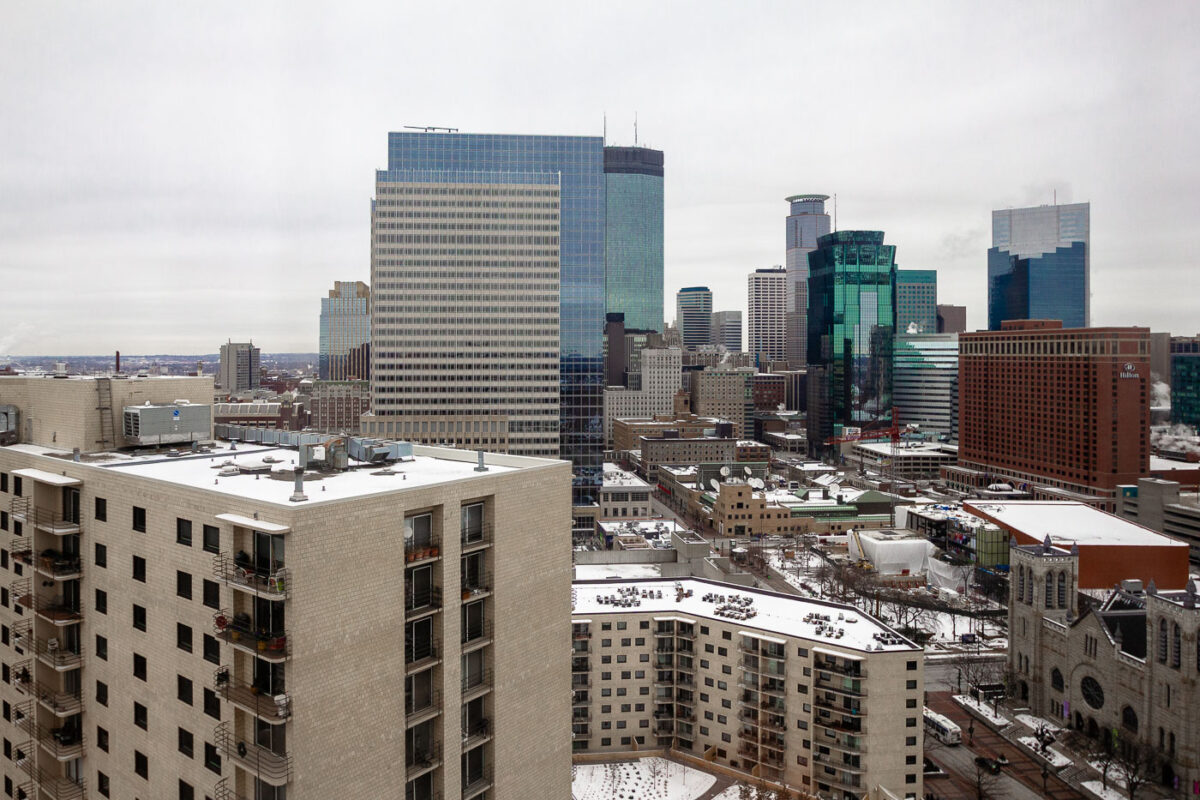
Hotel Ivy and Ivy Residences rise near the snow-covered Minneapolis Convention Center.
Hotel Ivy and Ivy Residences stand in downtown Minneapolis near the Minneapolis Convention Center. The complex is located on South Eleventh Street at the south end of downtown. Snow covers the convention center roofs and surrounding streets during late winter.

Hotel Ivy and Minneapolis Convention Center, Minneapolis
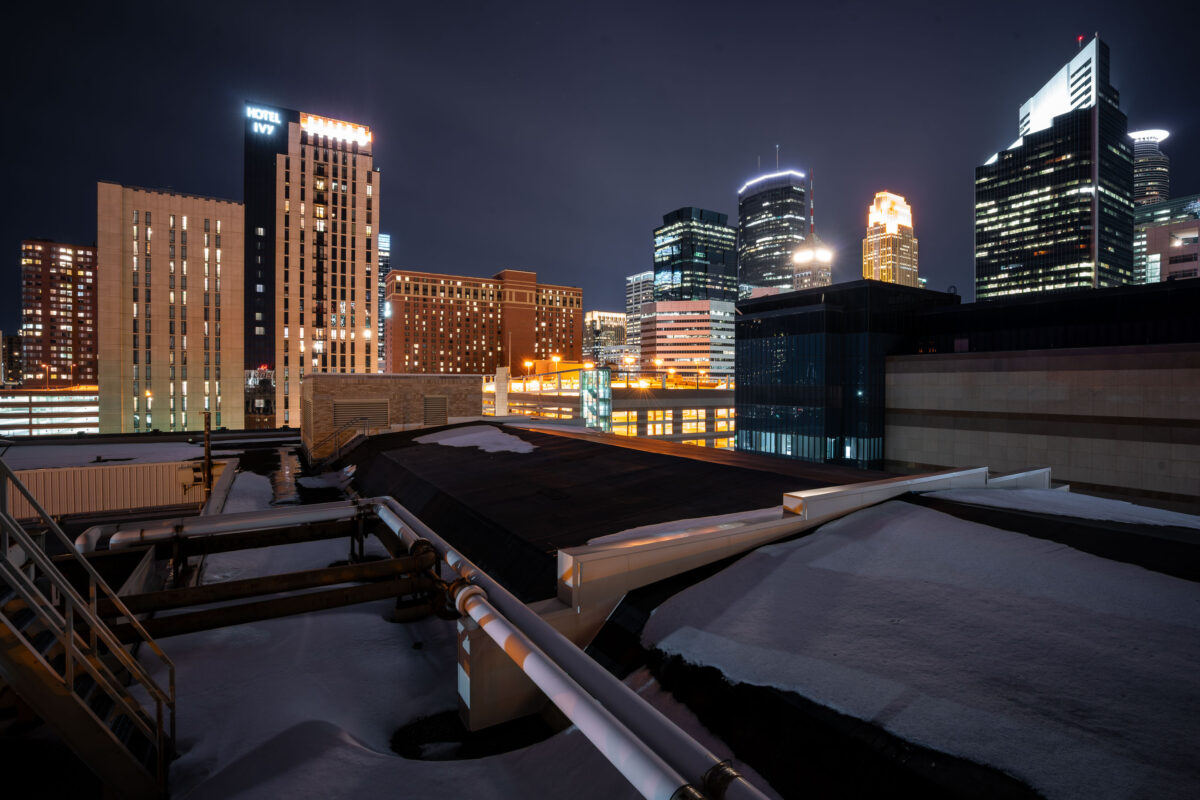
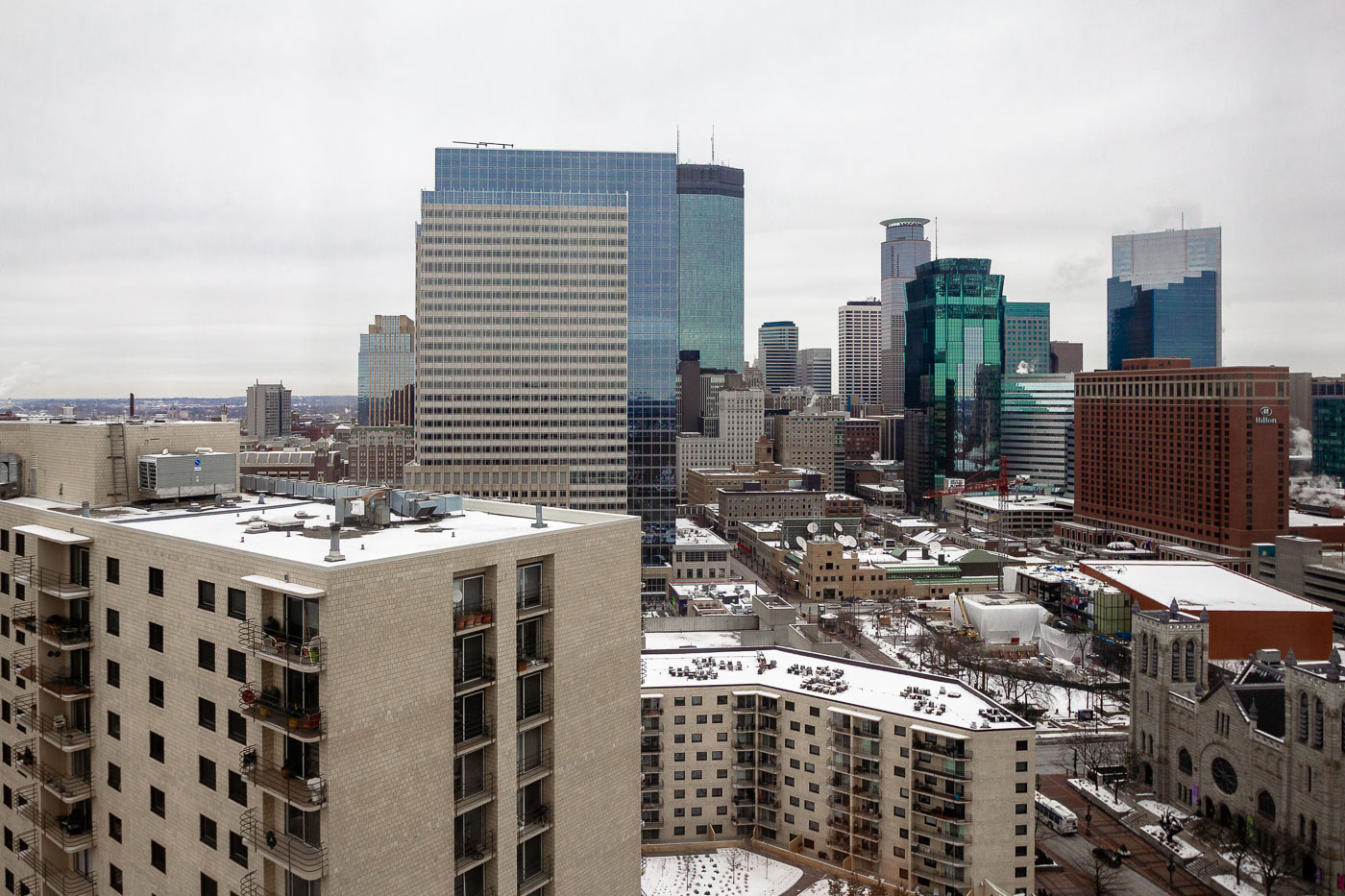
Hotel Ivy and IDS Center rise in the downtown Minneapolis skyline near Century Plaza.
Downtown Minneapolis skyline near Century Plaza includes Hotel Ivy, IDS Center, and Wells Fargo Center. Century Plaza houses the Minneapolis Police Department's 1st Precinct, which covers the downtown area.

Hotel Ivy and IDS Center, Downtown Minneapolis
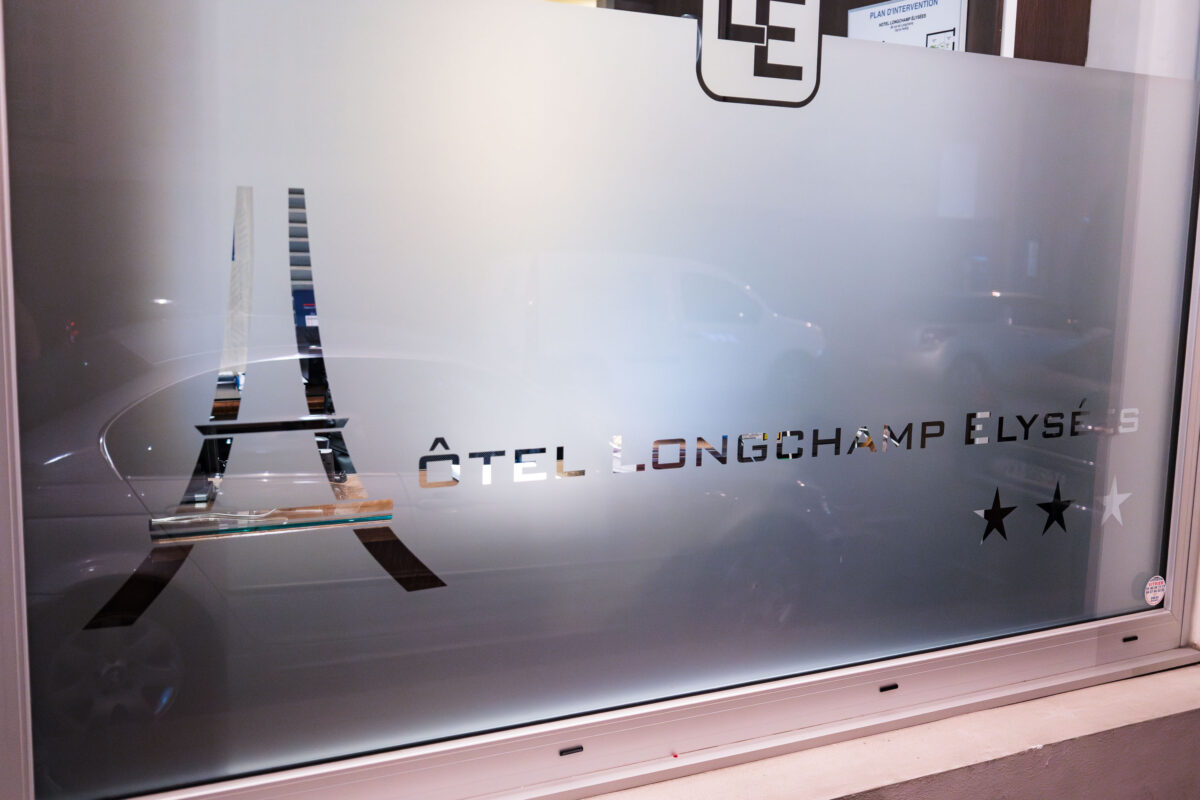
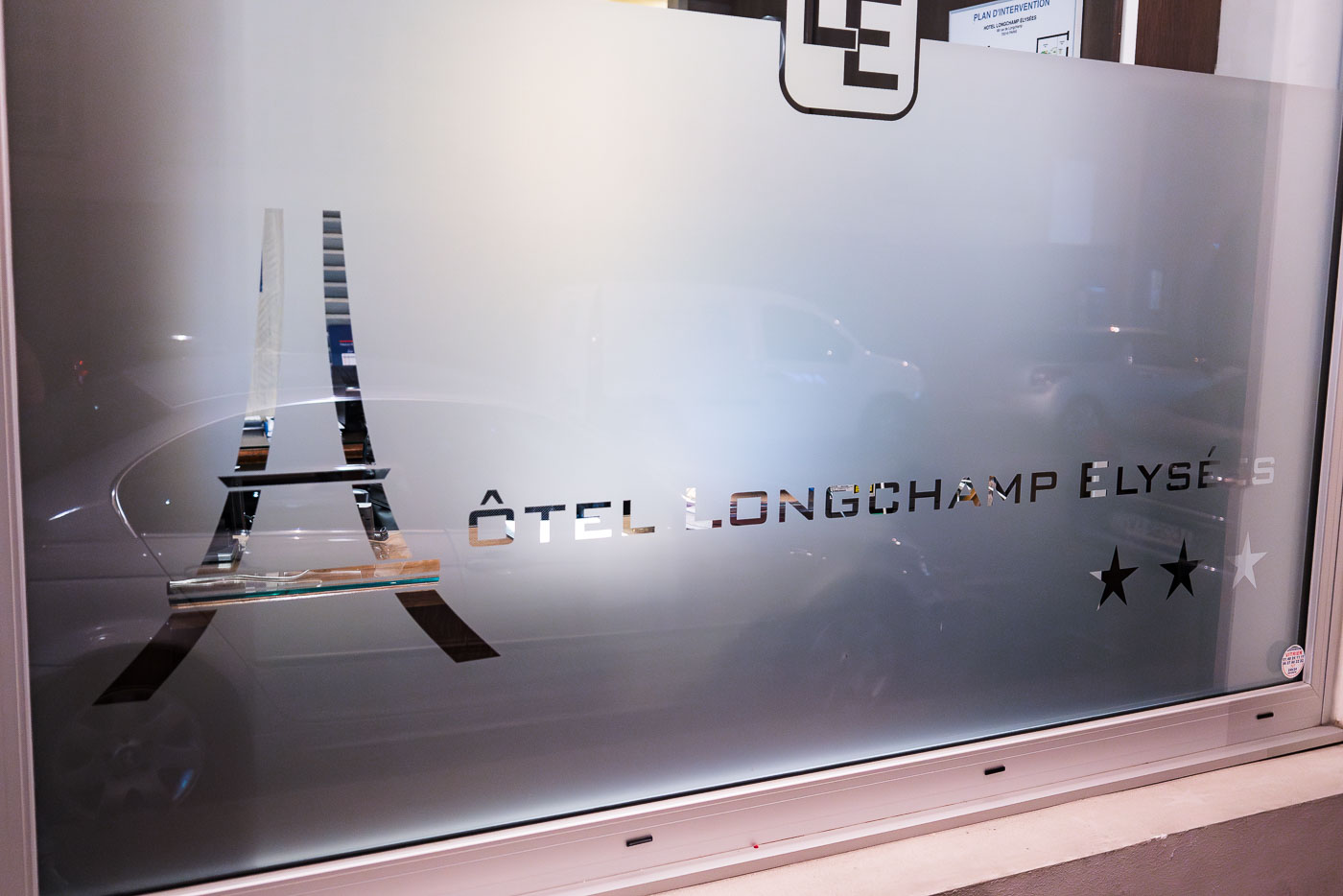
Hôtel Longchamp Elysées window in Paris with frosted glass, Eiffel Tower motif, and three stars.
Hôtel Longchamp Elysées in Paris is identified on frosted glass with an Eiffel Tower motif and three-star rating. The entrance window is marked with the hotel name in the 16th arrondissement near the Trocadéro area.

Hôtel Longchamp Elysées Window, Paris
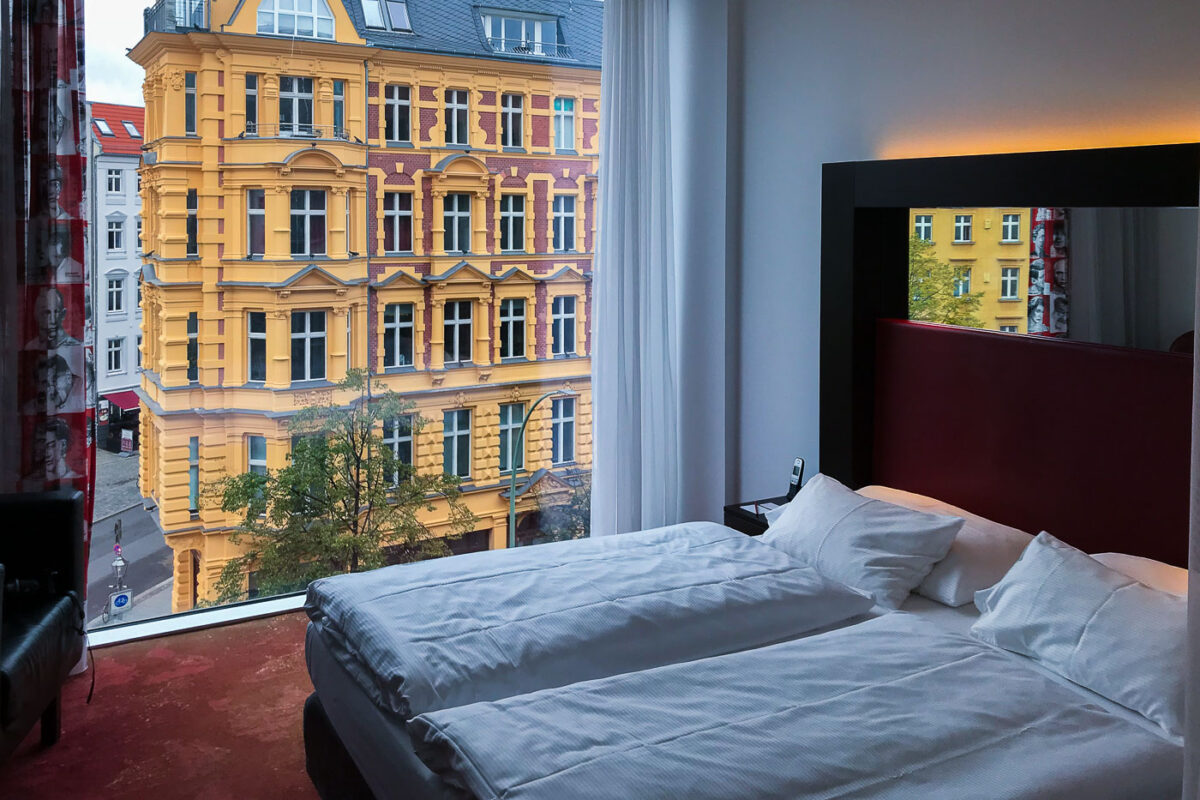
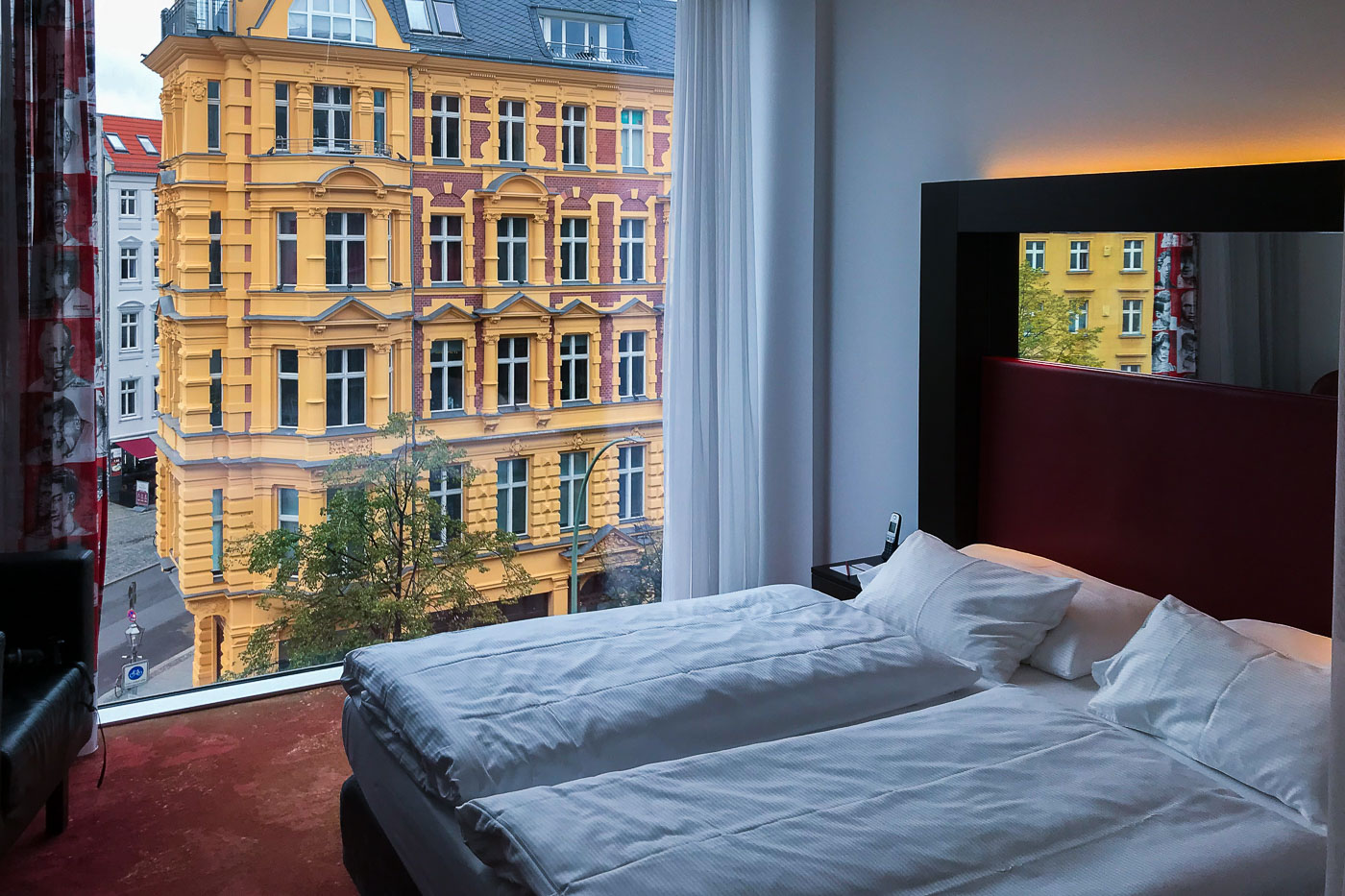
Hotel room bed with view of a yellow Gründerzeit building across the street in Berlin Mitte.
Gründerzeit buildings like this one take their name from Germany's "founders' era," the rapid industrial and urban expansion that followed unification in 1871. Berlin saw entire districts built in this style through the 1880s and 1890s, with stucco facades, bay windows, and brick detailing marking apartment blocks for the city's growing middle class. Many of these buildings in Mitte survived Allied bombing in World War II only to fall into disrepair under East German administration, when maintenance budgets for private housing stock were scarce. Since reunification in 1990, large-scale restoration projects have returned facades across Mitte to something close to their original color schemes and ornamentation, a process that has made the neighborhood one of the most sought-after residential areas in the city.

A Gründerzeit Facade Across the Street in Berlin Mitte
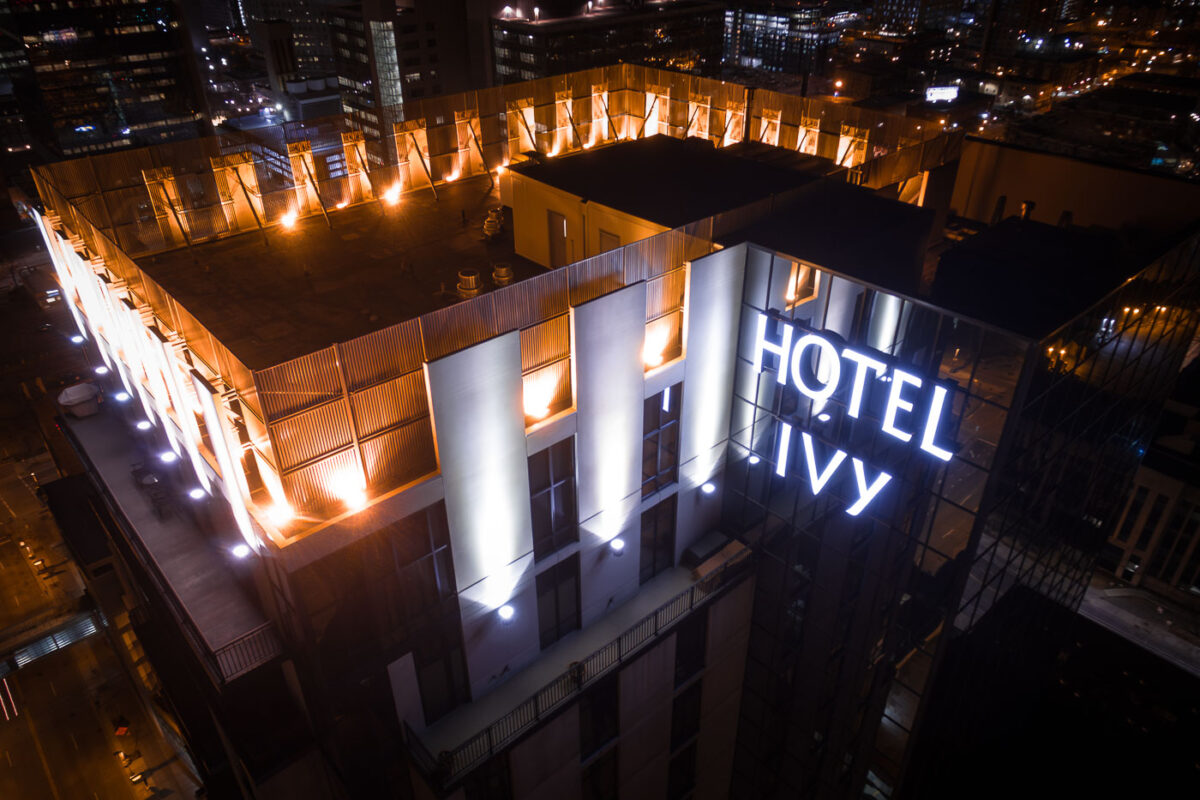
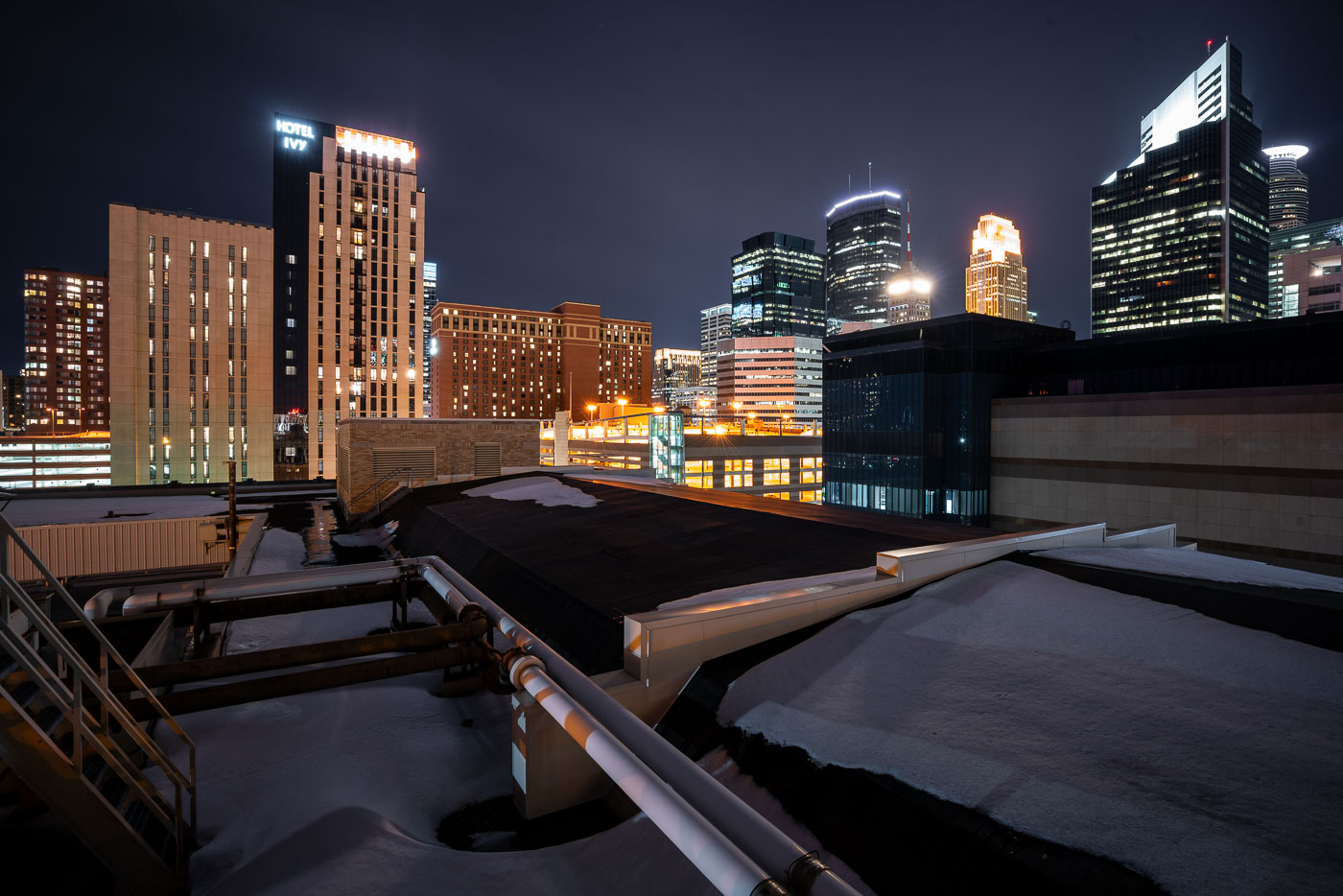
Hotel Ivy, a luxury hotel in downtown Minneapolis, is illuminated at night.
Hotel Ivy, a luxury hotel in downtown Minneapolis, is illuminated at night. The building, which opened in 2019, is part of the city's modern architectural development. Its rooftop area offers views of the surrounding urban environment, reflecting the ongoing growth and activity within the Minneapolis central business district.

Hotel Ivy Rooftop and Downtown Minneapolis at Night
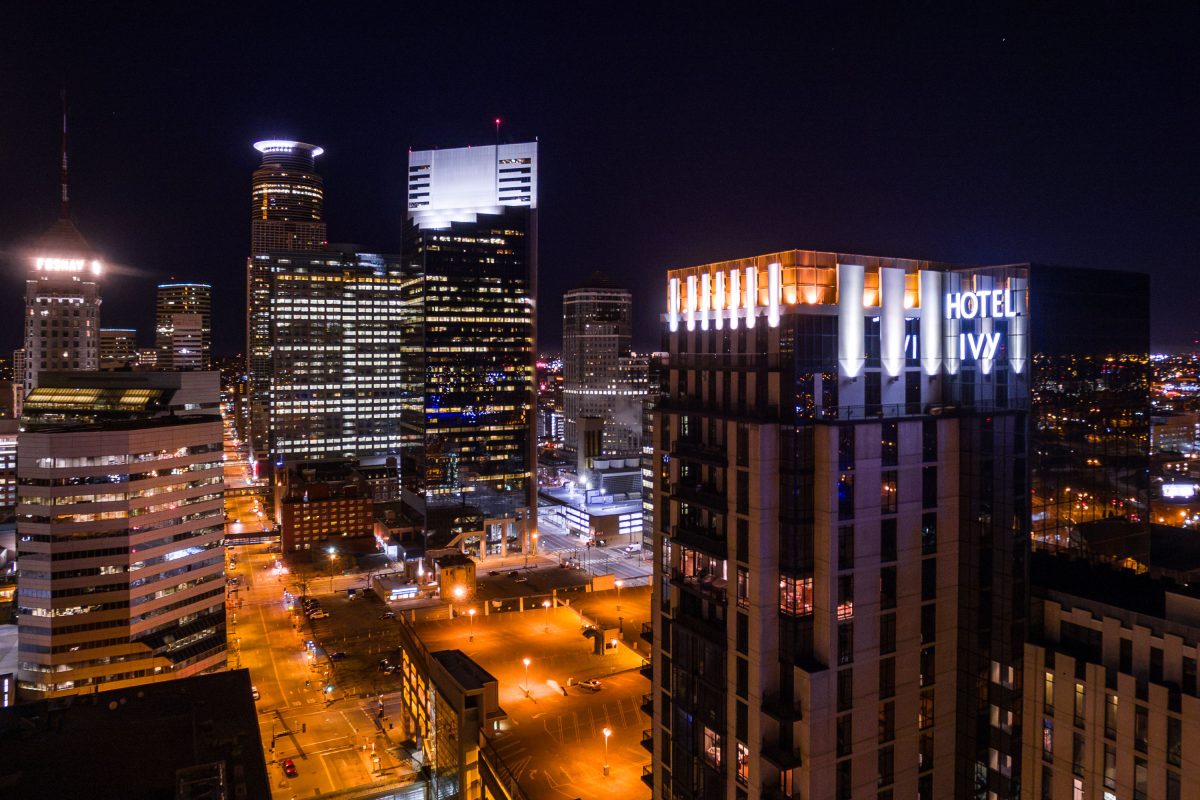
Hotel Ivy on Marquette Ave at night
Hotel Ivy on Marquette Avenue in Downtown Minneapolis lit up at night.

Hotel Ivy on Marquette Ave in Downtown Minneapolis

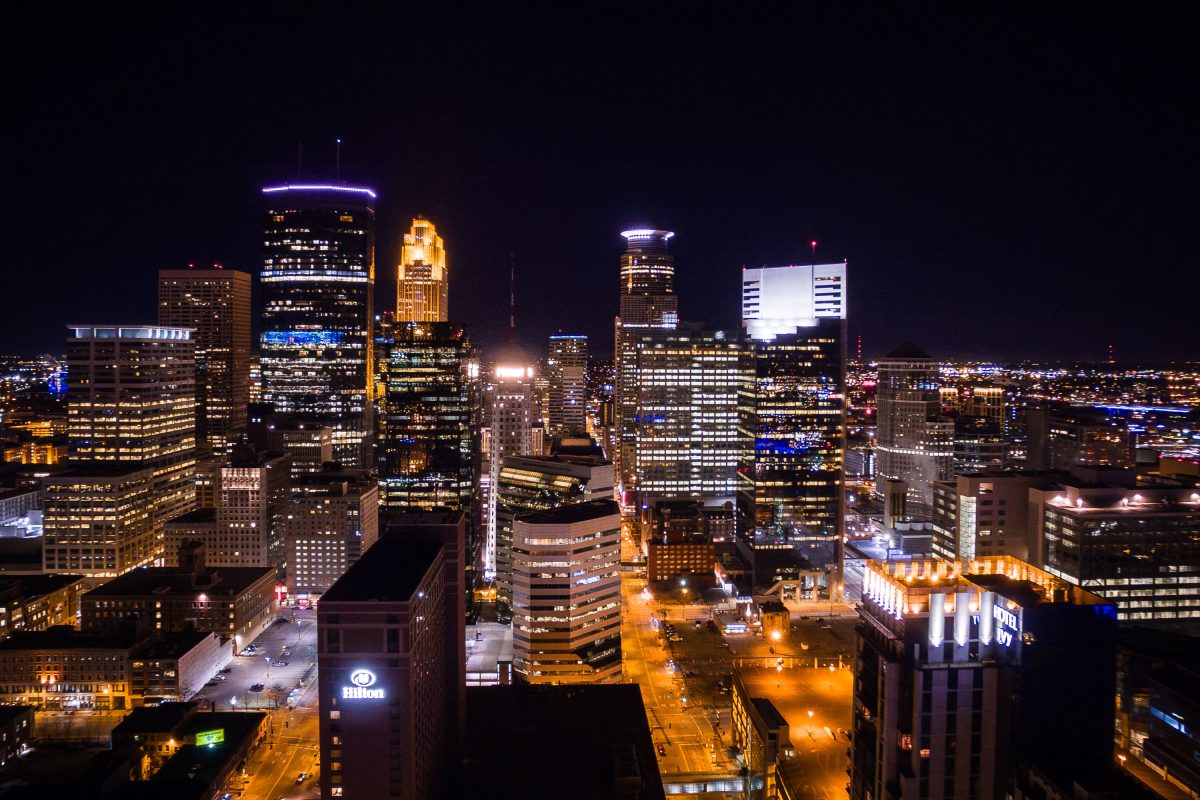
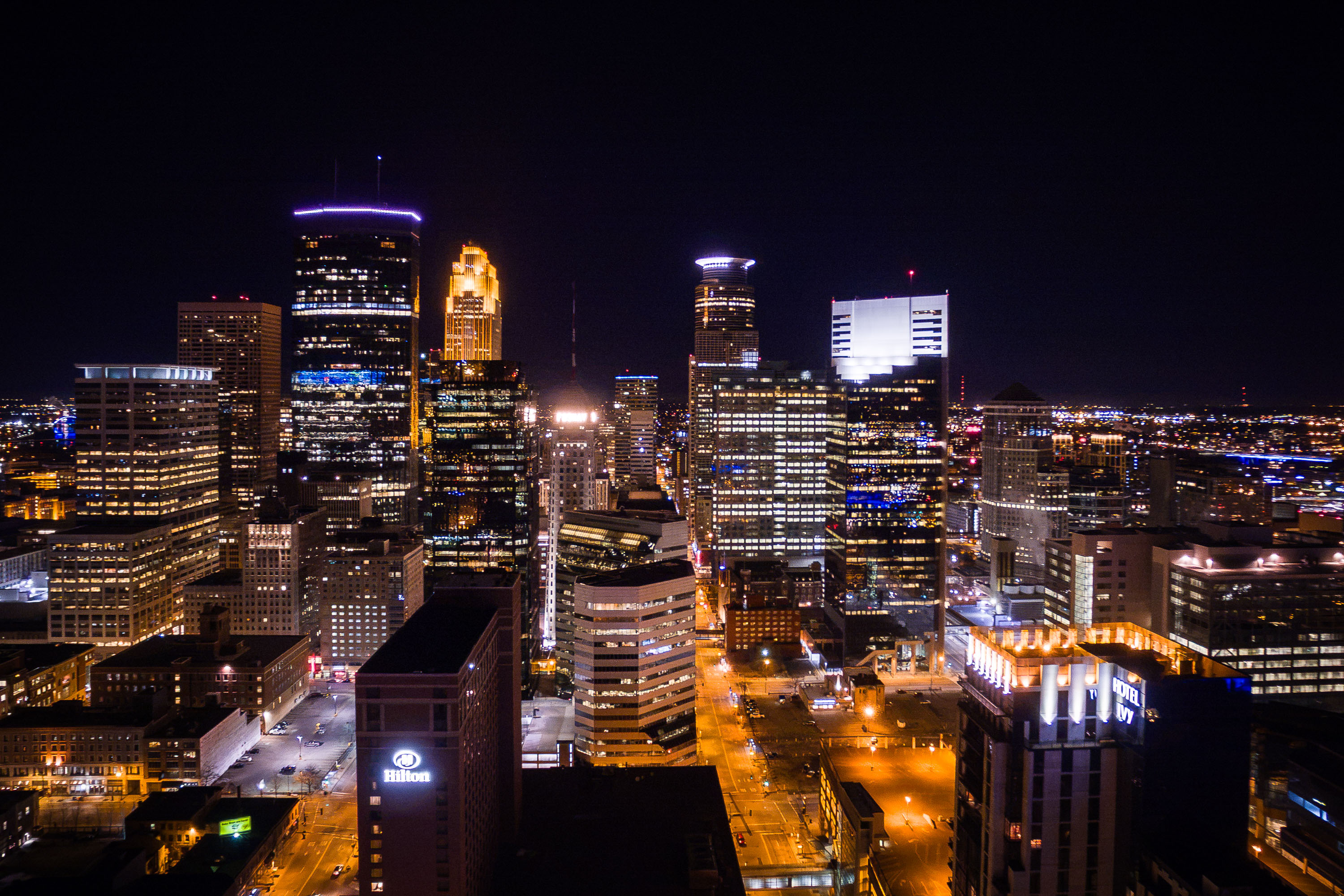
Downtown Minneapolis skyline at night featuring illuminated office and hotel towers including the Hilton and Hotel Ivy.
The Hilton Minneapolis is a 25-story hotel at 1001 Marquette Avenue South that opened in 1992 with more than 800 rooms, making it one of the largest hotels in the Twin Cities. Hotel Ivy occupies a 19-story tower built in 1930 as the Northwestern National Life Insurance Building, later converted into a hotel in 2008.

Downtown Minneapolis Skyline Above the Hilton and Hotel Ivy

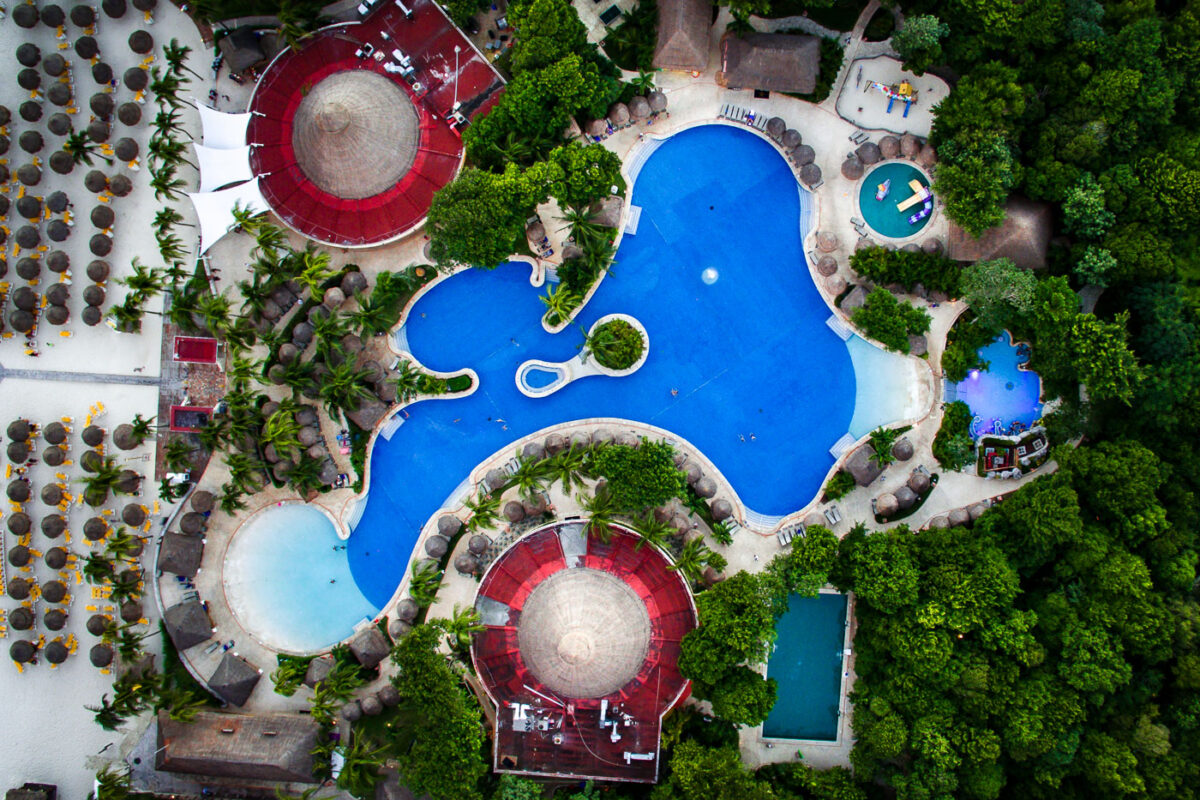
The Iberostar Tucan and Quetzal pool complex is in Playa del Carmen, Mexico.
The Iberostar Tucan and Iberostar Quetzal pool complex in Playa del Carmen, Mexico, includes interconnected swimming pools between the beachfront and landscaped resort grounds. Thatched shade palapas, lounge areas, and circular pavilion structures border the pools, with beach seating and palm-lined paths nearby. The adjacent Iberostar properties are located along the Riviera Maya coast in the Playacar area.

Iberostar Tucan and Quetzal Pool Complex, Playa del Carmen

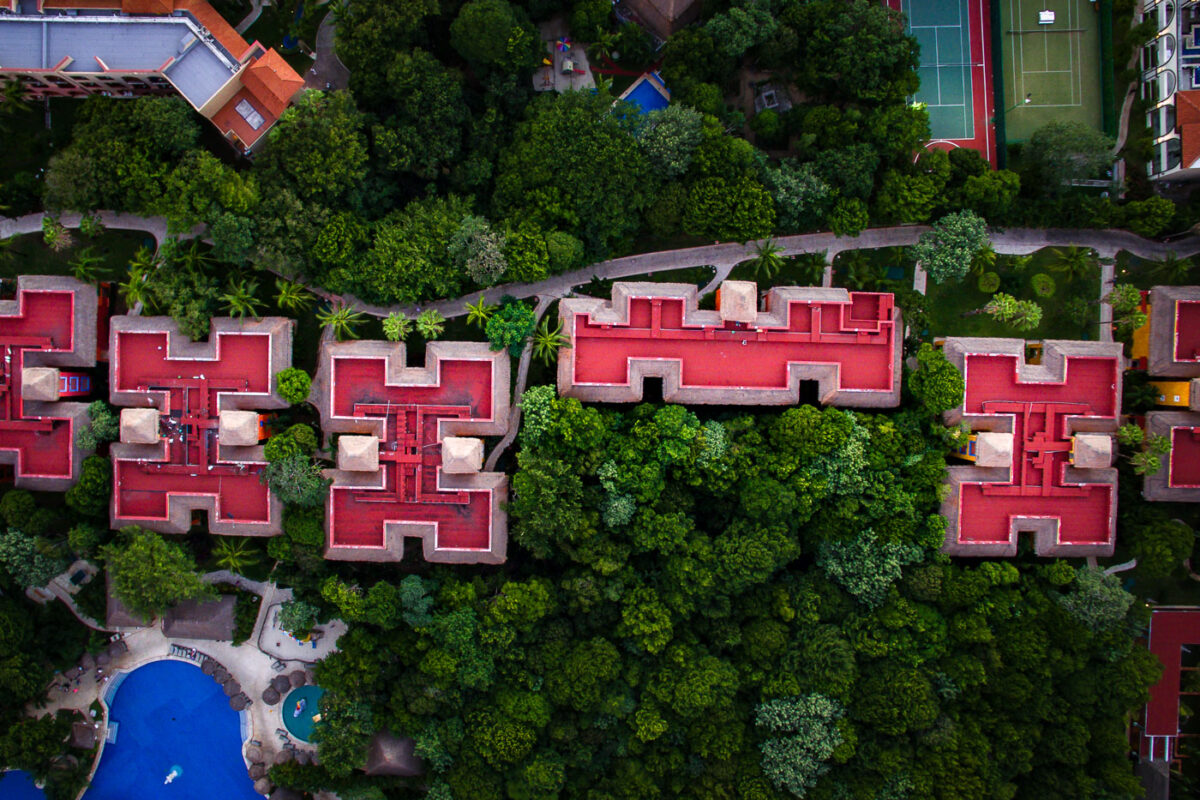
Iberostar Tucan Resort grounds in Playa del Carmen include red-roofed buildings, pools, tennis courts, and dense landscaping.
Iberostar Tucan Resort grounds in Playa del Carmen, Mexico, include red-roofed guest buildings set among dense tropical landscaping. The hotel complex includes pedestrian paths, swimming pools, and tennis courts within the resort property.

Aerial View of Red-Roofed Villas at Iberostar Tucan, Playa del Carmen

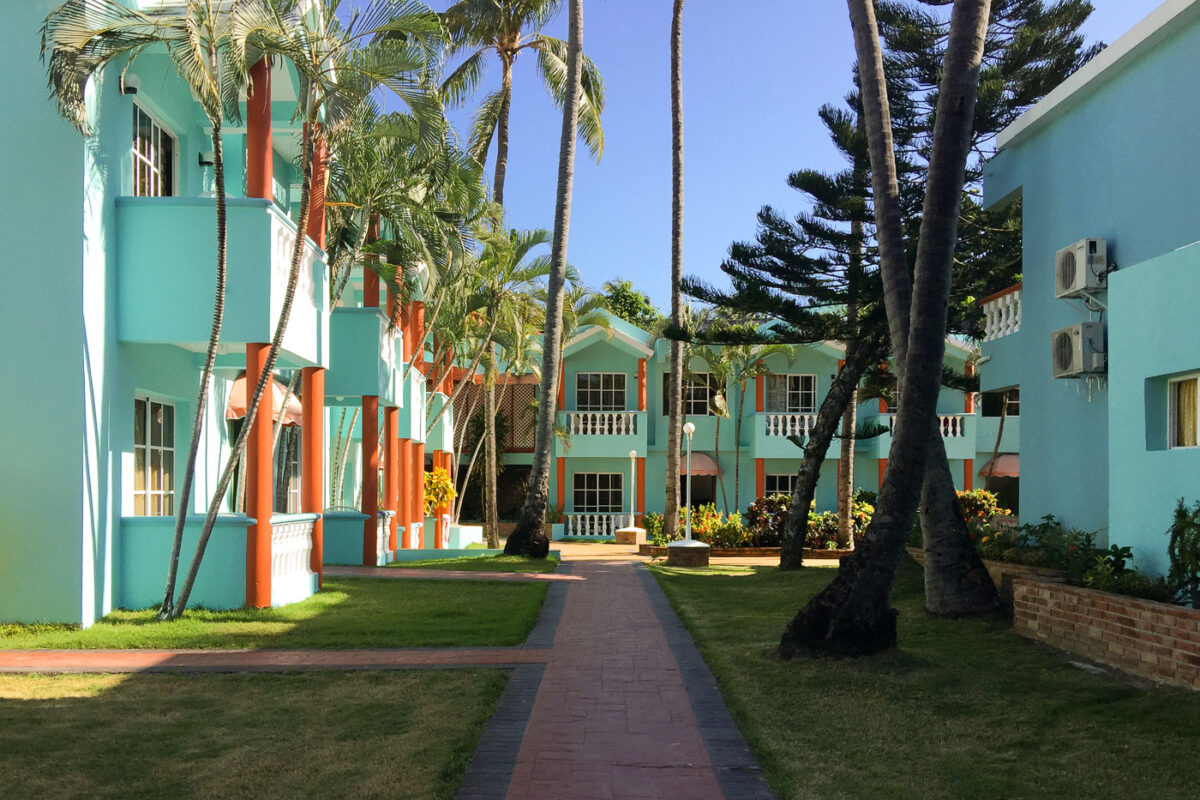
Hotel El Cortecito courtyard in Punta Cana features turquoise buildings with terracotta columns, manicured lawns, and towering palm trees.
Hotel El Cortecito in Punta Cana, Dominican Republic, is a low-rise hotel complex arranged around a palm-lined courtyard with pedestrian walkways and small balconies. The property’s turquoise facades, terracotta columns, white balustrades, and open-air circulation are characteristic of smaller locally built coastal accommodations that predated the large all-inclusive resort compounds that later came to dominate the Punta Cana area.

Palm-Lined Walkway at El Cortecito Inn, Bávaro

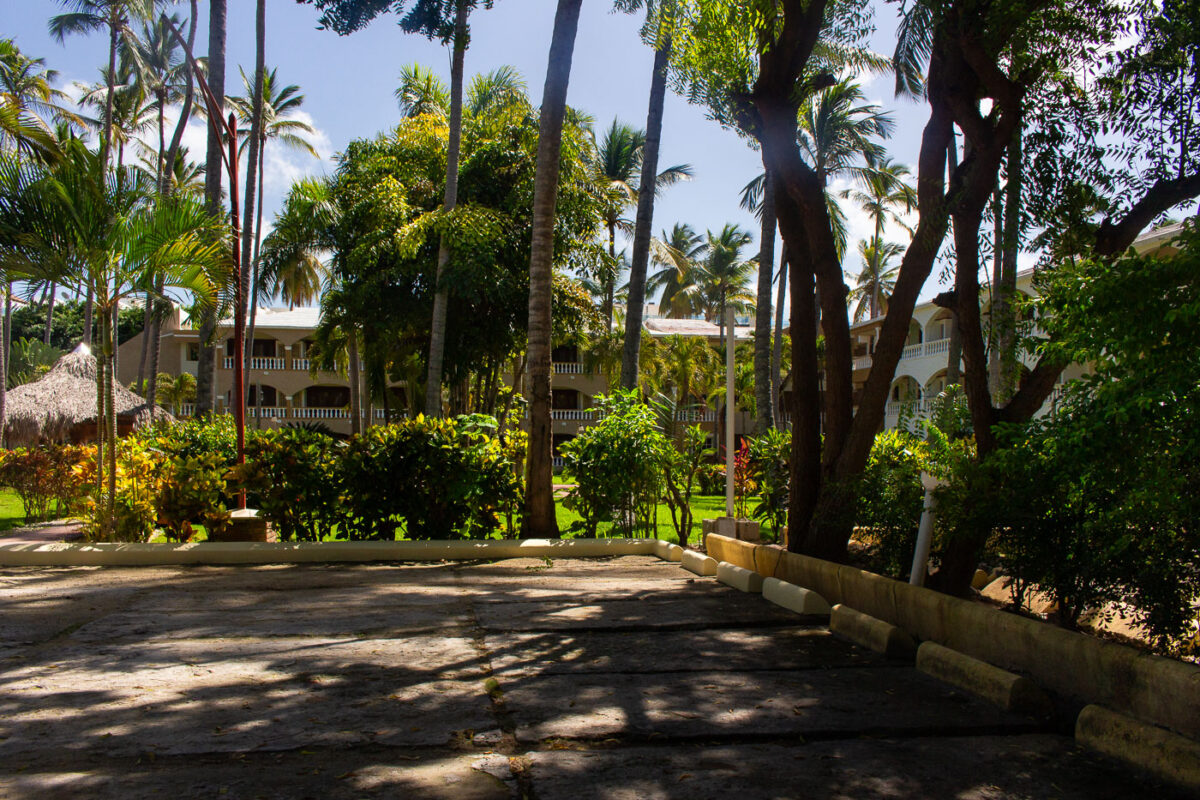
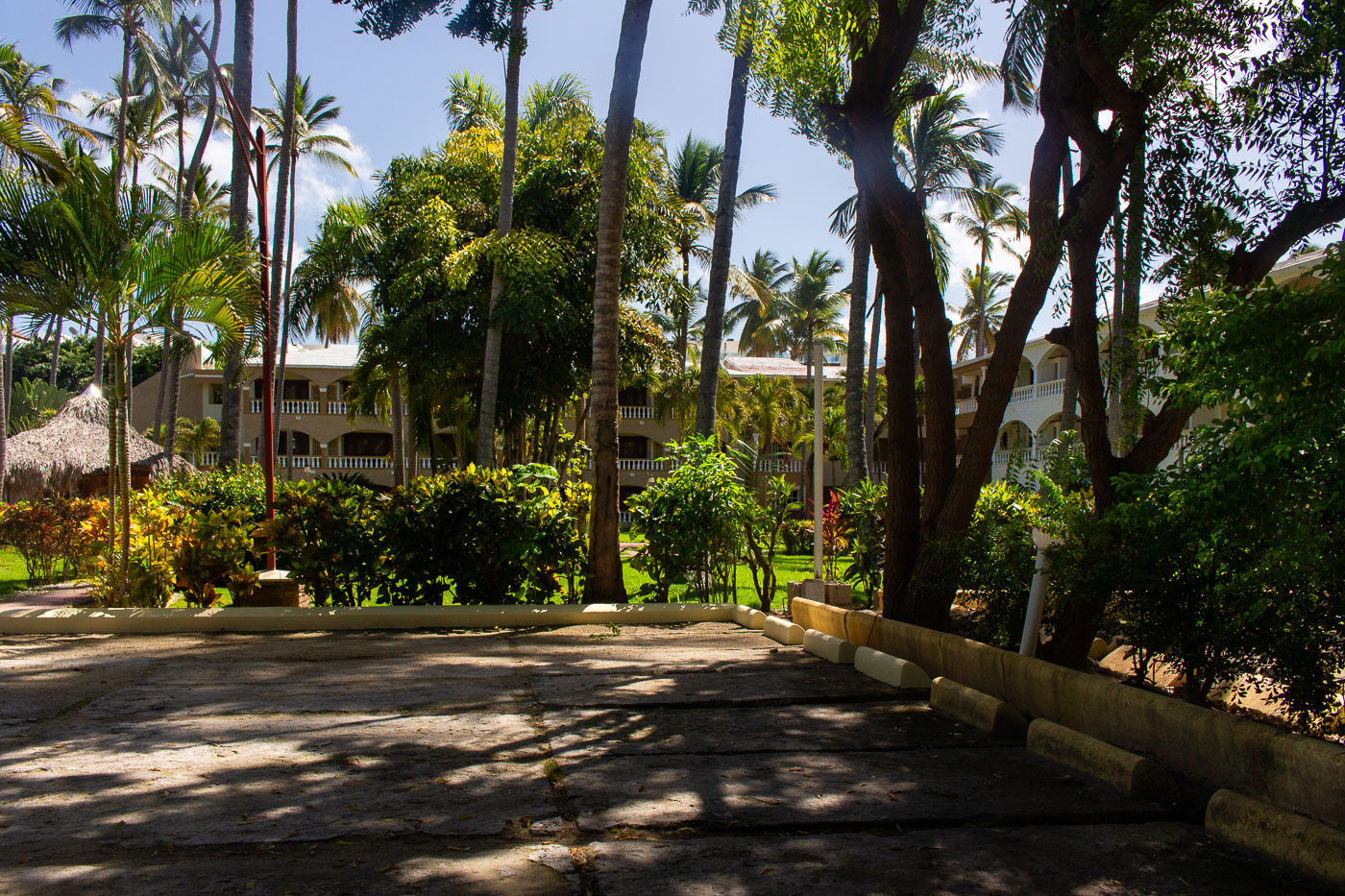
Cortecito Inn parking lot surrounded by tall palm trees and lush tropical landscaping with white hotel buildings visible in the background.
Parking area and hotel buildings at the Cortecito Inn in the Dominican Republic. The property is set within dense palm landscaping, and the paved lot in the foreground provides vehicle access to the low-rise guest accommodations visible behind it.

Palm-Shaded Parking Area at the Cortecito Inn, Bávaro

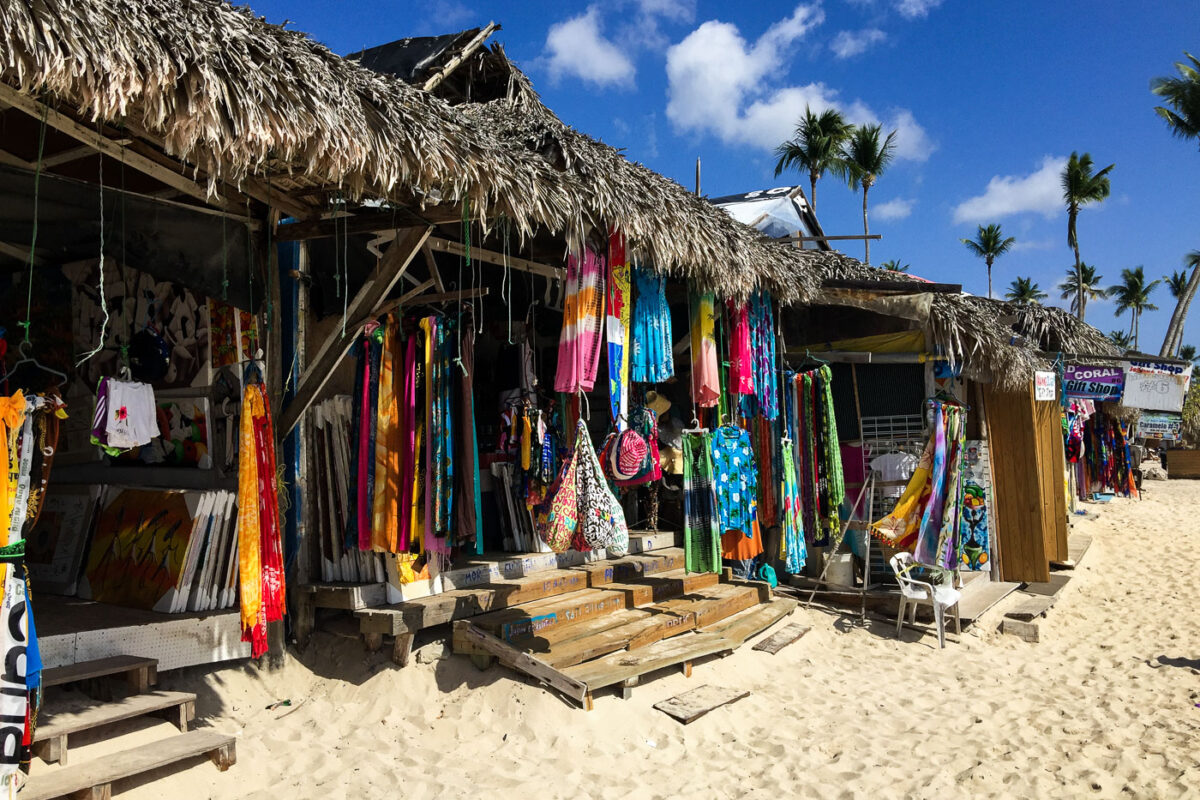
Beachfront market stalls with thatched roofs sell clothing and souvenirs on the sand in Dominicus, Dominican Republic.
Beachfront market stalls in Dominicus, near Bayahibe in La Altagracia Province, Dominican Republic, sell clothing, paintings, and souvenir items from wood-framed structures roofed with palm thatch. The row of shops stands directly on the sand beside the resort coast, a common arrangement in this tourism area where small vendors operate near hotels such as Iberostar Selection Hacienda Dominicus.

Thatched-Roof Souvenir Stalls Near Hacienda Dominicus, Bayahibe

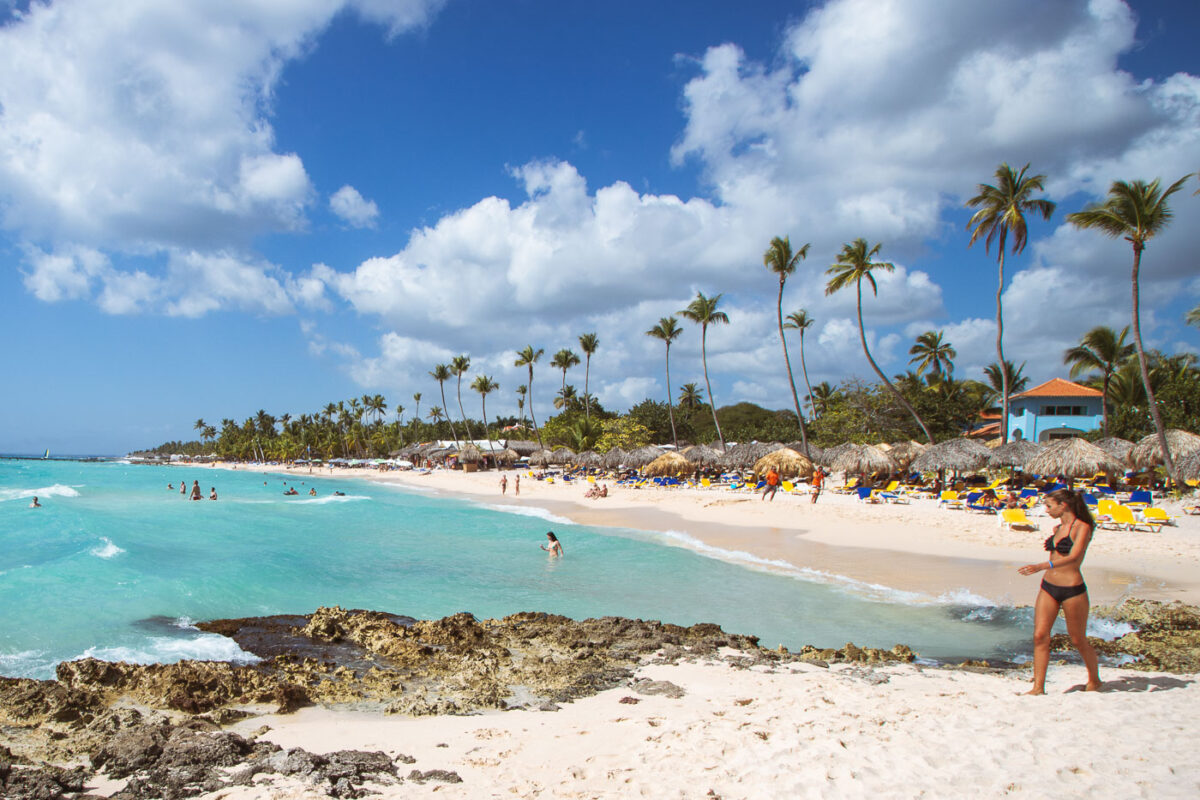
Beachgoers enjoy turquoise waters and white sand at Iberostar Selection Hacienda Dominicus resort in Bayahibe, Dominican Republic.
The Iberostar Selection Hacienda Dominicus resort is situated on the shores of Bayahibe, Dominican Republic. This coastal area is known for its pristine beaches and clear turquoise waters, making it a popular destination for tourism.

Thatched Umbrellas Along Hacienda Dominicus Beach in Bayahibe

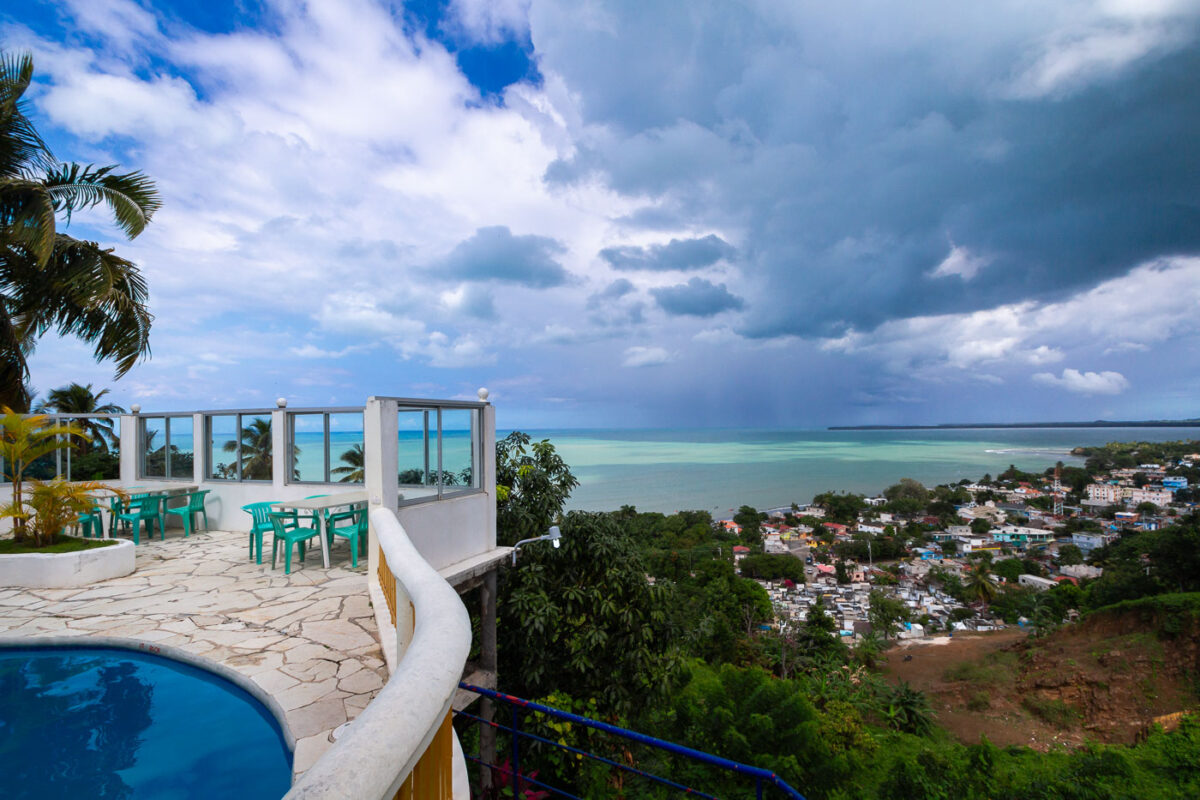
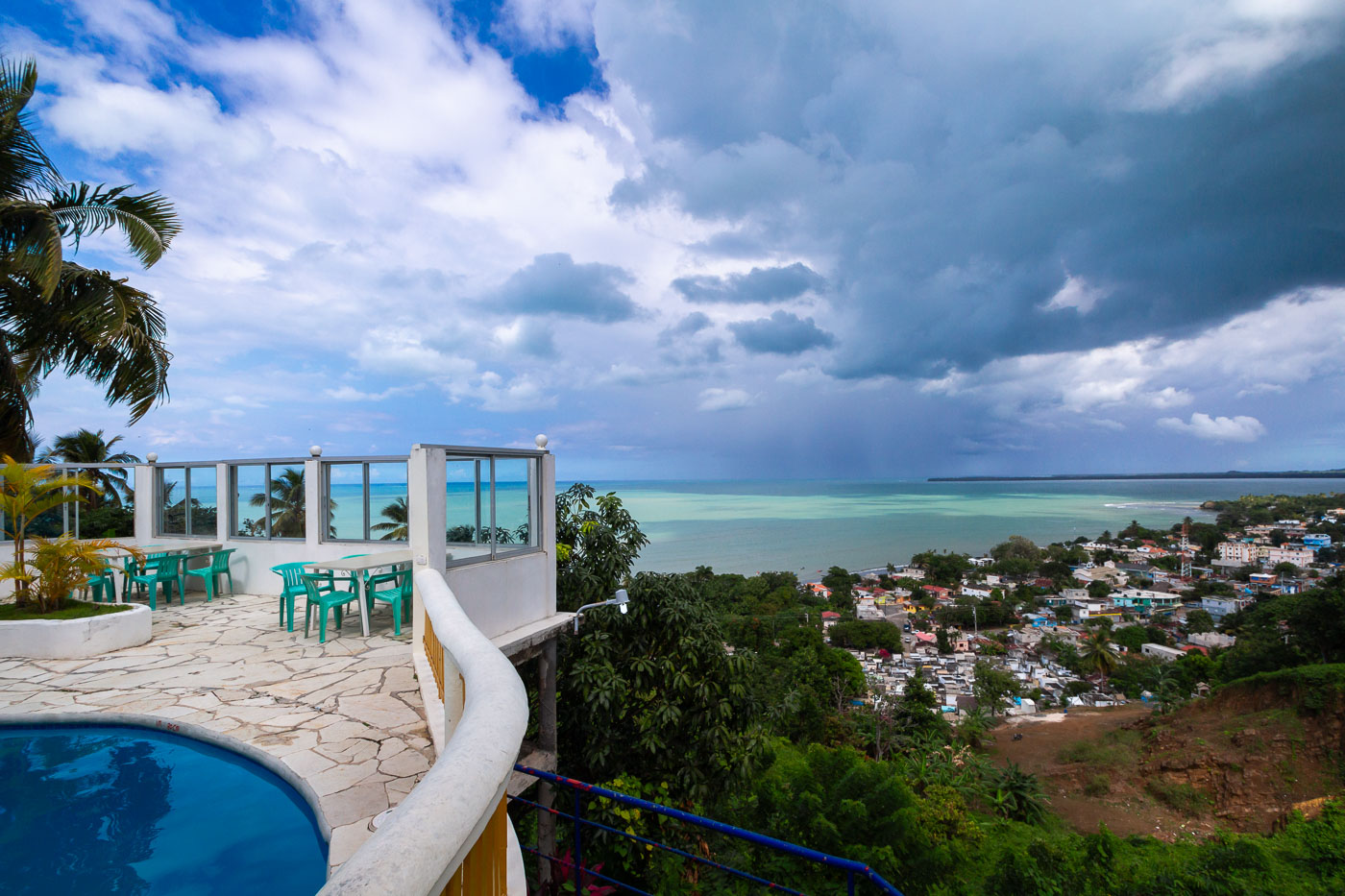
Hotel La Loma terrace and pool overlook the coastal town of Miches and Laguna Redonda in Dominican Republic.
Hotel La Loma overlooks Miches in El Seibo Province, Dominican Republic, from a hill above the town and the waters identified in metadata as Laguna Redonda. The terrace and pool area occupy the foreground, while below are the town’s low-rise buildings, a cemetery, and the shoreline. The elevated site functions as a lookout over Miches and the adjacent coast.

Pool Terrace at Hotel La Loma Above Miches

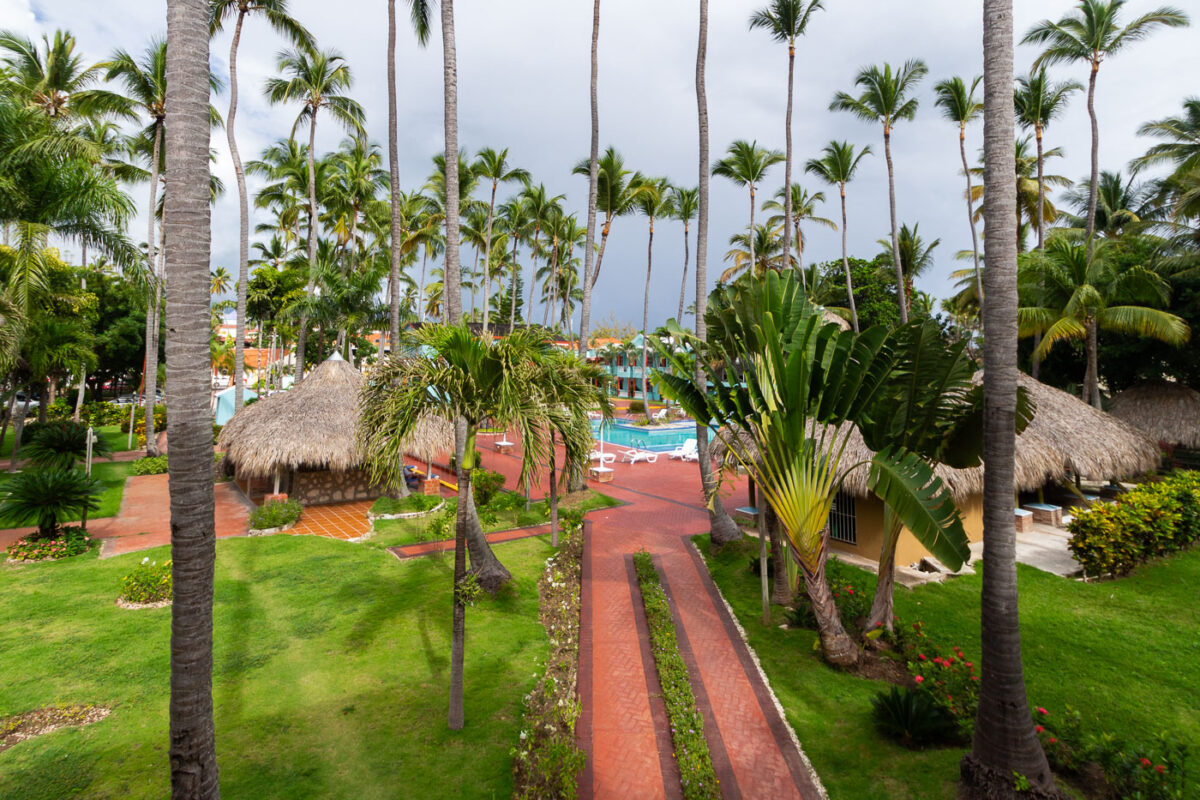
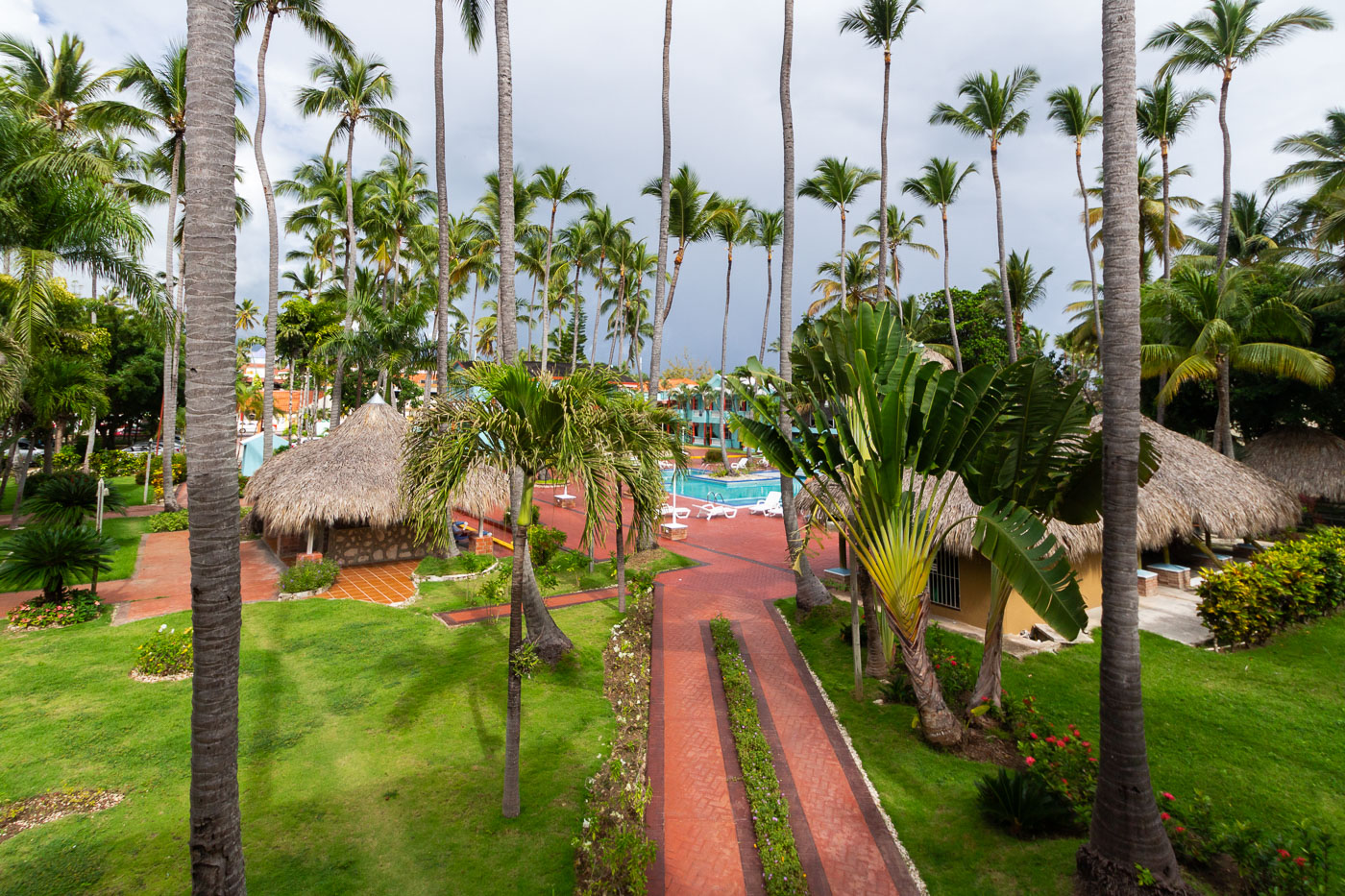
El Cortecito Inn courtyard in Punta Cana features thatched-roof pavilions, manicured lawns, and a swimming pool surrounded by tall palm trees.
The courtyard of El Cortecito Inn in Bávaro, Punta Cana, Dominican Republic, includes thatched-roof pavilions, landscaped walkways, and a central swimming pool set among dense stands of palm trees. The complex uses low-rise buildings and open-air common areas typical of resort lodging in the Punta Cana area.

Palm-Shaded Pool Grounds at El Cortecito Inn, Bavaro

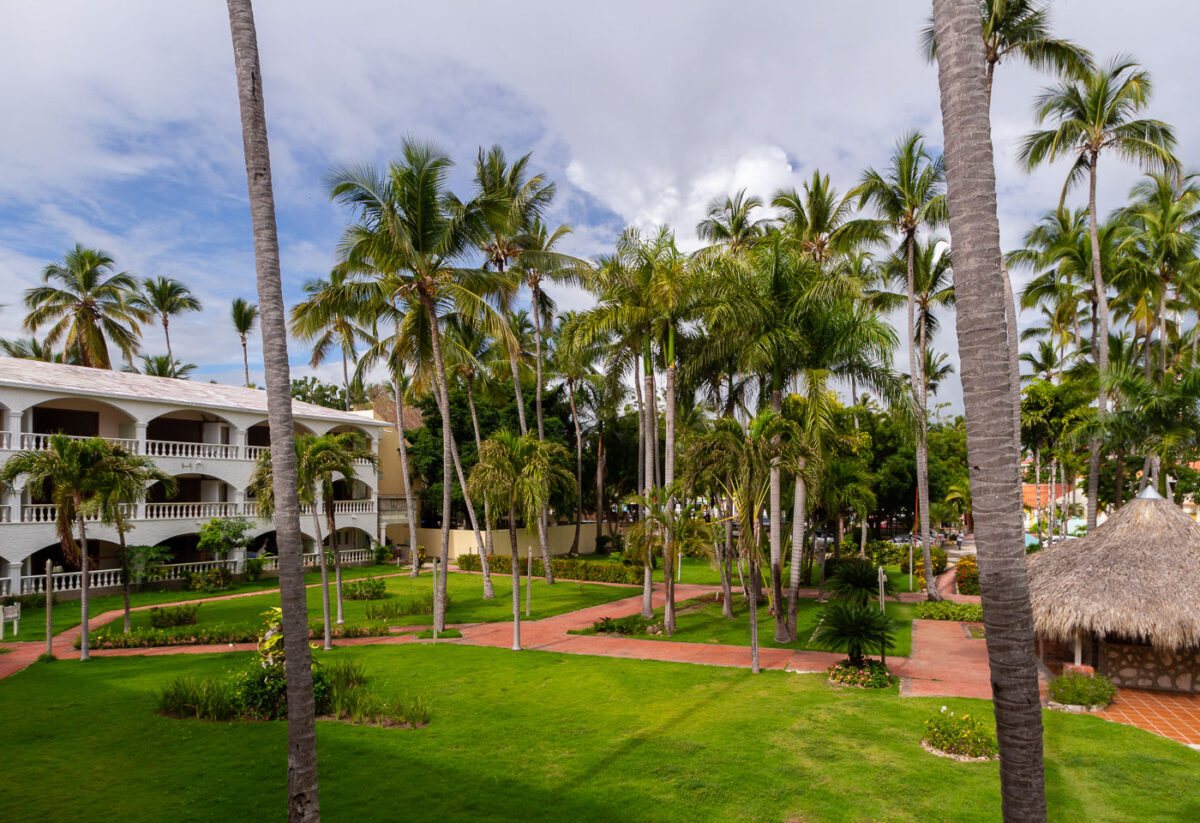
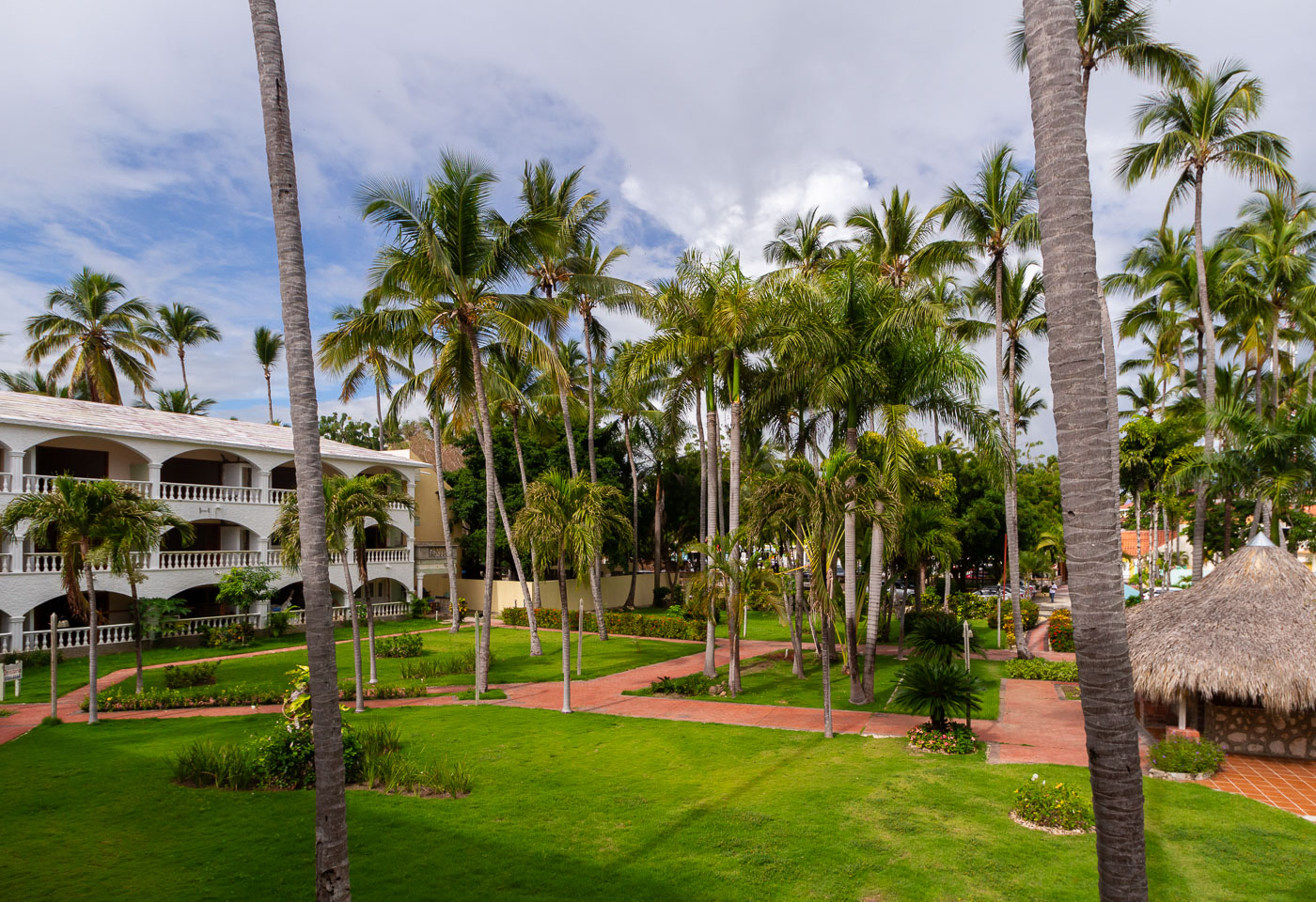
Hotel Cortecito Inn in Punta Cana, Dominican Republic, features white stucco buildings with arched balconies surrounded by manicured lawns and palm trees.
Hotel Cortecito Inn in Bávaro, Punta Cana, Dominican Republic, is shown amid landscaped grounds with dense palm plantings and low-rise lodging buildings. The property consists of white stucco structures with arched balconies and covered exterior walkways, a design commonly used in Caribbean resort hotels. Bávaro is part of La Altagracia Province on the Dominican Republic’s eastern coast, where hotel development is concentrated around the Punta Cana tourism area.

Palm-Lined Grounds of the Cortecito Inn, Bavaro

Downtown Minneapolis skyline from the Hyatt Regency Minneapolis, with snow-covered rooftops and office towers.
Downtown Minneapolis is visible from the Hyatt Regency Minneapolis. The skyline includes office towers, hotels, and church buildings in the city’s central business district. Snow covers rooftops and streets in winter.

Downtown Minneapolis Skyline from Hyatt Hotel

View from a Hyatt hotel room window of downtown Minneapolis at night, showing illuminated buildings and city lights.
A view from a hotel room at the Hyatt Regency Minneapolis showcases the city's downtown core at night. The hotel, a significant fixture in the Minneapolis business district, provides lodging and event spaces for travelers and locals alike. Its construction and operation are part of the ongoing development and economic activity that defines the urban environment of Minneapolis. The illuminated buildings visible through the window represent the commercial and residential heart of the city, highlighting its role as a center for business and culture in the Upper Midwest.

Hyatt Hotel Room View of Downtown Minneapolis at Night

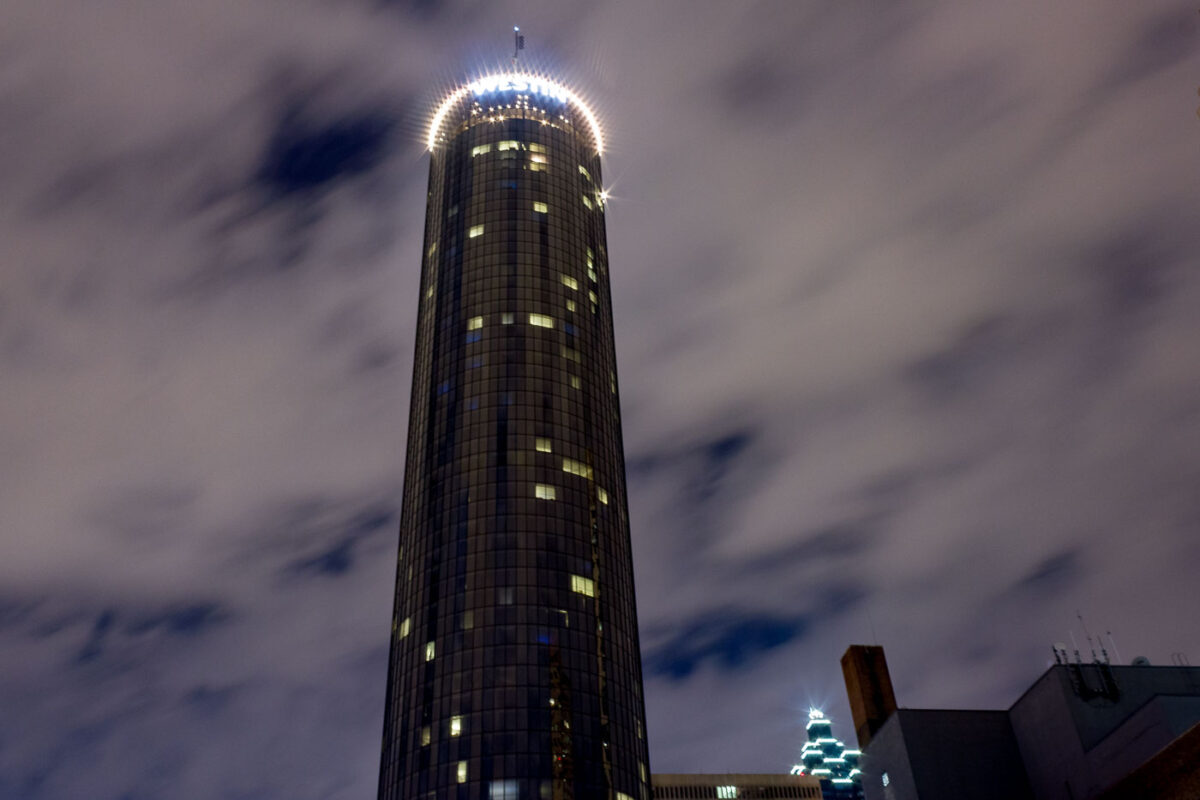
The Westin Peachtree Plaza Hotel, a cylindrical skyscraper with illuminated crown, at night in downtown Atlanta.
The Westin Peachtree Plaza opened in 1976 as the tallest hotel in the world at the time. It stands 73 stories and 723 feet tall, among the tallest hotels in the Western Hemisphere. The Sun Dial, a rotating restaurant near the top, serves as an observation deck above downtown Atlanta.

The Westin Peachtree Plaza at Night in Downtown Atlanta
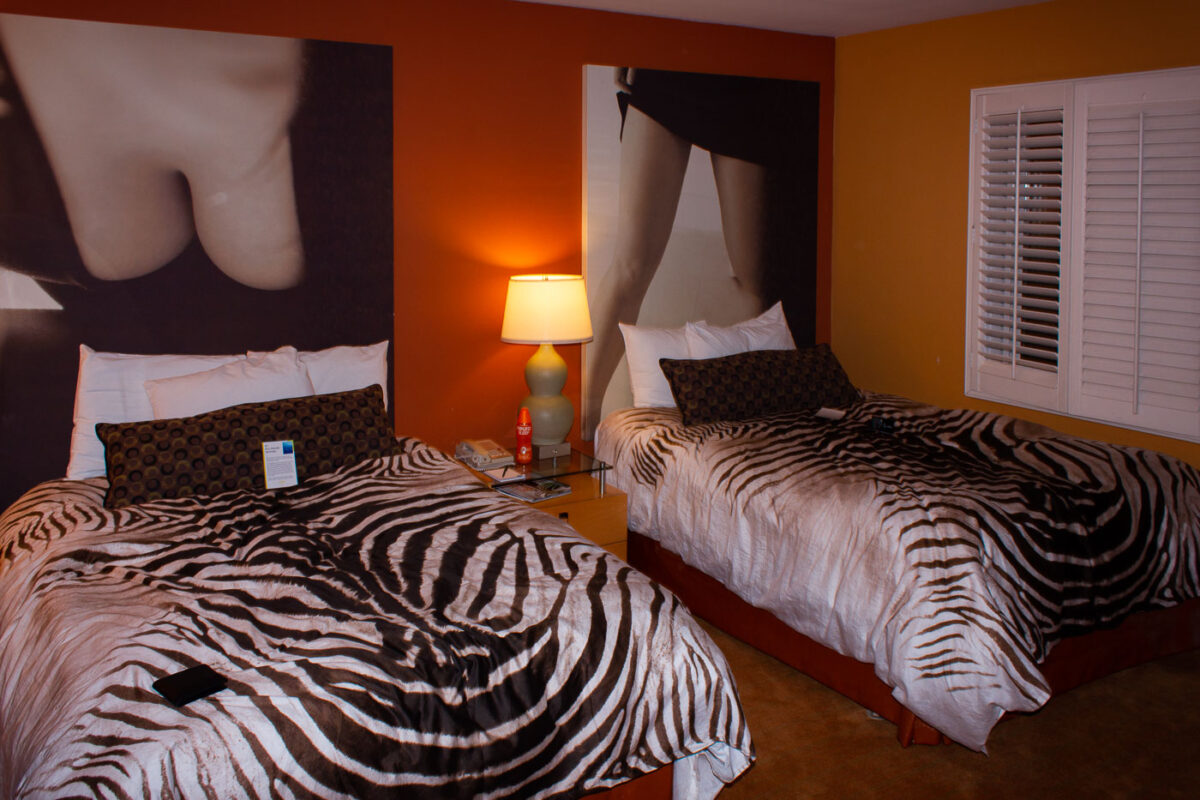
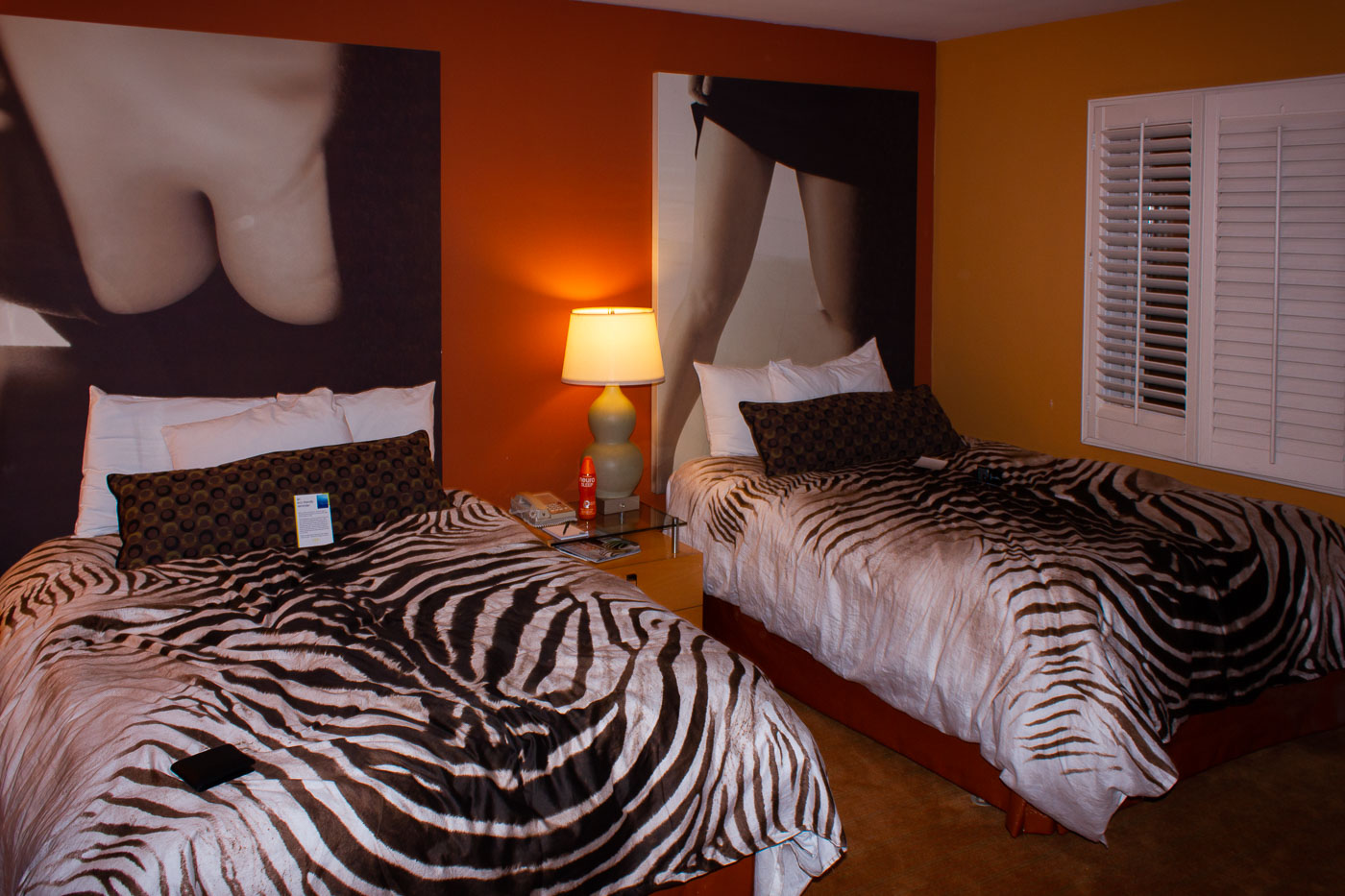
Two beds with zebra-print bedspreads in an orange-walled hotel room at the Grafton on Sunset.
The Grafton on Sunset is a boutique hotel on the Sunset Strip in West Hollywood, within walking distance of the Whisky a Go Go and the Roxy Theatre. Guest rooms carry a retro, pop-art theme, pairing patterned bedding with oversized black-and-white photo prints. Zebra-striped bedspreads are a recurring motif throughout the property's rooms.

A Zebra-Print Guest Room at the Grafton on Sunset
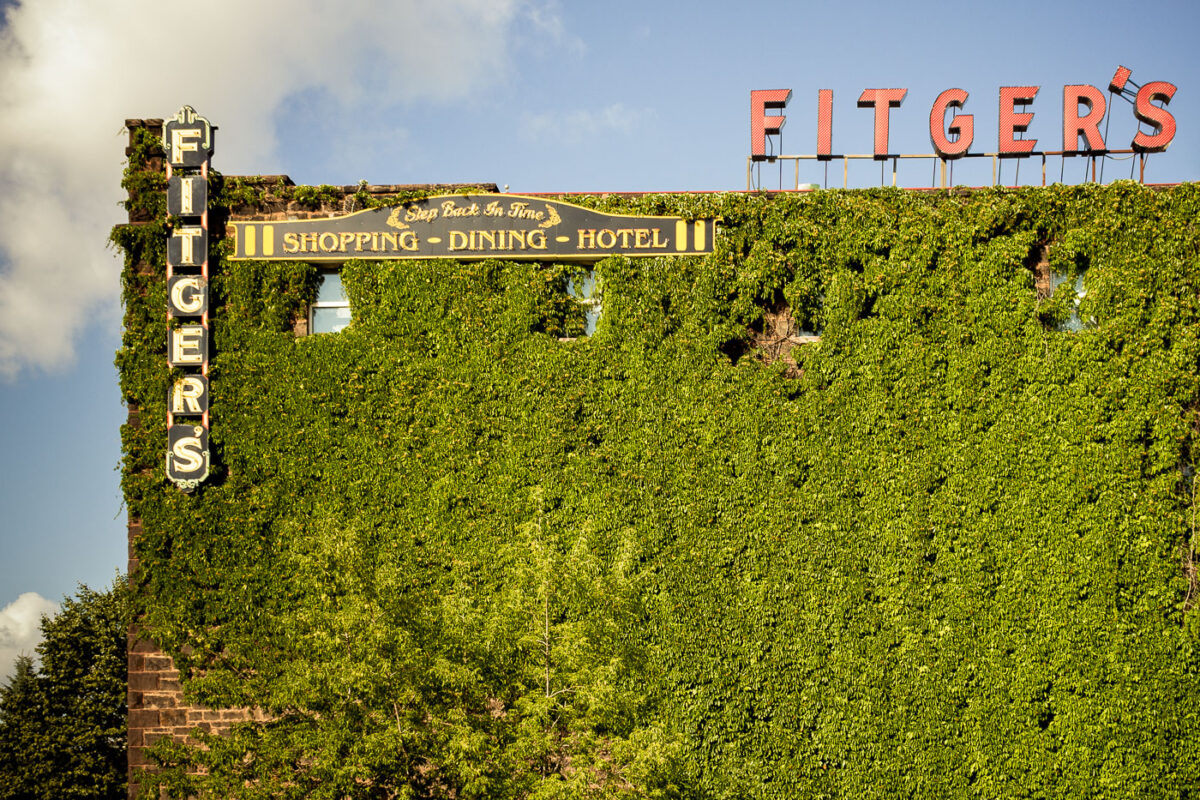
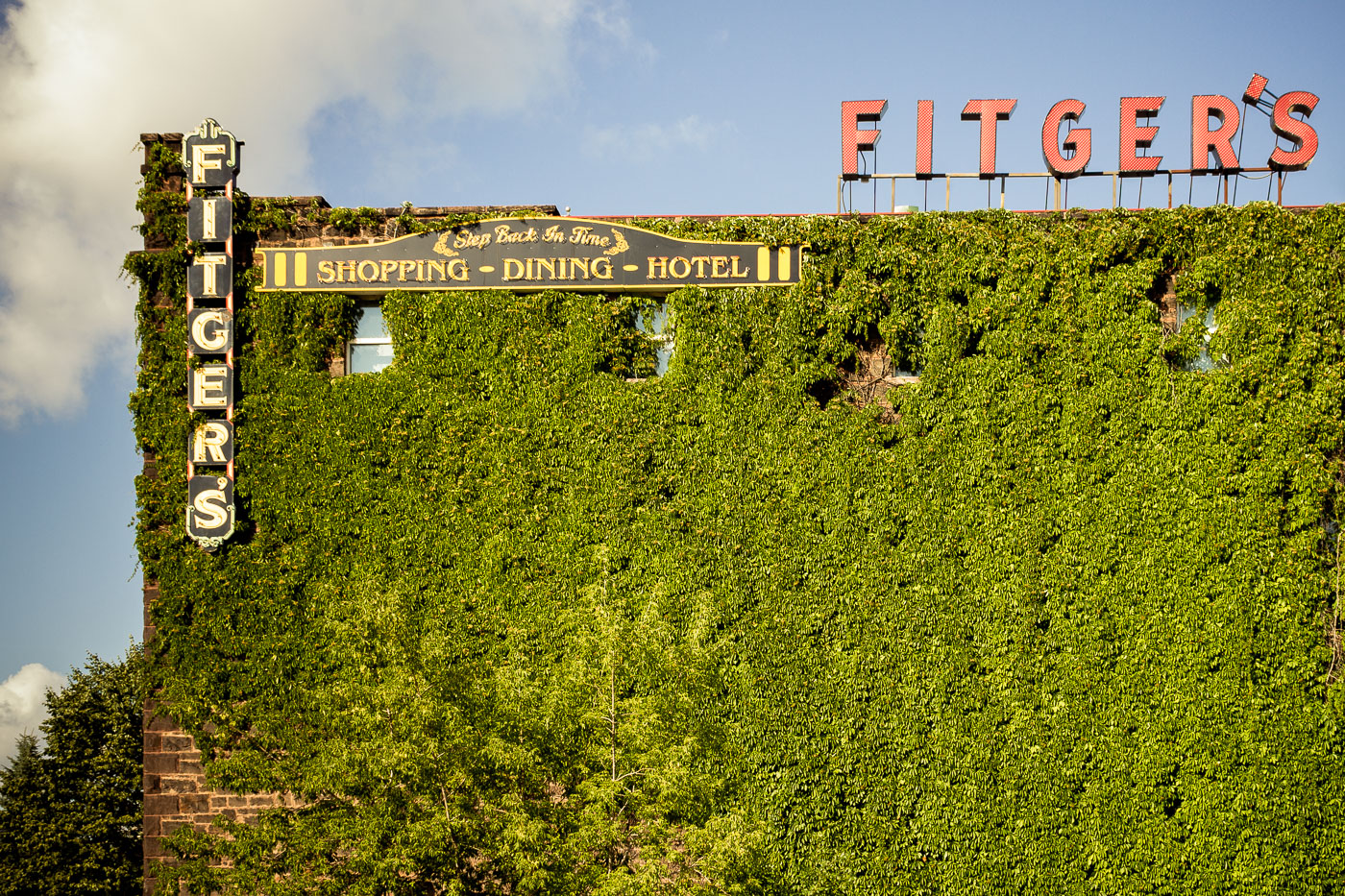
Fitger's historic brewery building in Duluth, Minnesota, with ivy-covered facade and rooftop signage.
Fitger's Historic Complex in Duluth, Minnesota, was originally built as a brewery and hotel. The former industrial building now houses a hotel, restaurant, and retail space on the city's waterfront.

Ivy Covers Fitger’s Brewery Building in Duluth

Guests crowd the entrance to CatHouse nightclub at the Luxor Hotel and Casino in Las Vegas.
CatHouse combined a restaurant, bar, and dance club at the Luxor Hotel and Casino on the Las Vegas Strip, built around a bordello-inspired theme with red-and-gold decor. The venue opened as part of a broader push by Luxor to add nightlife and dining options beyond its casino floor. Guests dined at tables set within the main room while the club's bar and lounge areas operated nearby. CatHouse eventually closed as Luxor revised its entertainment and dining lineup in later years.

Diners at CatHouse Restaurant Inside the Luxor Hotel

Illuminated fiber-optic light curtain with red neon signage at the Luxor Hotel in Las Vegas.
The Cathouse Lounge sits just off the casino floor at the Luxor Hotel and has operated as the resort's nightclub space since an early-2000s renovation shifted parts of the interior away from strict Egyptian theming toward contemporary club design. Fiber-optic strand curtains like this one became common in Las Vegas nightlife venues during that era, used to divide open floor plans without blocking sightlines to the bar or stage. The Luxor itself opened on the Strip in 1993 as a 30-story pyramid, and MGM Resorts International has owned and operated the property since 2005.

LED String Curtain Inside the Luxor’s Cathouse Lounge

Candlelit lounge seating area inside the Cathouse Lounge at Luxor Hotel in Las Vegas.
The Cathouse operated as a nightclub and lounge inside the Luxor Hotel and Casino on the Las Vegas Strip, drawing on the name and rock-club branding of the original Cathouse on Los Angeles's Sunset Strip. Luxor opened in 1993 with its 30-story black glass pyramid, one of the largest pyramid structures in the world, and added nightlife venues like this one during a push in the early 2000s to diversify its entertainment offerings beyond the casino floor. The space has since been reworked under different nightlife concepts as Luxor's lineup of bars and clubs has changed over the years.

Lounge Seating at Cathouse Inside the Luxor Hotel

Flight Bar interior at Luxor Hotel casino in Las Vegas with patrons and blue neon signage.
Flight Bar sits on the casino floor of the Luxor Hotel, which opened on the Las Vegas Strip in 1993. The Luxor's 30-story pyramid was, at the time of its construction, the sixth-largest pyramid in the world, with a base covering 29 acres. The resort is owned and operated by MGM Resorts International, which has run the property since its 2005 merger with Mandalay Resort Group. Flight functions as one of the casino's lounge venues, positioned along the gaming floor to serve guests moving between table games and slot machines.

Crowds at Flight Bar Inside the Luxor Casino

Excalibur Hotel and Casino's illuminated medieval-themed interior hall with ornate chandeliers and patterned carpet.
The Excalibur Hotel and Casino opened on the Las Vegas Strip in 1990, built around a medieval castle theme designed by Veldon Simpson, the architect also behind Luxor and Treasure Island. At 4,032 rooms, it ranked among the largest hotels in the world at the time of its opening. The property is owned and operated by MGM Resorts International. Its entrance arcade, lined with stone-finished columns and chandeliers, leads guests from the porte-cochère into the casino floor.

Chandeliers Along the Lobby Arcade at Excalibur Las Vegas

Casino gaming floor with illuminated slot machines and patrons on the Las Vegas Strip.
Slot machines like these account for the majority of gaming revenue on the Las Vegas Strip, far outpacing table games in most casinos. Nevada legalized commercial gambling in 1931, and modern machines use random number generators regulated by the state's Gaming Control Board to set payout odds.

Rows of Slot Machines on a Las Vegas Casino Floor

Las Vegas Strip at night showing New York-New York Hotel's replica Manhattan skyline and illuminated casino signs.
New York-New York Hotel and Casino opened in 1997 at the corner of Las Vegas Boulevard and Tropicana Avenue, its towers modeled after a dozen Manhattan skyscrapers including the Empire State Building and the Chrysler Building. A pedestrian bridge styled after the Brooklyn Bridge connects the property to the sidewalk along the Strip. The theater inside once housed "Zumanity," Cirque du Soleil's adult-themed production that ran from 2003 until 2020. Farther down the boulevard, the replica Eiffel Tower marks the entrance to Paris Las Vegas, which opened in 1999.

Zumanity Marquee Near New York-New York on the Las Vegas Strip

MGM Grand Hotel and Casino illuminated at night on the Las Vegas Strip in Nevada.
The MGM Grand opened in 1993 on the site of the former MGM Grand Hotel that had burned in 1980, rebuilt under Kirk Kerkorian with a design by Veldon Simpson. At roughly 6.85 million square feet, it held the title of the world's largest hotel at opening, with over 5,000 rooms across its towers. The resort's casino floor spans more than 170,000 square feet, and the property has operated under MGM Resorts International since the 1990s. In the foreground, the turreted rooftop belongs to the Excalibur Hotel and Casino, a medieval-themed resort that opened in 1990, also developed by Kerkorian's Circus Circus Enterprises. Las Vegas Boulevard, known as the Strip, runs between the two properties and carries the bulk of pedestrian and vehicle traffic along this stretch of casinos.

Excalibur’s Turrets and the MGM Grand Sign Along Las Vegas Boulevard

Excalibur in Las Vegas lit up at night
The Excalibur Hotel & Casino, located on the Las Vegas Strip in Paradise, Nevada, is designed to resemble a medieval castle. Opened in 1990, it was one of the largest hotels in the world at the time of its construction. The resort features a casino, multiple restaurants, and entertainment venues, drawing visitors with its themed architecture and attractions. Its castle-like facade, illuminated at night, is a distinctive element of the Las Vegas landscape.

Excalibur Hotel & Casino, Las Vegas at Night

Coyote Ugly saloon in Las Vegas
The Coyote Ugly Saloon, a bar and dance hall, is a popular entertainment venue located in Las Vegas, Nevada. Known for its lively atmosphere and female bartenders who dance on the bar, the establishment has become a recognizable part of the city's nightlife. The neon signage, a common feature in Las Vegas, highlights the establishment's name and its function as a bar and dance saloon.

Coyote Ugly Dance Saloon in Las Vegas

LAX Nightclub entrance inside the Luxor Hotel pyramid on the Las Vegas Strip, 2008.
LAX Nightclub operated inside the Luxor Las Vegas from 2007 to 2010, part of a wave of celebrity-branded nightclubs that opened on the Strip during that decade. The club was an offshoot of the original LAX in Hollywood, and its entrance featured gothic-arched doorways set against the Luxor's black-and-red color scheme. The Luxor itself opened in 1993 and is operated by MGM Resorts International. LAX closed in 2010, and its space was later converted for other entertainment use as the Luxor revised its nightlife lineup.

LAX Nightclub Entrance Inside the Luxor, Las Vegas

Paris Las Vegas Hotel and Casino with Eiffel Tower replica on the Las Vegas Strip, Nevada.
Paris Las Vegas opened in September 1999 on the site of the old Dunes golf course along the Strip. Its Eiffel Tower replica stands 541 feet tall, built at half the scale of the original Paris landmark, with an observation deck near the top open to visitors. The resort's casino floor covers roughly 85,000 square feet, and the hotel has more than 2,900 rooms styled after Parisian architecture, including nods to the Paris Opera House and the Arc de Triomphe. Bally's Las Vegas, which shares a connected pedestrian bridge and ownership history under Caesars Entertainment, sits just to the north, while Planet Hollywood Resort & Casino occupies the site of the former Aladdin to the south.

Eiffel Tower Replica at Paris Las Vegas on the Strip

Fountains of Bellagio spray water in synchronized jets across an 8.5-acre artificial lake on the Las Vegas Strip.
The Fountains of Bellagio sit on an 8.5-acre man-made lake in front of the Bellagio hotel on the Las Vegas Strip. Designed by WET Design and opened in 1998, the installation uses more than a thousand jets to send water as high as 460 feet, choreographed to music and light. Bally's and Paris Las Vegas, including its half-scale Eiffel Tower replica, stand across Las Vegas Boulevard behind the lake. The display has run as a free public attraction since the Bellagio's opening and remains one of the Strip's longest-running water shows.

Fountains of Bellagio on the Las Vegas Strip

Studio 54 nightclub entrance at MGM Grand Las Vegas, with neon signs and illuminated facade.
Studio 54 at the MGM Grand opened in 1997, licensing the name and legacy of the original 1977 New York disco founded by Steve Rubell and Ian Schrager. The Las Vegas club occupied a multi-level space designed to evoke its namesake's Studio 54 heyday, with separate dance floors and VIP areas spread across the venue. MGM Grand marketed the club as a flagship nightlife destination during the casino resort's late-1990s and 2000s push into large-scale nightclub entertainment. The venue closed in 2012 as MGM Grand shifted its nightlife offerings to newer concepts.

Studio 54 Nightclub Lobby at the MGM Grand

New York-New York Hotel and Casino entrance glows with neon signs and illuminated marquee on the Las Vegas Strip at night.
New York-New York Hotel and Casino opened on January 3, 1997, on the Las Vegas Strip at the corner of Tropicana Avenue. The resort was developed by Primm Valley Resorts and designed to echo the Manhattan skyline, with towers modeled after real New York skyscrapers including the Empire State Building and the Chrysler Building. A 150-foot replica of the Statue of Liberty stands near the entrance, along with scaled versions of the Brooklyn Bridge and the Grand Central Terminal facade. The property's roller coaster, built by Bolliger & Mabillard, loops around the exterior of the casino and was one of the first thrill rides integrated into a Las Vegas hotel complex. MGM Resorts International has owned and operated the property since its 2005 acquisition of Mandalay Resort Group.

New York-New York’s Marquee Entrance on the Las Vegas Strip

Luxor Hotel pyramid lit with powerful beam at apex, surrounded by palm trees and desert landscape at night in Las Vegas.
The Luxor opened in 1993 on the Las Vegas Strip, its 30-story pyramid designed by architect Veldon Simpson to evoke ancient Egypt. The beam projected from its apex measures roughly 42.3 billion candela, making it one of the strongest beams of light in the world, reportedly detectable from aircraft flying over Los Angeles on clear nights. Because the building tapers to a point, the Luxor uses angled "inclinator" elevators instead of conventional vertical ones to reach its upper floors. The resort's Egyptian theme extends throughout its grounds, including sphinx and obelisk replicas near the entrance.

The Luxor’s Sky Beam Over the Las Vegas Strip

Las Vegas Strip skyline featuring Encore, Stratosphere Tower, Harrah's, and Imperial Palace hotels.
The Stratosphere Tower stands 1,149 feet tall, making it the tallest freestanding observation tower in the United States and a fixture of the Las Vegas skyline since it opened in 1996. Encore, which opened in 2008 as a companion to the adjacent Wynn Las Vegas, adds roughly 2,034 rooms to the resort corridor along Las Vegas Boulevard. Harrah's Las Vegas dates to 1973, when it opened as Holiday Casino before being rebranded under the Harrah's name in 1980. Imperial Palace, visible at street level, operated under that name from 1979 until it was rebranded The Linq in 2014.

Stratosphere Tower Rises Above the Las Vegas Strip

Bally's Hotel and Casino with Spring Mountains in the distance, Las Vegas Strip, Nevada.
Bally's Las Vegas sits on the east side of the Strip at 3645 Las Vegas Boulevard South. The resort opened in 1973 as the MGM Grand, built by Kirk Kerkorian and designed as the world's largest hotel at the time, with roughly 2,100 rooms. A fire in November 1980 killed 85 people, one of the deadliest hotel fires in U.S. history, and led to major changes in high-rise fire safety codes nationwide. Bally Manufacturing bought the property in 1986 and renamed it Bally's Las Vegas. The Spring Mountains, visible to the west, rise to more than 11,900 feet at Charleston Peak, the highest point in the range.

Spring Mountains Rise Behind Bally’s Las Vegas

Toni Braxton Pepsi advertisement on the Flamingo Hotel facade in Las Vegas.
The Flamingo opened in December 1946, financed in part by mobster Bugsy Siegel, making it the third resort to open on what became the Las Vegas Strip. Little of the original building remains after decades of renovations and expansions, but the Flamingo name and its original site have stayed in continuous operation longer than any other Strip property. The hotel's exterior walls have periodically carried large-scale advertising, including this Diet Pepsi campaign featuring Toni Braxton, who signed with Pepsi as a spokesperson during the late 1990s and early 2000s. Caesars Entertainment owns and operates the Flamingo today.

Diet Pepsi Mural of Toni Braxton on the Flamingo Hotel

Bellagio Hotel's beige facade with cylindrical tower and blue-green roof in Las Vegas.
The Bellagio Hotel, a luxury resort and casino, stands on the Las Vegas Strip in Nevada. Opened in 1998, it was designed to evoke the ambiance of the Lake Como region of Italy. The resort is known for its elaborate fountains, art collections, and high-end amenities, serving as a major tourist destination and entertainment venue. It remains a prominent example of themed architecture on the Las Vegas Strip.

Bellagio’s Rooftop Tower Above the Las Vegas Strip

Planet Hollywood Resort & Casino and Miracle Mile Shops on the Las Vegas Strip in Paradise, Nevada.
Planet Hollywood Resort & Casino and the Miracle Mile Shops are prominent entertainment and retail complexes on the Las Vegas Strip in Paradise, Nevada. Planet Hollywood, originally the Aladdin, opened in 1962 and was rethemed in 1999 to Planet Hollywood. The Miracle Mile Shops, a large indoor shopping mall, is integrated into the resort, offering a variety of retail and dining options. The complex is a significant part of the Las Vegas entertainment landscape, drawing millions of visitors annually for its casino, hotel accommodations, shopping, and dining.

Miracle Mile Shops Entrance at Planet Hollywood on the Las Vegas Strip

Mandalay Bay Hotel and Casino's gold pyramid and tower with palm trees in Las Vegas.
The Mandalay Bay Hotel and Casino, located at 3950 S Las Vegas Blvd. in Las Vegas, Nevada, opened in 1999. The resort complex features a casino, hotel, and entertainment venues, designed with a tropical theme. Its architecture includes a prominent pyramid structure, reminiscent of Egyptian motifs, and a large hotel tower. The Mandalay Bay is a significant part of the Las Vegas Strip's landscape, contributing to the city's reputation as a major tourist and gambling destination.

Luxor’s Sphinx Beside the Mandalay Bay Tower

Mandalay Bay Hotel, a gold-tiled resort tower on the Las Vegas Strip with palm trees and Egyptian sphinx statue.
Mandalay Bay opened on the Las Vegas Strip in 1999, developed by Circus Circus Enterprises at a cost of roughly $950 million. The resort's gold-tinted glass exterior and tropical theme were meant to evoke Southeast Asia rather than ancient Egypt. The limestone sphinx replica visible here belongs to the neighboring Luxor hotel, which opened in 1993 and is connected to Mandalay Bay by a tram and pedestrian walkway. Mandalay Bay's hotel tower rises 43 stories and includes an 11-acre artificial beach, a feature unusual among Strip resorts at the time of its construction.

Mandalay Bay Tower Behind the Luxor’s Sphinx Statue

Excalibur Hotel & Casino's white castle facade with colorful cone towers in Las Vegas.
The Excalibur Hotel & Casino, located at 3850 S Las Vegas Blvd. in Las Vegas, Nevada, is a resort and casino designed to resemble a medieval castle. Opened in 1990, it was one of the early themed resorts on the Las Vegas Strip, aiming to attract families with its whimsical architecture and entertainment. The hotel features a distinctive castle facade with towers, battlements, and a moat, reflecting a popular trend in Las Vegas during the late 20th century for elaborate themed destinations. It continues to operate as a hotel and casino, offering lodging, gaming, and various entertainment options.

Turrets of the Excalibur Castle on the Las Vegas Strip

New York-New York Hotel & Casino replica Manhattan skyline on the Las Vegas Strip.
New York-New York Hotel & Casino opened in January 1997 at the corner of Las Vegas Boulevard and Tropicana Avenue, built by Primm Valley Casino Resorts and Bally Entertainment for roughly $460 million. Its towers, ranging from 40 to 47 stories, were modeled on Manhattan landmarks including the Empire State Building and the Chrysler Building, housing a combined 2,024 guest rooms. The Big Apple Coaster, originally called the Manhattan Express, winds through the property's rooftop skyline and reaches speeds near 67 miles per hour. MGM Resorts International has owned and operated the resort since 2005.

Scaled-Down Skyscrapers at New York-New York Hotel & Casino

Statue of Liberty replica at New York-New York Hotel & Casino on the Las Vegas Strip.
New York-New York Hotel & Casino opened on January 3, 1997, built by a partnership between MGM Grand Inc. and Primadonna Resorts at a cost of roughly $460 million. Its twelve towers echo the Manhattan skyline, with facades referencing the Chrysler Building and the Empire State Building, and the complex rises 47 stories as part of MGM Resorts International's Strip holdings. The Statue of Liberty replica out front stands about 150 feet from base to torch, roughly half the height of the original in New York Harbor. The Big Apple Coaster, which opened with the resort under the name Manhattan Express, features a 144-foot first drop and a 180-degree "heartline twist," a maneuver rarely found on other roller coasters.

Lady Liberty Replica and the Big Apple Coaster at New York-New York

MGM Grand Hotel and Casino's teal facade and signage on the Las Vegas Strip.
The MGM Grand opened in December 1993 on the southeast corner of Las Vegas Boulevard and Tropicana Avenue, built on the former site of the MGM Grand Hotel that burned in a 1980 fire. At 30 stories, the hotel has more than 5,000 rooms, making it one of the largest single hotels in the United States. The property was developed by Kirk Kerkorian and originally themed around the film "The Wizard of Oz" before a late-1990s renovation shifted its design toward the current emerald-glass exterior. MGM Resorts International continues to operate the hotel and casino, which includes the Grand Garden Arena, a venue that has hosted championship boxing matches and major concerts.

MGM Grand Tower Behind Palm Trees on the Las Vegas Strip

Pussycat Dolls Casino gaming floor at Caesars Palace Las Vegas with neon signage and table games.
The Pussycat Dolls Casino opened inside Caesars Palace in 2008, pairing a gaming pit with the pop group's burlesque-themed nightlife brand. Blackjack and poker tables operated under the Pussycat Dolls name, adjacent to a lounge and performance space modeled on the group's Los Angeles nightclub. Caesars Entertainment developed the venue as part of a celebrity-branded nightlife push during the Strip's late-2000s renovation era. The casino closed in 2011, after roughly three years of operation.

Pussycat Dolls Casino Pit at Caesars Palace, Las Vegas