Vestas Windmill parts
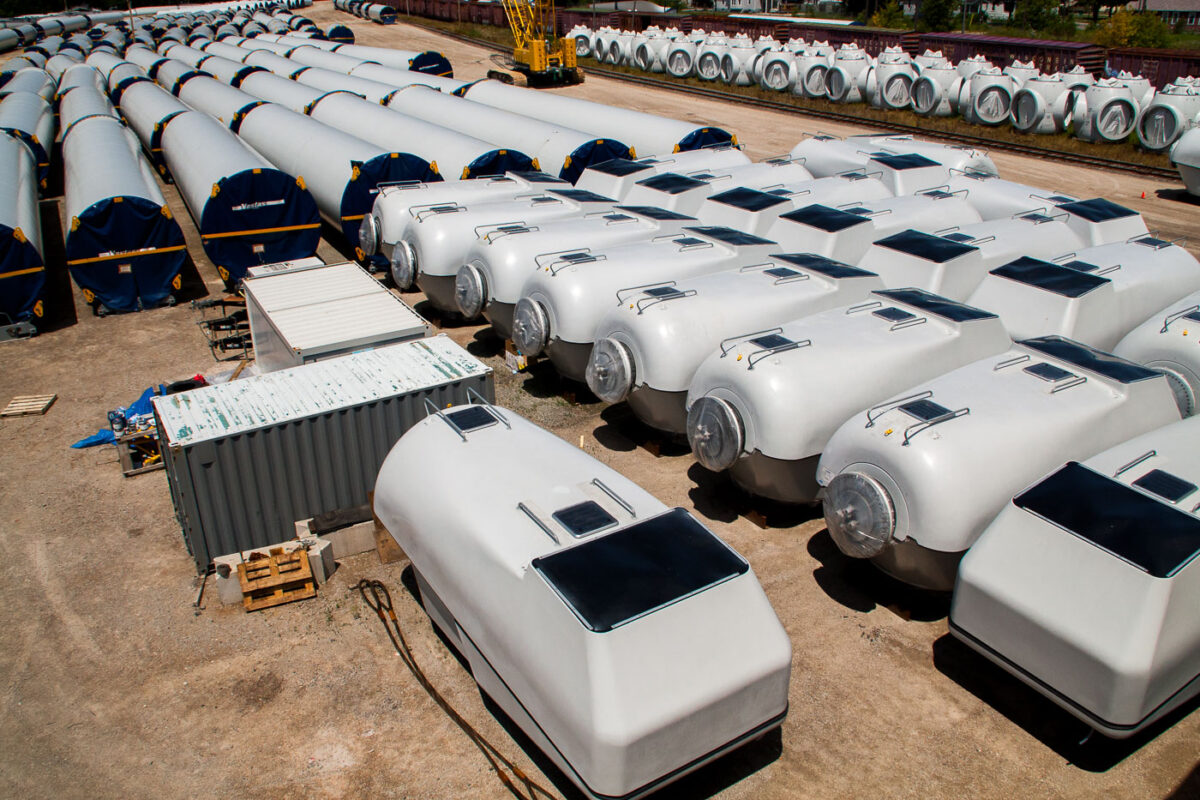
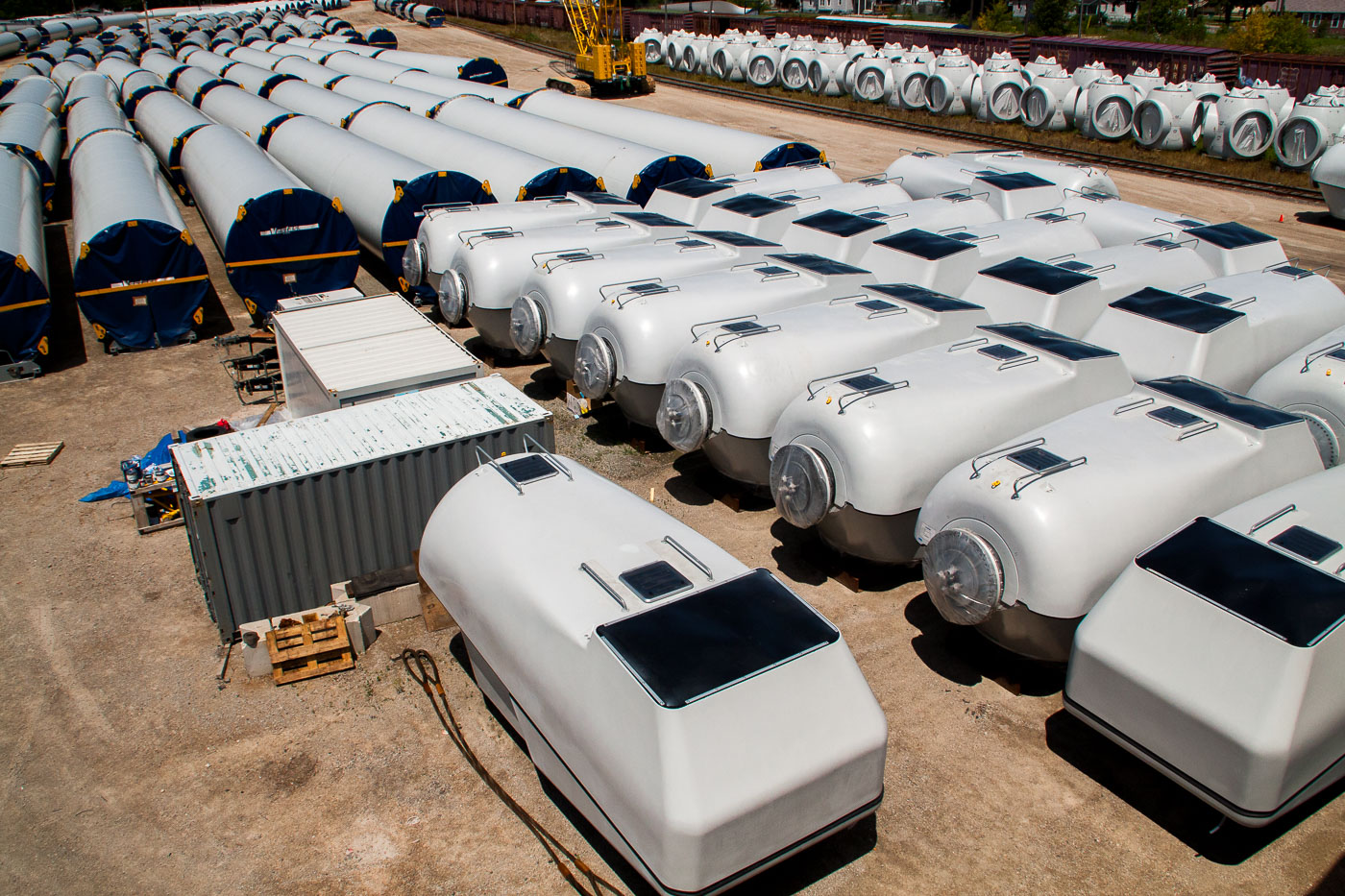
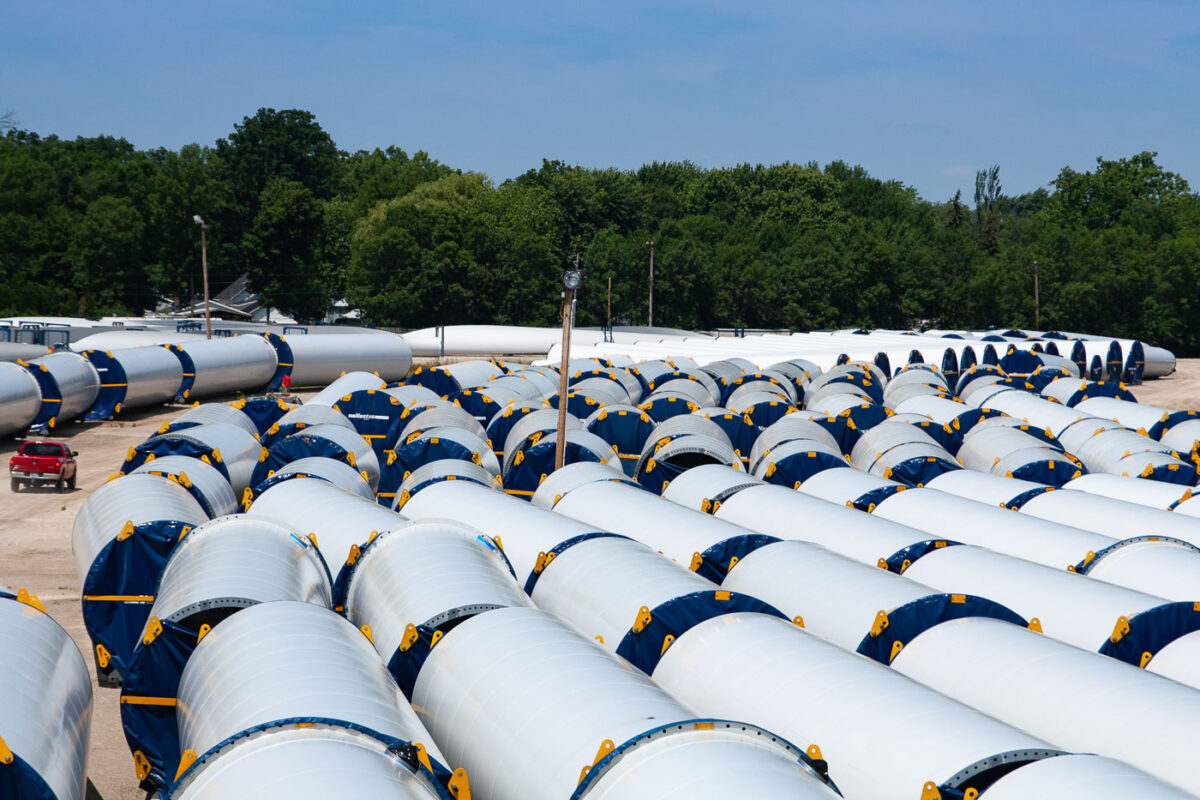
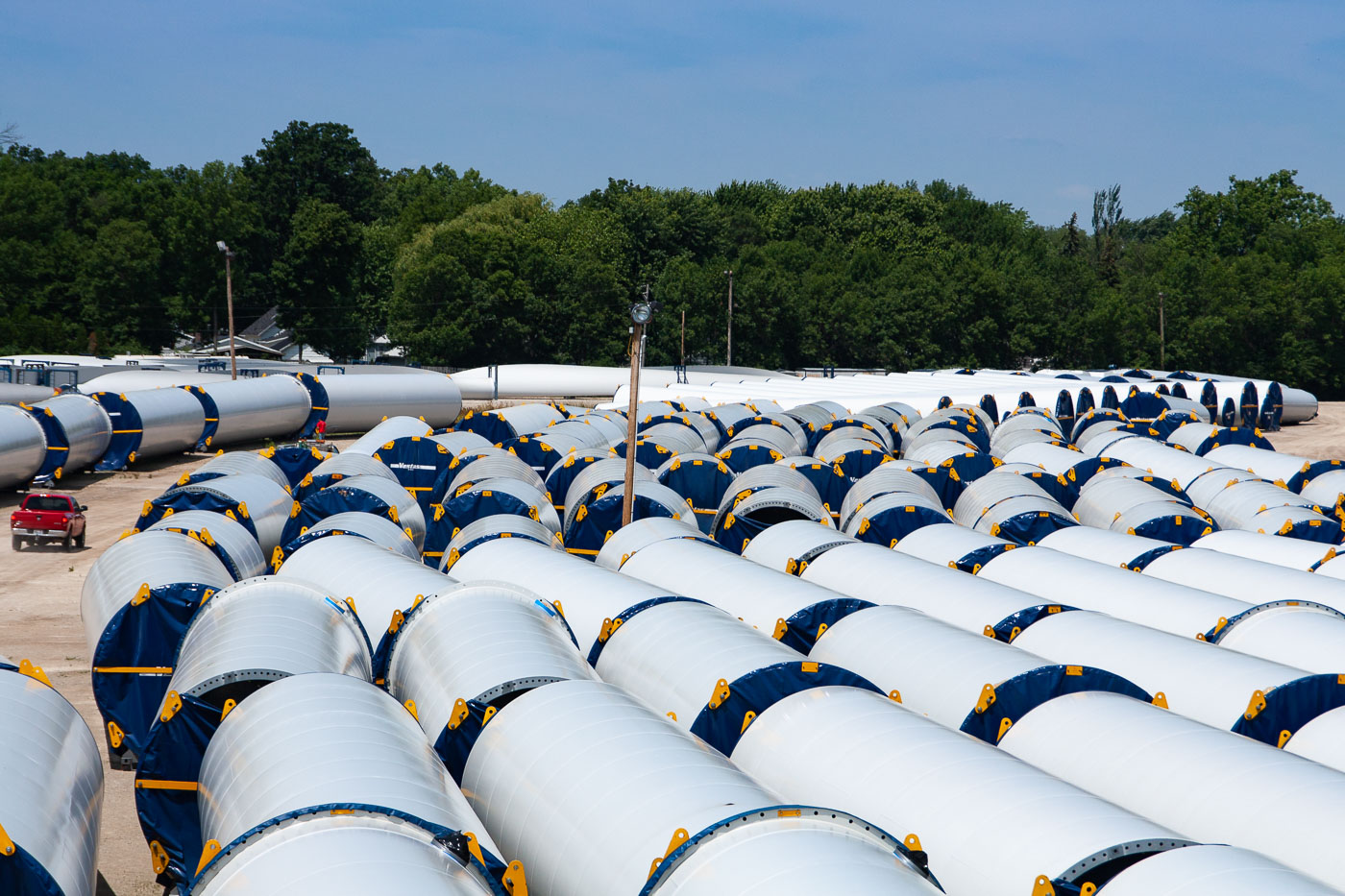
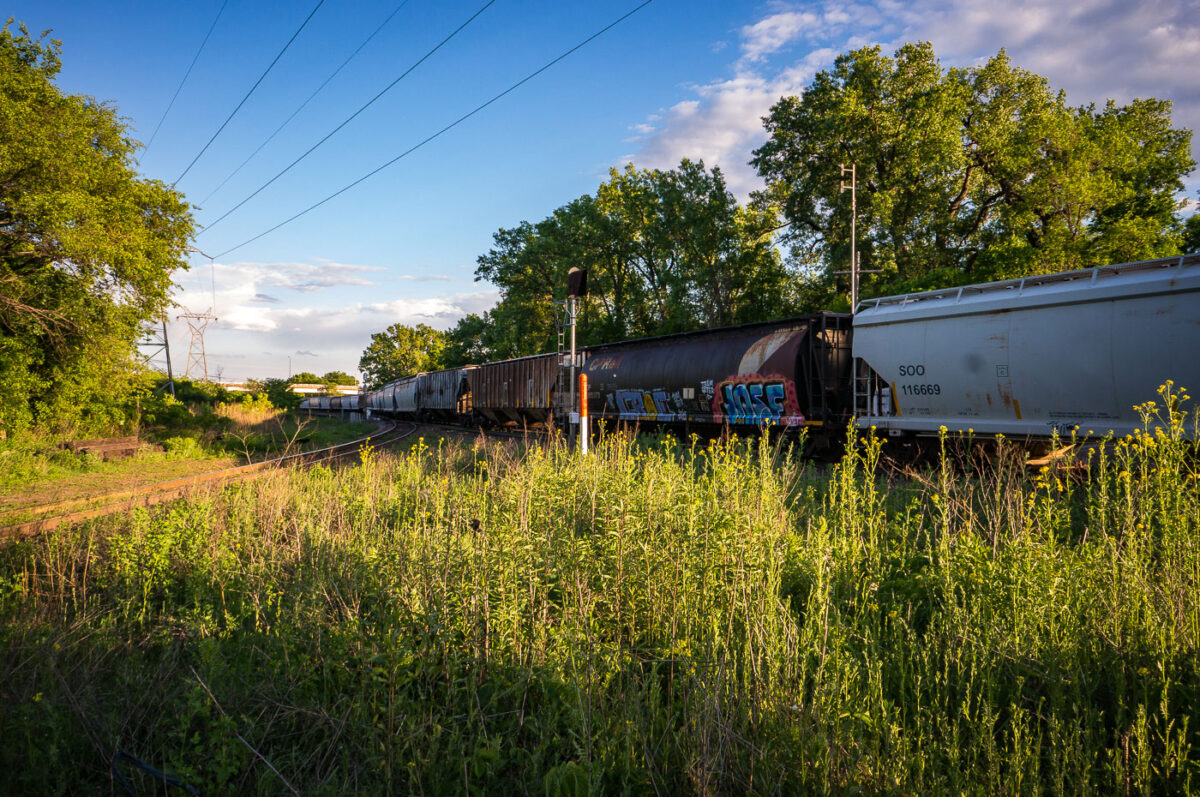
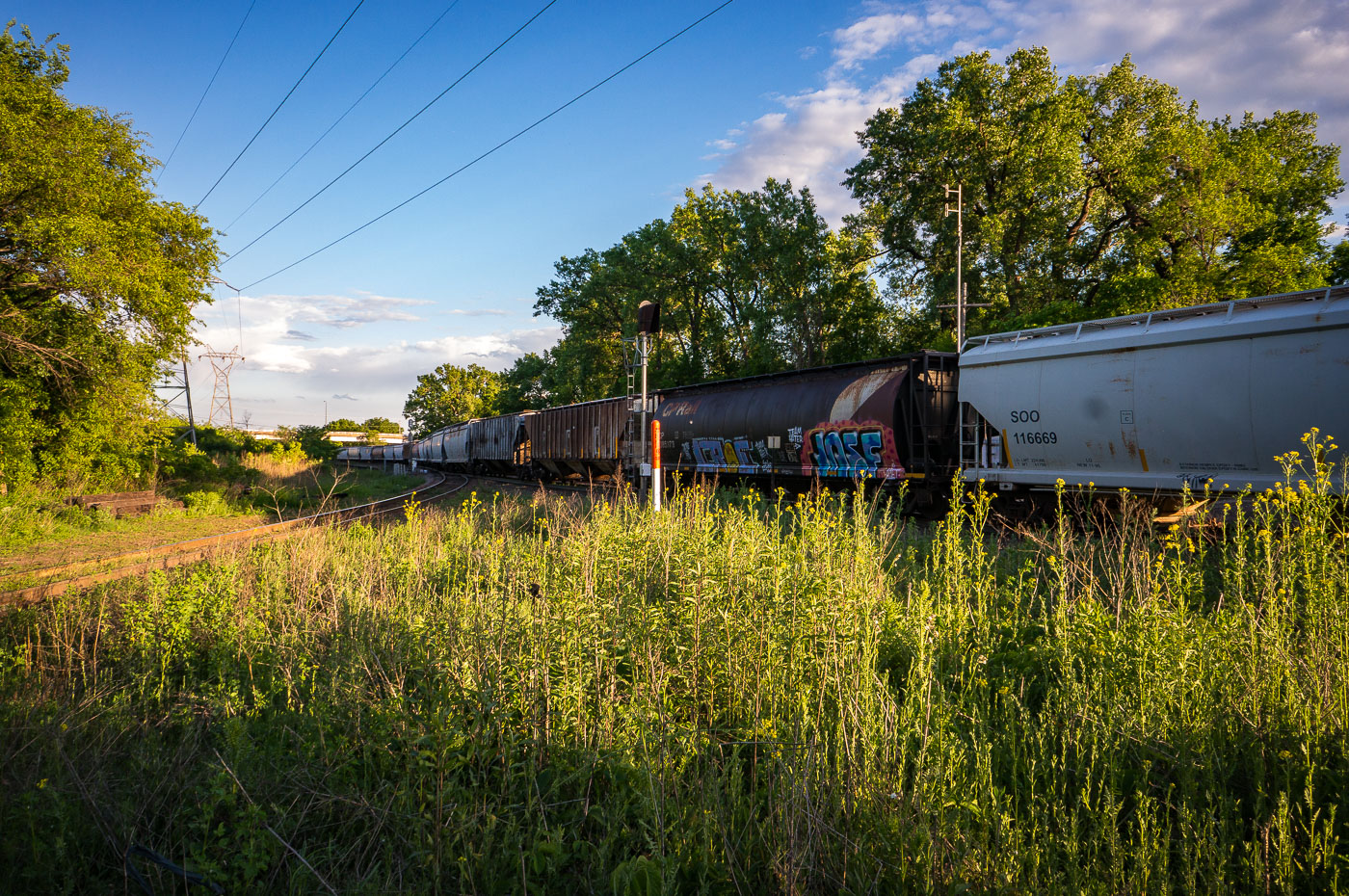
July 2008 — Vestas windmill parts ready to be delivered to a windfarm in Fond Du Lac County, WI.
Explore photos tagged Freight Train.
July 2008 — Vestas windmill parts ready to be delivered to a windfarm in Fond Du Lac County, WI.
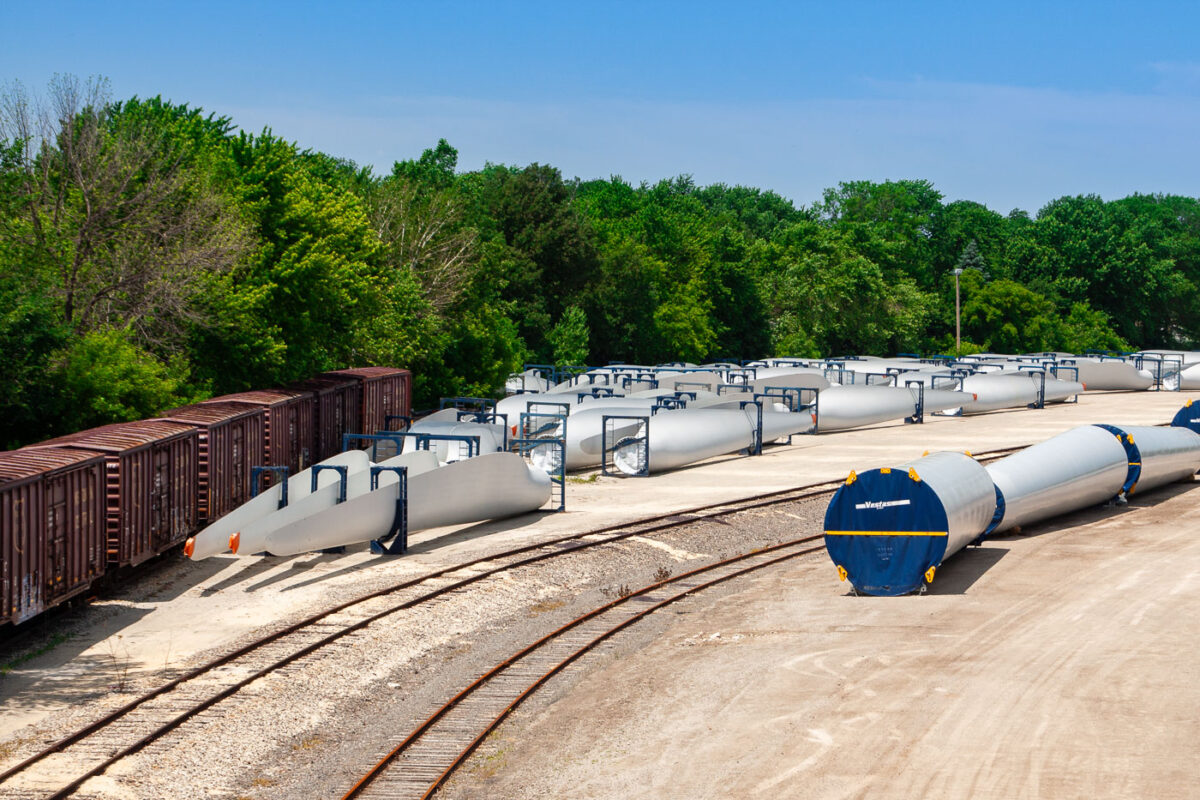
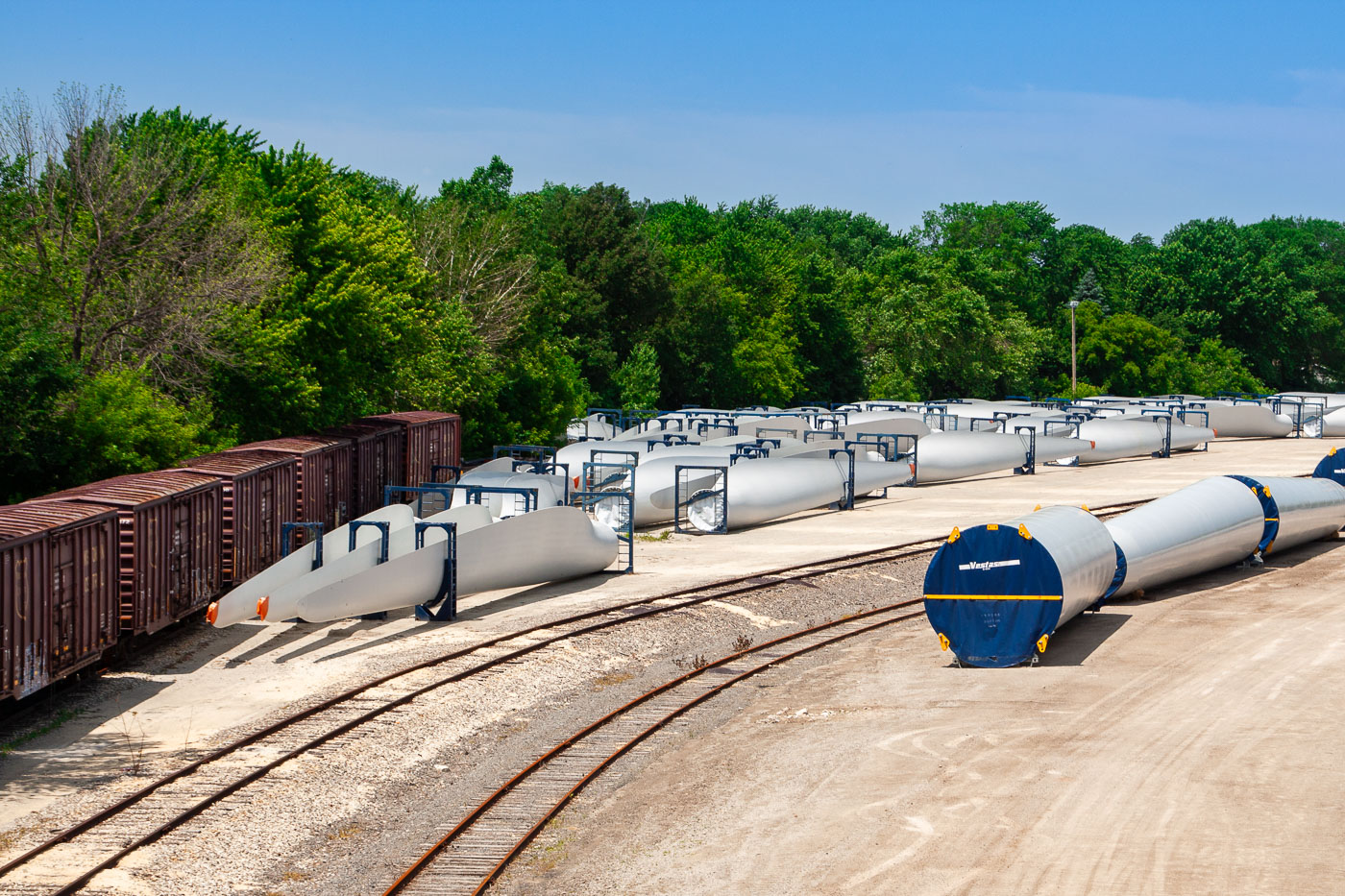
July 2008 — Vestas windmill parts in a railyard.
July 2008 — Vestas windmill parts ready to be delivered to a windfarm in Fond Du Lac County, WI.
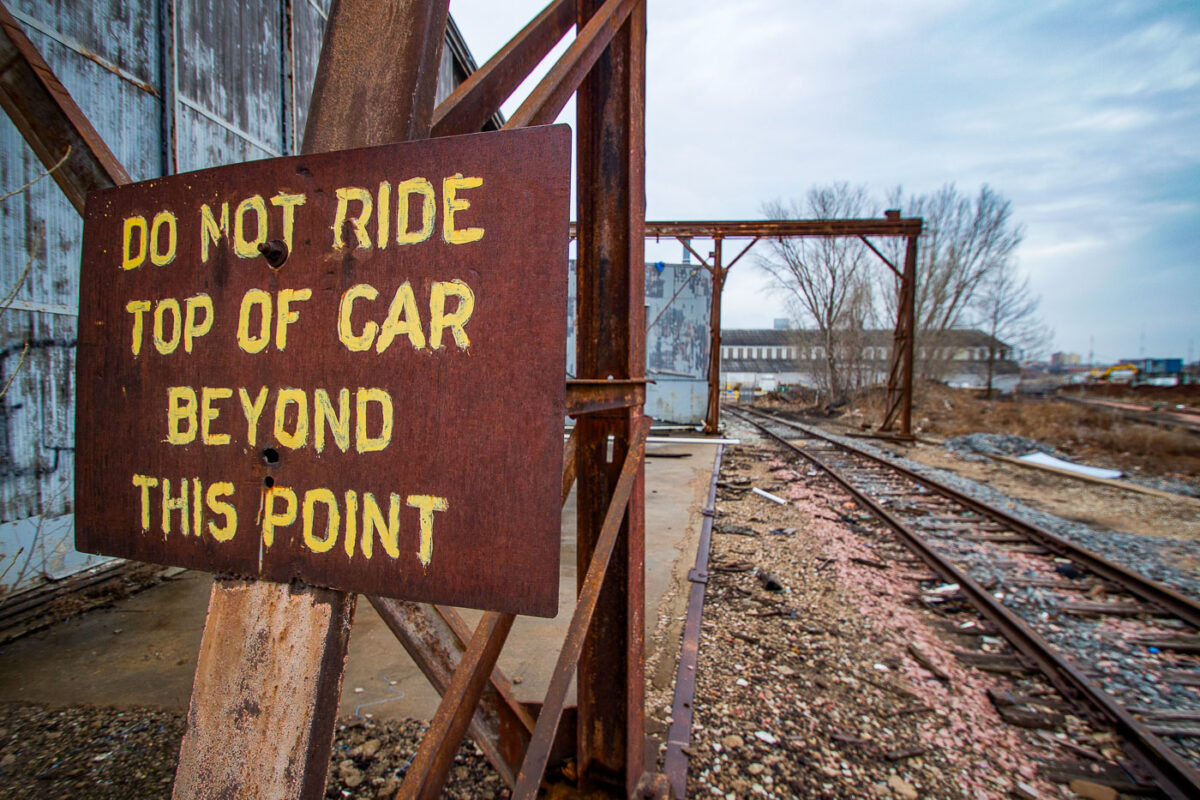
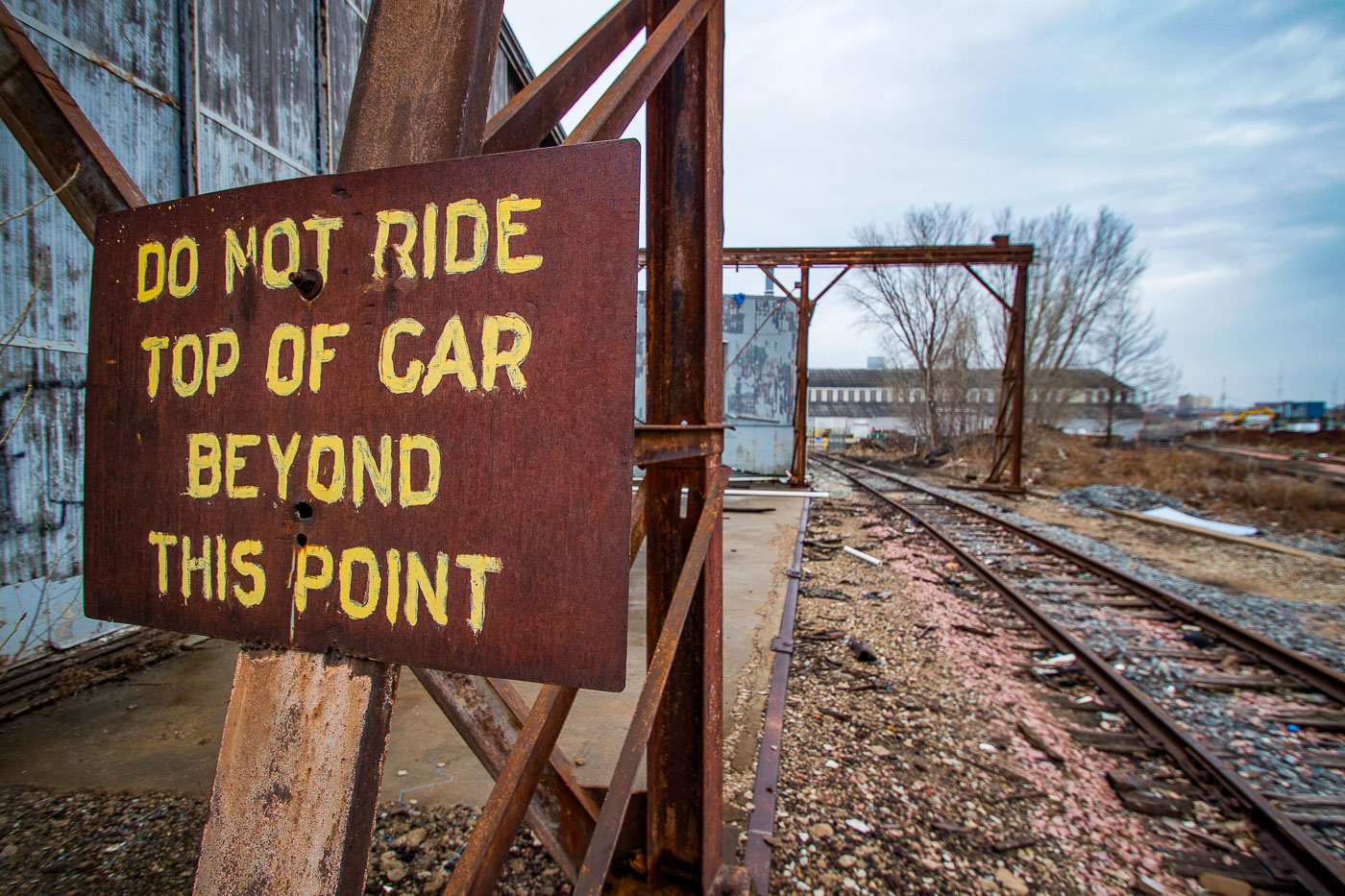
February 2017 — Sign that reads "Do not ride top of car beyond this point". Found in Omaha, NE.
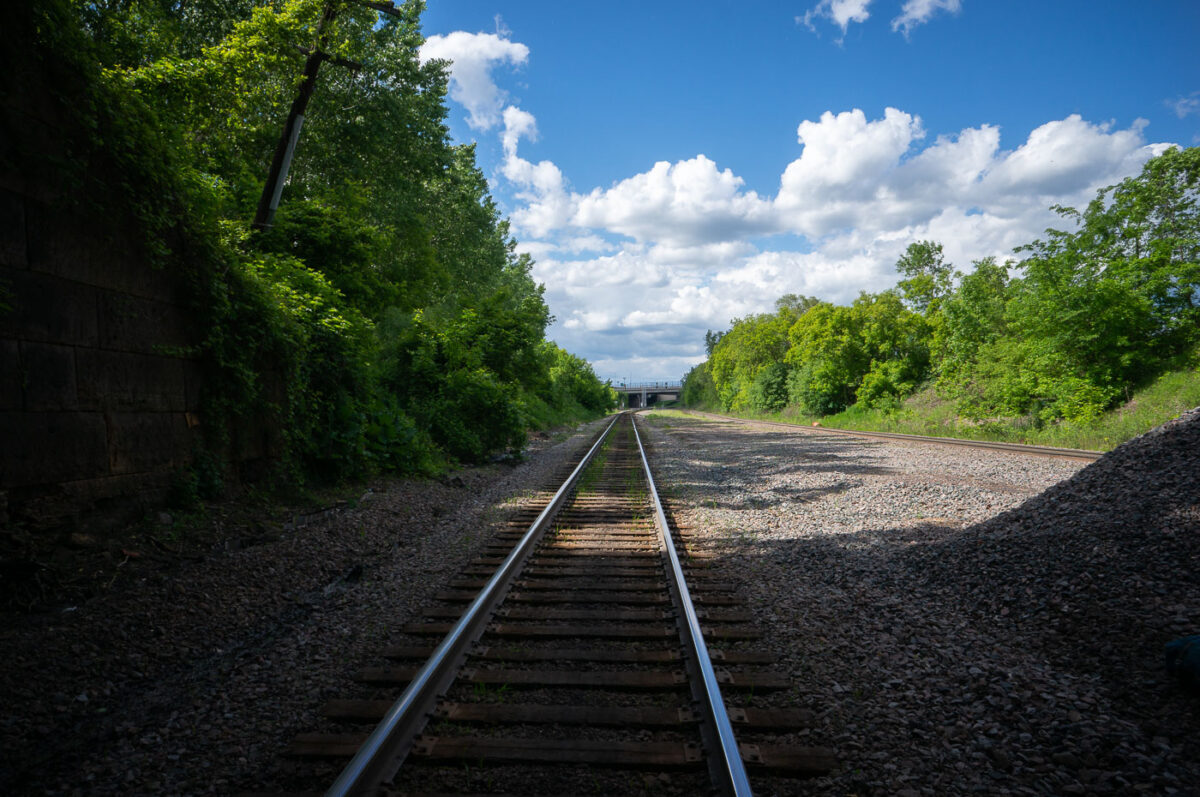
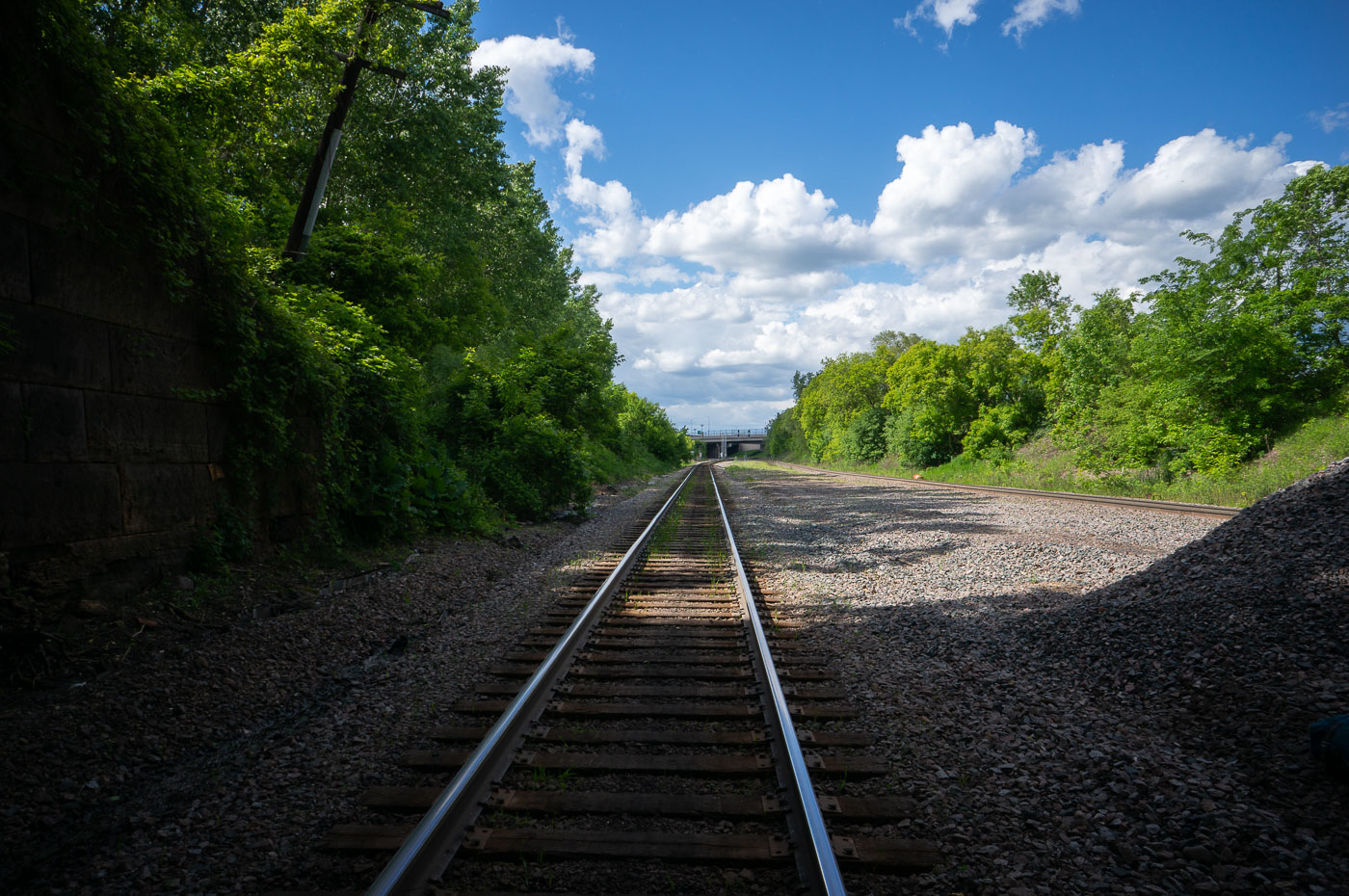
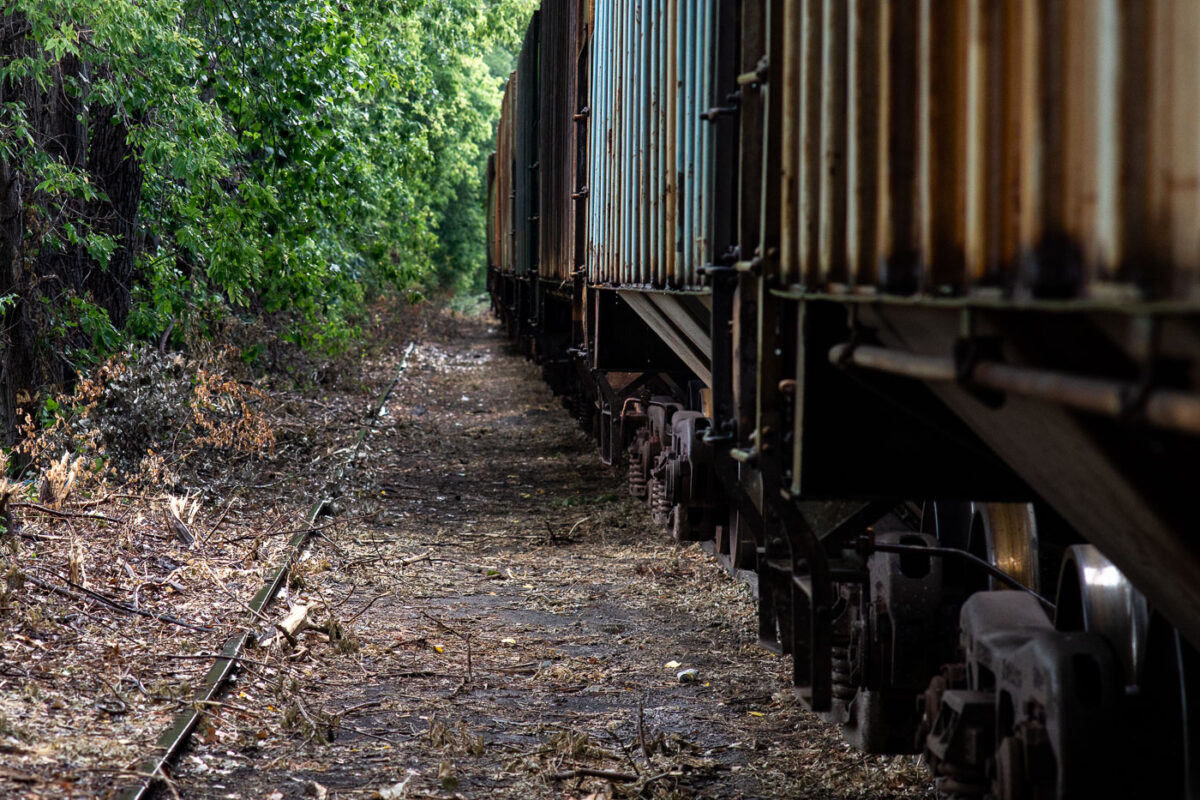
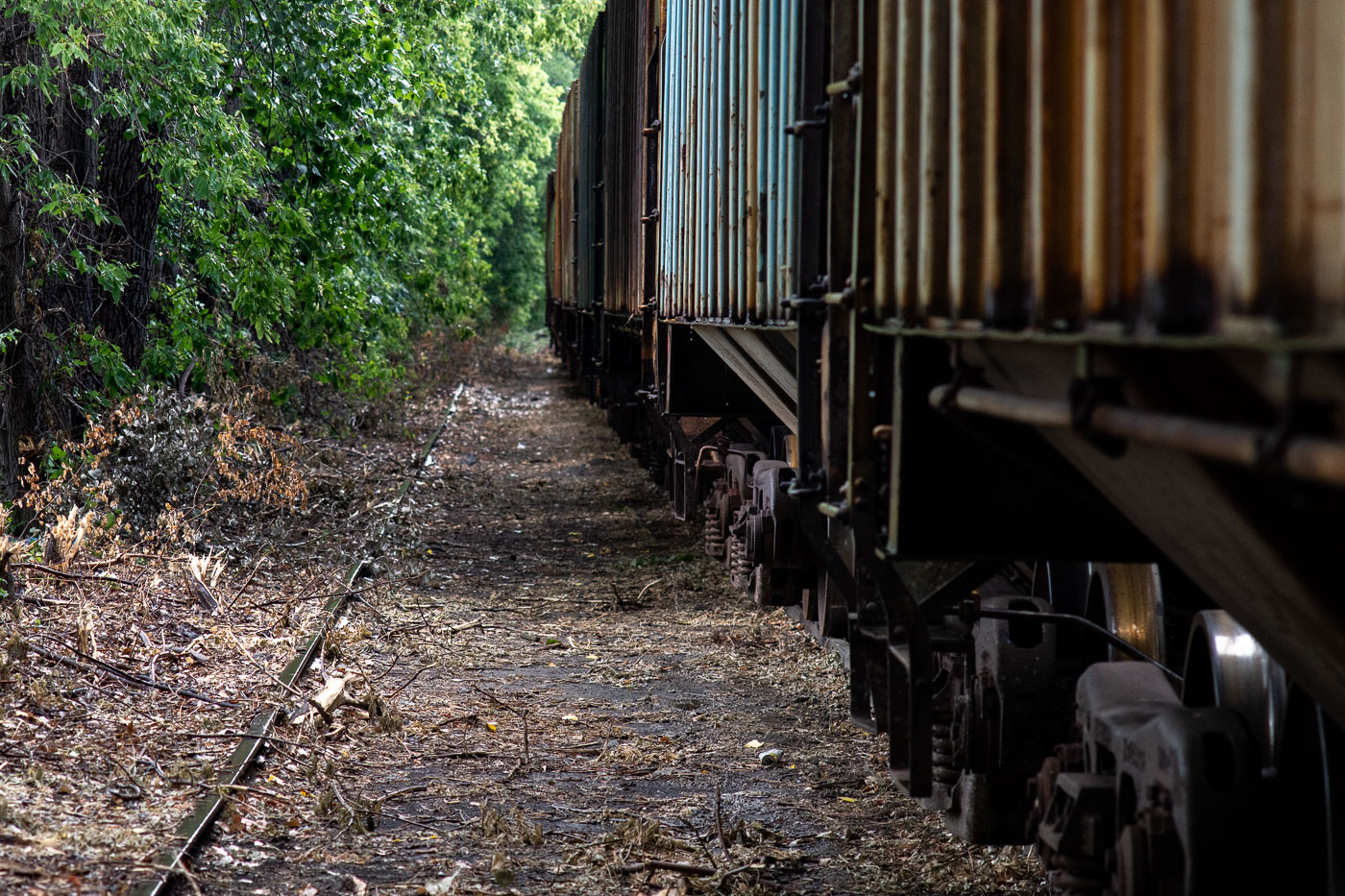
May 2017 — Once part of the historic rail convergence near Westminster Junction in St. Paul, this corridor reflects the city’s long-standing role as a freight and passenger gateway for the Upper Midwest. The junction has served multiple carriers over the decades, supporting connections to Chicago, Minneapolis, and broader national rail networks. The single-track line in the foreground sits alongside a broader multi-track right-of-way, characteristic of the region’s use for heavy rail traffic, including grain, intermodal, and freight hauling. Dense summer vegetation lines the route, showing how rail corridors often double as preserved green space, even amid active infrastructure. The distant bridge marks the approach toward downtown St. Paul, where several major rail yards historically managed traffic between river, road, and rail transport.
May 2017 — Freight trains rolling through St. Paul, MN.
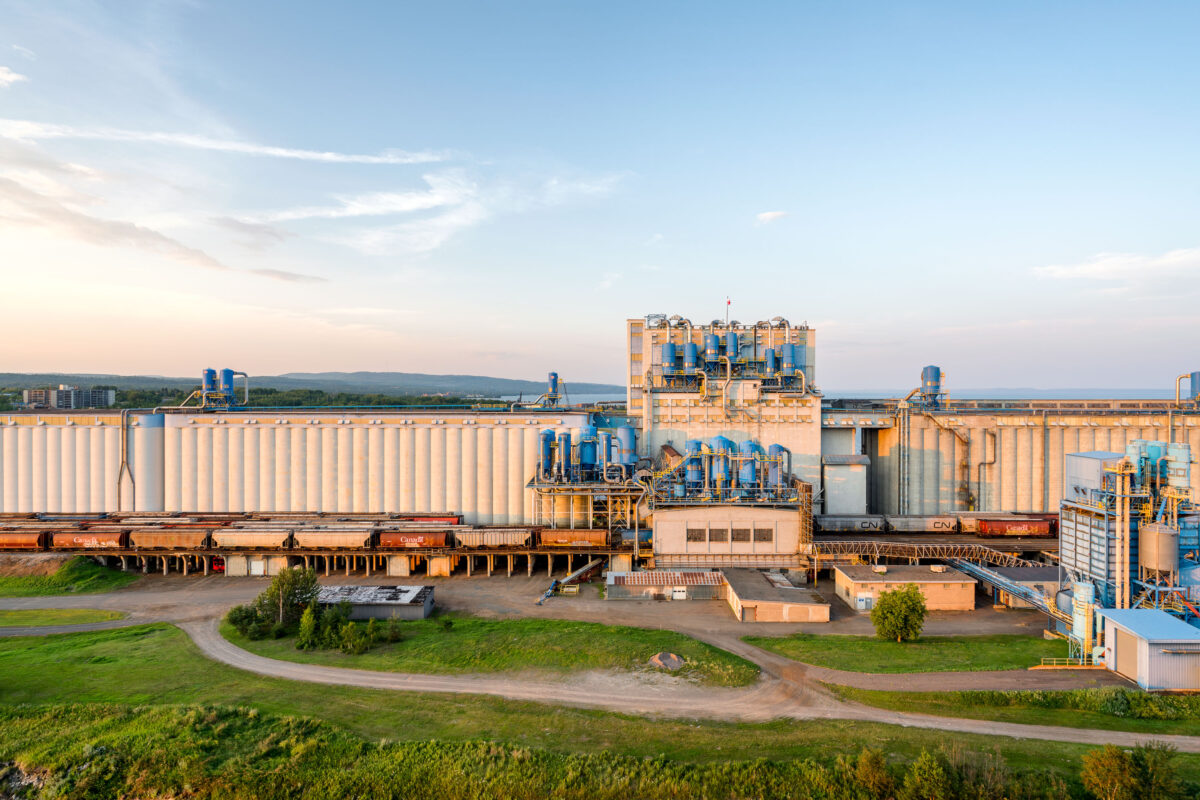
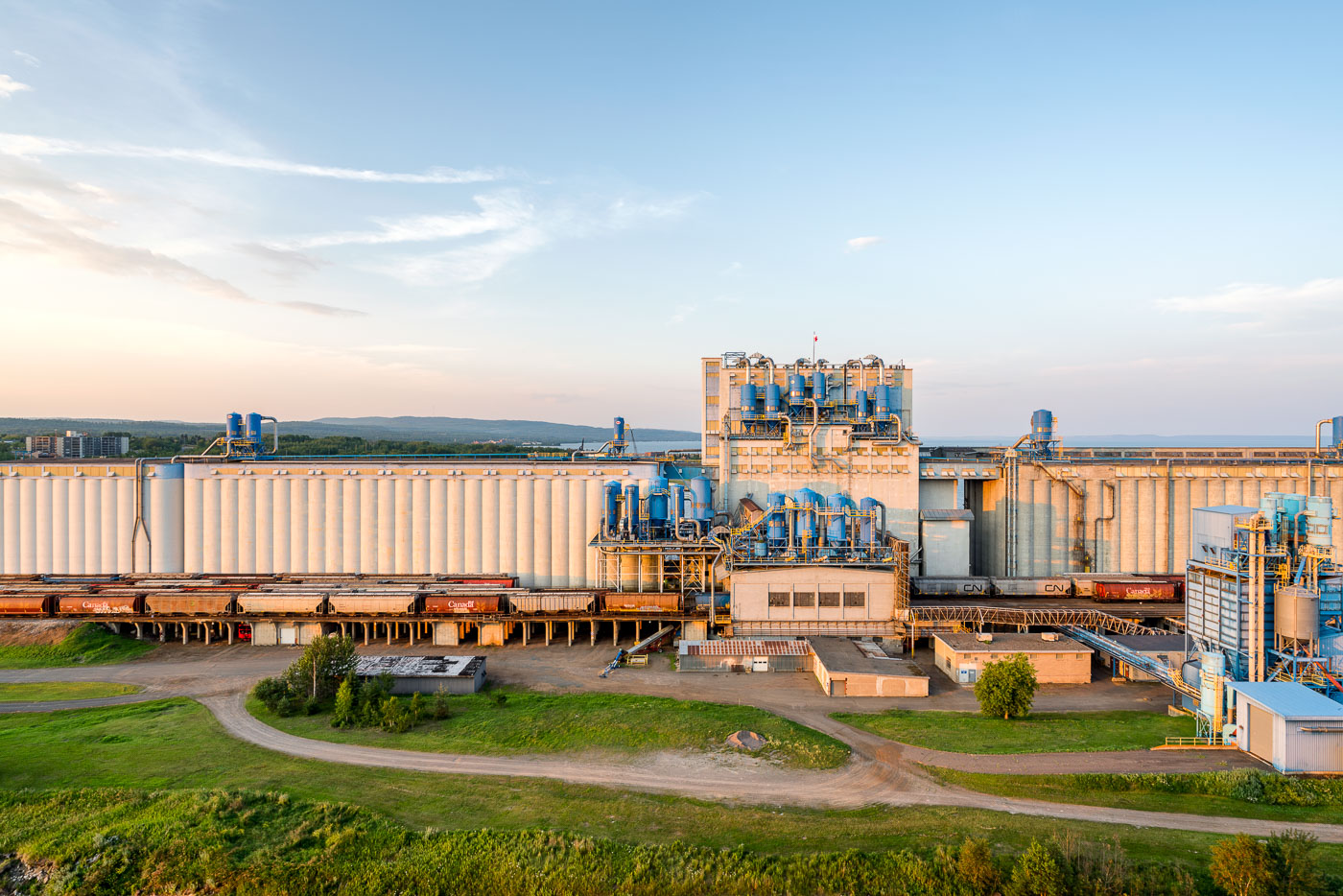
July 2017 — Grain Elevator in Thunder Bay, Canada.
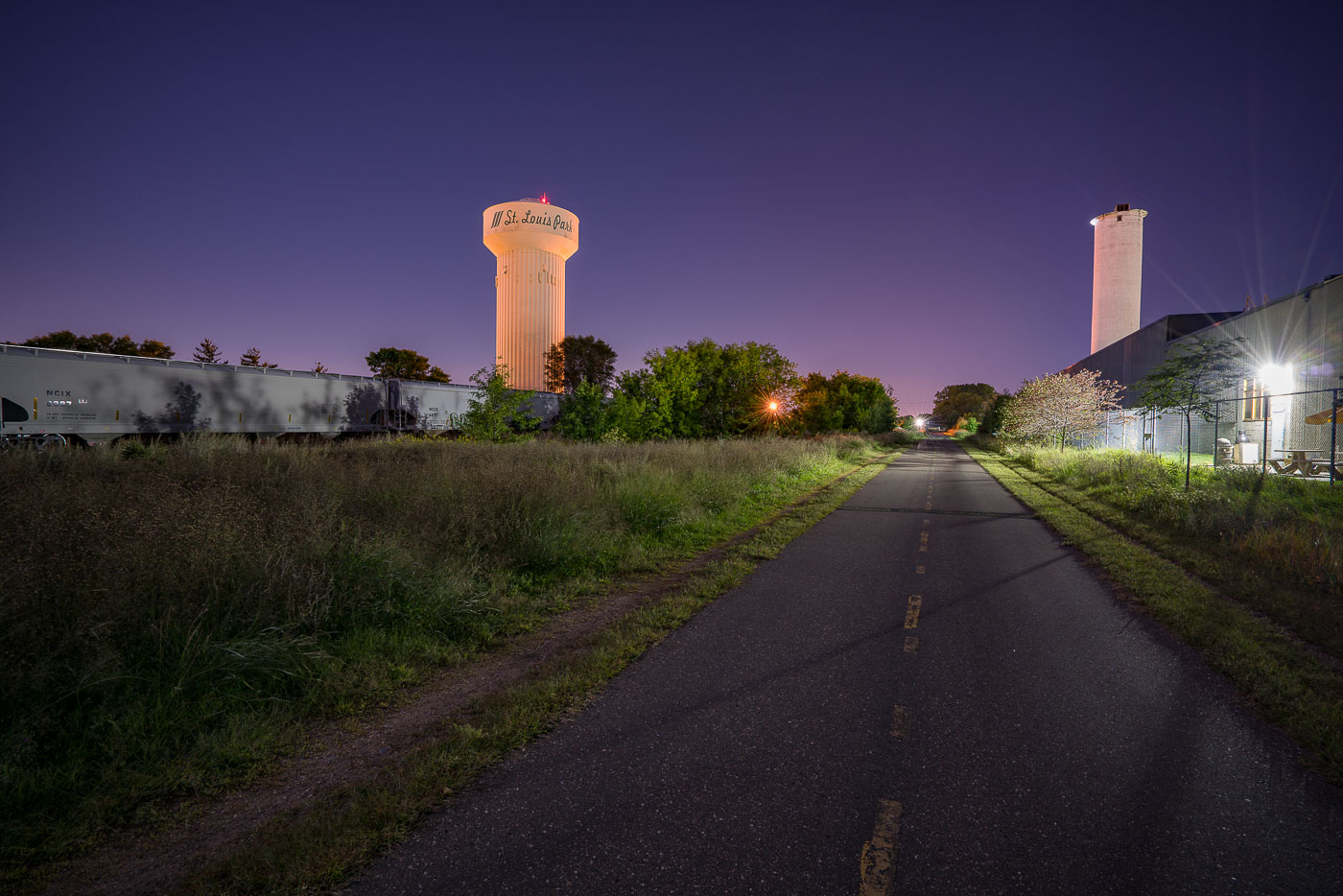
September 2017 — The Cedar Lake Trail passes through the industrial district of St. Louis Park, Minnesota, illuminated here by the community’s water tower and nearby grain elevators. This segment of the trail follows a former railroad right-of-way once used by the Minneapolis & St. Louis Railway, which connected local industries to the region’s freight network. The corridor’s transformation into one of the country’s first bicycle “freeways” in the 1990s marked a major milestone in urban redevelopment and sustainable transportation planning. Once lined with lumberyards, steel fabricators, and mills, the area surrounding the trail reflects the industrial origins of St. Louis Park—a community that grew rapidly in the early 20th century due to its proximity to both Minneapolis and key rail junctions. The trail today bridges that history, offering cyclists and commuters a route through a landscape where freight trains, utility towers, and legacy industry remain active reminders of the city’s manufacturing past.
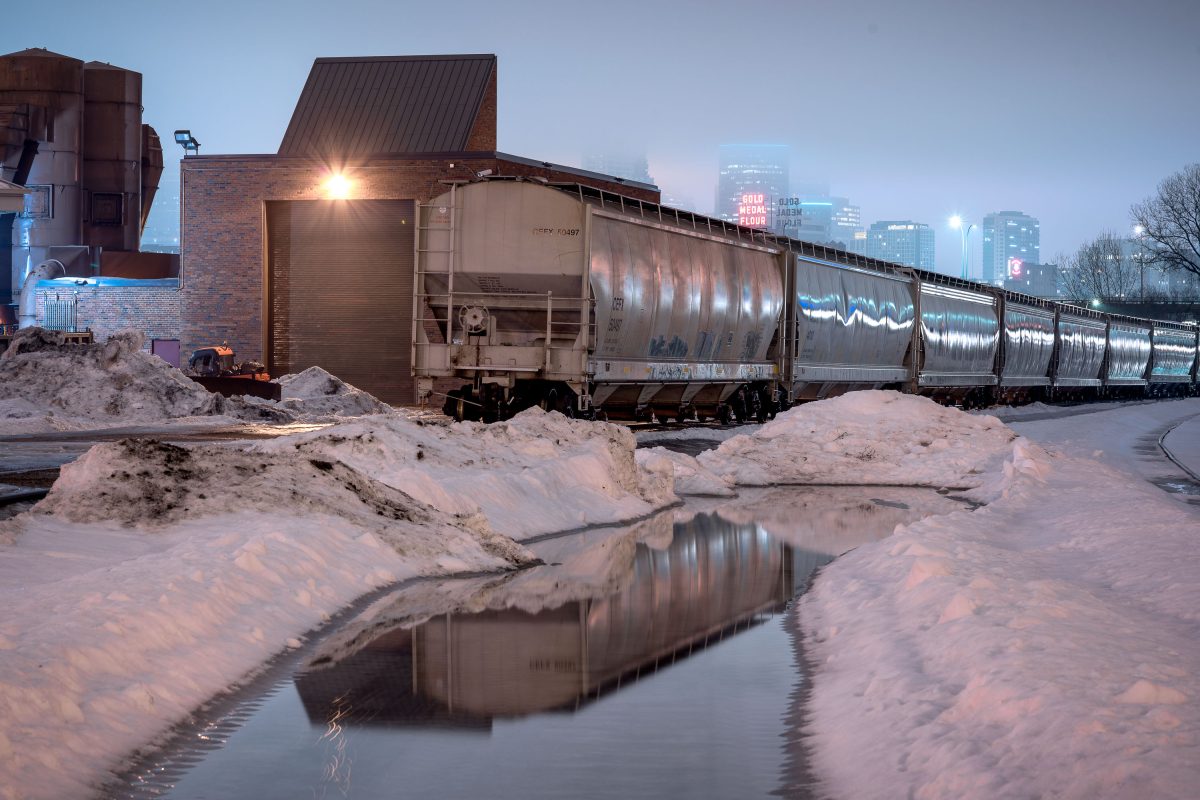
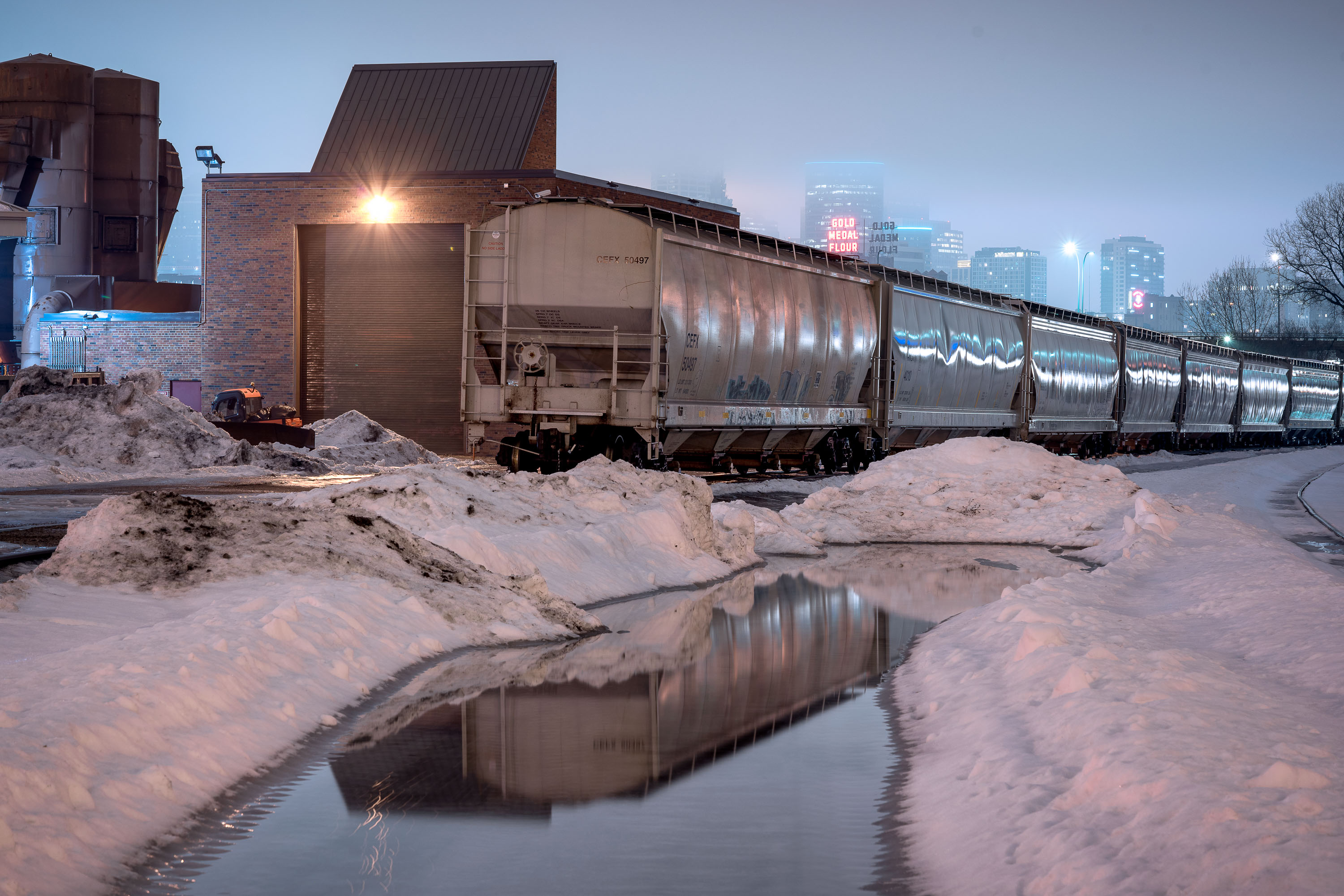
September 2017 — General Mills elevator in Minneapolis.
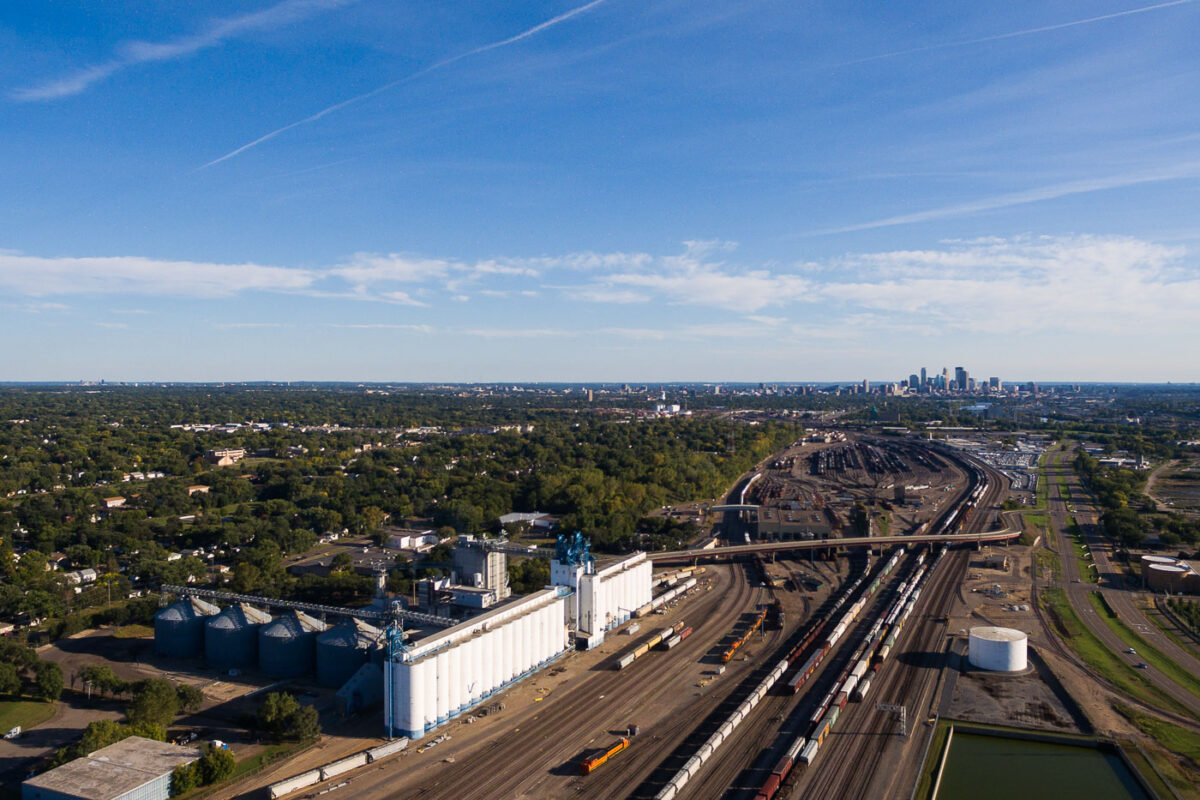
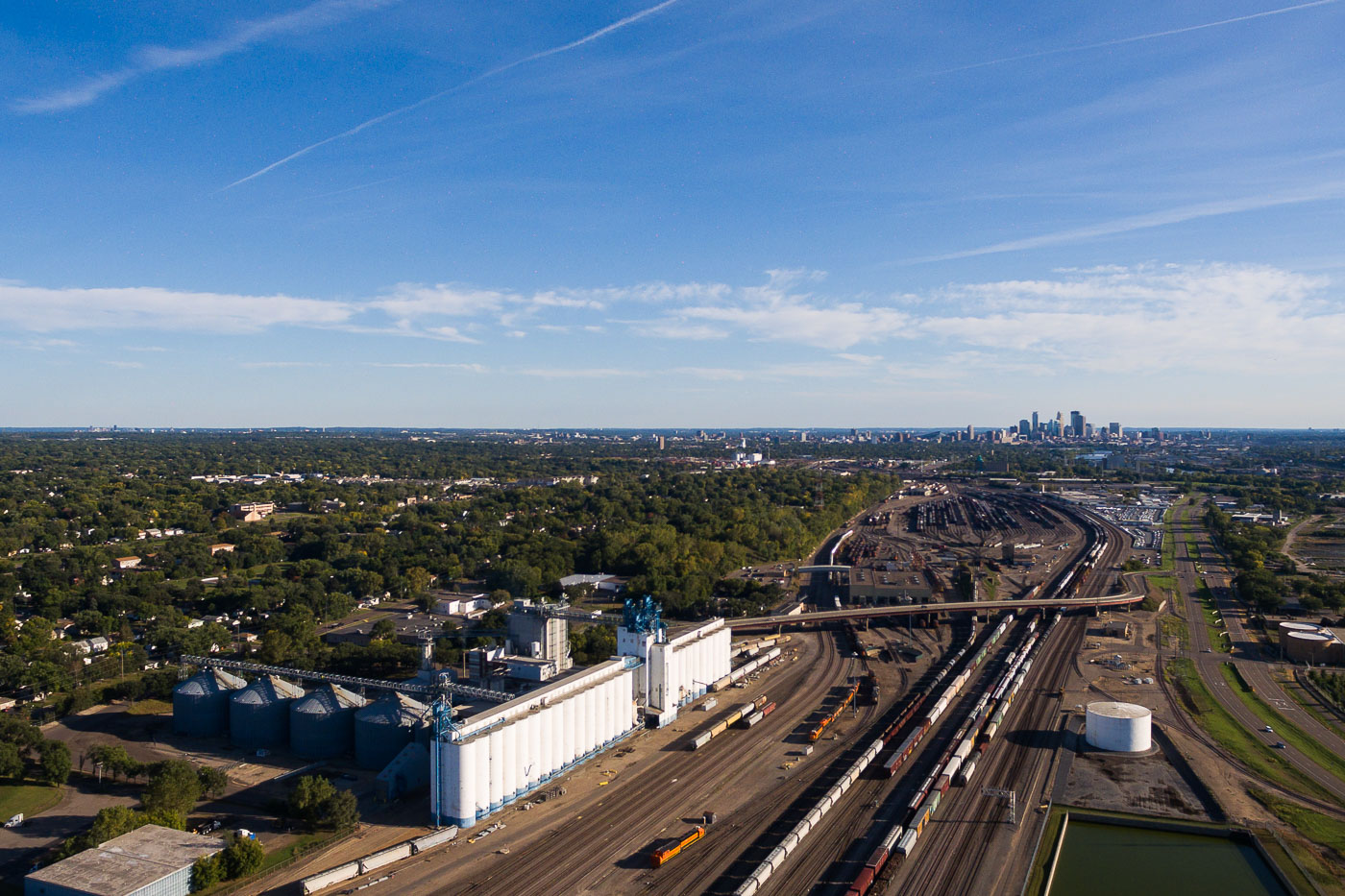
September 2017 — Northtown Yard in North Minneapolis.
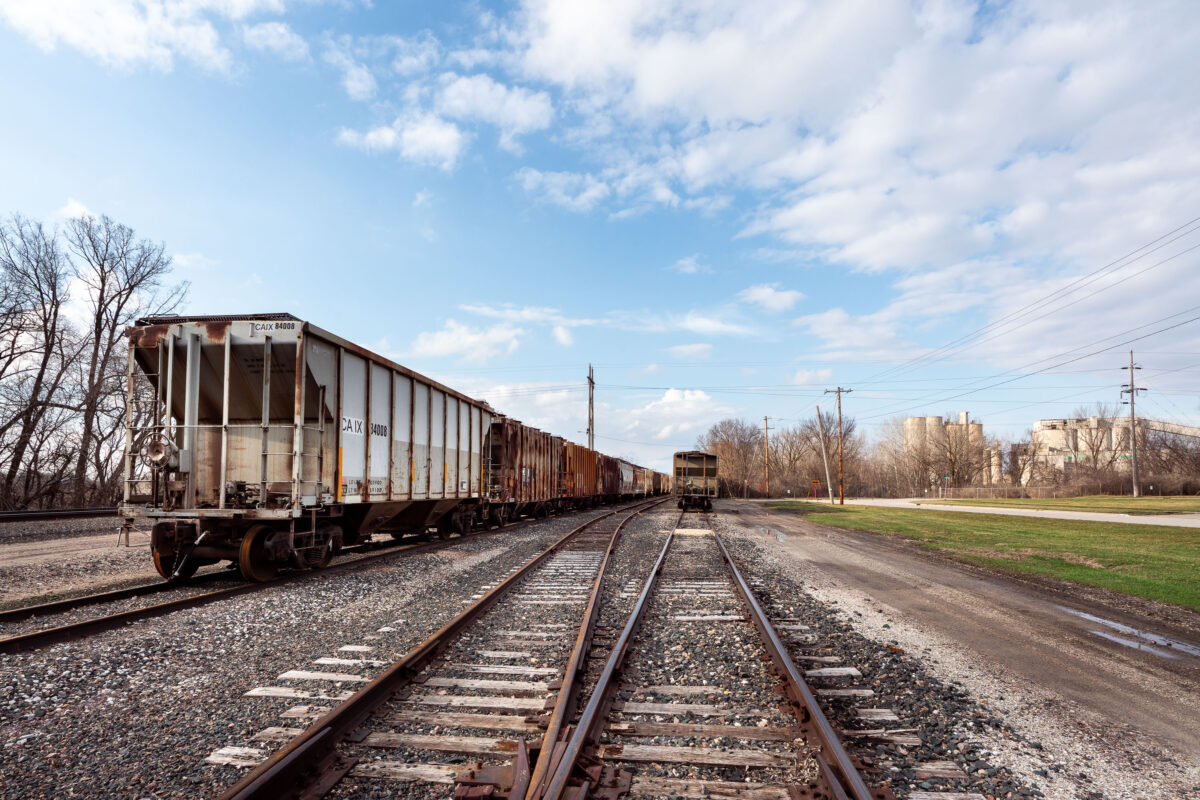
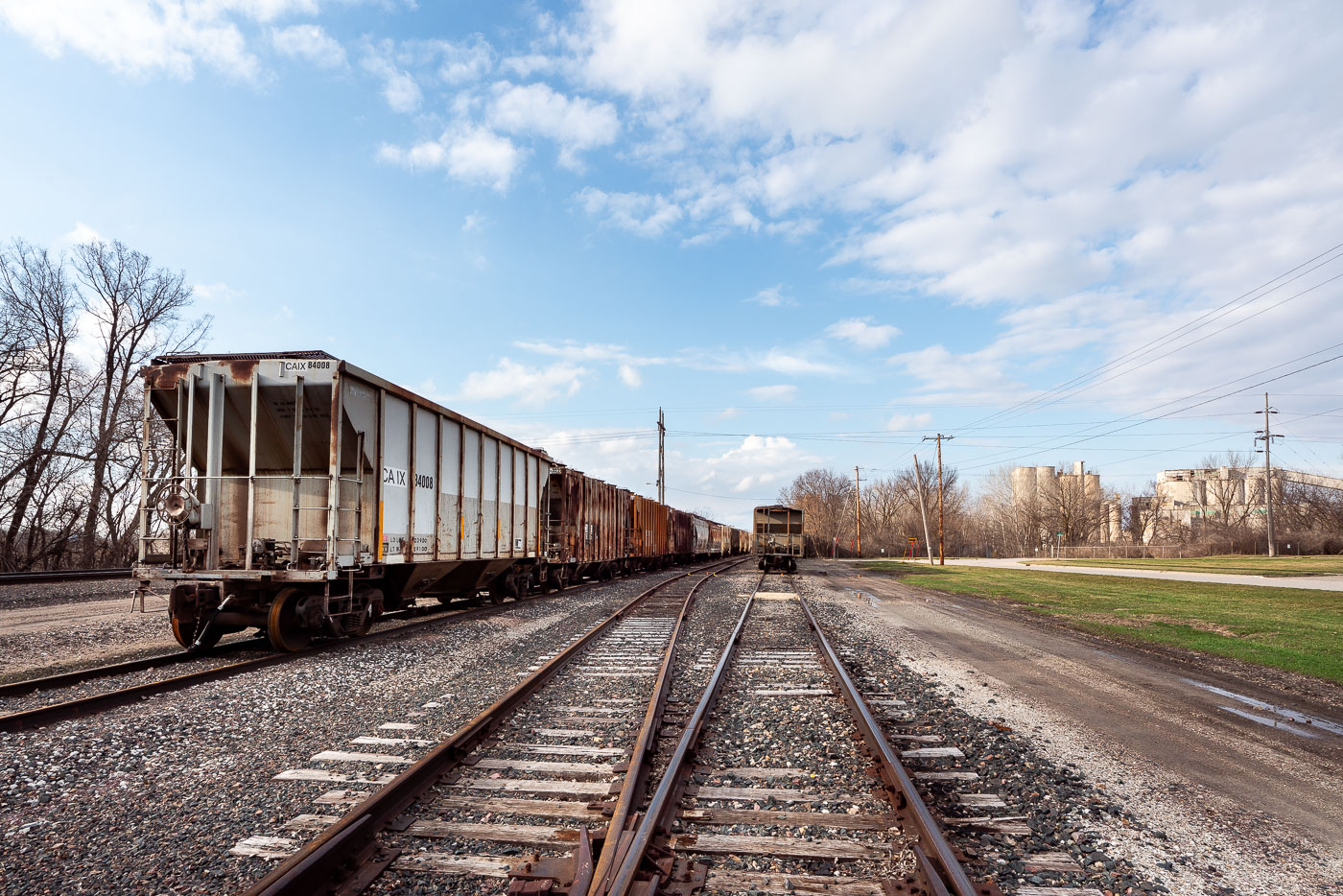
April 2019 — A line of freight cars stretches into the distance in Mason City, Iowa, where the local rail yard serves as a crucial link between agricultural and industrial distribution networks. The weathered hoppers and boxcars sit idle under a calm Midwestern sky, their rusted sides revealing years of steady use. In the background, grain and cement facilities mark the industrial edge of town—part of Mason City’s enduring role as a regional transportation and manufacturing hub.
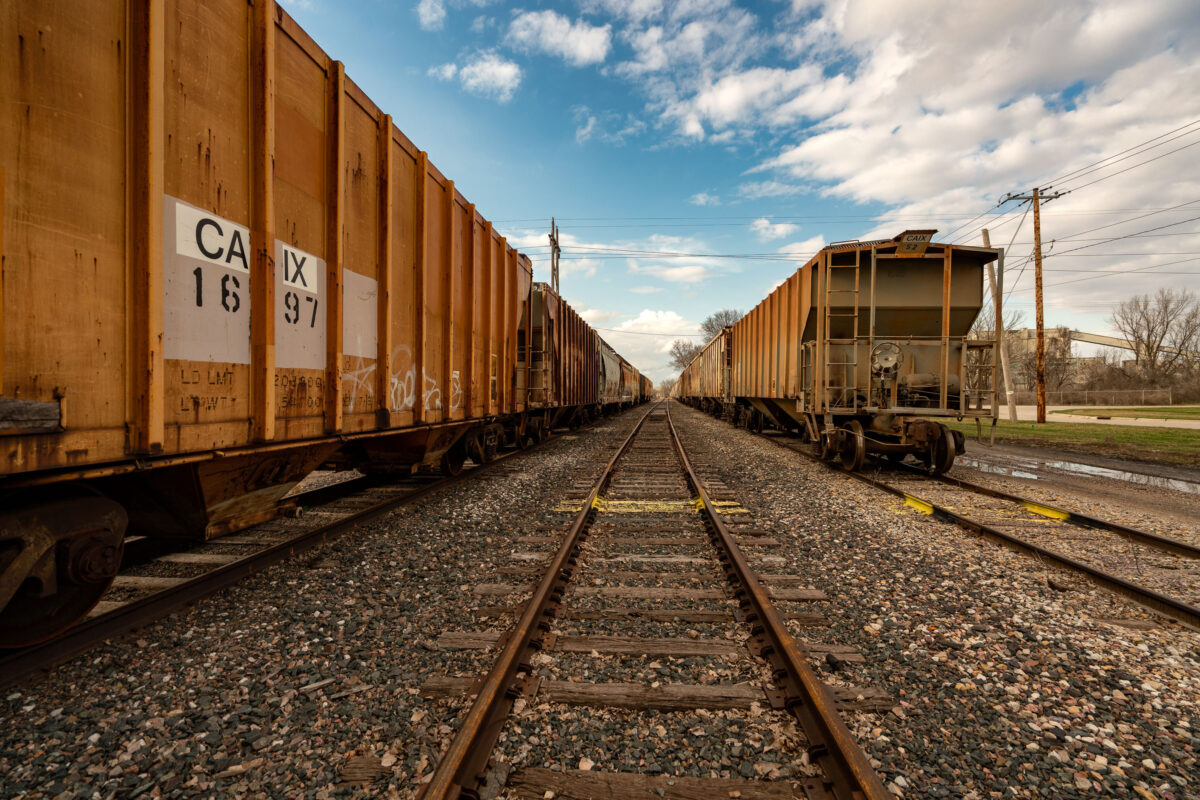
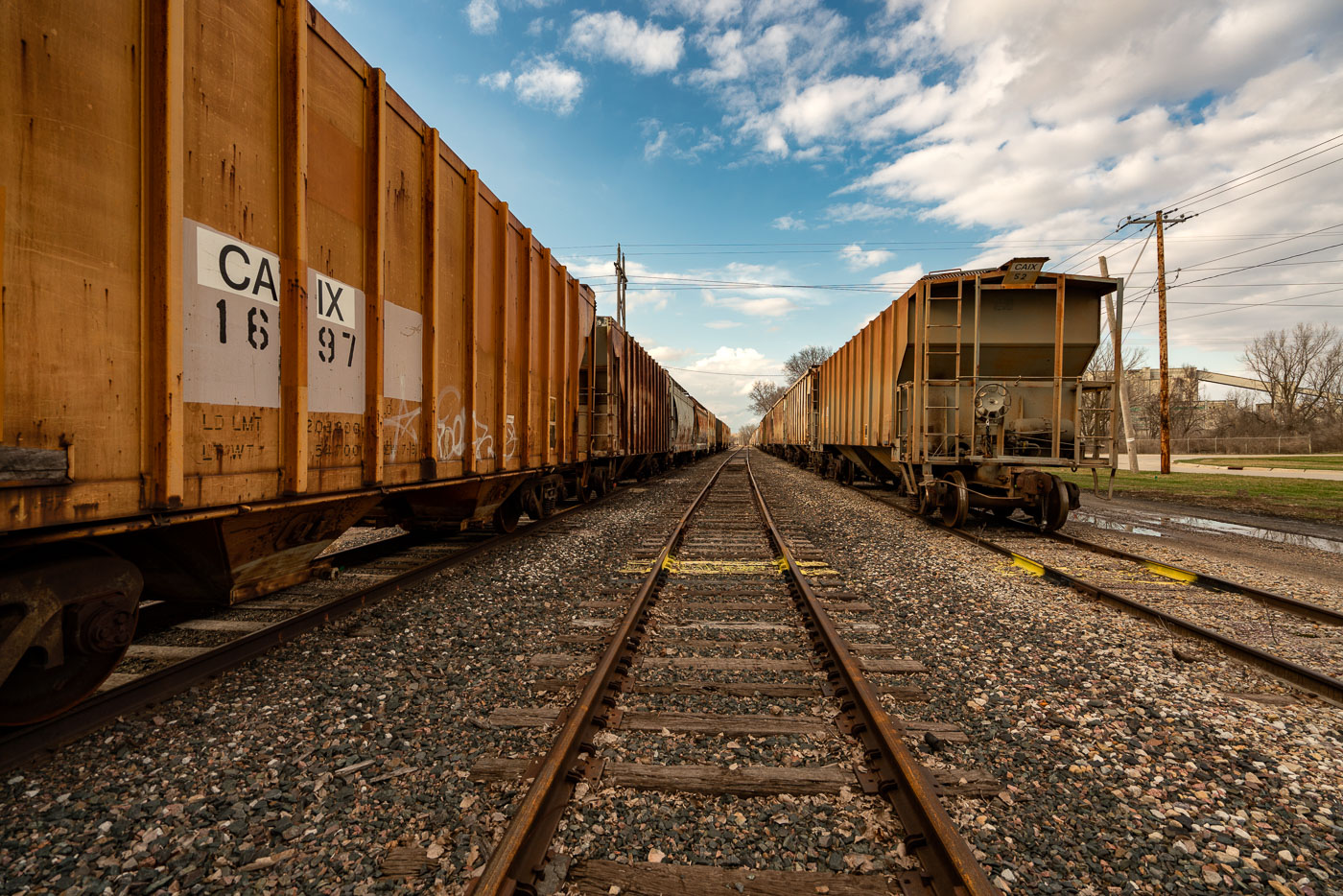
April 2019 — A view down the center of two freight lines in Mason City, Iowa, where rows of grain hoppers and boxcars stretch toward the horizon under a late afternoon sky. The tracks form a precise, symmetrical corridor through the city’s industrial district, emphasizing the scale and geometry of Midwestern rail logistics. These sidings remain active for grain and material shipments, a reminder of Mason City’s long-standing role as a freight hub connecting rural industry to national transport networks.
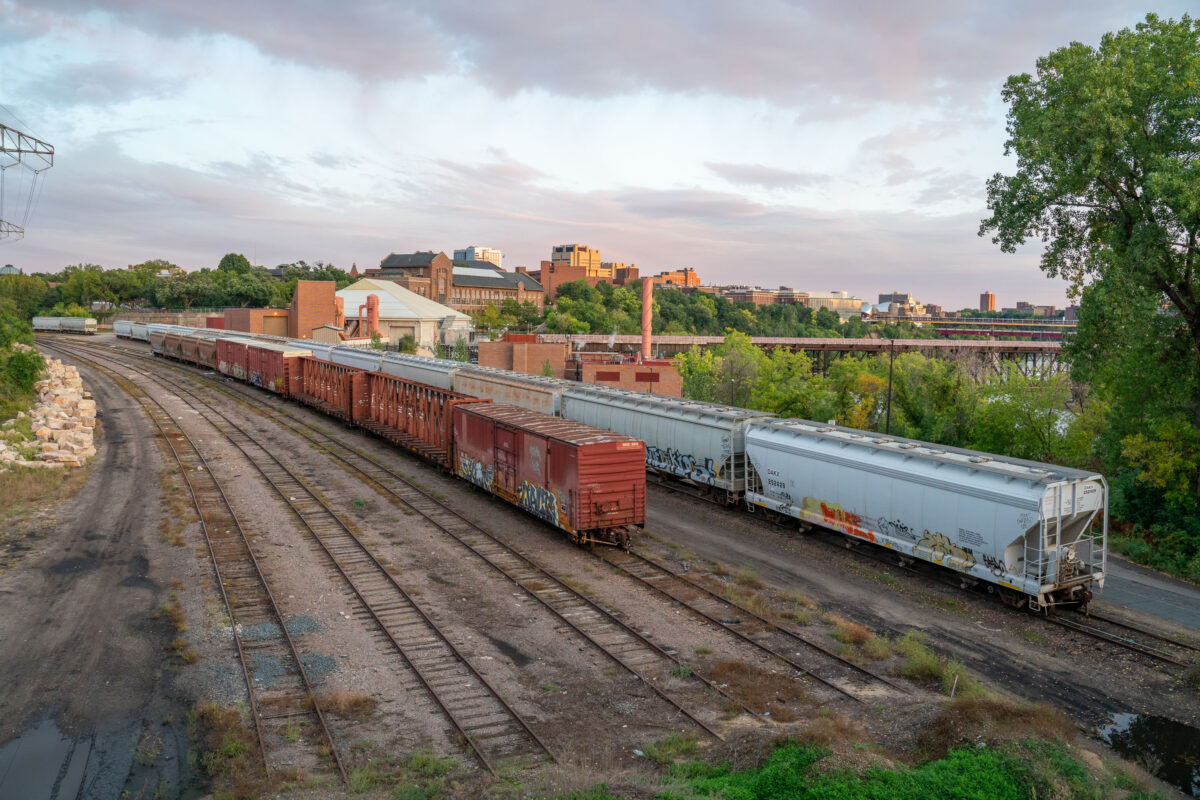
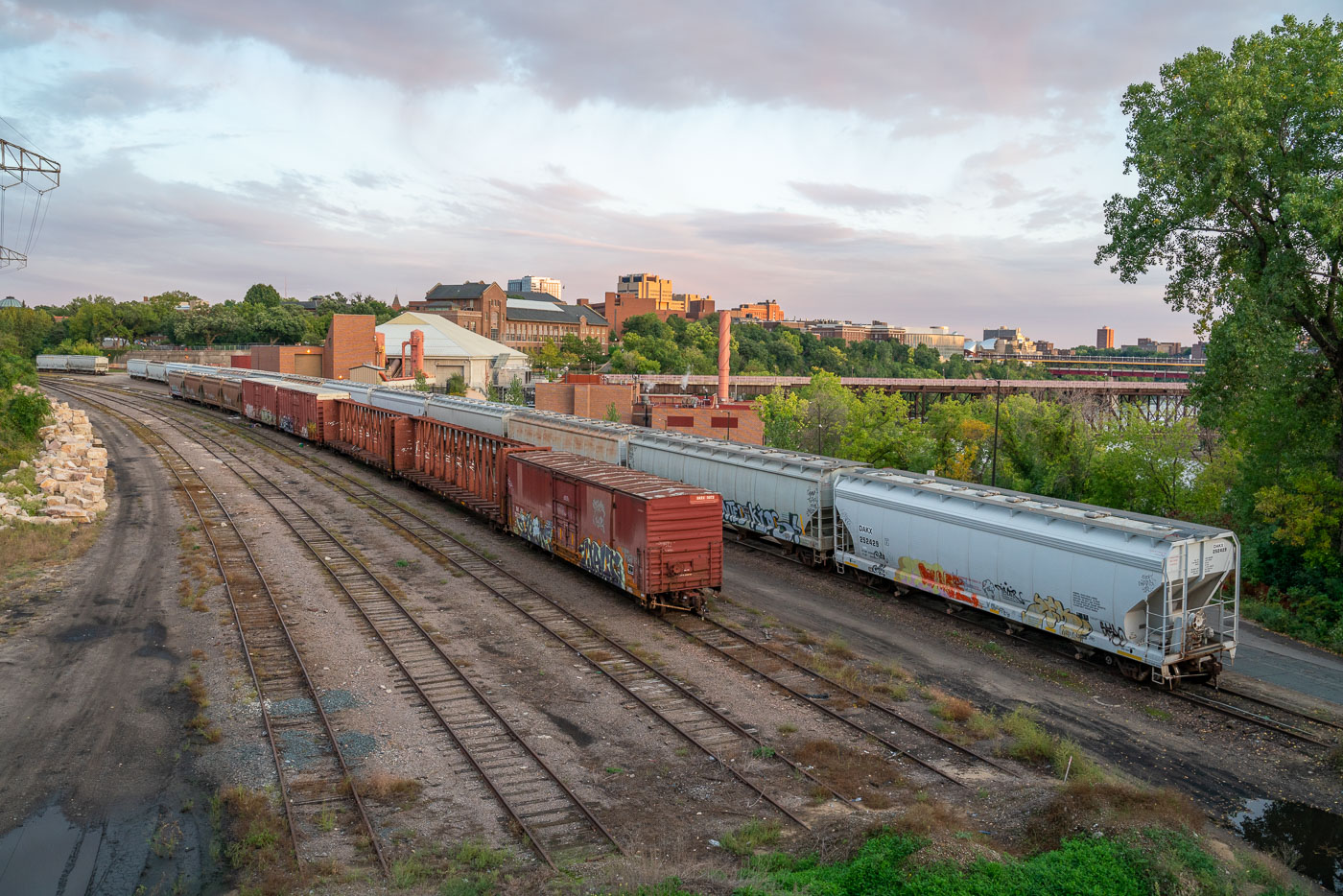
September 2019 — Freight cars sit on rail tracks near the Mississippi River in Minneapolis, with the University of Minnesota campus in the background. The Southeast Steam Plant and its red exhaust stacks rise behind the trains, and the Washington Avenue Bridge crosses the river farther upstream. The scene highlights the mix of industry, infrastructure, and campus development along the riverfront.
August 2021 — A freight train in Minneapolis on August 2021.
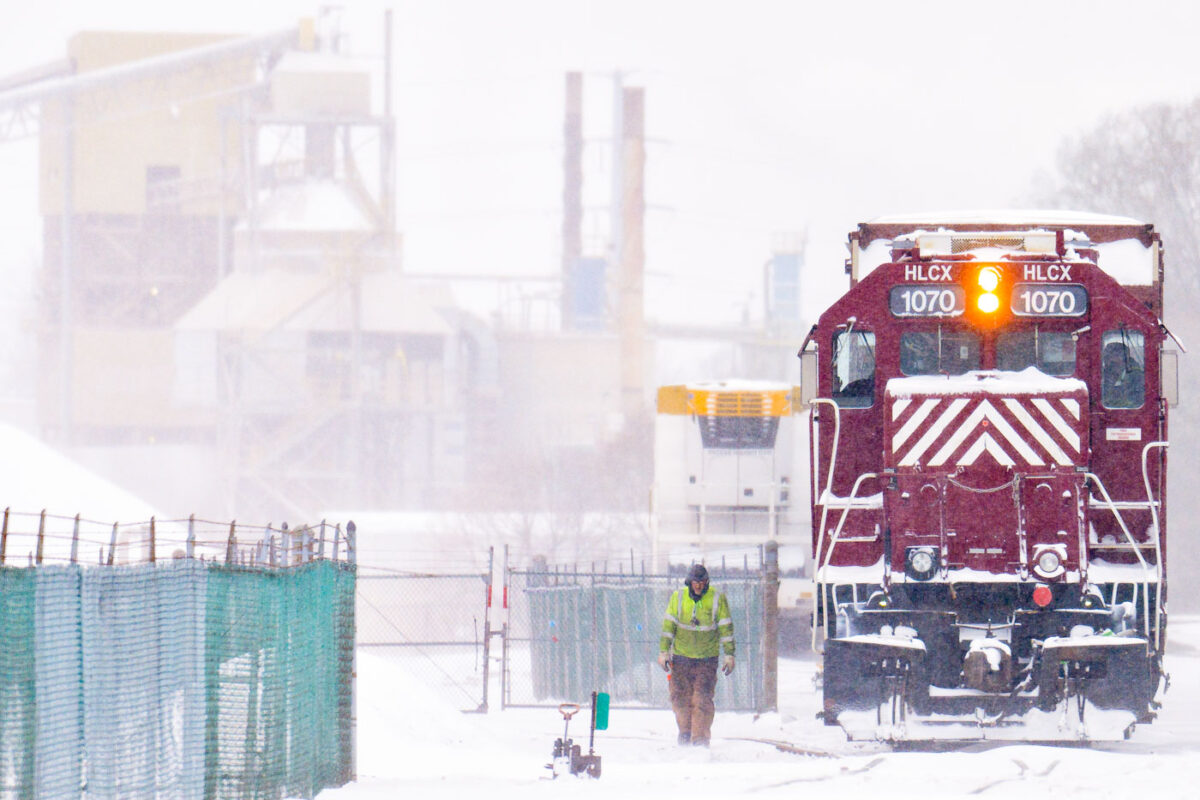
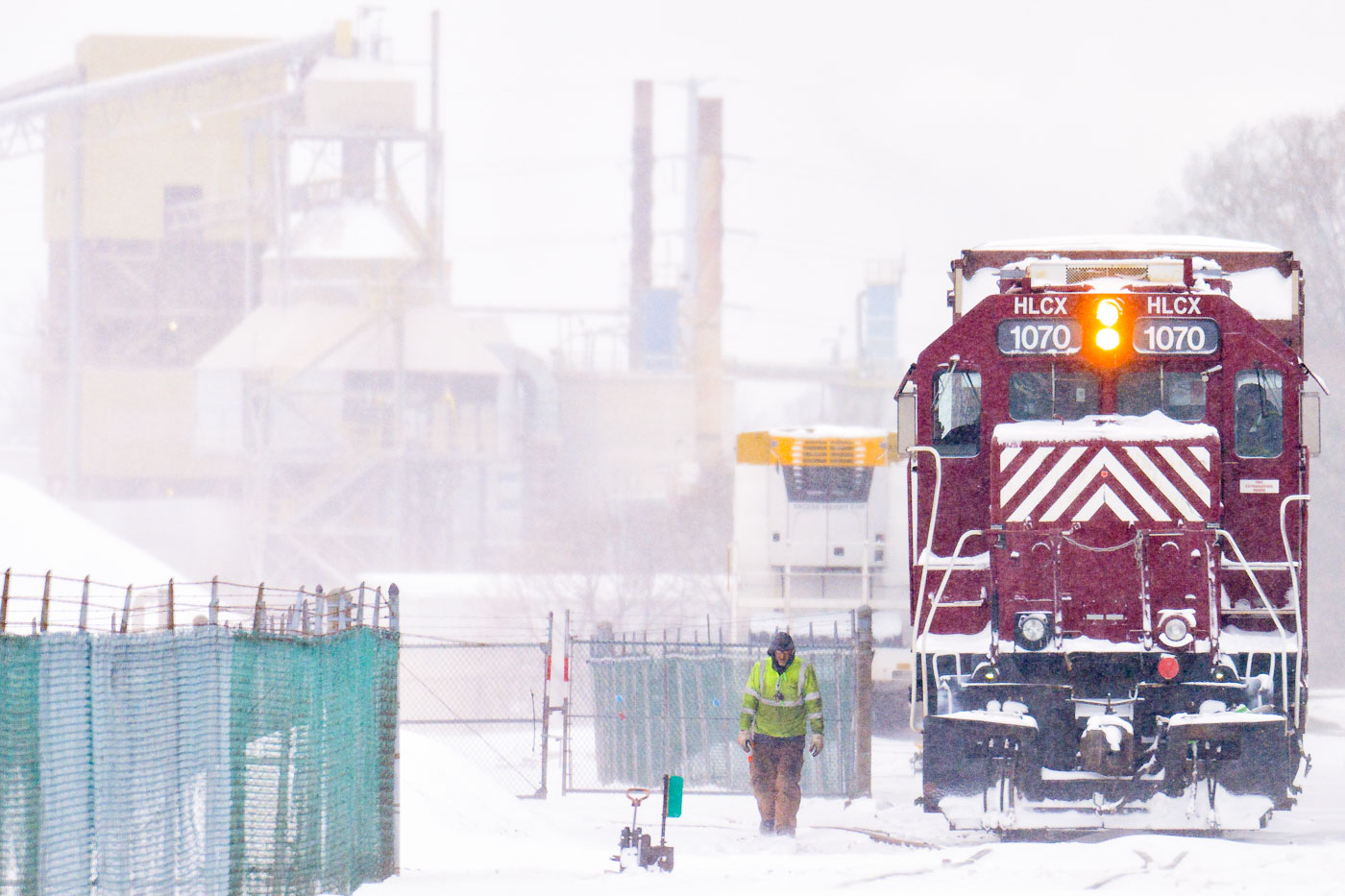
December 2022 — A freight crew member walks alongside HLCX 1070 during a heavy snowstorm at Quincy Street and Eastman Avenue in Green Bay, Wisconsin. The locomotive’s headlights cut through the blowing snow as operations continue despite low visibility and freezing conditions. Industrial structures in the background fade into the whiteout, highlighting how rail work persists year-round across the region’s manufacturing and transportation corridors.