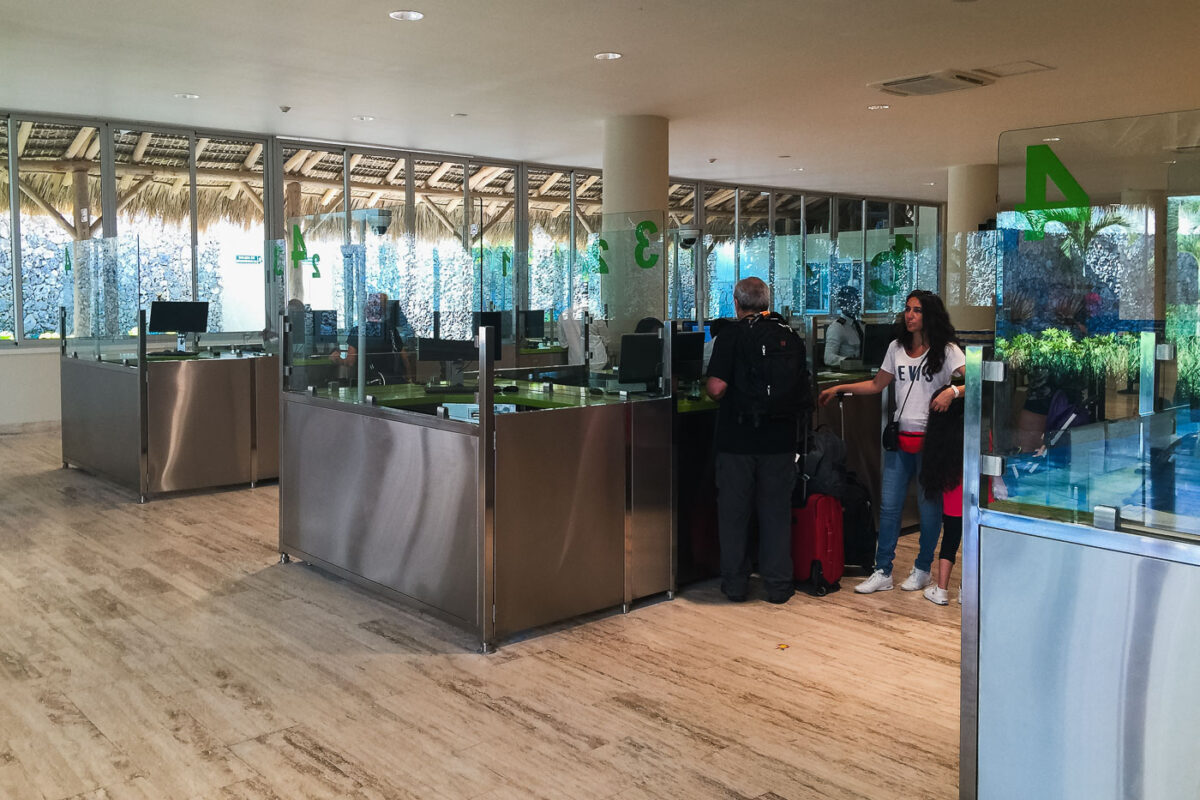
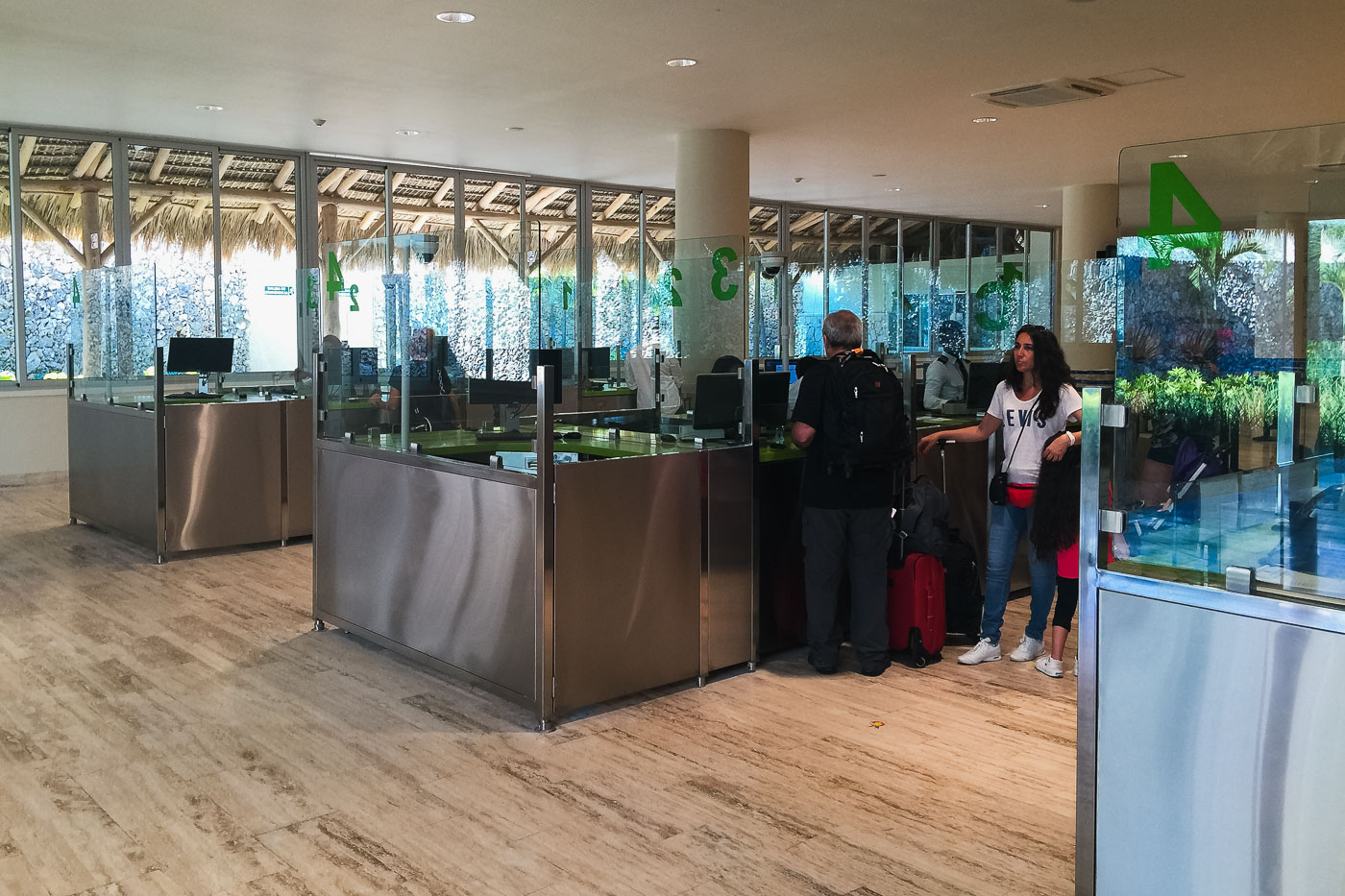
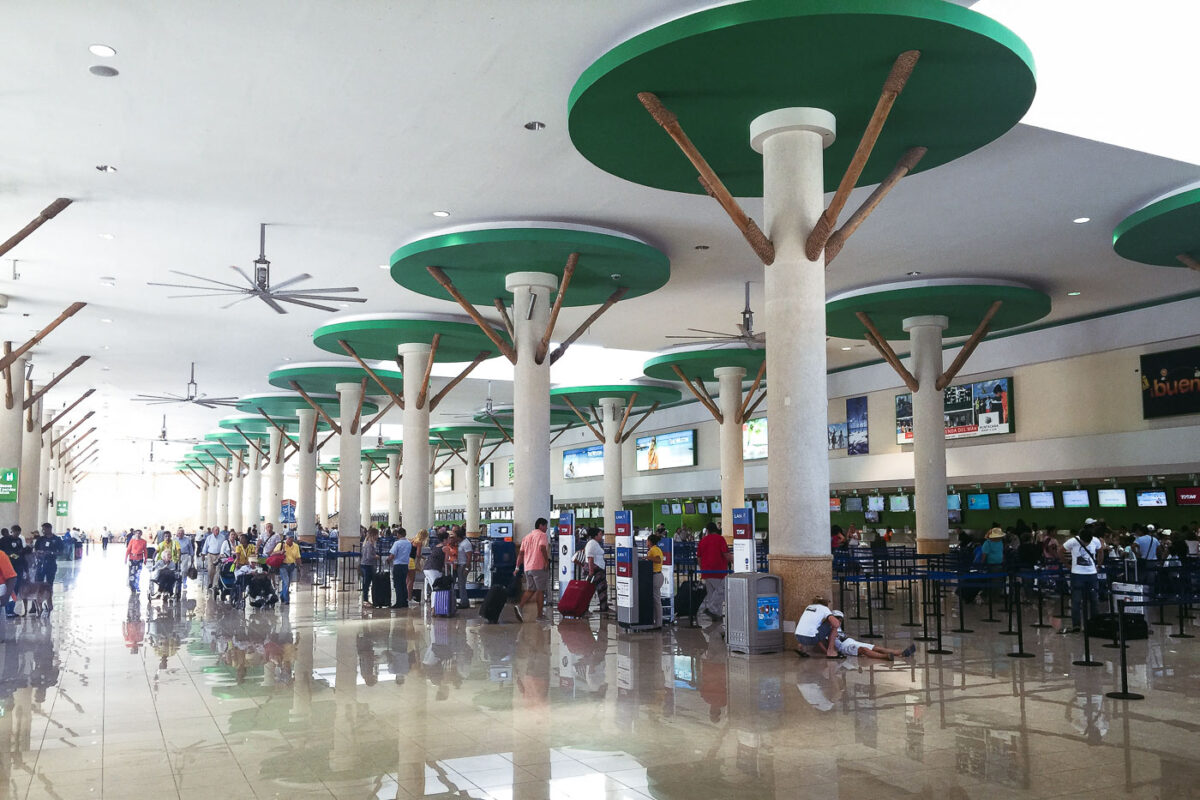
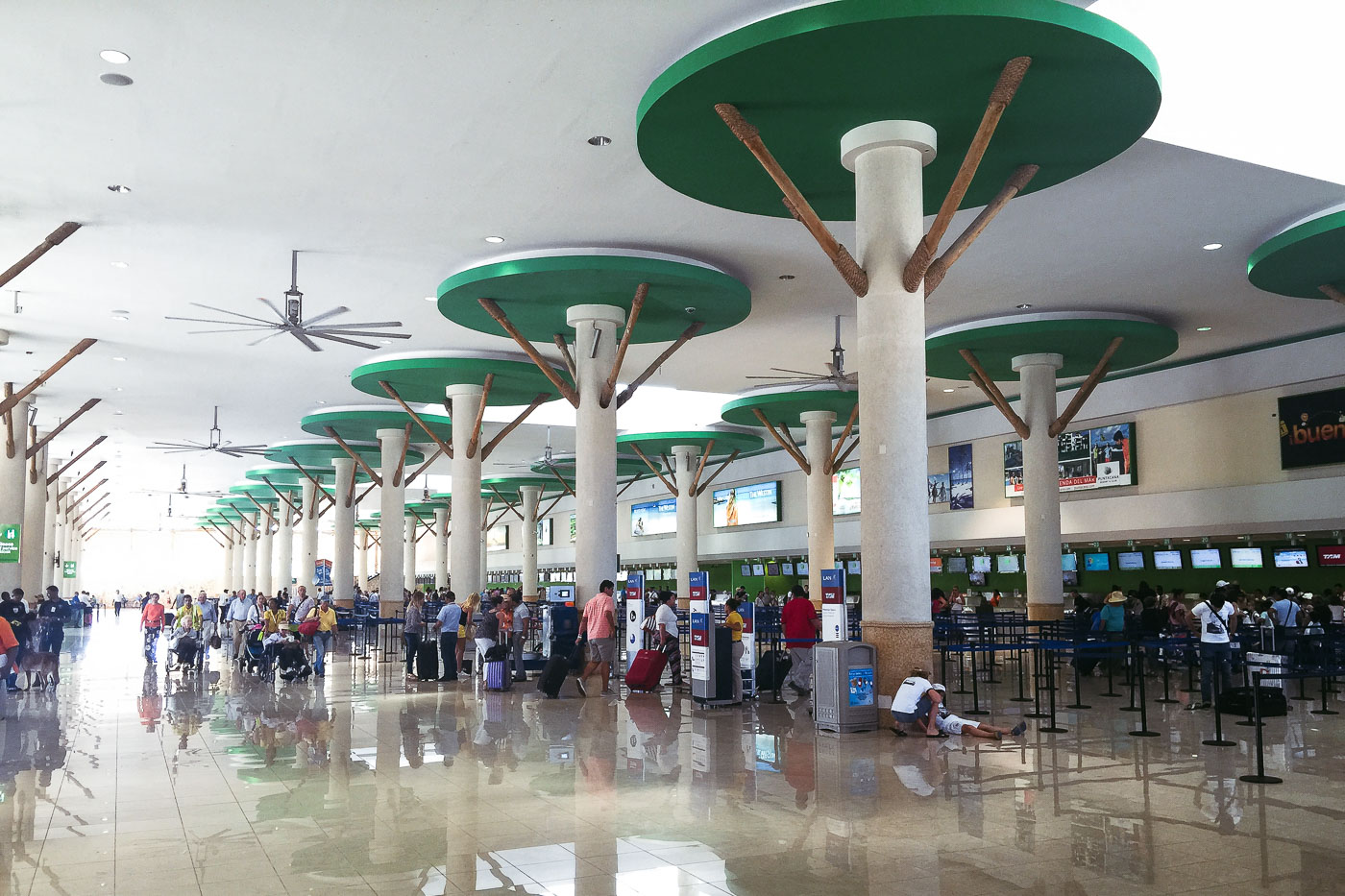
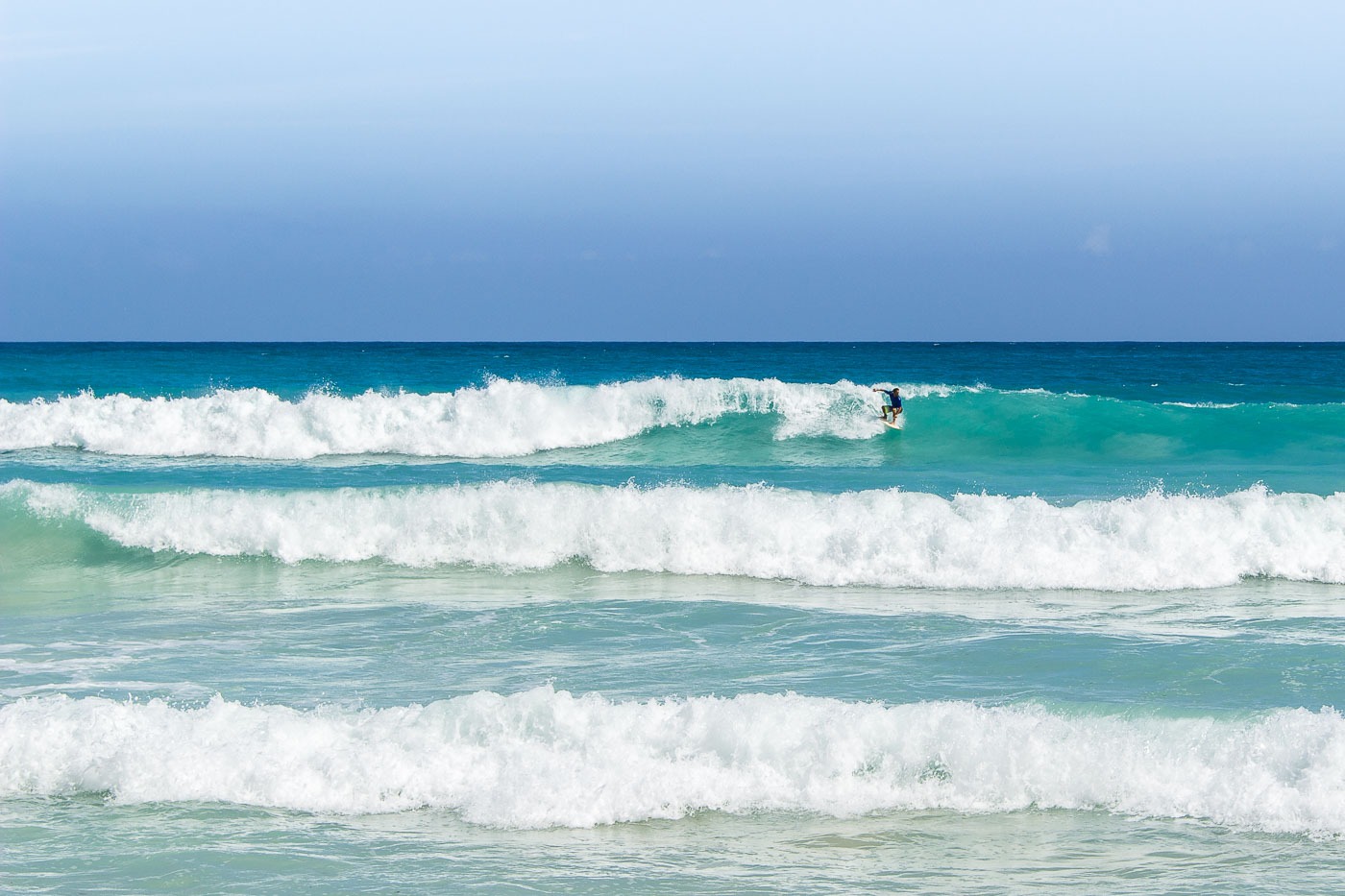
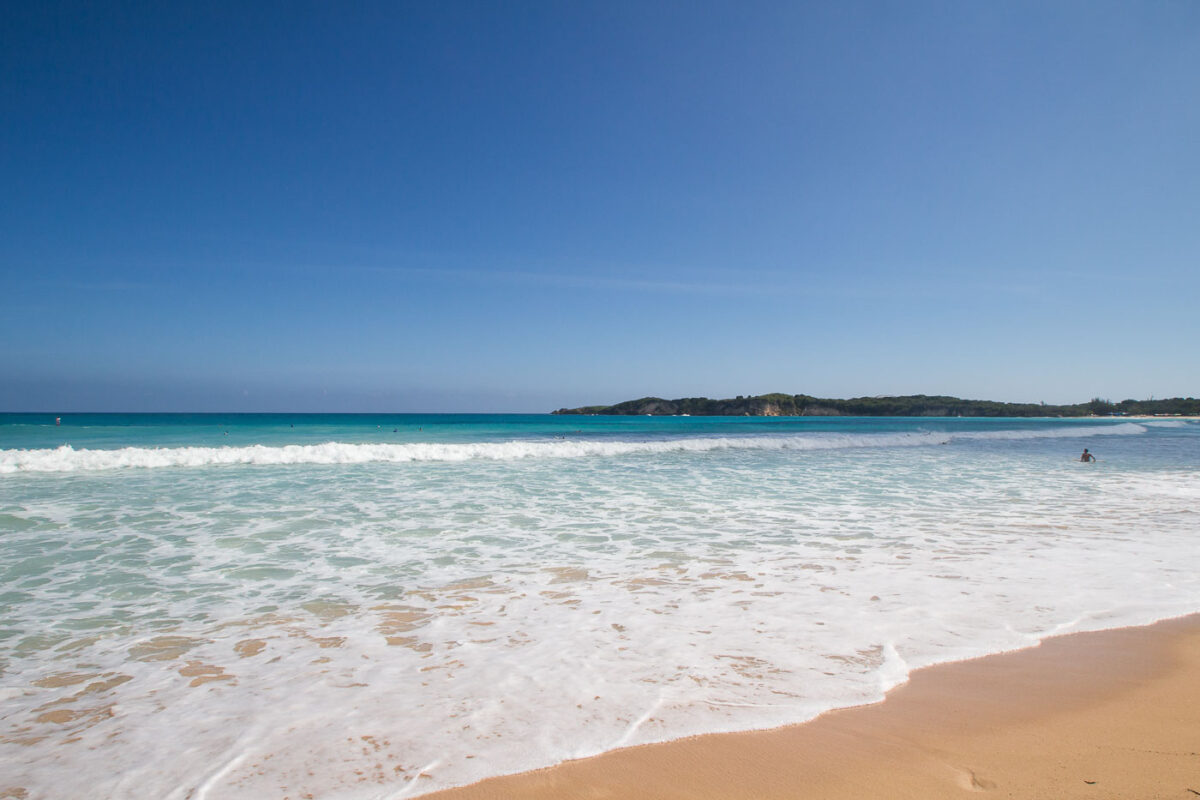
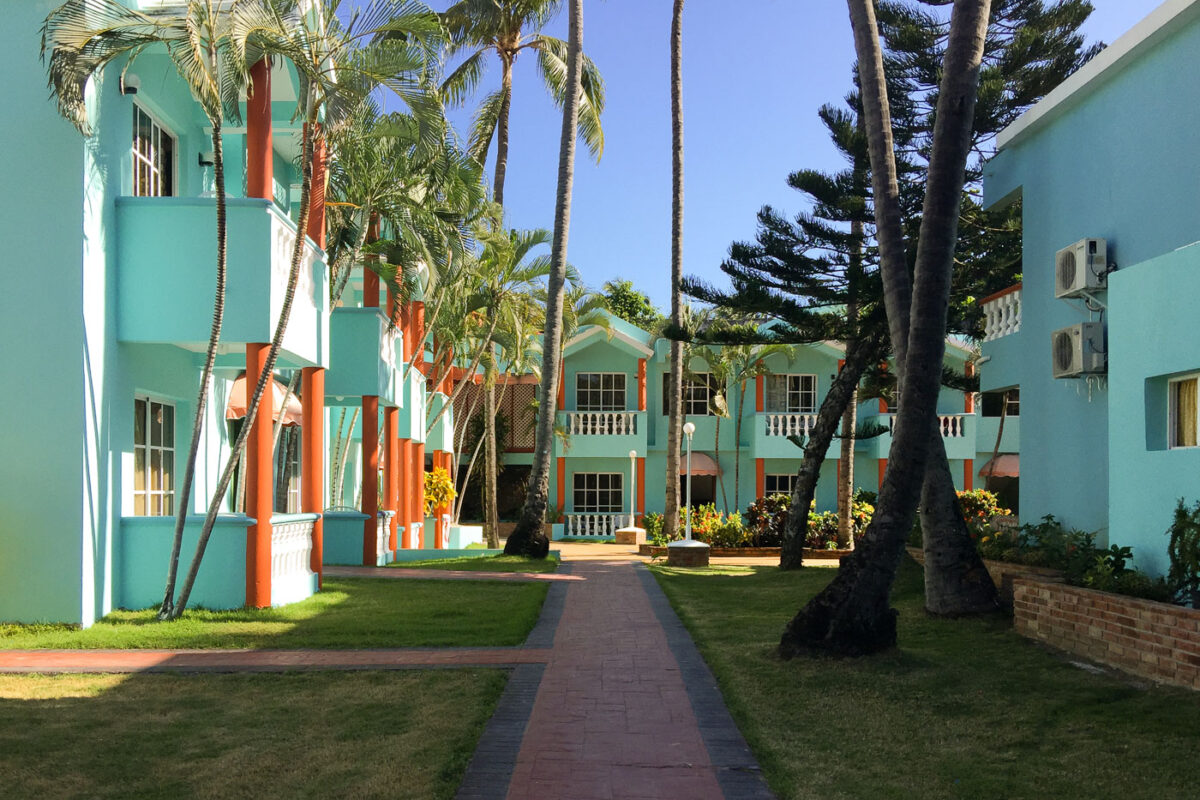
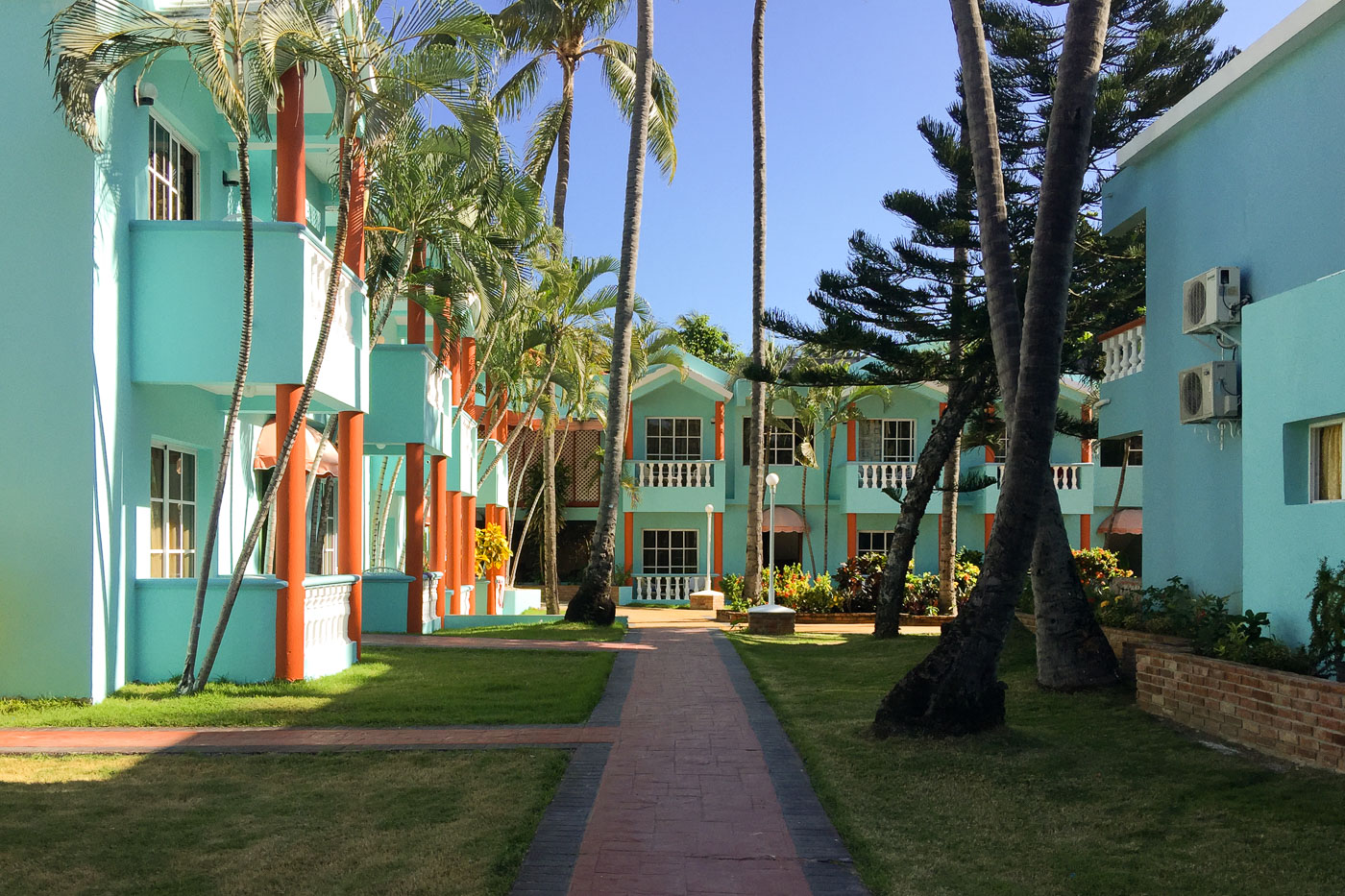
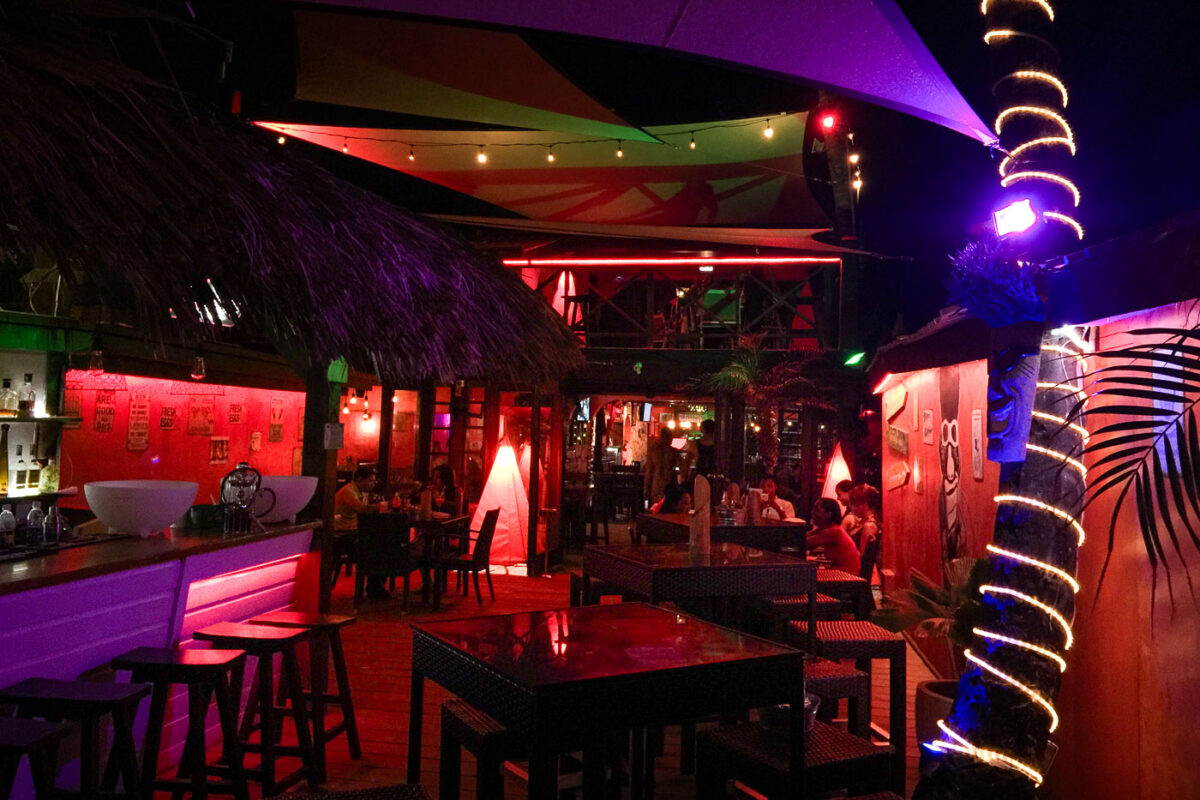
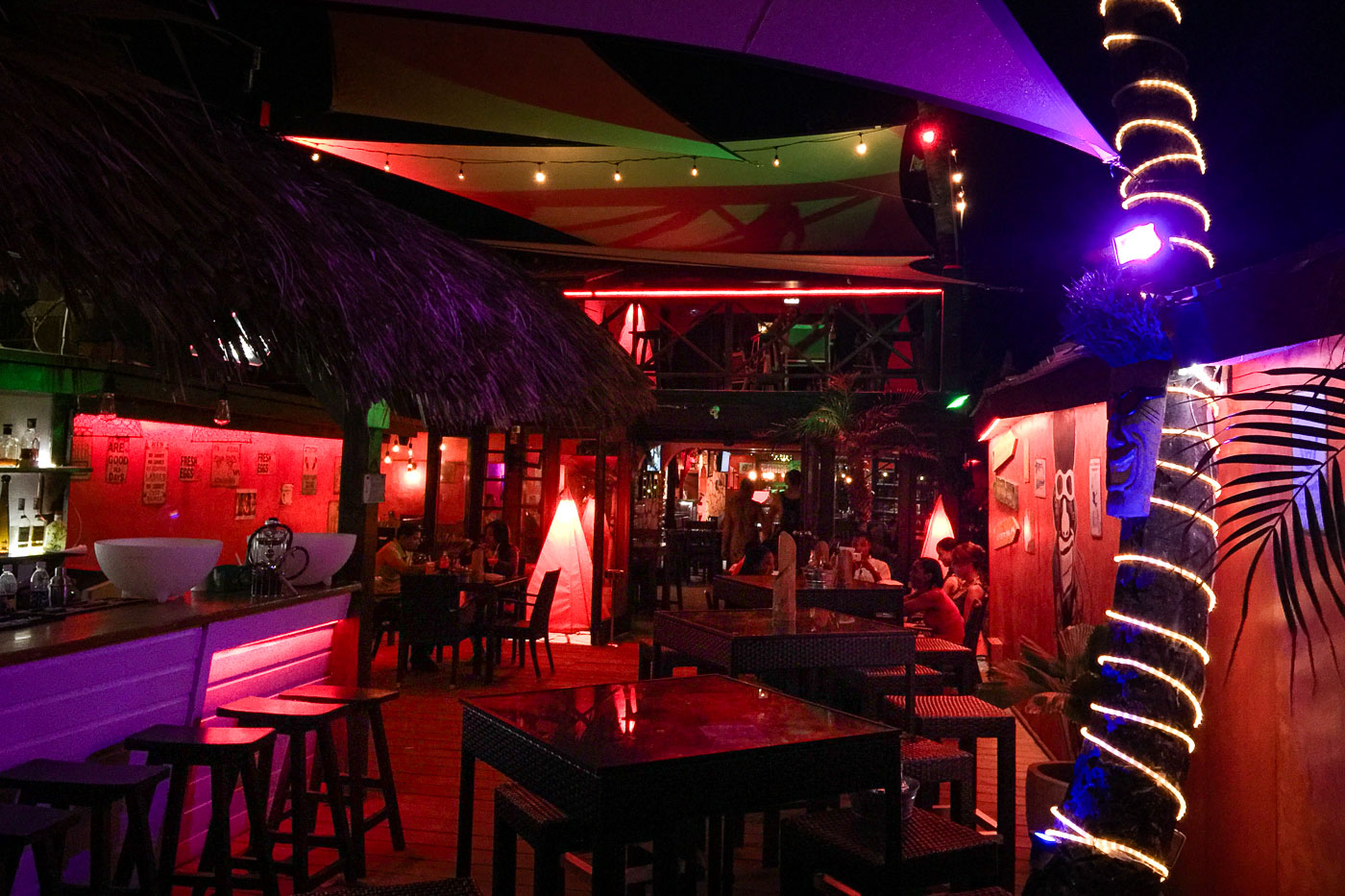
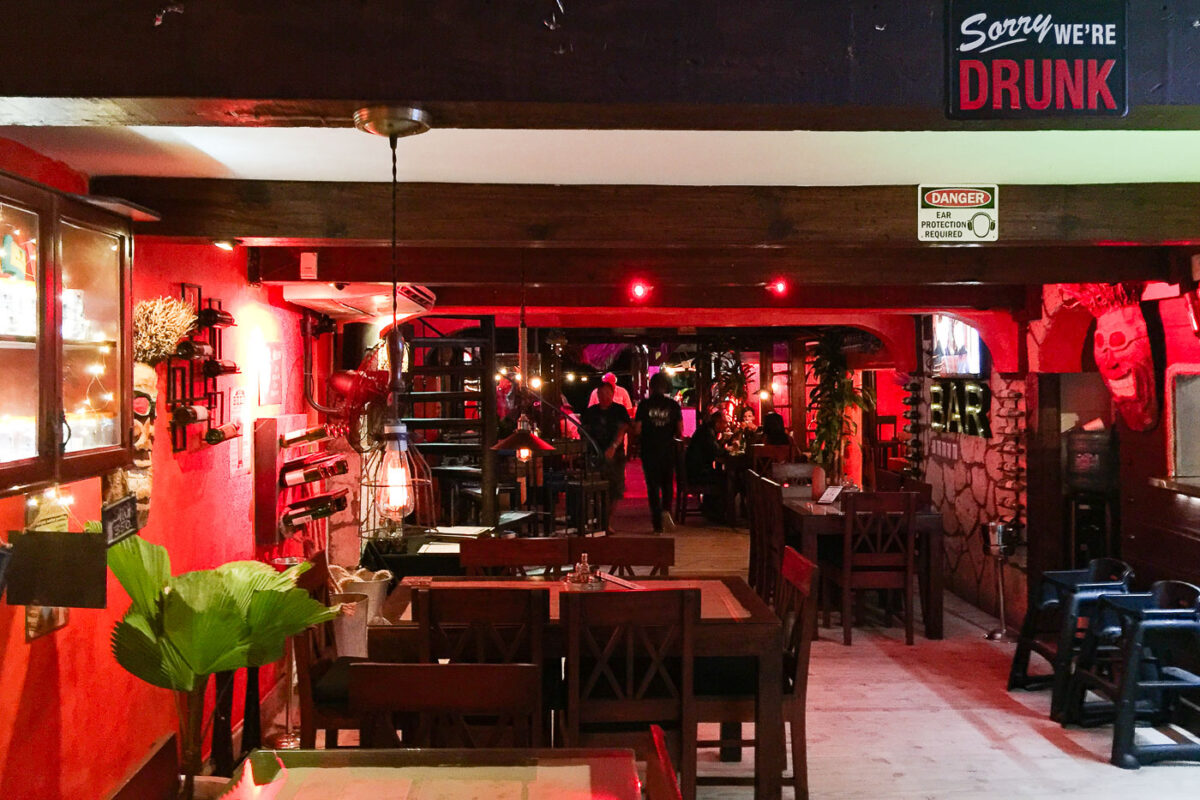
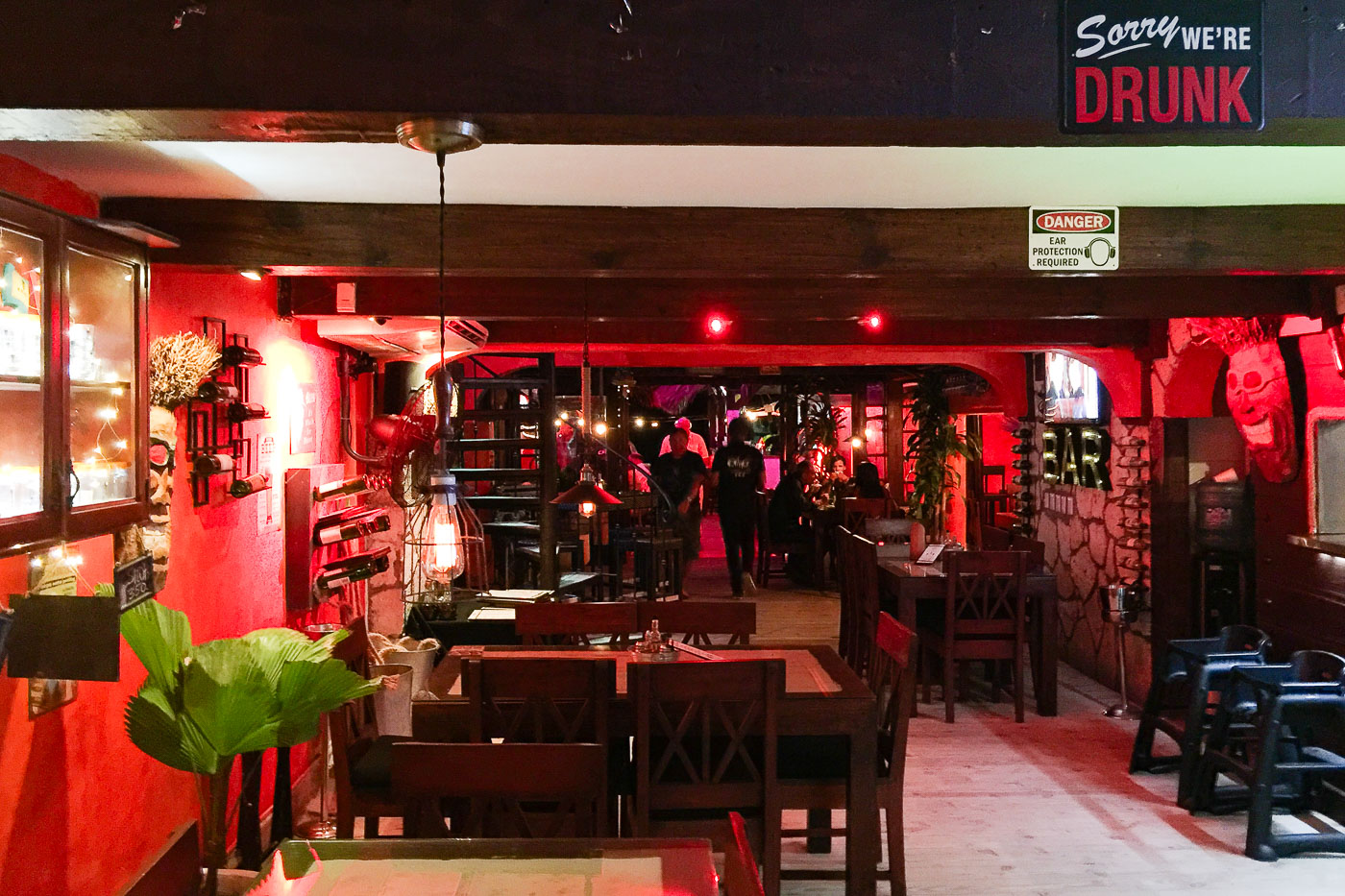
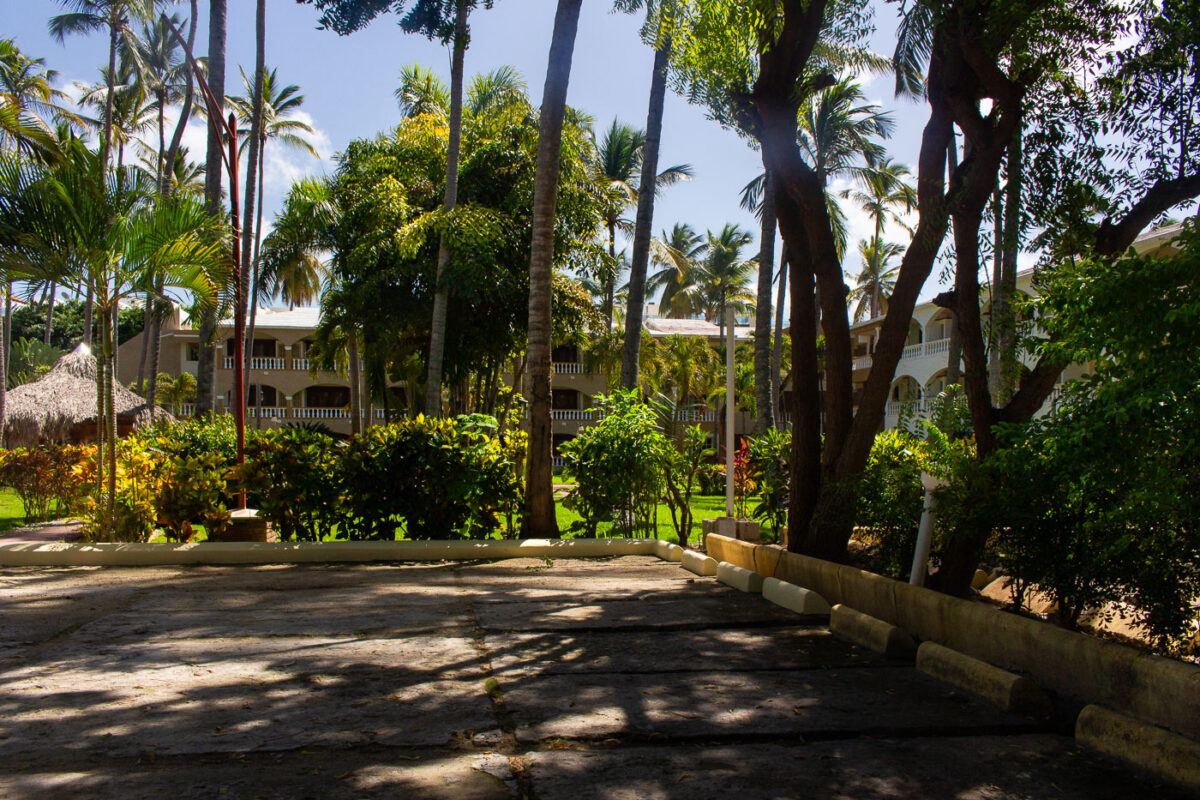
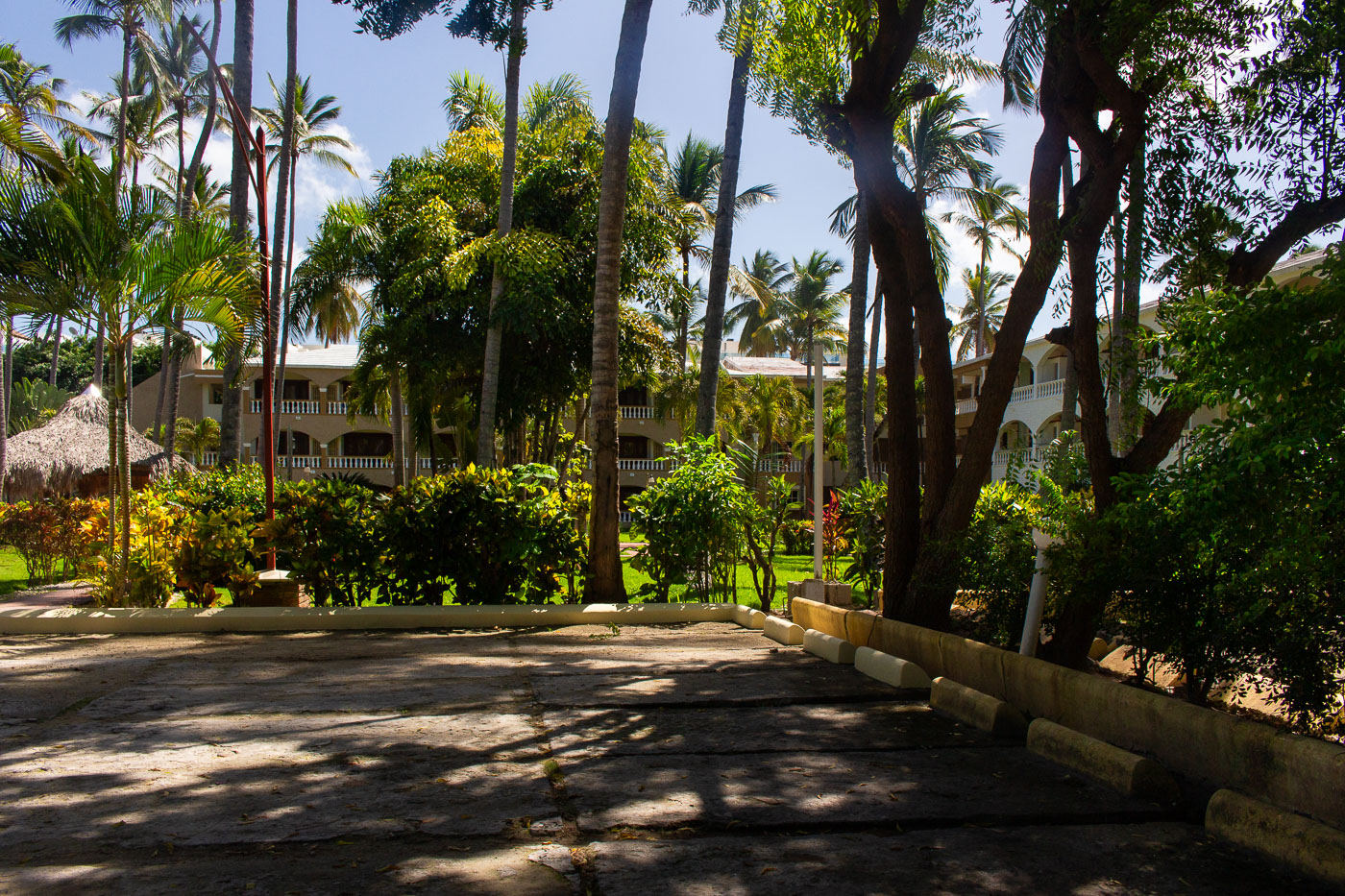
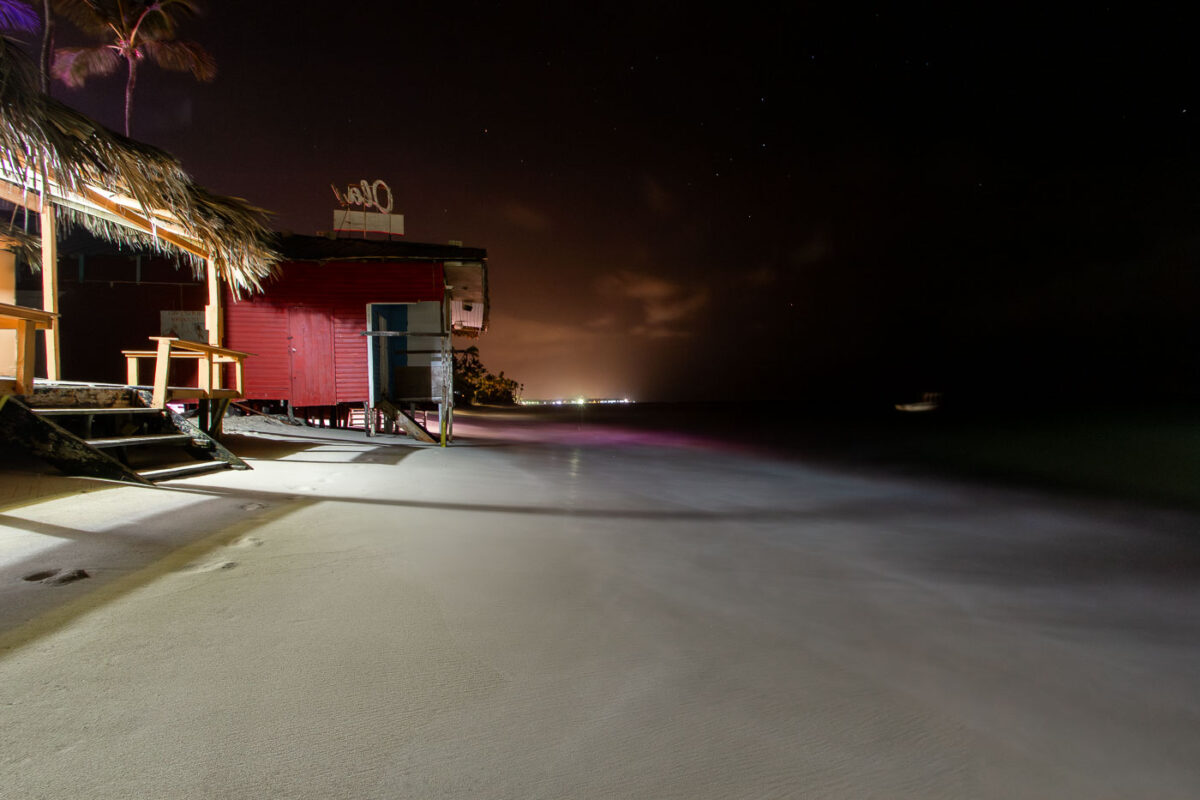
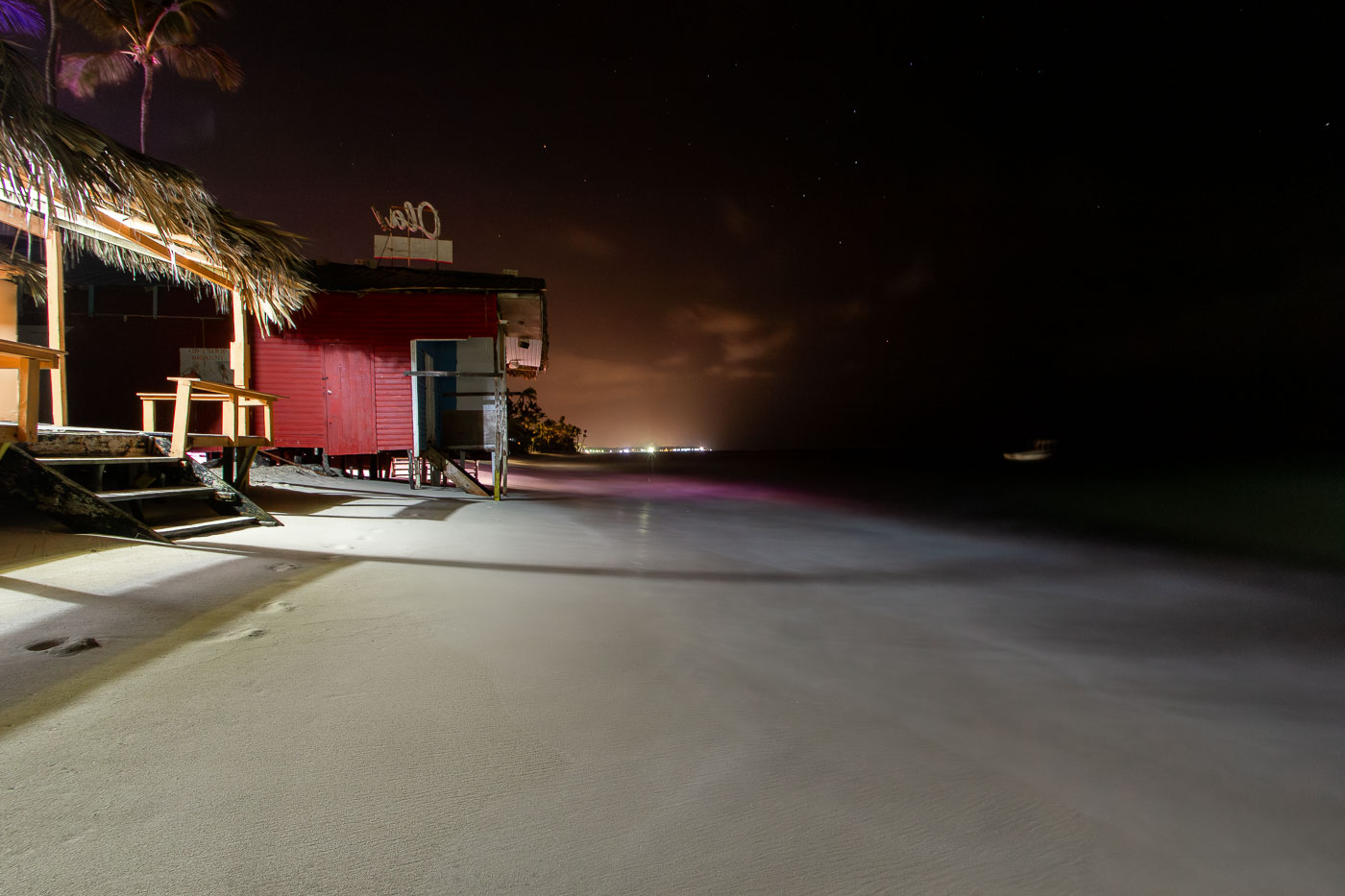
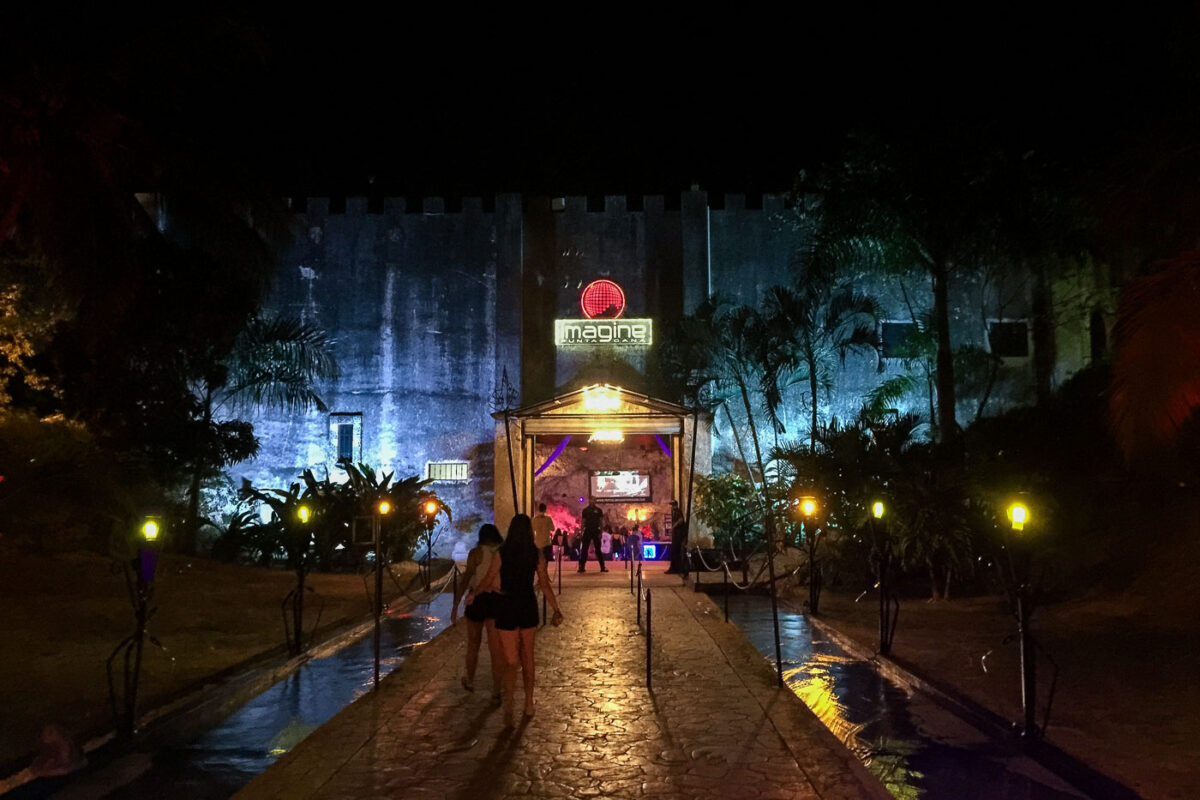
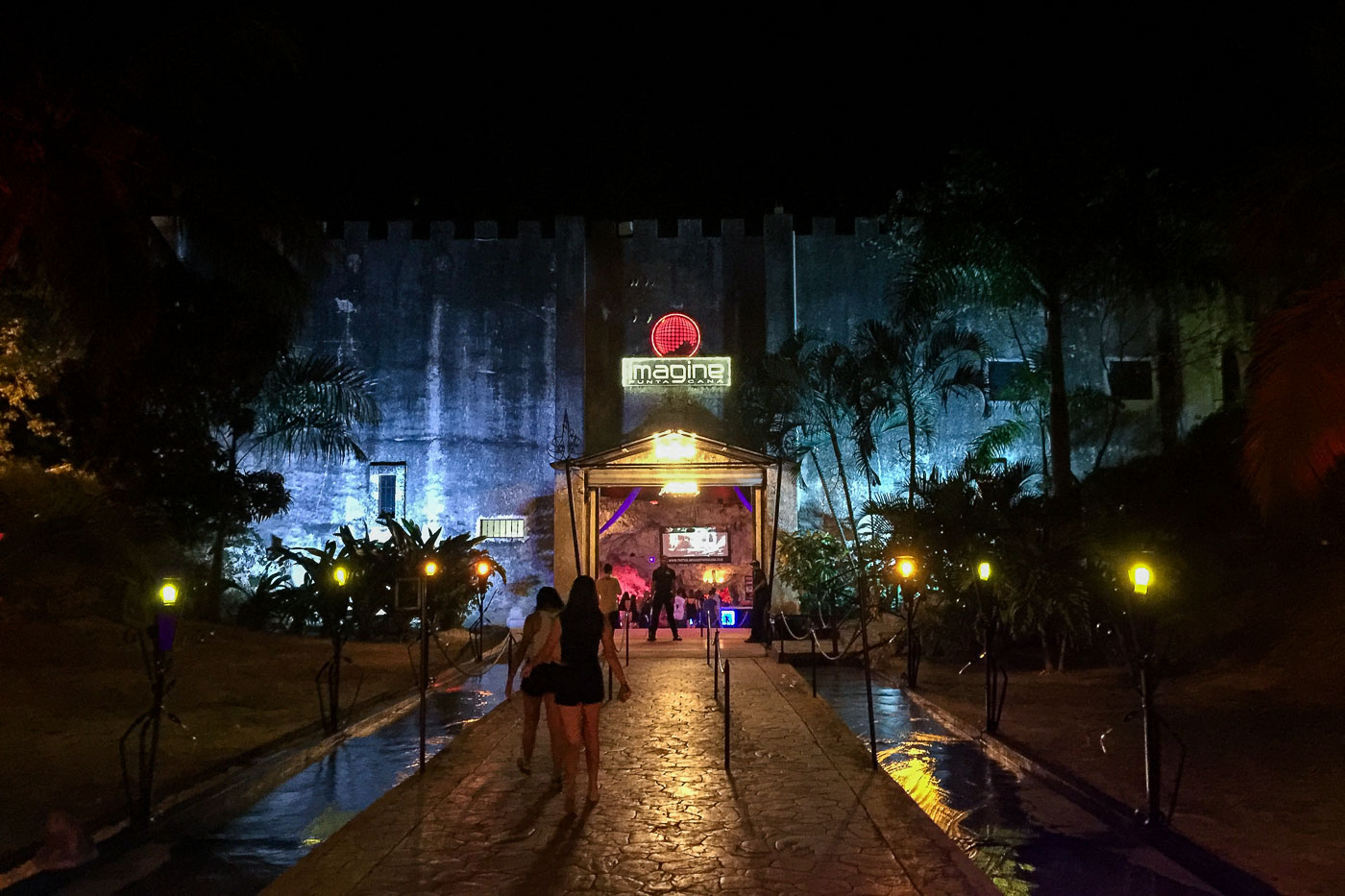
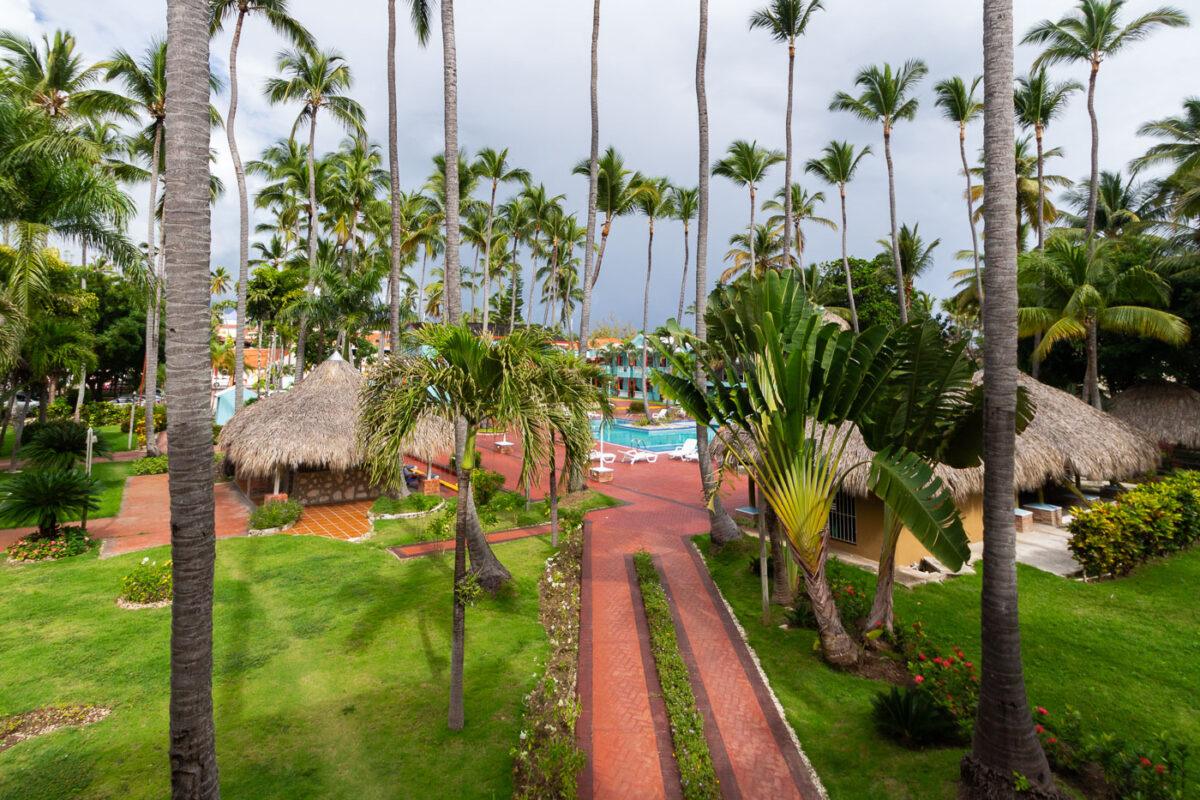
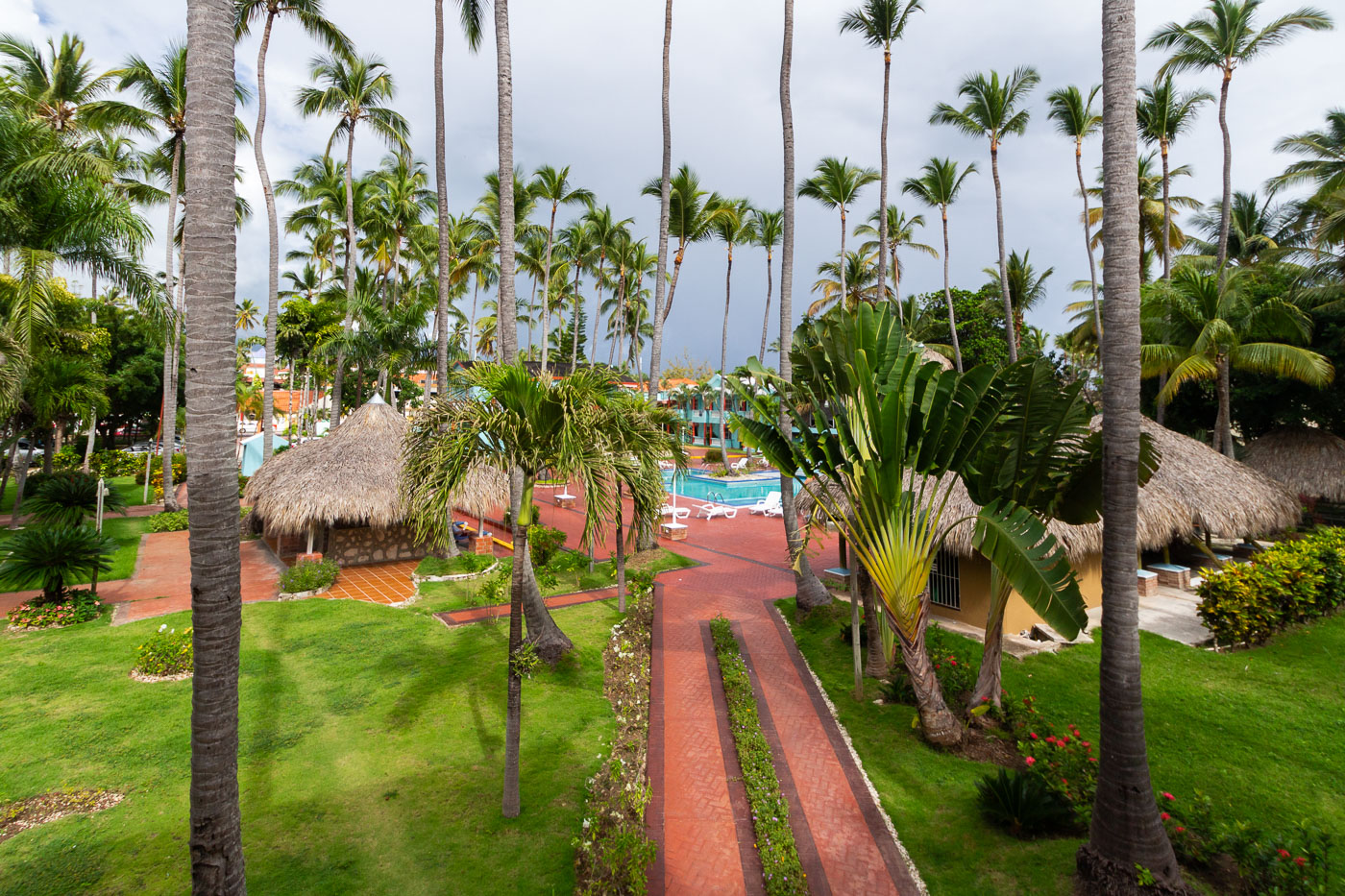
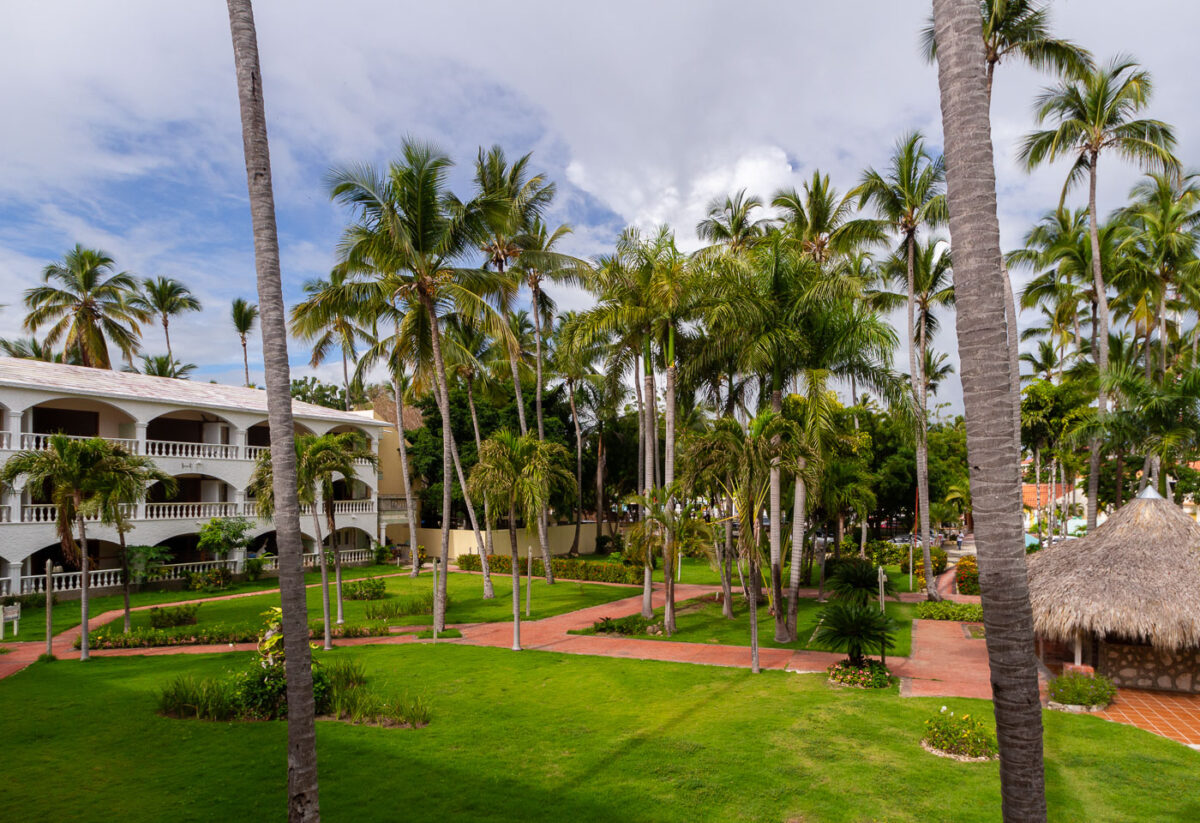
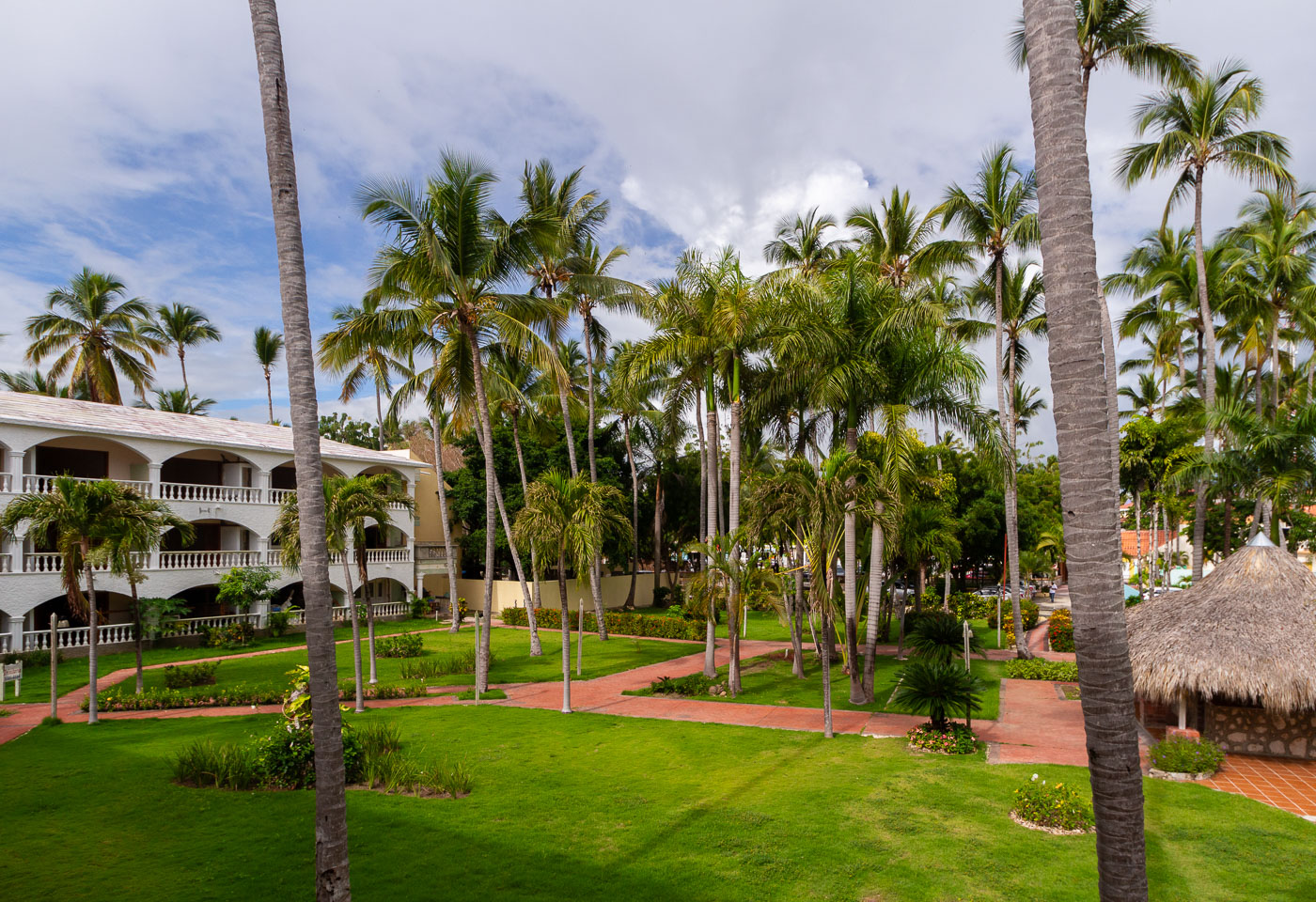
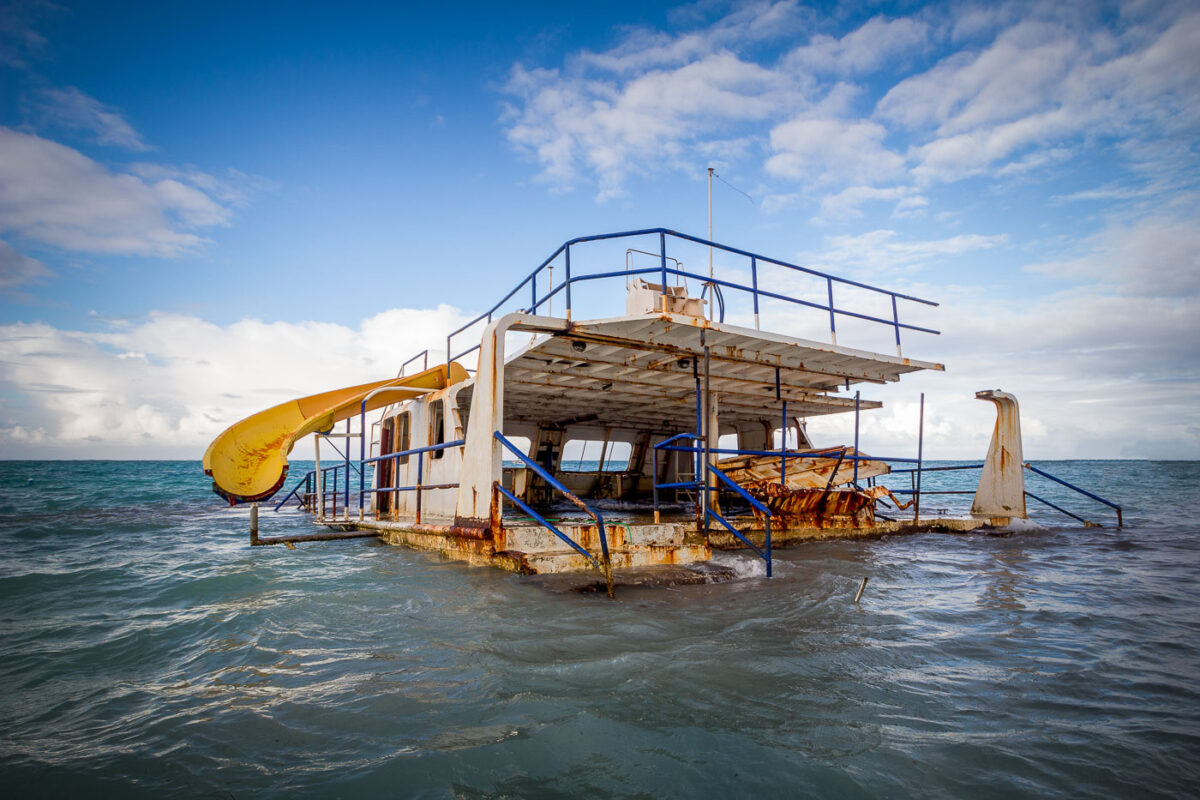
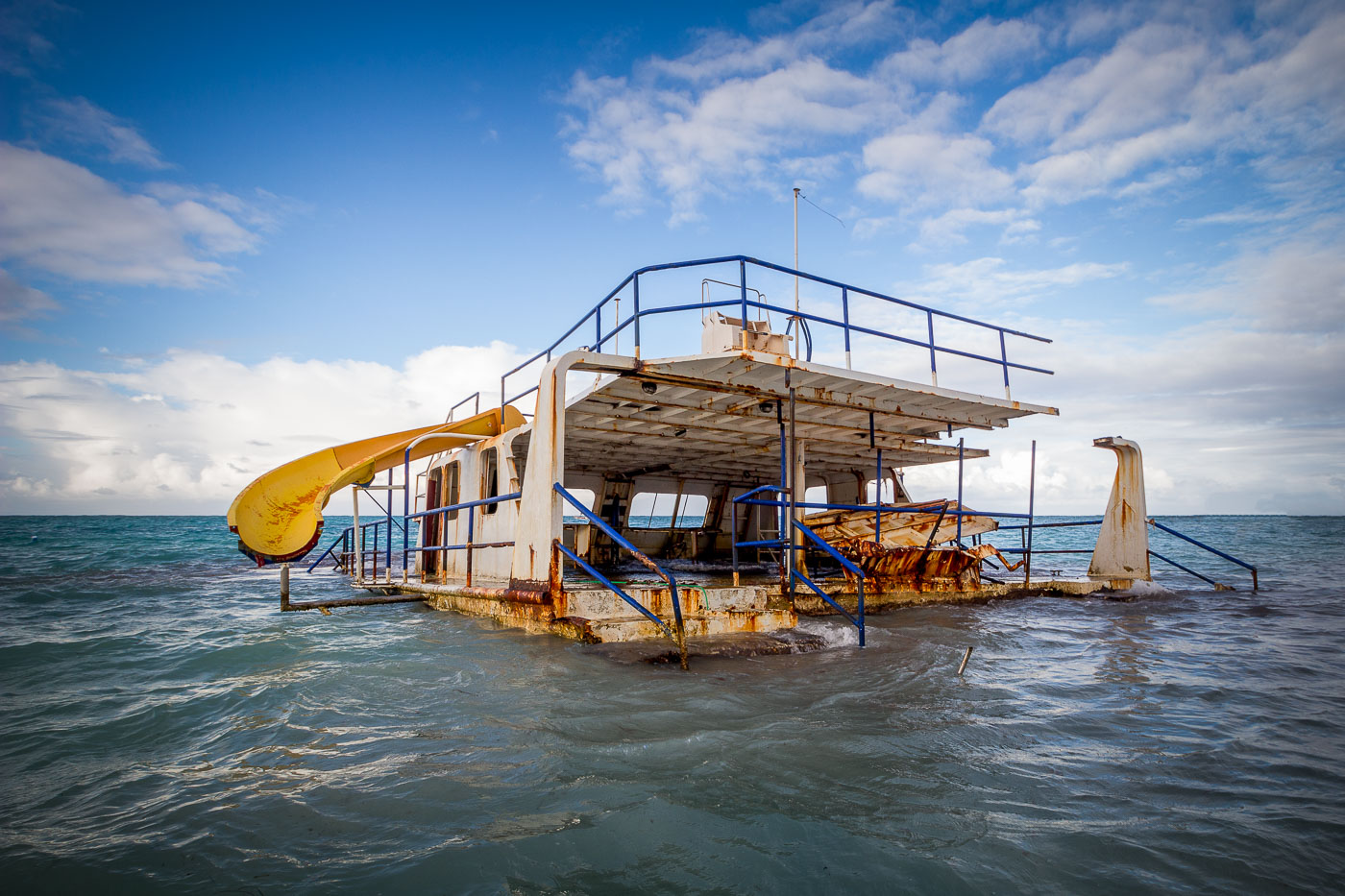
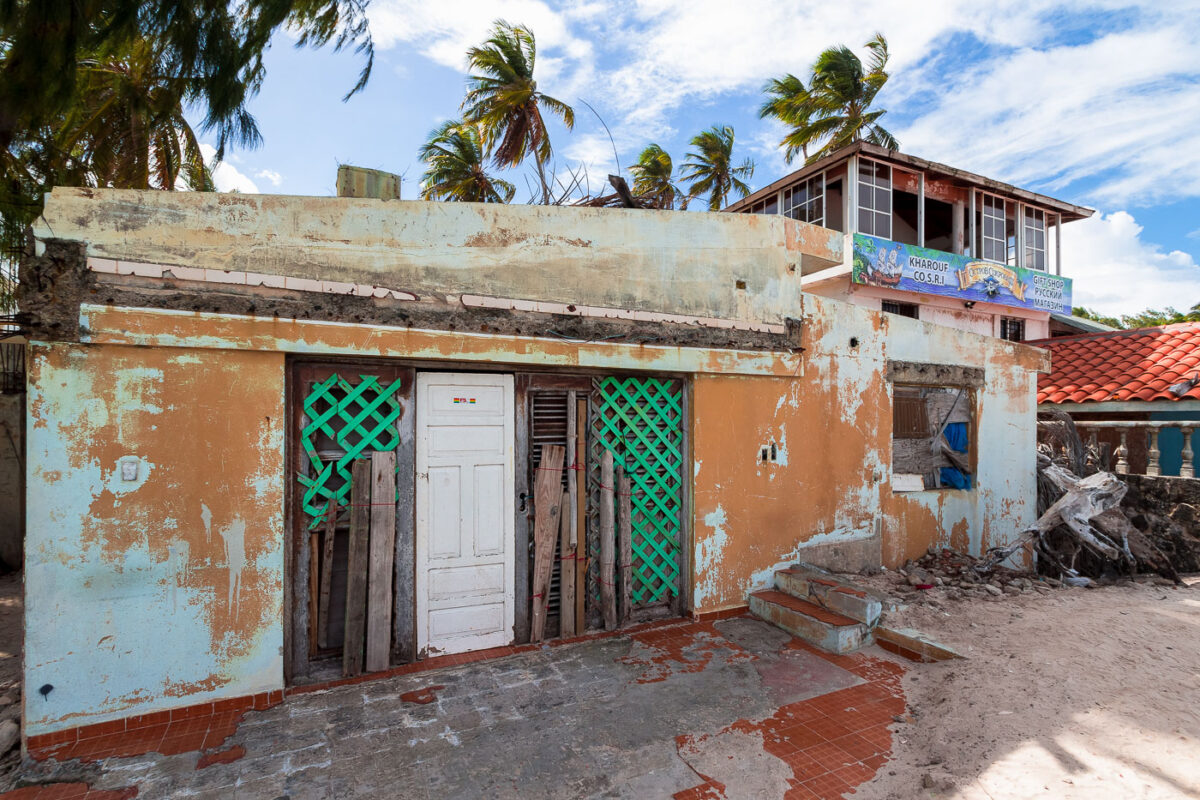
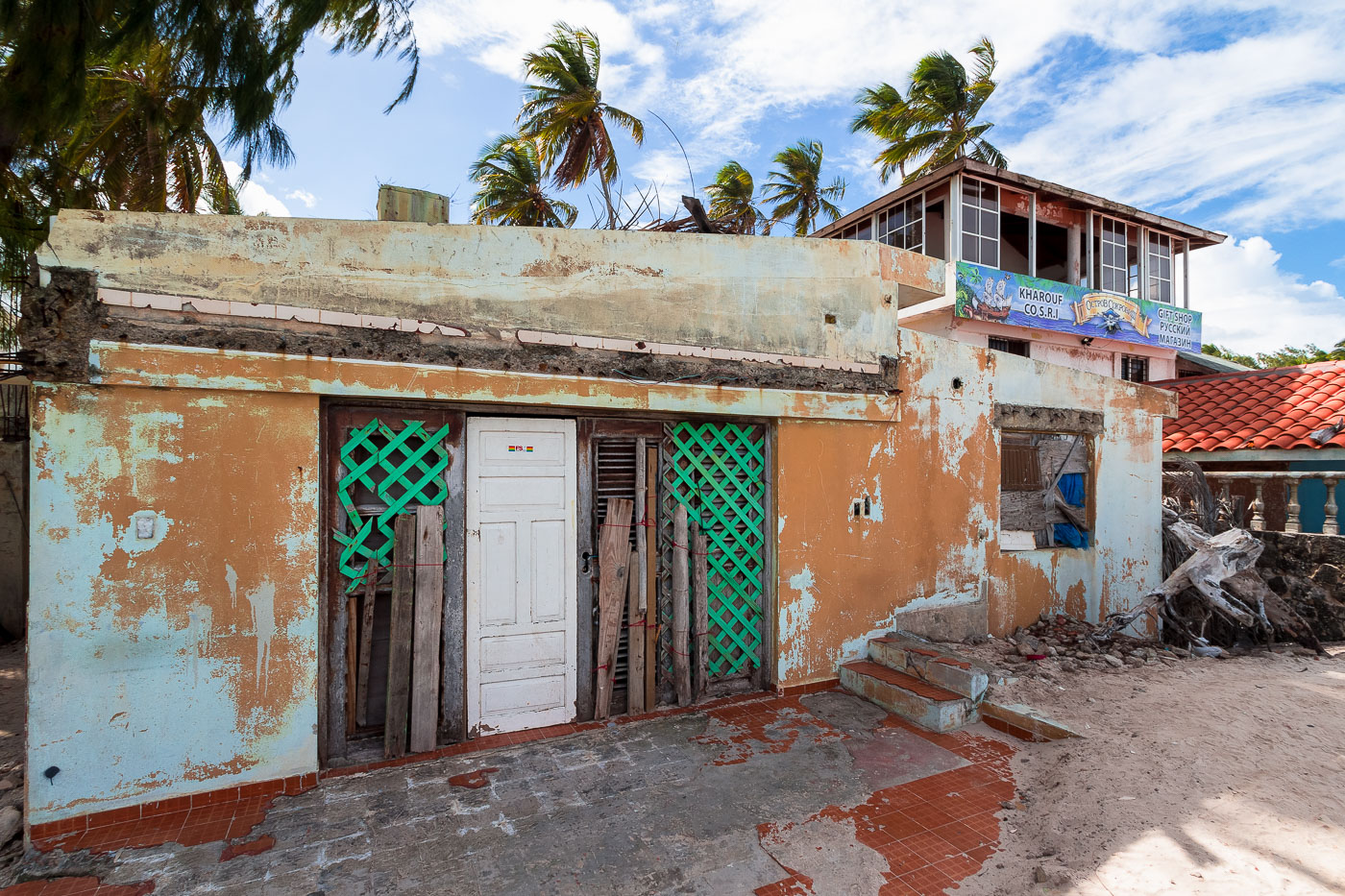
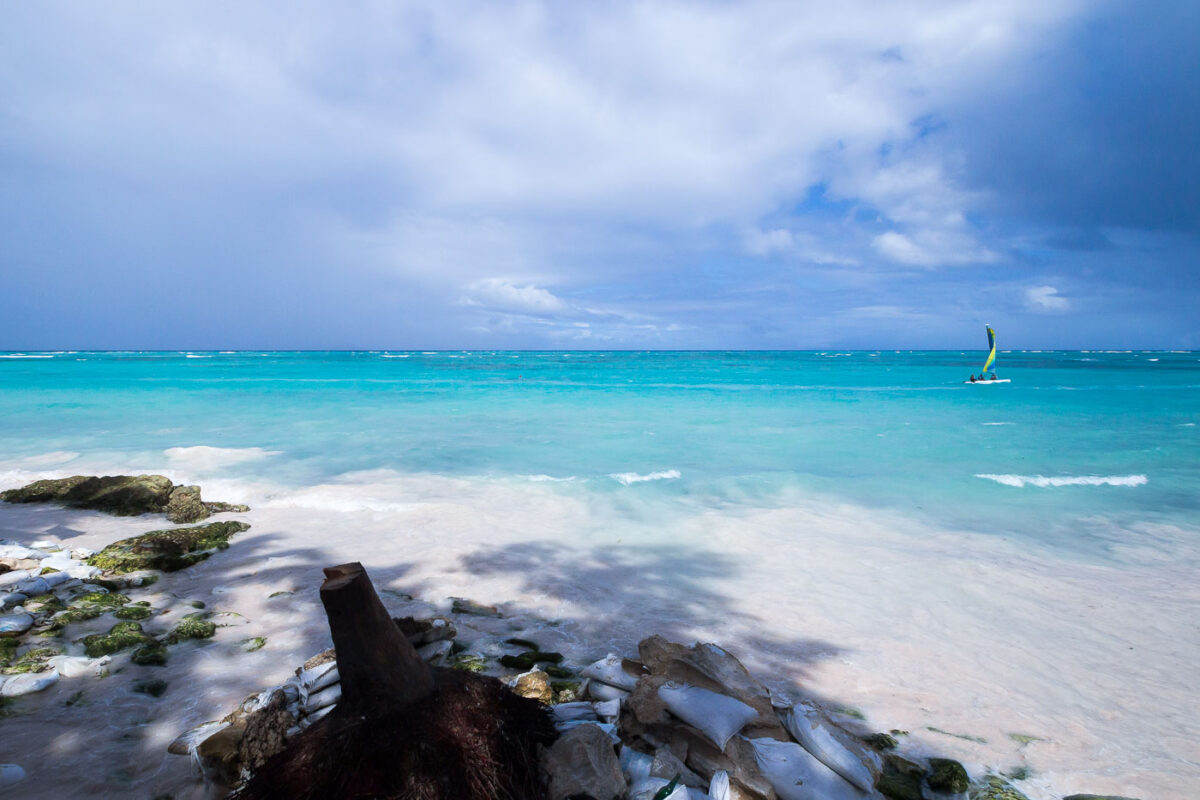
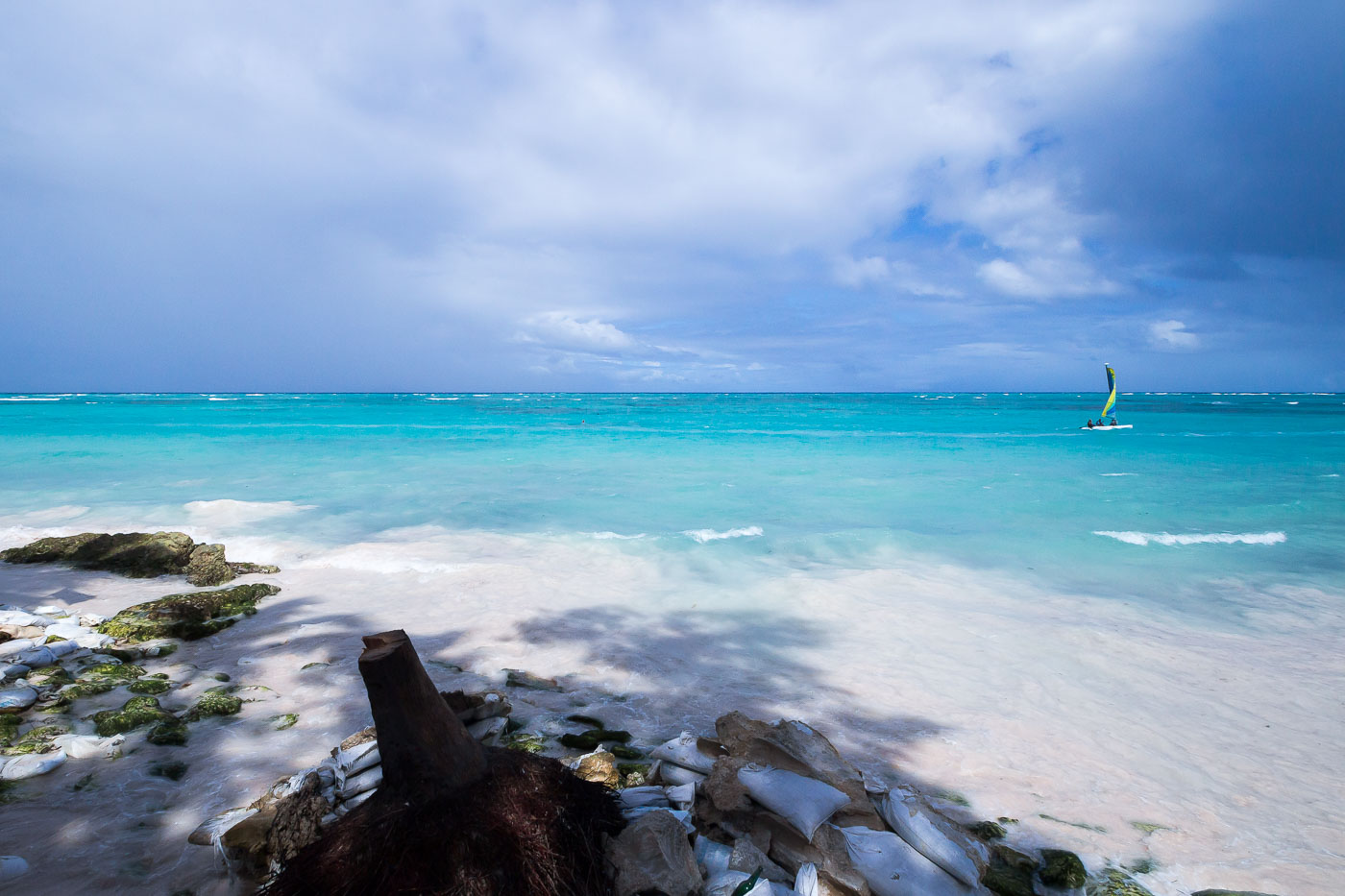
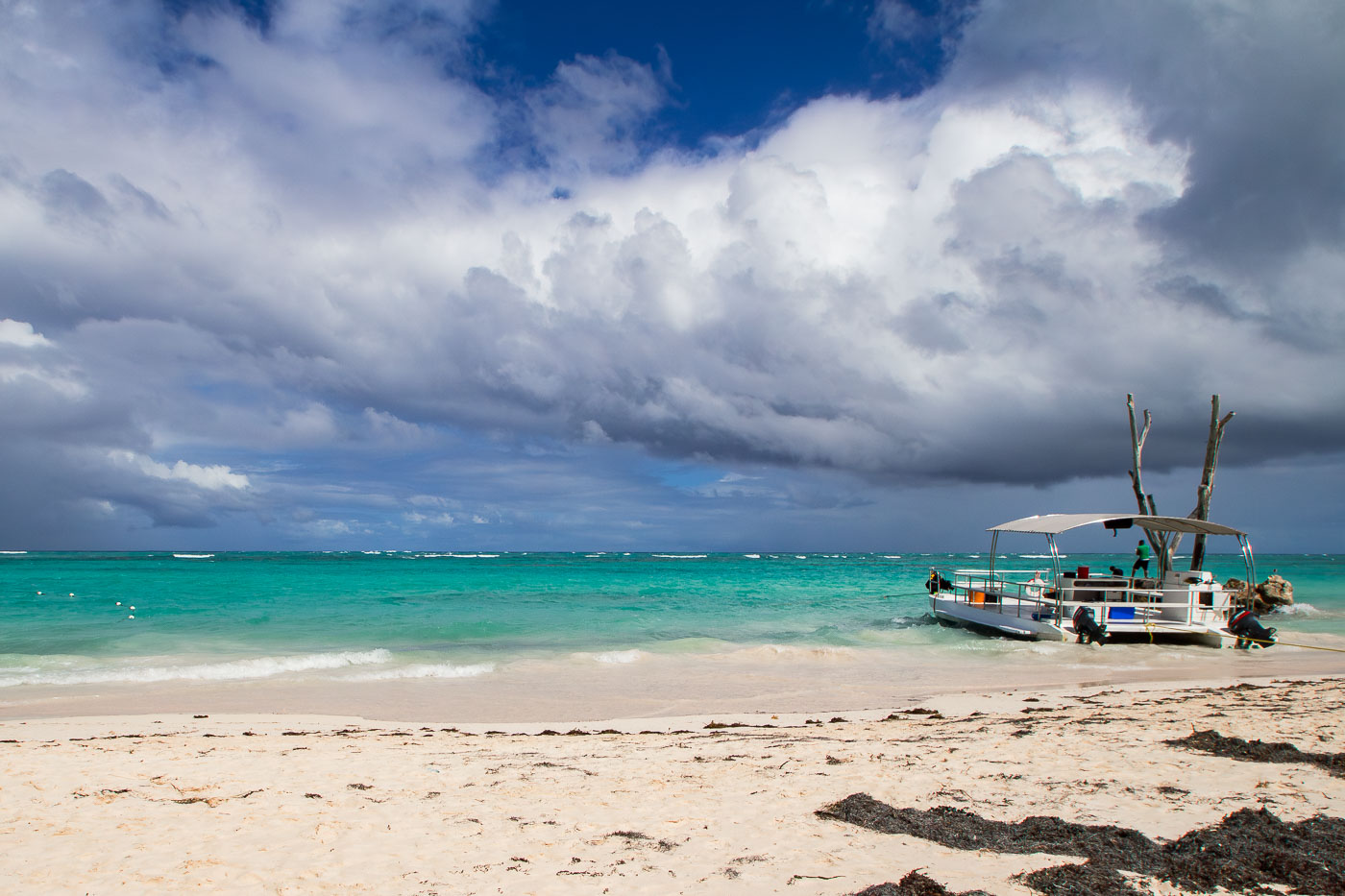
February 10, 2016 — Passengers arriving at Punta Cana International Airport (PUJ), a major gateway for tourism in the Dominican Republic, pass through the customs and immigration area. The terminal's design incorporates modern elements like glass partitions and polished stone floors, alongside tropical architectural influences such as thatched roofing, reflecting the region's aesthetic. This facility is crucial for processing the millions of international visitors who arrive annually, particularly since Punta Cana's rise as a premier tourist destination from the 1990s onward. The counters, identified by green signage, are where border officials verify travel documents and passports.February 10, 2016 — The departure hall of Punta Cana International Airport (PUJ) in the Dominican Republic showcases a design that integrates modern functionality with local aesthetics. Its architecture features high ceilings and prominent circular structures atop columns, stylized to evoke the canopies of palm trees, a nod to the surrounding tropical environment. The use of natural wood and an open layout creates a welcoming, resort-like atmosphere, characteristic of the region's tourism-focused identity. As one of the Caribbean's busiest airports, PUJ handles a significant volume of international travelers, with its design aiming to provide an efficient and pleasant experience.February 10, 2016 — A surfer rides a wave at Playa Macao, a public beach located on the northeastern coast of the Dominican Republic. This beach is known for its consistent waves, making it a popular destination for surfers and a significant site for water sports in the region. Playa Macao is situated near the resort town of Punta Cana, offering a natural contrast to the developed tourist areas.February 10, 2016 — Macao Beach, located on the northeastern coast of the Dominican Republic in La Altagracia Province, is one of the few remaining undeveloped shorelines in the Punta Cana region. Historically a landing spot for local fishermen and a training ground for surfers, it retains public accessibility unlike many surrounding resort-dominated beaches. The consistent waves make it a popular destination for surfing, offering a contrast between traditional coastal use and modern tourism development in the area.February 10, 2016 — Hotel El Cortecito in Punta Cana, Dominican Republic, showcases the Caribbean vernacular architecture prevalent in locally-owned coastal accommodations before the dominance of large all-inclusive resorts. Developed from a fishing village in the late 20th century, El Cortecito became an early tourism hub, with modest inns like this one often built and expanded by local families. The hotel's design, featuring turquoise and terracotta exteriors, white balustrades, and open garden walkways, prioritizes natural ventilation and communal outdoor spaces. This style contrasts with the master-planned complexes that later defined Punta Cana's international tourism growth.February 9, 2016 — Onno's Bar & Restaurant is a popular establishment located in El Cortecito, a district within Punta Cana in the Dominican Republic. This venue serves as a gathering place for both locals and tourists, offering food and drinks in a tropical setting. Its design incorporates elements like thatched roofs and palm trees, contributing to the ambiance of a Caribbean beach bar. The establishment functions as a social hub, providing a space for dining and entertainment within the resort area of Punta Cana.February 9, 2016 — Onno's Bar and Restaurant is a popular establishment located in El Cortecito, a district within Punta Cana in the Dominican Republic. This venue serves as a gathering place for both locals and tourists, offering a vibrant atmosphere for dining and socializing. Its presence contributes to the lively commercial and entertainment offerings of the El Cortecito area, a well-known destination on the eastern coast of the Dominican Republic.February 9, 2016 — The parking area at the Cortecito Inn in the Dominican Republic serves as a functional space for guests. This resort, located in the El Cortecito area, is part of the broader tourism infrastructure developed in the region. Such facilities are essential for supporting the influx of visitors drawn to the Dominican Republic's beaches and tropical environment. The design of the parking lot, with its paved surface and surrounding tropical vegetation, reflects the typical amenities offered by Caribbean resorts.February 9, 2016 — This image shows packaging for "Extreme Alka-Seltzer" from the Dominican Republic. Alka-Seltzer, originally developed in the United States in the 1930s, is an effervescent pain reliever and antacid. The "Extreme" branding suggests a variation of the product, possibly with enhanced potency or a different formulation, marketed to consumers in the Dominican Republic. Such packaging highlights the global reach of pharmaceutical brands and their adaptation to local markets.February 7, 2016 — A beach bar with a palm-thatch roof and simple seating stands on Bavaro Beach in the Dominican Republic. This structure, typical of the region's informal beachfront establishments, is situated close to the water's edge. The long exposure at night renders the Caribbean Sea smooth and misty, with gentle waves lapping the shore. In the distance, the lights of Punta Cana's resort-lined coast are visible. Such structures are increasingly vulnerable to coastal erosion and rising sea levels, highlighting the environmental challenges faced by beachfront development.February 7, 2016 — Imagine Nightclub, located in Punta Cana, Dominican Republic, is a unique entertainment venue built within a natural limestone cave system. The club's design leverages the cave's geological features, incorporating artificial lighting and tropical vegetation to create an atmospheric underground experience. Guests enter via a stone walkway, enhancing the sense of descending into a subterranean retreat. This establishment transformed the natural caverns into themed dance halls, utilizing the cave's acoustics and humidity for diverse musical performances and events.February 6, 2016 — The El Cortecito Inn, located in Bavaro, Punta Cana, Dominican Republic, is a resort complex designed to cater to tourists. The architecture features thatched-roof structures and open-air courtyards, common in tropical resort design, surrounded by lush palm trees and manicured lawns. This area serves as a central gathering space, likely offering amenities such as swimming pools and lounge areas, typical of Caribbean vacation destinations. The resort's design aims to provide a relaxing atmosphere, capitalizing on the region's natural beauty and climate for its appeal to international visitors.February 6, 2016 — The Hotel Cortecito Inn is situated in Bavaro, a popular tourist region within Punta Cana in the Dominican Republic. This resort complex, surrounded by lush tropical vegetation and palm trees, exemplifies the Caribbean's appeal as a vacation destination. Its architecture features white stucco buildings with arched balconies and walkways, designed to complement the warm climate and coastal environment. The hotel serves as a lodging and leisure facility, contributing to the local economy through tourism.February 5, 2016 — This abandoned ferry boat, once likely a mode of transport or perhaps a floating attraction, now rests partially submerged off the coast of Punta Cana in the Dominican Republic. Its rusted hull and decaying structure speak to a forgotten purpose and the relentless passage of time. The presence of a yellow water slide suggests it may have served as a unique excursion vessel or a stationary entertainment platform before its abandonment. The vessel's current state serves as a stark reminder of the transient nature of human endeavors against the backdrop of the Caribbean Sea.February 5, 2016 — This abandoned structure in Punta Cana, Dominican Republic, once served as a gift shop catering to Russian tourists, as indicated by the "GIFT SHOP РУССКИЙ МАГАЗИН" (Gift Shop Russian Store) signage visible on its facade. The building's dilapidated state suggests a cessation of operations, possibly due to economic factors or changing tourism trends in the region. The presence of palm trees and its location near a sandy area point to its establishment in a resort or coastal area, common in Punta Cana's development as a tourist destination.February 5, 2016 — A sailboat navigates the turquoise waters off the coast of Punta Cana, Dominican Republic. The beach in the foreground shows evidence of erosion control measures, with sandbags and rocks placed to mitigate the impact of the sea. Punta Cana is a globally recognized tourist destination, known for its pristine beaches and vibrant marine life, attracting visitors for water sports and relaxation. The presence of the sailboat suggests ongoing maritime activity, a common sight in this popular Caribbean locale.February 5, 2016 — A tour boat is moored on the sandy shore of Punta Cana, Dominican Republic, under a sky filled with approaching storm clouds. This region of the Dominican Republic's eastern coast is known for its shallow, turquoise waters, protected by coral reefs, which make it a popular departure point for beach excursions and snorkeling tours. The photograph documents the transitional weather patterns characteristic of the Caribbean's tropical maritime climate, where clear waters can quickly give way to rainfronts. The presence of the boat signifies the area's ongoing role in tourism and its reliance on favorable weather conditions for its operations.
Built in Minneapolis
Photographs made over time, focused on place, public life, and ongoing reporting.
Browse by location, move through long-running series, or start with recent work.