Place Archive

Paris

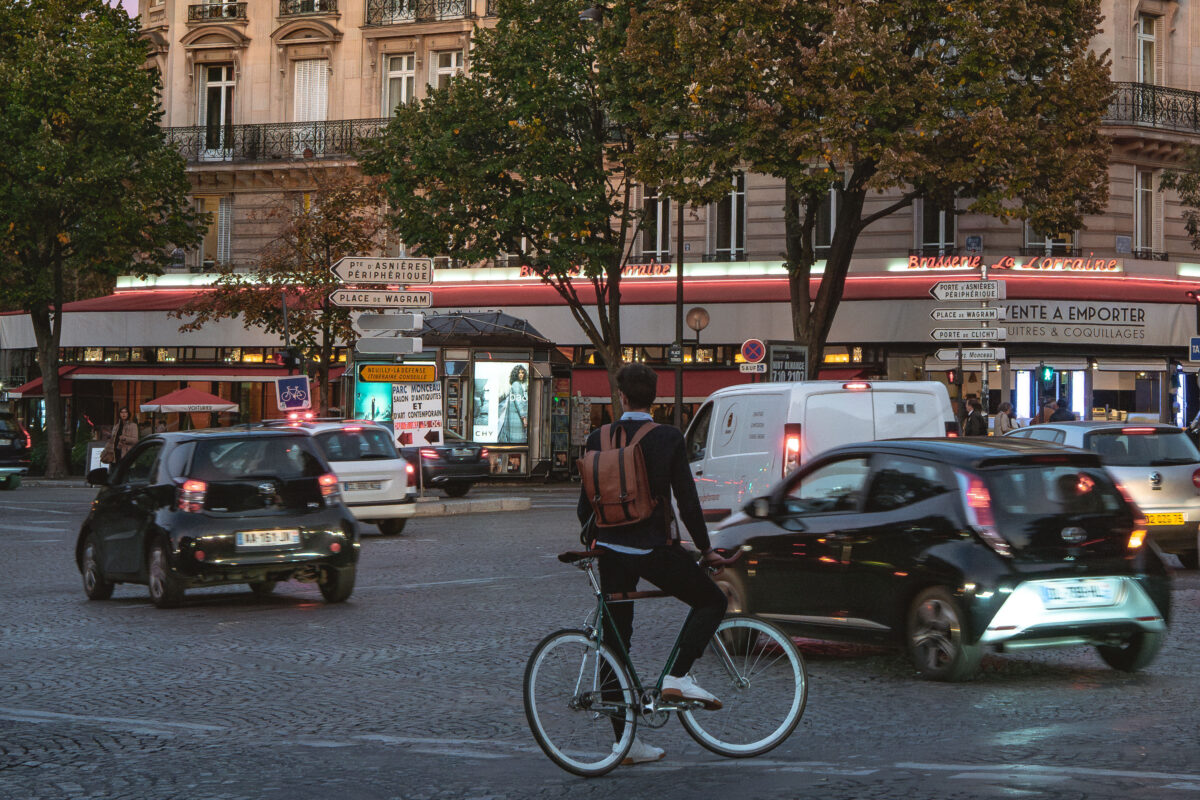
Place des Ternes is a busy roundabout on the border of Paris’s 8th and 17th arrondissements, marked by Haussmannian architecture including the facade of Brasserie La Lorraine. The intersection functions as a key transit node with signage directing to Porte d’Asnières, the Périphérique, Place de Wagram, and Porte de Clichy, amid heavy evening traffic and dense pedestrian activity.

19 photos

Photos from Paris
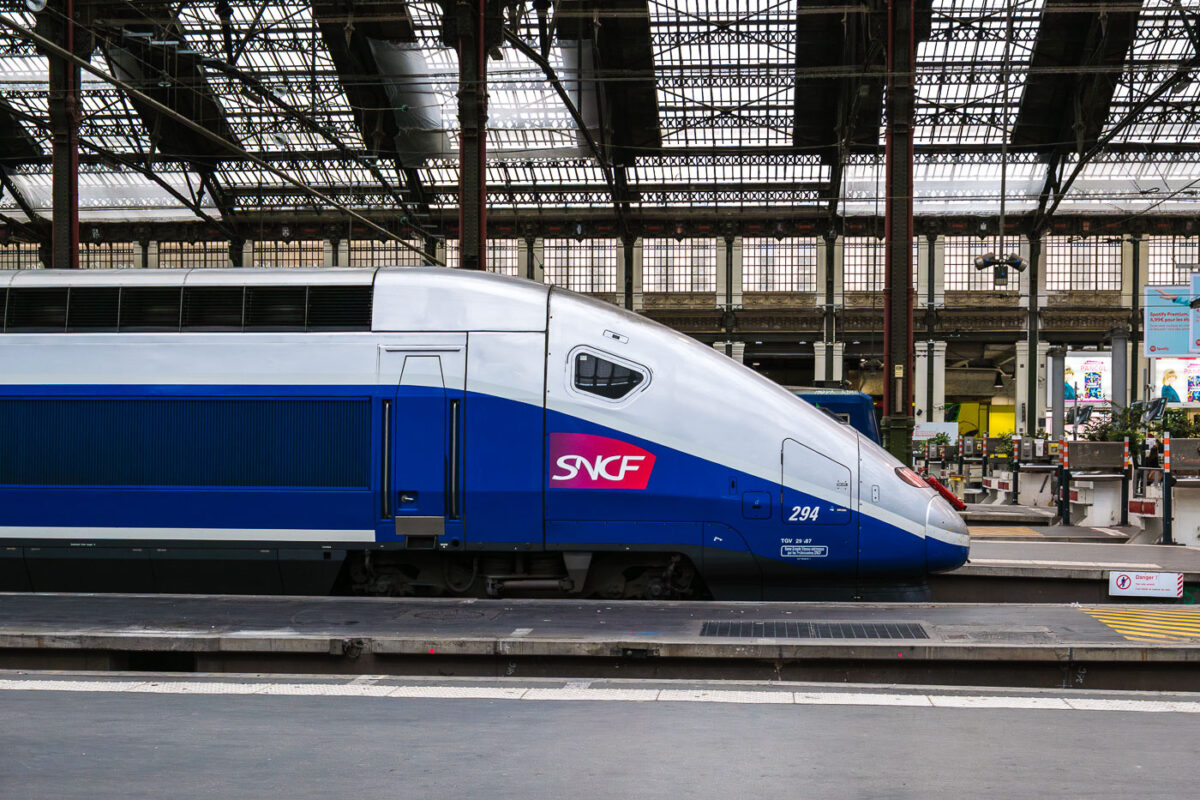
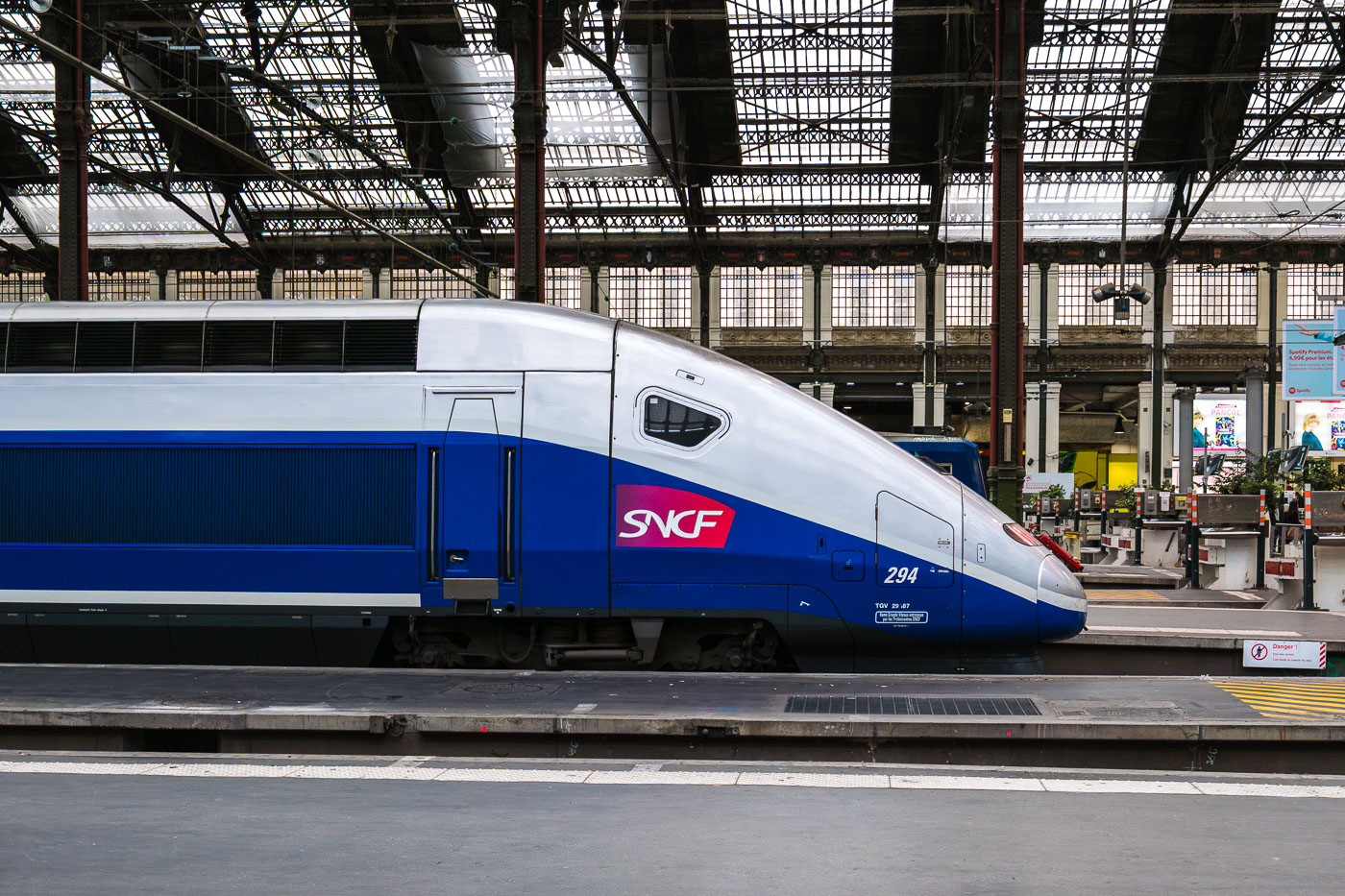
SNCF Train in Paris France
A TGV 294 high-speed train, operated by SNCF, is seen at Gare de Lyon in Paris. This historic station, one of the capital's primary gateways, was inaugurated in 1900 for the Exposition Universelle and is renowned for its distinctive iron-and-glass train shed. Gare de Lyon serves as a crucial hub for high-speed rail services connecting Paris to southeastern France, including destinations like Lyon and Marseille, as well as international routes to Switzerland. The station's architecture, characterized by its grand scale and intricate metalwork, reflects the engineering prowess of the Belle Époque era.
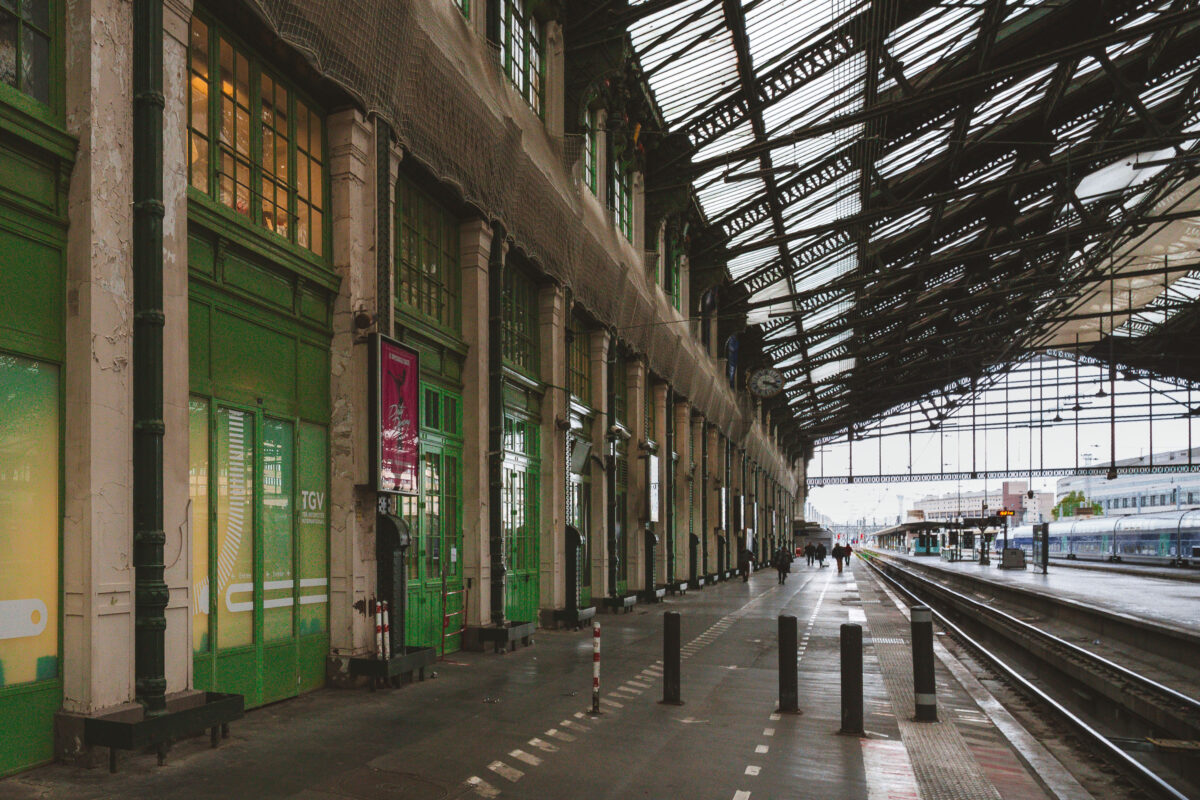
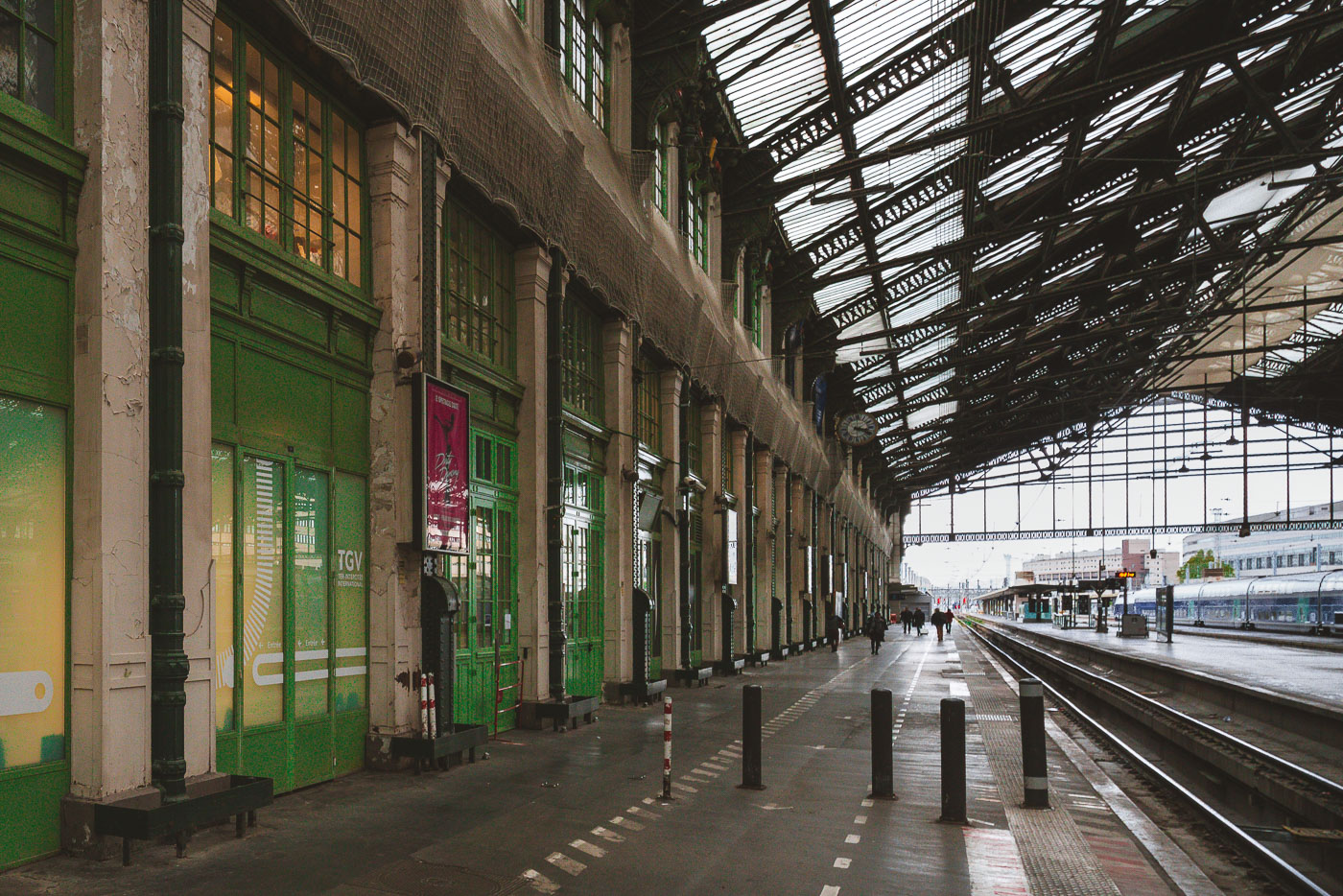
Gare de Lyon Train Station in Paris France
Platforms at Paris Gare de Lyon, a major railway station in the 12th arrondissement, are covered by an expansive iron-and-glass train shed. This station, one of France's busiest, serves as a crucial hub for high-speed TGV services connecting Paris to southeastern cities, as well as conventional routes. Opened in 1855, its original structures were expanded and modernized over time, notably with the addition of the large glass canopy that defines its current appearance. The station continues to be a vital transportation nexus for both domestic and international travelers.
Paris Gare de Lyon train station 2017
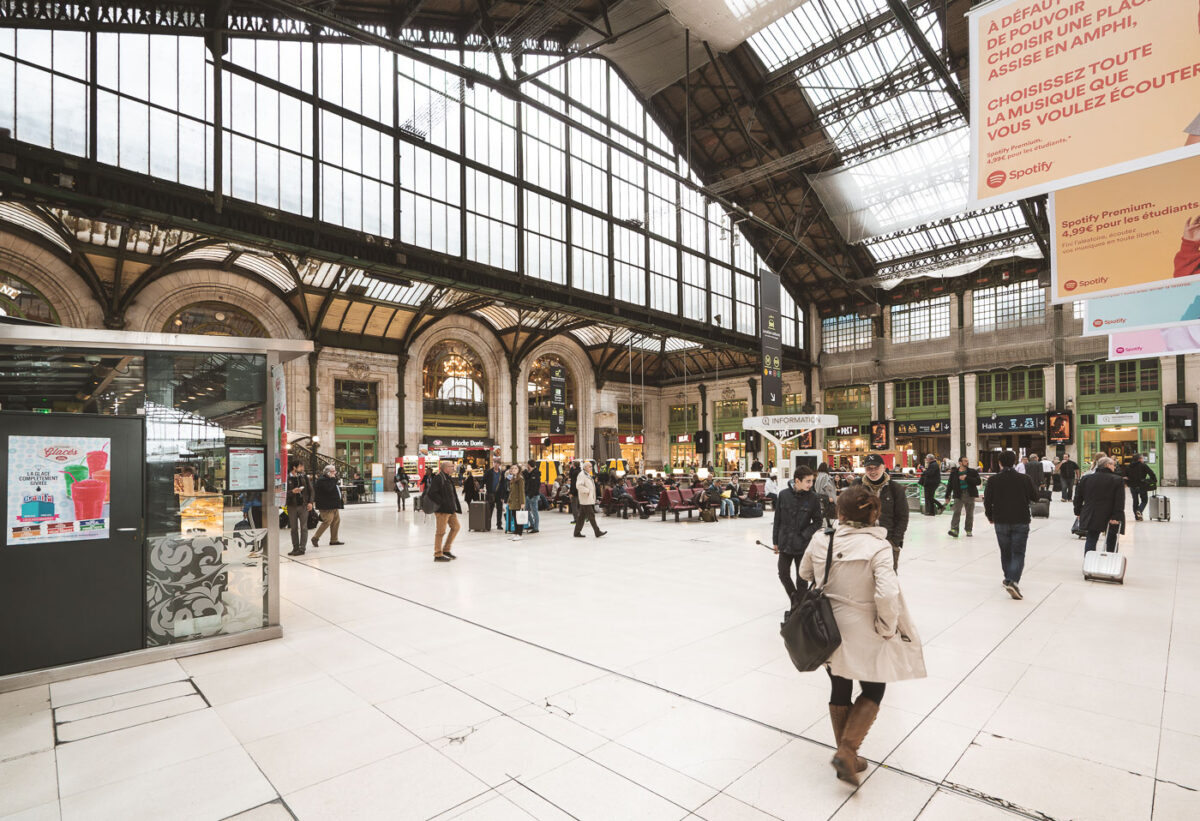
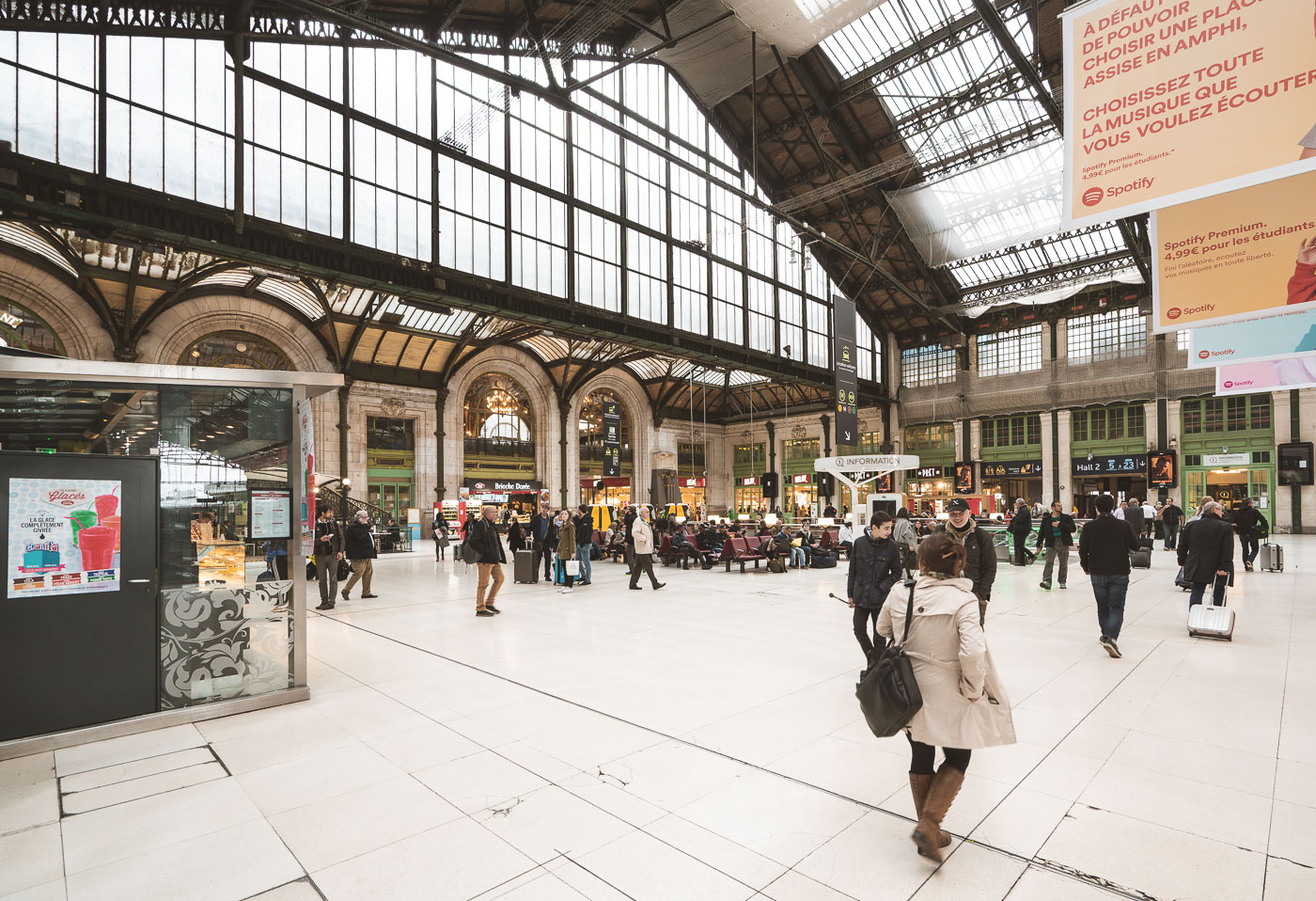
The Beaux-Arts concourse of Paris Gare de Lyon, inaugurated for the 1900 Exposition Universelle, showcases its original iron-and-glass train shed architecture. This major Parisian rail hub serves TGV and regional lines to southeastern France, as well as Métro and RER connections for city transit. Passengers navigate the busy interior, passing shops and seating areas beneath the grand arches and clerestory windows that define the station's historic design.
Inside the Gare de Lyon train station
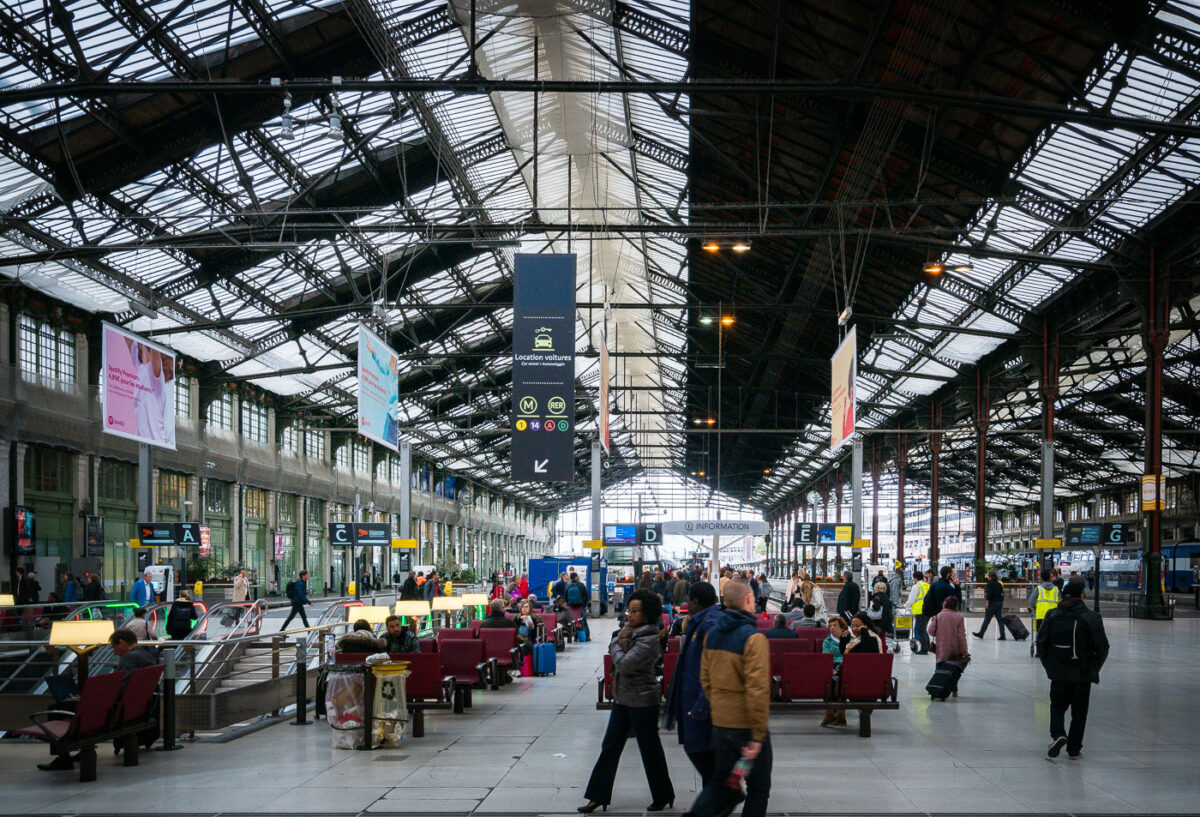
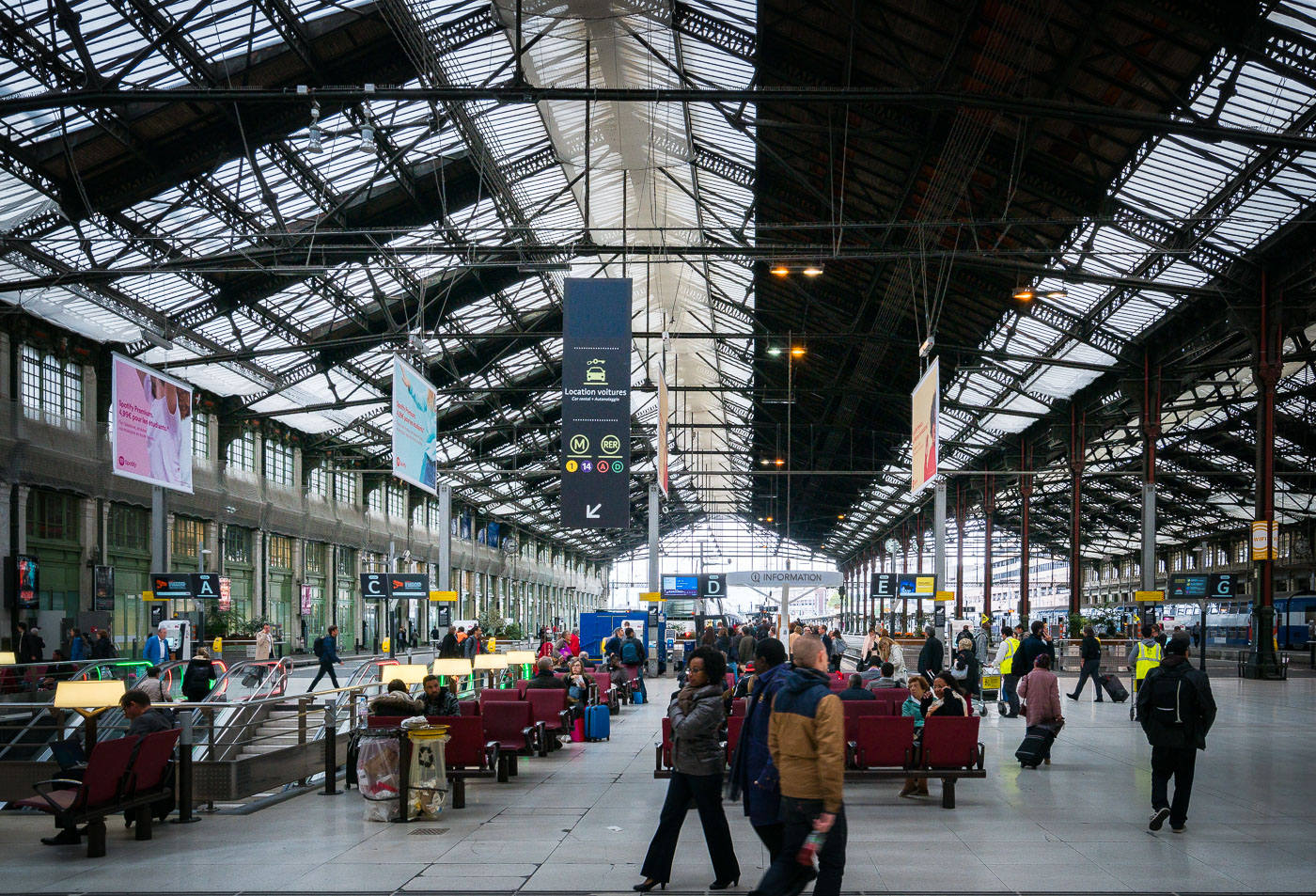
The main concourse of Gare de Lyon in Paris, France, showcases its historic iron-and-glass architecture, a design characteristic of late 19th and early 20th-century train stations. Opened in 1900 for the Exposition Universelle, this major rail hub serves as a gateway for high-speed TGV and regional services connecting Paris to southeastern France and international destinations. Today, travelers navigate the expansive hall, indicated by signage for platforms C through G, information services, and connections to the Paris Métro and RER lines.
Gare de Lyon train station
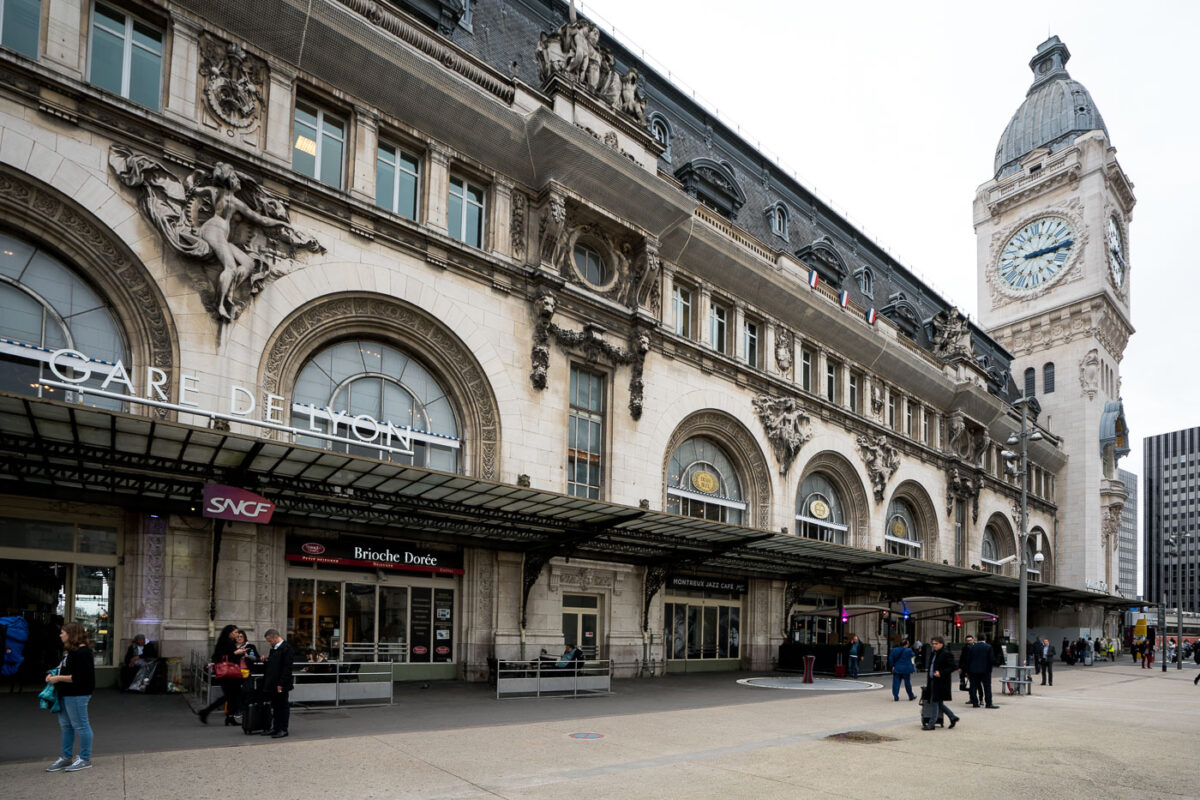
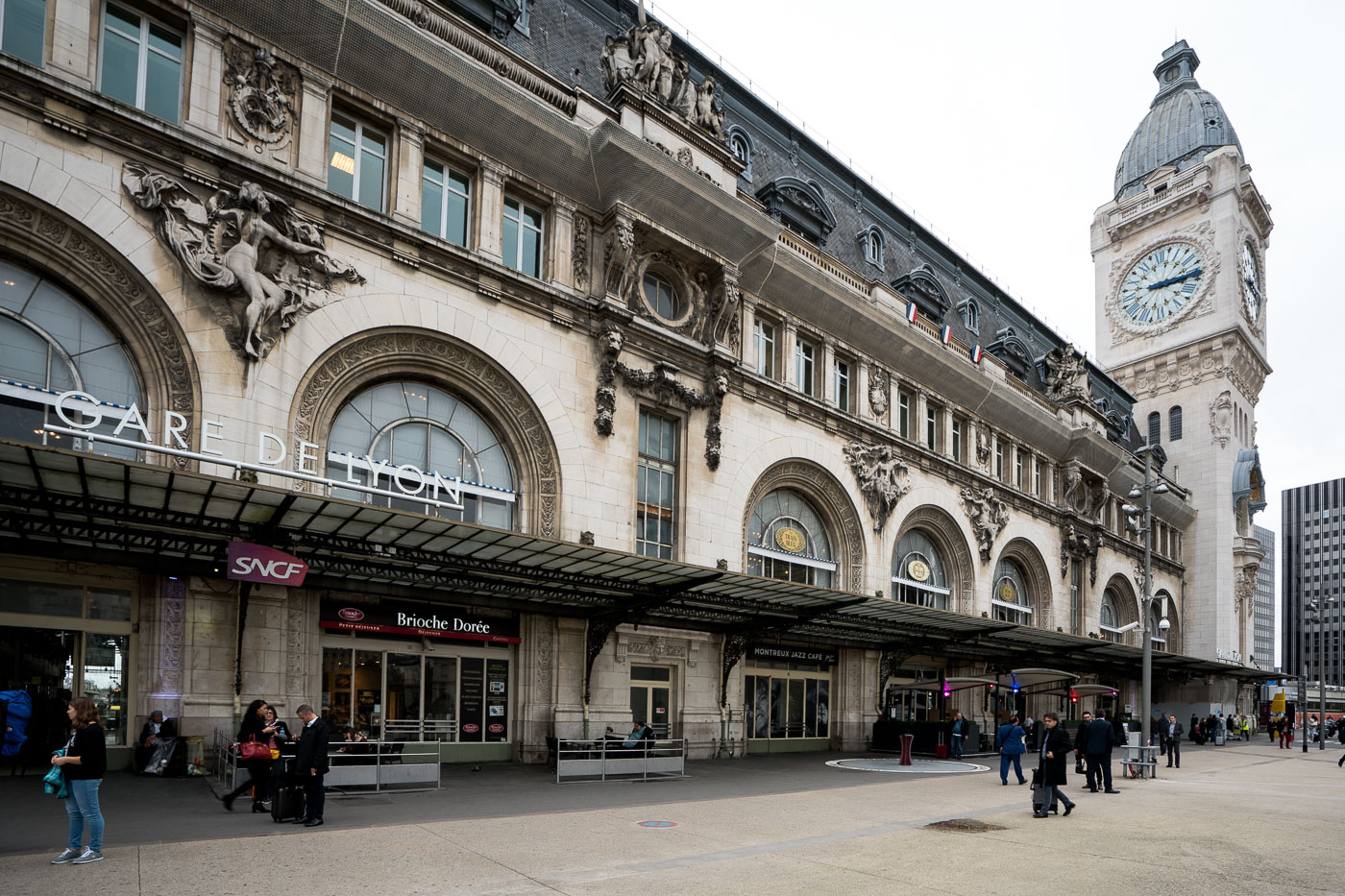
Gare de Lyon, a major railway station in Paris, France, was inaugurated in 1900 for the Exposition Universelle. Its Belle Époque architecture, characterized by ornate stonework and a prominent clock tower, reflects the grandeur of the era. The station serves as a vital transportation hub, connecting Paris with southeastern France and international destinations. Today, Gare de Lyon continues to be a bustling center of activity, facilitating travel for millions of passengers annually.
Size Factory store in Paris France
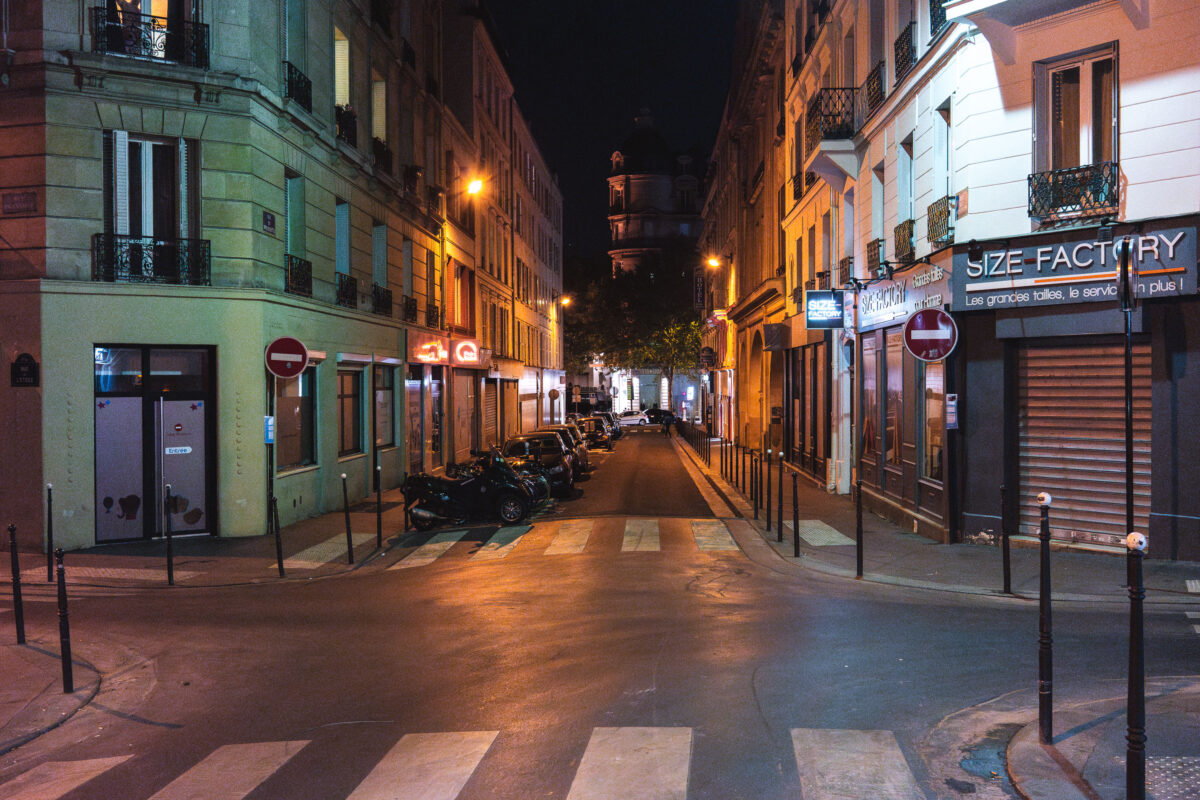
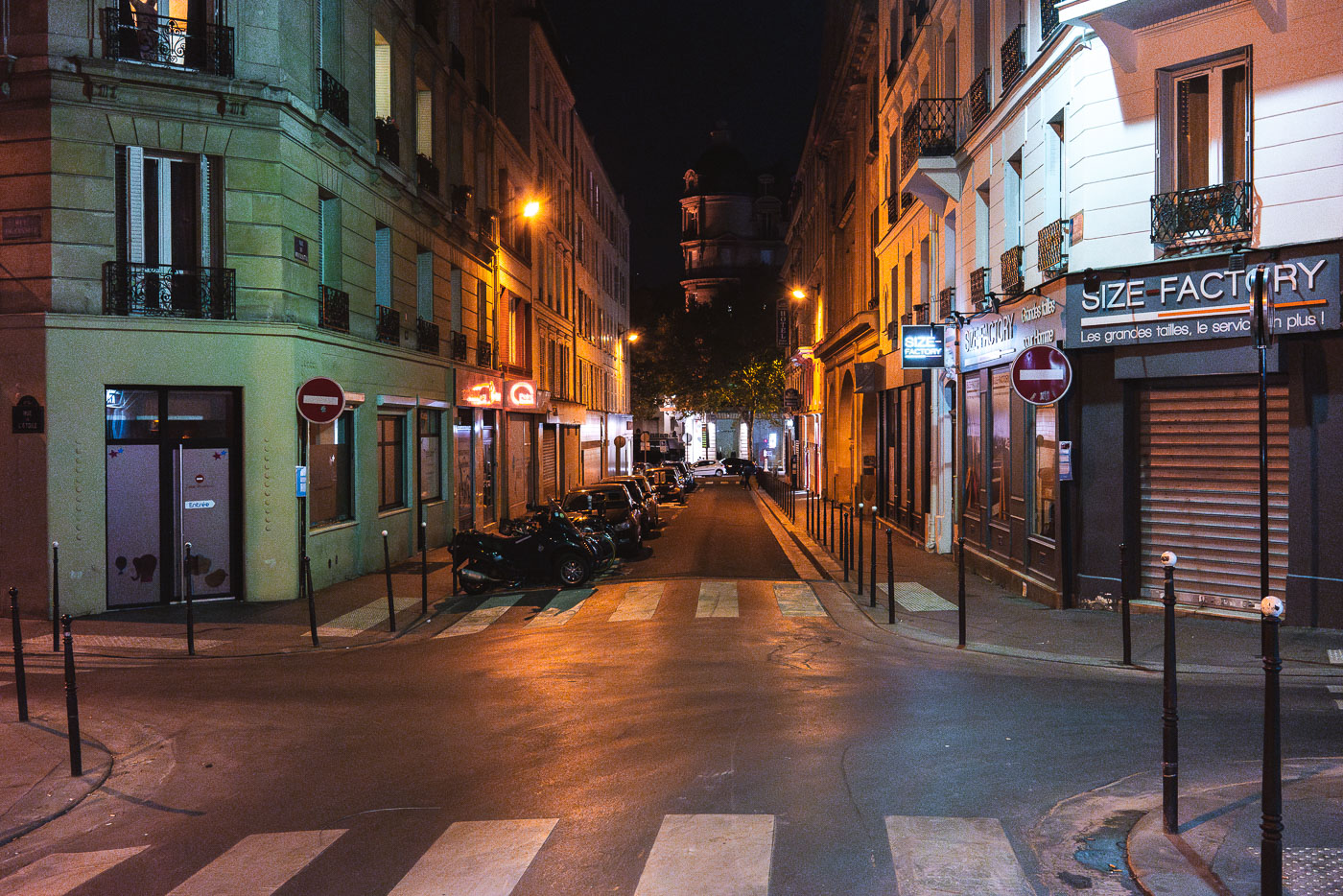
A street in Paris's 10th arrondissement is illuminated by streetlights and shop signs at night. The architecture, characterized by Haussmann-era façades, reflects the typical urban development of late 19th-century Paris. This area, historically a hub for artisans and tradesmen, now hosts a mix of boutiques, cafés, and residential buildings, showcasing the district's ongoing adaptation to modern city life.
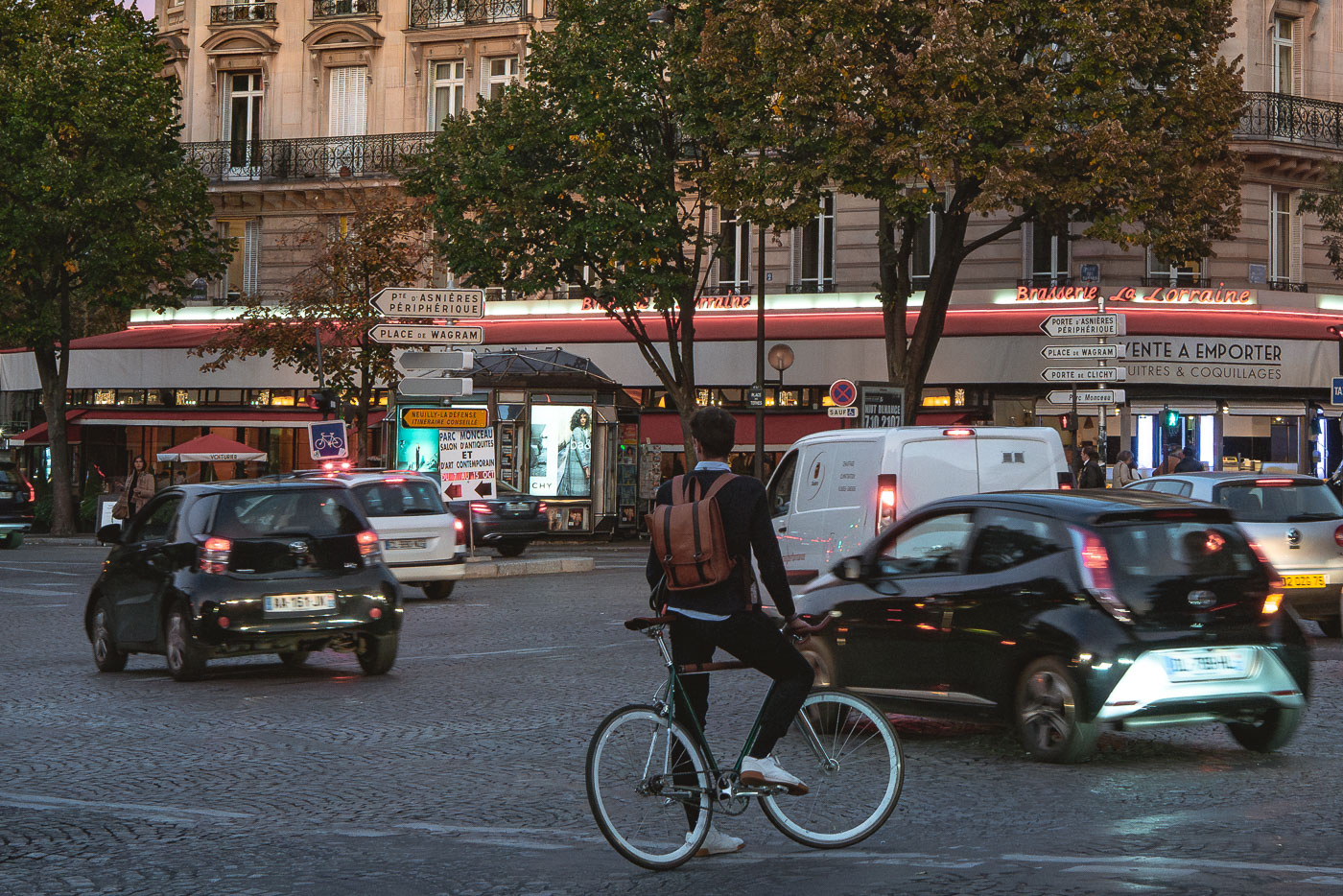
Bicyclist in Paris France
A cyclist navigates evening traffic at Place des Ternes in Paris, a busy roundabout bordering the 8th and 17th arrondissements. The area is characterized by Haussmannian architecture, as seen in the facade of Brasserie La Lorraine, and serves as a key transit point, with signs indicating routes to Porte d’Asnières, the Périphérique, Place de Wagram, and Porte de Clichy. This location, near the Arc de Triomphe corridor, experiences significant rush hour activity, with vehicles and pedestrians utilizing the cobblestone streets and surrounding commercial establishments.
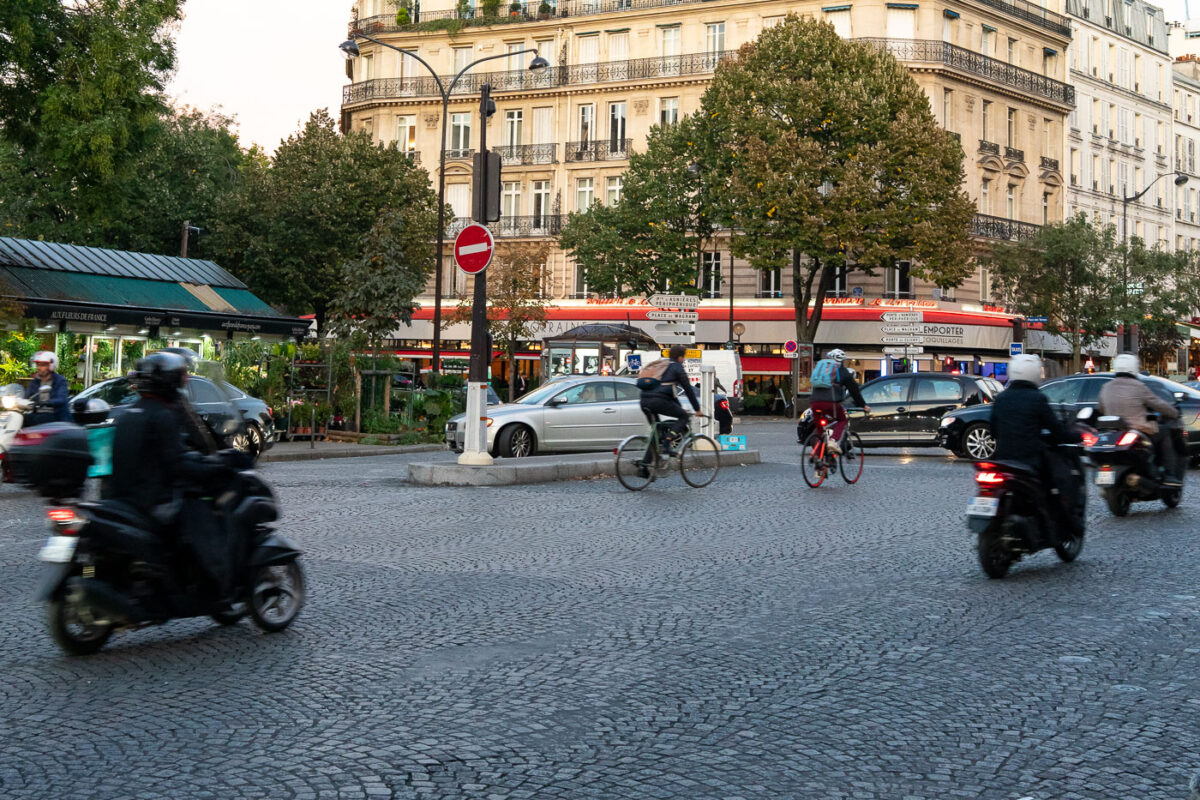
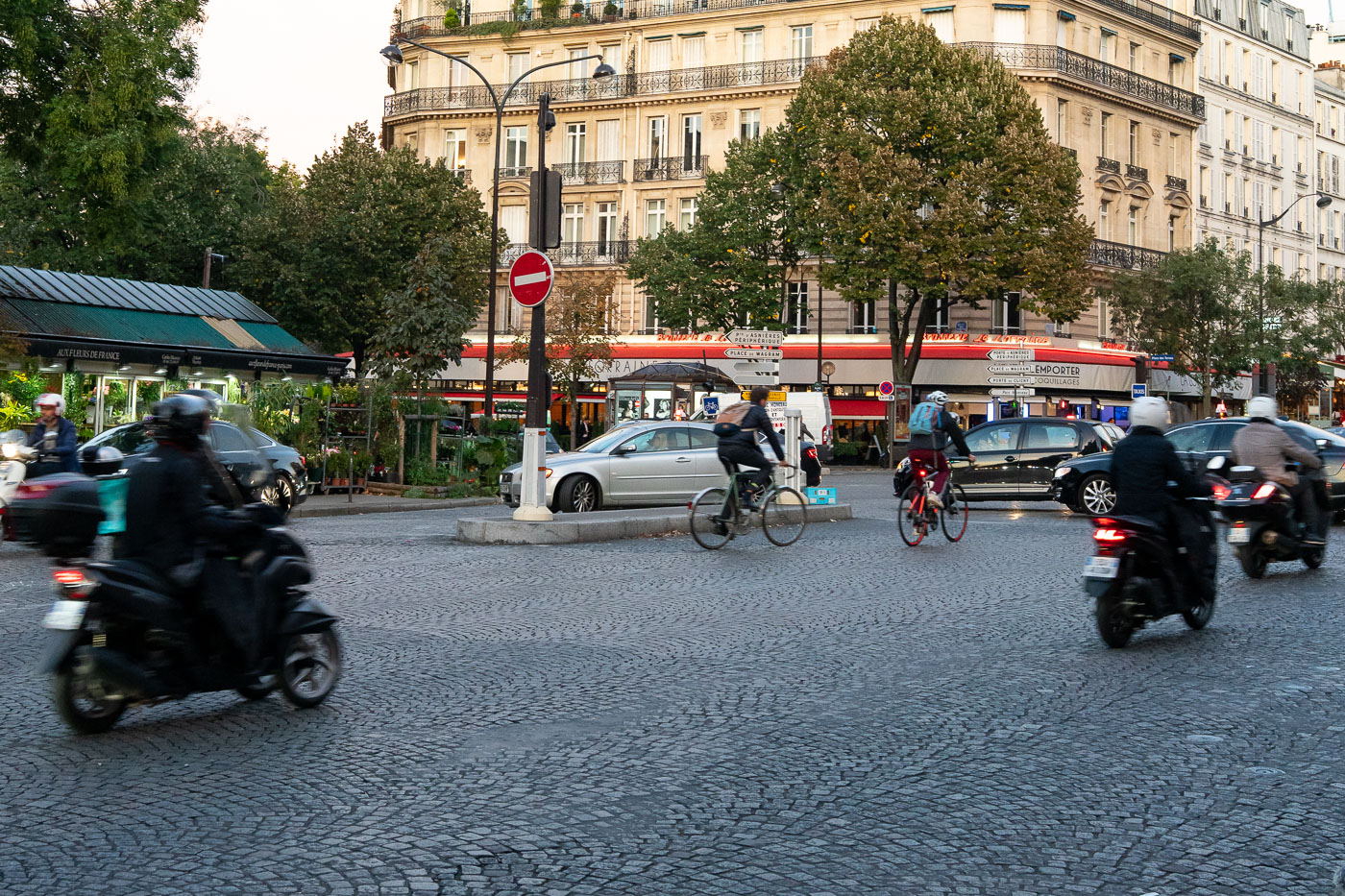
Place de l’Alma, Paris, shows evening traffic including cars and motorcycles, with Haussmann architecture in the background.
Place de l’Alma in Paris, a significant roundabout connecting major avenues, is depicted with its characteristic Haussmann-era architecture and active traffic. Completed in the mid-19th century, the square serves as a vital artery, linking the 8th and 16th arrondissements. The nearby Pont de l’Alma, inaugurated in 1856, is notable for its remaining Zouave statue, which historically functioned as a flood gauge for the Seine River. The area's blend of elegant buildings and bustling transit reflects the dynamic nature of Parisian urban life.
Apartment buildings in Paris France
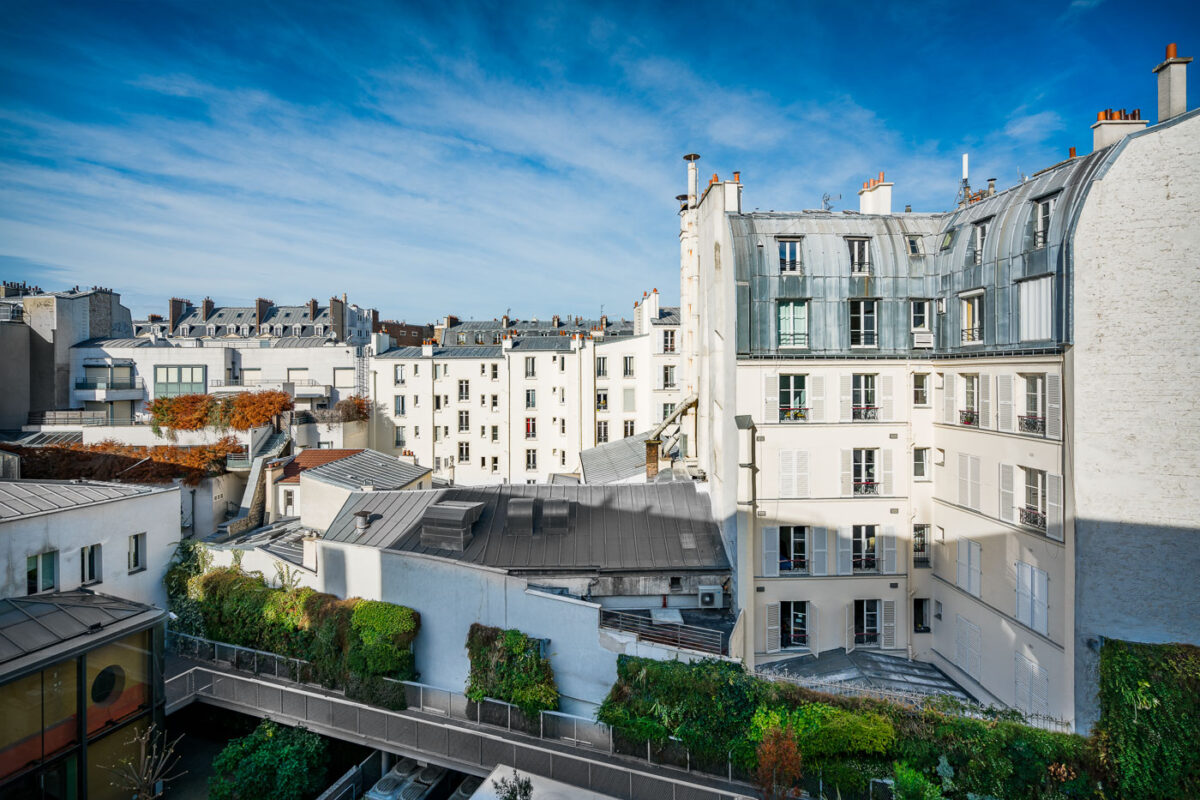
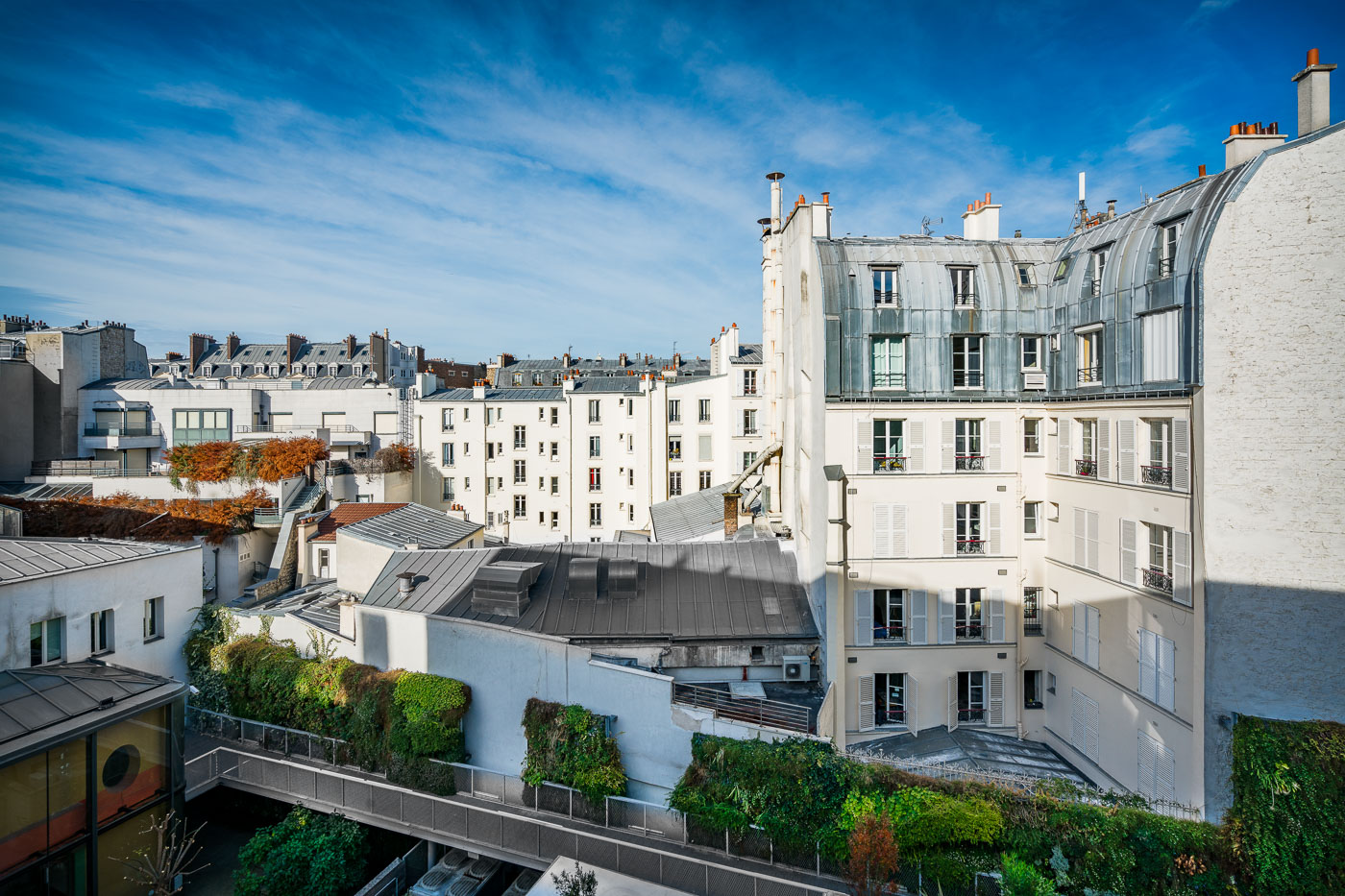
Apartment buildings in Paris's 9th arrondissement showcase Haussmannian architectural influences, characterized by their white facades, mansard roofs, and dormer windows, typical of late 19th-century urban development. These structures were designed to create a uniform and elegant streetscape, a hallmark of Baron Haussmann's renovation of Paris. The presence of a modern glass extension and vertical gardens indicates contemporary adaptations within these historic residential blocks, reflecting the ongoing use and modernization of Parisian housing.
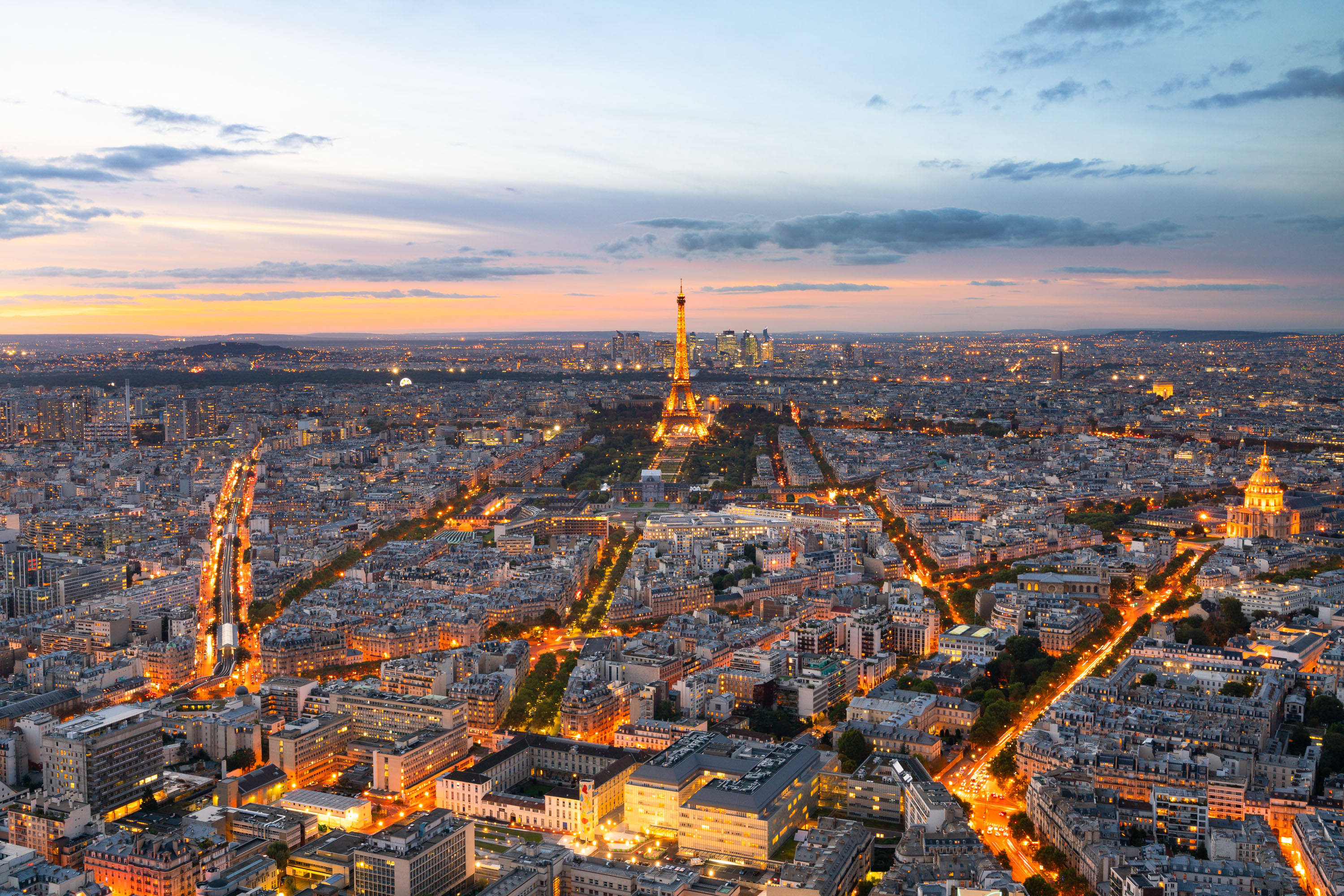
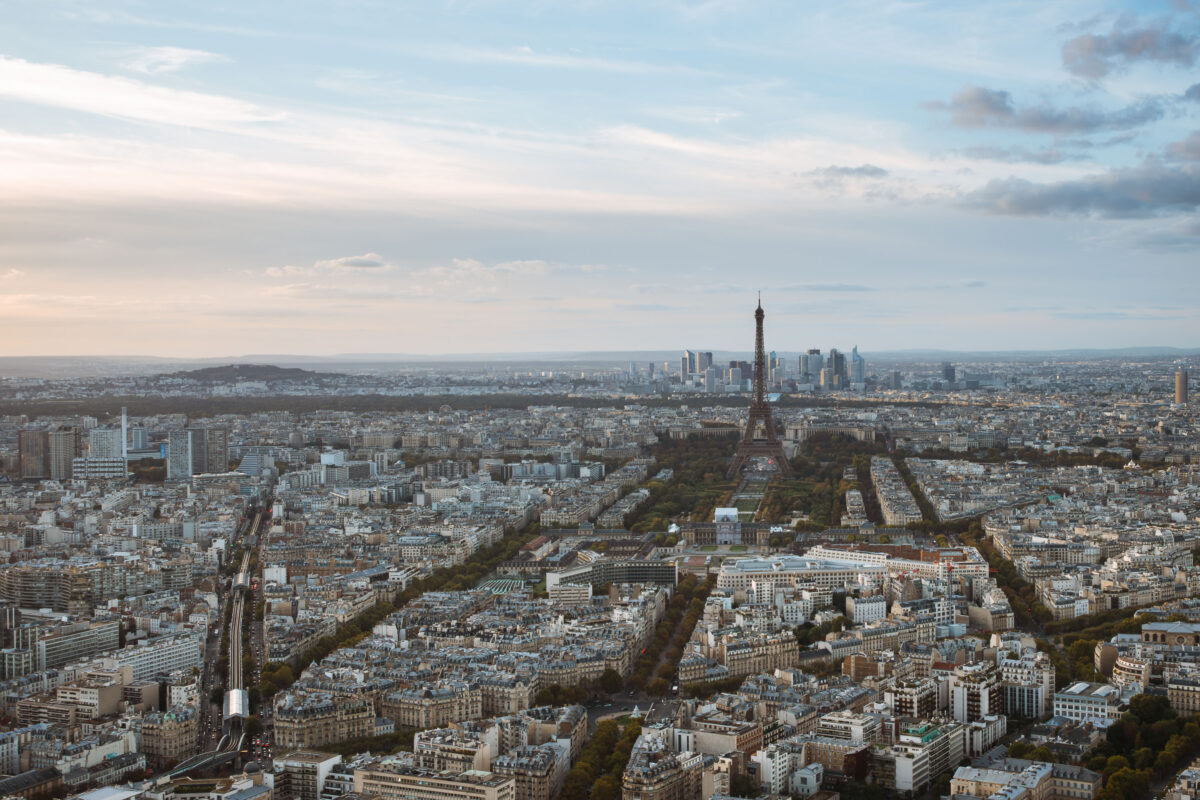
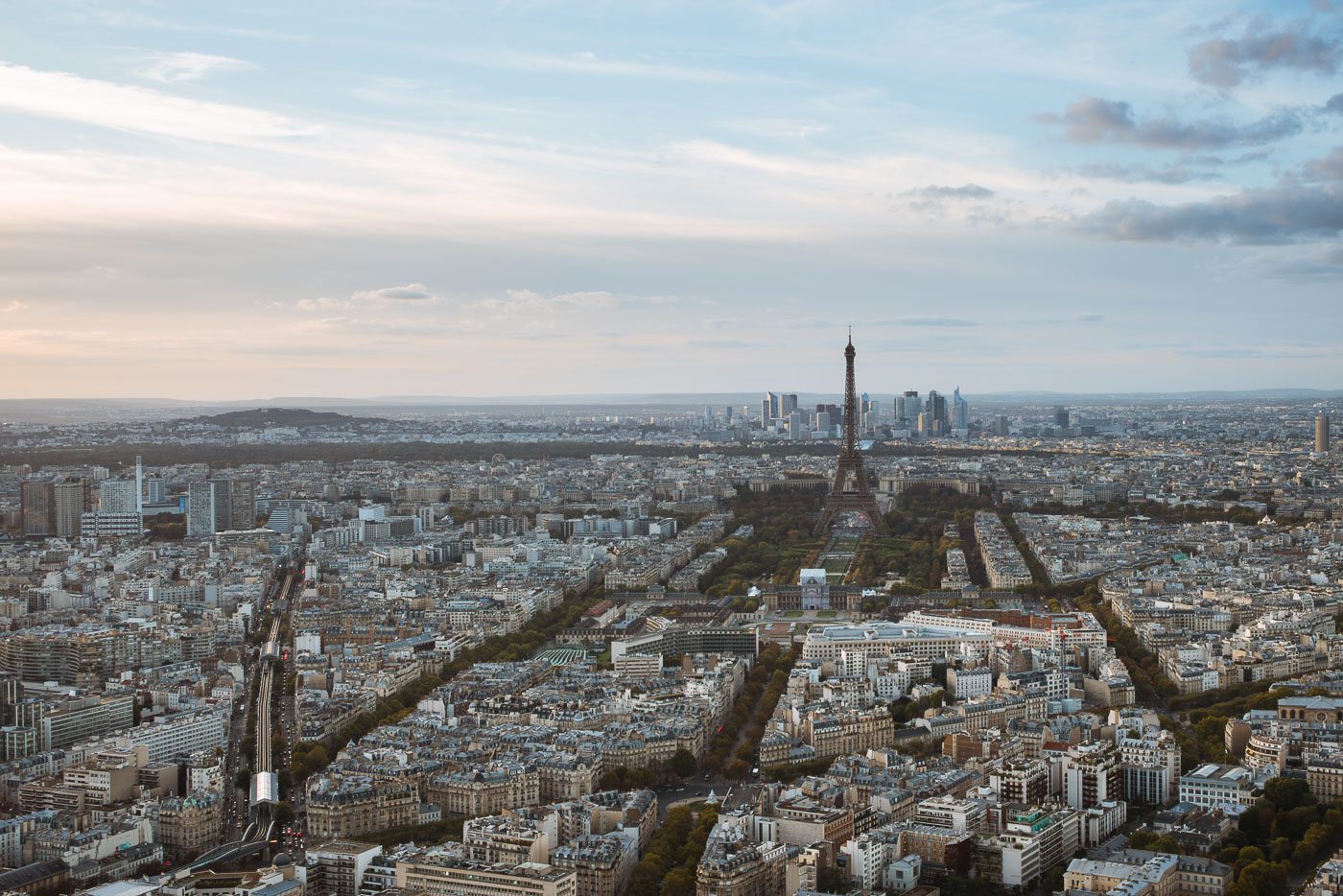
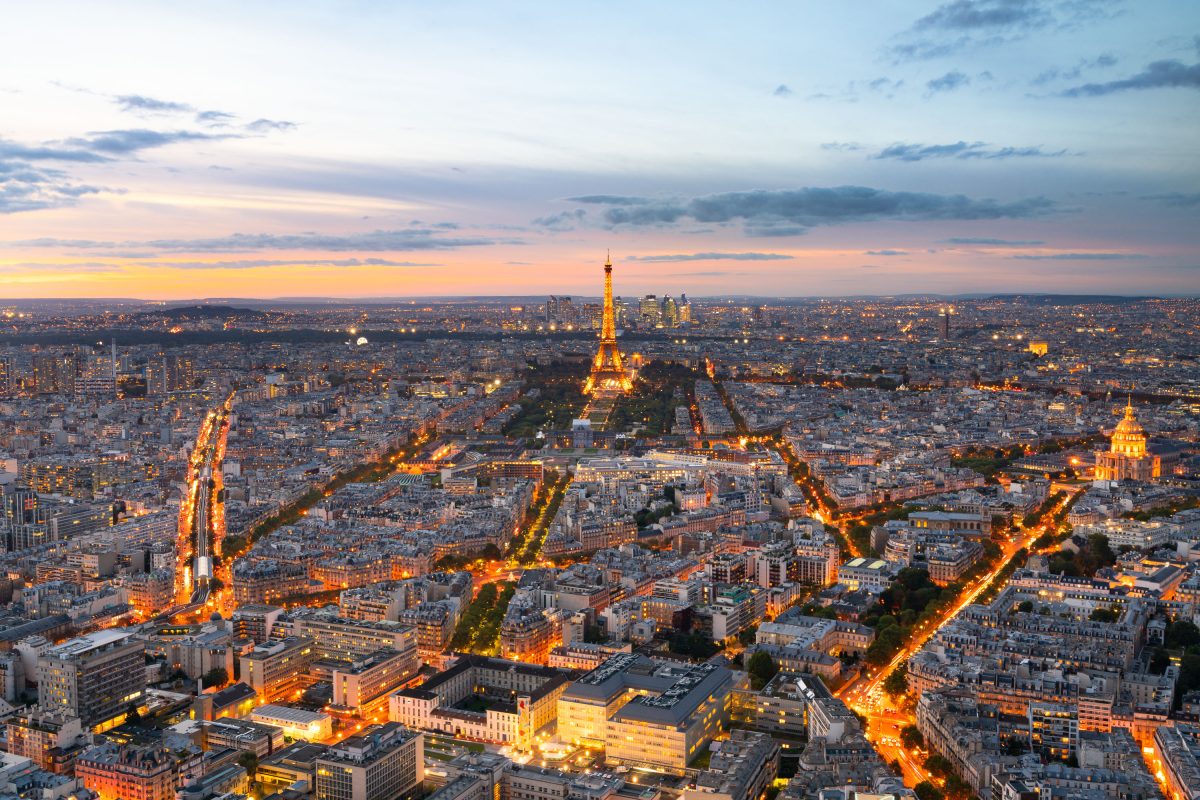
Rooftop view of Paris and Eiffel Tower
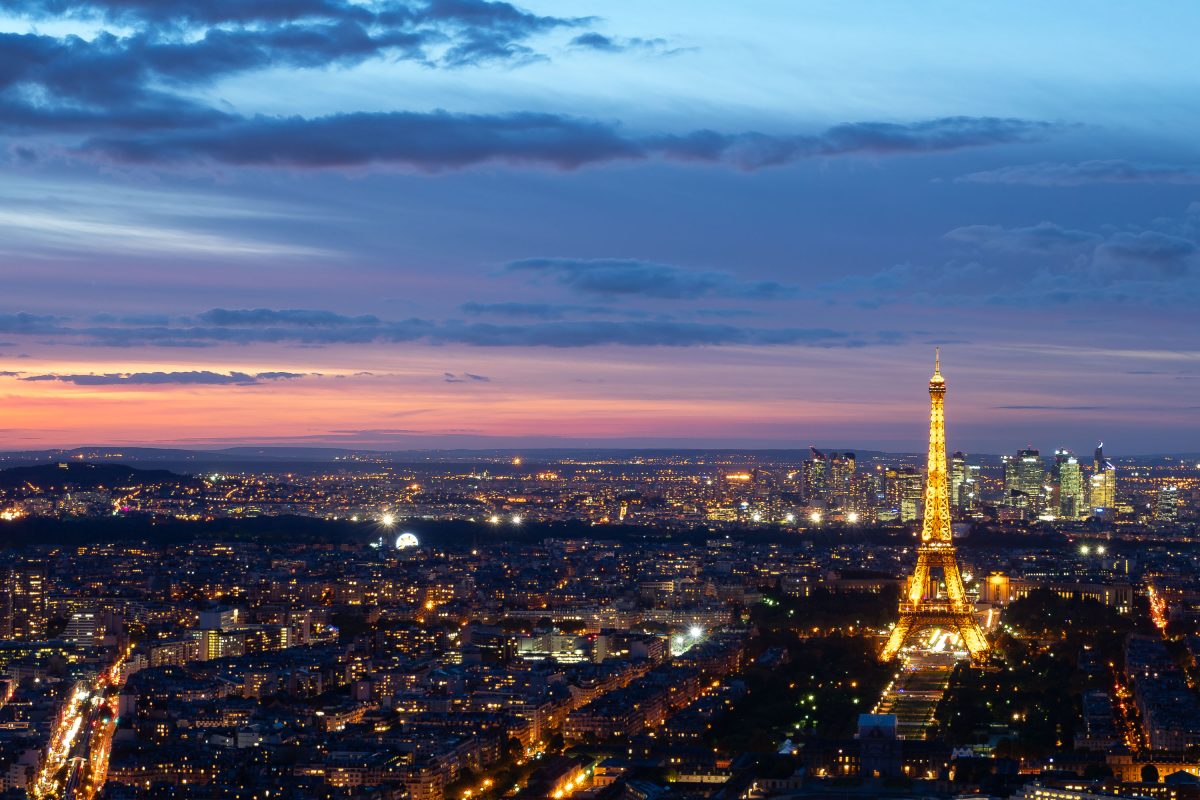
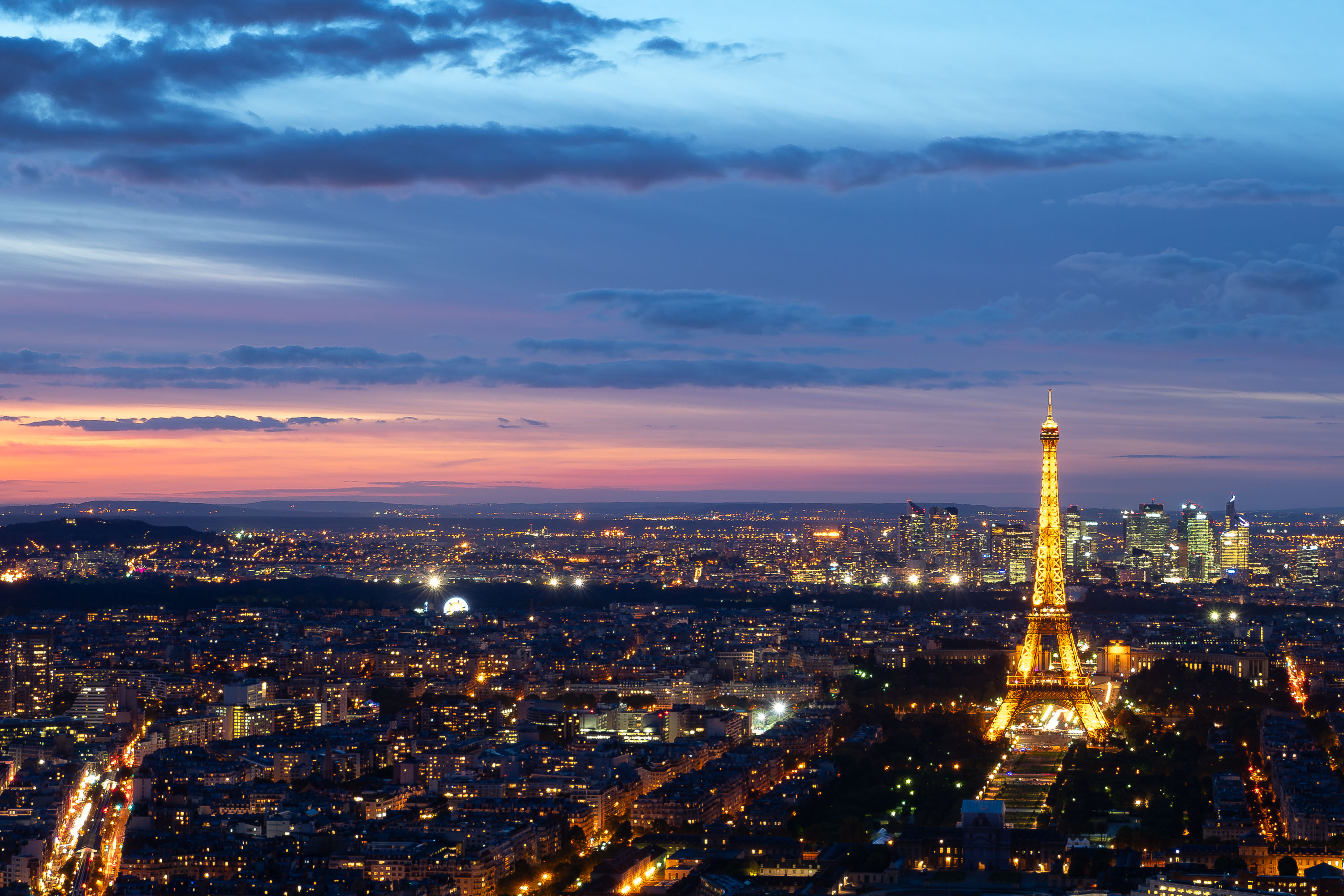
An aerial perspective of Paris showcases the city's historic Haussmannian urban plan, characterized by its symmetrical boulevards and 19th-century architecture, extending towards the modern skyscrapers of the La Défense business district. The Eiffel Tower, erected in 1889 for the Exposition Universelle, stands as a central point within the Champ de Mars park, a testament to industrial-era engineering. This photograph highlights the juxtaposition of Paris's enduring historical fabric with its contemporary commercial development on the city's western edge.
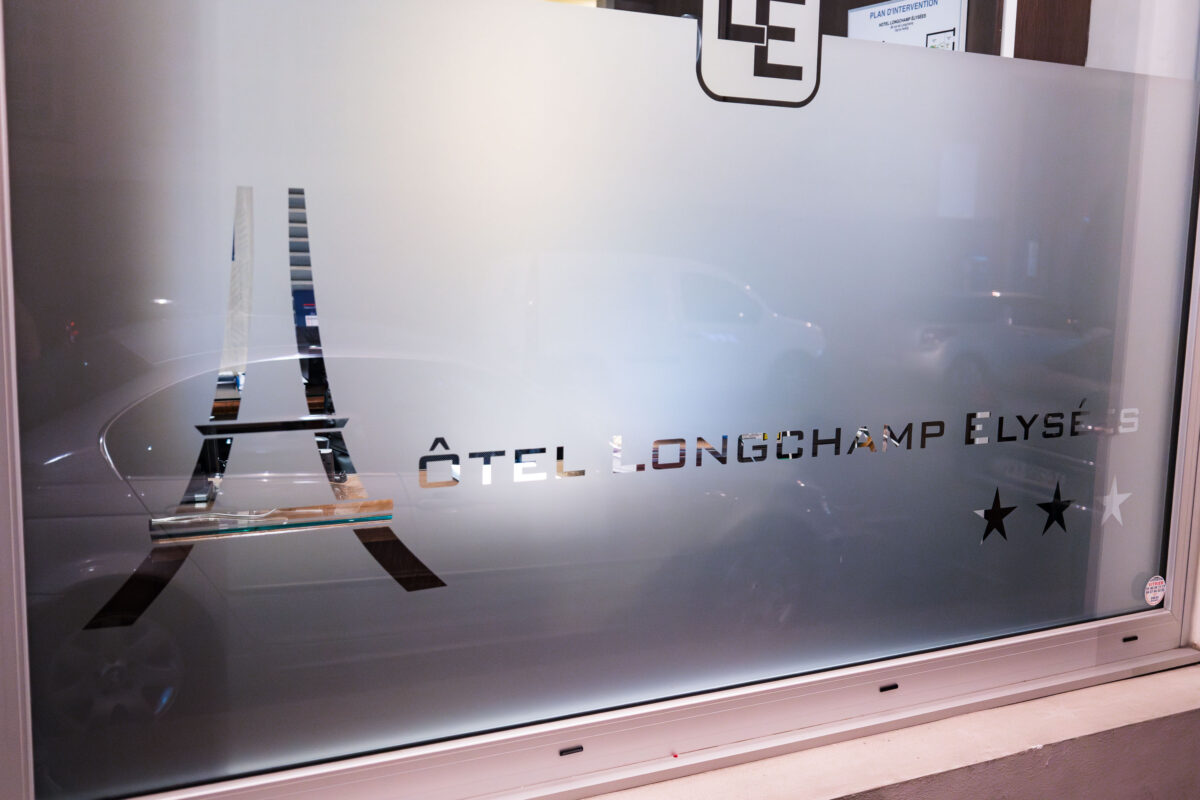
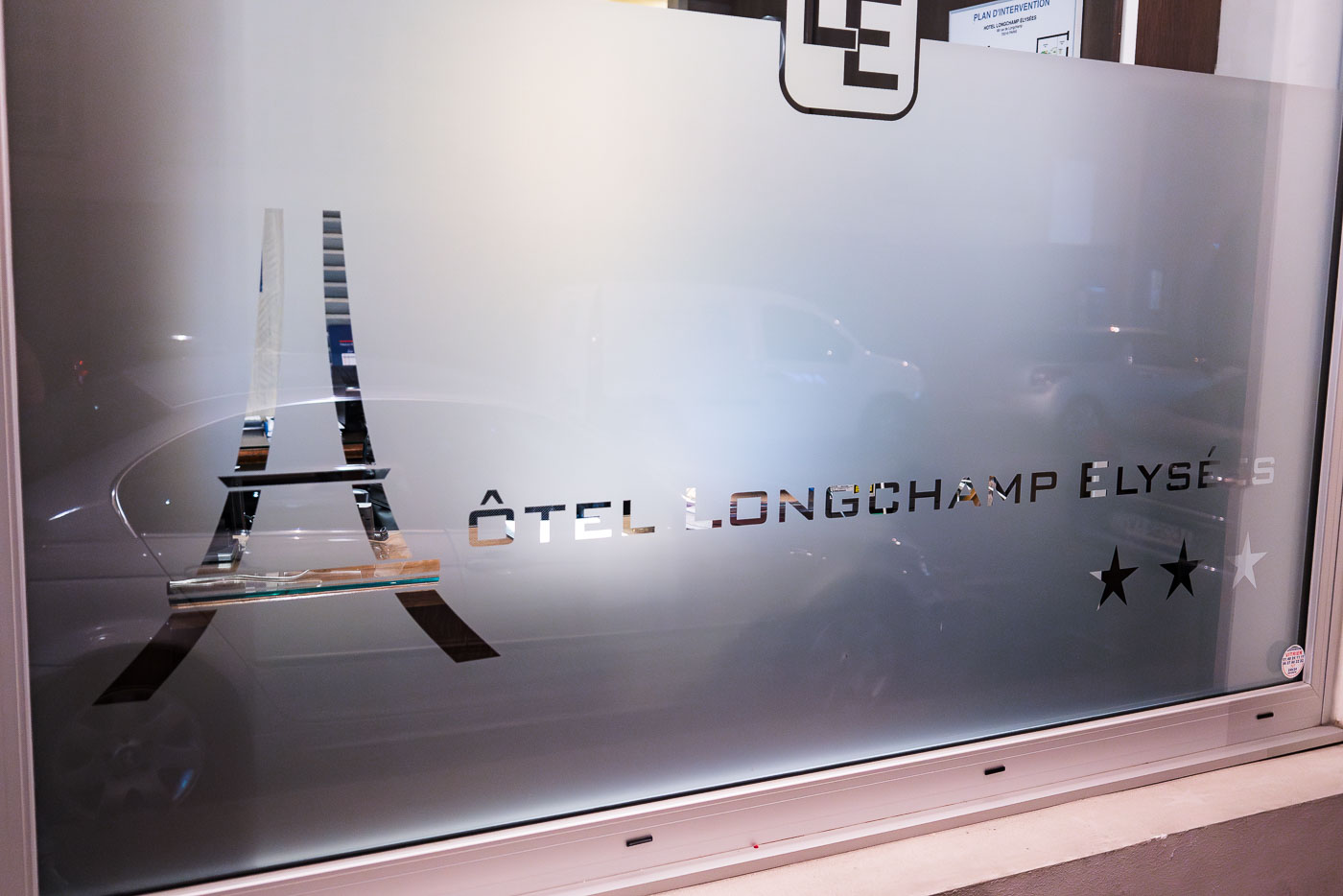
Frosted glass entrance of Hôtel Longchamp Elysées in Paris, featuring the hotel name and a stylized Eiffel Tower design.
The frosted glass entrance of Hôtel Longchamp Elysées in Paris features a stylized Eiffel Tower and the hotel's name, reflecting its modern design. Situated in the 16th arrondissement, the hotel is located near the Trocadéro, offering guests proximity to major Parisian landmarks. The surrounding area, known for its diplomatic presence and elegant architecture, developed significantly in the late 19th and early 20th centuries, blending Haussmannian styles with contemporary structures. This boutique hotel provides a refined base for exploring the city's blend of historical significance and modern appeal.
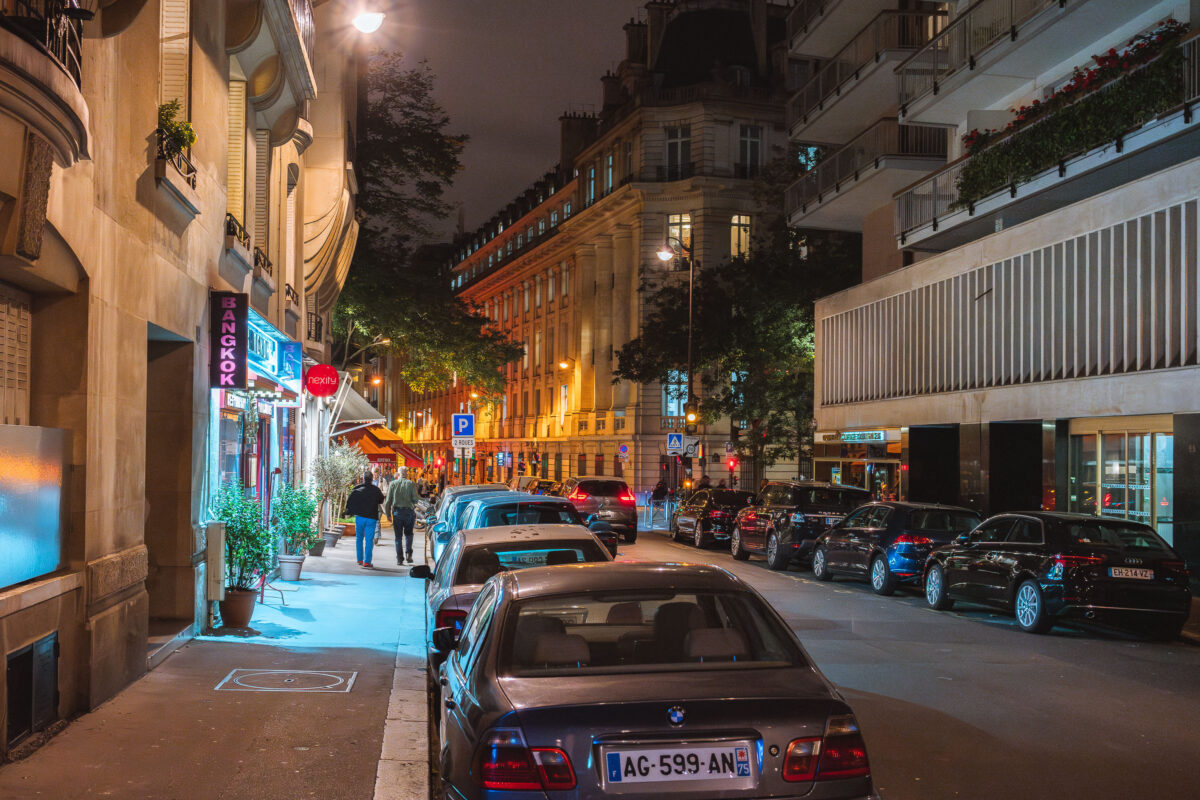
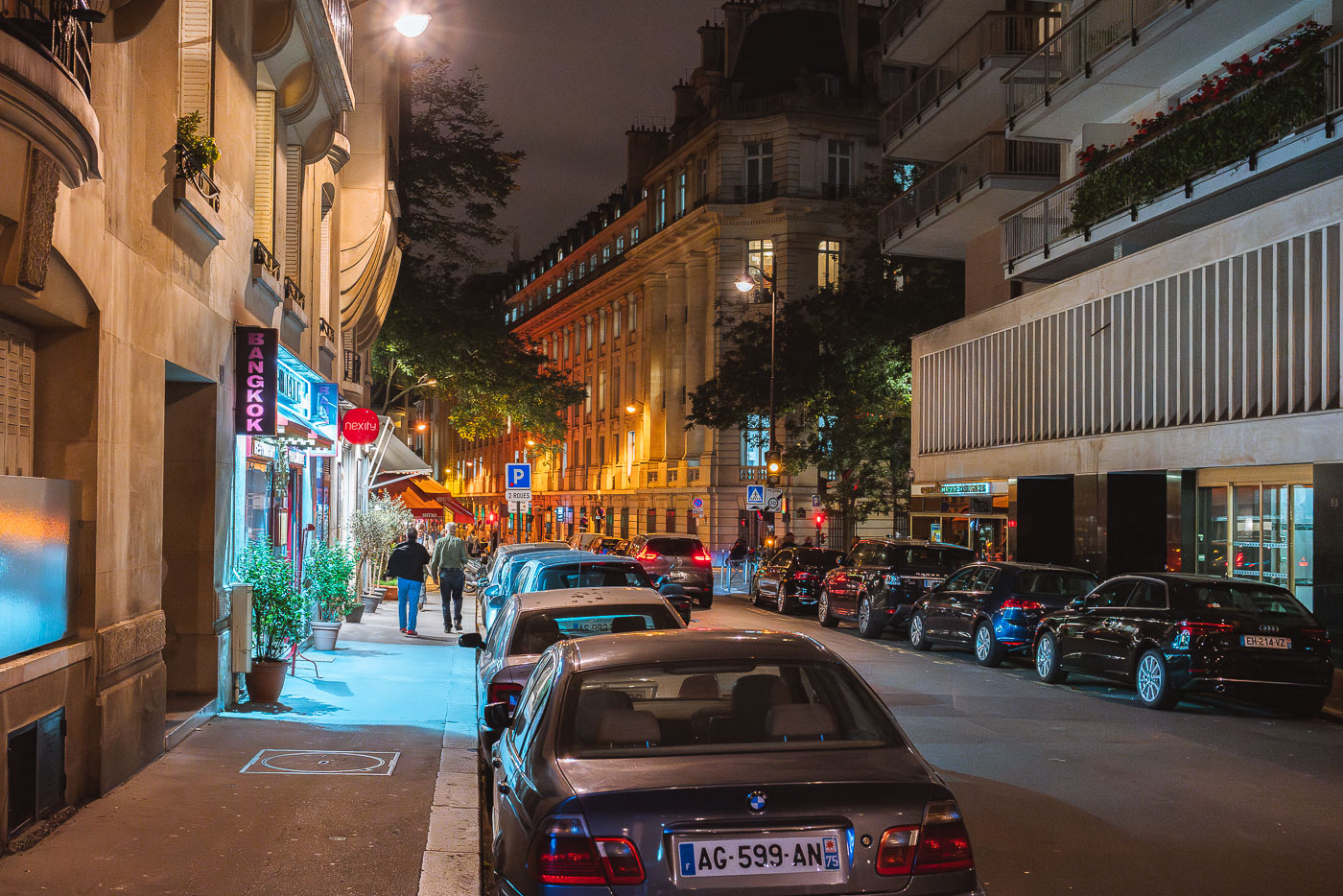
A "Bangkok Restaurant" sign is illuminated at night on a street in Paris, France, in October 2017. Cars are parked along the curb of the urban thoroughfare.
A "Bangkok Restaurant" sign is illuminated at night on a street in Paris, France, in October 2017. The restaurant appears to be one of several businesses lining the street, which features classic Parisian architecture alongside more modern apartment buildings. Cars are parked along the curb, indicating this is a typical urban thoroughfare. The presence of an international restaurant in a European capital highlights the global nature of culinary offerings in major cities.
A temporary Gucci pop-up display featuring footwear is presented within the historic Printemps department store in Paris, France.
A temporary Gucci pop-up display is presented within the historic Printemps department store in Paris. The installation, featuring illuminated shelving and a vibrant purple aesthetic, showcases a collection of Gucci footwear. Printemps, established in 1865, is a Parisian retail landmark known for its architectural innovations and its role in the city's fashion district along Boulevard Haussmann. This collaboration highlights the store's ongoing engagement with luxury brands and contemporary design trends.
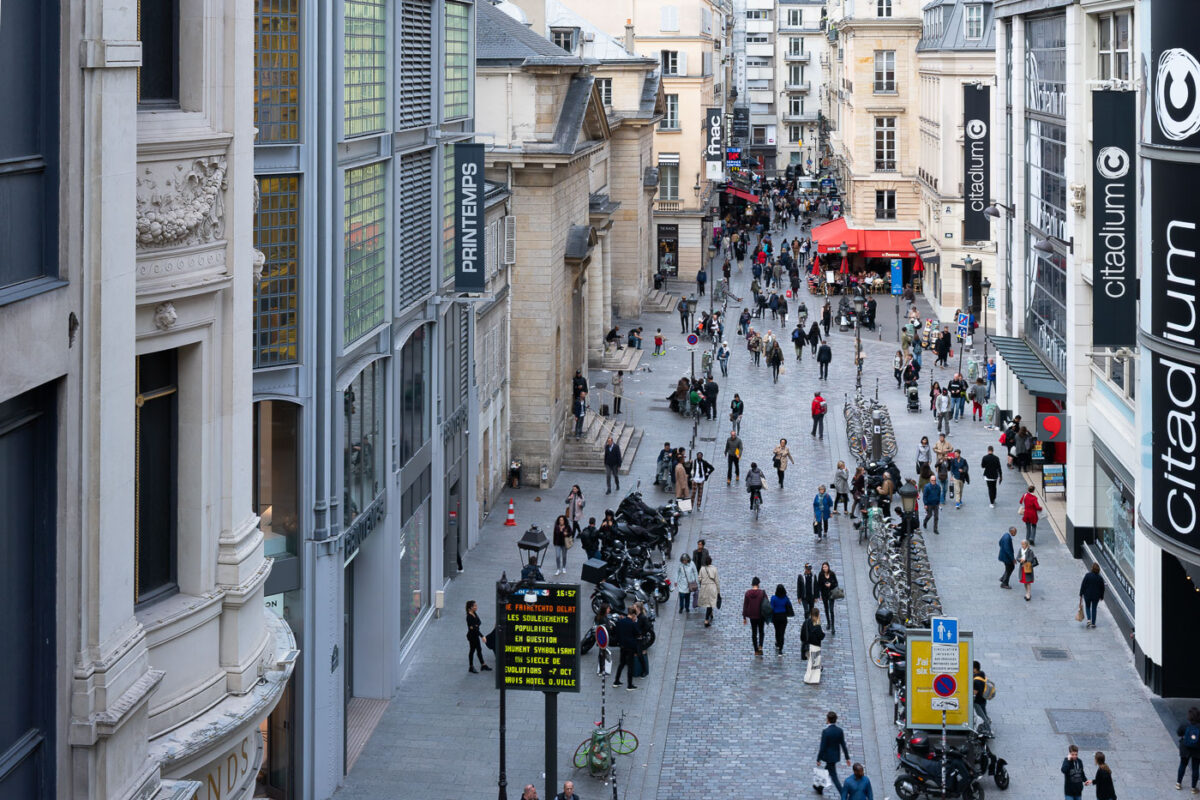
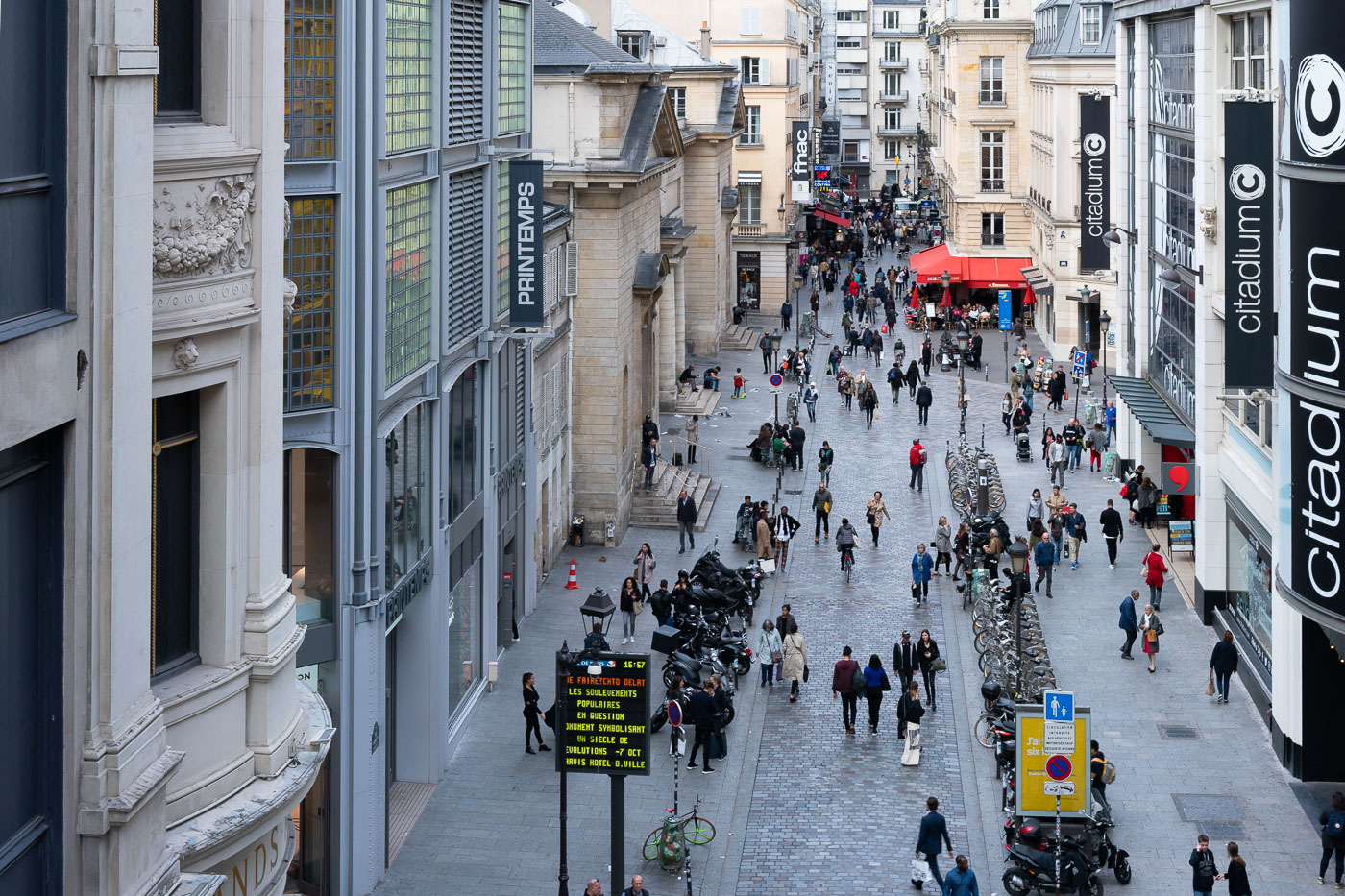
Rue de Caumartin in Paris, France, is a busy shopping street featuring the Printemps department store and Citadium fashion retailer, reflecting the city's role in global commerce.
Rue de Caumartin in Paris, France, is a bustling commercial street lined with prominent retail establishments. The image prominently features the flagship stores of Printemps, a historic department store founded in 1865, and Citadium, a contemporary fashion and lifestyle retailer. This street serves as a key shopping destination, reflecting Paris's enduring role as a global center for fashion and commerce. The architecture visible ranges from classical Haussmannian buildings to more modern retail facades, illustrating the area's development over time.
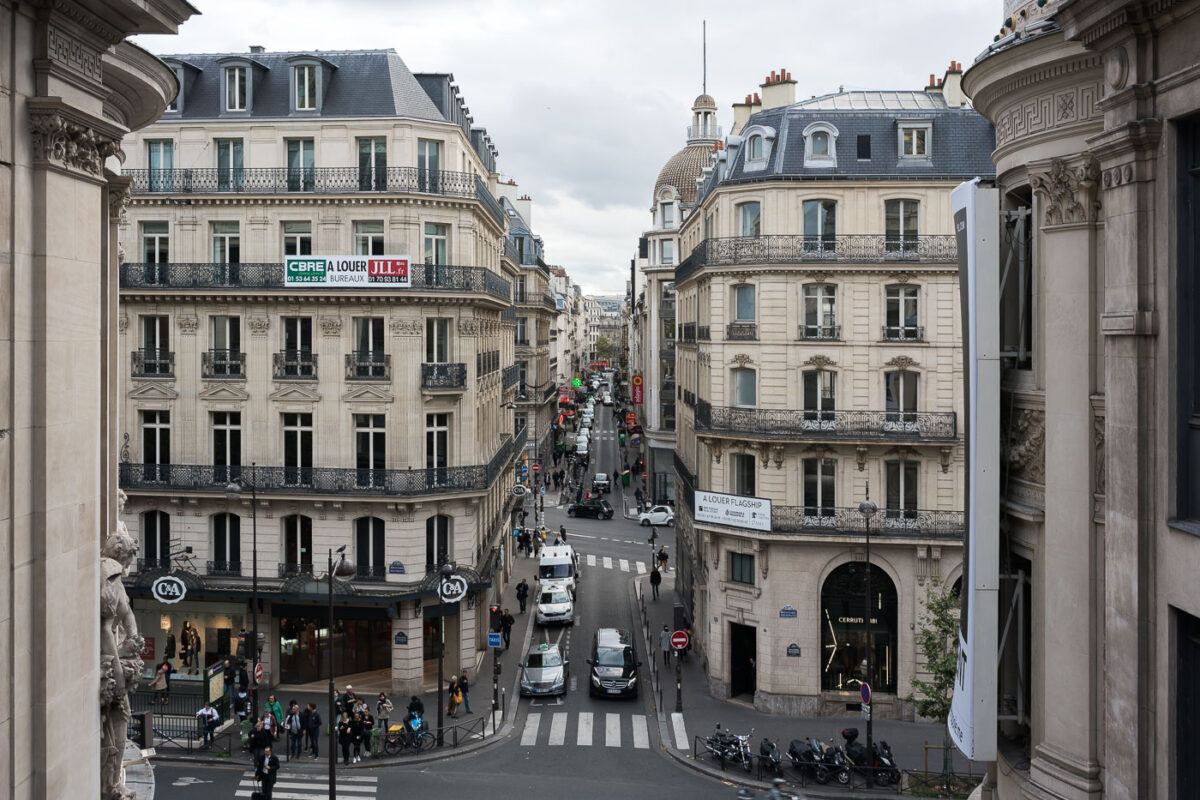
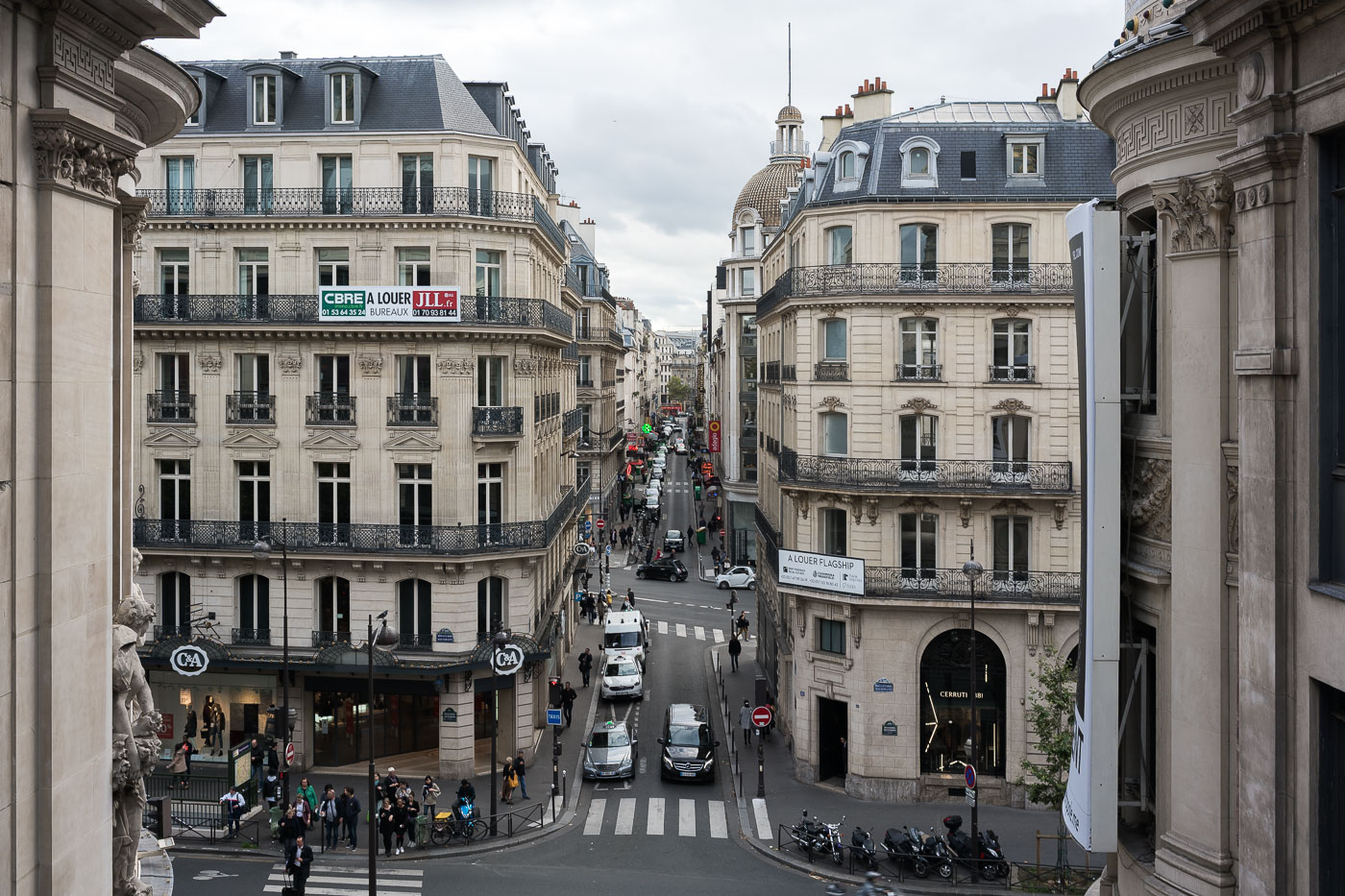
Boulevard Haussmann in Paris, France, featuring Haussmannian architecture and bustling street life with cars and pedestrians.
This image looks down Boulevard Haussmann in Paris, France, a major thoroughfare known for its grand architecture and department stores. The Haussmannian style buildings, characterized by their mansard roofs and ornate facades, were a result of Baron Haussmann's extensive urban renewal project in the mid-19th century. The boulevard is a significant commercial artery, housing flagship stores and offices, and remains a vital part of Parisian daily life and commerce. The view from the Printemps department store's skyway offers a perspective on the bustling street life and architectural uniformity that defines this area of the city.
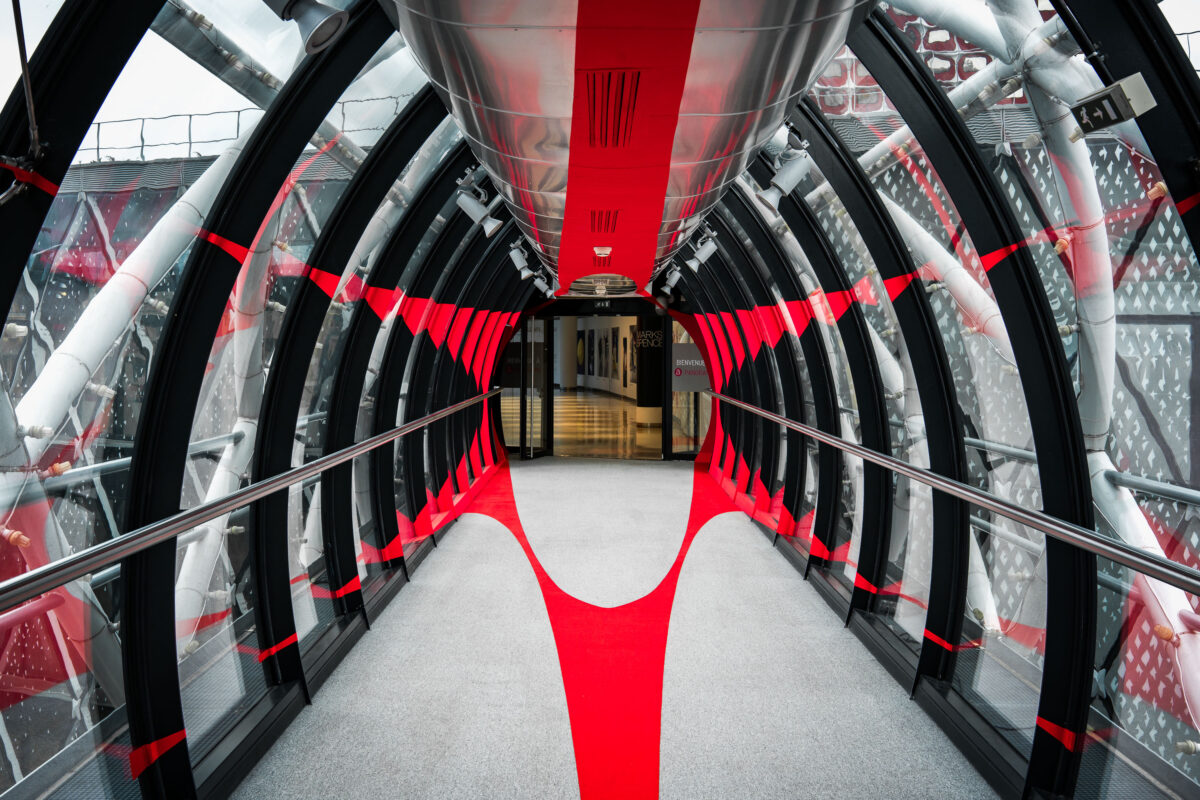
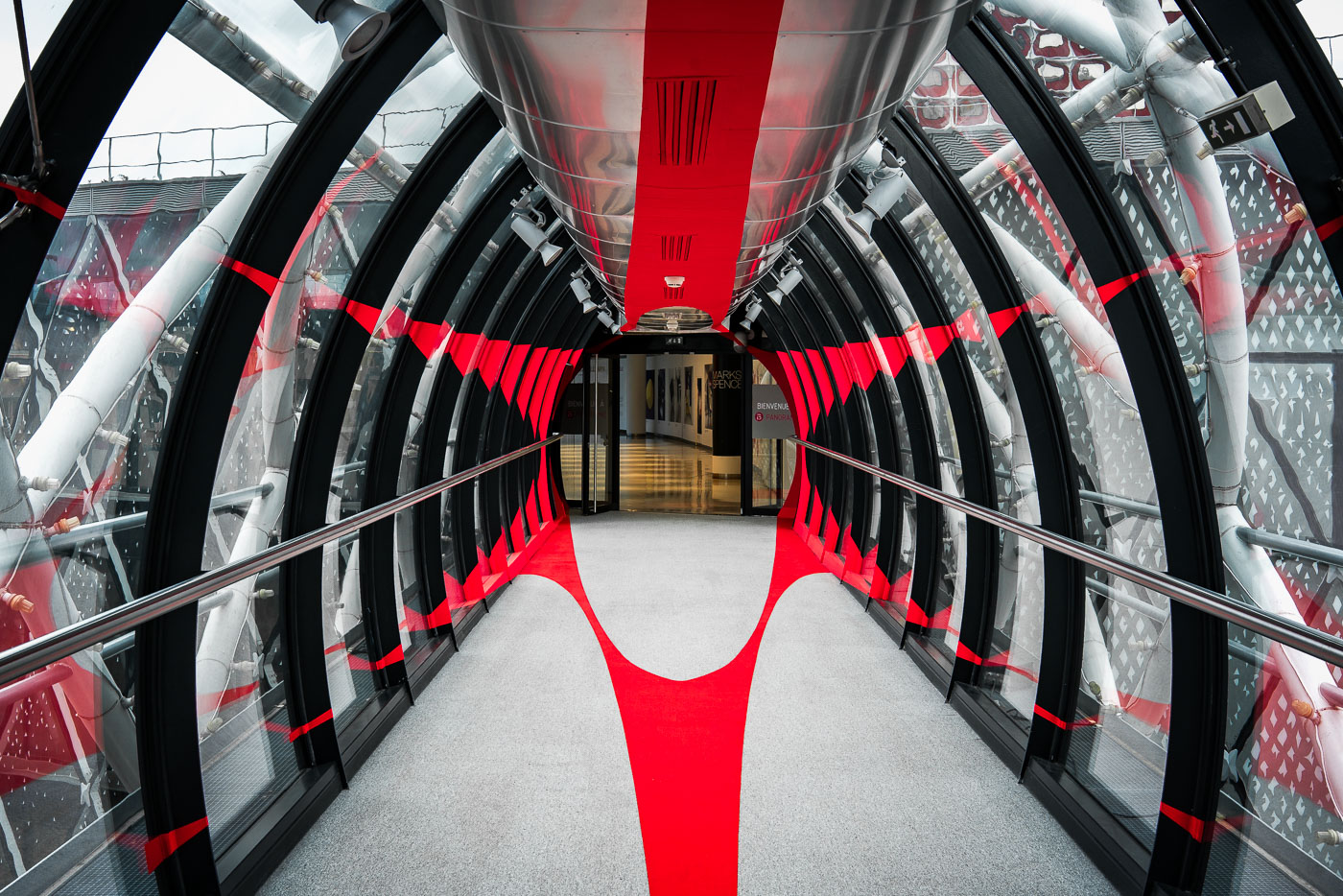
A modern skyway with red accents connects to a shopping mall in Paris, France, facilitating pedestrian movement.
This enclosed pedestrian walkway, featuring striking red accents against a black and silver structure, connects to a shopping mall in Paris. The design incorporates a modern aesthetic with curved glass panels and exposed structural elements. Such skyways are common in urban environments to facilitate pedestrian movement between buildings, often over busy streets or public spaces. This particular walkway appears to be part of a contemporary architectural development, designed to enhance accessibility and the visitor experience within the commercial district.
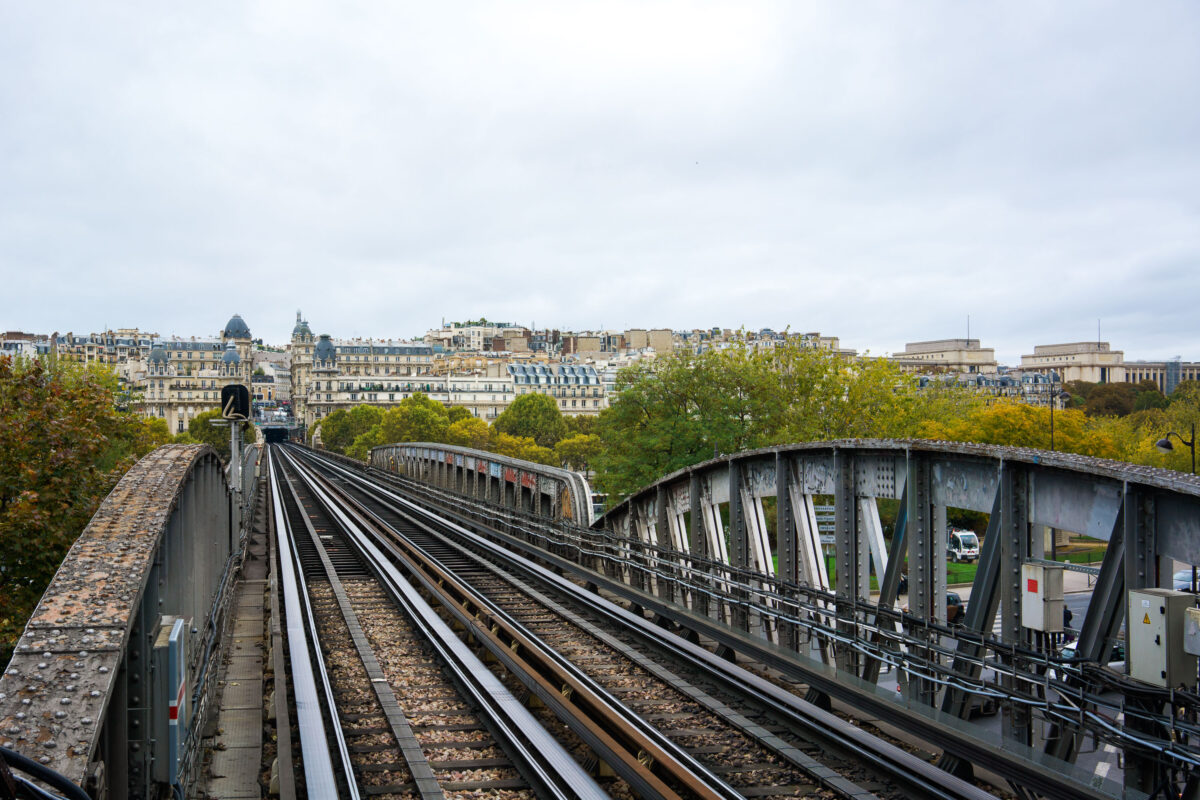
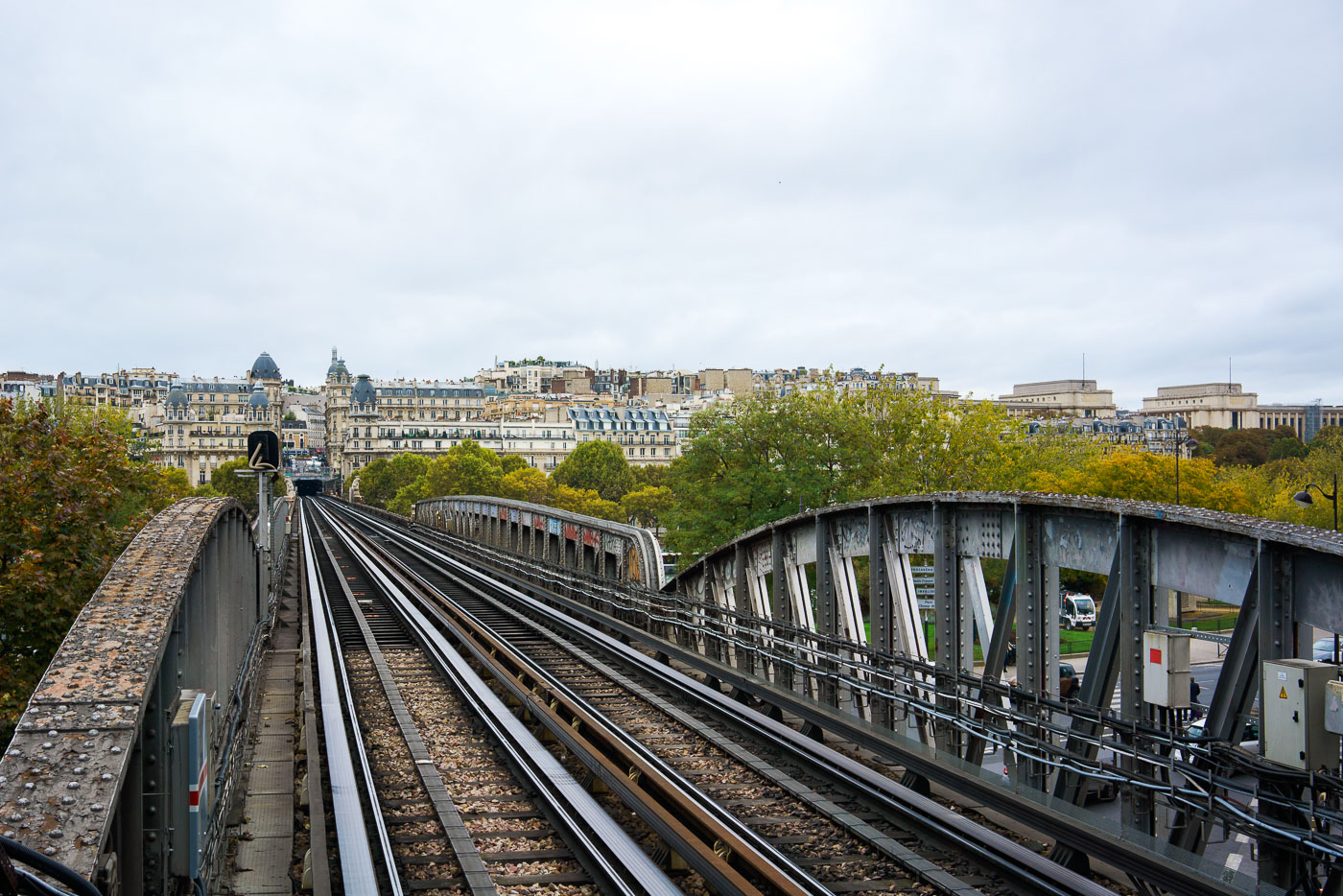
Paris Metro Line 6 on the Pont de Bir-Hakeim bridge, crossing the Seine River with the Passy district architecture in the background.
Paris Metro Line 6 traverses the Seine River on the Pont de Bir-Hakeim, a distinctive two-tiered bridge completed in 1905. The upper level carries the elevated metro line, a design choice made to ensure ventilation for the early steam-powered trains and to offer unobstructed city views. The bridge's steel viaduct construction, characterized by riveted beams, reflects the engineering practices of the early 20th century. In the distance, the architecture of the Passy district in the 16th arrondissement is visible, showcasing Haussmannian style buildings.
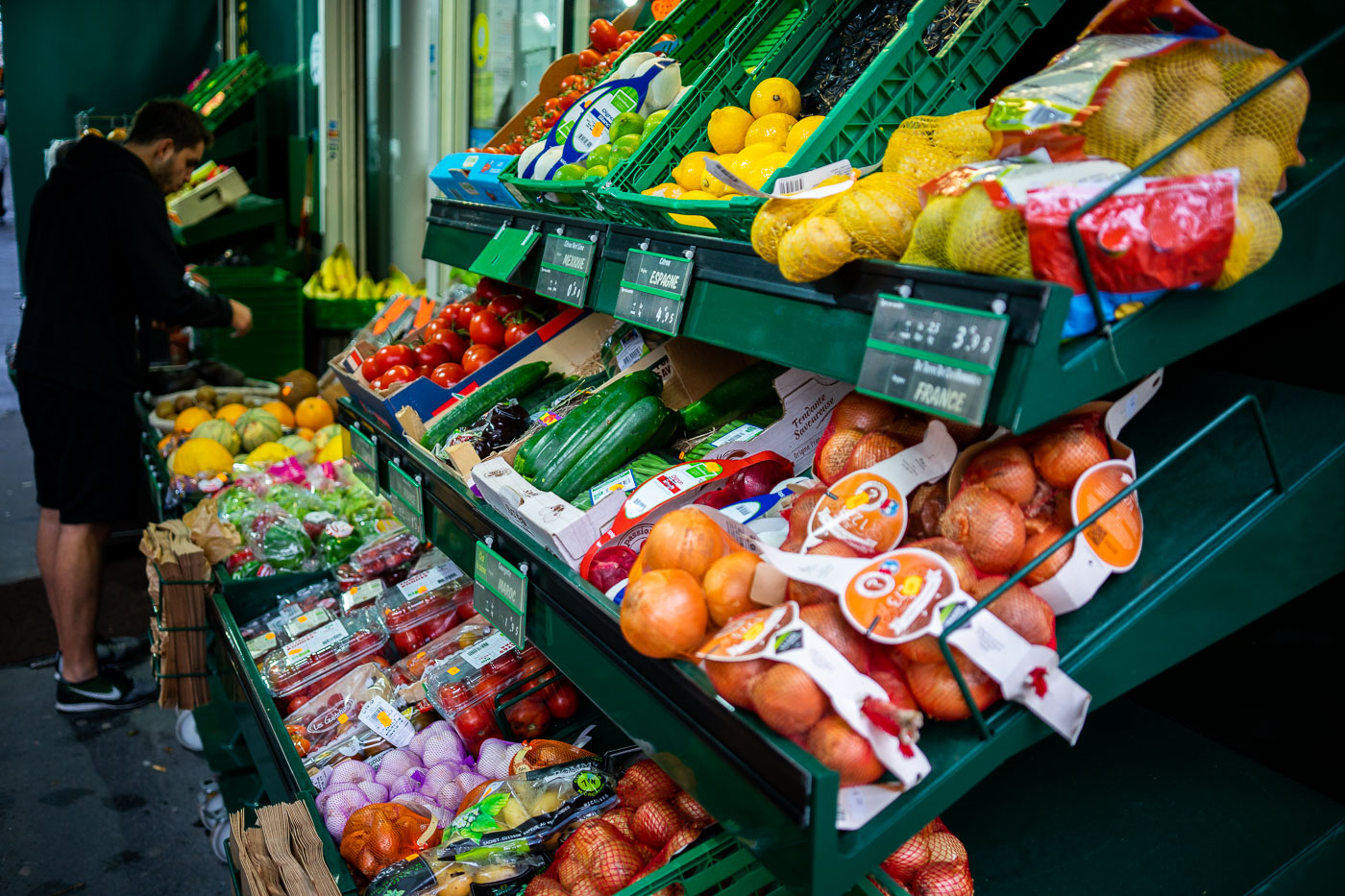
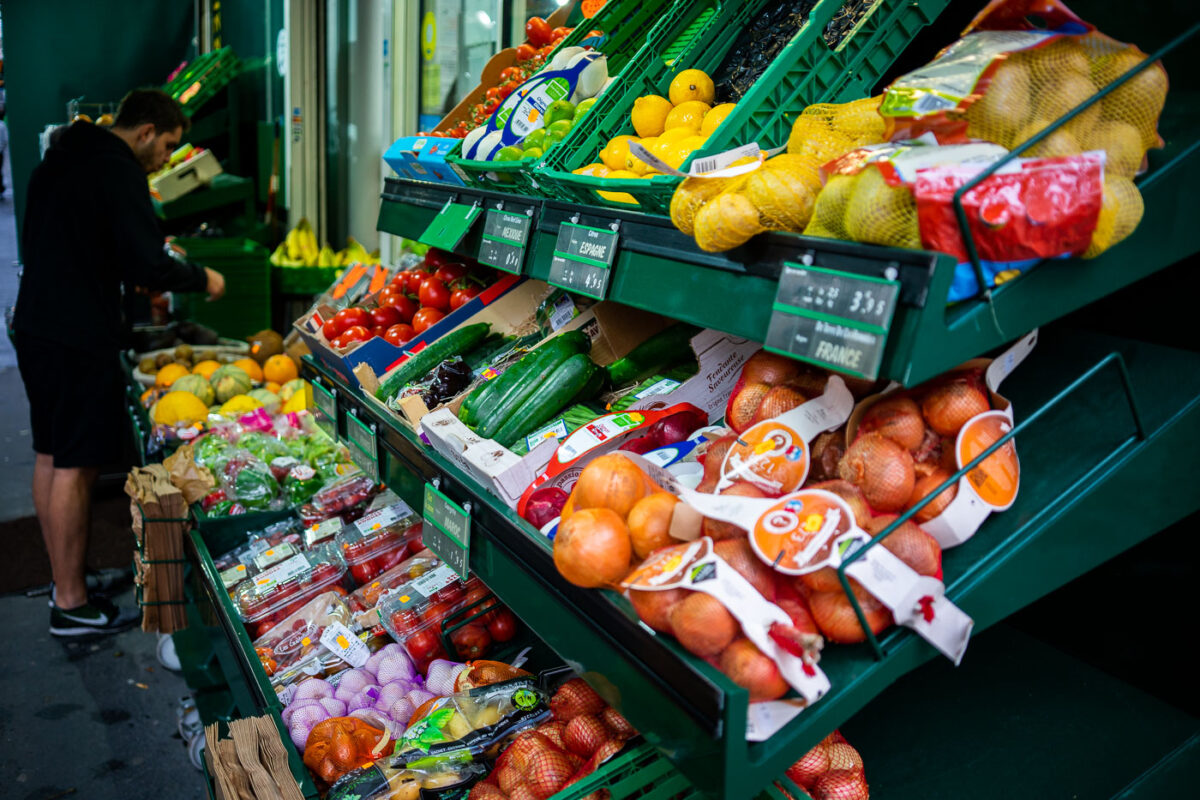
A shopper selects produce at a market in Paris, France. The display features fruits and vegetables with labels indicating their origin, such as Mexico and Spain.
A shopper selects produce at a market in Paris, France. Markets have been central to Parisian life for centuries, providing residents with fresh food and a communal gathering space. This display showcases a variety of fruits and vegetables, with labels indicating their origin, such as "Mexique" for zucchini and "Espagne" for lemons, reflecting the global sourcing common in modern European markets. The presence of a Carrefour brand label suggests this may be an indoor market or a supermarket with a dedicated produce section, a common sight in contemporary urban environments.
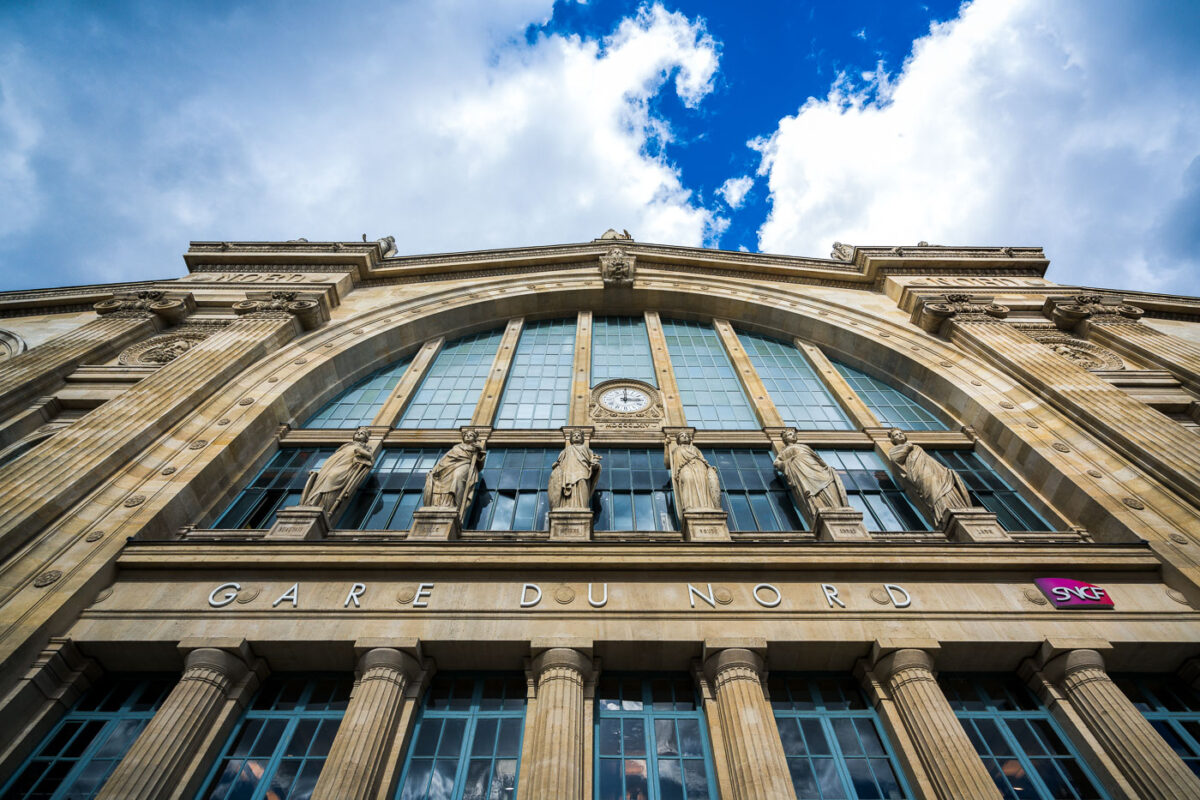
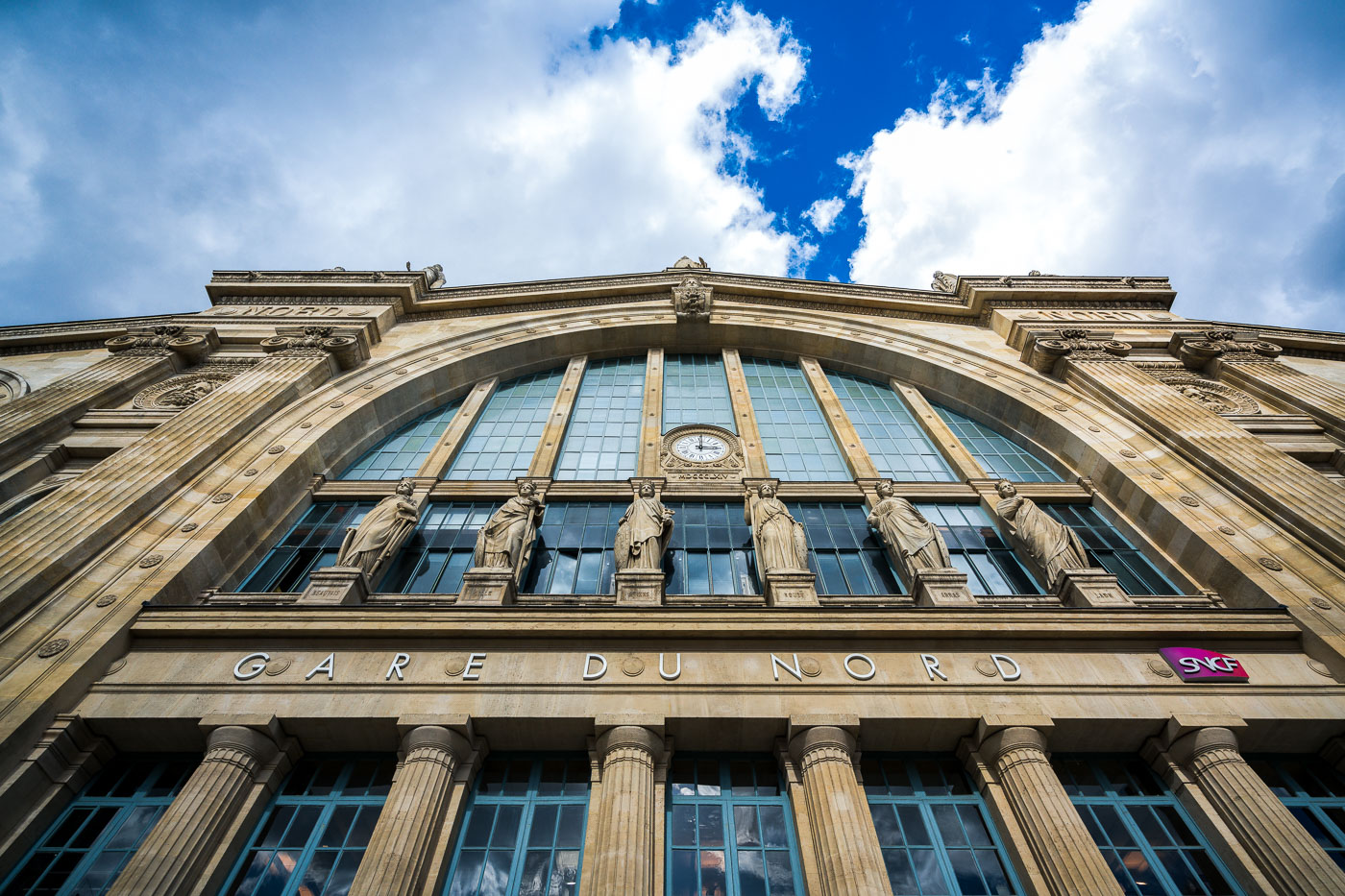
Paris Nord Train Station 2017
The Beaux-Arts facade of Gare du Nord, Paris, designed by architect Jacques-Ignace Hittorff and opened in the 1860s, is adorned with allegorical statues representing cities historically served by the station. As one of Europe's busiest rail hubs, Gare du Nord connects regional Transilien and RER lines, the Paris Métro, and international services like the Eurostar to London. The station's grand architecture reflects the significance of rail travel in northern Europe since the 19th century, serving as a vital gateway for commuters and travelers.

Built in Minneapolis

Photographs showcasing change over time

Browse by location, move through long-running series, or start with recent work.