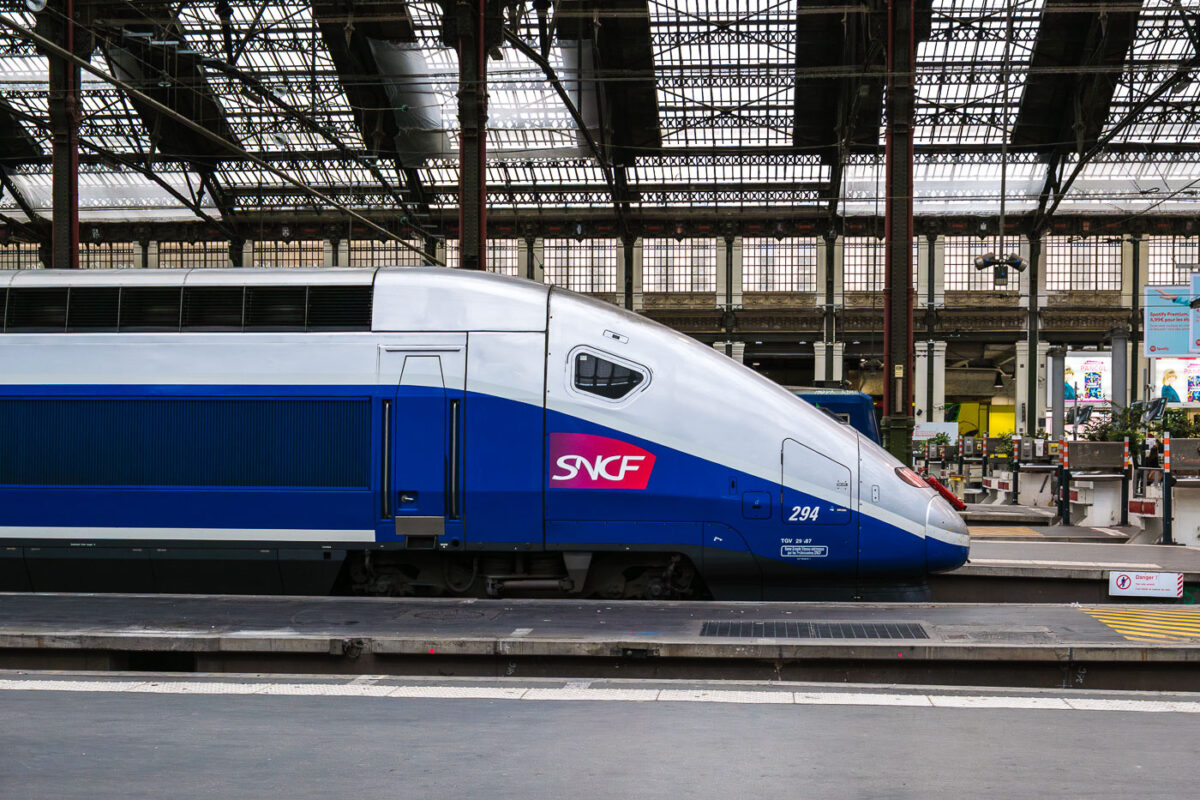
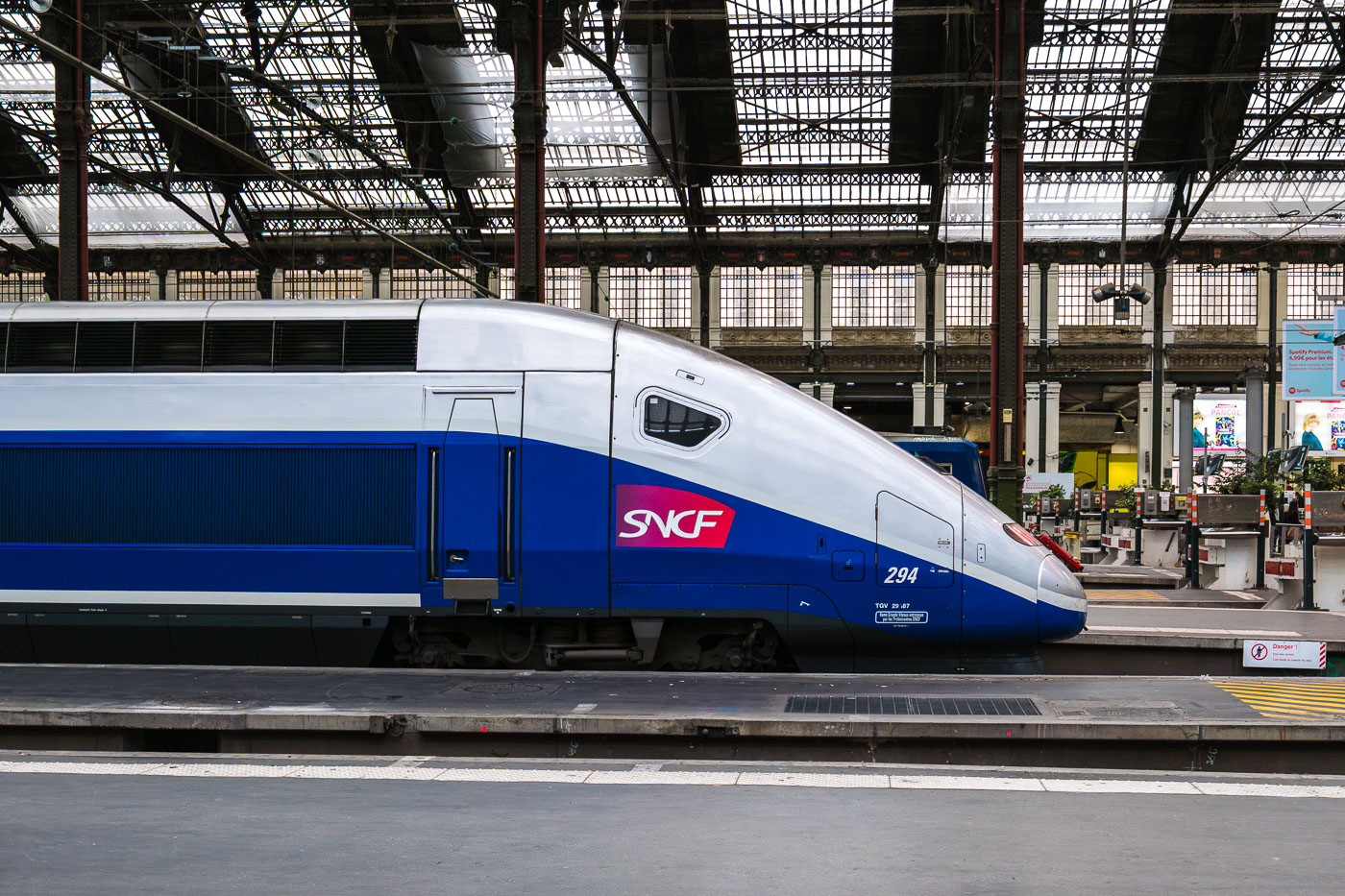
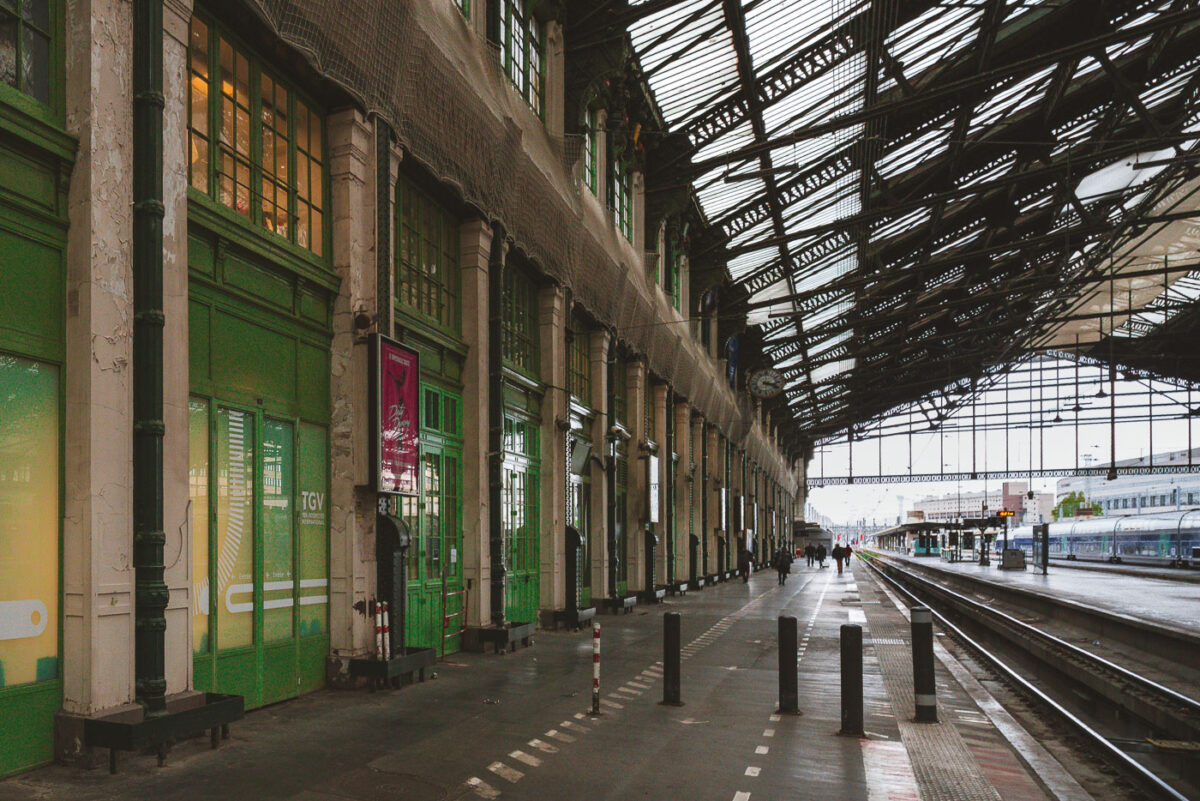
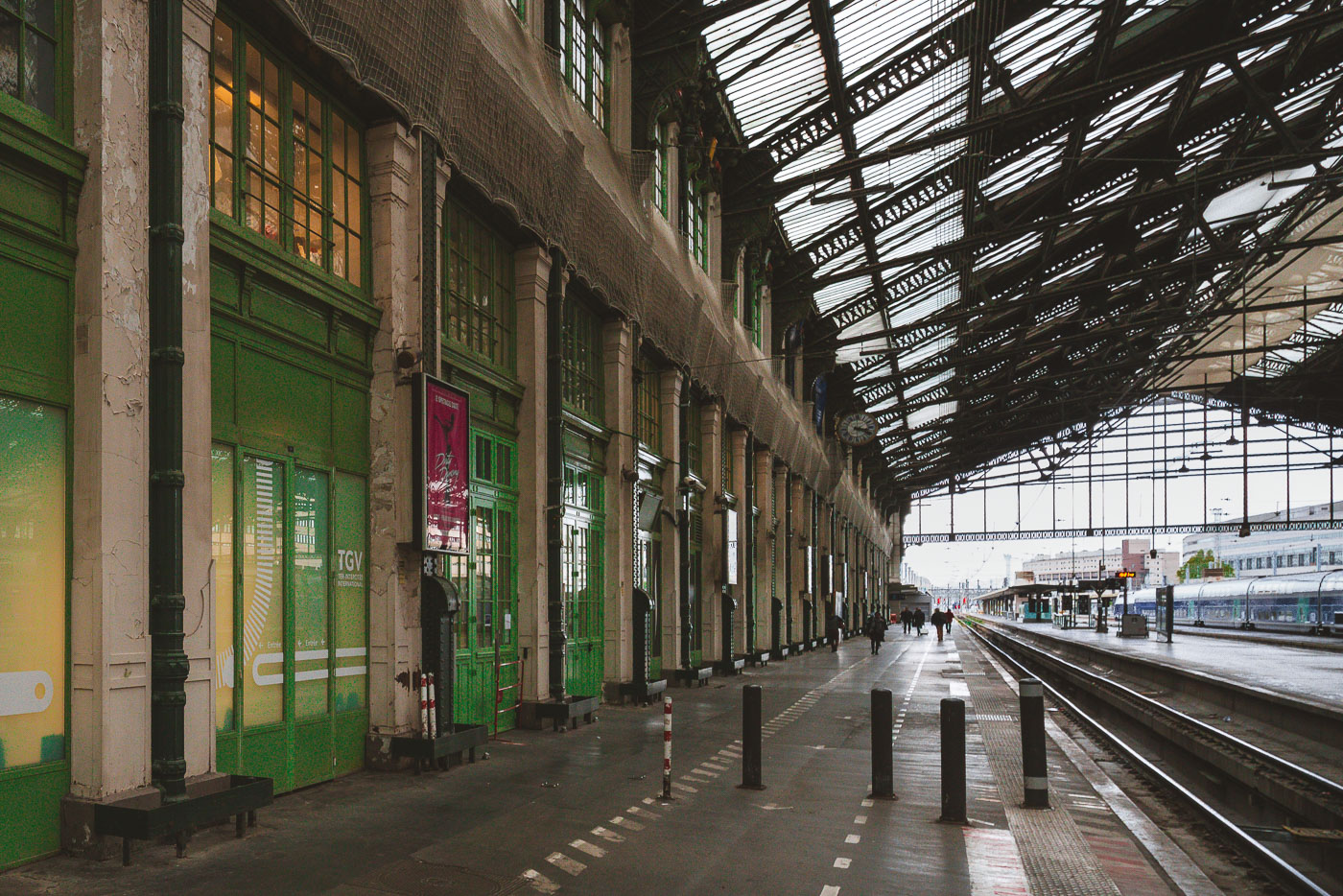
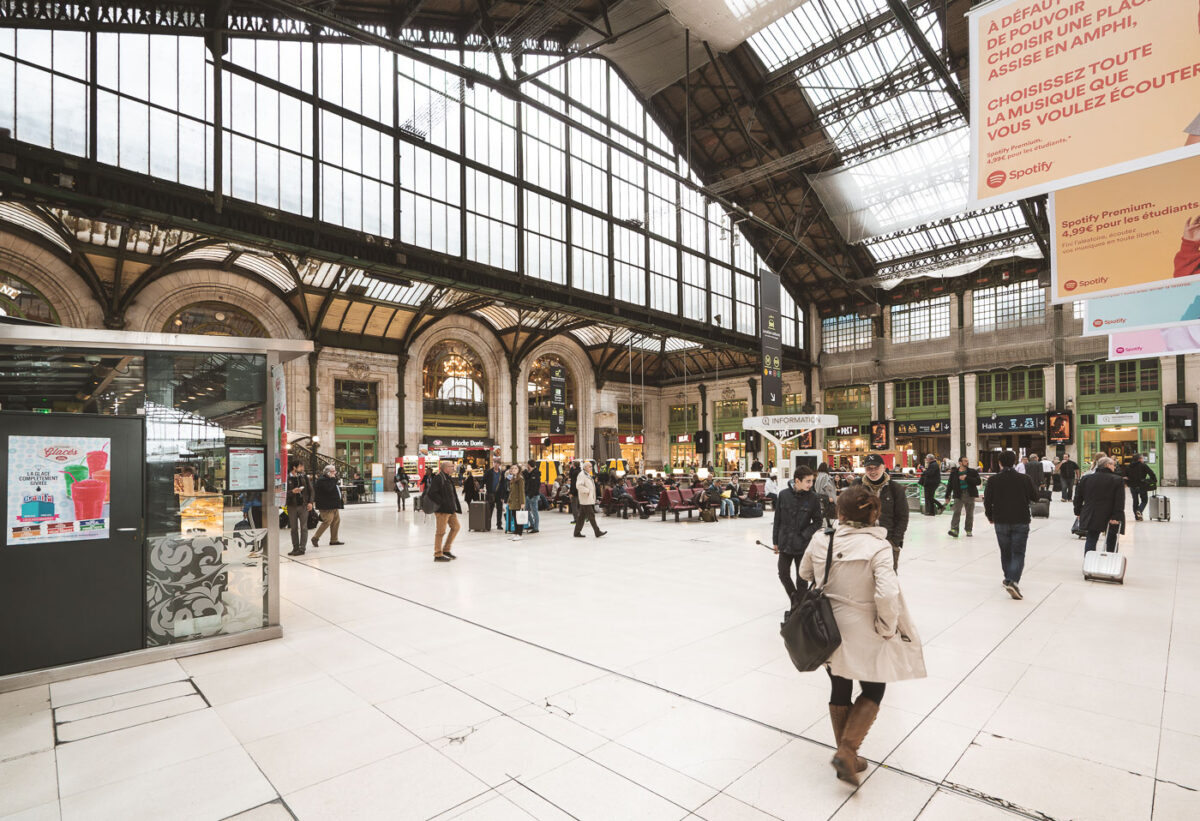
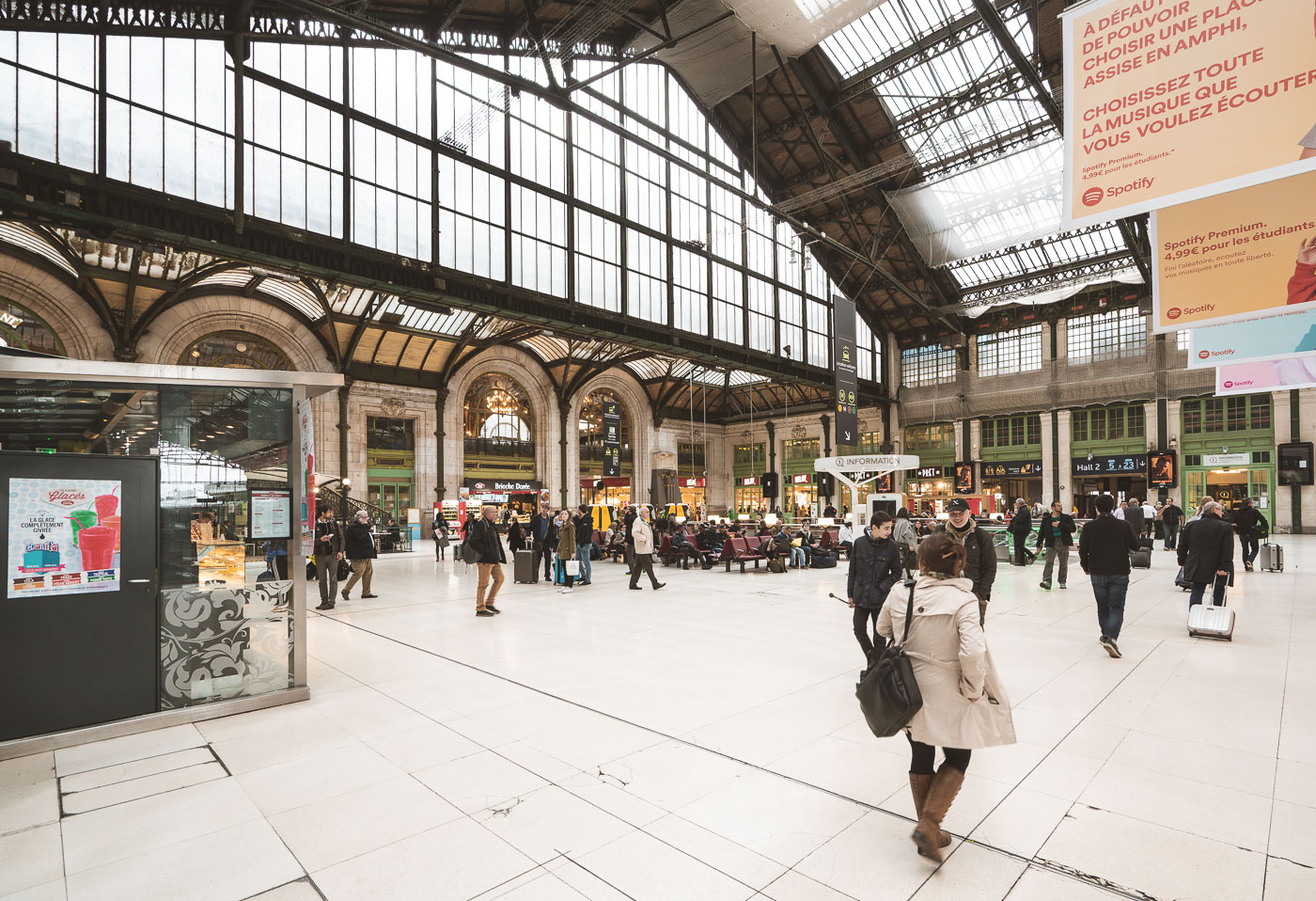
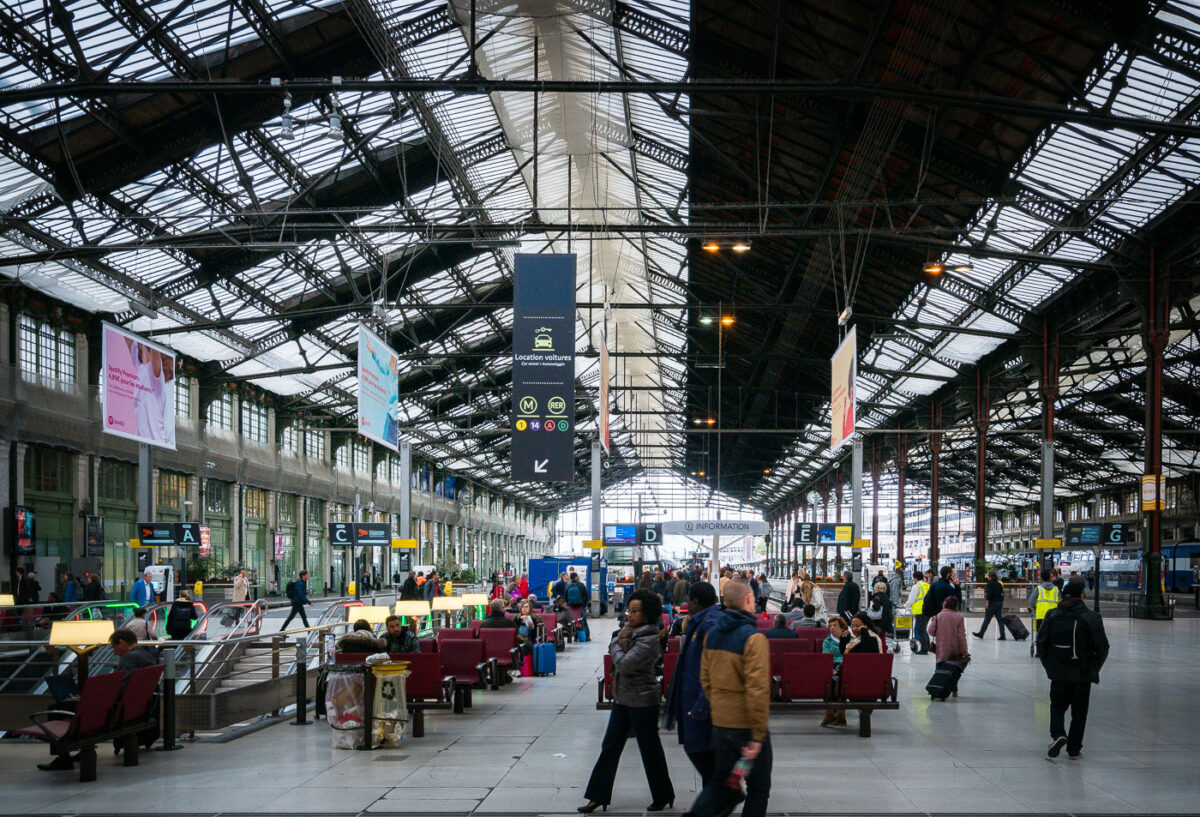
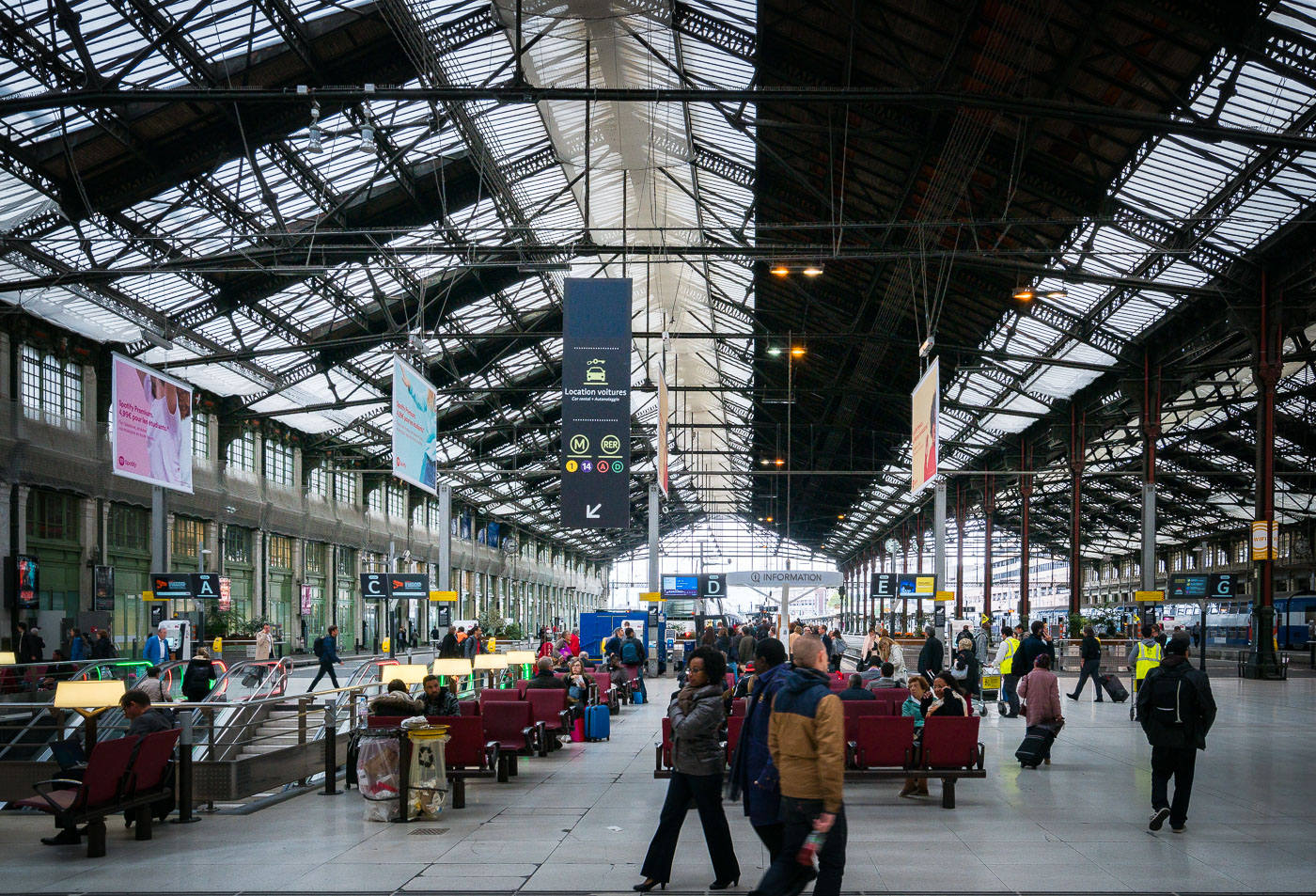
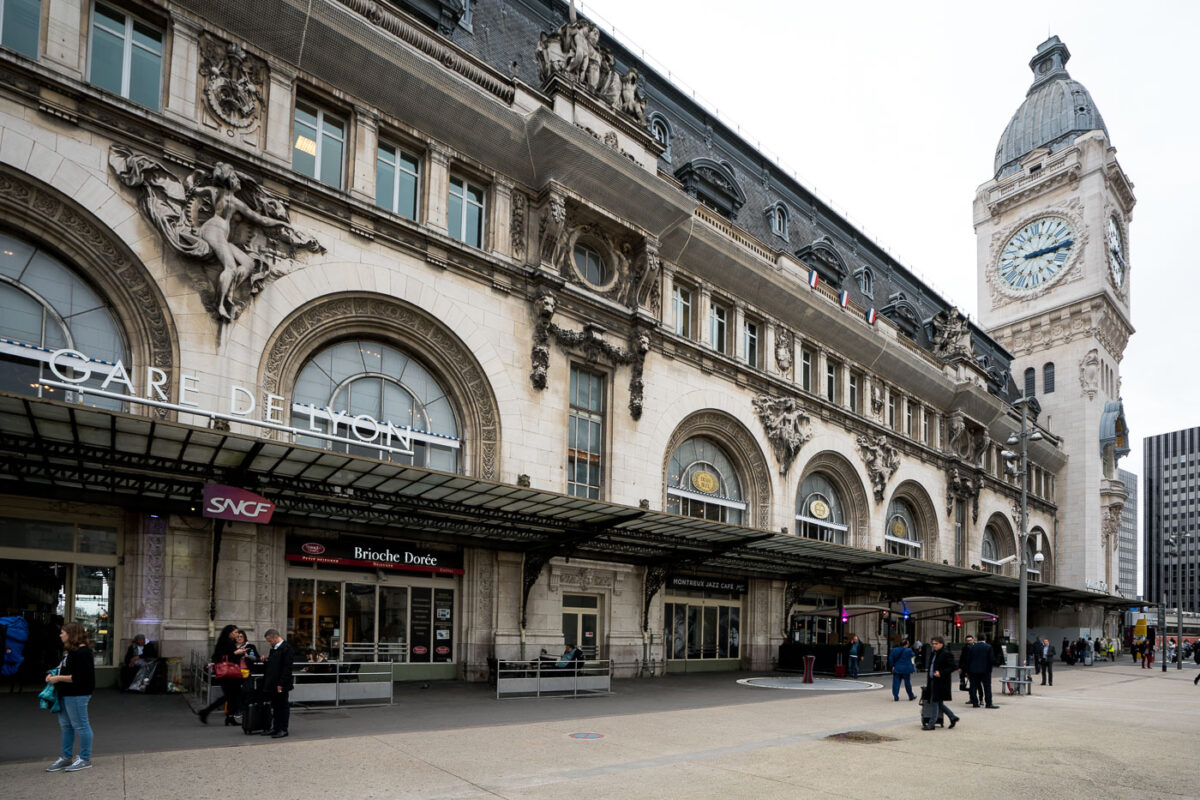
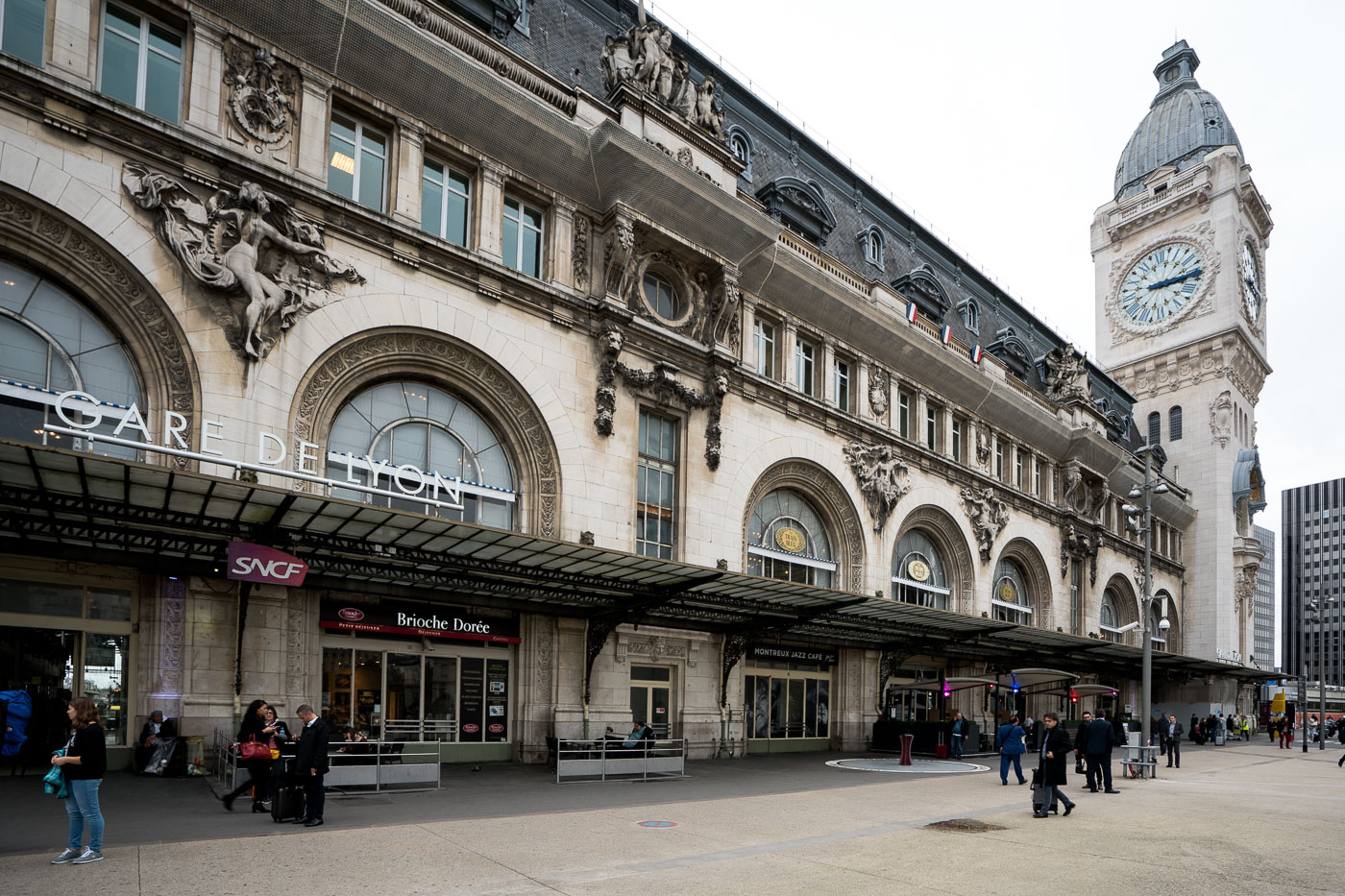
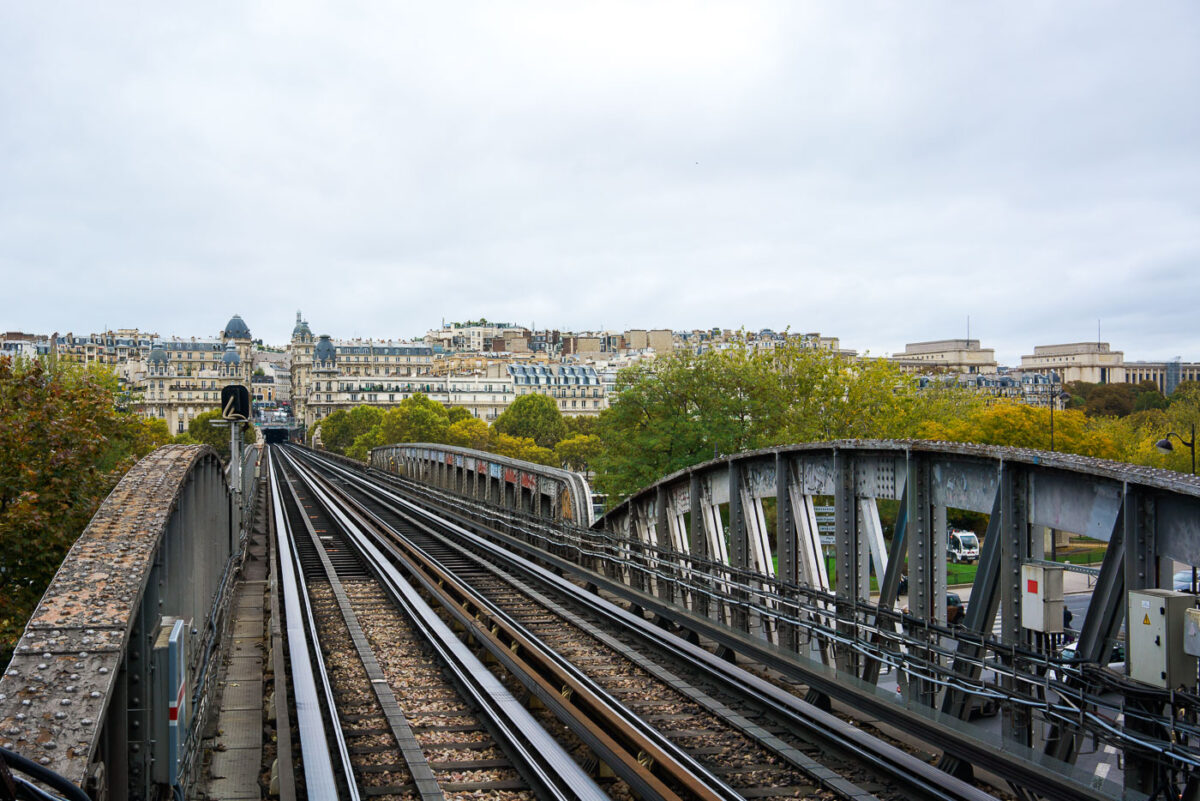
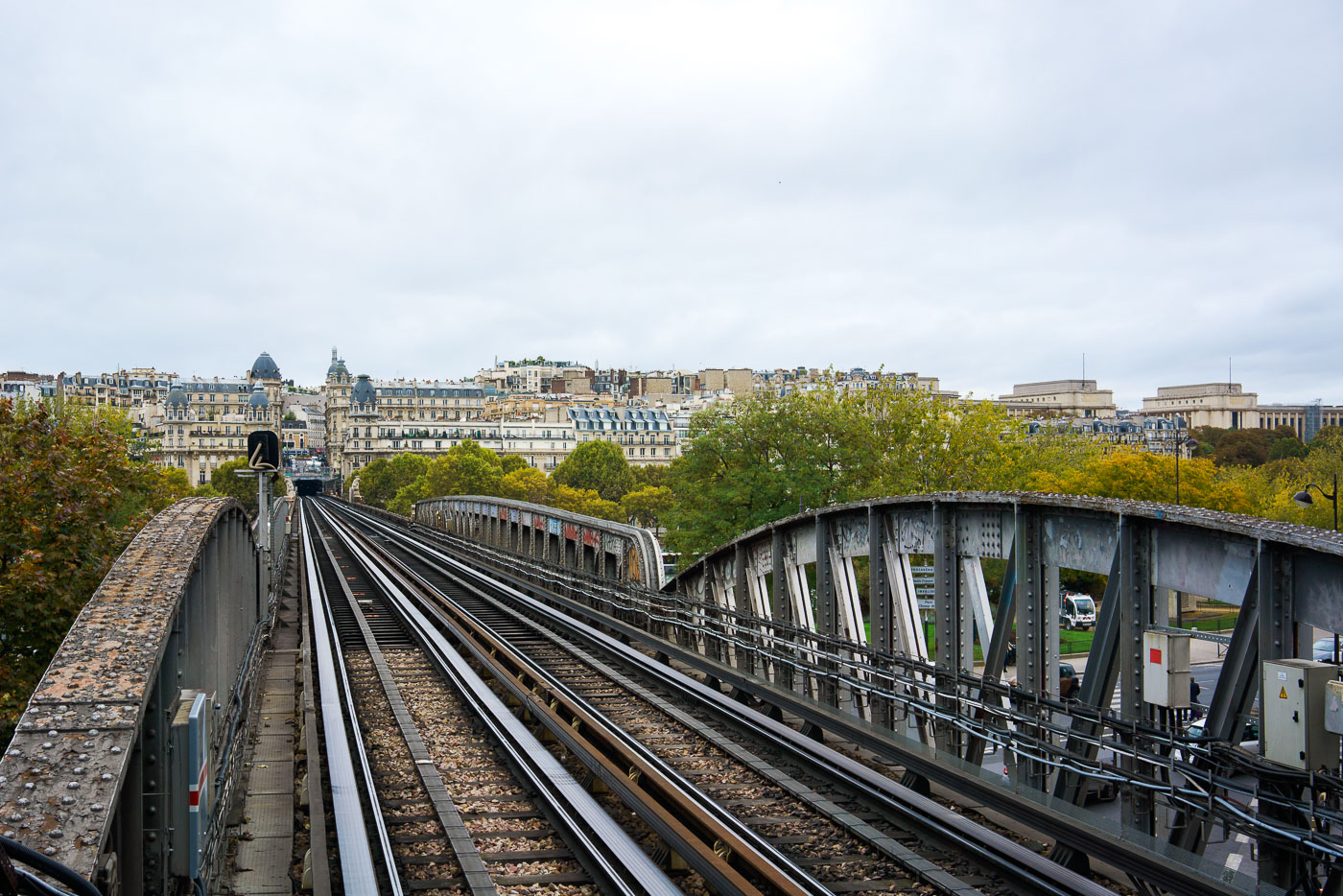
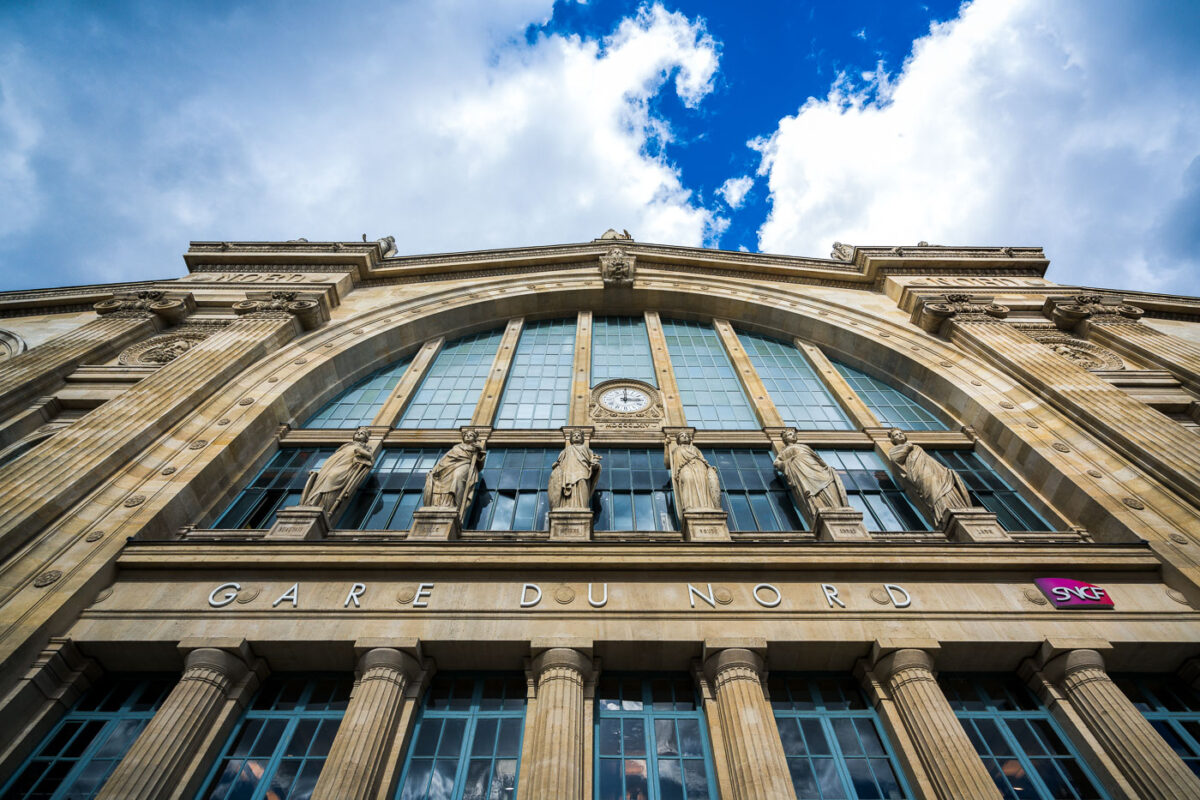
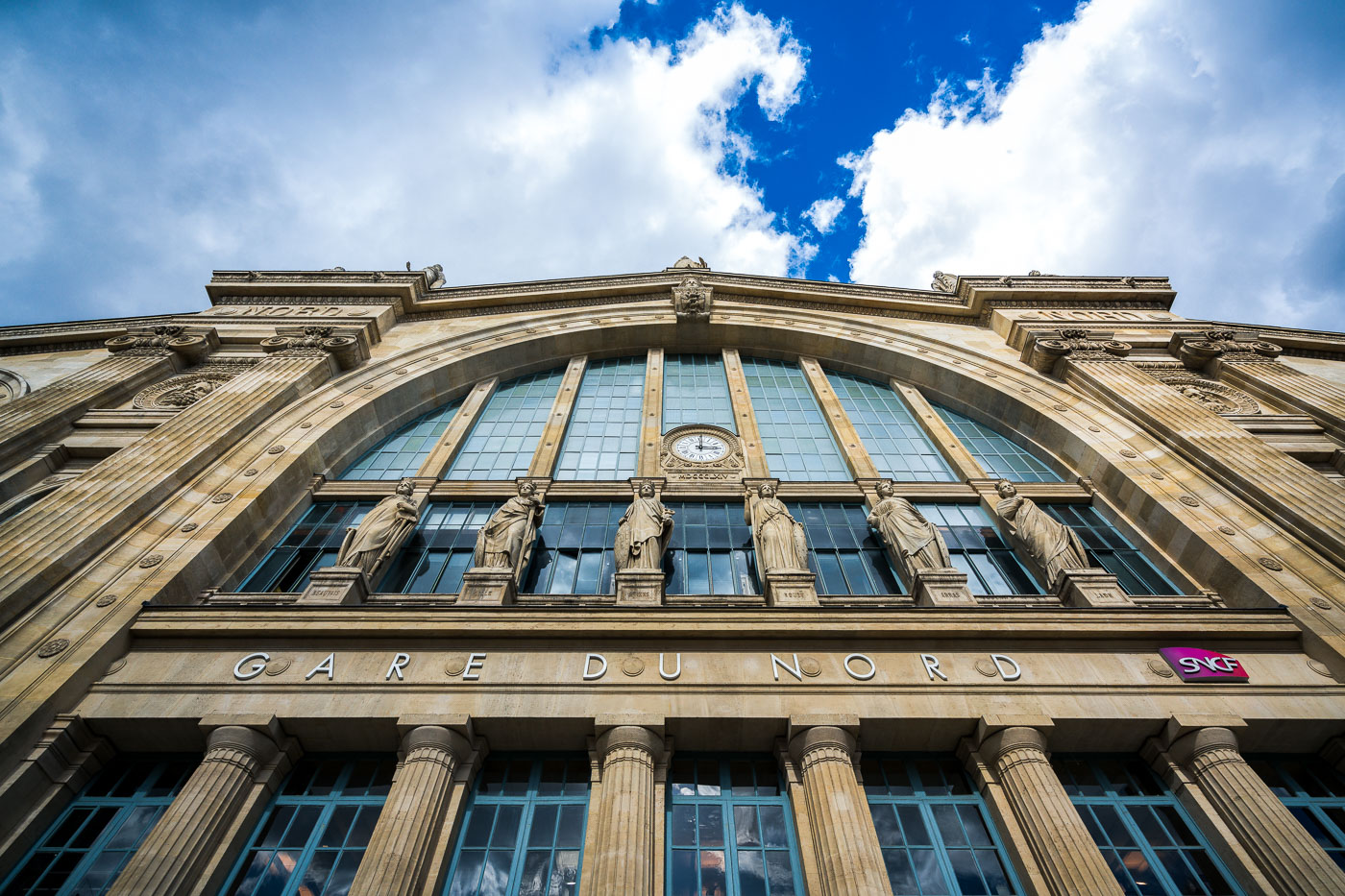
October 5, 2017 — A TGV 294 high-speed train, operated by SNCF, is seen at Gare de Lyon in Paris. This historic station, one of the capital's primary gateways, was inaugurated in 1900 for the Exposition Universelle and is renowned for its distinctive iron-and-glass train shed. Gare de Lyon serves as a crucial hub for high-speed rail services connecting Paris to southeastern France, including destinations like Lyon and Marseille, as well as international routes to Switzerland. The station's architecture, characterized by its grand scale and intricate metalwork, reflects the engineering prowess of the Belle Époque era.October 5, 2017 — Platforms at Paris Gare de Lyon, a major railway station in the 12th arrondissement, are covered by an expansive iron-and-glass train shed. This station, one of France's busiest, serves as a crucial hub for high-speed TGV services connecting Paris to southeastern cities, as well as conventional routes. Opened in 1855, its original structures were expanded and modernized over time, notably with the addition of the large glass canopy that defines its current appearance. The station continues to be a vital transportation nexus for both domestic and international travelers.October 5, 2017 — The Beaux-Arts concourse of Paris Gare de Lyon, inaugurated for the 1900 Exposition Universelle, showcases its original iron-and-glass train shed architecture. This major Parisian rail hub serves TGV and regional lines to southeastern France, as well as Métro and RER connections for city transit. Passengers navigate the busy interior, passing shops and seating areas beneath the grand arches and clerestory windows that define the station's historic design.October 5, 2017 — The main concourse of Gare de Lyon in Paris, France, showcases its historic iron-and-glass architecture, a design characteristic of late 19th and early 20th-century train stations. Opened in 1900 for the Exposition Universelle, this major rail hub serves as a gateway for high-speed TGV and regional services connecting Paris to southeastern France and international destinations. Today, travelers navigate the expansive hall, indicated by signage for platforms C through G, information services, and connections to the Paris Métro and RER lines.October 5, 2017 — Gare de Lyon, a major railway station in Paris, France, was inaugurated in 1900 for the Exposition Universelle. Its Belle Époque architecture, characterized by ornate stonework and a prominent clock tower, reflects the grandeur of the era. The station serves as a vital transportation hub, connecting Paris with southeastern France and international destinations. Today, Gare de Lyon continues to be a bustling center of activity, facilitating travel for millions of passengers annually.October 2, 2017 — Paris Metro Line 6 traverses the Seine River on the Pont de Bir-Hakeim, a distinctive two-tiered bridge completed in 1905. The upper level carries the elevated metro line, a design choice made to ensure ventilation for the early steam-powered trains and to offer unobstructed city views. The bridge's steel viaduct construction, characterized by riveted beams, reflects the engineering practices of the early 20th century. In the distance, the architecture of the Passy district in the 16th arrondissement is visible, showcasing Haussmannian style buildings.September 30, 2017 — The Beaux-Arts facade of Gare du Nord, Paris, designed by architect Jacques-Ignace Hittorff and opened in the 1860s, is adorned with allegorical statues representing cities historically served by the station. As one of Europe's busiest rail hubs, Gare du Nord connects regional Transilien and RER lines, the Paris Métro, and international services like the Eurostar to London. The station's grand architecture reflects the significance of rail travel in northern Europe since the 19th century, serving as a vital gateway for commuters and travelers.
Built in Minneapolis
Photographs made over time, focused on place, public life, and ongoing reporting.
Browse by location, move through long-running series, or start with recent work.