Place Archive

Bruges

Bruges’ medieval core centers on the UNESCO-listed canals of the River Reie, where historic brick and plaster townhouses with stepped gables line waterways once vital for trade. The Markt and Burg squares feature Gothic and Renaissance civic buildings, while narrow cobblestone streets with bicycles reflect the city’s preserved urban fabric and daily rhythms.

1 photo set 15 photos

Photos from Bruges
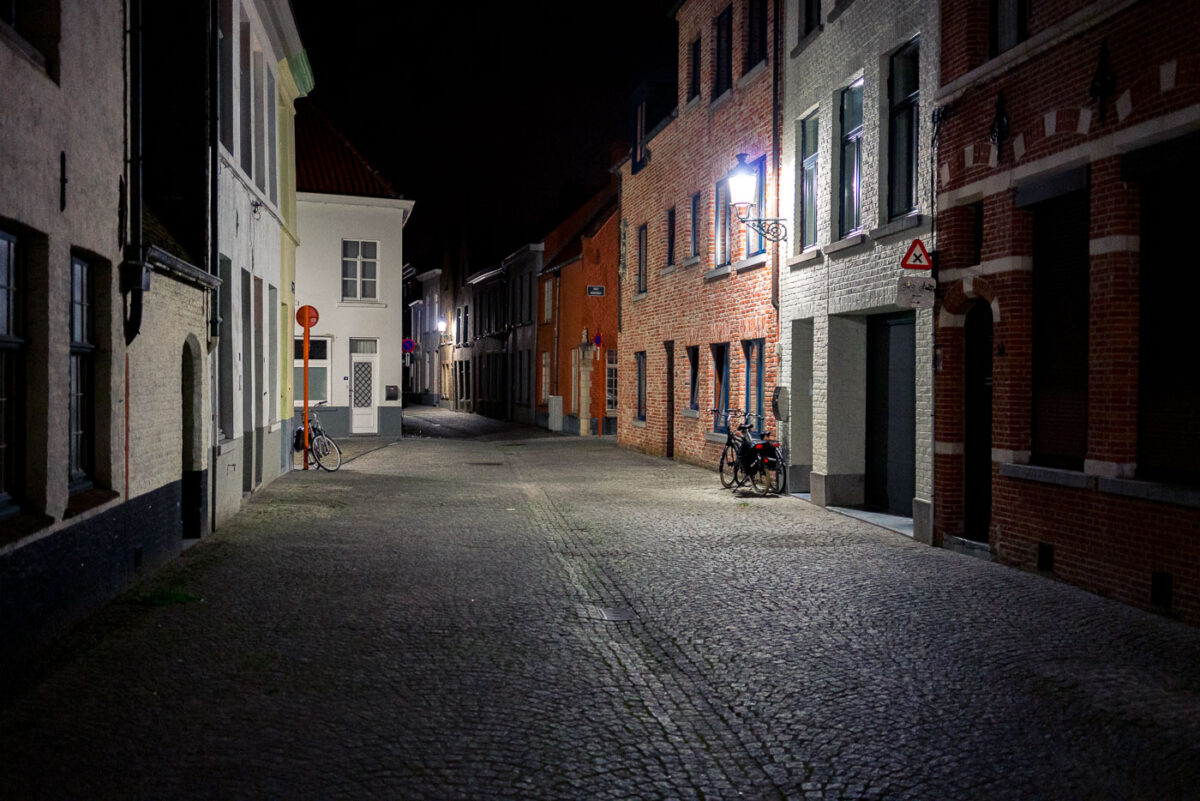
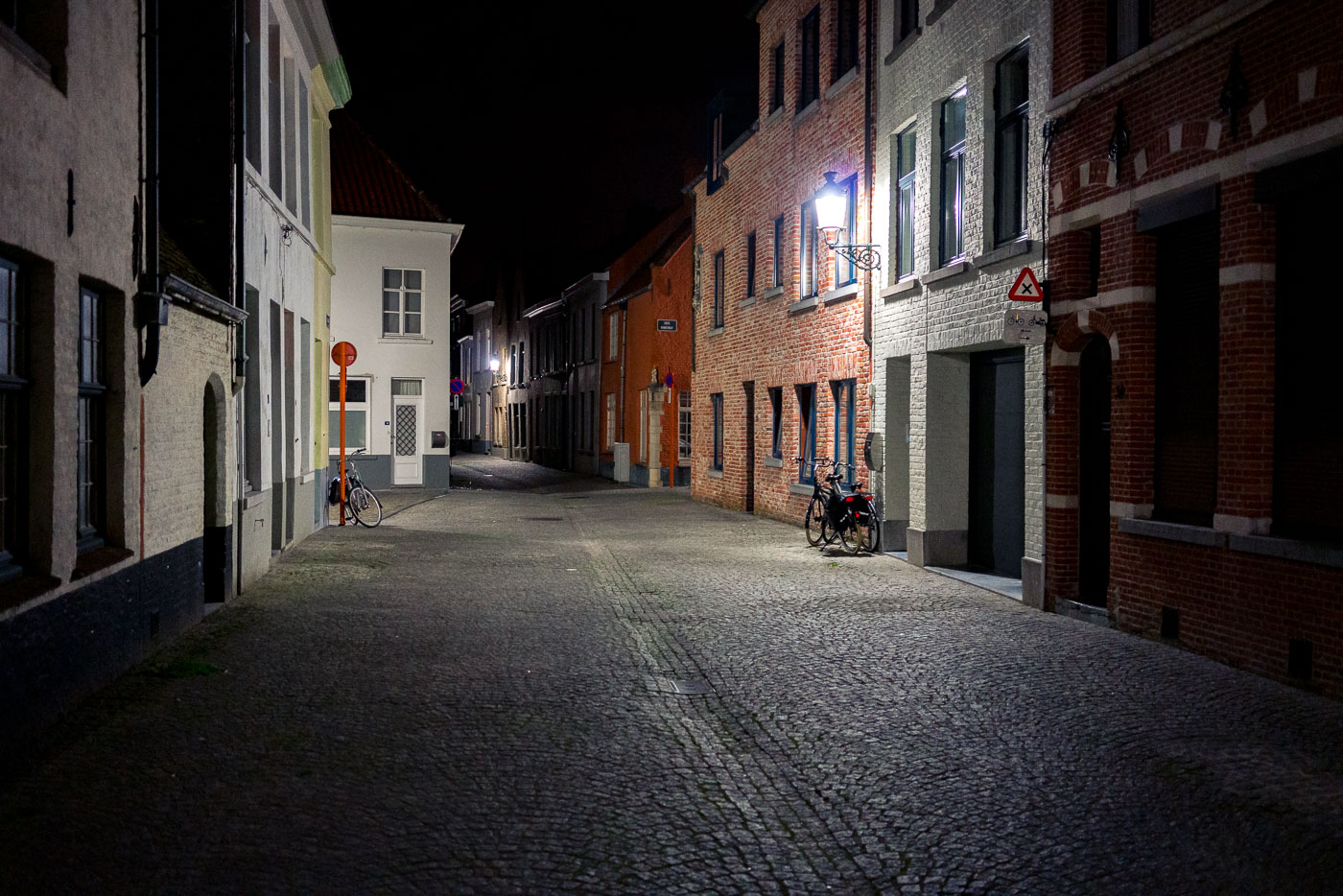
Bicycle on a brick road in Bruges Belgium
A narrow, cobblestone street in Bruges, Belgium, is illuminated by a single streetlamp at night. The historic center, a UNESCO World Heritage site, features well-preserved medieval architecture, with brick and plaster townhouses lining the lane. Bicycles, a common mode of transport in the city's car-restricted zones, are parked along the street. The presence of standard European road signs, including a no-entry sign and a warning for cycle traffic, indicates the city's traffic management priorities.
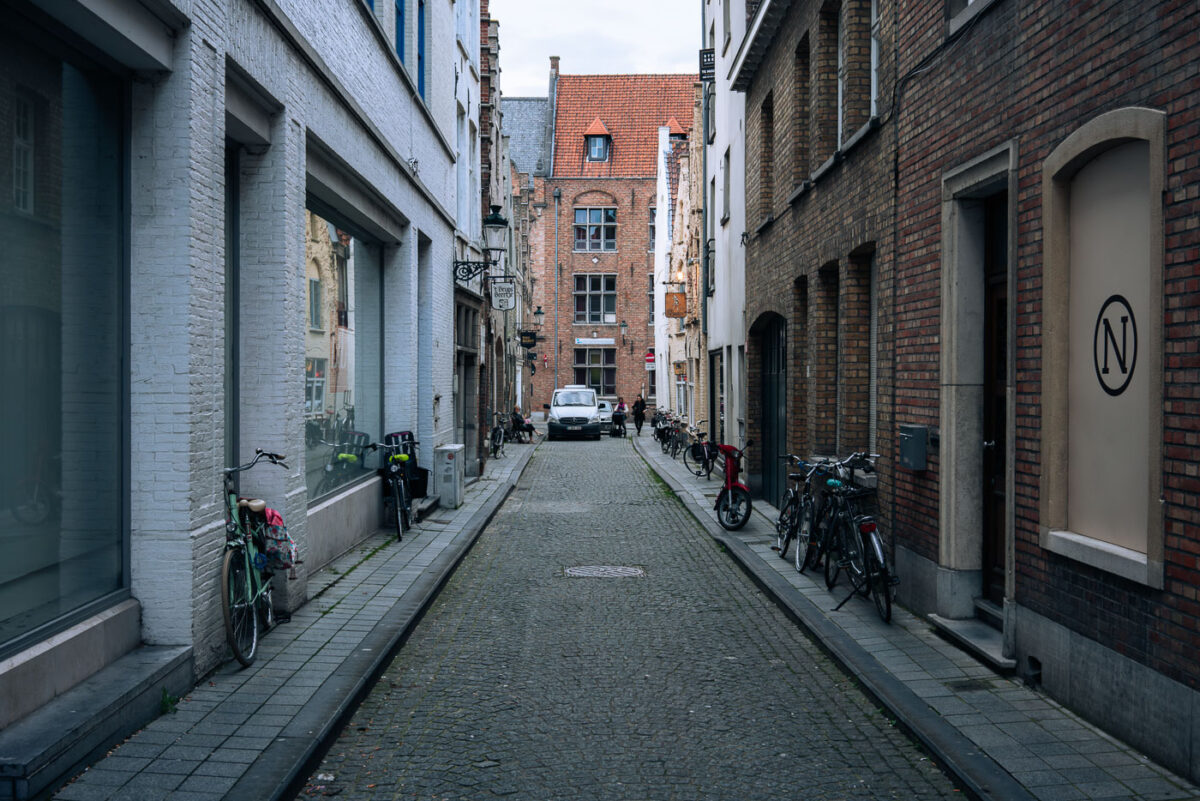
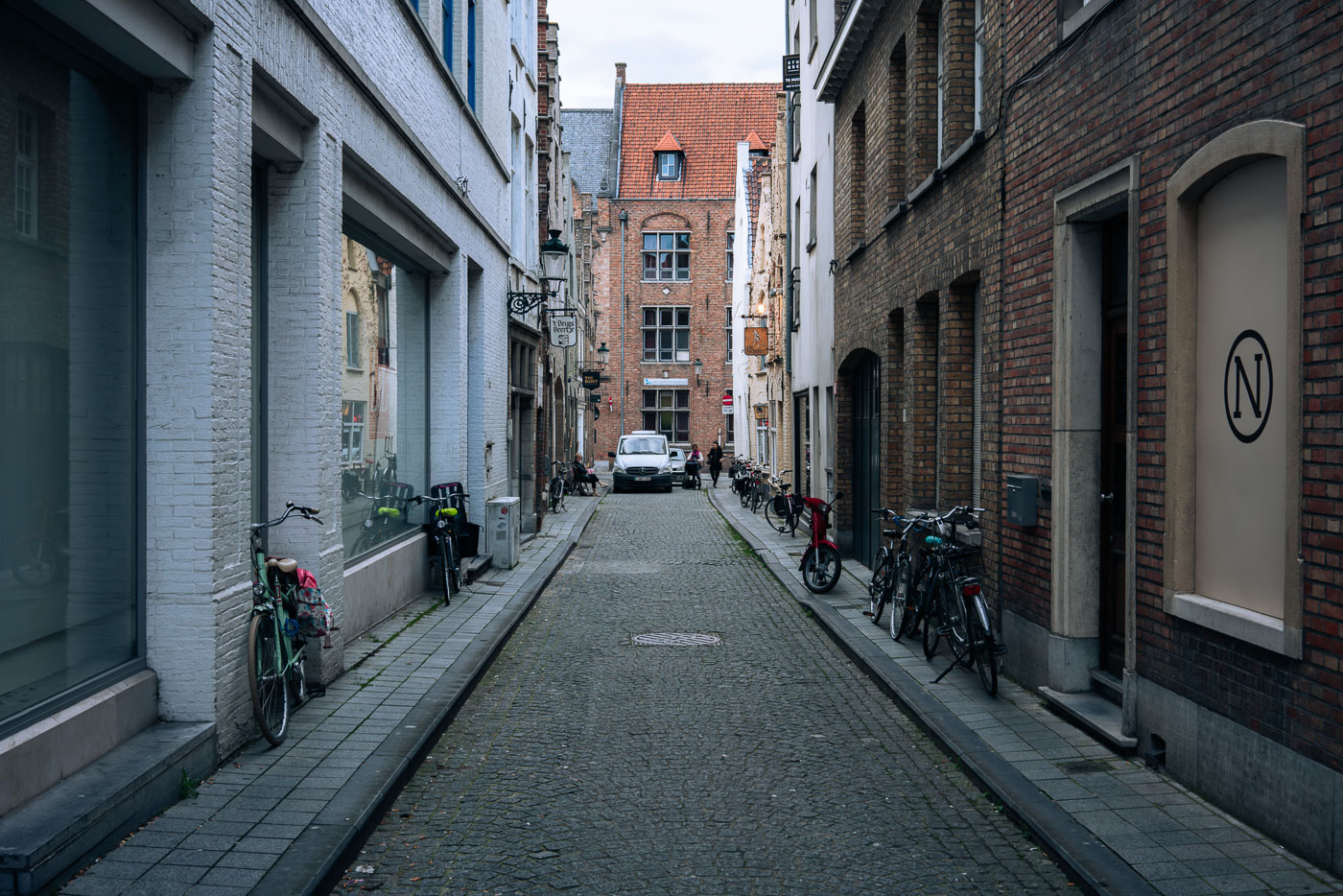
Bruges, Belgium: A narrow cobblestone alleyway lined with historic brick buildings and parked bicycles, reflecting the city's medieval architecture and transport.
A narrow cobblestone alleyway in Bruges, Belgium, is lined with historic brick and white-washed buildings. Bicycles are parked along the sidewalks, a common mode of transport in this medieval city. The architecture reflects centuries of development, with buildings showcasing traditional Flemish styles. Bruges, a UNESCO World Heritage site, retains much of its 13th-century layout, with its canals and well-preserved structures making it a significant cultural and historical destination.
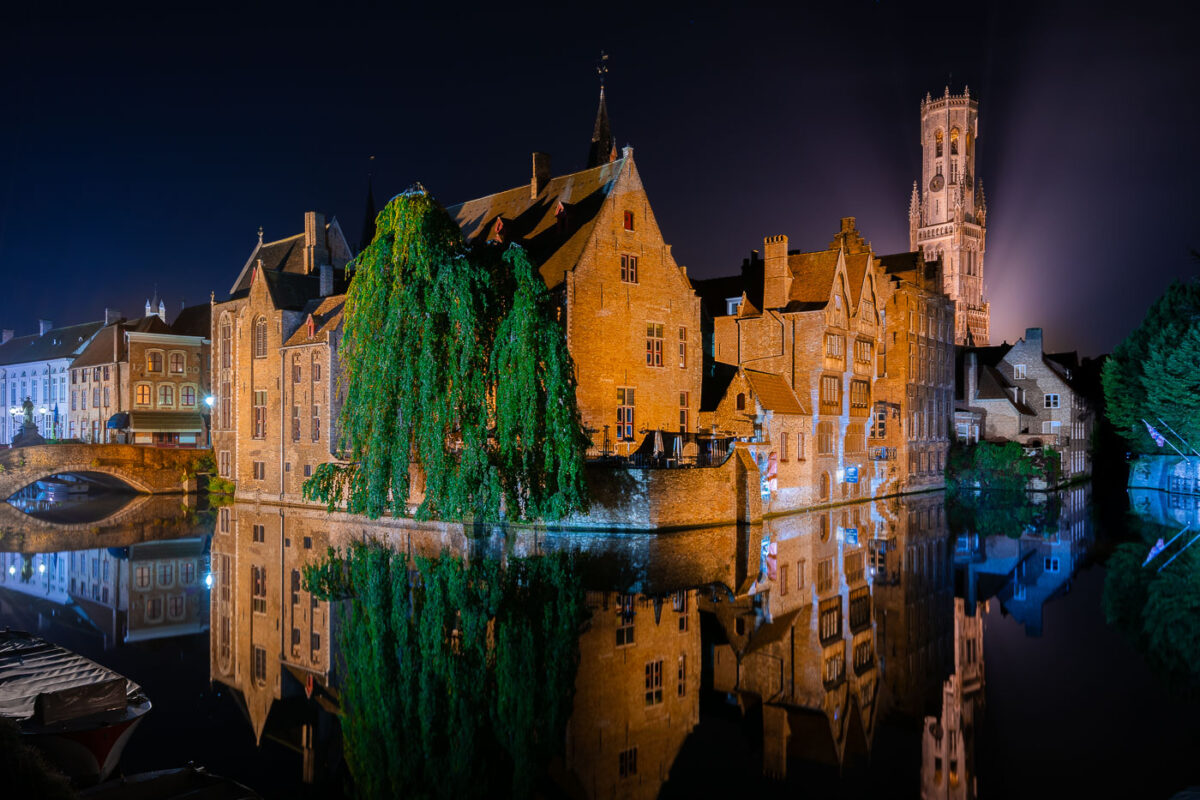
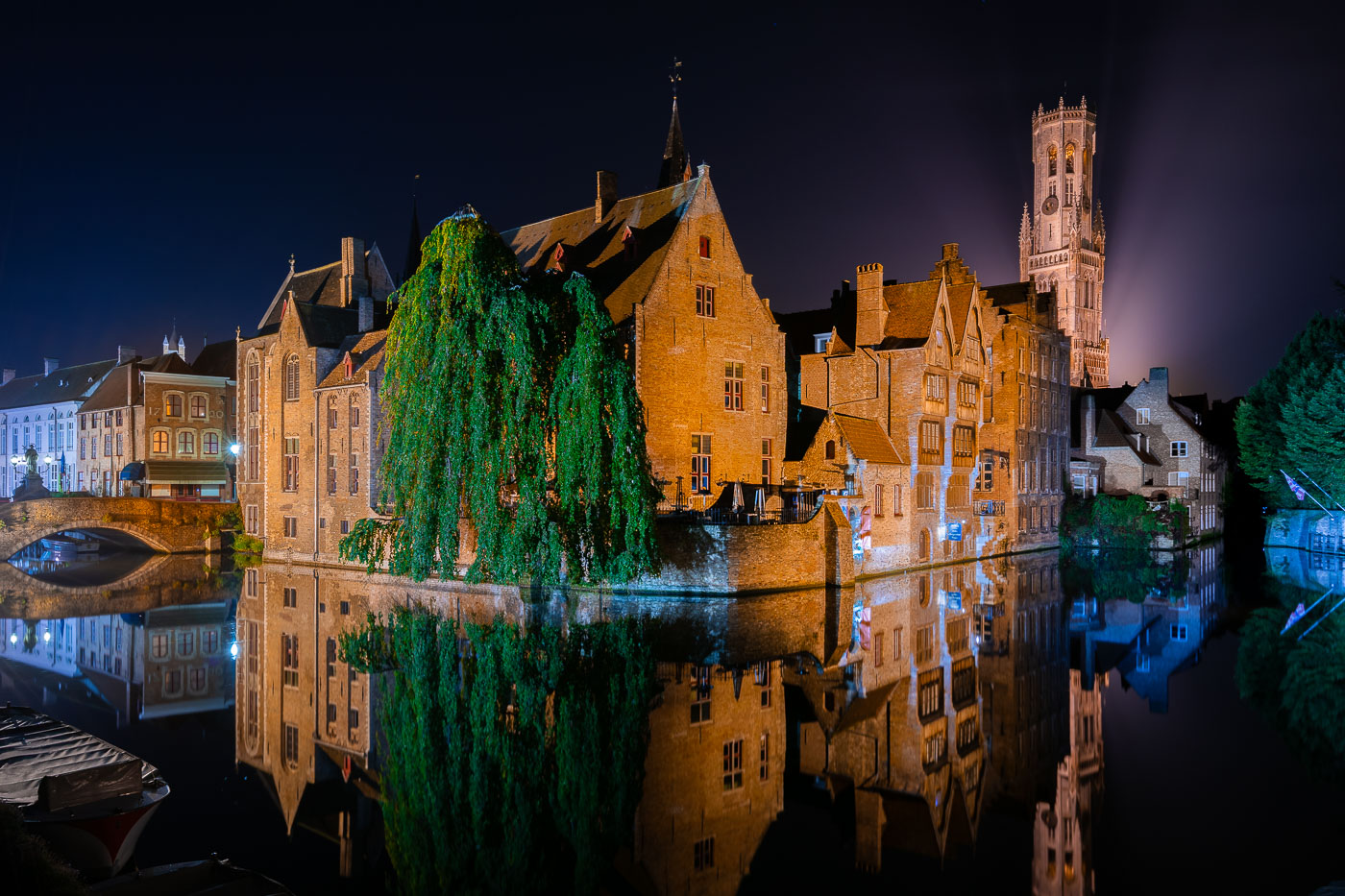
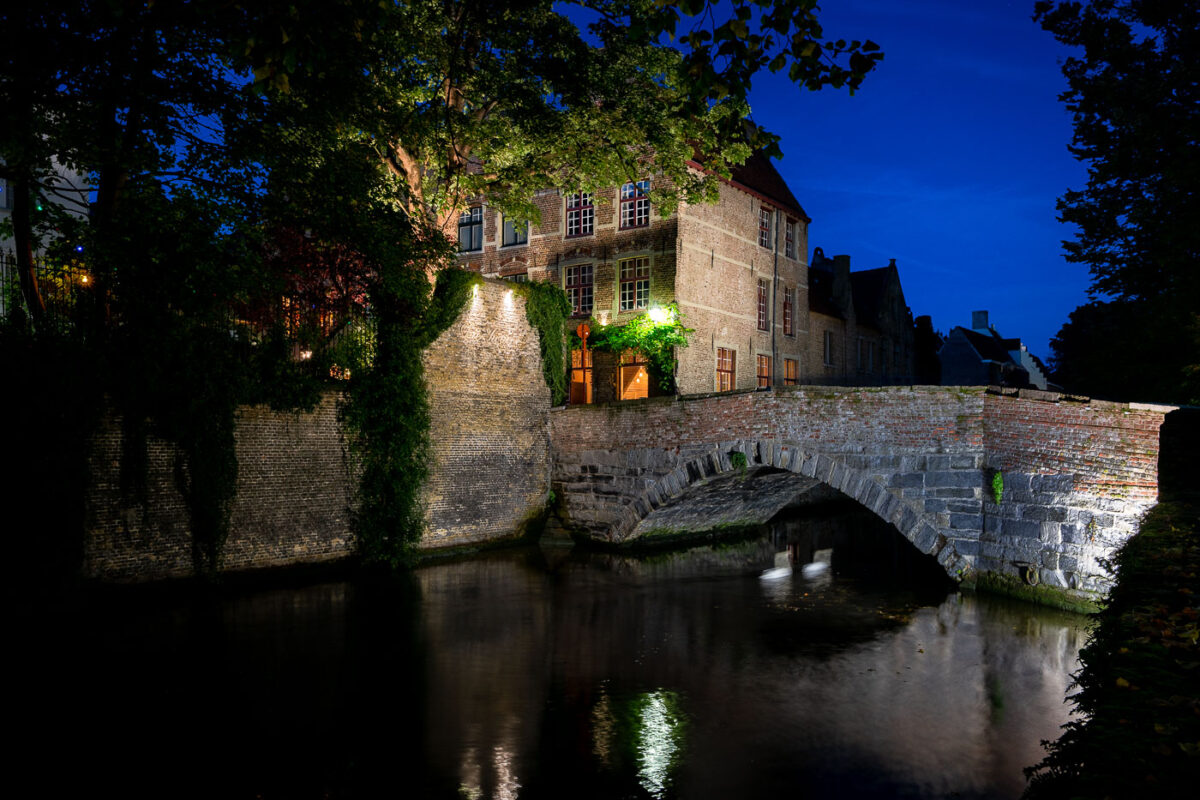
River Reie in Bruges Belgium at night
Bruges' historic center, a UNESCO World Heritage site, is illuminated at night along the River Reie. The medieval waterfront, once a vital artery for trade, is lined with gabled brick buildings whose reflections shimmer on the still water. The Belfry of Bruges, a 13th-century belfry tower, stands prominently in the background, a testament to the city's prosperous past. Today, these canals continue to be a central feature for tourism and local life in this Belgian city.
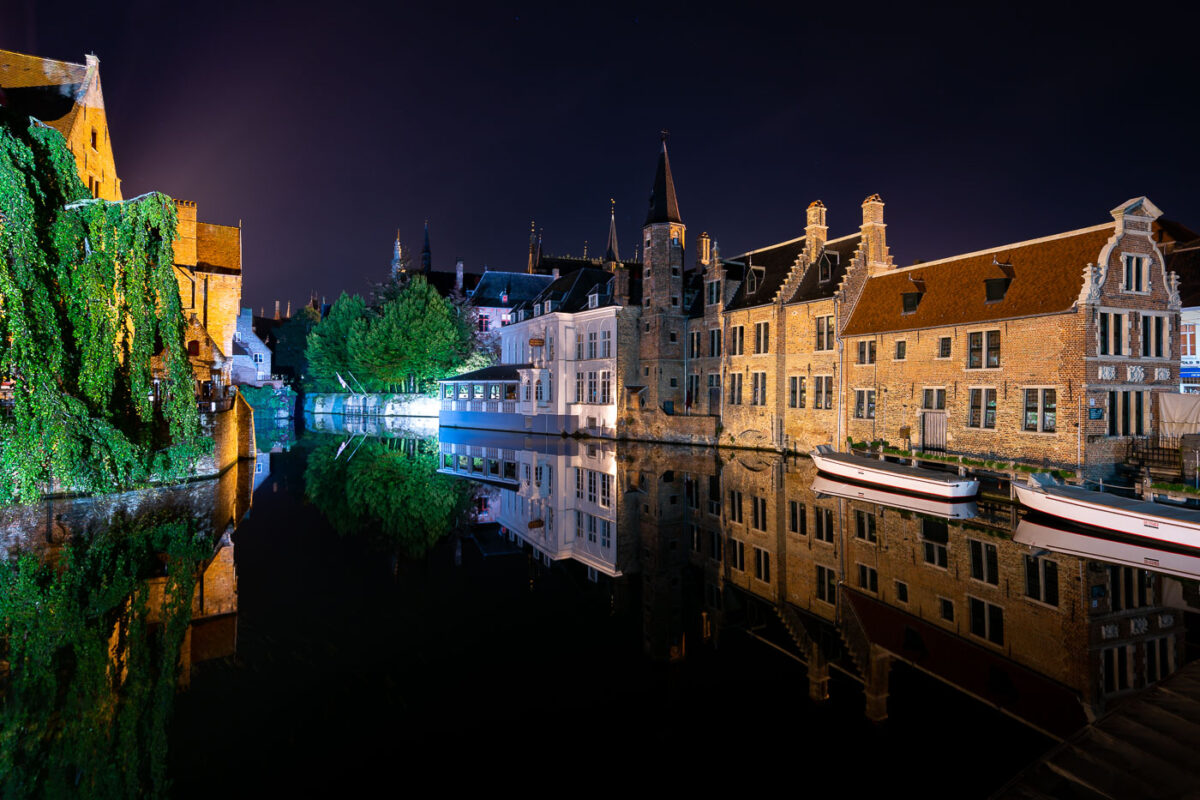
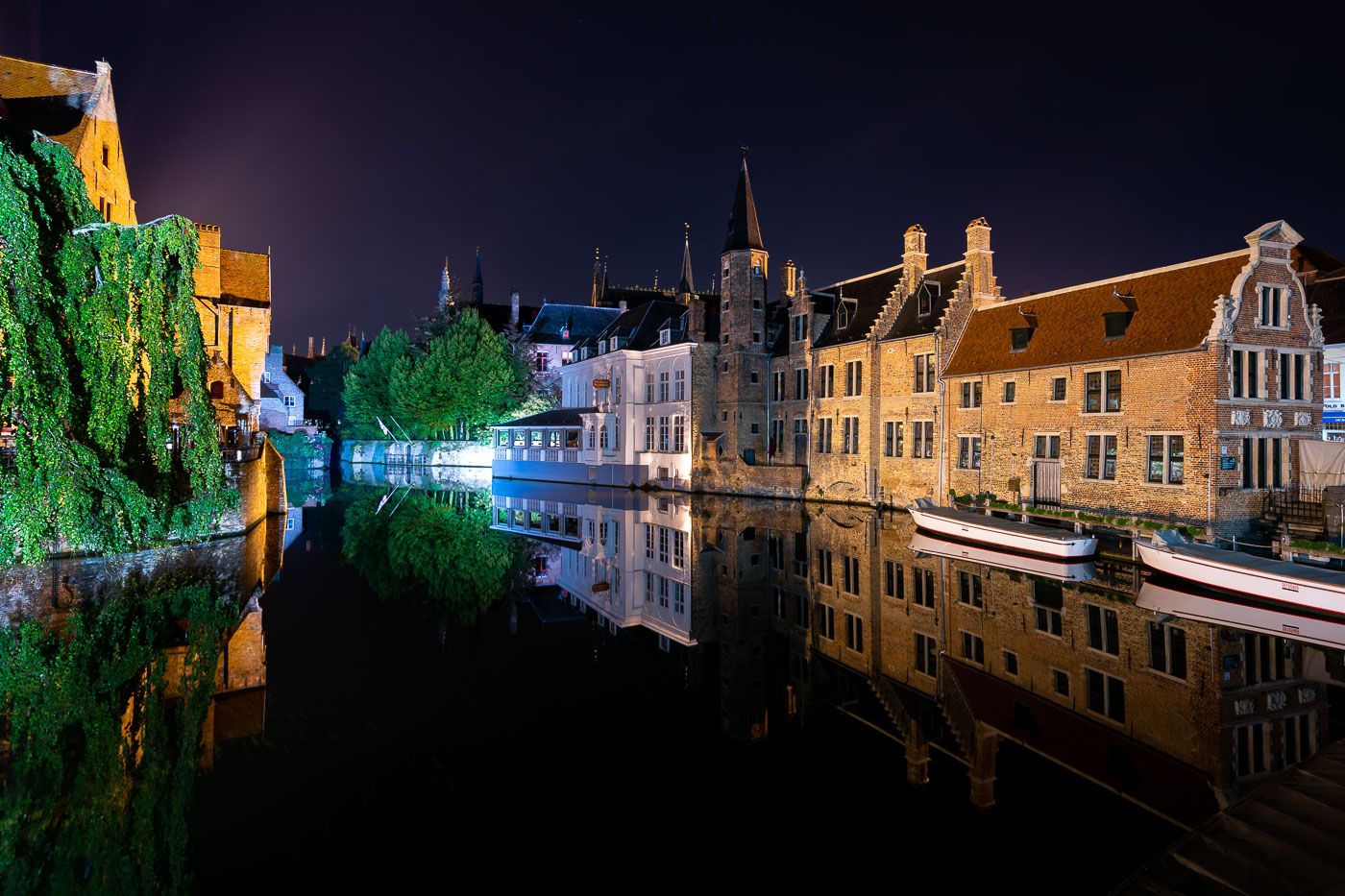
Reflections on the river in Bruges Belgium
Nighttime reflections line a bend of the River Reie in Bruges, Belgium, as historic brick guild houses and stepped-gable facades mirror perfectly on the still canal. Two white tour boats sit moored for the night along the quay, while a vine-draped wall and a waterside restaurant pavilion are illuminated across the water. Church spires rise in silhouette behind the row of houses, anchoring the skyline of the medieval core. Bruges’ historic center, a UNESCO World Heritage Site, is known for its preserved canals and architecture that draw heavy daytime tourism; after hours, the waterways fall quiet except for lights from hotels and eateries along the quay.
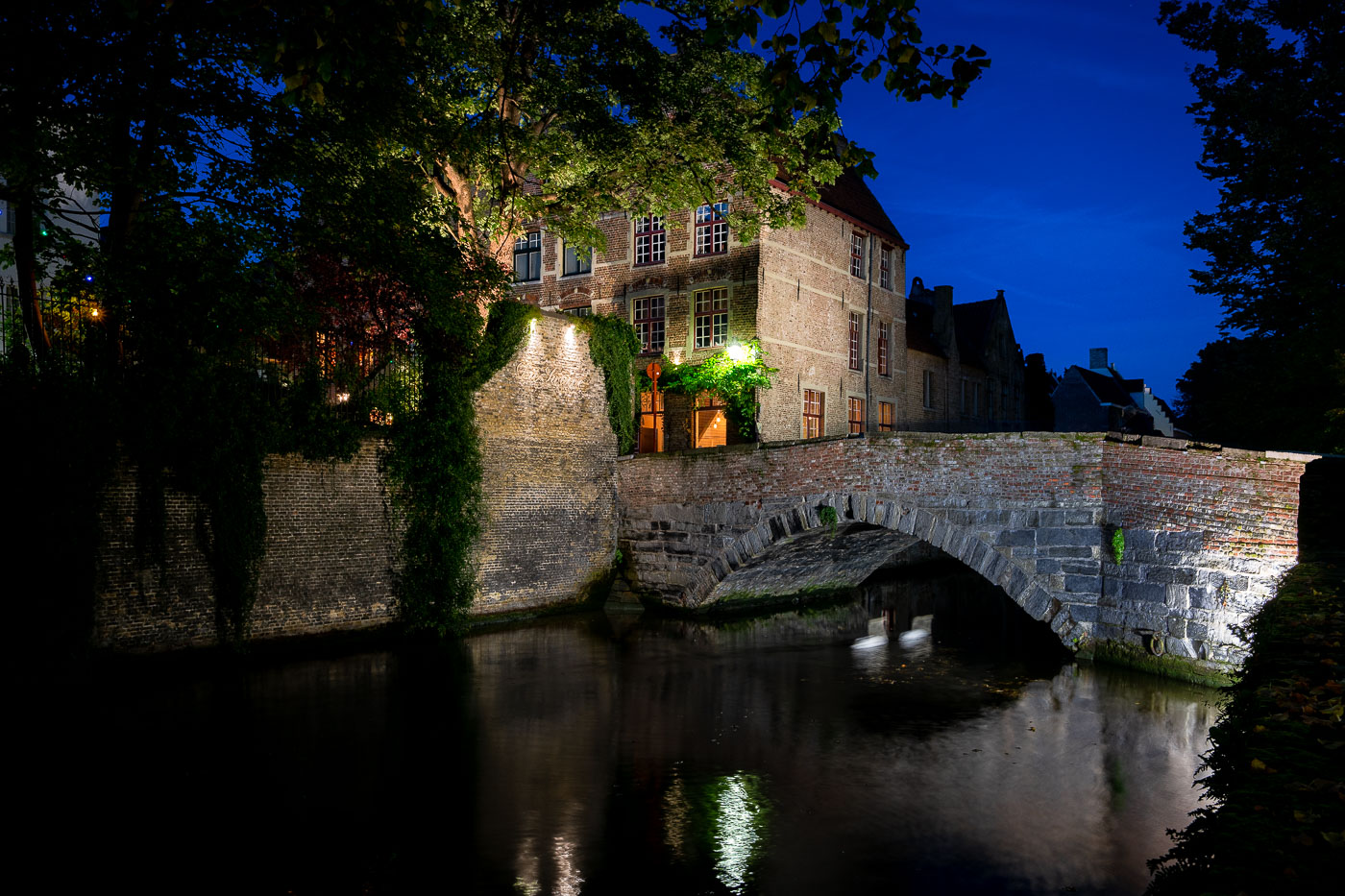
Night photo of Bruges Belgium
A stone and brick bridge crosses the Reie canal in Bruges, Belgium, at night. This historic city, a UNESCO World Heritage site, was a major trading hub in the Middle Ages, with its canals serving as vital arteries for commerce. The bridge, with its single arch, is a testament to the enduring architecture that facilitated the city's prosperity. Today, Bruges' canals continue to be central to its identity, supporting tourism and reflecting the city's rich past.
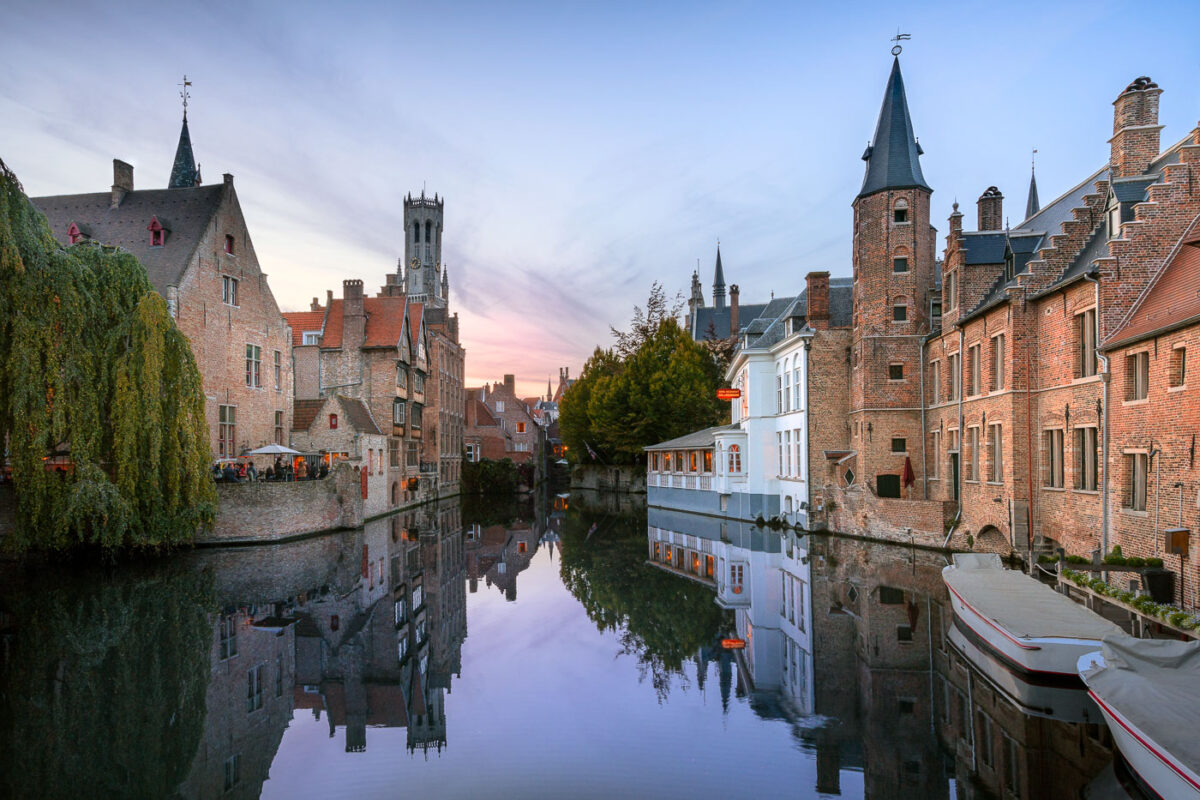
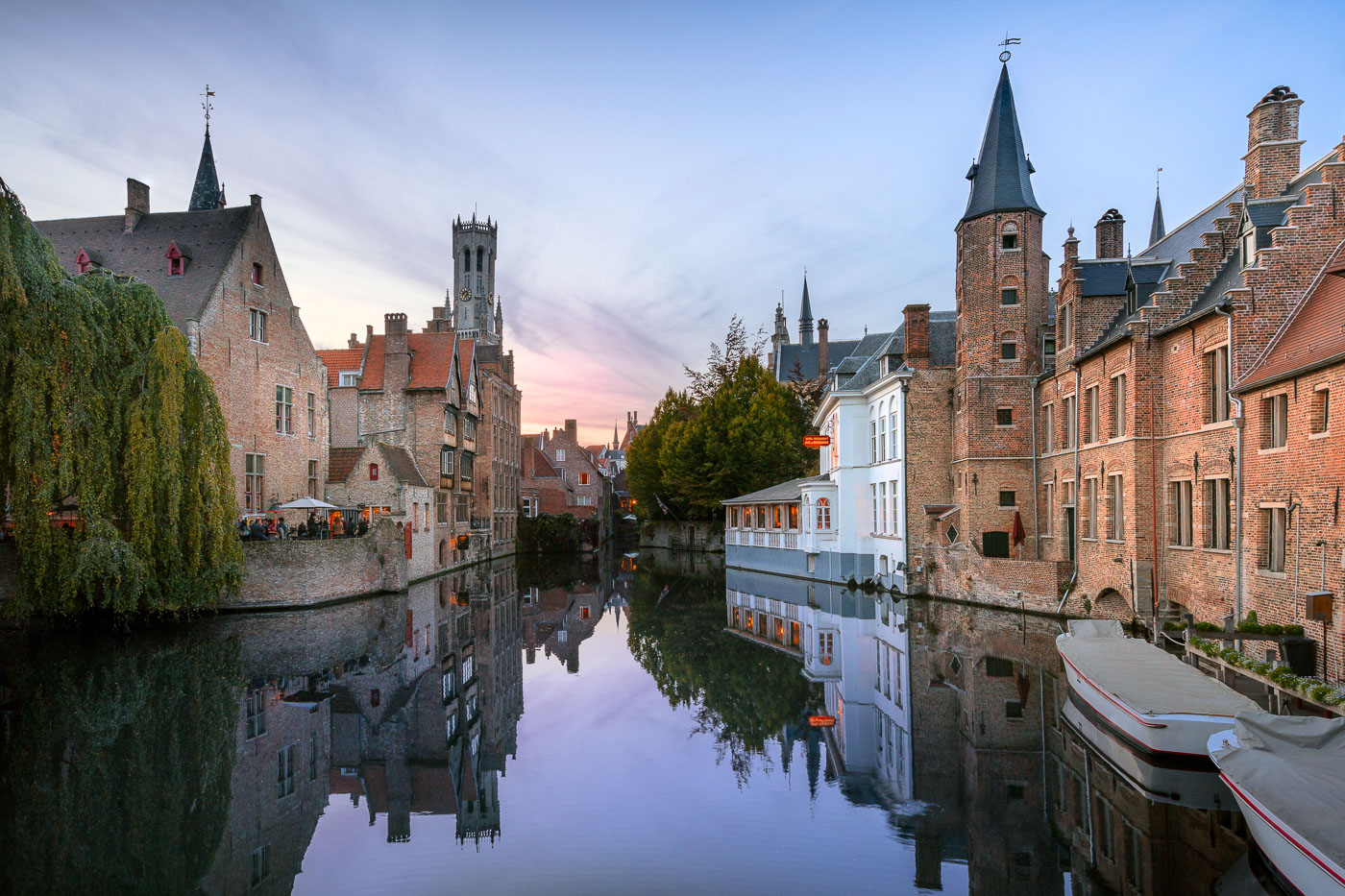
Sunset in Bruges Belgium
Rozenhoedkaai canal in Bruges, Belgium, at dusk. The canal, once a vital artery for trade, is now a picturesque waterway lined with historic guildhouses and stepped gables. Dominating the background is the Belfry of Bruges, a medieval bell tower that served as a symbol of the city's prosperity and independence. The area, part of Bruges' UNESCO World Heritage site, continues to attract visitors with its well-preserved architecture and canal tours.
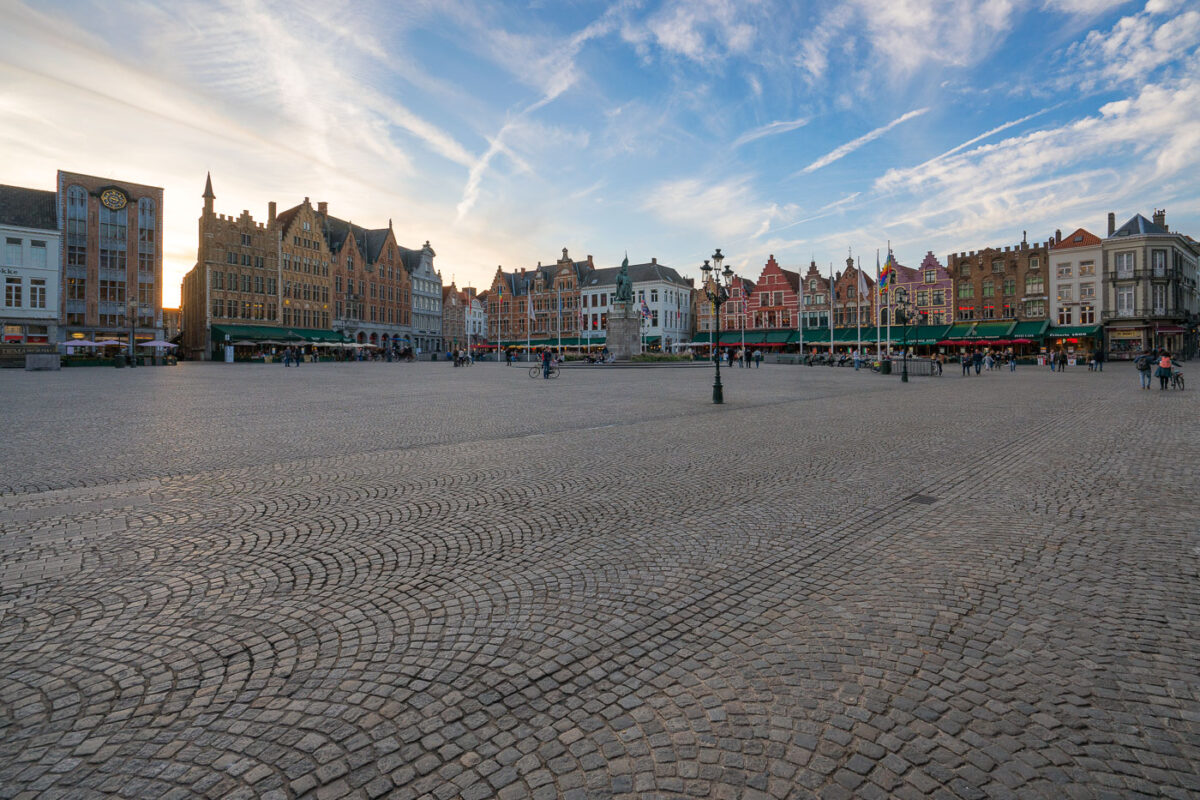
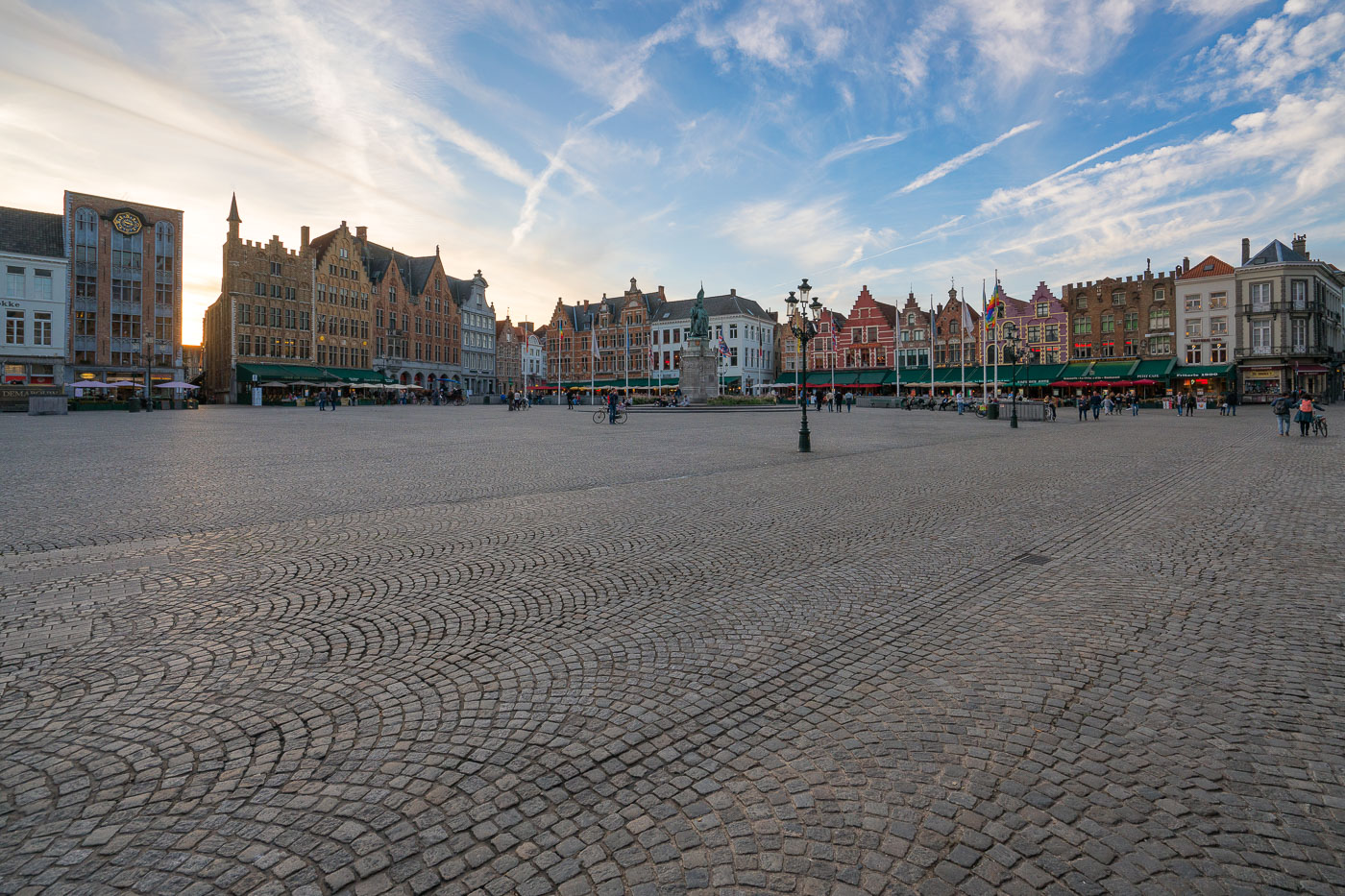
Market Square at sunset in Bruges
Evening on the Markt, Bruges, Belgium. Visitors cross the wide cobblestoned square as sunset light outlines the row of step‑gabled guild houses that front cafés with green awnings. At the center stands the 1887 monument to Jan Breydel and Pieter de Coninck, ringed by flagpoles and a cast‑iron lamppost. The scene captures a typical early evening in Bruges’ historic core, a UNESCO‑listed medieval city where the Markt has hosted trade and civic life for centuries. Contrails and thin clouds streak the sky while small groups linger near bicycles and restaurant terraces. Keywords - Activities: strolling, sightseeing, cycling, dining - Buildings: step-gabled guild houses, cafés, monument plinths - Location: Bruges, West Flanders, Belgium; Market Square (Markt) - Objects: cobblestones, lamppost, flagpoles, café awnings, clock - People: tourists, locals, pedestrians - Moods: calm, unhurried, early evening - Sceneries: historic town square, open plaza - Texts: storefront signage, building numbers (unreadable at distance) - Companies: local cafés and restaurants (unidentified) - Weather: clear with high clouds at sunset - Plants: none visible - Animals: none visible - Vehicles: bicycles
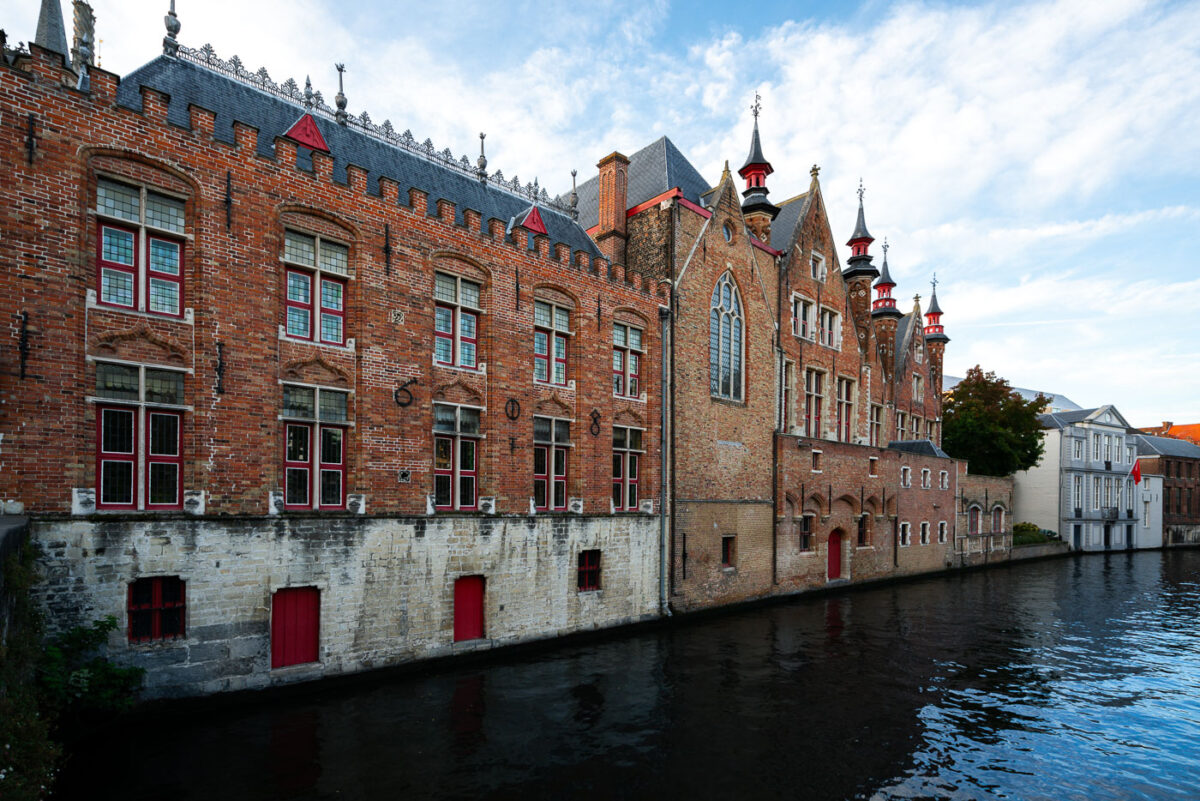
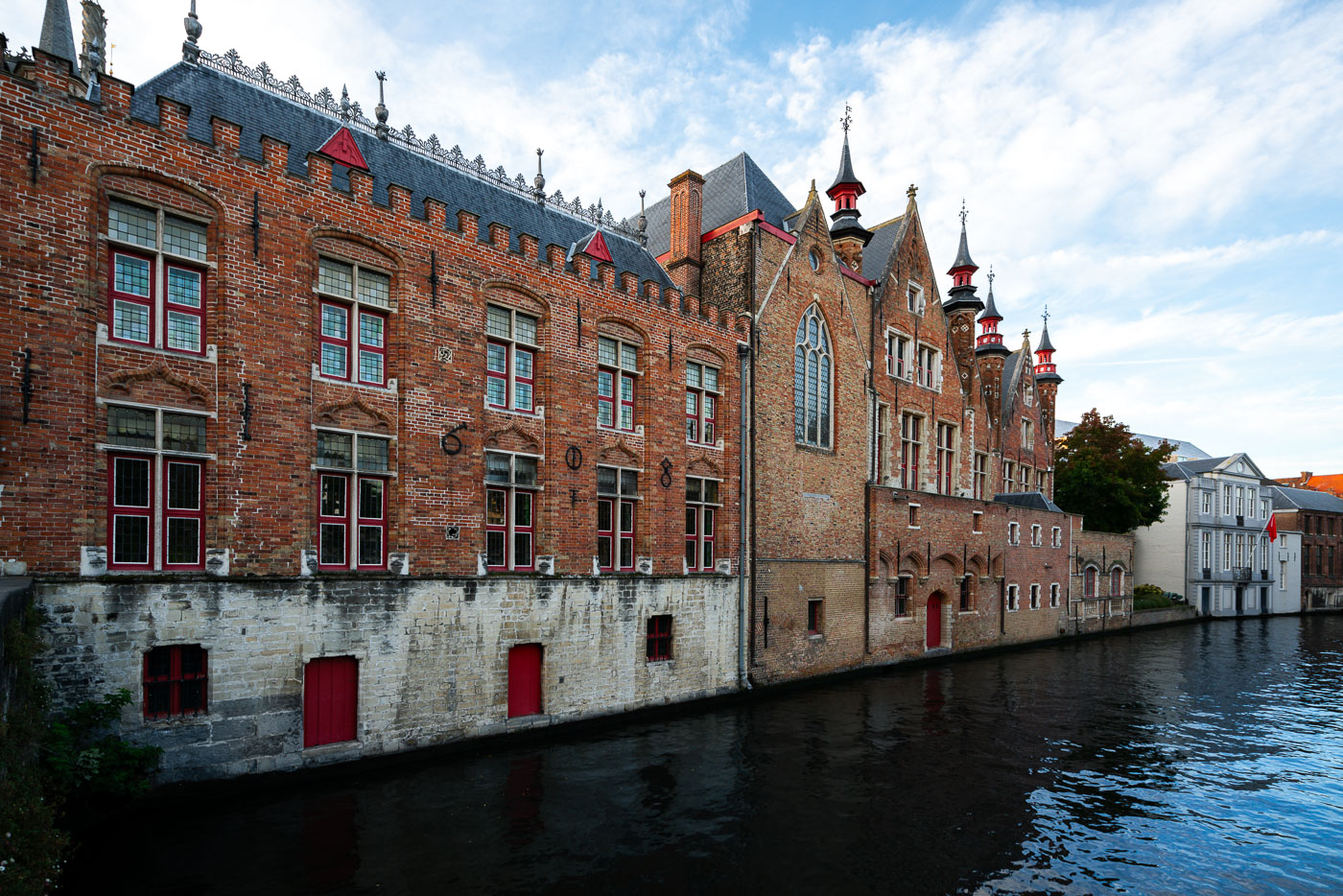
Old buildings in Bruges on the River Reie
A row of red-brick Gothic buildings lines the River Reie in central Bruges, Belgium. The canal-facing facades feature crenellated rooflines, arched windows with red-painted frames, and small doors set into a pale stone base at water level. Iron wall anchors form decorative numerals on the brickwork, and slender spires and turrets rise above the gables on the right. Across the water, lighter-colored townhouses complete the scene, one flying a red-and-white flag. This view lies within Bruges’ UNESCO-listed historic center, where medieval canals once powered commerce and connected warehouses, hospitals, and guild structures. The Reie remains a defining feature of the city’s urban fabric and is a popular route for boat tours and heritage walks.
Brick road in Bruges Belgium
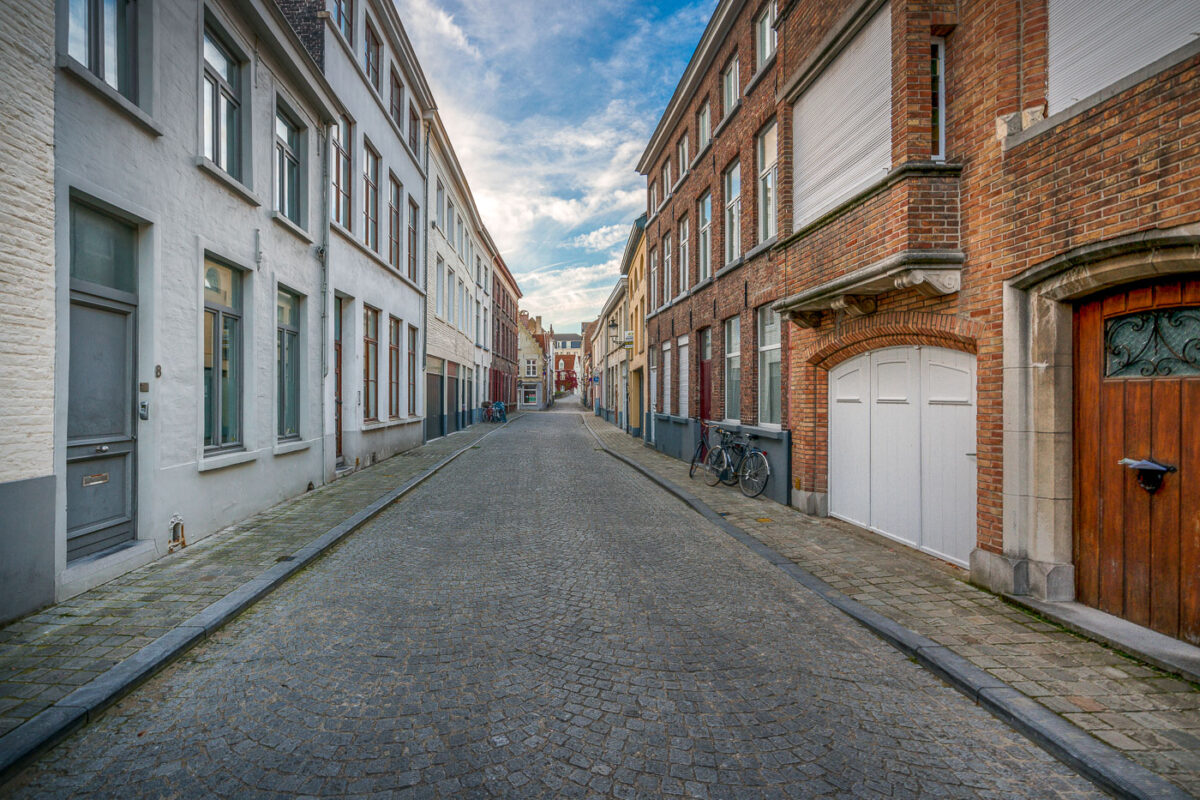
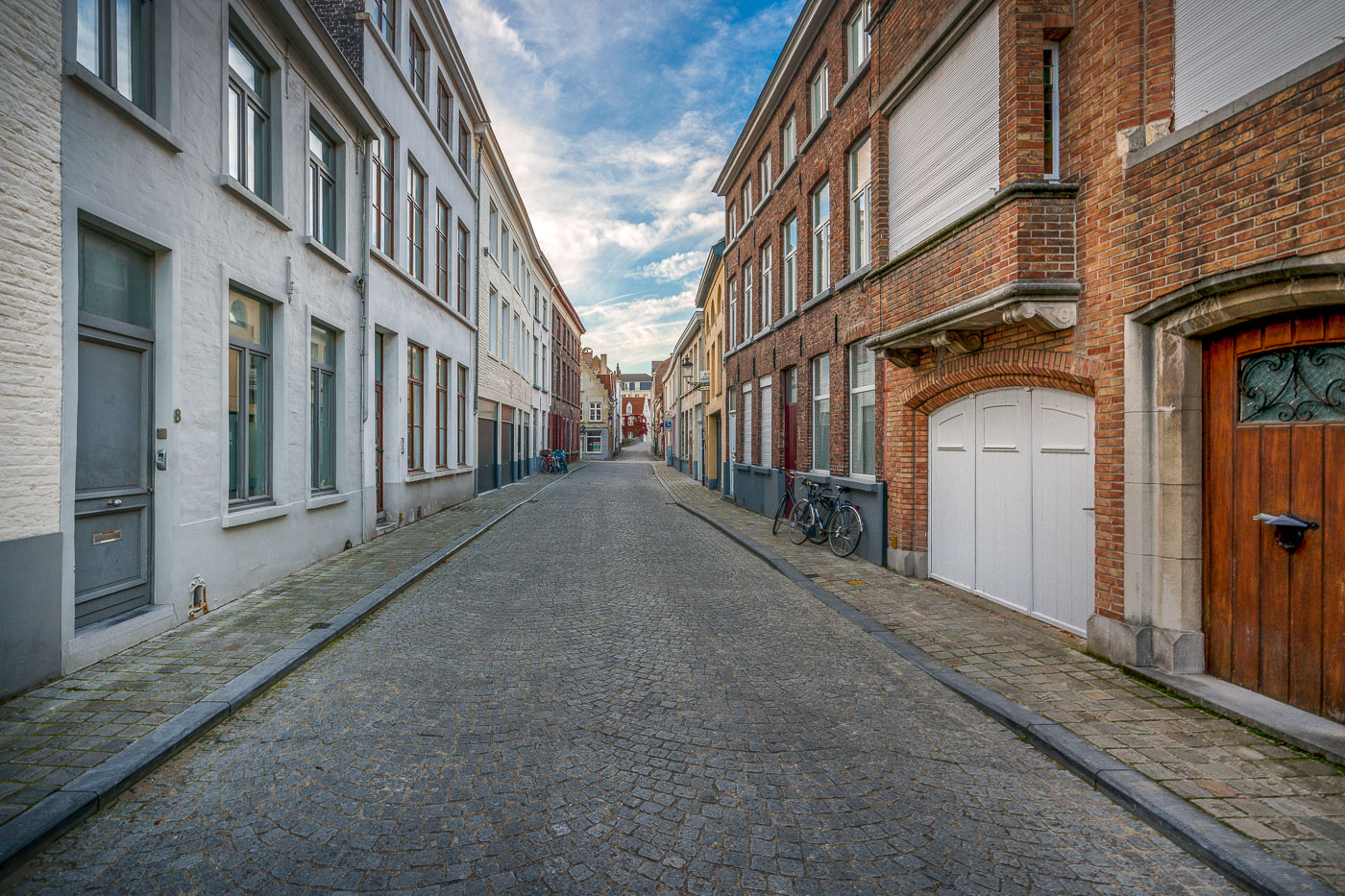
This image shows a cobblestone street lined with historic townhouses in Bruges, Belgium, a city renowned for its well-preserved medieval architecture and canals. The narrow lane, paved with granite cobblestones, is characteristic of the city's historic center, which is a UNESCO World Heritage site. The buildings, constructed from brick and plaster, feature traditional domestic architecture with shuttered windows and doorways, reflecting centuries of urban development. Bicycles, a common mode of transport in Bruges, are parked along the facades, indicating the street's continued use by residents.
Cobblestone Side Street in Bruges
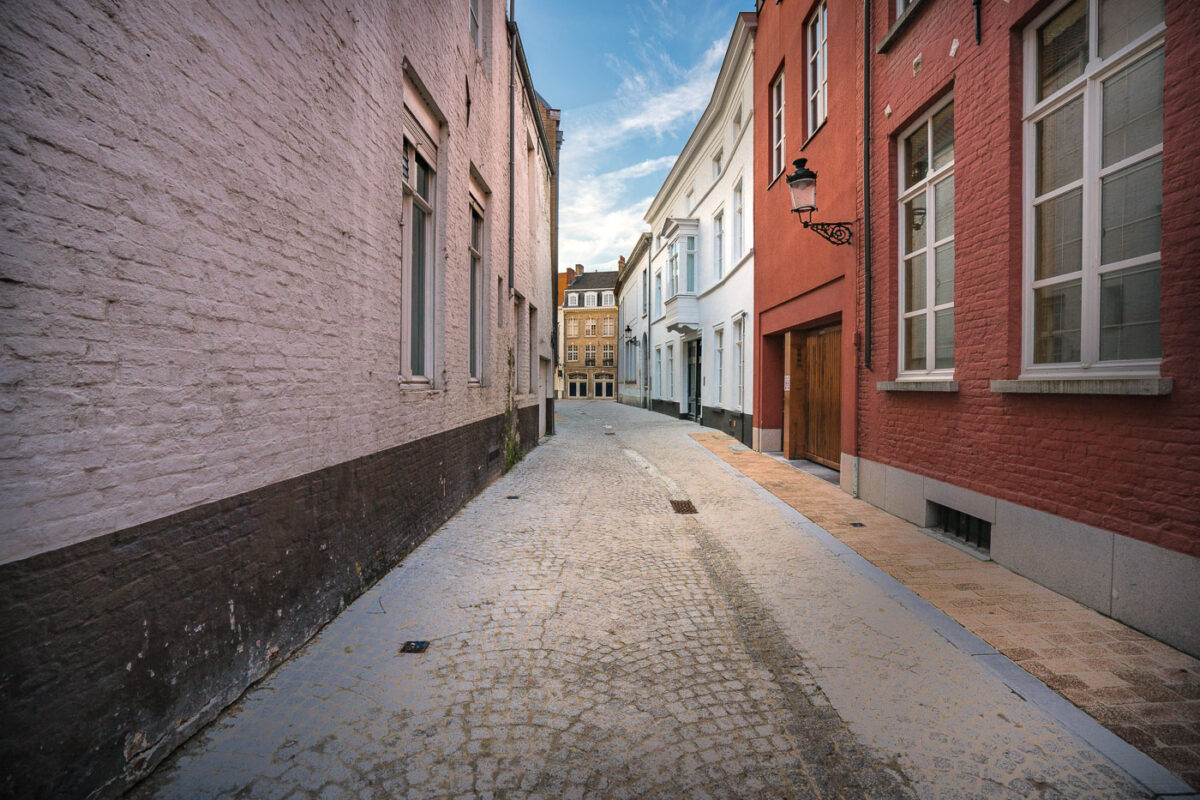
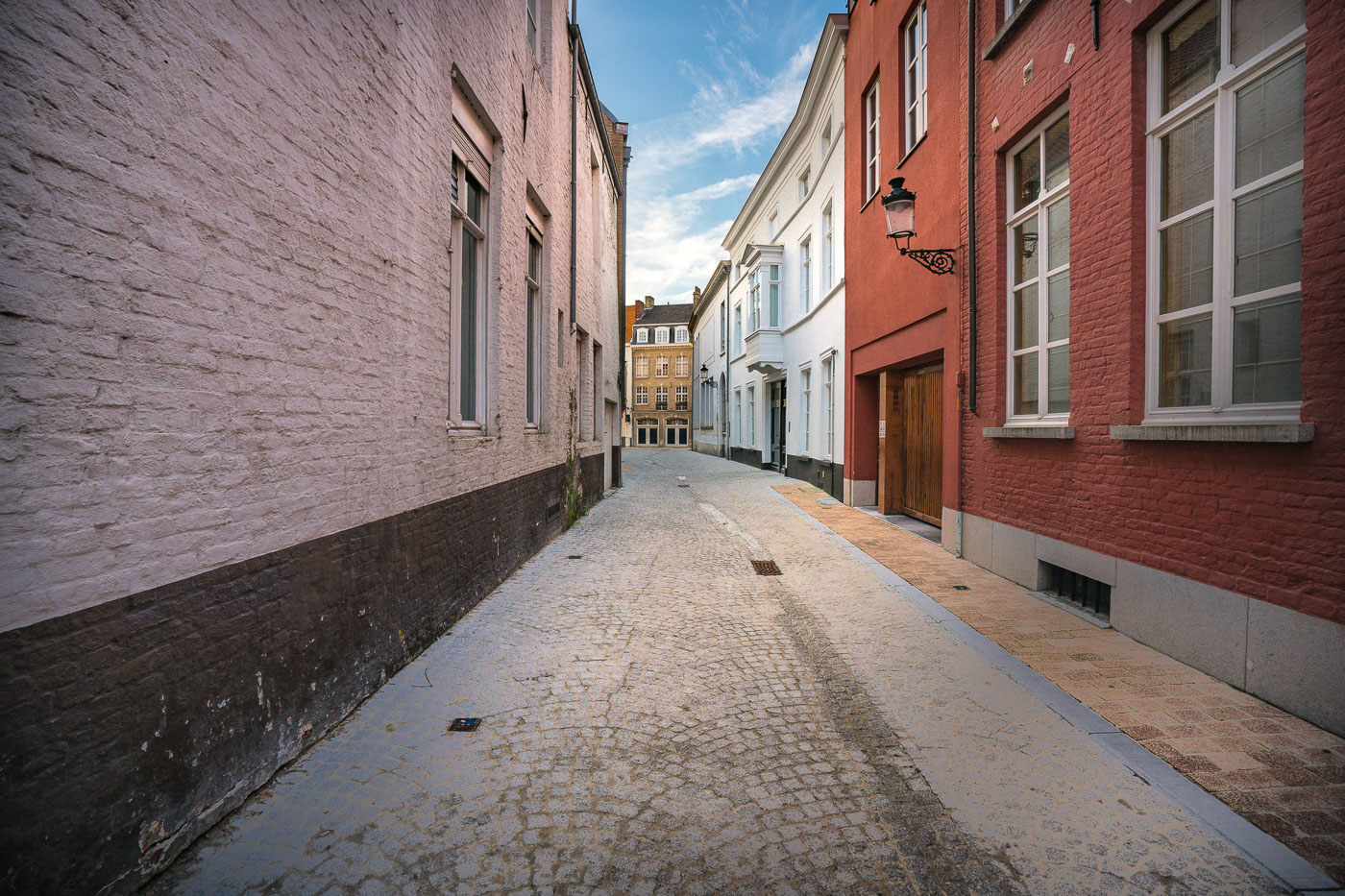
A quiet cobblestone lane in Bruges, Belgium, lined with 17th–19th century brick townhouses painted in warm reds, creams, and whites. These narrow side streets, typical of the city’s medieval core, wind between the main canals and squares, offering a glimpse of Bruges’ preserved residential architecture and human-scale urban planning. Many of the homes retain original facades and wooden shutters, reflecting centuries of incremental restoration that have maintained Bruges’ status as one of Europe’s best-preserved historic cities. The soft morning light highlights the textured brickwork and subtle curvature of the street as it leads toward a classic Flemish gabled building at the far end.
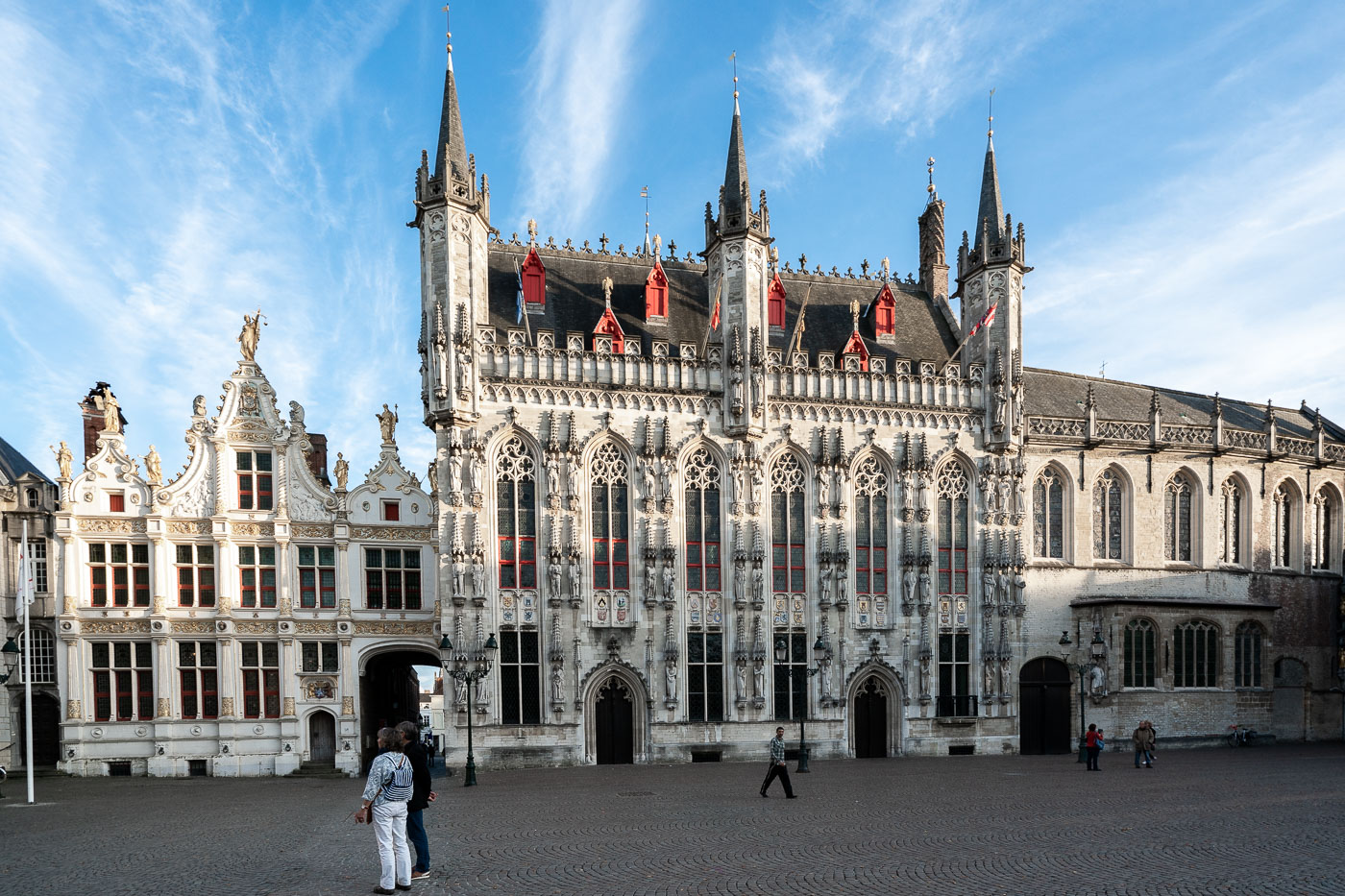
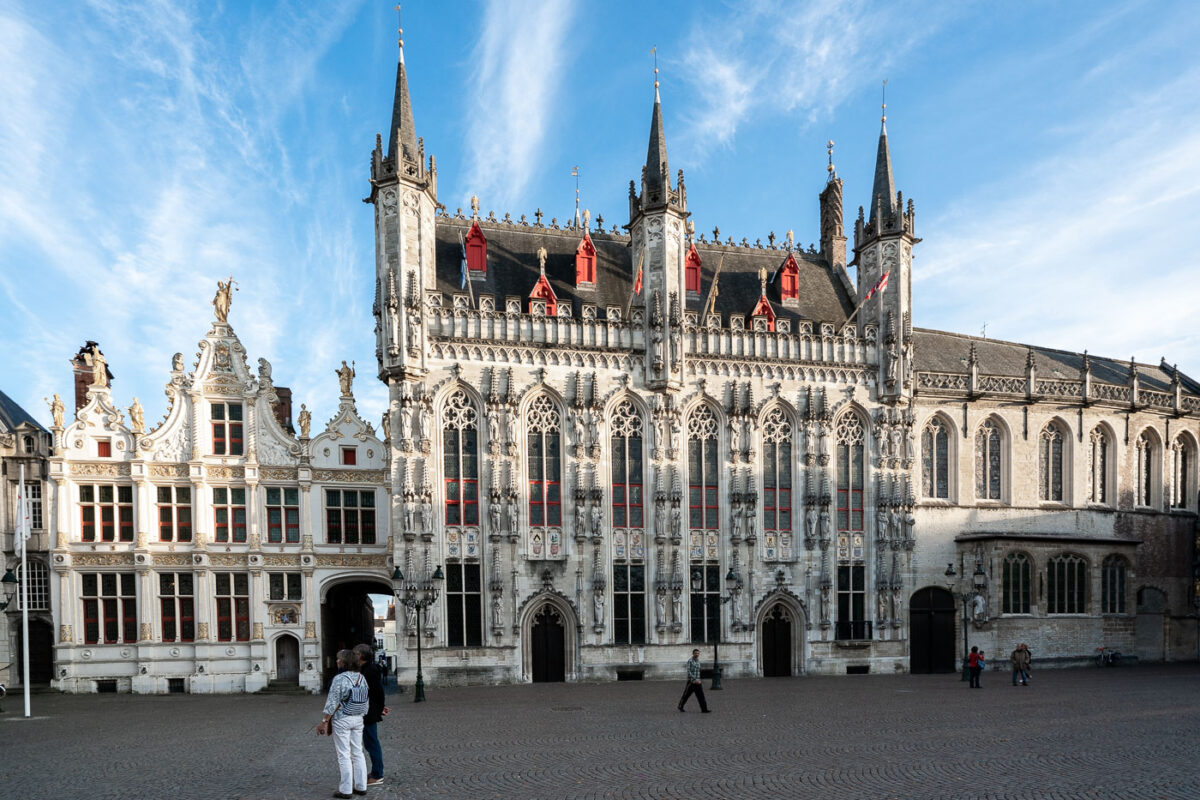
Bruges City Hall, a Gothic masterpiece completed in 1421, and the Renaissance Old Civil Registry stand on Burg Square in Bruges, Belgium.
Bruges City Hall, completed in 1421, stands as one of the oldest Gothic town halls in the Low Countries, situated on Burg Square. Its facade is adorned with intricate Gothic detailing, including pinnacles and sculpted figures, reflecting its historical role as the seat of civic administration. Adjacent to it is the Renaissance-style Old Civil Registry, built in 1537, which complements the older structure. These buildings, located in the heart of Bruges, Belgium, are significant examples of Flemish civic architecture and are recognized as part of a UNESCO World Heritage site.
Homes in Bruges Belgium
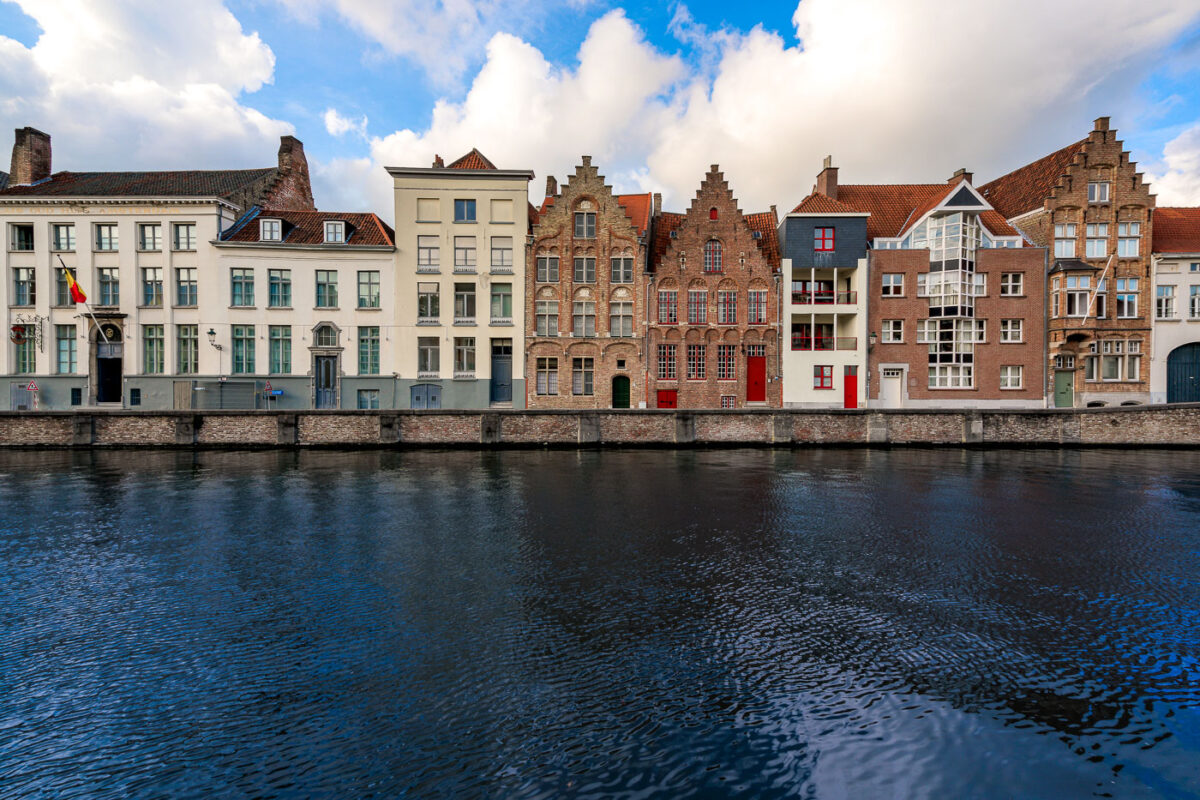
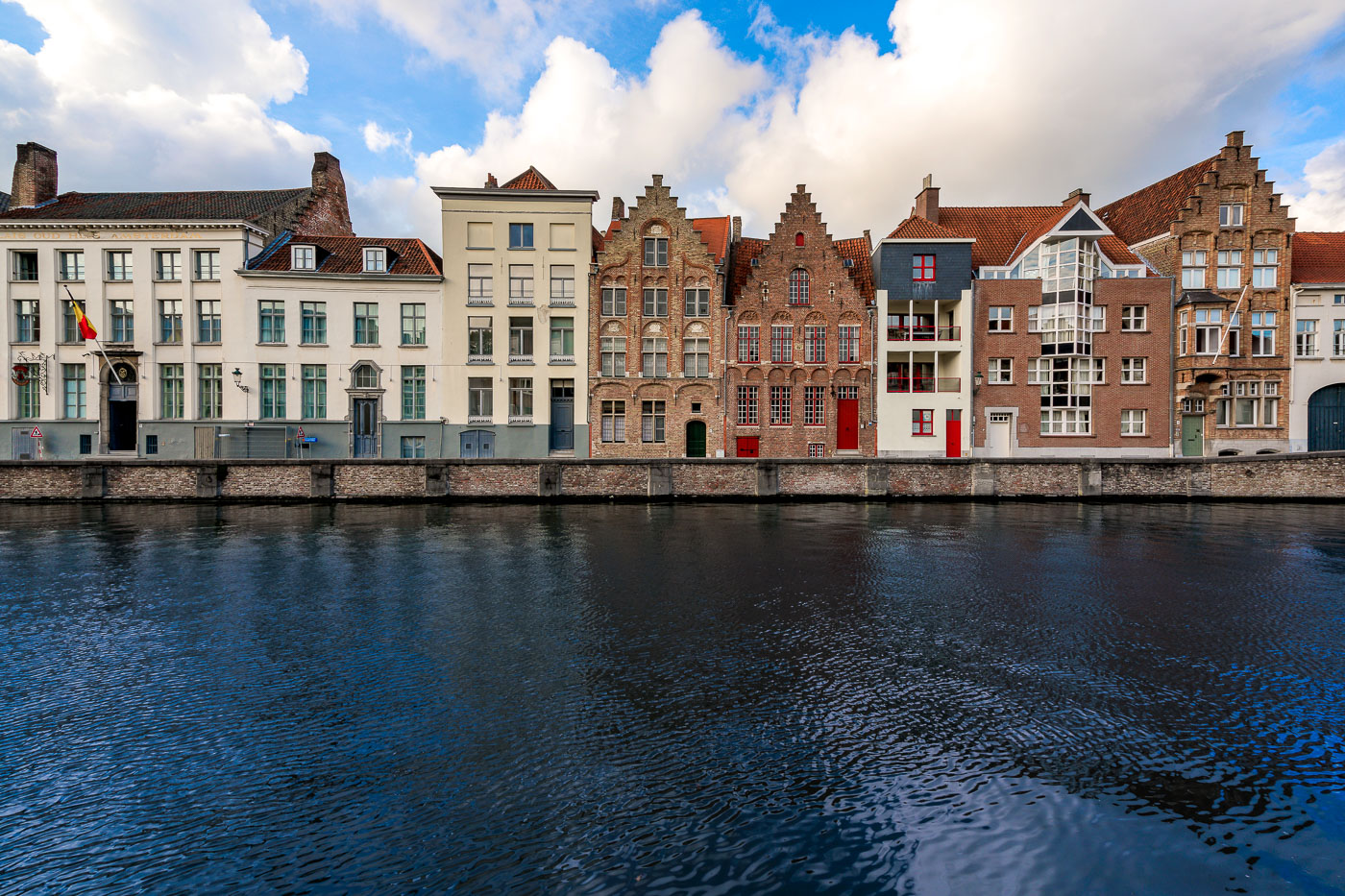
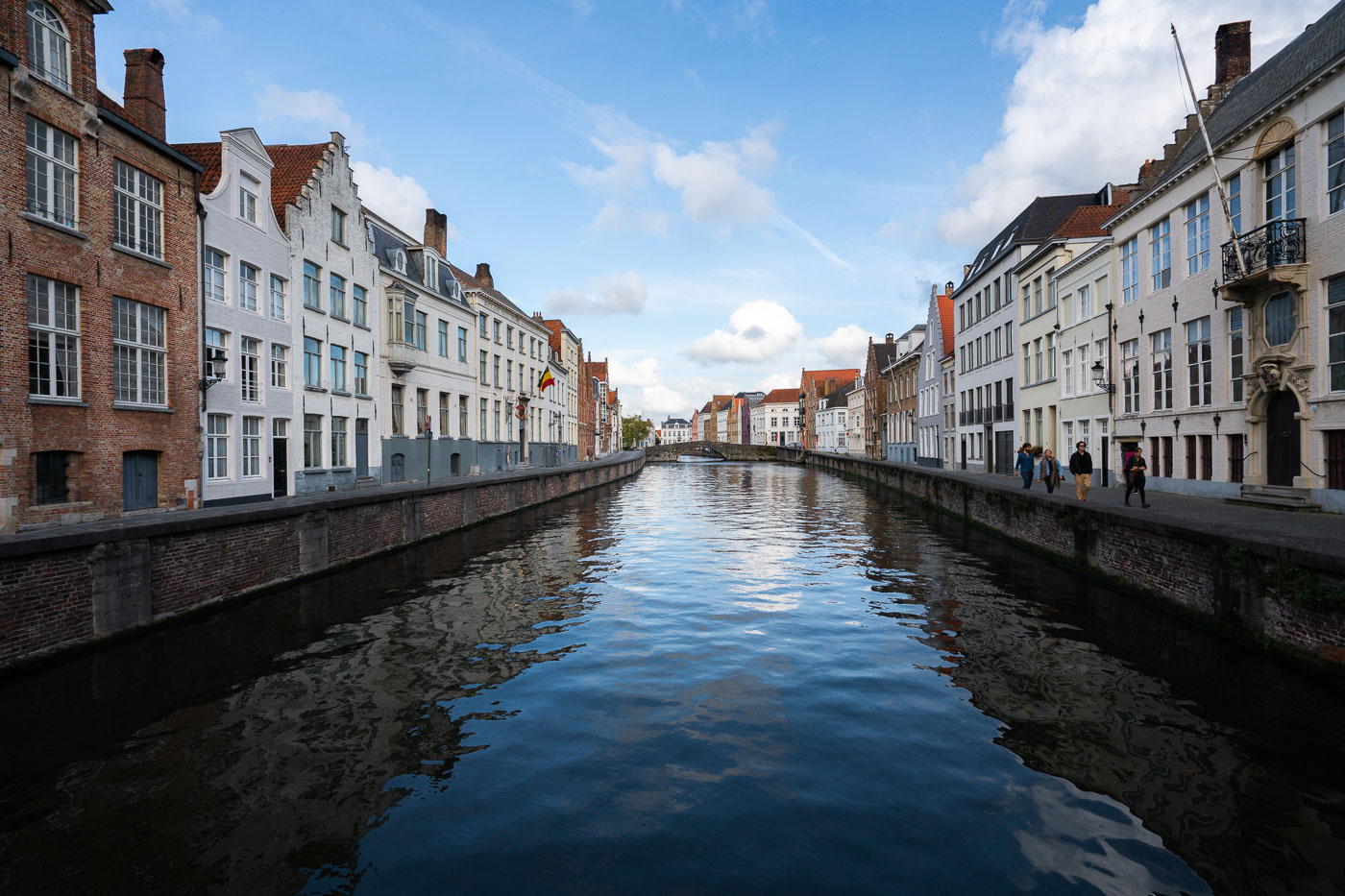
Canal houses, many with stepped-gable roofs, line the River Reie in Bruges, Belgium. These historic buildings, dating from medieval times and featuring brick and plaster facades, reflect Bruges' past as a major trading port. The canal network, a UNESCO World Heritage Site, was crucial for connecting the city to the North Sea. Today, these structures house apartments and businesses, preserving the city's rich architectural heritage.
People walking by the river in Bruges Belgium
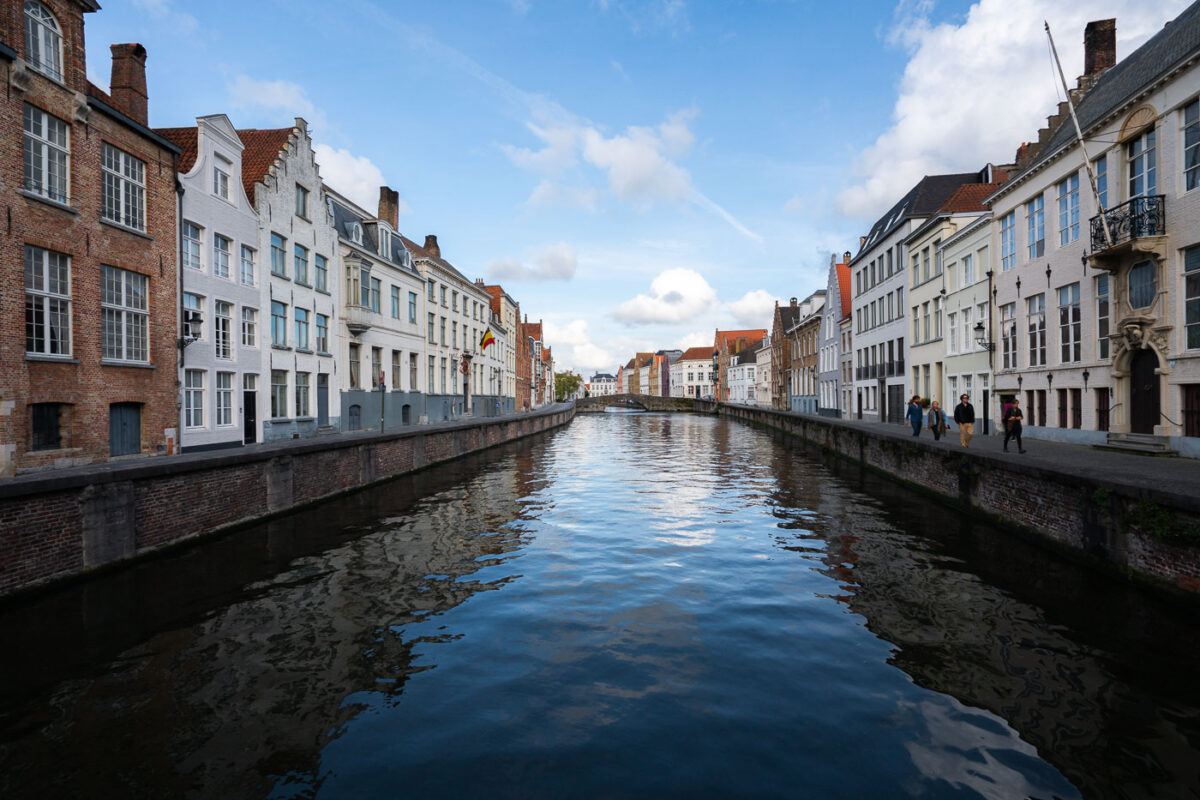
Historic canal houses line the River Reie in Bruges, Belgium, a city renowned for its preserved medieval canal network. These brick and whitewashed townhouses, many featuring stepped gables, reflect the area's rich architectural heritage. The River Reie, once a vital artery for trade and transport, now serves as a picturesque waterway through the UNESCO World Heritage-listed historic center. Today, these canals and their surrounding buildings are a major draw for tourism, offering visitors a glimpse into Bruges' past as a prosperous trading hub.
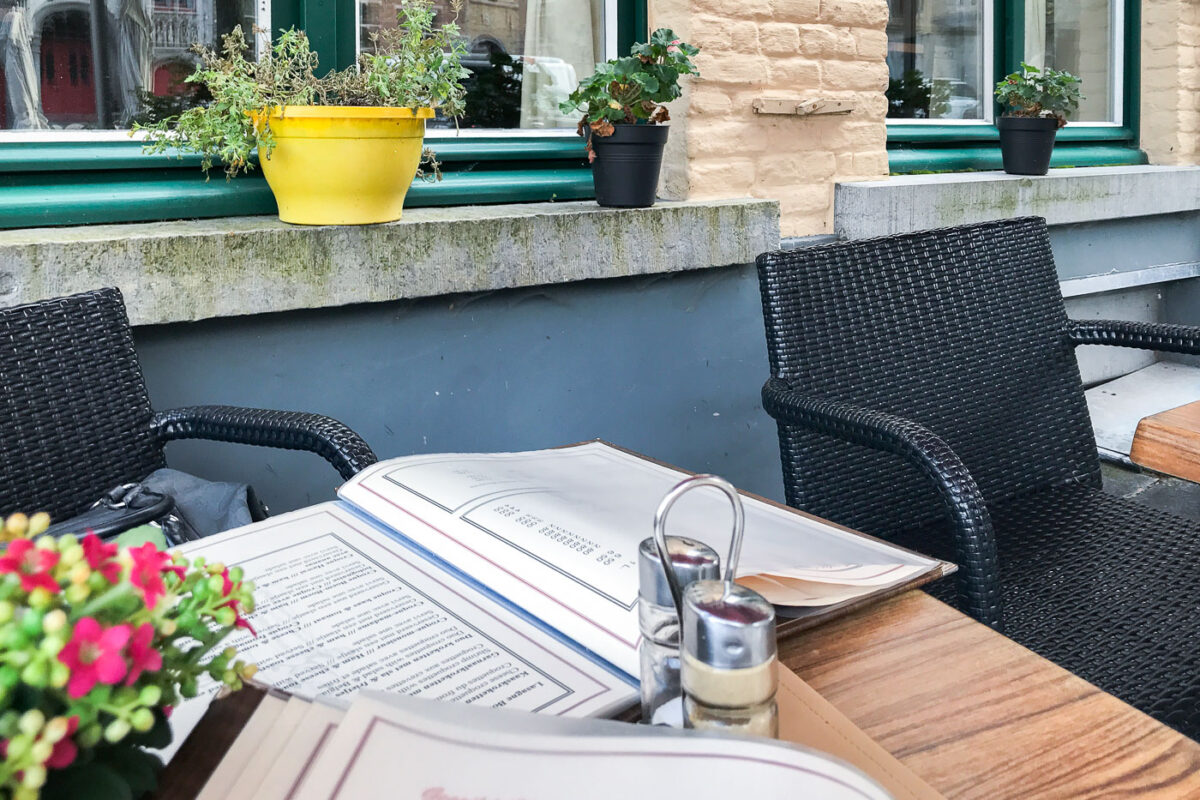
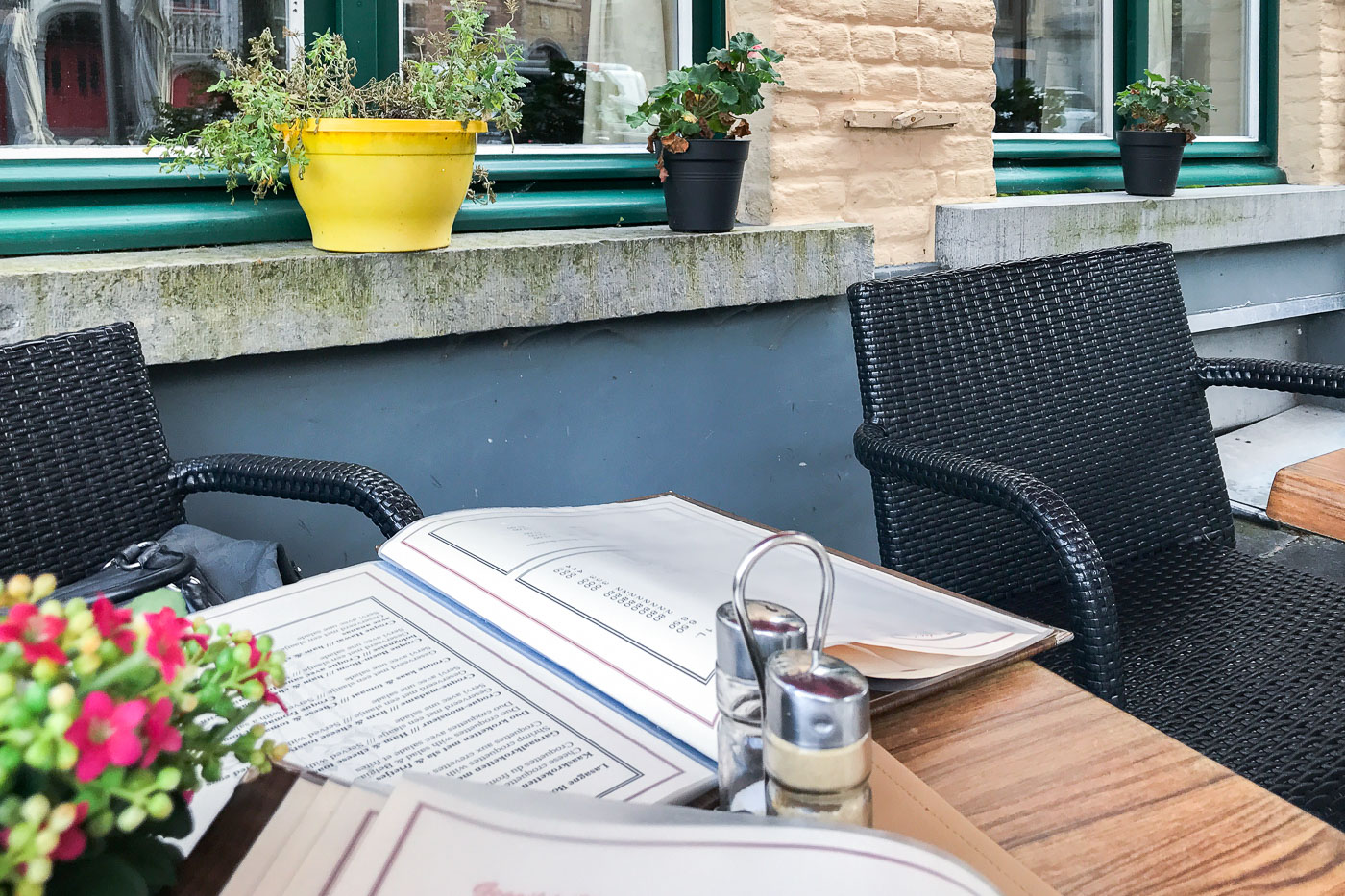
Restaurant in Bruges Belgium
An outdoor seating area for a cafe is set up on a cobblestone street in Bruges, Belgium. The table is laid with a menu, salt and pepper shakers, and woven chairs, positioned against a backdrop of historic brick buildings adorned with flower pots. This setup is characteristic of Bruges' well-preserved medieval urban environment, where businesses often integrate seamlessly with centuries-old architecture. Such outdoor cafes are a common feature, offering patrons a place to relax and observe daily life within the city's historic core.
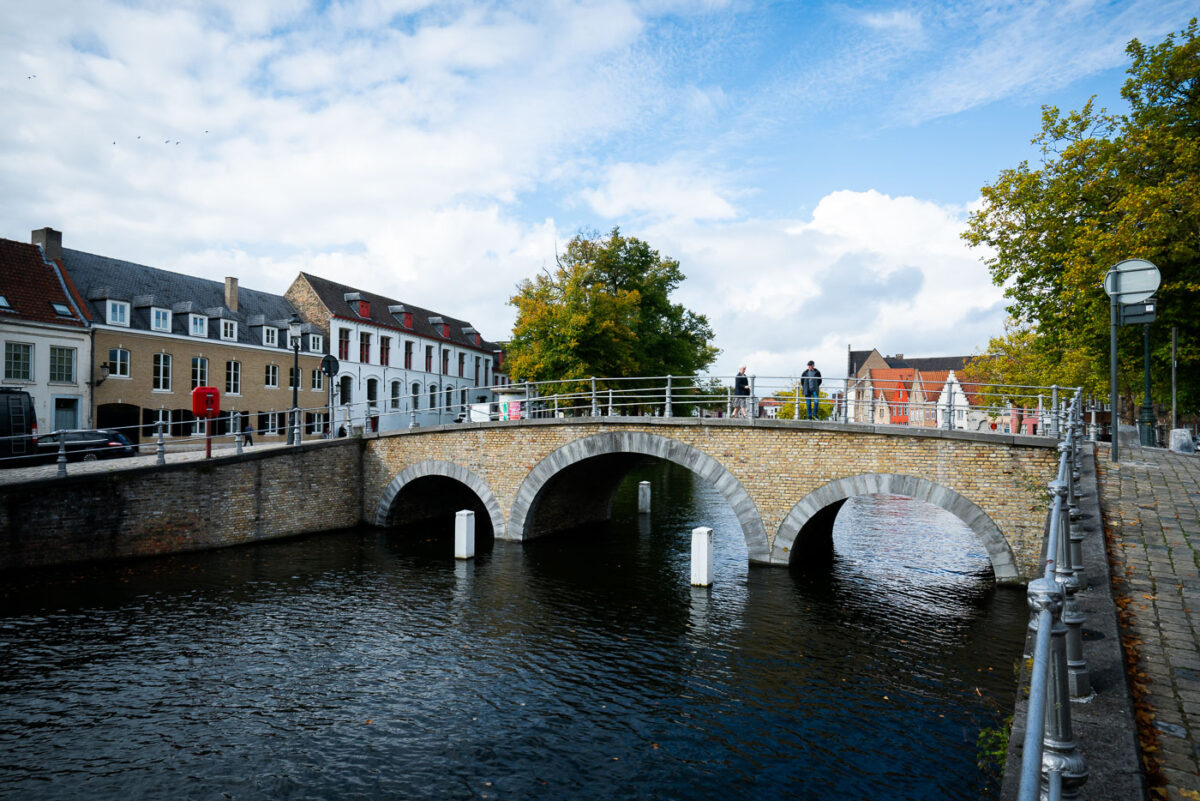
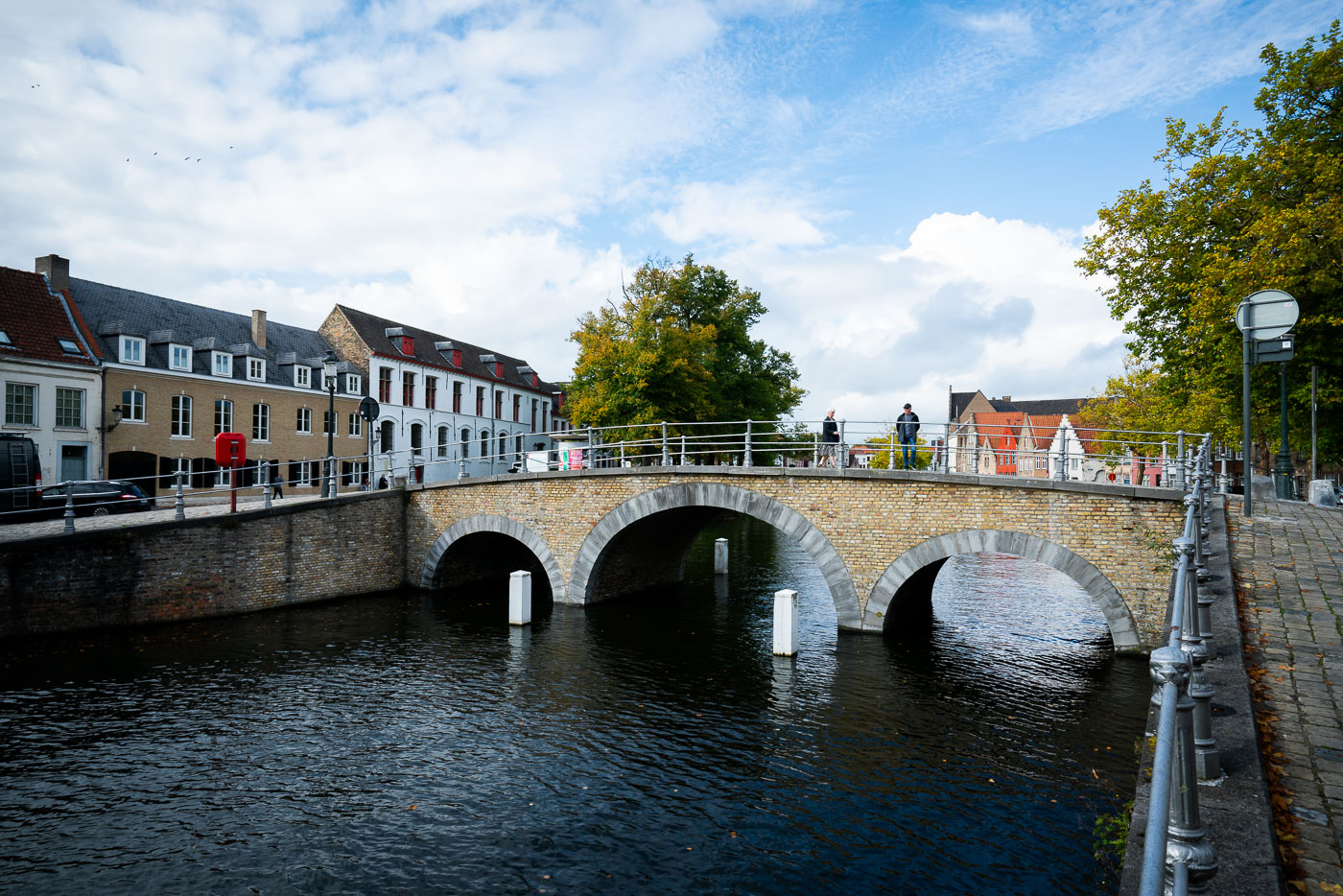
People walking over a bridge in Bruges Belgium
Pedestrians cross a three-arched brick bridge over a branch of the River Reie in Bruges, Belgium. Historic row houses with red-tiled roofs and a mix of gabled and flat façades line the canal, while bollards and railings mark the waterway and walkway. Trees showing early autumn color frame the scene, and a partly cloudy sky brightens the medieval streetscape. The canal network, once the commercial lifeline of the city, is part of the UNESCO-listed Historic Centre of Brugge and remains a focal point for daily life and tourism.

Built in Minneapolis

Photographs made over time, focused on place, public life, and ongoing reporting.

Browse by location, move through long-running series, or start with recent work.

© 1996–2026 Chad Davis