Black Elk Peak
Trails, fog, and the 1938 CCC stone tower at South Dakota's highest summit in the Black Hills
Black Elk Peak
Black Elk Peak rises to 7,244 feet in the Black Hills of South Dakota, making it the highest point in the state and the highest natural summit in the United States east of the Rockies. The peak sits within the Black Elk Wilderness, part of Black Hills National Forest, and is reached by trails climbing through ponderosa pine, spruce, and birch from trailheads near Sylvan Lake in Custer State Park.
The peak carried the name Harney Peak until 2016, when the U.S. Board on Geographic Names renamed it to honor the Lakota holy man Black Elk, whose recorded vision placed the mountain at the center of the world. The Black Hills, known to the Lakota as He Sapa, have held deep spiritual and cultural significance for Plains tribes long before the region became a destination for hikers and equestrians. A stone fire lookout tower built by the Civilian Conservation Corps in 1938 still stands at the summit, and on clear days the views extend into four surrounding states. This set also covers the nearby Cathedral Spires and the Needles formations within Custer State Park, granite structures shaped by Precambrian geology that define the character of the surrounding wilderness.
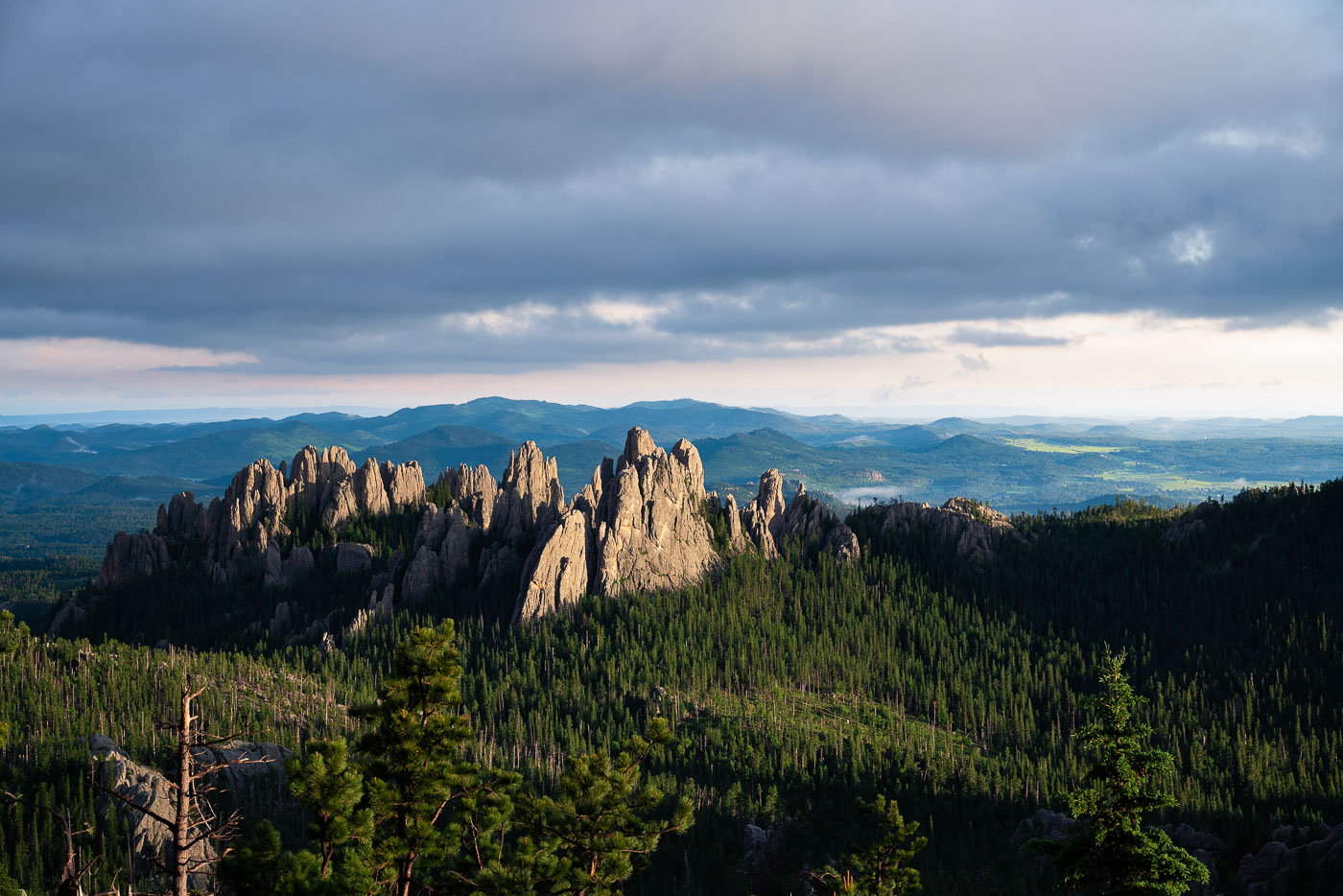 View full post: The Needles at Sunset, Custer State Park, South Dakota
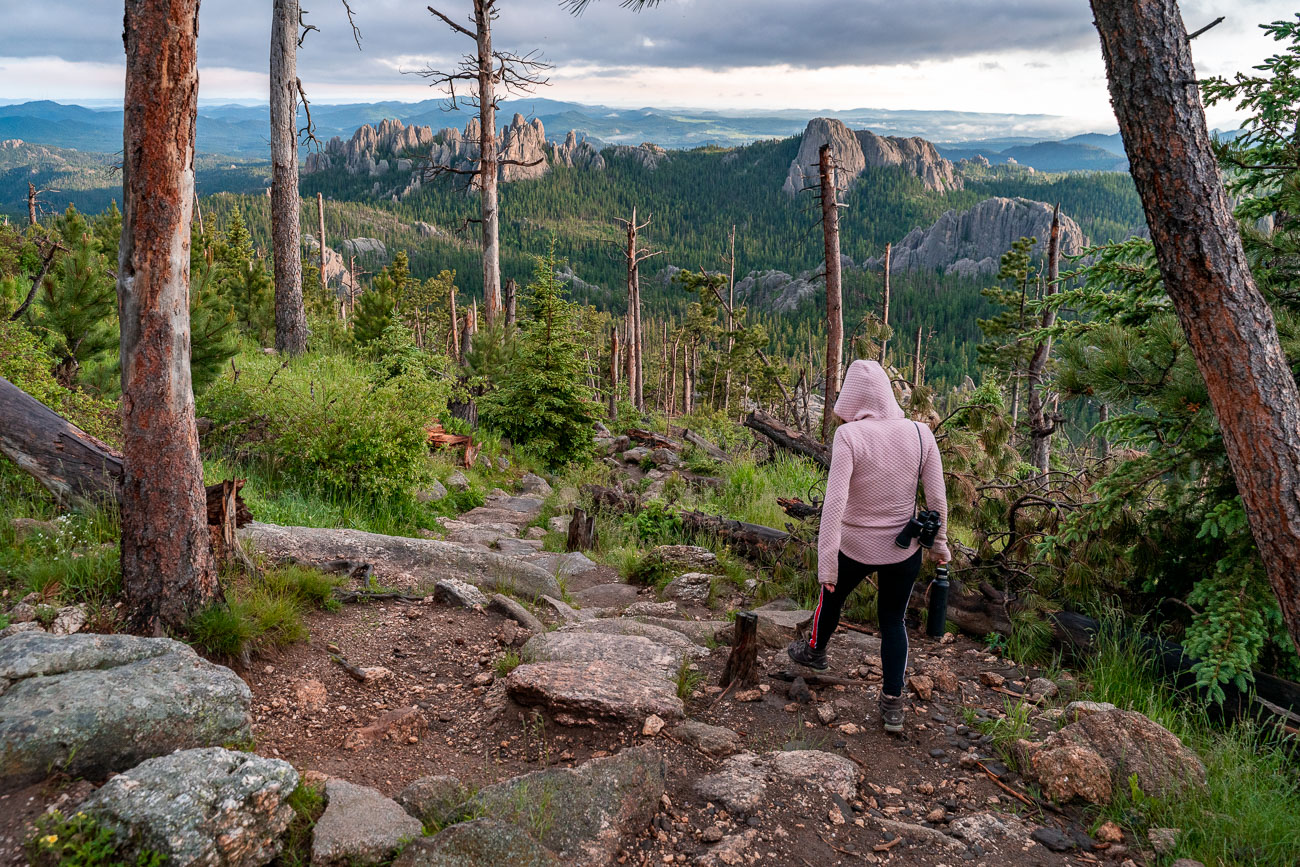 View full post: Black Elk Peak Trail Descent at Dusk, Black Hills, South Dakota
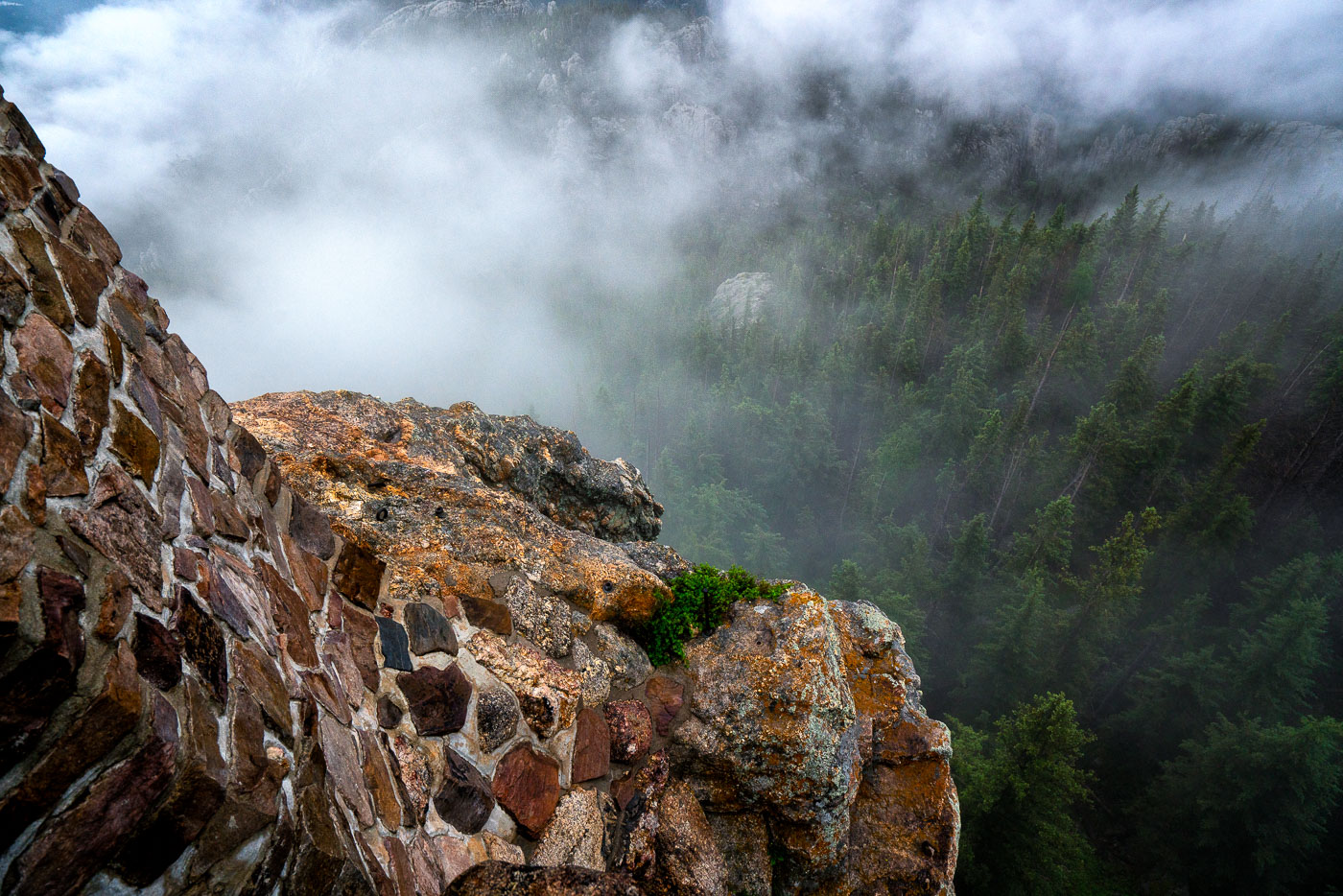 View full post: Black Elk Peak Summit Fog and Stone Tower
 View full post: Cathedral Spires, Black Hills, South Dakota, Morning Fog
 View full post: Horseback riders on Black Elk Peak trail, South Dakota
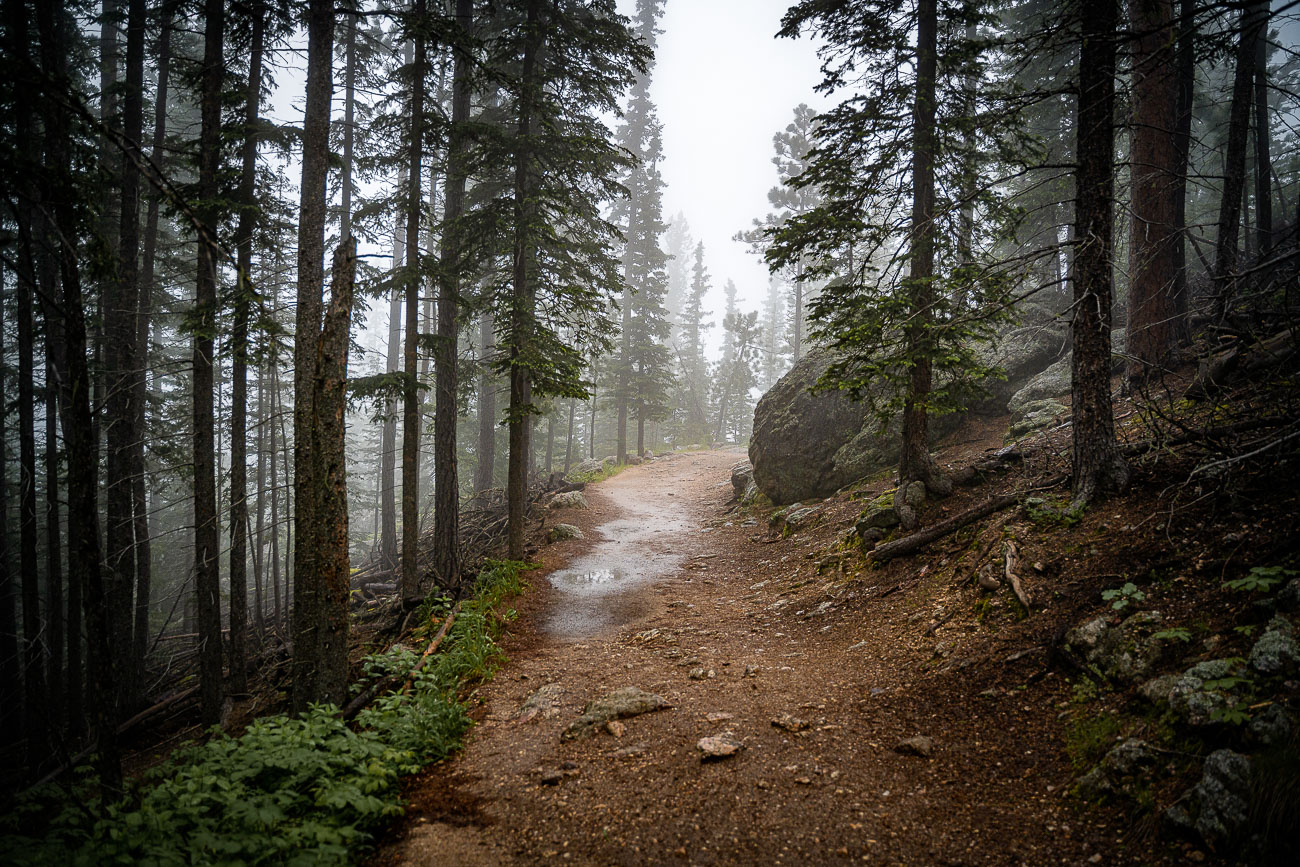 View full post: Foggy Trail to Black Elk Peak, Black Hills, South Dakota
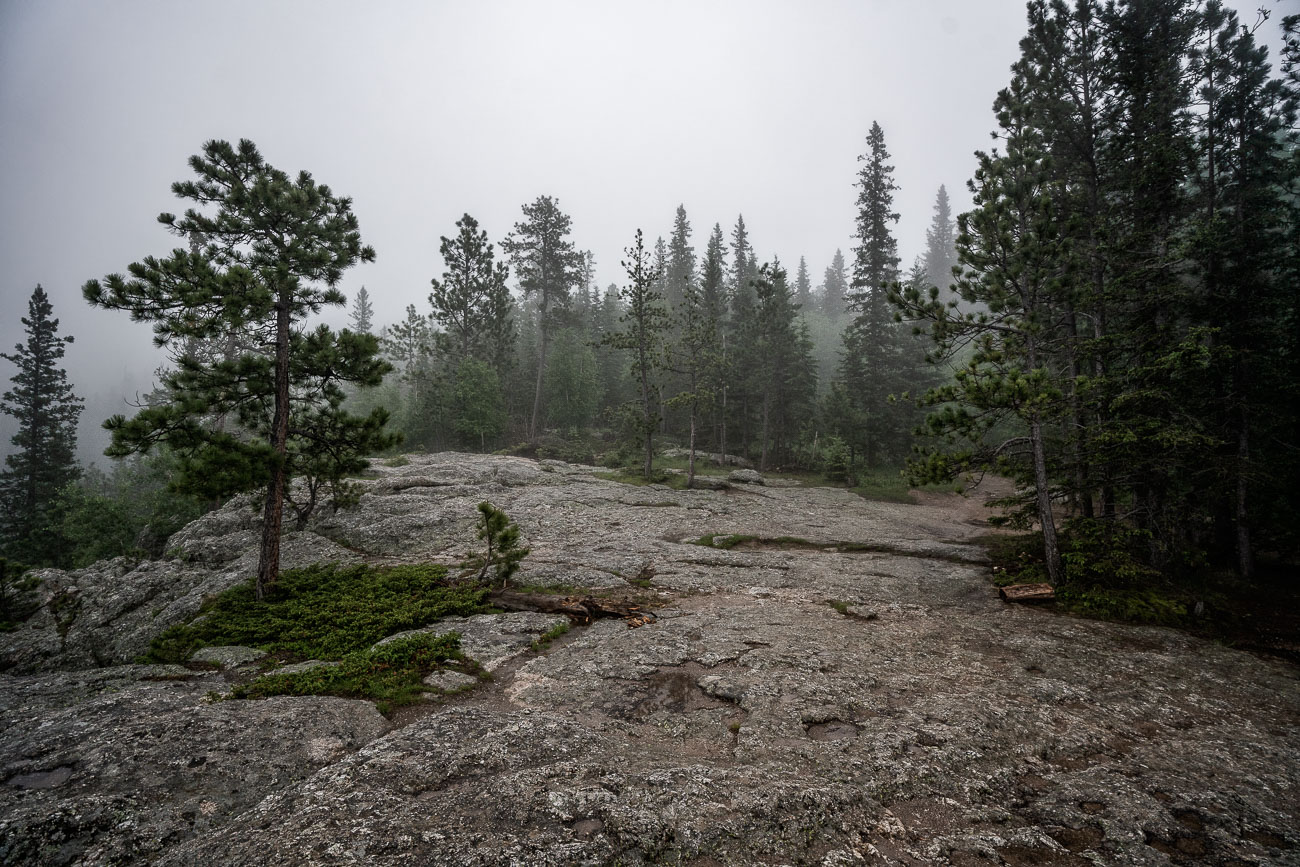 View full post: Foggy Summit of Black Elk Peak, Black Hills National Forest
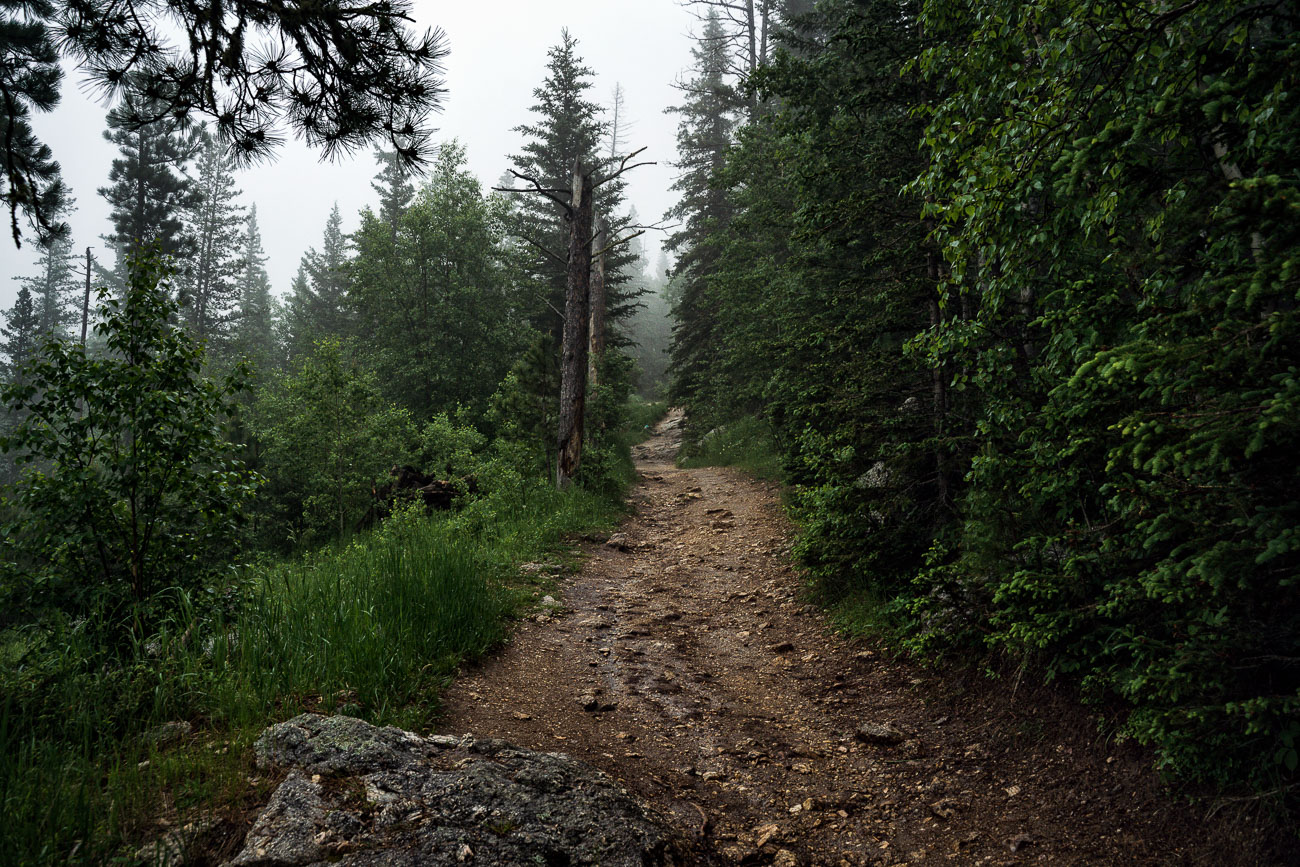 View full post: Foggy Trail to Black Elk Peak, Black Hills, South Dakota
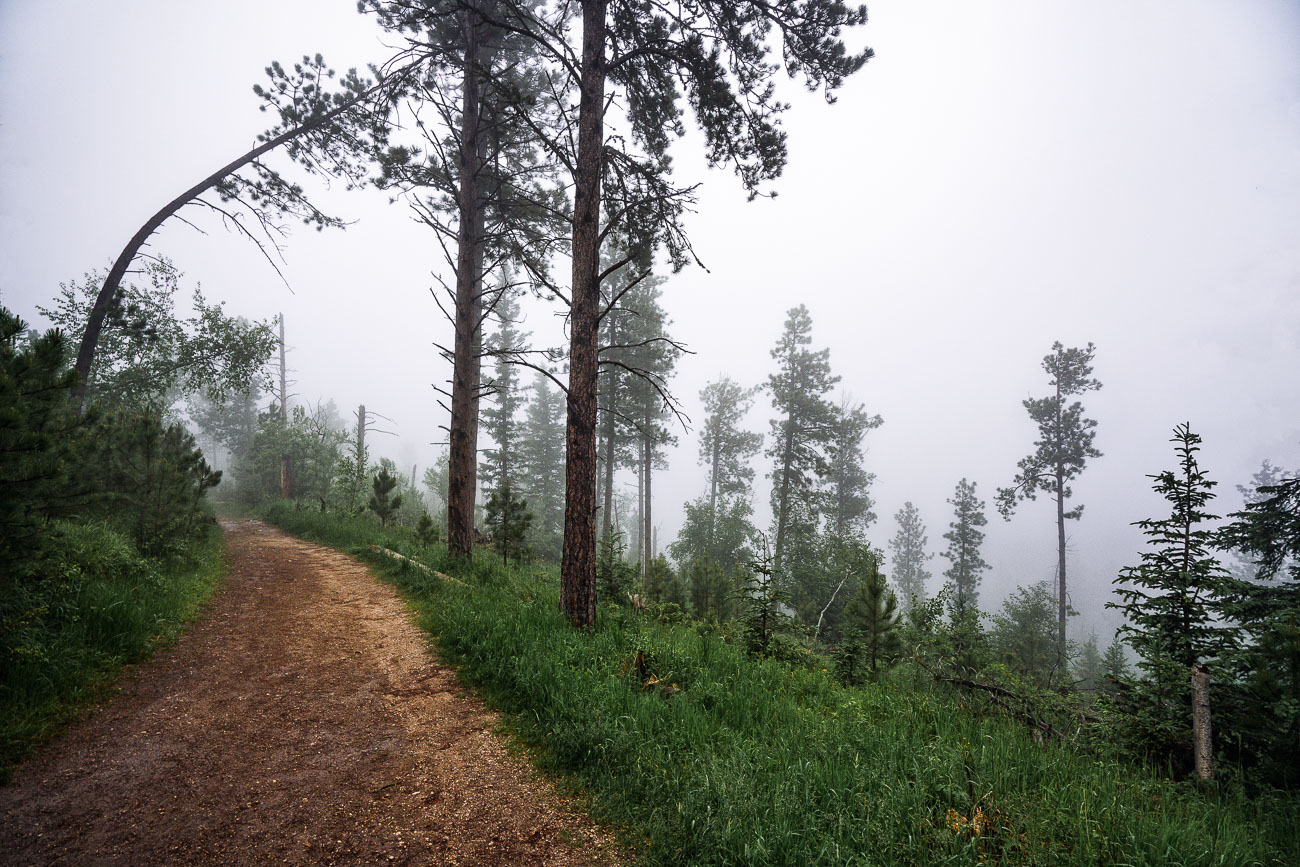 View full post: Ponderosa Pine Trail near Black Elk Peak, Black Hills, South Dakota
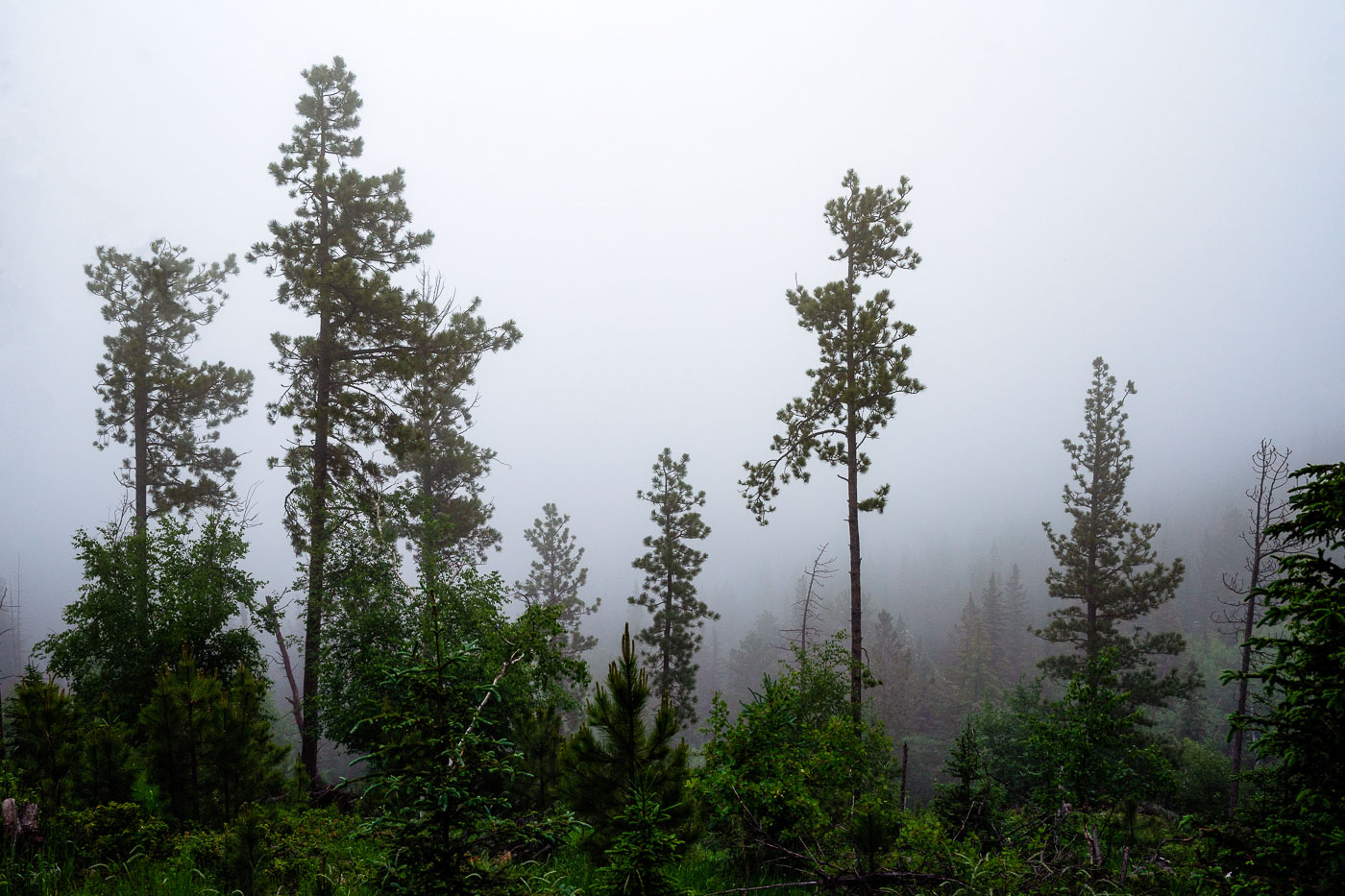 View full post: Black Elk Peak Fog, Black Hills, South Dakota