Map
More from London

Tracks Curving Into the Tunnel at Queen's Park Station
Queen's Park Station in northwest London is a junction where the Bakerloo Line meets Network Rail tracks. The station opened…

Passengers Walking the Platform at London Victoria Station
London Victoria Station in London has platforms beneath a broad iron-and-glass train shed. A Southern train stands at the platform…

Thameslink Train at London Bridge Station
London Bridge Station in London has rebuilt Thameslink platforms and canopies, completed as part of the station redevelopment opened in…
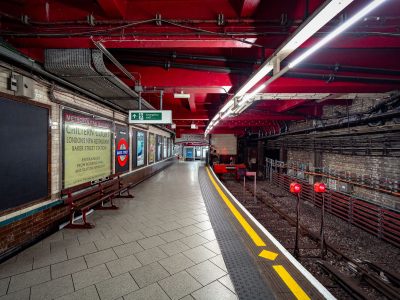
Chiltern Court Sign on the Platform at Baker Street Station
Baker Street Station’s Metropolitan Line platform in London is one of the oldest surviving sections of the Underground. The platform…
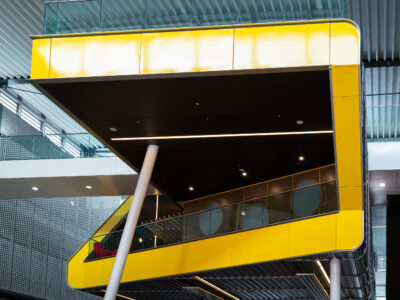
ExCeL London Yellow Concourse Cantilever, Royal Docks
ExCeL London in the Royal Docks features a yellow cantilevered concourse with circular windows and angled support columns. The interior…
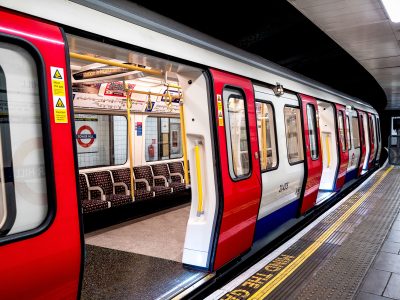
Open Doors on an S7 Train at Tower Hill Station
A London Underground S7 Stock train stands at Tower Hill Station on the District line in central London. The Bombardier-built…
Nearby Photos