Cedar Ave

32 photos · 2020–2026

32 photographs tagged Cedar Ave, 2020–2026.
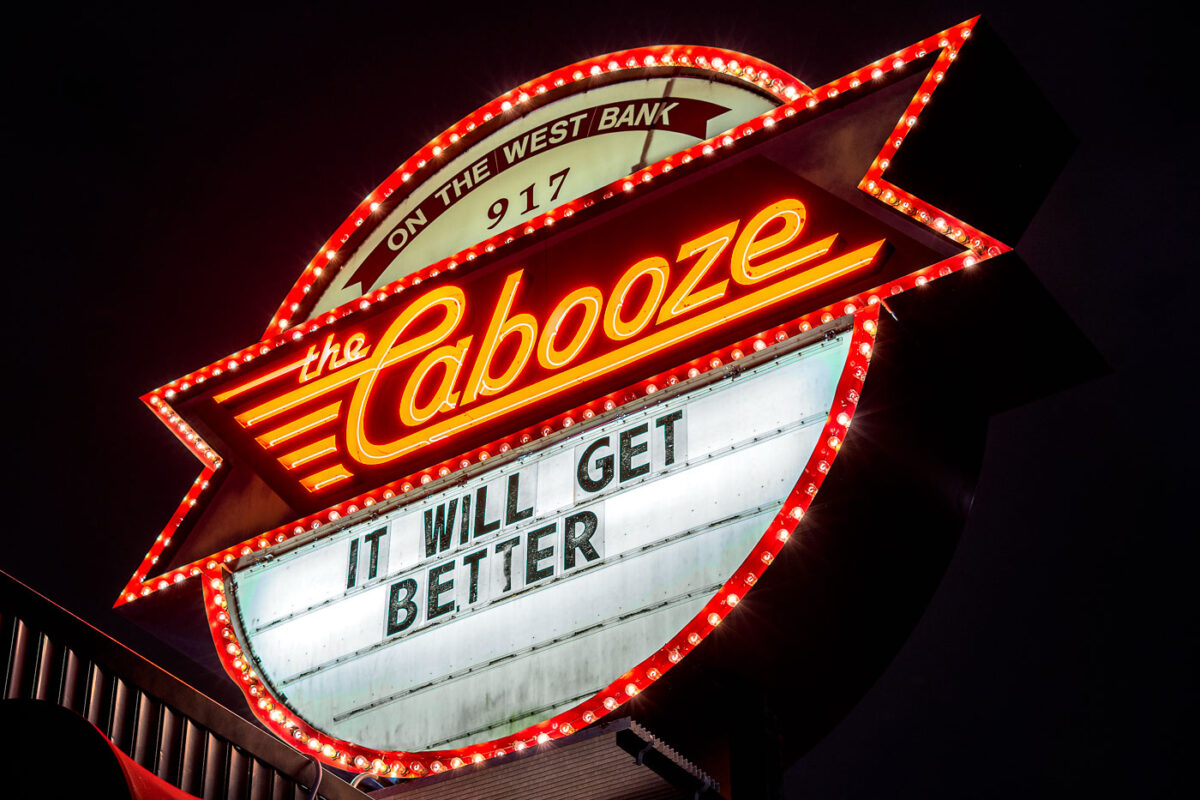
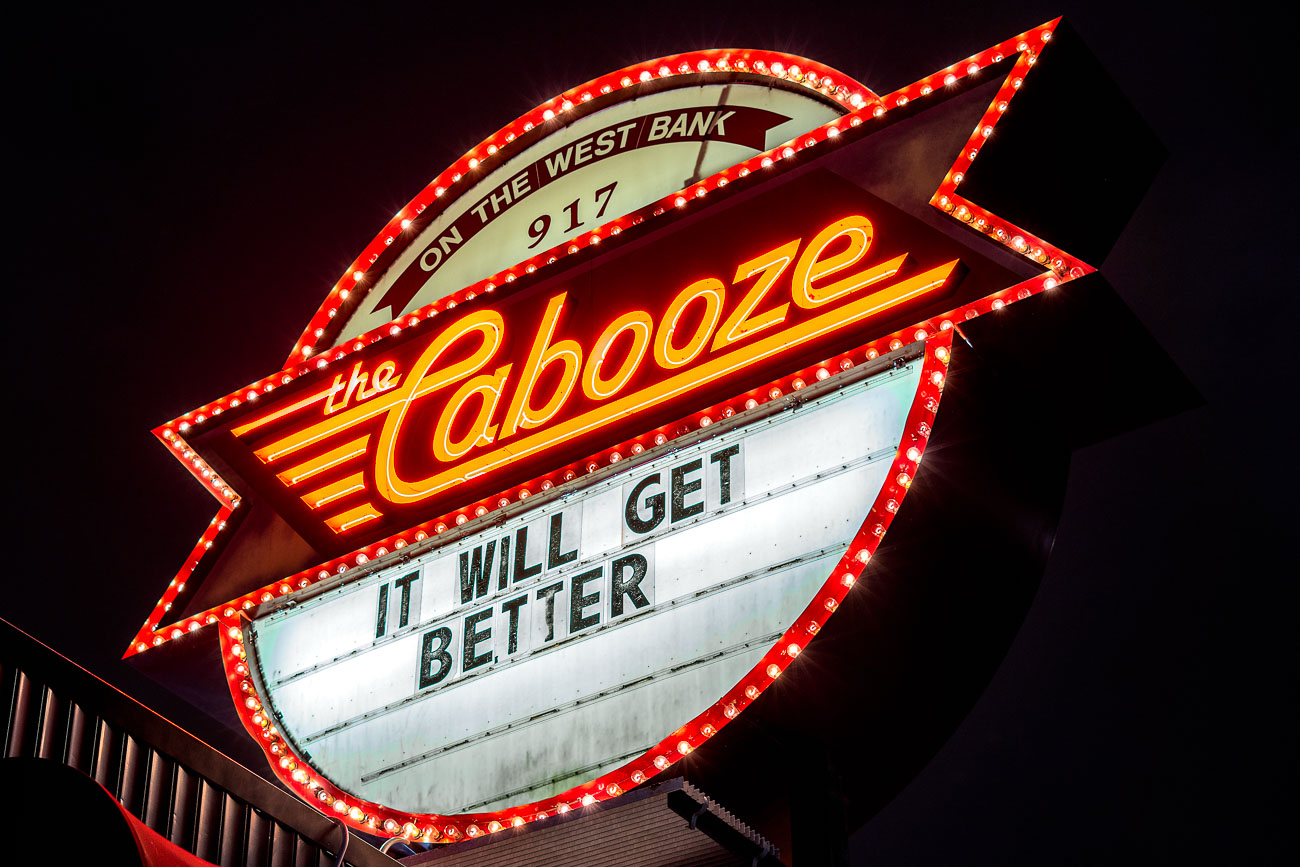
The Cabooze music venue marquee on Cedar Avenue displays "IT WILL GET BETTER" during COVID-19 closure.
The Cabooze sits at 917 Cedar Avenue South in Minneapolis's West Bank neighborhood, a live music club operating in that location since 1970. The venue has hosted blues, rock, and jam bands for decades and remains one of the longest-running music clubs in the Twin Cities. In late March 2020, its marquee read "IT WILL GET BETTER," posted after Minnesota's stay-at-home order forced the club to shut its doors along with other music venues statewide.

“It Will Get Better”: The Cabooze Marquee on the West Bank
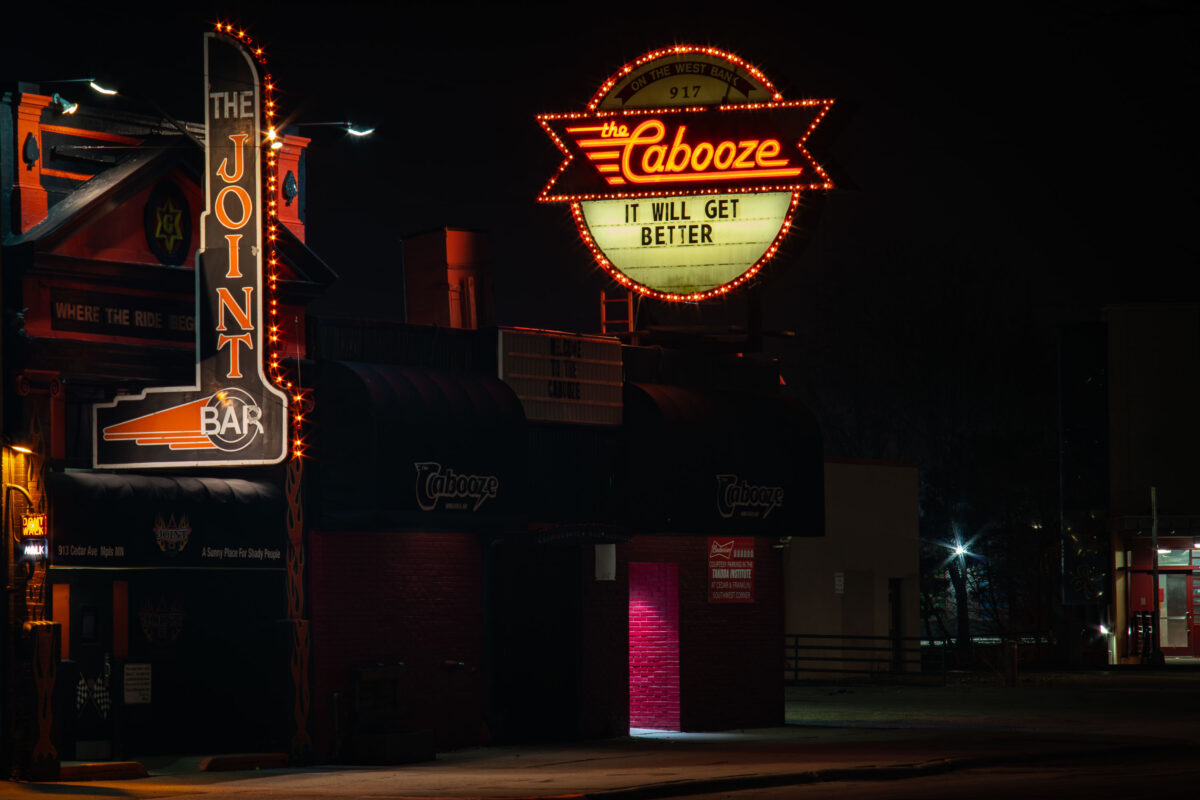
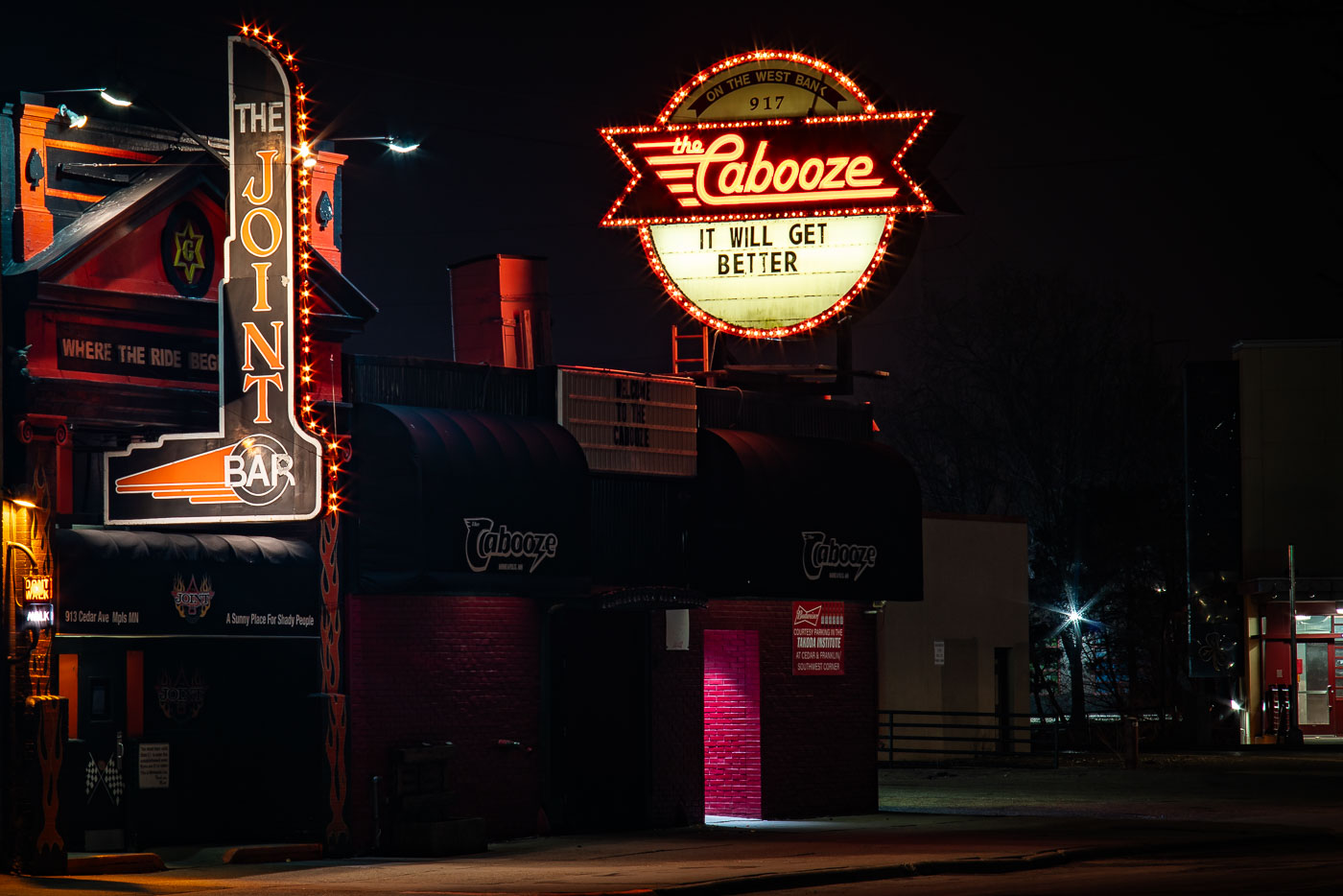
The Joint Bar and Cabooze music venues on Cedar Avenue in Minneapolis display neon signs at night during COVID-19 shutdowns in
The Cabooze sits at 917 Cedar Avenue South in the Cedar-Riverside neighborhood, part of Minneapolis's West Bank entertainment district. Opened in the early 1970s, it's one of the city's longest-running live music venues, having hosted acts ranging from local punk and blues bands to national touring artists. The Joint Bar operates next door in the same stretch of Cedar Avenue, part of the same cluster of nightlife businesses that has defined the West Bank for decades. In March 2020, both venues went dark under Minnesota's COVID-19 shutdown orders, and The Cabooze's marquee was changed to read "IT WILL GET BETTER."

The Cabooze and The Joint on Cedar Avenue, Minneapolis
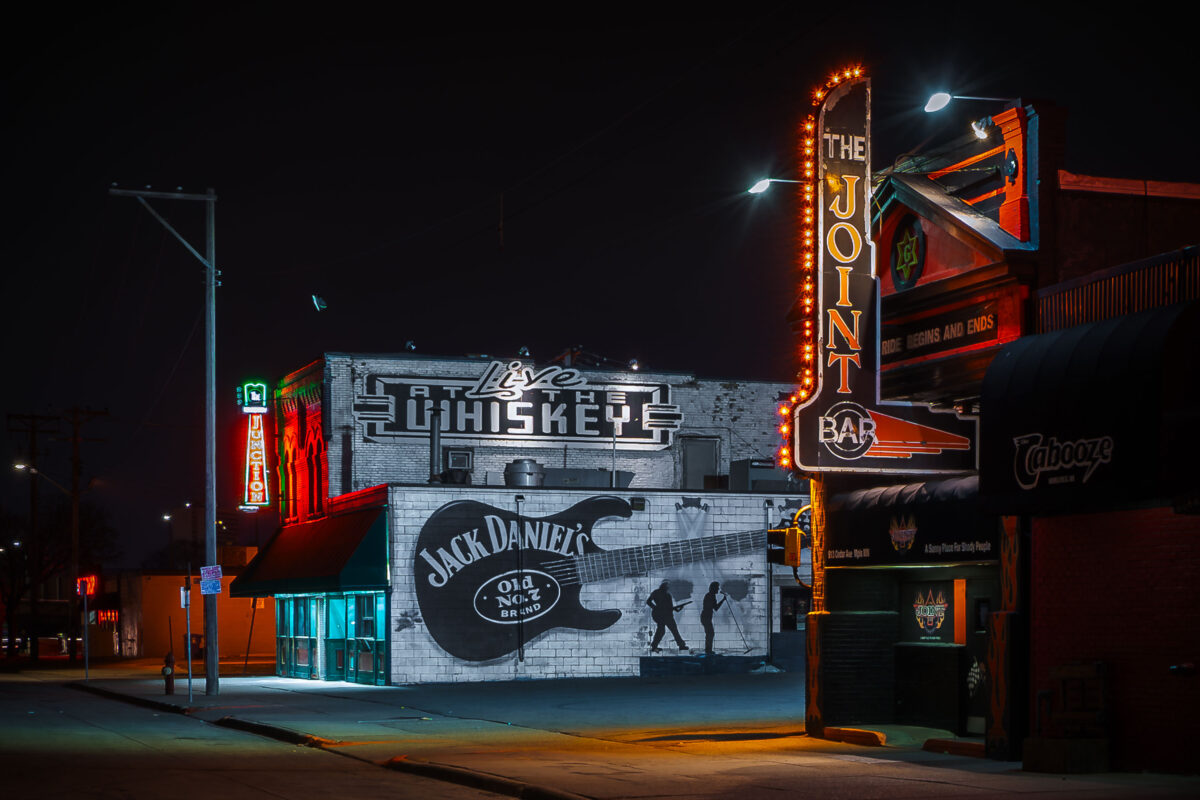
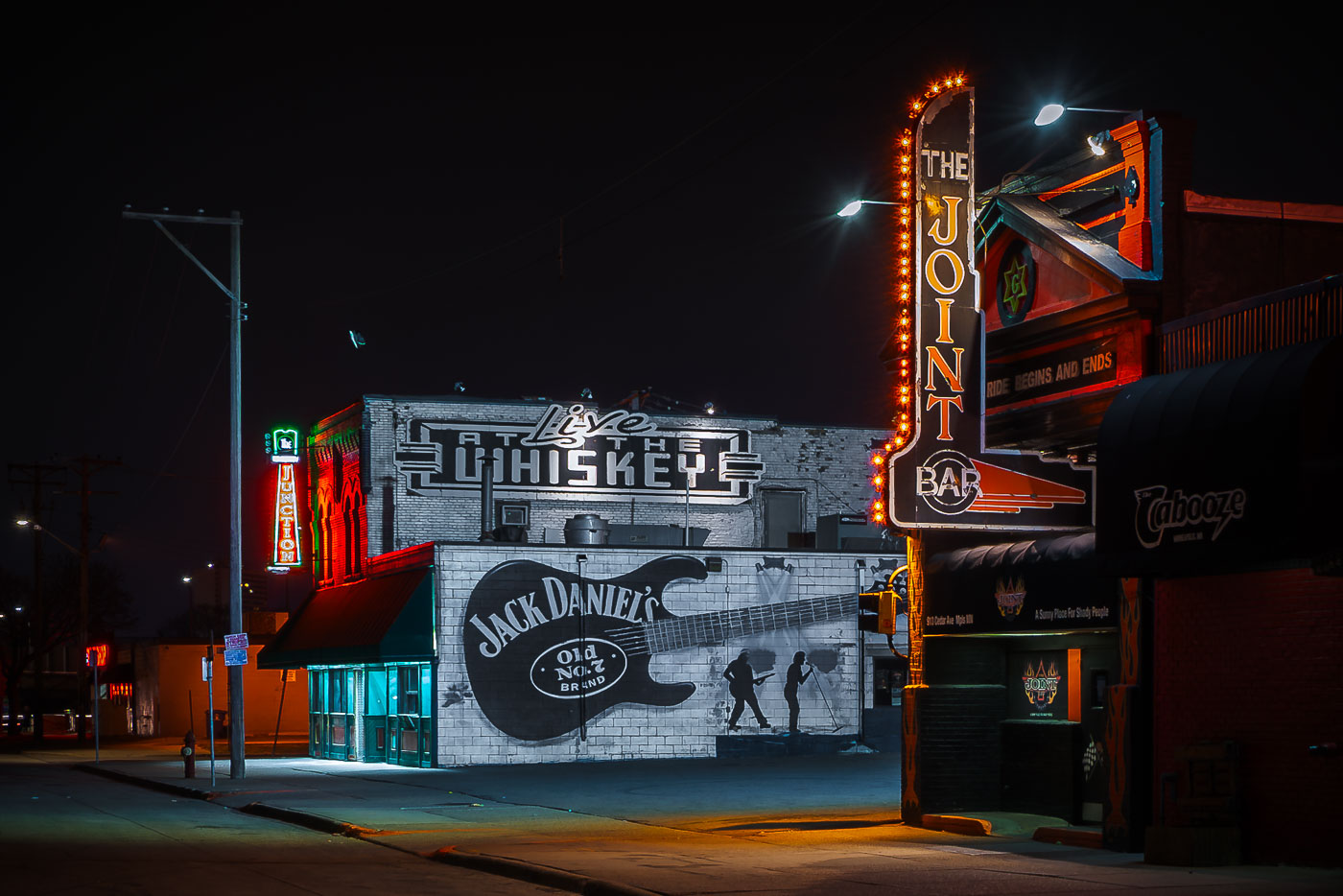
Jack Daniels guitar mural and neon signs illuminate Whiskey Junction nightclub on Cedar Avenue in Minneapolis.
Whiskey Junction sits on Cedar Avenue in the Cedar-Riverside neighborhood, a stretch long associated with live music venues near the University of Minnesota's West Bank. The building's side wall carries a large hand-painted mural advertising Jack Daniel's Old No. 7, styled around an electric guitar, alongside signage for "Live at the Whiskey." Next door, The Joint Bar and The Cabooze occupy the same block, part of a cluster of music clubs that has defined this stretch of Cedar Avenue for decades.

Whiskey Junction’s Jack Daniel’s Mural on Cedar Avenue
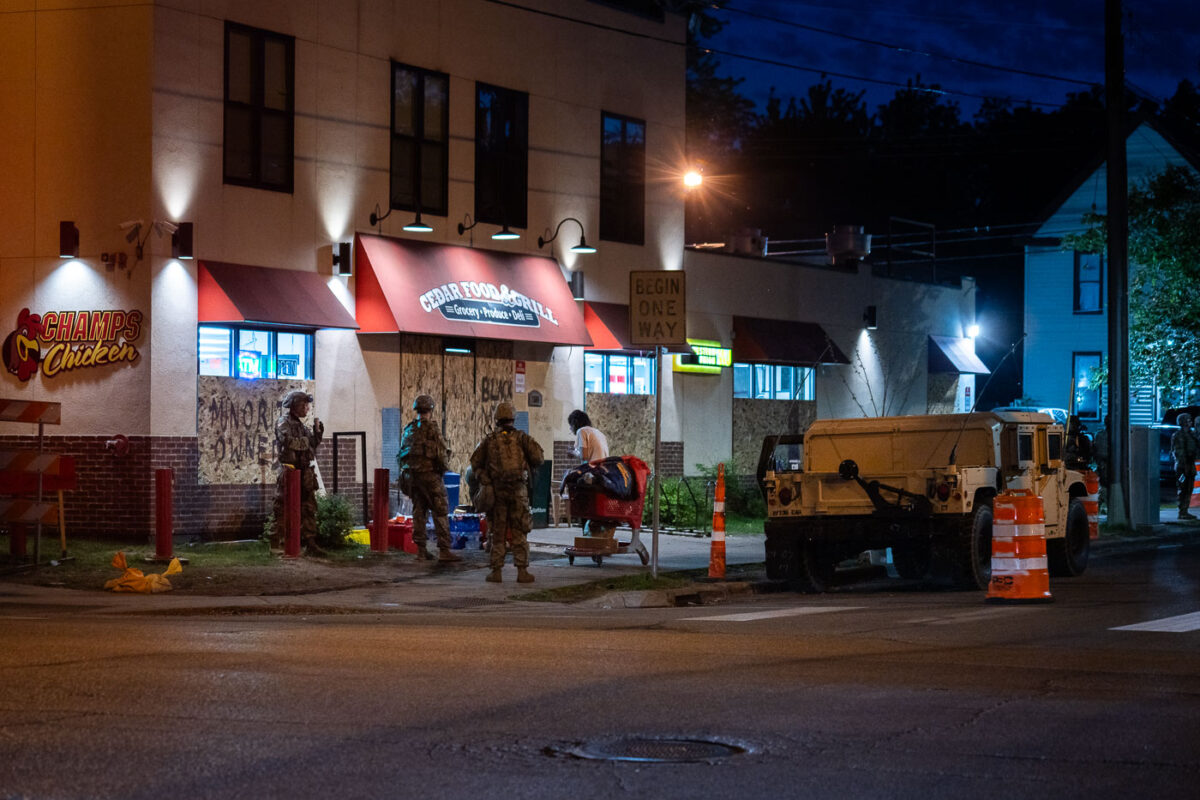
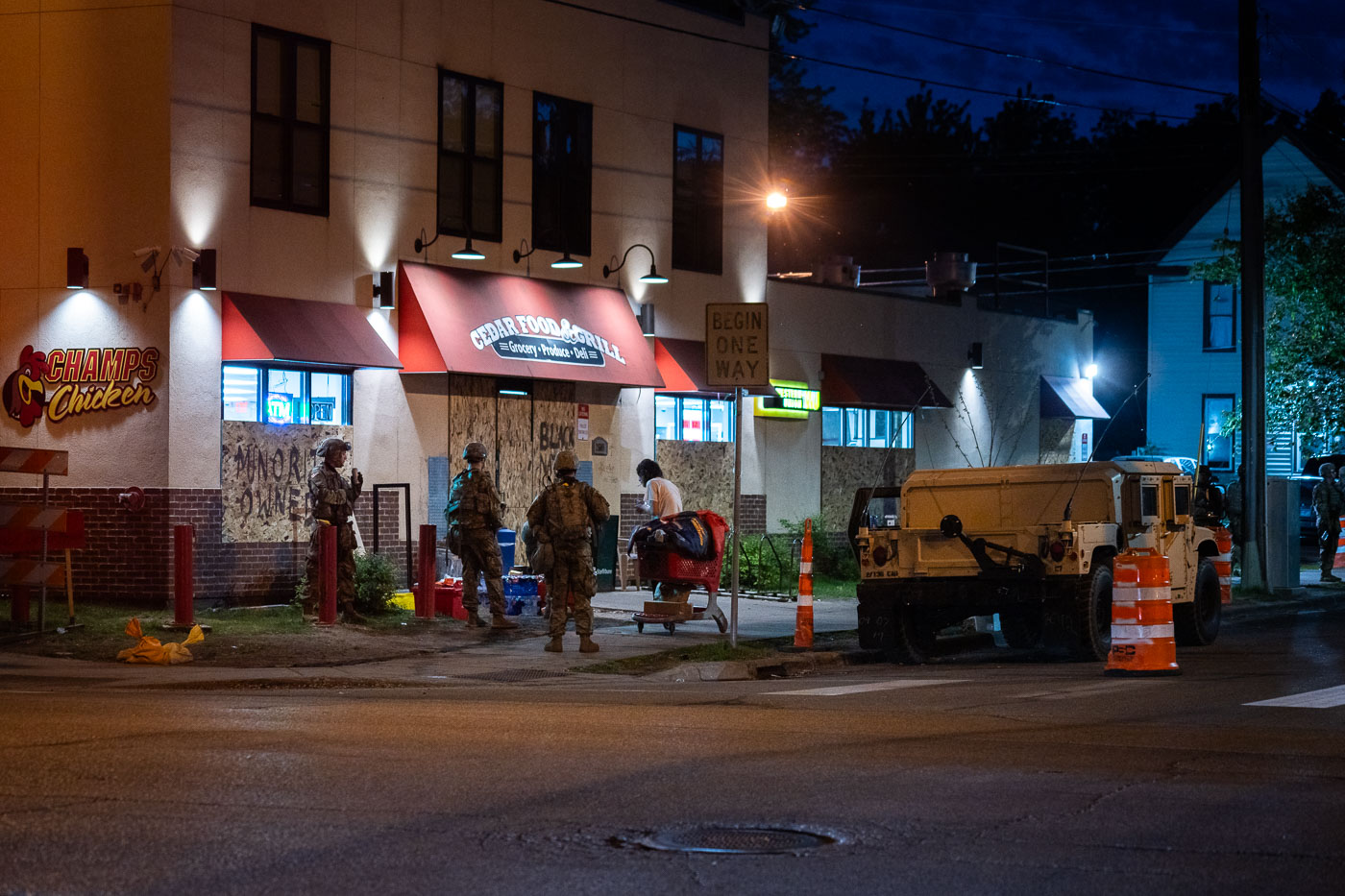
Minnesota National Guard outside Cedar Food & Grill on Cedar Avenue in South Minneapolis on June 1, 2020.
Minnesota National Guard troops stand outside Cedar Food & Grill on Cedar Avenue in South Minneapolis on June 1, 2020. The grocery, produce, and deli storefront is boarded up, with handwritten signs on the plywood noting that it is minority owned. Their deployment came in the days after the May 25 killing of George Floyd, when National Guard units were stationed around Minneapolis commercial corridors and neighborhood businesses during the unrest.

National Guard at Cedar Food & Grill during Minneapolis unrest
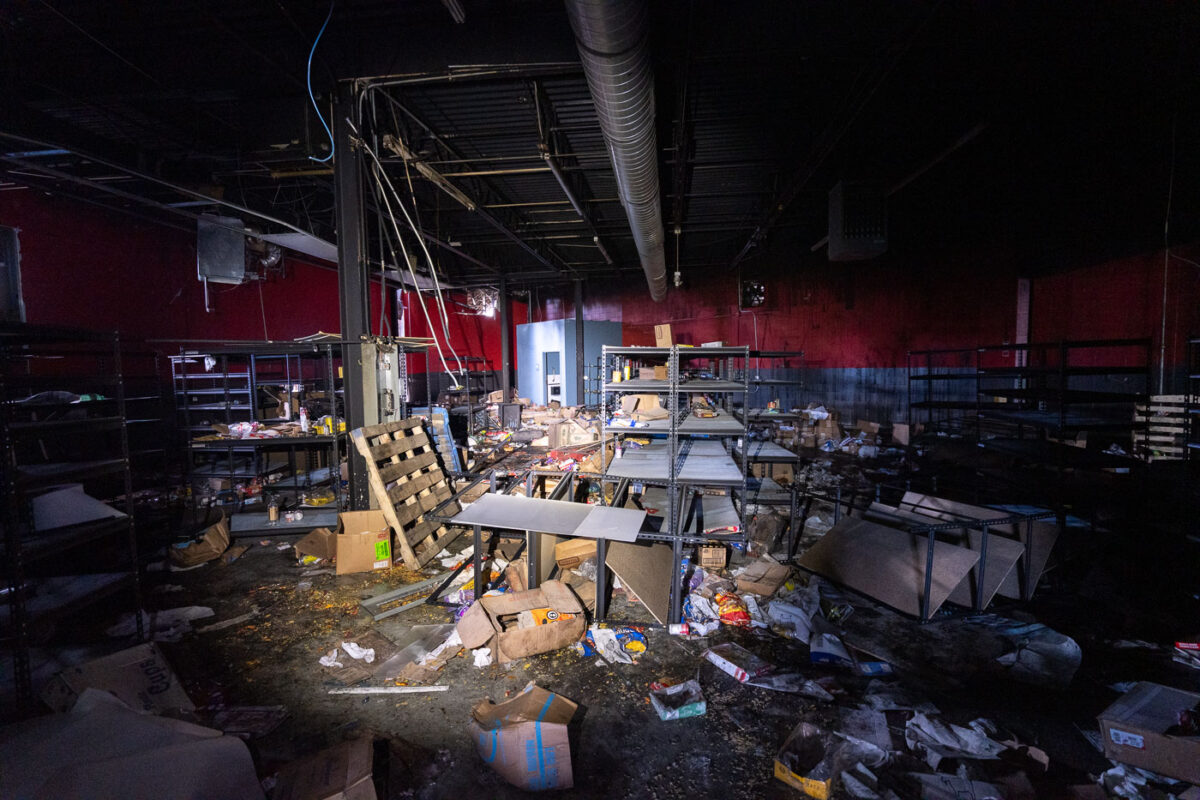
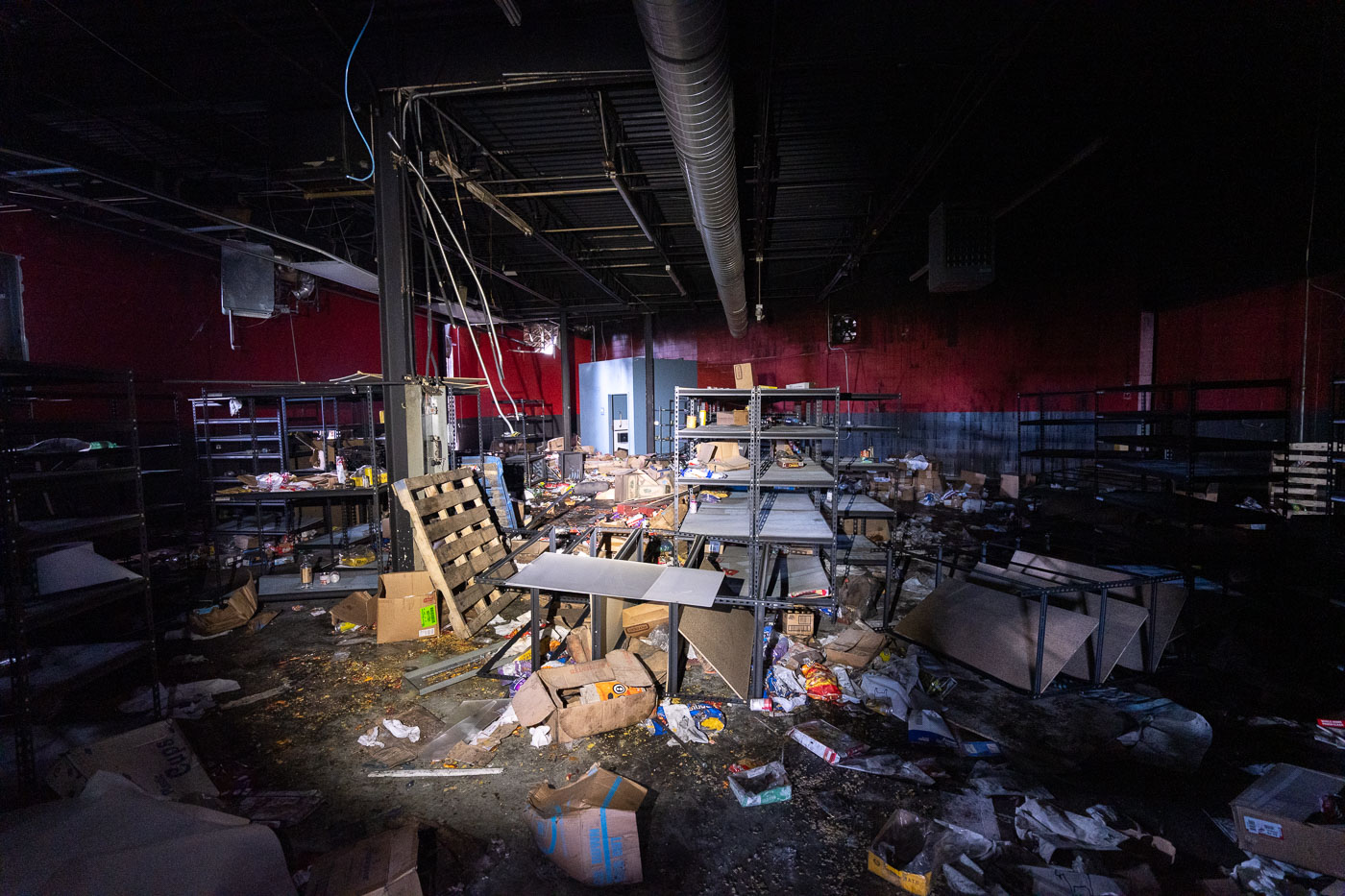
Inside GoPuff foods on Cedar Avenue
The interior of a GoPuff food delivery service facility on Cedar Avenue in Minneapolis displays significant damage. This damage occurred during the civil unrest and protests that followed the May 25, 2020, death of George Floyd. GoPuff operates as a rapid delivery service, utilizing local micro-fulfillment centers to store and dispatch a wide range of products directly to customers. The disarray of shelving, scattered products, and debris on the floor reflects the widespread impact on businesses in the area during that period.

Damaged GoPuff Interior, Cedar Ave, Minneapolis Uprising
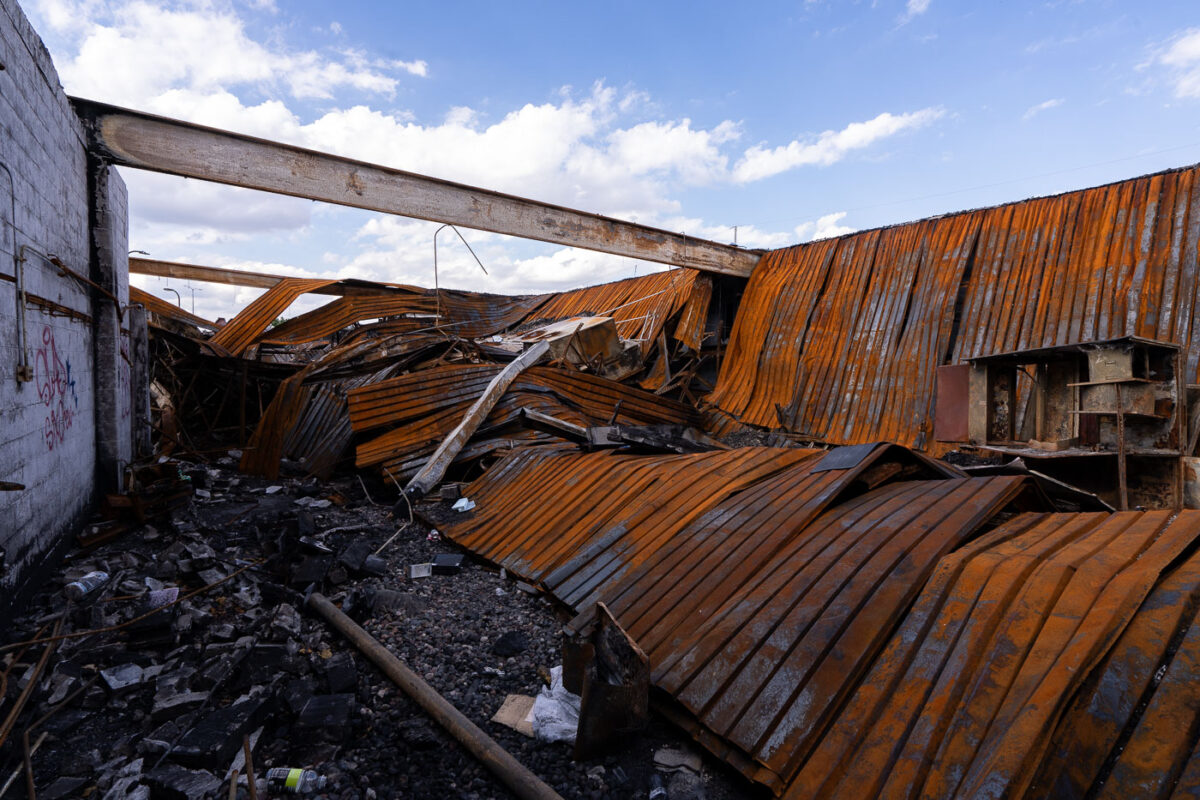
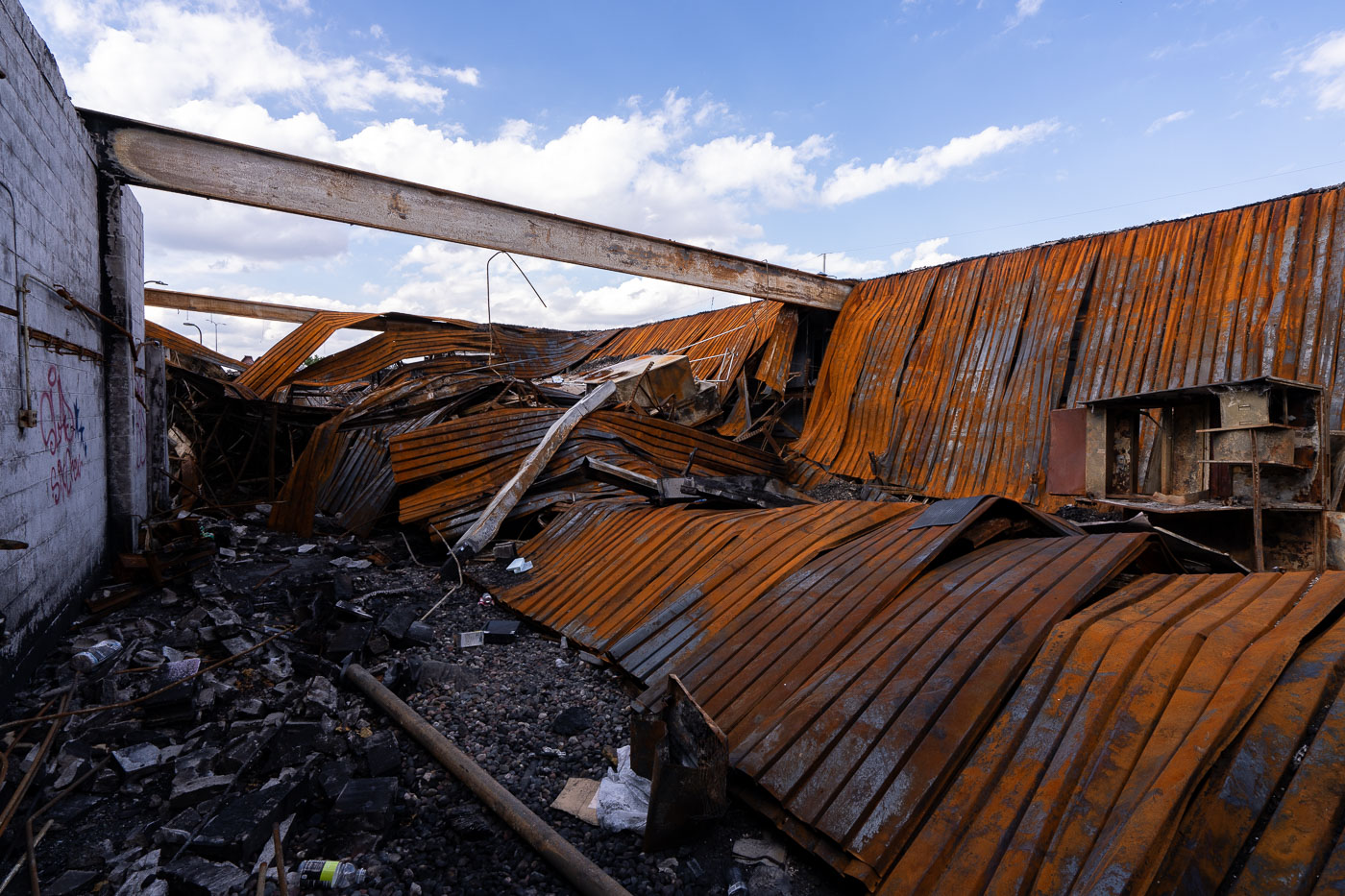
Caved in roof of fire damaged building on Cedar Ave
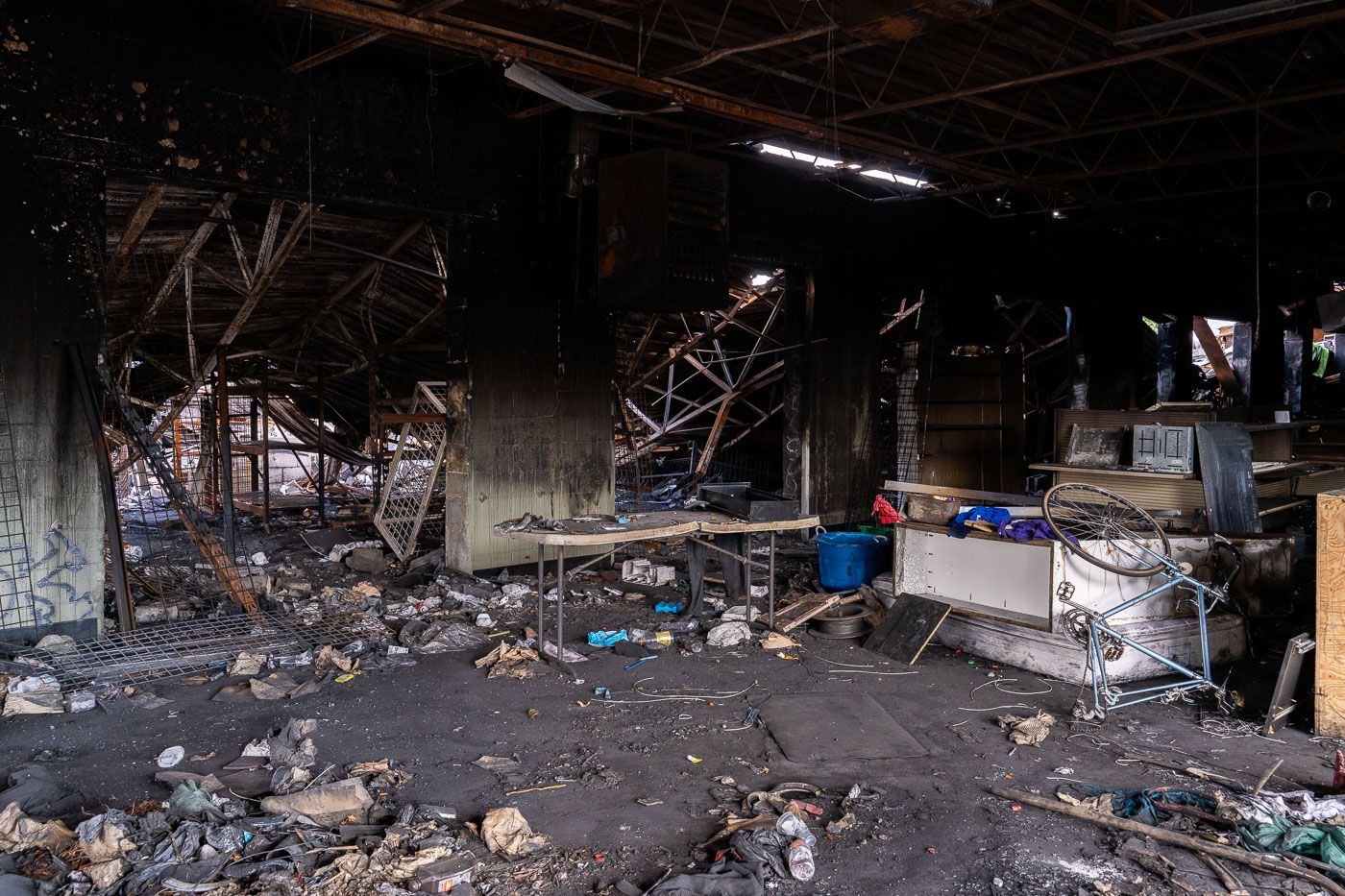
The interior of Max It Pawn on Cedar Avenue in Minneapolis shows extensive fire damage, with its roof caved in and corrugated metal structures twisted and rusted. This retail store sustained significant destruction during the protests and civil unrest that occurred in Minneapolis following the death of George Floyd on May 25, 2020. The building's charred remains and collapsed roof are a stark reminder of the widespread impact on local businesses. The damage to establishments like Max It Pawn became a visible representation of the profound effects of the Minneapolis Uprising on commercial districts and the community.

Max It Pawn Burned Interior, Cedar Ave, Minneapolis
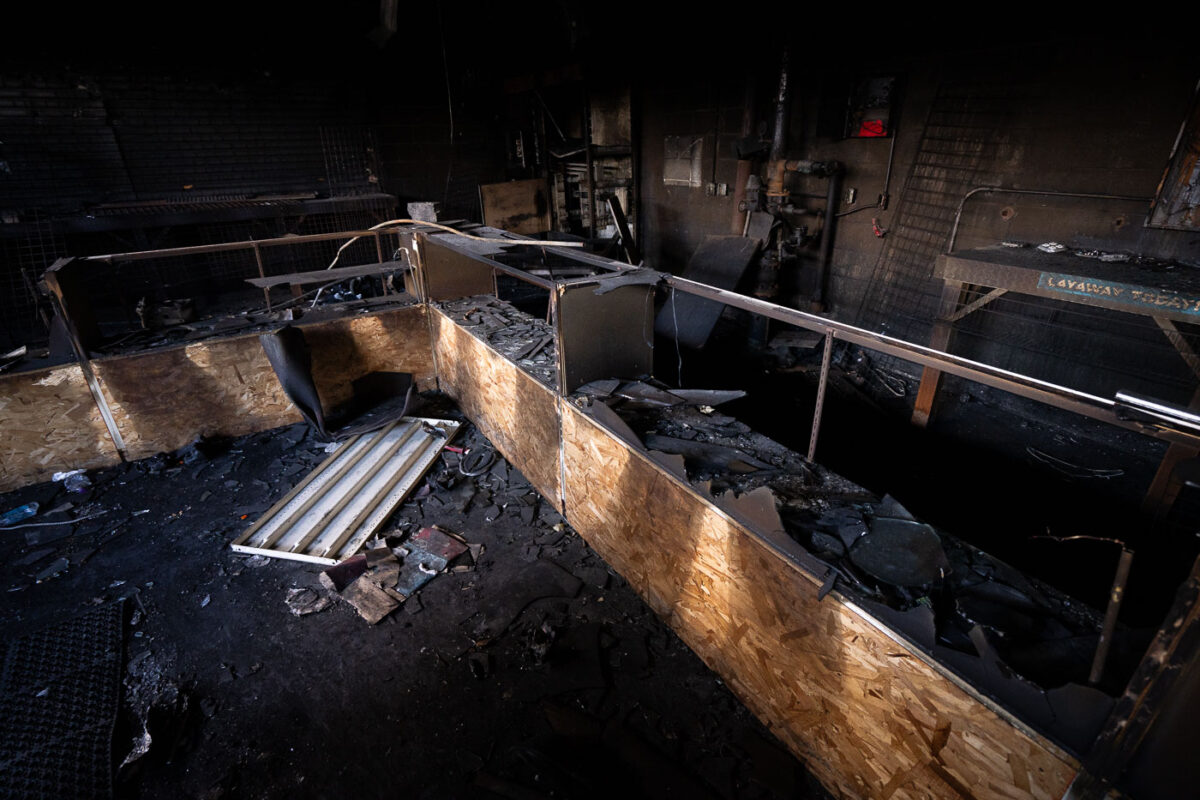
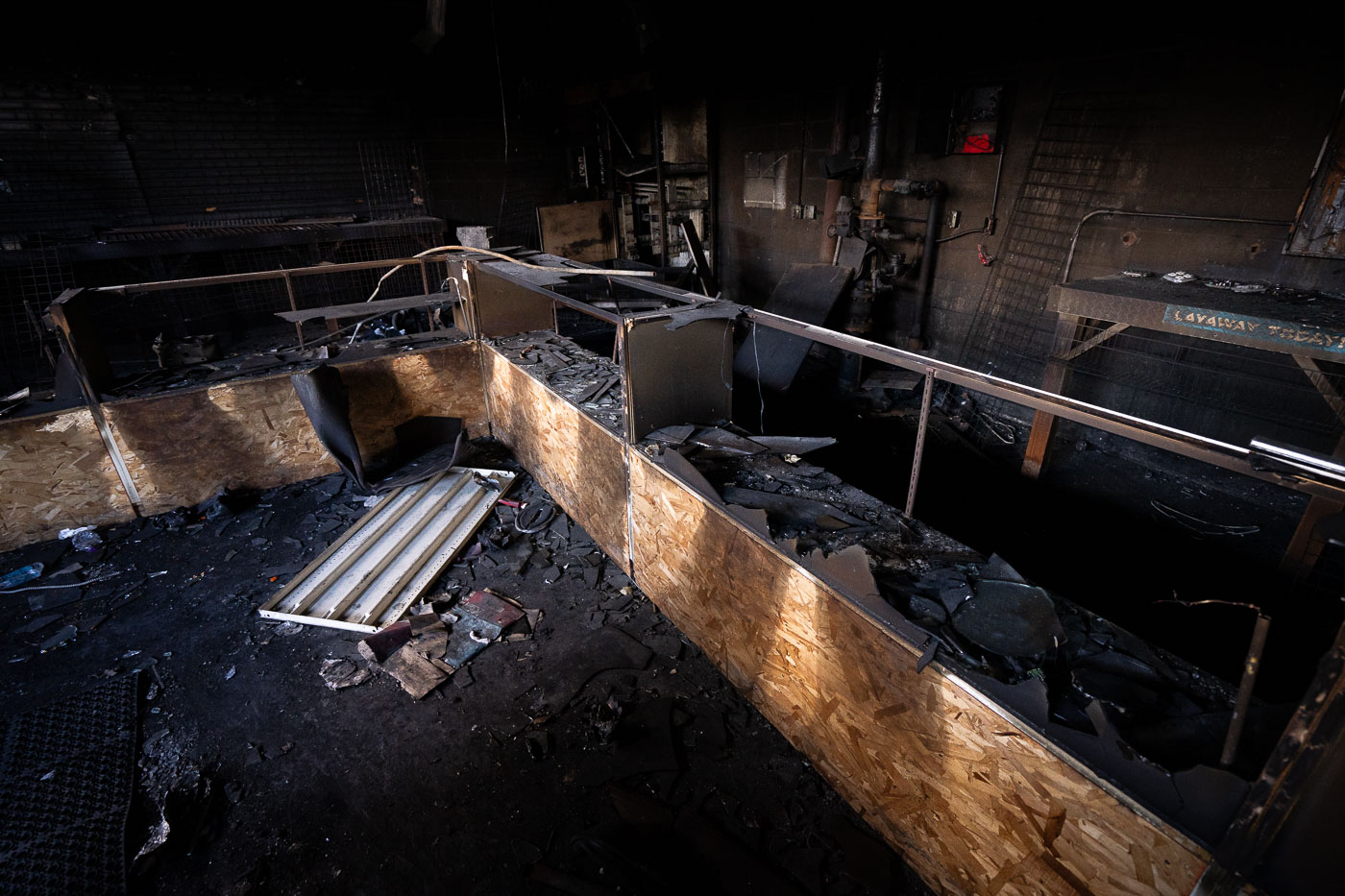
Burned out counter inside Max It Pawn
The interior of Max It Pawn on Cedar Avenue in Minneapolis displays extensive fire damage. This retail establishment was destroyed by arson following the May 25th, 2020 death of George Floyd. The destruction of the store reflects the broader impact of the civil unrest and protests that occurred across Minneapolis during that period, affecting numerous local businesses and the urban environment.

Burned Interior of Max It Pawn, Cedar Ave, Minneapolis
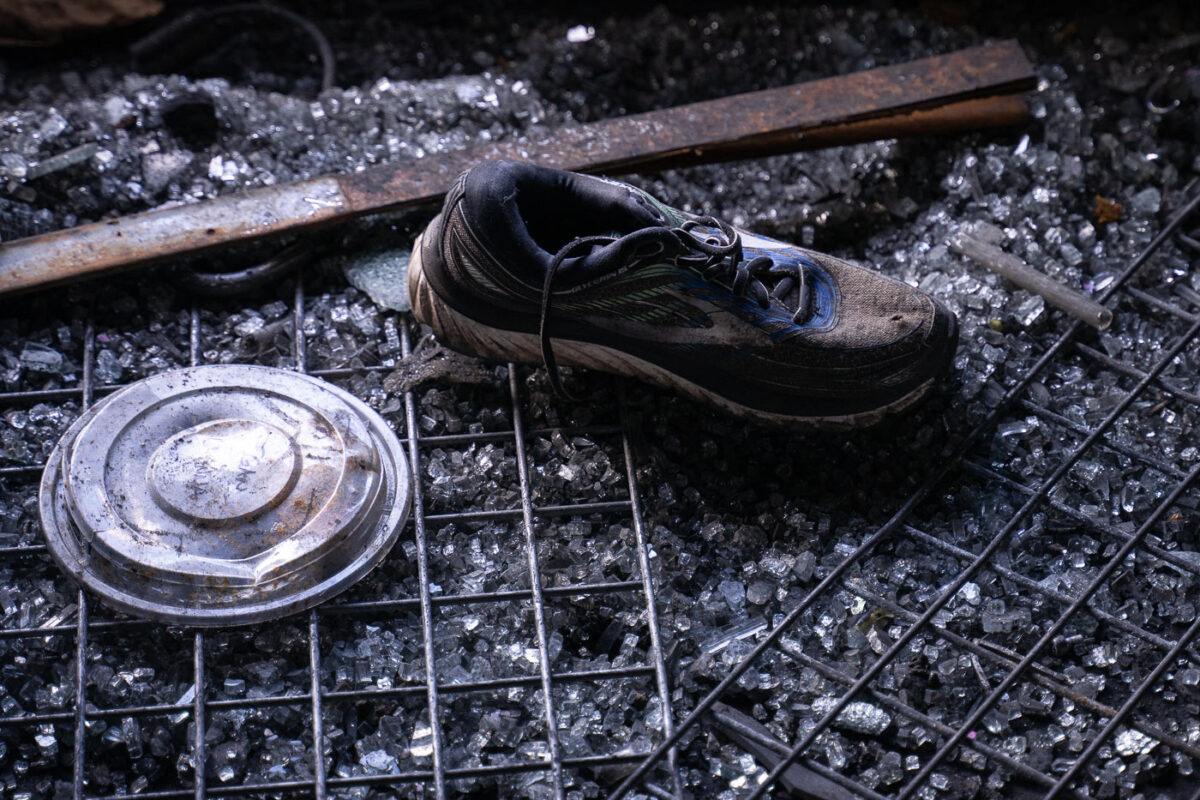
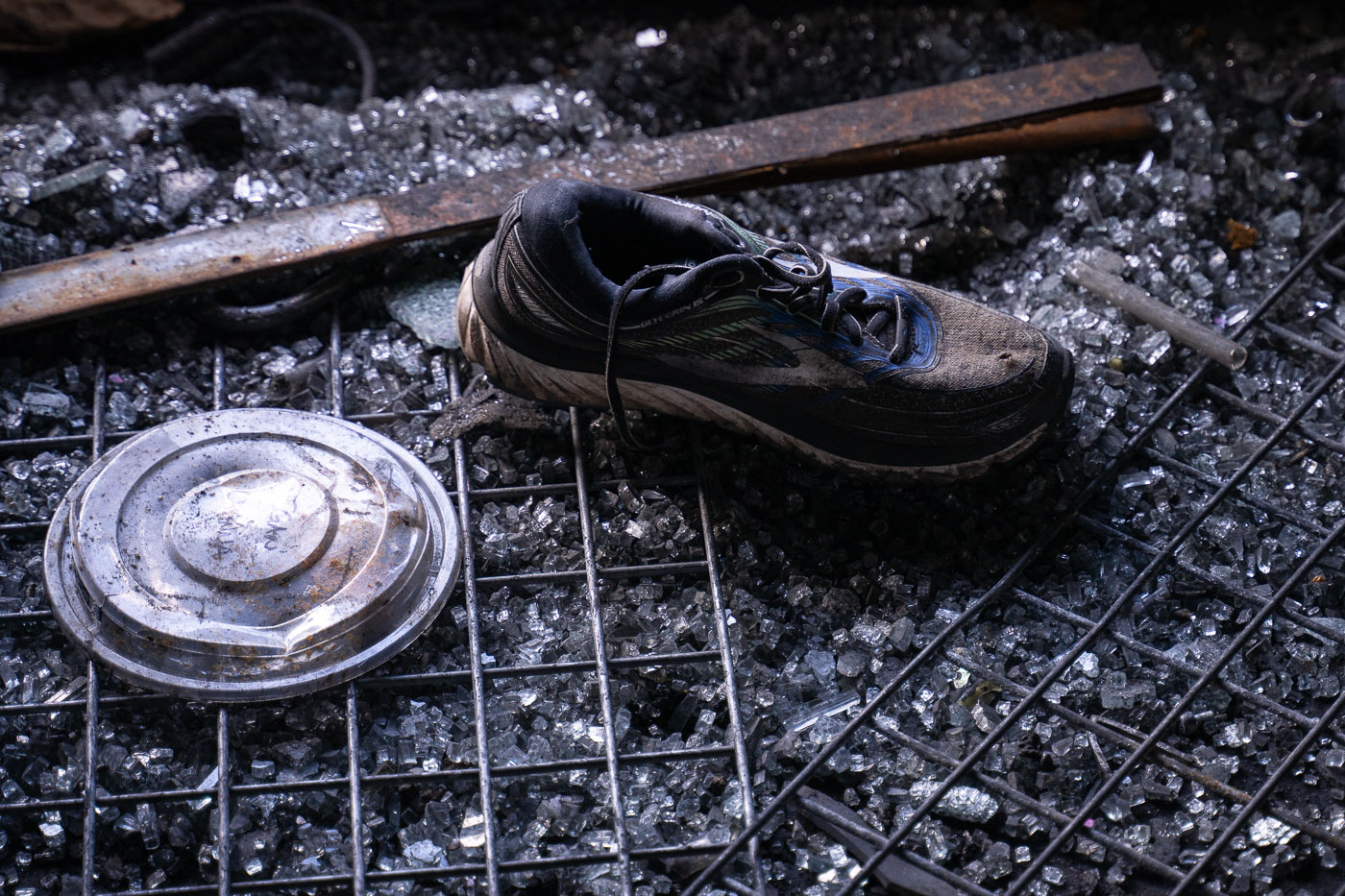
A shoe sits on floor of burned out building
A single shoe rests amidst shattered glass and debris within the fire-damaged Max It Pawn shop on Cedar Avenue in Minneapolis. This retail establishment suffered extensive damage by arson during the civil unrest and protests that occurred in the city following the May 25, 2020 death of George Floyd. The destruction of businesses like Max It Pawn was a significant aspect of the period known as the Minneapolis Uprising. These remnants serve as a historical record of the profound social and economic impact on the community.

Shoe in Broken Glass, Max It Pawn, Cedar Ave, Minneapolis
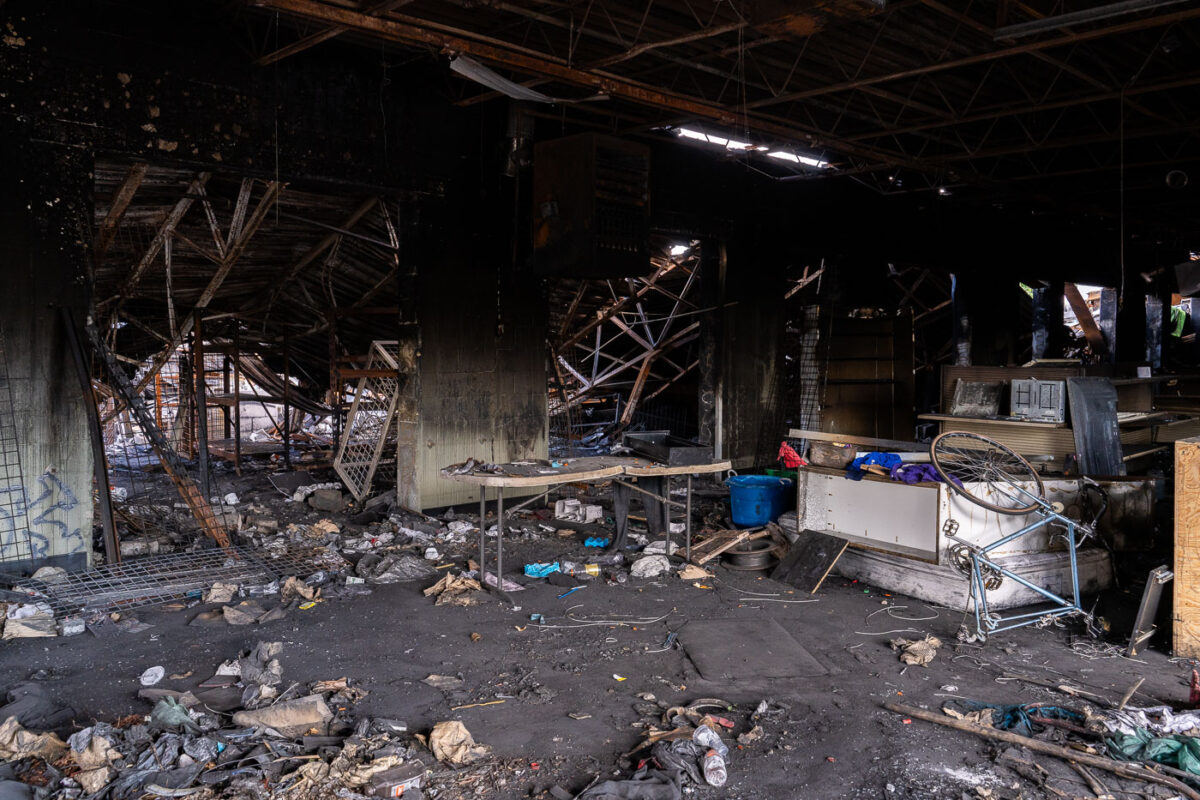
Photo of trash inside burned out building
The charred interior of Max It Pawn on Cedar Avenue in South Minneapolis. This retail store sustained extensive fire damage and was destroyed during the civil unrest in Minneapolis following the murder of George Floyd in May 2020. The structural damage and debris on the floor reflect the widespread impact of arson and property destruction that occurred across the city during this period. The destruction of businesses like Max It Pawn became a visible marker of the protests and the community's response to systemic injustice.

Max It Pawn Burned Interior, Minneapolis
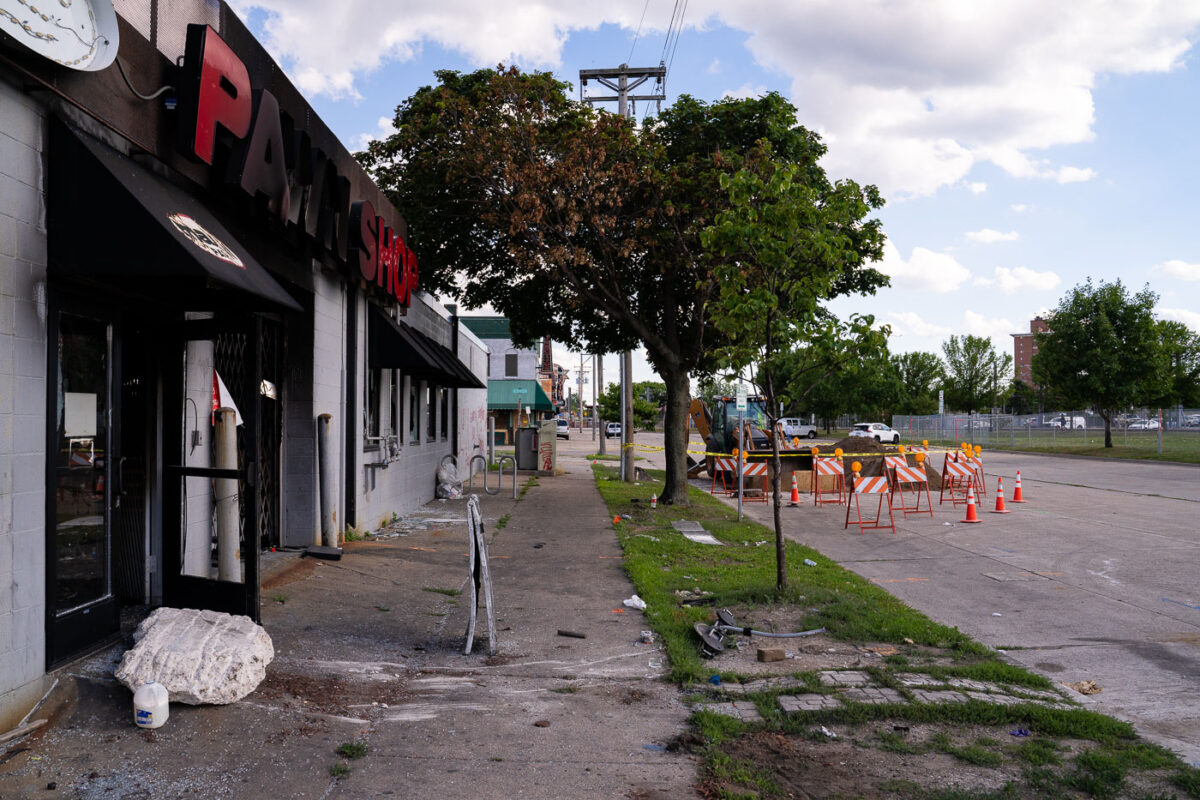
Outside the Max It Pawn that was destroyed by fire
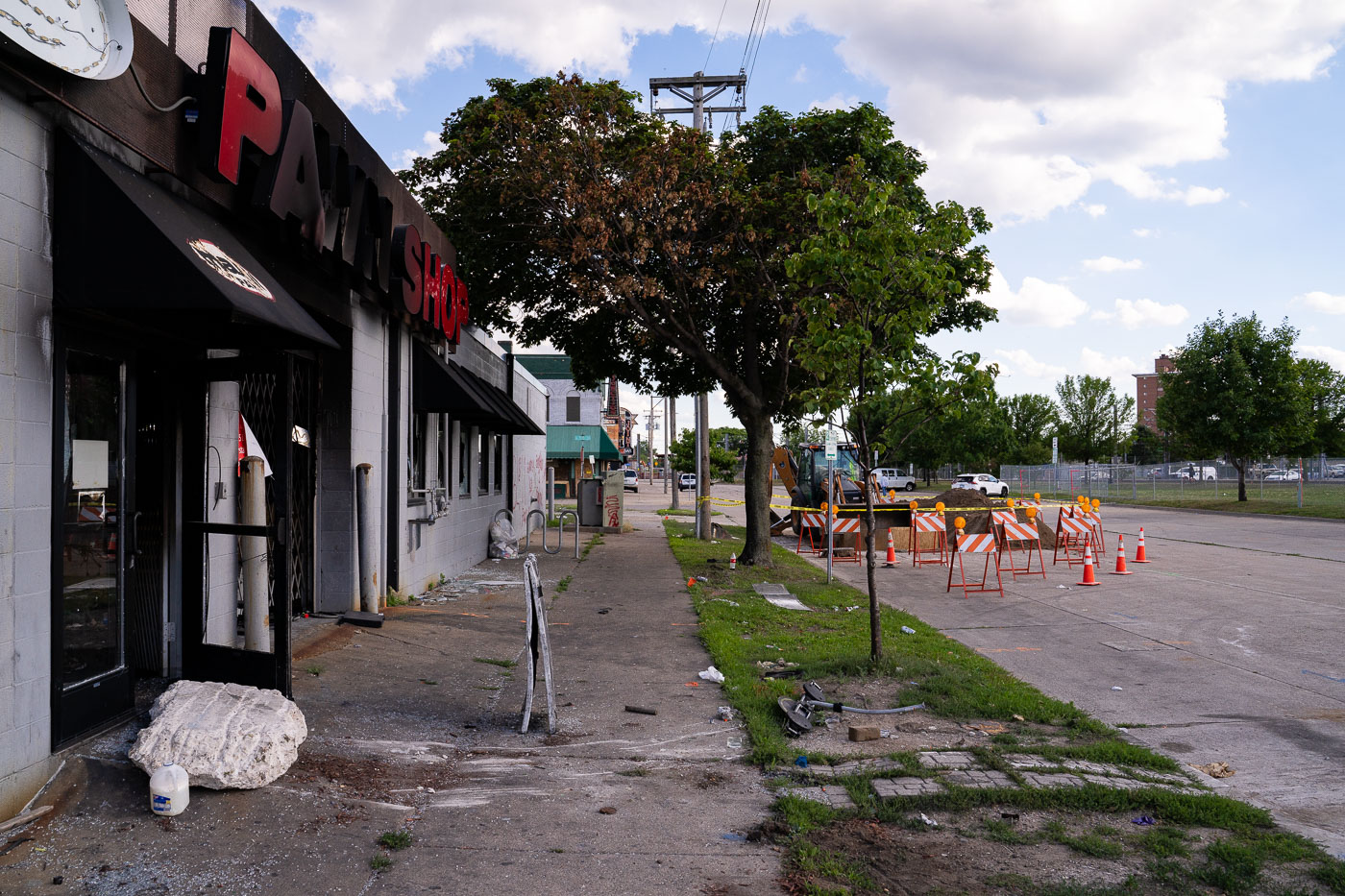
The Max It Pawn shop on Cedar Avenue in Minneapolis sustained significant damage. This retail building was destroyed by fires that occurred in the aftermath of the May 25th, 2020 death of George Floyd. The storefront, with its broken windows and charred interior, reflects the widespread property damage experienced by businesses in the urban core during the period of civil unrest. Debris and construction barriers on the sidewalk indicate ongoing cleanup and the lasting impact on the commercial district. This site serves as a historical marker of the events that unfolded in Minneapolis.

Max It Pawn Shop Burned Storefront, Cedar Ave, Minneapolis
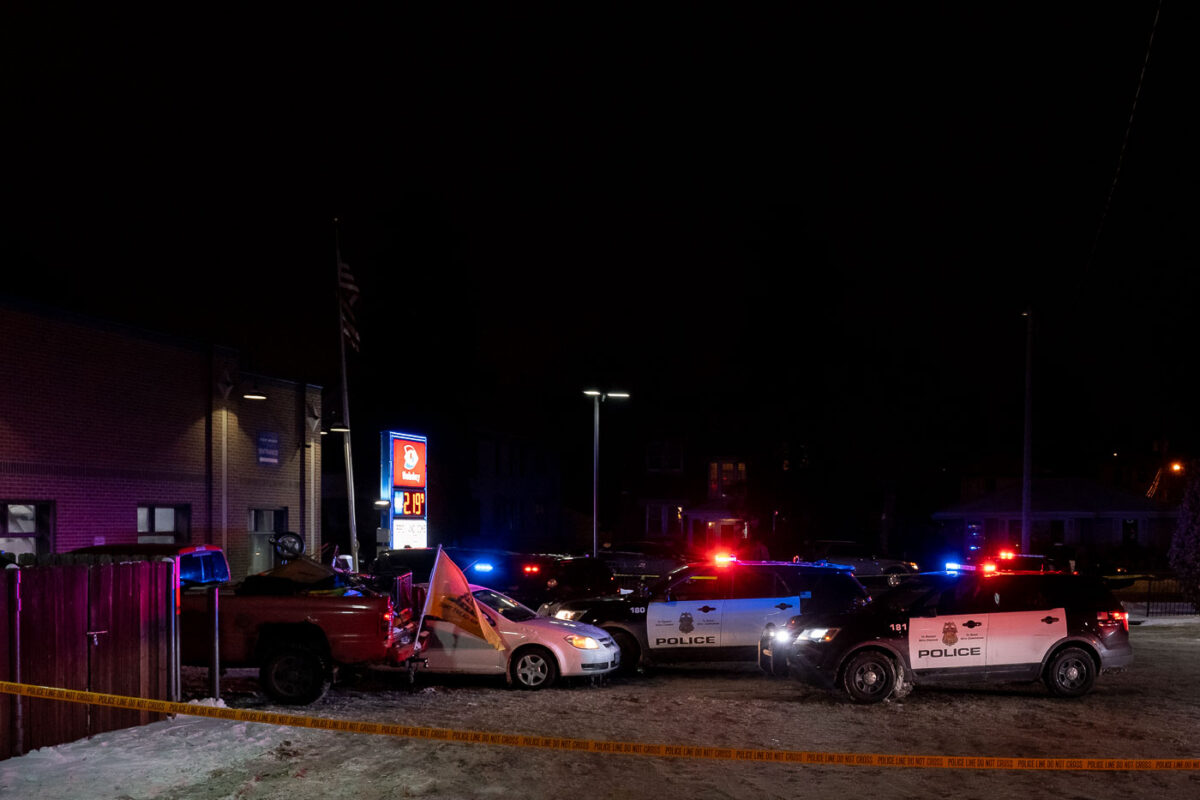
Minneapolis Police at 36th and Cedar
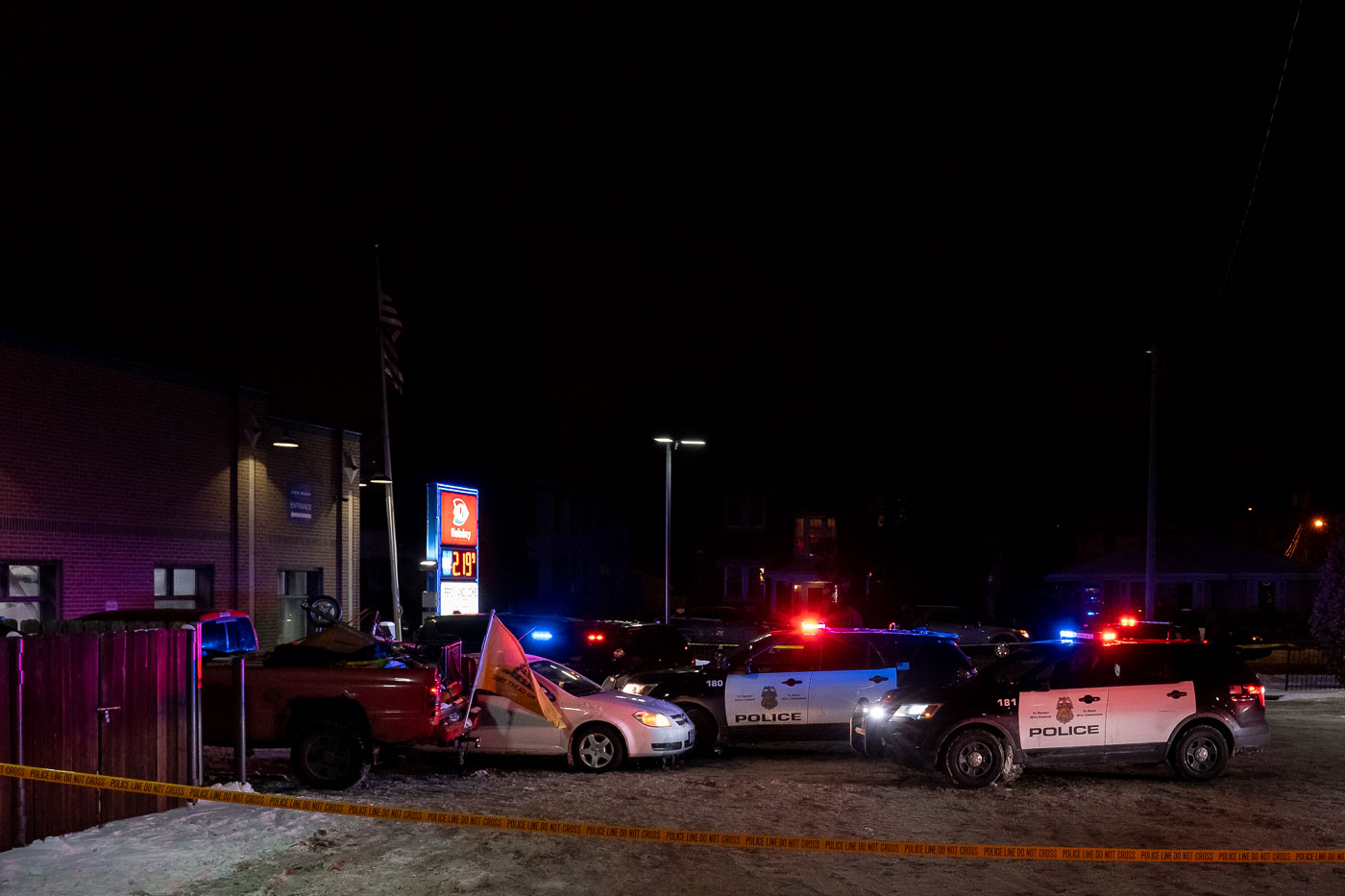
Minneapolis Police vehicles are parked at the Holiday gas station near the intersection of 36th Avenue and Cedar Avenue in Minneapolis, following the fatal shooting of Dolal Idd. The incident occurred on December 30, 2020, after a traffic stop, leading to a police investigation at the site. A 'Don't Tread On Me' flag is visible on one of the civilian vehicles within the secured perimeter. This event occurred during a period of heightened public scrutiny and protest regarding police conduct in Minneapolis.

Dolal Idd Killed by Minneapolis Police at 36th & Cedar
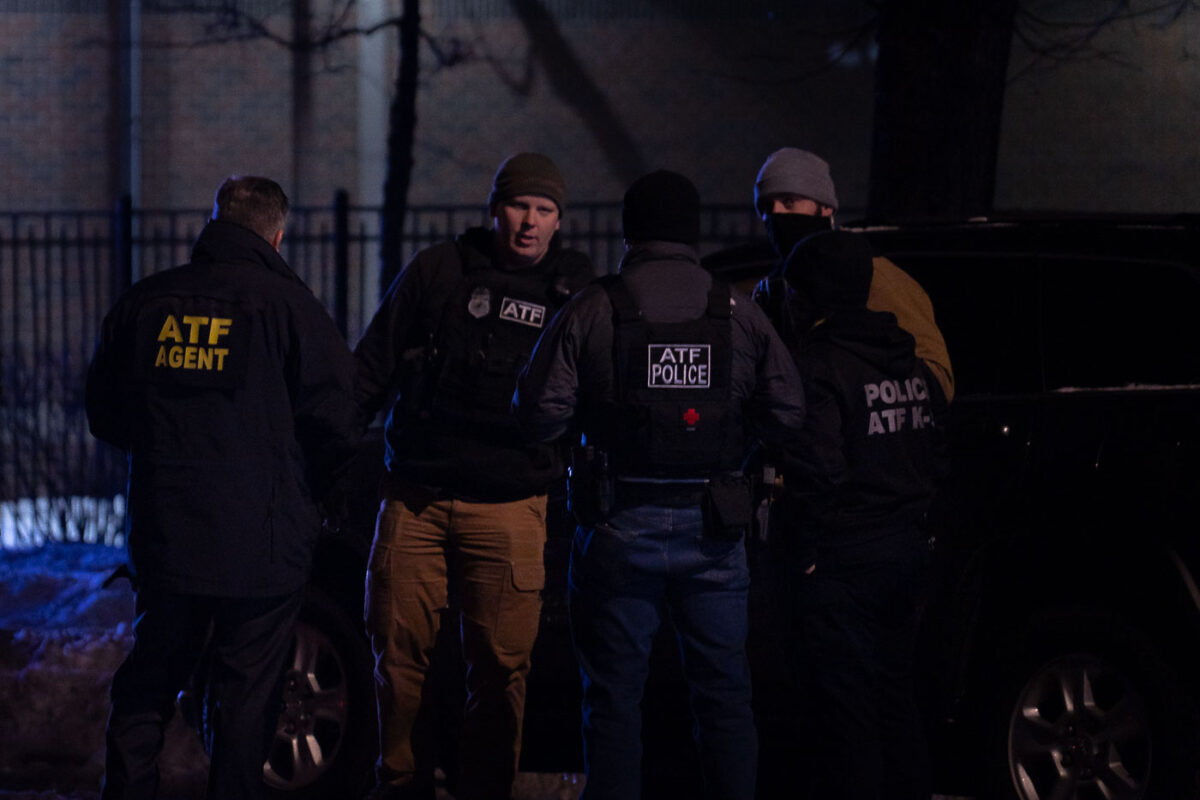
ATF and DEA at the Dolal Idd killing crime scene
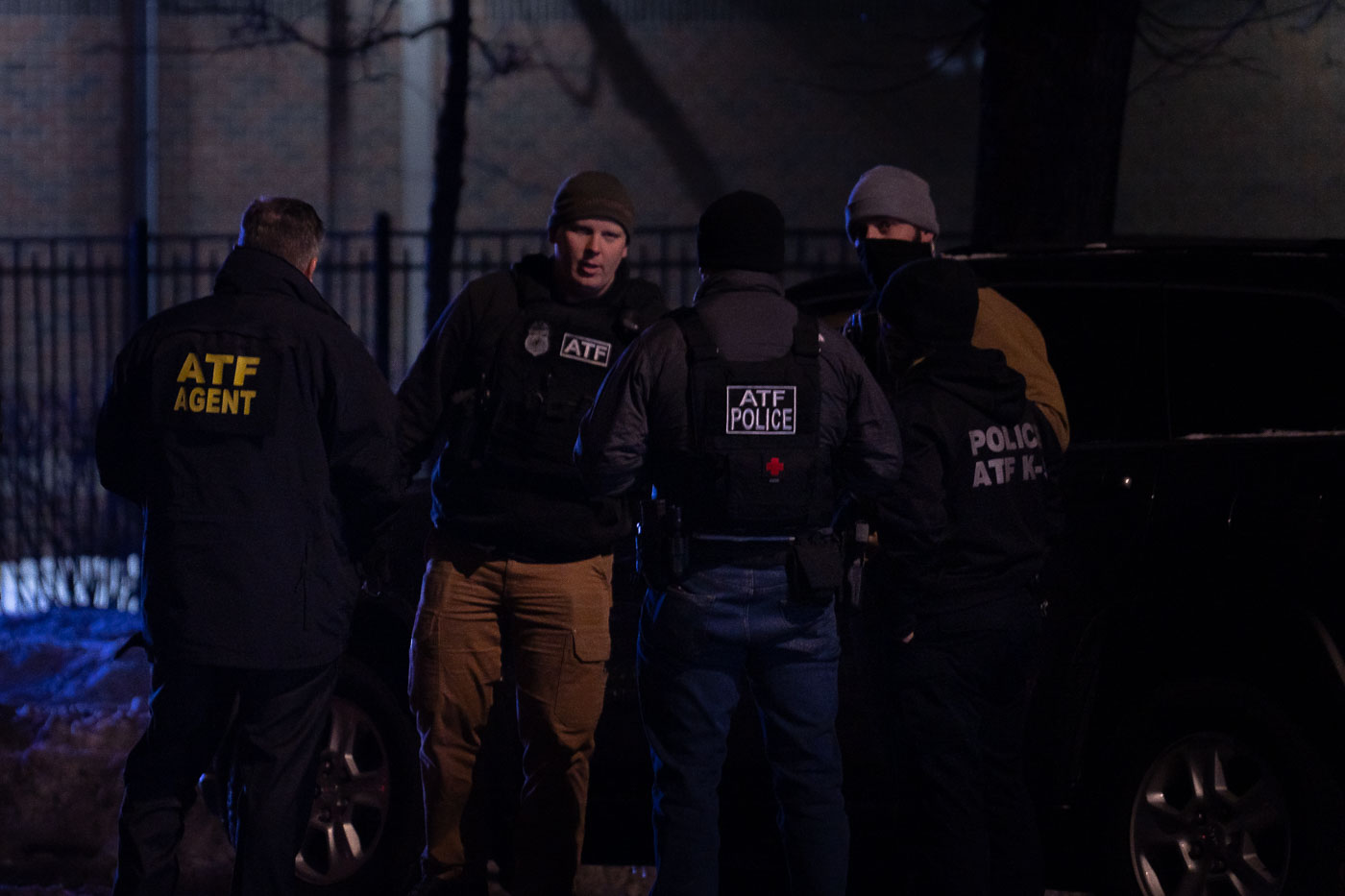
Federal agents from the Bureau of Alcohol, Tobacco, Firearms and Explosives (ATF) and the Drug Enforcement Administration (DEA) gather outside the Holiday Gas station in Minneapolis. This location, situated near 36th Avenue and Cedar Avenue, became a focal point following the fatal shooting of Dolal Idd by Minneapolis Police on December 31, 2020.

ATF and DEA Investigate Dolal Idd Killing, Holiday Gas
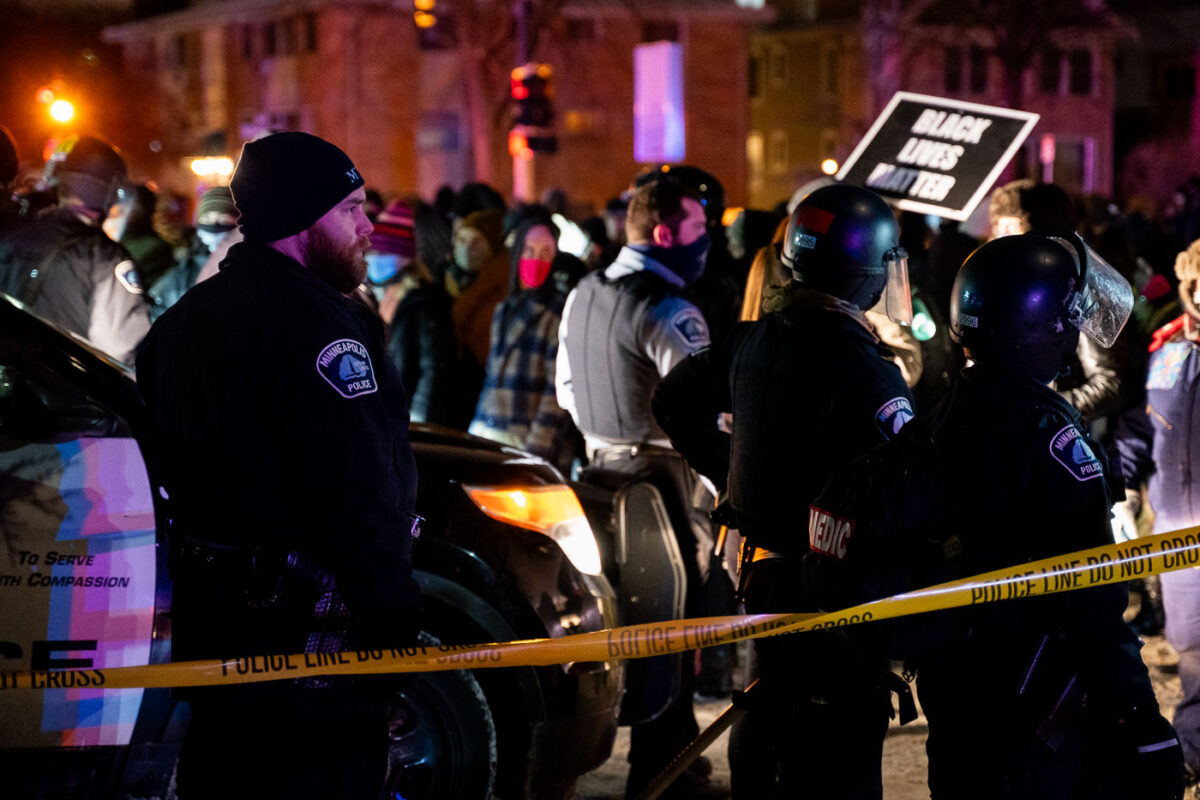
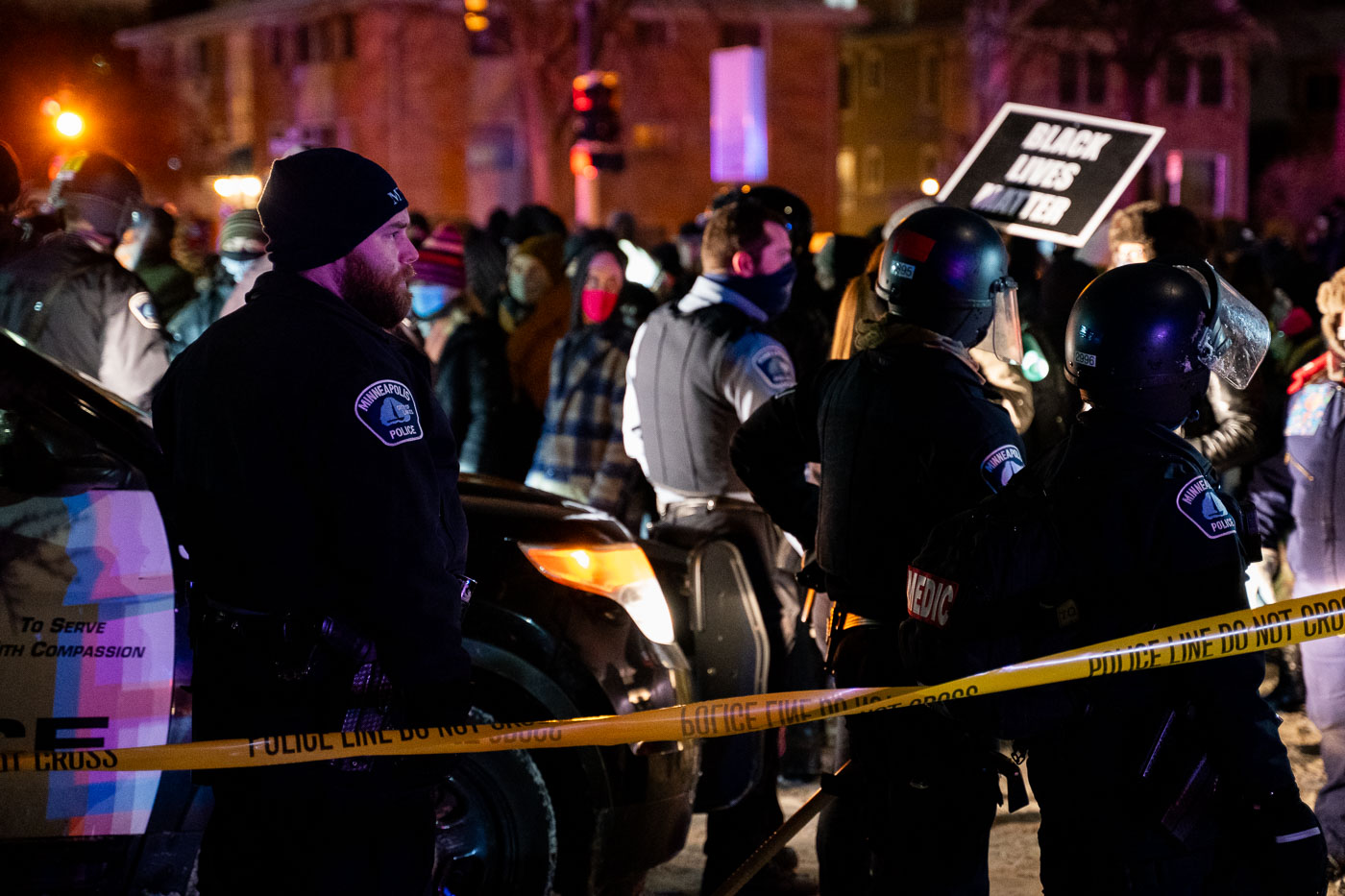
Protesters gather after Dolal Idd was killed by police
Minneapolis police officers stand guard at the Holiday Gas station located at 36th Avenue and Cedar Avenue in Minneapolis. This location became a focal point for protests following the fatal shooting of Dolal Idd by Minneapolis police. Protesters gathered to demand accountability and justice, with signs such as 'Black Lives Matter' visible among the crowd.

Minneapolis Police, Protesters at Holiday Gas, Dolal Idd Protest
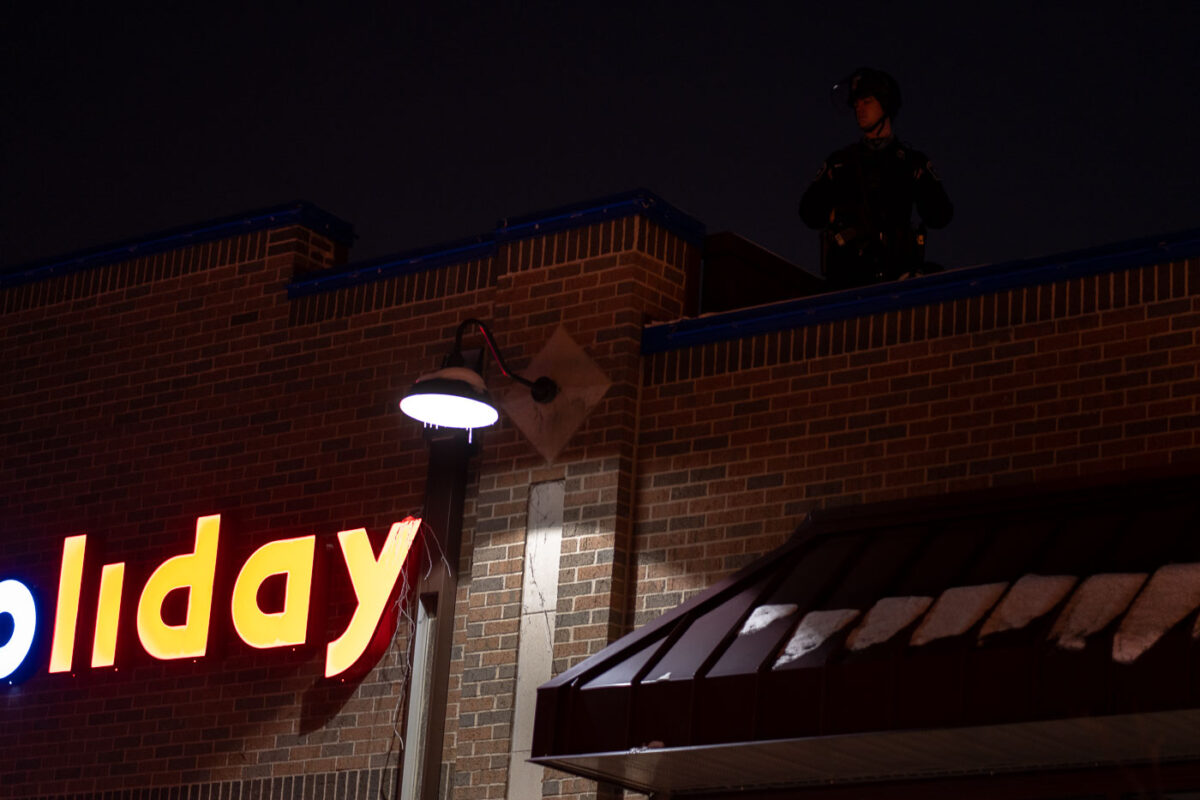
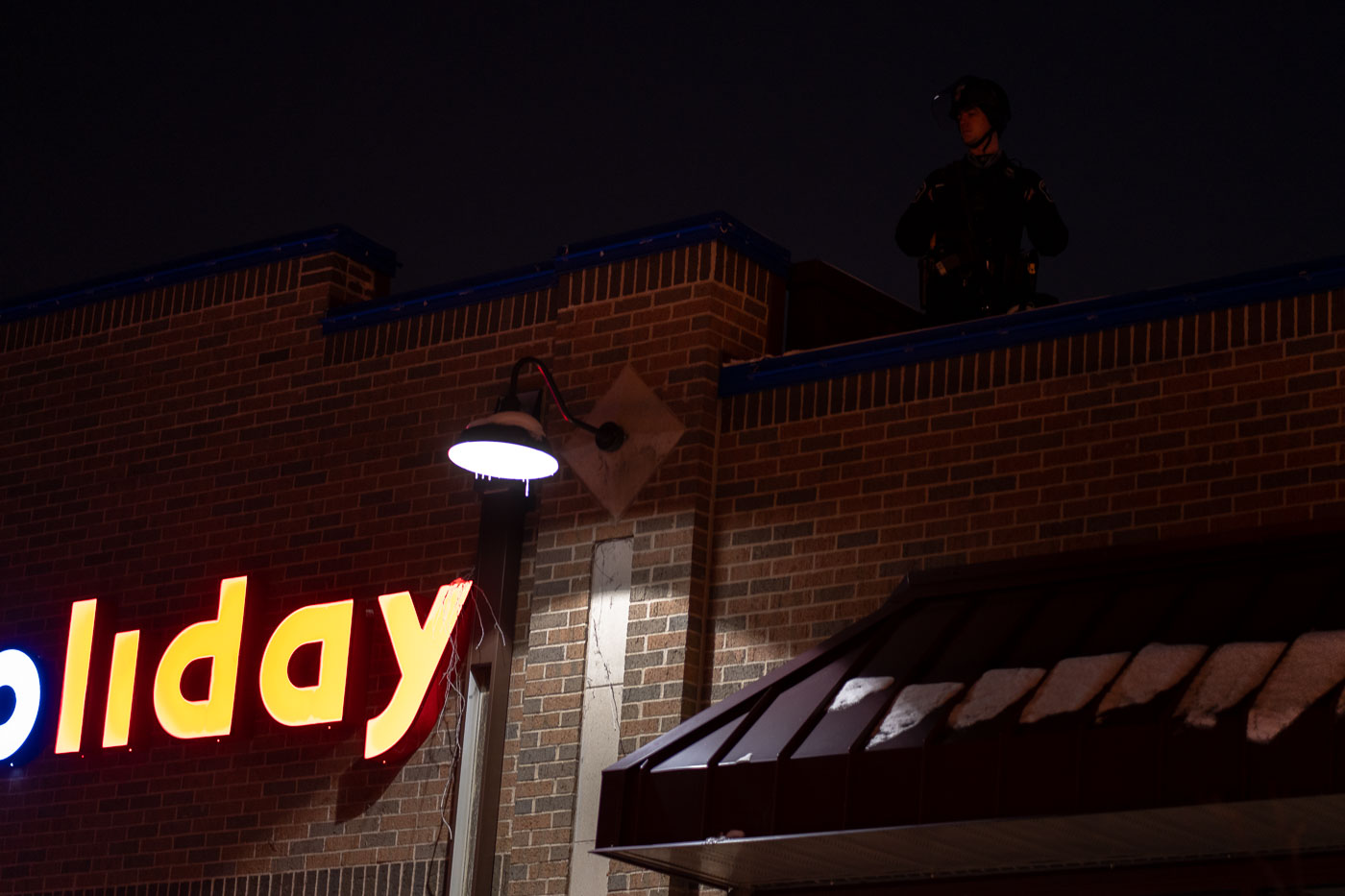
Minneapolis police on roof of Holiday Gas
Minneapolis Police Officer on Holiday Gas Station Roof during Protest. A Minneapolis Police officer stands on the roof of the Holiday gas station at 36th Avenue and Cedar Avenue. This deployment occurred during a protest outside the station, where community members gathered following the fatal shooting of Dolal Idd by Minneapolis police.

Minneapolis Police Officer on Holiday Gas Roof, 36th & Cedar
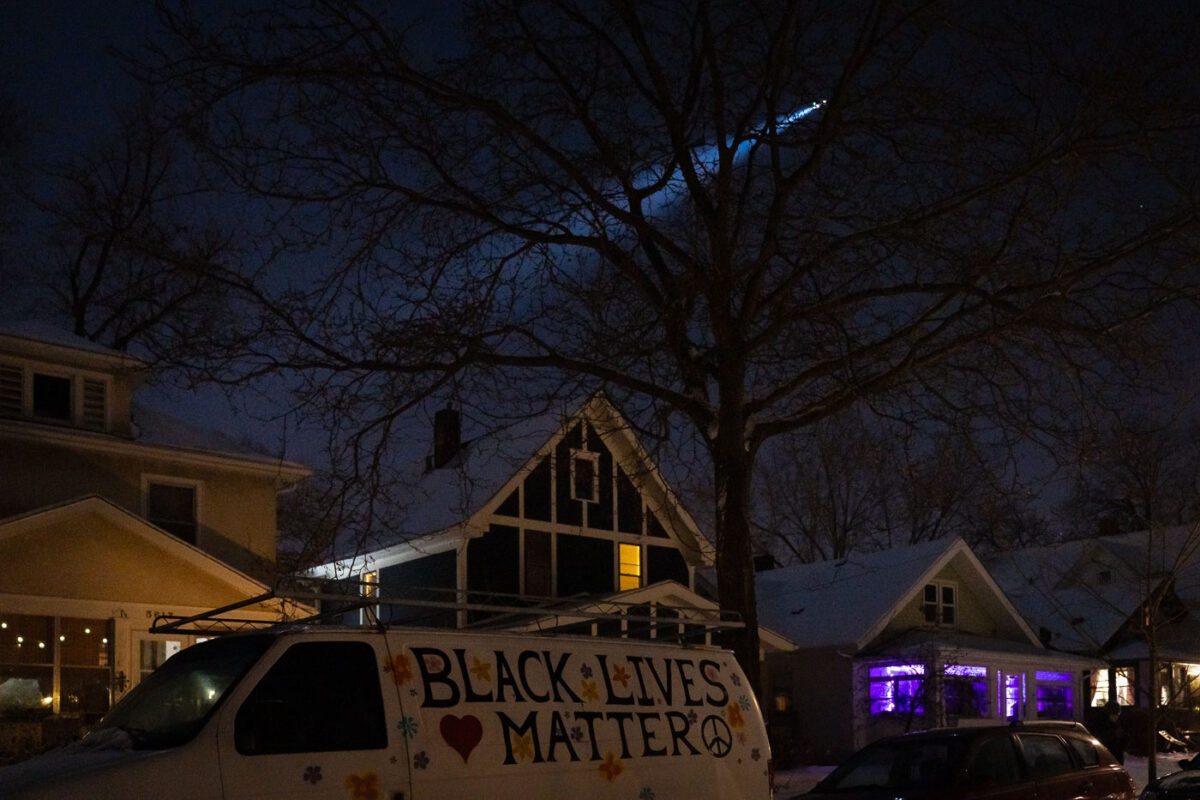
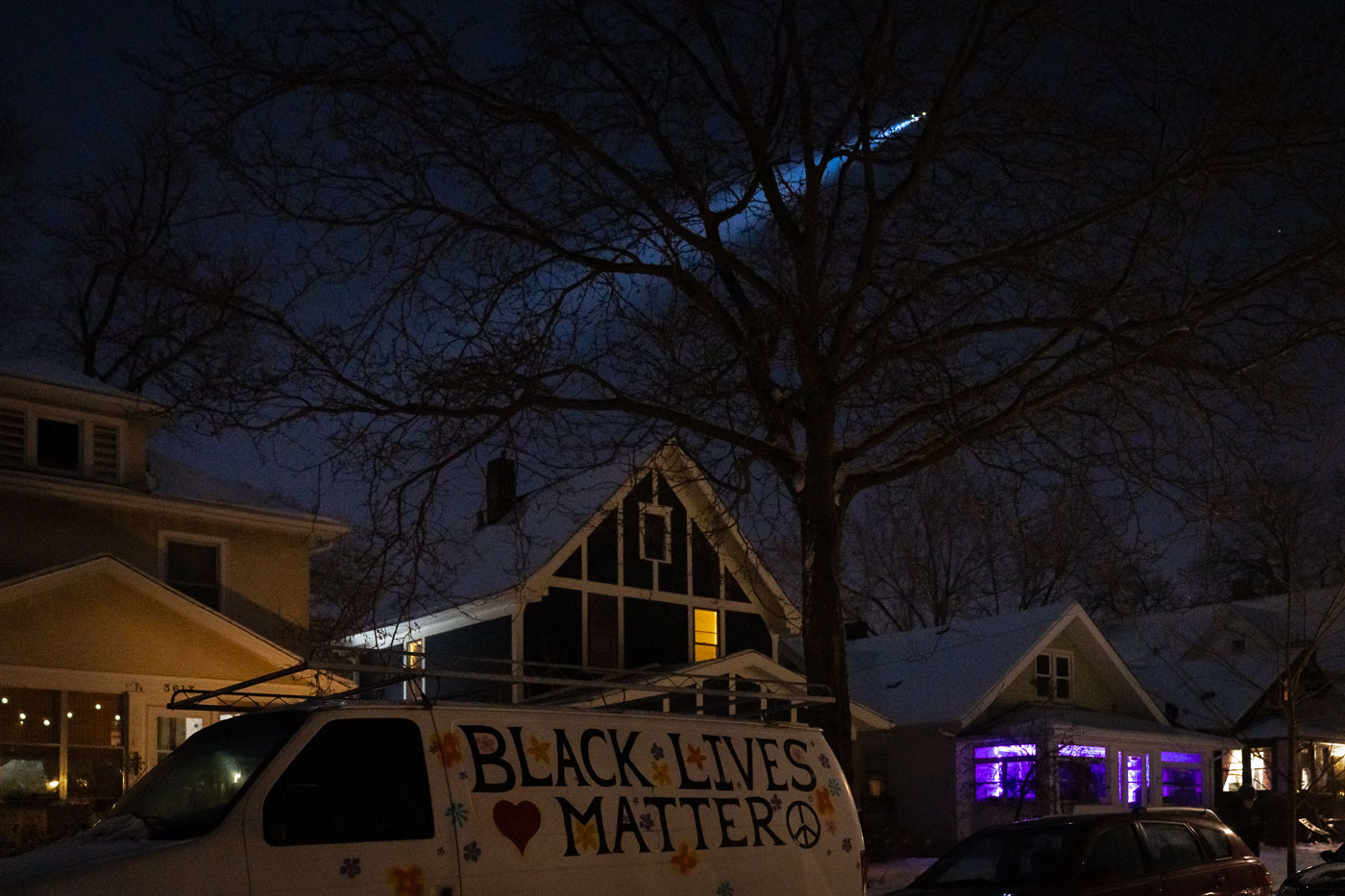
Helicopter over protesters outside 36th and Cedar Ave
A police helicopter's spotlight illuminates the night sky above 36th Street and Cedar Avenue in Minneapolis during a protest. This gathering took place outside the Holiday Gas station, the site where Dolal Idd was killed by Minneapolis Police on December 30, 2020.

Helicopter over Dolal Idd Protest, 36th & Cedar, Minneapolis
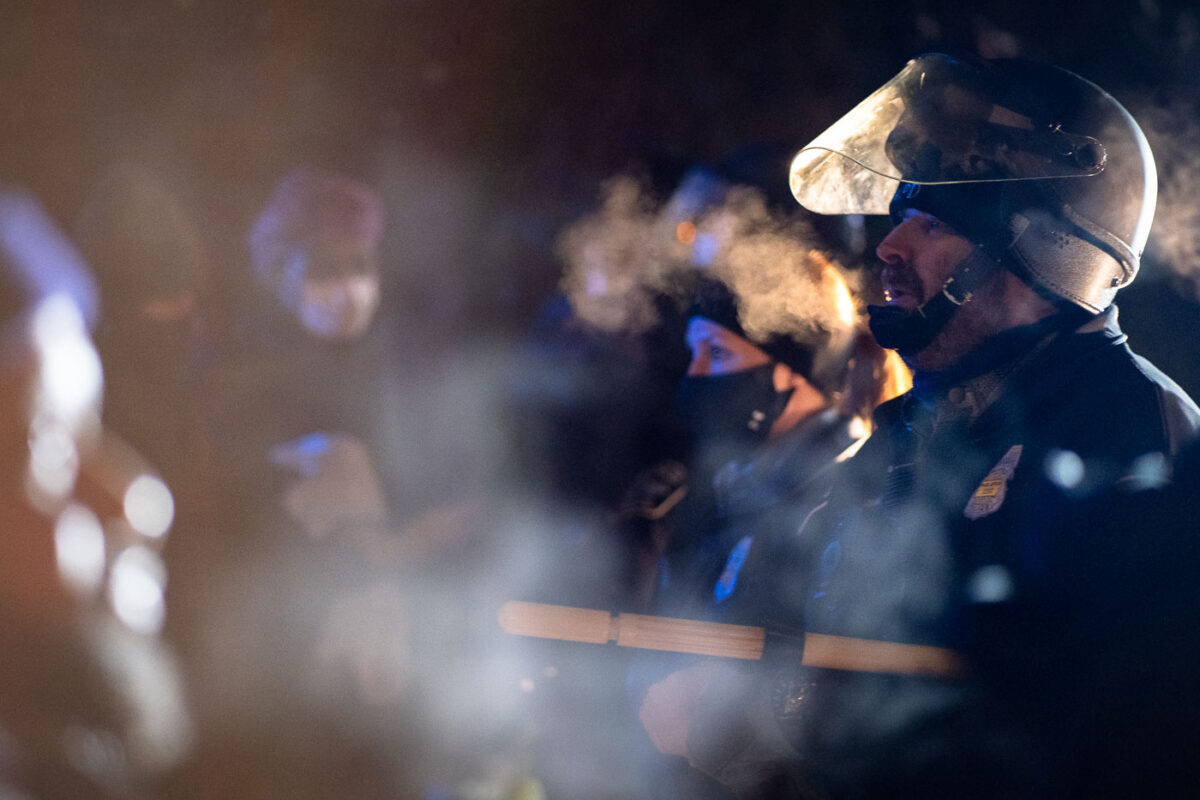
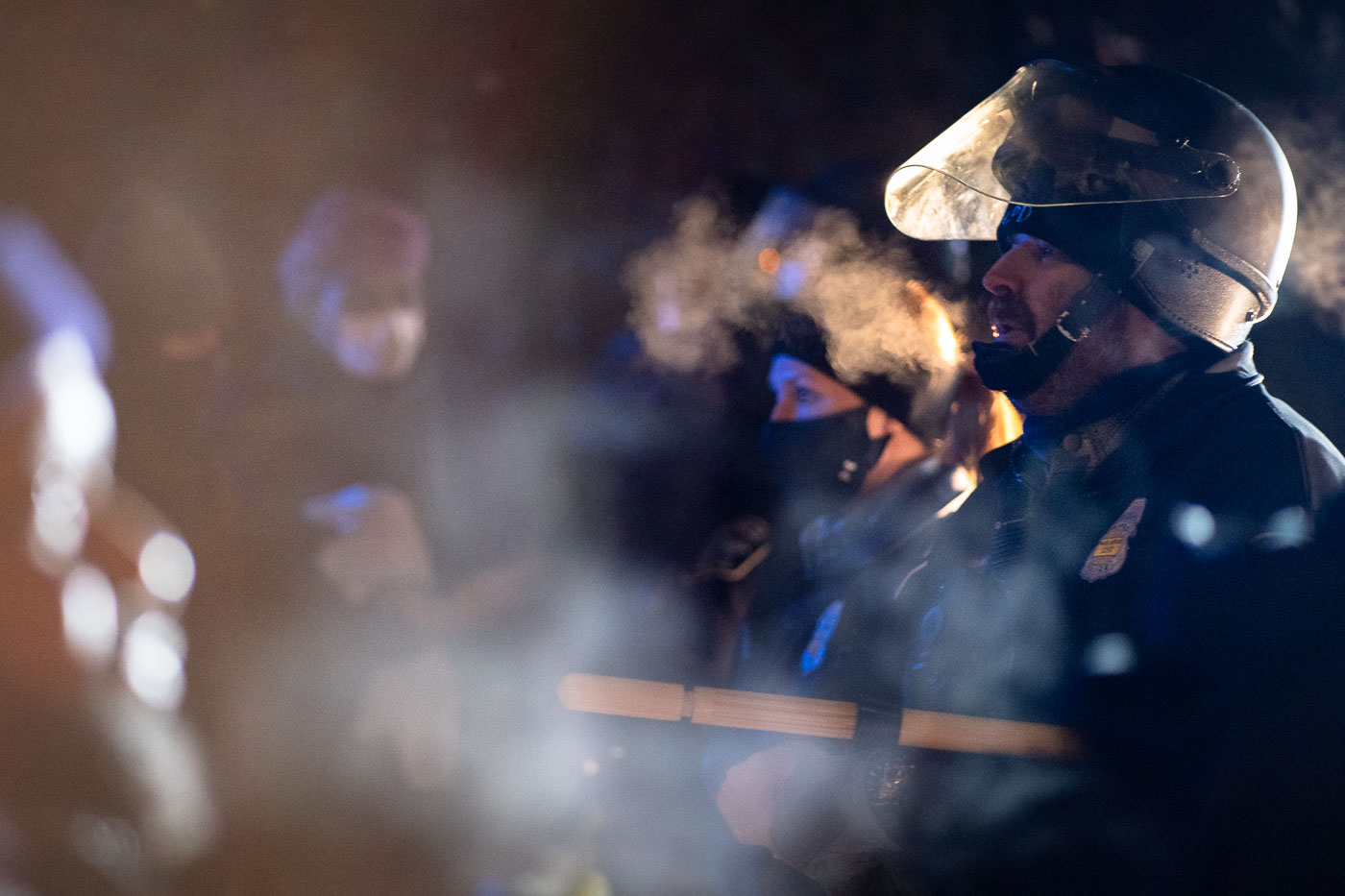
Police officer outside the Dolal Idd crime scene
A Minneapolis police officer stands during a protest following the fatal shooting of Dolal Idd. This protest took place near the intersection of 36th Avenue and Cedar Avenue in Minneapolis, outside the Holiday Gas station where Idd was killed by Minneapolis Police. Dolal Idd was shot by Minneapolis Police on December 30, 2020, leading to public protests regarding police use of force.

Minneapolis Police Officer at Dolal Idd Protest, 36th & Cedar
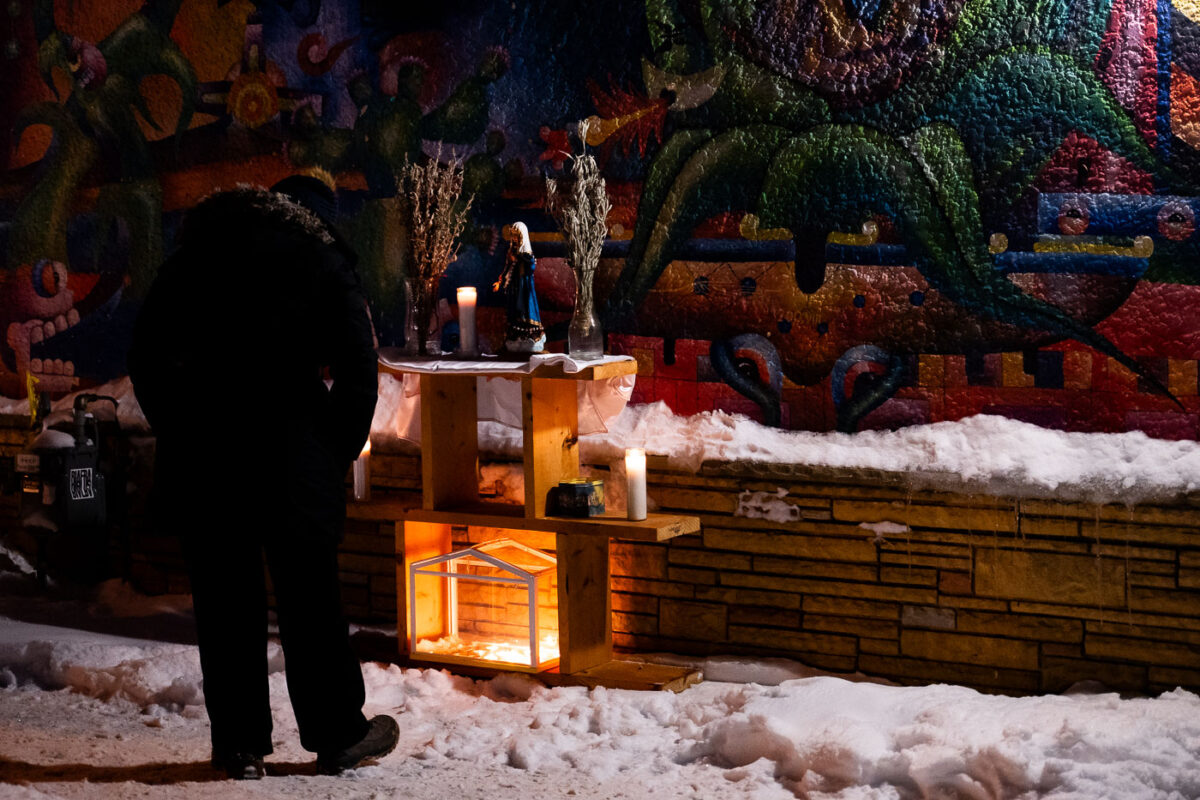
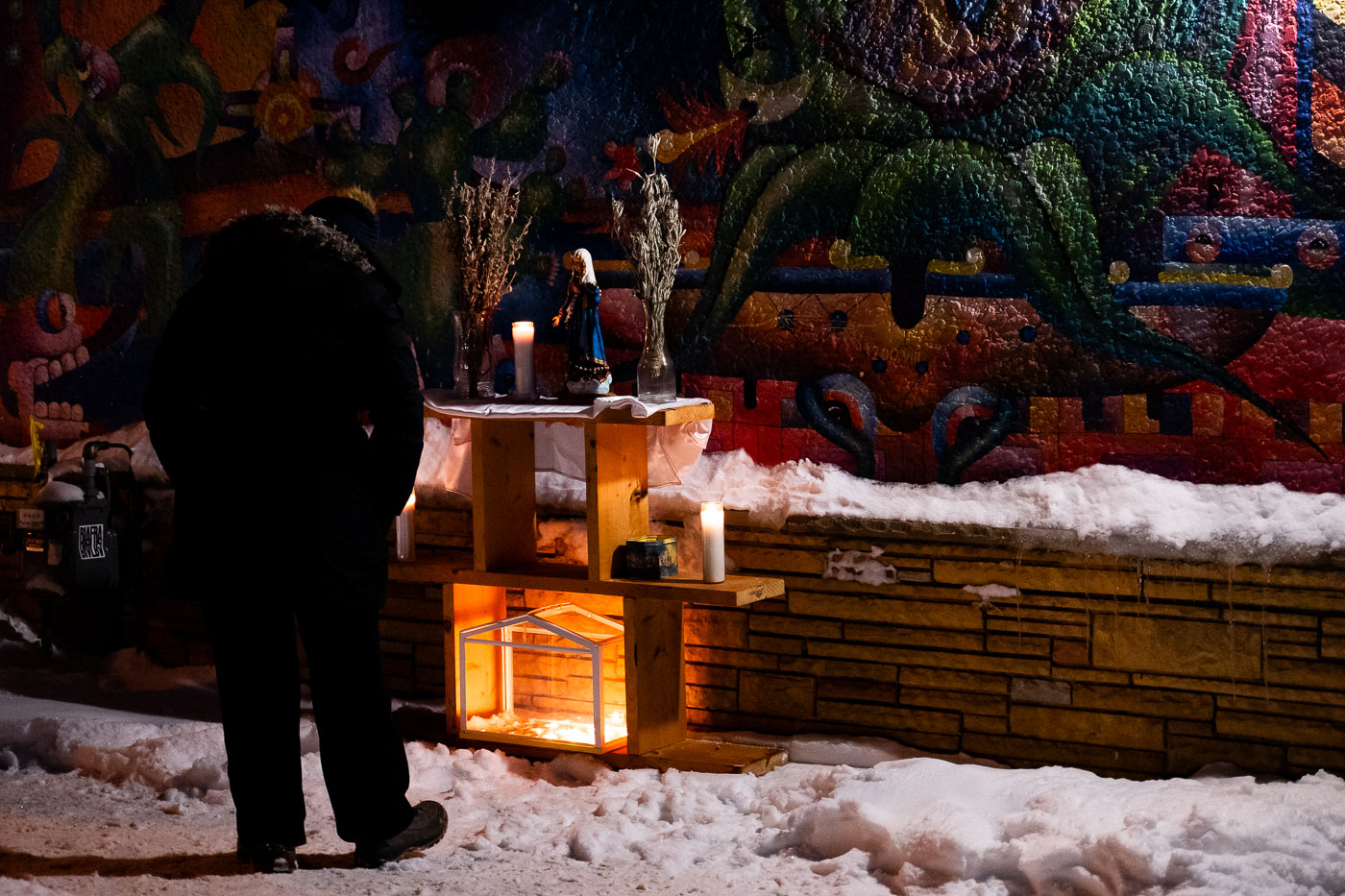
A vigil near where Dolal Idd was killed by Minneapolis police
A participant stands at a candlelight vigil for Dolal Idd at the intersection of 36th Avenue and Cedar Avenue in Minneapolis. This memorial event took place across from the Holiday Gas station where Idd was killed by Minneapolis Police on December 30, 2020.

Dolal Idd Candlelight Vigil, 36th & Cedar, Minneapolis
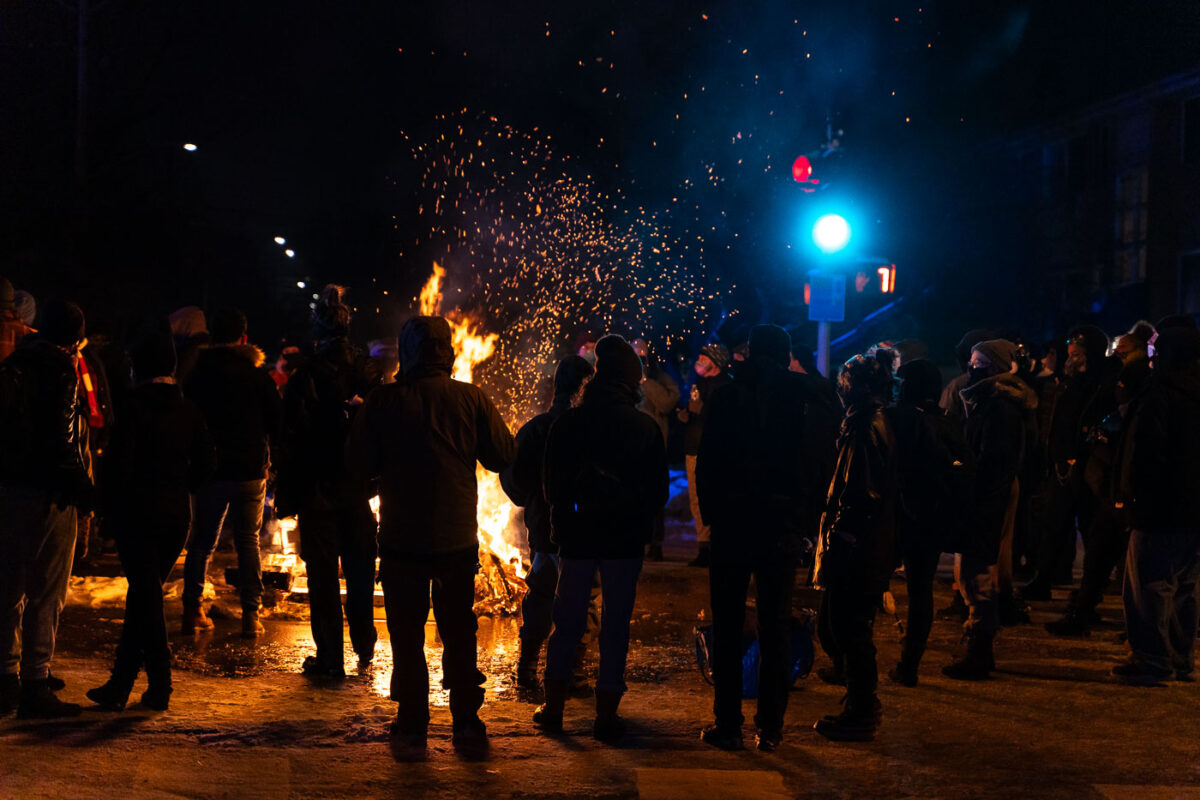
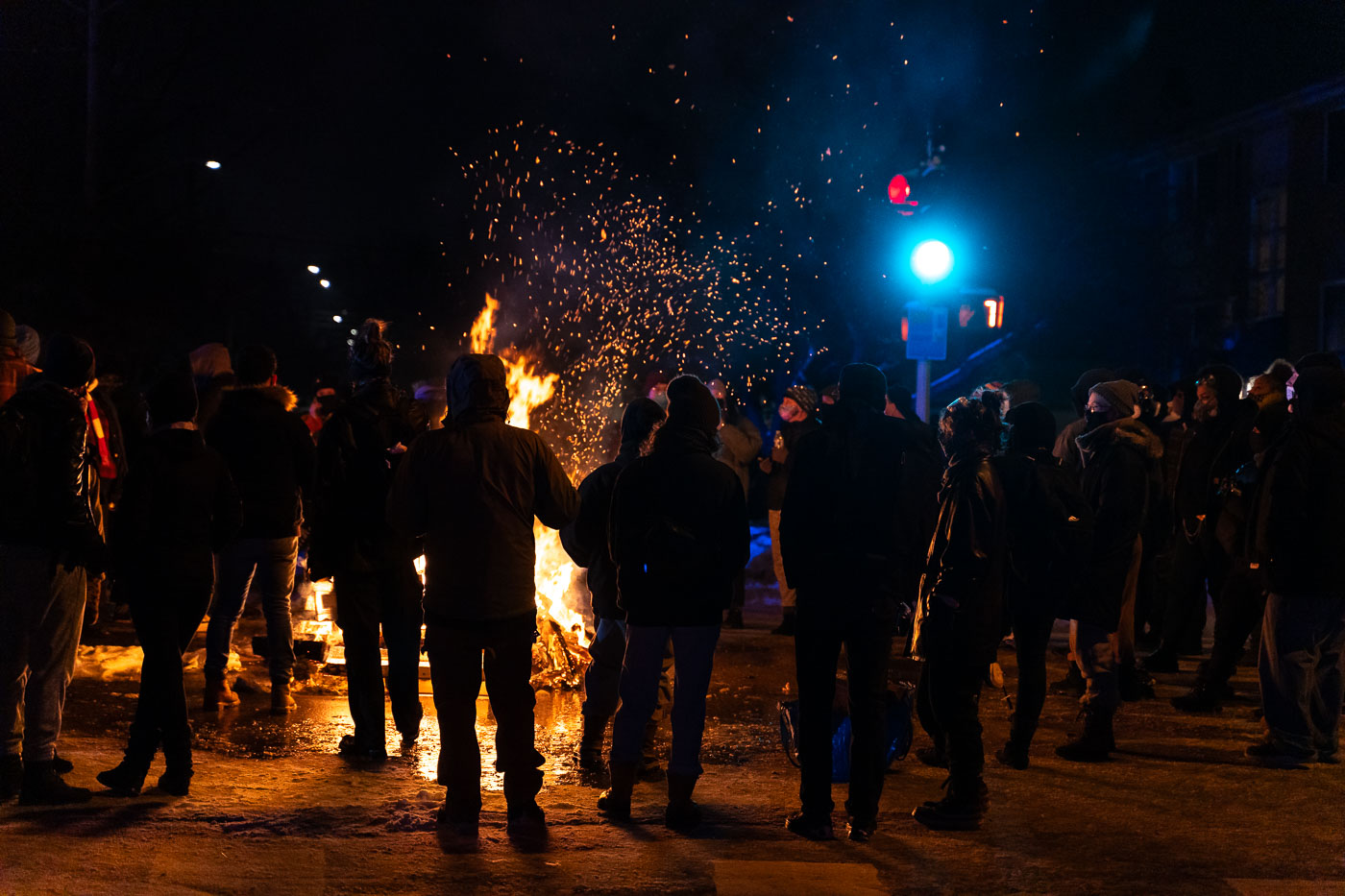
Protesters around a fire after Dolal Idd was killed
Protesters gathered at the intersection of 36th Avenue and Cedar Avenue in Minneapolis, following the fatal shooting of Dolal Idd by Minneapolis Police. This protest took place amidst ongoing public unrest and calls for police accountability, intensified by the killing of George Floyd by Minneapolis Police earlier in the year, approximately one mile from this location.

Protesters with bonfire at 36th & Cedar after Dolal Idd killing
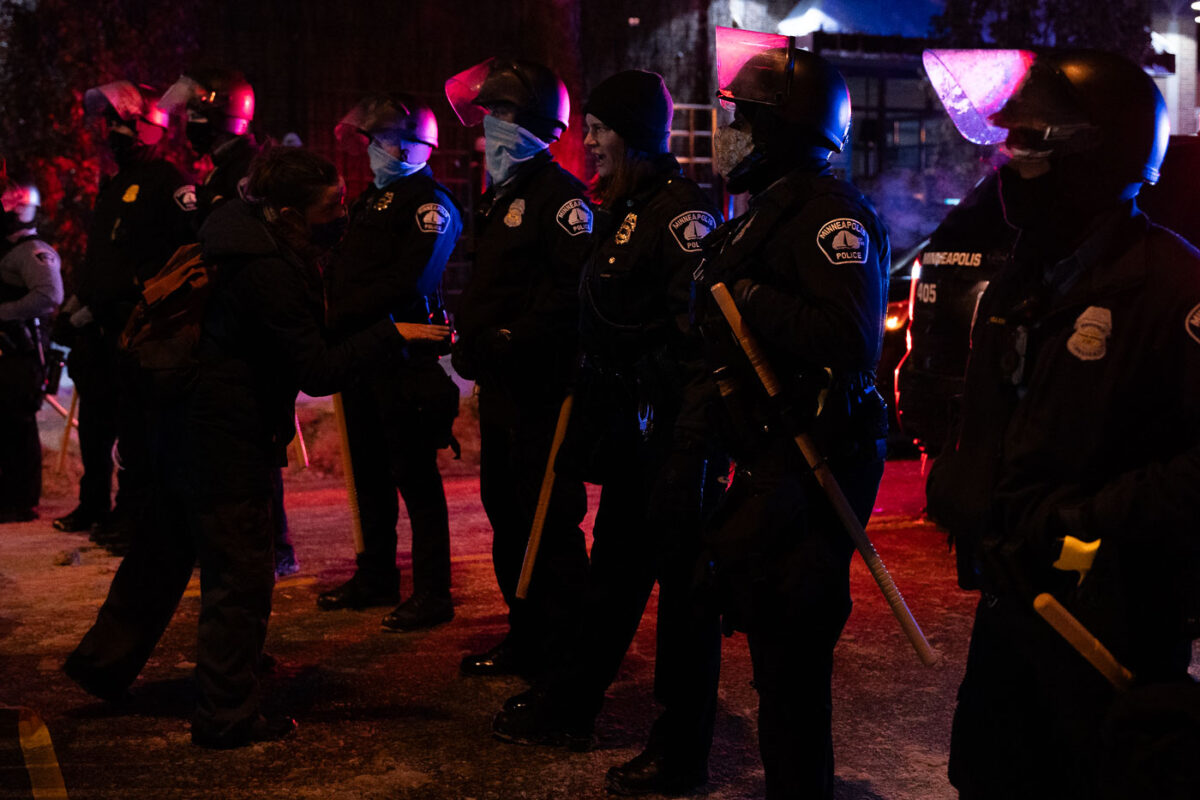
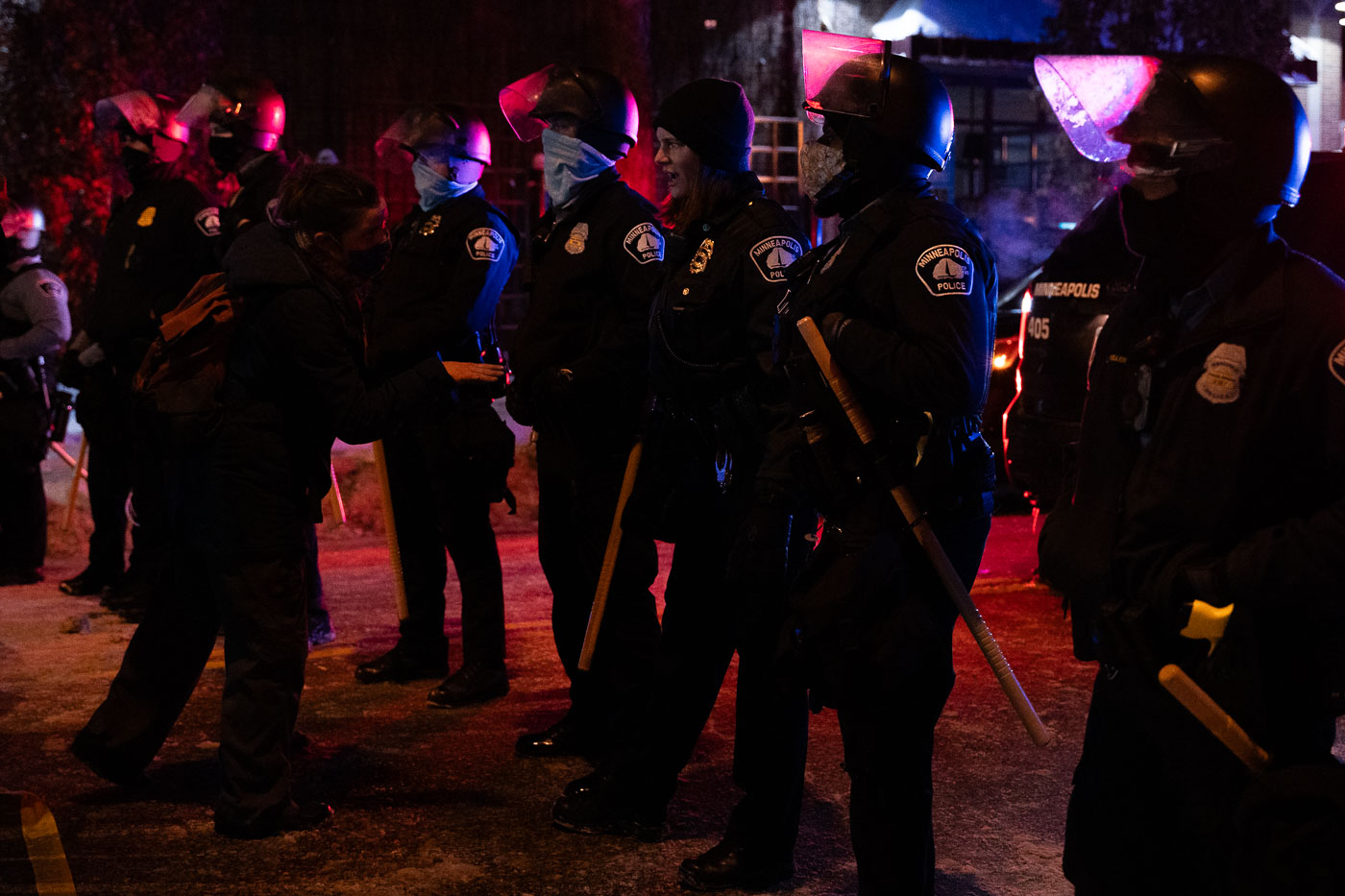
Protesters and police after Dolal Idd was killed
Minneapolis Police officers stand in formation during a protest at the Holiday Gas station located at 36th Avenue and Cedar Avenue in Minneapolis. The protest took place following the fatal shooting of Dolal Idd by Minneapolis Police earlier in the day.

Minneapolis Police at Dolal Idd Protest, Holiday Gas
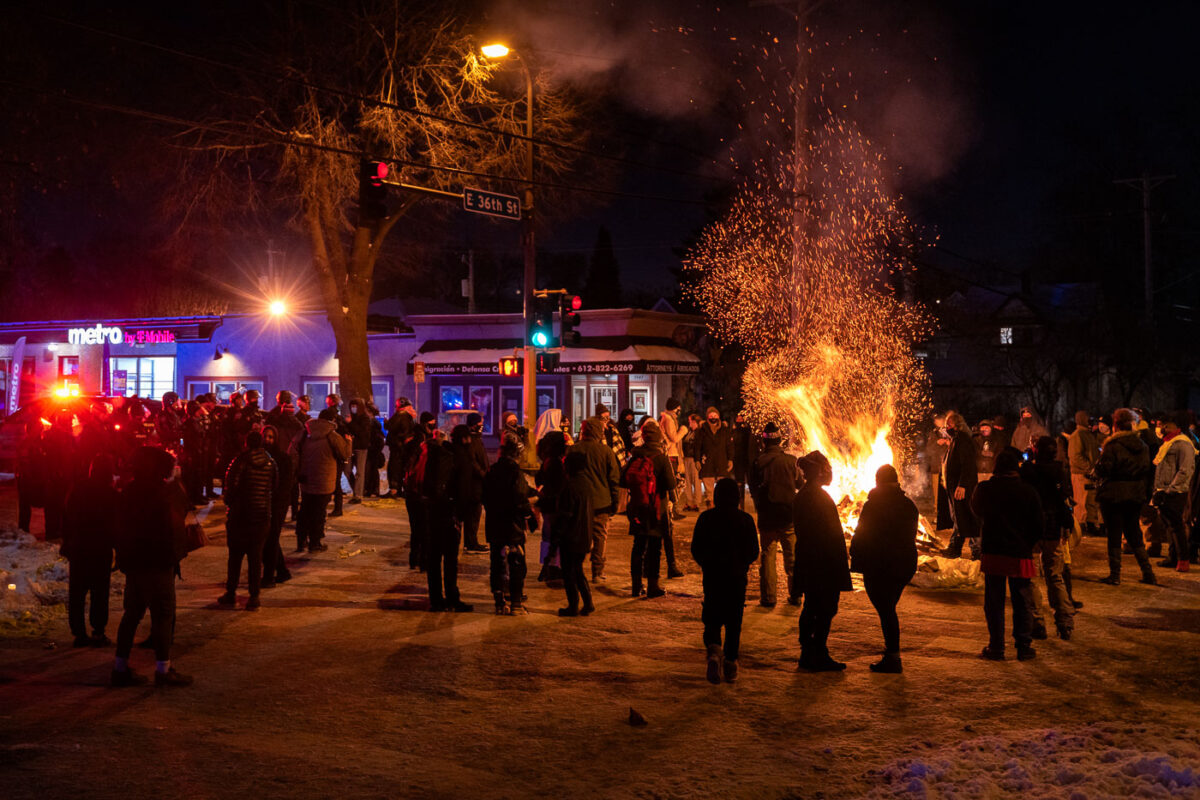
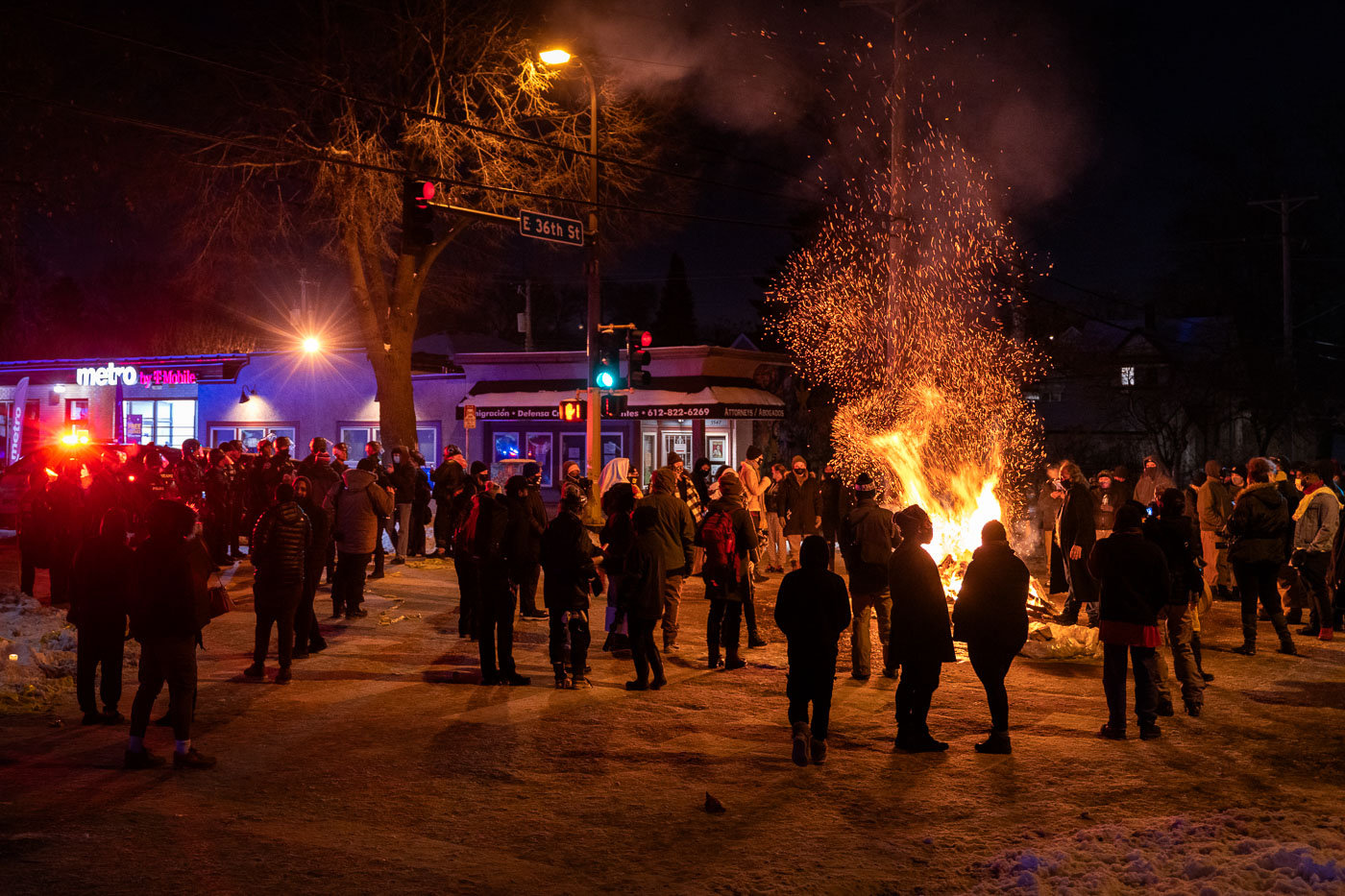
Protesters and large campfire on Cedar Ave in Minneapolis
Protesters gather on East 36th Street in Minneapolis, near the Holiday gas station where Dolal Idd was killed by Minneapolis police in December 2020. This protest occurred less than a year after George Floyd's killing by police approximately one mile away, fueling ongoing unrest against police violence in the city.

Protesters around a street fire on E 36th St, Minneapolis
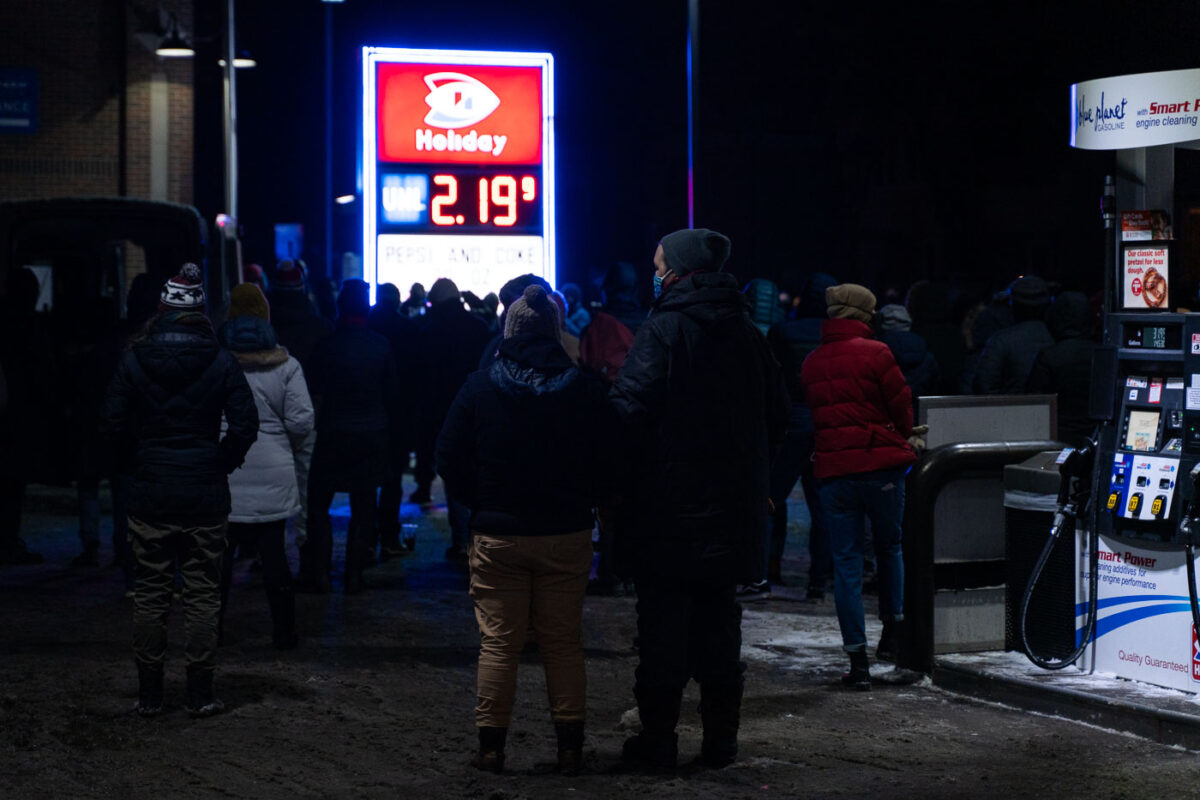
Protest the day after Dolal Idd was killed
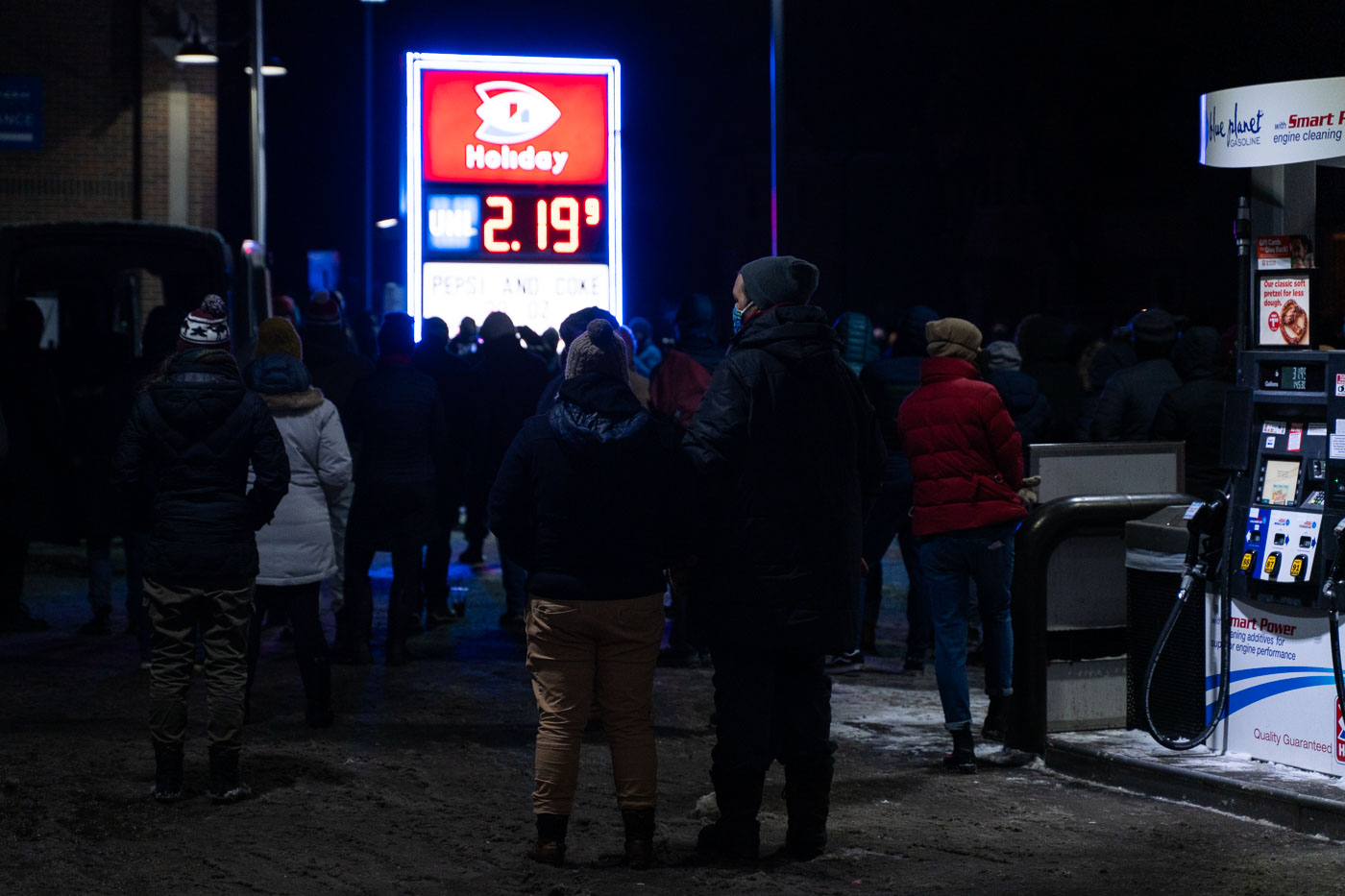
Protesters gather at the Holiday Gas station located at 36th Avenue and Cedar Avenue in Minneapolis. This protest occurred on December 31, 2020, the day after Dolal Idd was shot and killed by Minneapolis police during a traffic stop.

Minneapolis Protest at Holiday Gas after Dolal Idd killing
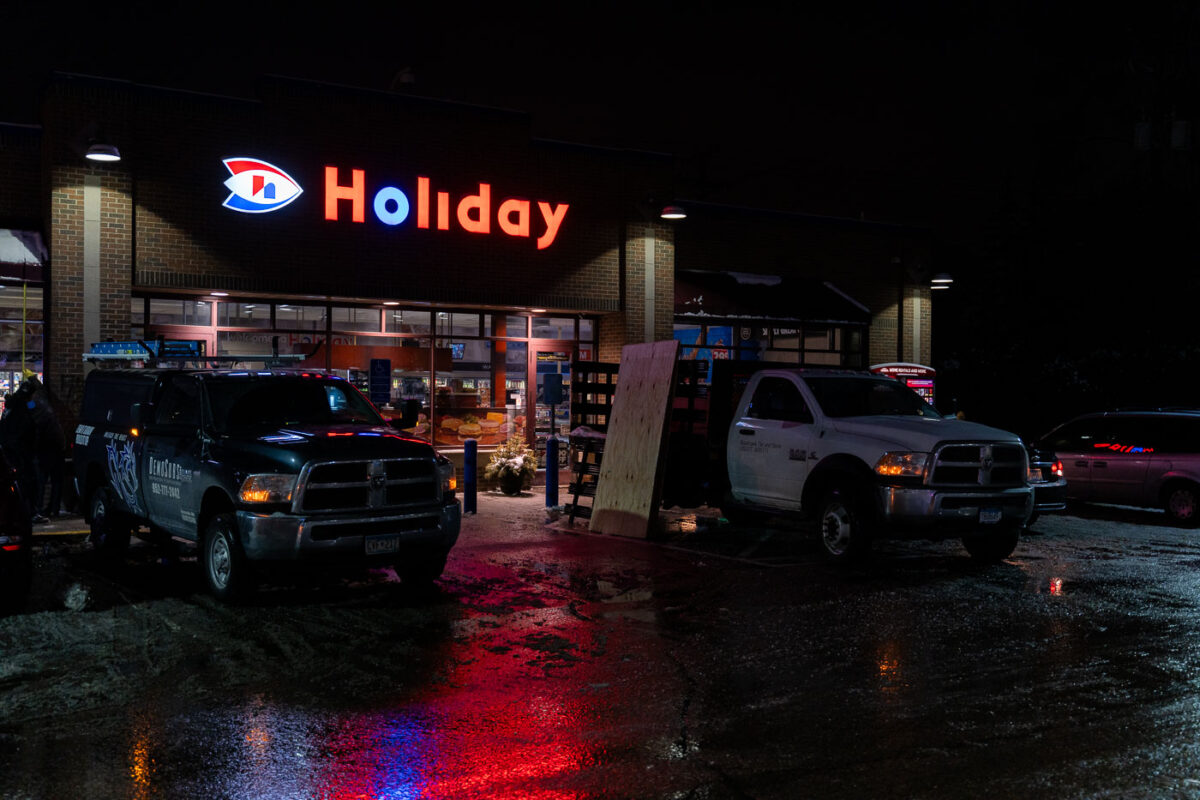
Boards going up at Holiday Gas after Dolal Idd shooting
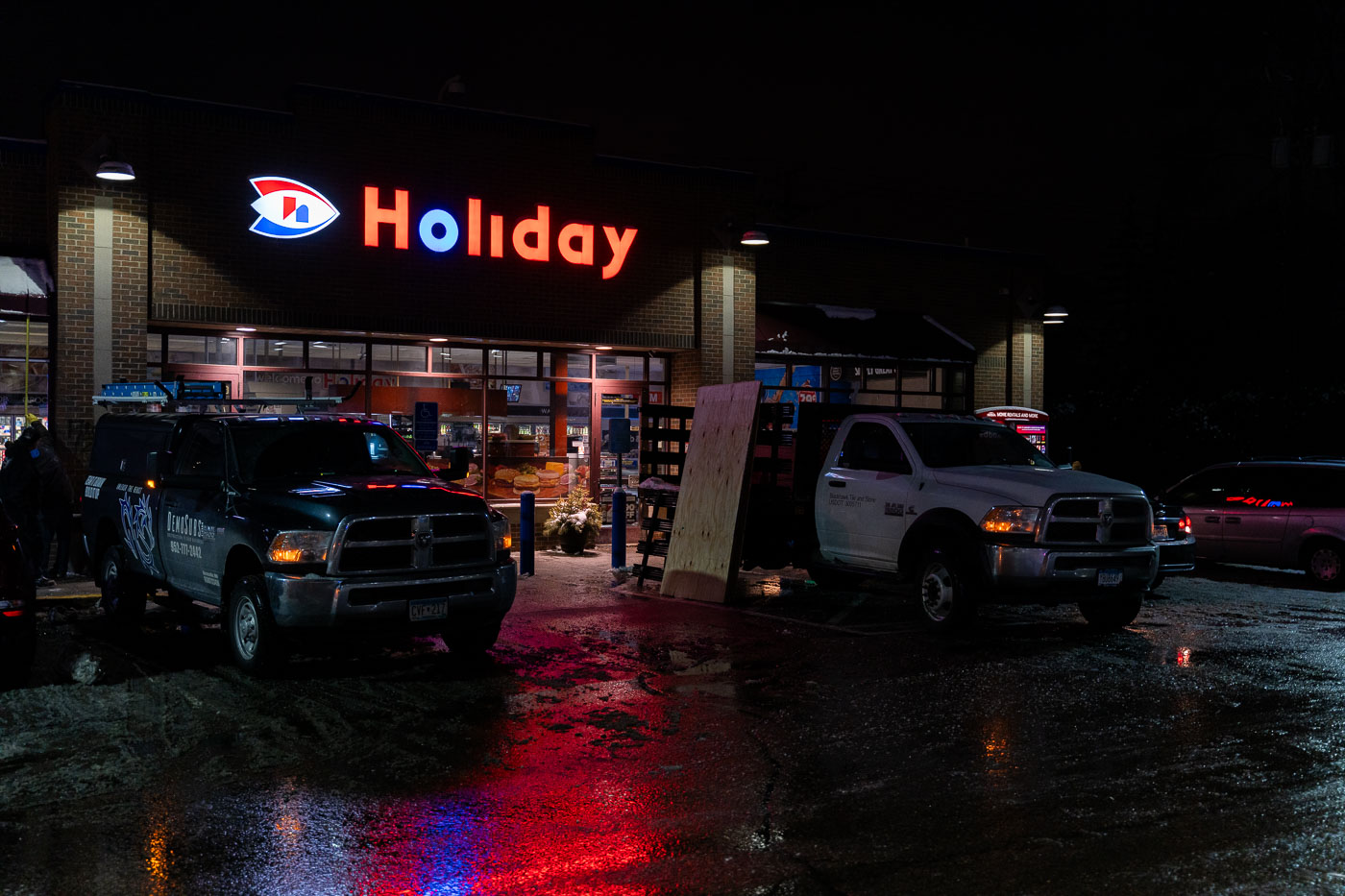
Workers board up the windows of a Holiday Gas station on Cedar Avenue in South Minneapolis. This precautionary measure was taken in anticipation of potential unrest following the Minneapolis Police shooting of Dolal Idd on December 30, 2020. The incident occurred in a city that had experienced widespread protests and civil unrest earlier in 2020, particularly after the killing of George Floyd by Minneapolis police approximately one mile from this location.

Holiday Gas boarded on Cedar Ave after Dolal Idd killing
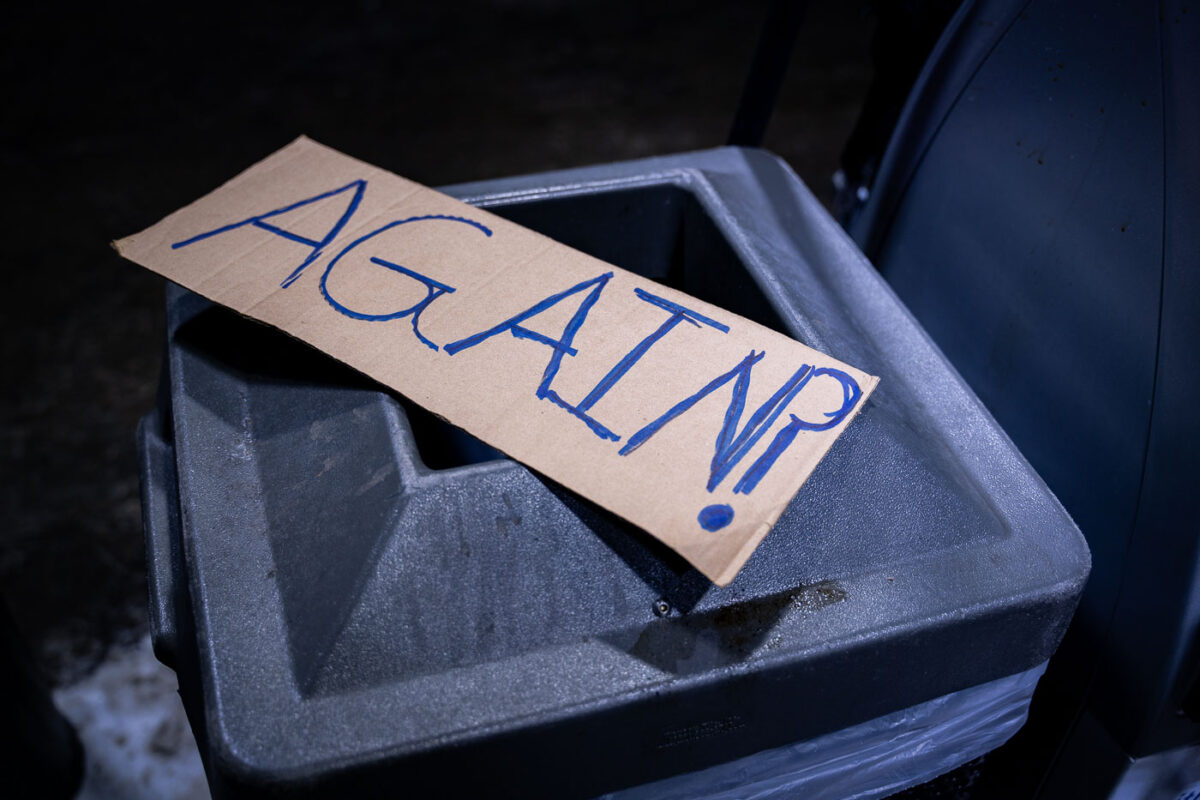
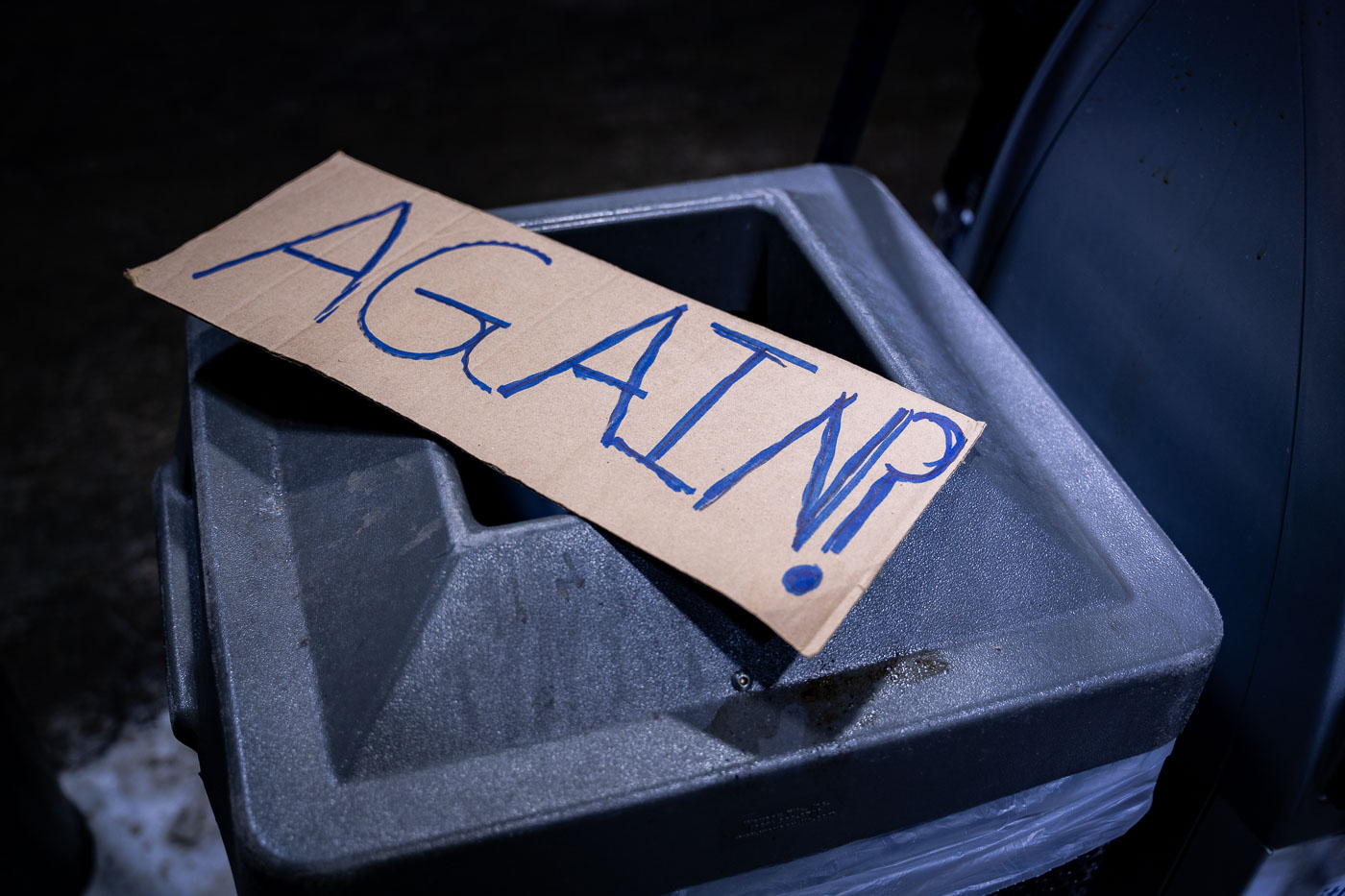
Protest sign that reads AGAIN
A protest sign reading "AGAIN?" rests on a public receptacle during a vigil for Dolal Idd on West 36th Street in Minneapolis. Dolal Idd was killed by Minneapolis Police on December 30, 2020, an event that prompted further public outcry. The question "AGAIN?" reflects community frustration and demands for accountability regarding police violence, connecting to the broader context of the Minneapolis Uprising.

AGAIN? Protest Sign, Dolal Idd Vigil, W 36th St, Minneapolis
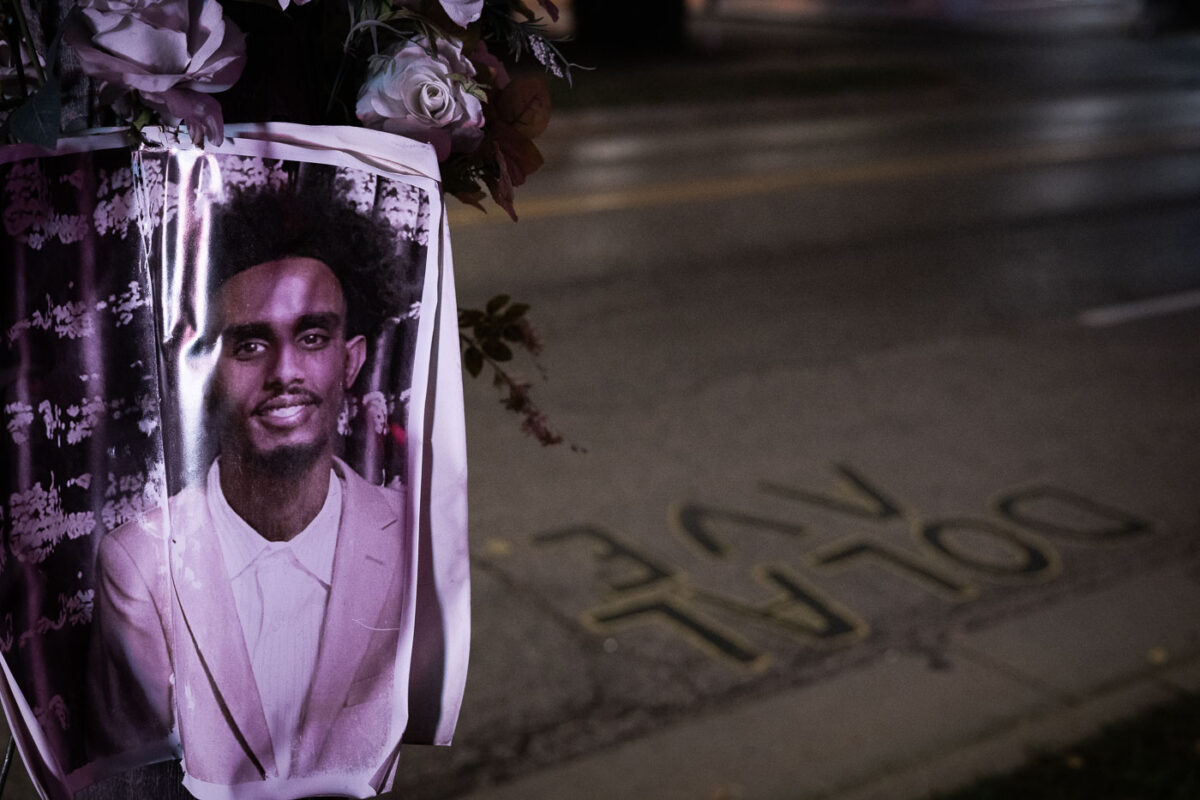
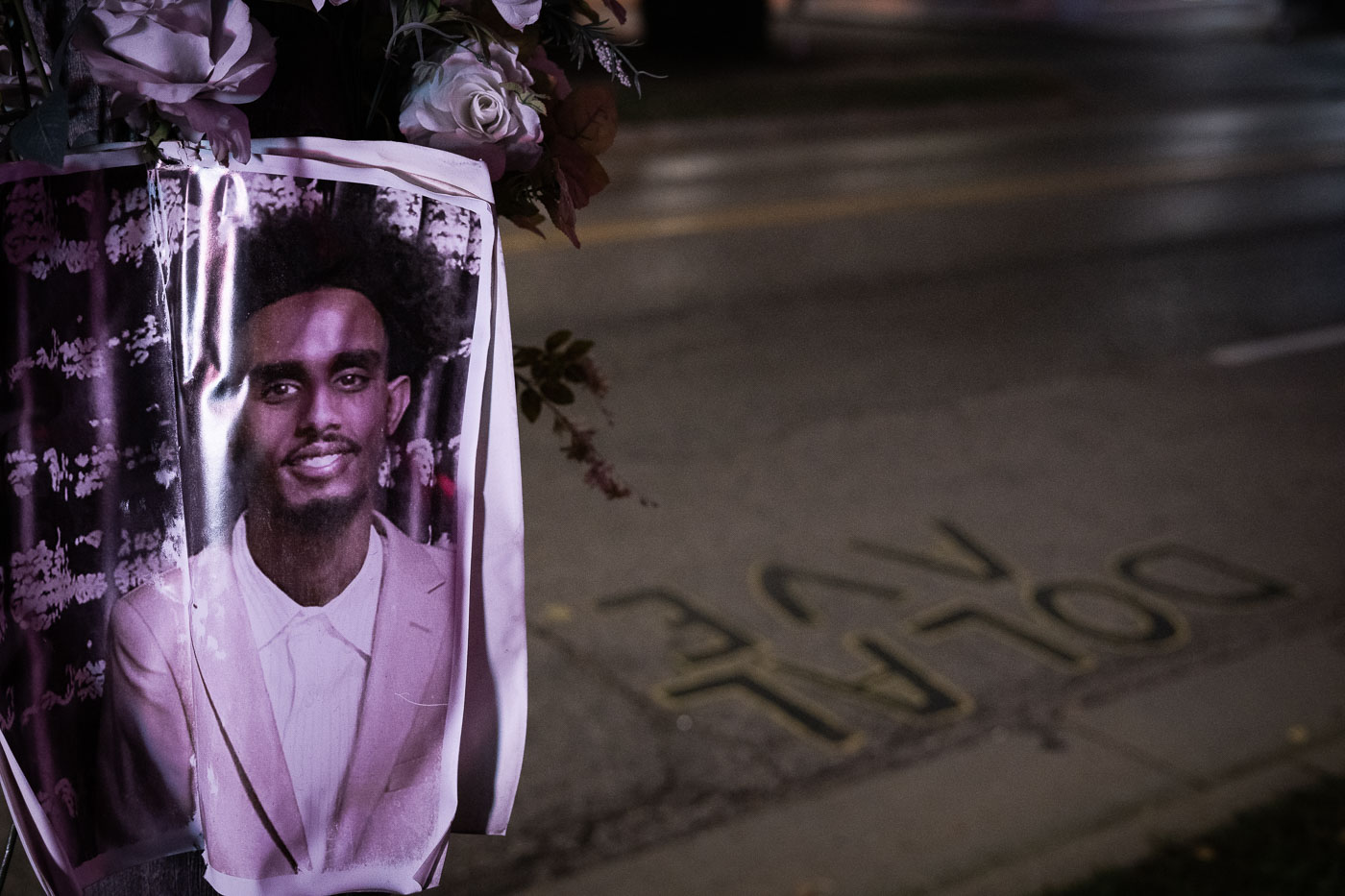
Photo of Dolal Idd on a Cedar Ave memorial
A memorial for Dolal Idd is pictured on Cedar Avenue in Minneapolis. Idd was killed by Minneapolis Police on December 30, 2020, after officers claimed he fired at them from his car at a Holiday Gas Station. His death, occurring shortly before the new year, became a focal point of protests and unrest in the city, echoing sentiments from the Minneapolis Uprising of 2020.

Dolal Idd Memorial, Cedar Ave, Minneapolis
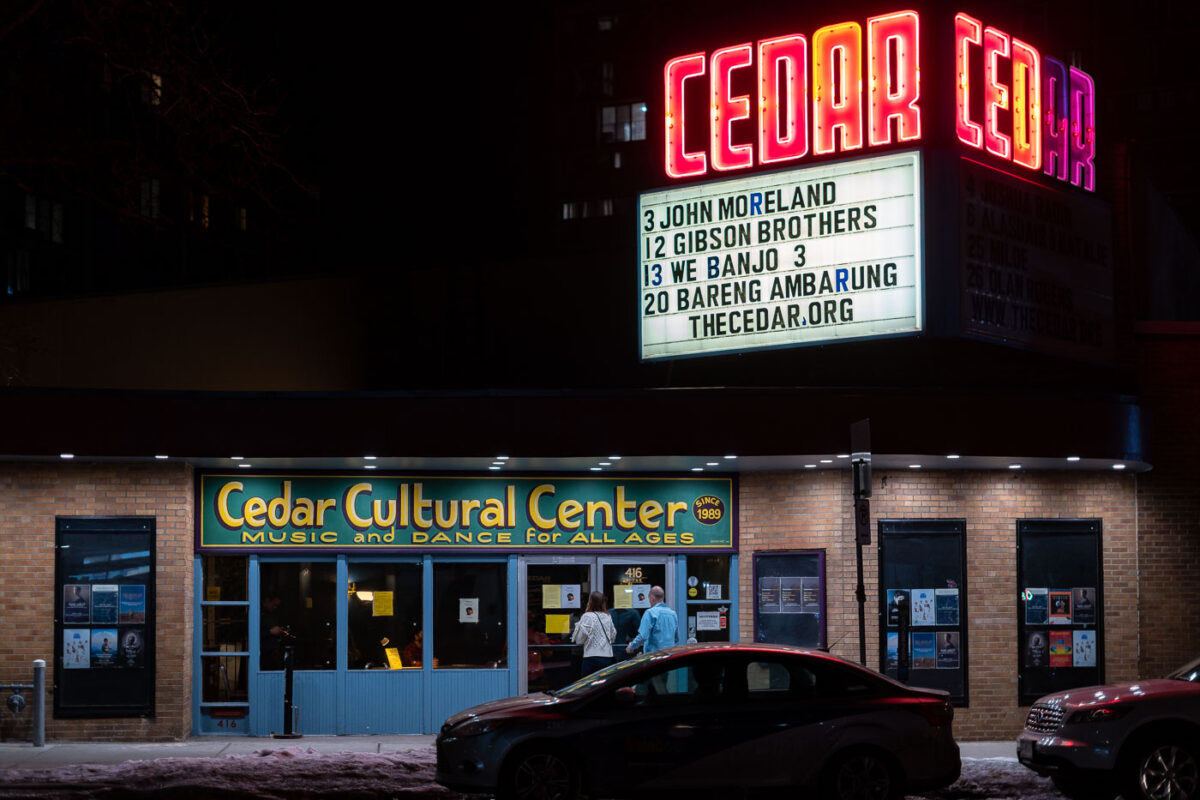
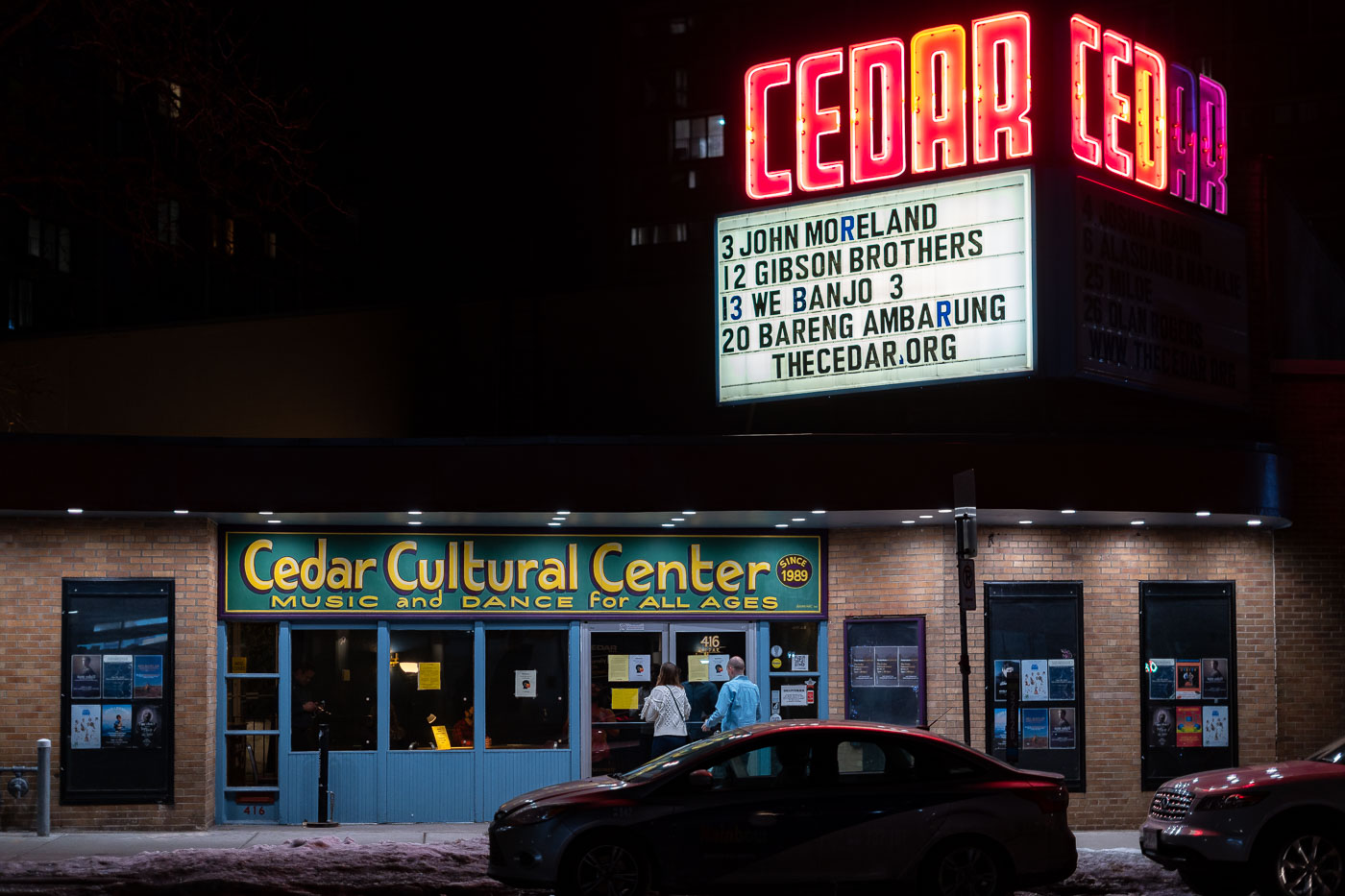
Cedar Cultural Center marquee in Minneapolis advertising John Moreland concert.
The Cedar Cultural Center, established in 1989, is a prominent music and dance venue located in Minneapolis's Cedar Riverside neighborhood. It serves as a vital cultural hub, presenting a wide array of performances and events for all ages. The marquee prominently advertises upcoming concerts, including a performance by John Moreland, underscoring the center's role in showcasing contemporary artists. The Cedar Cultural Center significantly contributes to the diverse cultural fabric of the Cedar Riverside area, a neighborhood known for its rich history and multicultural community.

Cedar Cultural Center, Minneapolis: John Moreland Concert
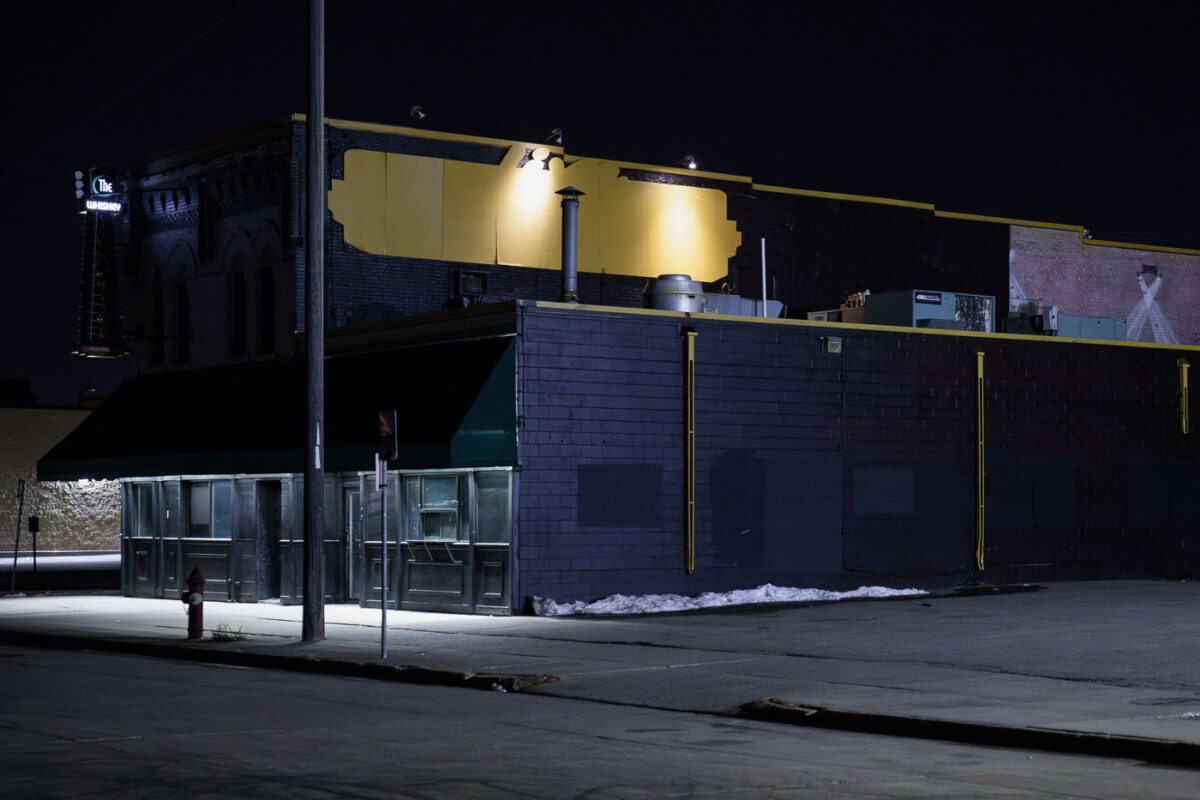
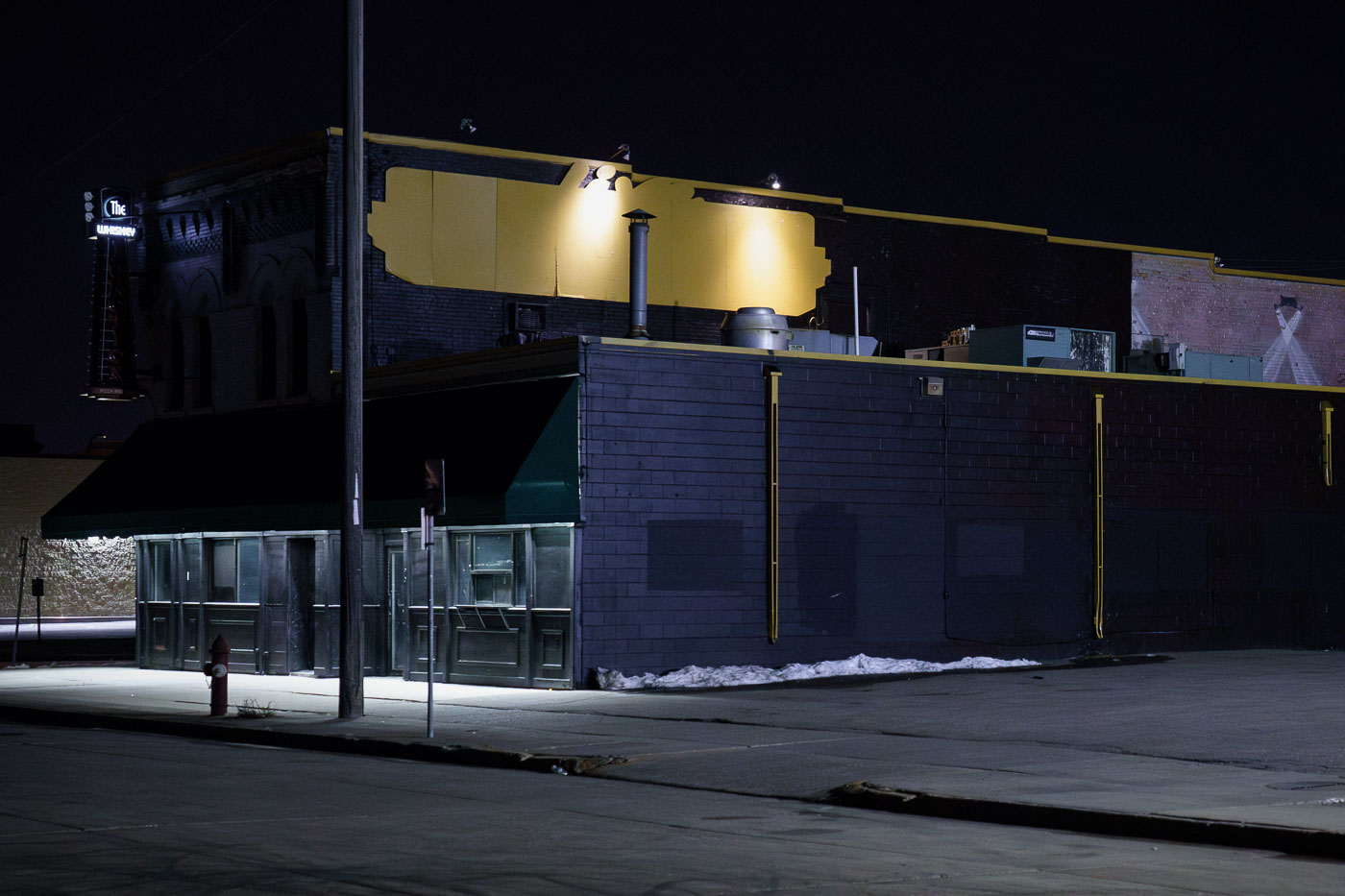
Former Whiskey Junction bar on Cedar Avenue in Minneapolis displays a yellow patch where its Jack Daniels mural was removed.
The former Whiskey Junction bar on Cedar Avenue in Minneapolis is visible at night, featuring a prominent yellow patch where its long-standing Jack Daniels mural was recently removed. This establishment, a known concert venue and nightclub in the Cedar Riverside neighborhood, ceased operations in 2017. Months later, the property was acquired by The Joint Bar, located adjacent to it.

Whiskey Junction on Cedar Avenue After Its Mural Is Painted Over
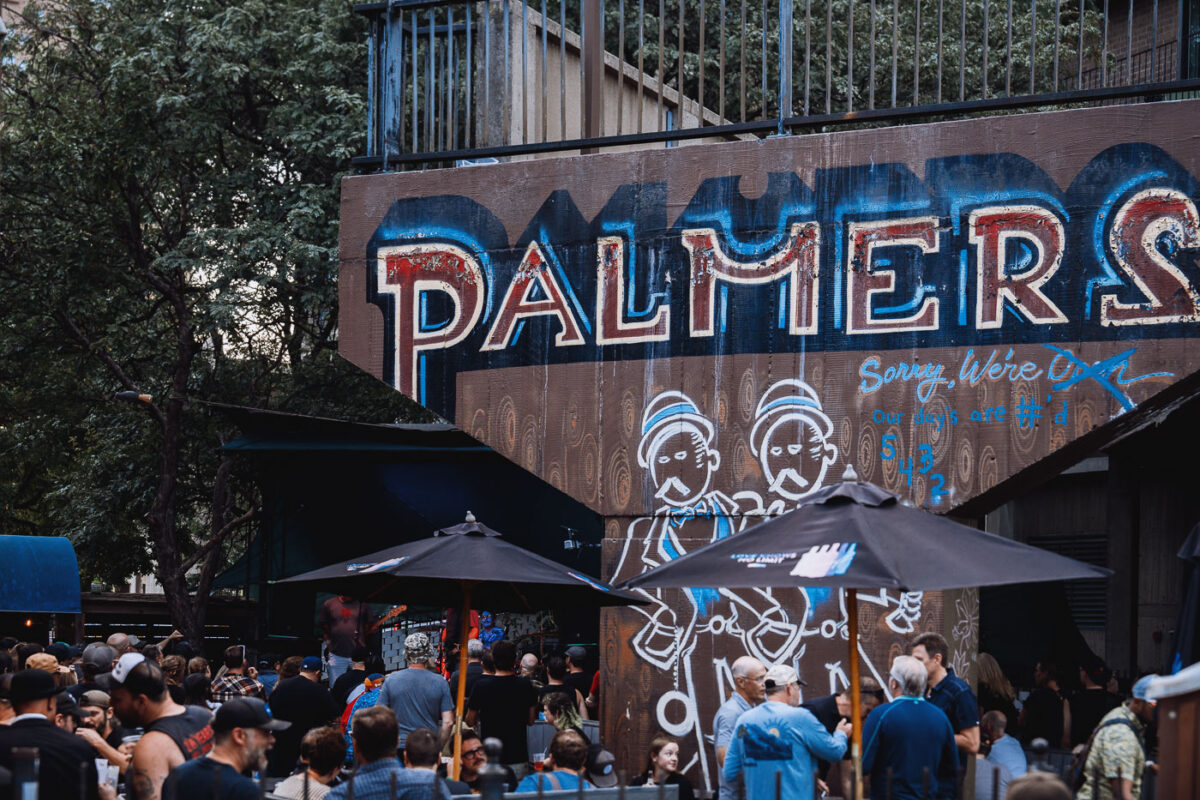
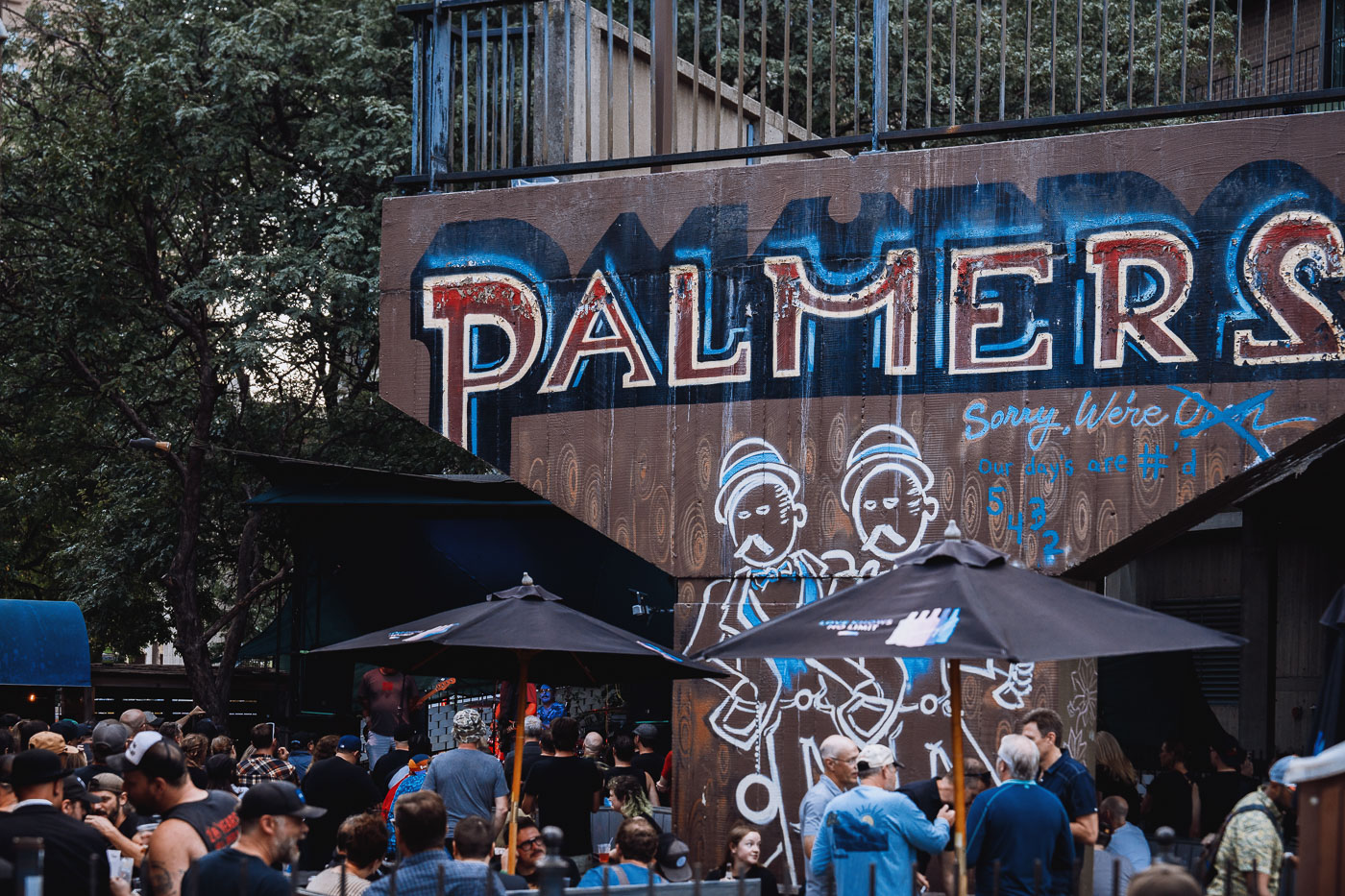
Palmerss Bar Is Closing
A crowd gathers outside Palmer's Bar in Minneapolis's Cedar Riverside neighborhood, marking its second to last night of operation. Palmer's Bar has been a long-standing fixture in the community, known for its live music and local patronage. Reports indicated the final night would conclude with a lock-in until all beverages were consumed, a farewell tradition for the beloved venue.

Crowd Outside Palmer’s Bar on Its Second to Last Night
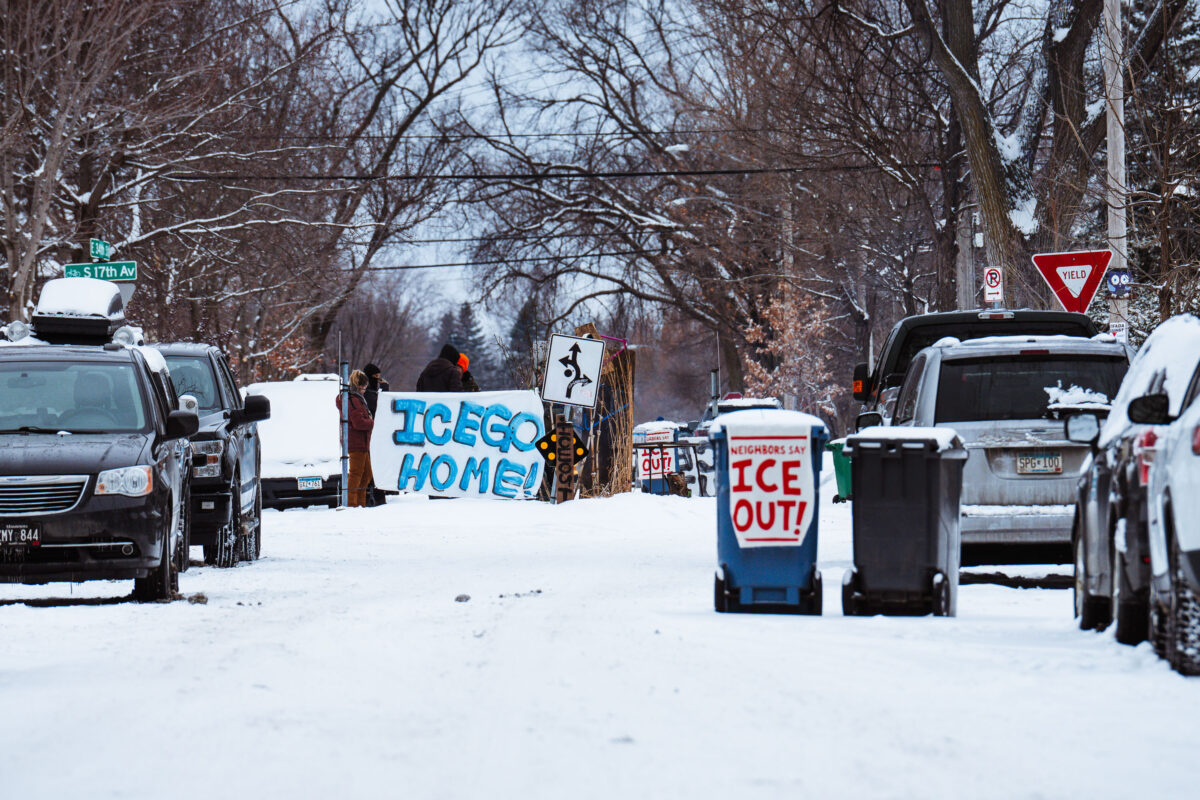
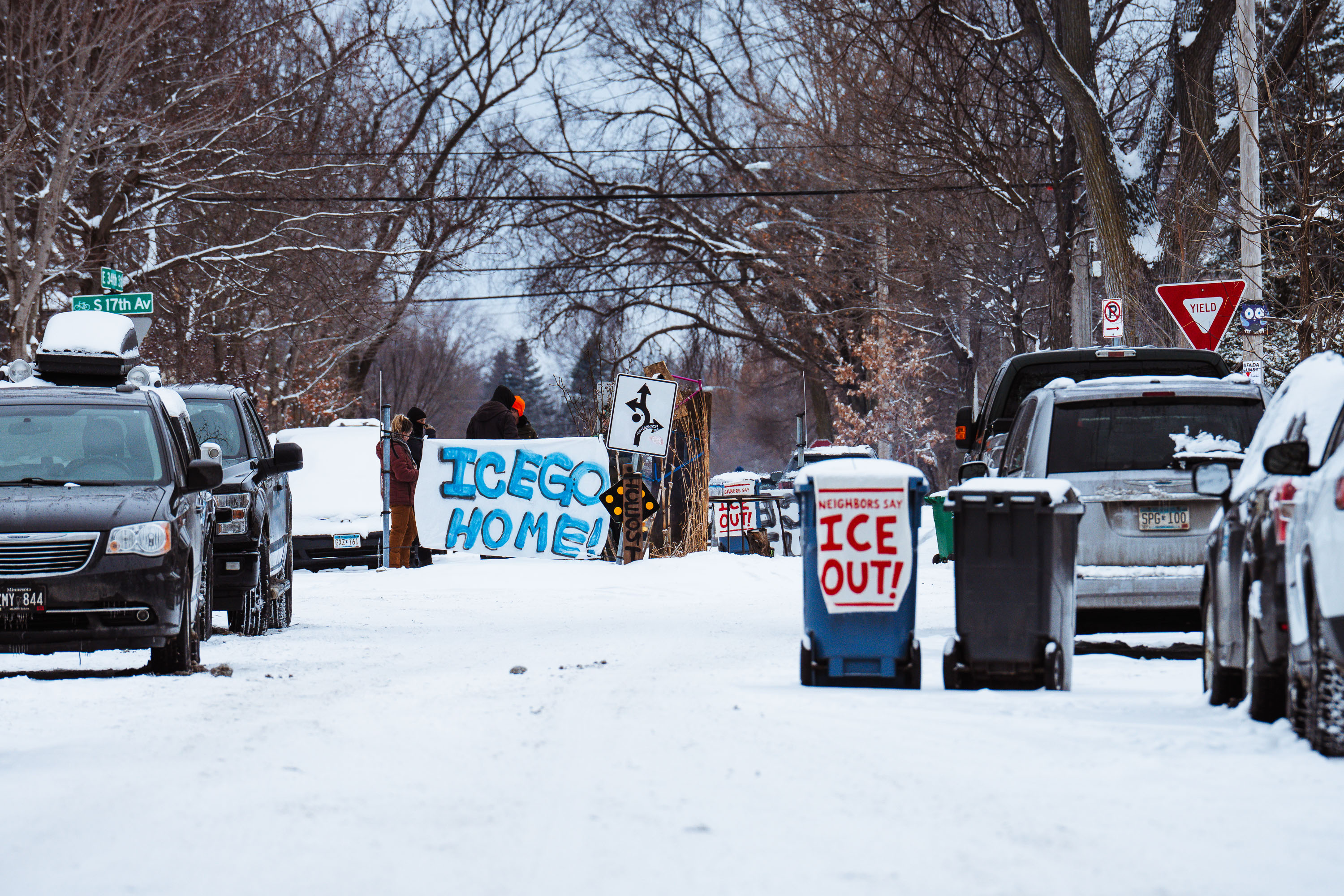
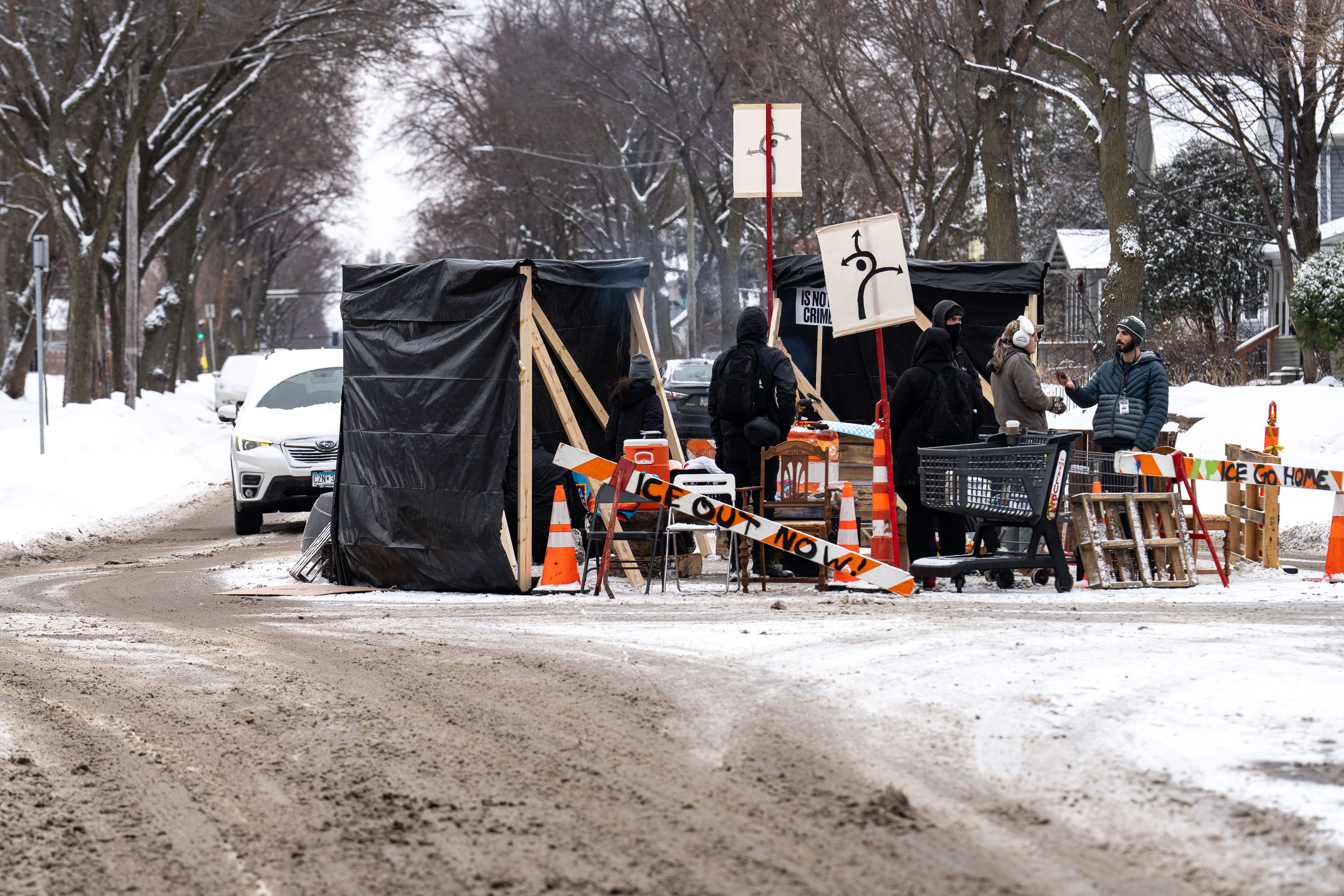
Filter blockade in South Minneapolis
Some in South Minneapolis have created what they call “filter blockades” on Cedar Ave. A handout says the roundabout like blockade is meant to bring neighbors together to strategize against ICE while also identifying traffic coming into the area. Minneapolis February 1, 2026

“ICE Go Home” Sign at South 17th Avenue Filter Blockade
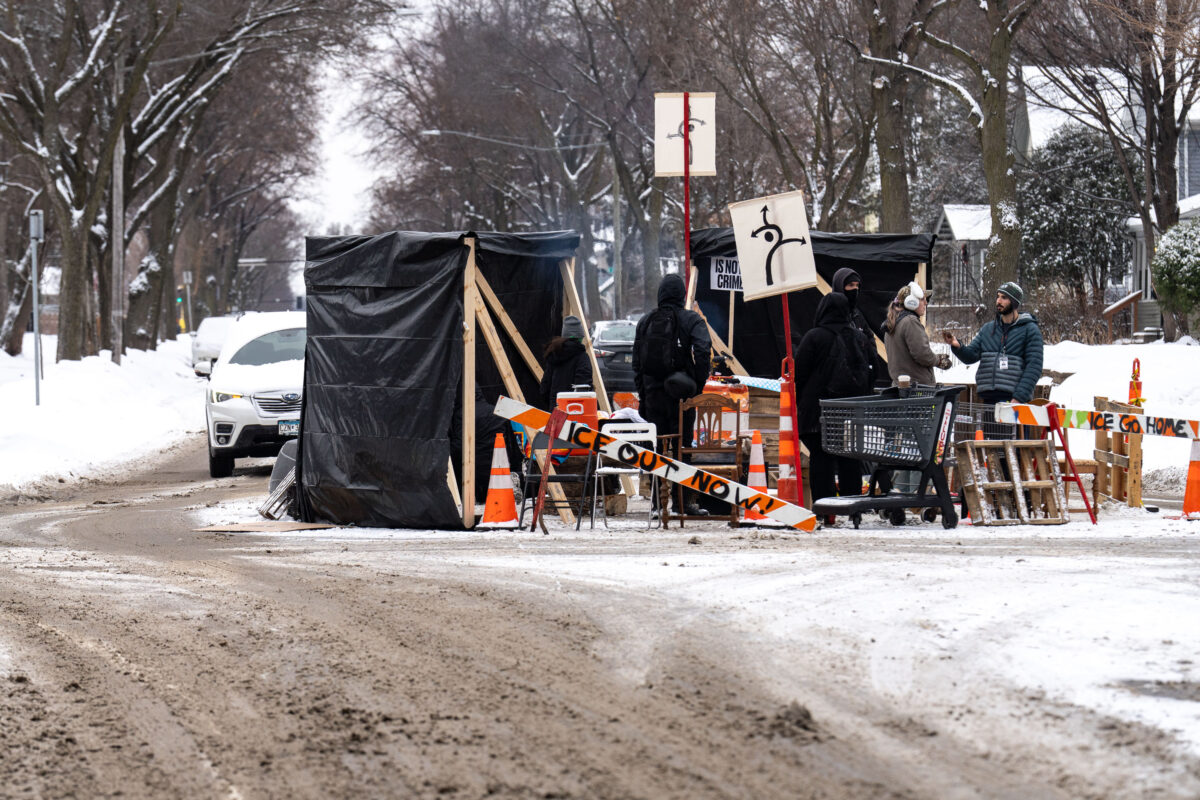
Filter Blockade in South Minneapolis on February 1
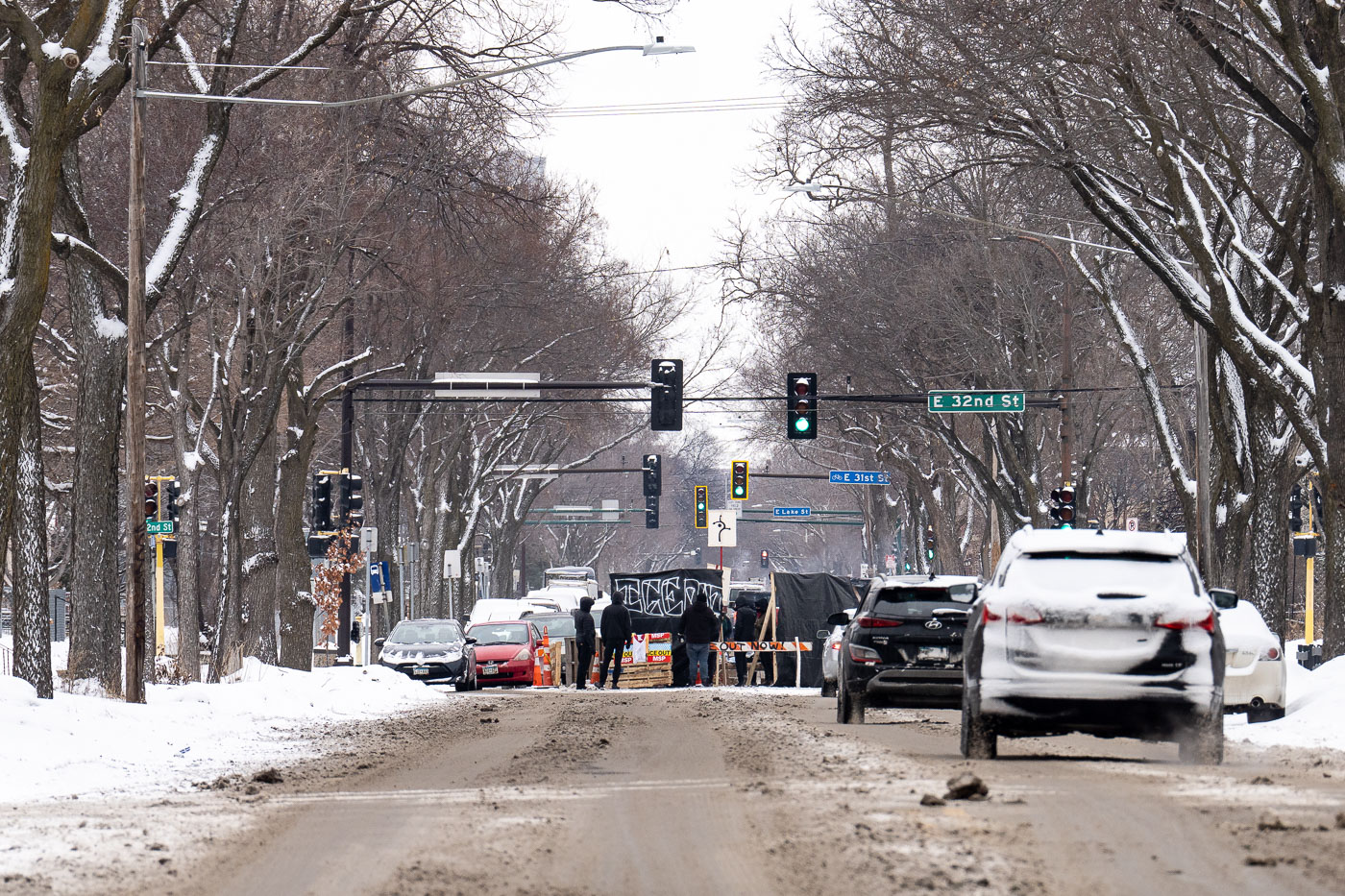
Some in South Minneapolis have created what they call “filter blockades” on Cedar Ave. A handout says the roundabout like blockade is meant to bring neighbors together to strategize against ICE while also identifying traffic coming into the area. Minneapolis February 1, 2026

“Ice Out Now” Filter Blockade on Cedar Avenue
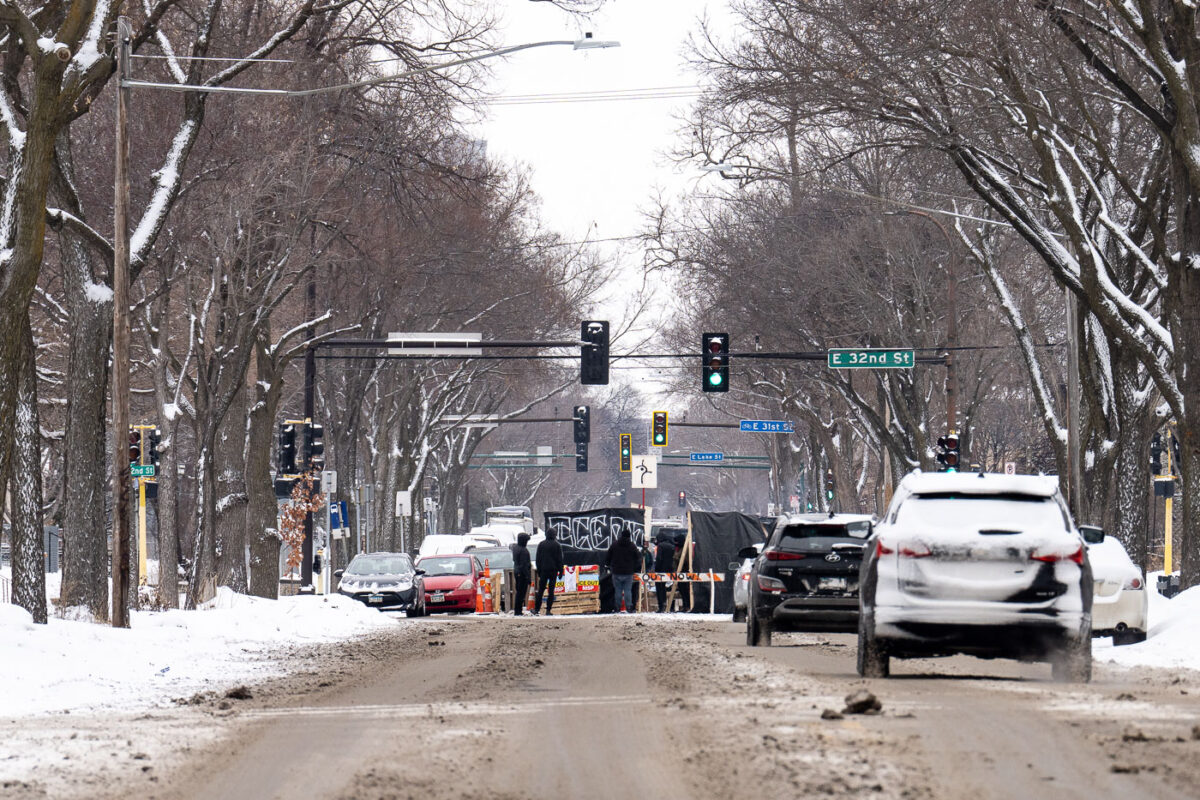
Protesters block Cedar Avenue in Minneapolis with makeshift barriers against ICE operations.
On February 1, 2026, residents of South Minneapolis established "filter blockades" on Cedar Avenue. These makeshift barriers, resembling roundabouts, were organized to strategize against Immigration and Customs Enforcement (ICE) operations and to monitor incoming traffic. The protest aimed to unite neighbors in opposition to ICE activities within the community.

Filter Blockade on Cedar Ave in Minneapolis
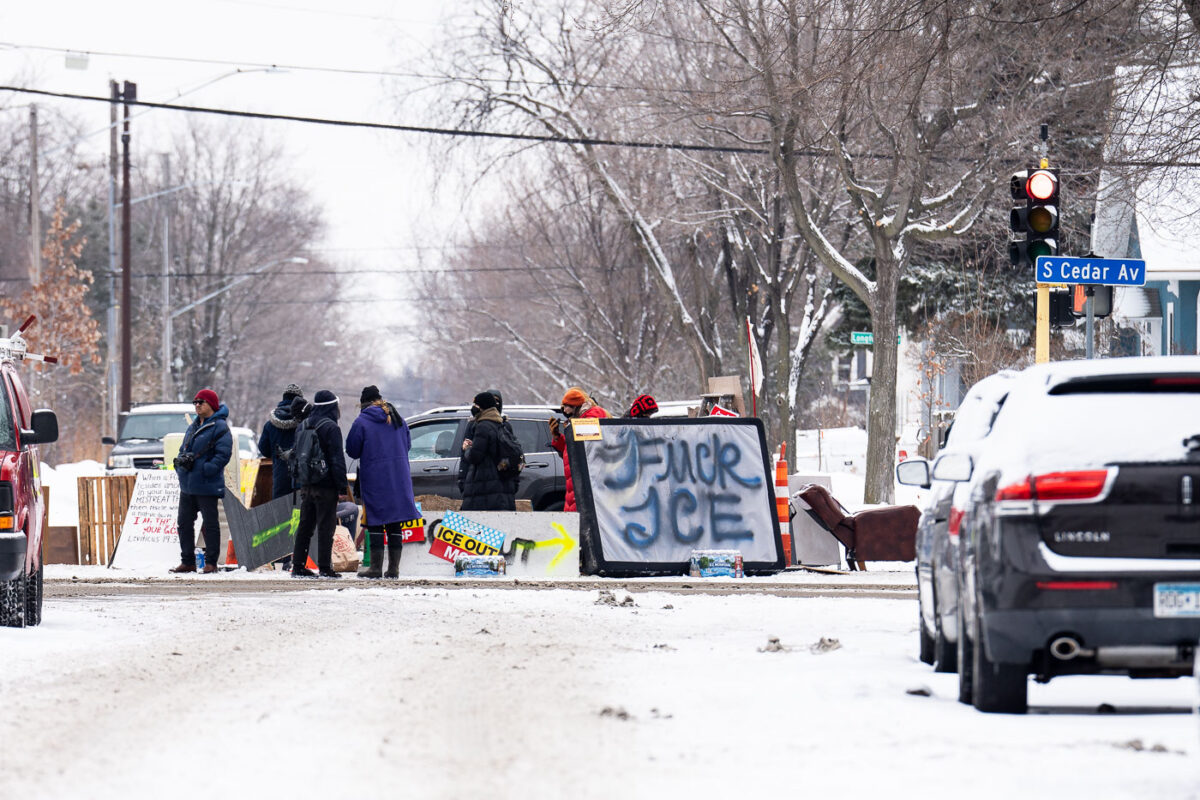
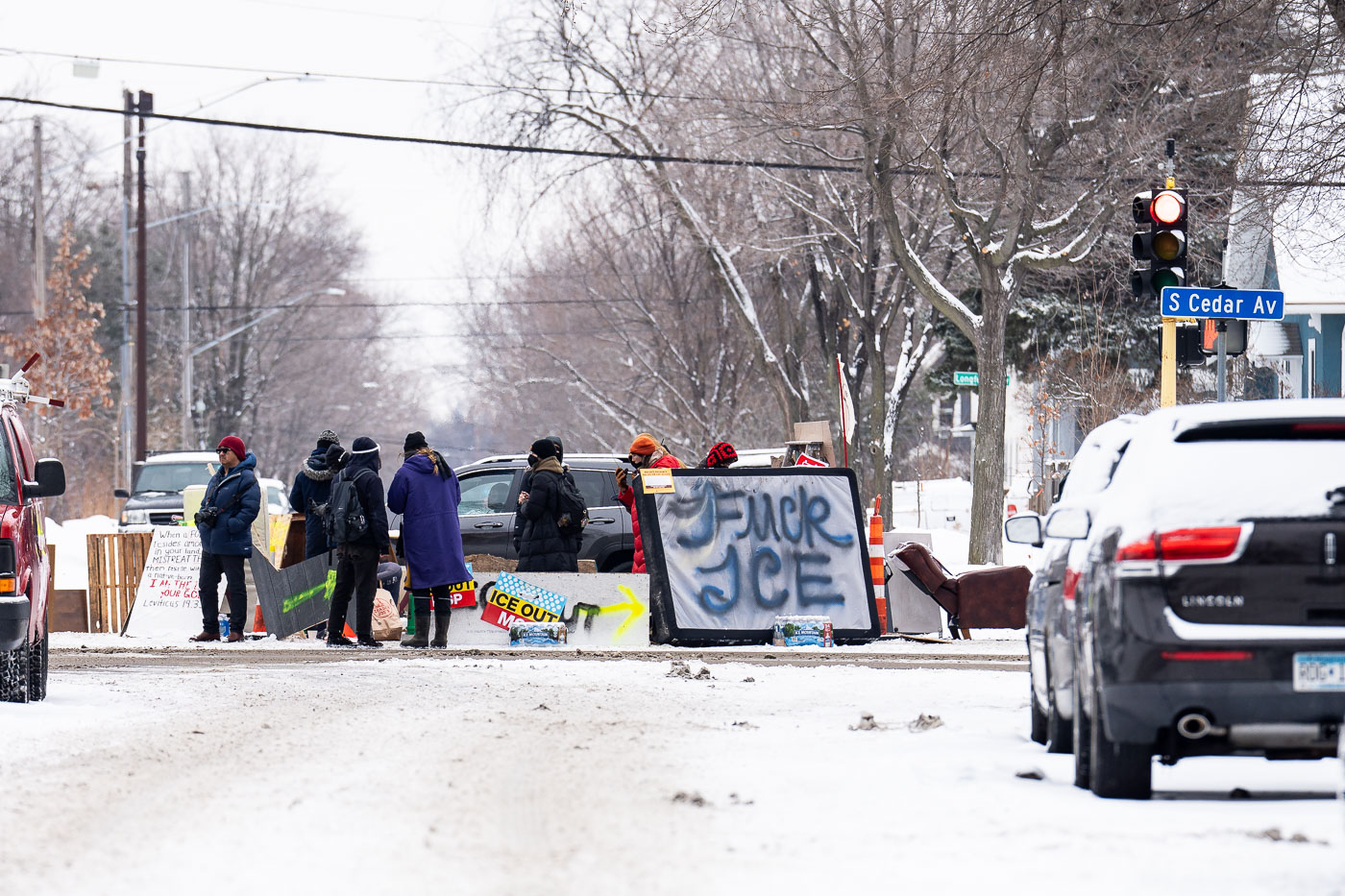
Protesters at a filter blockade on S Cedar Ave in Minneapolis protest ICE operations.
On February 1, 2026, residents of South Minneapolis established a "filter blockade" on Cedar Avenue, creating a roundabout-like structure. This protest aimed to strategize against the presence and operations of Immigration and Customs Enforcement (ICE) in the area.

Minneapolis Filter Blockade on S Cedar Ave Protests ICE
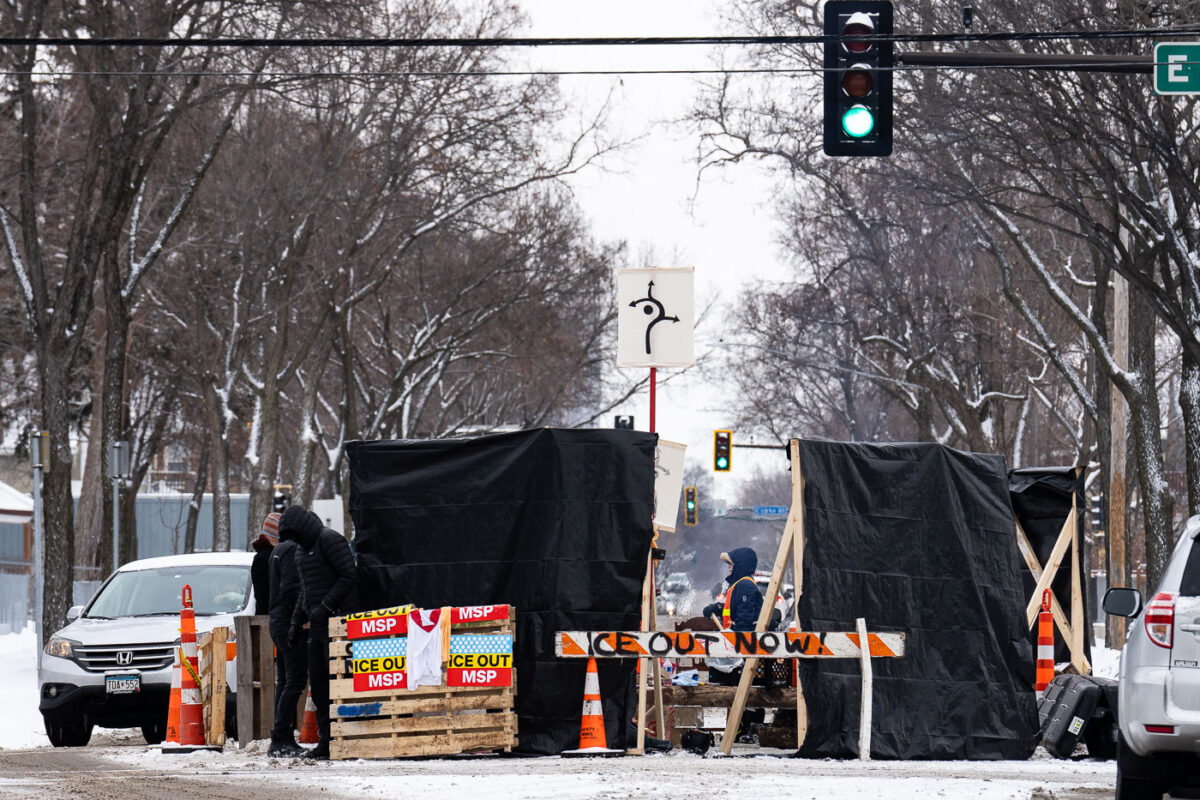
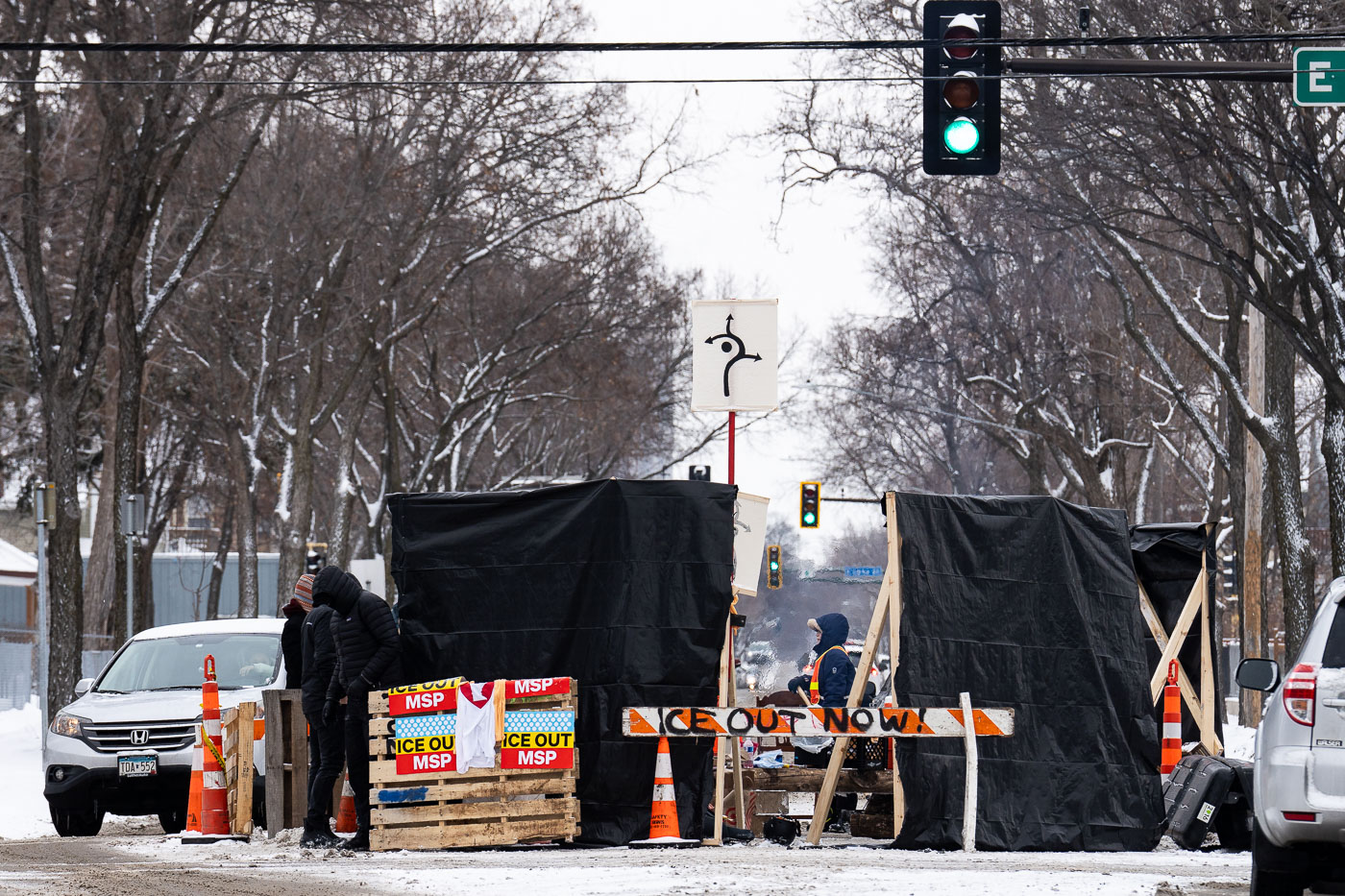
Protesters erect a filter blockade on Cedar Avenue in Minneapolis opposing ICE operations.
On February 1, 2026, protesters in South Minneapolis established "filter blockades" on Cedar Avenue as part of Operation Metro Surge. These makeshift structures, resembling roundabouts, were erected to facilitate community organizing and monitor traffic in opposition to Immigration and Customs Enforcement (ICE) operations. Signs such as "ICE OUT MSP" clearly communicated the local sentiment against ICE's presence in the city.

“Ice Out MSP” Filter Blockade on Cedar Avenue

Built in Minneapolis

Minneapolis Photographer

Browse by location, move through long-running series, or start with recent work.