Place Archive

Zurich

Zurich’s Hauptbahnhof, Switzerland’s busiest railway station, integrates extensive underground transit lines including SBB and SZU as well as commercial spaces like ShopVille. The regional S16 S-Bahn connects Zurich Airport through key stops such as Oerlikon and Hardbrücke to Herrliberg-Feldmeilen, exemplifying the city’s coordinated commuter network.

16 photos

Photos from Zurich
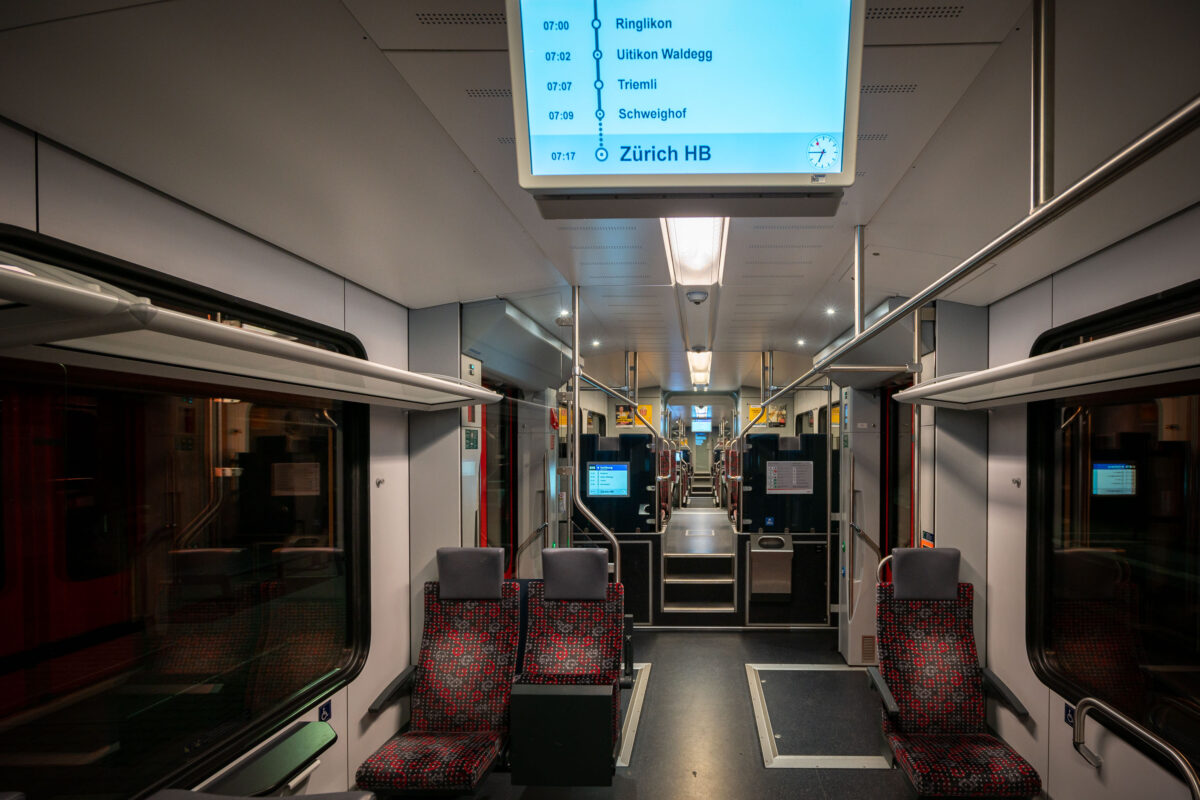
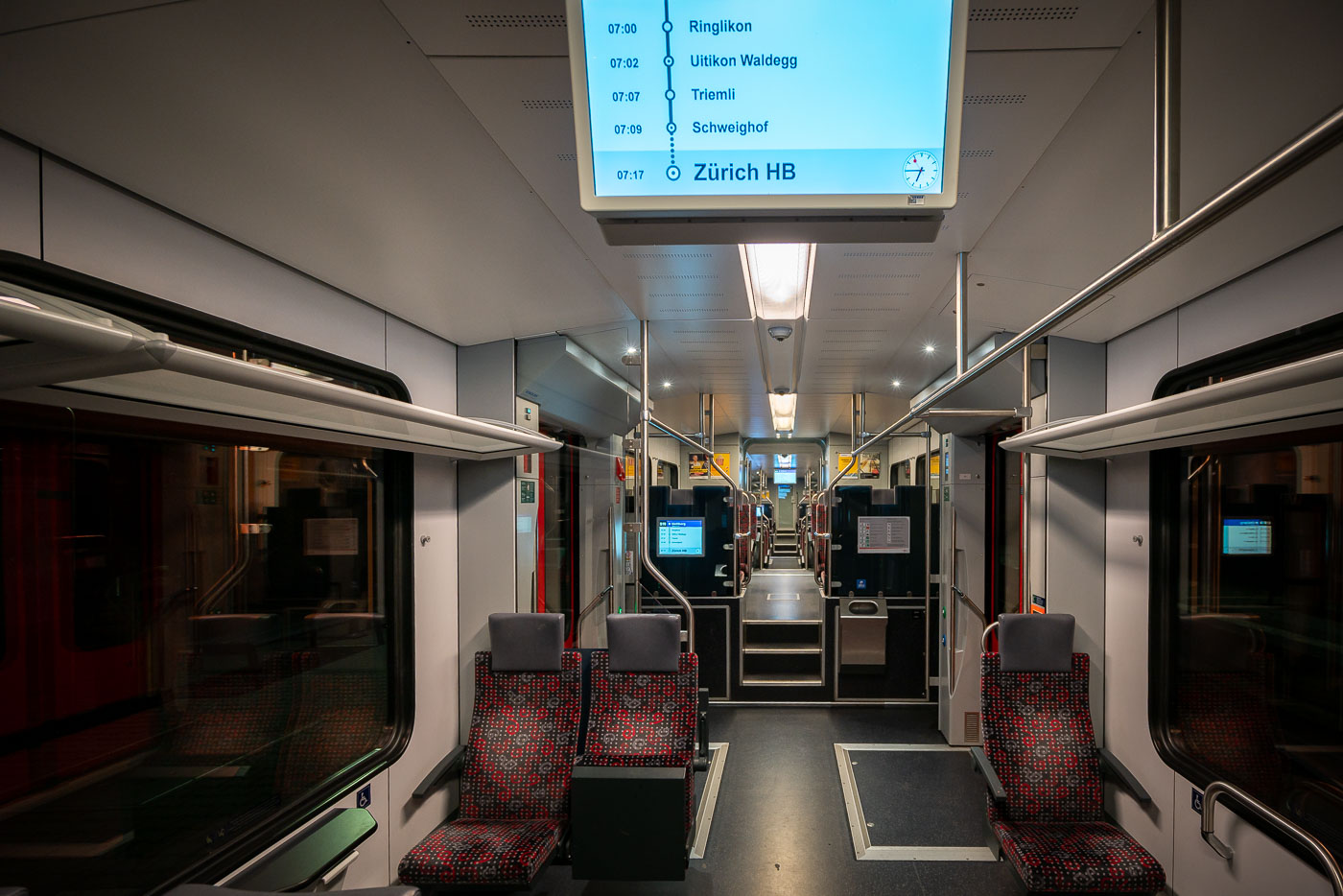
Interior of a Zürich S-Bahn train heading to Zürich HB, Switzerland's main railway station, showcasing functional design and efficient public transport.
The interior of a Zürich S-Bahn train, bound for Zürich Hauptbahnhof (HB), Switzerland's primary railway hub. Launched in 1990, the Zürich S-Bahn was one of Europe's pioneering integrated regional rail systems, connecting the city's suburbs with remarkable efficiency. Zürich HB, a critical node in the network, handles over 400,000 passengers daily, facilitating regional, national, and international travel. The train's design emphasizes functionality and passenger comfort, with clear digital displays indicating stops and ergonomic seating, reflecting Switzerland's renowned commitment to punctual and high-quality public transportation.
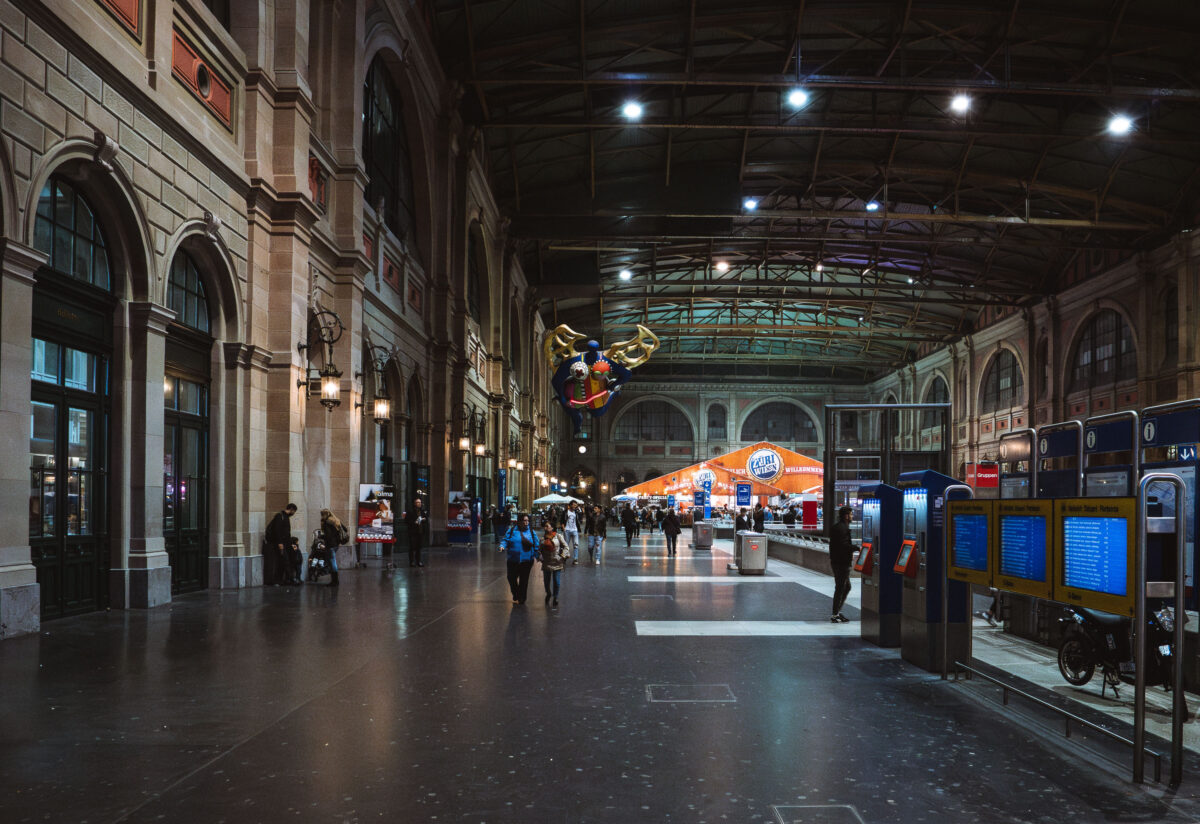
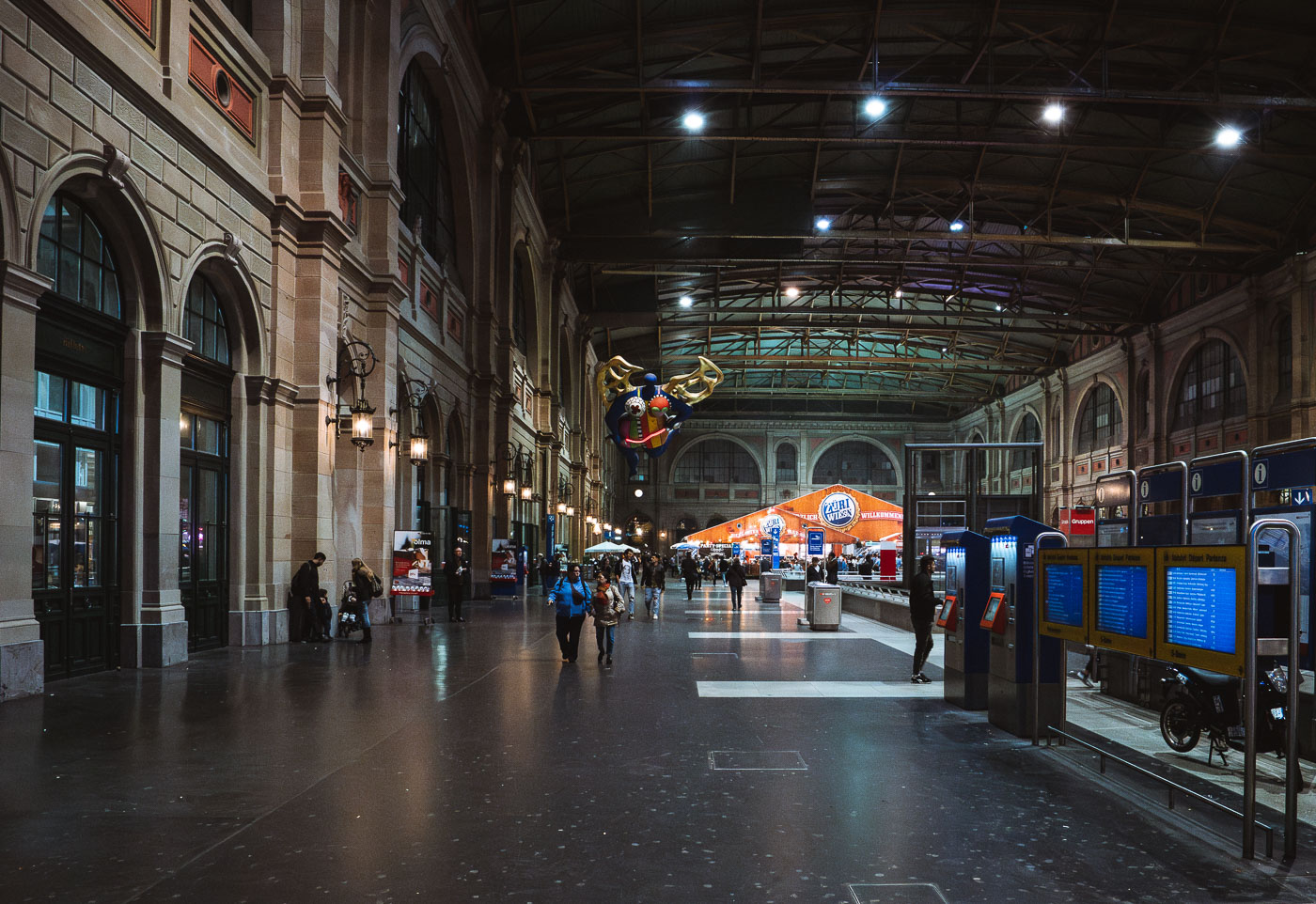
Zurich HB Train Station in Switzerland
Zurich Hauptbahnhof, Switzerland's busiest train station, serves as a critical transportation nexus with origins tracing back to 1847. The station's architecture, featuring grand arched ceilings and extensive use of iron and glass, is characteristic of 19th-century European railway design. This nighttime photograph captures the main hall, where a temporary "Zuri-Wiesn" tent, erected for festive events, is visible. This temporary structure creates a visual contrast with the station's permanent, historic architecture, underscoring its function as both a transit hub and a venue for public gatherings.
Air Berlin logo in the air from the cabin
The wing of an Air Berlin aircraft is visible above cloud layers at sunset, with a golden band of light on the horizon. Air Berlin, founded in 1978, was a significant German airline that served numerous European routes before ceasing operations in 2017. This image reflects a moment of transit, symbolizing the airline's former reach across the continent.
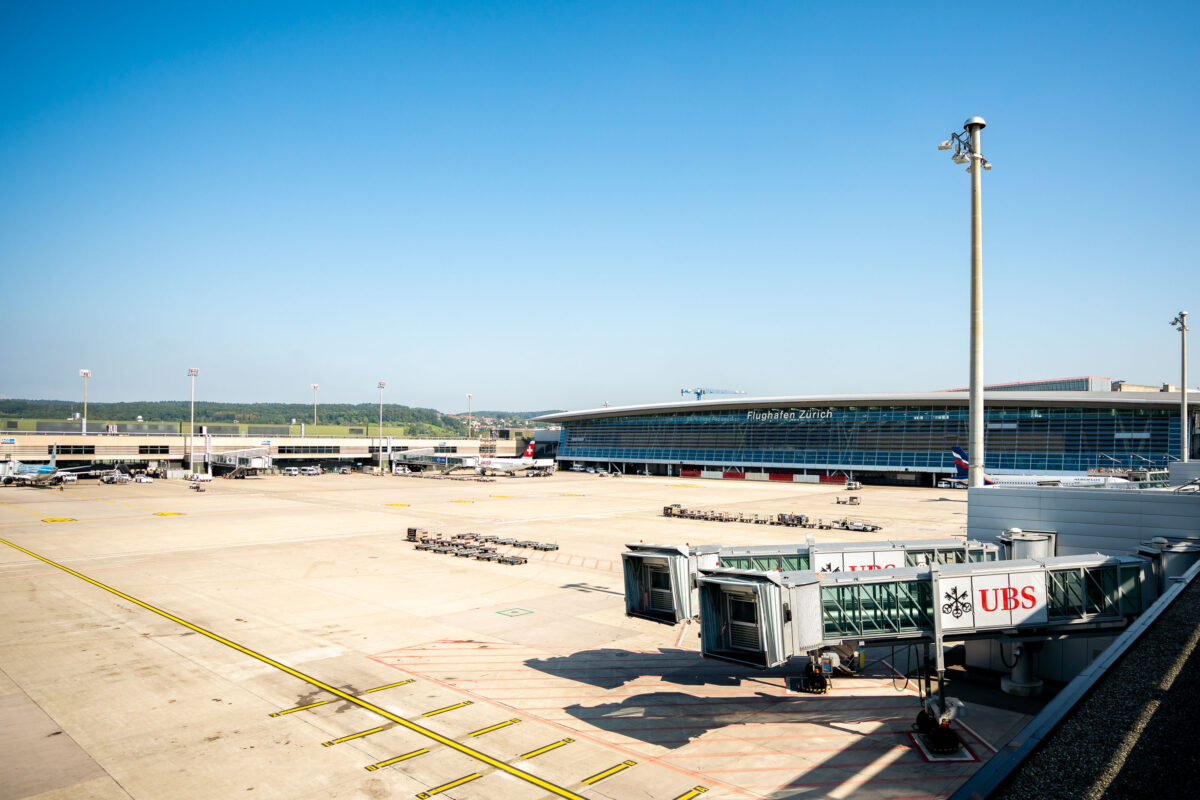
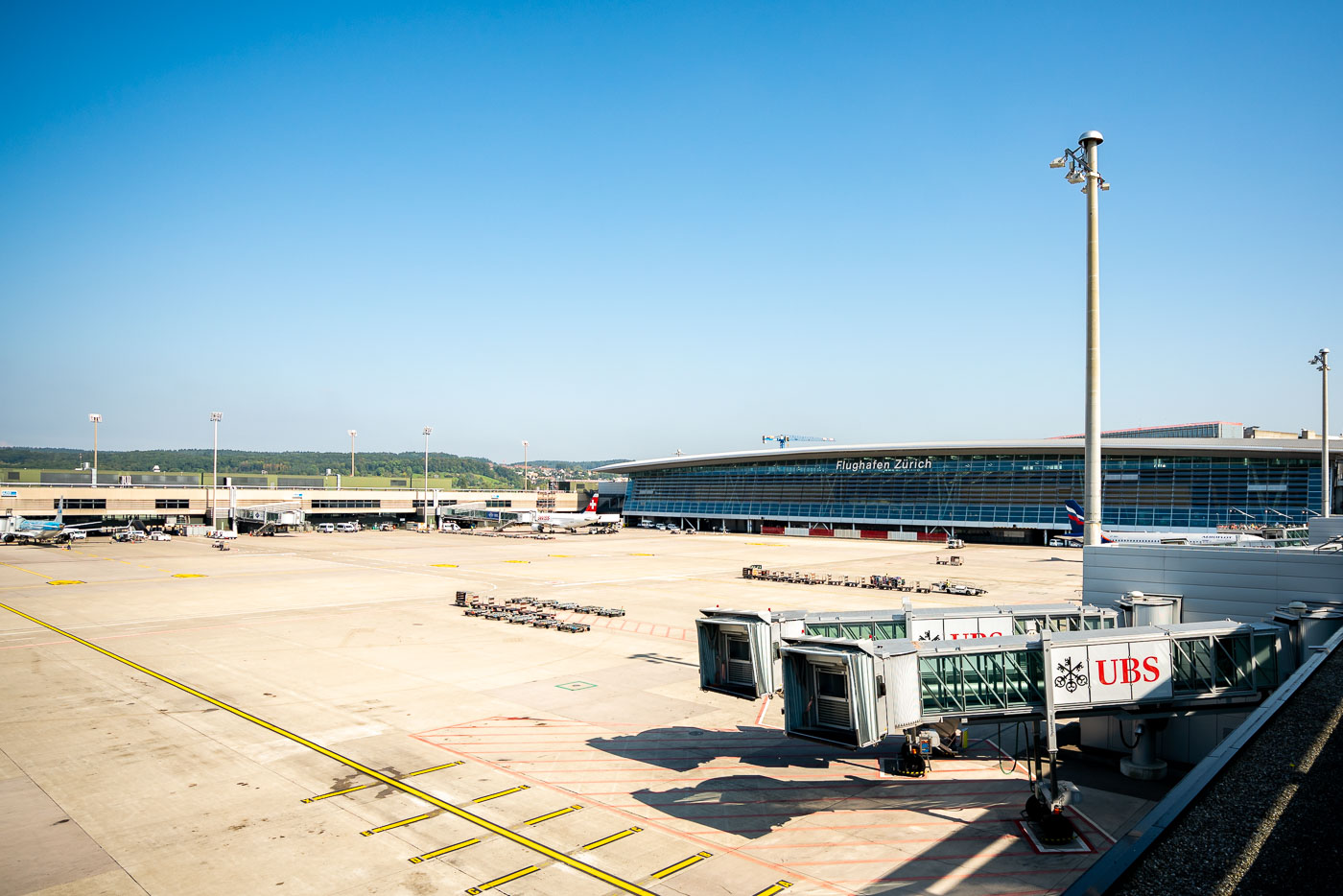
Zürich Airport terminal apron with UBS jet bridges under a clear blue sky. The airport is Switzerland's busiest air hub and a major European transfer point.
The main terminal complex of Zürich Airport (Flughafen Zürich), Switzerland's busiest air hub, is shown with its modern glass façade under a clear blue sky. Completed in stages through the early 2000s, the airport serves as the primary gateway for Swiss International Air Lines and is a major European transfer point. The apron and UBS-branded jet bridges highlight the integration of Swiss precision, aviation infrastructure, and corporate branding in global travel.
Plane taking off at Zurich Airport
A Swiss International Air Lines aircraft ascends from Zurich Airport (Flughafen Zürich), a major international hub that opened in 1948. The airport's extensive network of runways and taxiways, visible here, facilitates efficient air traffic for Switzerland's primary gateway. The surrounding landscape, a blend of residential areas and green spaces, illustrates the airport's integration into the region near Kloten.
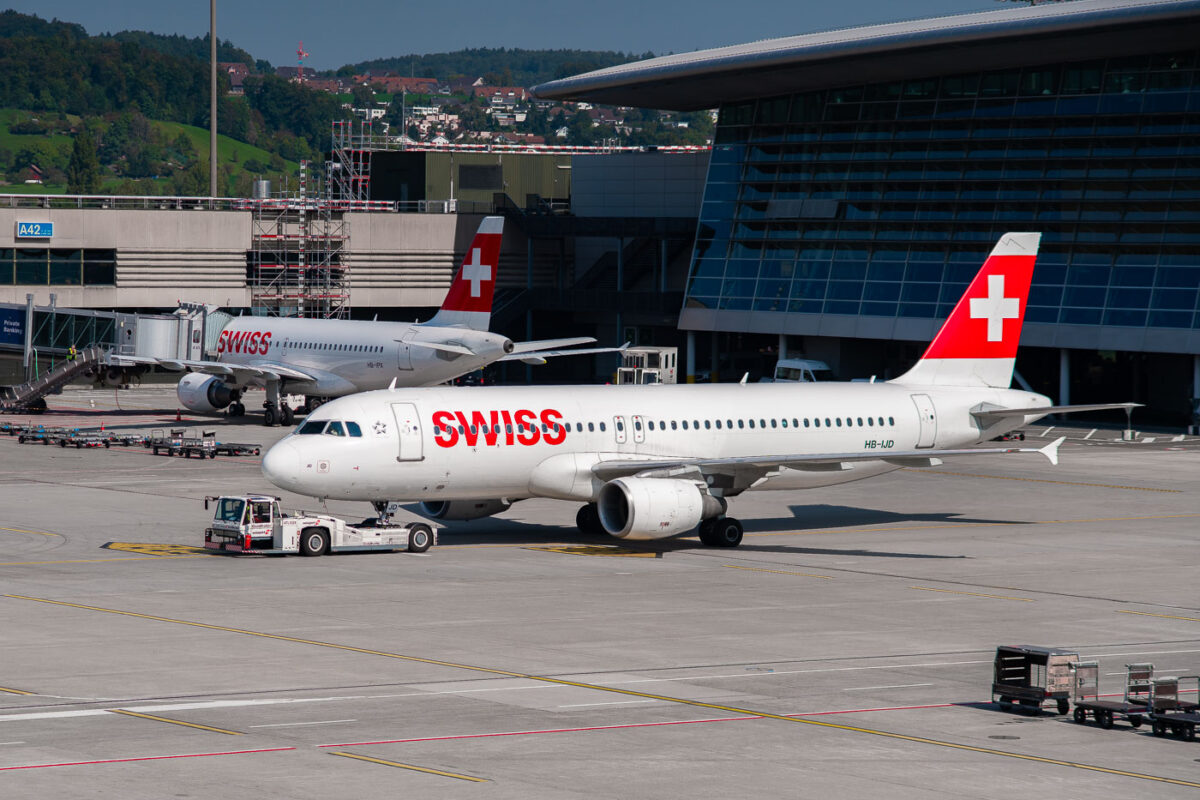
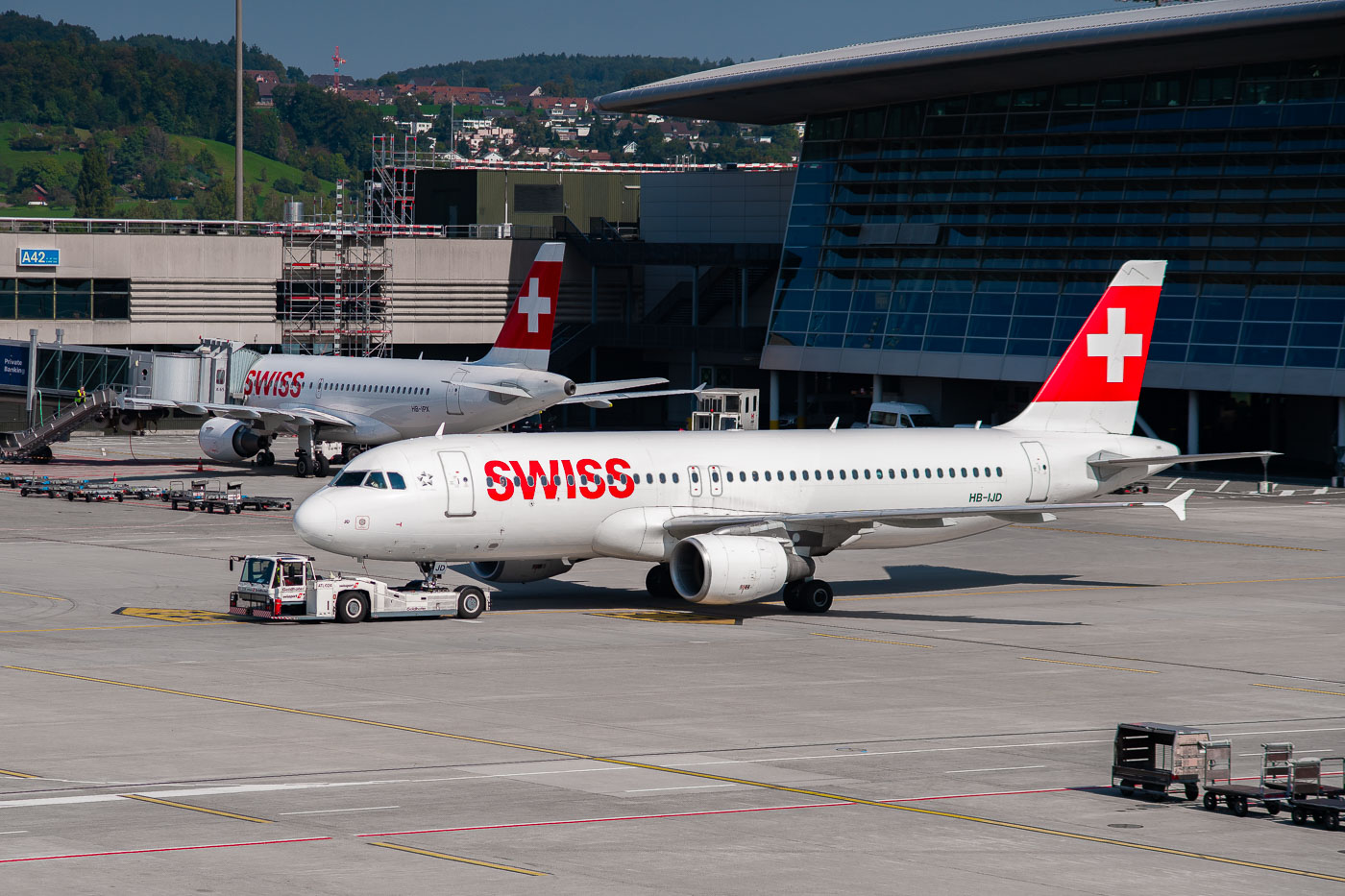
Two Swiss International Air Lines Airbus A320 aircraft at Zurich Airport, Switzerland. One aircraft is being towed by a ground vehicle on the tarmac.
Two Swiss International Air Lines Airbus A320 aircraft are visible at Zurich Airport, Switzerland's largest international airport. The aircraft, identified by their red and white tails featuring the Swiss cross, are part of the national carrier's fleet. One aircraft, registration HB-IJD, is being towed by a ground vehicle, a common operation for repositioning aircraft on the tarmac. Zurich Airport, opened in 1948, serves as a major hub for air travel in Europe and is known for its efficient operations and modern architecture, exemplified by the terminal building's glass facade.
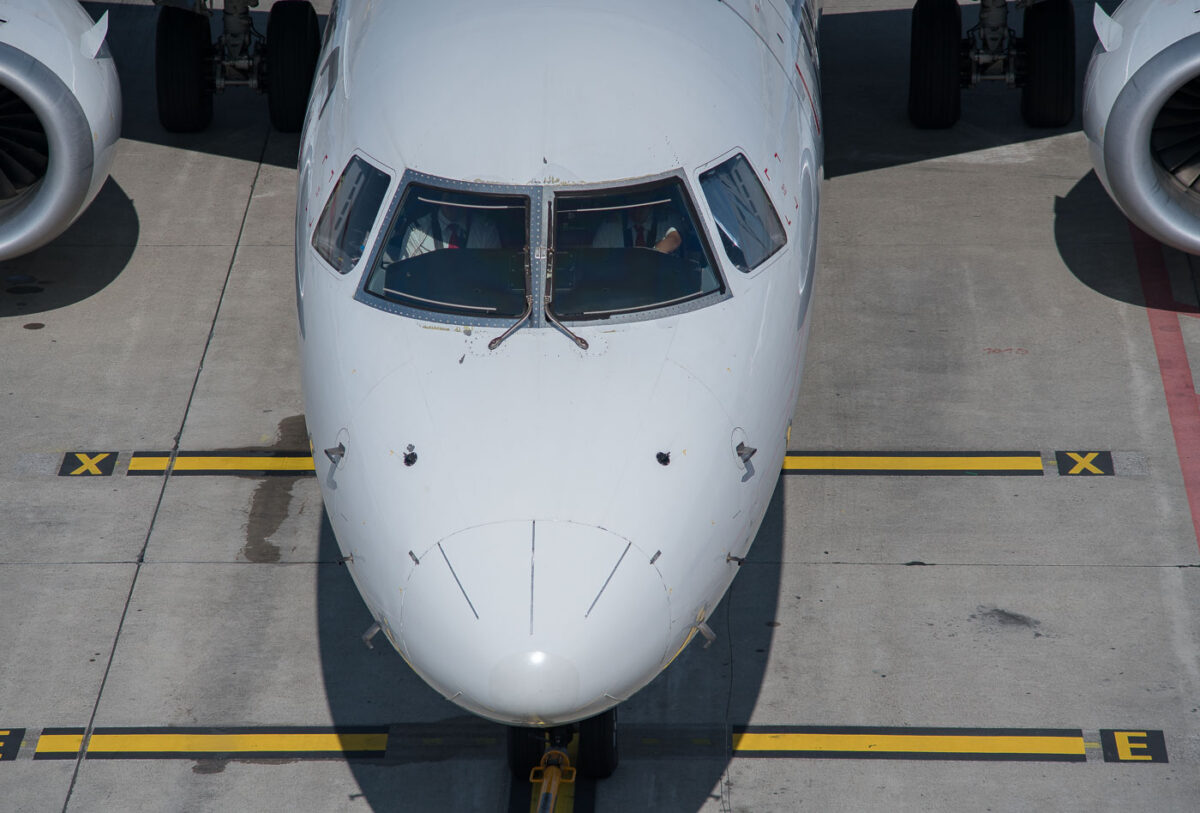
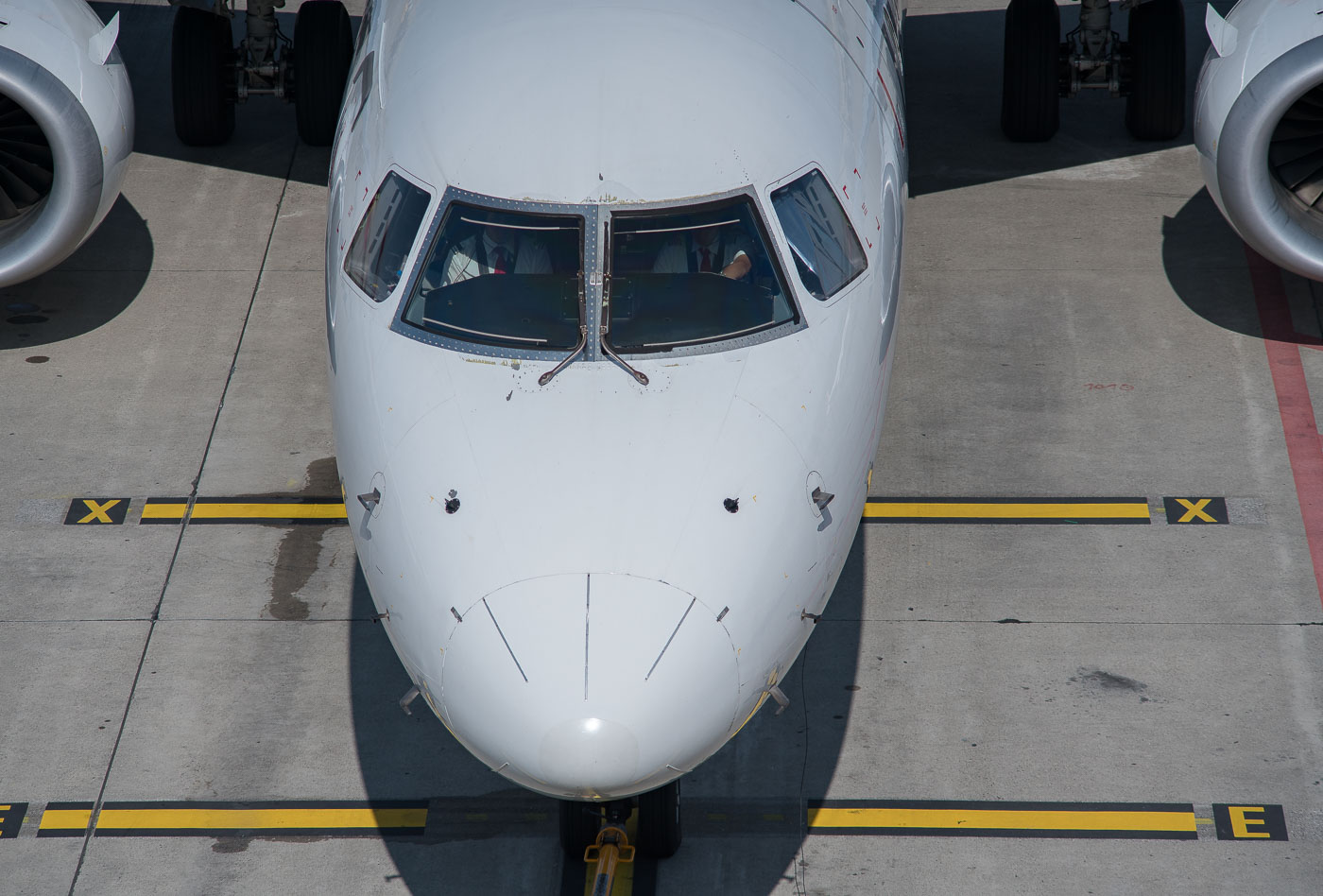
An Airbus A320 cockpit crew prepares for preflight checks at Zurich Airport, Switzerland. The aircraft is parked on the tarmac, indicated by yellow and black markings.
An Airbus A320 narrow-body jet undergoes preflight checks at Zurich Airport, Switzerland. The cockpit crew is visible through the windows, preparing for departure. Zurich Airport, established in 1948, is the largest international airport in Switzerland and a major hub for European air traffic. The A320 family, first introduced in 1988, revolutionized short- to medium-haul air travel with its advanced fly-by-wire technology and fuel efficiency.
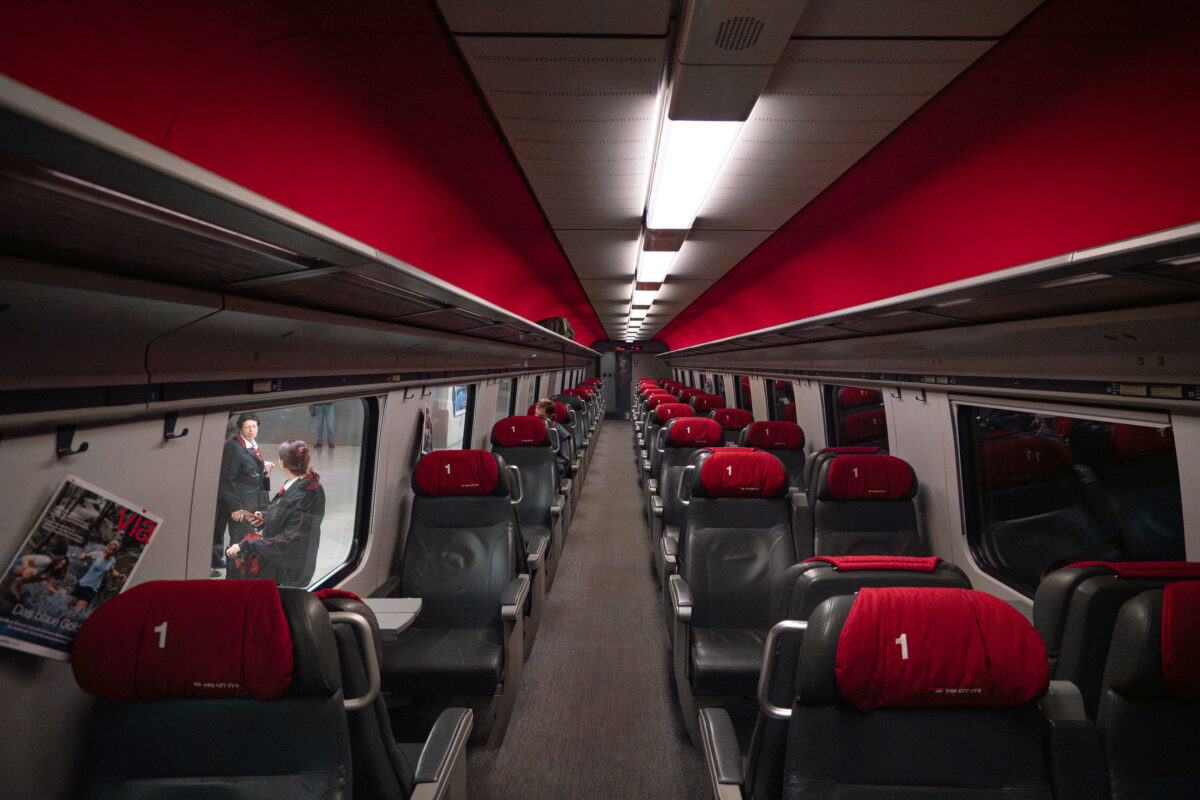
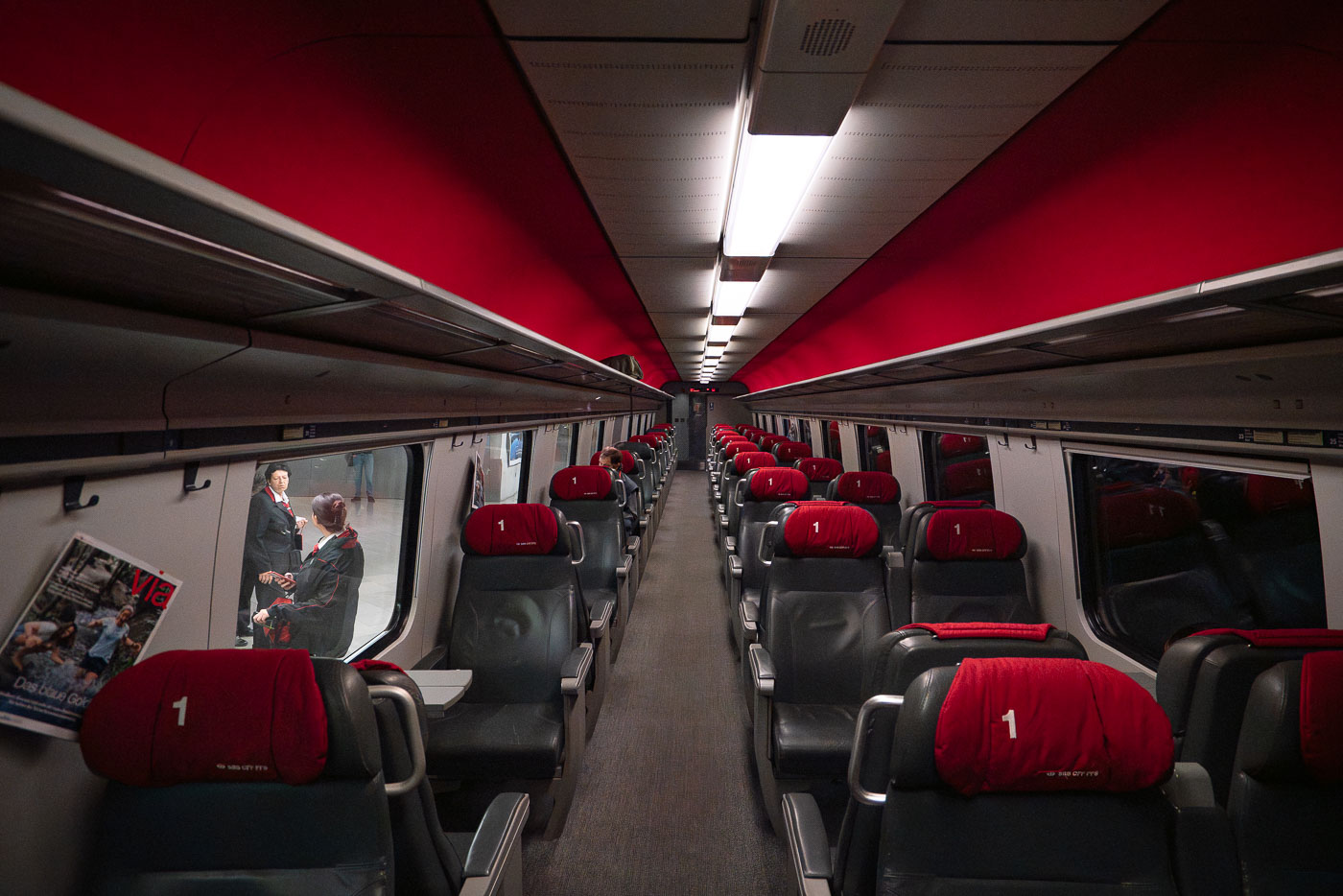
Interior of a first-class SBB train carriage in Switzerland, featuring rows of black seats with red headrests marked with '1'.
The interior of a first-class carriage of the Swiss Federal Railways (SBB) showcases the company's commitment to comfort and efficiency. Established in 1902, SBB operates one of Europe's most extensive and reliable rail networks, connecting major cities, towns, and international destinations. The carriage's design, with its spacious seating and functional overhead storage, reflects Swiss principles of precision and optimized space utilization. This first-class service offers passengers a refined travel experience, underscoring SBB's reputation for quality and punctuality in public transportation.
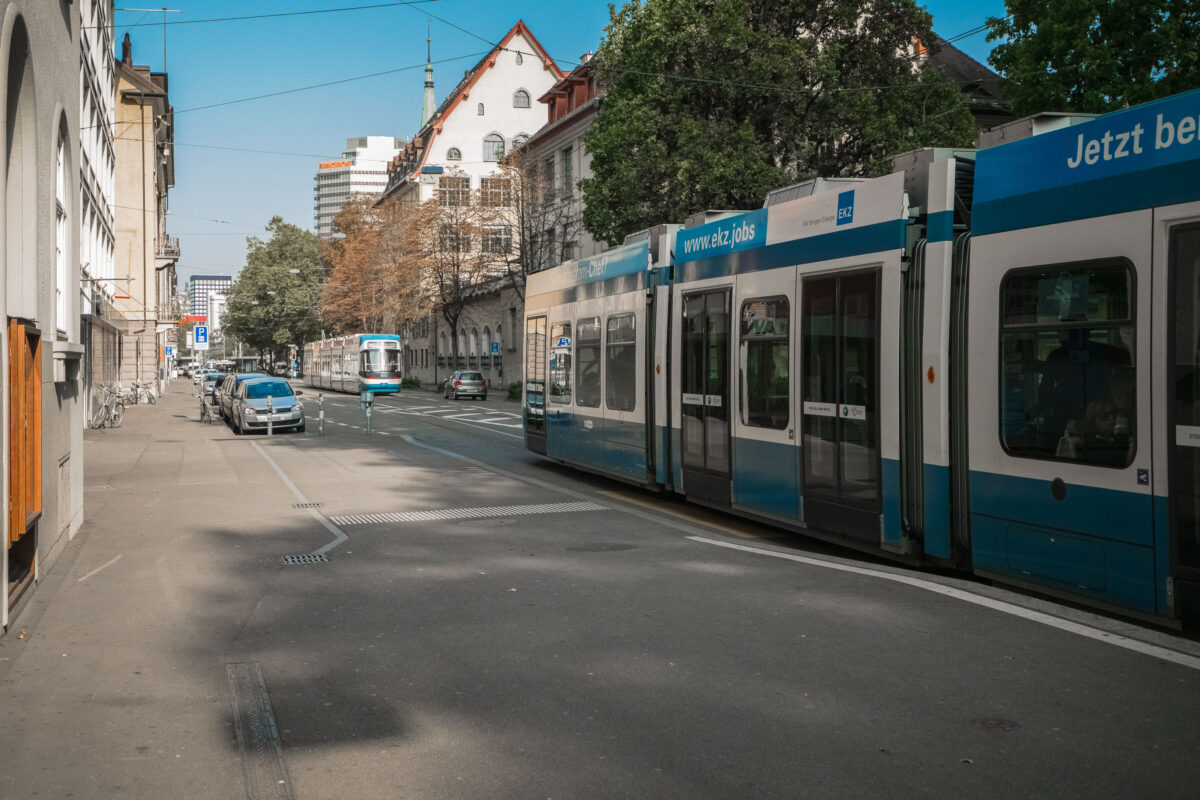
Two VBZ trams on a tree-lined avenue in Zurich, Switzerland. The city's tram network, established in the 1880s, is a key part of its urban mobility.
Two VBZ trams, operated by the Zürich public transport authority, traverse a tree-lined avenue in the Swiss city. The tram network, established in the 1880s, is a cornerstone of Zürich's urban mobility, renowned for its efficiency and extensive reach across the metropolis. This system, integral to daily life, reflects the city's characteristic blend of historical preservation and modern functionality. The clean design of the trams and the surrounding architecture underscore Zürich's reputation for order and urban calm.
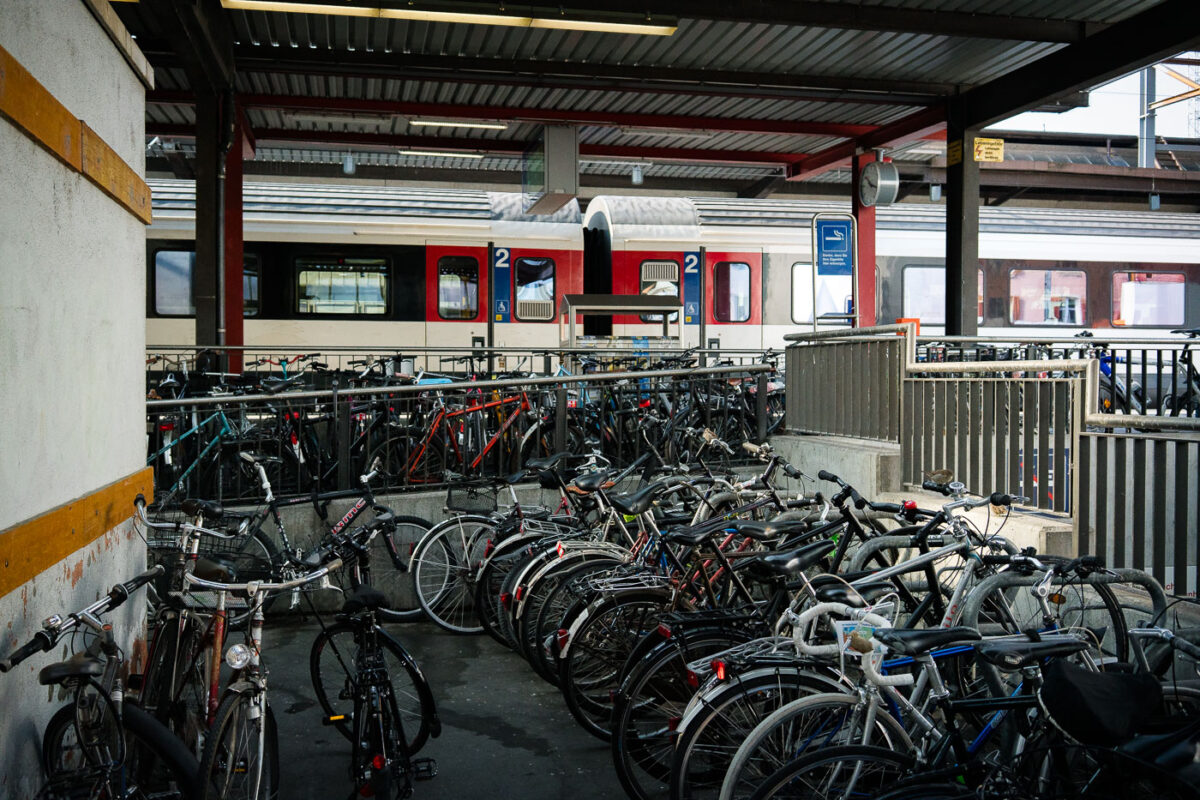
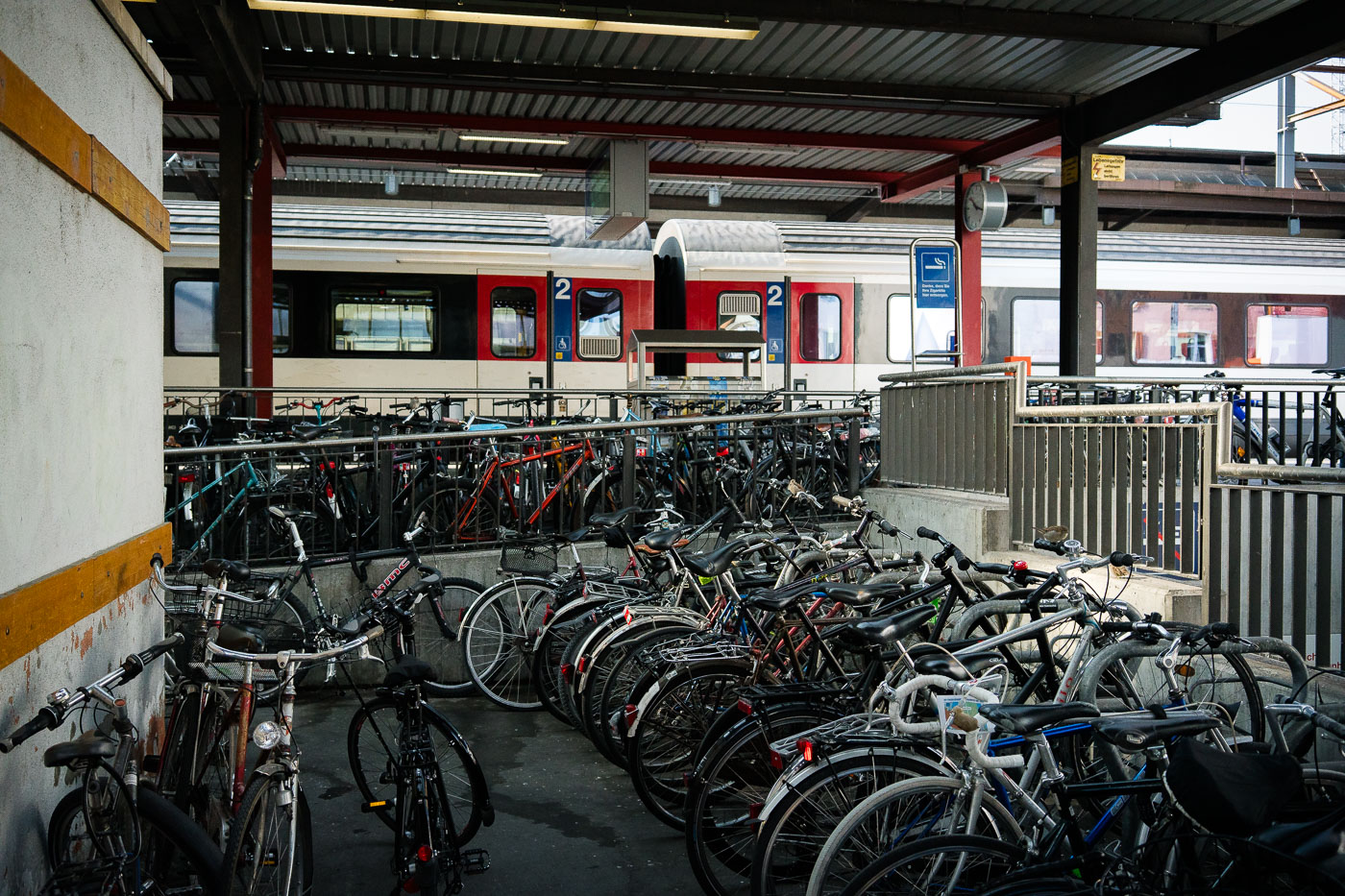
Bicycles at a Zurich train station
Zürich Hauptbahnhof, one of Europe's busiest railway stations, offers extensive bicycle parking facilities, reflecting Switzerland's commitment to sustainable urban mobility. This infrastructure supports commuters who integrate cycling with train travel, a common practice in Swiss cities. The presence of numerous bicycles alongside a Swiss Federal Railways (SBB) regional train highlights the seamless connection between personal transport and public transit networks in Zürich. The station itself, a major hub, facilitates millions of passenger journeys annually, underscoring its critical role in national and international rail transport.
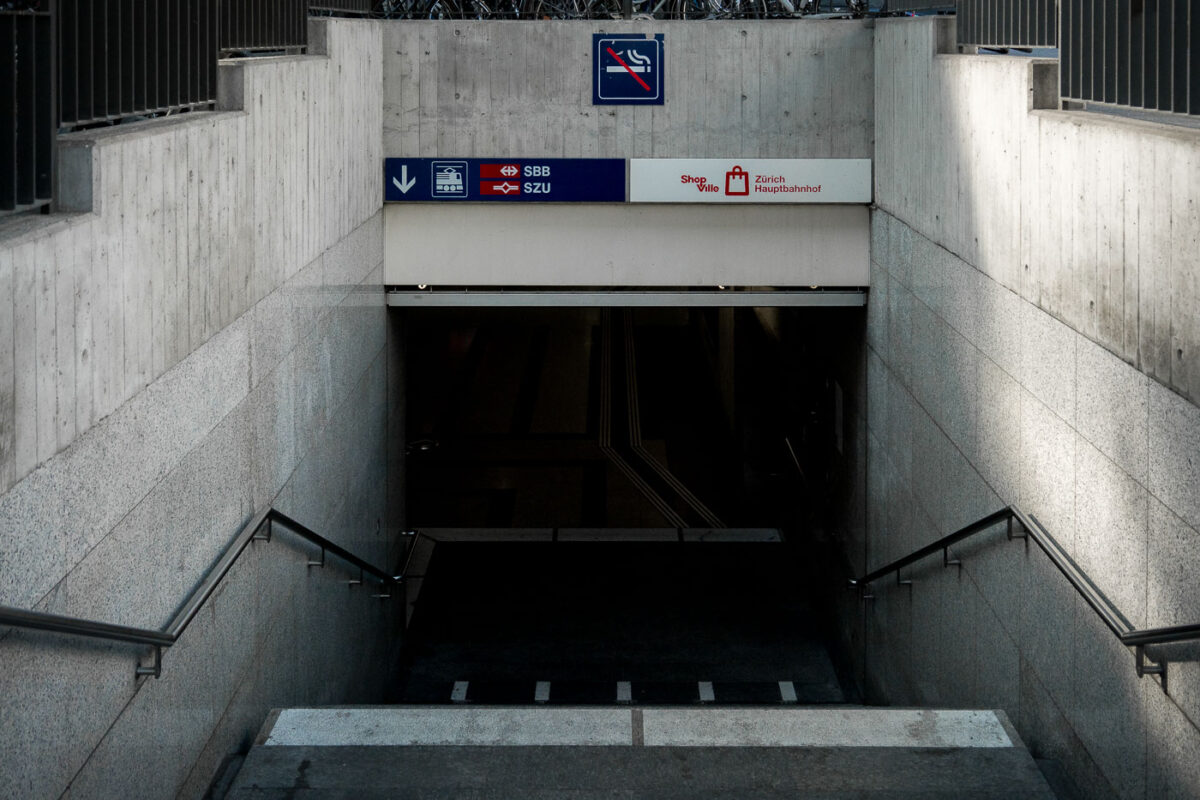
Entrance to ShopVille and SBB/SZU lines at Zürich Hauptbahnhof, a major Swiss railway station and transit hub.
This image shows an entrance to the underground levels of Zürich Hauptbahnhof, a major Swiss railway station. The signage directs passengers to the SBB national rail lines, the SZU suburban lines, and the ShopVille shopping complex. As one of Europe's busiest transit hubs, Zürich HB handles hundreds of thousands of passengers daily, underscoring its critical role in Swiss public transportation and urban connectivity. The station's design integrates extensive retail and pedestrian access within its subterranean infrastructure.
A vending machine in Zurich, Switzerland, offers a variety of items including Ceylor condoms, Malbuner Party Sticks, KitKat, and Bic lighters, with prices displayed in CHF.
A Swiss vending machine in Zurich offers a diverse range of products, including snacks like KitKat and Maltesers, personal care items such as Ceylor condoms, and practical goods like Bic lighters. The prices, displayed in Swiss francs (CHF), reflect the country's economic context. This assortment highlights Switzerland's extensive vending machine culture, which provides convenient access to both consumables and necessities in public areas like train stations and city centers.
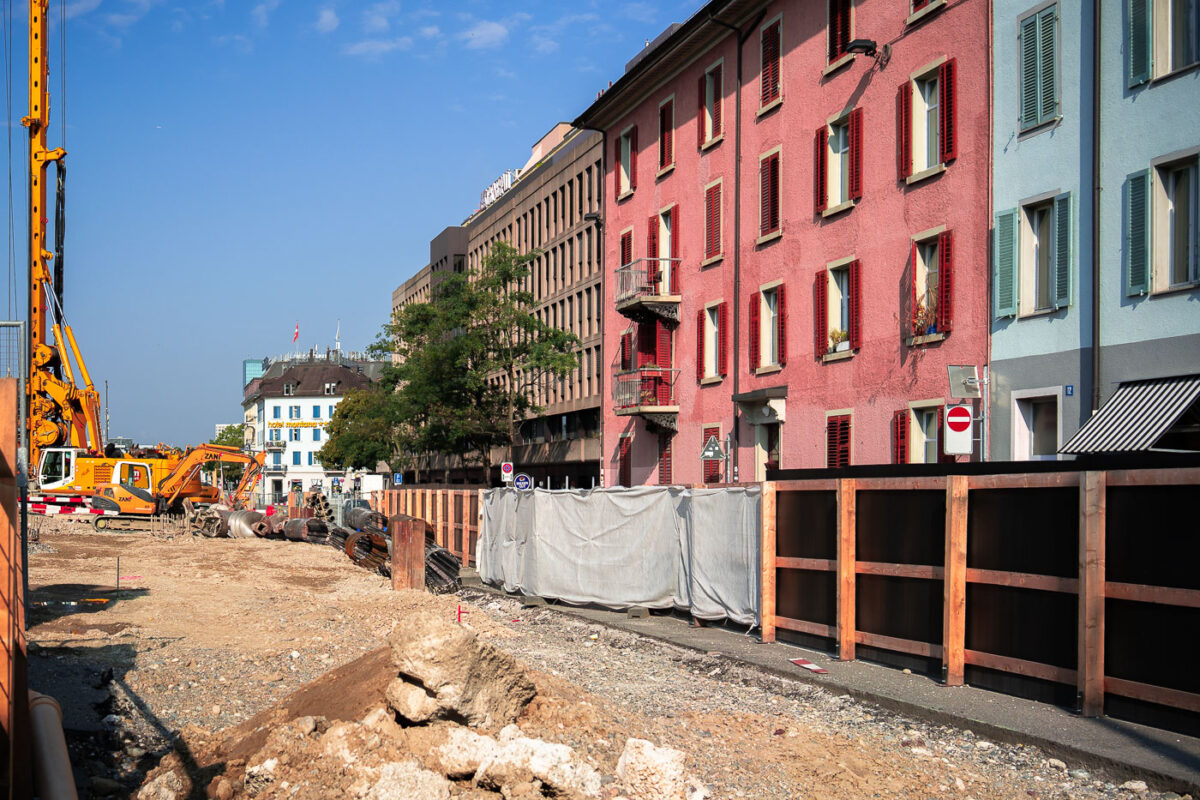
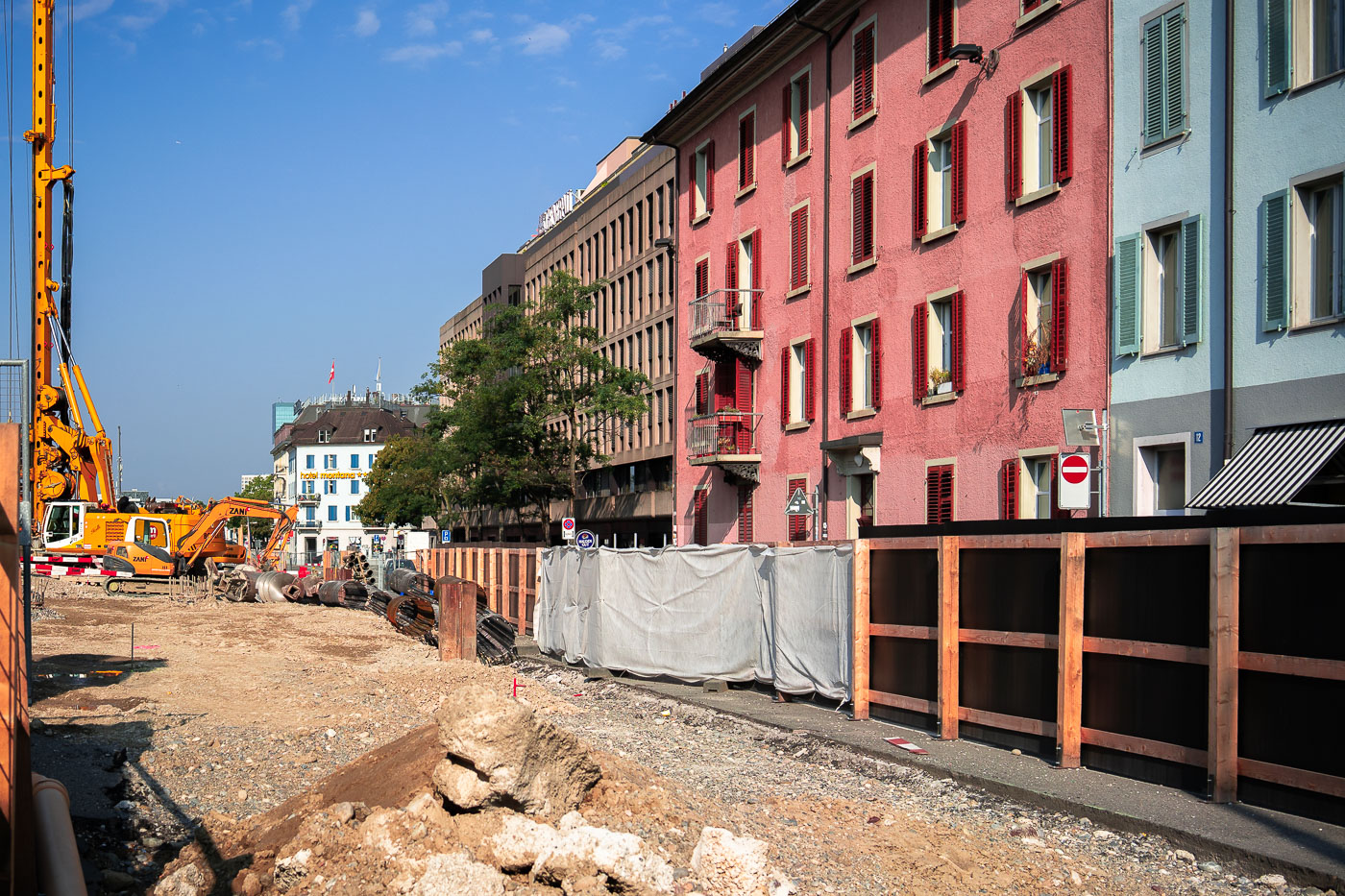
Zurich Road Construction
Construction is ongoing in Zurich, Switzerland, on a site that will house residential and office buildings. The project involves heavy machinery, including a large drilling rig, and materials such as steel rebar and concrete. Adjacent to the active construction zone, existing colorful residential buildings stand alongside modern office structures, illustrating the city's continuous development. This development reflects Zurich's status as a major global financial center and its ongoing efforts to expand its urban infrastructure and housing capacity.
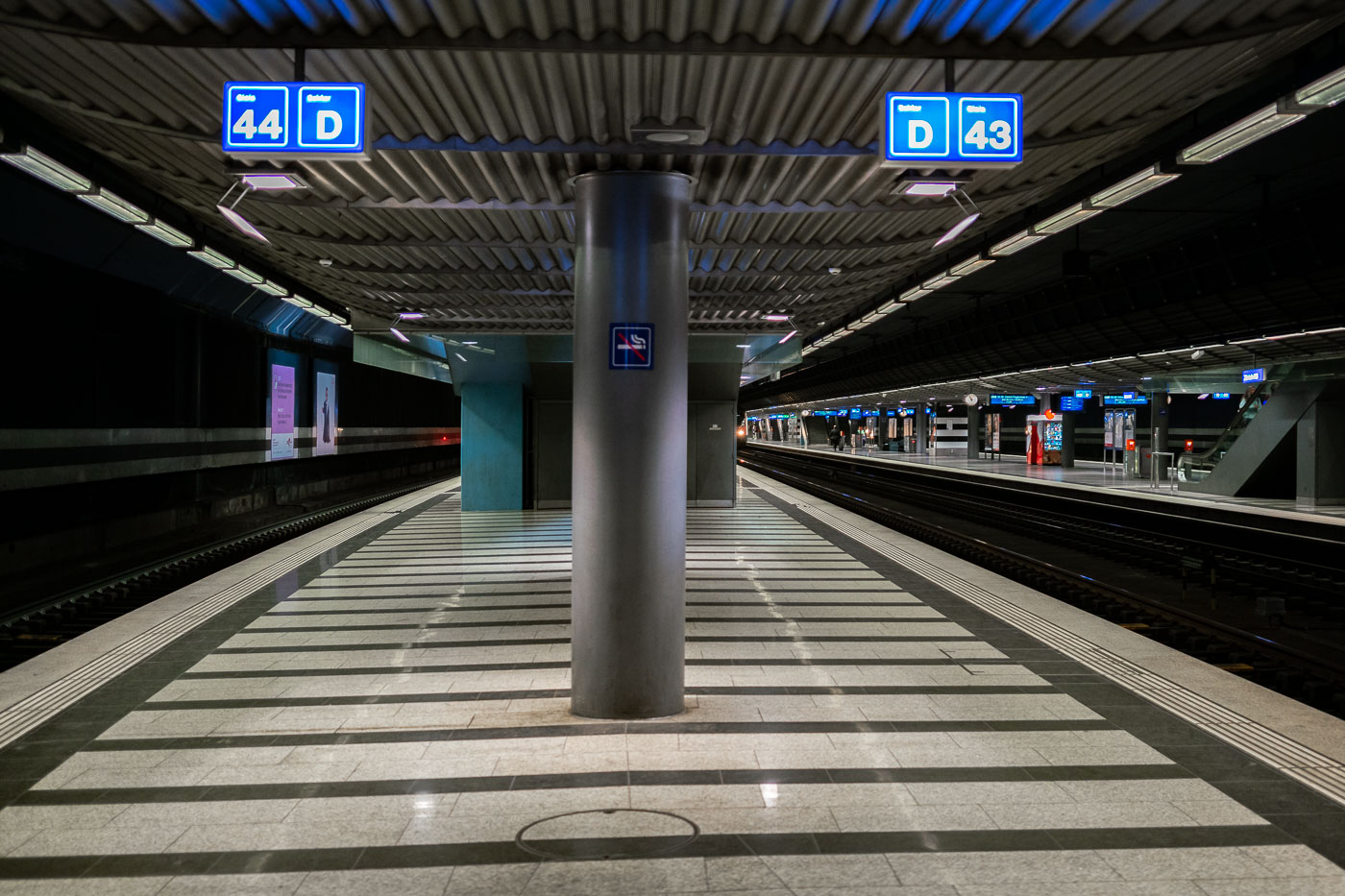
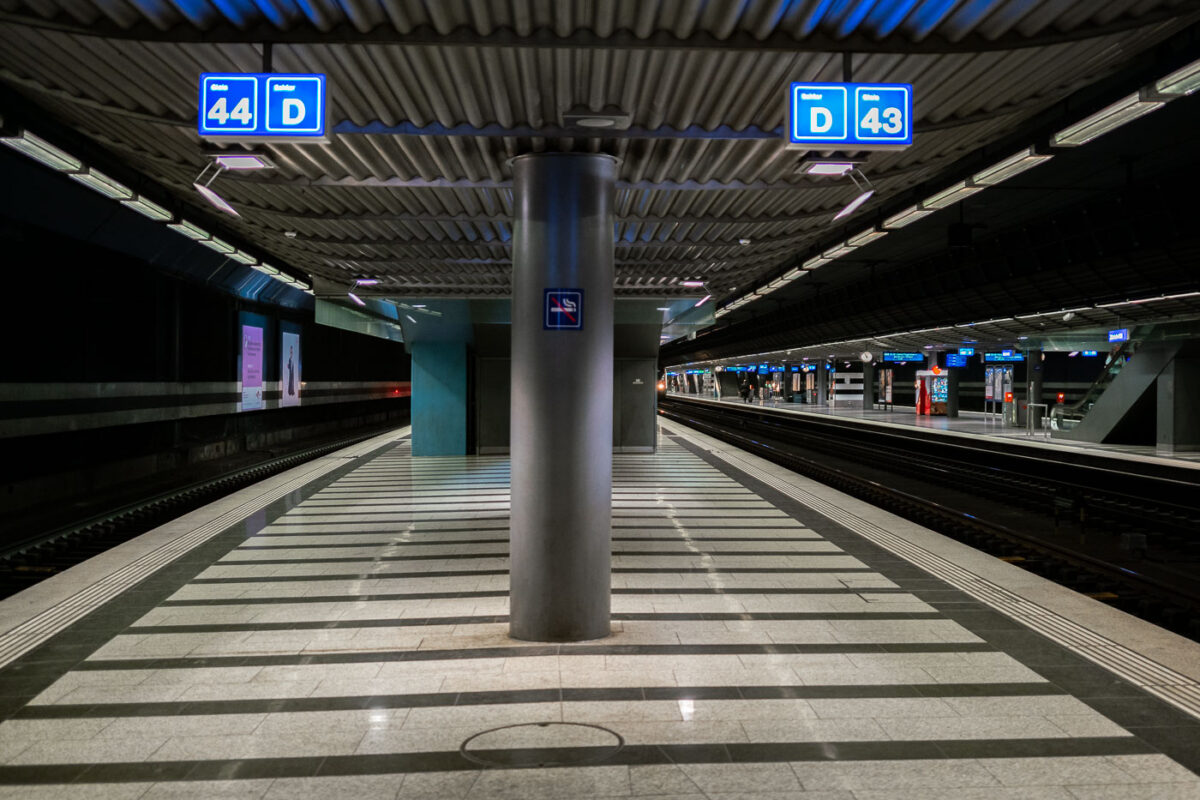
Zurich Airport Station Platform
Platforms D43 and D44 at Zurich Airport Station serve as a vital transportation hub, connecting air travelers and local commuters to the wider Swiss rail network. Opened in 1980, the station's underground design was a significant development for airport accessibility. The platforms feature a modern aesthetic with clear signage and efficient lighting, facilitating passenger flow. Today, these platforms are a critical component of Zurich Airport's infrastructure, handling a high volume of regional and intercity train services.
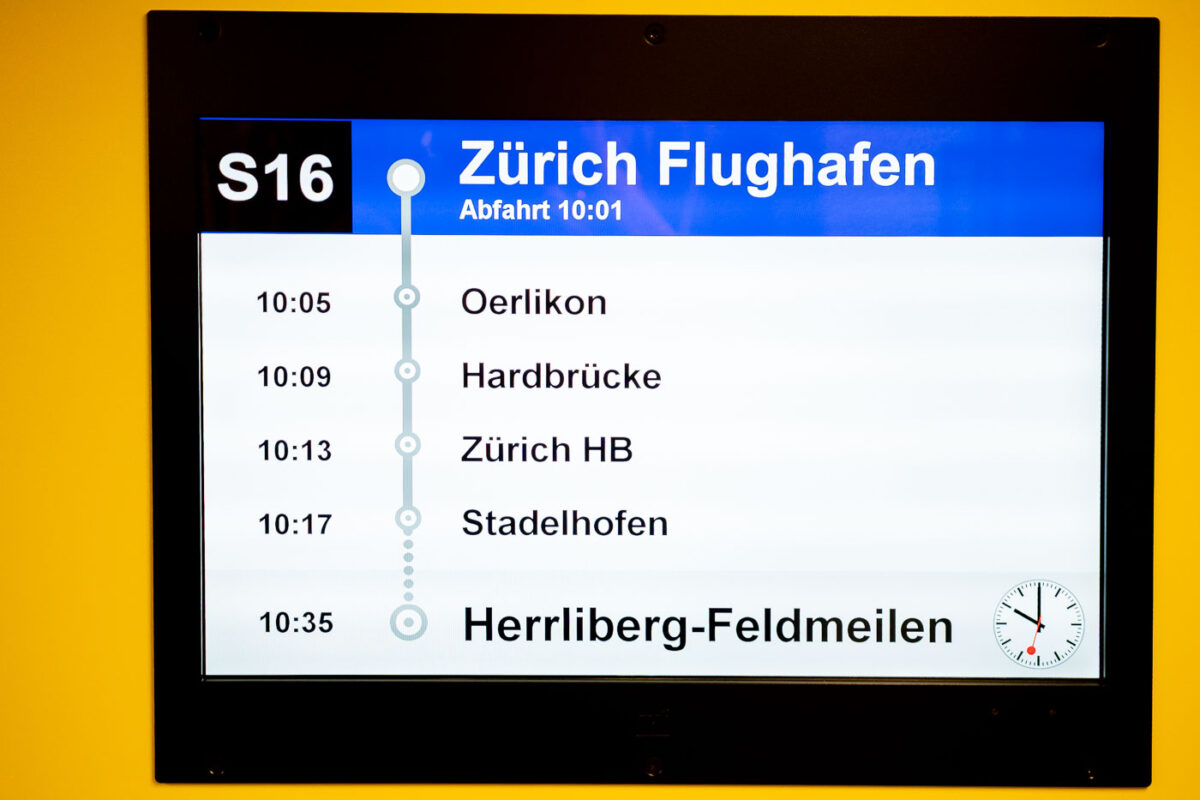
Zurich Flughafen Departure Board
A digital display at Zurich Airport shows the schedule for the S16 S-Bahn line, a commuter train service connecting the airport to various stations within the Zurich metropolitan area. The S16 line is a vital component of the regional transit network, facilitating travel between the airport, the city center, and surrounding communities. This particular schedule indicates a departure at 10:01, with stops including Oerlikon, Hardbrücke, and Zürich HB, before reaching its final destination in Herrliberg-Feldmeilen at 10:35. The presence of such real-time information systems is crucial for the efficient operation of public transportation at a major international hub like Zurich Airport.
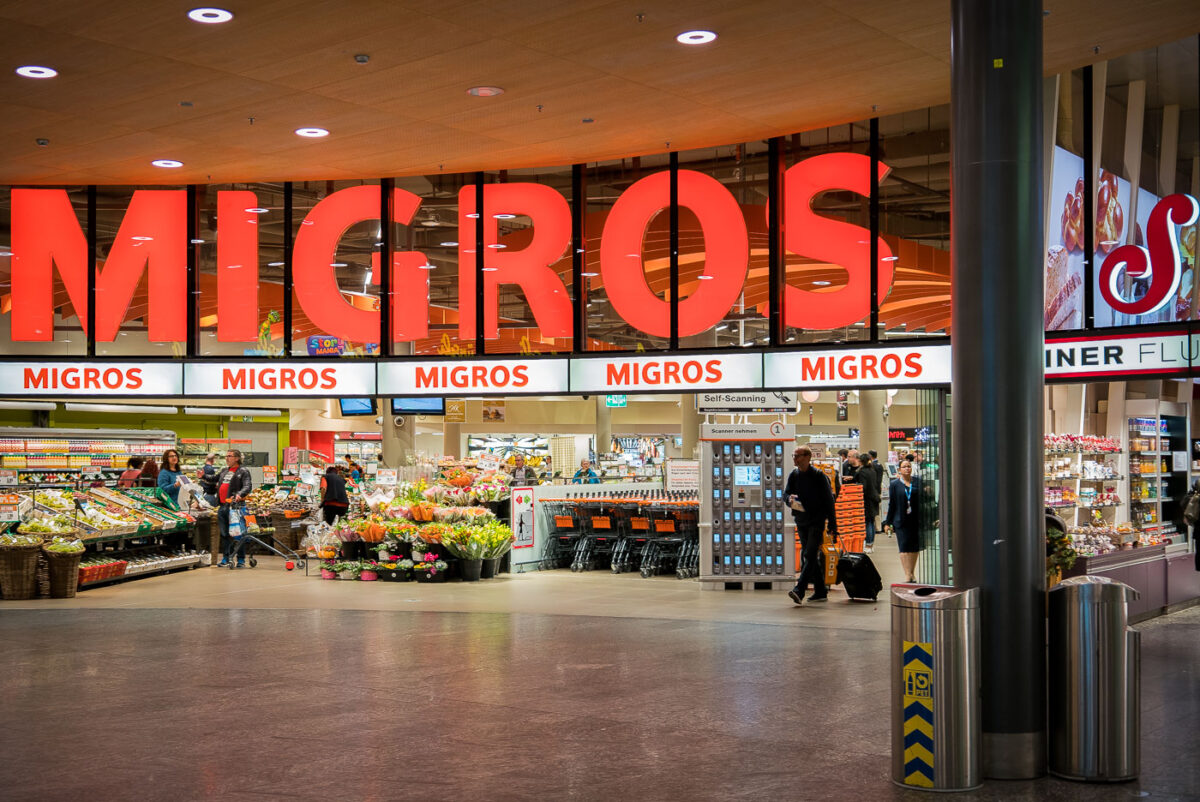
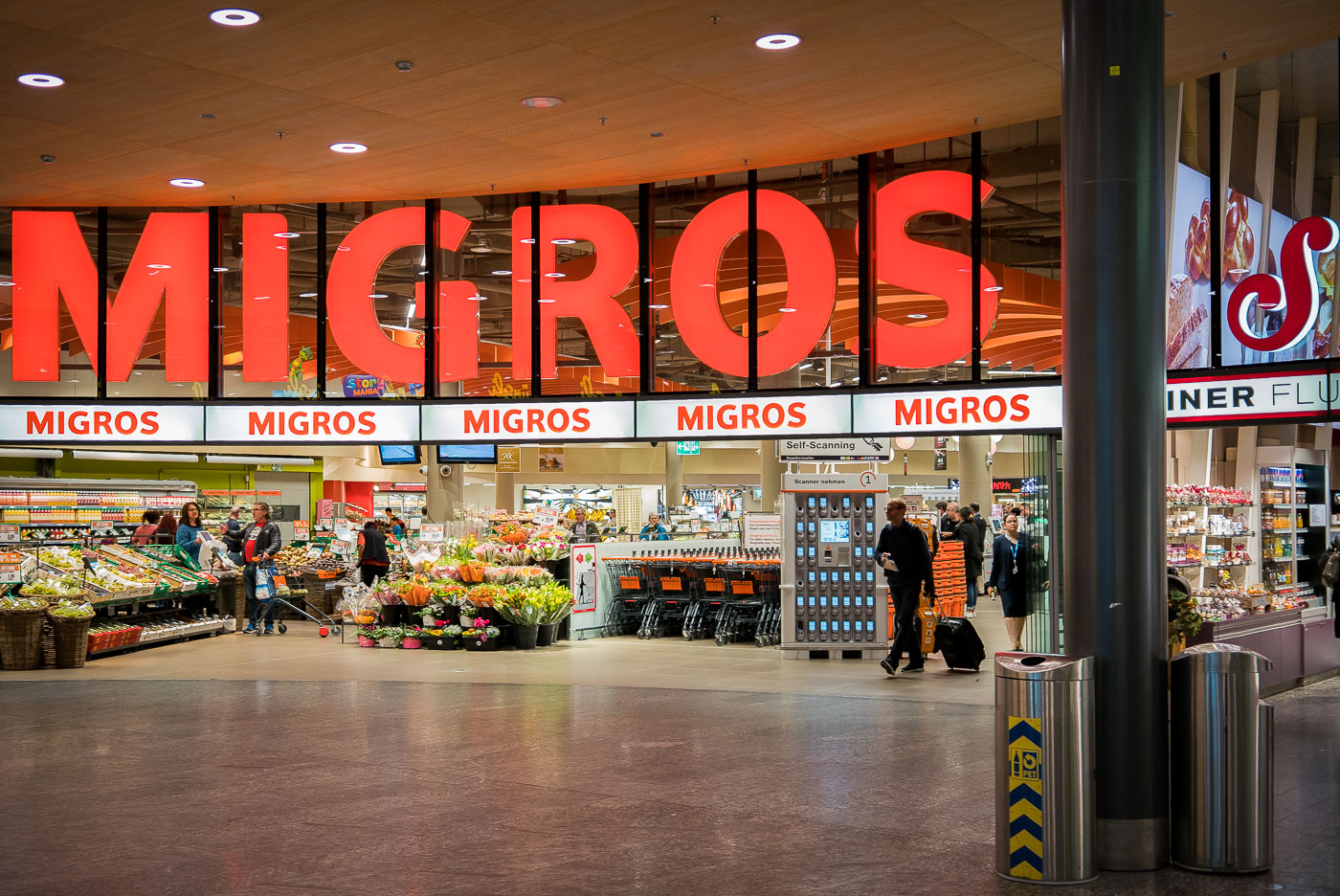
Migros Supermarket
The entrance of a Migros supermarket in Zurich, Switzerland, is illuminated by large red signage. Migros, founded in 1925 by Gottlieb Duttweiler, is one of Switzerland's largest retail companies and a significant part of the country's economic landscape. This particular store, situated in Zurich, showcases a modern retail environment with extensive produce and floral displays, alongside self-scanning kiosks for customer convenience. The supermarket serves as a vital hub for daily commerce, reflecting the efficient and organized nature of Swiss retail operations.

Built in Minneapolis

Photographs showcasing change over time

Browse by location, move through long-running series, or start with recent work.