Place Archive

New York City

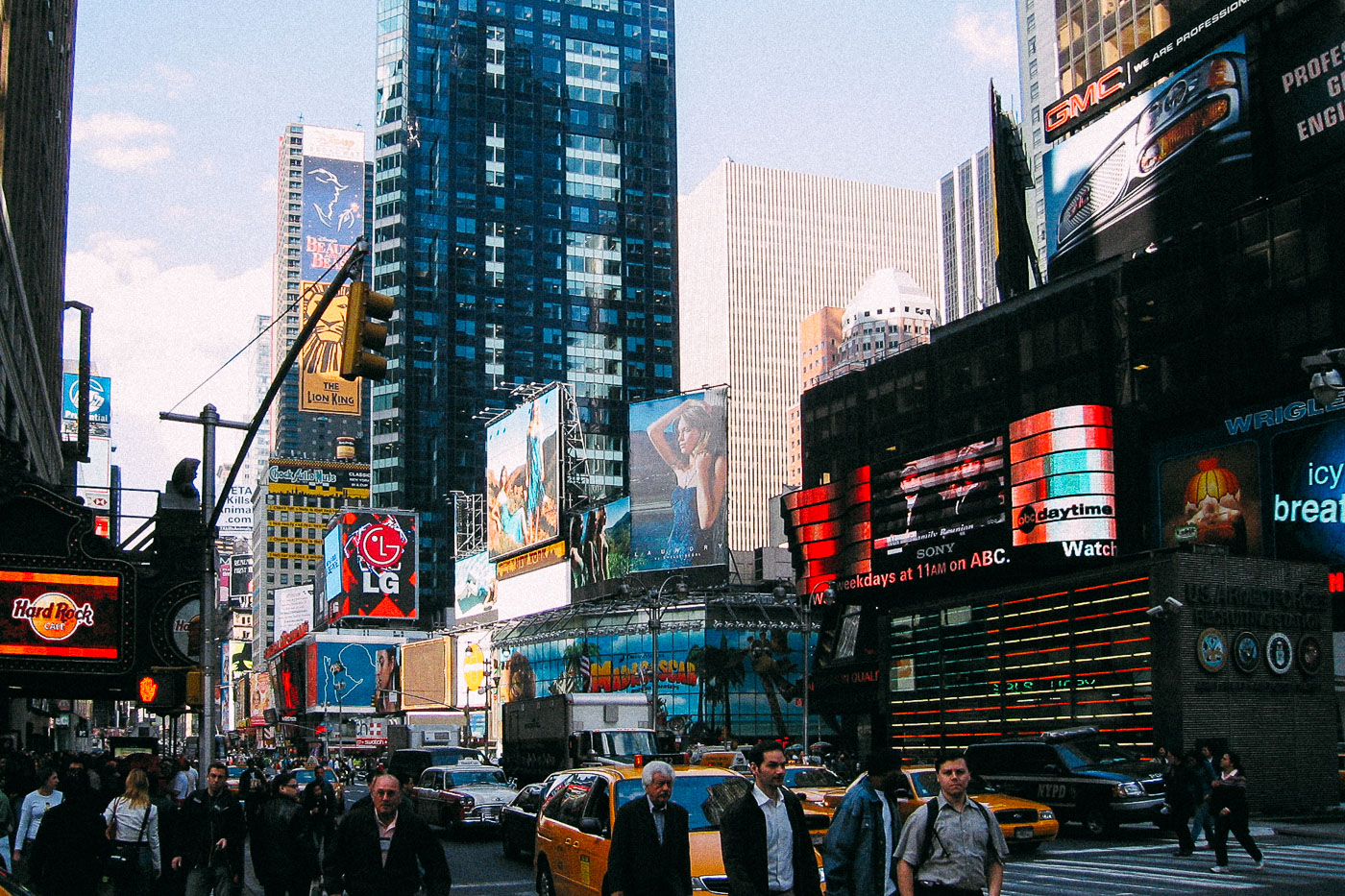
In 2005, Manhattan’s Times Square presented a dense mix of commercial signage, including digital billboards for artists like Stevie Wonder and System of a Down, alongside the iconic yellow taxis navigating crowded streets. The nearby New York Times Building on West 43rd Street, with its classical limestone facade, stood as a historic media landmark during its final years as the newspaper’s headquarters.

2 photo sets 75 photos

Photo Sets

Map

Photo Map

Markers

New York City Photo Locations

64 geotagged photos

Photos
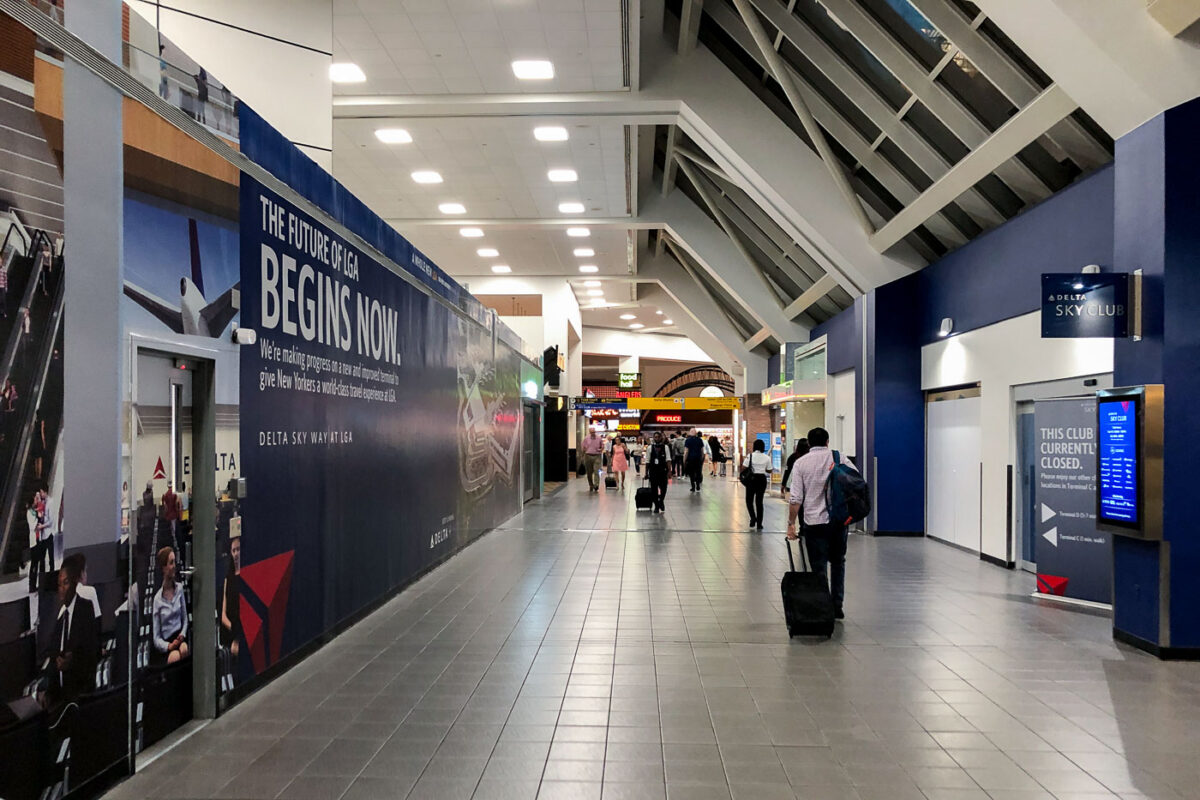
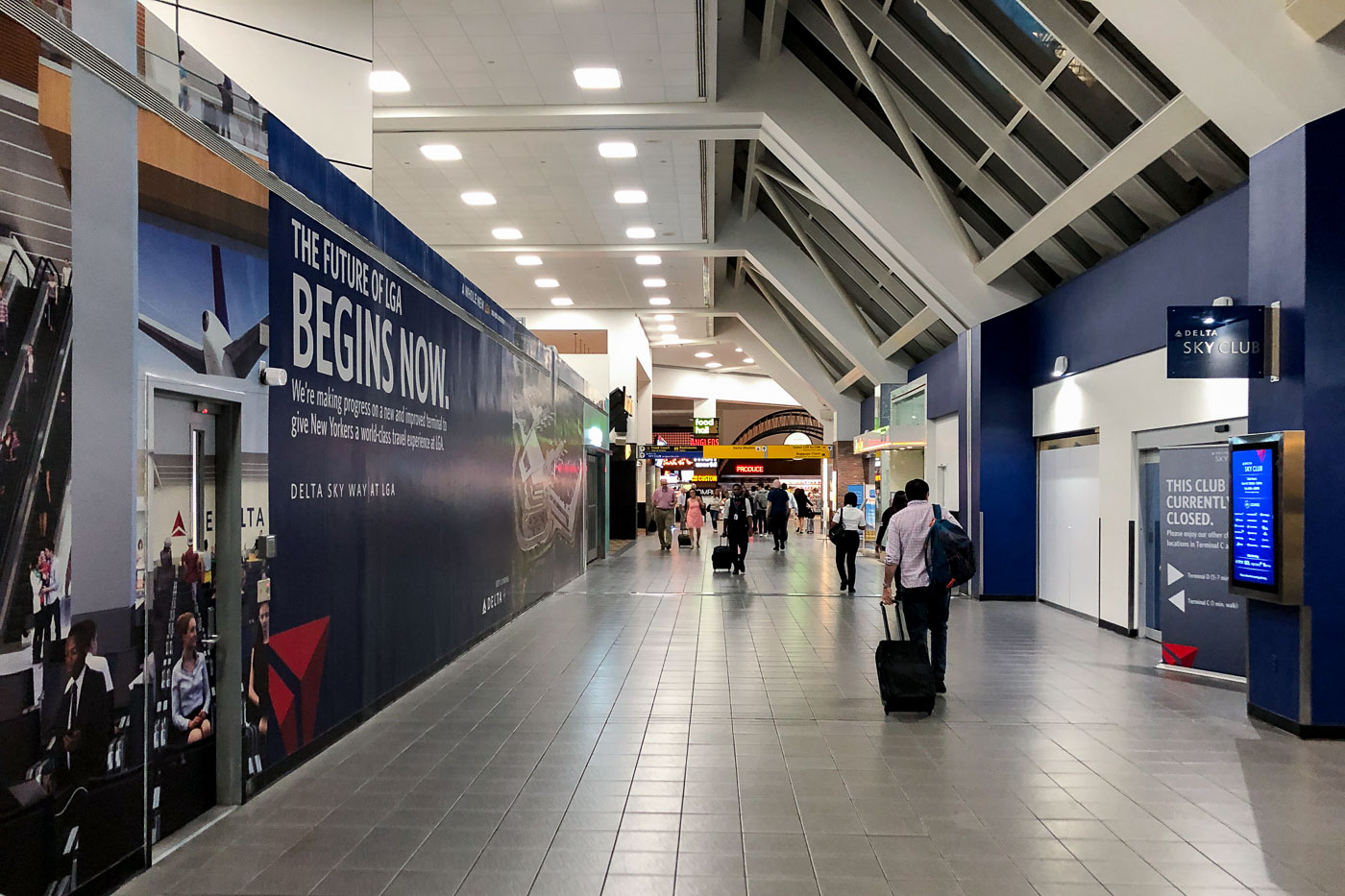
Travelers walk past construction barriers at LaGuardia Airport's Delta Terminal in Queens, New York, during a redevelopment project.
Travelers walk past a large construction barrier within LaGuardia Airport's Delta Terminal in Queens, New York. The barrier displays graphics and text that reads, "THE FUTURE OF LGA BEGINS NOW. We're making progress on a new and improved terminal to give New Yorkers a world-class travel experience at LGA. DELTA SKY WAY AT LGA." This image documents the ongoing multibillion-dollar redevelopment project at LaGuardia Airport, specifically focusing on the modernization of the Delta terminal. The construction is part of a larger effort to upgrade the airport's facilities and enhance the travel experience for passengers in the New York City metropolitan area.
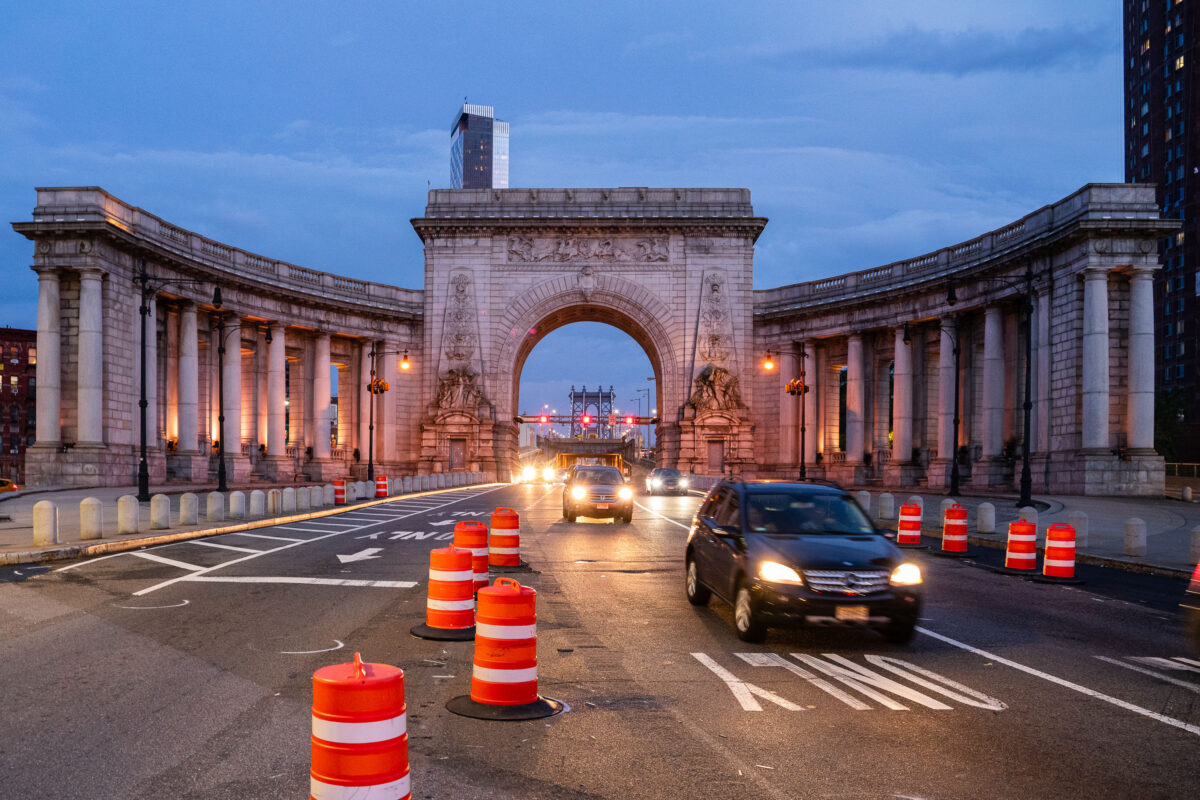
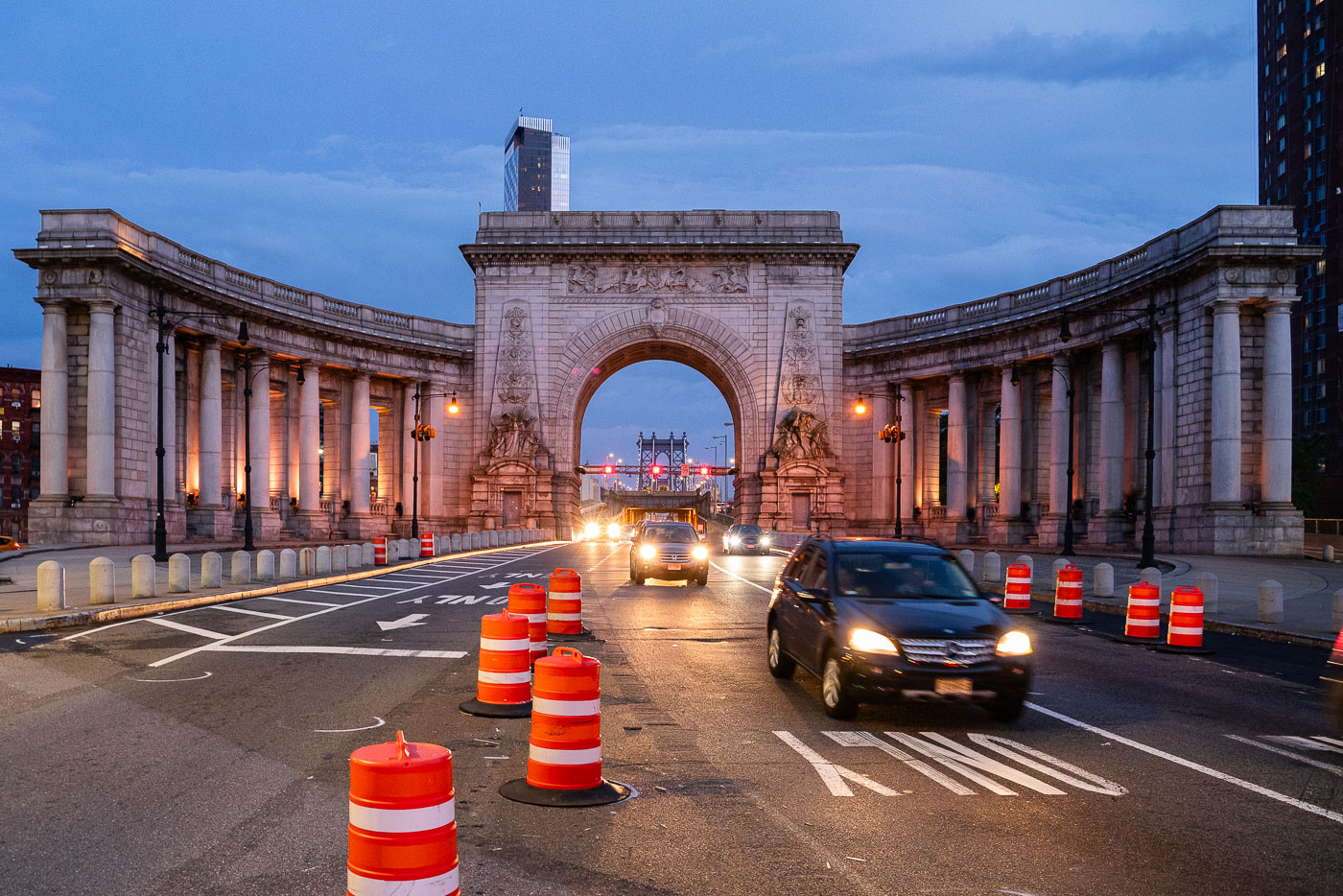
Cars pass through the Manhattan Bridge arch and colonnade at dusk in Lower Manhattan, New York City.
Cars pass through the Manhattan Bridge arch and colonnade at dusk in Lower Manhattan. Orange traffic barrels line the roadway as construction continues near the historic Beaux-Arts structure.
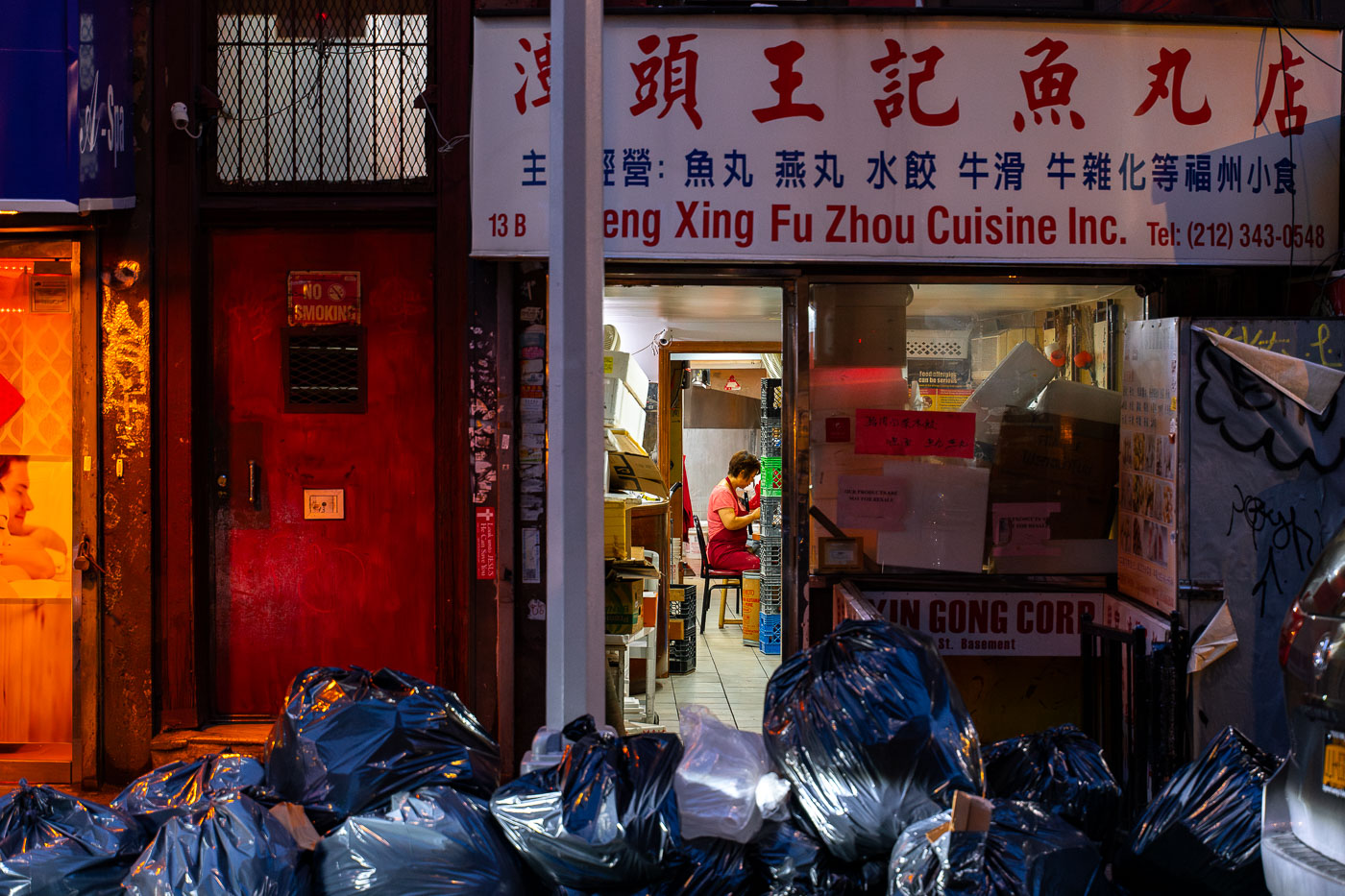
A worker in a red apron prepares food inside Zheng Xing Fu Zhou Cuisine Inc. in New York's Chinatown, with garbage bags piled outside.
A worker in a red apron prepares food inside Zheng Xing Fu Zhou Cuisine Inc. in New York's Chinatown. The storefront, located at 13 B, displays signage in Chinese and English, including the restaurant's name and phone number (212) 343-0548. Piles of black garbage bags line the sidewalk outside the establishment.
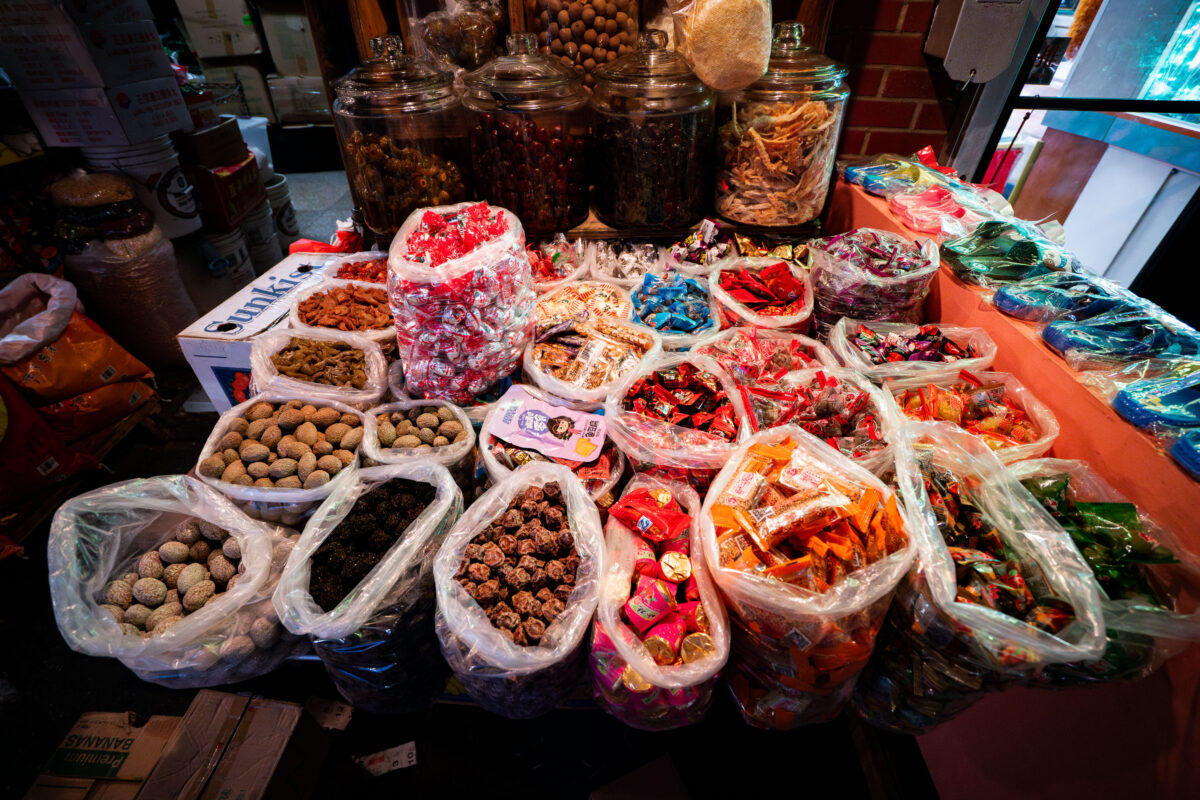
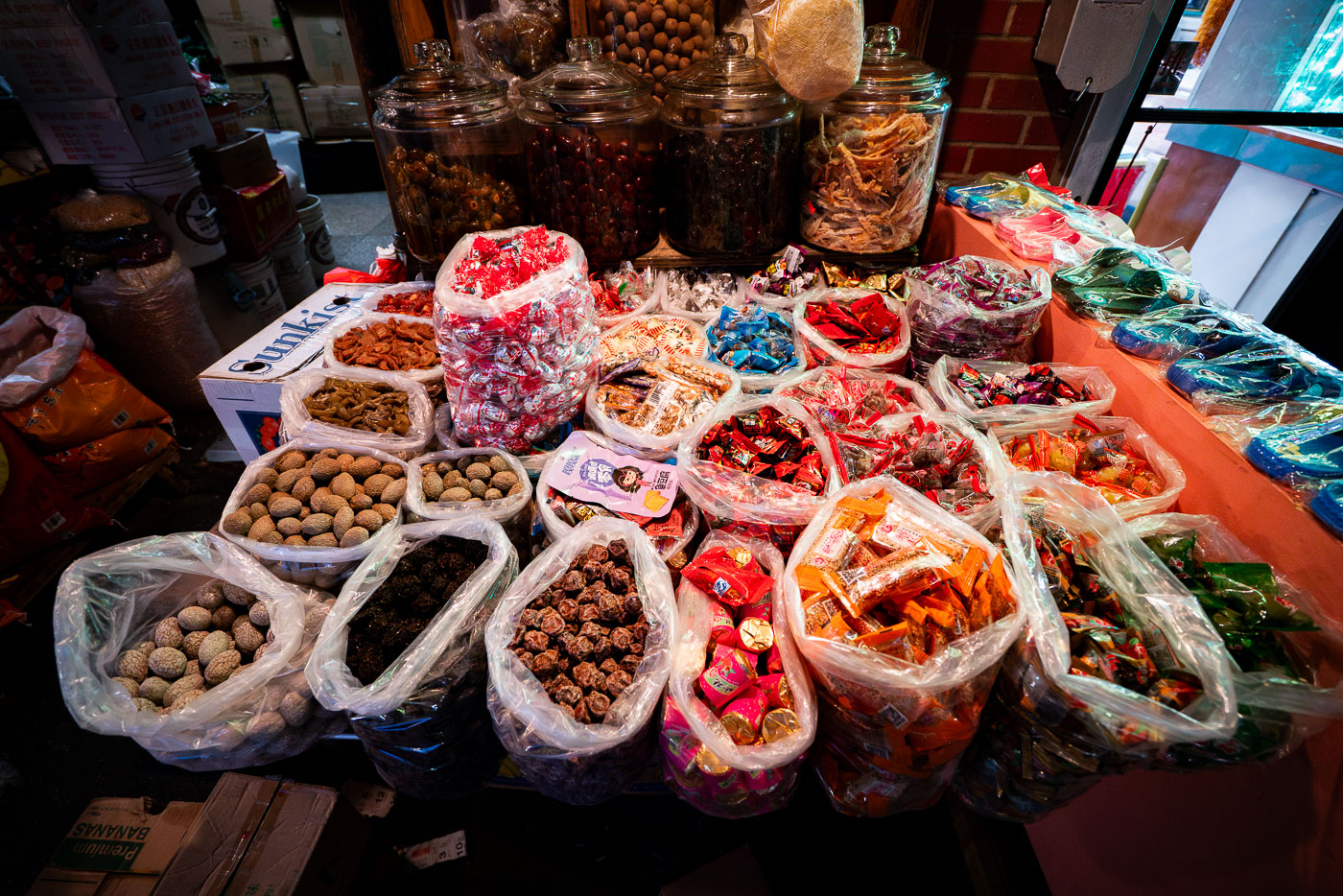
A market stall in New York's Chinatown displays dried fruits and candies in plastic bags and glass jars.
A market stall in New York's Chinatown displays an abundant selection of dried fruits, candies, and snacks. The goods are presented in clear plastic bags and glass jars, with some items in colorful packaging, offering a vibrant visual of the diverse offerings available in the neighborhood.
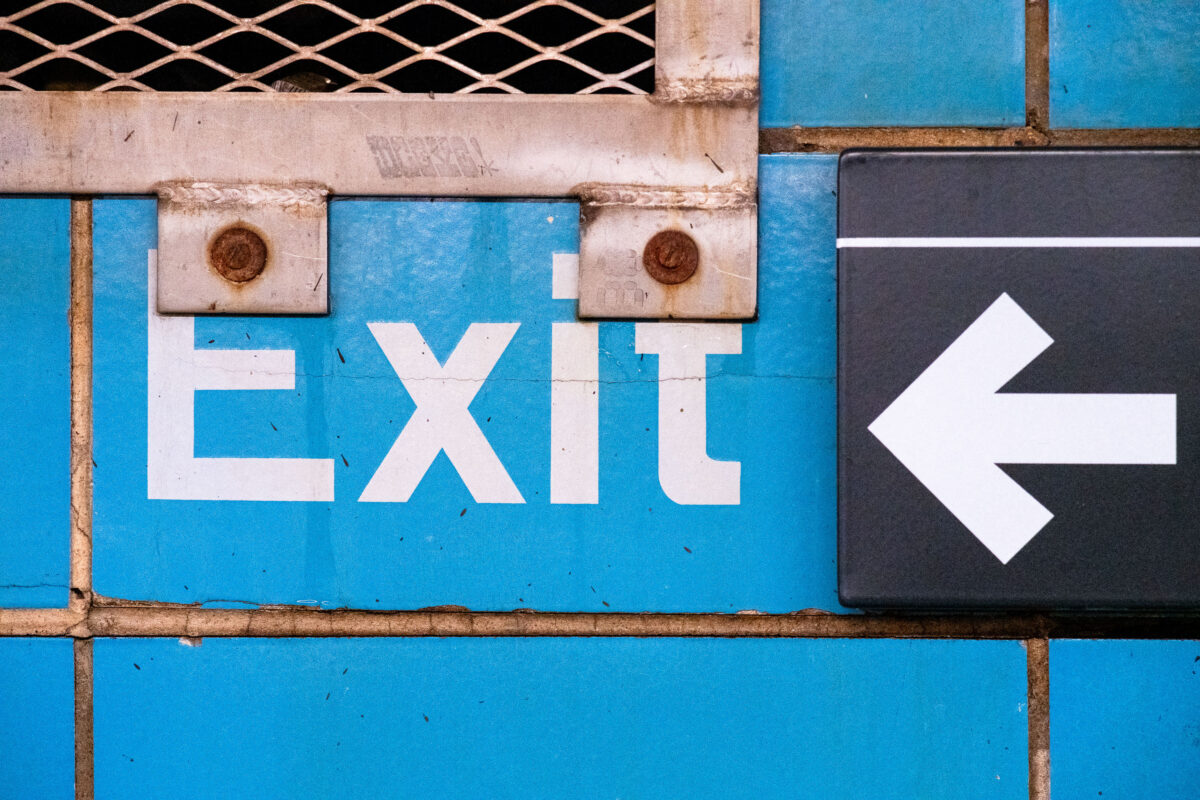
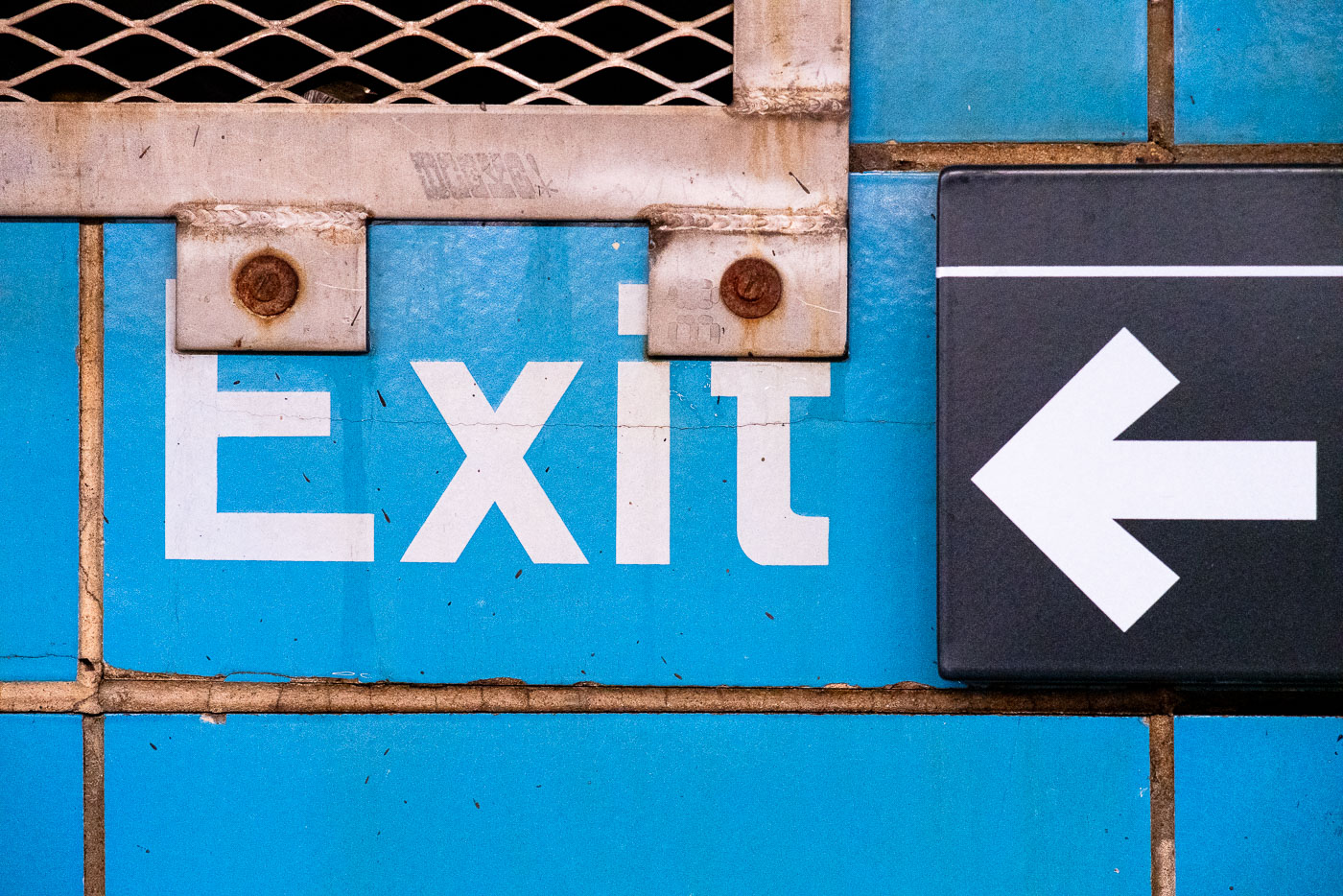
Exit sign with a white arrow at the Rector Street subway station in Manhattan, New York City.
Exit signage is visible at the Rector Street subway station in Manhattan, New York City. This station, part of the Metropolitan Transportation Authority (MTA) system, serves as a vital transit hub for commuters and visitors. The clear, directional signage is essential for navigating the complex underground network and ensuring passenger safety. The blue tiled walls and stark white lettering are characteristic of many New York City subway stations, reflecting a functional design intended for durability and visibility.
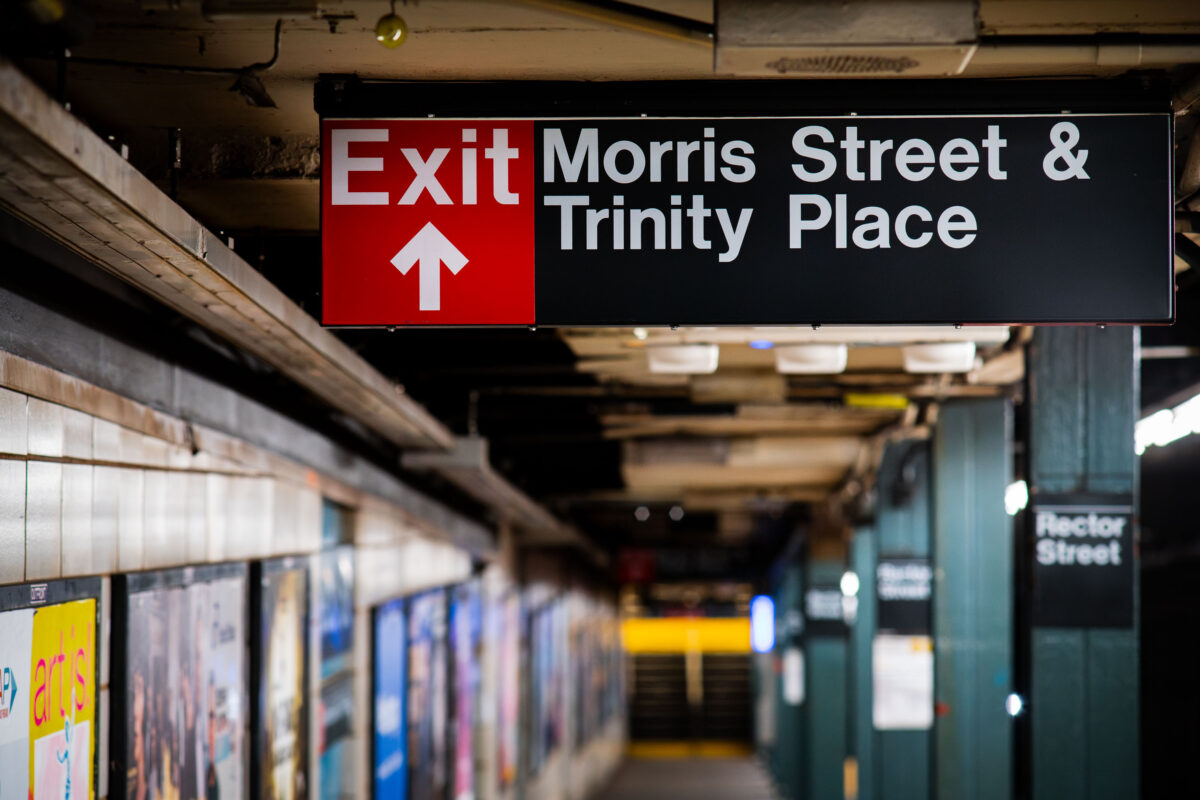
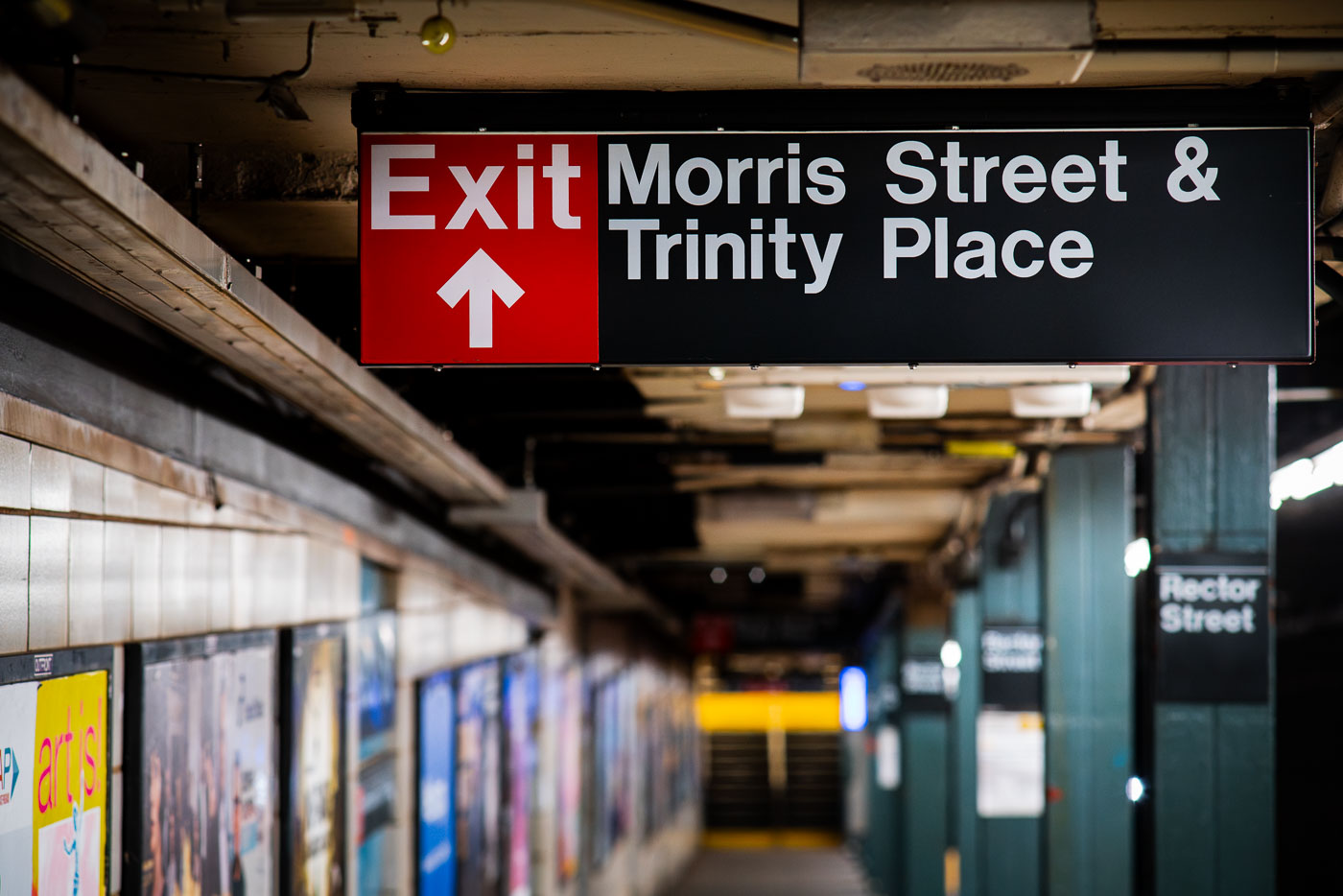
Exit sign for Morris Street & Trinity Place at Rector Street subway station in Manhattan, New York City.
An exit sign for Morris Street and Trinity Place directs passengers at the Rector Street subway station in Manhattan, New York City. This station, part of the New York City Subway system, serves as a vital transportation hub for the Financial District. The station has undergone several reconstructions and expansions since its original opening, reflecting the area's development and the evolving needs of commuters.
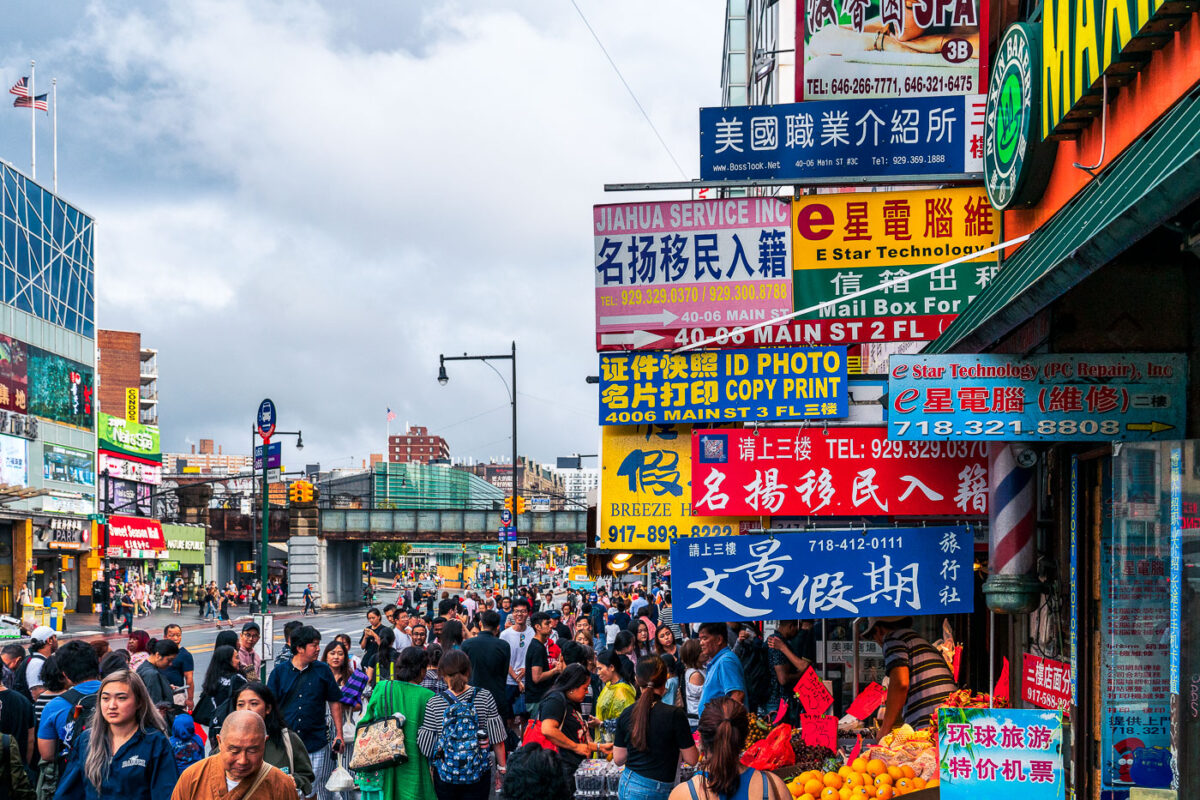
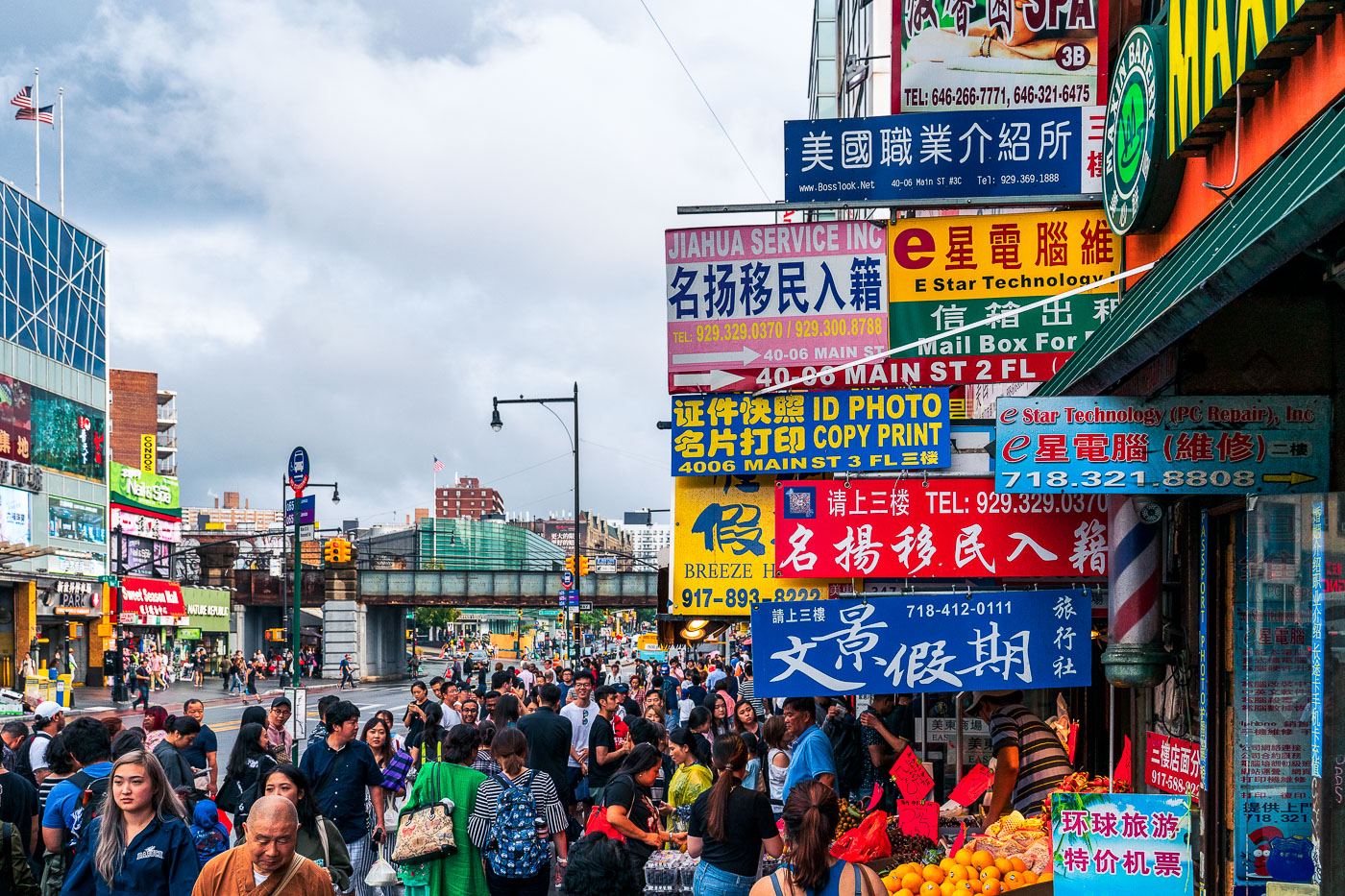
Streetscape in Flushing Chinatown, Queens, with many signs in English and Chinese, and an elevated railway.
The bustling streetscape of Flushing Chinatown in Queens, New York City, is characterized by a dense concentration of businesses catering to the local Chinese-speaking community. Signs in both English and Chinese advertise a variety of services, including immigration assistance, technology repair, and travel agencies, reflecting the neighborhood's role as a vibrant commercial and cultural hub. The elevated railway structure overhead signifies the area's integration into the city's transit network, while the street-level activity highlights its function as a center for daily commerce and community life.
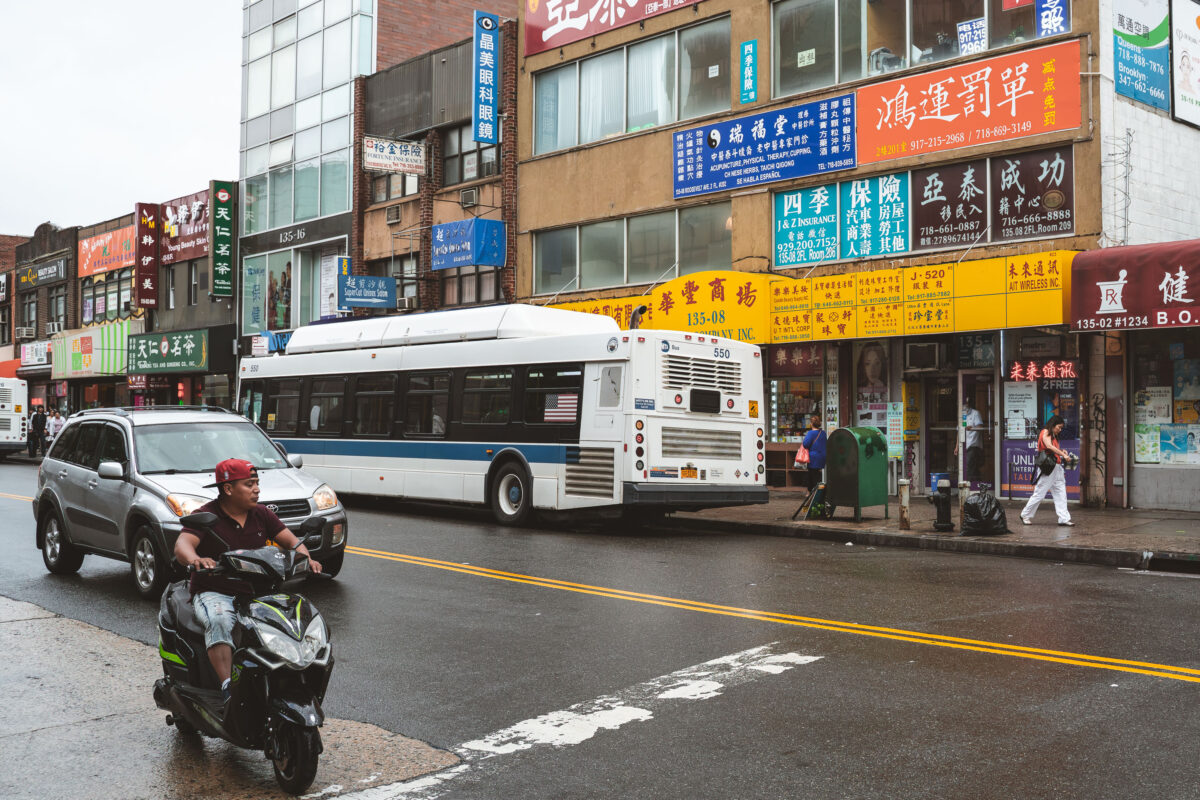
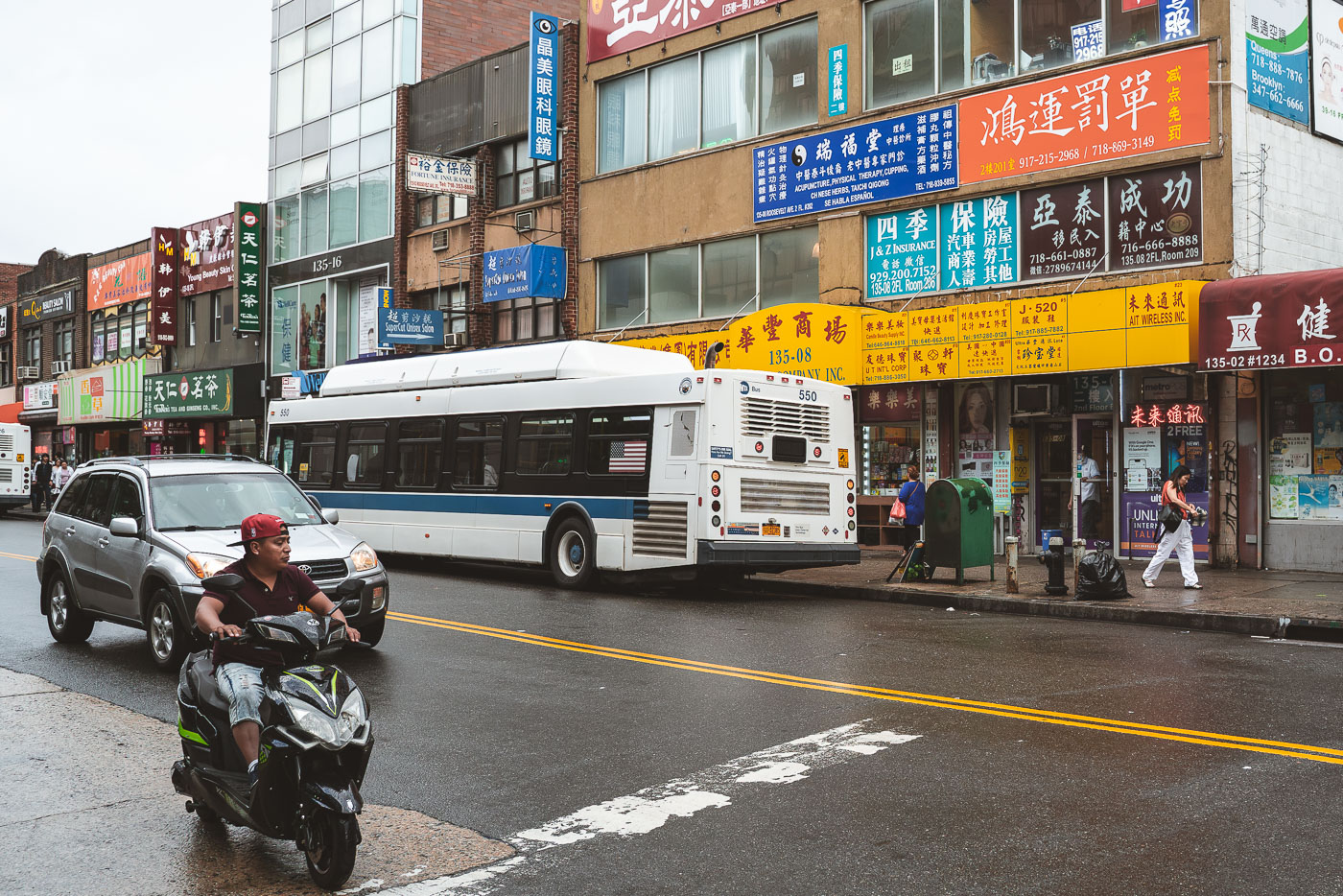
An MTA bus and storefronts line Roosevelt Avenue in Flushing, Queens, New York City.
Roosevelt Avenue in Flushing, Queens, is a major commercial thoroughfare serving a large Asian immigrant population. The street is lined with numerous businesses, many displaying signage in Chinese and Korean, reflecting the area's demographic makeup. An MTA bus, part of the public transportation system that serves millions of New Yorkers daily, is stopped along the avenue. This corridor is a vital artery for local residents and visitors, facilitating commerce and community life.
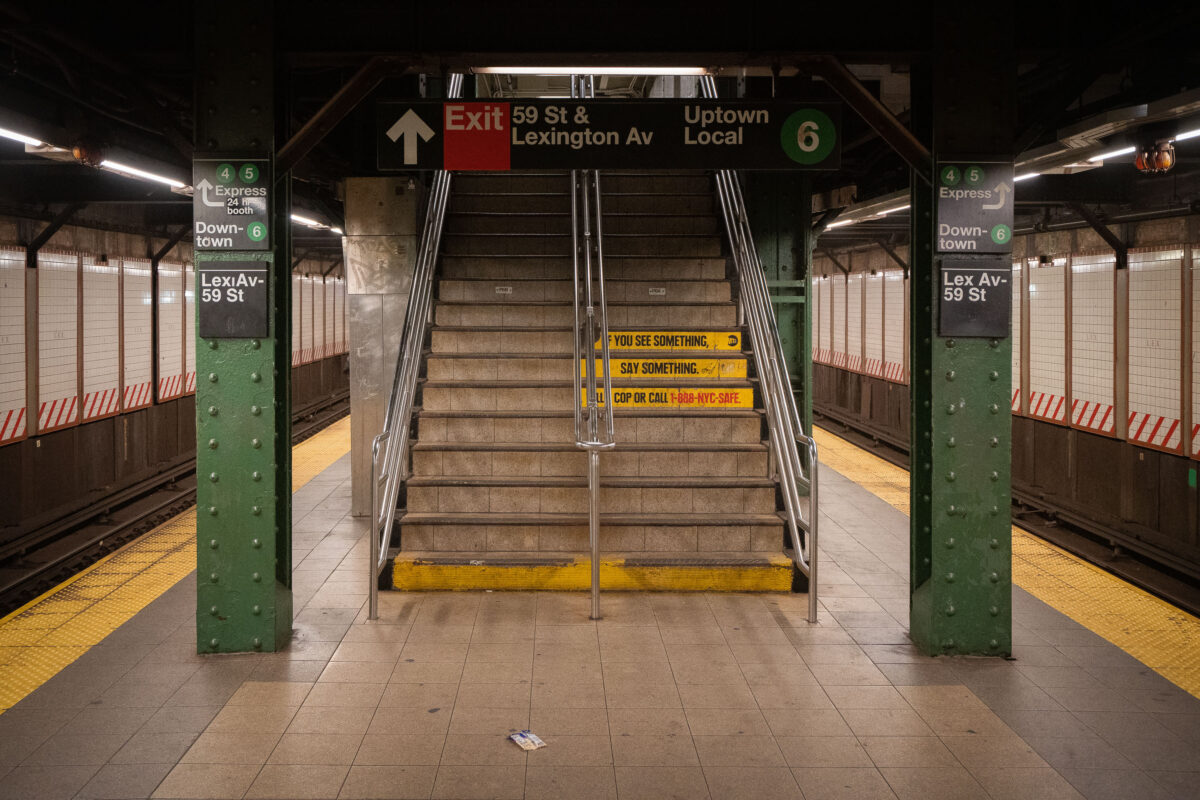
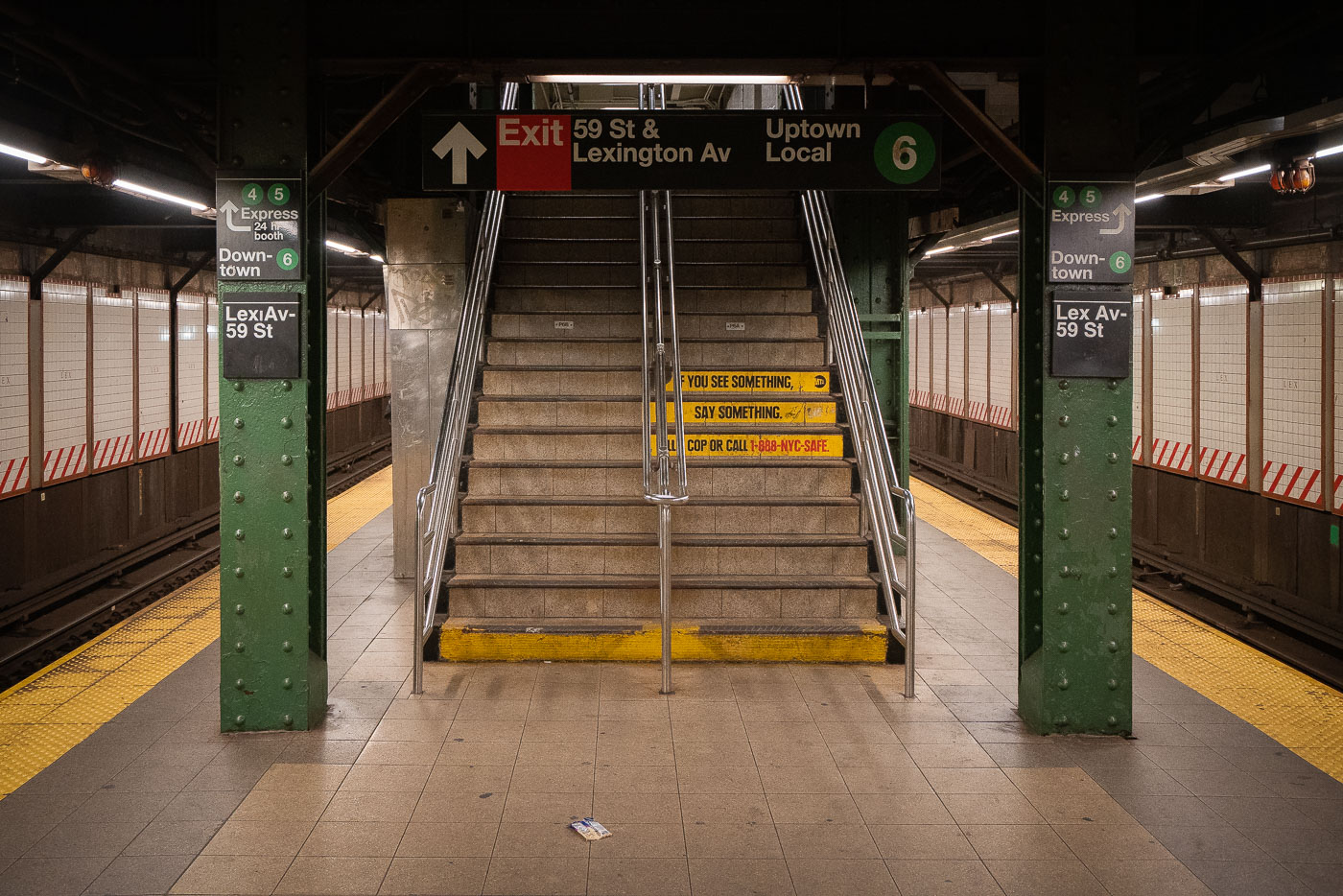
Stairs at the Lexington Avenue-59th Street subway station in New York City, with signage for the 4, 5, and 6 lines.
Stairs lead up from the platform of the Lexington Avenue-59th Street subway station in New York City. Signage indicates "Exit 59 St & Lexington Av" and "Uptown Local 6," along with "4 5 Express" and "Downtown-6." The platform features yellow tactile paving and a sign reading "IF YOU SEE SOMETHING, SAY SOMETHING. COP OR CALL 1-888-NYC-SAFE." This station is a major transfer point for the Lexington Avenue Line and the 63rd Street Line, serving millions of riders annually. Opened in 1904 as part of the original New York City Subway system, it has undergone numerous renovations to accommodate increased ridership and modern transit needs. The station's design and function are integral to Manhattan's transportation network.
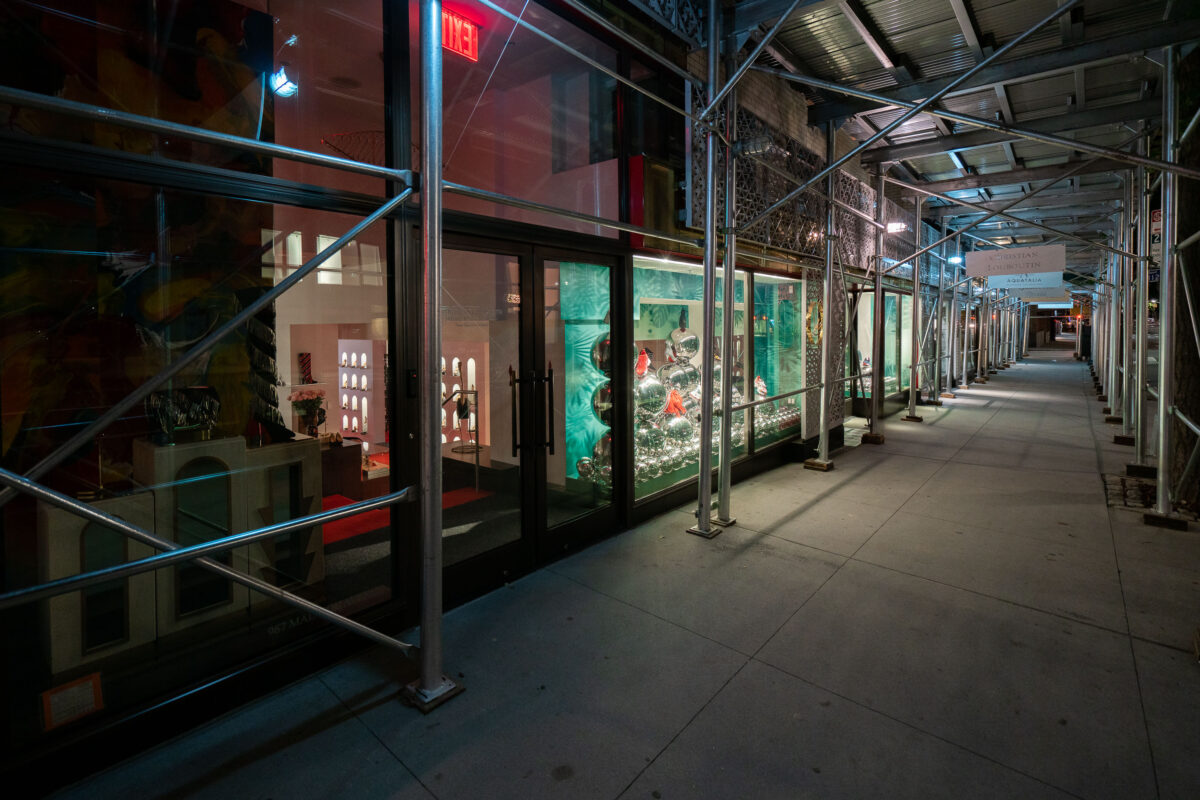
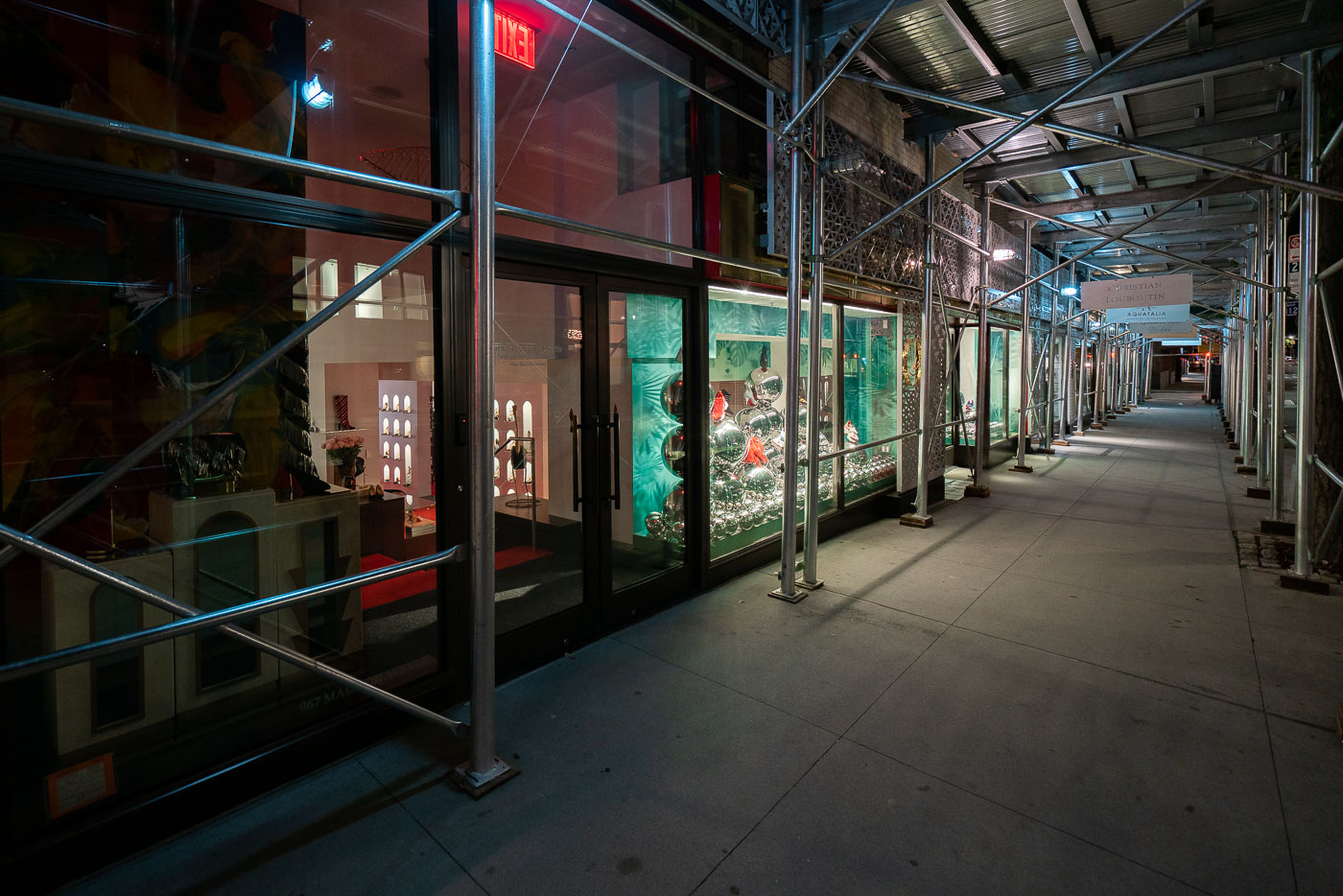
Christian Louboutin storefront on Madison Avenue in Manhattan is covered by scaffolding at night.
The Christian Louboutin store at 967 Madison Avenue in Manhattan is covered by scaffolding at night. The storefront displays the brand's signature red-soled shoes and elaborate window arrangements, with an illuminated "EXIT" sign visible above the entrance. The scaffolding indicates ongoing construction or renovation work at the luxury retail location on Madison Avenue, a street renowned for its high-end fashion boutiques. The presence of the scaffolding temporarily alters the streetscape of this prominent Manhattan commercial district.
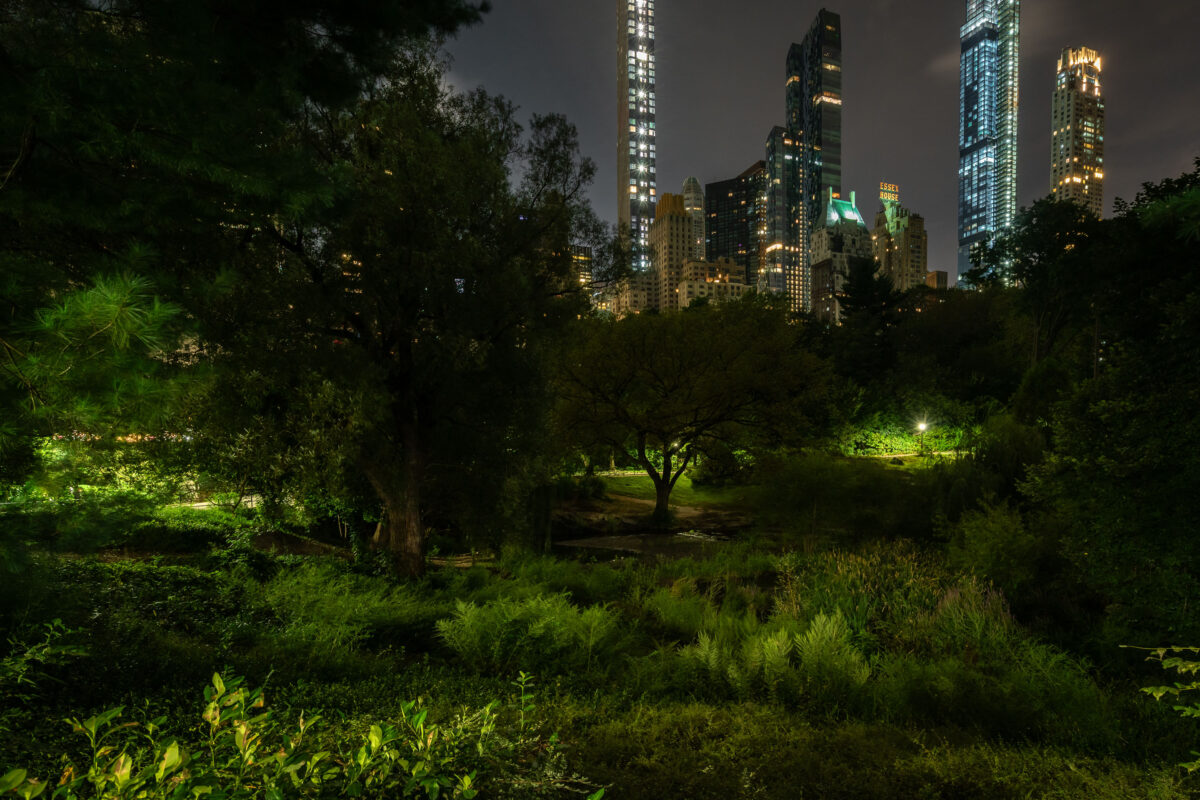
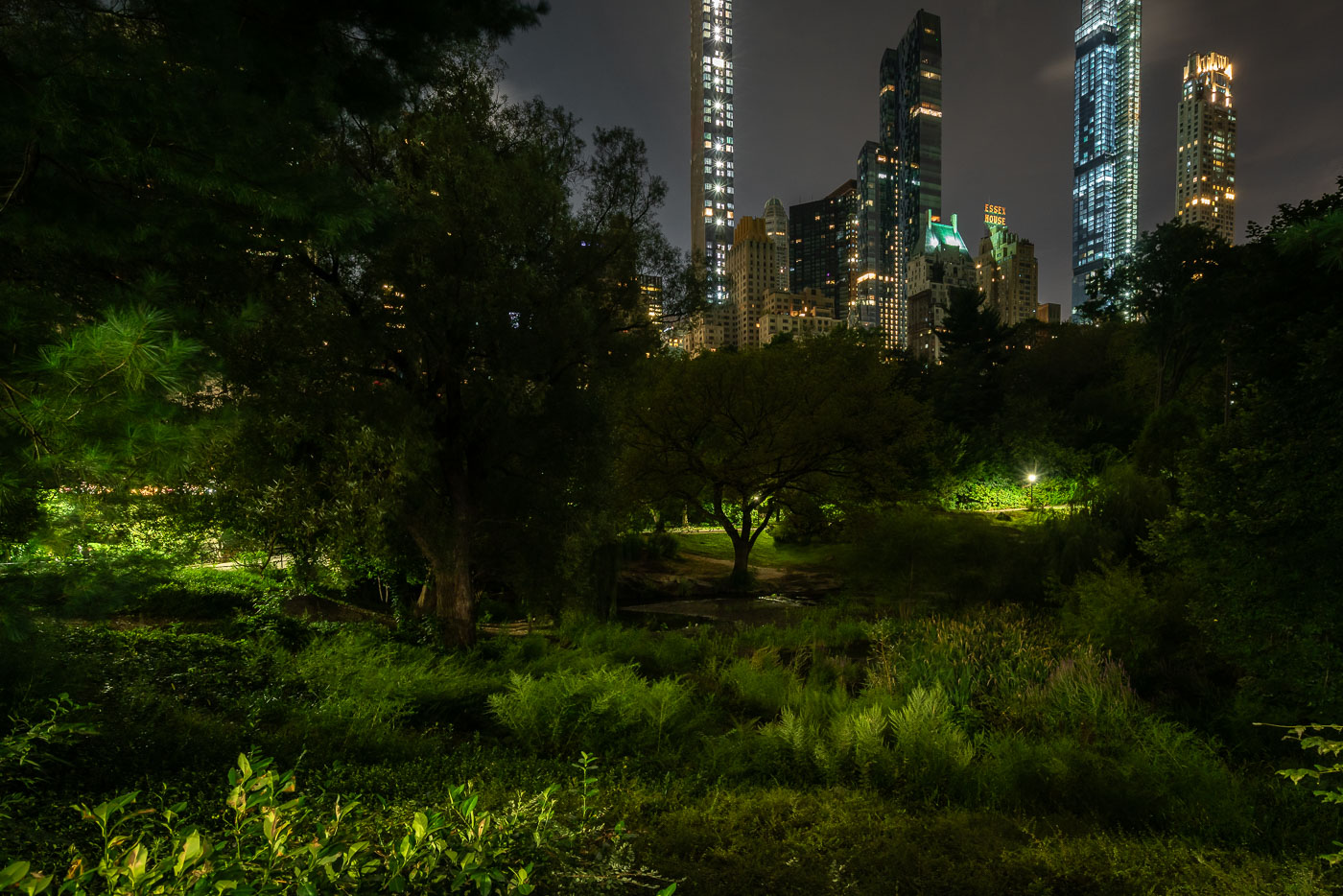
Central Park South at night, showing the Essex House hotel and modern skyscrapers.
Central Park South at night, featuring the Essex House hotel and the supertall residential towers of Billionaires' Row. The Essex House, an Art Deco landmark opened in 1931, stands adjacent to modern skyscrapers that have reshaped the Manhattan skyline. This view highlights the contrast between historic architecture and 21st-century supertall structures along Central Park South. The development of these supertall buildings, including 111 West 57th Street and Central Park Tower, represents a significant transformation of the area's built environment. This ongoing construction and architectural change are characteristic of New York City's dynamic urban landscape. Keywords: Central Park South, Essex House, Billionaires Row, Manhattan, New York City, Architecture, Urban Development, Night Photography
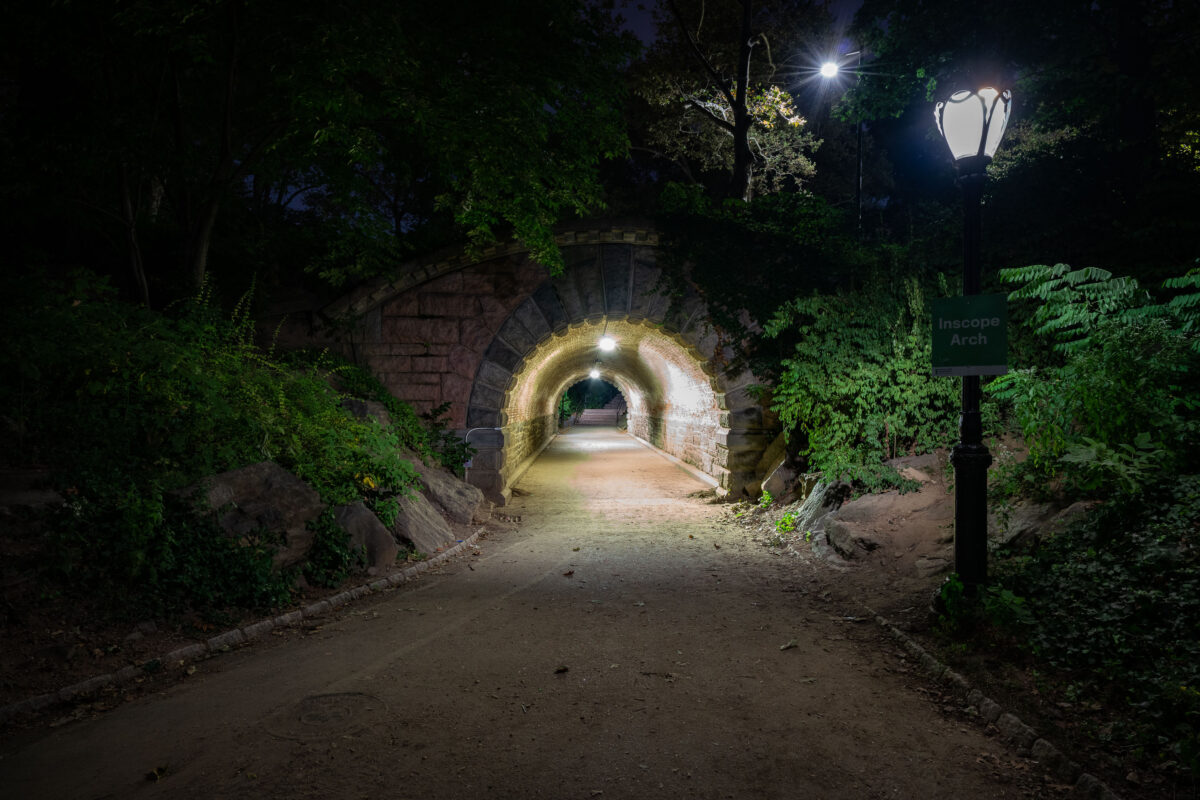
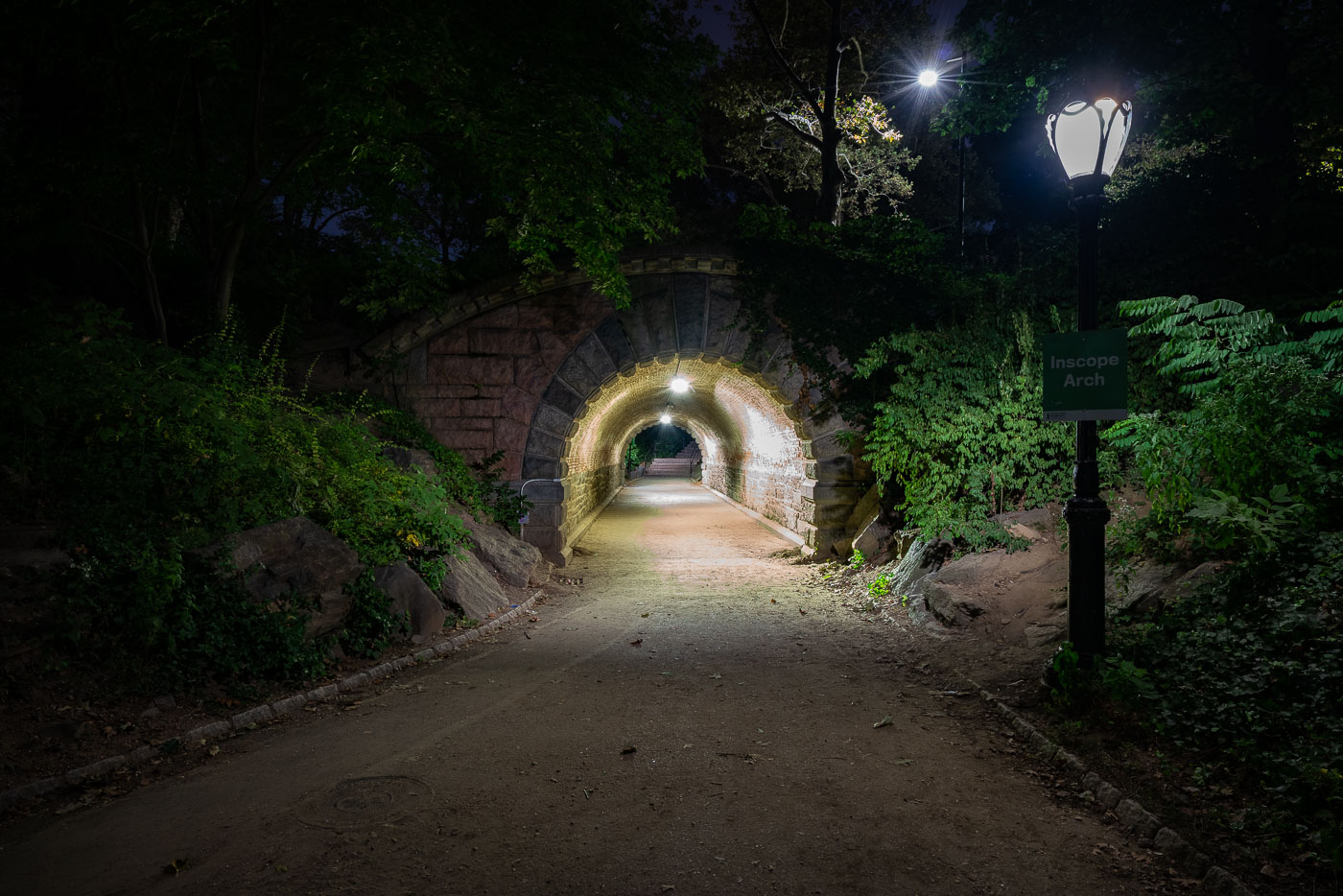
The Inscope Arch in Central Park, New York City, is illuminated at night.
The Inscope Arch, a stone passageway in Central Park, New York City, is illuminated at night. A green sign on a lamppost reads "Inscope Arch." Constructed as part of Central Park's original design by Frederick Law Olmsted and Calvert Vaux, this arch separates pedestrian paths from carriage roads. It facilitates circulation and connects different areas of the park, contributing to its naturalistic landscape design.
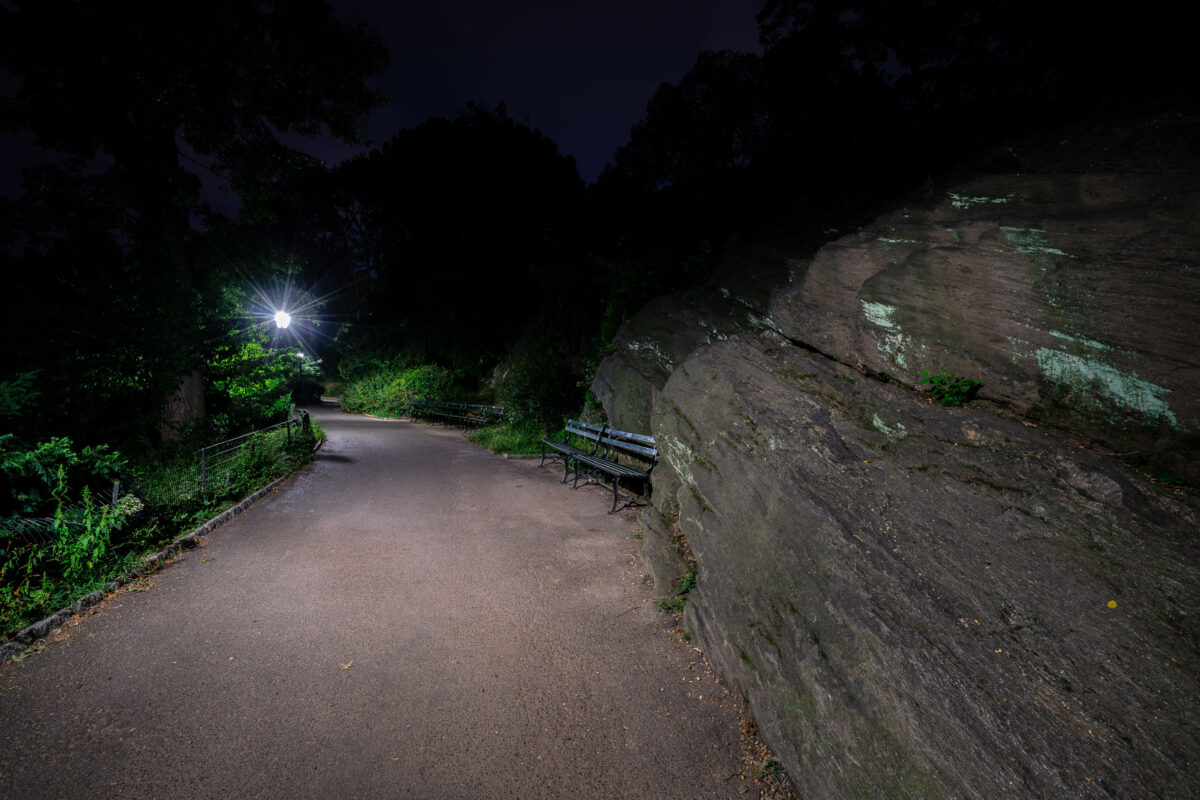
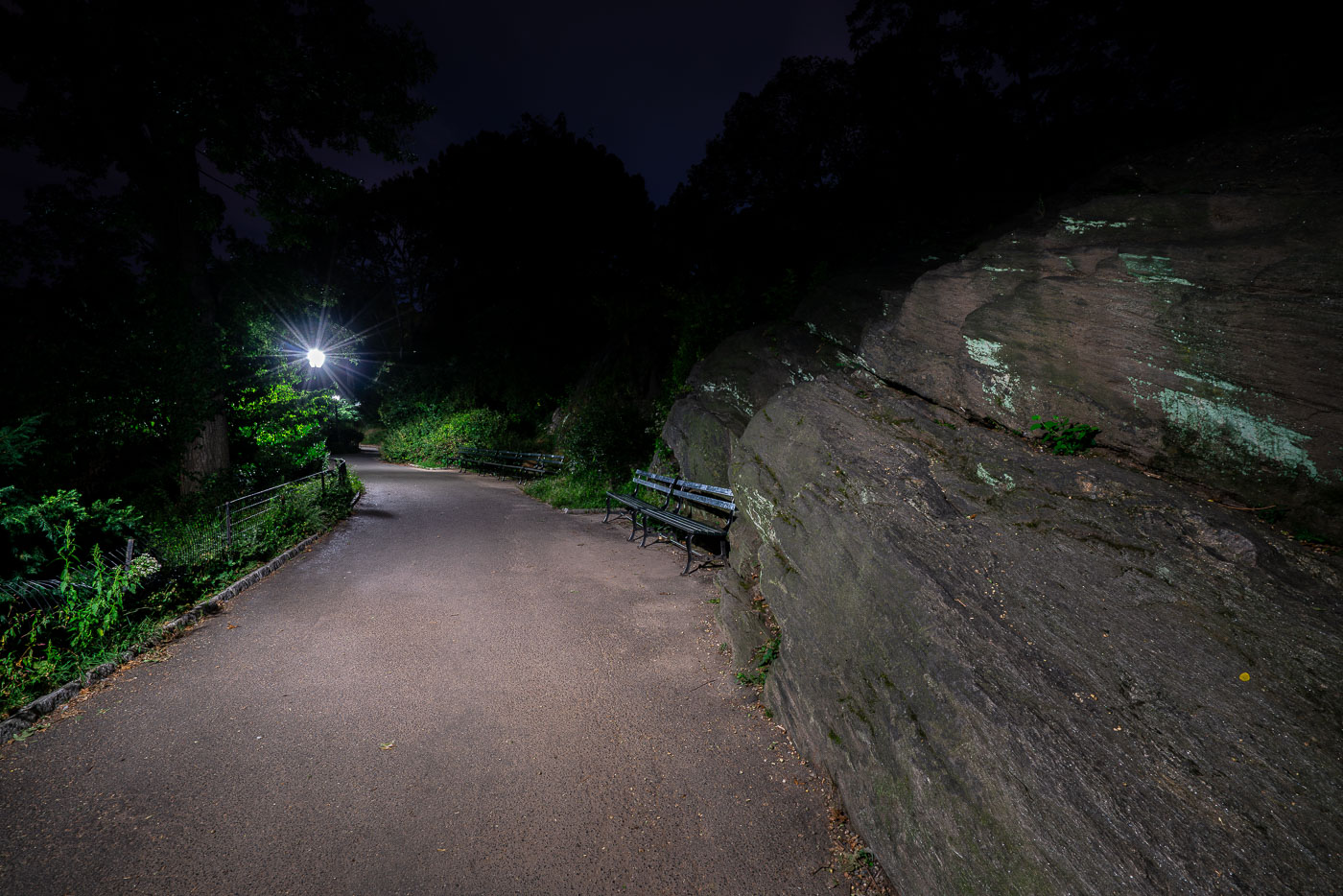
Park benches line a pathway in Central Park, Manhattan, illuminated by lamplight at night.
Park benches are visible along a pathway in Central Park, Manhattan, illuminated by lamplight at night. Central Park, established in 1857, is a 843-acre public park in the center of Manhattan, New York City. The park's design by Frederick Law Olmsted and Calvert Vaux features naturalistic landscapes and winding paths, providing a green space for city residents and visitors. These benches are part of the park's infrastructure, intended for quiet contemplation and enjoyment of the natural surroundings within the urban environment.
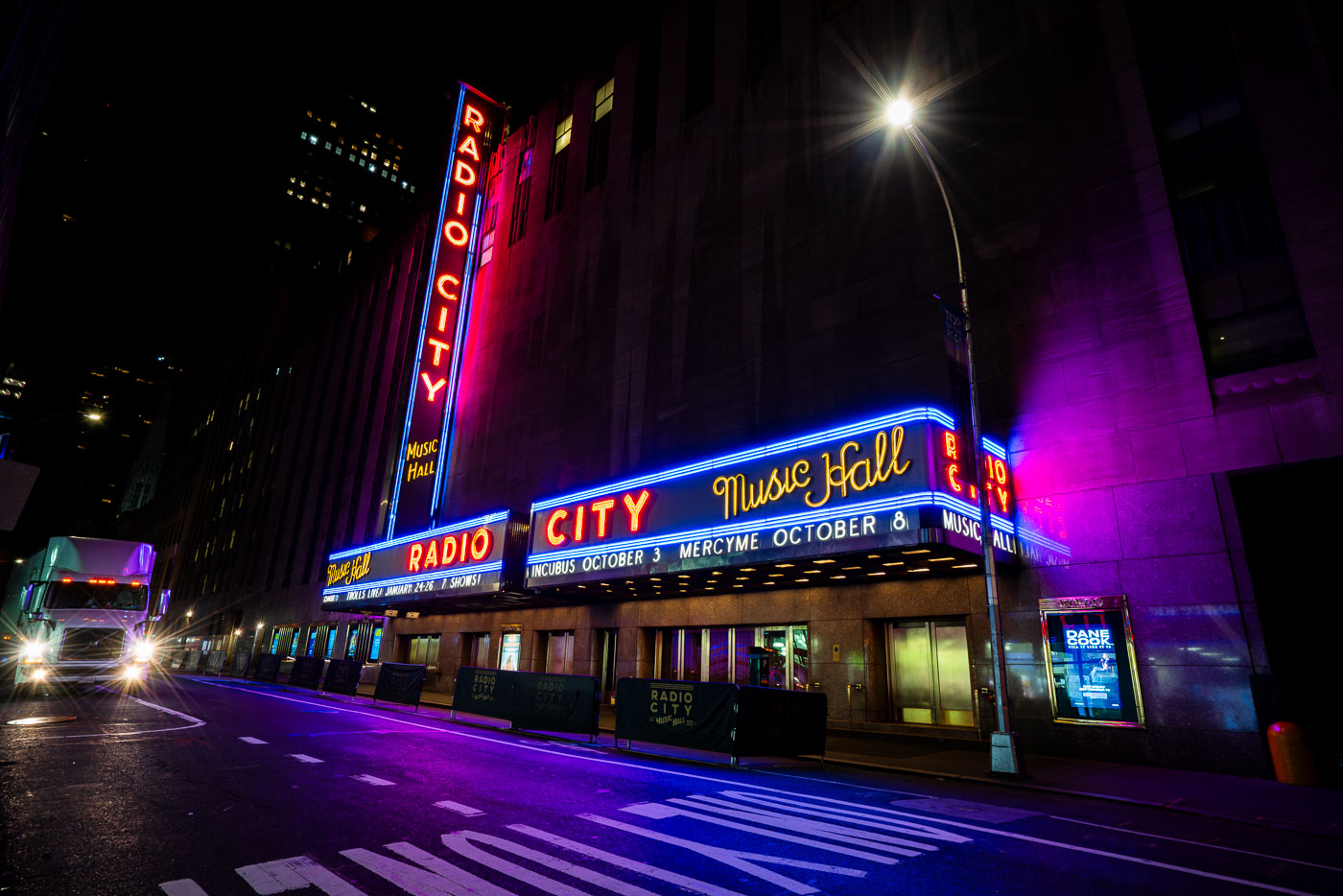
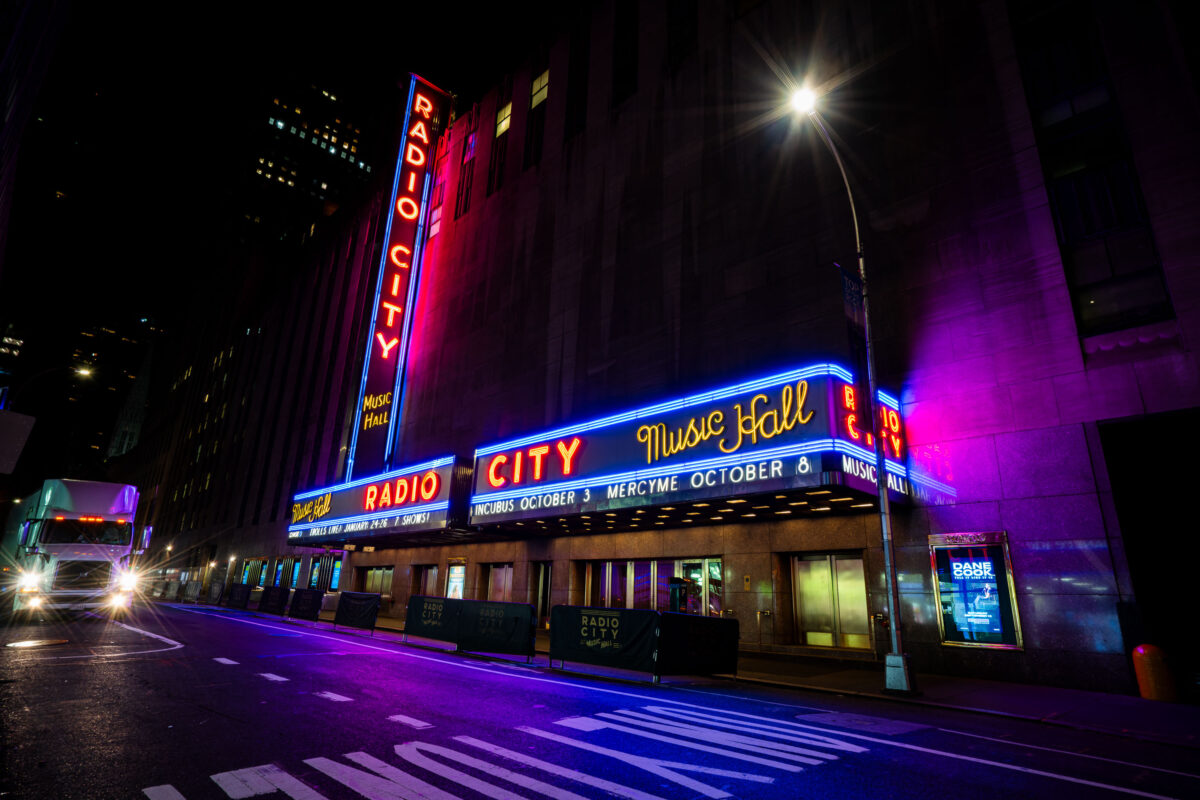
Radio City Music Hall marquee in New York City at night, advertising Incubus and Dane Cook.
Radio City Music Hall in New York City is illuminated at night, with marquees advertising upcoming performances by Incubus and comedian Dane Cook. Opened in 1932, the venue was designed by Edward Durell Stone and Donald Deskey as part of Rockefeller Center. It was originally conceived as a space for the Roxy Theatre's stage shows and to broadcast NBC radio and television programs. Today, Radio City Music Hall remains a premier entertainment destination, renowned for its Art Deco architecture and its role in hosting concerts, the Christmas Spectacular Starring the Radio City Rockettes, and other major events.
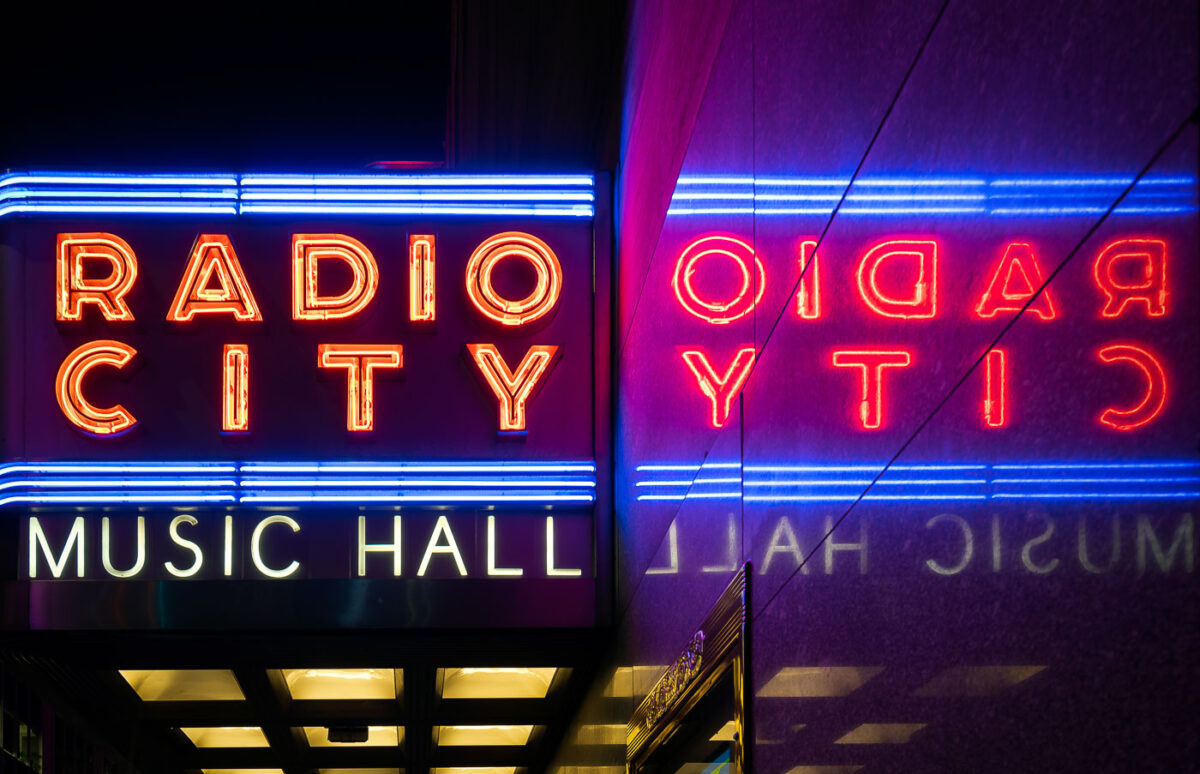
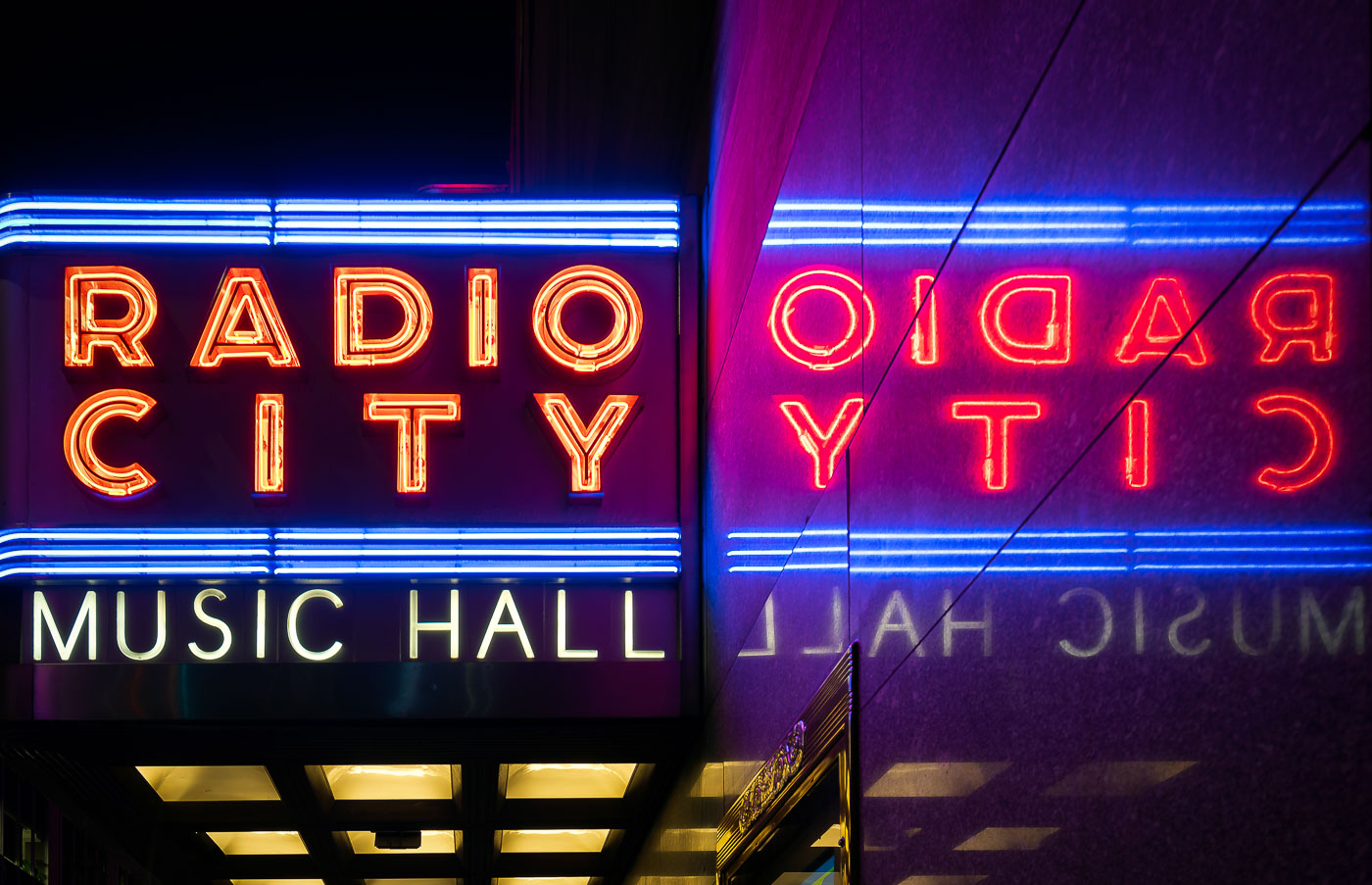
The neon sign for Radio City Music Hall in New York City illuminates the building at night.
The neon signage for Radio City Music Hall in New York City illuminates the building's facade at night. Opened in 1932, Radio City Music Hall was designed by architect Edward Durell Stone and interior designer Donald Deskey as a premier venue for vaudeville and musical productions. It quickly became a landmark of Art Deco architecture and a cultural hub in Manhattan. Today, the venue continues to host a variety of live performances, including concerts, stage shows, and the annual Christmas Spectacular starring the Rockettes.
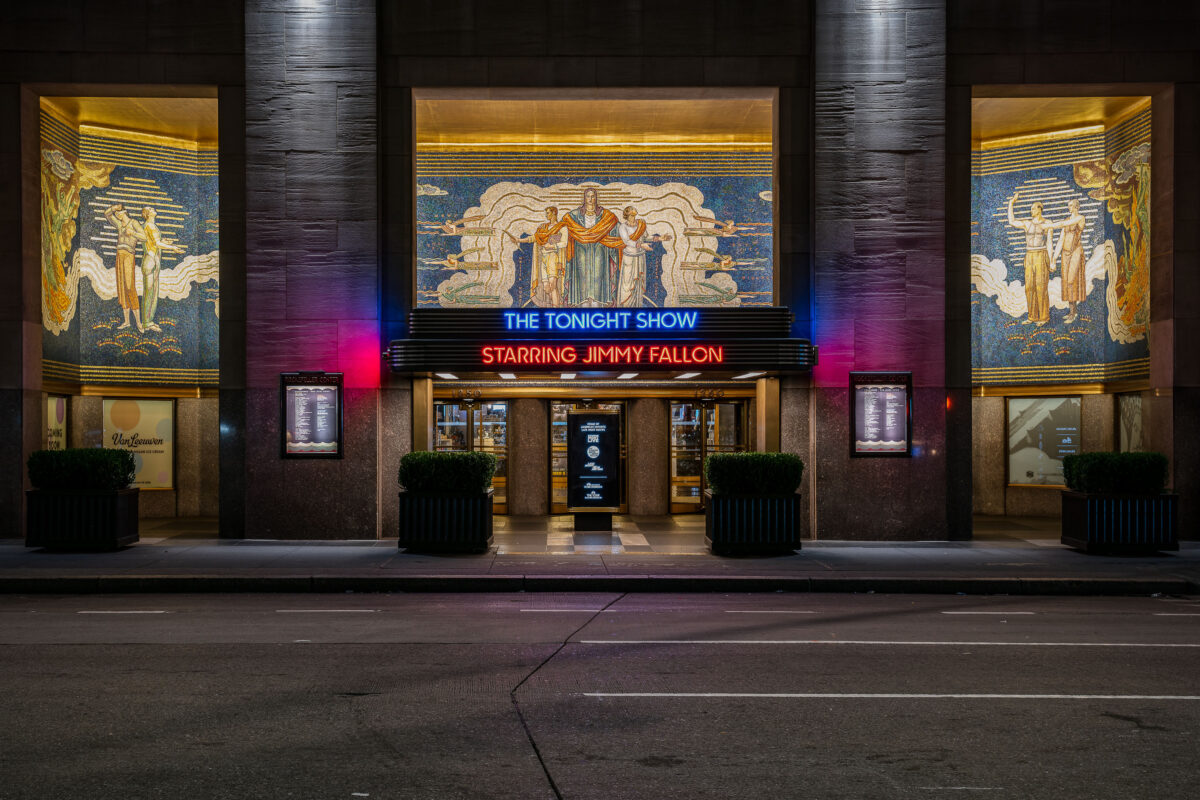
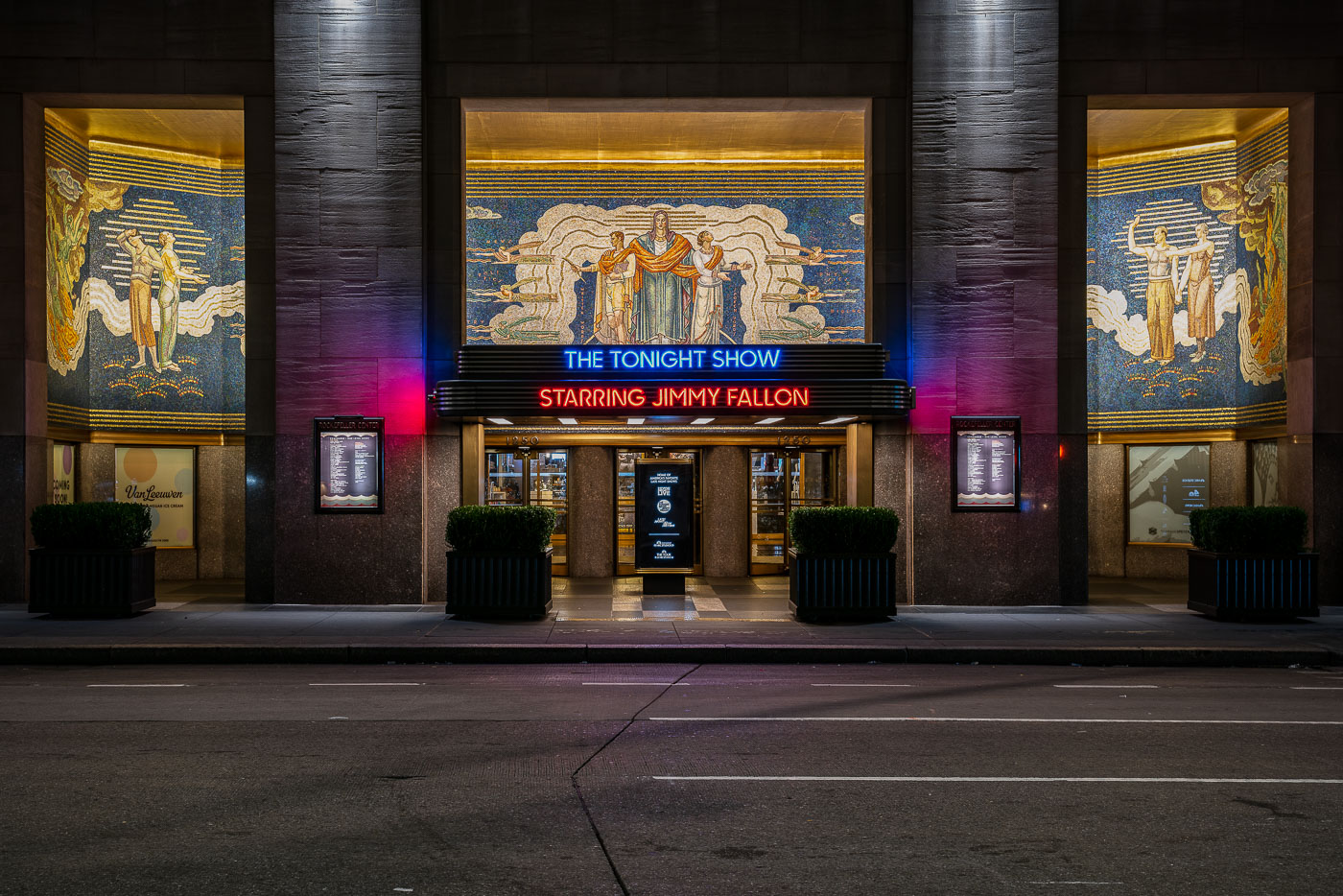
The Tonight Show starring Jimmy Fallon at 30 Rockefeller Plaza, New York City.
The Tonight Show, hosted by Jimmy Fallon, broadcasts live from Studio 6B at 30 Rockefeller Plaza in New York City. This Art Deco skyscraper, completed in 1933, was originally known as the RCA Building and served as the headquarters for NBC. The building's facade features elaborate mosaics, including the one above the entrance that depicts Prometheus. Today, 30 Rockefeller Plaza remains a prominent entertainment hub, housing television studios for NBCUniversal and serving as a backdrop for numerous live broadcasts.
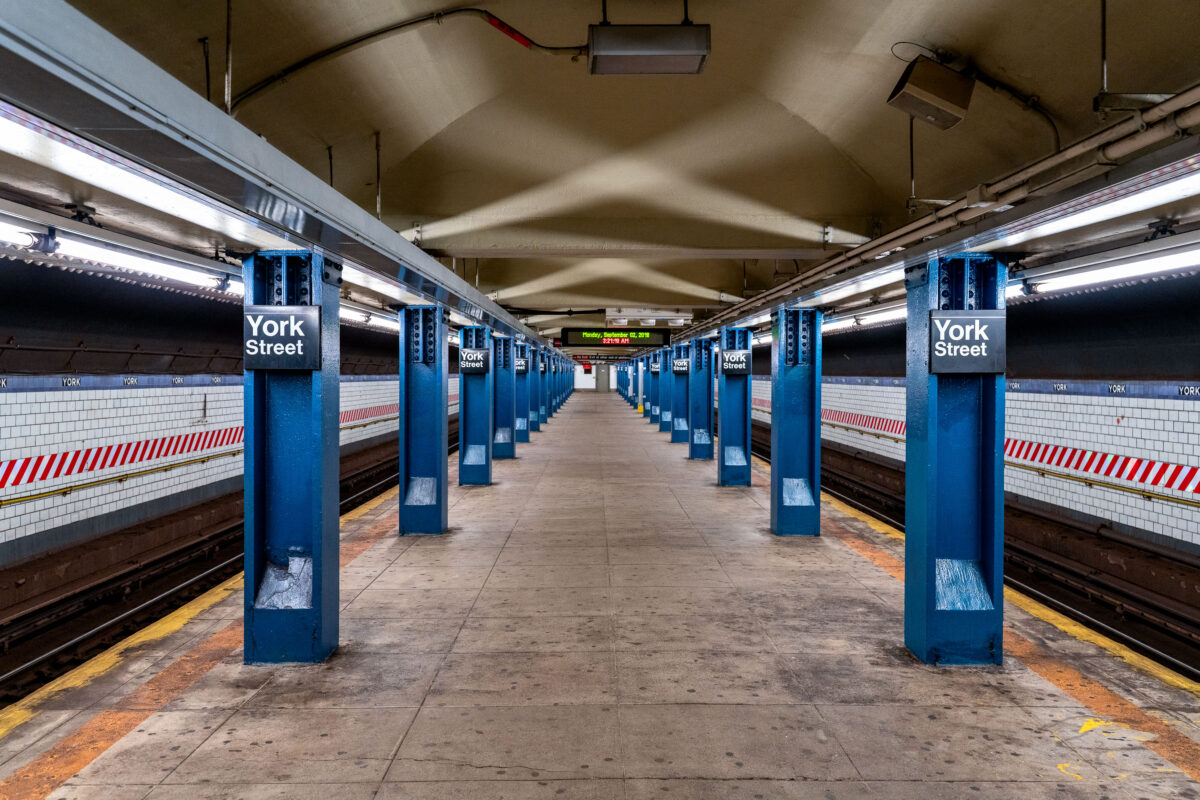
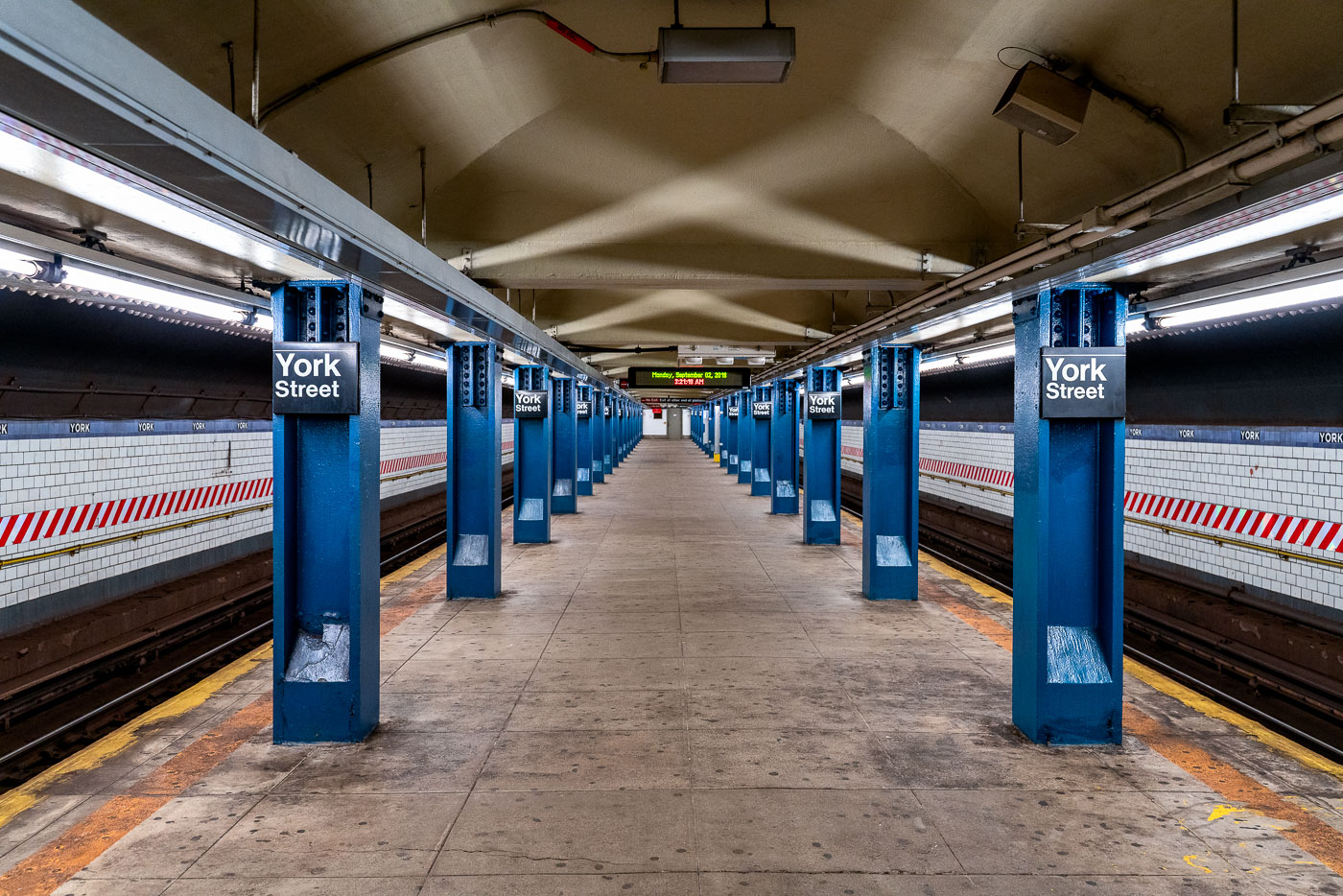
The York Street subway platform in Brooklyn, New York, features blue support columns and a vaulted ceiling.
The York Street subway station, located in the DUMBO neighborhood of Brooklyn, New York, serves the F and M trains. Opened in 1931, it is one of the deepest subway stations in the New York City Subway system. The station's distinctive vaulted ceiling and blue-painted support columns are characteristic of the era's subway construction. It continues to be a vital transit point for residents and visitors accessing this rapidly developing area of Brooklyn.
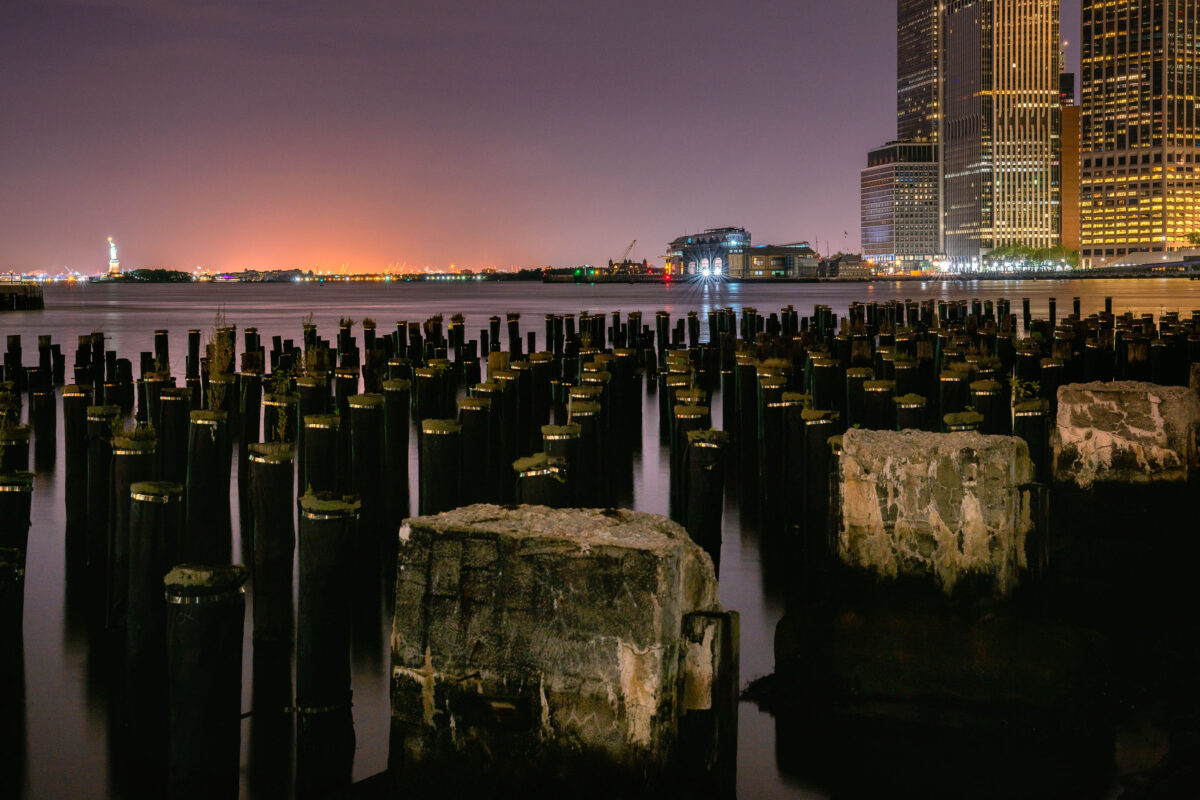
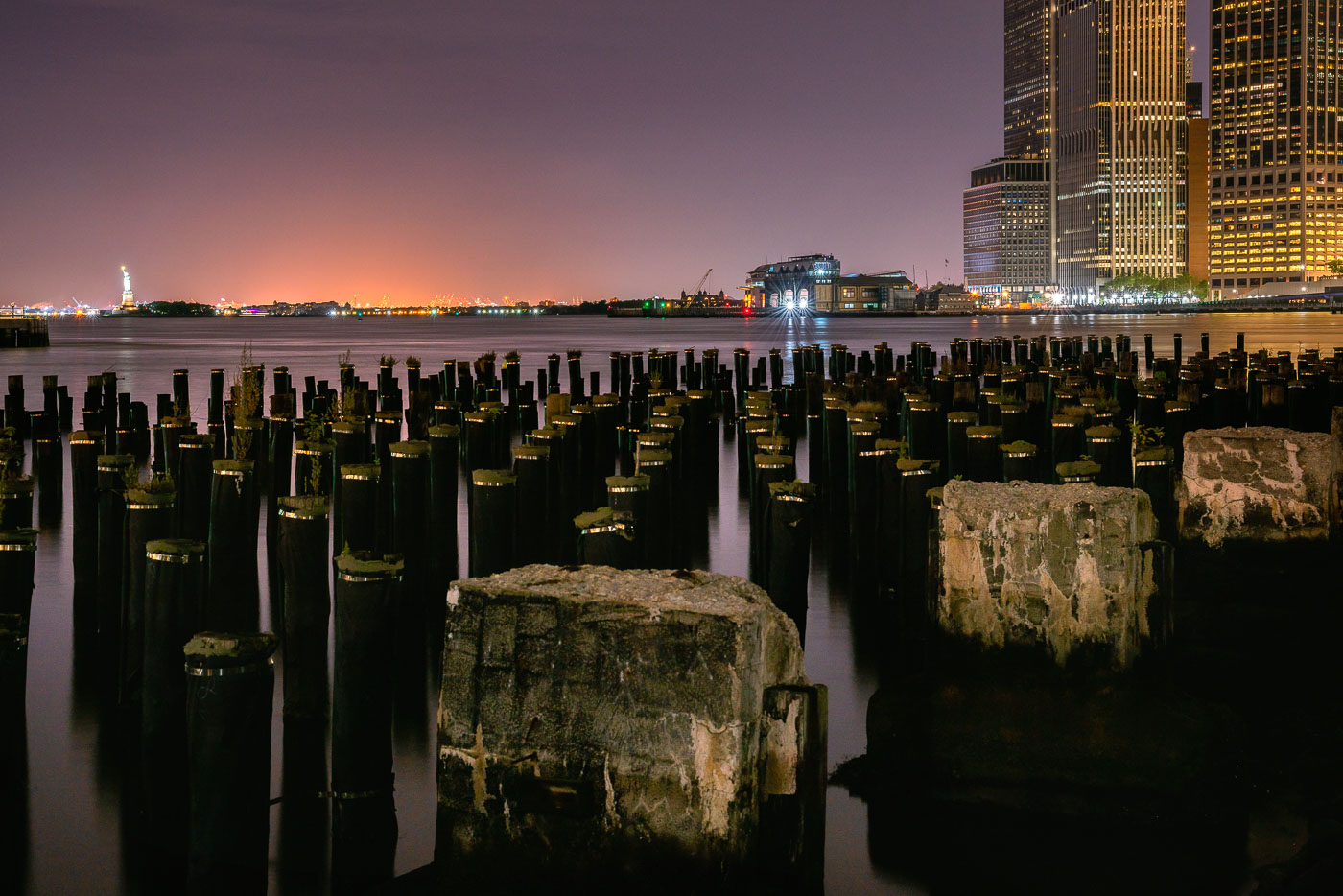
Remnants of East River piers at night with the Statue of Liberty and Manhattan skyline in the distance.
The remnants of the East River piers stand in the foreground, a testament to New York City's maritime past. These pilings once supported bustling docks that facilitated trade and passenger travel along the East River. In the distance, the Statue of Liberty is visible, a symbol of the city's historical role as a gateway for immigrants. The modern Manhattan skyline rises behind, representing the city's continuous transformation and its enduring status as a global center.
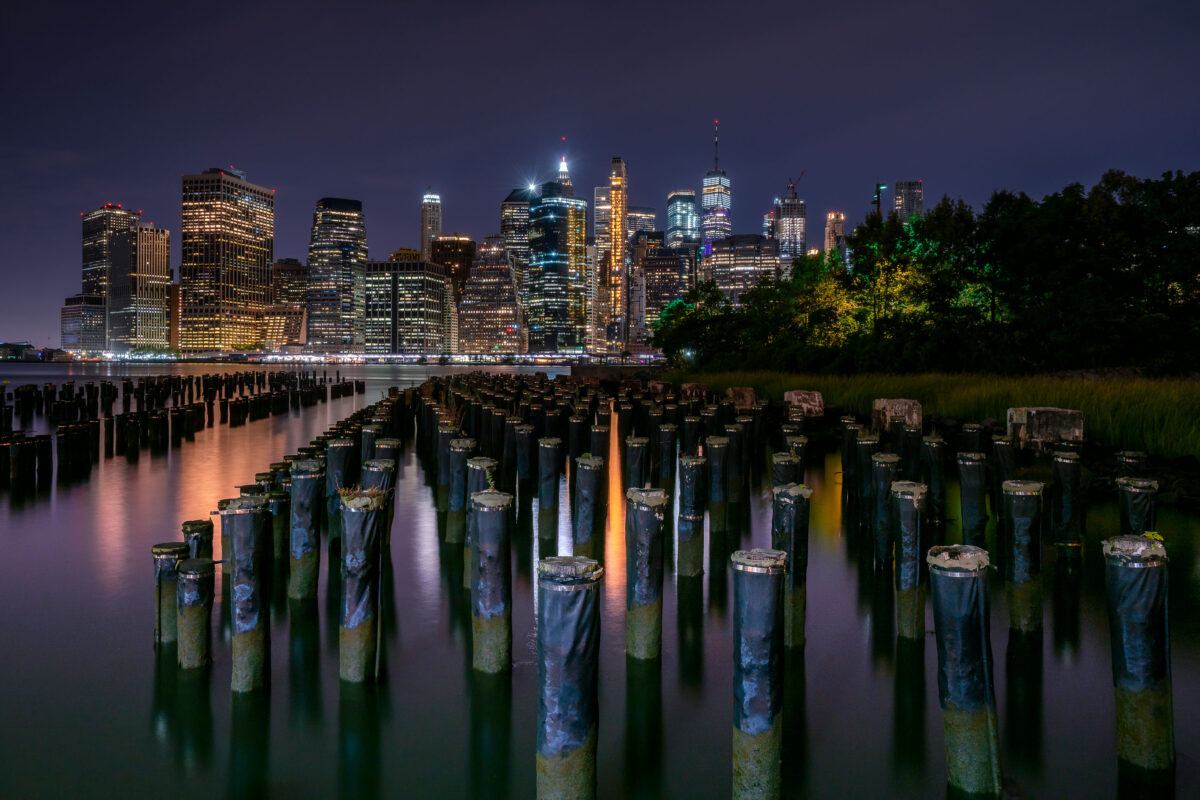
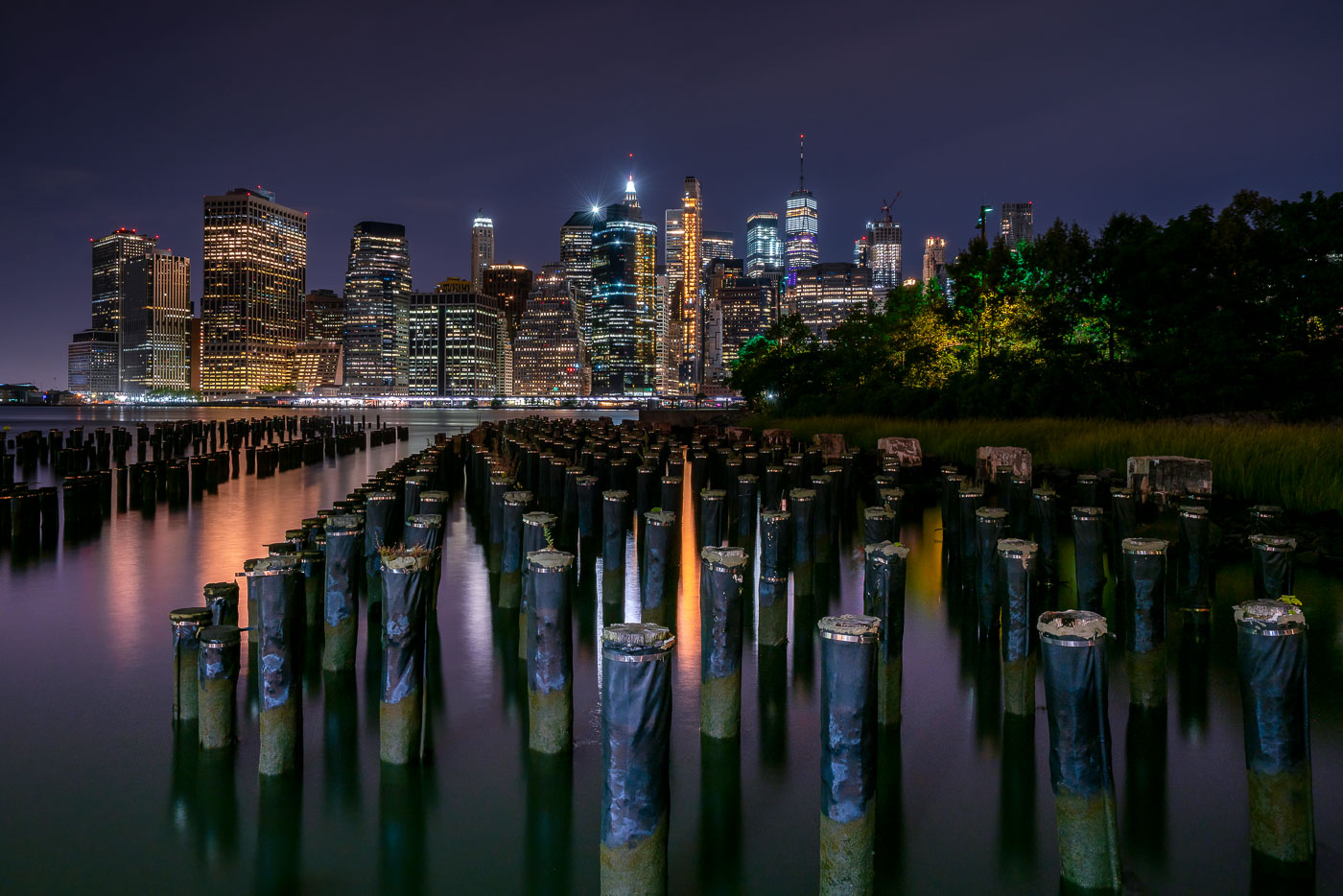
Wooden pilings in the East River at night with the Manhattan skyline in the background, Brooklyn, New York City.
Rows of old wooden pilings emerge from the East River, with the illuminated Manhattan skyline visible in the background. These pilings are remnants of former piers in Brooklyn Bridge Park, a waterfront area in Brooklyn, New York City. The park was developed on the site of former industrial port facilities, and the preservation of these pilings offers a visual connection to the area's maritime history. The Manhattan skyline represents the financial and cultural center of the city, viewed here at night from across the river.
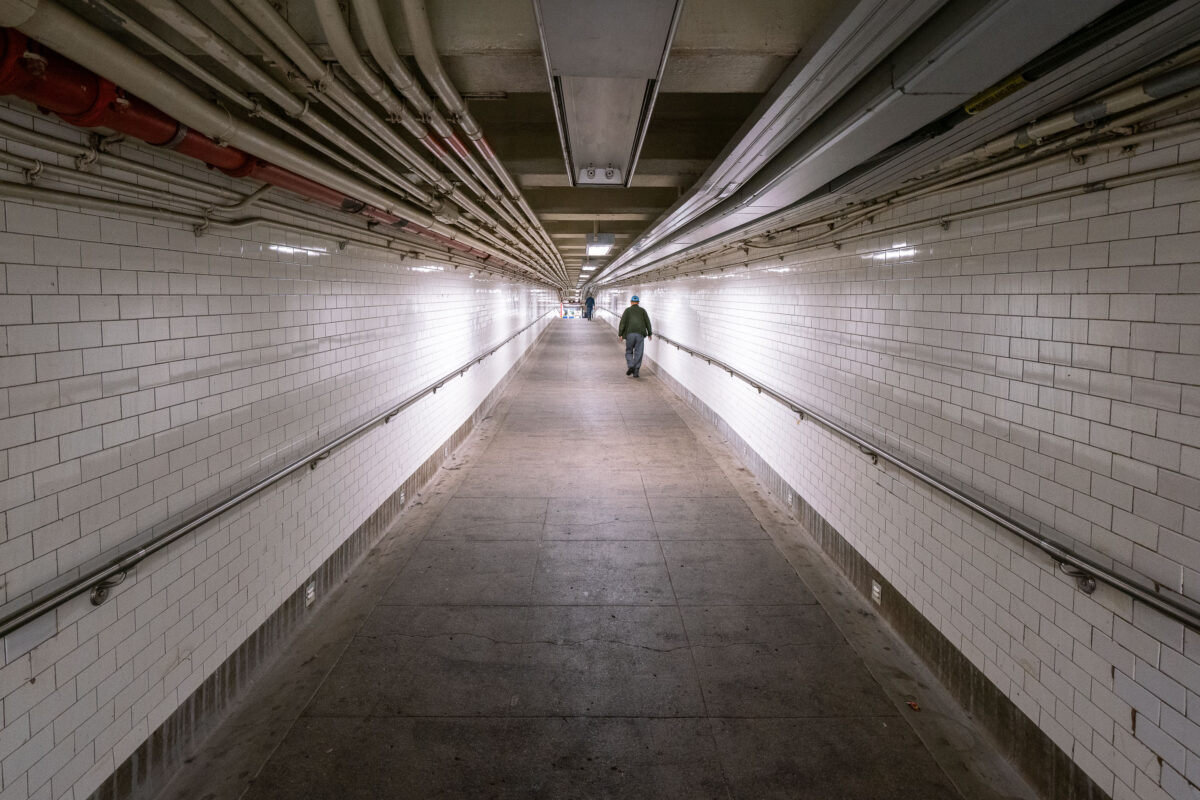
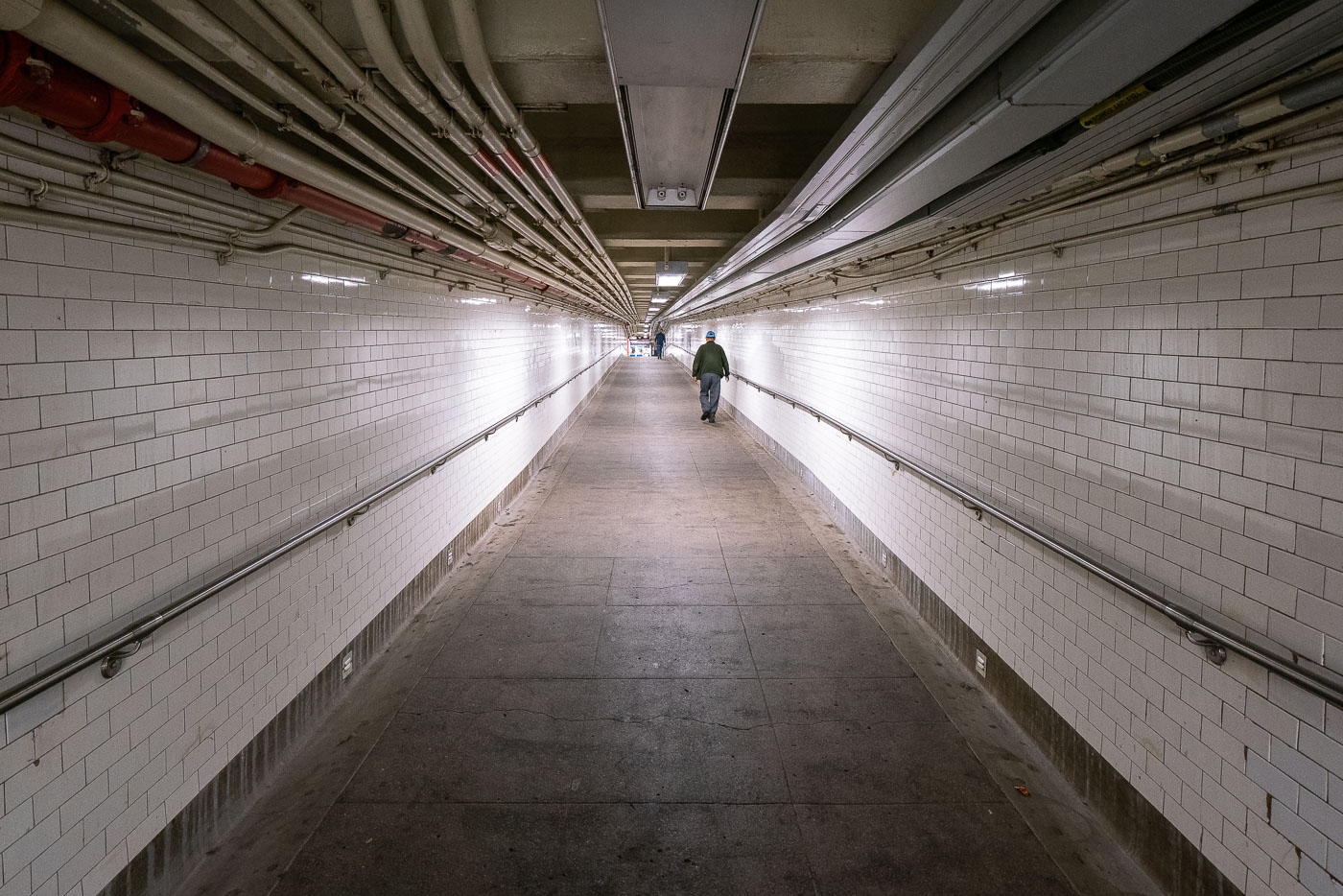
A person walks through a tiled New York City Subway tunnel with exposed pipes overhead.
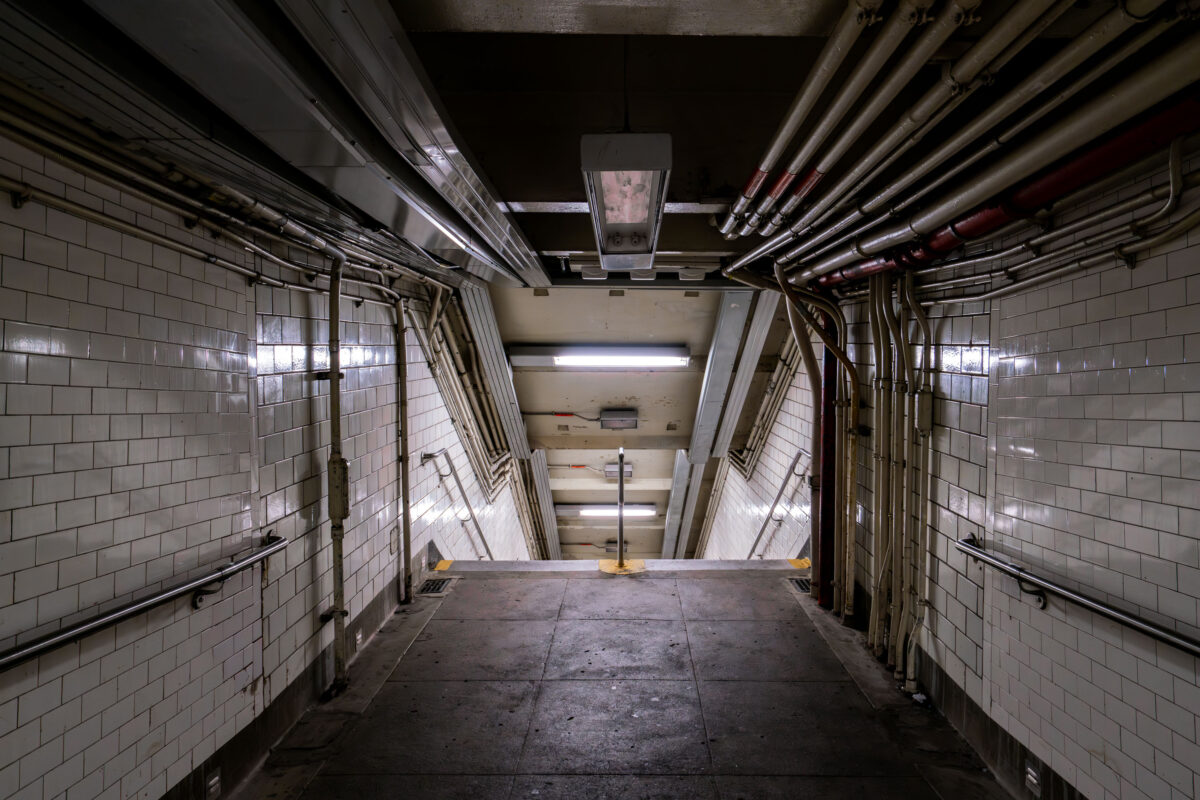
A lone figure walks through a long, tiled tunnel in the New York City Subway system, with numerous pipes and conduits visible overhead. The tunnel features white subway tiles on the walls and a concrete floor, with a metal handrail running along the side. This utilitarian space is part of the extensive underground network that serves millions of commuters daily. The New York City Subway is one of the world's oldest and largest rapid transit systems, with its infrastructure dating back to the early 20th century. The exposed pipes likely carry essential services such as water, power, and ventilation, critical for the operation and safety of the subway. These tunnels represent the complex engineering and ongoing maintenance required to keep the city moving.
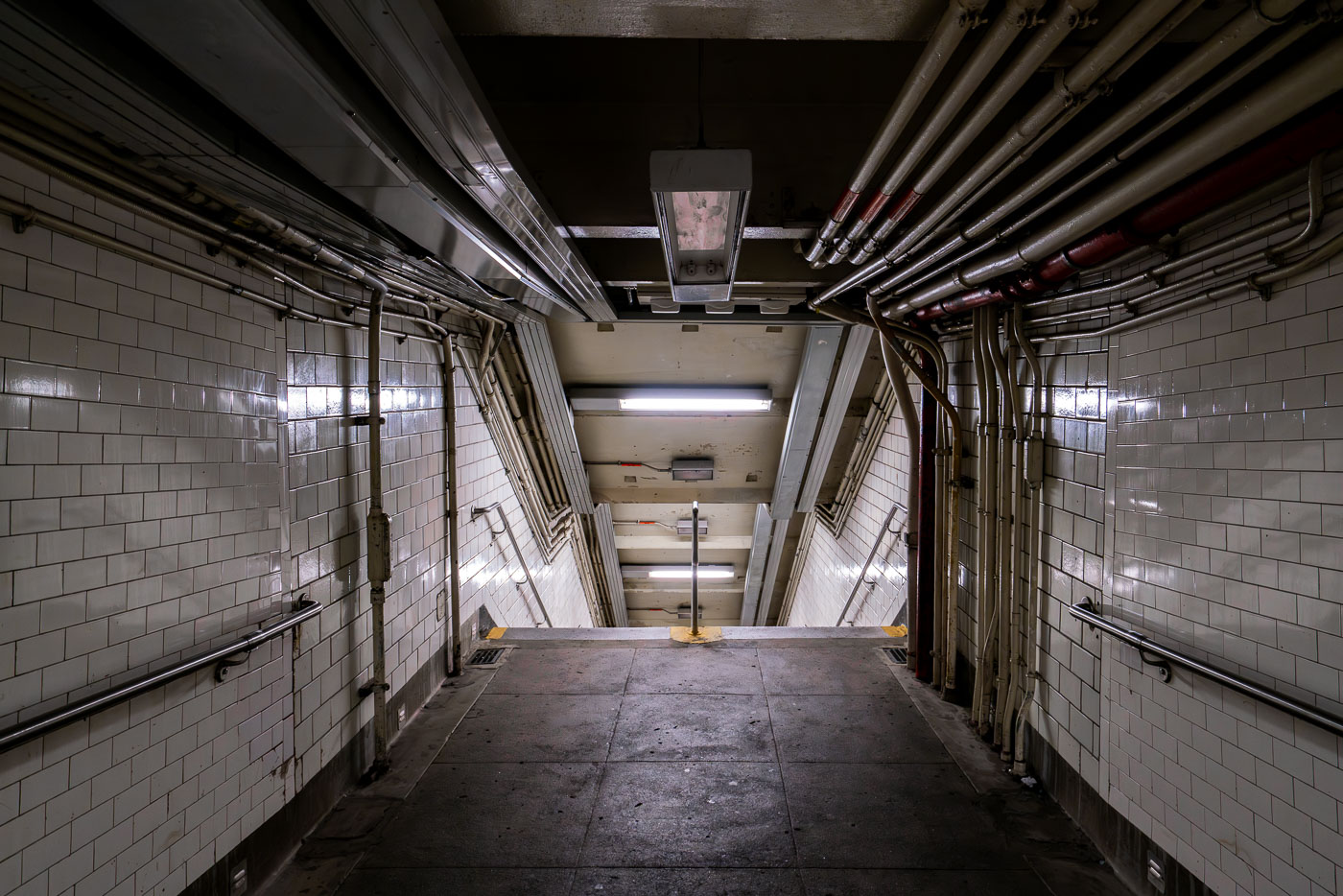
Exposed piping lines the tiled walls of a dimly lit New York City subway stairwell.
A dimly lit stairway descends into a New York City subway station, revealing extensive exposed piping and tiled walls characteristic of aging transit infrastructure. The image captures the utilitarian design and visible systems that support the daily operation of the MTA's underground network.
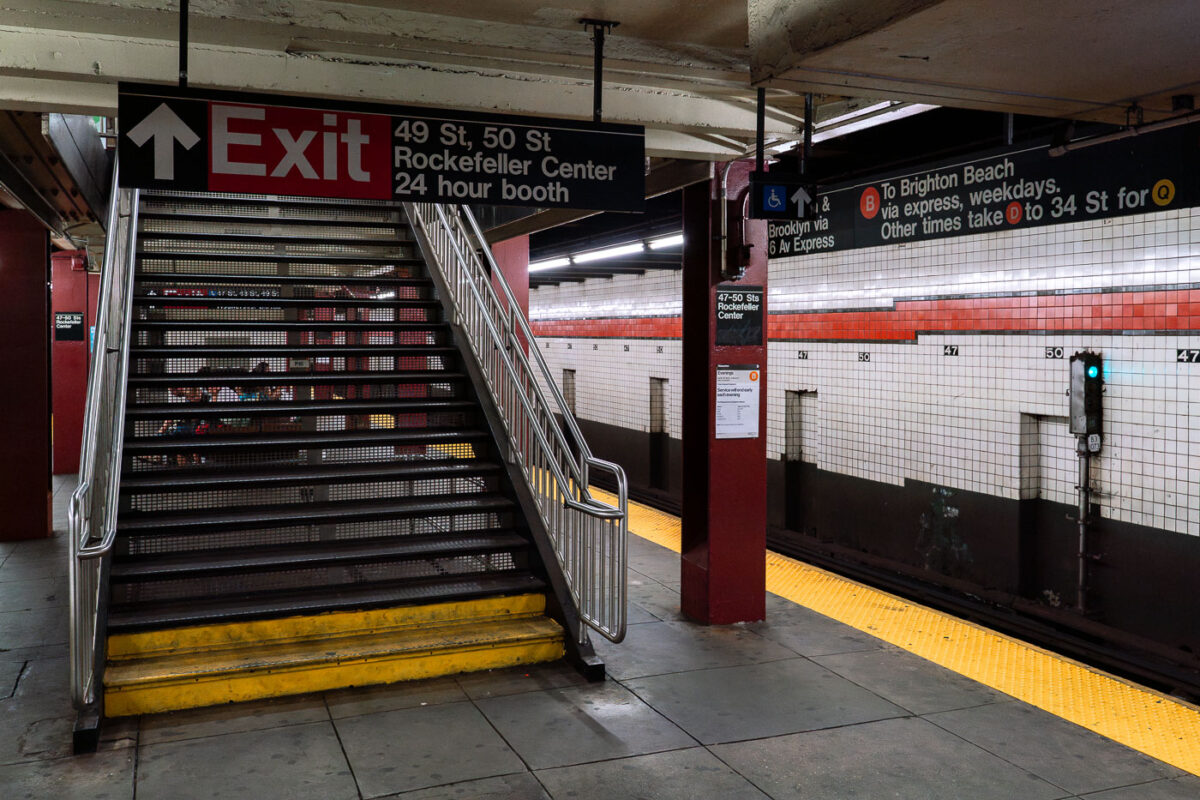
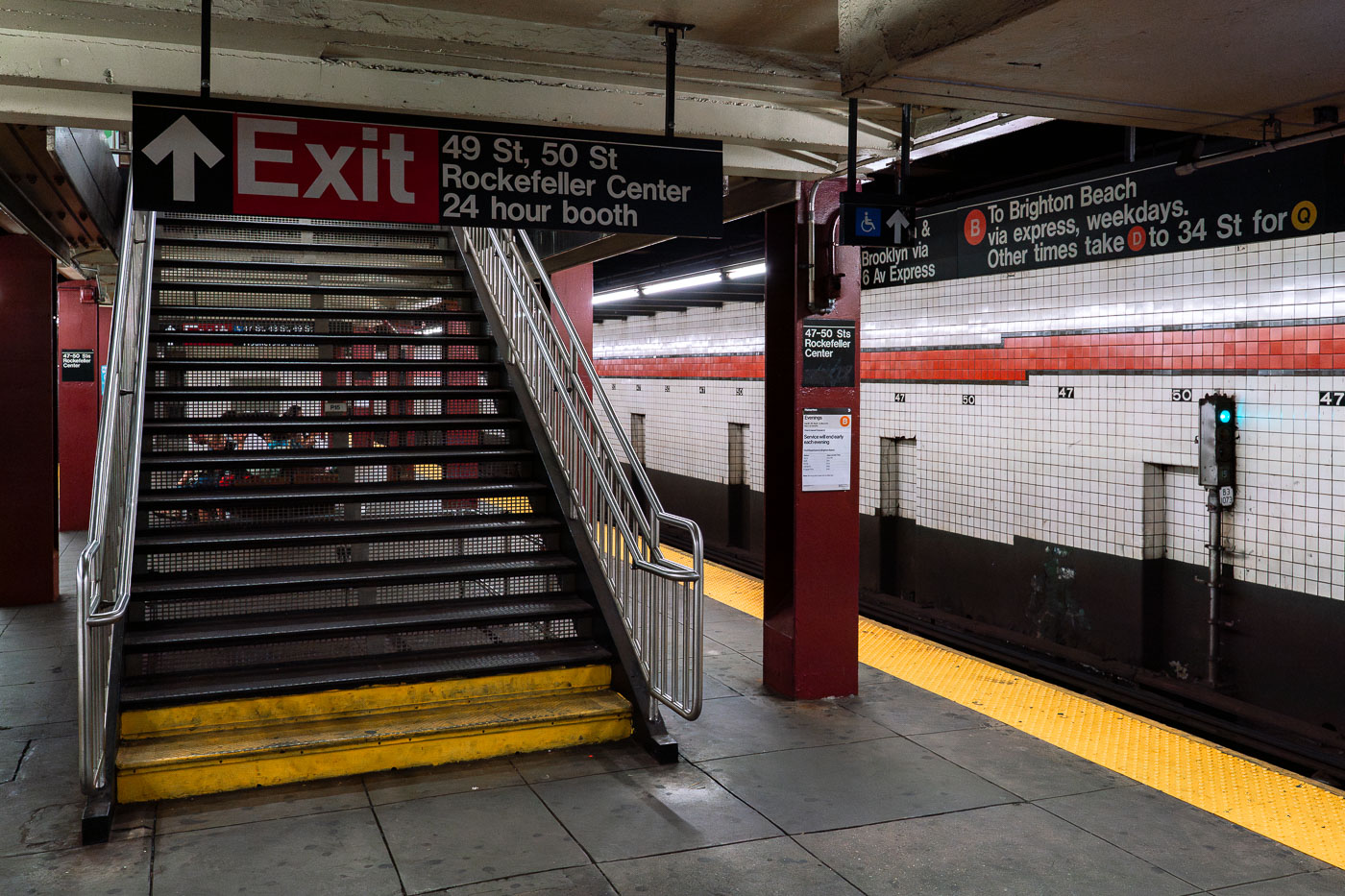
Stairs at the 49-50 Streets Rockefeller Center subway station in Manhattan, with exit signs and platform markings.
A staircase with metal railings and yellow-striped steps leads to an "Exit" sign for the 49-50 Streets Rockefeller Center subway station, which includes a 24-hour booth. The station serves the B, D, F, and M lines, with signage indicating routes to Brighton Beach and 34th Street.
The Trump International Hotel and Tower entrance in Manhattan is illuminated at night, with an NYPD vehicle parked nearby.
The entrance of the Trump International Hotel and Tower in Manhattan is illuminated at night. An NYPD police vehicle and other cars are parked along the street, adjacent to a marked bike lane.
Nighttime view of Rumour's Bar, The Vitamin Shoppe, and The Bread Factory Cafe in Manhattan.
Nighttime view of storefronts along a Manhattan street, including The Vitamin Shoppe, Rumour's Bar and Grill, and The Bread Factory Cafe. Cars are parked along the curb in front of the businesses. This image documents a typical commercial streetscape in Midtown Manhattan, showcasing the diverse retail and dining establishments that operate within the bustling urban environment. The presence of multiple businesses, from a health supplement store to a bar and a cafe, highlights the varied economic activity and nightlife characteristic of the area.

Built in Minneapolis

Photographs showcasing change over time

Browse by location, move through long-running series, or start with recent work.