Place Archive

La Fortuna

La Fortuna, Costa Rica, lies near Arenal Volcano, an active stratovolcano whose 1968 eruption reshaped the region’s landscape, now marked by lava fields and regenerating cloud forests. The area includes protected sites like La Fortuna Waterfall and the Arenal Observatory Lodge, supporting diverse rainforest ecosystems and endemic wildlife such as arboreal sloths.

20 photos

Photos from La Fortuna
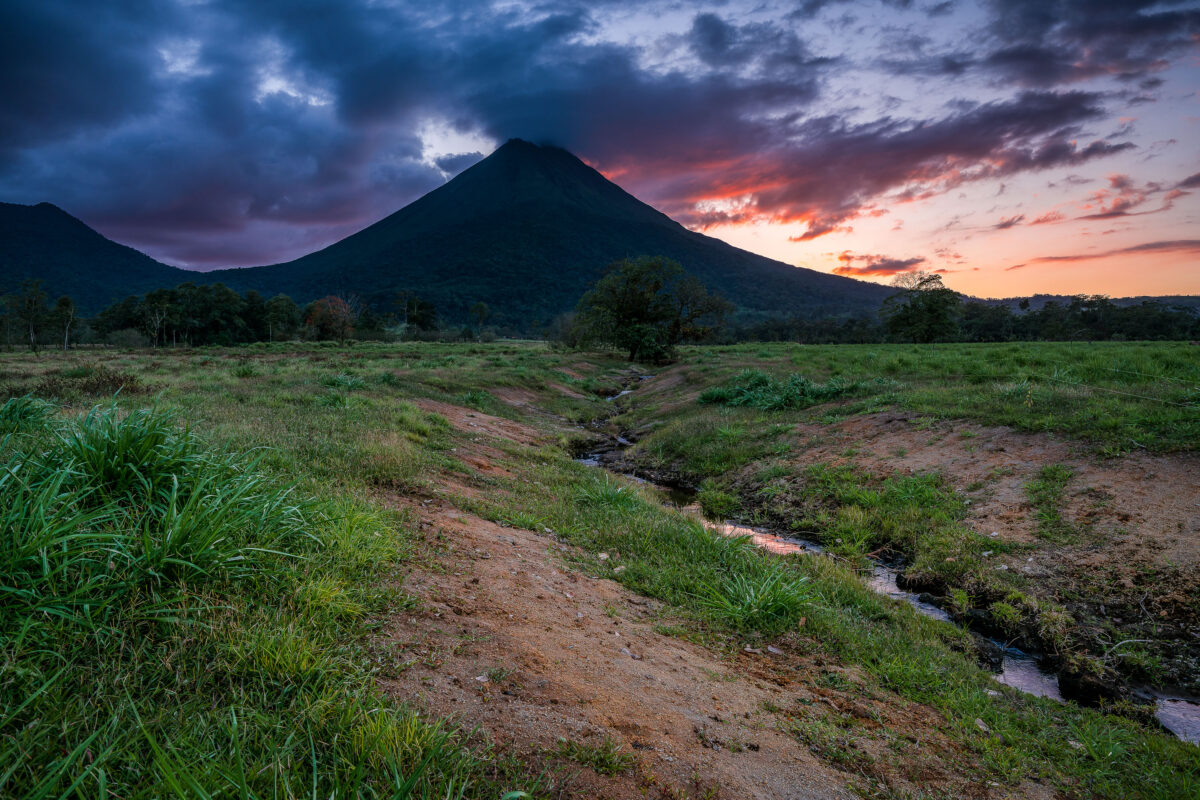
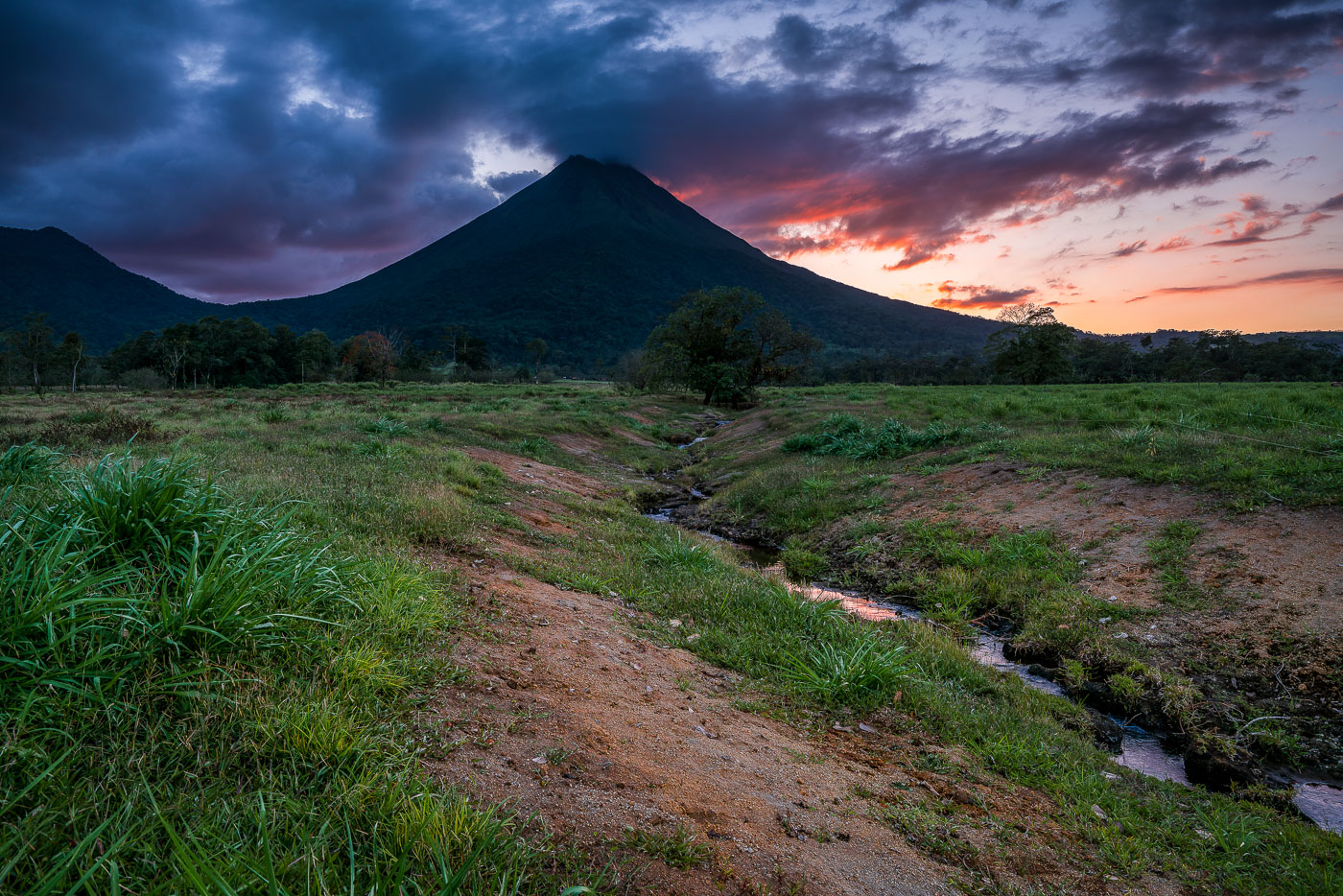
Arenal Volcano at sunset in Costa Rica, with dramatic clouds over the conical peak and a stream in the foreground.
Arenal Volcano, a stratovolcano in Costa Rica, is visible at sunset from La Fortuna. This geological feature is known for its conical shape and surrounding lush vegetation. The volcano is one of Costa Rica's most active, with its last major eruption occurring in 1968. The area surrounding La Fortuna is a popular destination for tourism, particularly for hot springs and adventure activities, largely due to the volcano's presence.
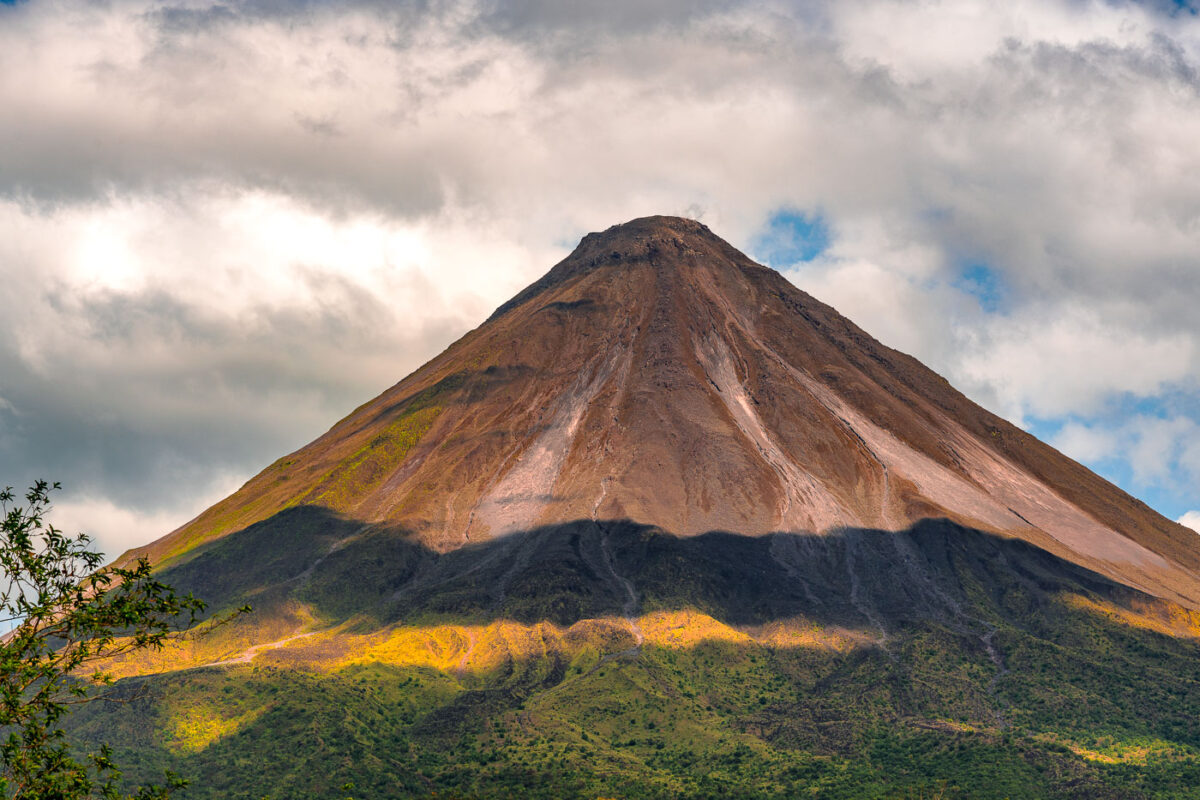
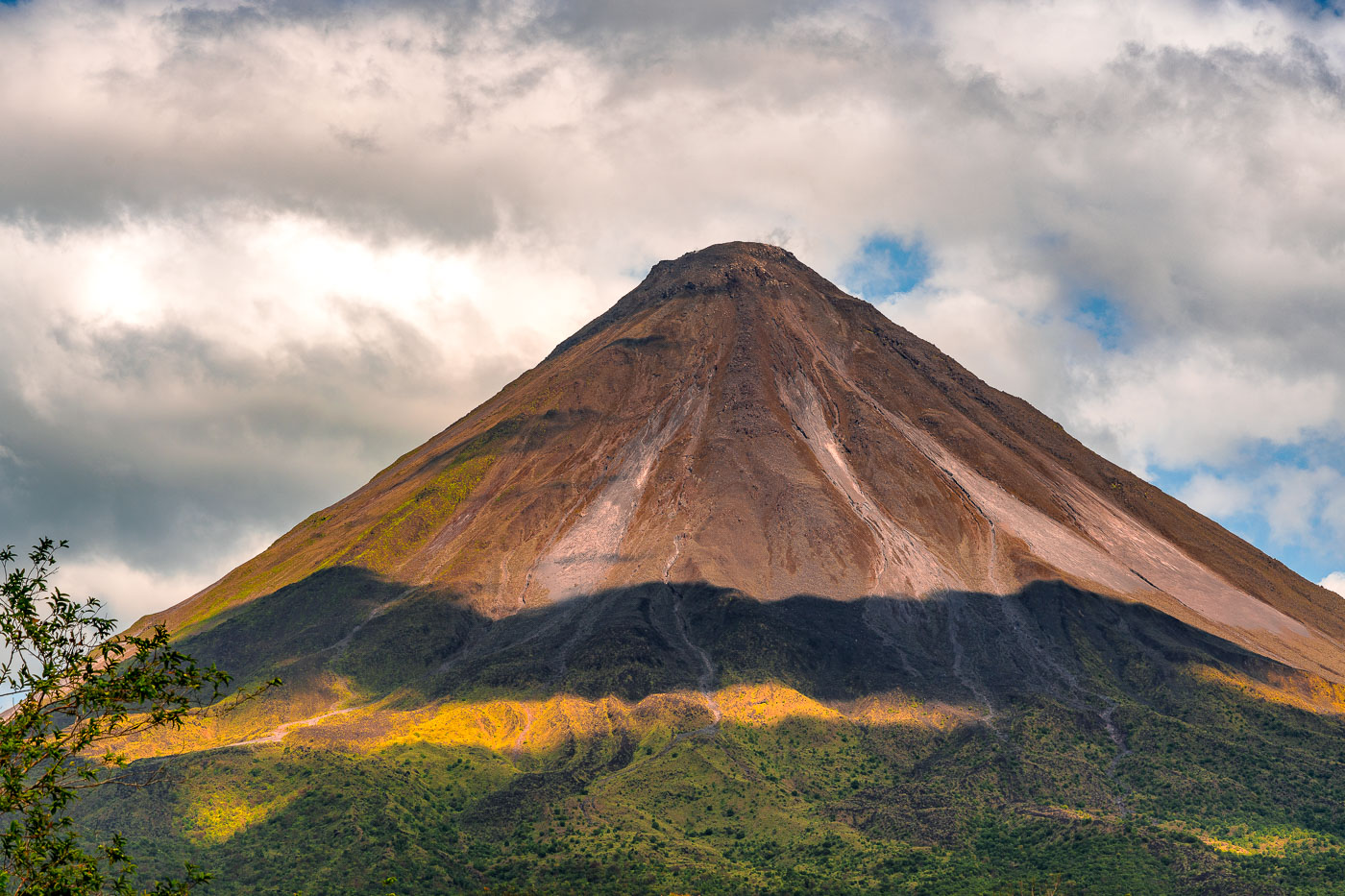
Arenal Volcano in Costa Rica is partially covered by cloud shadows, highlighting its barren upper cone and vegetated lower slopes.
Arenal Volcano in Costa Rica is shown with cloud shadows crossing its slopes. This stratovolcano was highly active until 2011, with its last major eruption in 1968. The fertile volcanic soil supports lush vegetation on its lower slopes, contrasting with the barren upper cone.
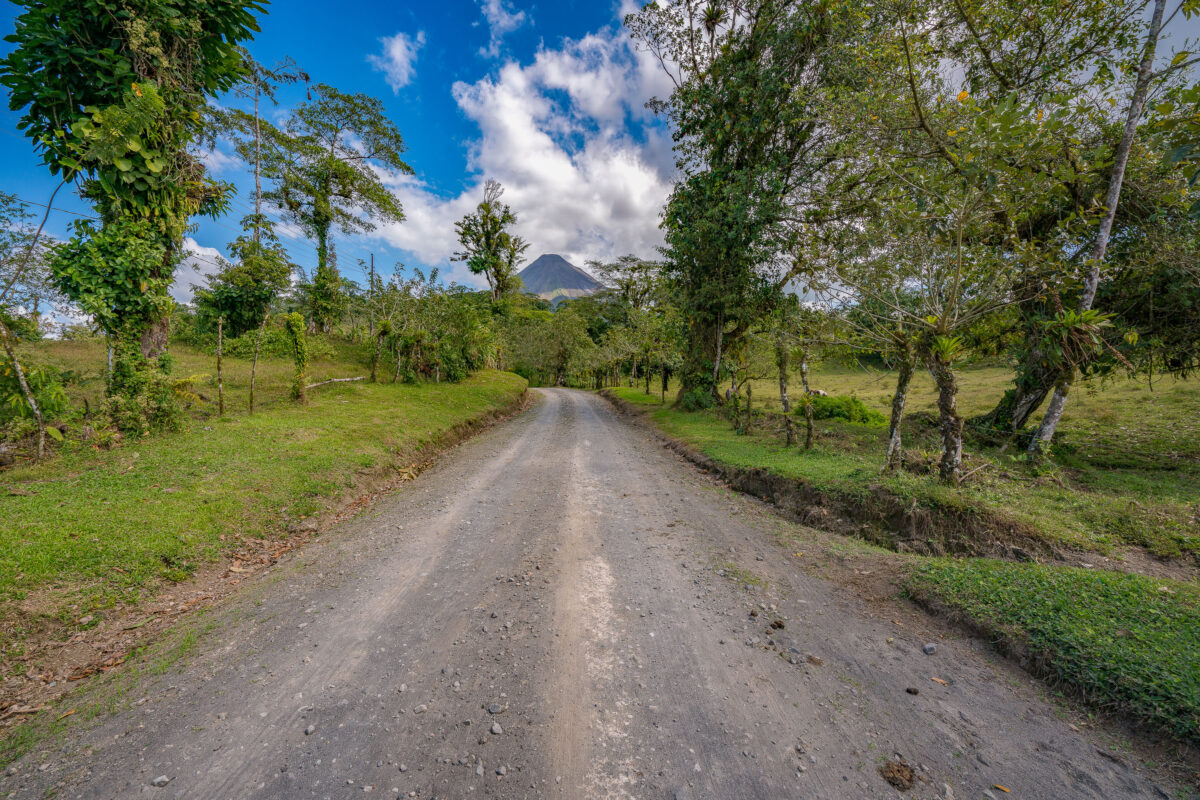
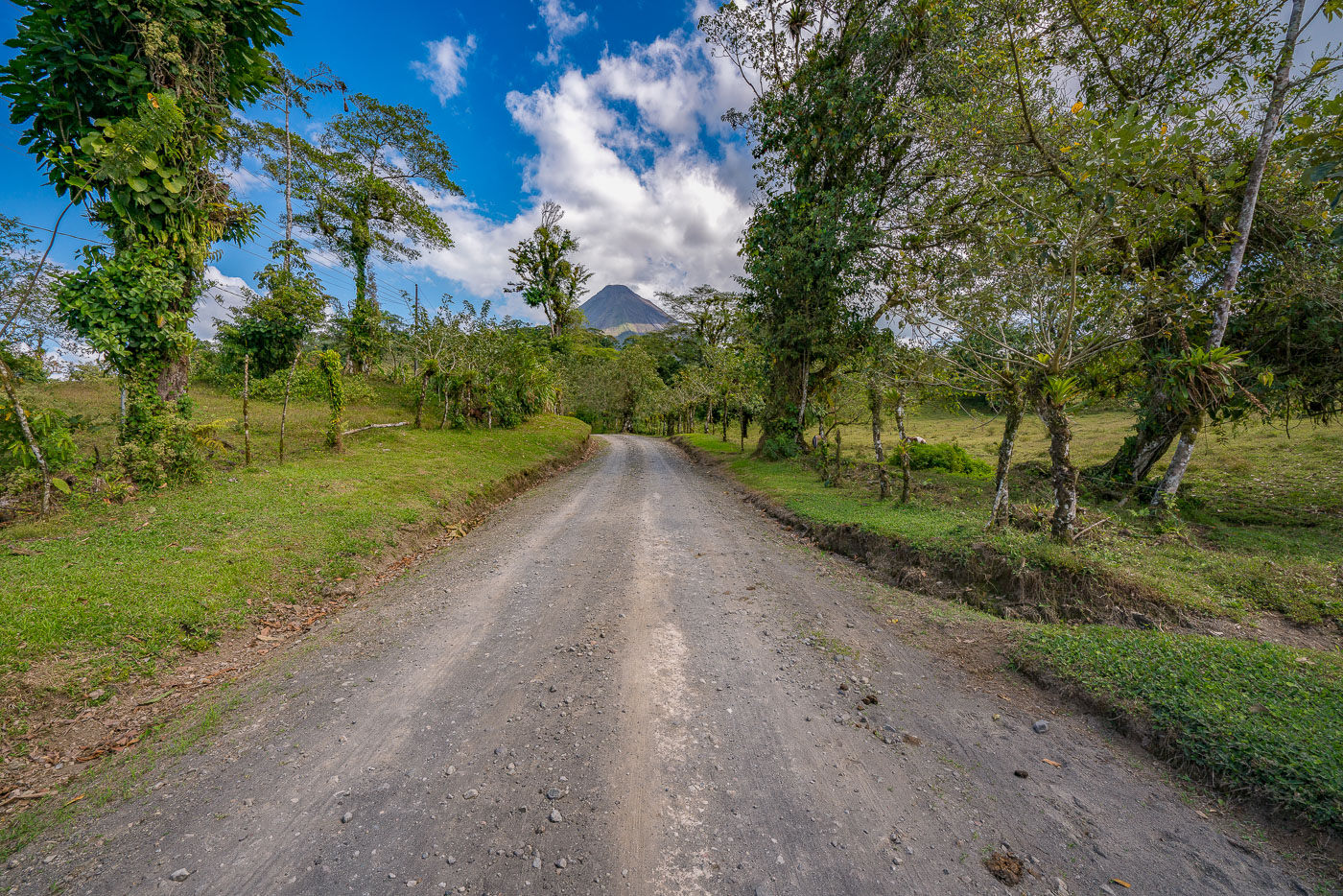
Gravel road leading to Arenal Volcano in Costa Rica.
A gravel road leads towards Arenal Volcano in Costa Rica. This unpaved route, composed of volcanic rock and soil, provides access to the surrounding rainforest and tourist activities. Arenal Volcano is a stratovolcano that was active until 2010 and is now dormant.
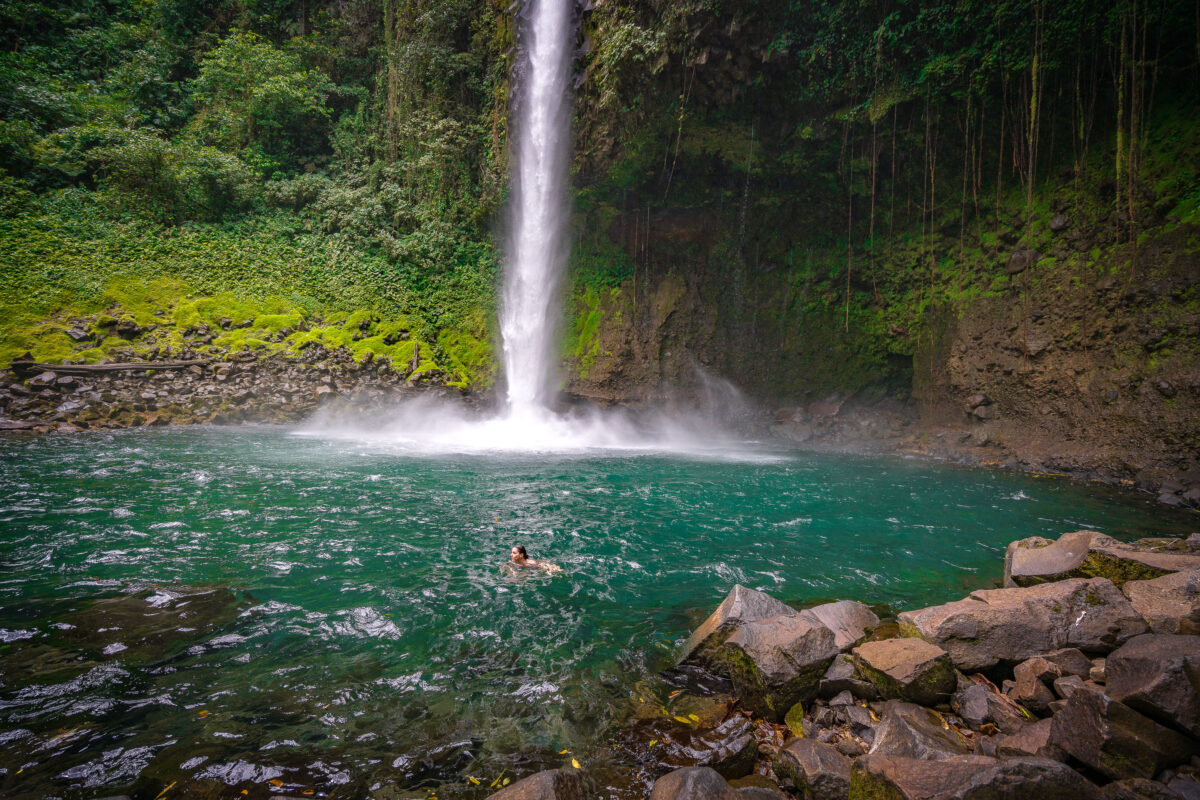
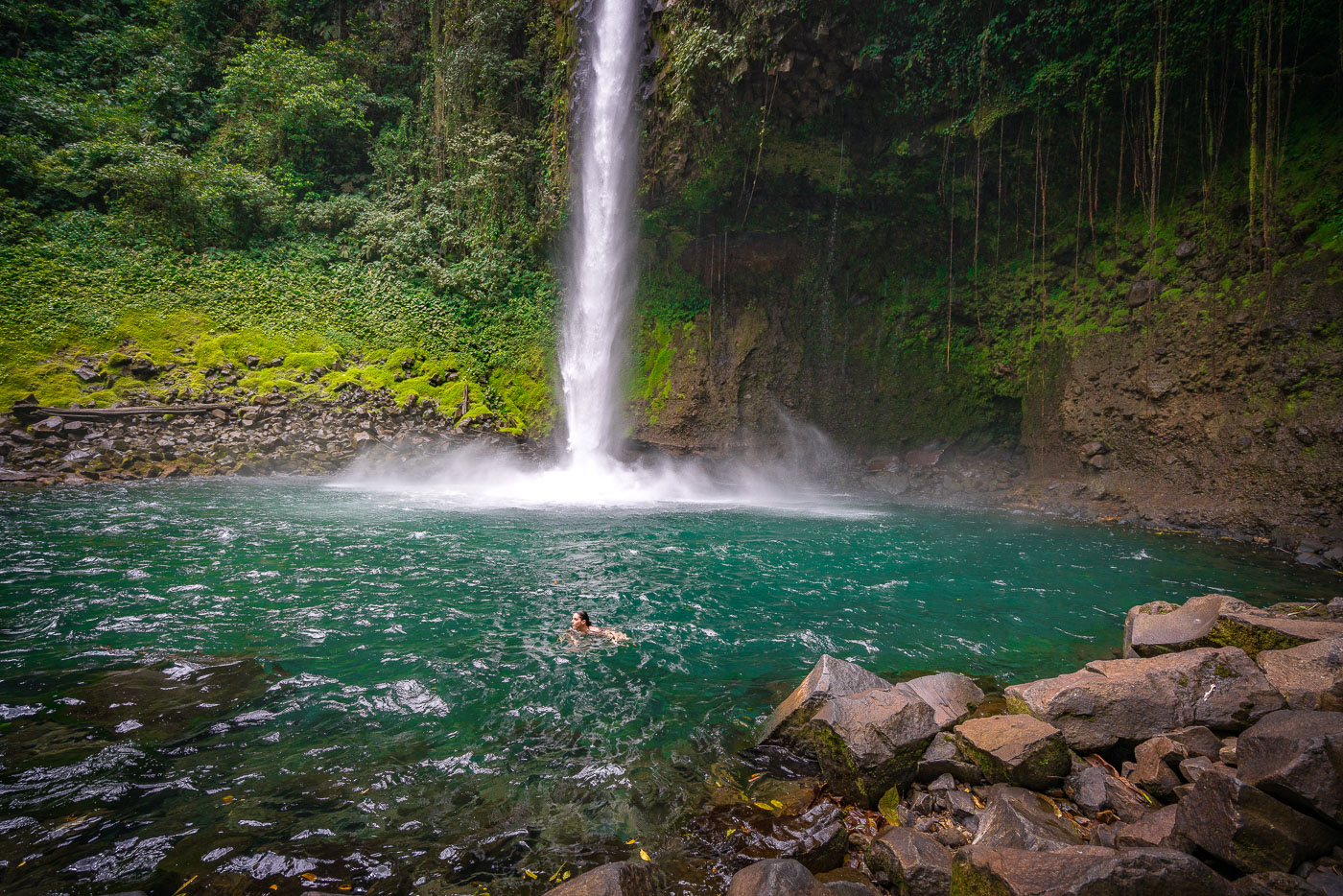
A person swims in the pool at the base of La Fortuna Waterfall in Costa Rica, surrounded by lush tropical rainforest.
A person swims in the pool at the base of La Fortuna Waterfall in Costa Rica. The waterfall, a popular natural attraction near the Arenal Volcano, cascades approximately 70 meters into the emerald-green water. The surrounding area is characterized by lush tropical rainforest and is managed as a protected area.
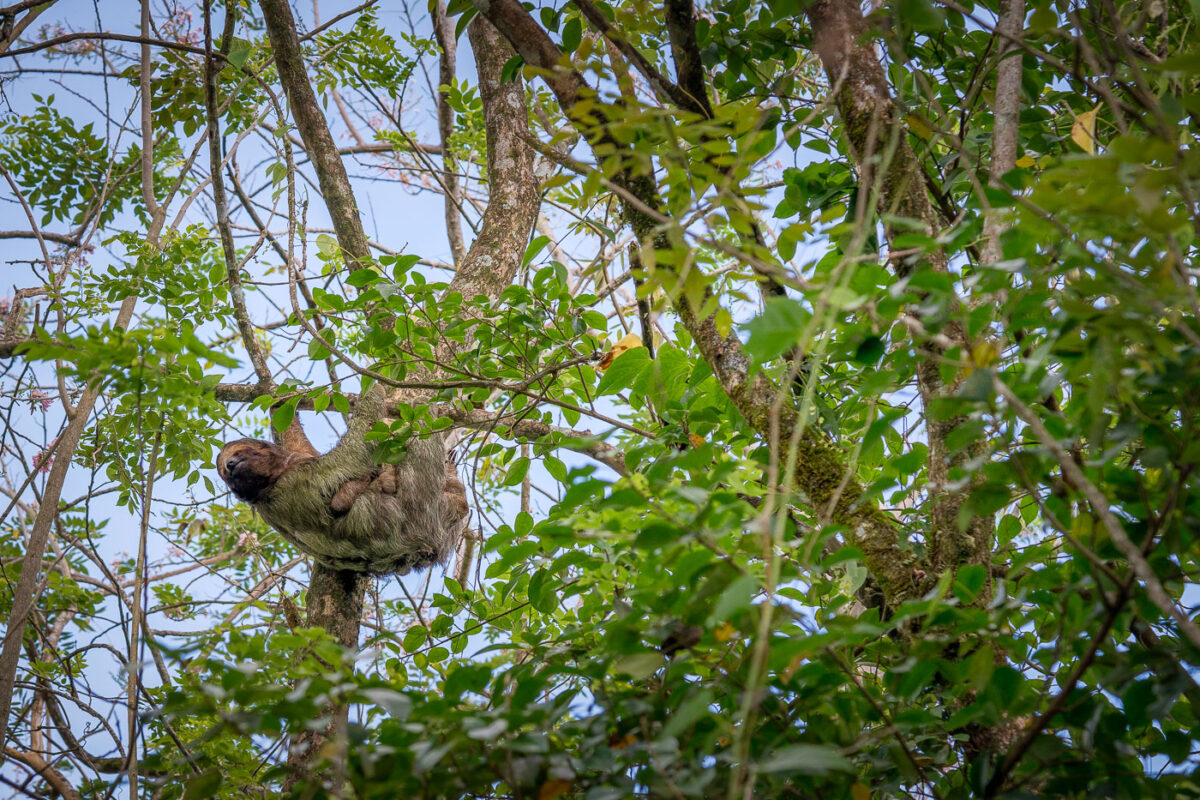
Sloth with young clinging to a tree branch in Costa Rica.
A mother sloth with its young clings to a tree branch in Costa Rica. Sloths are arboreal mammals native to the rainforests of Central and South America, known for their slow metabolism and sedentary lifestyle. They play a role in the forest ecosystem by influencing vegetation and hosting symbiotic organisms in their fur.
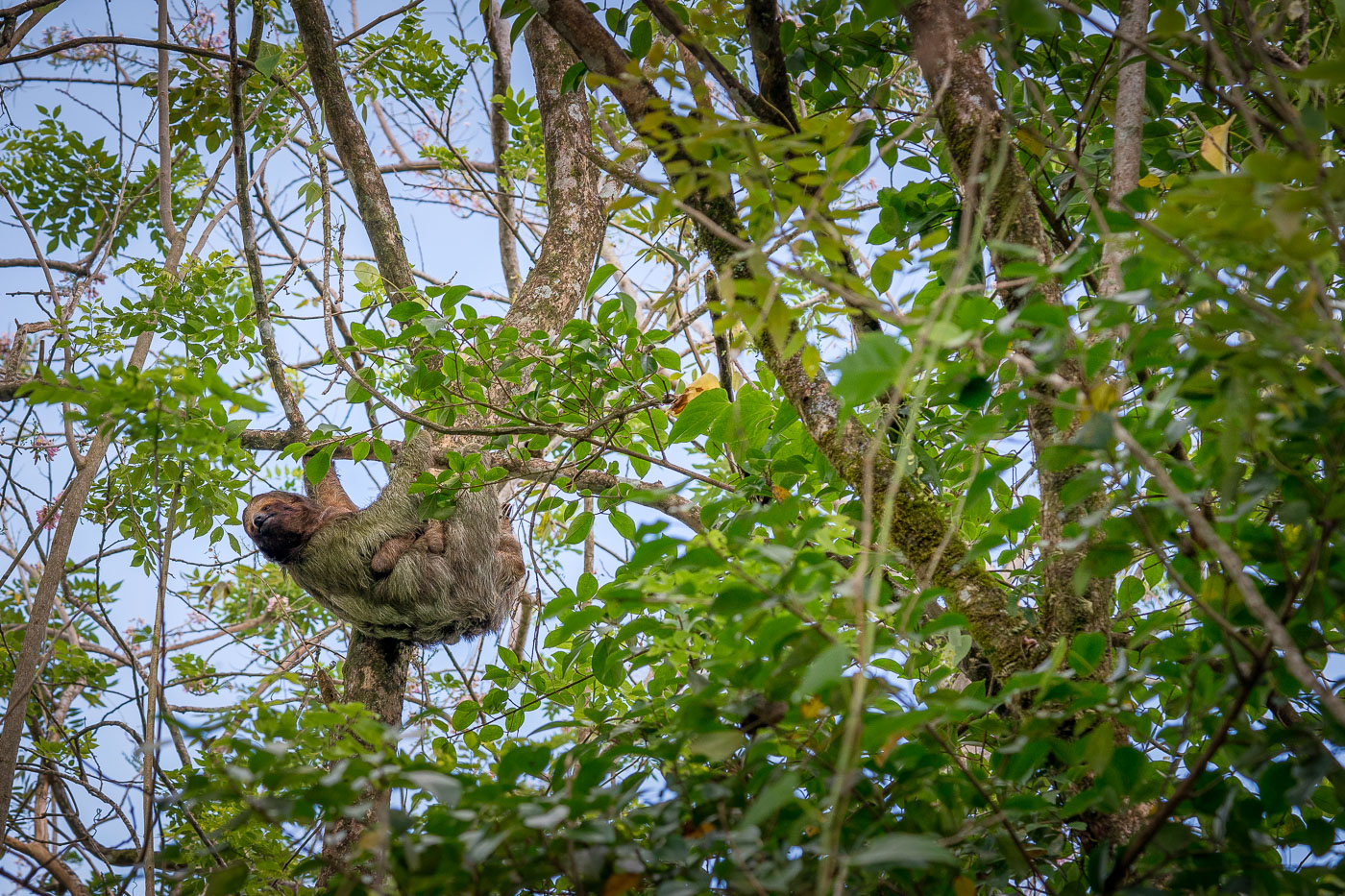
A mother sloth and its baby cling to a tree branch in the Costa Rican rainforest.
A mother sloth and its young cling to a tree branch in the Costa Rican rainforest. Sloths are arboreal mammals known for their slow metabolism and spend most of their lives in trees. Costa Rica's rainforests are vital habitats for these creatures, underscoring the importance of conservation efforts.
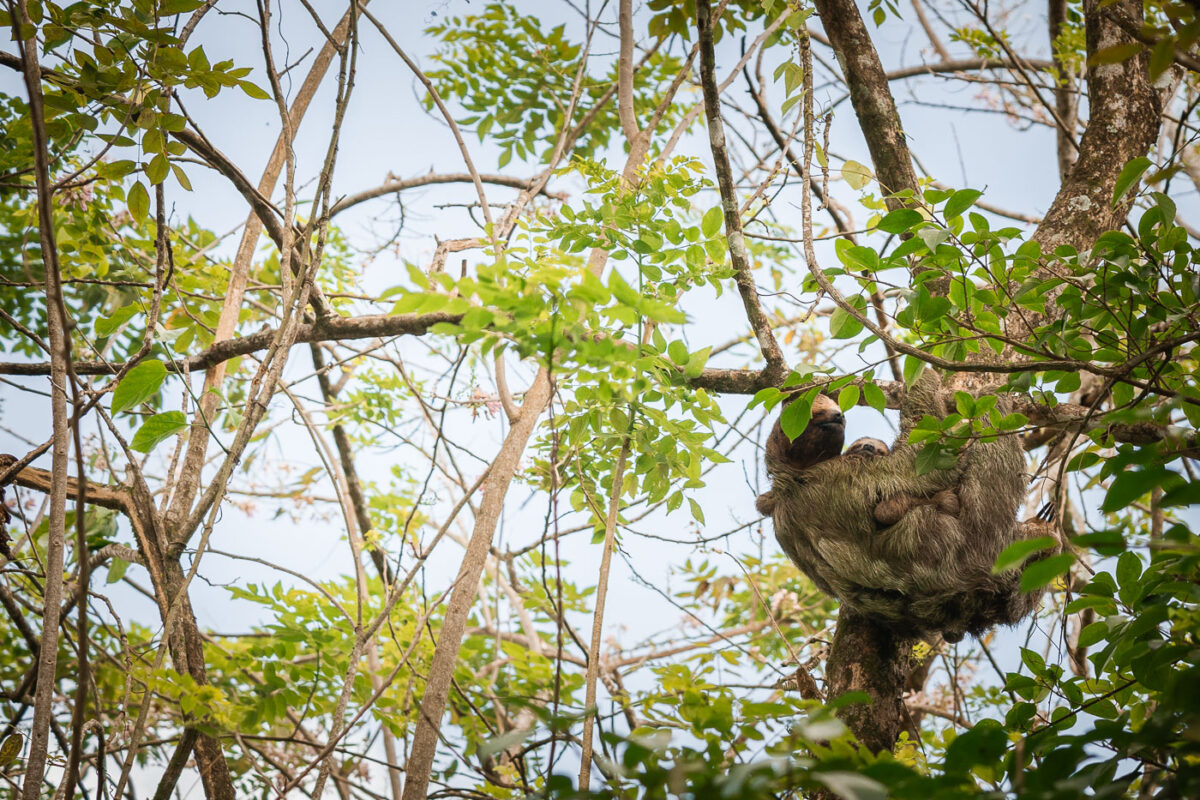
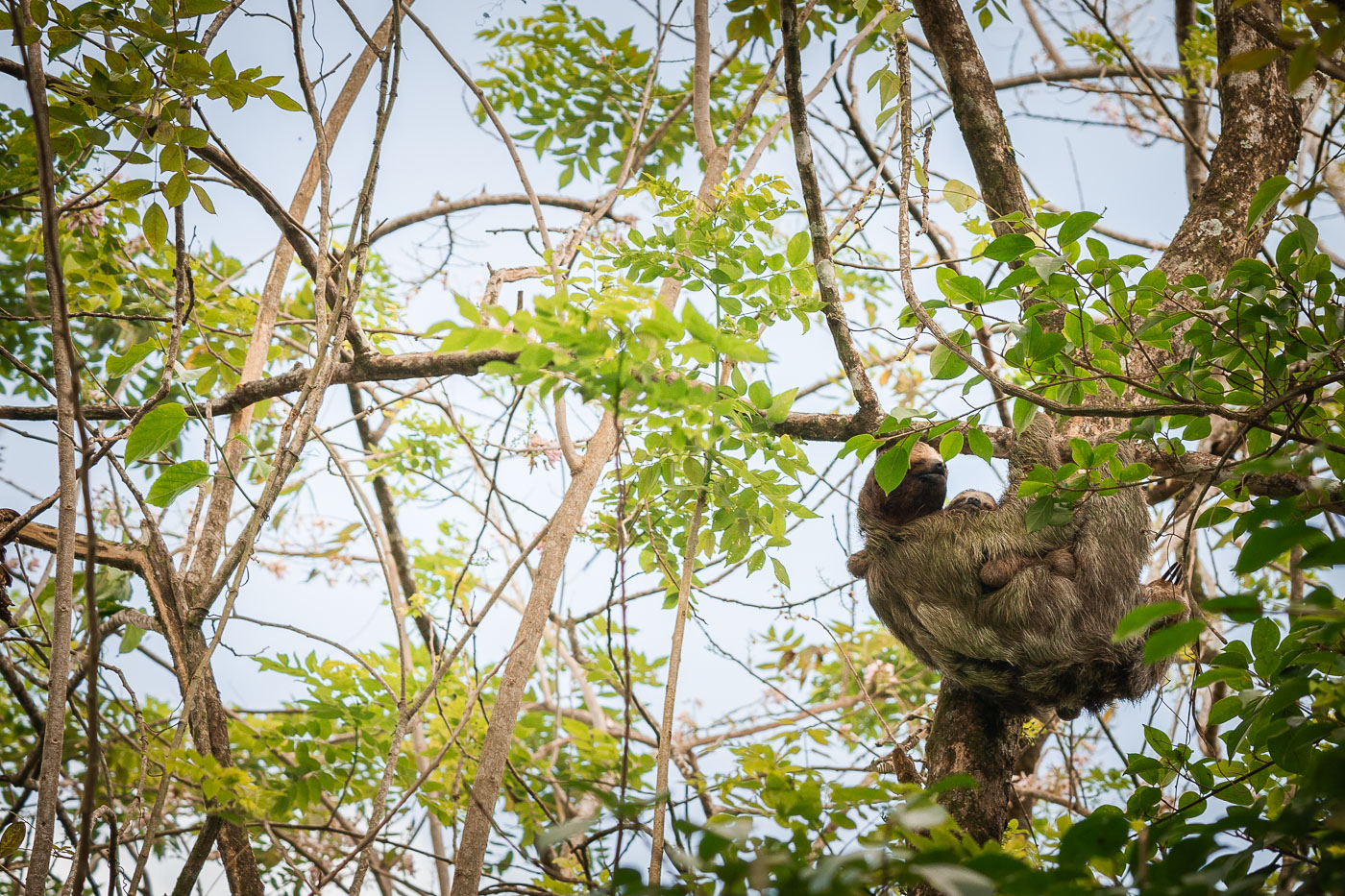
A mother sloth and baby cling to a tree branch in Costa Rica.
A mother sloth and her young cling to a tree branch in Costa Rica. These arboreal mammals are native to the tropical rainforests of Central and South America. Their slow metabolism and specialized diet of leaves contribute to their unhurried lifestyle, making them a unique part of the region's biodiversity.
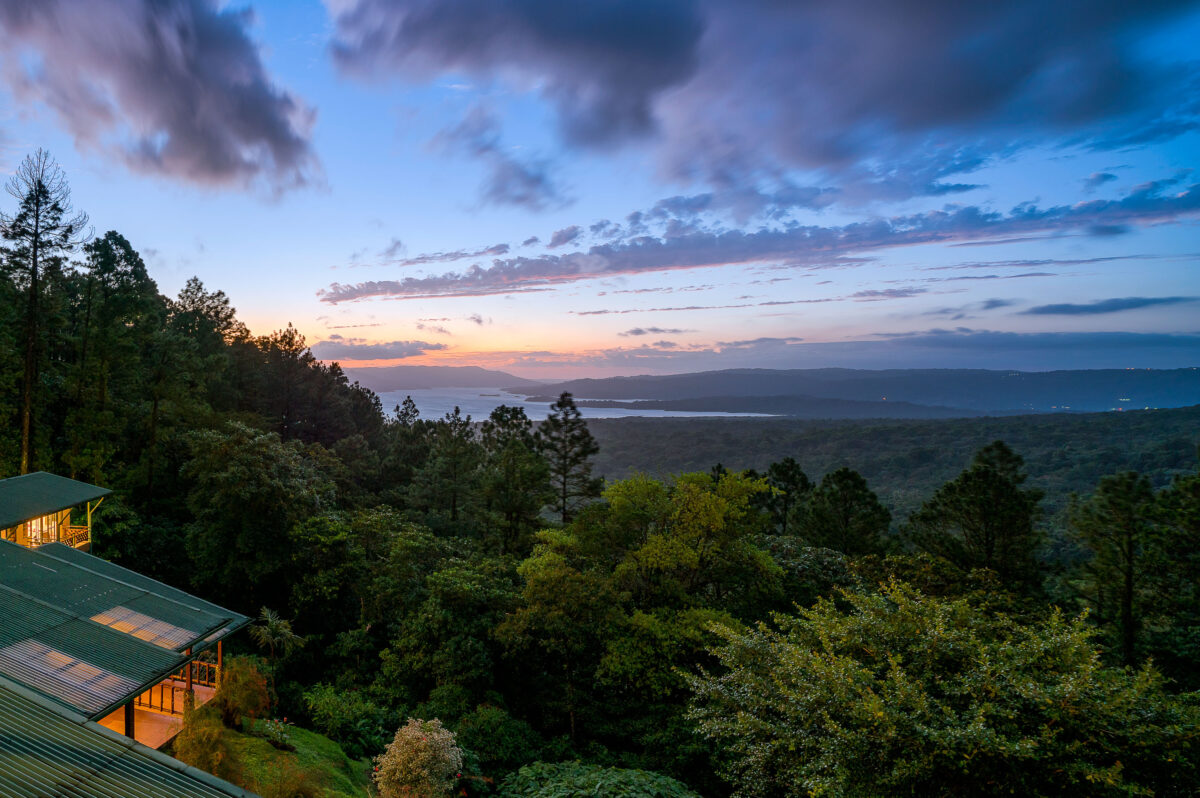
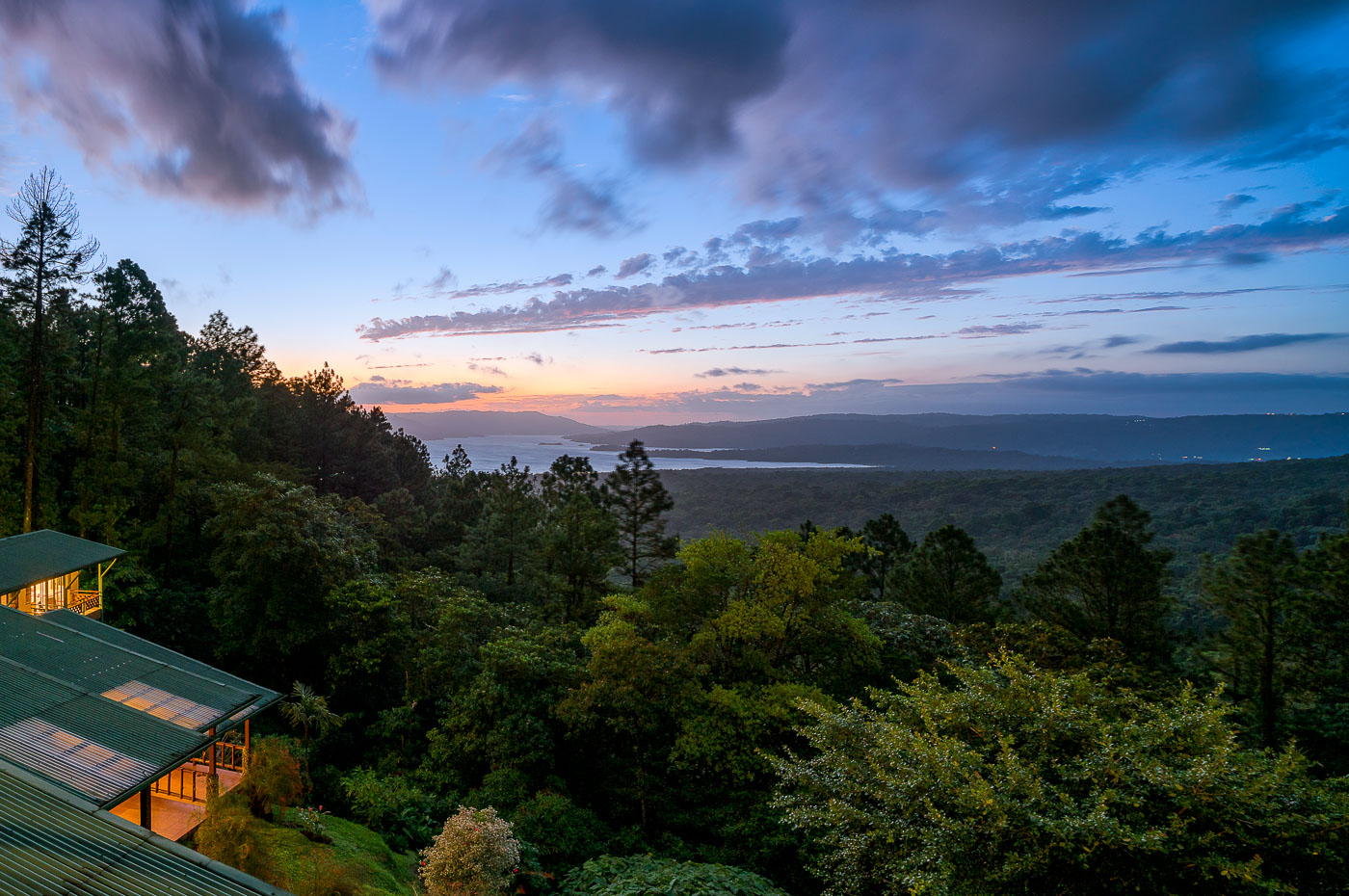
Arenal Observatory Lodge at sunset, Costa Rica, overlooking Lake Arenal and lush rainforest.
The Arenal Observatory Lodge in La Fortuna, Costa Rica, offers views of Lake Arenal and the surrounding rainforest. Originally established in 1910 as a research station for the Carnegie Institution, the lodge was built to facilitate scientific study of the nearby Arenal Volcano. Today, it operates as a hotel and provides a base for exploring the region's natural beauty and geological significance. The lodge's architecture features expansive verandas and green metal roofs designed to complement the tropical environment.
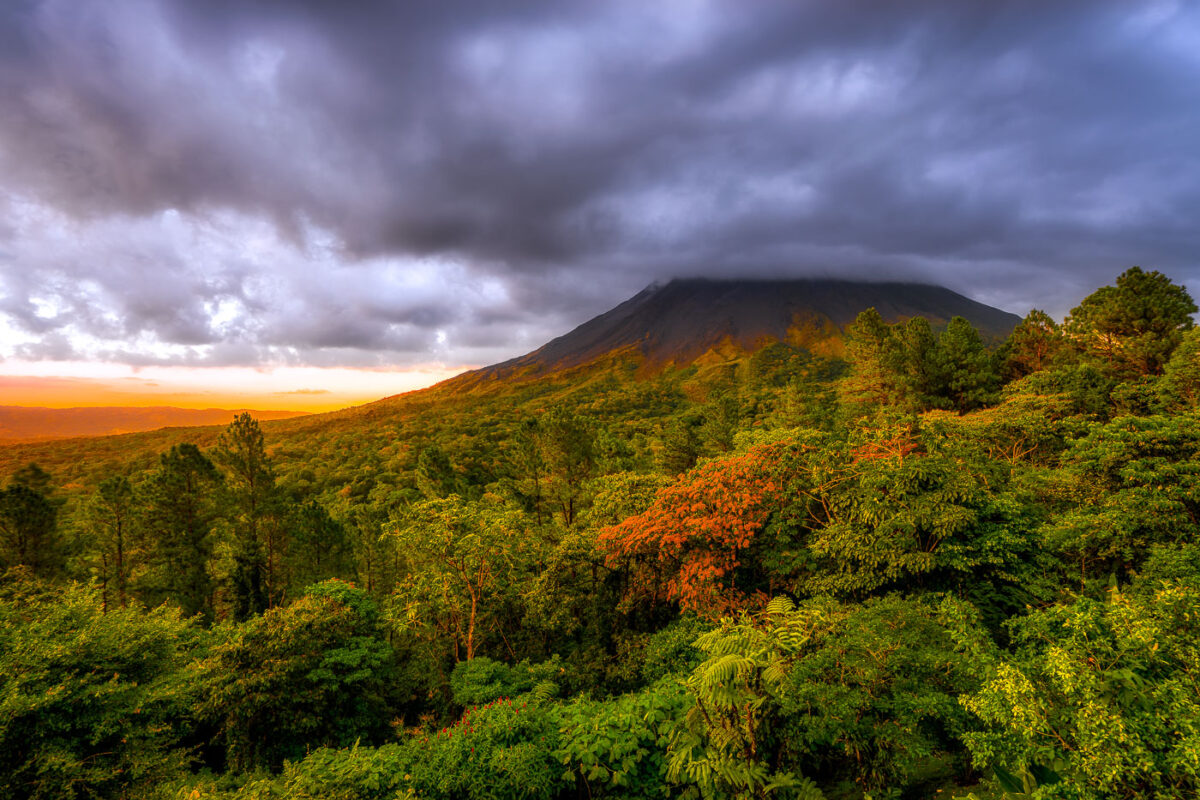
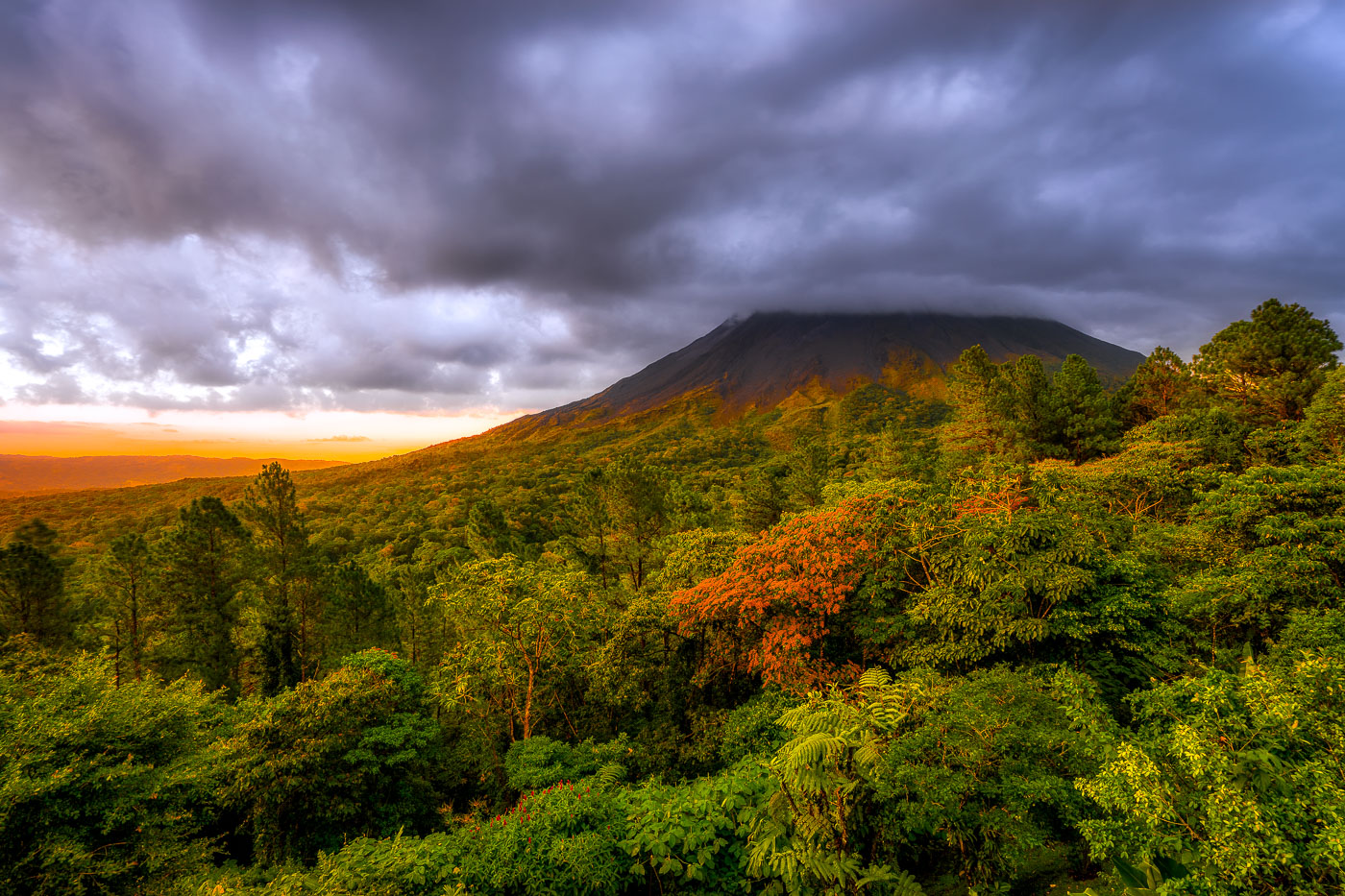
Arenal Volcano in Costa Rica is visible at sunset, with lush green rainforest in the foreground.
Arenal Volcano, a stratovolcano in Costa Rica, is visible at sunset from the Arenal Observatory Lodge. Originally established in 1944 as a research station, the lodge now functions as a hotel and a base for exploring the surrounding national park. The volcano is one of Costa Rica's most active natural landmarks, drawing visitors interested in its geological activity and the rainforest ecosystem.
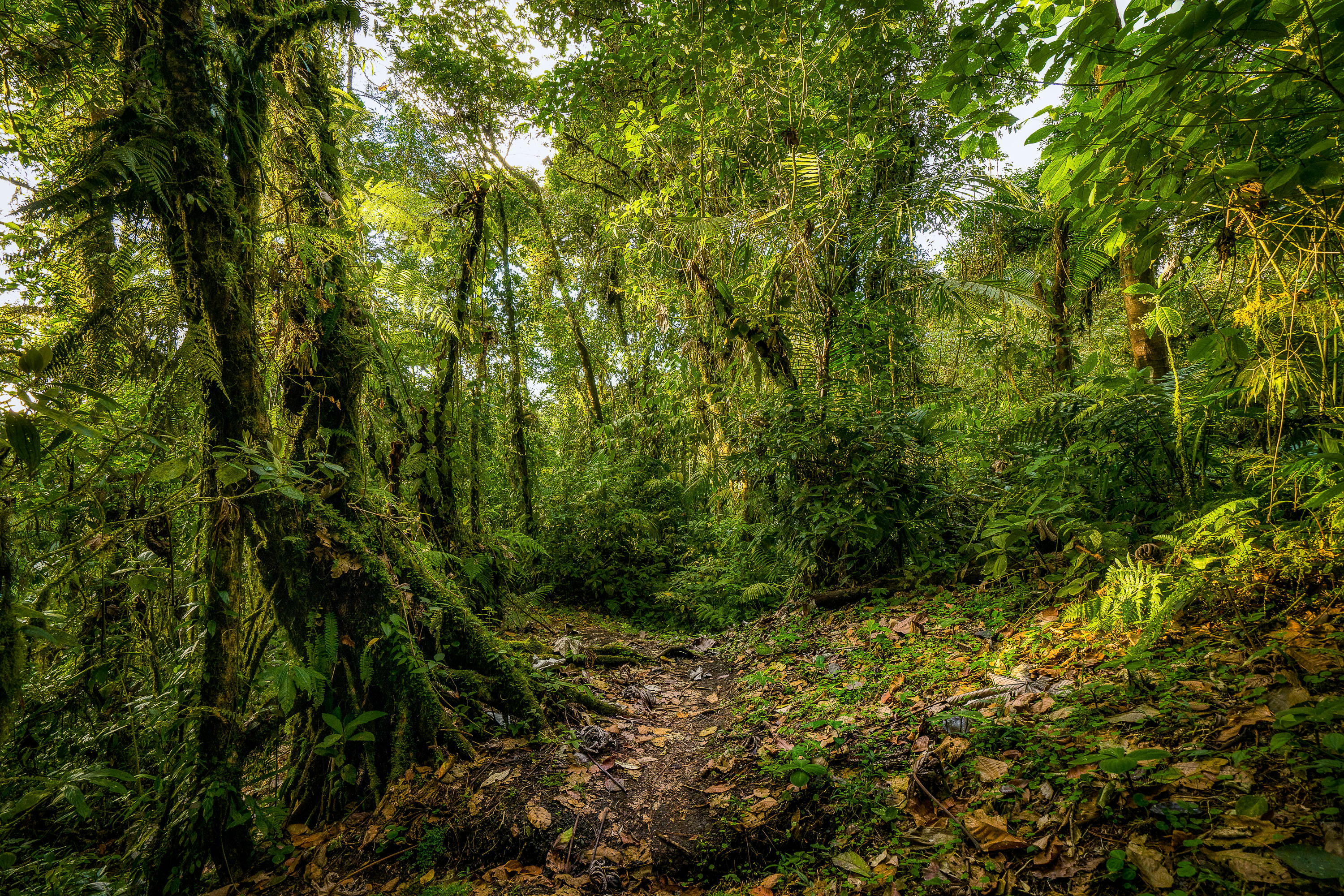
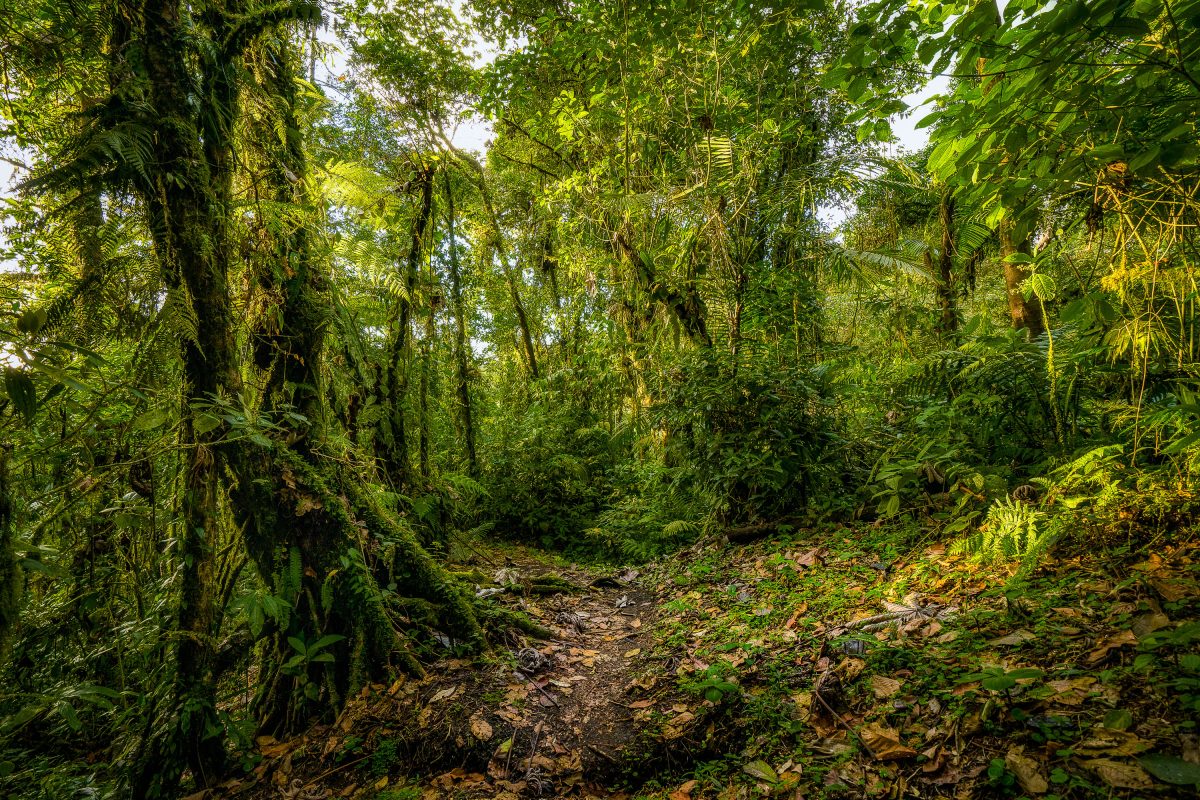
A trail winds through the lush Monteverde Cloud Forest Biological Preserve in Costa Rica, characterized by dense vegetation and moss-covered trees.
A trail winds through the Monteverde Cloud Forest Biological Preserve in Costa Rica, a region known for its rich biodiversity. This high-altitude ecosystem, characterized by persistent cloud cover, supports a dense array of plant life, including numerous epiphytes and ferns. Established in 1972, the preserve protects critical habitat for many species, some of which are endemic to the area. Designated trails allow visitors to experience the complex environment of this tropical cloud forest.
A trail winds through the Monteverde Cloud Forest in Costa Rica, a biodiverse high-altitude ecosystem.
A trail winds through the Monteverde Cloud Forest in Costa Rica, a high-altitude ecosystem known for its persistent mist and exceptional biodiversity. Established as a biological reserve in 1972, this forest is a vital center for scientific research and ecotourism. Visitors can explore its rich environment via a network of trails, offering a glimpse into one of the planet's most biologically intense habitats.
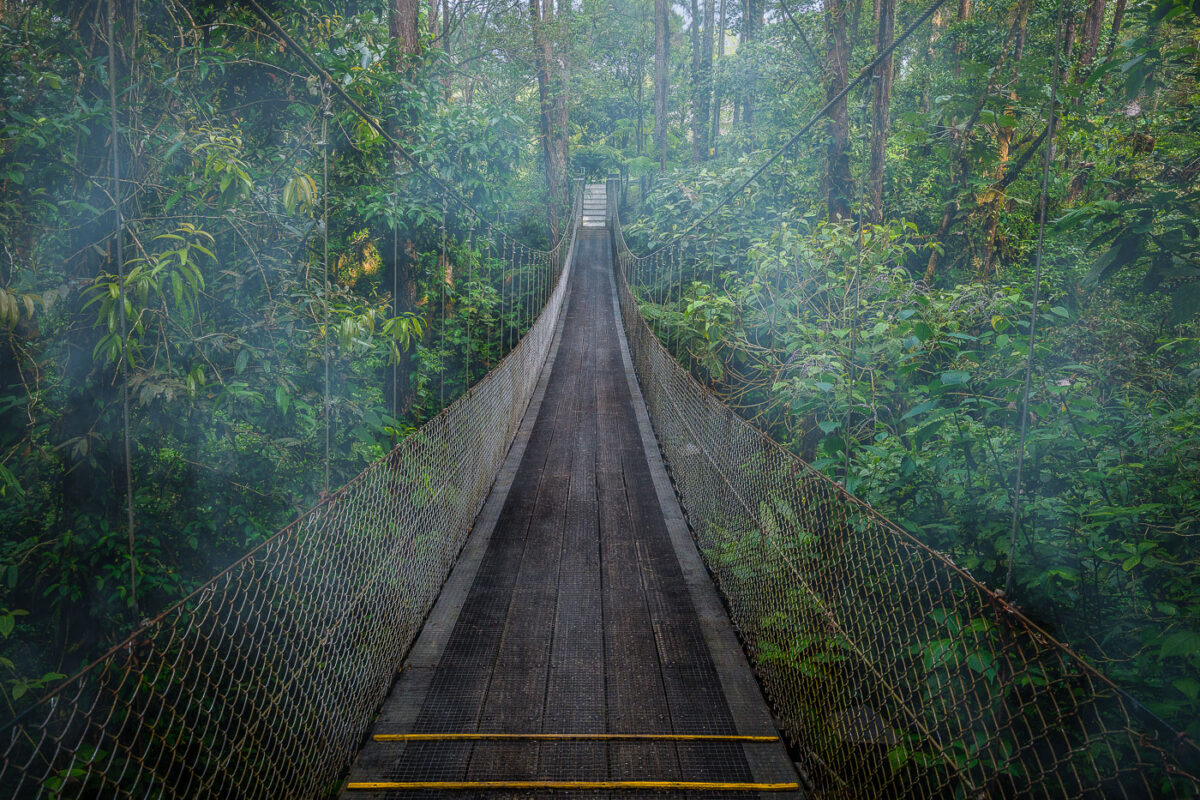
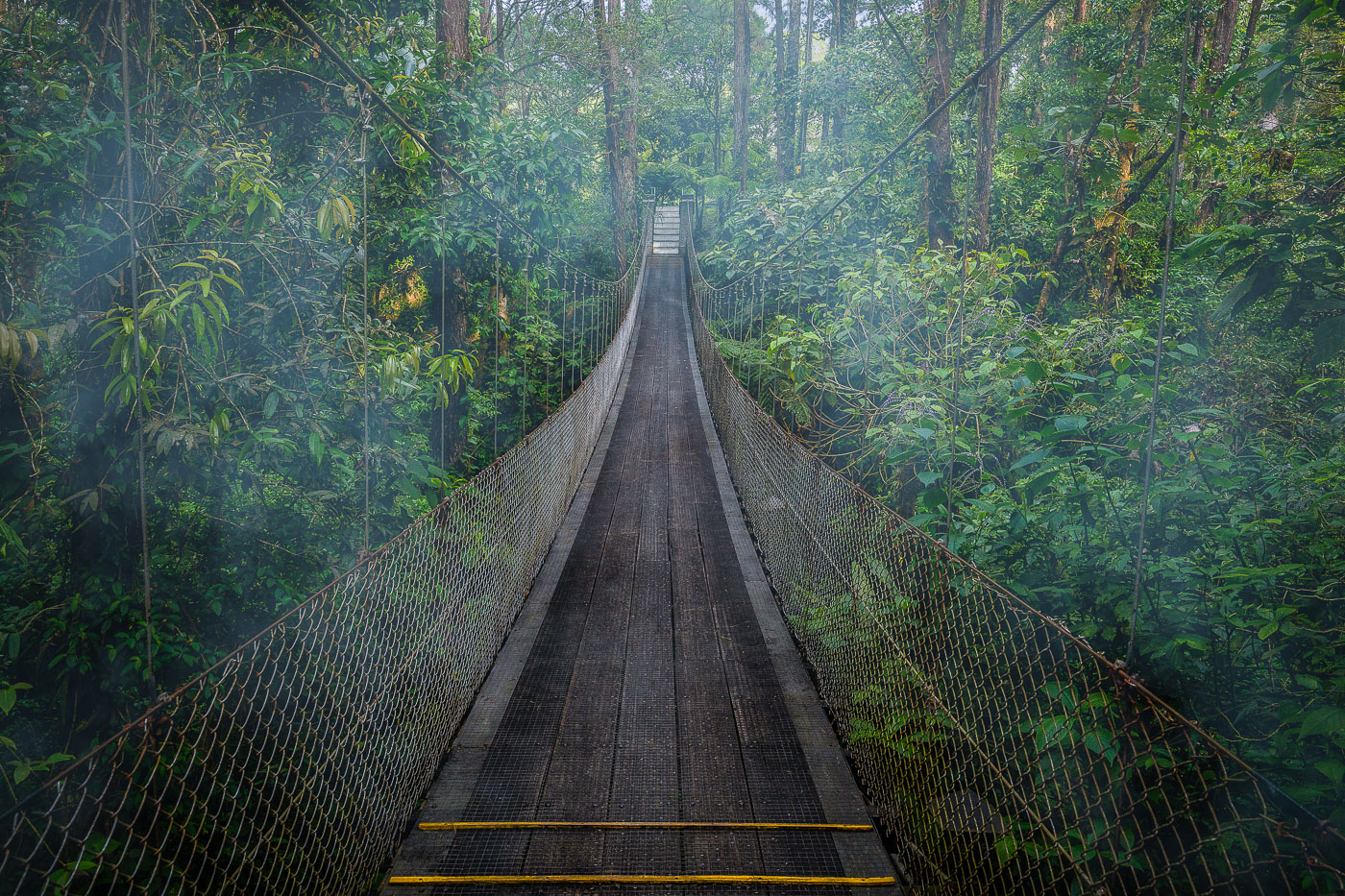
A hanging bridge crosses a misty cloud forest near the Arenal Observatory in Costa Rica.
A suspension bridge winds through a misty cloud forest near the Arenal Observatory in Costa Rica. These bridges are part of the nature trails at the Arenal Observatory Lodge & Spa, providing access to the rainforest canopy. The observatory was established in 1965 as a research station, and the surrounding area is known for its biodiversity and views of the Arenal Volcano.
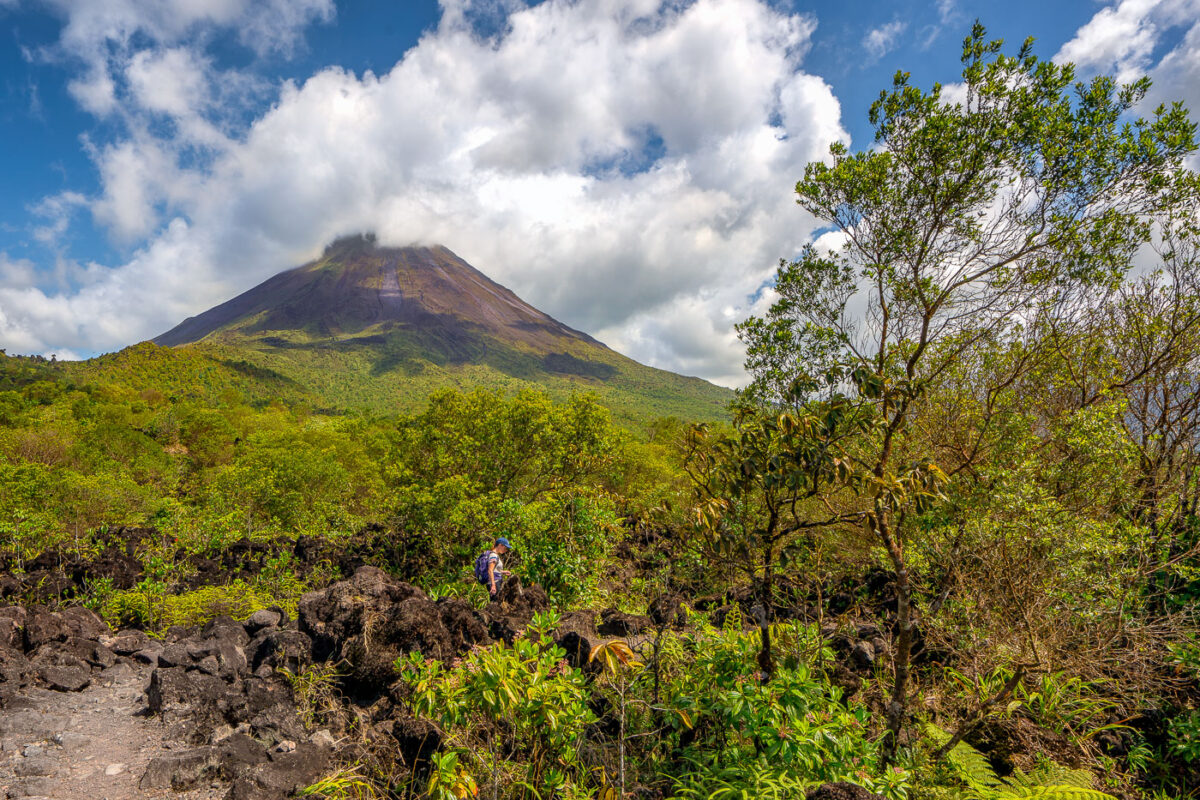
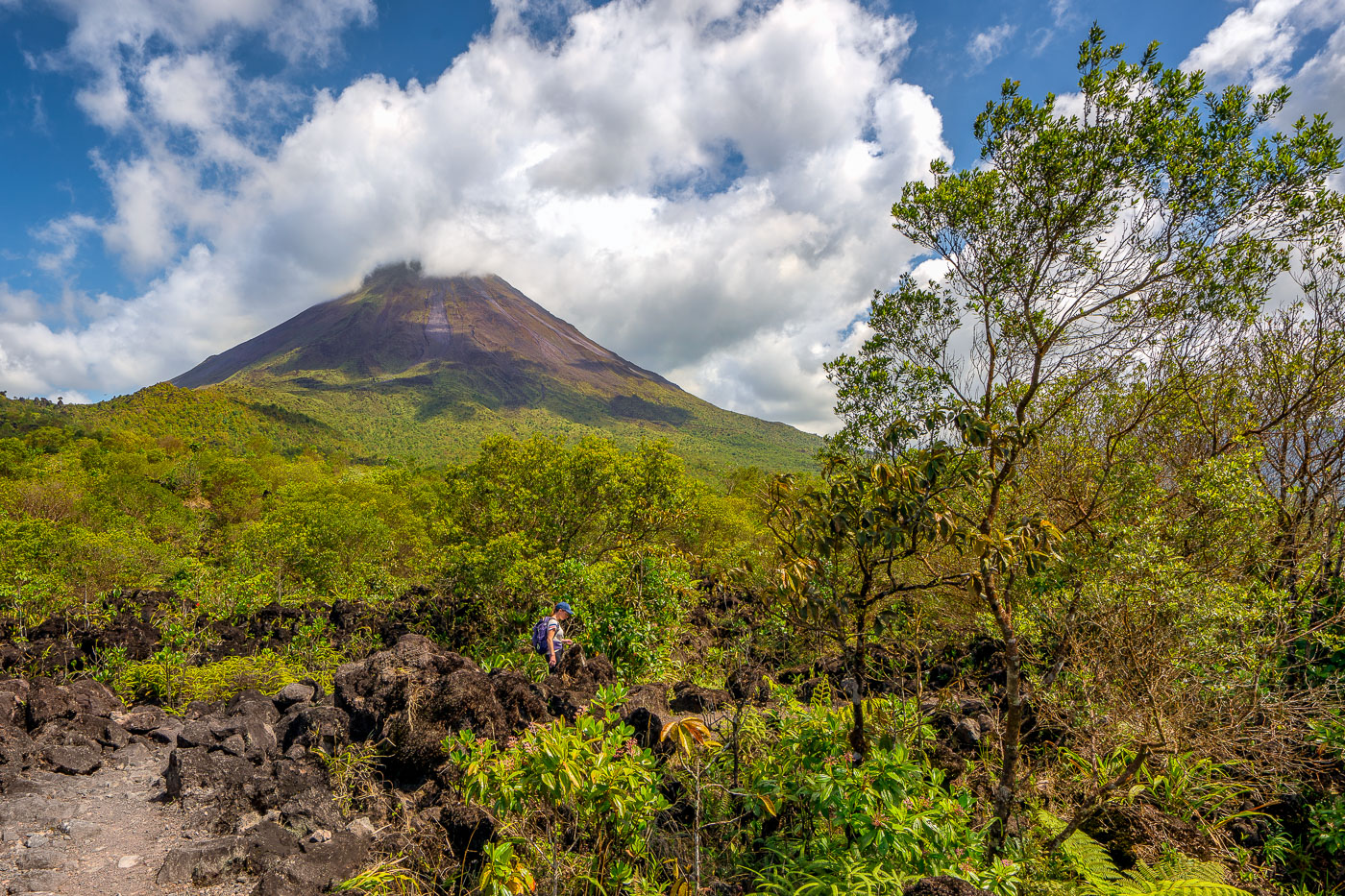
A hiker walks on a lava trail near Arenal Volcano in Costa Rica, a stratovolcano active until 2010.
A hiker walks along a trail through solidified lava fields at the base of Arenal Volcano in Costa Rica. Arenal, a stratovolcano, was active from 1968 to 2010, shaping the surrounding terrain with its eruptions. The trails offer a view of the geological history and the ongoing process of ecological regeneration in the protected area.
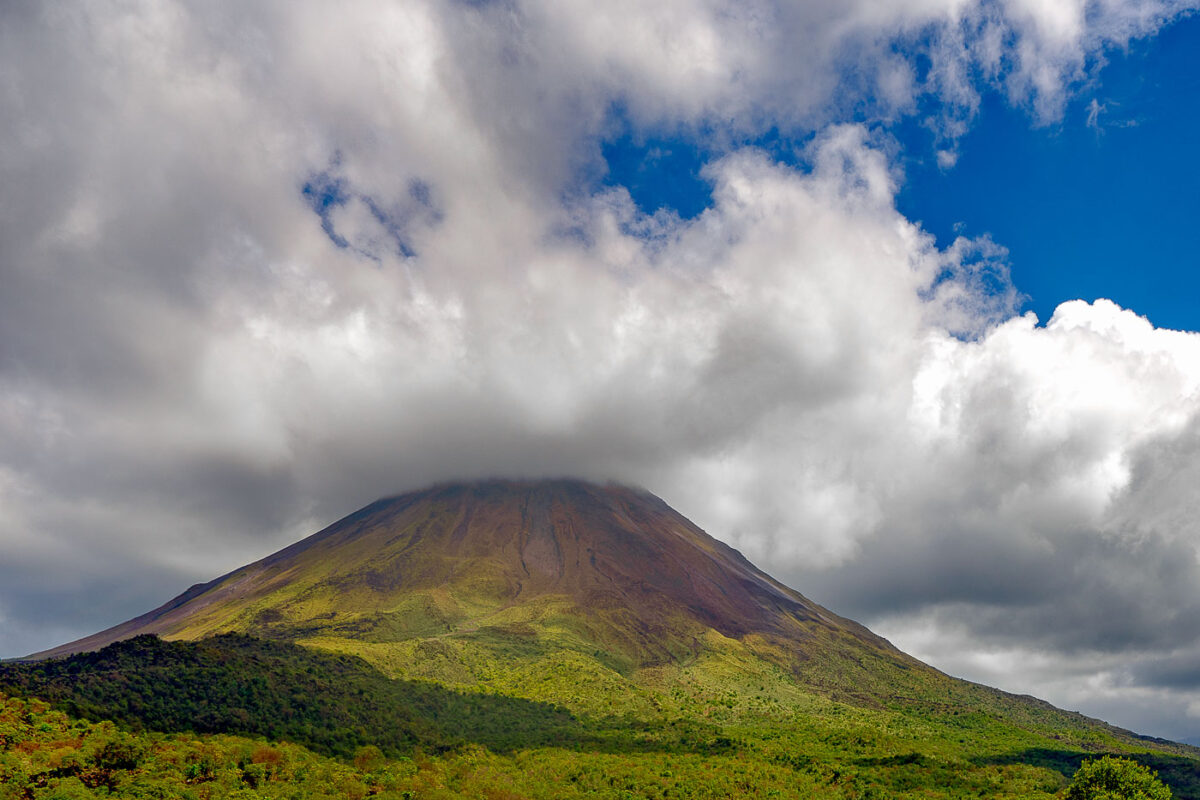
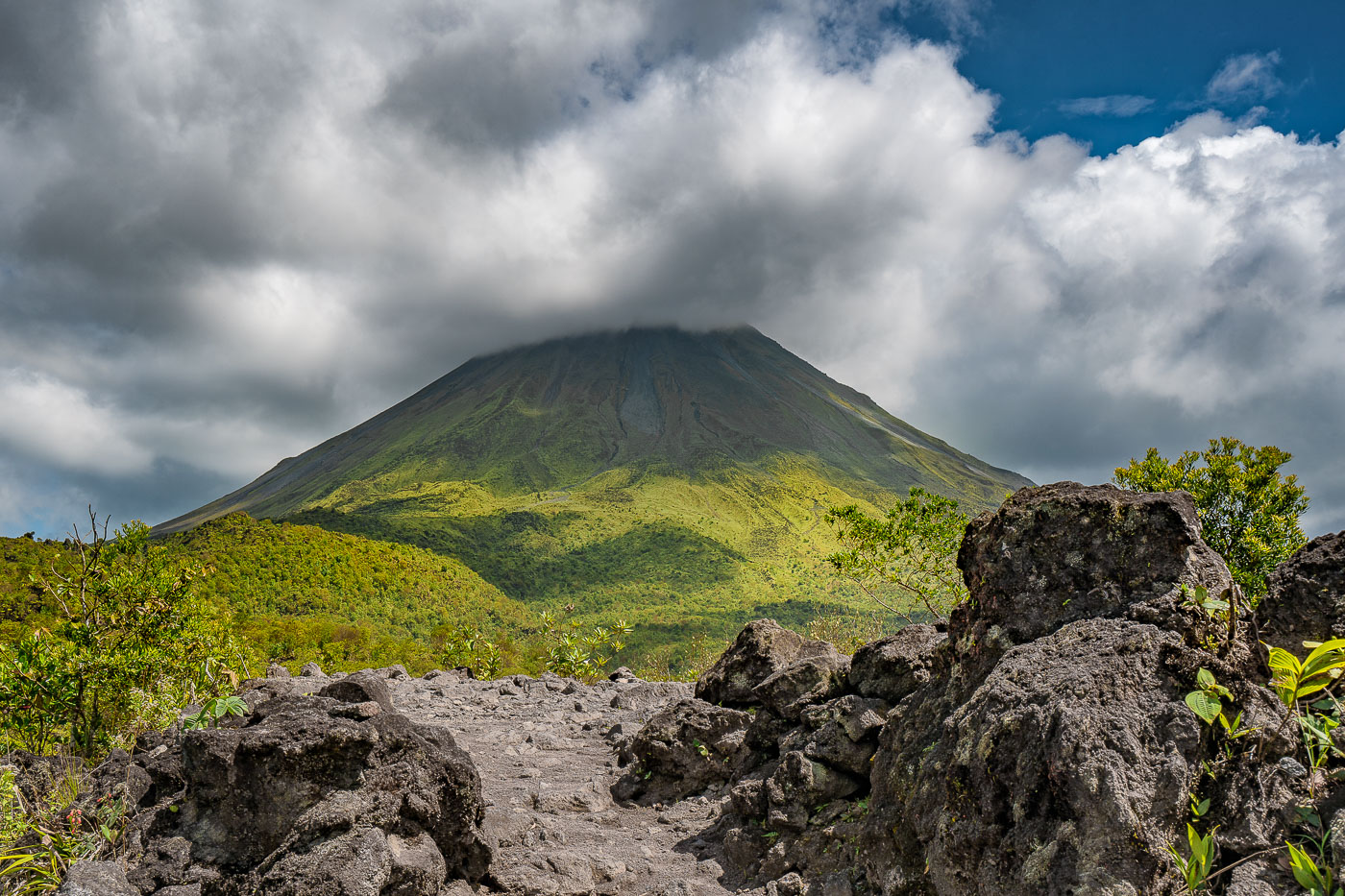
Arenal Volcano in Costa Rica is partially obscured by clouds, with lush green vegetation in the foreground.
Arenal Volcano in Costa Rica is partially obscured by clouds, a common occurrence due to its tropical rainforest location. This stratovolcano, situated in the Guanacaste Province, is a prominent natural landmark. While historically active, its last eruption was in 1968, and it has been dormant since 2010. The surrounding area, including the town of La Fortuna, is a popular ecotourism destination.
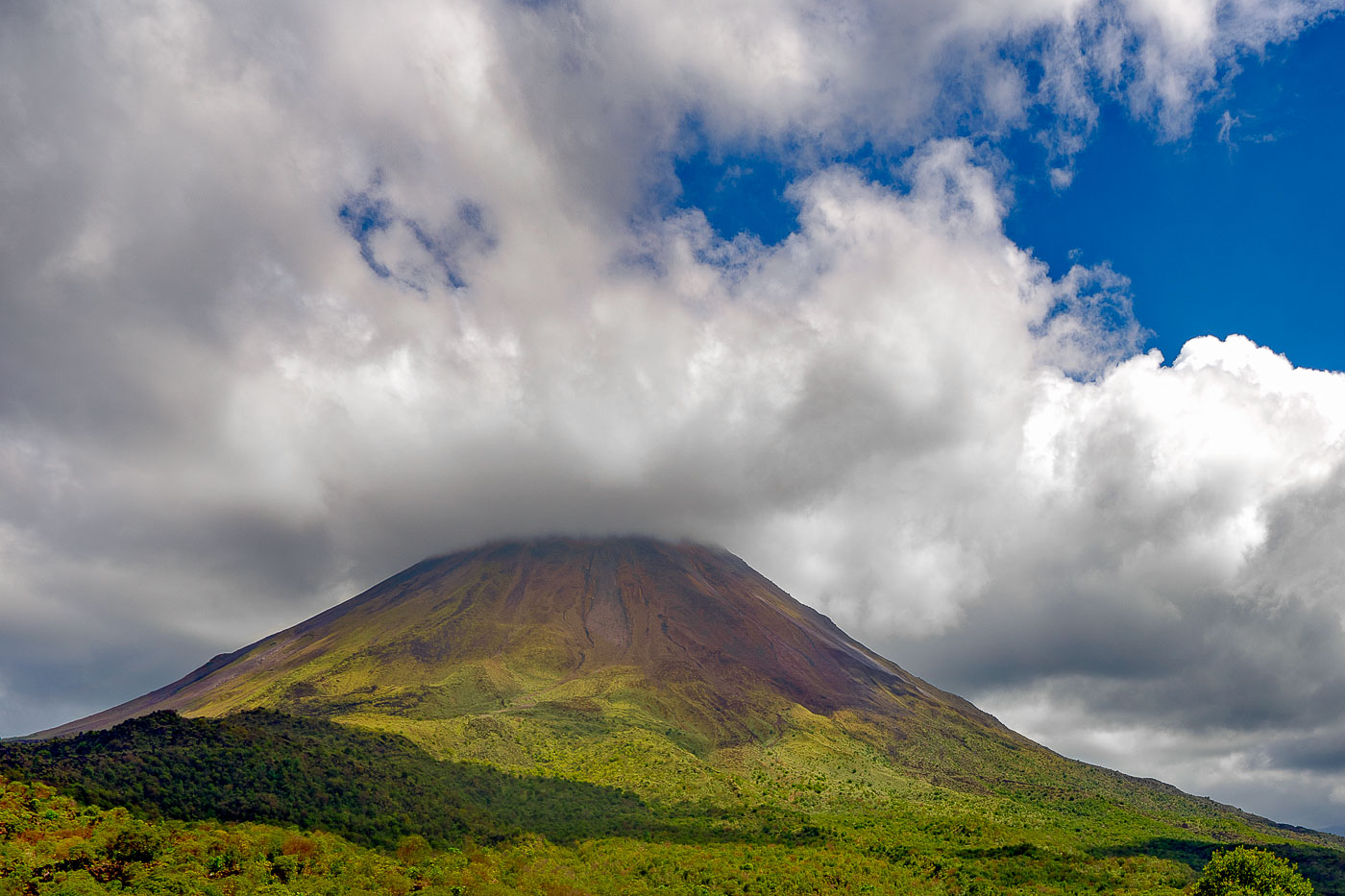
Arenal Volcano in Costa Rica, partially obscured by clouds, rises above lush green hills.
Arenal Volcano in Costa Rica's Alajuela Province is a stratovolcano that became active after a major eruption in 1968. The surrounding lush green hills contrast with the volcano's slopes, which are partially obscured by clouds. This geological formation is a central feature of Arenal Volcano National Park, drawing visitors interested in its natural beauty and volcanic history.
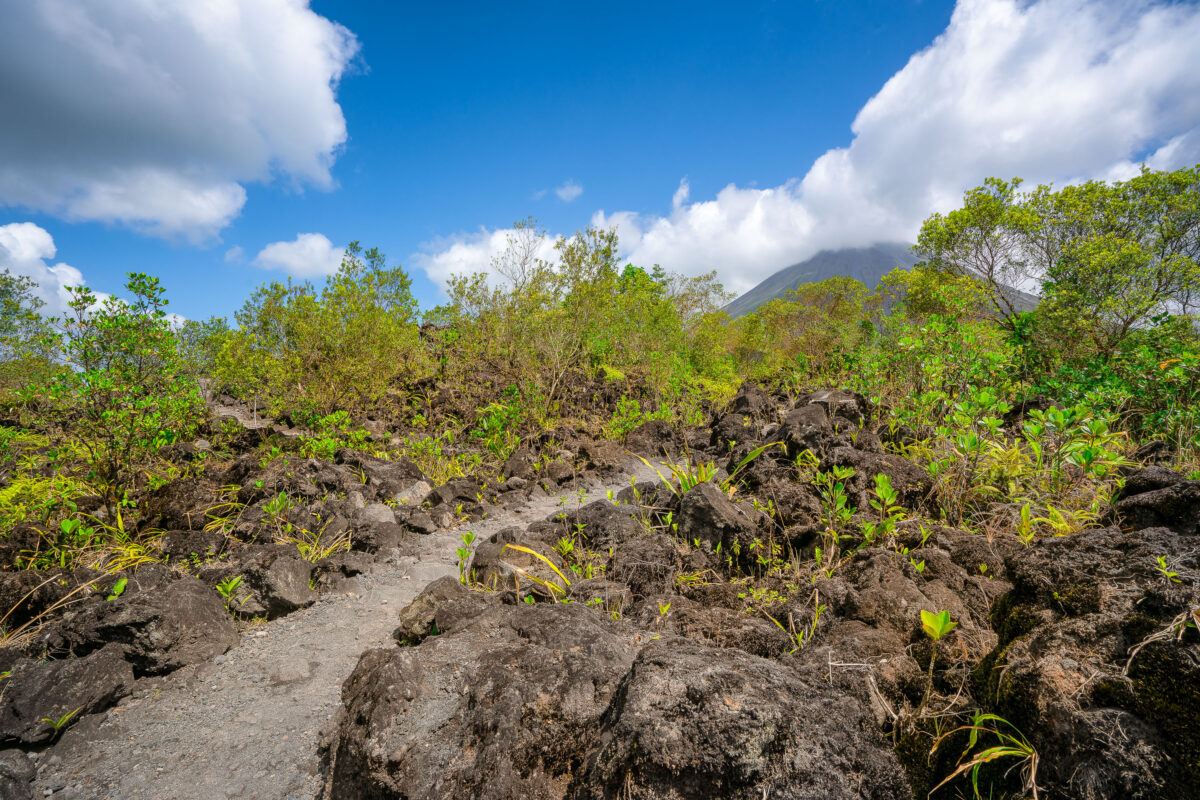
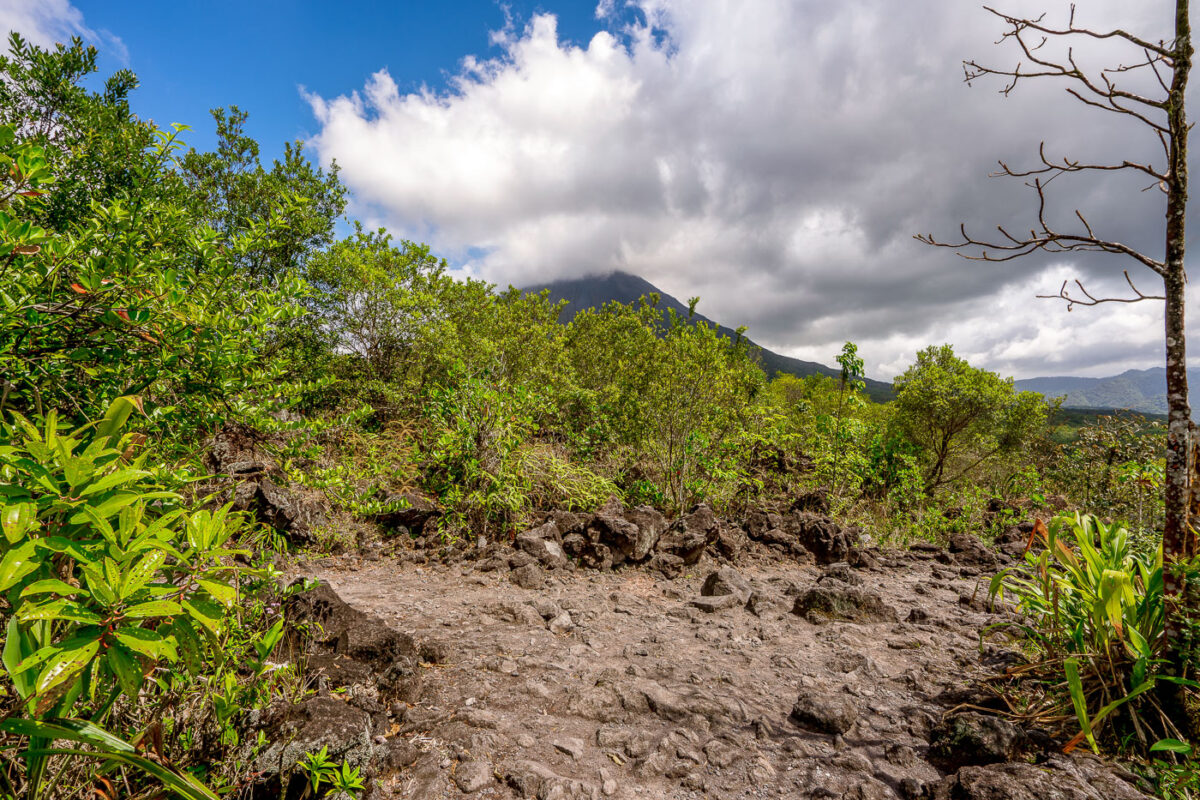
Arenal Volcano lava fields in Costa Rica with a path winding through rocky terrain and vegetation.
The Arenal Volcano lava fields near La Fortuna, Costa Rica, show the landscape shaped by past eruptions. The volcano, active until 2010, left behind solidified lava flows, notably from the 1968 eruption. Vegetation is gradually reclaiming these rocky terrains, illustrating the natural regeneration of the ecosystem. This area is a popular destination for observing volcanic geology and its recovery.
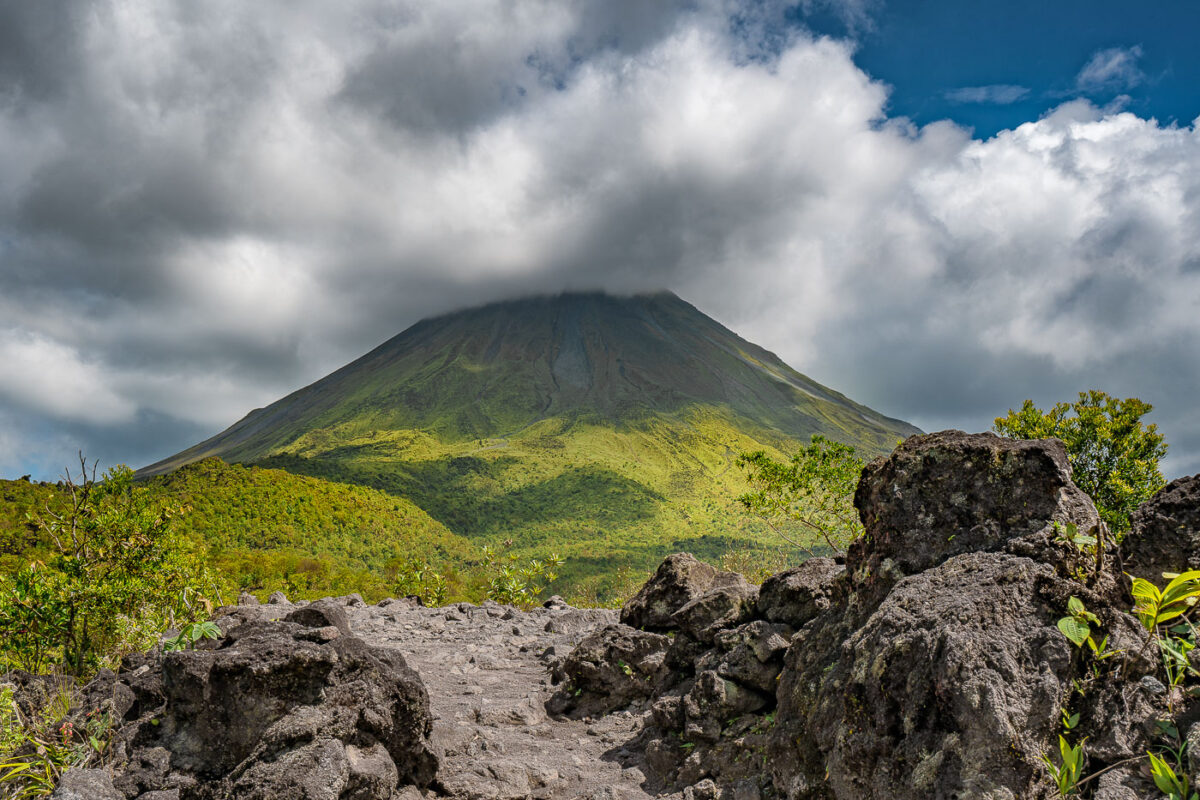
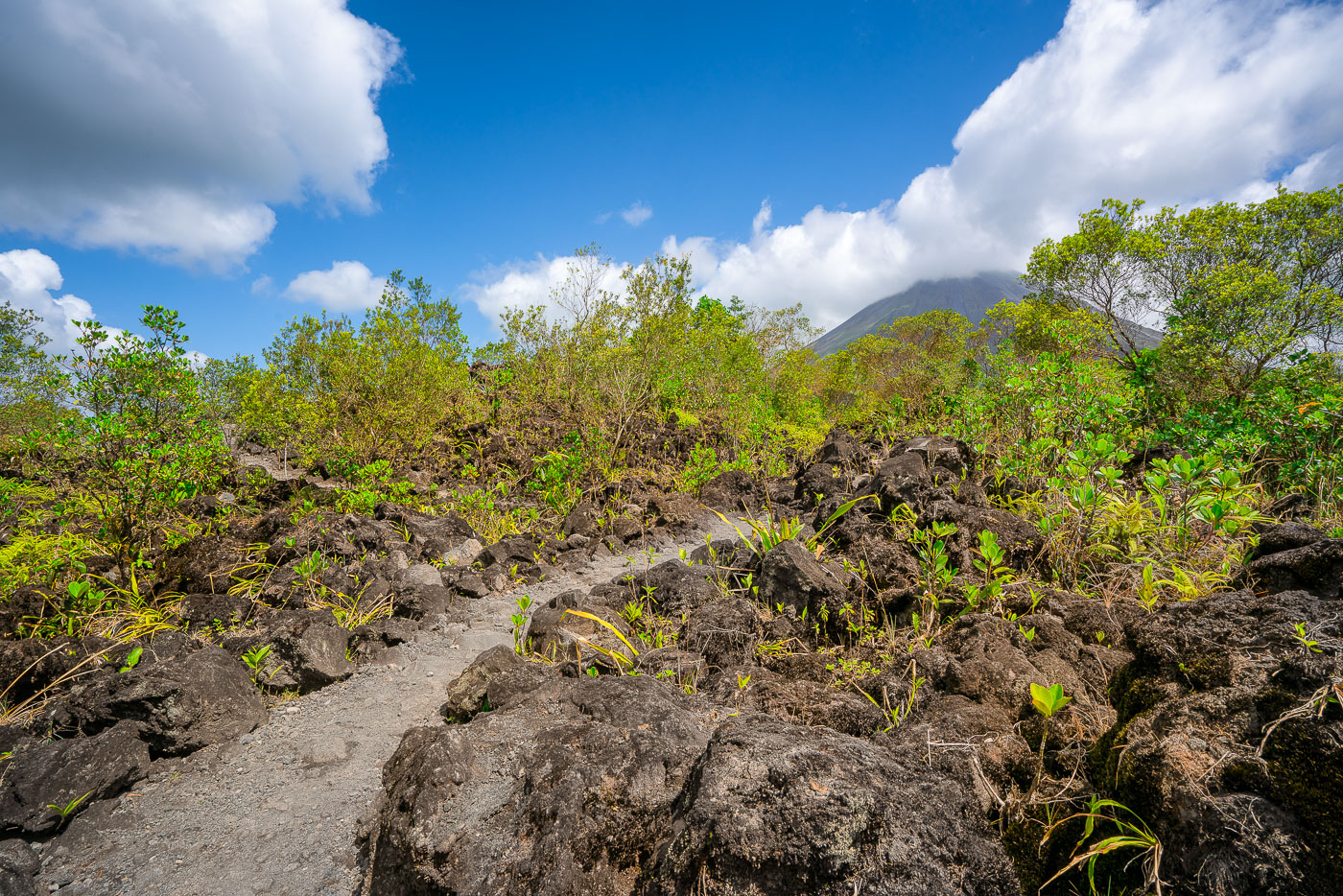
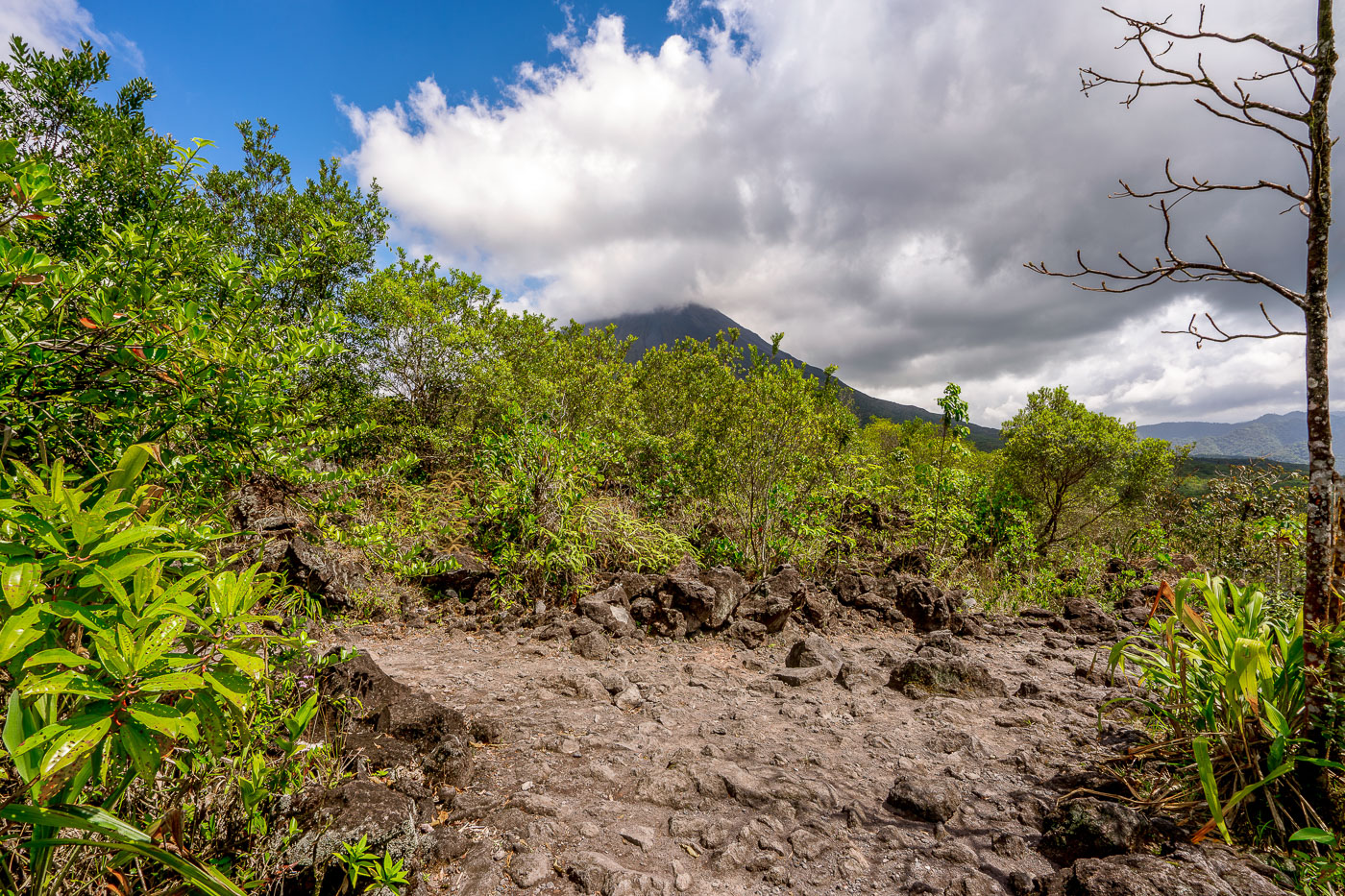
Arenal 1968 Lava Field Trail in Alajuela Province, Costa Rica, features a rocky path through lush vegetation with Arenal Volcano in the background.
The Arenal 1968 Lava Field Trail in Alajuela Province, Costa Rica, offers a path across solidified lava flows from the 1968 Arenal Volcano eruption. This trail allows visitors to experience the geological impact of the eruption and observe the gradual regrowth of vegetation on the volcanic rock. It is a popular destination for those interested in volcanic landscapes and ecological recovery.
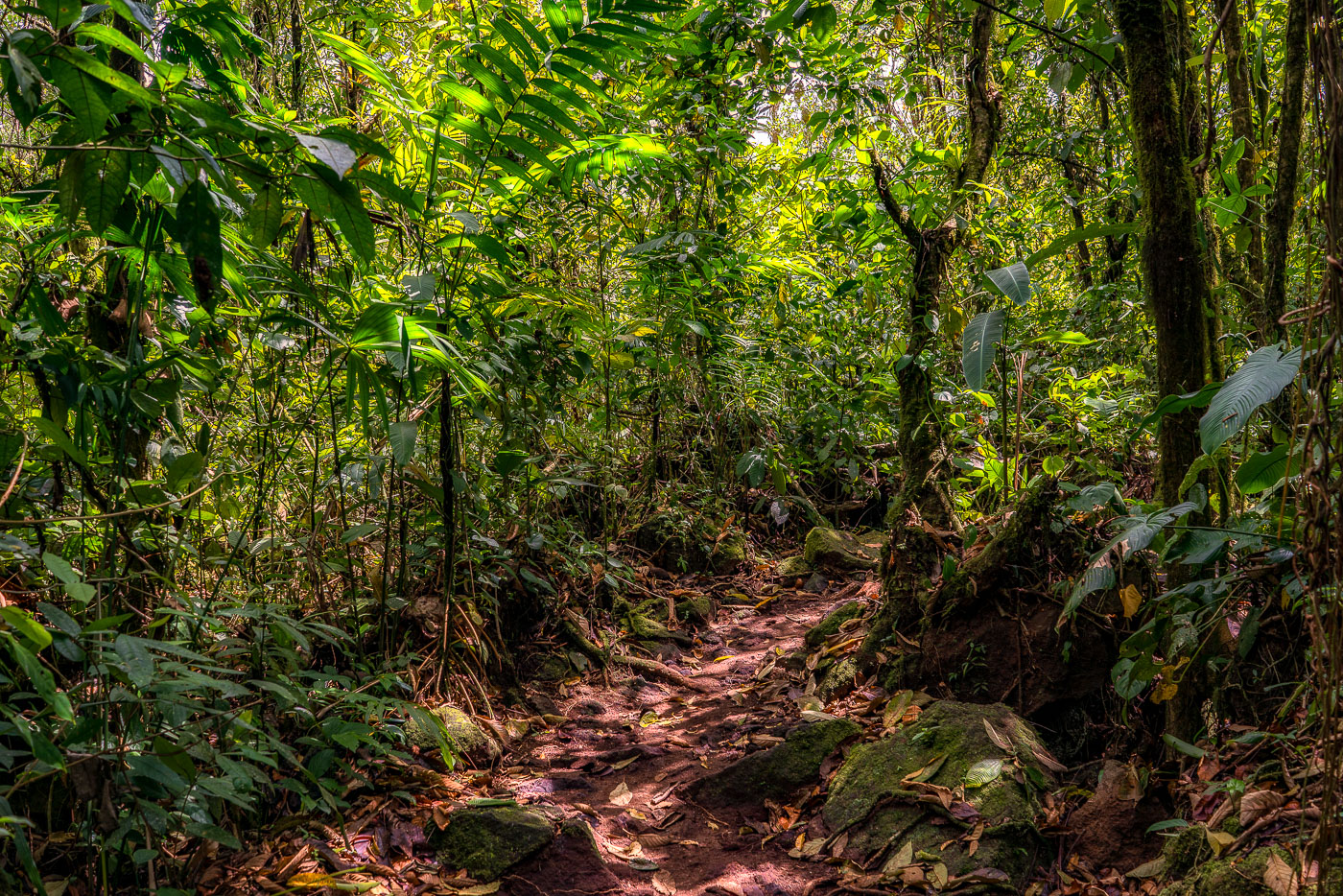
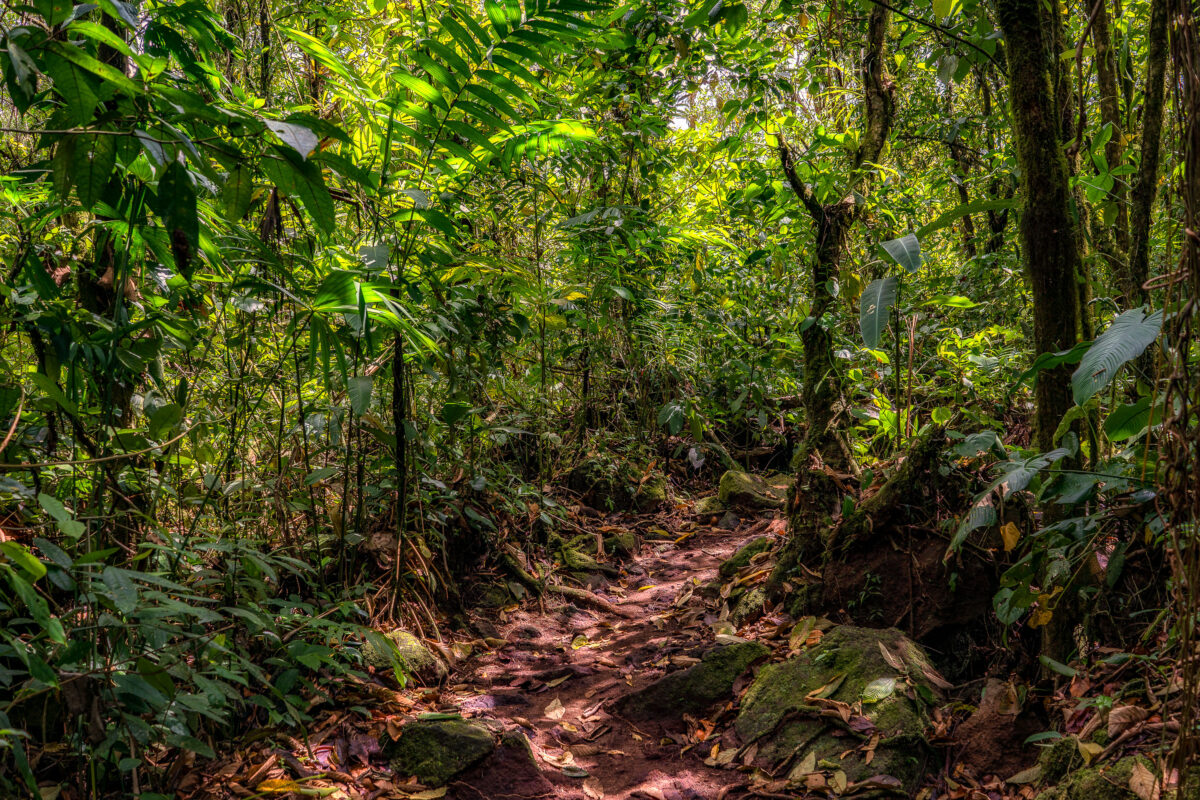
A sun-dappled trail winds through a lush, green cloud forest in Costa Rica, near Arenal Volcano.
The Arenal 1968 Lava Flow Trail winds through the cloud forest near Arenal Volcano in Costa Rica. This path follows the route of lava from the volcano's 1968 eruption, which significantly altered the landscape. The trail offers a view of a regenerating ecosystem and the lasting effects of volcanic activity.
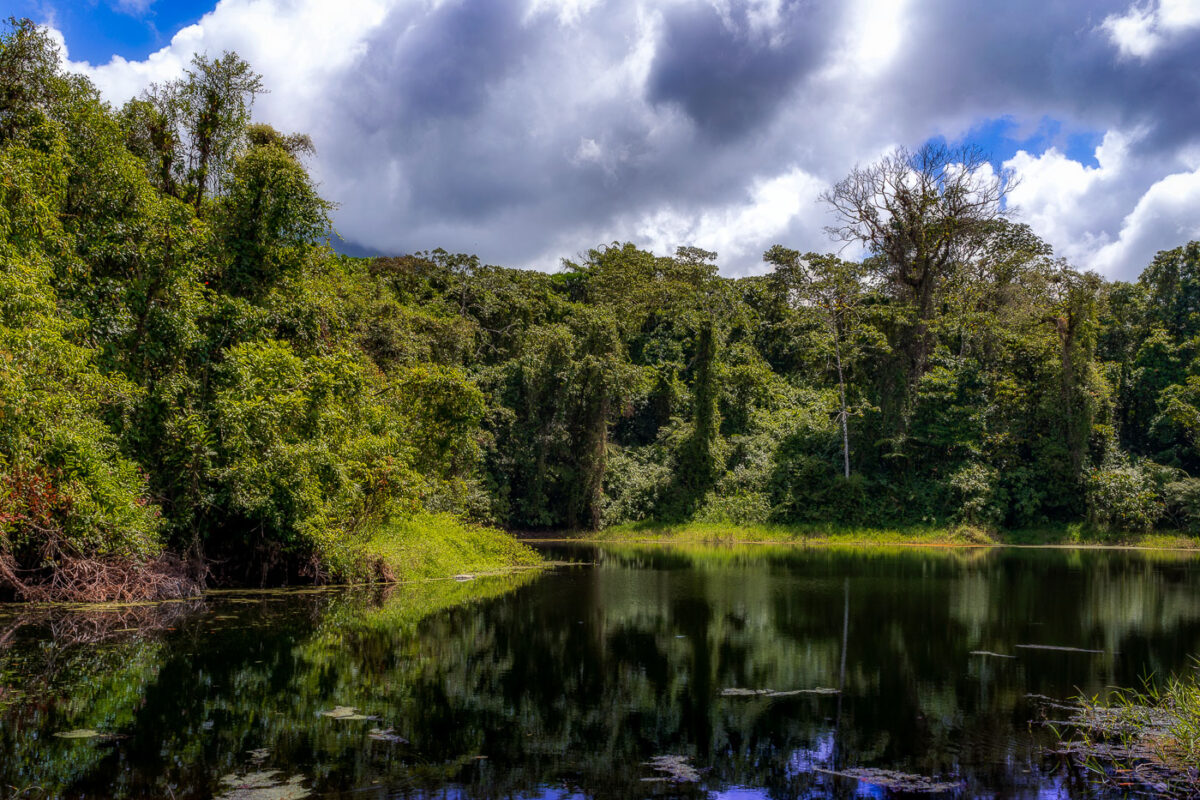
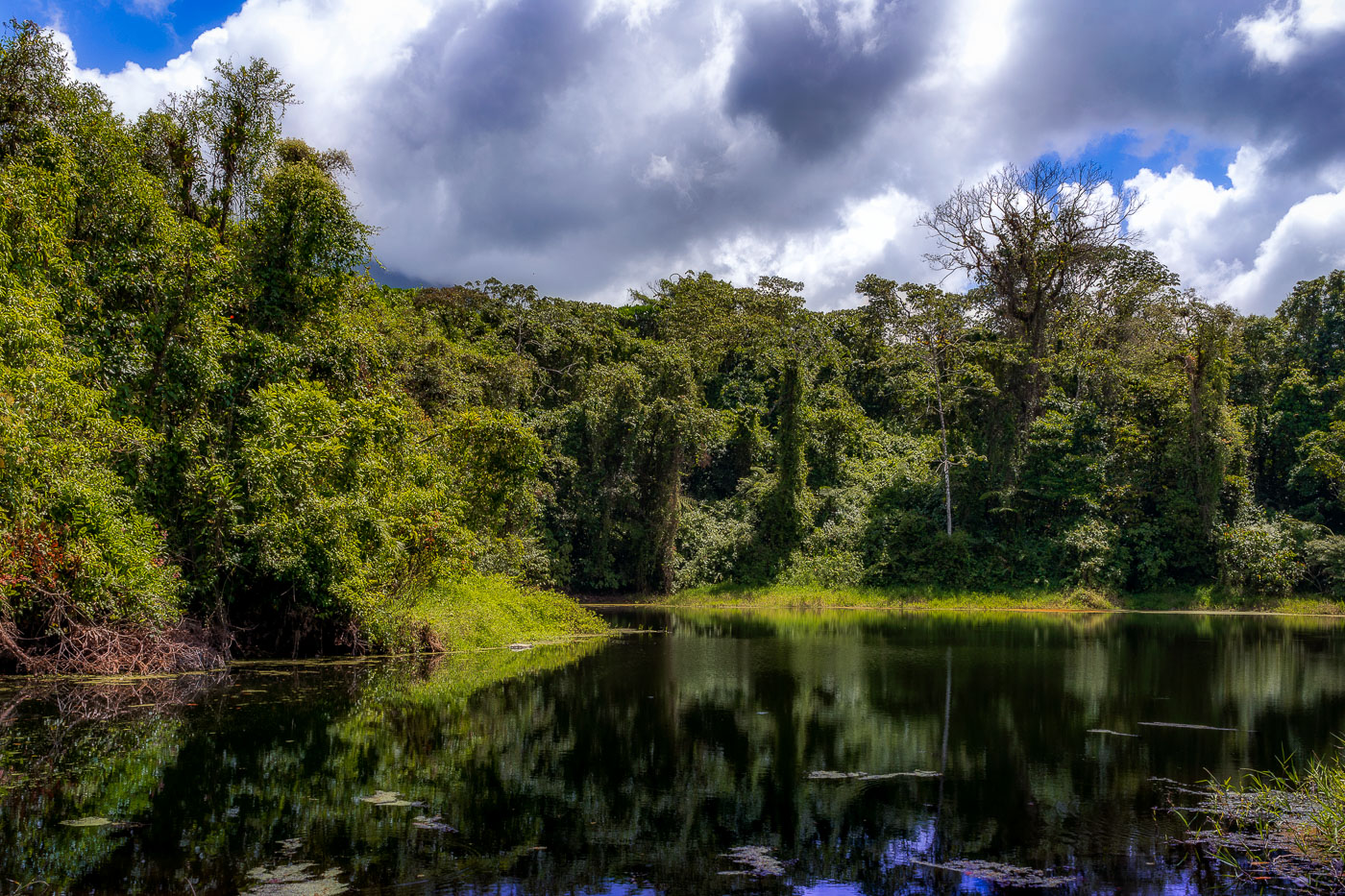
Lush cloud forest surrounds a dark lake near Arenal Volcano, Costa Rica.
The Arenal 1968 lava flow trails wind through the lush cloud forest surrounding Arenal Volcano in Costa Rica. These trails offer visitors a glimpse into the powerful geological forces that shaped the landscape during the volcano's significant eruption in 1968. The area is a testament to nature's resilience, with dense vegetation reclaiming the hardened lava. Today, these trails are a popular destination for hikers seeking to experience the unique ecosystem and the dramatic history of this active volcanic region.
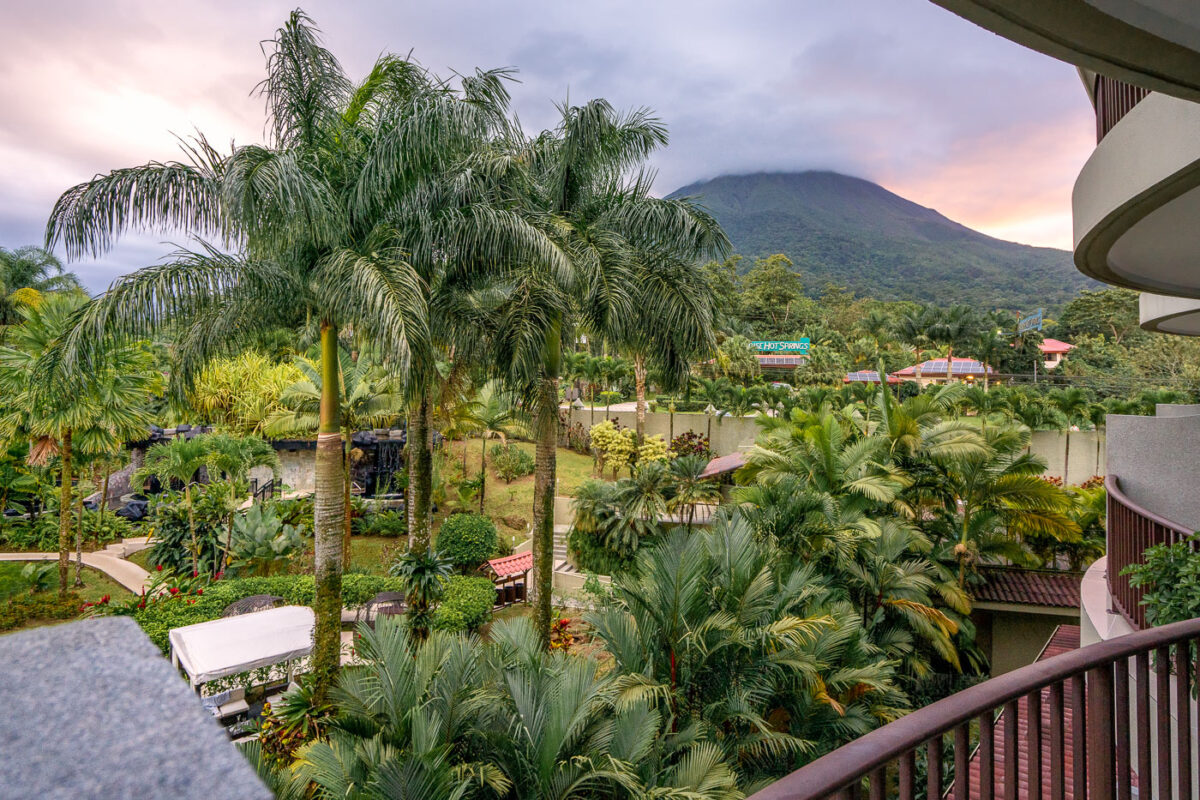
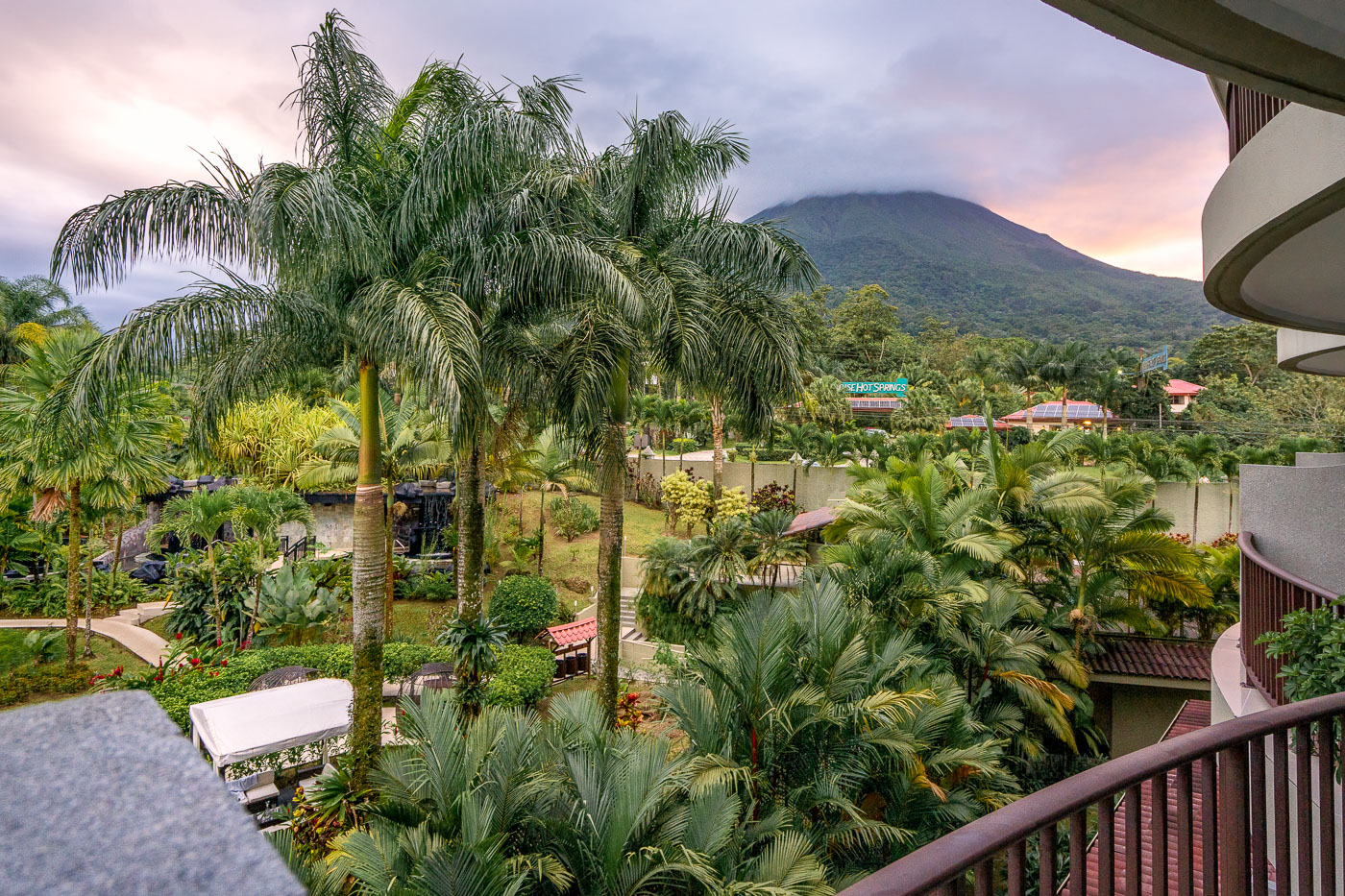
Arenal Volcano looms over lush tropical foliage and resort buildings in Costa Rica.
Arenal Volcano, a stratovolcano in Costa Rica's Guanacaste Province, is seen from the Royal Corin Thermal Water and Spa Resort near La Fortuna. The resort offers views of the active volcano, which last erupted in 2010 and is currently in a resting phase. The surrounding region is a popular ecotourism destination due to the volcano's geological importance and the area's rich biodiversity.

Built in Minneapolis

Photographs showcasing change over time

Browse by location, move through long-running series, or start with recent work.