Place Archive

Thunder Bay

Photographs from Thunder Bay.

8 photos

Photos from Thunder Bay
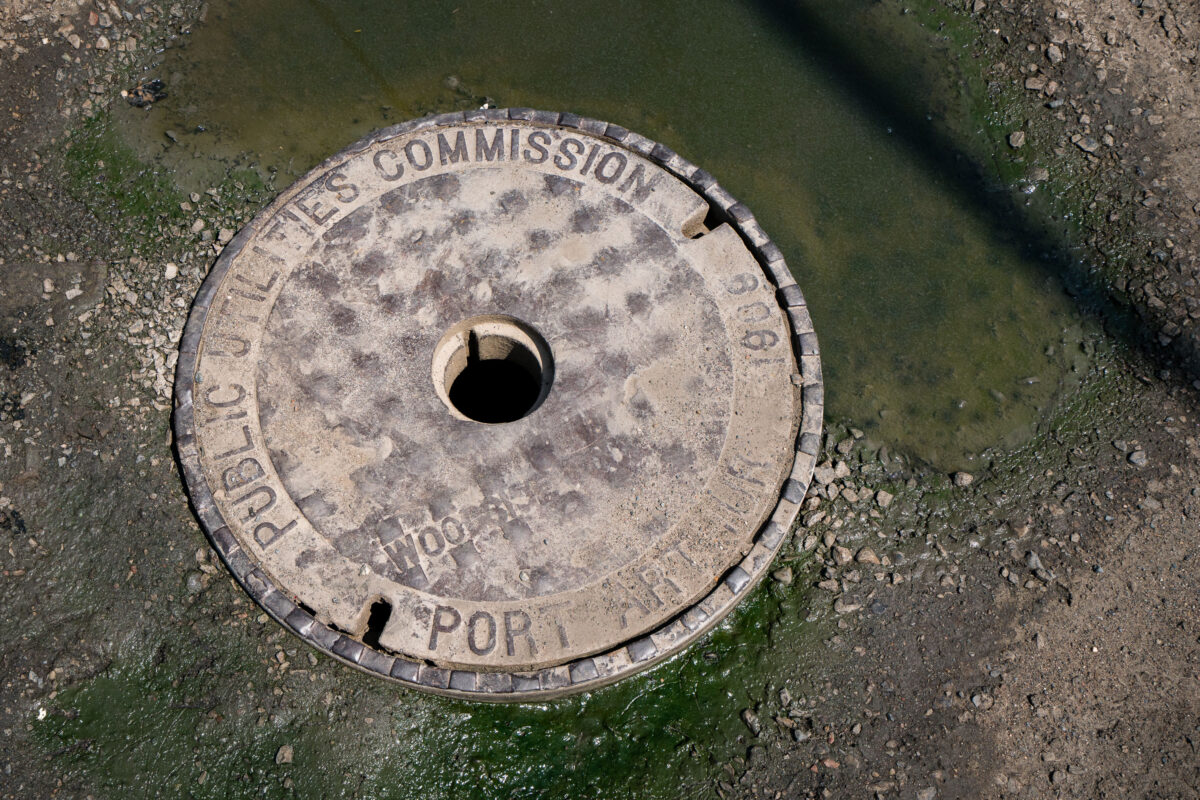
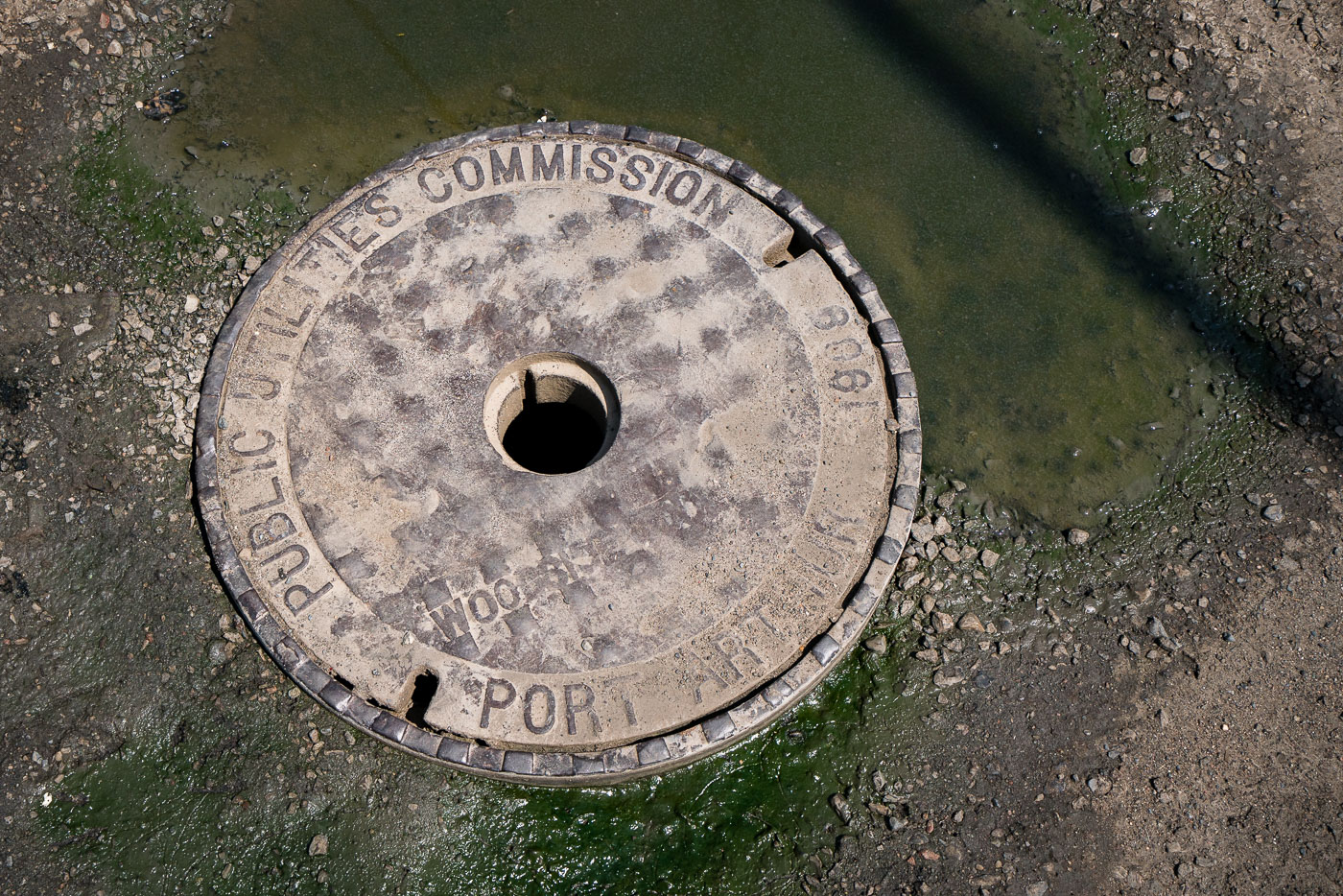
1906 Port Arthur Public Utilities manhole cover in Thunder Bay, Ontario.
This 1906 cast iron manhole cover from Port Arthur, Ontario, served the city's public utilities before its amalgamation into Thunder Bay in 1970. It represents the independent management of water, sewer, and electrical services by Port Arthur. The cover is a relic of early municipal engineering in northwestern Ontario, reflecting the area's industrial development as a key Lake Superior port.
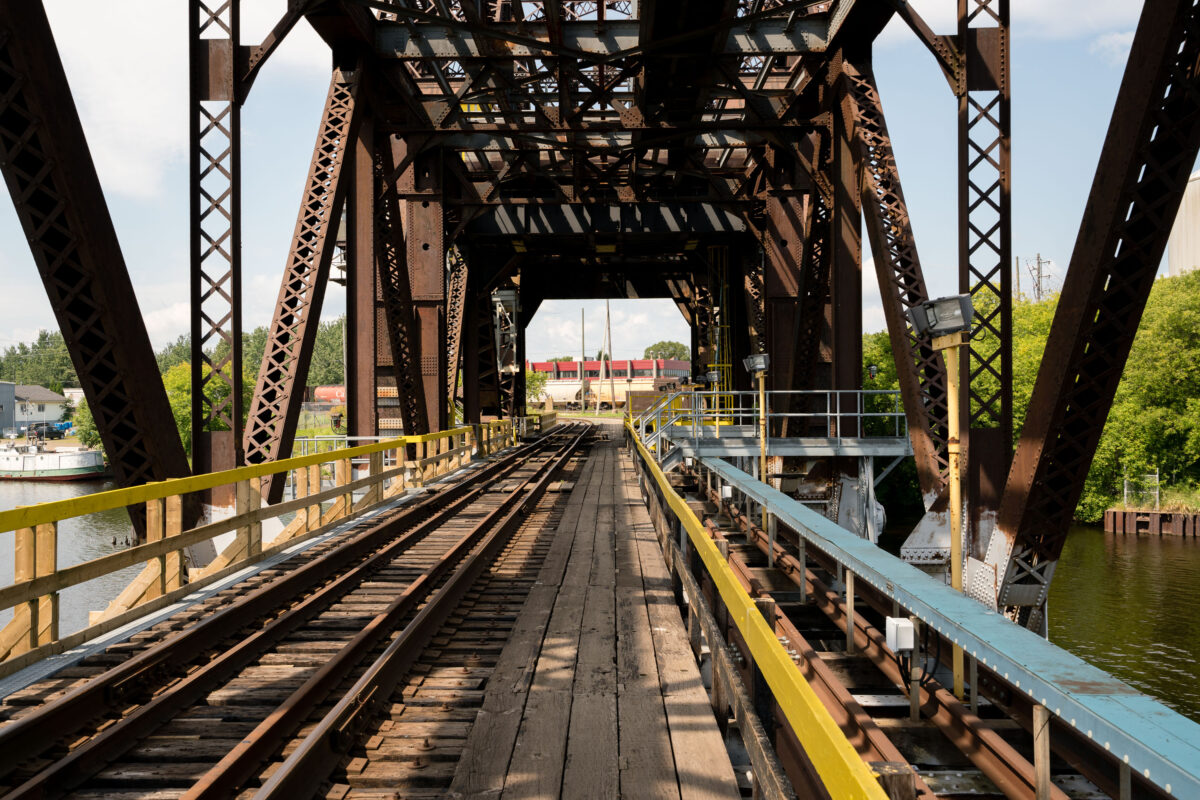
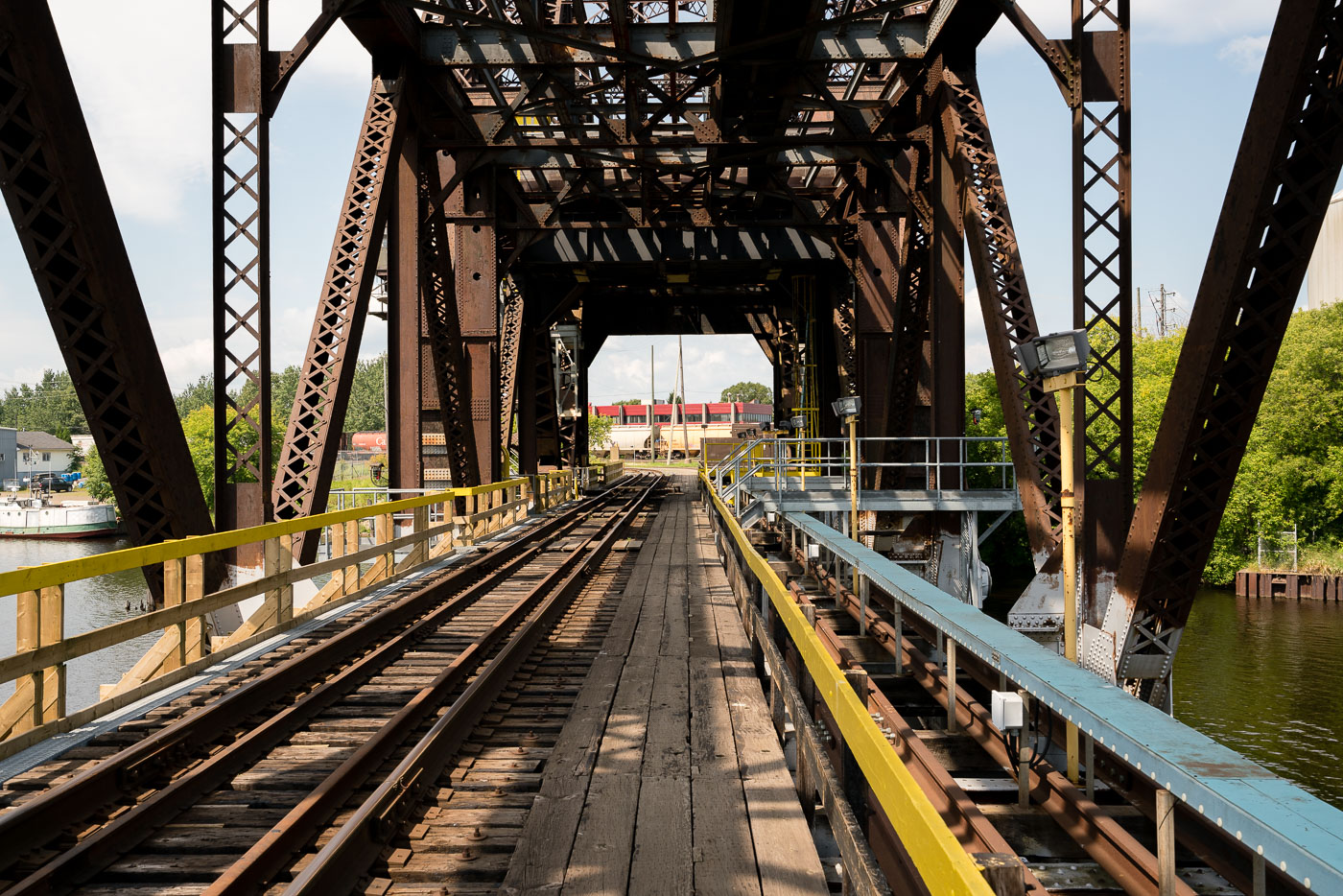
The Canadian Pacific Railway Swing Bridge in Thunder Bay, Ontario, crosses the Kaministiquia River.
The Canadian Pacific Railway Swing Bridge in Thunder Bay, Ontario, crosses the Kaministiquia River. This steel truss bridge, built in the early 20th century, pivots to allow ships passage to Lake Superior. It was a vital link for western Canadian railways and Great Lakes shipping, supporting Thunder Bay's role as a grain export hub.
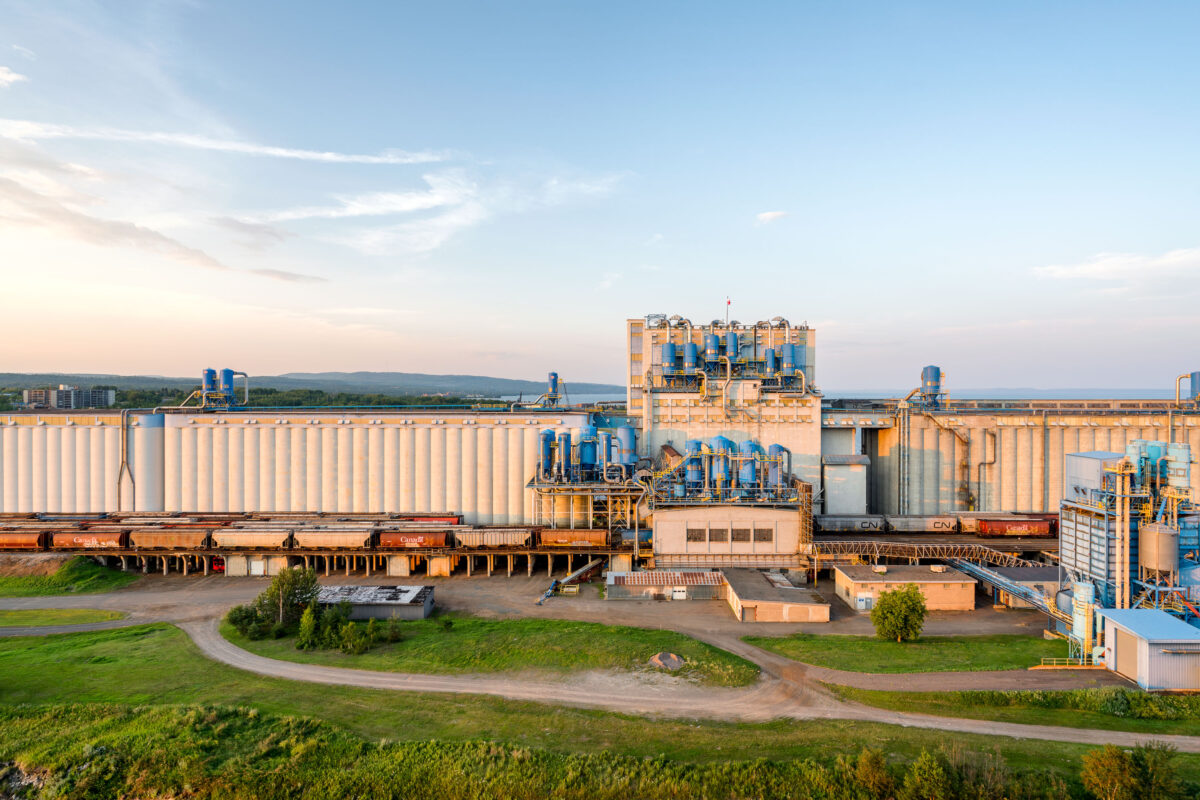
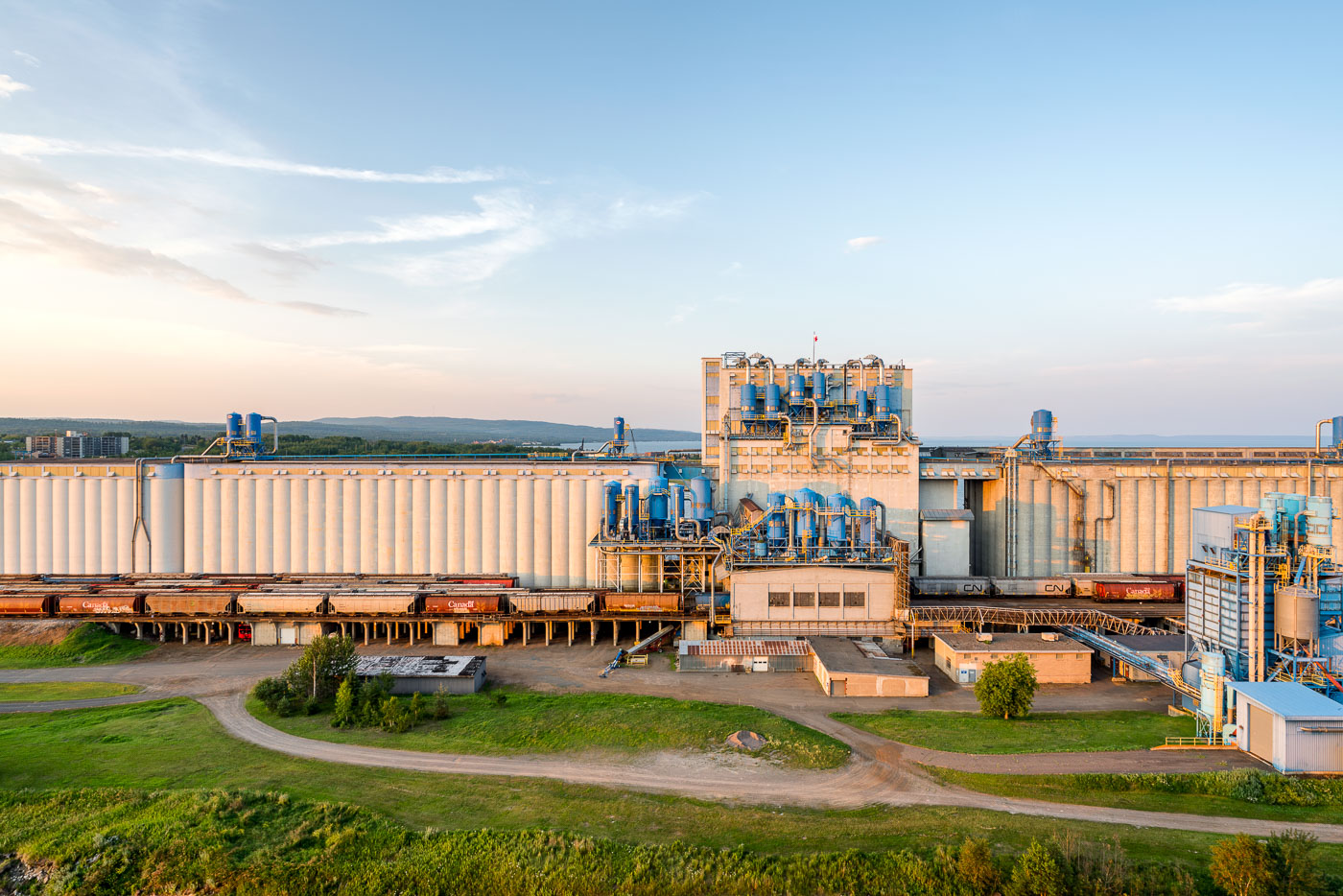
Thunder Bay Grain Elevators and CN Rail Cars in Ontario, Canada.
The Thunder Bay Grain Elevators in Ontario, Canada, are shown with CN rail cars. These facilities are essential for storing and shipping grain, playing a significant role in Canada's agricultural export economy. The cylindrical structures are characteristic of grain elevator architecture, designed for efficient handling of large commodity volumes. Their location in Thunder Bay, a port city on Lake Superior, underscores the historical importance of rail and water transport for moving grain from the Prairies to global markets.
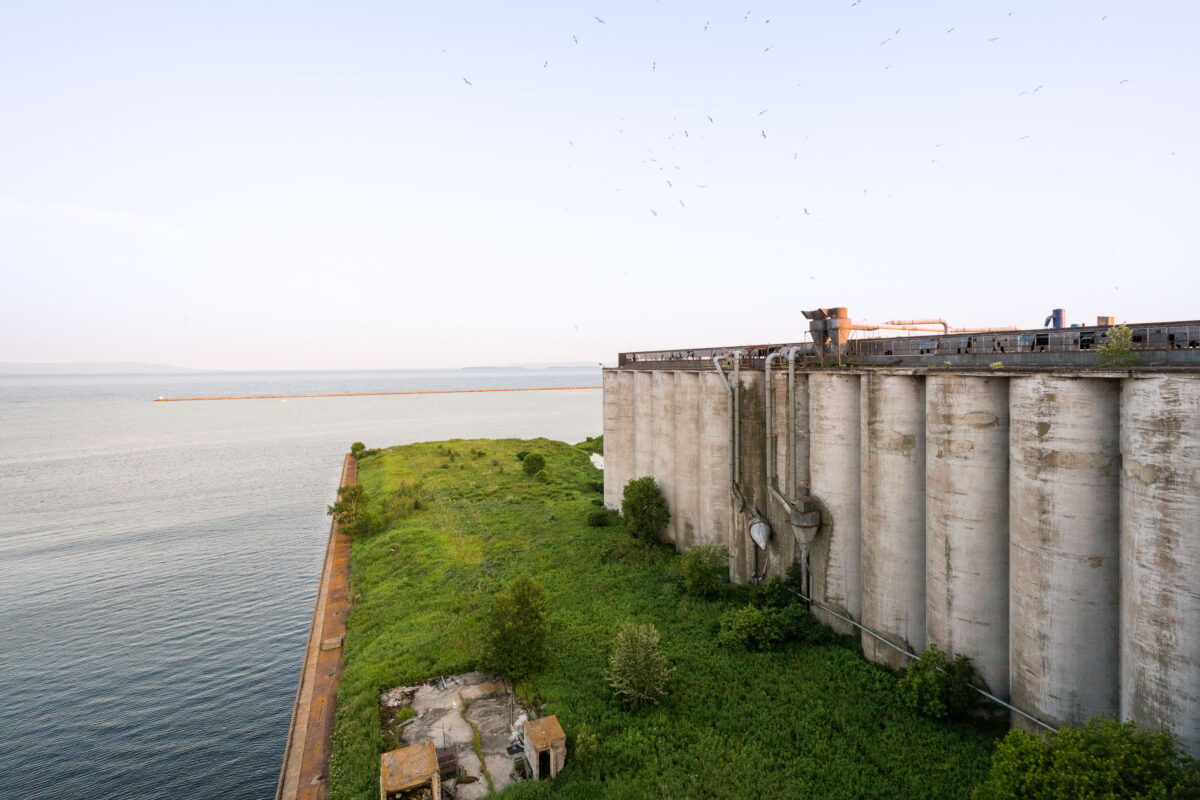
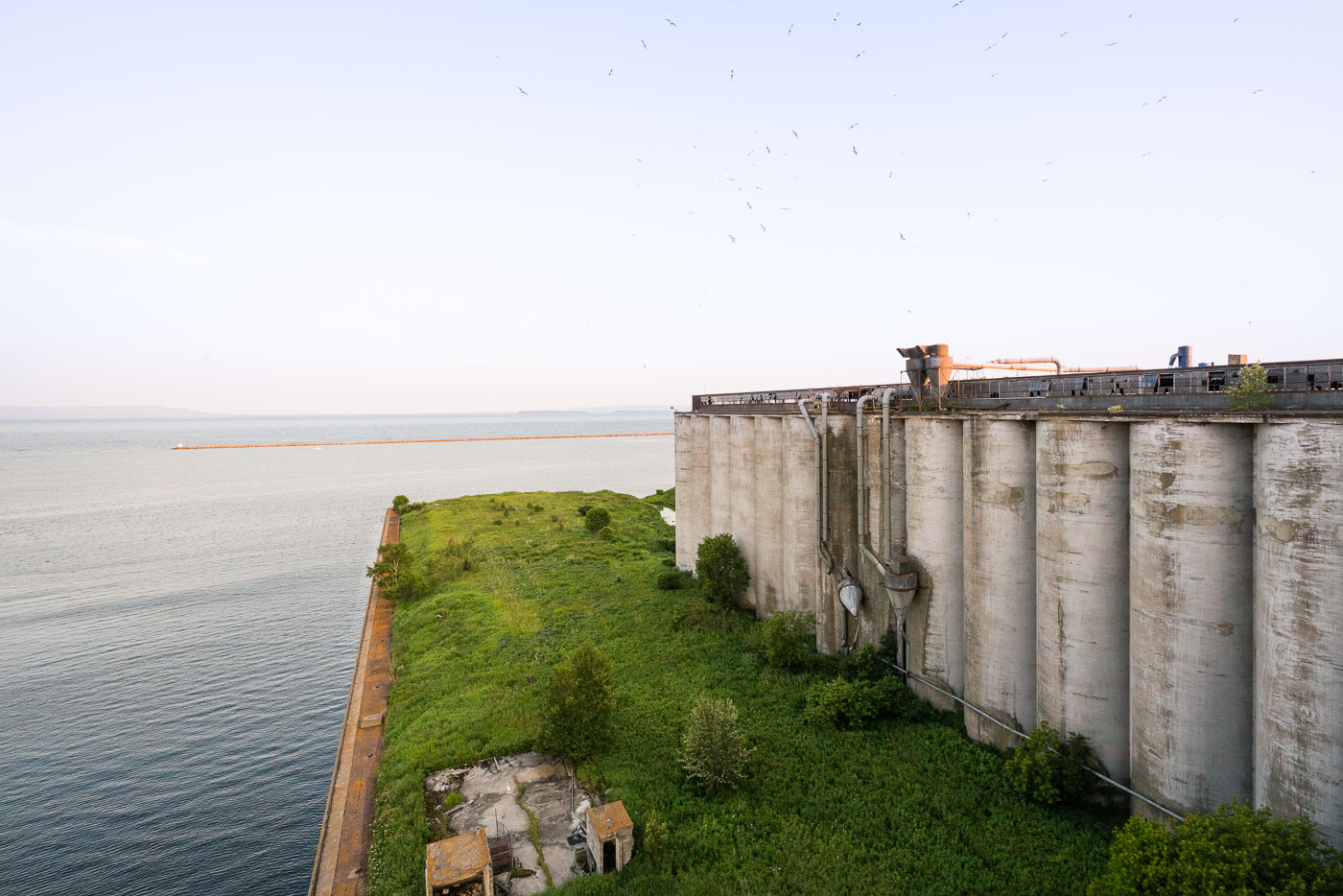
Abandoned grain elevator silos at Thunder Bay, Ontario, Canada, stand beside the water.
An abandoned concrete grain elevator complex in Thunder Bay, Ontario, Canada, stands beside the water. These structures were vital for storing and shipping grain, playing a significant role in Canada's agricultural economy and trade. The cylindrical silos are characteristic of mid-20th-century industrial architecture designed for efficient bulk storage. This disused facility represents a piece of industrial heritage from a period when grain transportation was crucial to national development.
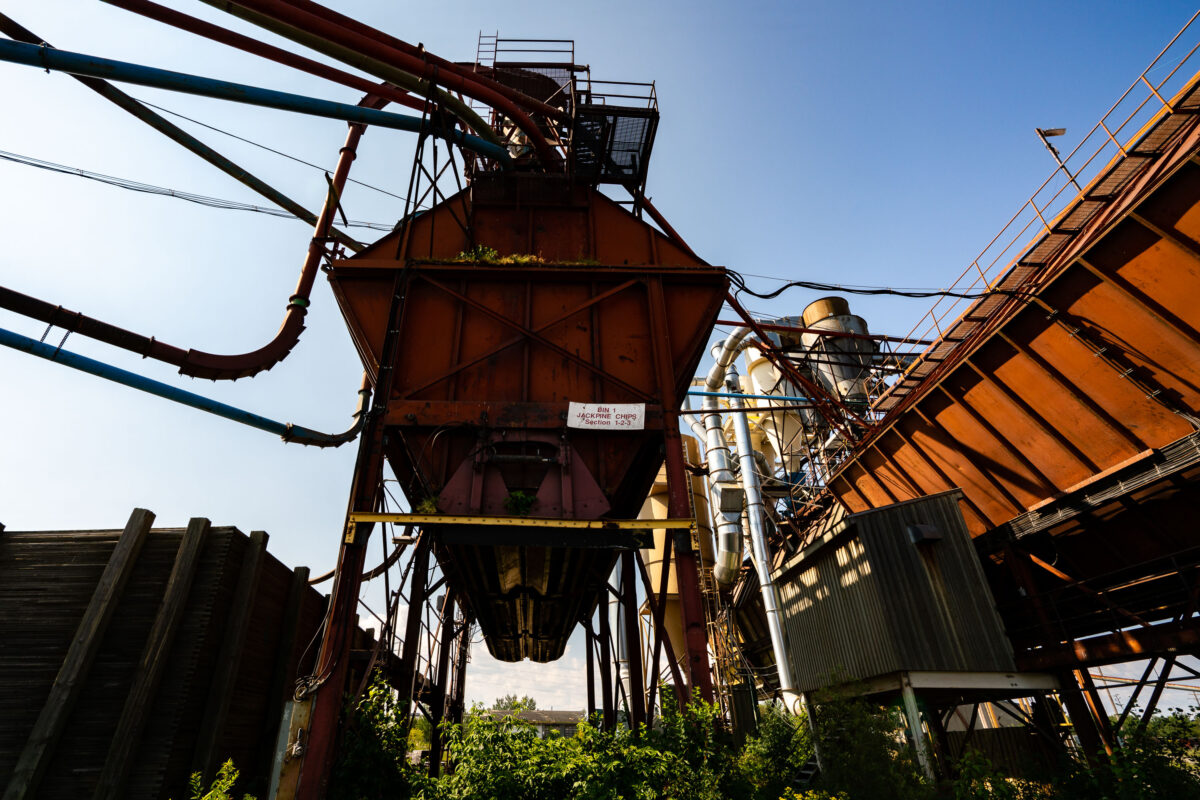
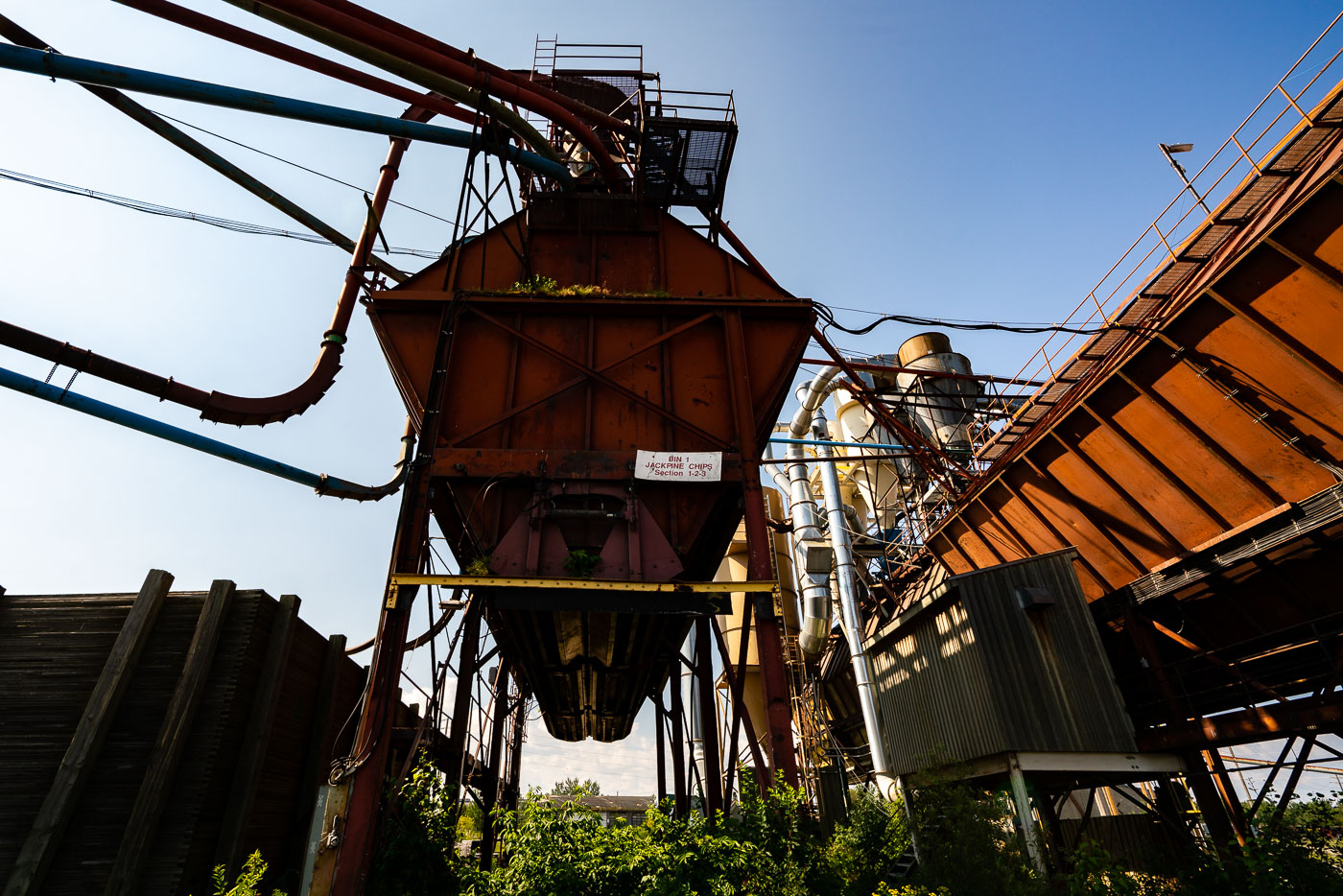
Conveyor systems at the abandoned Great West Lumber Sawmill in Thunder Bay, Ontario, against a clear blue sky.
The conveyor systems of the former Great West Lumber Sawmill in Thunder Bay, Ontario, are visible against a clear blue sky. This industrial complex was once a key part of the region's forestry industry, handling large volumes of lumber. The remaining infrastructure, including chutes and elevated pathways, highlights the scale of operations that once took place here. Its current state reflects the decline of heavy industry in the area.
Abandoned Saskatchewan Pool B grain elevators in Thunder Bay, Ontario, a relic of Canada's agricultural past.
The abandoned Saskatchewan Pool B grain elevator complex in Thunder Bay, Ontario, stands as a relic of Canada's agricultural past. These structures were integral to the processing and export of grain from the Canadian Prairies via the Great Lakes. Operations ceased by the 1980s, leaving the complex as a testament to Thunder Bay's historical role as a major grain transportation hub.
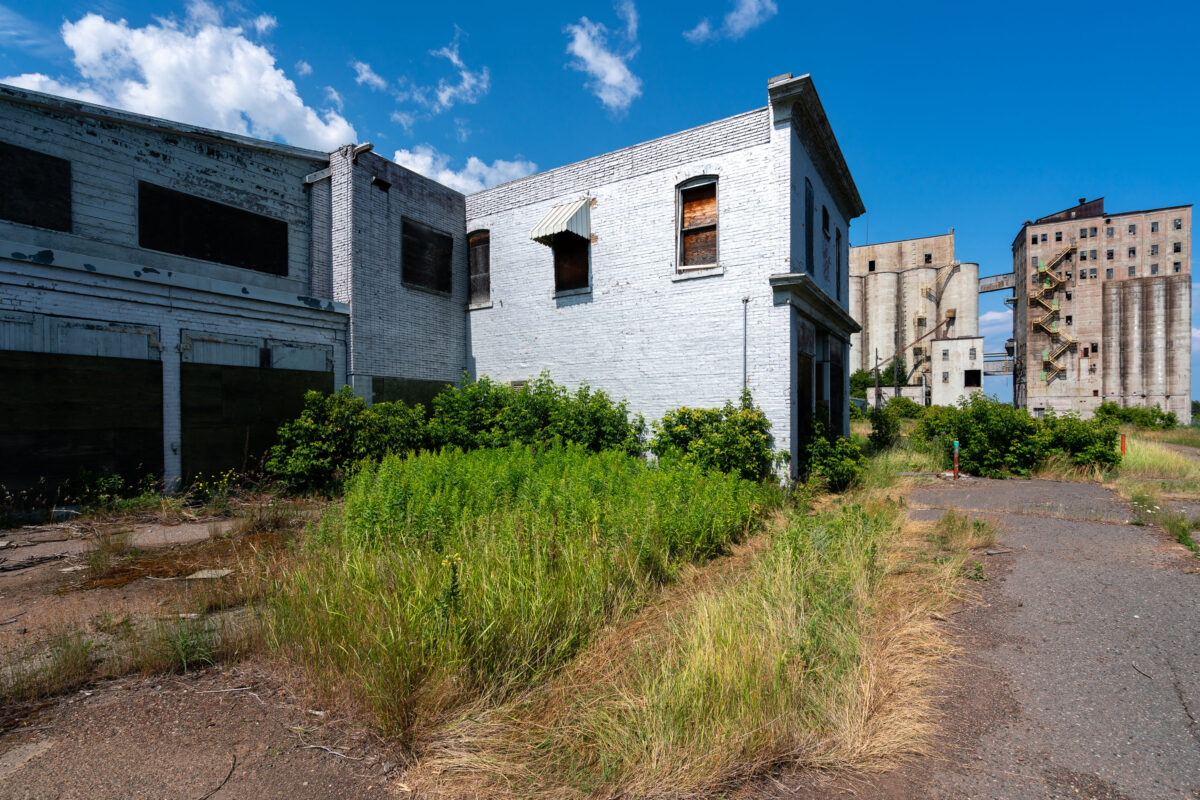
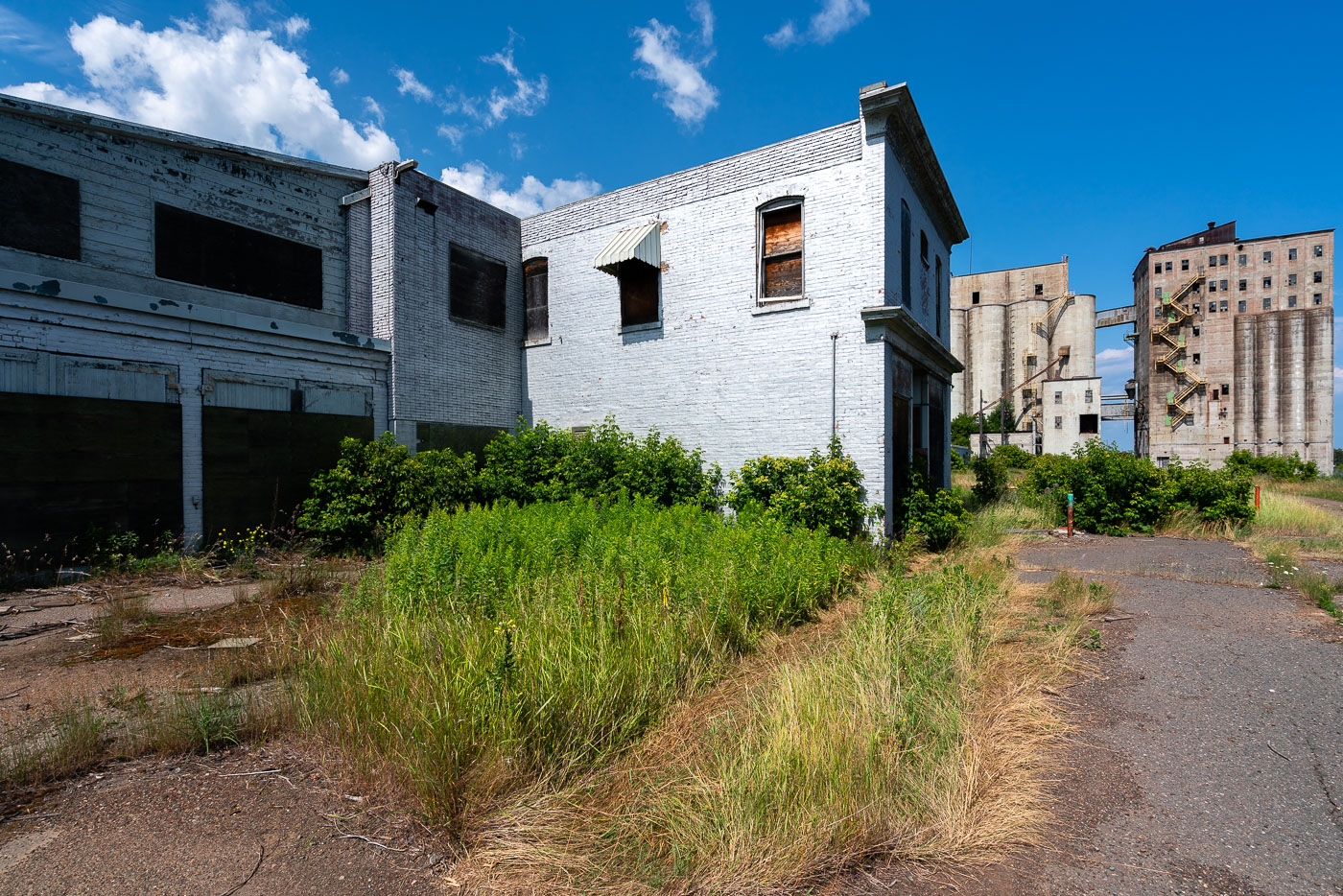
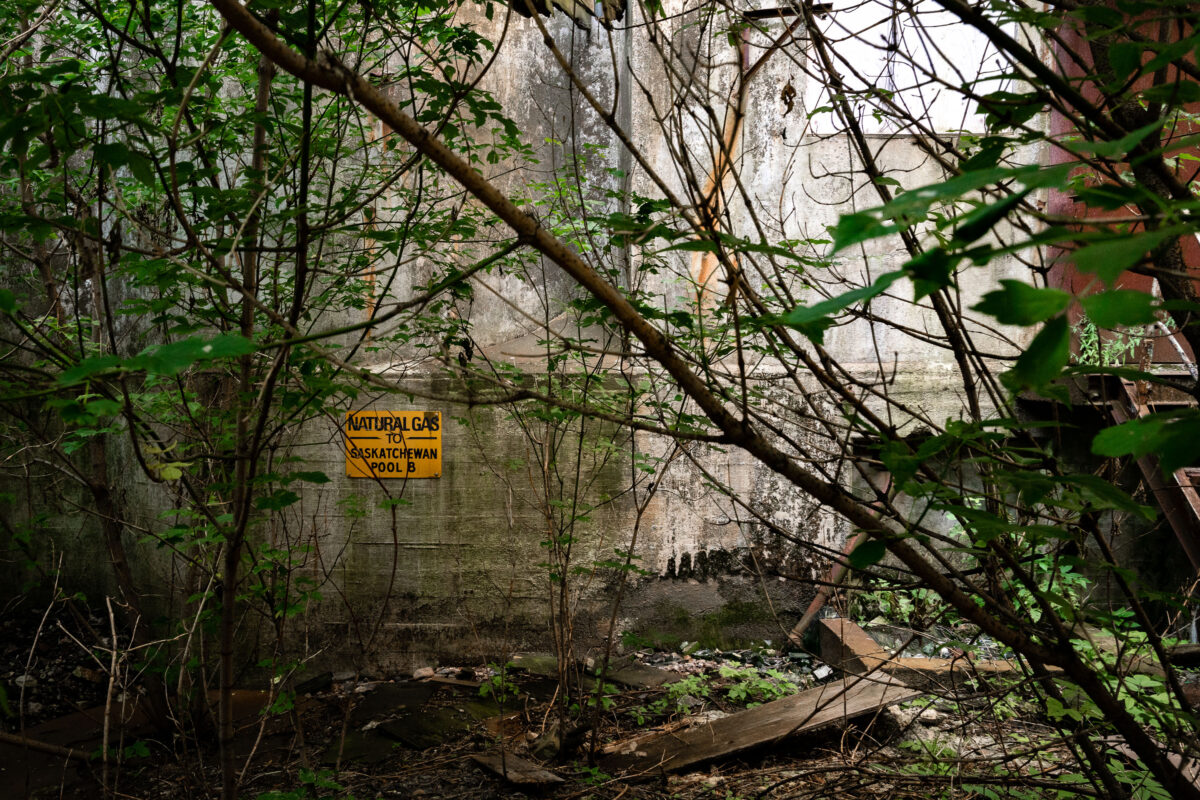
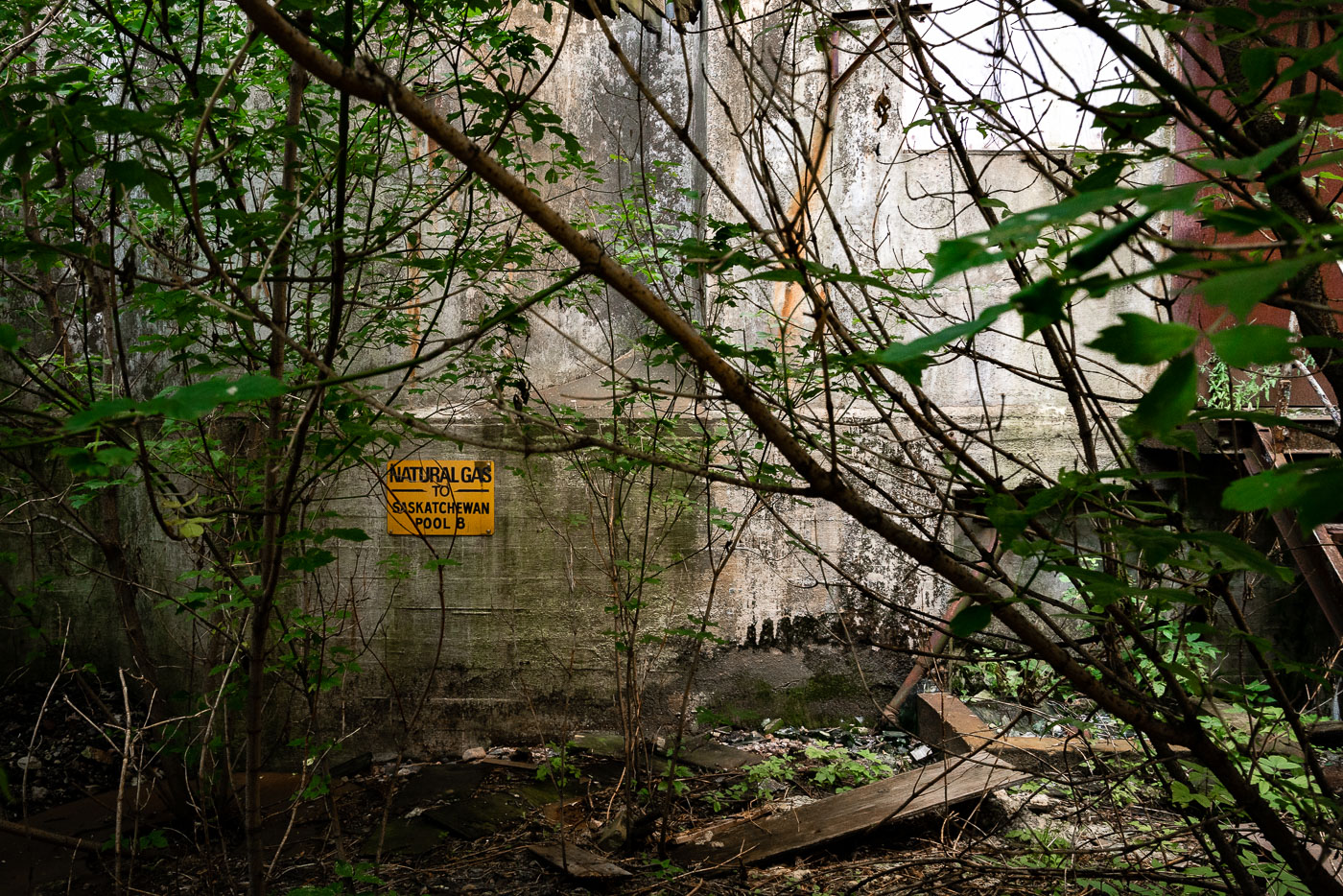
The abandoned Saskatchewan Pool B grain elevator in Thunder Bay, Ontario, is overgrown with vegetation.
The abandoned Saskatchewan Pool B grain elevator in Thunder Bay, Ontario, is a remnant of Canada's agricultural export history. Built in 1928, it served as a critical storage and shipping point for prairie grain. The facility was later decommissioned after its operational period. Today, its concrete structure and industrial remnants are being overtaken by vegetation along the waterfront.
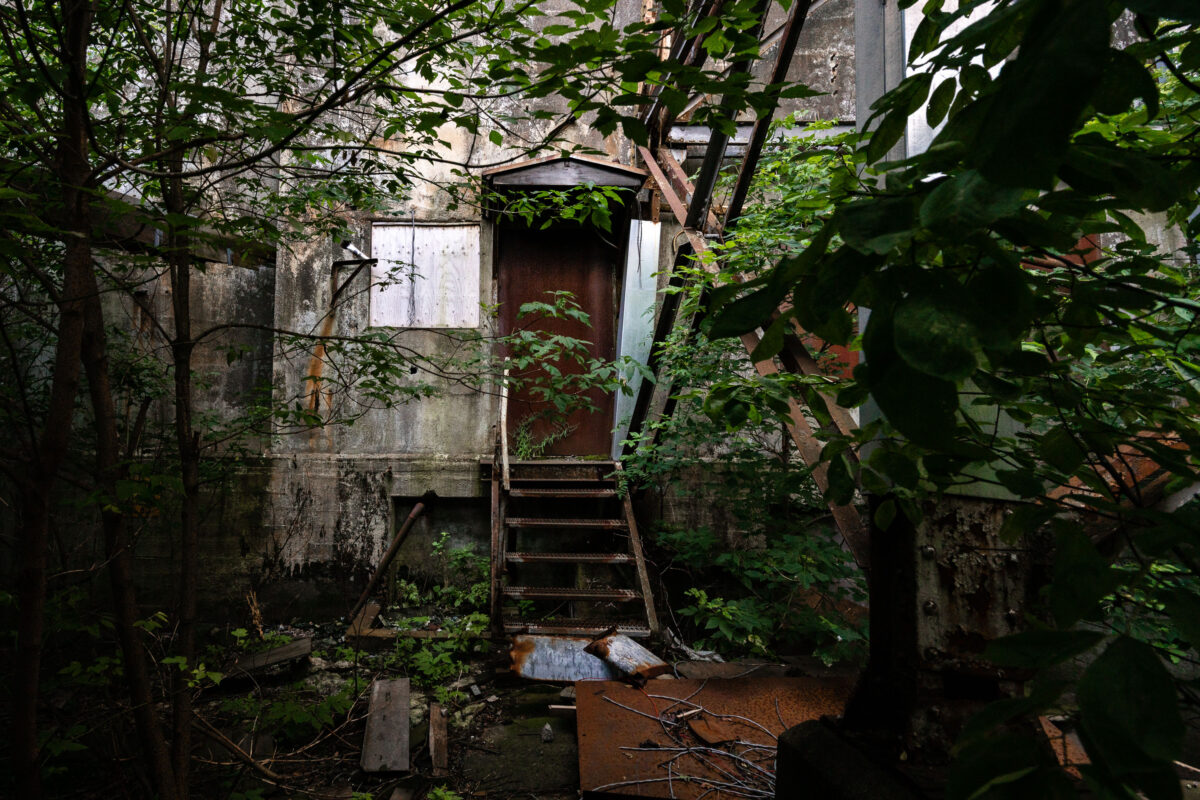
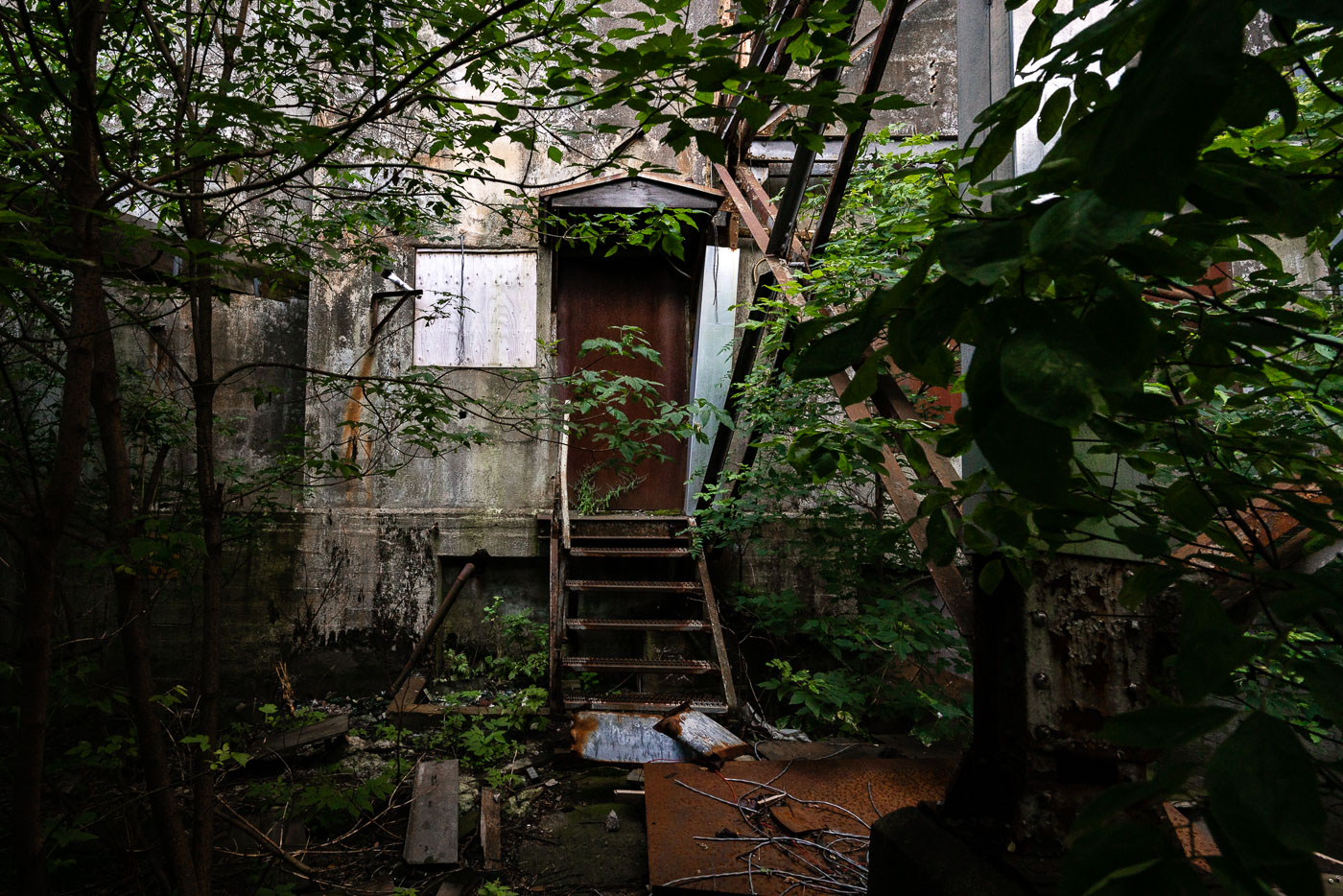
Rusted metal stairs lead to a doorway at the abandoned Saskatchewan Pool B grain elevator in Thunder Bay, Ontario.
A rusted metal staircase leads to a doorway at the Saskatchewan Pool B grain elevator in Thunder Bay, Ontario. Built in 1928, this concrete structure was one of the largest cooperative elevators on Lake Superior, used for exporting prairie grain. The elevator ceased operations after the deregulation of Canada's grain handling system and has since been abandoned. Overgrown vegetation now surrounds the structure, with dense foliage obscuring the concrete and steel framework.

Built in Minneapolis

Photographs showcasing change over time

Browse by location, move through long-running series, or start with recent work.