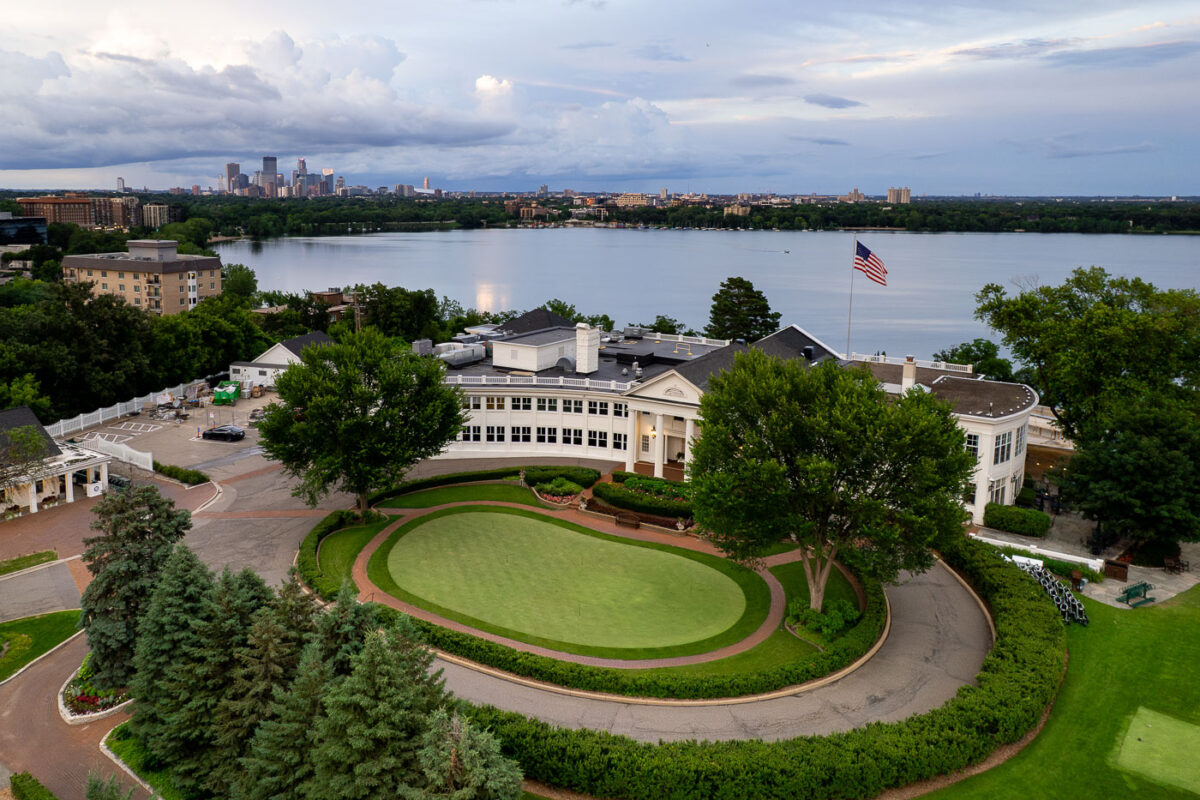
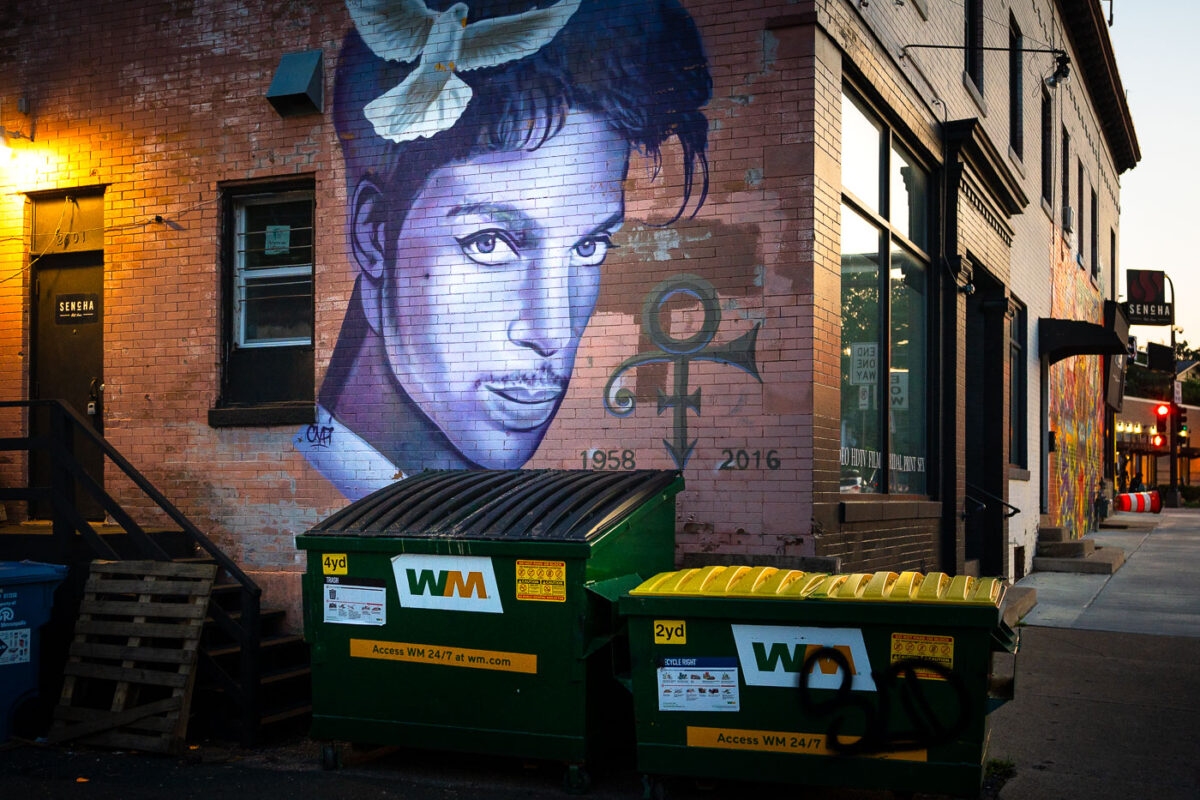
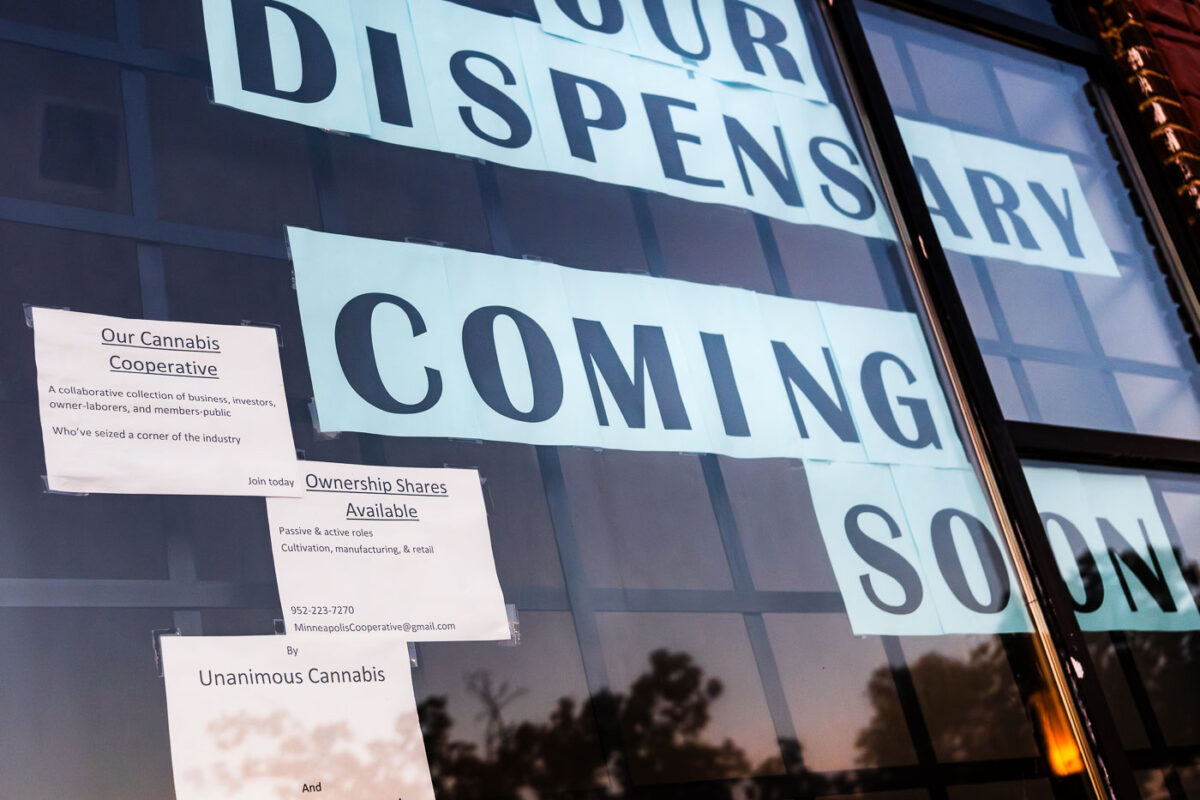
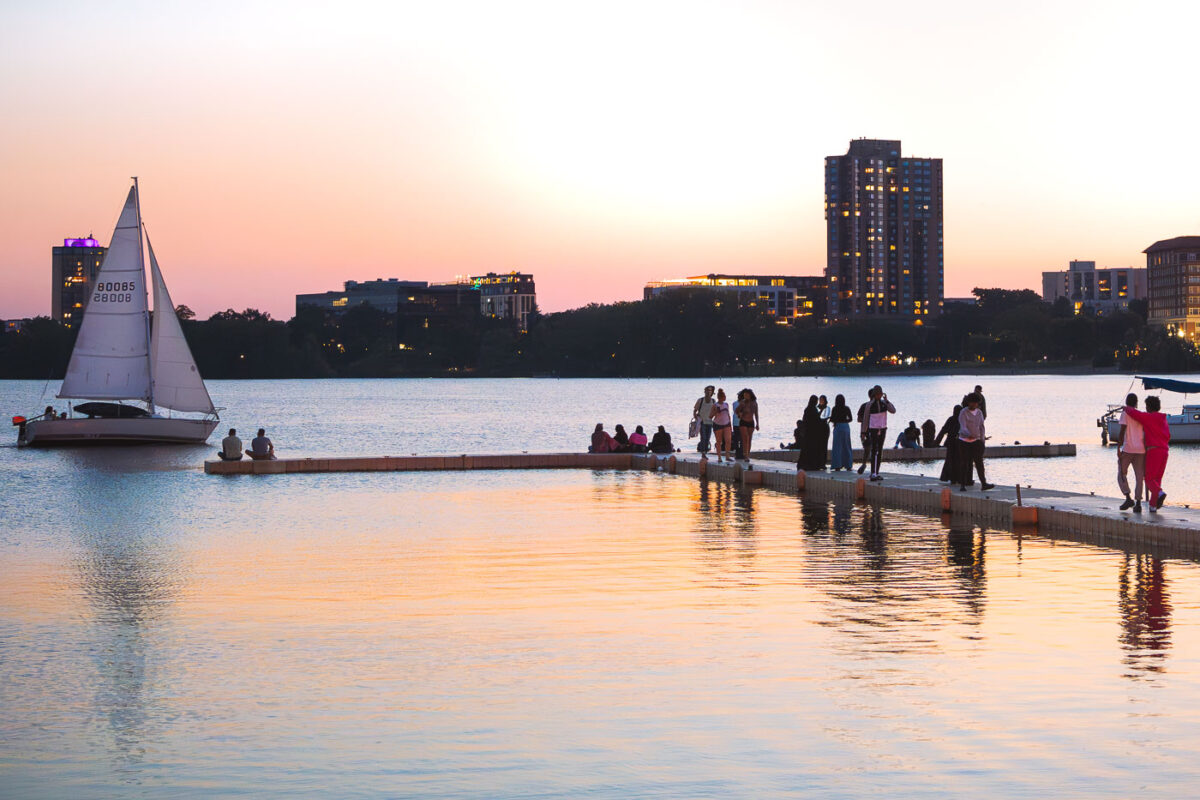
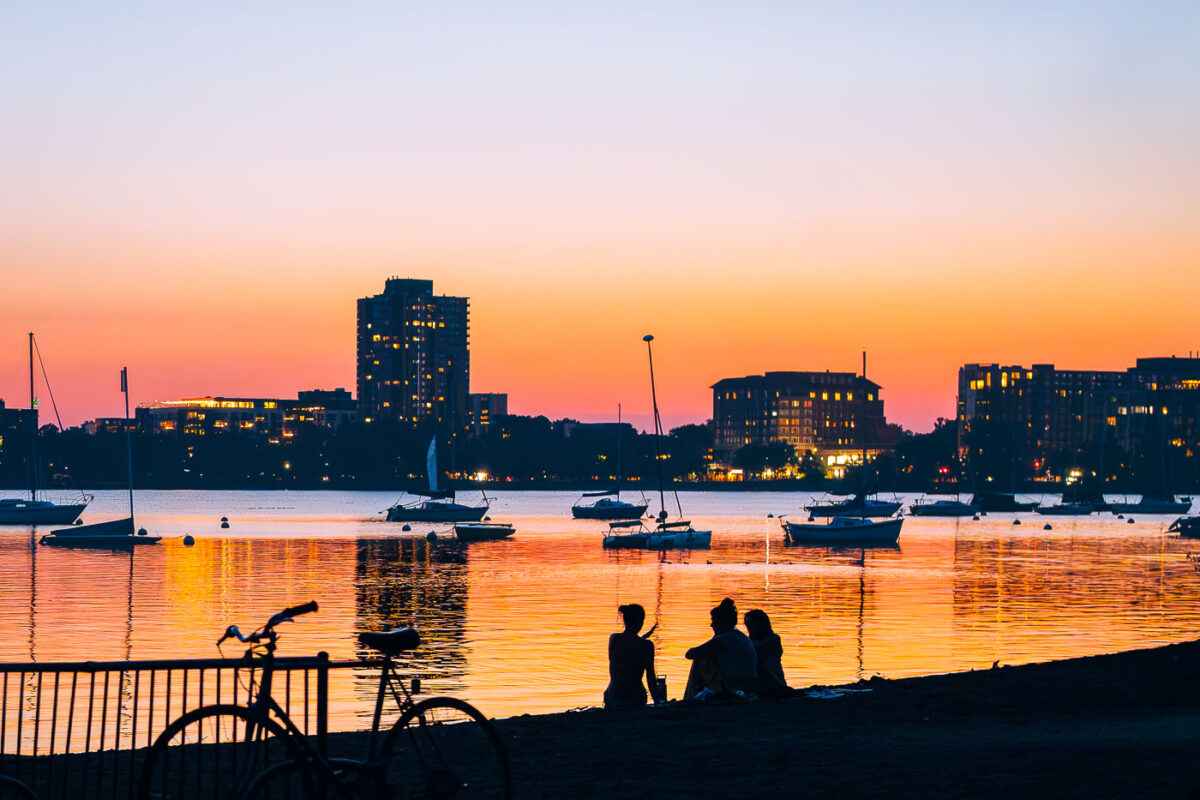
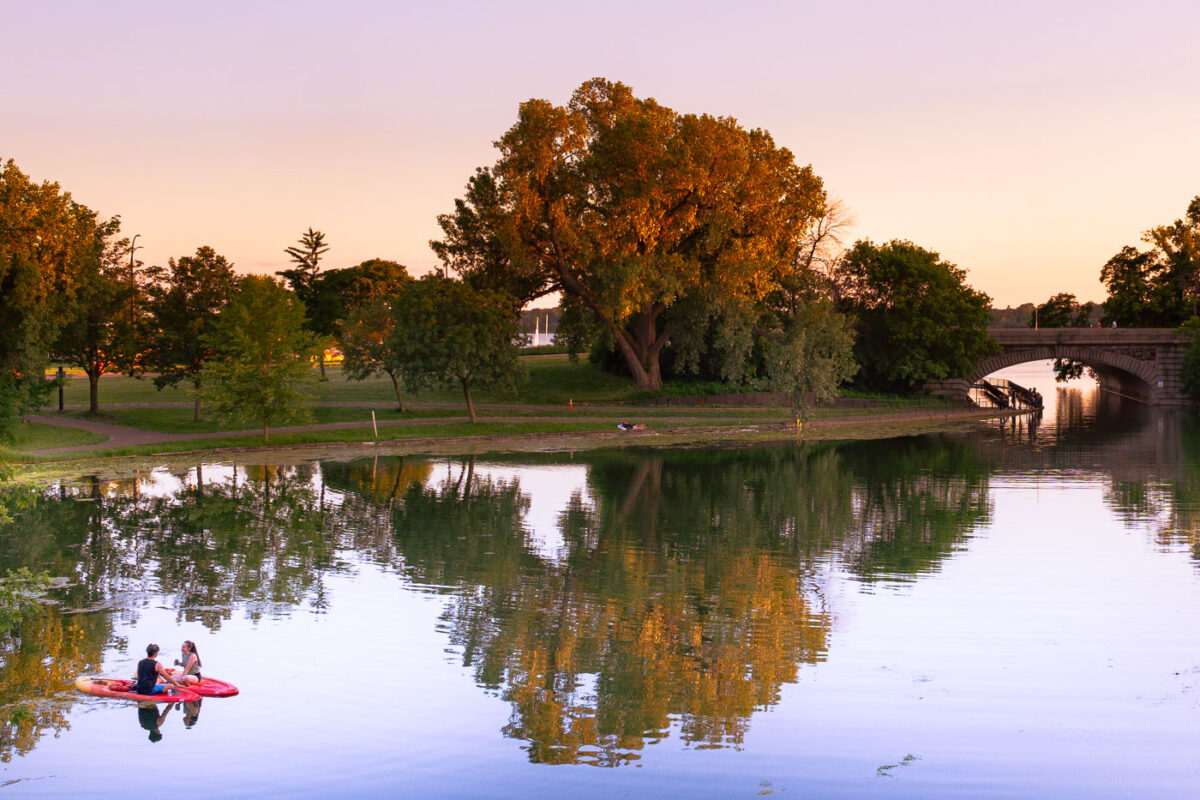
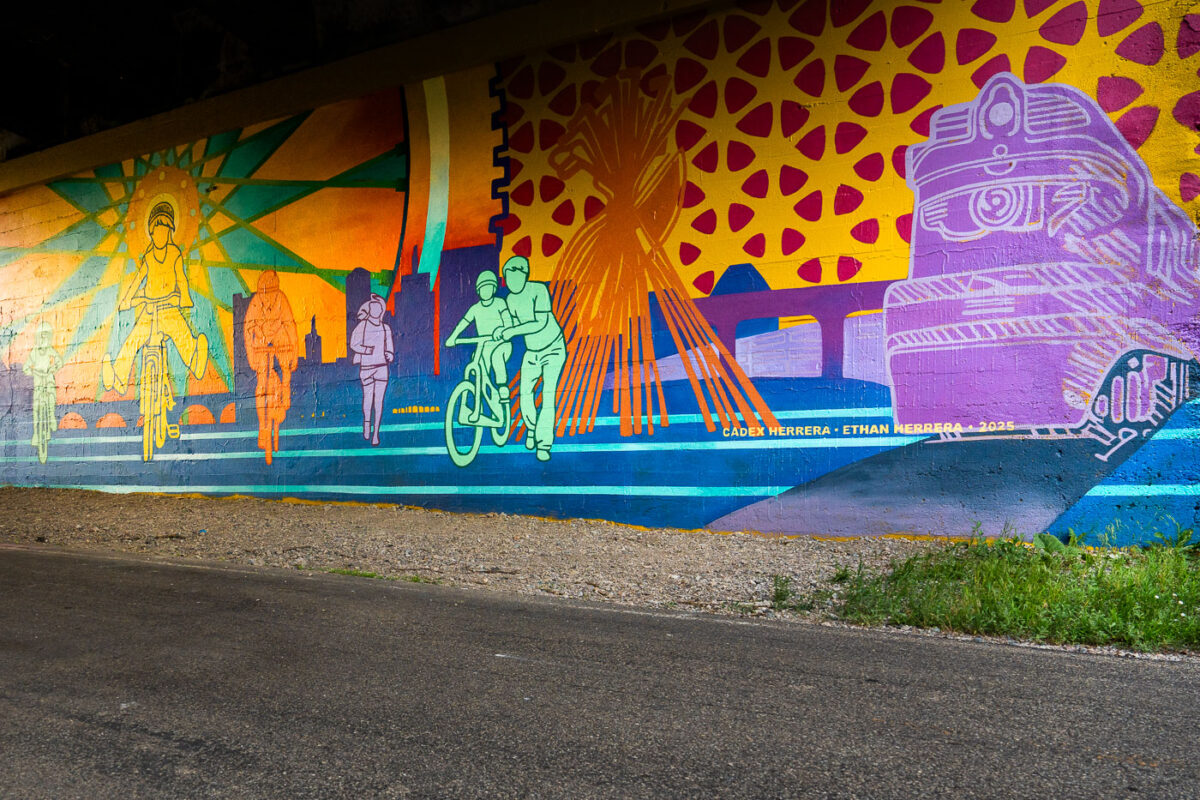
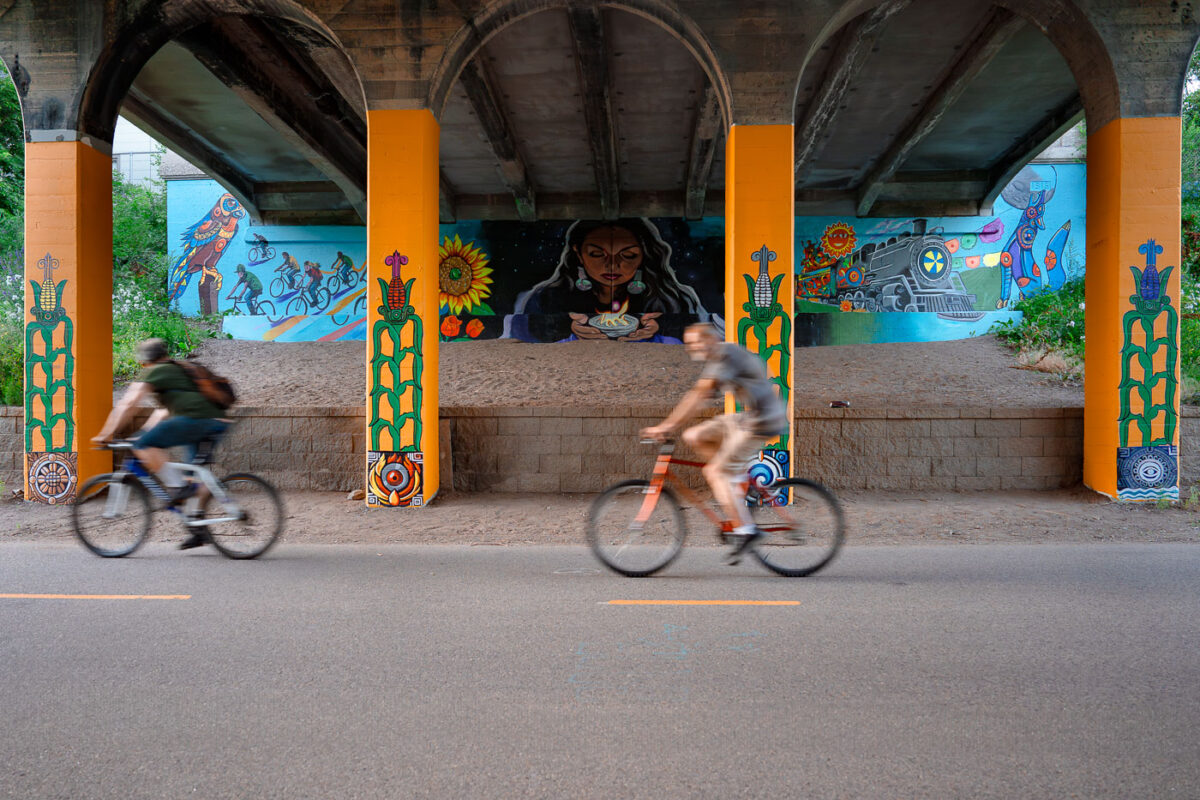
July 5, 2025 — The Minikahda Club, a private golf club established in 1898, is situated on the western shore of Bde Maka Ska in Minneapolis. Its historic clubhouse and golf course provide a prominent recreational and social center overlooking the lake. From this vantage point, the club offers views across Bde Maka Ska to the distant Minneapolis skyline. The club's grounds, including a putting green, reflect its enduring role in the city's social and sporting life.July 6, 2025 — The Rock Martinez mural honoring Prince is located at the corner of West 26th Street and Hennepin Avenue in Uptown Minneapolis. This public artwork, featuring Prince's likeness, a white dove, and his birth and death years (1958-2016), was created shortly after his passing in 2016. Reports indicate it was originally planned as a "get well" tribute during an earlier period of his illness. The mural stands as a significant cultural memorial to the Minneapolis-born musician, reflecting the city's enduring connection to its celebrated artist.July 6, 2025 — Signs announcing "Our Dispensary Coming Soon" are displayed in the storefront windows of the Hennepin Ave Cannabis Cooperative in Uptown Minneapolis. This establishment signifies the expansion of the cannabis industry within the city. Operating as a cooperative, it seeks to involve business owners, investors, and community members in its ownership and operations. The opening on Hennepin Avenue reflects the changing commercial landscape and the emergence of new retail ventures in the area.July 6, 2025 — A sailboat glides across Bde Maka Ska at sunset, with people gathered on a dock near the Minneapolis Sailing Center. Located in Minneapolis, Bde Maka Ska is the largest lake in the city's Chain of Lakes, a popular destination for water sports and public enjoyment. The lake's name, meaning 'White Earth Lake' in the Dakota language, was officially restored in 2017, reflecting its Indigenous heritage. The Minneapolis Sailing Center provides access and instruction for sailing, contributing to the lake's role as a vibrant urban recreational hub.July 6, 2025 — Bde Maka Ska Lake, located in South Minneapolis, is a prominent natural lake within the city's Chain of Lakes Regional Park system. Originally known by its Dakota name, meaning "White Earth Lake," it was officially restored in 2017 after decades as Lake Calhoun. The lake serves as a vital recreational hub, popular for sailing, kayaking, and cycling along its shores. As evening falls, residents and visitors gather on its beaches to observe sunsets over the water, with the city's residential buildings visible across the lake.July 8, 2025 — Two individuals paddleboard on Lake of the Isles in Minneapolis during sunset. Lake of the Isles is one of five lakes in the Chain of Lakes Regional Park, a significant part of Minneapolis's Grand Rounds National Scenic Byway. Originally a marshy area, the lake was dredged and reshaped in the early 20th century as part of a comprehensive park system design by landscape architect Horace Cleveland, creating a major urban green space. Today, the lake and its surrounding parkways, including the historic bridges that connect its shores, serve as a popular destination for outdoor activities such as paddleboarding, kayaking, and walking.July 8, 2025 — A vibrant mural by artists Cadex and Ethan Herrera adorns a wall along the Midtown Greenway in Minneapolis. Created in 2025, the artwork depicts figures engaged in cycling and running, reflecting the active use of this urban corridor. The Midtown Greenway, a 5.5-mile-long path, was repurposed from an abandoned railway line, transforming it into a vital route for pedestrians and cyclists. This infrastructure serves as a key transportation artery and recreational space, connecting diverse neighborhoods across South Minneapolis. Public art installations such as this mural enhance the cultural environment and user experience of the Greenway.July 8, 2025 — Bikers travel along the Midtown Greenway in South Minneapolis, passing a vibrant mural painted beneath a bridge. This public artwork, created in the wake of the Minneapolis Uprising, reflects community narratives and cultural themes. The Midtown Greenway, a former railway corridor, was transformed into a 5.5-mile multi-use path in 2000, serving as a vital transportation and recreational route through the city. Murals along the Greenway often commemorate local history and express community identity, making this site a significant cultural landmark.July 8, 2025 — Graffiti modifies a "Stop Ahead" traffic sign in South Minneapolis. The original warning has been altered to read "DON'T STOP GIVING HEAD," transforming a regulatory notice into a provocative statement. This form of unsanctioned public art often appears in urban environments, reflecting diverse expressions within a community. Its presence in South Minneapolis can be interpreted as a commentary on local culture or a spontaneous act of defiance, particularly in areas that have experienced significant social and political events.July 8, 2025 — A Metro Transit light rail train departs Downtown Minneapolis at sunset. This public transportation system is a critical component of the Minneapolis-Saint Paul metropolitan area's infrastructure, connecting key destinations such as downtowns, the airport, and various neighborhoods. The Blue Line, the first segment, commenced operations in 2004, followed by the Green Line in 2014, significantly expanding regional transit options. These lines utilize a combination of existing rail corridors and new construction to facilitate urban mobility and serve thousands of commuters daily.July 8, 2025 — A "24th PED XING" sign is positioned alongside the Metro Transit light rail tracks in South Minneapolis, with the city's downtown buildings silhouetted against the horizon. This sign indicates a designated pedestrian crossing, facilitating safe movement across the active railway lines. The Metro Transit light rail system, which began operations in 2004, provides essential public transportation, connecting residents and visitors throughout the metropolitan area. The tracks are part of an infrastructure network crucial for daily commuting and urban connectivity in Minneapolis.July 8, 2025 — Cowboy Jack's, a multi-story bar and restaurant, is located on North 5th Street in Downtown Minneapolis. Known for its cowboy theme and sports bar atmosphere, it serves as a popular gathering spot for nightlife. The establishment's proximity to Target Field, home of the Minnesota Twins, makes it a frequent destination for patrons before and after games. Featuring both indoor spaces and an active outdoor patio, Cowboy Jack's contributes to the vibrant social landscape of the city center.July 8, 2025 — A Metro Transit light rail train travels along N 5th Street in downtown Minneapolis, a corridor known for its entertainment venues. The street is home to establishments such as Cowboy Jack's and Sneaky Pete's, which contribute to the area's vibrant evening activity. The Metro Transit light rail system, which began operations in 2004 with the Blue Line, serves as a vital public transportation link connecting downtown Minneapolis with other parts of the metropolitan area. This infrastructure supports daily commutes and provides access to the city's cultural and commercial districts, including the nightlife along N 5th Street.July 10, 2025 — Hennepin Avenue in Uptown Minneapolis is shown at night, following a multi-year road construction project. This infrastructure upgrade aimed to enhance pedestrian and cyclist safety and connectivity, notably introducing dedicated bike lanes along the thoroughfare. The avenue, a vital artery connecting areas like Lagoon Avenue and Lake Street, serves as a commercial and cultural corridor within the city. Hennepin Avenue has historically been a significant route for commerce and transportation in Minneapolis, continuing to facilitate urban mobility and local business activity.July 12, 2025 — Canadian wildfire smoke enveloped Minneapolis, Minnesota in July 2025, obscuring the urban landscape. This widespread atmospheric condition resulted from extensive wildfires burning across Canada, affecting air quality and visibility throughout the Upper Midwest. The photograph features Lake Street, a major east-west thoroughfare and commercial artery, bordering one of Minneapolis's Chain of Lakes. This event underscores the far-reaching environmental impacts of climate-related disasters on metropolitan regions.July 13, 2025 — The Minneapolis Pops Orchestra performs at the Lake Harriet Bandshell on July 13, 2025. This event represents a continuing practice of free public performances at the Lake Harriet Bandshell, a notable architectural structure situated on the shores of Lake Harriet. The current bandshell, constructed in 1986, replaced previous performance venues and functions as a central location for community events and musical programming. Lake Harriet is an integral part of Minneapolis's Chain of Lakes, offering a popular urban park environment for cultural activities and public enjoyment.July 17, 2025 — Protesters gathered in Downtown Minneapolis as part of the nationwide "Good Trouble Lives On" day of action, organized to address attacks on civil and human rights by the Trump administration. The event began at the Hennepin County Government Center with speakers including Toussaint Morrison, Nekima Levy Armstrong, and Lieutenant Governor Peggy Flanagan. Following the speeches, participants marched through Downtown Minneapolis to voice their concerns. Messages displayed on protest attire, such as "FUCK ICE" and "CHINGA LA MIGRA," underscored the protest's focus on immigration policies and human rights.July 17, 2025 — A "Good Trouble Lives On" protest convened at the Hennepin County Government Center in Downtown Minneapolis. This national day of action was organized to respond to perceived attacks on civil and human rights. Participants gathered to hear speakers such as Toussaint Morrison, Nekima Levy Armstrong, and Lieutenant Governor Peggy Flanagan. Following the rally, protesters marched through Downtown Minneapolis, asserting that power lies with the people.July 17, 2025 — A protest march, part of the nationwide "Good Trouble Lives On" movement, proceeds through Downtown Minneapolis. The event, organized to respond to perceived attacks on civil and human rights by the Trump administration, began with a gathering at the Hennepin County Government Center. Speakers including Toussaint Morrison, Nekima Levy Armstrong, and Lieutenant Governor Peggy Flanagan addressed the crowd before the march commenced. Participants carried signs expressing various concerns, asserting the power of the people in American democracy. The route passed significant urban architecture, including the historic Baker Building, as it moved through the city's core.July 17, 2025 — A "Good Trouble Lives On" march proceeds through Downtown Minneapolis, passing outdoor dining establishments. This national day of action was organized to respond to perceived attacks on civil and human rights by the Trump administration, asserting that power resides with the people. Participants gathered at the Hennepin County Government Center, hearing speakers such as Toussaint Morrison, Nekima Levy Armstrong, and Lieutenant Governor Peggy Flanagan before marching through Downtown Minneapolis. The protest highlights ongoing civic engagement in Minneapolis, a city with a history of public activism and social movements.July 17, 2025 — Protesters march through Downtown Minneapolis as part of the "Good Trouble Lives On" national day of action. This nationwide movement responds to perceived attacks on civil and human rights, asserting that power resides with the people. Participants hold signs advocating for a "National Target Boycott" focused on diversity, equity, and inclusion, with a campaign launch date of February 1, 2025, indicated on a prominent banner. The march, which began after a gathering at the Hennepin County Government Center, also featured messages honoring civil rights leader John Lewis and opposing political attacks.July 17, 2025 — Protesters march through Downtown Minneapolis as part of the 'Good Trouble Lives On' national day of action. This protest responds to perceived attacks on civil and human rights, asserting the power of the people. Participants gathered at the Hennepin County Government Center, hearing from speakers including Toussaint Morrison, Nekima Levy Armstrong, and Lieutenant Governor Peggy Flanagan, before proceeding through streets like South Marquette Avenue. The march highlights various concerns, with signs advocating for democracy, workers' rights, public media, and addressing political attacks.July 24, 2025 — A soccer game takes place at Elliot Park in Downtown Minneapolis under a sky colored by Canadian wildfire smoke. Elliot Park, established in 1883, is one of Minneapolis's oldest parks and a vital green space within the urban core, managed by the Minneapolis Park and Recreation Board. The park features athletic fields, playgrounds, and community gathering areas, serving as a significant public amenity for residents and visitors. The recurring presence of wildfire smoke, originating from Canada, has become a notable environmental factor affecting daily life and outdoor activities in the region.July 27, 2025 — A thunderstorm gathers over Lake of the Isles, a significant component of Minneapolis's Chain of Lakes park system. This urban lake, developed in the late 19th and early 20th centuries, is connected by navigable channels to other lakes and serves as a popular area for public recreation. The surrounding parkland and residential neighborhoods offer extensive pathways for walking and biking. In the distance, the skyline of Downtown Minneapolis stands as the city's central commercial and cultural district.July 27, 2025 — A summer thunderstorm approaches Lake of the Isles in Minneapolis, a significant feature of the city's park system. This urban lake is a central component of the Chain of Lakes, a series of interconnected waterways and parklands developed in the late 19th and early 20th centuries. The lake was extensively dredged and shaped during this period, creating its current form and connecting it to other lakes via navigable channels. Today, Lake of the Isles remains a popular destination for recreation, including paddling, walking, and cycling along its shoreline paths. Its preservation and integration into the urban fabric underscore Minneapolis's historical dedication to public green spaces.July 27, 2025 — A thunderstorm approaches Bde Maka Ska in Minneapolis on July 27, 2025. Bde Maka Ska, meaning 'Lake White Earth' in Dakota, is the largest lake in Minneapolis and a central feature of the city's Chain of Lakes. The lake is a popular destination for sailing, kayaking, and other water activities, with a busy roadway, Lake Street, and residential buildings lining its eastern shore. The approaching storm highlights the dynamic weather patterns common to the region, impacting both natural environments and urban life.July 28, 2025 — Graffiti reading 'RIP Ozzy' is spray-painted on a brick wall along the Loring Greenway in Minneapolis. This pedestrian and bicycle path serves as a key connector between Loring Park and Nicollet Mall, facilitating non-motorized travel through the city center. The greenway, which includes a bridge over Lyndale Avenue, frequently features public expressions such as graffiti. These temporary markings contribute to the dynamic visual landscape of the urban environment, reflecting various community sentiments or tributes.July 28, 2025 — A framed bird print is affixed to a tree along the Loring Greenway bike path in Minneapolis. This urban greenway, established in the 1970s, provides a vital pedestrian and bicycle corridor connecting Loring Park to Nicollet Mall. The paved path, visible here with a white fence, includes a section that crosses over Lyndale Avenue. Such informal installations sometimes appear in public spaces, reflecting community expression within the urban environment.