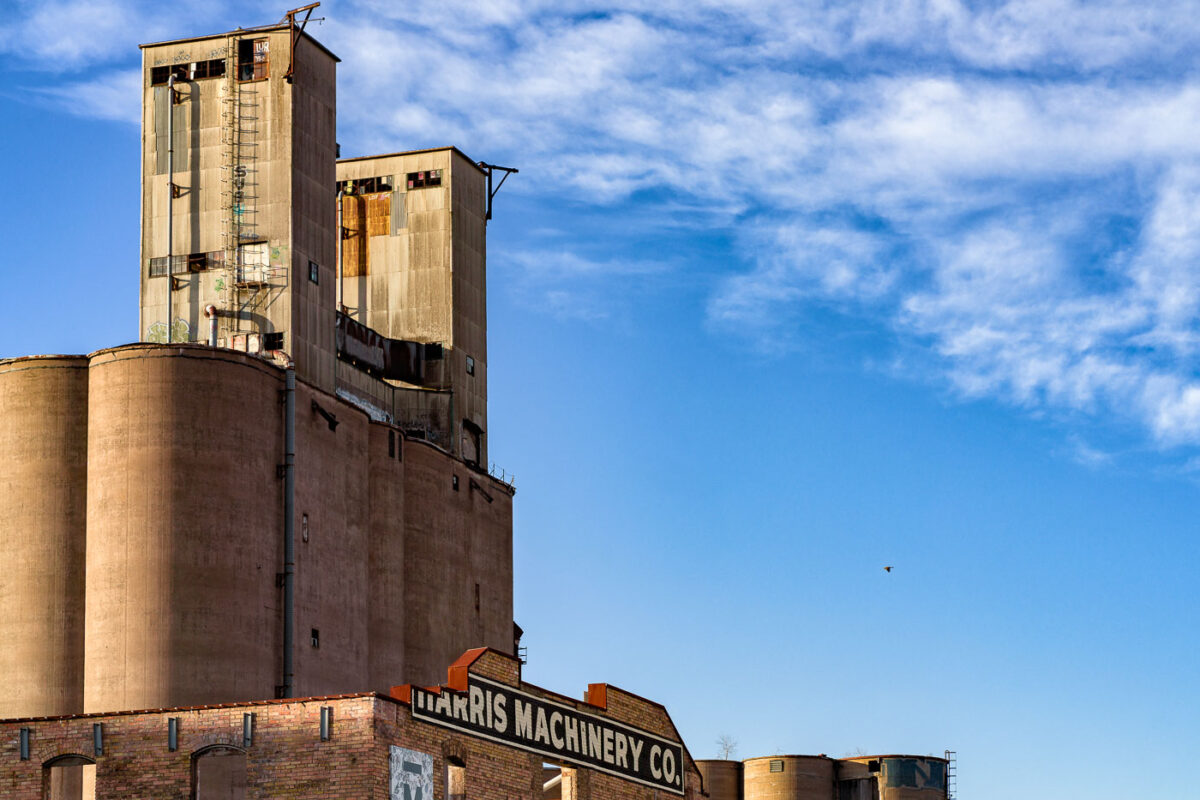
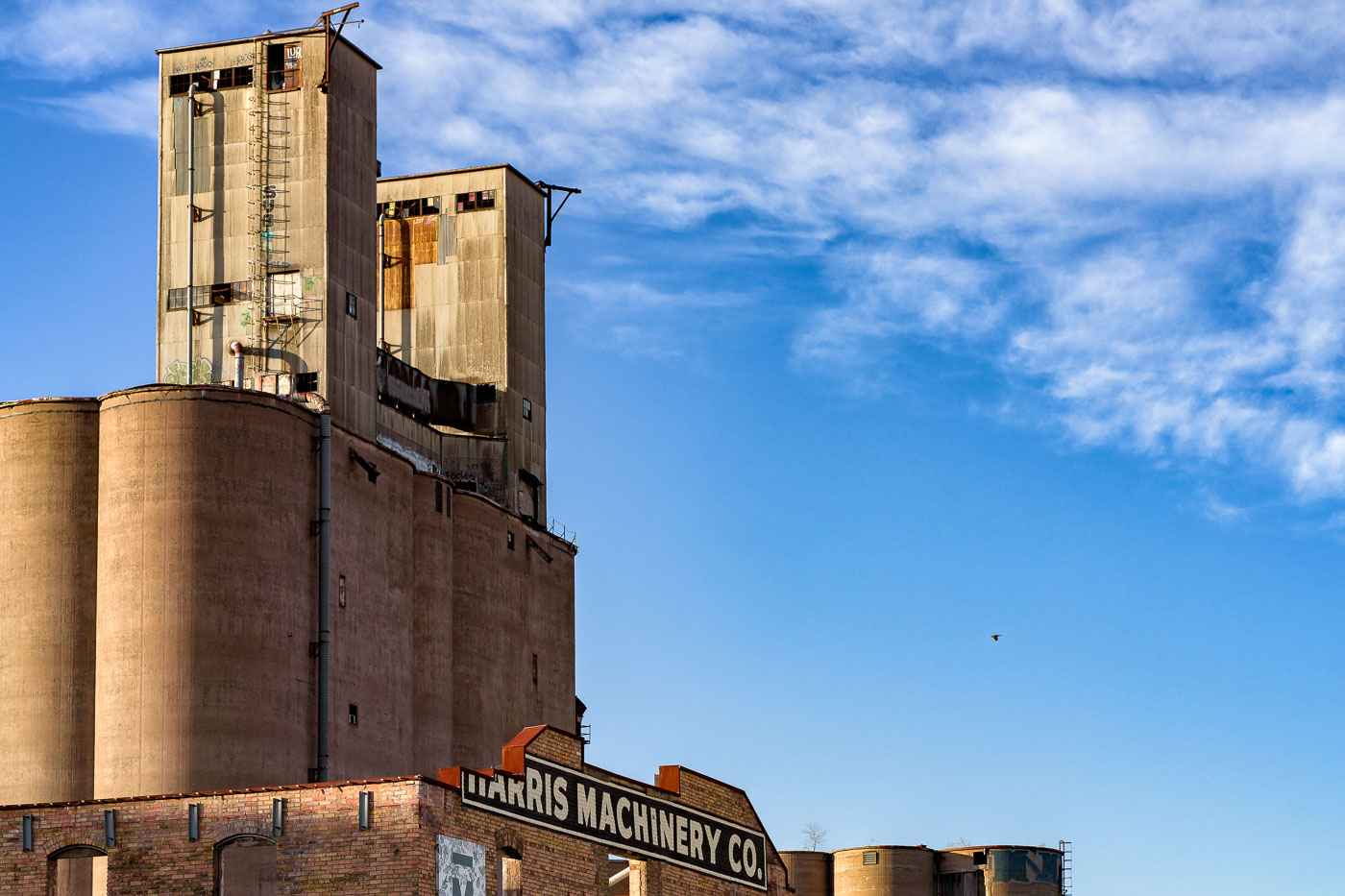
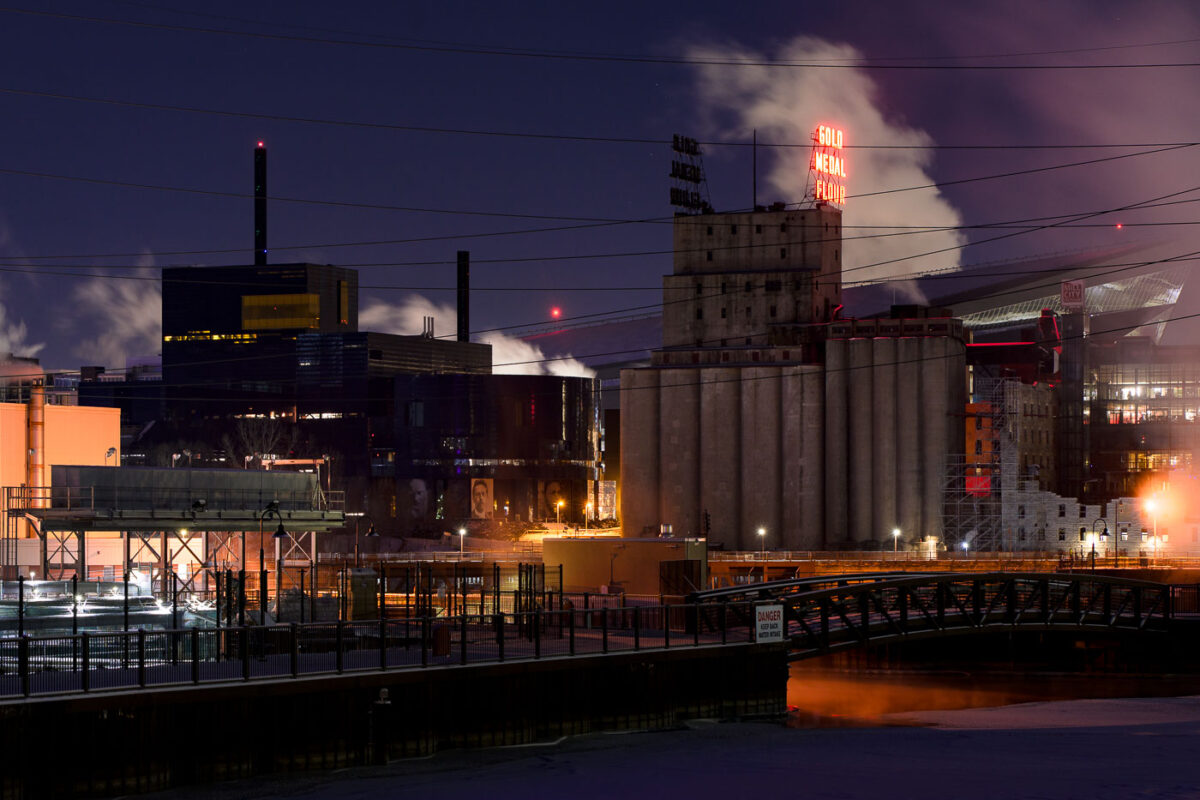
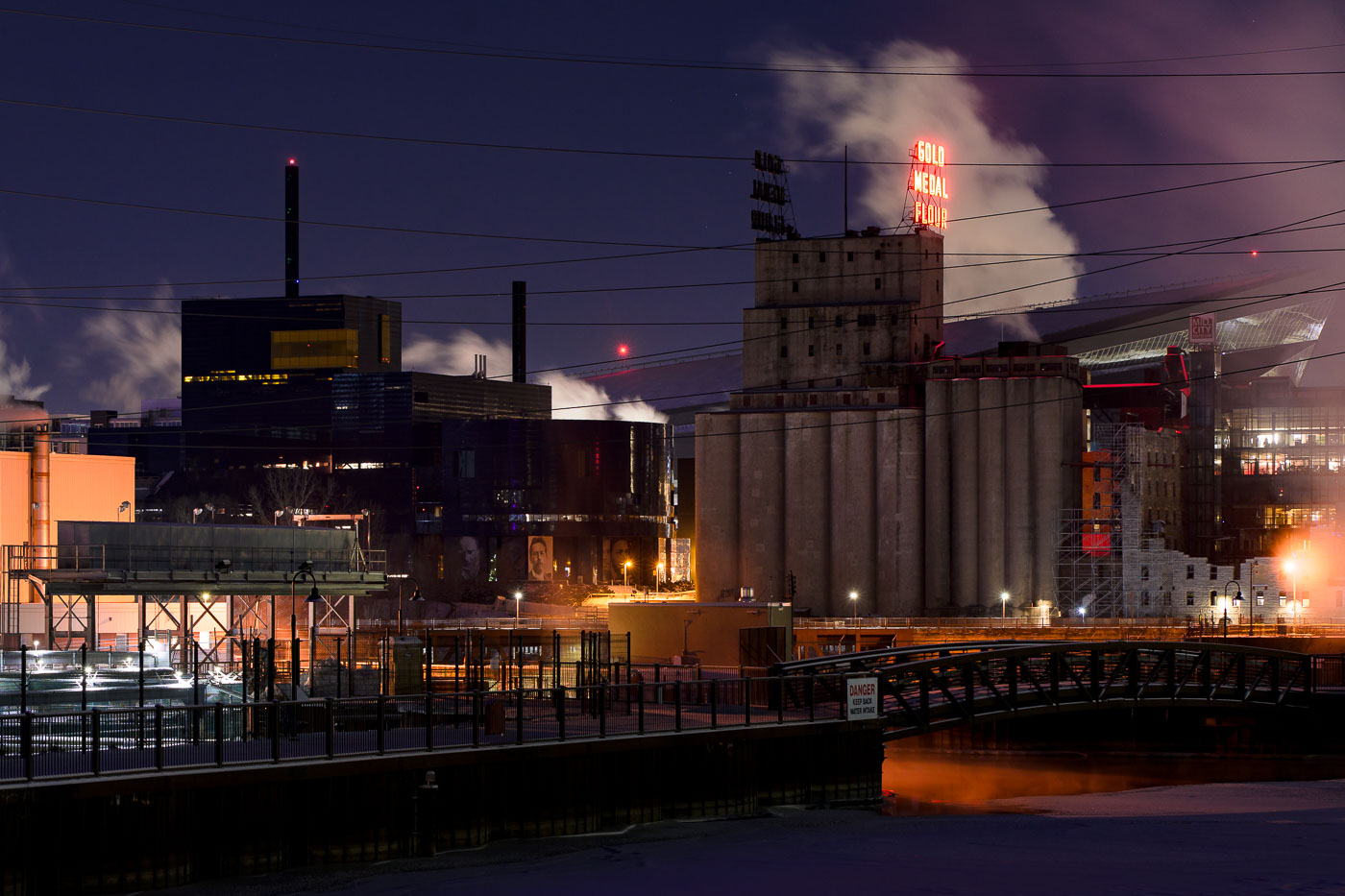
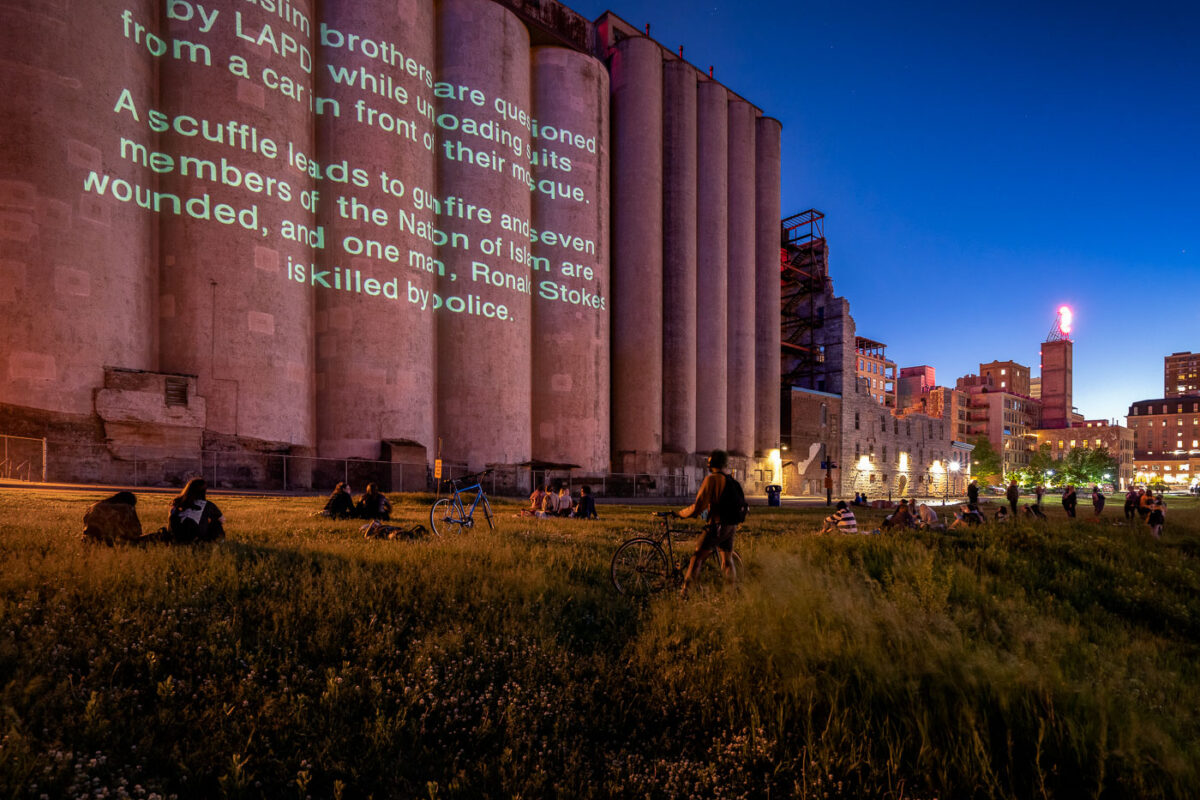
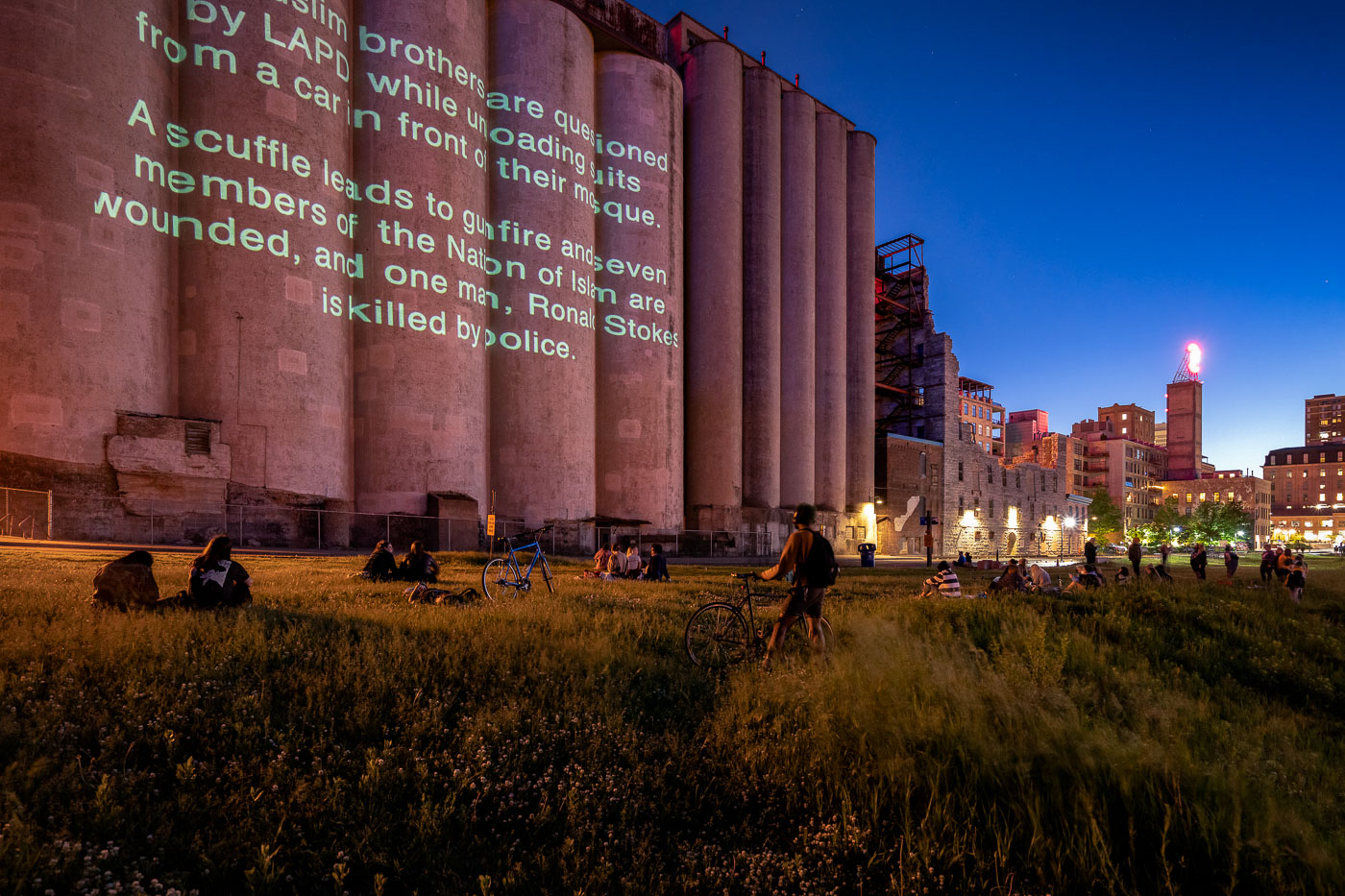
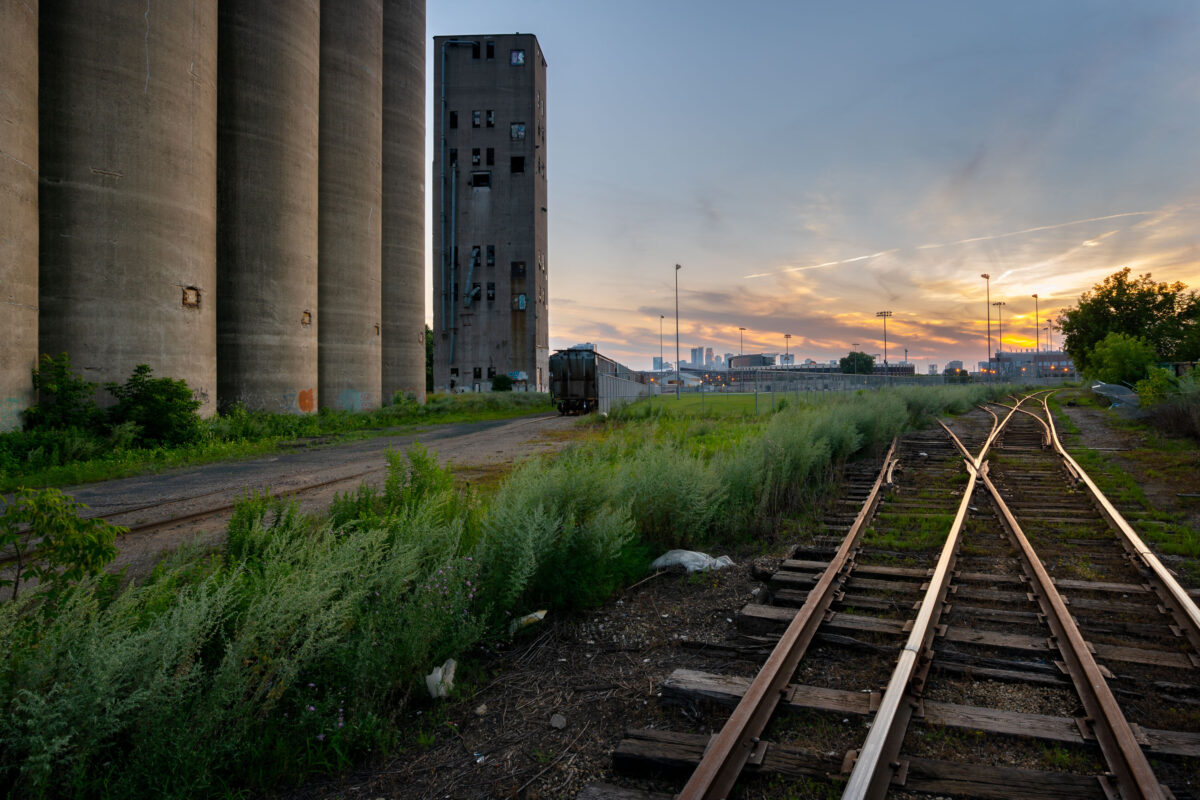
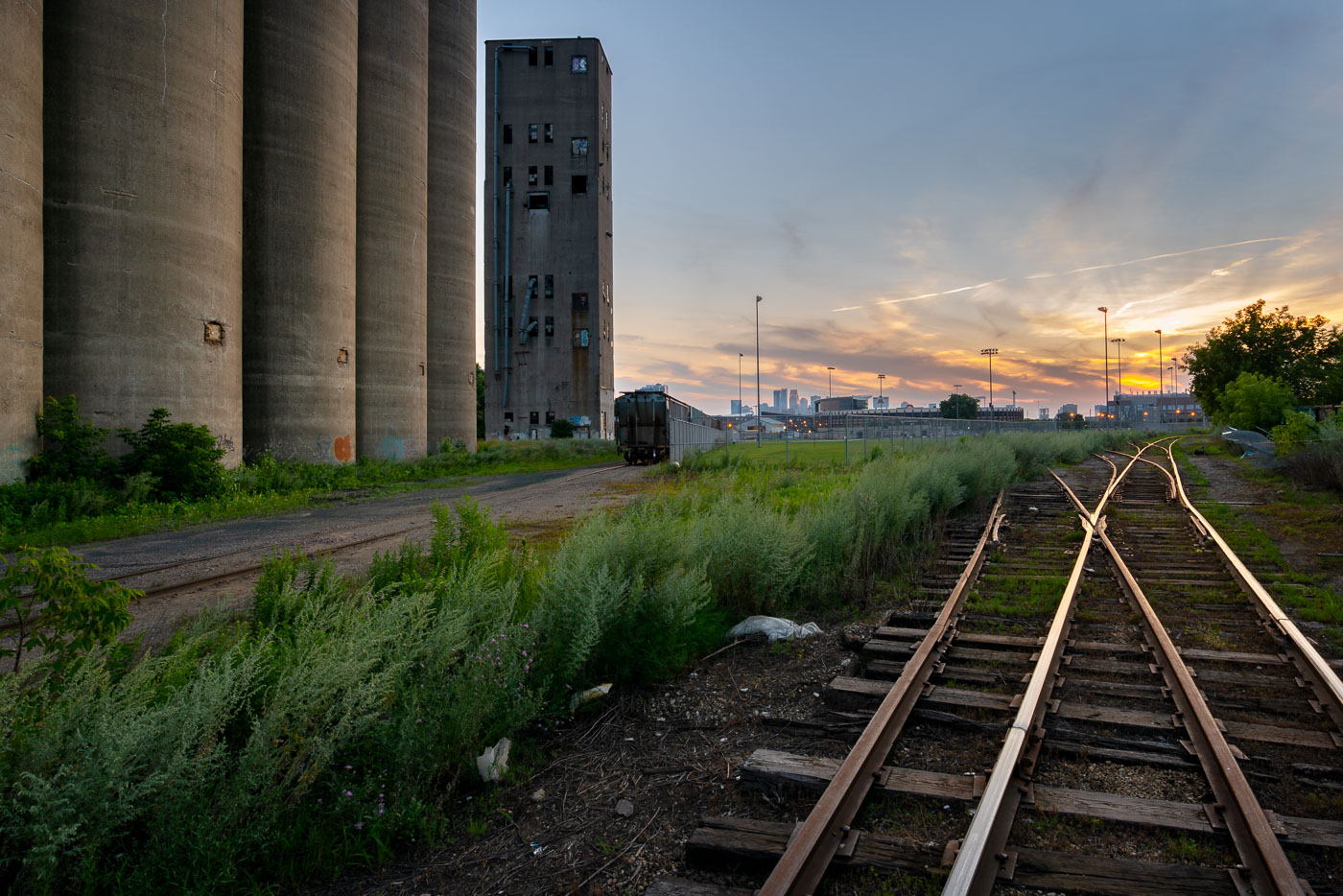
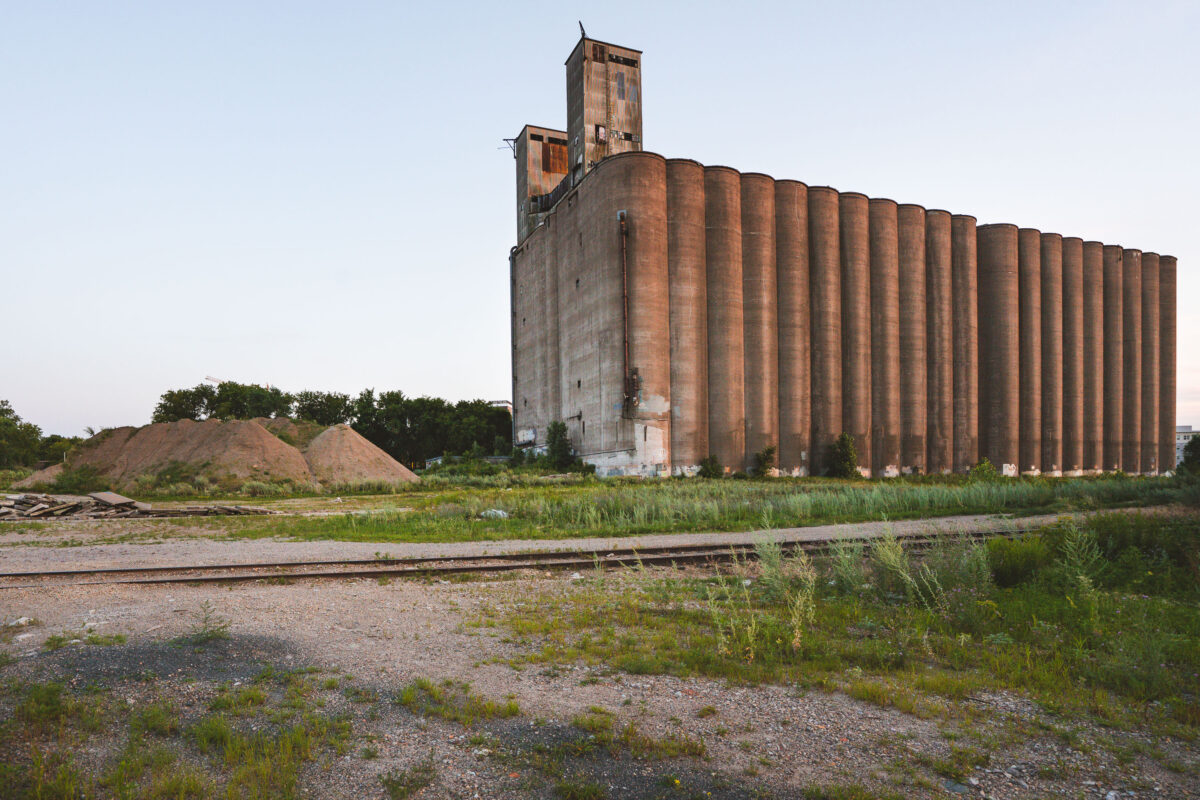
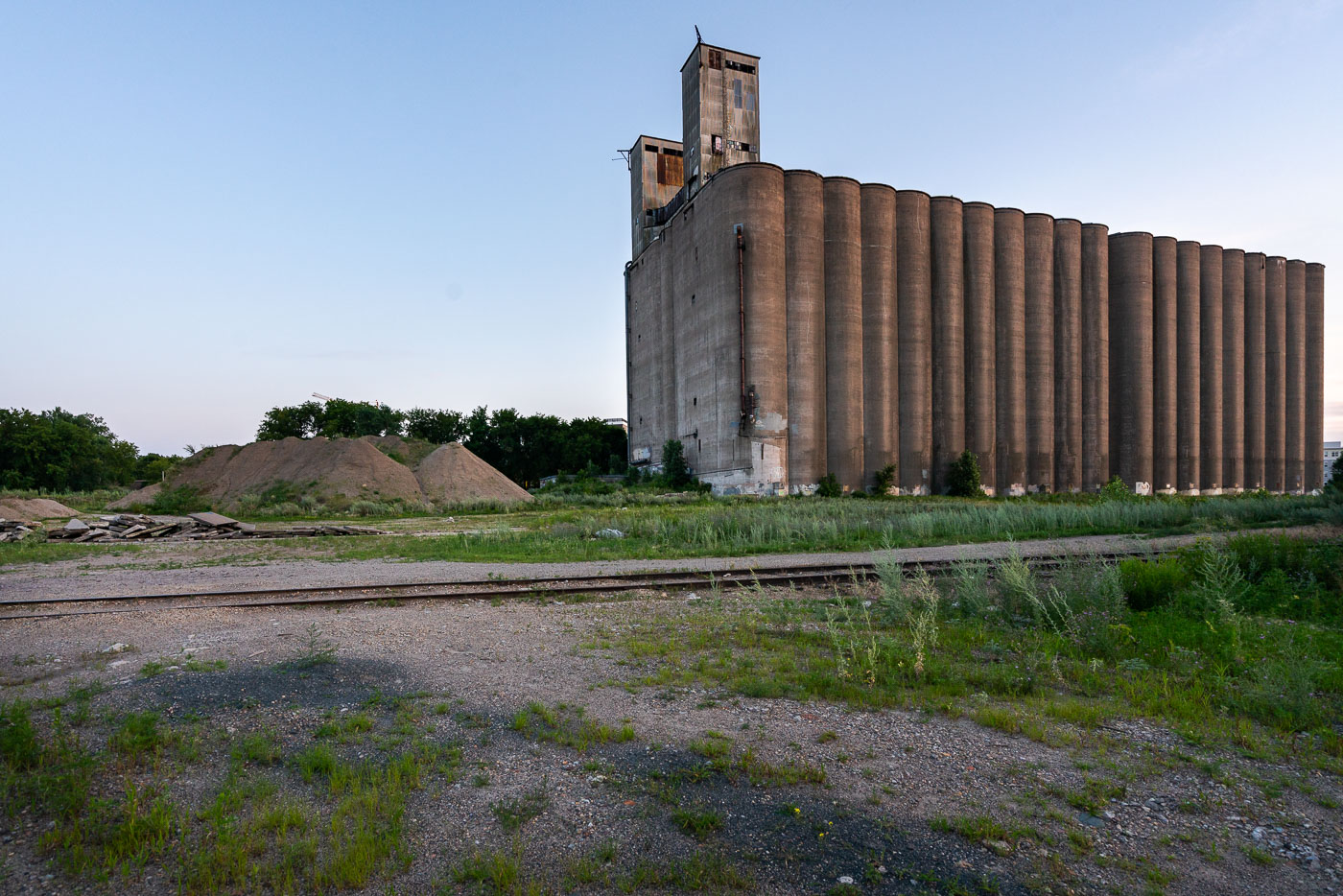
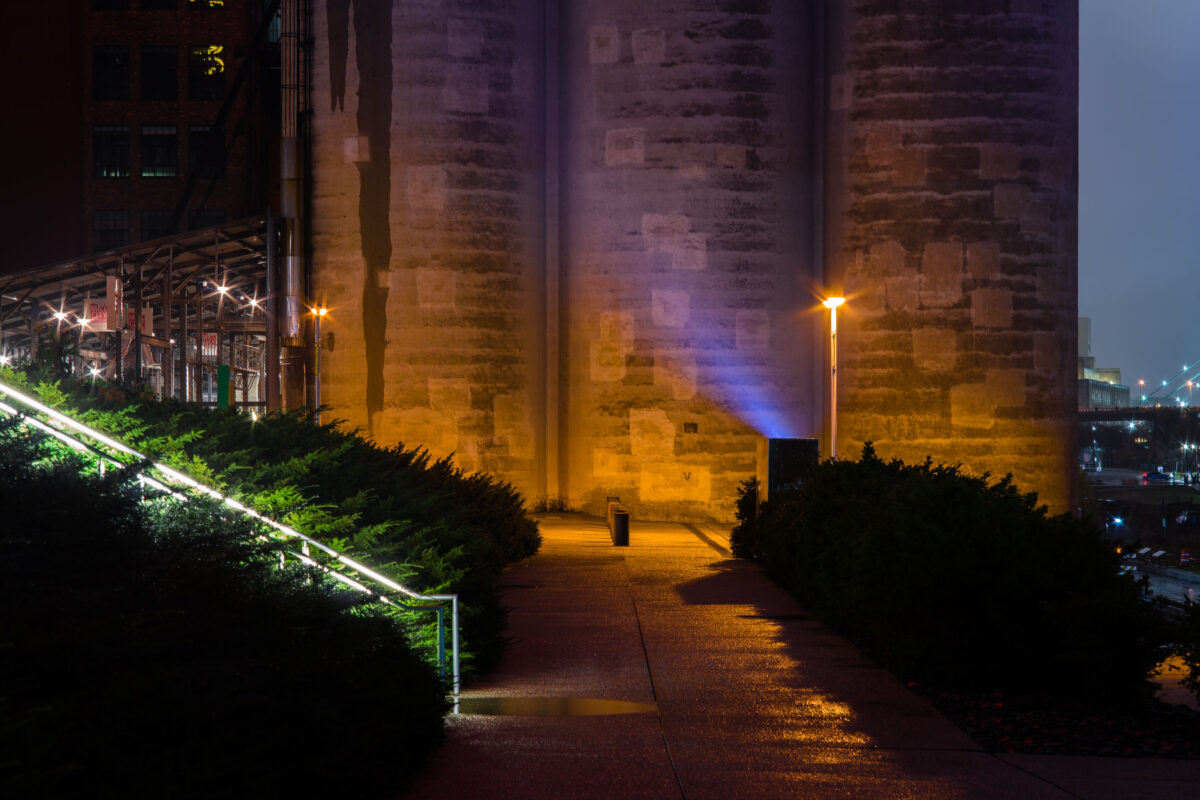
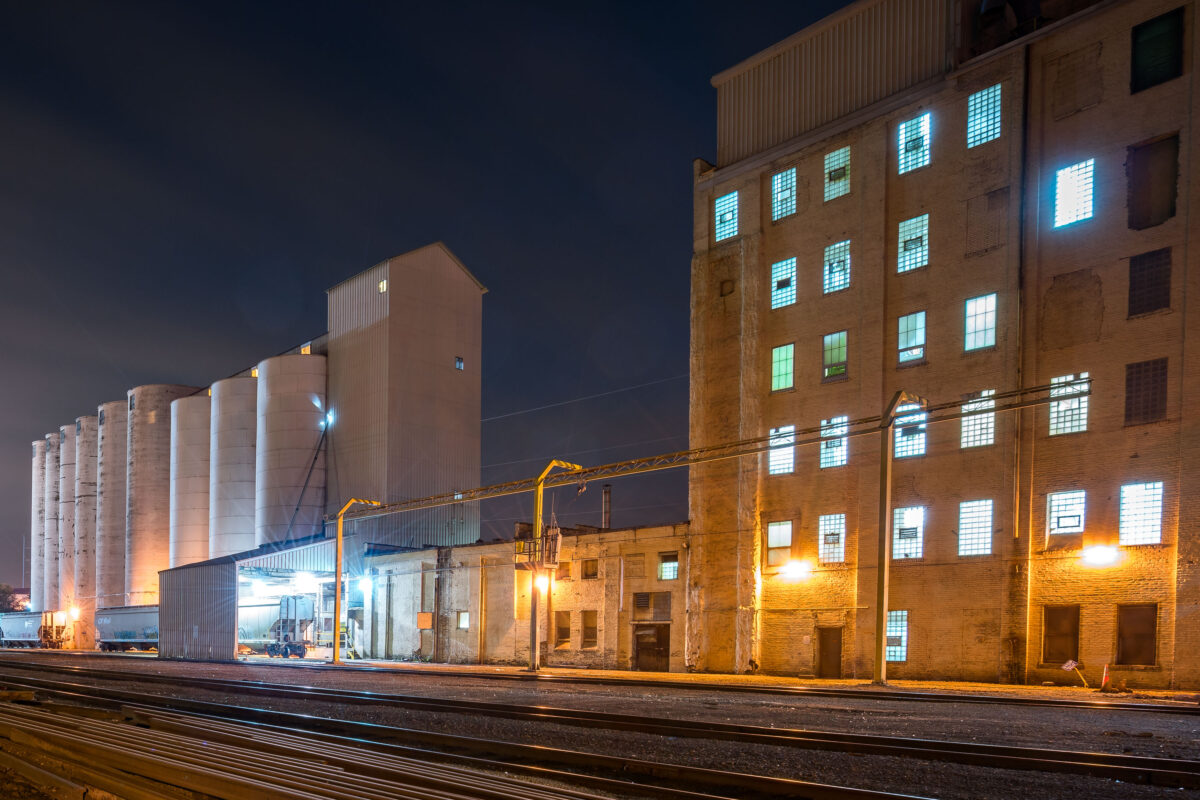
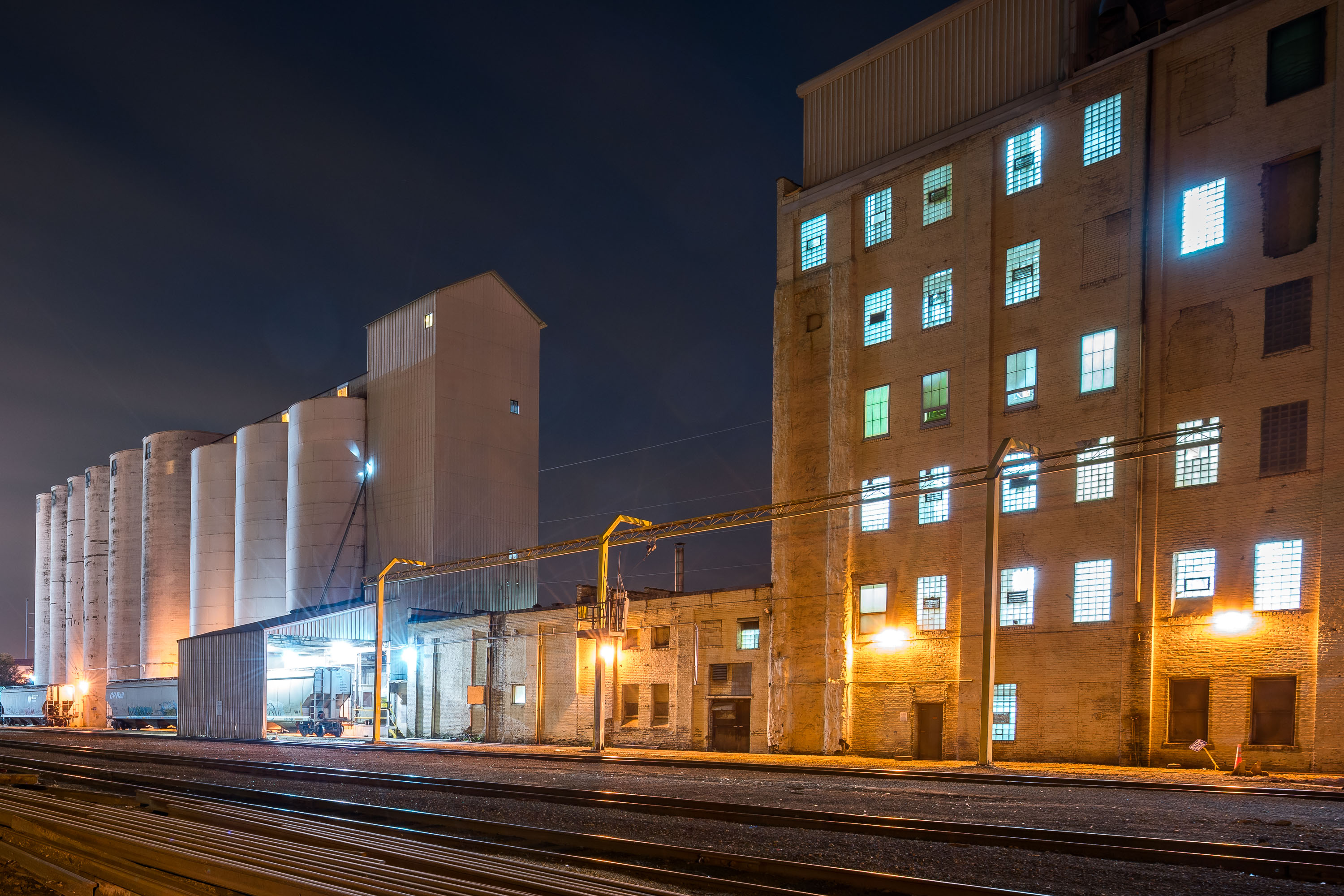
October 25, 2022 — The aging ADM grain elevator rises over the Harris Machinery Co. building in Minneapolis, a reminder of the city’s long industrial relationship with grain milling and riverfront commerce. These concrete storage silos and metal-clad headhouses were once central to moving Midwestern grain through the milling district, part of an infrastructure network that fueled Minneapolis’s identity as the “Flour Milling Capital of the World.” Harris Machinery Co., a longtime supplier of industrial equipment, occupies the foreground, its brick façade contrasting with the weathered surfaces of the towering elevator. The structures together illustrate the layered industrial history of the city’s working riverfront.January 2, 2022 — The historic Washburn Crosby Mill, a prominent structure in Minneapolis, is illuminated by its "Gold Medal Flour" sign on a frigid night with temperatures reaching -13°F. Originally built in the late 19th century, the mill was a cornerstone of the Pillsbury Company's operations and a significant contributor to Minneapolis's status as a global flour-producing center.July 25, 2021 — The former Pillsbury flour mill near downtown Minneapolis. It's since been renovated into condos.June 10, 2020 — A projection titled "Revolution Will Be Televised" illuminates the historic Gold Medal Flour grain elevators in downtown Minneapolis. The art installation, displayed on the concrete silos, features text recounting historical events related to police actions and social justice, resonating with themes from the Minneapolis Uprising. Viewers gather in Gold Medal Park, a public green space adjacent to the former industrial complex, to observe the temporary display. The Gold Medal Flour complex, once a major industrial site, represents Minneapolis's milling history and now stands as a prominent landmark in the city's riverfront district.December 9, 2019 — Zen-Noh Grain Corporation terminal in Convent, Louisiana. The Mississippi River facility stores and transfers grain for export through the Gulf Coast, handling agricultural commodities from the U.S. interior.July 24, 2019 — Train tracks outside the long abandoned massive concrete Archer-Daniels-Midland Delmar Elevator No. 7 in Minneapolis.
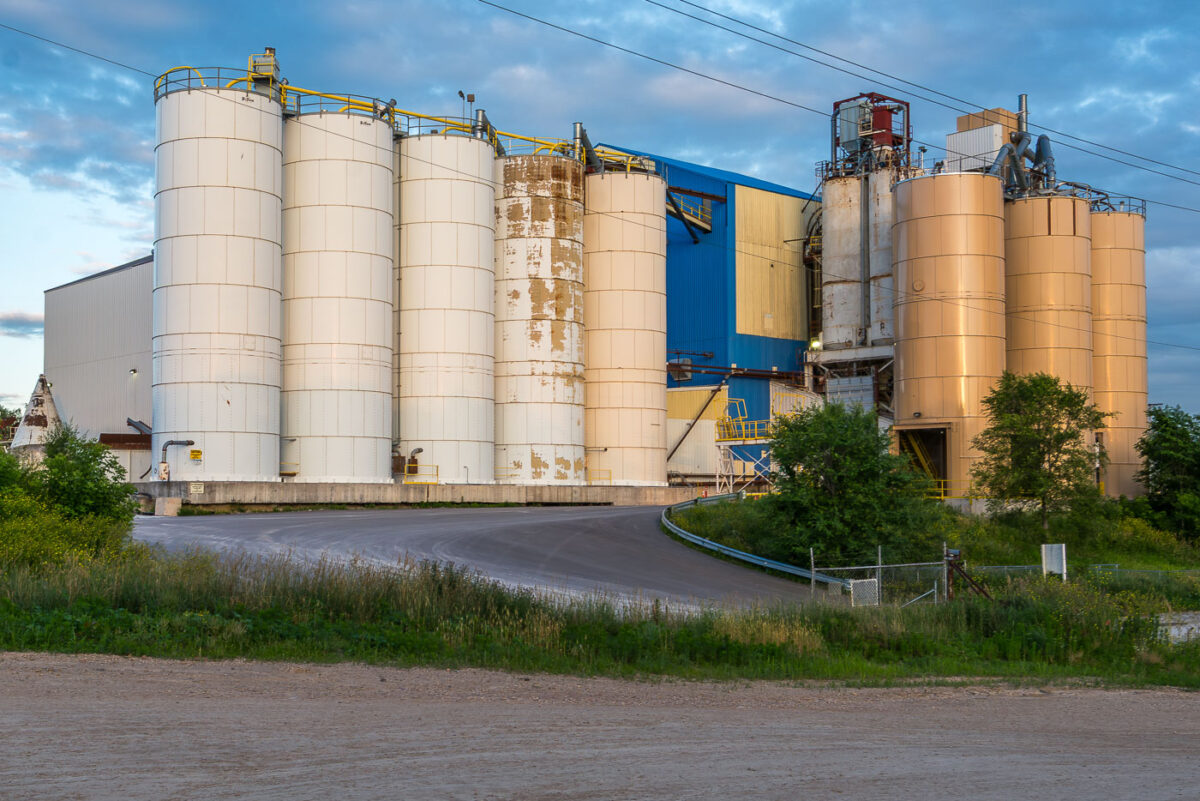
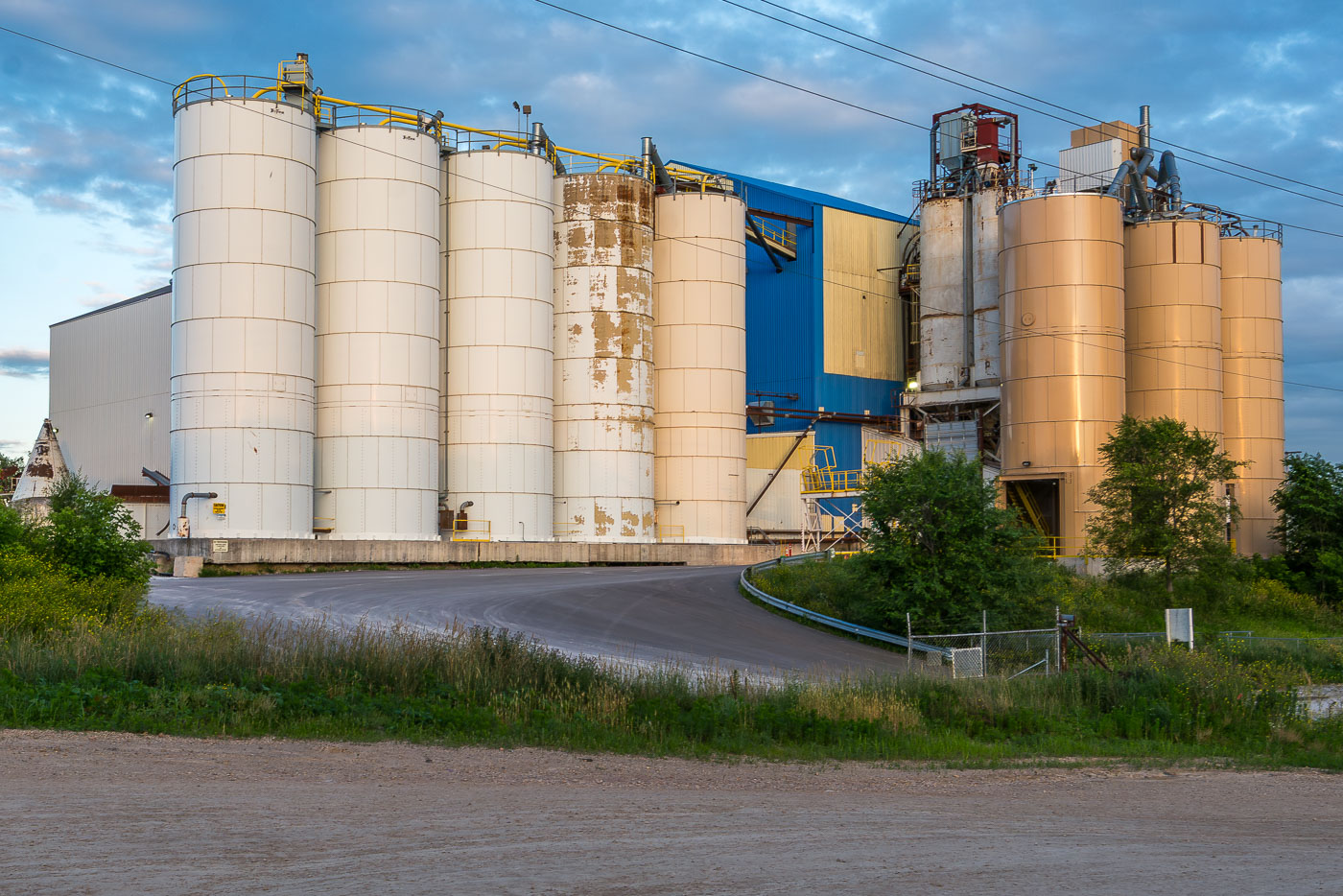
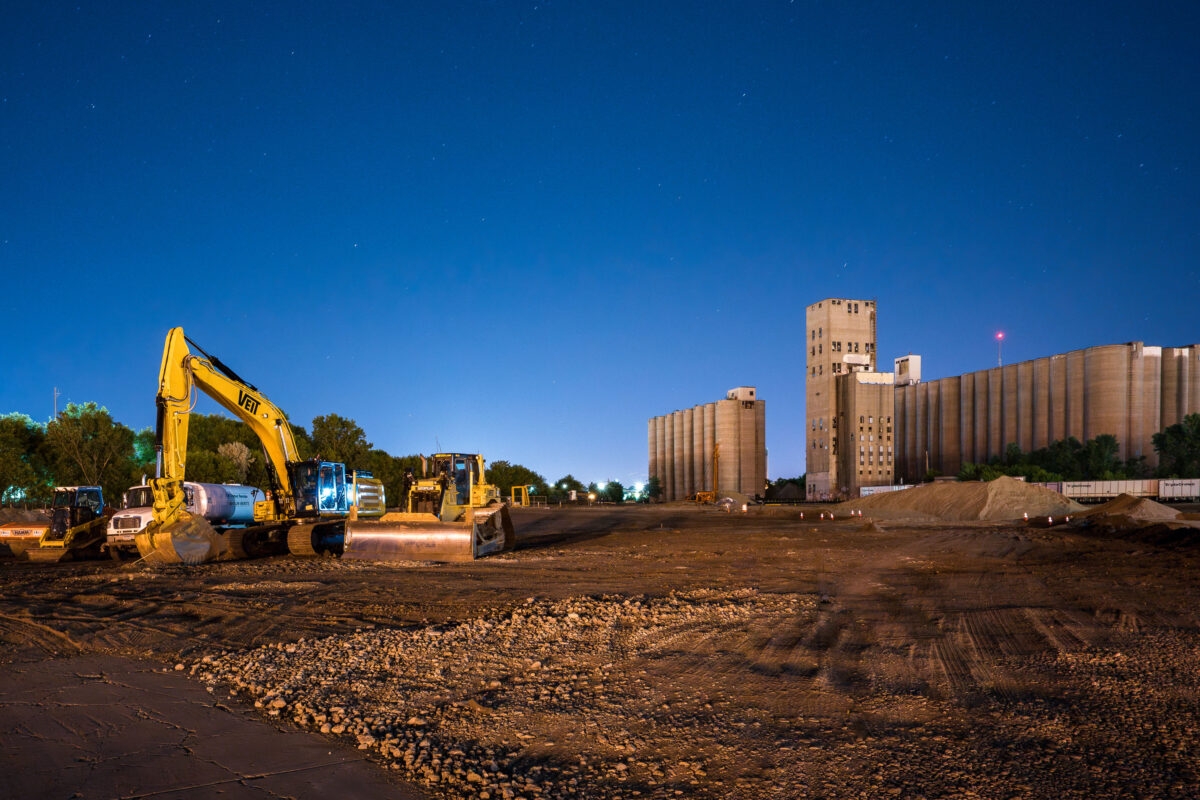
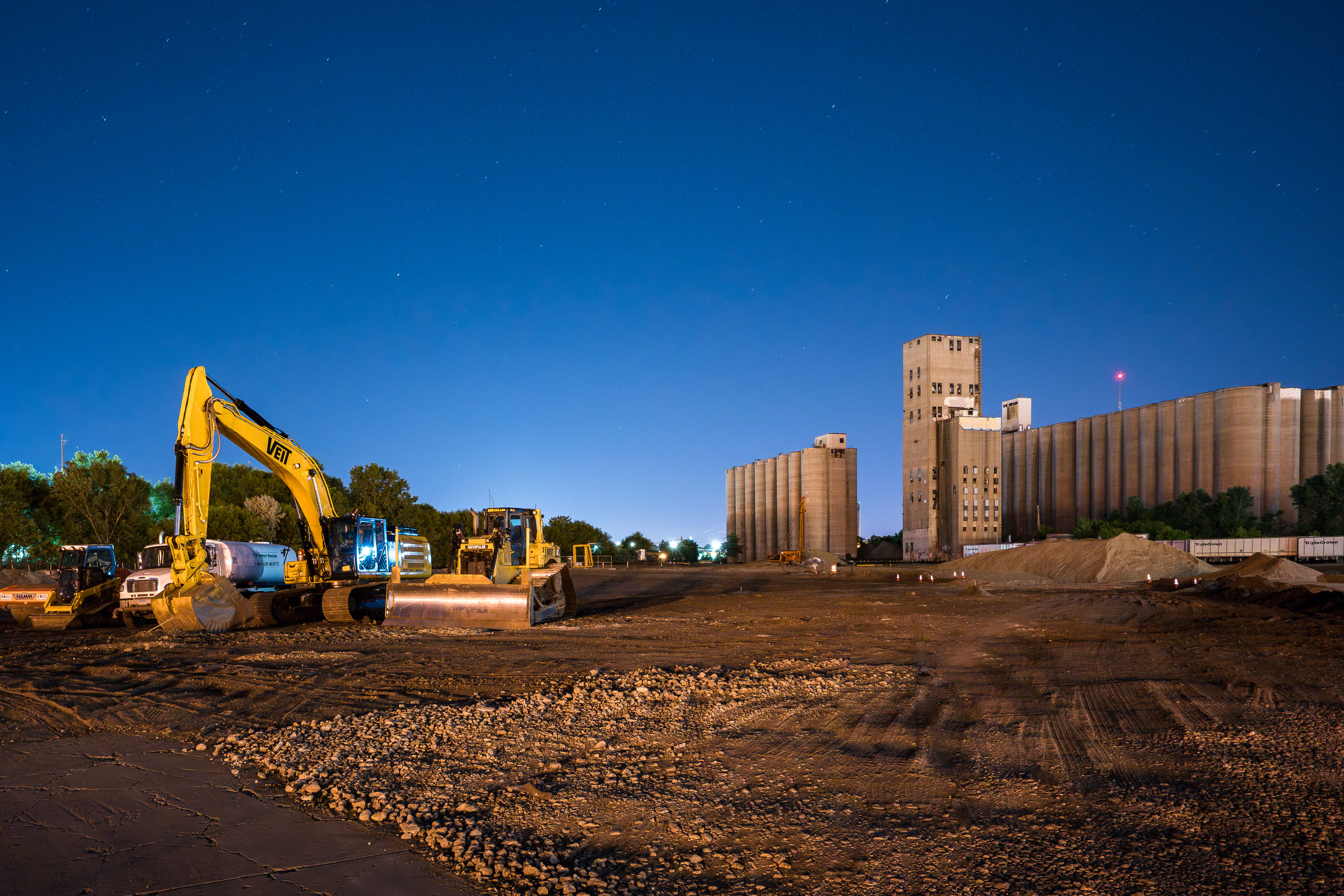
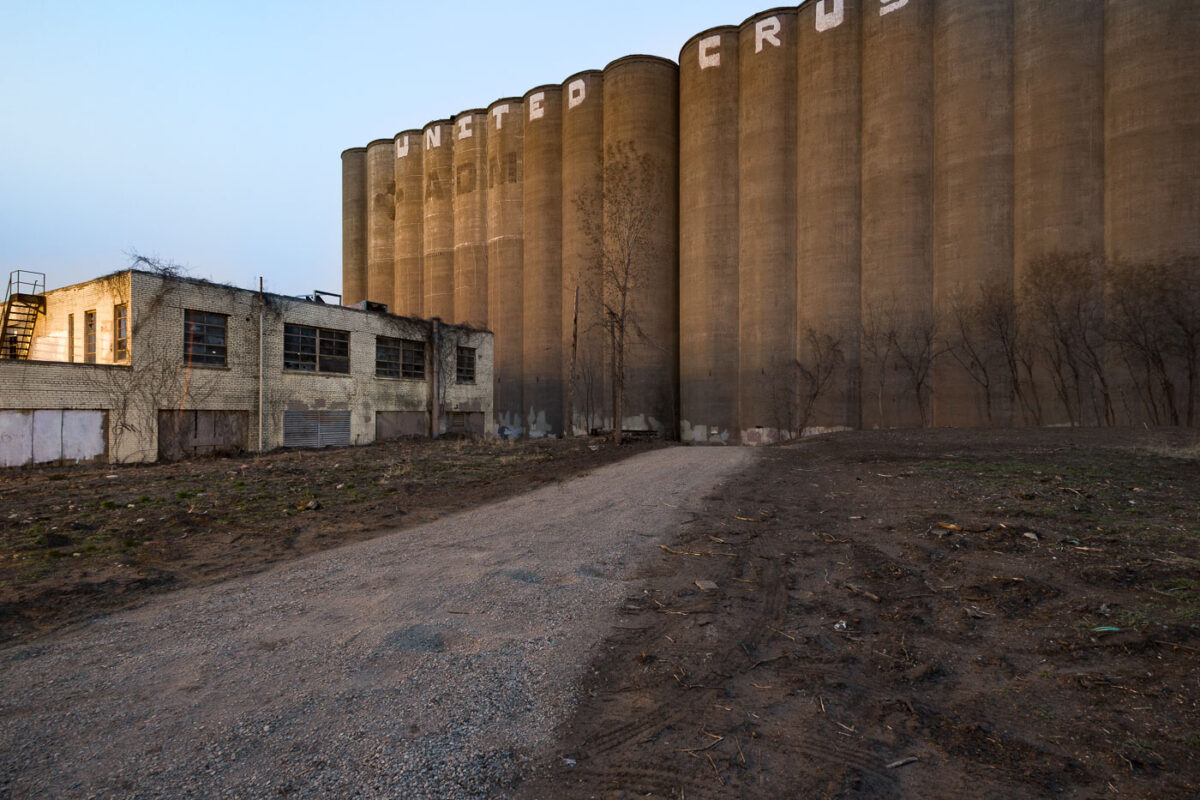
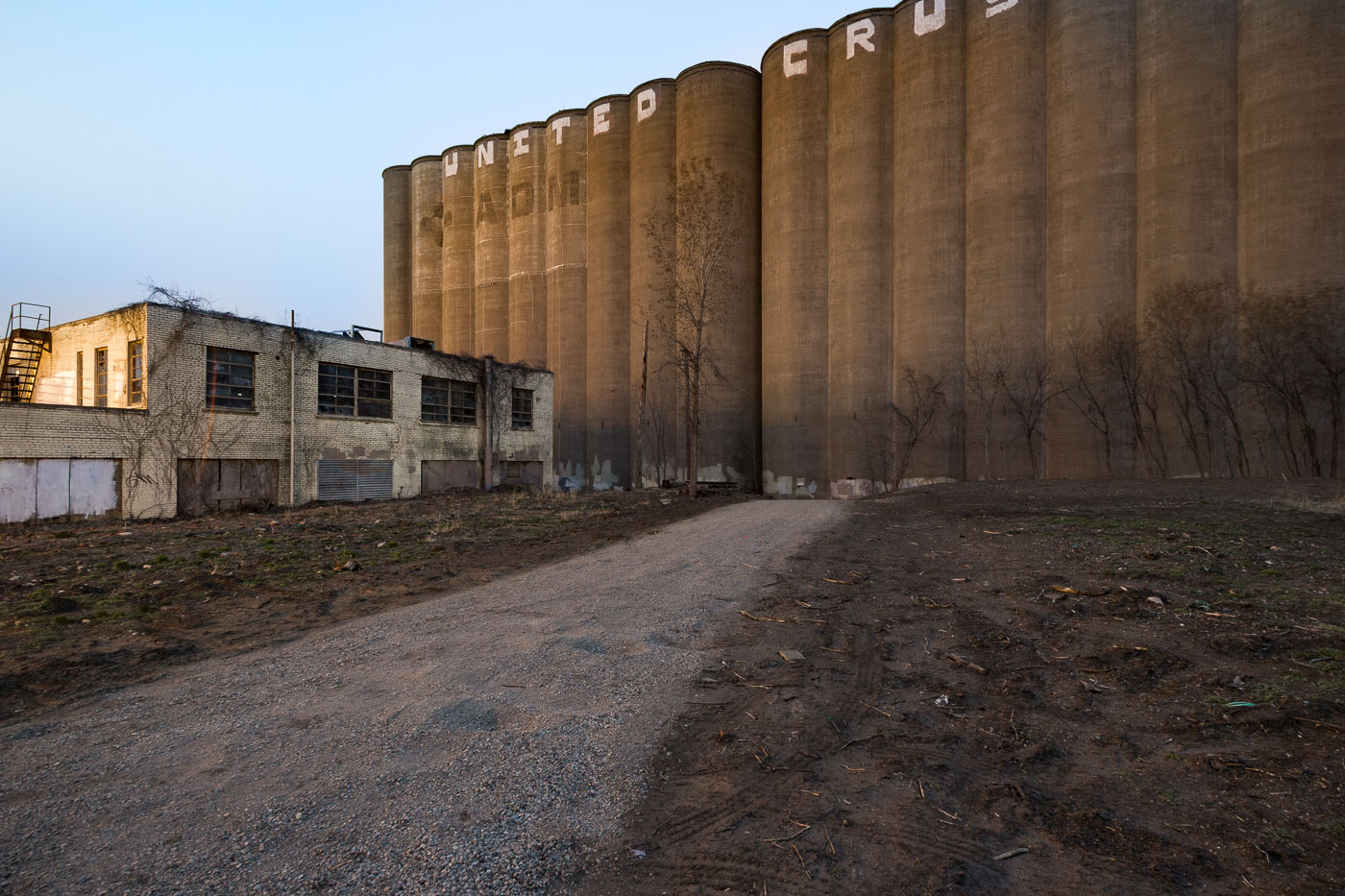
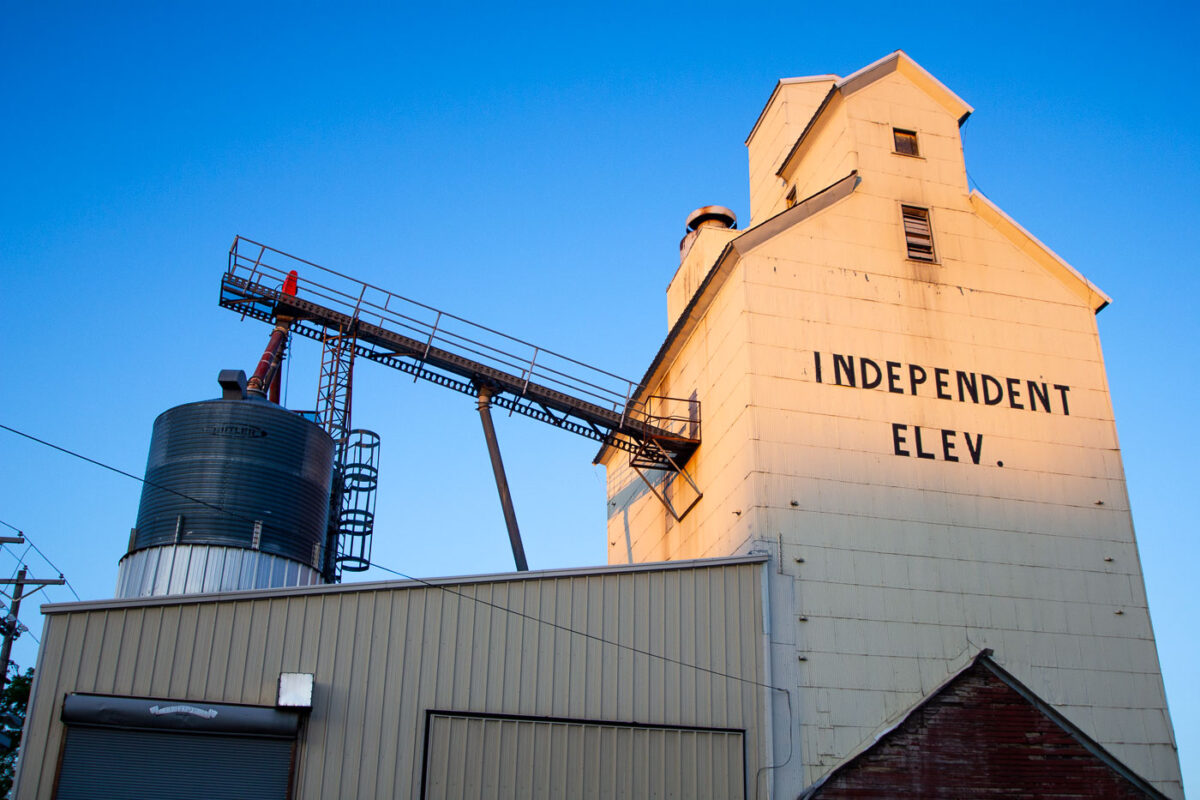
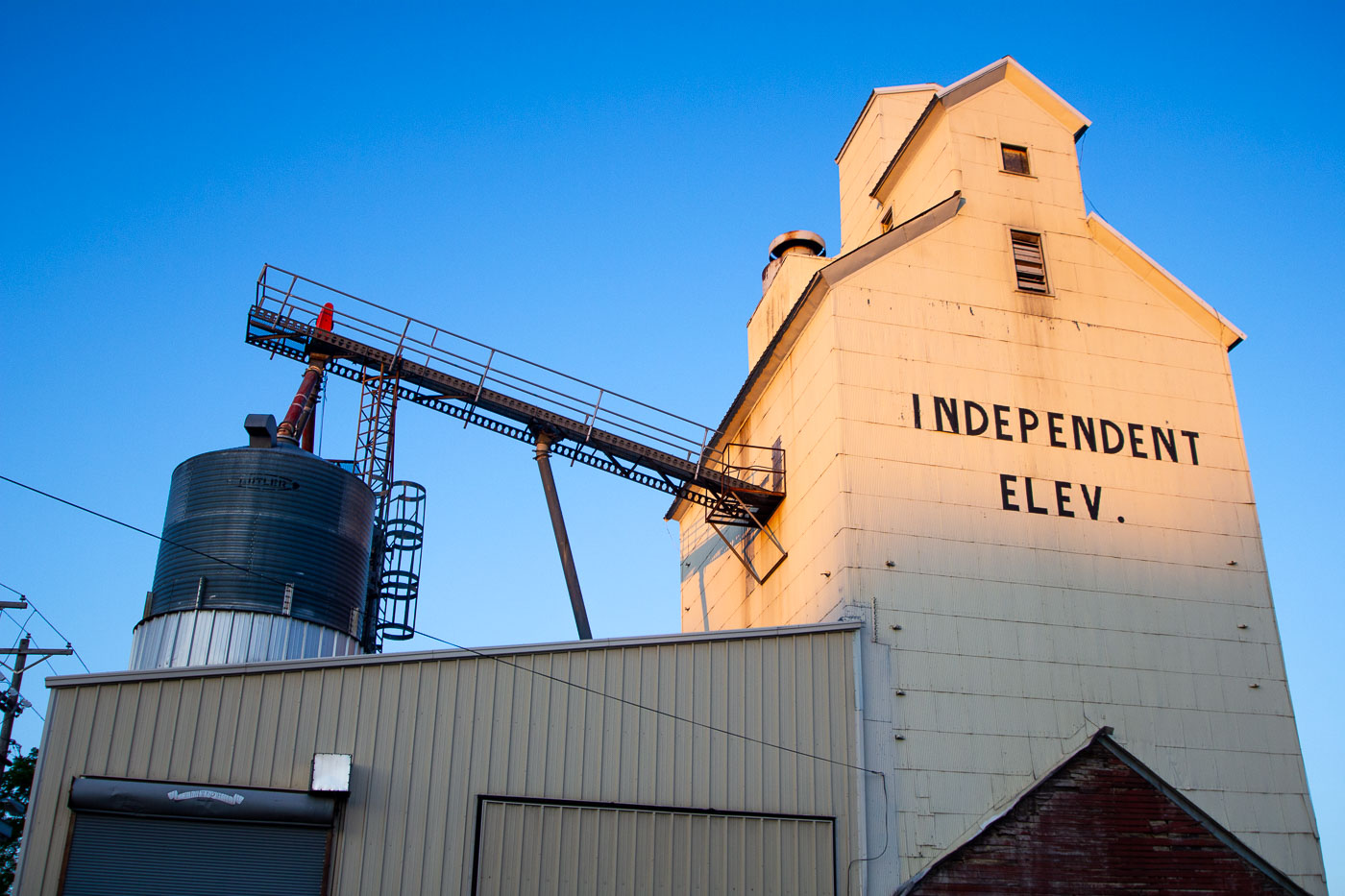
Known locally as the "United Crushers" mill after the large tag visible from miles away.July 24, 2019 — The long abandoned massive concrete Archer-Daniels-Midland Delmar Elevator No. 7 in Minneapolis. Known locally as the "United Crushers" mill after the large tag visible from miles away.April 7, 2019 — Kansas City Grain Elevators in Kansas City, Missouri, form part of the city’s historic industrial riverfront near the Missouri River and rail corridors. The concrete silos and elevator houses were built to store and ship grain as Kansas City developed as a major freight and grain center. Their weathered exterior and attached machinery reflect decades of industrial use and exposure.November 6, 2018 — US Bank Stadium, a multi-purpose venue completed in 2016, is visible across the Mississippi River from Northeast Minneapolis. In the foreground, the historic Pillsbury A Mill, once the largest flour mill in the world, stands as a reminder of the area's industrial past.November 5, 2018 — The Mill City Museum in Minneapolis is housed in the former Washburn "A" Grain Elevator, a structure that was once the largest flour mill in the world. The museum preserves and interprets the history of the mill and the city's flour milling industry, which was central to Minneapolis's development. The grain elevator, built in 1880, is a prominent example of industrial architecture from the era. Today, the museum offers exhibits on the milling process, the lives of mill workers, and the impact of the industry on the city's growth and identity.November 5, 2018 — The "Gold Medal Flour" neon sign stands atop a historic grain elevator in downtown Minneapolis. This sign has been a prominent feature of the city's industrial waterfront for decades, advertising a brand that originated in the late 19th century. The grain elevator itself represents Minneapolis's past as a major milling and transportation hub for agricultural products.September 2, 2017 — ADM Nokomis Flour Mill in South Minneapolis was an Archer Daniels Midland grain-processing facility. The complex includes mill buildings, grain silos, and rail access for moving grain and flour. The mill closed in mid-2019.June 25, 2017 — This grain elevator and storage facility in Savage, Minnesota includes multiple cylindrical silos for bulk storage and processing. The complex combines cream-colored concrete storage structures with a blue-framed processing building and additional tan silos for handling and distribution. The facility represents the type of agricultural infrastructure common to Minnesota's grain handling and milling operations.June 16, 2017 — The Electric Steel and Kurth Malting grain elevator complex in Minneapolis's Dinkytown area was being demolished in June 2017. Construction equipment worked across the cleared site as the grain elevator structures remained standing nearby.June 7, 2017 — Minneapolis skyline and the Stone Arch Bridge over the Mississippi River in Minneapolis, Minnesota. The former railroad bridge spans St. Anthony Falls and is part of the Mill Ruins Park area.April 12, 2016 — The abandoned ADM grain elevator complex in Dinkytown, Minneapolis, stands as a relic of the city's industrial past. Originally part of the Pillsbury Company's operations, these concrete silos were constructed to store and process grain, a vital function for Minneapolis's historical role as a milling center. The adjacent brick building likely served administrative or processing purposes.January 18, 2016 — The ADM Grain Elevator and Harris Machinery buildings in Prospect Park, Minneapolis, show extensive ice and snow accumulation following a significant fire. The fire gutted the interior of the Harris Machinery structure, leaving its exterior heavily damaged and encased in ice. The ADM Grain Elevator, identified by the "CRUSHERS" lettering on its silos, stands adjacent to the damaged machinery building. These structures are part of Minneapolis's industrial history, with grain elevators playing a crucial role in the city's development as a milling and transportation hub.July 2, 2014 — The Independent Elevator, located in Glencoe, Minnesota, stands as a testament to the region's agricultural heritage. Grain elevators were vital to the development of farming communities, providing essential storage and shipping facilities for crops. This structure, with its utilitarian design, likely played a significant role in the local economy by facilitating the movement of grain from farms to market. Its presence highlights the importance of agricultural infrastructure in supporting rural life and commerce.
Built in Minneapolis
Minneapolis Photographer
Browse by location, move through long-running series, or start with recent work.