Yakitori Alley

7 photos · 2023

7 photographs tagged Yakitori Alley, 2023.
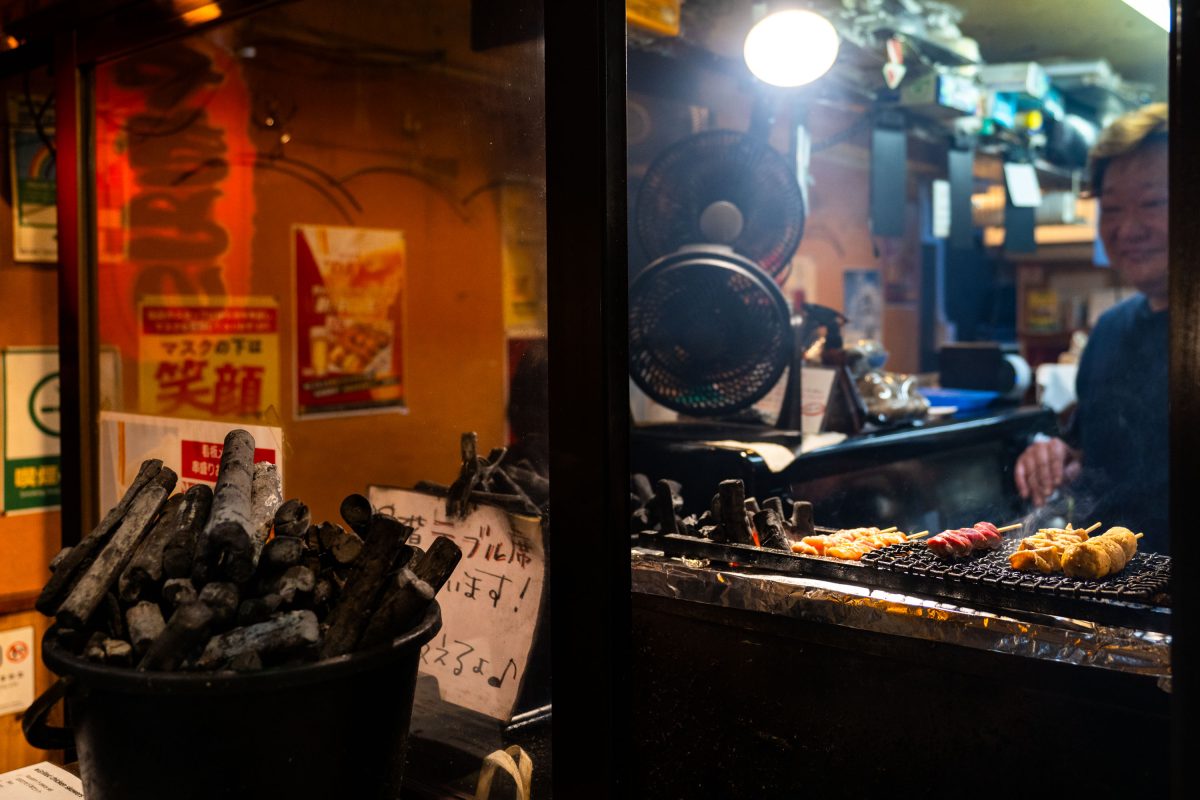
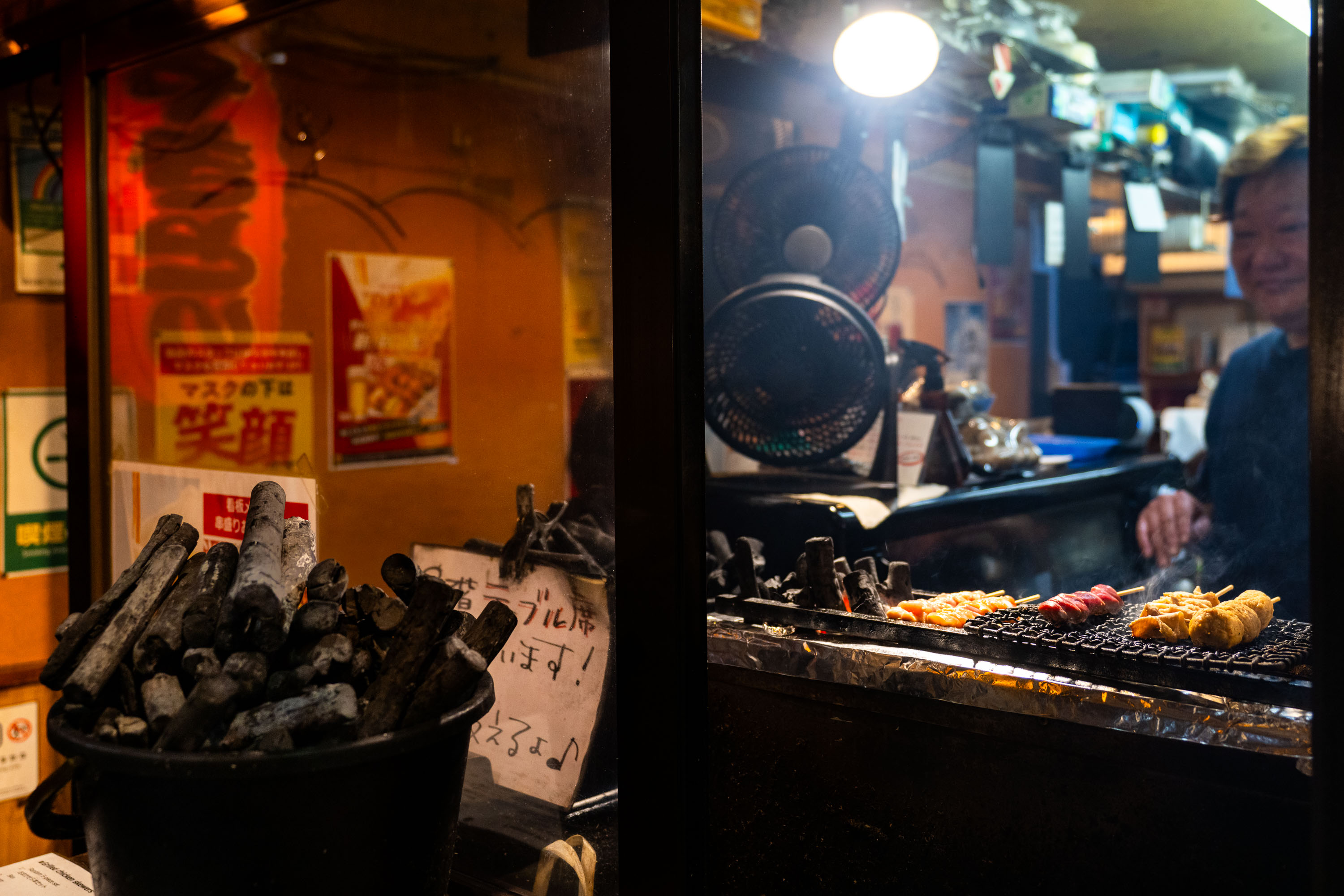
Japanese yakitori grill restaurant with charcoal and skewered food cooking over open flame at night.
Yakitori vendors like this one grill skewered chicken over binchotan, a white charcoal prized in Japan for burning hot and clean with little smoke or odor. The charcoal is made from ubame oak, slow-fired in a kiln process that can take over a week to complete. Stalls of this kind are common fixtures in izakaya districts and covered arcades, where cooks work from narrow street-facing counters just large enough for a grill, a fan to manage the coals, and space for a handful of customers. The paper sign taped to the glass is a handwritten notice, a common substitute for printed menus at small, family-run operations.

Yakitori Grill Stall, Japan

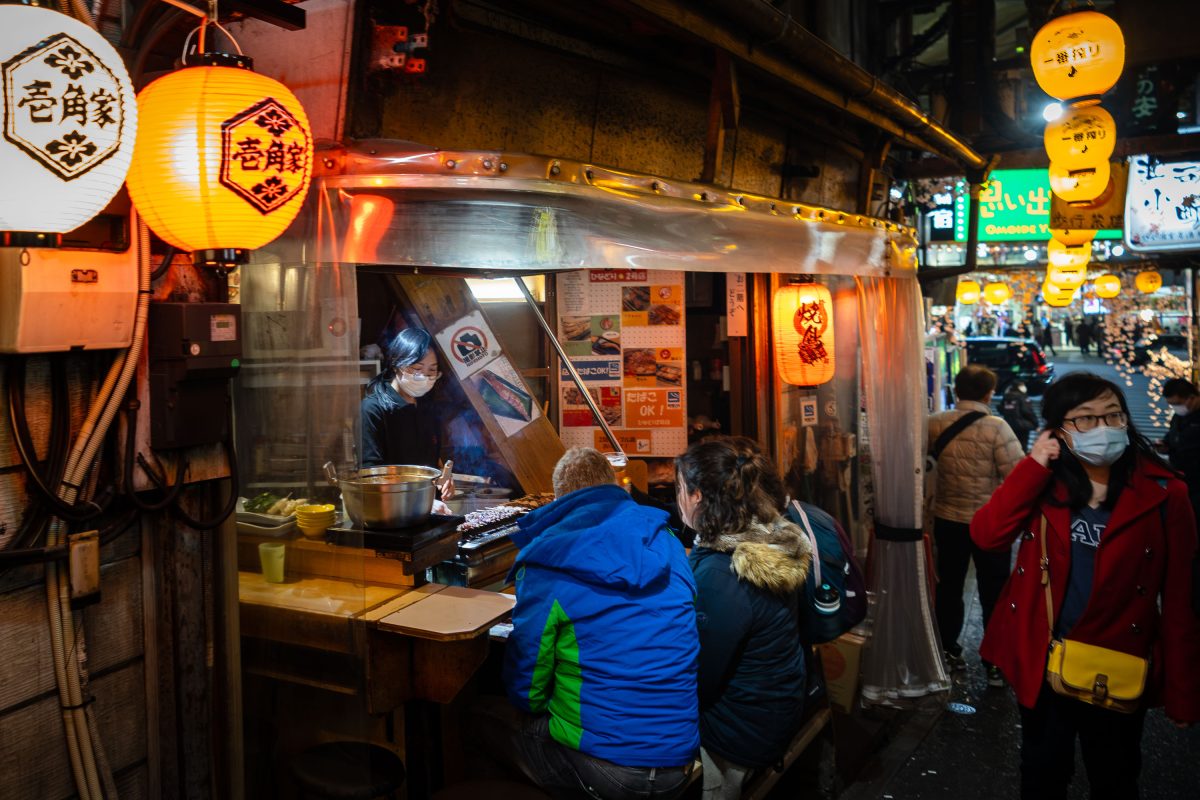
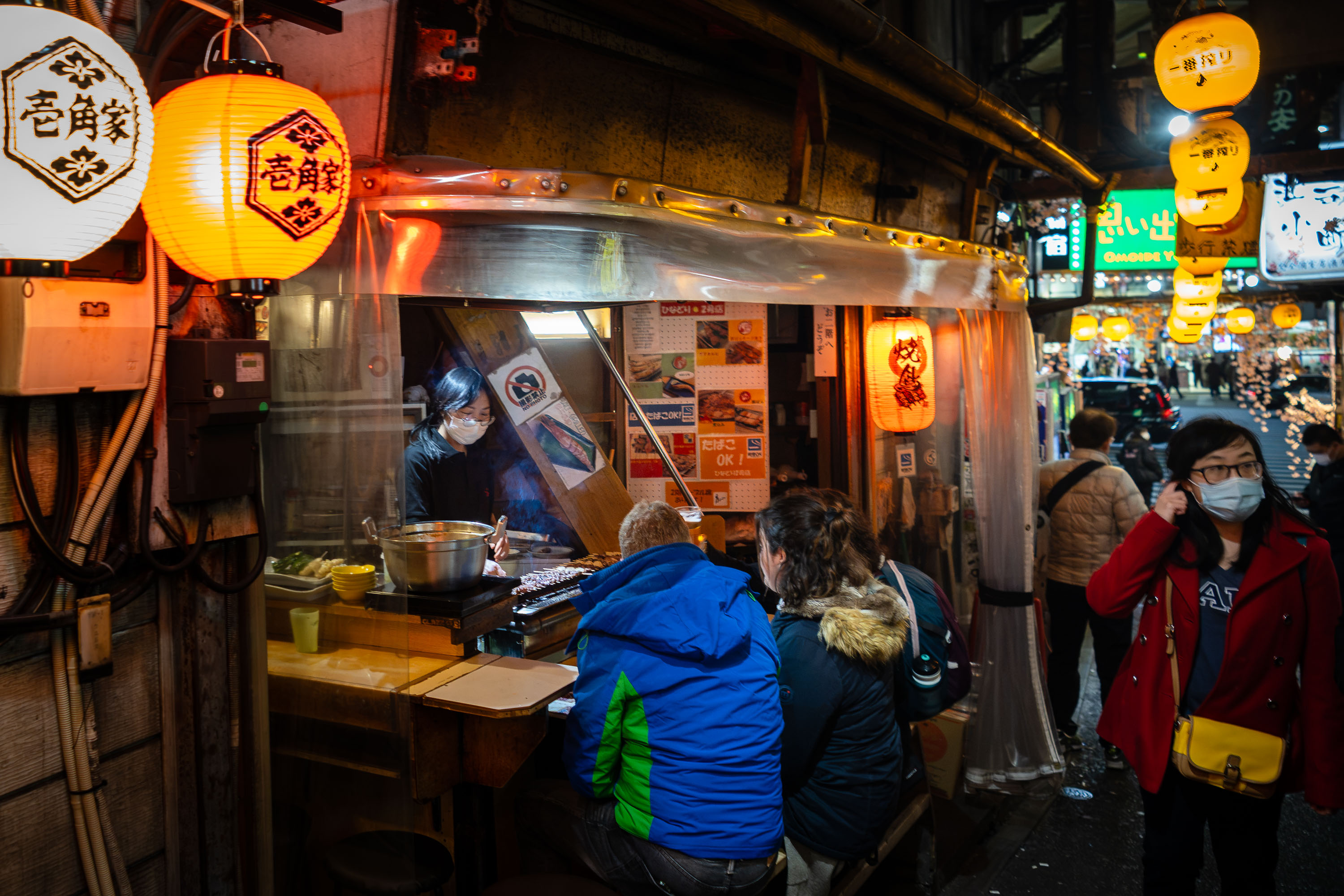
Customers order food at a small Japanese street food stall decorated with yellow lanterns at night.
Omoide Yokocho sits just west of Shinjuku Station, tucked beneath the rail tracks in a lattice of alleys barely wide enough for two people to pass. The lane took shape in the black-market years after World War II and later earned the nickname "Shomben Yokocho," or Piss Alley, for its rough-and-ready postwar reputation. A fire in 1999 destroyed much of the block, and the alley was rebuilt while keeping its original scale and layout. Today it holds roughly sixty tiny stalls, many seating fewer than ten people, serving yakitori, motsuyaki, and other grilled skewers to office workers and travelers alike. Ikkakuya, marked here by its paper lanterns, is one of the counter-style shops that keep the alley's postwar character intact.

Ikkakuya Yakitori Stall, Omoide Yokocho, Shinjuku
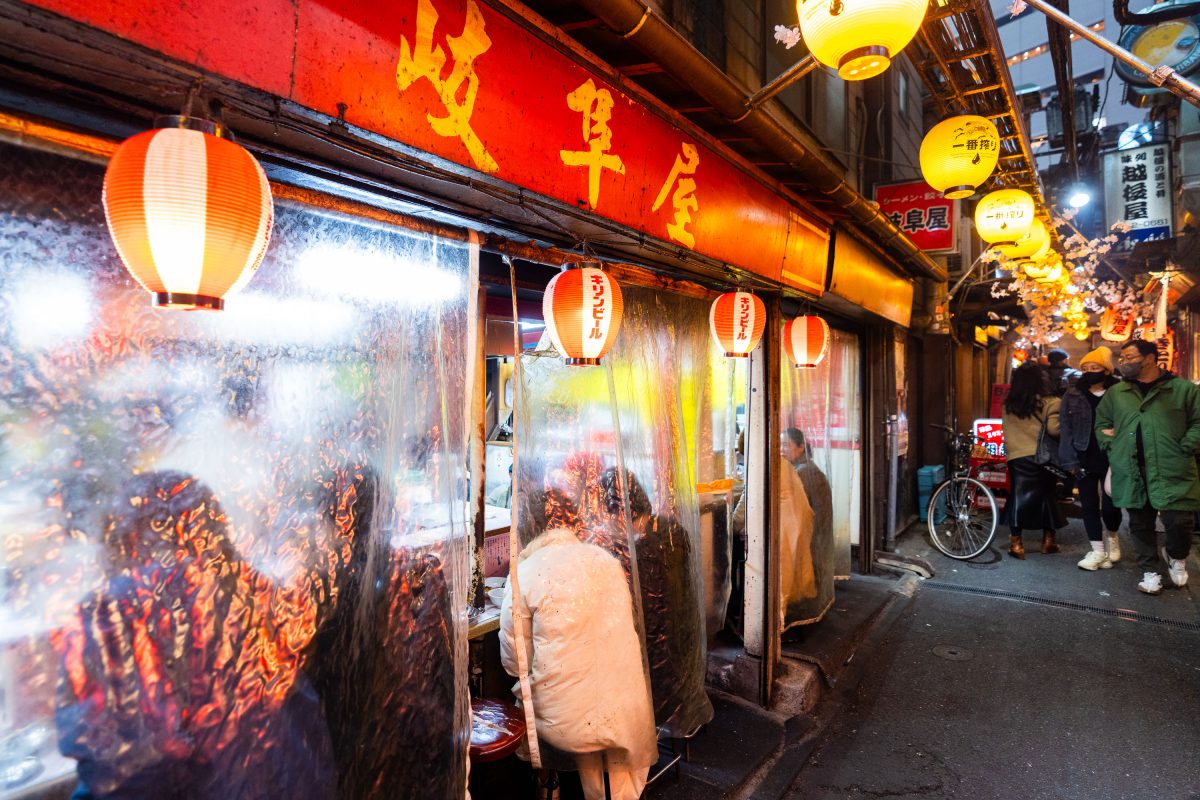
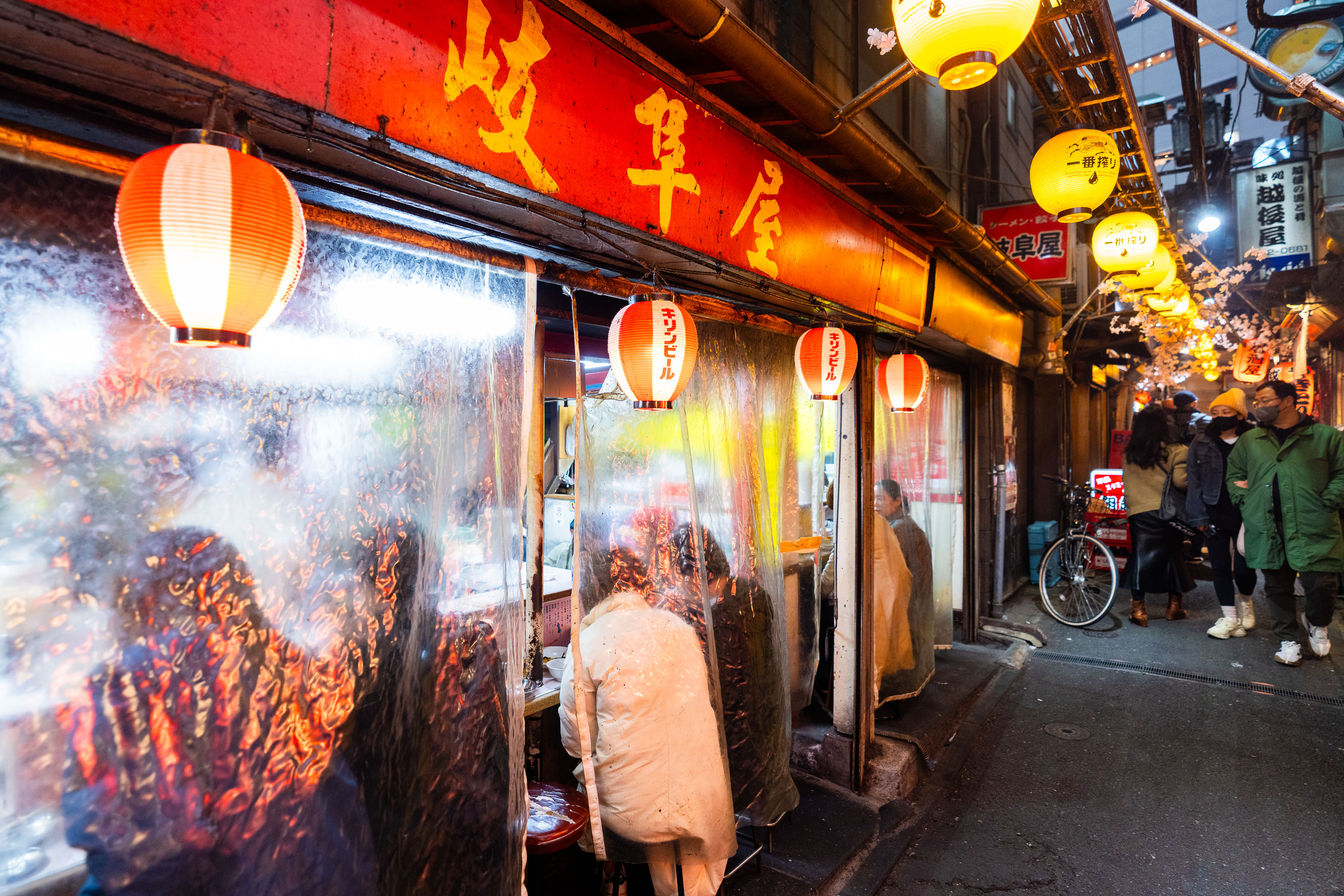
Illuminated storefront with red signage and paper lanterns in a Japanese street market at night.
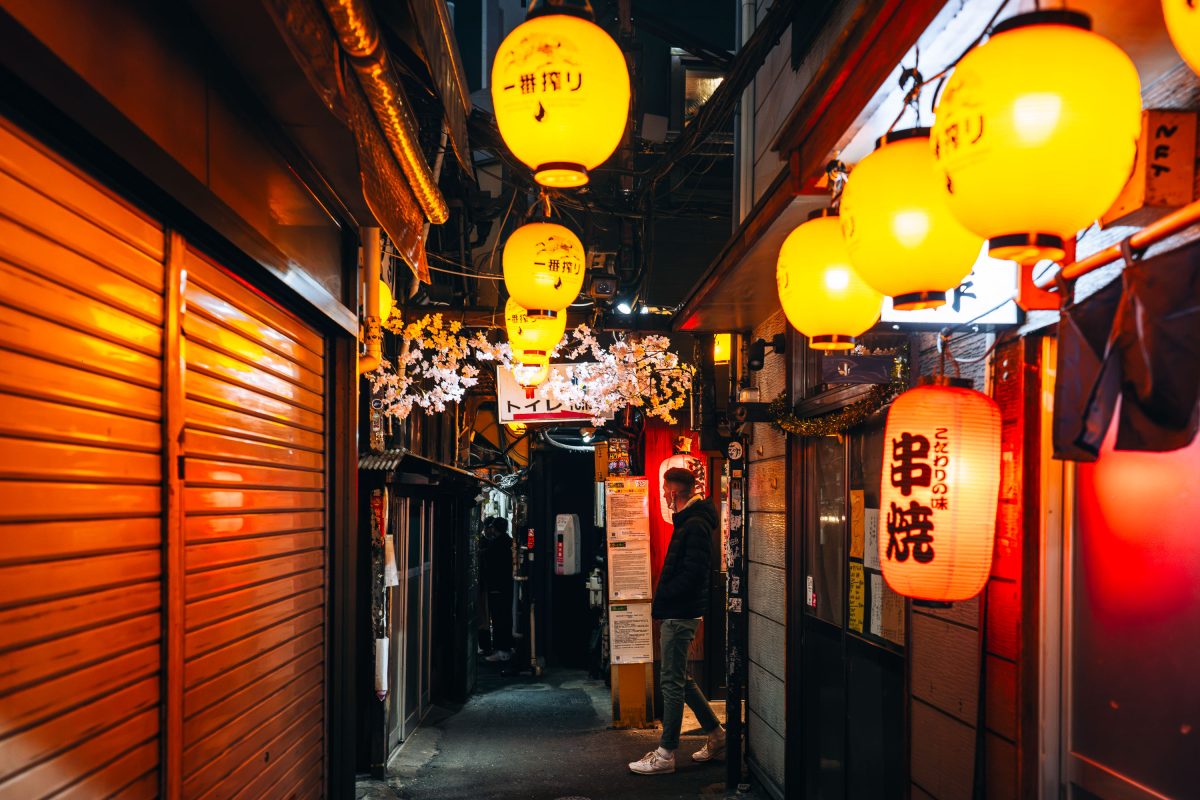
Omoide Yokocho, tucked beside the train tracks near Shinjuku Station's west exit, is a narrow lane of tiny yakitori bars and noodle stalls that dates back to the black markets of the years right after World War II. The alley's nickname translates to "Memory Lane," though older residents still sometimes call it by its blunter, pre-cleanup name, referencing the smoke from charcoal grills that once hung over the passage. Most of the stalls here seat only a handful of customers at a counter, a layout carried over from the postwar era when space and materials were scarce. Paper lanterns marked with shop names and beer brands hang along the frontages, a tradition common to Japanese drinking alleys known as yokocho. The lane survived a serious fire in 1999 and later redevelopment pressure, and today it sits within walking distance of the Kabukicho entertainment district and the skyscrapers of West Shinjuku.

Yakitori Stalls at Omoide Yokocho, Shinjuku
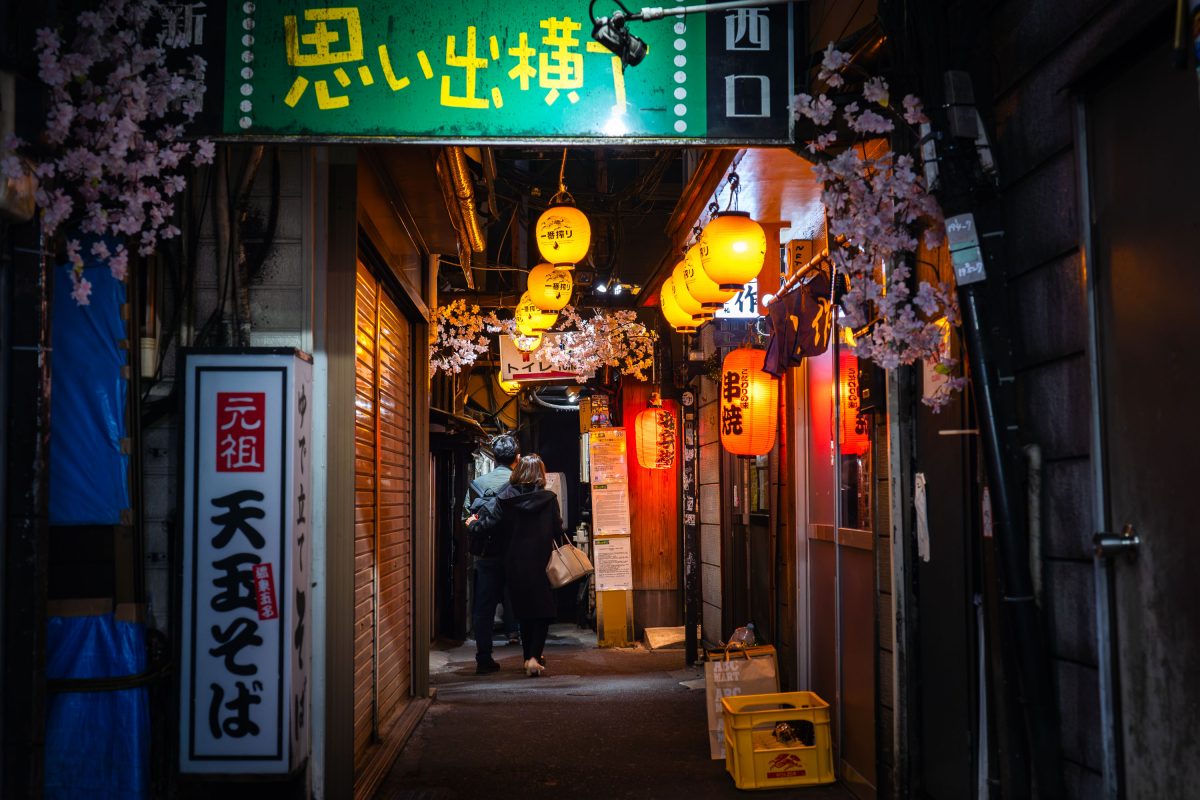
A narrow Japanese alleyway at night decorated with cherry blossoms and illuminated lanterns.
Omoide Yokocho, near Shinjuku Station's west exit, is a cluster of narrow alleys lined with tiny yakitori stalls and noodle counters, many with only a handful of seats. The name translates to "Memory Lane," though the district was long nicknamed Shonben Yokocho, or "Piss Alley," a reference to its postwar black-market origins. Most of the alley dates to the years right after World War II, when unlicensed food stalls sprang up around the station to serve workers and returning soldiers. A fire in 1999 destroyed part of the district, and later redevelopment pressure threatened the rest, but many of the original shopkeepers rebuilt on the same footprints. Paper lanterns strung along the passageways mark individual stalls, some family-run for three generations.

Piss Alley Omoide Yokocho Alley, Shinjuku, Tokyo
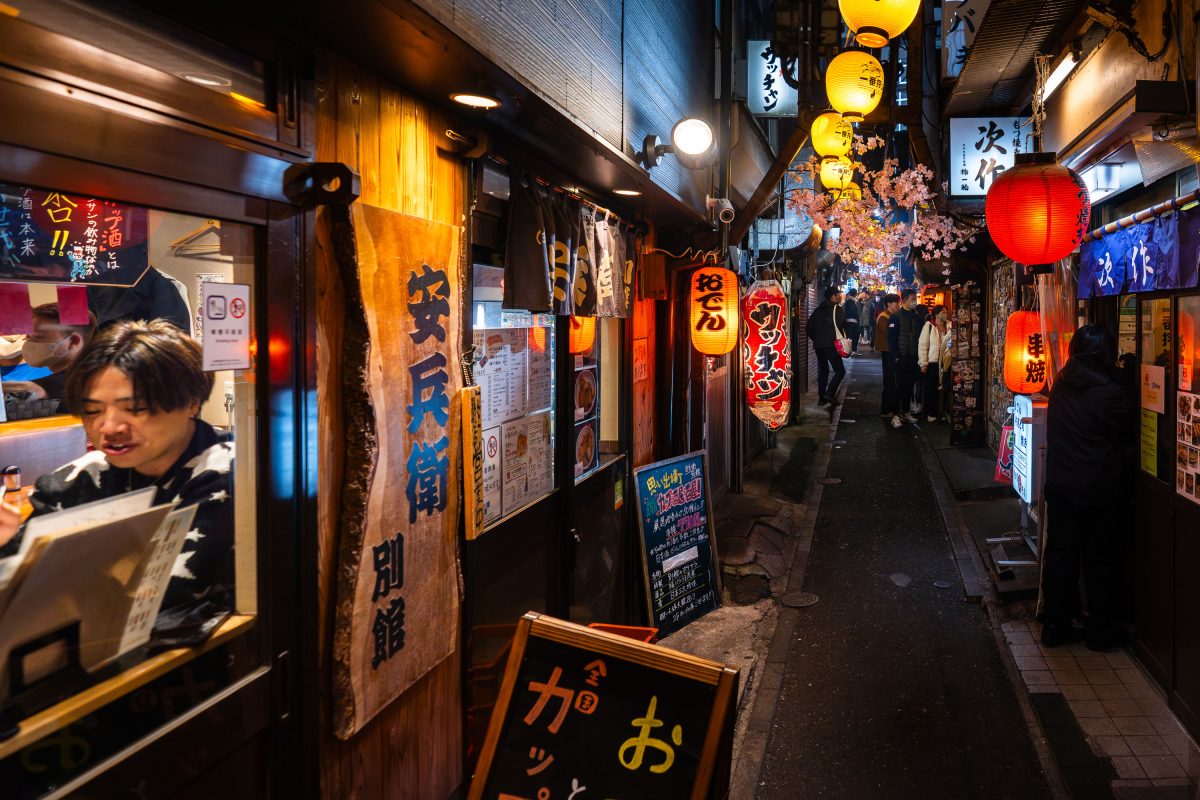
Narrow alley lined with small restaurants and izakayas illuminated by red and yellow lanterns at night in Japan.
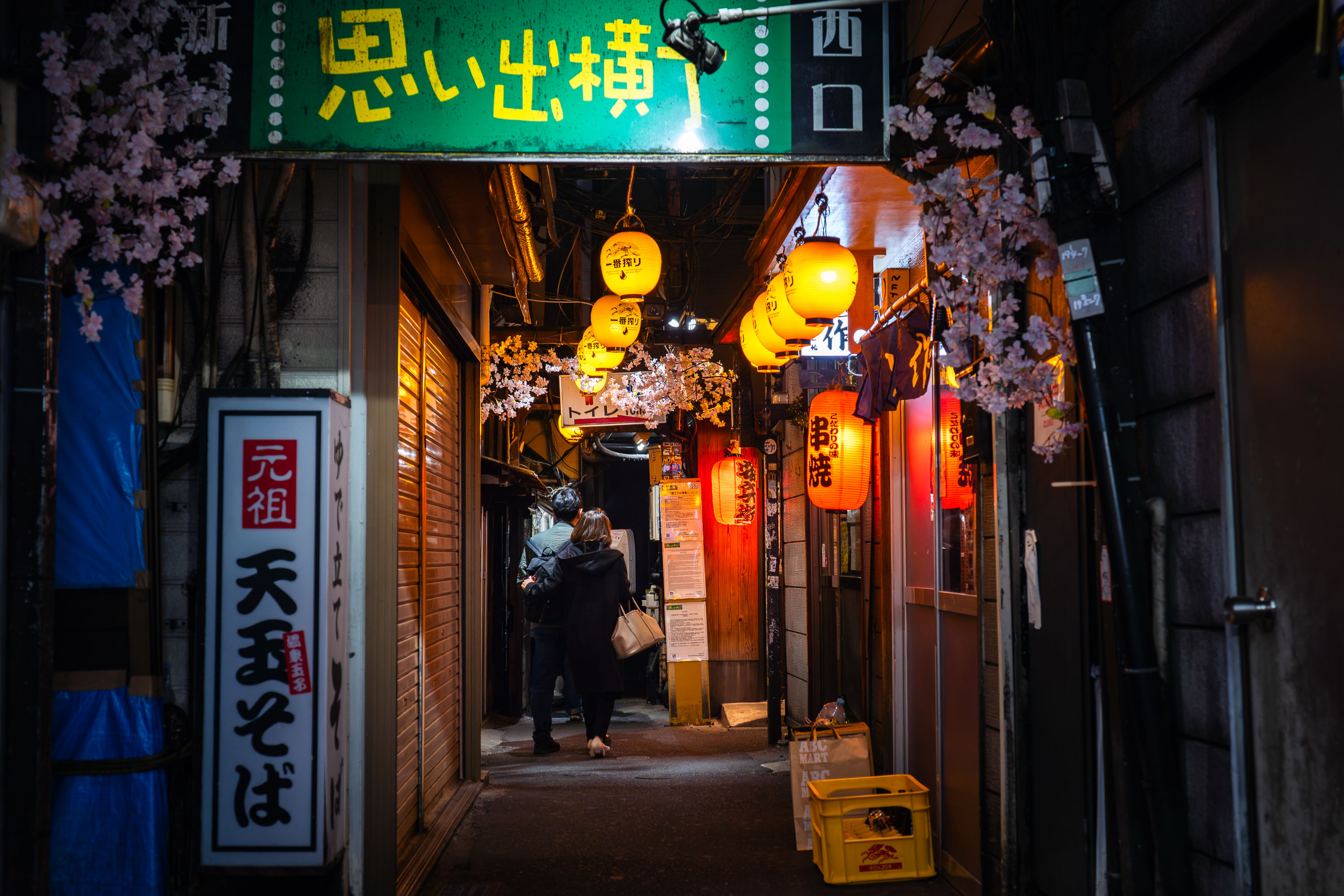
Omoide Yokocho, tucked beside the west exit of Shinjuku Station, is a narrow cluster of alleyways lined with tiny yakitori stalls and bars, most seating only a handful of customers at a time. The district took shape in the black-market years after World War II, when vendors sold food and drink from makeshift stands along the rail tracks, and it earned the nickname "Piss Alley" for its lack of plumbing in that era. A 1999 fire destroyed much of the area, but shop owners rebuilt it in the same cramped, low-slung style, and the alley remains one of the few surviving examples of old Shinjuku's postwar layout. Paper lanterns and hand-painted signs mark stalls specializing in skewered chicken, offal, and oden, many run by the same families for generations.

Yakitori Alley at Omoide Yokocho, Piss Alley, Shinjuku, Tokyo

Narrow alley in a Japanese izakaya district lined with red lanterns and closed storefronts at night.
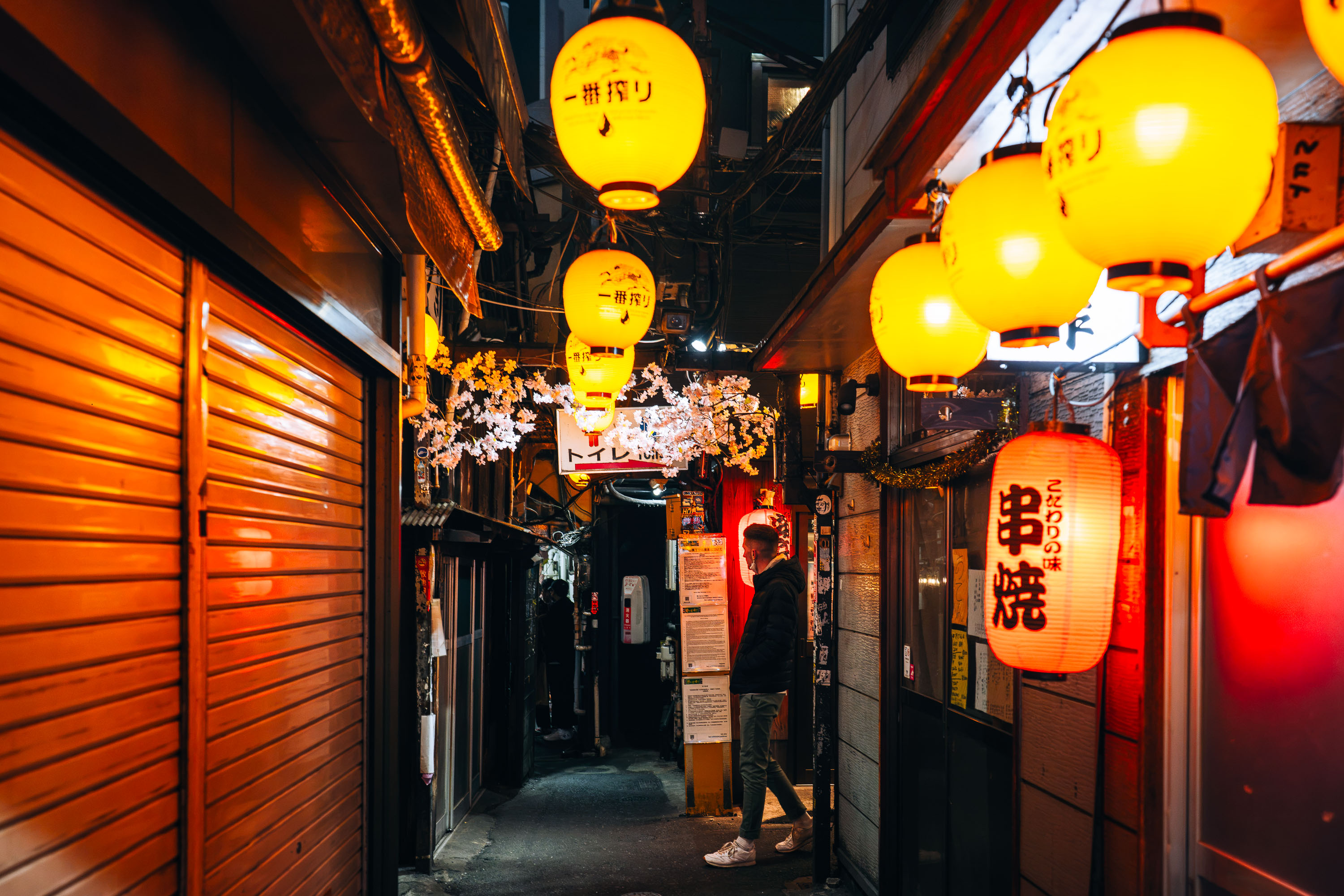
Omoide Yokocho sits just northwest of Shinjuku Station, tucked behind the tracks near the west exit. The nickname means "Memory Lane," though older Tokyoites still call it by its blunter postwar name, Shonben Yokocho. The alleys trace back to the black markets that sprang up here after 1945, when small stalls sold food and drink to laborers rebuilding the city. A fire in 1999 destroyed much of the district, and the current lanes were reconstructed to preserve the original scale and layout. Most of the stalls seat only a handful of customers and specialize in yakitori and kushiyaki, grilled skewers cooked over charcoal. Paper lanterns marked with shop names hang along the narrow walkways, a fixture of the district since its rebuilding.

Omoide Yokocho Alley, Shinjuku, Tokyo
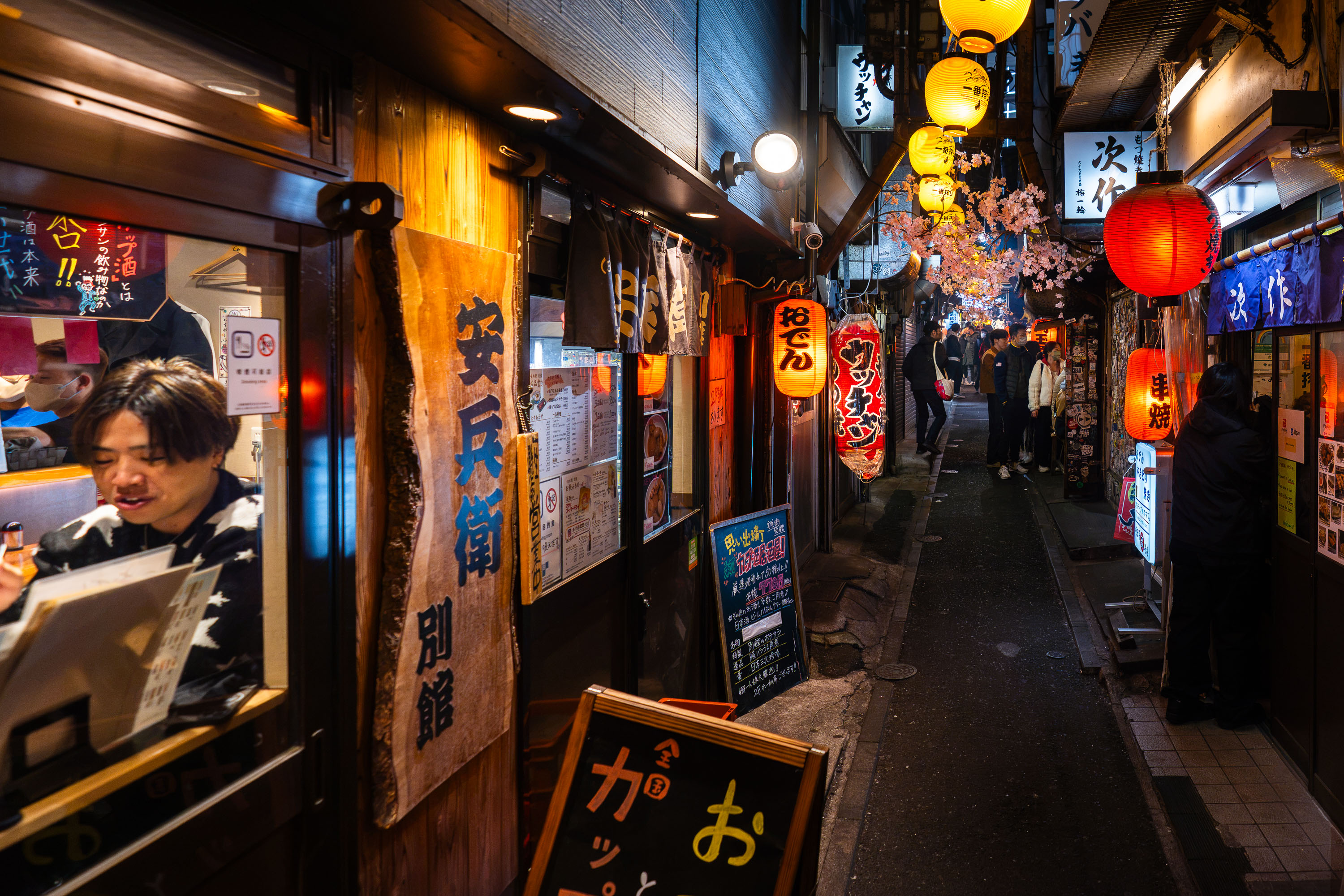
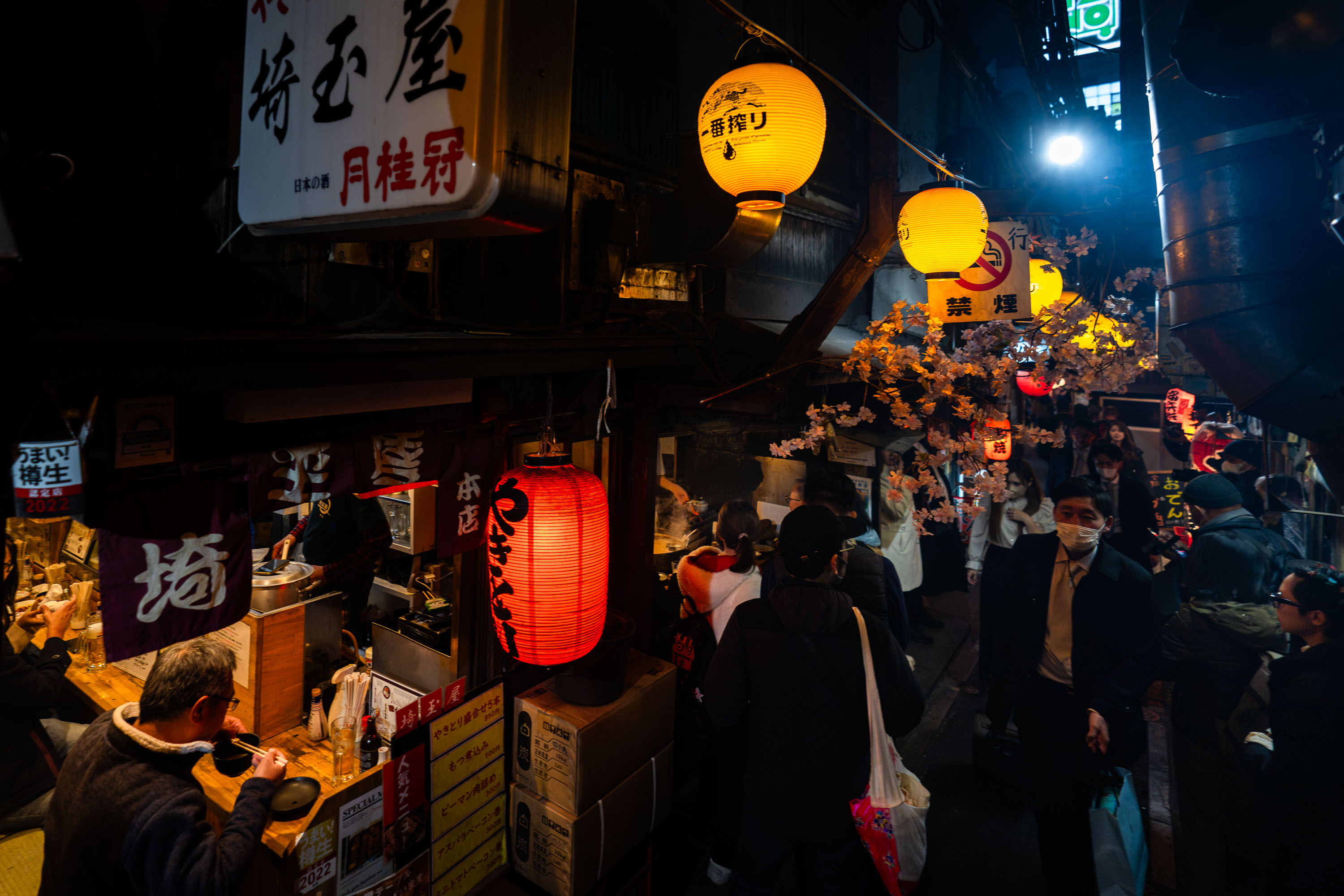
Nighttime street festival in Japan with illuminated lanterns, vendor stalls, and crowds of pedestrians.
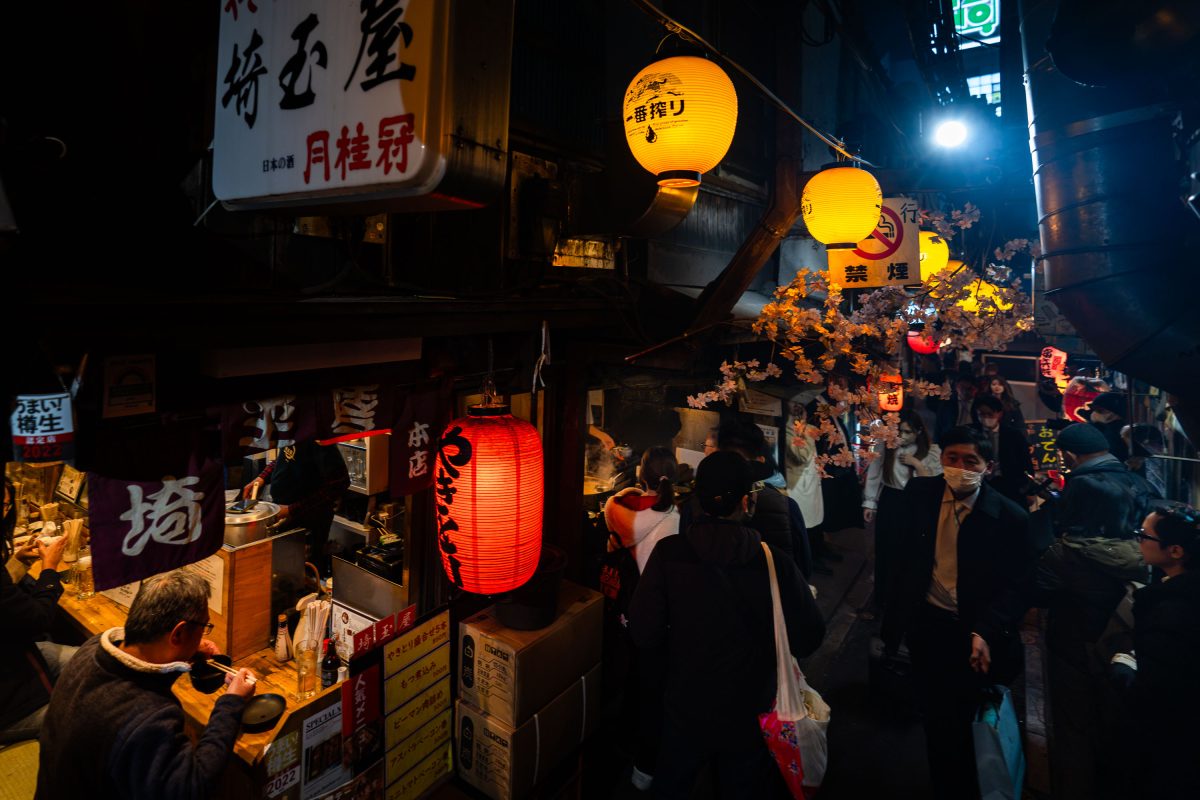
Omoide Yokocho runs in a narrow strip near Shinjuku Station's west exit, its lanes barely wide enough for two people to pass. The name translates to "Memory Lane," though longtime regulars still call it by its older, cruder nickname referencing the black-market yakitori stalls that first opened here after World War II. Fewer than a hundred tiny bars and grills operate along these alleys today, most seating no more than six to eight customers at a counter. A fire in 1999 destroyed a section of the district, but owners rebuilt to the same footprint and scale rather than modernize. Paper lanterns marked with shop names hang low over the walkway, a fixture of the alley since its postwar start.

Yakitori Alley, Omoide Yokocho, Shinjuku