Panama City Beach

11 photos · 2009–2011

11 photographs tagged Panama City Beach, 2009–2011.
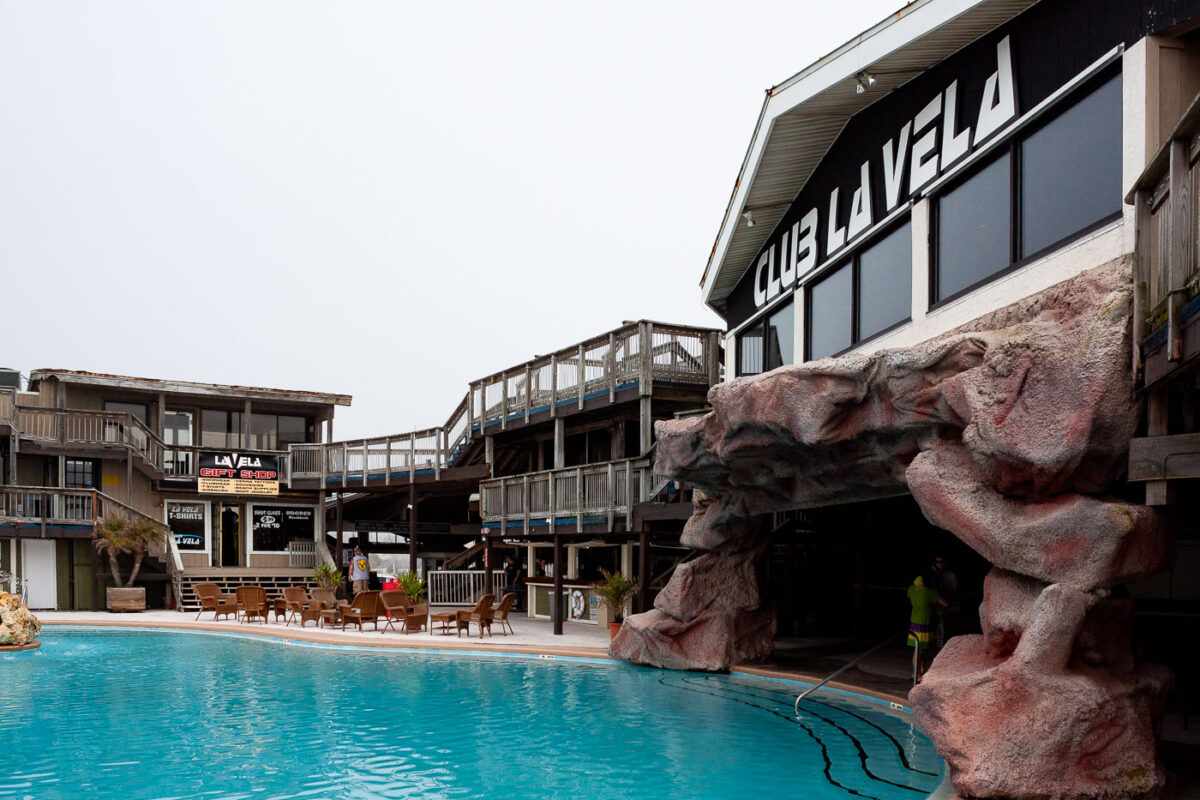
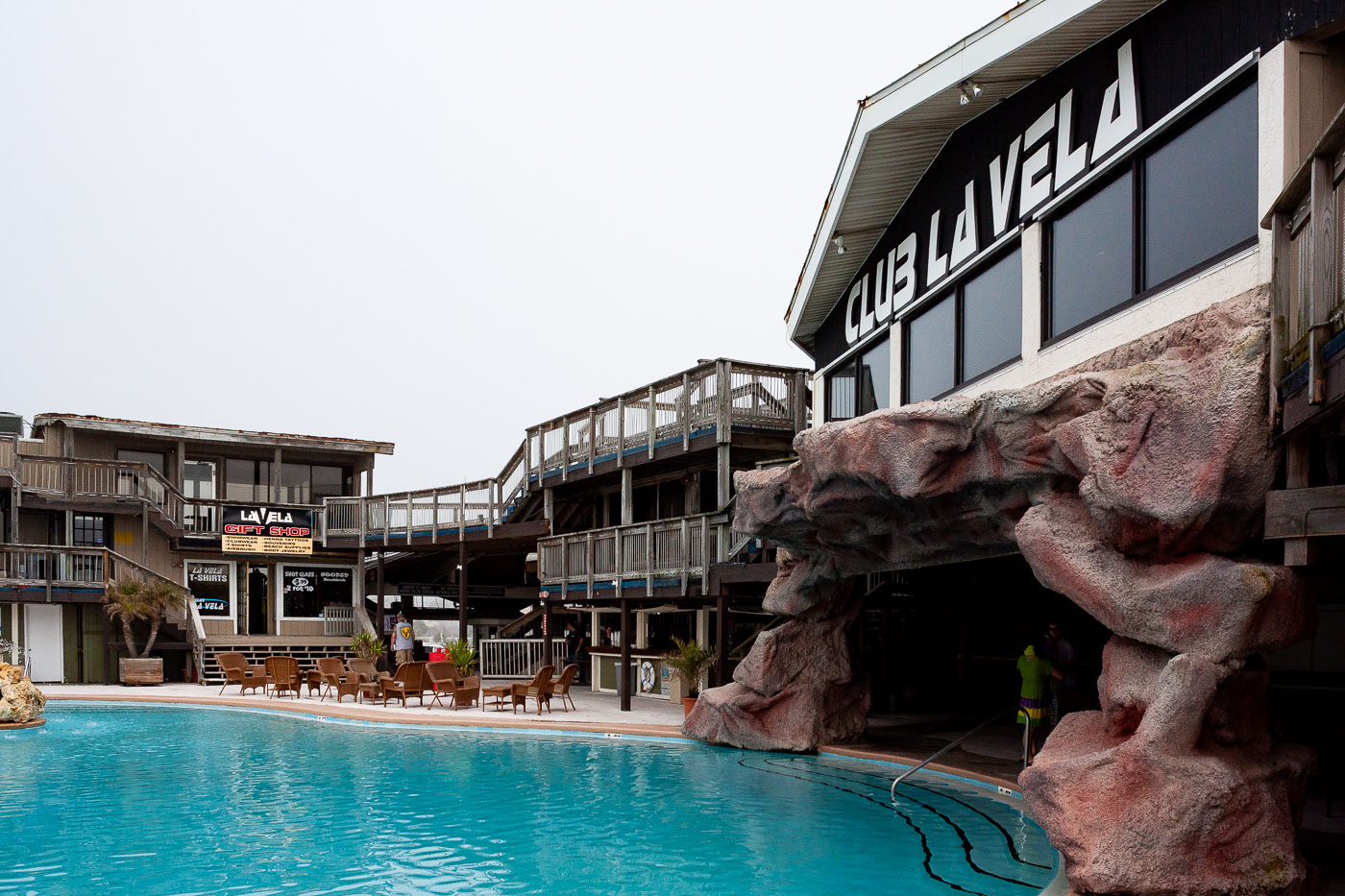
Club La Vela nightclub pool deck with wooden structures and statue in Panama City Beach, Florida.
Club La Vela sat directly on the Gulf of Mexico in Panama City Beach, Florida, and for years billed itself as the largest nightclub in the United States, with a capacity of roughly 6,000 patrons across multiple dance floors and stages. The complex grew over decades from a smaller beach bar into a sprawling multi-level venue connected by wooden walkways and outdoor decks, with a swimming pool and artificial rock grotto serving as a daytime gathering spot for spring break crowds. It became a fixture of MTV's spring break broadcasts through the 1990s and 2000s. Hurricane Michael struck the Panama City Beach area in October 2018, and the damage the club sustained led to its permanent closure.

Rock Grotto and Pool at Club La Vela’s Beachside Building

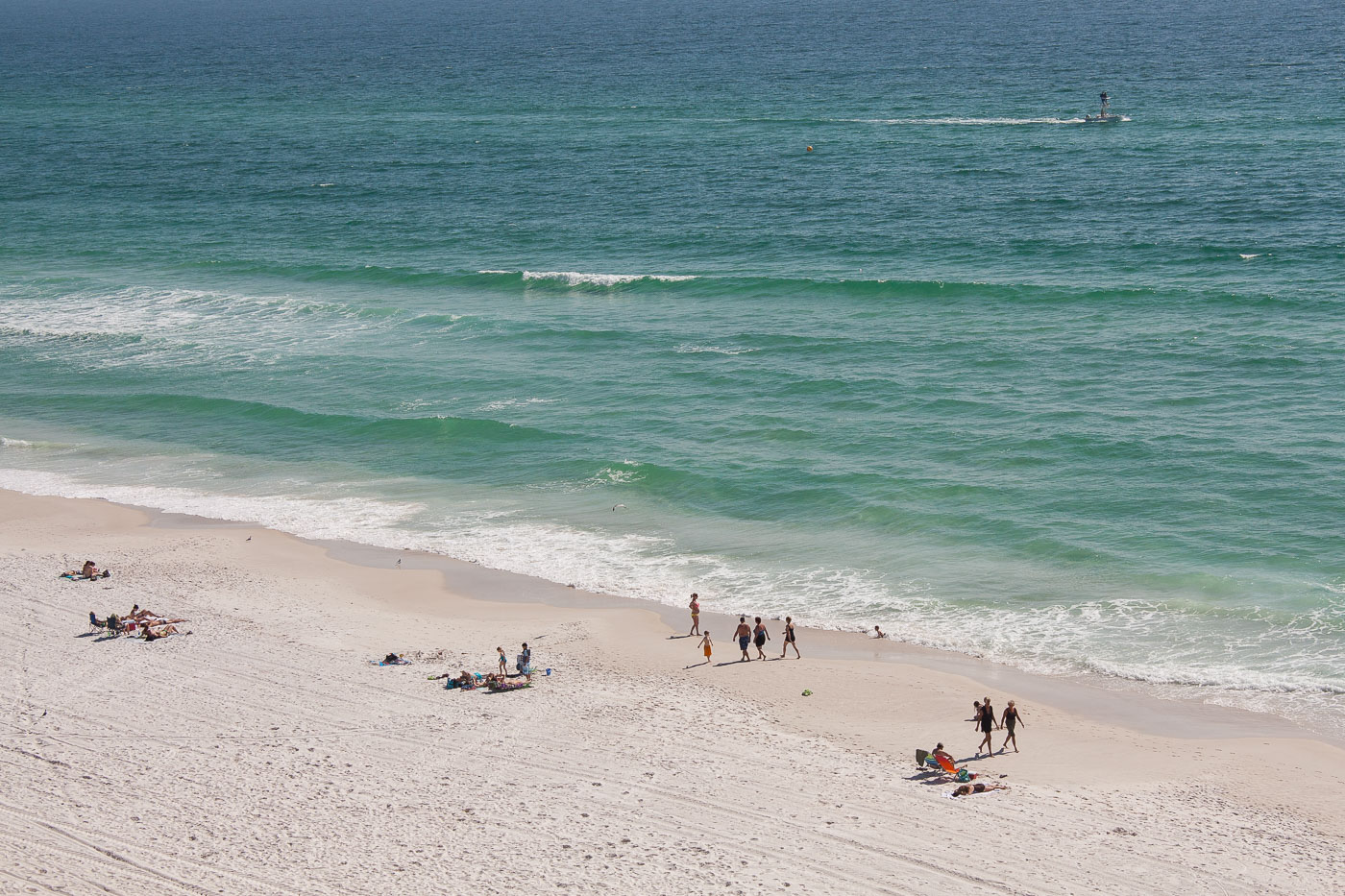
Beachgoers swim and relax on the white-sand shore of Panama City Beach, Florida.
Panama City Beach sits along Florida's Gulf Coast in Bay County, facing the Gulf of Mexico. Its sand is made almost entirely of quartz washed down from the Appalachian Mountains, giving the shoreline the fine white texture that distinguishes it from darker beaches elsewhere in the state. The beach stretches roughly 27 miles, making it one of the longer continuous stretches of public shoreline on the Florida Panhandle. Development along this coast accelerated after the construction of the Hathaway Bridge in 1929, which connected the beach to Panama City and opened it to wider tourism.

Waves Along the Shoreline at Panama City Beach
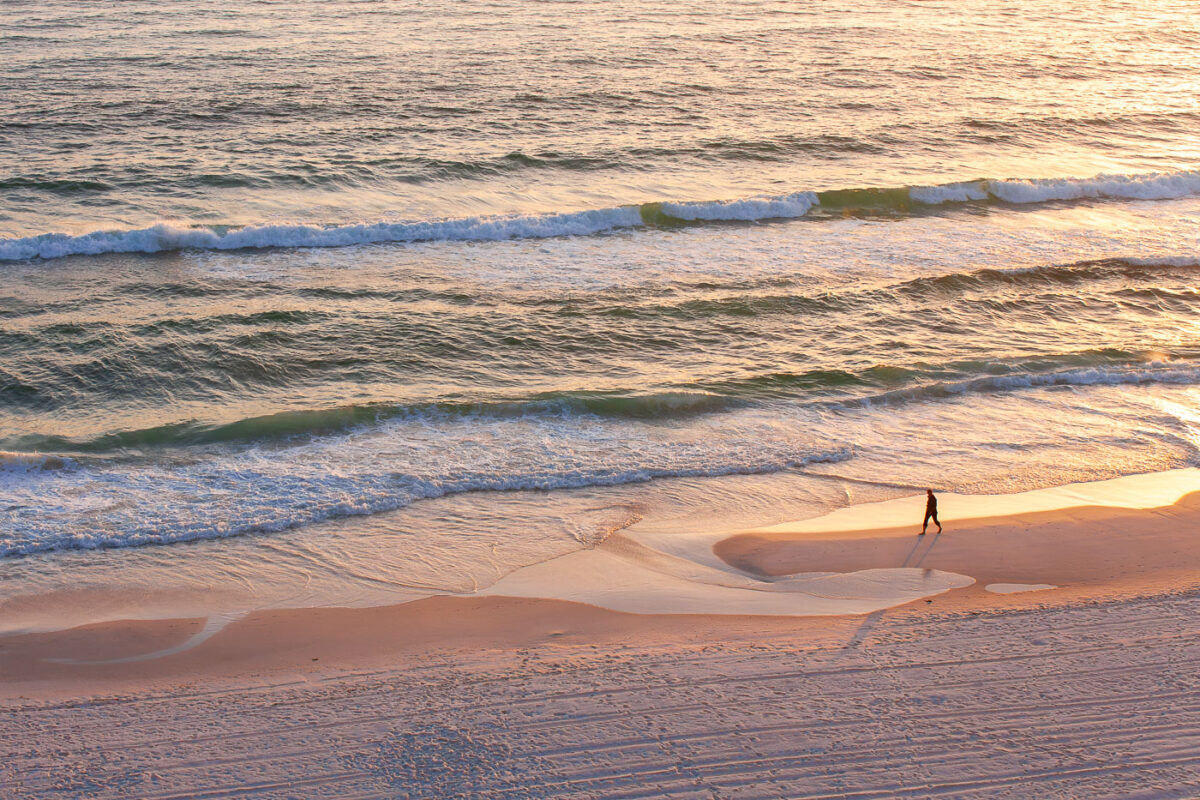
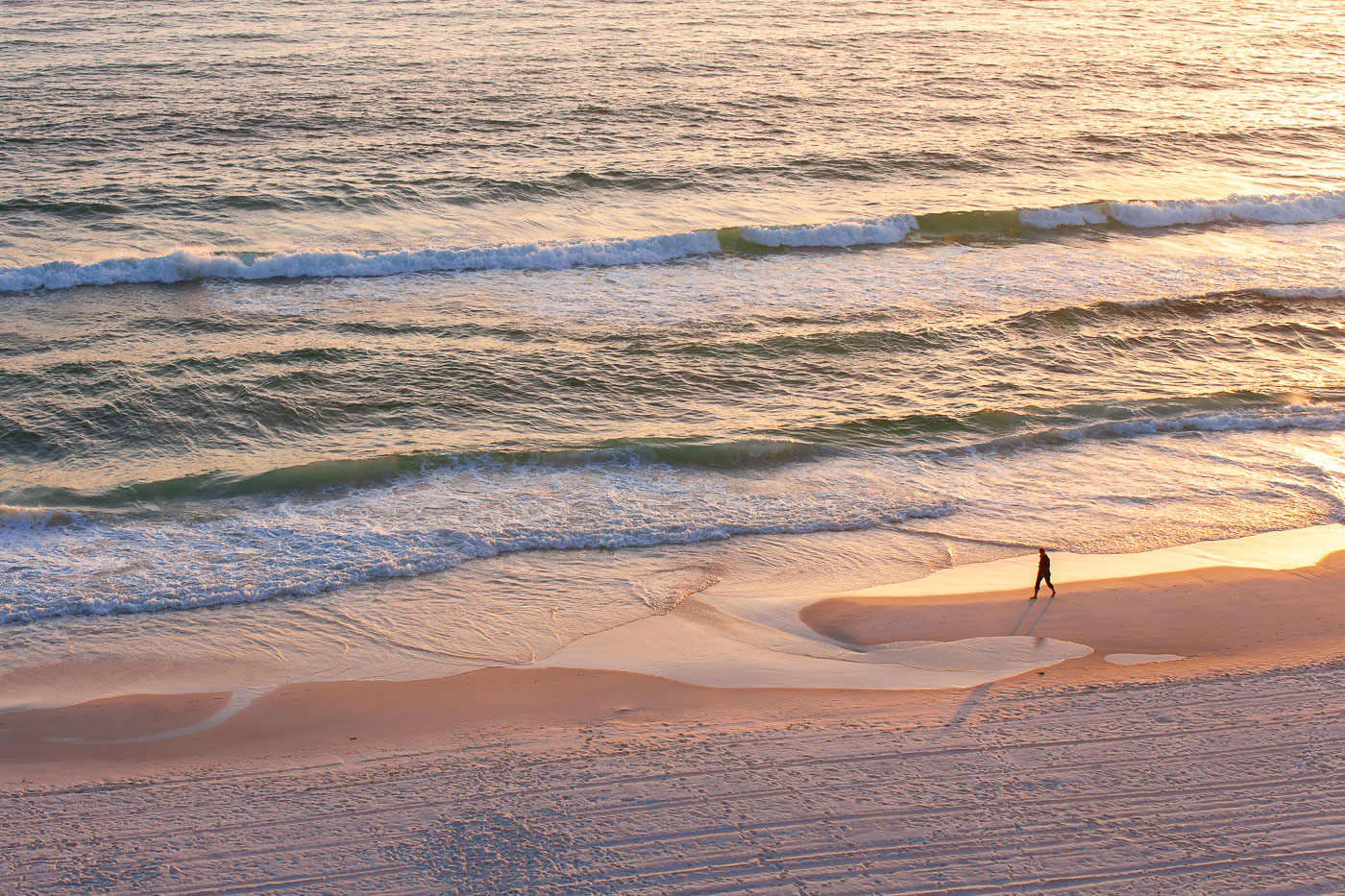
A solitary person walks along the shoreline at Panama City Beach, Florida, during sunset.
Panama City Beach sits along the Florida Panhandle on the Gulf of Mexico, roughly 100 miles southwest of Tallahassee. The beach's sand is composed almost entirely of quartz crystal washed down from the Appalachian Mountains, giving it the fine white texture that draws visitors from across the country. The city's 27 miles of coastline face the Gulf's warm, shallow waters, which stay relatively calm compared to open ocean beaches. Tourism has driven the local economy here since the mid-20th century, when the completion of highways linking the Panhandle to inland Florida and neighboring states first opened the area to mass visitation.

Walker at Sunset on Panama City Beach
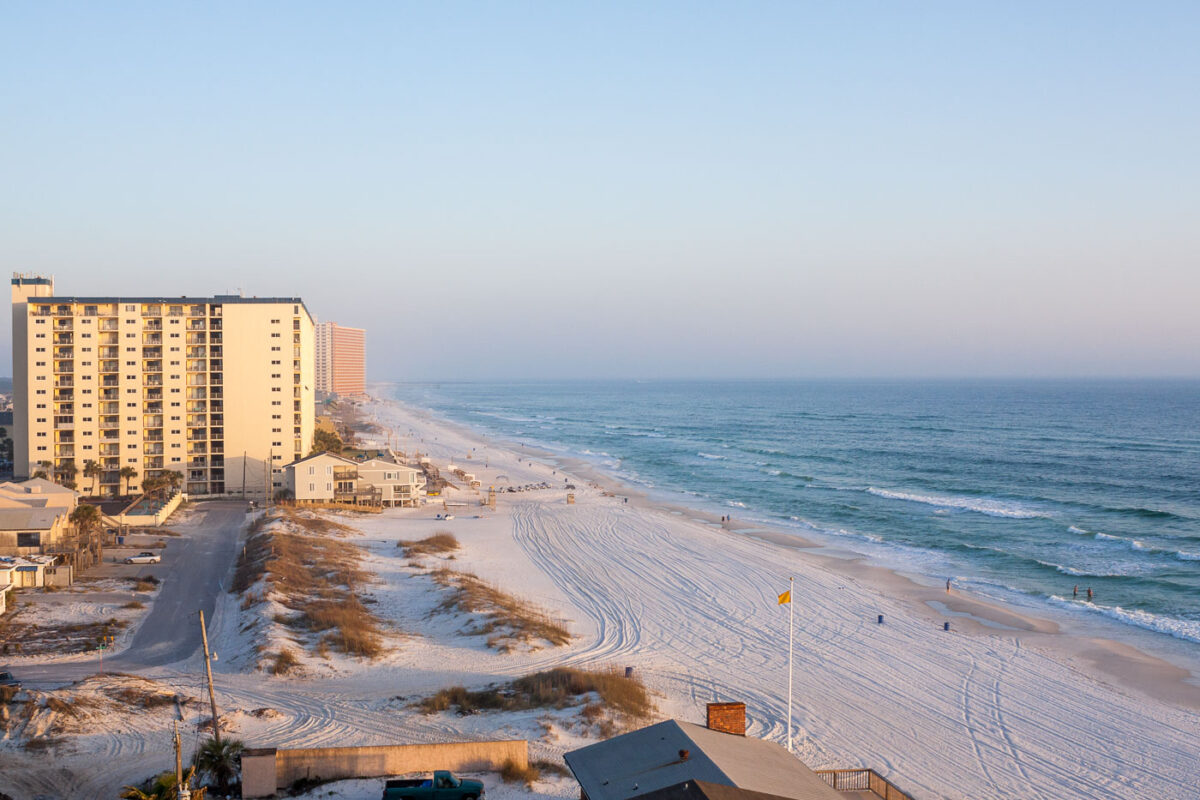
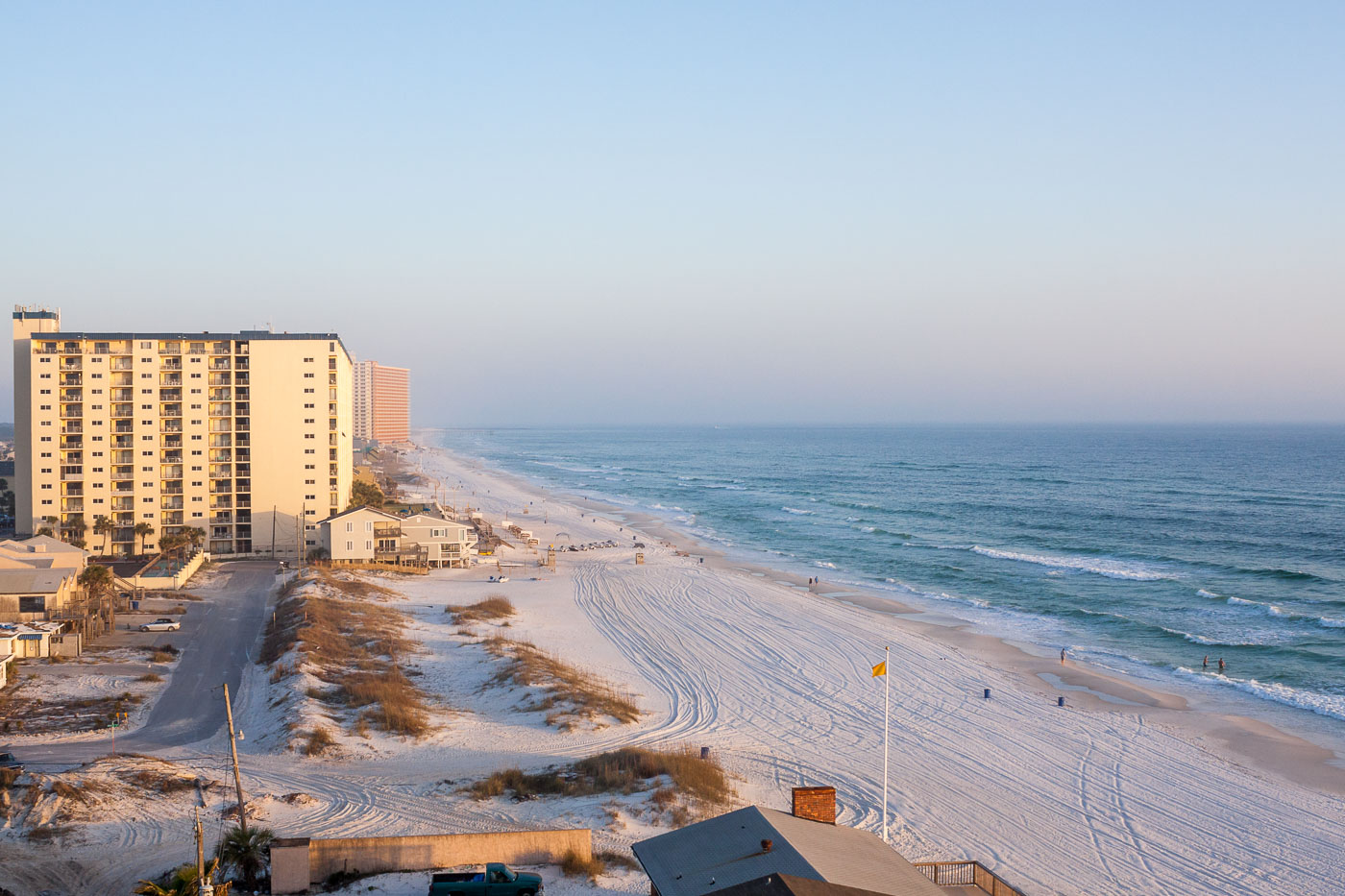
High-rise beachfront condominiums overlook Panama City Beach and the Gulf of Mexico shoreline in Florida.
Panama City Beach sits on a barrier peninsula in the Florida Panhandle, facing the Gulf of Mexico along roughly 27 miles of white quartz sand. The sand's brightness and fine texture come from quartz crystals washed down from the Appalachian Mountains over thousands of years. High-rise condominium towers built from the 1970s through the 2000s line much of the beachfront, replacing the small motels and cottages that once defined the area. Dune systems anchored by sea oats remain protected under Florida law, since they help stabilize the shoreline against storms and erosion.

High-Rise Condos Along Panama City Beach’s Shoreline
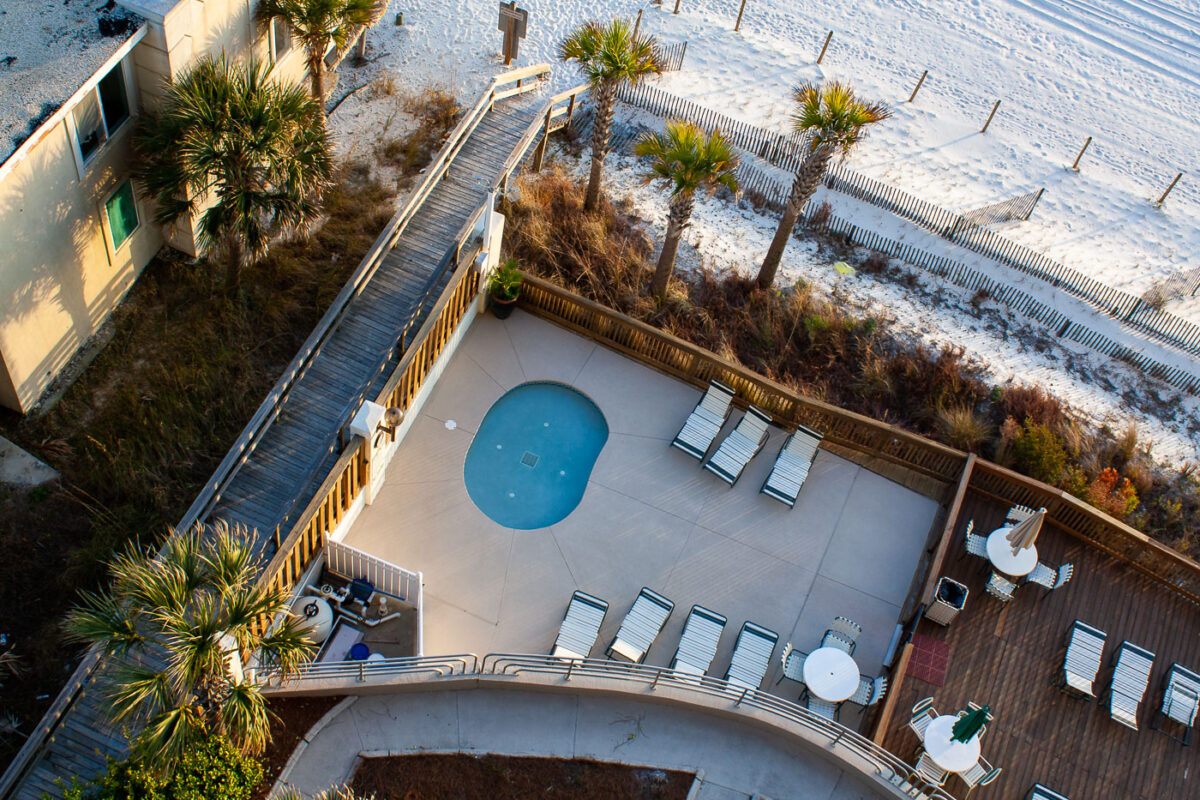
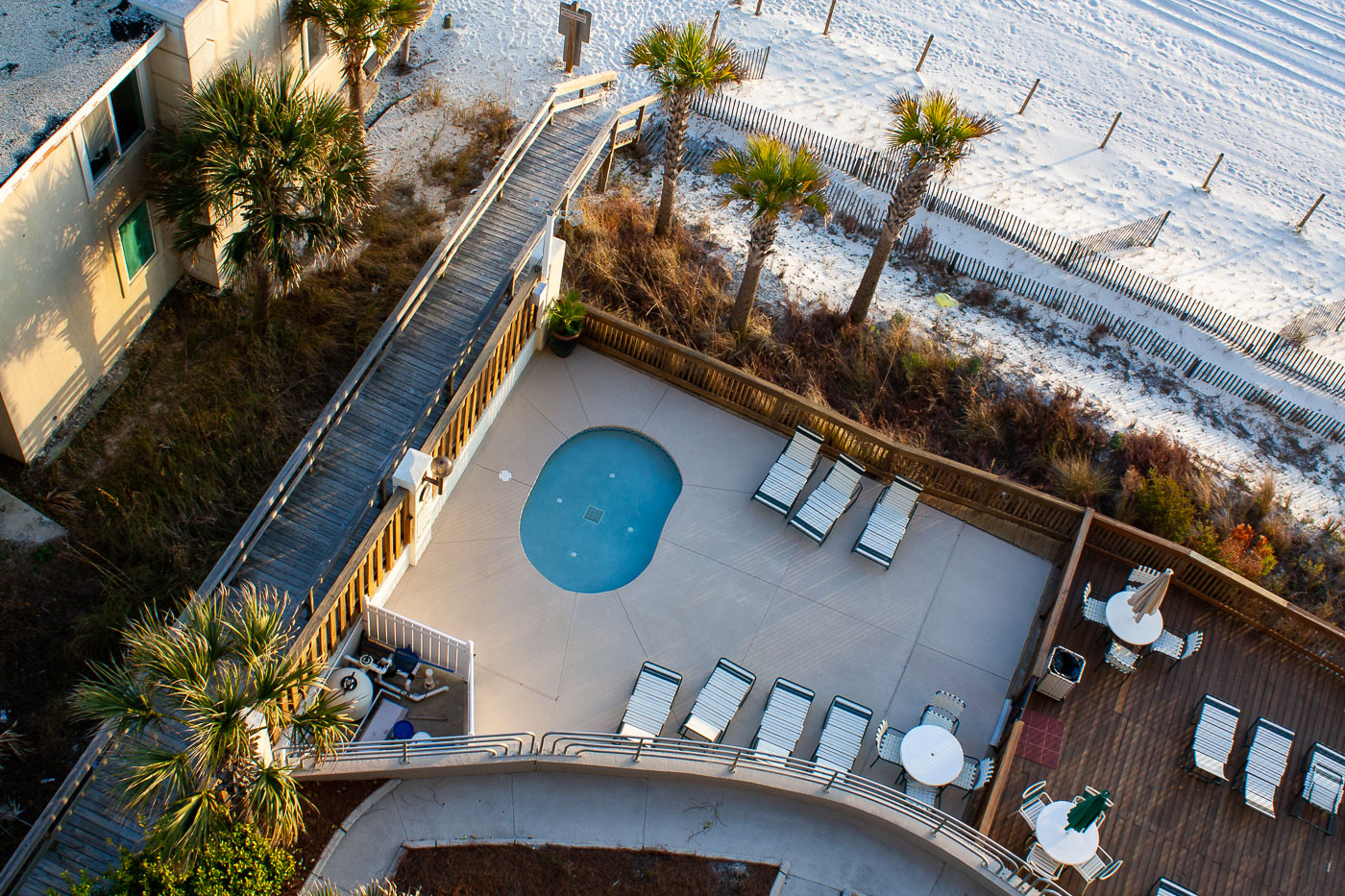
Beachfront resort pool deck with wooden boardwalk crossing dune line to beach in Panama City Beach, Florida.
A raised wooden walkover crosses the dune line here, linking a beachfront pool deck to the Gulf-side sand. Sand fencing and sea oats planted along the dunes help hold the sand in place, a common erosion-control method used throughout Panama City Beach. The pool terrace below includes lounge chairs and seating arranged for guests staying at the adjacent property.

Pool Deck and Dune Walkover Above Panama City Beach
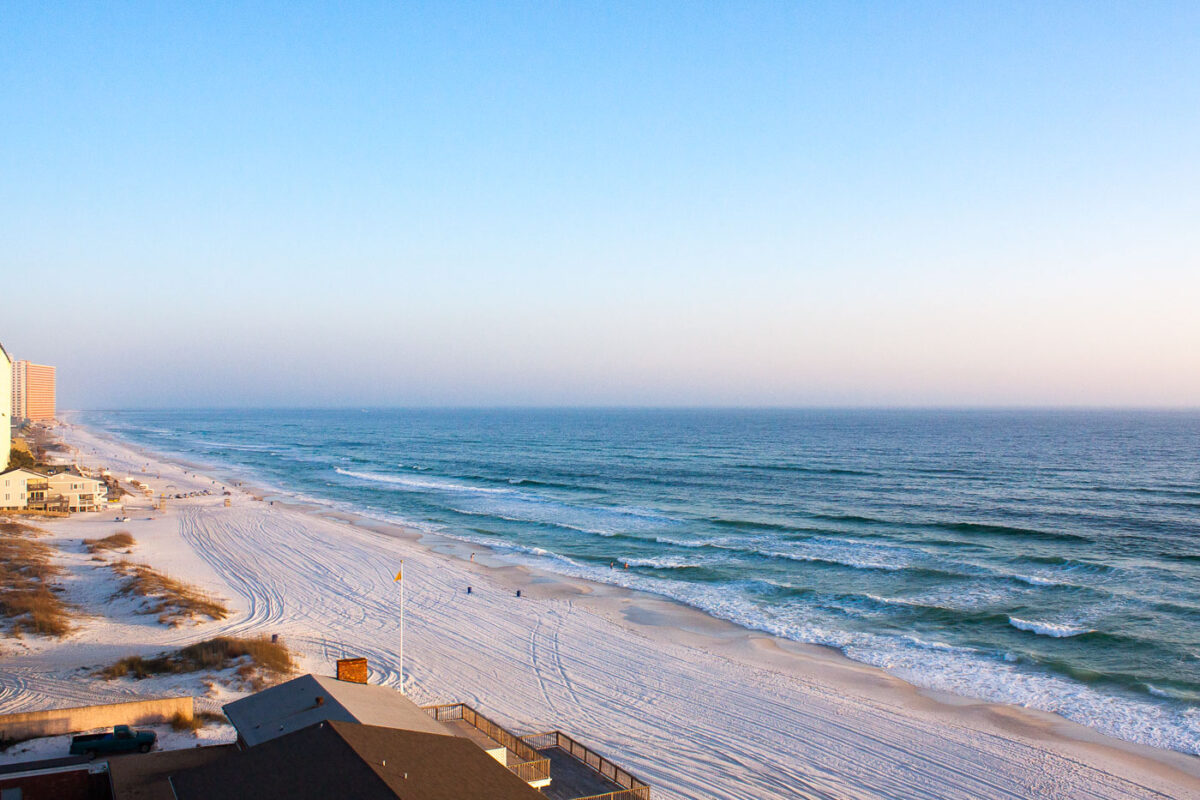
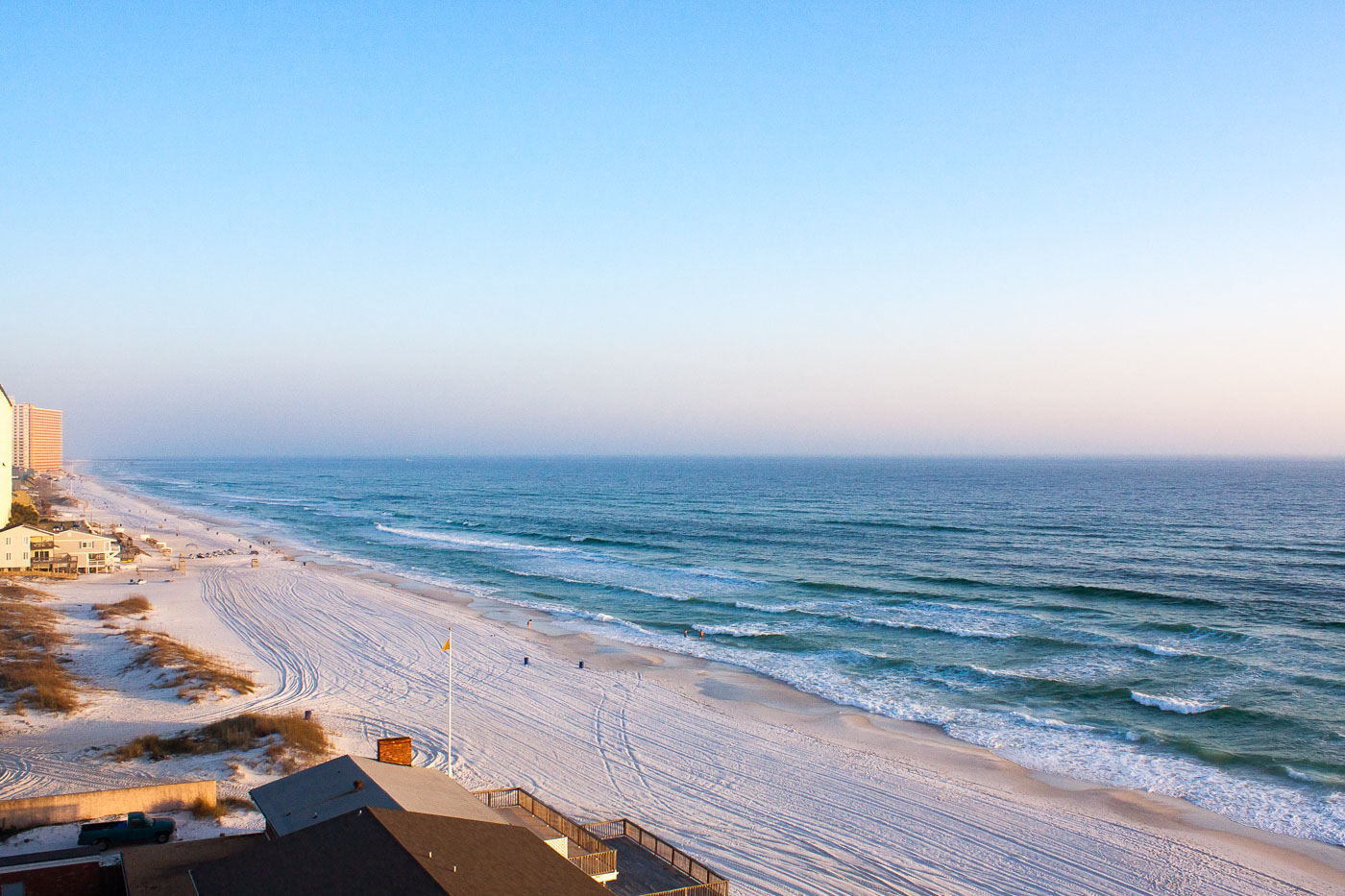
Beachfront high-rise resort tower overlooks white-sand beach and Gulf of Mexico waves in Panama City Beach, Florida.
Panama City Beach sits on a barrier peninsula along Florida's Gulf Coast in Bay County, roughly 100 miles southwest of Tallahassee. Its sand is composed largely of quartz washed down from the Appalachians over thousands of years, giving the beach its notably fine, white texture and cooler surface temperature compared to darker sands elsewhere in the state. The city incorporated in 1936 and grew through the postwar decades into one of the Florida Panhandle's primary tourist destinations, with high-rise condominiums replacing many of the smaller motels and cottages that once lined the shore. The Gulf here is part of a wider marine system that supports sea turtle nesting, including loggerheads, which return to these dunes each summer to lay eggs.

Morning Light Along Panama City Beach’s Gulf Shoreline
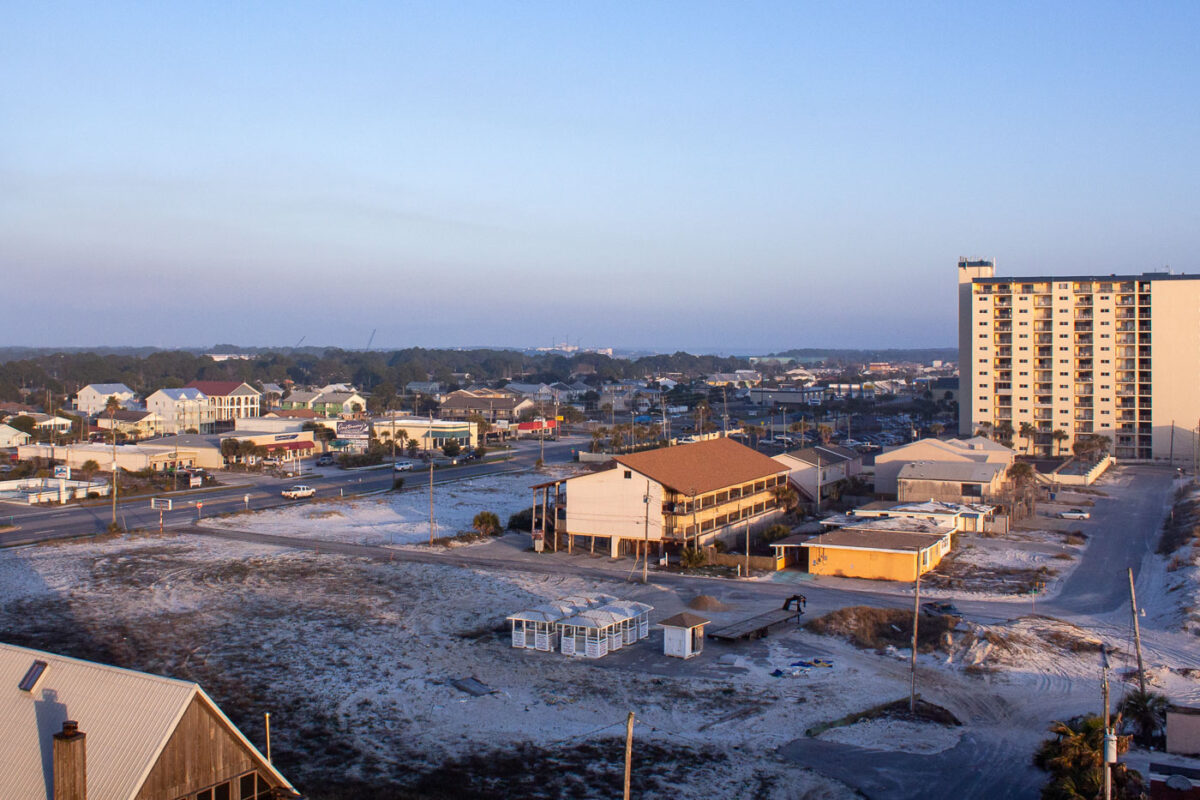
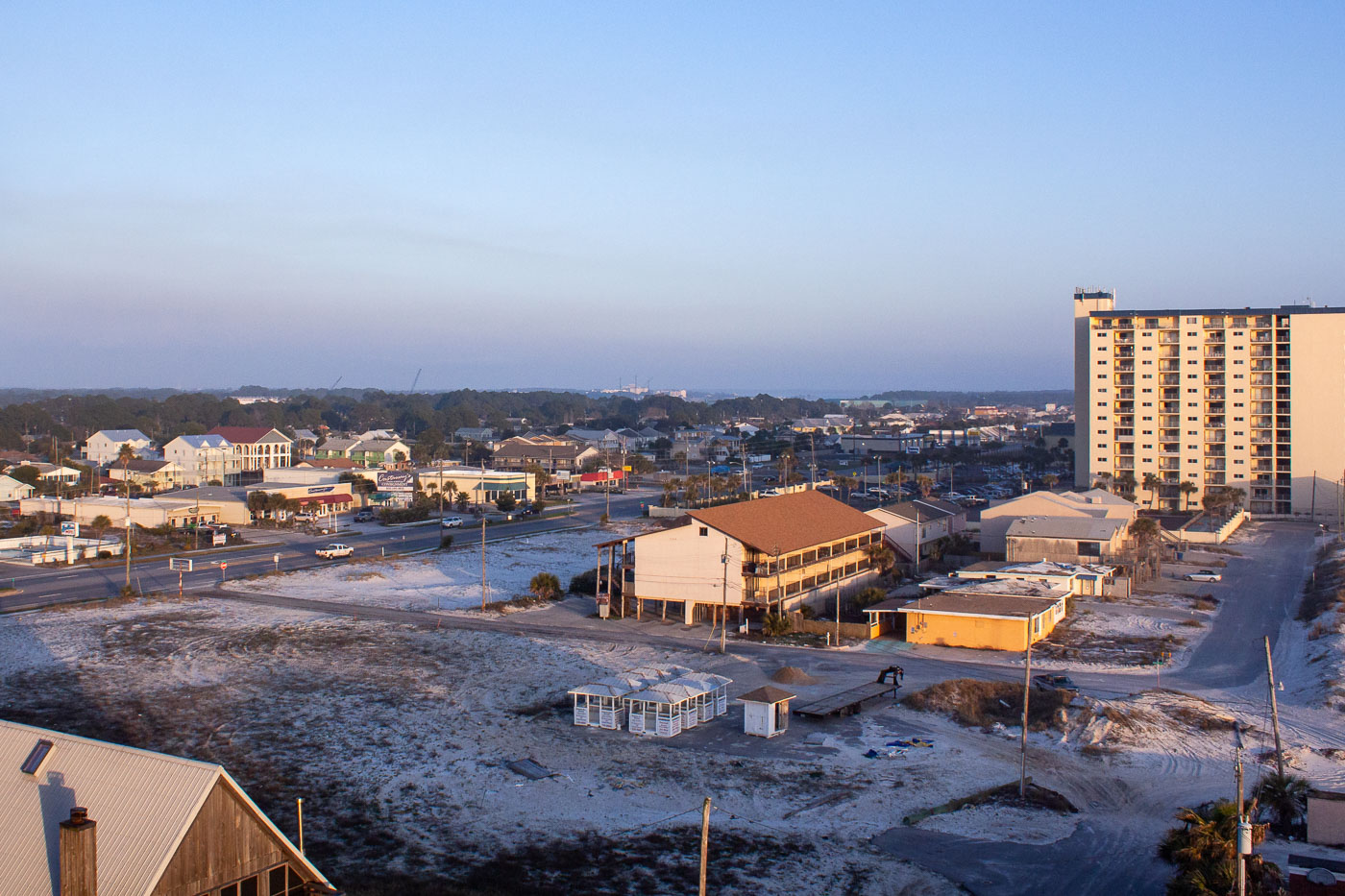
Panama City Beach coastal development corridor with vacant lots, low-rise buildings, and high-rise condominium at dusk.
Front Beach Road runs along the Gulf side of Panama City Beach, a stretch shaped by decades of uneven development between older motels and newer high-rise condominiums. Many of the sandy parcels here remained undeveloped for years, held by owners waiting out fluctuating land values or lingering from construction that stalled after the mid-2000s real estate downturn. The high-rise tower anchoring this section the condo boom that reshaped the beachfront starting in the early 2000s, replacing smaller cottages and motor courts that once lined the shore. Low-rise commercial buildings nearby serve the area's tourist economy, housing rental offices, shops, and restaurants that cater to seasonal visitors drawn to the beach.

High-Rise Condos and Vacant Lots Along Front Beach Road
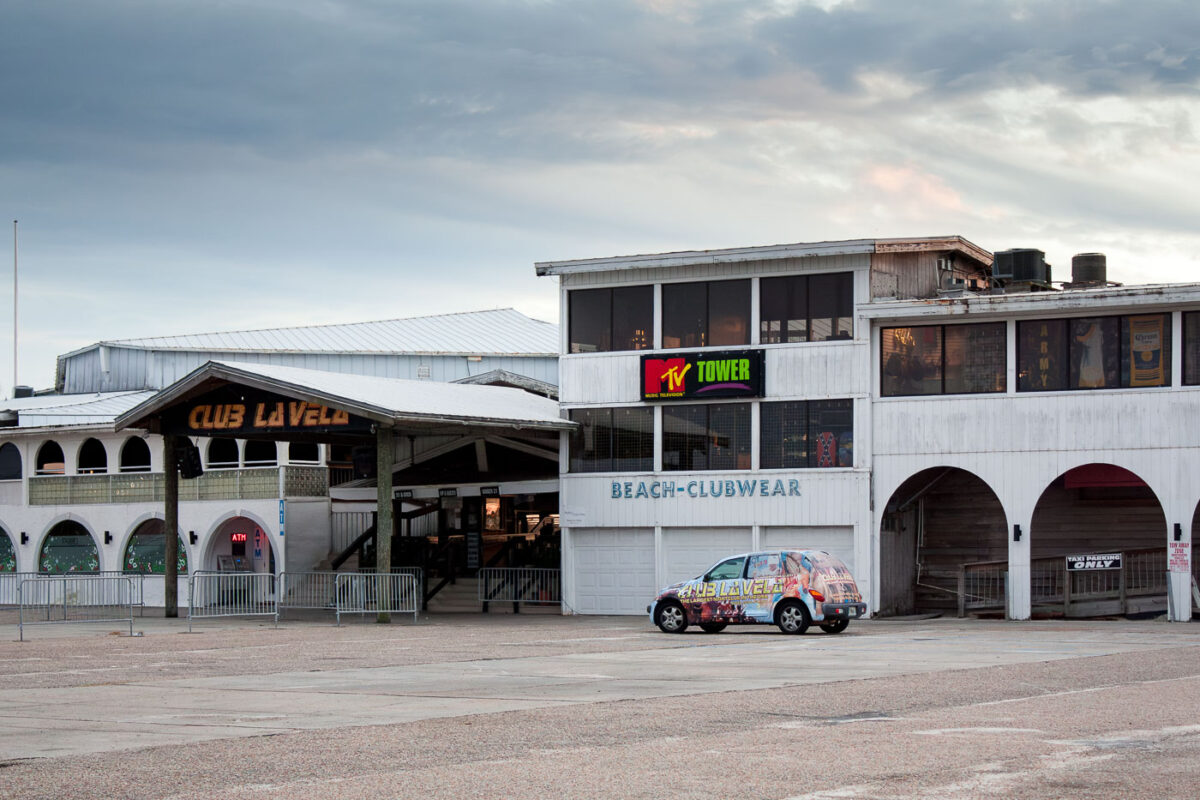
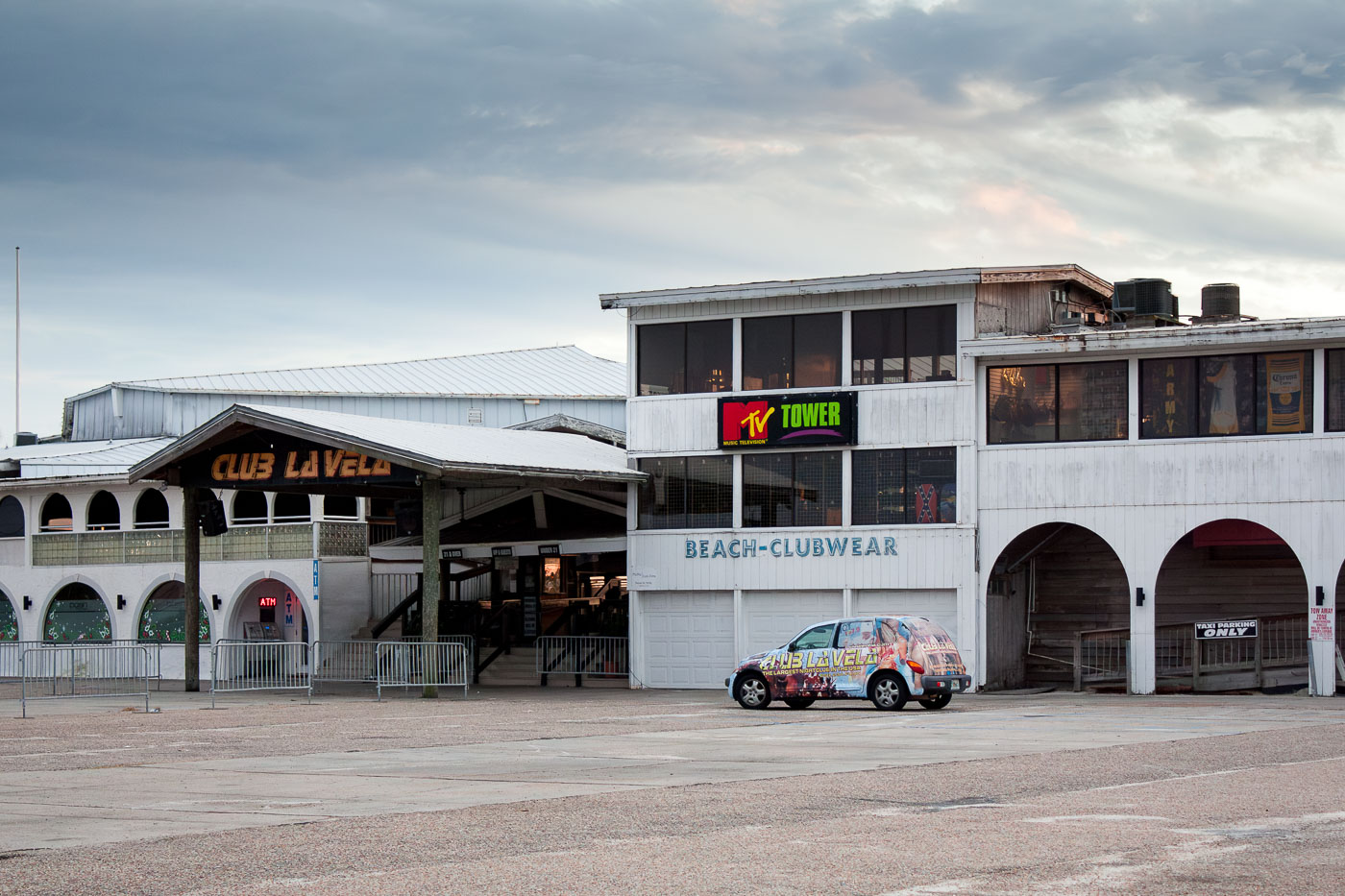
Club La Vela nightclub with MTV Tower sign and beachfront structures in Panama City Beach, Florida.
Club La Vela sits on the Gulf-front strip of Panama City Beach and was long promoted as the largest nightclub in the United States, with a capacity reported at more than 6,000 people. The club built its national profile during the 1990s and 2000s as a hub for MTV's spring break broadcasts, which is why the building carries an MTV Tower sign alongside its own name. Attached retail space, including the Beach-Clubwear storefront, has operated alongside the club to serve the same seasonal beach crowd. Club La Vela remains part of the Panama City Beach entertainment district that has anchored the area's spring break economy for decades.

MTV Tower and Beach-Clubwear Storefront at Club La Vela
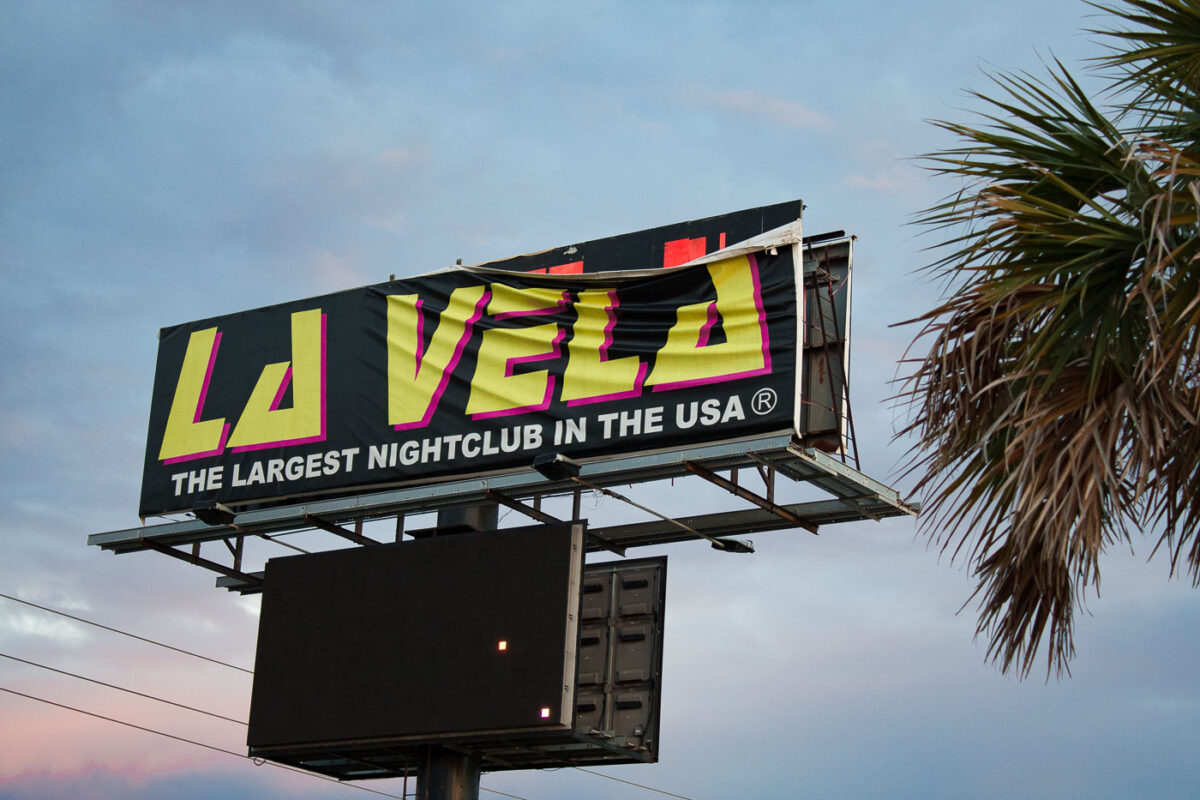
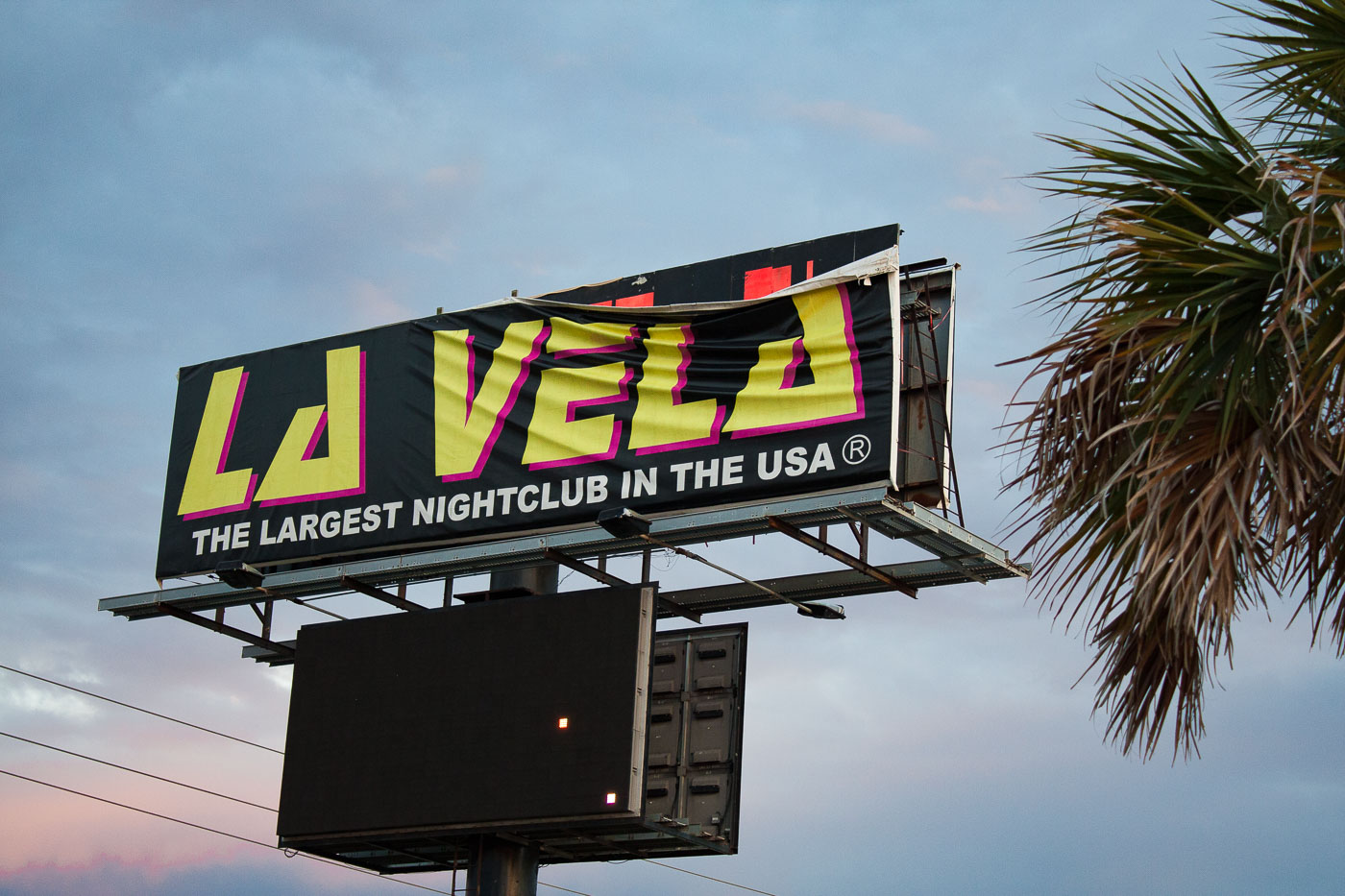
Club La Vela billboard advertising the largest nightclub in the USA in Panama City Beach, Florida.
Club La Vela's roadside billboard advertises itself as "The Largest Nightclub in the USA," a claim the venue has used in its marketing for years along Panama City Beach's Gulf Coast strip. The club, located on Beach Front Road, has long drawn crowds during spring break and is known for hosting multiple stages, dance floors, and pools across its property. Its capacity has been cited at several thousand patrons, making it one of the largest single nightclub venues in the country.

“Largest Nightclub in the USA” Billboard for Club La Vela
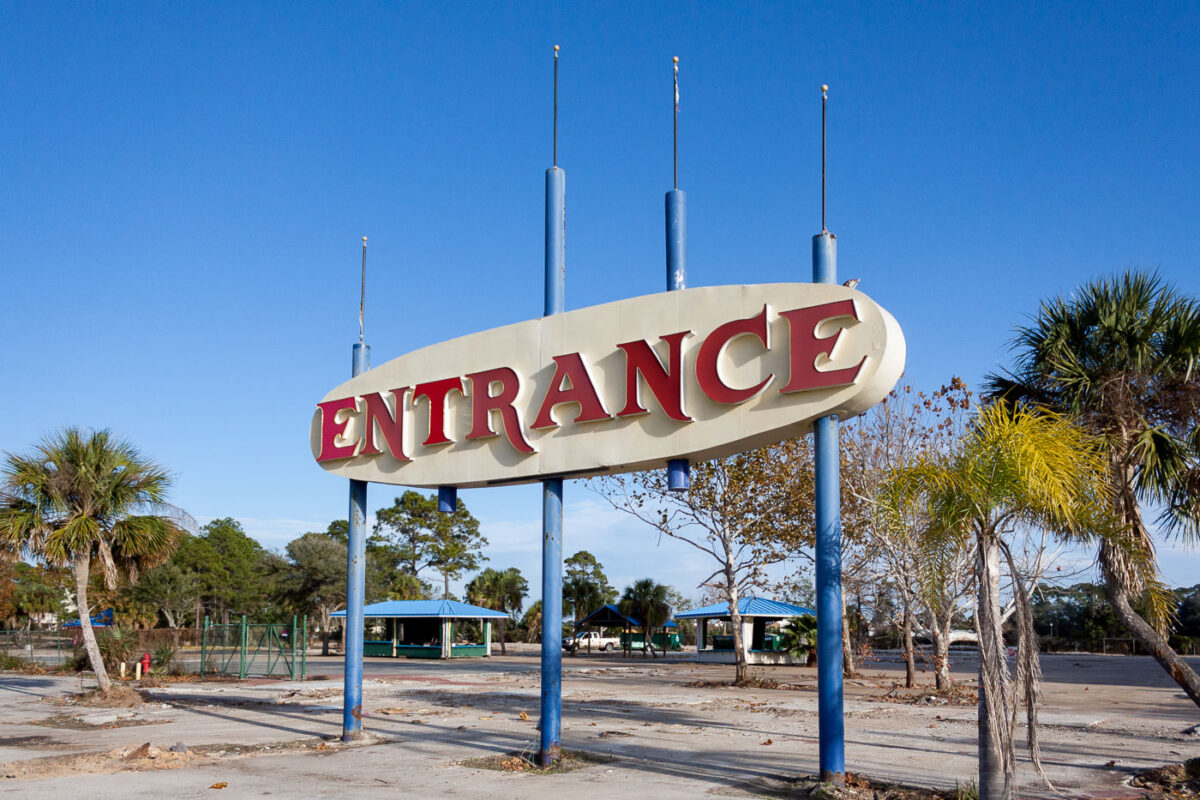
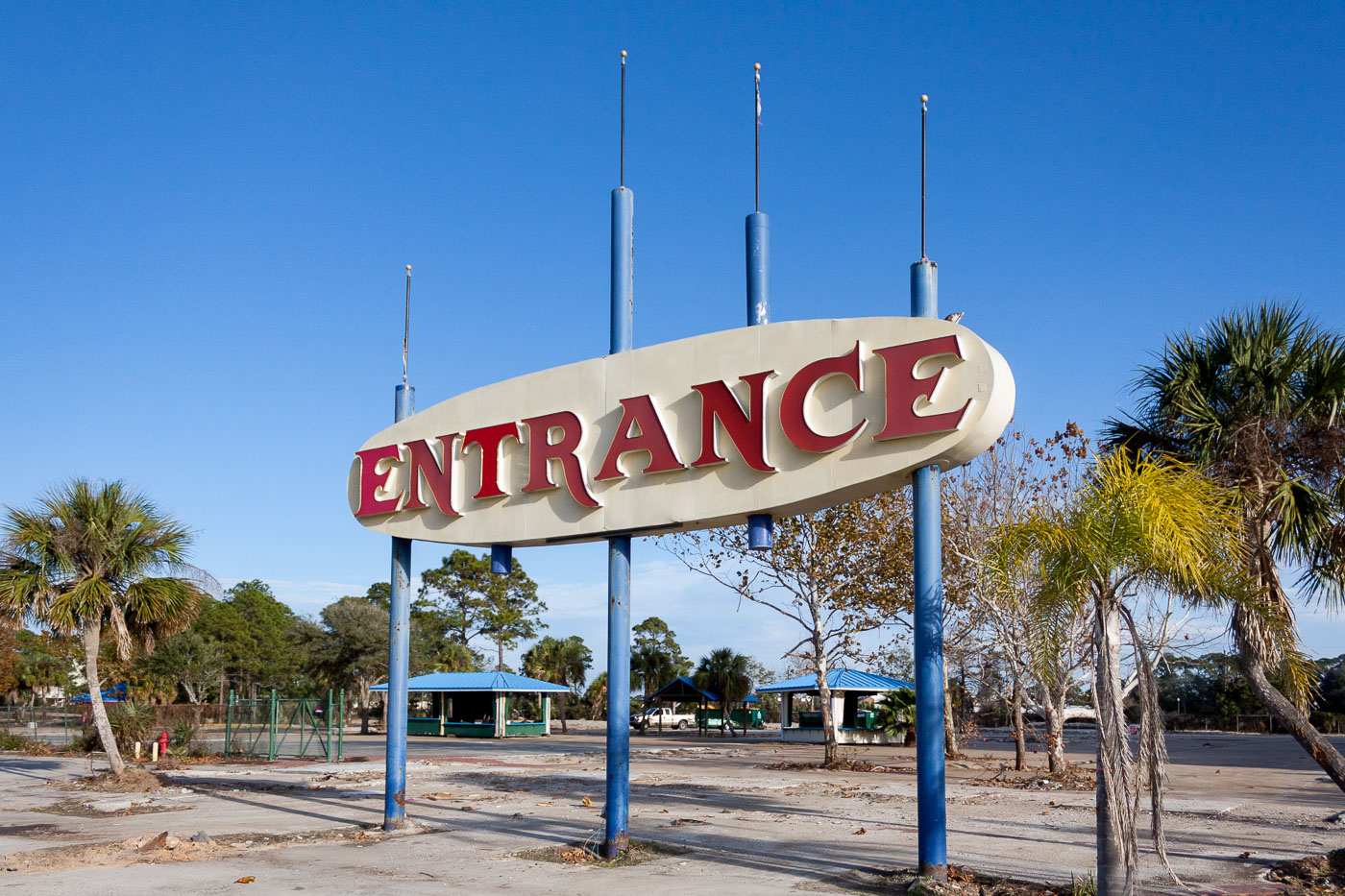
Miracle Strip Amusement Park entrance sign stands abandoned at its former Panama City Beach, Florida site.
Miracle Strip Amusement Park operated on this Panama City Beach site from 1963 until it closed in 2004. The oval "Entrance" sign, mounted on tall blue poles, marked the park's original gateway and was left standing after the rides and buildings were cleared. Small pavilion structures near the site once served as ticket booths for guests entering the park.

Miracle Strip Amusement Park’s Entrance Sign After Closing
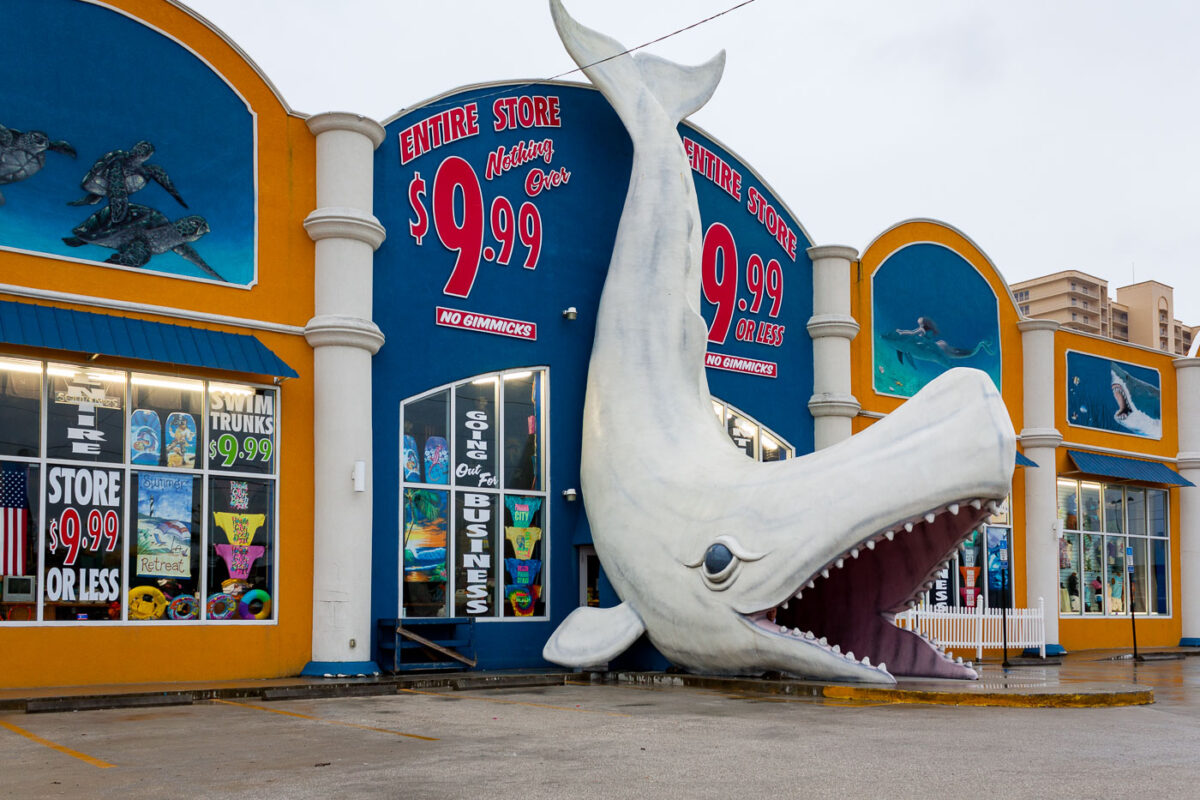
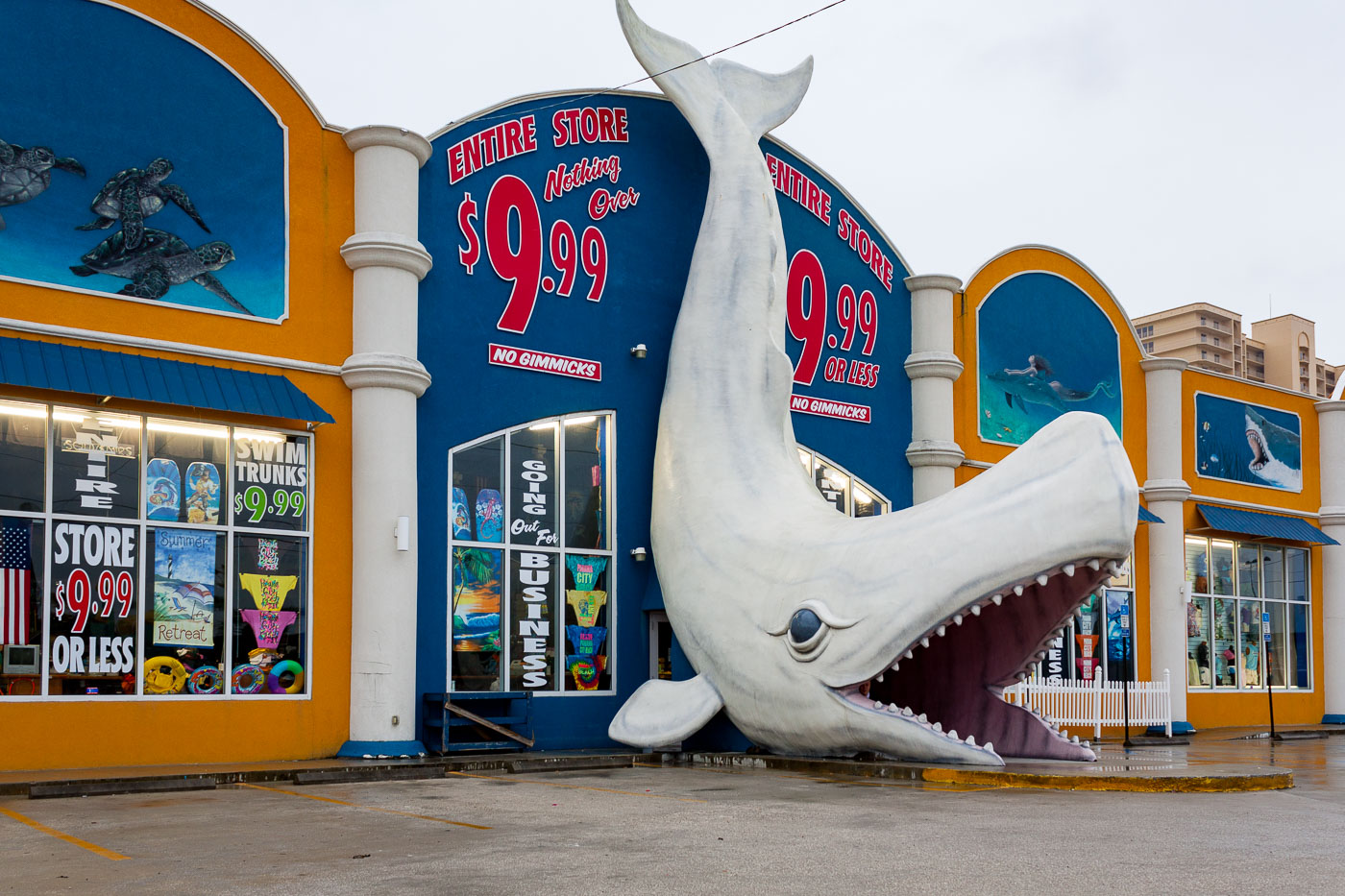
Beachwear store in Panama City Beach, Florida, with large white whale sculpture and going-out-of-business sale signage.
Giant fiberglass whale sculptures have long marked souvenir shops along the Miracle Strip in Panama City Beach, serving as photo props and storefront landmarks for beachgoers. This particular shop combines the whale entrance with painted sea-turtle and surfer murals across its facade, a common marketing style among the beach's independent T-shirt and swimwear retailers. Signs advertising an entire-store clearance at $9.99 or less reflect the seasonal turnover typical of Gulf Coast tourist strips, where shops often rebrand or close between summer seasons.

Whale-Front Souvenir Shop on Panama City Beach

Built in Minneapolis

Minneapolis Photographer

Browse by location, move through long-running series, or start with recent work.