Wells Fargo

28 photos · 2015–2022

28 photographs tagged Wells Fargo, 2015–2022.
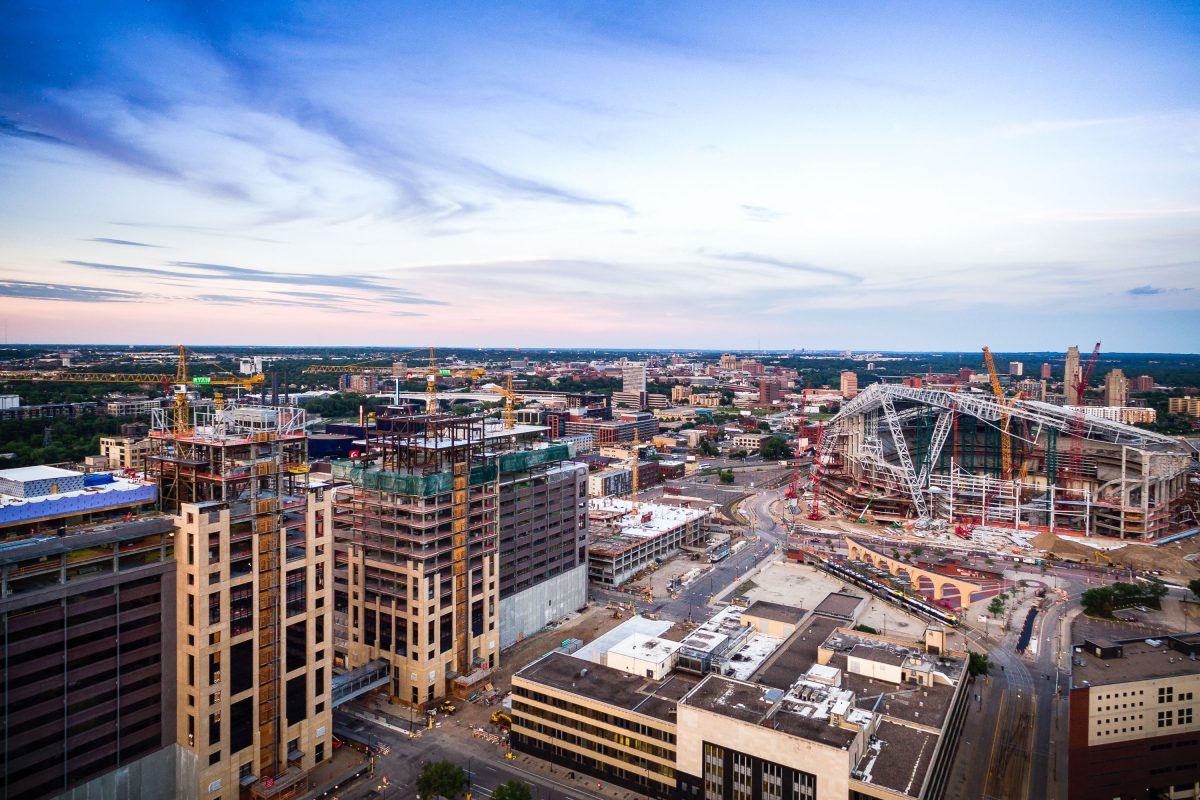
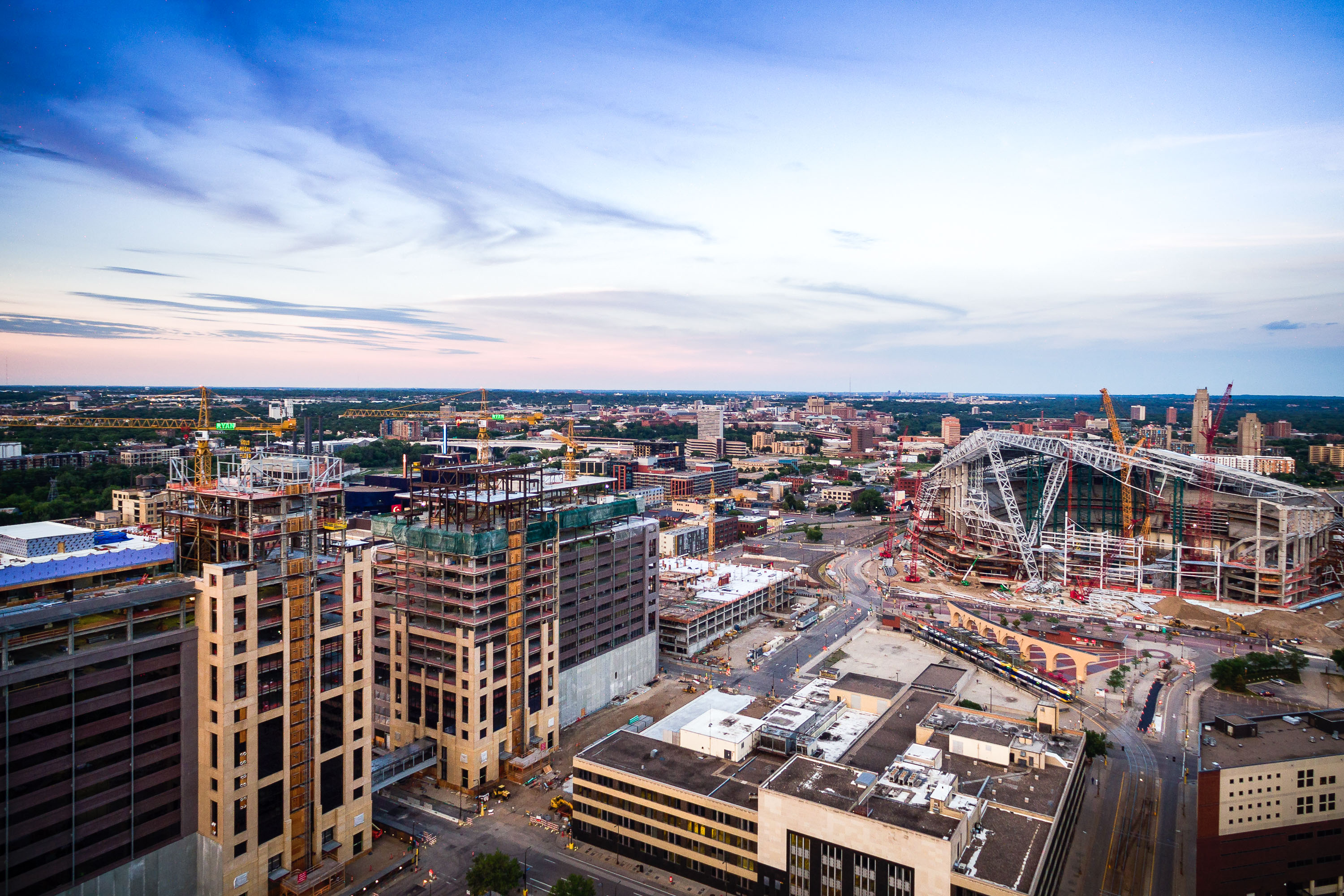
US Bank Stadium under construction in downtown Minneapolis with Wells Fargo office towers rising nearby.
US Bank Stadium, seen here under construction, opened in 2016 as the home of the Minnesota Vikings on the site of the demolished Metrodome. The stadium seats roughly 66,000 and cost about $1.1 billion to build, with a design featuring the largest transparent ETFE roof in North America. Ryan Companies developed the adjacent Downtown East project, including the two office towers visible here that became the Wells Fargo operations center, adding roughly 1.1 million square feet of workspace for thousands of employees.

Downtown East at Dusk and US Bank Stadium Construction
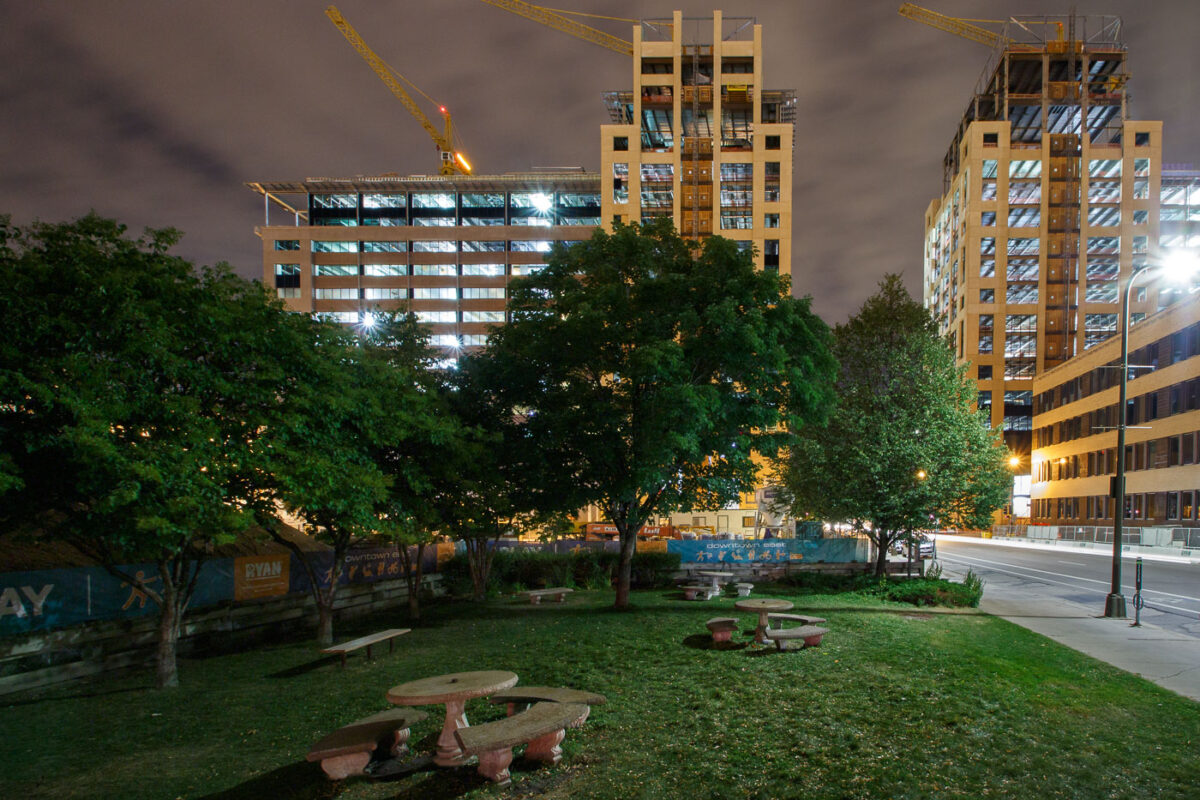
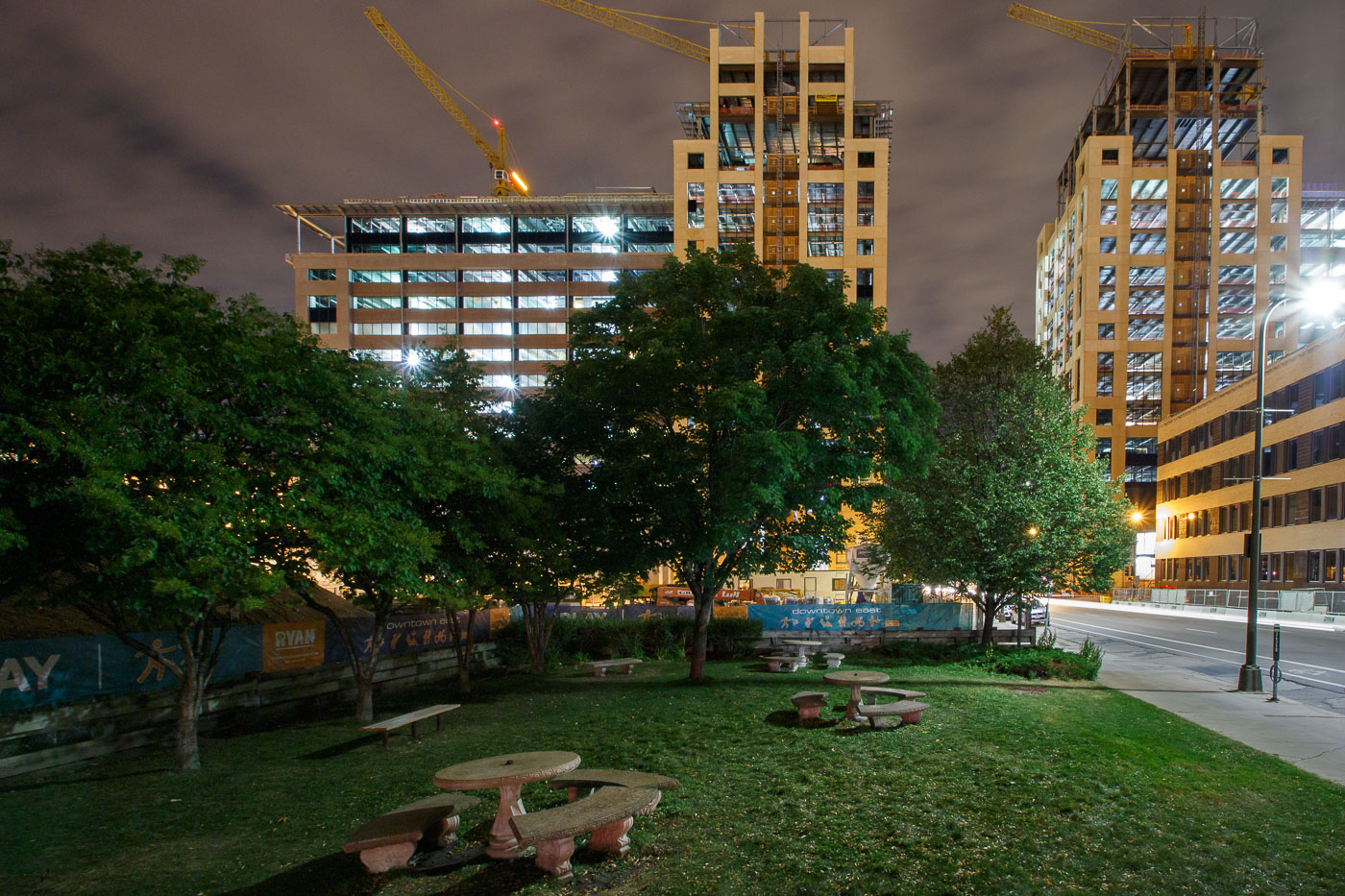
Two Wells Fargo office towers under construction at night in Downtown East Minneapolis, with illuminated floors and cranes.
The two Wells Fargo office towers in Downtown East Minneapolis were under construction in 2015 as part of a larger redevelopment built on the former Star Tribune printing plant site. Ryan Companies led the project, which paired the twin towers with a public park and retail space adjacent to U.S. Bank Stadium, home of the Minnesota Vikings.

Downtown East Park at Night Beneath the Wells Fargo Towers
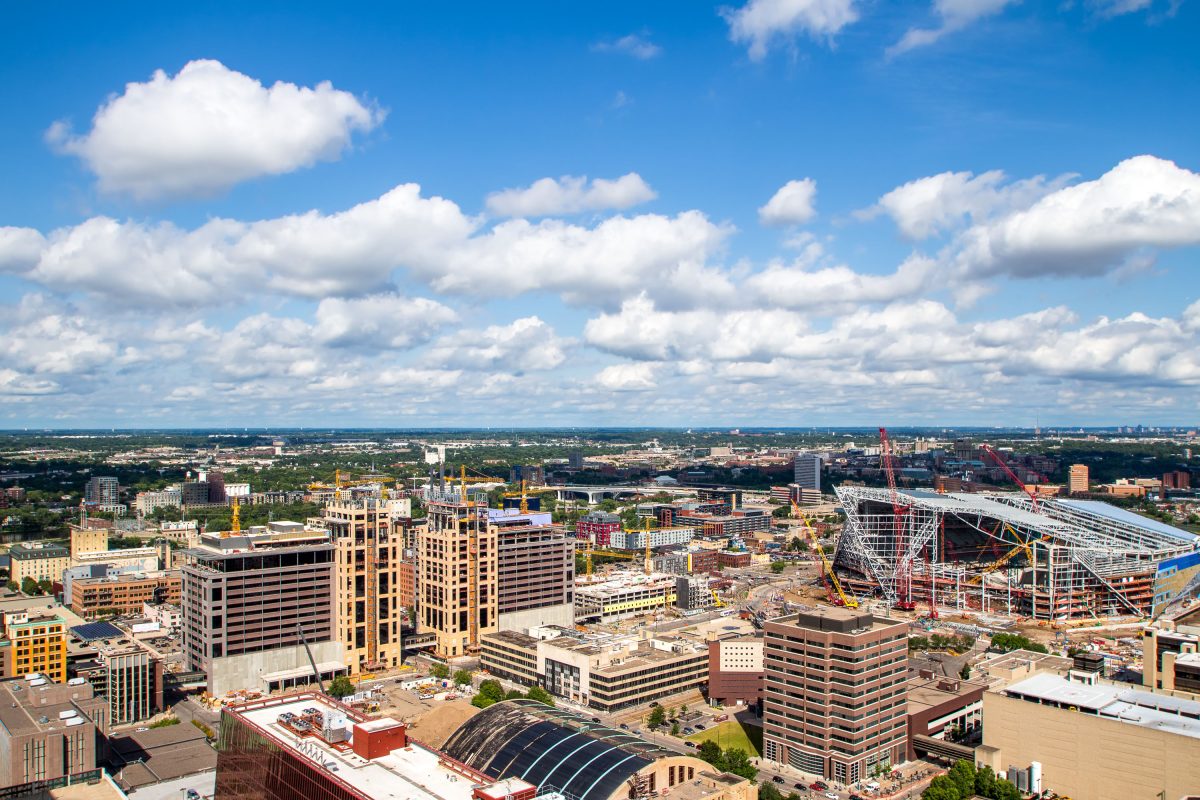
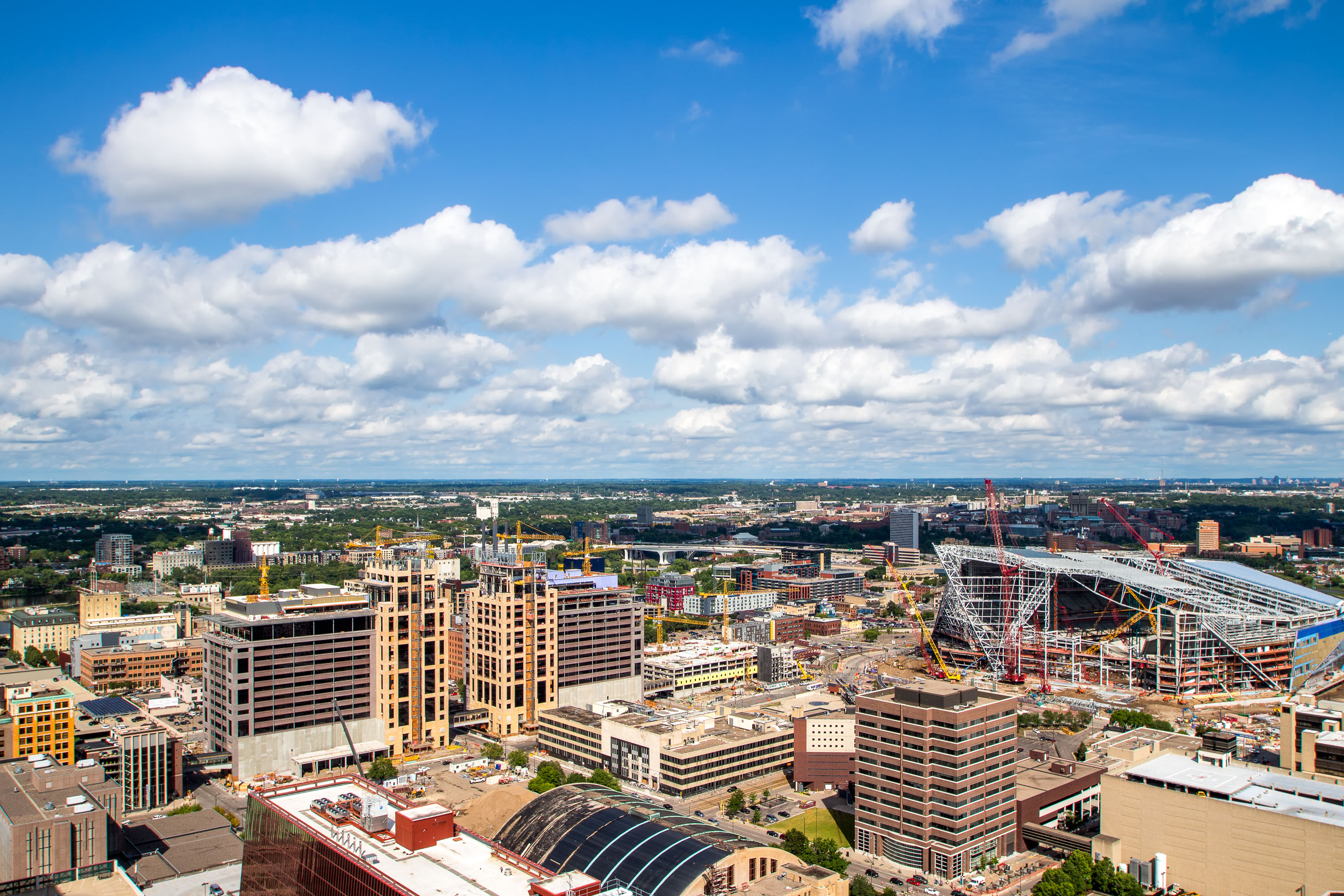
US Bank Stadium under construction in downtown Minneapolis with yellow cranes and steel framework visible among surrounding office buildings.
US Bank Stadium replaced the Hubert H. Humphrey Metrodome as the home of the Minnesota Vikings, rising on the same Downtown East site the Metrodome had occupied since 1982. Construction ran from 2013 to 2016 at a cost of roughly $1.1 billion, funded through a mix of state, city, and team contributions.

Aerial View of US Bank Stadium Rising Over Downtown East
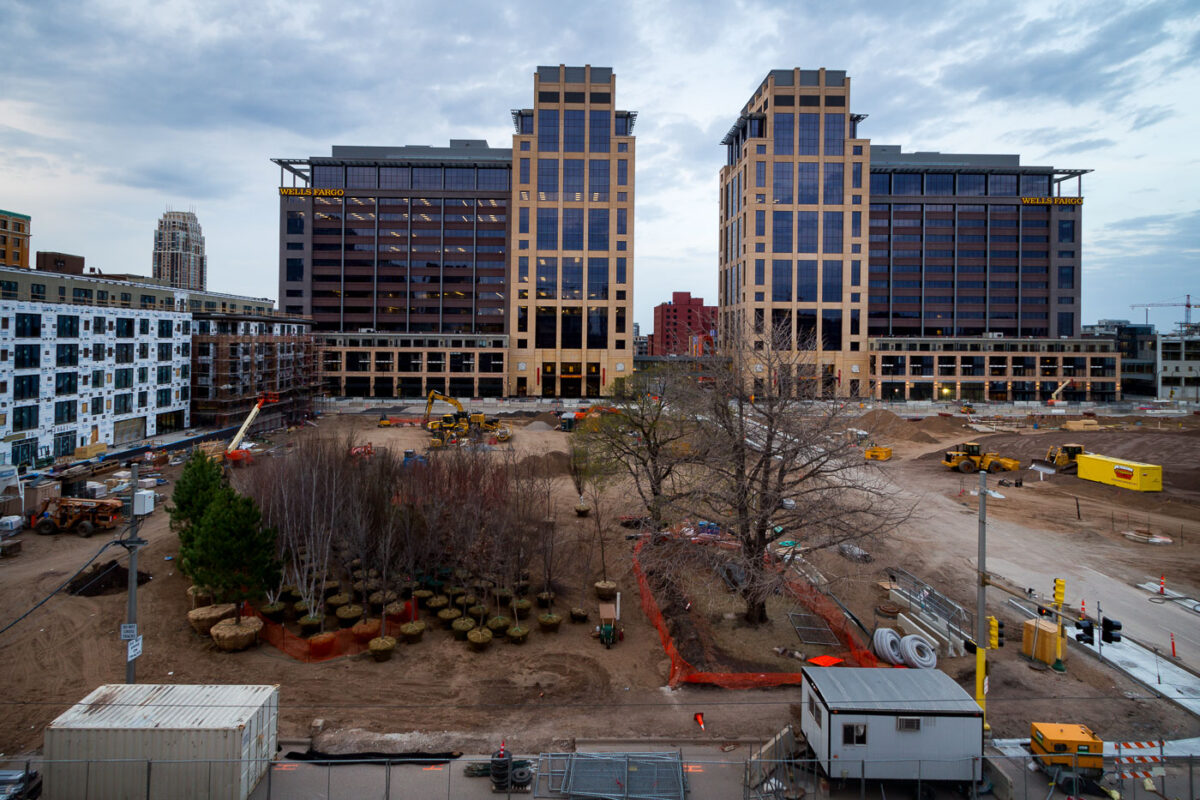
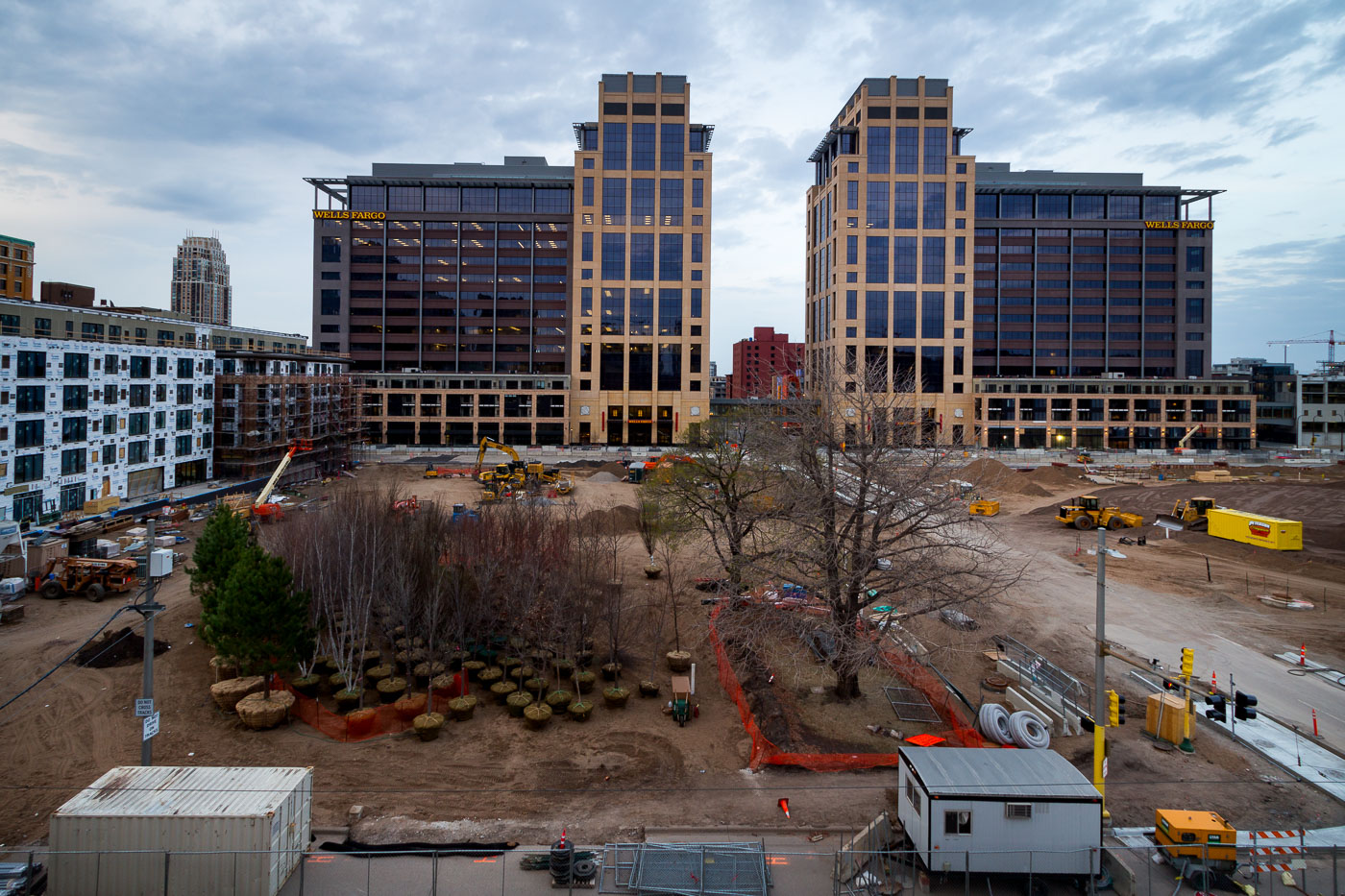
Construction in Minneapolis's Downtown East neighborhood in April 2016
Construction in Minneapolis's Downtown East neighborhood in April 2016, surrounding the development of the new US Bank Stadium. The project included the construction of the stadium itself, as well as surrounding infrastructure and commercial buildings, such as the Wells Fargo towers visible in the background.

Minneapolis Downtown East Construction April 2016
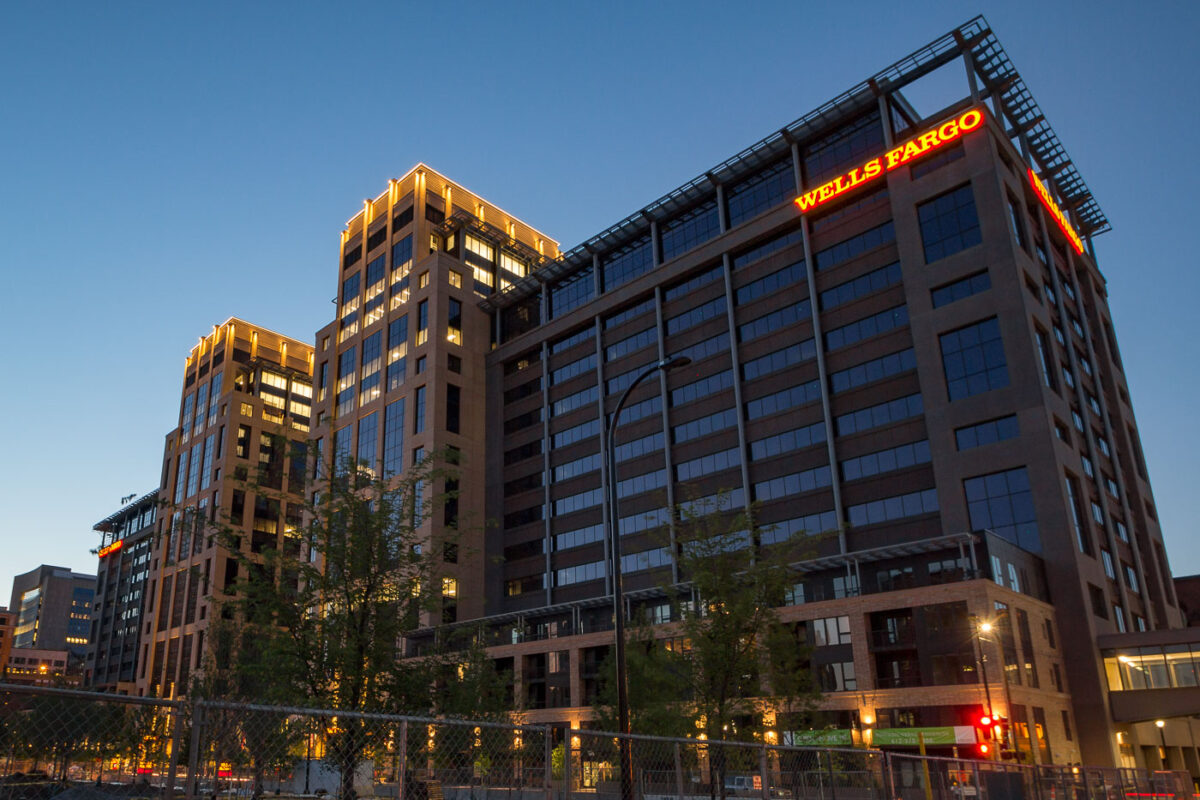
The Wells Fargo buildings in Minneapolis's Downtown East district are illuminated at dusk.
The Wells Fargo Towers in downtown Minneapolis shortly after construction. The towers were built as part of the Downtown East redevelopment along with US Bank Stadium.

Wells Fargo Buildings, Downtown East, Minneapolis
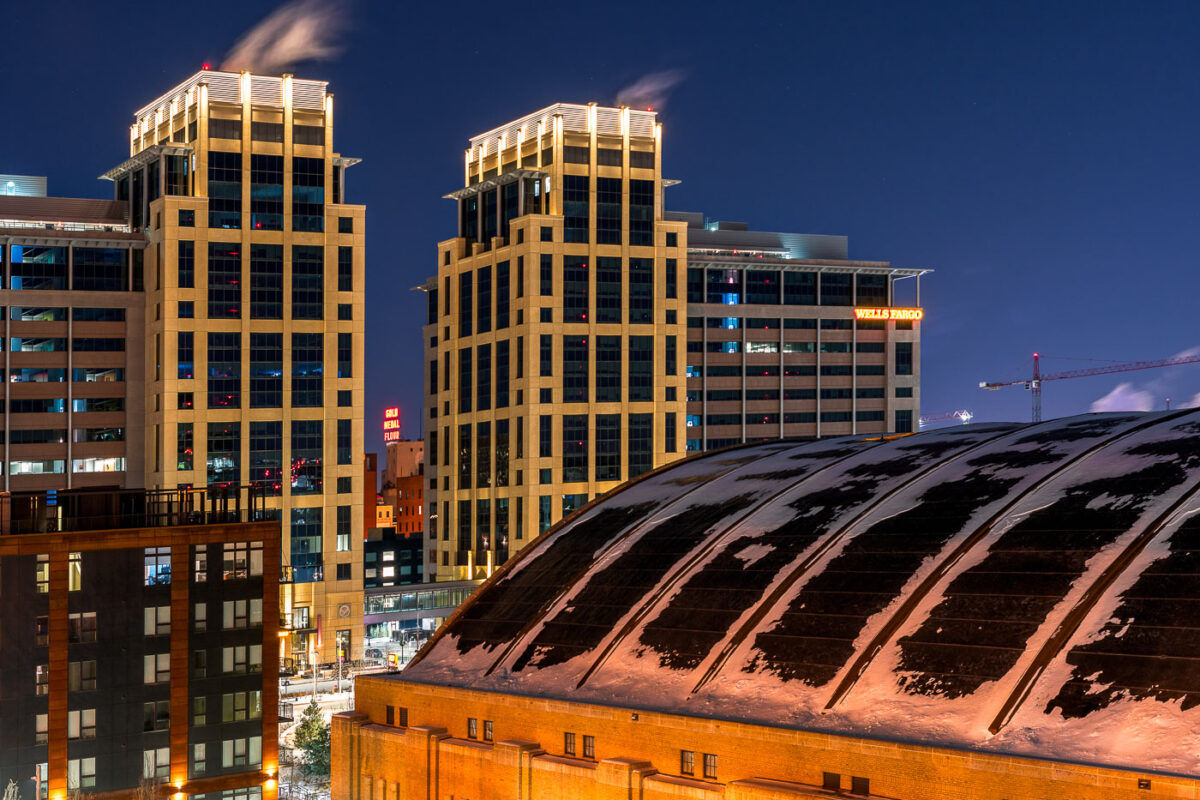
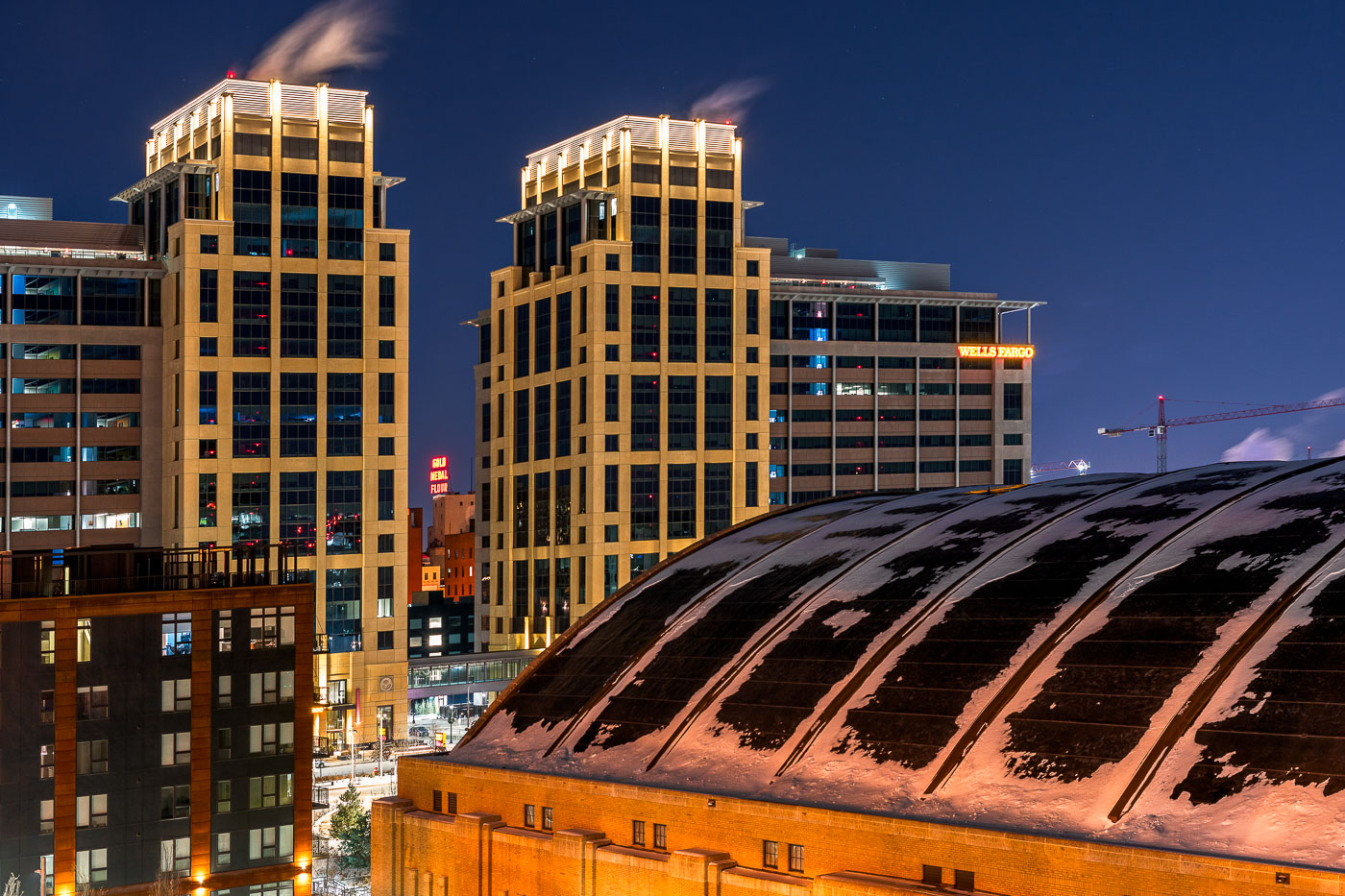
The Armory building and illuminated Wells Fargo office towers stand in downtown Minneapolis at night.
The Armory and the new Wells Fargo Towers in Downtown East, Minneapolis.

Snow-Dusted Armory Roof Beneath the Wells Fargo Towers at Night
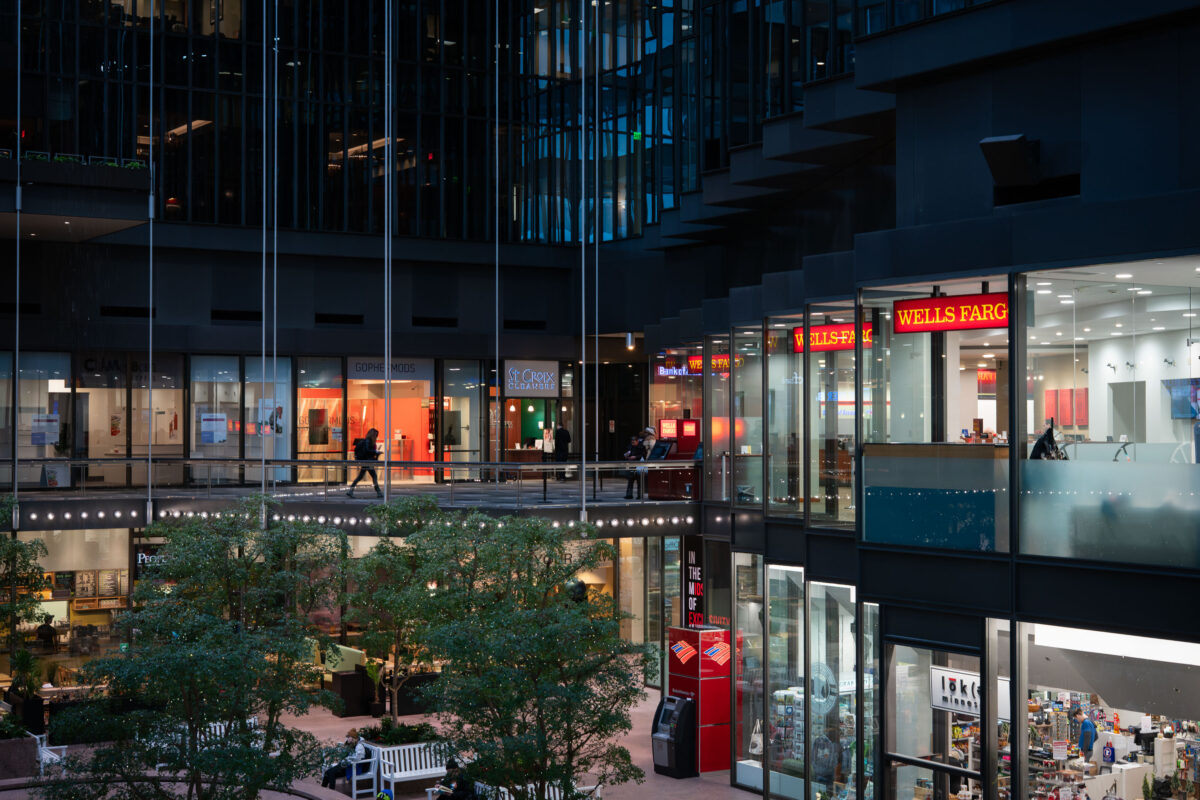
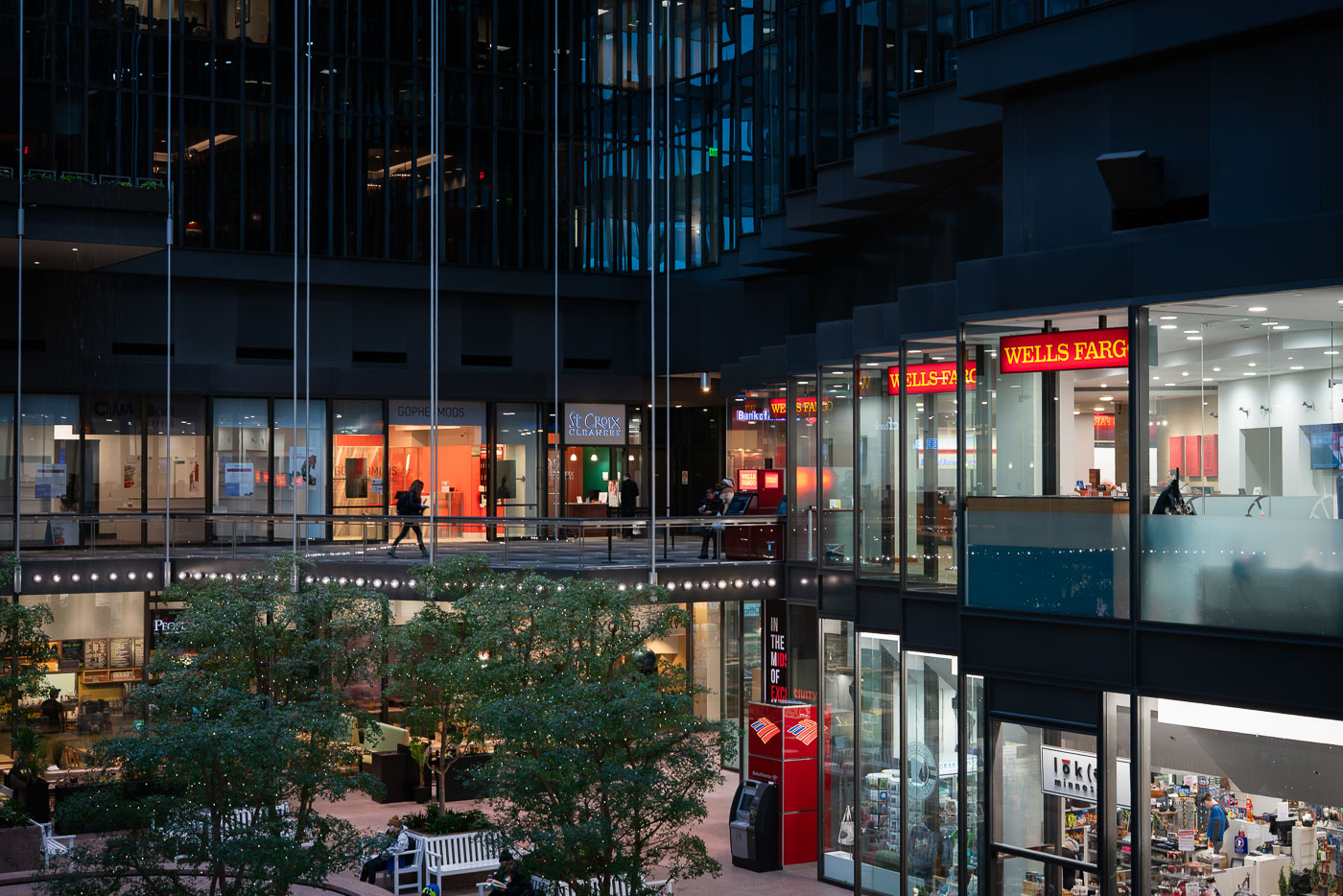
Storefronts and skyway walkway inside Crystal Court at the IDS Center in downtown Minneapolis.
Crystal Court is the eight-story glass atrium at the base of the IDS Center in downtown Minneapolis. Designed by Philip Johnson and John Burgee, the IDS Center opened in 1972 and rises 792 feet, making it the tallest building in Minnesota. Crystal Court connects to several downtown blocks via the Minneapolis Skyway System, the enclosed pedestrian network that links buildings throughout the city center. The atrium has long functioned as a public gathering space and retail concourse, with Wells Fargo among the tenants operating storefronts along its upper walkways.

Retail Level of Crystal Court, IDS Center, Minneapolis
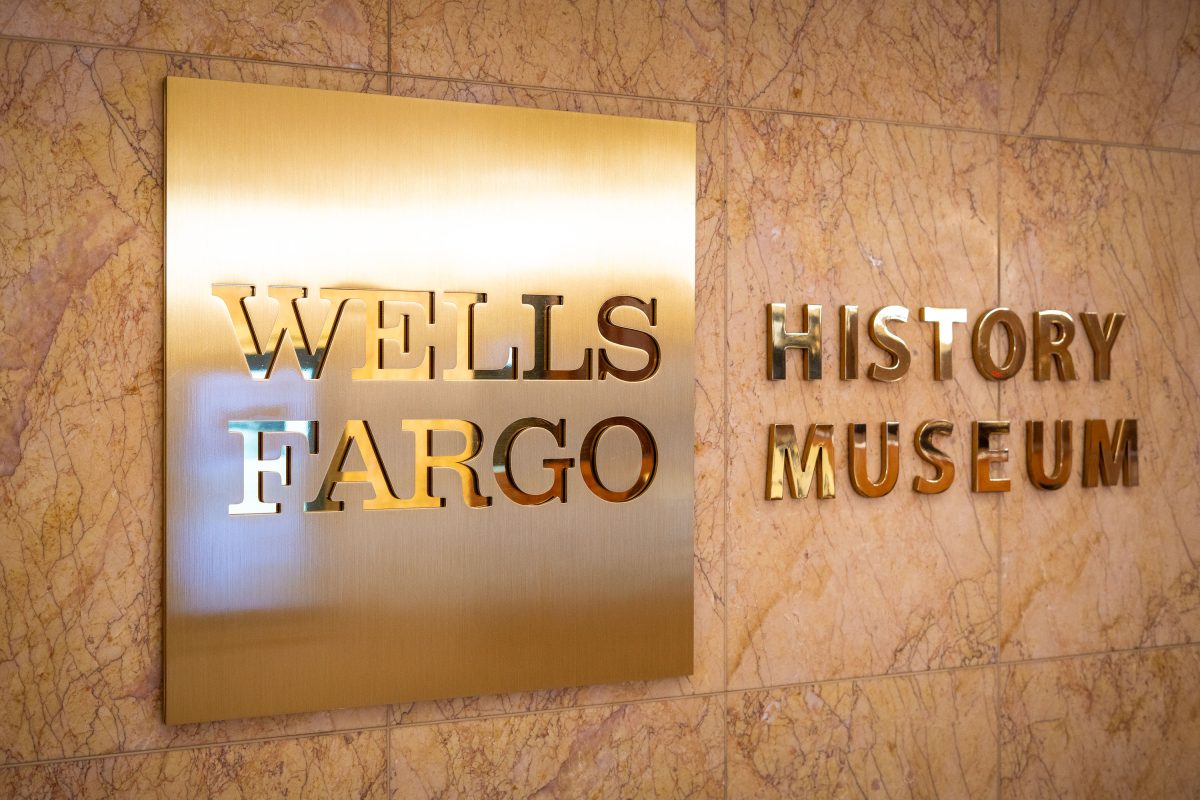
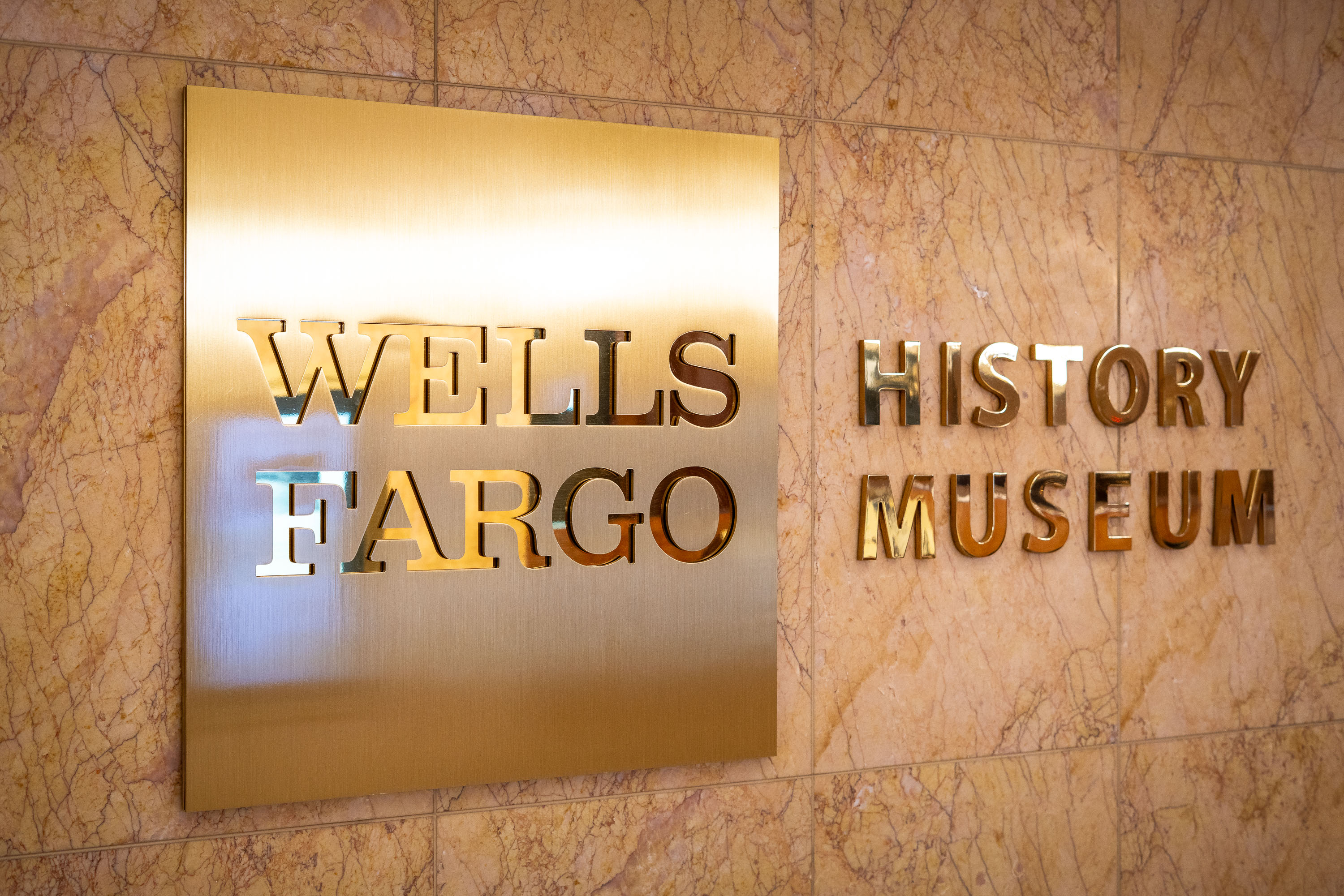
Wells Fargo History Museum signage mounted on marble wall in Minneapolis.
Wells Fargo operates several history museums across its footprint, including this one inside Wells Fargo Center in downtown Minneapolis. The museums showcase artifacts from the company's founding in 1852 by Henry Wells and William Fargo, when it began as an express delivery and banking service for customers headed to California during the Gold Rush. Exhibits typically include stagecoaches, mining-era currency, and telegraph equipment tracing the company's expansion across the American West. Wells Fargo Center itself, completed in 1988, is a 58-story skyscraper designed by César Pelli and remains one of the tallest buildings in Minneapolis.

Wells Fargo History Museum, Wells Fargo Center, Minneapolis
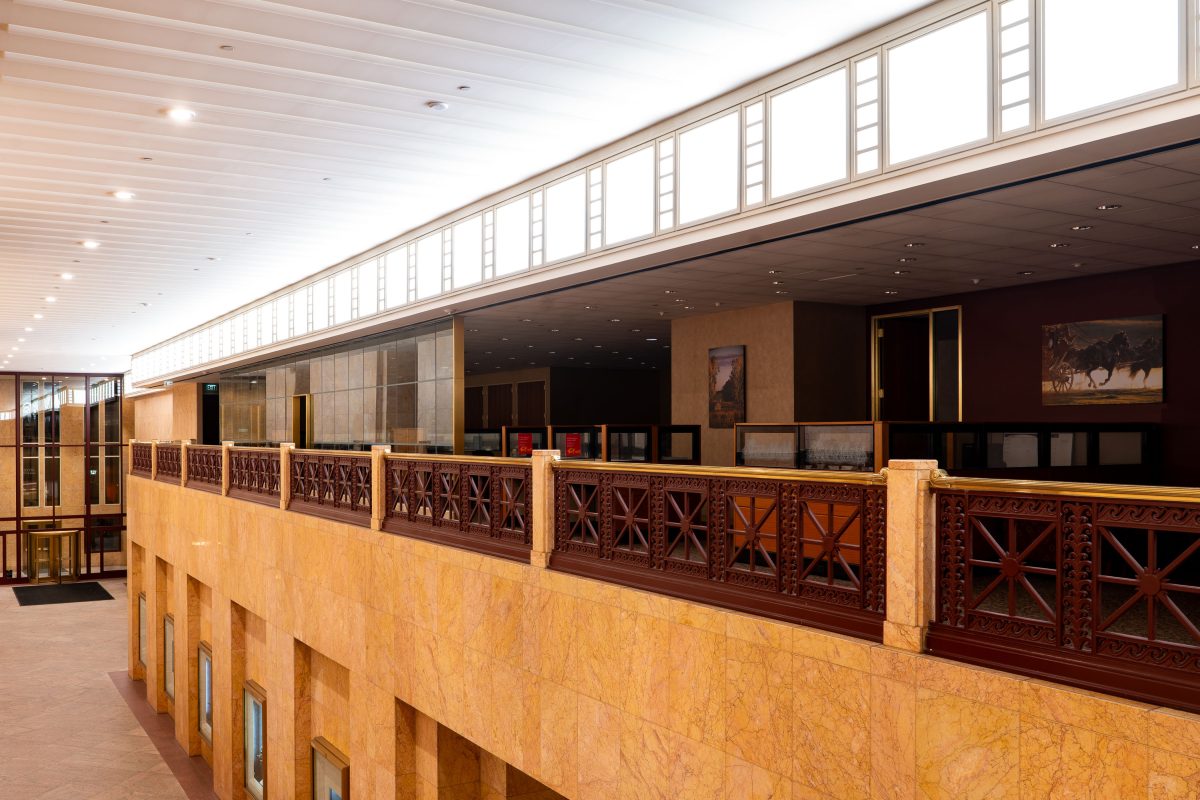
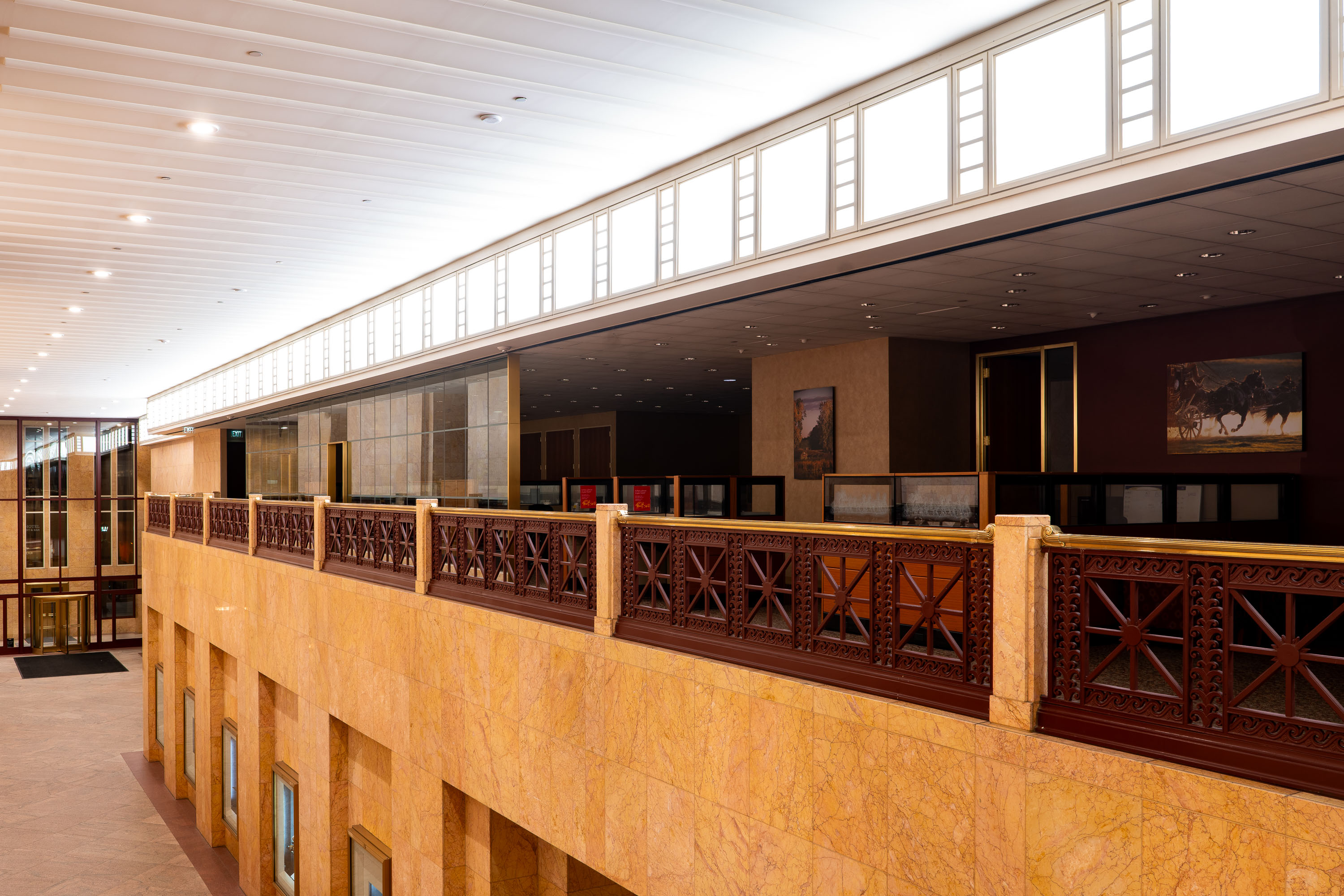
Interior of the Wells Fargo Center Museum in downtown Minneapolis featuring wooden railings and gallery spaces.
The Wells Fargo History Museum occupies the mezzanine level of the Wells Fargo Center at 90 South Seventh Street in downtown Minneapolis. Wells Fargo operates a small chain of these free museums in cities where it has a historic presence, using them to display stagecoaches, mining-era artifacts, and archival s tied to the company's founding in 1852. The exhibit cases along the balcony rail typically rotate items from the bank's corporate archives, including gold specimens and correspondence from the stagecoach express era. The Wells Fargo Center tower itself, completed in 1988 and designed by Cesar Pelli, rises 58 stories above the museum's perch overlooking the building's lobby.

Mezzanine Balcony, Wells Fargo History Museum, Minneapolis

Boarded Wells Fargo on Lake Street in Minneapolis with protest graffiti and broken windows.
A Wells Fargo branch on Lake Street in Minneapolis stands boarded and spray-painted during the unrest that followed the murder of George Floyd in May 2020. Graffiti on the facade includes the messages “STEAL IT BACK!” and “KILL Bankers,” while broken glass and plywood cover parts of the entrance and windows.

Wells Fargo Bank, Lake Street, Minneapolis

Burning car at a Wells Fargo drive-thru in Minneapolis during George Floyd protest unrest.
A car burns in the drive-thru lane of a Wells Fargo branch in Minneapolis on May 29, 2020. The fire occurred during overnight protests following the killing of George Floyd, with the bank located across the street from the Minneapolis Police Department’s 5th Precinct.

Car Fire at Wells Fargo, Minneapolis

Burning car outside Wells Fargo on East 31st Street in Minneapolis during George Floyd protests.
A car burns outside the Wells Fargo branch on East 31st Street in Minneapolis on May 29, 2020. The fire occurred during the fourth night of protests following the killing of George Floyd, after demonstrators had marched through South Minneapolis. The bank stands across from the Minneapolis Police Department’s 5th Precinct, an area that drew large crowds and repeated unrest that week.

Burning Car at Wells Fargo, Minneapolis

Wells Fargo bank burning on Nicollet Avenue in South Minneapolis on May 29, 2020.
A Wells Fargo branch on Nicollet Avenue in South Minneapolis burns on the night of May 29, 2020. The bank, across from the Minneapolis Police Department’s Fifth Precinct, was damaged during unrest that followed the killing of George Floyd. Flames are visible through the front windows as fire spreads across the ground-floor banking area.

Wells Fargo Bank Fire, Nicollet Ave, Minneapolis

Fire-damaged Wells Fargo bank on Nicollet Avenue in Minneapolis with broken windows and graffiti.
The Wells Fargo bank building on Nicollet Avenue in Minneapolis bears fire damage and graffiti on May 31, 2020. Soot blackens the brick facade above a damaged entrance, and broken windows are visible on the upper level. Graffiti on the wall includes the phrases “BURN THE BANK” and “ACAB,” photographed in the days following the killing of George Floyd.

Wells Fargo Bank Fire Damage, Minneapolis
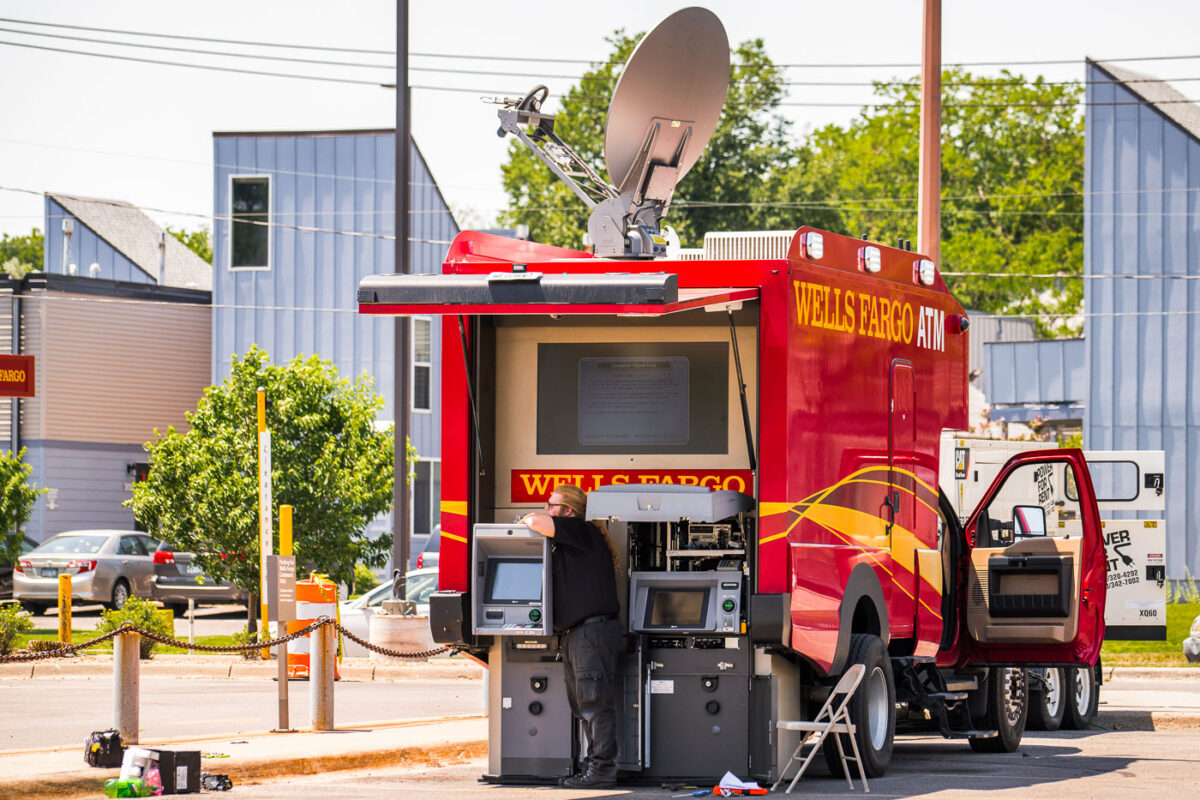
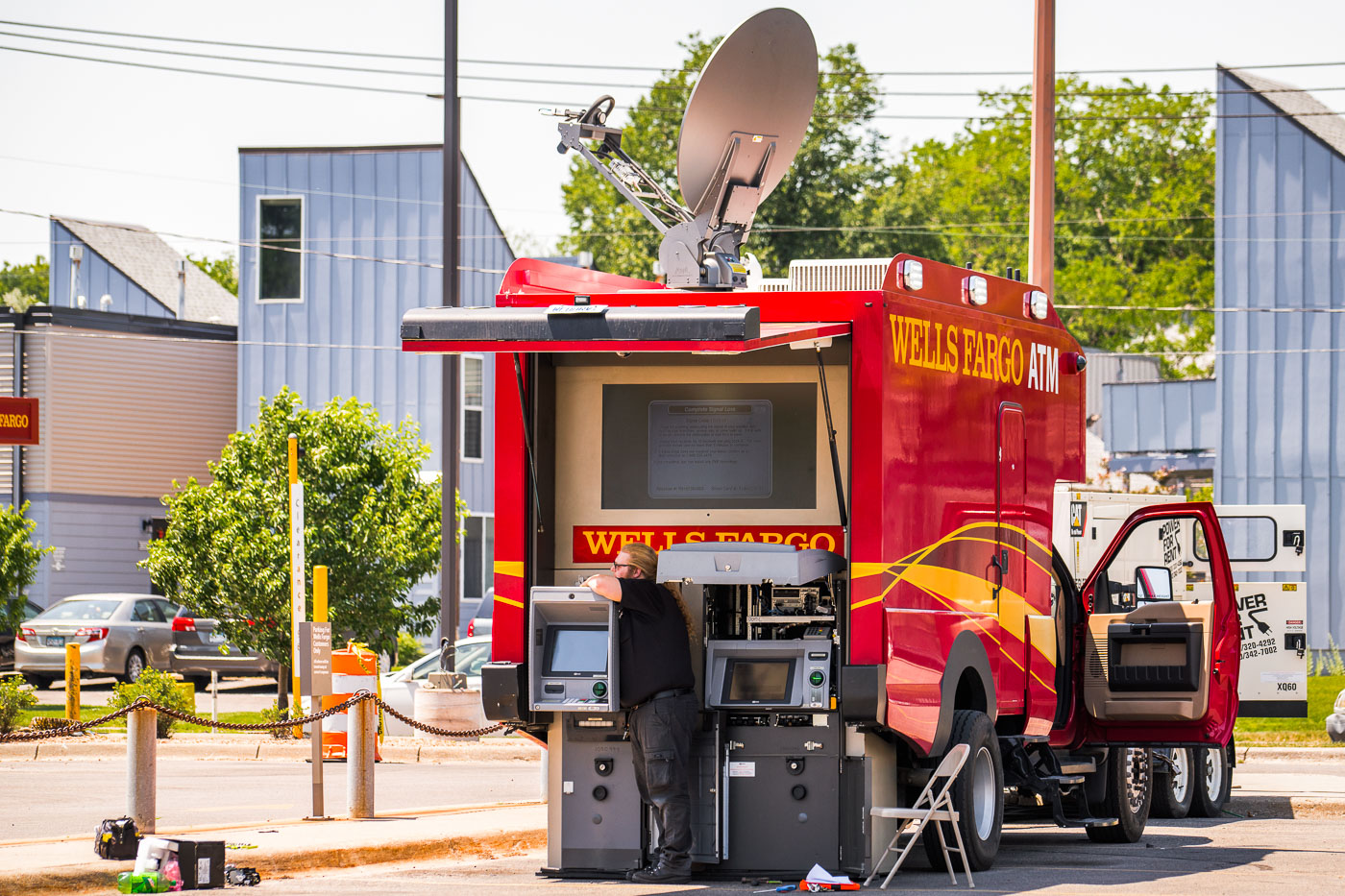
Wells Fargo mobile ATM truck being serviced in Minneapolis after a local bank branch was destroyed by fire.
A Wells Fargo mobile ATM truck is serviced in Minneapolis in June 2020. The temporary banking unit, equipped with a satellite dish and onboard teller machines, was deployed after a nearby Wells Fargo branch was destroyed by fire. Parked along a commercial street, the vehicle provided cash access and basic banking transactions while regular branch service was disrupted.

Wells Fargo Mobile ATM Serviced in Minneapolis
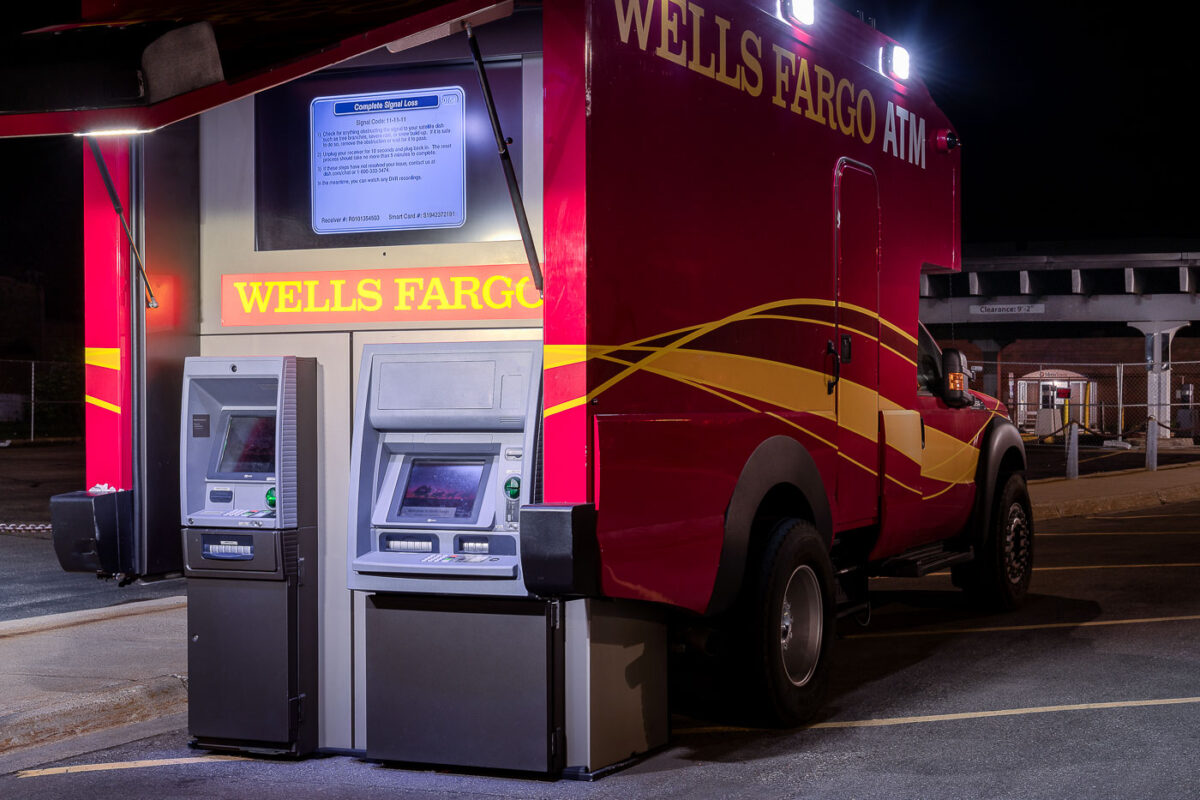
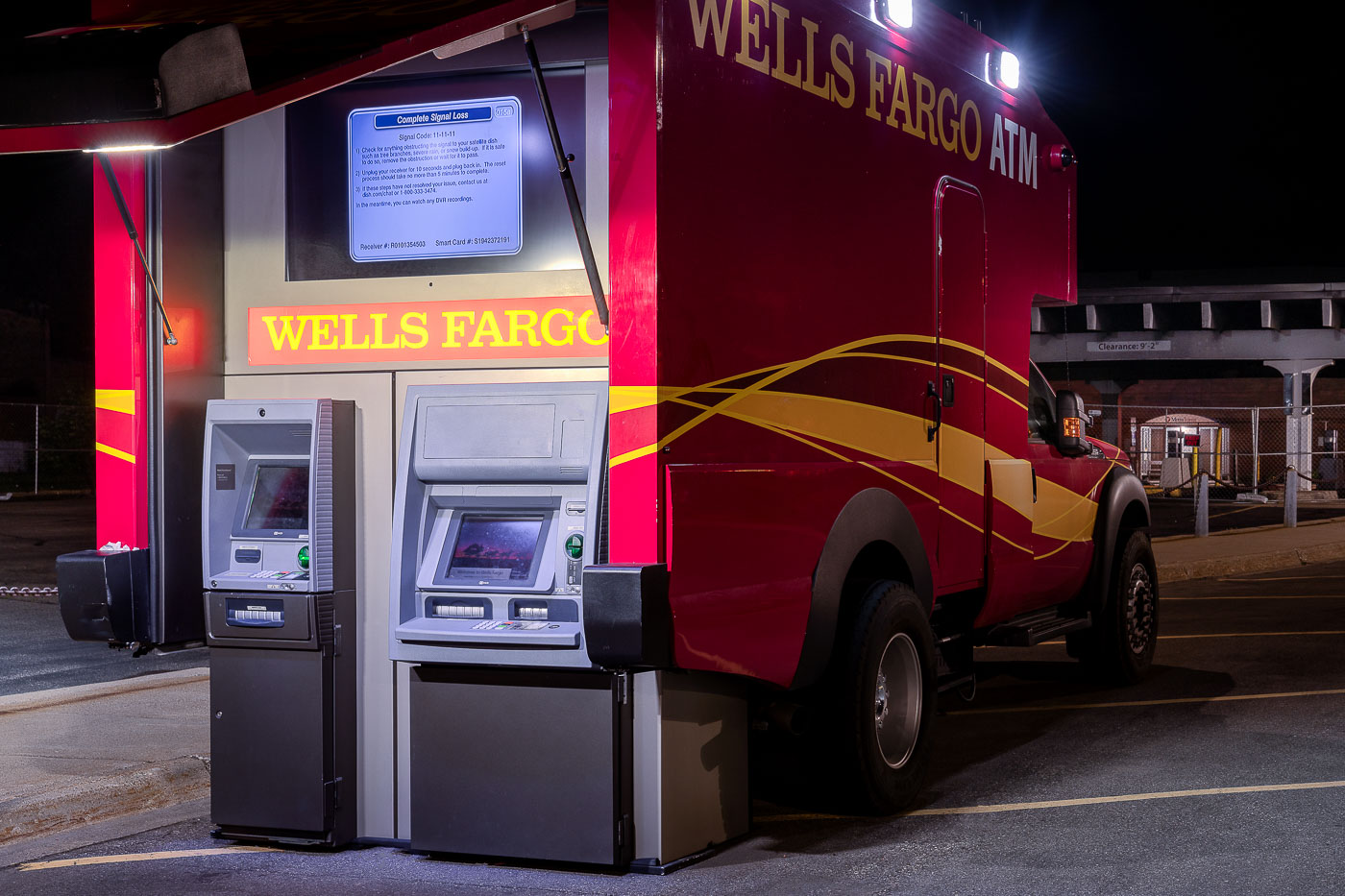
A mobile ATM setup in a bank parking lot
A Wells Fargo Mobile ATM truck is positioned in the parking lot of the former Wells Fargo Bank at 3030 Nicollet in South Minneapolis. This temporary financial service was deployed after the original bank branch was destroyed during the civil unrest following the May 25th, 2020 death of George Floyd. Its presence aimed to restore essential banking access for residents and businesses in the affected Lake Street corridor. The mobile unit served as a critical piece of infrastructure, providing continuity of service in an area experiencing significant disruption.

Wells Fargo Mobile ATM at Burned Bank, 3030 Nicollet
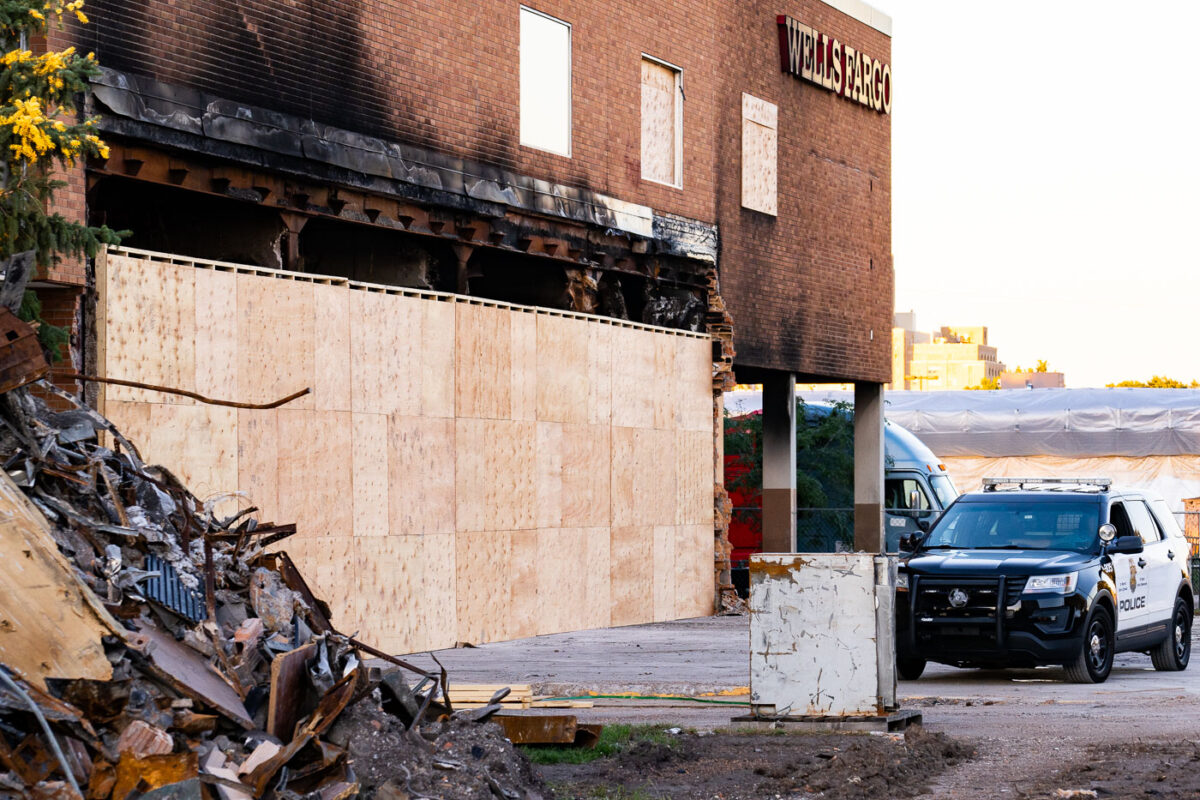
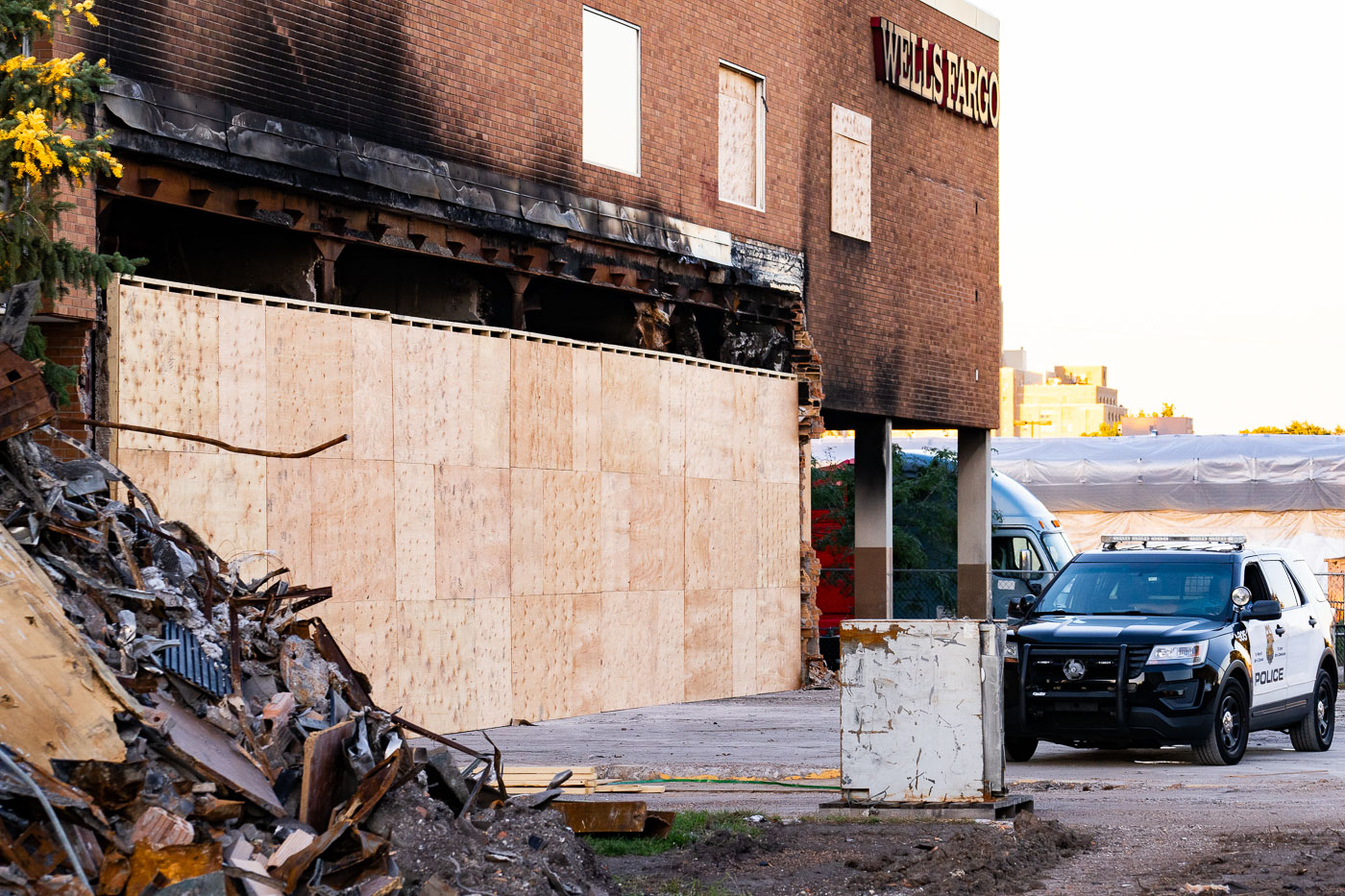
Riot damaged Wells Fargo bank guarded by Minneapolis Police
A Wells Fargo bank branch on Nicollet Avenue in Minneapolis displays extensive fire damage, boarded up following protests in May 2020. The building was burned during civil unrest that occurred after the death of George Floyd on May 25, 2020. A Minneapolis Police squad car is stationed nearby. This security was maintained around the clock to facilitate the safe retrieval of items from safety deposit boxes by bank customers.

Burned Wells Fargo Bank, Nicollet Ave, Police Squad Car

A Minneapolis Police Officer under the burned out Wells Fargo Bank on Nicollet Ave. The bank sits across the street from the Fifth Precinct and was burned during unrest.

Police guarding burned Wells Fargo

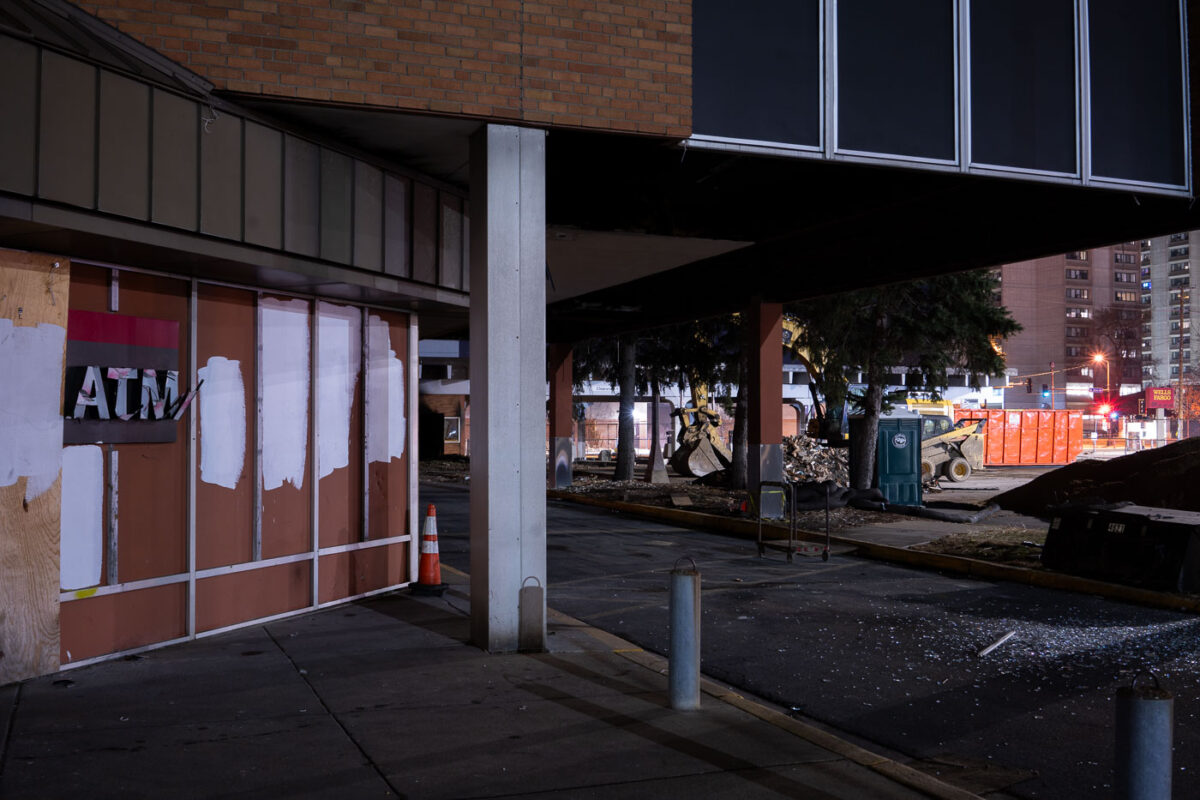
Burned out Wells Fargo building with ATM sign
The remains of a Wells Fargo bank branch stand on Nicollet Avenue in Minneapolis, following its destruction during the civil unrest of May 2020. This building, located across from the Minneapolis Police Fifth Precinct station, was burned during the uprising that followed the May 25, 2020 death of George Floyd.

Burned Wells Fargo ATM, Nicollet Ave, Minneapolis
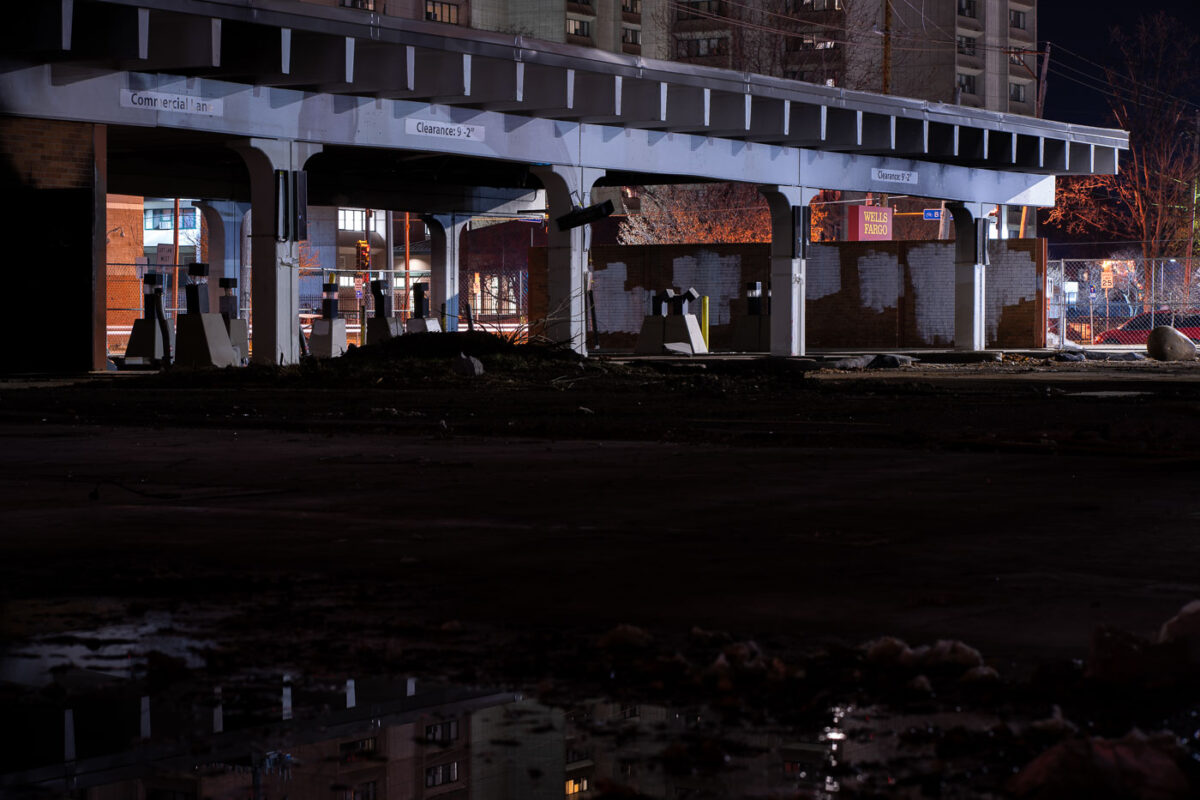
Remains of the burned Wells Fargo Bank
The remains of the Wells Fargo Bank on Nicollet Avenue in Minneapolis are visible at night. This retail financial institution was destroyed by arson following the May 25, 2020 death of George Floyd, during a period of widespread protest in the city. The bank was located directly across the street from the Minneapolis Police Department's Fifth Precinct station.

Wells Fargo Bank Arson Remains, Nicollet Ave, Minneapolis
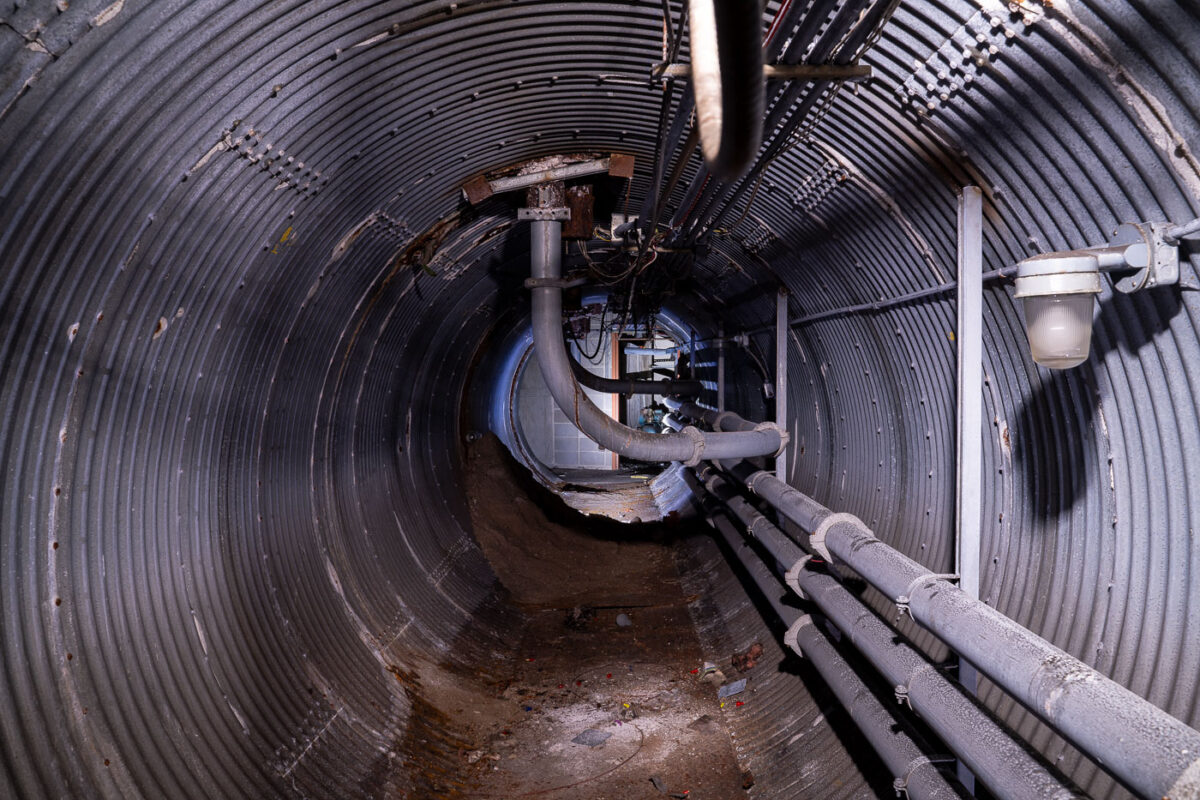
Wells Fargo Bank tunnel in burned building
This corrugated metal tunnel is located beneath the former Wells Fargo drive-thru on Nicollet Avenue in Minneapolis. The bank building above was extensively damaged by arson on May 29, 2020, during the Minneapolis Uprising, across from the Minneapolis police 5th Precinct. Following the fire, the site remained secured for months to protect undamaged safety deposit boxes within the bank structure. The tunnel, likely part of the building's utility infrastructure, shows signs of disuse and debris, reflecting the aftermath of the events.

Tunnel Below Burned Wells Fargo Drive-Thru, Nicollet Ave
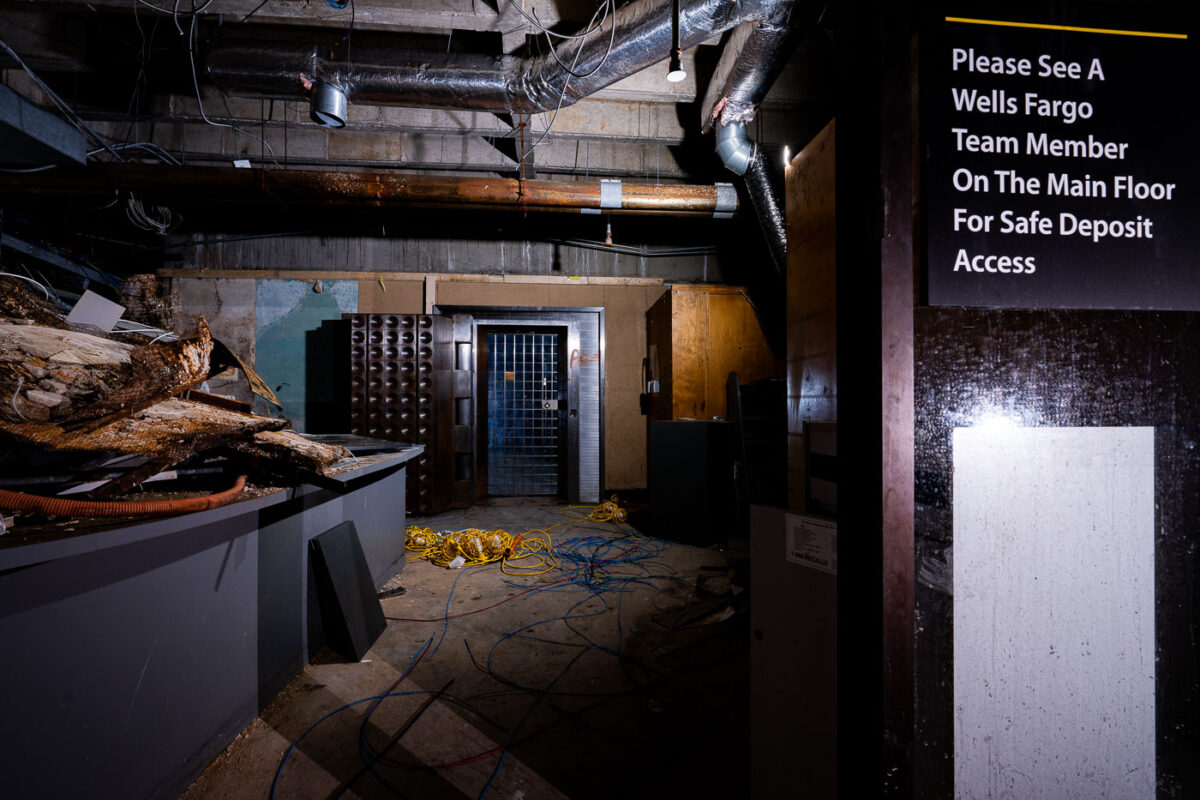
Inside the burned Wells Fargo Bank in Minneapolis
The interior of a Wells Fargo bank on Nicollet Avenue in Minneapolis, showing the aftermath of damage sustained during the Minneapolis Uprising on May 29, 2020. Despite the extensive fire damage throughout the building, the bank's vault, designed for secure storage, remained intact. The presence of undamaged safe deposit boxes within the vault necessitated the site's prolonged security for several months following the unrest.

Burned Wells Fargo Vault, Minneapolis
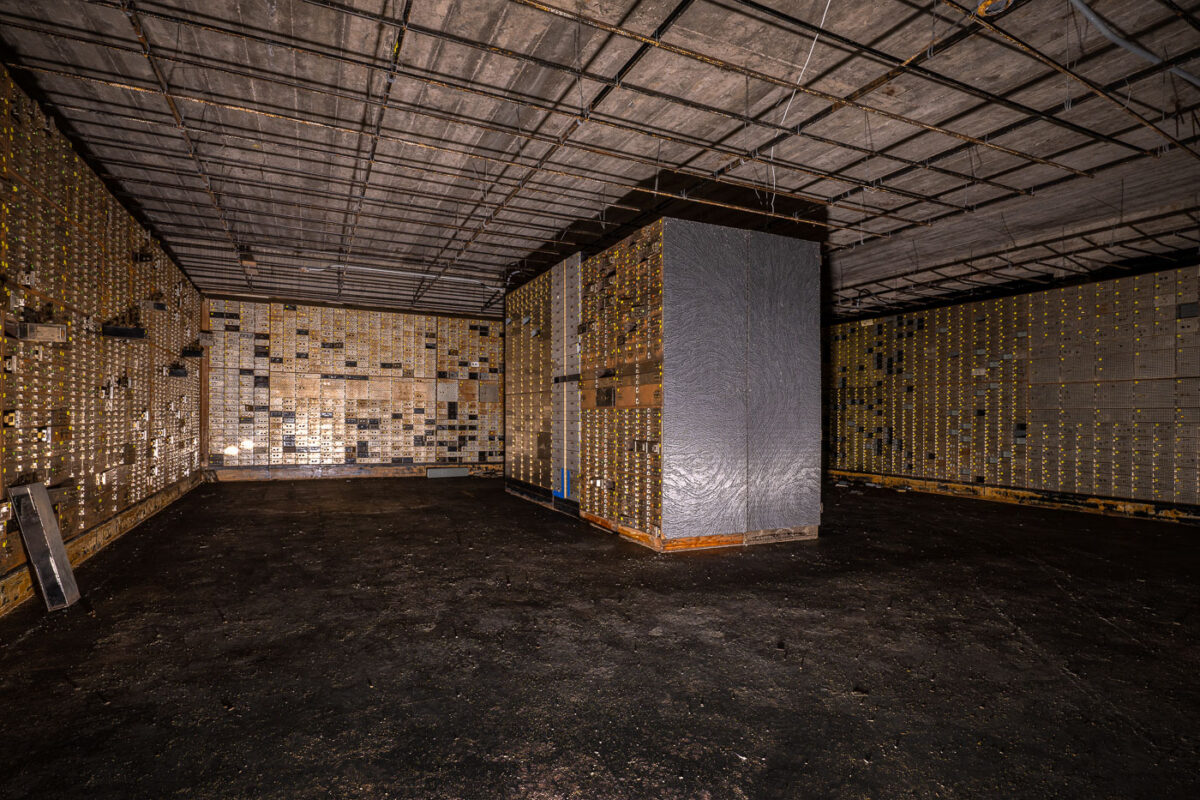
Safety deposit boxes inside the burned Wells Fargo bank
The interior of a safety deposit vault is visible within the burned Wells Fargo bank located on Nicollet Avenue in Minneapolis. This branch, situated across from the Minneapolis Police 5th Precinct, sustained significant fire damage on May 29, 2020, during the Minneapolis Uprising. Despite the extensive destruction to the rest of the building, the robust construction of the vault protected its contents, including numerous safety deposit boxes. For months following the fire, the site remained secured to ensure the integrity of these undamaged boxes and facilitate their eventual retrieval by customers.

Safety Deposit Vault, Burned Wells Fargo, Minneapolis
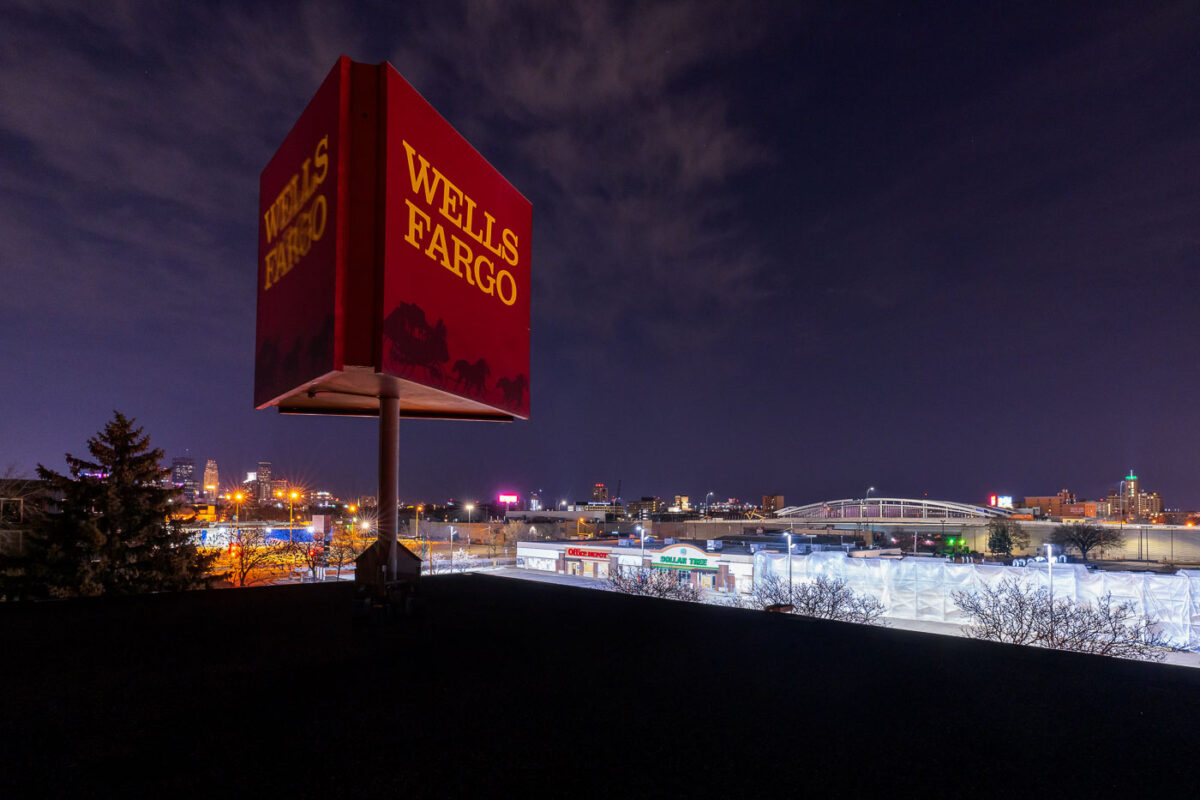
The roof of the burned Wells Fargo bank in Minneapolis
A Wells Fargo sign stands above a bank building on Nicollet Avenue in Minneapolis. The structure sustained fire damage during the civil unrest that followed the death of George Floyd on May 25, 2020. This image, taken from the bank's damaged roof, overlooks the Minneapolis skyline and surrounding commercial area. The bank is situated across from the Minneapolis Police 5th Precinct station, a significant location during the protests.

Wells Fargo Sign from Burned Minneapolis Bank Roof
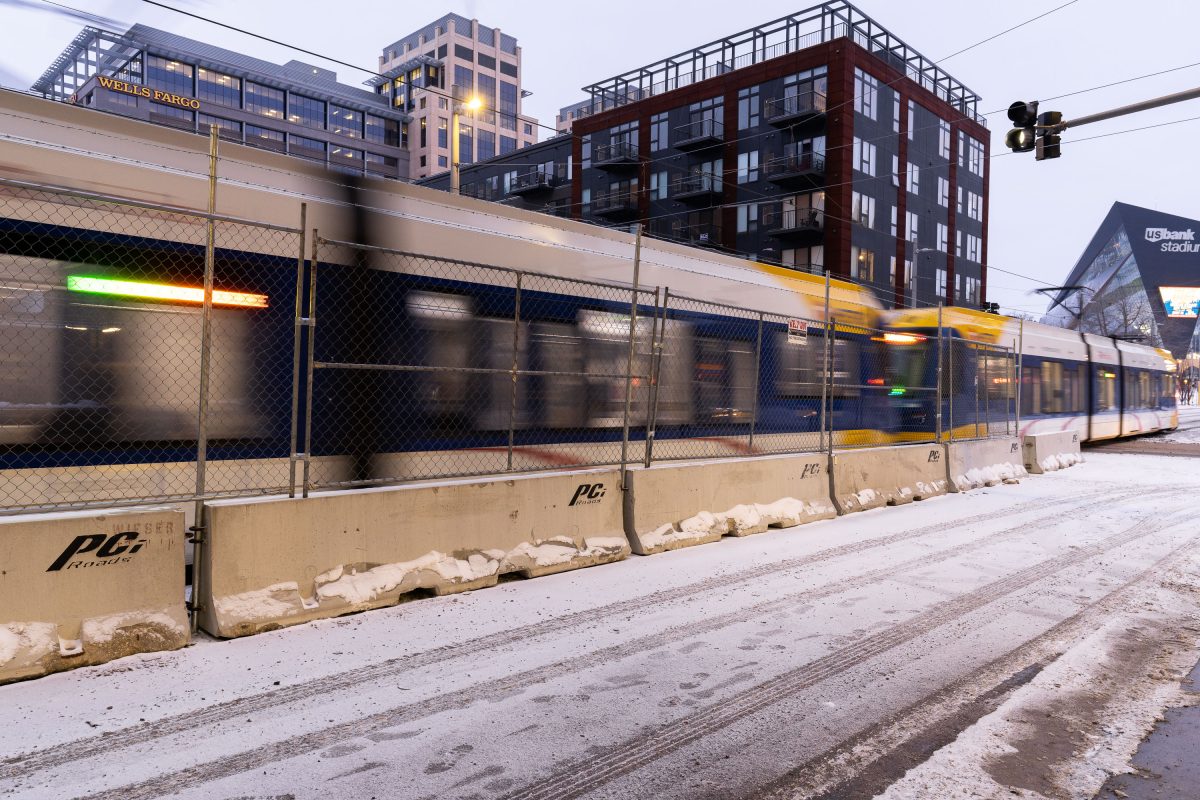
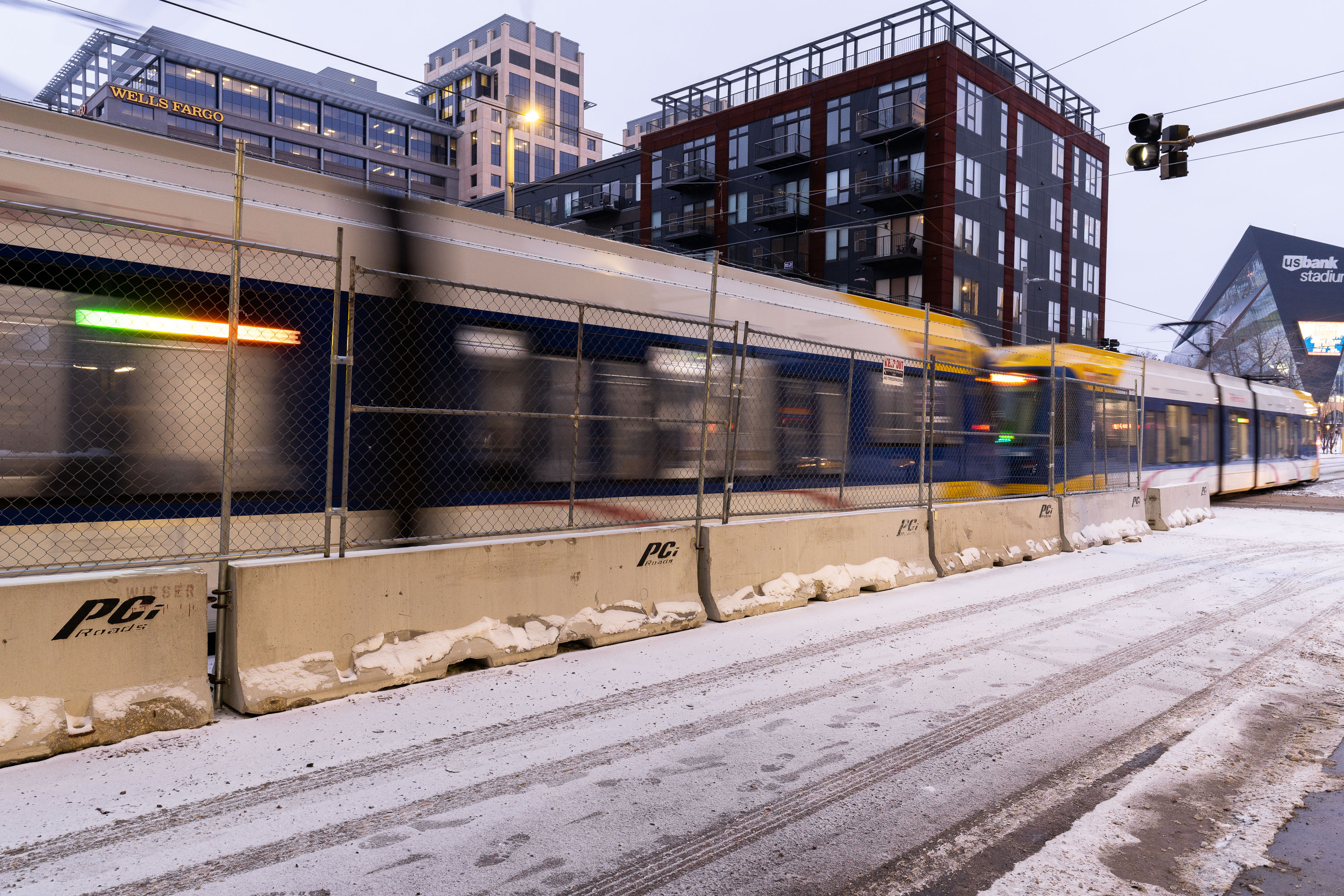
Metro Transit light rail train passes security fencing along South 5th Street near US Bank Stadium in downtown Minneapolis during winter.
A Metro Transit light rail train passes along South 5th Street near US Bank Stadium in downtown Minneapolis. This stretch of track serves the METRO Blue and Green Lines, connecting downtown to the stadium, Nicollet Mall, and surrounding neighborhoods.

Light Rail Passing Security Fencing Near US Bank Stadium in Snow

Wells Fargo after Minneapolis riots
The Wells Fargo Bank branch on Nicollet Avenue in South Minneapolis shown on February 18, 2021 shows damage from fires that occurred during the unrest following the murder of George Floyd in May 2020. The building, located across from the Minneapolis Police Fifth Precinct, sustained significant damage, with boarded-up windows and evidence of burning along its lower facade. On May 25, 2020, Minneapolis police officer Derek Chauvin murdered 46-year-old George Floyd during an arrest outside Cup Foods at the intersection of 38th Street and Chicago Avenue in south Minneapolis. Video recorded by bystanders showed Chauvin kneeling on Floyd’s neck for more than nine minutes while Floyd repeatedly said he could not breathe. Three other Minneapolis police officers - J. Alexander Kueng, Thomas Lane, and Tou Thao — were also present during the arrest and later faced criminal charges for their roles in Floyd’s death. Floyd’s murder sparked protests and civil unrest across Minneapolis and around the world, leading to widespread demonstrations against police violence, major policy debates on policing, and the conviction of Chauvin on murder and manslaughter charges in 2021.

Wells Fargo Nicollet Ave, Minneapolis, after 2020 unrest
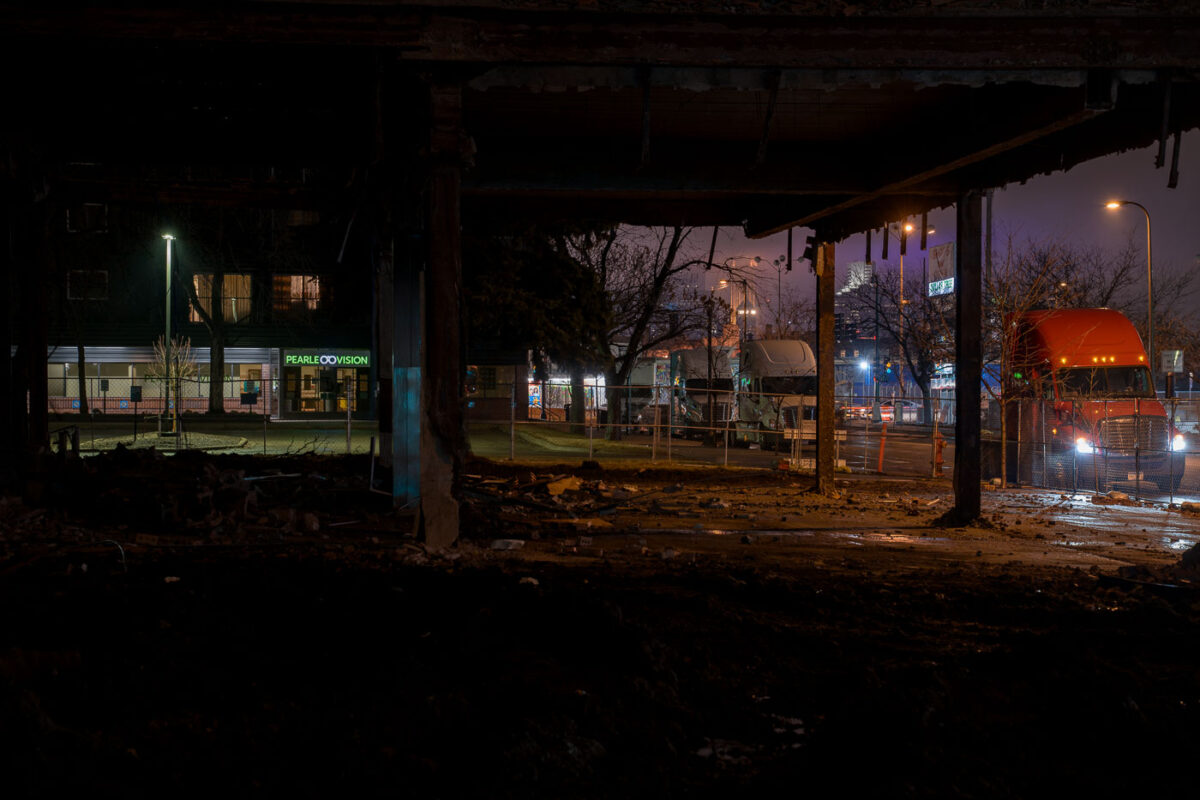
Demolition of riot burned Wells Fargo Bank
Demolition work is underway at the former Wells Fargo Bank building on Nicollet Avenue in Minneapolis, photographed on March 3, 2021. The structure was significantly damaged during civil unrest that followed the murder of George Floyd in May 2020. The building's destruction represents a physical manifestation of the widespread damage and subsequent rebuilding efforts in the city's commercial districts.

Minneapolis Wells Fargo Bank Demolition After George Floyd Riots
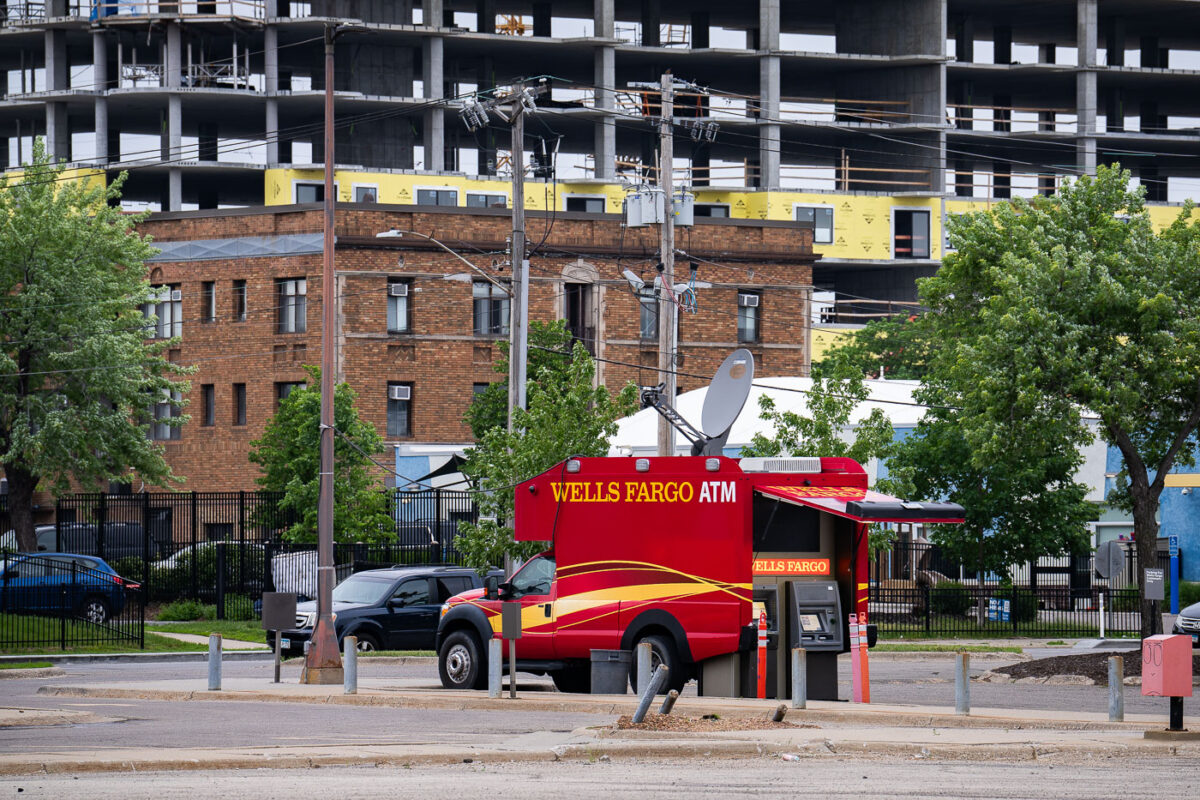
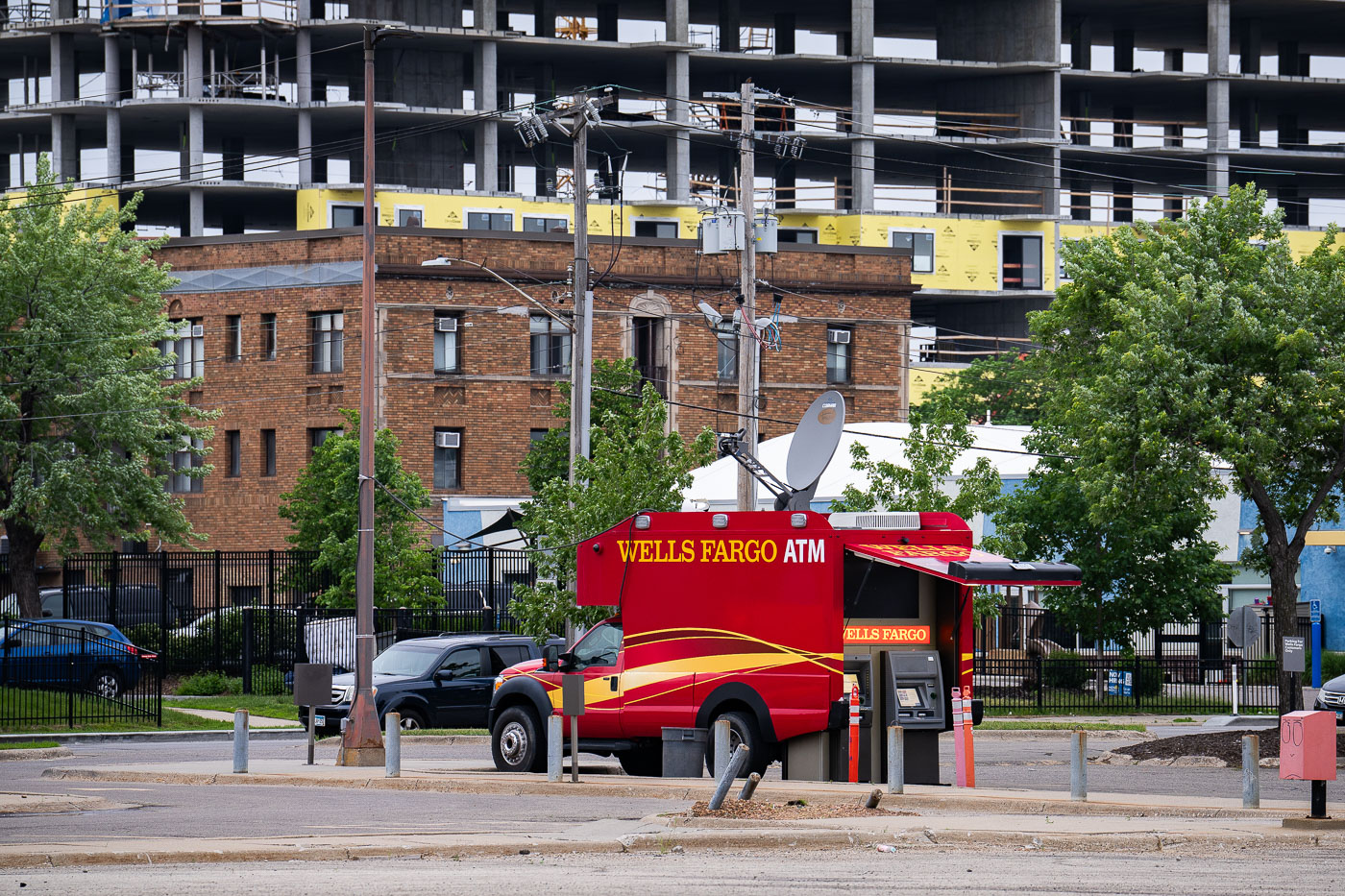
Mobile wells fargo atm in South Minneapolis with construction
A Wells Fargo mobile ATM is stationed at the former site of a Wells Fargo bank branch in South Minneapolis. The surrounding area shows a mix of older brick buildings and a new multi-story structure under construction. This mobile unit provides banking services following the closure of the bank that was destroyed during the 2020 protests that followed the murder of George Floyd.

Wells Fargo Mobile ATM at Former Bank Site, South Minneapolis

Built in Minneapolis

Minneapolis Photographer

Browse by location, move through long-running series, or start with recent work.