JR

5 photos · 2023

5 photographs tagged JR, 2023.

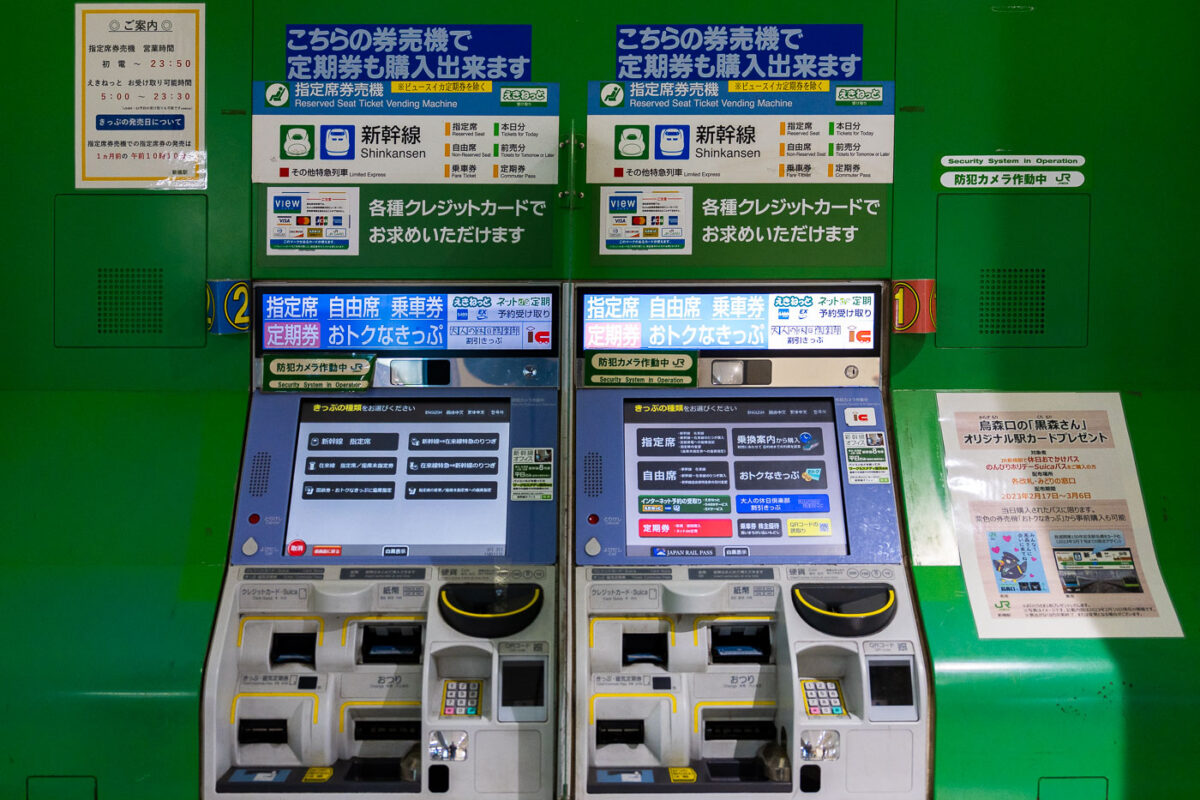
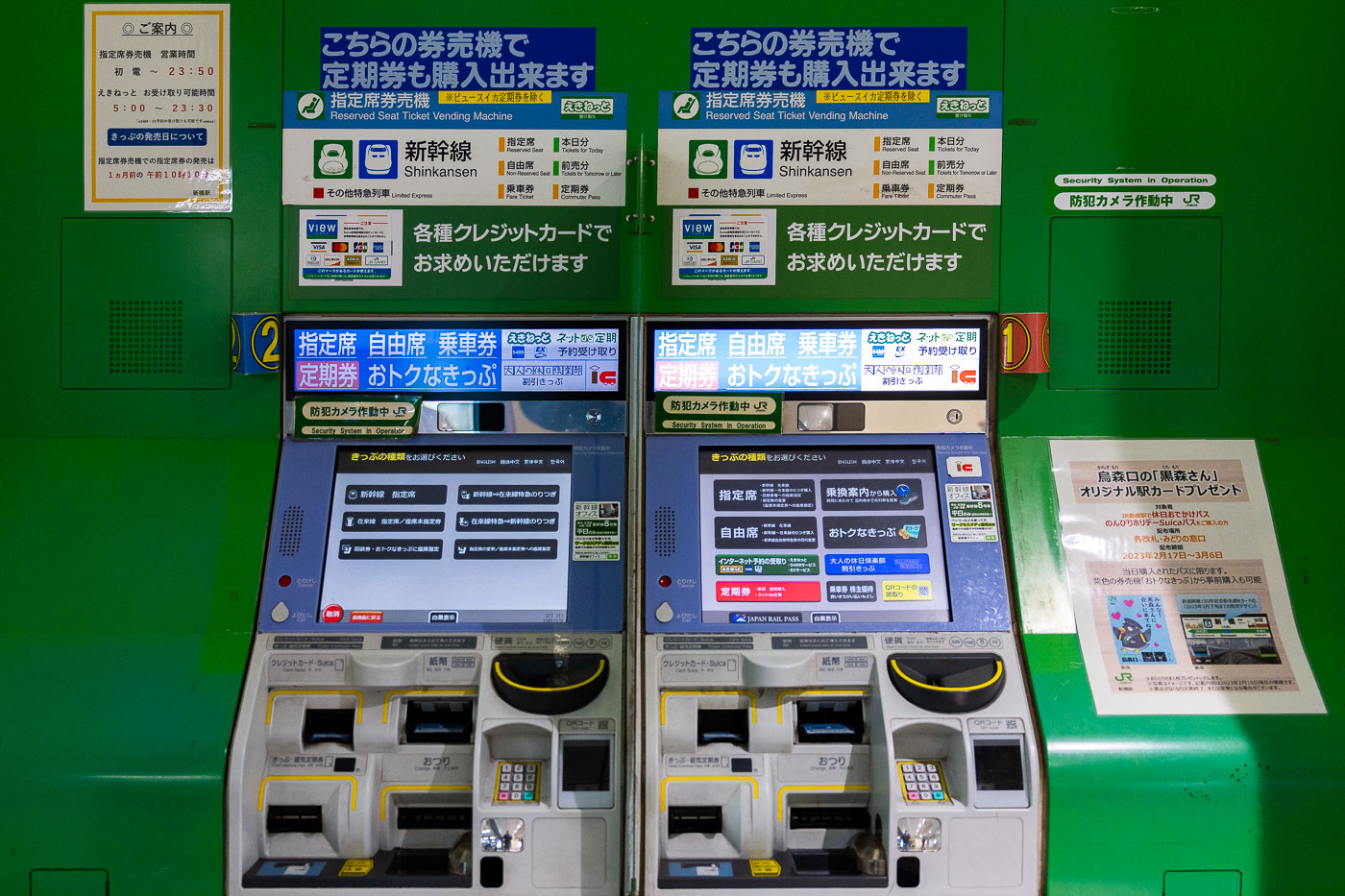
Two JR East Shinkansen ticket vending machines with multilingual touchscreens at Shinbashi Station, Tokyo.
Shinbashi Station's ticket area includes reserved-seat vending machines operated by JR East, used for Shinkansen and other limited express services. These touchscreen machines issue reserved and non-reserved tickets, boarding passes, and commuter passes, and accept major credit cards alongside Suica and other IC cards. Shinbashi sits on the Tokaido Main Line and serves as a stop for trains connecting Tokyo Station to destinations across central and western Japan. The station also connects to the Yurikamome and Tokyo Metro Ginza Line, making it a transfer point between local and long-distance rail networks.

Reserved Seat Ticket Vending Machines, Shinbashi Station, Tokyo
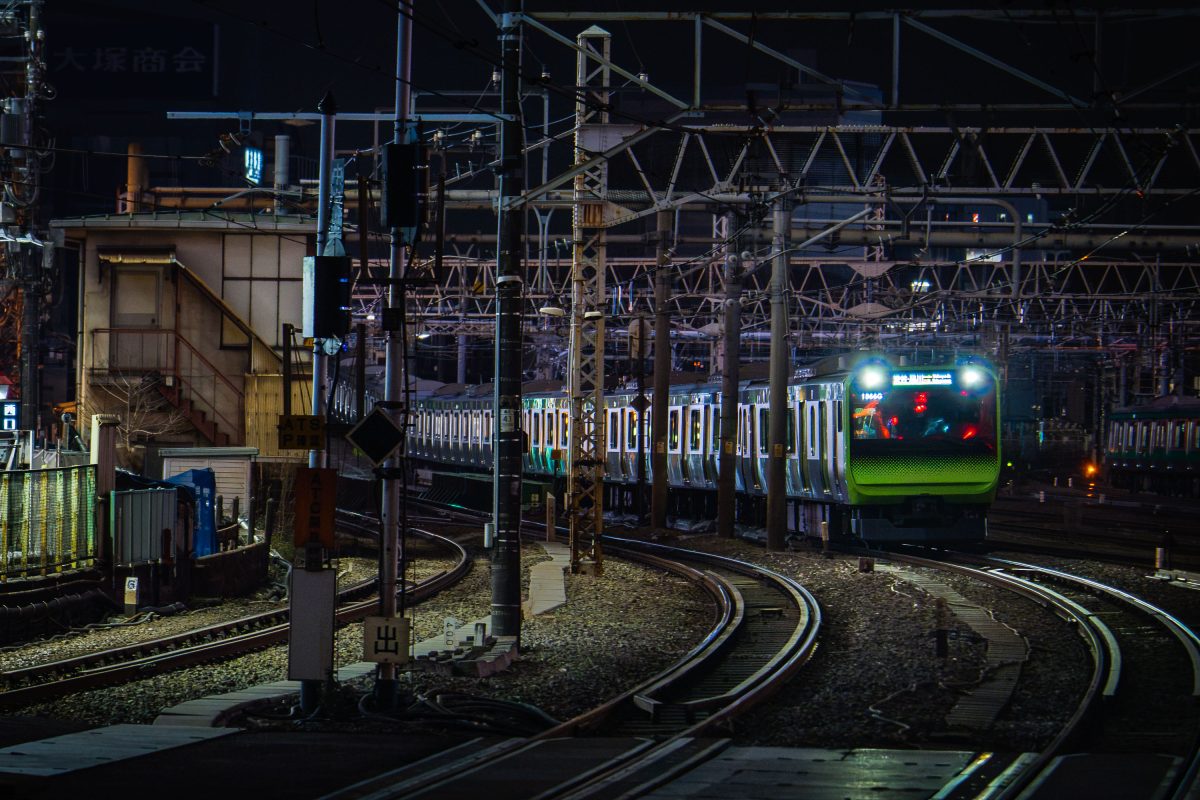
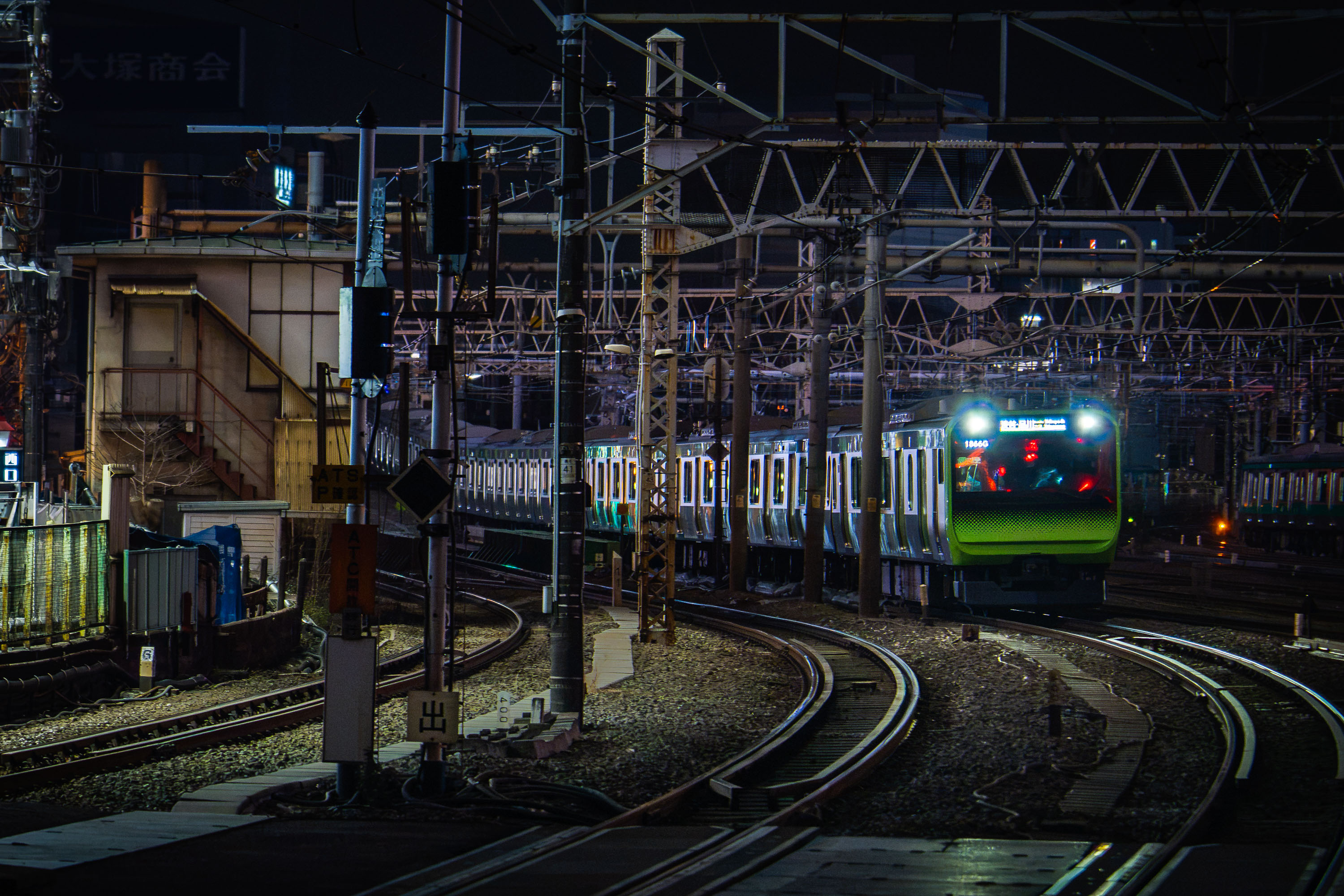
A JR East E233 series commuter train approaches an illuminated platform at a Tokyo rail yard at night.
This train is a JR East E233 series electric multiple unit, the standard commuter rolling stock introduced in 2006 across several Tokyo-area lines including the Chuo, Keihin-Tohoku, and Saikyo lines. Each set typically runs as a ten-car formation with a top speed of 120 km/h, built with a lightweight stainless-steel body and regenerative braking system. The dense overhead gantry structure supplies power through a 1,500-volt DC catenary, a standard configuration on JR East's electrified suburban network.

E233 Series Train Arriving Through the Rail Yard at Night
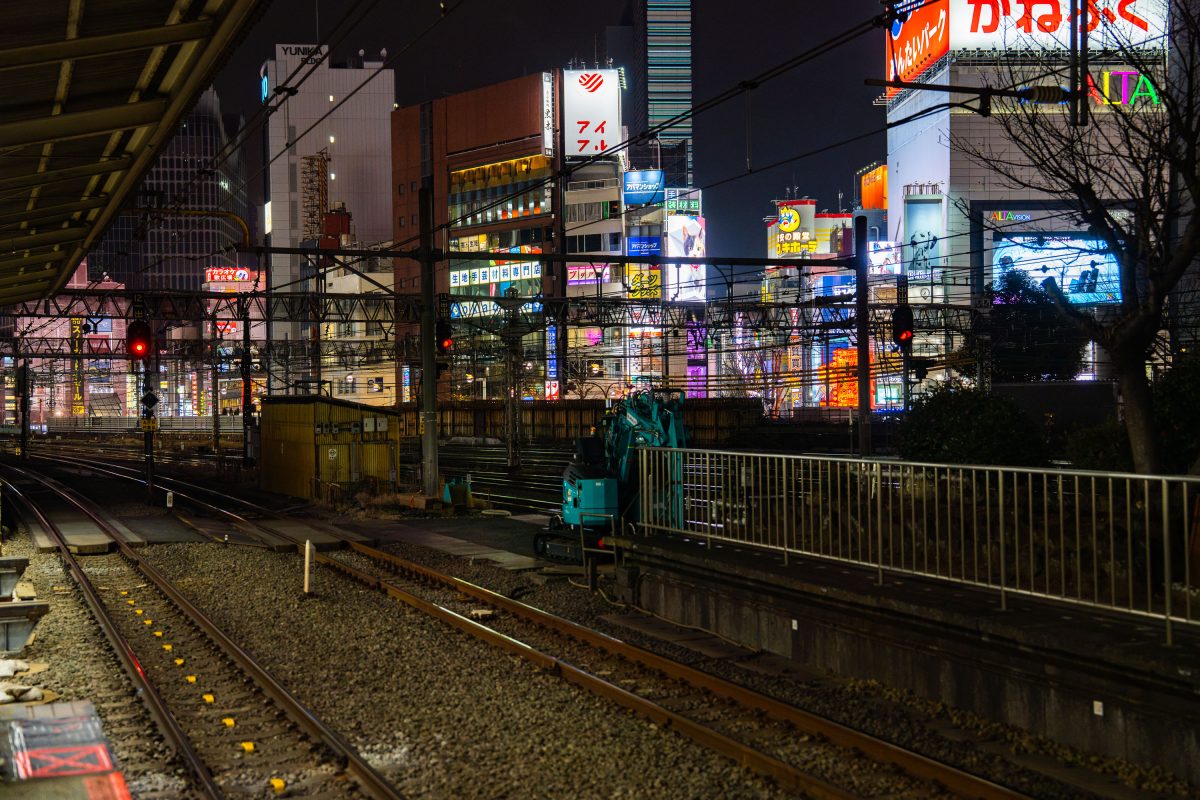
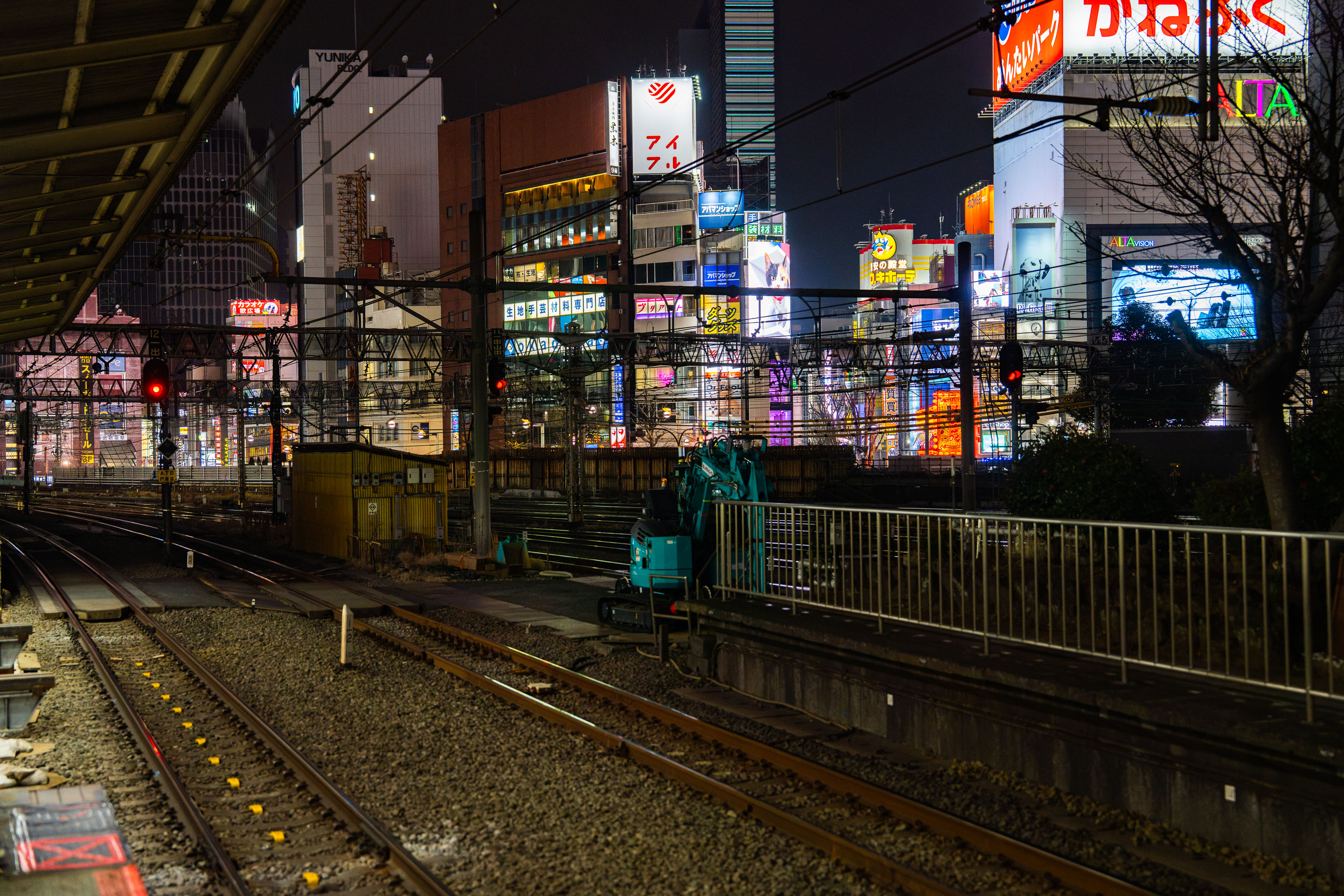
Rail tracks and maintenance equipment below Kabukicho district in Shinjuku, Tokyo, illuminated by neon signs at night.
Shinjuku's rail corridor runs just below Kabukicho, Tokyo's largest entertainment and nightlife district, packed with bars, theaters, and neon-clad storefronts advertising everything from pachinko parlors to karaoke lounges. The tracks belong to lines converging on Shinjuku Station, which handles more daily passengers than any other station in the world, according to Guinness World Records. Maintenance equipment and signal gantries along the right-of-way are routine fixtures of Japan's rail system, which prioritizes nightly track inspection and repair during the narrow hours when trains stop running.

Night Maintenance Along the Tracks Below Kabukicho’s Neon Skyline
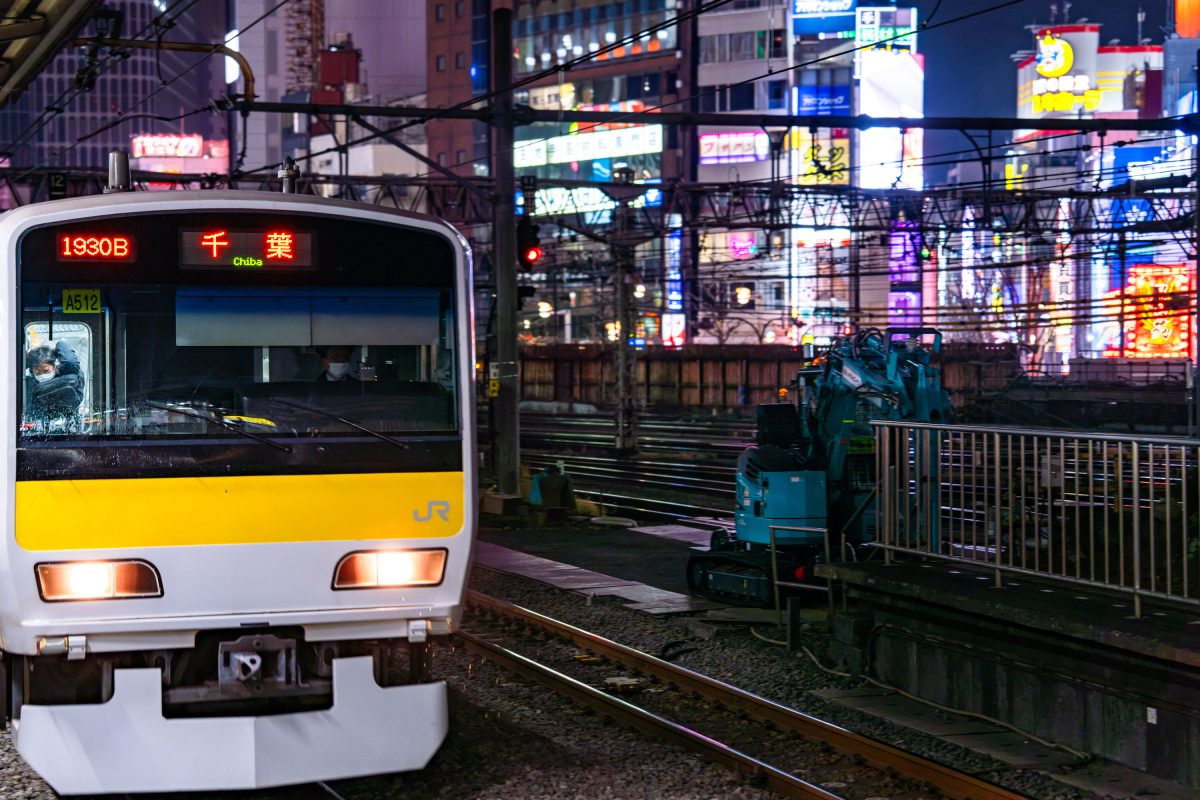
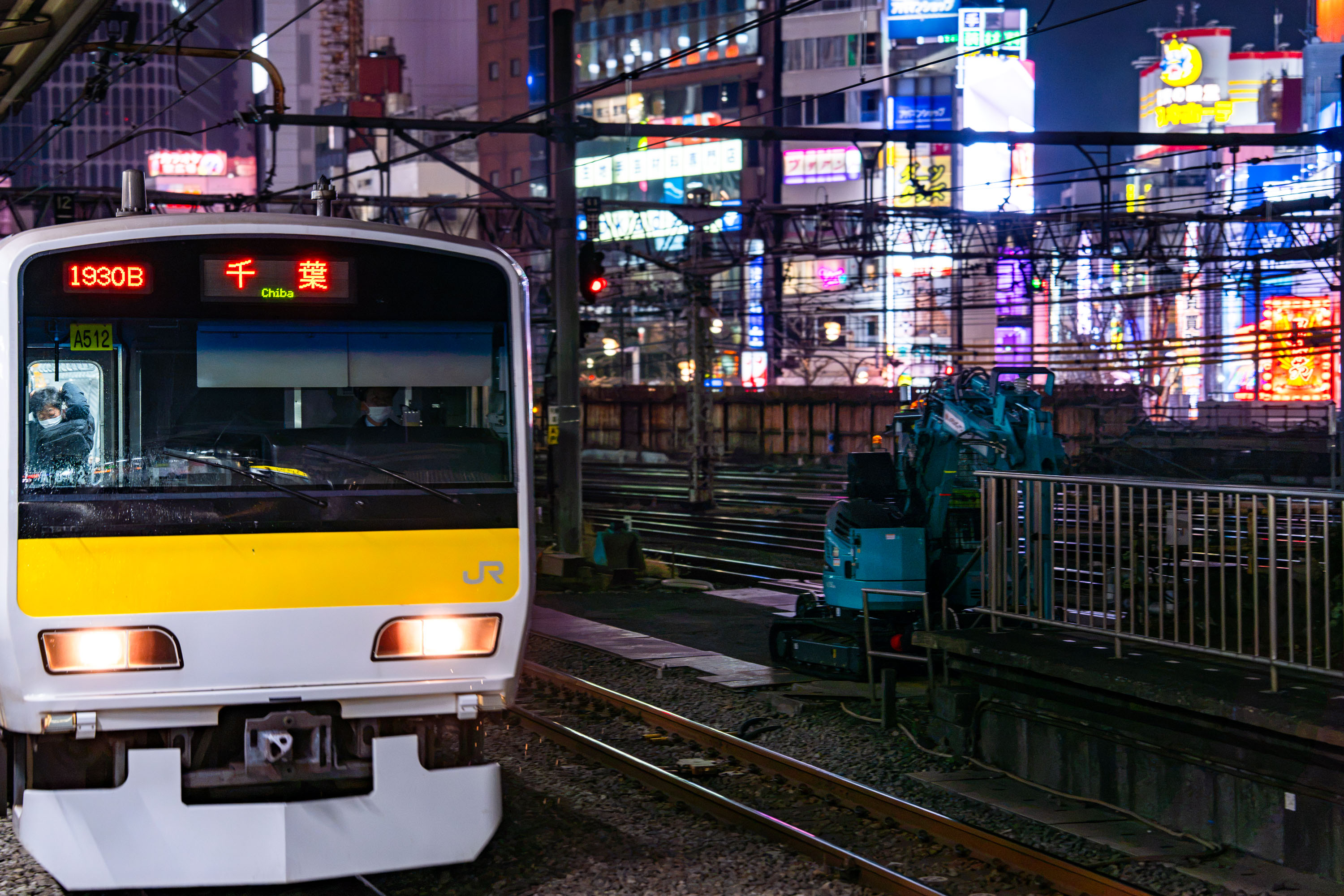
JR East E231 Series train bound for Chiba at Shinjuku Station in Tokyo during evening hours.
The E231 series train pictured here runs on JR East's Sobu Line, which links central Tokyo to Chiba Prefecture. JR East introduced the E231 fleet in 2000 as a successor to the older 103 and 201 series trains, building it with a stainless-steel body and a wide-door layout meant to speed passenger boarding during rush hour. Destination and train-number displays like the "1930B" and "Chiba" readouts on this unit's front panel use LED technology that JR East rolled out fleet-wide in the early 2000s to replace analog signage. The Sobu Line's rapid and local services share track with the Chuo Line through central Tokyo, feeding into major hubs such as Shinjuku and Akihabara before continuing east toward Chiba.

Sobu Line Train “1930B” Departs for Chiba Amid Shinjuku Neon
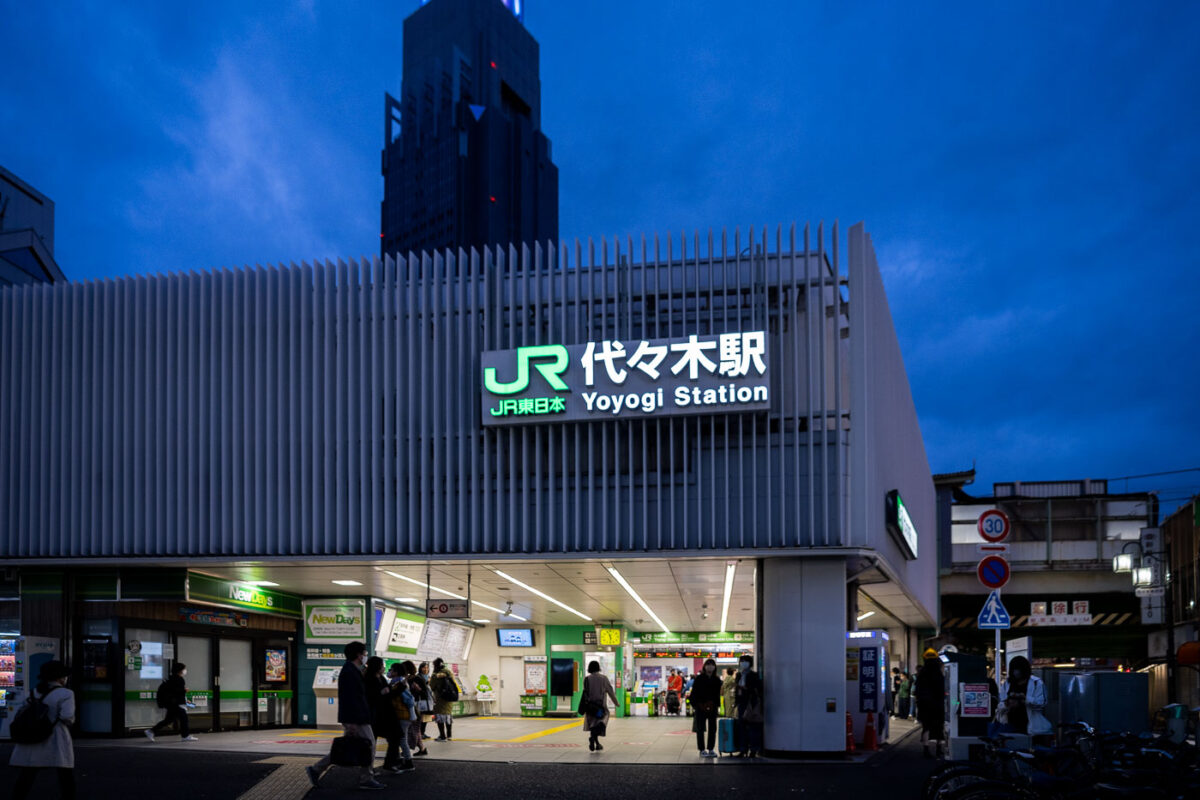
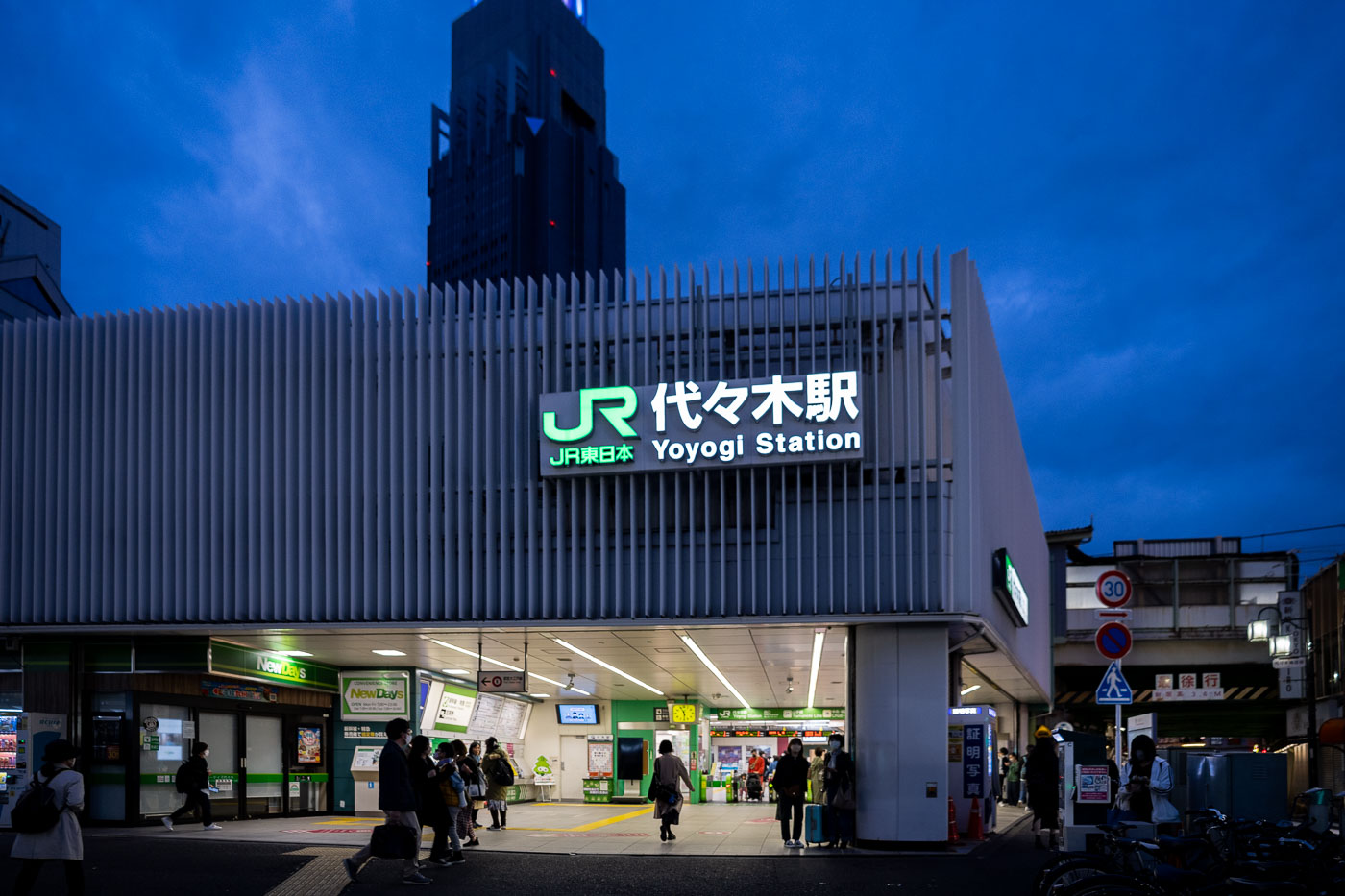
JR Yoyogi Station in Tokyo's Shibuya ward illuminates at dusk with commuters gathered beneath its distinctive tower structure.
JR Yoyogi Station sits in Tokyo's Shibuya ward, serving as a stop on the Yamanote and Chuo-Sobu lines. Operated by JR East, the station opened in 1906 and connects riders traveling between Shinjuku and Harajuku. Its position along the Yamanote loop makes it a minor but steady transfer point within the wider Tokyo commuter rail network.

JR Yoyogi Station Entrance at Dusk